

Fine, wispy strands often feel like a curse when you are trying to pull off a voluminous, stylish cut. You spend your morning blow-drying, backcombing, and applying enough hairspray to withstand a hurricane, only to have your hair fall flat by noon. It is a specific kind of frustration that keeps many women with thin hair stuck in long, lackluster styles because they fear a short cut will only highlight a lack of density. But the secret that stylists keep tucked away in their toolkits is the undercut. By removing weight from strategic areas, you create an illusion of mass and movement that makes fine hair look like a intentional, high-fashion statement rather than a struggle against gravity.
Thin hair requires structural support. An undercut does not necessarily mean you are shaving your head to the scalp or rocking a punk-rock mohawk. When we talk about bobs, the undercut is a refined technique—a clever bit of interior layering or a precision-carved nape that encourages the rest of your hair to sit with more lift and volume. It changes the way your hair behaves at the roots and the ends, turning limp strands into a structured, architectural look. Whether you are aiming for a classic French-girl aesthetic or something sharp and modern, here is how you can use the power of the undercut to transform your hair.
1. The Classic Nape-Shaved Graduated Bob
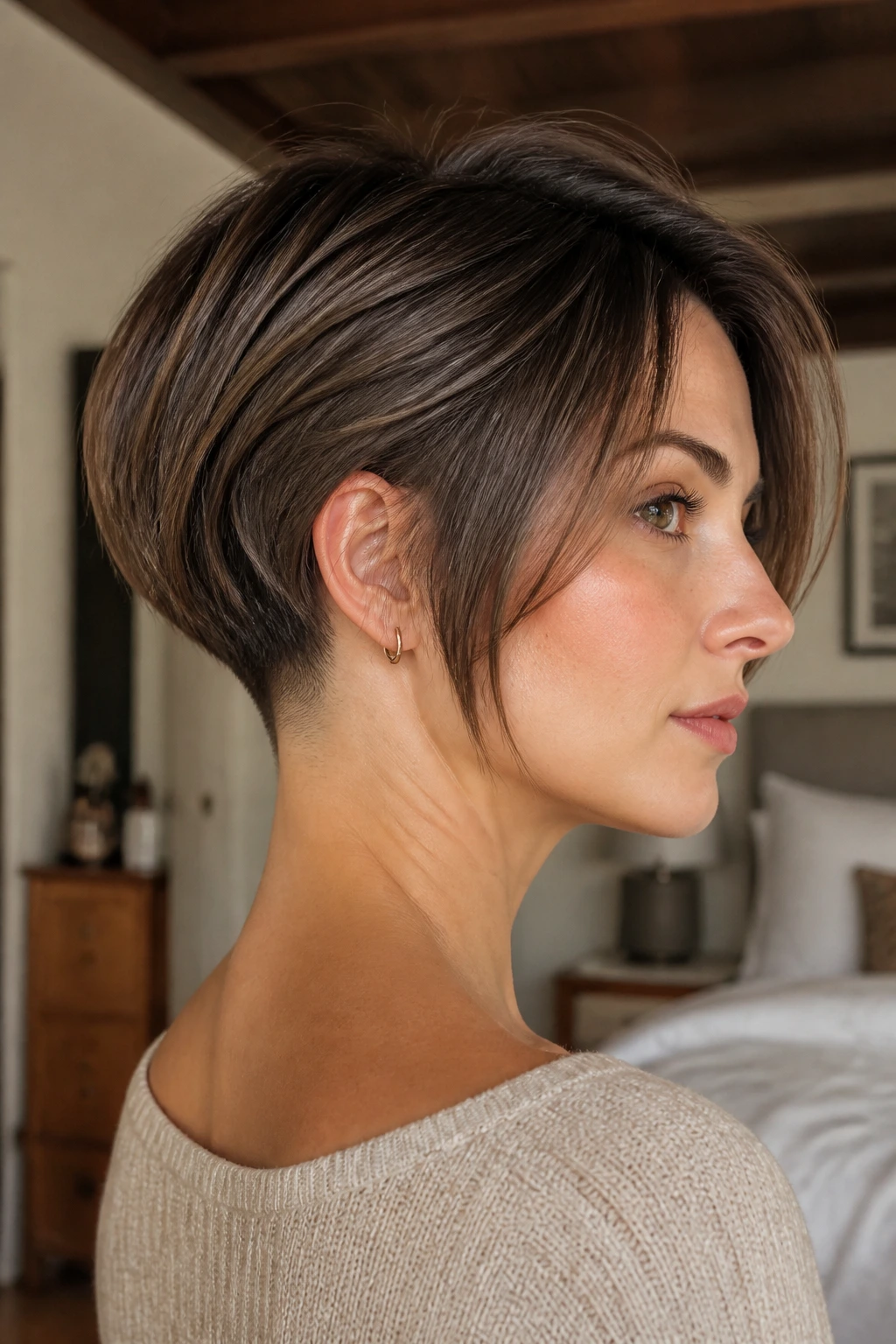
This is the entry point for many, and for good reason. By shaving or tapering the very bottom of the hairline at the nape of the neck, you eliminate the “tail” that often drags down a thin bob. When that weight is gone, the hair above it naturally curves inward, creating a rounded, voluminous shape that persists even when your hair is fine.
Why This Works for Fine Textures
The physics are simple: long, thin hair at the neckline tends to separate and look sparse. By removing that length entirely, you create a blunt, solid line at the perimeter of the bob, which gives the appearance of thicker, healthier ends.
How to Style It
- Apply a light mousse to damp hair before blow-drying.
- Use a round brush to pull the hair at the nape slightly under.
- Finish with a texturizing spray to give the roots a bit of grit so they stay lifted throughout the day.
Pro tip: Keep the undercut at the nape discreet enough that it stays hidden when your hair is down, but creates that essential structure underneath.
2. The Hidden Undercut Bob with A-Line Geometry
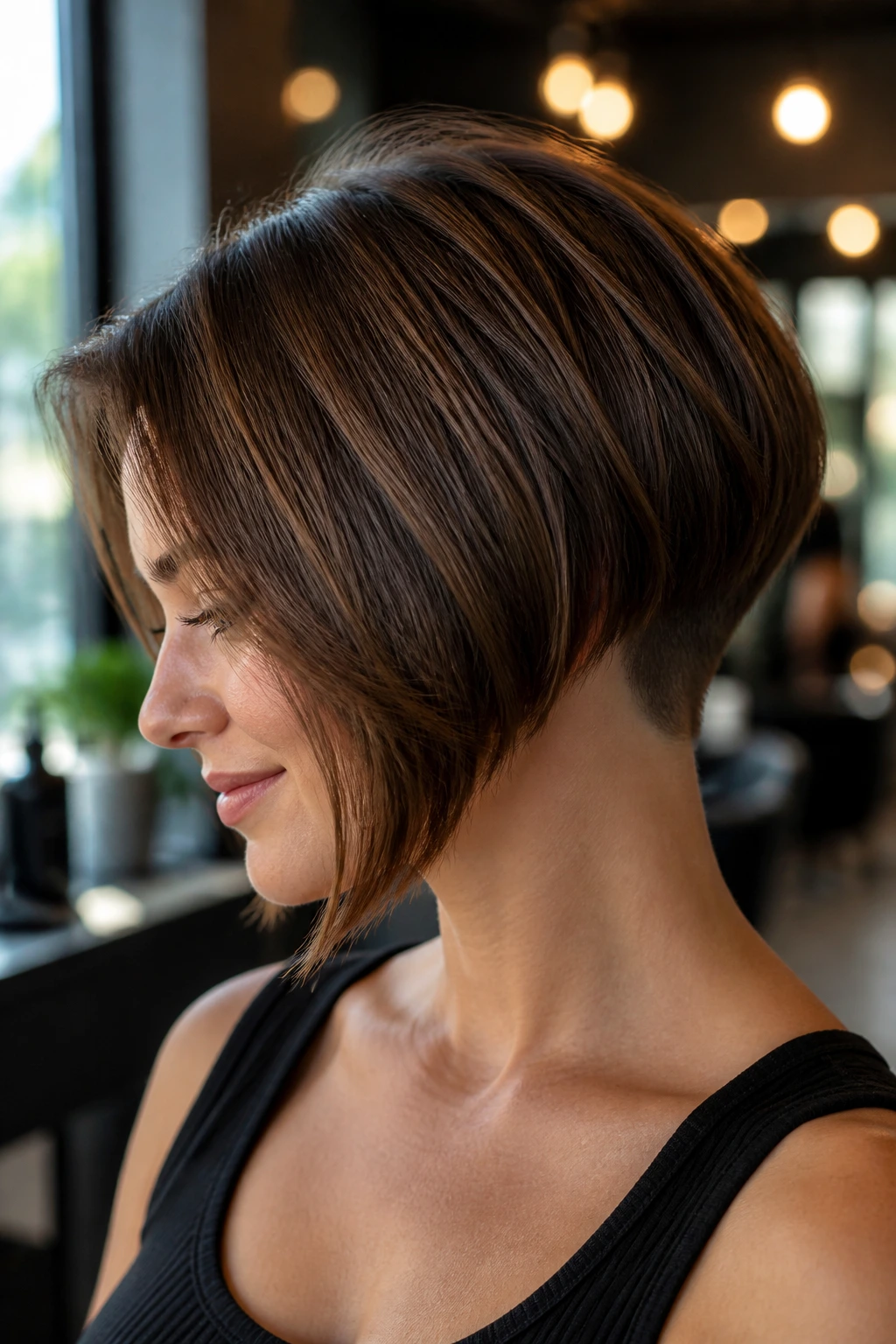
If you want an undercut that provides volume without compromising your ability to tie your hair back, the hidden nape undercut is your best friend. This cut features an A-line shape where the front is slightly longer than the back, combined with a discreet shaved section at the bottom. The A-line geometry draws the eye toward the face, while the shaved nape ensures the back does not get weighed down.
The Benefit of A-Line Cuts
A-line cuts are naturally flattering for almost everyone, but they are particularly great for fine hair because they allow for precise layering in the back. Unlike a blunt cut, which can make thin hair look like a shelf, the A-line creates soft, cascading angles that provide a visual “cushion” of hair.
When to Choose This Style
- If you have an oval or heart-shaped face.
- If you prefer a look that transitions easily from work-professional to weekend-casual.
- If you want the ease of a bob with the option to pull it up during warmer months.
3. The Textured Pixie-Bob Hybrid
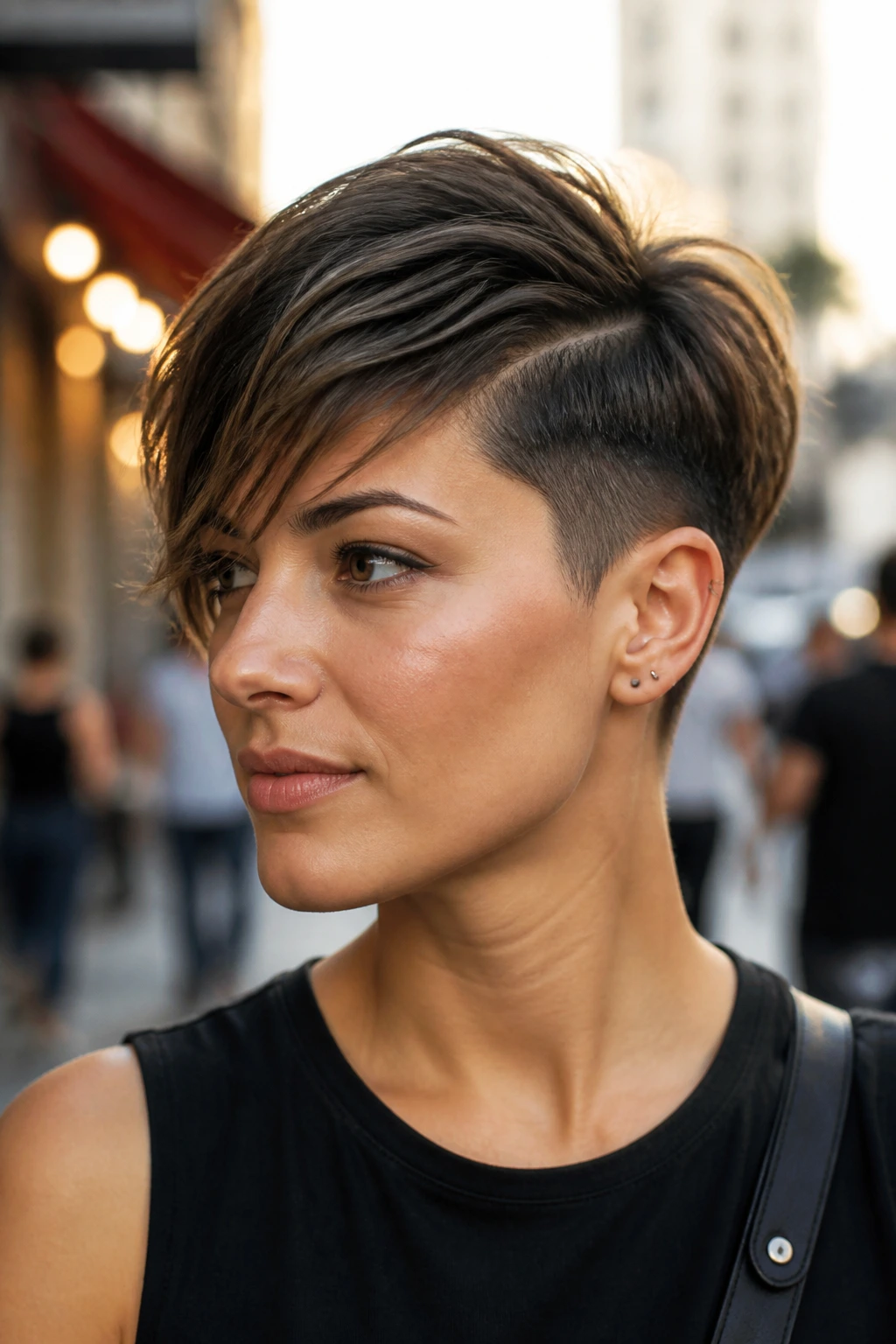
This cut sits right between a long pixie and a short bob, utilizing an undercut around the sides to prevent the hair from puffing out in an unflattering way. By tapering the sides, you force the hair on top to sit flatter, which actually makes the rest of your hair appear thicker and more intentional. It is a bold move, but it is one of the most effective ways to manage hair that lacks natural volume.
Why It Creates the Illusion of Thickness
When hair is thin, the tendency is to grow it long, but that only stretches the hair fibers thinner. A pixie-bob hybrid forces you to embrace shorter, thicker-feeling strands, providing a density boost that no amount of product can replicate.
Essential Maintenance
- Visit your stylist every five to six weeks to keep the undercut lines clean.
- Use a dry shampoo as a styling tool rather than just a cleanser to add bulk to the strands.
- Avoid heavy pomades; stick to lightweight waxes that won’t make fine hair clump.
4. The Stacked Bob with Interior Undercutting
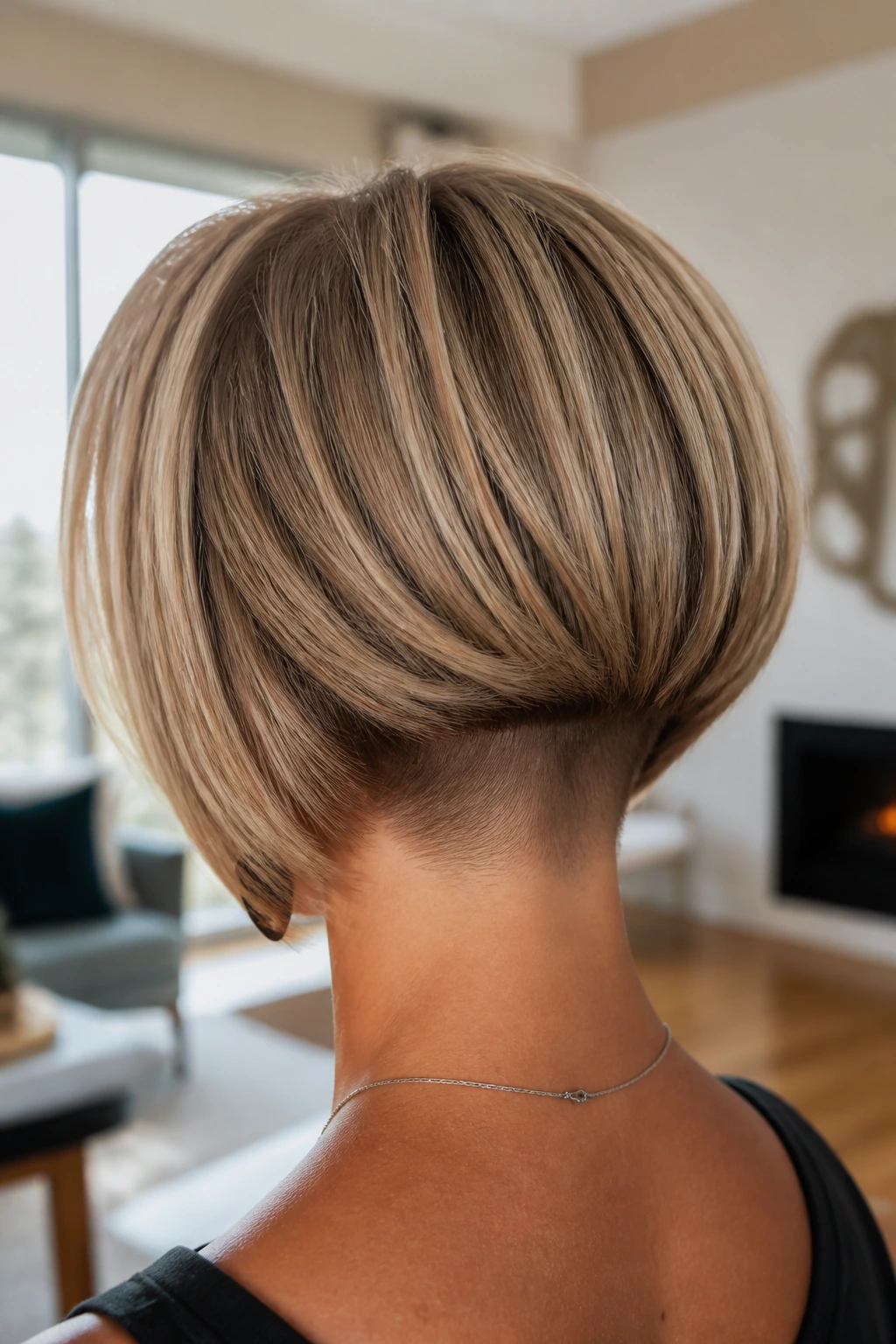
A stacked bob is characterized by short, layered hair in the back that builds up into a rounded shape. By adding an interior undercut—where the stylist thins the hair deep within the stack—you achieve a “balloon effect.” The weight is removed from the middle of the stack, which allows the outer layers to bounce and move independently.
Understanding the “Balloon Effect”
When you remove mass from the center of a section, the hair has more room to expand. For someone with fine hair, this is a game-changer. It turns a flat, one-dimensional cut into something that feels airy and full of life.
Key Details to Ask Your Stylist For
- Ask for “internal graduation” to maximize the rounded shape in the back.
- Ensure the perimeter remains blunt to preserve the illusion of thickness at the ends.
- Keep the length just above the shoulders for the best structural support.
5. The Blunt Jaw-Length Bob with Nape Taper
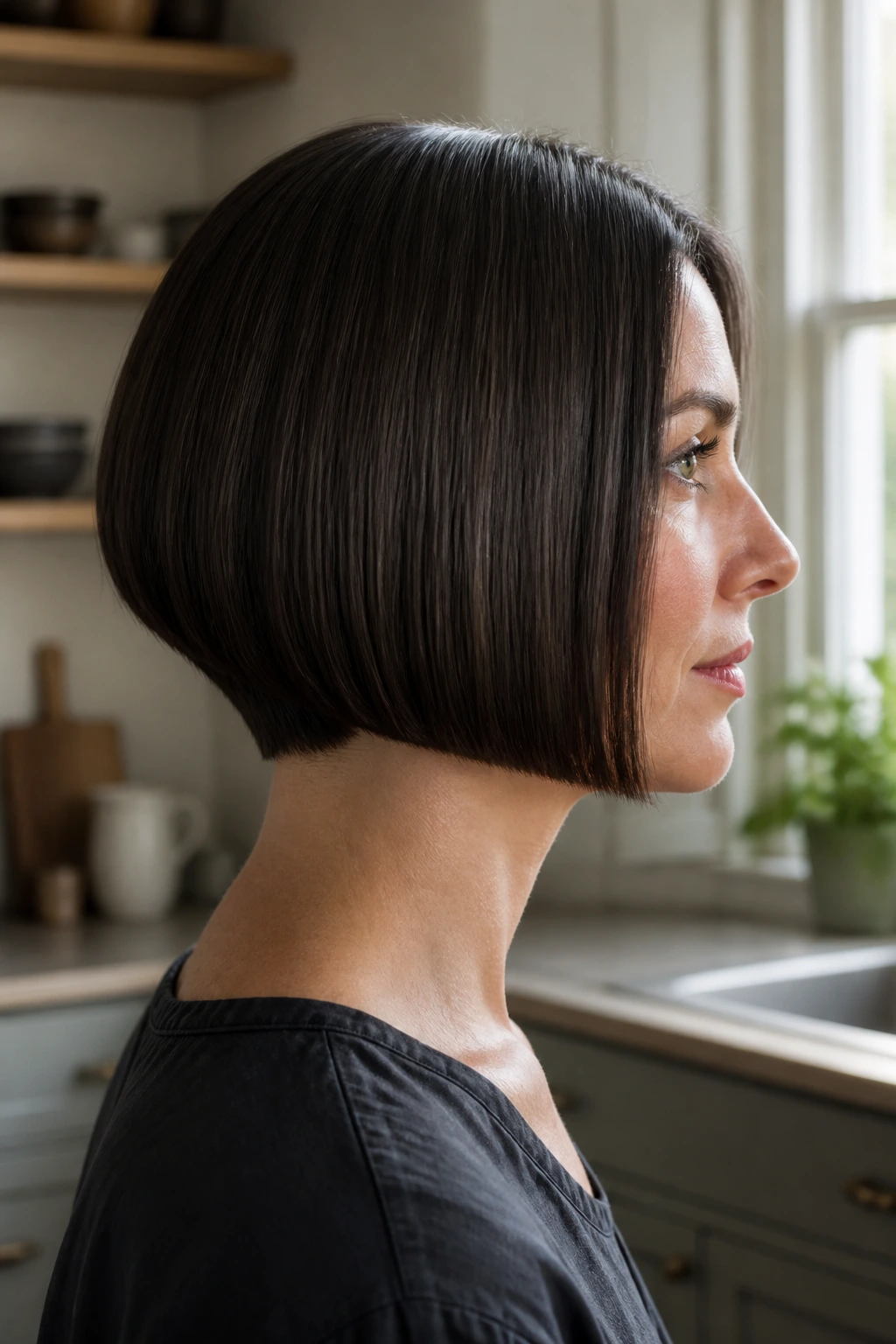
Sometimes, simple is better. A crisp, jaw-length bob is timeless, and by tapering the nape, you ensure the hair doesn’t “flip” or fray at the bottom. This look is all about clean lines, which distract from the fact that individual strands might be on the finer side.
Why Precision Matters
With fine hair, a choppy cut can look messy rather than intentional. A blunt cut with a tapered nape forces the ends to sit together as a single, uniform mass. When your hair is all one length, it simply looks fuller because there are no thinning ends to give the game away.
Styling Tip for Maximum Impact
- Use a flat iron to smooth the hair, turning the ends just a tiny bit toward the face.
- Don’t over-brush; let the hair sit in its natural, uniform state.
- Add a tiny drop of serum to the ends to ensure they reflect light, which makes the hair look healthier and thicker.
6. The Choppy Undercut Lob
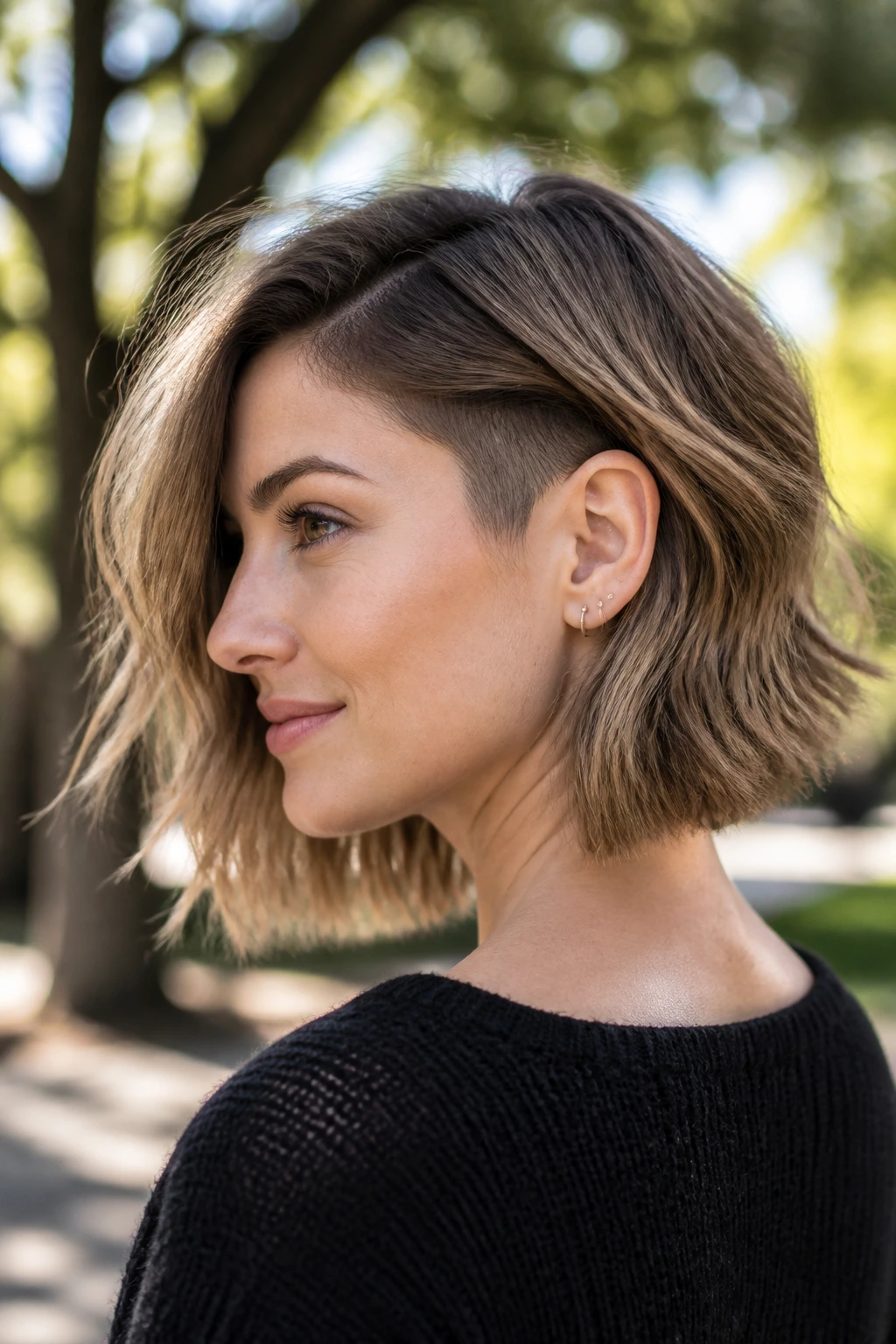
If you aren’t ready to commit to a short bob, the lob (long bob) is a great compromise. Incorporating a slight undercut at the nape keeps the hair from becoming unruly. Because the lob is longer, it relies heavily on texture to look full. An undercut helps anchor the style so the weight distribution remains balanced.
The Role of Texture
Texture is the thin-haired woman’s secret weapon. By using a razor or point-cutting technique on the ends, you break up the bluntness and create “movement.” This prevents the hair from looking like a flat curtain.
How to Achieve the Look
- Ask for “lived-in” layers that start below the chin.
- Use a salt spray to encourage natural wave patterns.
- If your hair is stick-straight, use a curling wand to add a few loose bends, but keep them irregular to maintain that undone, effortless vibe.
7. The Sleek French Bob with Tapered Sides
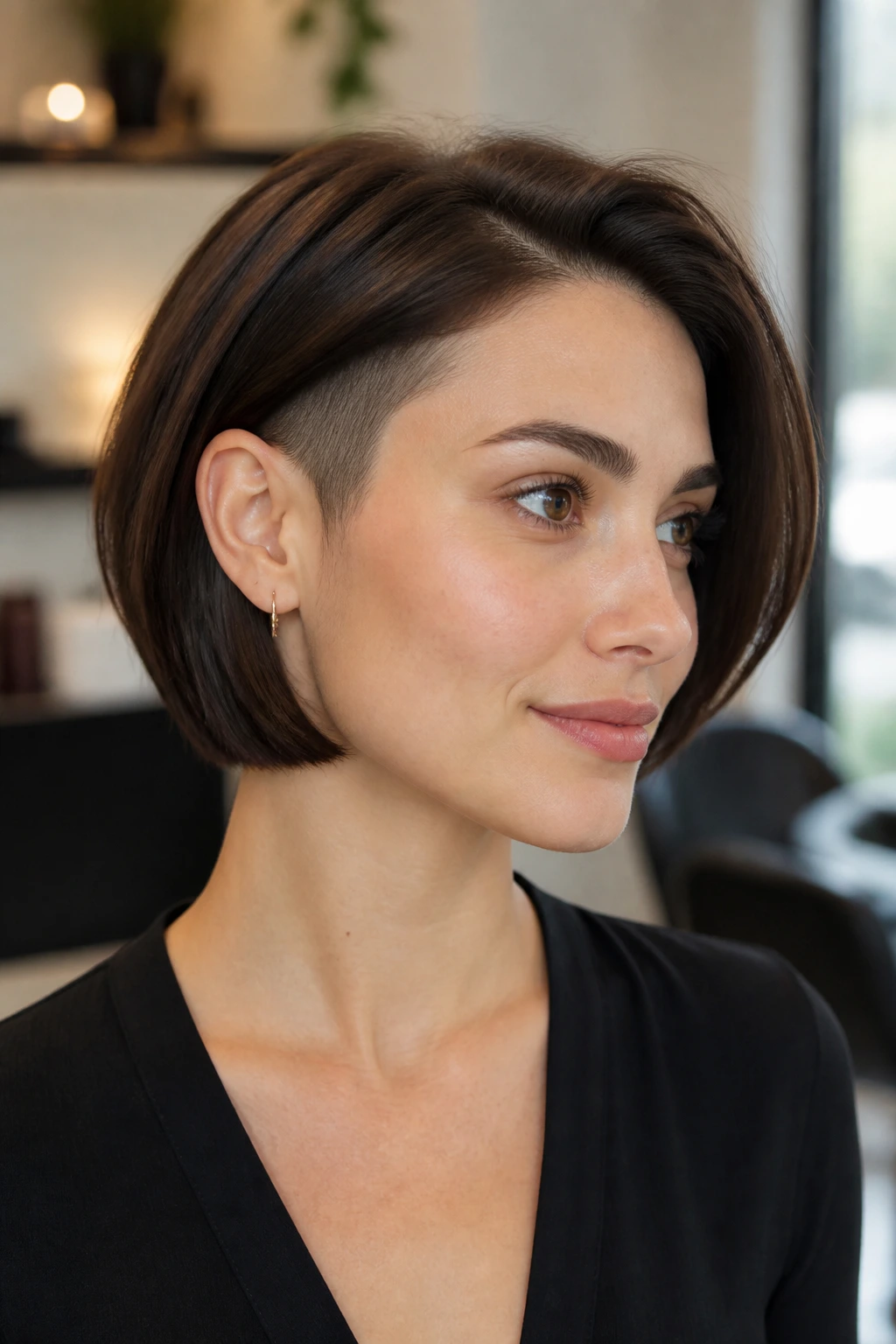
The French bob usually stops right at the earlobe or jaw. It is inherently chic, but it can be high-maintenance for fine hair. By undercutting the sides, you keep the silhouette narrow and sophisticated. This prevents the “poodle effect” that can happen when humidity hits fine hair.
The Aesthetic of the French Bob
There is something undeniably cool about a short, sharp bob. It feels curated and deliberate. For those with thin hair, this look works because it prioritizes shape over total volume, proving that you don’t need a head full of hair to have an iconic look.
Who Should Avoid This Cut
- If you have a very square jawline, the ear-length cut might emphasize your angles too much.
- If you are not prepared for a trim every four weeks, the outgrown lines can look messy quickly.
8. The Asymmetrical Undercut Bob
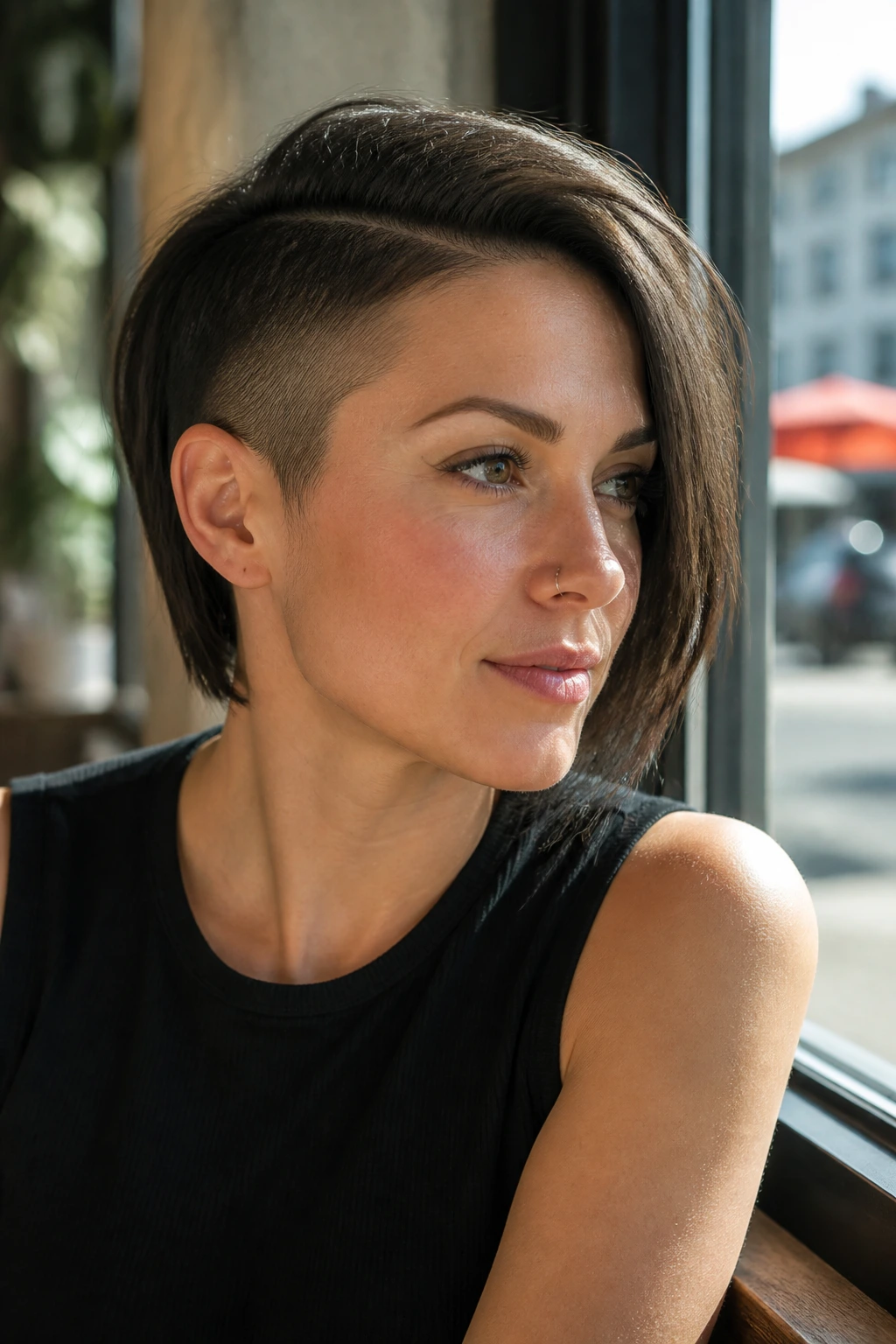
Asymmetry is a fantastic distraction. By keeping one side longer and using an undercut on the shorter side, you draw the eye toward the face and the sharper angles of the cut. The contrast between the two sides makes the hair appear more dynamic and full of movement.
Why It Distracts from Thinness
When you have an asymmetrical cut, people spend their time looking at the geometry of your hair rather than evaluating the density of your strands. The focus shifts from “is this hair thin?” to “is this haircut cool?”—which is exactly where you want it to be.
Styling for Asymmetry
- Blow-dry the longer side with a round brush to create a smooth, rounded shape.
- Keep the shorter, undercut side tight and smooth to maximize the contrast.
- Use a light-hold spray to keep the hair in place throughout the day.
9. The Rounded “Bowl” Undercut
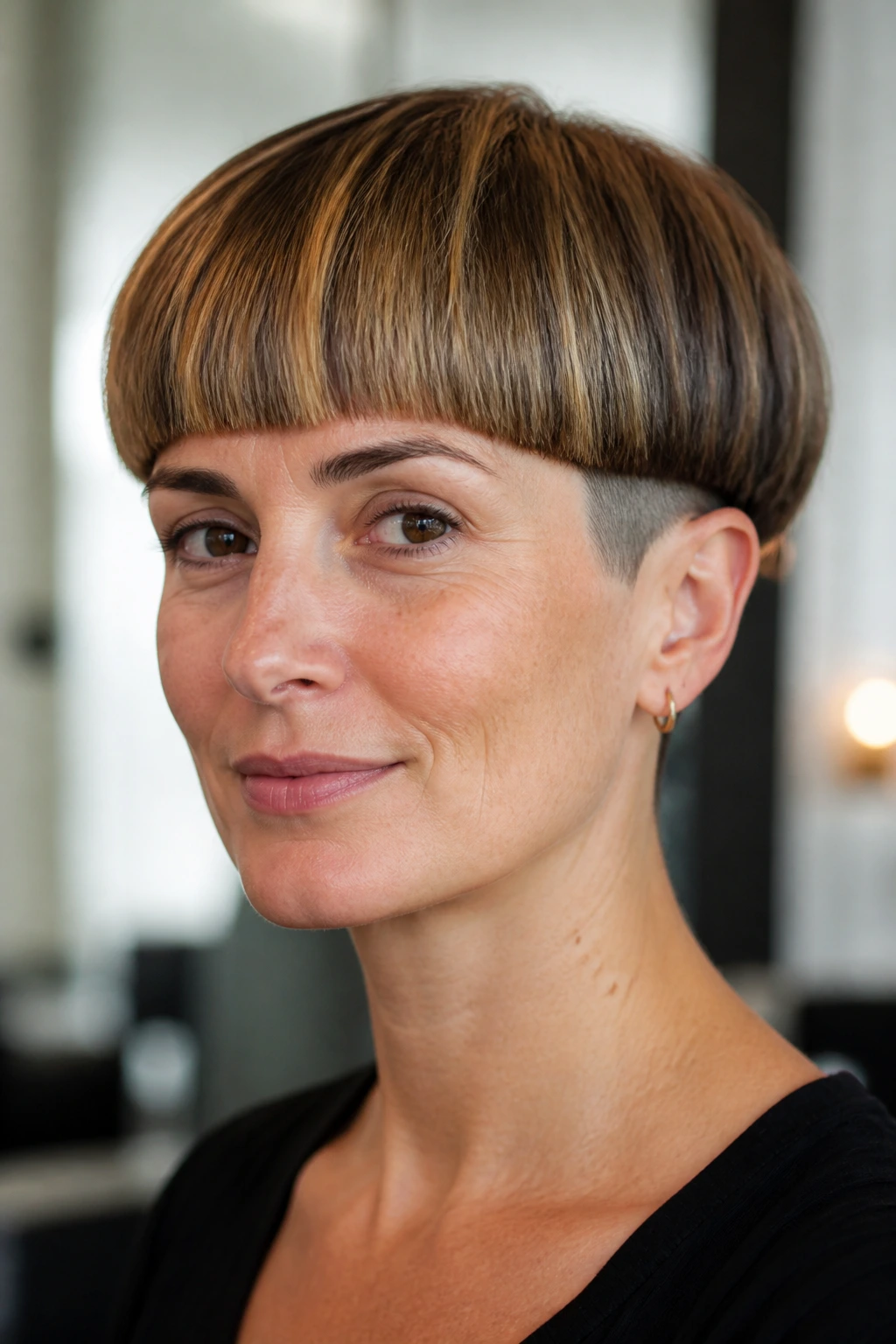
Don’t let the name scare you—the modern bowl cut is a high-fashion statement that relies on an undercut to maintain its shape. By shaving or tapering the area beneath the fringe and around the ears, the top layers are forced to sit in a smooth, rounded dome. It is perhaps the most effective cut for creating the illusion of a massive amount of hair.
The Science of the Dome Shape
A dome shape is inherently three-dimensional. When you cut hair to follow the natural curve of the skull, you are creating a structure that naturally holds its own volume. It is practically indestructible during a standard day, provided it is cut with enough precision.
Important Considerations
- This look requires the right face shape; it works best on oval and heart-shaped faces.
- It is a commitment; growing it out can be a long, awkward process.
- Your stylist needs to be very skilled with clippers and scissors for that perfect, seamless blend.
10. The Wavy Undercut Bob
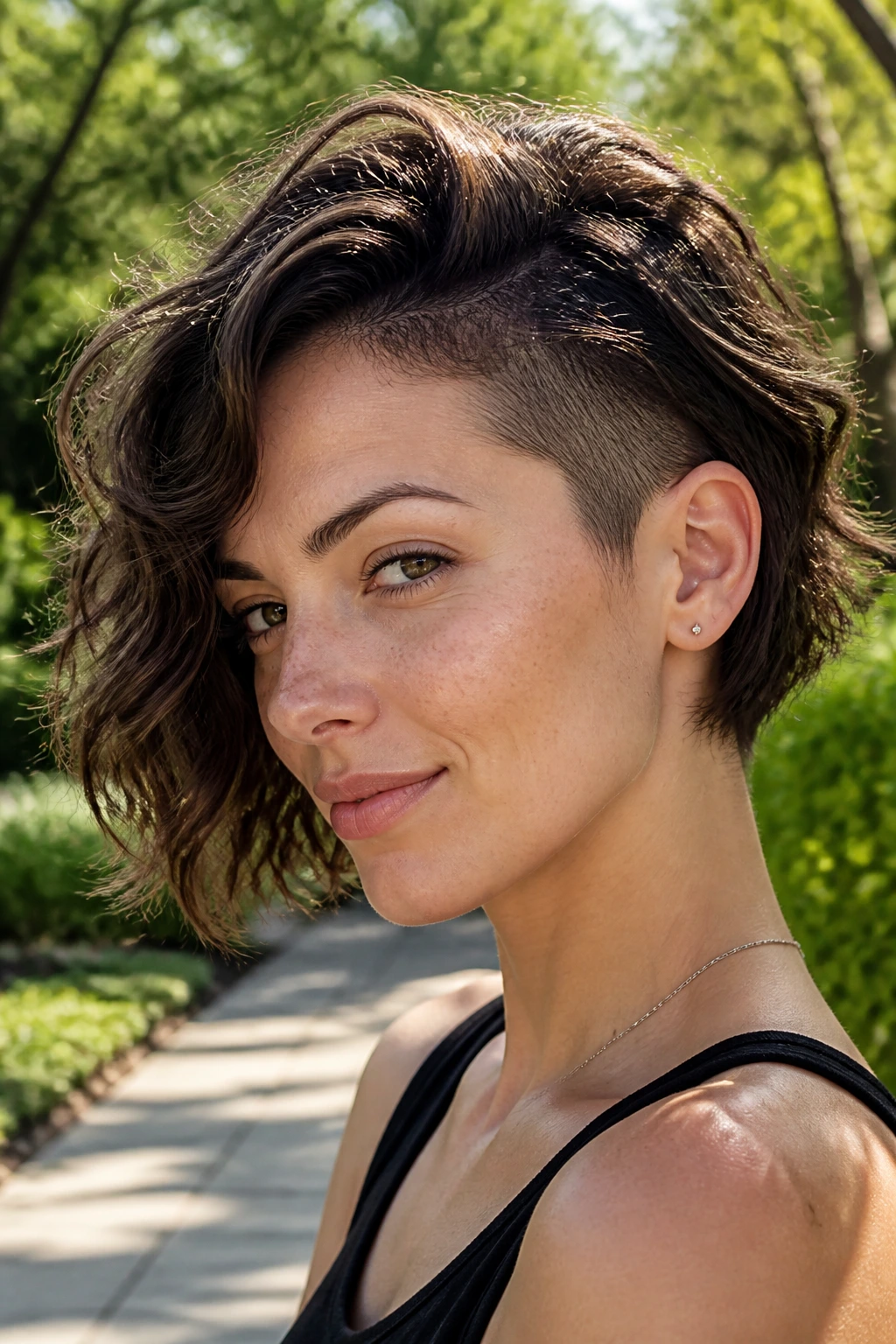
If you have a slight natural wave, don’t try to straighten it out. Lean into it. An undercut bob that works with your wave pattern can look much thicker than a straight style. The undercut removes the weight that would otherwise pull your waves flat, allowing them to expand and tangle together for a fuller look.
Why Waves Add Volume
Waves create space between the hair strands. Where straight hair lies flat against the scalp, wavy hair lifts and bounces. An undercut ensures those waves don’t get heavy at the bottom, keeping the volume localized at the crown where you want it.
Best Products for Wavy Thin Hair
- Use a curl-enhancing cream, but apply it only to the ends.
- Avoid heavy butters or oils that will weigh the waves down.
- A light, airy mousse is your best friend for root lift and wave definition.
11. The Shaggy Undercut Bob
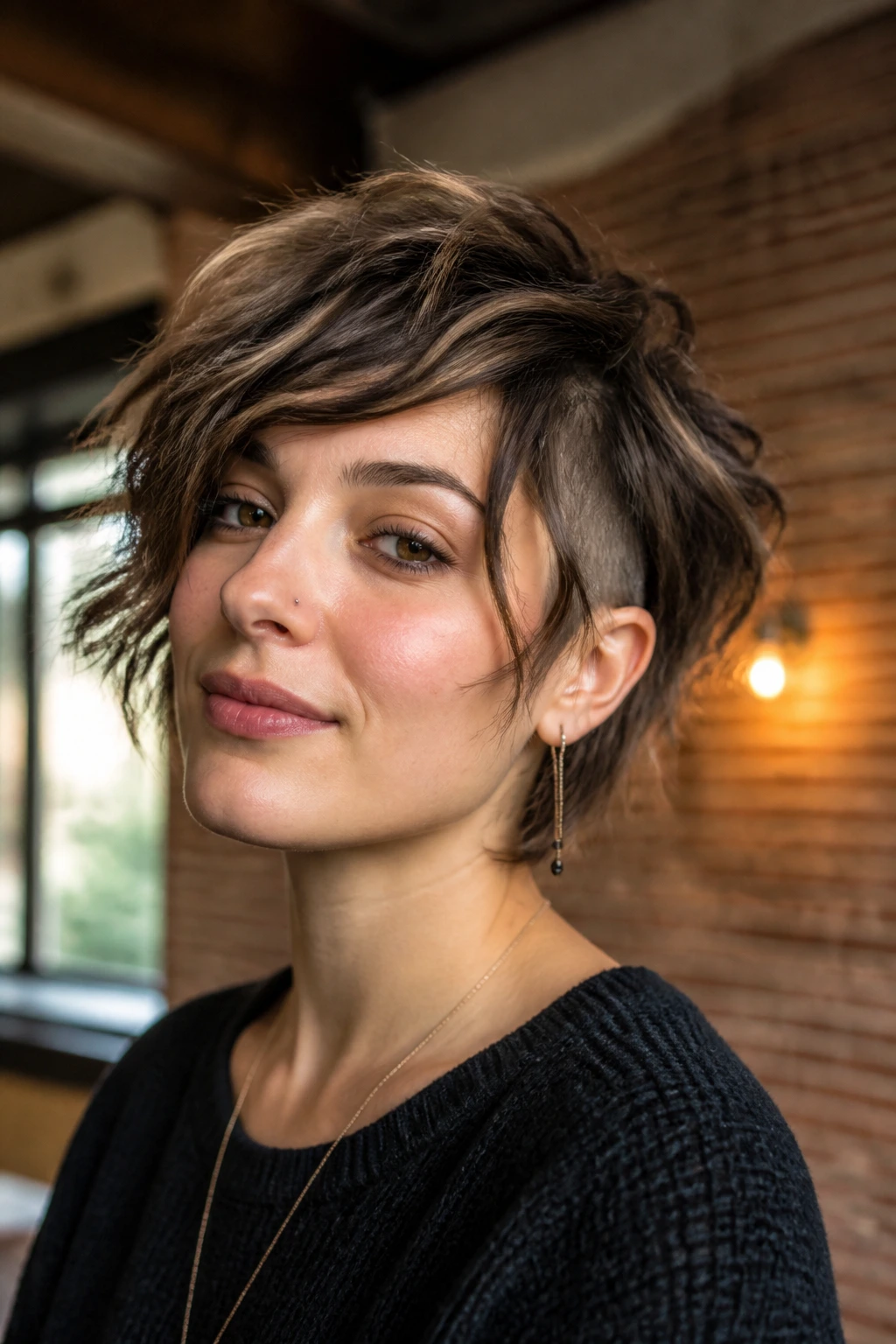
The shag has made a major comeback, and it is a gift for those with fine hair. It is all about internal layering and intentional messiness. An undercut at the base ensures that the layers don’t become too “stringy” at the bottom. The result is a rock-and-roll look that feels voluminous and carefree.
How Internal Layers Create Volume
Shags are built on internal layering, which means the stylist cuts shorter pieces underneath the longer ones. These shorter pieces act as a scaffold, pushing the outer layers upward and outward. It is the architectural equivalent of a building with a strong support system.
How to Style a Shag
- Skip the round brush. This look is about natural texture.
- Use a sea salt spray or a styling paste on dry hair to piece out the ends.
- If you have bangs, let them be a little wispy and imperfect—it adds to the overall aesthetic.
12. The Retro 1920s-Inspired Finger-Wave Bob
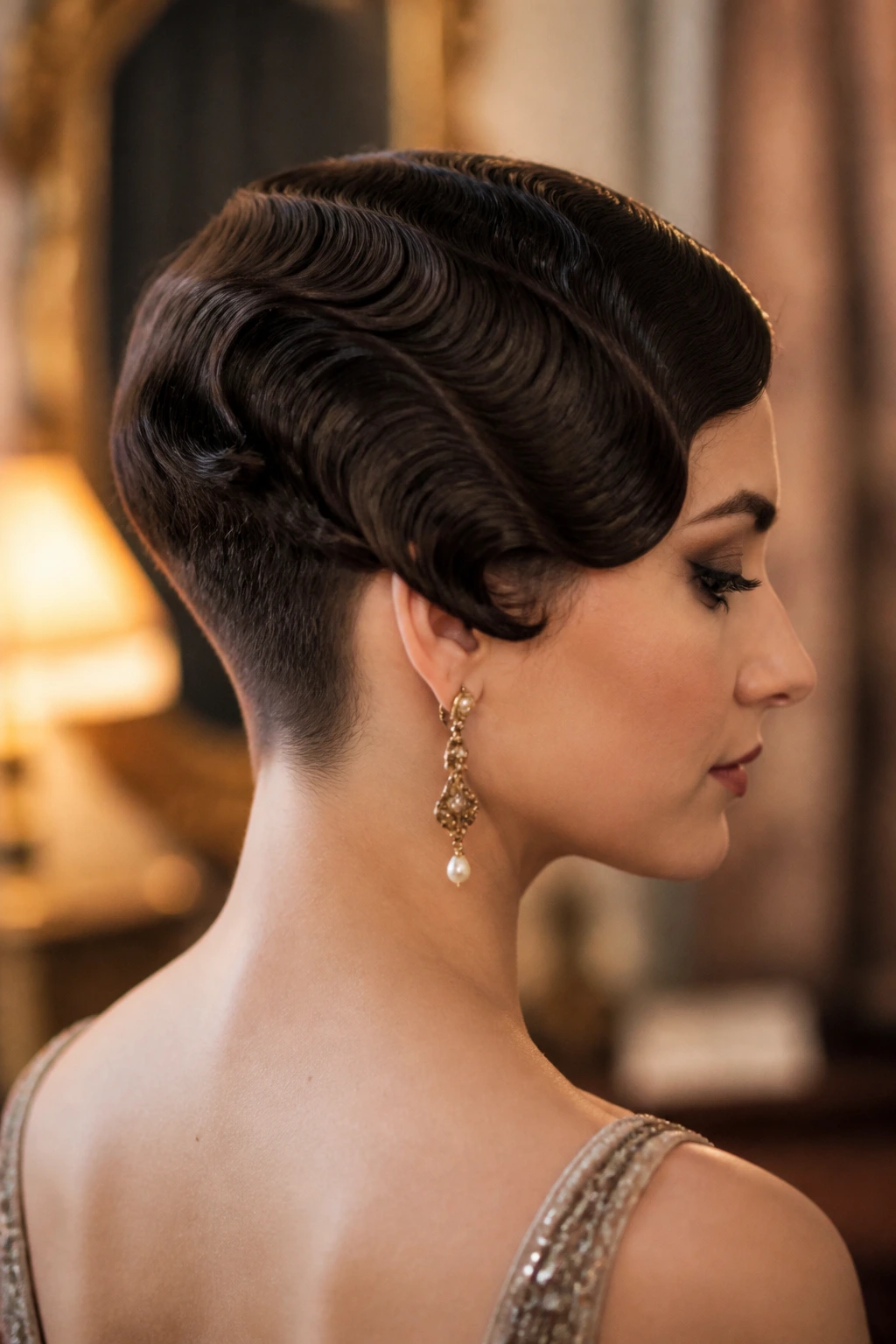
If you are attending a formal event, you can use the undercut to create a sleek, vintage look. The tightness at the nape provided by the undercut allows for a beautiful transition into structured, retro waves. This is less about “daily density” and more about creating a deliberate, high-impact style that looks like a work of art.
Why This Style Works for Occasions
Fine hair often struggles with elaborate updos, but it is actually perfect for vintage-style finger waves. Because the hair is fine, it is easier to manipulate into tight, precise shapes that hold their form.
Tips for Success
- Use a strong-hold setting lotion to mold the waves.
- A tail comb is your most important tool for defining the ridges of the waves.
- Once the hair is set and dry, don’t brush it too vigorously—you want the waves to stay “set” and firm.
13. The Edgy Undercut Bob with Patterned Shaving
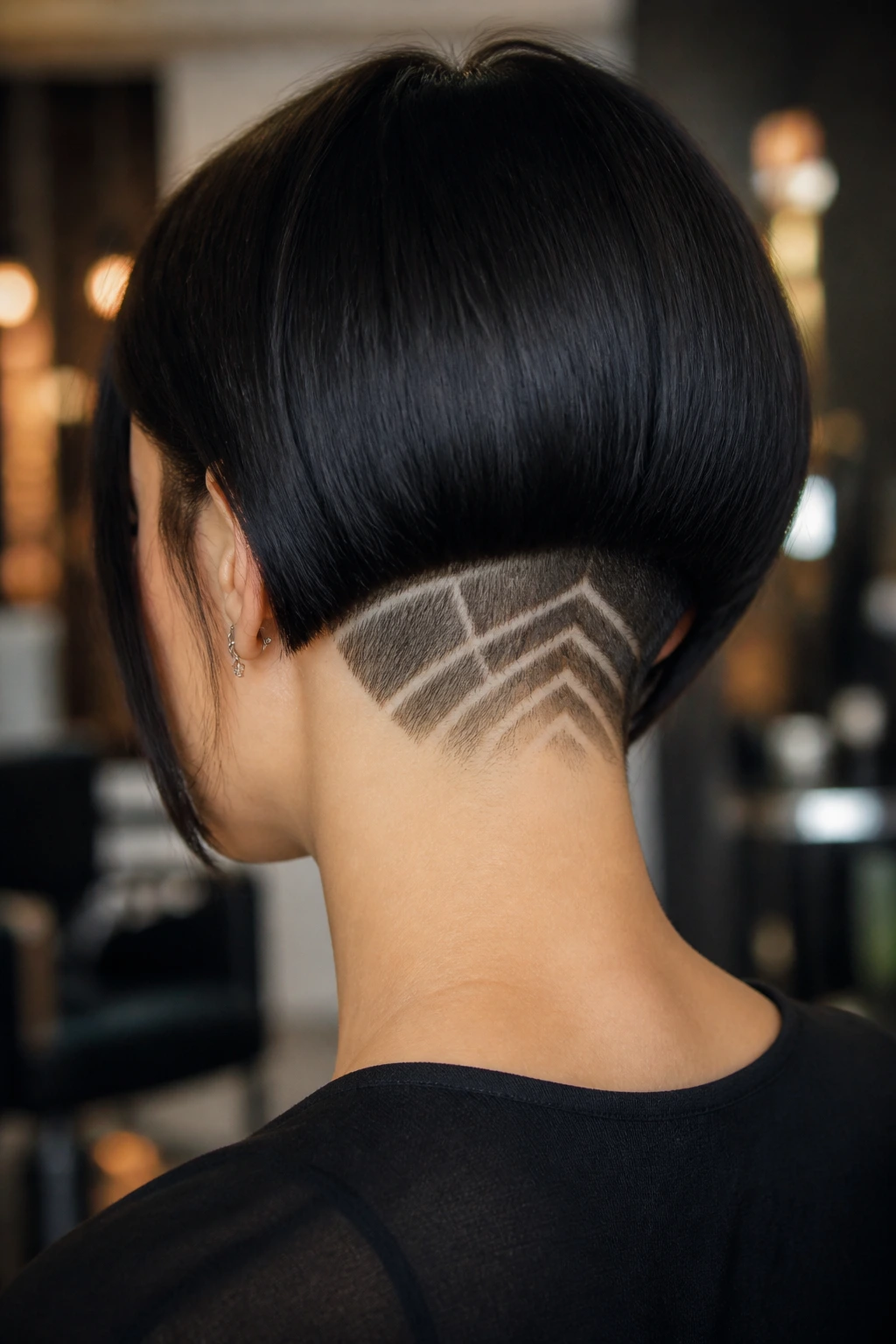
For the truly daring, the undercut doesn’t have to be just a taper—it can be a design. Shaving a geometric pattern into the nape area is a great way to showcase personal style while keeping the hair above it full and blunt. It draws attention to the back of the neck, and the contrast between the design and the hair on top creates a visual focal point.
The Power of Contrast
When you add a sharp contrast to a haircut, the eye is drawn to the contrast, not the density of the hair. It is a classic psychological trick. People will be so focused on the cool design that they will never stop to think about how much hair you have on your head.
Maintenance and Growth
- Remember that hair grows back. If you get a design shaved in, you will need a touch-up every two to three weeks to keep the pattern sharp.
- If you decide to grow it out, be prepared for a few weeks of “fuzz” as the hair transitions back to your normal length.
14. The “Invisible” Undercut Bob
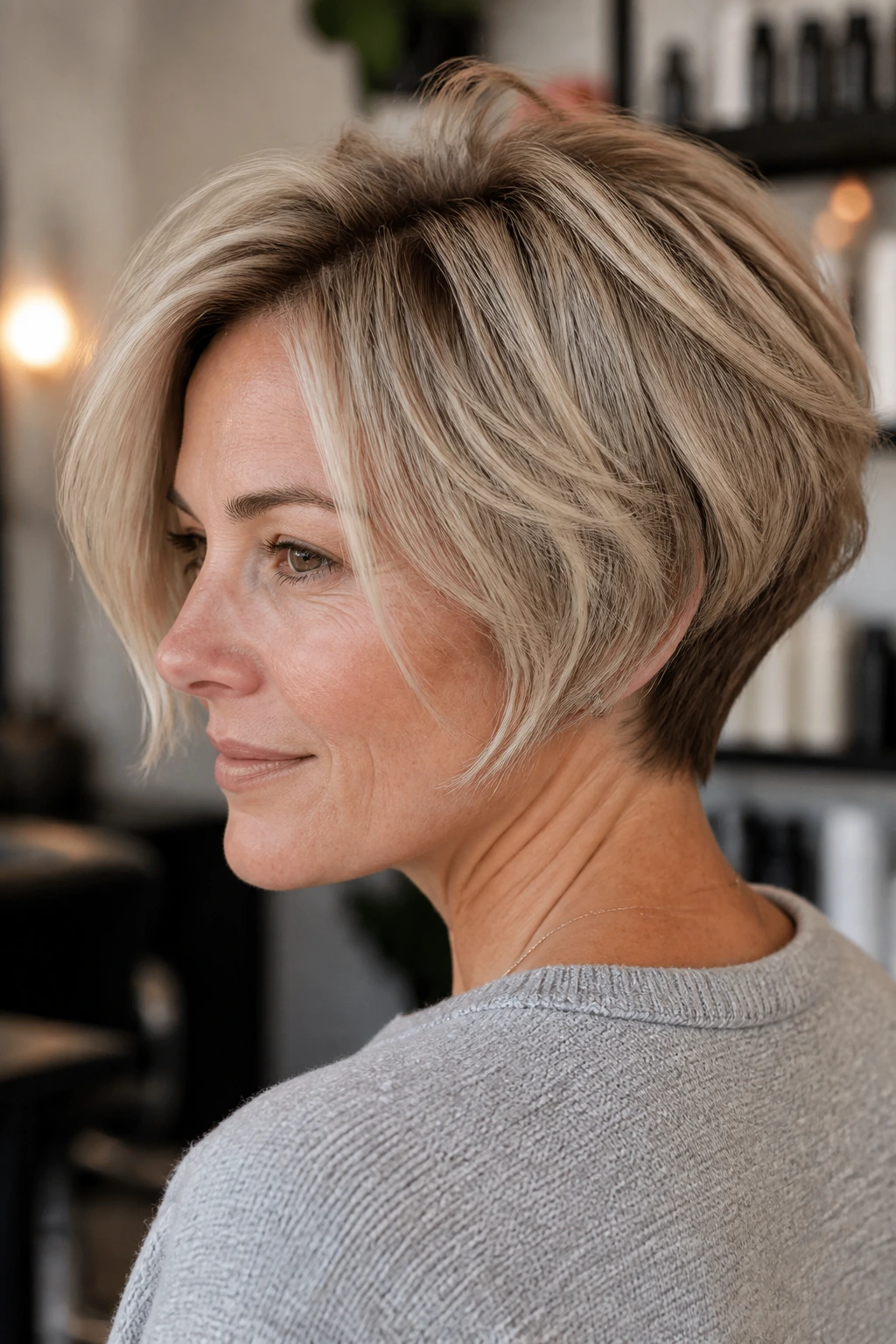
This is the most conservative approach. Your stylist uses thinning shears or a razor to create an internal undercut that is completely invisible to the casual observer. It removes the “bulk” that can cause thin hair to look limp, creating an airy, light feeling that makes the hair seem to have more natural lift.
Why This is Perfect for Everyone
If you are worried about the “edgy” look, this is the solution. It is a technical adjustment rather than a stylistic one. No one will know you have an undercut; they will only notice that your hair suddenly seems to have more volume and movement.
How to Request This
- Ask your stylist to “remove bulk” or “texturize” the back layers.
- Ensure they do not cut too much, or you risk making the hair look sparse.
- Ask for this technique at every haircut to maintain that “bouncy” effect.
15. The Deep Side-Part Undercut Bob
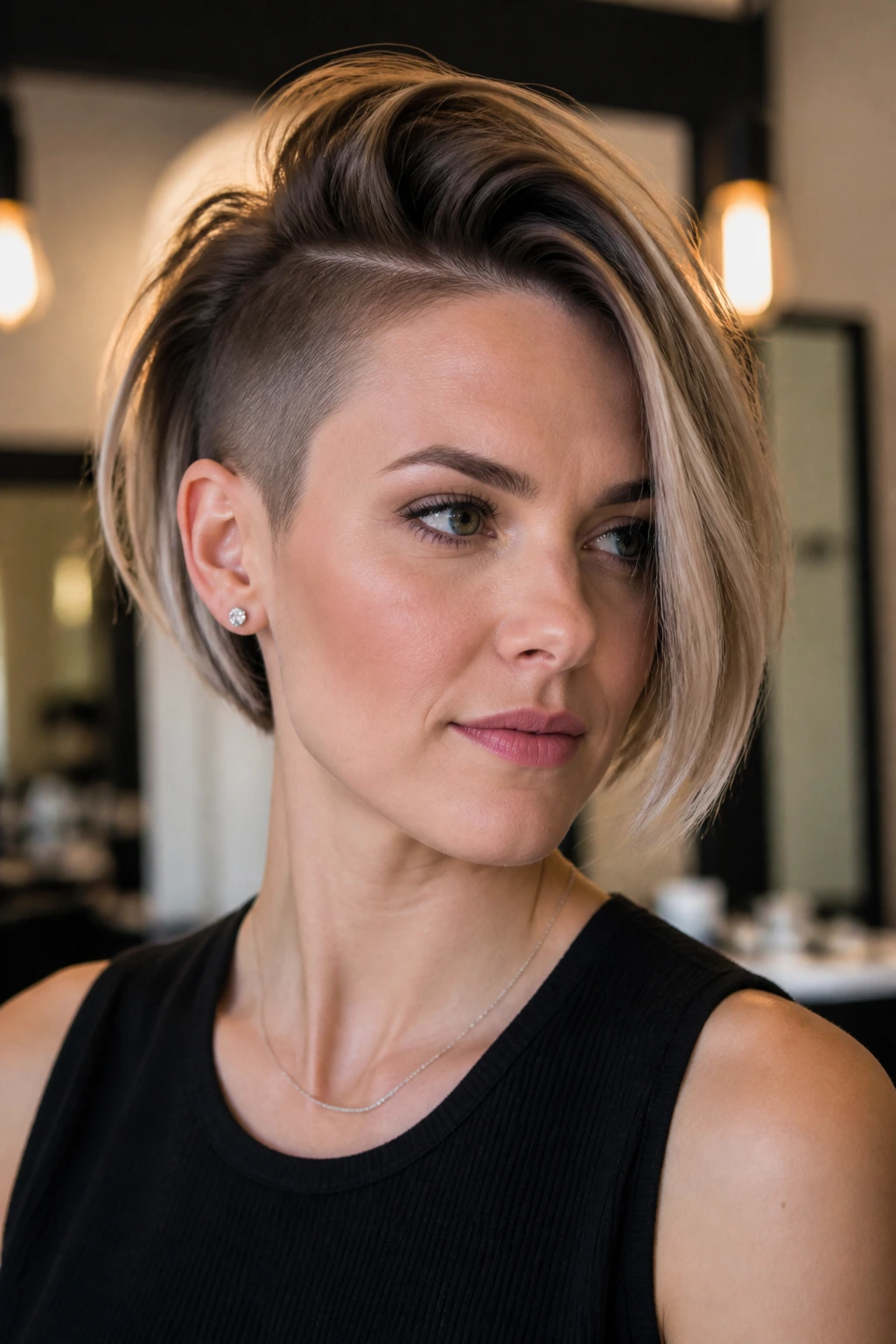
By pairing an undercut on one side with a deep, dramatic side part, you create an immense amount of lift on the top of the head. The undercut keeps the side from getting too bushy, while the side part forces the hair to fall over in a sweeping, voluminous motion.
The Physics of the Side Part
Flipping your hair to the opposite side of your natural part is the quickest way to get an extra inch of volume. When you pair this with an undercut that prevents the hair from being weighed down, you get a significant boost in height and visual density.
Styling for Maximum Height
- Blow-dry the roots in the opposite direction of the part while the hair is damp.
- Use a root-lifting spray to keep the hair in that vertical position.
- Avoid heavy products that might cause the hair to flop back to its original position.
16. The Sleek, High-Shine Undercut Bob
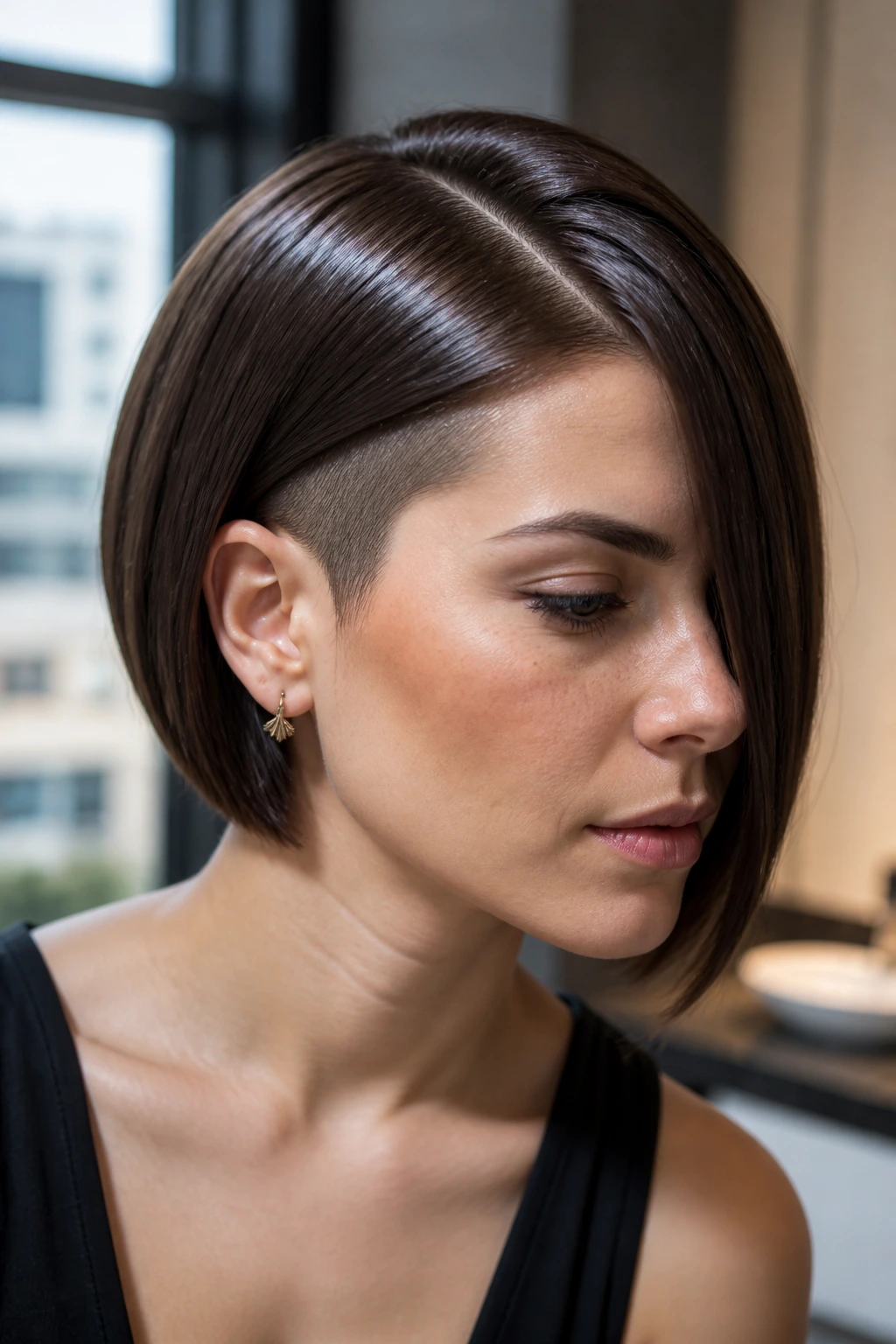
When your hair is thin, texture and shine are everything. A sleek, high-shine undercut bob is a power move. Because the undercut removes the weight at the nape, the hair can sit perfectly flat and smooth, allowing for maximum light reflection.
Why Shine Matters
Healthy, high-shine hair looks denser than dull hair. When light hits the hair, it creates highlights and dimension. By using an undercut to keep the shape streamlined, you maximize those light-reflecting surfaces, making your hair look much more substantial than it actually is.
How to Achieve High Shine
- Use a lightweight glossing spray or an anti-frizz oil after styling.
- A boar-bristle brush is excellent for distributing natural oils from the scalp to the ends.
- Keep your hair healthy with regular trims, as frayed ends kill shine instantly.
17. The Textured Crop with Undercut
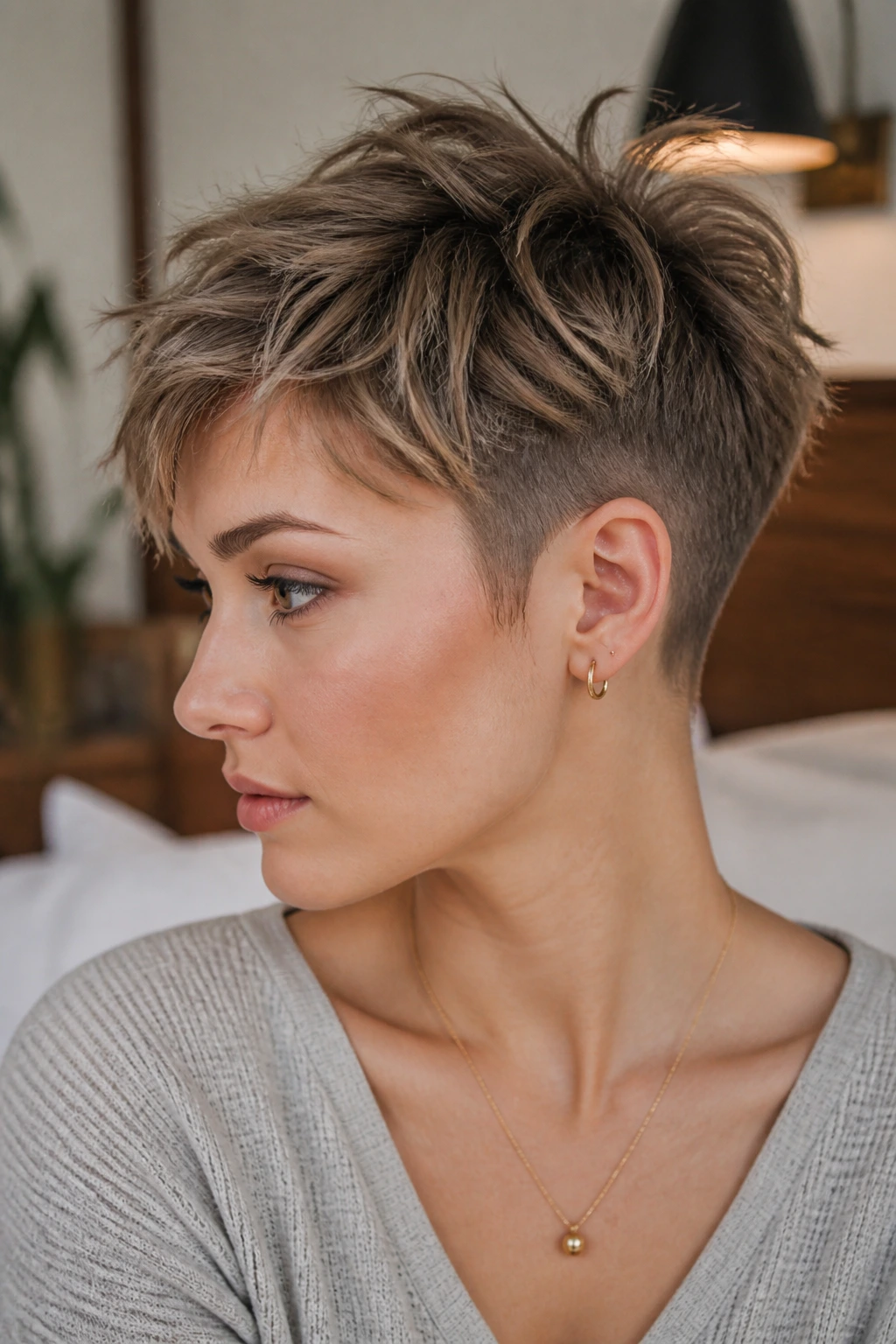
This is a very short, very stylish take on the bob. By keeping the top slightly longer and undercutting the back and sides, you create a “tousled” look that is incredibly easy to manage. It is a low-maintenance style that thrives on a bit of bedhead.
The Ease of Styling
This style doesn’t need to be perfect. In fact, it looks better when it is a little messy. For someone with thin hair, this is a relief because it means you aren’t fighting to make it look smooth and thick; you are fighting to make it look cool and intentionally tousled.
Who Should Try This
- If you have an active lifestyle.
- If you are tired of spending more than ten minutes styling your hair in the morning.
- If you are ready for a major change and want to see how short you can go.
18. The Graduated Bob with Tapered Nape and Fringe
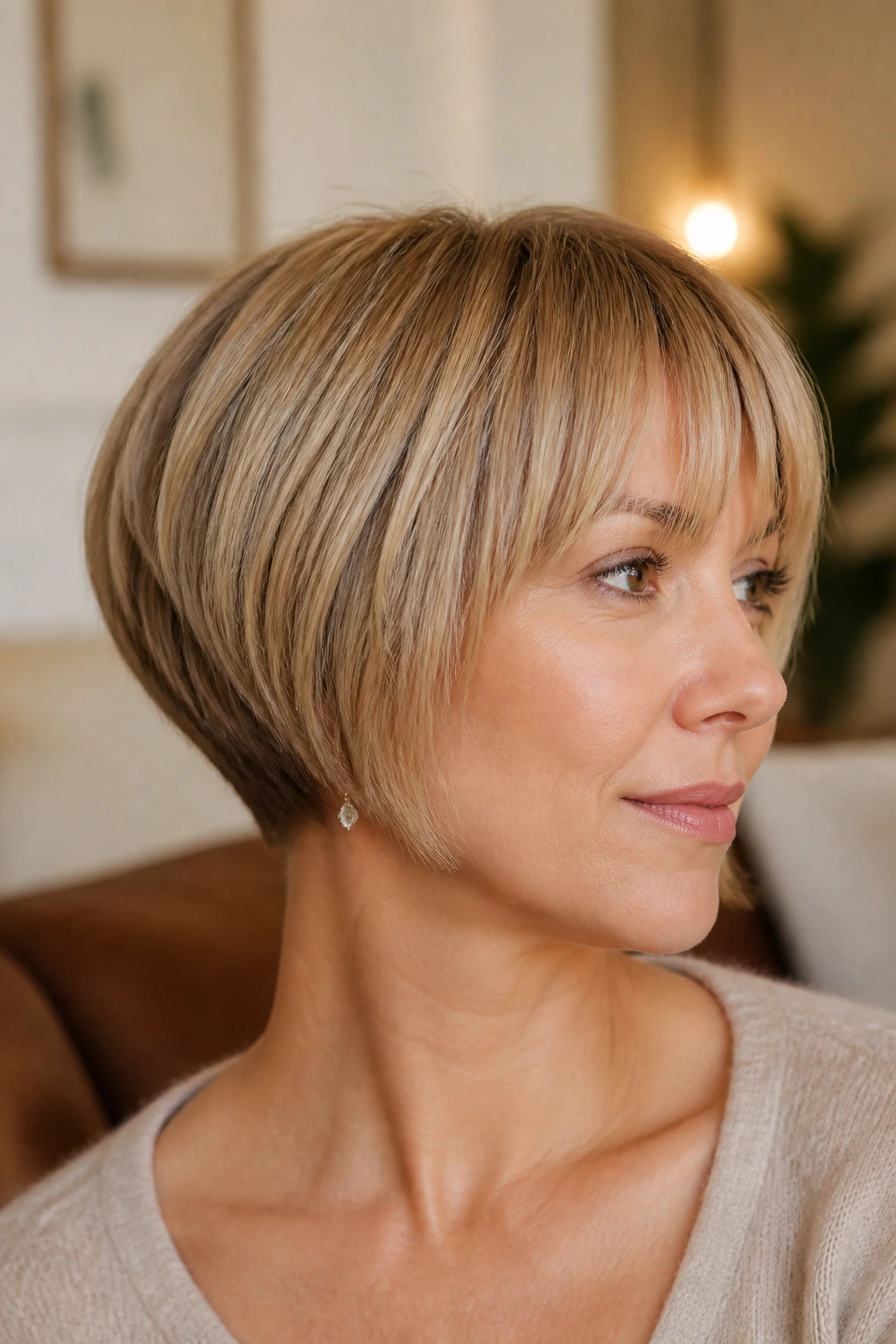
Adding a fringe (bangs) to your undercut bob creates a frame for your face. The fringe draws attention to your eyes, while the undercut/graduation in the back keeps the hair from falling flat. It is a balanced look that feels very intentional and polished.
The Importance of the Fringe
Fringes are great for thin hair because they pull hair from the crown to the front, which makes the top look fuller. When you combine this with an undercut, you are effectively redistributing the weight of your hair to the areas where you need it most.
How to Style Bangs
- Blow-dry them with a small round brush to give them a soft curve.
- Avoid over-touching them during the day, as oil from your hands will make them separate and look stringy.
- Keep a dry shampoo on hand specifically for your bangs.
19. The “Clavicle” Undercut Lob
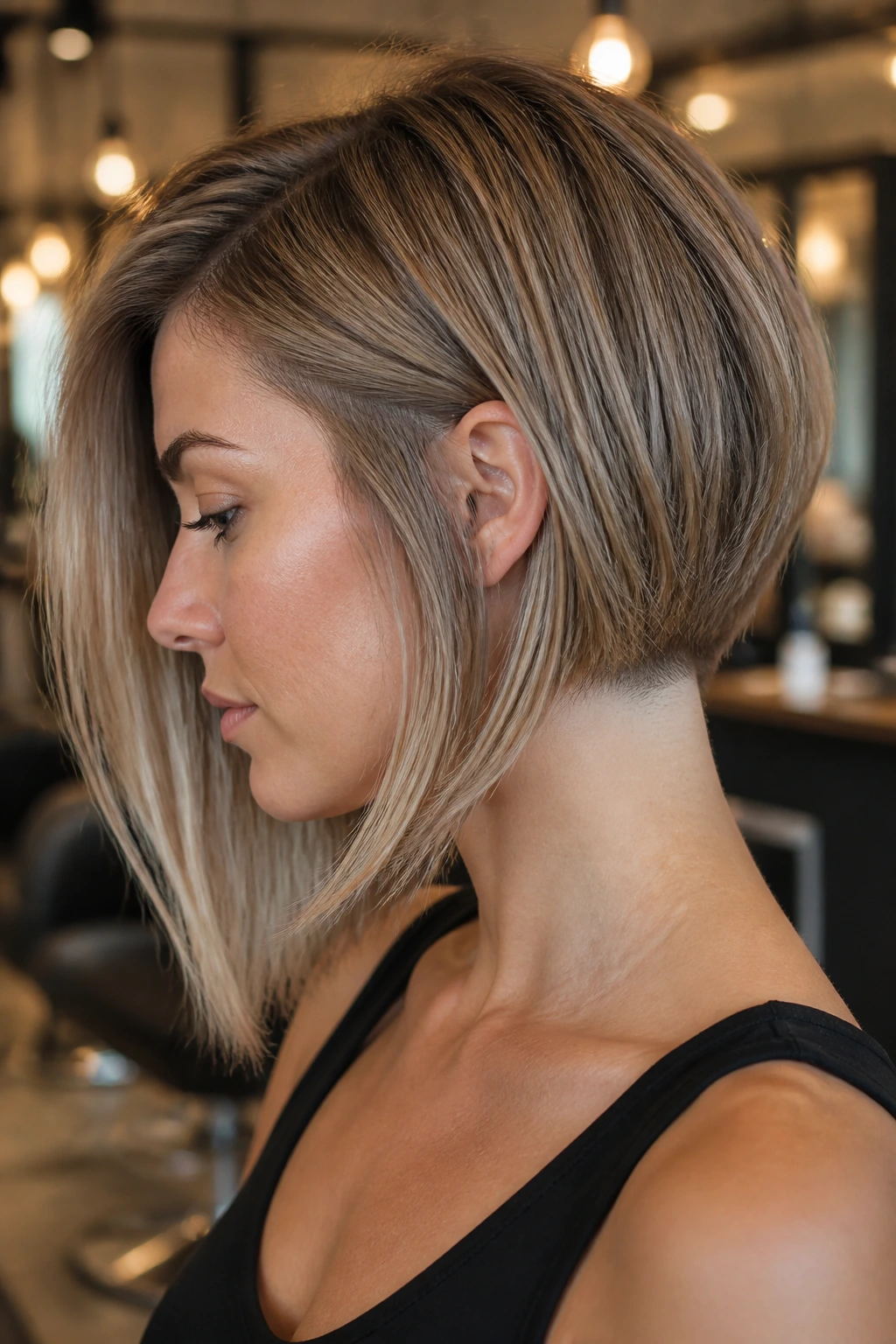
This is the longest version of an undercut bob. It hits right at the collarbone, which is a very flattering length for most people. By incorporating an undercut at the nape, you ensure that the longer hair doesn’t get “stringy” at the ends, which is a common problem for thin hair at this length.
The Clavicle Length Benefit
The clavicle length is the “sweet spot” for fine hair. It is long enough to pull back if needed, but short enough that the hair doesn’t get stretched thin and limp by gravity. Adding the undercut just provides that extra bit of internal structural support to keep the ends looking crisp.
Styling Tip
- Use a large barrel curling iron to create loose, soft waves.
- The undercut will ensure the hair at the back stays lifted, which prevents the “triangle” shape that often plagues thin hair of this length.
20. The High-Contrast Platinum Undercut Bob
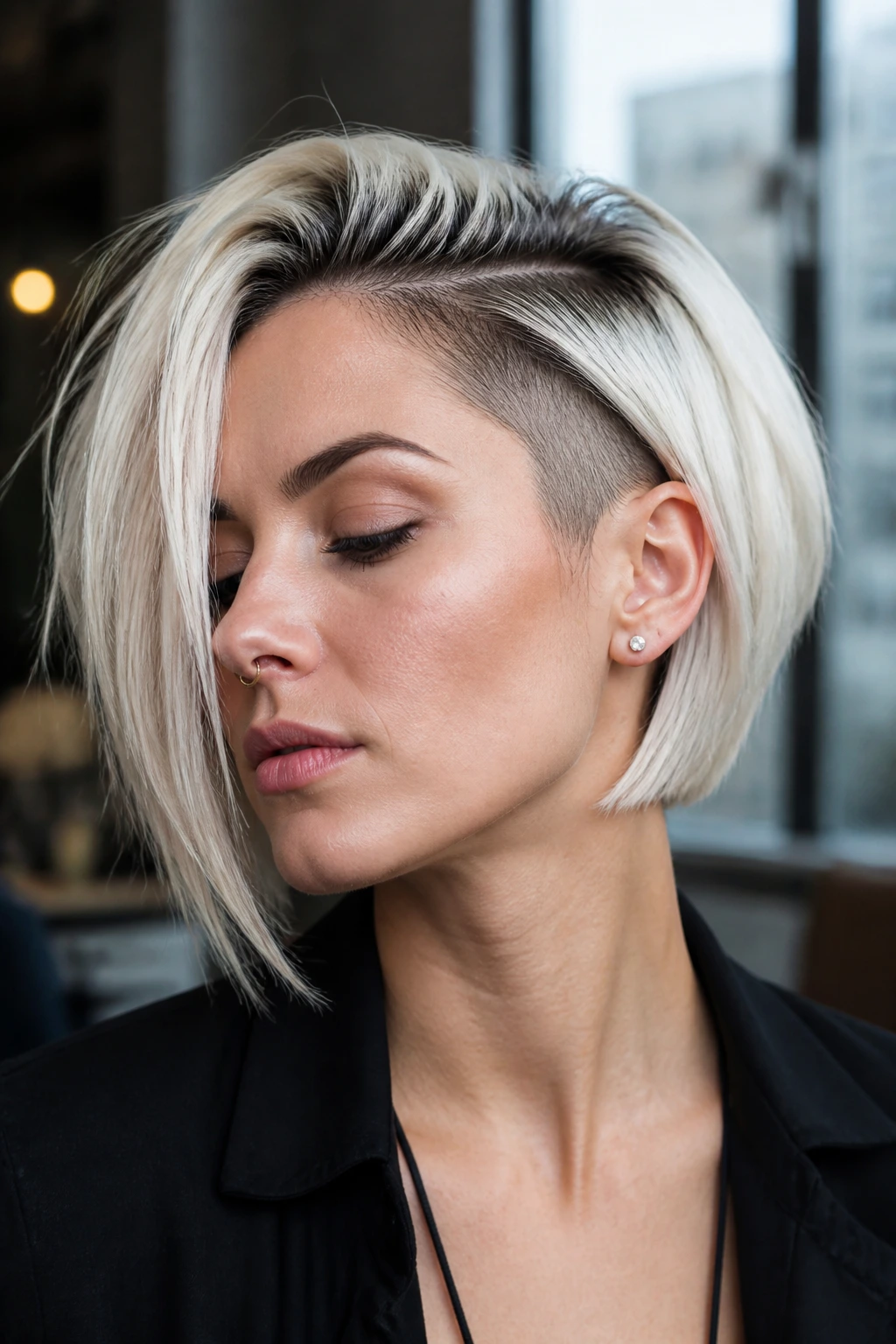
If you are willing to color your hair, platinum or silver tones can add a sense of dimension that makes thin hair look thicker. When you pair a high-contrast color with a sharp, undercut bob, you get a look that is as much about the artistic statement as it is about the hair itself.
How Color Affects Volume
Light colors reflect light, which makes the hair look more expansive. Darker colors tend to absorb light, which can make fine hair look flat and sparse. Platinum is essentially the ultimate volume-booster in color form.
Cautionary Note
- Bleaching thin hair can be damaging. Always work with a professional and use bond-building treatments to keep the strands healthy.
- Because the hair is fine, it will require frequent protein treatments to maintain structural integrity.
- If you are not ready for all-over bleach, consider highlights or a balayage that incorporates light tones.
Final Thoughts

Thin hair is often just a matter of perspective and technique. When you stop trying to force your hair to be something it isn’t—like long and heavy—and start using styles that emphasize shape and structure, you reclaim your confidence. The undercut is not just a trend; it is a fundamental tool for managing fine hair. It removes the weight that drags you down and creates the foundation for the volume you have been chasing all along.
The best approach is to start with a consultation. Find a stylist who is comfortable with clippers and understands the specific needs of fine, wispy strands. Don’t be afraid to ask for “internal layering” or a “tapered nape” if you are not ready to dive into a full shave. The goal is to create a haircut that feels like you while giving your hair the structural boost it needs to look its absolute best every single day.