


The gym is a place where functionality usually trumps vanity, but that doesn’t mean your hair has to suffer through a miserable, sweaty mess of tangles. Whether you’re grinding through a heavy lifting session, sprinting on the treadmill, or flowing through a sunrise yoga sequence, the right hairstyle can be the difference between a seamless workout and a constant, annoying distraction. You know exactly what I’m talking about—the feeling of a loose strand sticking to your forehead or a ponytail that slowly migrates down your head until it’s dangling by a single hair tie.
Finding a hairstyle that actually stays put while looking intentional is an art form. It requires balancing tension, security, and comfort. You want your hair off your face, but you also want a look that feels like an extension of your personal style, even when you’re deep into a high-intensity interval training session. Let’s look at eighteen ways to keep your hair secure and stylish, no matter how much you sweat.
1. The High Braided Pony
There is something incredibly reliable about a high ponytail, but when you add a braid, you introduce a level of durability that basic elastic bands simply cannot match. By weaving your hair into a tight, three-strand braid from the crown of your head all the way down to the ends, you keep every single flyaway contained within the weave.
Why This Style Succeeds
The braid creates a structural anchor. Unlike a loose pony that bounces and pulls at your roots as you move, the tension is distributed evenly across the scalp. This prevents that “tugged at” feeling you get after an hour of jumping around.
Pro Technique for Long-Lasting Hold
Gather your hair at the highest point of your head—right where the crown begins—and secure it with a silicone-free elastic. Once secured, braid the remaining length tightly and finish with a small, clear snag-free band. If you have layers, a quick spritz of texturizing spray before you start the braid will help catch those shorter pieces that try to escape.
2. The Classic Double Dutch Braid
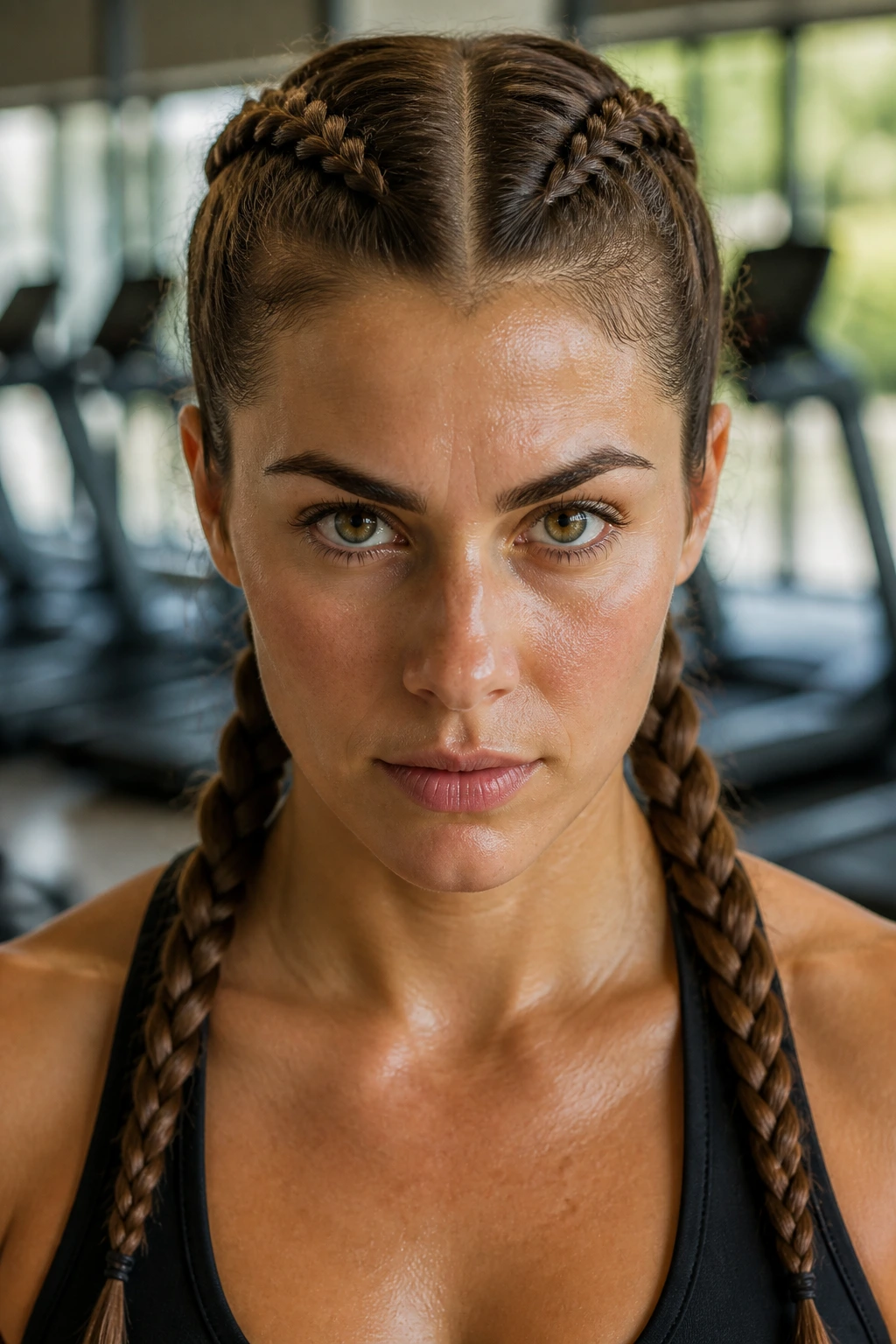
Dutch braids aren’t just for festival grounds; they are the gold standard for high-contact sports and rigorous cardio. Because the braids sit flat against the scalp rather than protruding, they don’t get in your way during floor work or when you’re resting your head on a bench.
How to Get the Look
Start by parting your hair down the center from your forehead to the nape of your neck. Take a small section at the front and split it into three pieces, crossing them under rather than over to create that distinct raised effect. Continue adding hair from the sides as you move toward the back, ensuring each section is pulled taut.
Maintenance During Your Workout
If you’re doing something high-intensity, you might notice the bottom sections loosening. Don’t panic. The beauty of the Dutch braid is that the “anchoring” happens at the scalp. Even if the tail gets a little messy, your face will remain perfectly clear throughout your set.
3. The Messy Low Bun with a Silk Scrunchie
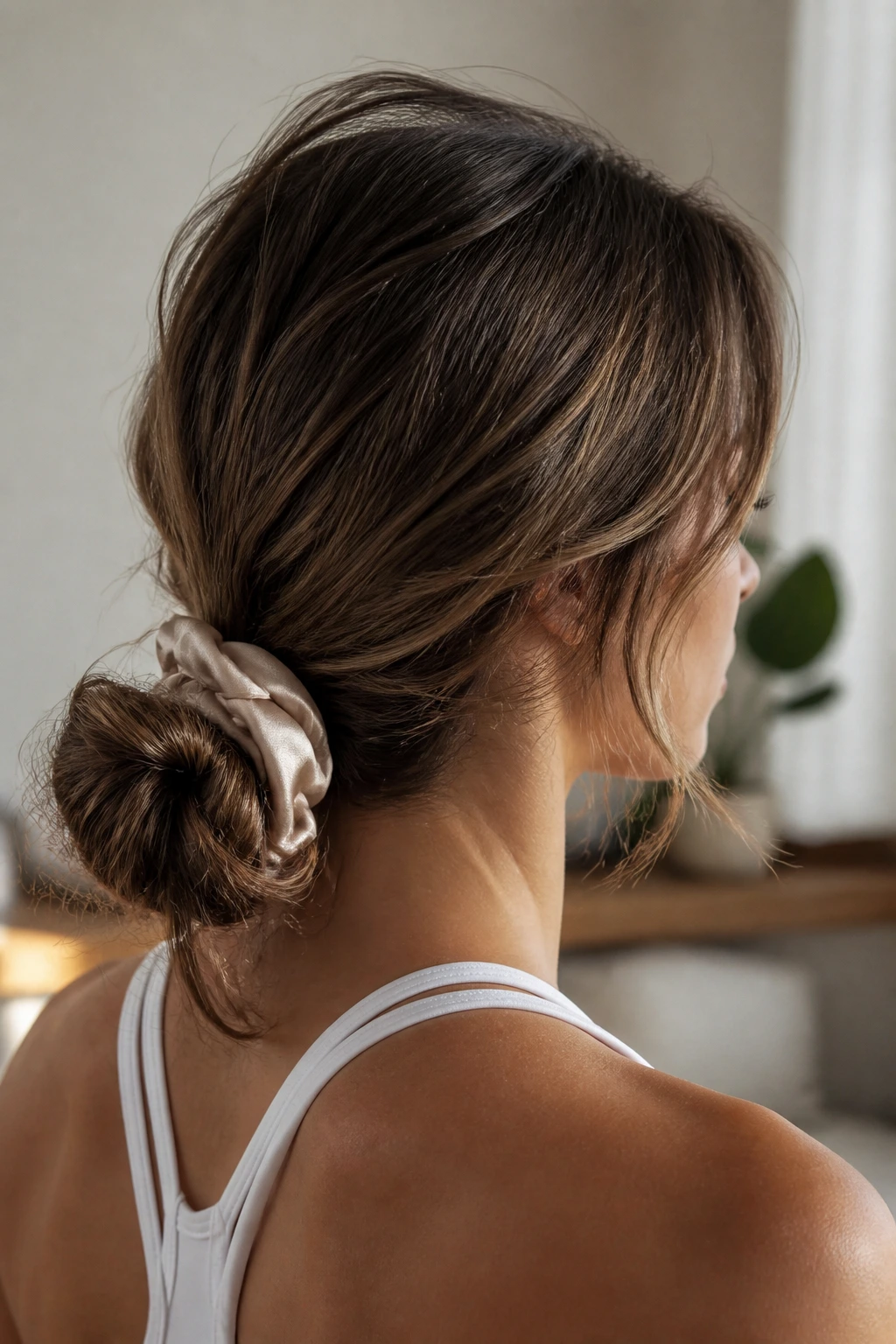
Sometimes, high tension is the enemy. If you’re doing a recovery-focused workout like restorative yoga or stretching, a tight style might actually cause tension headaches. This is where the low, loose bun becomes your best friend.
Choosing the Right Material
Skip the thin rubber bands that snap your strands. A silk or satin scrunchie provides enough grip to hold a low bun in place without causing the friction-based breakage that leads to those annoying flyaways. The fabric slides off easily when you’re done, keeping your hair smooth for the rest of your day.
Getting the Balance Right
Keep it low, right at the nape of your neck. Twist the length of your hair around the base of the ponytail, and secure it with the scrunchie. It doesn’t need to be perfect—the “messy” factor actually helps keep the hair from feeling too rigid.
4. The Half-Up Top Knot
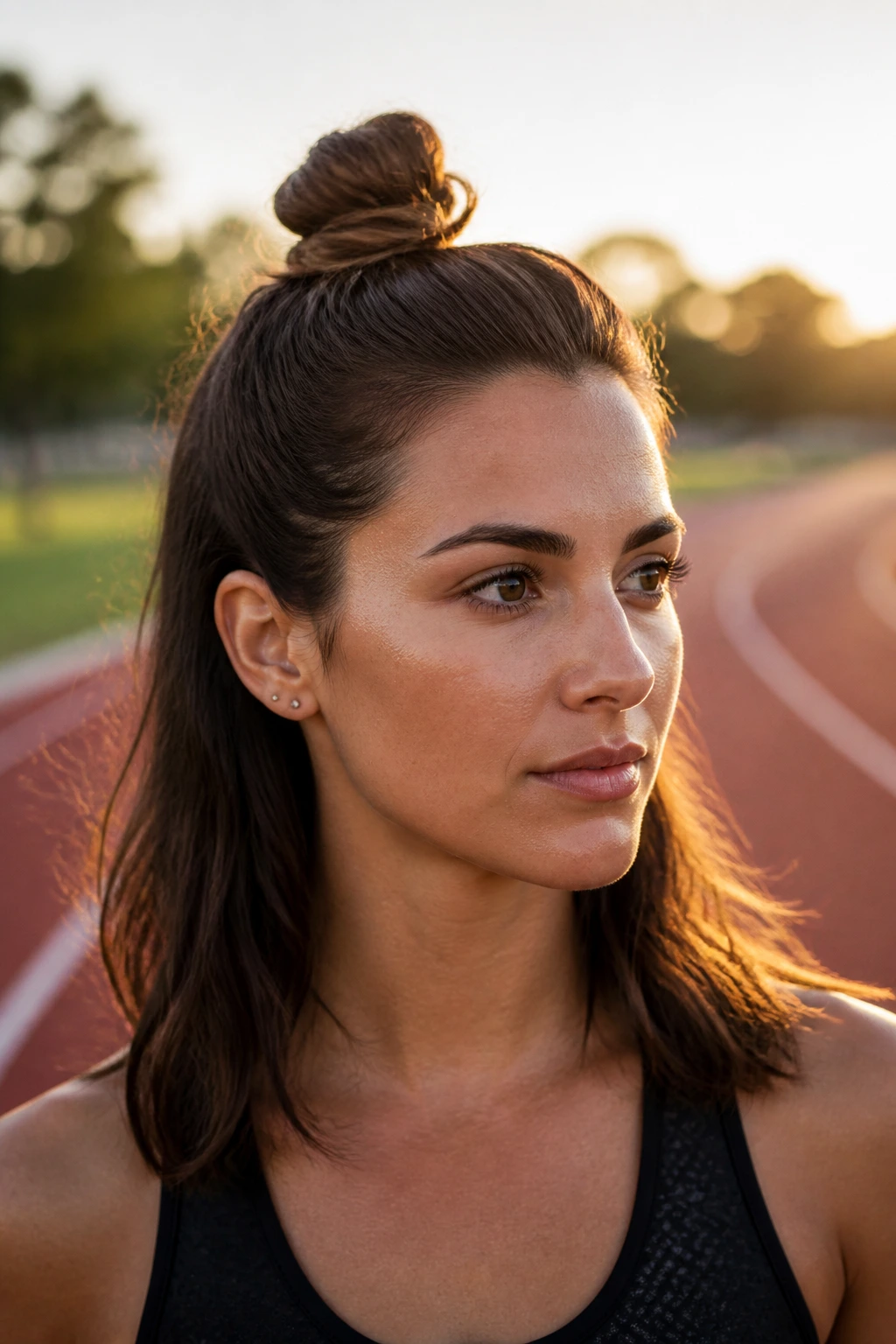
If you have bangs or shorter face-framing layers that just won’t behave, the half-up top knot is a lifesaver. It keeps the hair out of your eyes while leaving the rest of your mane free, which can be great for cooling down during a long run.
Structural Integrity
The key here is to only gather the top third of your hair. Use a small claw clip or a thin elastic to gather it into a tight knot at the very top of your head. Placing it slightly forward on the crown prevents it from slipping backward as you move.
Styling Tip
If your hair is particularly fine, a tiny touch of dry shampoo at the roots before you put the knot in will give the hair the grip it needs to stay anchored. You want the roots to have some “grit” so the hair doesn’t just slide out of the clip or tie.
5. The Low Sleek Braid
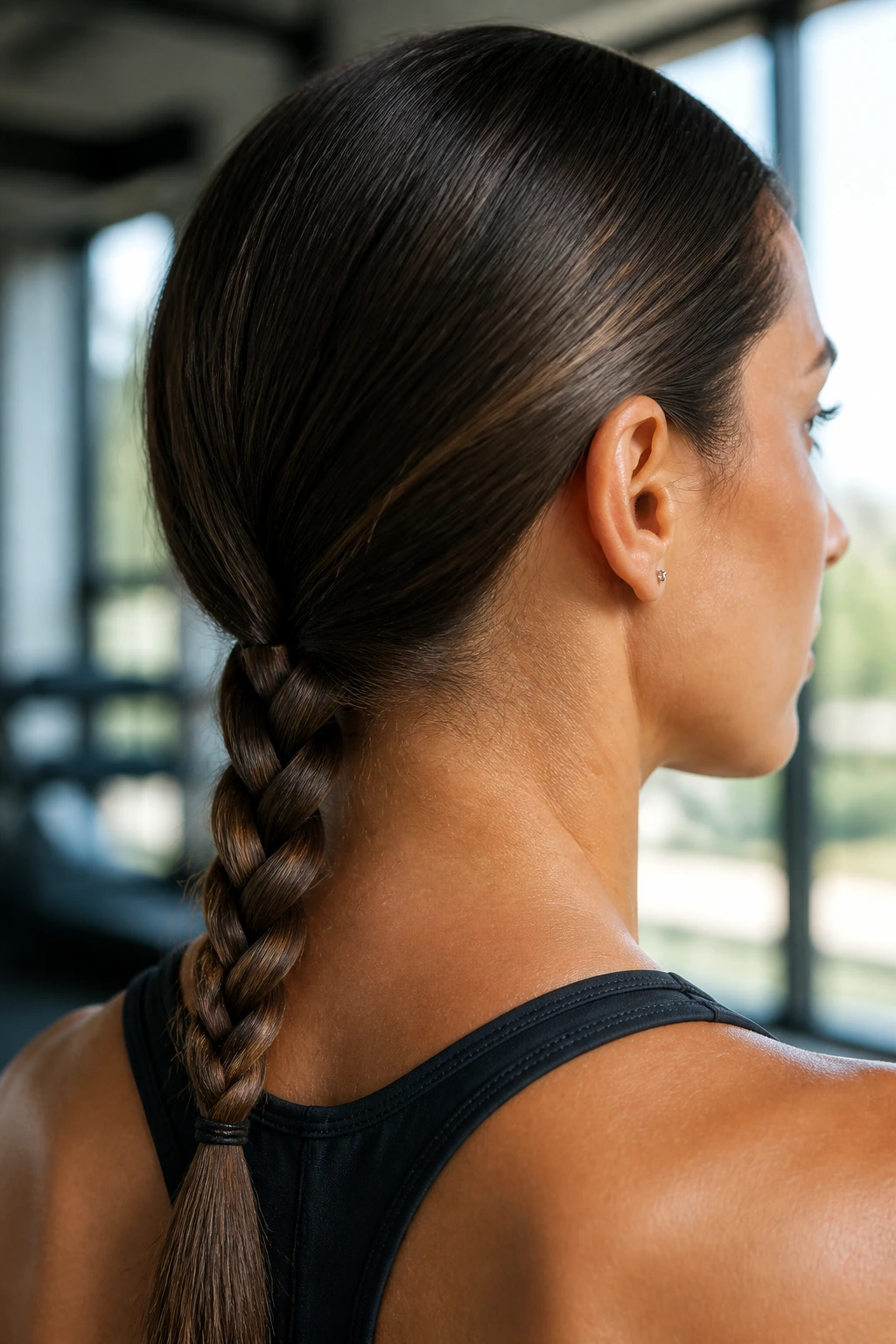
For those who prefer a more minimalist aesthetic, the low braid is quiet, refined, and incredibly secure. It looks just as good in the weight room as it does when you’re grabbing a post-workout smoothie.
The Physics of the Sleek Braid
By keeping the hair low, you avoid the neck-strain that can come with heavy high-ponytails. Because the braid starts at the nape of the neck, there is very little weight pulling on your temples.
Getting that “Polished” Look
Apply a small amount of leave-in conditioner or a smoothing serum to your hands before braiding. This keeps the hair uniform and prevents frizz caused by ambient gym humidity. It’s a simple trick, but it makes the entire style look intentional rather than just “tossed back.”
6. The Multi-Elastic Ponytail
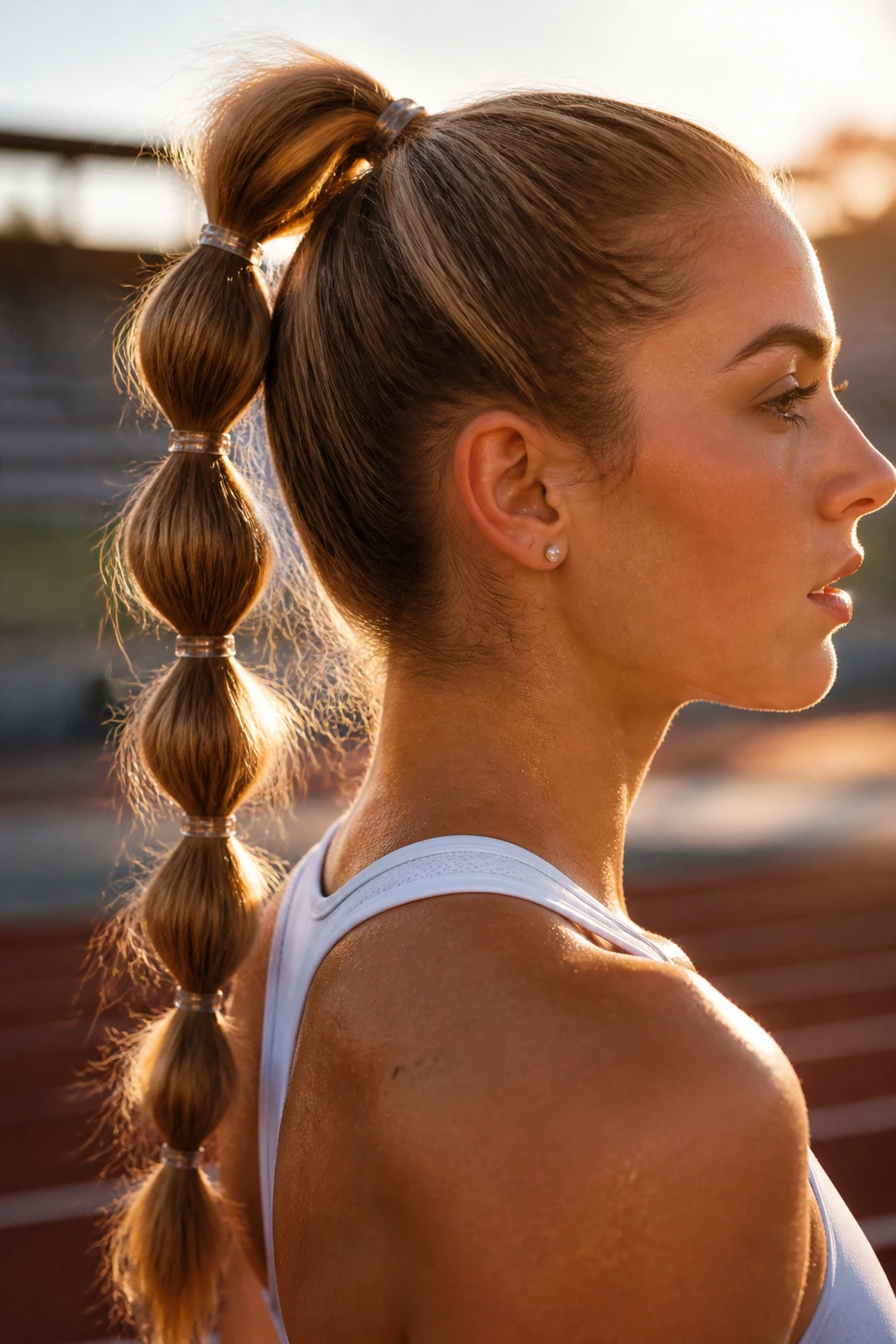
If you have heavy or thick hair, a single elastic is often not enough to keep your ponytail from drooping. The multi-elastic method creates a segmented pony that stays exactly where you put it, no matter how much you sprint.
Building the Structure
Start by securing a high ponytail. Every two inches, add another small, clear elastic down the length of the tail. Gently tug on the hair between each elastic to create a “bubble” effect.
Why It Works for Athletes
Each segment acts as its own anchor. Even if the hair tie closest to your scalp stretches out, the second and third ties further down provide enough resistance to keep the tail from whipping around uncontrollably. It’s an incredibly functional way to manage volume.
7. The Knotted Low Pony
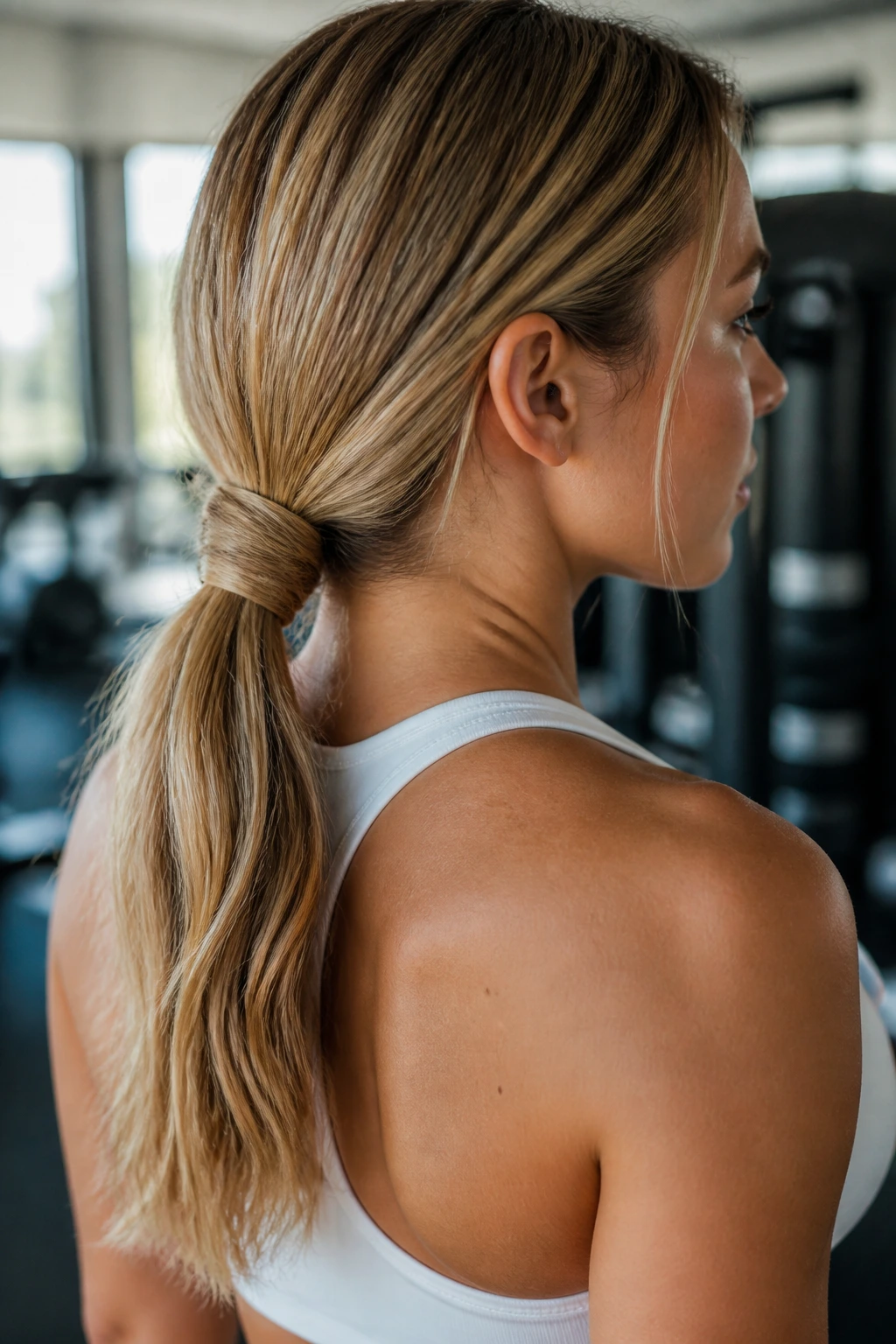
This is a sophisticated take on the standard low ponytail. It’s easy to do, requires no extra tools besides an elastic, and looks like you spent much more time on your hair than you actually did.
The “Loop-Through” Method
Tie your hair into a loose low ponytail. Create a small gap just above the elastic and pull the entire length of the ponytail through that gap—essentially “inverting” it. You can repeat this once more if you have extra length.
Why You’ll Love It
This technique tucks the ponytail inward, keeping the bulk of your hair tightly secured against your neck. It’s significantly more secure than a standard pony and won’t get caught in the straps of your sports bra during bench presses.
8. The Headband-Under-The-Hair Look
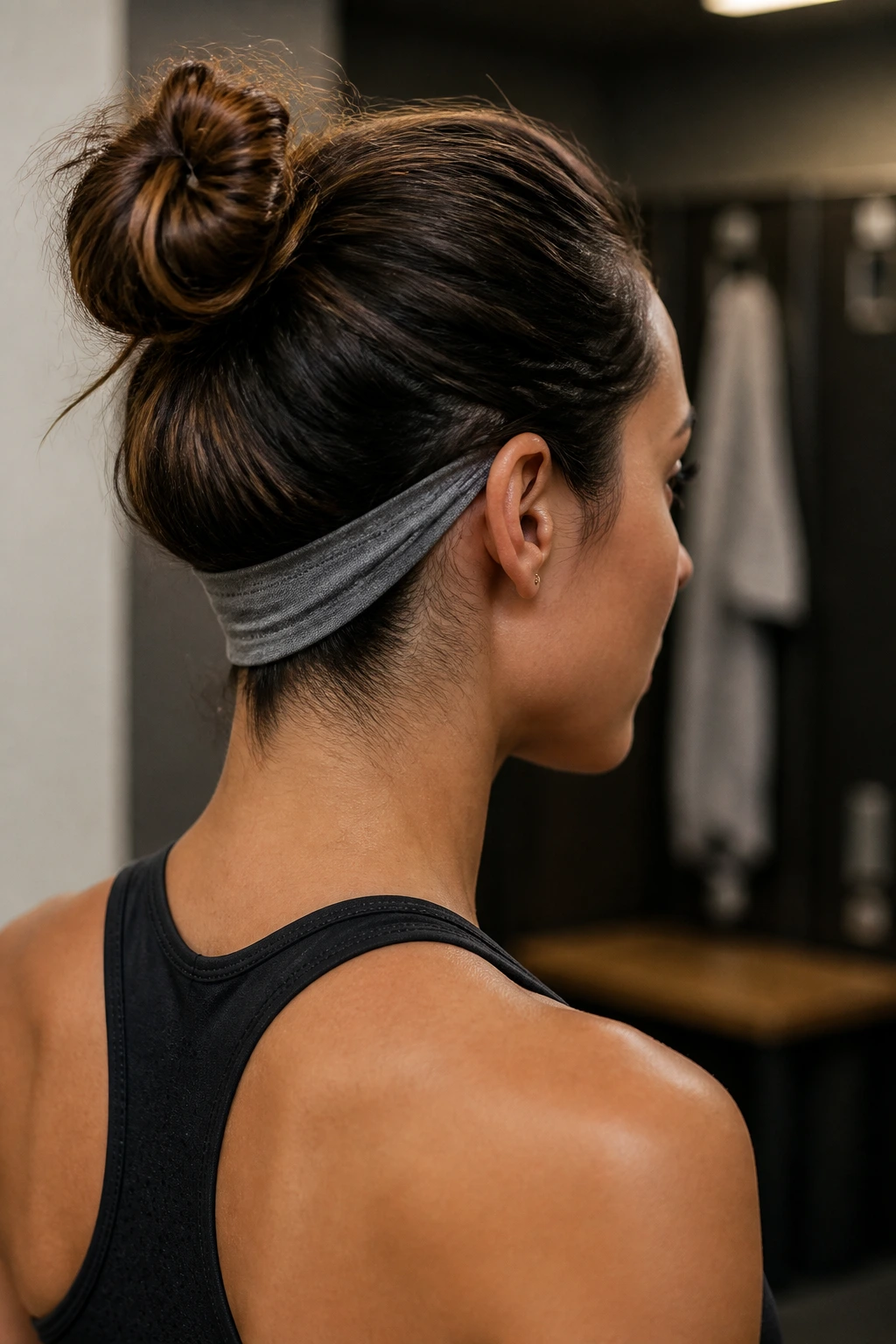
Sometimes you don’t want a complex style; you just need your bangs or front layers to stay back. A fabric headband worn under the hair at the nape of the neck is a classic trick for keeping things tidy.
Performance Fabric Matters
Look for headbands with a silicone grip on the underside. Plain cotton headbands often slide off the moment you start to sweat, which is arguably more frustrating than having the hair in your face in the first place.
Proper Placement
Position the headband about an inch back from your hairline. By tucking the ends behind your ears, you ensure that the band stays flat and secure. It’s a low-maintenance way to keep your peripheral vision clear.
9. The Wrapped Rope Braid
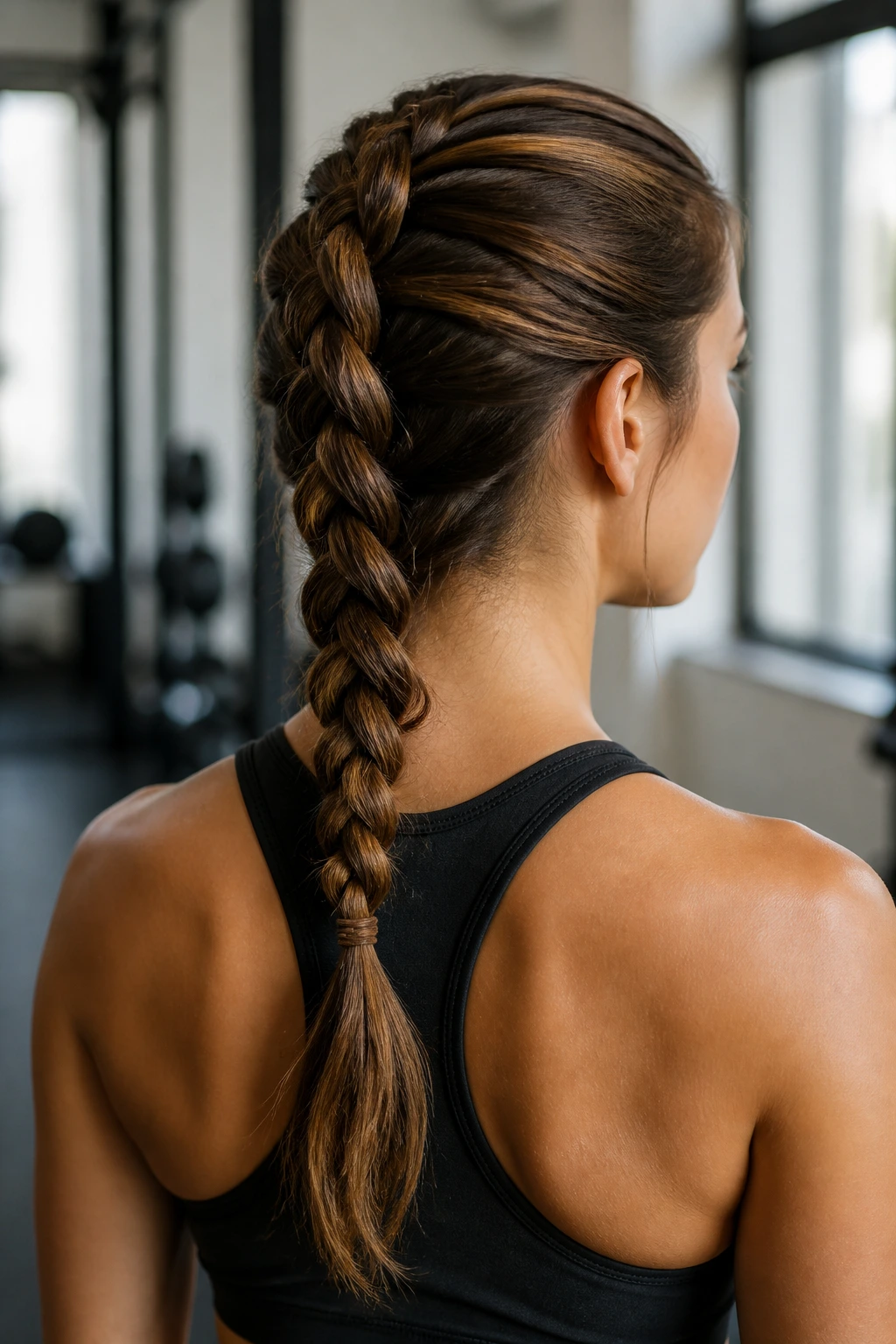
A rope braid—where you split your hair into two sections and twist them around each other—is a fantastic alternative to the standard three-strand braid. It feels firmer and looks more architectural, which is perfect for high-impact workouts.
The Secret to the Rope
Twist each of the two sections to the right, then wrap them around each other to the left. This “opposing force” is what makes the rope braid stay together. If you twist both in the same direction, it will unravel almost instantly.
Why It’s Great for Fitness
It’s significantly less bulky than a traditional braid, meaning it’s less likely to snag on your gear. It sits very flat against the back, making it a dream for anyone who does a lot of floor-based core work.
10. The Slicked-Back Bun
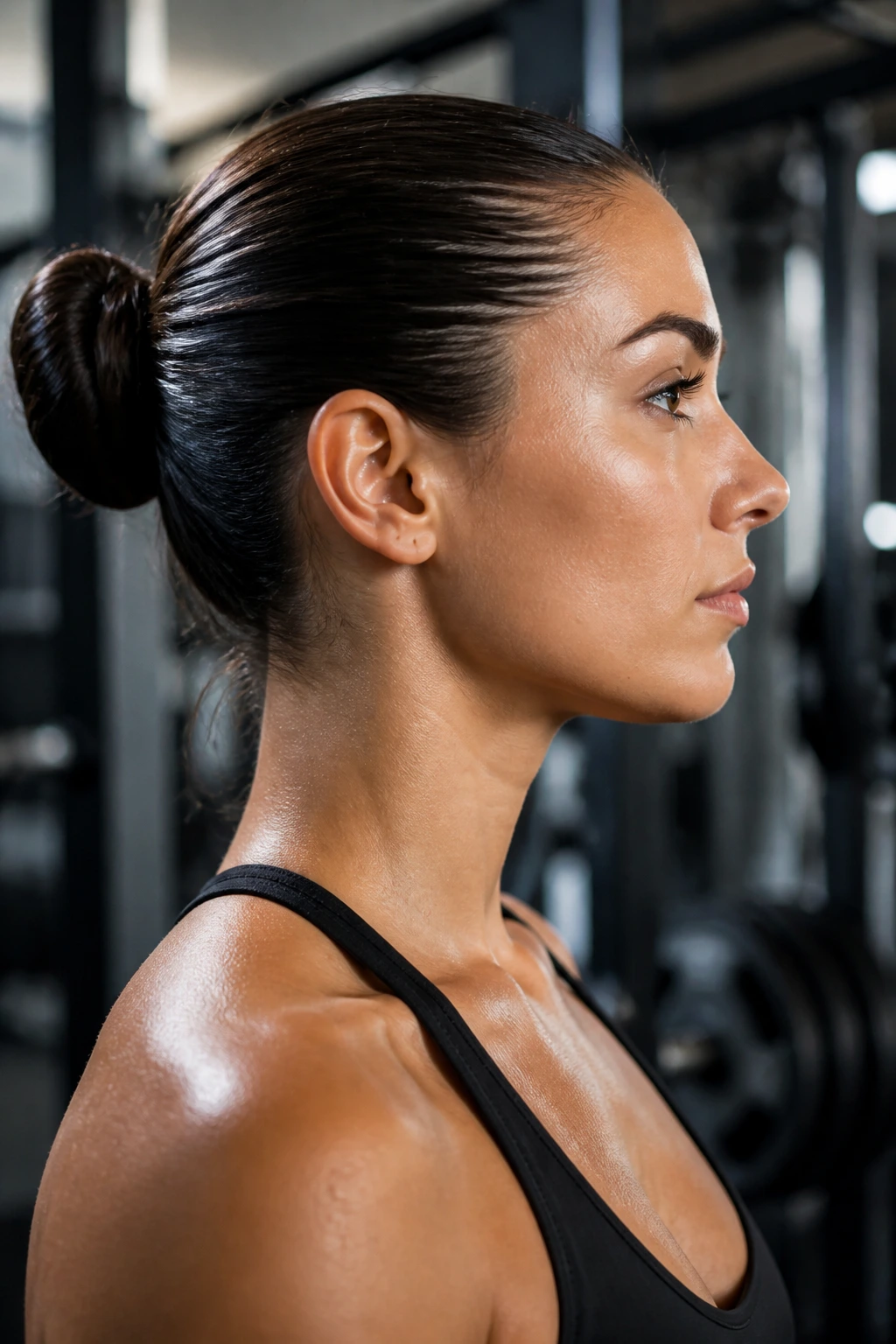
If you want total control, nothing beats a slicked-back bun. It’s the ultimate “work mode” style for the gym, keeping every single strand pinned down and out of your way.
Using the Right Product
A firm-hold pomade or a light styling gel is essential here. You don’t need a lot—just enough to tame the baby hairs around your hairline. Use a boar-bristle brush to distribute the product evenly as you pull your hair back.
The Safety Pin Trick
If you’re doing something like boxing or heavy cardio where movement is vigorous, secure the bun with two or three “U-shaped” hair pins rather than just an elastic. These pins lock into the bun more effectively than standard bobby pins and won’t slide out as you move.
11. The Side-Swept Braided Crown
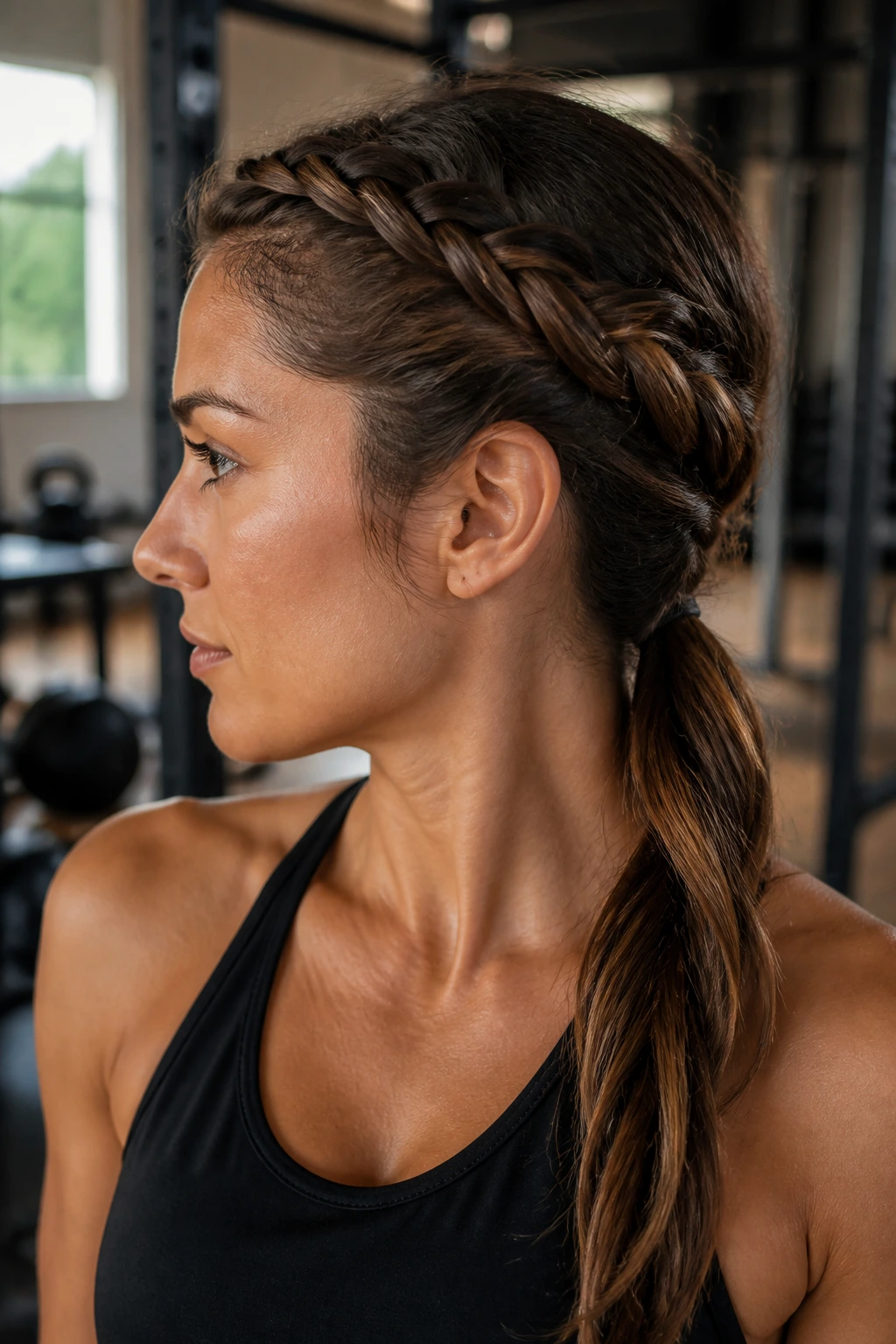
Want your hair totally out of your face but bored with the usual center-parted looks? A side-swept braid that follows your hairline is a stylish and secure choice for high-intensity movement.
How to Execute
Begin by braiding a small section of hair starting from the side of your forehead, moving toward the back of your head. Incorporate new strands as you move along the hairline. Once you reach the back, gather the remaining hair and braid it into a low side-tail.
The Visual Benefit
It frames your face beautifully without letting any pieces escape. This style works exceptionally well for people with layers, as the constant addition of new hair into the braid captures those shorter pieces that would otherwise fall out of a standard ponytail.
12. The High Bun with a Scarf Wrap
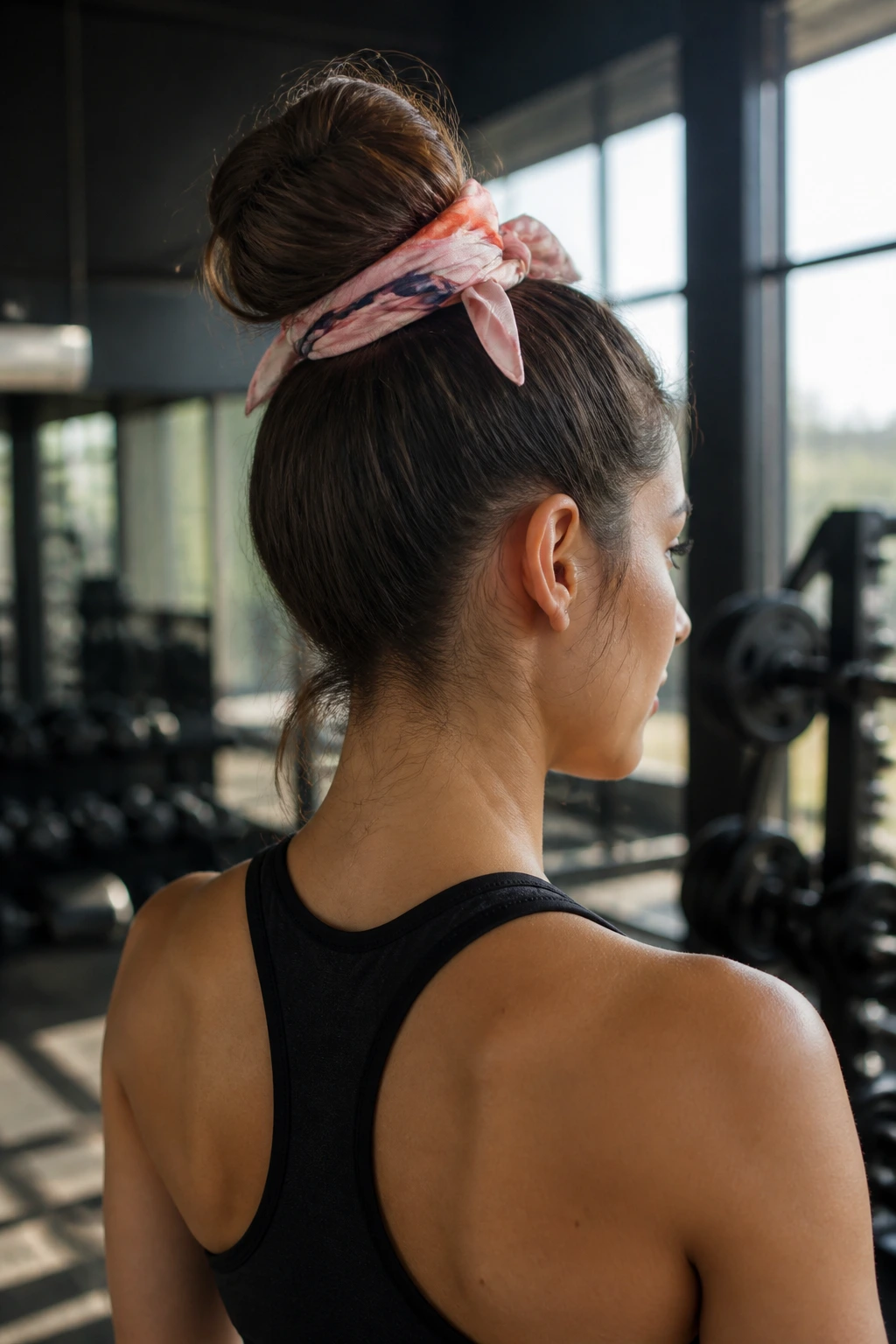
If you have a lot of volume and find that an elastic just doesn’t provide enough security for your bun, wrap a lightweight workout scarf around the base. The friction from the scarf acts as a secondary lock for your hair.
Choosing Your Scarf
Use a moisture-wicking synthetic fabric rather than heavy silk. Silk is great for day-to-day, but when you are sweating, a synthetic scarf will hold the knot more securely and won’t become heavy or damp.
Aesthetic Appeal
It adds a pop of color to your gym outfit. Plus, it serves a functional purpose by absorbing sweat at the neckline, keeping your hair dry even during the most grueling sessions.
13. The Braided Pigtails
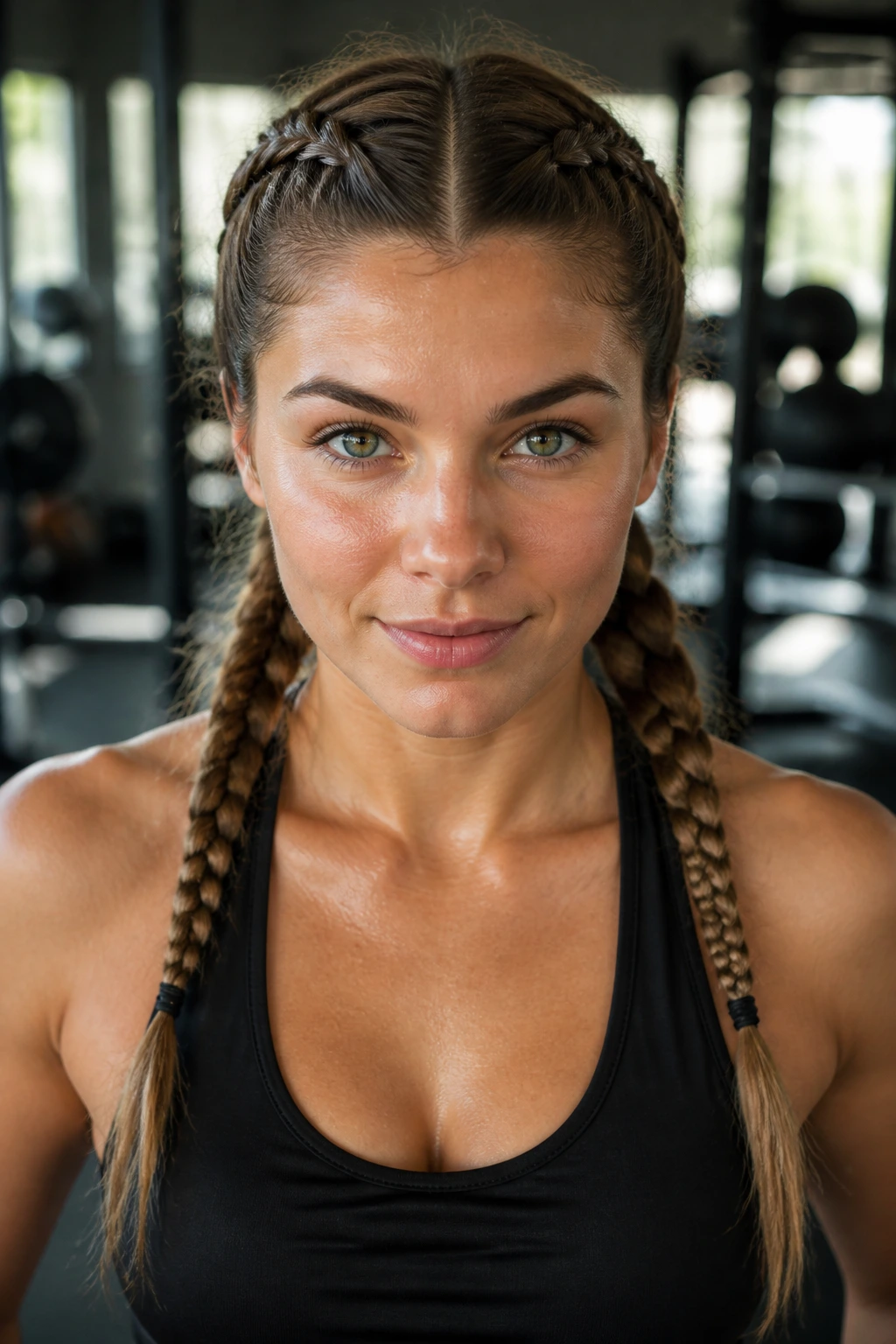
Pigtails might sound juvenile, but when styled as tight, French-braided pigtails, they are essentially the most secure hairstyle you can choose. They are perfect for anything involving lying on your back or wearing a hat.
Even Distribution
By splitting your hair into two equal sections, you reduce the overall weight on any one part of your scalp. This is a game-changer if you get headaches from tight ponytails.
The “Workout-Proof” Finish
Secure the ends with small, tight elastic bands. If you find your hair is too slippery, a tiny bit of dry texture spray in the lengths before you start braiding will give your fingers more grip and the hair more “hold.”
14. The “Top-Knot” with a Headband
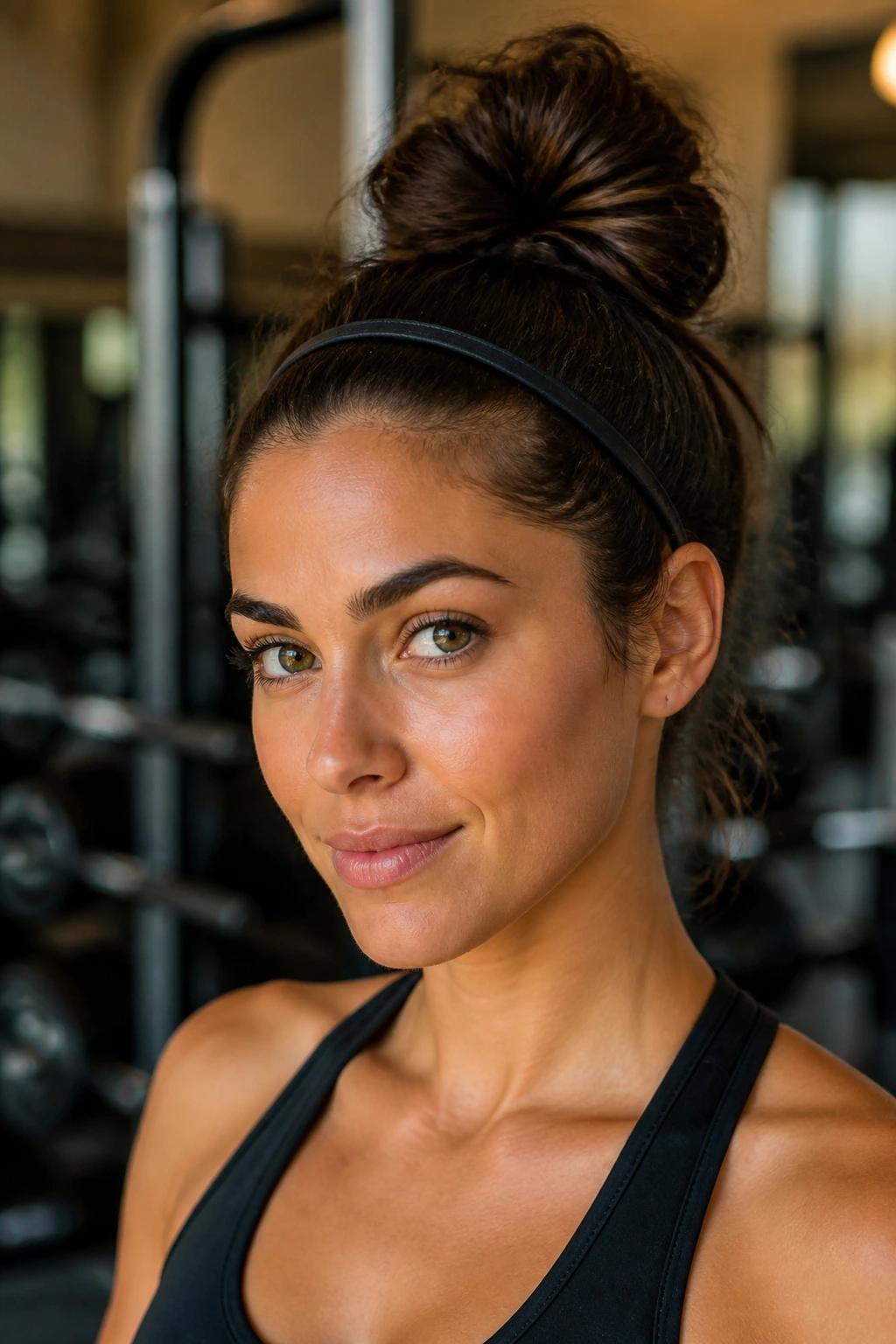
Sometimes the best defense against hair in your face is a two-pronged attack. A high top-knot handles the bulk of the hair, while a thin, grippy headband catches the shorter layers around your ears and forehead.
Balancing the Two
Place your headband before you put your hair up. This ensures the band sits flush against your skin and won’t get tangled in the bun later. It’s a simple order-of-operations change that makes your setup much more efficient.
Comfort Check
Make sure the headband isn’t so tight that it pushes your ears out or creates pressure points. If you feel it pinching, it’s going to be incredibly annoying halfway through a heavy set of squats.
15. The Fishtail Pony
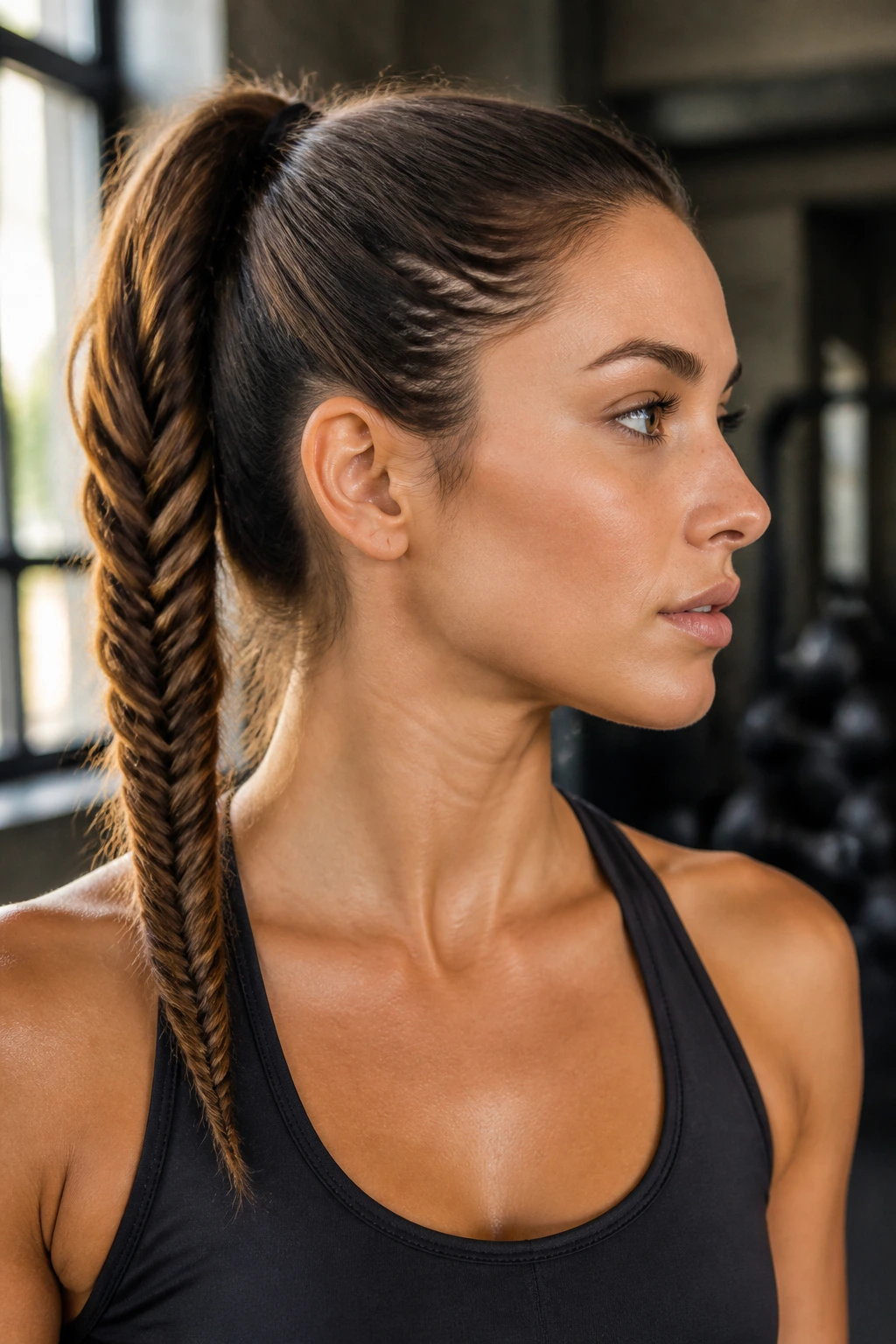
The fishtail braid is arguably the most secure type of braid because it is woven so tightly. By starting with a high pony and then fishtailing the length, you get the best of both worlds: high-impact security and a really cool, intricate look.
How to Fishtail Efficiently
Split the ponytail into two main sections. Take a very small piece of hair from the outside of the right section and cross it over to the inside of the left section. Repeat on the other side. Keep the pieces small for that “tight” look.
Why It’s Worth the Effort
It takes a little longer than a standard braid, but the result is a braid that is virtually indestructible. It won’t loosen up during a long session, and because it’s woven so tightly, it actually gets better looking as you move and the “gaps” shift slightly.
16. The Half-Back Braided Halo
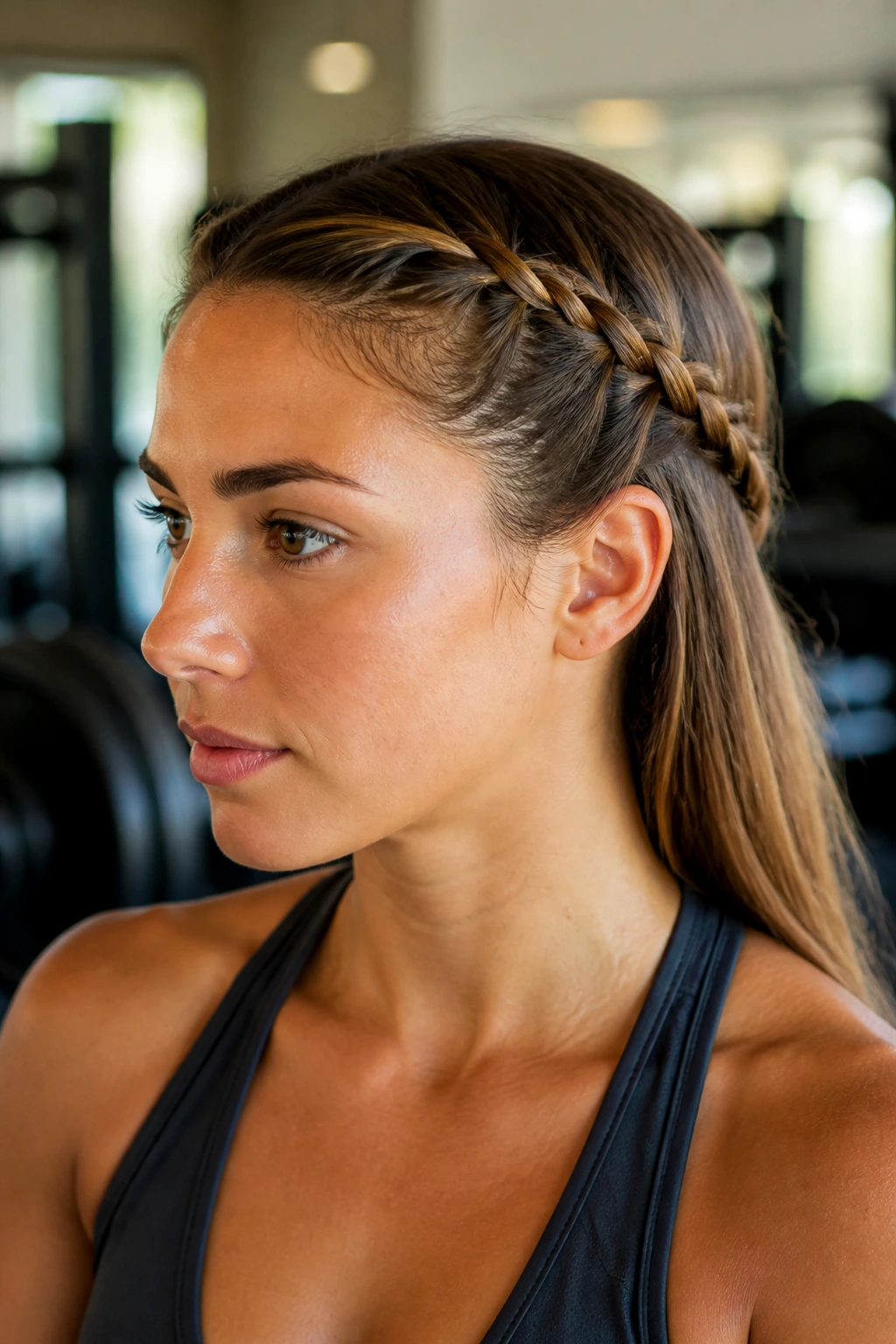
This is for the person who loves the look of their hair down but hates having it in their face. Two small braids starting at the temples and meeting at the back of the head create a “halo” effect that keeps the hair off your eyes.
Securing the Halo
Secure the two braids at the back of your head with a single clear elastic. If you have extra length, you can wrap a small piece of hair around the elastic to hide it for a more polished look.
Functional Note
This style works best for low-to-medium impact activities, like weight lifting, walking, or Pilates. If you are doing extreme cardio where you’re moving your head rapidly, the loose length in the back might get caught, so use this one for the days you’re focusing on strength.
17. The Twisted Pigtail Pony
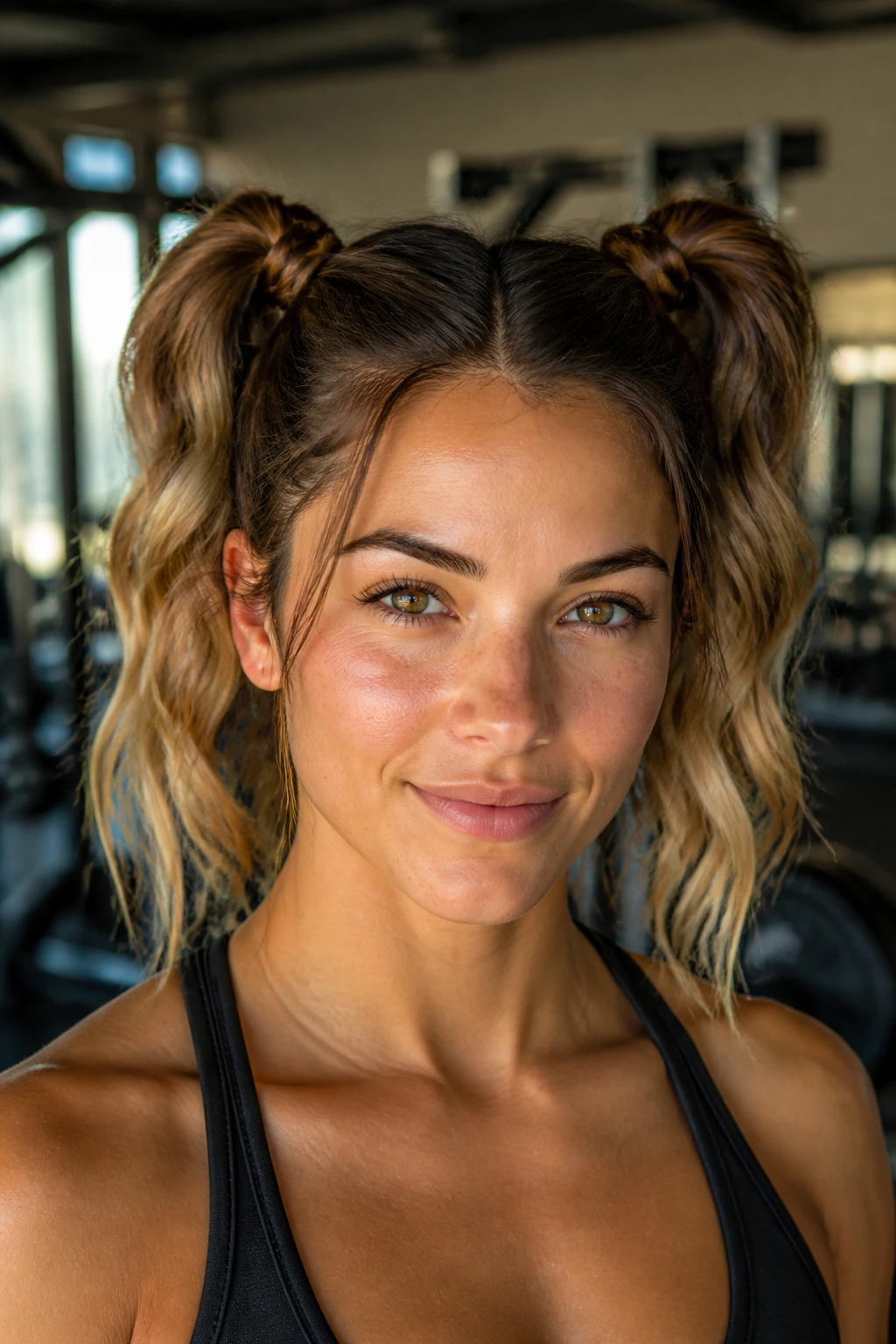
This is a playful, secure style that involves twisting small sections of hair into the base of two high pigtails. It keeps the hair very tight against the scalp, minimizing any movement.
The Twist-In Method
Part your hair in the middle. Take the front section on the right, twist it toward the back, and incorporate it into the pigtail. Do the same on the left. This “tucked-in” approach creates a very clean hairline.
Why It Stays Put
The twists provide tension that prevents the hair from pulling away from the scalp. It’s significantly more secure than just pulling hair straight back into pigtails, as the twists act like a secondary set of anchors for your hair ties.
18. The “Undercut” Braided Pony
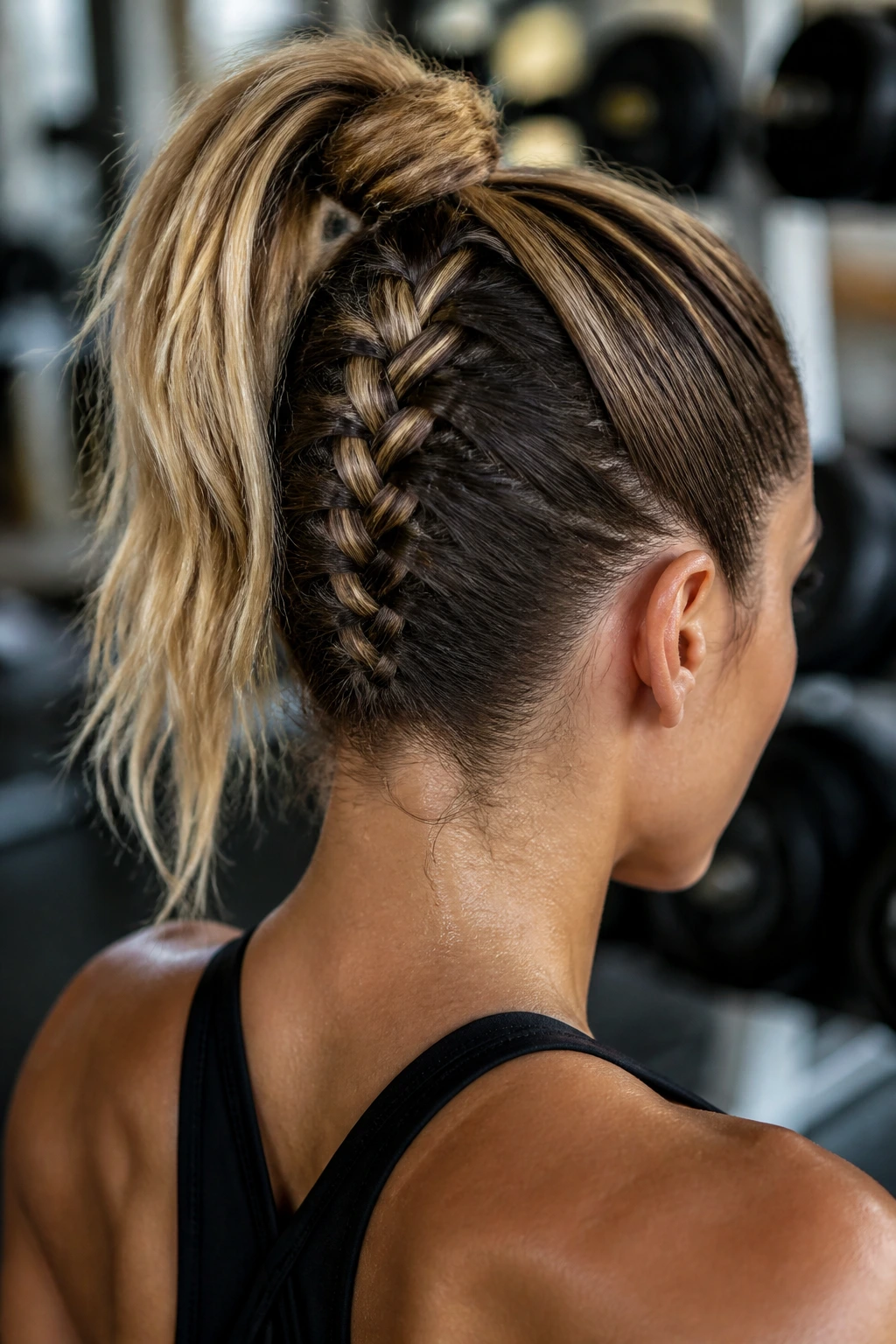
If you have a lot of hair at the nape of your neck that always falls out of your ponytail, start your ponytail by braiding that bottom section upward toward the crown of your head.
The Mechanics of the Inverted Braid
Flip your head upside down and French braid the hair at the nape of your neck, moving upward. Once you hit the crown, gather the rest of your hair and pull everything into a high ponytail.
Why You’ll Never Go Back
This solves the single biggest problem in high-intensity fitness: the hair at the neck that refuses to stay in the tie. By braiding it into the style, you create a seamless, pull-free ponytail that feels like a singular unit. It’s the most secure way to handle high-movement days, and it looks incredibly professional.
Final Thoughts
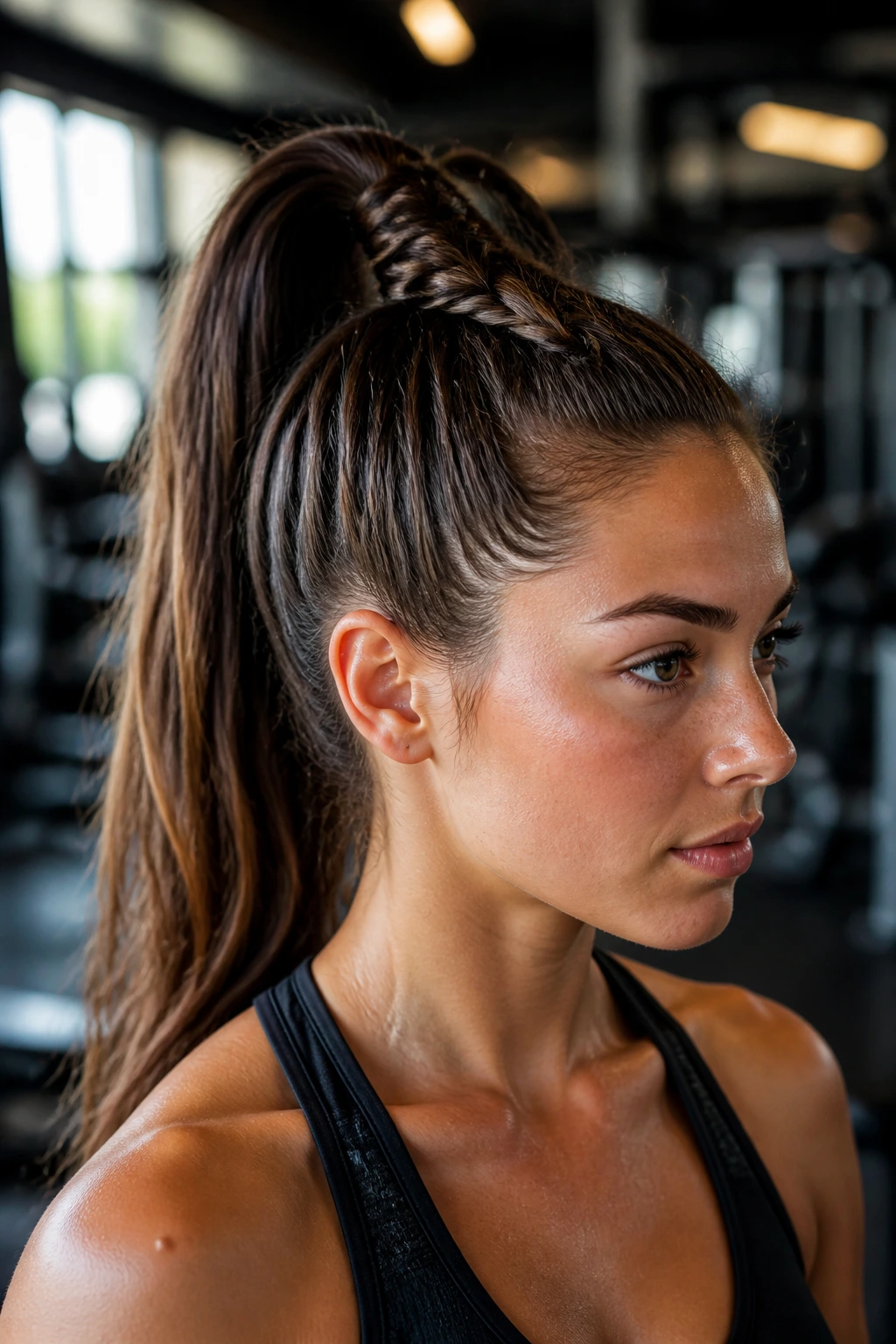
The perfect workout hairstyle really depends on your hair texture, the type of exercise you’re doing, and how much time you have before heading out the door. Don’t feel pressured to pick just one style for every single day. A Dutch braid might be your savior on cardio days, while a soft, silk-wrapped bun is perfect for those heavy-lifting afternoons where comfort is the priority.
Experiment with these styles the next time you have a lighter training session. See which ones hold up, which ones feel too tight, and which ones actually help you focus on your form rather than fixing your hair. Once you find your “go-to” rotation, you’ll stop thinking about your hair entirely, and that’s exactly where you want to be—focused on the workout, not the mess.