

Staring into the salon mirror at long, heavy hair that has lost its bounce is a familiar feeling. You want a change—something that frames your eyes and softens your jawline—but the thought of cutting off inches of your hard-earned length feels out of the question. Blunt, straight-across bangs require constant trims and a level of daily styling commitment that feels like a part-time job.
This is where the magic of sweeping bangs comes in. They offer a perfect middle ground, blending the drama of a fresh cut with the effortless growth of long layers.
The beauty of a sweeping fringe lies in its versatility. Unlike rigid, blocky cuts, a diagonal sweep moves with your natural hair texture. It works with your cowlicks rather than fighting them, and it grows out beautifully without that awkward in-between phase that makes you want to hide under a hat. Whether your long hair is pin-straight, thick and wavy, or full of natural curls, there is a specific angle and weight that will bring your look to life.
Getting this cut right requires understanding how weight, angle, and length interact with your facial structure. It is not just about cutting a diagonal line across your forehead. It is about removing weight from the right areas so the hair naturally pushes to one side.
Let us break down exactly how to find the perfect sweeping fringe for your long hair, looking at real-world styles, styling techniques, and the science behind a great shape.
Choosing the Right Sweeping Bangs for Your Face Shape
Understanding your facial structure helps you decide where your bangs should start, where they should bend, and where they should blend into your long layers. A great haircut uses angles to balance your features, drawing attention to your eyes, cheekbones, or jawline depending on where the shortest and longest pieces fall.
Oval Face Shapes
If your face is oval-shaped, you have the most flexibility. You can wear almost any length or density. However, a sweeping fringe that starts at the bridge of the nose and cascades down to the top of the cheekbone works beautifully. This cut highlights the center of your face and breaks up the vertical line of longer hair.
Round Face Shapes
For those with rounder features, the goal is to create soft angles. A steep, diagonal sweep that starts slightly off-center and ends just below the jawline helps elongate your face. Avoid short, piecey sweeping bangs that cut across the widest part of your cheeks. Instead, opt for a longer, thicker swoop that acts like an asymmetrical frame.
Square and Rectangular Face Shapes
Strong, angular jawlines benefit immensely from the softening effect of a textured, sweeping fringe. Request a highly feathered, wispy edge rather than a solid, blunt line. The shortest corner should start just above the eyebrow, curving gently down past the temple. This circular movement breaks up the sharp lines of a square forehead and jaw.
Heart Face Shapes
If you have a wider forehead and a pointed chin, sweeping bangs are your best friend. They work by visually narrowing the forehead. A side-swept fringe with a deep side part creates a beautiful diagonal line that balances a delicate chin. Keep the density medium-thick to ensure the bangs hold their shape and do not look too wispy.
1. Classic Side-Swept Bangs with Long Layers
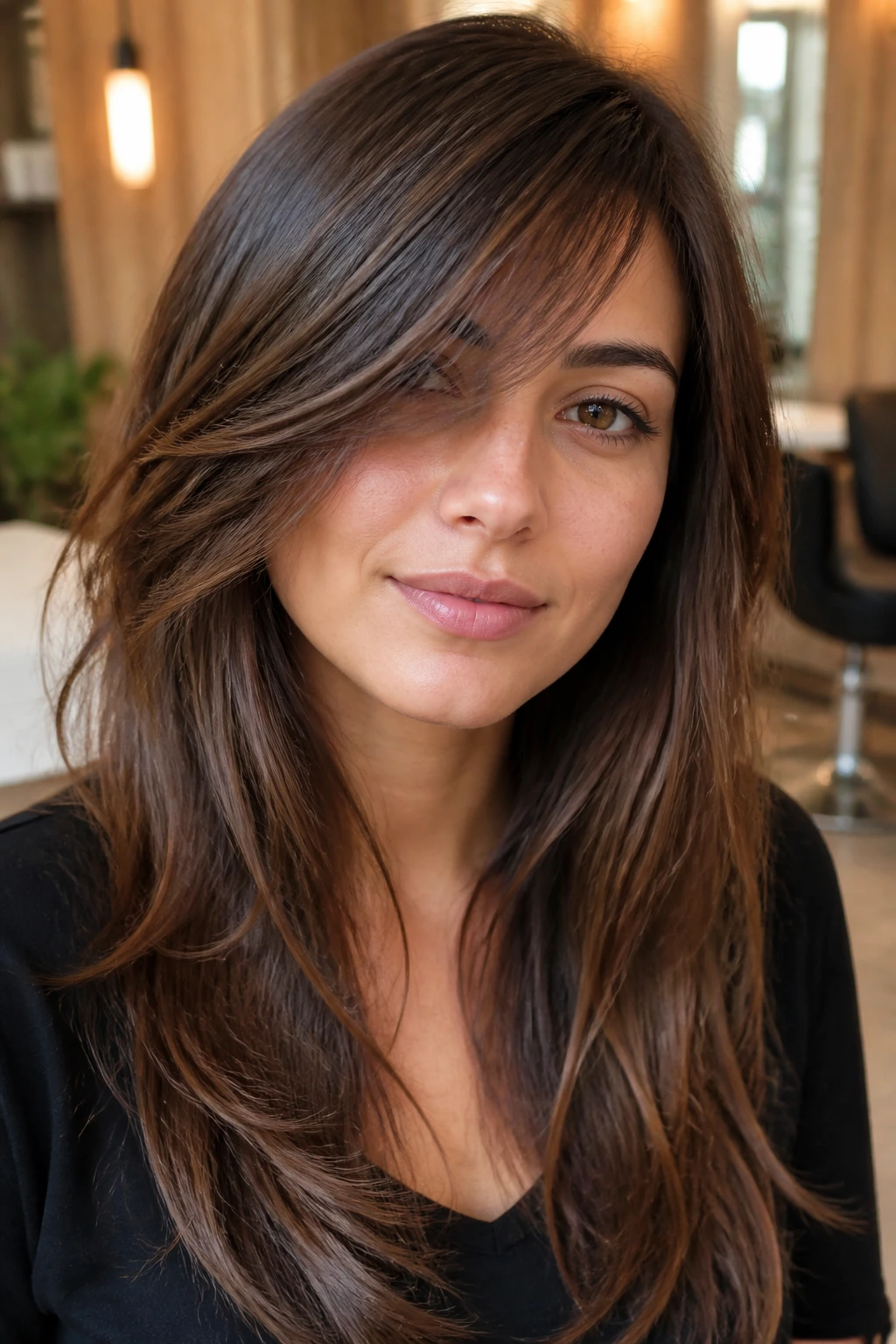
This classic style features a smooth, continuous diagonal sweep that starts at the corner of one eye and tapers down to the opposite cheekbone, blending into long, face-framing layers.
Why It Works
By keeping the shortest point of the bang aligned with the pupil of your eye, the hair naturally opens up your face. The weight is concentrated at the ends, which prevents the bangs from flying upward when you walk or face a strong breeze.
Quick Hair Facts
- Ideal Hair Density: Medium to thick
- Shortest Point: Middle of the eyebrow
- Longest Point: Bottom of the earlobe
- Maintenance Level: Medium (needs a trim every 4 to 6 weeks)
Pro tip: When blow-drying this style, wrap the hair around a round brush and pull it forward, away from your head, before sweeping it to the side.
2. Wispy Bardot Curtain Bangs
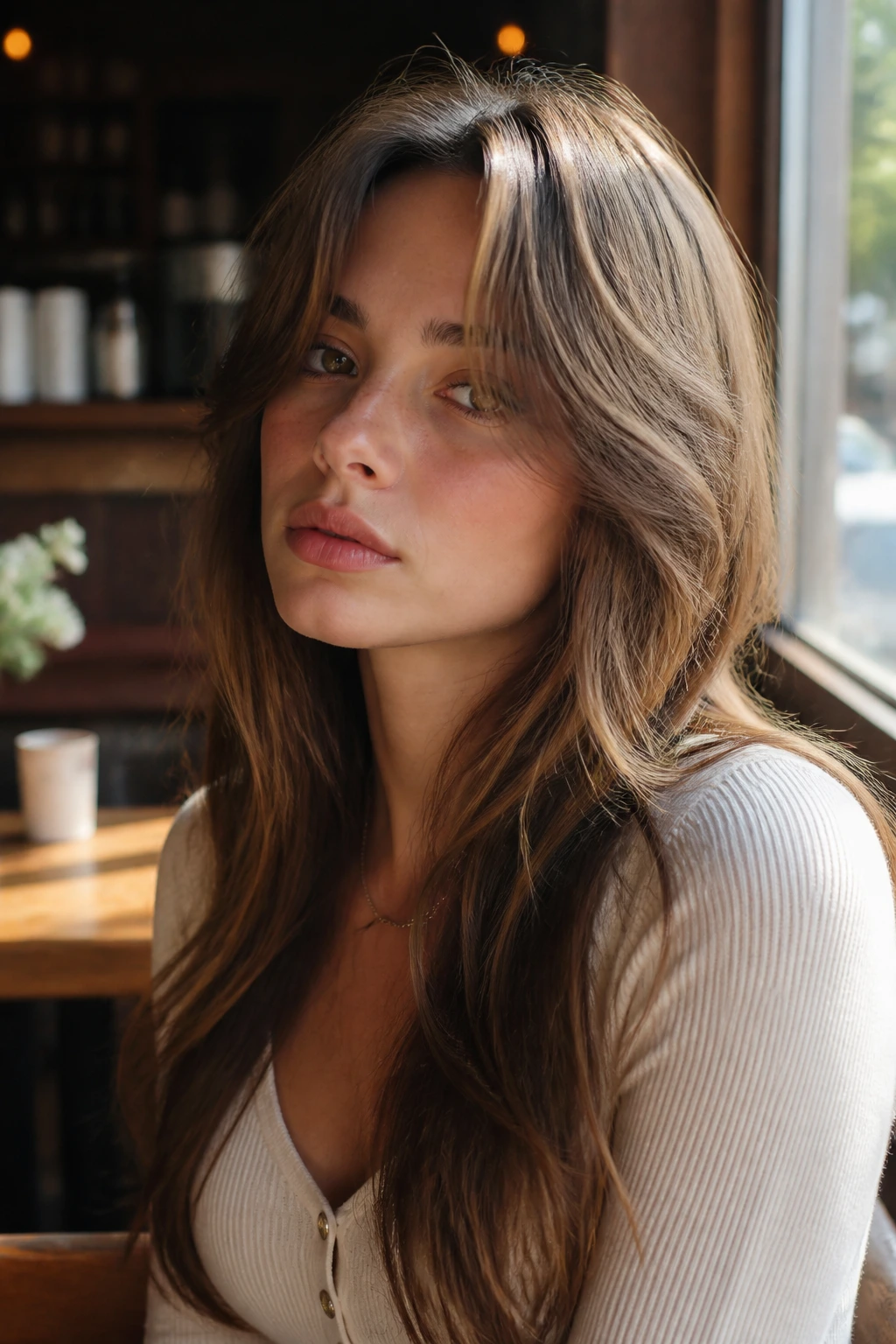
This style splits down the center or slightly off-center, sweeping outward toward both cheekbones in a soft, airy curtain effect that recalls classic French cinema.
The Bardot fringe relies on a lighter density, making it perfect if you are hesitant to commit to a full, thick block of bangs. Because the center is thin, you can easily slide these pieces to the side or tuck them behind your ears when you want them out of your face.
This cut is incredibly forgiving on days when your hair has a mind of its own, as a messy, lived-in texture only makes it look better.
3. Thick Diagonal Swoop Bangs
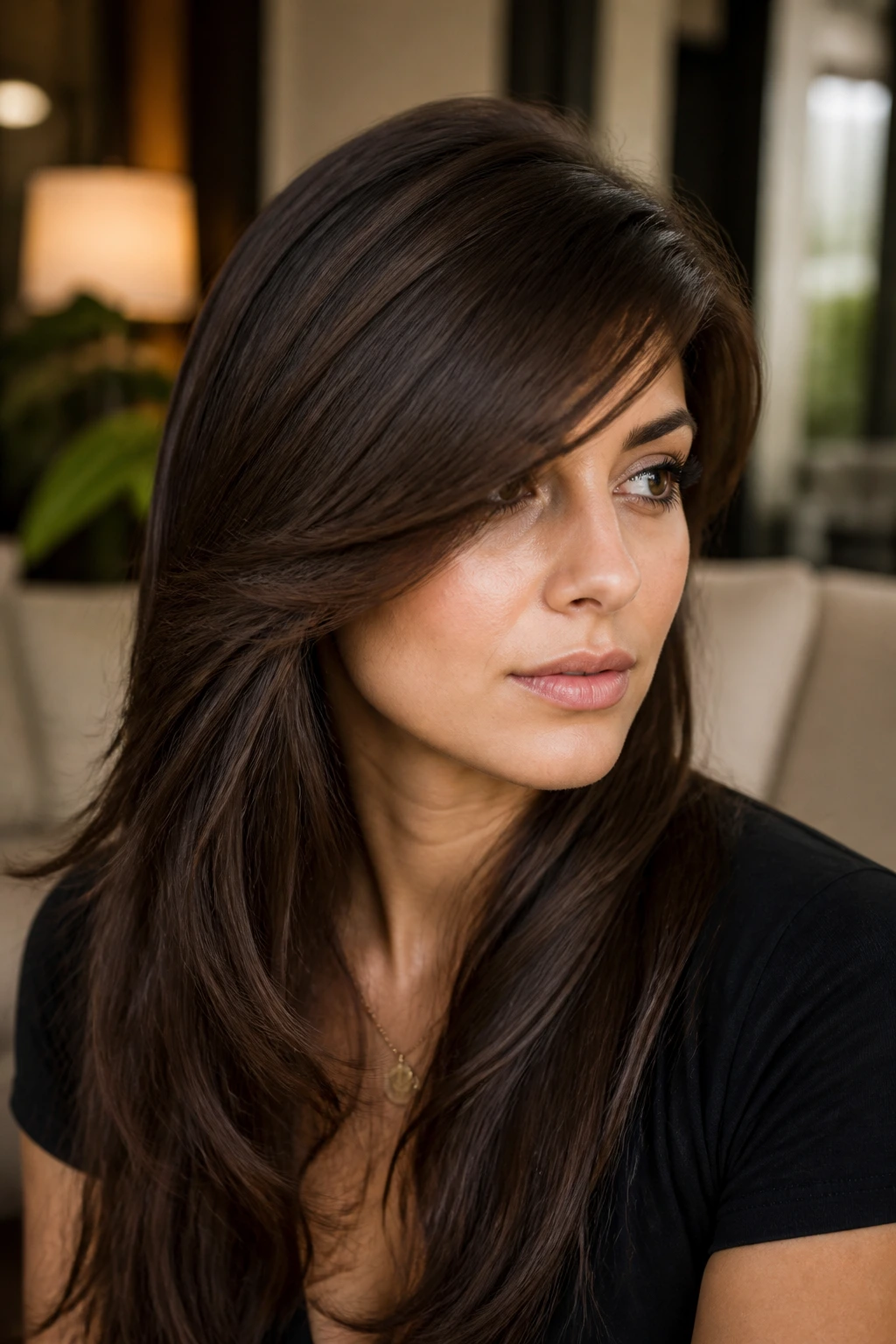
This heavy, dramatic side bang starts from a deep side part and swoops across the entire forehead, creating a solid wave of hair that blends into long, thick layers.
How Does This Hold Its Shape?
The secret to this style is the weight. Because there is a substantial amount of hair in the bang section, gravity pulls the hair down and across, preventing it from splitting or separation.
How to Style It
- Start with wet hair and apply a dime-sized amount of styling cream from the mid-lengths to the ends.
- Direct your hair dryer nozzle downward, brushing the bangs completely to the opposite side of where they will sit.
- Once the hair is 90% dry, sweep them back to their natural side using a paddle brush. This back-and-forth movement creates a flat, smooth swoop without any awkward cowlick separation.
4. Textured Shag with Choppy Sweeping Bangs
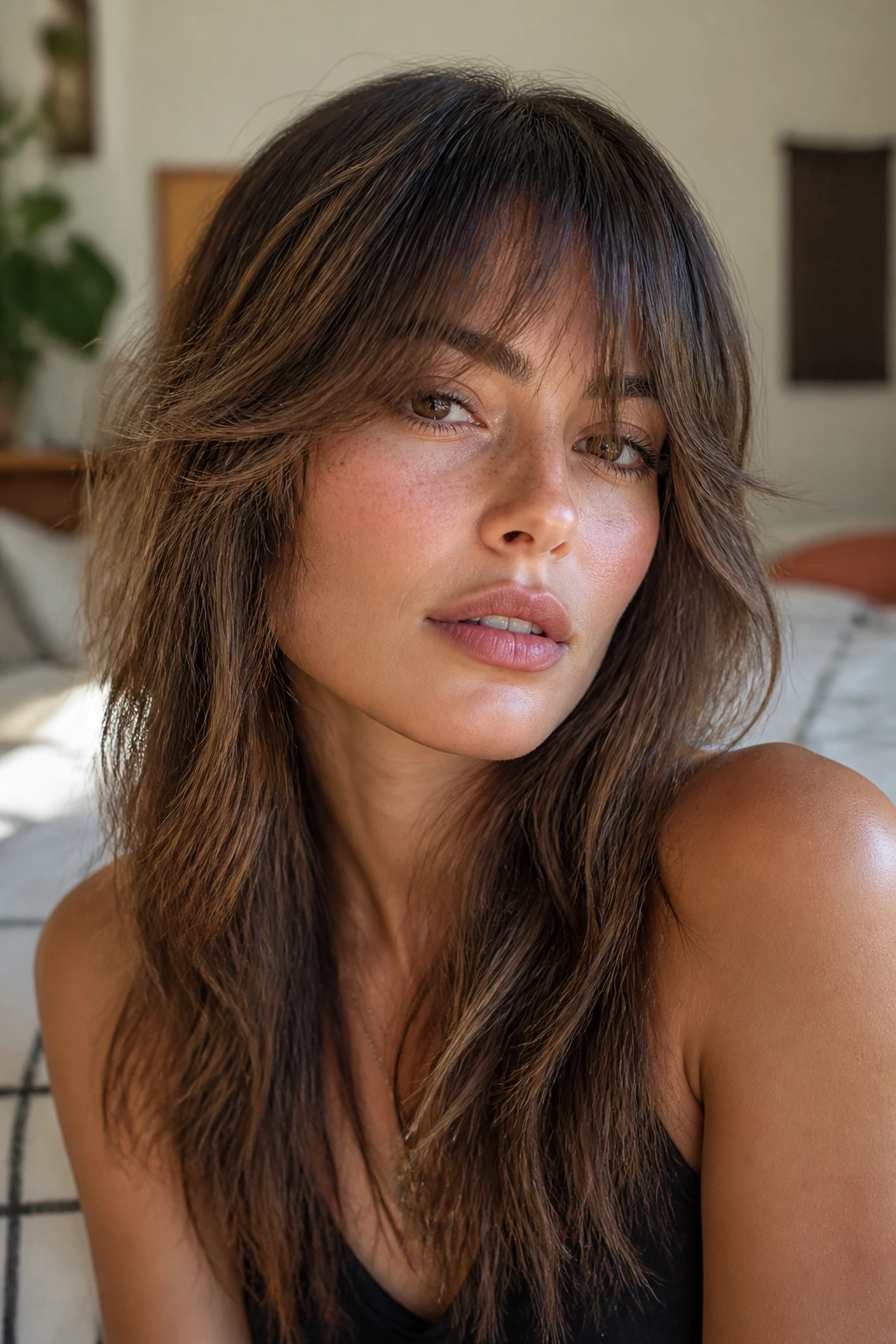
This look combines the messy, rebel energy of a modern shag with long, highly textured layers and a choppy, piecey sweeping fringe that sits right at the eyelashes.
This style is born for natural movement. If you have fine hair that usually sits flat, the choppy, shattered edges of these bangs create the illusion of thickness and volume.
The stylist should use point-cutting or a razor to slice into the ends of the bangs, removing weight so they piece apart naturally rather than clump into a solid block of hair.
- Best for: Naturally wavy hair
- Styling product: Dry texturizing spray
- Avoid if: You prefer a polished, sleek aesthetic
5. Sleek One-Length Hair with Feathered Side Bangs
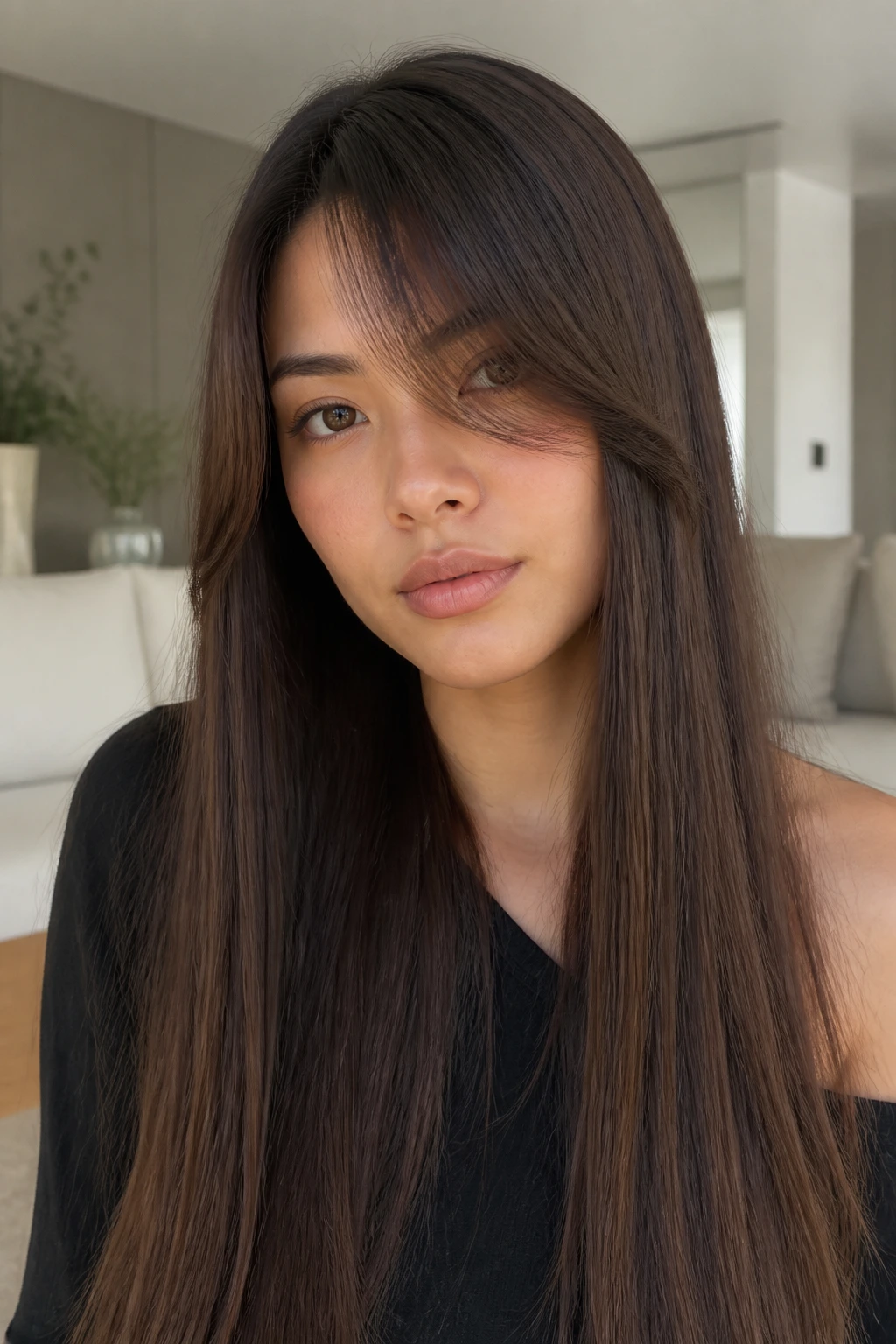
A striking contrast of long, pin-straight, single-length hair paired with ultra-light, feathered side bangs that start at the bridge of the nose and drift outward.
This style is beautiful for those who love a clean, minimalist look. The main body of the hair remains heavy and solid, while the feathered bangs add a touch of softness around the eyes.
To keep this looking sharp, use a lightweight hair oil on the ends of the bangs to prevent frizz and flyaways. It is a brilliant way to add shape to long, straight hair without sacrificing the blunt weight of your overall length.
6. Curly Shag with Sweeping Spiral Bangs
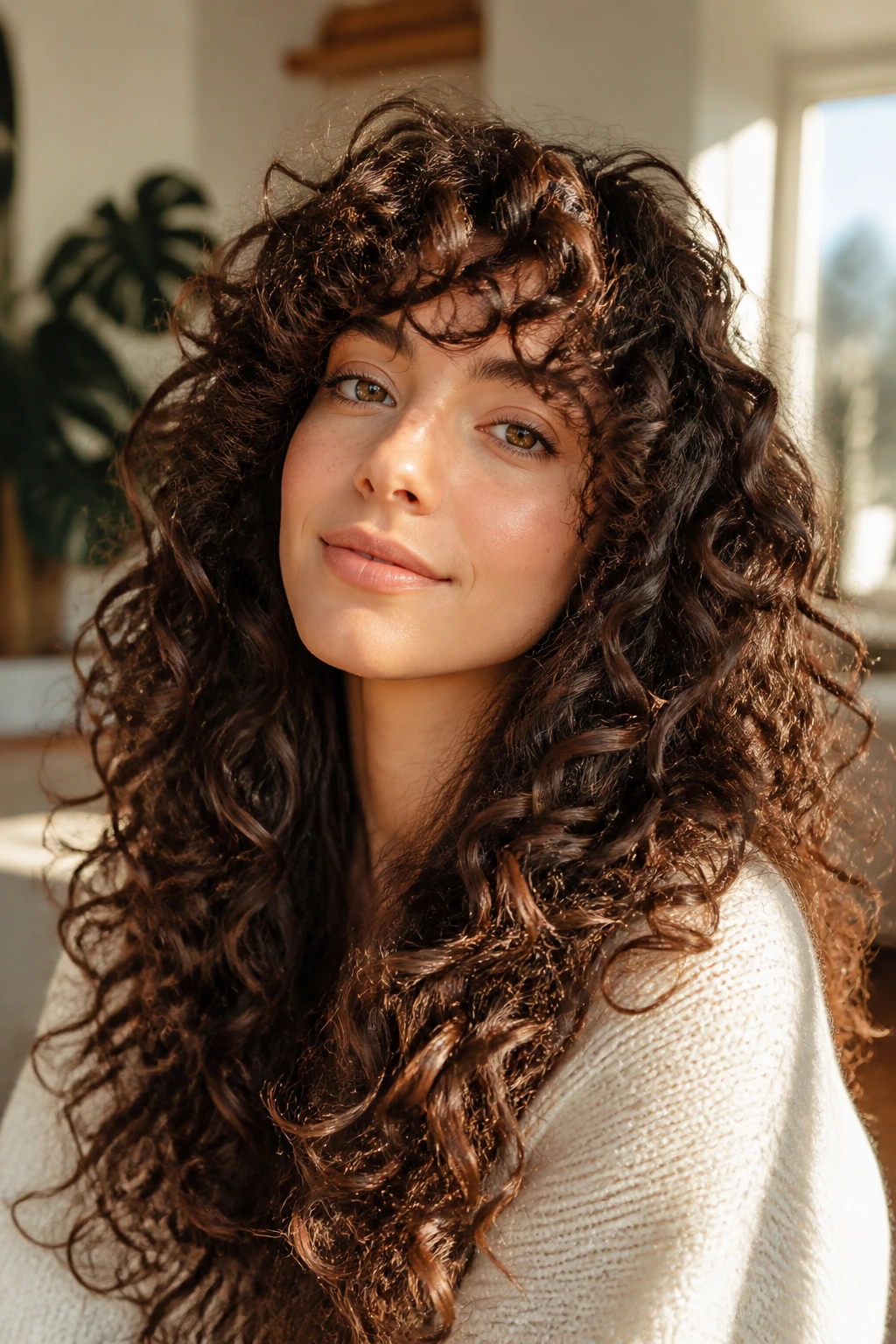
A joyful celebration of natural texture, featuring long, bouncy curls and a sweeping fringe cut curl-by-curl to cascade across the forehead.
What Makes It Different
Unlike straight-hair bangs, curly sweeping bangs must be cut dry in their natural state. If you cut them wet, they will shrink up much higher than expected, leaving you with micro-bangs instead of a soft sweep.
Styling Recommendation
Apply a leave-in conditioner and a touch of curl gel to soaking wet bangs, scrunching gently. Let them air dry completely without touching them to prevent frizz. Once dry, gently shake the roots with your fingers to release the curl pattern and create a soft, sweeping shape that frames your eyes.
7. Blunt-Cut Ends with Tapered Side-Swept Bangs
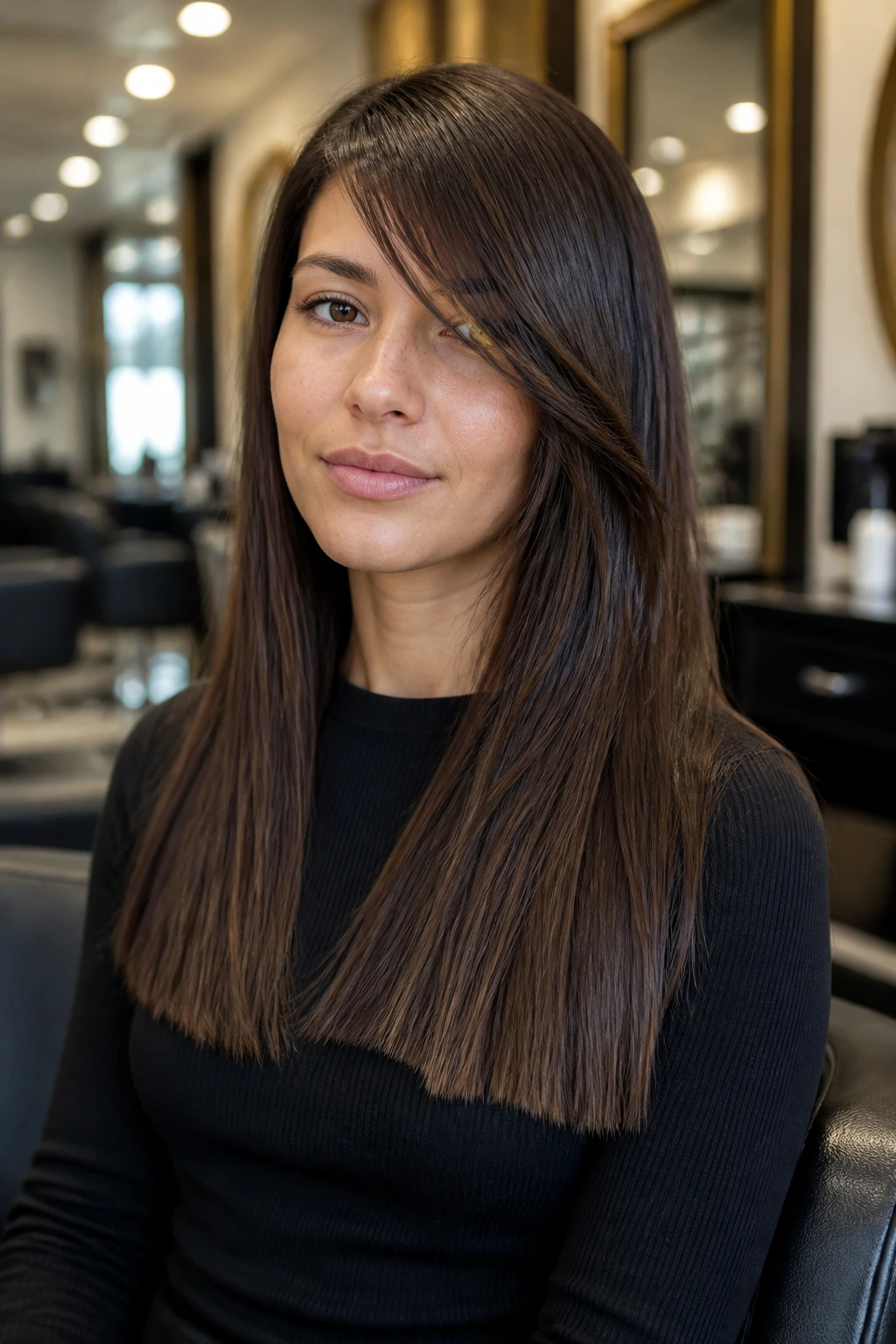
This style features super thick, blunt-cut ends at the very bottom of your long hair, contrasted with a softly tapered side-swept fringe that lightens up the face.
The Cutting Technique
The contrast is what makes this style work so well. While the bottom of your hair is cut in a solid, straight line, the bangs are cut at a 45-degree angle using slide-cutting shears. This technique creates a seamless transition from the shortest piece near the eye to the longer pieces that meet your shoulders.
Quick Style Facts
- Shortest Point: Tip of the nose
- Longest Point: Collarbone
- Tools Needed: Flat iron and heat protectant
- Best Face Shape: Heart or oval
Pro tip: Run a flat iron through the bangs in a slight C-shape motion to give them a gentle inward curve that mimics the natural shape of your head.
8. Retro 1970s Blowout Sweeping Bangs
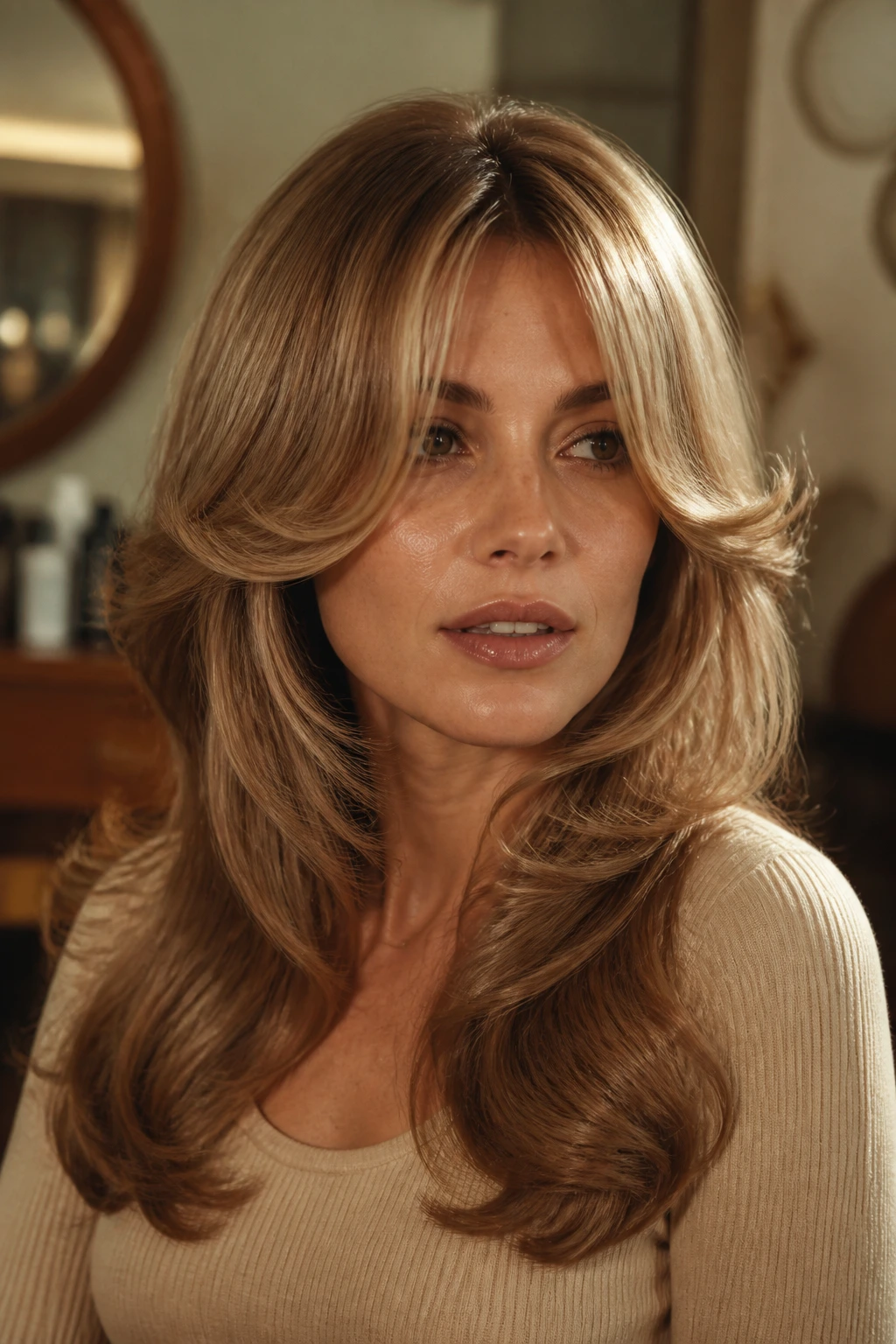
Think big, voluminous hair with sweeping, wing-like bangs that flip outward away from the face, blending into long, bouncy, roller-set layers.
This style is all about root lift and outward motion. By using large velcro rollers or a thick round brush, you pull the bangs straight up and roll them backward.
When they cool and drop, they split in the center and sweep outward like wings, instantly framing your cheekbones and creating an open, bright-faced appearance that works beautifully with long, bouncy layers.
9. Micro Sweeping Bangs for Edgy Texture
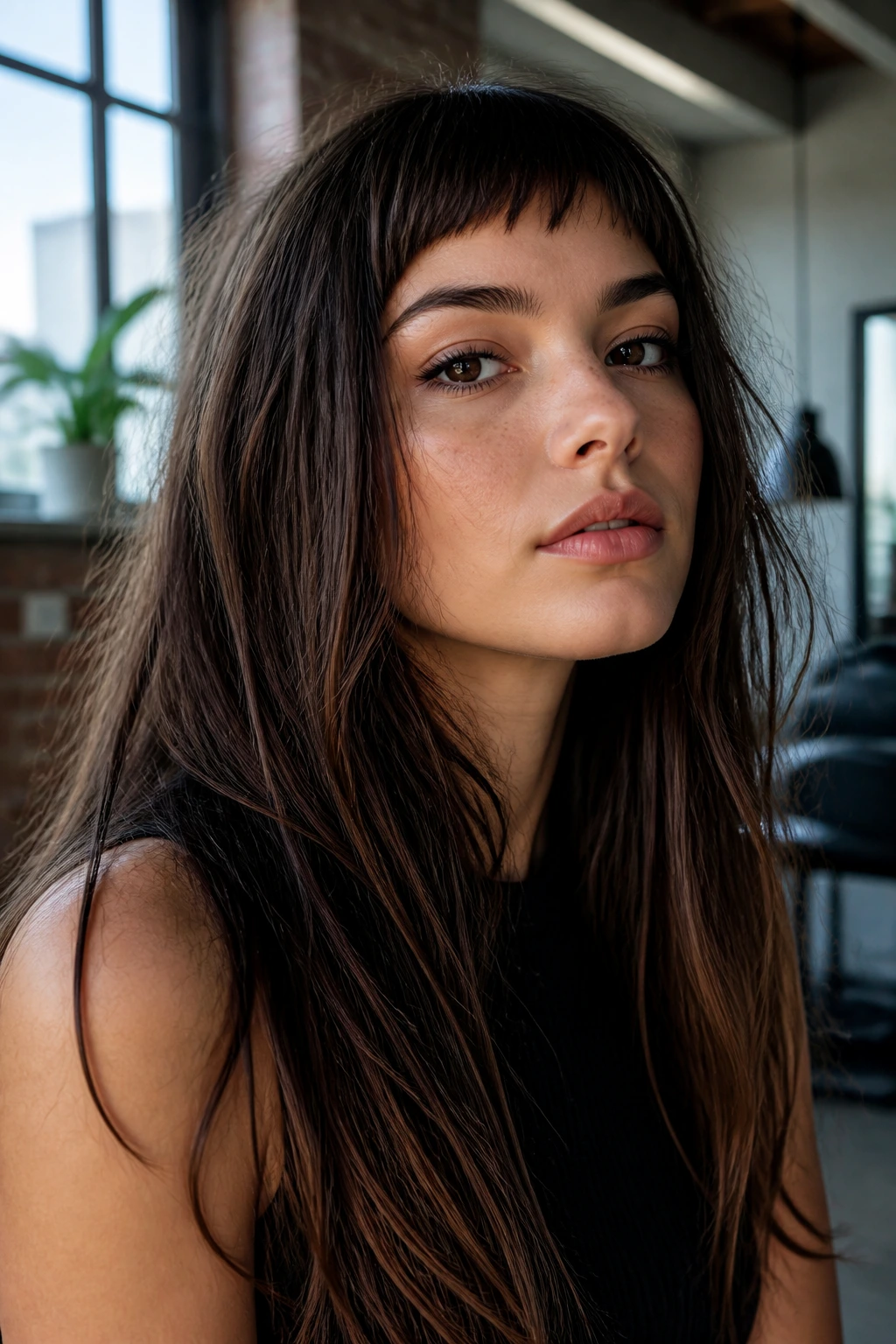
An unconventional, artistic style featuring short, textured bangs that sit well above the brow and sweep slightly to one side, contrasting with very long hair.
Who Can Pull This Off?
This is a bold choice that works best on oval or round face shapes with straight or slightly wavy hair. It requires confidence and a bit of daily styling, as short bangs cannot be tucked behind your ears or pulled back into a ponytail.
Quick Styling Steps
- Dampen the micro-bangs completely with water from a spray bottle.
- Use a fine-tooth comb to press them flat against your forehead in the direction you want them to sweep.
- Blow-dry on low heat, using your fingers to hold the hair flat against your skin. This keeps them from popping up or cowlicking.
10. Face-Framing Cascade with Soft Slanted Bangs
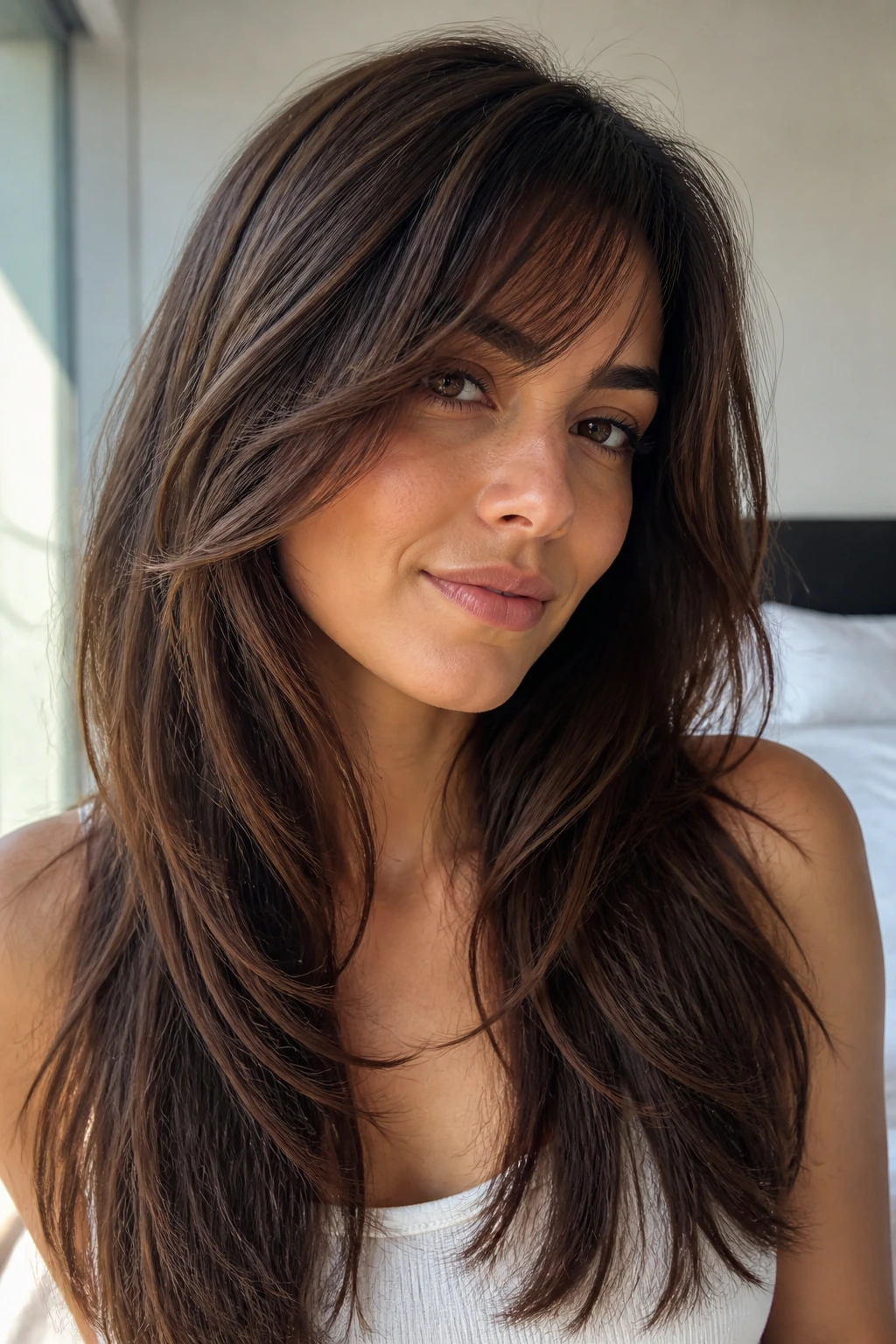
This style features a continuous cascade of layers starting from a soft, slanted fringe and traveling all the way down to the longest lengths of your hair.
If you hate harsh lines, this is the cut for you. There is no clear division where the bangs end and the layers begin; it is one smooth, flowing line.
As you walk, these pieces move naturally, hugging your jawline and collarbone to create a beautiful, flattering frame. It is an excellent option for fine hair, as the continuous layering adds movement and prevents the ends from looking thin.
11. Asymmetric Sweeping Bangs for Dramatic Contrast
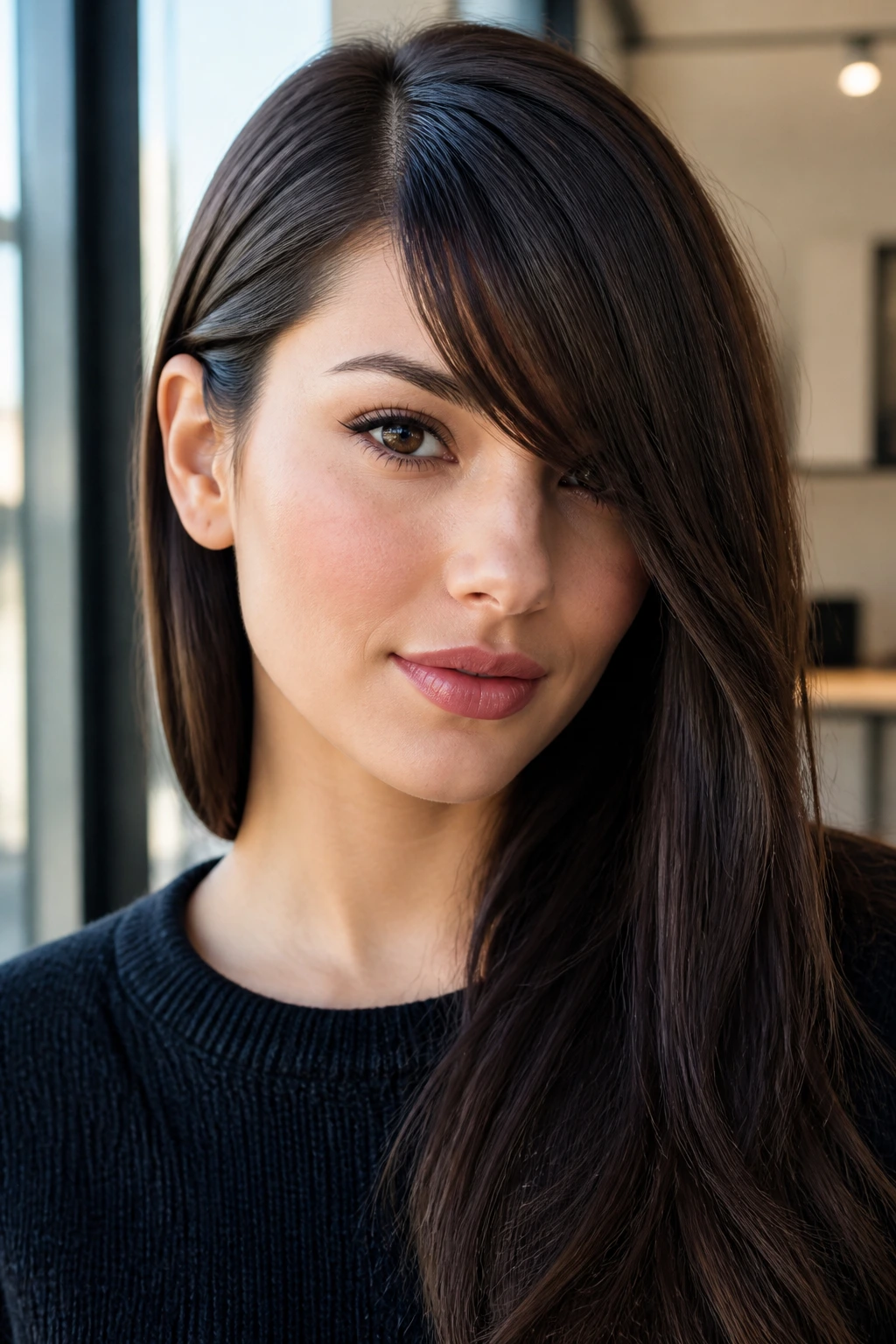
This look features a clean, sharp side part that divides the hair, sending a dense, steeply angled fringe sweeping across the forehead to join long, sleek hair on one side.
This is a modern, architectural style. By keeping one side of your face completely open—perhaps tucked behind the ear—and the other side framed by a heavy, sweeping wave of hair, you create an intriguing asymmetrical silhouette.
This style is incredibly effective at balancing asymmetrical facial features or softening a prominent nose.
12. Wavy Lob-to-Long Transition Sweeping Bangs
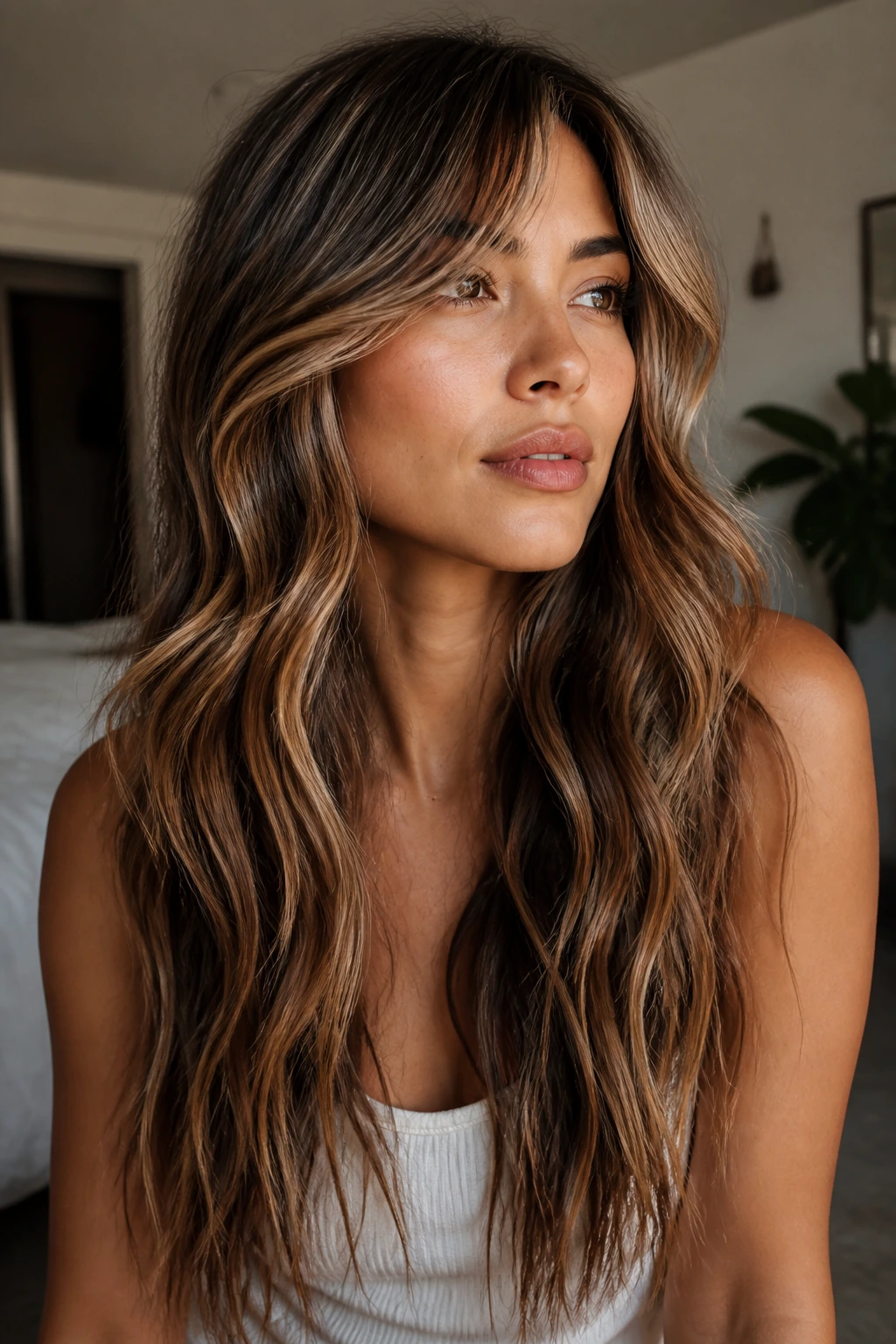
Perfect for anyone growing out a shorter cut, this style features collarbone-length front layers that sweep back into very long, beachy waves.
What Makes It Different
This cut uses the weight of the long back hair to pull down the shorter front sections, creating a relaxed, lived-in look. Instead of looking like an accidental grow-out, the transition is made deliberate by adding soft, hand-painted highlights to the sweeping sections, drawing the eye down the length of your hair.
Who It Is Best For
- Hair Texture: Naturally wavy or straight with a bend
- Lifestyle: Low-maintenance (requires zero daily blow-drying if you embrace your natural waves)
- Face Shape: Square or rectangular
13. Feathery Rachel Cut with Wispy Sweeping Bangs
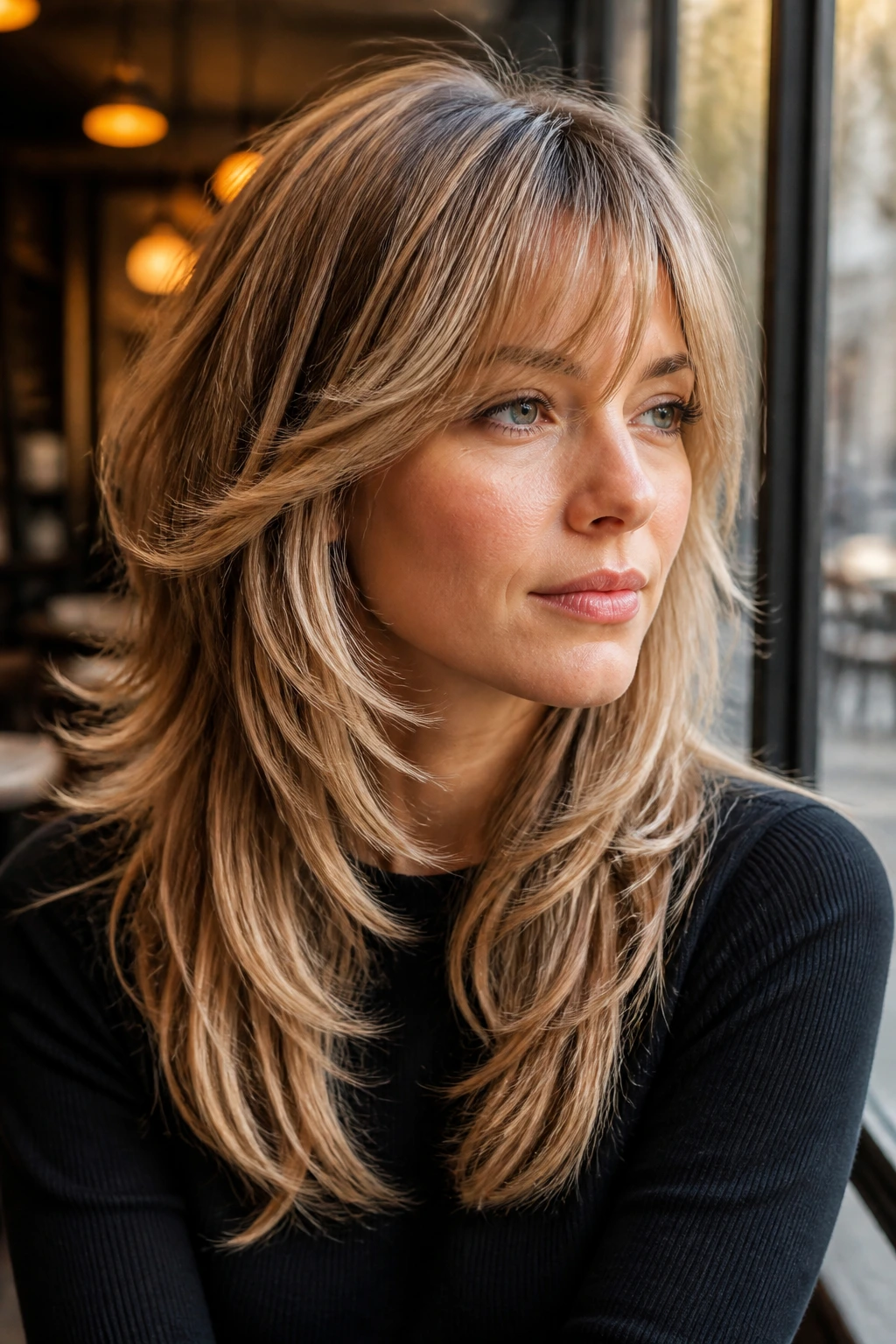
A modern tribute to classic 1990s volume, featuring heavily layered, feathery pieces around the face and a light, wispy sweeping fringe that brushes the eyelashes.
The Styling Technique
To achieve this feathery texture, the stylist will use a technique called slide-cutting, running open shears down the hair shaft to create soft, tapered ends.
At home, you will need a lightweight volumizing mousse. Apply it to damp hair, focusing on the roots around your face, and blow-dry with a medium round brush, pulling the hair forward and up.
Key Details
- Density: Medium
- Texture: Straight or blow-dried smooth
- Key Tool: Ceramic round brush
- Best styling helper: Lightweight hairspray for flexible hold
Pro tip: Spray your hairbrush with hairspray before running it through your bangs to keep them in place without making them feel crunchy.
14. French-Girl Wispy Fringe with Cheekbone-Length Sweep
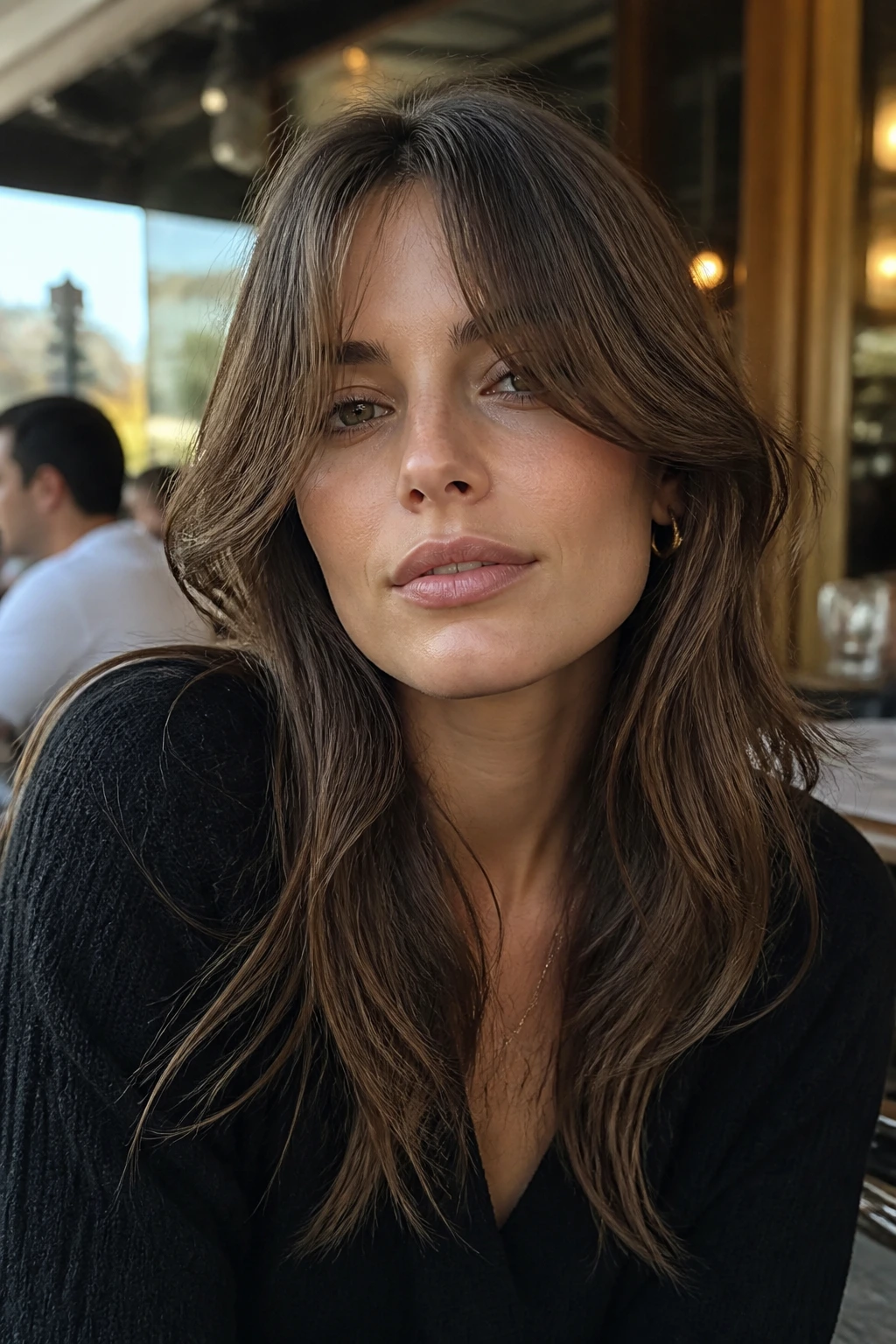
An effortlessly chic look featuring a very light, almost transparent center fringe that transitions into longer, sweeping pieces that hit right at the cheekbones.
This style screams effortless French style. It looks best when it is not perfectly styled.
The center pieces are sparse enough that your forehead peaks through, while the longer sides sweep outward to hug your cheekbones. It is the ultimate low-commitment bang; if you get tired of them, they are long enough to pin back with a simple bobby pin or slide behind your ears.
15. Double-Sided Swoop Bangs with Hidden Undercut
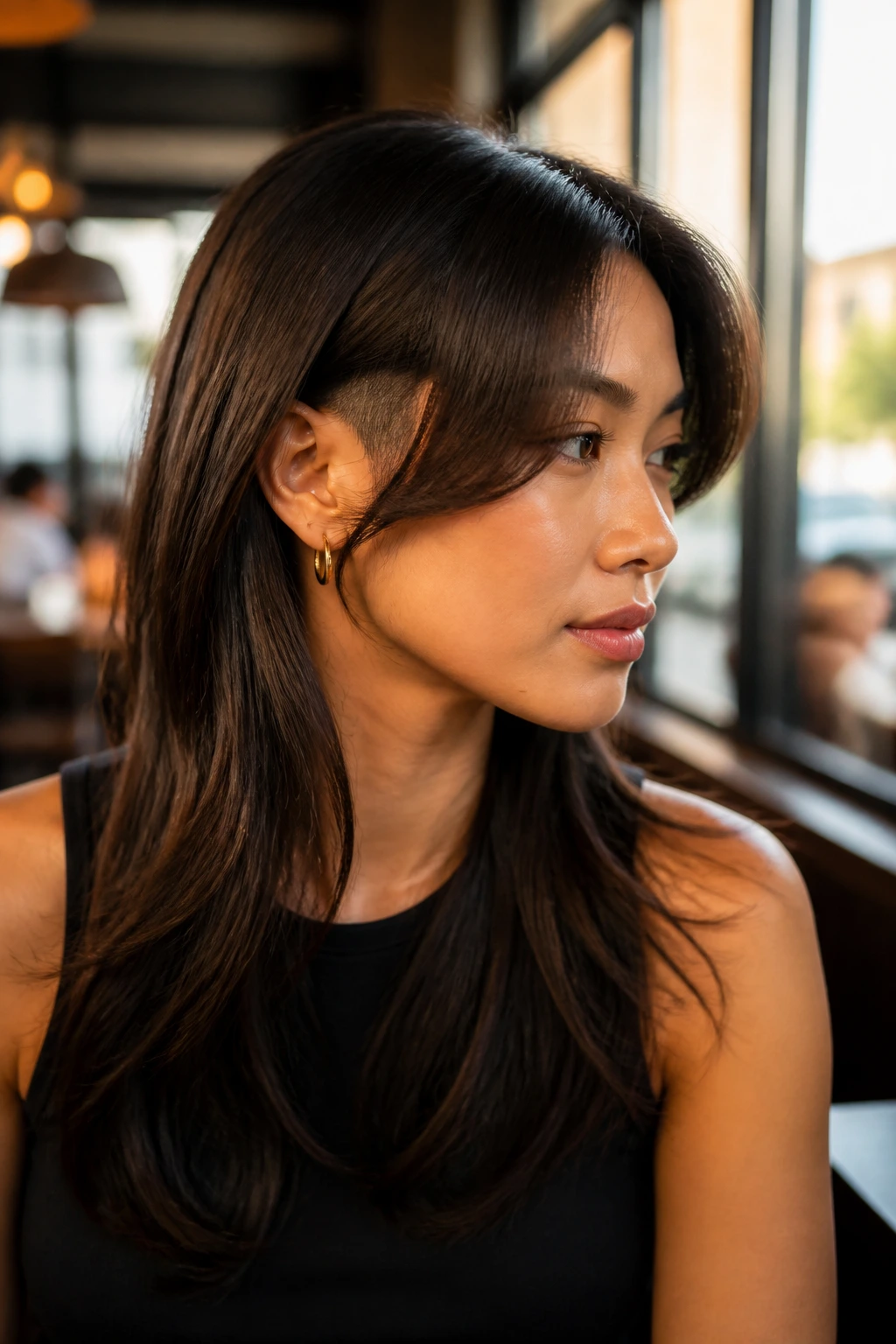
A creative, modern cut featuring sweeping bangs on both sides of a center part, with a small, hidden undercut at the temples to remove bulk from thick hair.
Why Does This Work?
For those with extremely thick hair, sweeping bangs can sometimes look too bulky or blocky around the face.
By shaving or cutting a very small section of hair near the temples extremely short, you remove that excess weight. This allows the sweeping bangs to lie flat against your head and swoop gracefully without being pushed outward by the hair underneath.
How to Style It
- Parting: Center or slightly off-center
- Drying: Blow-dry flat using a paddle brush in a crisscross pattern across your forehead.
- Finish: A touch of pomade on the very tips to define the ends.
16. Soft Blunt Bangs Swept to One Side
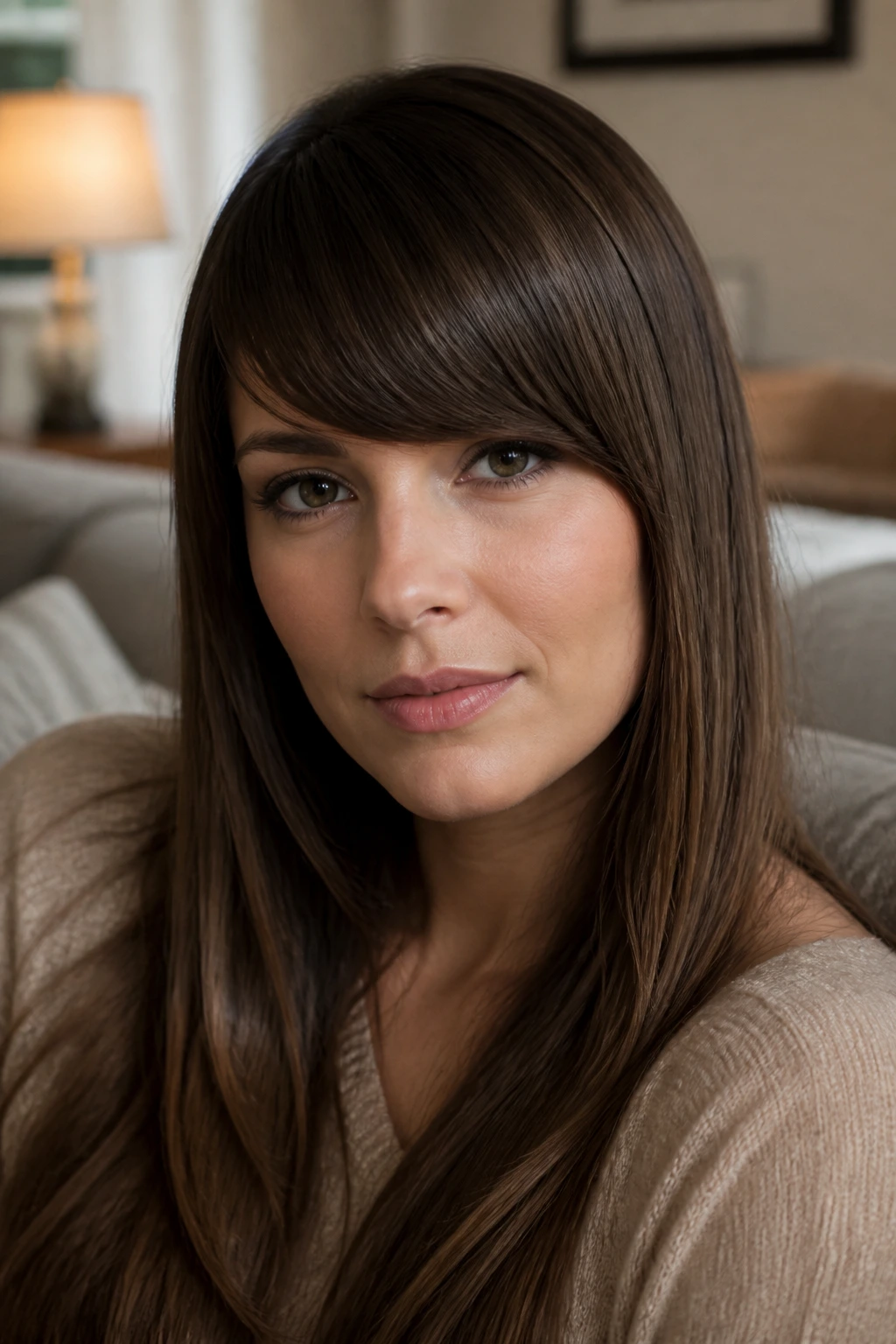
A hybrid style that starts as a classic, straight-across blunt bang but is cut with a slight angle so it can be easily swept to one side for a softer look.
This style gives you the best of both worlds. On days when you want a classic, structured look, you can blow-dry them straight down.
On days when you want something softer and more relaxed, a quick pass with a round brush sweeps them to the side, creating a beautiful diagonal line that opens up your face and blends into your long hair.
17. Ultra-Long Cheek-Skimming Sweeping Bangs
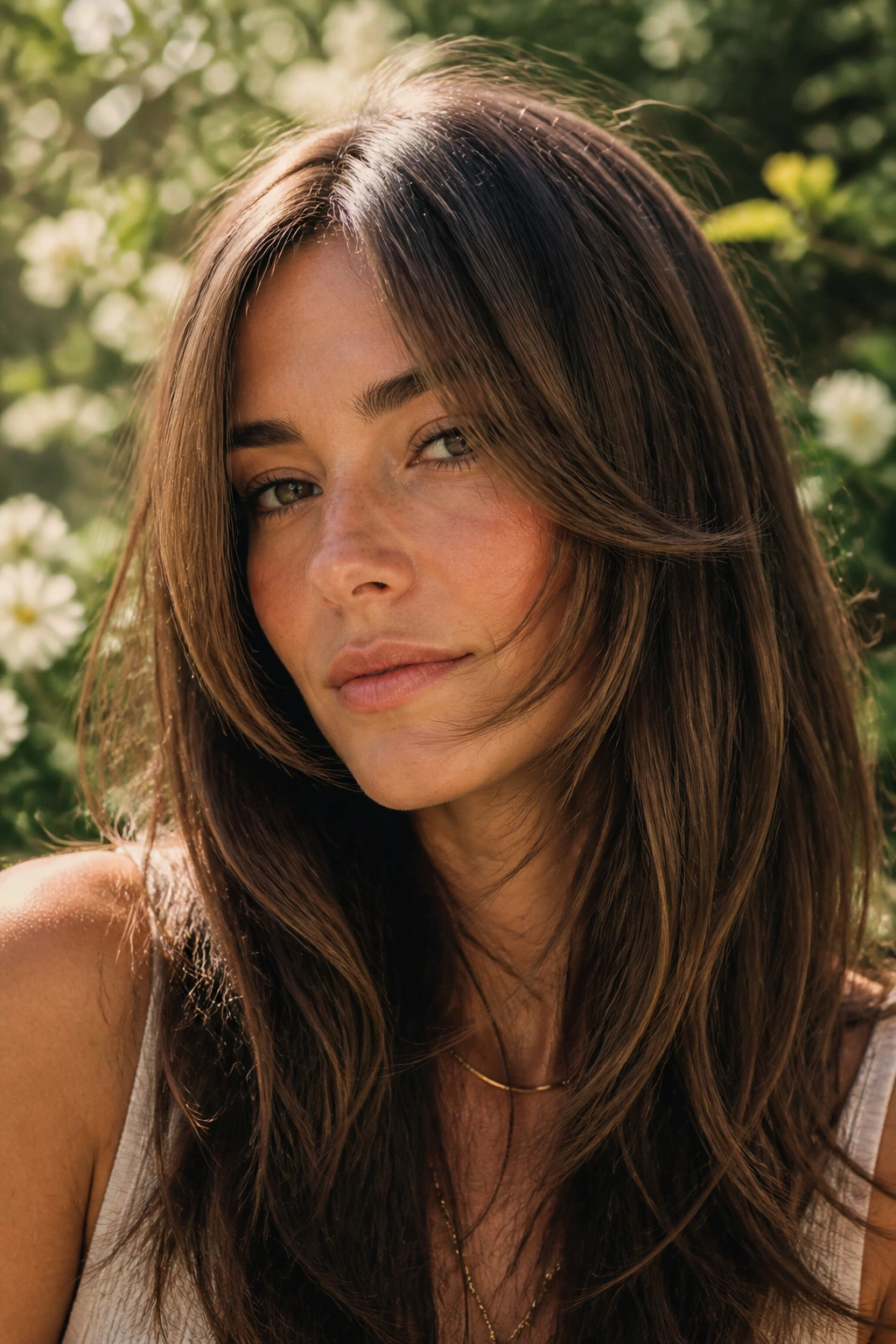
The lowest-maintenance option on the list, featuring long, elegant bangs that start at the cheekbones and sweep down to the jawline, blending into long layers.
This style is perfect for those who are afraid of bangs. Because the shortest piece starts at the cheekbone, these are technically long layers, but they are styled to act like a sweep.
They add instant structure to high ponytails and messy buns, leaving beautiful, face-framing pieces down around your face even when the rest of your hair is pulled back.
18. Voluminous 1990s Layered Sweeping Bangs
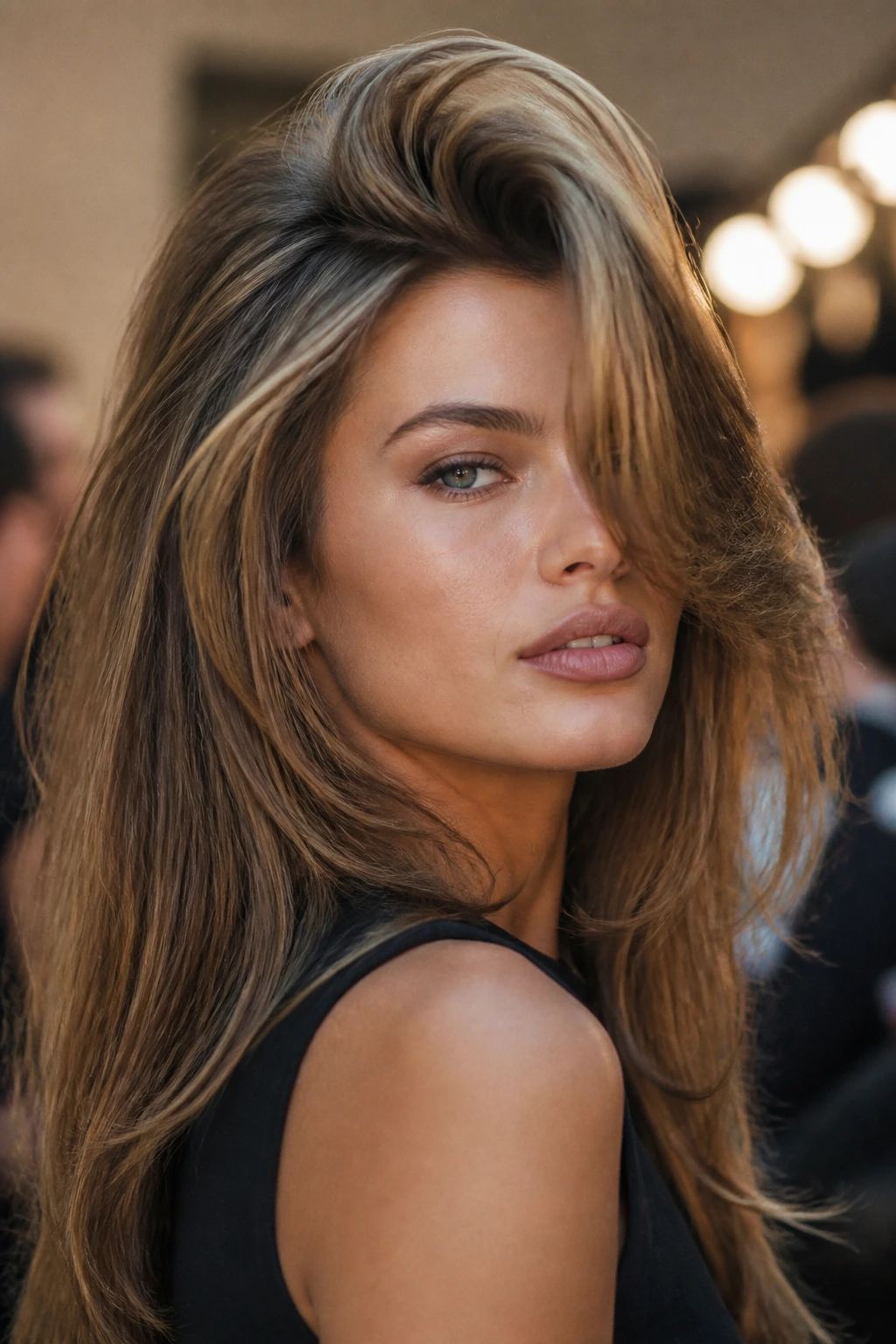
A high-glamour look featuring a sky-high root lift at the front hairline and a dramatic, sweeping wave of hair that cascades down over one eye and blends into long, bouncy layers.
This style is all about drama and volume. To get that classic 1990s lift, you need to dry the front section completely forward and up, then set it in a large roller until it cools.
When you flip it back, you will have instant height at the root. It is a stunning, sophisticated look that pairs beautifully with long, glamorous blowouts and classic red-carpet waves.
The Art of Styling Sweeping Bangs with a Round Brush
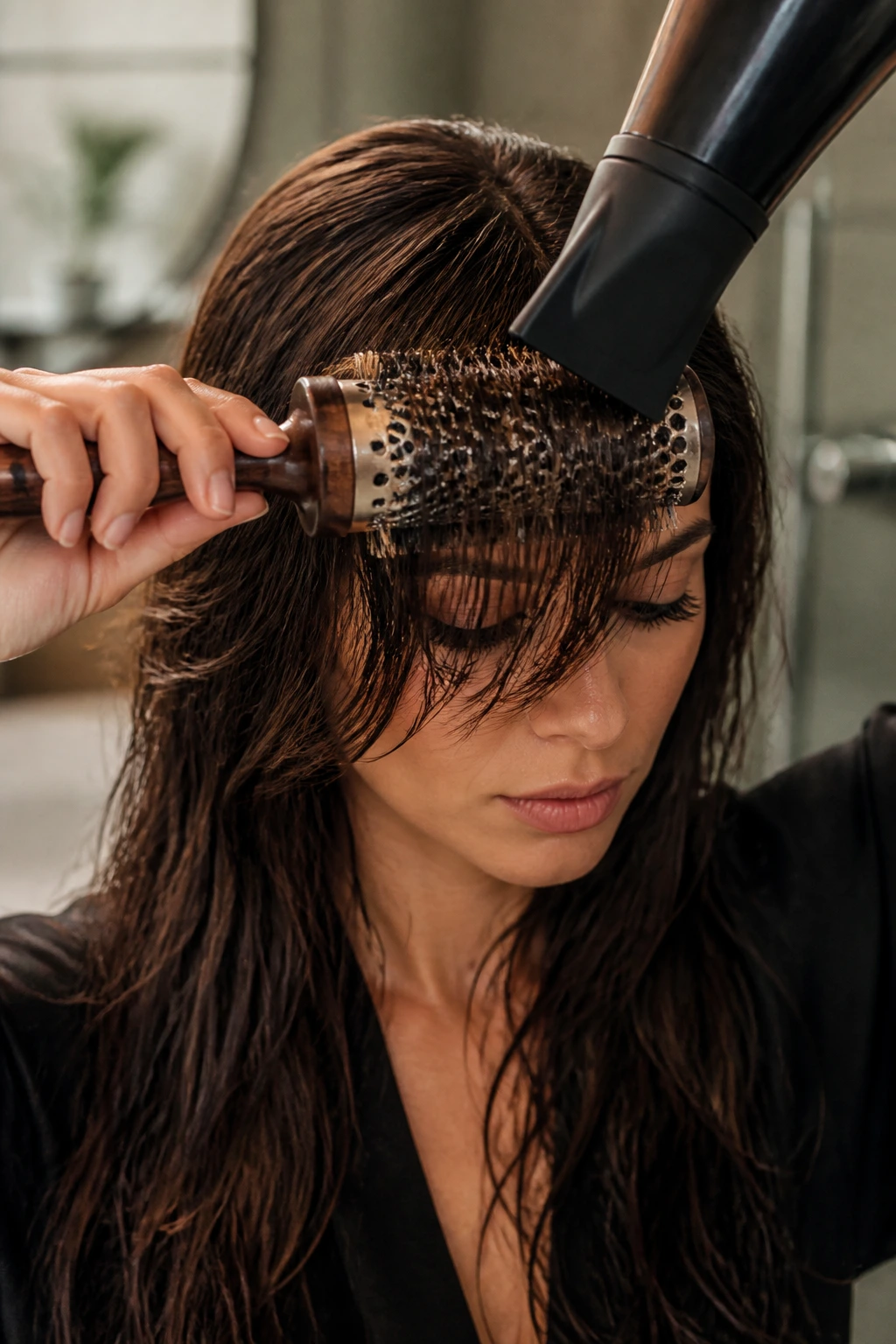
The way you blow-dry your sweeping bangs determines how they will behave all day. If you simply blast them with heat from the side, they will likely split, flatline against your forehead, or bounce up into an awkward shape. The key is mastering the “counter-intuitive direction” technique.
To start, your bangs must be wet. Do not let them air-dry even a little bit before styling, as hair sets its memory as it dries. If you have a stubborn cowlick, it will lock into place within minutes of stepping out of the shower.
Grab a ceramic round brush with a diameter of 1 to 1.5 inches. A smaller brush will create too much curl, making your bangs look retro in all the wrong ways. A larger brush will not give you enough grip at the root.
[Wet Bangs] ➔ [Apply Heat & Pull Forward/Opposite Side] ➔ [Roll Inward] ➔ [Cool & Sweep to Natural Side]Place the round brush underneath your bangs, right at the root. Direct the nozzle of your hair dryer downward, following the curve of the brush. Instead of pulling the brush to the side where you want your bangs to sit, pull the brush completely forward and to the opposite side.
If you want your bangs to sweep to the right, blow-dry them to the left.
This tension creates a beautiful, soft root lift and prevents the hair from clinging flatly to your skin. Once the section is dry, let it sit on the brush for five seconds to cool down and lock in the shape. Release the brush and use your fingers to gently toss the hair back to its natural side. You will have a perfect, airy sweep with just the right amount of bounce.
Essential Tools for Maintaining Sweeping Bangs at Home
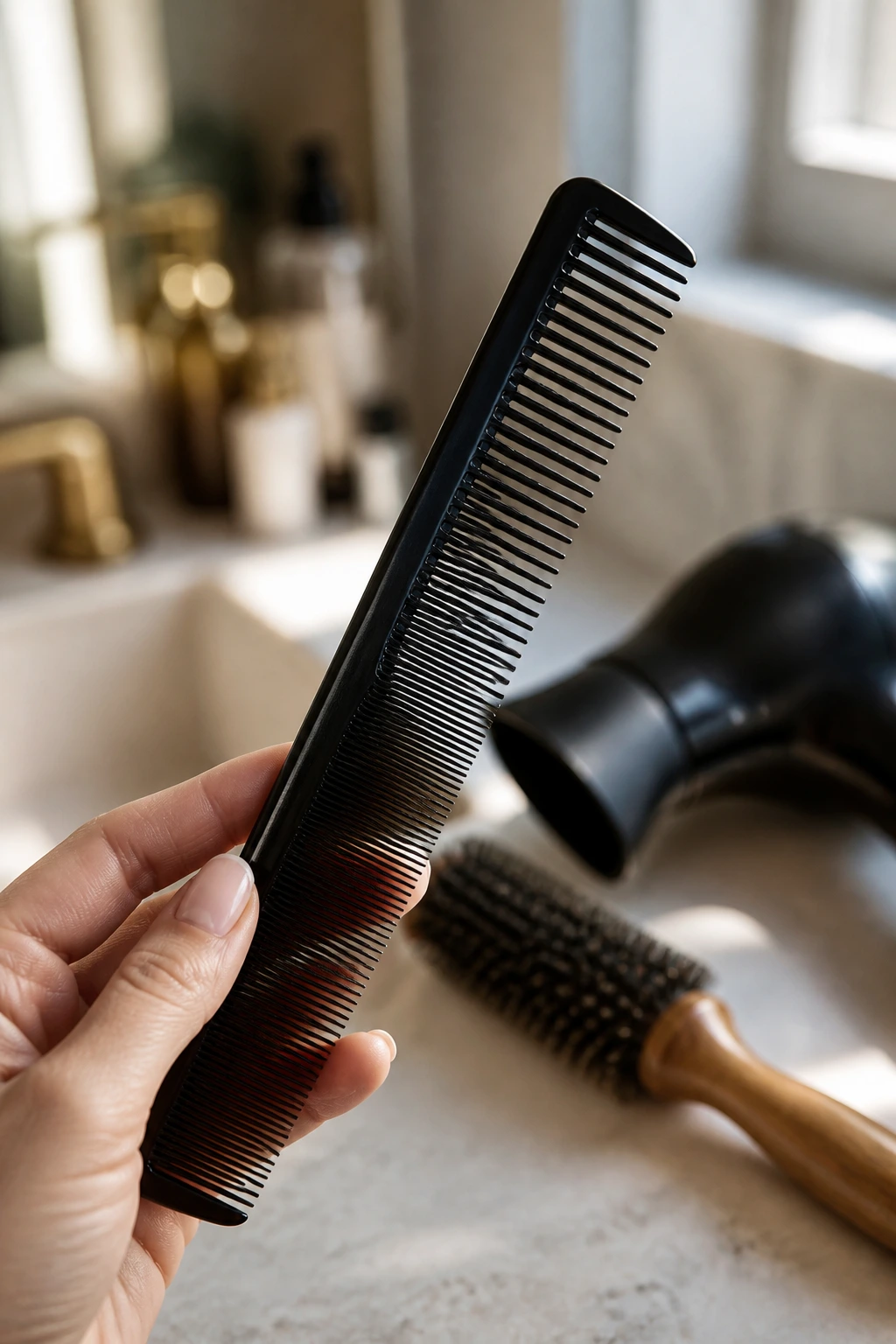
To keep your sweeping bangs looking salon-fresh between cuts, you need a few key tools in your bathroom cabinet. Having the right equipment makes styling faster and prevents heat damage on these delicate, face-framing pieces.
A Professional Styling Comb
Look for a comb with both fine and wide teeth made from carbon or antistatic material. You will use this to section out your bangs and to comb them straight during styling or trimming. A high-quality comb prevents static flyaways from ruining your shape.
A Boar-Bristle Round Brush
While ceramic brushes are great for quick drying and maximum lift, a natural boar-bristle brush is unmatched for smoothing. The dense bristles grab every single hair, distributing your scalp’s natural oils down the hair shaft to create a healthy, natural shine.
A Hair Dryer with a Concentrator Nozzle
Never blow-dry your bangs without the nozzle attachment. The concentrator focuses the airflow directly onto the brush, allowing you to smooth down the cuticle and tame cowlicks. Without it, the air will blow your hair in every direction, creating frizz.
+--------------------------+-------------------------------------------------------------+
| Tool                     | Primary Purpose                                             |
+--------------------------+-------------------------------------------------------------+
| Carbon Styling Comb      | Sectioning, detangling, and prepping for trims             |
| Boar-Bristle Round Brush | Smoothing the hair cuticle and creating a natural shine     |
| Dryer Concentrator Nozzle| Focusing airflow to tame cowlicks and smooth frizz          |
| Professional Shears      | Precise trimming without splitting the delicate ends        |
+--------------------------+-------------------------------------------------------------+
How to Trim Your Sweeping Bangs Between Salon Visits
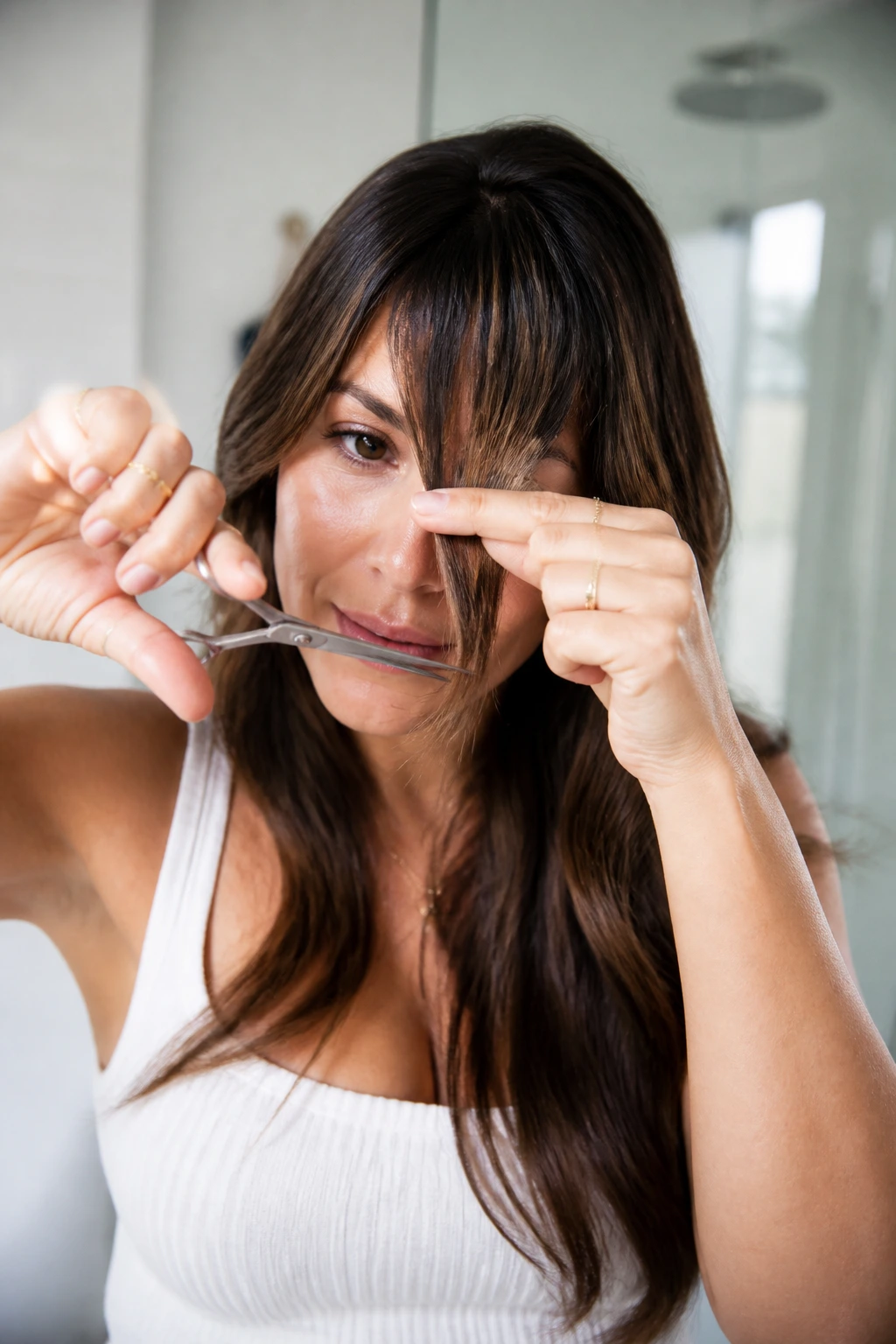
There comes a day when your sweeping bangs cross the line from “perfectly lived-in” to “stabbing you in the eye.” If you cannot make it to the salon, you can perform a micro-trim at home.
The golden rule of home trims is simple: cut dry, cut less than you think, and never cut in a straight horizontal line.
First, prep your hair. Wash, dry, and style your bangs exactly how you wear them every day. Cutting wet hair is risky because hair shrinks as it dries; you could easily end up with bangs that are two inches shorter than you intended.
Use a comb to separate your bang section from the rest of your long hair, pulling the rest back into a tight ponytail so you do not accidentally snip your longer layers.
Step 1: Style dry ➔ Step 2: Separate bang section ➔ Step 3: Hold shears vertically ➔ Step 4: Point-cut endsHold your hair shears—never use kitchen scissors, as they will chew the ends and cause split ends—vertically, pointing straight up toward the ceiling. Slide your fingers down your bangs, holding the hair gently between your index and middle fingers. Stop your fingers just above where you want the new length to sit.
Instead of cutting straight across, use the tip of the shears to make tiny, vertical snips into the ends of the hair. This is called point-cutting.
It removes weight and shortens the hair in a soft, diffused way, ensuring that if you make a slight mistake, it blends in invisibly rather than looking like a jagged mistake. Work slowly, one small snip at a time, checking your progress in the mirror after every few cuts.
Wrapping Up
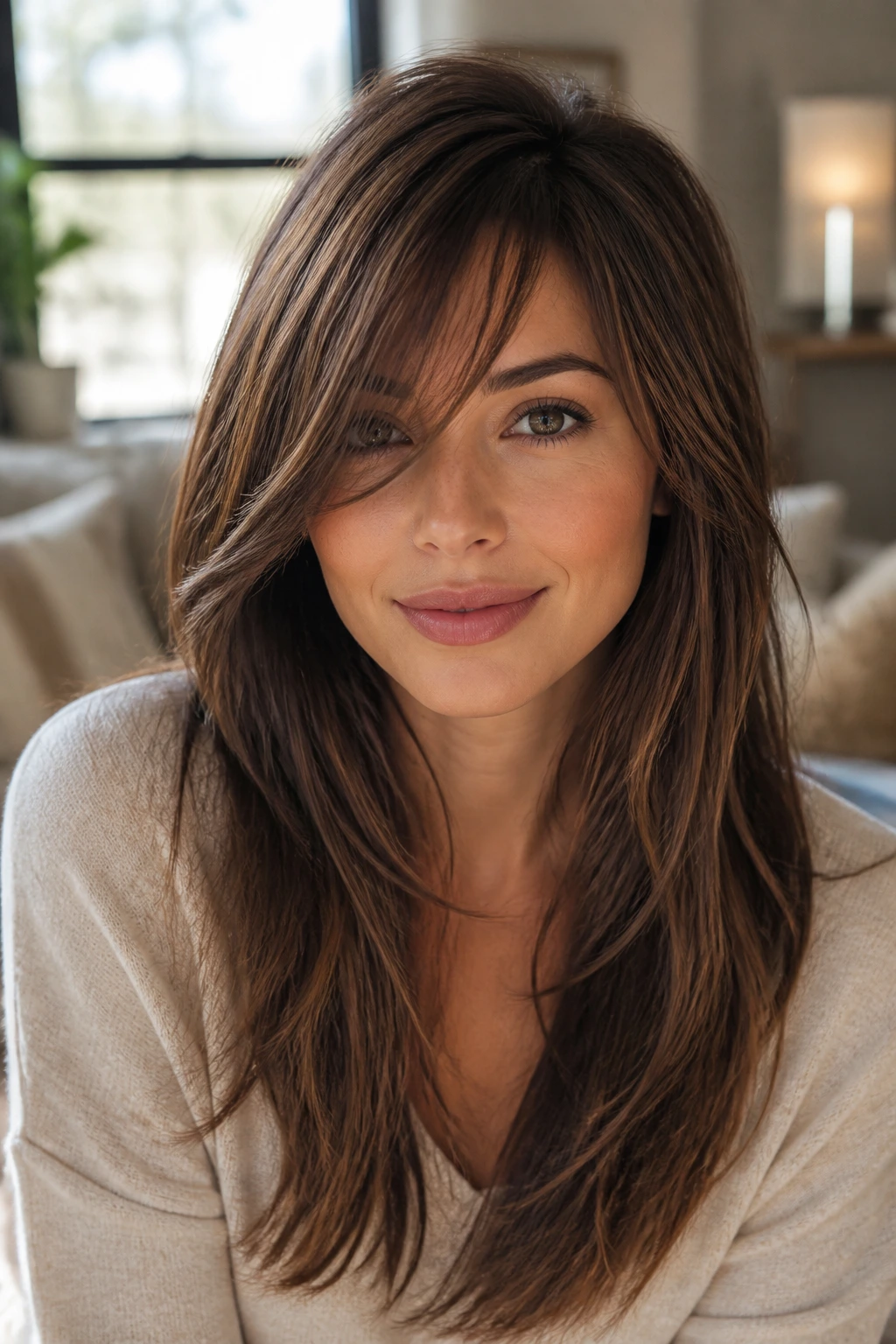
A sweeping fringe is more than just a passing fashion; it is a timeless, practical way to inject life and personality into long hair. It bridges the gap between the structured beauty of a short haircut and the comforting luxury of long, flowing layers. By choosing the right length, density, and styling routine, you can frame your eyes, soften your features, and enjoy a style that transitions beautifully from casual mornings to elegant evenings. Talk to your stylist, embrace your natural texture, and enjoy the effortless movement of a beautifully crafted sweep.