


The fear of the forehead cling is a very real obstacle for anyone with fine, low-density hair. For years, conventional wisdom insisted that if your hair lacked density, you had to avoid straight-across bangs at all costs. The common warning was that they would inevitably separate, look greasy within an hour, and leave you looking like you had a barcode stamped across your forehead.
But that old-school advice misses a fundamental truth about hair design. Straight-across bangs, when executed with the correct cutting geometry and styled with lightweight techniques, can actually create the optical illusion of much thicker hair. By carving out a dedicated horizontal line right above your eyes, you create a heavy focal point that frames your face and makes the rest of your hair look denser by comparison.
The secret lies in moving away from the heavy, blunt-cut slabs of the past and embracing airy, textured, and strategically sectioned variations. When you cut a straight-across fringe into thin hair, you are essentially borrowing hair from the crown to build a solid structure at the front. It is a balancing act of weight, placement, and daily maintenance.
If you have been staring in the mirror wondering if you can pull off a blunt front frame without losing all your volume, the answer is a resounding yes. It simply requires a shift in how you section the hair, how the stylist uses their scissors, and how you prep the strands before they ever touch a blow dryer.
The Geometric Triangle of Sectioning Fine Hair
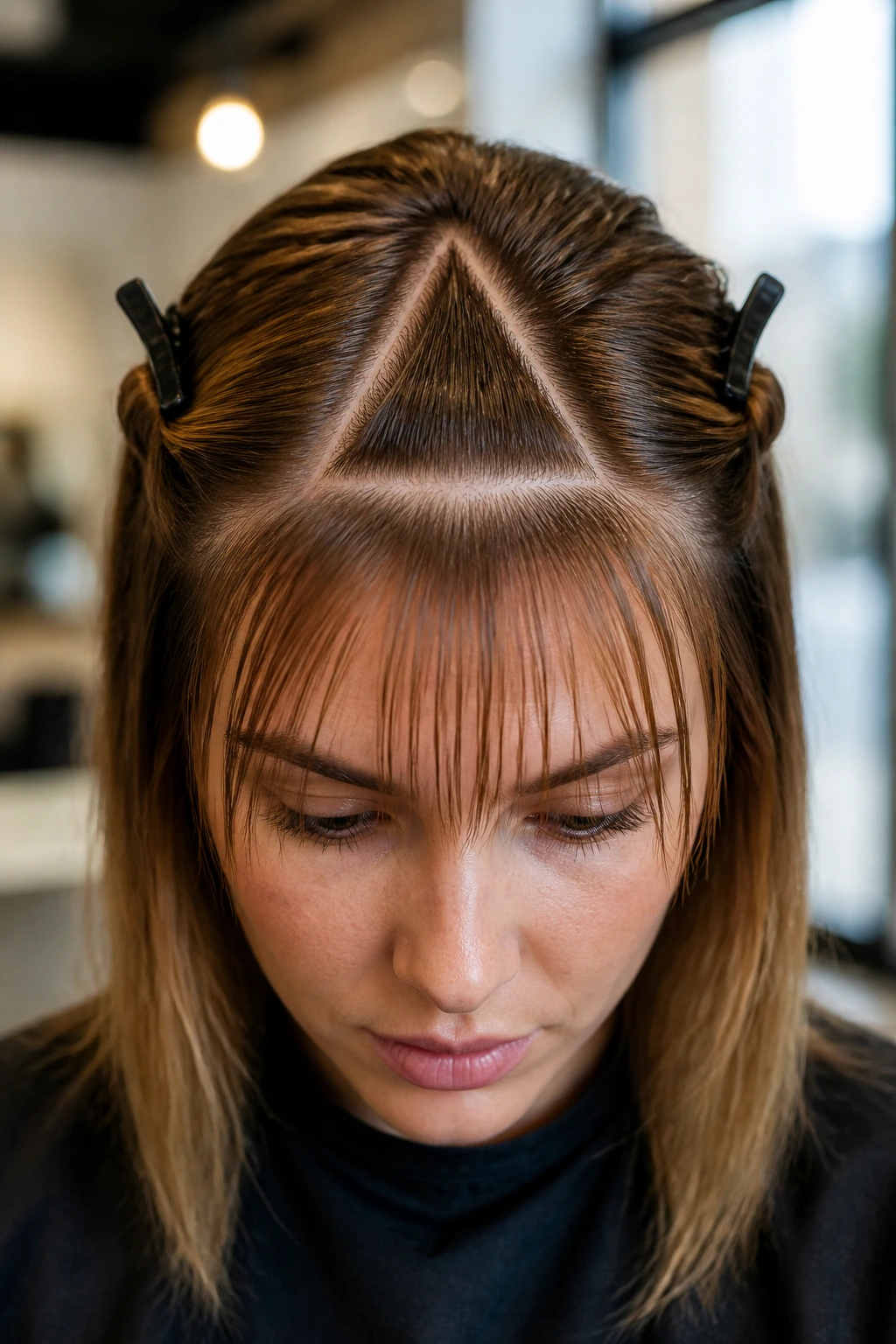
The success of any straight-across fringe on fine hair is decided before the scissors ever make their first cut. It all comes down to the starting section, which must always be a clean, precise triangle. For thicker hair types, this triangle is usually shallow, starting just an inch or two back from the hairline. But for thin hair, your stylist needs to draw that triangle much deeper, starting further back on the crown.
By positioning the apex of the triangle deeper on the top of your head, you gather more hair into the fringe area. This “borrows” density from the crown, where hair is naturally more abundant, and channels it forward to create a solid, substantial-looking baseline. The sides of the triangle should run from the high crown down to the outer corners of your eyebrows, ensuring that the bangs cover the entire forehead without widening into the temple areas where fine hair is typically at its thinnest.
The Danger of the Side Spill
If the starting triangle is drawn too wide, hair from the temples will be pulled into the fringe. For thin hair, this is a major mistake. The temple area is notoriously sparse, and cutting these hairs short will make the sides of your head look completely hollowed out. Keep the base of the triangle strictly aligned with the outer iris or the brow arches to preserve density where you need it most.
Finding the Natural Apex
To find the perfect starting point for your section, lay a flat comb on the top of your head. The point where the comb leaves the scalp and begins to curve down toward your forehead is your natural apex. Starting your parting triangle exactly at this pivot point ensures the bangs fall forward naturally without requiring constant heat-styling persuasion.
Essential Styling Tools for Fine Fringe
You cannot style thin bangs with the same heavy-handed products or large tools designed for thick hair. If you use a massive ceramic round brush, you will end up with a puffy, retro bubble shape that exposes the gaps between your strands. If you use heavy pomades or wax, your bangs will look wet and separated before you even leave the house.
The goal for fine bangs is flat, airy, and flexible movement. You want them to swing naturally and return to their place without clumping together. Achieving this requires a highly specific toolkit designed to control the hair without weighing it down.
The Double-Row Boar Bristle Brush
Skip the metal-barrel thermal brushes, which get too hot and stretch fine hair until it lies limp. Instead, use a small, flat paddle brush or a half-round brush featuring natural boar bristles. Boar bristles grab every tiny, fine strand, creating tension that allows you to smooth out cowlicks and redirect stubborn growth patterns at the root without stripping away natural volume.
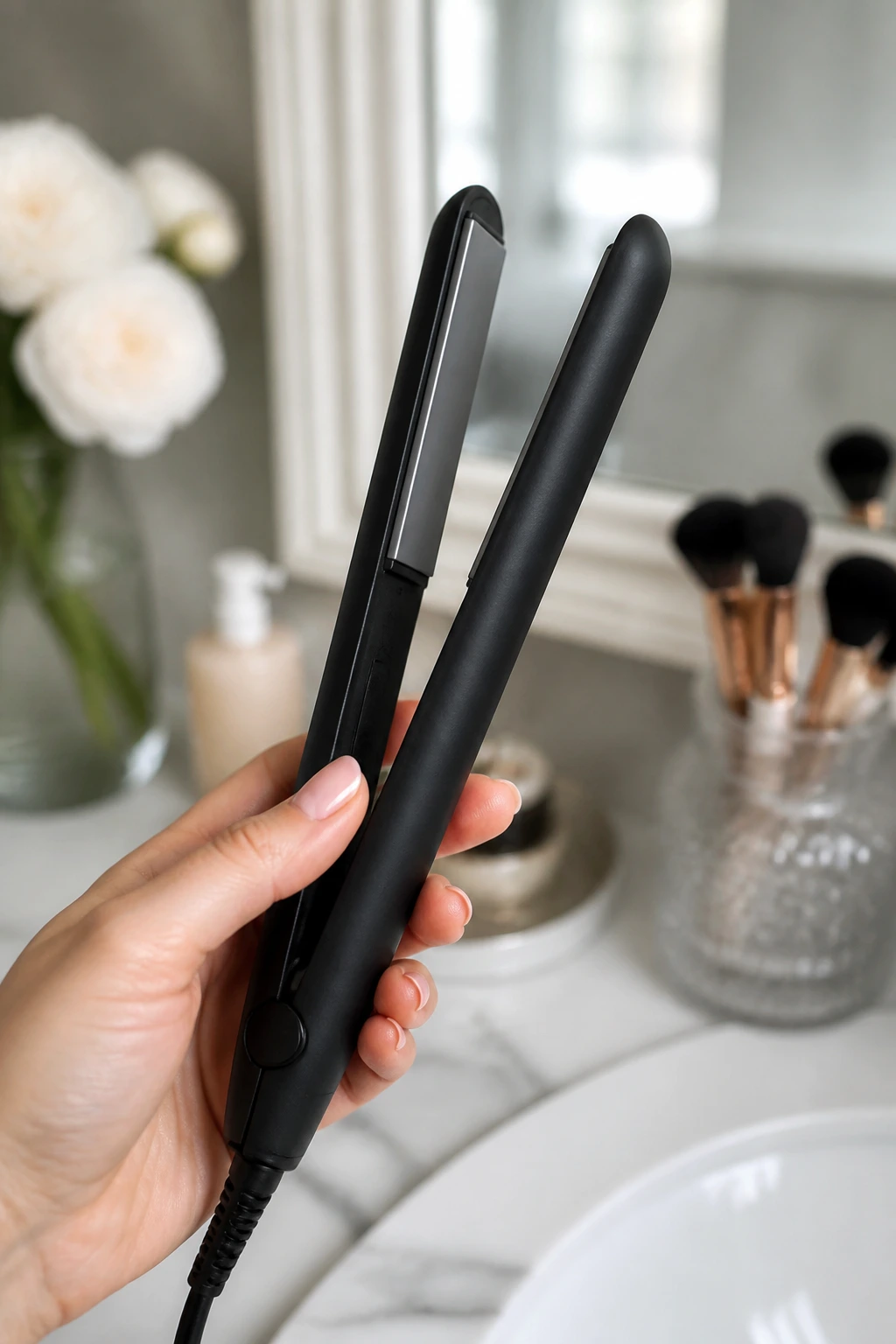
The Micro Flat Iron
A standard one-inch flat iron is too wide to grab short fringe from the root, often resulting in creased, awkward bends. A micro-flat iron with half-inch plates is a game-changer for fine bangs. It allows you to get right down to the scalp, gently curving the iron down and inward to create a soft, natural fall rather than a pin-straight, stiff shelf.
Dry Styling Clay and Rice Starch
Traditional hairspray is the enemy of thin bangs; its wet, resin-heavy formula glues fine strands together into stiff clumps, revealing the scalp underneath. Instead, opt for a tiny pinch of matte styling clay or a quick puff of rice-starch-based dry shampoo. Rice starch is incredibly lightweight and absorbs oils instantly, preventing your forehead’s natural oils from transferring to your bangs throughout the day.
1. Wispy French Girl Bangs
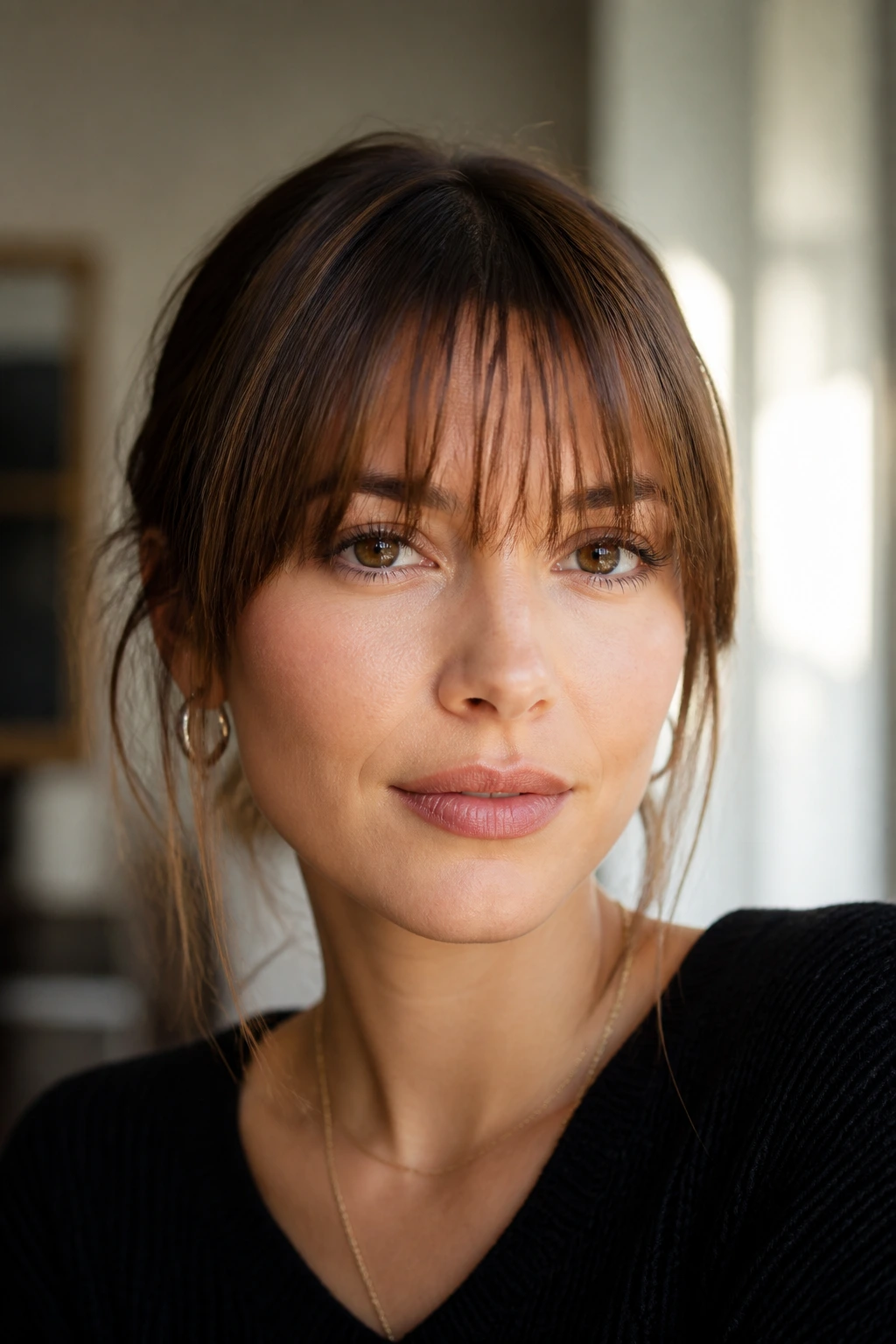
The classic Parisian fringe is the absolute gold standard for thin hair because it actively embraces a lighter density. Instead of trying to force a solid, heavy wall of hair, this style is cut with built-in airiness that allows your forehead to peek through slightly. It looks incredibly effortless because it is designed to move, shake, and part naturally without looking messy or broken.
Why This Style Preserves Crown Volume
Because this cut does not require a massive chunk of hair from the top of your head, it leaves the rest of your hair feeling full and intact. The bangs are cut straight across but feature shattered, piecey ends that break up the blunt line. This means that if your bangs separate slightly during a windy day, it looks like a deliberate styling choice rather than an accidental gap.
Quick Hair Facts
- Ideal Forehead Height: Works best on average to high foreheads where the length has room to drape.
- Maintenance Level: Low; you can let them grow out into face-framing layers without a stressful transition phase.
- Best Hair Texture: Straight to gently wavy fine hair that has a bit of natural bend.
- Recommended Finish: Matte, soft, and completely touchable. Styling tip: Blow-dry these using only your fingers, shaking them left and right to establish a natural, split-free center fall.
2. Blunt Micro Fringe with Shattered Edges
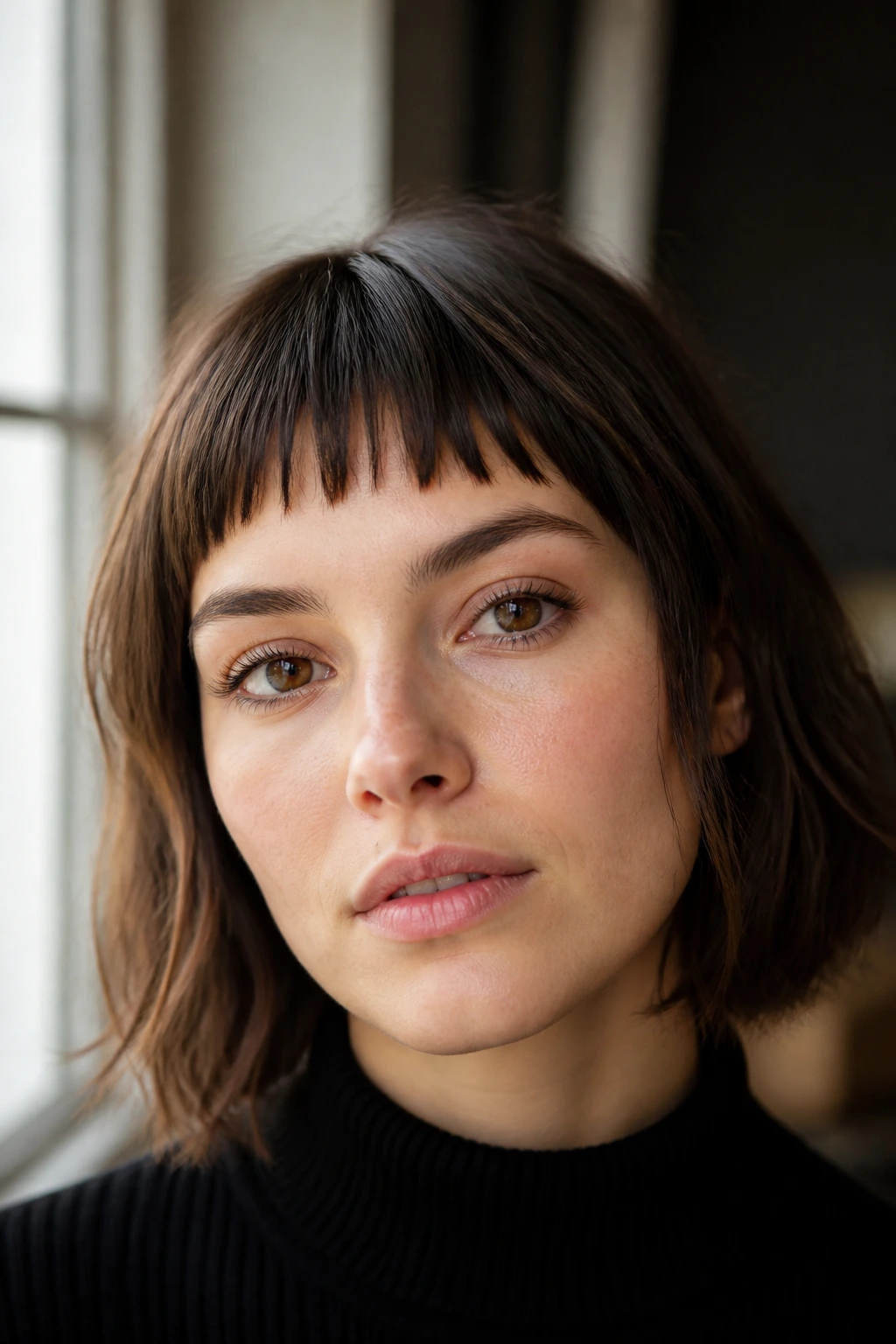
Choosing a micro-fringe is a bold move that works surprisingly well for fine-haired individuals. By cutting the bangs an inch or more above your eyebrows, you eliminate the weight that often pulls thin hair flat against the face.
The shorter length allows the hair to spring up, creating natural lift and a thicker appearance right at the hairline. To keep it from looking too harsh or blocky, the very tips of the micro bangs are vertically snipped (point-cut) to shatter the baseline.
This technique removes the blunt “stiff” look while keeping the overall shape straight and structured. It draws all the attention to your eyes and brow bone, distracting from any lack of volume at your crown or sides.
In daily practice, this cut requires very little styling. A quick pass with a small flat iron is all it takes to keep them lying flat and smooth.
3. Piecey Eyelash-Grazing Bangs
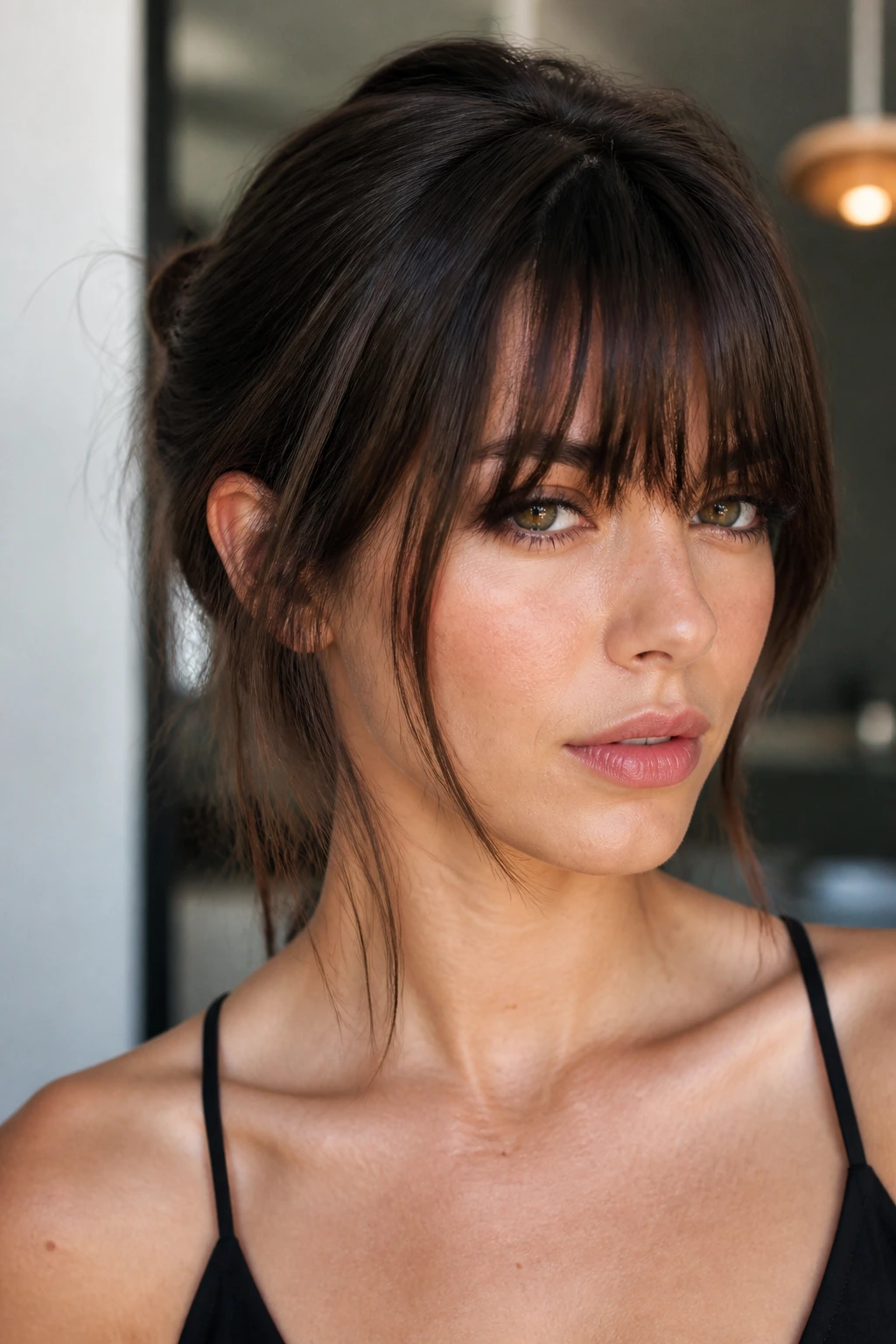
Are you willing to let your bangs brush against your eyelashes? If so, this incredibly chic, longer style is a fantastic way to make thin hair look dense and mysterious.
By letting the bangs grow slightly longer, you allow the strands to clump together into deliberate, defined pieces. This prevents the flyaway, static-prone look that often plagues fine hair in dry weather.
The Illusion of Density
When bangs sit right at the eyelash line, the dark backdrop of your lashes and eyes creates a shadow effect behind the hair. This shadow makes the fringe look significantly thicker than it actually is. It is a simple optical trick that works wonders for low-density hair.
How to Style and Manage the Length
- Start with wet hair and apply a pea-sized amount of lightweight volumizing mousse to the roots of the fringe.
- Blow-dry the hair straight down using a flat boar-bristle brush, sweeping the hair left and right to eliminate any cowlicks.
- Apply a single drop of dry oil to your fingertips and gently pinch the ends of the bangs to group them into piecey sections.
- If the length gets annoying, use a micro flat iron to bevel the ends inward slightly, which lifts the baseline just enough to clear your eyes.
4. Feathered Soft-Arch Fringe
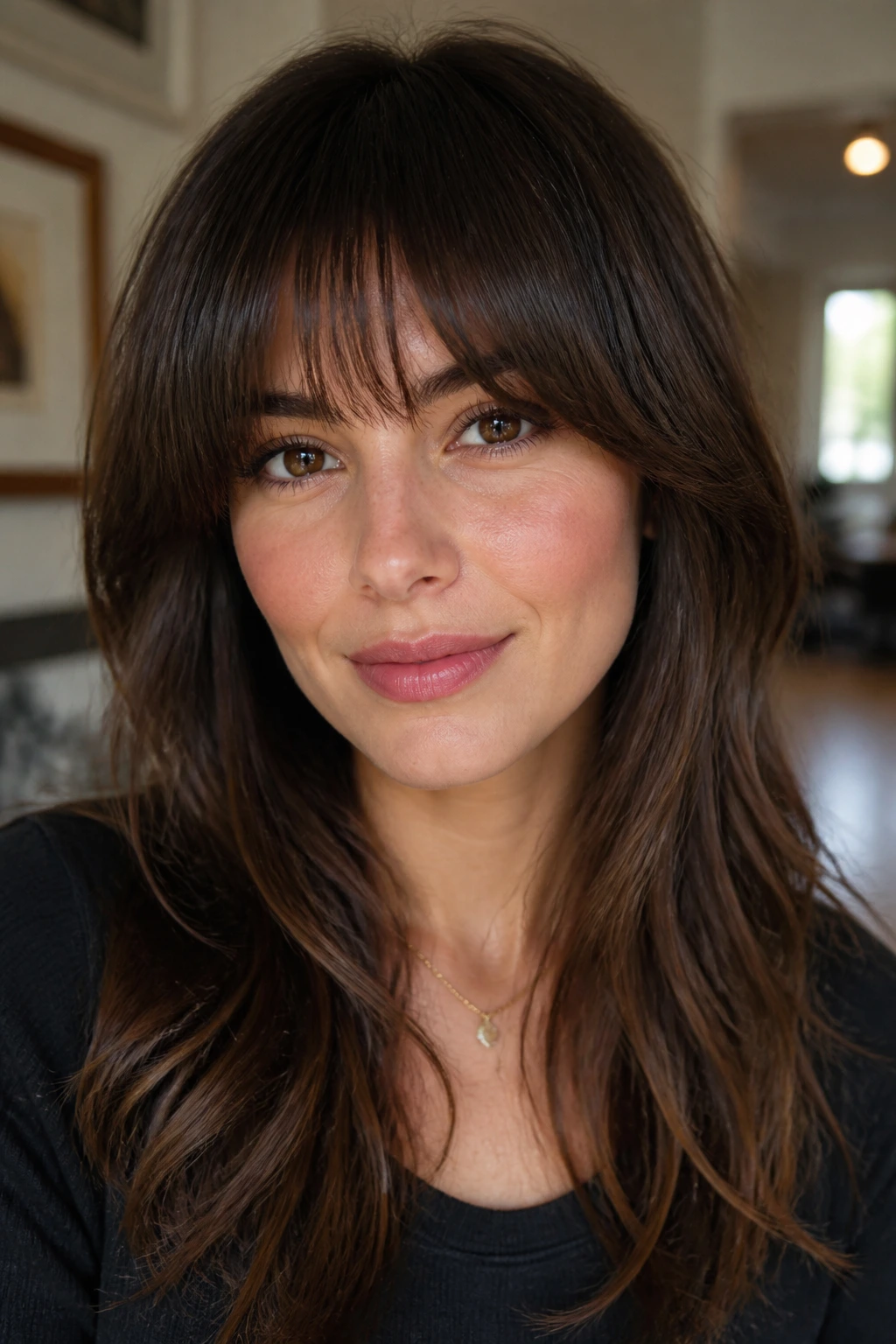
If you are worried that a straight-across cut will make your face look too angular or highlight a soft jawline, a feathered soft-arch fringe is your ideal solution. This style features a straight-across center that gently curves downward at the outer corners, blending seamlessly into your side lengths.
The feathered texture is achieved by slicing into the ends with a razor, which creates soft, overlapping layers that mimic the airy quality of down feathers.
This arch shape is highly flattering for thin hair because it frames the eyes while keeping the sides of the face softly covered. It avoids the harsh, geometric corners of a traditional blunt cut, which can sometimes make thin hair look like a stark, unnatural wig. Instead, the soft transitions give the entire haircut a fluid, organic motion that moves beautifully when you walk.
5. Textured Choppy Mid-Forehead Bangs
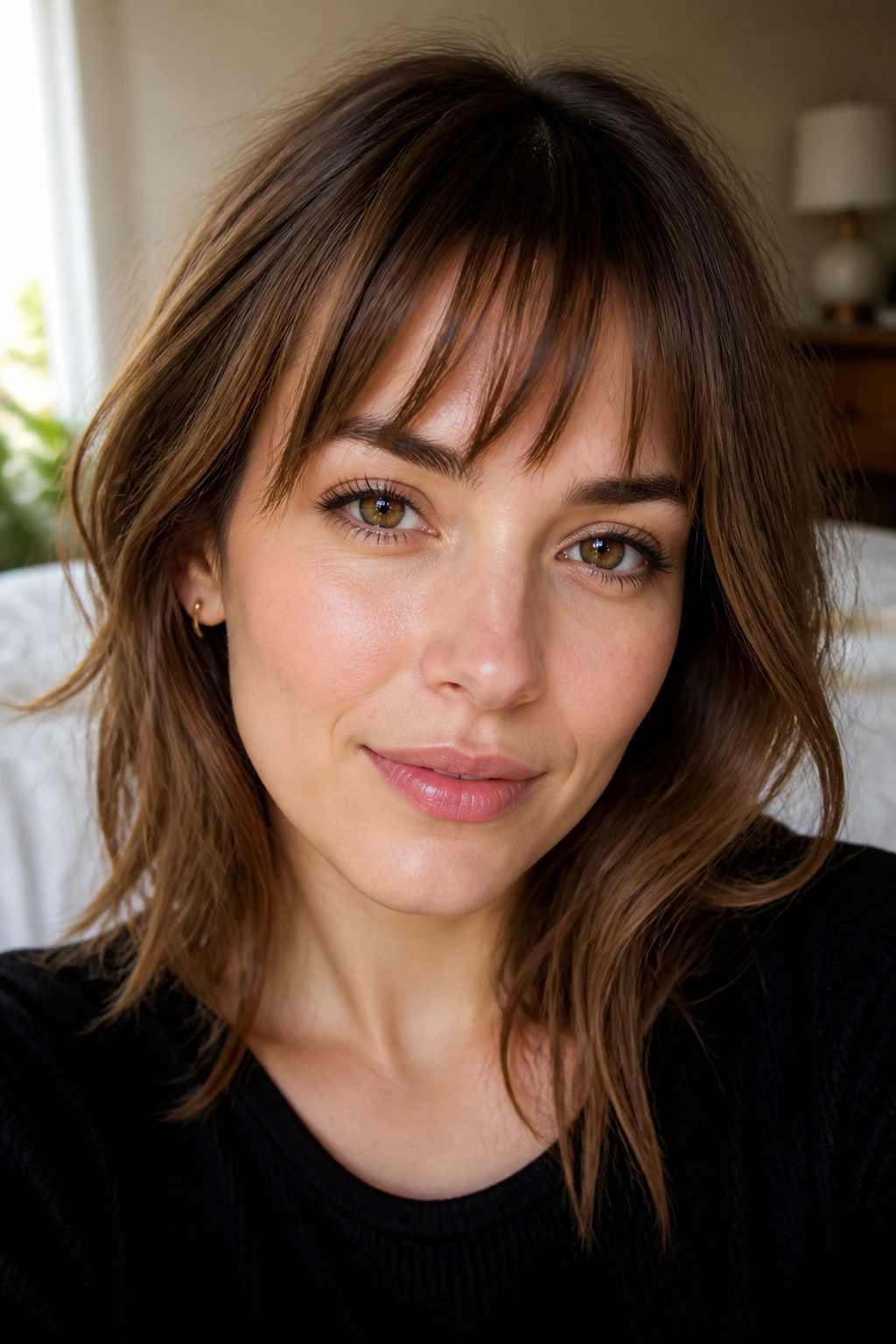
This style sits comfortably halfway between a micro fringe and a brow-skimming cut. The magic here is in the choppy, uneven texture that your stylist creates by cutting varying lengths across the forehead.
Instead of a straight horizontal line, you get a playful, textured border that thrives on imperfection. This is incredibly forgiving for thin hair because any natural parting or gapping simply blends into the choppy design of the haircut.
For daily styling, this cut is a dream for anyone who hates spending hours with a blow dryer. You can easily air-dry this fringe by applying a tiny bit of salt spray to damp hair, pinching the sections together, and letting them dry naturally.
The salt spray adds grit and texture to fine strands, giving them enough body to stand up and resist clumping into oily strings.
6. Shadow-Rooted Illusion Fringe
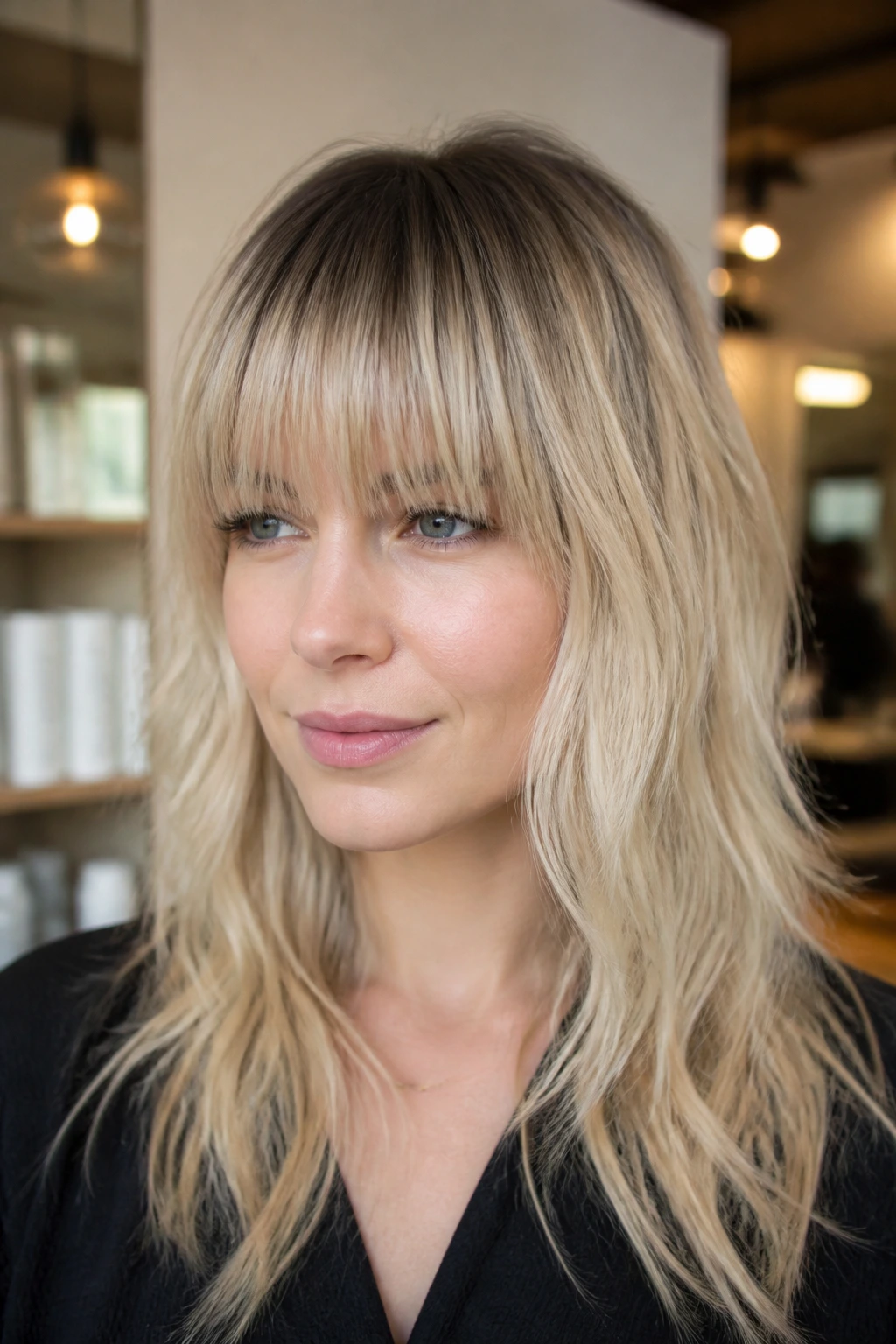
Sometimes the best way to make thin bangs look thicker has nothing to do with the scissors and everything to do with the hair color. A shadow-rooted fringe uses a clever dye technique where the roots of the bangs are colored one to two shades darker than the mid-lengths and ends.
This dark root mimics the natural shadow that thick, dense hair casts onto the scalp, instantly creating the optical illusion of depth and fullness.
Unlike Uniform Blonde, This Adds Instant Depth
If you have fine blonde or light-colored hair, a solid, single-tone color can make your bangs look translucent, almost as if you can see right through them to your forehead. By adding a soft, blended shadow root, you create a solid foundation at the scalp that makes even the thinnest fringe look grounded and substantial.
Who It’s Best For
- Fine-Haired Blondes: Especially those who struggle with their scalp showing through their hair.
- Grown-Out Highlights: Anyone looking to transition their color without losing dimensional depth.
- Specific Recommendation: Ask your colorist for a demi-permanent root smudge that extends about half an inch down into the bangs, blending softly into your lighter ends.
7. The Triangular-Sectioned Heavy Fringe
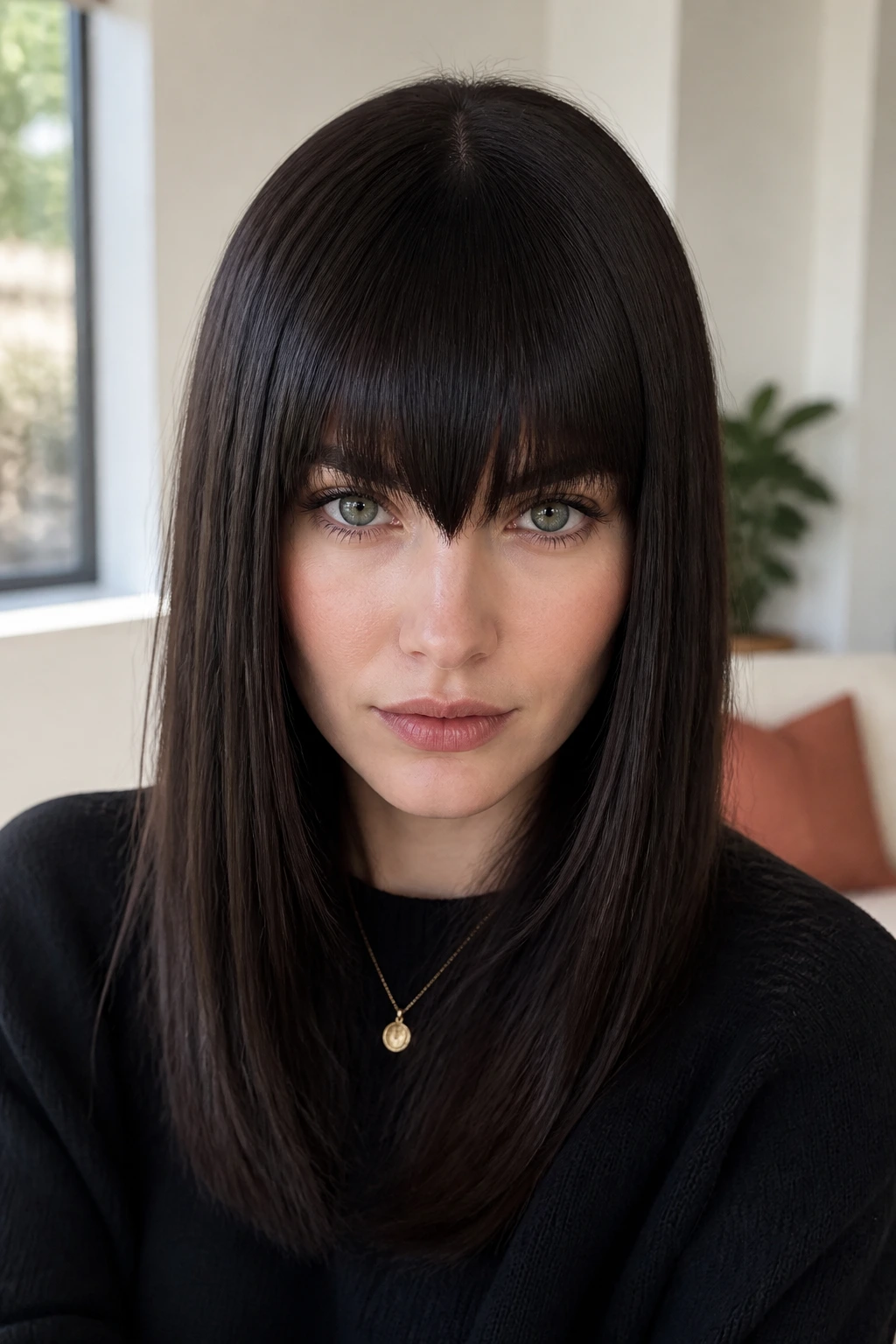
For those who want the look of a solid, traditional blunt bang without compromise, this style uses advanced sectioning to maximize every single strand. By carving a sharp, deep triangle that starts high on the crown, your stylist brings a larger volume of hair forward than would normally be used for bangs.
This creates a dense, heavy look that completely covers the forehead, hiding the natural hairline beneath.
How to Style This Dense Cut
To keep this heavier section of hair lying flat and smooth, it is crucial to blow-dry it from a soaking-wet state. If fine hair is allowed to air-dry even slightly before styling, its natural cowlicks will lock into place, making the heavy fringe look split and uneven.
Quick Hair Facts
- Ideal Forehead Height: Best for short to average foreheads to avoid taking too much hair from the back.
- Maintenance Level: High; needs regular trims every three to four weeks to maintain the crisp, straight edge.
- Best Hair Texture: Naturally straight, low-to-medium density hair.
- Recommended Finish: High shine with a light holding spray to keep the solid line in place. Styling tip: Direct the nozzle of your blow dryer straight down from above, brushing the hair flat against your forehead in a crisscross pattern.
8. Wispy Bottleneck Straight Bangs

Inspired by the shape of a classic glass bottle, this style starts narrow and tight at the top of the forehead, curves outward around the eyes, and then falls straight across the brows. It is a fantastic option for thin hair because it concentrates the density right in the center of your face, while the outer edges remain soft, wispy, and open.
This layout ensures that your face feels framed without requiring a massive amount of hair to be cut from the sides. It is an incredibly flattering look that pairs beautifully with ponytails and updos, as the longer outer edges drape softly to frame the cheekbones.
The center remains light and airy, meaning you never have to worry about a heavy block of hair weighing down your expressions.
9. Razor-Cut Tapered Sides Fringe

Using a razor instead of traditional shears allows your stylist to create incredibly soft, tapered edges that slide into your longer layers. This straight-across fringe features a sharp, clean center that gradually thins out and elongates as it reaches the temples.
The razor slide-cutting technique removes weight from the ends of the hair, allowing the bangs to blend into the rest of your haircut without creating a harsh dividing line.
For fine hair, this tapered transition is incredibly useful. It prevents that awkward “square” look that can sometimes happen when blunt bangs meet long, thin sides.
Instead, the hair flows in a continuous, soft curve that flatters your features and makes your entire haircut feel cohesive, light, and full of natural movement.
10. The Point-Cut Airy Fringe

Point cutting is a technique where the stylist cuts vertically into the hair rather than horizontally across it. For thin hair, this is an essential tool.
By cutting into the fringe at an angle, the stylist creates tiny, microscopic layers at the tips of the bangs. This prevents the hair from forming a solid, blunt line that can look sparse and stringy when it separates.
The Physics of Point-Cut Tips
Because the ends of the hair are cut at varying microscopic lengths, they tend to support each other. When one strand falls, it rests against its neighbor rather than separating into a distinct gap. This keeps the bangs looking full and unified, even when you are active or outdoors in humid conditions.
What to Expect During the Cut
- The Technique: Your stylist will pull the bangs forward and snip directly into the ends with the tips of the scissors pointing toward the ceiling.
- The Result: A soft, textured, straight-across line that feels incredibly light and bouncy.
- The Longevity: These bangs grow out beautifully, as the textured ends resist looking heavy or overgrown for much longer than a blunt cut.
- The Feel: Highly flexible and easy to sweep to the side if you want a change of style.
11. Curved Brow-Skimming Bangs

This style is cut to sit precisely along the curve of your eyebrow bone. Instead of a flat, straight line, the bangs feature a subtle, organic curve that follows the natural bone structure of your brow.
This draws immediate attention to your eyes, highlighting your brow arch and creating a highly polished, put-together appearance.
Because the length is kept exactly at the brow line, it strikes the perfect balance between long, piecey styles and short micro bangs. It offers enough length to feel substantial and thick, but remains short enough to stay out of your eyes during daily tasks.
To style, simply run a micro flat iron through the hair, curving it slightly inward at the very ends to hug the forehead beautifully.
12. Wispy Curtain-Hybrid Straight Bangs
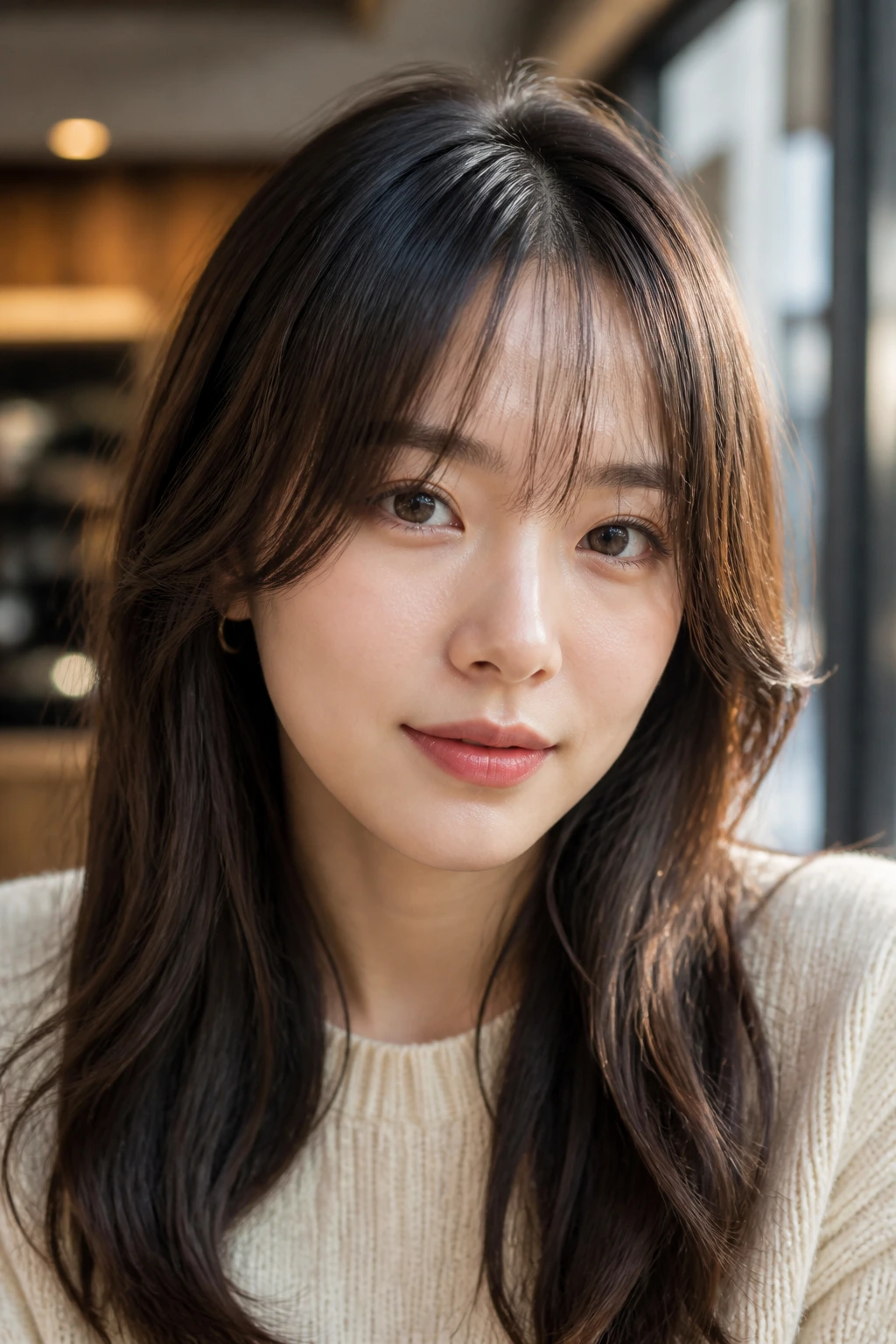
If you love the look of curtain bangs but still want a straight-across style, this hybrid cut offers the absolute best of both worlds. The center of the fringe is cut wispy and straight across, resting right at the brows.
However, as the fringe moves toward the temples, it splits slightly and elongates into soft, sweeping layers that mimic the flattering drape of a classic curtain bang.
This is an exceptional choice for fine hair because it provides the structure of a straight-across cut while retaining the breezy, easy-to-style nature of curtain bangs.
If you get tired of having hair on your forehead, you can easily use a round brush to sweep the center wisps to the side, completely transforming your look with minimal effort.
13. Sleek Glass-Hair Blunt Bangs
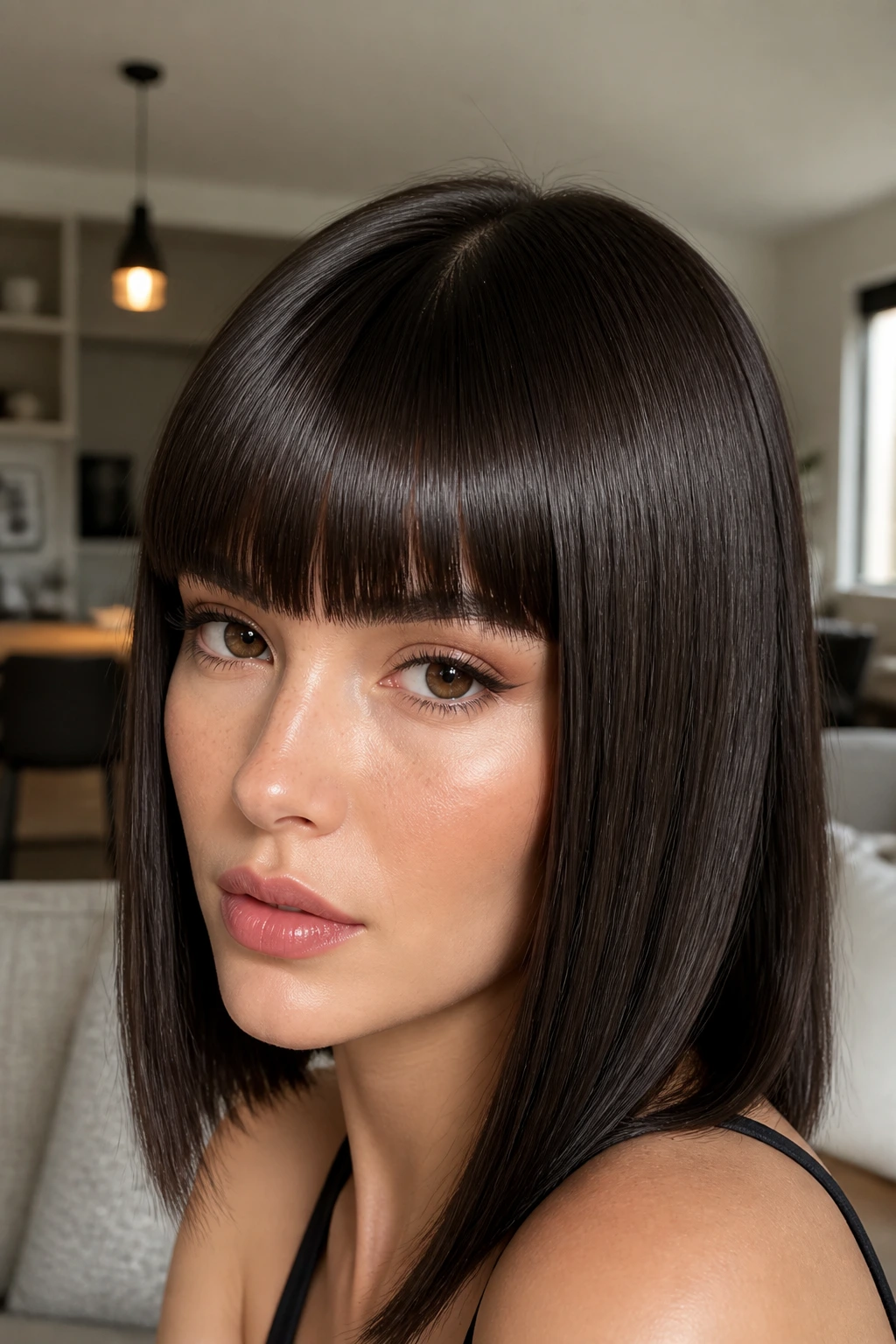
This style is all about creating a flawless, mirror-like sheet of hair across your forehead. It works incredibly well on naturally straight, fine hair that tends to lie flat.
Instead of fighting your hair’s natural tendency to lie close to the scalp, this cut embraces it by using high-shine serums and precise flat-ironing to create a sleek, “glass-like” finish.
Maximizing Shine to Create the Illusion of Density
When hair is incredibly shiny, it reflects a continuous sheet of light. For thin hair, this reflection is key because it hides the gaps between individual strands. The eye perceives the continuous shine as a solid, thick barrier, making your bangs look incredibly dense and perfectly styled.
Step-by-Step Styling for the Glass Finish
- Apply a heat-activated straightening spray to damp bangs, ensuring even distribution from root to tip.
- Blow-dry the bangs straight down with a high-quality paddle brush, keeping the nozzle of the dryer pointed downward to seal the hair cuticle.
- Once completely dry, run a micro flat iron through the fringe in two or three thin horizontal sections.
- Finish with a microscopic mist of shine spray applied to a comb, then gently run the comb through your bangs to lock in the glass-like reflection.
14. Disconnected Under-Cut Fringe
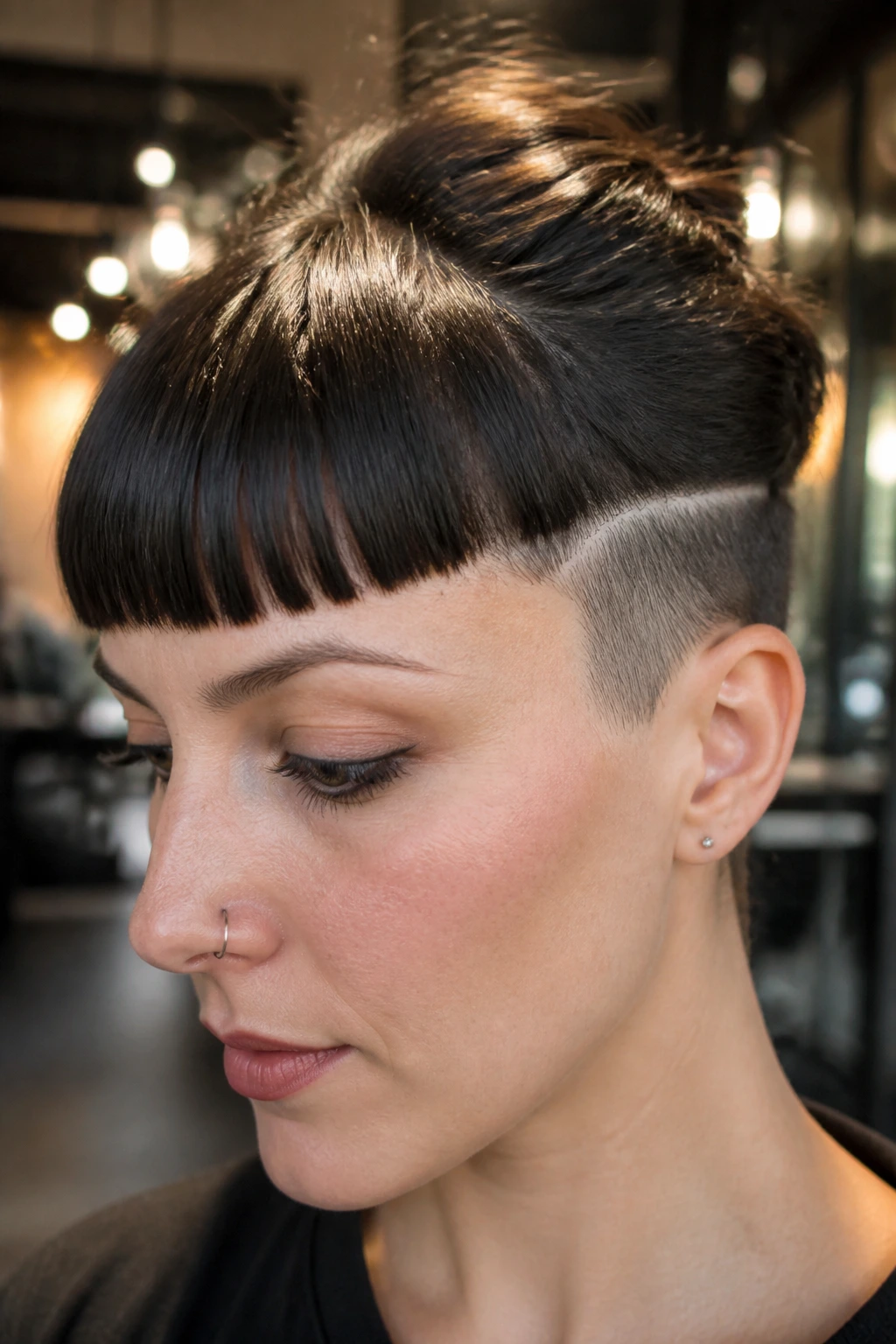
This is a clever, highly modern cutting technique specifically designed to add artificial volume to thin hair. Your stylist will section off a very thin strip of hair right at your forehead hairline and cut it significantly shorter than the rest of your bangs.
The longer, main section of your bangs is then cut straight across, draped directly over this shorter under-layer.
The short under-cut layer acts as a secret support shelf. Because the short hairs want to stand up, they push the longer top layer forward and upward, creating natural-looking volume and preventing the bangs from lying flat against your forehead.
It is an ingenious way to build body into a straight-across fringe without requiring heavy styling products or constant blow-drying.
15. Multi-Tonal Dimensional Fringe
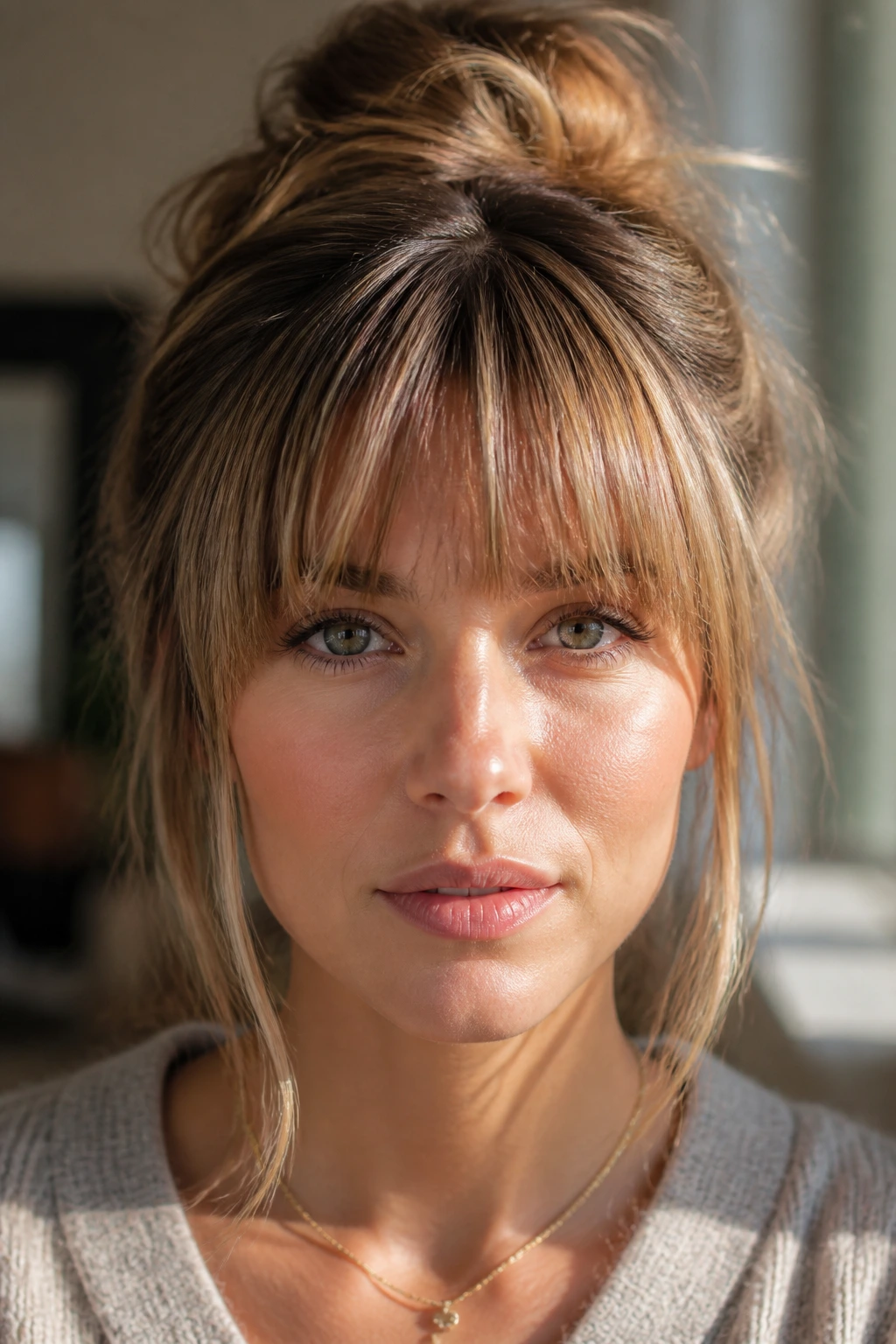
This style relies on advanced coloring techniques to build visual depth. Instead of a single, flat hair color, your colorist will weave microscopic highlights and lowlights throughout your bangs.
By placing lighter tones right next to darker shades, you create a 3D effect that tricks the eye into seeing volume where none exists.
For fine hair, this dimensionality is incredibly important. A solid, dark color can make thin bangs look heavy and flat, while a solid light color can make them look transparent.
By mixing warm and cool tones, or highlights and lowlights, you create a rich, textured fabric of hair that looks naturally thick, bouncy, and full of life.
16. Textured Shag-Style Bangs

The modern shag haircut is a fantastic friend to thin hair, and its matching straight-across bangs are no exception. This style features highly textured, messy bangs that pair perfectly with choppy layers and lived-in volume.
The ends are heavily point-cut and styled to look slightly tousled, completely eliminating the need for a neat, flat line.
This messy, lived-in texture is incredibly forgiving for fine hair. Because the style is meant to look undone, any natural splitting, wind-blown separation, or cowlicks simply add to the cool, rocker-chic aesthetic.
It is the ultimate “wake up and go” style for anyone who wants high-impact style with minimal daily styling effort.
17. Wispy Asymmetric Tapered Fringe
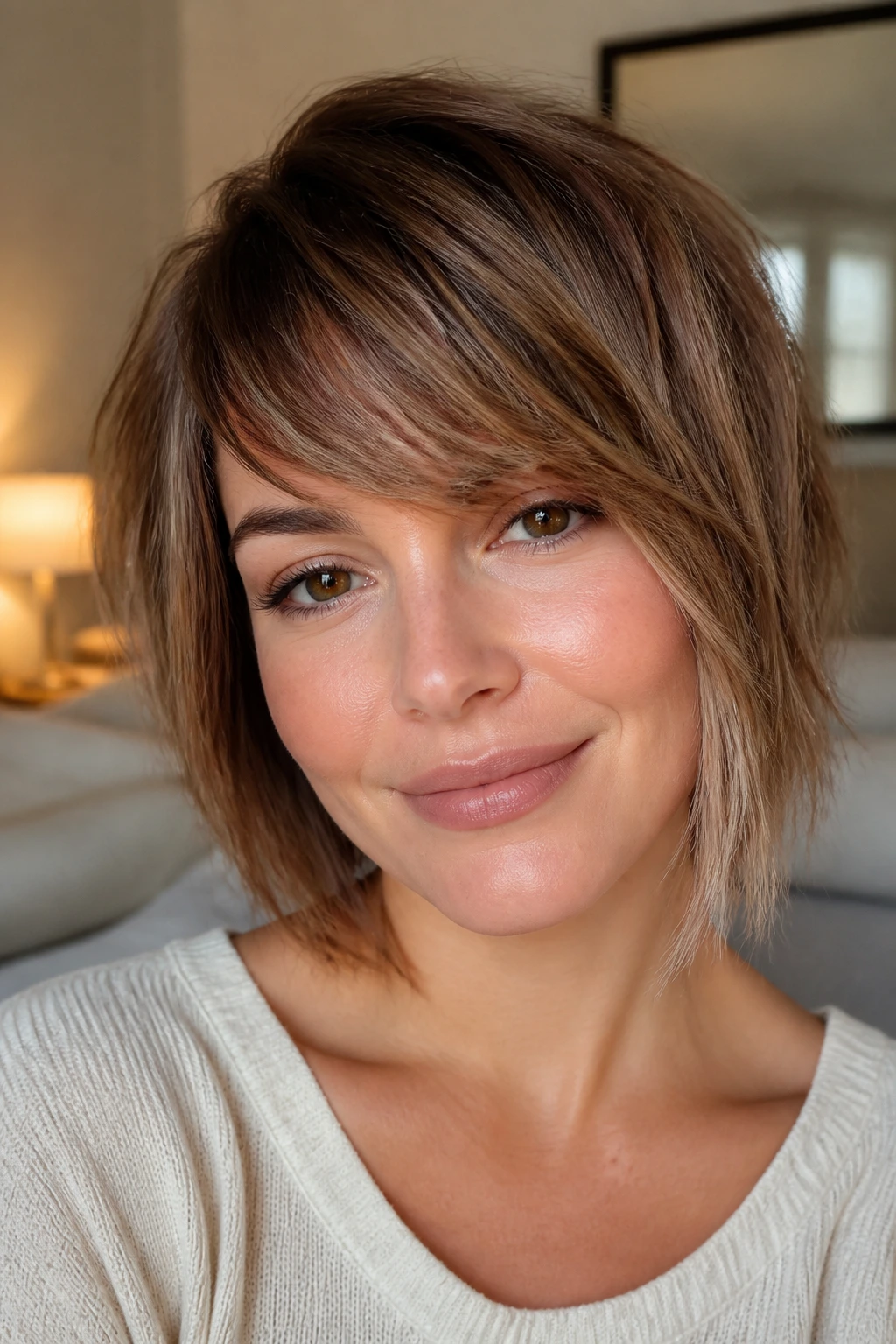
By adding a very subtle asymmetry to your straight-across bangs, you create a dynamic look that distracts from any thinness. This style features a baseline that is cut slightly shorter on one side, gradually tapering down to a longer length on the other.
The difference in length is subtle—usually just a quarter of an inch—but it makes a massive difference in how the hair drapes.
This diagonal line breaks up the symmetry of your face, drawing the eye across your forehead in a sweeping motion. This movement makes your hair look fuller and more active, preventing it from lying flat and lifeless.
It is a highly stylish, modern twist on the classic straight-across cut that works beautifully on all fine hair types.
18. The Piecey Wet-Look Fringe
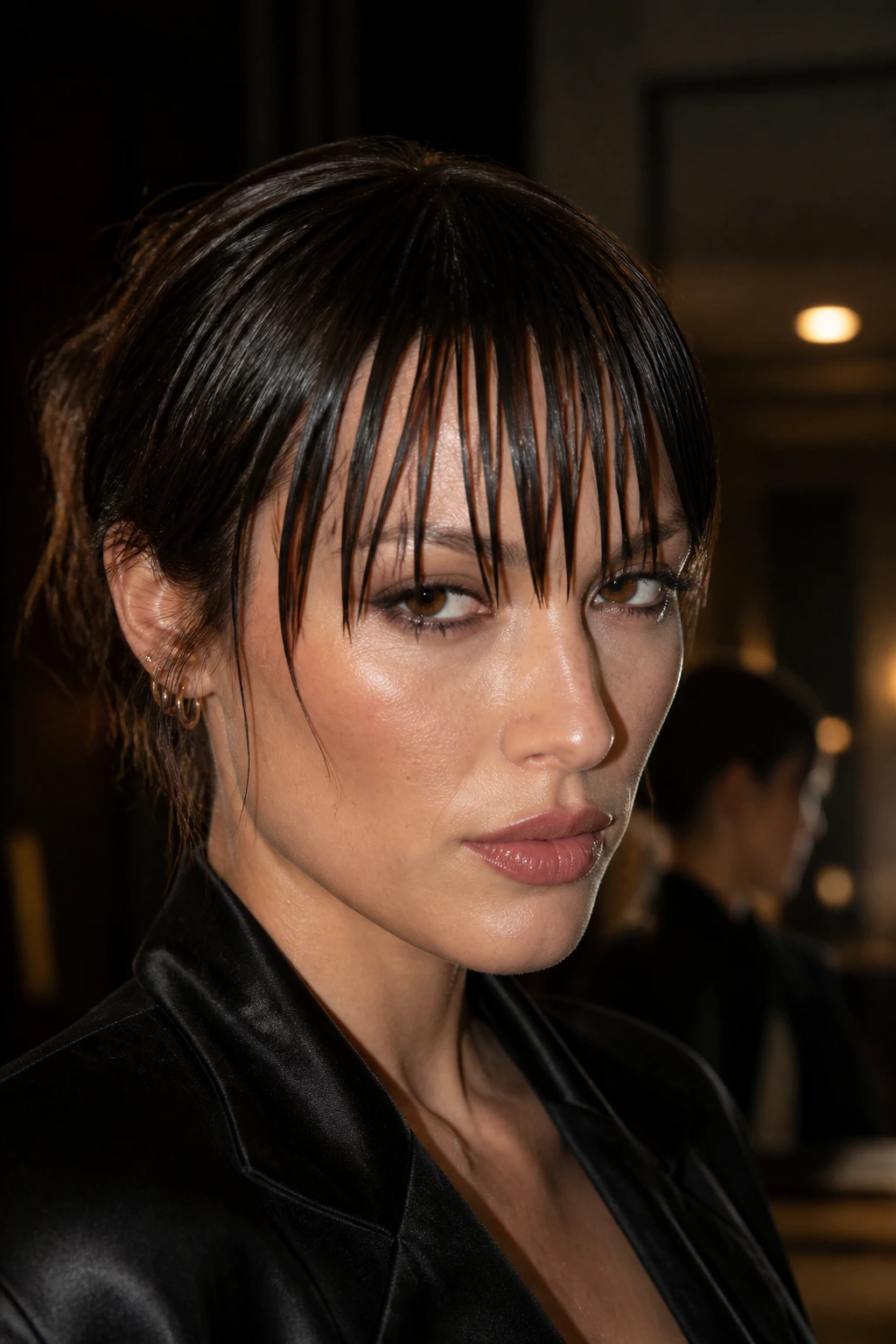
Embrace the separation! If your fine hair naturally wants to split into pieces, this style turns that tendency into a high-fashion, polished look.
By using lightweight styling gels or hair oils, you style your straight-across bangs to look damp and deliberately piecey. This creates a highly structured, modern look that celebrates the gaps between your strands rather than trying to hide them.
This style is incredibly chic and perfect for evenings out or special occasions. Because the wet look is highly intentional, you never have to worry about your bangs looking messy or oily.
Instead, they look sharp, glossy, and incredibly stylish, making a bold statement that highlights your features beautifully.
19. Soft-Split Centered Bangs
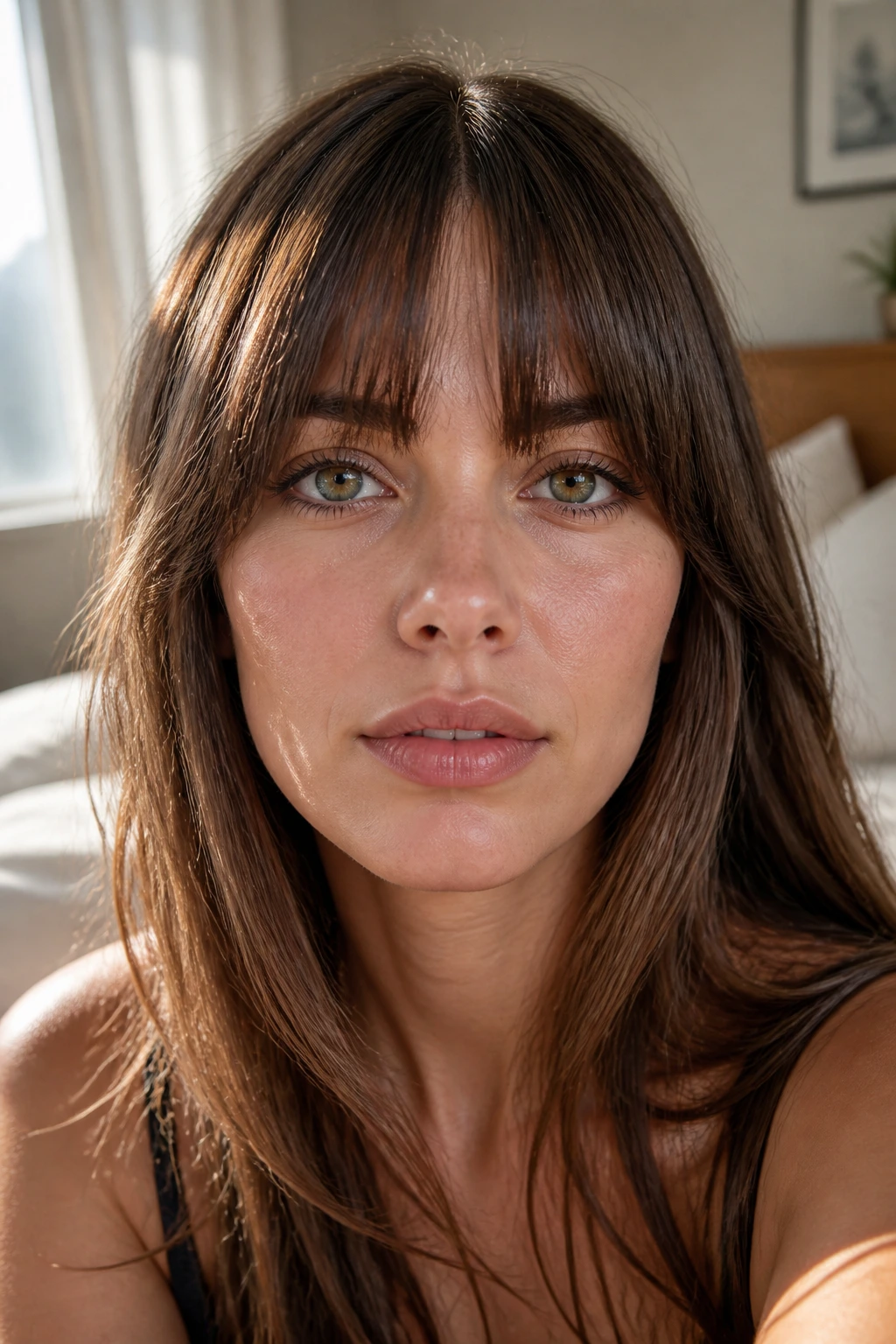
If you love the look of straight-across bangs but hate the feeling of hair constantly touching the bridge of your nose, this soft-split style is the perfect compromise.
The bangs are cut straight across, but styled to feature a tiny, deliberate opening right in the very center, directly above your nose. This small split breaks up the heavy wall of hair, letting a little bit of skin show through.
This center split is highly flattering because it elongates the face while keeping the sides of your forehead covered. It gives the bangs a light, airy, and breezy appearance that feels incredibly comfortable to wear.
To style, simply use your fingers to gently guide the strands away from the center while they are damp, letting them dry into a natural, soft frame.
20. High-Crown Deep-V Fringe
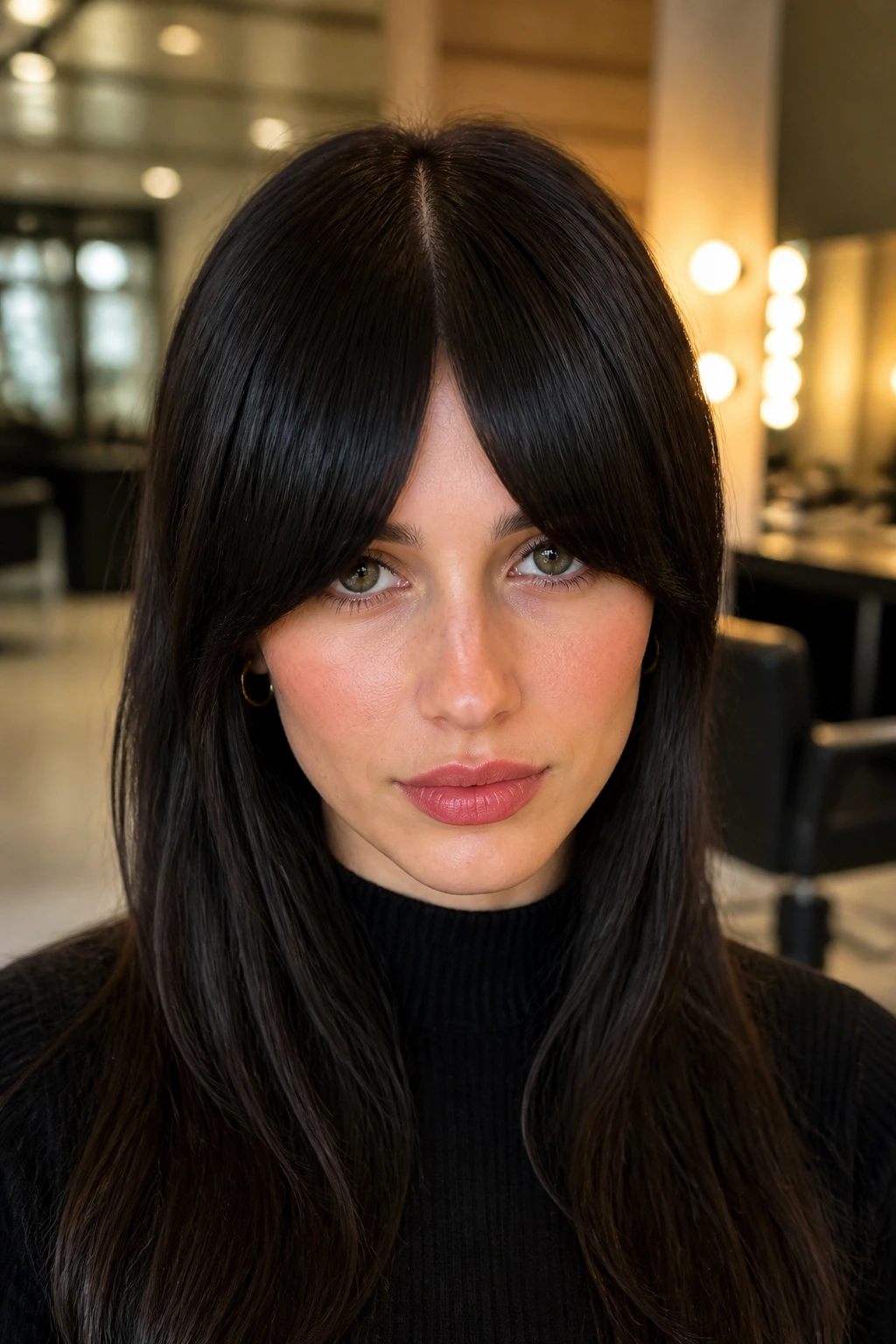
This style uses an extreme sectioning technique to create the absolute densest straight-across fringe possible for thin hair. Your stylist will start the parting triangle very high up on the crown of your head, forming a sharp, deep “V” shape.
This brings a massive amount of hair forward, borrowing density from the entire top half of your head to build a thick, solid front frame.
While this style requires a significant commitment—as you are cutting a large portion of your hair short—the payoff is incredible. It creates a thick, solid, geometric fringe that completely transforms your haircut, giving you the heavy, high-fashion bangs you’ve always wanted.
Pair it with a sharp bob or long, sleek lengths for a dramatic, stunning contrast.
21. Lightly Layered Pixie Fringe

If you have short, fine hair, a pixie cut paired with straight-across bangs is an incredibly chic, low-maintenance choice. This style features super short, lightly layered bangs that sit high on the forehead, blending seamlessly into the textured layers of your pixie cut.
The lightweight nature of the short hair allows the bangs to stand up and move freely, creating natural volume and density.
This style is incredibly youthful, playful, and easy to manage. A tiny dab of styling wax on your fingertips is all you need to texture the ends, keeping them looking sharp and piecey throughout the day.
It is a fantastic way to make thin hair look incredibly thick, healthy, and full of character.
22. Wispy Blunt Bob-Framing Bangs

There is no pairing more classic than a sharp, chin-length bob and straight-across bangs. For thin hair, this combination is a powerhouse.
The blunt baseline of the bob makes your ends look incredibly thick, while the wispy, straight-across bangs frame your face and add instant structure.
By keeping the bangs light and wispy, you ensure they don’t overpower your fine features or take too much density away from the sides of your bob.
It is a balanced, highly sophisticated haircut that always looks styled and put together, whether you are at the office or out for dinner.
How to Wash and Prep Fine Bangs Daily

Because your bangs rest directly against your forehead, they absorb skin oils and skincare products much faster than the rest of your hair. This means they will often look oily or flat long before your mid-lengths and ends do.
To keep your straight-across bangs looking fresh, fluffy, and full of volume, you need a quick, daily prep routine that doesn’t involve washing your entire head of hair.
The Sink-Wash Trick
Instead of jumping in the shower, tie the rest of your hair back into a bun. Lean over the sink and apply a tiny drop of clarifying shampoo strictly to your bangs. Rinse thoroughly with warm water and towel-dry.
This five-minute trick removes all oil and product buildup, giving your bangs a fresh, clean slate every single morning.
Blow-Drying Immediately
Fine bangs must be styled the second they get wet. If you let them air-dry even slightly, your natural cowlicks will set, causing your bangs to split and lie crookedly.
Grab your blow dryer, set it to medium heat, and use your brush to direct the bangs back and forth across your forehead until they are completely dry and smooth.
Critical Slicing and Cutting Techniques for Stylists
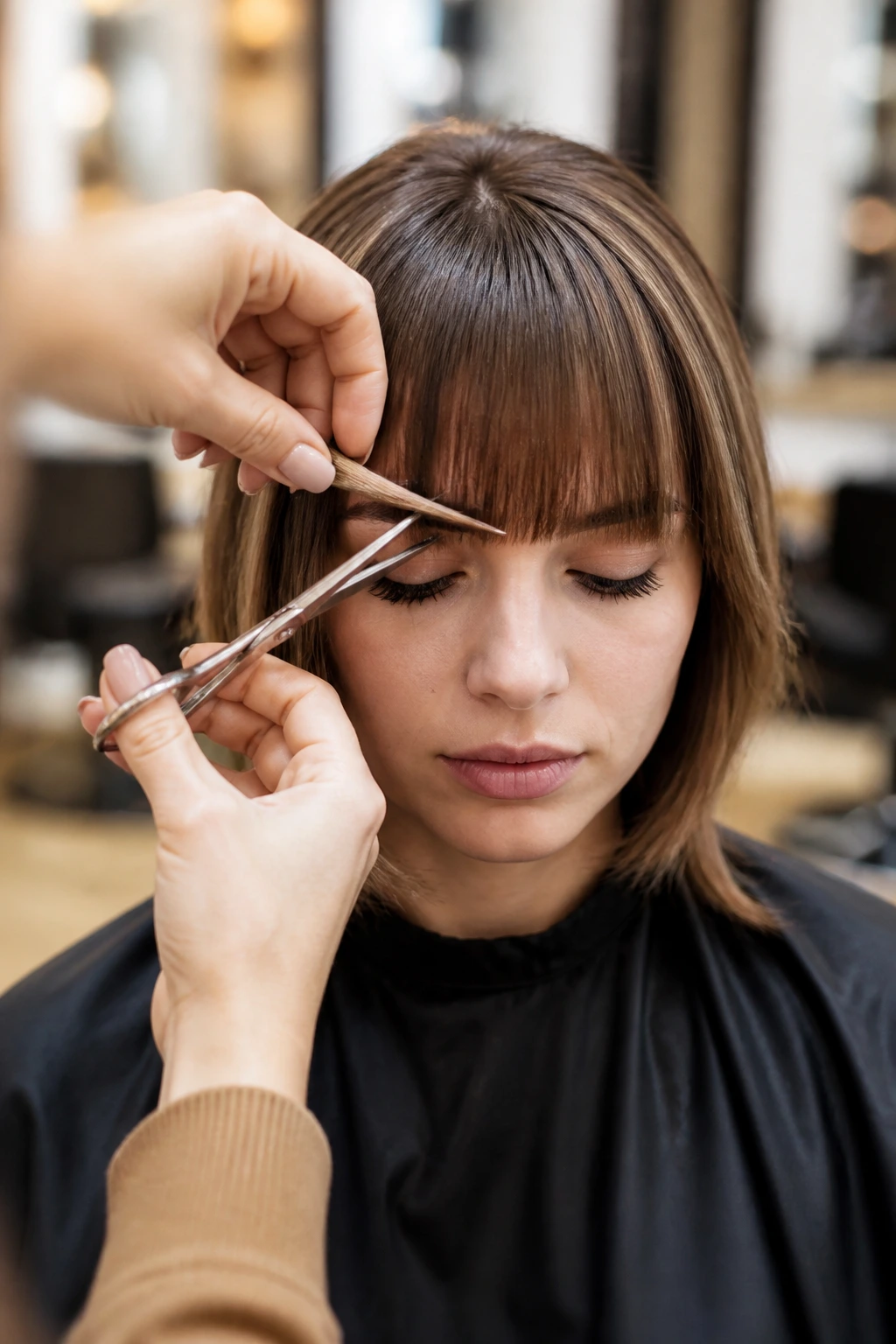
If you are heading to the salon to get your thin hair cut into straight-across bangs, it helps to speak your stylist’s language. Knowing the specific techniques that work best for your hair type will ensure you walk out with a fringe that looks thick, healthy, and easy to style.
Point Cutting over Blunt Shearing
Always ask your stylist to point-cut the ends of your bangs rather than slicing straight across in a single horizontal cut. Point cutting creates soft, microscopic peaks and valleys at the ends of the hair, which helps the strands blend together and resist separating into stringy gaps throughout the day.
Avoid Heavy Thinning Shears
While thinning shears are great for removing bulk from thick hair, they are the enemy of fine hair. Using them on thin bangs can make the ends look frayed, frizzy, and incredibly sparse.
Instead, have your stylist use the tips of their regular scissors to carefully slide-cut and remove weight only where absolutely necessary.
Wrapping Up
Cutting straight-across bangs into thin hair is not an impossible task—it is simply a design puzzle waiting to be solved. By choosing the right sectioning, utilizing smart styling tools, and picking a textured or wispy variation that works with your hair’s natural density, you can easily pull off this classic, face-framing look.
Remember to keep your products lightweight, style your bangs immediately after washing, and embrace the natural movement of your fine hair. With a little bit of confidence and the right daily routine, your new fringe will quickly become your favorite style feature.