

Imagine sitting in your stylist’s chair, watching the shears hover just millimeters above your eyes. For years, conventional beauty rules insisted that bangs were off-limits for anyone with natural texture. We were warned of the dreaded “poodle poof,” the uncontrollable frizz, and the daily battle with flat irons. But today, wearing textured bangs for curly hair is one of the most exciting ways to celebrate your natural pattern, offering a frame that brings instant character to your face.
The secret lies in working with the natural bounce and coil of each strand instead of fighting against it. When you embrace textured bangs for curly hair, you are choosing a style that relies on movement, weight distribution, and the unique way your ringlets clump together. It is a soft, lived-in approach that looks just as good on day three as it does on wash day.
To make this work, you have to throw out the old rules of straight-hair cutting. Curls cannot be treated like a uniform sheet of paper. Each spiral has its own personality, its own spring factor, and its own sweet spot where it wants to rest. Understanding these mechanics is what transforms a frustrating forehead full of frizz into a gorgeous, intentional frame.
The Science of the Curly Shrinkage Factor
Curls do not behave like straight hair, and nowhere is this more apparent than on your forehead. When wet, a curl is heavy, stretched out, and deceptively long. As it dries, the water evaporates, the hydrogen bonds reform, and the hair springs upward. This is what stylists refer to as the shrinkage factor.
For looser waves, shrinkage might only be an inch or two. For tight, coily patterns, a strand can shrink up to 75 percent of its wet length. If your stylist pulls your hair taut while wet and cuts a straight line across your eyebrows, those bangs will bounce up to your hairline the moment they dry. You will be left with a row of tiny, surprised-looking springs.
To avoid this, a skilled stylist must assess your curl pattern in its dry, natural state. This allows them to see how much each curl bounces up and where it naturally clumps. It is a highly customized process that treats each coil as an individual shape rather than a mass of fibers.
Why Dry-Cutting is Non-Negotiable for Curly Fringe
Cutting curly bangs wet is a guessing game that almost always ends in tears. Dry-cutting, on the other hand, allows the stylist to see the final shape in real-time. They can watch how the weight of the hair changes as each coil is trimmed, ensuring the bangs drape softly over your forehead rather than stacking into a solid, heavy wall.
During a dry cut, your stylist should cut curl-by-curl, snip by snip, following the natural curve of each ringlet. They will look at the way the hair falls from your crown, identifying which pieces want to sit forward and which want to drape to the side. This method preserves the integrity of your curl clumps, keeping them from splitting into fine, frizzy strands.
It also allows for immediate adjustments. If a particular coil on your temple bounces higher than its neighbors, your stylist can leave it slightly longer to maintain a balanced, cohesive line. It is a visual, intuitive process that cannot be replicated with wet hair.
1. Shaggy Bottleneck Ringlets
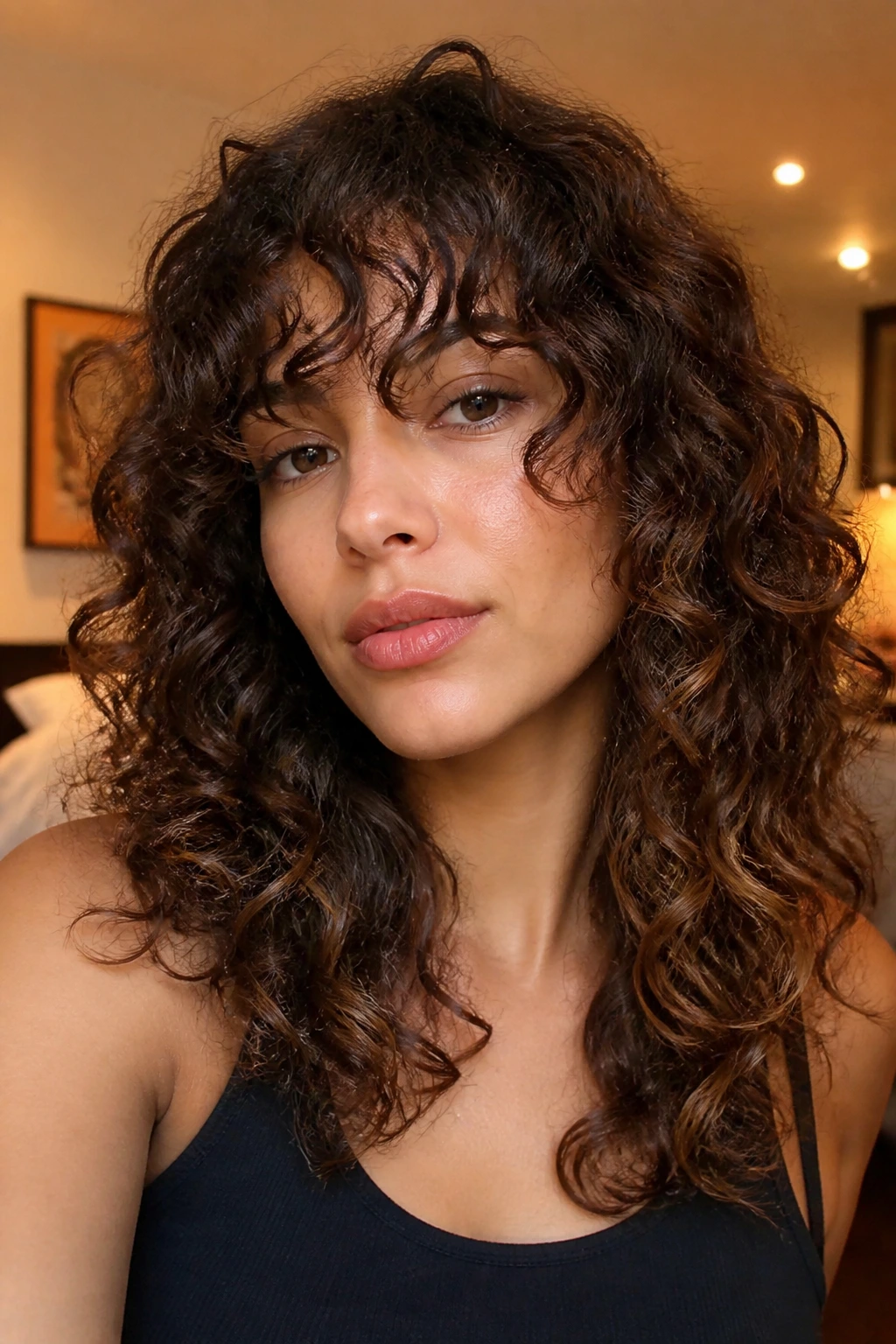
Bottleneck bangs are narrow at the top, swoop outward around the eyes, and then curve back in to hug the cheekbones. This shape is incredibly flattering because it frames your eyes without completely closing off your forehead. On curly hair, this style translates into a soft, shaggy fringe that blends effortlessly into your longer layers.
Why the Bottleneck Shape Works
Because the center is shorter than the outer edges, these bangs do not feel heavy or claustrophobic. The shorter middle pieces draw attention to your eyes, while the longer side ringlets soften the angles of your face. It is an excellent choice for anyone trying curly bangs for the first time.
Quick Styling Tips
- Apply a lightweight leave-in conditioner to wet bangs, then use your fingers to group them into their natural clumps.
- Avoid heavy creams that can weigh down the root, making the top of the bottleneck look flat.
- Let them air-dry or use a diffuser on low heat, gently pushing the center pieces upward to encourage bounce.
2. Wispy Micro Coils
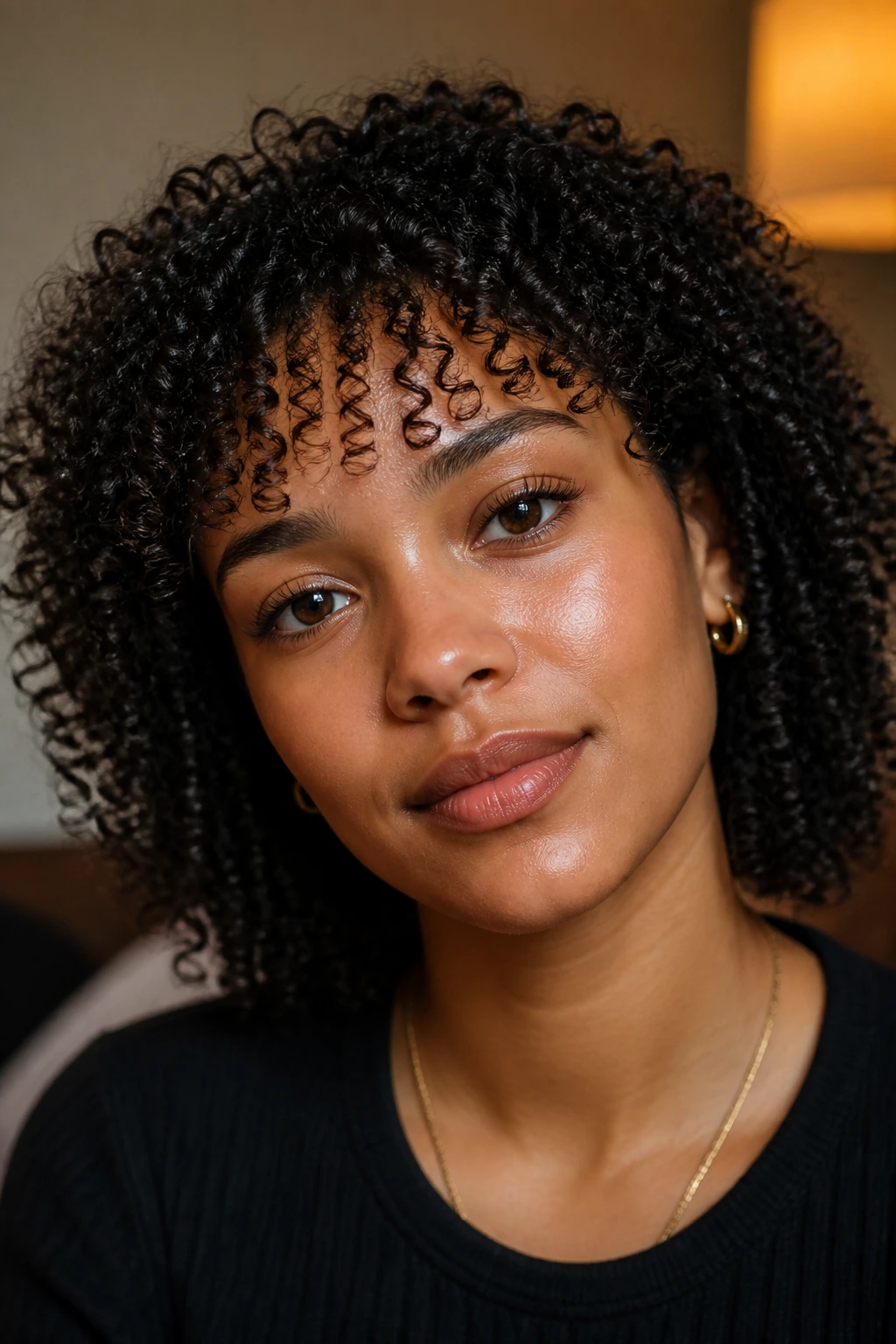
If you have tight, high-density coils, do not assume you cannot wear short bangs. Wispy micro coils sit high on the forehead, usually an inch or two above the eyebrows. This look is bold, playful, and packed with retro charm.
What Makes Them Stand Out
Instead of a solid, heavy block of hair, these bangs consist of delicate, separated coils that let your forehead peek through. This airiness keeps the look modern and prevents it from overwhelming your features.
How to Style Wispy Micro Coils
- Use a tiny amount of water-based gel on your fingertips to define each individual coil.
- Gently stretch them down slightly while drying if you want to show off a bit more length.
- Never brush or comb through them once dry, or you will lose the definition and create a cloud of frizz.
3. Heavy Blended Curtain Waves
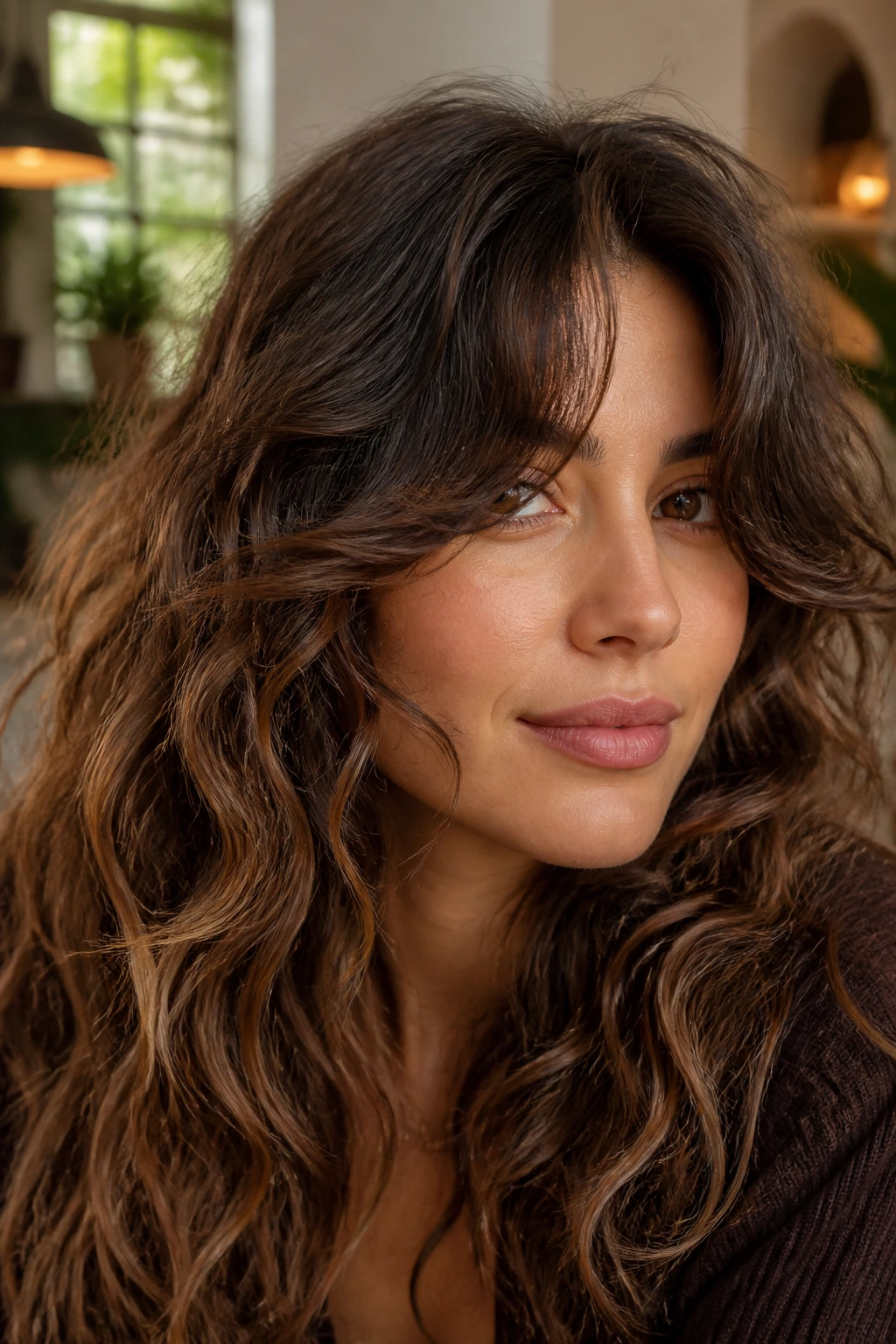
For those with loose, wavy textures, heavy curtain bangs offer a romantic, bohemian vibe. These bangs are split down the center or slightly off-center, cascading outward like drapes on a window.
Unlike straight curtain bangs, curly curtain waves should not be blown flat. They look best when they retain their natural, soft S-pattern, blending seamlessly into the rest of your hair.
To keep them looking effortless, ask your stylist to cut the inner corners shorter and taper them gradually into your face-framing layers. This prevents a harsh, disconnected look and makes styling incredibly simple. You can simply tuck the longer ends behind your ears on days when you want a cleaner look.
4. Choppy Asymmetric Spirals
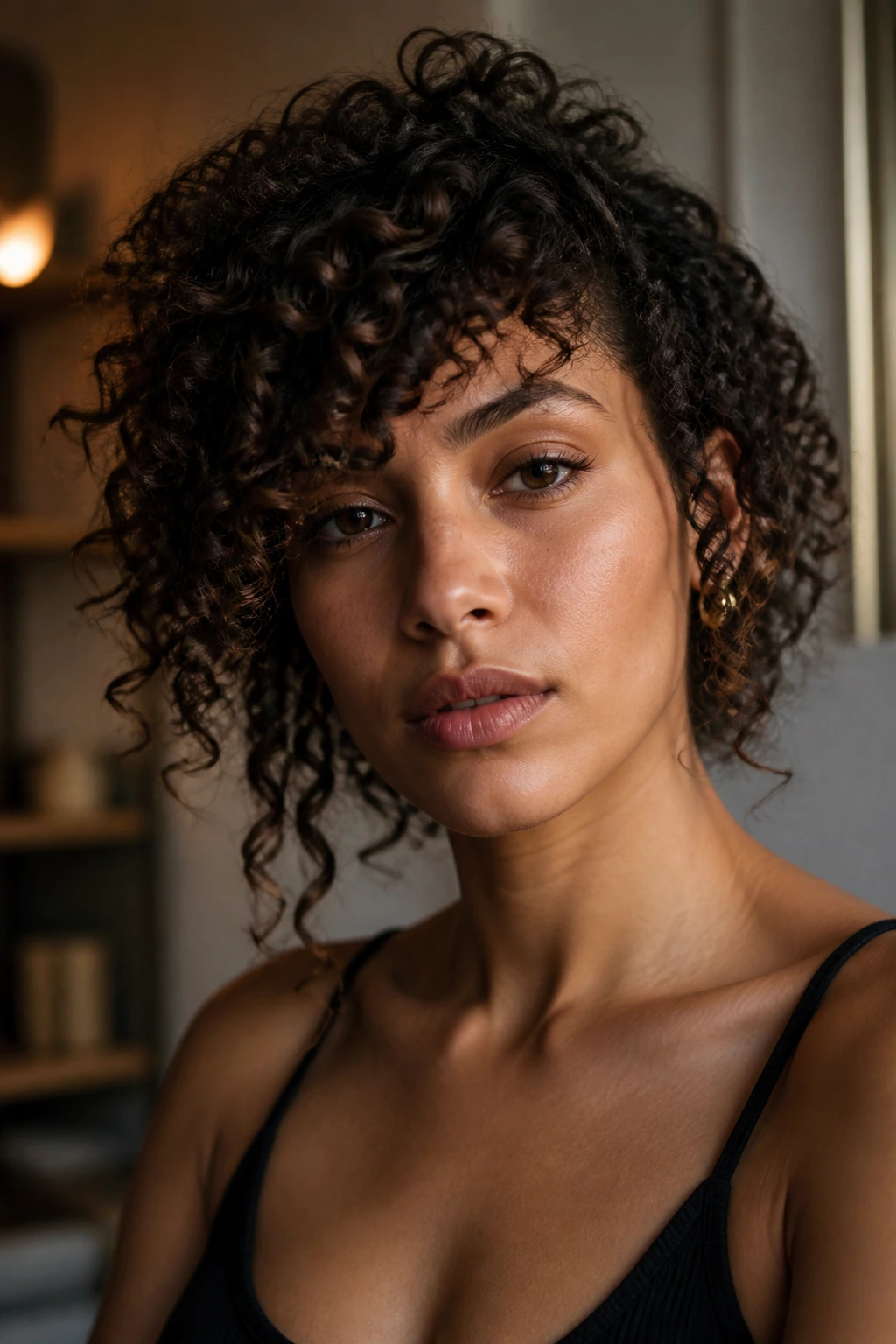
Who says bangs have to be perfectly symmetrical? Choppy, asymmetric spirals defy the traditional rules of hair cutting to create an edgy, modern aesthetic. One side of the fringe is cut shorter, angling down toward the opposite temple in a deliberate, uneven line.
Why Go Uneven?
Curls are inherently unpredictable. Embracing an asymmetric cut leans into that unpredictability, making any natural bounce variations look intentional rather than accidental. It is a high-fashion option that works beautifully with medium-to-tight coil patterns.
How to Style and Maintain
- Use a light-hold foam to define the spirals without making them stiff or crunchy.
- When diffusing, tilt your head side to side to dry the roots in different directions, which enhances the choppy texture.
- Get regular trims every four to six weeks to keep the asymmetric angle sharp and noticeable.
5. Piecey Brow-Skimming Tendrils
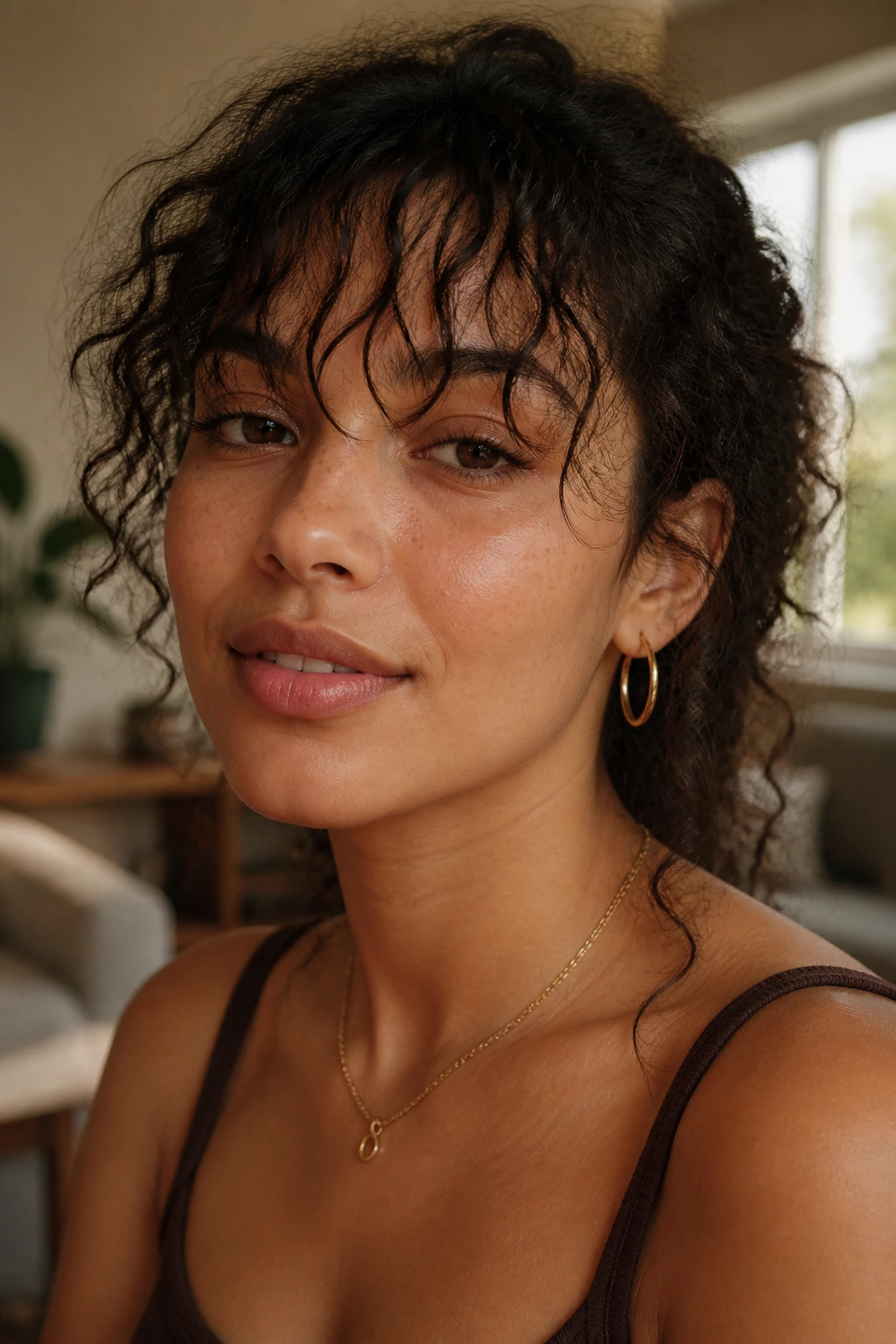
There is something incredibly sultry about bangs that just graze your eyelashes. Piecey, brow-skimming tendrils are thin, delicate, and designed to look slightly undone. They fall forward in loose, separated clumps, offering a soft frame that feels romantic and effortless.
This style is perfect for wavy to medium curly textures. Because they are cut thin, they do not block your vision, and you can easily sweep them to the side if you need them out of your face.
To get this look, ask your stylist to carve out a very shallow triangle at the front of your hairline. The goal is a sparse, lightweight fringe rather than a dense, thick layer of hair.
6. Voluminous Afro-Textured Puff Bangs
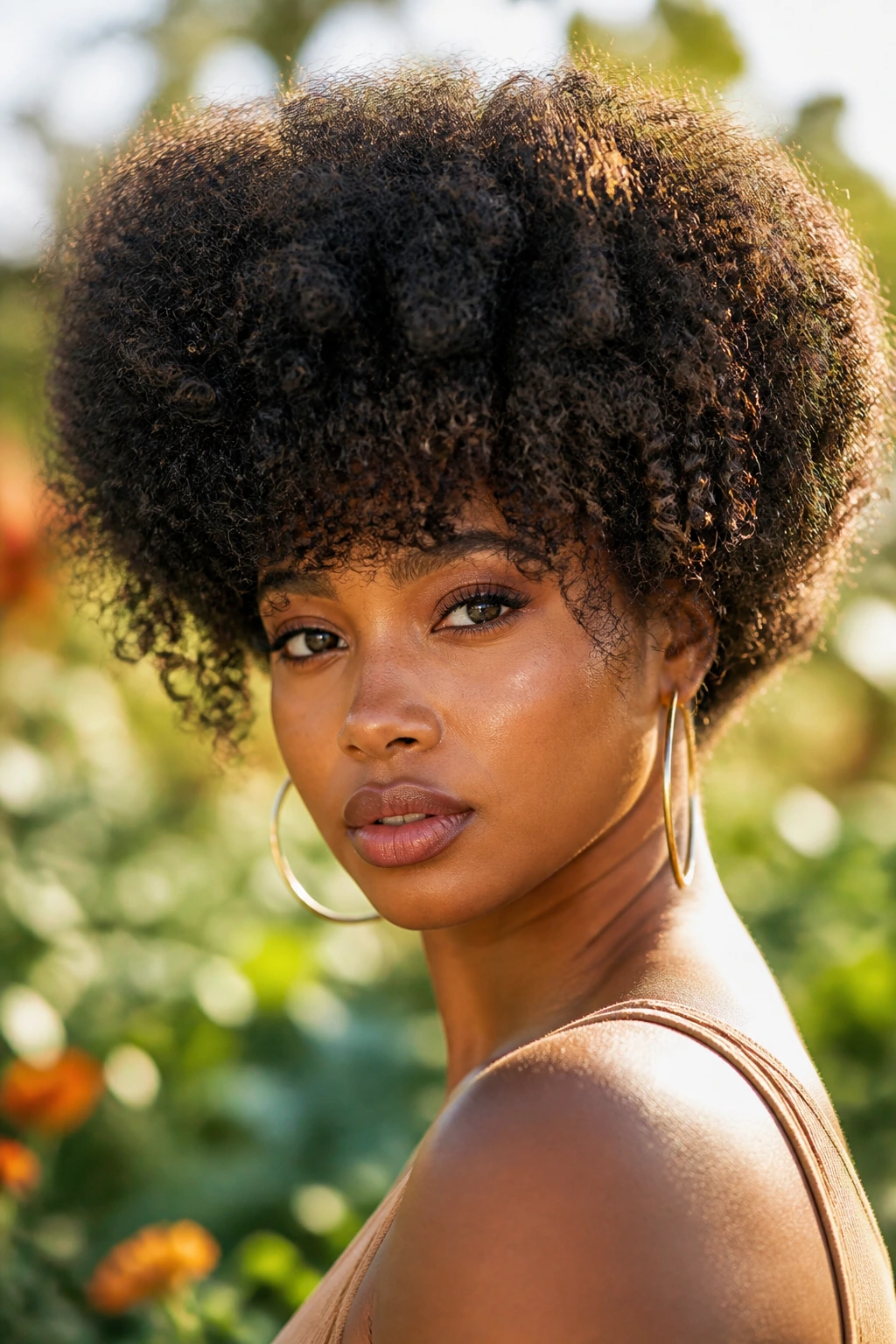
For coily and kinky textures, volume is your superpower. Afro-textured puff bangs are cut to form a rounded, cloud-like shape that sits proudly above the brows. This style is all about height, density, and soft, touchable texture.
Instead of defining individual coils, this look relies on the beautiful, collective volume of your hair. It frames the face with a halo of soft texture that highlights your eyes and cheekbones.
How to Get the Look
- Wash and condition your hair, applying a rich moisturizing cream to keep the coils hydrated.
- Use a pick at the roots of the bangs to gently lift the hair upward and outward, creating a rounded shape.
- Avoid using heavy gels that clump the hair too tightly; you want the texture to remain airy and expansive.
7. Razored Face-Framing Shag Bangs
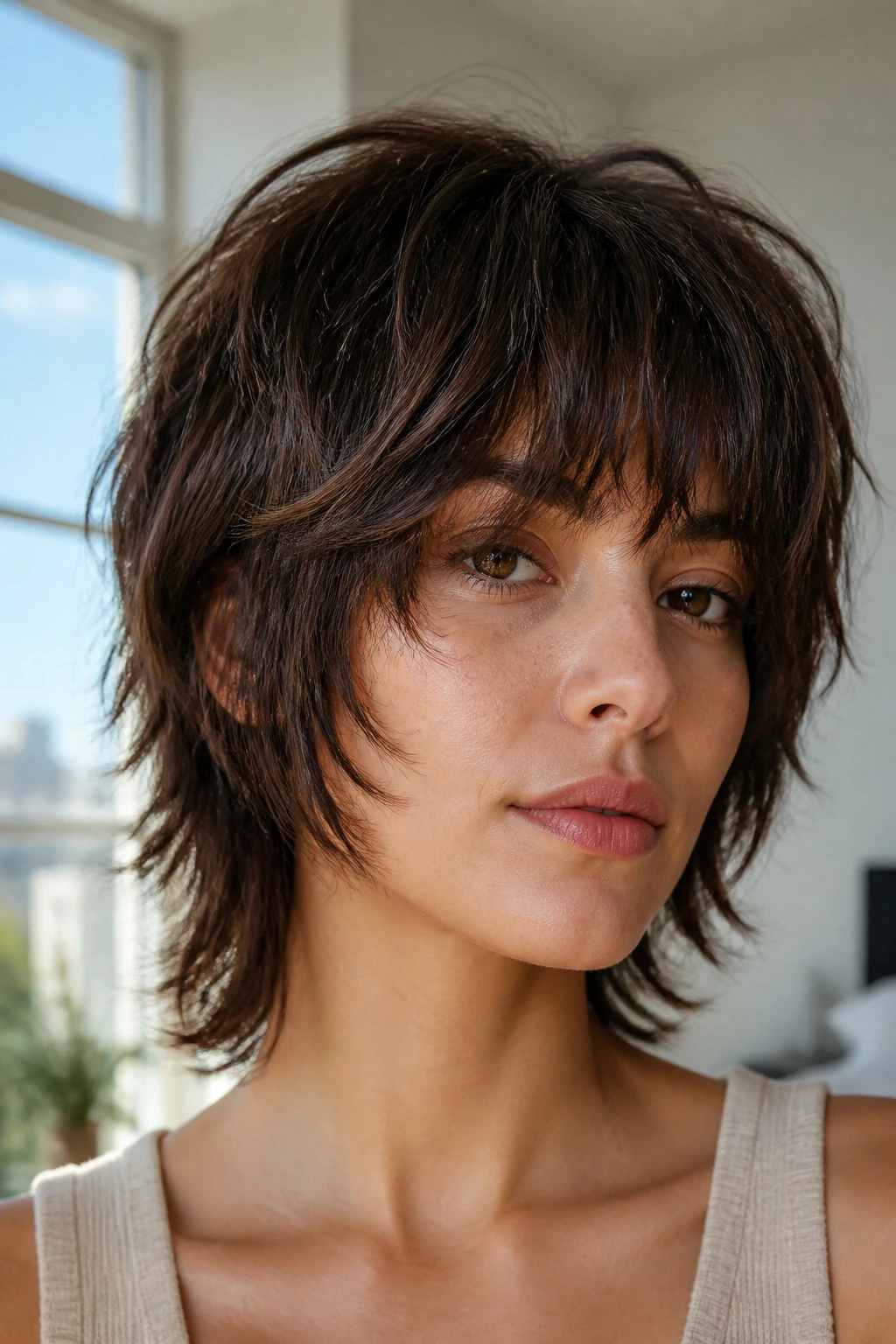
A shag cut is characterized by short, choppy layers throughout the crown, and it pairs perfectly with textured bangs. When cut with a razor, the ends of your curls are softened, removing the blunt weight that can cause curls to clump too heavily at the bottom.
The result is a highly textured, feathery fringe that blends smoothly into short, shaggy layers around your ears and jawline. This style is perfect for anyone with medium-density curls who wants to reduce bulk and add movement to their hair.
A razor cut should only be performed by a stylist who is highly experienced with curly hair. Done incorrectly, a razor can fray the hair cuticle and lead to split ends. Done right, it creates a gorgeous, lived-in texture that bounces beautifully.
8. Side-Swept Cascading Ringlets
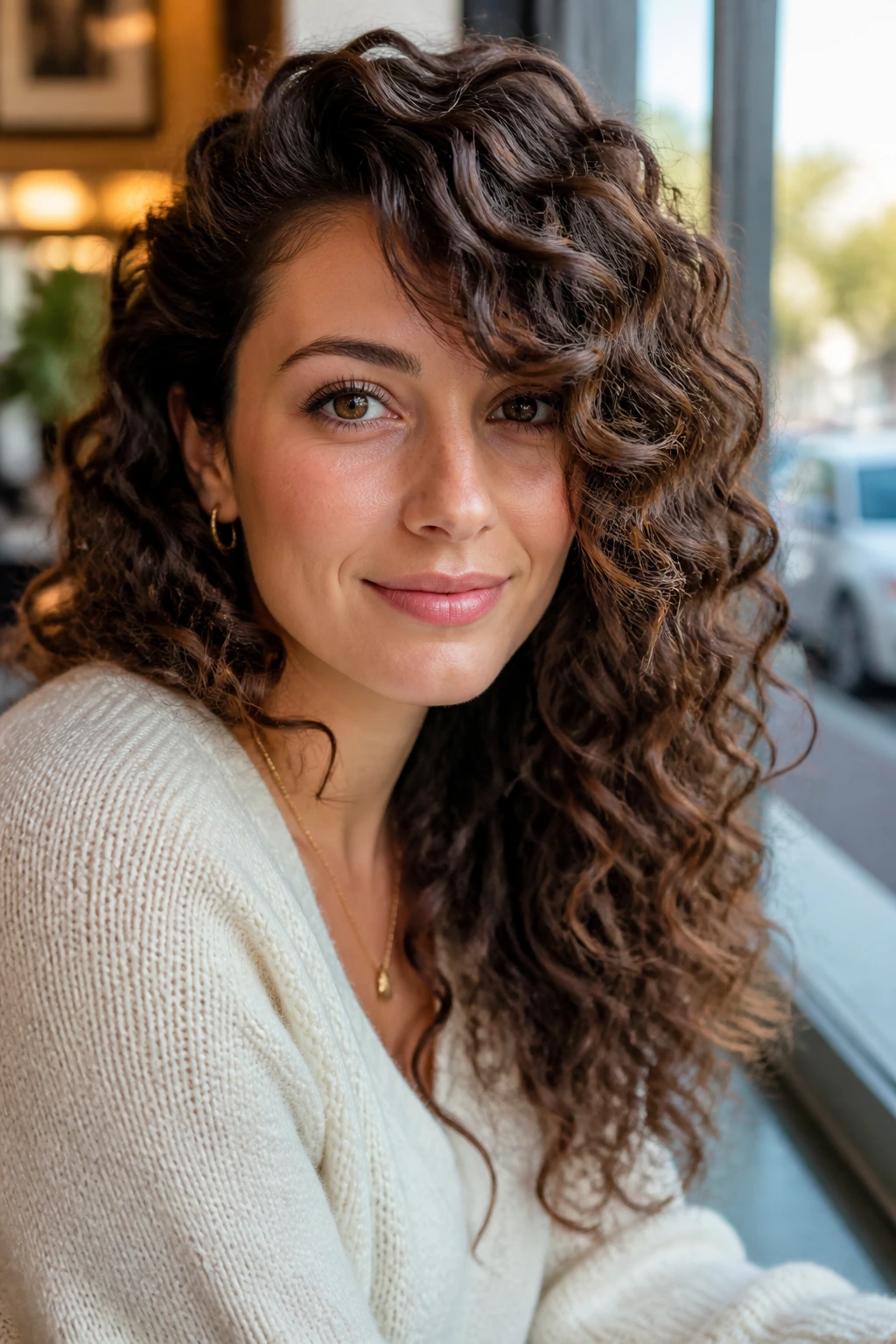
If you are hesitant to commit to a full forehead of bangs, side-swept cascading ringlets are the perfect gateway. These bangs are parted deeply on one side and draped diagonally across the forehead, blending into the longer side layers.
This style works on almost every face shape and curl pattern. It softens a square jawline and adds balance to a round face by creating a diagonal line that draws the eye upward.
Styling the Side Sweep
- After washing, apply your styling product and section off your bangs.
- Direct them to your preferred side, using a small clip at the roots to hold them in place while they dry.
- This creates a soft lift at the root, preventing the bangs from falling flat against your forehead.
9. Feathery French-Style Waves
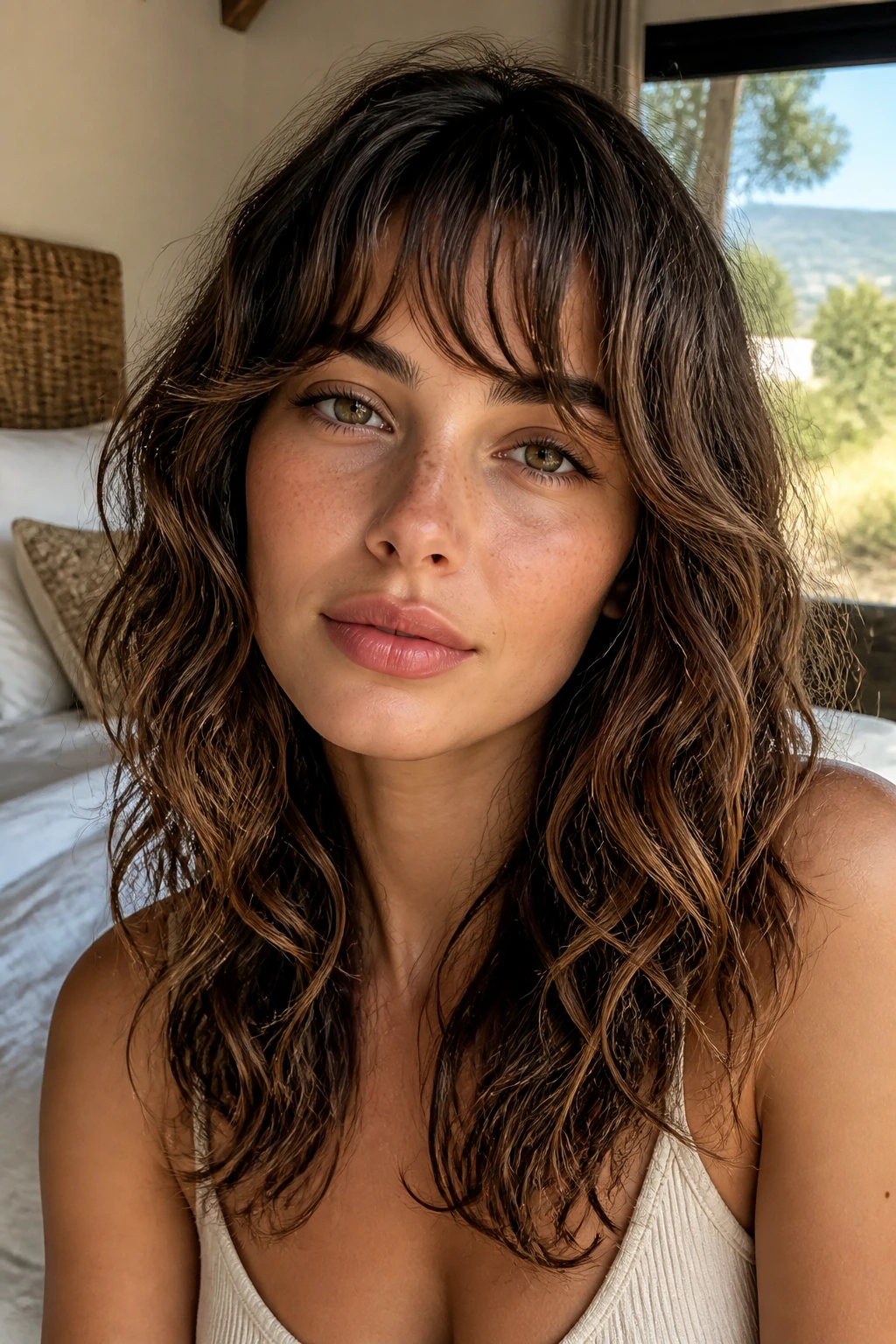
French-style bangs are effortlessly chic, characterized by a slightly messy, “I woke up like this” texture. For wavy and curly hair, this means a soft, piecey fringe that sits just below the eyebrows, with the center slightly shorter than the outer corners.
The key to this look is lightness. The bangs should not look like they were styled with a round brush or a flat iron. Instead, they should have a natural, air-dried movement that looks lived-in and comfortable.
To style, apply a small amount of salt spray or lightweight curl foam to damp hair. Scrunch the bangs gently with your hands, then let them air-dry completely. Once dry, shake them out with your fingers to separate the clumps.
10. Dense Crown-Cut Curly Fringe
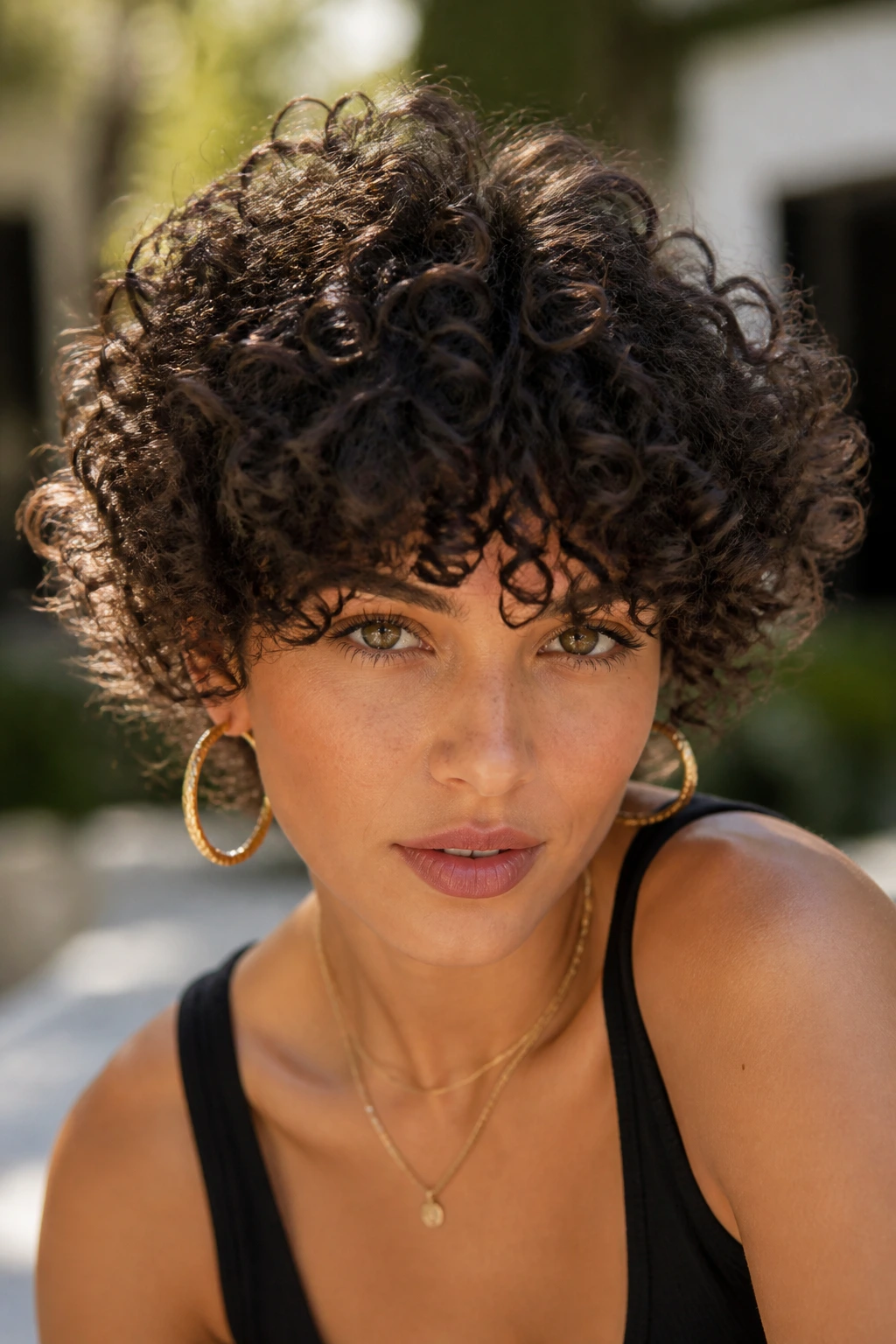
For those who love drama and high volume, the dense crown-cut curly fringe is unmatched. These bangs start deep on the crown of the head rather than right at the hairline. This sectioning technique brings a large amount of hair forward, creating a thick, dramatic canopy of curls over the forehead.
The Power of Density
This style is particularly great for fine-haired curlies who want the illusion of thicker hair. By bringing hair forward from the crown, you create a dense, full-looking fringe that makes your entire style feel more voluminous.
Styling Steps
- Apply a thick, moisturizing curl cream to wet bangs to ensure each curl clump is fully hydrated and defined.
- Blow-dry with a diffuser, keeping the dryer aimed downward from above to prevent the roots from expanding too much.
- Use a tiny drop of hair oil on your palms to scrunch out any crunch, leaving your curls soft and glossy.
11. Tapered Temple-Framing Coils
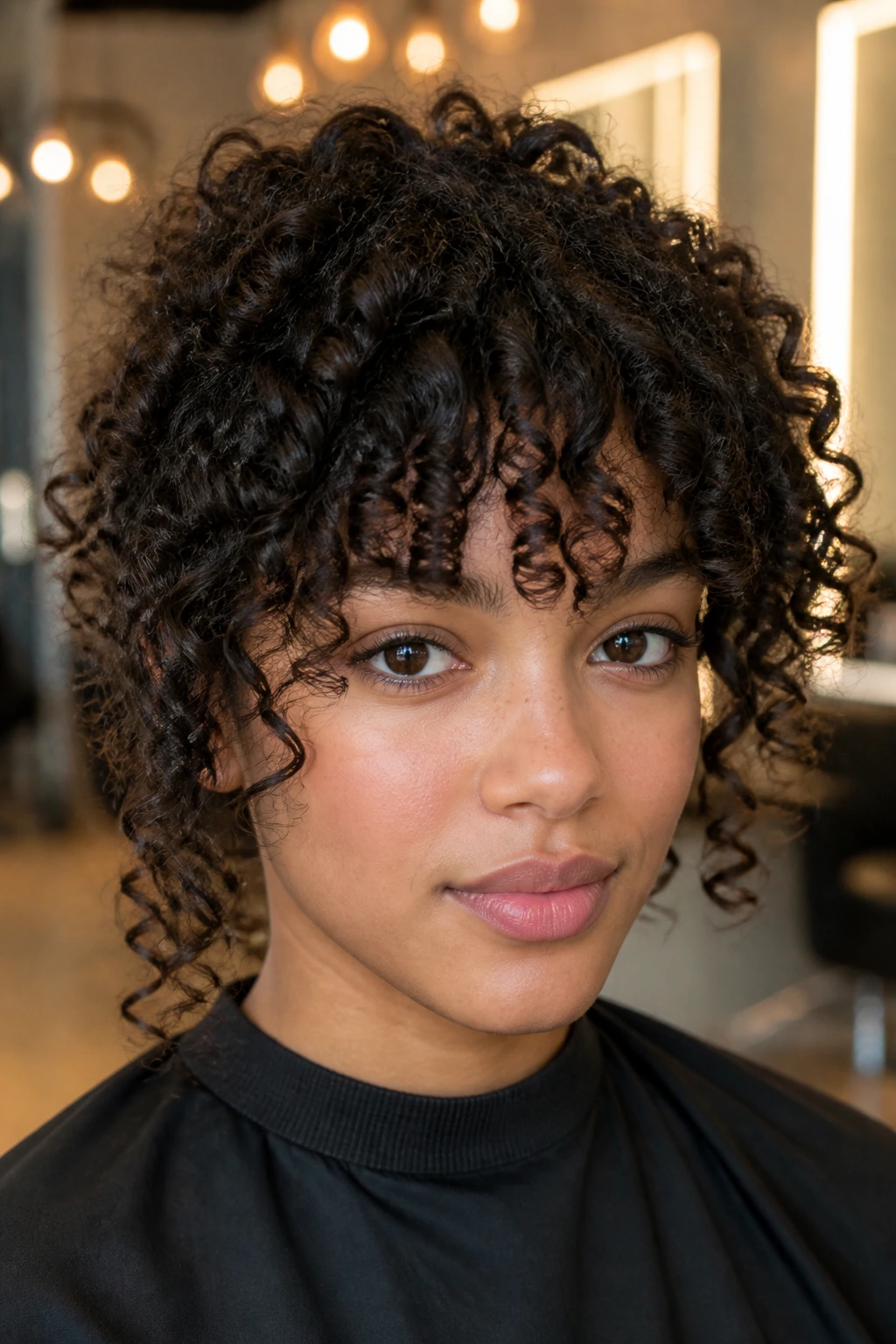
Tapered bangs are cut shorter in the very center of the forehead and gradually grow longer as they approach your temples. This creates a soft, arching frame that beautifully highlights your eyes and brow bone.
This style is highly recommended for those with tight, springy coils. The gradual transition from short center pieces to longer temple-framing curls ensures that there are no harsh lines, making the style grow out gracefully.
To style, finger-coil the center pieces to ensure they dry in neat, compact spirals. Let the temple pieces air-dry naturally to encourage a softer, elongated drape.
12. Bleached-Tip Textured Waves
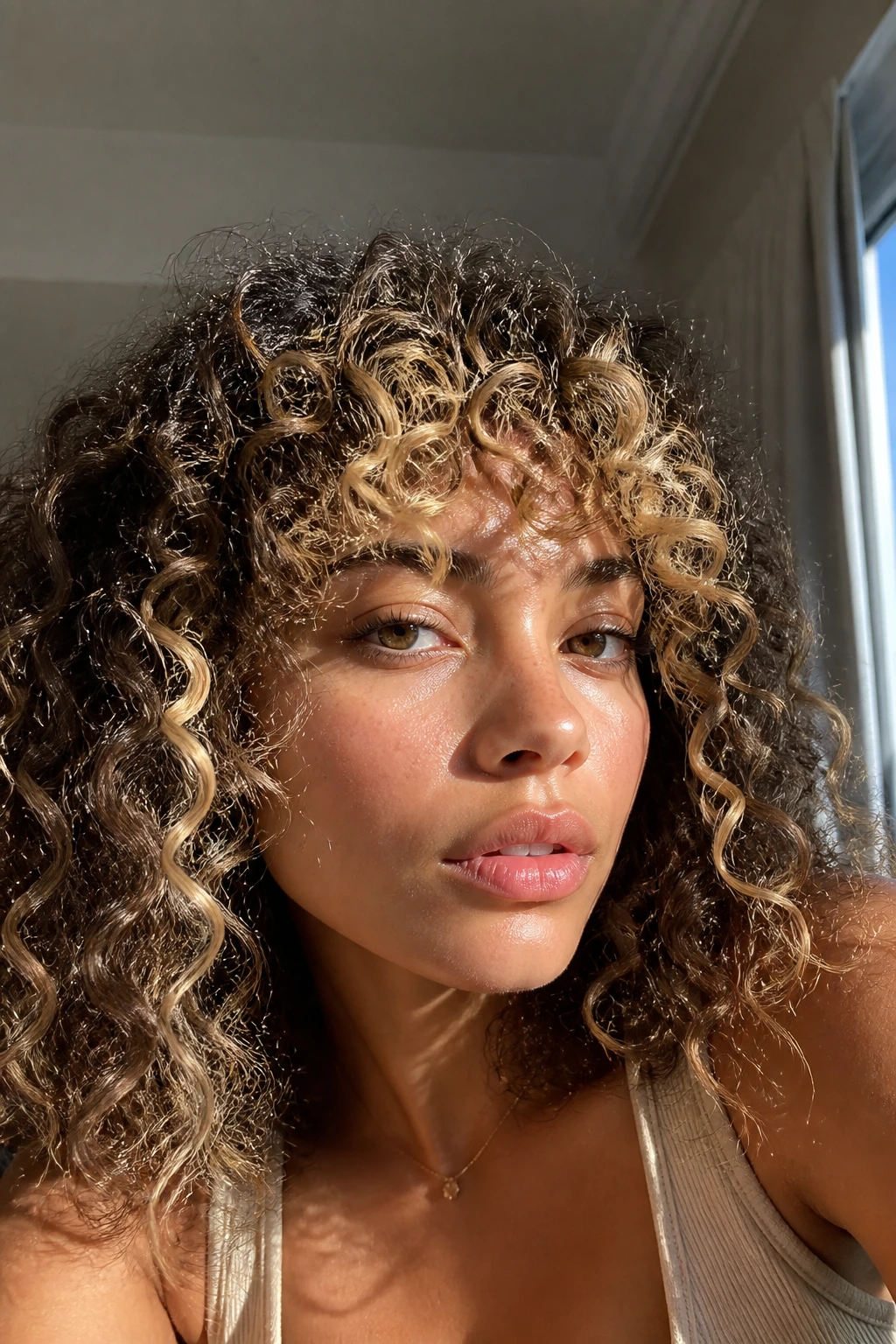
Add another layer of dimension to your textured bangs for curly hair by incorporating color. Bleaching just the tips of your bangs creates a sun-kissed, high-contrast look that makes your individual curl patterns pop.
When you highlight the tips of your curls, you draw attention to the shape and movement of each ringlet. It is a fantastic way to make a simple fringe look edgy and custom-designed.
Because bleach can dry out curly hair, make sure to use a deep conditioning mask on your bangs once a week. Keeping the lightened ends hydrated is crucial to preventing frizz and maintaining curl definition.
13. Wispy Baby Curly Bangs
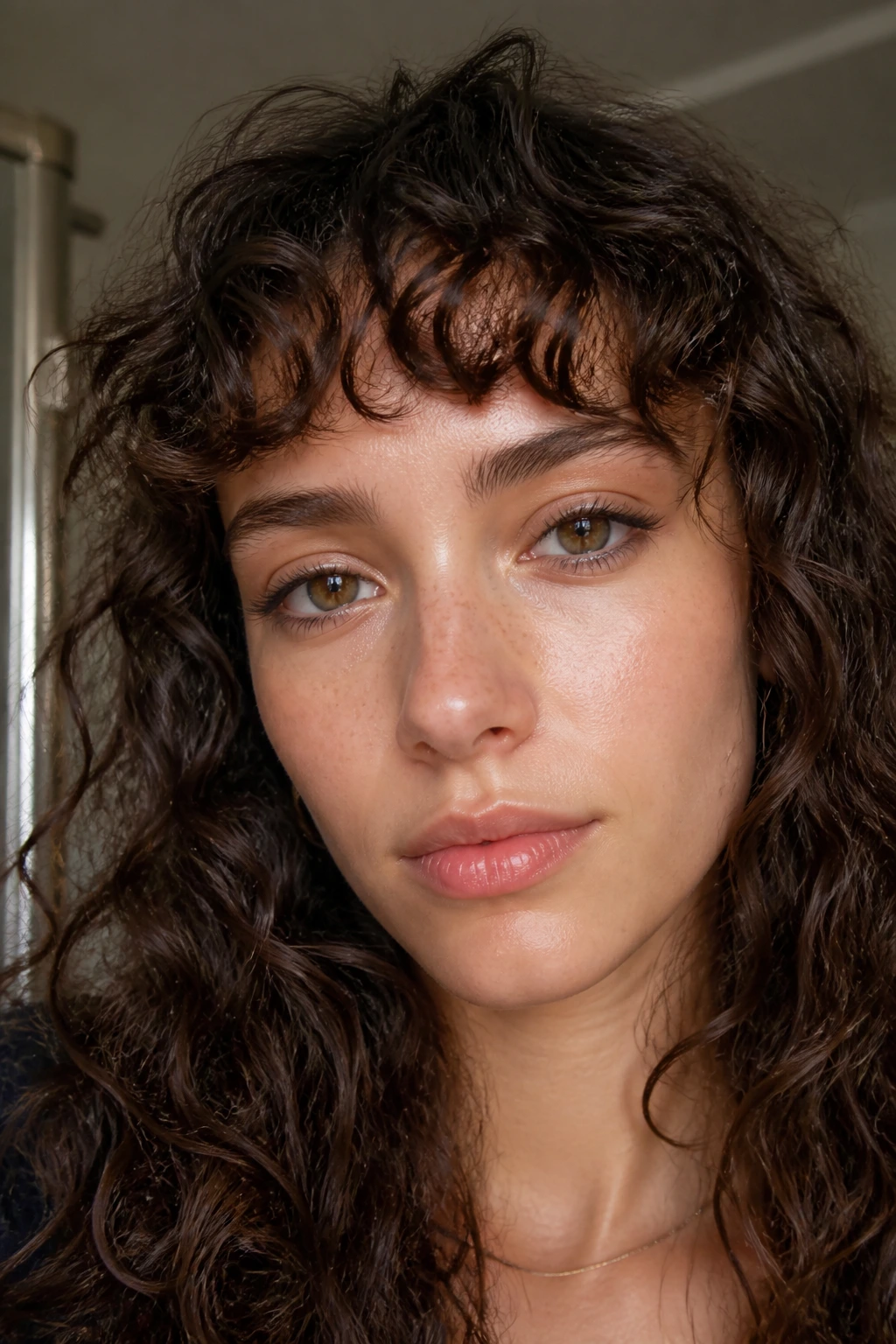
Baby bangs, or micro fringe, are cut very short, ending mid-forehead. While often associated with straight hair, this style is incredibly striking on curly and coily textures. It offers a quirky, alternative look that opens up your face.
Because these bangs are so short, they require very little styling effort. They bounce up naturally and stay out of your eyes, making them highly practical for active lifestyles.
Keep in mind that baby bangs require regular maintenance. To keep them at that sweet spot mid-forehead, you will need to trim them every three to four weeks.
14. The Split-Middle Textured Fringe
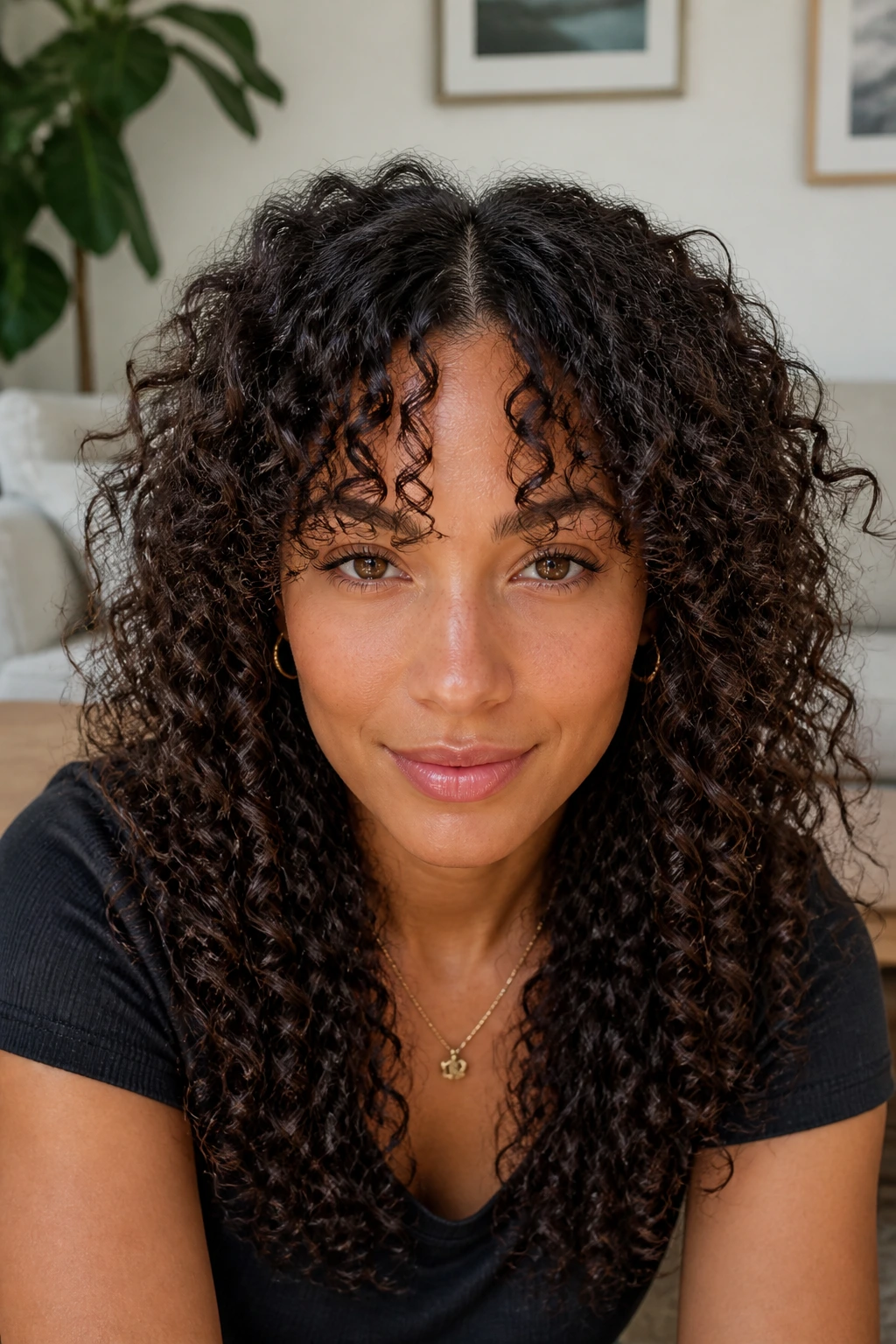
The split-middle fringe is a modern variation of curtain bangs, but with a tighter, more defined curl pattern. Instead of swooping out to the sides, these curls hang straight down but are parted directly in the center of your forehead, leaving a small triangle of skin exposed.
This split breaks up the weight of a heavy fringe, preventing it from overwhelming a smaller face. It is an excellent option for those with medium-density curls who want a structured, symmetric look.
To style, use your fingers to create a clean center part while your hair is wet. Apply your styling gel and allow the curls to dry undisturbed on either side of the part.
15. Long Curly Shag Curtain Bangs
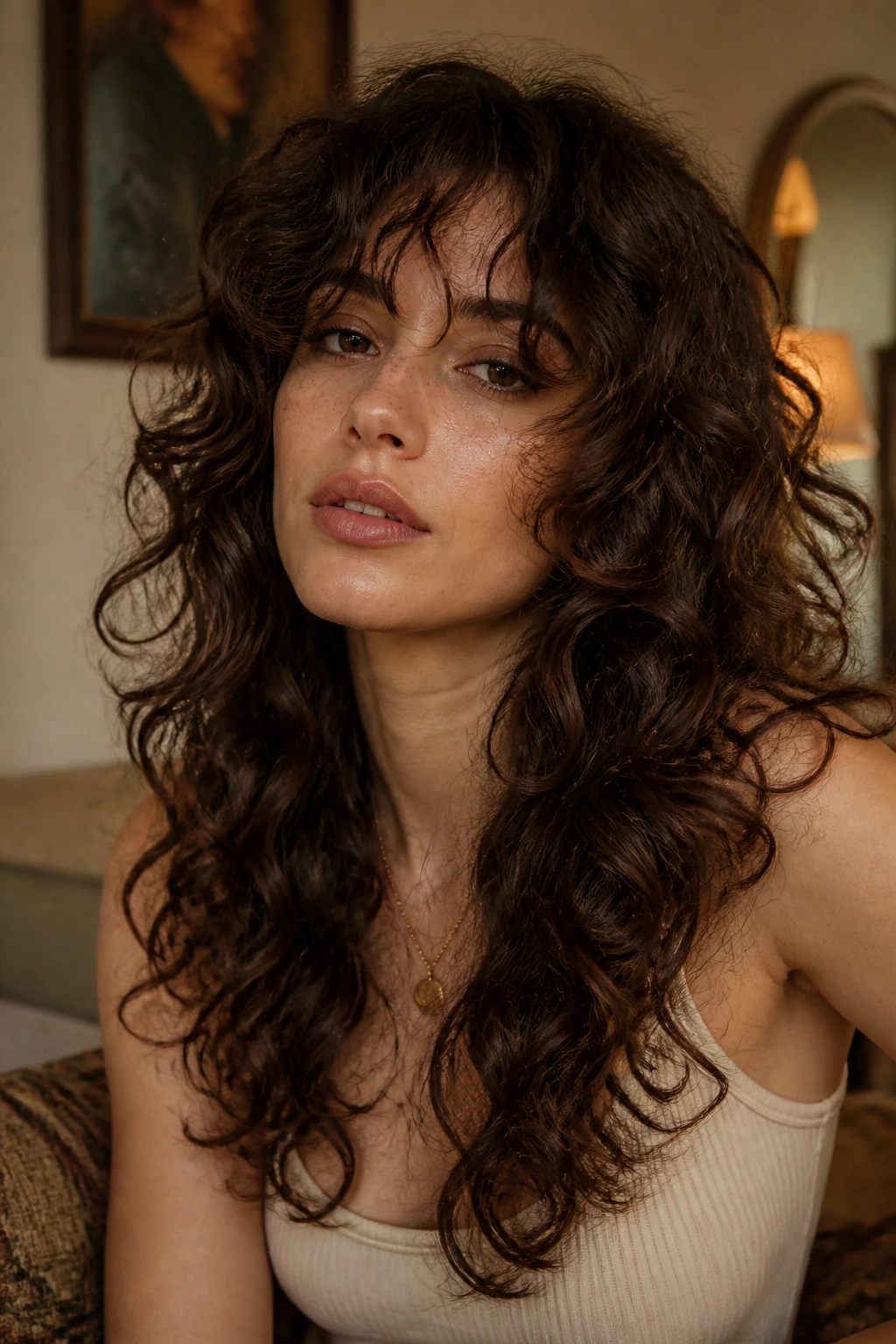
If you love the aesthetic of the 1970s, long curly shag curtain bangs are for you. These bangs are cut long, often grazing the cheekbones or even the jawline, and are heavily layered to blend into a shaggy, retro cut.
The beauty of this style is its versatility. You can wear them forward to frame your face, sweep them to the sides, or pin them back easily. As they grow, they simply become shorter face-framing layers, making the transition seamless.
To maintain the retro bounce, use a lightweight volumizing mousse on damp hair. Diffuse your hair upside down to get maximum volume at the roots, then shake it out for a wild, textured finish.
16. Messy Bedhead Curly Tendrils
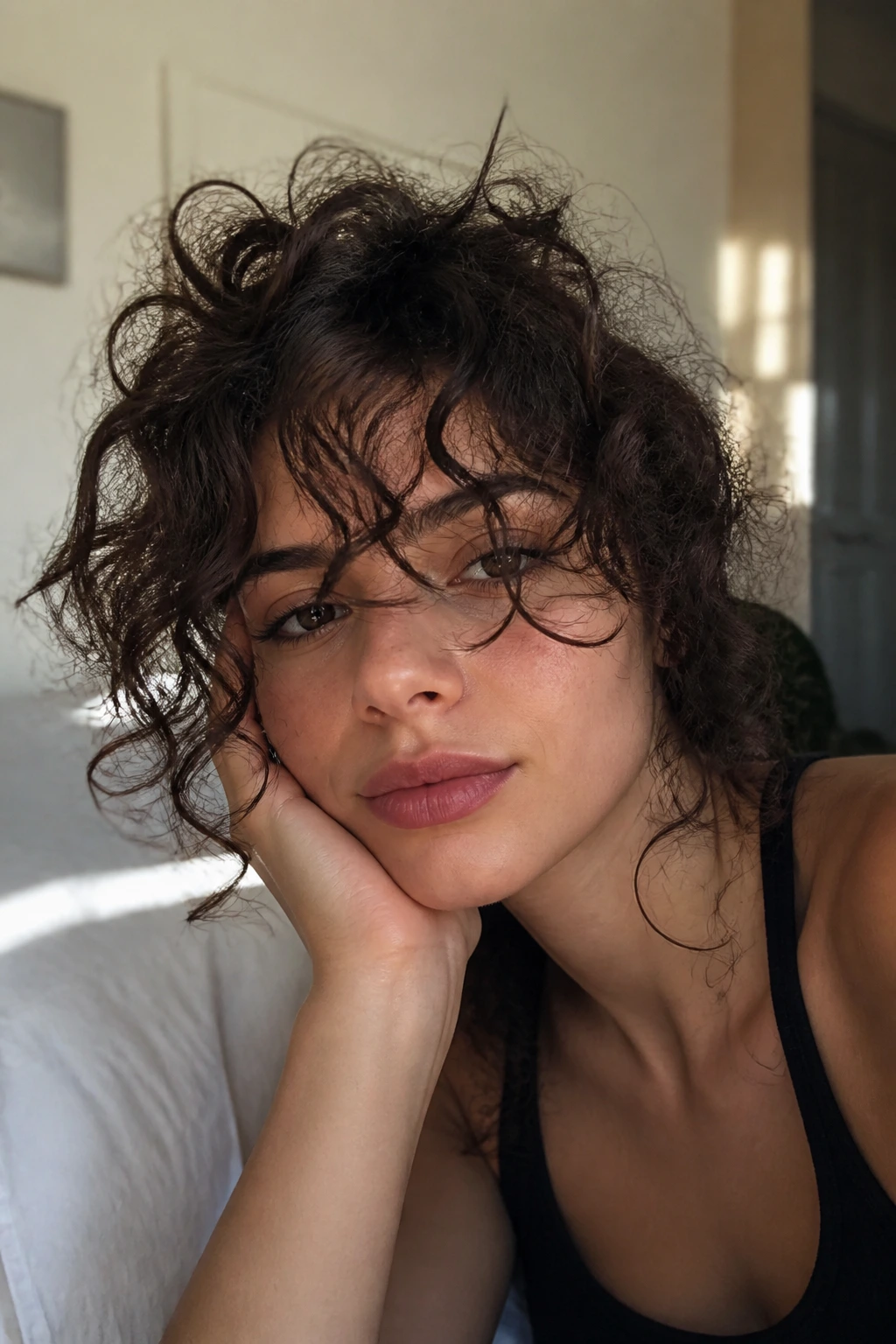
Perfect symmetry is overrated. The messy bedhead style embraces curls that are wild, slightly frizzy, and completely natural. These bangs are cut at varying lengths, creating an organic, disorganized look that oozes cool-girl energy.
This style is incredibly low-maintenance. In fact, the less you touch it, the better it looks. It relies on the natural friction of your day-to-day life to create a soft, expanded texture.
Why This Style Works
- It is incredibly forgiving; you do not have to worry about a single curl falling out of place.
- It looks best on day two and day three, after your natural oils have softened the curl clumps.
- It pairs beautifully with casual, unstructured hairstyles like messy buns or half-up top knots.
17. Defined Finger-Coiled Fringe
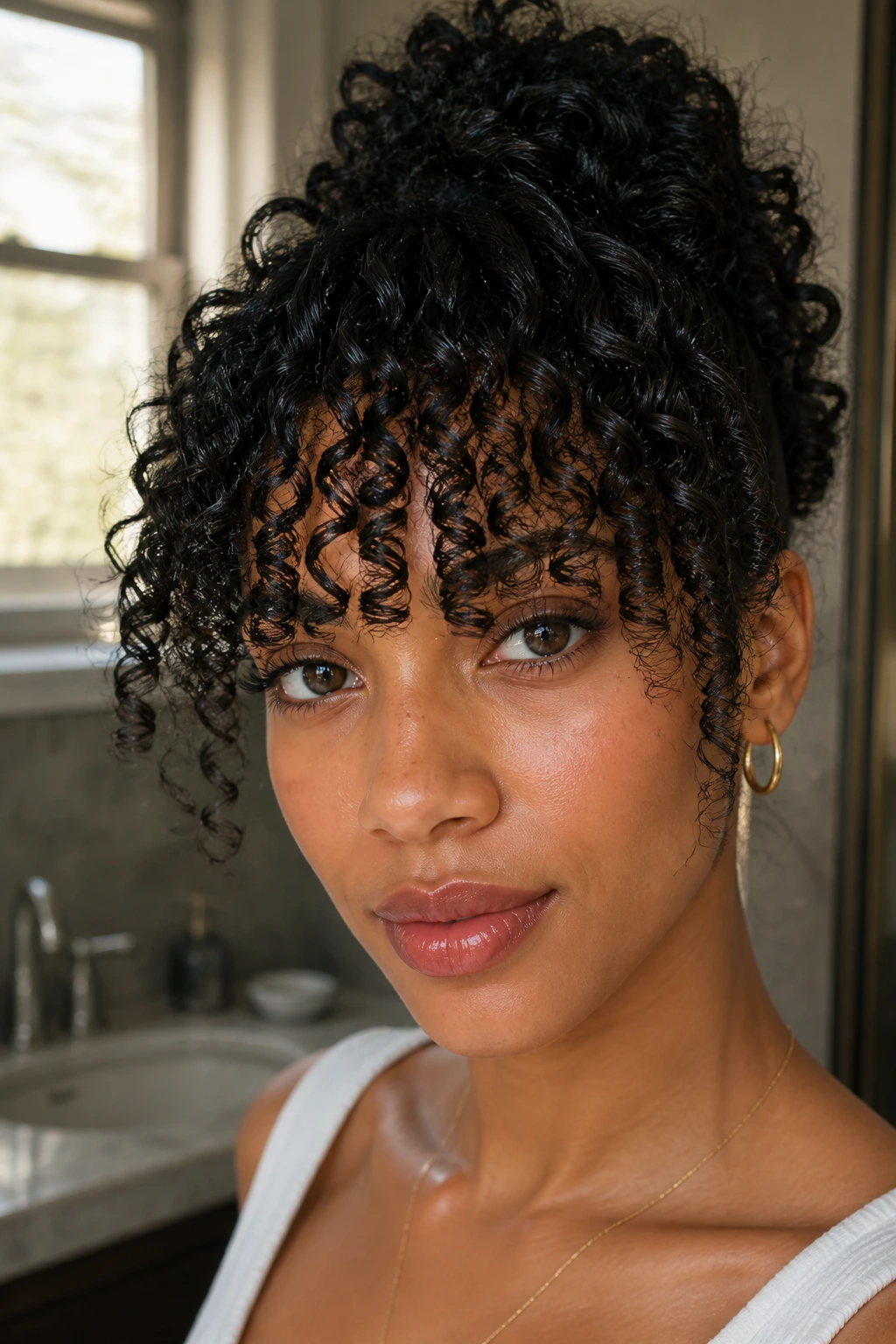
For a polished, elegant look, try a defined finger-coiled fringe. This style involves taking small sections of your wet bangs, applying a defining gel, and wrapping each section around your finger to form a perfect, smooth spiral.
While this technique takes a few extra minutes on wash day, the results are incredibly long-lasting. Your bangs will remain frizz-free and highly defined for days.
Step-by-Step Finger Coiling
- Start with soaking wet bangs and apply a generous amount of medium-hold gel.
- Section the bangs into pencil-width pieces.
- Wrap each piece around your finger from root to tip, spinning it in the direction the curl naturally wants to turn.
- Gently release the coil and repeat across your entire forehead.
- Air-dry completely or diffuse on low heat without touching the curls until they are dry.
18. Voluminous Layered Curly Bangs with Temple Wings
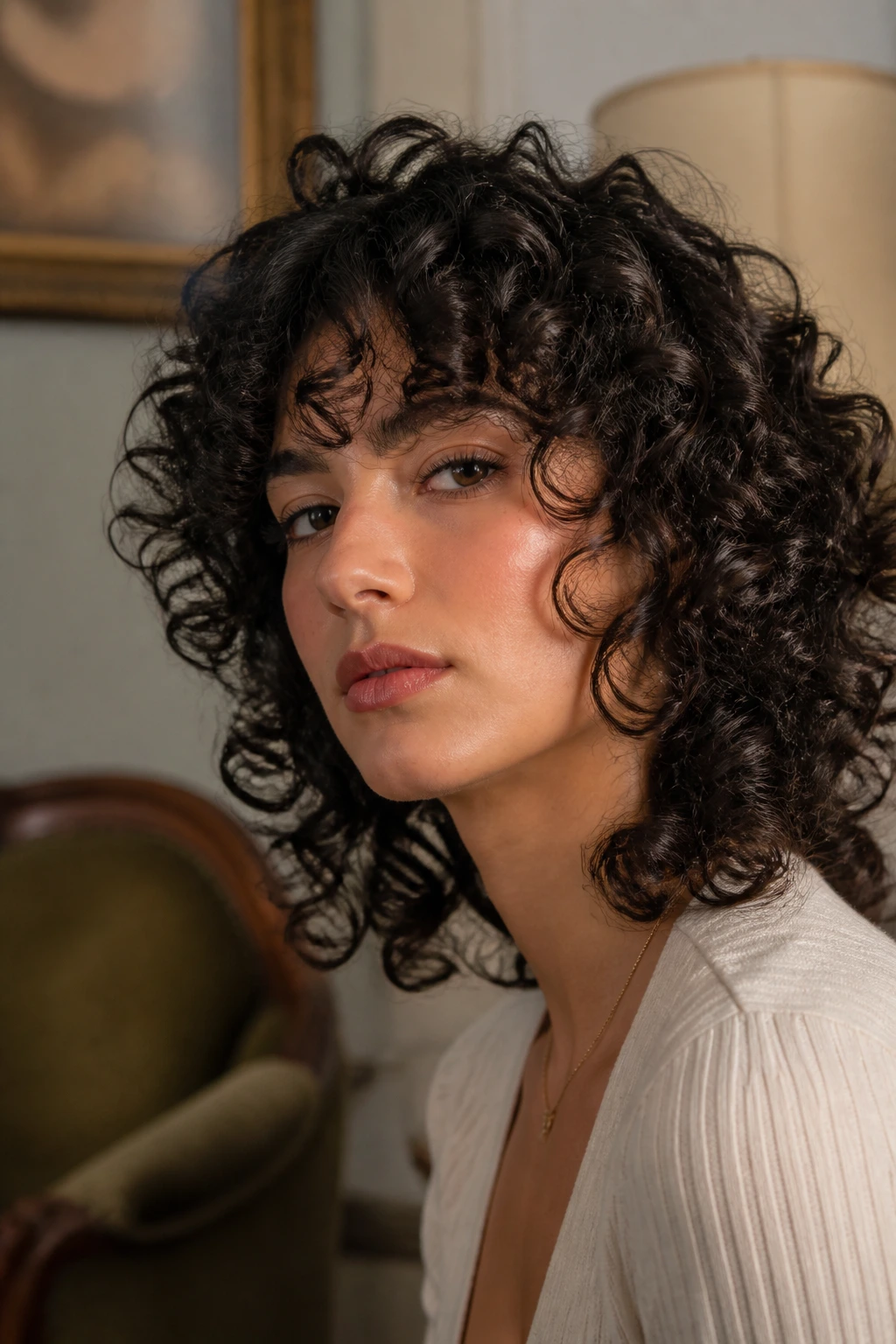
This style features short, bouncy bangs in the center that transition into longer, winged curls at the temples. The wings are cut to sweep backward and outward, creating a beautiful framing effect that highlights your cheekbones.
It is a dramatic, vintage-inspired look that works best on high-density, springy curls. The layered cutting technique prevents the sides from looking too heavy, keeping the silhouette light and bouncy.
To style, focus your volumizing product at the roots of the temple wings, lifting them up and back as you diffuse. This encourages the outward swoop that defines this classic shape.
19. Cropped Pixie Curly Fringe
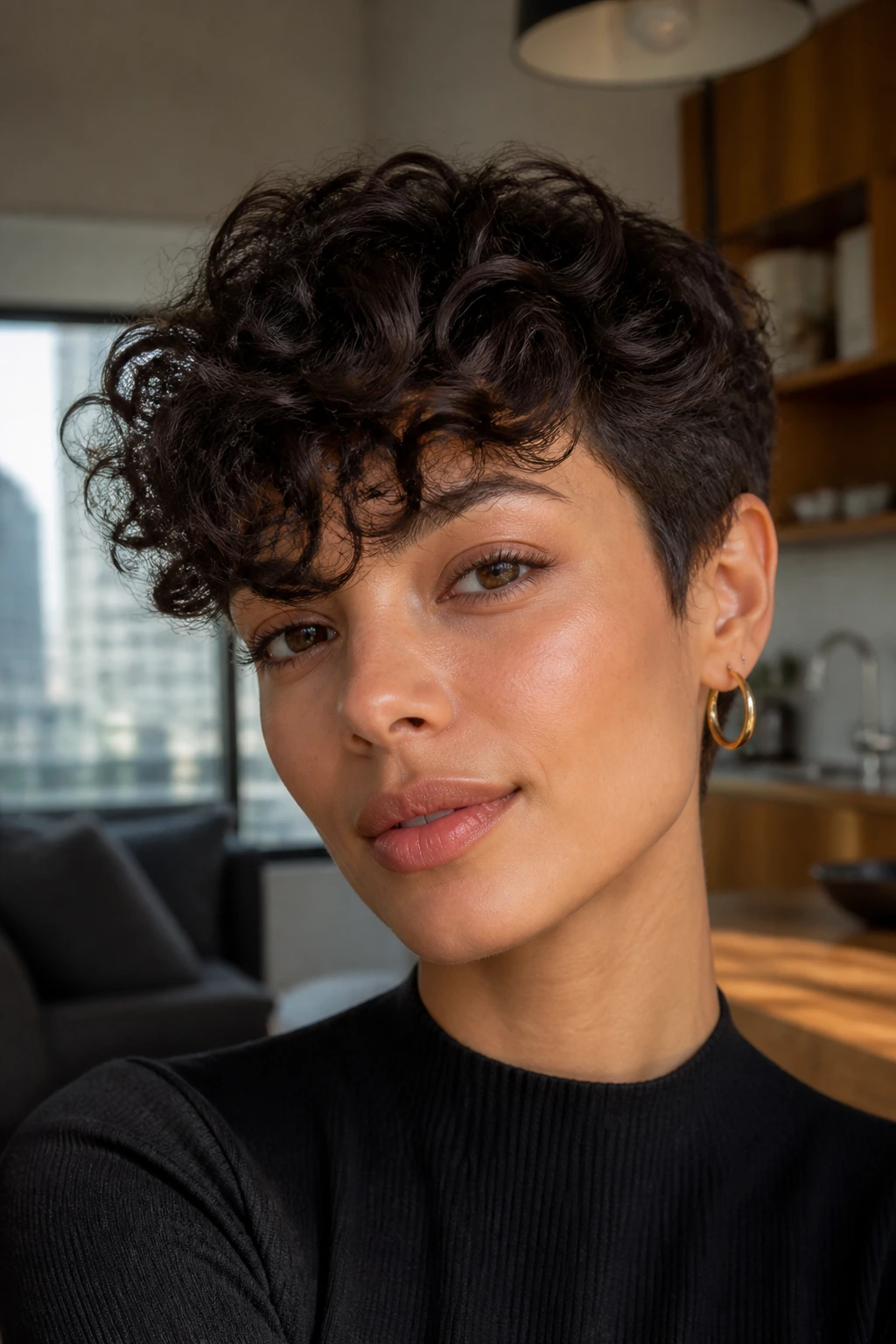
A pixie cut with a curly fringe is a match made in hair heaven. This style features very short hair on the back and sides, with a longer, highly textured fringe cascading over the forehead.
The contrast between the tight, neat sides and the wild, textured bangs is incredibly modern and stylish. It is a bold, low-maintenance cut that looks chic with minimal effort.
To style, simply run a small amount of pomade or hair wax through your bangs to define the ends and add shine. Let them fall where they want for an effortless, tousled finish.
20. Soft Air-Dried Spiral Tendrils
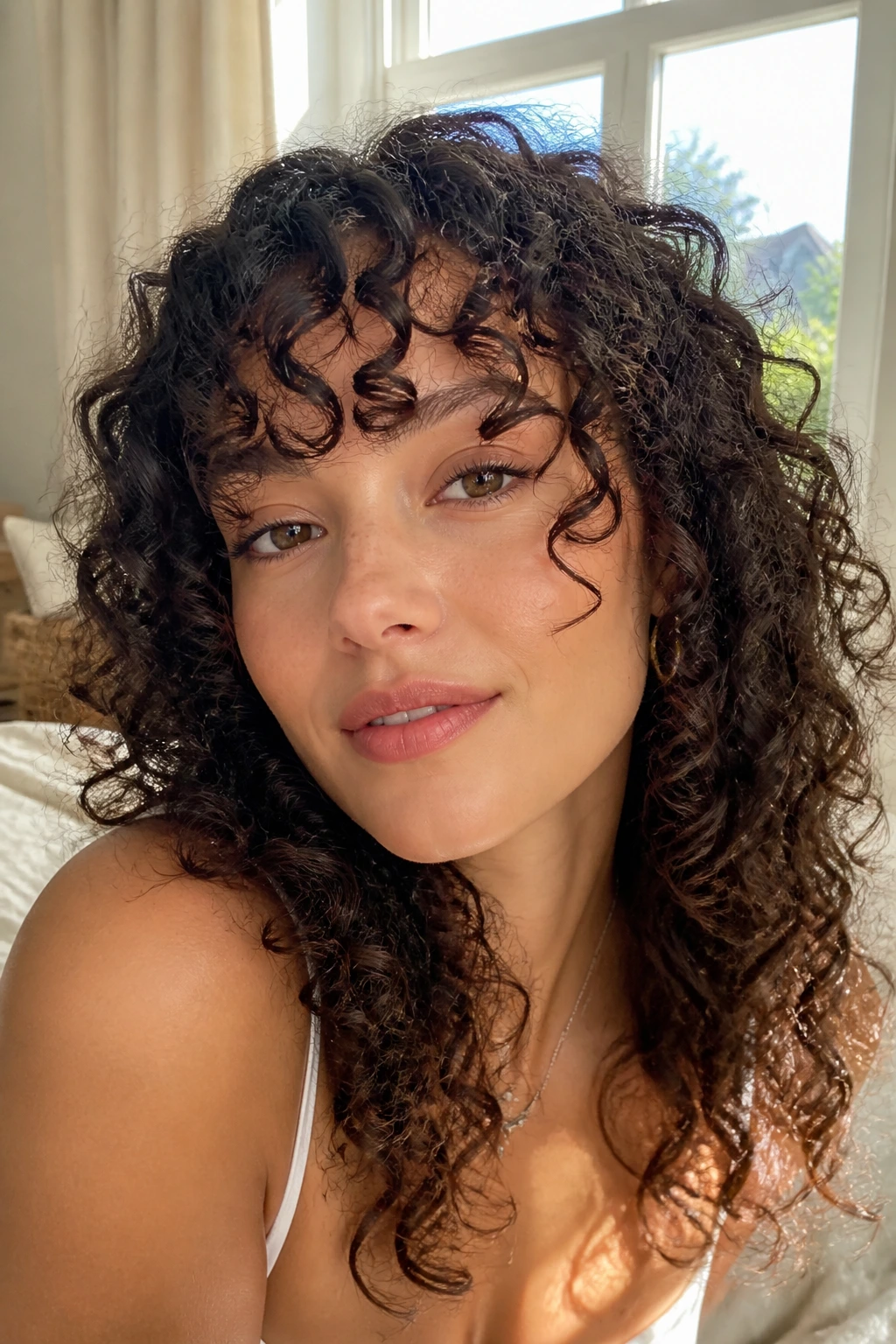
If you prefer a hands-off approach to hair care, soft air-dried spiral tendrils are the way to go. This style is designed to look soft and natural, relying on your hair’s inherent moisture to define the curls rather than heavy products or heat styling.
To achieve this, apply a lightweight leave-in conditioner to wet hair, scrunch gently, and do not touch your hair again until it is completely dry. This zero-touch method prevents frizz and allows your natural curl pattern to shine.
It is a gentle, healthy way to wear your bangs, making it perfect for anyone recovering from heat damage or chemical processing.
21. Geometric Angled Curly Bangs
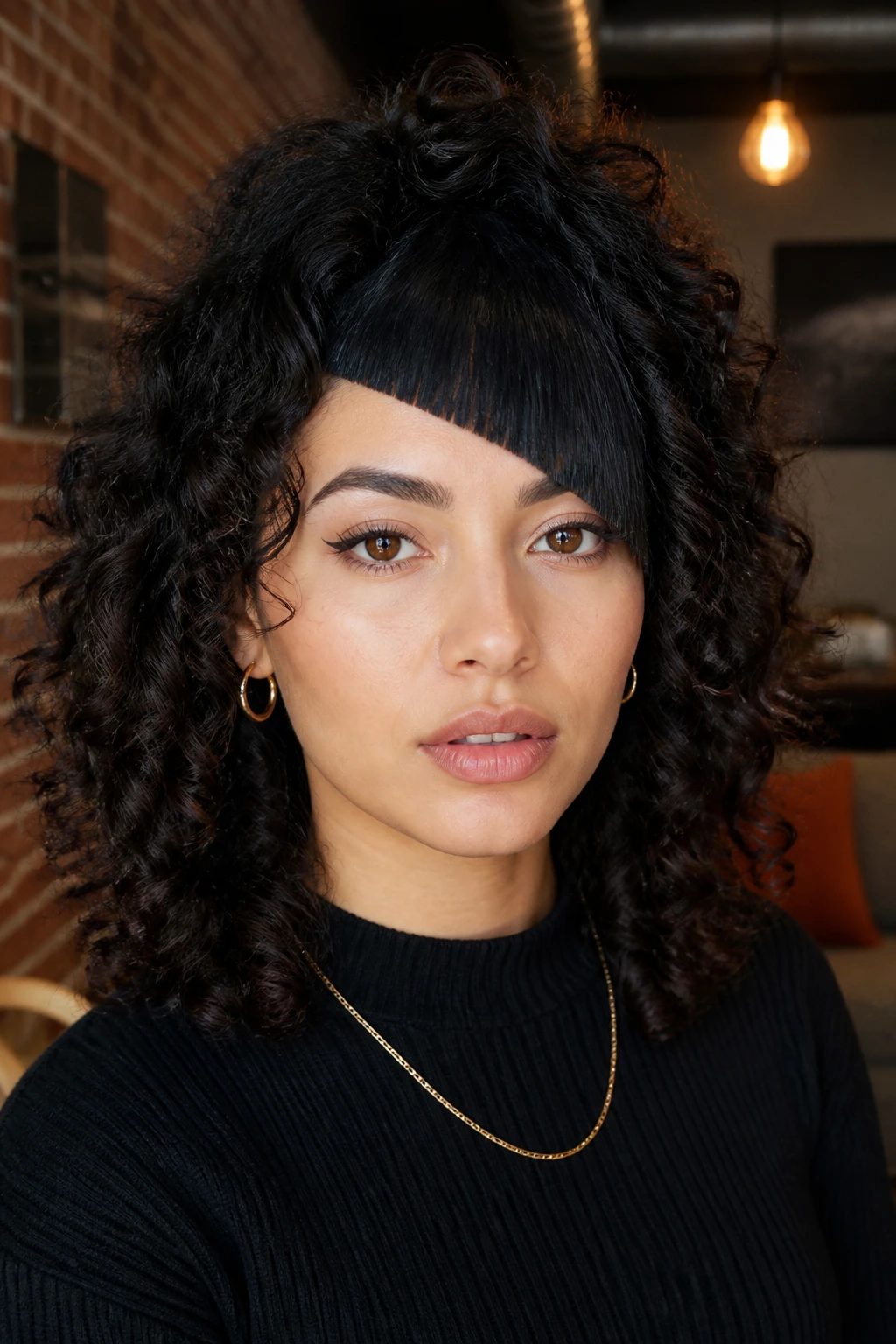
For the fashion-forward, geometric angled bangs offer a sharp, architectural look. These bangs are cut in a precise, straight or angled line across the forehead, contrasting beautifully with the organic, wild texture of your curls.
This style requires a highly skilled stylist who can cut a clean line while taking your curl shrinkage into account. It is a striking, high-contrast look that demands attention.
To maintain the sharp geometric line, you will need to visit your stylist for a trim every three weeks. It is a high-maintenance look, but the visual impact is well worth the effort.
How to Style Textured Curly Bangs Every Morning
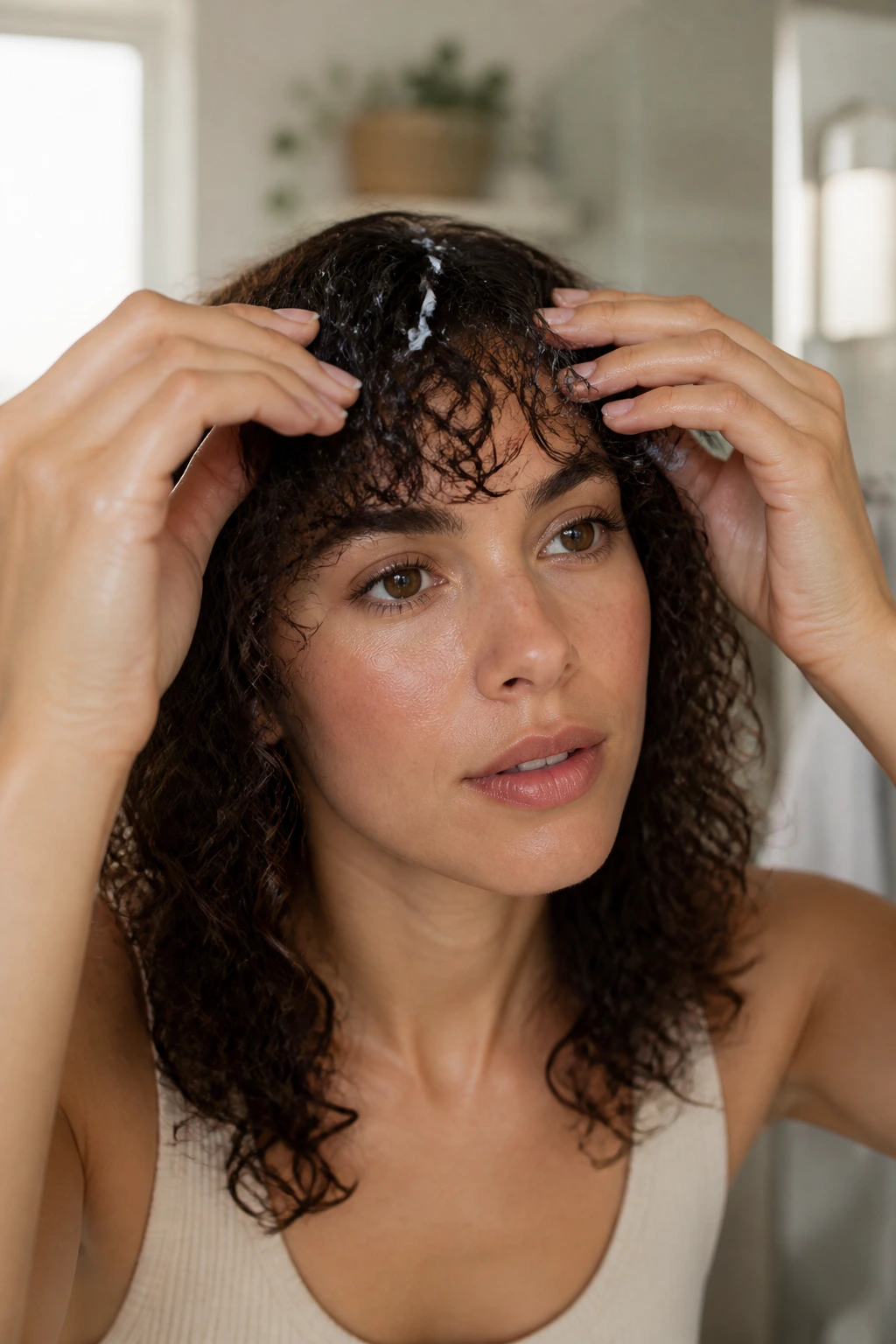
Waking up with curly bangs can be a wild experience. Overnight, your pillowcase can flatten, stretch, or frizz your fringe, leaving you with a chaotic cloud of hair in the morning. Fortunately, you do not need to wash your entire head to fix it. A quick refresh routine can bring your bangs back to life in under five minutes.
First, invest in a continuous mist spray bottle. These bottles release a fine, even cloud of water rather than heavy droplets, allowing you to damp your bangs without soaking them. Lightly mist your fringe until it is damp but not dripping. This breaks the hydrogen bonds, allowing the curls to reset into their natural shape.
Next, apply a tiny amount of product. A lightweight curl refreshing spray or a dime-sized amount of leave-in conditioner mixed with water works best. Avoid heavy gels or creams on dry hair, as they can cause product buildup and weigh the bangs down. Scrunch the product into your damp curls, encouraging them to spring back up.
Finally, let them dry. If you are in a rush, use your diffuser on low heat and low speed, gently cradling the curls from below. If you have a few minutes, simply let them air-dry while you do your makeup or drink your coffee. Once dry, use your fingers to gently shake out the roots and separate any clumps for a soft, natural finish.
Common Mistakes to Avoid When Wearing Curly Fringe
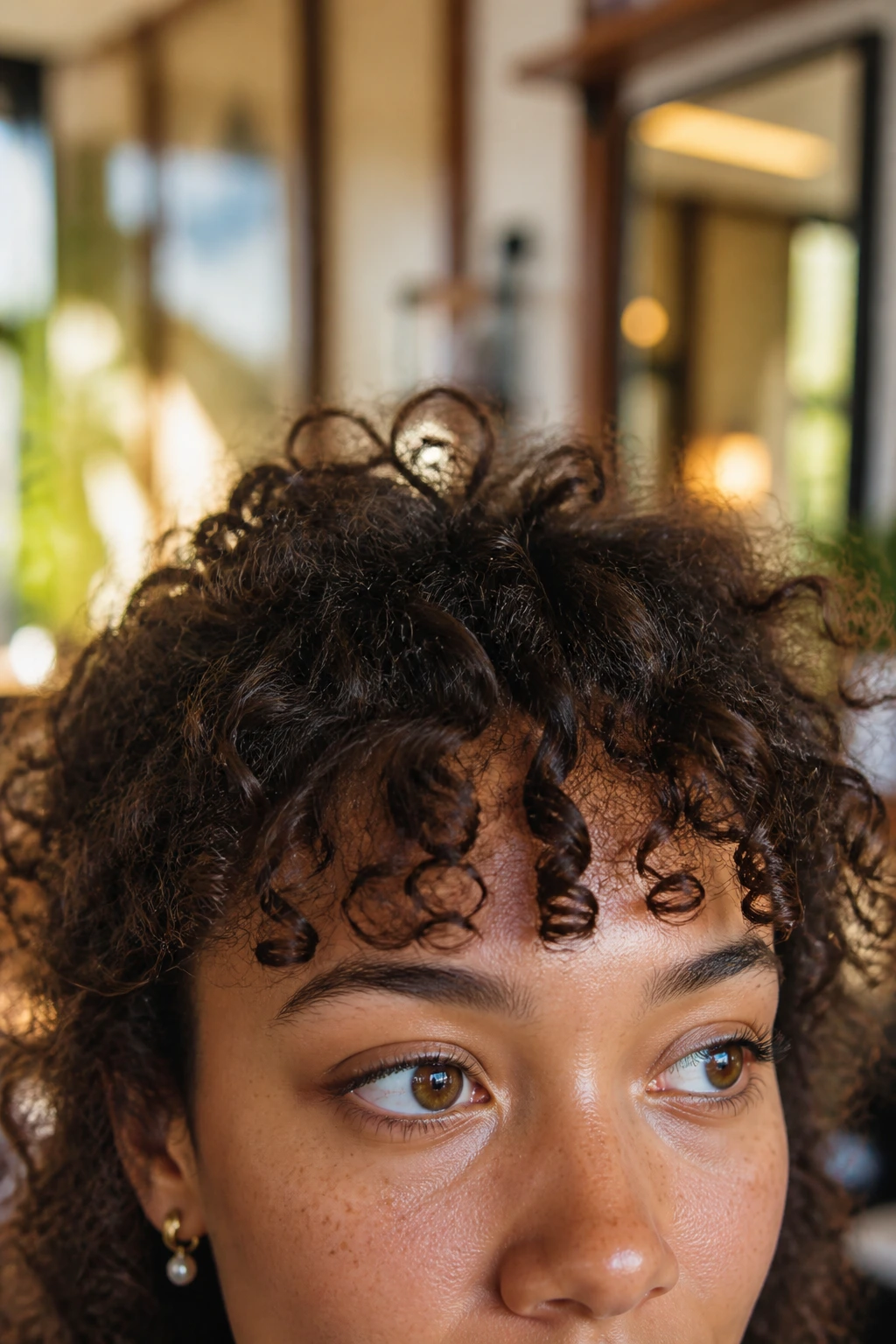
While textured bangs for curly hair are incredibly stylish, there are a few common pitfalls that can ruin the look. Being aware of these mistakes will help you maintain a beautiful, easy-to-manage fringe.
Over-Styling with Heat
It can be tempting to reach for your flat iron or blow-dryer brush when your bangs are not behaving, but heat styling destroys your natural curl pattern. Over time, heat damage will make your bangs frizzy, limp, and unable to hold a curl. Embrace the texture and rely on water and light products to shape your fringe instead.
Using Heavy Products
Your forehead naturally produces oils, and applying heavy creams, butters, or waxes to your bangs will quickly lead to greasy, flat hair. Heavy products also weigh down the roots, preventing your curls from bouncing up. Stick to lightweight mists, foams, and water-based gels for your fringe.
Cutting Your Own Bangs
We have all seen the viral videos of people cutting their own bangs at home, often with disastrous results. Cutting curly bangs requires a deep understanding of curl mechanics, shrinkage, and face-framing angles. Always leave the cutting to a professional stylist who specializes in naturally textured hair.
Wrapping Up
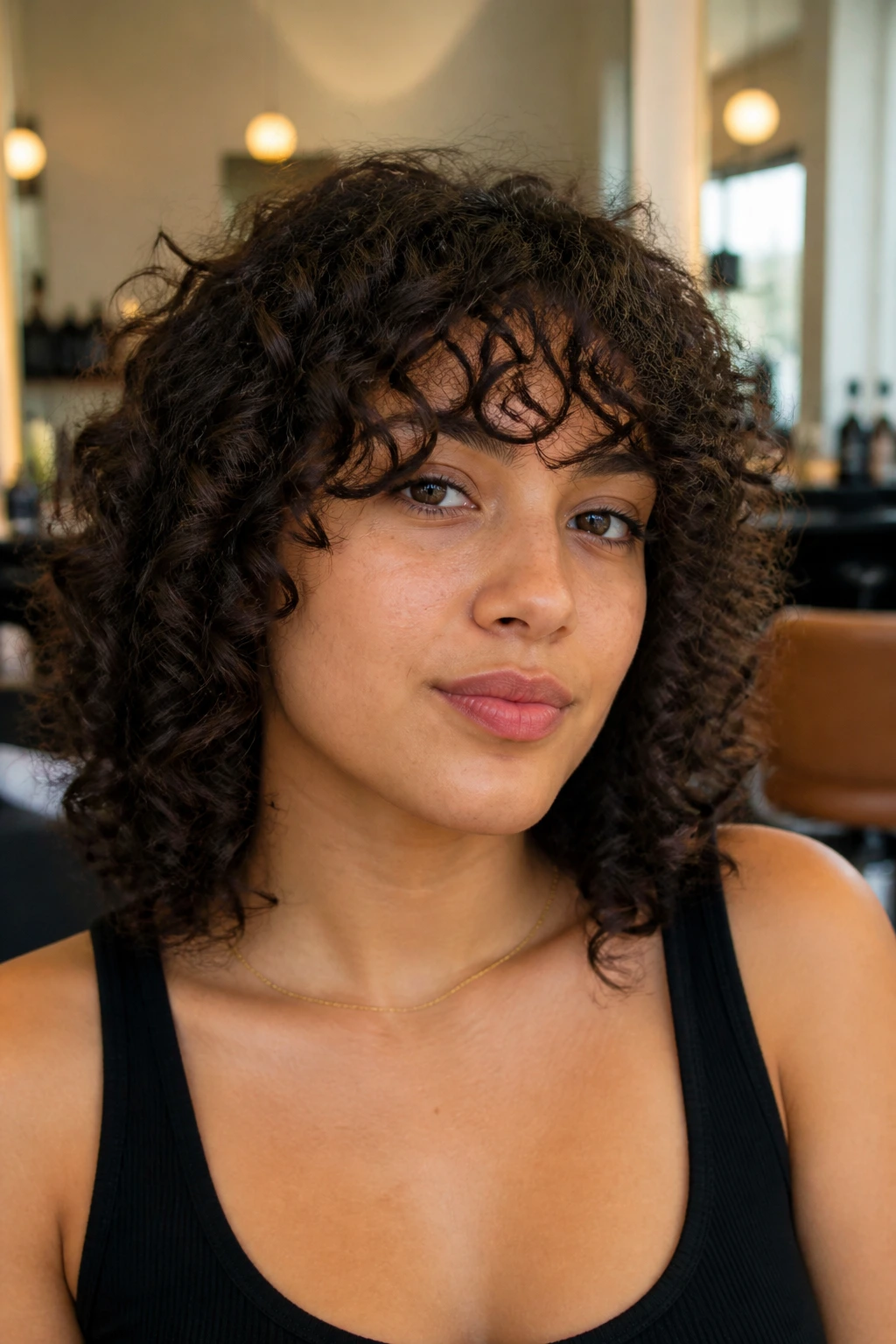
Textured bangs for curly hair are more than just a style choice; they are a celebration of your natural hair’s unique beauty and movement. By throwing out the old, rigid rules of straight hair styling and embracing the science of the curl, you can unlock a world of framing options that bring character, softness, and modern edge to your face.
Whether you choose the romantic drape of curtain waves, the bold statement of wispy micro coils, or the retro vibe of a shaggy fringe, the key is to work with your hair rather than against it. Find a stylist who understands dry-cutting, invest in a continuous mist bottle, and let your natural ringlets do what they do best—bounce, curve, and command attention.