

Wavy hair lives in a glorious, sometimes chaotic middle ground. It is not quite straight, and it is certainly not curly. On any given Tuesday, it can decide to be both at the exact same time. The classic mistake is treating these bends and s-patterns like they are flat sheets of glass or tight, predictable coils. When you force wavy hair into a rigid box, it fights back with frizz, bulk, and a stubborn refusal to lay flat. The answer is not more heat tools or heavy styling creams.
The real magic happens when you work with the natural weight of your hair, not against it. By carving out strategic pockets of space within the hair weight, layered haircuts with bangs for wavy hair create a beautiful blueprint for movement. Layers remove the heavy, pyramid-shaped weight that pulls waves flat at the roots, while a well-crafted set of bangs frames the face and highlights your bone structure. It is a style that looks lived-in and custom-built, rather than stiffly manufactured.
Throughout years of observing how different hair types behave, one clear pattern stands out: wavy hair needs weight distribution, not just length reduction. If you leave the ends too blunt, your waves will clump into a dense, triangular shape. But if you over-thin the mid-shafts with texturizing shears, you end up with dry, fuzzy ends that lose their wave pattern entirely. Finding the balance that suits your specific face shape, wave type, and daily routine is what makes a haircut successful.
Let us look at the mechanics of how wavy hair interacts with shears, and then we will explore the best cuts that bring this texture to life.
How Wavy Hair Responds to Strategic Layering
Gravity is the silent enemy of the wave pattern. When wavy hair grows past a certain length without internal support, the sheer weight of the hair pulls the wave straight at the root. You are left with flat, lifeless hair on top and a puff of volume at the bottom. This is often called the triangle head effect. It is a common frustration for anyone with medium-to-thick wavy textures.
When a skilled stylist cuts layers, they are not just making some pieces shorter than others. They are actually managing how light and shadow hit the hair, and how the strands stack on top of each other. By cutting shorter layers near the crown, the hair becomes lighter, allowing the natural s-pattern to coil upward without being dragged down.
[Crown Layer: Light & Springy]  --> Free to wave and bounce

       [Mid-Layer: Medium Weight] --> Creates body and transition

              [Base Length: Structured] --> Anchors the shape
Stylists use distinct cutting techniques depending on your wave type:
- Slide cutting: This technique involves sliding open shears down the hair shaft to create seamless transitions. It prevents blunt lines that disrupt the natural flow of waves.
- Point cutting: Cutting into the ends of the hair at an angle rather than straight across. This keeps the ends piecey and prevents the hair from looking blocky.
- Carving and slicing: Removing weight from the interior of the hair. This is especially useful for dense waves, creating channels where the hair can bend and fold into itself.
Bangs add another layer of complexity. Because wavy hair shrinks when it dries, bangs must be cut with tension-free techniques, often when the hair is completely dry. If a stylist pulls your wet hair taut to cut your bangs, those bangs will bounce up much shorter than you planned once they dry. A dry cut ensures that the bangs sit exactly where they should when you walk out of the salon.
1. The Shaggy Wolf Cut with Wispy Bangs
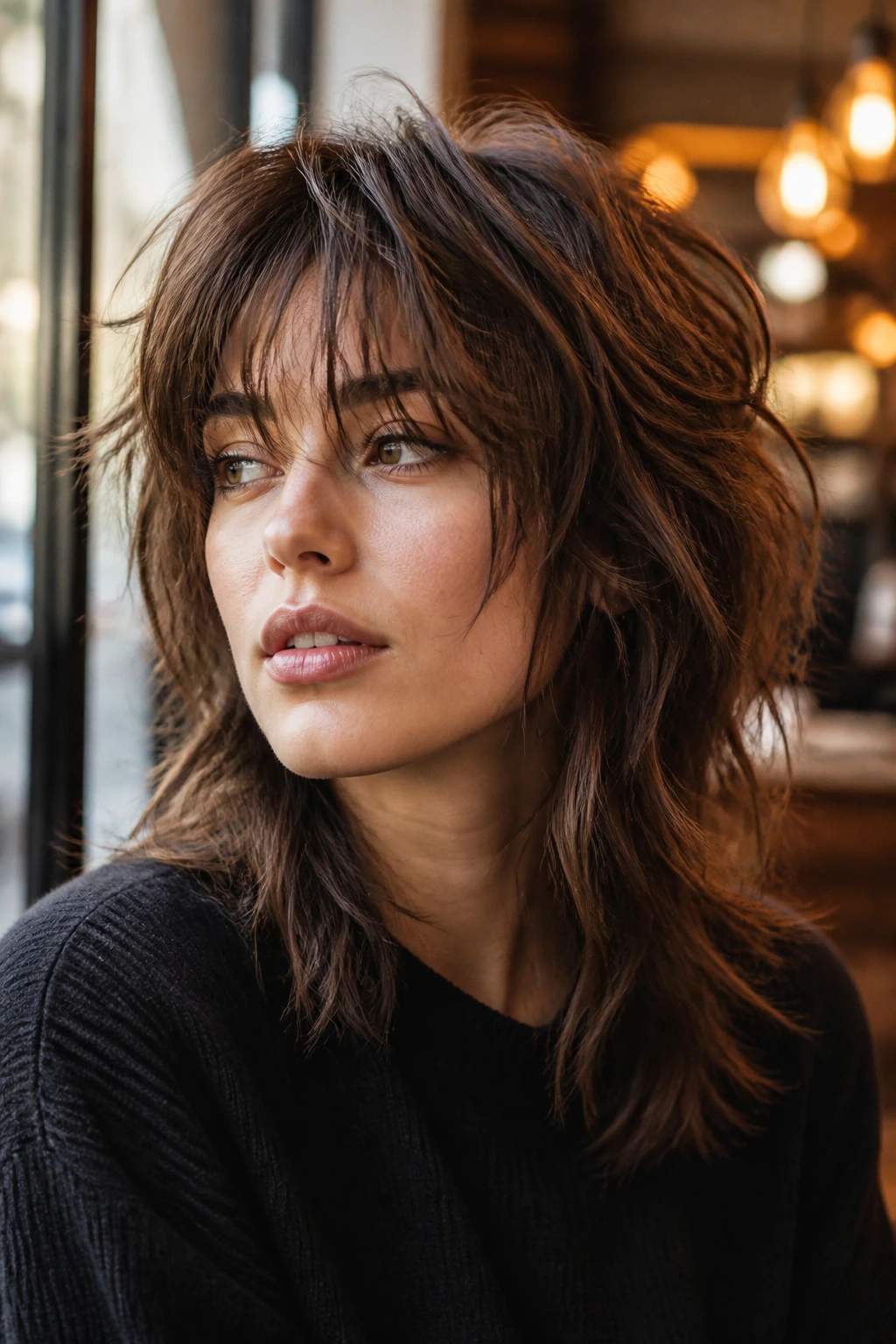
This style is a modern take on the retro shag. It features heavy layering through the crown and mid-lengths, resulting in a disconnected look that feels both rebellious and soft. The layers are cut with a razor or slide-cutting shears to create maximum movement, making it highly effective for medium-to-high density wavy hair.
The Dynamics of Shaggy Weight Removal
By heavily layering the top sections of the hair, the wolf cut removes the bulk that usually weighs down waves at the crown. This allows the top layers to bounce up, creating a natural volume that does not require teasing or heavy styling products. The wispy bangs act as a soft transition, blending into the shorter face-framing layers.
Quick Hair Facts
- Best Wave Type: 2B to 2C waves that need help with volume at the crown.
- Maintenance Level: Medium; requires regular trims every six weeks to keep the top layers from looking weighed down.
- Styling Method: Air-dry with a lightweight leave-in conditioner or a touch of sea salt spray.
- Key Tool: A diffuser attachment on your hair dryer to gently dry the waves without blowing them out of shape.
Pro tip: When styling a wolf cut, apply your styling cream to soaking wet hair, then use a micro-fiber towel to scrunch out the moisture instead of rubbing it dry.
2. The Classic French Girl Bob with Curtain Bangs
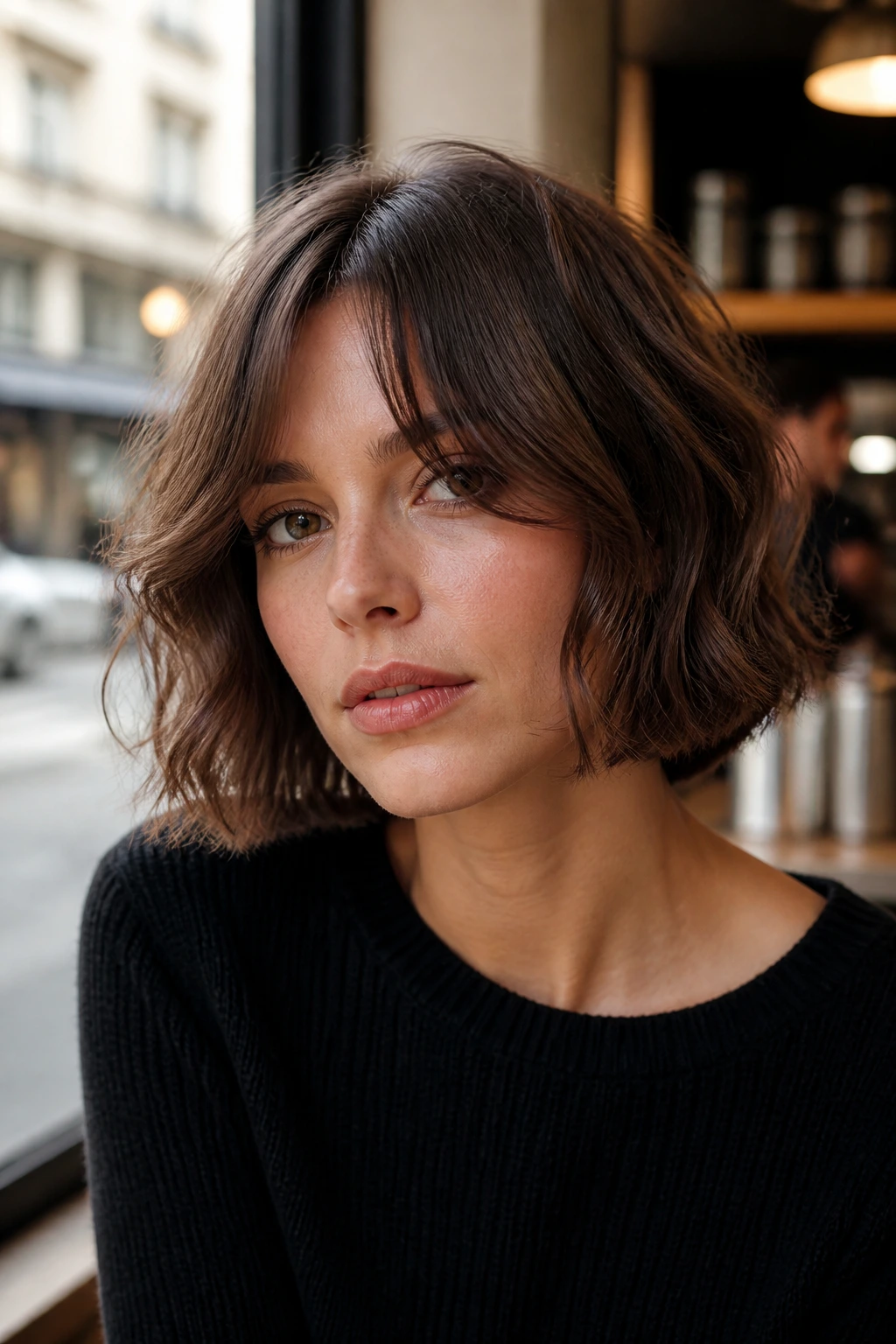
Bobs do not have to be flat or perfectly straight. In fact, a slightly messy, wavy bob is one of the most classic, timeless styles you can choose. The French girl bob is cut slightly shorter than a traditional bob, usually hitting right at the jawline or just below the ears, and is paired with soft, sweeping curtain bangs.
This cut works because it embraces the natural bend of your hair. Instead of fighting the wave, the cut uses the natural volume of wavy hair to create a wide, beautiful shape that frames the face. The curtain bangs split down the middle, drawing attention to your eyes and cheekbones while blending into the sides of the bob.
To style this, you want to avoid heavy gels or waxes. A light styling foam or even a simple leave-in spray is all you need to keep the waves defined. Let the hair air-dry naturally, and do not touch it while it is drying. Touching wet wavy hair is the fastest way to break up the wave pattern and create unwanted frizz.
3. Long U-Shaped Layers with Bottleneck Bangs
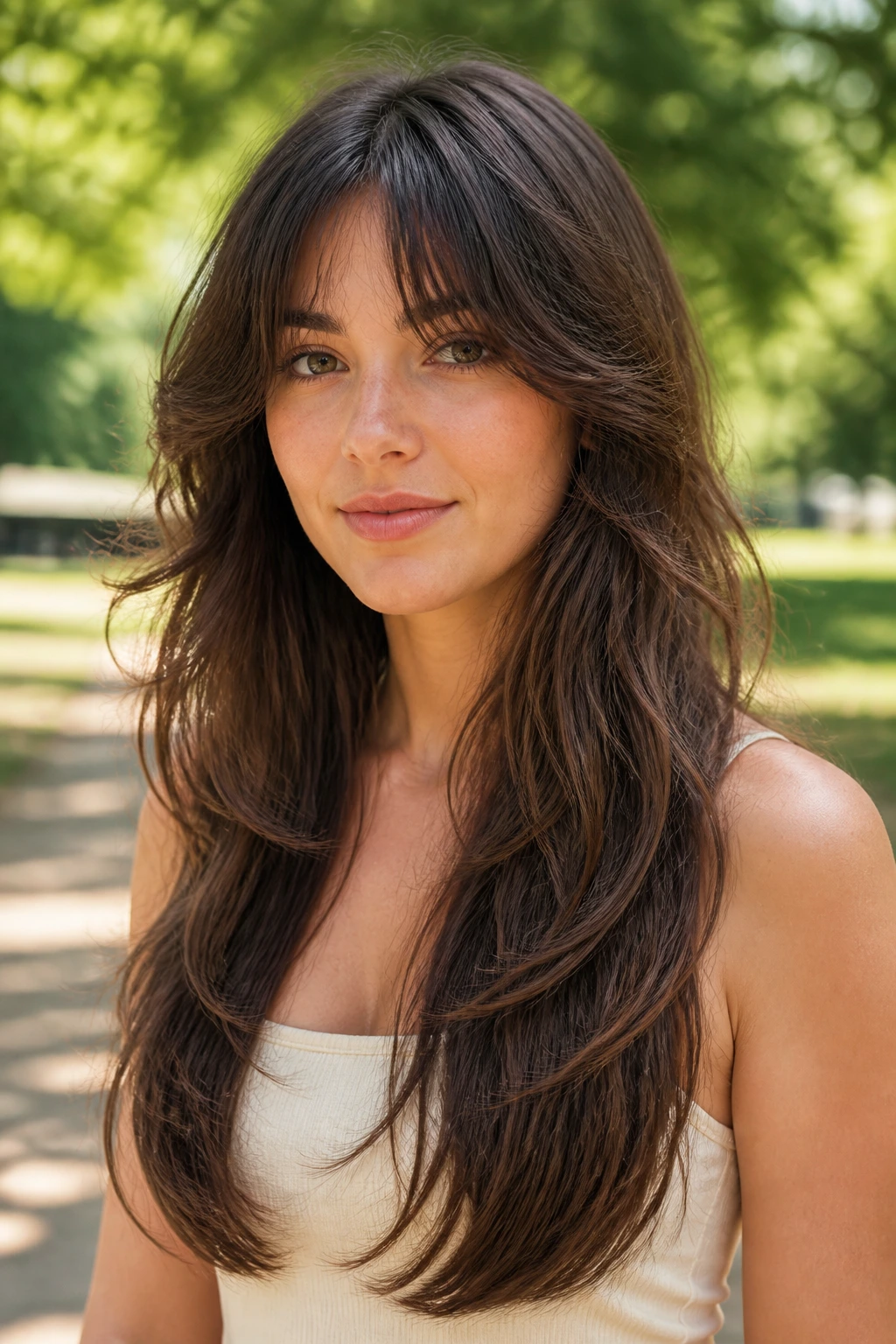
Does your long hair feel heavy and lifeless? A U-shaped cut is a fantastic way to keep your length while adding movement. Unlike a straight-across cut, a U-shape curves upward at the sides, which prevents the hair from looking like a heavy blanket draped over your shoulders.
Why the U-Shape Works
The curved baseline of a U-shaped cut allows the hair on the sides of your head to be shorter than the hair in the back. This lighter weight on the sides encourages your waves to bounce up around your face. When paired with bottleneck bangs—which are narrow at the forehead and sweep out wide around the eyes—the transition from bangs to length is incredibly smooth.
How to Style and Maintain It
- Apply a quarter-sized amount of lightweight styling gel to damp hair, focusing on the mid-lengths and ends.
- Section your bangs and dry them first using a medium round brush, sweeping them outward from the face.
- Use a diffuser on the rest of your hair, pushing the waves upward toward the scalp on low heat.
- Once dry, shake out the roots with your fingers to release the volume.
4. The Messy Choppy Lob with Baby Bangs
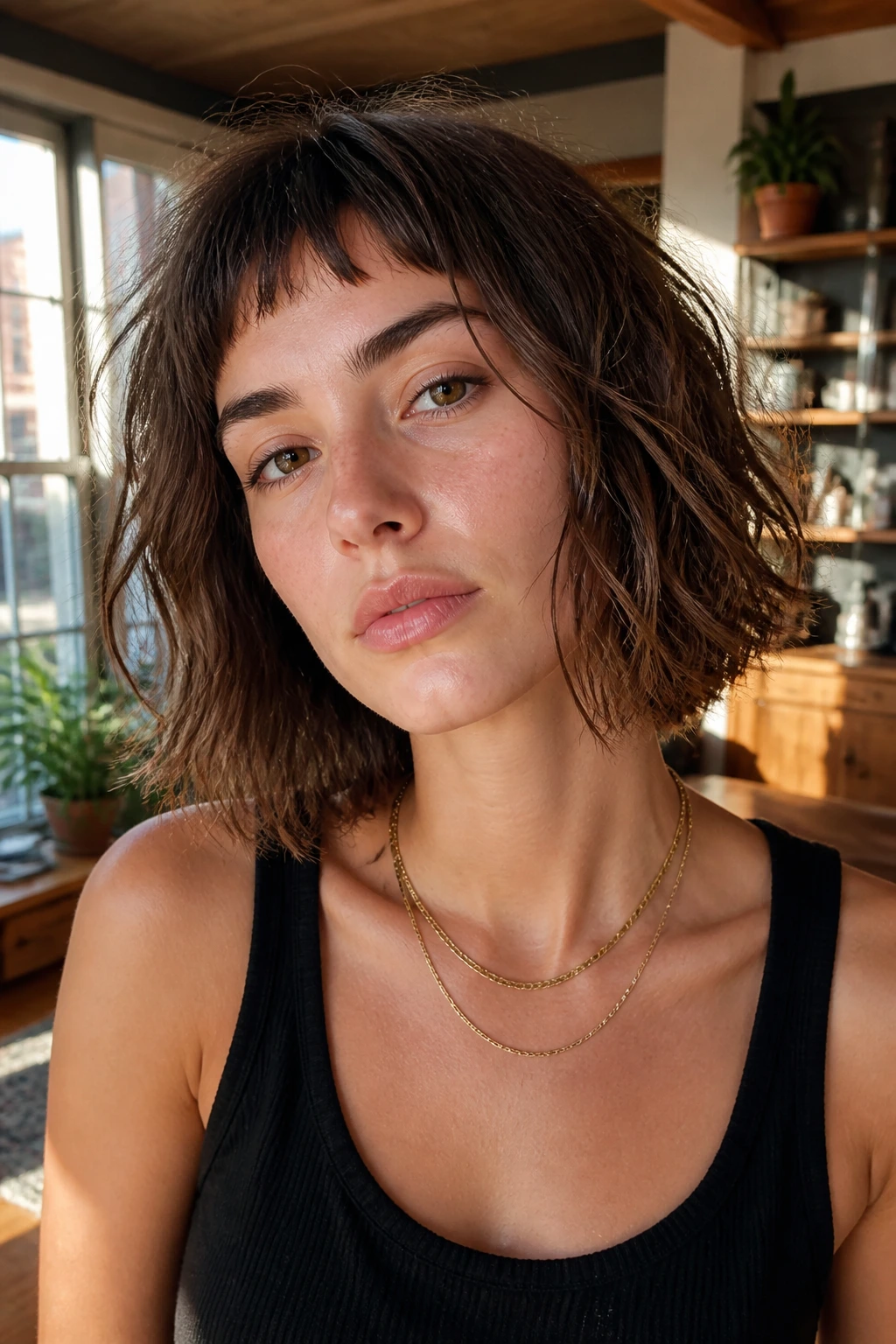
There is a distinct charm to high-contrast haircuts. The choppy lob (long bob) combined with short, textured baby bangs is a style for anyone who wants a look that feels bold and artistic. The collarbone-skimming length provides a solid base, while the choppy layers throughout the mid-lengths prevent it from feeling too heavy.
I remember a client who was terrified of baby bangs because she had active 2B waves. She assumed they would bounce up and look like a cartoon. The key to making baby bangs work on wavy hair is cutting them with a point-cutting technique to create a jagged, uneven edge. This allows the natural wave to look like an intentional design choice rather than a mistake.
- The Baseline: Cut blunt at the collarbone to maintain density.
- The Internal Layers: Sliced vertically to create pocket-sized spaces for waves to bend.
- The Bangs: Cut dry, roughly one inch above the eyebrows, with textured ends.
- The Finish: A dry texture spray shaken through the roots for a messy, bedhead texture.
5. Shoulder-Length Shag with Textured Micro Bangs
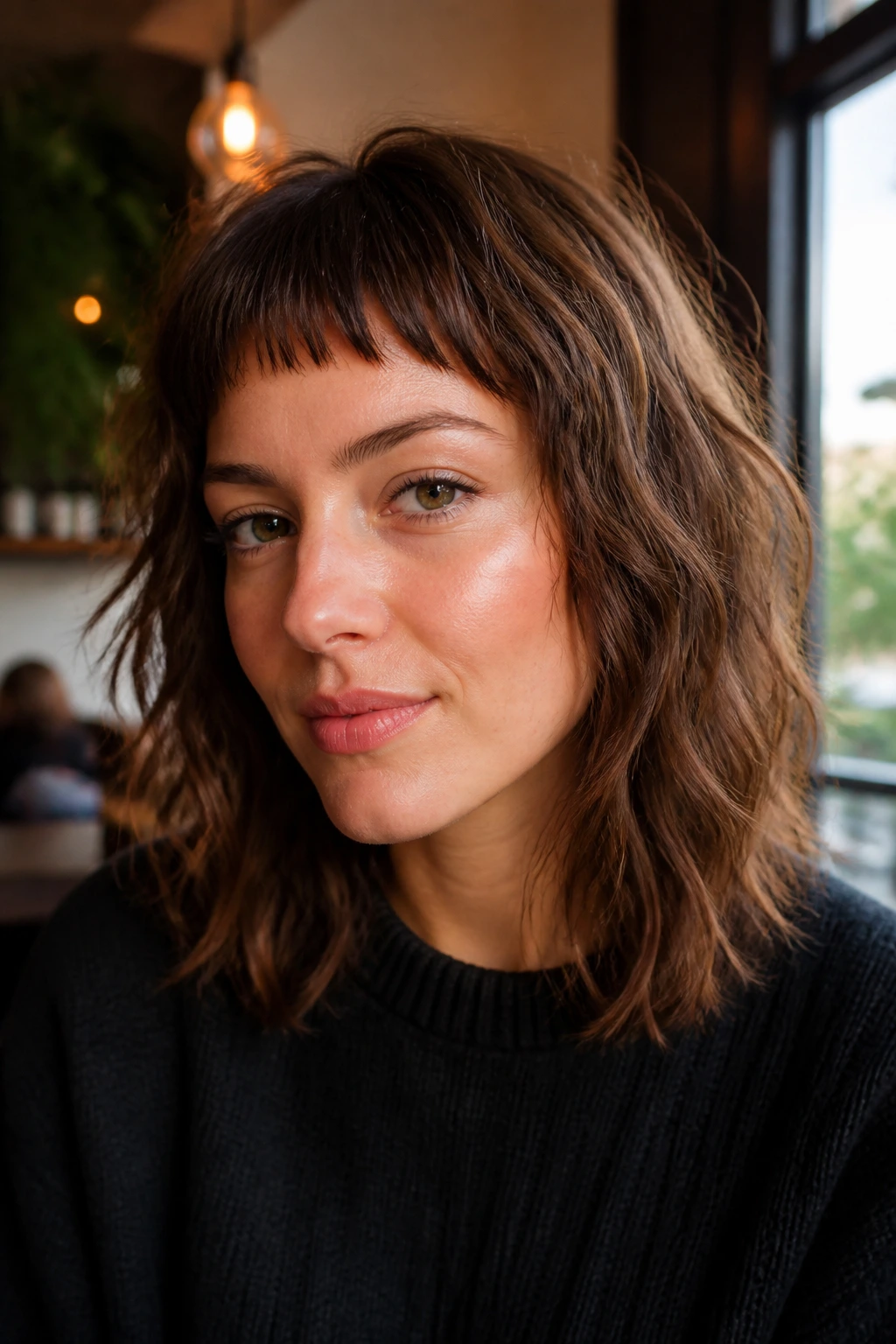
The classic mid-length shag is perhaps the friendliest cut for wavy hair. It features a heavy concentration of layers around the face and crown, leaving the perimeter slightly thinner. When you pair this with micro bangs, you get an edgy look that highlights the eyes.
This style relies on high contrast. The short, choppy micro bangs sit high on the forehead, while the shaggy layers cascade down to the shoulders. This structure works exceptionally well for individuals with high-density hair, as the shag template naturally removes excess bulk from the sides of the head.
When styling, you want to focus on keeping the micro bangs relatively flat while letting the rest of the shag go wild. You can run a small flat iron quickly over the bangs on a low heat setting, curving them slightly inward, then apply a dry matte paste to the ends of the shag to define the individual waves.
6. The Butterfly Cut with Feathered Bangs
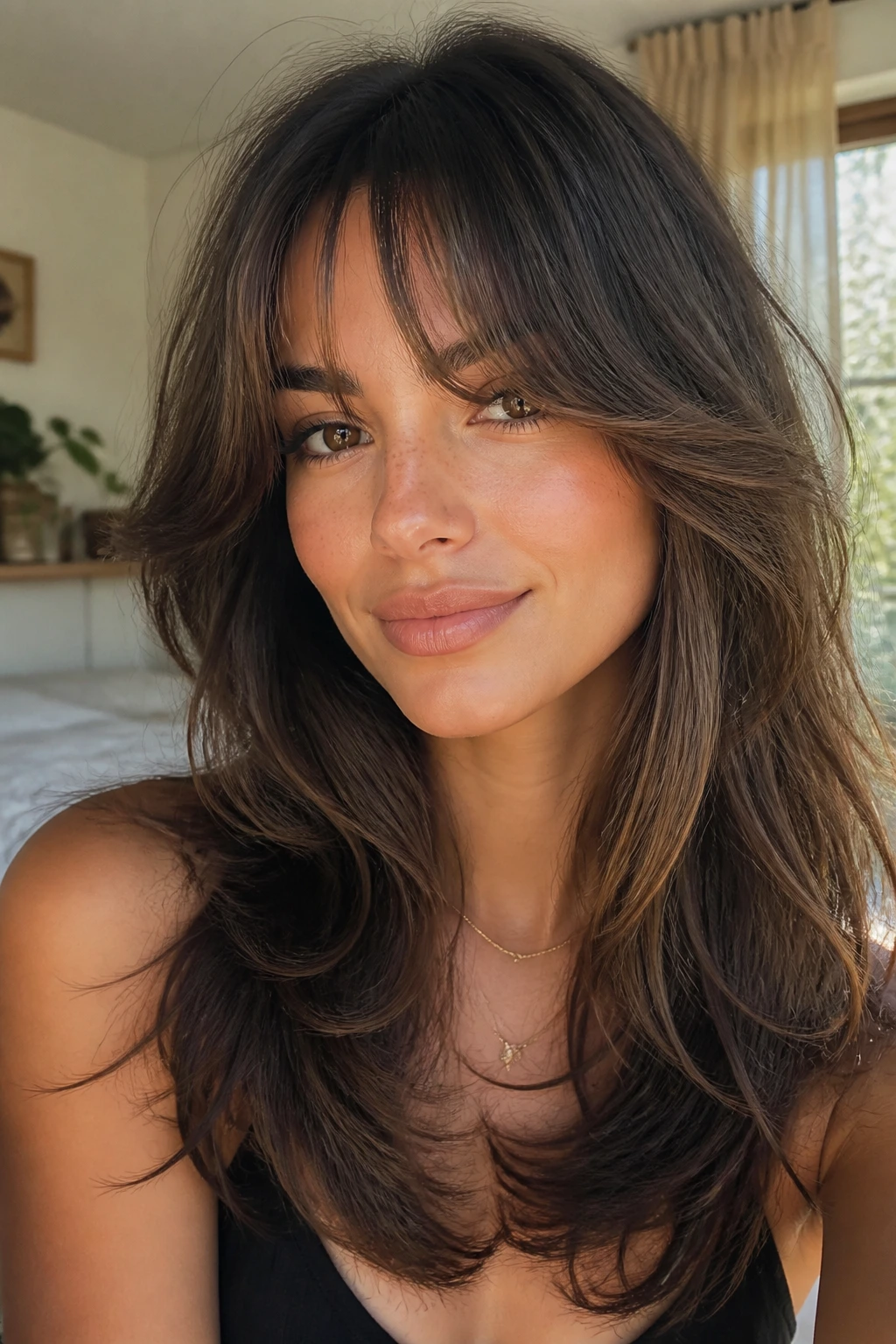
Unlike traditional shags that lean into a messy, rock-and-roll vibe, the butterfly cut is all about soft, flowing movement. It is characterized by short, face-framing layers that mimic the wings of a butterfly, paired with longer layers throughout the back.
This cut is perfect if you love the look of a big, bouncy blowout but do not want to spend an hour styling your hair every morning. The strategic layers allow your natural waves to stack beautifully, creating the illusion of a professional blowout with minimal effort. The feathered bangs sweep outward, blending seamlessly into the shortest layers.
For those with fine but dense wavy hair, the butterfly cut is a lifesaver. It creates the appearance of massive volume without requiring you to tease your hair or use heavy, sticky hairsprays that weigh down your waves.
7. The Clavicle-Grazing Layered Lob with Side-Swept Bangs
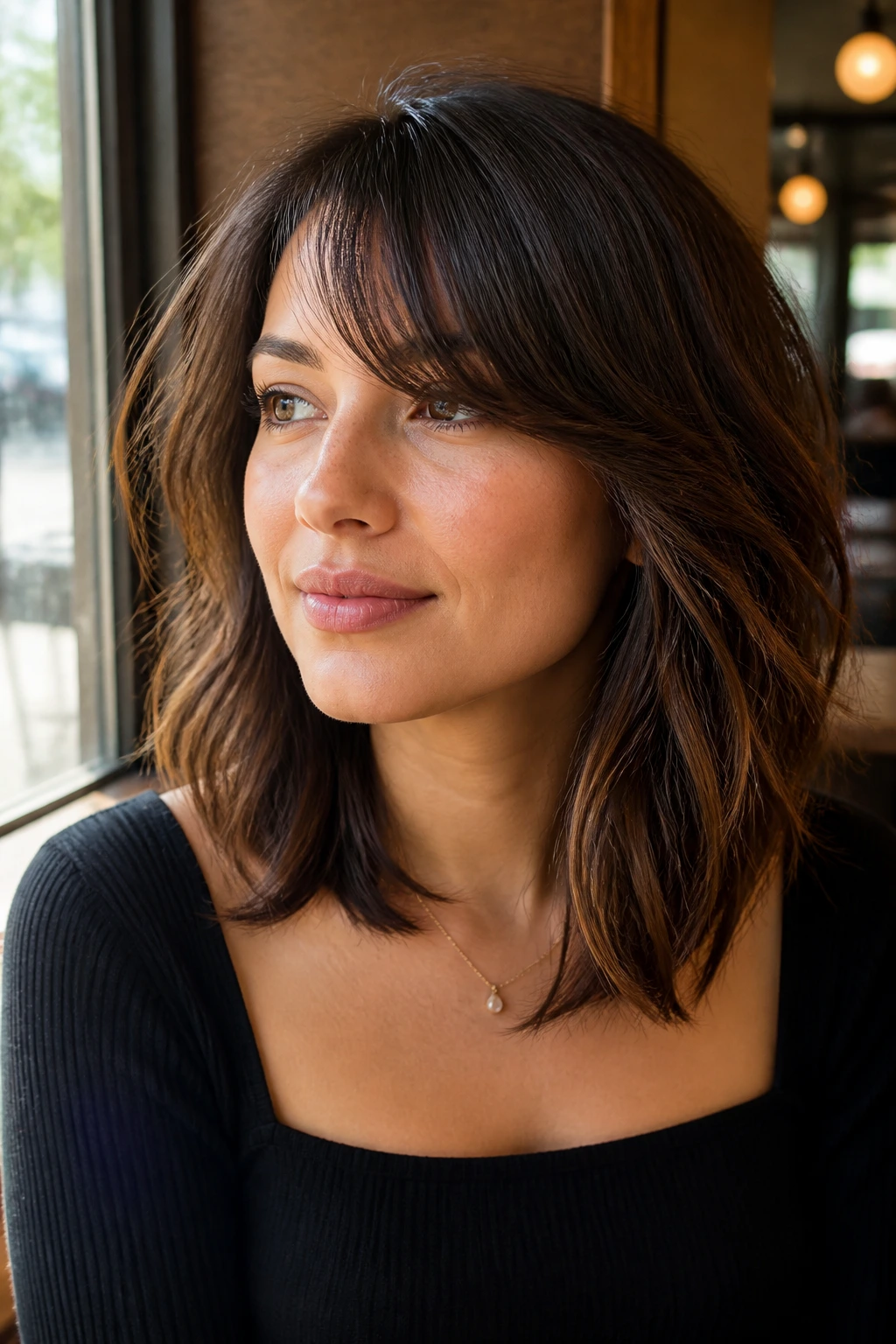
If you prefer a classic style that is easy to manage, this clavicle-grazing lob is a stellar option. It features long, subtle layers that start just below the chin, combined with elegant side-swept bangs that drape across the forehead.
The Balancing Act of Long Layers
Long layers are excellent for relaxing highly active waves. If your waves tend to get too boisterous or frizzy when cut short, keeping the layers long and heavy helps pull the wave down into a smoother, more manageable s-pattern. The side-swept bangs provide a focal point, breaking up the symmetry of the face.
Quick Hair Facts
- Best Wave Type: 2A to 2B waves that prefer a sleek, polished appearance.
- Maintenance Level: Low; this cut grows out beautifully and can go eight to ten weeks between trims.
- Styling Method: Smooth a lightweight blowout cream through damp hair, then air-dry or blow-dry with a large paddle brush.
- Key Tool: A high-quality boar bristle brush to help distribute your hair’s natural oils down the shaft.
Pro tip: If your side-swept bangs feel too flat, blow-dry them in the opposite direction of how you want them to lay, then sweep them back over. This creates instant, natural lift.
8. Rounded Retro Layers with Full Blunt Bangs
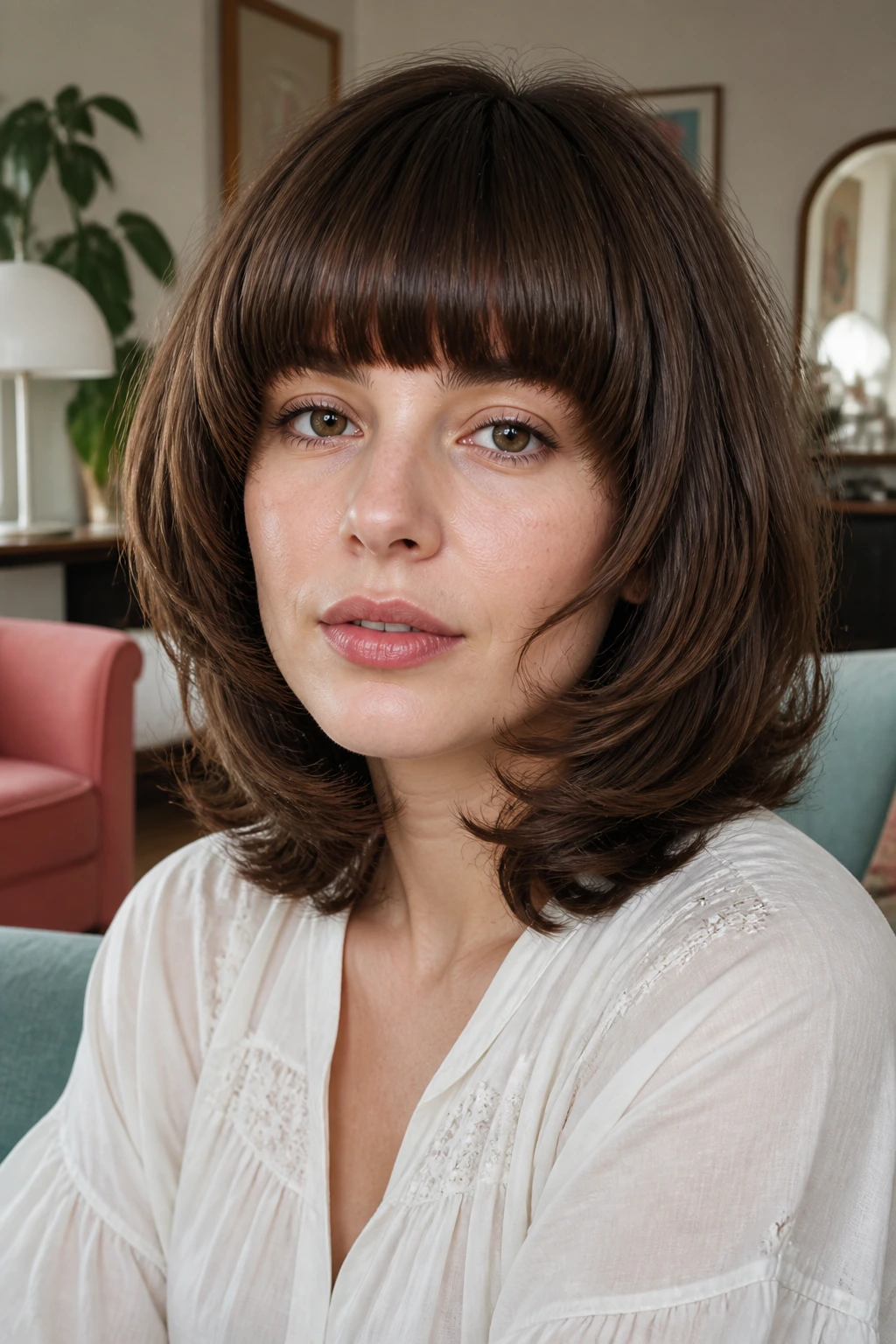
Full blunt bangs on wavy hair might sound like a contradiction, but when done correctly, it is incredibly striking. This cut features a rounded silhouette with layers that curve inward, framing the face in a soft, circular shape. The blunt bangs create a sharp, graphic line that contrasts beautifully with the soft waves.
The secret to pulling off this look is ensuring the blunt bangs are cut wide enough to meet the outer corners of your eyes. This prevents the bangs from looking like a heavy block sitting on your forehead. The rest of the hair is layered with rounded corners, so the waves stack in a soft, cloud-like shape.
To style this cut, you will want to blow-dry the bangs straight using a flat brush to keep them smooth, while letting the rest of your hair dry naturally with a curl-defining cream. This creates a fascinating contrast between the smooth, structured fringe and the wild, organic texture of the waves.
9. C-Cut Layers with Wispy Face-Framing Bangs
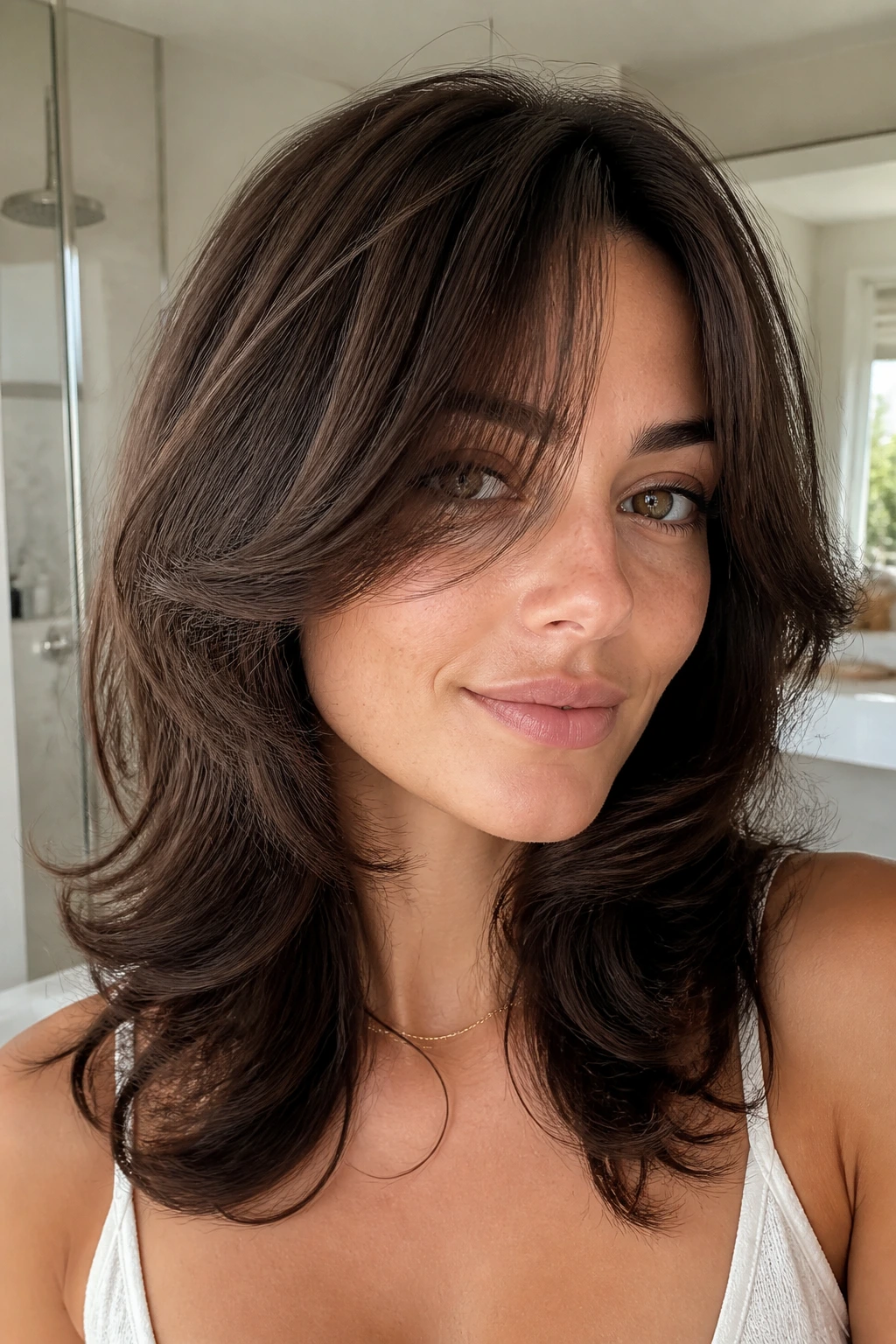
Why does the C-cut continue to be a favorite in salons? The answer lies in how it frames the face. The layers are cut in a continuous, curved “C” shape that hugs the jawline and collarbone, creating a soft, flattering frame for almost any face shape.
The Flow of the C-Cut
In this style, the layers start short around the face and gradually get longer as they move toward the back. This graduation creates a soft, sweeping motion that coaxes your waves to curve inward toward your face. When you pair this with wispy, face-framing bangs, you get a highly romantic style that looks incredibly soft and touchable.
How to Style and Maintain It
- Apply a lightweight leave-in conditioner to clean, damp hair to lock in moisture.
- Use your fingers to gently twirl the face-framing sections forward while they are wet to encourage the inward curve.
- Air-dry completely, then use a drop of hair oil rubbed between your palms to smooth any flyaways.
- Trim the bangs every four weeks to keep them at a comfortable length.
10. The Pixie Shag with Razored Bangs
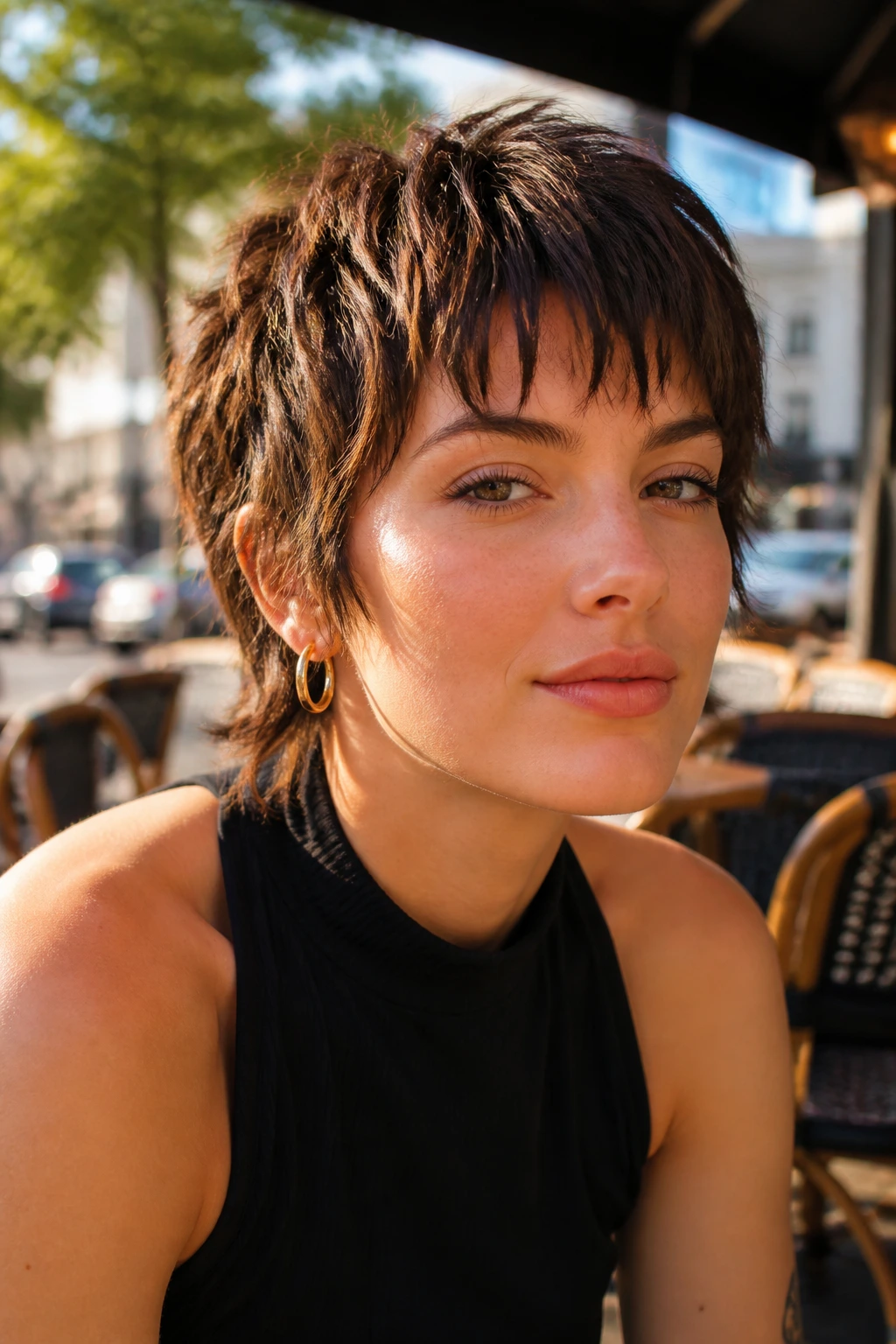
Short hair is liberating, and a pixie shag is one of the most playful ways to wear wavy hair. This cut is much shorter than a traditional shag, with the back and sides cut close to the head, while the top and crown are left long and shaggy. The bangs are cut with a razor to keep them light and piecey.
I once worked with a client who had thick, coarse wavy hair and was convinced she could never wear a short cut. She assumed her hair would puff up like a cotton ball. The trick was using a feather razor to cut the pixie shag. The razor slices the hair at an angle, removing bulk while leaving the ends incredibly soft.
- The Top: Kept long and shaggy to allow the waves to curl and bend.
- The Sides: Cut close to the ears to keep the silhouette slim and balanced.
- The Razored Bangs: Light, airy, and swept to the side or worn straight down.
- The Styling: A dime-sized squeeze of styling wax run through dry hair to create a piecey, textured finish.
11. Mid-Length V-Cut Layers with Birkin Bangs
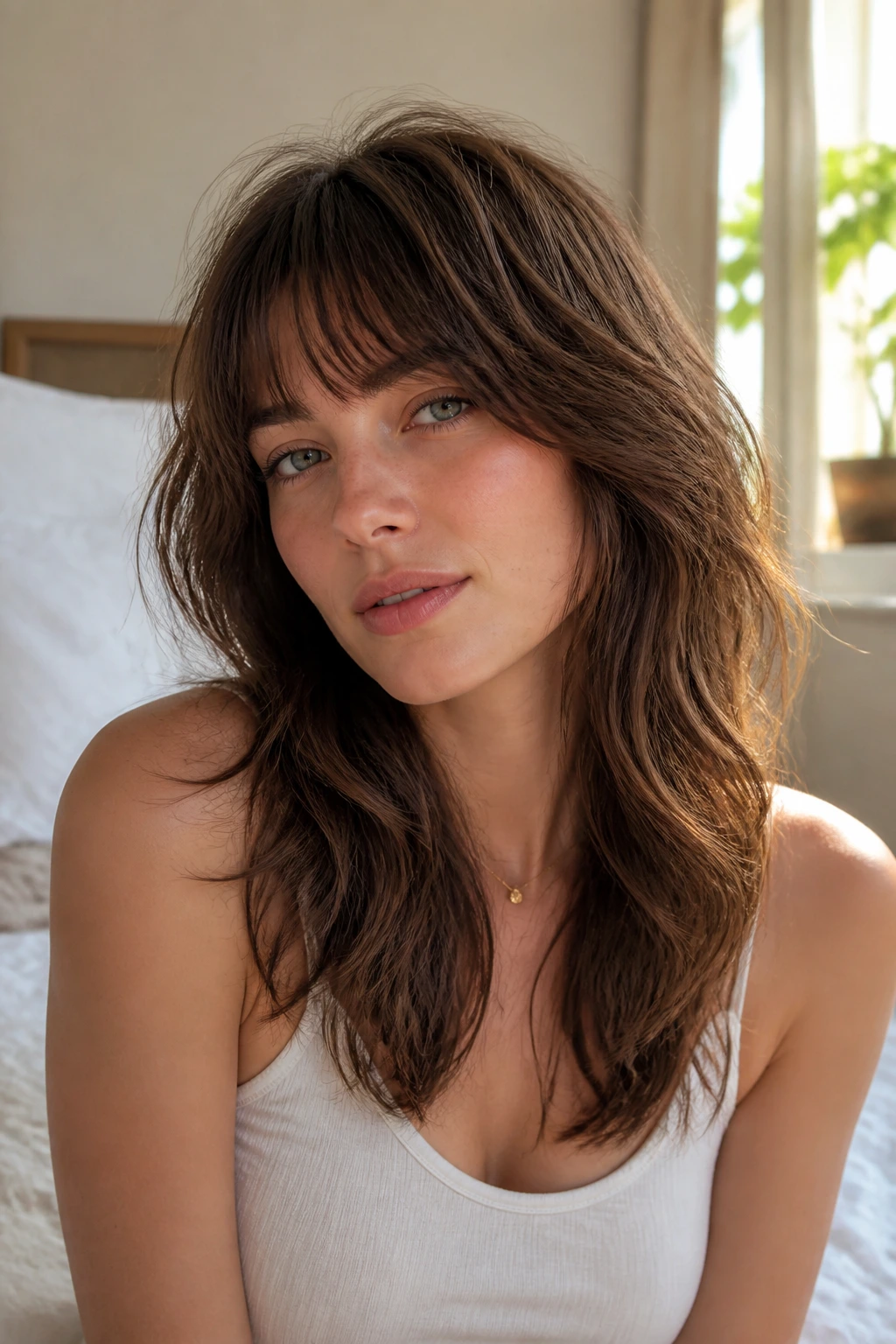
This style is inspired by the iconic French singer Jane Birkin. It features a dramatic V-shape at the back, where the hair is cut shorter on the sides and tapers to a longer point in the middle. The bangs are long, thin, and slightly parted down the middle, sitting just below the eyebrows.
       /
      /
     /
    /   V     <-- V-Cut shape at the back focuses length in the center
The V-cut is excellent for anyone who wants to keep their long hair but wants to feel a sense of lightness. By removing the weight from the sides of the head, your waves are free to bounce and move around your shoulders. The Birkin bangs add a touch of effortless coolness, looking best when they are slightly messy and undone.
To keep this cut looking its best, avoid heavy silicone-based serums. Instead, opt for a lightweight wave spray that you can scrunch into dry hair to revive the wave pattern on day two or three.
12. The Collarbone Shag with Piece-y Choppy Bangs
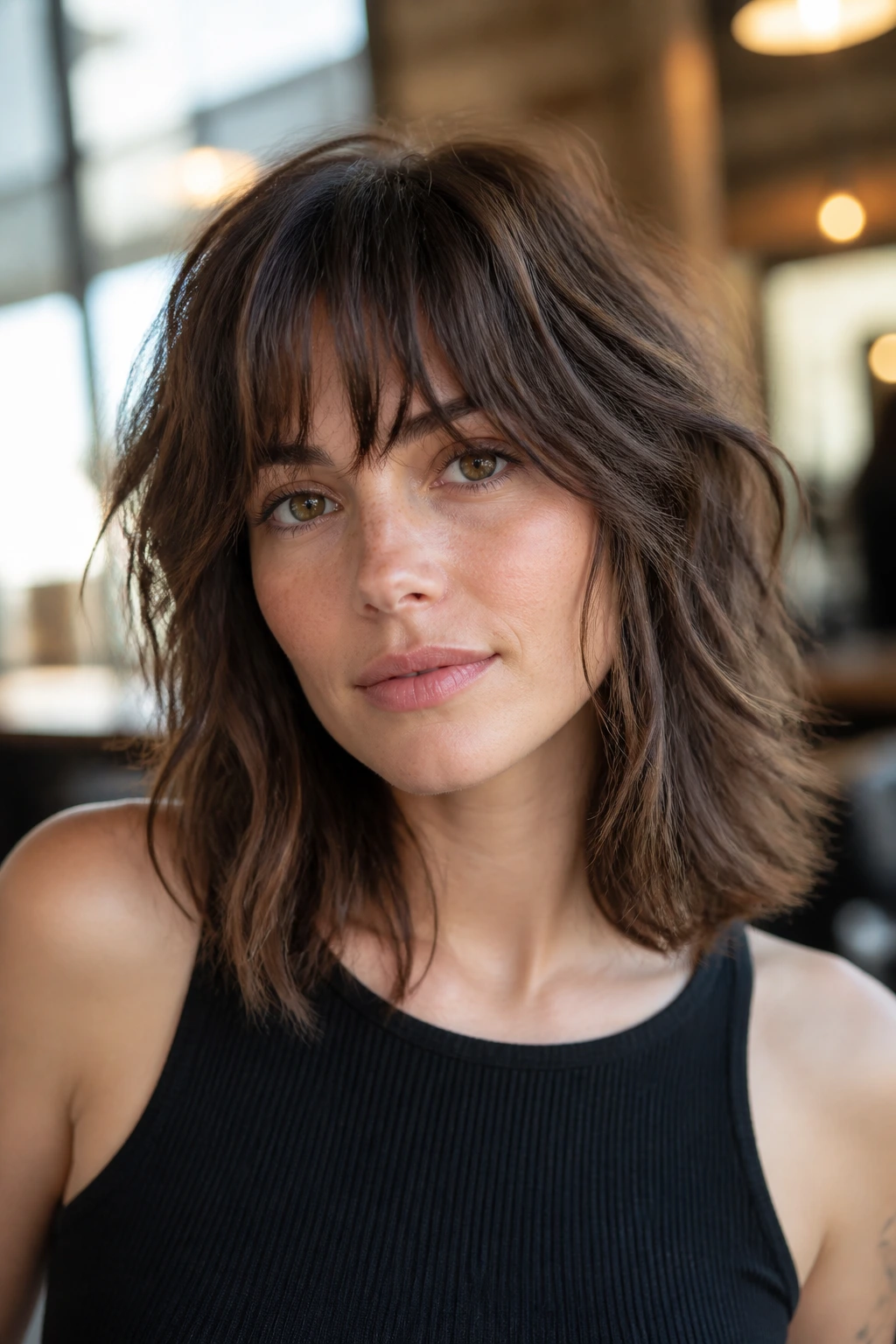
Unlike the long, flowing layers of a butterfly cut, this collarbone-length shag is all about texture and grit. The layers are cut choppy and uneven throughout the head, creating a messy, rocker-inspired silhouette. The bangs are piece-y and choppy, matching the rest of the cut.
This style is highly effective for fine wavy hair. Because the layers are cut short and choppy, they create the illusion of density and volume, making fine hair look much thicker than it actually is. The choppy bangs break up the forehead, adding a youthful energy to the look.
When styling a choppy shag, you want to lean into a matte finish. A dry clay or a sea salt spray is perfect for creating that lived-in, textured appearance. Simply spray it onto damp hair, scrunch, and let air-dry for a classic, effortless look.
13. Soft Internal Layers with Soft Crescent Bangs
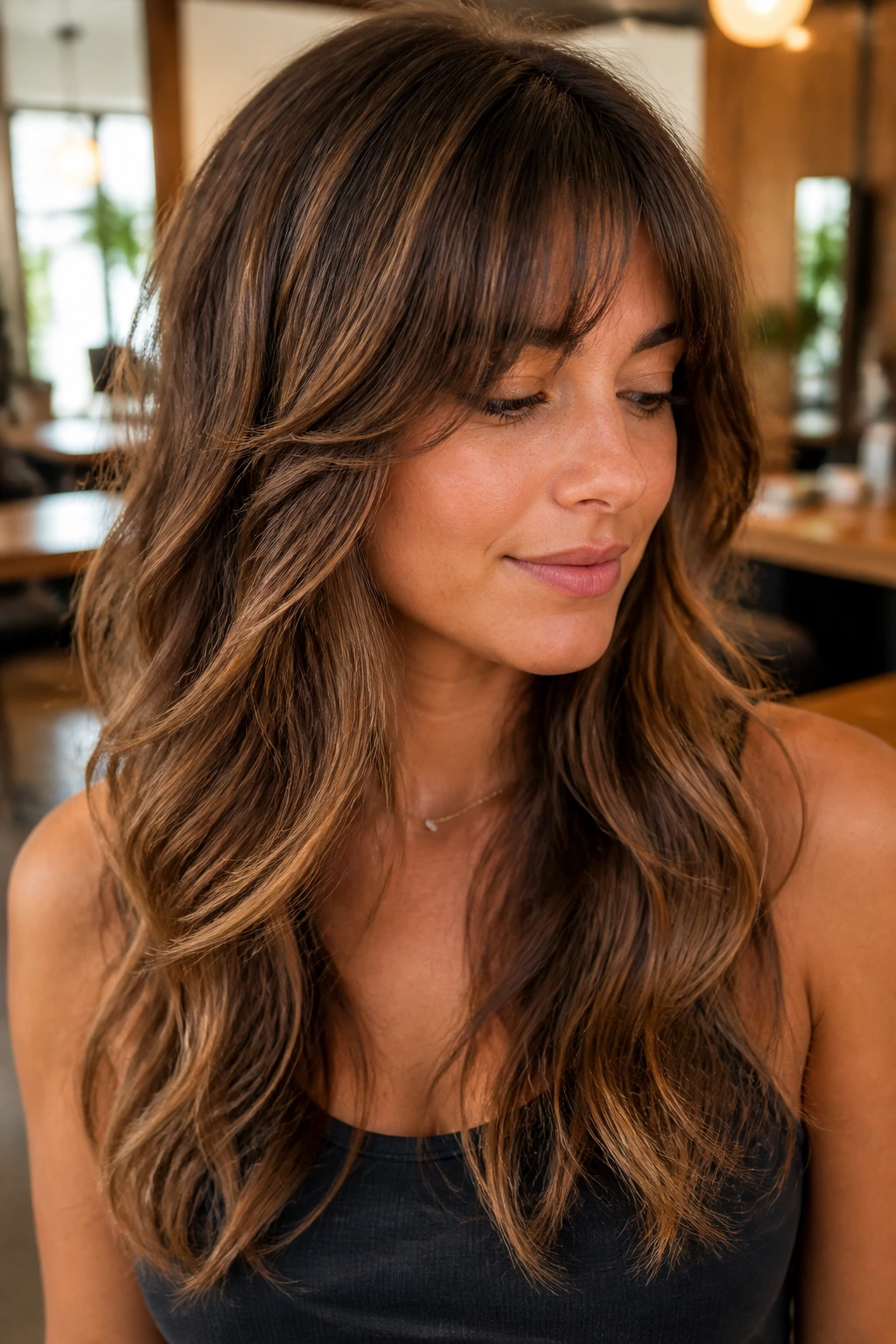
For those who want the benefits of layers without the obvious look of short pieces, internal layers are the perfect solution. Also known as invisible layers, this technique involves cutting shorter pieces underneath the top layer of hair, providing lift and support without being visible on the surface.
The Invisible Support System
Internal layers act like a scaffold for your waves. They lift the top layer of hair from underneath, allowing your waves to bounce up without any visible scissor lines. When paired with crescent bangs—which are shorter in the middle and curve down at the sides to frame the eyes—this cut looks incredibly polished and natural.
Quick Hair Facts
- Best Wave Type: Fine-to-medium wavy hair that needs volume but wants to maintain a sleek surface.
- Maintenance Level: Very low; because the layers are hidden, the grow-out process is incredibly forgiving.
- Styling Method: Blow-dry with a round brush for a smooth, voluminous look, or air-dry with a light foam.
- Key Tool: A lightweight, alcohol-free mousse to add volume at the roots without drying out the hair.
Pro tip: To style crescent bangs, blow-dry them straight down, then use your fingers to pinch the ends together with a tiny bit of hair paste to create a piece-y look.
14. Hollywood Glam Waves with Dramatic Side-Swept Bangs
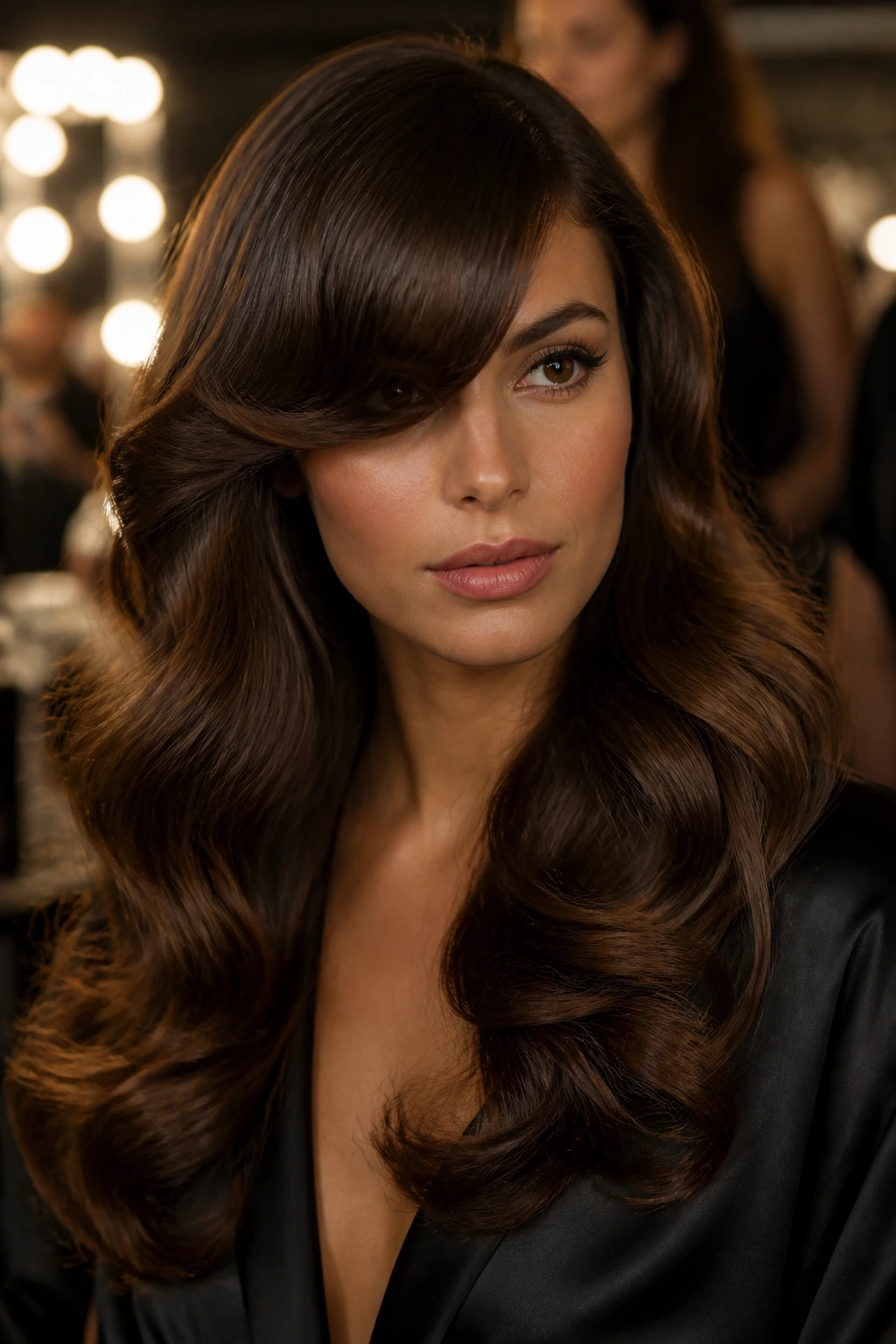
If you love a classic, polished look, Hollywood glam waves are the way to go. This style features long, structured layers that are styled into sleek, uniform waves, paired with a deep side part and dramatic, sweeping side bangs.
This look is all about shine and definition. Unlike the messy, textured shags, these waves are designed to look neat and cohesive. The layers are cut long and blended to ensure that when the hair is styled, the waves lock together into a single, beautiful pattern. The dramatic side-swept bangs add a touch of old-school glamour.
To achieve this look, you will want to blow-dry your hair smooth first, then use a large-barrel curling wand to wrap the hair in the same direction. Once the curls have cooled, brush them out gently with a boar bristle brush to transform the curls into soft, glossy waves. Finish with a high-shine hairspray.
15. The Curly-Wavy Shag with Short Curly Bangs
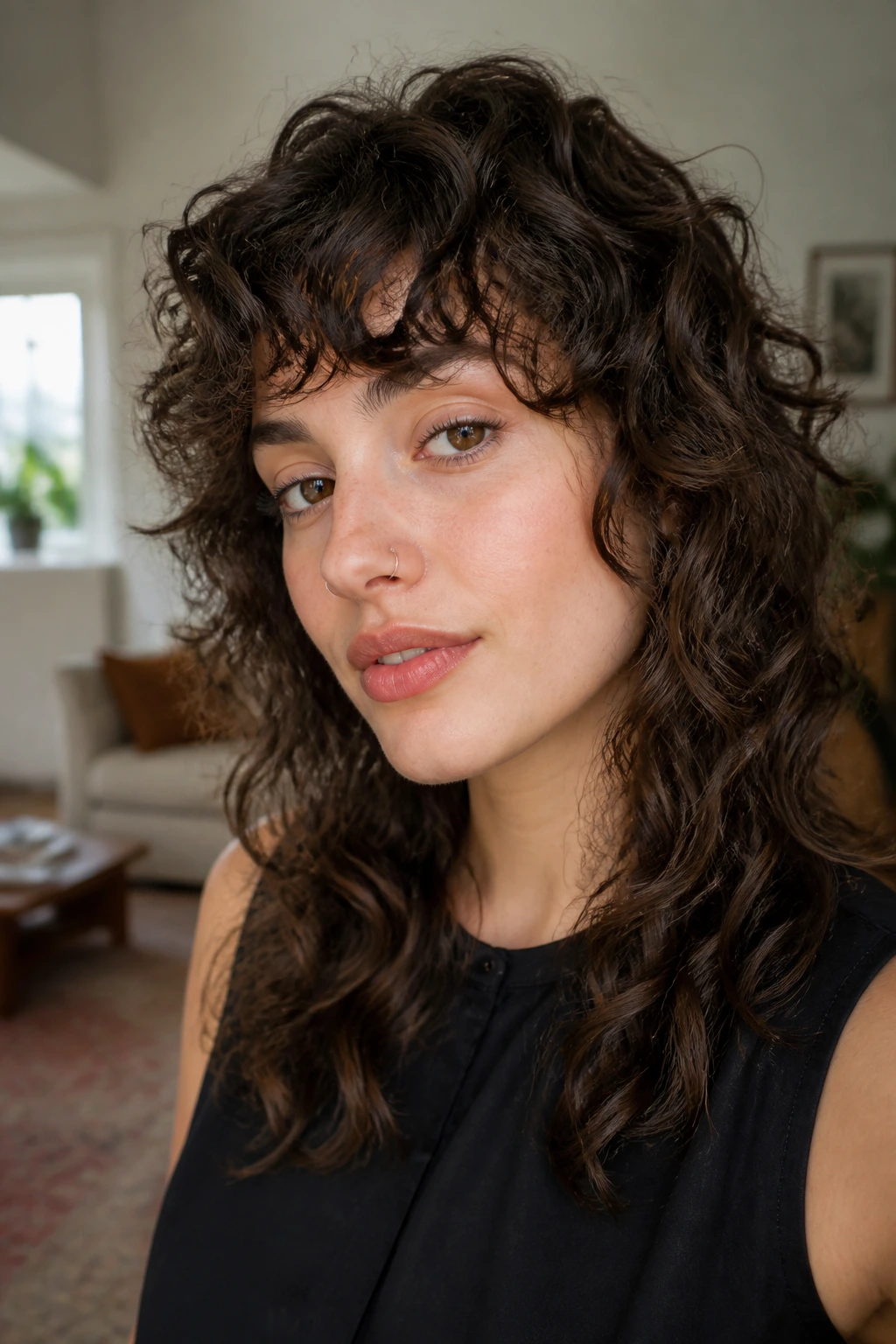
What happens when your wavy hair borders on curly? If you have 2C or 3A waves, a curly shag with short, curly bangs is a fantastic way to embrace your natural texture. This cut features short, round layers all over the head, allowing every single wave and curl to bounce up to its full potential.
          [Short Curly Bangs]
               /
      [Round Crown Layers]
            /
    [Cascading Mid-Length Waves]
The key to this cut is cutting the hair when it is completely dry and in its natural state. This allows the stylist to see how each wave behaves and cut it exactly where it bends. The short curly bangs sit softly on the forehead, framing the face with beautiful, organic texture.
Styling this cut requires a bit more moisture than other styles. A rich curl cream or a moisturizing leave-in conditioner should be applied to soaking wet hair to prevent frizz and lock in the wave pattern. Use a diffuser on low heat to dry, and do not touch the hair until it is completely dry to maintain maximum definition.
Strategic Styling: Finding Your Perfect Wave Profile
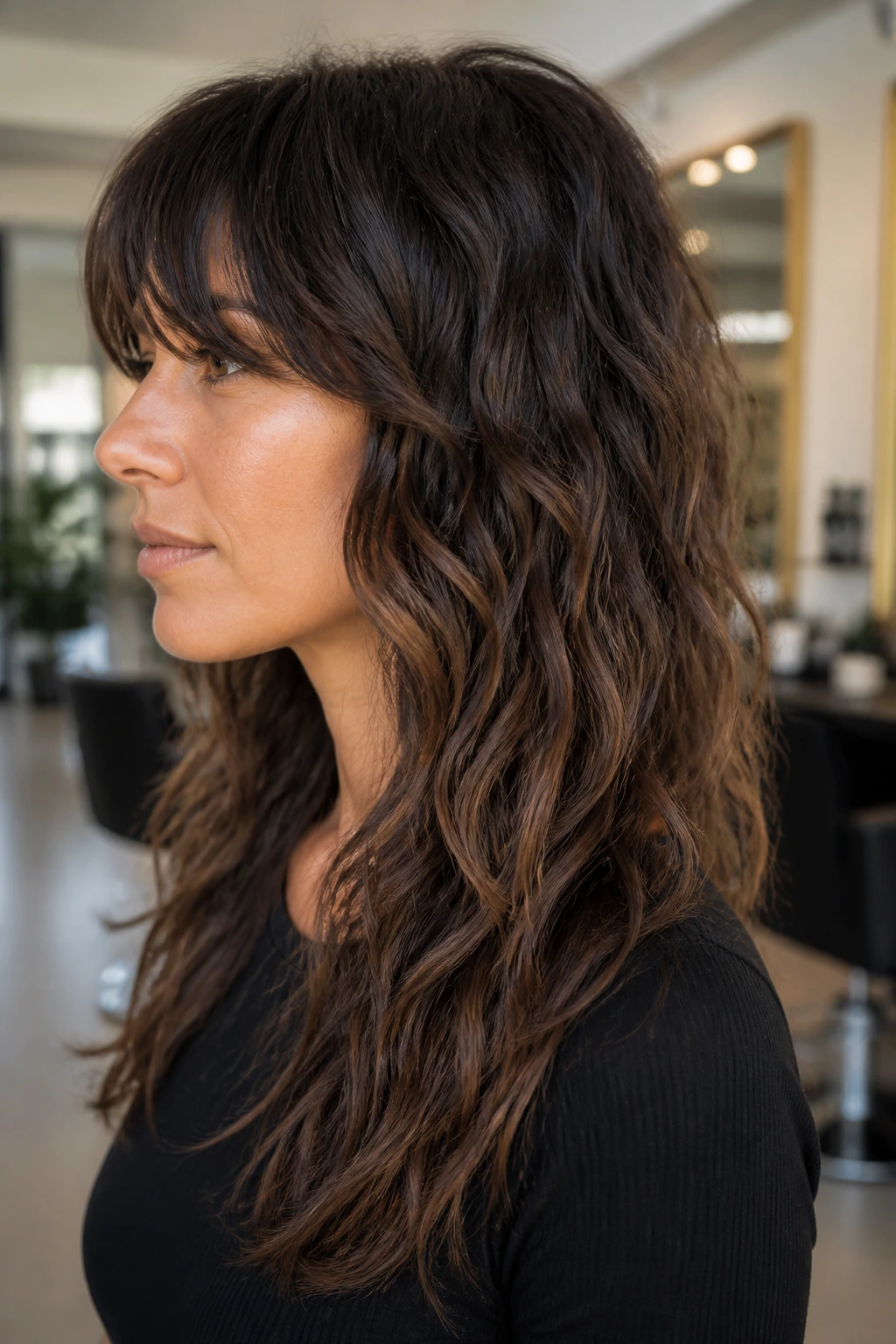
To help you choose the right cut for your specific hair type and lifestyle, here is a quick-reference guide comparing the 15 styles we have explored:
| Haircut Style | Best Wave Type | Hair Density | Styling Effort | Recommended Product |
|---|---|---|---|---|
| 1. Shaggy Wolf Cut | 2B – 2C | Medium to High | Medium | Sea Salt Spray |
| 2. French Girl Bob | 2A – 2C | Medium | Low | Lightweight Foam |
| 3. Long U-Shaped Layers | 2A – 2B | Fine to Medium | Medium | Styling Gel |
| 4. Choppy Lob with Baby Bangs | 2B – 2C | Medium | High | Dry Texture Spray |
| 5. Shoulder-Length Shag | 2B – 2C | High | Medium | Matte Paste |
| 6. Butterfly Cut | 2A – 2C | Fine but Dense | High | Blowout Cream |
| 7. Clavicle-Grazing Lob | 2A – 2B | Fine to Medium | Low | Leave-in Spray |
| 8. Rounded Retro Layers | 2B – 2C | High | Medium | Curl-defining Cream |
| 9. C-Cut Layers | 2A – 2B | Medium | Low | Leave-in Conditioner |
| 10. Pixie Shag | 2B – 2C | Thick & Coarse | Medium | Styling Wax |
| 11. Mid-Length V-Cut | 2A – 2B | Medium to High | Medium | Wave Spray |
| 12. Collarbone Shag | 2A – 2B | Fine | Low | Dry Clay |
| 13. Soft Internal Layers | 2A – 2C | Fine to Medium | Low | Root Mousse |
| 14. Hollywood Glam Waves | 2A – 2B | Medium | High | High-Shine Hairspray |
| 15. Curly-Wavy Shag | 2C – 3A | High | High | Rich Curl Cream |
Essential Maintenance for Wavy Layers and Bangs
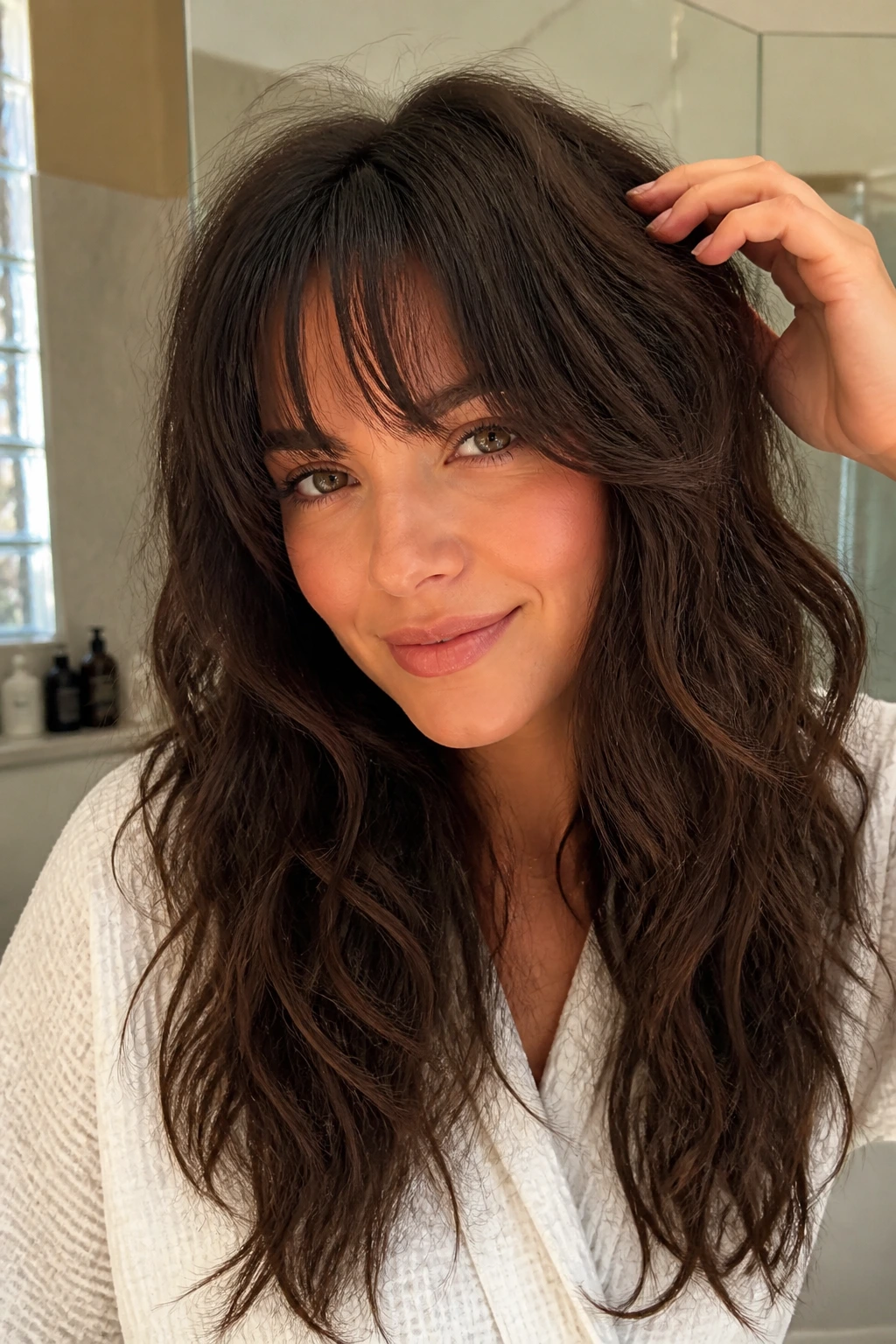
Wavy hair is inherently delicate. Because the cuticle is raised at the points where the hair bends to form a wave, it is more prone to moisture loss and frizz than straight hair. When you add layers and bangs into the mix, your maintenance and styling routine needs to be highly strategic to keep your hair looking its best.
The Washing Routine
How you wash your hair sets the foundation for your waves. Many traditional shampoos contain harsh sulfates that strip the hair of its natural oils, leaving wavy hair dry and frizzy. Instead, opt for a sulfate-free, moisturizing shampoo that cleanses without stripping.
When applying conditioner, focus on the mid-lengths and ends. Use a wide-tooth comb while the conditioner is still in your hair to gently detangle. This prevents breakage and helps define the wave pattern before you even step out of the shower. Rinse with cool water to help seal the cuticle and add shine.
The Art of the Plop
Have you ever tried plopping your hair? This is a popular technique for wavy and curly hair that involves wrapping your wet hair in a soft cotton t-shirt or micro-fiber towel to press the waves against your scalp. It helps remove excess water while keeping the wave pattern intact.
Step 1: Lay a cotton T-shirt flat on a surface.
Step 2: Bend forward, lowering your wet, styled hair onto the center of the shirt.
Step 3: Fold the back of the shirt over your head, securing the sleeves at the nape of your neck.
Step 4: Leave it on for 15-20 minutes, then release and air-dry or diffuse.
Using a regular terry cloth towel to dry your hair is a recipe for frizz. The tiny loops on a standard towel catch on the hair fibers, roughing up the cuticle and breaking up your natural wave pattern. Always stick to a smooth micro-fiber towel or an old cotton t-shirt.
Styling the Bangs
Bangs on wavy hair require a unique approach. Because they are shorter than the rest of your hair, they dry much faster and are more susceptible to styling mistakes.
If you have cowlicks—stubborn sections of hair that grow in a different direction—drying your bangs immediately after washing is critical. Use a blow dryer on medium heat with a flat brush, brushing the bangs back and forth across your forehead in a “windshield wiper” motion. This neutralizes the cowlick and ensures the bangs lay flat and smooth.
For a more natural, wavy look, you can let your bangs air-dry. However, you should still style them when they are wet. Apply a tiny amount of lightweight leave-in conditioner to your fingertips and gently pinch the ends of the bangs together to encourage them to clump into soft, defined waves rather than a fuzzy cloud.
Wrapping Up
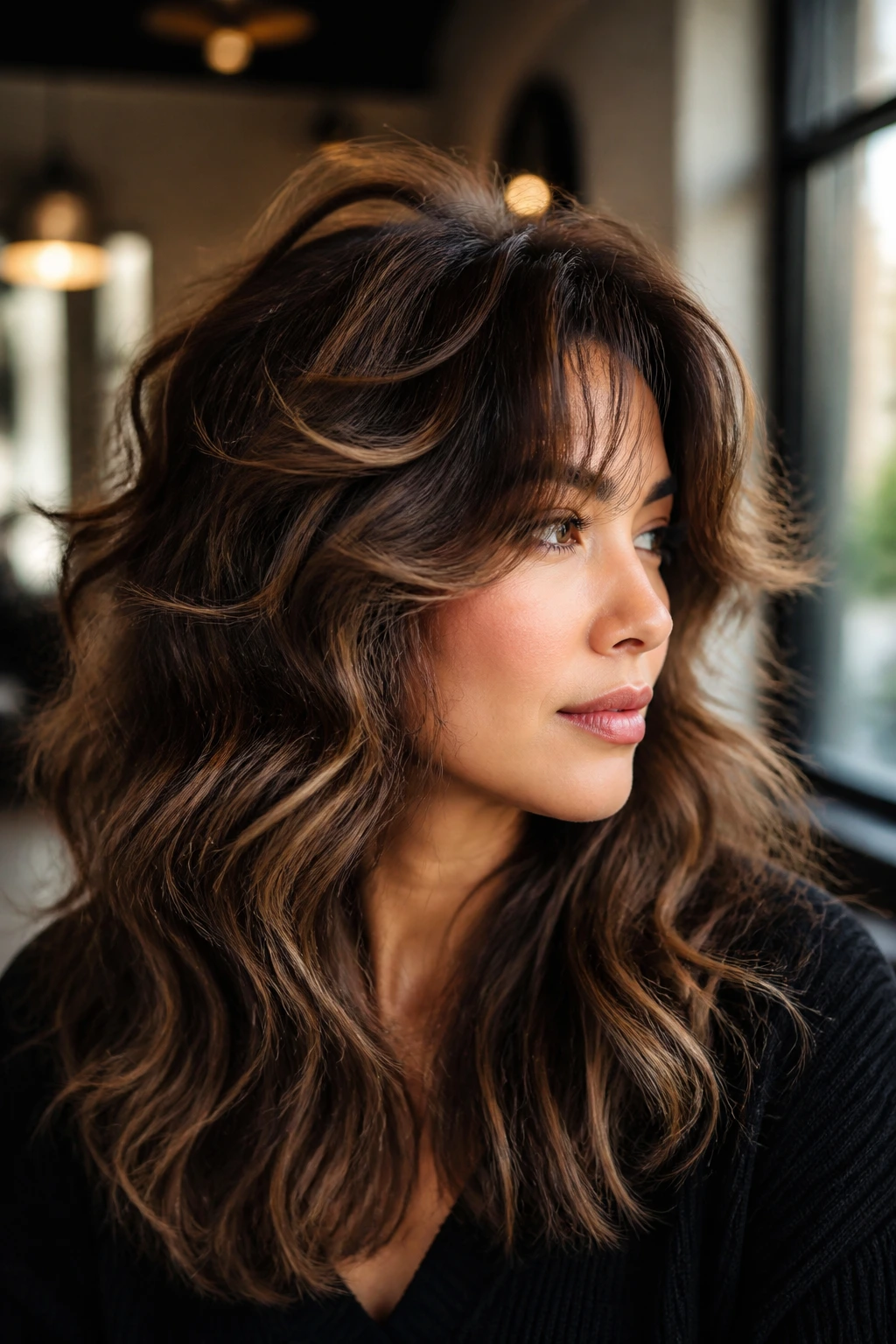
Wavy hair is a beautiful, fluid texture that thrives when it is given freedom to move. By choosing a layered haircut with bangs, you are not just managing your hair; you are partnering with its natural tendencies. Whether you choose the bold, textured lines of a pixie shag or the soft, romantic flow of C-cut layers, the goal is always to find a balance between weight and movement.
Do not be afraid to experiment with different products and styling techniques until you find what works for your unique wave pattern. Talk to your stylist about your daily routine and how much time you are willing to spend styling your hair each morning. A great haircut should make your life easier, not harder, giving you beautiful, bouncy waves that you can wear with pride.