


The rain starts, the humidity climbs past eighty percent, and suddenly your hair begins its predictable transformation into a halo of static electricity. If you have textured or highly porous hair, you have probably been told to avoid fringe entirely. It is the classic advice. Stylists often warn that putting scissors to your front sections is a recipe for a puffy, uncontrollable mess. But this old rule overlooks how much weight and length can work in your favor when styling long bangs for frizzy hair.
Frizz is not a defect; it is simply hair seeking moisture from the air. When the outer cuticle layer lifts, water vapor enters the shaft, causing it to swell and bend. Standard short, straight-across bangs lack the weight to resist this swelling, resulting in that dreaded pop-up effect. Long bangs, however, retain enough weight to pull the hair downward. They drape over the forehead rather than springing outward, allowing you to embrace your natural texture without looking like you stepped out of a vintage yearbook.
Managing this hair type requires working with your pattern instead of fighting it. Selecting a cut that allows for movement and texture makes all the difference. When the humidity hits, a longer fringe blends seamlessly into the rest of your hair rather than standing out as a separate, unruly piece. Let us look at how the right shape can make all the difference.
The Visual Mechanics of Weight and Frizz in Long Bangs
Gravity is your best friend when dealing with a rebellious cuticle. When hair is cut short, it loses its downward pull, which is why a cowlick or a tight wave pattern suddenly leaps upward when cut too close to the scalp. Long bangs keep enough mass to stay anchored, resting softly against the face even when the weather gets damp.
The angle of the cut also determines how the hair behaves. Blunt cuts create a solid horizontal line that highlights puffiness. When the hair swells, a blunt fringe looks wider and thicker in all the wrong places. Slides, slashes, and soft layering allow individual strands to nestle into each other. This hand-in-glove fit helps contain the overall volume.
+-------------------------------------------------------------+
|                     CUTICLE COMPARISON                      |
|                                                             |
|   Smooth Cuticle (Hydrated)     Swollen Cuticle (Frizzy)     |
|         | | | | | |                  / / / / / /            |
|         | | | | | |                 / / / / / /             |
|    [Flat, sealed barrier]      [Lifted, moisture-seeking]   |
|    Result: Sleek drape         Result: Expanded volume      |
+-------------------------------------------------------------+
Porosity plays a massive role here as well. High-porosity hair absorbs moisture instantly, making it highly reactive to wet weather. By keeping your bangs long, you can use specialized styling creams and oils that would weigh down shorter, lighter fringe. The extra length gives the product room to work without making your forehead feel greasy.
How to Prep and Protect Frizzy Hair Before Cutting
Never let a stylist cut your bangs while your hair is soaking wet if you struggle with frizz. Wet hair stretches up to thirty percent of its natural length. Once it dries, it snaps back like a rubber band. This shrinkage is unpredictable, especially if you have a mix of waves and curls across your head.
A dry cut allows the stylist to see exactly how your hair drapes in its natural state. They can target specific cowlicks and density pockets, carving out weight where the hair bundles up too heavily. It prevents those painful moments where a seemingly perfect wet cut dries into a micro-fringe that hovers inches above your eyebrows.
Before you even sit in the chair, focus on deep hydration. Well-moisturized hair is less desperate to suck water out of the air, which naturally minimizes swelling. Use a rich, silicone-free leave-in conditioner the morning of your cut. Skip any heavy holding gels that might stiffen your hair, as your stylist needs to see how the strands move when you shake your head.
1. Shaggy Curtain Bangs
Shaggy curtain bangs are excellent for wild, unpredictable textures. They split down the middle, letting your forehead breathe while cascading down the sides of your face to frame your eyes. This split design prevents the hair from grouping into one giant, puffy block across your forehead.
Why Tension Matters Here
When hair swells from moisture, curtain bangs expand outward toward the cheekbones rather than popping straight up. The shaggy, feathered ends blend into the side lengths, making any frizz look like intentional texture rather than a styling error.
Quick Hair Facts
- Best for: Wavy, curly, and coarse hair types.
- Dry length: Should hit the middle of the nose in the center, sloping down to the jawline.
- Maintenance: Low. You can let them air-dry with minimal fuss.
- Parting: Works best with a classic middle part.
Pro tip: Apply a tiny smear of lightweight oil to the very tips of the damp bangs to seal the cuticle before it air-dries.
2. Wispy Bottleneck Bangs
A narrow forehead is the secret weapon for bottleneck shapes. This style starts narrow at the top, curves out around the eyes, and then widens at the cheekbones. It mimics the shape of a classic glass bottle, giving you the feel of a full fringe without the high maintenance.
Because the center section is quite thin, it does not have enough density to become a solid wall of frizz. If the weather gets humid, the center wisps simply drift apart, blending with the longer side pieces. This movement keeps the style looking soft and airy.
To style these, take a small round brush and pull only the center section straight forward. Let the longer side pieces sweep back naturally. The contrast between the sleek center and the textured sides keeps the look balanced.
3. Grown-Out French Bangs
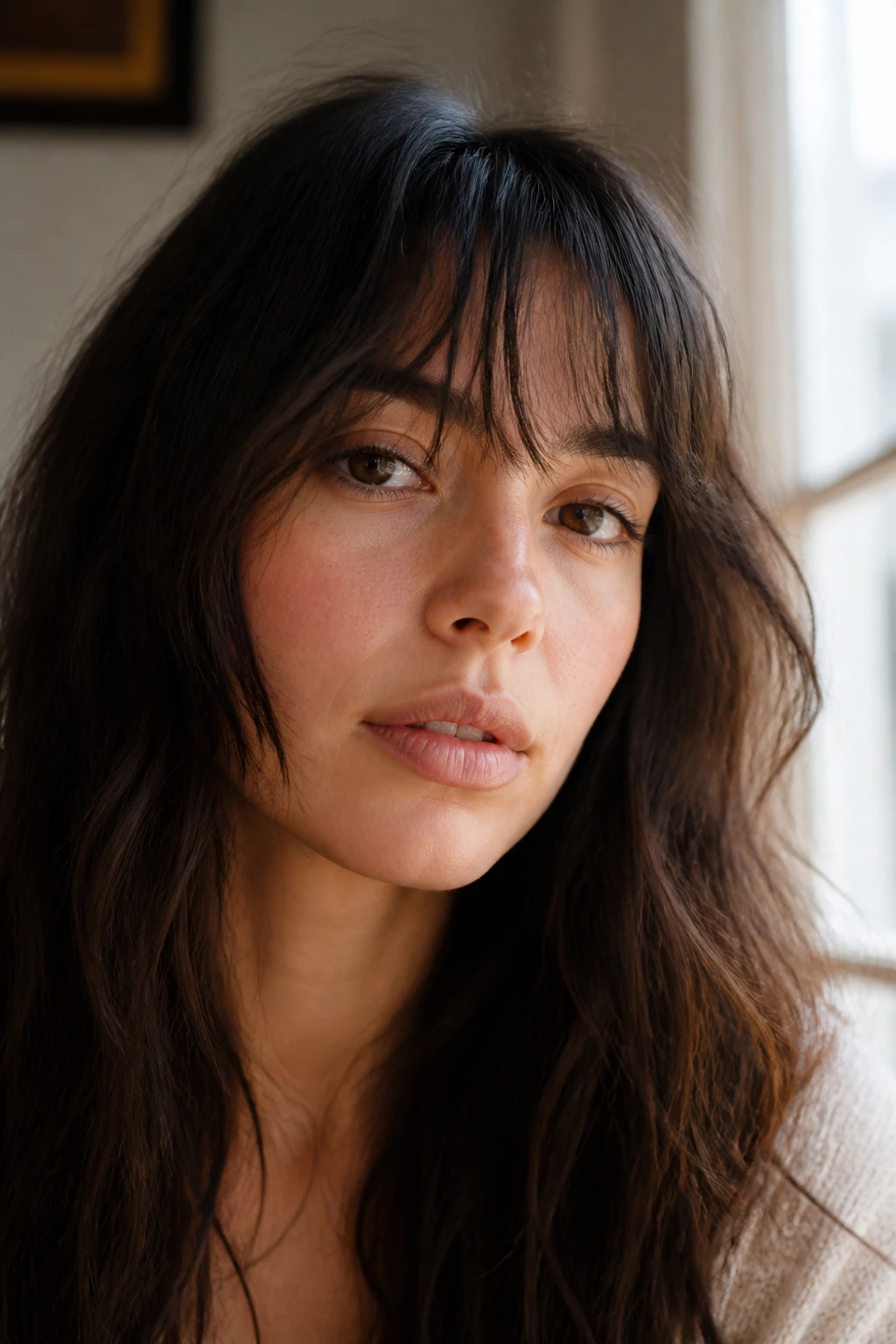
Why does the classic French cut work so well with texture? The secret lies in the effortless, slightly messy aesthetic that Parisian styling is known for. These bangs are cut thick but feature heavily textured ends that rest just below the eyebrows.
This style does not demand perfection. In fact, a little bit of fuzz and wave only adds to the lived-in charm. It looks best when it is not perfectly straight, making it highly forgiving on humid days.
Styling the French Fringe
- Apply a pea-sized amount of leave-in cream to damp fringe.
- Use your fingers to shake the hair side to side while blow-drying on low heat.
- Avoid using a round brush, which can create a dated, bubbly shape.
- Let the natural cowlicks dictate where the hair splits.
4. Choppy Textured Lob Bangs
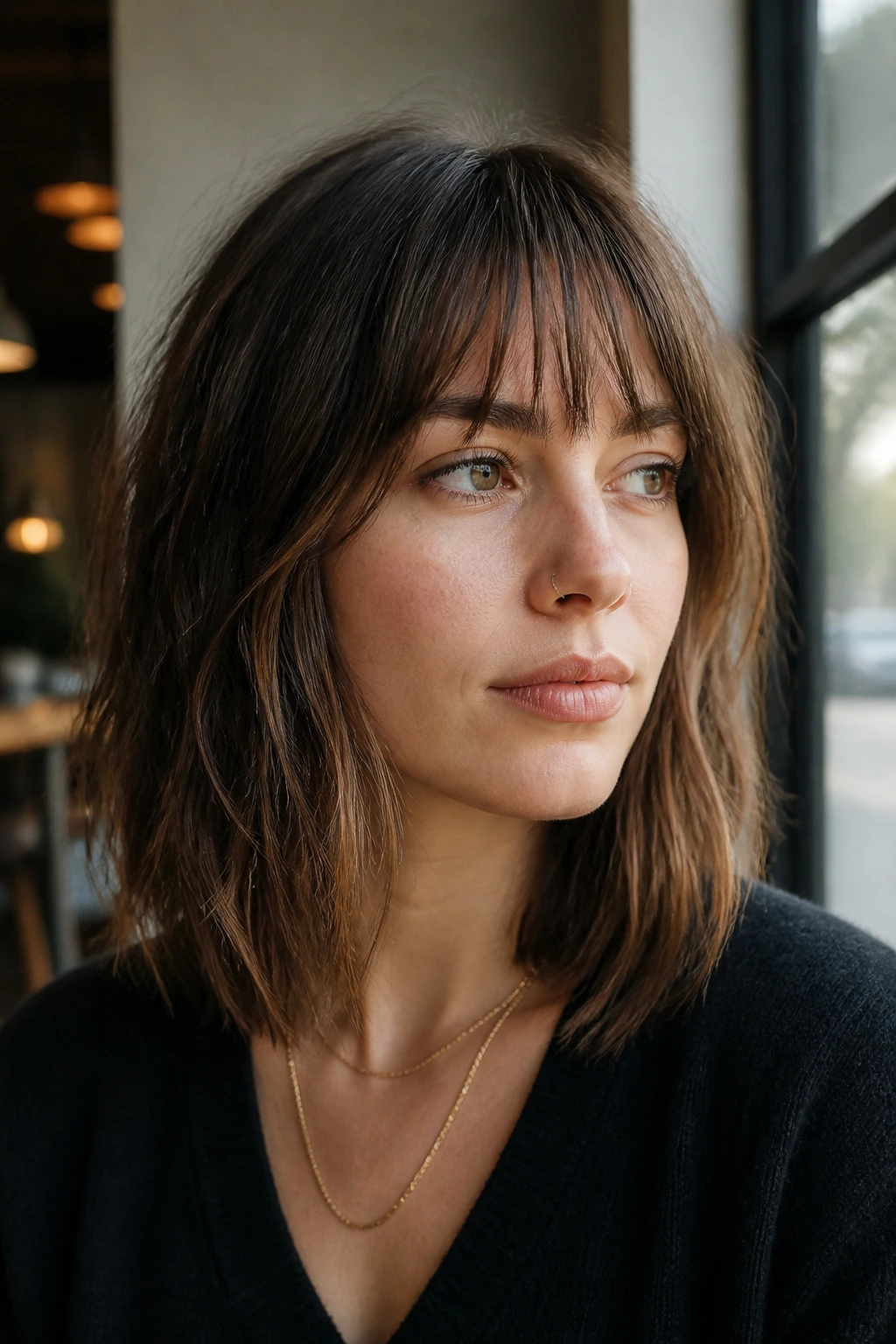
Imagine waking up, ignoring your blow dryer entirely, and walking out the door. That is the reality of choppy, textured bangs paired with a long bob. This style thrives on a bit of chaos, utilizing rough, vertical scissor cuts to break up the weight of the hair.
When the hair cuticle swells, the choppy layers slide past one another instead of stacking up. This prevents the bottom edge of your bangs from looking like a thick shelf. It is a fantastic option if your hair has a coarse texture that tends to feel stiff.
- Shearing technique: Ask your stylist for slide cutting on dry hair.
- Styling product: A light texturizing mist works wonders here.
- Best face shape: Oval and heart-shaped faces benefit from the balanced framing.
The beauty of this cut is its resilience. Even if you get caught in a downpour, the choppy layers will dry into a cool, rock-and-roll shag.
5. Curly Layered Face-Framing Bangs
      ( (  ) )
    ( ( *  * ) )  <-- Curly crown volume
   ( (    /  ) )
  ( (    --    ) )
   ||   ~  ~   ||  <-- Ringlets grazing the eyes
   ||  ~    ~  ||  <-- Longer layers framing the jaw
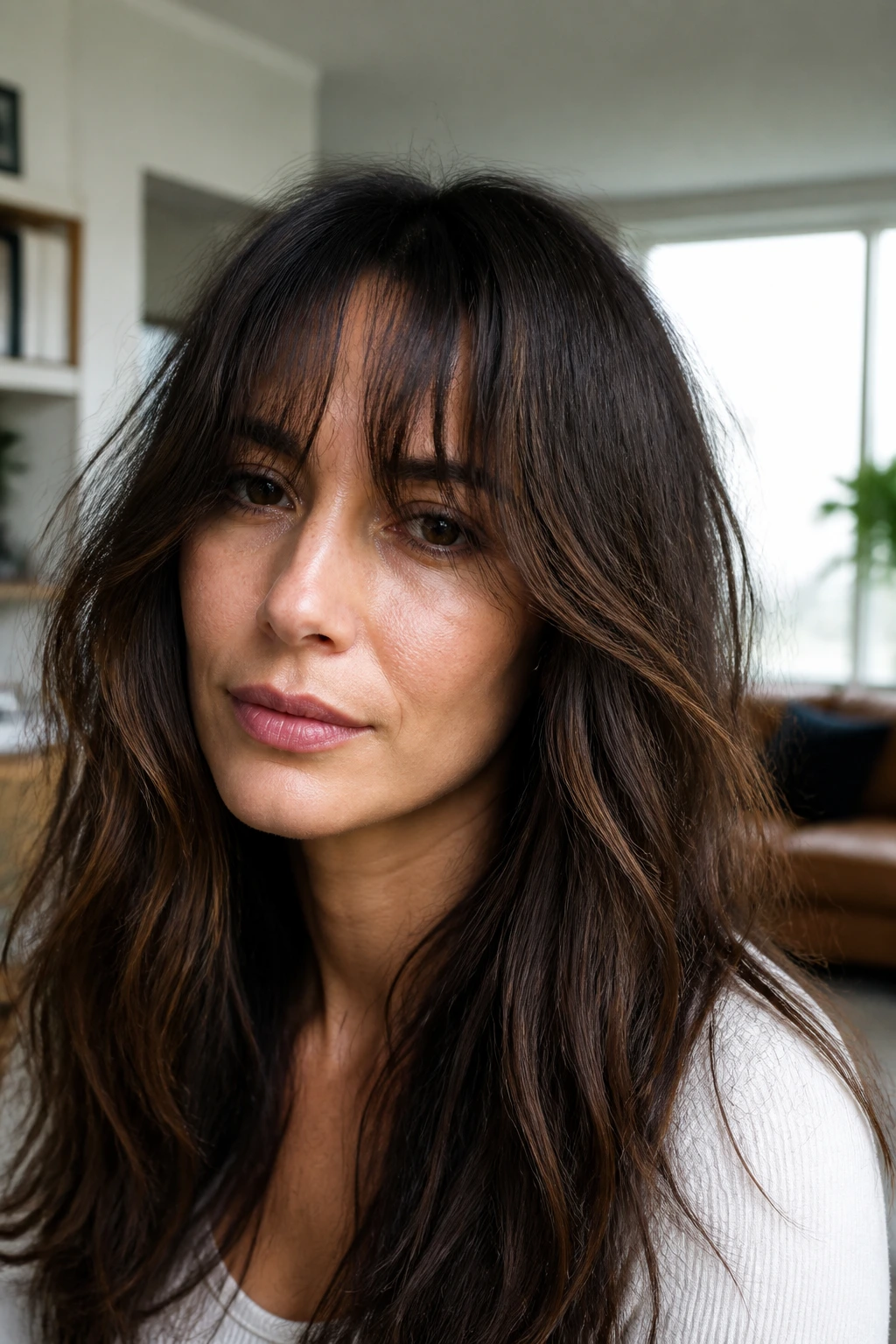
Curly hair is often starved for moisture, which is the root cause of frizz. By cutting individual ringlets into varying lengths around the face, you create a soft frame that celebrates your natural pattern. These layers prevent the hair from stacking into an unflattering triangle shape.
Instead of fighting the frizz, this cut incorporates it into the overall volume of the style. The shorter pieces near the brow line draw attention to your eyes, while the longer layers cascade down toward the collarbone. It looks incredibly rich and full.
When washing, make sure to use a sulfate-free shampoo to preserve your natural oils. Squish a generous amount of curl-defining cream into wet bangs, then leave them alone. Touching curly bangs while they dry is the fastest way to ruin the definition of the curls.
6. Sliced Side-Swept Bangs
Unlike heavy, straight bangs that fight your hair’s natural wave, sliced side bangs glide with the current. The stylist cuts these on a steep diagonal, starting near the corner of one eye and sweeping down toward the opposite ear.
This diagonal line creates a beautiful, elongating effect on the face. Because the hair is sliced thinner at the ends, it lays flat against the forehead rather than bouncing upward when humidity levels rise.
This style is perfect for those with a strong wave pattern. The waves naturally nestle into the diagonal cut, creating a soft, romantic sweep that requires very little styling cream.
7. Soft Blunt Cheek-Grazing Bangs
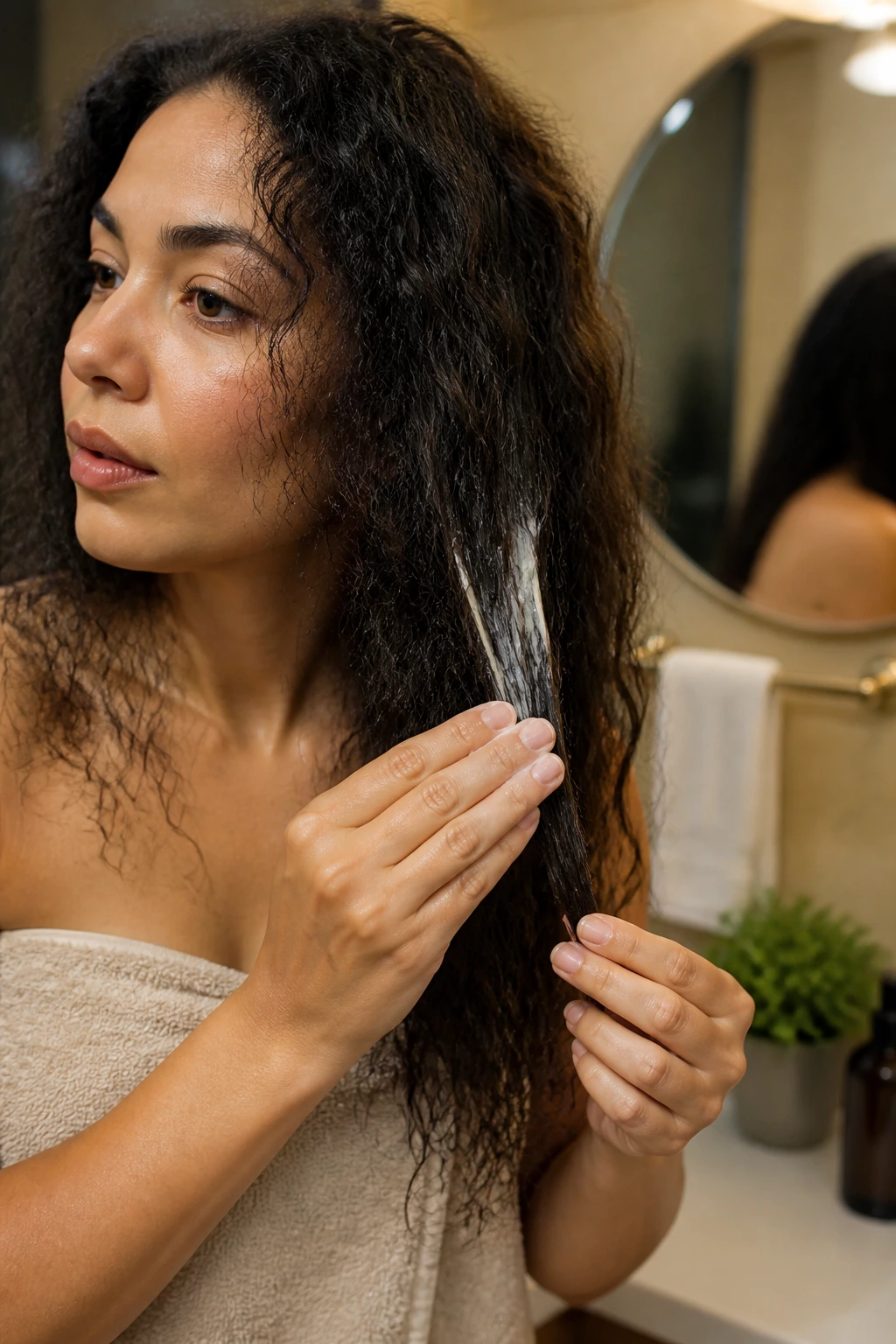
Blunt bangs do not have to be short and severe. By lowering the cut line down to the cheekbones, you get the dramatic look of a blunt fringe with the comforting weight of a longer style.
The Mechanics of Drape
The extra length means gravity has a stronger hold on the hair fibers. Even if the hair swells, the bottom line remains heavy enough to swing naturally. It is a bold look that pairs beautifully with long, straight or wavy hair.
Quick Hair Facts
- Best for: Medium density hair with a loose wave.
- Dry length: Right at the top of the cheekbones.
- Maintenance: Moderate. Needs a quick trim every few weeks.
- Styling: A flat brush and low heat will keep them smooth.
Pro tip: Use a microfiber towel to gently blot moisture from your bangs after washing. Rough terry cloth towels snag the cuticle, causing instant frizz.
8. Feathered Shag Bangs
The seventies revival is a blessing for textured hair. This heavily feathered style uses shorter layers in the center that blend into longer, winged sides. It is highly textured, meaning any frizz simply blends into the feathered pattern.
Because the edges are so soft, there are no harsh lines to disrupt. If your hair starts to puff up during the day, the feathered wings simply look more voluminous. It is a very forgiving, low-effort option for daily wear.
To style, blow-dry the bangs backward away from your face. This creates a soft, breezy wing that frames the eyes beautifully without requiring a flat iron.
9. Tapered Crescent Bangs
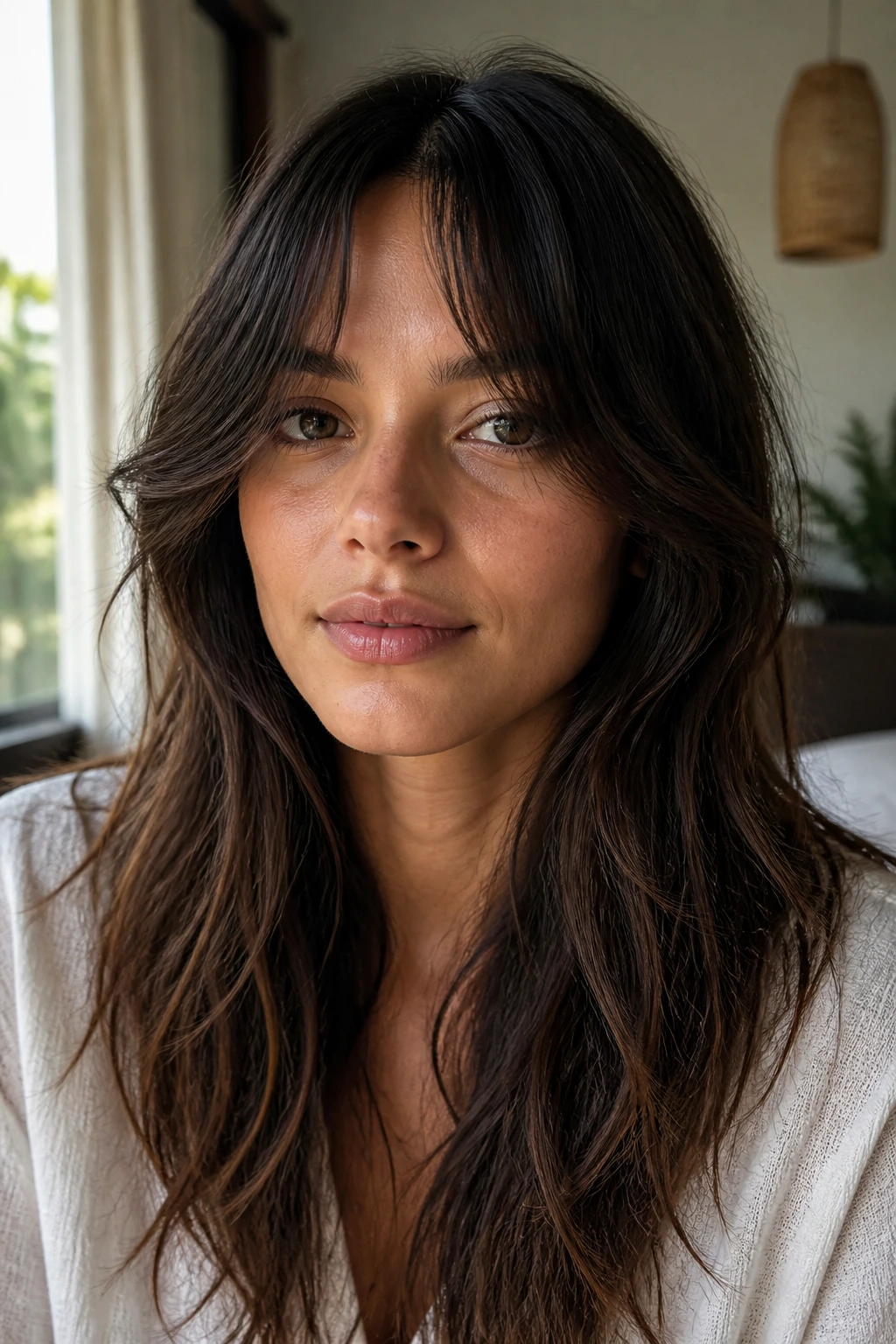
How do you keep a full fringe from looking like a helmet? The crescent cut is the answer. These bangs are arched, meaning they are shorter in the middle and curve downward at the outer corners of the eyes.
This arch follows the natural curve of your brow bone. It prevents the corners of the fringe from popping up, which is a common issue with straight-cut bangs on wavy hair.
Styling the Crescent Shape
- Mist damp bangs with a heat-protecting spray.
- Use a paddle brush to sweep the hair flat against your forehead, alternating left and right.
- This “X-drying” technique flattens cowlicks without adding unwanted roundness.
- Finish with a tiny drop of anti-frizz serum on the ends.
10. Heavy Piece-Y Curtain Bangs
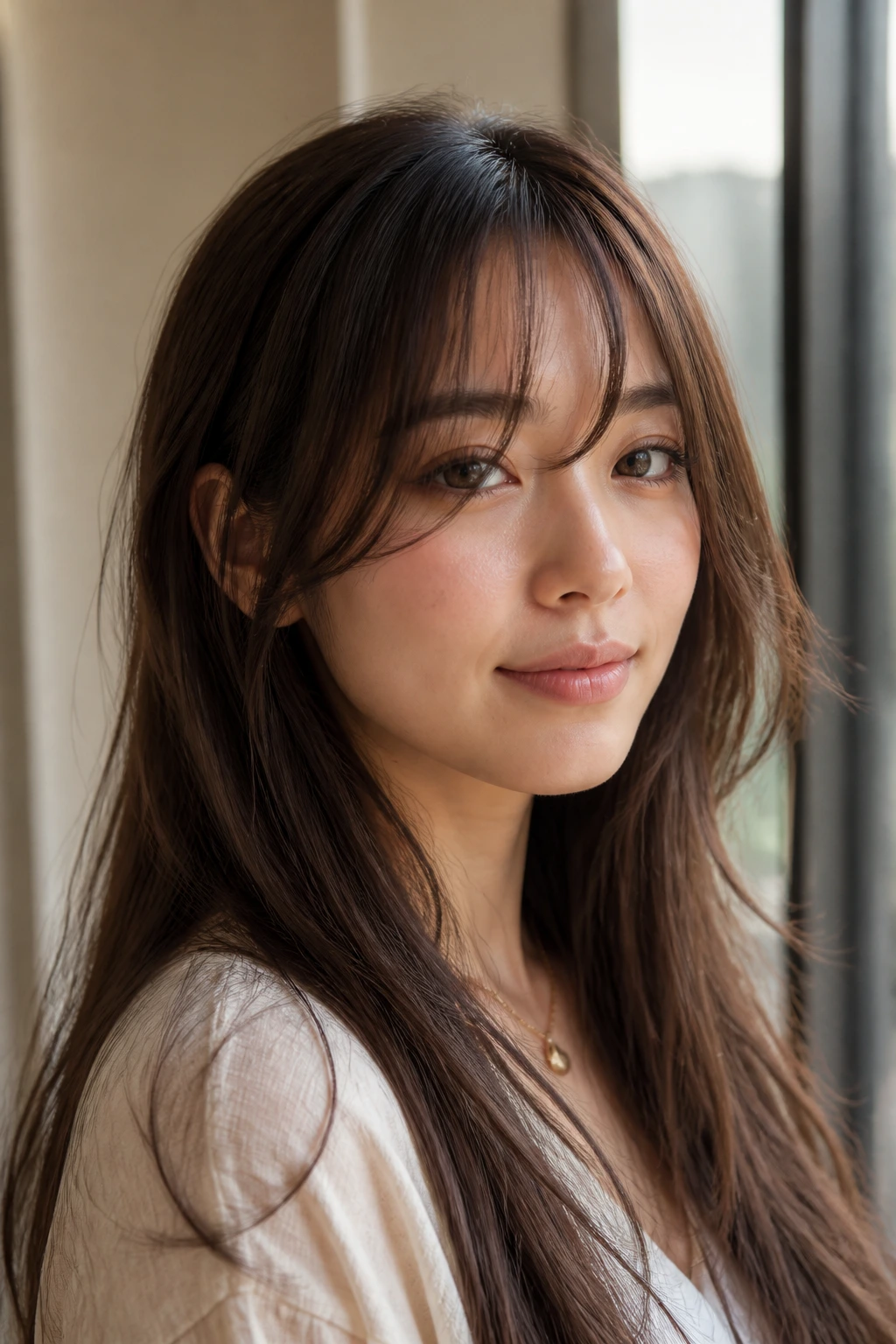
If you have exceptionally thick, dense hair, thin wisps will quickly get lost in the frizz. You need a heavier curtain bang that can hold its own. This style utilizes a larger section of hair from the crown, splitting it into two substantial sections.
Because these sections are heavy, they have the physical weight required to stay down. The stylist should point-cut the ends to create a piece-y look, preventing the bangs from looking blocky.
- Section depth: Starts further back on the head for maximum weight.
- Texture styling: Works well with a styling cream or pomade.
- Best for: Thick, coarse hair with a mind of its own.
The weight of the heavy curtain keeps the roots flat, while the piece-y ends allow for beautiful movement.
11. Coily Crown Bangs
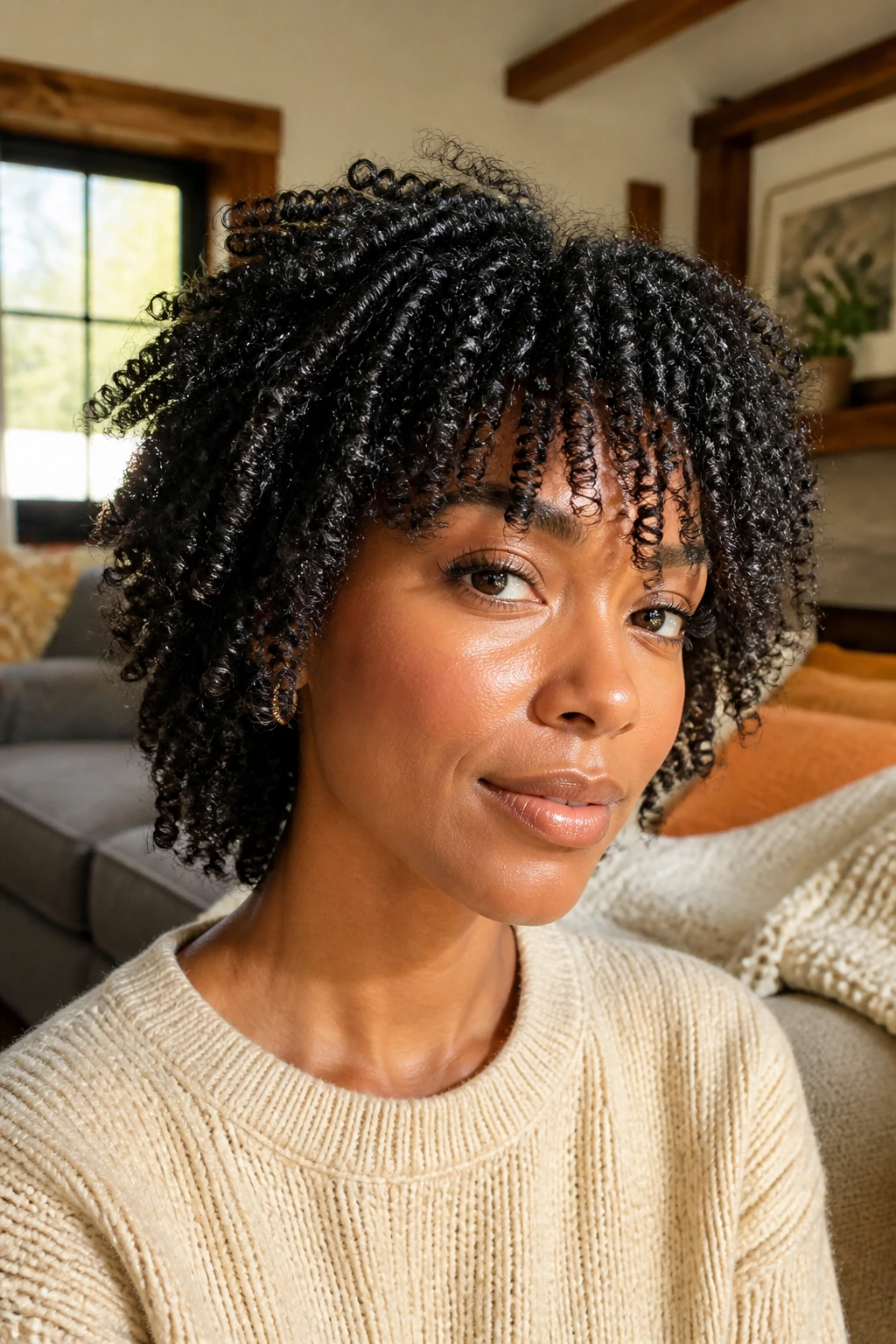
Coily hair has a gorgeous, tight-knit structure that deserves to be showcased. By cutting a fringe that sits like a crown across the forehead, you create a striking silhouette. The key here is cutting each coil individually to ensure they bounce up to the correct level.
This style embraces shrinkage as a design element. The coils stack on top of each other, creating a soft, cloud-like texture that frames the eyes. Frizz actually helps this style by adding beautiful, airy volume between the defined coils.
To keep this looking its best, use a rich leave-in conditioner followed by a light-hold gel. Dry with a diffuser on low heat and low air speed to avoid disrupting the coil pattern.
12. Asymmetrical Swept Bangs

If your hair has an uneven wave pattern—where one side curls more than the other—embrace asymmetry. An asymmetrical swept bang is cut shorter on one side and graduates to a longer length on the other.
This intentional imbalance makes natural variations in your hair texture look completely deliberate. If one section decides to wave up more on a humid day, it simply adds to the asymmetrical charm of the cut.
It is an incredibly easy style to live with. You can sweep it to the side, pin it back, or let it tumble naturally over one eye.
13. Razored Edge Bangs
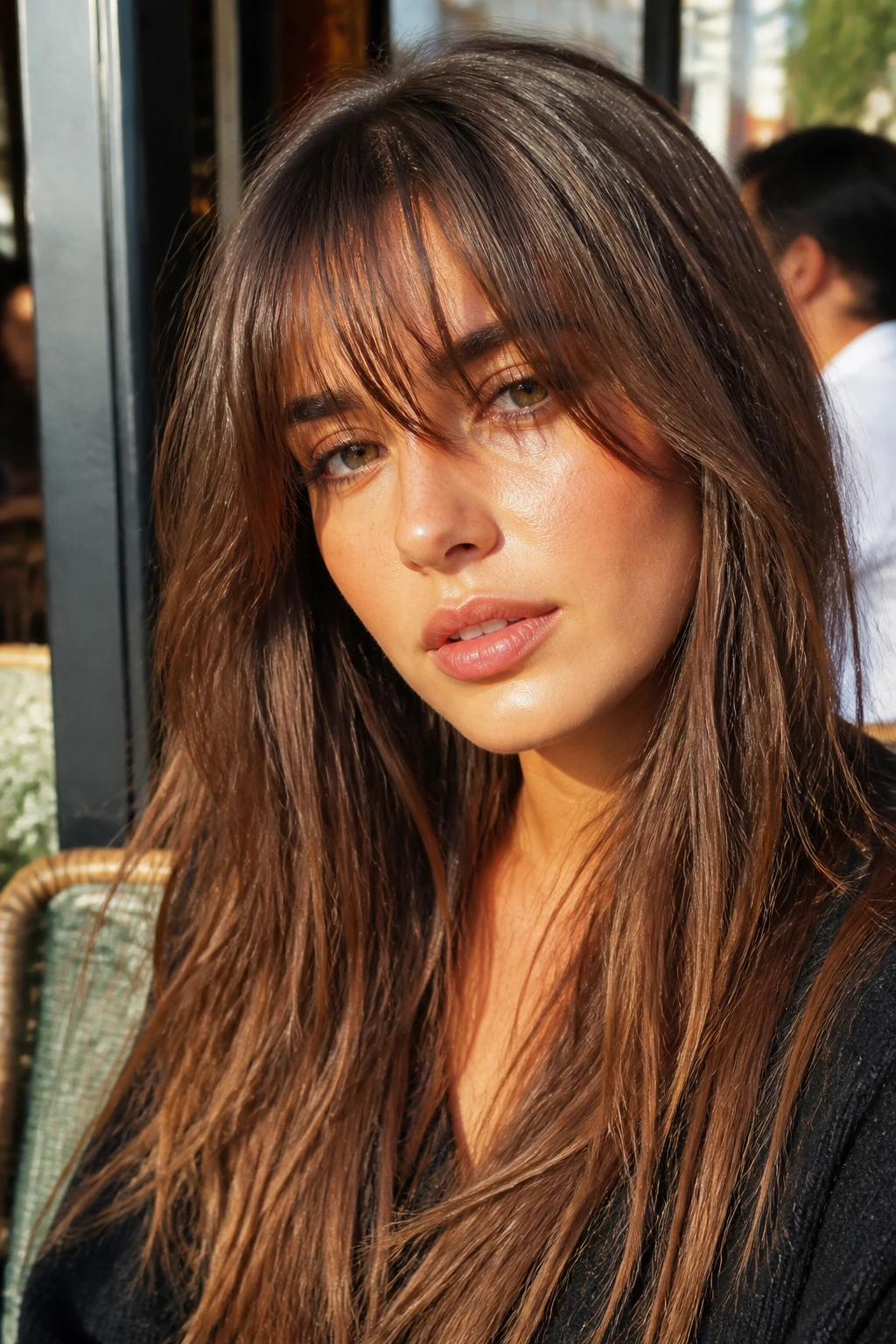
A razor tool creates incredibly soft, tapered ends that scissors simply cannot replicate. For frizzy hair, razored edges allow the hair to lay flat without the blunt weight that causes puffiness.
The Razor Advantage
Because the hair is tapered toward the tips, the strands slide past each other smoothly. This prevents the ends from clumping together and frizzing up in a solid line.
Quick Hair Facts
- Best for: Straight and wavy hair types.
- Styling: Air-dry with a touch of lightweight leave-in cream.
- Edge finish: Feather-light and highly textured.
- Stylist note: Ensure your stylist uses a brand-new, sharp razor blade to avoid tearing the hair cuticle.
Pro tip: Never use a dull razor on frizzy hair. It scrapes the cuticle, creating microscopic tears that lead to more frizz down the road.
14. Split Center-Parted Bangs
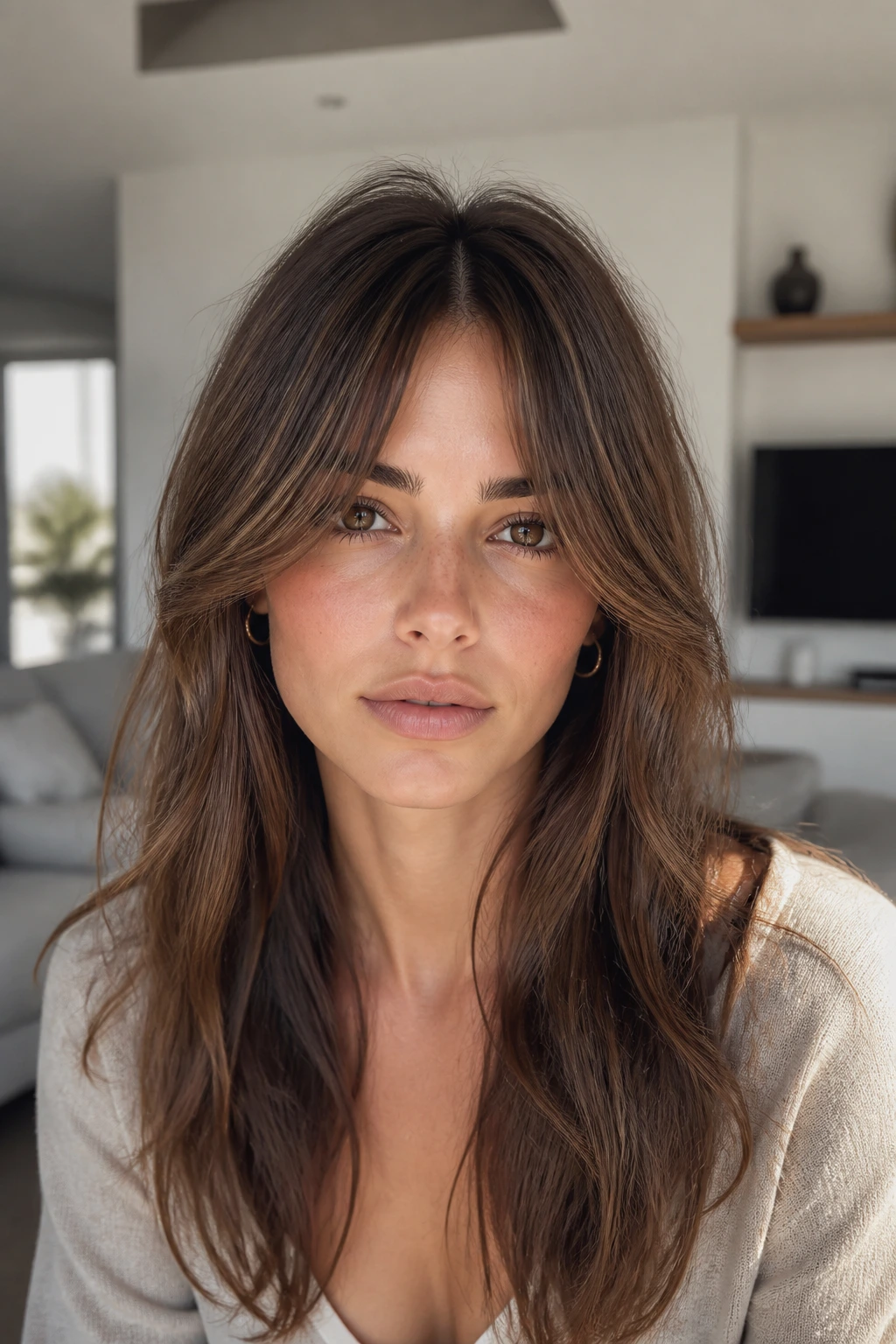
A clean center part acts as an anchor for rebellious hair. By parting your bangs directly down the middle, you create two symmetrical weights that pull down on either side of your face.
This style is incredibly elegant and works with almost all hair types. The weight of each side keeps the hair flat against the temples, minimizing the puffiness that often occurs near the crown.
Style these by applying a small amount of styling cream to damp hair, parting it cleanly, and then combing the bangs flat to the sides. Let them air-dry completely before touching them.
15. Disconnected Long Bangs
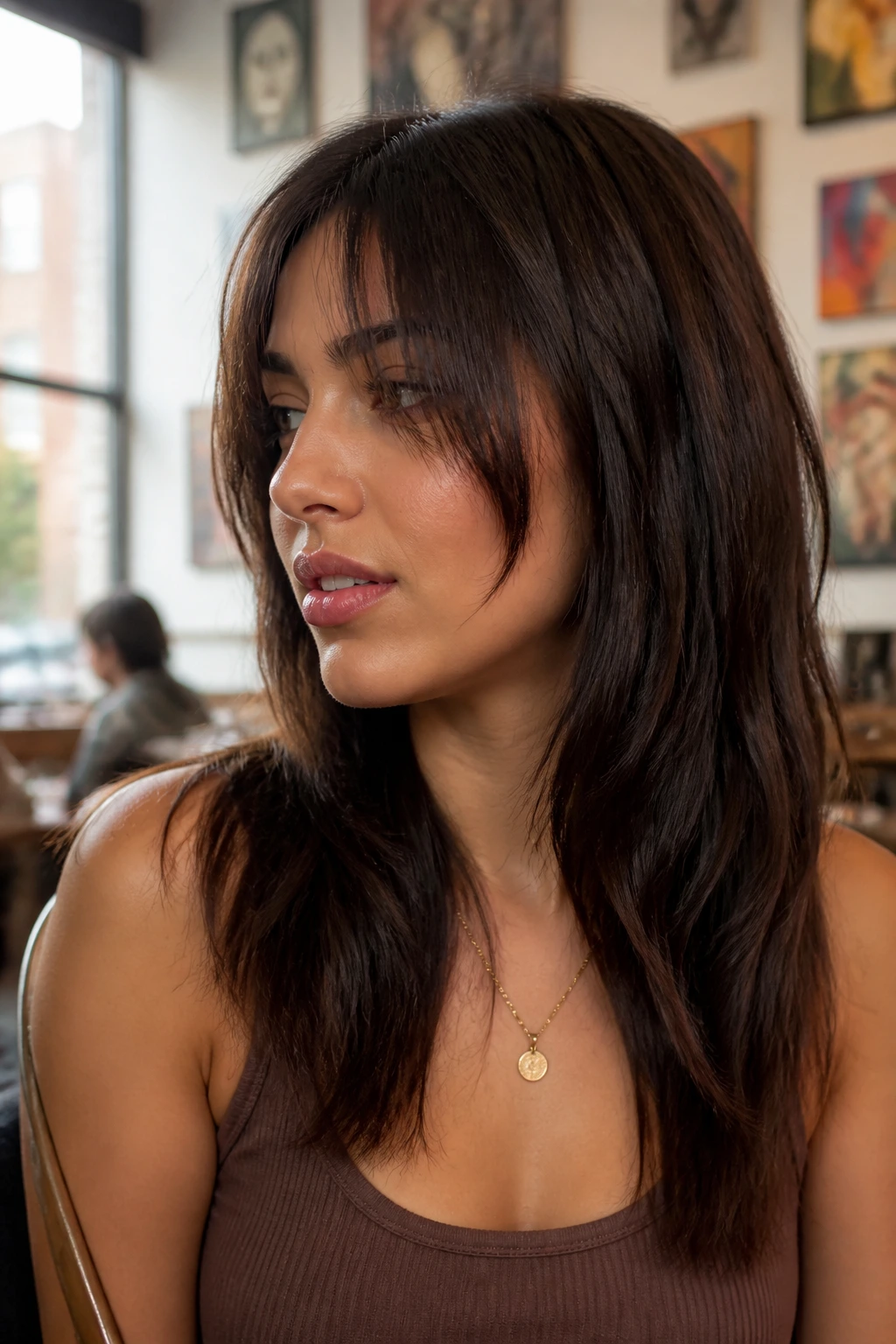
What does disconnected mean in the hair world? It simply means your bangs do not flow seamlessly into the rest of your haircut. Instead, there is a noticeable jump in length between the fringe and the side layers.
This separation prevents the frizz from traveling from your main lengths into your bangs. It isolates the fringe, giving you a distinct frame around your eyes while the rest of your hair does its own thing.
Styling Disconnected Sections
- Section off the bangs from the rest of your hair while damp.
- Blow-dry the bangs forward with a flat brush to keep them smooth.
- Allow the rest of your hair to air-dry naturally to embrace its raw texture.
- The contrast between the styled fringe and the natural back is highly modern.
16. Wavy Bardot Bangs
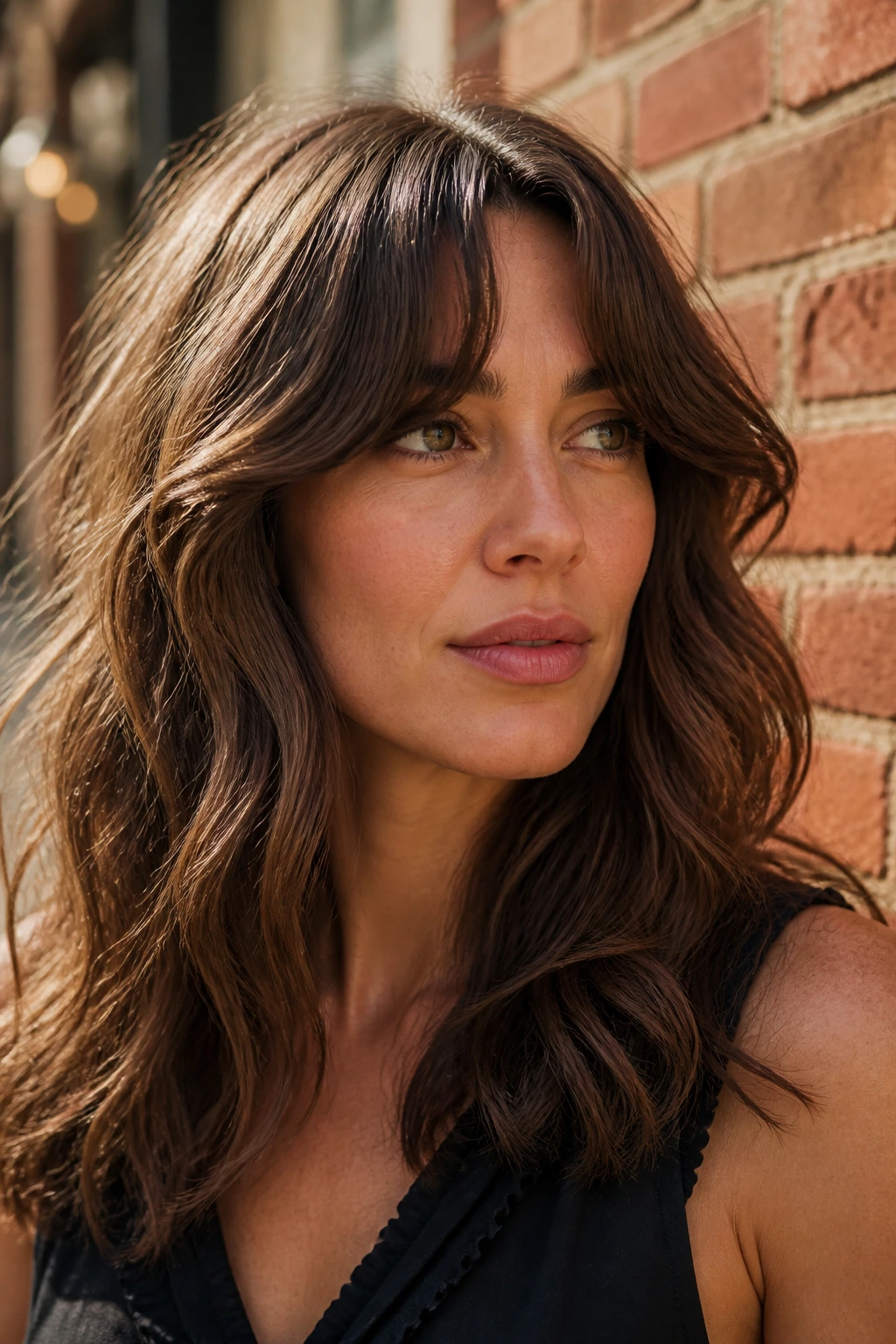
Inspired by classic screen sirens, Bardot bangs are parted in the center and feature a soft, voluminous swoop. This style is built for natural waves, using the hair’s inherent bend to create a romantic, face-framing curve.
The wave pattern keeps the bangs from looking flat, while the longer length ensures they don’t shrink up too high. It is a gorgeous, soft look that actually benefits from a little bit of natural texture and fluff.
- Swoop placement: The wave should curve outward right at the temple.
- Best for: Fine to medium wavy hair.
- Styling product: A volumizing mousse applied to the roots.
This style looks best when it has a bit of movement, so avoid using heavy-hold hairsprays that make the hair stiff.
17. Thin Sparsed-Out Bangs

If you are terrified of bangs, start here. Sparsed-out bangs use a very small amount of hair from the front hairline. They are cut long and thin, allowing your forehead to show through clearly.
Because there is so little hair involved, it cannot form a dense, frizzy block. If the weather gets humid, the thin strands simply look like soft, wispy pieces framing your face. It is an excellent way to test the waters.
Keep them looking piece-y by avoiding heavy creams. A light mist of water and a tiny touch of a lightweight leave-in spray is all you need to keep them fresh.
18. Thick Angled Side Bangs
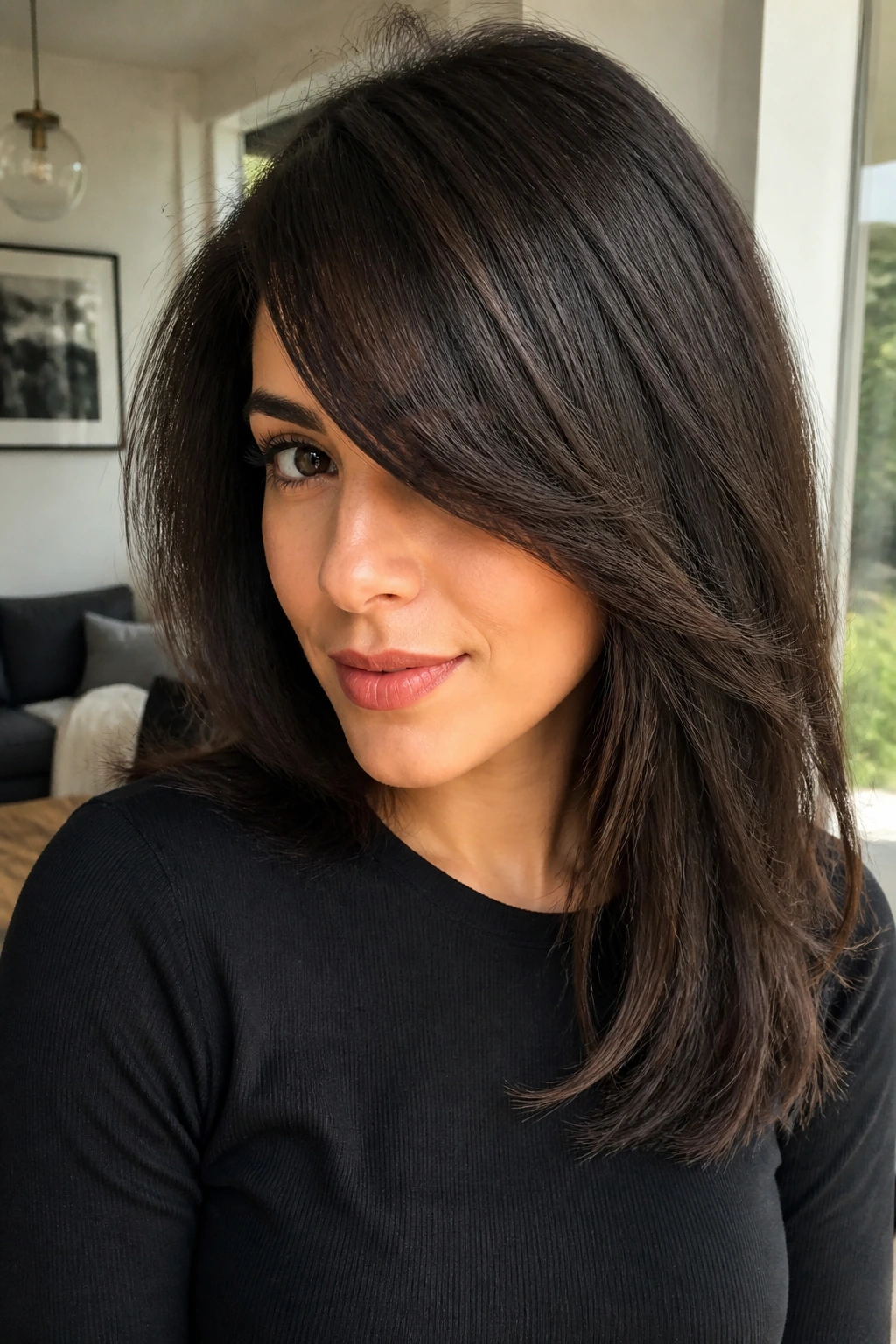
Thick hair needs a style that can handle its density. An angled side bang is cut from a deep side part, sweeping diagonally across the forehead. The weight of the dense hair keeps the fringe lying flat.
This style is highly effective at hiding a busy forehead or a strong cowlick. The diagonal sweep guides the hair down, using its own weight to suppress frizz.
- Parting style: A deep, dramatic side part.
- Best face shape: Round and square faces benefit from the diagonal lines.
- Styling tool: A large paddle brush to smooth the hair flat to the side.
This is a classic, polished look that transitions easily from work to casual wear.
19. Textured Wisps with Ringlets
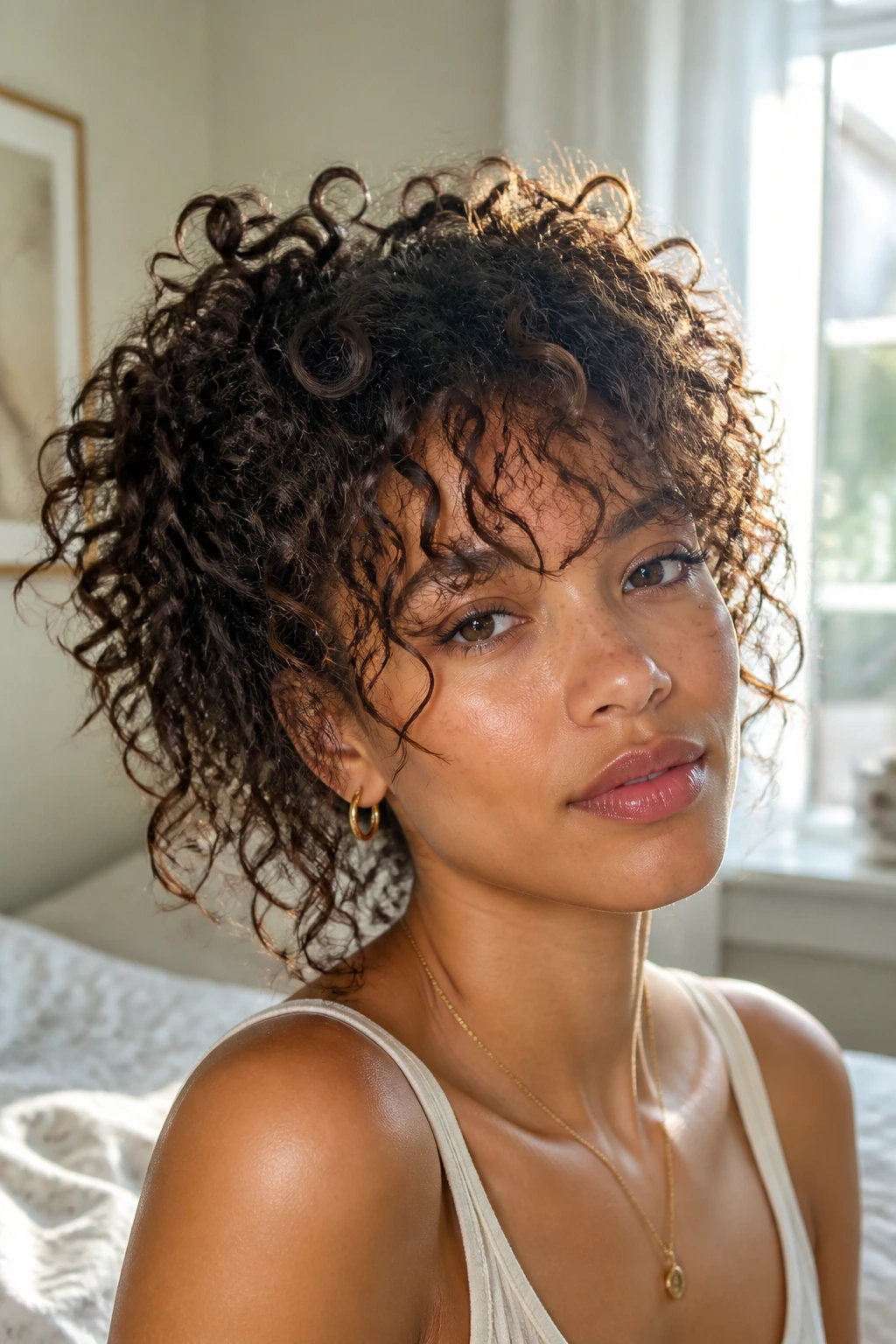
Pairing wispy bangs with tight ringlets creates a beautiful contrast. The wisps are cut slightly longer and thinner than the rest of the curls, allowing them to float softly over the forehead.
Balancing Textures
The wisps break up the density of the tight curls, adding softness around the eyes. The natural frizz of the wisps actually helps them blend with the highly textured ringlets behind them.
Quick Hair Facts
- Best for: Curly and coily hair types.
- Dry length: Grazing the eyelashes.
- Maintenance: Low. Just shake them out in the morning.
- Product: A light curl-reviving spray.
Pro tip: Use your fingers to gently separate the ringlets once they are completely dry to create a soft, cloud-like frame.
20. Seamless Blend Layered Bangs
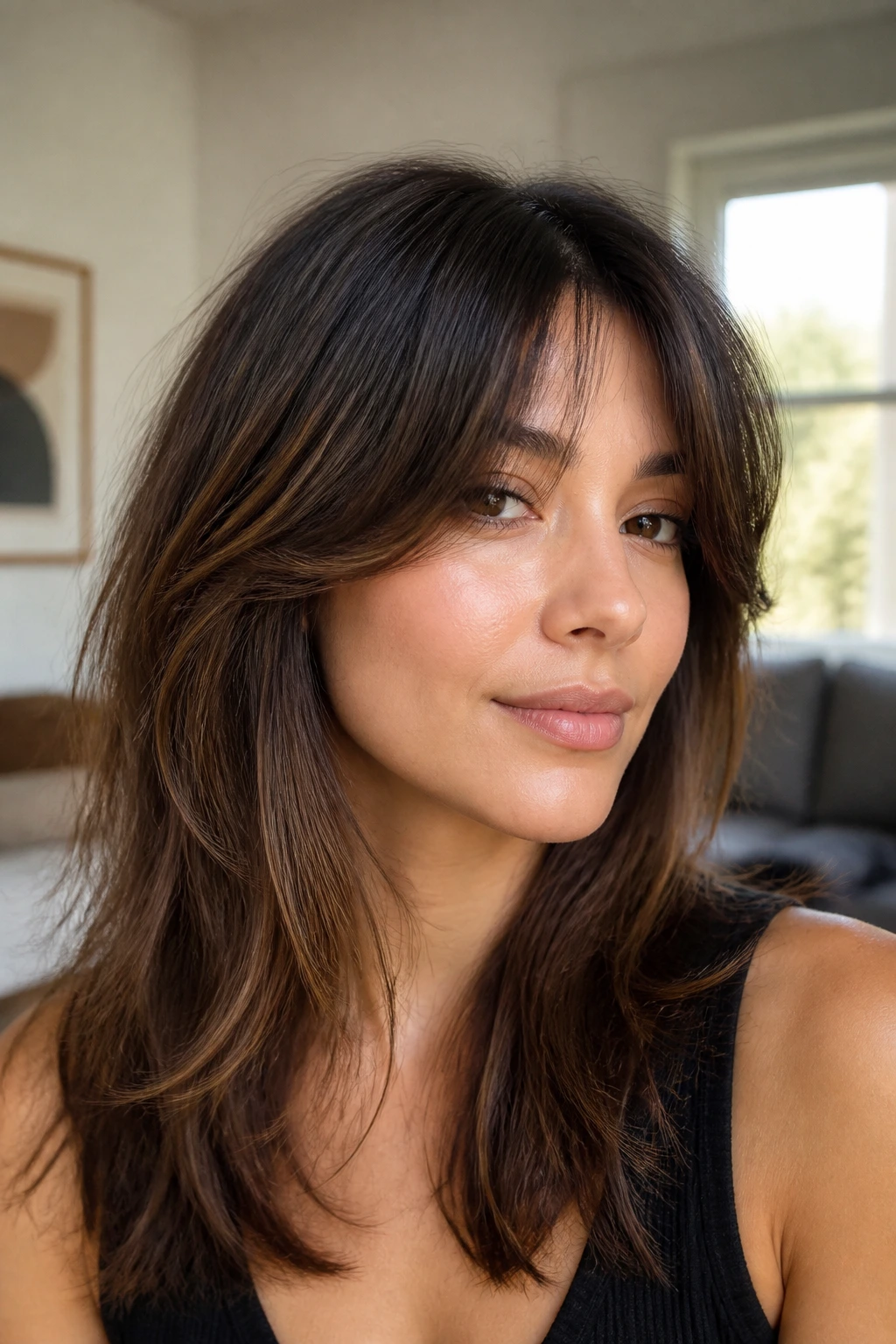
Blended layers are the key to a harmonious haircut. This style features bangs that gradually get longer as they move outward, blending seamlessly into your side layers. There are no harsh steps or jumps in length.
This seamless transition allows your bangs to move naturally with the rest of your hair. When frizz occurs, it distributes evenly throughout the style rather than clustering in one spot.
Style this by drying the entire front section together, sweeping it back and away from your face to create a cohesive, wind-swept look.
21. Soft Wave Face-Framers

Why fight the wave when you can highlight it? Soft wave face-framers are cut to hit right at the jawline, allowing your natural wave pattern to bend beautifully around your face.
This length is incredibly flattering and easy to manage. If the humidity causes your hair to wave up, these pieces simply curl tighter, creating a beautiful, natural frame for your jawline.
Styling Jaw-Length Waves
- Apply a small amount of wave-defining cream to damp face-framers.
- Twirl the sections around your fingers to encourage a clean wave pattern.
- Allow them to air-dry completely without touching.
- Once dry, gently shake them out for a soft, touchable finish.
22. Piece-Y Point-Cut Bangs

Point cutting involves cutting vertically into the hair rather than straight across. This technique removes weight from the ends, creating a soft, piece-y texture that lies beautifully on the forehead.
For frizzy hair, this technique is a lifesaver. It prevents the bottom edge of your bangs from clumping together and puffing outward, allowing individual strands to move independently.
- Cutting technique: Vertical point cutting on dry hair.
- Look: Textured, airy, and modern.
- Best for: Medium to thick hair densities.
The piece-y ends look incredibly cool and effortless, even when the weather is less than ideal.
23. Undercut Textured Long Bangs
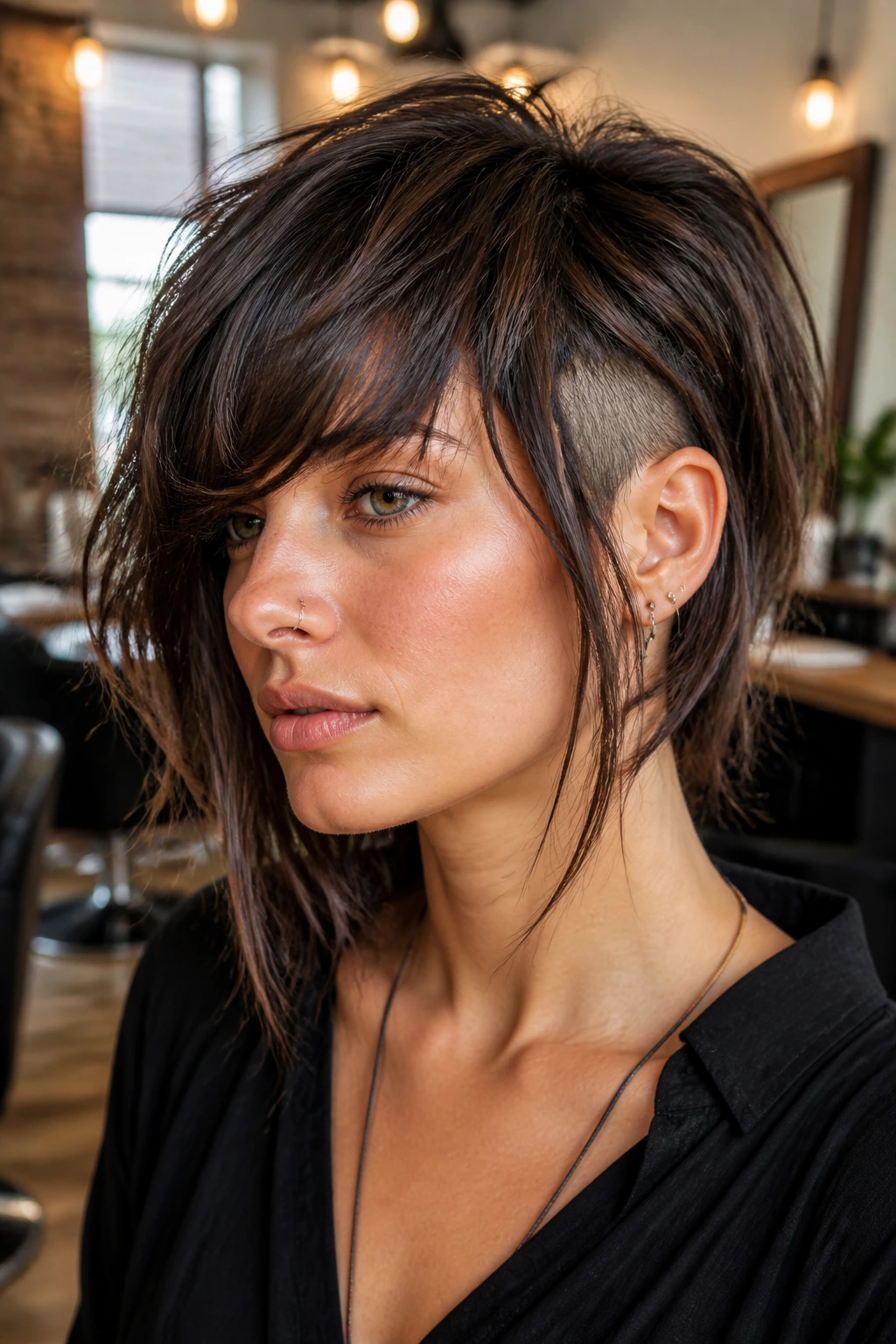
This is a clever trick for exceptionally thick, frizzy hair. The stylist cuts a very soft undercut underneath the bangs, removing the bulk of the hair closest to the forehead while leaving the top layers long.
By removing that hidden bulk, the remaining bangs have room to lie flat against the head. They won’t get pushed upward by the thick hair underneath, which is a major cause of puffiness.
This style feels incredibly light and airy, making it a dream to wear. The top layers drape smoothly over the undercut area, giving the appearance of a full, light fringe.
24. C-Shape Sweeping Bangs
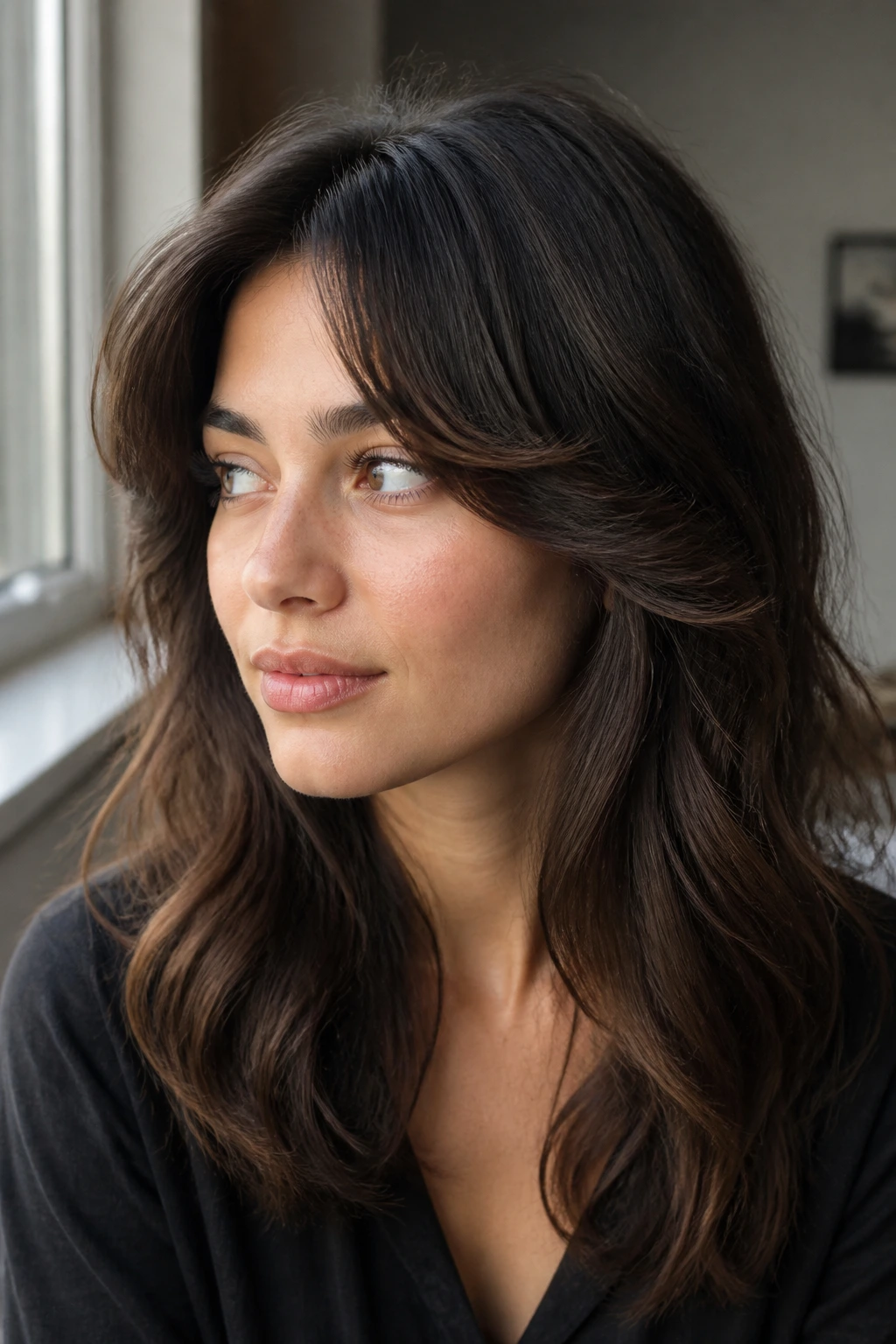
Unlike straight diagonal side bangs, C-shape bangs feature a gentle curve. They start short near the brow, curve outward around the eye, and then curve back inward toward the cheekbone.
This beautiful curve mimics the natural contours of your face. It is an incredibly soft, feminine style that works beautifully with natural waves, as the wave pattern naturally follows the C-shape curve.
- Curve direction: Sweeps outward from the brow and curves back toward the cheek.
- Best for: Fine to medium hair textures.
- Styling: A medium round brush helps define the curved shape.
This style is perfect for adding a touch of vintage glamour to your everyday look.
25. Voluminous Blowout Curtain Bangs
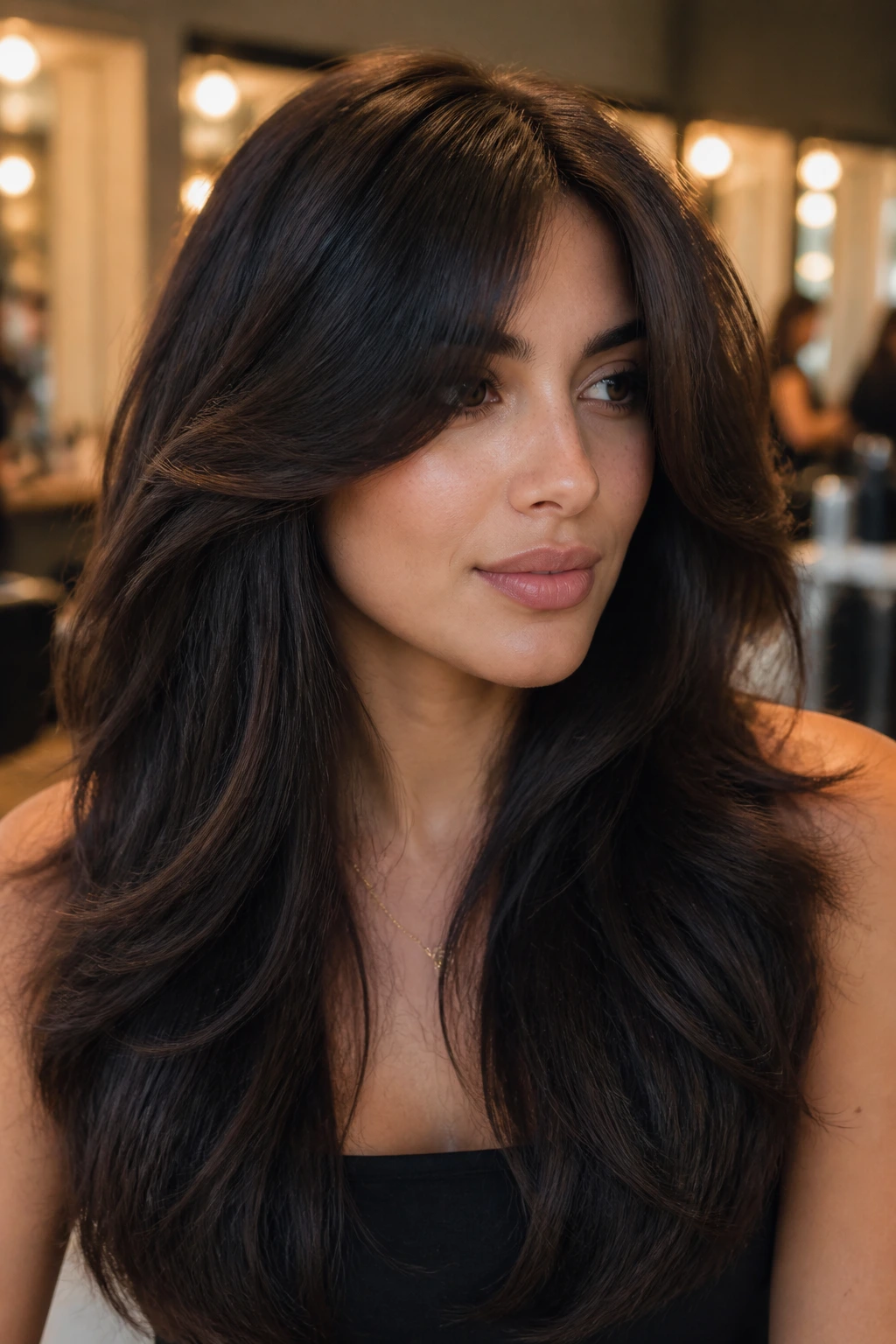
If you love a polished look, go for the voluminous blowout curtain. This style uses long, thick sections that are blown out with a large round brush to create incredible volume and bounce.
The Blowout Barrier
The tension from the blowout smooths down the cuticle layer, locking out moisture and preventing frizz. The sheer volume of this style keeps the hair from lying flat against the skin, which can sometimes introduce sweat and humidity.
Quick Hair Facts
- Best for: Thick, wavy hair that enjoys styling.
- Styling tool: A large ceramic round brush and a high-quality hair dryer.
- Hold product: A light-hold hairspray or finishing mist.
- Look: Bouncy, sophisticated, and polished.
Pro tip: After blowing out each side, pin the hair into a roller while it cools. This sets the shape and ensures the volume lasts all day long.
The Daily Battle Against Moisture
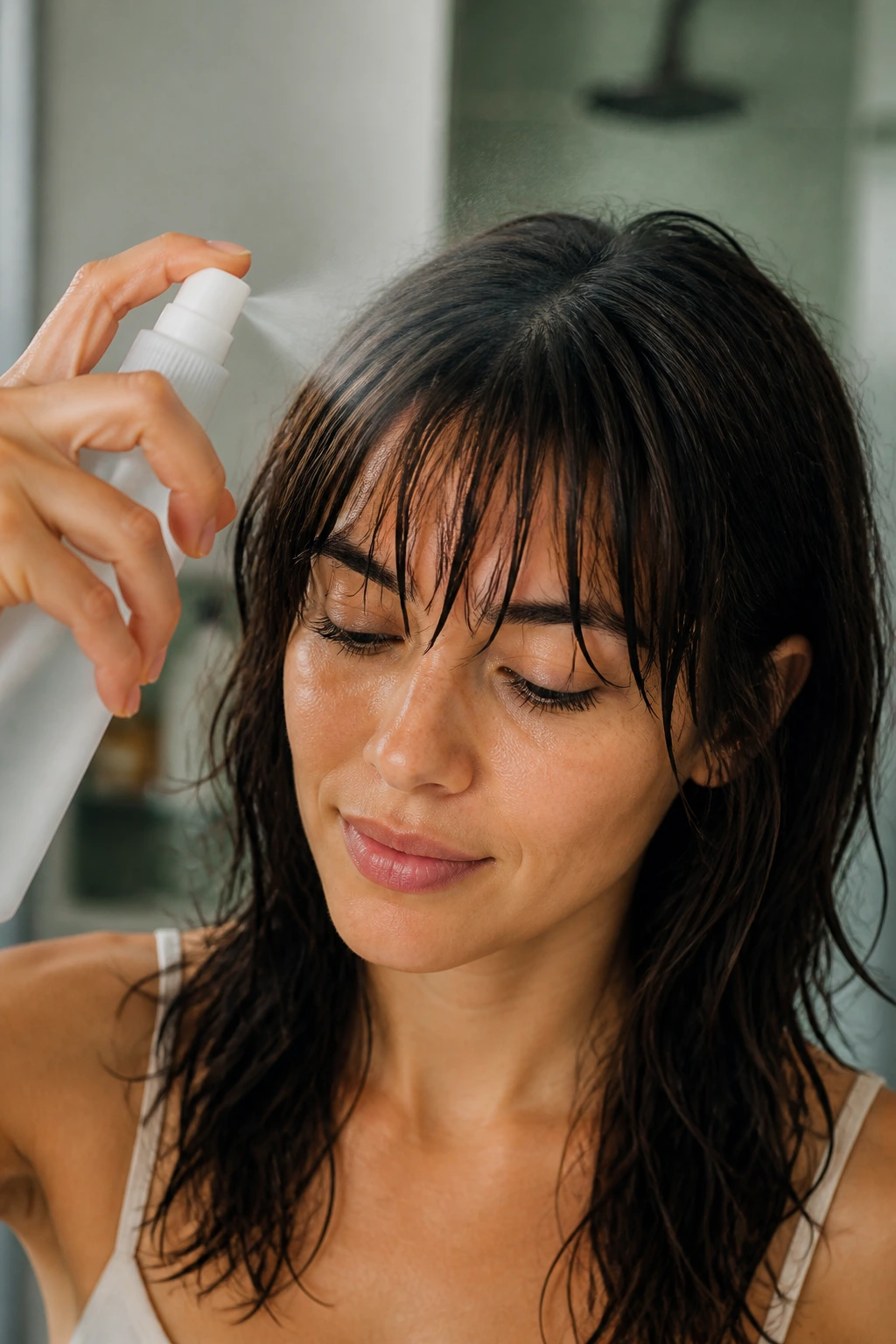
Keeping your bangs looking great throughout the day is all about moisture management. Frizzy hair is constantly searching for water, so your goal is to feed it that moisture before it can grab it from the air. A good daily routine involves lightweight hydration that doesn’t weigh the hair down.
When you wake up, avoid wetting your bangs completely unless you plan on styling them from scratch. Instead, mist them lightly with a mixture of water and a leave-in conditioner. This rehydrates the fibers and smooths down any cuticles that lifted overnight.
If you struggle with greasy roots but frizzy ends, be strategic with your product application. Apply dry shampoo only at the roots to absorb excess oil, and use a tiny drop of hair oil exclusively on the bottom half of your bangs. This keeps the scalp fresh while keeping the ends heavy and hydrated.
+-------------------------------------------------------------+
|                     PRODUCT APPLICATION                     |
|                                                             |
|   Root Area:                                                |
|   [ Dry Shampoo Only ]   --> Keeps roots lifted & oil-free  |
|                                                             |
|   Mid-Shaft to Ends:                                        |
|   [ Leave-in / Oil ]     --> Weights down frizz & hydrates  |
+-------------------------------------------------------------+
The Art of the Blow-Dry
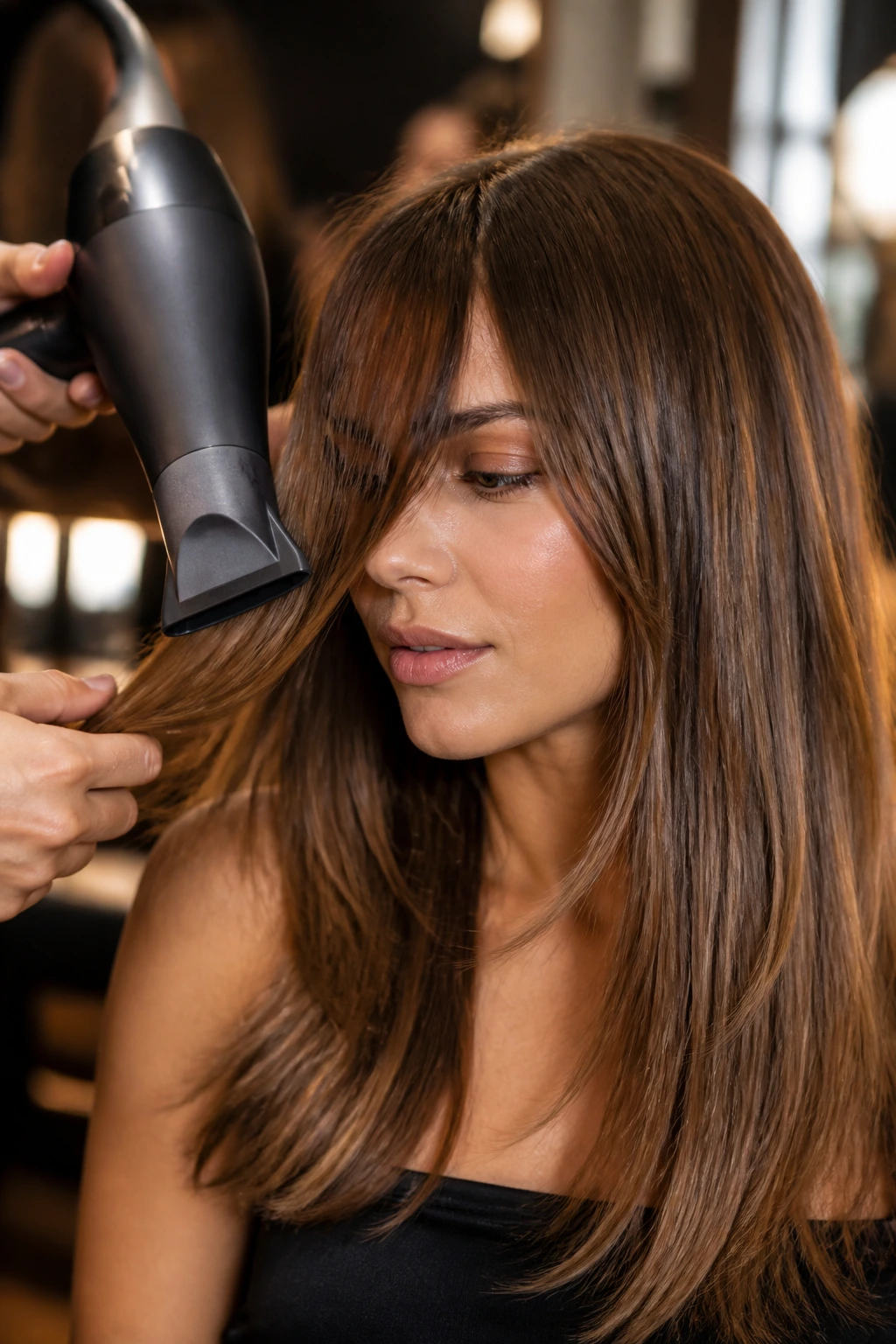
How you dry your hair sets the foundation for how it will behave when you walk outside. If you use heat, always blow-dry your bangs immediately after washing. Do not let them air-dry halfway, as their natural wave pattern will set, making it much harder to smooth out later.
Use a high-quality hair dryer with a concentrator nozzle. This nozzle directs the airflow downward along the hair shaft, which helps flat-pack the cuticle scales. If you blow-dry without a nozzle, the air blows in all directions, lifting the cuticle and creating instant frizz.
Keep the heat setting on medium. High heat can strip the hair of its natural moisture, making it even more porous and reactive to humidity. Finish your blowout with a cool shot of air to lock the shape in place and seal the cuticle barrier.
Finding Your Perfect Fringe

Embracing long bangs for frizzy hair is about working with what you have, not fighting it. The right cut will use gravity, texture, and clever layering to turn your natural volume into a beautiful frame for your face.
Speak with your stylist about your hair’s daily habits. Show them how your hair behaves when it is air-dried, and don’t be afraid to ask for a dry cut to ensure the length is exactly where you want it. With a bit of patience and the right hydration routine, you can enjoy a gorgeous, low-effort fringe that looks incredible in any weather.
Keep your hair hydrated, choose a shape that matches your natural movement, and let gravity do the heavy lifting. Your hair has a beautiful personality—let it show.