

You sit in the stylist’s chair, watching the shears hover two inches above your eyebrows. Your heart rate ticks up. For decades, the collective wisdom of hair salons has dictated a strict set of rules for anyone with a long face shape: keep your bangs long, sweep them to the side, and whatever you do, never expose your forehead. It is a philosophy rooted in fear, designed to hide your features rather than celebrate them.
The oblong or long face shape—characterized by a tall forehead, a graceful vertical axis, and a narrow jawline—possesses an architectural elegance. Standard styling advice attempts to compress this structure, burying it under heavy curtain layers or sweeping side fringe. But micro bangs do something far more interesting. By cutting the fringe well above the brow line, you create a striking focal point that draws the eyes upward, highlighting your cheekbones and jawline with artistic intent.
Having analyzed hair movement and facial geometry for years, I have seen how a micro bang, when executed with the correct density, texture, and edge line, can completely redefine an elongated face. It does not make your face look longer; instead, it reframes your entire silhouette. It is a bold, high-fashion statement that tells the world you are not trying to shrink yourself to fit a standard template.
Let us break down how to bypass traditional styling rules and look at the exact micro bang styles that work with your unique features.
How Micro Bangs Balance an Oblong Face Shape
The secret to making ultra-short fringe work on a long face lies in the horizontal lines you create. When a stylist cuts a blunt line across your forehead, they are placing a physical visual anchor on your face. Your eyes naturally travel along this horizontal plane, which breaks up the vertical length of your face and draws immediate attention to your brow line and eyes.
By leaving a gap of exposed forehead between the bottom of your bangs and your eyebrows, you actually create a sense of balance. A heavy, brow-skimming bang can sometimes crush a long face, making the lower half look disproportionately long and heavy. Micro bangs preserve the open, airy quality of your face while introducing a sharp, modern element that commands attention.
The shape of the outer corners of your fringe is where the real magic happens. By curving the edges of your micro bangs downward to meet your cheekbones, your stylist can create a soft frame that adds width to the sides of your face. This subtle widening effect rounds out the oblong silhouette, giving you the illusion of broader cheekbones without losing the elegant length of your jaw.
Choosing the Right Density for Your Hair Type
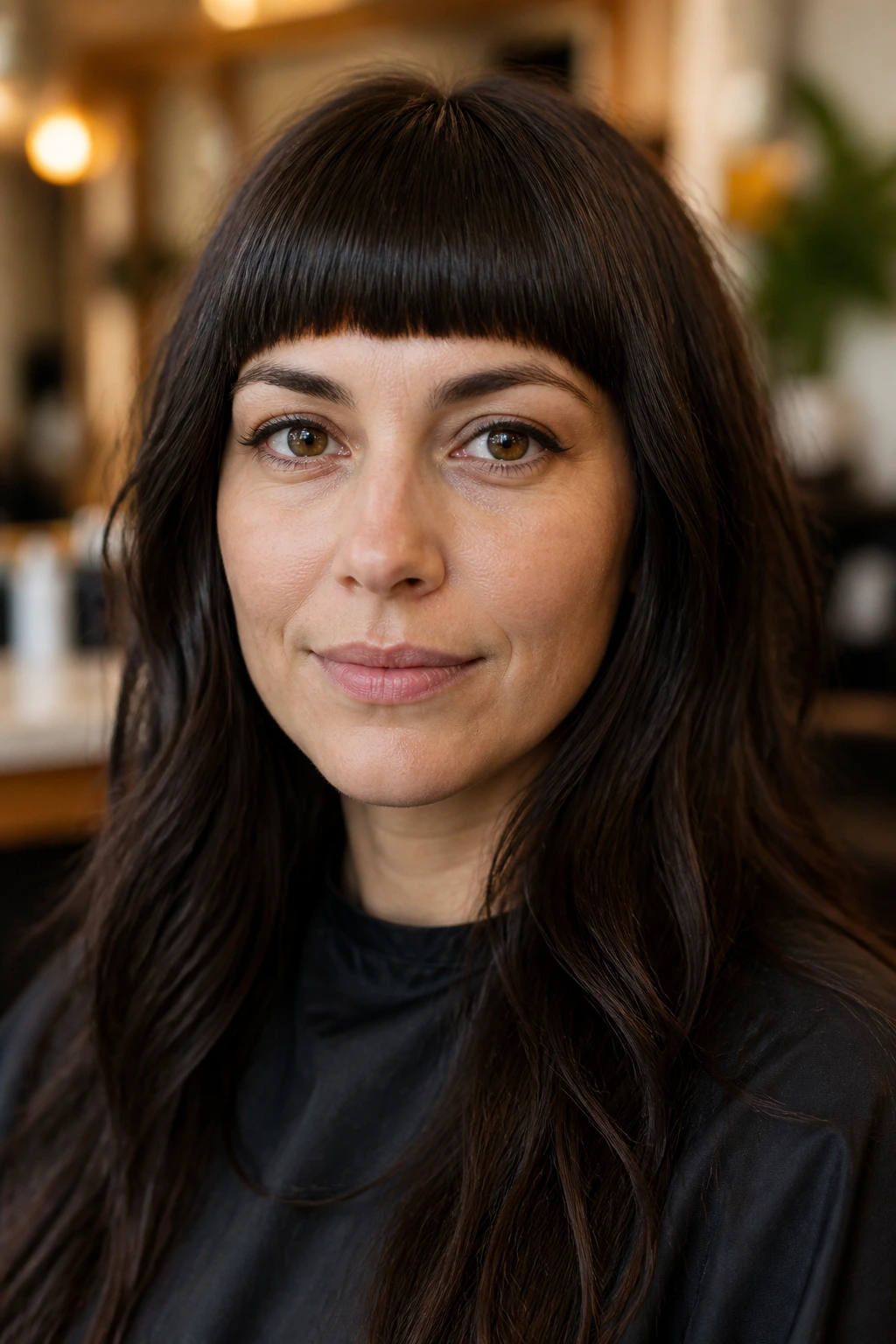
Before the first snip of the shears, you must consider the density of your hair. Fine hair behaves very differently from coarse or thick hair when cut into a short fringe. If your hair is fine and thin, a blunt micro bang might look sparse or separate throughout the day. For fine hair, a deeper triangular section taken from further back on the crown will give your bangs the weight they need to lay flat and cohesive.
Thick, coarse hair presents the opposite challenge. If you cut a thick chunk of hair straight across, you risk creating a helmet-like ridge that sits heavily on your forehead. Thick hair requires internal texturizing, which is a technique where the stylist cuts tiny, invisible vertical channels into the bulk of the hair. This allows the bangs to lie close to the skin and move naturally rather than sticking straight out.
For curly and wavy hair types, density is entirely dependent on the spring-back factor. Curly hair shrinks significantly when dry, meaning a micro bang must be cut with a very light hand when the hair is in its natural, dry state. Cutting curly fringe wet is a recipe for surprise, as those wet strands can easily bounce up into a much shorter crop than you ever intended.
1. The Choppy, Textured Baby Fringe
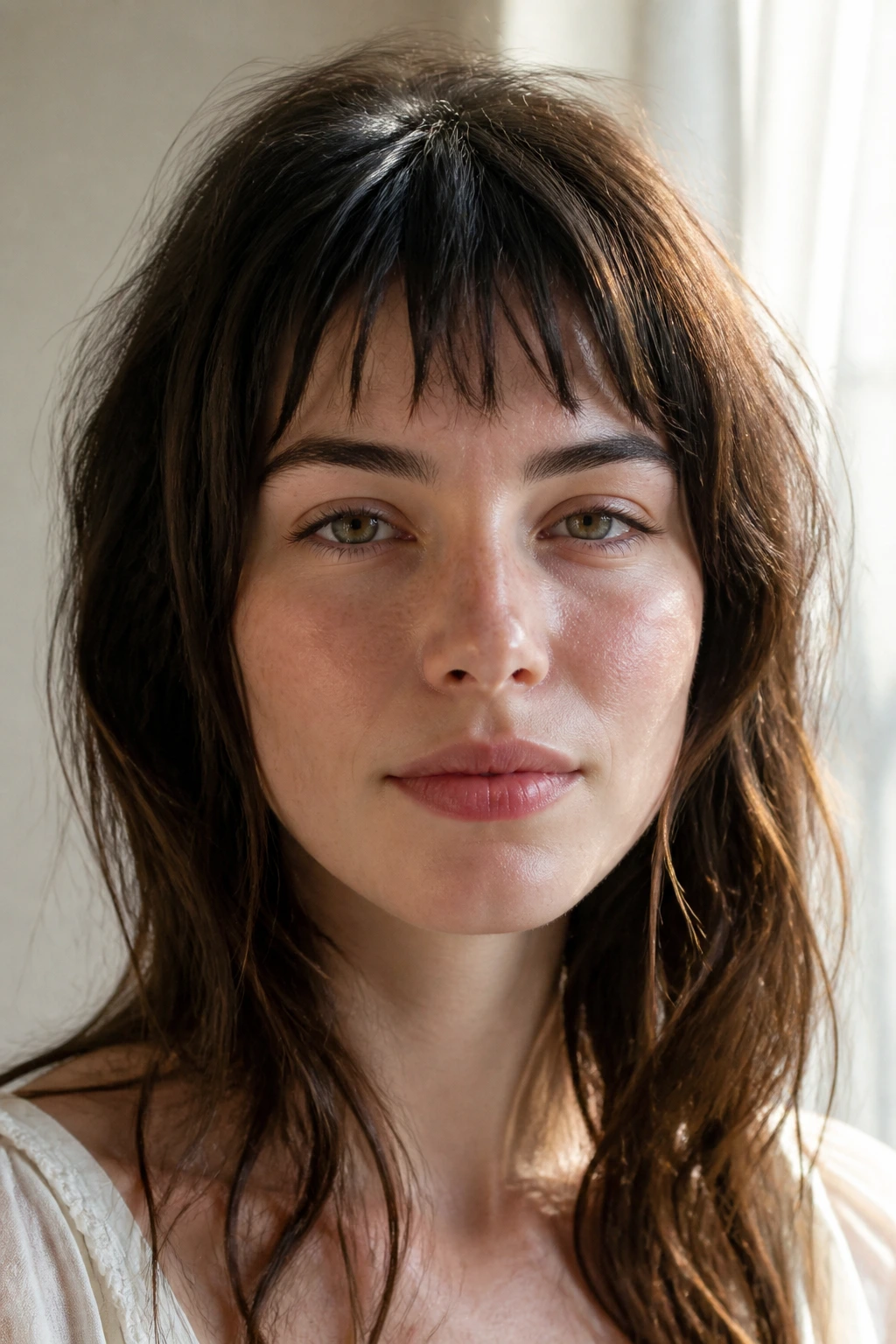
This style relies on uneven, piece-y ends that break up the forehead line. The jagged edges prevent the fringe from looking too harsh against an elongated jawline, making it an excellent starting point for those new to short bangs.
Why It’s a Top Pick for Long Faces
By avoiding a solid, heavy line, the choppy baby fringe allows glimpses of your forehead to show through. This keeps the upper third of your face looking open and bright, while the textured ends create a soft horizontal transition that visually widens your temples.
Quick Style Facts
- Best hair type: Fine to medium-thick hair with a straight or slightly wavy texture
- Styling effort: Moderate; requires a dab of pomade to define the piece-y ends
- Maintenance window: Every three to four weeks to keep the length above the brow
- Key cutting tool: Texturizing shears or a straight-edge razor for lived-in ends
Pro tip: Apply a tiny pea-sized amount of matte clay to your fingertips and pinch the ends of the bangs to keep them from clumping into one solid sheet.
2. The Softly Feathered Crescent Micro Bang
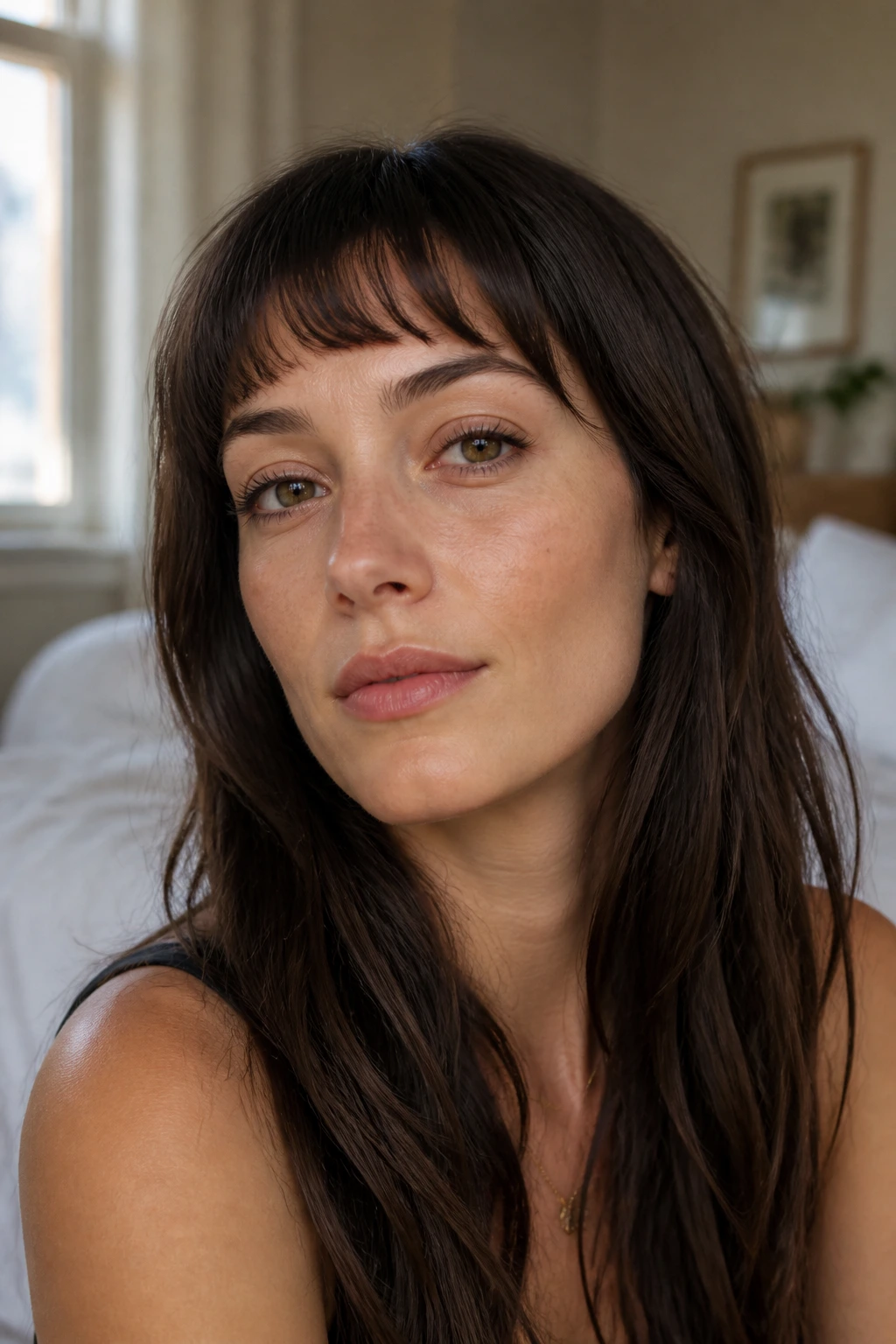
This version features a gentle, upward-curving arch in the center that swoops down at the temples. The crescent shape is incredibly flattering for long faces because it mimics the natural curve of the eyes and brow bone.
Unlike straight-across styles, the curved micro bang blends seamlessly into longer face-framing layers. This integration is fantastic for softening a strong, squared chin or an elongated jawline, as the longer side pieces sweep outward, adding much-needed width across the cheekbones.
To style this look, use a small round boar-bristle brush and a blow dryer on medium heat. Direct the air downward from the roots while gently rolling the brush to create a soft, rounded bend that hugs your forehead without flipping outward.
3. The Architectural Blunt-Cut Baby Fringe
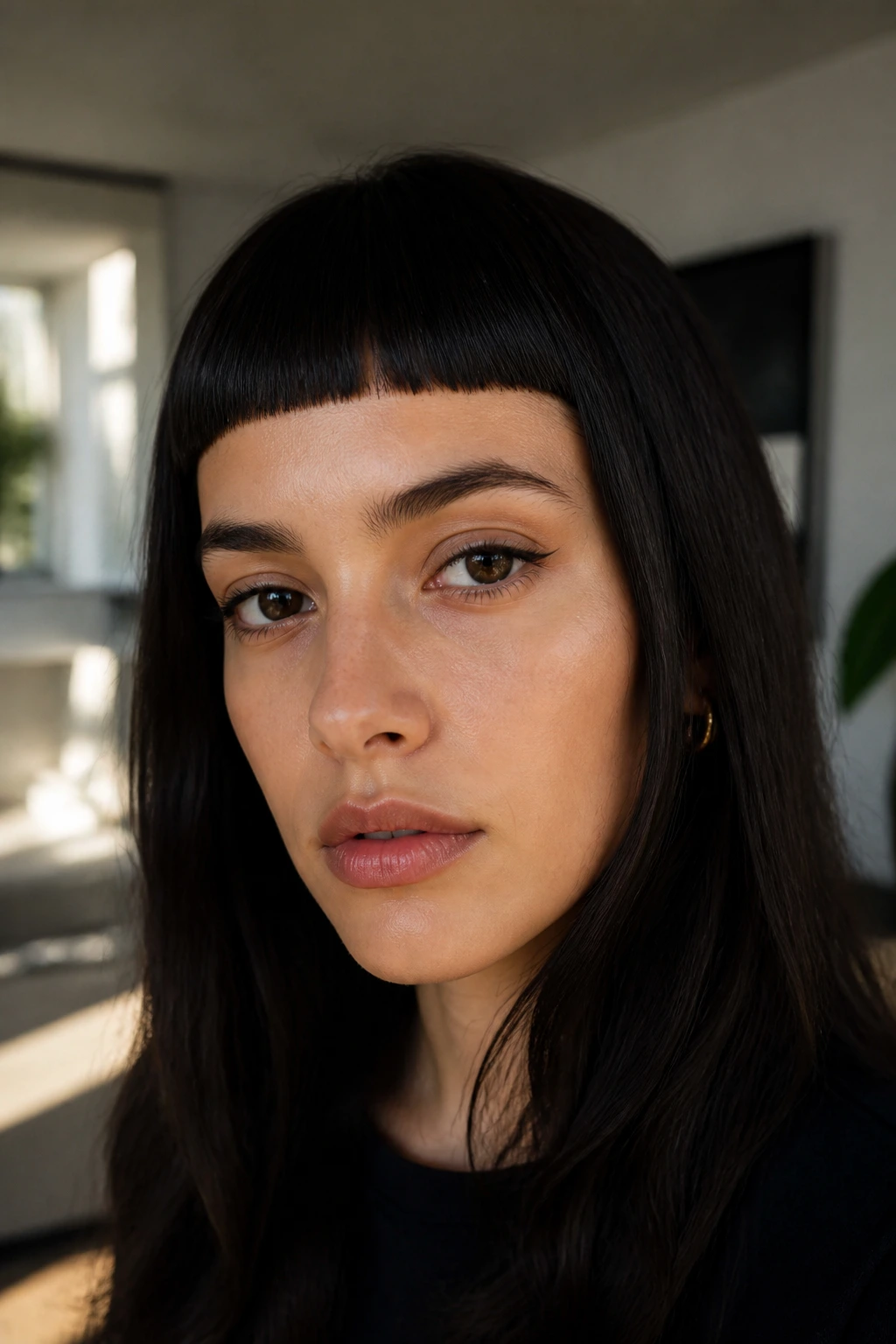
This is a high-contrast style characterized by a perfectly straight, razor-sharp edge. It sits about an inch or more above the brow, making a bold statement that highlights the symmetry of your eyes and nose.
How to Style This Graphic Look
To achieve the sleek, glassy finish this cut demands, you will need to master the flat wrap blow-dry technique.
Styling Steps
- Start with wet hair and apply a drop of lightweight smoothing serum through the fringe.
- Using a paddle brush, brush the bangs flat against your forehead, directing them to the left while blowing dry.
- Switch directions, brushing them flat to the right while continuing to apply downward heat.
- Finish by brushing them straight down; this neutralizes any cowlicks and ensures they lie perfectly flat.
- Glide a mini flat iron over the ends in a gentle downward motion to seal the cuticle and lock in the straight edge.
4. The Wispy French-Girl Micro Bang
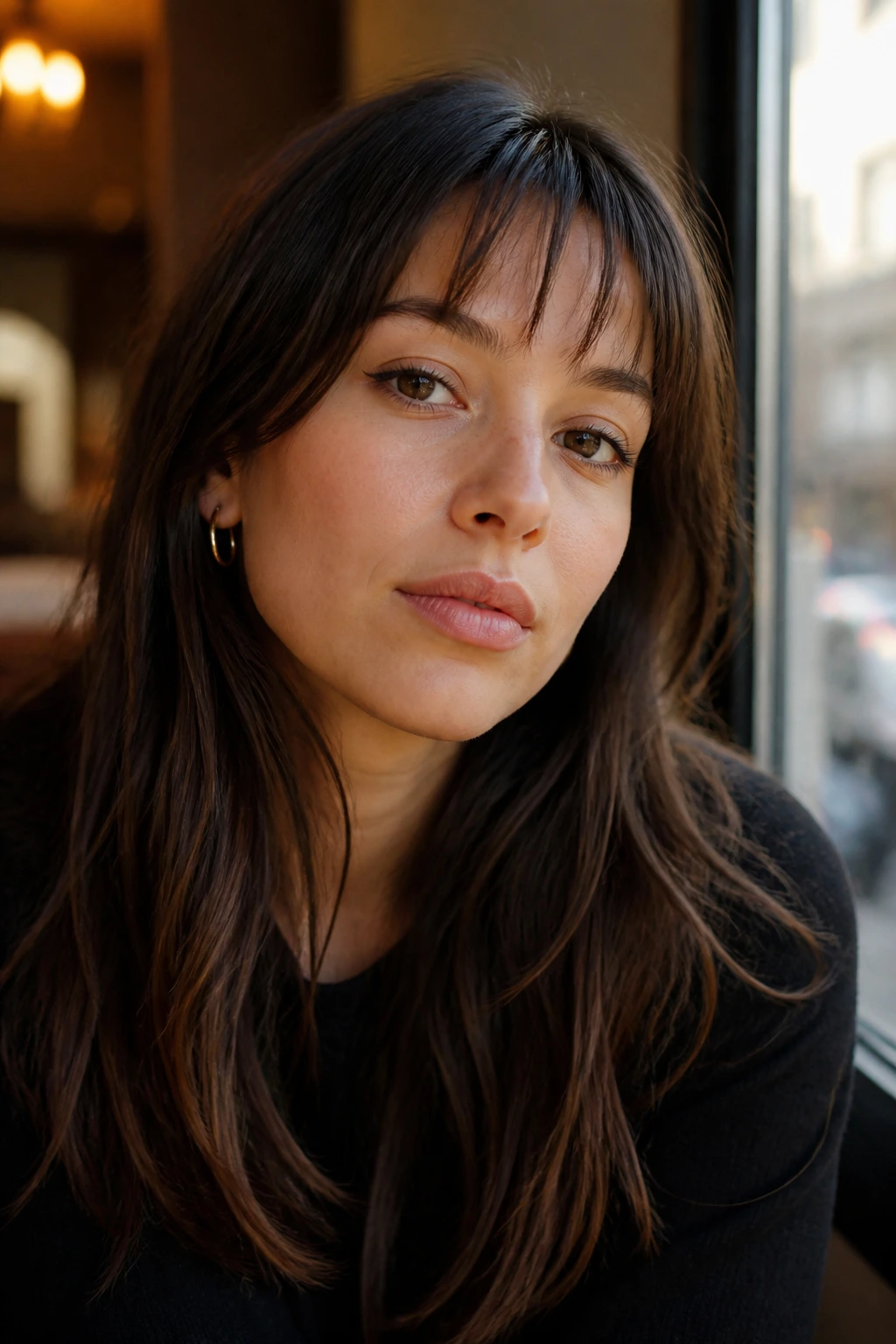
A delicate, airy take on the micro trend that feels effortless and soft. This style uses minimal hair, resulting in a sheer layer of fringe that lets your forehead peek through, creating a relaxed, undone aesthetic.
A common issue with micro bangs on long faces is the fear that they will look too aggressive or severe. The French-girl variation completely eliminates this concern by using soft, separated pieces that drift across the forehead. It acts as a subtle frame rather than a solid block, making it beautiful for fine hair textures.
- The mechanism: The stylist slide-cuts the fringe from the center outward, creating a graduated, airy texture.
- Why it works: It breaks up the vertical plane of the forehead without creating a heavy horizontal dividing line.
- Styling secret: Skip the blow dryer entirely; let them air-dry, then mist with dry shampoo for volume.
5. The Curly, Coiled Micro Fringe
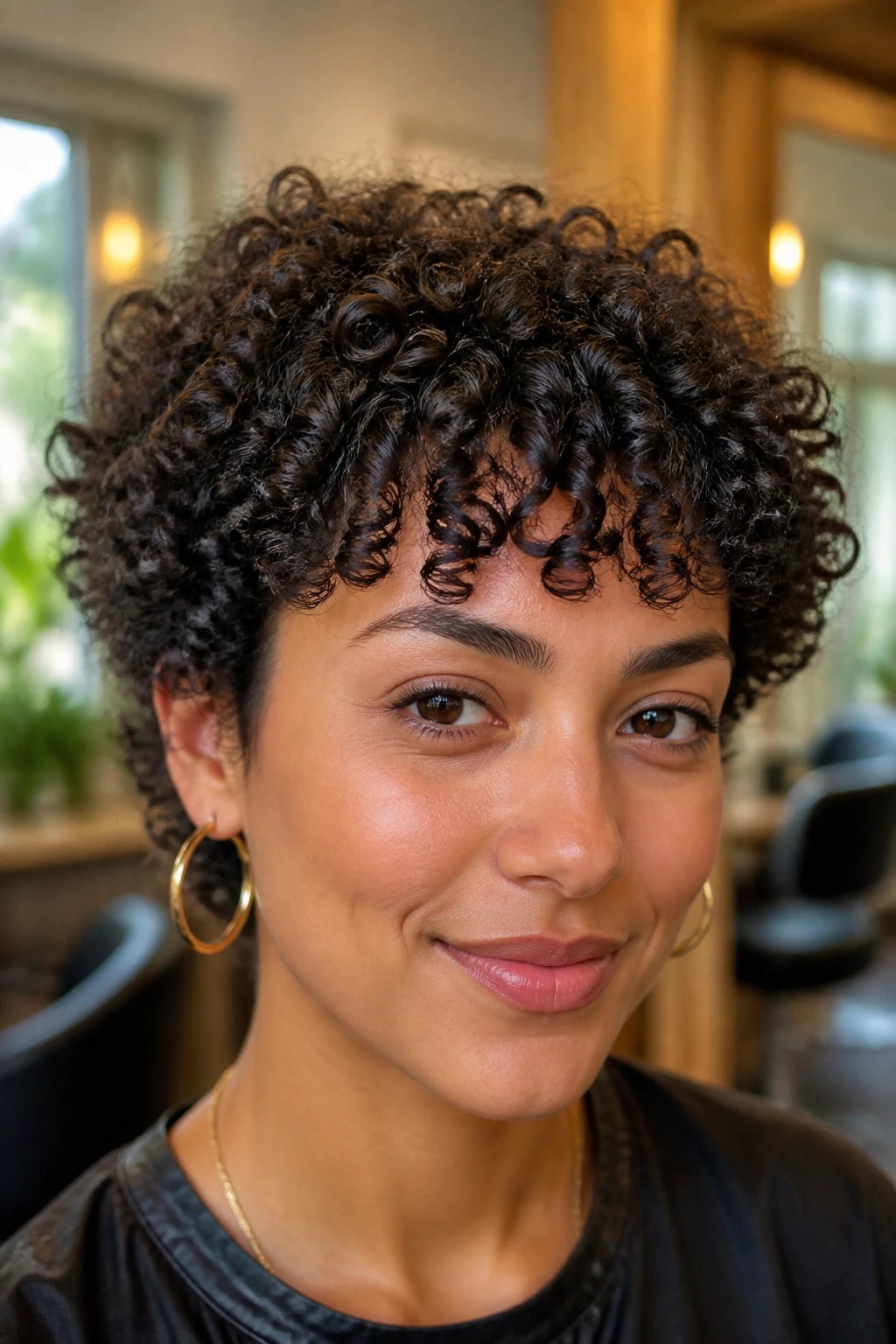
This style celebrates the natural bounce of spirals, cut short to sit high on the forehead. It adds immense texture and height to the top of your head, which balances a long face by celebrating three-dimensional volume.
Many curly-haired individuals are told to avoid short bangs, but this advice ignores how curls can soften facial structures. When coils sit short on the forehead, they create a halo of texture that frames the eyes beautifully. The key is to cut the bangs piece-by-piece while dry, ensuring each coil shrinks into its perfect place.
This cut works best when you embrace the natural shape of your curls. Avoid using brushes or high-tension styling; instead, apply a curl-defining cream to wet bangs, scrunch them gently, and dry them with a diffuser on low heat to preserve their shape.
6. The Asymmetrical Slanted Micro Bang
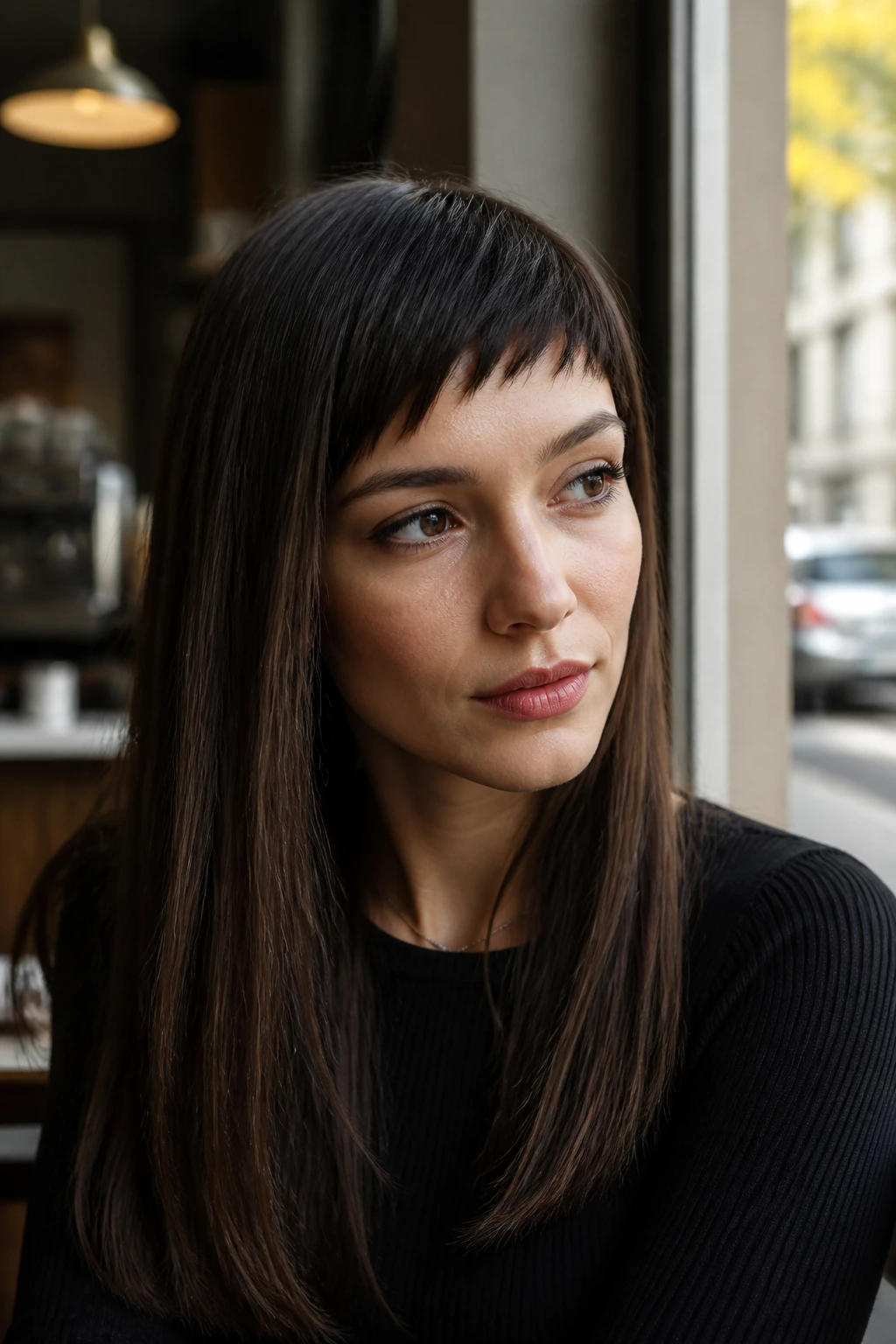
A modern, edgy cut where one side of the fringe is noticeably shorter than the other. The diagonal line created by this cut draws the eye across the face rather than straight down, disrupting the vertical symmetry of an oblong face.
Unlike symmetrical bangs that can sometimes emphasize a long nose or a prominent chin, the asymmetrical slant throws off the eye’s perspective in a chic way. It creates an interesting diagonal sweep that flatters the cheekbones and adds a playful element to your overall look.
This style is perfect for those with thick, straight hair that needs movement. The slanted cut naturally thins out one side of the fringe, making it easier to style and preventing the bangs from looking heavy.
7. The Piece-y, Split-Apart Baby Fringe

This style is cut blunt but styled with distinct gaps that split the bangs into three or four separate sections. It offers the structure of a blunt cut with the lightness of a wispy style.
Why It’s a Top Pick for Long Faces
The vertical gaps in the fringe create a rhythmic pattern across your forehead. This pattern breaks up the wide expanse of a tall forehead while the horizontal baseline of the bangs still provides that crucial face-shortening optical illusion.
Quick Style Facts
- Best hair type: Medium to thick hair that has a natural tendency to separate
- Styling effort: Low to moderate; requires a light-hold styling wax to define the gaps
- Maintenance window: Every four weeks to maintain the separation and clean edge
- Key cutting tool: Standard shears used for deep point-cutting to create natural separation
Pro tip: Avoid heavy oils or serums on these bangs, as they will make the pieces look greasy and flat rather than deliberately separated.
8. The Ultra-Short Spiky Micro Bang
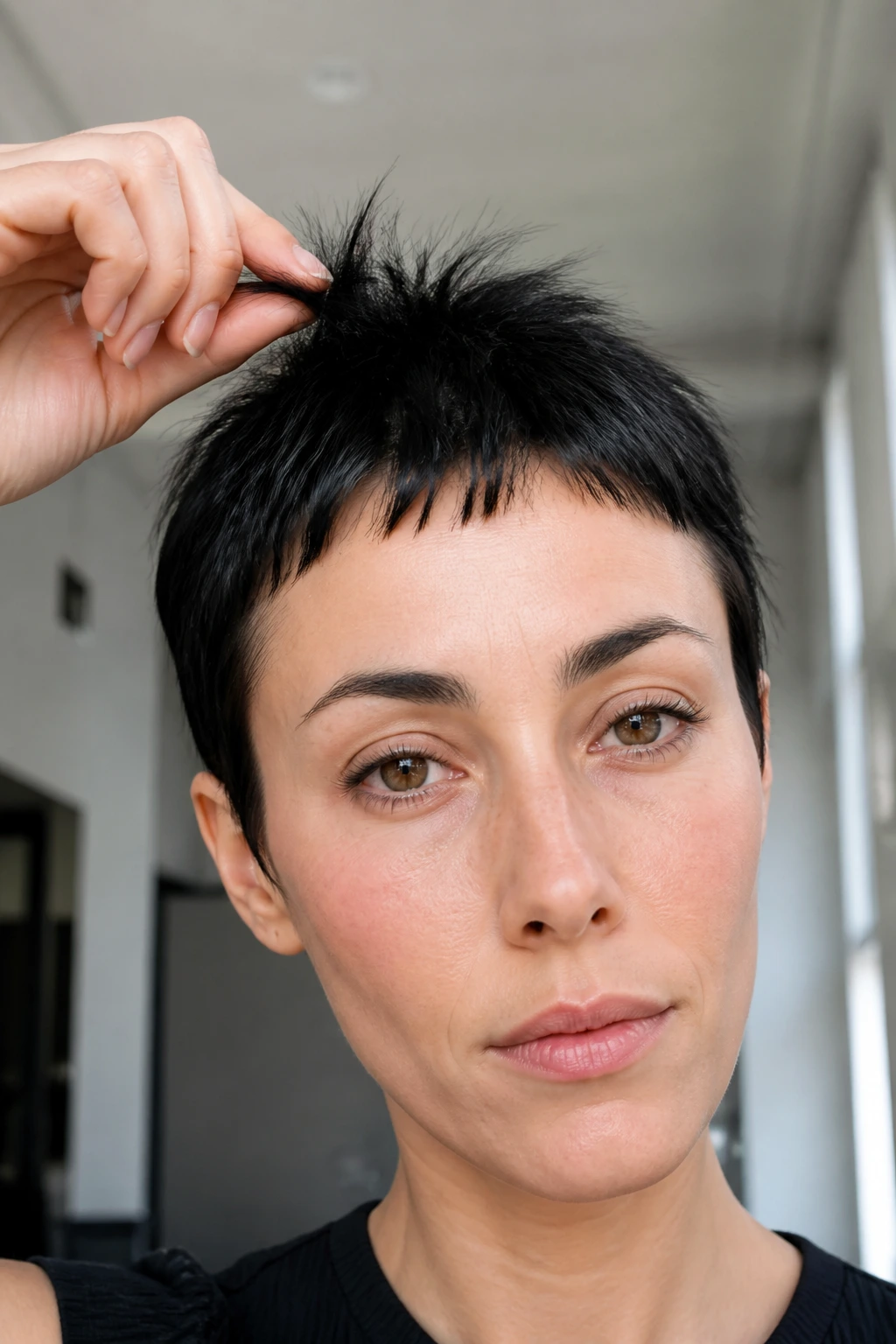
An incredibly short crop that sits just a half-inch to an inch below the hairline. This style is often paired with a pixie cut or a highly textured crop, offering an ultra-modern look that exposes almost the entire forehead.
By exposing the forehead with such a short fringe, you make a deliberate design choice. It shows that you are proud of your facial structure. The spiky, upward texture of the bangs adds energy and movement to the top of your head, drawing attention away from the length of your chin.
To style this look, apply a small amount of texturizing paste to dry hair. Use your fingers to lift and pinch the bangs upward and forward, creating a choppy, undone texture that lasts all day.
9. The Wavy, Undone Baby Fringe

This style is designed for those with natural waves who want a low-maintenance, organic look. The bangs are cut to follow the natural bend of your hair, resulting in a soft, rumpled texture that sits comfortably above the brows.
Do you struggle with waves that want to bend in different directions? That natural movement is actually your best friend with this style. The soft S-waves in the fringe break up the straight lines of a long face, adding softness and a relaxed vibe that tempers a sharp jawline.
This cut is best styled with a sea salt spray or a lightweight texturizing mist. Spray the product onto damp bangs, scrunch them with your fingers, and let them air-dry for a textured, beachy finish.
10. The Thick, Heavy Straight-Across Micro Bang
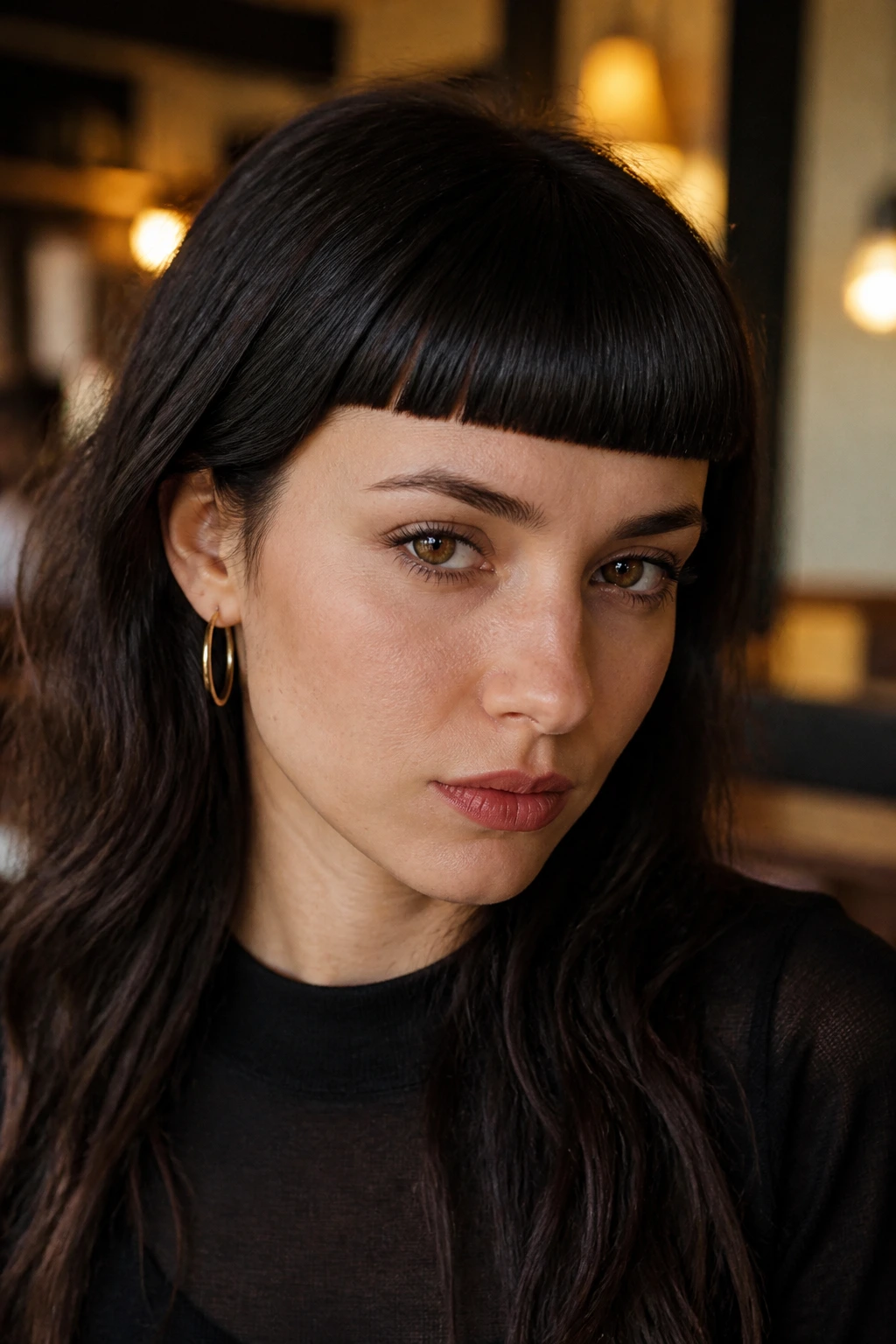
A dense, full-coverage fringe cut straight across the forehead, sitting high above the brows. This style is the ultimate statement piece, offering maximum contrast and a bold, graphic frame for your eyes.
How to Style This Graphic Look
To achieve the sleek, glassy finish this cut demands, you will need to master the flat wrap blow-dry technique.
Styling Steps
- Start with wet hair and apply a drop of lightweight smoothing serum through the fringe.
- Using a paddle brush, brush the bangs flat against your forehead, directing them to the left while blowing dry.
- Switch directions, brushing them flat to the right while continuing to apply downward heat.
- Finish by brushing them straight down; this neutralizes any cowlicks and ensures they lie perfectly flat.
- Glide a mini flat iron over the ends in a gentle downward motion to seal the cuticle and lock in the straight edge.
11. The Shaggy, Disheveled Micro Fringe
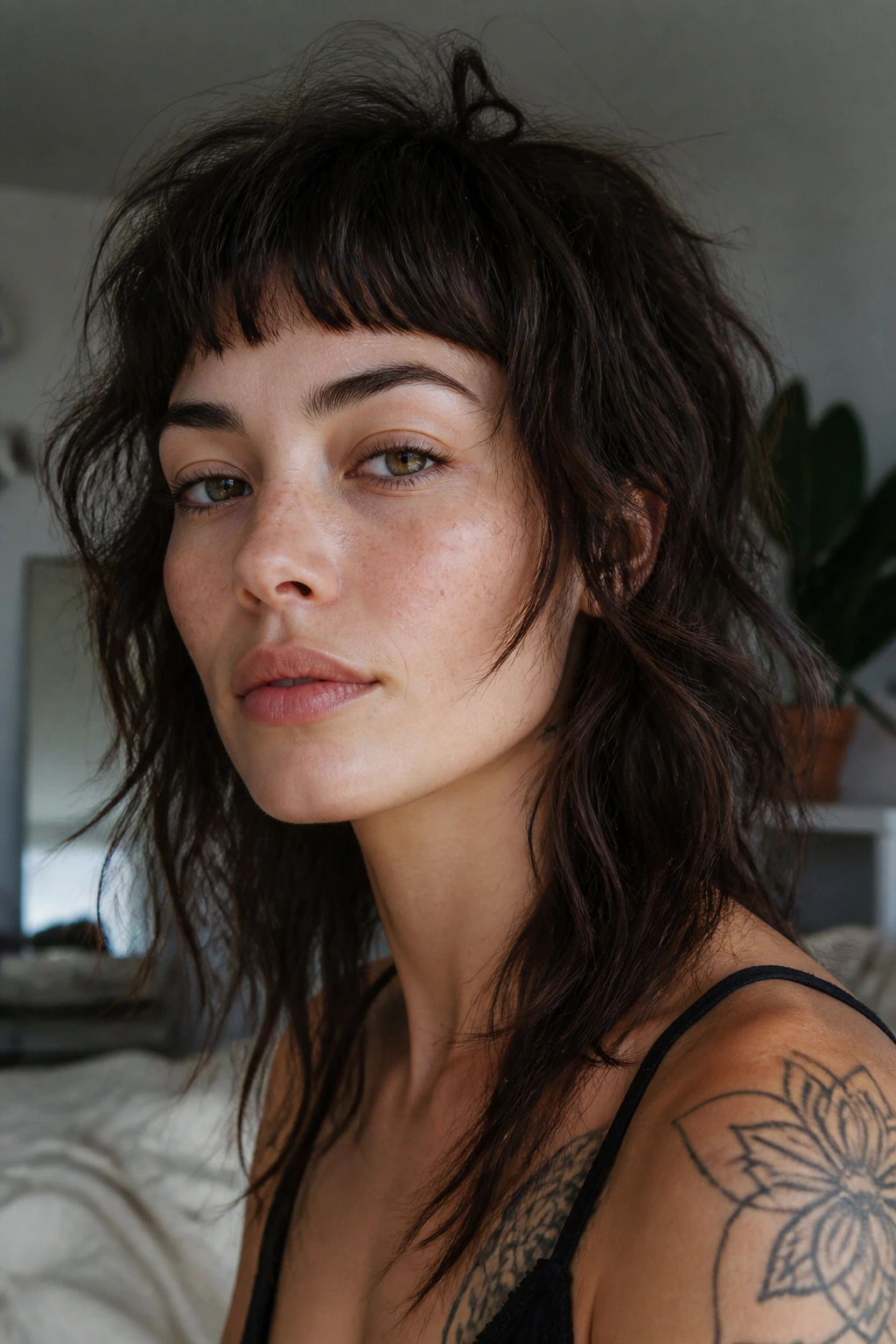
This style blends the micro trend with the classic shag cut. The bangs feature heavily layered, messy ends that blend into shorter face-framing layers along the sides, creating a highly textured frame.
If you have a long face and want to soften your features, the shaggy micro fringe is an outstanding option. The layers around the temples add width and volume to the sides of your face, while the choppy bangs keep the focus on your eyes and cheekbones rather than the length of your face.
This style works best when it looks slightly undone. Apply a volumizing mousse to damp hair, blow-dry with a diffuser to encourage natural texture, and use a dry texture spray to add volume and separation to the ends.
12. The Micro-Bottleneck Fringe

A variation of the popular bottleneck bang, cut much shorter. It starts super short in the center of the forehead and gradually curves outward, widening and lengthening as it approaches the temples.
Unlike traditional straight micro bangs, the bottleneck shape offers a softer, more organic transition. It mimics the neck of a bottle, narrow at the top and widening at the shoulders, which is incredibly effective at adding width to the middle section of a long face.
- The mechanism: The center is cut short (about an inch above the brow), while the outer edges sweep down to frame the eyes.
- Why it works: It creates a soft, sweeping motion that draws the eyes outward toward your cheekbones.
- Styling secret: Use a small round brush to blow-dry the sides away from your face, creating a flattering outward flick.
13. The Curved V-Shape Micro Bang
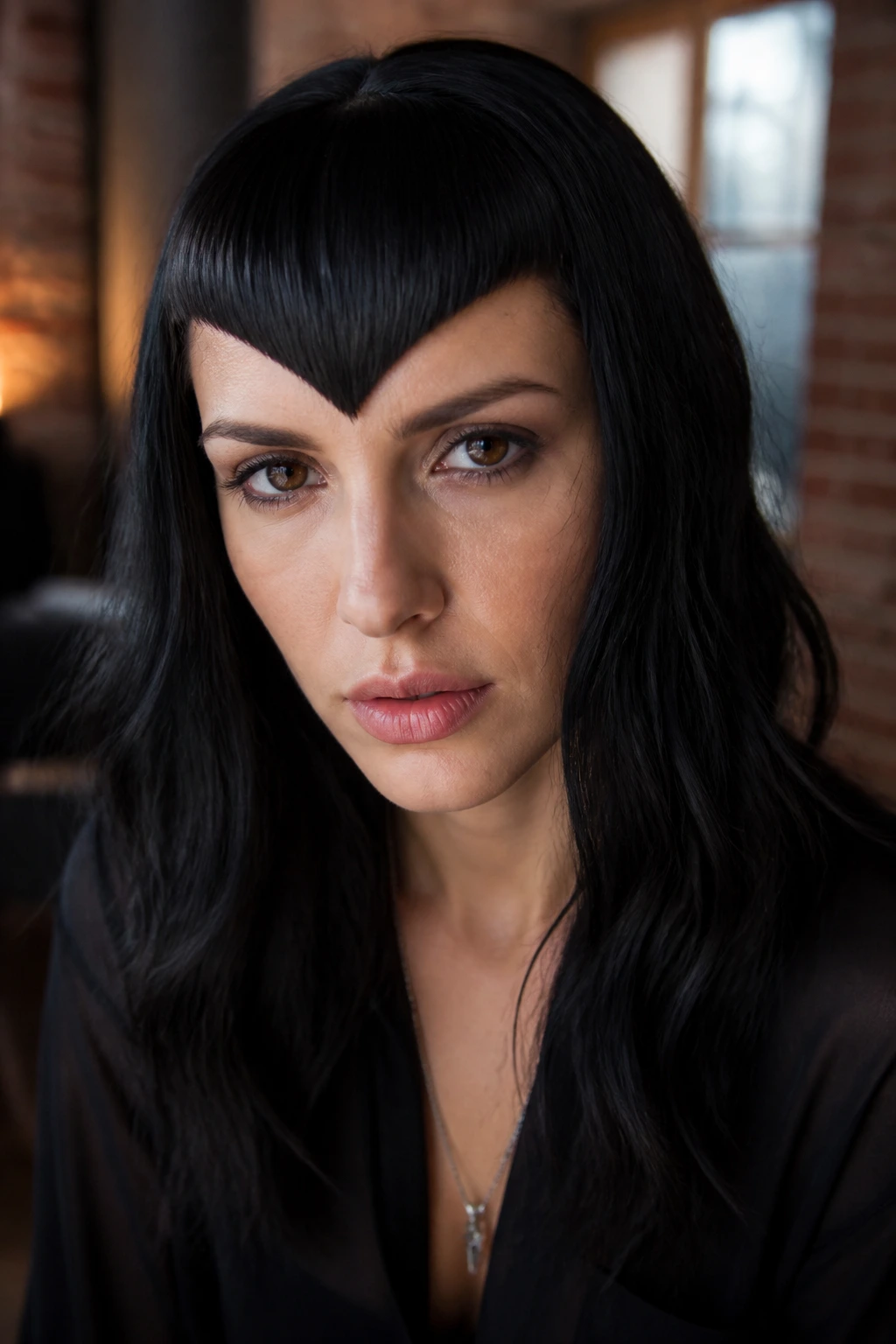
A highly dramatic, vampire-inspired cut where the center of the fringe comes to a distinct point, while the sides angle sharply upward toward the temples. This graphic style is perfect for those who love alternative fashion.
Why It’s a Top Pick for Long Faces
The downward point of the V-shape draws the eye to the center of your face, highlighting the bridge of your nose and your lips. The upward-angled sides expose the temples, creating an interesting geometric frame that breaks up the vertical line of an oblong face.
Quick Style Facts
- Best hair type: Thick, straight hair that can hold a sharp, graphic shape
- Styling effort: High; requires precise flat-ironing and a strong-hold hairspray
- Maintenance window: Every two weeks to keep the point of the V perfectly sharp
- Key cutting tool: Precision shears used on dry, flat-ironed hair for absolute accuracy
Pro tip: Use a fine-tooth comb to hold the bangs flat while misting them with a firm-hold hairspray to keep the sharp V-shape from separating.
14. The Side-Swept Asymmetric Micro Fringe
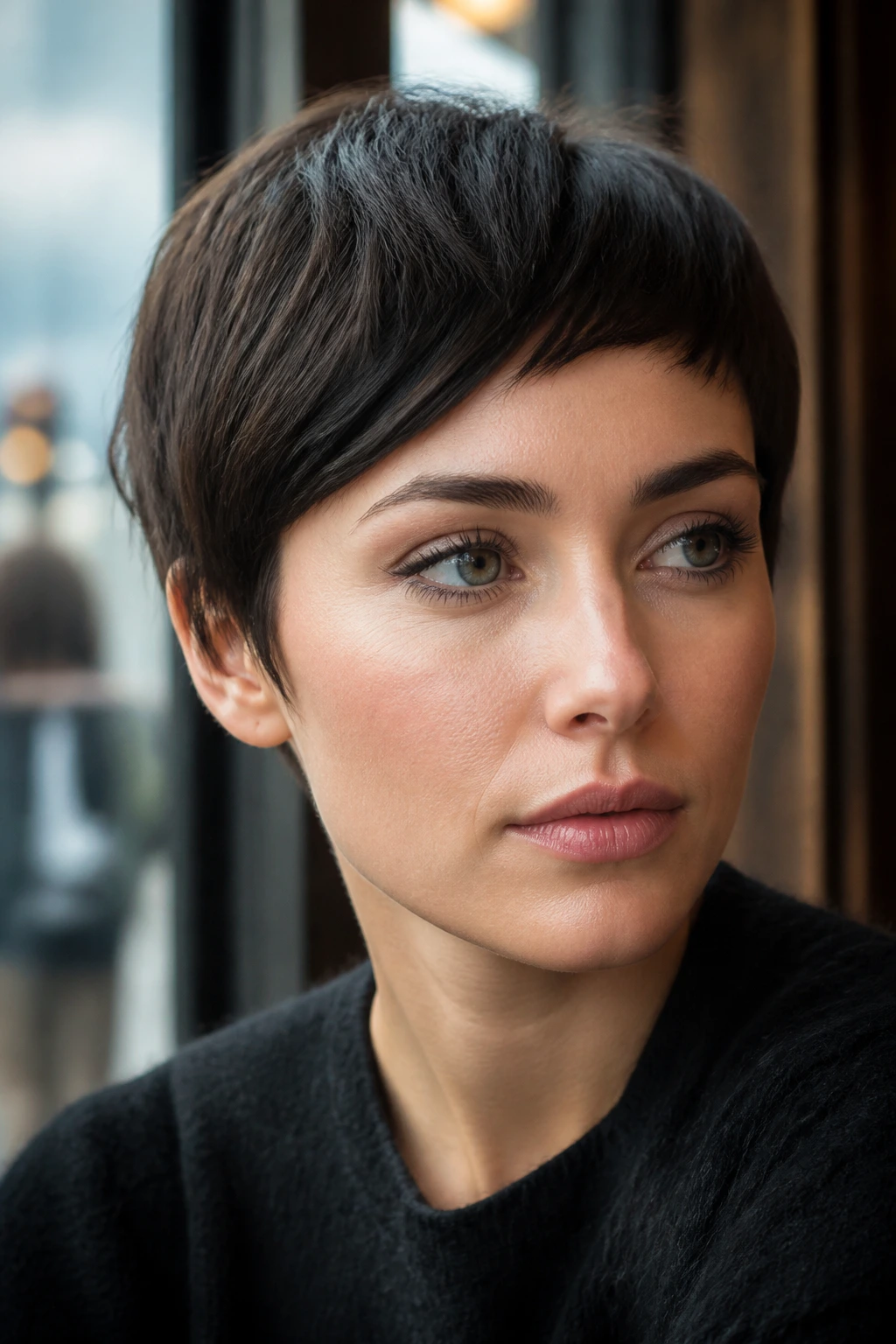
This style takes the shortness of a micro bang and combines it with a gentle, side-swept motion. The fringe is cut on a slight curve, allowing it to be swept to one side of the forehead.
If you are hesitant about a full straight-across micro bang, this side-swept version offers a softer compromise. The diagonal sweep across your forehead creates an asymmetric line that breaks up the vertical length of your face while maintaining a soft, feminine look.
This cut is highly versatile and works well on fine hair. To style, blow-dry the bangs in the direction you want them to sweep, using a paddle brush to keep them flat against your forehead.
15. The Barely-There, Ultra-Thin Baby Bang
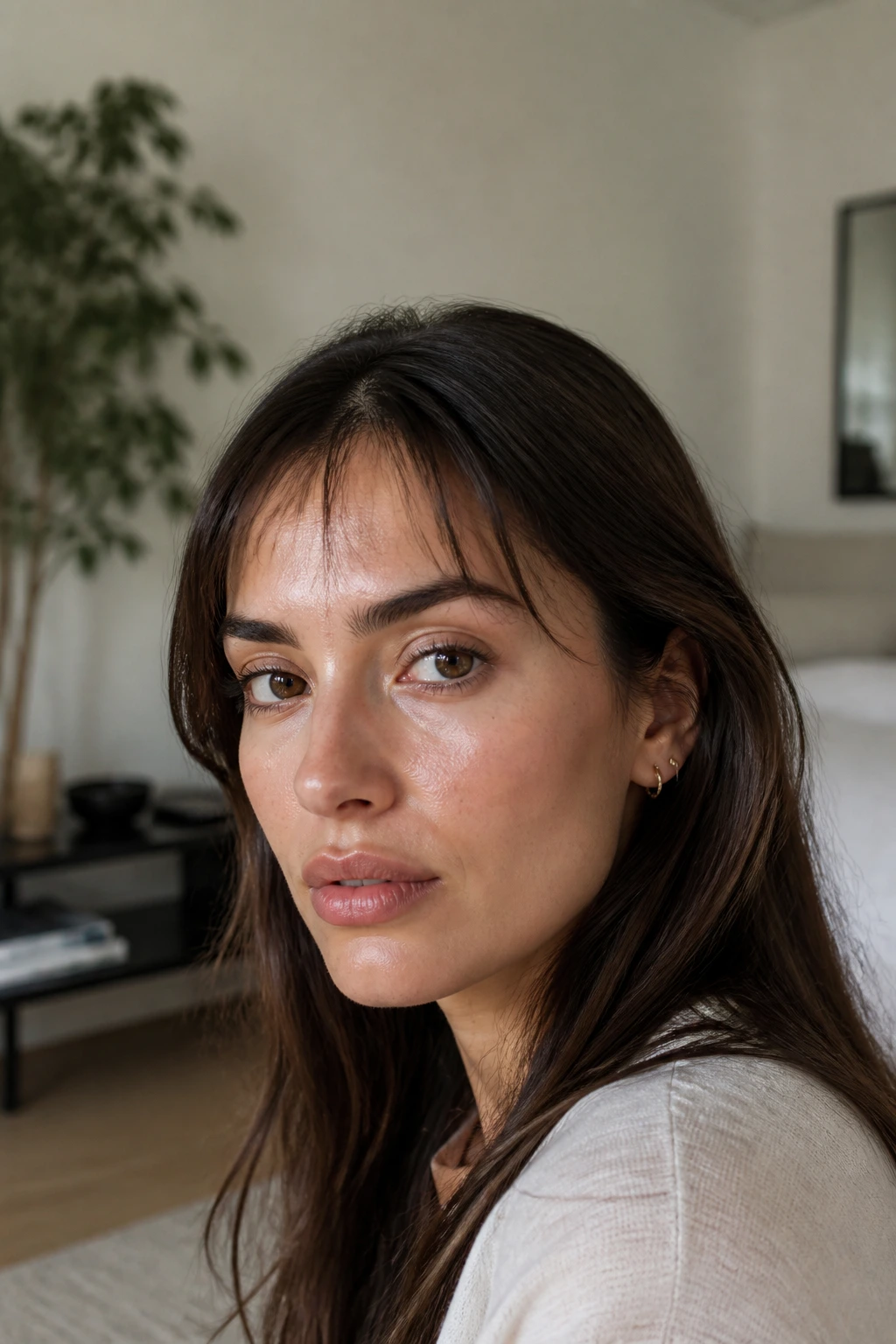
A minimalist take on the trend, featuring only a few wispy strands cut short. This style is designed to be almost invisible, adding just a hint of texture to the hairline without committing to a full fringe.
For those who love a clean, forehead-baring look but want a touch of softness around the face, the ultra-thin baby bang is perfect. It adds a delicate frame that breaks up the hairline without adding any bulk or heaviness to the forehead.
- The mechanism: The stylist slide-cuts a tiny section of hair from the hairline, leaving the rest of the hair long.
- Why it works: It adds a subtle touch of texture that softens the upper face without shortening it.
- Styling secret: Let them air-dry naturally and use a tiny dab of lightweight oil to keep them smooth.
16. The Piece-y Mullet-Style Micro Fringe
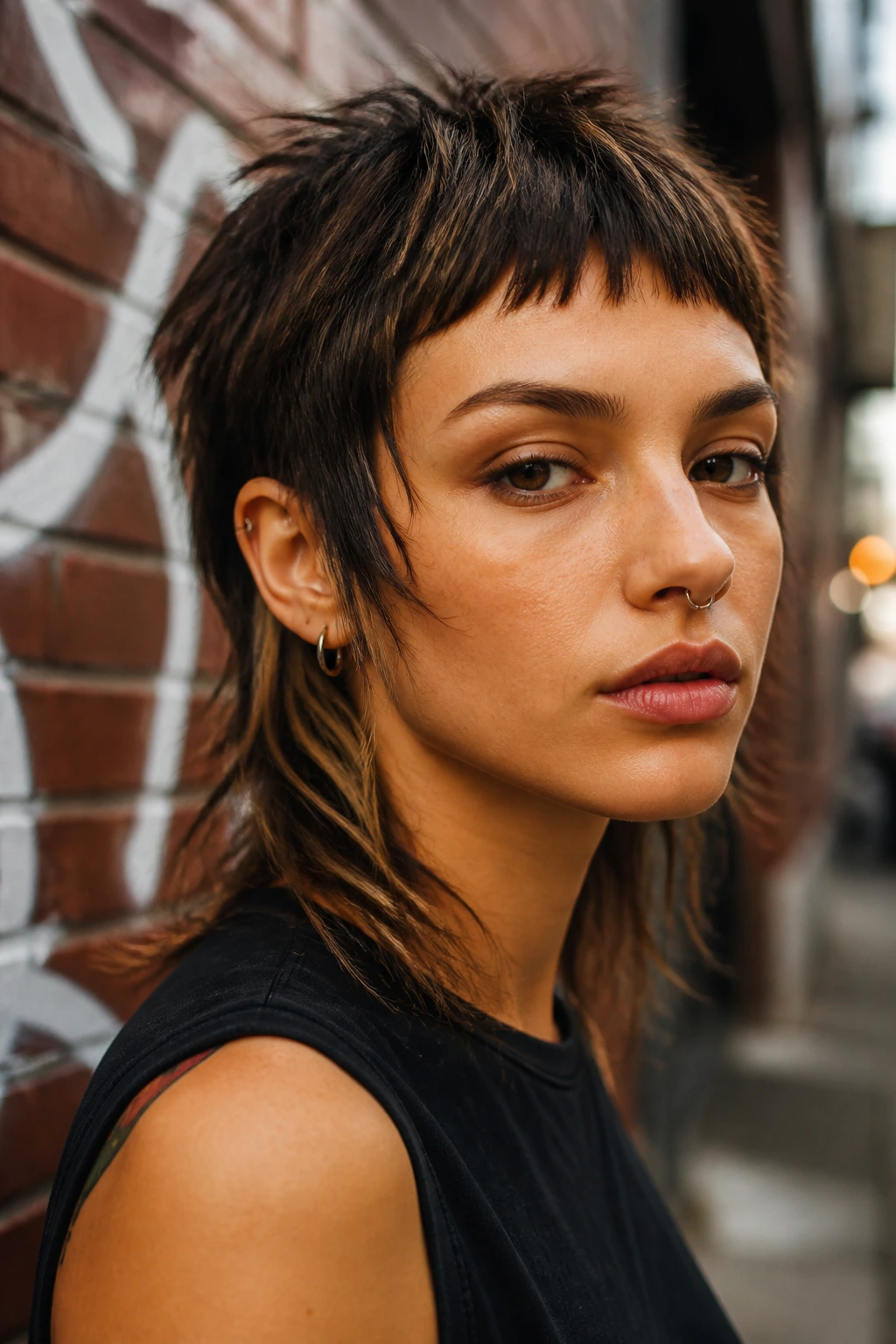
This style is paired with a modern mullet or wolf cut, featuring short, piece-y bangs that blend into longer, textured layers around the ears and neck. It is a rebellious, high-energy style.
The dramatic contrast between the short micro bangs and the longer layers of a mullet is incredibly flattering for long faces. The layers around the ears create volume and width, while the textured bangs draw attention to the eyes, balancing the overall silhouette.
This cut is all about texture and movement. Style it by applying a texturizing cream to damp hair, rough-drying with your hands, and finishing with a dry wax spray to define the piece-y layers.
17. The Textured Pixie Micro Bang
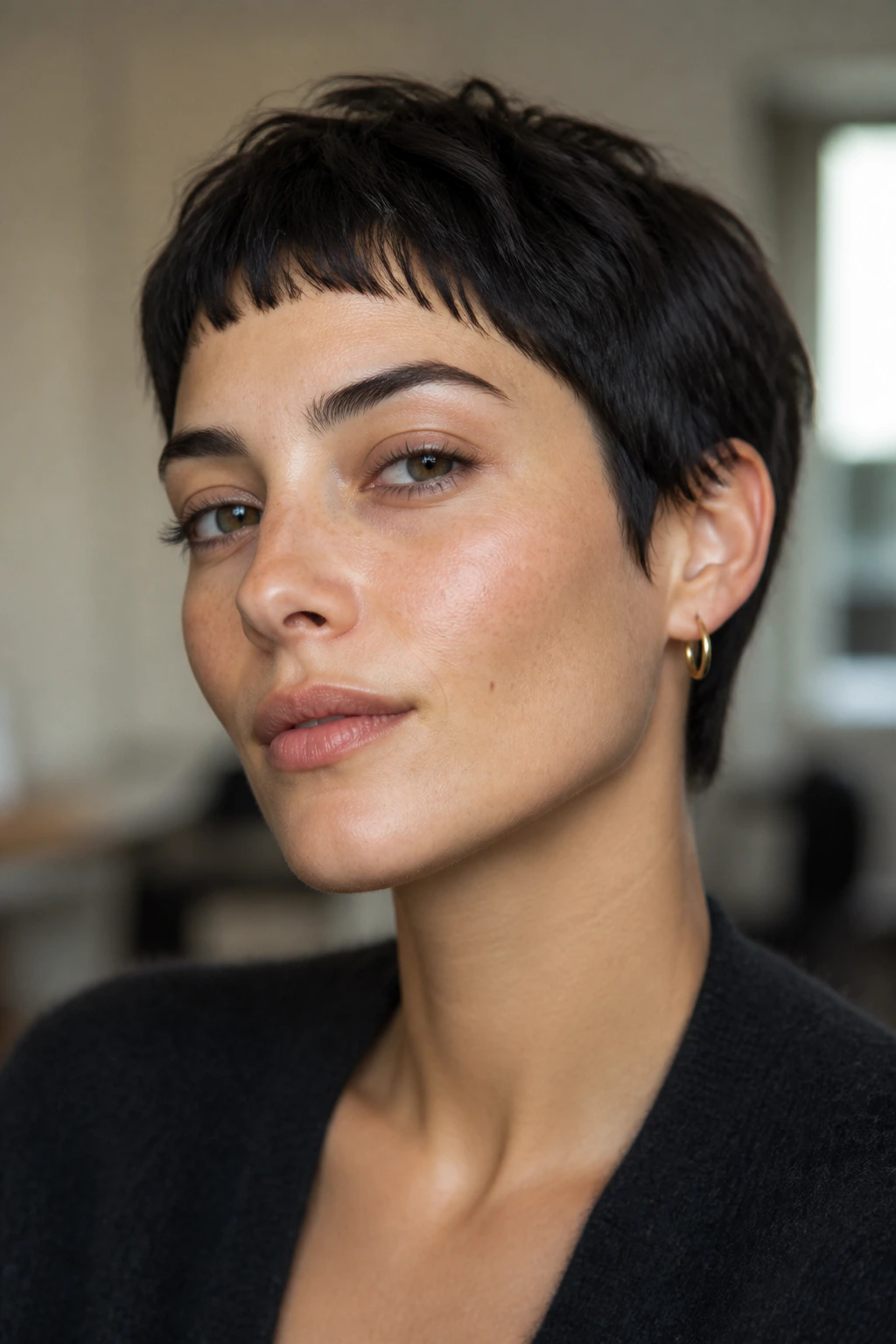
A classic pixie cut paired with a short, textured fringe that sits high on the forehead. This style is chic, timeless, and incredibly easy to maintain.
Why It’s a Top Pick for Long Faces
A pixie cut with micro bangs completely opens up your face, highlighting your jawline and cheekbones. By keeping the bangs short and textured, you avoid any heaviness that could drag your features down, creating a light, lifted look.
Quick Style Facts
- Best hair type: Fine to medium hair with a straight or wavy texture
- Styling effort: Low; requires just a quick run-through with pomade or wax
- Maintenance window: Every four to five weeks to keep the pixie shape clean
- Key cutting tool: Shears and clippers for a seamless blend into the sides
Pro tip: Use a texturizing powder at the roots of your bangs to add lift and prevent them from lying too flat against your forehead.
18. The Razor-Cut Wispy Micro Fringe
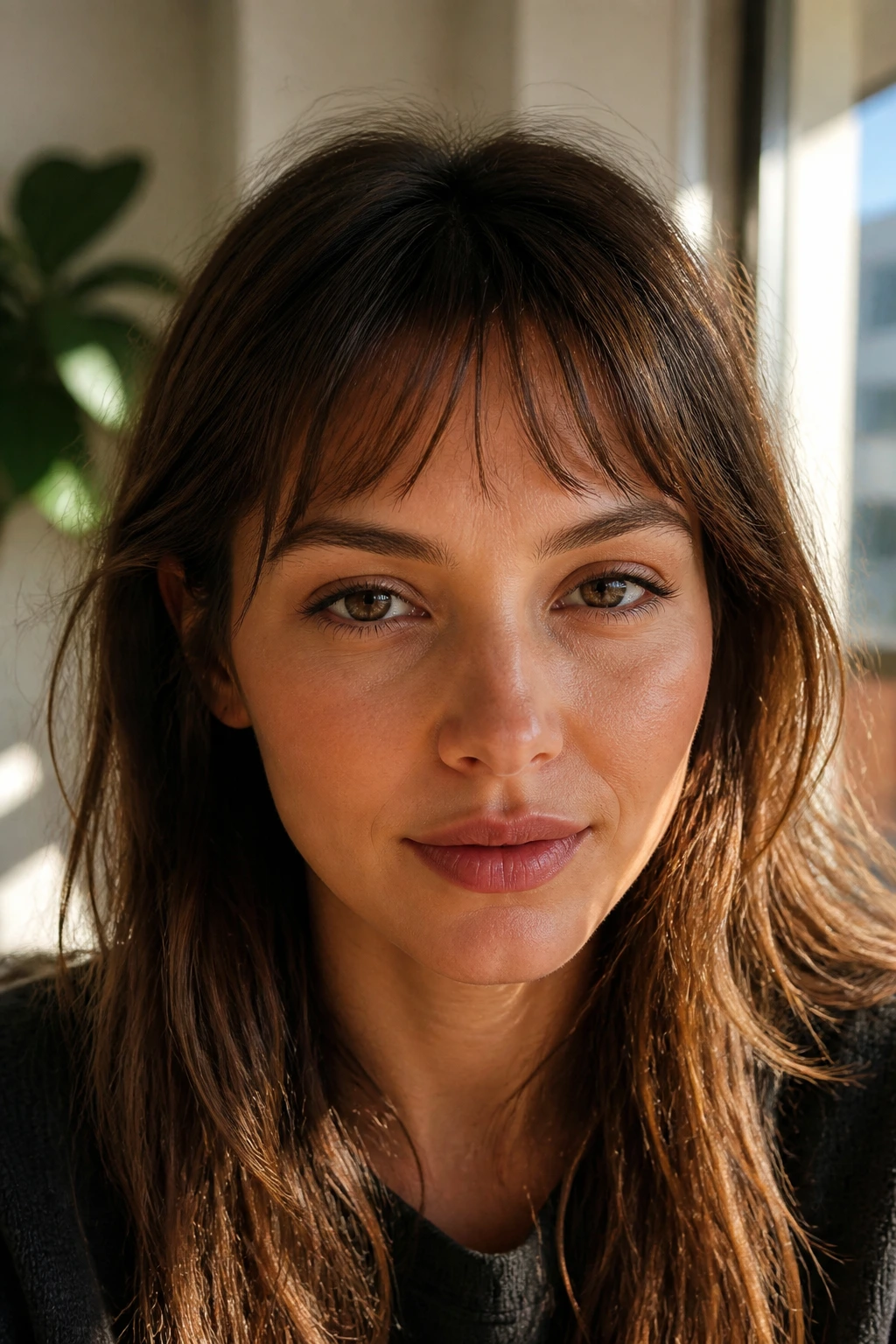
This style is cut using a straight-edge razor rather than shears, resulting in incredibly soft, tapered ends that melt into your forehead. It is a soft, romantic take on the micro trend.
If you want a short bang that feels soft and lived-in from day one, the razor cut is the way to go. The razor thins out the ends of the hair, preventing any blunt lines and creating a soft, feather-like texture that gently frames the upper face.
This cut is best styled with a lightweight blow-dry cream. Use your fingers to style the bangs as they dry, encouraging a natural, piece-y texture that looks effortless.
Essential Tools for Styling Micro Bangs
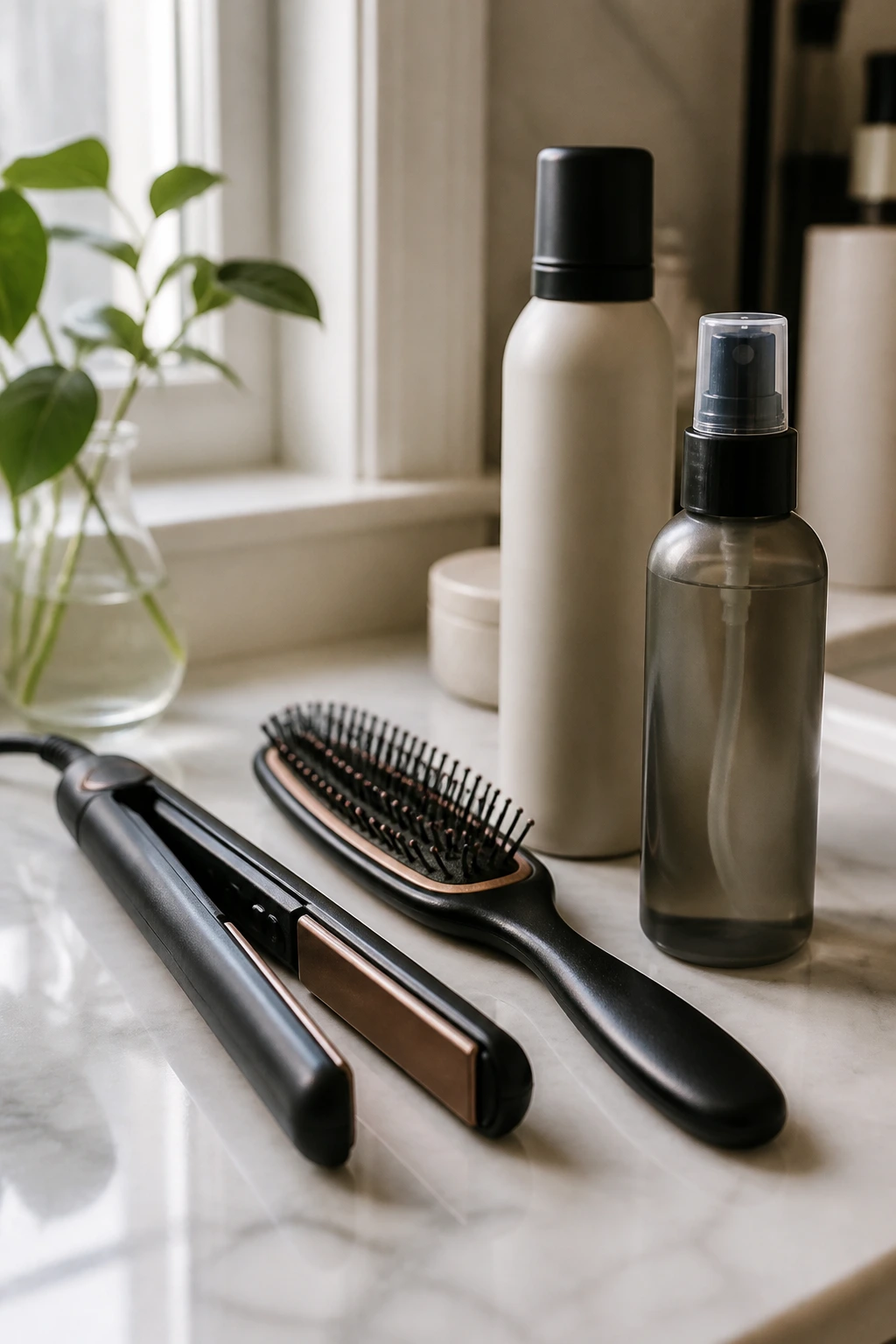
To keep your micro bangs looking fresh and styled, you will need to invest in a few key tools. Because these bangs are so short, standard-sized styling tools can be clumsy and difficult to use close to your face.
First, a mini flat iron is indispensable. A flat iron with half-inch plates allows you to get close to the roots of your bangs, helping you smooth out cowlicks and style the ends with precision. Look for one with adjustable heat settings so you do not damage your hair with excessive heat.
A high-quality paddle brush is also essential for the flat-wrap styling technique. A brush with flexible bristles will help you hold the hair flat against your forehead while blow-drying, ensuring a smooth, cohesive finish. Finally, keep a dry shampoo and a lightweight texturizing spray on hand to add volume and prevent your bangs from looking greasy throughout the day.
How to Maintain and Trim Baby Bangs at Home
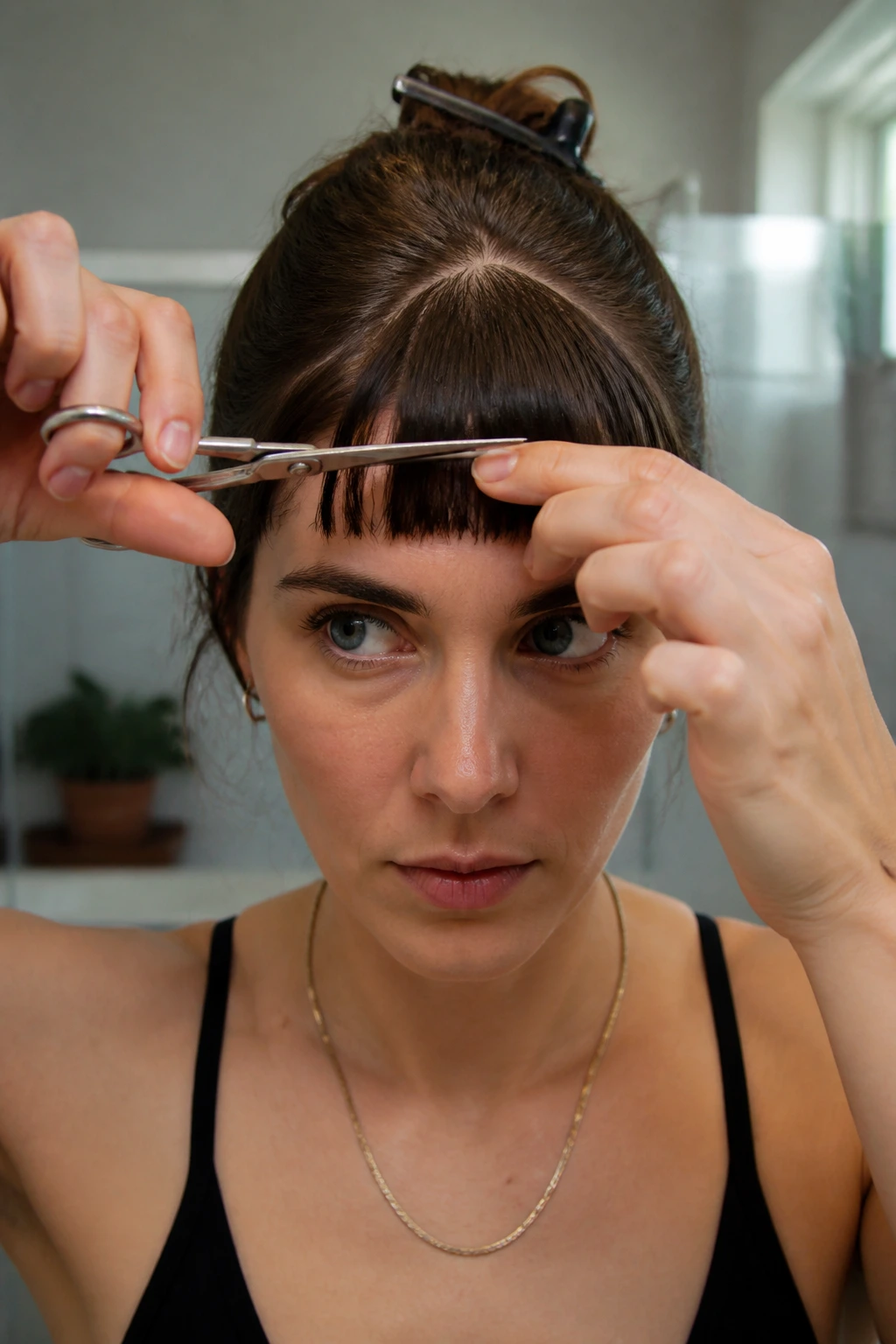
Micro bangs require regular maintenance to keep their short, chic length. While it is always best to visit your stylist for a trim, you can maintain them at home with a careful hand and the right tools.
Never use kitchen shears or paper scissors to trim your bangs; invest in a pair of professional hair-cutting shears. These are incredibly sharp and will clean-cut the hair without causing split ends or pulling. When trimming, always cut your hair dry and in its natural style to avoid cutting them too short.
How to Trim Your Bangs at Home
- Section off your bangs, clipping the rest of your hair back out of the way.
- Comb your bangs straight down and let them settle into their natural position.
- Hold your shears vertically, pointing upward, and make small, tiny snips into the ends of the hair. This technique, called point-cutting, softens the line and is much more forgiving than cutting straight across horizontally.
- Take your time, cutting only a tiny fraction of an inch at a time, and step back to look in the mirror frequently to check for symmetry.
Wrapping Up
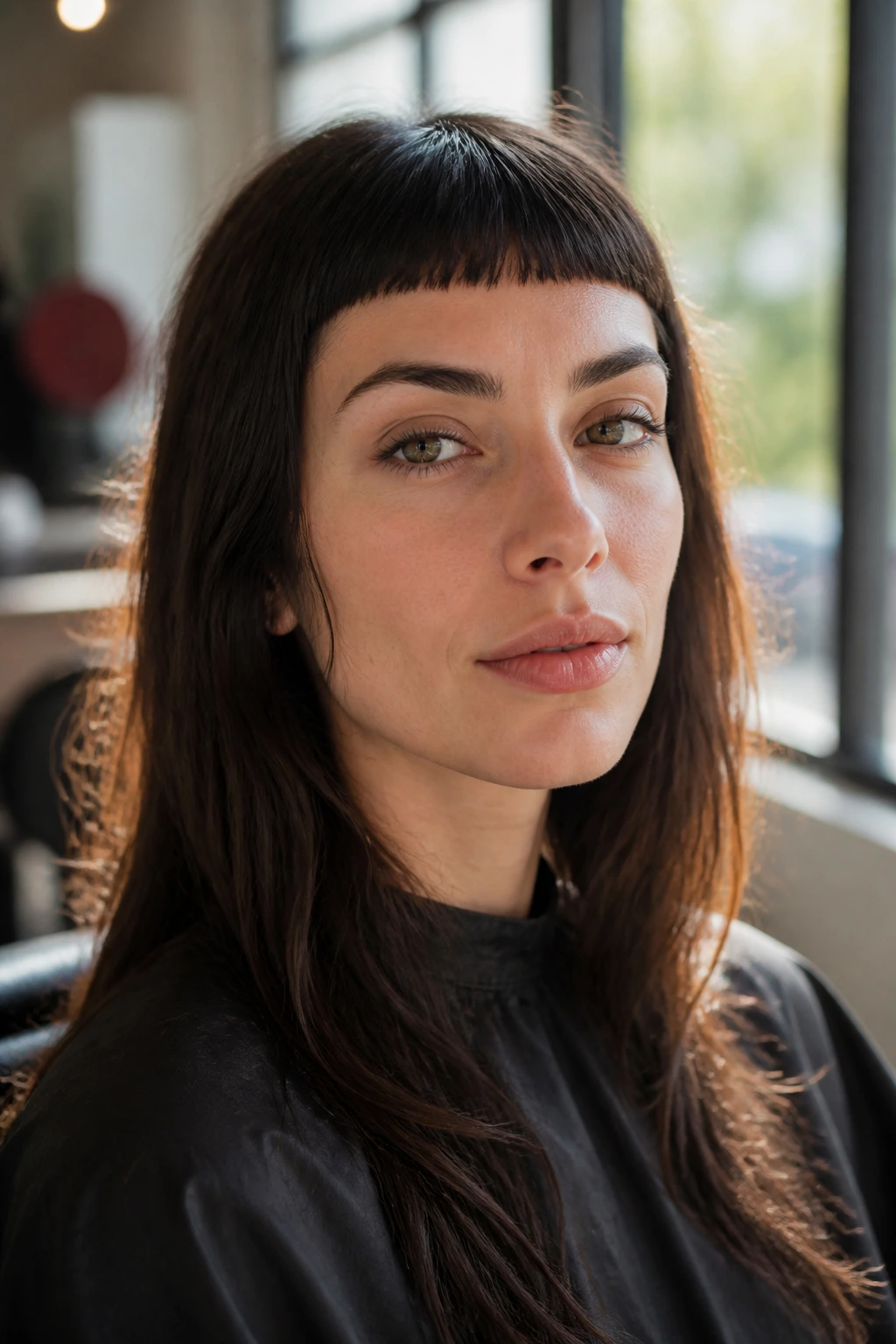
The decision to cut micro bangs is more than just a change in hairstyle; it is a shift in perspective. For those with long face shapes, it is an opportunity to step away from safe, conventional styling rules and embrace a look that is bold, artistic, and deeply personal.
Whether you choose a sharp, architectural blunt cut or a soft, wispy French-girl style, micro bangs offer a unique way to frame your features and express your style. By working with your hair’s natural density and texture, you can find a short fringe that flatters your oblong face shape and makes you feel confident.
Do not let outdated beauty charts dictate how you wear your hair. Embrace the elegance of your long face shape, grab those shears, and enjoy the liberation of the micro chop.