


A rainy morning, a humid afternoon, or just a normal Tuesday can turn a perfectly styled forehead into a cloud of fuzzy, static-laden hair. For years, anyone with textured, wavy, or coarse hair was told to steer clear of shears when it came to their forehead. The old rulebook claimed that fringe only belonged on glass-smooth, straight strands. But times have changed, and we now know that trying to force textured hair into a flat, straight box is a losing battle.
Embracing the natural swell of your hair is the key to effortless style, and short choppy bangs for frizzy hair offer the perfect way to work with your texture rather than fighting it. When you cut bangs with a jagged, piece-y edge, you create a built-in buffer against the climate. If a blunt, straight-across fringe gets wet, it splits, twists, and looks messy in a bad way. When a choppy, shattered fringe meets moisture, it simply gains volume, movement, and a lived-in look.
The trick lies in how the hair is layered and weighted. By removing bulk from the ends of the fringe, your stylist can prevent the dreaded “triangle head” shape that happens when thick, textured hair is cut too straight. Instead, the hair falls in distinct, separated clumps that look deliberate, even when the humidity rises to eighty percent.
This style is about finding the sweet spot between structural shape and natural movement. Whether your hair is wavy, curly, or fine and prone to static, there is a way to carve out a short, choppy fringe that flatters your face and works with your morning routine. Let’s look at how this cut behaves in the wild and explore the best ways to wear it.
How Frizz and Hair Texture Interact with Choppy Cuts
To understand why a choppy cut works so well on fuzzy hair, you have to look at the anatomy of a strand of hair. Frizz happens when the outer layer of the hair, known as the cuticle, lifts up to drink moisture from the surrounding air. When the cuticle lifts, the strand swells and bends away from its neighbors, creating that familiar fuzzy halo.
If you cut those strands in a single, heavy horizontal line, any swelling will ruin the line immediately. The bangs will look crooked, uneven, and puffy. A choppy cut uses varying lengths within the same section of hair. By cutting some strands shorter and leaving others slightly longer, the stylist creates space between the hairs.
When your hair swells in humid weather, these unequal lengths slide past one another instead of pushing against each other. The result is a soft, textured shape that holds its overall form even when individual strands decide to go their own way. It is a design that accommodates movement rather than trying to freeze your hair in place.
Crucial Styling Tools for Curly and Frizzy Bangs
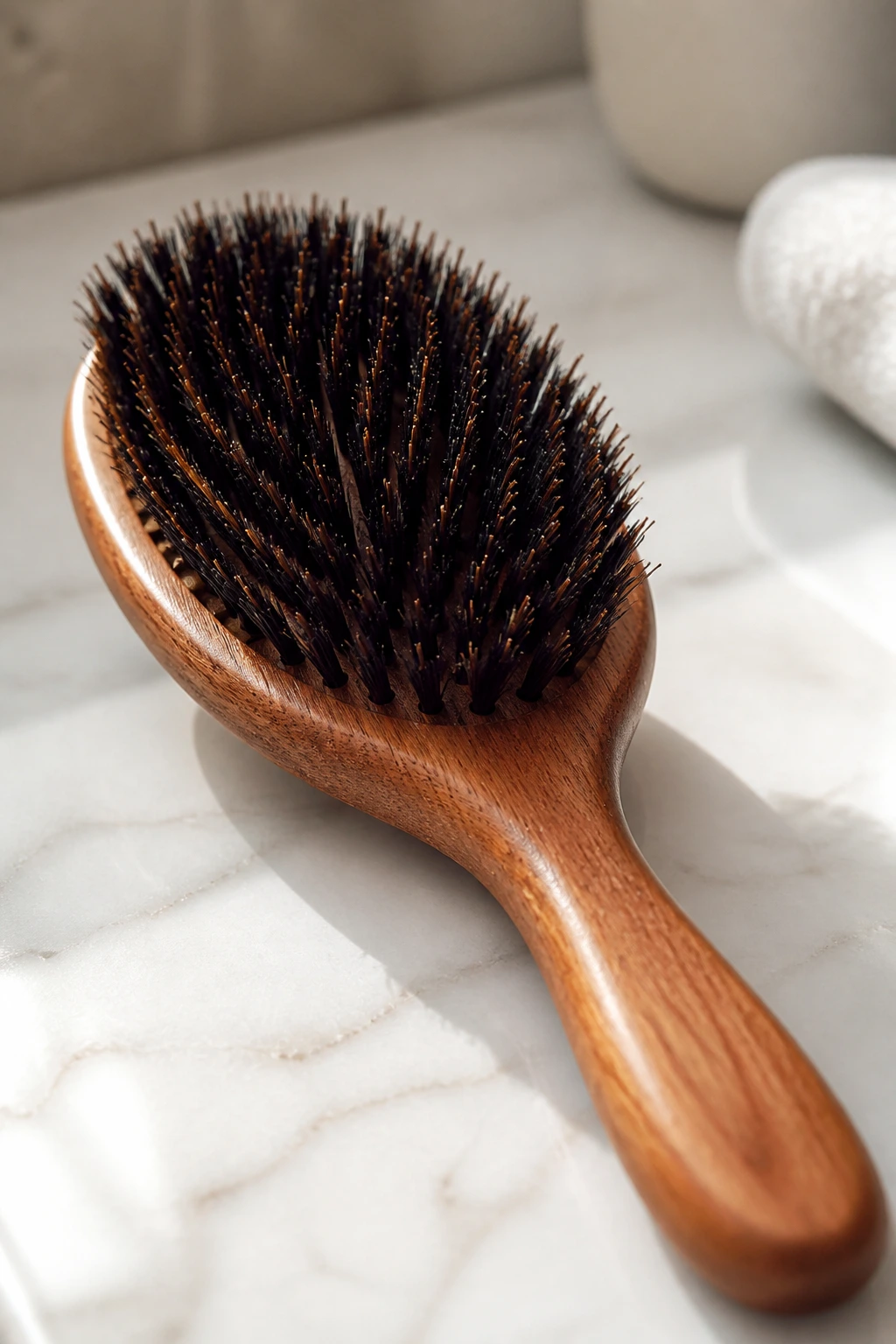
Before you pick up the scissors or head to your local salon, you need to set your bathroom up for success. Styling textured fringe does not require a massive vanity full of high-end gadgets, but it does require a few specific tools that respect the natural bounce of your hair.
First, toss out any cheap plastic combs that create static. Instead, invest in a small, high-quality wooden boar-bristle brush. The natural bristles help distribute the oils from your scalp down the shaft of the hair, which naturally seals the cuticle and reduces frizz.
Next, you will want a blowdryer with a reliable, clip-on diffuser attachment. Direct, high-velocity air blasts the hair apart and creates massive frizz, while a diffuser slows down the airflow, spreading the heat evenly so your natural wave pattern can dry without being disrupted. Keep these tools nearby:
- A natural boar-bristle styling brush: Great for smoothing roots without stripping away your hair’s natural bounce.
- A professional blowdryer with a diffuser: Distributes warm air gently to dry hair without blowing it into a cloud of static.
- A half-inch ceramic flat iron: Perfect for detailing the very tips of your bangs without flattening the volume at the roots.
- A wide-tooth wooden comb: For detangling wet bangs gently without snapping the fragile hair strands around your face.
1. The Pixie Micro Fringe
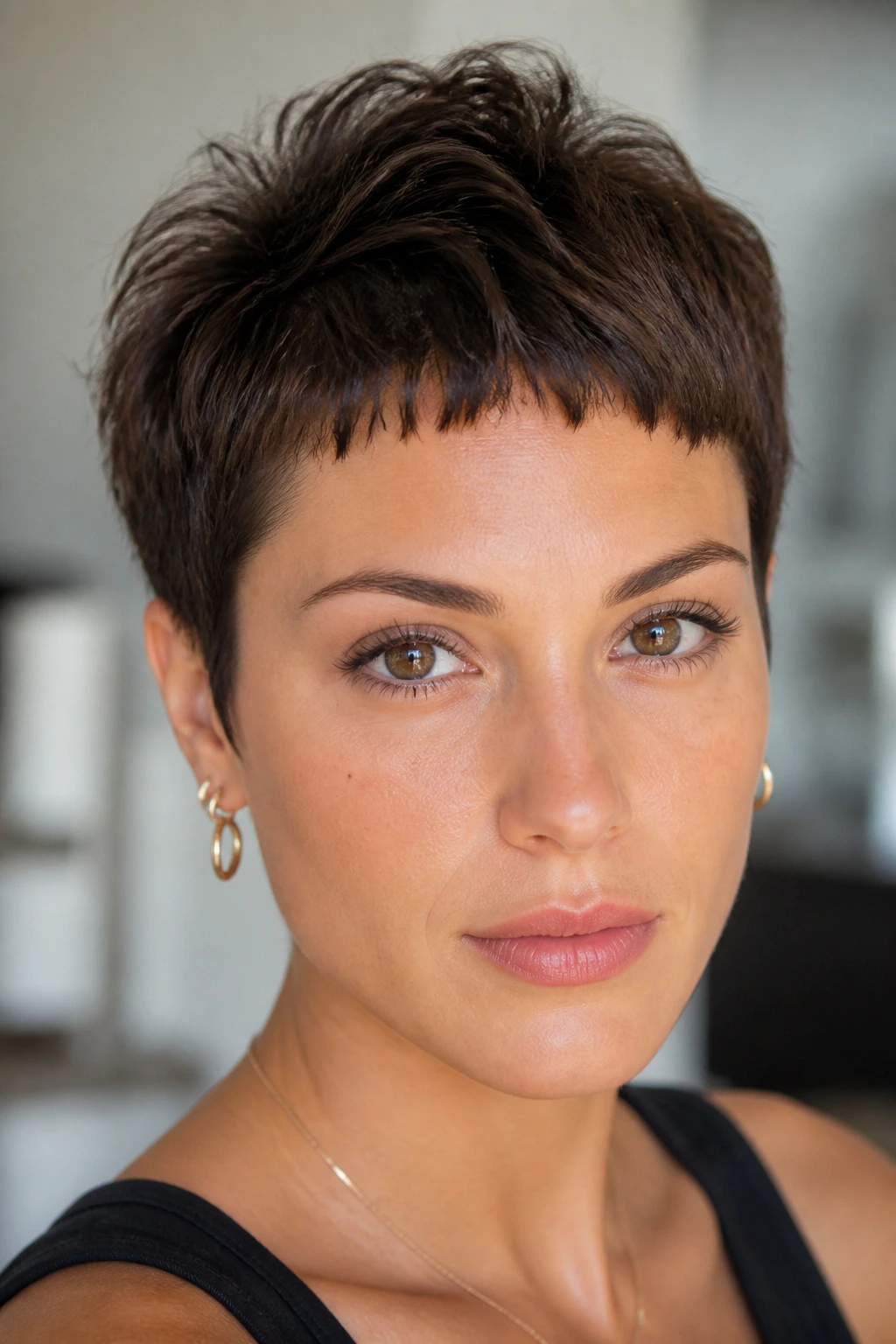
This cut is all about minimal length and maximum attitude, taking the bangs up high on the forehead to keep them completely clear of your eyebrows.
Why Micro Cuts Love Texture
When you cut bangs this short, you remove most of the weight that would otherwise pull the hair downward. This allows your natural cowlicks and waves to lift up, creating a spiked, organic crown that frames the top of your face. It is an excellent option for anyone who wants a low-maintenance morning routine because there simply is not enough hair left to tangle or droop.
Quick Hair Facts
- Ideal Face Shape: Oval, round, or heart-shaped faces.
- Maintenance Level: High; you will need a trim every three to four weeks to keep the length above the brow.
- Styling Time: Under two minutes; a quick dab of pomade is all it takes.
- Best Hair Type: Fine to medium hair with a light wave.
Pro tip: Apply a pea-sized amount of matte styling clay to your fingertips and pinch the ends of the micro fringe to create distinct, chunky pieces that resist humidity.
2. Shaggy Wolf-Cut Choppy Bangs
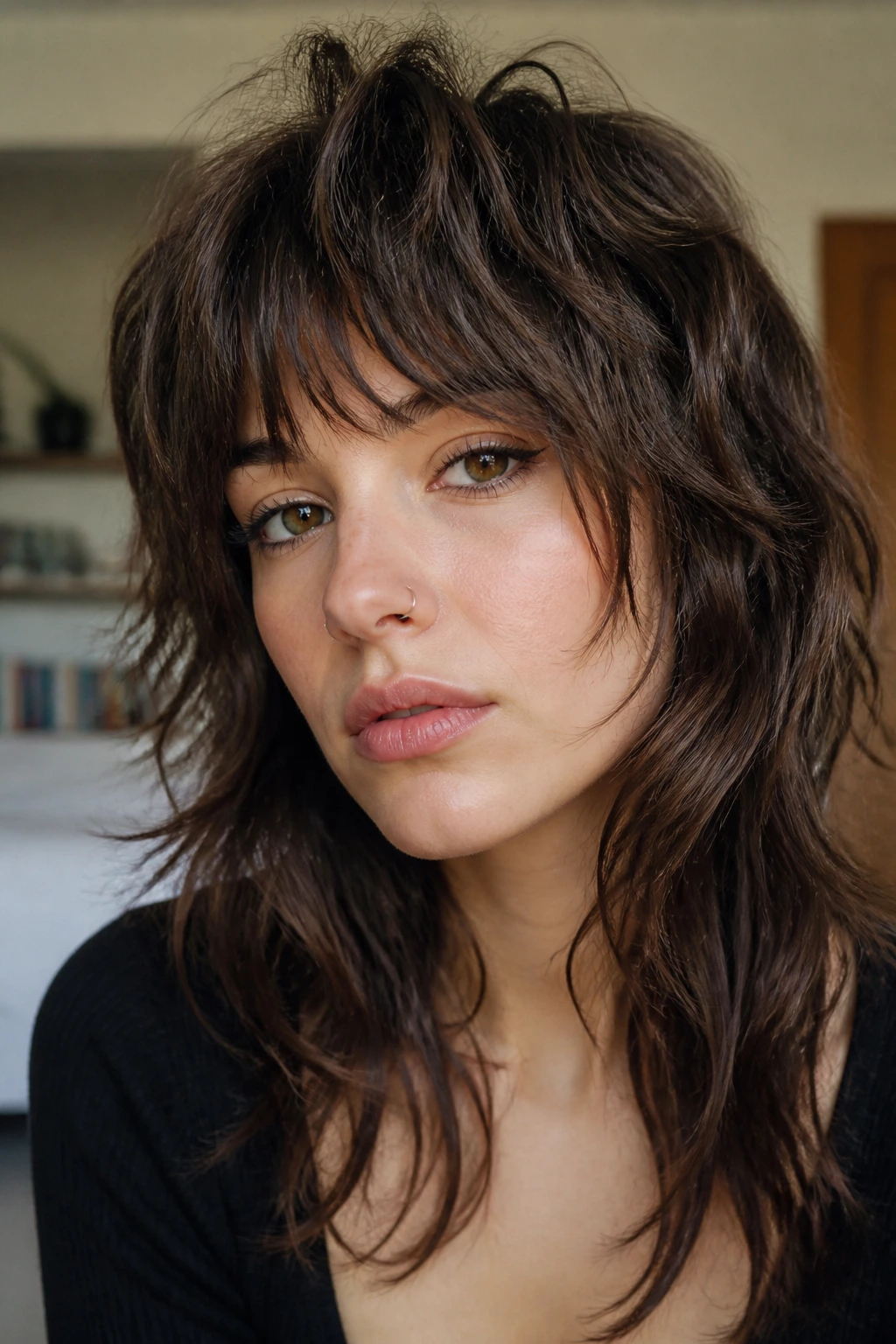
The wolf cut has taken over salon chairs for a simple reason: it embraces messy texture like no other style can.
This look pairs a heavily layered frame with bangs that are sliced into with a razor, creating a soft, feathered entry point around your eyes. Instead of sitting flat against your forehead, these bangs blend into the shaggy layers along the sides of your face, making the transition from fringe to length feel completely seamless.
Because the entire haircut is built around a shaggy, lived-in texture, any midday frizz simply adds to the rock-and-roll vibe of the style. If your hair starts to swell at noon, it just looks like you spent the morning at a concert rather than looking like you forgot your umbrella.
3. Asymmetrical Textured Crop
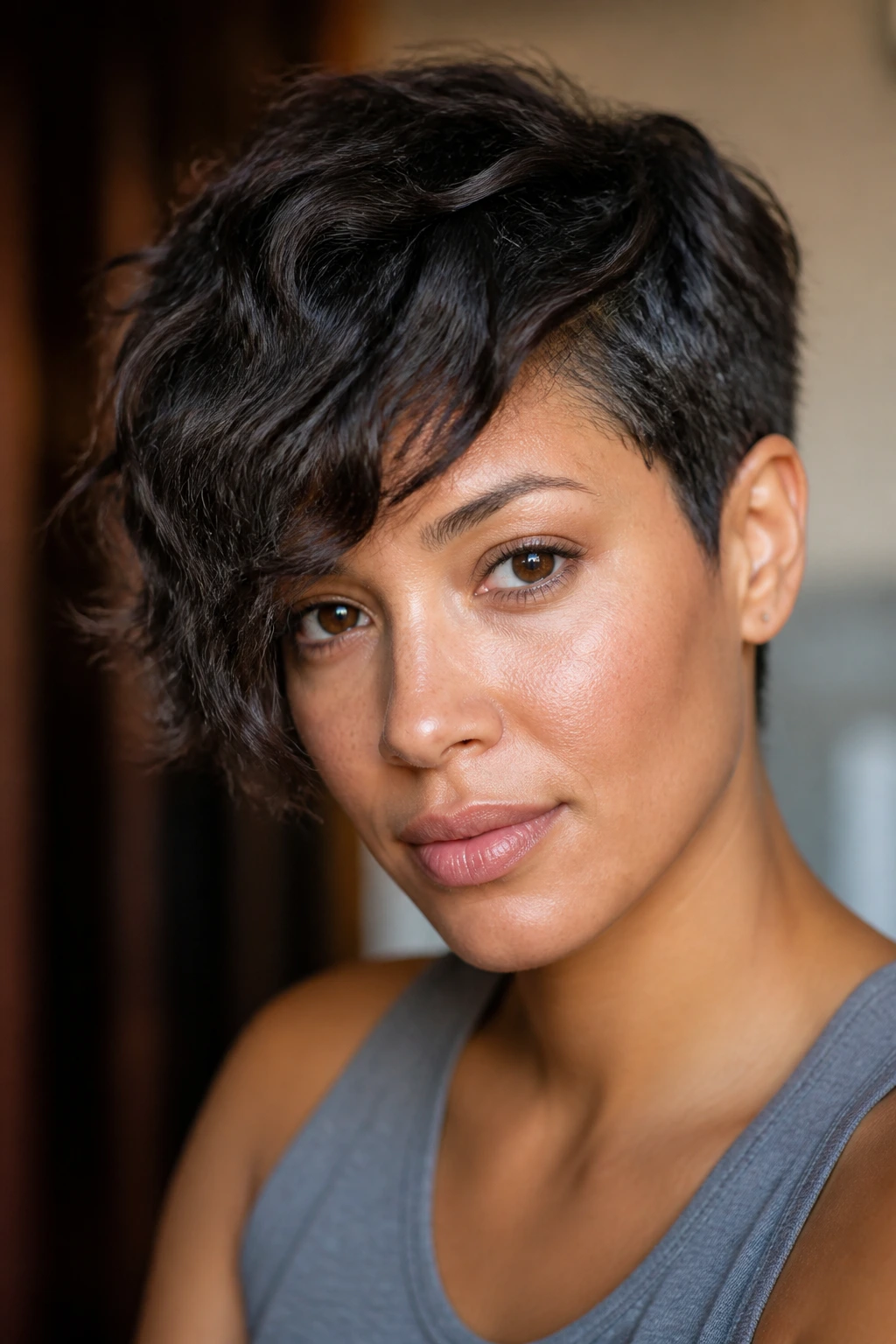
Why should bangs have to be the same length on both sides of your forehead?
How to Style the Asymmetry
The beauty of an asymmetrical crop is that it works with your hair’s natural parting habits. If you have a stubborn cowlick on the left side of your hairline, your stylist can cut that side shorter, allowing the hair to bounce up naturally without looking out of place. The longer side then sweeps across your forehead in a soft, jagged diagonal line that draws attention to your cheekbones.
How to Get the Look
- Ask your stylist to determine where your hair naturally splits or parts before they touch the shears.
- Have them cut the shorter side near the temple, gradually sloping down to brow-length on the opposite side.
- Ensure they use point-cutting techniques on the ends to keep the weight light and airy.
- Smooth the longer side with a light leave-in conditioner to keep the diagonal line clean.
4. The Classic French Girl Shag Fringe
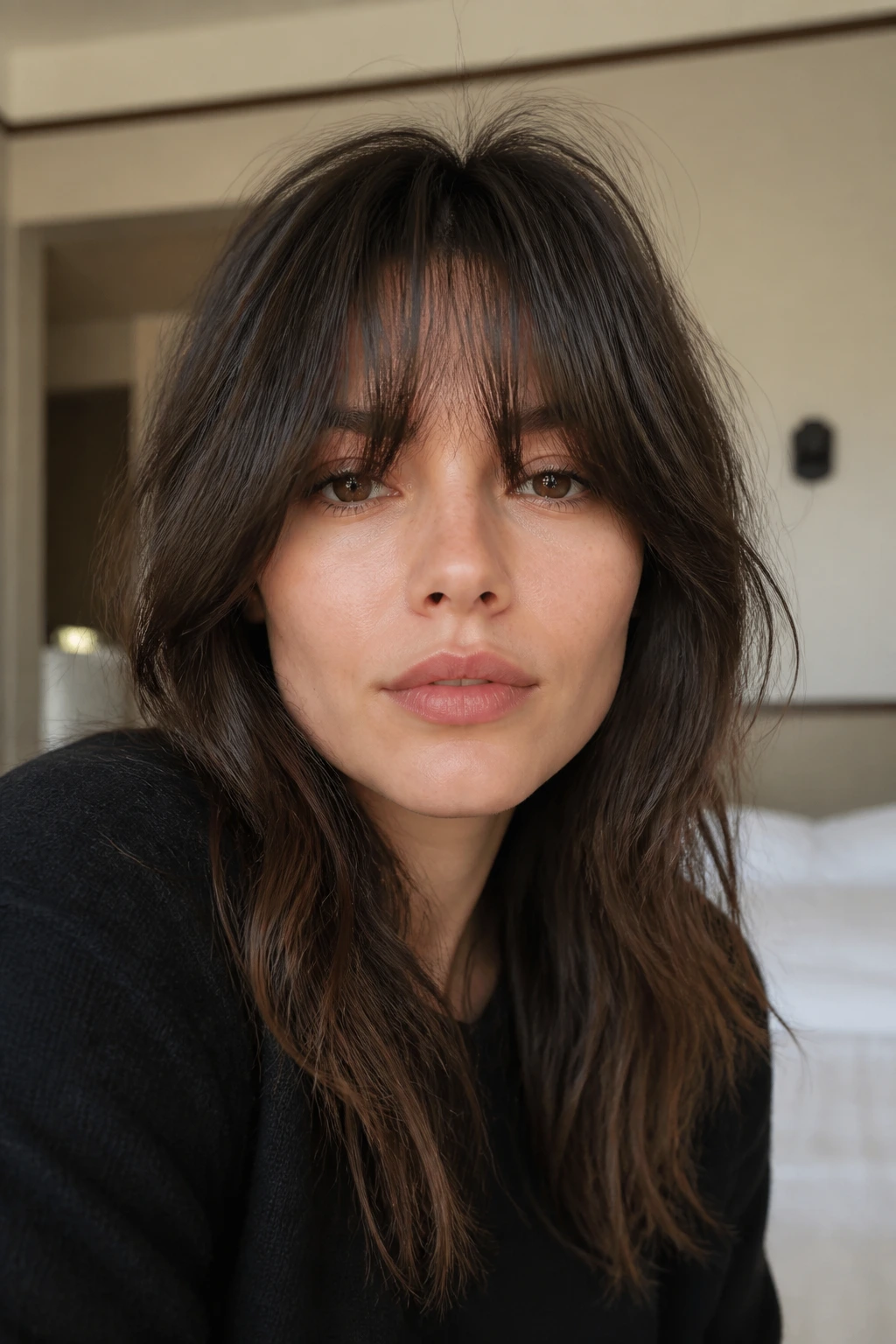
This style evokes images of effortless afternoons along the Seine, offering a look that is polished but never looks like it tried too hard.
The French girl shag uses curtain-like choppy bangs that are slightly shorter in the middle and longer at the outer corners of the eyes. This creates a soft frame that makes your eyes pop while allowing the center of your forehead to peek through.
The magic of this cut is in the weight distribution. By thinning out the center and leaving the sides heavy, the fringe naturally parts itself as it dries, working with your hair’s natural movement.
- The Center Section: Sliced short and piece-y to break up the forehead line.
- The Outer Corners: Left longer to blend directly into your temple-framing layers.
- The Texture: Softly shattered with shears to encourage a natural, air-dried wave.
- The Daily Feel: Casual, slightly messy, and incredibly easy to style on humid days.
5. Piecey Brow-Skimming Shattered Bangs
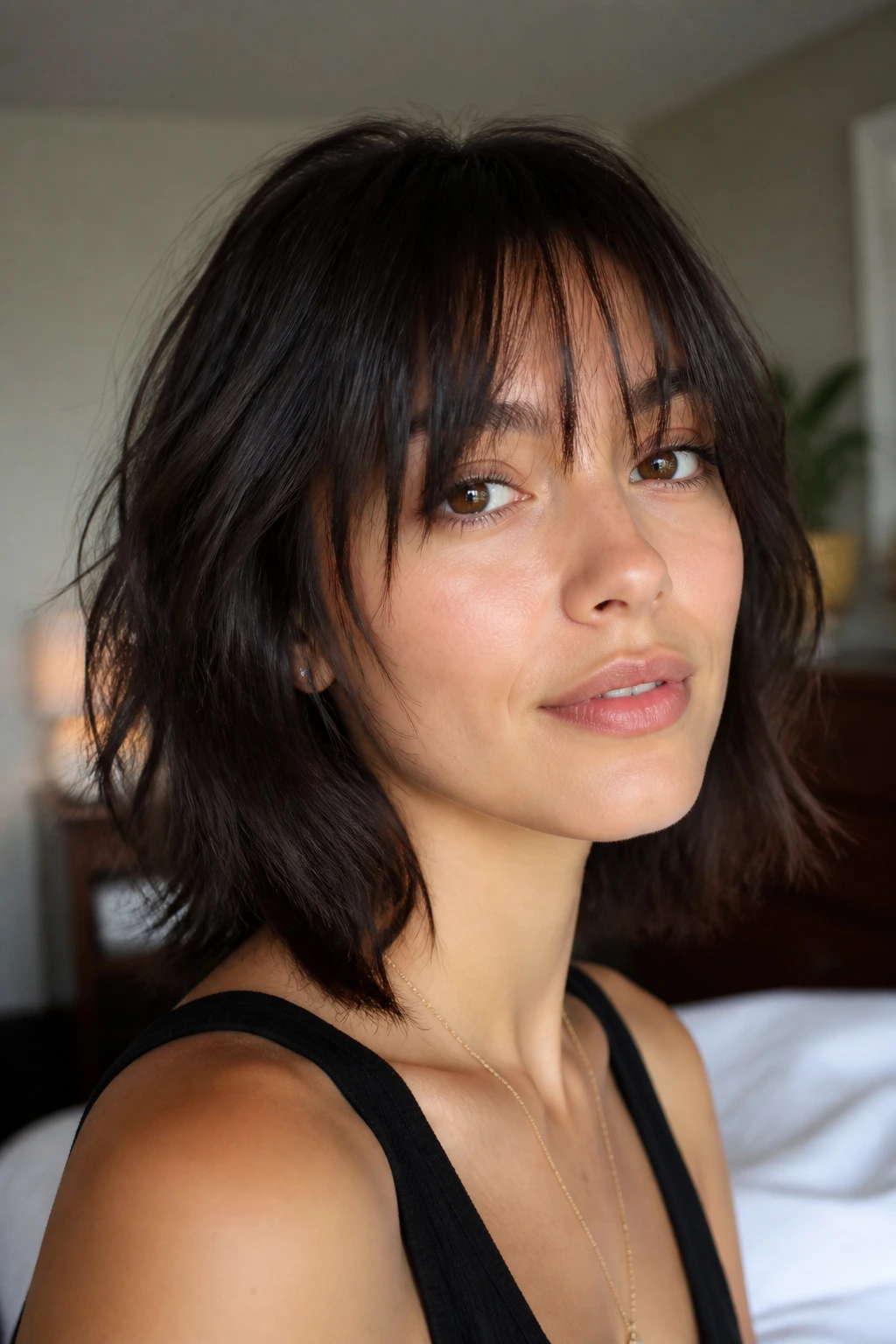
This is a longer option that sits right at the eyebrow line, using deep vertical cuts to break up the solid weight of the fringe.
Rather than looking like a solid block of hair, these bangs look like a collection of soft, vertical feathers that allow your forehead to show through. It is an incredibly flattering look for square or rectangular faces because the vertical spaces in the fringe help soften the strong angles of the jawline.
Because these bangs are longer, they are more prone to catching moisture from your breath and the air, which can cause them to curl up during the day. However, because they are cut so piece-y, that curl simply adds a beautiful, wavy texture that looks entirely intentional.
To keep them looking their best, avoid heavy forehead creams or oily serums near your hairline. These products will transfer to your bangs, weighing them down and causing them to clump together in greasy locks rather than soft, airy pieces.
6. Temple-Tapered Baby Bangs

Unlike standard baby bangs that stop abruptly at the corners of the forehead, this style curves downward to hug the temples.
This subtle curve creates a beautiful frame for your eyes and keeps the sides of your fringe from puffing outward when the humidity rises. It is a highly tailored look that brings a touch of modern structure to otherwise wild, frizzy hair textures.
This style is best for individuals with thick, coarse hair who find that traditional bangs always end up looking too wide or bulky. By tapering the temples, your stylist removes the excess bulk that usually accumulates right above the ears, keeping the silhouette neat and balanced.
7. Feathered Razor-Cut Edge Fringe

A razor tool creates a completely different edge than traditional scissors, slicing each hair strand at an angle to create a tapered, feather-like tip.
The Razor Difference
When your stylist uses a straight razor on wet hair, they can carve out weight from the inside of the bang section. This creates a fringe that is incredibly soft to the touch and moves with the slightest breeze. It is the absolute best way to manage heavy, bulky hair that tends to turn into a dense mat when humidity hits.
Quick Hair Facts
- Ideal Face Shape: Heart, oval, or long faces.
- Maintenance Level: Medium; the feathered ends grow out softly without harsh lines.
- Styling Time: Three minutes; dry with your fingers and a quick shot of cool air.
- Best Hair Type: Medium to thick hair with a coarse texture.
Pro tip: Never let a stylist use a razor on dry hair, as this can shred the cuticle and actually increase frizz; the hair must be wet for a clean, smooth razor cut.
8. Curly Shag Choppy Bangs

If you have true curls rather than waves, this is the cut that will change how you view your hair.
Many people with curly hair are terrified of bangs because they fear their curls will shrink up into a tight, frizzy sponge on their forehead. This shaggy cut solves that problem by cutting individual curls at different lengths, allowing them to nestle into each other like a puzzle.
Instead of a solid wall of curls, you get a beautiful, bouncing collection of ringlets that frame your face. The secret is to cut the hair completely dry so the stylist can see exactly how each curl bounces and where it wants to live.
9. Wispy Crescent Choppy Bangs
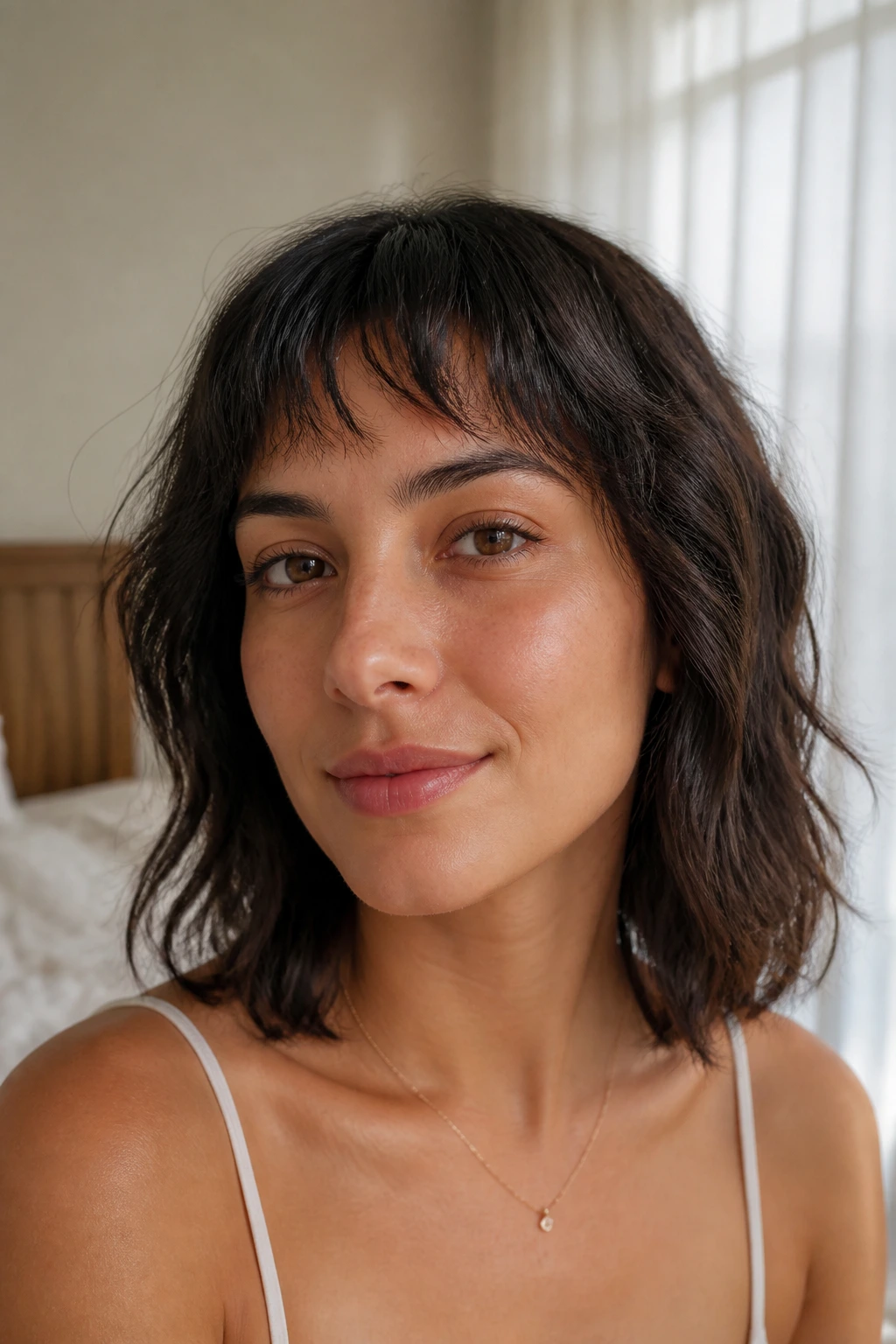
The crescent shape is arched, meaning it is shorter in the middle of the forehead and curves gently down to meet the cheekbones.
Why the Curve Works
The curved silhouette of the crescent cut helps tuck the wilder edges of your hair behind your ears or blend them into your side layers. By keeping the center short and wispy, you prevent the hair from overwhelming your face, even if your hair swells to twice its normal size in wet weather.
How to Style the Crescent
- Start with wet hair and apply a small amount of curl-defining cream to the fringe.
- Use your fingers to pull the center bangs straight down and the side pieces slightly outward.
- Let the hair air-dry completely without touching it to prevent frizz from forming.
- Once dry, gently shake the roots with your fingertips to release the style.
10. Heavy Crown-Sourced Choppy Bangs
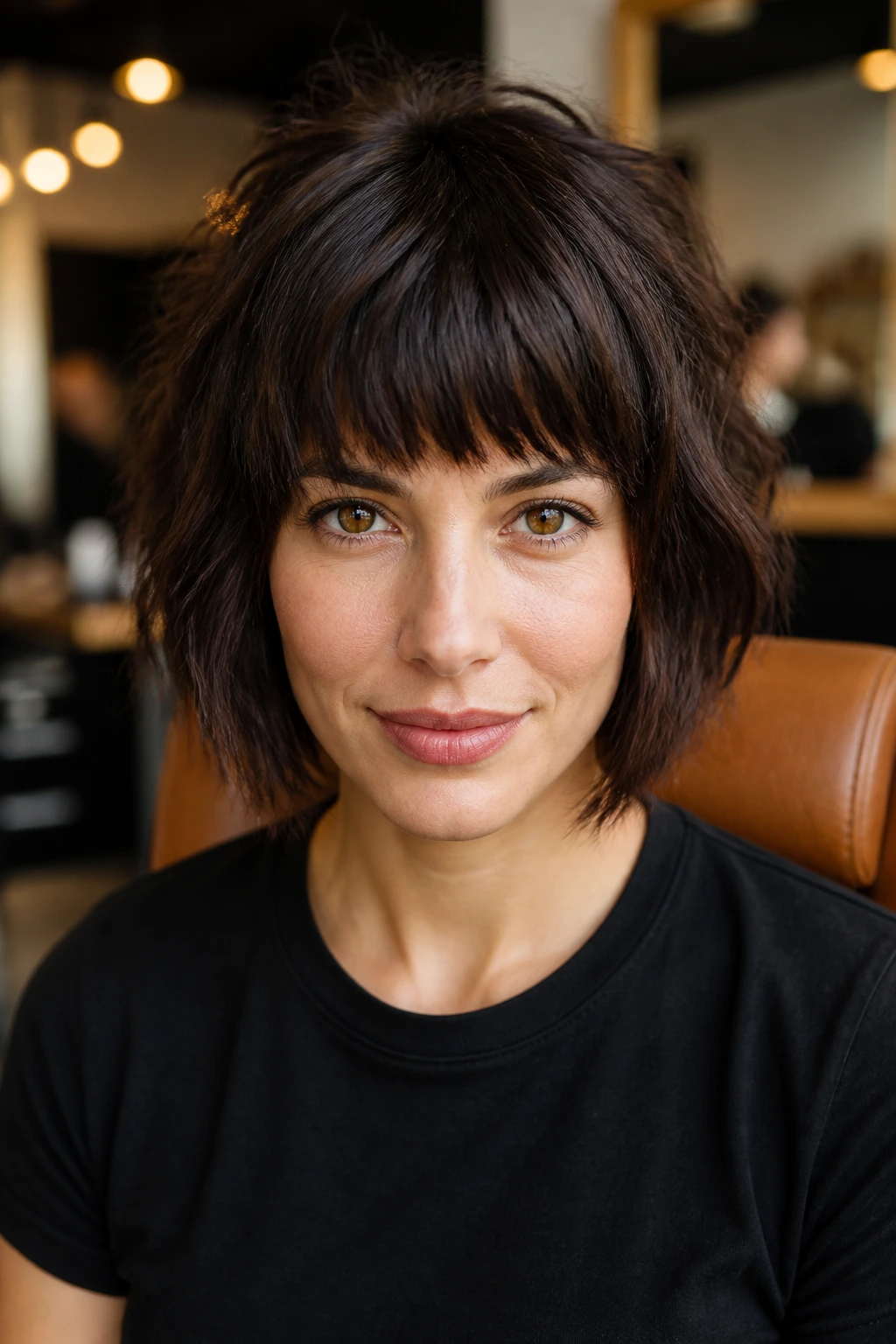
For those with fine hair that tends to get frizzy and limp, sourcing the bangs from deeper back on the crown is a game-changer.
By starting the section further back on your head, your stylist pulls more hair forward into the fringe. This creates a thicker, more substantial bang that has enough weight to resist flyaways and static, while the choppy ends keep it from looking heavy or dated.
This style works beautifully because the weight of the crown hair acts as a natural anchor, keeping the bangs resting against your forehead rather than floating upward in a humid breeze.
- The Starting Point: Two to three inches back from the natural hairline.
- The Cut: Deep point-cutting to shred the bottom edge of the heavy section.
- The Benefit: Adds instant volume to fine, static-prone hair.
- The Vibe: Bold, mysterious, and highly structured at the top.
11. Side-Swept Blunt-Cut Choppy Fringe
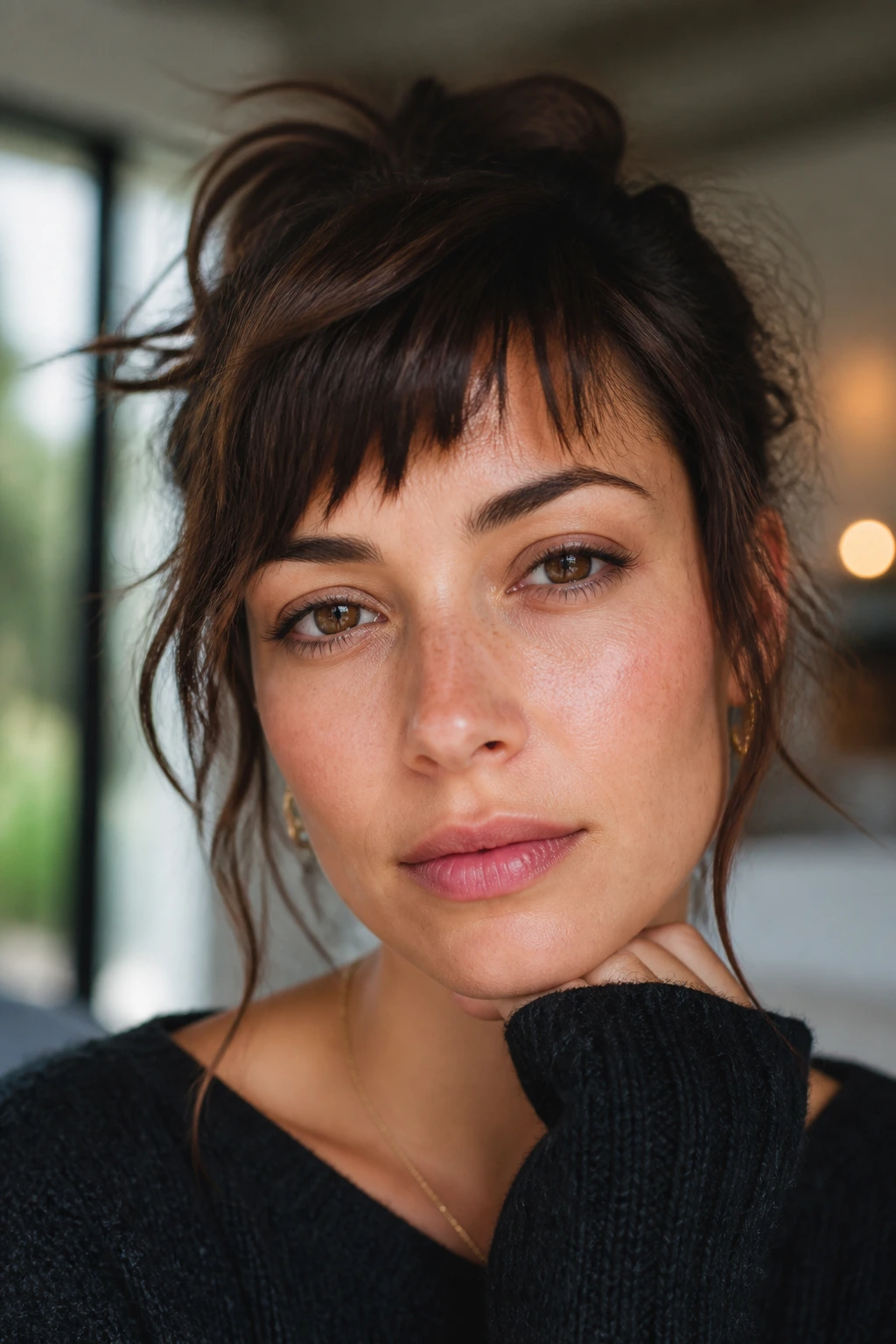
This style takes the traditional side-swept bang and gives it a modern, jagged update.
Instead of a smooth, swooping wave of hair, this fringe is cut with sharp, vertical notches along its diagonal path. This allows the hair to separate naturally, letting your forehead show through and preventing the sweat buildup that often occurs under solid, heavy side bangs.
It is a great option for anyone transitioning from a middle part to bangs because it allows you to keep some length on one side of your face while still enjoying the framing benefits of a short fringe.
The uneven length means that as your hair curls or swells throughout the day, the side-swept line simply looks more textured and interesting, rather than looking like your styling job has failed.
12. Disconnected Textured Mullet Bangs
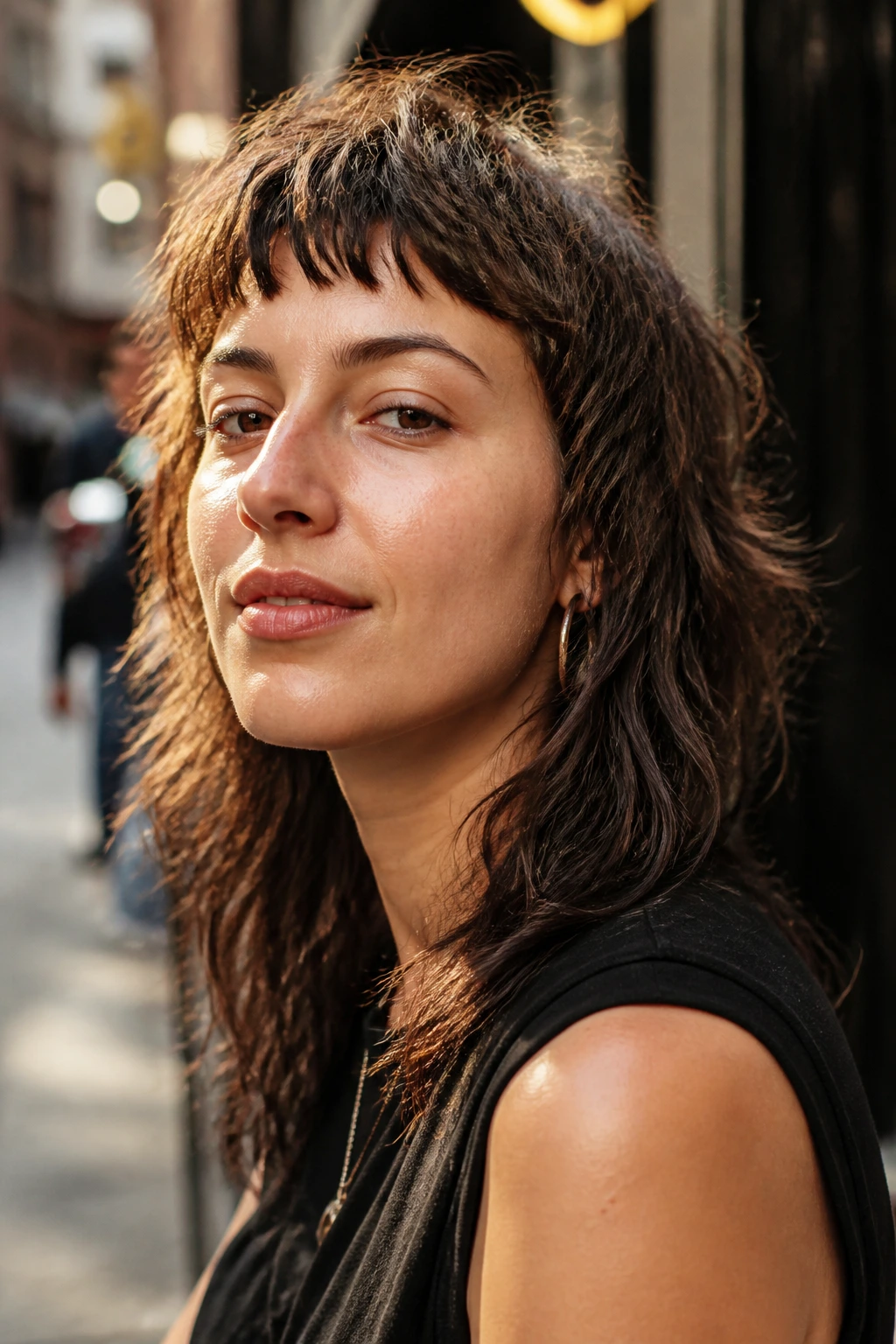
This is a high-contrast style that is perfect for those who love to stand out.
The term “disconnected” means there is a sharp jump in length between the bangs and the side sections of the hair. The bangs are kept short and choppy, stopping well above the brow, while the sides drop down long to frame the ears and jawline.
This cut is incredibly forgiving for frizzy hair because the disconnection means your bangs do not have to blend perfectly into the rest of your hair. They can do their own wavy, textured thing while the rest of your hair frames your face in longer, heavier locks.
13. Bottleneck Choppy Bangs
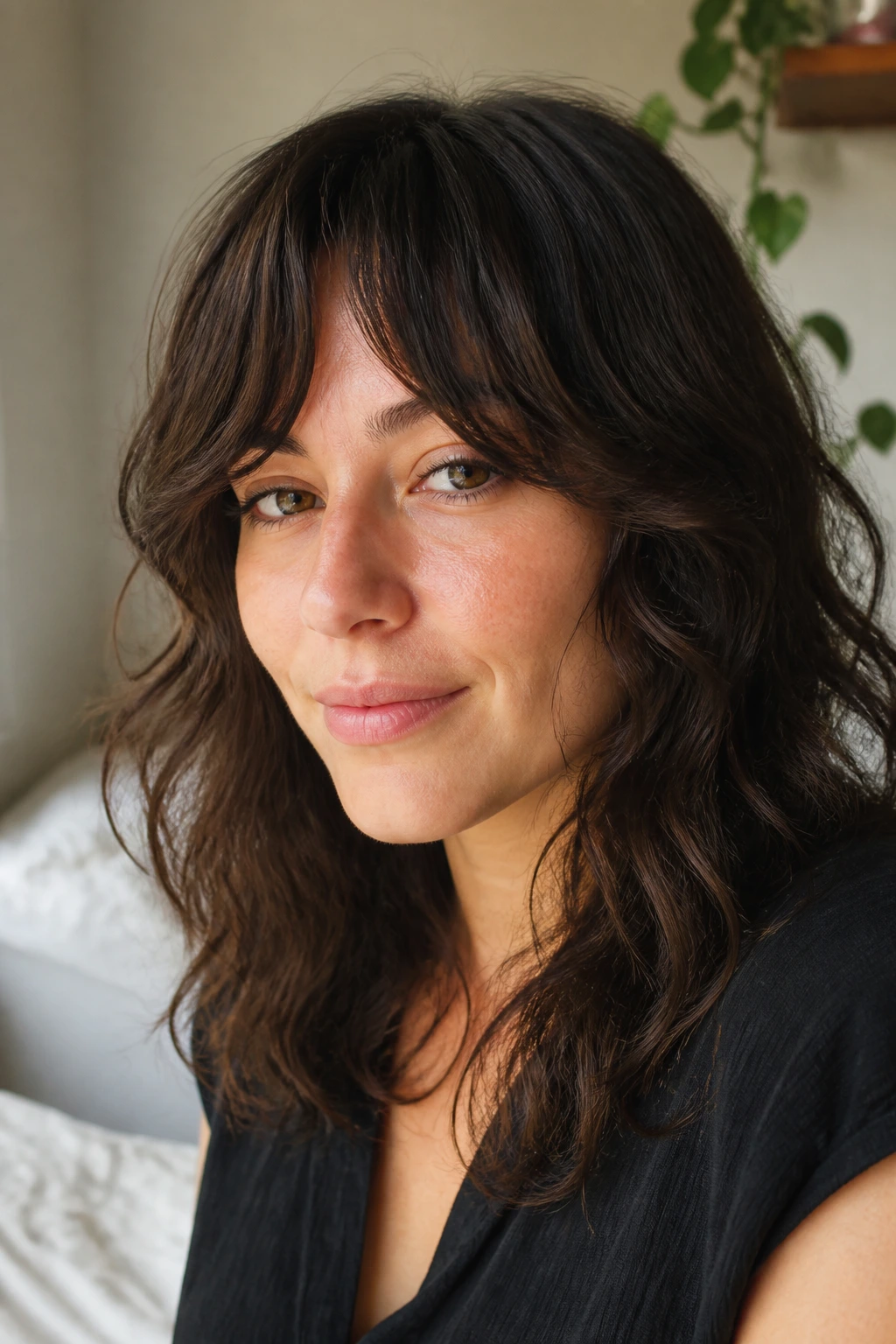
Inspired by the shape of a classic glass bottle, these bangs are narrow at the top, flare out around the eyes, and curve gently at the cheekbones.
The Physics of the Bottleneck
Because the top of the fringe is kept narrow, it doesn’t require a lot of hair from your crown, leaving the rest of your hair free to create volume on the sides. The flared bottom section provides a beautiful, soft drape that flatters almost every face shape and works perfectly with natural, air-dried waves.
Quick Hair Facts
- Ideal Face Shape: Heart, oval, or pear-shaped faces.
- Maintenance Level: Low to medium; the shape grows out into beautiful face-framing layers.
- Styling Time: Four minutes; a quick dry with a diffuser is all it takes.
- Best Hair Type: Wavy or curly hair that needs soft framing.
Pro tip: When blowdrying bottleneck bangs, use your fingers to twist the longer outer corners away from your face to create a beautiful, winged effect.
14. Undercut Pixie Choppy Fringe
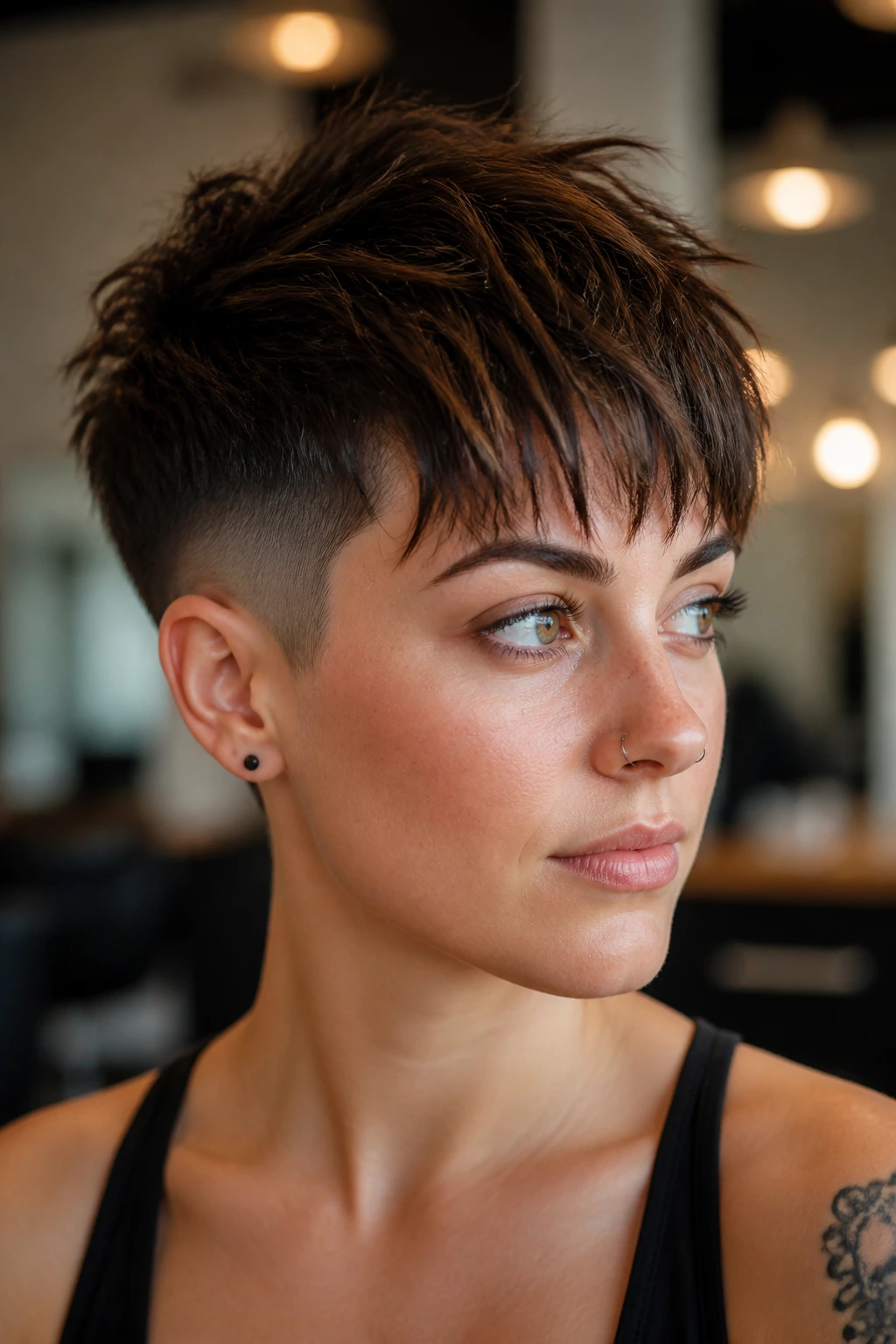
If you have incredibly thick, coarse hair that turns into a massive puffball at the first sign of humidity, an undercut is your secret weapon.
By shaving or cutting the hair very short around the temples and underneath the fringe, your stylist removes fifty percent of the bulk. The remaining top layer of hair then falls over the short sections, creating a light, airy, choppy fringe that has nowhere near enough volume to puff outward.
This style feels incredibly cool and lightweight in warm weather, and it eliminates the bulk that usually makes short bangs look blocky or heavy on thick-haired individuals.
15. Razored Curtain Choppy Bangs
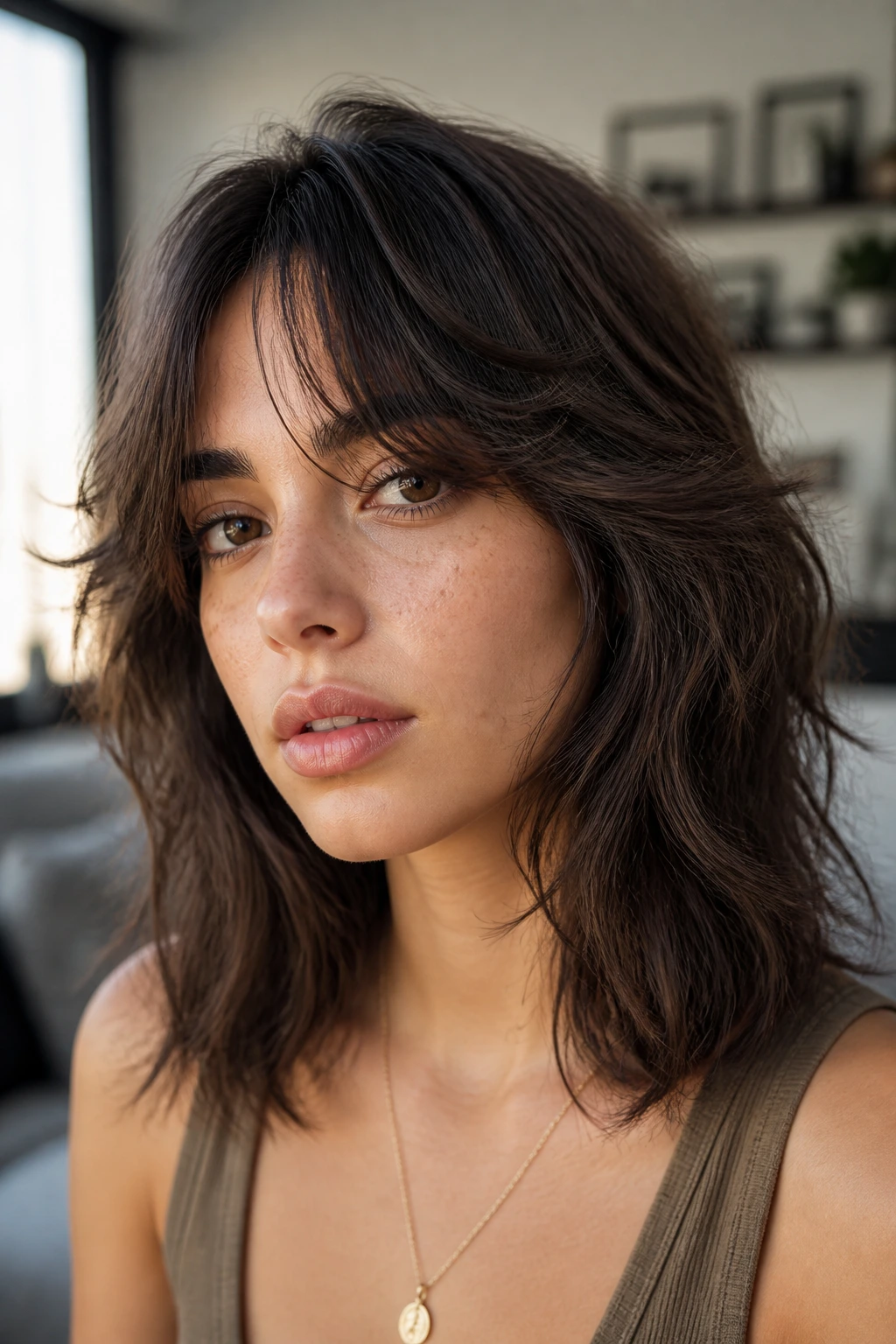
Curtain bangs are classic, but when you razor-cut them, they take on a whole new level of movement.
Why Razored Curtains Are Different
Instead of a heavy curtain that hangs flat on either side of your face, a razored curtain fringe is incredibly wispy and responsive to your natural wave. The razor removes weight from the ends of the hair, allowing the bangs to bounce up and curve outward, creating a beautiful wing that mimics the wind.
How to Get the Look
- Request a center-parted curtain bang cut with a straight razor on wet hair.
- Ask for the shortest piece to start at the bridge of the nose, sloping down to the cheekbones.
- Have the stylist slide-cut the edges to create a highly tapered finish.
- Apply a lightweight hair oil to the ends to seal the cuticle and add shine.
16. Voluminous Coily Micro Bangs
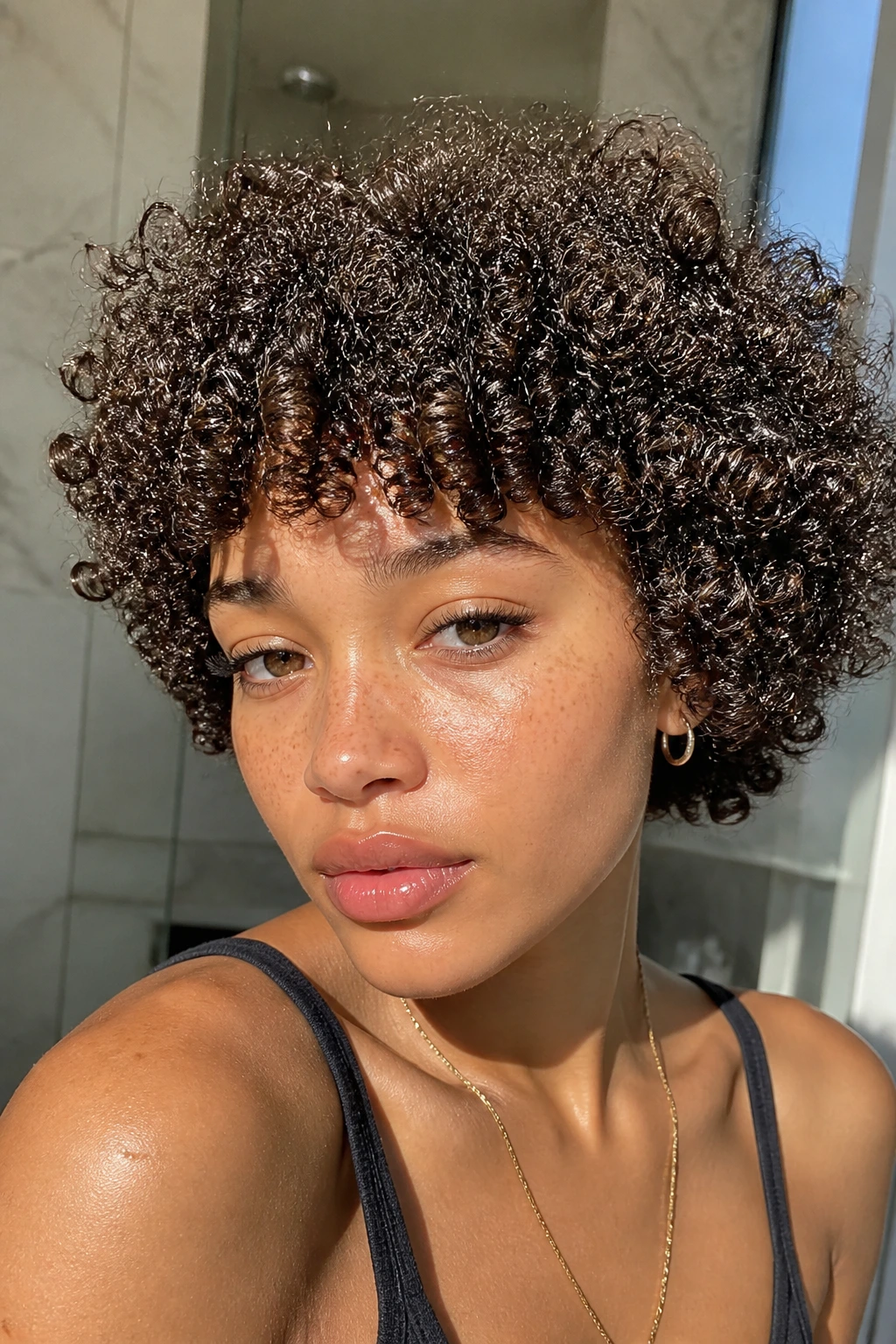
Coily hair has a gorgeous, tight pattern that looks spectacular when shaped into a short, spherical micro fringe.
Rather than trying to stretch or blow out your coils, this style cuts them in their natural, shrunk-up state to create a halo of tight, springy loops across the forehead. It is a bold, beautiful look that celebrates the natural strength and volume of coily hair.
Because coily hair is naturally dry, these bangs require plenty of moisture to keep them looking defined. A leave-in conditioner or curl smoothie applied to wet hair will help the coils clump together, preventing them from turning into a dry, shapeless fuzz.
- The Cut: Performed dry, curl by curl, to ensure perfect shape and length.
- The Shape: Rounded to follow the natural curve of the brow bone.
- The Moisture: Rich, cream-based leave-in products to define each loop.
- The Vibe: Artistic, bold, and incredibly expressive of natural texture.
17. Split-Center Shattered Fringe
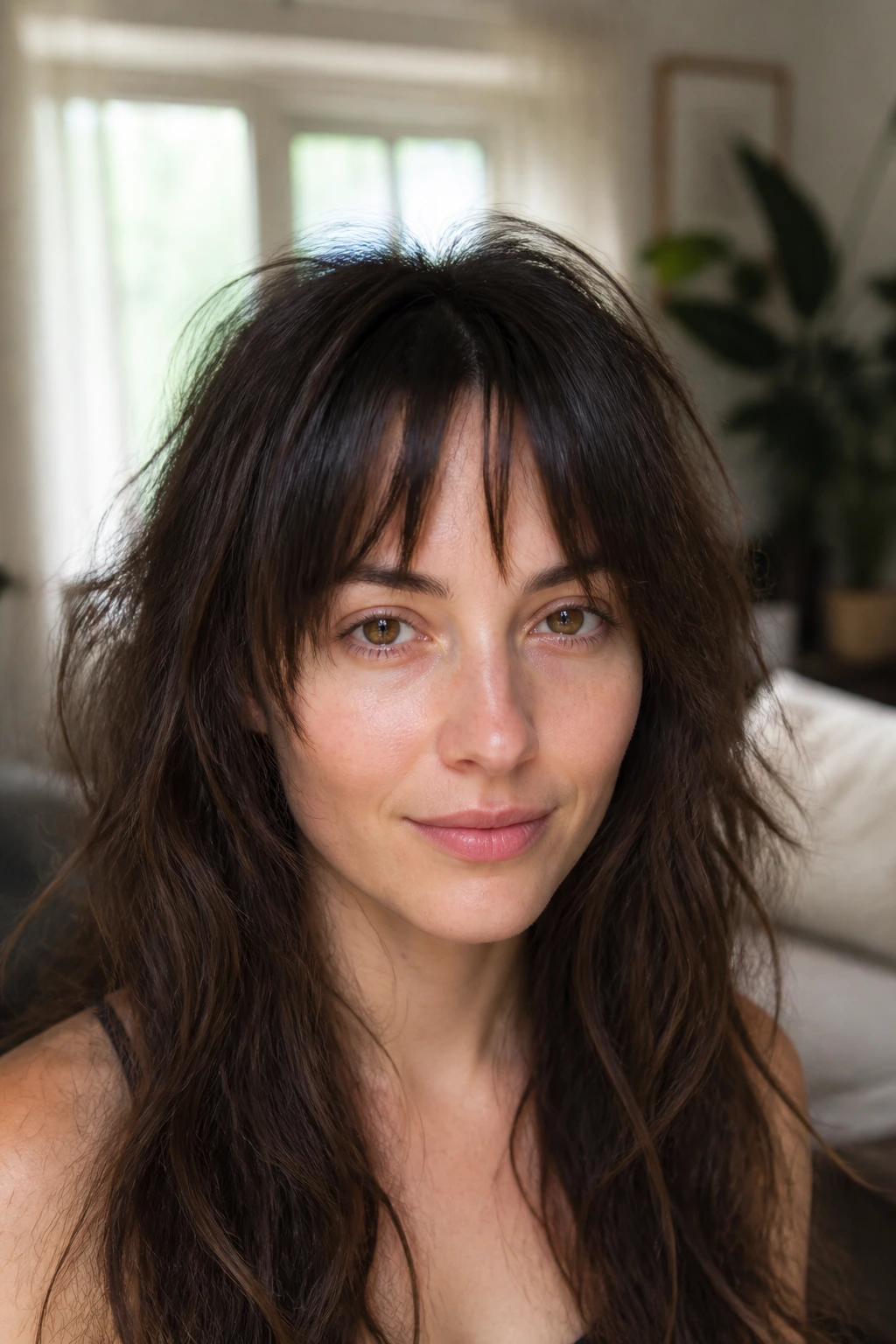
This look is for anyone who hates the feeling of hair sitting flat against their forehead.
The split-center shattered fringe is designed to part naturally right down the middle, with the hair on either side cut in jagged, unequal lengths. This creates a peek-a-boo effect that shows off your forehead while still providing a soft, framing effect around your eyes.
It is an incredibly easy style to maintain because there is no solid line to keep straight. If one side decides to curl up higher than the other, it simply looks like part of the asymmetrical, shattered design of the cut.
To style, simply apply a touch of sea salt spray to wet bangs and use your fingers to shake them out to the sides as they dry.
18. Soft Tapered Wispy Choppy Bangs
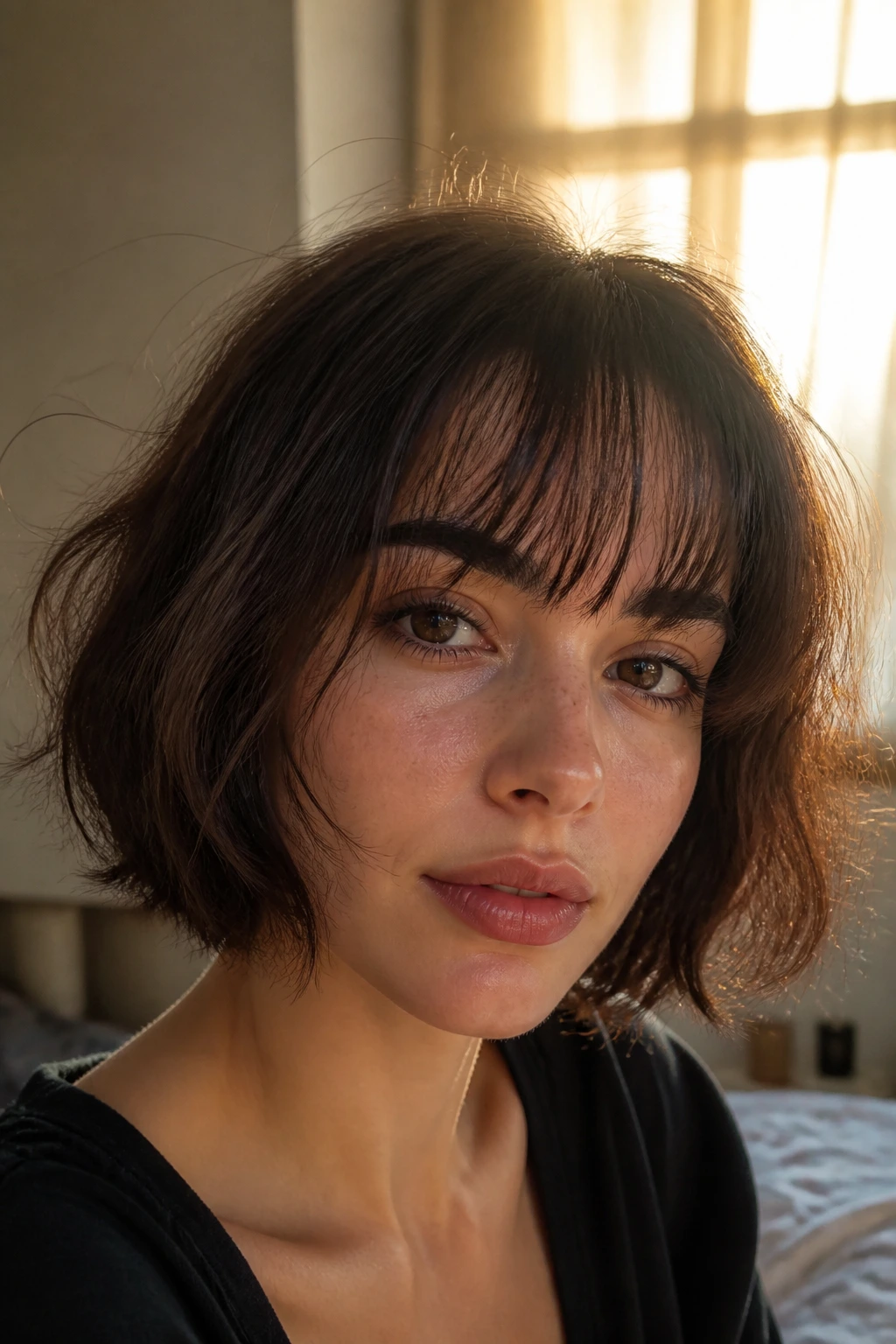
This is the gentlest version of the choppy bang, using very fine sections of hair to create a cloud-like fringe.
Unlike heavy, chunky cuts, this style uses only a few strands of hair scattered across the forehead. It is perfect for fine, frizzy hair because it doesn’t require a lot of density to look complete. The wispy strands catch the air and float softly, making any natural static look like a romantic, windswept style.
Because this cut is so light, it dries in seconds. You can easily style it with nothing but the warmth of your hands and a tiny drop of argan oil to smooth down any wild flyaways.
19. Layered Bob Choppy Fringe
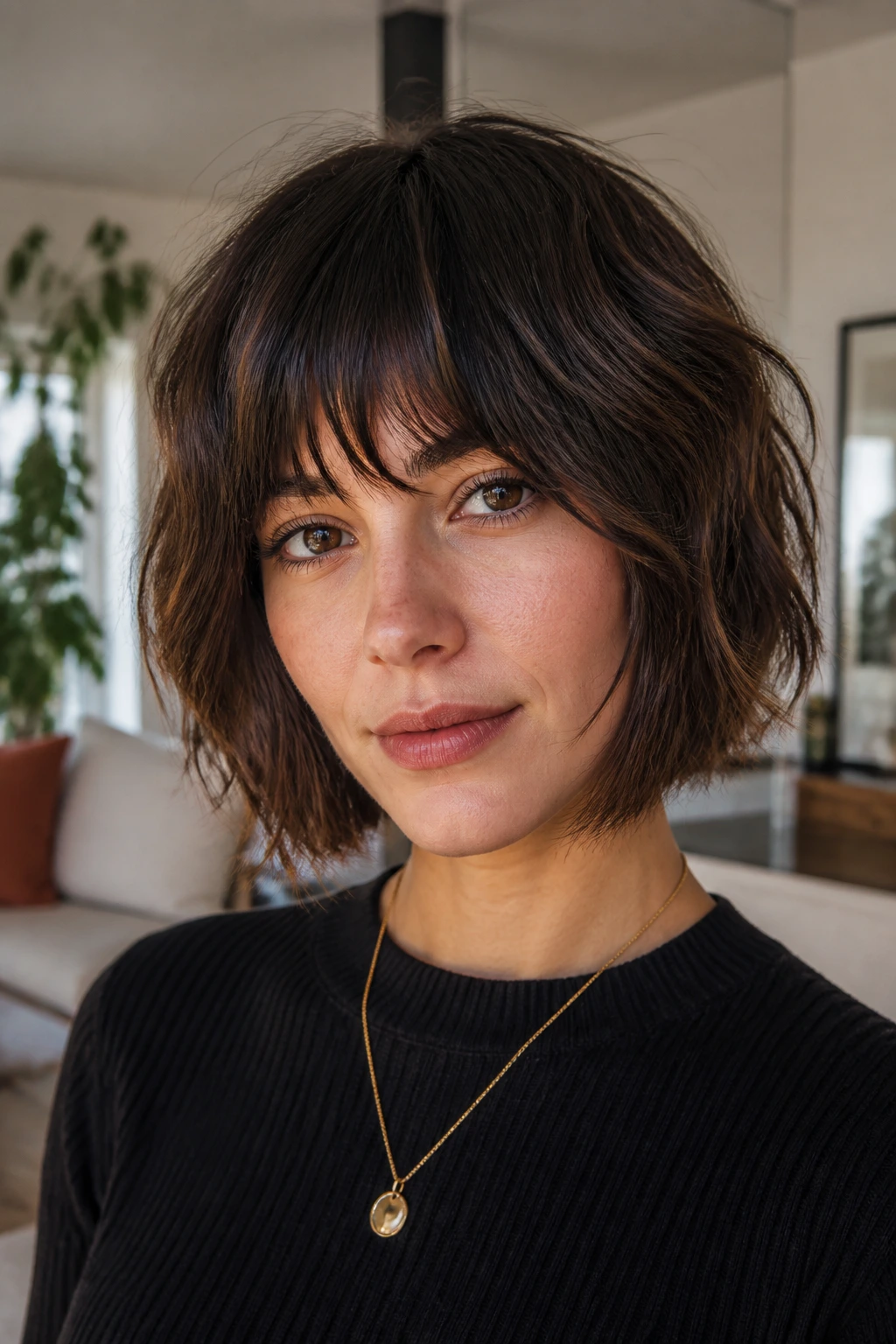
The bob and bangs combination is a timeless classic, but adding layers and a choppy edge brings it straight into the modern era.
The Modern Bob Silhouette
By adding interior layers to the bob, your stylist prevents the haircut from looking like a solid, heavy bell shape. The choppy bangs blend directly into these interior layers, creating a continuous circle of texture around your head that moves beautifully when you walk.
Quick Hair Facts
- Ideal Face Shape: All face shapes, as the length of the bob can be adjusted to suit your jawline.
- Maintenance Level: Medium; you will need a shape-up every six to eight weeks.
- Styling Time: Five minutes; scrunch with a light foam and air-dry or diffuse.
- Best Hair Type: Fine to thick hair with a natural wave or curl.
Pro tip: Avoid using heavy styling waxes on a bob with bangs, as this can make the hair look greasy and flat; opt for lightweight styling foams or sea salt sprays instead.
20. Grunge-Inspired Piece-y Bangs
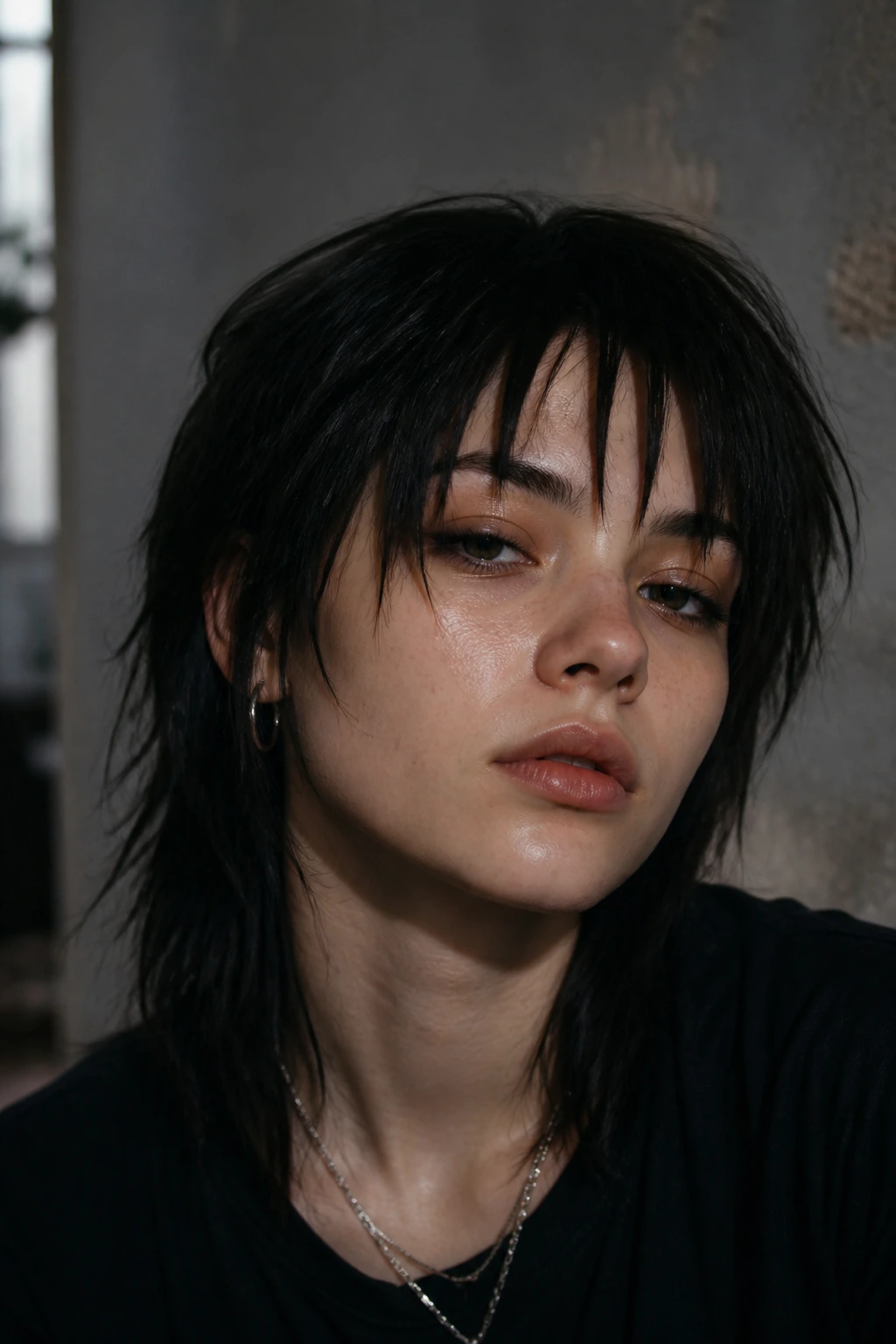
This style looks back to the raw, unpolished energy of the underground music scene, offering a look that is deliberately messy and full of texture.
These bangs are cut in thick, uneven clumps that look like they were styled with nothing but seawater and attitude. They are meant to look slightly separated, with some sections clumping together to leave small gaps of forehead exposed.
This is the absolute best cut for anyone with naturally oily skin or hair that tends to separate during the day. Instead of fighting the separation, this cut uses it as the core design element of the style.
21. Geometric Jagged Cropped Bangs
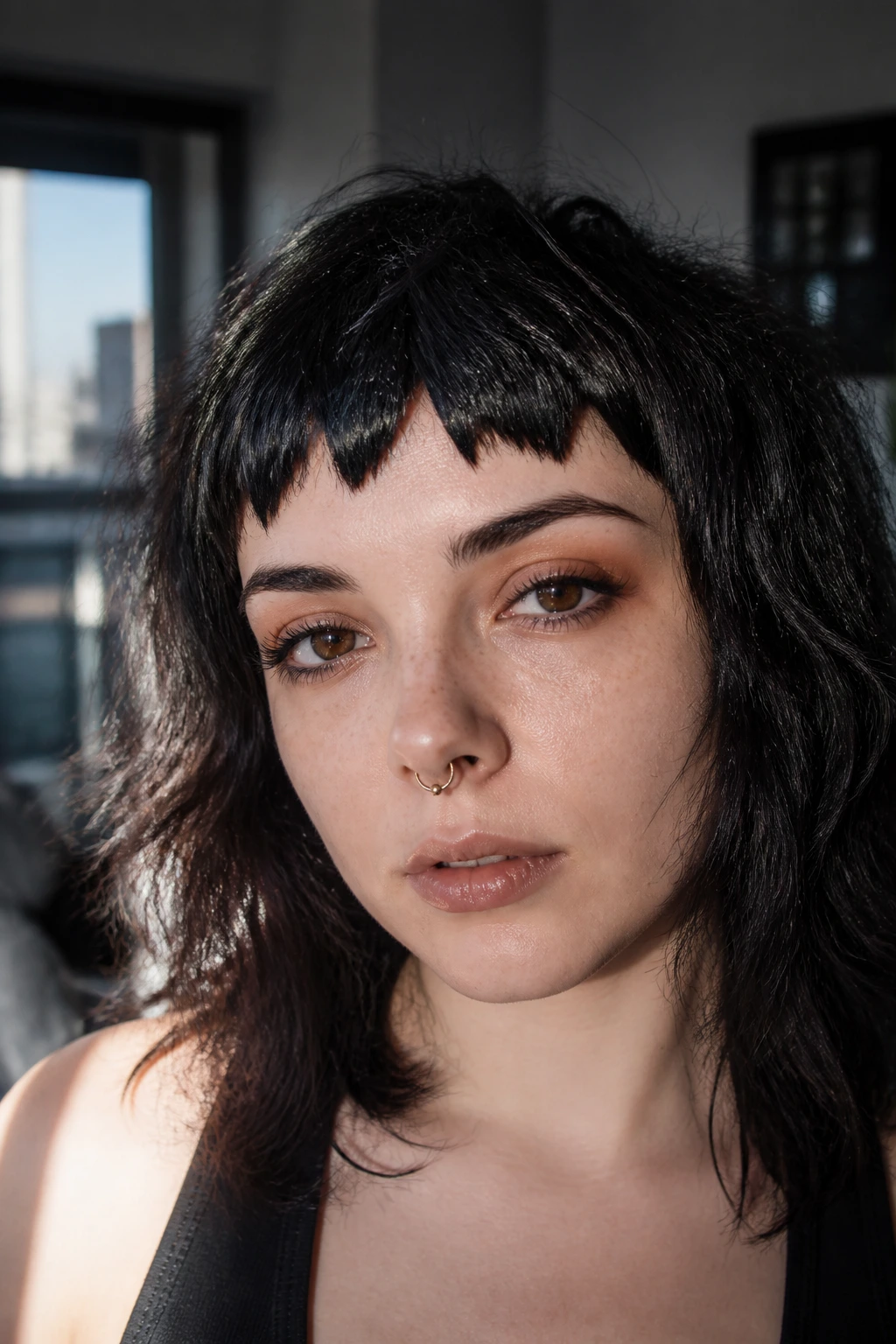
For the daring soul, this cut features sharp, intentional jumps in length that create a jagged, saw-tooth pattern across the forehead.
While it sounds intimidating, on frizzy hair, these sharp geometric lines soften up beautifully, creating a fascinating contrast between structural design and natural, wild texture. It is a highly artistic style that turns your hair into a genuine statement piece.
Your stylist will need to use a point-cutting technique with high-tension shears to get these clean, sharp angles. It is a style that requires a skilled hand, but the payoff is a completely unique look that nobody else in the room will have.
How to Talk to Your Stylist About Frizzy Bangs
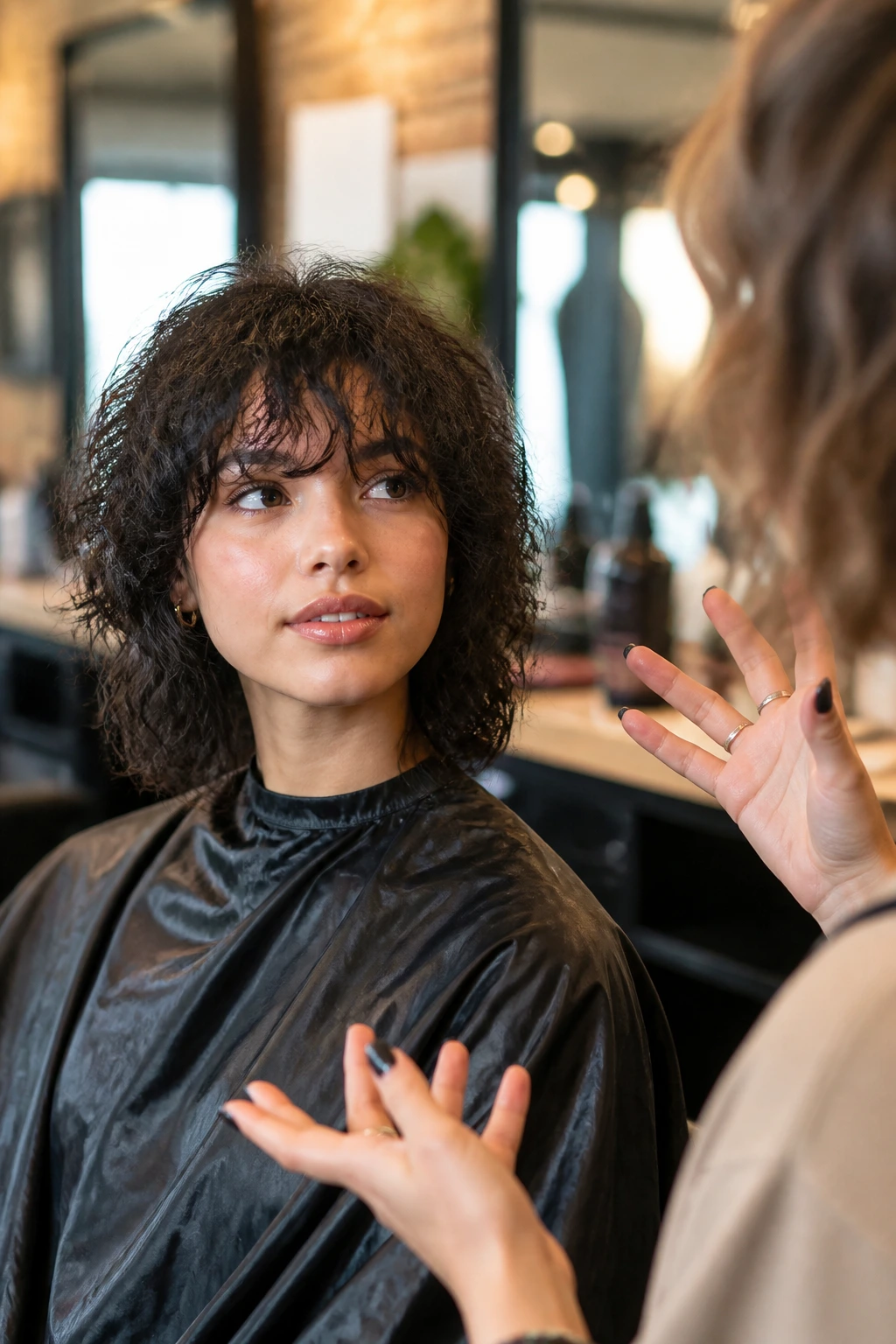
Walking into a salon with frizzy hair can feel a bit intimidating, especially when you are asking for something as bold as short choppy bangs. The key to getting the cut you actually want is using the right vocabulary and setting clear expectations before the first snip.
First, always ask your stylist to cut your bangs dry, or at least rough-dry them to their natural shape before doing the detailed cutting. Hair stretches when wet, and if your stylist cuts a straight line into wet, curly, or wavy hair, those bangs are going to shrink up much higher than expected once they dry.
Second, avoid the word “thinning” when talking about your fringe. Thinning shears can shred the ends of textured hair, creating a halo of tiny, short hairs that will frizz up immediately. Instead, ask for “point-cutting” or “slide-cutting.” These techniques remove weight from the inside of the hair section, allowing the bangs to fall in clean, distinct clumps without ruining the outer cuticle of the hair. Use these key phrases during your consultation:
- “Please dry-cut my bangs.” This ensures the stylist sees exactly how your texture bounces and where the cowlicks live.
- “I want point-cutting, not thinning shears.” This keeps the ends of your hair healthy and prevents the tiny, shredded flyaways that cause frizz.
- “We need to work with my cowlicks, not against them.” Acknowledge your hair’s natural growth patterns so your stylist can cut the shape to accommodate them.
- “I prefer a lived-in look that works when air-dried.” This tells your stylist to avoid ultra-precise, blunt lines that require twenty minutes of round-brushing every morning.
Rain and Humidity Survival Guide
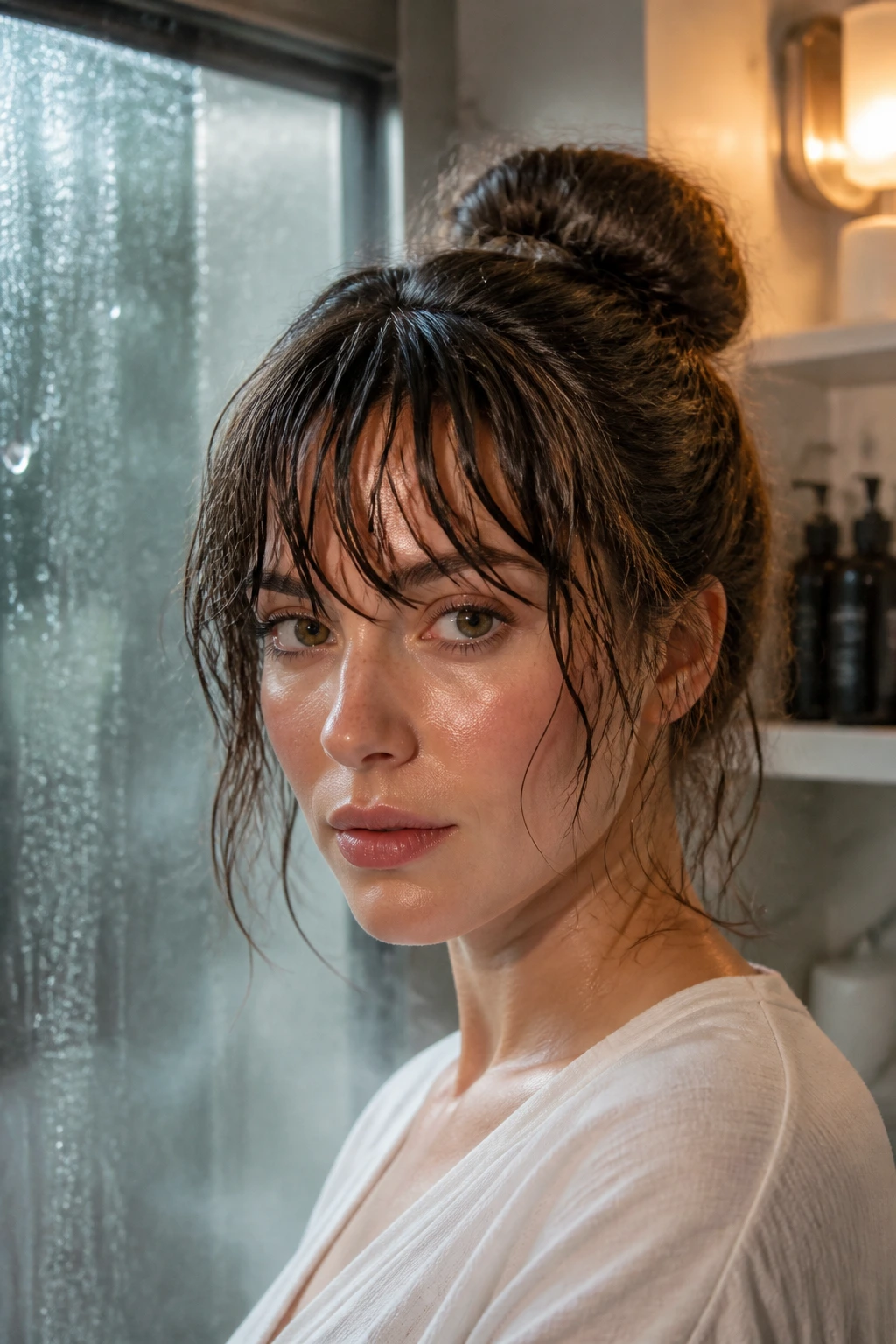
Once you walk out of the salon with your gorgeous new choppy bangs, you need to know how to protect them when the weather turns sour. Rain and humidity do not have to ruin your style, provided you have a solid defensive routine in place.
The secret to humidity defense starts in the shower. Use a sulfate-free shampoo that doesn’t strip away your hair’s natural oils, and always apply a lightweight, silicone-free conditioner. Silicone wraps the hair in a plastic-like coating that seems smooth at first, but it eventually builds up and prevents real moisture from entering the strand, leading to severe dryness and massive frizz down the road.
When you get out of the shower, do not rub your bangs with a heavy cotton bath towel. This roughs up the cuticle and creates instant frizz. Instead, use a soft microfiber towel or an old cotton t-shirt to gently squeeze the excess water out of your fringe.
While the hair is still damp, apply a tiny drop of water-soluble styling cream or a lightweight hair oil, focusing only on the mid-lengths and ends of your bangs. This locks in the healthy moisture from your shower, leaving no room for the humid air to penetrate the hair shaft and cause your bangs to swell during the day.
The Bottom Line
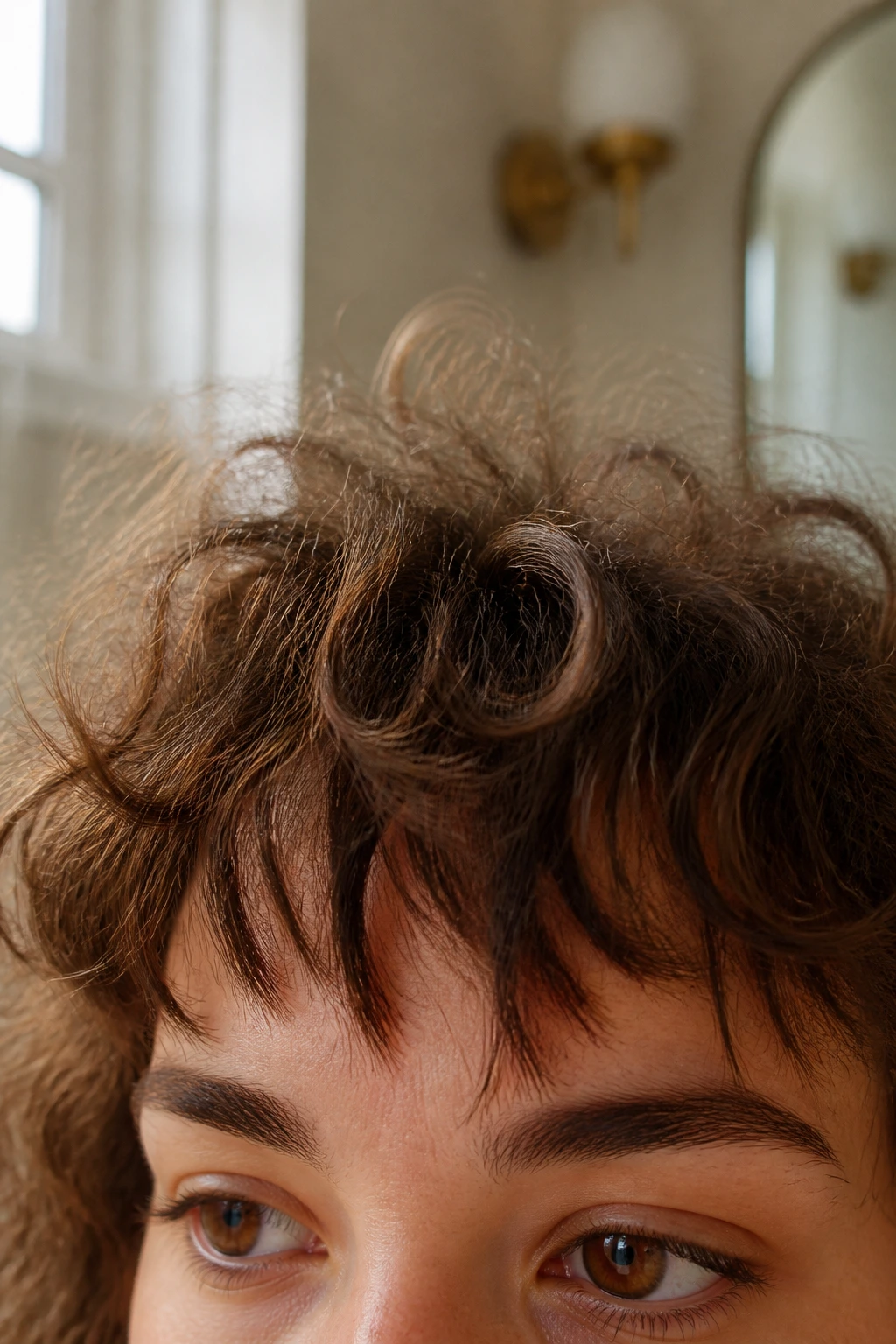
Getting bangs doesn’t mean you have to sign up for a lifetime of daily blowouts and constant worry about the weather. By choosing a short, choppy style that works with the natural, wild texture of your hair, you can enjoy a beautiful, face-framing fringe that looks great whether it is bone-dry or caught in a summer shower.
Remember that the most attractive hair is hair that looks alive, moving naturally with your steps and reacting to the air around you. Let go of the need for perfect, frozen symmetry, and embrace the beautiful, soft, lived-in texture that short choppy bangs can bring to your style.