

Anyone with a bit of natural texture knows the immediate panic of stepping outside on a damp morning and watching their hairline slowly expand into a halo of static. Getting layered bangs for frizzy hair sounds like a recipe for constant styling battles, but the hair-cutting techniques used by experienced stylists actually work with your hair’s natural swell instead of fighting it. When you cut bangs into hair that tends to puff, the secret lies in how you distribute the weight.
Blunt cut fringes act like a solid shelf, catching moisture and rising upward in a uniform block of frizz. Layers, however, break up that solid weight line. By incorporating varying lengths within your fringe, you give the individual strands room to bend, wiggle, and wave without pushing each other into a massive, horizontal puff. It is all about relieving the internal tension of the haircut so your hair can move naturally.
The key to making this work is understanding your specific hair pattern. Frizzy hair is rarely just frizzy; it is usually wavy, curly, or coily hair that has lost its moisture balance. By placing strategic, shattered layers throughout your fringe, you can embrace that natural movement and turn what used to be called “frizz” into lived-in, effortless texture.
Why Frizzy Hair Swells and How Layering Solves It
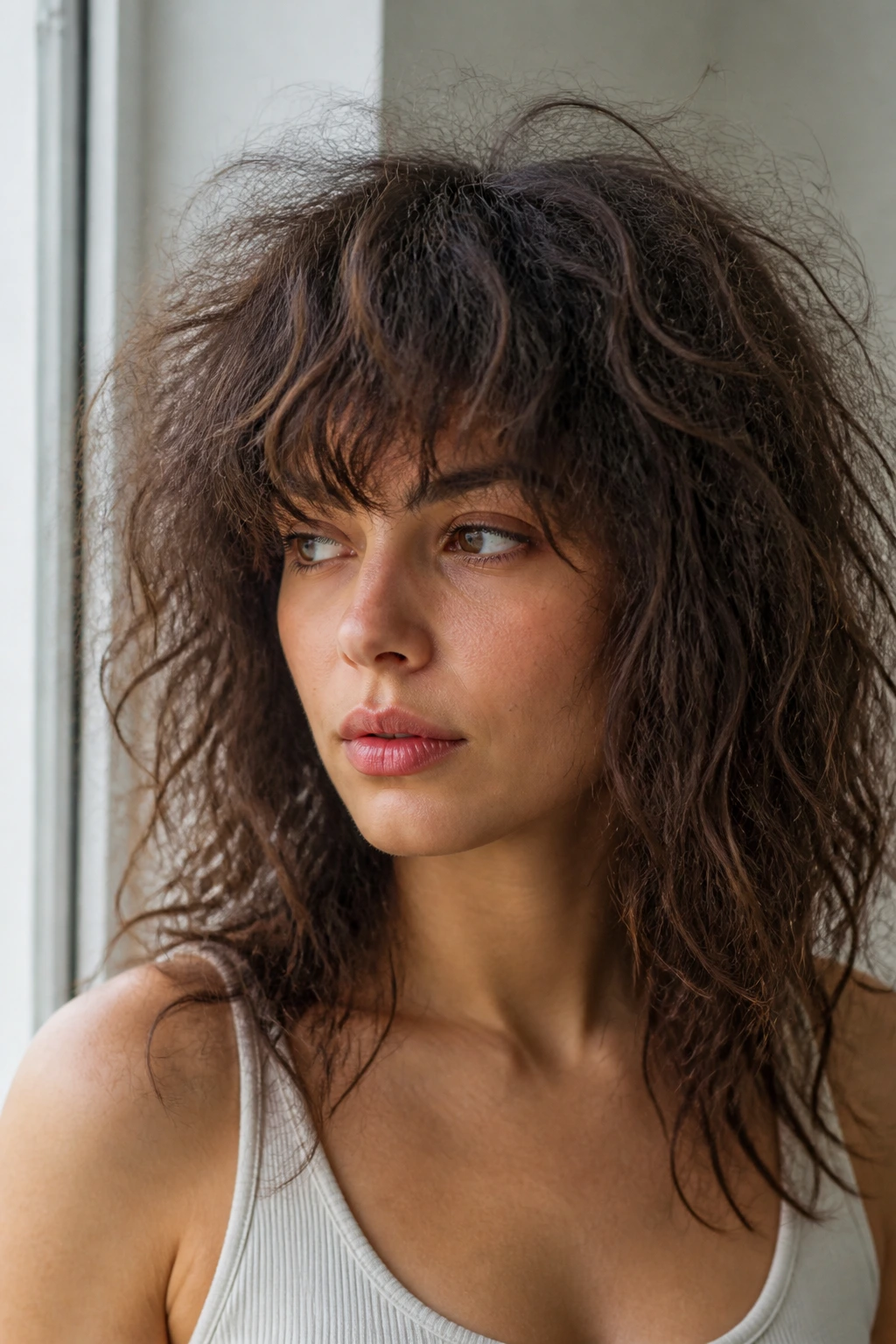
To understand why layered cuts work so well, we have to look at what is happening inside the hair shaft. Frizzy hair typically has a more raised, porous cuticle layer. When the air is humid, these open cuticle scales absorb moisture from the atmosphere, causing the hydrogen bonds inside the hair to break and reform in random, bent shapes.
This reaction makes the hair swell. If your bangs are cut in a straight, blunt line, every single hair is the same length and ends at the exact same point. When they all swell at once, they push against each other, creating a stiff, bell-shaped silhouette.
[ blunt cut bangs ]  --> Swells uniformly --> [ stiff, puffed shelf ]
[ layered cut bangs ] --> Swells independently --> [ soft, textured movement ]
Layering solves this by creating different exit points for the hair. Shorter pieces support the longer pieces from underneath, while the longer pieces weight down the shorter ones. This structural variance allows the hair to swell independently rather than collectively, resulting in soft, touchable movement rather than a solid wall of frizz.
1. Wispy Shag Layers
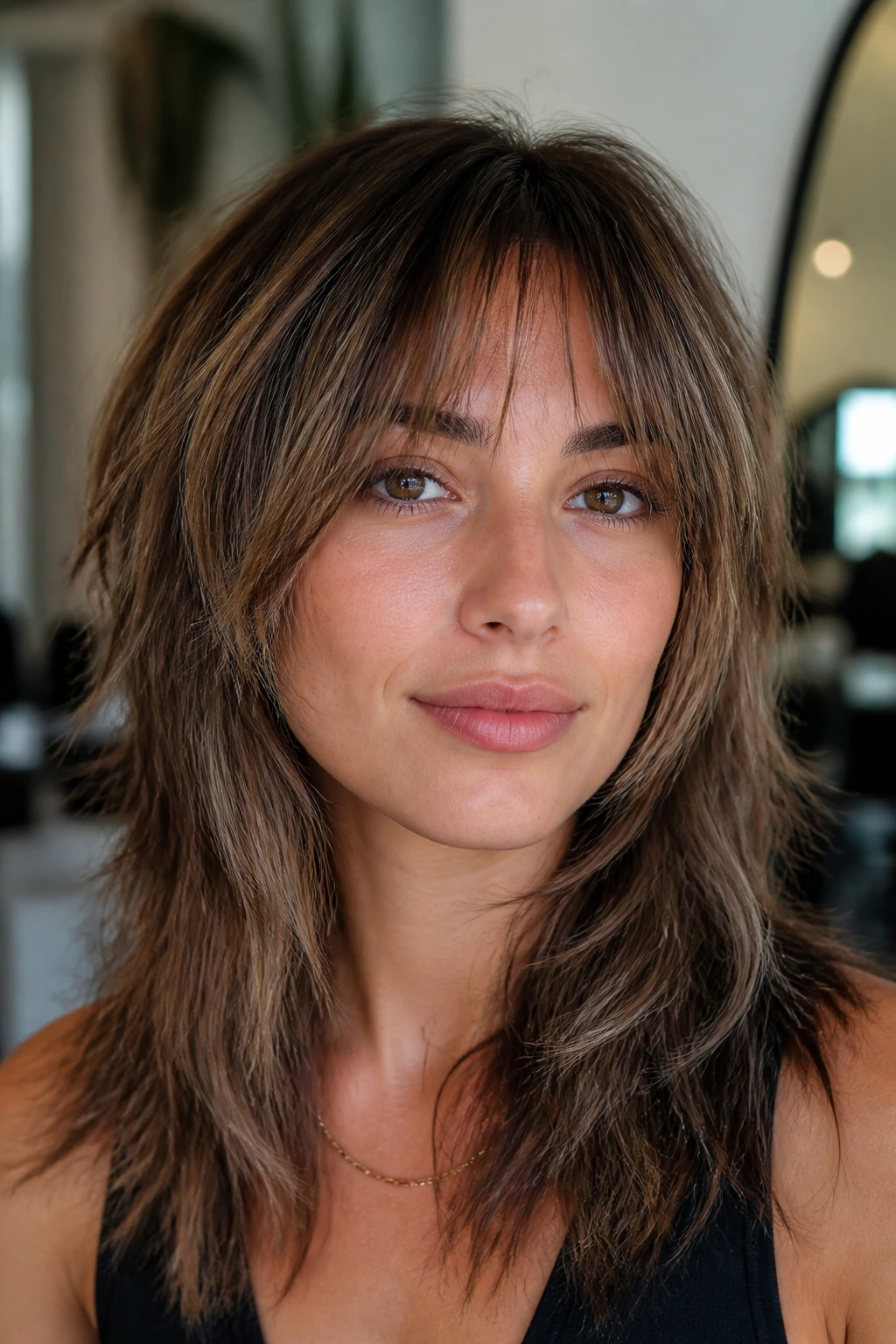
The wispy shag layered style is a fantastic entry point for anyone nervous about committing to a full fringe. This cut focuses on keeping the center of the bangs incredibly light while gradually building density as you move toward the temples. By removing bulk from the very center, you prevent that classic “forehead shelf” that happens when humidity hits.
Why It Helps Control Frizz
Because the weight is pulled out of the center, there simply is not enough hair mass to create a solid puff. Instead, the individual strands can bend and twist softly, looking like an intentional, bohemian fringe rather than an accidental balloon of hair.
Quick Hair Facts
- Best for: Fine to medium hair with a light wave pattern.
- Maintenance level: Low; this cut grows out seamlessly into face-framing layers.
- Key cutting tool: Texturizing shears or a sliding feather razor on dry hair.
Pro tip: When styling these wispy pieces, use your fingers to twist them with a touch of lightweight leave-in conditioner while wet, then let them air-dry completely without touching them again.
2. Chipped Curtain Bangs
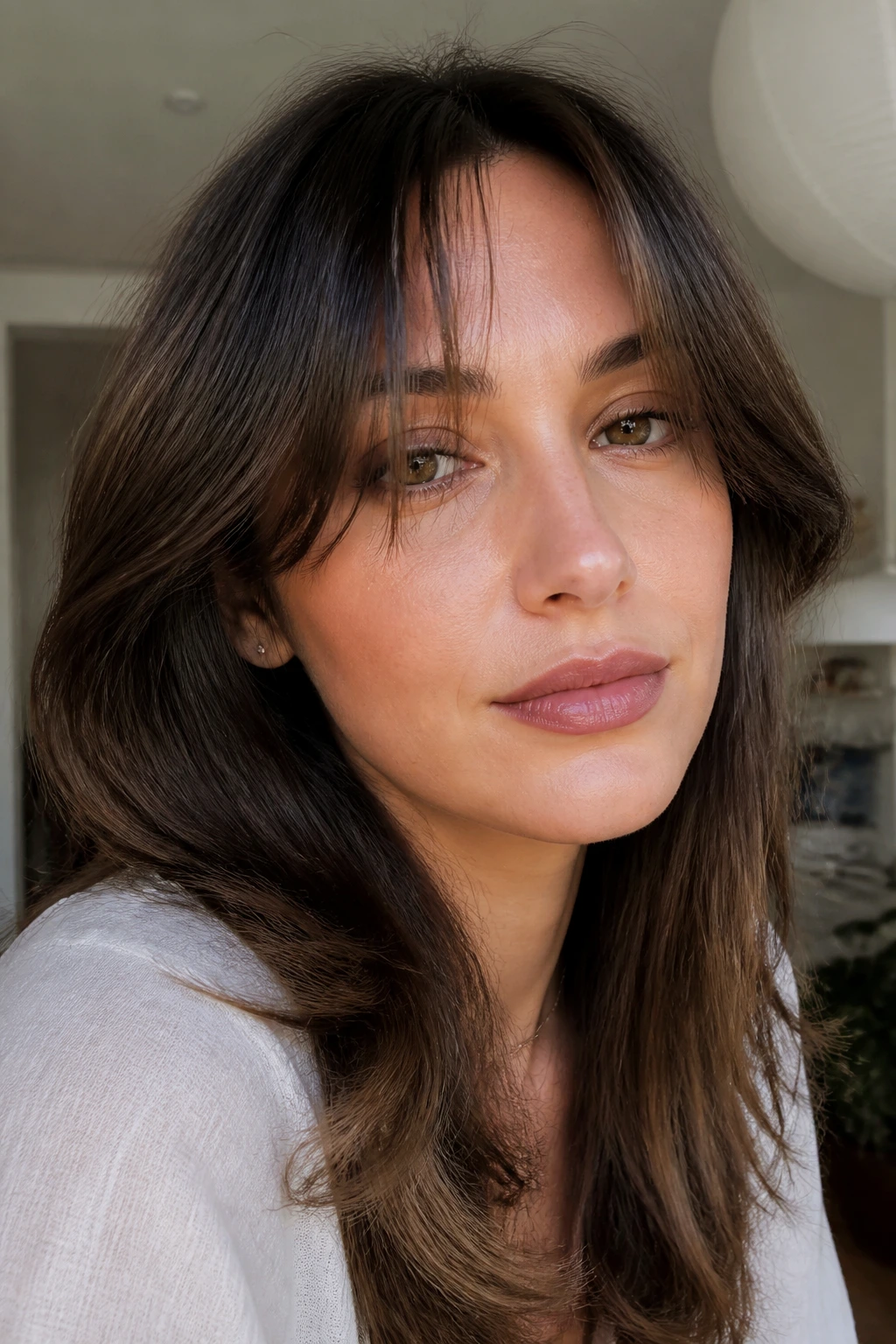
Chipped curtain bangs are all about creating a soft, split fringe that frames the eyes and cheeks. Instead of cutting a straight diagonal line from the center part down to the cheekbones, your stylist will use a chipping or point-cutting technique. This leaves the ends of the bangs uneven in a highly structured, intentional way.
This style is particularly brilliant for frizzy hair because the chipped ends act like a built-in relief valve for volume. When the hair swells, the uneven ends slide past each other rather than stacking up on top of one another.
How to Style It on Damp Days
Avoid using a round brush on these bangs if you live in a humid climate. Round brushing creates a rounded, bouncy shape that can easily turn into a puffy bubble when moisture hits. Instead, use a flat brush or your hands to blow-dry the hair flat against your forehead, alternating left and right, before parting them down the middle.
3. Feathered Face-Framing Triangles
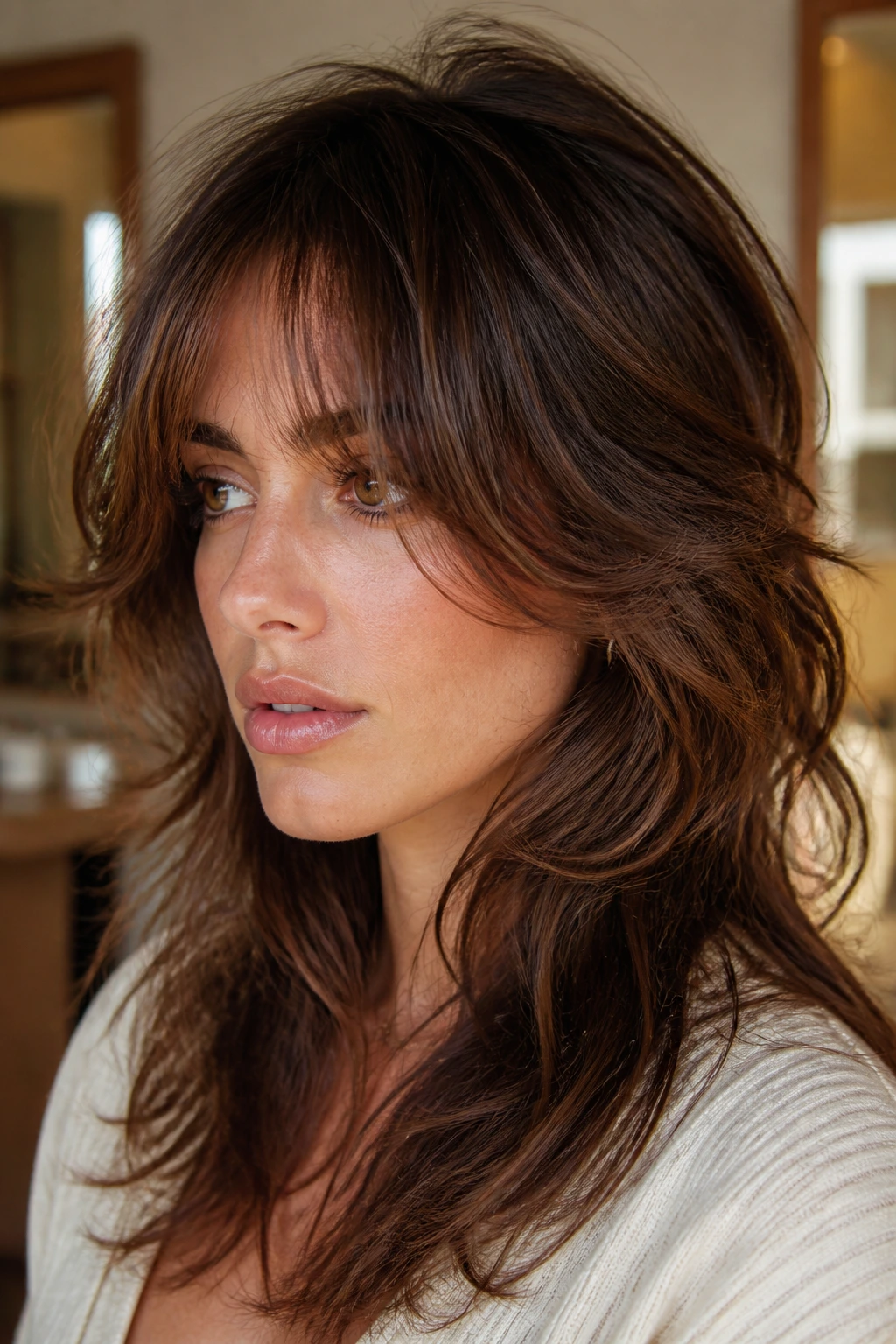
This technique uses a triangular sectioning pattern at the crown to isolate the bangs, which are then cut with a feathered, downward motion. By slanting the scissors downward and slide-cutting from the shortest point at the bridge of the nose to the longest point at the jawline, you create a beautiful cascade of soft layers.
Why This Work?
The triangular sectioning ensures that you are not taking too much hair from the sides of your head, which keeps the bulk of your hair weighted down. The feathered edges allow the bangs to melt into your side lengths, making any frizzy expansion look like a soft, romantic frame rather than a harsh disconnect.
Styling Guidance
- Apply a tiny pea-sized amount of hair oil to your fingertips.
- Pinch the very ends of the feathered layers to piece them out.
- Avoid applying product to the roots to prevent the bangs from separating too much and exposing the forehead.
4. Tapered Bottle Bangs
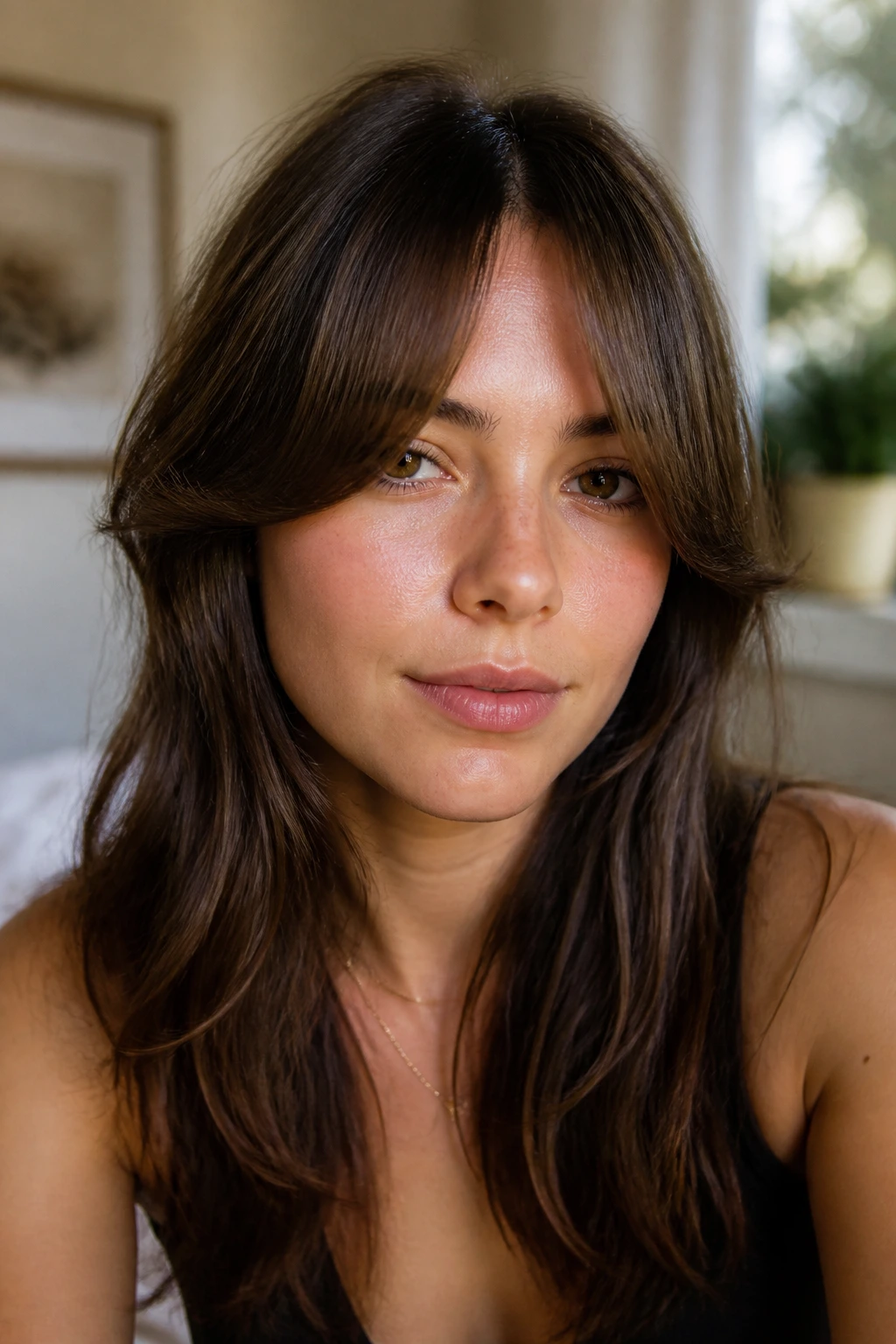
Bottle bangs are a close cousin of the classic curtain bang, but they feature a narrower opening at the forehead before curving out around the eyes and widening at the cheekbones—resembling the neck and shoulders of a classic glass bottle. This shape is incredibly flattering and inherently handles frizz beautifully due to its built-in weight distribution.
The Swell Mechanism
The narrow center section has very little weight, meaning it stays relatively flat. The heavier, longer sides are weighted down by their own length, which keeps them from puffing outward. Even when the air is thick with humidity, the silhouette remains balanced and soft.
Essential Details
- Texture match: Ideal for thick, coarse, or highly porous hair types.
- The look: A vintage, lived-in feel that pairs beautifully with messy buns and updos.
- Avoid: Heavy waxes or pomades, which will weigh down the narrow center section and make it look greasy.
5. Internal Shattered Layers
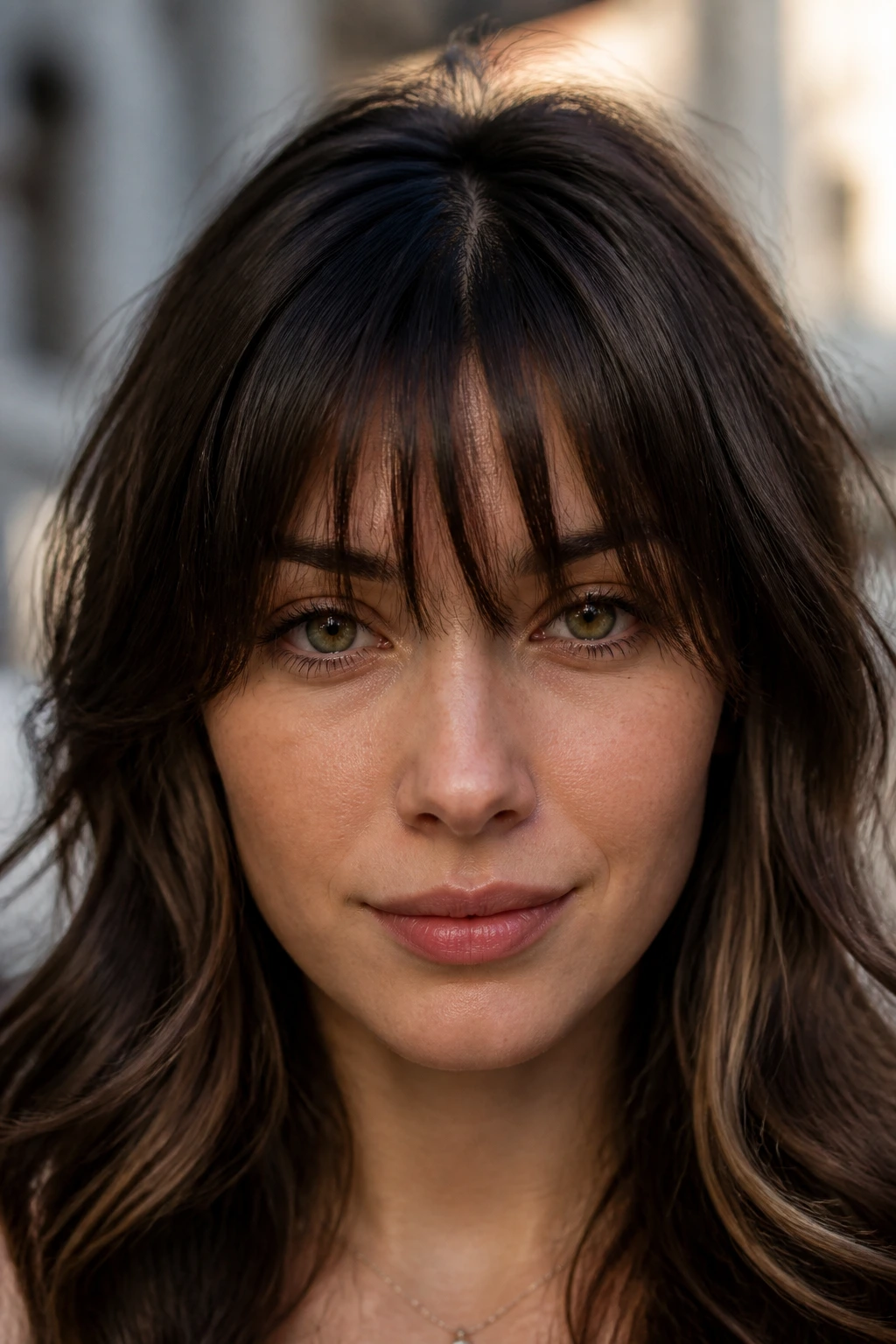
Internal shattered layers are a hidden weapon for dense, frizzy hair. From the outside, the bangs look relatively solid and uniform. However, underneath the top canopy of hair, your stylist will cut tiny, microscopic layers of varying lengths.
This internal texturizing creates negative space within the fringe. When your hair wants to expand, it expands inward into these empty pockets of space rather than pushing outward into a massive puff. It is a brilliant way to keep the appearance of a full, thick fringe without dealing with the high-maintenance bulk.
But keep this in mind: this technique must be done on bone-dry hair in its natural state. If your stylist cuts these internal layers while your hair is wet and stretched taut, they cannot predict where those short pieces will bounce up when dry, which can lead to stubby, vertical hairs poking through your top layer.
6. Slide-Cut Soft Fringe
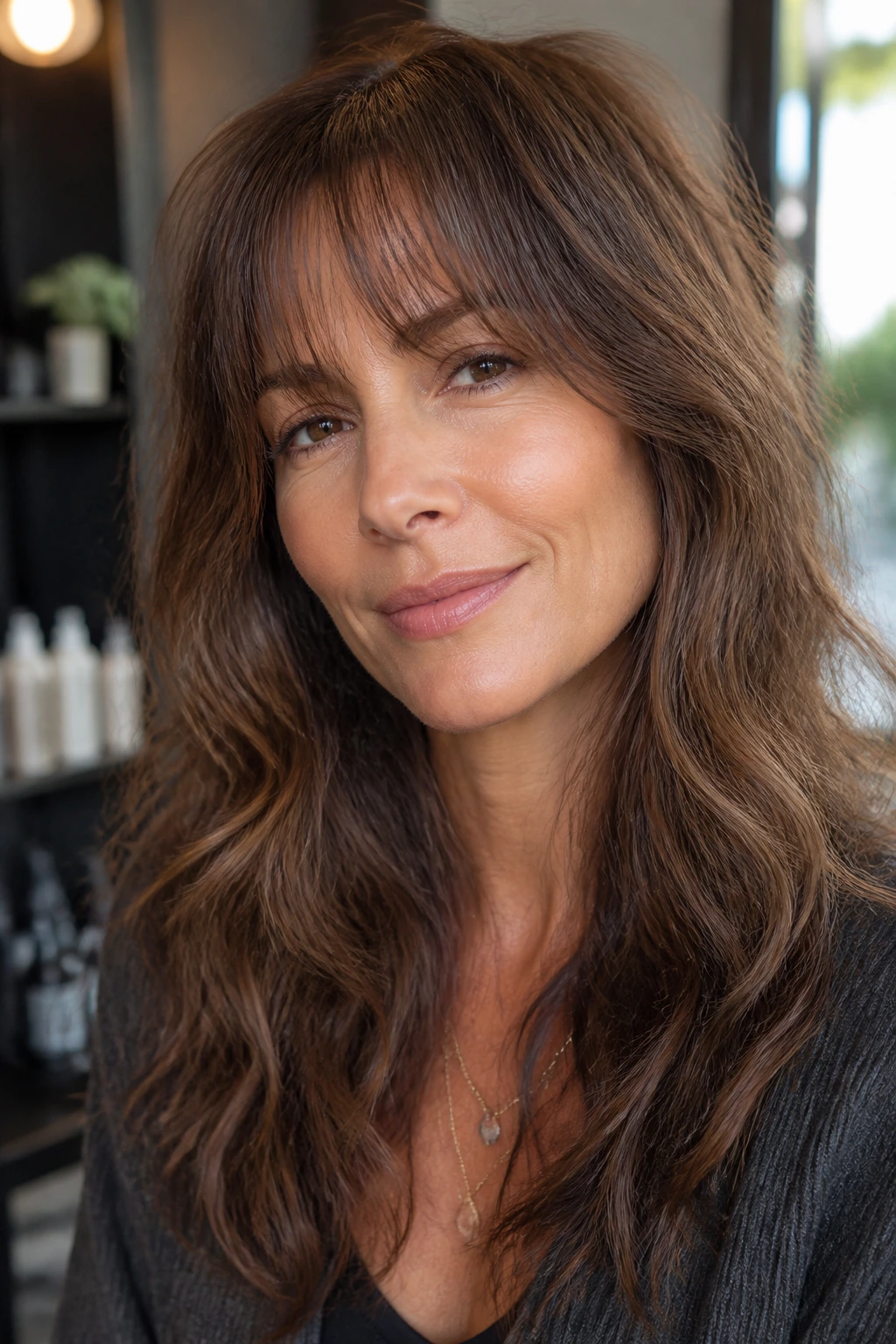
Unlike traditional chopping cuts, the slide-cut fringe is created by gliding open shears down the hair shaft. This technique shaves off microscopic amounts of weight from the mid-lengths to the ends, leaving you with a very soft, tapered edge that has zero blunt lines.
Slide-Cutting vs. Blunt Cutting
A blunt cut cuts straight across the hair shaft, leaving the porous inner cortex of the hair exposed to the air. Slide-cutting, when done correctly with incredibly sharp shears, cuts the hair at an angle, which helps seal the cuticle and reduces the amount of moisture the hair can absorb from the air.
Best For
This technique is best for those with fine, frizzy hair who want a full-looking fringe that still has plenty of built-in movement and flexibility.
7. Crescent-Cut Textured Bangs
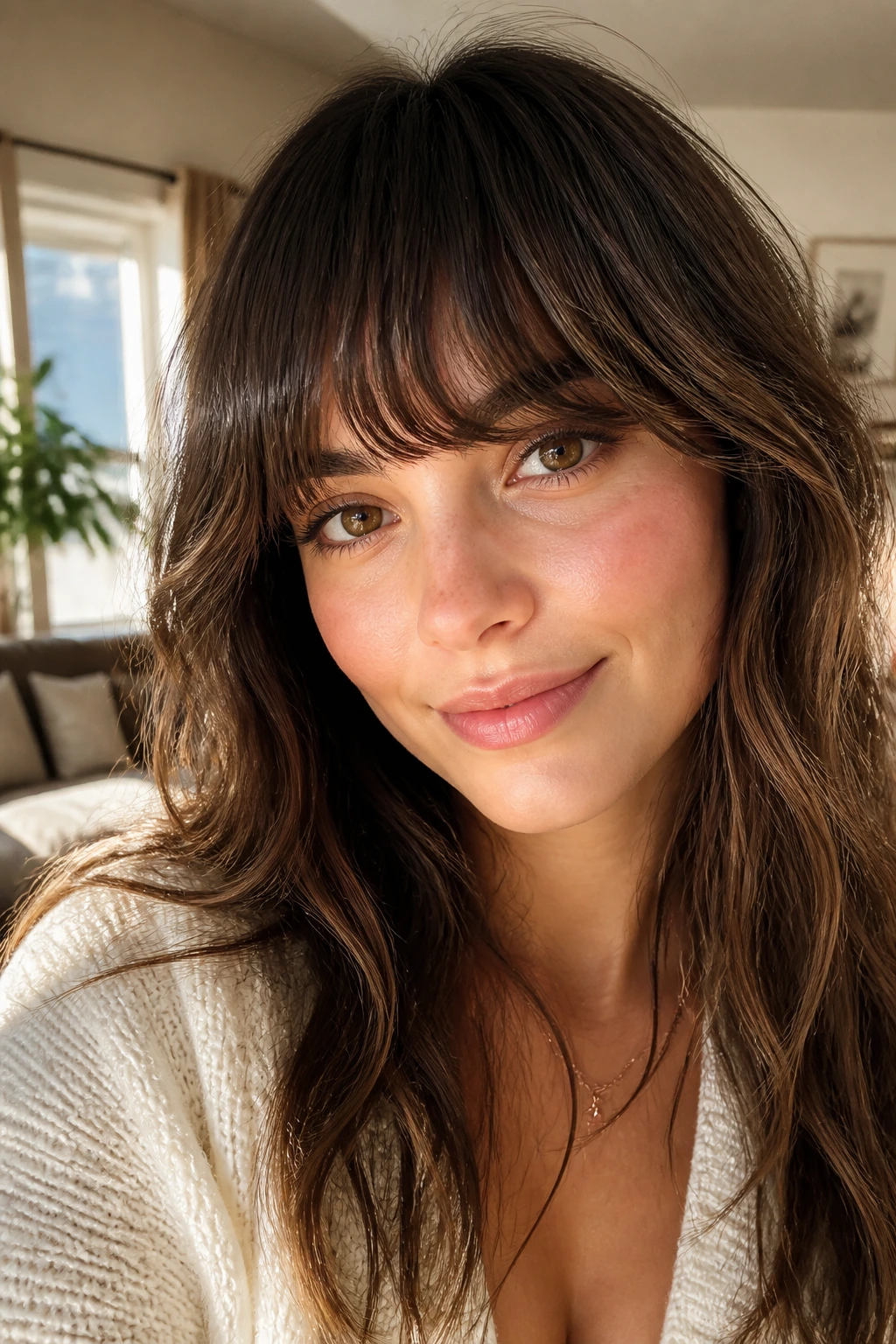
The crescent cut follows the natural arch of your brow bone, curving downward at the outer corners of the eyes. This creates a soft, frame-like effect that feels very organic. To adapt this for frizzy hair, the crescent shape is heavily texturized along the bottom inch of the hair.
Why It Works for Frizzy Hair
The longer outer corners of the crescent shape act as anchors. They carry more weight, which helps keep the entire fringe sitting closer to the face. The texturized edges prevent the center from looking too heavy or blocky.
Quick Care Tips
- Always use a microfiber towel to gently squeeze moisture out of your bangs—never rub them.
- Use a wide-tooth comb to detangle while wet; brushes can stretch the hair and cause more frizz when it dries.
- Let the outer corners dry naturally to preserve their heavy, downward drape.
8. Piece-Y Micro-Layers
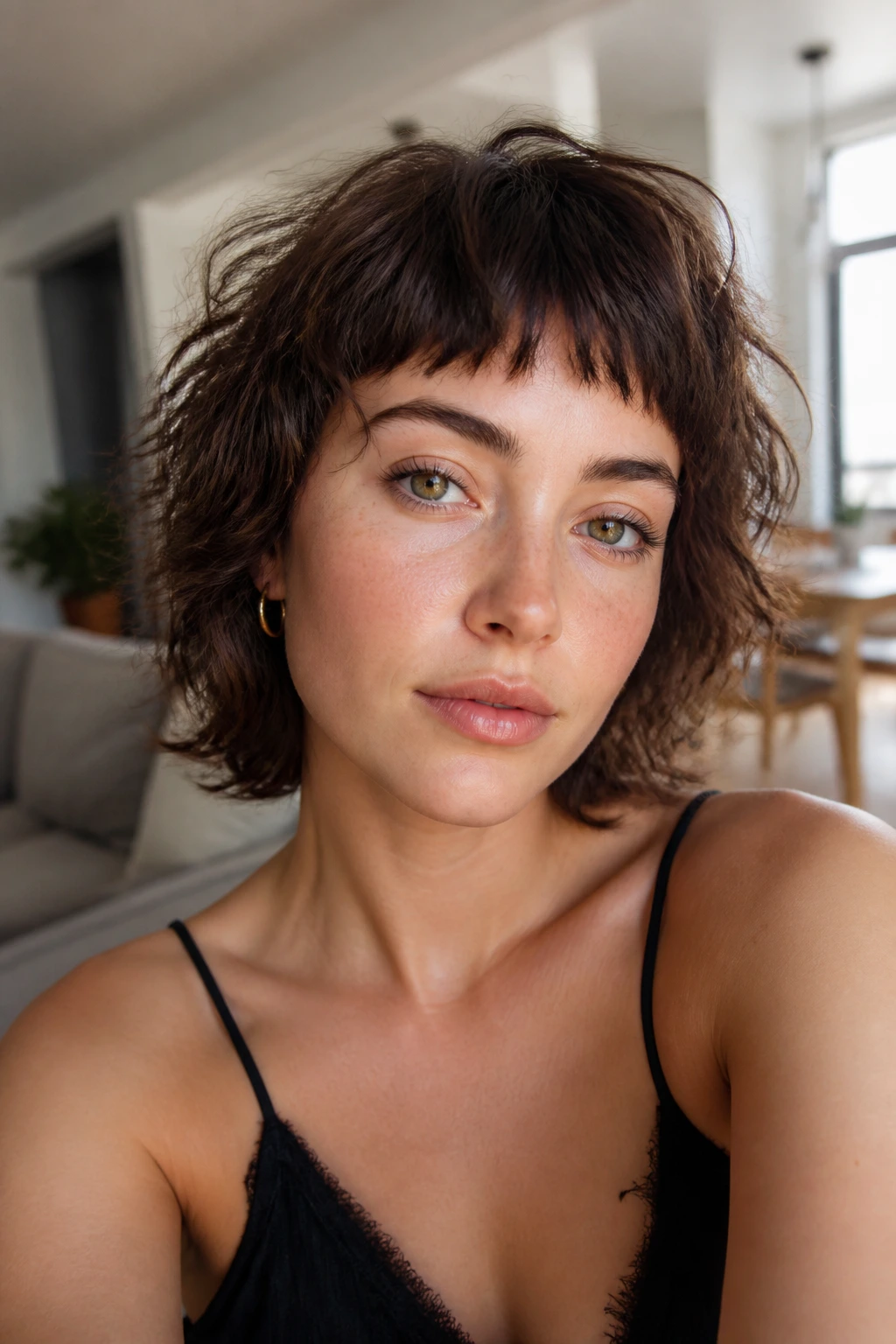
If you love a short, retro-style fringe but are terrified of how your frizz will react, piece-y micro-layers are your answer. This style involves cutting the bangs slightly shorter—often an inch above the brow—and using deep point-cutting to create distinct, separated pieces.
[ Traditional short fringe ]  --> Humid day --> [ Puffed-up visor shape ]
[ Piece-y micro-layers     ]  --> Humid day --> [ Lived-in, textured crop ]
By leaning into the separation of the hair, you make the natural texture and frizz look like a deliberate, stylistic choice. Instead of fighting to keep your bangs perfectly flat and smooth, you embrace a messy, textured crop that looks incredibly cool and effortless.
Pro tip: Use a dry texturizing spray rather than a hairspray to hold this style. Hairspray contains alcohol and water, which can cause frizzy hair to swell immediately upon application.
9. Cascading Cheek-Length Shag Bangs
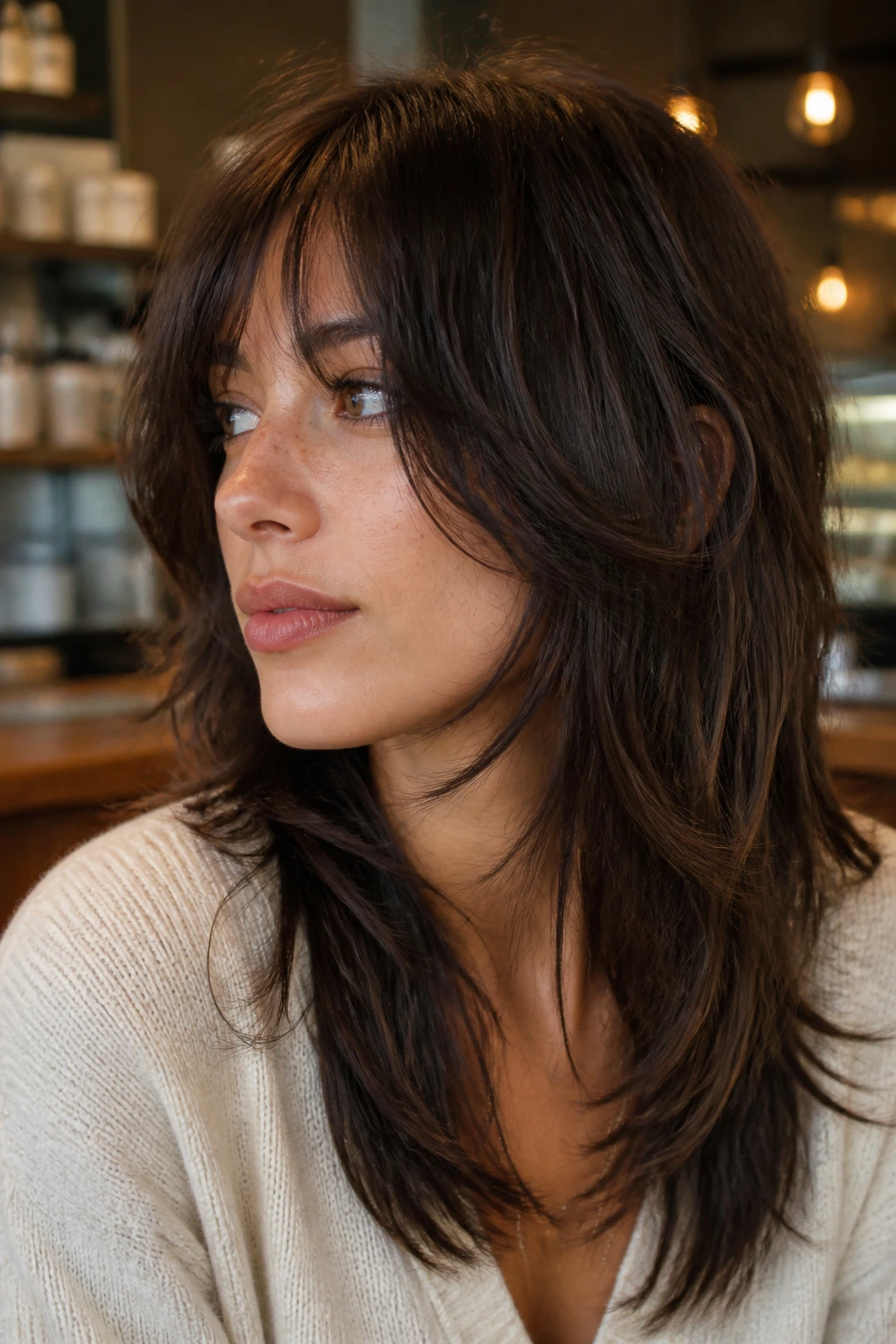
For those who prefer a longer, more dramatic look, cascading cheek-length shag bangs are a dream come true. These bangs start around the bridge of the nose and cascade downward in choppy, distinct steps until they blend into your collarbone-length layers.
What Makes Them Different?
These are not your typical face-framing layers. They are cut with distinct, shorter steps near the eyes, creating the clear definition of a bang while maintaining the weight and length of a face-frame.
Why They Work
The sheer length of these layers means they have enough weight to pull themselves downward, resisting the urge to puff up. If you do experience a high-humidity swell, the cascading steps simply look like a beautiful, voluminous shag haircut.
10. Razor-Cut Crown Layers
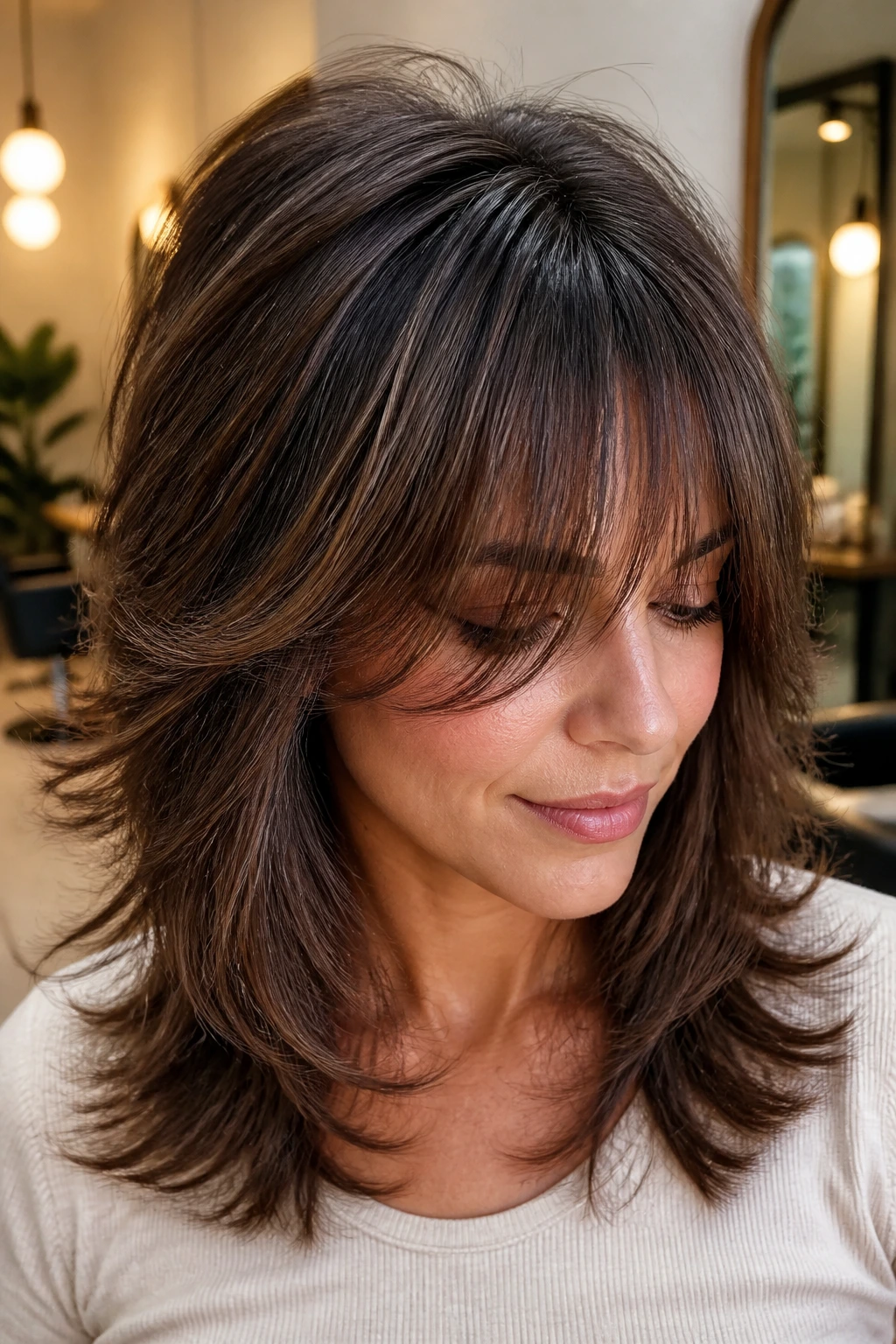
Using a straight razor on frizzy hair is a controversial topic in the hair world, but in the hands of a skilled stylist, it can work wonders. Razor-cut crown layers start higher up on the head, pulling hair from further back to create a deep, layered fringe that starts at the crown and falls forward.
The Mechanism
The razor taper-cuts the ends of the hair, making them incredibly soft and thin. Because the layers start so far back on the head, they carry a lot of downward momentum. This top weight keeps the underneath sections from puffing upward, resulting in a flat-lying, beautifully textured fringe.
Who It is For
This style is ideal for people with very dense, coarse, or unruly hair who want to distribute their hair volume more evenly around their face.
11. Disconnected Curtain Layers
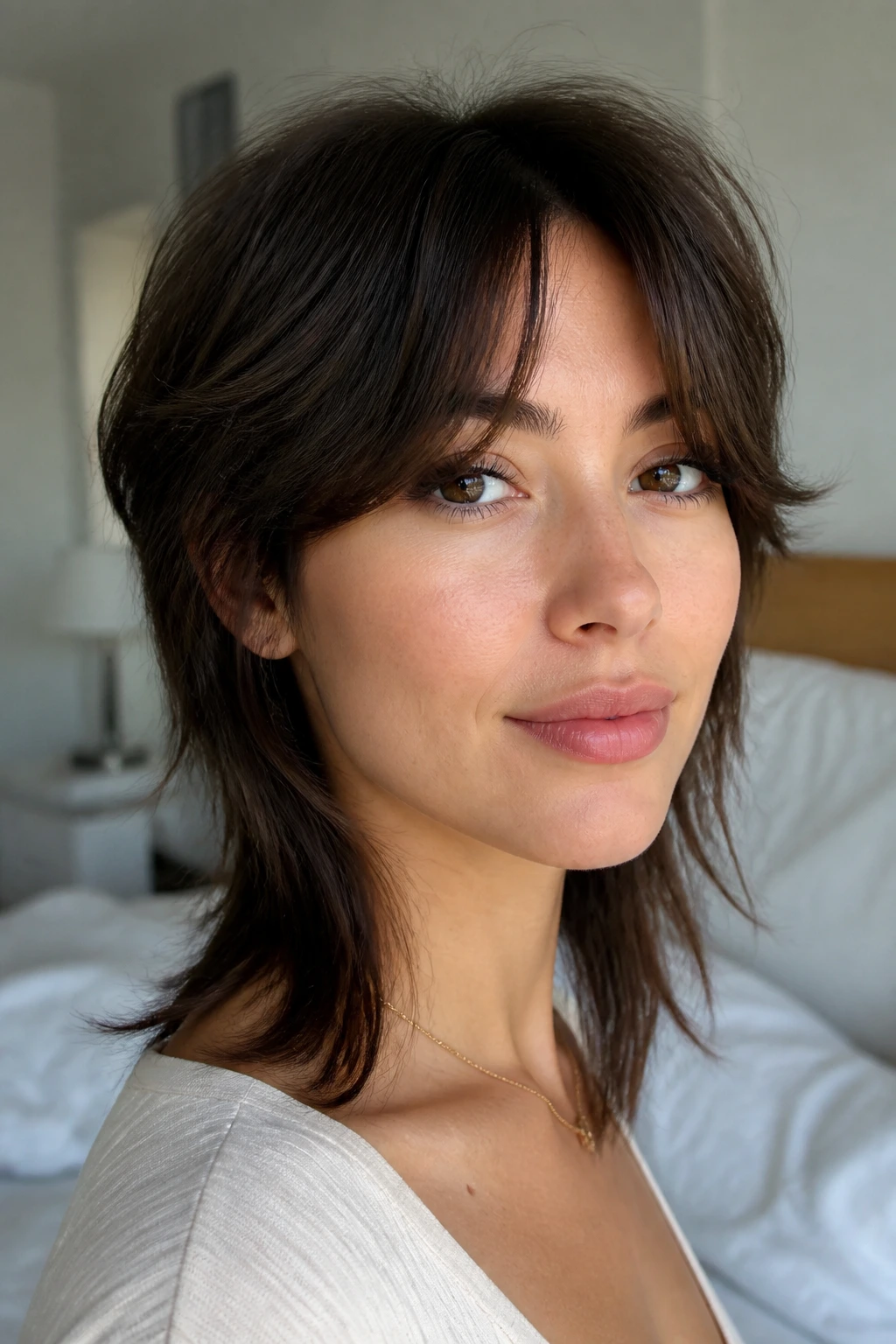
Disconnected curtain bangs are cut without blending them into the rest of your haircut. The bangs exist as their own separate entity, with a sharp transition between the short curtain layers and the longer side lengths.
Why This Prevents Frizz Disasters
When your bangs are blended into your sides, any frizz or puffiness in the rest of your hair will pull on the bangs, causing them to distort and lose their shape. By disconnecting them, your bangs can move, bounce, and swell independently from the rest of your hair, maintaining their soft shape even if the rest of your hair decides to go wild.
How to Style
- Section out the disconnected front pieces.
- Apply a light smoothing cream to the damp bangs.
- Blow-dry them downward with cool air to set the cuticle.
- Let the rest of your hair air-dry to embrace your natural texture.
12. Blended Temple-Framing Bangs
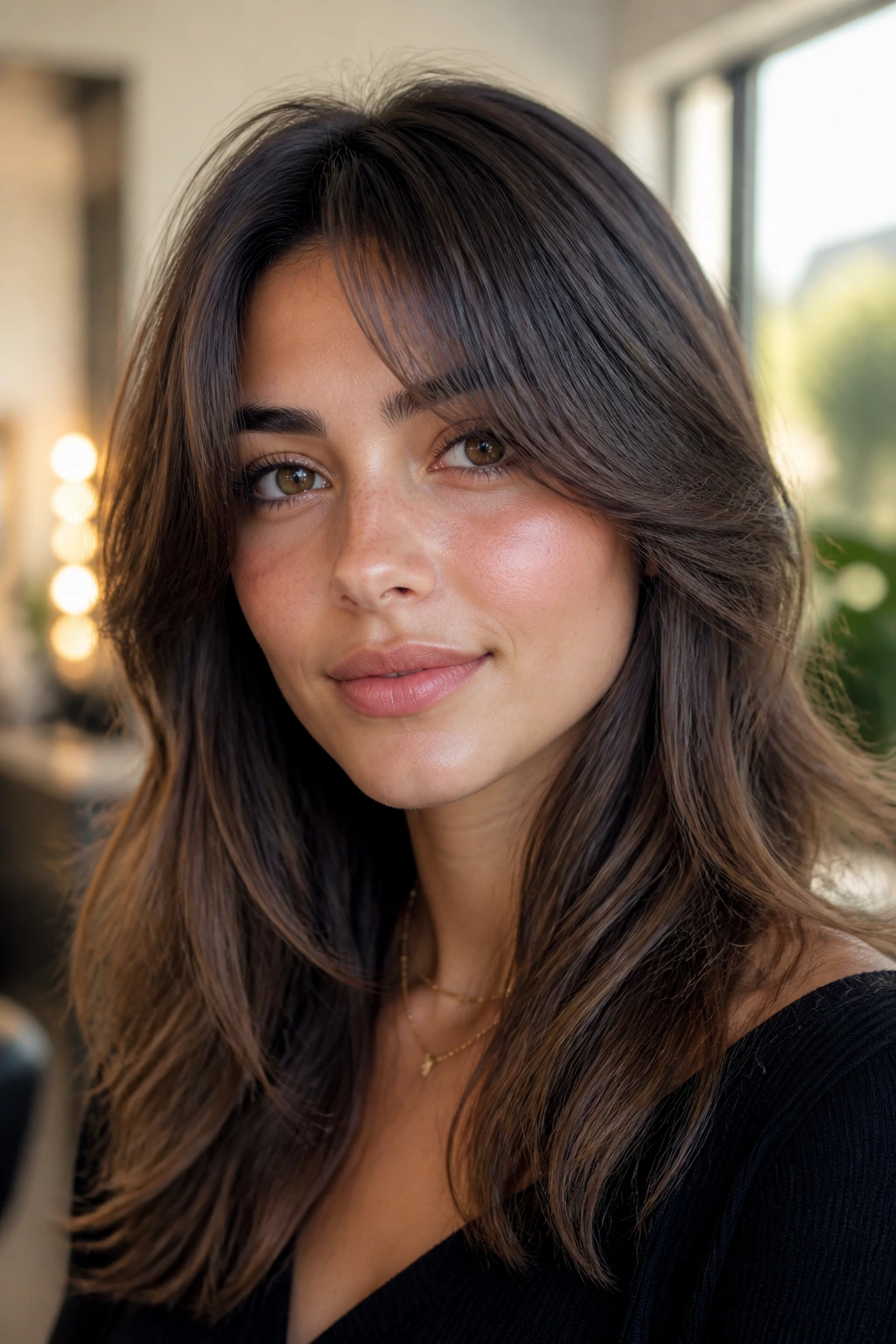
On the opposite end of the spectrum from disconnected layers, blended temple-framing bangs are all about seamless integration. These bangs start short in the center and curve gently outward, blending perfectly into soft layers that hug the temples and cheekbones.
The Balancing Act
The temple-framing pieces act as a transitional bridge. If your hair swells, this smooth transition prevents any awkward gaps or “wings” from forming at the corners of your eyes—a common problem for frizzy hair with blunt bangs.
Recommended Products
Use a light leave-in conditioner containing marshmallow root or slippery elm. These natural ingredients provide excellent slip, coating the hair cuticle and preventing individual strands from locking onto each other and creating frizz clumps.
13. Seamless Grown-Out Fringe
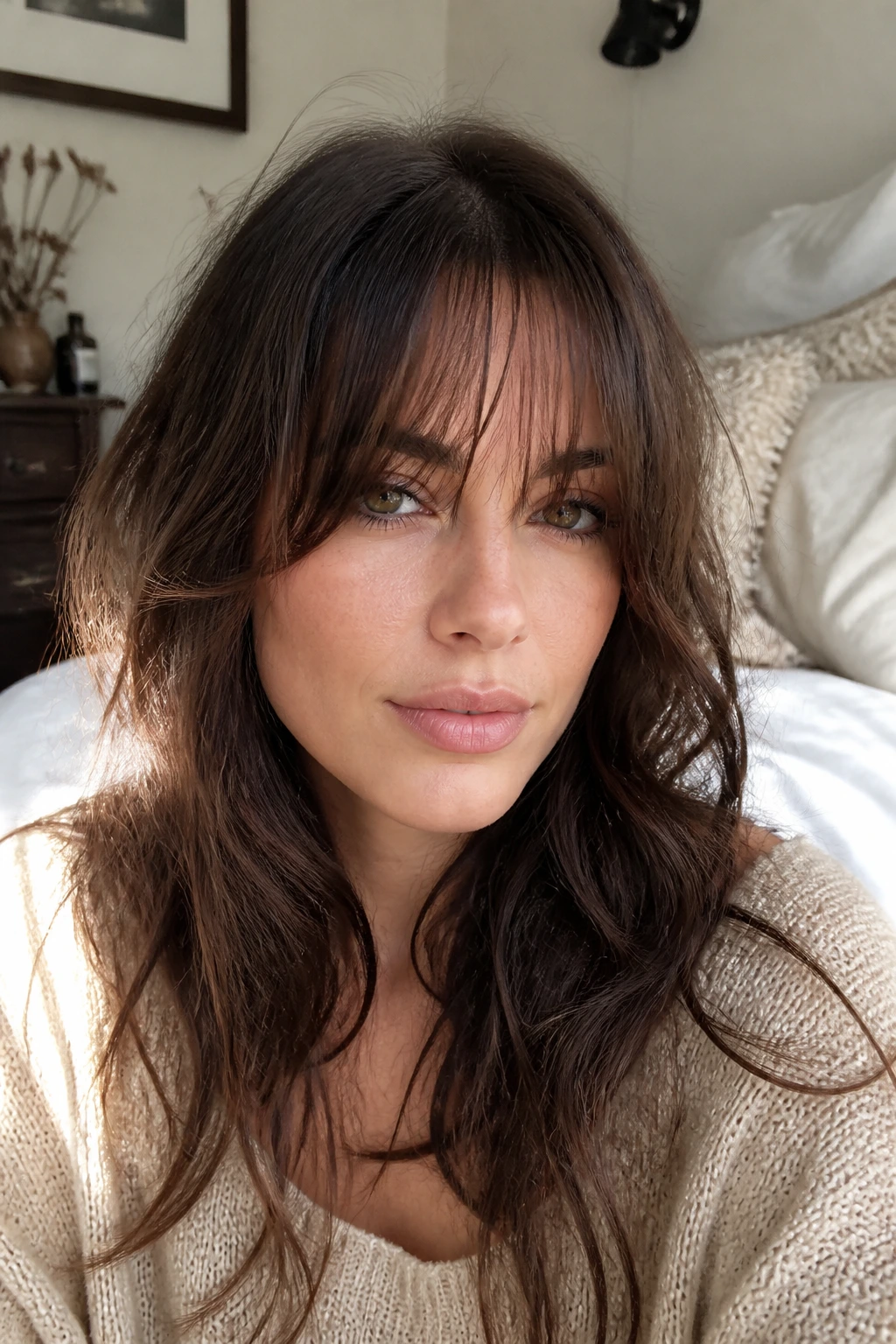
This style is perfect for those who want a zero-effort look. The seamless grown-out fringe is cut to sit right at the eyelashes, with soft, vertical layers throughout the ends to keep them from poking you in the eyes.
Because the cut is already designed to look grown-out and lived-in, any natural wave, kink, or frizz simply adds to the effortless charm of the style. It looks best when it is slightly messy, making it one of the most practical options for highly humid climates.
To style this look, simply wash your hair, apply a tiny touch of air-dry cream, shake your head to let the bangs fall naturally, and go. Do not brush them once they are dry, as this will break up the natural clumps and create a cloud of static.
14. Double-Tiered Center-Part Layers
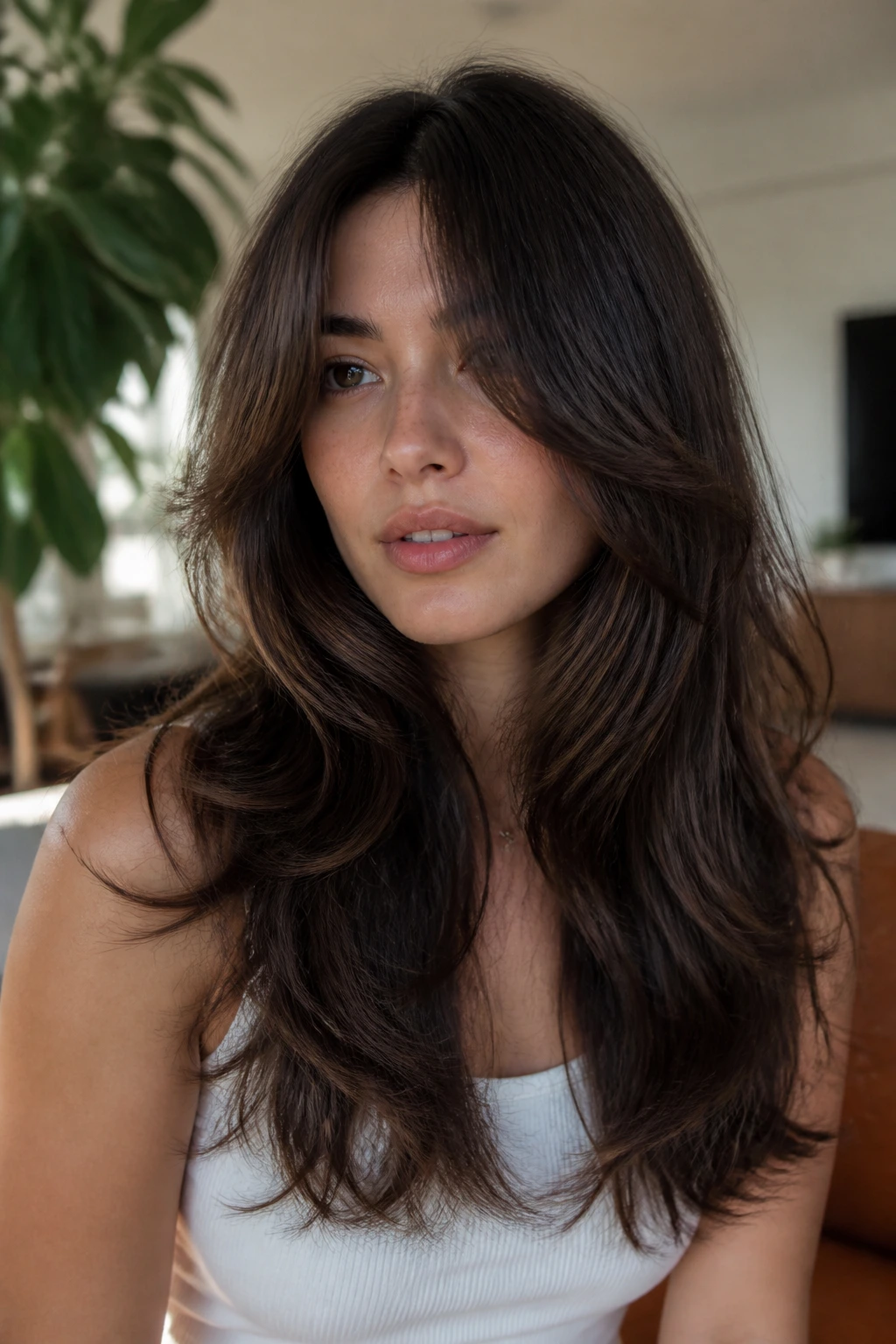
This unique cutting style features two distinct tiers of layers within a center-parted curtain bang. The first tier hits right at the bridge of the nose, while the second tier ends at the bottom of the cheekbone.
[ Tier 1: Nose-bridge length ] ---> Softly frames the eyes
[ Tier 2: Cheekbone length  ] ---> Creates width and structure
This double-tiered approach is highly effective for thick, frizzy hair because it breaks up the volume into two distinct zones. Instead of having one heavy block of hair around your face, you get two soft, manageable layers that stack beautifully without adding bulk.
15. Beveled Arch Layers
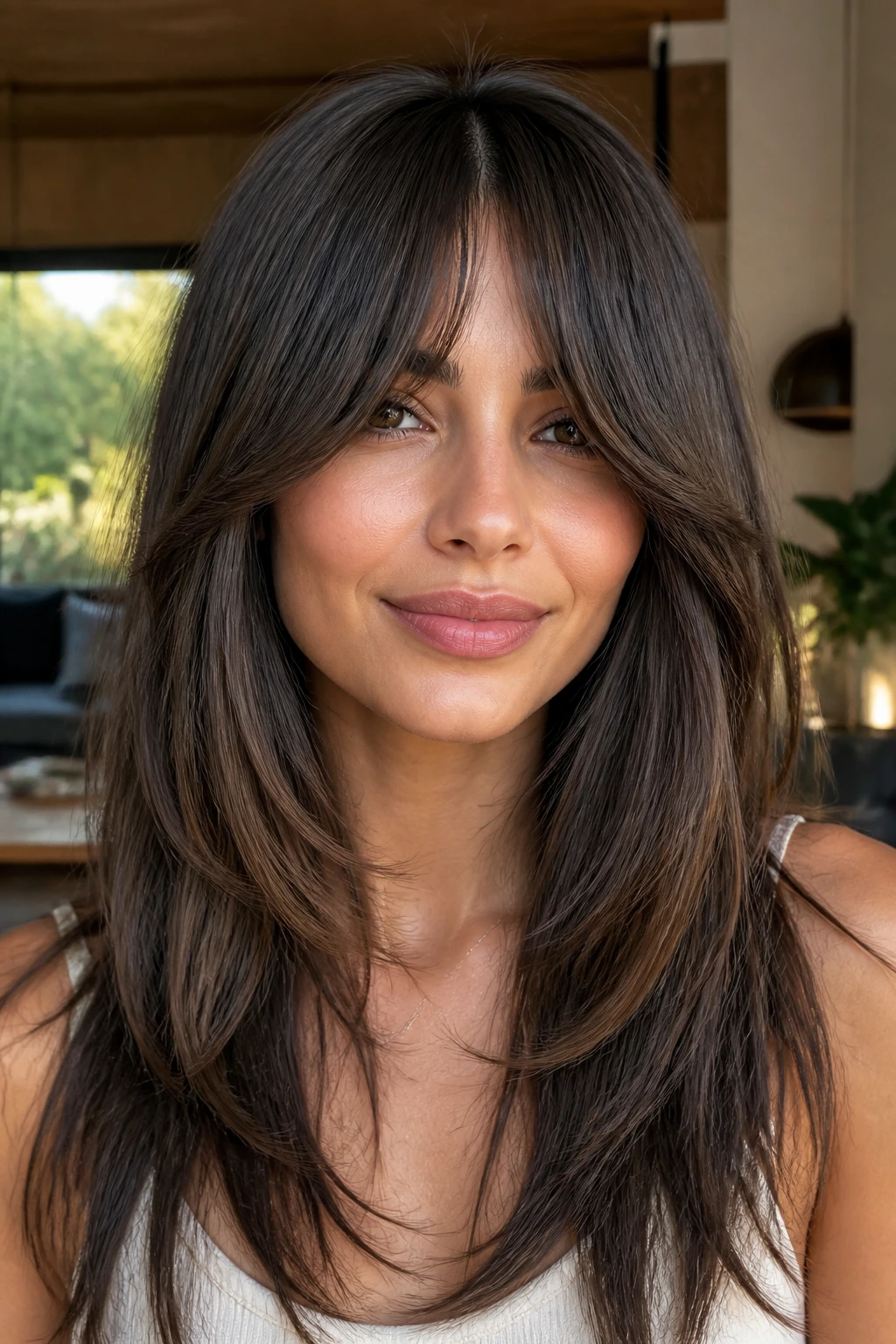
Beveled arch layers are created using a specific cutting technique where the scissors are held at a 45-degree angle while cutting an arched shape across the forehead. This beveling action naturally coaxes the hair to curve inward toward the face.
The Natural Curve
Frizzy hair often suffers from ends that flare outward in different directions. By beveling the cut, you encourage the hair to tuck itself in, creating a tidy, polished silhouette even when the weather is damp.
Styling Tips
- Use a boar bristle brush to gently smooth the bangs while damp.
- Keep the blow dryer nozzle pointed downward to help lay the cuticle flat.
- Finish with a tiny sweep of anti-humidity serum on the outer surface of the bangs.
16. Whispering Eyebrow-Grazing Shards
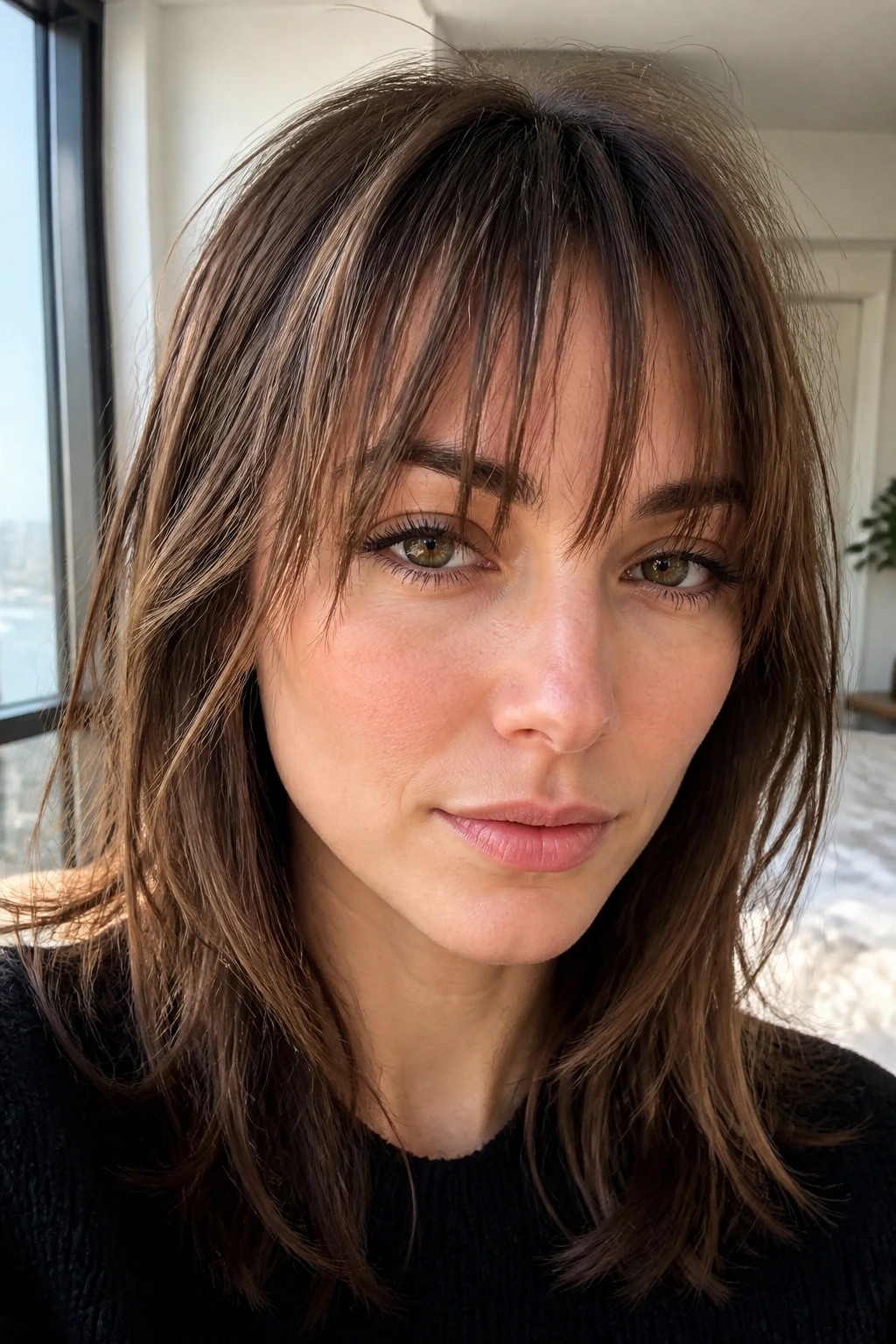
This ultra-light style is all about negative space. The bangs are cut to graze the eyebrows, but the stylist will cut deep, vertical “shards” into the fringe, removing up to 50% of the hair mass within the bangs.
The Illusion of Fullness
Because the bangs are cut long, they look full and intentional at a glance. However, because they are so incredibly thin and shattered, they have zero weight and zero ability to puff up. They simply “whisper” across your forehead, letting your skin peek through.
Quick Facts
- Best for: Extremely thick, heavy hair that normally rejects bangs.
- Vibe: Modern, edgy, and highly breathable in hot weather.
- Styling effort: Close to zero; they look best when left completely alone.
17. Choppy Long-Line Layers
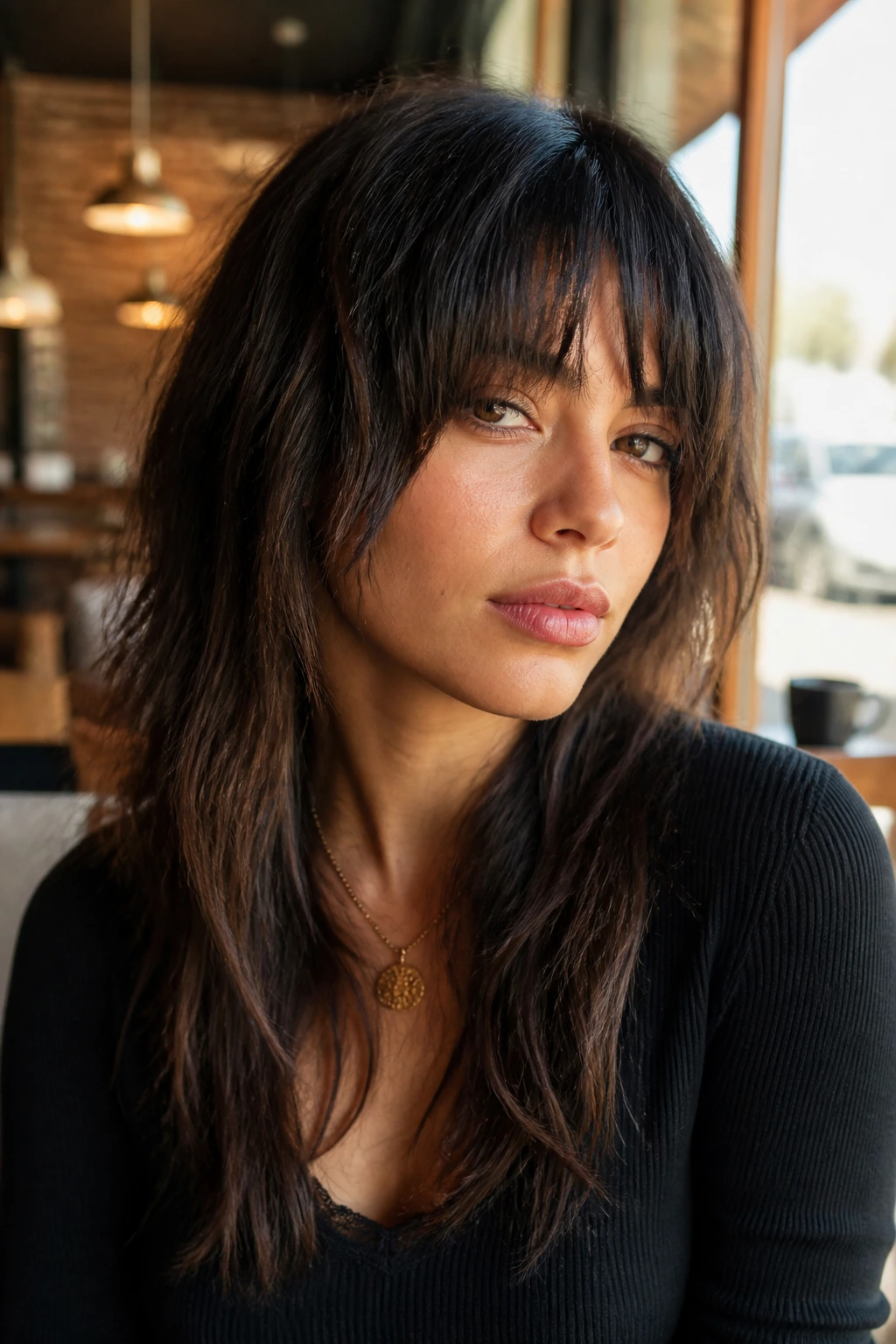
Choppy long-line layers feature a long, heavy fringe that is broken up with deep, vertical chunks cut into the bottom edge. This style is fantastic for coarse, wavy, or frizzy hair because it embraces the natural chunkiness of textured hair.
Instead of fighting to make your hair look smooth and silky, this cut highlights the beautiful, piecey texture of your waves. The choppy ends ensure that as the hair swells throughout the day, it maintaining a cool, textured, rock-and-roll vibe rather than looking frizzy or unkempt.
18. The Waterfall Transition Fringe
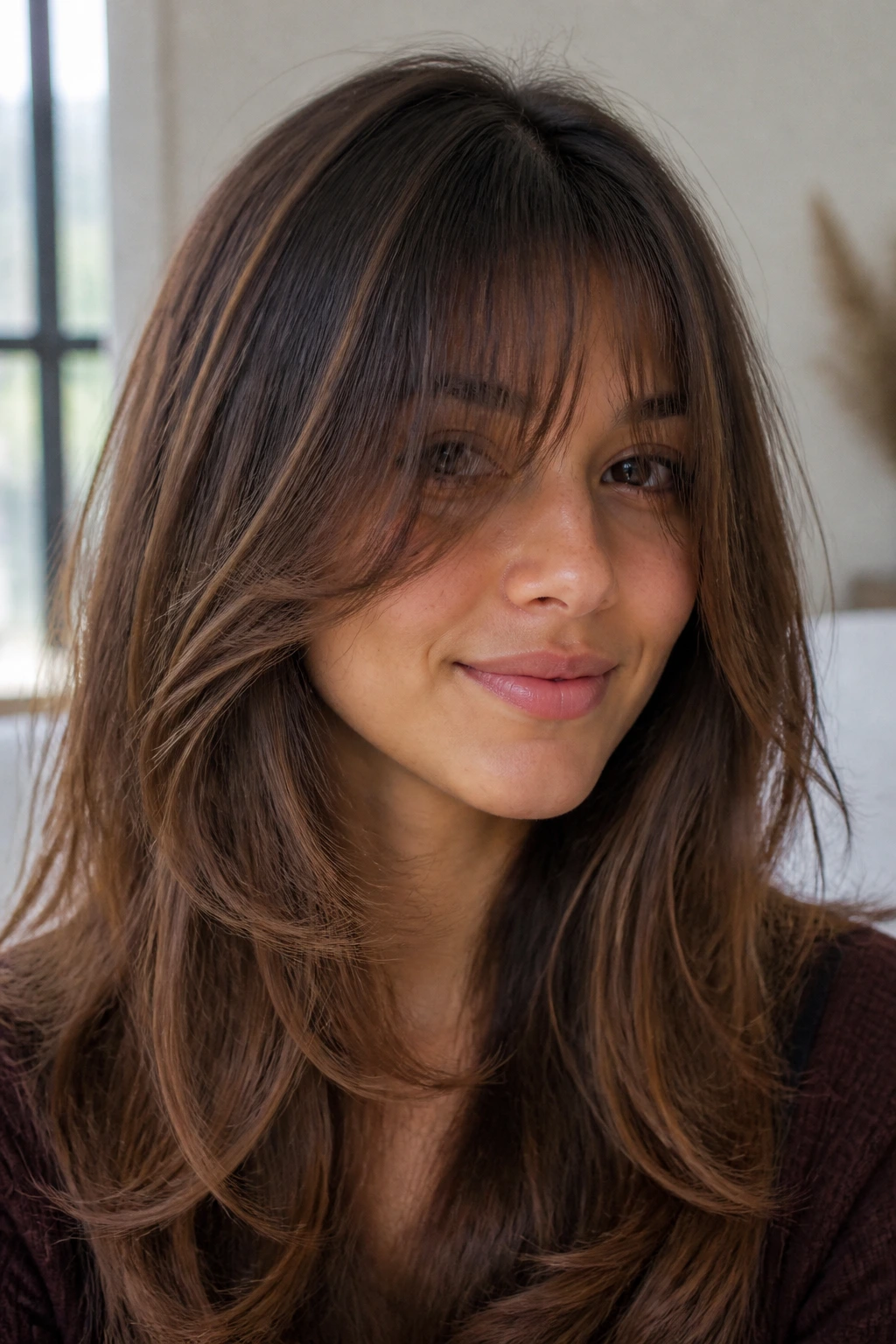
The waterfall transition fringe features layers that cascade down the sides of your face like a waterfall, starting short near the bridge of the nose and getting progressively longer as they move outward.
This continuous flow of layers is incredibly efficient at distributing volume. Because there are no sharp steps or blunt lines, your hair’s volume is spread evenly from your forehead down to your shoulders. This balance prevents any single section from becoming a focal point of puffiness.
How to Style Layered Bangs on Frizzy Hair Days
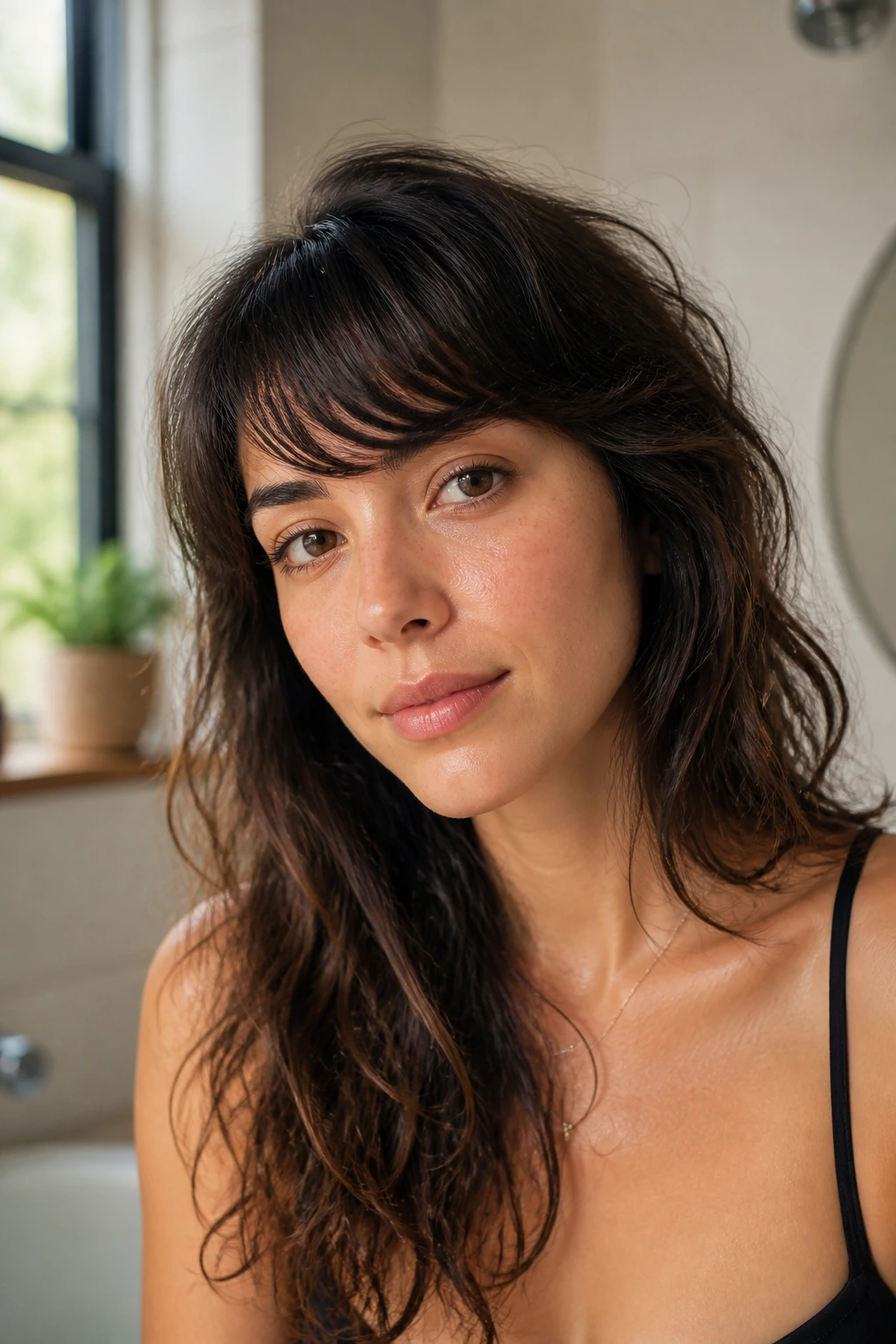
No matter which of these 18 styles you choose, your styling routine will play a massive role in how your bangs behave. Frizzy hair requires a different approach than straight, smooth hair types. The goal is to lock in moisture while the hair is wet so it does not try to suck moisture out of the air later in the day.
[ Wet Hair ]
     |
     v
[ Apply Leave-In Conditioner ] ---> Seals the inner cortex
     |
     v
[ Cool Air Blow-Dry (Flat)   ] ---> Lays cuticle scales flat
     |
     v
[ Pinch Ends with Hair Oil   ] ---> Locks out atmospheric humidity
First, always style your bangs immediately after washing your hair. Do not wrap your hair in a towel and wait 20 minutes; your hairline will begin to dry and frizz instantly. Apply your styling products while your bangs are dripping wet to seal in that clean hydration.
Second, ditch the round brush. Instead, use the wrap-drying technique. Using a flat paddle brush or the palm of your hand, brush your bangs flat against your forehead to one side, blowing the air downward from your roots. Then, brush them all to the opposite side and blow-dry.
This left-and-right motion neutralizes any cowlicks and forces the hair to dry flat against the curve of your forehead, giving you a smooth, natural-looking drape without any puffy, retro volume.
The Golden Rules of Cutting Layered Bangs for Textured Hair
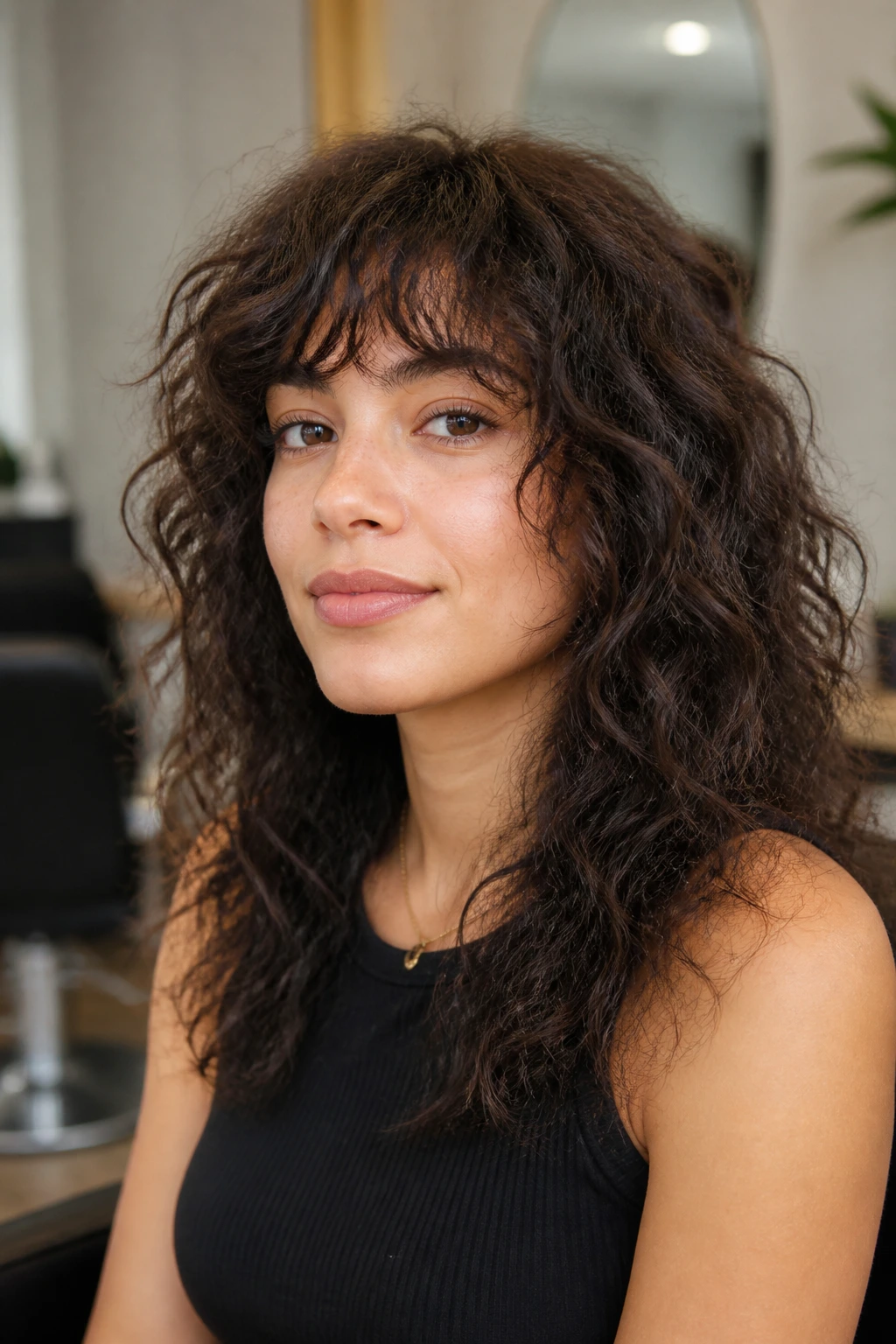
If you are heading to the salon to get one of these layered styles, there are a few non-negotiable rules you should keep in mind to ensure you get the perfect cut.
Always Cut Dry
Never let a stylist cut your bangs while your hair is soaking wet unless they are extremely experienced with your specific texture. Frizzy, wavy, and curly hair types have a high amount of “shrinkage.”
When wet, the hair is heavy and stretched out. Once it dries, it bounces up significantly. Cutting dry allows the stylist to see exactly where each layer will sit in its natural, everyday state.
Avoid Heavy Styling Products
It is tempting to load up on heavy gels, waxes, or silicones to keep your frizz at bay, but this is a mistake for bangs. Your forehead naturally produces oils throughout the day, and when you combine those natural oils with heavy hair products, your bangs will quickly become greasy, flat, and piecey in an unflattering way. Stick to lightweight, water-soluble leave-in conditioners and serums.
Use the Right Scissors
Ensure your stylist is using incredibly sharp, professional shears. Dull scissors crush the hair shaft rather than slicing through it, leaving the ends of your hair frayed and porous. This damage makes the hair far more susceptible to absorbing moisture, leading to instant frizz right at the tips of your bangs.
Wrapping Up
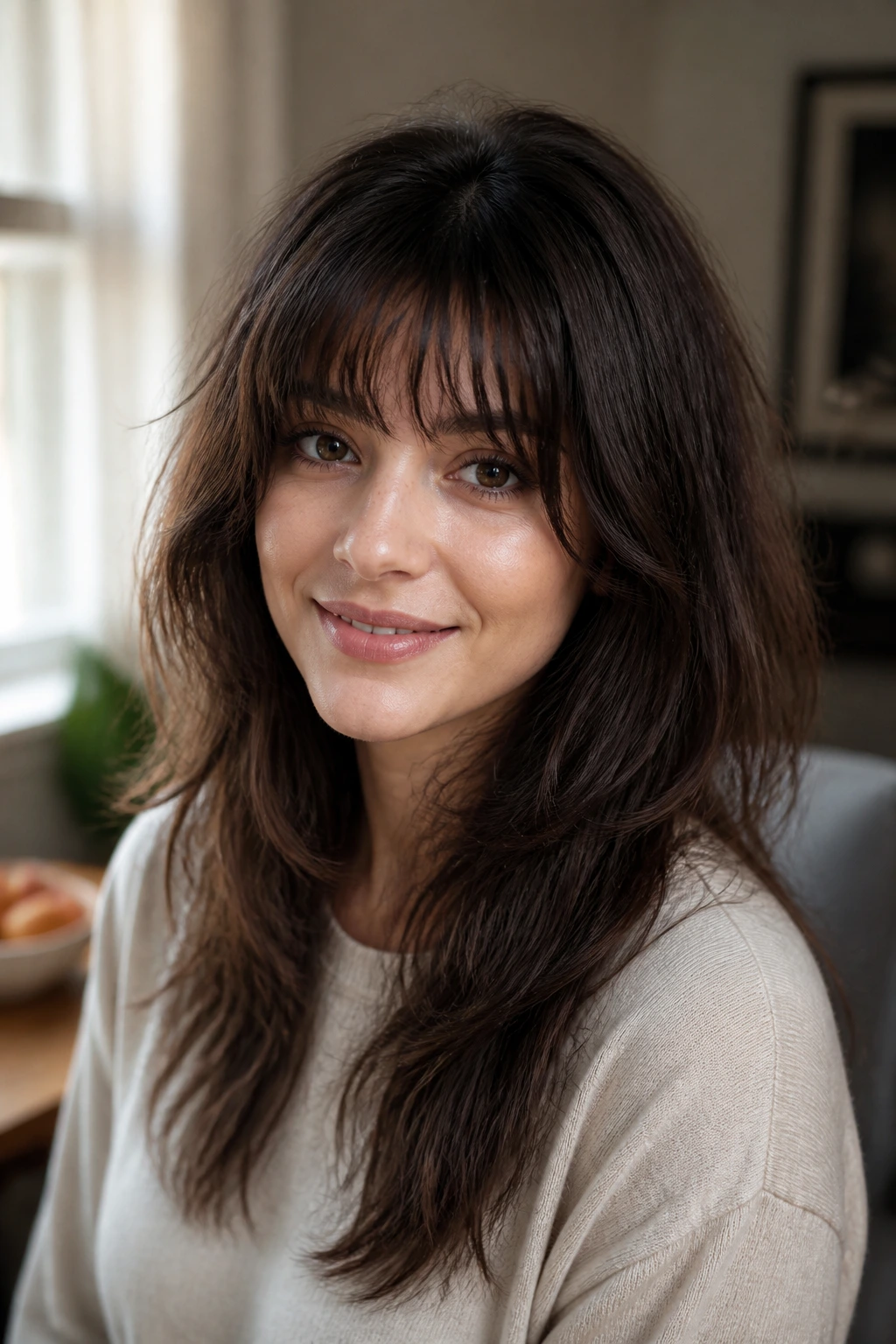
Embracing layered bangs for frizzy hair is all about shifting your perspective. Frizz is not a flaw to be beaten into submission with flat irons and heavy hairsprays; it is simply a sign that your hair has natural texture, movement, and life. By choosing a haircut that incorporates strategic layers, you work with your hair’s natural characteristics rather than fighting them.
Whether you choose a soft curtain bang, a wispy shag, or a dramatic waterfall fringe, these layered styles offer a beautiful, low-maintenance way to frame your face and show off your hair’s natural personality. The right cut will let you step outside on a humid day with confidence, knowing that any expansion or movement in your hair will only make your layered fringe look more beautiful, lived-in, and uniquely yours.