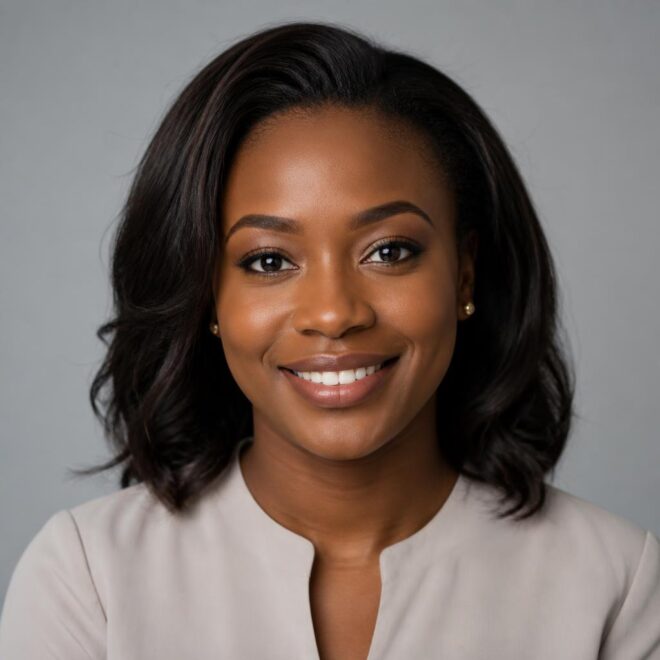


Walking out of the salon with a fresh set of bangs straight for thick hair can feel like a revelation, but anyone with high-density hair knows the immediate dread that follows the first wash. Thick hair has a mind of its own. It bounces, it cowlicks, and, if cut without a clear strategy, it can easily resemble a solid, heavy helmet rather than a soft, face-framing fringe.
Getting this look right requires a shift in how we think about hair density. You cannot simply chop a straight line across a thick head of hair and expect it to behave. The weight of the hair pulls the fringe downward, while the natural volume pushes it outward. This creates a push-pull dynamic that requires specific cutting techniques to resolve.
To make a straight fringe work when your hair is exceptionally thick, your stylist must become an architect. It is about removing weight from the inside out, using specialized texturizing methods, and choosing the right shape for your face. When executed correctly, a straight, flat-ironed fringe on thick hair looks rich, intentional, and incredibly striking. It frames the eyes in a way that finer hair simply cannot match.
The Anatomy of Thick Hair and Straight Fringes
Thick hair possesses a unique physical structure. Each individual strand can be coarse, or you may simply have an incredibly high number of finer strands per square inch of your scalp. Either way, this density creates a massive amount of downward weight and outward volume. When you cut a straight fringe into this type of hair, the hair reacts to the sudden loss of weight by springing upward or spreading outward like a fan.
The secret to keeping these bangs flat and orderly lies in the sectioning. A classic mistake is taking a section that is too wide or too deep. For thick hair, a shallower triangle section starting slightly further back on the crown works best. This prevents the bangs from consuming the entire face while allowing the natural weight of the top layers to hold the fringe down.
Additionally, internal weight removal is mandatory. Stylists often use point cutting—cutting vertically into the ends of the hair rather than straight across—to soften the bottom edge. Another method involves slide cutting on the underside of the fringe, which secretly removes density from the layers closest to the forehead. This allows the top layer of the bangs to lie perfectly flat without looking bulky or blocky.
Essential Styling Tools for Straightening Heavy Bangs
Managing a thick fringe at home requires the right arsenal. Without proper tools, humidity will quickly turn your sleek straight bangs into a puffy, rounded bubble. You do not need a dozen products, but you do need a few highly specific items that help control volume and lock in smoothness.
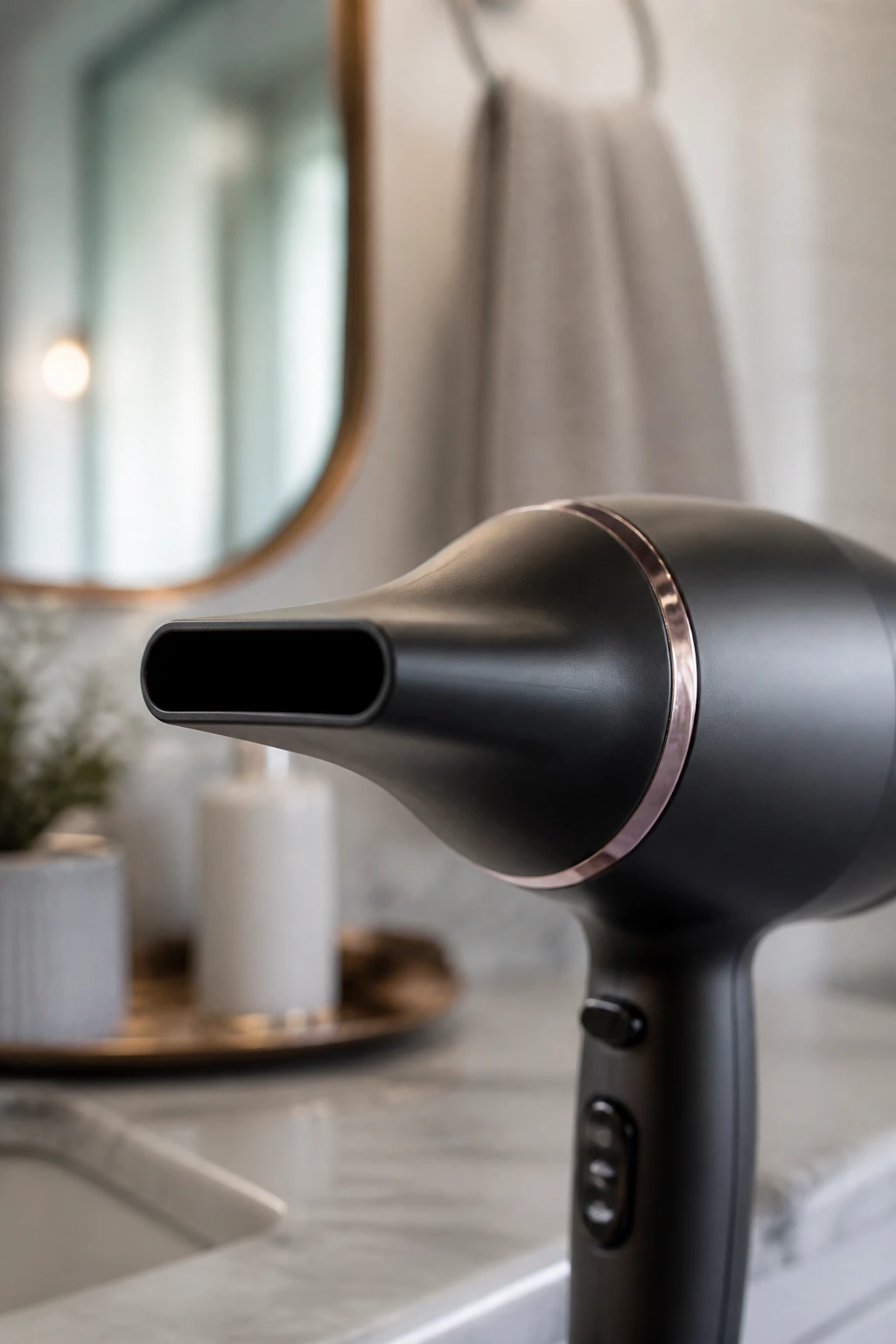
The first tool is a high-quality blow dryer with a narrow concentrator nozzle. This nozzle directs the airflow precisely downward, flattening the hair cuticle and preventing unwanted volume. Pair this with a flat paddle brush rather than a round brush. A round brush creates a curved, “eighties-style” bubble, whereas a paddle brush keeps the hair flat against the forehead as it dries.
- A mini flat iron: Standard flat irons are too wide to get close to the roots of your bangs. A half-inch mini flat iron allows you to grip the hair right at the scalp to smooth out stubborn cowlicks.
- A lightweight heat protectant spray: Heavy creams or oils will weigh down your fringe, making it look greasy by lunchtime. Look for a sheer, watery mist that protects up to 450°F (232°C).
- Dry shampoo: Thick bangs absorb oils from your forehead faster than the rest of your hair. A quick puff of dry shampoo at the roots keeps them airy and prevents them from separating into clumps.
1. Classic Blunt Fringe
The classic blunt fringe is a bold statement that showcases the sheer density of your hair. Instead of trying to hide the thickness, this style celebrates it by creating a solid, crisp line right at the eyebrow level.
Why It Works for High Density
This cut utilizes the natural weight of thick hair to keep the bangs lying completely flat. Because there are no layers to bounce up, the weight of the hair acts as its own styling agent, pulling the fringe downward into a smooth, glossy curtain.
Quick Styling Steps
- Apply a dime-sized amount of smoothing serum to damp bangs.
- Blow dry pointing the nozzle straight down, brushing the hair left and right across your forehead.
- Finish with a single pass of a flat iron at a medium temperature setting.
Pro tip: Have your stylist cut the ends completely straight but slightly point-cut the very inner layer to prevent the bangs from curving inward toward your eyes.
2. Wispy Straight Bangs
Many people believe that wispy bangs are reserved exclusively for fine hair. That is simply not true. With the right texturizing techniques, you can achieve a lightweight, piece-y look even if your hair is incredibly dense.
To make this work, the stylist must carve out the bulk from the middle of the fringe while keeping the outer corners slightly heavier. This creates a beautiful, see-through effect in the center of the forehead that softens your features. It is an excellent option if you want the look of straight bangs without the commitment of a heavy, solid block of hair.
To style these, focus on lightweight styling products. Avoid heavy waxes or pomades, which will glue the wispy strands together into thick, awkward clumps. Instead, use a tiny amount of texture spray to keep the pieces separated and airy throughout the day.
3. Curtain-Framed Straight Bangs
Are you torn between a straight-across fringe and face-framing layers? This style offers the best of both worlds by blending a straight center section into longer, angled pieces on the sides.
How do you balance the weight?
The transition from the short center to the long sides is the critical element here. By gradually tapering the edges, the stylist prevents the harsh “box” shape that can make thick hair look too wide. The longer side pieces hug the cheekbones, which visually narrows the face and softens the transition into the rest of your haircut.
How to Style It
Step 1: Dry the Center
Blow dry the short middle section straight down using a flat paddle brush to keep it flat and smooth.
Step 2: Sweep the Sides
Blow dry the longer side pieces away from your face using a small round brush, creating a soft, sweeping wave that meets your cheekbones.
4. Micro Straight Bangs
Micro bangs, also known as baby bangs, are cut well above the eyebrow. On thick hair, this style is incredibly high-fashion and clean, creating a sharp frame for your eyes and forehead.
This style works because it removes a massive portion of the hair that would otherwise fall into your face. By cutting the fringe short, you eliminate the weight that often causes thick bangs to split in the middle. The remaining hair lies flat against the scalp, creating a neat, graphic line.
- Short length prevents natural waving
- Highly dramatic and frames the eyebrows
- Requires minimal morning styling time
- Needs frequent trims to maintain the short length
Pro tip: If you have a strong cowlick at the hairline, micro bangs can be tricky. Use a tiny flat iron to press the roots flat immediately after blow drying.
5. Choppy Texturized Straight Bangs
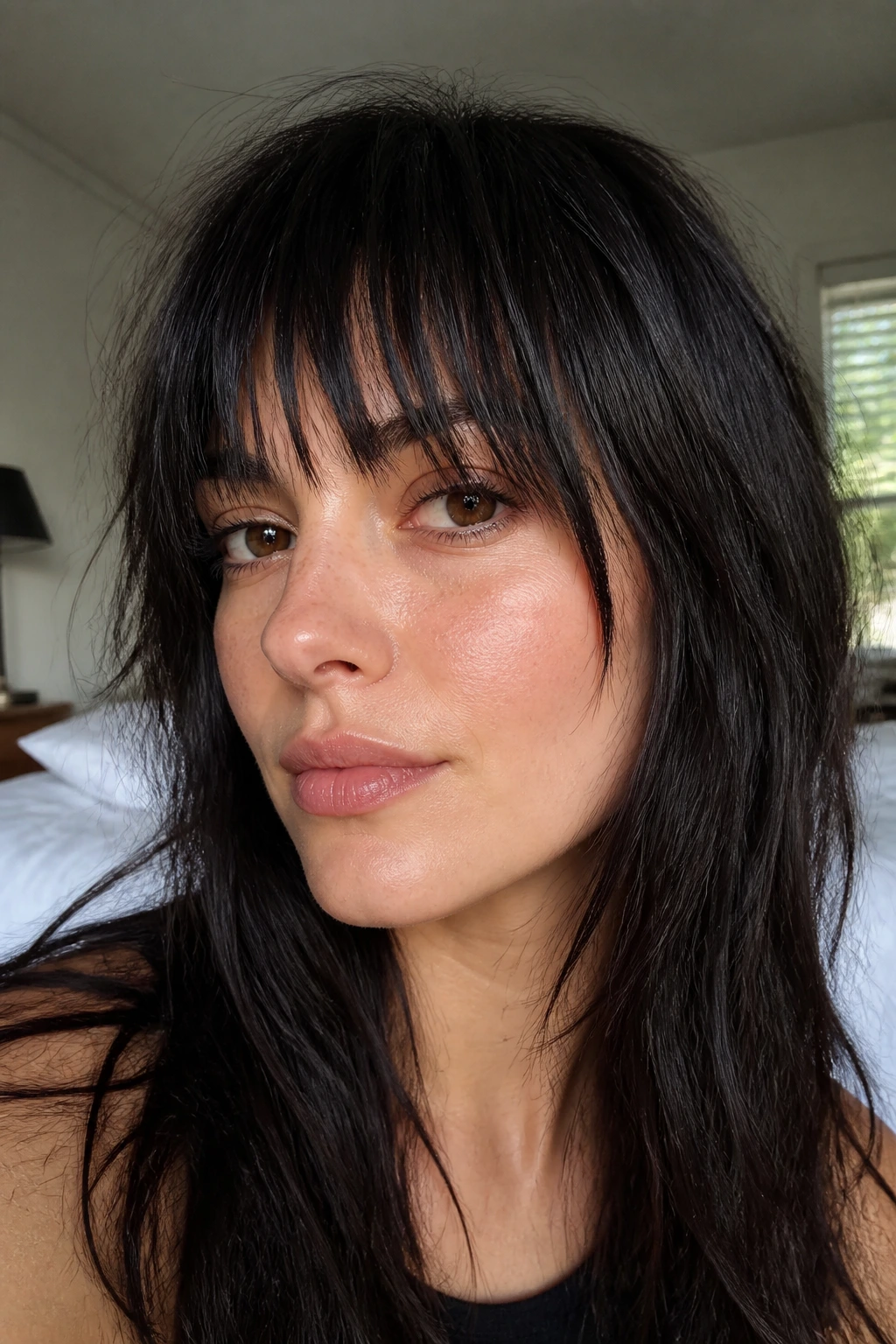
If you prefer a lived-in, effortless look, choppy straight bangs are the perfect solution for heavy hair. This cut intentionally avoids a clean, straight-across line in favor of jagged, point-cut edges.
This style is highly forgiving because it embraces movement and minor imperfections. Your stylist will use shears or a razor to cut deep vertical V-shapes into the bottom edge of the fringe. This removes a significant amount of weight, allowing the bangs to move naturally when you walk rather than sitting on your forehead like a heavy shelf.
Styling is incredibly simple. You do not need to aim for perfection with a flat iron. In fact, a little bit of natural texture works in your favor. Just blow dry them flat, then rub a tiny dab of matte clay between your fingers and pinch the ends of the hair to define the choppy pieces.
6. Eyebrow-Grazing Straight Fringe
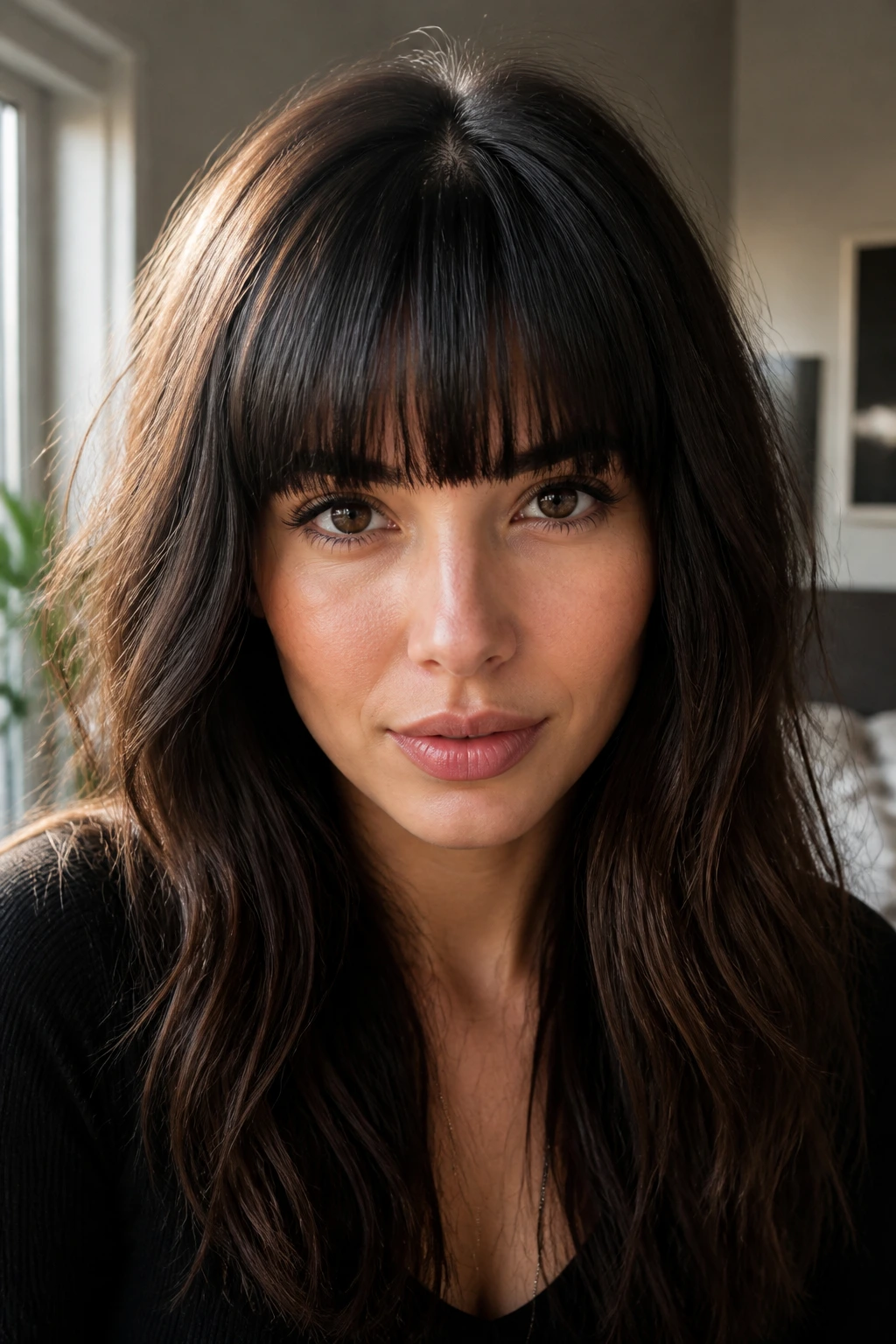
Unlike micro bangs, this style sits precisely at the eyebrow line, creating an incredibly classic and sophisticated frame. It is the gold standard of straight bangs, offering a balance of drama and wearability.
Compared to shorter variations, the eyebrow-grazing fringe requires a bit more maintenance to keep it out of your eyes, but the visual payoff is immense. It looks particularly stunning when paired with a blunt bob or long, sleek layers. The key to managing this length with thick hair is a slight vertical thinning along the bottom millimeter of the hair, which keeps the edge soft and prevents it from poking into your eyes.
This style is best for individuals with straight or slightly wavy thick hair who do not mind visiting the salon every three to four weeks for a quick trim. If you have a high forehead, this cut is especially flattering as it balances your facial proportions beautifully.
7. Birkin Bangs
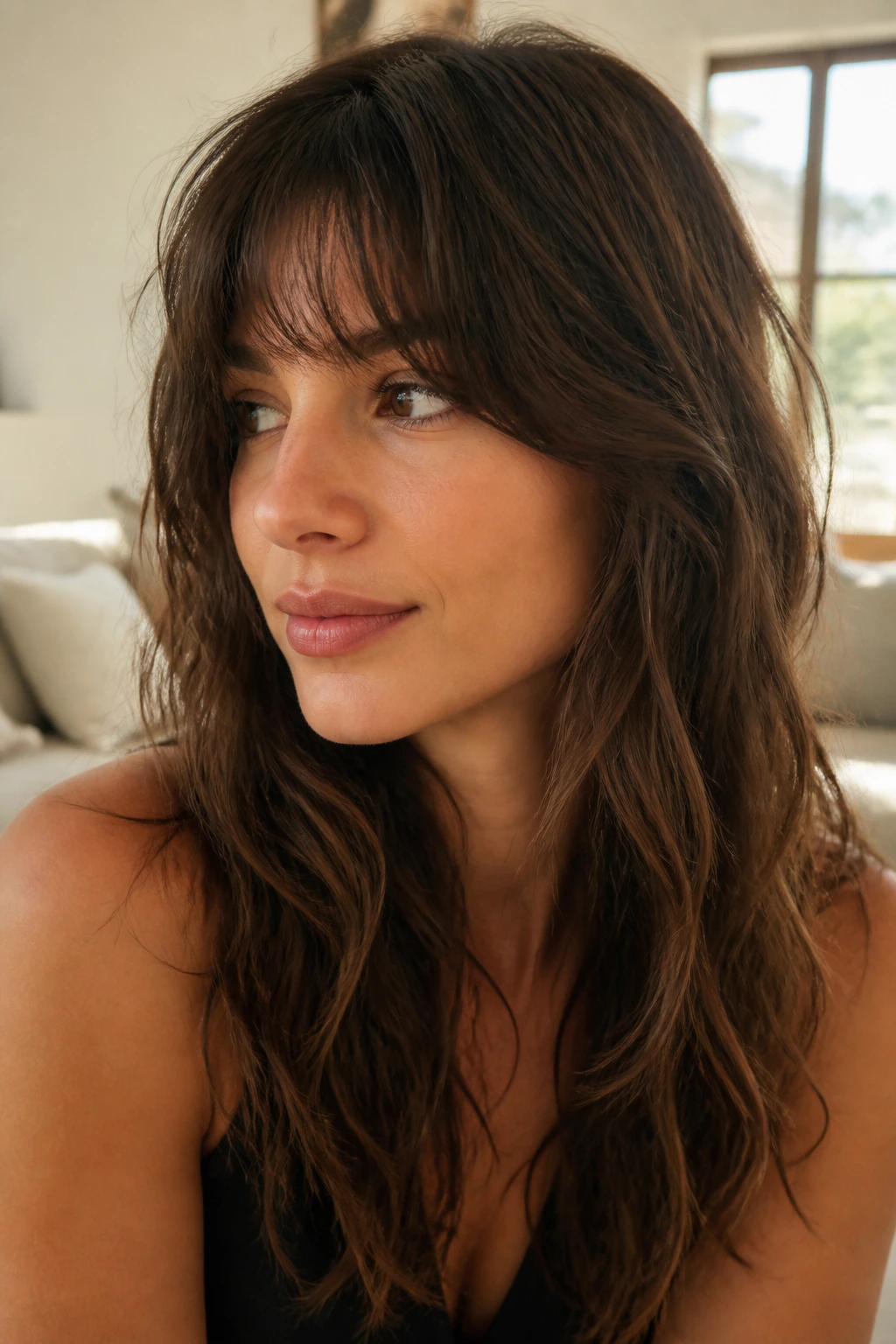
Inspired by classic French style, Birkin bangs are long, slightly undone, and incredibly chic. They are thin enough to see through but thick enough to maintain a clear straight shape across the forehead.
The French Secret to Managing Density
The key to Birkin bangs on thick hair is a very sparse sectioning pattern. The stylist takes only a sliver of hair from the very front of the hairline, leaving the rest of the thick hair to fall to the sides. This ensures the bangs remain light, airy, and easy to style.
Quick Styling Steps
- Let your bangs air-dry about fifty percent of the way to let their natural wave show.
- Blow dry the remaining moisture pointing the dryer down, using your fingers to shake the hair.
- Skip the flat iron entirely to preserve that casual, lived-in French texture.
Pro tip: A dry texture spray is your best friend here. Spray it from underneath the fringe to give it a fluffy, lightweight lift.
8. See-Through Straight Bangs
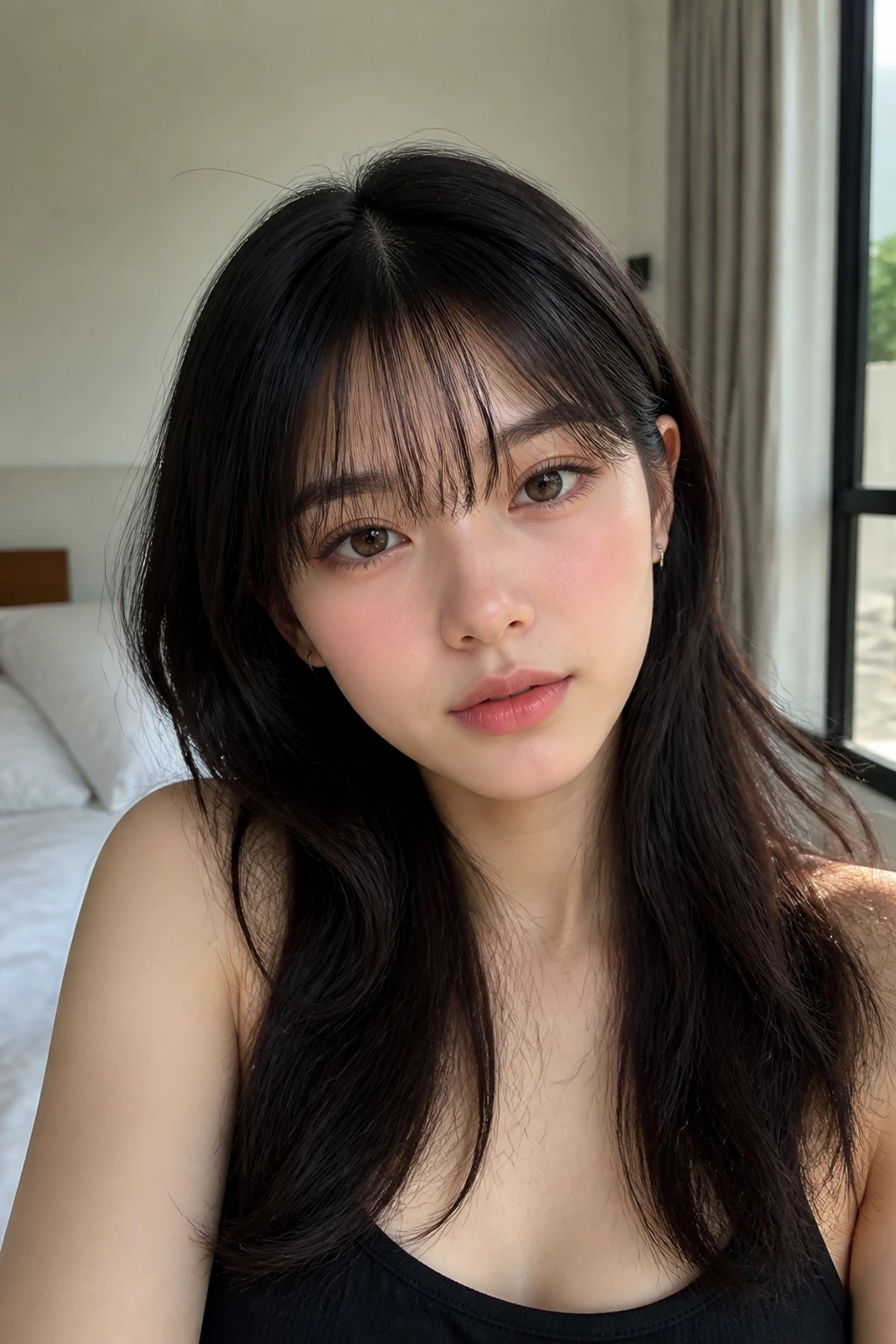
Popularized by Asian beauty practices, see-through bangs are incredibly delicate and wispy. They allow your forehead to show through the hair, creating a very soft, youthful appearance.
On thick hair, achieving this requires a highly skilled stylist who knows how to slide-cut the inner layers. By removing the hair underneath and leaving only a few select strands on top, you get the illusion of very fine, delicate bangs. It is an ingenious way to wear a fringe without dealing with the heat and weight of a full block of hair on your forehead during warmer months.
To style these, you only need to run a warm comb through them or use a single velcro roller while you do your makeup. They require almost no hold product—in fact, any heavy hairspray will make them look stiff and ruin the delicate, floating effect.
9. Asymmetric Straight Bangs
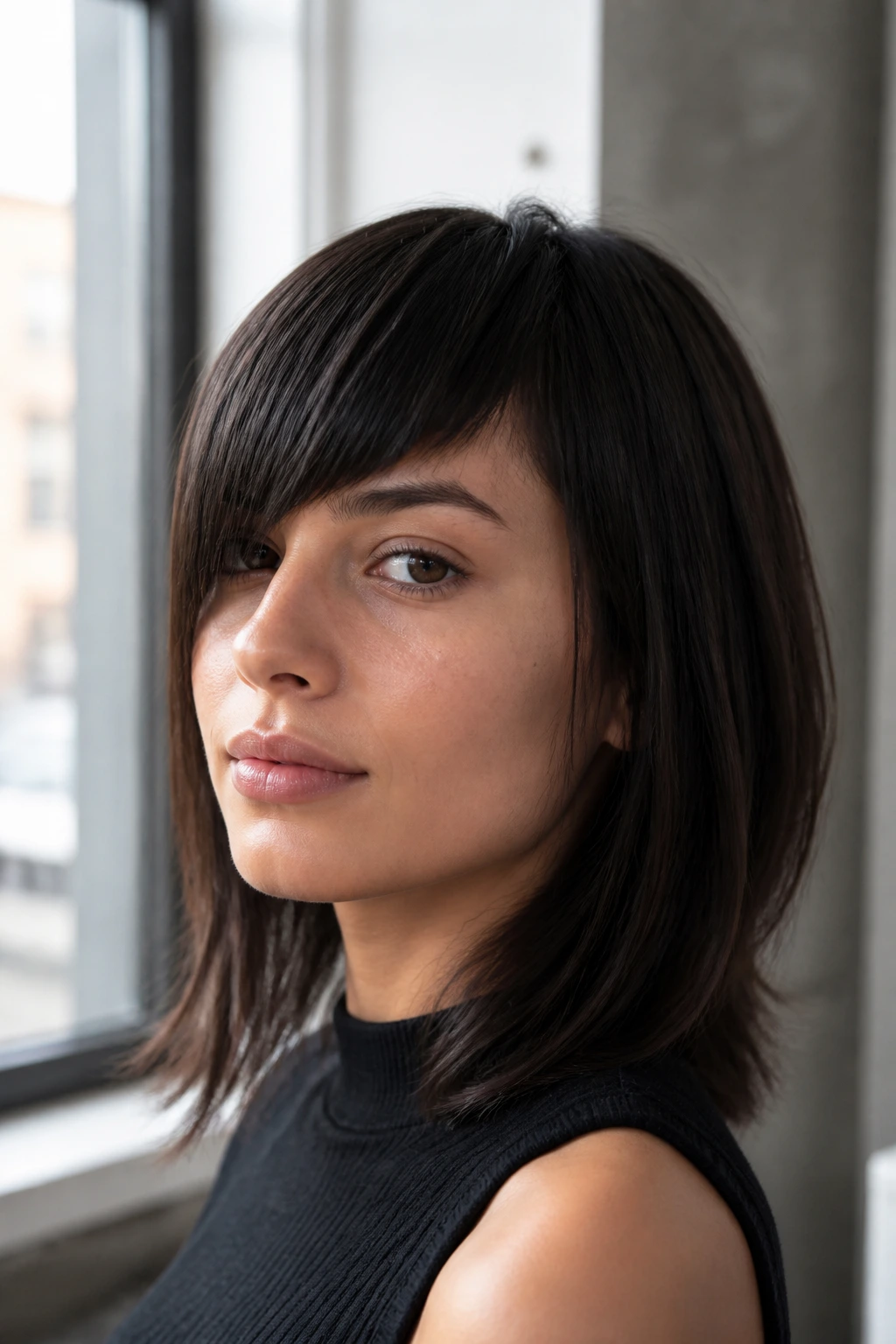
For those who love an avant-garde aesthetic, asymmetric straight bangs offer a striking visual angle. The fringe is cut straight but slants diagonally across the forehead, starting short on one side and ending longer on the other.
Why does the slant work?
The diagonal line breaks up the natural fullness of thick hair. Instead of a solid horizontal line that can sometimes widen the appearance of the face, the slant draws the eye downward and diagonally, creating a lengthening effect. It is a highly structured cut that looks incredibly polished and architectural.
How to Style It
Step 1: Prep the Hair
Apply a heat protectant mist evenly across the damp fringe to prepare it for precision styling.
Step 2: Flat Iron with a Curve
Pull the flat iron down and slightly toward the longer side of the slant to keep the diagonal line looking sharp and clean.
10. Feathered Straight Bangs
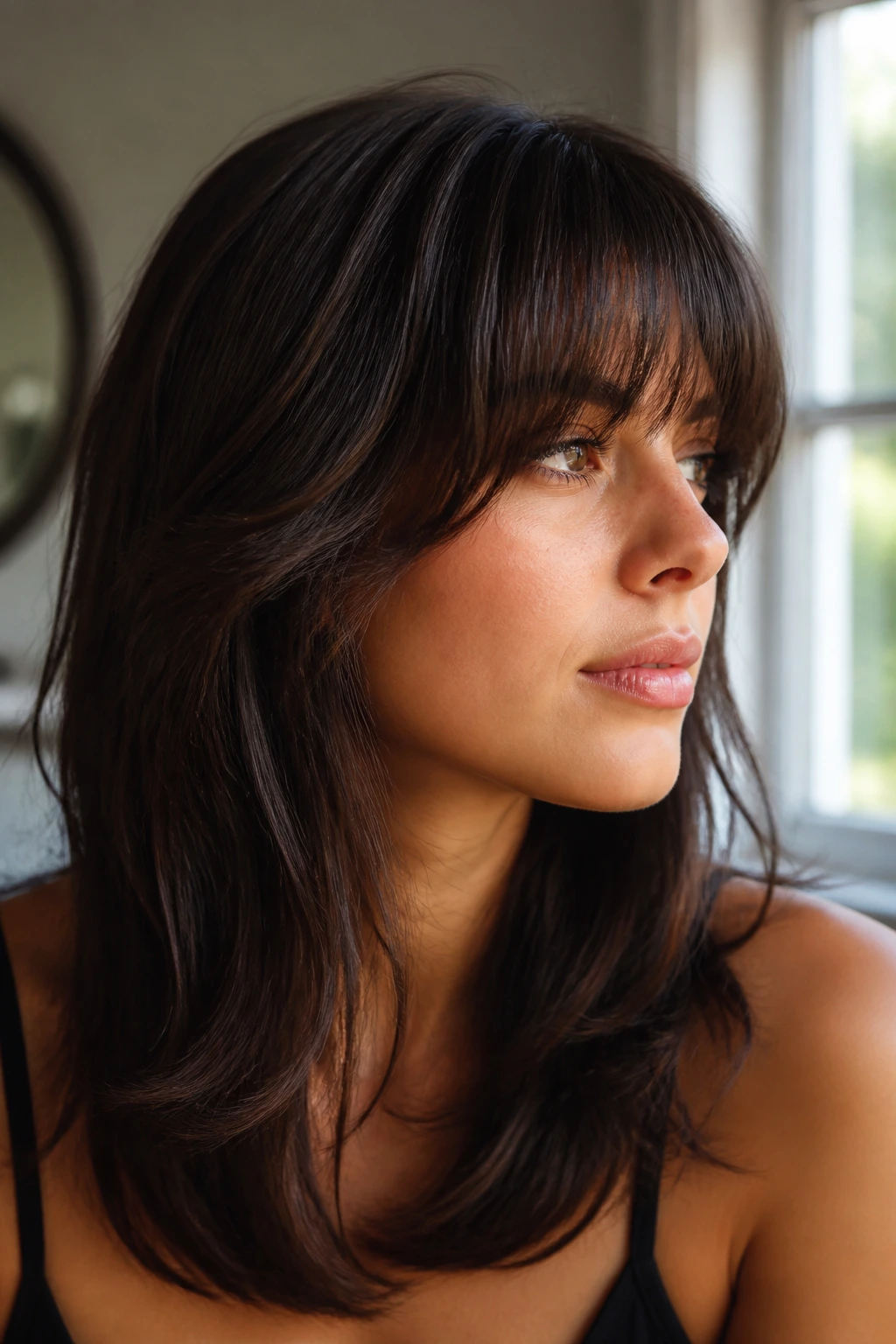
Feathered bangs throw it back to a softer, more retro aesthetic. The hair is cut straight across but the ends are heavily layered and swept backward at the temples, resembling the delicate feathers of a bird.
This style is fantastic for thick hair because the feathering process naturally removes a large amount of bulk from the edges. The center remains relatively flat, while the sides roll back smoothly into the rest of your hair. This prevents the corners of the bangs from looking heavy or boxy.
- Blends beautifully with shag or layer cuts
- Softens sharp, angular jawlines
- Removes bulk from the temples
- Easy to grow out if you change your mind
Pro tip: Use a small round brush on the very outer corners of the bangs, rolling them backward away from your eyes while directing the hot air from your dryer onto the brush.
11. Shag-Style Straight Fringe
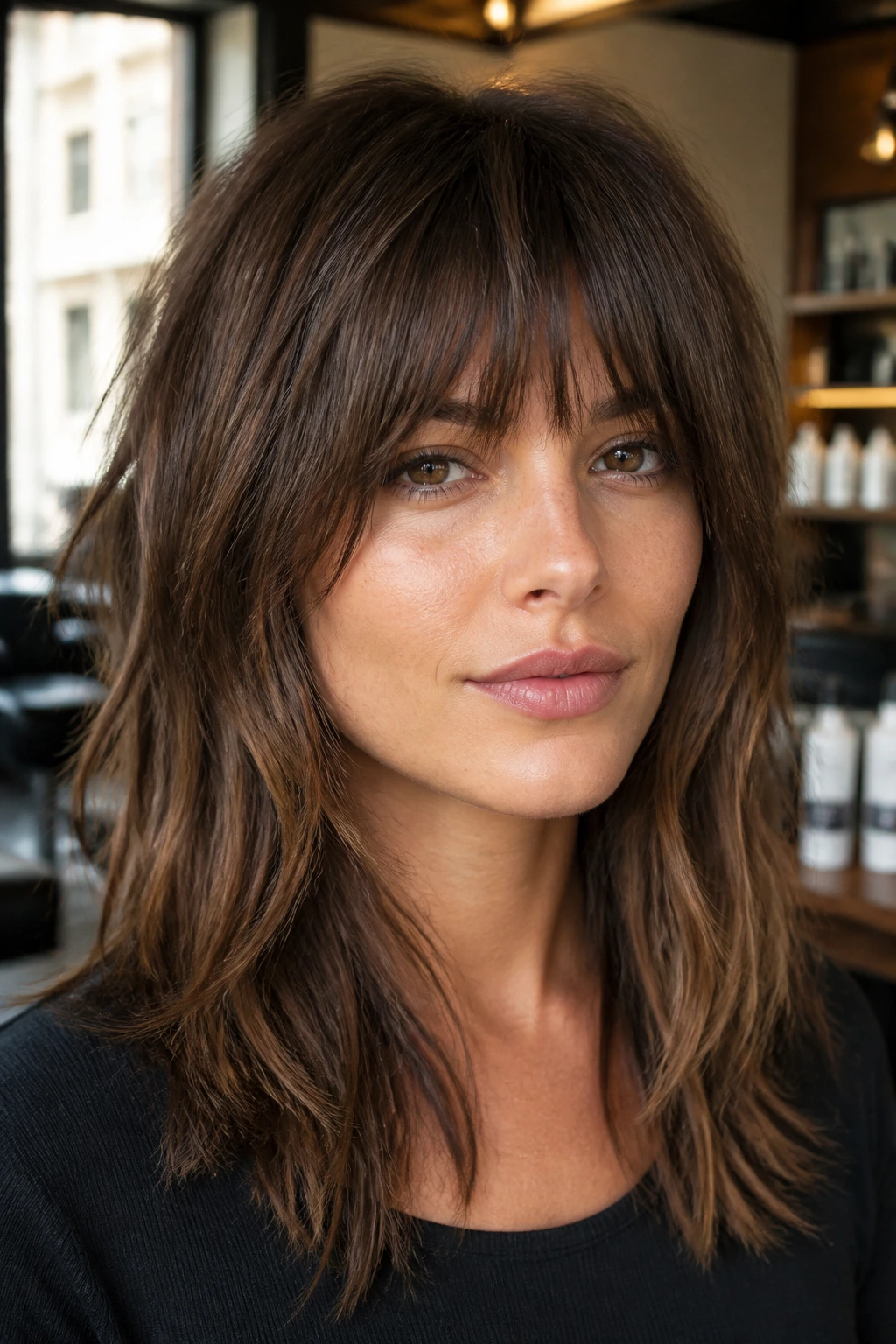
The shag is all about texture, layers, and movement. When you pair a straight fringe with a shag cut, the bangs are heavily textured to match the messy, rock-and-roll vibe of the rest of the hair.
This style is highly effective for thick hair because a shag is designed to remove weight. The bangs are integrated into shorter layers around the crown, meaning they do not sit as an isolated block of hair. Instead, they flow naturally into the framing pieces around your eyes and cheekbones, creating a cohesive, low-maintenance look.
To style these, embrace your hair’s natural movement. Use a sea salt spray or a dry texturizer on damp hair, scrunch with your hands, and let them air dry or use a diffuser on your blow dryer. The goal is a slightly messy, perfectly imperfect finish that looks cool without trying too hard.
12. Piece-Y Straight Bangs
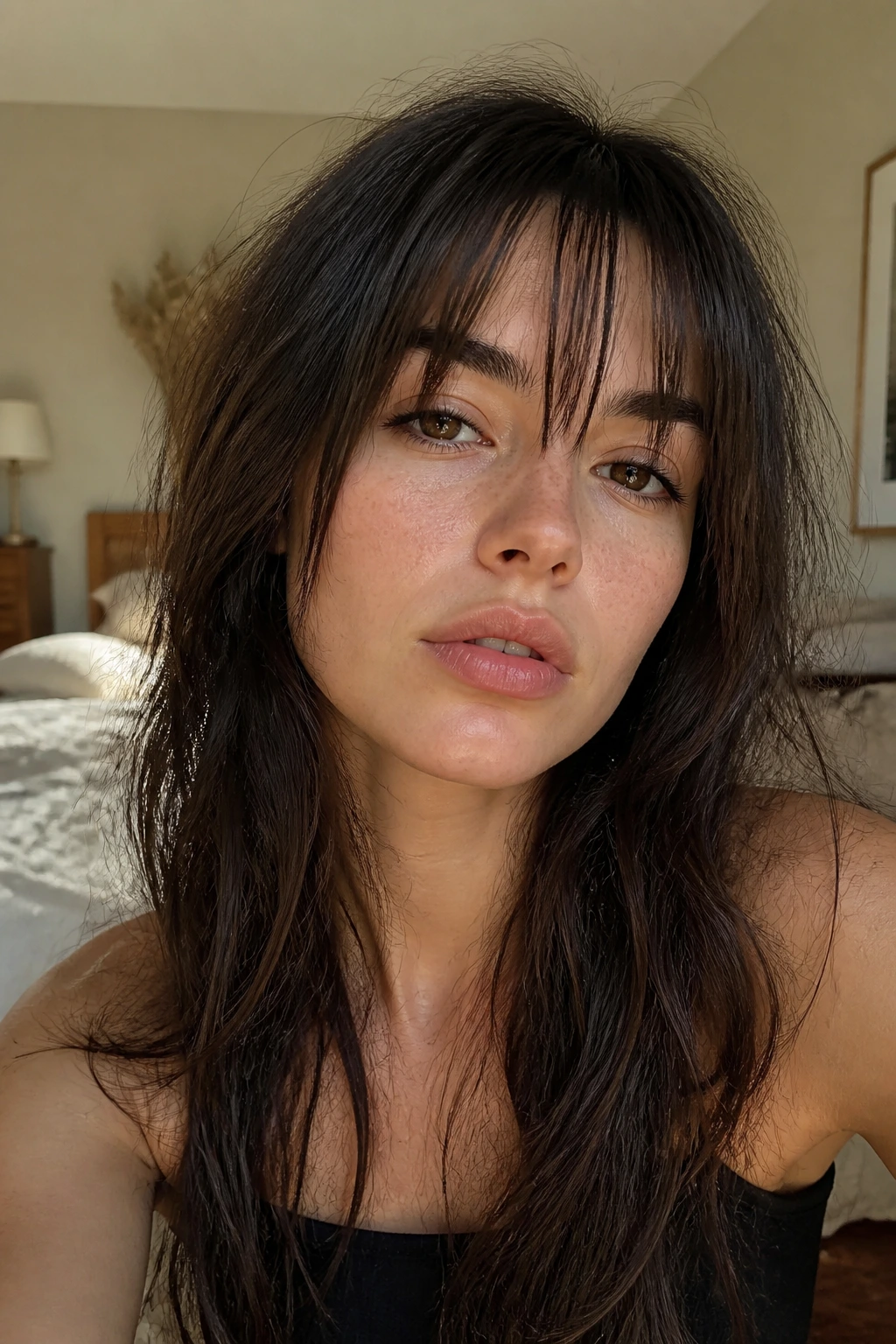
Piece-y bangs are defined by distinct, separated columns of hair rather than a single, solid sheet. This style gives thick hair a lighter feel and allows the forehead to peek through in small sections.
Unlike truly wispy bangs, piece-y bangs still have some weight to them. They are cut in small, distinct clusters. The stylist achieves this by using deep point-cutting techniques, removing the hair between the clusters so they naturally fall apart from one another. This is an excellent option for coarse hair, as the natural stiffness of coarse strands helps keep the pieces defined and separate.
This style is best for those who love a highly textured, slightly grunge-inspired look. It works beautifully with second-day hair, as a tiny bit of natural scalp oil actually helps keep the pieces clumped together in a stylish, intentional way.
13. Rounded/Curved Straight Bangs
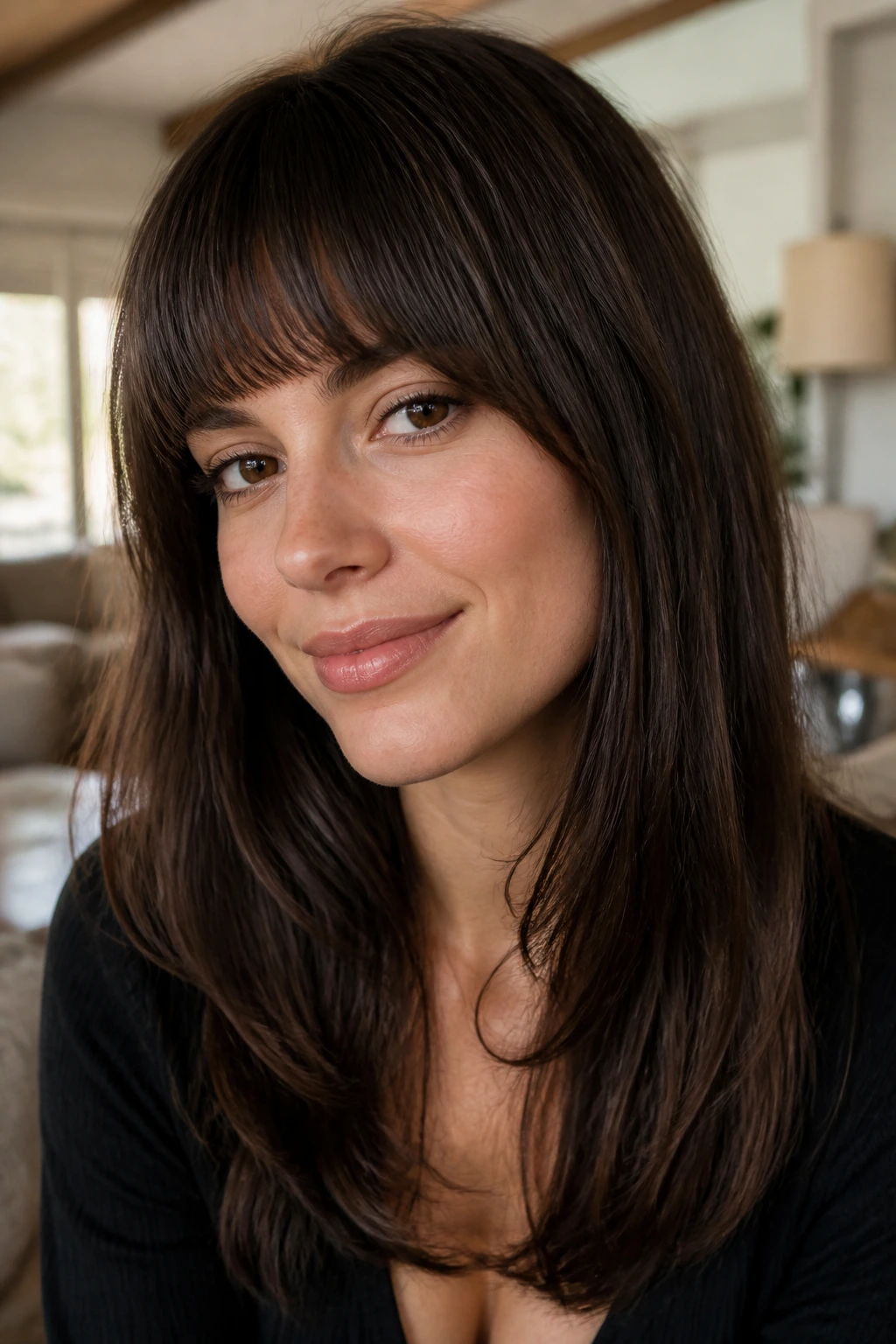
Rounded straight bangs are cut in a soft arch that follows the natural curve of your brow line. They are shorter in the dead center of your forehead and gradually get longer as they reach the outer corners of your eyes.
The Power of the Arch
This curved shape is incredibly flattering for thick hair because it prevents the harsh, boxy corners that often occur with a pin-straight line. By softening the edges into a curve, the fringe hugs the face, making your eyes pop and creating a highly harmonious frame.
Quick Styling Steps
- Blow dry the center section straight down using a paddle brush.
- When drying the sides, curve the brush slightly inward toward your face.
- Use a tiny drop of shine serum on the ends to highlight the curved shape.
Pro tip: Ensure your stylist cuts the arch while you are sitting completely upright, as tilting your head forward can ruin the symmetry of the curve.
14. Heavy Straight-Cut Fringe
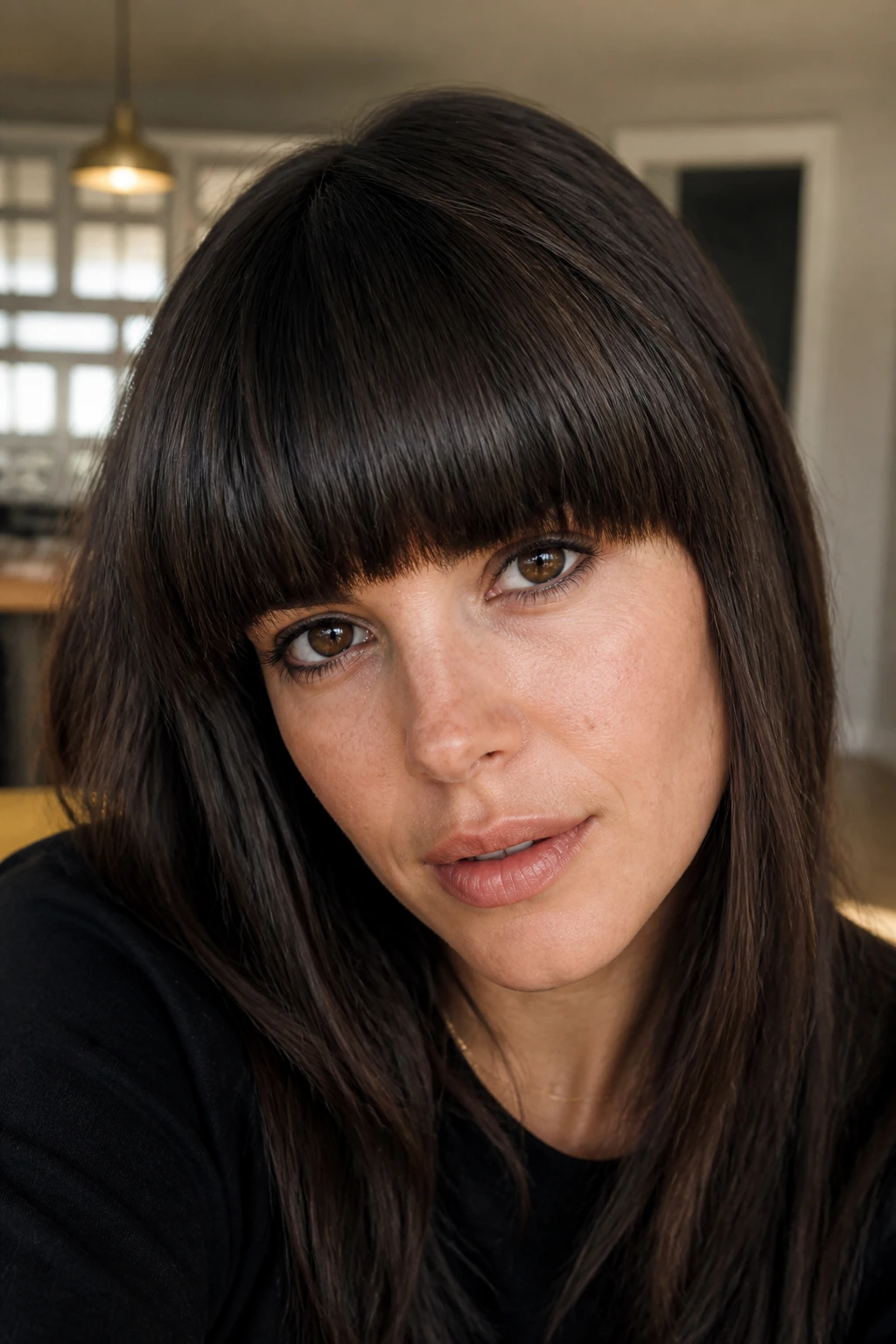
This style is the ultimate expression of thick hair. It is a full, heavy, deep-set fringe that starts far back on the crown and falls in a thick, solid sheet across the forehead.
While many of the styles on this list focus on removing weight, this cut embraces it fully. It requires a lot of hair density to look correct, making it a style that only those with thick hair can truly pull off. The sheer weight of the hair keeps it lying perfectly flat, creating a dramatic, high-contrast look that is incredibly striking, especially on dark or vibrant hair colors.
To style a heavy fringe, you must master the blowout. Because there is so much hair, it can trap moisture underneath. Work in two horizontal layers: clip the top layer up, blow dry the bottom layer completely flat, then drop the top layer and repeat. This ensures the entire fringe is perfectly smooth from root to tip.
15. Razored Straight Bangs
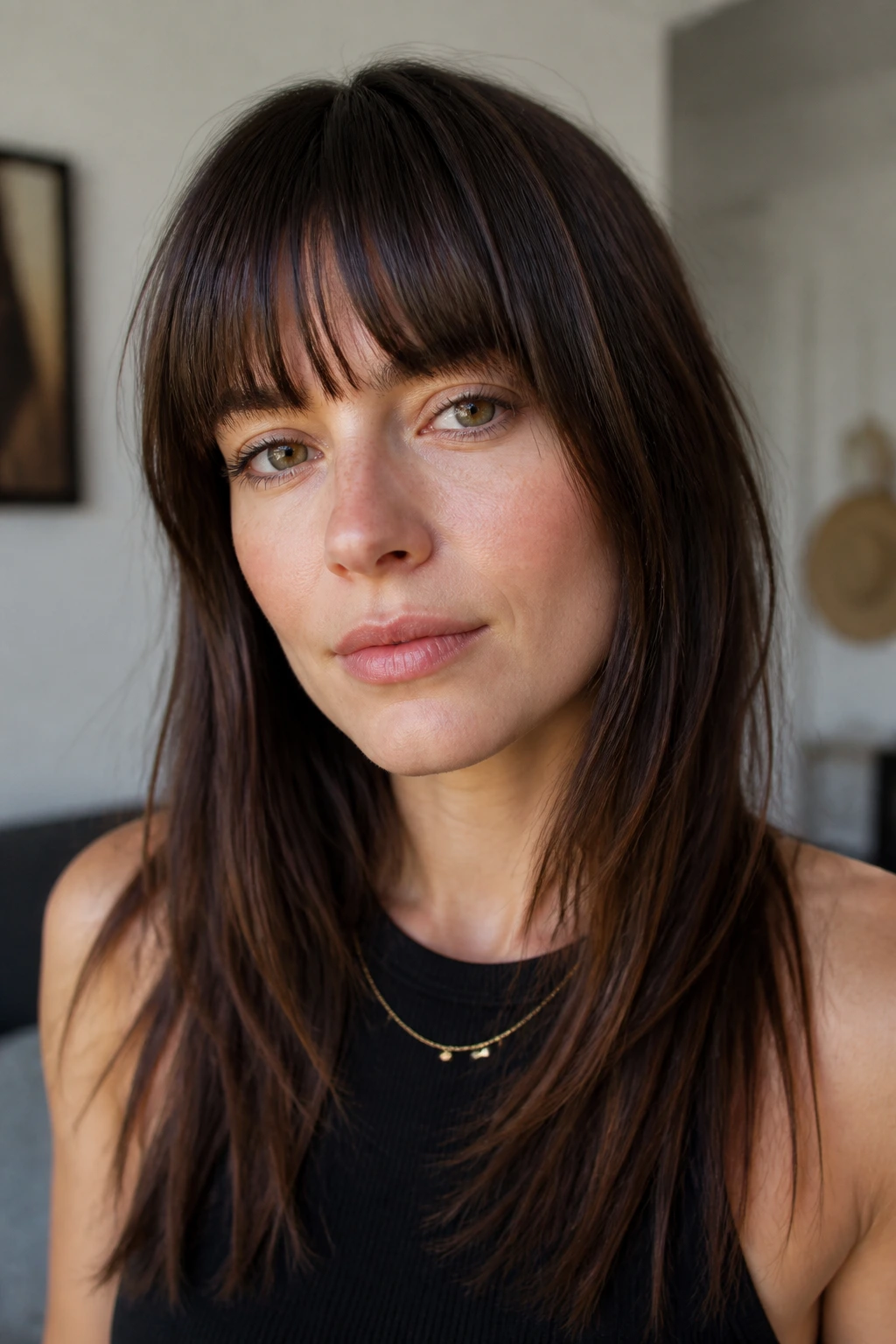
A razor cut produces a completely different texture than scissors. Using a straight razor allows the stylist to shave away weight, creating incredibly soft, tapered ends that lie beautifully flat.
Why Razor Cutting Changes the Game
Scissors cut the hair in a clean, blunt line, which can sometimes make thick hair look blocky. A razor, however, cuts each individual strand at an angle. This creates a sloped tip on each hair, allowing the strands to nestle into one another smoothly. The result is a straight fringe that feels incredibly light and has tons of natural, fluid movement.
How to Style It
Step 1: Apply Texture Lotion
Rub a small amount of lightweight styling cream through damp bangs to protect the razor-cut ends from frizzing.
Step 2: Hand-Dry for Movement
Blow dry using your fingers to ruffle the hair back and forth, allowing the soft, razored edges to settle naturally.
16. Layered Straight-Across Bangs
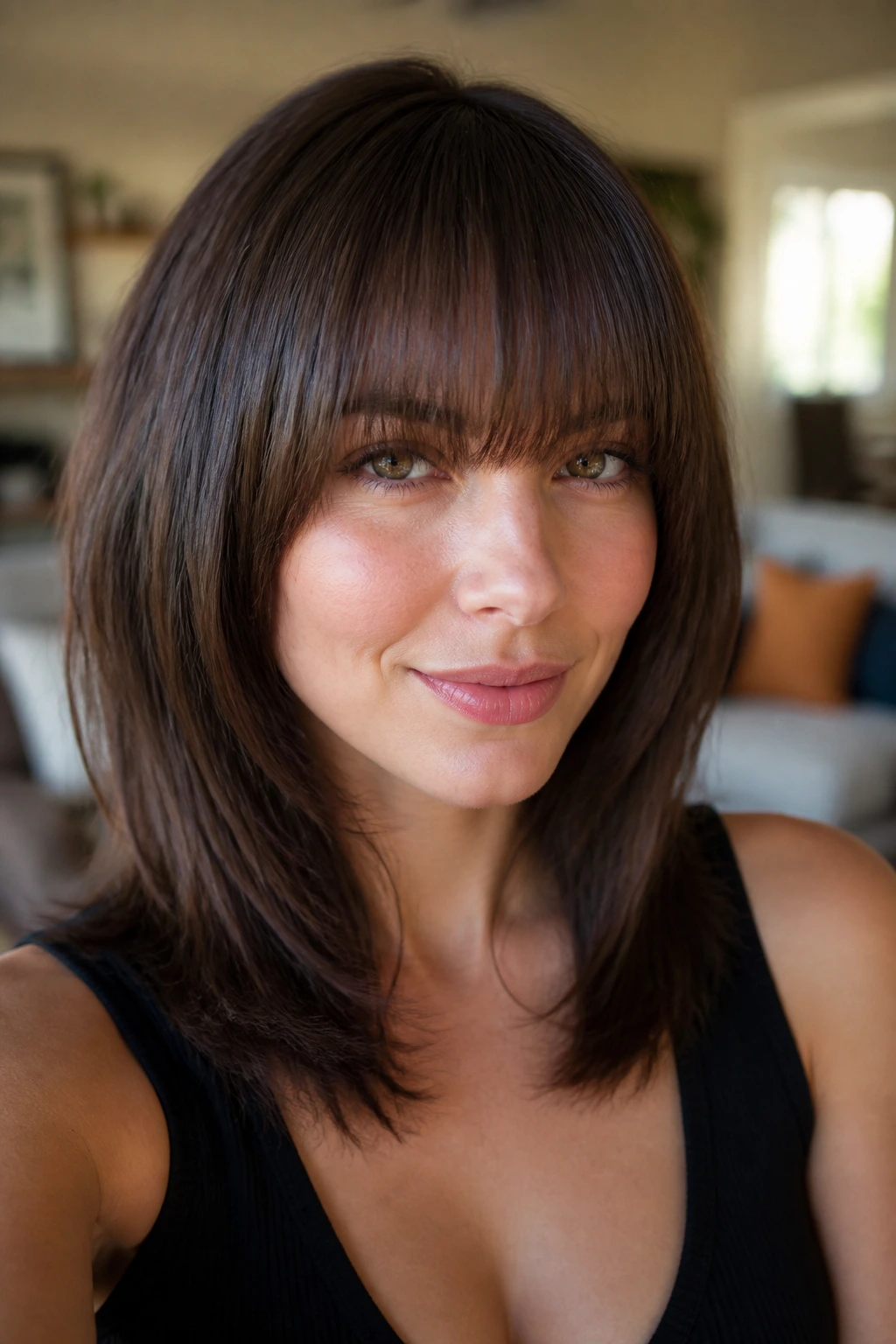
Layered bangs feature a shorter under-layer and a slightly longer top-layer. This internal structure is a brilliant trick for managing extreme hair density without losing the look of a solid, straight fringe.
This style is highly effective because the shorter under-layer acts as a support system. It propels the longer top-layer outward slightly, preventing the bangs from lying too flat against a sweaty forehead while simultaneously removing half of the bulk. To the casual observer, it looks like a full, rich fringe, but to you, it feels light and breezy.
- Secretly removes fifty percent of the weight
- Prevents the fringe from sticking to your skin
- Creates a beautiful, full-bodied look
- Works wonders on extremely coarse hair textures
Pro tip: When flat-ironing, only iron the top layer of the bangs. Leave the under-layer to its natural texture to maintain that beautiful, built-in body.
17. Side-Swept Straight Bangs
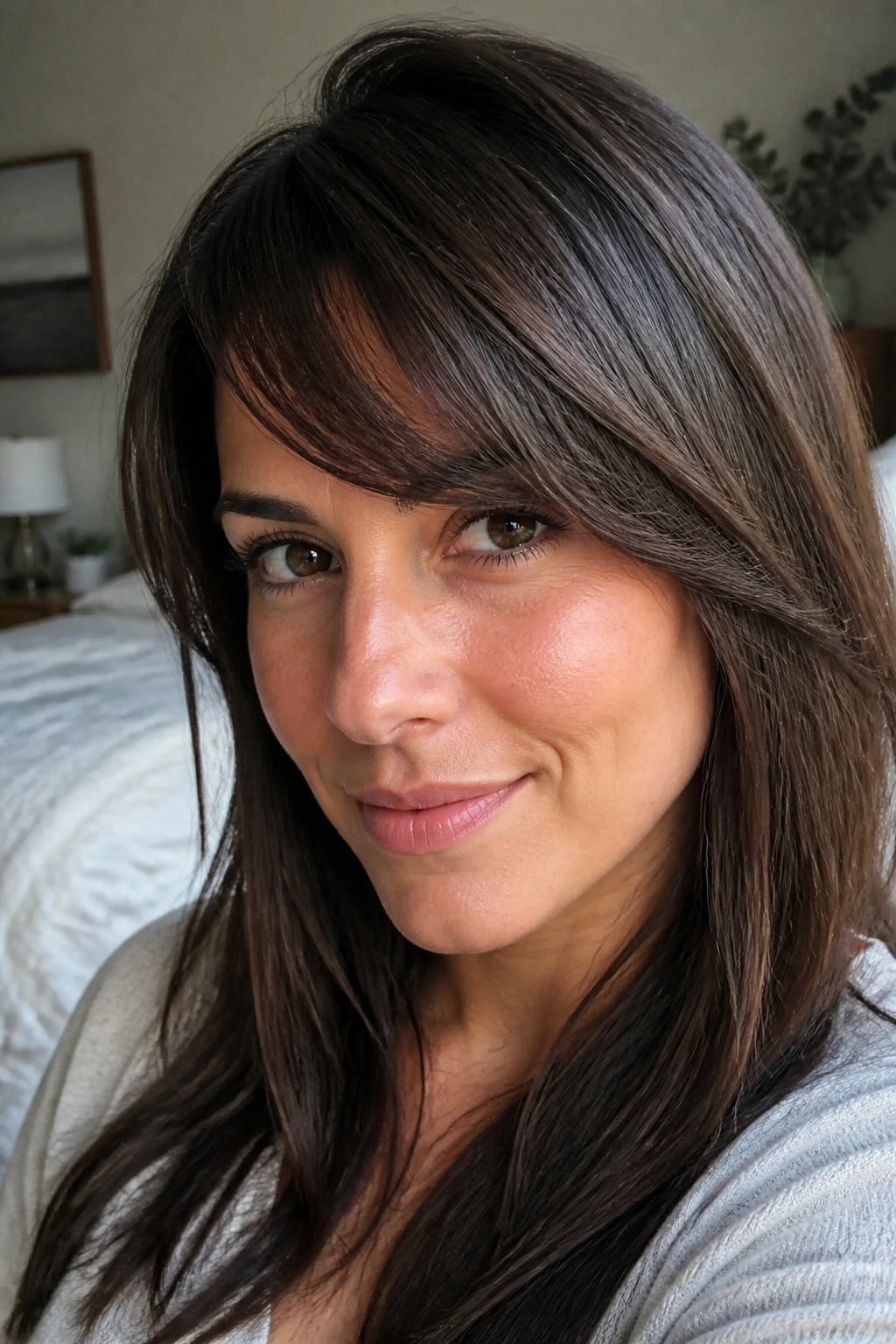
For those who want the look of a straight fringe but prefer the flexibility of a side-part, these bangs are cut straight across but styled to cascade elegantly to one side.
This style is highly versatile. It is cut flat and straight, but because it is swept to the side, it opens up the face and prevents the hair from feeling too heavy. It is an excellent choice if you have a prominent cowlick right in the middle of your hairline, as sweeping the hair to the side working with the cowlick’s natural direction makes styling much easier.
To style, apply a light-hold volumizing mousse to damp hair. Use your blow dryer and a paddle brush to sweep the hair in the opposite direction of where you want it to lay first—this creates a beautiful, root-lifting arc. Then, sweep it back over to your preferred side and set it with a light mist of hairspray.
18. Tapered Edge Straight Bangs
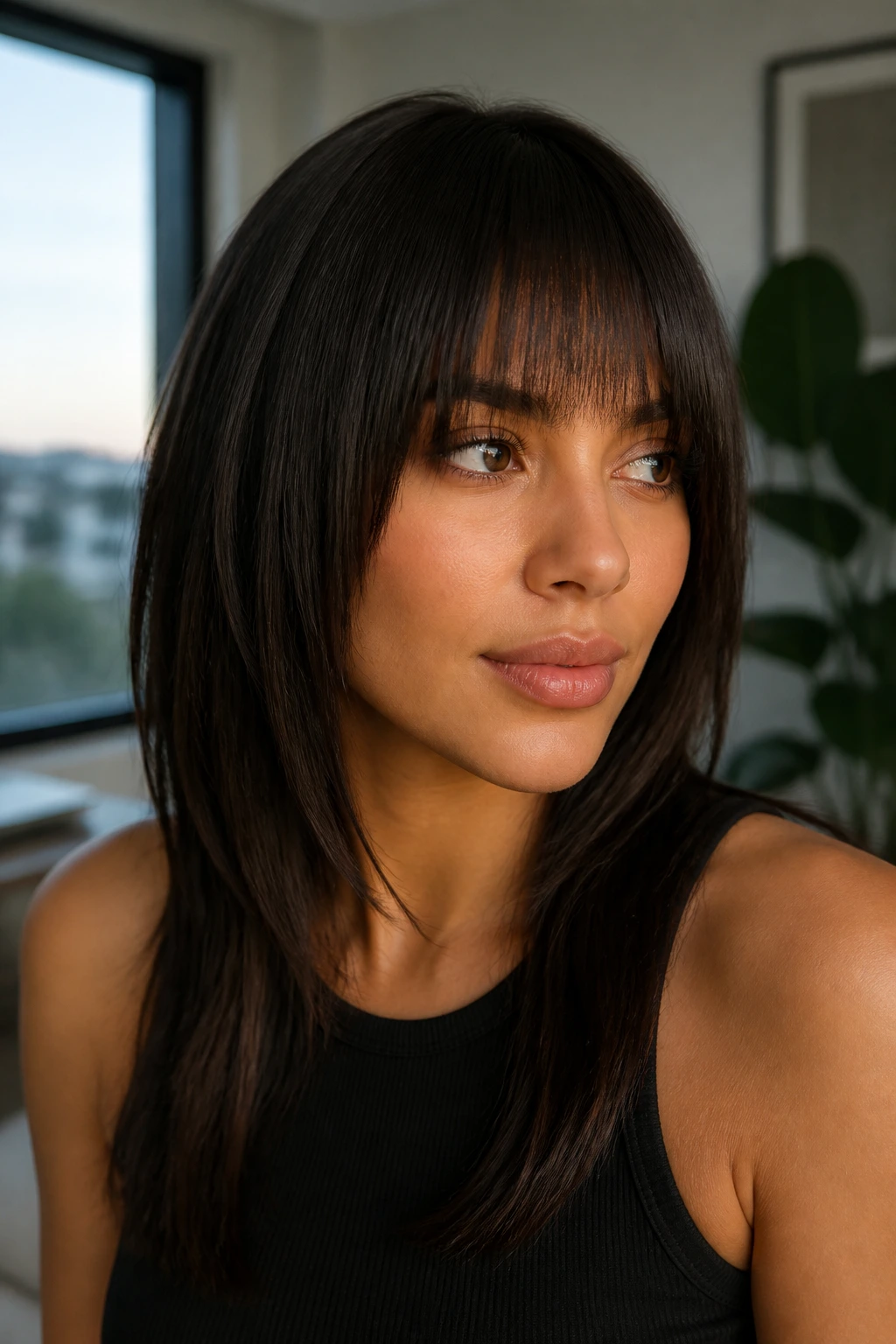
This style features a sharp, straight horizontal line across the center of the forehead, which then transitions into dramatically elongated, tapered points at the outer corners of the eyes.
This is a highly graphic, modern look that beautifully bridges the gap between bangs and face-framing layers. The sharp transition from the short center to the long edges removes a lot of weight from the temples—an area where thick hair often gets incredibly bulky. This keeps the sides of your face clean and structured, highlighting your cheekbones and jawline.
This cut is best for those with straight, thick hair who love a polished, highly styled look. It pairs beautifully with a sleek high ponytail or a neat bun, as the tapered edges remain down to frame your face even when the rest of your hair is pulled back.
19. Split Straight Bangs
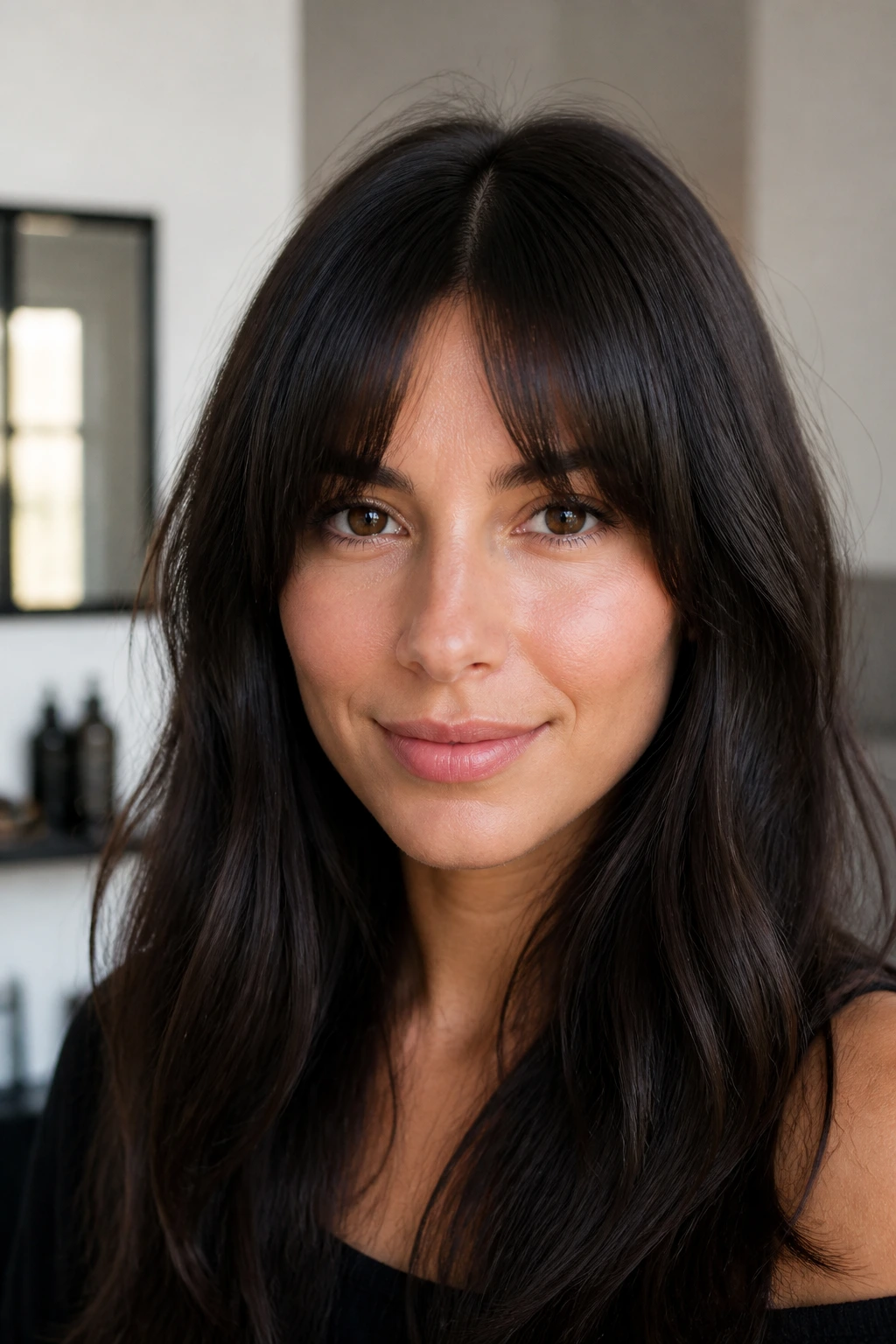
Split bangs are cut straight across but are intentionally parted slightly in the middle or just off-center, creating a small, inverted “V” shape on the forehead.
The Art of the Peak-a-Boo Part
This style is a lifesaver for thick hair because it breaks up the solid wall of hair. By allowing a small triangle of forehead to show through, you visually lengthen your face and soften the overall look. It also makes the bangs much easier to manage throughout the day, as you do not have to worry about them splitting accidentally—they are already designed to do so.
Quick Styling Steps
- Blow dry your bangs straight down until they are completely dry.
- Use your fingers or a comb to create a small split in the center.
- Apply a tiny dab of lightweight wax to the inner corners of the split to hold them open.
Pro tip: This is the perfect transition style if you are currently growing out a full blunt fringe and want to keep looking stylish during the awkward in-between phases.
20. French Girl Straight Fringe
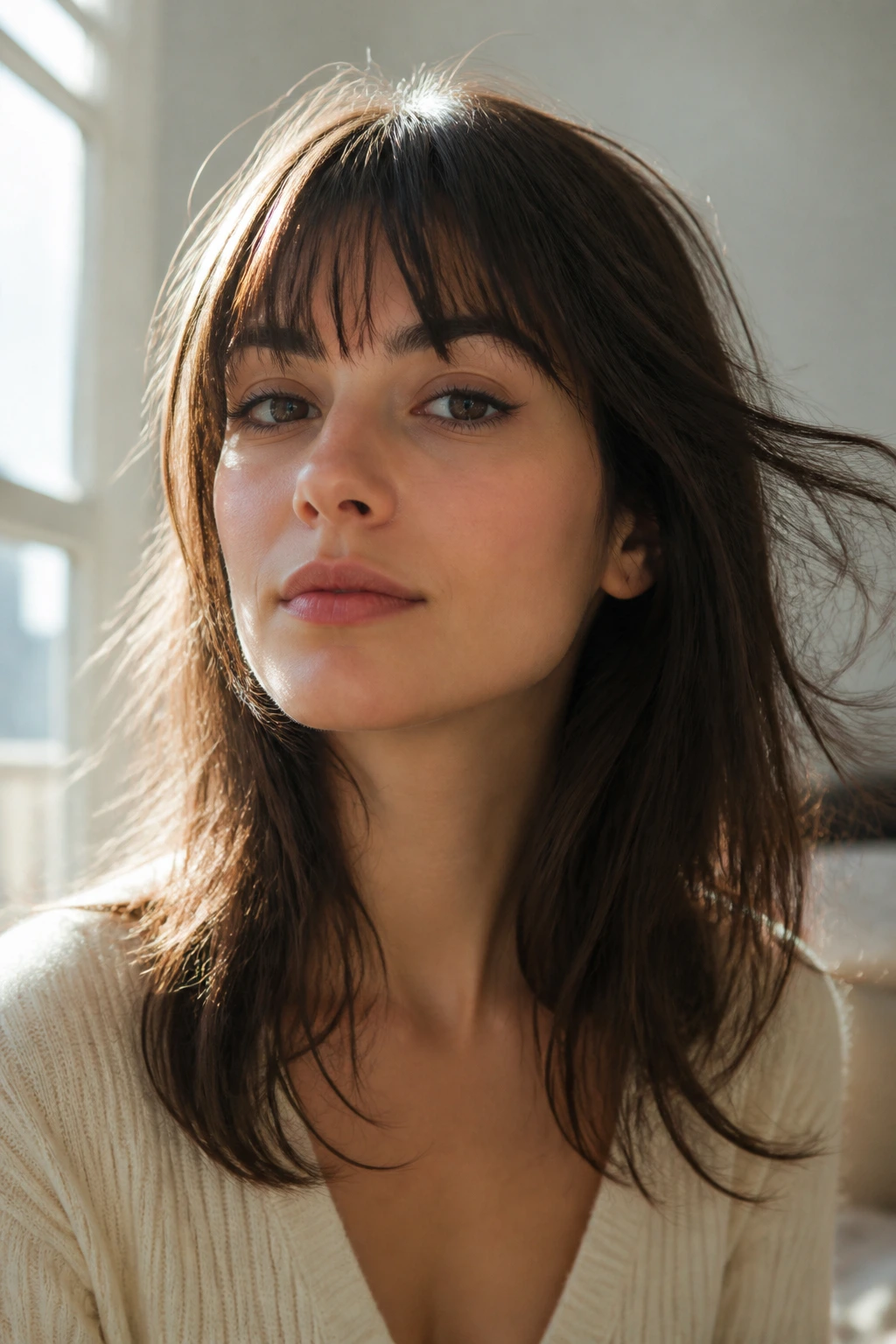
The French girl fringe is effortlessly cool, slightly messy, and incredibly touchable. It is cut straight but features a very soft, shattered edge that looks like you woke up looking perfect.
Achieving this look with thick hair requires a highly specific texturizing technique called “slithering.” The stylist slides open shears down the length of the hair strands to create varied lengths within the fringe. This removes the solid blockiness, leaving you with a lightweight, airy texture that moves beautifully with the wind.
To style, step away from the flat iron. The French girl look relies on a tiny bit of natural wave and volume. Simply blow dry them using your hands, then spray a generous amount of dry shampoo from mid-shaft to ends to give them a matte, lived-in texture that lasts all day.
21. Wispy-Middle Thick-Edge Bangs
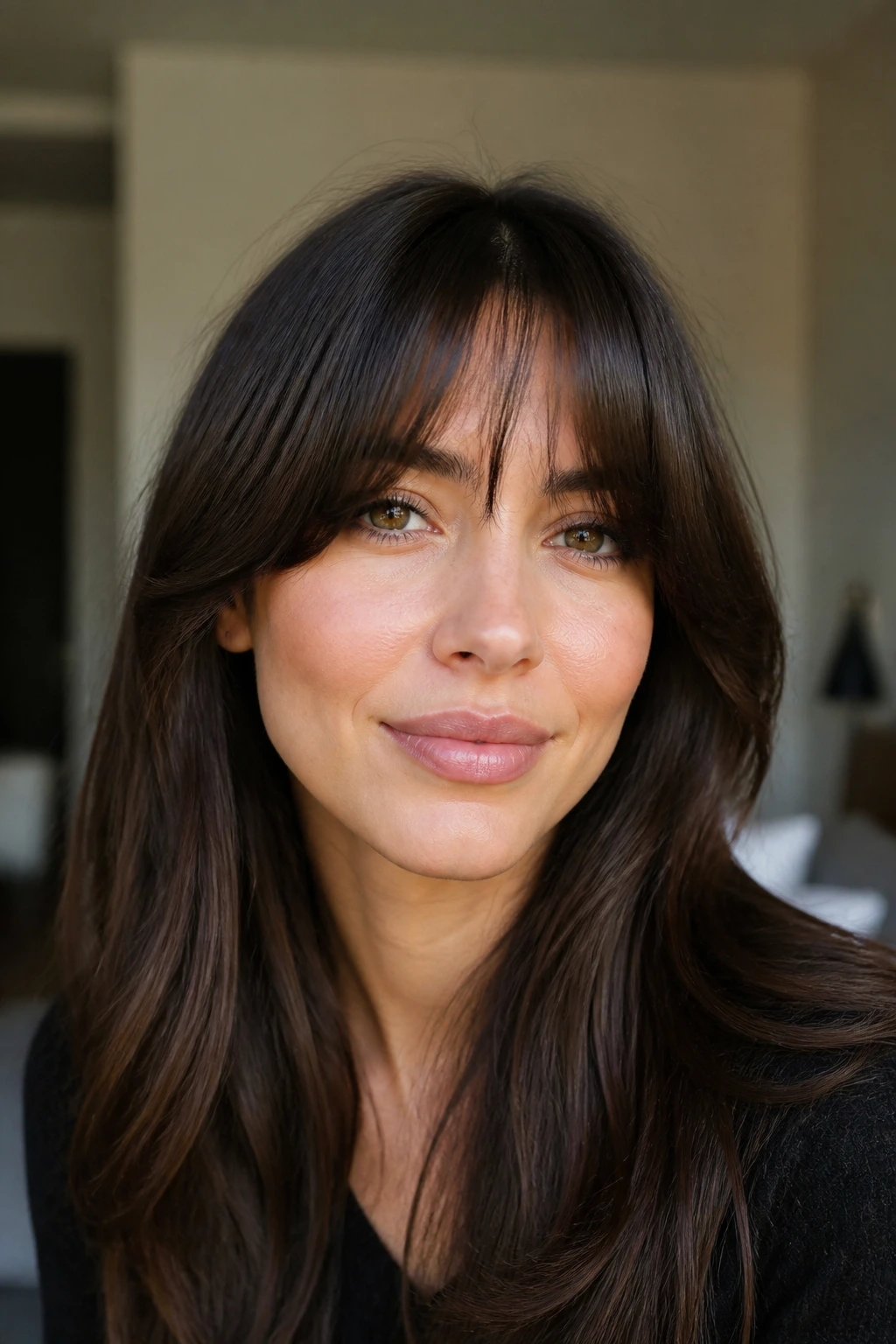
This clever style features a very thin, wispy center section paired with noticeably thicker, heavier edges that frame the sides of the forehead.
Why this design balances features
By keeping the center wispy, you prevent the bangs from overpowering your eyes and nose. Meanwhile, the heavier edges blend seamlessly into the sides of your hair, maintaining the illusion of thickness and richness. It is a highly strategic cut that offers the lightness of wispy bangs with the structure of a full fringe.
How to Style It
Step 1: Control the Center
Use a flat iron on a low heat setting to smooth the wispy center strands straight down.
Step 2: Style the Edges
Use a small flat iron to slightly curve the heavier side pieces inward, hugging your temples.
22. Under-Cut Straight Bangs
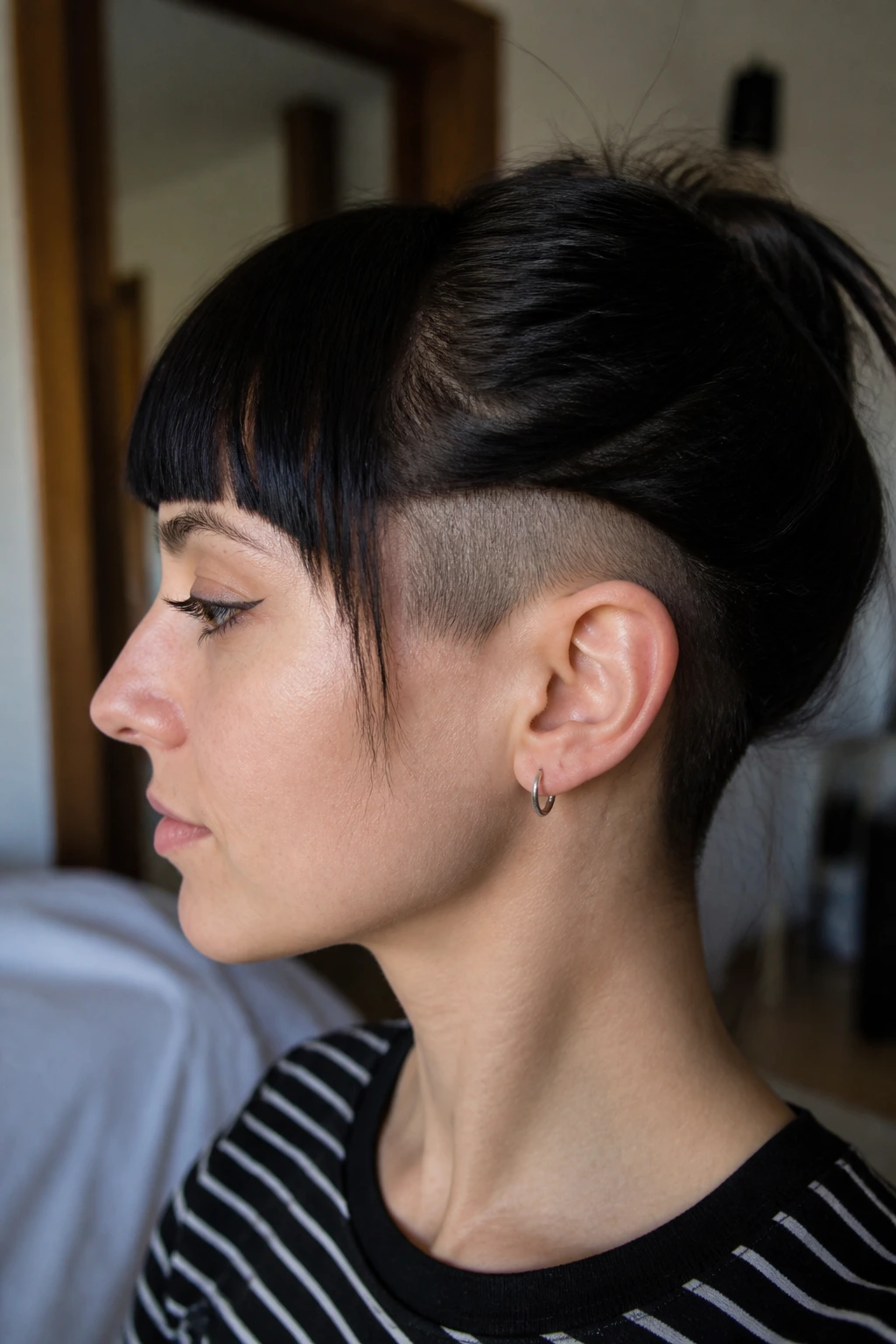
The undercut is a secret weapon for thick-haired individuals. The stylist shaves or clips short a small section of hair directly underneath the bangs, right at the hairline, while the top layer remains long and straight.
This technique is incredibly effective because it physically eliminates the hair that causes the most trouble. The shaved under-layer removes a massive amount of bulk, allowing the top layer of the bangs to lie perfectly flat against your forehead without any resistance. It is completely invisible when your bangs are down, making it a wonderful secret trick for hot summer weather.
- Eliminates stubborn hairline cowlicks completely
- Keeps the forehead cool in hot weather
- Allows the top layer of bangs to lie perfectly flat
- Requires maintenance trims on the shaved section every few weeks
Pro tip: If you decide to grow your bangs out later, the undercut section can easily be hidden under the longer top layers as it grows.
23. Long Lash-Tickling Straight Bangs
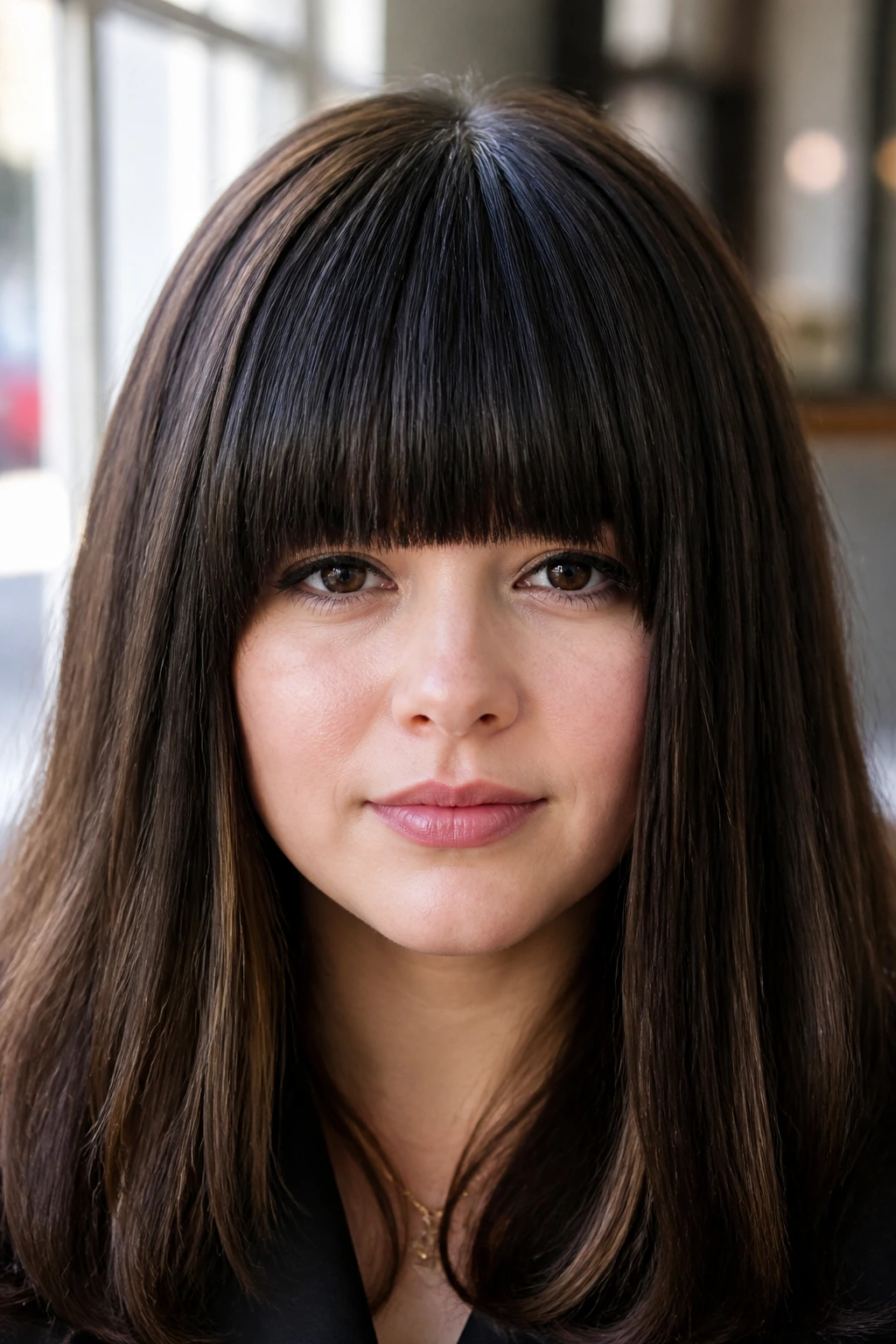
This style is cut slightly longer than the average fringe, sitting just below the eyebrows and grazing the top of your eyelashes. It is a highly sultry, mysterious look that is incredibly glamorous.
Because the hair is longer, the natural weight of your thick strands works beautifully to hold them down. They do not bounce up or puff out because the gravity on the longer length keeps them sleek and straight. However, this style does require you to be comfortable with hair occasionally touching your eyelashes, making it a high-fashion choice for specific style aesthetics.
To style these, focus on keeping them extremely clean. Because they sit close to your eyes and nose, any excess product can be irritating. Use only a heat protectant when styling, and keep a small comb in your bag to quickly brush them back into place throughout the day.
24. Soft Blunt Straight Bangs
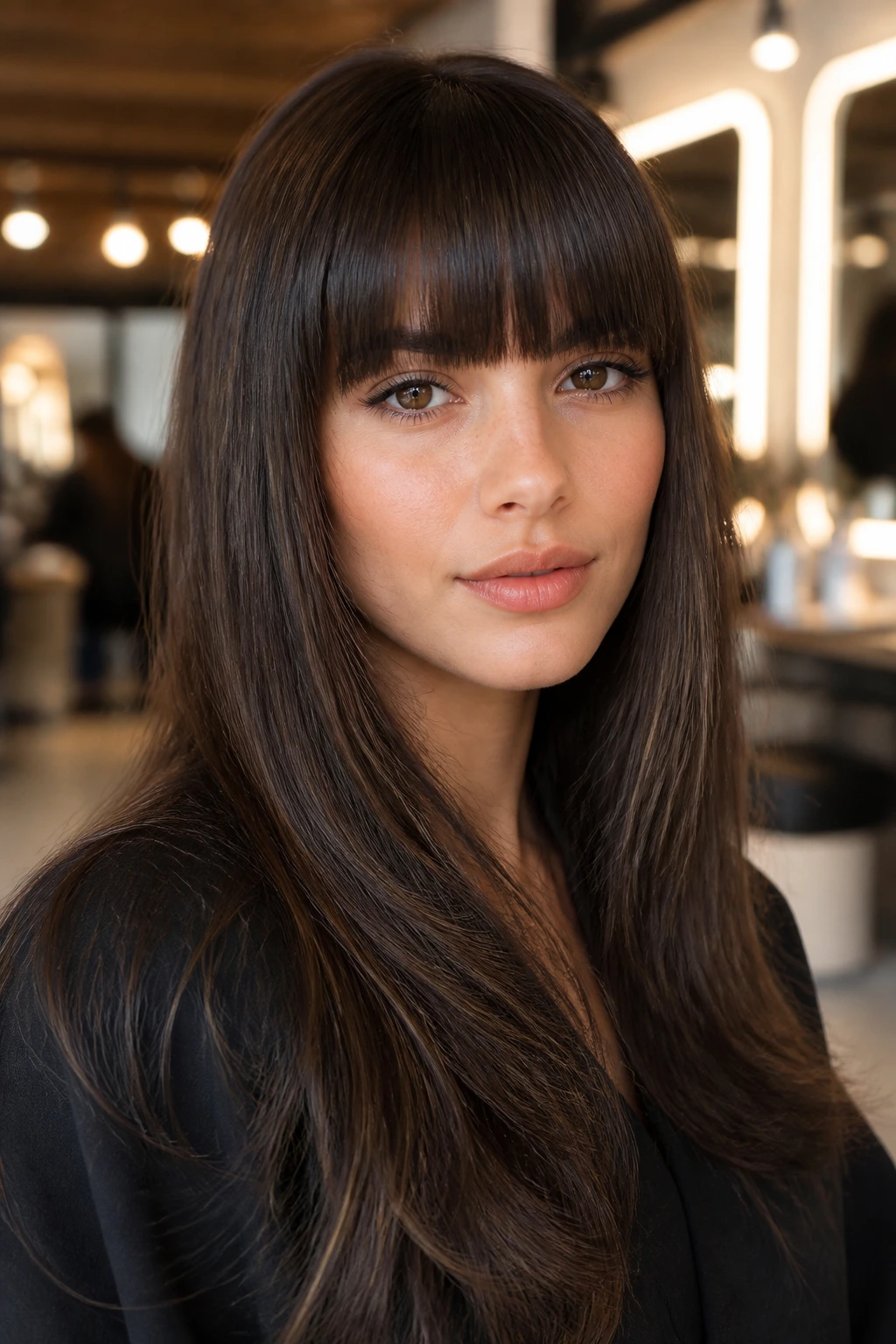
If you love the look of blunt bangs but want something a bit more approachable, soft blunt bangs are the perfect middle ground. They feature a clean, straight line, but the very tips of the hair are lightly point-cut to soften the edge.
This minor adjustment makes a massive difference on thick hair. By softening the very bottom millimeter of the fringe, you prevent the hair from looking like a sharp, hard line across your face. It gives the style a more romantic, gentle feel while still maintaining that gorgeous, thick frame for your eyes.
This style works beautifully on all face shapes because it is incredibly balanced. It is structured without being harsh, and thick without being heavy. To style, simply blow dry with a paddle brush and finish with a tiny drop of lightweight oil on the very tips to highlight the soft, point-cut texture.
25. Graduated Straight Fringe
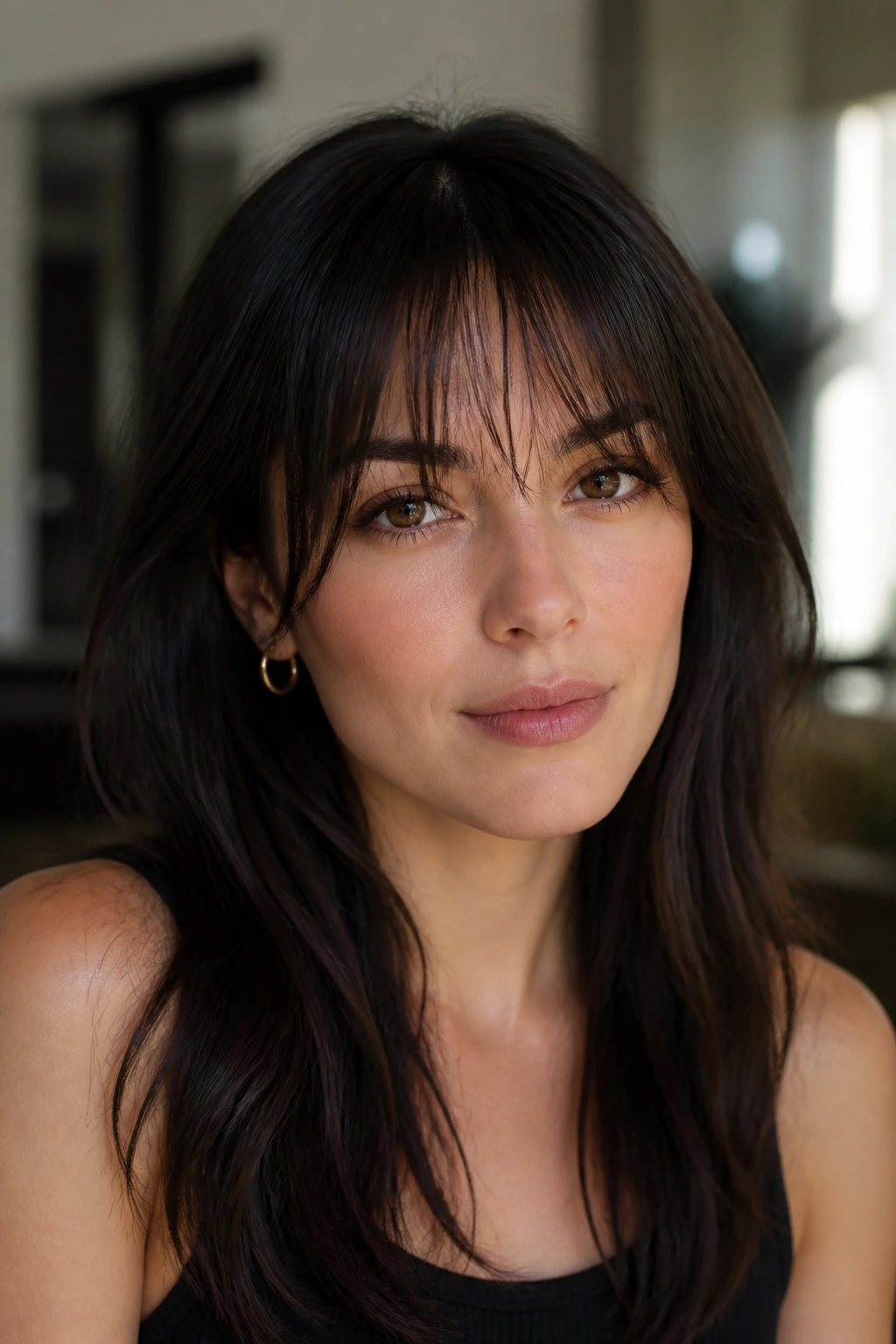
A graduated fringe features layers that slowly increase in length from the inner layer (closest to your forehead) to the outer layer. This creates a beautifully beveled, rounded edge that curves gently inward.
The Magic of Graduation
This structural cutting technique allows thick hair to curve naturally without the use of a round brush. The shorter layers underneath support the longer layers on top, creating a gorgeous, high-volume shape that looks incredibly polished and elegant. It is an excellent choice for classic bobs and structured haircuts.
Quick Styling Steps
- Apply a smoothing cream to damp bangs.
- Blow dry using a paddle brush, directing the airflow strictly downward from the roots.
- Finish with a cool-air blast from your dryer to lock in the smooth, curved shape.
Pro tip: Avoid using a flat iron on graduated bangs, as flattening them too much will ruin the beautiful, built-in curve created by the graduation.
How to De-bulk Thick Bangs Without Losing Shape
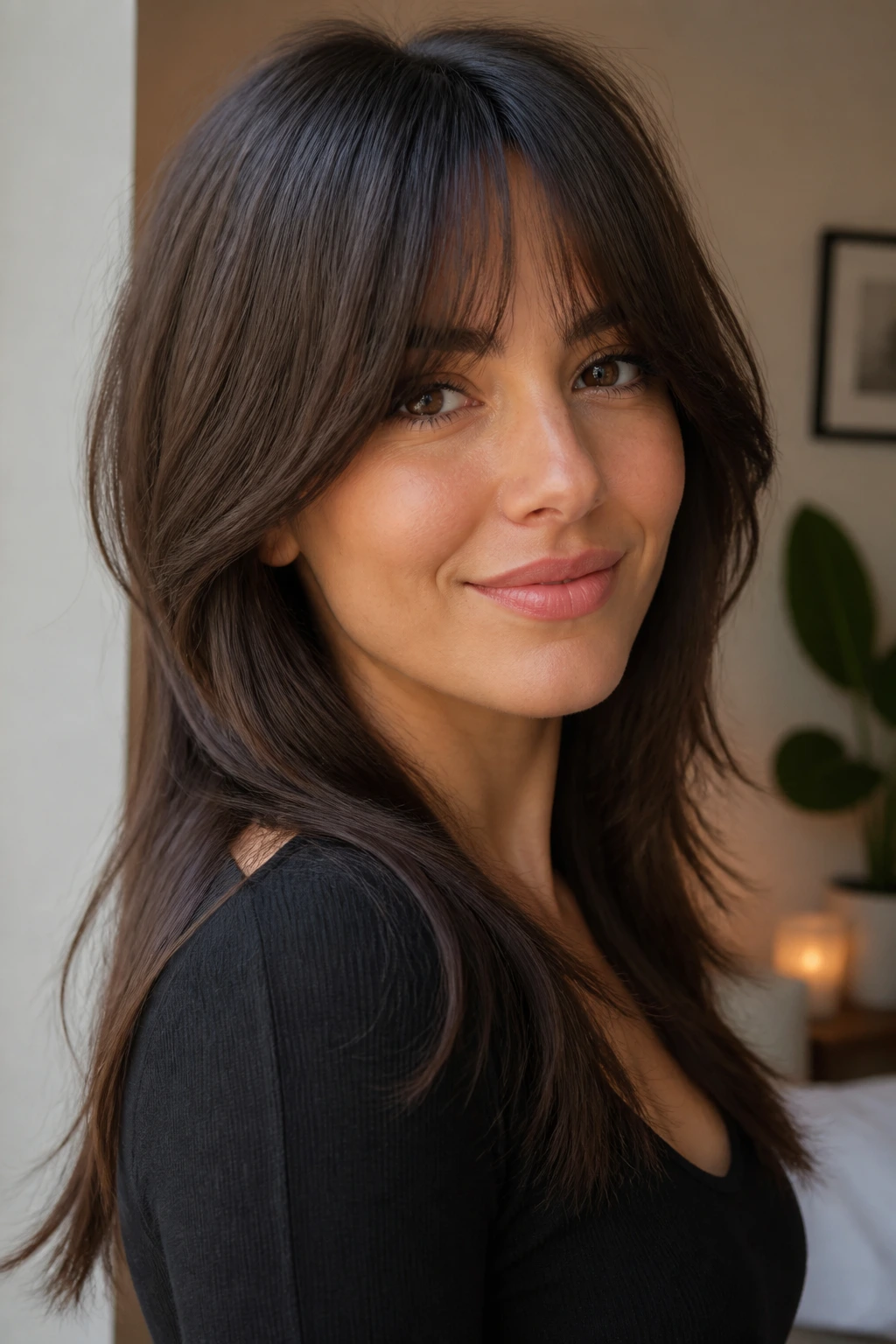
If you already have straight bangs but they feel too heavy, you do not need to cut them shorter to fix the problem. De-bulking is the process of removing internal weight while keeping the external length and shape completely intact. It is a crucial skill for anyone managing thick hair.
The most common method is slide cutting. Your stylist will section off the top layer of your bangs, then take the shears and gently slide them down the shafts of the hair underneath. This cuts varied, shorter lengths into the inner section of the fringe, removing bulk without creating visible layers on the surface.
Another excellent technique is vertical slicing. The stylist holds the shears vertically and snips directly into the ends of the bangs. This breaks up the solid line at the bottom, allowing the hair to piecing out naturally. Never let anyone use thinning shears on the very top layer of your bangs, as this can create short, spiky hairs that stick straight up through the smooth surface.
Daily Maintenance Routine for Perfectly Smooth Fringe
Keeping your straight bangs looking immaculate throughout the week requires a quick, consistent daily routine. Because bangs are short and sit directly against your forehead, they react to sweat, skincare products, and weather much faster than the rest of your hair.
The Morning Refresh
When you wake up, your bangs will likely be pointing in multiple directions. Do not try to flat iron them back into shape while they are dry—this will only bake in the creases. Instead, mist them with water until they are damp, then blow dry them from scratch using your paddle brush. This resets the hydrogen bonds in the hair, allowing you to style them completely flat.
Combating Humidity
To protect your sleek style from moisture throughout the day, apply an anti-humidity spray before leaving the house. Hold the can about twelve inches away and mist the fringe lightly from underneath. This creates a barrier between your hair and the sweat on your forehead, preventing the hair from curling or frizzing.
Nighttime Protection
Before going to sleep, wrap your bangs flat against your forehead and secure them with a creaseless hair clip or a silk headband. This keeps them flat overnight and prevents them from getting bent out of shape as you toss and turn.
Wrapping Up
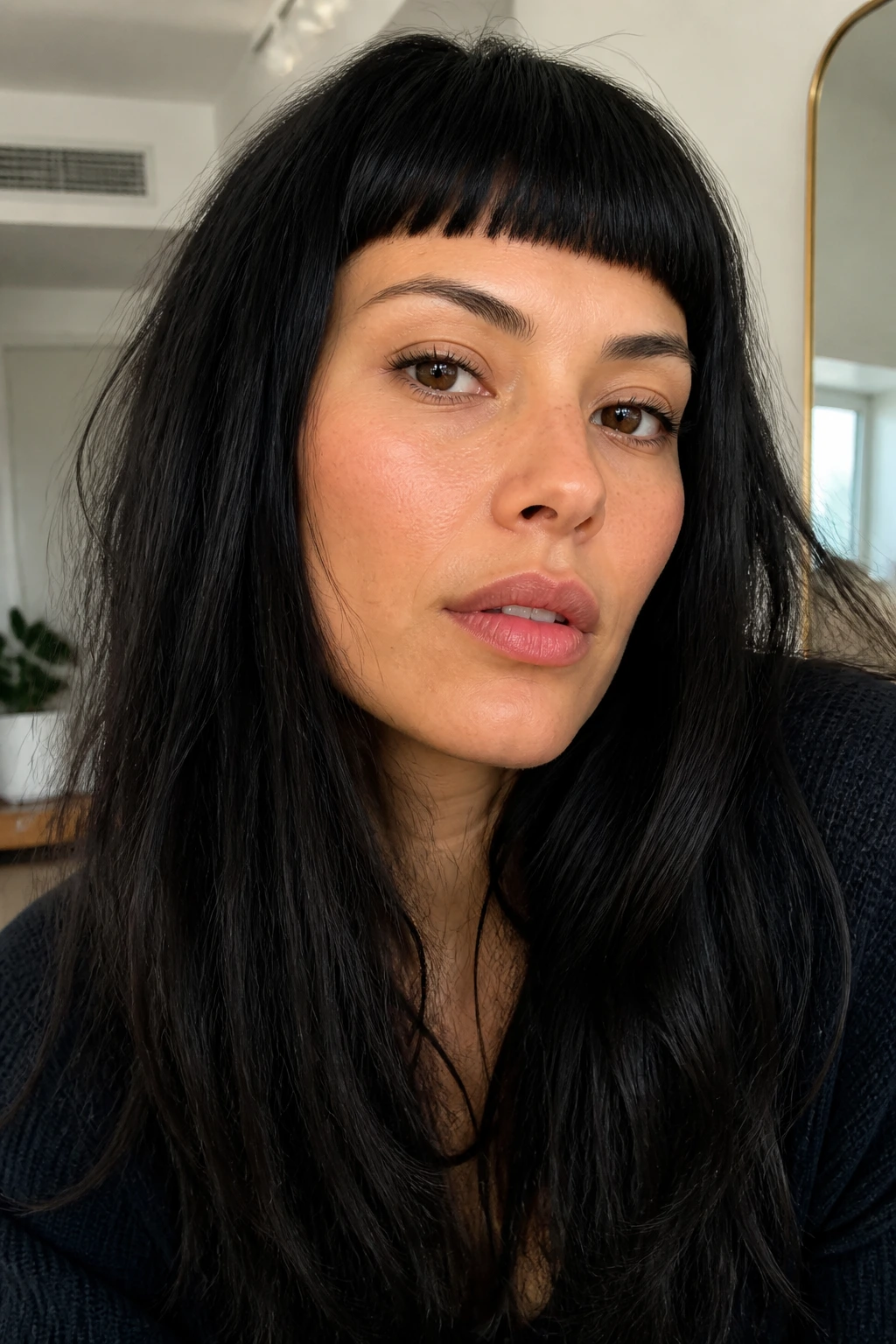
Managing bangs straight for thick hair does not have to be a daily battle against volume and cowlicks. By understanding the unique physics of your hair density and choosing a cut that strategically removes internal weight, you can enjoy a sleek, striking fringe that frames your eyes beautifully.
The secret lies in the partnership between a skilled stylist who understands texturizing and your own consistent, lightweight styling routine at home. Embrace the natural richness of your thick hair, use the right tools to keep it smooth, and let your straight bangs make the bold, gorgeous statement they were meant to make.