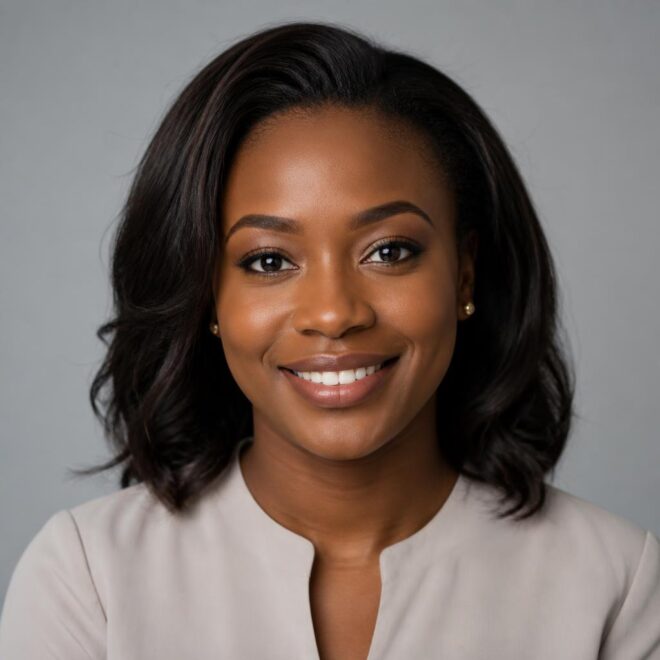


Standing in front of the bathroom mirror with a pair of shears is a universal rite of passage, but for those of us with natural curls, coils, and kinks, the stakes feel exceptionally high. We have all heard the horror stories. You pull a springy coil down to your nose, snip it clean, and watch in disbelief as it instantly boings up to your hairline like a window shade. Shrinkage is not a myth; it is a physical law of textured hair that requires respect, strategy, and a completely different approach to cutting and styling.
Yet, when you get it right, a front fringe is one of the most rewarding transformations you can give your crown. It immediately shifts the architecture of your face, highlighting your eyes and defining your cheekbones without sacrificing your overall length. Instead of hiding behind your hair, a well-cut bang uses your natural volume to frame your face like a custom-designed piece of art. The secret lies in understanding how your specific curl pattern behaves when it is free from the weight of a longer style.
Historically, we were told that bangs were only for straight hair, or that we had to commit to daily flat-ironing to make them work. That old-school advice has been thoroughly debunked by decades of gorgeous, textured styling. Whether you are rocking a dense Type 4 afro, a head of juicy Type 3 ringlets, or intricate protective styles, there is a way to make front-facing pieces work for you. The key is working with your hair’s unique elasticity rather than fighting against it.
Let us get one critical rule out of the way before we look at the styles: never, under any circumstances, cut your natural bangs while your hair is wet. When wet, your curls are stretched out and heavy with water. As they dry, they shrink—sometimes up to seventy percent of their wet length. Cutting your hair dry and in its natural, styled state is the only way to ensure your bangs actually land where you want them to.
1. Curly Bottleneck Bangs
This style mimics the shape of a classic glass Coca-Cola bottle, starting narrow and close together near the forehead, curving outward around the eyes, and then mellowing into longer, face-framing pieces at the cheekbones. It is an incredibly forgiving option for natural textures because the variable lengths blend easily into the rest of your hair.
The Anatomy of the Bottleneck Shape
Unlike blunt fringe styles, bottleneck bangs do not cut a straight line across your forehead. Instead, your stylist will cut the center curls shorter—usually landing just above the eyebrows—and gradually increase the length as they move outward toward your temples. This creates a soft, arching frame that keeps the curls from feeling too heavy or blocky around your eyes.
Quick Styling Details
- Best curl types: Works beautifully on loose spirals and springy Type 3 curls.
- Maintenance level: Low to medium; the blended edges mean you can let them grow out into layers without an awkward transition phase.
- Key cutting tip: Always cut the center two curls first to establish your baseline length before blending outward.
- Ideal face shapes: Particularly flattering on oval, heart, and square face shapes because it softens the jawline.
Pro tip: Use a lightweight styling cream instead of a heavy gel on the center pieces to keep them bouncy and prevent them from clumping together too tightly.
2. Micro Coiled Fringe
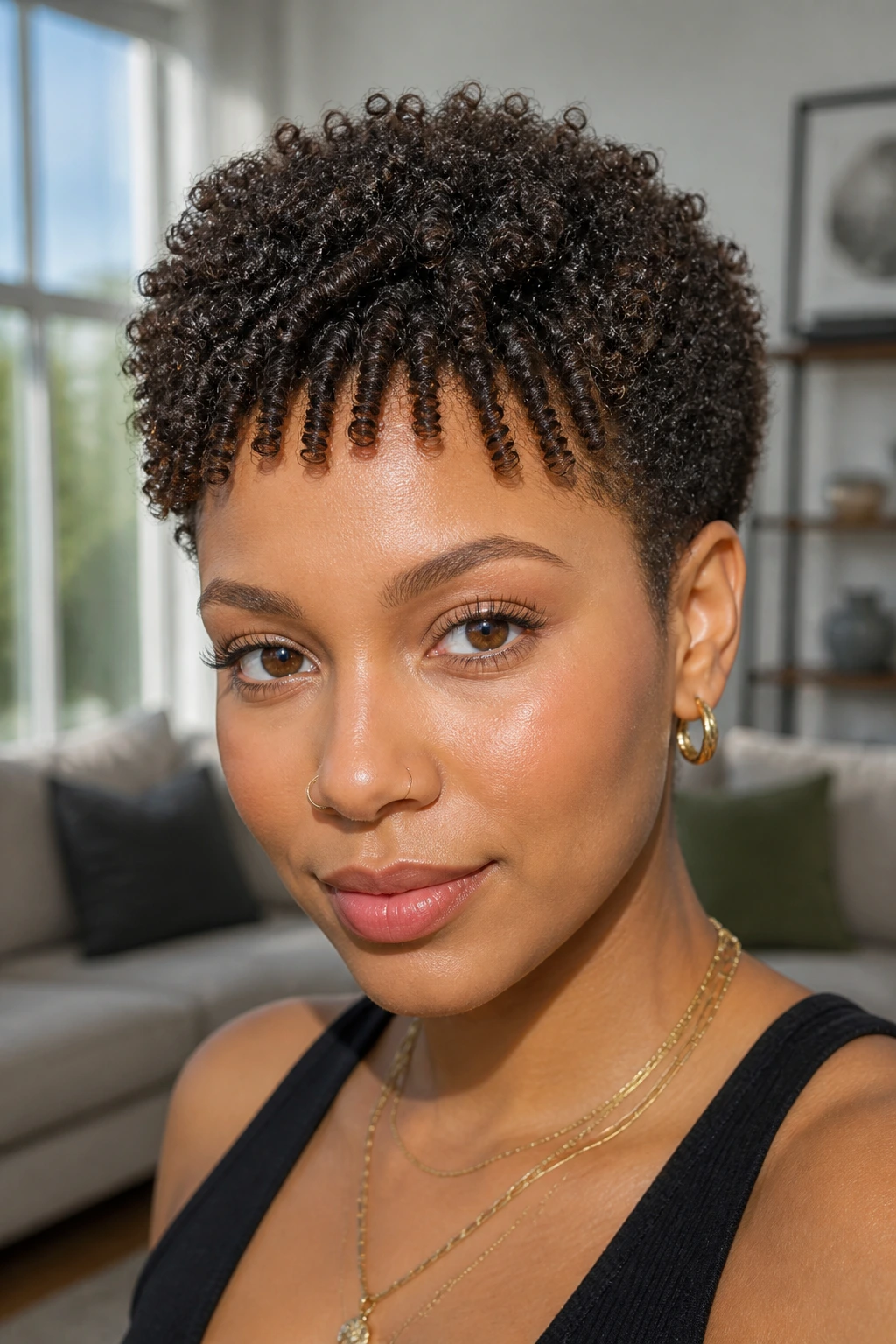
Bold, graphic, and full of personality, micro bangs are cut short—well above the eyebrow—to create a striking frame for your face. If you have tight, high-density Type 4 coils, this style is a spectacular way to show off the intricate pattern of your hair without having curls constantly dipping into your eyes.
Too many people assume that short bangs require straight hair, but tight coils actually hold the structure of a micro fringe better than any other texture. The natural lift and packing density of coily hair keep the bangs standing upright and outward, preventing them from falling flat against your forehead.
To style this look, start with damp hair and apply a rich leave-in conditioner. Use your fingers to coil tiny sections of the bangs, then press them upward toward the hairline with a microfiber towel to encourage maximum shrinkage and definition. Allow them to air-dry completely before touching them, as disturbing the pattern mid-dry will lead to unwanted frizz.
3. Shag-Style Razored Curls
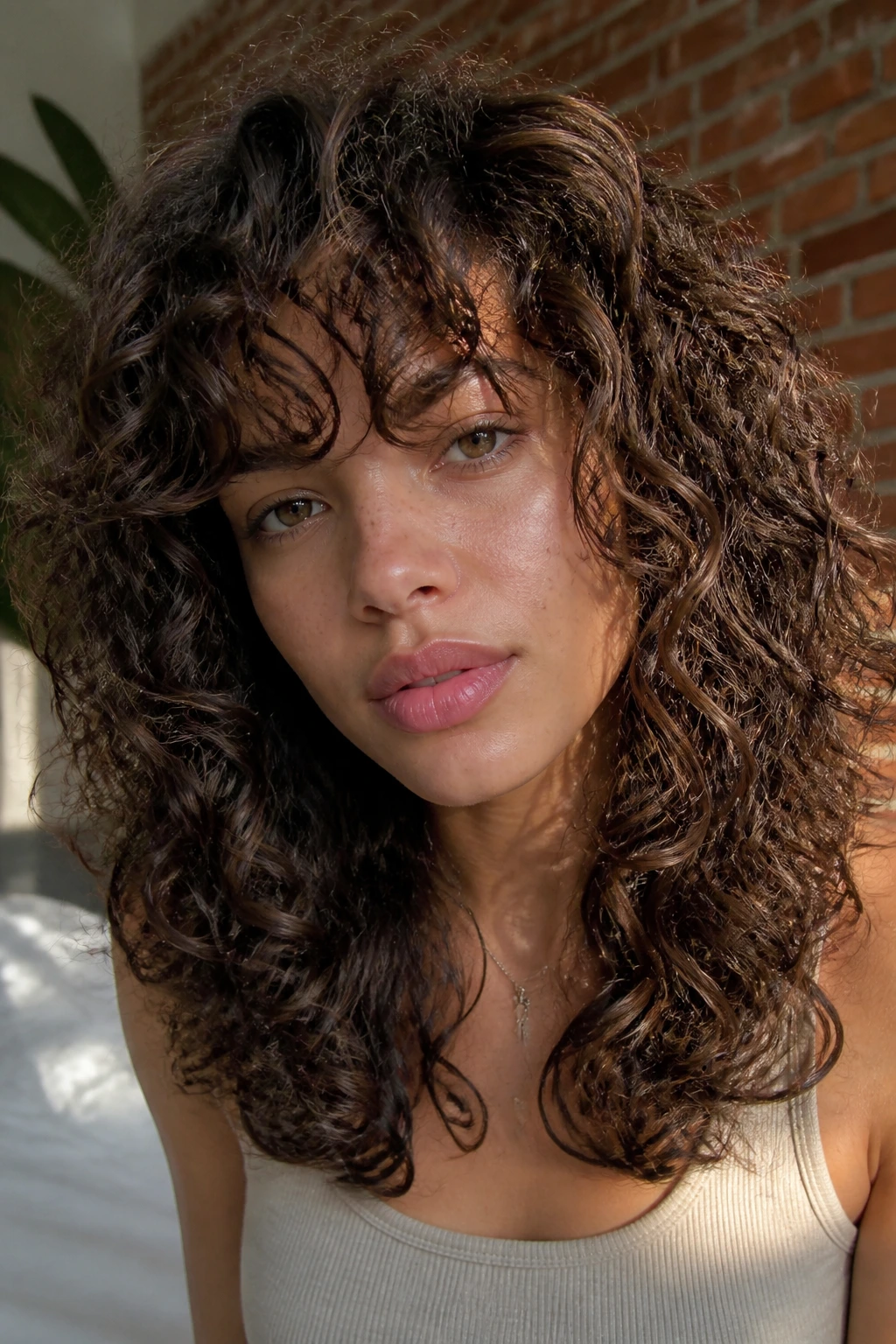
Are you looking for a look that feels a bit more rock-and-roll? The modern shag relies heavily on a messy, layered front fringe that blends into heavily textured, face-framing layers.
Why Does This Structure Work?
The magic of a shag lies in the removal of weight. Traditional cuts often leave curly hair looking like a triangle—flat on top and wide at the bottom. By using a specialized curl-cutting razor or slide-cutting shears, a stylist can carve out bulk from the mid-lengths and create a canopy of shorter, springy curls that fall over the forehead and frame the cheeks.
How to Style It
To get that effortless, lived-in texture, you want to avoid perfectly uniform curls. Wash your hair, apply a generous amount of curl-defining mousse, and diffuse your hair with your head upside down. As you dry, use your fingers to gently shake the roots of your bangs to create height and separation, letting some coils fall forward and others sweep to the side.
4. Wispy Ringlet Bangs
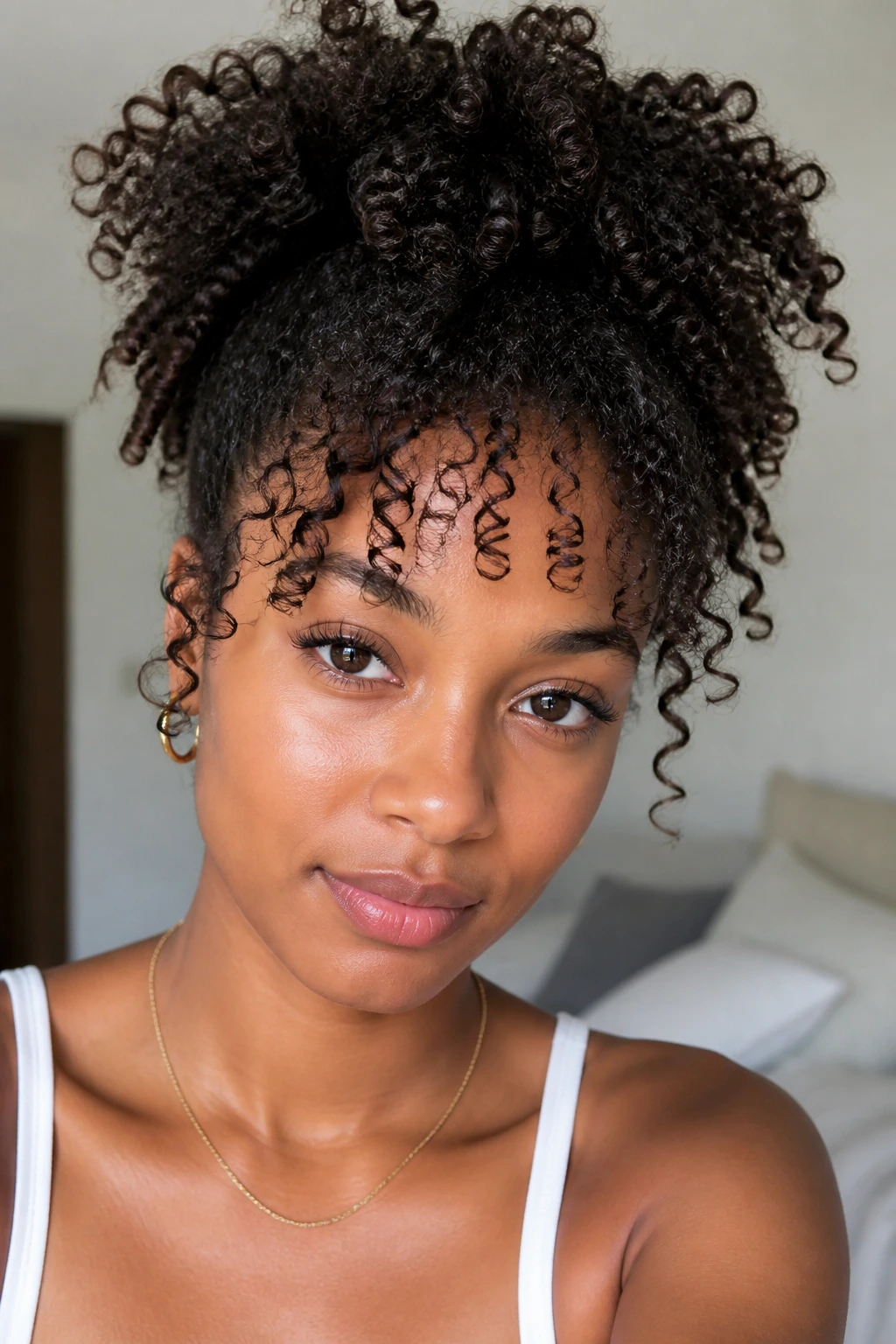
If you are hesitant to commit to a full, thick block of hair on your forehead, wispy ringlet bangs offer a gentle entry point. This style uses only a few carefully selected curls to create a light, see-through fringe that lets your forehead peek through.
I remember helping a friend transition from a long, uniform cut to her first set of bangs. She was terrified of looking like a mushroom, so we opted for this exact approach. We parted out a tiny, triangular section at the very front of her hairline—no thicker than an inch—and cut just those curls. The result was instant brightness around her eyes without the weight of a traditional bang.
Essential Wispy Details
- Required section thickness: Keep the parting shallow, using only the first layer of curls along the forehead.
- Drying technique: Air-dry or use a diffuser on low speed to prevent the light curls from blowing out of place.
- Product selection: Avoid heavy butter or waxes; opt for a light curl reviving spray or liquid leave-in.
- Ideal for: Fine-density hair that needs a touch of shape without losing bulk from the sides.
Pro tip: If a curl clumps too thickly, do not cut it; simply split it in half with your fingers while wet to double the wispy effect.
5. Thick Afro Puff Fringe
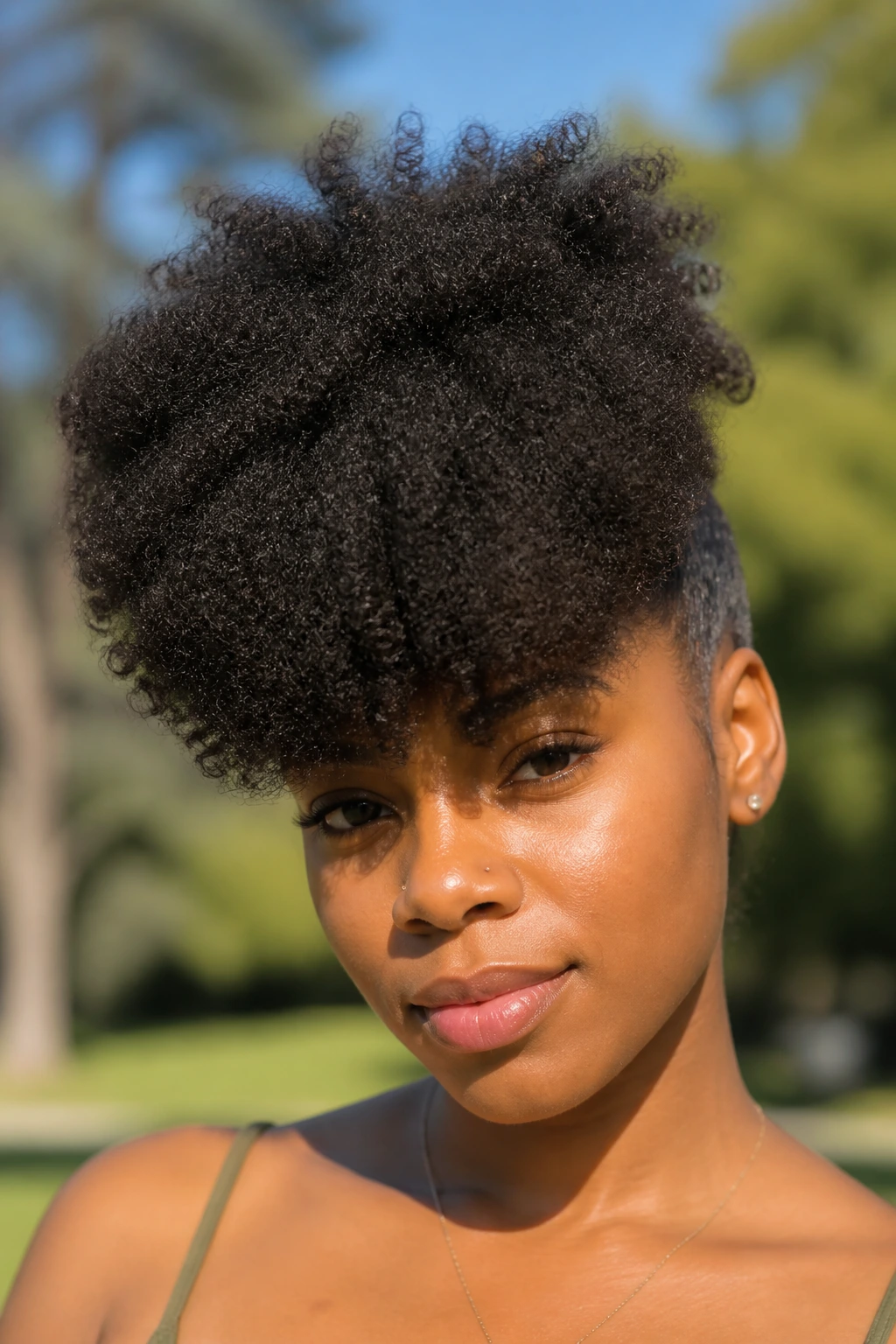
Dense, pillowy, and magnificently textured, the afro puff fringe is designed to celebrate the volume of Type 4 kinks and coils. Instead of defining individual curls, this style focuses on creating a soft, cloud-like shape that sits proudly across the forehead.
To achieve this look, you will want to blow out your front section using a pick attachment on your hair dryer. This stretches the tight coils slightly, creating a fuller, more uniform texture. Once you have achieved the desired volume, use your hands to pat the shape into a rounded dome that curves gently over your eyebrows.
This style is a fantastic option for high-porosity hair that naturally resists curl definition. Instead of fighting your hair’s desire to frizz and expand, you are leaning directly into that volume to create a bold, sculptural statement. Keep the edges soft and natural by skipping edge control on the forehead, letting the baby hairs blend into the main puff.
6. Side-Swept Springy Curls
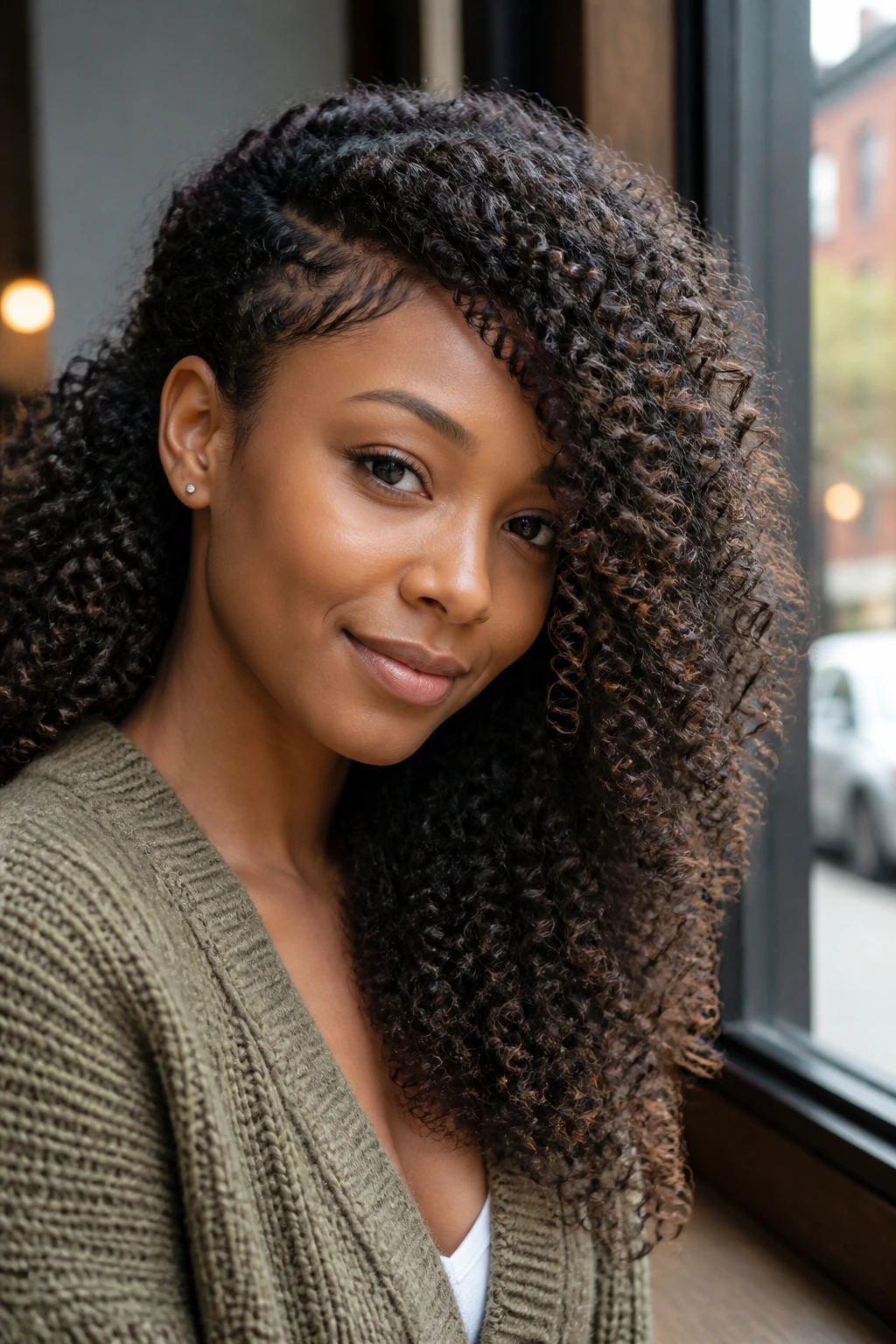
Unlike a classic front-and-center fringe, side-swept bangs offer a beautiful, asymmetrical line that draws the eyes diagonally across the face. This is an excellent option if you have a cowlick or a natural parting that makes center-parted bangs difficult to maintain.
What makes the side-swept look so appealing is its sheer versatility. On days when you do not want hair on your face, you can easily tuck these longer curls behind your ear or pin them back with a decorative bobby pin. It is a low-commitment cut that still delivers a dramatic style upgrade.
This style works best when cut on a deep side part. Your stylist should cut the hair on a diagonal gradient, starting shorter near the temple on your parted side and cascading down to a longer length near the opposite cheekbone. This diagonal flow elongates the face, making it a favorite for round and square face shapes.
7. Dreadlock Front Bangs
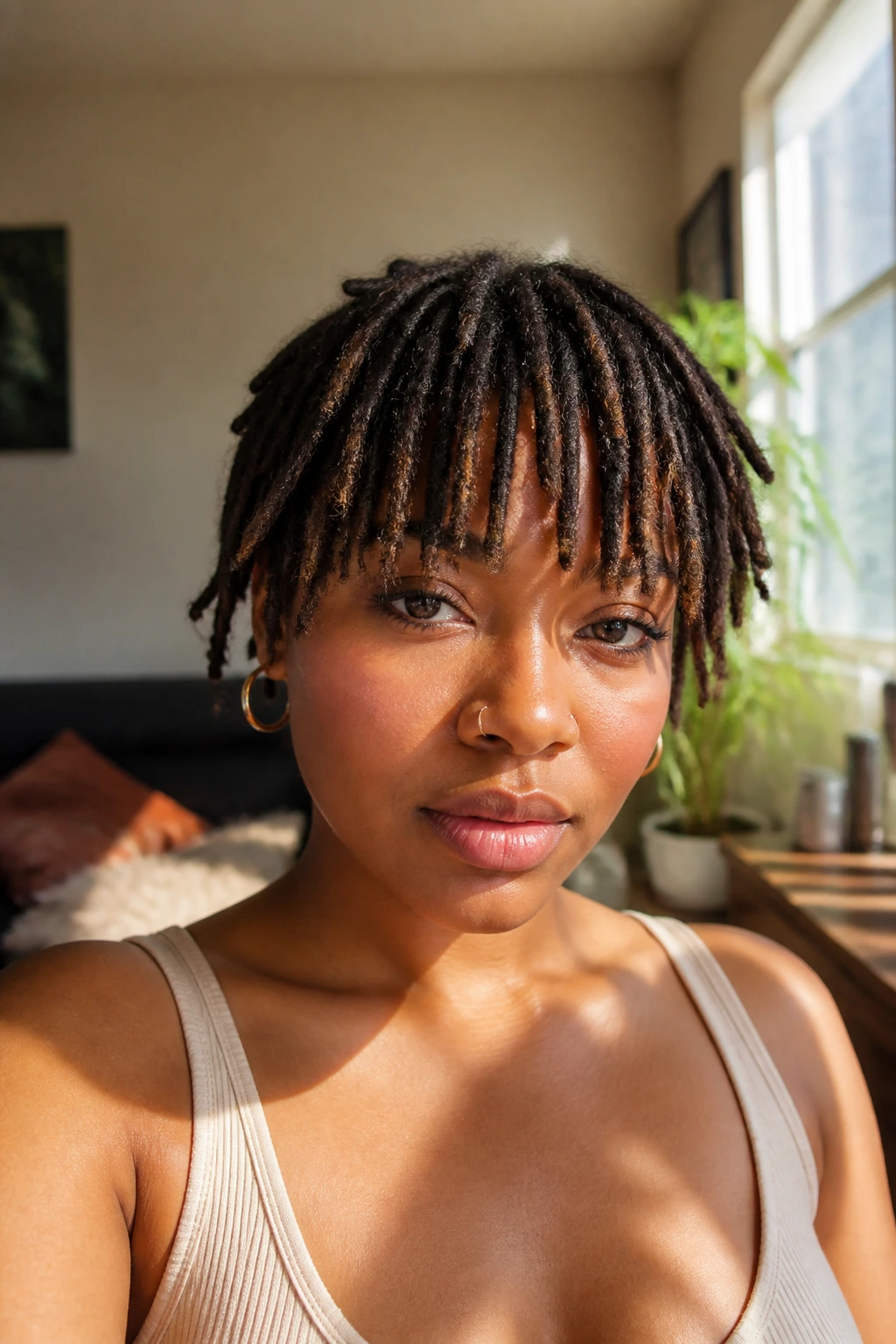
Locs offer an incredibly rich, structural canvas for front bangs. Cutting locs into a fringe requires a precise eye, as each individual loc behaves like a heavy, solid cord rather than a loose curl.
The Mechanics of Loc Bangs
Because locs do not shrink the way loose curls do, you have much more control over the final length during the cutting process. However, you must consider the weight of the locs. If they are cut too short, they will stand straight out from the forehead instead of falling downward.
Quick Loc Facts
- Optimal loc thickness: Micro-locs and sisterlocks drape beautifully; thicker traditional locs require careful spacing to avoid looking bulky.
- How to prevent unraveling: Always secure the ends of cut locs by palm-rolling with a locking gel or using a crochet needle to seal the tips.
- Styling versatility: Can be worn loose, swept to the side, or gathered into a high bun with just the fringe left down.
- Growth consideration: As your roots grow, the bangs will naturally drop, requiring trim maintenance every few months.
Pro tip: Use small loc jewelry or colorful threads on the tips of your bangs to add a touch of personal flair and draw attention to your eyes.
8. Braided Box Fringe
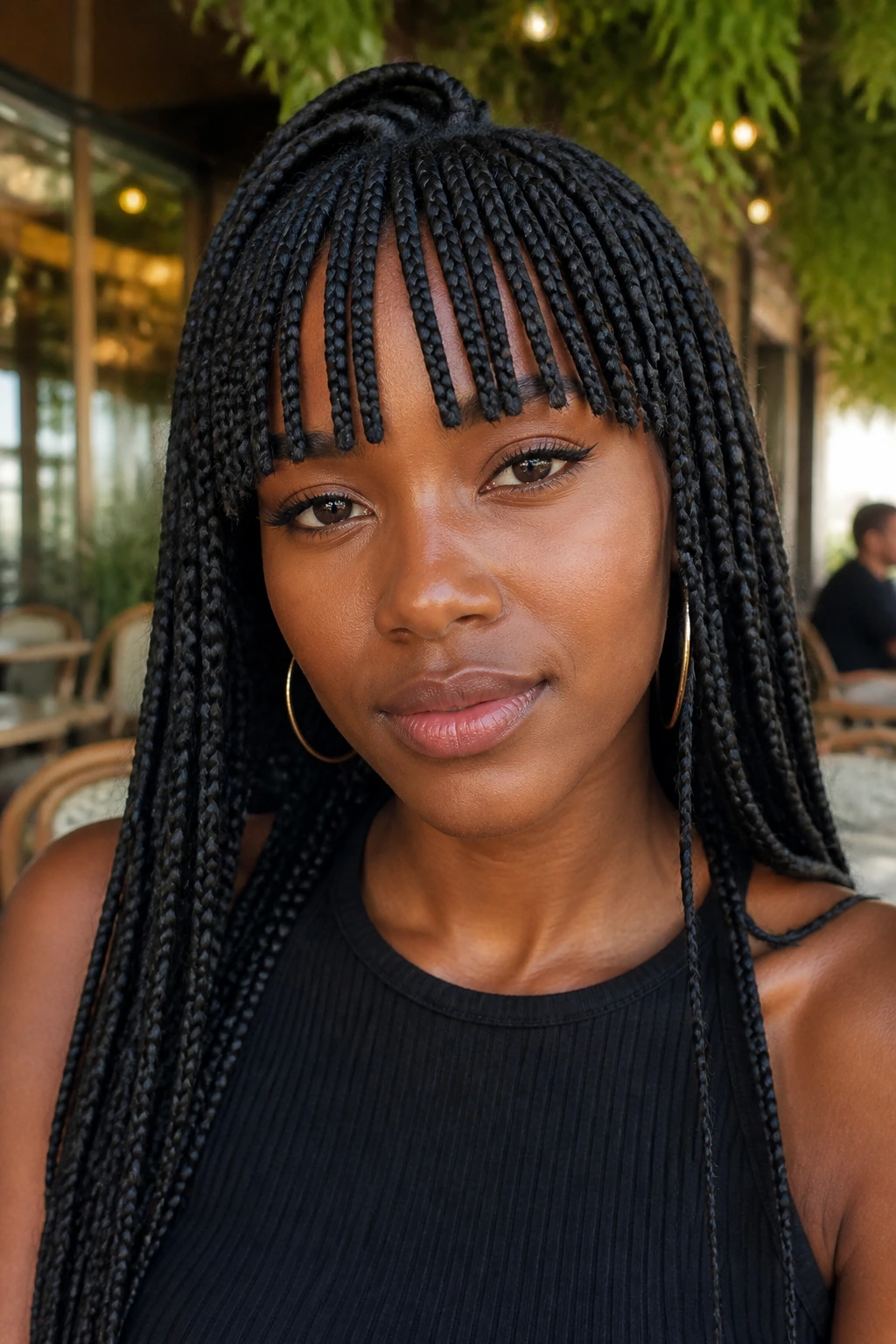
Protective styles do not mean you have to skip out on the fringe trend. Braided box bangs offer a sharp, cool look that frames the face with clean lines and uniform texture.
The key to a successful braided fringe is the angle of installation. Your stylist must braid the front section forward, toward your face, rather than backward or to the side. This ensures the braids drape naturally over your forehead without bunching up at the roots.
To finish the look, the ends of the braids are typically burned, dipped in hot water, or secured with small beads. Choosing beads in natural wood or metallic gold adds a rhythmic, percussive quality to your hair’s movement, making the bangs as satisfying to wear as they are to look at.
9. Curtain Curls
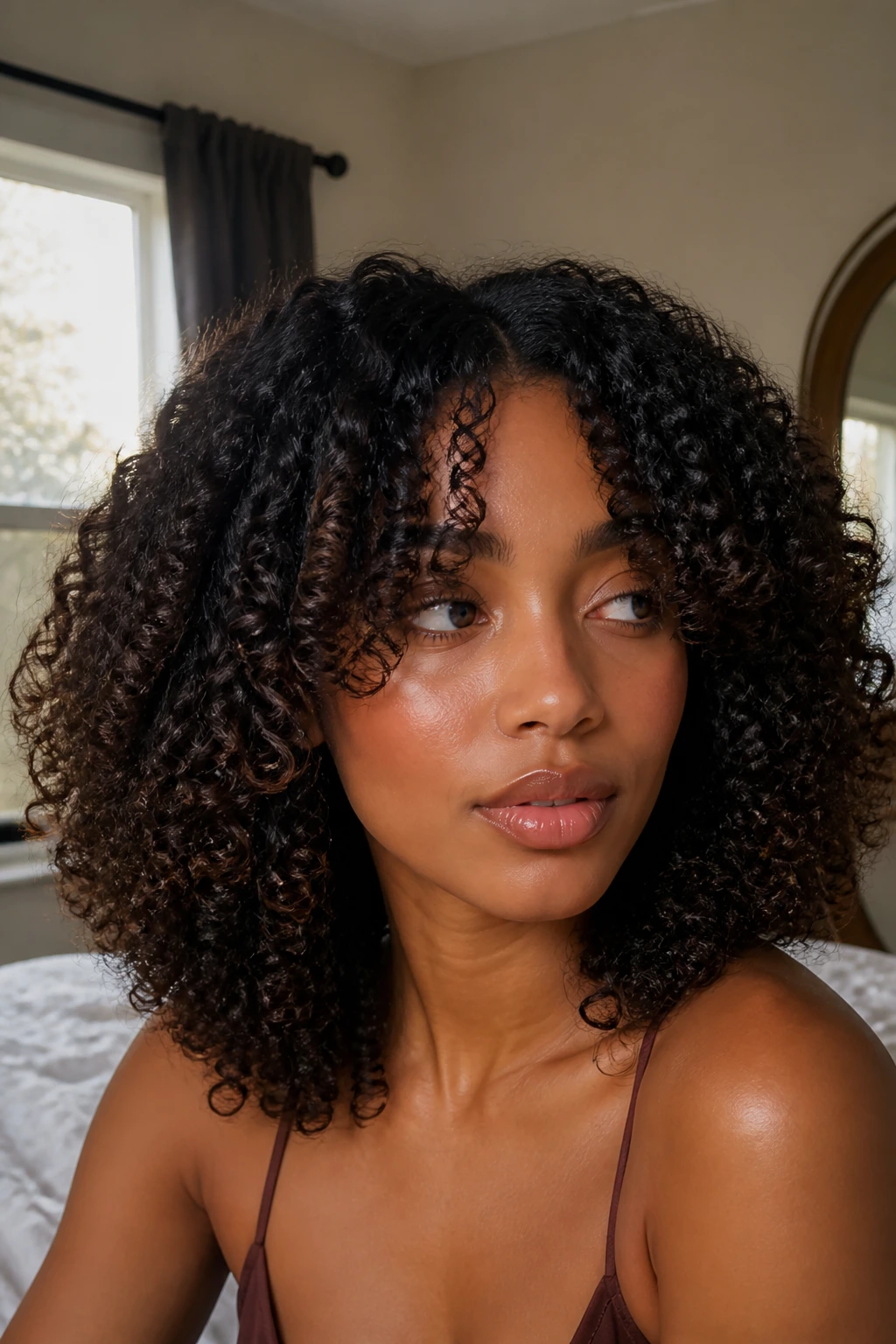
Curtain bangs have taken the styling world by storm, and the natural hair community has put its own gorgeous twist on the trend. This style parts down the middle, sweeping outward to drape elegantly on either side of the face like a pair of velvet drapes.
Why does this look work so incredibly well for natural textures? It is all about the way the curls bounce outward. The natural spring of your coils helps lift the hair away from the eyes, creating a beautiful, open-faced look that still provides the framing benefits of a traditional bang.
When styling curtain curls, focus your holding product on the mid-lengths and ends rather than the roots. You want the roots to remain light and airy so they can achieve that signature swooping lift. If your roots are too weighed down with gel, the curtain effect will flatten, leaving you with parted hair rather than a distinct fringe style.
10. Feathered Silk-Pressed Bangs
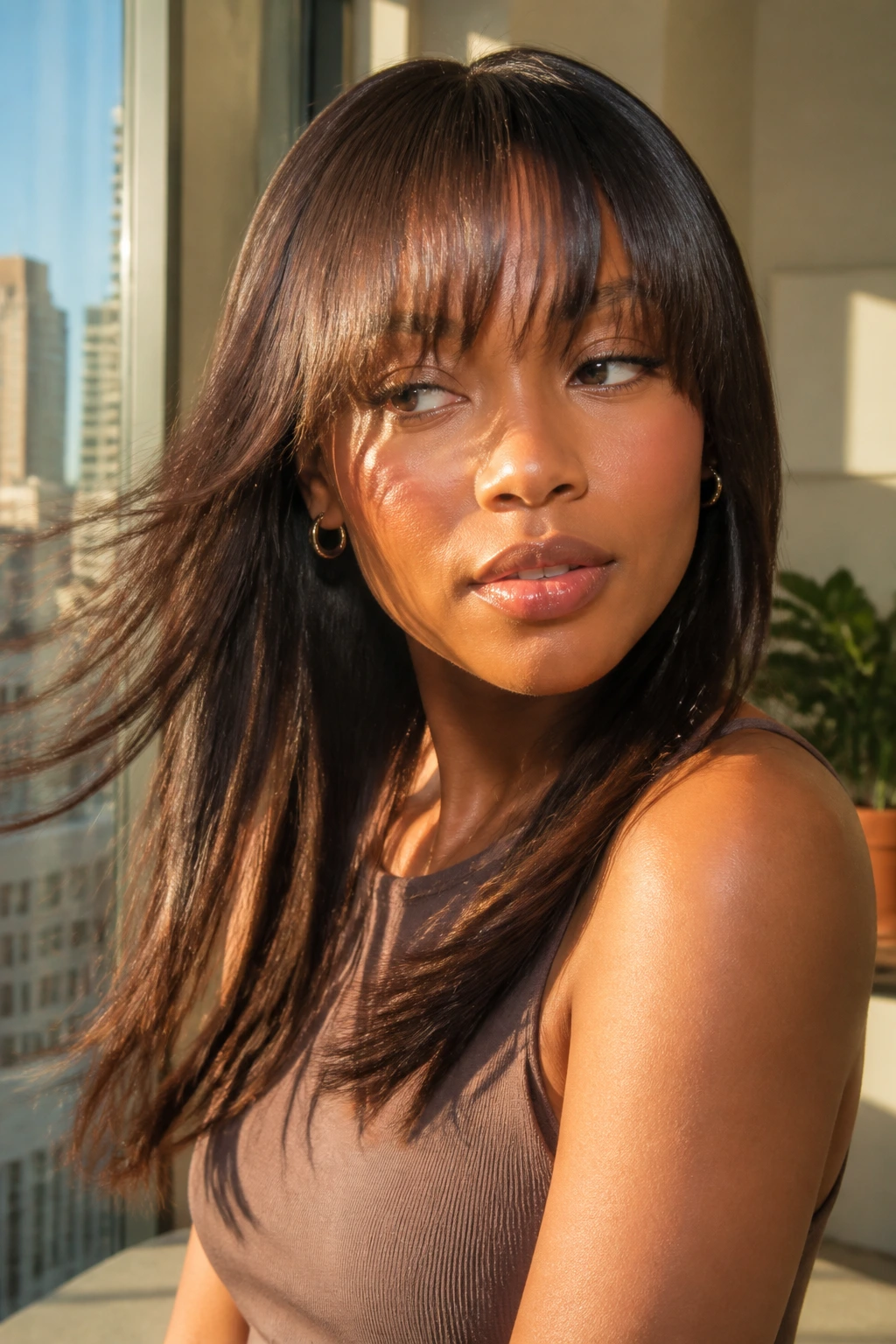
For those who like to press their natural hair straight, a feathered front bang offers incredible movement, bounce, and a nod to classic retro styling.
I remember the first time I got a professional silk press after years of wearing my hair natural. The stylist cut a soft, feathered fringe that absolutely transformed my look. When I walked, the bangs actually moved with me, catching the air in a way that felt entirely new. It is a fantastic option if you like to alternate between straight and curly styles, though you must prepare for the cut to look completely different when your natural texture returns.
Silk Press Maintenance Details
- Heat protection: Always use a high-quality silicone-based heat protectant before blow-drying and flat-ironing.
- The wrap technique: Wrap your hair around your head at night and secure it with a silk scarf to keep the bangs smooth and curved without using daily heat.
- Humidity shield: Apply a lightweight anti-humidity spray to prevent the bangs from reverting to coils mid-day.
- Comb choice: Use a fine-tooth carbon comb to chase the flat iron for the smoothest possible finish.
Pro tip: Roll your straight bangs around a large velcro roller while doing your makeup to give them an effortless, voluminous curve that lasts all day.
11. Blown-Out Voluminous Fringe
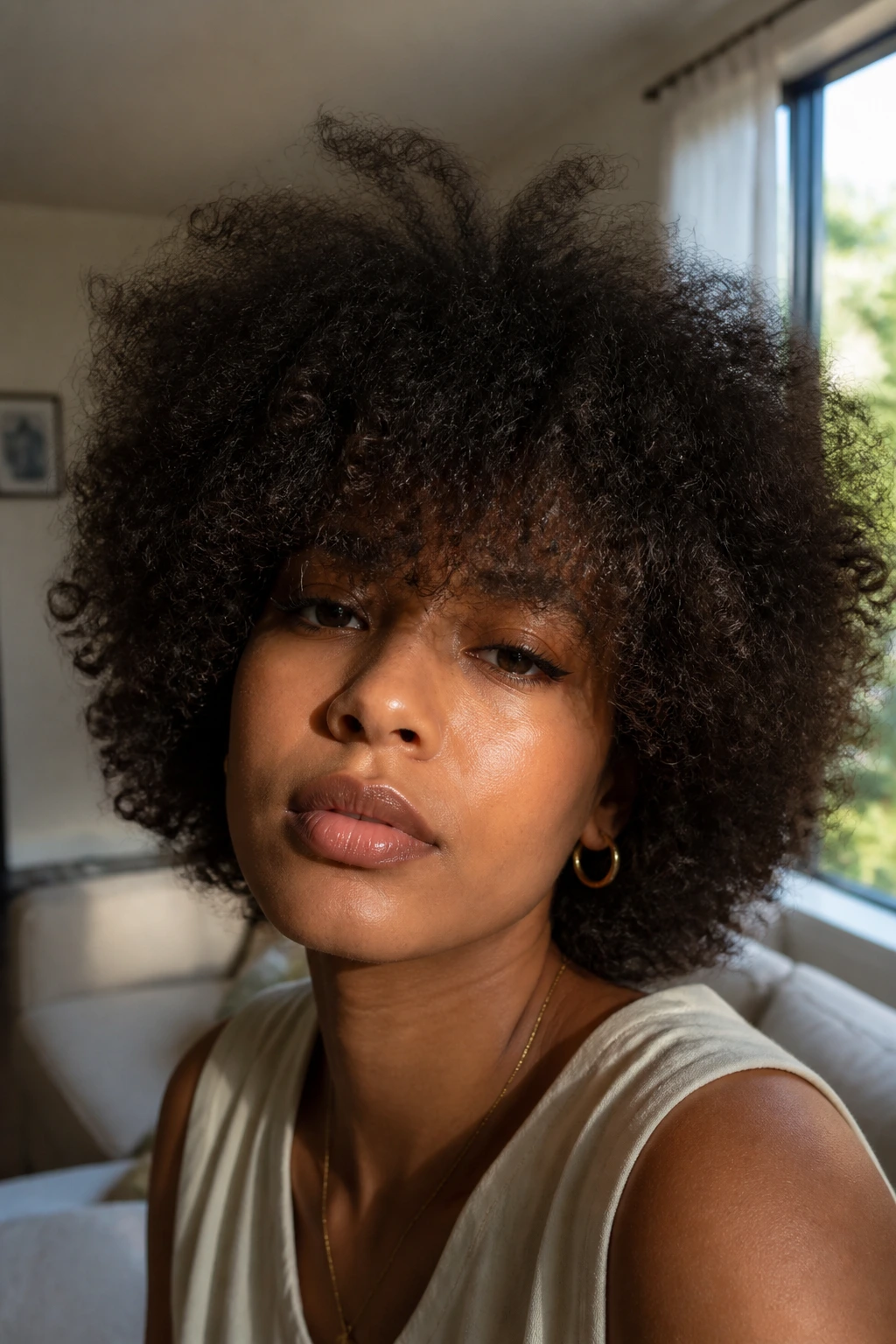
If you love the fluffy, cloud-like texture of a 70s-style blowout, this voluminous fringe is your perfect match. It sits somewhere between a straight silk press and a natural wash-and-go, offering a soft, brushed-out texture that is full of body.
To get this look, tension-dry your hair using a paddle brush or a round brush attachment on your blow dryer. You are not trying to get the hair bone-straight; instead, you want to stretch the curl pattern just enough to create a soft, pillowy texture. The bangs should have plenty of lift at the root, falling in a thick, airy canopy over your eyebrows.
This style is highly resilient and handles humidity better than a sleek silk press, as it already embraces a bit of natural texture and expansion. It is a wonderful way to showcase the true density of your hair while enjoying a soft, touchable fringe that bounces with every step.
12. Heart-Shaped Curly Bangs
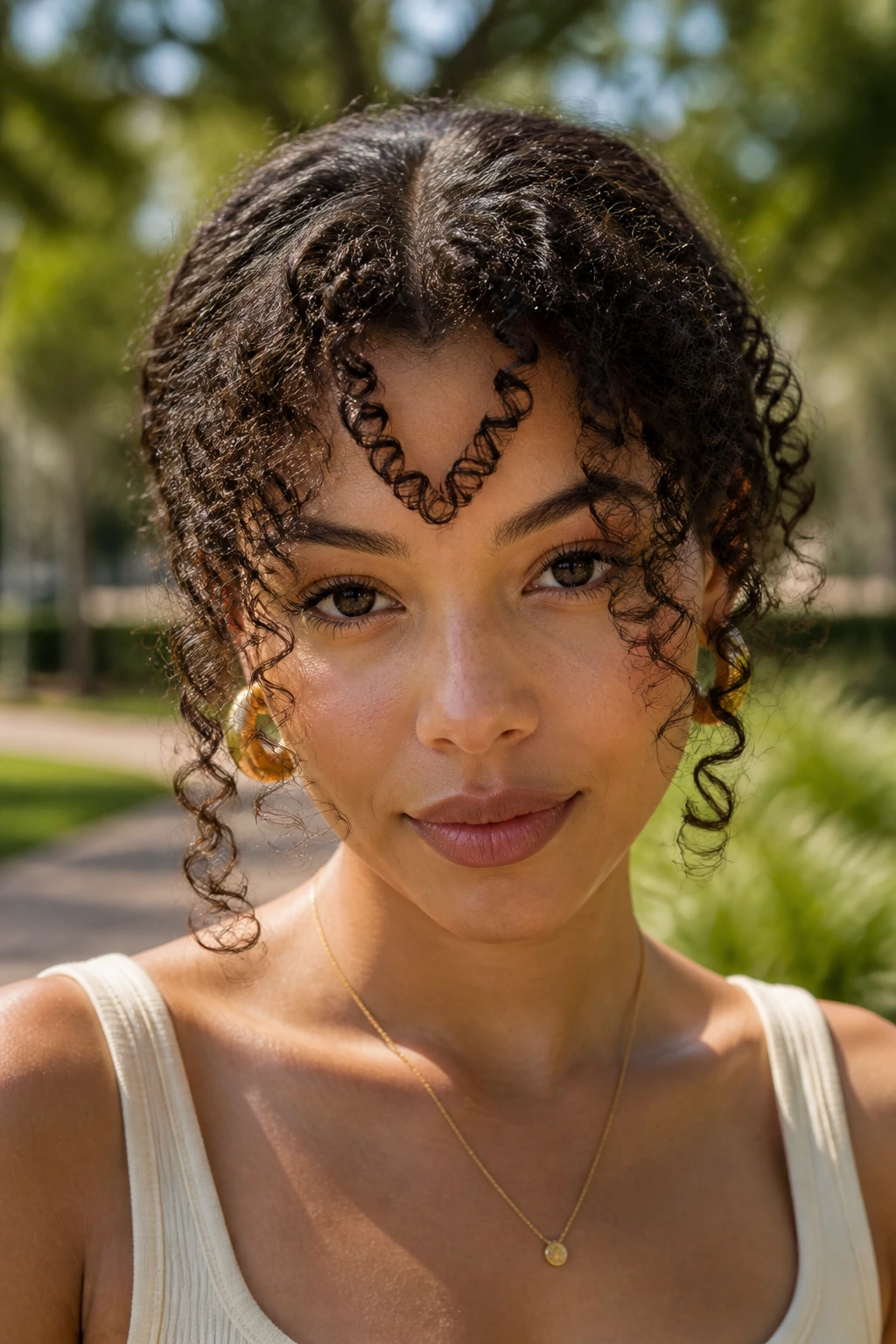
Designed specifically to complement the classic heart-shaped face, this cut features shorter curls in the center of the forehead that curve upward, while the sides cascade down into longer layers that hug the jawline.
Unlike standard cuts that can make the forehead look wider, the heart-shaped cut uses the natural volume of your curls to balance your proportions. The shorter center pieces break up the width of the forehead, while the longer side layers soften a pointed chin.
When you go to the salon, ask your stylist for a custom dry cut that focuses on facial symmetry. Because no two curl patterns are identical, the stylist will need to trim individual curls to different lengths to create a balanced, harmonious silhouette when your hair is dry and fully shrunk.
13. Choppy Layered Kinks
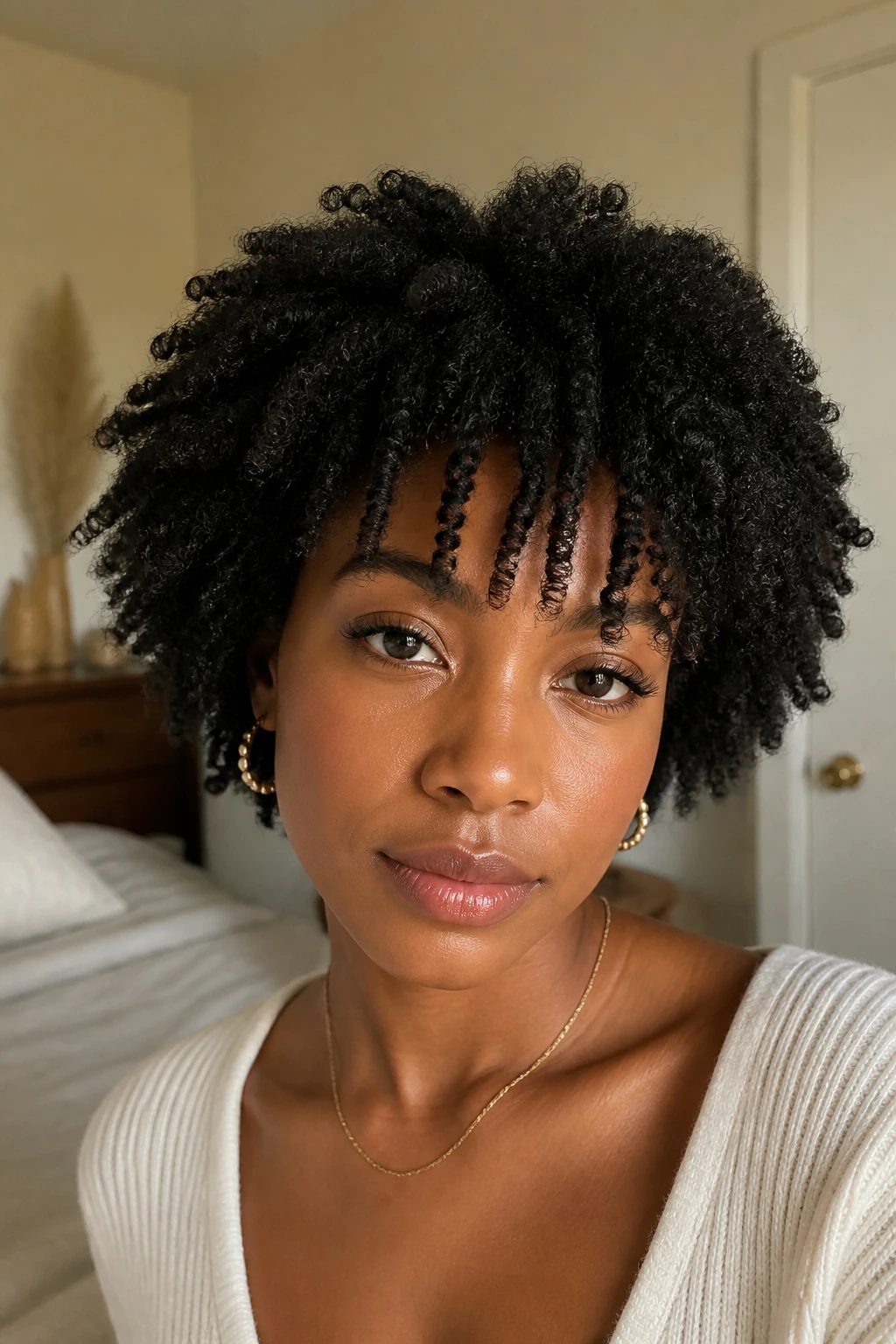
Embrace a raw, textured aesthetic with choppy, uneven layers that give your bangs a modern, undone feel. This style works exceptionally well on Type 4C hair, where the tight kinky pattern creates a beautiful, matte finish.
Breaking the Rules of Symmetry
Perfect symmetry can sometimes feel stiff and clinical. By cutting the fringe in varied, choppy lengths, you create a dynamic look that feels organic and alive. Some pieces might rest just above the eyelid, while others sit higher up on the forehead, creating a beautiful interplay of light and shadow.
Quick Styling Checklist
- Moisture first: Apply a rich leave-in cream followed by a light oil to seal in hydration.
- Finger styling: Use your fingers to gently pull and separate the kinks, letting them settle into their natural, choppy lengths.
- No combs allowed: Avoid using fine combs on this style, as they will disrupt the chunky texture and create a uniform puff instead.
- Trimming schedule: Very forgiving; you can easily go several months between trims as the uneven lengths grow out naturally.
Pro tip: Use a small amount of lightweight styling pomade on your fingertips to pinch the ends of the bangs, giving them a distinct, piecey definition.
14. Pixie Cut Coils
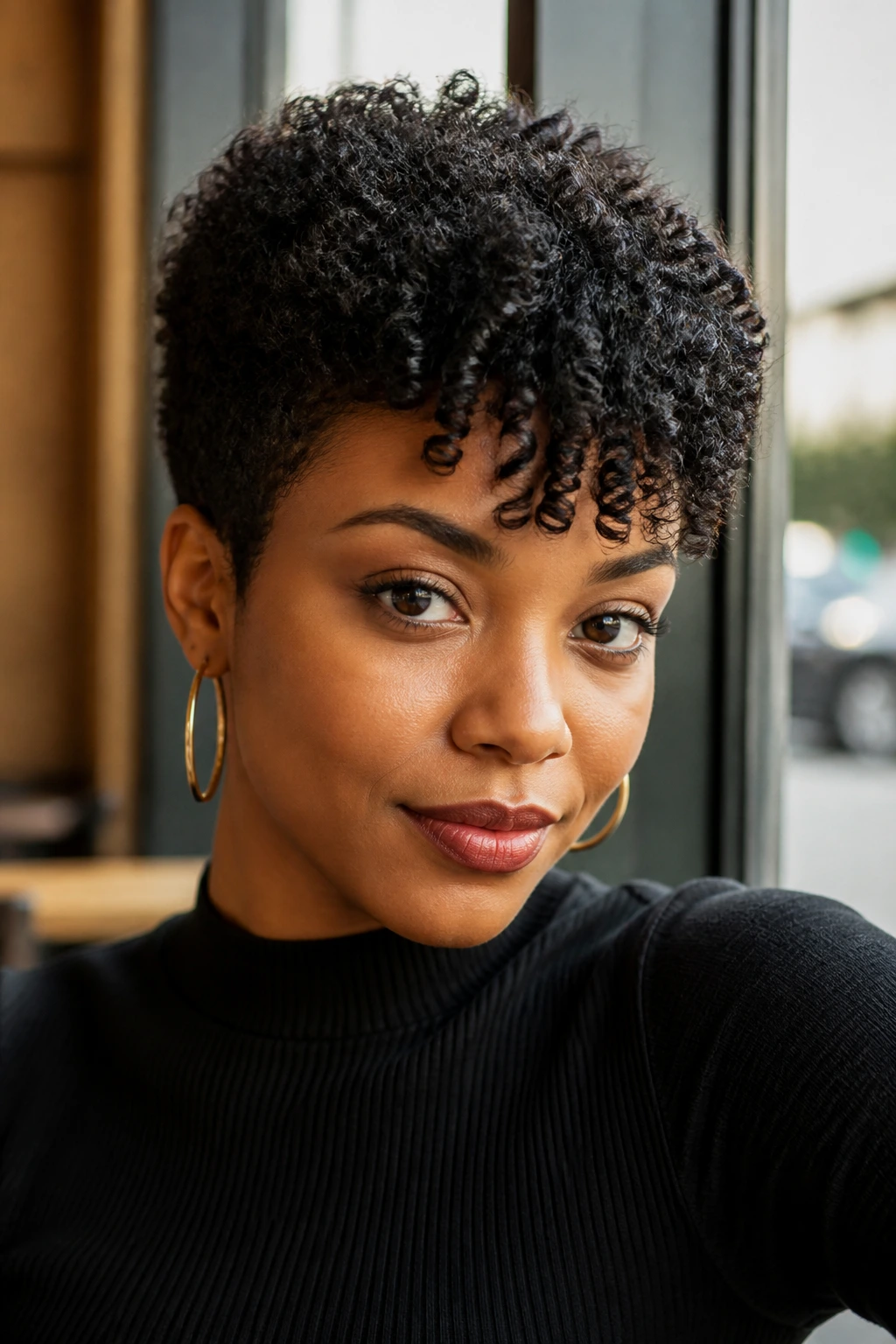
A short, cropped pixie cut paired with a front-focused curly fringe is the epitome of chic, low-maintenance styling. This look keeps the sides and back of your head tapered close to the scalp, while the top and front are left longer to fall forward.
This structure is incredibly practical for busy mornings. Since the bulk of your hair is cropped short, you only need to focus your styling efforts on the crown and the front bangs. A quick mist of water, a touch of curl cream, and a gentle shake are all it takes to look fully styled and put together.
The contrast between the sharp, clean lines of the tapered sides and the soft, organic texture of the front coils creates a striking visual balance. It is a confident, high-fashion look that opens up your collarbone and highlights your facial features beautifully.
15. Half-Up Topknot with Face-Framing Curls
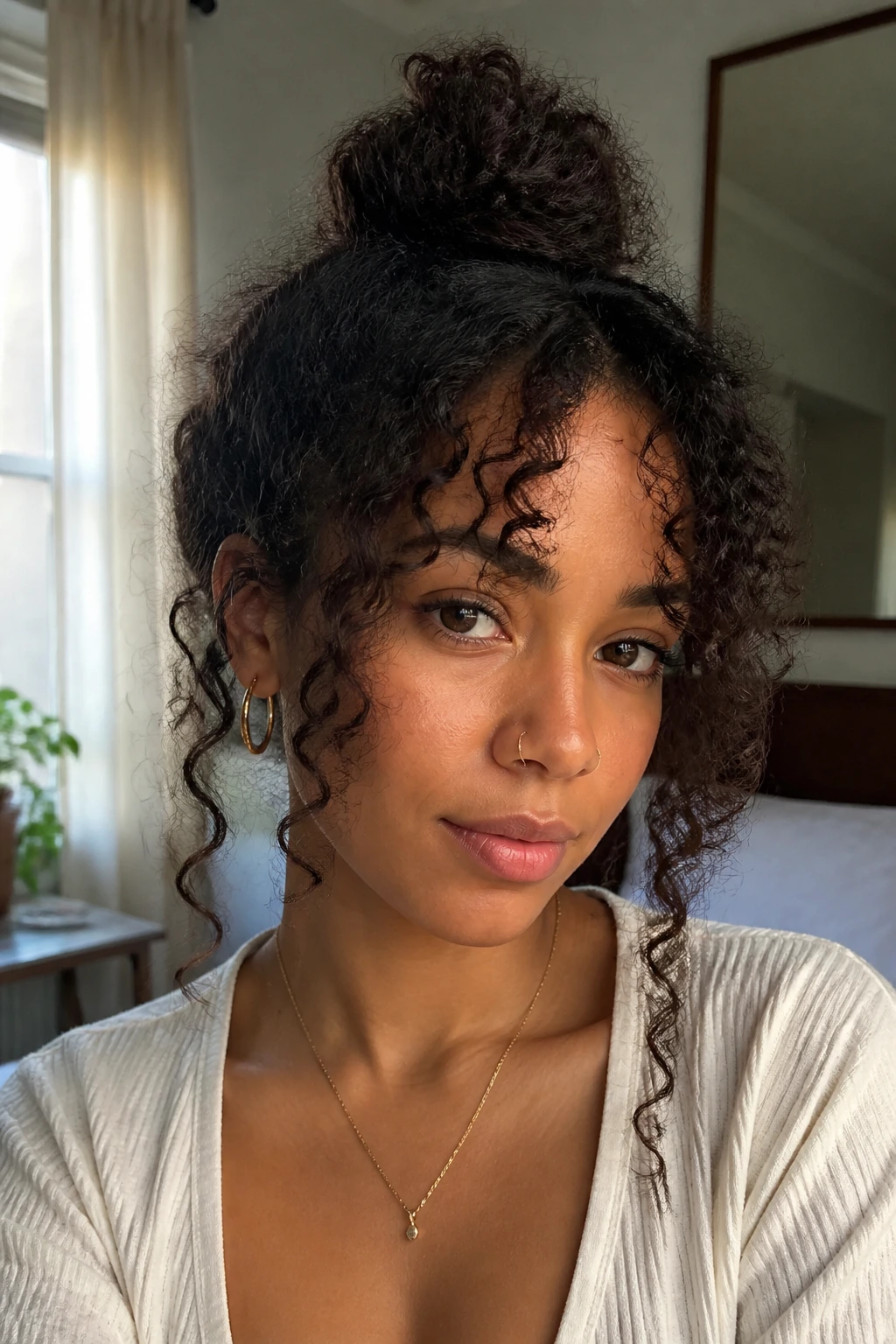
For a casual, everyday look, pulling your hair into a half-up style while leaving your bangs and a few side pieces down offers the perfect blend of playfulness and structure.
This style is a lifesaver on third- or fourth-day hair when your curls are starting to lose their definition. By gathering the top half of your hair into a loose knot, you hide any flattened roots while letting your front fringe do all the heavy lifting. The bangs remain the focal point, keeping the style looking fresh and deliberate.
To make this look work, ensure the transition between the gathered hair and the loose bangs is clean. Use a soft bristle brush to smooth the hair going into the topknot, but leave the fringe completely untouched so it maintains its natural, springy texture.
16. Faux Clip-In Curly Fringe
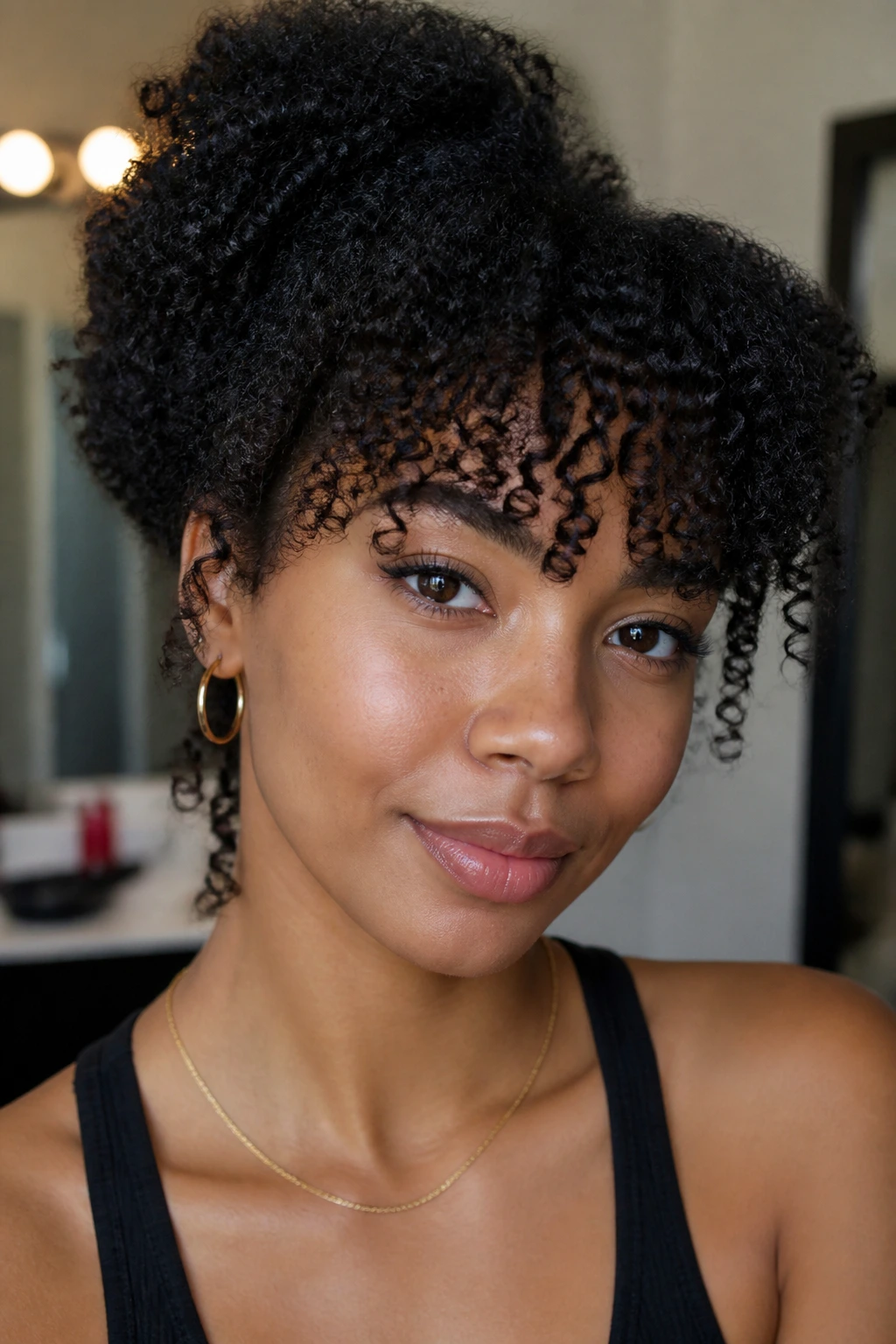
Not ready to commit to the shears? You do not have to. A faux clip-in curly bang allows you to test-drive the look for a weekend without any permanent changes to your hair.
I remember recommending this trick to a client who was incredibly anxious about cutting her waist-length curls. We sourced a high-quality human hair curly clip-in that matched her curl pattern and color perfectly. She wore it to a wedding, loved the look, and felt confident enough to finally take the plunge and get a real cut a few weeks later.
Choosing and Fitting Your Faux Bangs
The secret to a seamless faux bang is matching both the texture and the density of your natural hair. Look for pieces made from virgin human hair so you can customize the curl pattern using your own styling products or a small curling wand if necessary.
Faux Bang Blueprint
- Matching the color: If you cannot find an exact match, buy a slightly lighter human hair piece and dye it to match your roots.
- Placement: Clip the piece slightly behind your hairline, then blend your natural curls over the seam to hide the clips.
- Trimming the piece: Never cut the clip-in while it is off your head; clip it on first, then trim it to fit your face shape.
- Security: Use a few flat bobby pins along the base of the clips to ensure the bangs do not shift during the day.
Pro tip: Spray your natural hair at the crown with a bit of dry shampoo before clipping in the piece to give the metal clips something secure to grip onto.
17. Finger-Waved Front Bangs
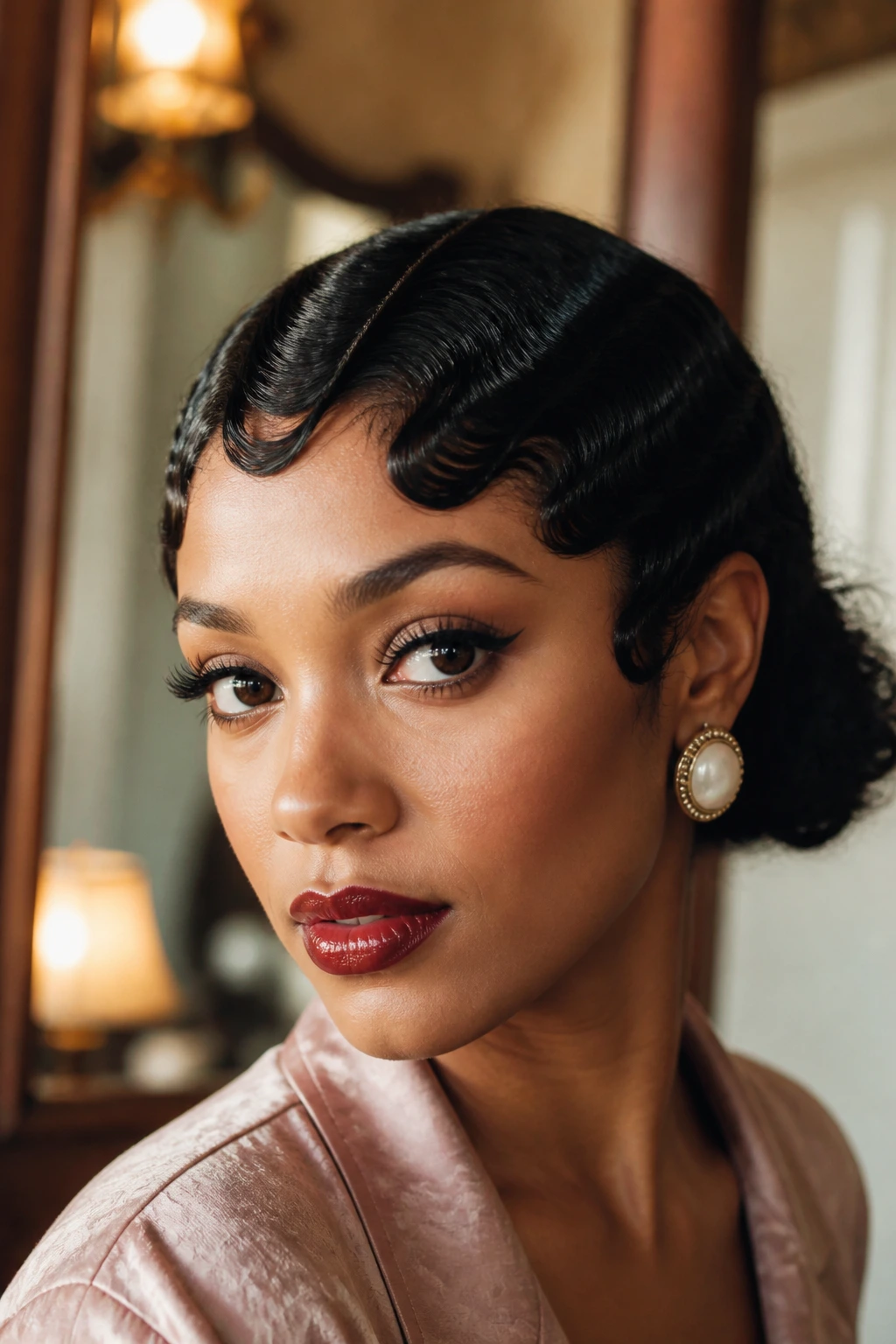
For a vintage, ultra-polished look, finger waves offer a gorgeous, sculptural way to style shorter front pieces flat against your forehead.
This style is deeply rooted in Black hair history, evoking the glamour of classic jazz-era beauty. It works best on relaxed hair or freshly washed, wet natural hair that has been coated with a generous amount of high-hold styling foam or setting gel.
Using a fine-tooth comb and your fingers, you mold the wet hair into S-shaped ridges across your forehead, pinning them in place with metal wave clamps until they are completely dry. Once set, the hair dries into a hard, high-shine glaze that holds its shape for days. It is a stunning choice for special occasions or when you want a highly styled, artistic look.
18. Tapered Frohawk Fringe
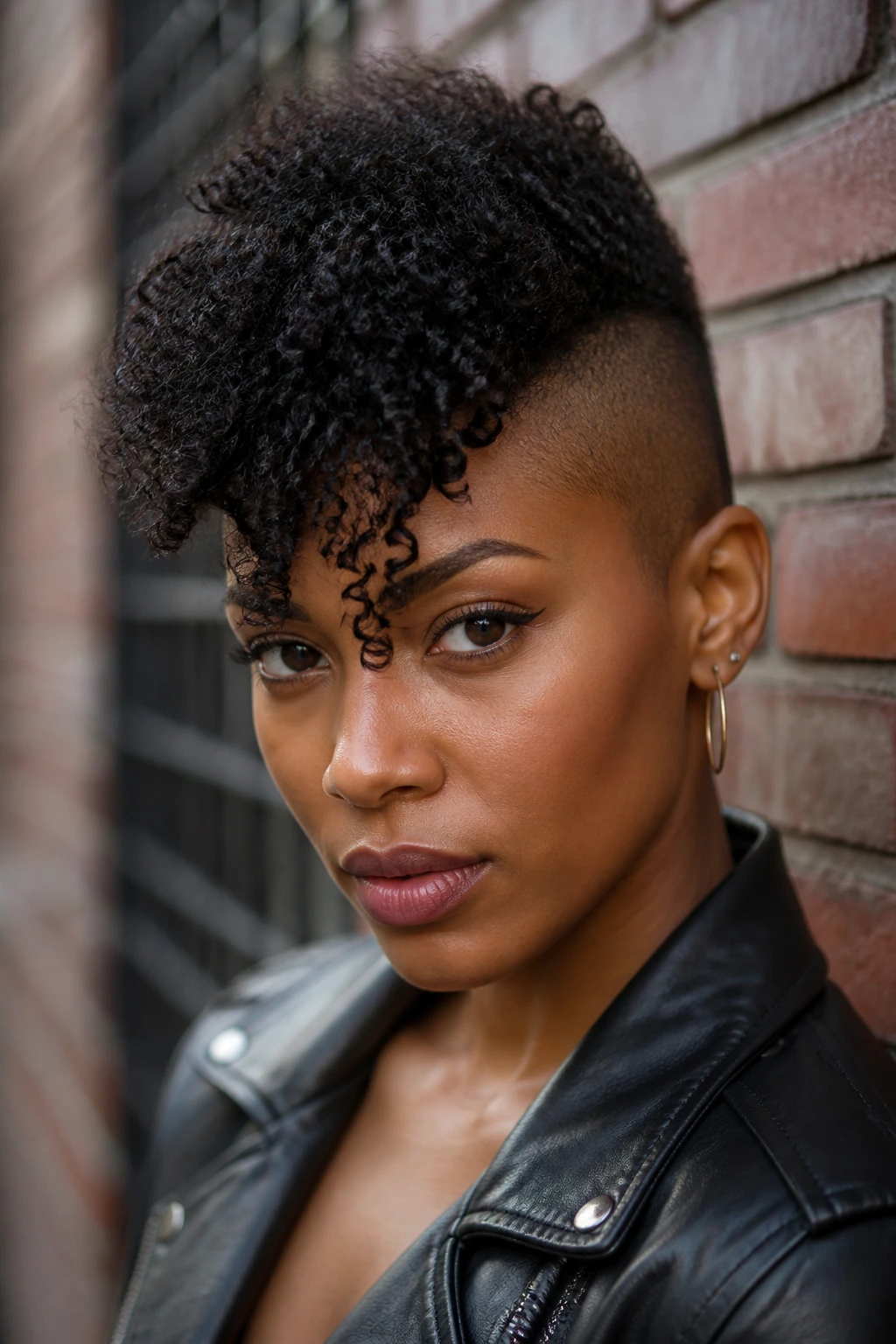
Combine the edge of a mohawk with the soft volume of an afro. This style keeps the sides of your head tapered or shaved, while a thick band of curls runs down the center, spilling forward into a dramatic front fringe.
The frohawk fringe is all about height and direction. You want to style the hair so that it moves upward and forward, creating a cascade of coils that drape over your forehead. It is a powerful, dynamic silhouette that looks incredibly cool from every angle.
To keep the sides looking sharp, you can use a small amount of edge-control gel to slick the hair upward toward the center Mohawk strip. This accentuates the contrast between the sleek, flat sides and the exploding volume of the front-facing curls.
19. Twist-Out Curtain Bangs
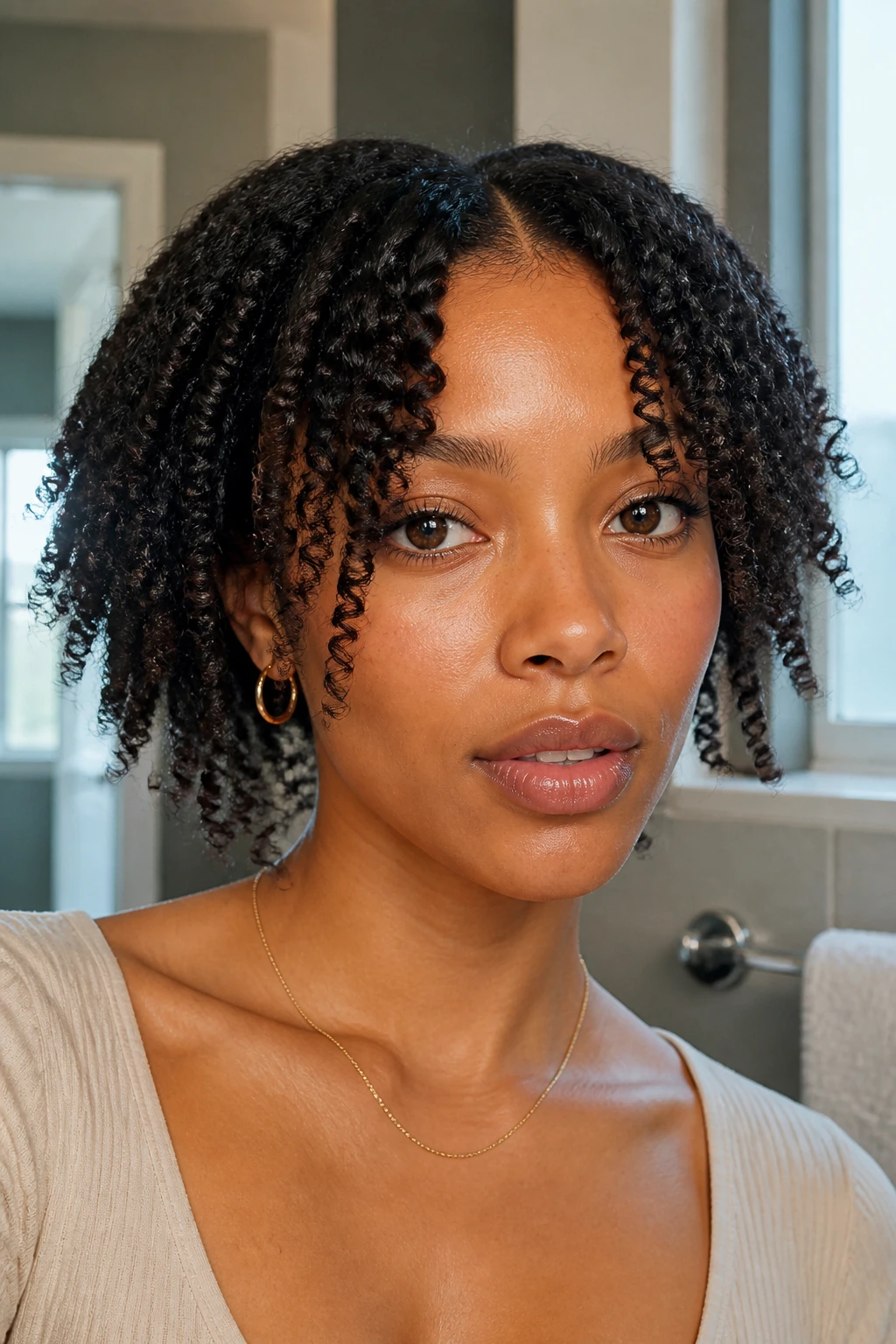
A twist-out is a staple styling technique for natural hair, and applying it to your curtain bangs delivers beautiful, elongated definition with minimal frizz.
The Physics of the Twist-Out Fringe
Two-strand twists allow you to stretch your curl pattern slightly, giving your bangs more length and drape than a standard wash-and-go. By twisting the front pieces away from your face, you train the hair to fall in that classic, split curtain shape once the twists are unraveled.
Quick Twist Guide
- Section size: Use medium-sized twists to get a soft, fluffy texture with plenty of body.
- Product choice: A twisting butter or styling cream provides the perfect balance of hold and moisture.
- Drying time: Ensure the twists are one hundred percent dry before unraveling them, as any dampness will cause the bangs to puff up and lose their definition.
- The separation process: Coat your fingertips with a light oil before untwisting to prevent friction and frizz.
Pro tip: Do not untwist the front pieces all the way to the root; leave the first half-inch twisted to encourage the hair to lie flat against your scalp before blossoming into defined curls.
20. Layered Wash-and-Go Fringe
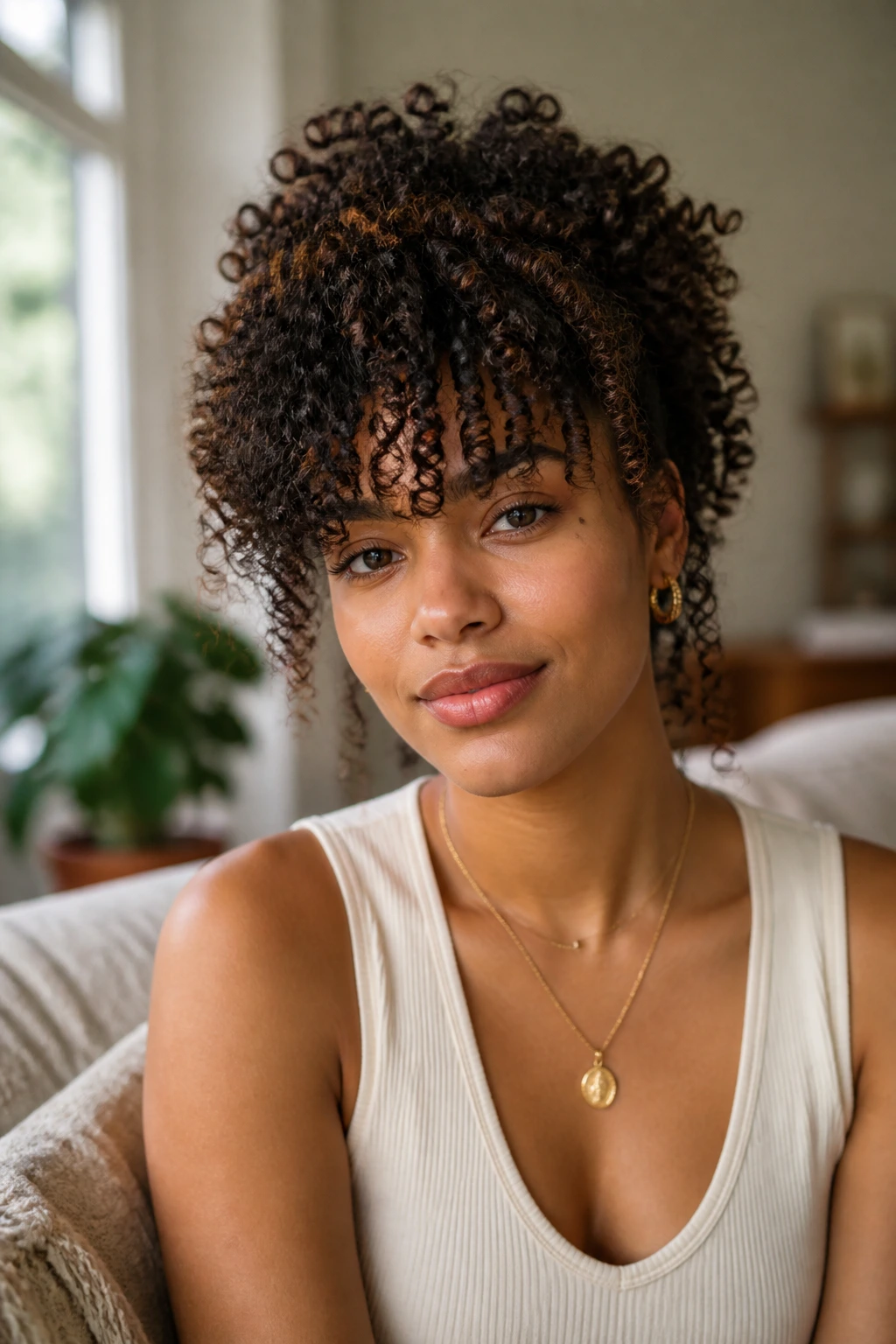
The wash-and-go is the ultimate celebration of your natural curl pattern, and adding a layered front fringe gives this classic routine a structured, intentional shape.
Many people find that their wash-and-go styles look flat on top because of the weight of their hair. By cutting short, layered bangs into the front, you instantly relieve that weight, allowing the top curls to spring up and create beautiful, rounded volume right at the crown of your head.
To style, apply your favorite leave-in conditioner and defining gel to soaking wet hair. Use a shaking or raking motion to distribute the product through your bangs, then let them air-dry or use a diffuser on a cool, low setting. Once dry, use a metal pick at the roots of your bangs to lift them slightly off your forehead, creating an airy, voluminous frame.
21. Fulani Braids with Beaded Bangs
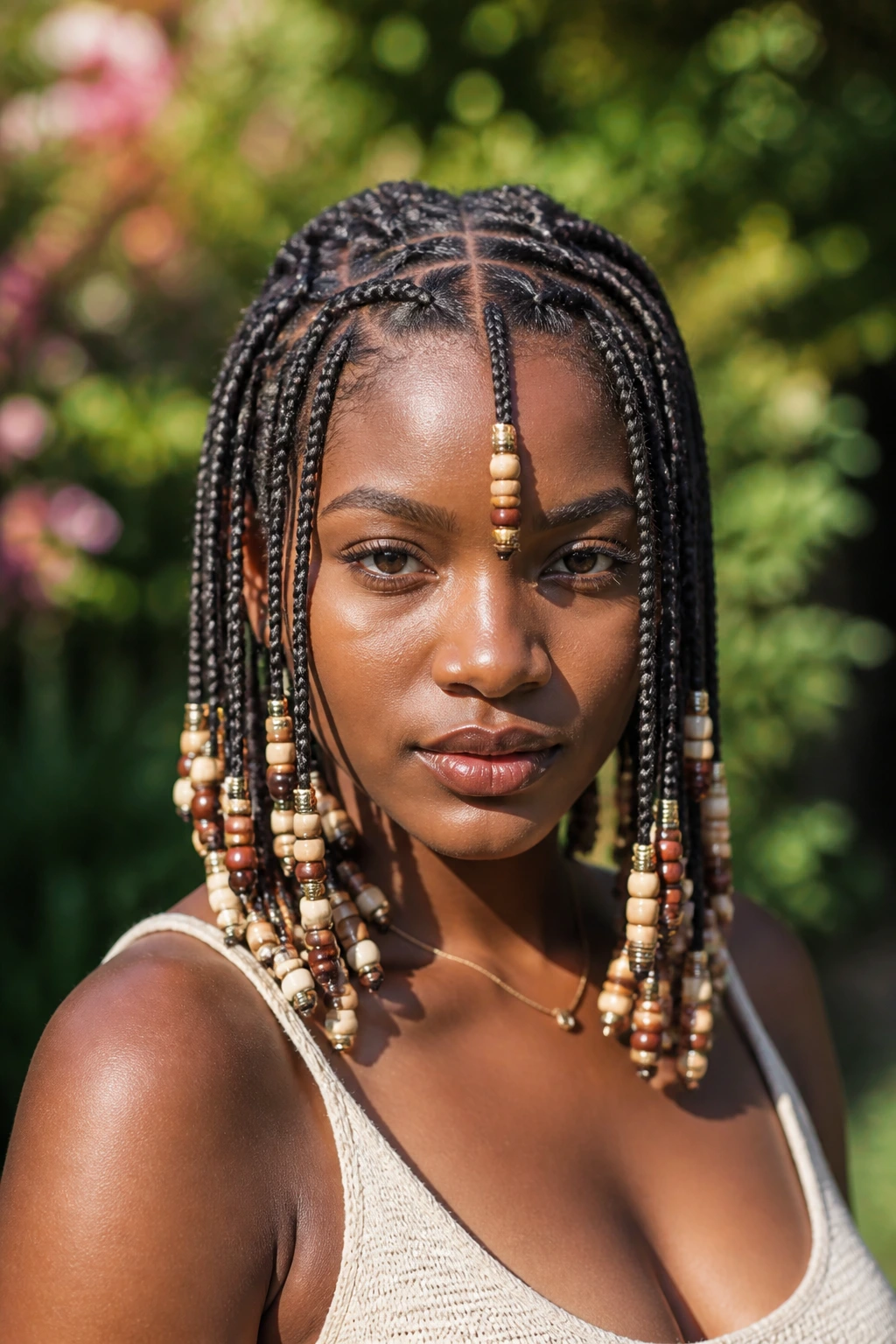
This style blends intricate scalp braiding with a statement front fringe, offering a stunning protective option that is rich in cultural history and artistic expression.
The signature of this look is the central braid that runs straight down the middle of the forehead, accompanied by side braids that drape forward. The addition of heavy beads at the ends of these braids creates a rhythmic weight that keeps the fringe falling beautifully around the face.
When choosing beads for this style, consider both weight and color. Too many heavy glass or metal beads can put strain on your hairline, so incorporating lightweight wooden or plastic beads is a great way to build volume without adding unnecessary tension. It is a low-maintenance, high-impact style that protective-wearers will absolutely love.
22. Asymmetric Spiral Bangs
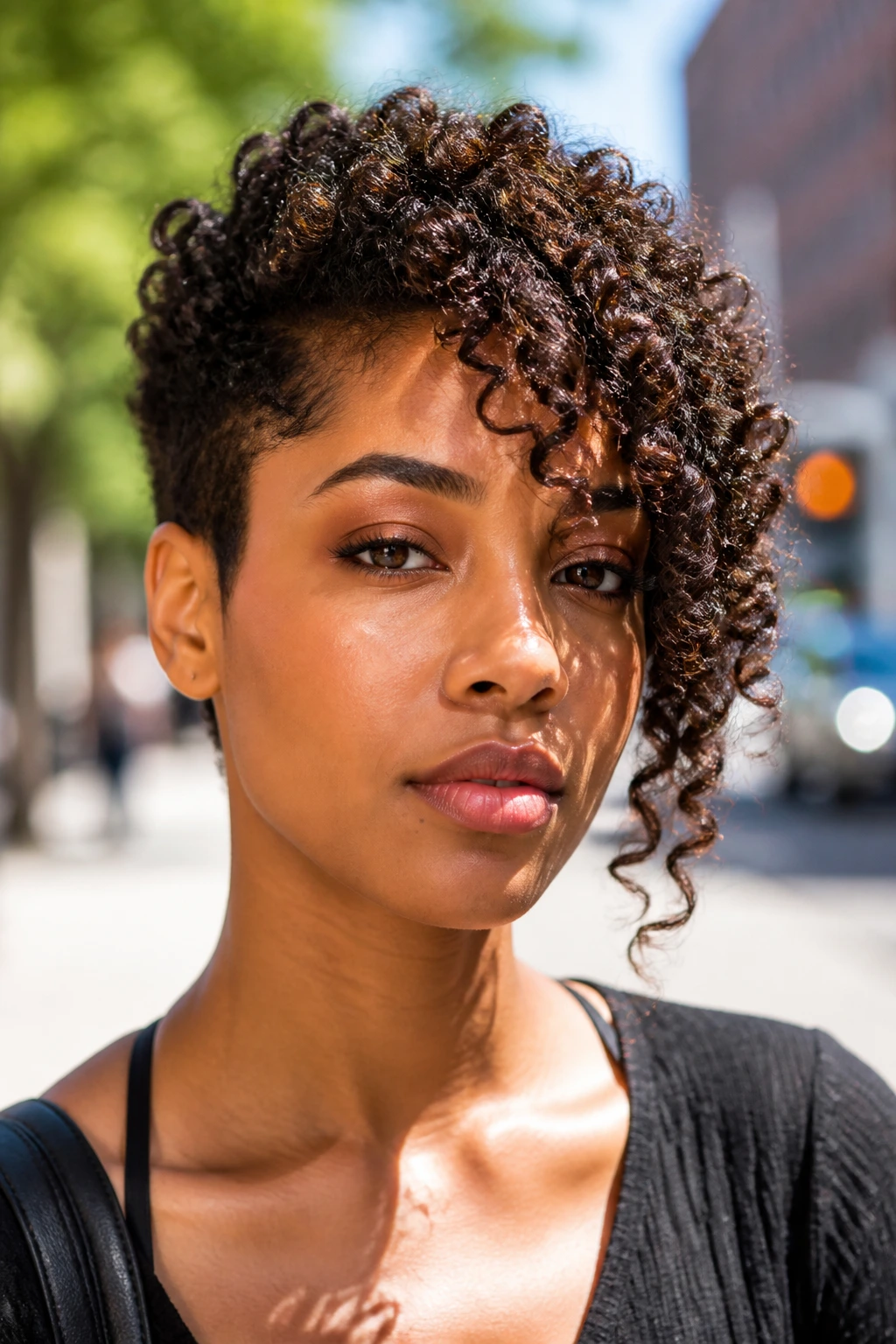
For a modern, architectural look, asymmetric spiral bangs offer an uneven, diagonal line that feels incredibly fresh and contemporary.
Creating Asymmetric Balance
Unlike traditional side-swept styles that blend smoothly, this look embraces a sharp, deliberate contrast. One side of your fringe is cut short—just hovering above the temple—while the other side drops down into long, juicy spirals that skim the cheekbone or jawline.
Why This Cut Works
- Visual interest: The sharp diagonal line draws attention to your eyes and mouth, creating a dynamic frame.
- Texture showcase: Works beautifully on highly defined Type 3 spirals that hold their shape throughout the day.
- Easy growth path: As the short side grows, it naturally transitions into a classic side-swept look, extending the time between salon visits.
- Face elongation: The asymmetric line helps lengthen the appearance of round and heart-shaped faces.
Pro tip: Use a firm-hold curling gel on the longest spiral to ensure it maintains its shape and drape without dropping throughout the day.
Trimming and Maintenance Secrets
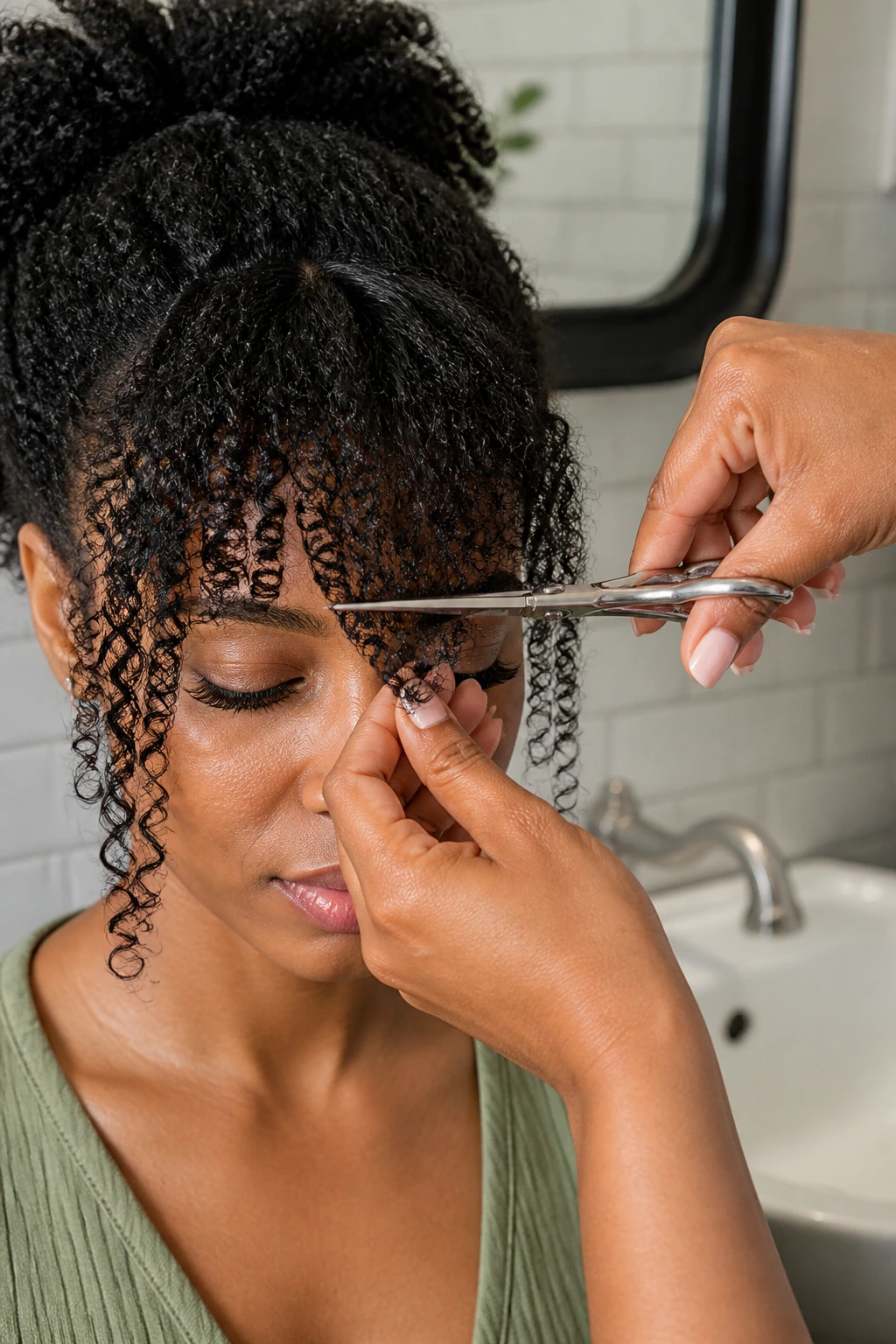
Maintaining your new front bangs does not have to be a source of stress, but it does require a few adjustments to your usual hair care routine. Because these curls sit directly on your face, they are exposed to facial moisturizers, makeup, and forehead oils, which can cause them to lose their definition and dry out faster than the rest of your hair.
To keep your bangs looking fresh between wash days, practice the “sink wash” method. Instead of washing your entire head of hair, section out your front bangs, wet them in the bathroom sink, and apply a tiny dab of sulfate-free shampoo. Follow with a lightweight conditioner, rinse, and restyle. This quick five-minute routine completely revives your face-framing pieces without the effort of a full wash day.
When it comes to trims, resist the urge to use regular household scissors. Dull blades will crush the ends of your hair shaft, leading to split ends that travel up the curl and ruin your definition. Invest in a pair of professional stainless steel hair shears—even a cheap pair from the beauty supply store is infinitely better than your kitchen scissors. Trim your curls one by one, in their dry state, always cutting just above the bend of the spiral to encourage the curl to bounce up cleanly.
The Bottom Line
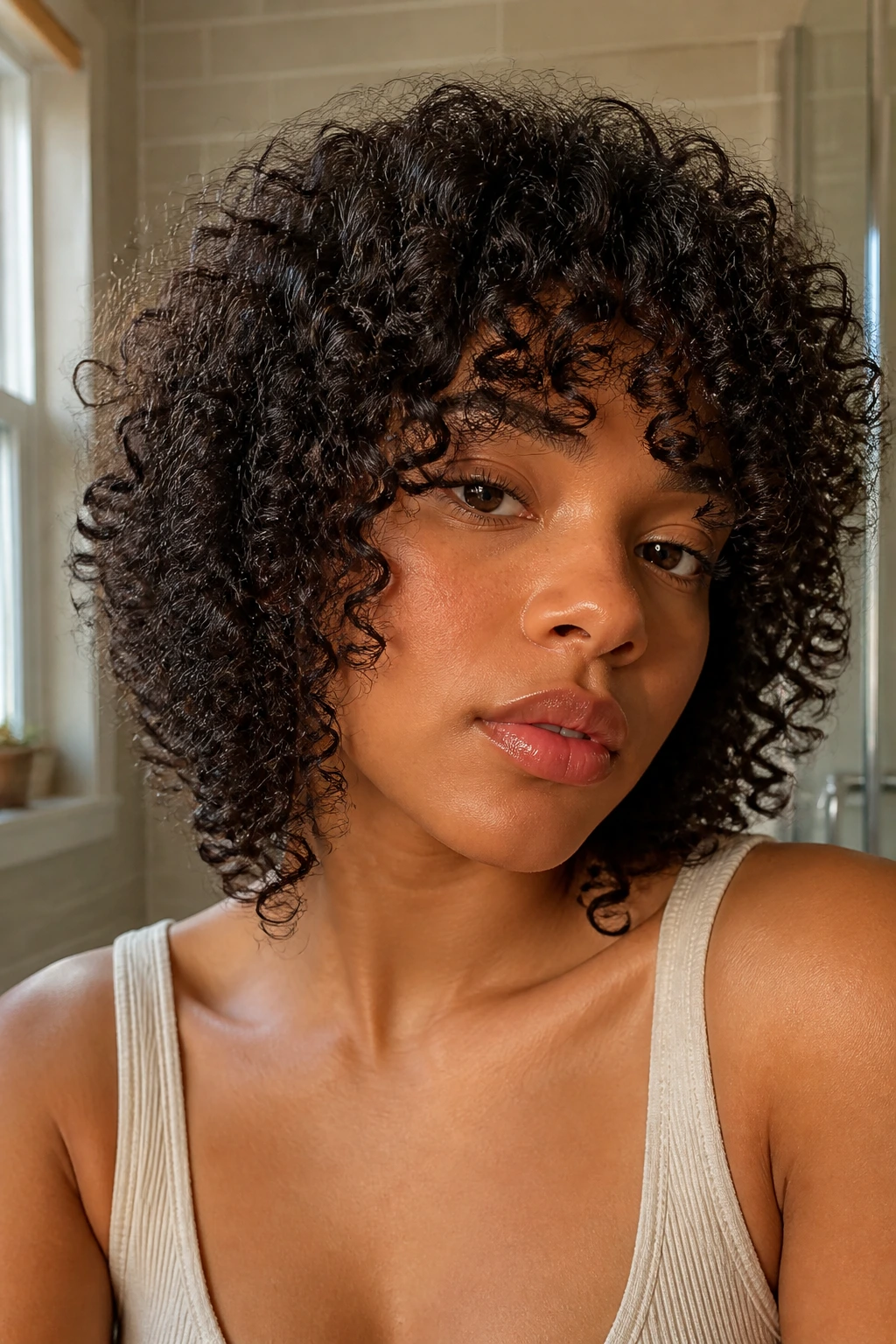
Choosing to cut front bangs into your natural hair is a beautiful way to reclaim your personal style and celebrate the incredible versatility of your texture. From tight micro coils to romantic curtain curls, there is a fringe style that can highlight your best features and breathe new life into your daily hair routine.
Take your time, find a stylist who understands the unique mechanics of curl shrinkage, and remember that hair is ultimately a playground. If a snip goes slightly shorter than you intended, embrace the extra volume and run with it—your curls are alive, springy, and full of beautiful surprises.