

Living with textured, unpredictable tresses means constantly negotiating with the weather. Some days, your hair lies perfectly flat; other days, a single drop of humidity turns your head into a halo of static electricity and fuzzy flyaways. For years, the conventional wisdom from salon chairs was simple: if your hair frizzes, avoid bangs at all costs. It was treated as a universal law, a warning passed down to protect us from the dreaded “triangle head” or a forehead full of unruly, coiled cowlicks. But rules are meant to be broken, especially when hair cutting techniques have evolved so dramatically.
Opting for soft bangs for frizzy hair is no longer a style gamble; it is a deliberate, highly flattering way to embrace natural volume while framing your features. Softness is key here. Unlike the heavy, blunt-cut fringes of past decades that required aggressive flat-ironing and constant policing, modern soft fringe styles are designed to move, bend, and react naturally to moisture. They do not fight the frizz—they cooperate with it. By allowing the hair to lift, coil, and soften around the eyes, these cuts turn what used to be considered a styling obstacle into an organic design element.
To make this work, we have to throw out the old styling handbook. We need to look at how curls, waves, and kinks behave when they are freed from the weight of a longer haircut. Shorter pieces at the front of your face will inevitably bounce up, curl tighter, and expand in humid conditions. That is not a failure; it is the entire point. When cut with the right tension and angles, a soft fringe adds immediate character and a relaxed, bohemian charm that pin-straight hair simply cannot replicate. Let us look at the styles, tools, and cutting methods that make this texture-first approach a success.
How Moisture and Tension Shape Frizzy Fringes
Let us talk about the science of the strand. Frizz is essentially your hair’s desperate search for water. When the outer layer of the hair shaft—the cuticle—is raised or damaged, moisture from the air enters the shaft, causing it to swell and bend. This is why a smooth blowout can turn into a cloud of texture the second you step outside. When you cut bangs, you are removing weight, which means the hair’s natural tendency to bend is suddenly amplified.
Understanding tension is the secret to a successful cut. When a stylist pulls hair tight to cut it, they are measuring it under tension. The moment they let go, the hair springs back. If you have wavy or curly hair that tends to frizz, that spring-back rate can be massive—sometimes up to fifty percent of the length. Cutting the hair dry and in its natural state is the only reliable way to see exactly where the bangs will fall.
We also have to consider the oil patterns of the scalp. The forehead is a naturally oily zone, and when you combine sebum with styling products, bangs can quickly lose their bounce. This is why balancing moisture is so critical. You want enough hydration to keep the cuticle flat and defined, but not so much heavy product that the bangs look limp or greasy. It is a delicate dance, but once you master the balance, your natural texture does the heavy lifting.
Essential Tools for Styling Textured Fringes
Before we look at the specific cuts, let us get your styling kit sorted. You do not need a massive drawer of hot tools; in fact, relying too heavily on high heat will only worsen frizz over time by drying out the hair shaft. Instead, focus on tools that manage airflow and preserve the hair’s natural moisture barrier.
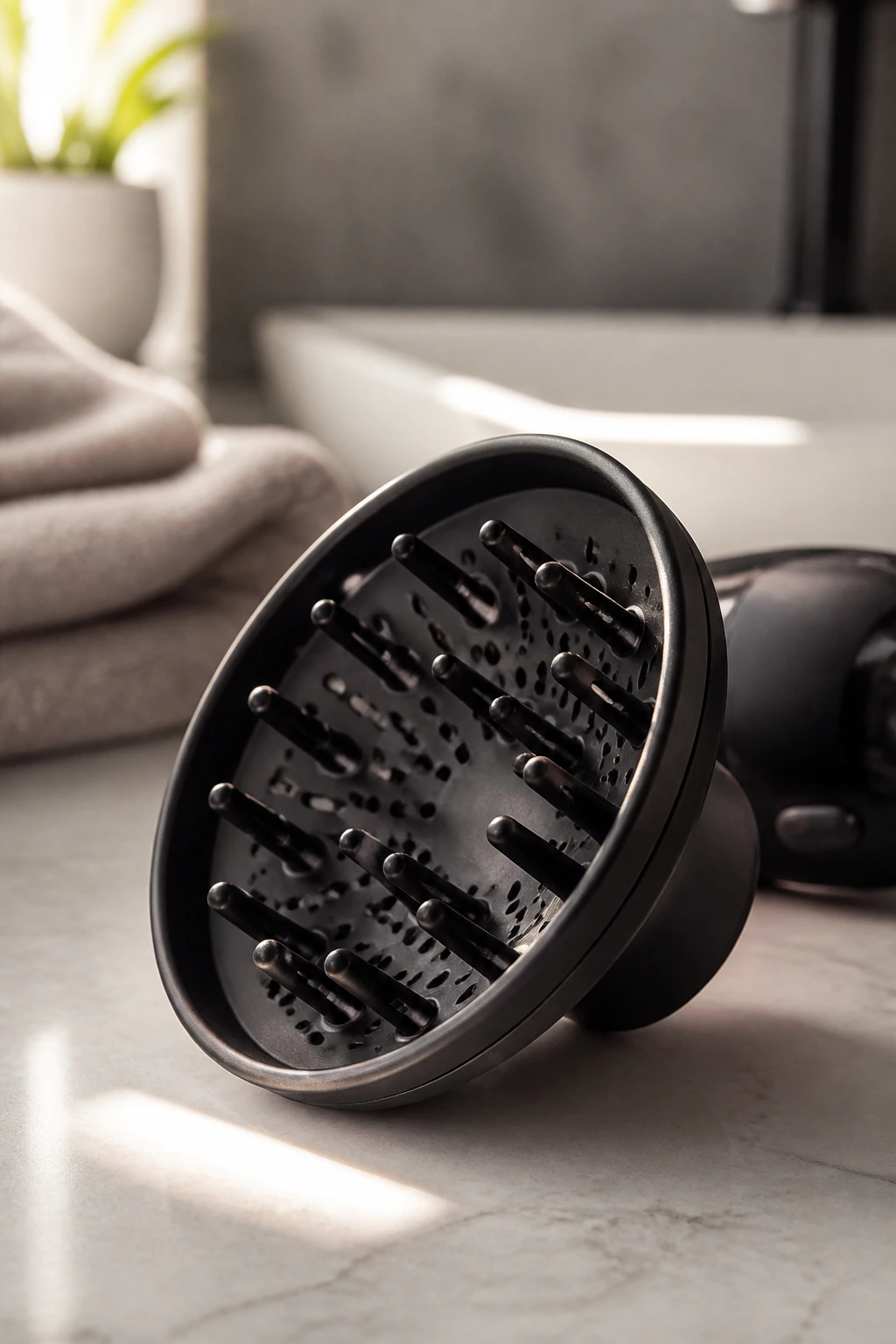
A high-quality blow dryer with a diffuser attachment is non-negotiable. Traditional nozzles blast air in a concentrated stream, which disrupts the natural curl pattern and blows the cuticle wide open. A diffuser, on the other hand, scatters the air, letting the hair dry slowly and evenly without disturbing the shape.
Here are the core items you should have on hand:
- A microfiber towel or an old cotton t-shirt to gently squeeze out excess water without causing friction
- A wide-tooth comb or a wet brush with flexible bristles to detangle while the hair is damp and coated in conditioner
- A lightweight leave-in conditioner that provides slip and locks in hydration without adding heavy waxes
- A water spray bottle filled with filtered water to quickly re-dampen and reset your bangs on non-wash days
- A small, boar-bristle paddle brush for gently smoothing out the roots of your fringe without pulling the bounce out of the ends
Now that you have your tools ready, let us look at the best soft bang styles designed specifically to work with, not against, your hair’s natural frizz and texture.
1. Wispy Curtain Bangs for Textured Waves
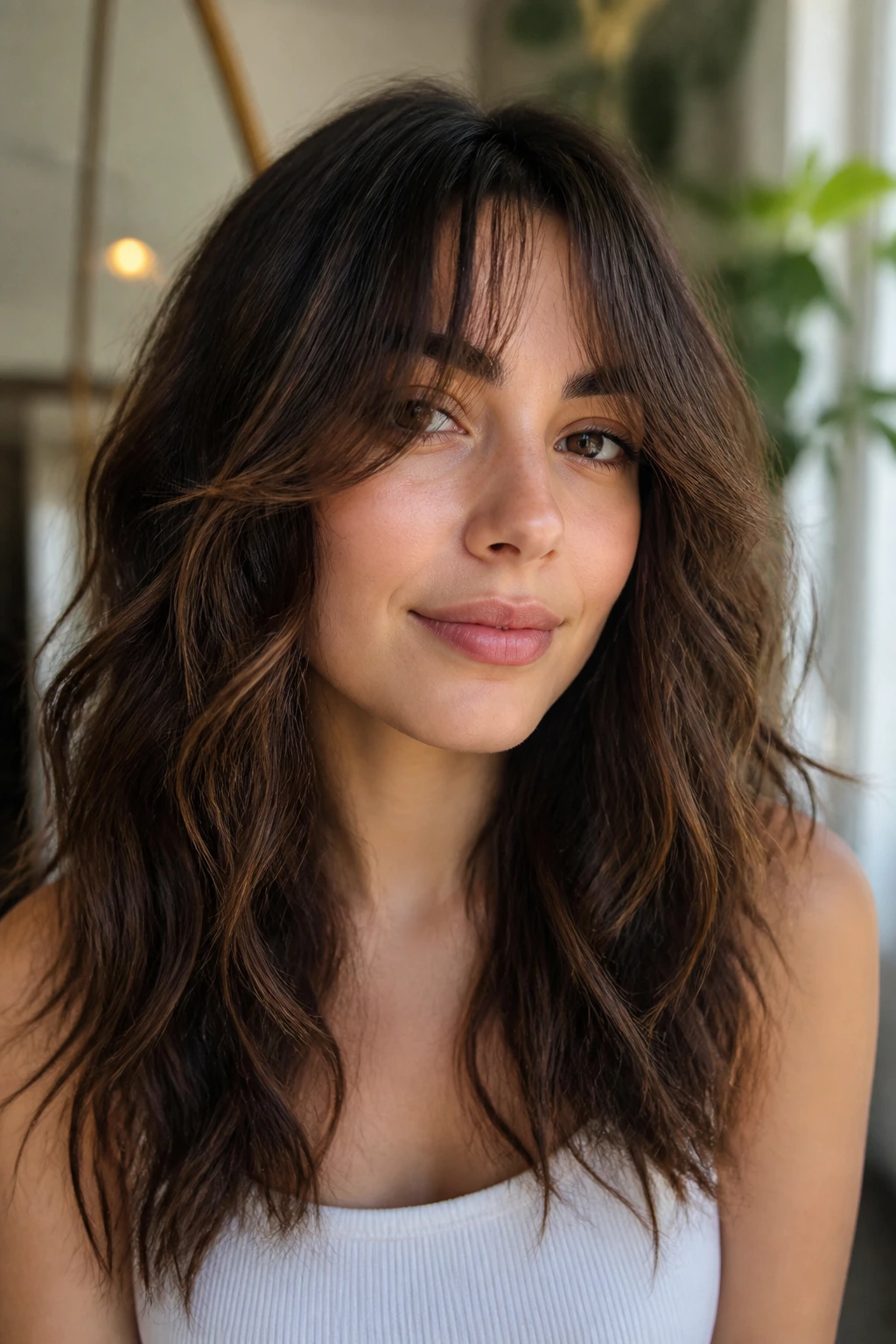
These are the ideal gateway bangs. They sweep gently to the sides of the face, blending into your longer layers with zero harsh lines. Because they are wispy rather than dense, any frizz or puffiness just adds a lovely, romantic soft-focus look around your eyes. They work brilliantly if your waves tend to expand sideways rather than dropping downward.
Why Curtain Cuts Tame the Frizz
By parting the fringe down the center or slightly off-center, you reduce the sheer volume of hair sitting directly on your forehead. This layout prevents the “wall of hair” effect that often happens when thick, frizzy hair is cut straight across. The shorter pieces in the middle gradually lengthen as they move toward your cheekbones, which anchors the style and pulls the visual weight downward.
Quick Styling Facts
- Best suited for loose waves, medium density, and oval or heart-shaped faces
- Requires minimal styling; you can simply tuck the damp ends behind your ears to air-dry with a natural bend
- Grow-out time is exceptionally easy, transitioning into face-framing layers within two to three months
- Pairs beautifully with lightweight styling creams that block humidity without weighing down the root
Pro tip: Apply a tiny dab of lightweight hair oil to your fingertips and gently pinch the ends of the curtain pieces to keep them defined.
2. Soft Bottleneck Bangs for Natural Volume

Many people believe that bangs must be perfectly symmetrical to look good, but with frizzy hair, rigid symmetry is actually your worst enemy. Bottleneck bangs embrace a narrower top that flares out like the neck of a classic glass bottle. This shape allows your natural volume to bloom exactly where it wants to, creating a gorgeous frame that highlights your cheekbones.
The beauty of this cut lies in its transitions. The center sits short and light—just grazing the eyebrows—while the outer edges curve dramatically around the eyes. Because frizzy hair naturally wants to expand, this bottlenecking shape embraces that puffiness to create a soft, cloud-like arch that never looks flat or lifeless.
To style these at home, wash your hair and let it air-dry until it is roughly eighty percent dry. Then, take a small round brush and blow-dry only the very center section downward, letting the longer side pieces air-dry completely. This hybrid technique gives you clean, polished eyes while letting the natural, wild texture of your waves shine through on the sides.
3. Feathered Shag Fringe for Wild Curls
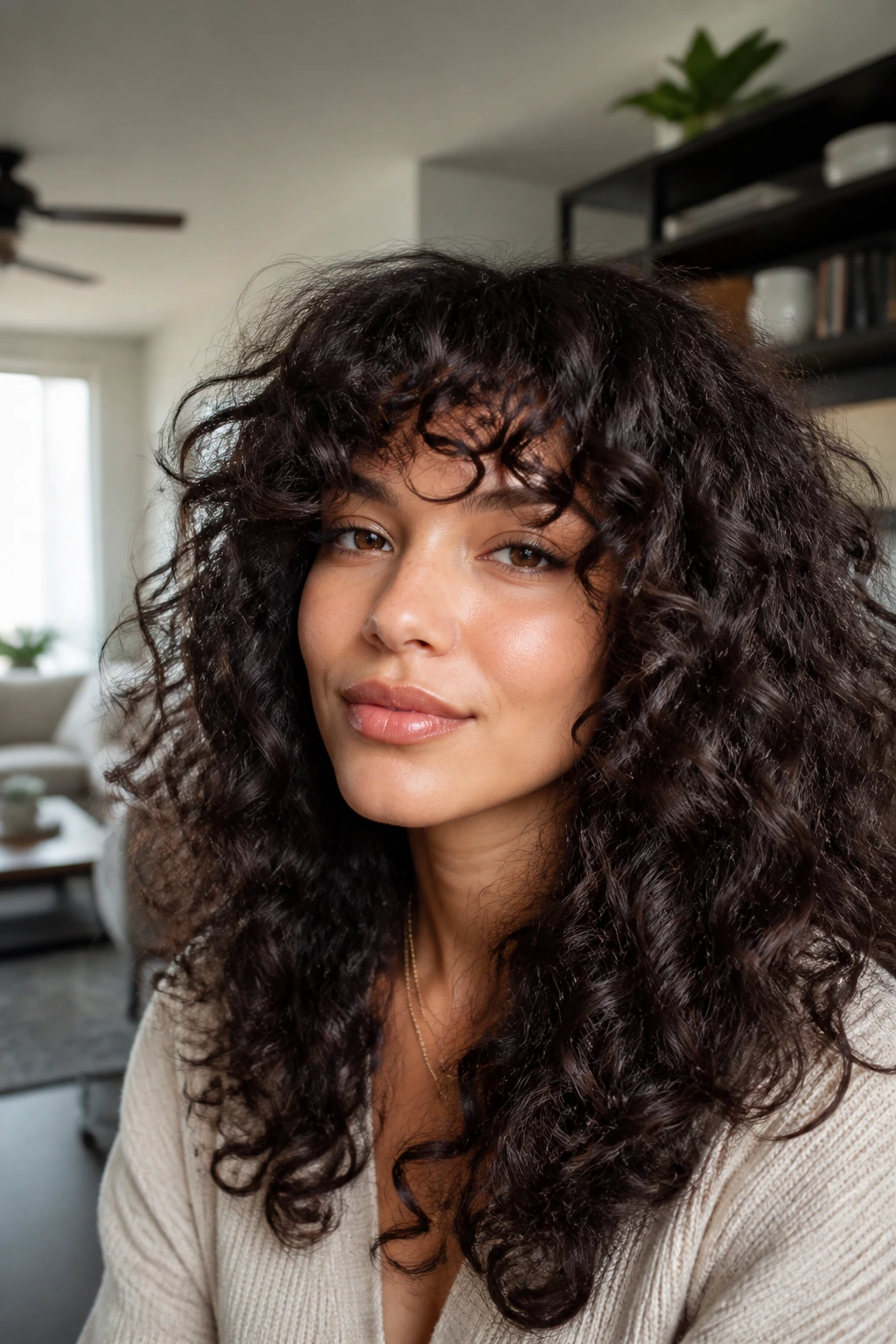
What happens when your curls have an unpredictable pattern that changes from day to day? You lean into a feathered shag fringe. This style is all about internal layers and textured ends, meaning there is no single “correct” way for the hair to sit. Frizz actually enhances this look, giving it a cool, retro-rocker vibe that looks intentional rather than messy.
The cut uses slide-cutting techniques to remove bulk from the interior of the fringe. This keeps the roots relatively light while the ends remain soft and piece-y. Because the hair is not cut in a solid block, your curls can shrink up individually without creating a weird, uneven gap in the middle of your forehead.
How to Style and Maintain It
To keep this shag fringe looking fresh, work a small amount of curl-defining gel or foam through your wet bangs. Use your fingers to shake the curls loose, then use a diffuser on low heat to dry the roots first. Once dry, gently scrunch the curls with a drop of jojoba oil to break any stiff gel cast, leaving you with soft, touchable ringlets that bounce as you move.
4. French Girl Fringe with Piece-y Ends
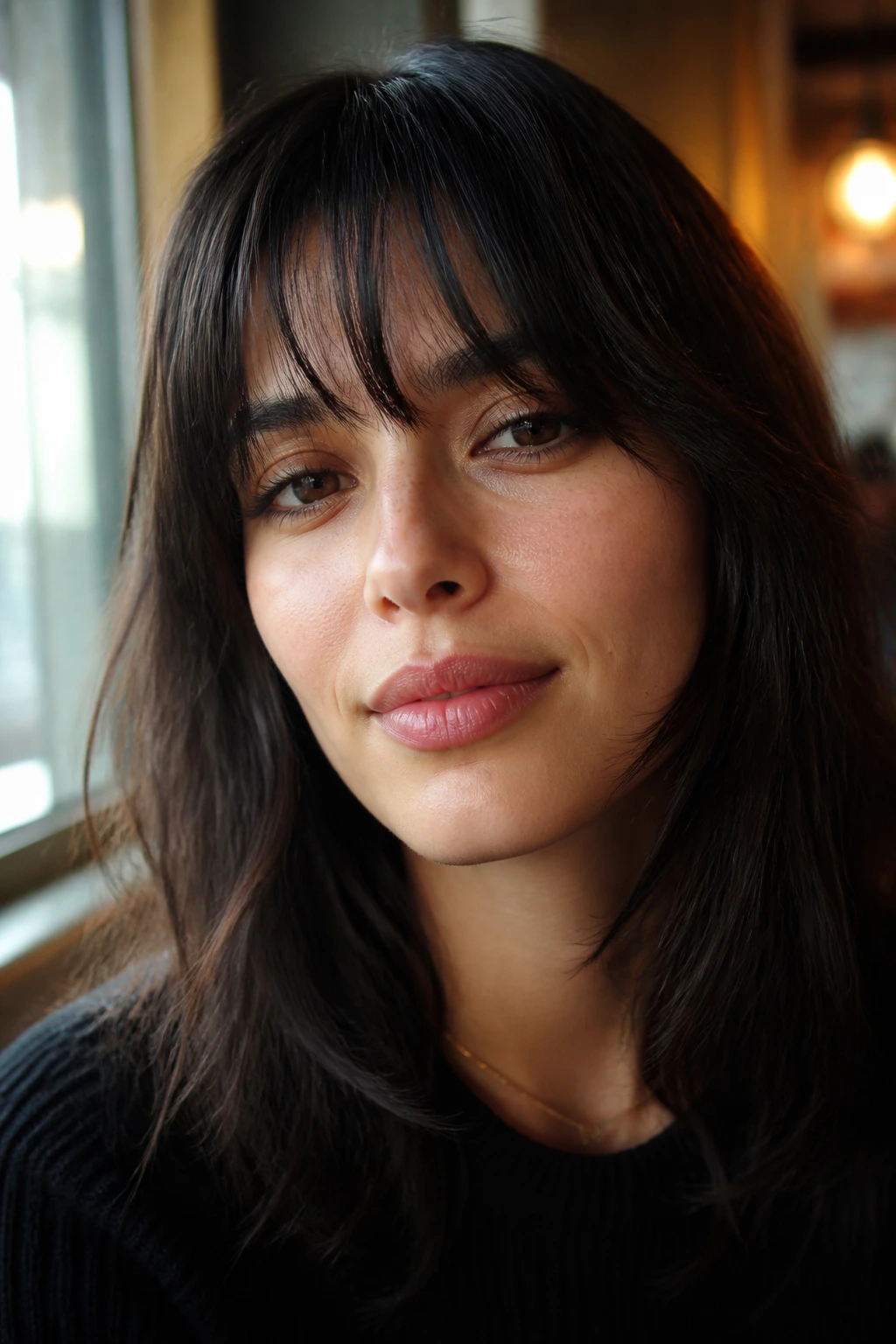
Picture yourself walking through a misty morning, your hair damp from the humidity, yet somehow looking effortlessly cool. That is the magic of the classic French girl fringe. It is designed to look slightly undone, a bit messy, and completely comfortable in its own skin. If your hair tends to get fuzzy throughout the day, this cut actually looks better as the hours pass.
The mechanism behind this style is a slide-cut interior. Instead of cutting straight across, the stylist points the scissors upward into the hair, snip-snipping away the weight while leaving the length intact. This creates tiny gaps in the fringe, allowing the forehead to peek through and preventing the hair from clustering into one dense, frizzy block.
Key Details of the French Style
- Cut dry to respect the natural bounce and wave pattern of your hair
- Sits just below the brow line, occasionally grazing the lashes for a sultry look
- Uses a slightly wider section of hair, extending just past the outer corners of the eyes
- Works best with a matte-finish texture spray rather than shiny serums
By avoiding heavy oils and silicones, you allow the bangs to retain their airy, floating quality, making any minor frizz look like a styling choice rather than an accident.
5. Long Face-Framing Layers for Thick Tresses
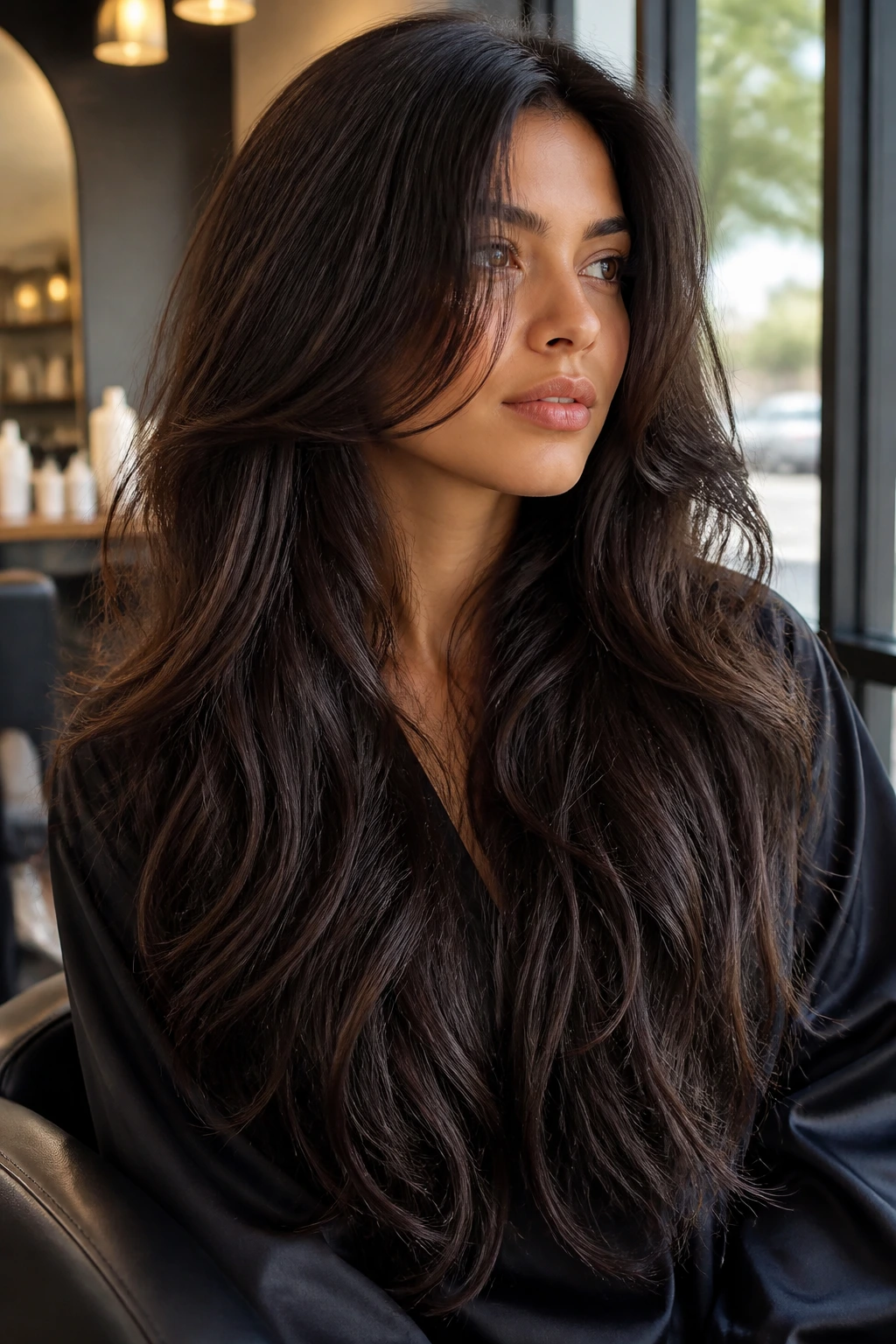
For those with dense, heavy hair that turns into a thick cloud at the first sign of moisture, traditional short bangs can feel like a nightmare. The sheer weight of the hair pushes the fringe forward, creating a stiff canopy over the face. Instead, opting for long, face-framing layers that start at the chin or lower lip offers a much softer, more manageable alternative.
These layers act as ultra-long bangs, sweeping backward and outward to blend into your length. Because they are longer, they carry enough weight to pull the curl pattern down slightly, which naturally minimizes the amount of puffiness around your forehead. It is a brilliant way to get the face-softening benefits of a fringe without committing to a high-maintenance styling routine.
When cutting these layers, your stylist should use a slide-cutting technique on dry hair, carving out weight from the mid-lengths to the ends. This ensures that the layers stack beautifully on top of one another rather than creating a blocky, heavy shelf. The result is a fluid, cascading frame that moves with you.
To dry these layers, simply twist them away from your face while they are wet and let them air-dry. This twisting motion clumps the waves together, which seals the cuticle and keeps frizz to an absolute minimum without the need for round brushes or heat.
6. Airy See-Through Bangs for Fine Frizzy Hair
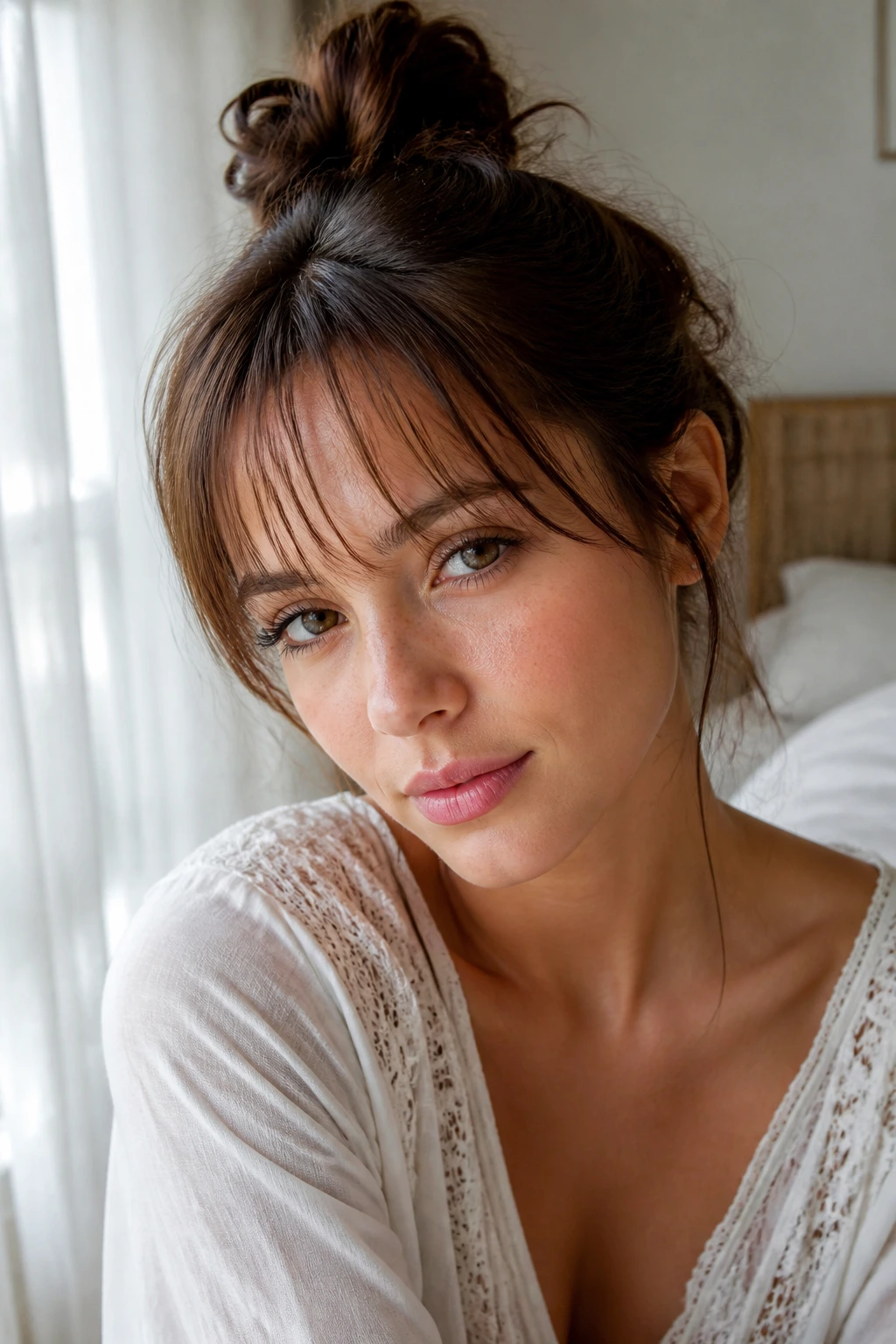
Unlike thick hair, which struggles with bulk, fine hair that frizzes presents a completely different challenge: it can easily look sparse, stringy, and flyaway. This is where the airy, see-through style comes in. Popularized in Asian beauty circles, this style uses only a tiny sliver of hair from the very front of the hairline, creating a whisper-light veil over the forehead.
The difference between this and a traditional fringe is the density. Because there is so little hair involved, it does not trap heat or moisture against your skin, which is a major cause of midday frizz. If the wind blows, the bangs simply separate and fall back into place naturally, rather than sticking together in an awkward clump.
This style is best for those with fine to medium hair textures who want to experiment with a fringe without making a major commitment. It is incredibly easy to hide; if you have a high-humidity day where your hair refuses to behave, you can simply sweep these light pieces to the side or pin them back with a small clip.
My recommendation is to pair these see-through bangs with a quick spritz of light-hold aerosol hairspray applied directly to a clean toothbrush. Gently brush the tool through the bangs to coat the individual strands, keeping them defined and in place without making them stiff or crunchy.
7. Deconstructed Birkin Fringe with Soft Edges
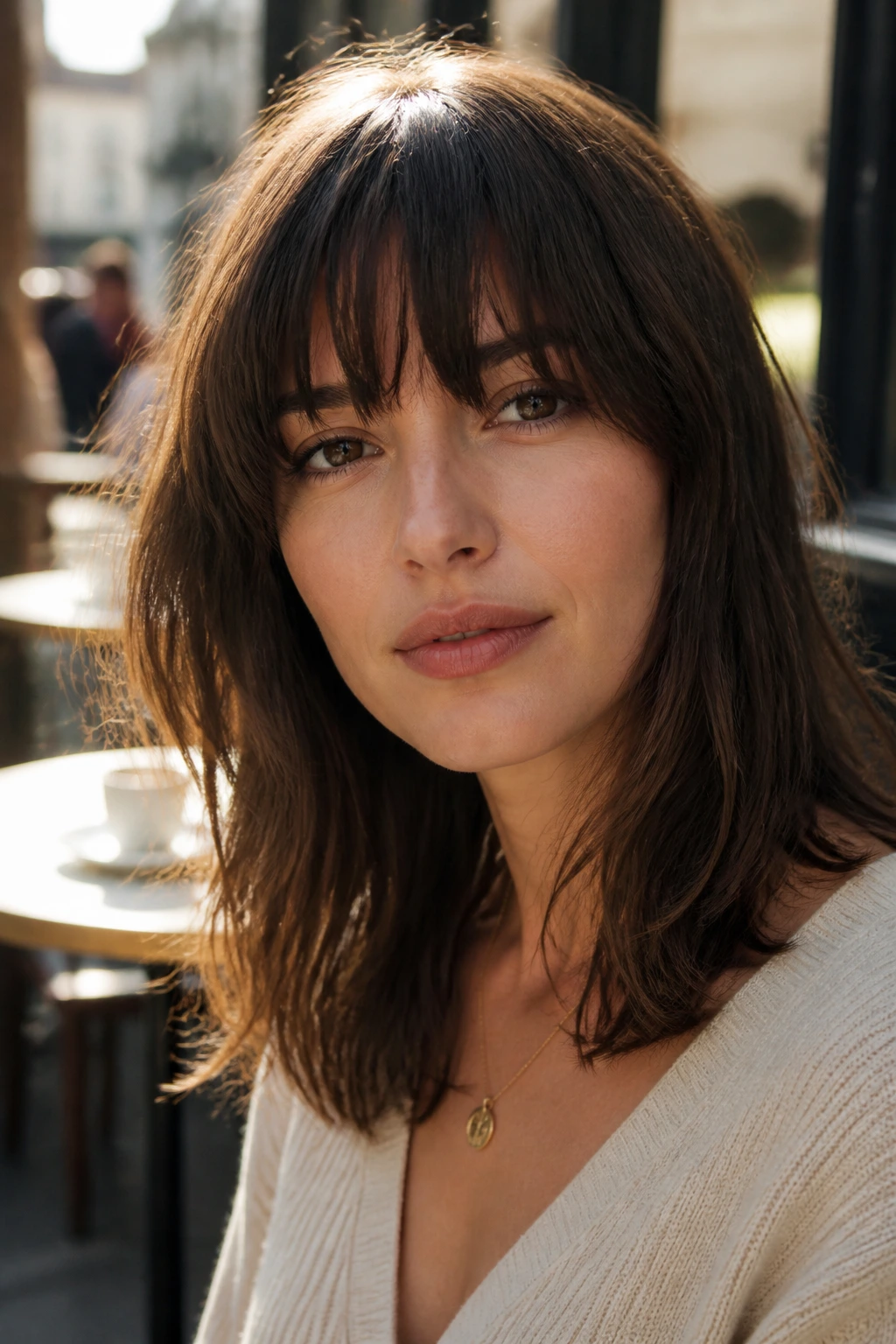
Inspired by the iconic style of Jane Birkin, this cut is a gorgeous blend of a full fringe and wispy ends. It sits straight across the forehead but features heavily textured, point-cut tips that prevent it from looking too heavy or severe. For frizzy hair, this deconstructed edge is a savior because it allows the bottom of the fringe to bounce and bend naturally.
Why Point-Cutting is Essential for Textured Hair
When a stylist cuts hair straight across, they create a hard line where all the hairs end at exactly the same point. When humidity hits, those ends expand outward, creating a flat, shelf-like appearance. Point-cutting, however, creates varied lengths at the very tips of the hair, allowing the strands to nestle into one another and absorb the natural swelling of the hair shaft without losing the overall shape.
Quick Styling Facts
- Best suited for medium to thick hair with a light wave or natural texture
- Ideal for balancing longer face shapes by visually shortening the forehead
- Requires a lightweight leave-in cream to keep the textured ends clumped and defined
- Can be easily styled with a quick finger-blowout, using your hand to guide the hair side to side
Pro tip: Avoid using heavy waxes or pomades on the tips, as they will attract dirt and grease, weighing down the Birkin-style bounce.
8. Sweeping Side-Parted Bangs for Cowlick Control
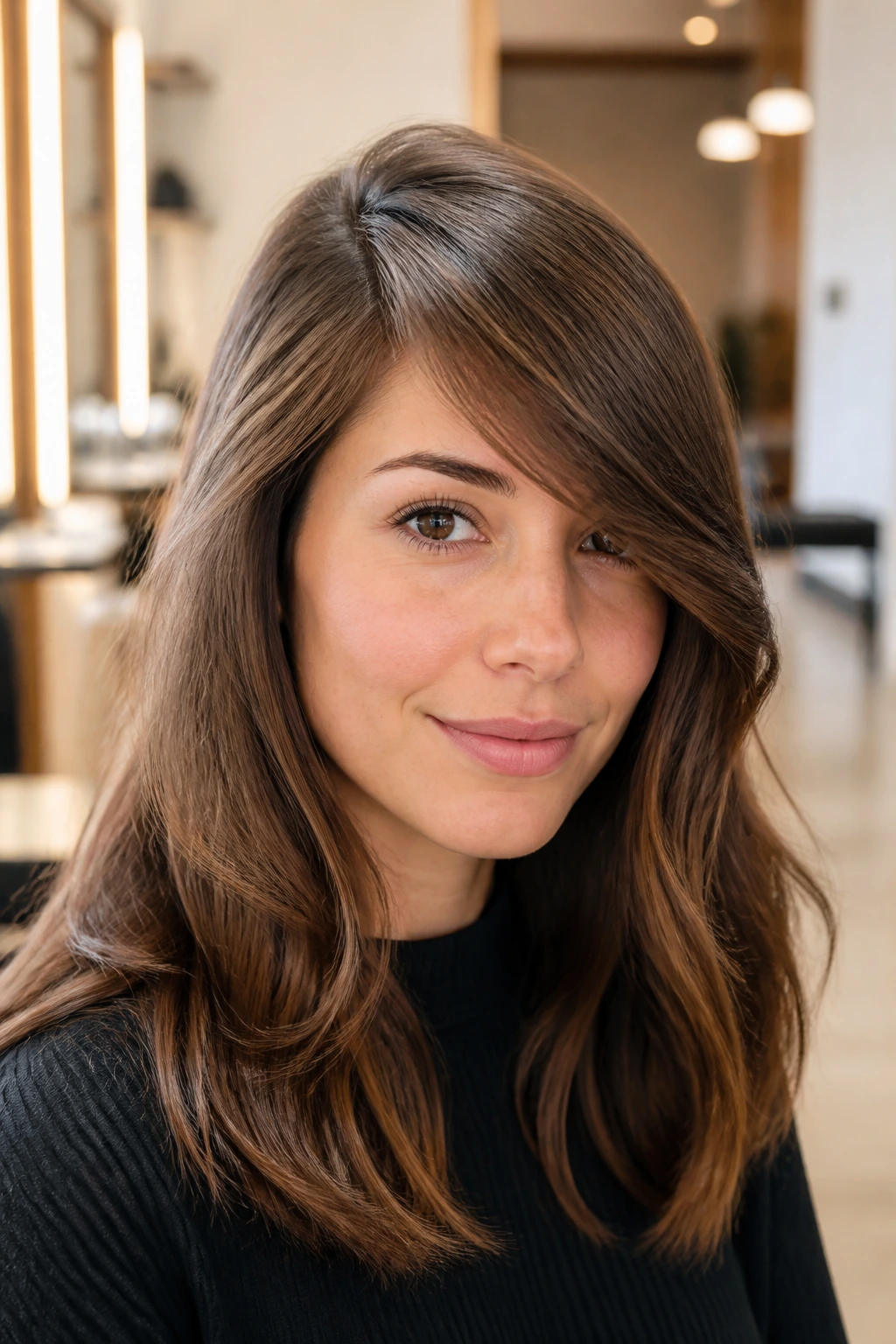
A cowlick at the front of your hairline is not a defect; it is simply a strong growth pattern that can actually be used to your advantage. Many people think they cannot wear bangs if they have a cowlick, but a sweeping side-parted fringe uses that natural lift to create gorgeous, effortless volume. Instead of fighting the hair’s desire to jump up and to the side, this cut leans right into that movement.
By parting the hair deeply on one side, the weight of the larger section helps to hold down the hair, while the cowlick provides a natural “flip” at the root that stylists spend hours trying to recreate with blow dryers. The bangs sweep diagonally across the forehead, softening the features and blending beautifully into the longer side layers.
To style these, apply a tiny amount of smoothing serum to damp hair, then use your fingers to comb the bangs in the opposite direction of their natural fall while blow-drying on medium heat. Once dry, let them flip back to their natural side. This simple back-and-forth drying technique neutralizes the root tension, giving you a smooth, sweeping finish that resists frizzing throughout the day.
9. Grown-Out Bardot Splits for Heavy Hair
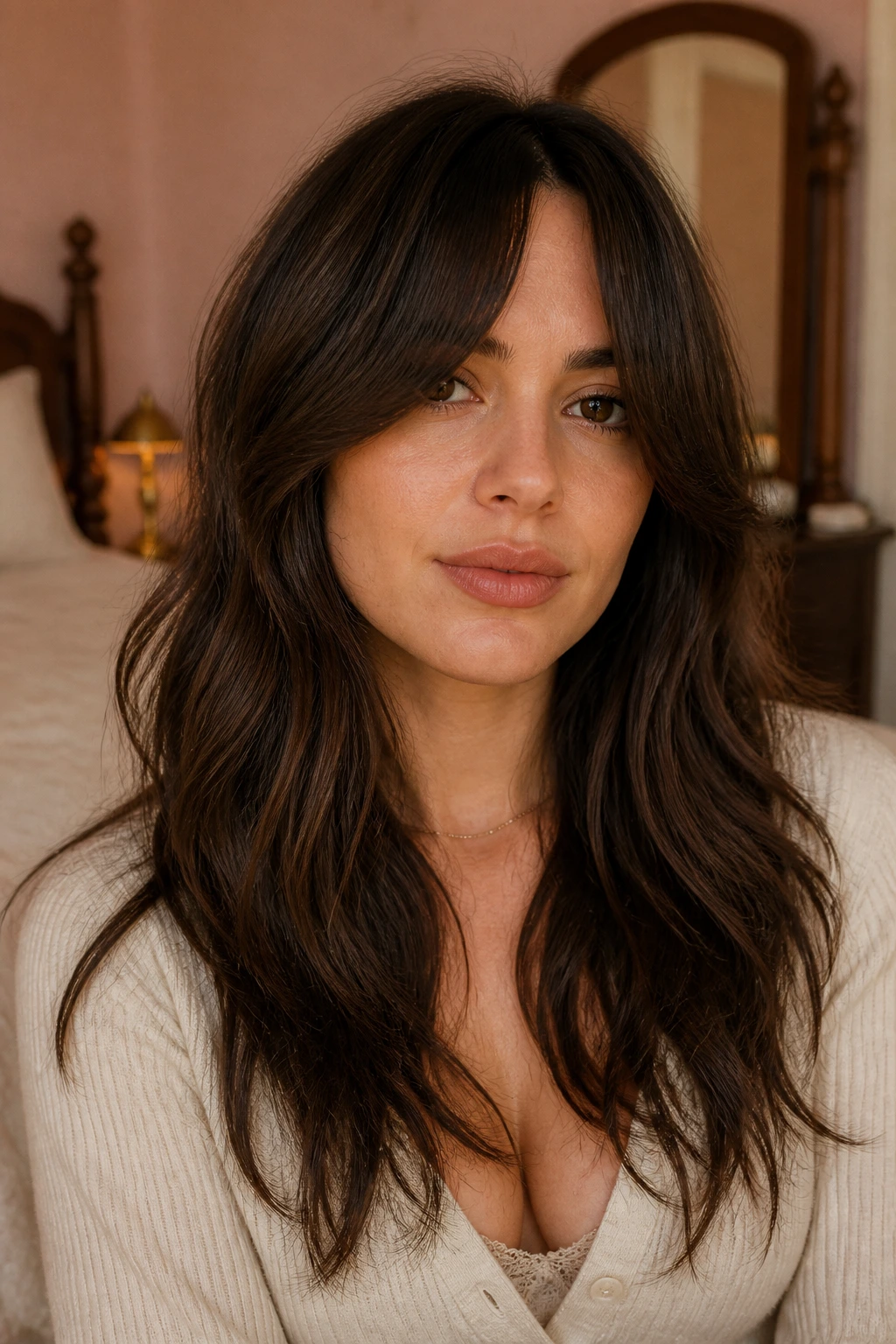
How do you handle a thick, coarse hair texture that tends to puff up into a massive cloud? You look to the timeless glamour of Brigitte Bardot. The Bardot fringe is a grown-out, center-split style that is slightly shorter in the middle and dramatically longer on the sides, creating a soft, curtained frame that highlights the cheekbones and eyes.
Because these bangs are cut longer—often grazing the tip of the nose in the center and the jawline on the sides—the weight of the hair works in your favor. It keeps the roots closer to the scalp while letting the textured ends curl and wave naturally. Any added volume from frizz simply enhances the retro, bedroom-hair aesthetic that made this look famous.
How to Get the Perfect Bardot Shape
Ask your stylist for a slide-cut, center-parted fringe that starts at the bridge of the nose and tapers gently downward toward the cheekbones. When styling, use a large round brush to blow-dry the hair forward, then split it down the middle with your fingers. Let the natural texture take over from there; the slight fuzziness only adds to the soft, romantic vintage feel.
10. Tapered Crescent Bangs for Round Faces
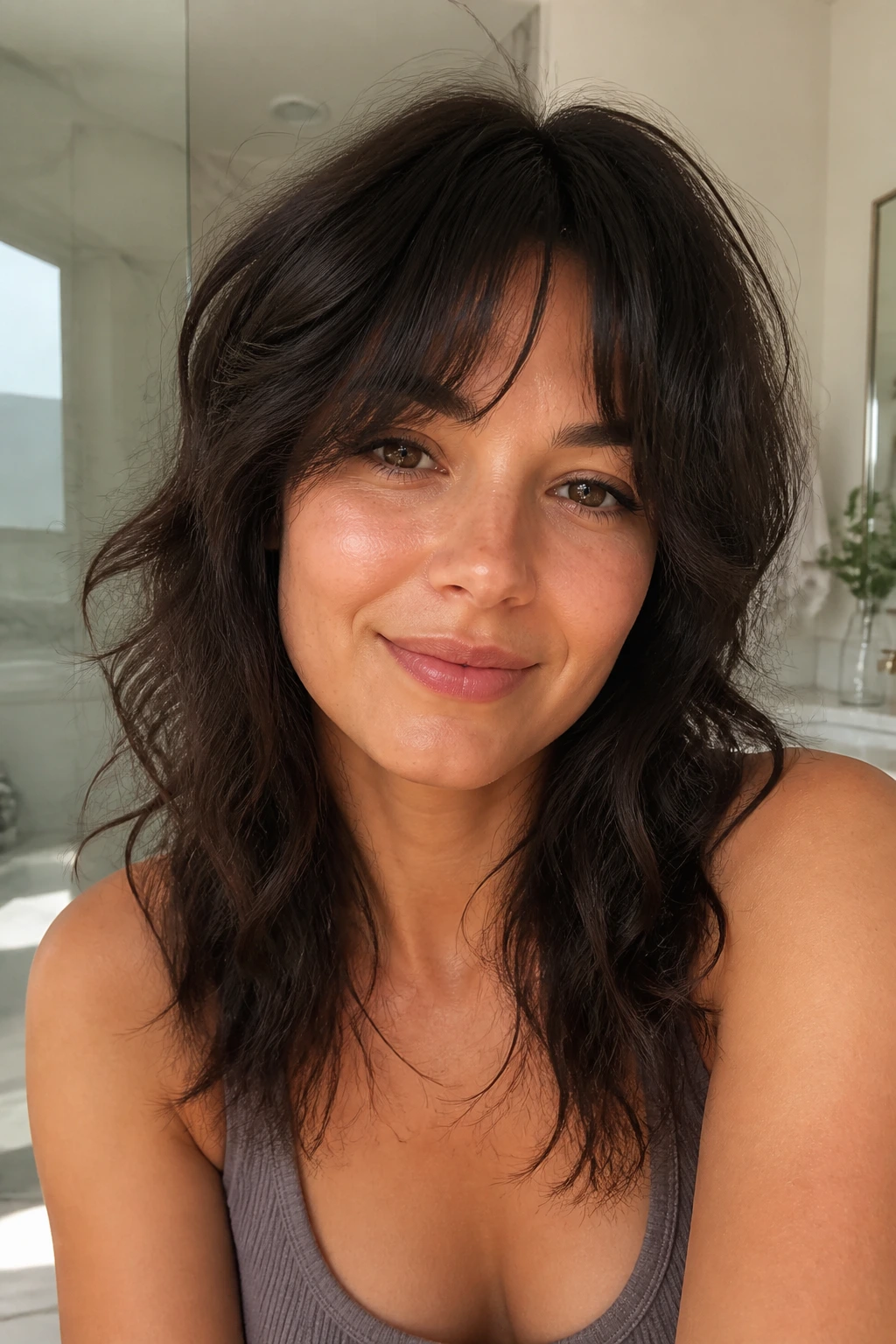
Imagine putting on a pair of perfectly tailored trousers—they hug you in all the right places and elongate your silhouette. That is exactly what tapered crescent bangs do for a round face shape, especially when working with frizzy or highly textured hair. By carving out a soft arch that is shorter in the middle and curves downward on the sides, this cut beautifully contours the face.
The mechanism here is visual framing. The upward arch of the crescent pulls the focus to the center of your face, highlighting your eyes and nose, while the longer, tapered sides hug the cheekbones, creating a narrowing effect. Because frizzy hair has natural body, the crescent shape holds its volume beautifully without collapsing flat against the forehead.
Key Details of the Crescent Cut
- The shortest point sits right between the eyebrows, opening up the face
- The sides taper smoothly into the transition layers, avoiding any harsh corners
- Best cut on dry hair to ensure the arch perfectly matches your natural brow line
- Works wonderfully with air-dried waves or soft, diffused curls
This style thrives on texture. A little bit of frizz at the edges actually softens the arch, making it look incredibly modern and lived-in rather than stiff or geometric.
11. Coily Pineapple Ringlets for Tight Curls
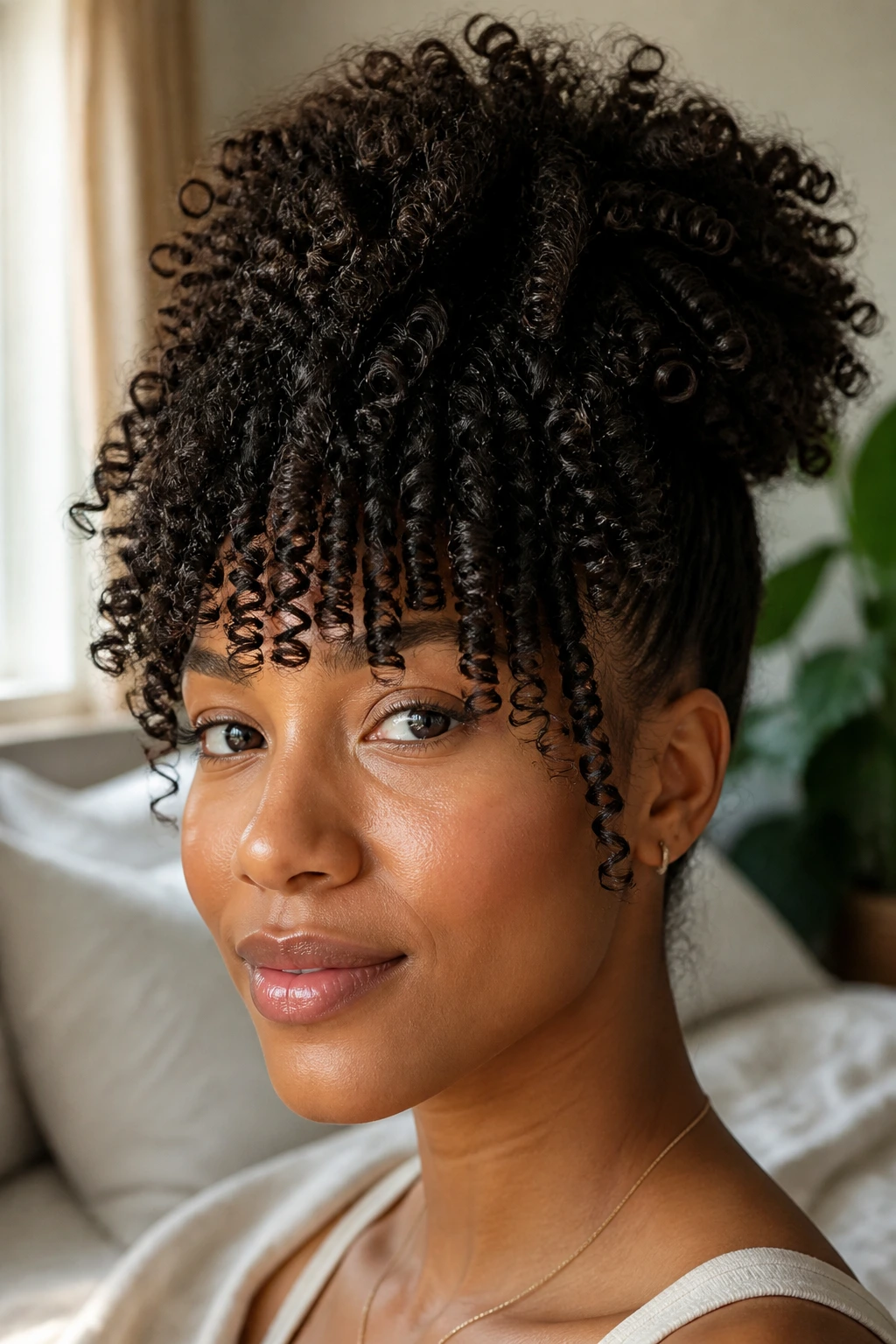
When you have tight, coily texture, the concept of “frizz” is often just a natural part of your hair’s beautiful volume and pattern. Trying to smooth this texture down into a flat fringe is a losing battle that ignores the hair’s natural strength. Instead, the “pineapple” ringlet fringe embraces the height and bounce of tight coils, letting them cascade forward over the forehead like a crown.
This style is cut curl by curl, usually while the hair is completely dry and in its natural state. The stylist selects individual coils and snips them at varying lengths to create a rounded, cloud-like shape that sits above the eyes. Because each coil is cut according to its unique spring-back rate, there is no risk of the fringe looking blocky or uneven.
Moisture is the absolute foundation of this look. Coily hair is naturally dry because the scalp’s oils cannot easily travel down the tight spirals, so a rich, water-based leave-in cream or curl butter is essential. Applying this to wet hair helps the coils clump together, which keeps the frizz soft and defined rather than fuzzy and disconnected.
When it comes to drying, air-drying is often the best approach to preserve curl definition. However, if you are short on time, using a diffuser on the lowest speed and heat setting will gently dry the roots without blowing the coils apart. The result is a stunning, high-volume fringe that celebrates your natural texture.
12. Soft Choppy Shag Bangs for Messy Texture
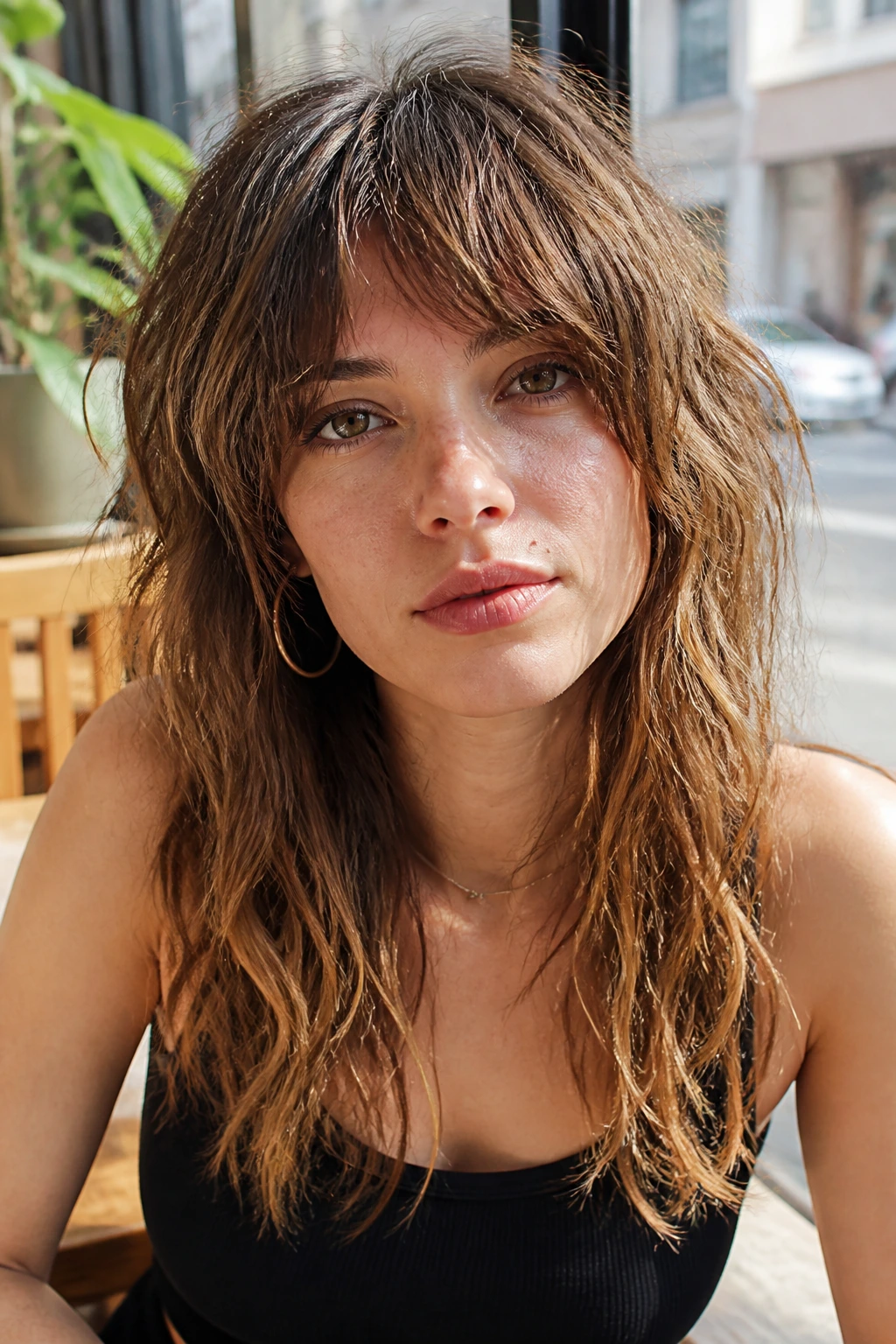
Unlike traditional shags that require a lot of styling paste and heat to look piece-y, soft choppy shag bangs rely on your hair’s natural frizz to create that coveted, lived-in texture. This cut features highly textured, uneven lengths throughout the fringe, creating a choppy look that feels incredibly fresh and effortless.
The main difference here is the deliberate lack of uniformity. If one piece of hair curls to the left and another puffs up to the right, it only adds to the cool, rock-and-roll aesthetic of the cut. You do not have to worry about a perfect part or symmetrical sides because the style is designed to look delightfully chaotic.
This cut is fantastic for those with medium to thick hair who love a low-maintenance, bedhead look. If you hate spending more than five minutes on your hair in the morning, this is the style for you. It thrives on a day-two or day-three texture, where the natural oils of your scalp have softened the dry ends.
For the best results, use a sea salt spray or a lightweight texturizing mist on damp hair. Scrunch the fringe gently with your hands, then let it air-dry completely. Once dry, shake out the roots with your fingers to release the volume, and let the choppy layers fall where they may.
13. Textured Blunt Wisps with Thinned-Out Ends
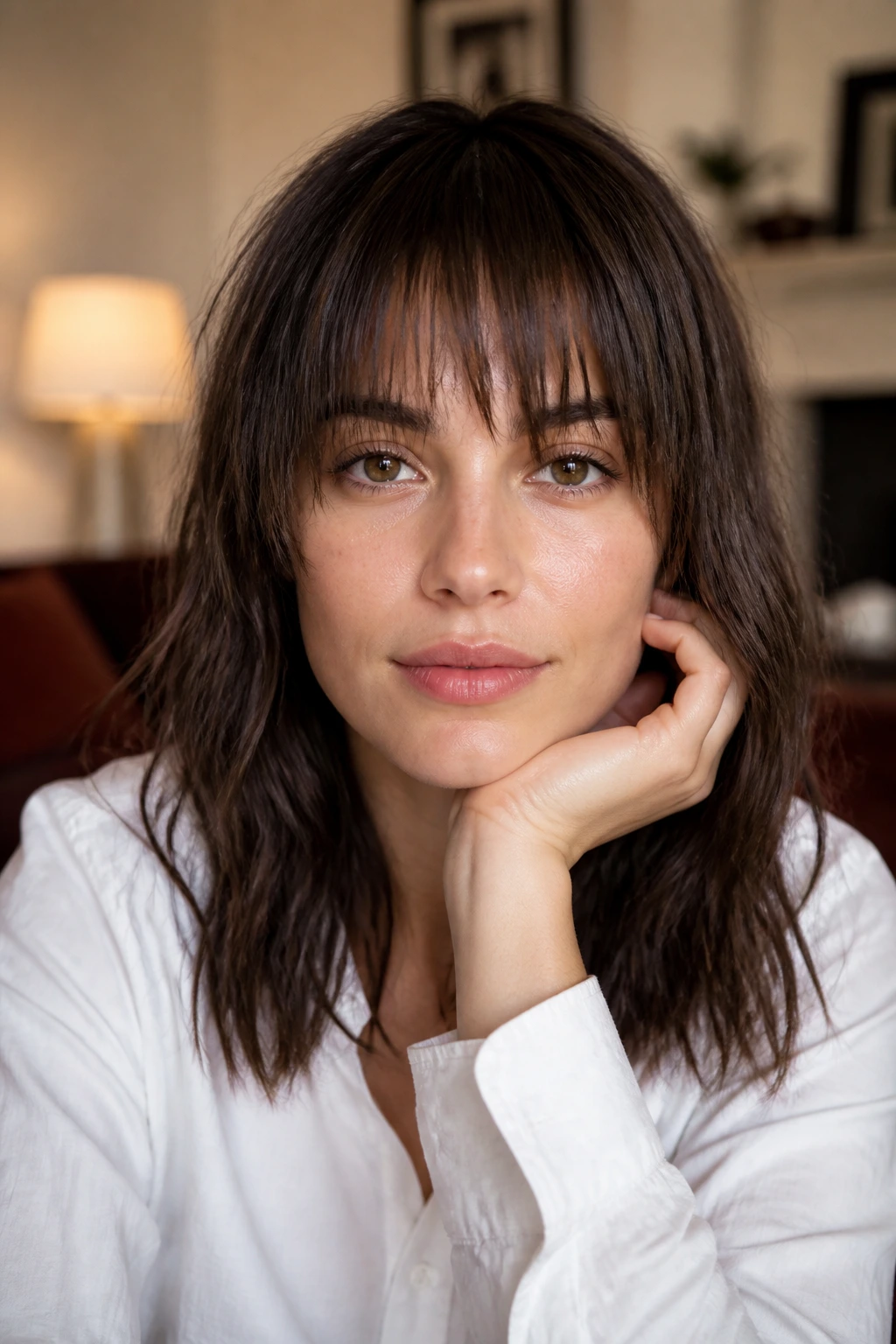
If you love the clean, graphic look of a blunt fringe but fear the high-humidity puffiness, textured blunt wisps offer the perfect middle ground. This style gives the illusion of a solid horizontal line across your forehead, but the interior and ends are heavily thinned out to allow air and light to pass through.
The Science of Thinned-Out Ends
By removing bulk from the bottom half-inch of the fringe, you take away the structural weight that causes frizzy hair to stand straight out like a visor. The thinned ends bend and drape softly against the forehead, absorbing any natural moisture-induced expansion without losing the classic, face-framing silhouette of a blunt cut.
Quick Styling Facts
- Gives a modern, edgy look while remaining incredibly soft and wearable
- Perfect for hiding high hairlines or forehead blemishes without feeling heavy
- Best styled with a flat paddle brush, wrapping the hair side-to-side across the forehead as you dry
- Works beautifully on medium-density hair with a light, lazy wave pattern
Pro tip: Run a tiny drop of lightweight, silicone-free serum through the very tips of the wisps to keep them looking sharp and piece-y rather than fuzzy.
14. Wavy Asymmetric Fringe for Edgy Movement
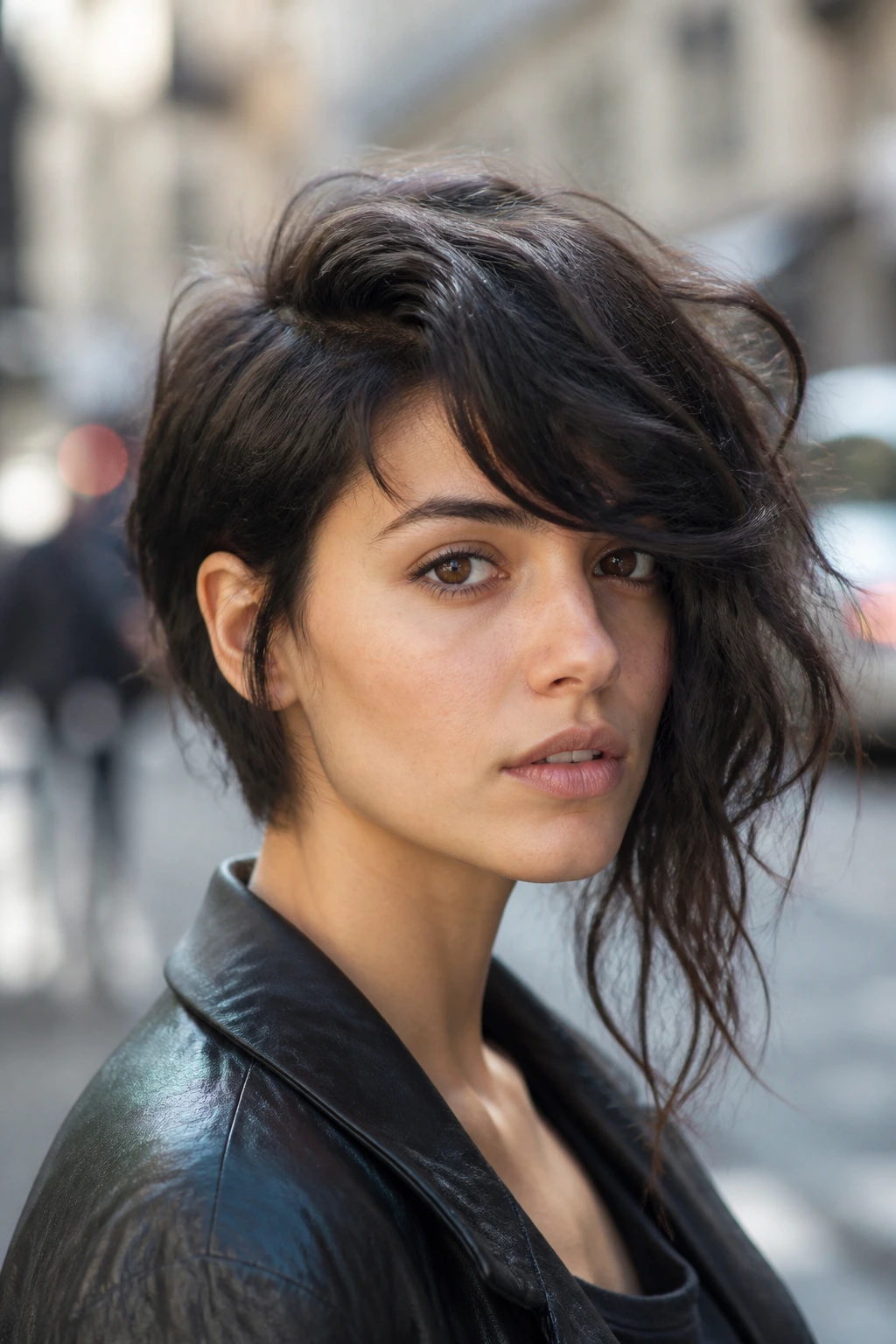
Perfect balance is highly overrated when it comes to managing textured hair. A wavy asymmetric fringe features a deliberate slope, starting slightly shorter on one side and cascading down to a longer length on the other. This diagonal line cuts across the face, creating a dynamic, eye-catching look that makes any natural frizz or wave look completely intentional.
The magic of asymmetry is that it distracts the eye. If your hair frizzes or shrinks up unevenly due to humidity, a symmetrical cut will immediately look off-balance and messy. With an asymmetric cut, however, the variation in length is already built into the design, so any additional texture from the environment just adds to the organic, sculptural feel of the style.
To style this cut, work a golf-ball-sized dollop of volumizing mousse through damp hair, focusing on the roots of your bangs. Use a blow dryer with a diffuser to lift the roots, drying the hair in the direction of the longer slope. This creates a gorgeous, sweeping canopy of soft waves that frames the eyes and softens strong features like a square jawline.
15. Feathered Butterfly Layers to Frame the Eyes
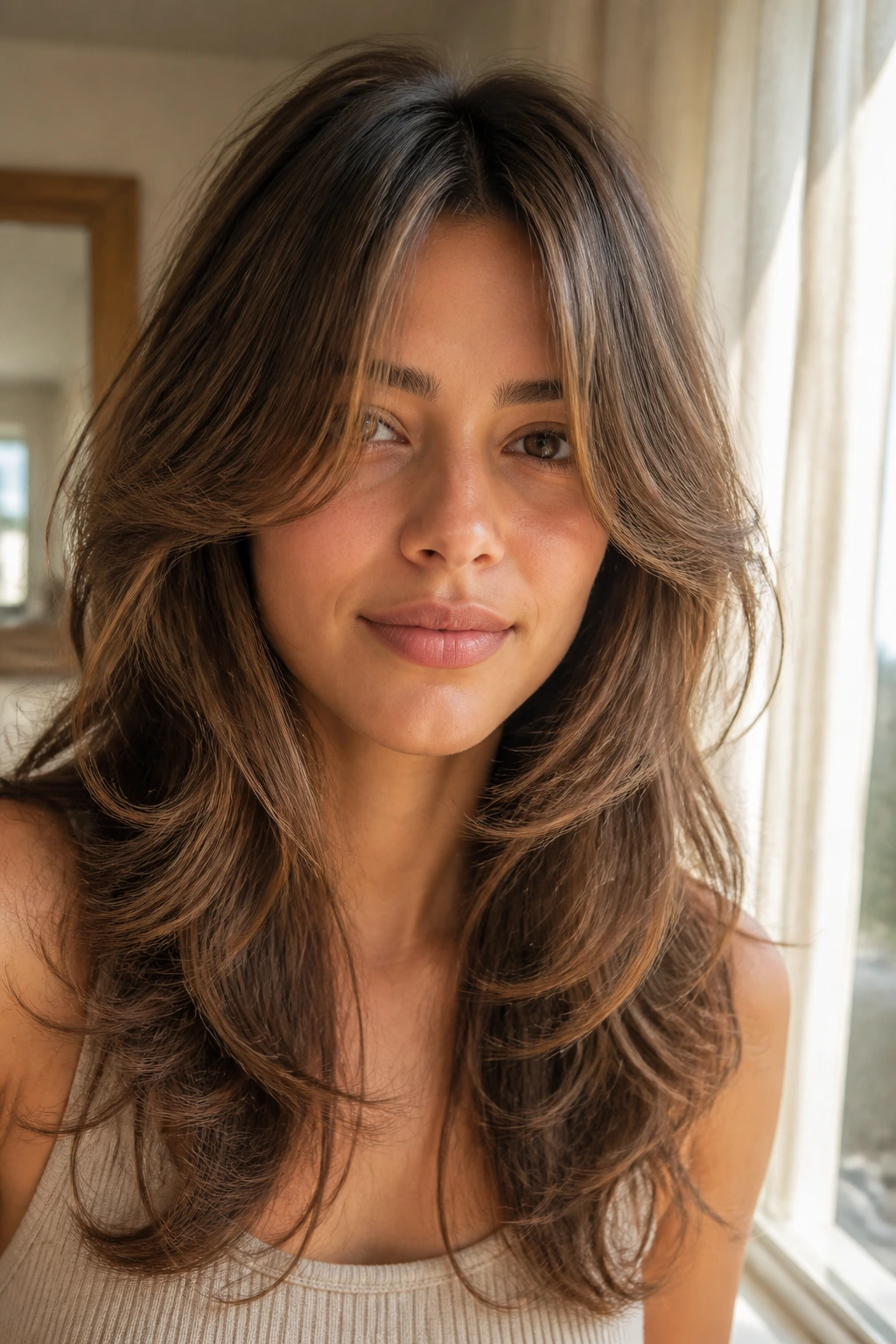
Can you achieve bouncy, retro-inspired volume with frizzy hair? Absolutely. Feathered butterfly layers are designed to mimic the delicate, fluttering wings of a butterfly, sweeping backward and outward from the face. This style is incredibly soft and romantic, using your hair’s natural body to create a gorgeous, windblown effect.
The key to this style is the feathering technique, which cuts the hair at an angle that directs it away from the face. Unlike standard curtain bangs that hang downward, butterfly layers lift up at the root and cascade outward in a soft wave. Any natural frizz simply acts as a built-in volumizer, giving the style that airy