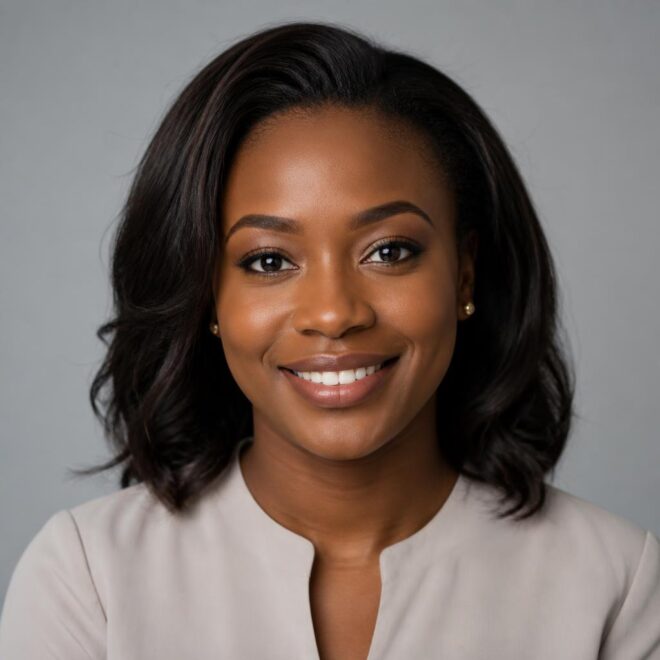


Sitting in a stylist’s chair with an oval face shape feels a bit like holding a golden ticket. Hair professional circles historically treat this particular shape as the industry standard for balance, meaning almost any fringe style is technically on the table. But having a canvas that can support almost any cut does not mean every choice will bring out your best features. Finding the right oval face bangs requires looking past basic face shape rules and focusing instead on your hair’s natural density, growth patterns, and how much styling effort you want to put in every morning.
The primary goal of a great fringe is to frame your eyes and highlight your cheekbones while working with, rather than against, your hair’s natural behavior. An oval face is slightly longer than it is wide, with a soft, curved jawline and forehead. This means you do not need to use hair tricks to visually slim down wide cheeks or soften a sharp jaw. Instead, you have the freedom to play with weight, texture, length, and partings to create different moods.
Before making the cut, you need to look at your hairline. A cowlick at the front can turn a blunt fringe into a split screen, while low density can make thick bangs look sparse and accidental. Let us look at twenty-two distinct approaches to fringe for this balanced face shape, broken down by how they perform in real life.
1. Classic Wispy Bangs
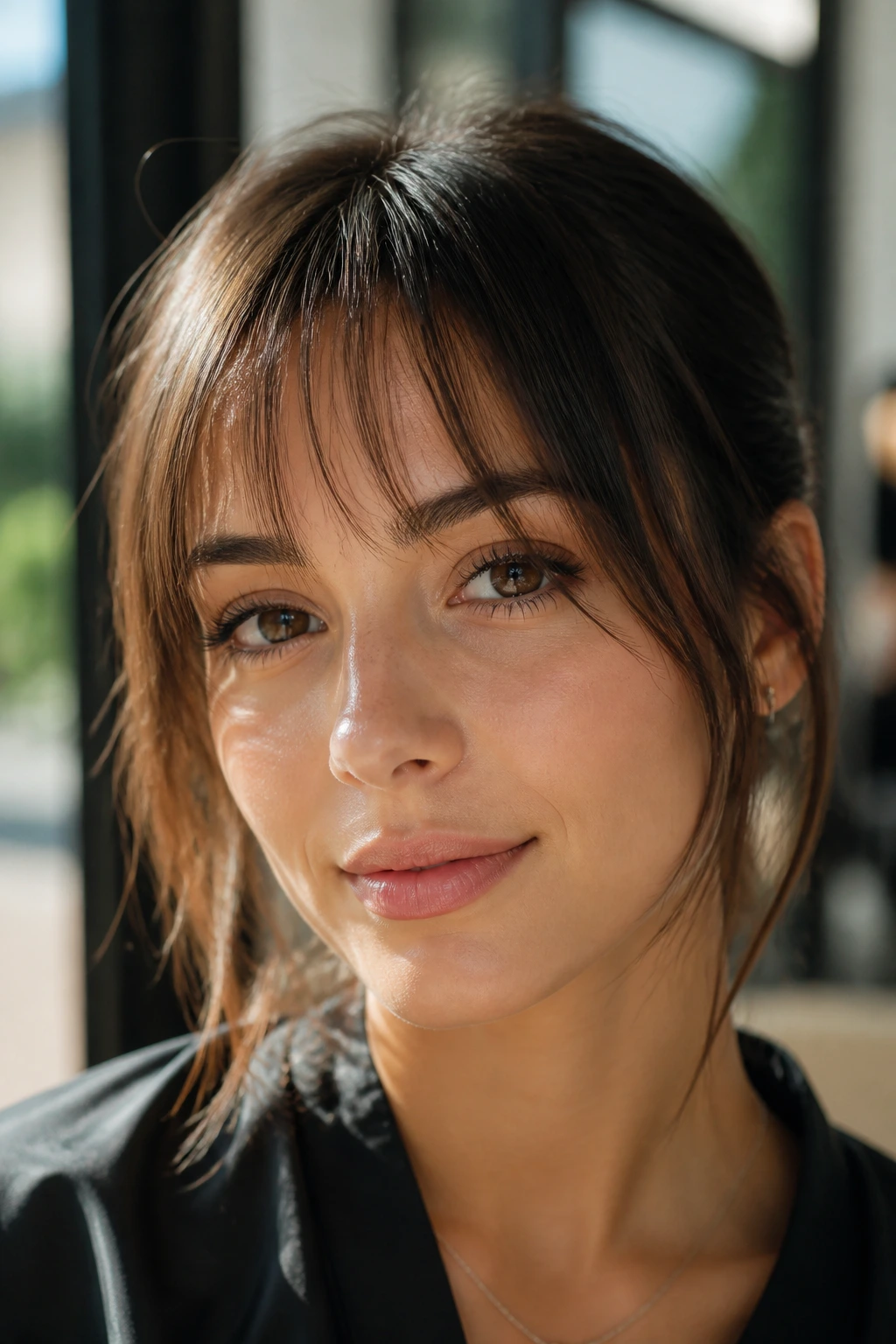
This style is the ultimate low-risk entry point into the world of fringe. Because they do not block out the forehead completely, wispy strands allow your natural skin tone and face shape to peek through, preserving the balanced length of your oval proportions.
Why They Work for Low Density
If you have fine hair, a heavy fringe can drain too much volume from the rest of your cut. Wispy bangs solve this by utilizing a shallow triangular parting that only takes a small amount of hair from the very front of your crown.
Quick Styling Tips
- Wet the roots immediately after washing to reset any natural cowlicks.
- Blow-dry using a flat brush in a crisscross motion across the forehead.
- Skip heavy oils or serums; a tiny puff of dry shampoo at the roots keeps them floating.
- Use point-cutting with scissors to keep the tips soft rather than blunt.
Pro tip: Ask your stylist to cut these dry so they can see exactly where the strands fall against your eyelashes without the shrinkage that happens when wet hair dries.
2. Blunt Straight-Across Fringe
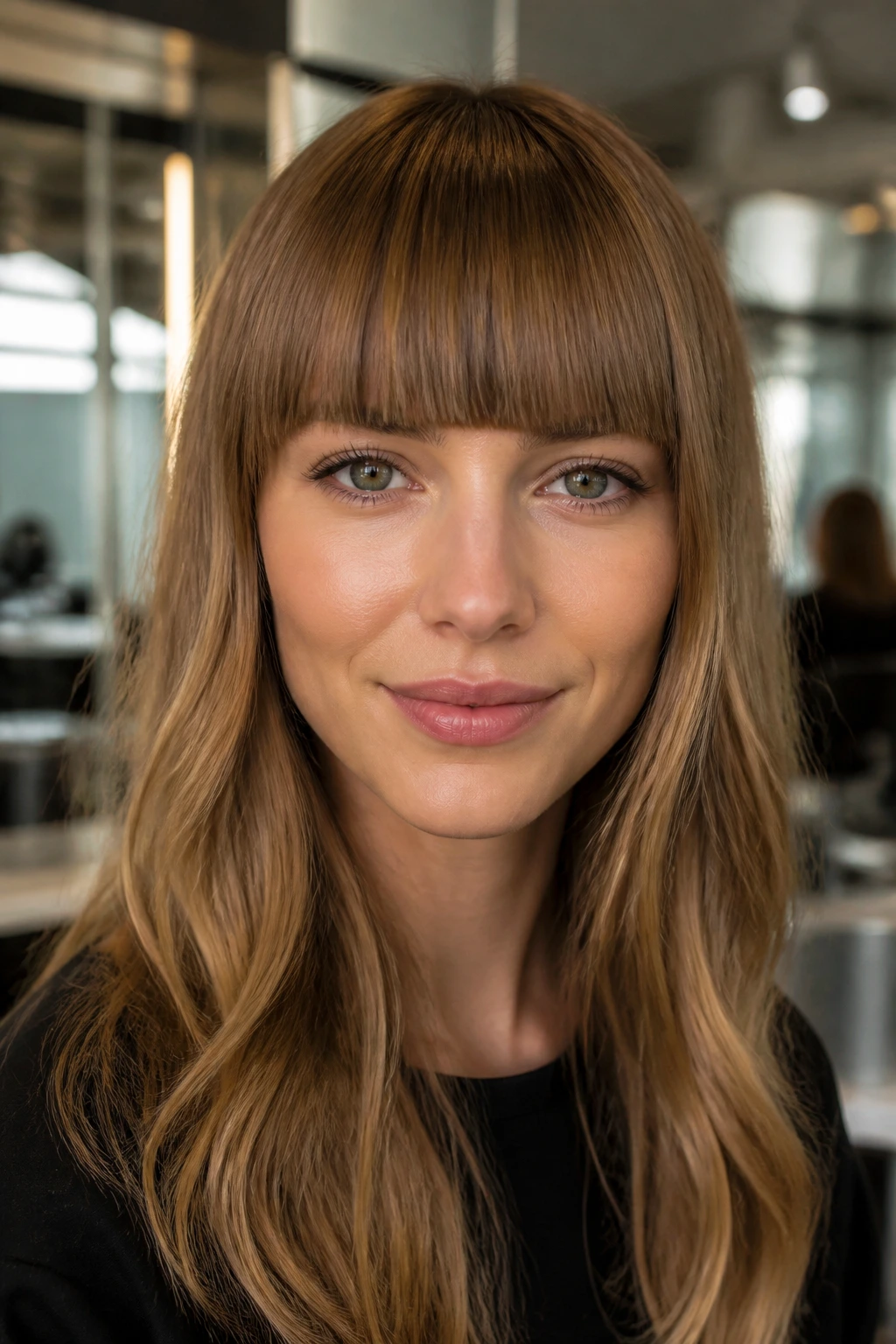
A blunt, heavy fringe cuts straight across the face, creating a strong horizontal line that visually shortens a longer oval face. It is a high-contrast style that demands attention and instantly draws focus directly to your eyes and brow bone.
This cut requires a thick section of hair starting further back on the crown to create a solid sheet of density. Because there are no layers to soften the bottom edge, the perimeter must be cut with absolute precision, typically resting just below the eyebrows. It is not a style for those who want a low-maintenance routine, as even a tiny amount of growth will send the tips of the hair into your eyes.
To make this look work on an oval face, the outer corners of the bangs should slightly taper down to meet your side sections. This prevents the harsh, boxy shape that can sometimes overpower softer facial features.
3. Bardot Curtain Bangs
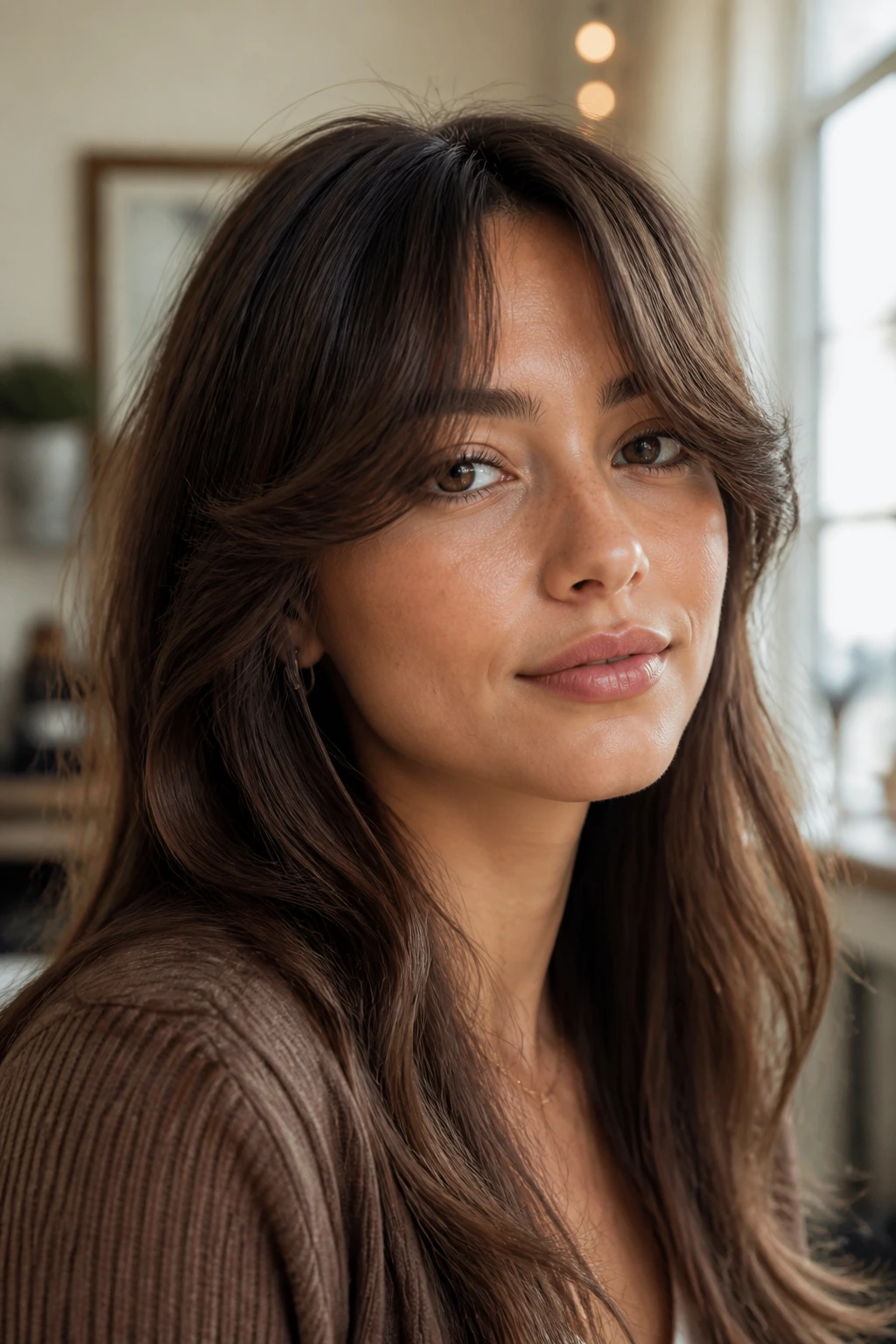
Why does this specific center-parted style remain a favorite across generations? The answer lies in how the parted fringe swoops outward, tracing the brow line and melting into the longer side layers.
How to Style the Signature Swoop
To get that classic outward curve, you need a medium-sized round brush. Wrap the damp bangs around the brush away from your face, direct the hot air from your blow-dryer down the hair shaft to smooth the cuticle, and let the hair cool completely on the brush before releasing.
Key Maintenance Facts
- Trim schedule: Every six to eight weeks, making them much easier to manage than blunt cuts.
- Growing out: Highly forgiving; they simply turn into face-framing layers as they grow.
- Best hair types: Works best on medium to thick hair with a natural wave.
- Parting placement: Works best with a clean center part, though a slightly off-center part can work too.
4. Choppy Baby Bangs

An adventurous client walks into the salon wanting a dramatic change. They have an oval face, great cheekbones, and want a look that feels deliberate and edgy. This is where choppy baby bangs come into play.
By ending an inch or more above the eyebrow line, this cut exposes the brow bone and forehead, showing off the symmetry of an oval face. The key to keeping this look modern is texture. Rather than a straight, blunt line, the stylist uses the tips of the shears to carve out irregular, choppy pieces.
This style works incredibly well with short bobs, shags, or pixie cuts. However, if you have a very strong cowlick or highly active wave patterns at the hairline, be prepared to use a flat iron daily to keep the short layers from pointing in random directions.
5. Textured Shag Bangs
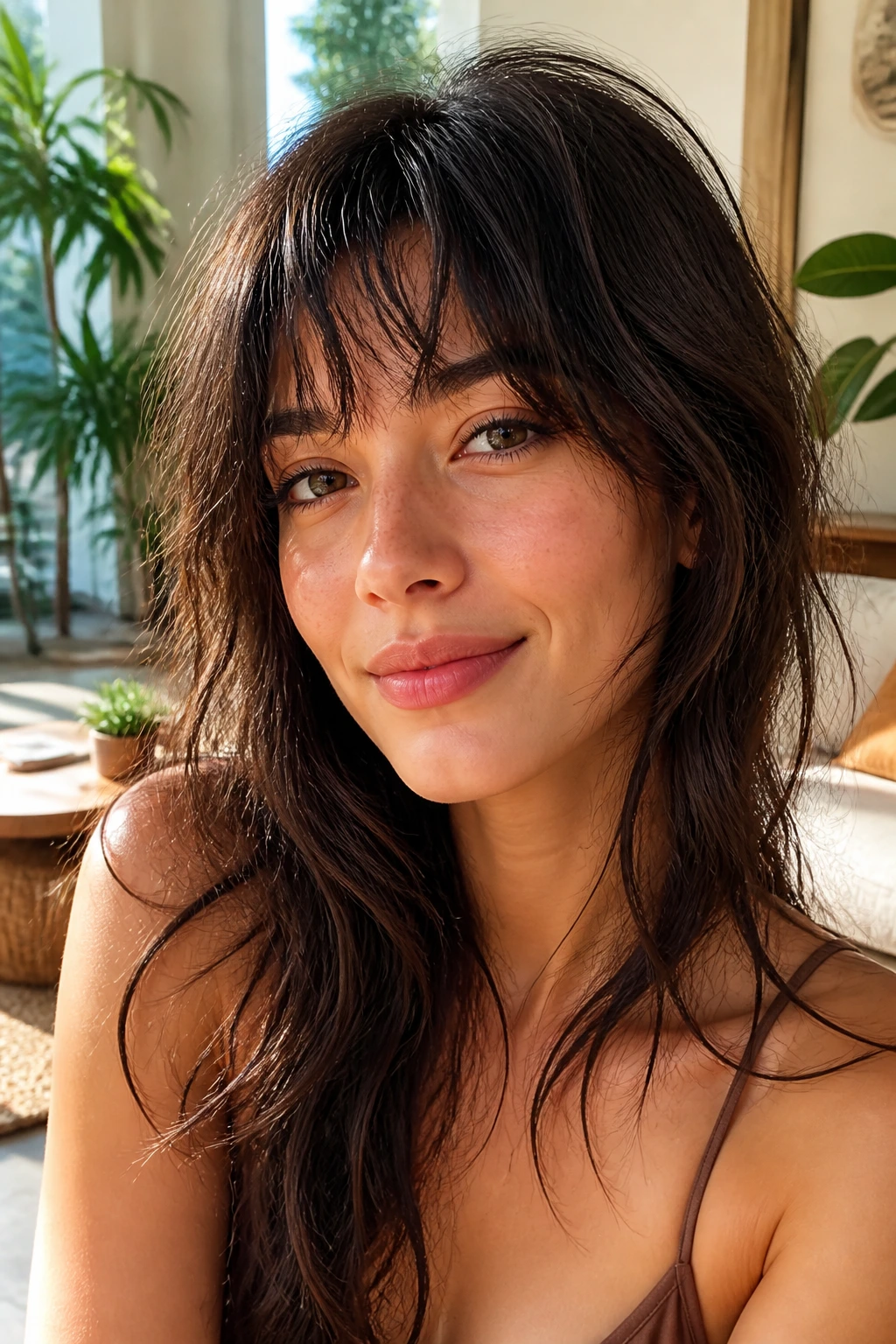
This style is all about movement, airiness, and a deliberate disregard for perfect lines. The fringe is cut with a razor or highly texturizing shears to create feathered, piece-y ends that seem to float across the forehead.
The weight is distributed unevenly, with shorter pieces in the center and longer, disheveled strands cascading down toward the cheekbones. This construction pairs naturally with shag cuts, mullets, or long, heavily layered hair.
Because the perimeter is intentionally uneven, you do not have to worry about frequent trims or perfect styling. It is a fantastic option for wavy hair textures, as the natural bend of the hair only enhances the lived-in look of the style.
6. Long Grown-Out Bottleneck Bangs
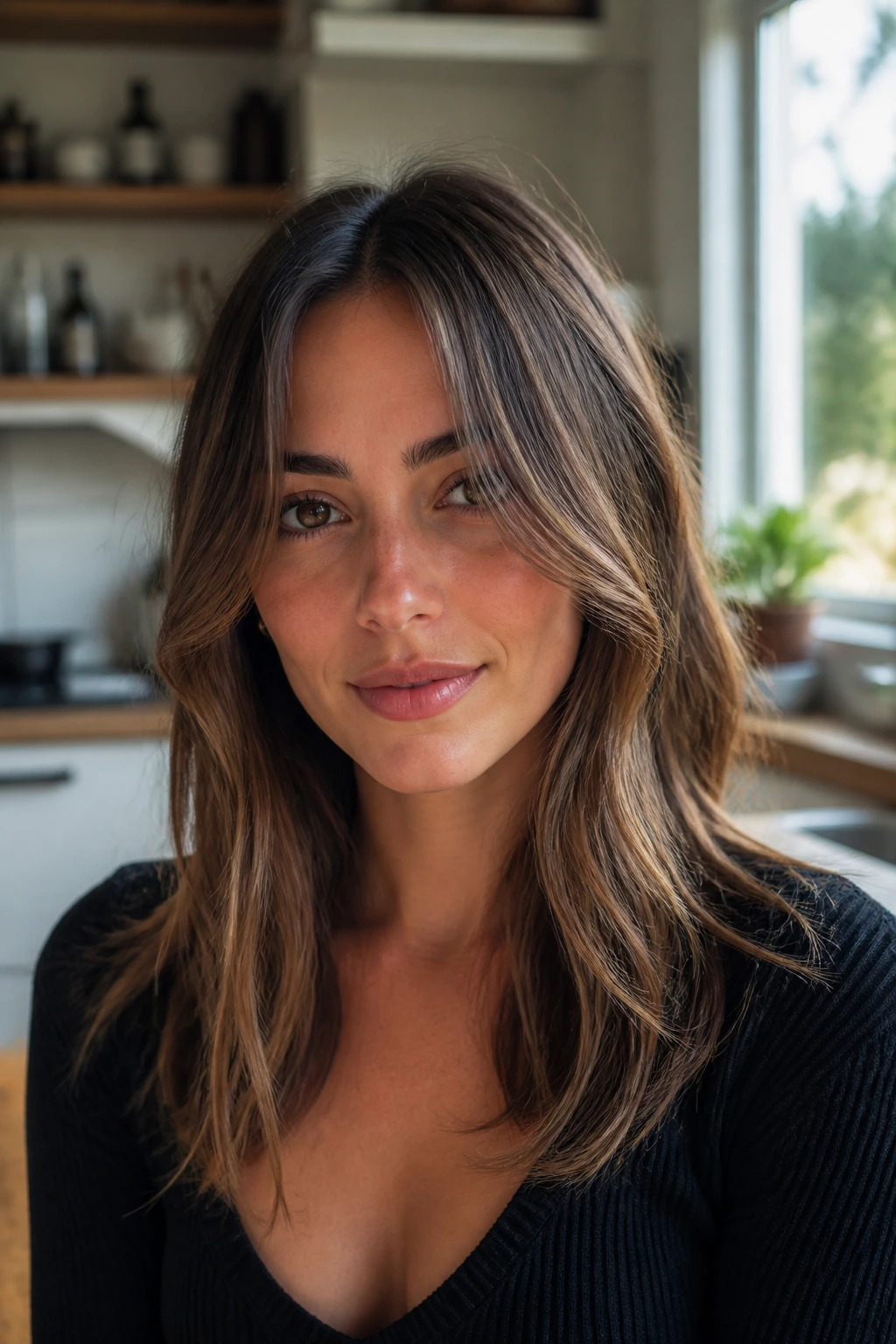
Unlike standard curtain bangs, bottleneck bangs start narrow at the top, pinch in slightly near the eyes, and then flare out dramatically around the cheekbones, mimicking the neck of a glass bottle.
This style is ideal for anyone who wants the look of bangs without the commitment of a full front fringe. Because the center is kept quite sparse and long—often grazing the bridge of the nose—it is incredibly easy to sweep them to the side when you want a bare forehead.
It works beautifully on an oval face because the outward flare at the bottom highlights the cheekbones, adding structure to the soft curves of the face.
7. Curly Bottleneck Fringe
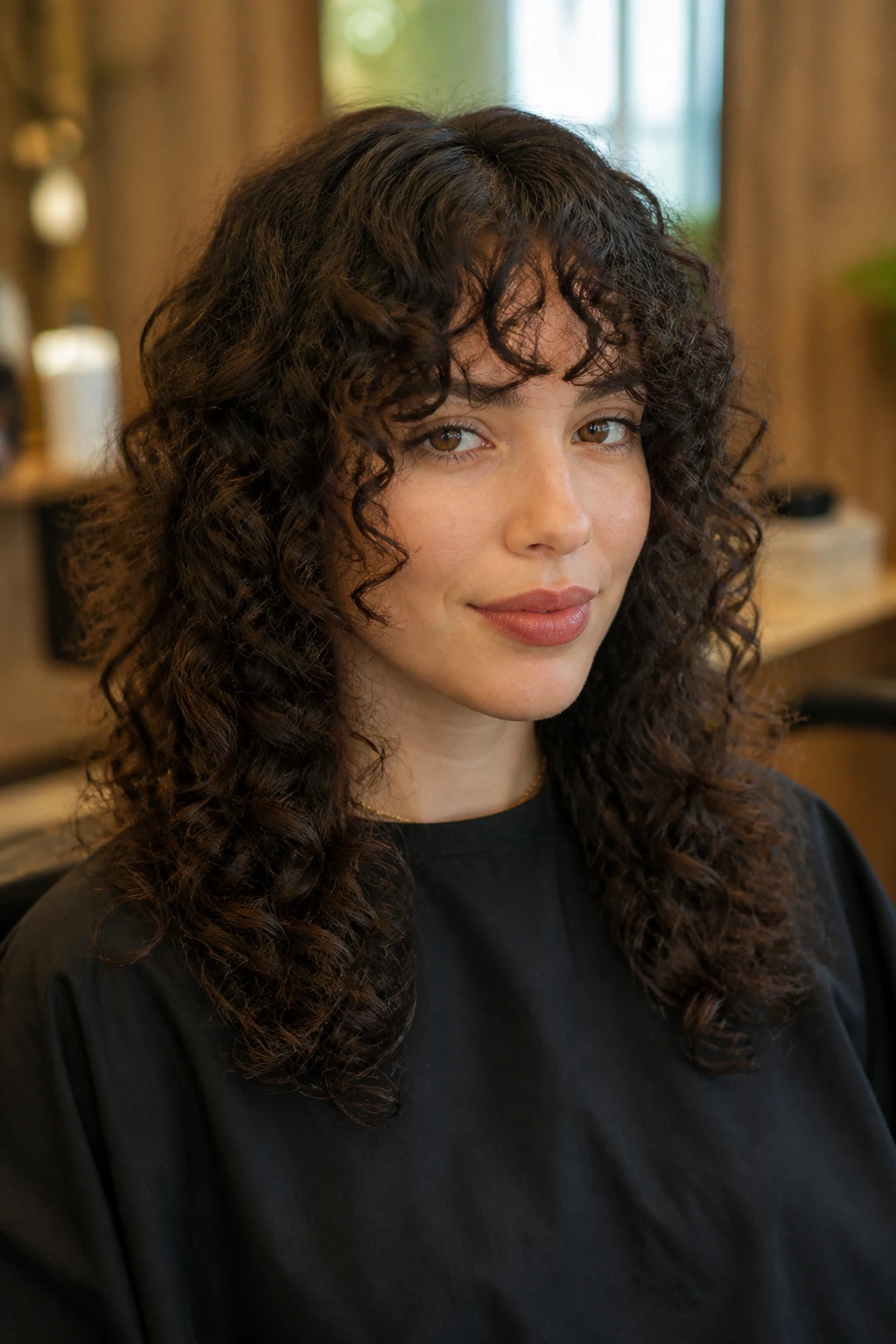
For those with curly hair, the bottleneck shape offers a beautiful way to frame the face without creating a heavy, shelf-like block of curls over the eyes.
Why It Fits Curly Textures
This cut allows individual curls to bounce up naturally at different lengths. By keeping the center curls shorter and the side curls progressively longer, the fringe follows the natural contour of your eyes.
Curly Care Checklist
- Always cut these bangs completely dry in their natural curl state.
- Do not pull the curls taut while cutting, or they will bounce up far too short.
- Use a lightweight curl cream or gel to define the curls without weighing them down.
- Air-dry or use a diffuser on low heat to prevent frizz at the hairline.
Pro tip: When washing your hair, apply your styling product to the fringe first while it is dripping wet, scrunching gently to encourage curl formation.
8. Piece-Y French Girl Bangs
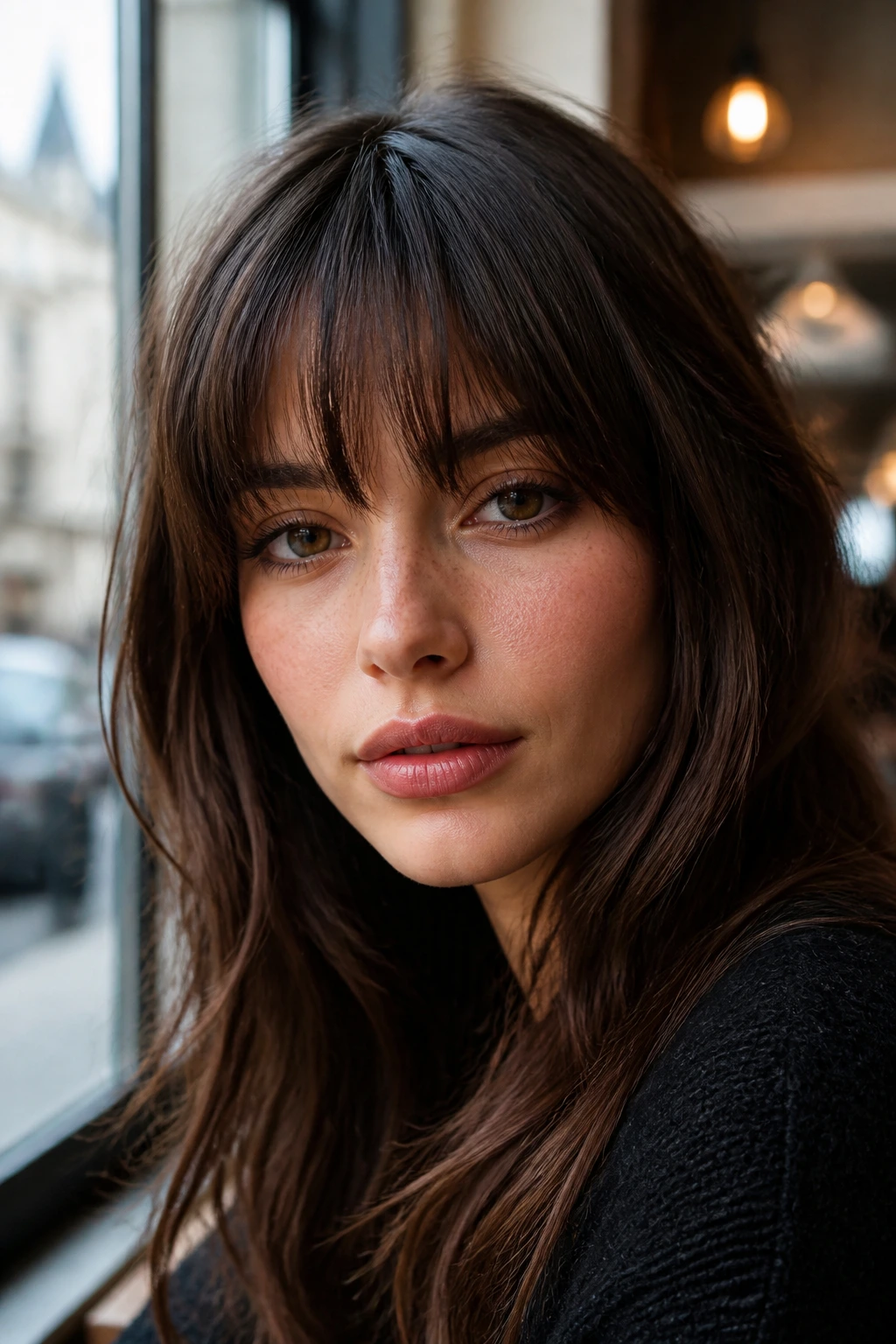
There is a common belief that French style is entirely effortless. In reality, it is a highly calculated look that depends on the right haircut. French girl bangs are typically cut straight across but feature a very soft, textured edge with individual gaps that break up the solid line.
This style rests right at the eyelashes, creating a mysterious look that highlights the eyes. To achieve this, your stylist will use a slide-cutting technique to remove weight from the interior of the bangs, allowing the pieces to separate naturally.
This style is best suited for hair with a slight natural bend. If your hair is pin-straight, you will need to use a large curling iron or roller to add a subtle curve so the bangs do not flatly cover your eyes.
9. A-Shape Curtain Bangs
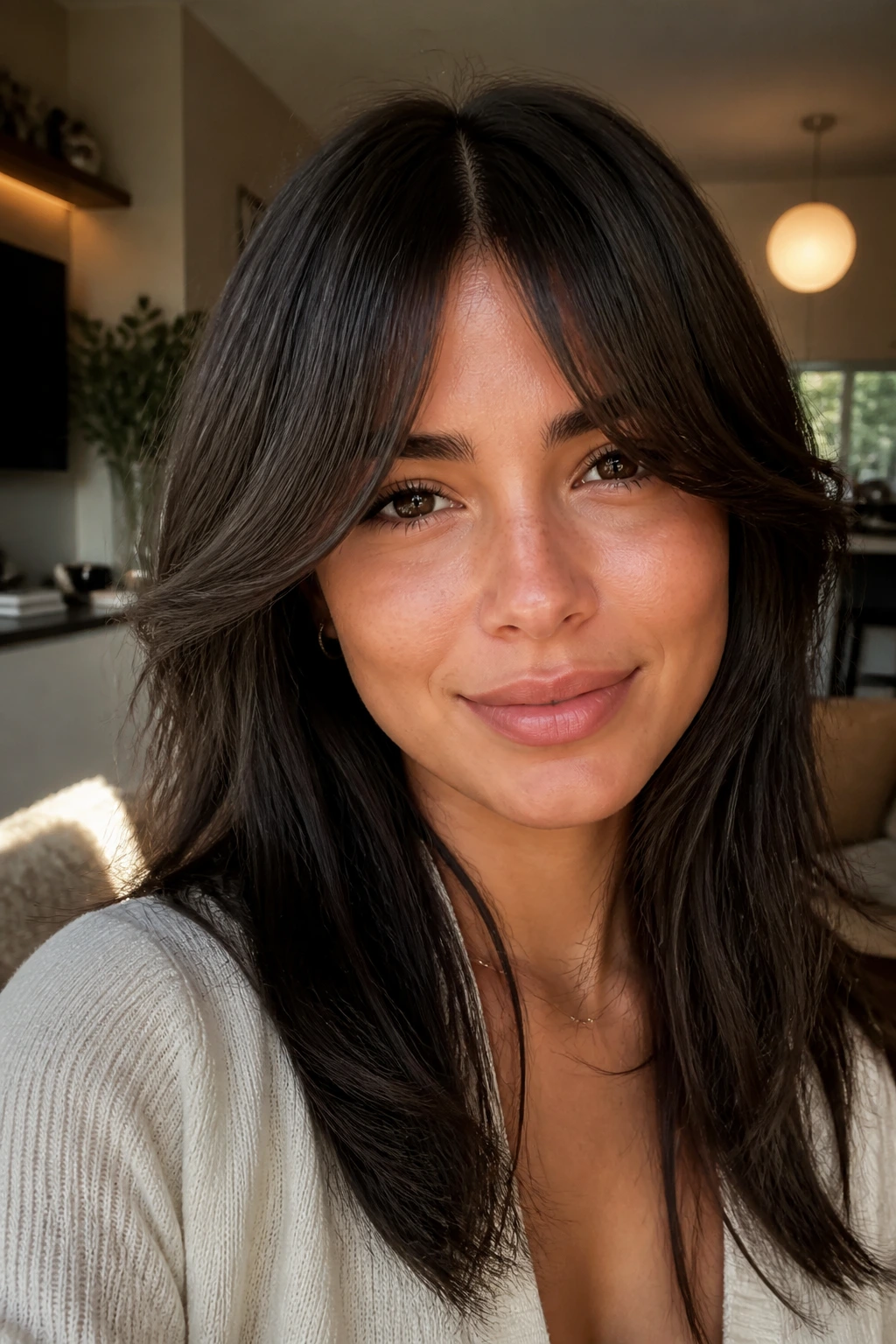
What happens when you want to frame your face but do not want hair falling into your eyes? The A-shape curtain fringe provides a structured solution.
The Mechanics of the A-Shape
This cut features a very clean, defined parting in the center that creates an inverted “V” or “A” shape on your forehead. The hair is cut to swing outward, starting shorter near the brow line and lengthening as it moves toward the ears.
How to Style It
- Part your hair exactly down the middle while wet.
- Blow-dry the left side toward the right, and the right side toward the left to build volume at the roots.
- Use a flat iron to gently sweep the ends back and away from the face in a smooth C-curve.
10. Feathered 70s Layers
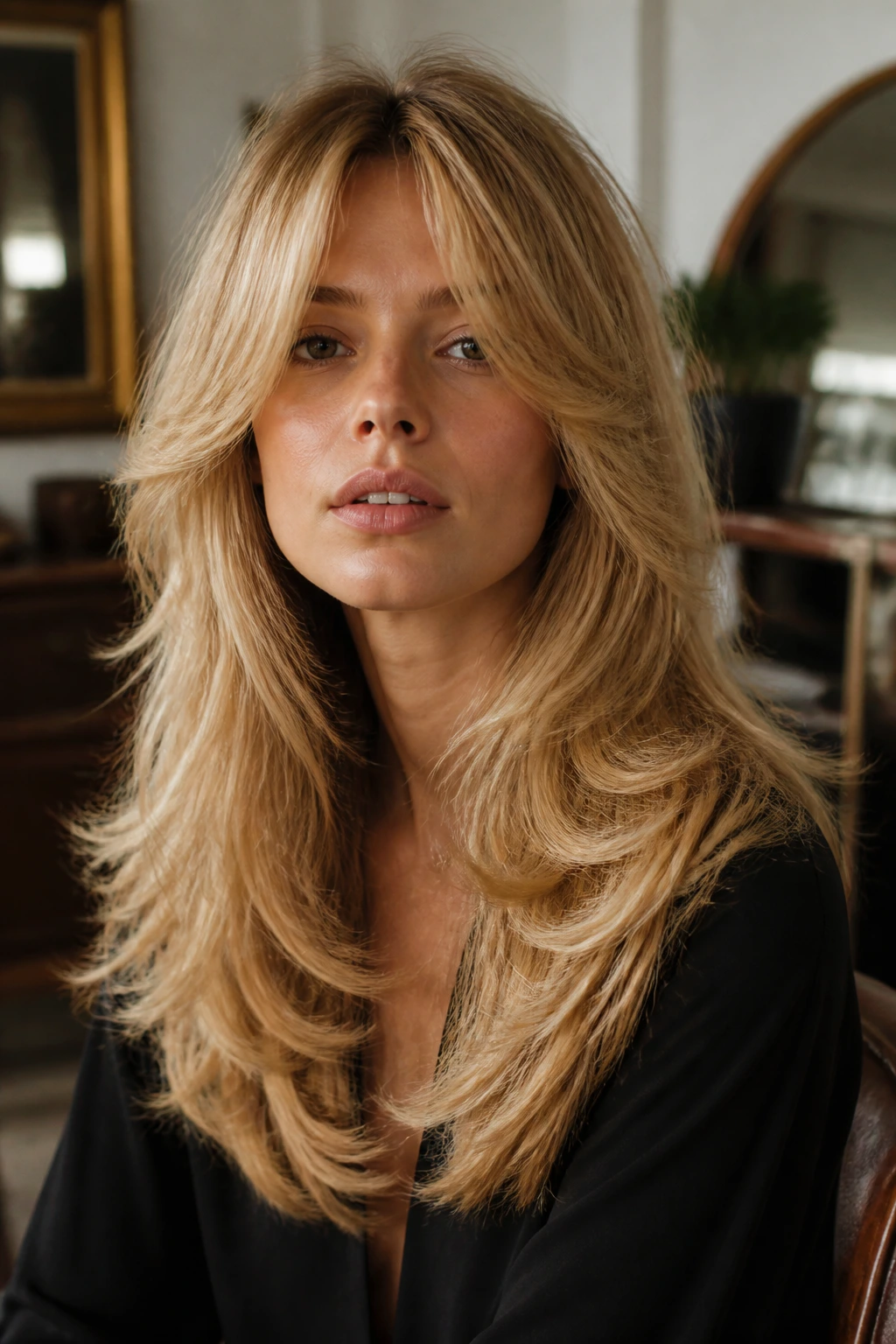
A client with thick, long hair wants to nod to retro styles without looking like they are wearing a costume. The feathered fringe of the 1970s is the perfect solution for an oval face, offering volume, movement, and a soft frame.
This style uses heavy slide-cutting to create backward-sweeping wings. The bangs are long, often starting at the bridge of the nose and curving back to blend into long, feathery layers that cascade down the sides of the face.
Because the weight is pulled back and away from the center of the face, this style opens up your features and highlights your jawline. It is an excellent choice for thick hair, as the extensive layering removes bulk and prevents the hair from looking heavy or dense around the face.
11. Heavy Rounded Fringe
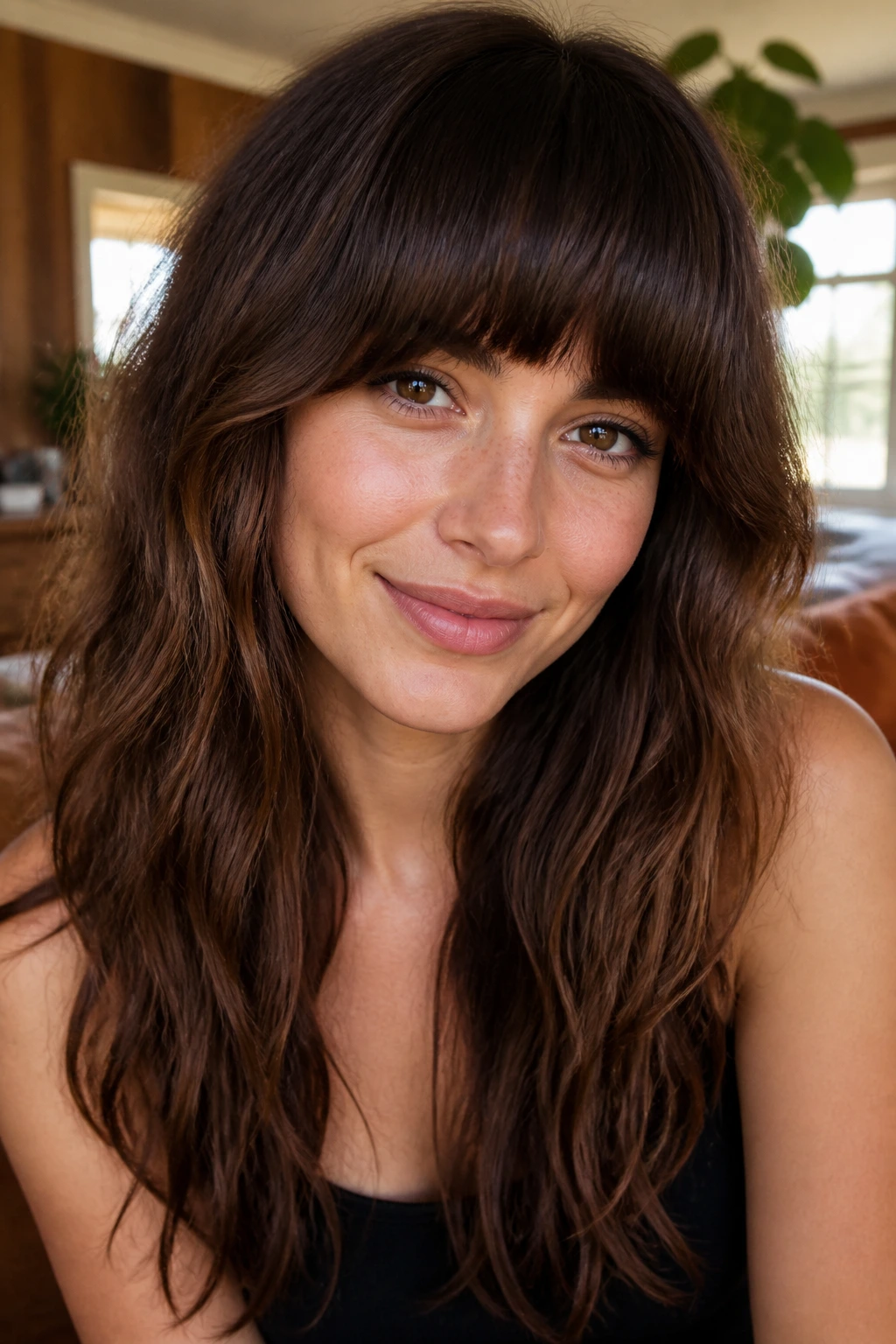
This style is a variation of the straight-across cut but features a distinct, curved arch. The center of the bangs is cut slightly shorter, resting right above the brows, while the sides curve down in a smooth arc to hug the outer corners of the eyes.
This rounded frame mimics the natural curves of an oval face, creating a harmonious look. It is exceptionally good at highlighting high cheekbones.
Because the sides are longer, this fringe transitions into your side hair, making it look integrated with the rest of your haircut, whether you wear your hair up or down.
12. Micro Blunt Bangs
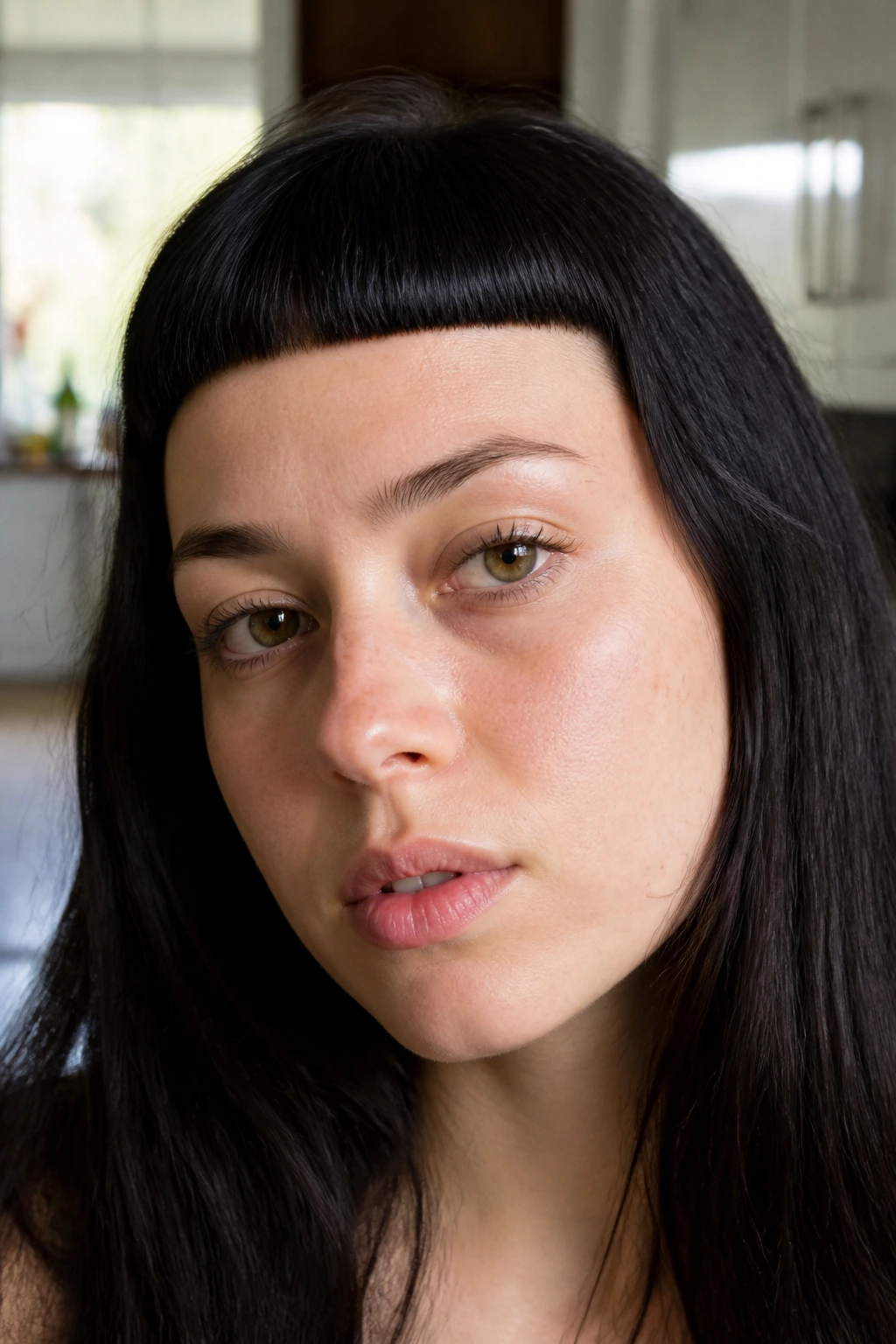
Unlike choppy baby bangs, micro blunt bangs feature a razor-sharp, straight horizontal line that sits very high on the forehead. It is a high-fashion look that leaves no room for error.
This cut is best for those with straight, cooperative hair and a low hairline. If you have a high forehead, this cut can visually elongate your face, which might throw off the natural balance of an oval shape.
Styling this cut is simple but must be done daily; a quick pass with a small flat iron keeps the line looking sharp and clean.
13. Asymmetrical Side Fringe
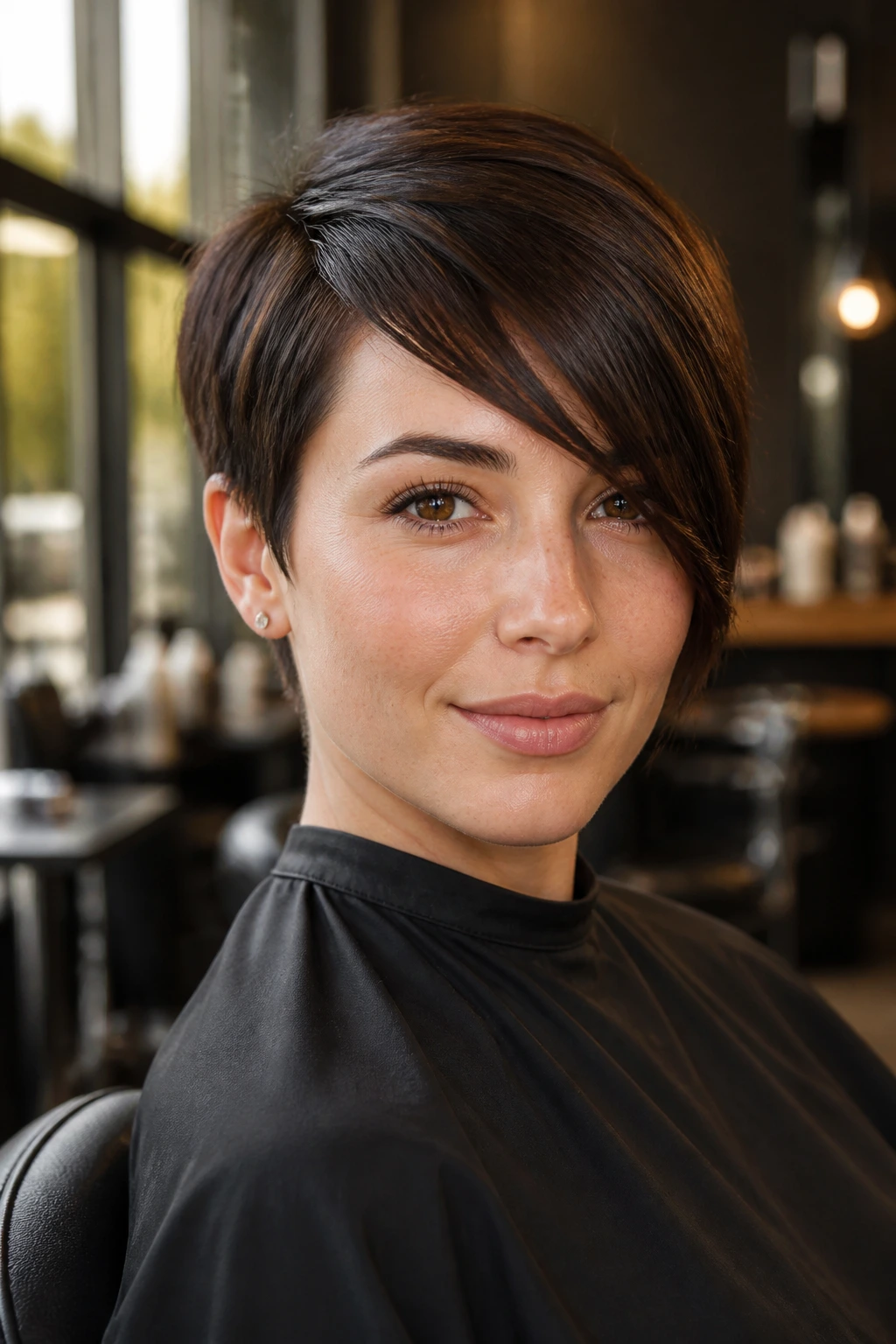
If you prefer a side part, an asymmetrical side-swept fringe can add interest to your style. This cut starts short on one side and angles down across the forehead, ending in a longer point on the opposite side.
The Science of the Angle
The diagonal line created by this fringe adds a dynamic element to the face. It guides the eye diagonally across your features, which can highlight your eyes and cheekbones in a unique way.
Styling Options
- Sleek and straight: Use a flat iron and a smoothing shine spray for a polished look.
- Textured and messy: Apply a dry texturizing spray and tousle the bangs with your fingers.
- Blown-out: Use a round brush to create a soft, voluminous swoop to one side.
Pro tip: Let your stylist know which side you naturally part your hair on before they start cutting, as this style cannot easily be flipped to the opposite side without looking uneven.
14. Wavy Shaggy Bangs
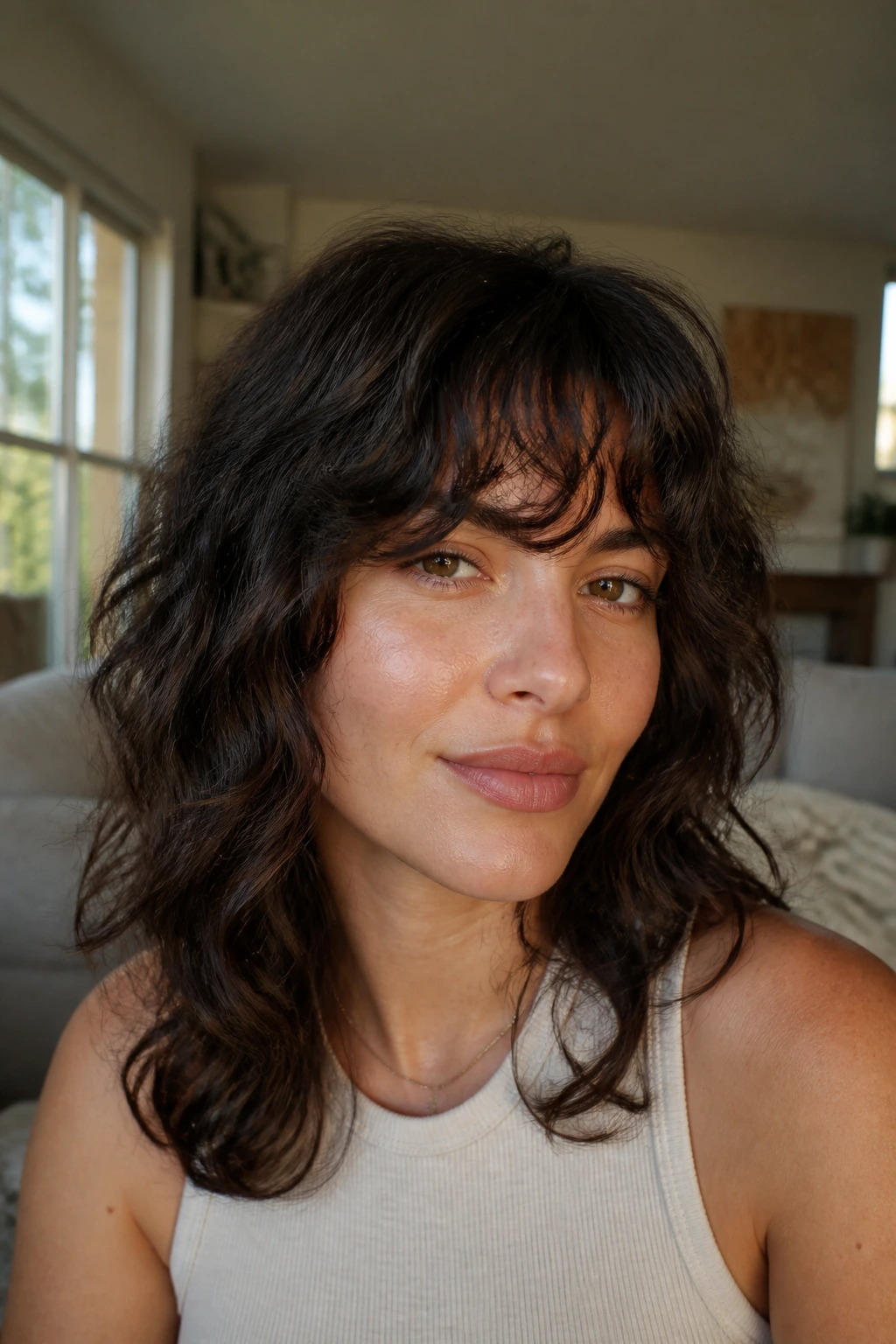
Many people believe that if they have wavy hair, they cannot wear bangs. This is a myth. Wavy shaggy bangs embrace the natural texture of your hair, letting individual waves bend and twist across the forehead.
To make this work, the bangs must be cut with plenty of internal layering to prevent them from puffing up into a solid wall of frizz. The length should be kept slightly longer to accommodate the natural shrinkage that happens when your waves dry.
This is a wash-and-go style that looks best when air-dried with a touch of leave-in conditioner or wave-enhancing spray. It adds an effortless, relaxed vibe to any haircut.
15. Wispy Birkin Fringe
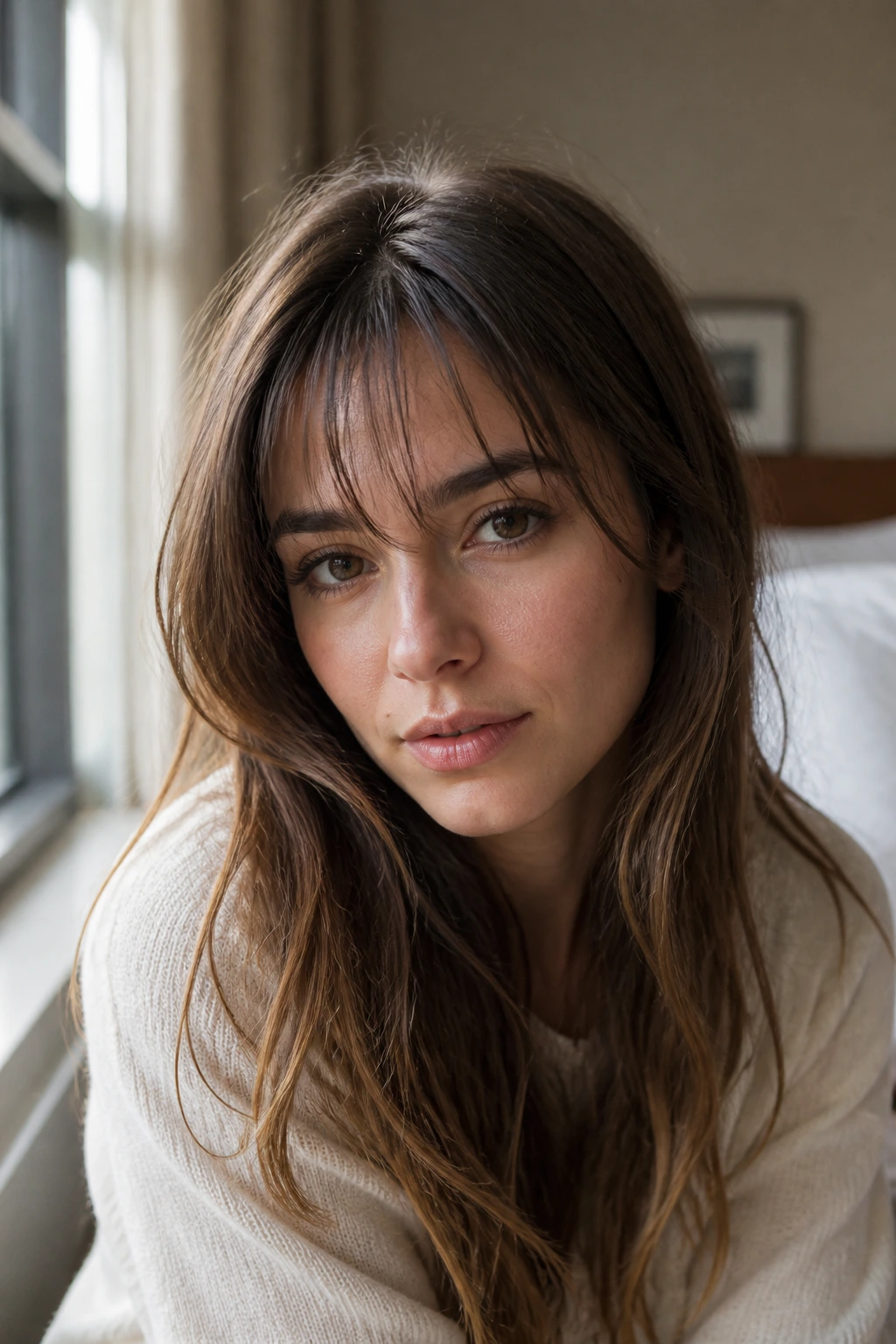
Named after the iconic style of Jane Birkin, this fringe is thin, long, and sits right at or just below the eyebrows with plenty of space between the strands.
What Makes It Unique
Unlike curtain bangs that part cleanly, the Birkin fringe hangs straight down but is so light that your forehead is fully visible behind it. It looks best when it has a slightly piece-y, separated texture.
How to Achieve the Look
- Ask your stylist for a long, very sparse fringe cut straight across.
- Request that they use point-cutting to thin out the ends.
- Avoid using heavy styling products that can make the thin strands look greasy.
- Style by simply rough-drying with your fingers to maintain a natural texture.
16. Center-Parted Wispy Bangs
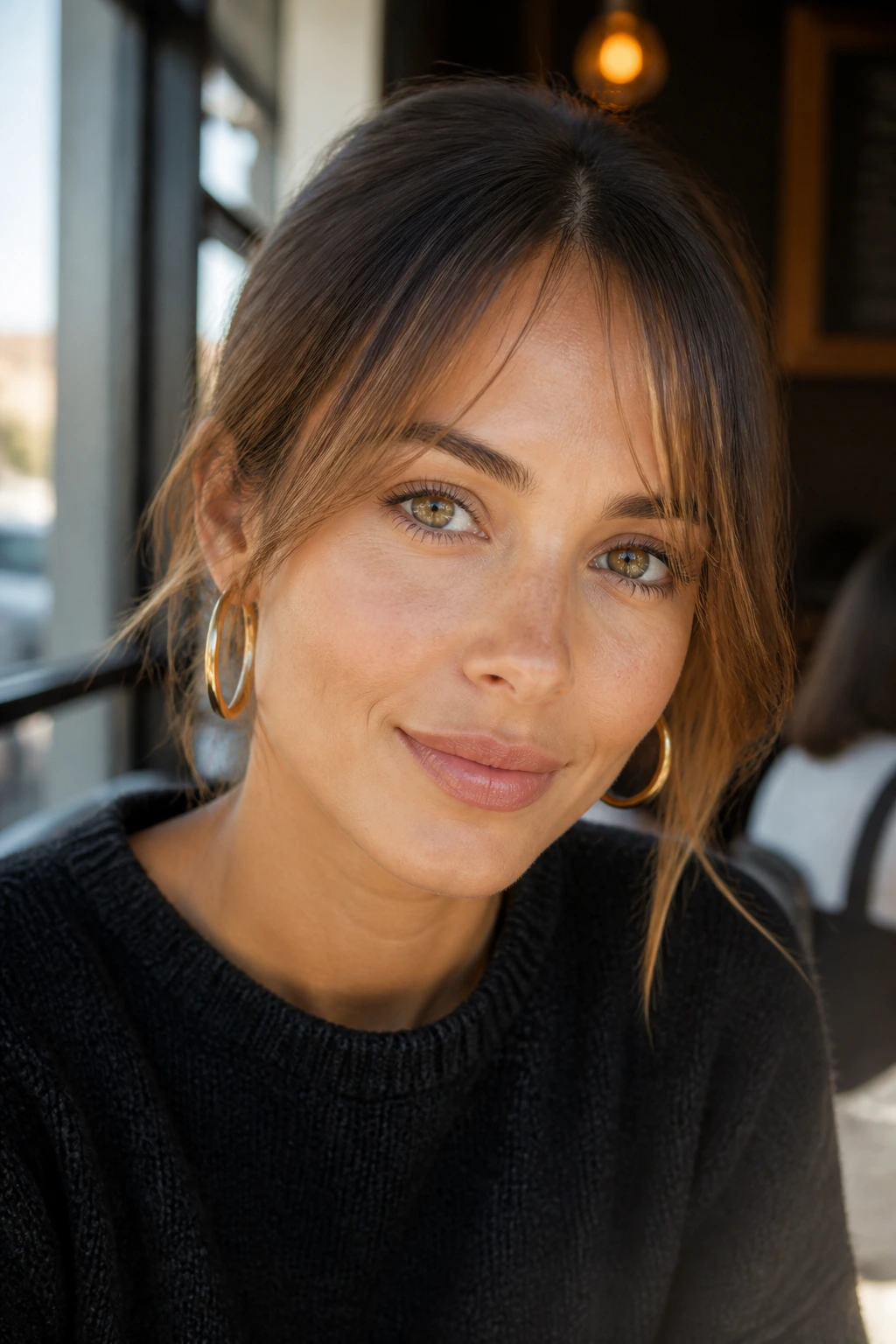
This style combines the lightness of wispy bangs with the framing effect of curtain bangs. The hair is cut thin and light, then gently split down the middle to expose the center of the forehead.
It is a fantastic option for those who want a very subtle change. Because the bangs are so light, they can easily be tucked behind your ears or pinned back when you want them out of your face.
This cut works on almost all hair types, from fine to thick, and requires very little styling effort.
17. Razor-Cut Textured Bangs
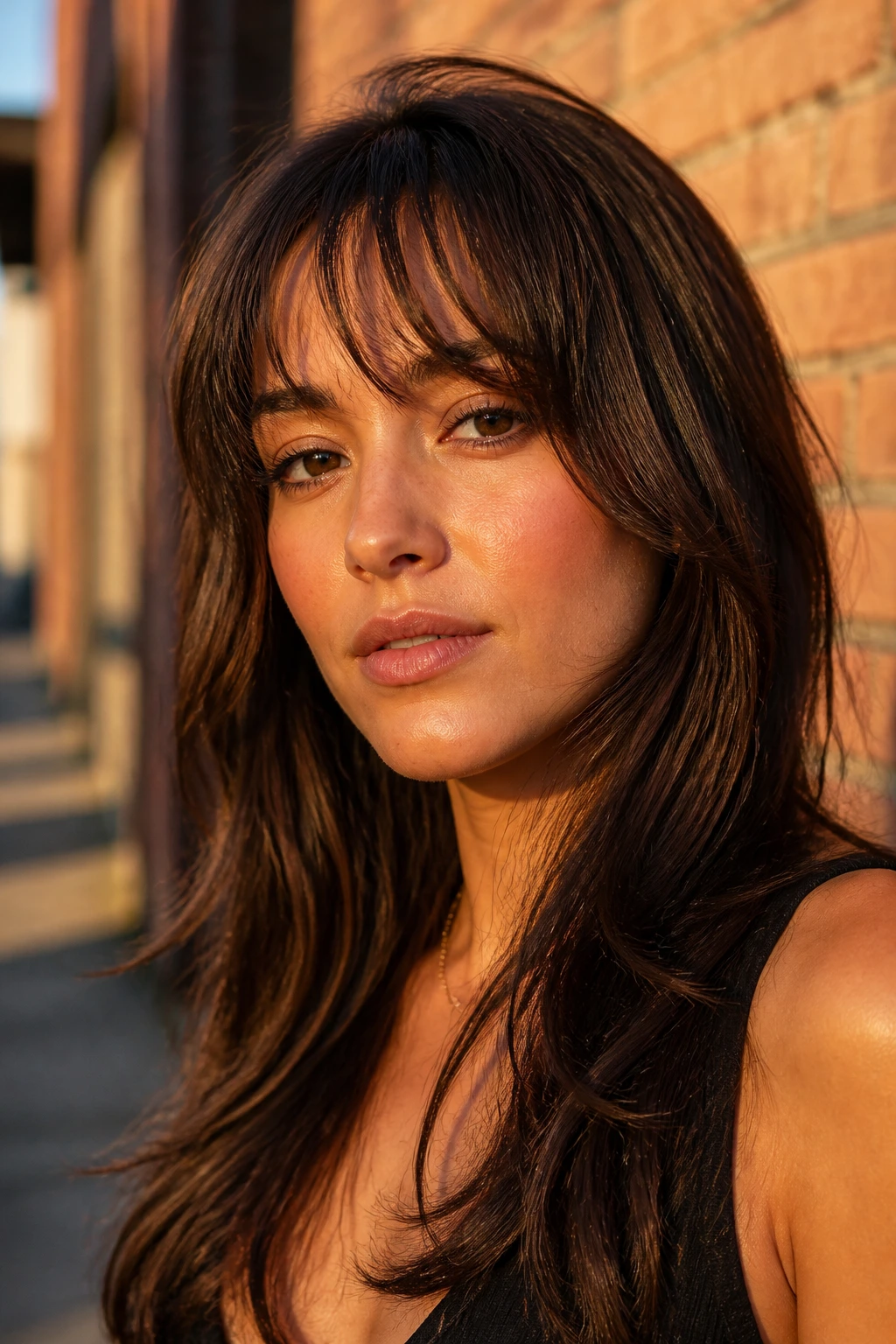
Using a razor instead of scissors to cut bangs creates a uniquely soft, feathered edge. The razor slices the hair at an angle, resulting in tapered ends that blend into each other.
This technique removes bulk from thick hair, allowing the bangs to lay flat against the forehead without looking heavy. It creates a modern look with lots of movement and texture.
This style is perfect for those who want a lived-in, slightly undone look that does not require perfect styling to look good.
18. Layered Face-Framing Fringe
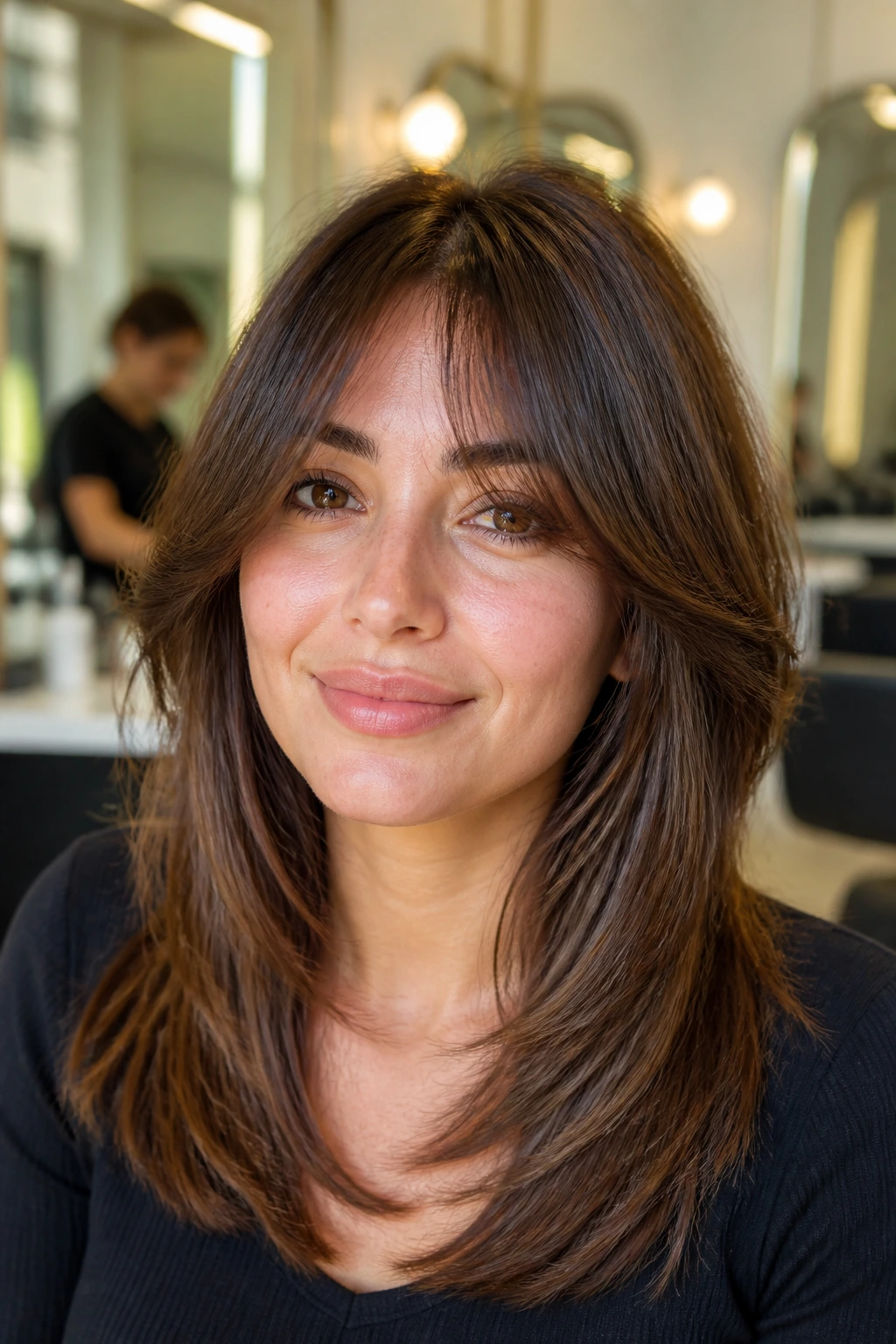
This style is a hybrid between a full fringe and long face-framing layers. It features shorter pieces in the center that gradually get longer, transitioning into layers that hug your jawline and collarbone.
Who It Is Best For
This cut is perfect for those who wear their hair up frequently. When you pull your hair back, these layers fall out naturally, framing your face and keeping your updos looking soft and effortless.
Styling with a Round Brush
- Section off the face-framing pieces.
- Wrap them around a large round brush, rolling away from your face.
- Apply heat, then let the hair cool on the brush to set the volume.
- Shake out the layers for a soft, wind-blown effect.
19. Curly Pixie Bangs
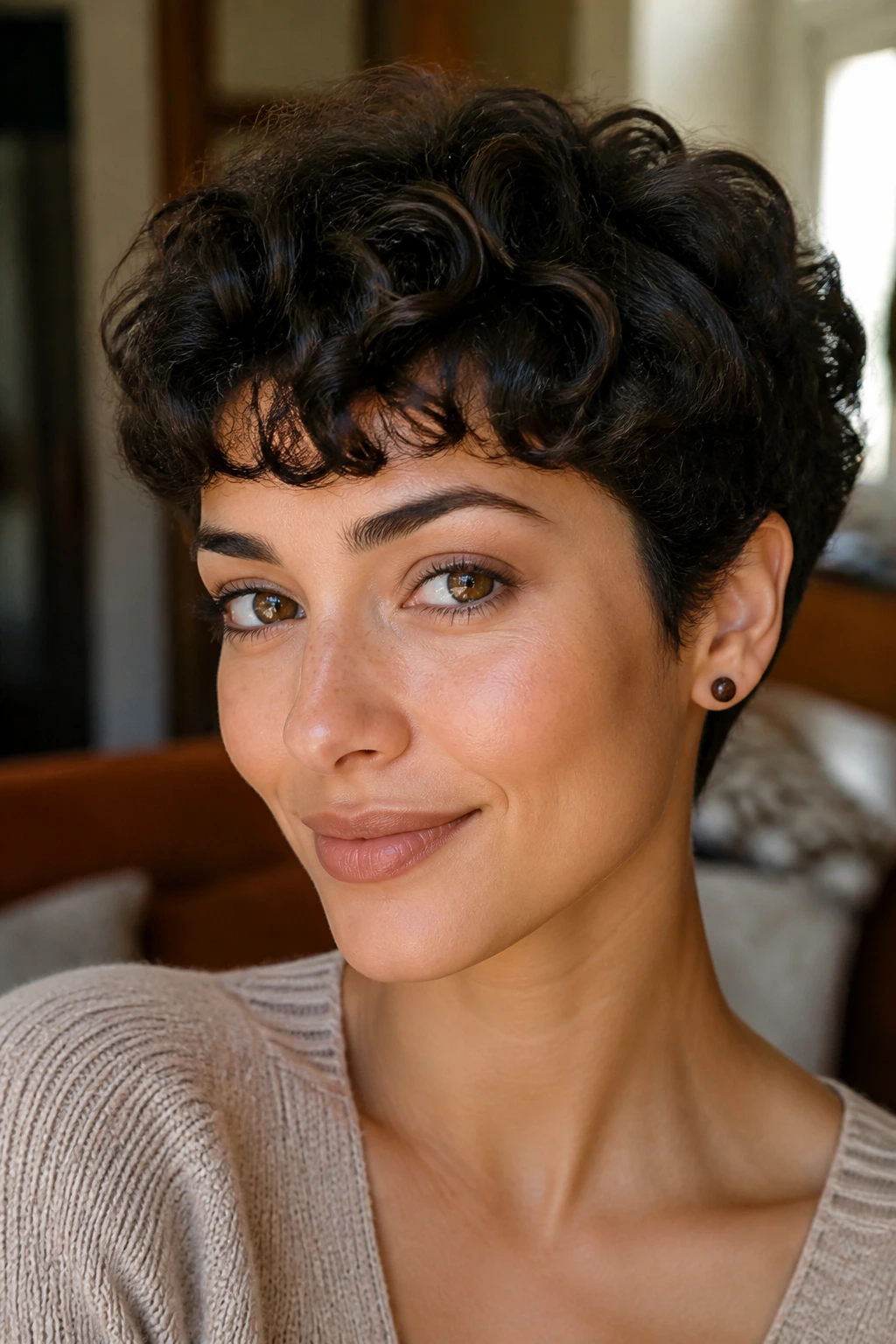
If you have short, curly hair, adding a curly fringe can transform your look, adding volume and shape to the top of your head.
The Cut
These bangs are cut in individual curl groupings at varying lengths to create a soft, rounded shape that frames the forehead. They should never be cut in a straight line, as this will make the curls bounce up unevenly.
Styling Routine
- Apply a curl-defining gel to soaking wet hair.
- Gently scrunch the bangs to encourage curl pattern.
- Let them air-dry completely without touching them to prevent frizz.
- Once dry, gently shake the roots to release the curl cast and add volume.
Pro tip: If a curl dries in an awkward direction, wrap it around your finger while damp to redirect the wave pattern.
20. Swooping Side-Parted Fringe
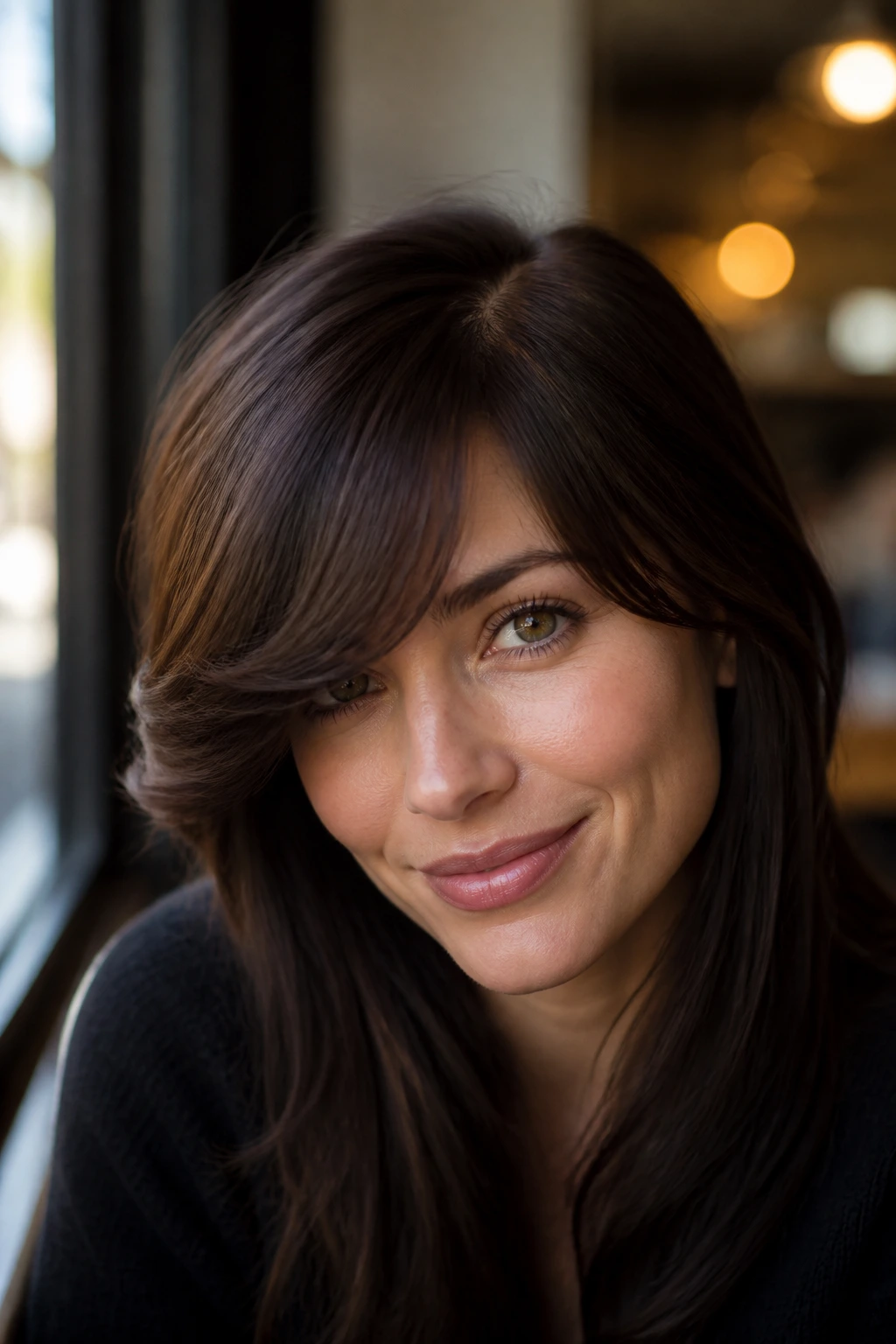
This style is a classic, elegant option that features a deep side part with the bangs swooping gracefully across the forehead, skimming the brow line.
It is a highly flattering look for an oval face, as the diagonal swoop adds a soft asymmetry that highlights your eyes. It works best on medium to thick hair with some natural body.
To keep the swoop in place, use a touch of flexible-hold hairspray at the roots to maintain lift and prevent the bangs from falling flat into your face.
21. Soft Tapered Bangs
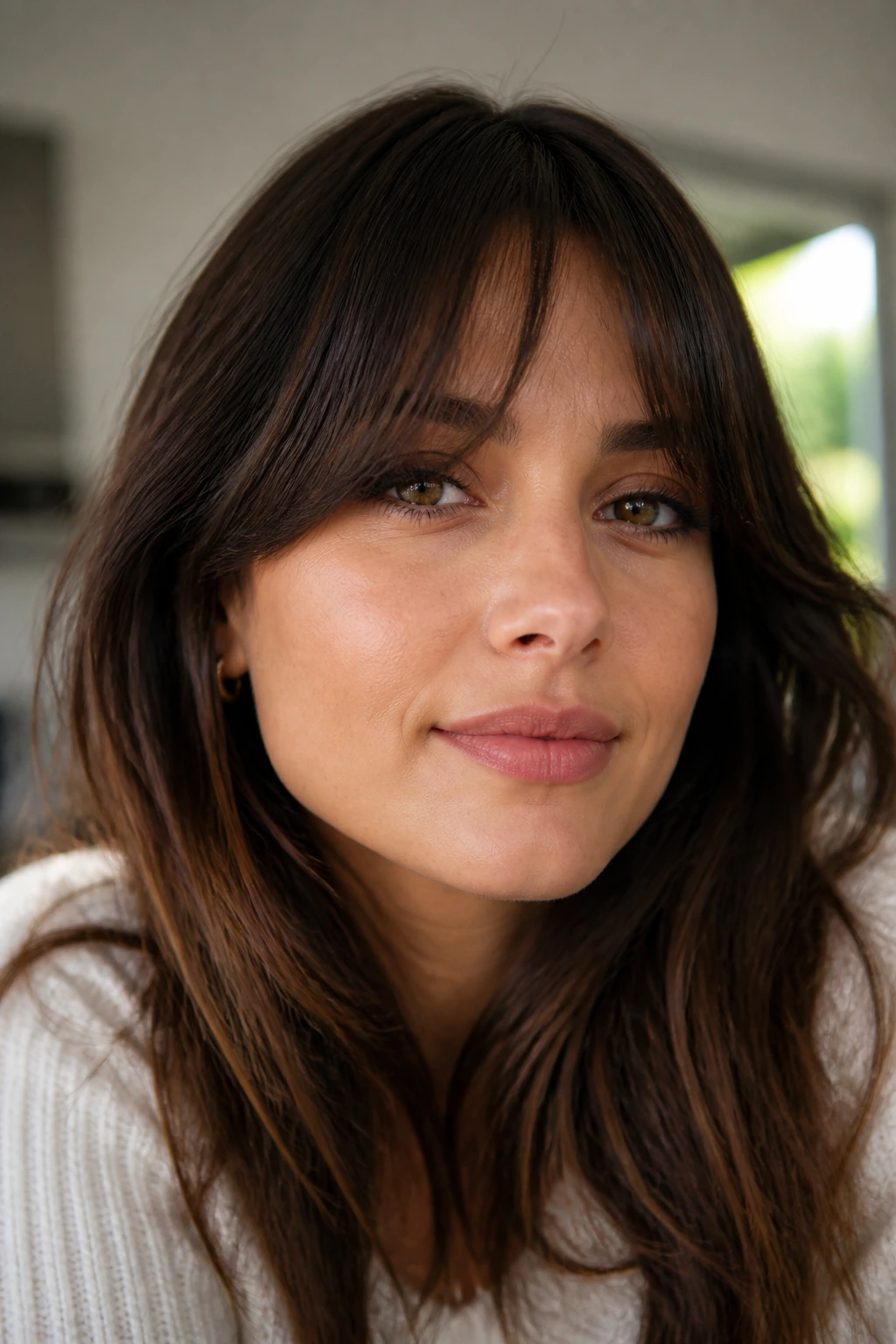
This cut features a soft, gentle taper where the center of the bangs is slightly shorter and the outer edges gradually lengthen to meet your side hair.
It is a very classic, wearable style that is less severe than a blunt straight-across cut. The tapered edges soften the face, making it look friendly and approachable.
This style is highly versatile and can be worn straight and sleek or textured and messy depending on your mood.
22. Piece-Y Wispy Fringe with Long Corners
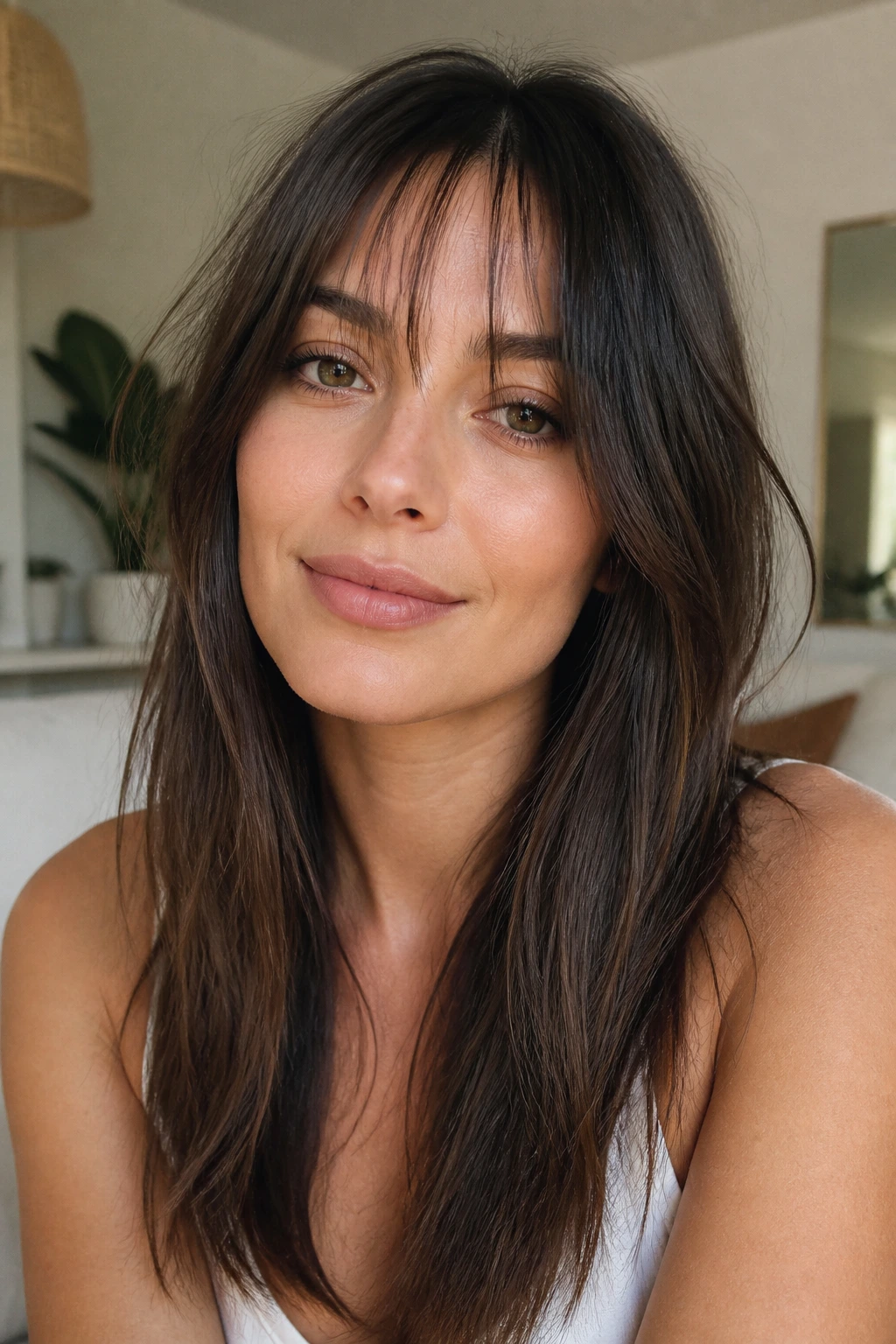
This variation features a very thin, piece-y center section combined with dramatically longer, textured corners that frame the outer edges of your eyes.
It is a fantastic style for creating depth and interest around the eyes. The long corners draw focus inward, highlighting your gaze, while the wispy center keeps the forehead from being completely blocked out.
This style is highly forgiving as it grows, making it an excellent choice for those who do not want to visit the salon every few weeks for a trim.
Finding Your Fringe
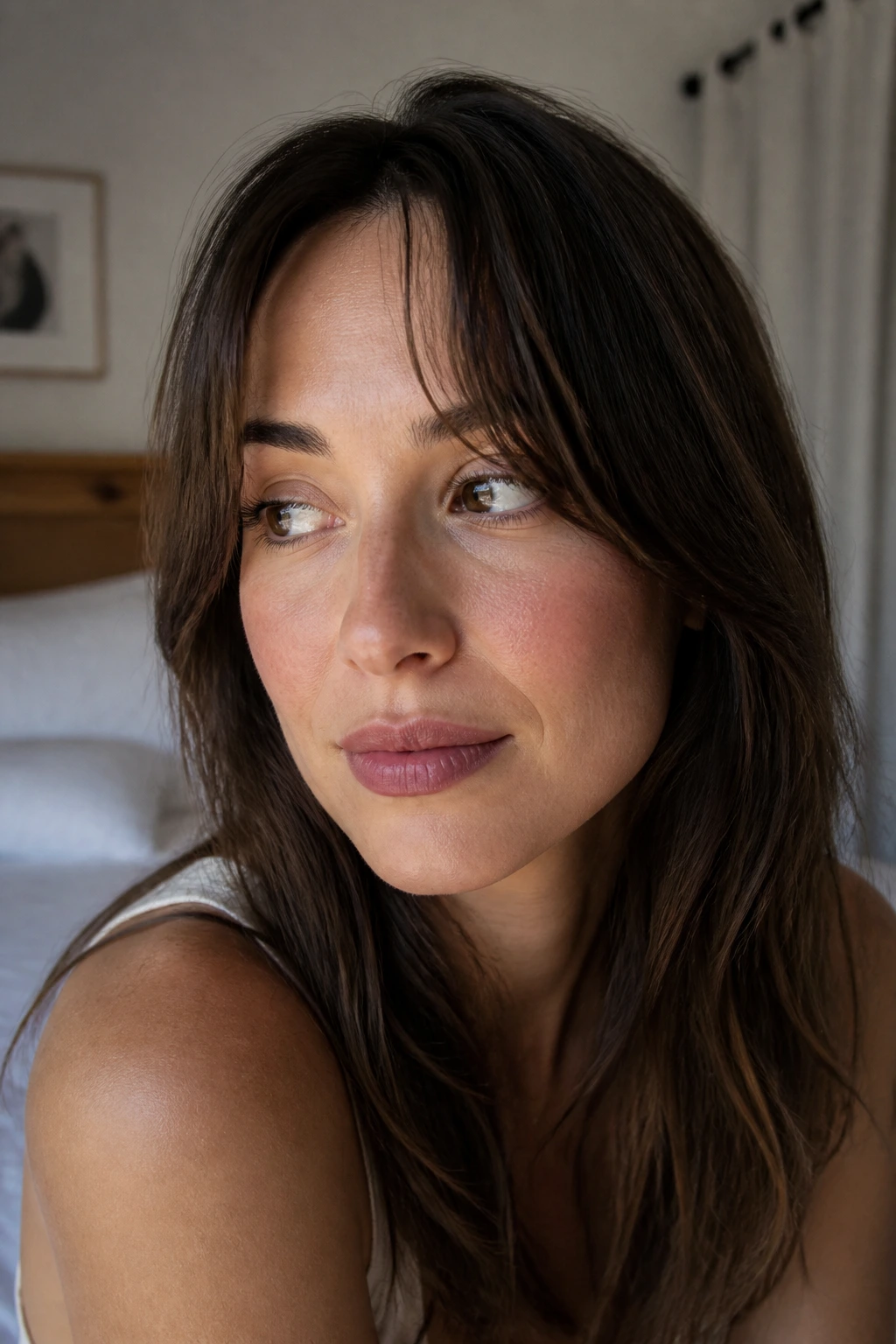
The key to finding the perfect look is to be honest about your daily hair habits. If you love a low-maintenance routine and prefer to wash your hair and walk out the door, a textured shag or long curtain bangs will fit your life beautifully. If you enjoy the process of styling your hair every morning with a blow-dryer and brush, a blunt straight-across fringe or classic 70s feathered layers can be a rewarding choice.
When you go to the salon, bring photos of styles you like, but also be open to your stylist’s advice regarding your hair’s unique density and growth patterns. An oval face gives you a fantastic head start, but a skilled stylist will customize the cut to ensure your new bangs fit your unique features perfectly.
Remember that bangs are a journey, not a permanent commitment. They grow out relatively quickly, allowing you to experiment with different lengths, textures, and styles over time. Enjoy the process of finding the look that makes you feel most confident.