

Imagine standing in front of your bathroom mirror, humidity hovering at eighty percent, staring at a fringe that has transformed from a sleek frame into a puffy, cloud-like triangle. It is a familiar frustration. For anyone dealing with natural frizz, the idea of combining bangs with long layers feels less like a chic style choice and more like a high-stakes gamble. You have probably been told to avoid bangs entirely unless you are willing to spend forty-five minutes with a blow dryer and flat iron every single morning.
But that advice is outdated. The reality of frizzy hair is that it thrives on structure, not on being flattened into submission. When you leave frizzy or highly textured hair long and single-length, the weight of the hair pulls the roots down flat while the ends flare out, creating a heavy, tent-like shape. Long layers act as a pressure valve. They redistribute the bulk, encourage natural movement, and create a soft frame that works with, rather than against, your hair’s tendency to swell.
The secret lies in the cutting technique and the shape of the bangs. By marrying strategically placed layers with bangs that are cut to match your natural texture, you can create a look that is both intentional and easy to wear. It is about understanding how your hair behaves when wet versus dry, how it reacts to moisture in the air, and where the weight needs to be removed to keep the shape balanced.
Let us look at how these elements come together to create styles that celebrate texture, manage bulk, and make daily styling a breeze.
The Mechanics of Frizz and How Long Layers Help
Frizzy hair is essentially hair that is looking for moisture. When the outer layer of the hair shaft, known as the cuticle, is raised, moisture from the air enters the shaft, causing the protein chains inside to swell and bend. This is why a damp afternoon can instantly change your hair texture from a smooth wave to an expansive halo of frizz.
To manage this without stripping away your hair’s natural character, a haircut needs to create space within the interior of the style. Long layers do exactly this. Instead of cutting straight across, which creates a hard ledge where frizzy ends can clump together and look frayed, your stylist should use slide cutting or internal layering. This removes bulk from the mid-lengths and ends without shortening the overall length.
Why Weight Distribution Matters
When your hair has uniform weight, the canopy—the very top layer of hair—takes the brunt of the weather and environmental moisture. It swells up, while the hair underneath remains trapped. By cutting long, cascading layers, you create channels of varying lengths.
- Short layers near the mid-shaft allow the canopy to lift slightly, preventing the flat-root-puffy-end silhouette.
- De-bulked ends allow natural air circulation, meaning your hair dries faster and more evenly.
- Strategic length variations encourage waves and curls to clump together into defined patterns rather than separating into a fuzzy haze.
This structural approach means that even when your hair does swell in high humidity, it swells into a balanced, voluminous shape rather than a chaotic mess.
Choosing the Right Bang Style for Frizzy Hair Textures
Bangs on frizzy hair require a completely different design philosophy than bangs on pin-straight hair. If you cut a heavy, blunt fringe on hair prone to frizz, you are setting yourself up for a daily battle with a round brush and a blow dryer. Instead, the goal is to choose a bang style that has built-in texture and movement.
Analyzing Your Natural Wave Pattern
Before the scissors touch your forehead, you must observe how your hair behaves around your hairline. Most people have cowlicks or natural splits right at the center or near the temples. Frizzy hair will exaggerate these patterns when it dries.
- Wispy, piece-y bangs work beautifully because they do not require perfect alignment to look good; a little separation actually enhances the style.
- Curtain bangs are highly forgiving because they blend into longer face-framing layers, allowing you to tuck them behind your ears on high-humidity days.
- Bottleneck bangs start narrow at the top, flare out around the eyes, and curve along the cheekbones, which naturally channels frizz into a soft frame.
By selecting a bang style that mimics the movement of your longer layers, you create a cohesive look that looks styled, even when you have simply air-dried it.
1. Shaggy Long Layers with Curtain Bangs
This style is a lifesaver for medium-to-coarse hair that tends to expand sideways as soon as the humidity rises. By combining deep, piece-y shag layers with curtain bangs that flare out at the cheekbones, you create an intentional frame that makes natural frizz look like planned volume. The key is in how the layers are sliced; they should start around the chin and cascade downward, thinning out the bulk from the sides of your head.
Why It Works for Coarse Textures
By removing the weight from the mid-lengths, the hair is free to wave and curl naturally without getting bogged down. The curtain bangs sweep outward, drawing the eye to your eyes and cheekbones rather than any flyaways at the crown.
- Best for: Medium to thick wavy hair that needs weight distribution.
- Styling time: Under ten minutes with a simple leave-in cream.
- Trimming schedule: Every eight to ten weeks to keep the shag shape distinct.
- Key product: A moisturizing curl cream or anti-frizz serum.
Pro tip: Air-dry this cut using the “pineapple” method or slide a microfiber towel over the canopy to dry it without disrupting the wave pattern.
2. Soft Internal Layers with Wispy Bangs
You might think that wispy bangs are impossible with frizzy hair, but they actually work incredibly well because they do not try to form a solid wall of hair. This style relies on ghost layers—layers cut internally beneath the top canopy of your hair. They support the outer layers, giving your hair lift at the roots while keeping the ends looking soft and light.
The wispy bangs are cut using a point-cutting technique, where the stylist snips vertically into the hair rather than horizontally. This creates tiny gaps in the fringe, allowing your forehead to peek through and letting the bangs move naturally. When your hair swells, these bangs simply look soft and lived-in rather than blocky.
To style this, you only need to blow dry the bangs for about thirty seconds, letting the rest of your hair air-dry with a touch of lightweight leave-in conditioner. It is an incredibly low-maintenance option that looks chic even on rainy days.
3. Slide-Cut Framing Layers with Bottleneck Bangs
Have you ever noticed how some haircuts look amazing in the salon but turn into a puffy helmet the moment you wash them at home? That usually happens when layers are cut too bluntly. Slide cutting solves this problem by gently sliding open shears down the hair shaft, creating seamless transitions that allow the hair to drape softly around your face.
Combined with bottleneck bangs—which are narrow at the top, curve out around the eyes, and then hug the cheekbones—this cut creates a beautiful contour. The bangs act as a bridge, connecting the shorter face-framing pieces to the longer lengths in the back.
How to Style It
For this look, you want to focus your styling efforts on the bottleneck transition area.
Use a small round brush to pull the shortest middle section of your bangs straight down, then sweep the longer outer edges back and away from your face. This creates a soft, sweeping motion that coaxes any frizzy texture into a polished wave. The rest of your long layers can be scrunched with a light gel-cream to define their natural texture.
4. Feathered Long Layers with Choppy Bangs
This style draws inspiration from retro cuts but brings them into the modern era with softer, less rigid lines. It is particularly brilliant for fine but frizzy hair, which can easily look thin if the wrong layers are cut. Feathering creates microscopic texture at the ends of the hair, making it look full and airy rather than stringy.
The Mechanism of Feathering
By holding the hair at a ninety-degree angle and point-cutting the outer perimeter, the stylist creates a series of soft, overlapping steps. When frizzy hair is feathered, the natural frizz actually helps hold the shape, giving you that soft, windswept volume without the need for constant backcombing.
- Texturizing method: Vertical point cutting on wet hair, followed by dry-slide detailing.
- Bangs length: Just below the eyebrows, cut with uneven, choppy ends.
- Ideal density: Fine to medium hair with a light wave pattern.
- Frizz prevention: Use a silicone-free hair oil on the bottom three inches.
This style looks best when it has a little bit of texture, so do not worry about getting every strand perfectly smooth. Let the natural movement do the work.
5. Curly Long Layers with Curly Fringe
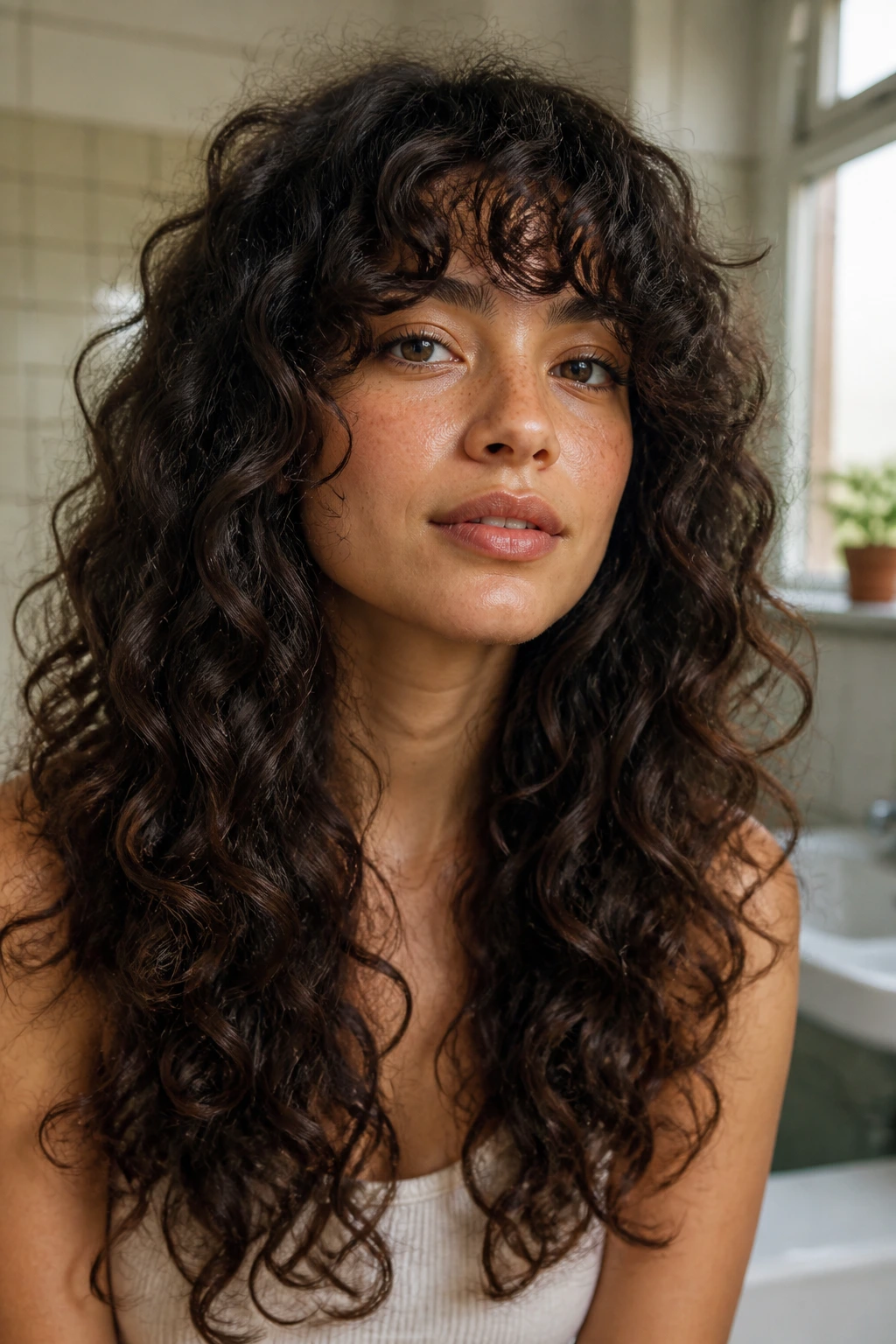
If you have true curls that tend to frizz, do not fight them with a flat iron. Embrace the volume by getting a dedicated dry cut that shapes your curls individually. This style uses long, rounded layers that prevent the dreaded “triangular hair” look, allowing your curls to stack beautifully without creating a wide shelf of volume at the bottom.
The curly fringe is cut curl-by-curl while dry, ensuring that each ringlet bounces up to the perfect length. Because curly hair shrinks significantly as it dries, cutting the bangs dry is the only way to guarantee they won’t end up two inches too short. The bangs should sit right around your brow line when dry, blending down into shorter layers around your temples.
To wash and style this look, apply a generous amount of curl-defining gel to soaking wet hair, scrunching upward to encourage curl formation. Use a diffuser on your hair dryer, keeping the air on medium heat and low speed to minimize frizz. Let the curls dry completely, then gently scrunch out the stiff gel cast with a few drops of jojoba oil to reveal soft, bouncy, defined curls.
6. Face-Framing Invisible Layers with French Bangs
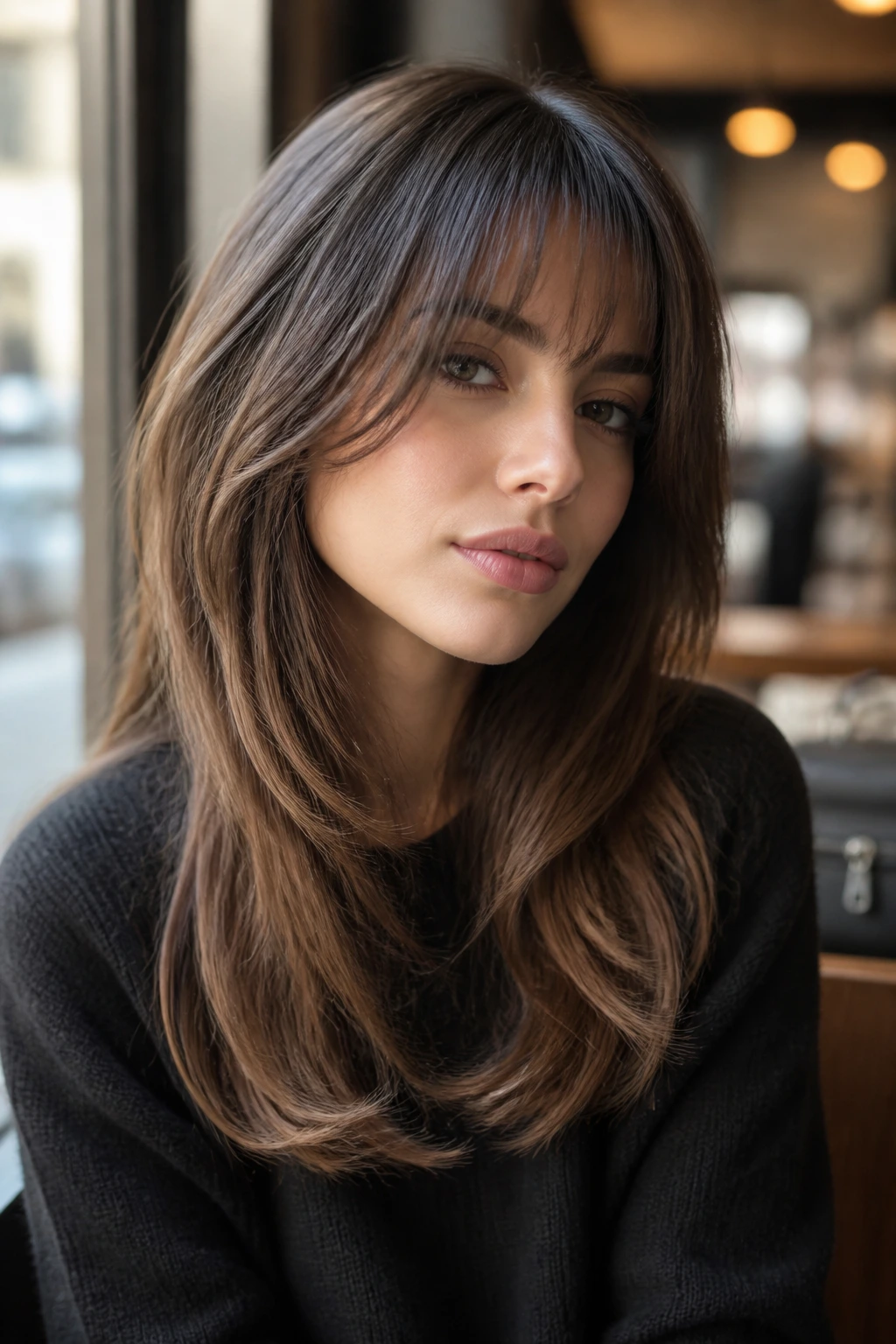
Unlike heavy blunt cuts that sit like a heavy weight on your forehead, French bangs are longer, slightly parted, and incredibly textured at the tips. They have a relaxed, effortless feel that pairs beautifully with long, invisible layers. These layers are hidden throughout the interior of your haircut, removing weight from the inside so your hair lies flatter at the sides while maintaining its length.
This combination is ideal if you prefer a sleeker look but struggle with frizz along your part line. The French bangs naturally split down the middle, which prevents them from looking greasy or puffy when your scalp gets warm.
If your hair is naturally wavy, this cut allows the waves to cascade down your back without looking bulky. It is a sophisticated, low-fuss option that transitions beautifully from work to casual weekend wear, requiring very little styling intervention.
7. Coarse Hair Long Layers with Thick, Textured Bangs
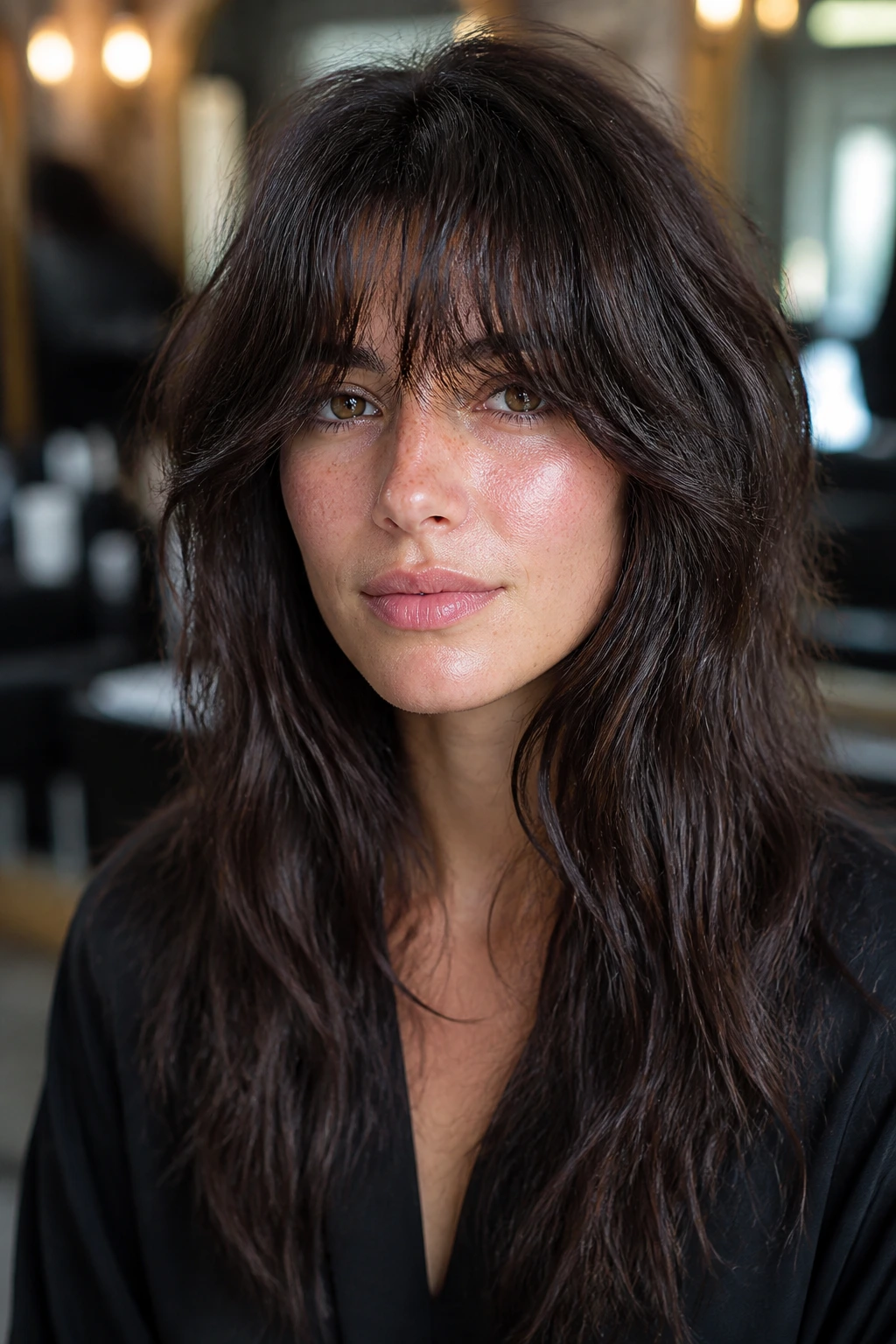
Coarse hair has a thicker diameter per strand, which makes it incredibly strong but also prone to feeling stiff and dry. When coarse hair frizzes, it can look coarse and dull. This cut addresses that by using deep, texturized layers that break up the density, combined with a thick fringe that is heavily point-cut to add movement.
The Moisture Balance
Because coarse hair is naturally dry, you must prioritize moisture during both the cutting and styling phases. Your stylist should cut these layers on damp, conditioned hair to see how the weight behaves.
- Bangs shape: Thick and full, but with shattered ends to prevent a blocky look.
- Layering depth: Starts below the jawline, concentrating on the back and sides.
- Styling approach: Heavy use of leave-in creams and rich oils like argan or avocado.
- Weather protection: A humidity-blocking spray is essential for keeping the cuticle flat.
Pro tip: When styling the bangs, blow-dry them with a flat brush side-to-side against your forehead—a technique known as “wrap drying”—to flatten any cowlicks and smooth out frizz.
8. Heavy Bottom-Heavy Layers with Birkin Bangs
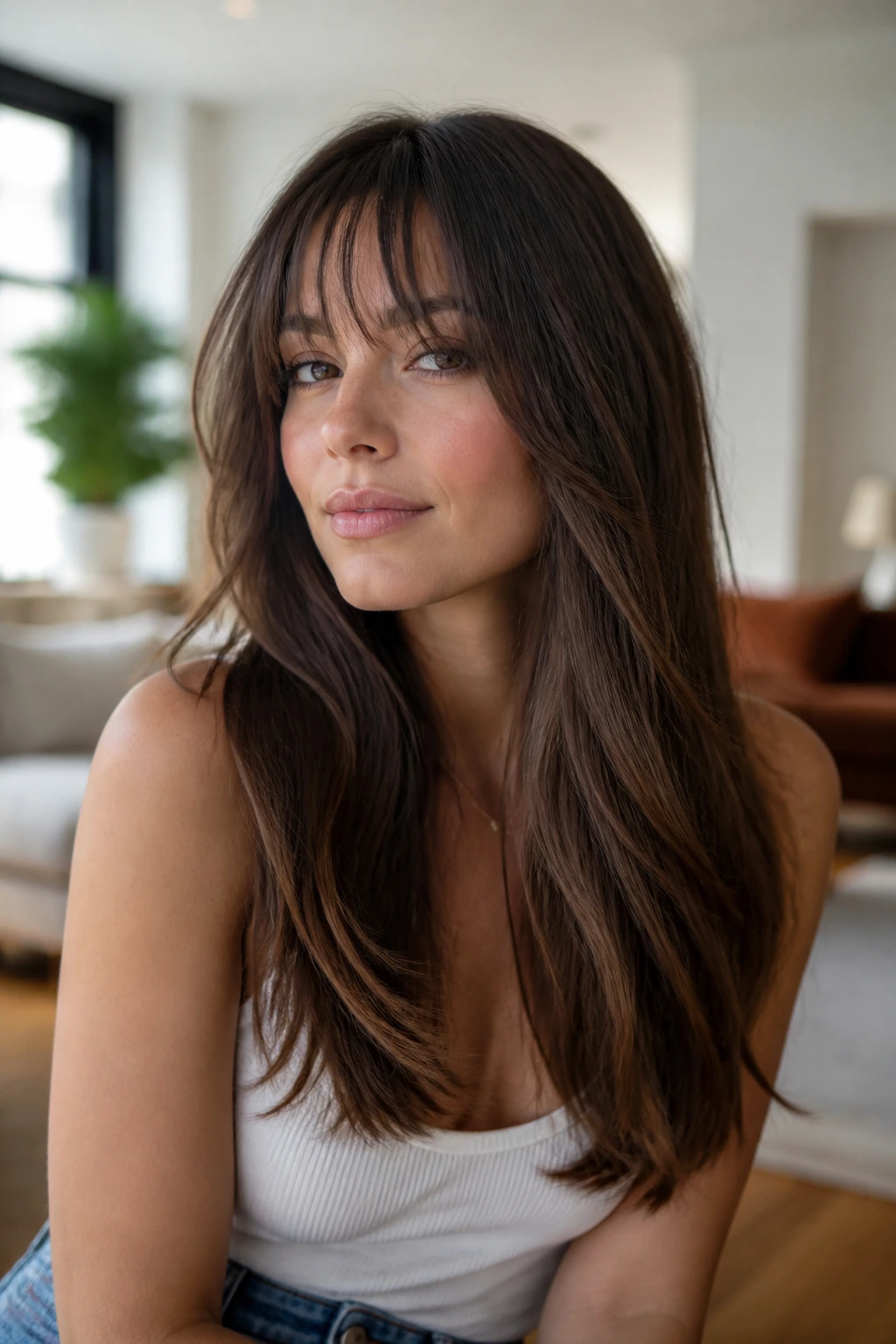
This style is inspired by iconic French fashion figures, featuring long, barely-there layers concentrated at the very bottom of the hair length, paired with long, wispy bangs that skim the eyelashes. It is a fantastic option for someone who wants to keep as much of their hair’s weight as possible while still introducing some movement.
The Birkin bangs are very thin, meaning they only use a small triangle of hair from the front of your head. This makes them incredibly easy to manage; if you are having a bad hair day or the humidity is unbearable, you can easily sweep them to the side or pin them back with a simple bobby pin.
Because the layers are concentrated at the ends, the weight of the top section of your hair helps pull down frizz, keeping the canopy smoother without the need for heavy styling products. A simple run-through with a lightweight styling cream is all it takes to keep this looking chic and intentional.
9. V-Shaped Back Layers with Drapey Face-Framing Bangs
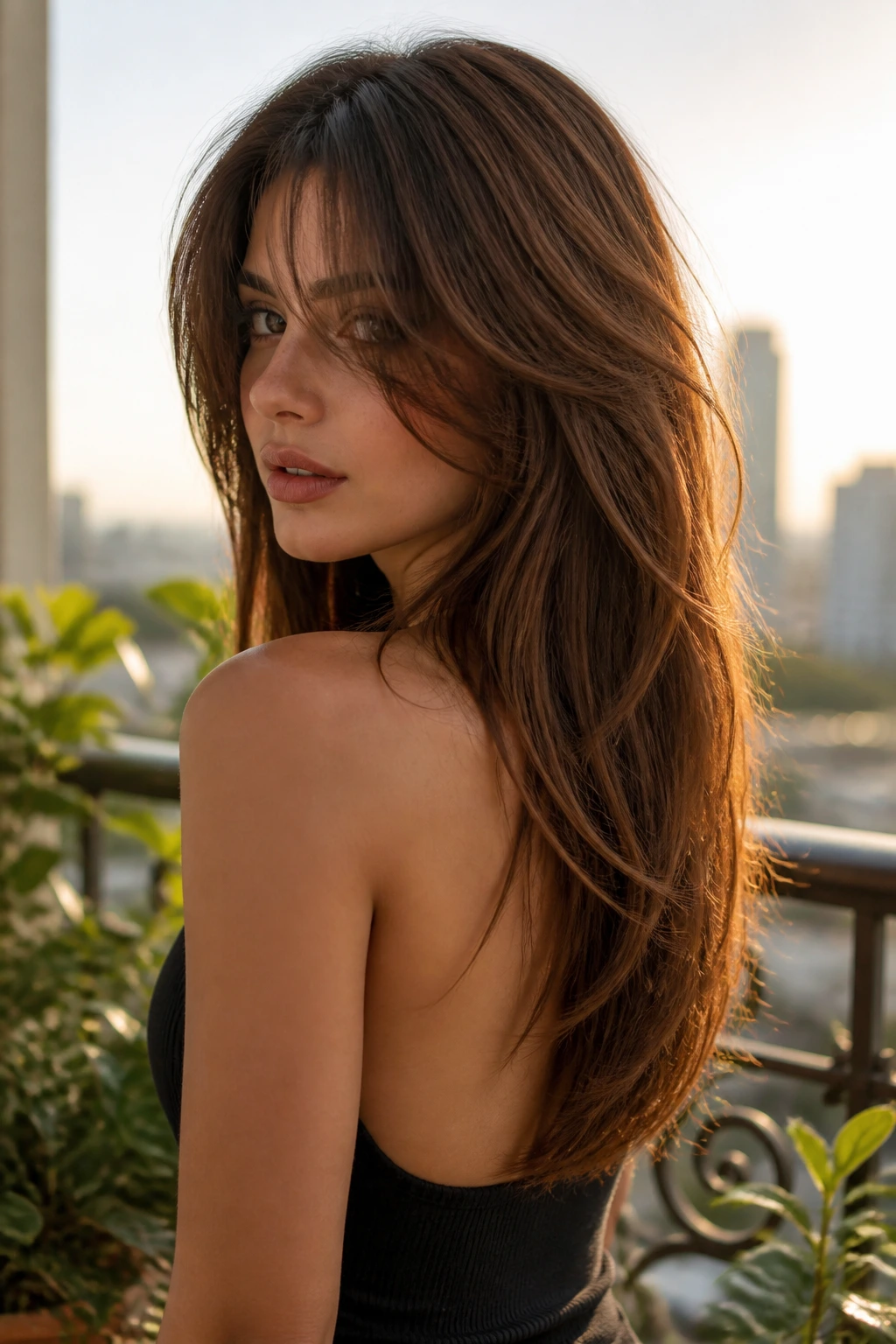
If you love the look of long hair from behind but hate how it drags your face down, a V-cut is the perfect compromise. The hair is cut shorter around the face and tapers into a long, sharp point in the back. This creates beautiful cascading layers that stack on top of each other, providing natural movement and preventing the hair from clumping into one frizzy mass.
What to Tell Your Stylist
Ask for a sharp V-line in the back with face-framing layers that connect to your bangs. The bangs should be cut as long, drapey pieces that start at the bridge of your nose and slope downward toward your ears.
- Styling method: Blow-dry the drapey bangs away from your face with a medium round brush.
- Natural air-drying: Apply a curl-defining foam to the length, then twist the hair into two low buns while it dries.
- Ideal face shape: Oval, round, or heart-shaped, as the V-cut lengthens the silhouette.
- Key benefit: Greatly reduces the weight of thick hair without sacrificing the length in the back.
When you release the buns, you will have soft, heatless waves that blend perfectly with the sweeping face-framing bangs, turning potential frizz into beautiful, structured body.
10. Seamless Invisible Layers with Micro Bangs
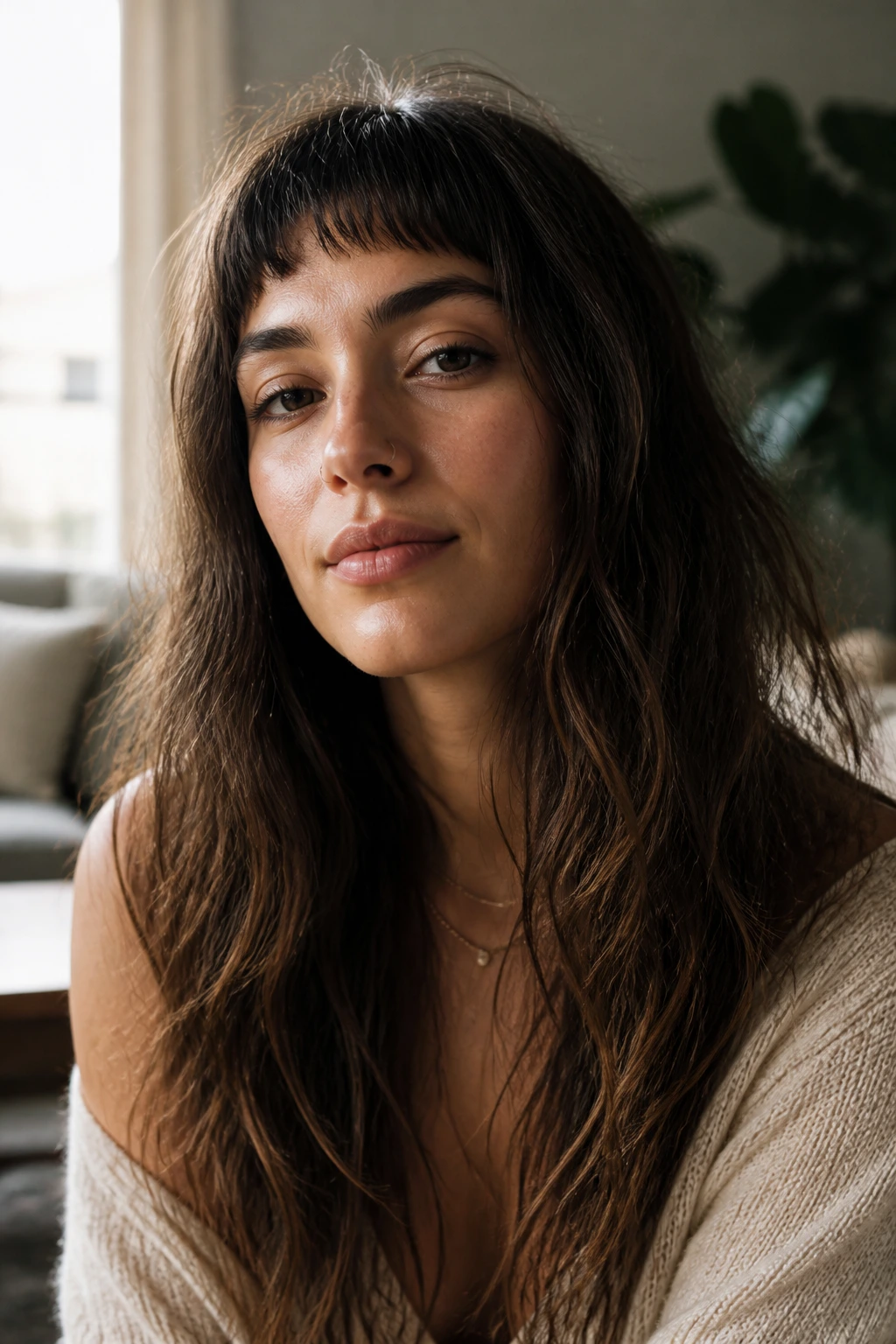
Micro bangs, also known as baby bangs, are a bold choice, but when paired with long, seamless layers, they create a striking, modern look. The key to making micro bangs work on frizzy hair is to cut them with a soft, textured edge rather than a blunt line. This prevents them from looking like a straight shelf across your forehead when they swell.
The seamless layers throughout the rest of the hair are cut using a technique called tension cutting, where the hair is held loosely to allow its natural wave pattern to assert itself during the cut. This ensures that the layers stack together without any visible lines, creating a soft, cloud-like volume that supports the short bangs.
To keep micro bangs looking their best, you will need to trim them every three to four weeks. However, because they are so short, they take less than two minutes to style. Simply wet them down in the morning, apply a tiny drop of smoothing serum, and blow-dry them flat with your hand or a small comb.
11. Wavy Shag Layers with Bardot Bangs
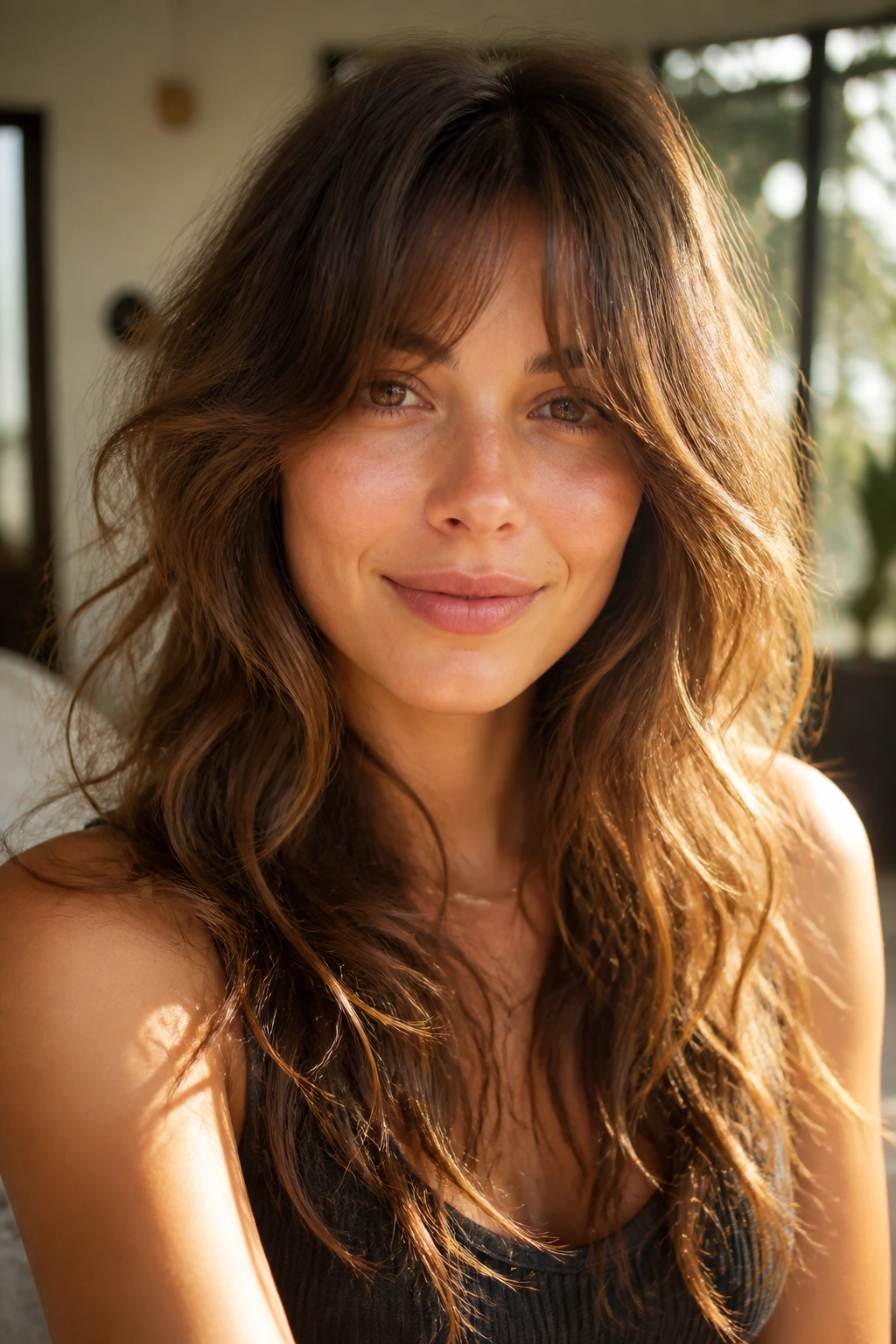
This style is all about volume, texture, and a relaxed, slightly messy vibe. Inspired by the classic French aesthetic, Bardot bangs are parted down the middle, shorter in the center, and longer on the sides, creating a soft curtain effect that frames the eyes. When paired with choppy, multi-length shag layers, this cut turns frizzy waves into a beautiful, voluminous style.
The beauty of this cut lies in its imperfection. The shag layers are designed to look lived-in and piece-y, meaning that as your hair frizzes throughout the day, it actually enhances the style. The frizz adds grit and texture, making the shag look fuller and more dynamic.
To style, apply a sea salt spray or lightweight texturizing mousse to damp hair, scrunching it thoroughly from ends to roots. Let your hair air-dry, or use a diffuser to build extra volume at the crown. Once dry, shake out your roots with your fingers to create a soft, tousled finish that looks effortlessly cool.
12. Blunt-Cut Long Layers with Piece-y Bangs
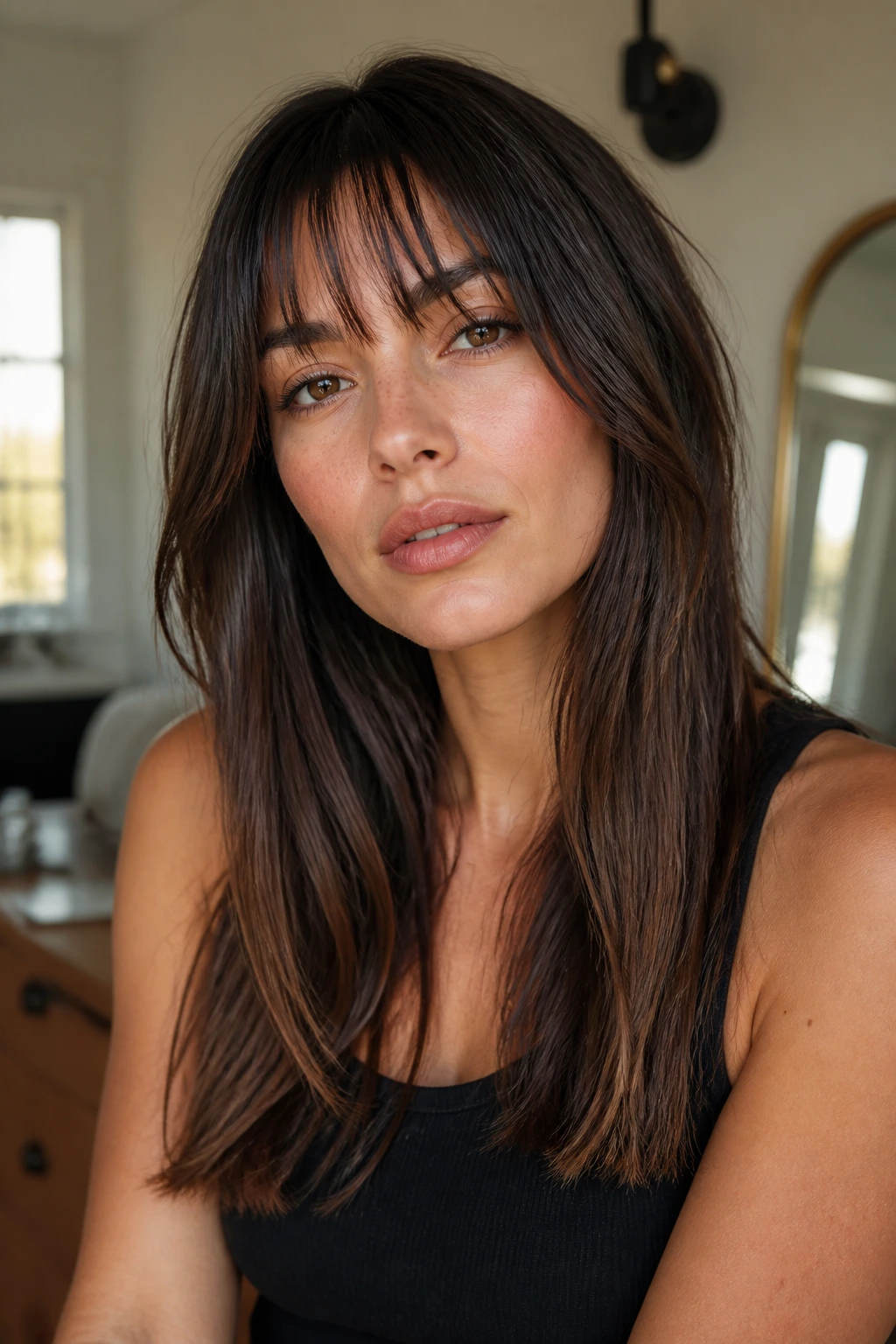
This cut is an excellent option for those with medium-density hair who want a structured look without the heaviness. While the layers themselves are cut with a blunter edge to keep the ends looking thick and healthy, they are placed far apart to prevent a blocky silhouette. This spacing allows each layer to move independently, creating natural separation.
The piece-y bangs are cut to sit just below the brow, with the stylist slicing into the ends to create distinct sections. This prevents the bangs from looking too dense, allowing them to breathe and move even when the weather is warm or humid.
A Comparative Look
Compared to soft, feathered styles, this blunt-layered approach offers more definition and weight at the perimeter.
- Structure: Blunt ends provide a strong baseline, while long intervals between layers add movement.
- Bangs style: Piece-y and separated, showing hints of the forehead.
- Best for: Medium hair that is prone to surface frizz but has a relatively straight-to-wavy pattern.
- Maintenance: Requires a trim every six to eight weeks to keep the blunt edges looking clean.
This style is perfect for those who like to alternate between air-drying their natural texture and doing a smooth blow-dry, as the blunt layers look beautiful both ways.
13. Razored Perimeter Layers with Wispy Curtain Fringe
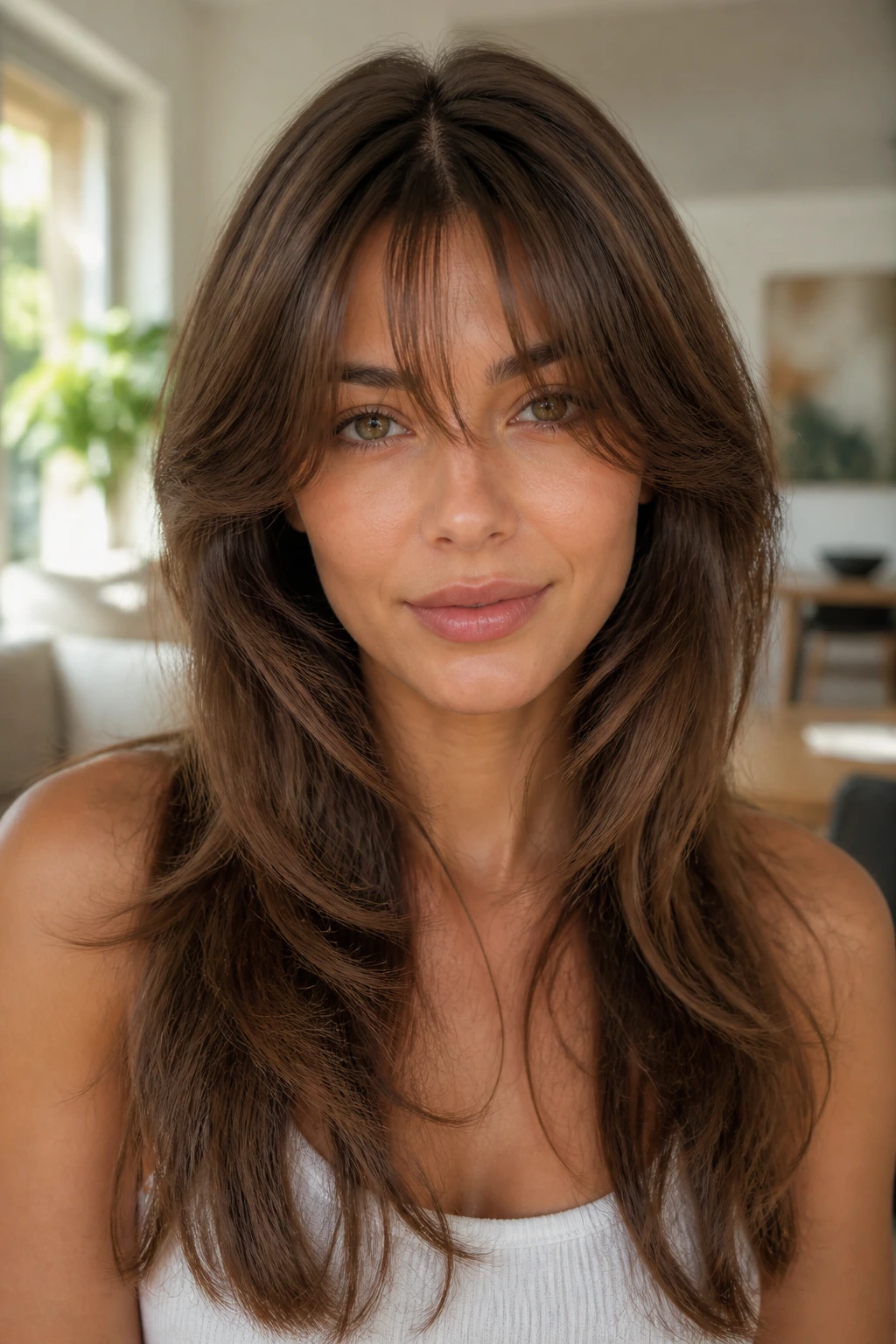
Using a razor on frizzy hair is a controversial topic in the hair world. If done incorrectly, a razor can fray the cuticle and actually increase frizz. However, when used by an experienced stylist on wet hair with a brand-new, sharp blade, a razor can create incredibly soft, weightless perimeters that are impossible to achieve with scissors alone.
This cut combines these ultra-soft perimeter layers with a wispy curtain fringe. The razor is used to slice down the outer edges of the hair, removing bulk and creating a feathered effect that tapers beautifully toward the ends. The curtain fringe is also textured with the razor, allowing it to blend into the sides.
Because the ends are so light, they do not clump together or swell into a heavy shape. Instead, they catch the air, creating a soft, floating movement. To style, apply a lightweight curl cream to wet hair, then let it dry naturally. A tiny touch of hair oil on the very tips of your layers will keep them looking defined and healthy.
14. De-bulked Internal Layers with Soft Crescent Bangs
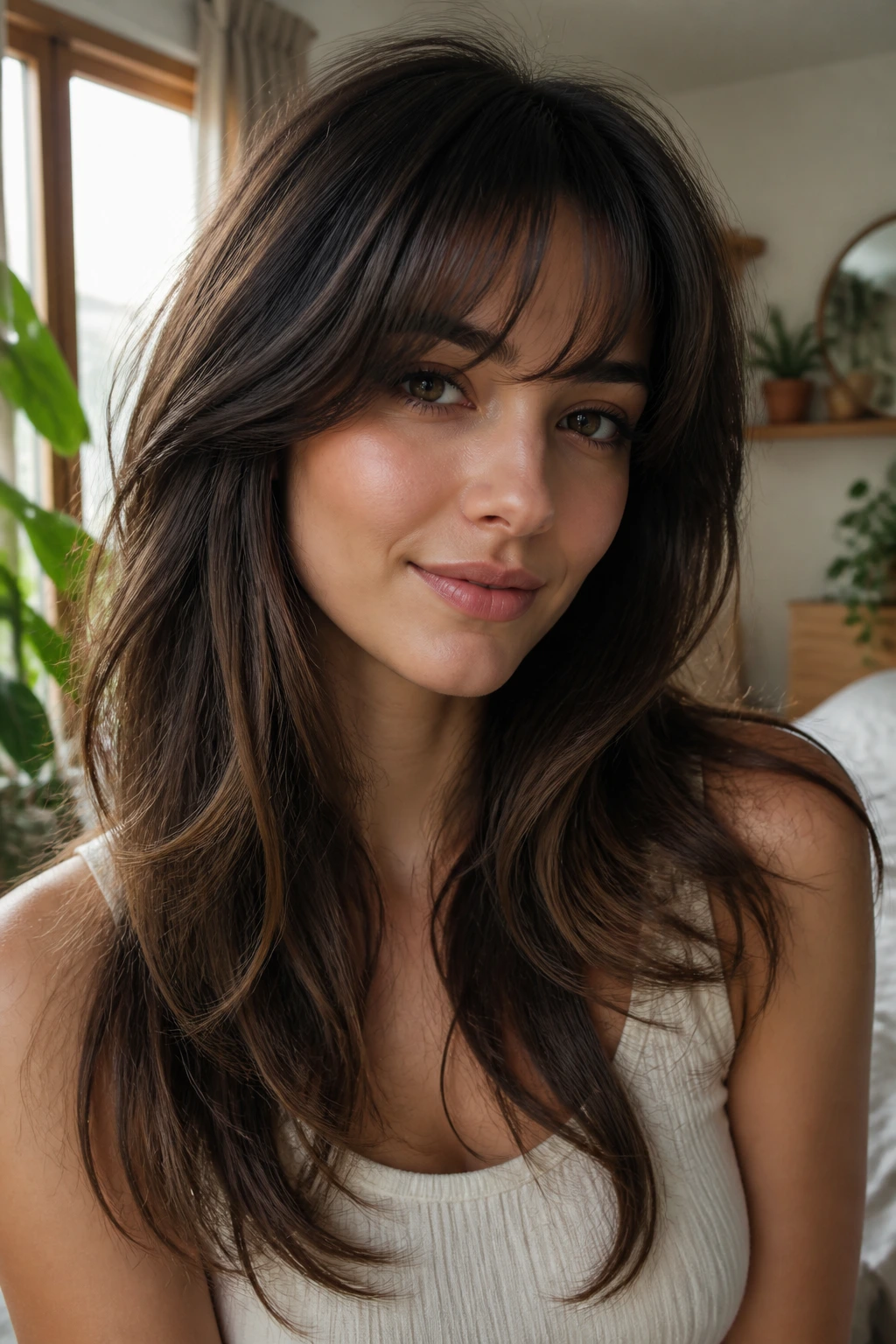
For those with extremely thick, dense hair, the main challenge is managing the sheer volume of hair. This cut uses specialized internal texturizing shears to remove weight from the inside of the haircut, creating “pockets” of space that allow the remaining hair to lay closer to the head.
The soft crescent bangs are cut in a curved shape, shorter in the middle and arching down to meet the face-framing layers at the temples. This curve mimics the natural shape of the forehead, making it a very flattering option for most face shapes.
Because the weight has been removed internally, the hair feels incredibly light and bouncy, and the crescent bangs frame the face without looking heavy or overwhelming. This is an ideal cut for anyone who loves the look of thick, voluminous hair but wants to cut down on their wash-and-style time.
15. Multi-Textured Long Layers with Tapered Side Bangs
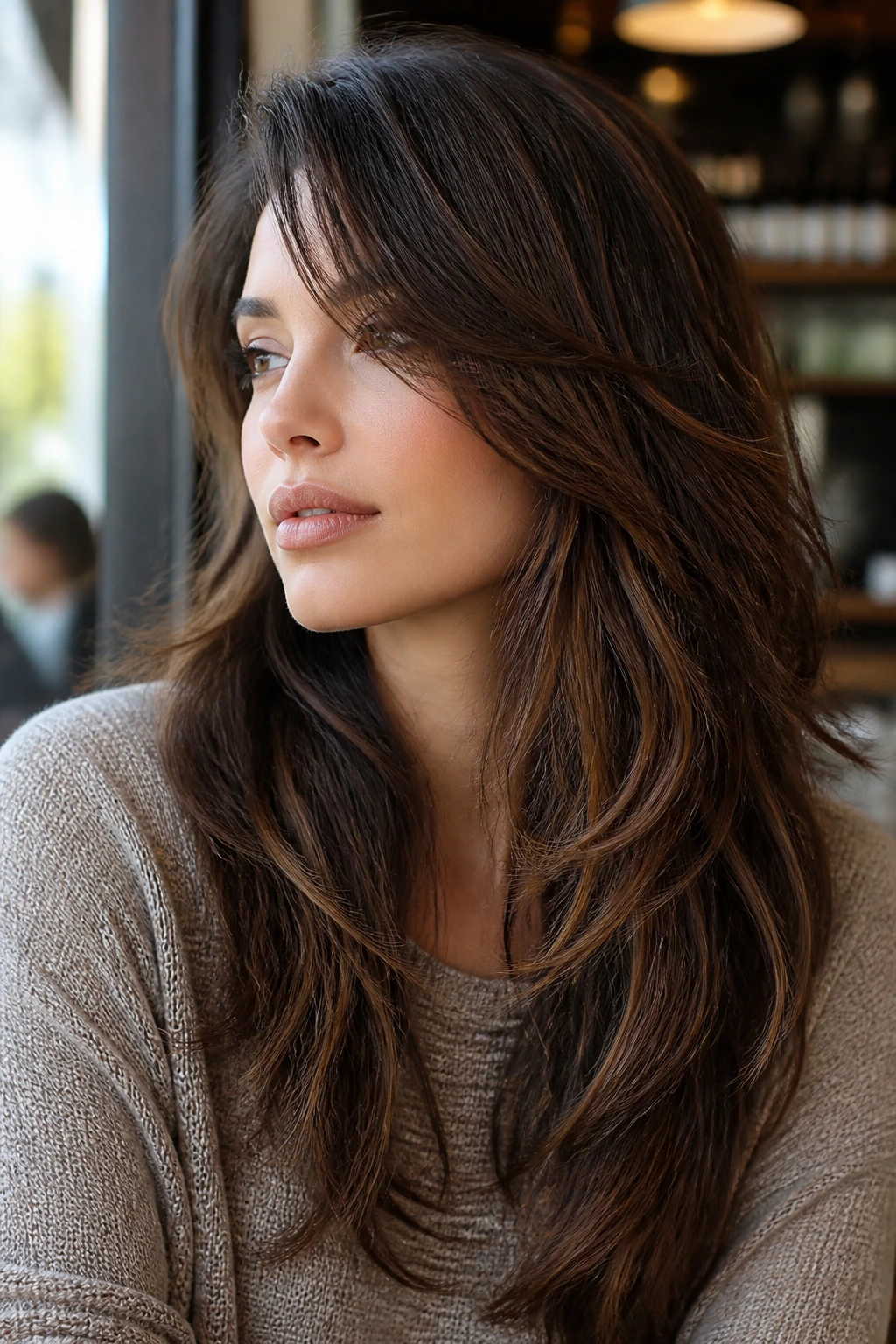
If your hair has multiple textures—for example, wavy underneath but straight and frizzy on top—you need a cut that can bridge these differences. This style uses varied layer lengths designed to blend different textures together, paired with a long, tapered side-swept bang that can be styled to either side.
The side-swept bangs are particularly useful for multi-textured hair because they leverage the natural weight of the hair to keep them in place. By tapering the bangs so they are shorter on one side and blend into the long layers on the other, you create a diagonal line that draws the eye across the face, distracting from any uneven texture.
Drying and Styling Prep
When dealing with multiple textures, your product application needs to be strategic.
- Root prep: Apply a lightweight volumizing foam to the roots of the flatter sections.
- Mid-lengths: Use a moisturizing leave-in conditioner on the coarser, frizzier sections.
- Bangs styling: Blow-dry the side bangs first using a flat brush, sweeping them in the opposite direction of how they will lay to build natural volume at the root.
Once dry, let the bangs fall into their natural position. The long layers can be left to dry naturally, with the different textures blending together into a rich, dimensional style.
16. Voluminous U-Cut Layers with Wispy Air Bangs
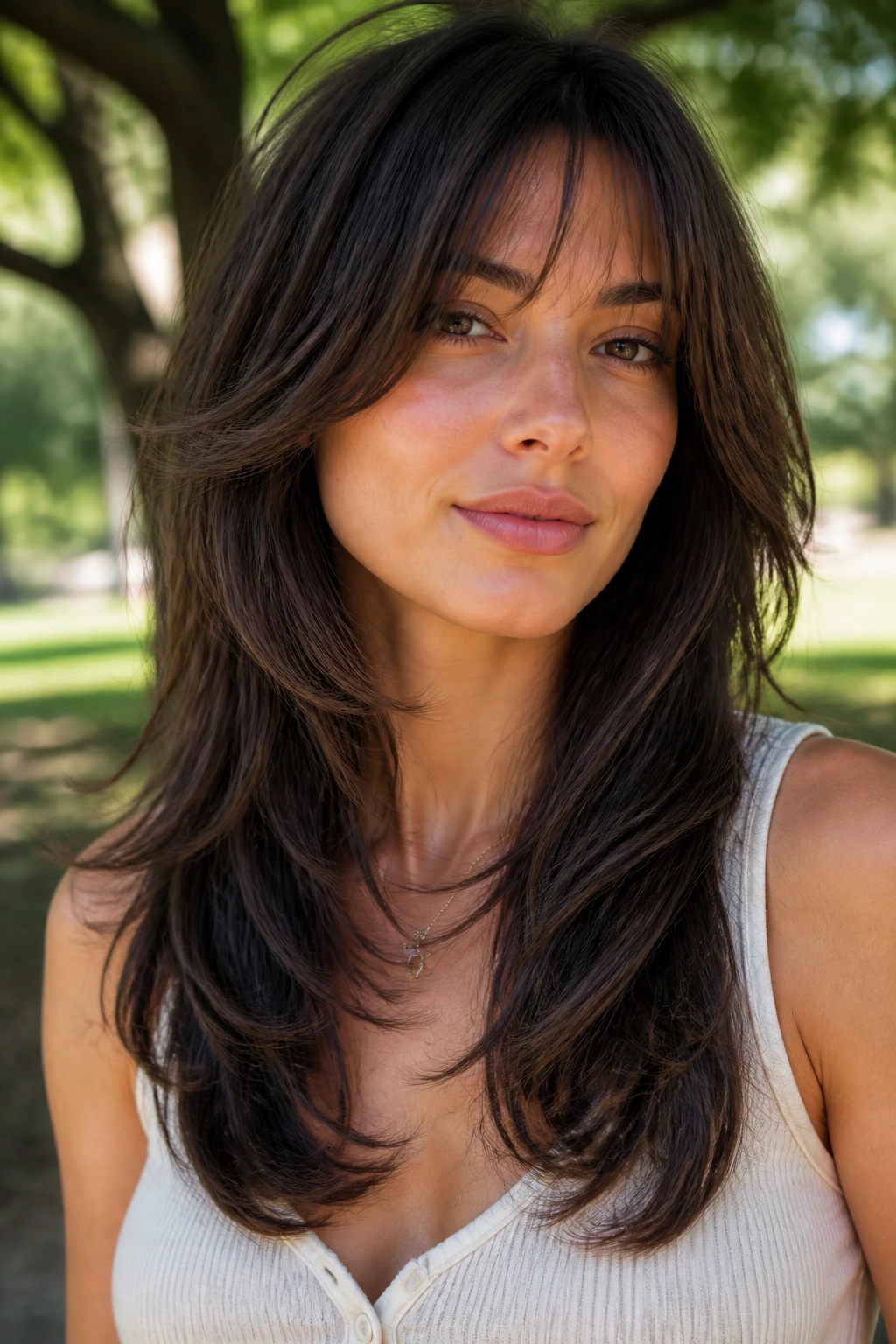
A U-cut is a classic shape where the hair is cut shorter at the sides and curves down into a rounded “U” shape in the back. This is an incredibly soft, feminine silhouette that prevents the hair from looking flat or heavy. When paired with wispy air bangs—an ultra-light style of fringe popular for its soft, breathable look—this cut creates a beautiful balance of volume and lightness.
The air bangs are so thin that they are almost invisible, consisting of just a few finely cut strands that drift across the forehead. They add a touch of softness to the face without adding any bulk, making them incredibly easy to style even on the most humid days.
The long U-cut layers in the back allow your hair’s natural waves or curls to stack beautifully, creating soft, touchable volume. This style is perfect for those who want a classic, elegant haircut that requires minimal daily styling.
17. Choppy Mid-Length-to-Long Layers with Split Bangs
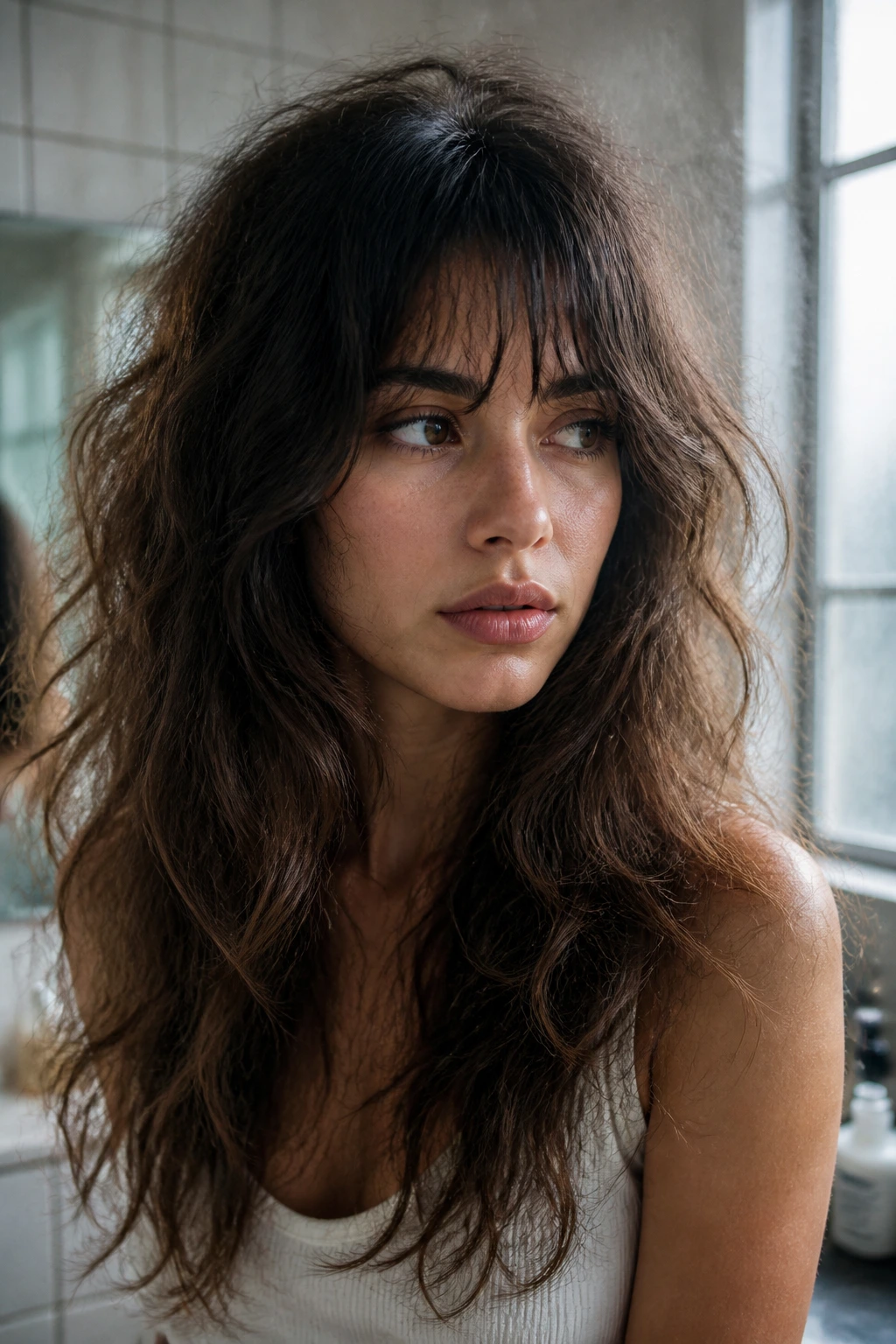
This cut is designed for those who love a modern, slightly edgy look. The layers are cut with varied, choppy lengths throughout the mid-lengths and ends, creating a textured, dimensional style that embraces natural frizz as part of its aesthetic.
The split bangs are cut to sit right around the eyes, with a distinct part in the center that allows them to frame the face like curtains. Because the ends of the bangs are choppy and textured, they do not require perfect styling to look good; a little bit of natural wave and frizz only adds to the lived-in, rock-and-roll vibe of the cut.
To style, apply a texturizing paste or wax to dry hair, focusing on the ends of the layers and bangs to create definition and separation. This is a fantastic, low-maintenance style that looks even better on second or third-day hair.
18. Crown-Heavy Shag Layers with Sweeping Bangs
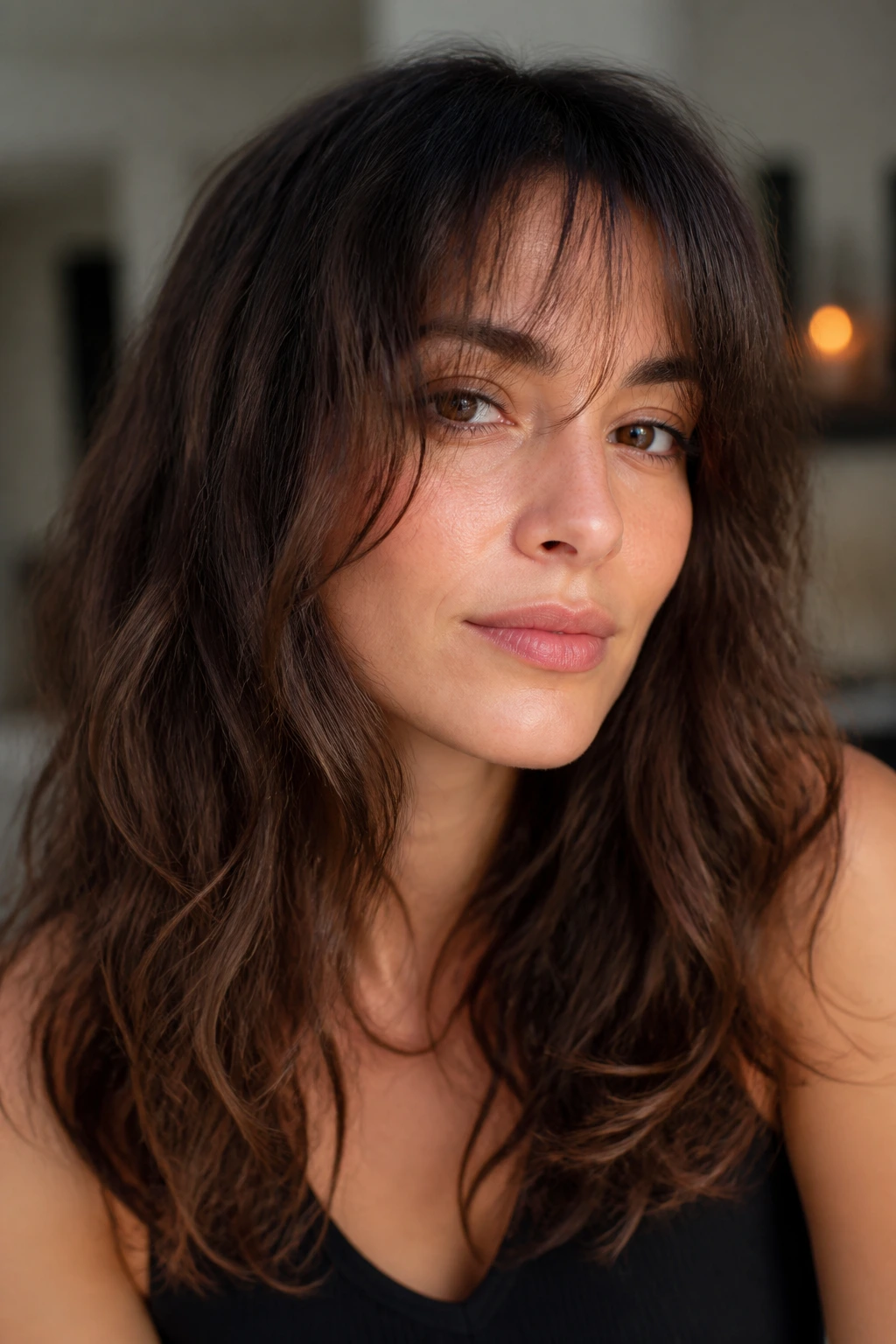
For those who want to maximize their hair’s volume, this cut concentrates short, textured shag layers at the crown of the head, creating beautiful lift and height. The layers then cascade down into long, thinned-out lengths, paired with long, sweeping side bangs that blend into the face-framing layers.
By putting the volume at the top of the head, this cut draws the eye upward, creating a flattering, lifting effect. The sweeping side bangs add a touch of softness, framing the eyes and cheekbones beautifully.
This style is particularly suited for those with fine, frizzy hair that tends to lay flat at the roots. The short crown layers provide built-in volume, while the longer lengths keep the style looking soft and feminine. A quick blow-dry at the roots with a round brush is all it takes to keep this cut looking voluminous and styled.
Essential Styling Techniques for Long Layers and Bangs
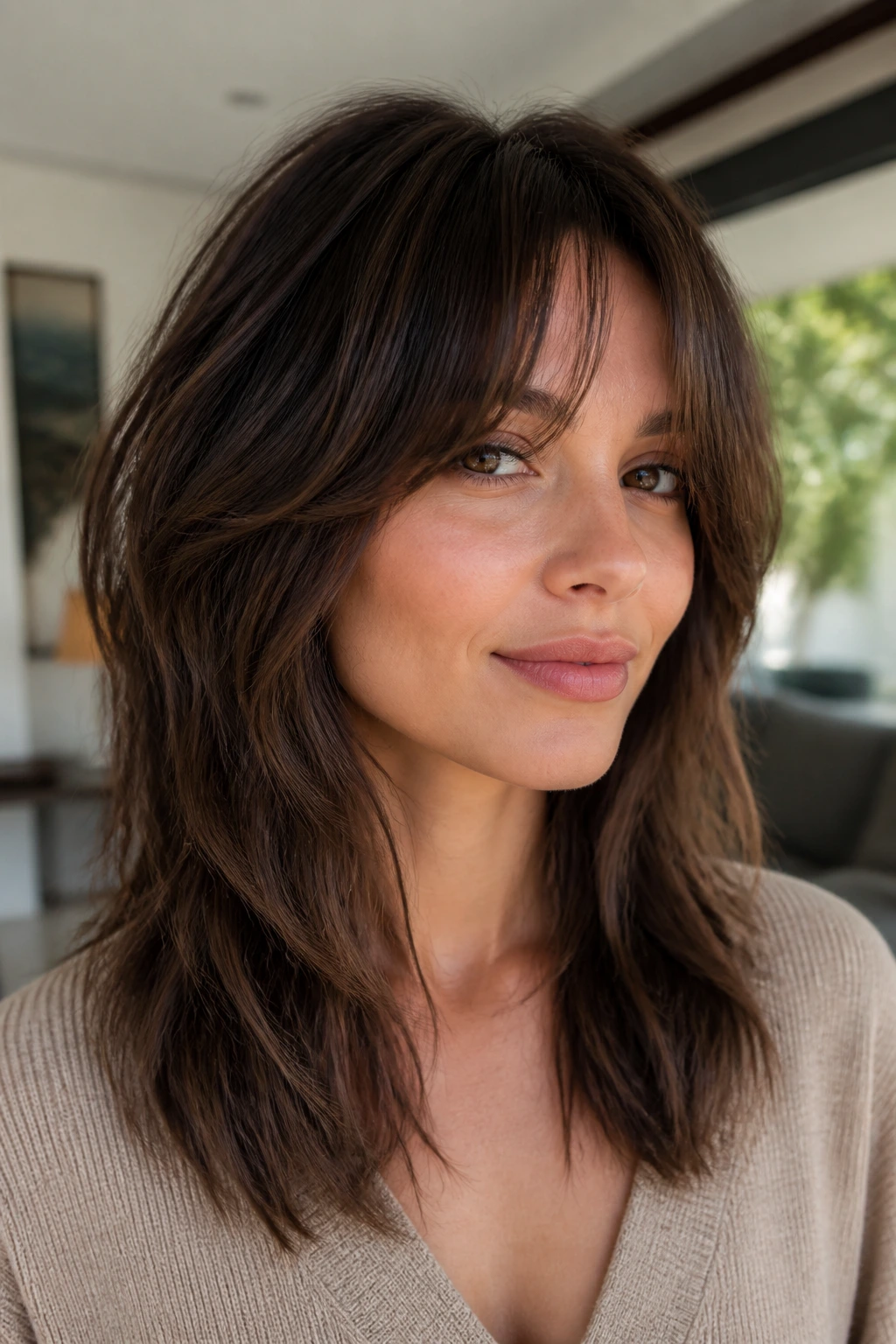
Getting the right cut is only half the battle; knowing how to style it at home is what makes your daily routine easy. When dealing with frizzy hair, your goal is to seal the hair cuticle to lock in moisture and lock out humidity. This process starts the moment you step out of the shower.
The Power of Blotting, Not Rubbing
Never rub your hair with a traditional terry cloth towel. The tiny loops in cotton towels act like sandpaper on your hair cuticle, roughing it up and instantly creating frizz before your hair even has a chance to dry. Instead, use a microfiber towel or a clean cotton t-shirt to gently blot and squeeze the water out of your hair. This preserves your natural wave pattern and keeps the cuticle lying flat.
Styling Bangs on Wet Hair
If you have bangs, you must style them immediately after washing your hair. Bangs dry incredibly fast because they are thin and exposed to the air. If you let them air-dry even halfway before styling them, they will dry in their natural, often chaotic pattern, making them much harder to smooth out.
- Wet down your bangs completely if they have started to dry.
- Apply a pea-sized amount of heat protectant or smoothing cream.
- Using a blow dryer with a nozzle attachment and a flat paddle brush, brush your bangs flat against your forehead from side to side.
- Keep the dryer on medium heat, pointing the airflow downward from the roots to the ends.
- Once dry, let them fall into their natural part or shape; they will lie flat and smooth without looking stiff.
For the rest of your long layers, you can use a diffuser on your blow dryer or let them air-dry, using your hands to gently scrunch in your styling products.
The Anti-Frizz Product Toolkit for Bangs and Layers
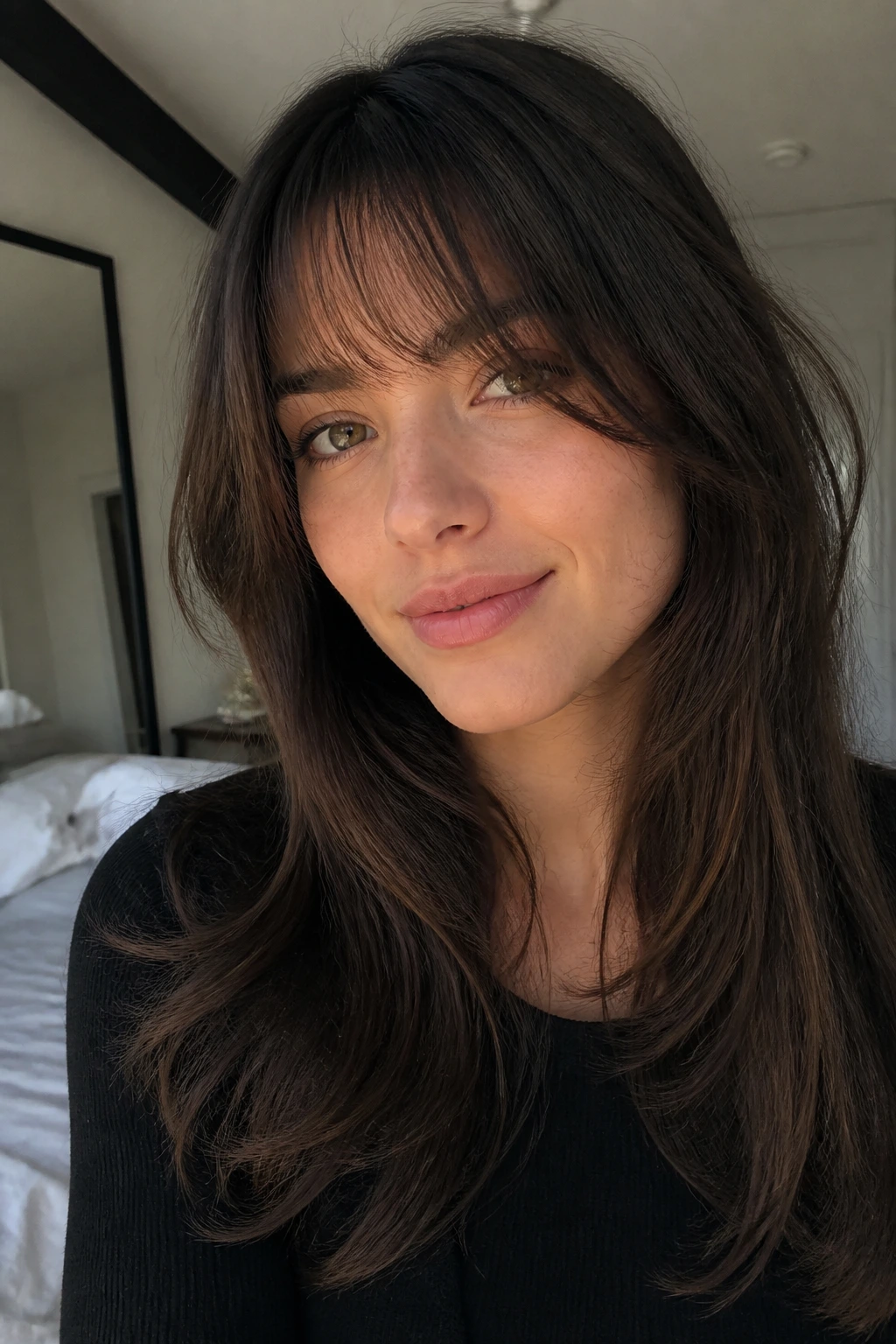
To keep your long layers and bangs looking their best, you need a curated selection of products designed to hydrate, smooth, and protect your hair. Frizzy hair is hungry for moisture, so look for products that contain nourishing ingredients while avoiding heavy silicones that can weigh your hair down over time.
| Product Type | Purpose | How to Apply | Key Ingredients to Look For |
|---|---|---|---|
| Leave-In Conditioner | Provides a base layer of hydration; softens coarse strands. | Apply to clean, damp hair, focusing on the mid-lengths and ends. | Shea butter, argan oil, panthenol. |
| Smoothing Cream | Seals the cuticle; protects against heat styling and environmental humidity. | Smooth a small amount over damp hair before air-drying or blow-drying. | Keratin, silk proteins, coconut oil. |
| Lightweight Hair Oil | Adds shine; defines layers; breaks up crunchy product casts. | Press 2-3 drops into dry hair, focusing on the ends. | Jojoba oil, squalane, marula oil. |
| Humidity-Blocking Spray | Creates an invisible barrier against moisture in the air. | Spray lightly over dry, finished styles before stepping outside. | Copolymer barrier agents, UV filters. |
By using these products in combination, you can create a custom routine that keeps your frizz under control while celebrating your hair’s natural volume and texture.
How to Trim and Maintain Your Bangs at Home
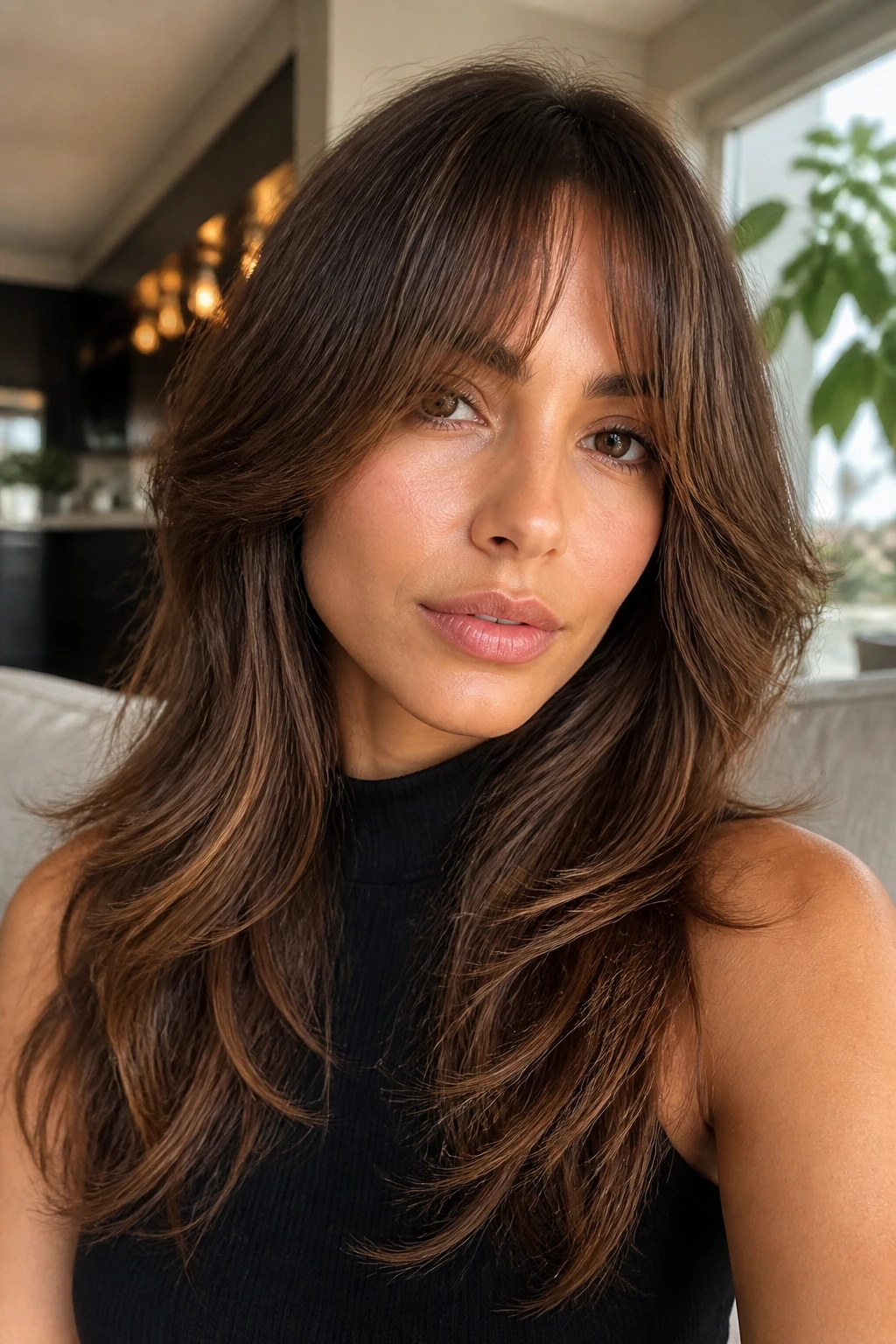
While you should always leave your long layers to a professional stylist, learning how to do a quick trim on your bangs at home can save you a trip to the salon and keep your style looking fresh between cuts. The secret to a successful home trim is to use the right tools and go slowly.
Invest in Professional Shears
Never use kitchen scissors, paper scissors, or nail clippers to cut your hair. These blades are dull and will crush the hair shaft rather than slicing it cleanly, leading to instant split ends and more frizz. Invest in a pair of inexpensive professional styling shears; they are incredibly sharp and will make your trims precise and easy.
The Dry Trim Method
Always trim your bangs when they are completely dry and styled how you normally wear them. Wet hair stretches significantly; if you cut your bangs while wet, they will bounce up and end up much shorter than you intended.
- Section off your bangs, pinning the rest of your hair back so you do not accidentally cut it.
- Comb your bangs down flat against your forehead.
- Hold your shears vertically, pointing the tip of the blade upward into the hair.
- Using only the very tips of the shears, make tiny vertical snips into the bottom edge of your bangs.
- Work your way slowly from the center of your forehead outward to the sides.
- Step back and look in the mirror frequently to check the balance.
By cutting vertically rather than horizontally, you create a soft, textured edge that is incredibly forgiving. If you make a mistake, it will blend in naturally rather than creating a harsh line.
Wrapping Up
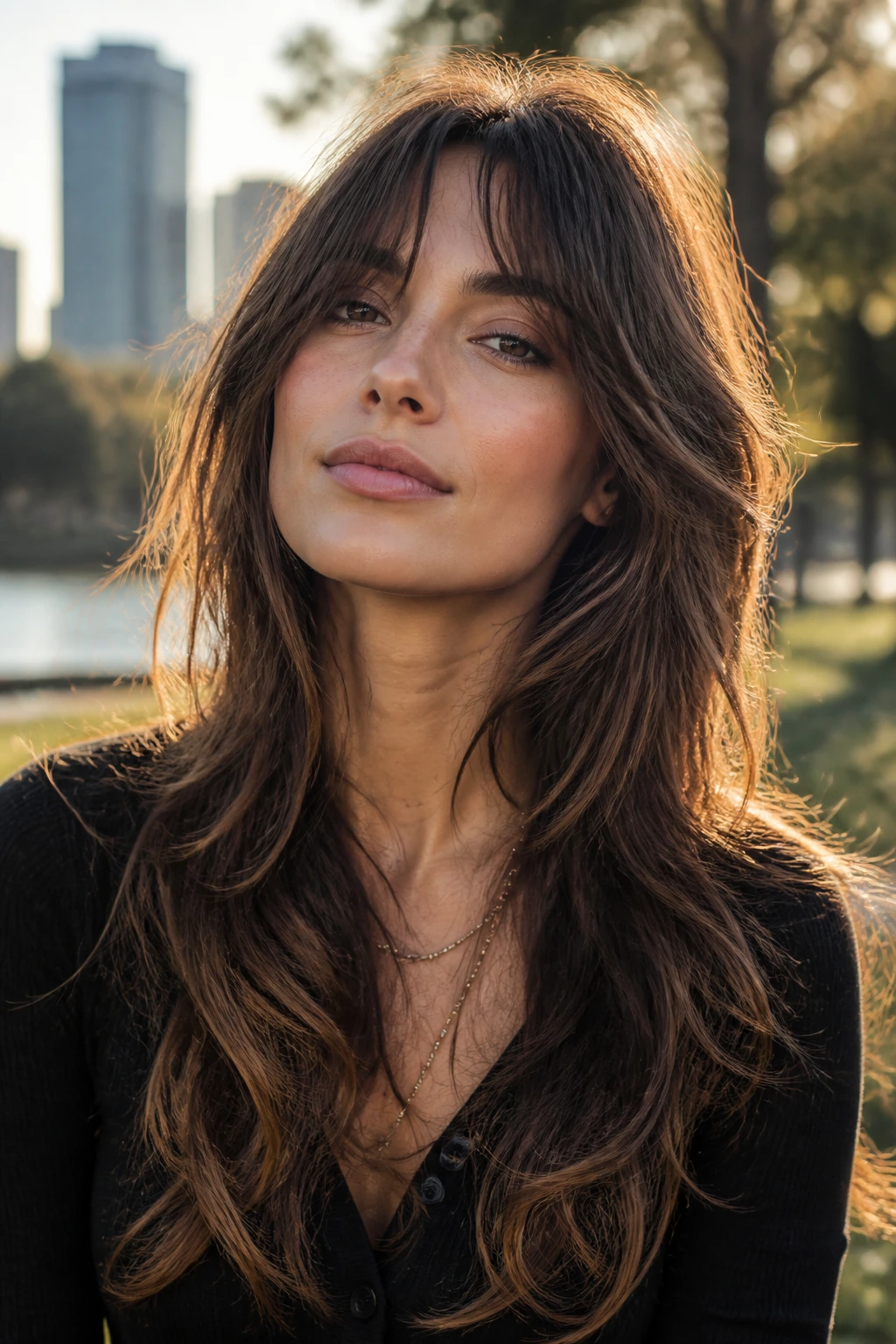
Living with frizzy hair does not mean you are destined to wear a boring, single-length cut for the rest of your life. By embracing the structure of long layers and choosing a bang style that works with your natural movement, you can create a gorgeous, dynamic style that is full of character.
Whether you choose a soft, romantic shag with curtain bangs or a bold, modern U-cut with air bangs, the key is to work with your texture rather than fighting it. With the right cut, a few high-quality moisturizing products, and a simple styling routine, you can turn your natural frizz into your hair’s greatest strength.