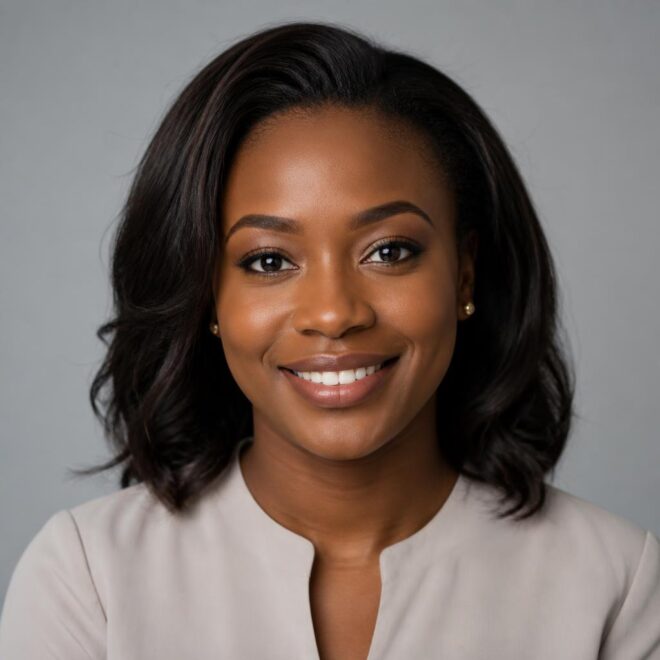


Straight hair has a reputation for being effortless, but anyone who lives with flat, stick-straight strands knows the daily reality. It can easily look lifeless. Without natural waves or curls to create movement, straight hair often just sits there, hanging like a heavy curtain around the face. Cutting a fringe is one of the most effective ways to add instant structure, shape, and personality to straight hair without losing your length.
But straight hair is also completely unforgiving. Unlike wavy or curly hair, which easily hides a slightly crooked line or uneven texture, straight hair shows every single scissor snip. A bad haircut has nowhere to hide. If a stylist pulls your hair too tight while cutting it wet, your bangs will shrink up into a jagged, uneven mess the second they dry. Many people walk into a salon looking for soft, wispy fringe and walk out with what looks like a blunt bowl cut.
To get beautiful results, you need a style that works with the natural fall of your hair, not against it. You need a cut that understands how straight strands jump, separate, and lie flat. Over the years, I have analyzed dozens of fringe styles, observing how they behave in the real world on different hair densities and face shapes. Some cuts require daily styling work, while others practically style themselves as they air dry.
The absolute best options for straight hair range from bold, graphic statements to soft, barely-there wisps. Whether you have fine hair that needs a boost of volume, or thick, heavy locks that require significant weight removal, one of these styles will completely change how you feel about your straight hair.
Why Straight Hair Needs a Specific Kind of Fringe
Straight hair lacks the natural bounce and elasticity of textured hair. When a curly strand is cut, it springs up and finds its place among its neighbors. When a straight strand is cut, it stays exactly where it lands. This means the cut must be technically perfect. Even a millimeter of difference can make a straight fringe look lopsided.
Oil travels down straight hair much faster than curly hair. Because straight strands lie close to the scalp, they absorb sebum quickly. This can turn a thick, fluffy set of bangs into a greasy, separated mess by lunchtime. You need to consider your scalp type and daily routine before committing to a specific density of bangs.
Weight is another major factor to keep in mind. Heavy, thick straight hair tends to fall forward and flat. If you cut a solid block of bangs without removing bulk, it can overwhelm your face, making your eyes look smaller and your features feel heavy. Conversely, fine straight hair can look stringy if the bangs are too sparse. Finding that sweet spot between weight and wispy texture is the secret to making bangs work for your specific hair type.
The Secret to Cutting Flattering Bangs for Straight Hair
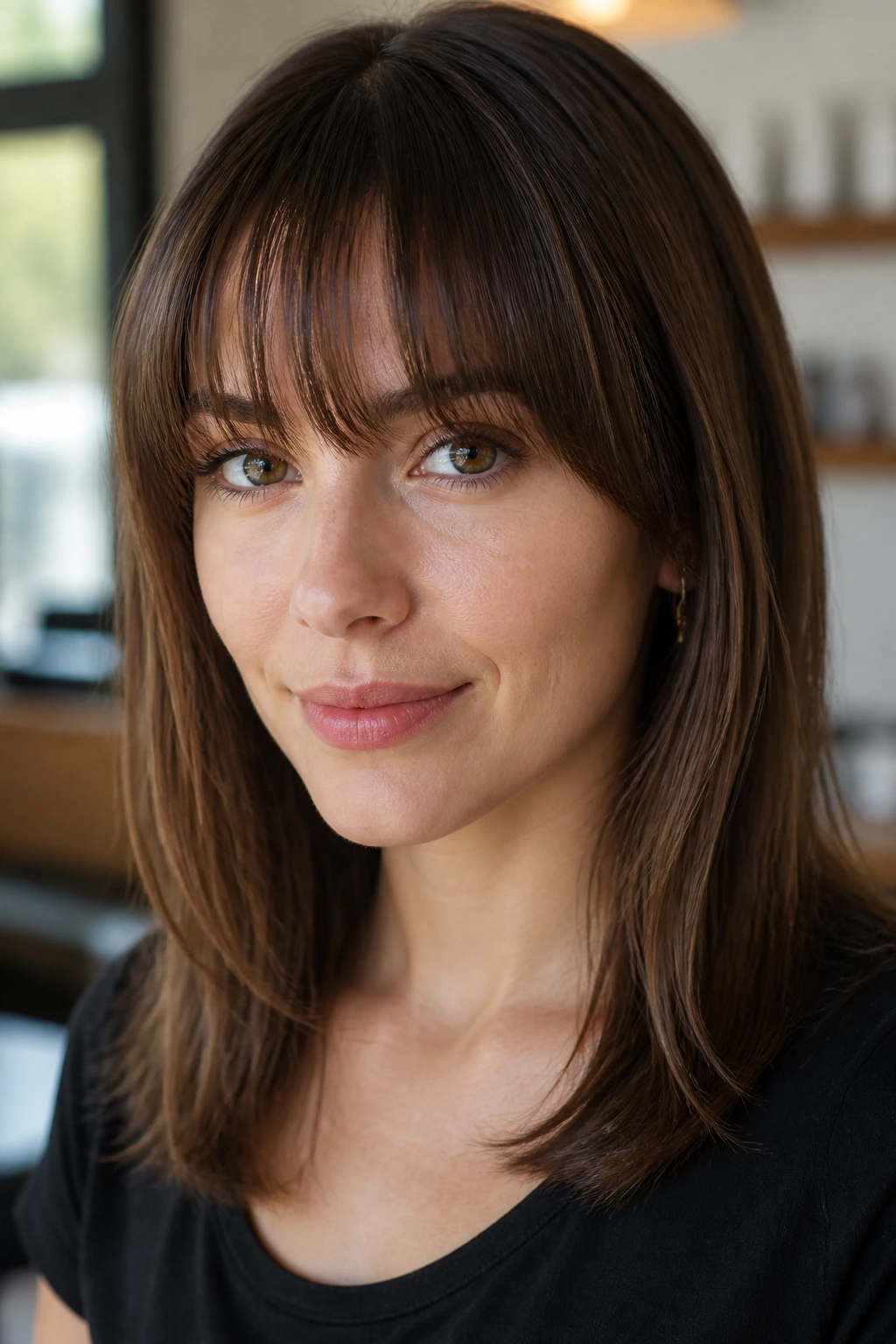
To get the perfect fringe, the actual cutting technique matters just as much as the style you choose. Many stylists make the mistake of cutting straight bangs while the hair is soaking wet. This is a recipe for disaster. Straight hair stretches significantly when wet. When it dries, it retracts, often leaving you with bangs that are much shorter than you wanted.
Instead, the main shape should always be cut dry, in its natural falling position. This allows the stylist to see exactly how your cowlicks behave. Almost everyone has a slight cowlick or separation point along their hairline. If you cut the hair wet, you cannot see where these splits happen. Cutting dry ensures the hair lies exactly how it will in your daily life.
Another critical technique for straight hair is slide-cutting or point-cutting rather than blunt chopping. Point-cutting involves holding the scissors vertically and snipping into the ends of the hair. This softens the edge, preventing that harsh, blocky look that makes bangs look like a helmet. It creates tiny, varied lengths at the tips, which helps the hair piece together naturally and move when you move.
1. Classic Heavy Blunt Bangs
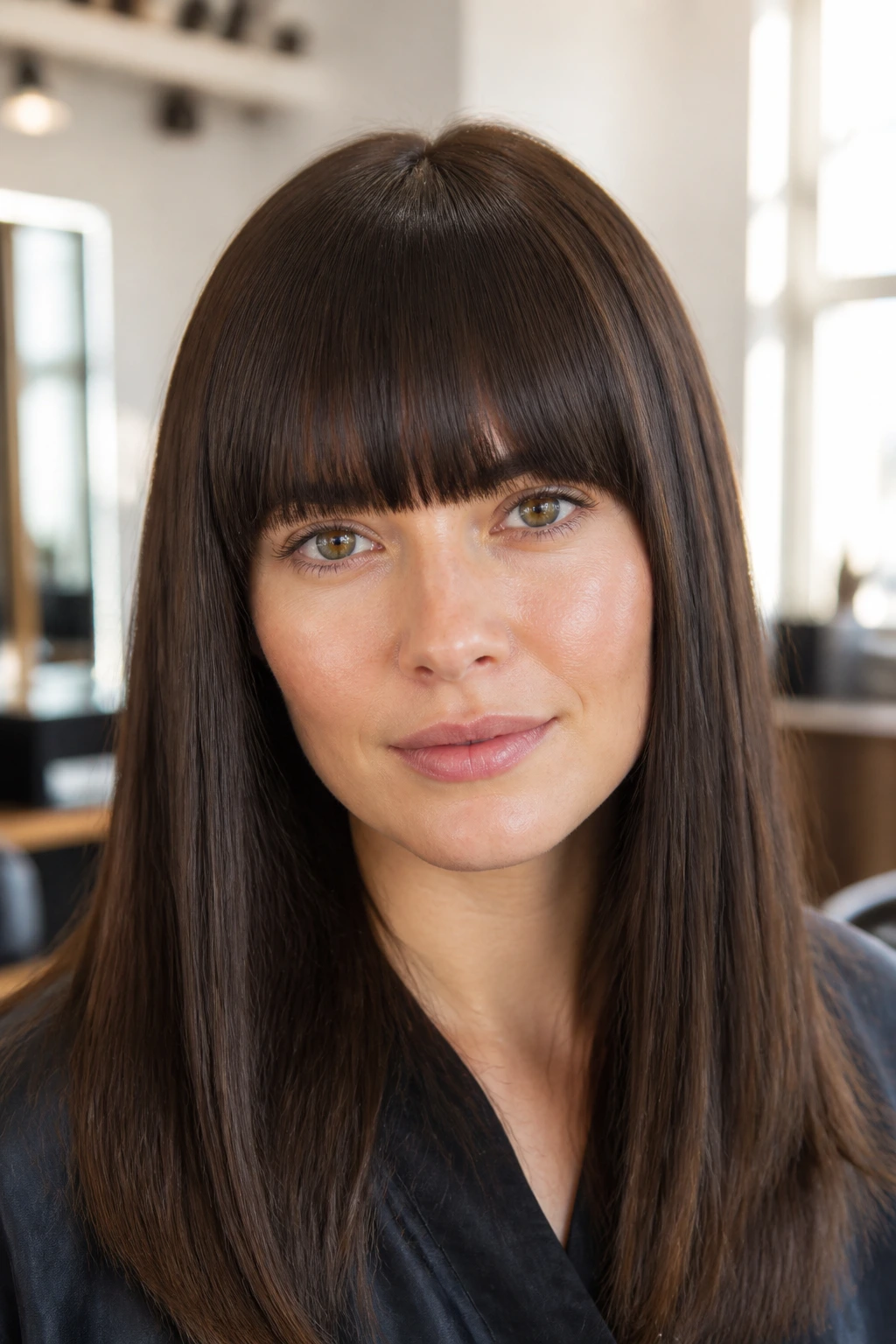
The heavy blunt fringe is the ultimate statement style for straight hair. It is graphic, bold, and highlights your eyes like no other haircut can. Because straight hair naturally lies flat, it provides the perfect smooth canvas for this precise, razor-sharp line.
Why This Style Demands Precision
When you go for a heavy blunt cut, the stylist must cut the perimeter with absolute accuracy. This style works best when the bangs are cut thick, starting further back on the crown of the head to pull enough hair forward to create a solid wall of fringe. It should graze just below your eyebrows to create a dramatic, framing effect.
Quick Hair Facts
- Best for: Thick, dense straight hair that naturally falls forward.
- Maintenance level: High. You will need trims every three to four weeks to keep the length out of your eyes.
- Styling time: Low. A quick pass with a flat iron or a round brush is all it takes.
- Face shapes: Oval, heart, and long face shapes.
Styling tip: Run a tiny drop of lightweight hair oil through the ends to keep the blunt line looking polished and prevent flyaways from breaking the clean shape.
2. Soft Feathered Curtain Bangs
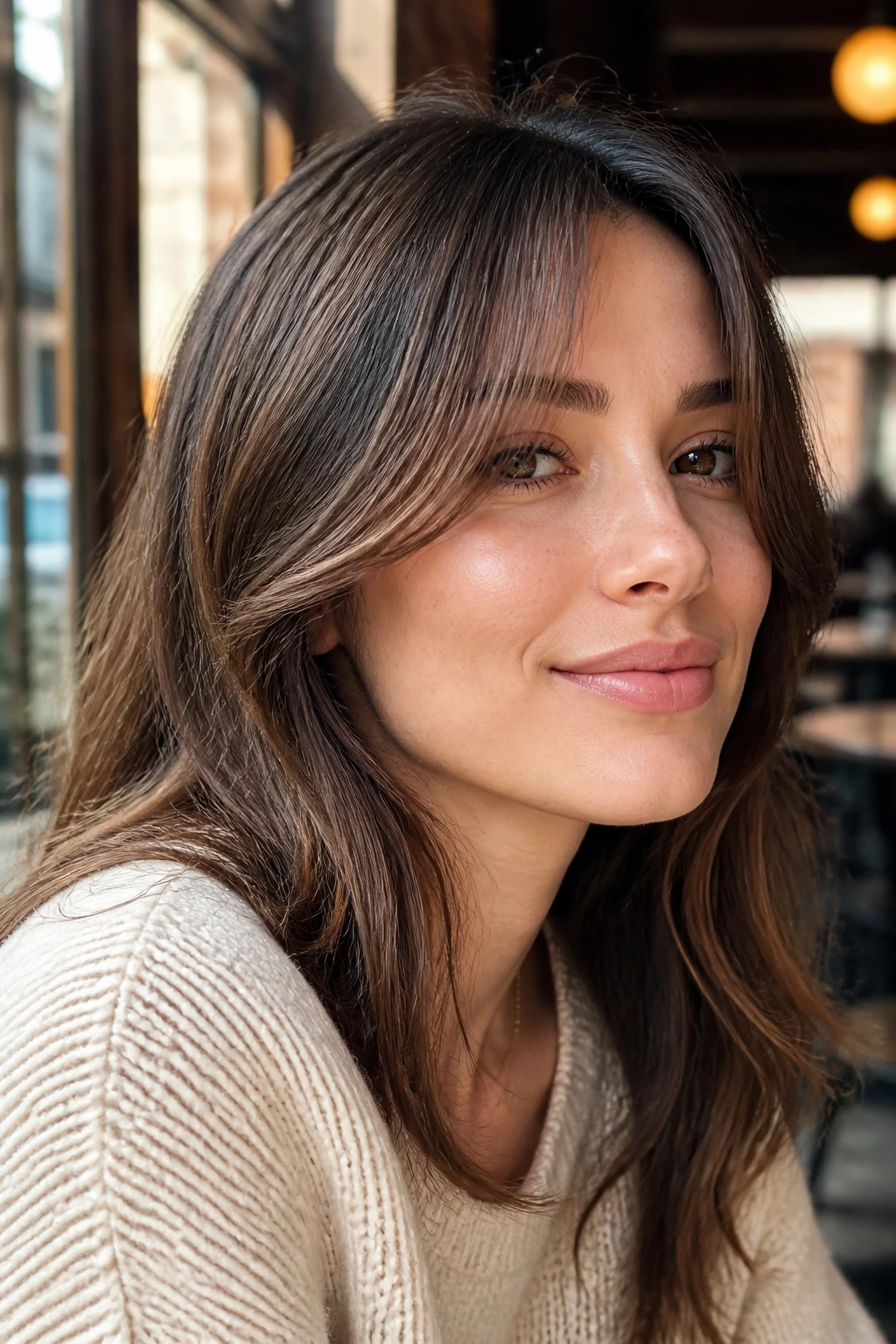
Curtain bangs are often associated with wavy hair, but they look incredibly chic on straight hair when feathered correctly. The key is to avoid a solid, heavy block of hair and instead focus on a soft, swept-open look that frames your cheekbones.
Unlike wavy hair, which naturally curves outward, straight curtain bangs need a bit of help to hold their shape. Your stylist should cut these bangs using a slide-cutting technique, starting shorter in the middle (around the bridge of your nose) and gradually sweeping down to join your longer layers at the cheekbones. This creates a soft, diagonal line that naturally wants to swing outward away from your face.
To style these, you do not need to spend hours with a blow dryer. Simply wrap the bangs around a medium-sized roller immediately after washing, blast them with warm air for thirty seconds, and let them cool while you do your makeup. When you take the roller out, they will bounce back and cascade down the sides of your face with a beautiful, soft bend.
3. Ultra-Short Micro Fringe
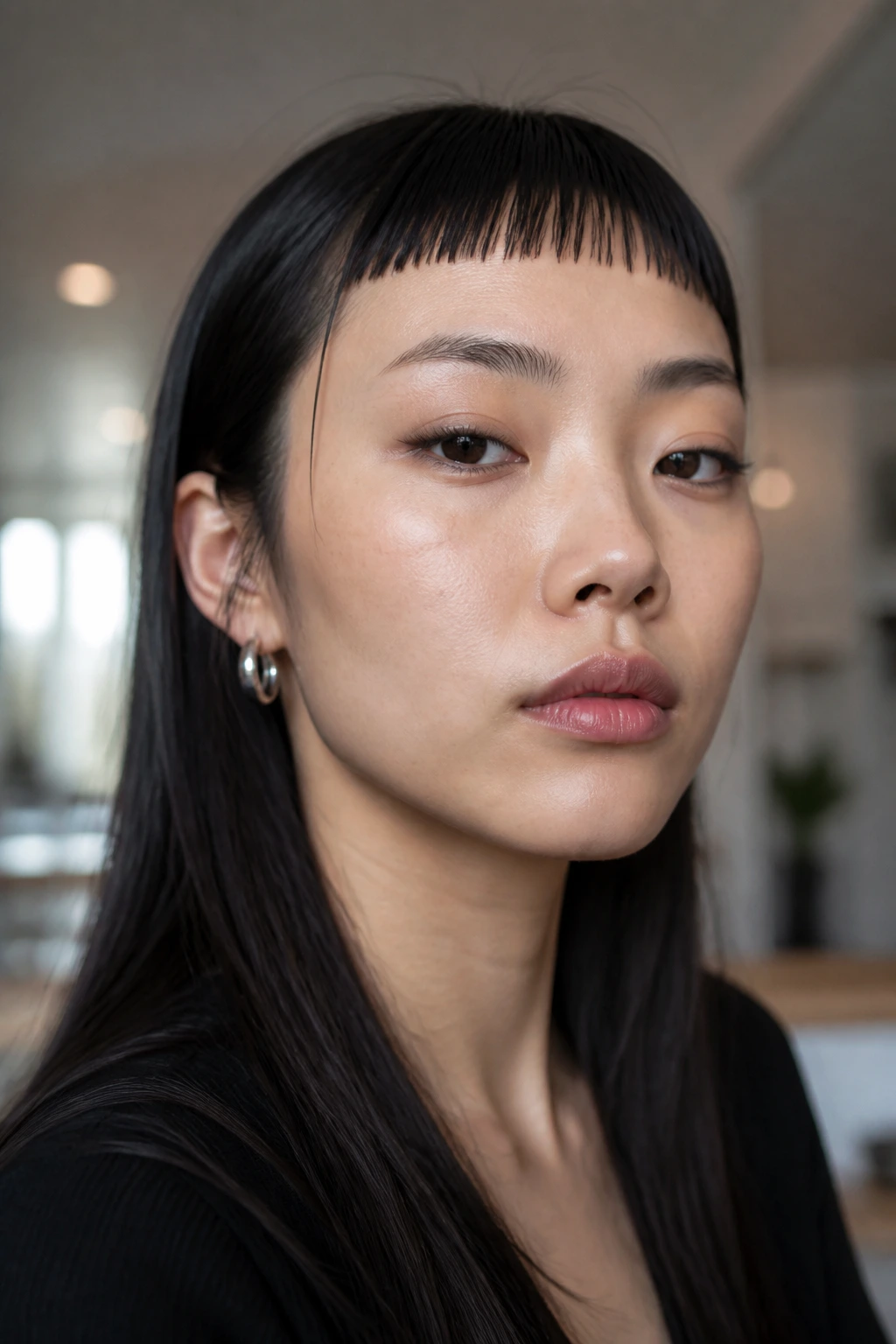
Micro bangs, also known as baby bangs, are cut well above the eyebrows, usually leaving an inch or more of forehead exposed. They are edgy, retro, and look incredibly striking on straight hair.
Are micro bangs too difficult to style on straight hair? Actually, straight hair is the absolute perfect canvas for this style. Curly or wavy micro bangs tend to puff up or twist in random directions, but straight hair lies flat and clean against the forehead. This makes the short, graphic line look intentional and sharp.
How to Style Your Micro Fringe
To style a micro fringe, you want to avoid volume. You do not want these bangs to curve outward like a visor. Instead, blow-dry them from above, pointing the nozzle of your dryer downward. Use your fingers to press the bangs flat against your forehead as they dry.
Once dry, use a tiny amount of matte pomade or wax on your fingertips to piece out the ends. This prevents the bangs from looking too uniform and adds a modern, textured finish to the short length.
4. Wispy Piece-y Korean See-Through Bangs
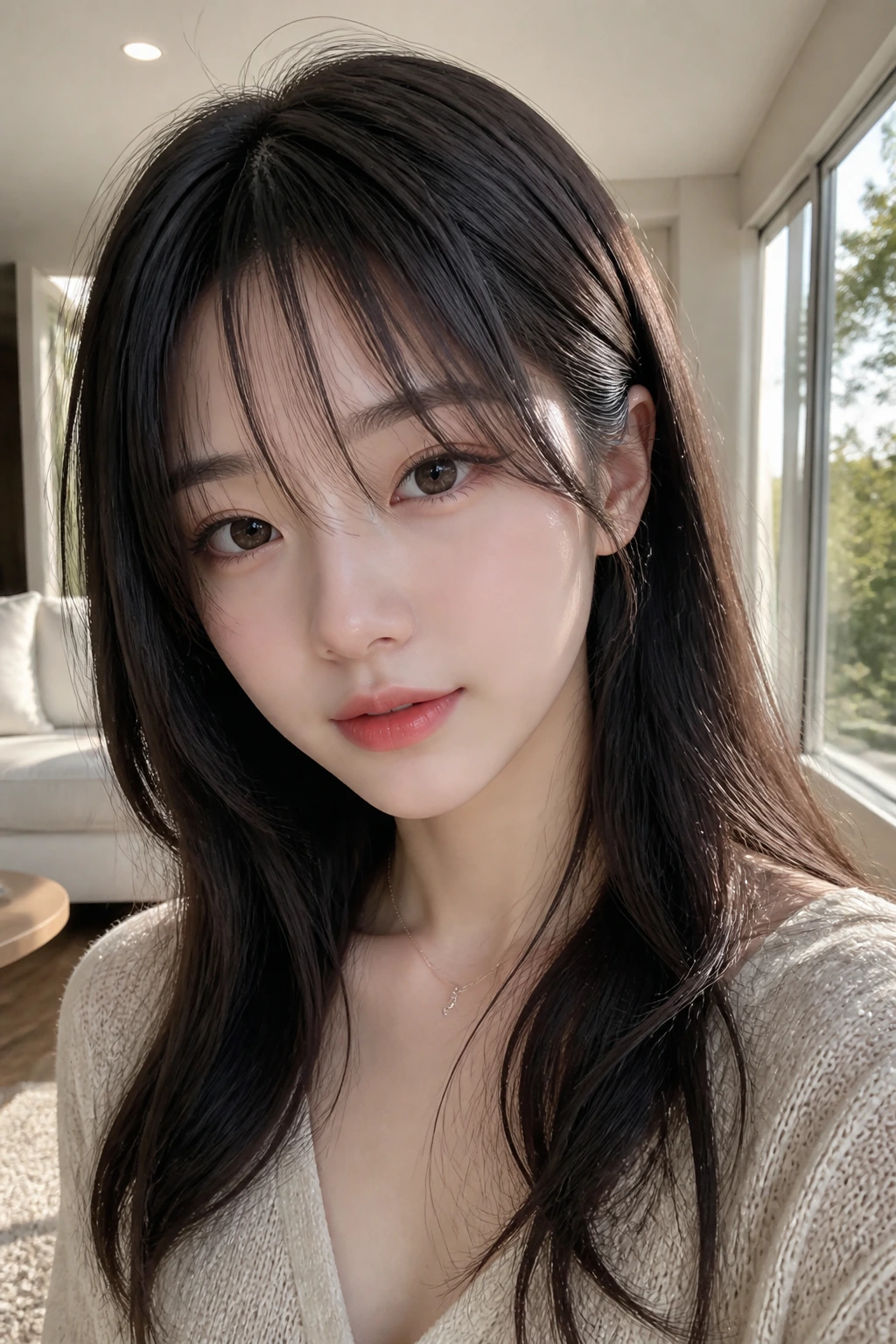
Imagine wanting the face-framing benefits of bangs without the commitment of a thick, heavy curtain of hair. That is exactly what see-through bangs offer. This style, popularized in East Asia, uses only a tiny sliver of hair from the very front of your hairline, allowing your forehead to show through.
The secret to this cut is the distribution of weight. The middle section is cut very thin and wispy, resting just below the eyebrows. The outer edges are left slightly longer, blending into the sides of your hair. This allows you to easily tuck the bangs away behind your ears or sweep them to the side if you want a change of pace.
- Minimal commitment: You can easily hide these bangs on days you do not want to style them.
- Airy texture: They do not overwhelm delicate facial features or small faces.
- Easy growth: Because they are so thin, they grow out into face-framing layers without that awkward middle phase.
- Perfect for fine hair: It does not require pulling massive amounts of hair forward from the crown.
This style is exceptionally easy to live with because it never feels heavy or hot on your forehead during warmer months.
5. Choppy Textured Shag Fringe
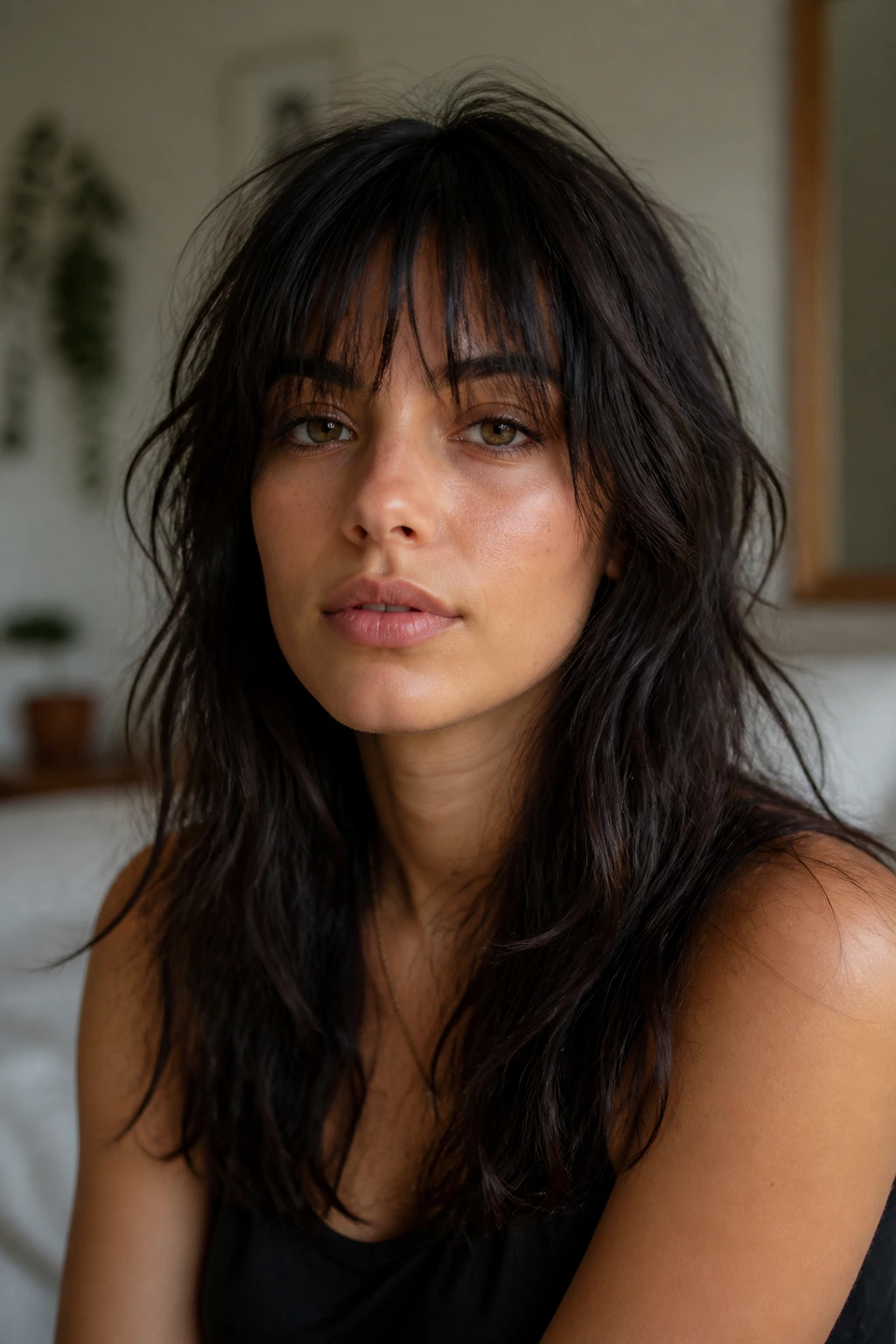
If you want a look that feels lived-in and effortless, the choppy shag fringe is the way to go. This style is all about texture and movement, breaking up the natural stiffness of straight hair.
Your stylist will use a razor or thinning shears to cut highly irregular lengths throughout the bangs. The goal is to create a messy, piece-y look that looks best when it is slightly disheveled. The bangs should not form a solid line; instead, they should look like they have been separated by a light breeze.
This cut works beautifully because it embraces the natural separation of straight hair. Instead of fighting the way your hair splits over your forehead, this cut makes those splits look intentional. It pairs perfectly with layered, shag-style haircuts and requires almost zero styling effort. Just spray in a bit of dry shampoo or sea salt spray, mess them up with your fingers, and you are ready to go.
6. Tapered Bottleneck Bangs
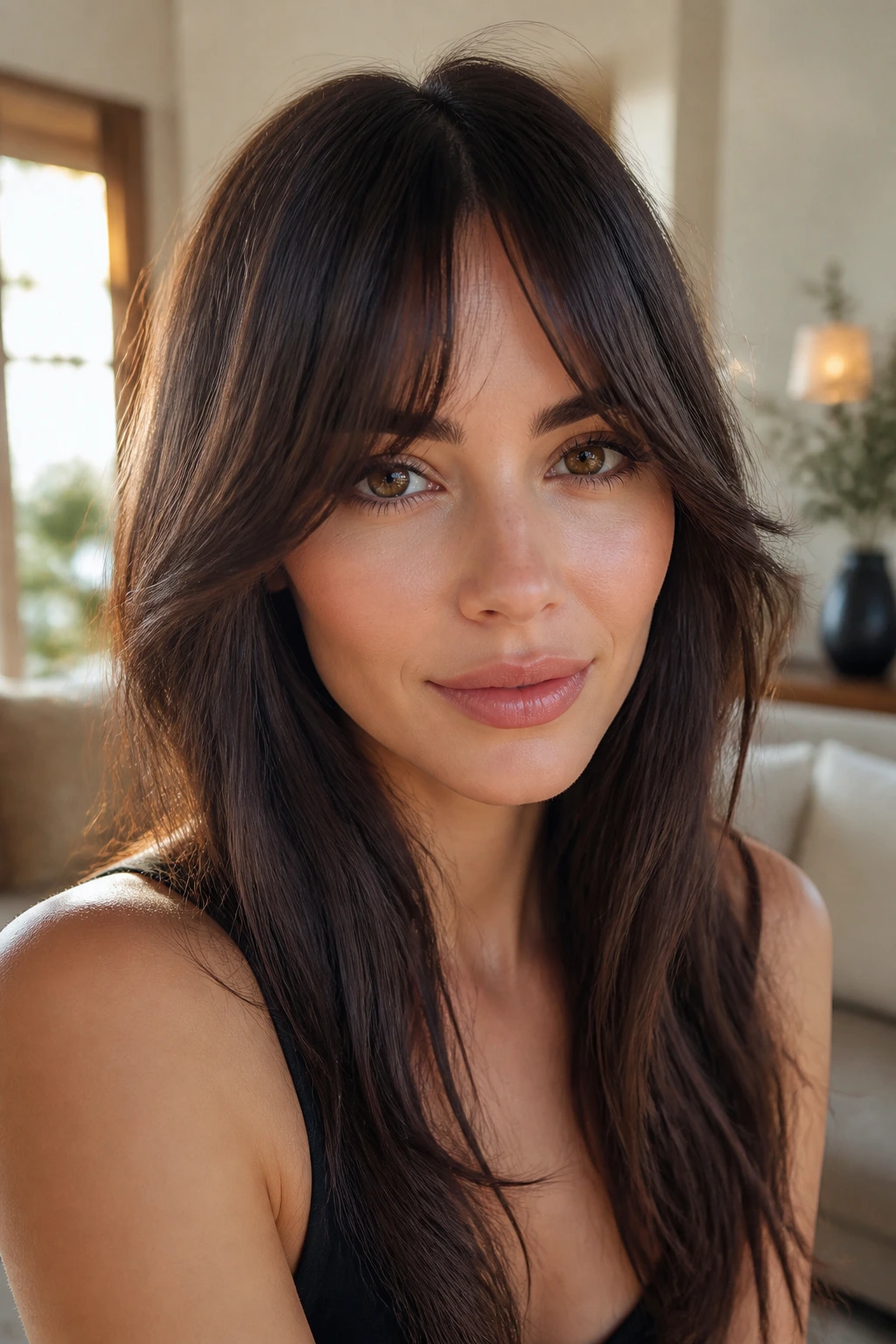
Unlike traditional curtain bangs, which sweep wide open from a central part, bottleneck bangs are narrow at the top, flare out around the eyes, and then curve gently around the cheekbones. They mimic the shape of an old-fashioned glass bottle.
This style is incredibly flattering for straight hair because it bridge the gap between full bangs and curtain bangs. The narrow top section keeps hair from falling flat into your eyes, while the flared sides create a beautiful contour that softens the cheekbones. It is a soft, romantic look that adds instant shape to long, straight hairstyles.
For those with straight hair that tends to look flat, bottleneck bangs add a touch of movement exactly where you need it. Because they are shorter in the very center, they do not require constant pushing out of your face, making them far more practical for daily wear than long curtain bangs.
7. Deep-Parted Side Swept Bangs
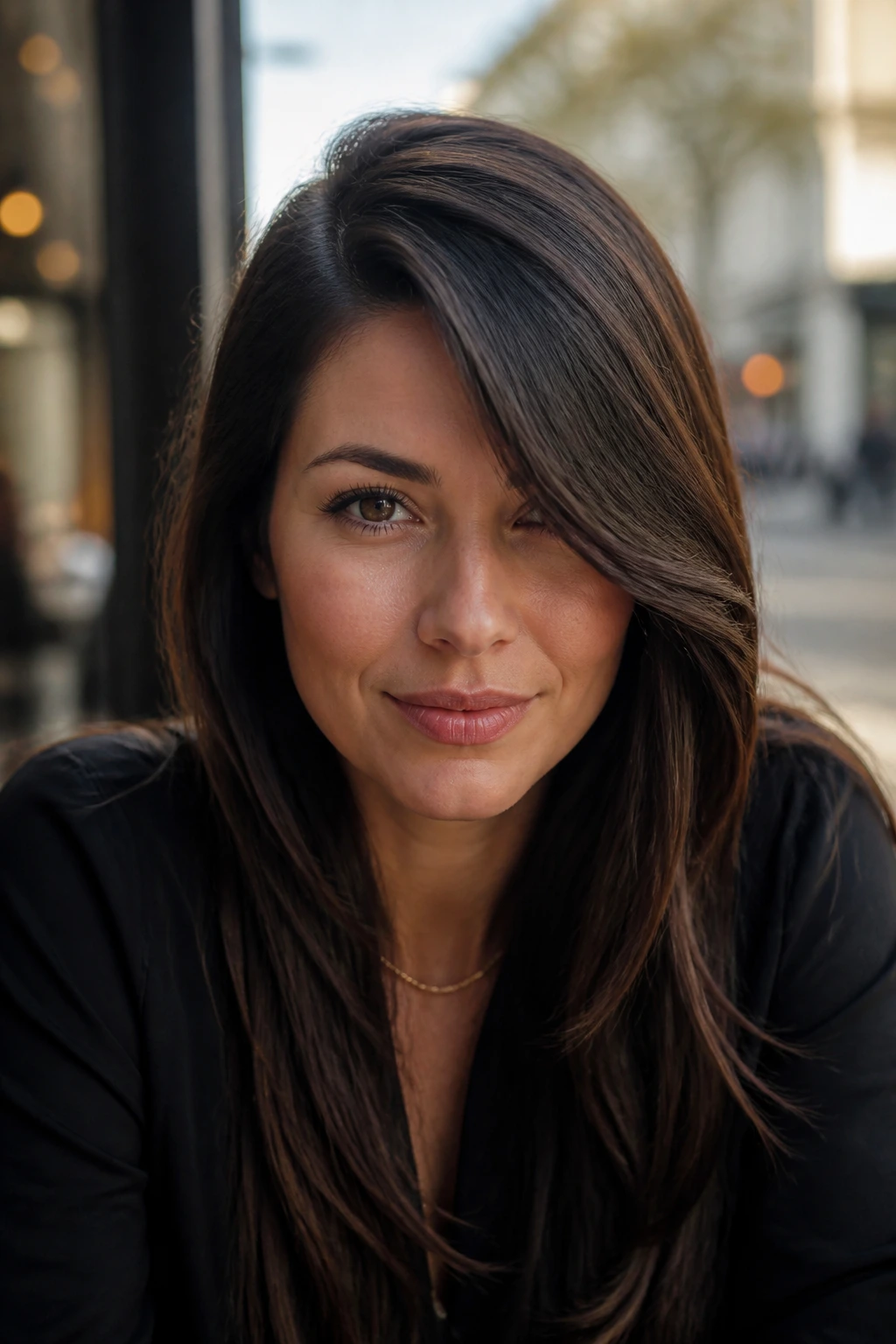
Side-swept bangs are classic, and a deep-parted version is a beautiful way to add asymmetry to straight hair. By parting your hair deep to one side, you create a beautiful, dramatic sweep of hair that cuts diagonally across your forehead.
Creating the Perfect Swoop
The key to making side-swept bangs work on straight hair is the angle of the cut. The fringe must be cut on a slide, starting short above the opposite eye and sweeping down to a longer length on the side of the part. This diagonal line prevents the hair from falling straight down into your eyes and helps it stay swept to the side.
Swoop Bangs Blueprint
- The Part: Start the part directly above the arch of your eyebrow for the most flattering angle.
- The Cut: Slide-cut from the temple to the cheekbone to create a seamless diagonal line.
- The Finish: Use a round brush to blow-dry the hair in the opposite direction of how it will hang, then sweep it back. This creates beautiful, natural volume.
- The Hold: A light mist of flexible-hold hairspray keeps the swoop in place without making it stiff.
Styling tip: Avoid heavy styling creams with this look. They will weigh the sweep down, causing it to fall flat against your face instead of floating gracefully over your brow.
8. Rounded Crescent Bangs
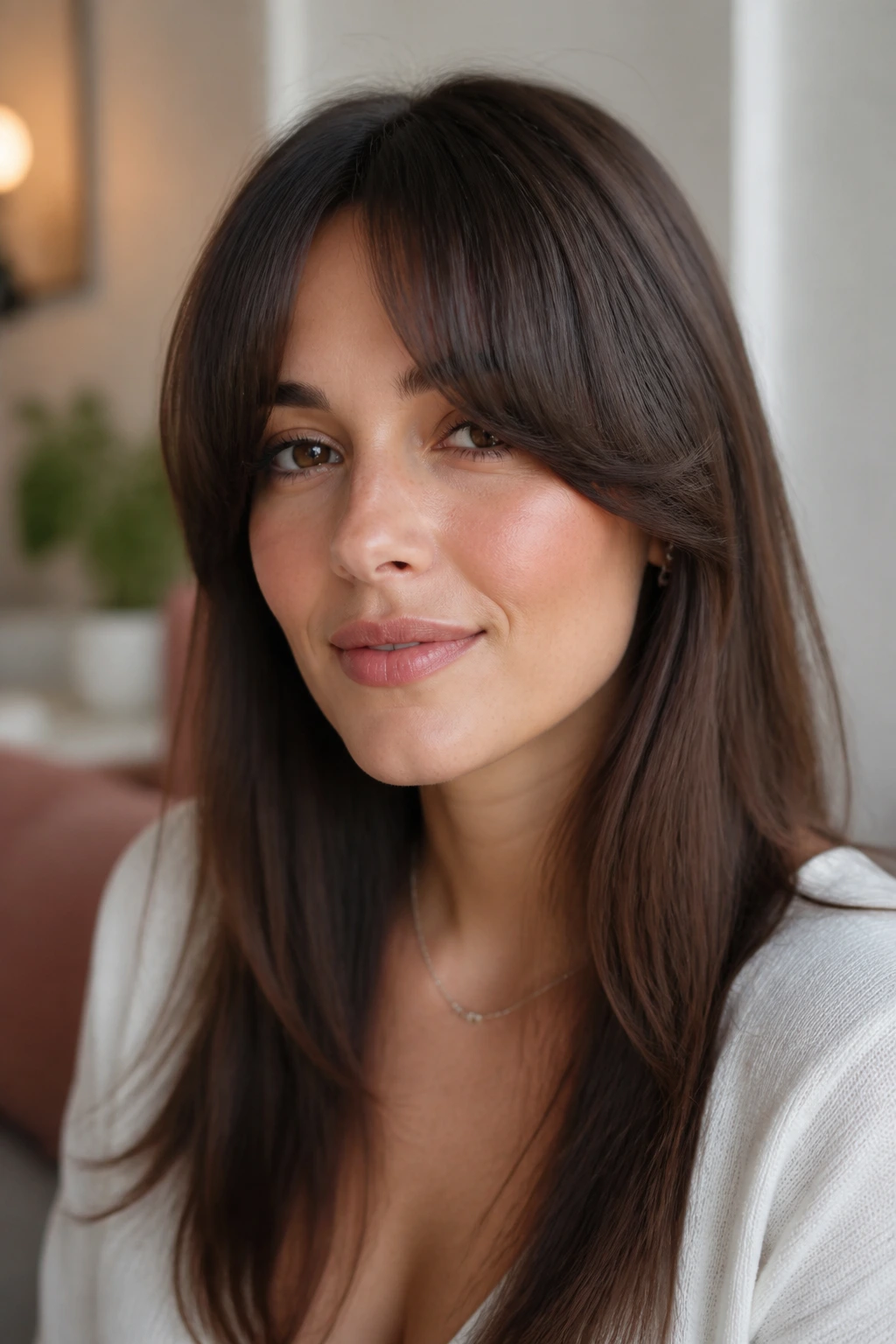
Rounded crescent bangs are slightly shorter in the middle and curve downward at the temples, perfectly hugging the contour of your eyes. It is a softer, more vintage-inspired alternative to the straight-across blunt cut.
This curved shape is incredibly flattering because it frames your eyes like a picture frame. The longer outer corners sweep down to blend with your side pieces, which softens the entire look and prevents the harsh, boxy corners that can sometimes make blunt bangs look severe.
On straight hair, the crescent shape is particularly striking because the smooth texture of the hair highlights the clean, curved line of the cut. It is an excellent choice if you have a square or angular face shape, as the soft curves of the bangs help balance out a strong jawline.
9. Long Lash-Grazing Birkin Bangs
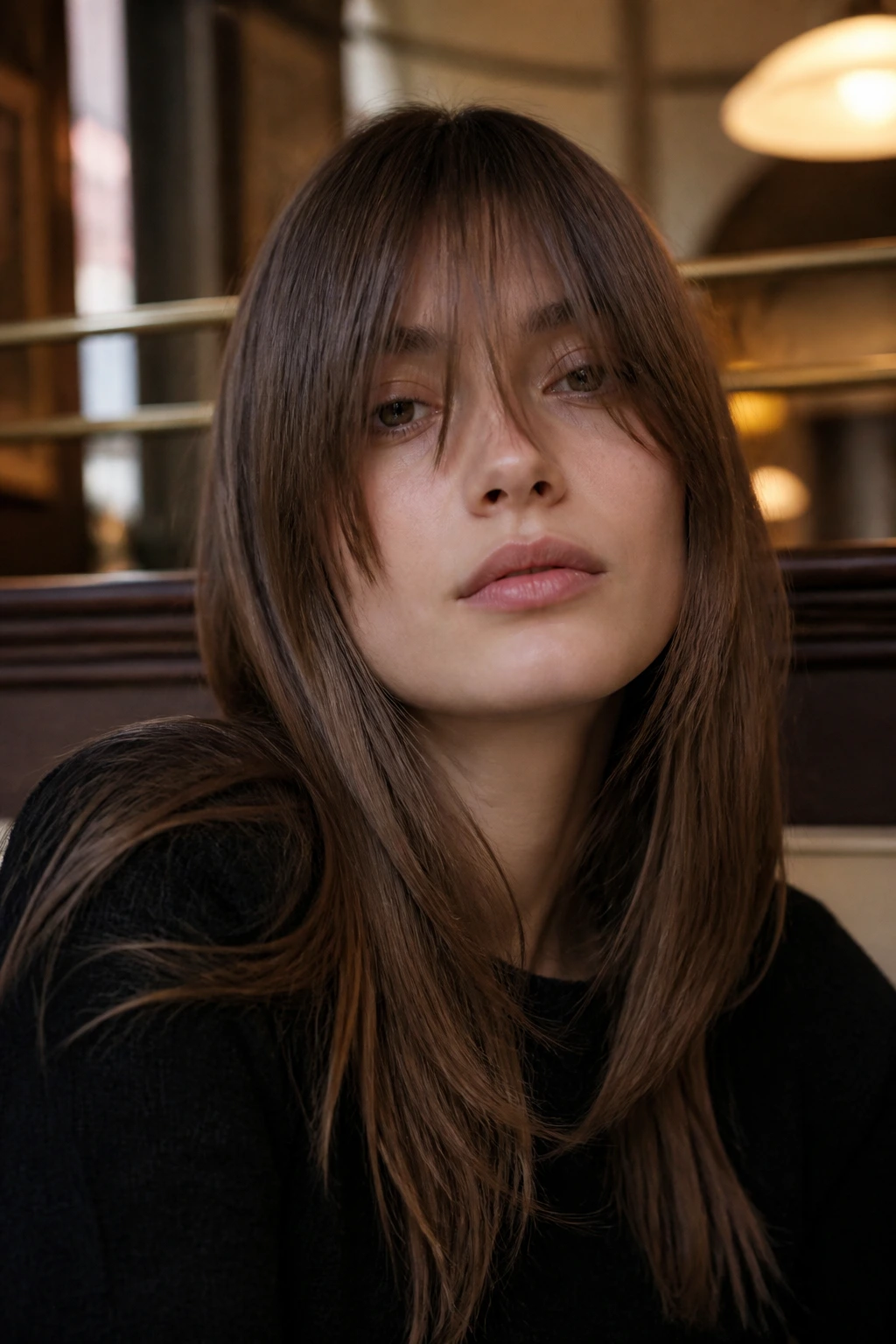
Inspired by the iconic French style of Jane Birkin, these bangs are long, wispy, and graze the eyelashes. They look incredibly cool, effortless, and slightly mysterious.
Are you worried about hair constantly poking your eyes? The secret to Birkin bangs is that they are cut extremely piece-y and light, so they do not feel like a heavy wall of hair. They are meant to separate naturally, allowing you to see through them easily even though they are long.
How to Style Birkin Bangs
To style this look, you want to embrace a slightly messy texture. Do not use a flat iron; that will make them look stiff. Instead, blow-dry them using only your fingers, shaking them side to side as you apply heat.
Once dry, spray a tiny bit of texture spray onto your hands and pinch the ends of the bangs together to create small, defined pieces. This gives them that Parisian, “I woke up like this” vibe that looks so beautiful with long, straight hair.
10. Textured French Girl Bangs
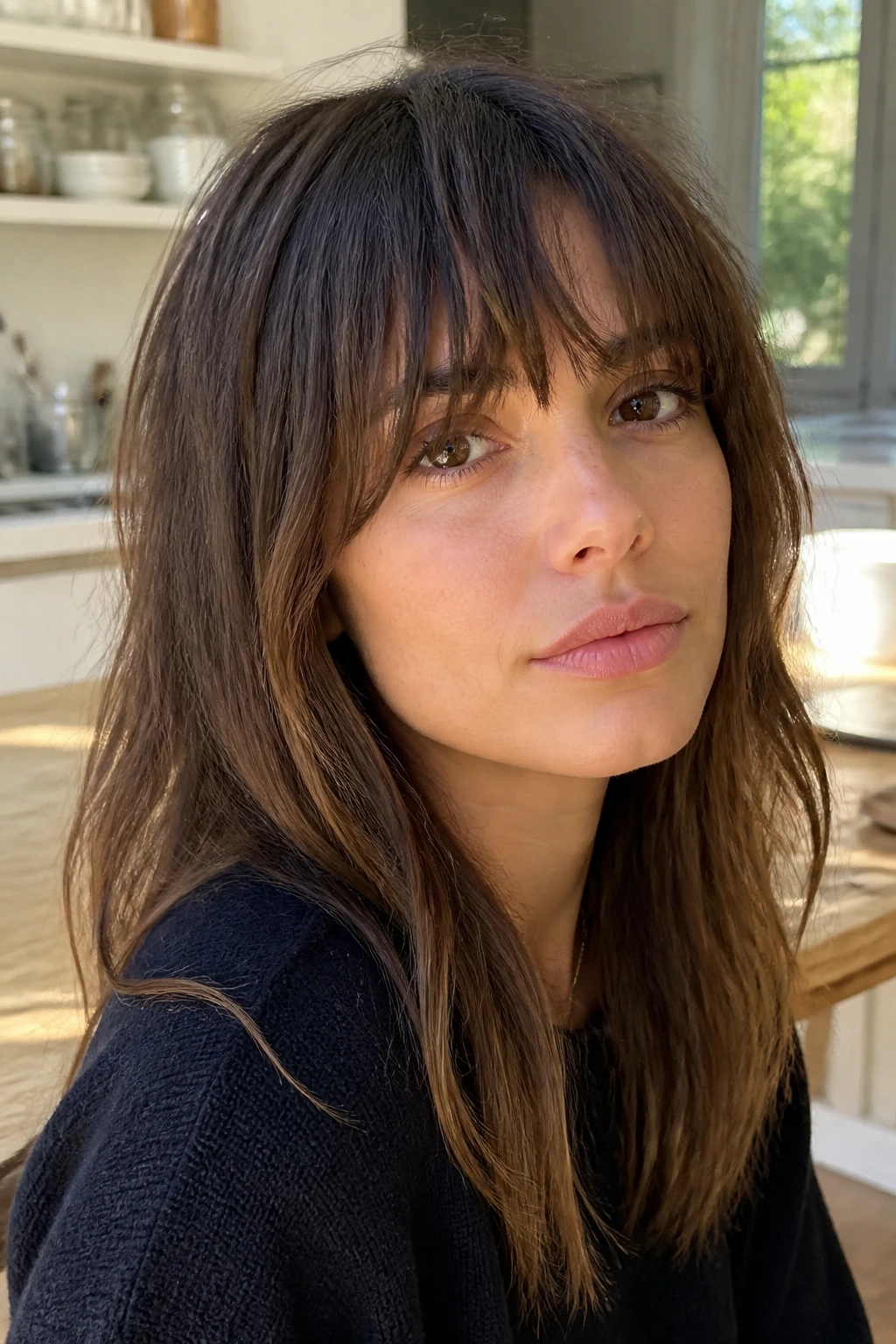
French girl bangs are defined by their effortless, slightly undone appearance. They are typically cut full, but with heavily textured ends that keep them from looking too heavy or thick.
This style relies on the natural movement of your hair. The perimeter is not cut in a straight line; instead, it is snipped vertically to create tiny, irregular lengths. The center is slightly shorter than the outer edges, which blend seamlessly into the rest of your hair.
- Soft texture: The point-cut ends prevent the fringe from looking like a solid block.
- Easy styling: They are designed to be air-dried and worn with your hair’s natural texture.
- Low styling stress: If they split or part throughout the day, it only adds to the messy charm.
- Versatile look: They look just as good with your hair down as they do with a messy bun.
This is the ultimate choice for anyone who wants full bangs but does not want to spend more than two minutes styling them in the morning.
11. Sharp Asymmetrical Bangs
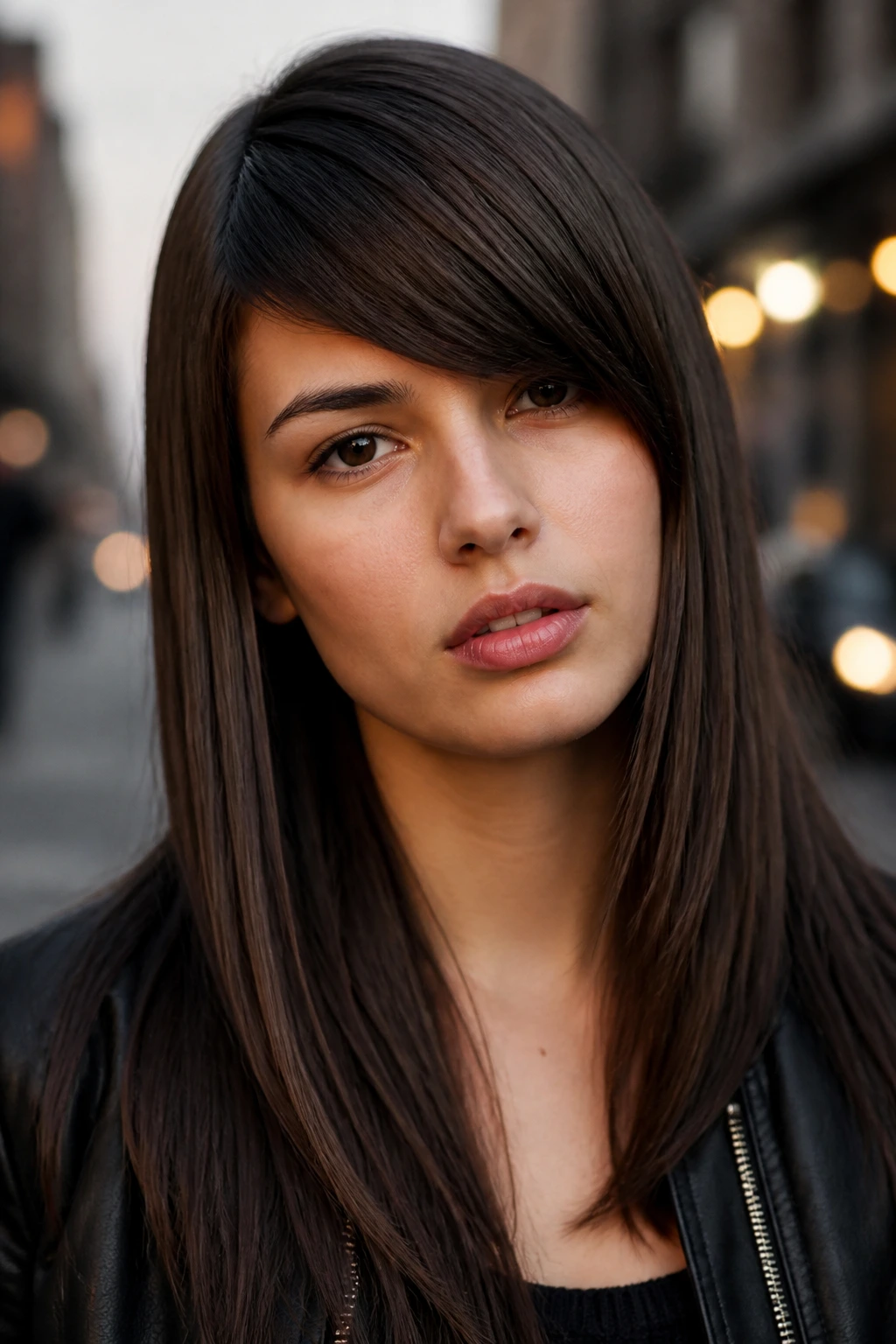
For those who love high-fashion, graphic styles, sharp asymmetrical bangs are an incredible option. This cut features a strong, straight line that runs at a noticeable diagonal angle across your forehead.
Straight hair is absolutely required for this style to shine. The smooth, flat surface of straight hair acts like a clean canvas, making the sharp diagonal line stand out dramatically. It is a bold, modern look that adds instant artistic flair to a simple bob or long, straight layers.
Your stylist must cut this with extreme precision, usually using a razor on dry hair to get the cleanest possible line. Because the angle is so sharp, you will need to get regular trims to maintain the geometry of the cut as it grows.
12. Wispy Baby Fringe
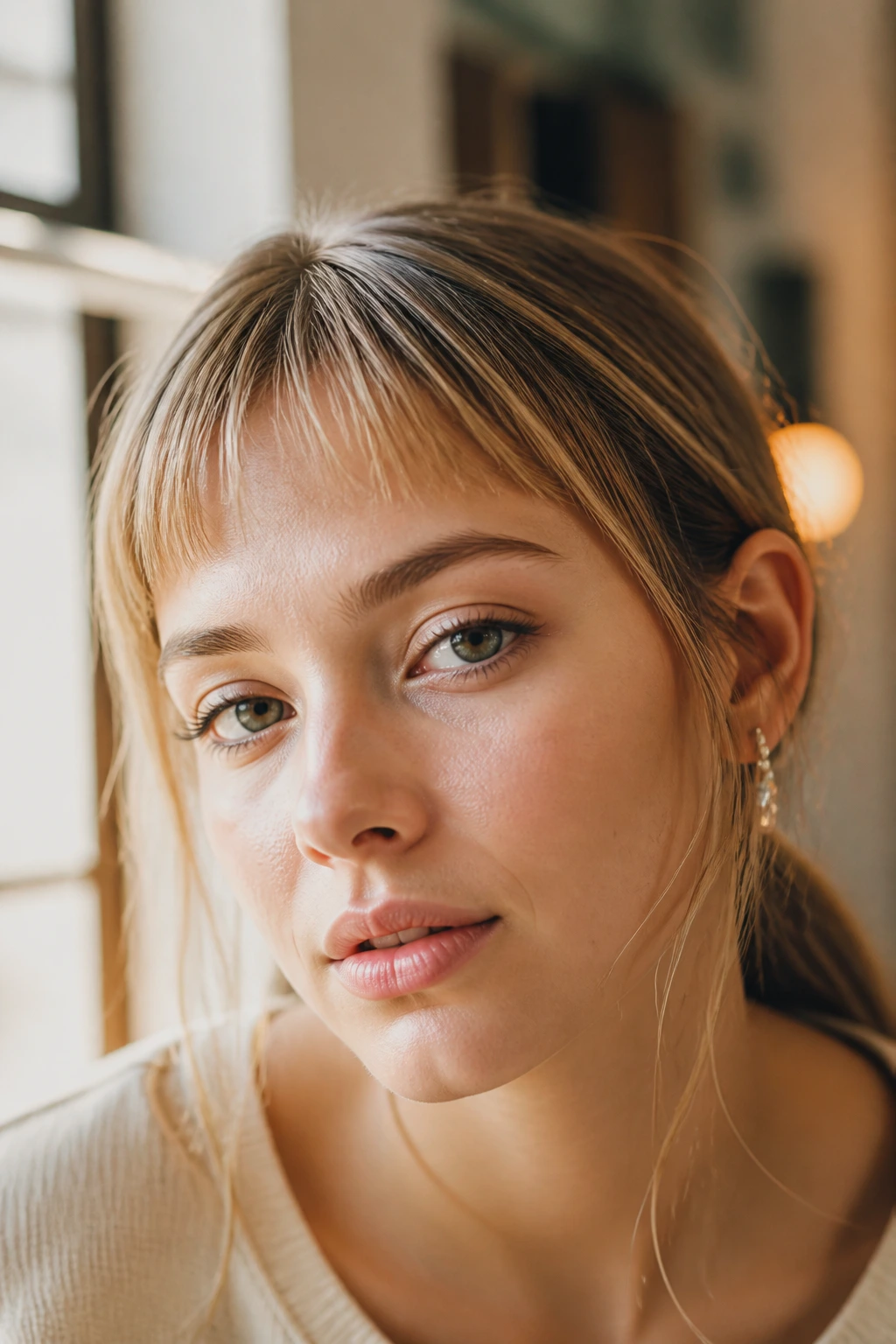
If you love the idea of short bangs but find the graphic micro fringe too intimidating, the wispy baby fringe is the perfect middle ground. It is cut short, well above the brows, but the ends are heavily feathered and light.
This soft, wispy texture makes the short length far more wearable and forgiving. It does not create a harsh line across your forehead; instead, it looks like a soft halo of light, delicate hair. It is an excellent option for those with fine, thin straight hair, as it does not require a lot of density to look complete.
To style a wispy baby fringe, simply run a tiny bit of lightweight styling mousse through wet bangs, then let them air dry. The mousse will help the delicate strands hold their shape without weighing them down or making them look greasy.
13. Curtain Bangs with Face-Framing Layers
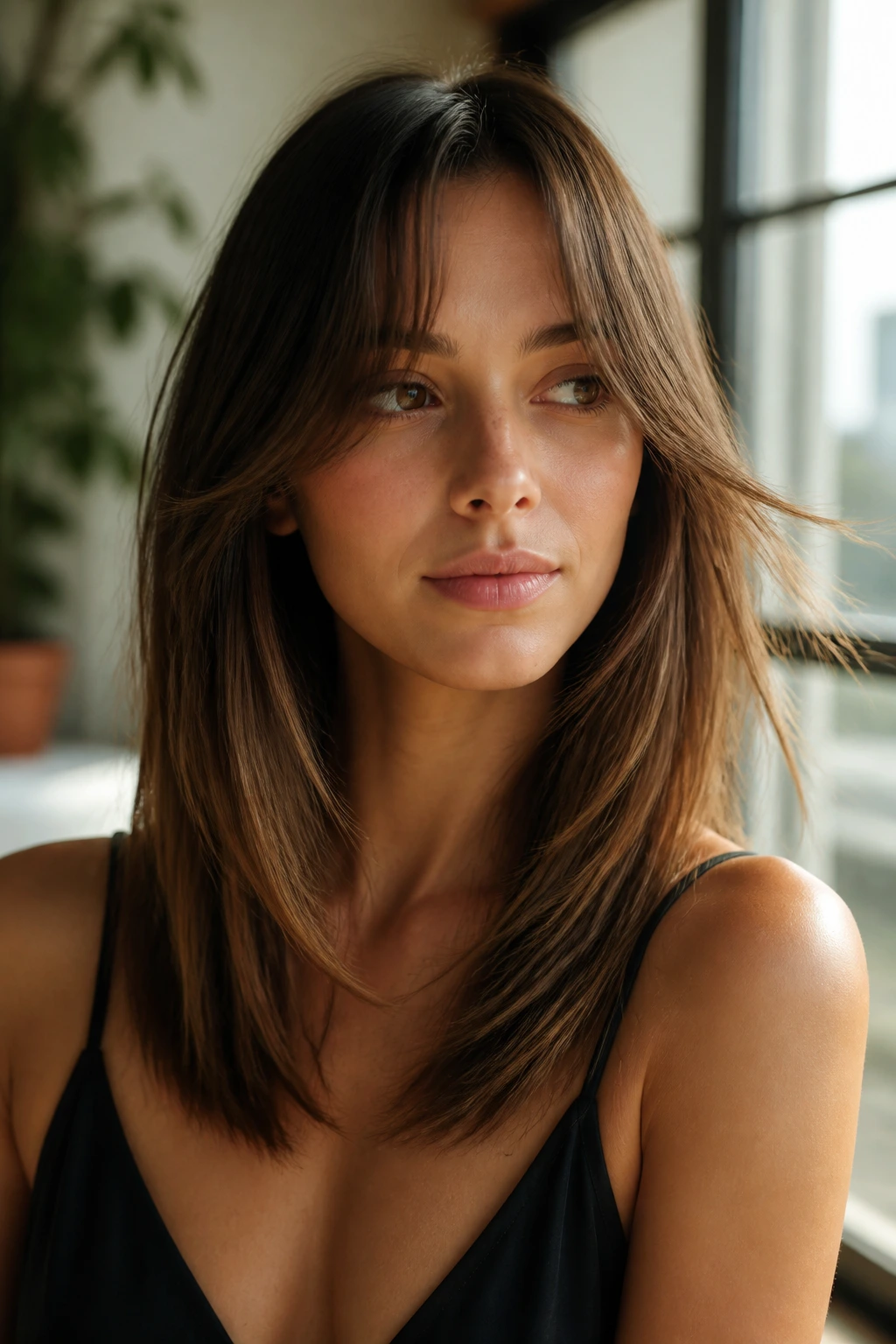
This style combines the soft, parting action of curtain bangs with longer, cascading layers that frame your face all the way down to your collarbones. It is a beautiful way to add movement and shape to long, straight hair.
The Power of Continuous Layers
On straight hair, curtain bangs can sometimes look disconnected if they just stop abruptly at your cheekbones. By continuing the cut down into face-framing layers, you create a smooth, continuous line that flows beautifully from your forehead down through your lengths. This prevents the bangs from looking like an afterthought.
Layered Fringe Anatomy
- The Curtain: Start with a soft curtain fringe that parts in the center, ending around the cheekbones.
- The Transition: Cut a diagonal line connecting the outer edges of the bangs to the next layer down.
- The Frame: Create soft, slide-cut layers that hug the jawline and collarbone.
- The Movement: Point-cut all the way down the layers to ensure they swing and move when you walk.
Styling tip: When blow-drying, use a large round brush to pull the face-framing layers back away from your face. This creates a beautiful, wind-swept effect that breaks up the flat look of straight hair.
14. Center-Split Wispy Fringe
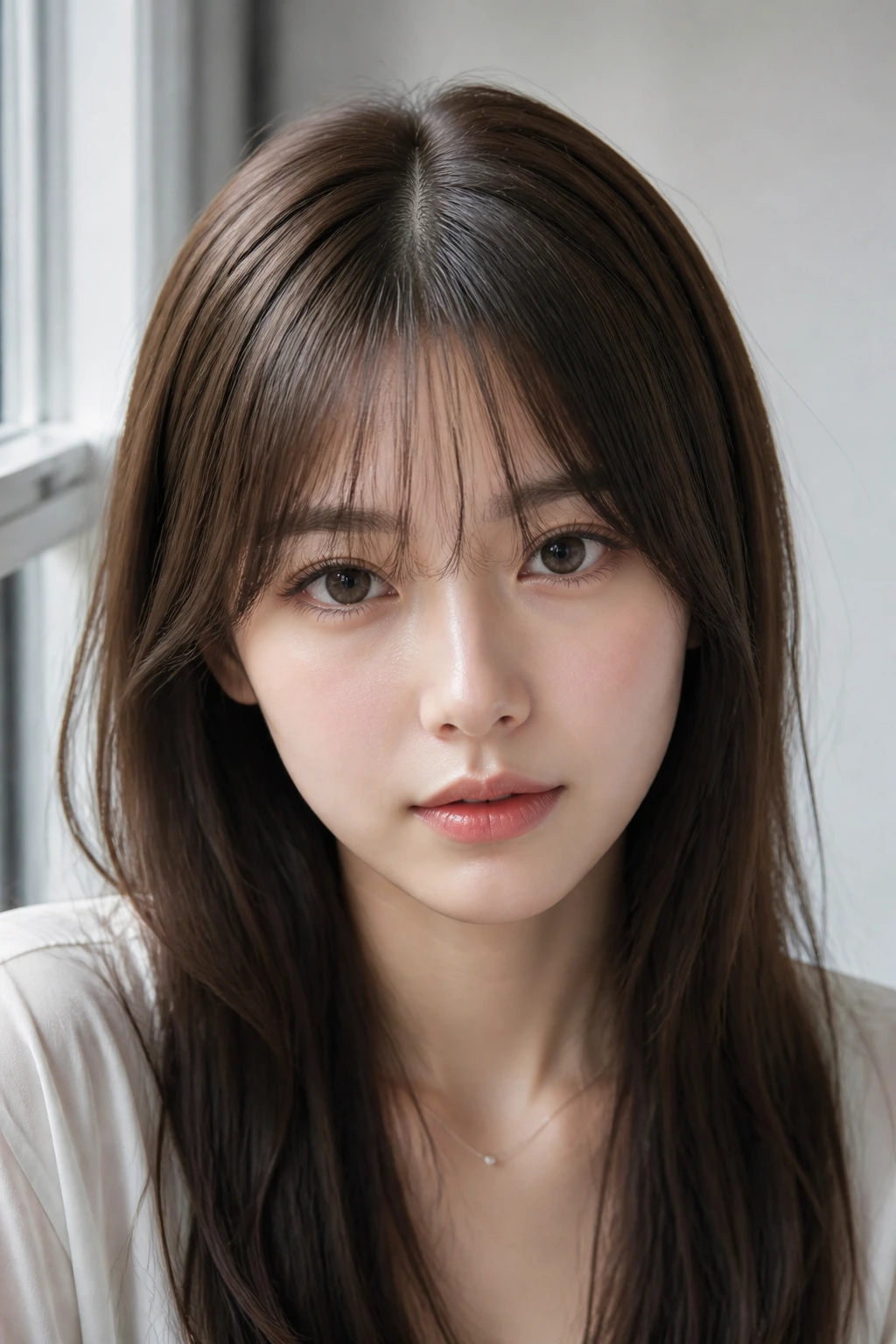
The center-split wispy fringe is a very delicate, minimalist style. It consists of thin, lightweight bangs that are cut straight across, but styled to split open directly in the center of your forehead.
This style is incredibly flattering for those with smaller foreheads or delicate facial features. Because the split in the middle exposes a vertical line of forehead, it helps elongate your face rather than cutting it in half visually. The wispy texture ensures the bangs never look heavy or overwhelming.
Styling this is incredibly simple. After washing, blow-dry the bangs straight down. Once dry, simply use your fingers to gently separate them in the middle, pushing them slightly to each side. A tiny spritz of light-hold hairspray will keep that center split open all day long.
15. Thick Rounded Pageboy Bangs
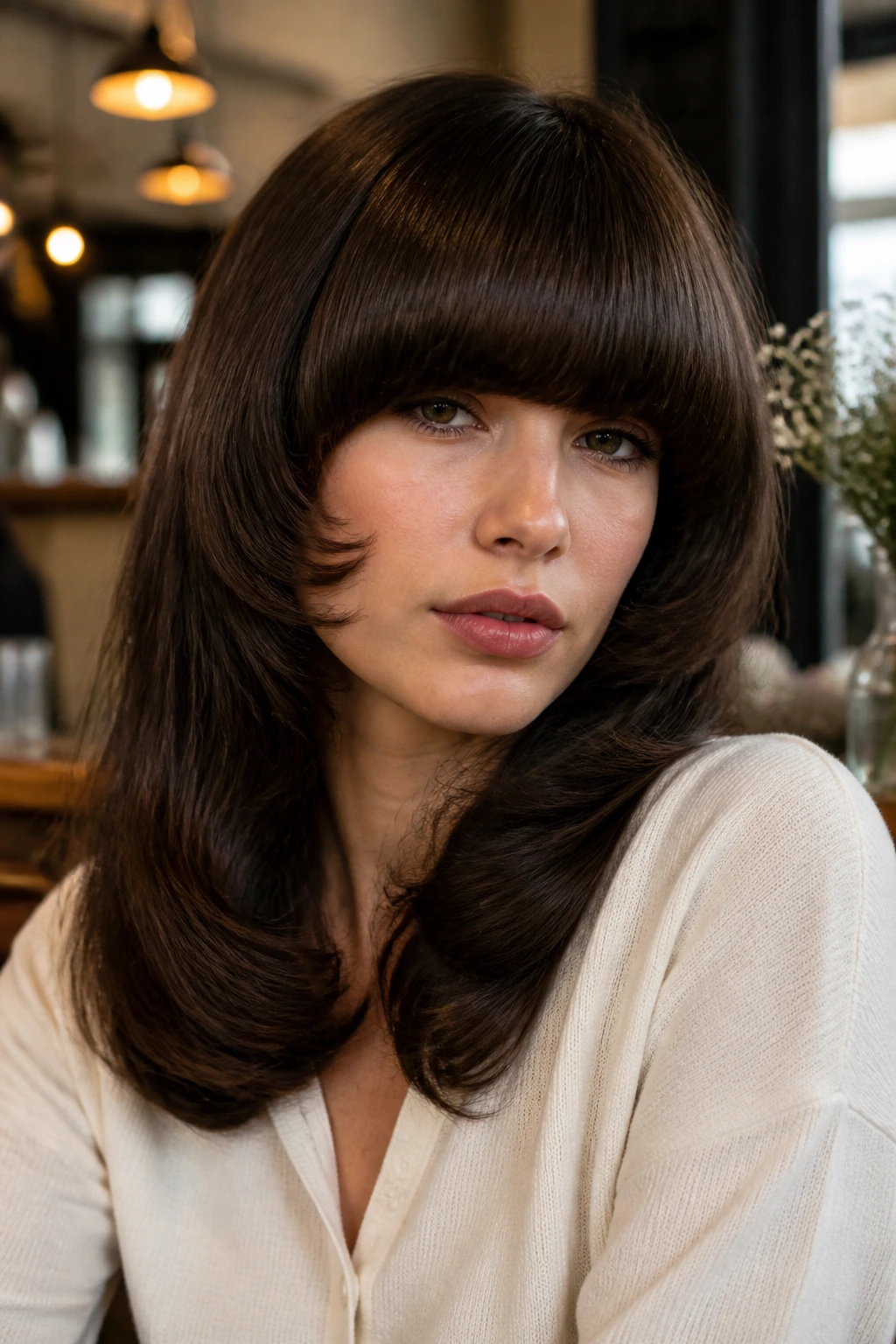
For a retro, vintage-inspired look, the thick rounded pageboy fringe is a stunning choice. This style is cut thick and heavy, curving dramatically down around the sides of the face to connect with your side lengths.
This look is all about smooth, polished volume. It works best on thick, straight hair that naturally has a lot of body. The rounded shape helps soften angular jawlines and square face shapes, creating a beautifully balanced frame around your face.
To style these bangs, you will want to use a medium round brush to blow-dry them, pulling the hair forward and slightly curving it inward toward your face. This creates that classic, pillowy volume that makes this vintage style look so luxurious and polished.
16. Piece-y Point-Cut Bangs
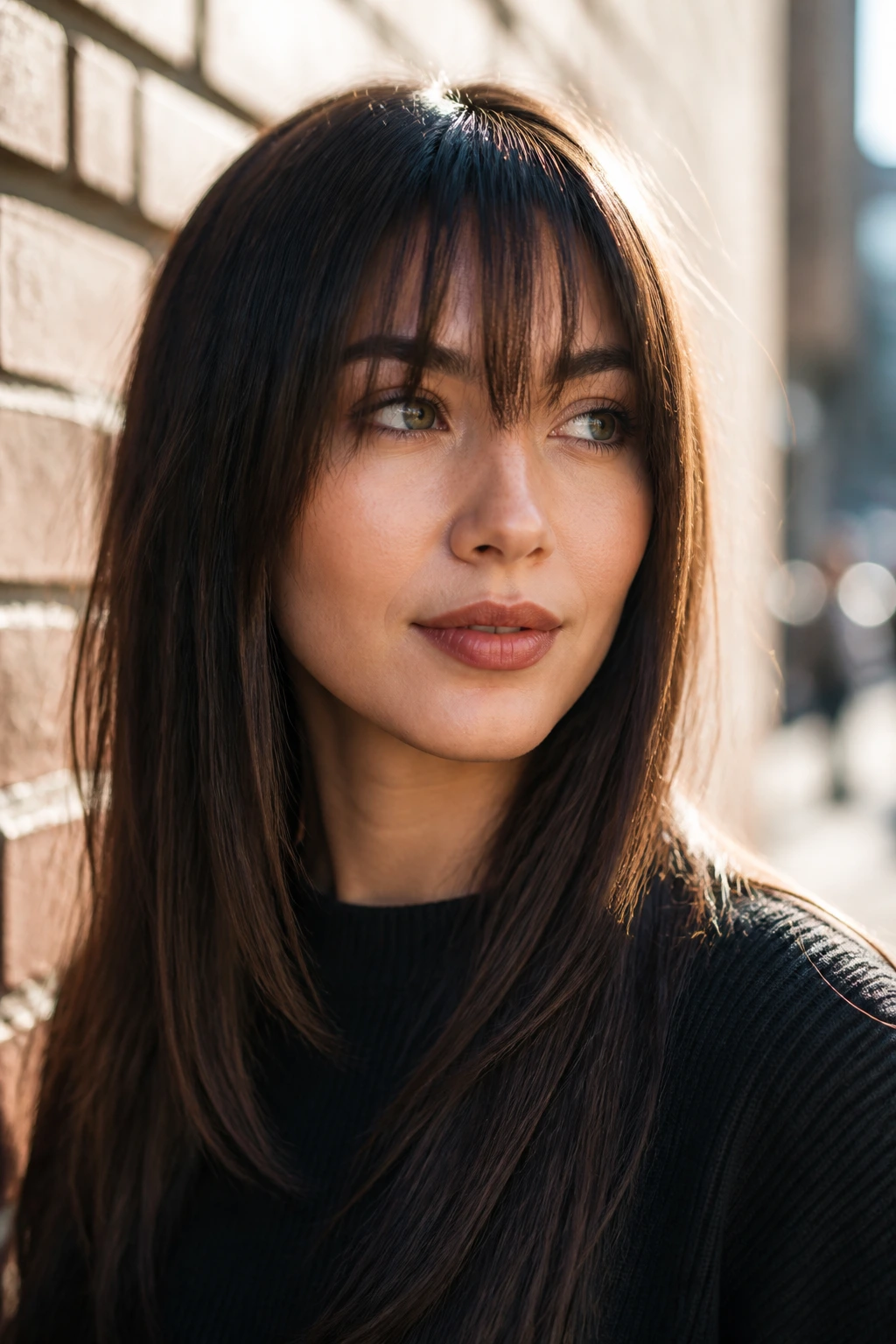
If you have very thick straight hair, standard bangs can quickly turn into a heavy, unmanageable block. Piece-y point-cut bangs are the perfect solution, designed specifically to remove weight while keeping a full-fringe look.
The magic of this cut lies in the scissor work. The stylist will cut the bangs straight across, but then go back in with the shears pointed vertically, snipping deep into the ends of the hair. This removes a significant amount of weight, creating distinct, individual pieces that separate naturally.
- Weight removal: It thins out thick, heavy hair so the bangs feel light and airy.
- Natural separation: The hair naturally falls into cool, textured clumps rather than a solid wall.
- Easy styling: They do not require a flat iron; they look best when they have natural, airy movement.
- Forgiving growth: As they grow, the textured ends do not look jagged or awkward.
This style is highly recommended for anyone with thick hair who wants the look of a full fringe without the heavy, hot feeling that often comes with it.
17. Retro Bardot Fringe
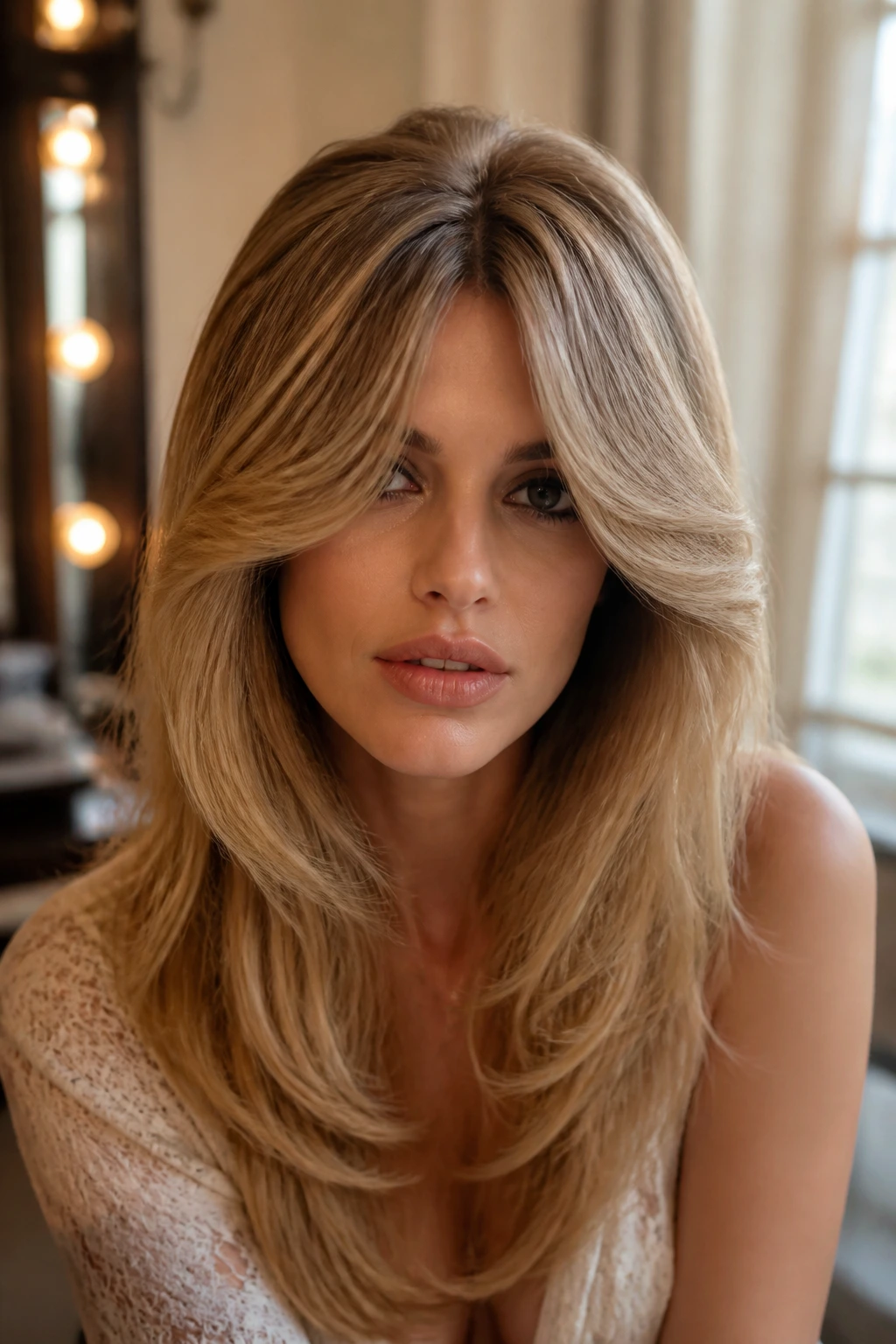
Inspired by the iconic Brigitte Bardot, this style features thick, voluminous curtain bangs that are heavily parted in the center, creating a beautiful “m” shape on your forehead.
This look is all about high volume and soft texture. Unlike modern curtain bangs, which can be thin and wispy, the Bardot fringe is cut thick, pulling plenty of hair forward to create a dramatic frame. The ends are heavily textured to keep them soft and flowing.
To style a Bardot fringe on straight hair, you will need to focus on creating root lift. Apply a volumizing spray to your roots while the hair is wet. Blow-dry the bangs backward away from your face using a round brush, then let them fall forward and split open. This creates that gorgeous, retro lift at the crown that makes this style so famous.
18. Disconnected Long Side Bangs
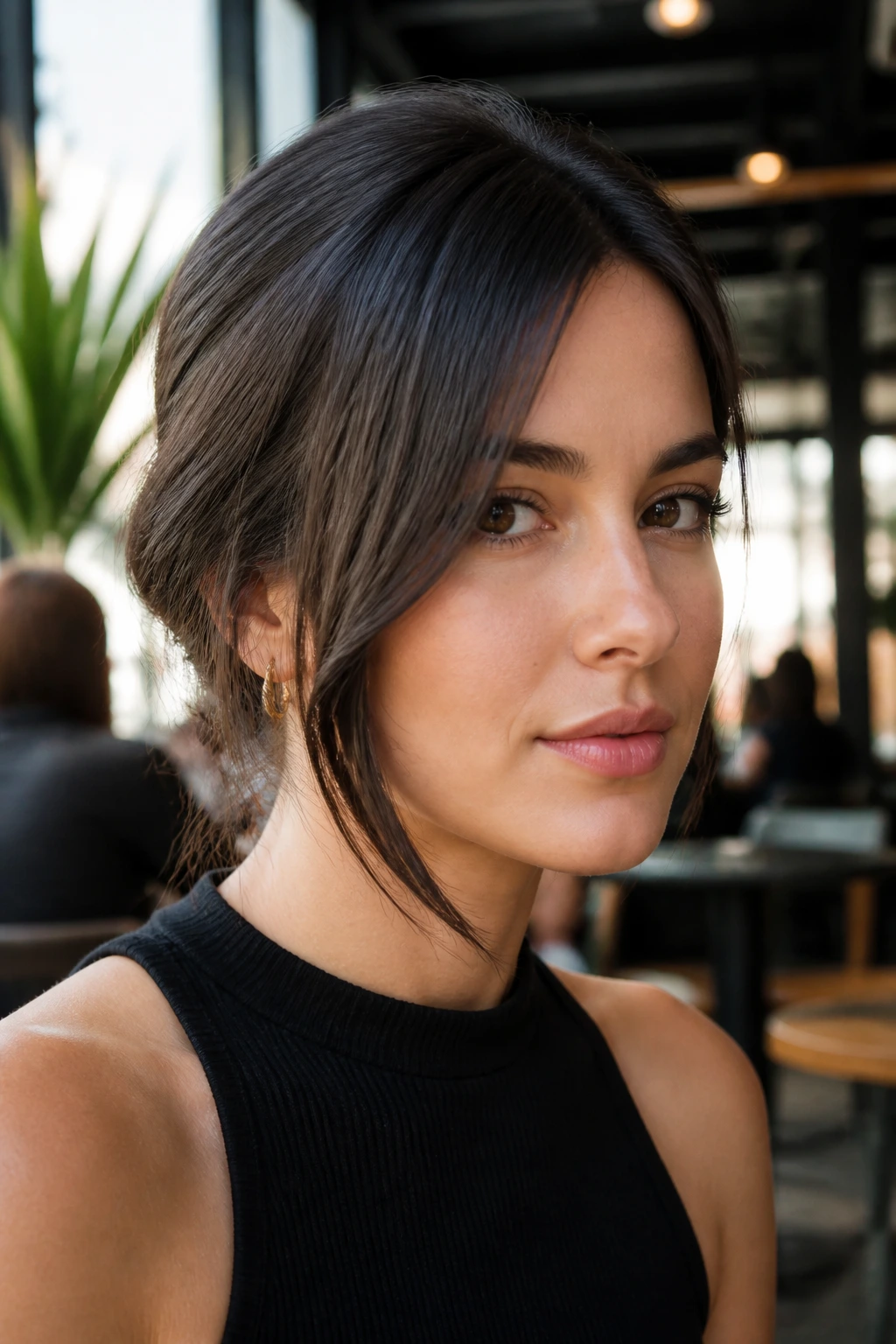
Disconnected side bangs are cut long, usually resting around the jawline, and do not blend with the rest of your haircut. They act as a standalone frame on one side of your face.
This style is an excellent option if you want the look of bangs but still want to be able to pull all of your hair back into a ponytail. Because they are disconnected, they hang down beautifully even when the rest of your hair is tied up, adding instant elegance to a simple updo.
On straight hair, the clean, disconnected line of these bangs looks very intentional and modern. They require very little styling work; just a quick pass with a round brush to sweep them away from your face is all it takes to make them look polished and chic.
19. Wispy Pixie Fringe
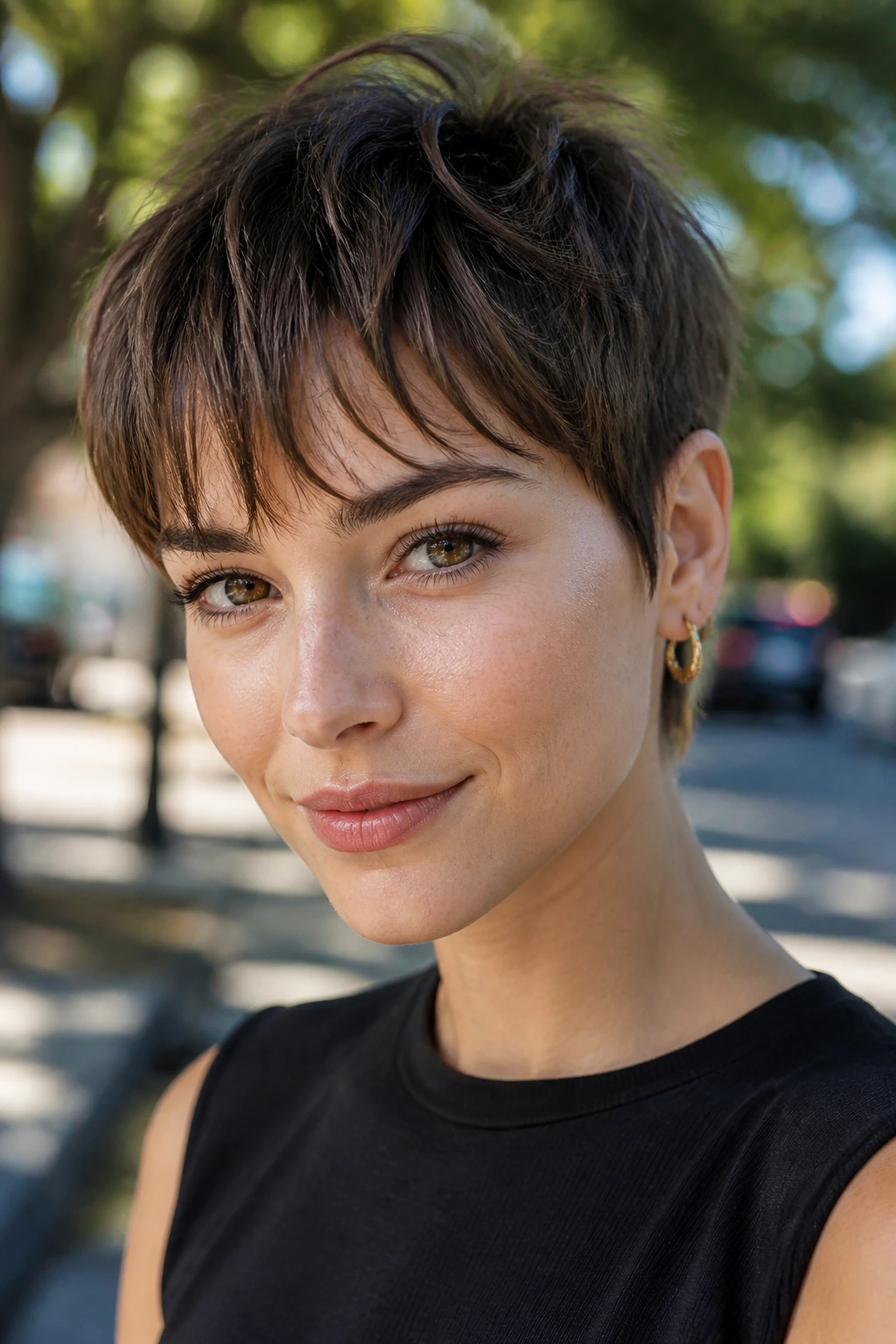
If you have a short pixie cut, a wispy fringe is the perfect way to soften the style and add a feminine touch. This style features very short, delicate pieces of hair that frame your forehead.
Balancing Short Cuts
A short haircut on straight hair can sometimes look stiff or boyish if the lines are too clean and blunt. Adding a soft, wispy fringe breaks up those hard lines, creating a delicate, feathered texture that frames your eyes and softens your entire look.
Pixie Fringe Essentials
- The Density: Keep the fringe light and airy so it does not look like a solid block on your forehead.
- The Length: Cut the bangs at irregular lengths, with the shortest pieces resting mid-forehead and the longest grazing the brows.
- The Styling: Use a tiny dab of lightweight hair paste to piece out the ends and add definition.
- The Maintenance: Plan for quick trims every four weeks to keep the short shape looking clean.
Styling tip: Avoid using heavy oils or gels on a pixie fringe, as they can easily make the short strands look greasy and flat against your forehead.
20. Jagged Cropped Fringe
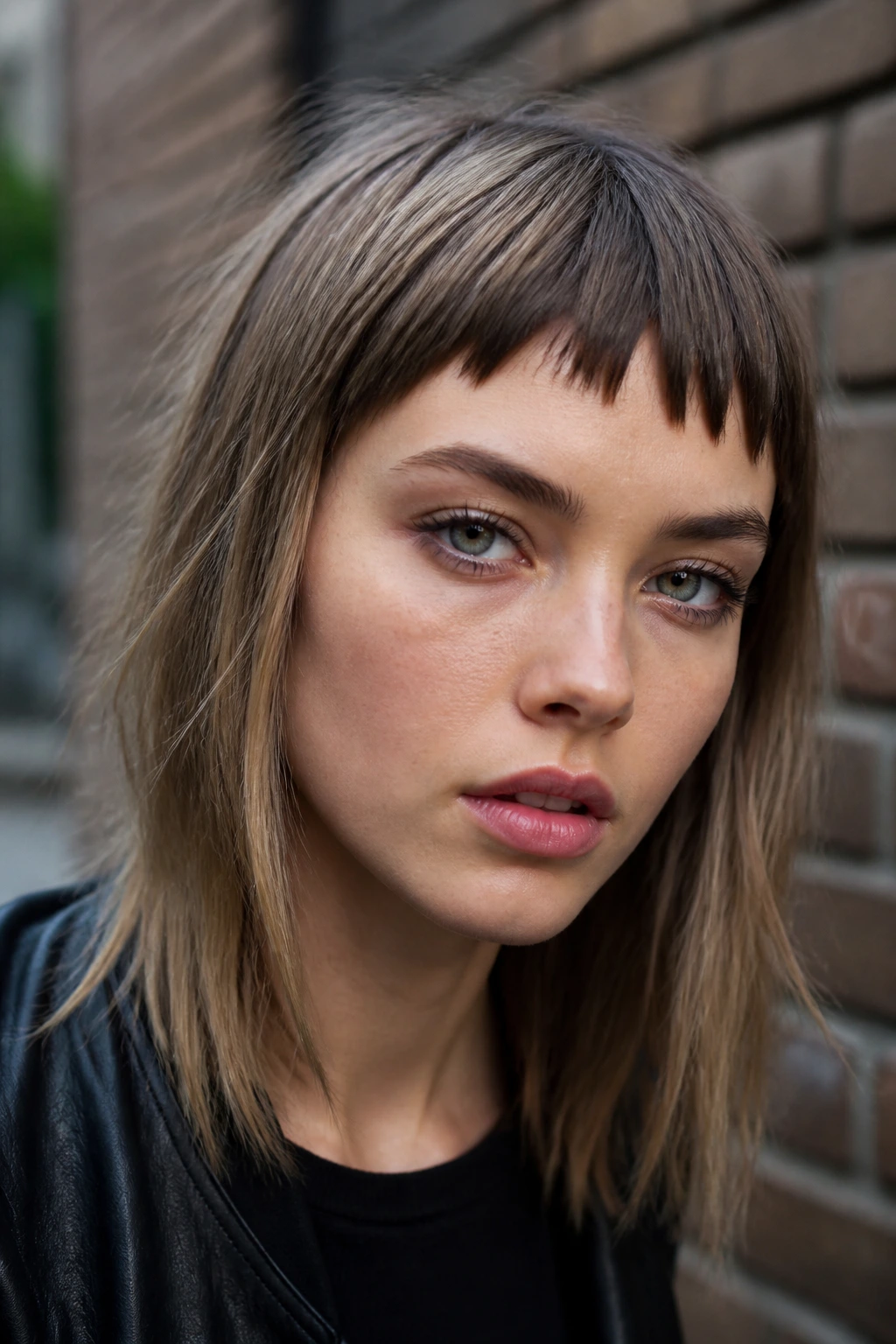
For those who love a slightly rebellious, modern aesthetic, the jagged cropped fringe is an amazing option. This style features short bangs cut well above the brows with highly irregular, jagged ends.
This cut is all about celebrating texture and rejecting perfection. It is cut dry using a razor or point-cutting technique to create sharp, contrasting lengths throughout the fringe. It looks incredible on straight hair because the smooth texture of the hair highlights the edgy, jagged lines of the cut.
This style is incredibly low-maintenance. You do not want these bangs to look neat or styled. Just wash, air dry, and use your fingers to mess them up a bit. It is a bold, artistic style that adds instant personality to any haircut.
21. Feathered Curtain Bangs for Fine Hair
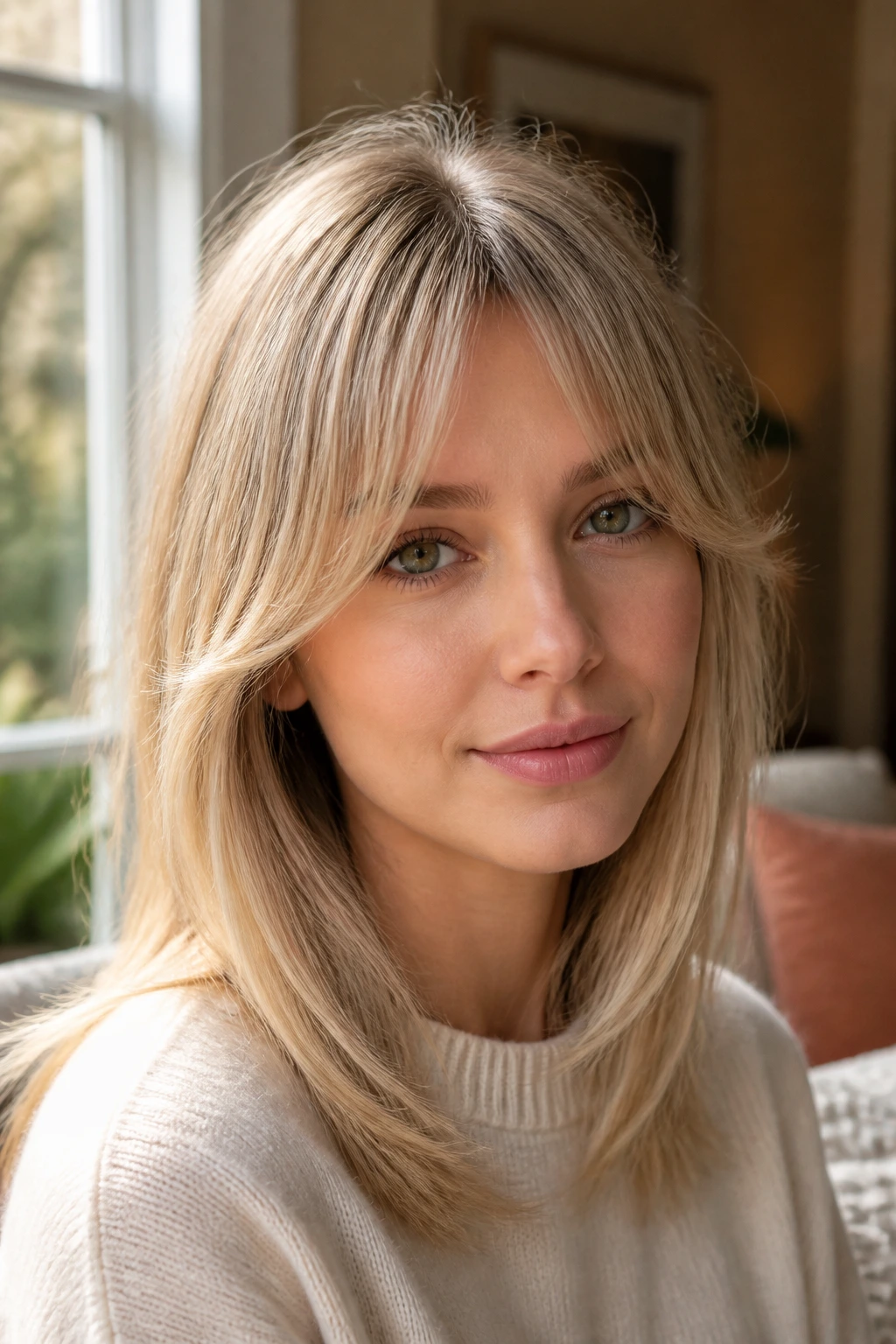
If you have very fine, thin straight hair, you might worry that curtain bangs will make the rest of your hair look too thin. The key is to cut a very light, feathered version that does not require pulling a lot of hair forward.
This style uses only a small amount of hair from the very front of your hairline. The stylist will feather the ends extensively to create a soft, airy texture that sweeps easily to the sides. This adds beautiful movement around your eyes without taking away density from your lengths.
To style these, use a small round brush to blow-dry the bangs up and back away from your face. This creates a soft, floating lift at the roots, making your hair look fuller and more voluminous exactly where you want it.
22. Thick Straight-Across Block Bangs
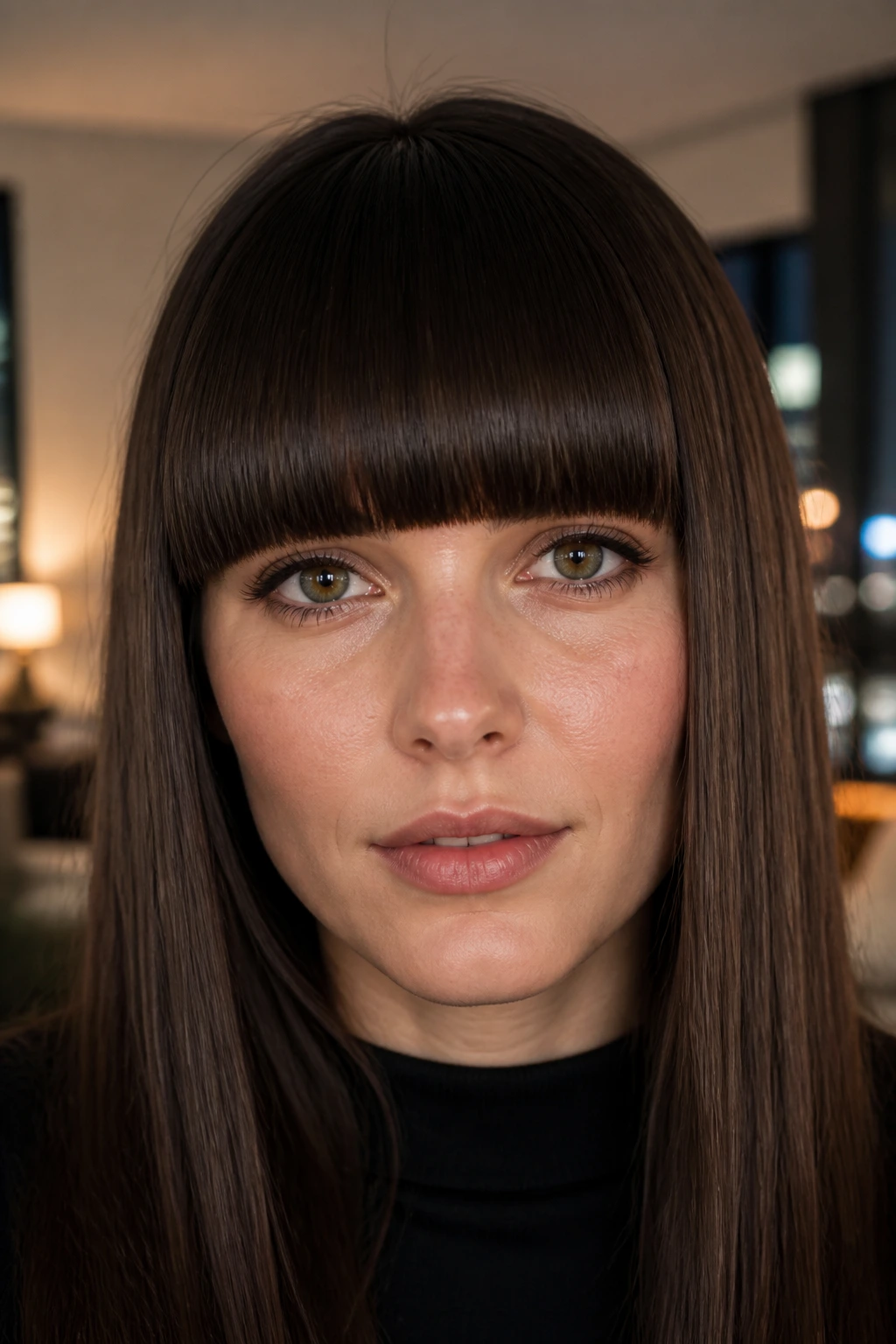
The thick straight-across block fringe is a dramatic, high-fashion statement. It is cut thick, starting deep on the crown, and runs in a completely straight, solid line from temple to temple.
This style is highly graphic and looks best on naturally thick, stick-straight hair. Because there is no texturizing or layering, the bangs form a solid, heavy block of hair that completely covers your forehead, highlighting your eyes and cheekbones with dramatic intensity.
To keep this looking sharp, you will need to use a flat iron daily to ensure the hair lies completely flat and smooth. It is a high-maintenance look that requires regular trims to keep the line perfectly straight, but the dramatic, polished result is absolutely worth the effort.
Grooming and Maintenance for Straight Bangs
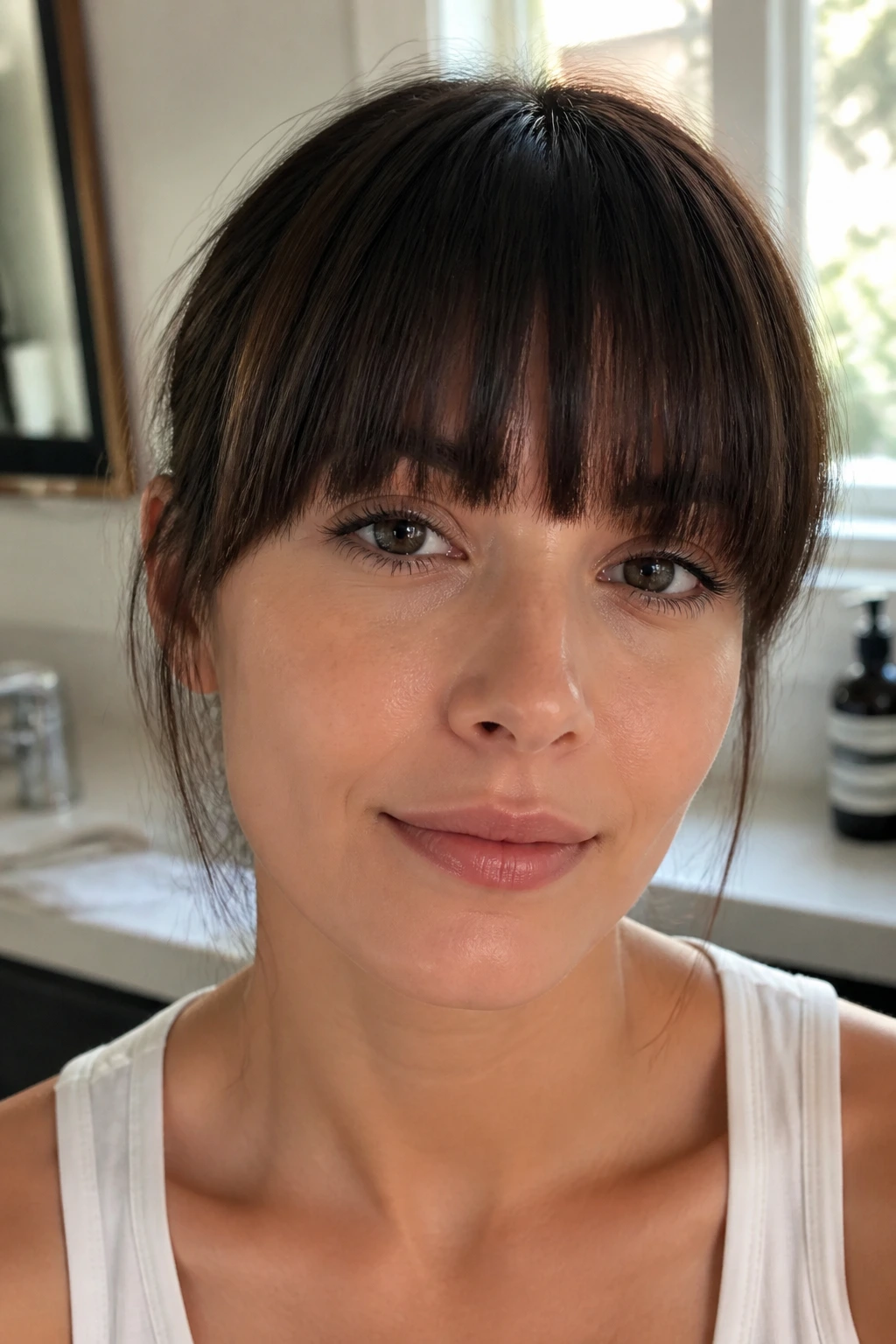
Once you have chosen the perfect style, keeping your bangs looking great requires a few simple adjustments to your daily routine. Because bangs sit directly against your forehead, they absorb skin oils and skincare products much faster than the rest of your hair. This can make them look flat or piece-y even when the rest of your hair is clean.
To combat this, you do not need to wash your entire head of hair every day. Instead, try the “bangs-only wash.” Pull the rest of your hair back into a ponytail, lean over the sink, and wash just your bangs with a tiny drop of shampoo. Dry them with a round brush, and your entire hairstyle will look instantly refreshed.
Investing in a good dry shampoo is also a lifesaver for straight bangs. Spray a light mist onto the underside of your bangs—the side that touches your skin—immediately after styling. This acts as a barrier, absorbing forehead oil before it can soak into your hair and make it look flat or greasy.
Finally, always remember to let your skincare products fully absorb into your skin before letting your bangs fall down. If you apply a heavy moisturizer or sunscreen and immediately let your bangs rest on your forehead, they will act like a sponge, absorbing those heavy oils and ruining your styling work. Pin your bangs back for ten minutes after your skincare routine to keep them looking fresh and voluminous all day.
Wrapping Up
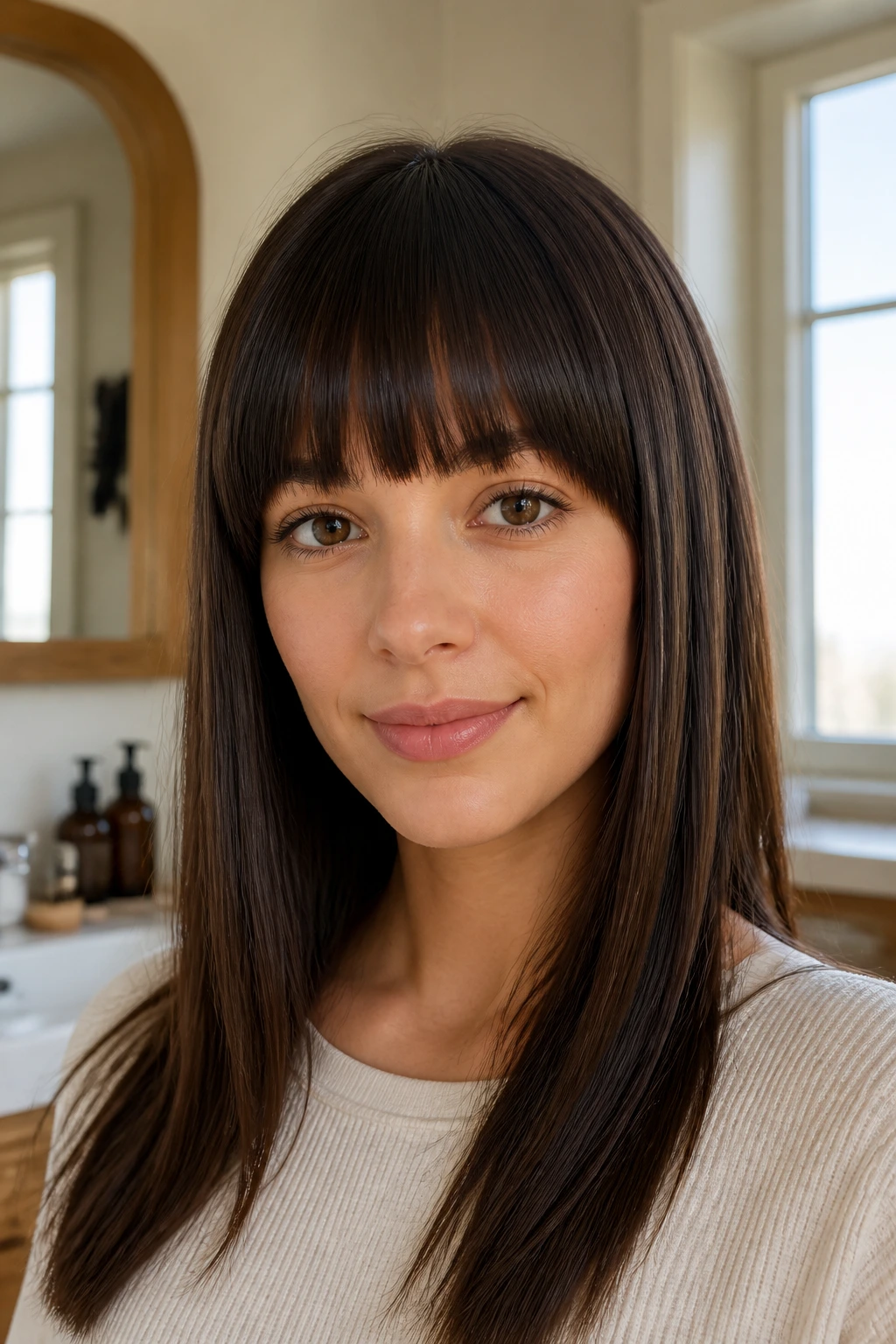
Cutting bangs is a fantastic way to breathe new life into straight hair, adding shape, volume, and personality to flat strands. From bold, graphic blunt cuts to soft, barely-there wisps, there is a perfect style for every face shape and hair density.
The secret to success lies in working with your hair’s natural fall and choosing a cutting technique that prevents that dreaded “helmet” look. Talk to your stylist about cutting your bangs dry to account for cowlicks, and use point-cutting to keep the edges soft and full of movement. With the right cut and a few simple styling tricks, your straight bangs will look polished, effortless, and beautiful every single day.