

Fine hair often feels like a constant negotiation between weight and volume. If you cut it too blunt, it hangs flat and lifeless, hugging your skull like a wet silk scarf. But if you layer it too aggressively, you risk thinning out your ends until they look like spiderwebs. Add bangs to the mix, and the stakes feel incredibly high. Most people with fine, thin strands have been warned away from fringe for years, told that it will only rob density from the rest of their style or end up looking like a greasy, separated curtain on their forehead.
That advice is outdated, lazy, and plain wrong.
When done with precision, cutting a fringe is actually the fastest way to trick the eye into seeing a thicker, more dimensional head of hair. The secret lies in how you pair those bangs with strategic internal layers. By shifting the bulk of your hair’s weight away from the crown and creating movement around the face, you create the optical illusion of density. It is all about redirecting the eye to focus on texture and shadow rather than thinness.
The goal is not to try and force fine hair to behave like a thick mane. Instead, we want to maximize the unique properties of thin hair—its softness, its movement, and its ability to hold airy, delicate shapes that would look bulky on anyone else. Let us look at how you can make this work without losing a single ounce of precious volume.
How Bangs Create the Optical Illusion of Thicker Hair
When hair hangs at one uniform length, gravity pulls it downward. This stretches the roots flat against the scalp, exposing the shape of the head and making any sparse areas along the part line highly visible. Pulling a portion of that hair forward into a fringe immediately changes the entire dynamic.
By creating a horizontal design line across your forehead, you build a solid visual anchor. This line breaks up the vertical pull of long, flat strands. The fringe itself blocks the view of your natural hairline—which is often where thinness is most apparent—while simultaneously casting a shadow beneath it. This tiny pocket of shadow on your forehead actually makes the hair above it appear denser and darker than it is.
Furthermore, cutting bangs frees up the surrounding hair to lift. When you remove the weight of those front sections, the roots at the crown can finally bounce. You are not actually growing more hair; you are simply rearranging the hair you have to cover more surface area with less weight. It is a simple matter of physics.
Rules for Cutting Layers in Fine Hair to Protect Density
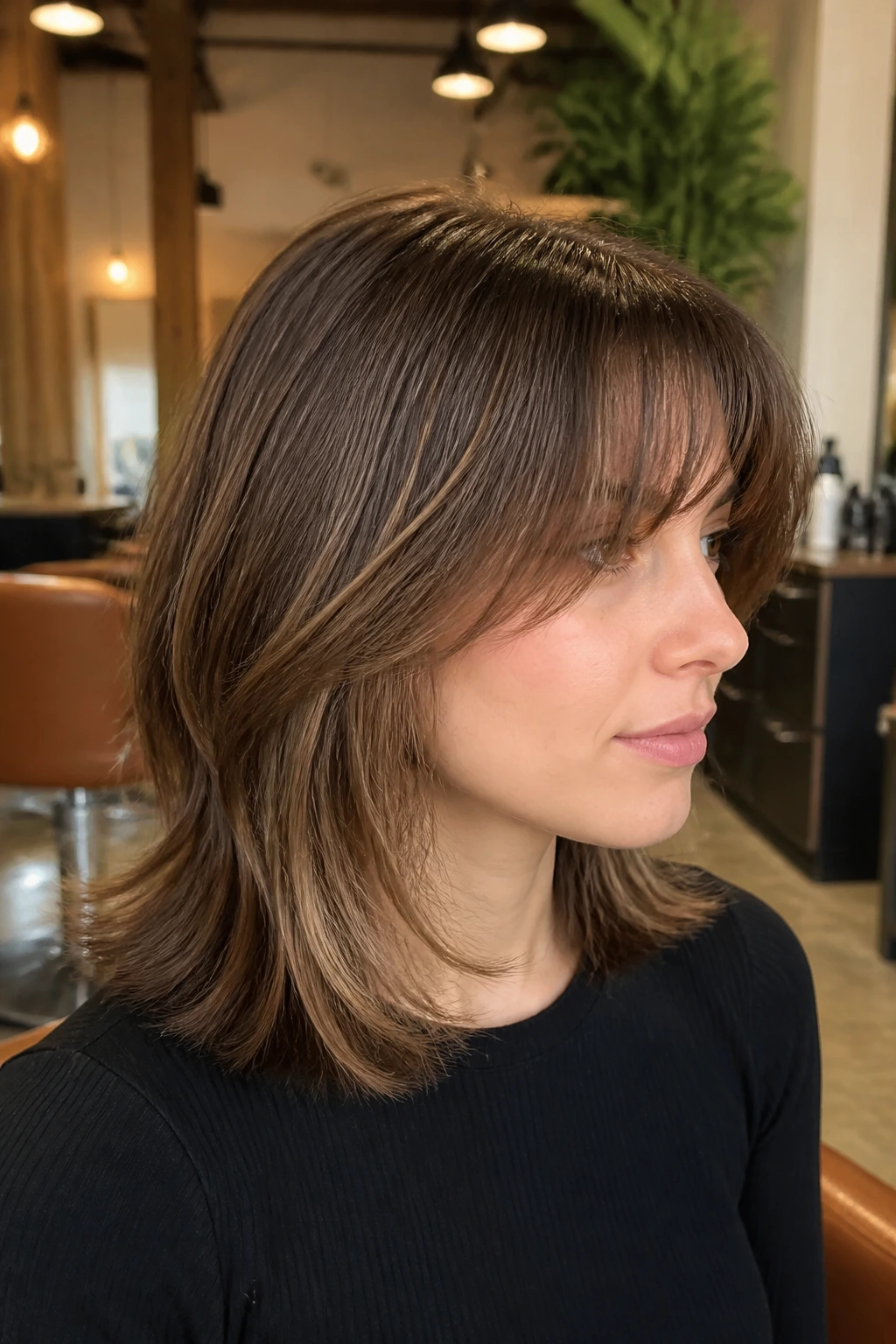
Before you let anyone touch your hair with shears, you must understand the difference between good layers and bad layers for your specific hair texture. Traditional layering techniques often involve pulling the hair straight out from the head and cutting off the corners. On thick hair, this is great for removing bulk. On thin hair, it is a disaster that leaves you with a disconnected, stringy bottom half.
To protect your density, layers in thin hair must be cut using internal slide-cutting or point-cutting techniques. Instead of removing hair from the perimeter, a skilled stylist will carve out tiny pockets of space inside the haircut. These hidden gaps act like invisible scaffolding, pushing up the longer strands above them to create height and bounce.
Another vital rule is to keep the perimeter blunt. The very bottom of your haircut should always feature a strong, solid line. This gives the appearance of a thick base, which then allows you to have fun with soft, textured layers and breezy bangs throughout the mid-lengths and face-framing areas.
1. Wispy Curtain Bangs with Soft Face-Framing Shag Layers
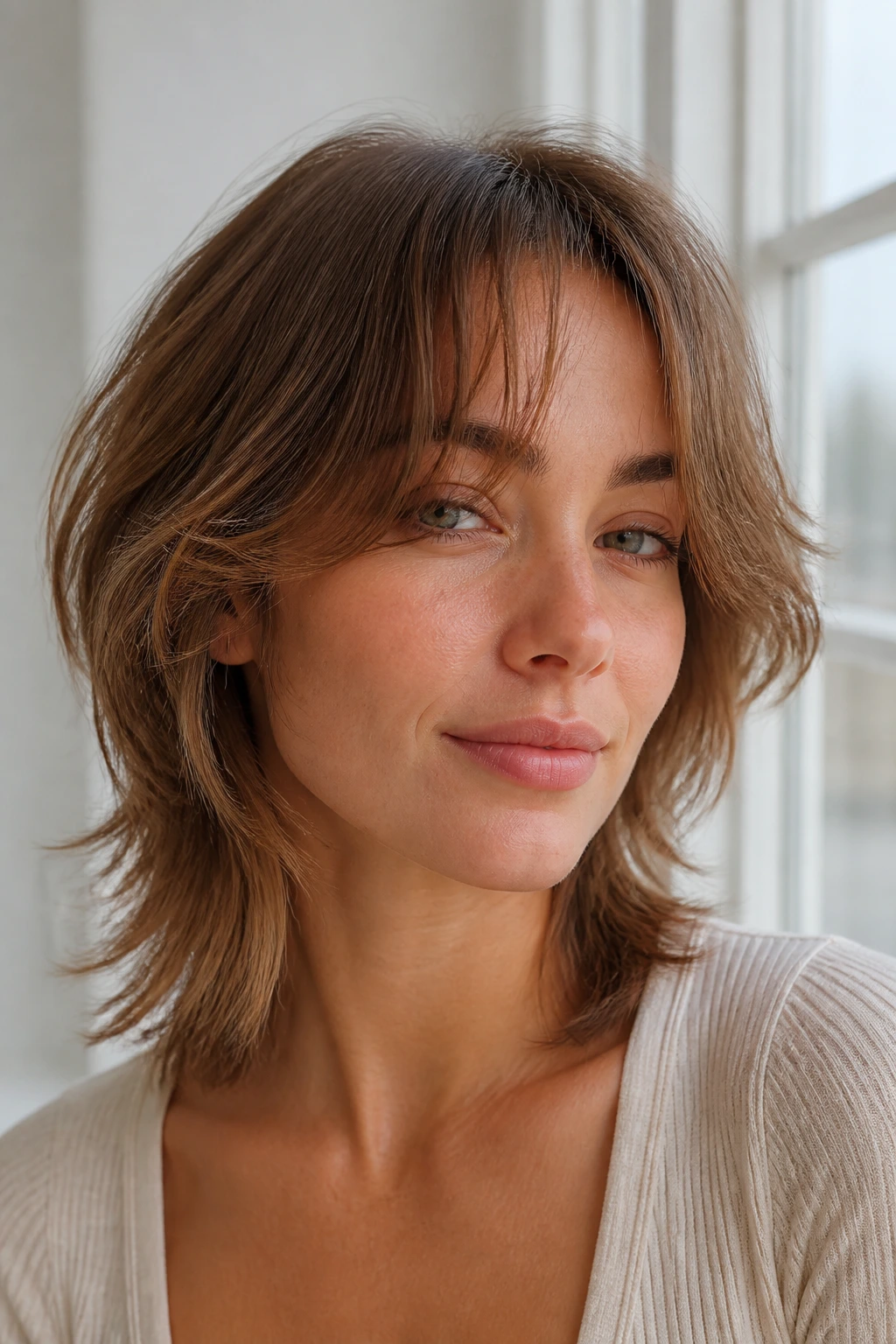
This classic pairing uses a soft, sweeping fringe that splits down the middle, blending into delicate, shattered layers around the jawline. Because the bangs sweep outward, they draw attention to the cheekbones while leaving the center of the forehead slightly exposed, which keeps the face looking open and bright.
How This Shag Cut Builds Volume
The magic of this style is in the seamless transition. The shortest point of the curtain bang starts around the bridge of the nose and gently curves downward, meeting the face-framing layers that hug the jaw. By keeping the layers soft and disconnected from the very back of the hair, you keep your overall length looking thick and solid.
Quick Style Stats
- Best Face Shape: Oval, heart, and square shapes.
- Styling Effort: Medium—requires a quick blowout with a medium round brush.
- Required Products: A lightweight volumizing mousse applied to damp roots.
- Trimming Frequency: Every six to eight weeks.
Pro tip: When blow-drying curtain bangs, wrap them around a round brush forward toward your nose, dry them completely, and then let them fall back naturally for the perfect retro swoop.
2. Feathered Choppy Micro Bangs with Invisible Crown Layers
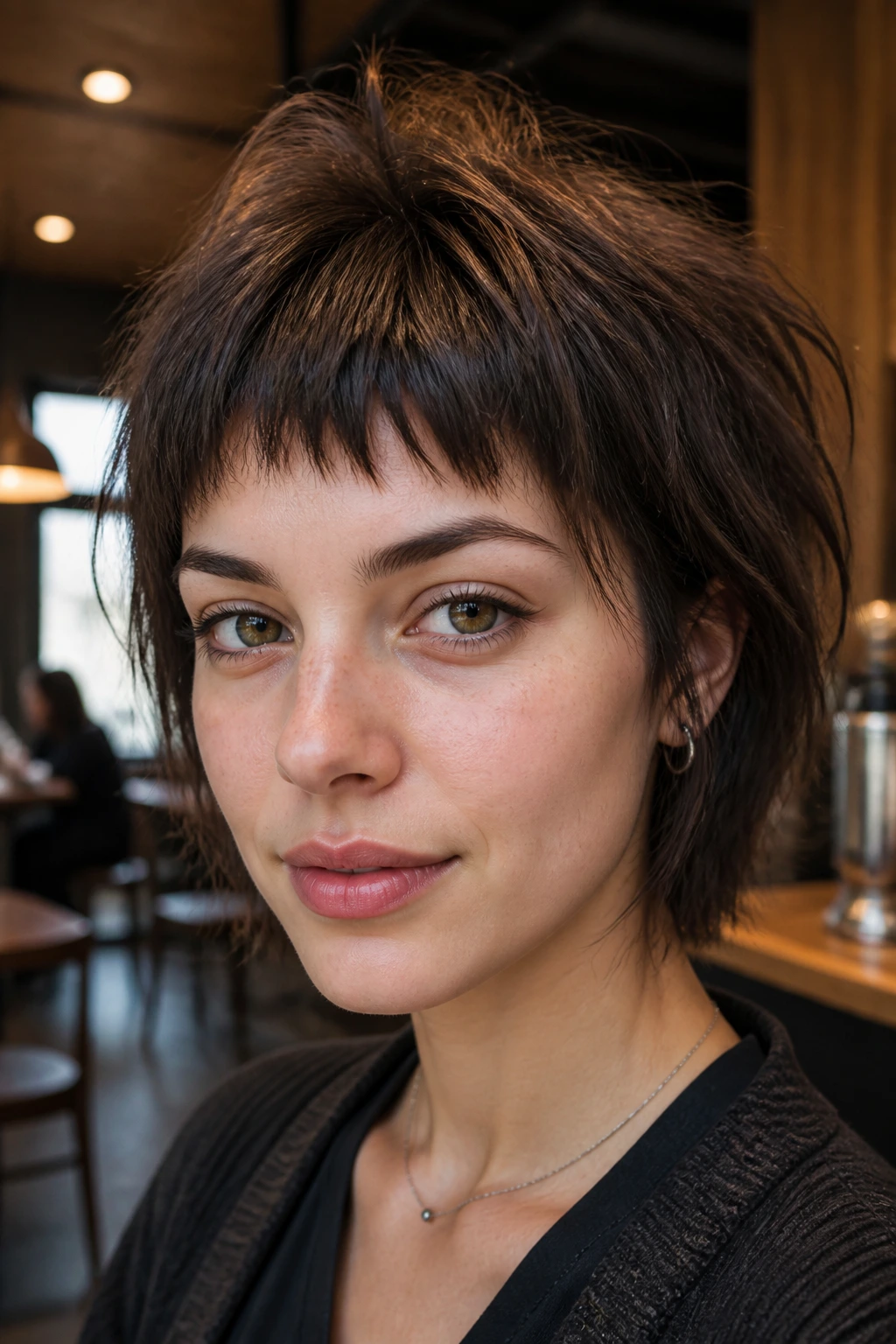
Do not let the word “micro” scare you away. Short, textured bangs that sit an inch or two above the brow line are incredibly effective for fine hair because they require very little density to look intentional and styled.
Cutting bangs short means you do not have to borrow much hair from the crown, leaving the rest of your hair fully intact to build volume elsewhere. When you pair these short, textured bangs with invisible crown layers—which are cut dry to carve out tiny, weight-reducing pockets near the roots—the top of your head gets an instant, natural lift that resists flattening throughout the day.
This style works best if you embrace a slightly messy, lived-in texture. If your hair is pin-straight, you can use a flat iron to bend the very tips of the micro bangs slightly inward, giving them a bit of bevel and grip.
3. Blunt See-Through Bangs with Textured Lob Layers
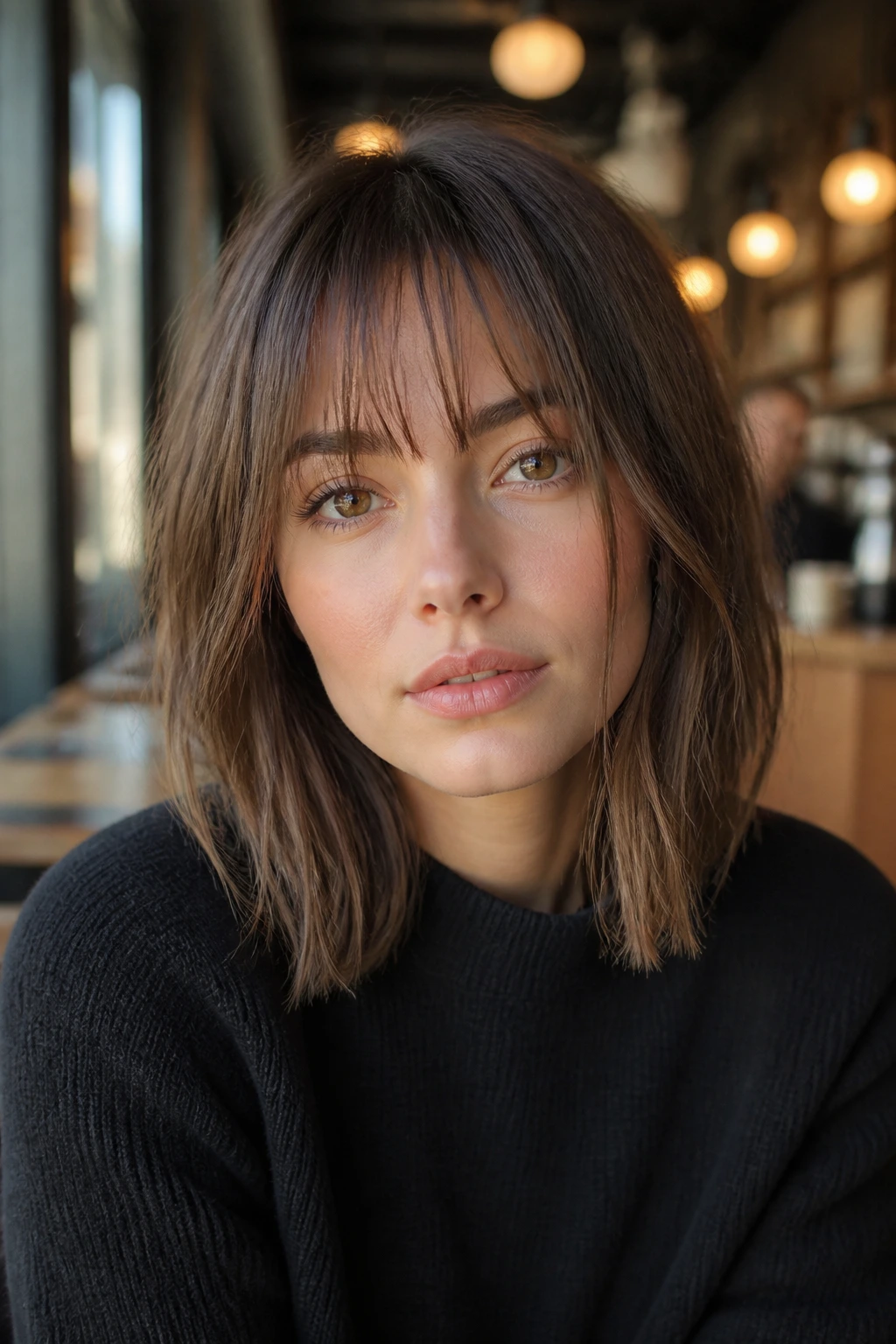
If you love the clean look of straight-across bangs but fear they will look like a sparse comb-over, the see-through method is your perfect solution. This style uses a very thin section of hair at the front, cut straight across but textured at the tips so your forehead peeks through.
Why the See-Through Polish Works
Because these bangs are meant to be sparse, you do not have to sacrifice a large chunk of hair from your sides or crown to create them. When paired with a lob (long bob) that features blunt ends but heavily point-cut internal layers, the contrast between the sharp bottom line and the airy fringe creates an incredibly chic, modern silhouette.
Styling the Lob-and-Bangs Duo
- Apply a nickel-sized amount of heat protectant cream to damp hair.
- Rough-dry the back and sides of your hair with your fingers to build natural texture.
- Use a boar-bristle flat brush to blow-dry the bangs flat against your forehead, moving the dryer left to right to prevent any stubborn cowlicks from splitting the hair.
- Finish by misting the mid-lengths of your lob with a dry texture spray for a messy, beachy finish.
4. Side-Swept Bottleneck Bangs with Soft Internal Layers
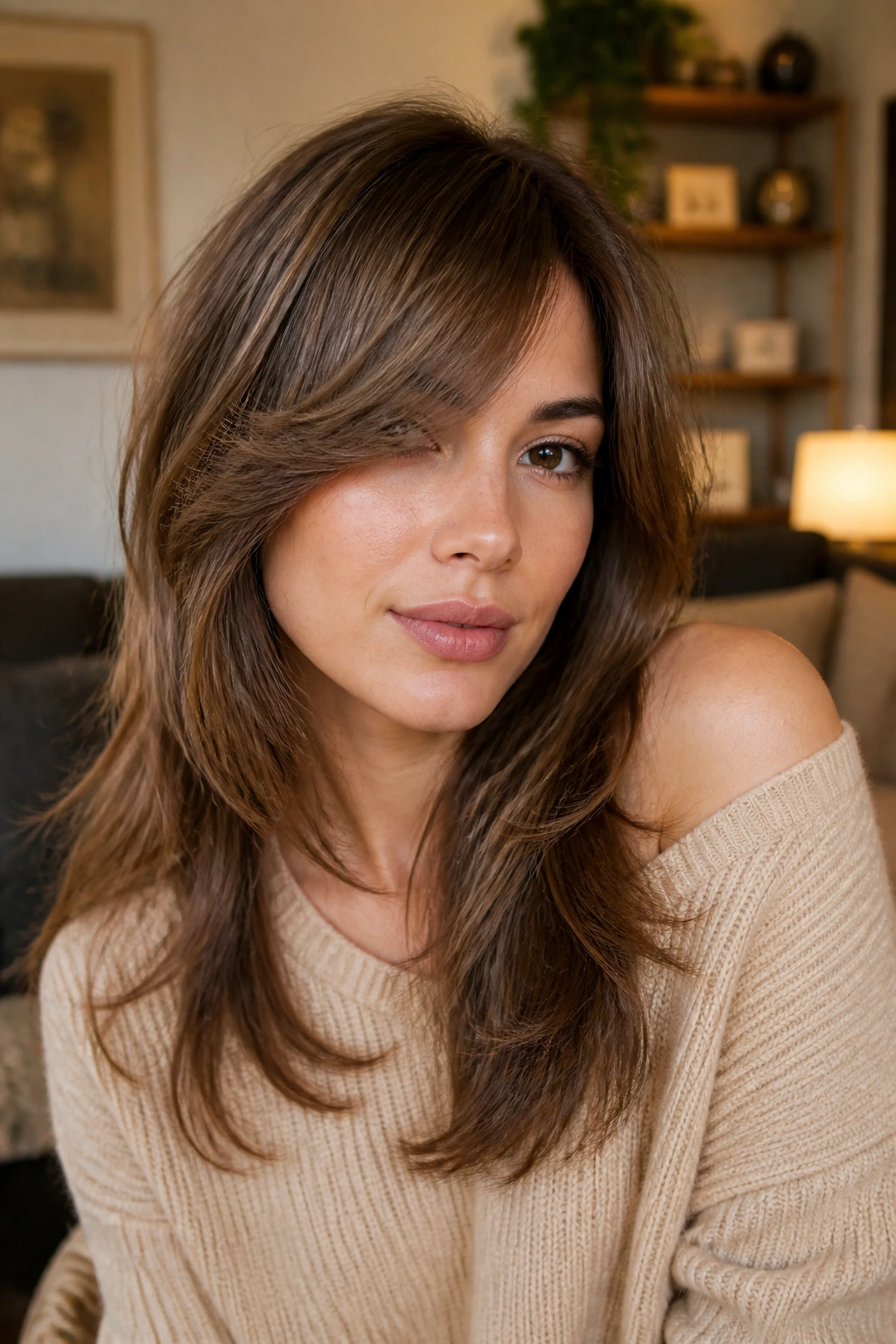
Imagine the shape of an old-fashioned Coca-Cola bottle: narrow at the top near the forehead, curving out around the eyes, and then mellowing out at the cheeks. That is exactly how bottleneck bangs are cut, making them incredibly flattering for thin hair.
A client of mine with very fine, blonde hair was desperate for change but terrified of losing her side-length fullness. We opted for bottleneck bangs that swept softly to one side, blending into delicate, long layers throughout the interior of her cut. The result was remarkable; the side sweep created a dramatic diagonal line across her face, which instantly made her thin hair look like it had double its actual volume.
This style is highly forgiving because it does not require a perfect part. If your hair naturally falls to one side, you can let these bangs drape in that direction without having to fight your natural growth patterns.
- Fringe shape: Narrow at the roots, widening into soft wings.
- Layering style: Long, slide-cut interior layers that preserve perimeter weight.
- Best hair texture: Fine, straight, or slightly wavy.
- Daily upkeep: Minimal—a quick blast of dry shampoo is often all you need.
5. Birkin-Style Razor-Cut Bangs with Long Slide-Cut Layers
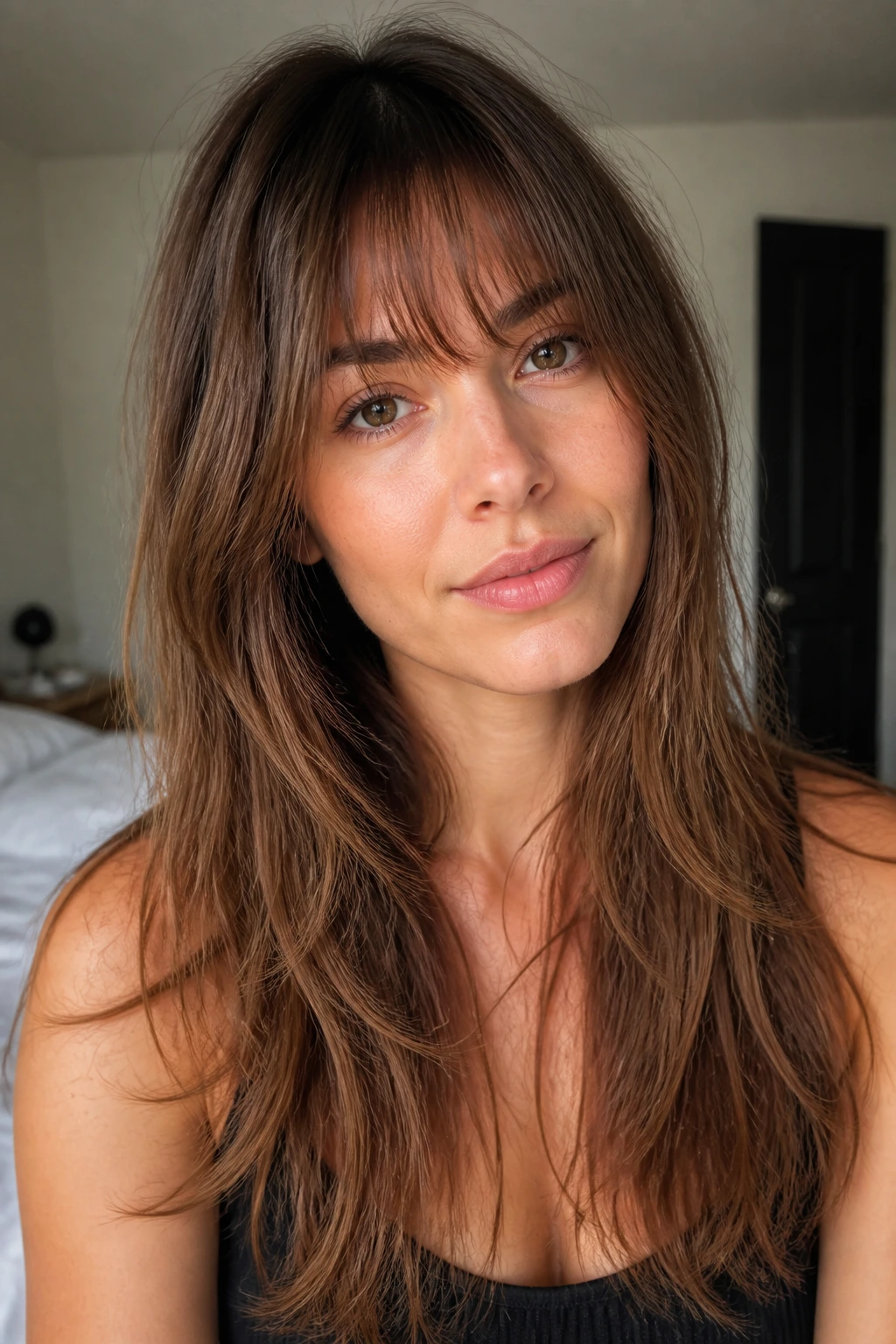
Inspired by the iconic French style of Jane Birkin, this cut features long, wispy, brow-skimming bangs that are cut with a straight razor rather than scissors. The razor creates soft, tapered ends that piece apart naturally, giving the fringe an airy, effortless quality that never feels heavy.
To keep this cut from looking thin at the bottom, your stylist should use a slide-cutting technique on dry hair to connect the bangs to long, cascading layers. Slide-cutting allows the stylist to visually assess where your hair naturally clumps together, removing weight only from the dense zones while leaving the thinner areas untouched.
This is a dream style for anyone who hates spending hours on their hair. The less you style Birkin bangs, the better they look. Let them air-dry, give them a quick scrunch with a bit of salt spray, and let their natural, imperfect movement do all the work.
6. Asymmetrical Piecey Bangs with Disconnected Pixie Layers
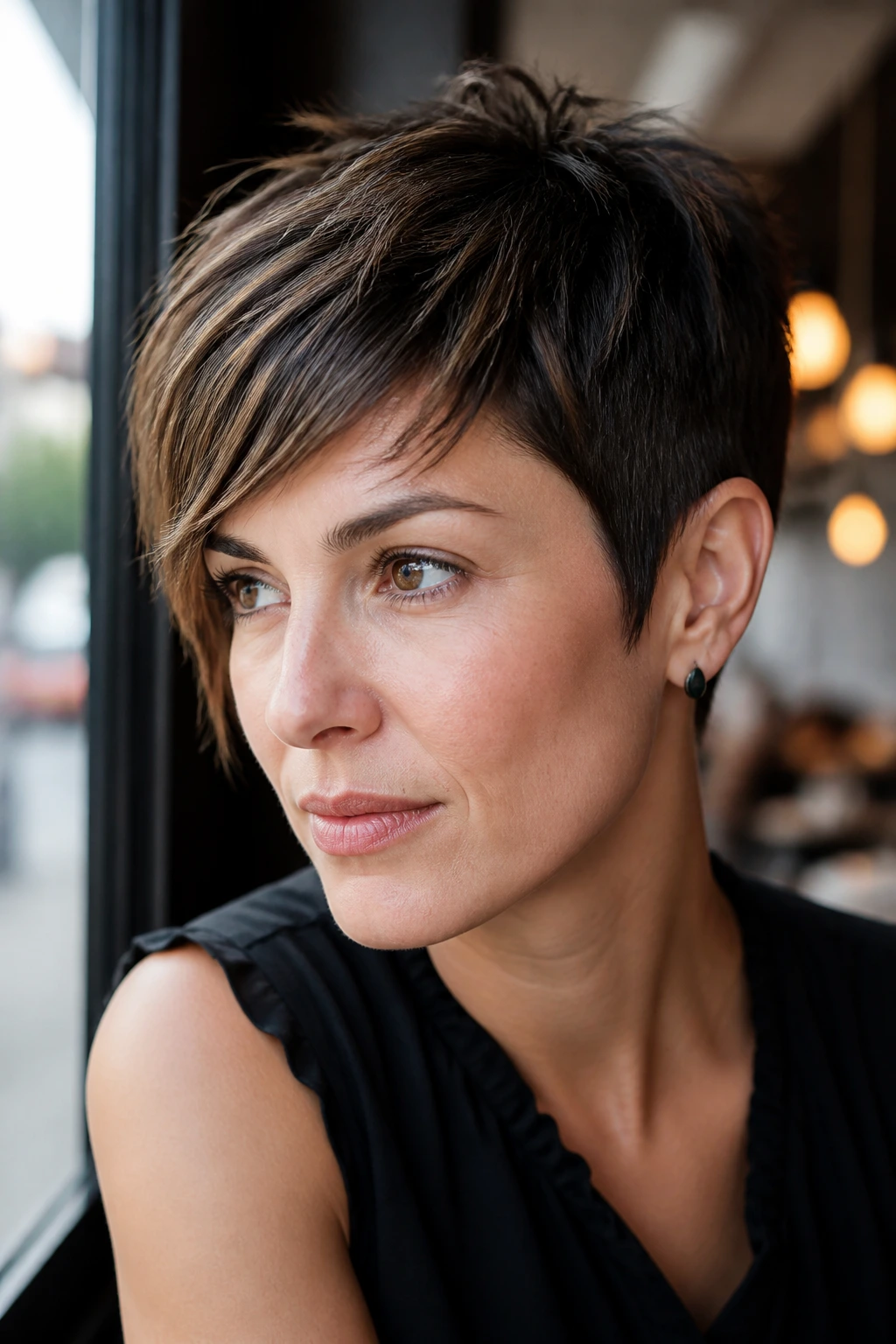
If you have short, fine hair, a pixie cut with asymmetrical, piecey bangs is one of the most powerful styles you can choose. By cutting the sides and back very short and leaving the top and fringe longer, you concentrate all of your hair’s density in one focal area.
Pixie Layers vs. Traditional Bob Cuts
Unlike a classic bob, which can sometimes split and show your scalp if the wind blows, a layered pixie thrives on texture and separation. The asymmetrical fringe drapes diagonally across the forehead, breaking up the symmetry of the face and making it impossible to tell where your hairline actually begins.
Who It is Best For
This cut is a savior for anyone dealing with thinning at the temples or crown. The disconnected layers on top can be styled forward and upward, using a matte pomade to create height and coverage exactly where you want it.
7. Arching French Bangs with Seamless Mid-Length Layers
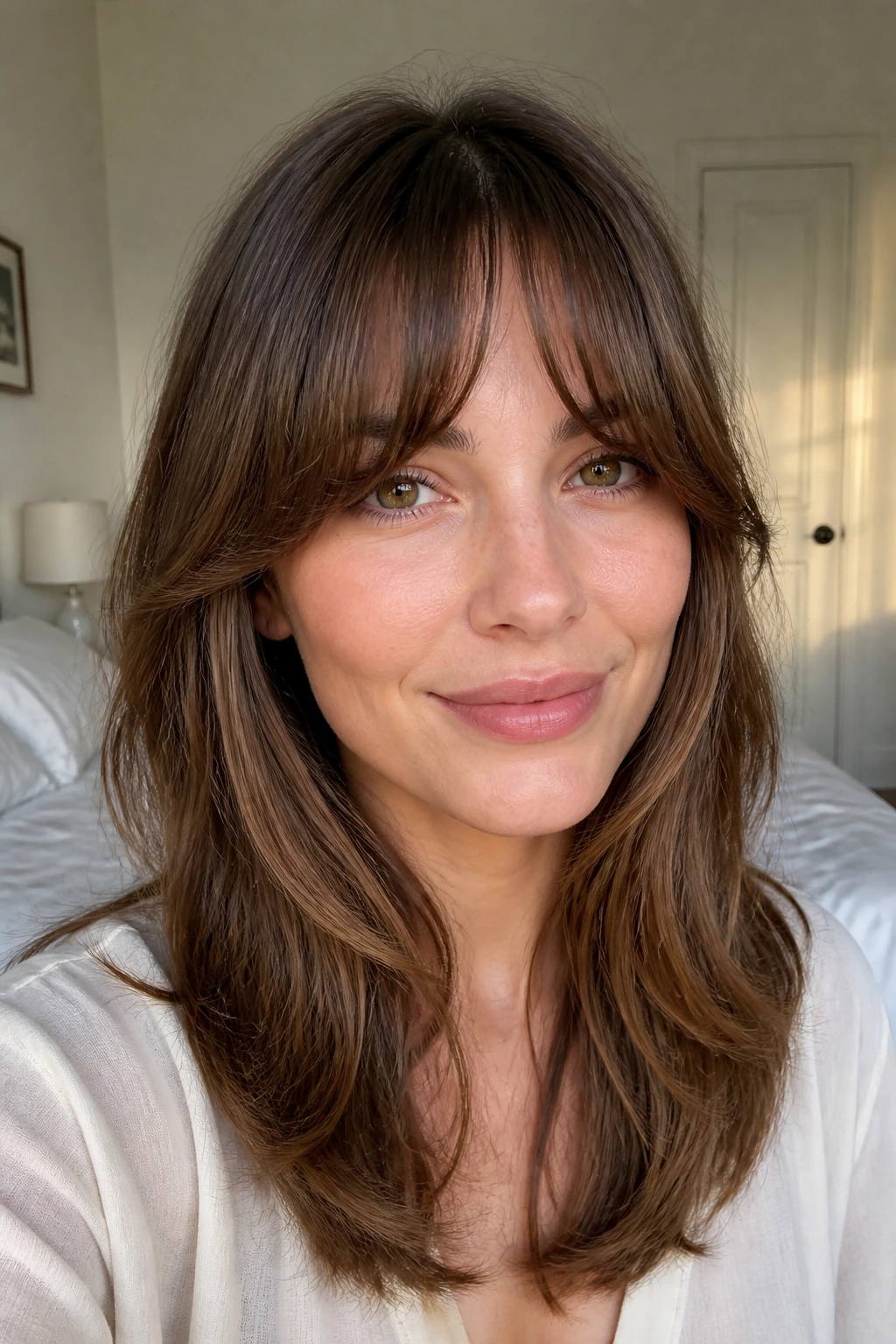
French bangs are cut in a subtle arch, starting shorter in the center of the forehead and gradually lengthening as they curve down toward the outer corners of the eyes. This curved line frame is incredibly soft and prevents the bangs from looking boxy or harsh on a delicate face.
Why the French Arch Works
The arching shape naturally guides the eye outward toward your cheekbones, creating width. By pairing this fringe with seamless, invisible layers through the mid-lengths, the hair gains a beautiful, rounded shape that bounces naturally when you walk.
Quick Style Stats
- Best Face Shape: Round, oval, and heart-shaped faces.
- Styling Effort: Medium—requires a round brush to get that soft, curved bounce.
- Required Products: A root-lifting spray and a lightweight hairspray.
- Trimming Frequency: Every four to five weeks to maintain the eye-clearing arch.
Pro tip: Avoid heavy oils or serums on these bangs. Fine hair absorbs scalp oils quickly, and heavy products will turn your beautiful French arch into flat, separated pieces by lunchtime.
8. Wispy Shaggy Bangs with Textured Collarbone Layers
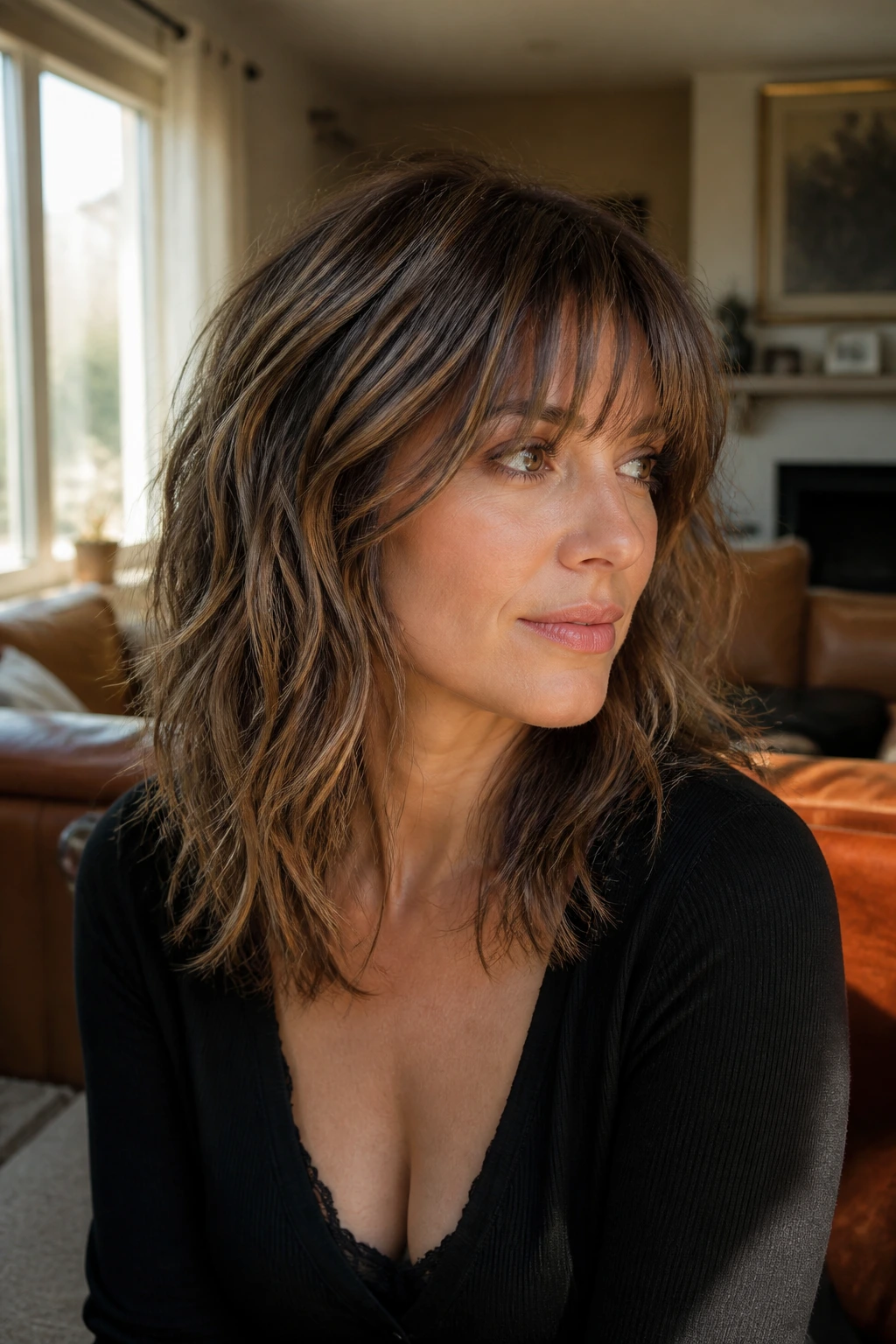
The modern shag is a godsend for thin hair because it celebrates messy texture and imperfect lines. Instead of fighting your hair’s natural tendency to piece apart, this style embraces it fully.
The wispy, shaggy bangs are point-cut deep into the fringe, creating a highly textured, airy look. When these are paired with collarbone-length layers that are heavily textured at the ends, the entire style gains a rock-and-roll, bedhead vibe that looks incredibly thick and full of life.
To style this, skip the blow-dryer entirely. Apply a dollop of lightweight curl cream or wave foam to damp hair, scrunch thoroughly, and let it air-dry. Once dry, use your fingers to shake out the roots and break up the clumps for maximum, airy volume.
9. Grown-Out Bardot Bangs with Cascading U-Cut Layers
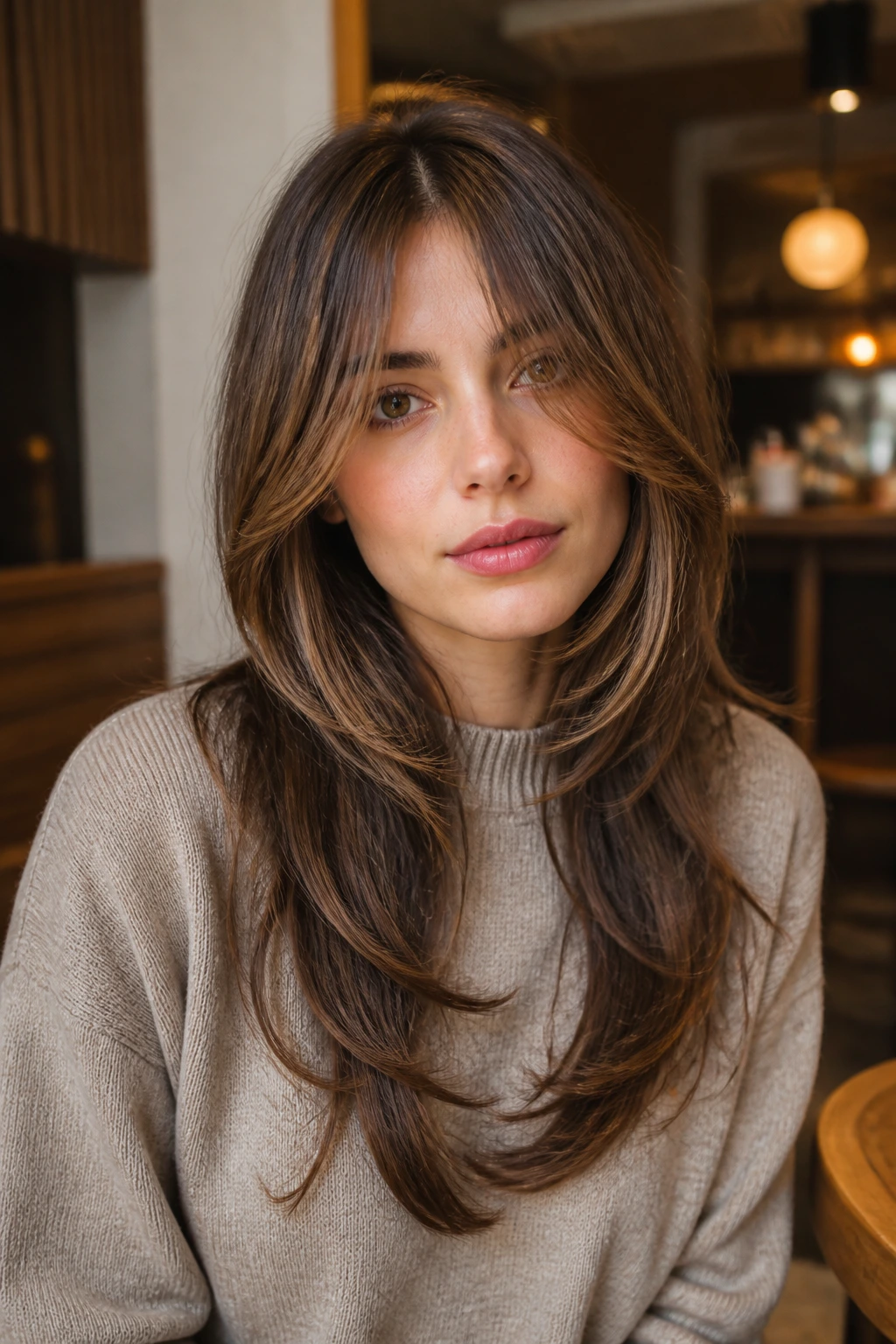
If you are not quite ready to commit to a full set of front-facing bangs, grown-out Bardot bangs—named after Brigitte Bardot—are the perfect stepping stone. These bangs are long, parting down the center and sweeping down past the cheekbones to mimic the shape of a curtain.
The Physics of the Bardot Swoop
Because these bangs are longer, they carry a bit more weight, which actually helps them stay in place and resist splitting. When you pair them with cascading U-cut layers in the back, the hair naturally drapes forward over your shoulders, creating a dense framing effect around your chest and collarbones.
How to Style the Bardot Swoop
- Start with clean, damp hair. Apply a volumizing spray from roots to ends.
- Section out your Bardot bangs. Using a large round brush, blow-dry them straight up and away from your face.
- Roll the warm bangs onto a large Velcro roller, securing it at the crown of your head while you dry the rest of your hair.
- Once the rest of your hair is dry, remove the roller, shake out the bangs, and let them cascade down the sides of your face.
10. Textured Baby Bangs with Short Razored Crop Layers
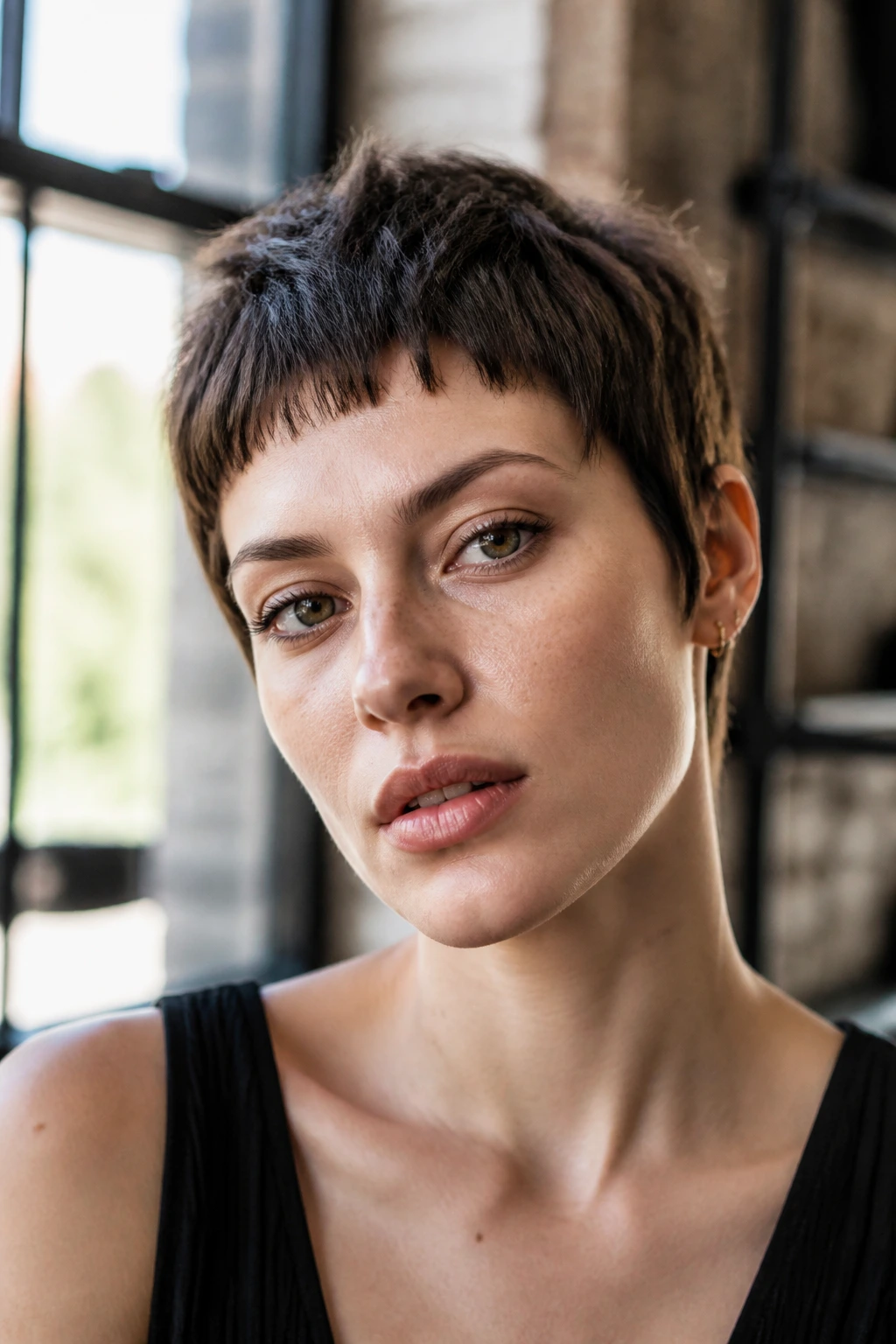
For the bold and daring, textured baby bangs cut with a razor offer an incredibly high-fashion look that does wonders for fine hair. By keeping the bangs extremely short—sitting halfway up the forehead—you create a clean, open space that makes your eyes pop.
The razored crop layers throughout the rest of the cut are sliced thin, creating a feather-light texture that moves with the slightest breeze. Because the layers are so short, they are incredibly light, meaning they will not lay flat even if your hair is naturally prone to grease or limpness.
This style is perfect for anyone with a busy lifestyle. It requires almost zero heat styling. Just pat a tiny bit of dry texturizing paste into the ends of the baby bangs to keep them piecey and defined, and you are ready to walk out the door.
- Fringe length: Halfway between the hairline and the brows.
- Cutting tool: Straight razor for soft, tapered ends.
- Styling product: Matte texture paste or clay.
- Best for: Naturally straight or slightly wavy fine hair.
11. Soft Layered Wisps with Face-Hugging Bob Layers
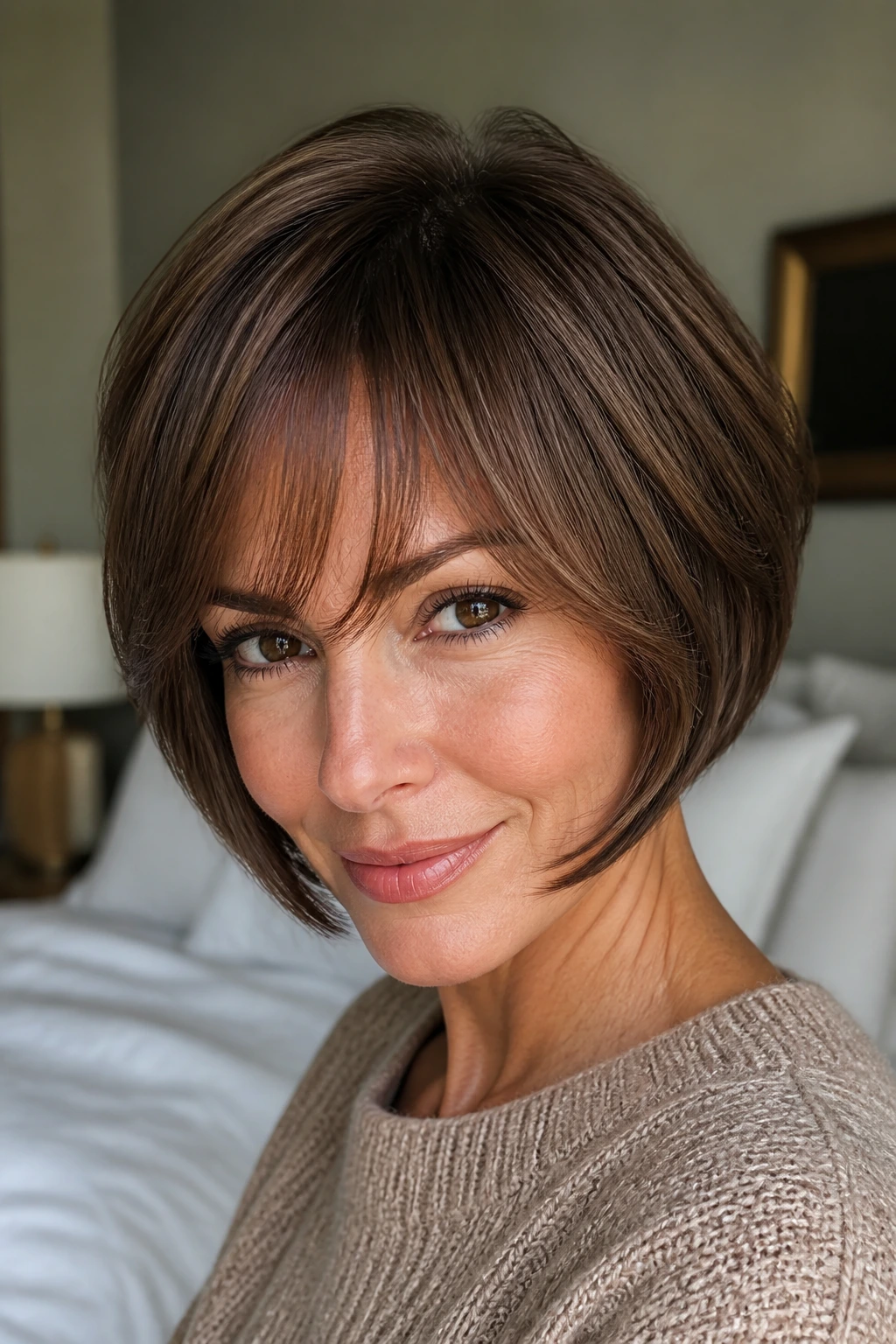
A classic bob can sometimes feel a bit too severe or heavy for very fine hair, especially if your face is petite. Adding soft, layered wisps that sit delicately across the forehead immediately softens the cut and breaks up the heavy perimeter line.
The key to this style is the face-hugging layers. Instead of cutting the bob straight around, the stylist will taper the front corners slightly, allowing the hair to curve inward toward your chin. This creates a beautiful, rounded frame that cradles your facial features.
This style is incredibly elegant and works beautifully for both professional environments and casual wear. It gives the illusion of a full, thick head of hair while keeping the overall length manageable and easy to wash and style.
To style, use a small paddle brush to dry the wispy bangs flat, then use a medium round brush on the rest of the bob to curve the ends gently inward. A tiny drop of lightweight shine serum on the very tips of the layers will give the cut a polished, healthy gleam.
12. Feathery Split Bangs with Long-Length Slide Layers
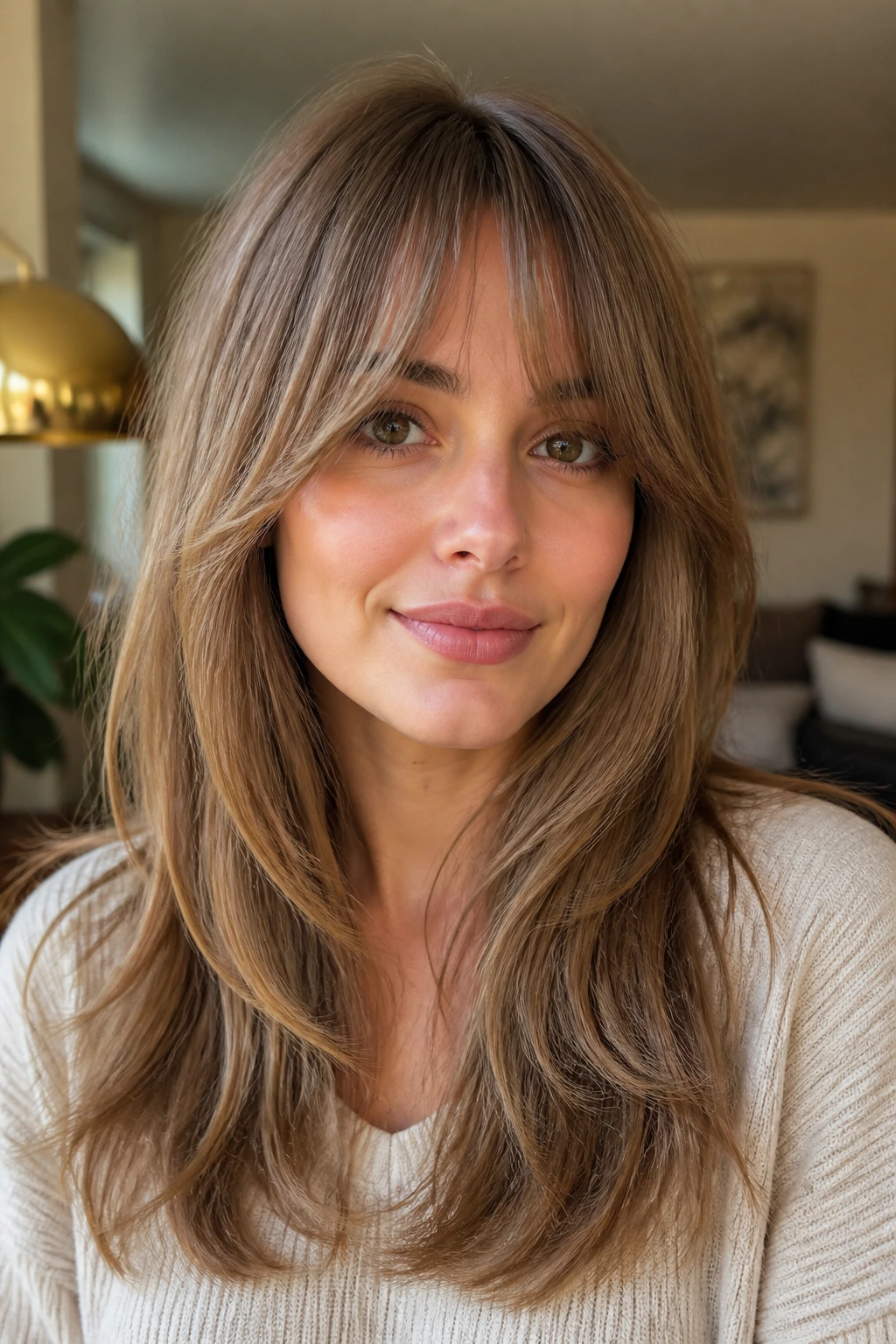
If you love your long hair and refuse to cut it short, feathery split bangs are your best weapon against flat, limp locks. These bangs are cut very light and thin, designed to naturally part wherever your hair wants to split that day.
By pairing these airy wisps with long-length slide layers, you get the best of both worlds. The slide layers start around your collarbone and cascade down your back, removing just enough weight to allow your natural waves or curls to bounce, while the feathery bangs keep the front of your style looking styled and intentional.
This cut is particularly great for people who love to wear their hair in ponytails or messy buns. When you pull the bulk of your hair back, the feathery split bangs and soft slide layers remain free, framing your face so you never look bald or pulled-back too tightly.
13. Fluffy 90s Blowout Bangs with Volumizing Round Layers
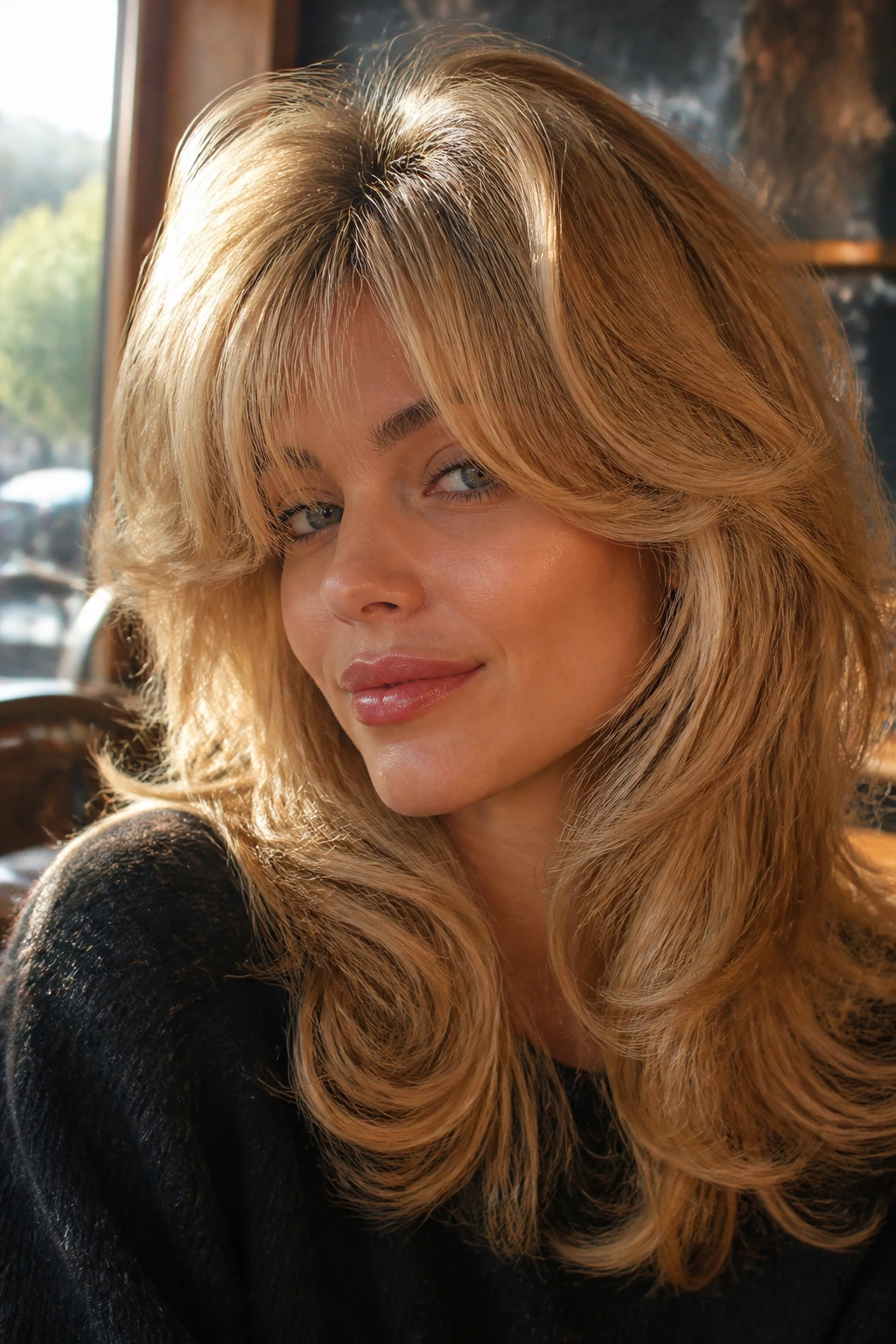
This style is all about that dramatic, bouncy volume that ruled the late twentieth century. If your fine hair is craving major body and movement, this retro-inspired cut is the answer.
The bangs are cut thick but heavily layered, designed to be blown out into a fluffy, rounded cloud that sits beautifully above the brows. When paired with volumizing round layers throughout the rest of the hair, the entire style gains an incredibly bouncy, airy shape that defies gravity.
The Science of the Round Blowout
Round layers are cut by pulling the hair straight up toward the ceiling and cutting a curved line. This removes weight from the top of the hair while keeping the bottom ends full, allowing the layers to stack on top of one another like steps, creating massive height.
Quick Style Stats
- Best Face Shape: Heart, diamond, and long oval shapes.
- Styling Effort: High—requires a dedicated blowout routine with round brushes or hot rollers.
- Required Products: Volumizing root lifter and a medium-hold mousse.
- Trimming Frequency: Every six weeks to keep the layers from getting too heavy.
Pro tip: For the ultimate 90s bounce, blow-dry your hair until it is about 90% dry, then set the entire top section on large heated rollers. Let them cool completely before shaking them out.
14. Tapered Crescent Bangs with Shattered Ends Layering
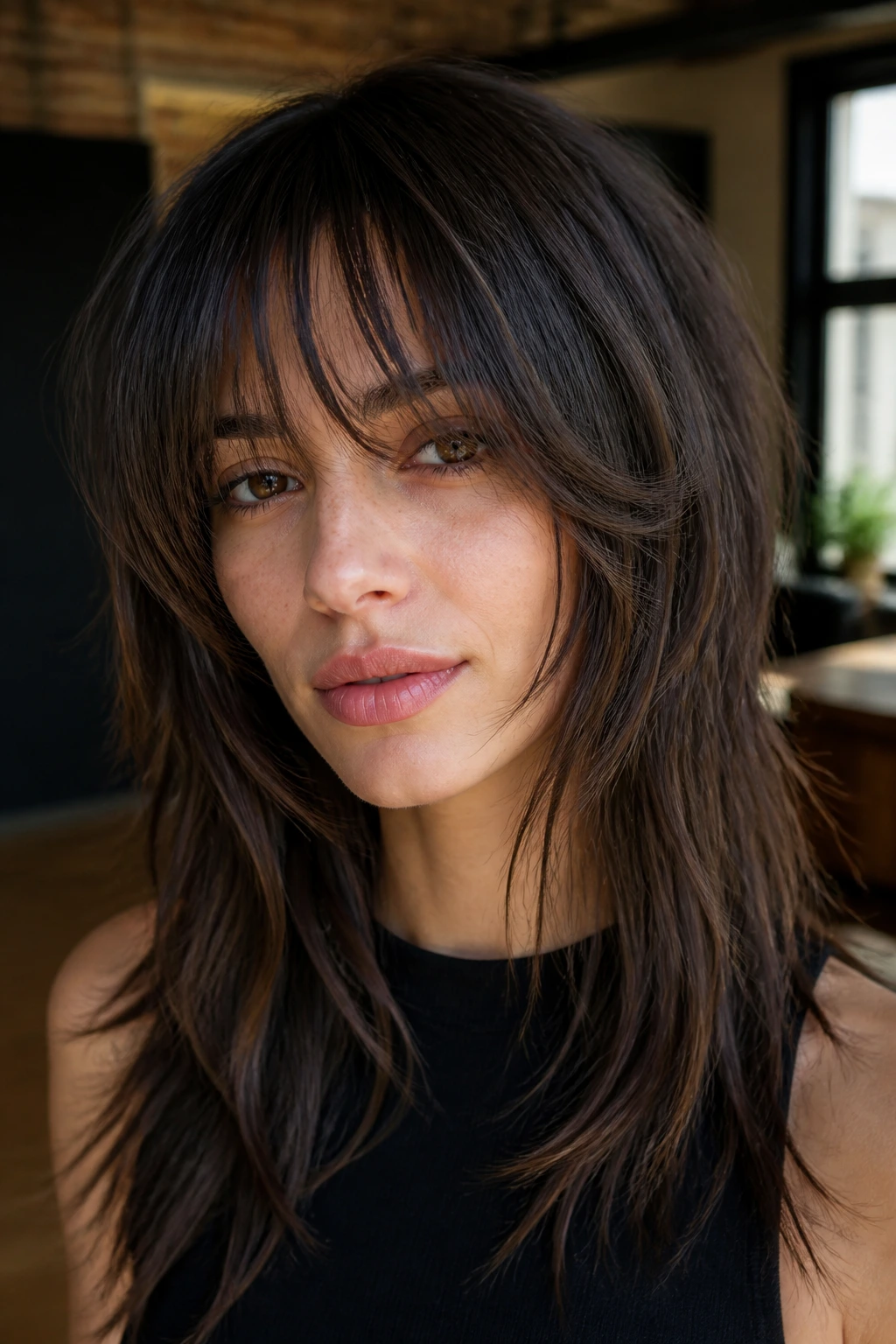
Crescent bangs are cut in a dramatic horseshoe shape, curving down sharply at the outer corners to hug the cheekbones. This style is incredibly modern and looks fantastic on fine hair because the heavy taper at the sides adds instant structure to the face.
To keep the rest of the hair looking equally dynamic, pair these crescent bangs with shattered ends layering. Instead of clean, blunt cuts, the ends of the layers are sliced with shears to create a jagged, uneven line. This prevents the hair from clumping together into flat sections, encouraging it to fan out into a textured, full-bodied shape.
This cut is a savior for anyone with a strong jawline, as the soft curves of the crescent bangs and shattered ends work together to soften sharp angles. It is a highly textured, cool-girl cut that looks best with a bit of natural wave.
15. Point-Cut Straight-Across Bangs with Interior Weight-Loss Layers
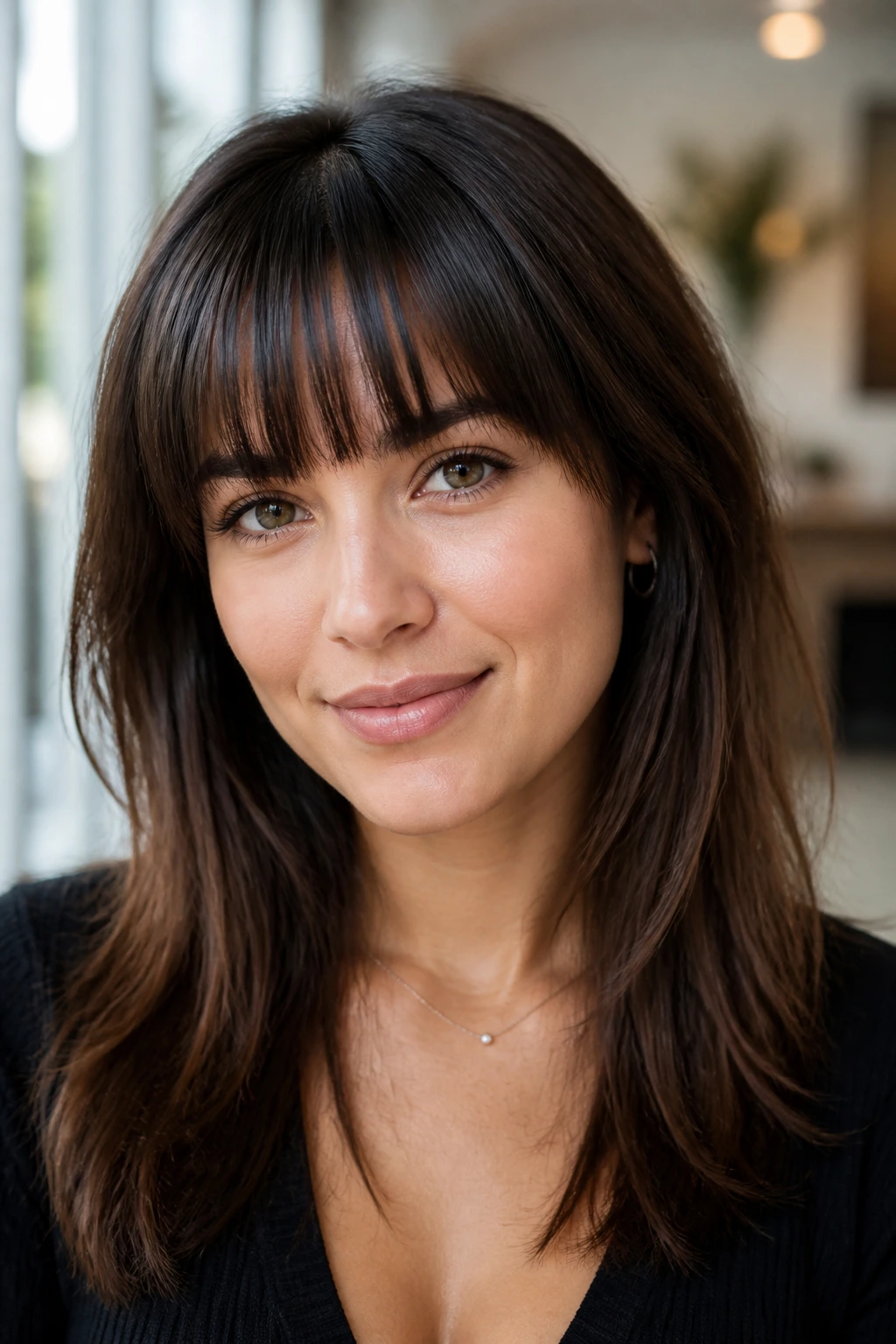
This style is for the purist who wants a classic, straight-across fringe but has always been told their hair is too thin to pull it off. By using a deep point-cutting technique—where the stylist snips vertically into the ends of the bangs rather than horizontally—the fringe gains a soft, textured edge that does not look blocky.
The secret to making this work on thin hair is the interior weight-loss layers. These layers are cut dry inside the back and sides of the hair, removing weight from the middle of the hair shaft while leaving the outer canopy completely solid. This allows the hair to lay flat and smooth without looking thin or stringy.
This is a very high-maintenance style that requires regular trims to keep the bangs out of your eyes, but the polished, striking look is entirely worth the effort. It is the ultimate power haircut for fine-haired professionals.
Maintaining the Blunt Illusion
- Keep a mini flat iron on hand to quickly smooth out any morning bends in your bangs.
- Use a dry shampoo daily, even on clean hair, to prevent forehead oils from separating the fringe.
- Schedule a bangs-only trim with your stylist every three to four weeks—many salons offer this service for free or a nominal fee.
16. Airy Curtain Bangs with Deep-V Back Layering
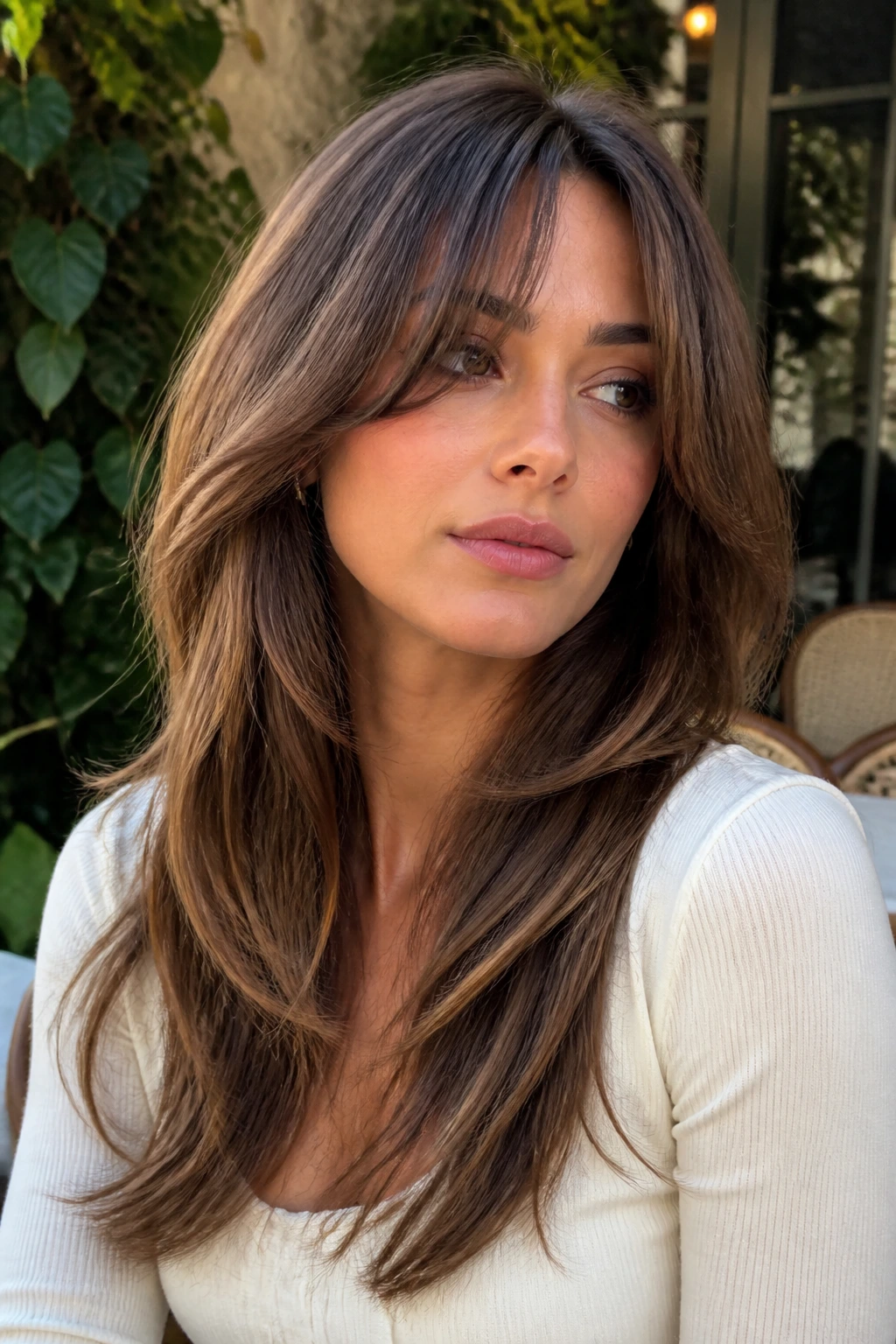
If you love the look of long, flowing hair but find that it always drags your face down, this combination is a game-changer. The airy curtain bangs split softly at the center, drawing the eye up toward your forehead and temples, while the deep-V back layering creates a gorgeous, cascading point in the back.
By cutting the back of your hair into a sharp V-shape rather than a straight line, you remove a massive amount of weight from the sides of your head. This weight removal allows the hair to swing forward easily, making your front sections look incredibly thick and voluminous.
This is a beautiful, romantic style that looks gorgeous when curled with a wide-barrel curling iron. The layers naturally stack on top of each other along the V-line, creating a beautiful, tiered effect that looks like a waterfall of soft waves.
- Fringe style: Light, wispy curtain bangs that sweep to the sides.
- Back shape: Deep V-cut that concentrates weight at the center point.
- Best for: Long, fine hair that tends to go flat.
- Styling tool: 1.25-inch curling iron or wand.
17. Choppy Swept Fringe with Textured Pixie-Bob Layers
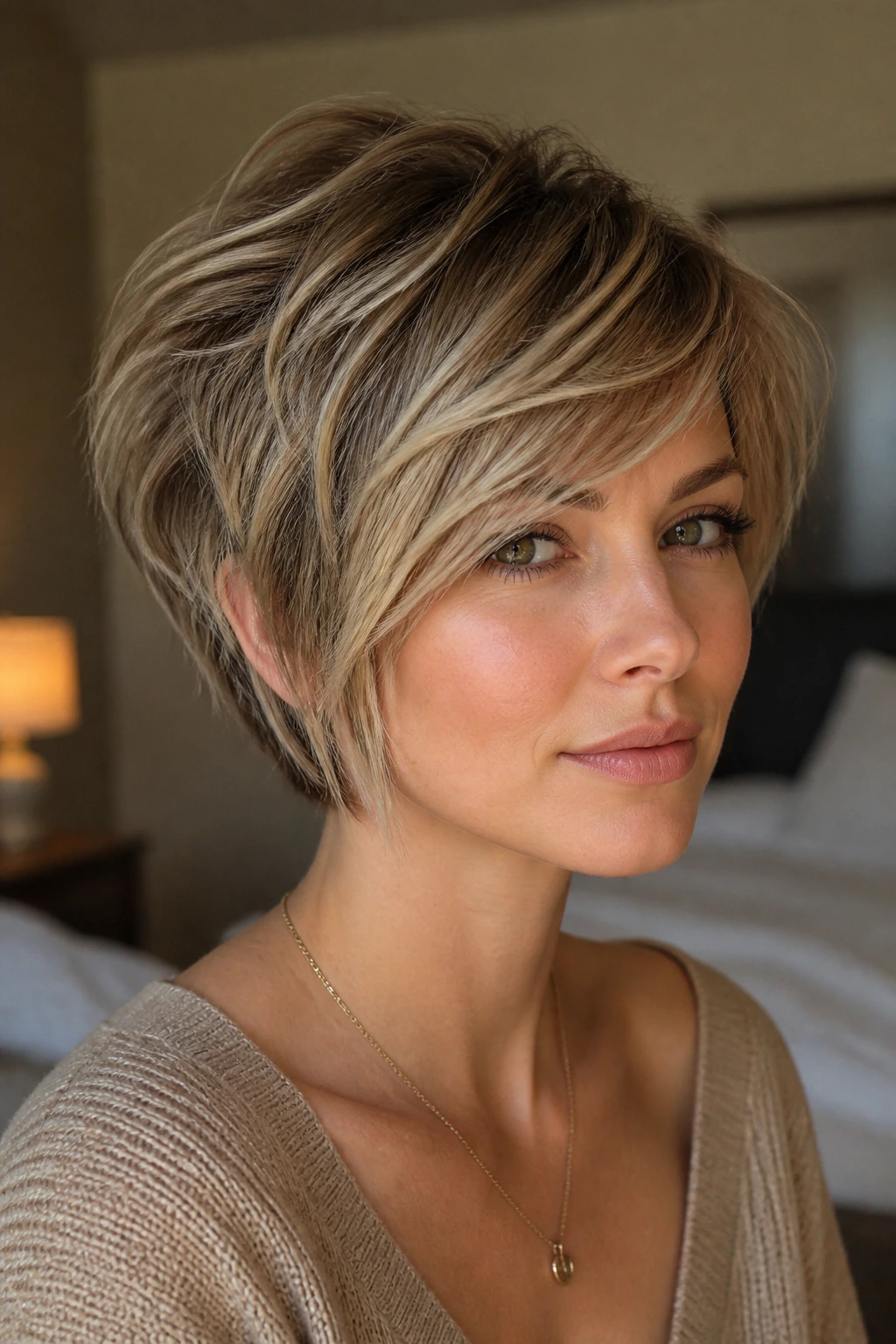
Often called a “bixie,” this cut sits right at the intersection of a short pixie and a chin-length bob. It is one of the most versatile and volumizing cuts available for fine hair because it combines the crop-like texture of a pixie with the face-framing length of a bob.
The choppy swept fringe is cut with heavy texture, designed to be swept to one side where it can blend seamlessly into the longer front pieces of the bob. The back is heavily layered and stacked, creating a beautiful, rounded wedge shape that naturally lifts the crown.
This cut is incredibly flattering for mature hair that may be experiencing thinning or loss of elasticity. It lifts the facial features upward, drawing attention to the eyes and cheekbones while providing excellent coverage at the crown and temples.
To style, simply blow-dry with your fingers, pushing the hair forward and to the side. Finish with a light mist of dry texture spray and use your fingertips to pinch the ends of the fringe for a piecey, modern finish.
Wrapping Up
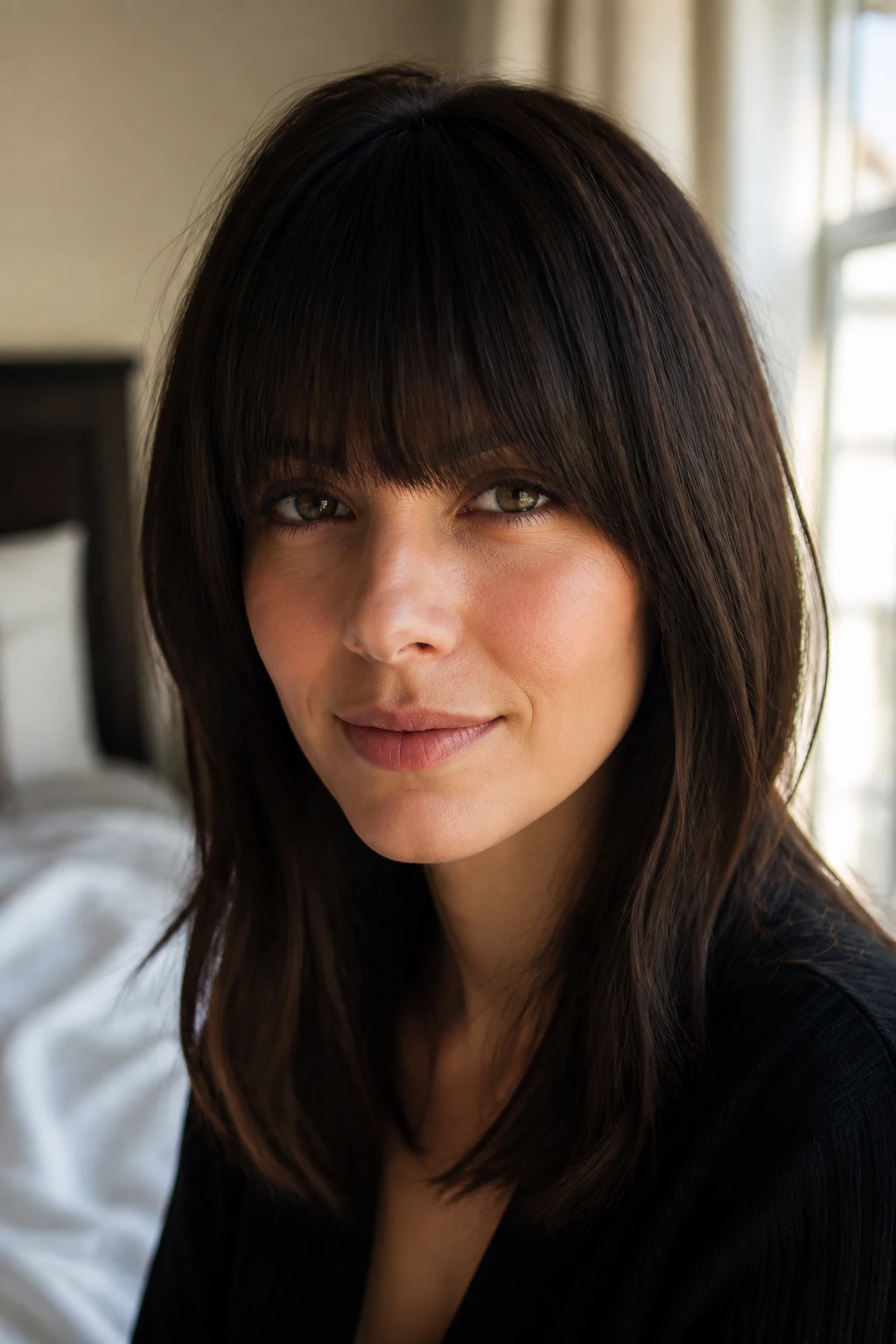
There is no single “correct” way to wear bangs and layers when you have fine, thin hair. The key is to step away from rigid, one-size-fits-all cutting methods and embrace a style that works with your hair’s natural growth patterns, texture, and daily styling limits.
Whether you choose the retro bounce of a 90s blowout, the messy ease of a modern shag, or the clean frame of a textured lob, remember that the best haircut is the one that makes you feel confident when you look in the mirror.
When you head to the salon, bring photos of people who have similar hair density and texture to yours. Be honest with your stylist about how much time you are willing to spend styling your hair each morning. A great haircut should work for you, not the other way around. With the right balance of soft, face-framing bangs and strategic internal layers, you can finally say goodbye to flat, lifeless hair and hello to a style that is full of movement, body, and beautiful depth.