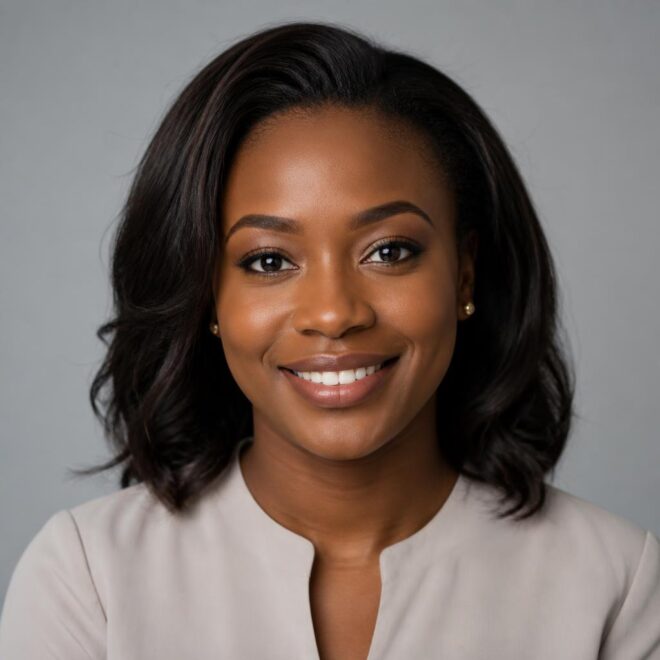


Stepping out into a humid afternoon with freshly cut fringe can feel like a gamble, especially when your hair naturally reacts to moisture in the air. Within minutes, a short, blunt cut can puff upward, leaving you with an unruly cloud on your forehead. This is why choosing longer bangs for frizzy hair is a practical strategy rather than just a stylistic choice. Added length translates directly to added weight, which helps keep your natural texture under control.
For decades, the standard advice for anyone with natural frizz, high-porosity strands, or curly textures was simple: avoid bangs entirely. If you insisted on having them, you were told to prepare for a daily battle involving high heat, heavy silicone serums, and constant touch-ups. This approach treats your natural texture as an enemy to be conquered, which only leads to dry, damaged strands that frizz even more easily.
The secret to wearable, low-maintenance fringe lies in working with your natural hair pattern, not against it. By keeping the cut longer, you allow your waves, curls, or coarse straight strands room to move. When your hair inevitably reacts to weather changes, these longer styles simply blend into your existing layers instead of sticking straight out. They offer styling flexibility, allowing you to sweep them aside, pin them back on high-humidity days, or let them frame your face naturally.
We have collected eighteen distinct ways to wear longer bangs for frizzy hair, along with the specific styling techniques needed to keep them looking deliberate and healthy. Whether your hair is fine and prone to flyaways or thick and coily, there is a cut here that will work with your texture.
1. Long Curtain Bangs
Long curtain bangs are a classic choice for a reason. They split down the middle, gently framing your face before blending into your side lengths. Because they usually end around the cheekbones or jawline, the weight of the hair pulls the root down, preventing the hair from shrinking into a tight, frizzy halo on your forehead.
Why They Work for Frizzy Hair
The weight of a cheek-length cut is your best defense against moisture in the air. When dry air or humidity causes the hair shaft to swell, these bangs expand outward to the sides of your face rather than upward. This outward movement creates a soft, voluminous frame that looks intentional.
Styling Quick Facts
- Ideal length: Grazing the bottom of the cheekbones.
- Best hair types: Wavy, thick, or coarse straight hair.
- Maintenance level: Low; requires trims every six to eight weeks.
- Key benefit: Easy to tuck behind your ears when humidity peaks.
Pro tip: Apply a dime-sized amount of a lightweight cream to wet hair before letting these air-dry to keep the split clean and smooth.
2. Shaggy Wispy Bangs
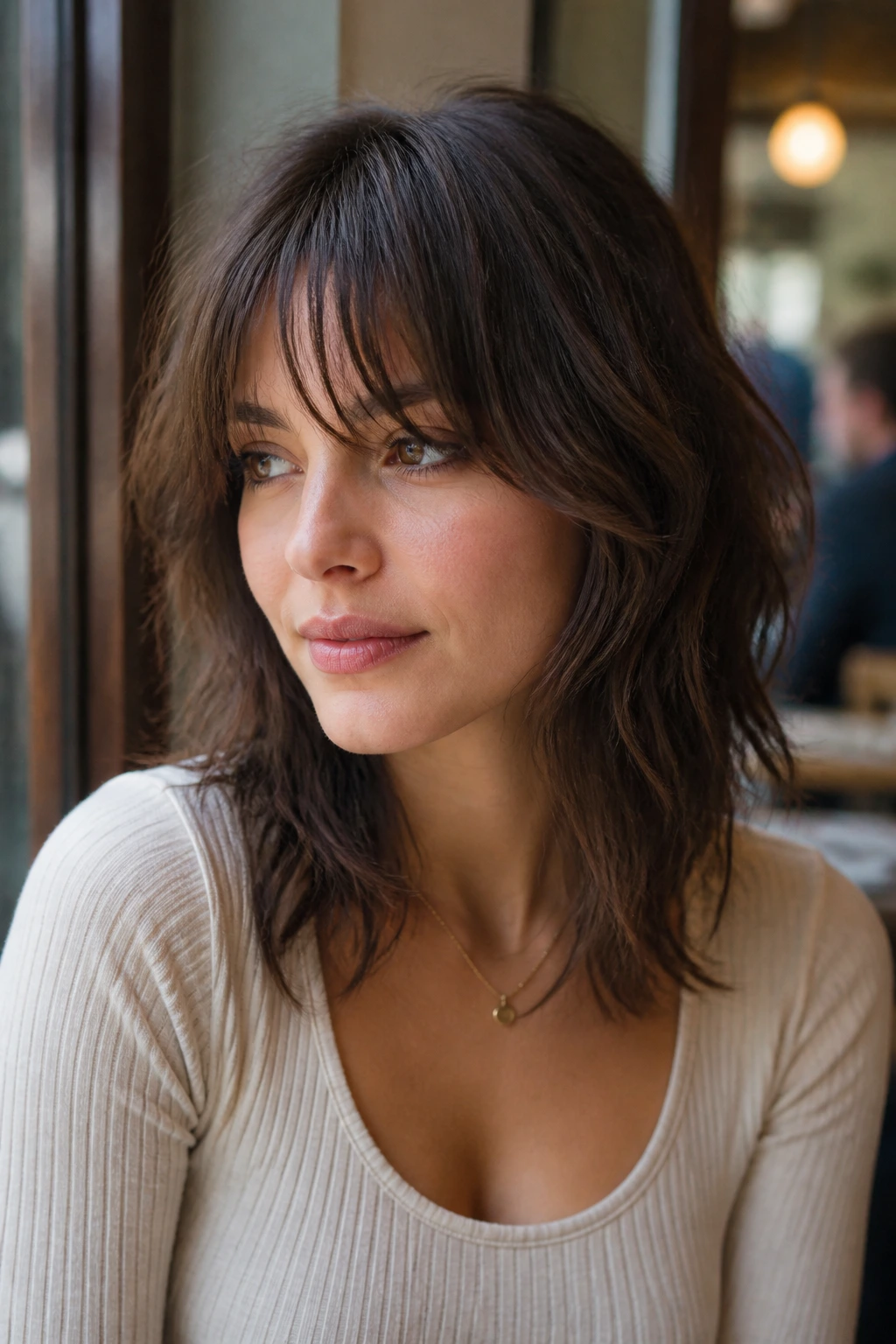
This style uses varying lengths to create a soft, textured look that embraces natural movement. Shaggy wispy bangs do not require a perfectly smooth finish to look good; their appeal lies in their relaxed, slightly messy appearance.
The cut features shorter strands in the center that gradually get longer toward the temples. This graduated shape prevents the blocky, heavy appearance that often happens when thick, frizzy hair is cut straight across. Instead, the wispy ends allow your natural wave pattern to show through without looking bulky.
To style these, you do not need a flat iron. In fact, high heat can make them look stiff and unnatural. Instead, use your fingers to piece out the damp strands with a light-hold paste. This defines the ends and prevents them from grouping together into a single frizzy mass.
For those with high-porosity hair that absorbs moisture quickly, this shaggy shape is incredibly forgiving. If a few strands curl up during the day, they simply blend into the overall textured aesthetic.
3. Grown-Out French Bangs
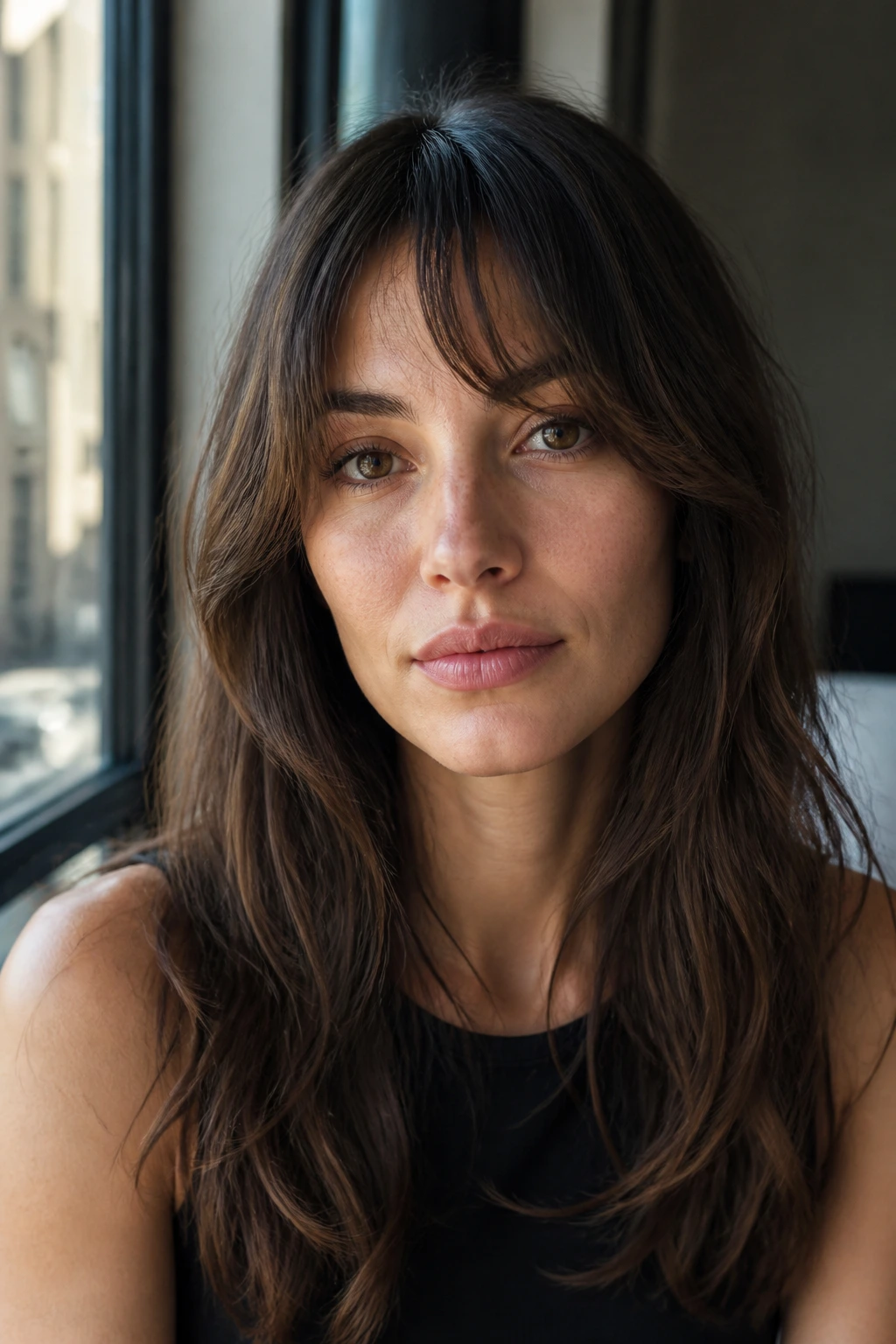
Many people love the effortless look of Parisian hair, which often features a grown-out, eye-grazing fringe. This style is cut slightly thicker than a typical wispy bang, but the edges are heavily textured to prevent a heavy line.
Why does this work?
This cut works because it relies on weight and texture in equal measure. By keeping the density slightly heavier in the center, the hair resists lifting when it encounters humidity. The textured ends mean that even if the cuticle swells, the bangs still look soft and piecey rather than solid and puffy. It is a style that actually looks better as it gets a little lived-in during the day.
How to Style and Manage Them
To keep this style looking its best, avoid round-brushing them into a perfect bubble. That outdated technique makes frizzy hair look dated and round. Instead, use a flat brush and blow-dry the hair flat against your forehead, moving the dryer from side to side. This trains the roots to lie flat while keeping the length straight enough to skim your eyelashes without curling upward.
4. Cheek-Grazing Bottleneck Bangs
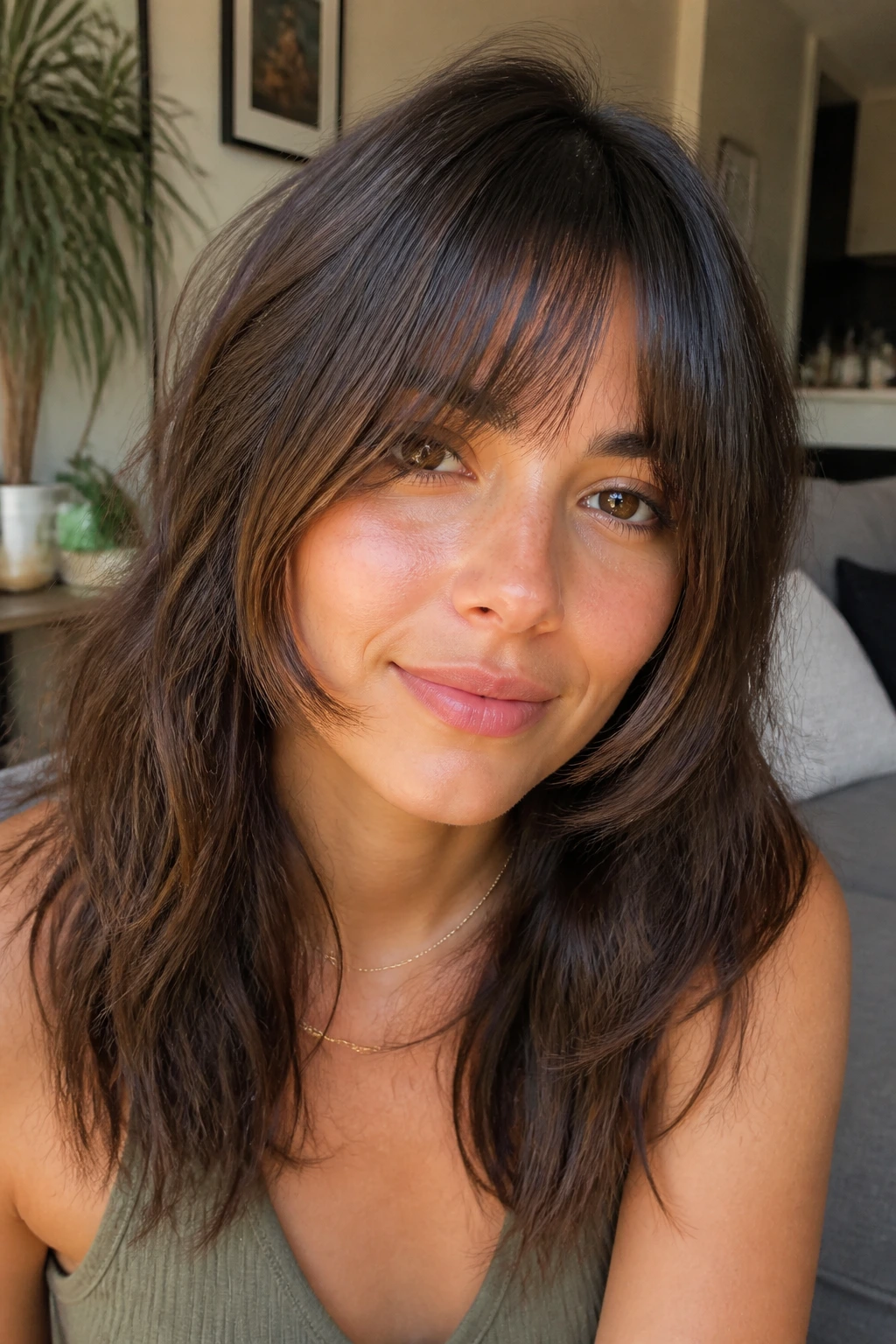
This style is a variation of the curtain bang but with a narrower opening at the forehead that flares out at the cheekbones. It mimics the shape of a classic glass soda bottle, starting slim at the top and curving outward.
A client with thick, wavy hair came to me after a disastrous micro-bang experiment. Her short fringe had shriveled into a tight, frizzy ridge. We let her hair grow out into this bottleneck shape, and the transformation was immediate. The extra weight instantly calmed her unruly cowlicks.
Key Details of the Bottleneck Cut
- Center length: Just below the eyebrows, split slightly in the middle.
- Outer length: Angled down to the mid-cheek, blending into the sides.
- Bulk reduction: Slide-cutting on dry hair to remove weight from the ends.
- Movement: Swings outward, keeping the forehead clear.
The beauty of the bottleneck shape is its adaptability. If your hair starts to frizz, the flare at the cheekbones simply looks like a natural, voluminous layer.
5. Curly Layered Bangs
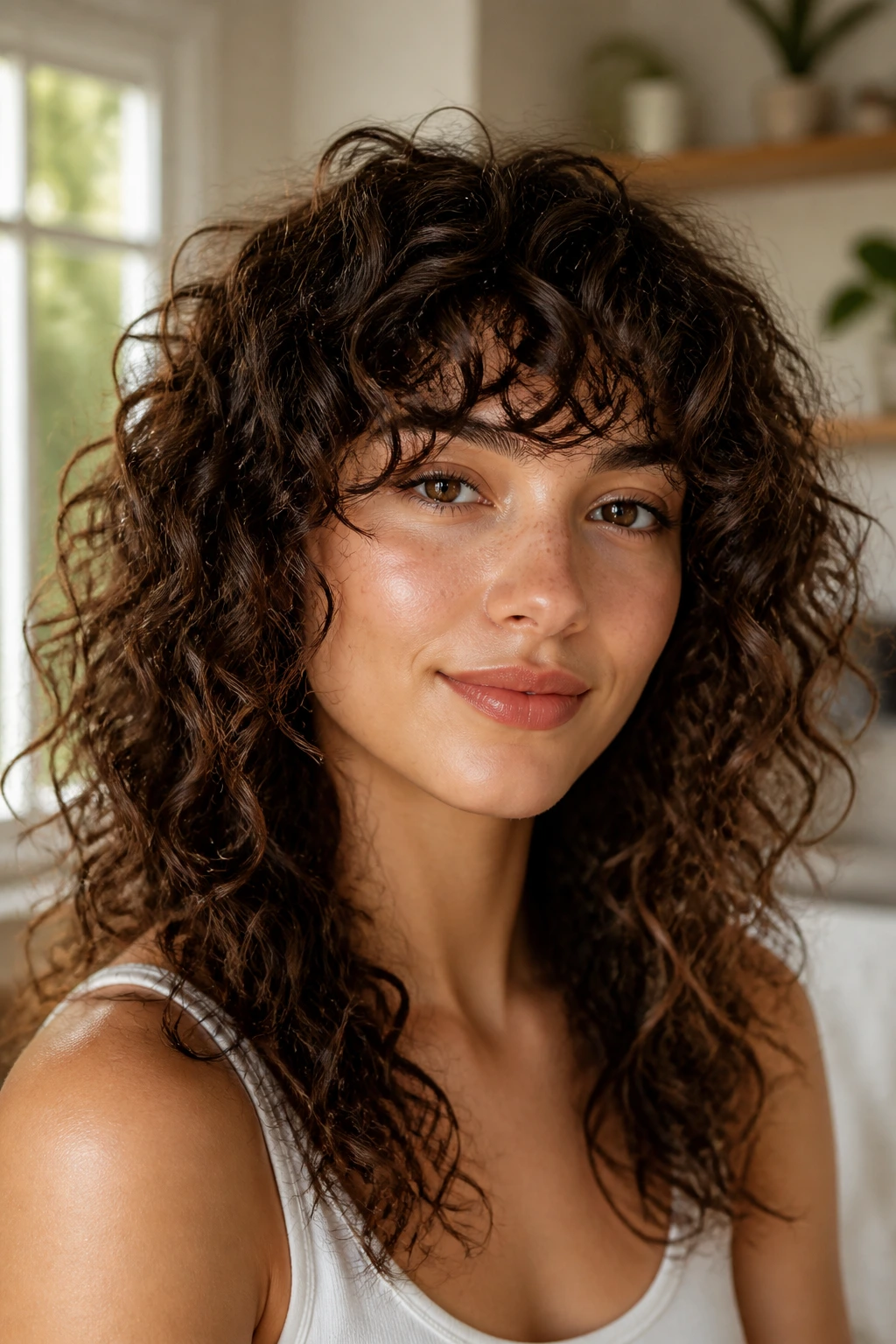
If you have tight curls or coils, you do not need to straighten your hair to wear bangs. Curly layered bangs are cut dry, curl by curl, to ensure they sit perfectly at eyebrow level or slightly below when dry.
This cut requires a stylist who understands curl shrinkage. Cutting curly hair wet often results in bangs that are far shorter than intended once the hair dries and bounces back. By layering the fringe, each curl has room to spiral without pushing the surrounding hair outward into a triangular shape.
Moisture is the key to managing frizz in curly bangs. Apply a leave-in conditioner or a botanical gel to soaking wet hair, then use your fingers to coil individual curls around your forehead. Let them air-dry completely before touching them, as touching wet curls is a primary cause of frizz.
Once dry, you can gently shake the roots with your fingers to add volume. The layers will bounce together, creating a beautiful, full frame for your face that celebrates your natural texture.
6. Side-Swept Drape Bangs
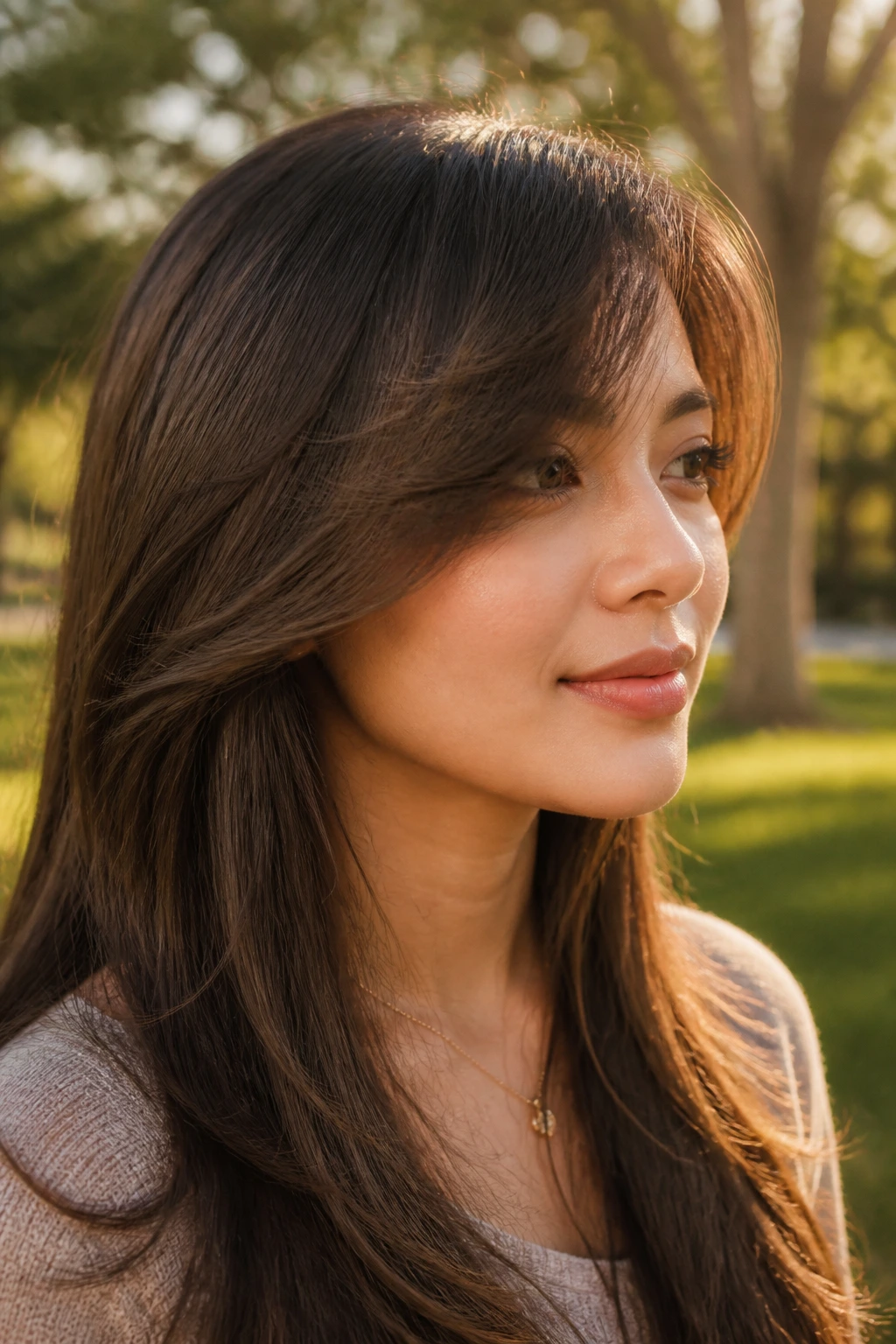
Unlike short, diagonal side bangs that require constant styling to stay in place, side-swept drape bangs are cut much longer. They sweep across the forehead in a gentle, sloping curve, ending near the ear on one side.
This drape style is much more forgiving than a straight-across cut. If your hair is prone to frizzing, a straight-across fringe will quickly show uneven gaps and cowlicks. The side-swept drape, however, uses your natural part to guide the hair, making cowlicks work for you rather than against you.
This cut is best for those with medium to thick hair who want to minimize daily styling time. You can easily prep this look with a small amount of smoothing cream, sweep it to the side, and let it air-dry.
If you find your hair frizzing up during the day, you do not need to wash it. Simply mist the bangs with water, apply a touch of hair oil to the ends, and sweep them back into place.
7. Piecey Bardot Bangs
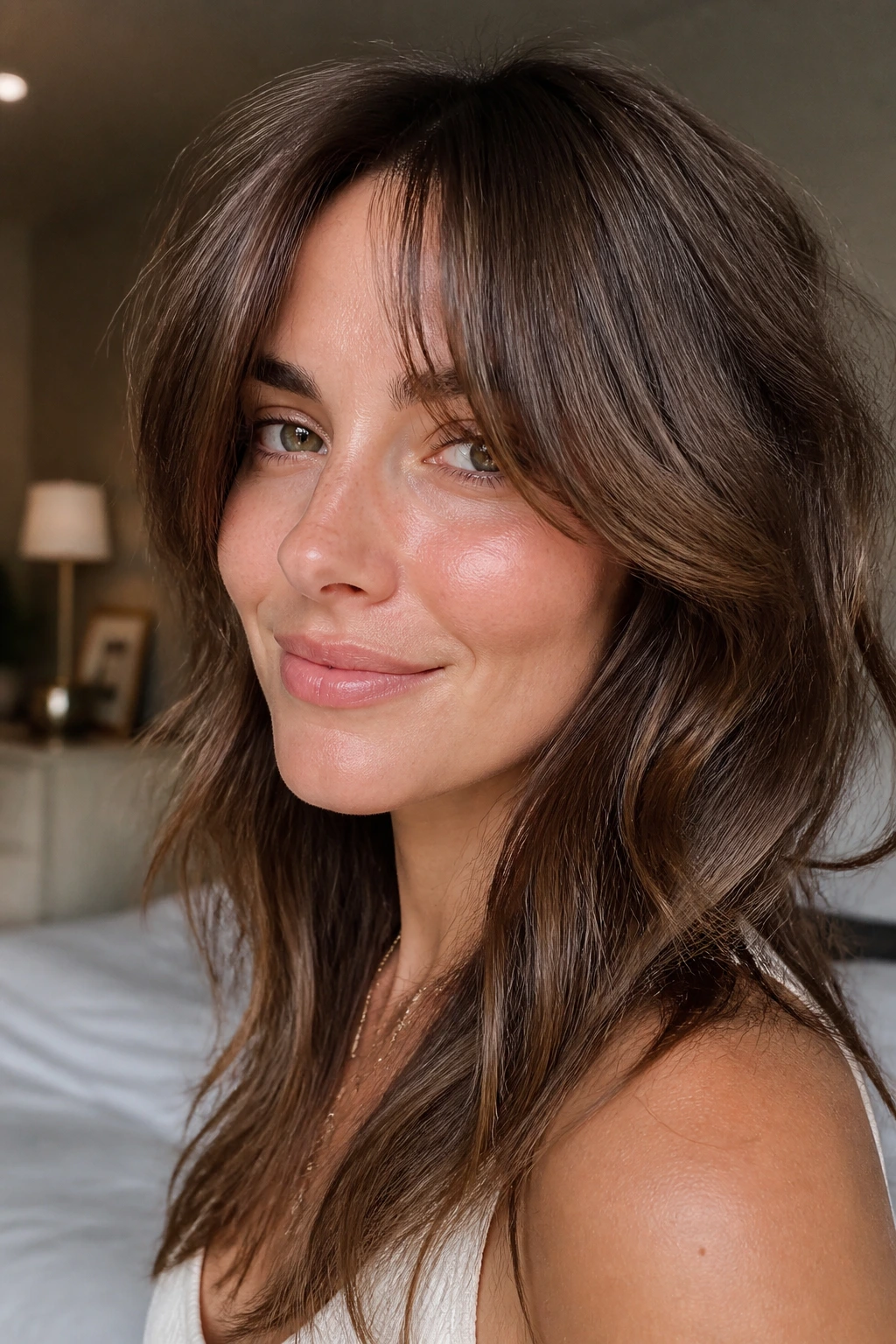
Inspired by the iconic French actress, this style features a heavy center part with bangs that cascade down the sides of the face. The center is slightly shorter, while the sides are long and feathered.
Why They Work for Frizzy Hair
The separation in the middle prevents the hair from trapping heat and moisture against your forehead, which is a common trigger for frizz. By parting the bangs, air can flow through, helping the hair maintain its shape even on warm days.
Styling Quick Facts
- Ideal length: Eyelash-grazing in the center, jaw-length at the sides.
- Best hair types: Fine but dense wavy hair.
- Maintenance level: Medium; needs regular styling to keep the part defined.
- Key benefit: Creates an elegant frame that hides forehead flyaways.
Pro tip: Use a tiny amount of lightweight wax on the very tips of the bangs to keep them grouped in clean, piecey sections.
8. Feathered Face-Framing Layers
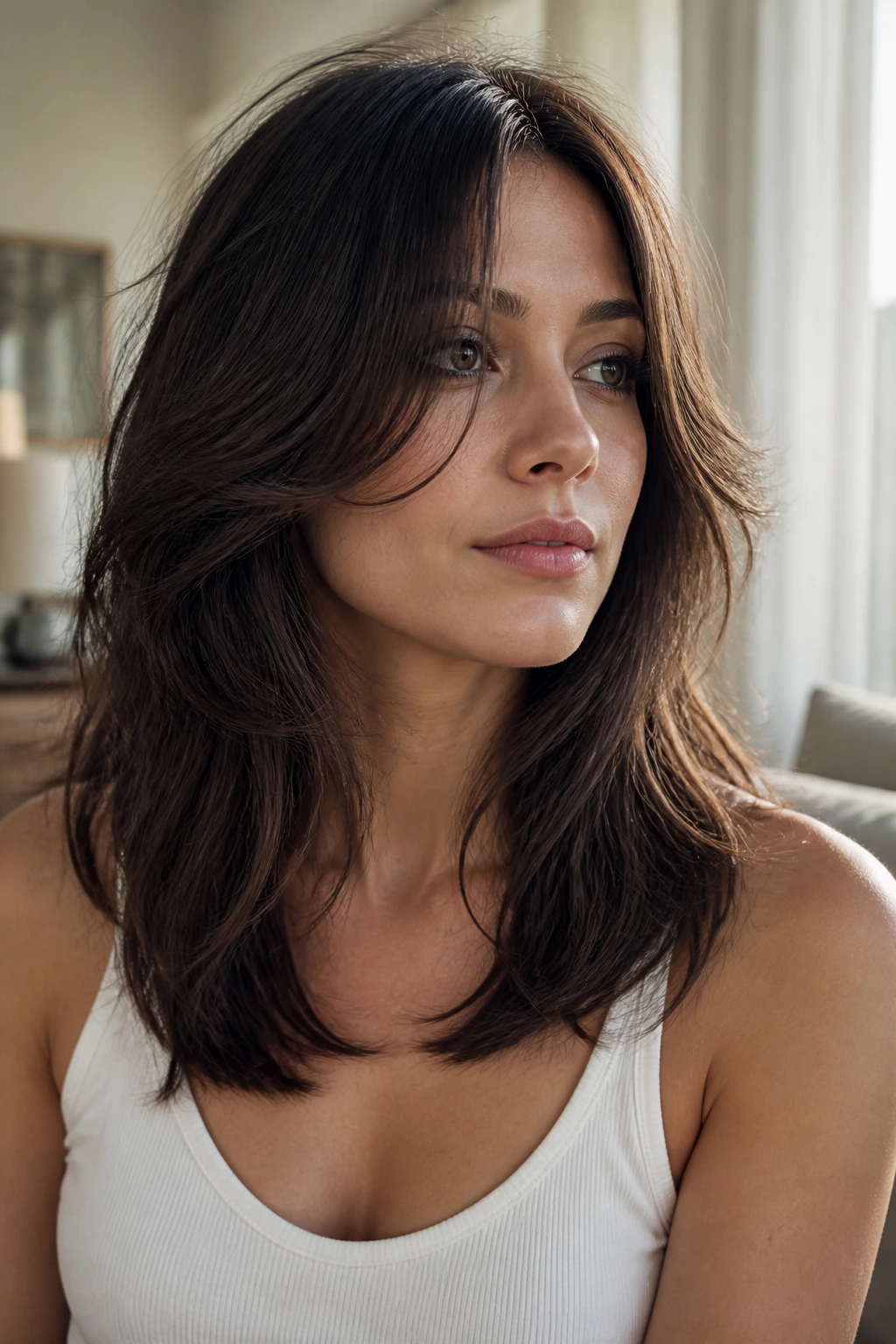
This style is perfect for those who want the look of bangs without the commitment of a traditional fringe. The layers start around the nose and feather outward, blending seamlessly into the rest of the hair.
You do not need to worry about your hair shrinking or frizzing with this cut. Because there are no short, horizontal lines, any frizz simply blends into the feathered texture of the layers. It looks soft, airy, and completely natural.
To style these, use a paddle brush to direct the hair away from your face while blow-drying on medium heat. This creates a soft backward sweep that keeps the hair out of your eyes while highlighting your cheekbones.
For days when your hair is particularly unruly, these layers are long enough to be pulled back into a ponytail or secured with a claw clip, making them incredibly low-stress.
9. Wavy Crescent Bangs
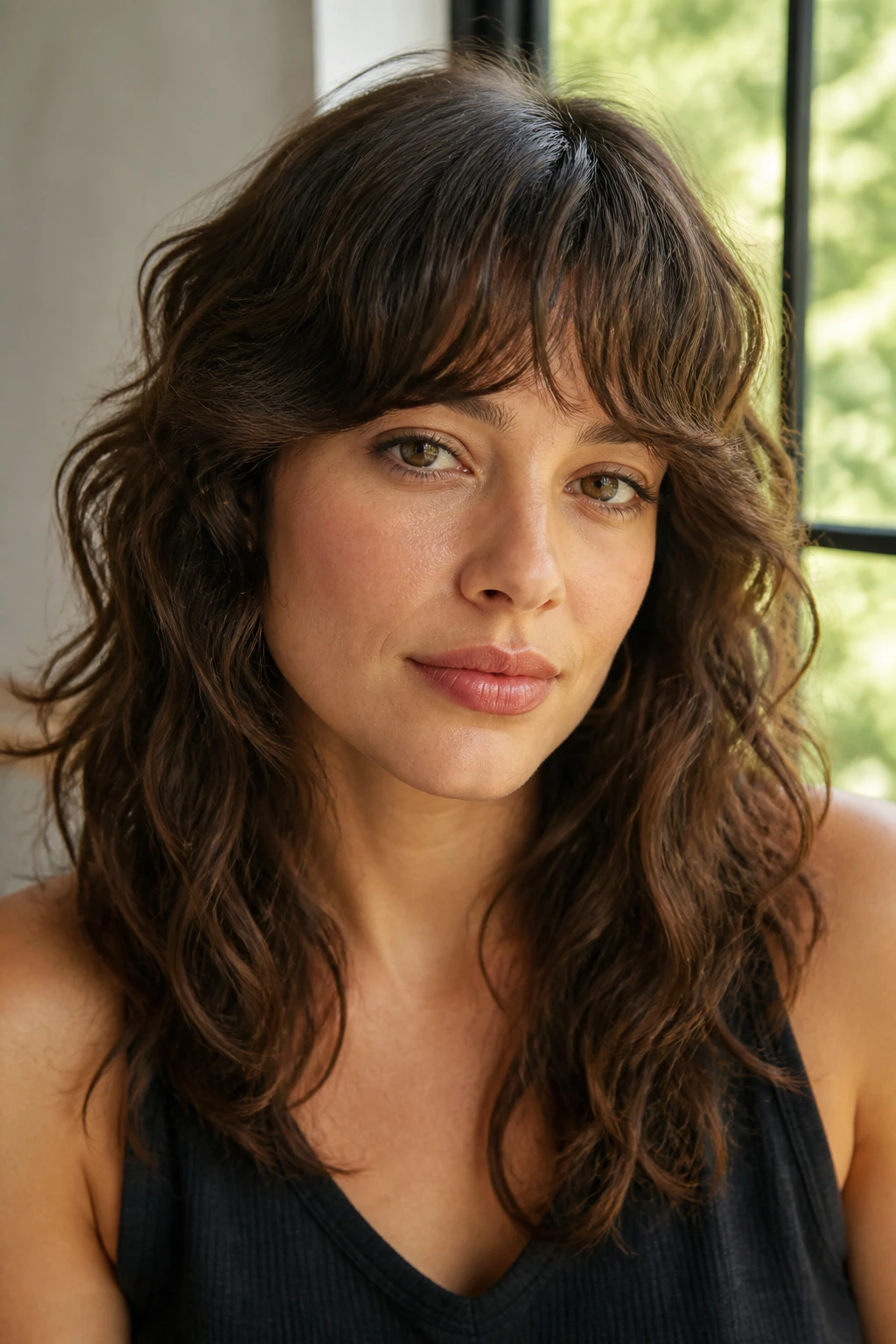
Wavy crescent bangs are cut in a soft arch, shorter in the middle and longer at the outer corners of the eyes. This curved shape follows the natural brow line, creating a flattering frame for wavy textures.
Why does this work?
The crescent shape is designed to accommodate the natural bounce of wavy hair. When wavy hair frizzes, it tends to expand sideways. The longer outer edges of the crescent cut absorb this expansion, keeping the overall shape balanced rather than allowing it to puff out at the temples.
How to Style and Manage Them
To style this look, apply a wave-defining foam to wet bangs. Use your fingers to scrunch the hair gently, encouraging the natural wave pattern. Avoid using a brush, which can break up the waves and create a cloud of frizz. If you must use dry heat, attach a diffuser to your blow dryer and use the lowest speed setting to dry the hair without disturbing the wave structure.
10. Textured Shag Bangs
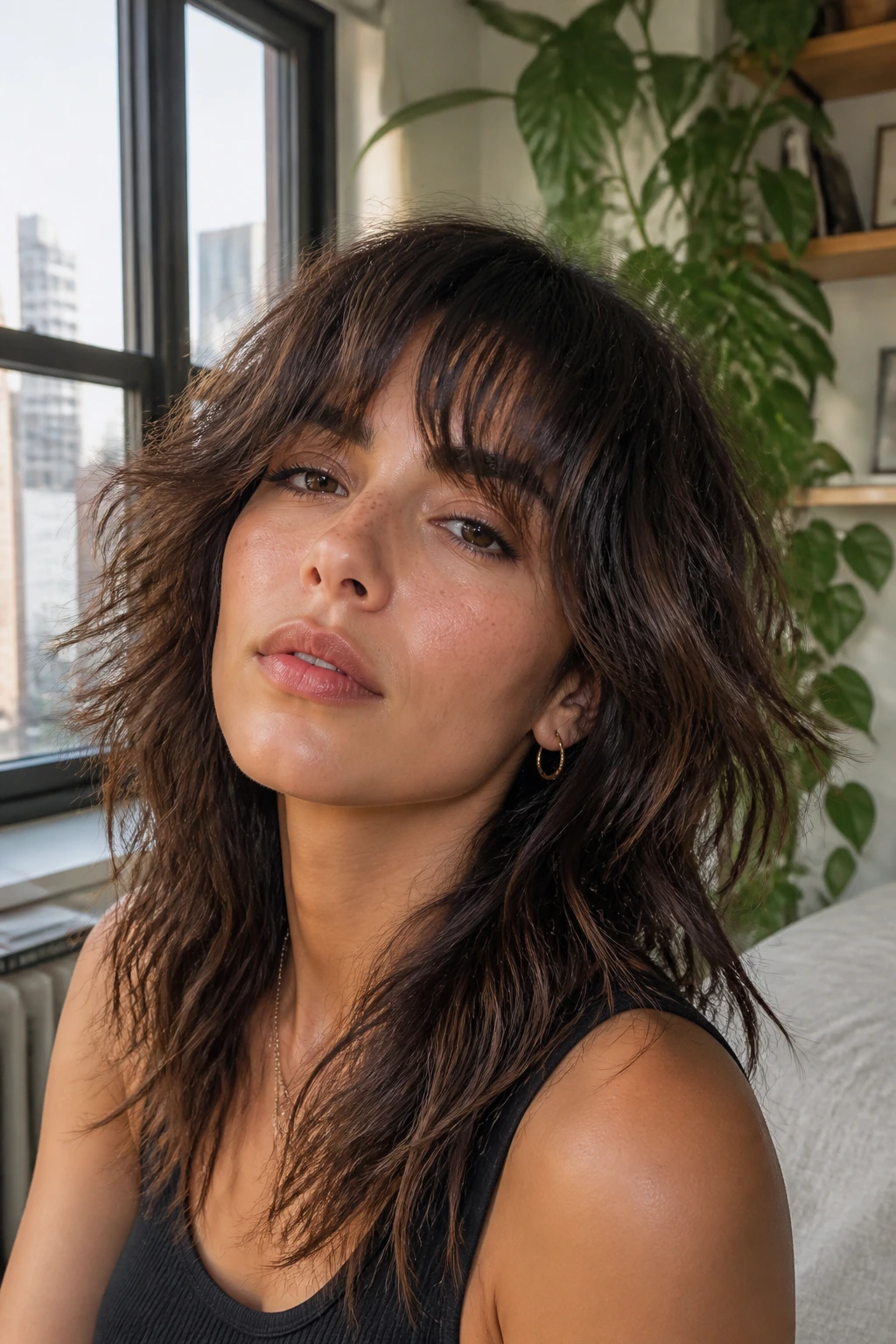
This style is all about internal layers and textured ends. It is designed to look messy, making it an excellent match for hair that naturally frizzes and expands.
A client with thick, frizzy hair wanted a change but was terrified of the daily styling work. We chose textured shag bangs that blended into a heavily layered haircut. The internal layers removed the heavy weight from her canopy, allowing her natural texture to bounce freely without expanding into a solid block of frizz.
Key Details of the Shag Cut
- Texture: Heavily point-cut ends to prevent blunt lines.
- Length: Just touching the bridge of the nose, sloping down at the sides.
- Weight distribution: Thinning out the underside to allow the top layers to fall flat.
- Styling goal: A messy, lived-in texture that embraces flyaways.
This cut is incredibly low-maintenance. The more your hair reacts to the humidity, the better the shag texture looks.
11. Soft Split Bangs
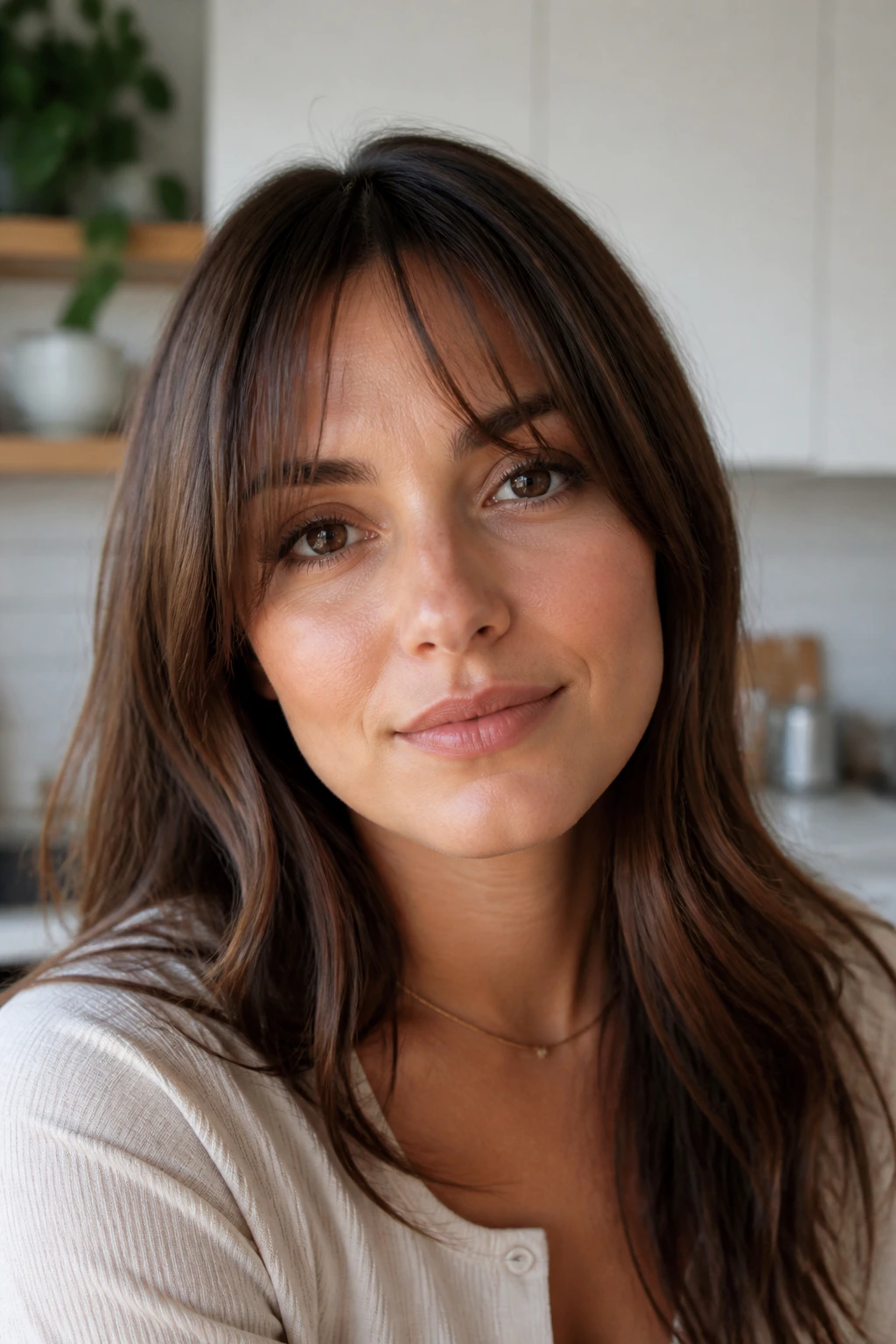
Soft split bangs are a lighter, airier version of curtain bangs. They are cut thinner, allowing your forehead to peek through the strands. This thinness makes them incredibly easy to manage, as there is less hair to style and control.
For those with fine hair that tends to frizz and cling to the forehead, this style is a perfect option. Heavy bangs can easily look greasy or flat, but these light, split strands stay clean and airy. They require very little styling product, which prevents them from weighing down during the day.
To style these, simply part them down the middle when wet and let them air-dry. If you have a stubborn cowlick, you can use a small creaseless clip to hold them in place while they dry. This trains the hair to lie flat without using damaging heat.
Because they are so light, they can be swept to the side or pinned back with ease. This makes them a highly versatile choice for active days or humid weather.
12. Choppy Collarbone-Length Bangs
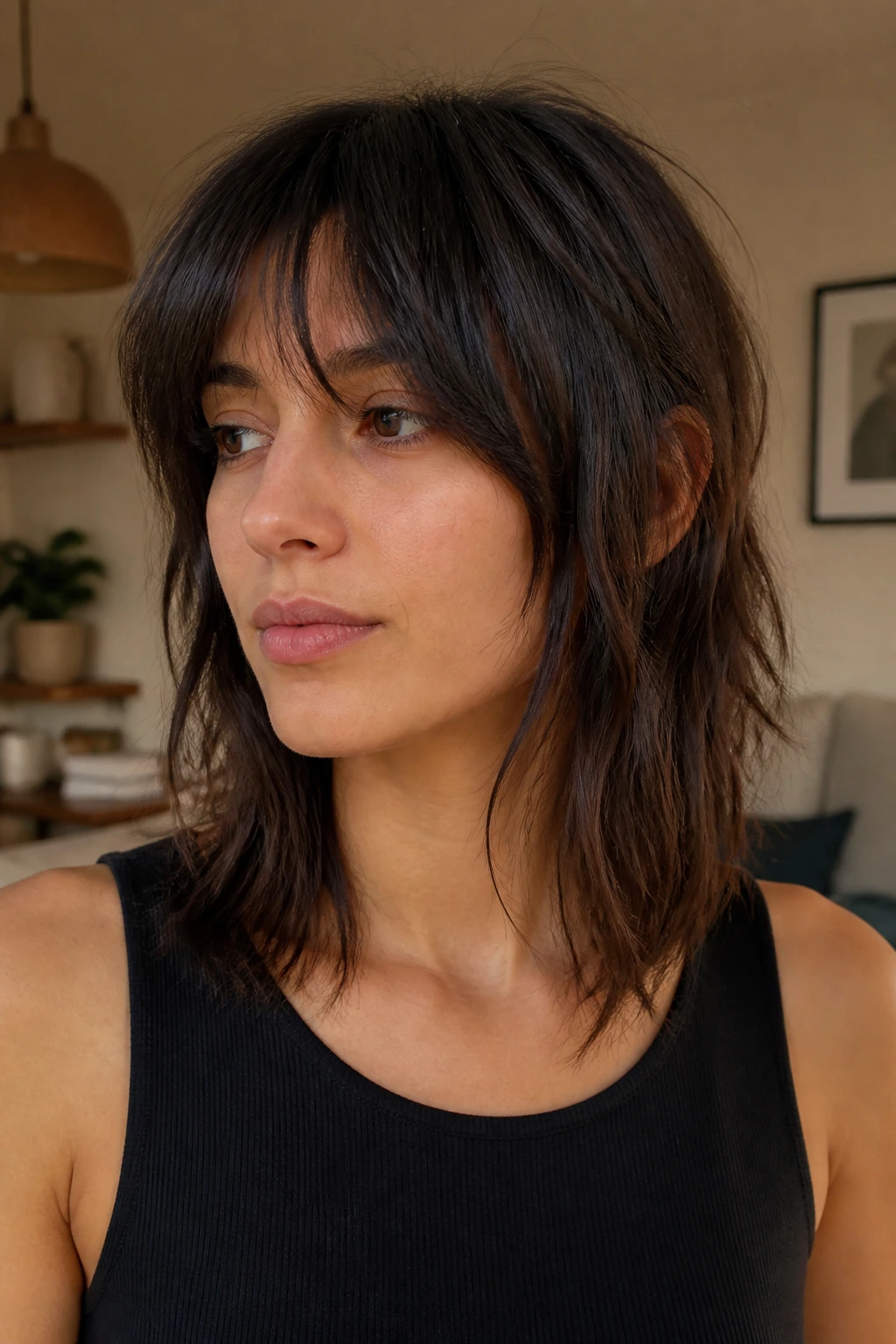
These are extremely long bangs that cascade down to the collarbone, essentially functioning as short, face-framing layers. They are cut with choppy, uneven ends to add movement and texture.
Unlike traditional bangs that sit on your face, these drape down the sides of your neck. This length provides maximum weight, ensuring that even the most frizz-prone hair stays flat and controlled. The choppy ends prevent the layers from looking heavy or dated.
This style is best for thick, coarse, or highly porous hair. The length allows you to easily incorporate them into braids, buns, or ponytails when you want your hair off your face.
To style, apply a small amount of heavy cream or oil to the ends to keep them hydrated. This prevents the dry, split appearance that often plagues frizzy hair types.
13. Birkin Bangs with Texture
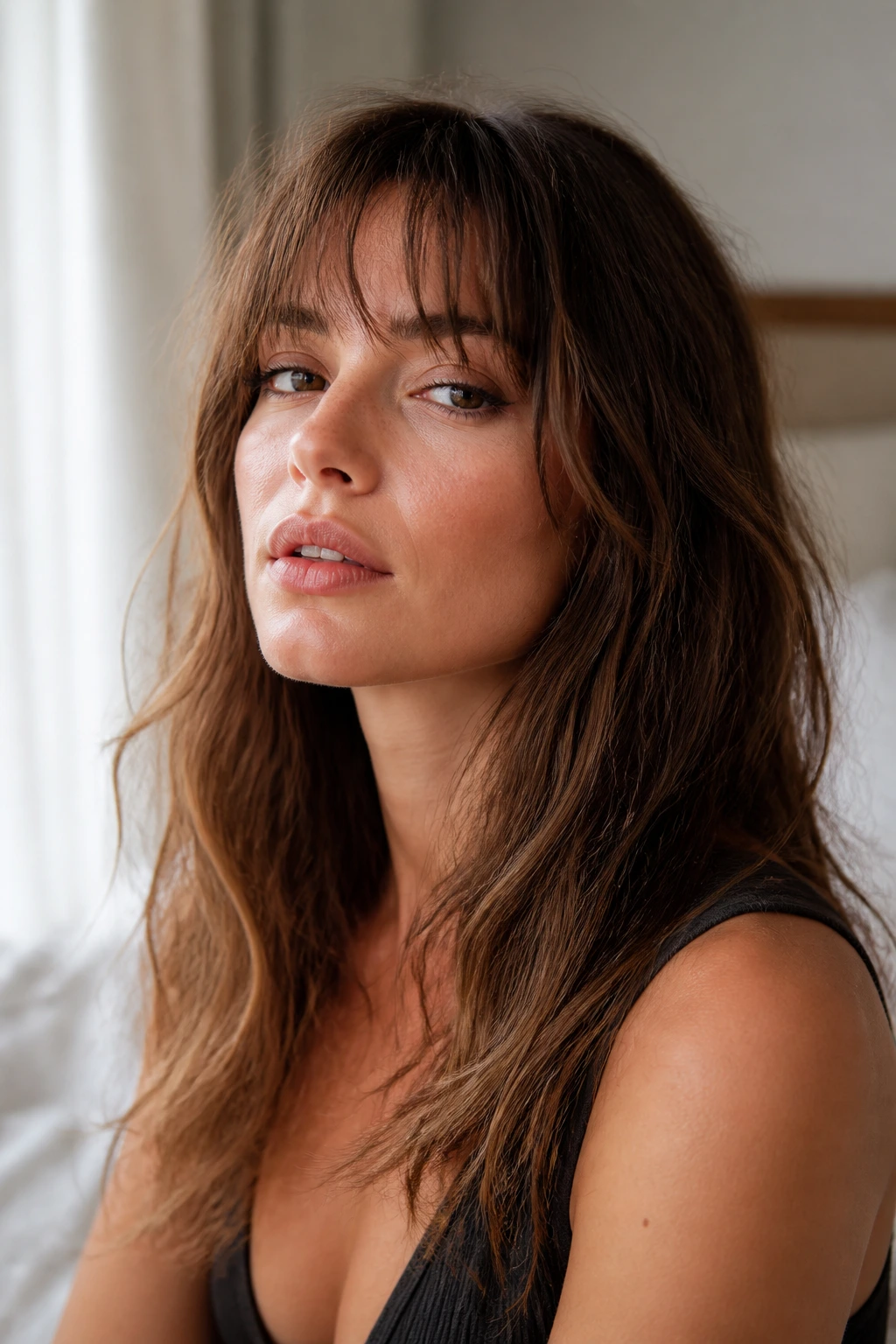
Named after Jane Birkin, this style features a light, wispy fringe that skims the eyelashes. The key to making this work for frizzy hair is the texture; the ends are point-cut rather than blunt, which allows for natural movement.
Why They Work for Frizzy Hair
The light density of this cut means that even if the hair swells with moisture, it will not look thick or blocky. The wispy ends blend into your natural wave pattern, creating a soft, romantic look that does not require perfect smoothness.
Styling Quick Facts
- Ideal length: Skimming the eyelashes.
- Best hair types: Fine to medium wavy hair.
- Maintenance level: Medium; requires regular trims to keep the length out of your eyes.
- Key benefit: Offers a classic, effortless look that embraces natural texture.
Pro tip: Air-dry these bangs flat against your forehead, using a creaseless hair clip to hold them in place if they tend to jump up.
14. Blended Temple-Hugging Bangs
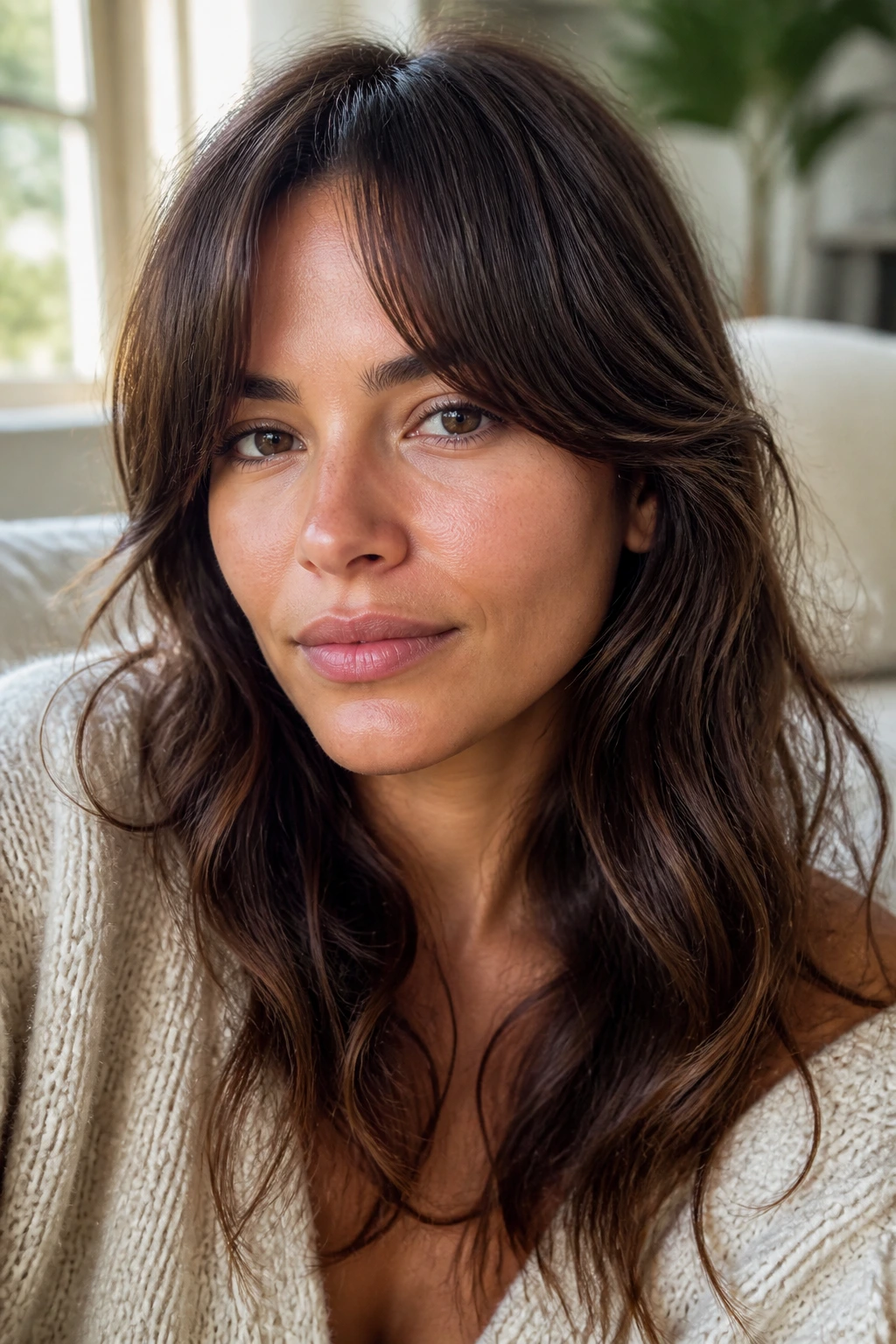
This style features a soft, curved fringe that hugs the temples before blending into the longer side sections. It is cut to follow the natural curve of the brow, creating a seamless frame for the face.
You do not need a perfectly straight finish to make this style look beautiful. The soft, temple-hugging shape is designed to work with your natural texture, allowing waves or curls to soften the overall appearance. It is a highly forgiving cut that looks great even when a little messy.
To style, use a small flat brush to direct the hair forward and down while blow-drying on low heat. This smooths the cuticle and trains the hair to follow the curve of your brow, preventing it from puffing outward.
For those with high-porosity hair, a light mist of anti-humidity spray will help keep this shape intact throughout the day. It provides a flexible hold that resists moisture without feeling stiff.
15. Tapered Wisps

Tapered wisps are very thin, delicate bangs that are cut longer at the outer corners. They are designed to add a touch of softness to the face without the bulk of a full fringe.
Why does this work?
This style works because of its minimal density. With so little hair cut into the fringe, there is simply less hair to frizz or puff up. The tapered edges blend easily into the side lengths, making it easy to sweep them away when the weather gets humid.
How to Style and Manage Them
To style tapered wisps, apply a tiny drop of lightweight serum to damp hair. Use your fingers to blow-dry them straight down, pulling gently to stretch out any tight waves or cowlicks. This creates a soft, smooth finish that skims the brows without looking stiff.
If your wisps start to frizz during the day, a quick touch of dry shampoo or a tiny dab of hair oil will instantly refresh them, restoring their soft, piecey texture.
16. Deconstructed Full Bangs
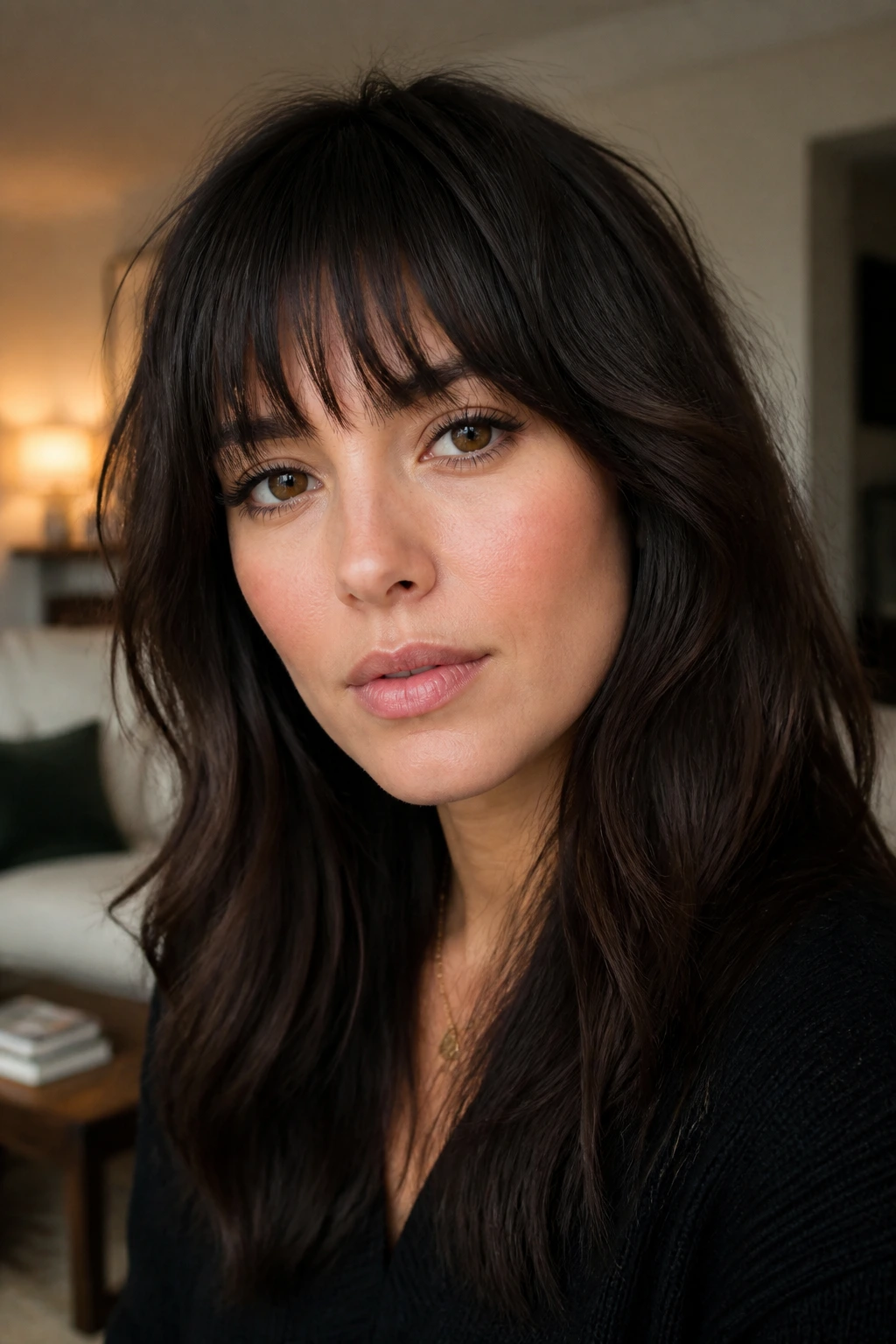
This style is a modern take on the classic full fringe. Instead of a solid, straight-across cut, the bangs are heavily textured and sliced into, creating a lived-in, piecey look.
I recently worked with a client who had thick, coarse hair and wanted a full fringe. She had been told for years that her hair was too frizzy for this style. We cut a full, eyebrow-grazing fringe, then used a slide-cutting technique to remove weight from the interior. This created a deconstructed look that moved naturally and did not puff up when the humidity hit.
Key Details of the Deconstructed Cut
- Density: Medium-heavy, but thinned out from the inside.
- Length: Just grazing the eyebrows.
- Styling goal: A textured, piecey finish that embraces natural movement.
- Maintenance: High; requires regular trims to keep the shape defined.
To style, use your fingers to piece out the damp strands with a light-hold cream, then let them air-dry for a natural, lived-in finish.
17. Asymmetric Long Side Bangs
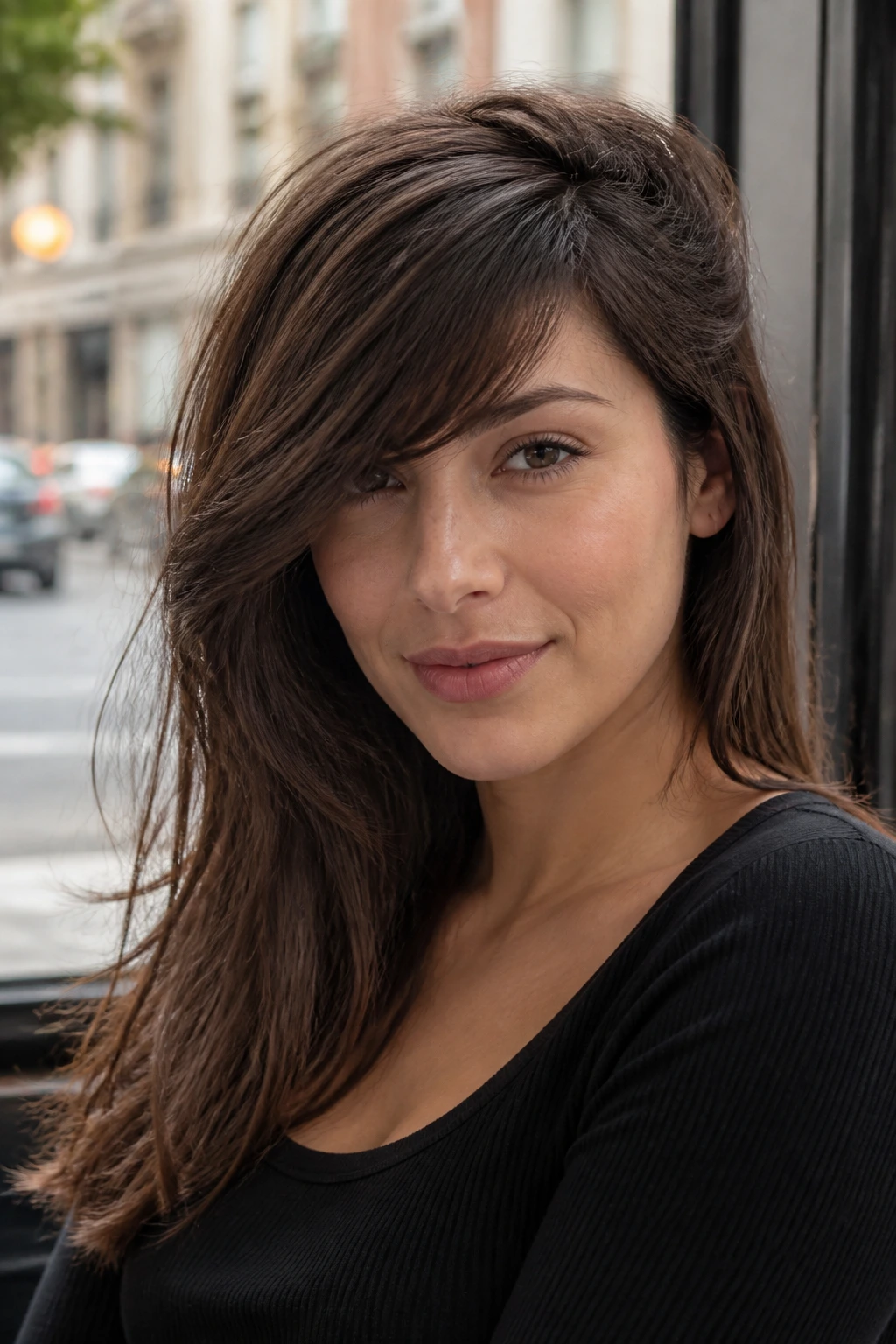
Asymmetric long side bangs are cut on a diagonal, starting shorter on one side of the forehead and cascading down to a much longer length on the other. This diagonal line creates a modern, dynamic look that works beautifully with natural texture.
The asymmetry of this cut is highly effective at camouflaging frizz. Because there are no straight lines, any unevenness or puffiness simply looks like a part of the textured, modern design. It is a very low-stress style for those with unruly or cowlick-prone hair.
To style, apply a smoothing cream to damp hair, sweep the bangs across your forehead, and let them air-dry. The natural drape of the hair will hold the shape in place without the need for constant styling.
If you find the length getting in your eyes, you can easily secure the longer side with a decorative clip or bobby pin, creating a chic, half-up style that keeps your hair out of your face.
18. Cascade Fringe
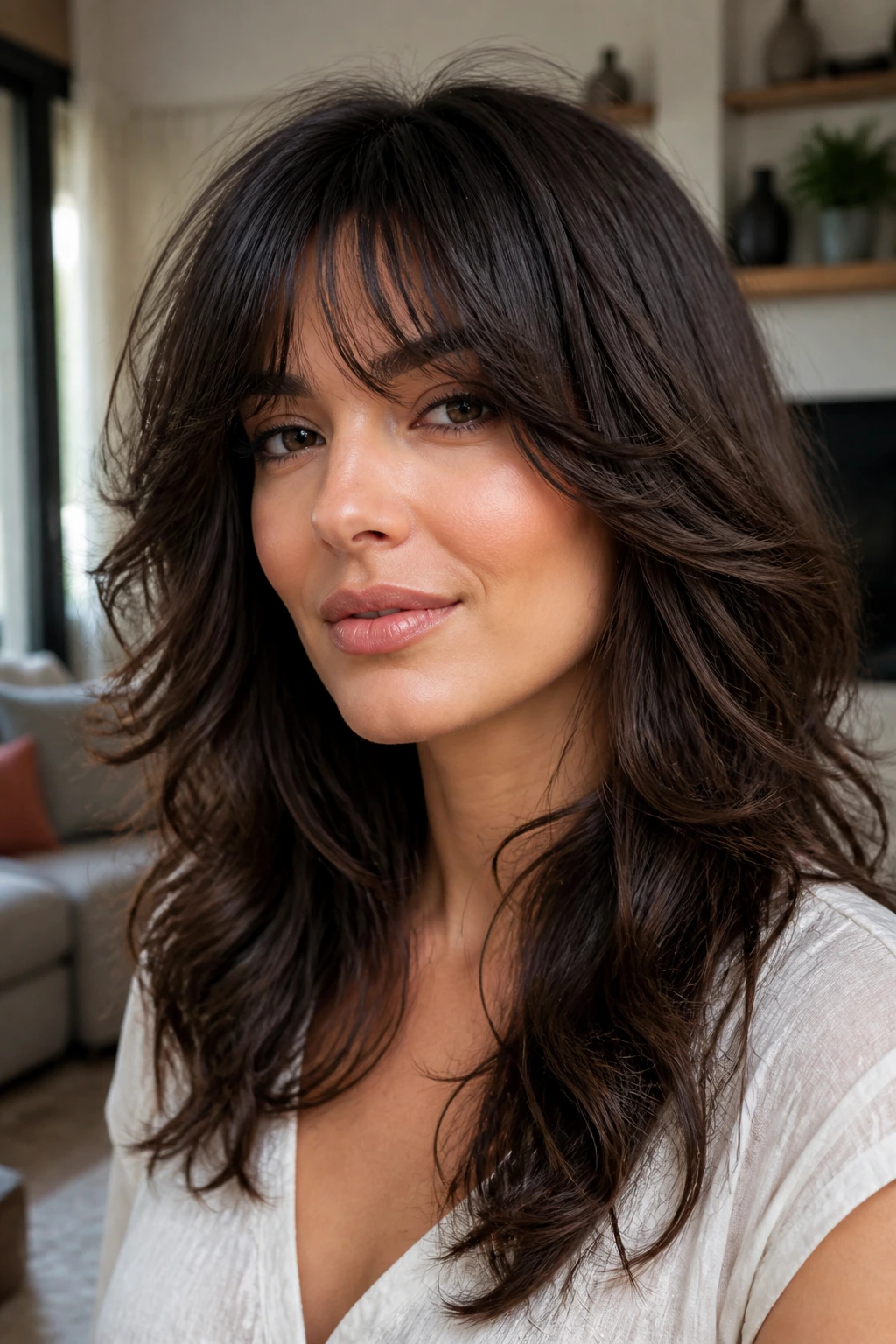
The cascade fringe features layers that start short in the middle of the forehead and cascade downward in steps, blending into the sides of the face. It is a highly textured cut that adds movement and volume to wavy or curly hair.
Unlike a traditional curtain bang, which has a smooth transition, the cascade fringe uses distinct steps to create a more layered, shaggy look. This texture is perfect for frizzy hair, as it allows the natural curl or wave pattern to show through without looking bulky or heavy.
To style, apply a curl-defining cream to wet hair and use your fingers to twist the cascade sections away from your face. Let them air-dry completely to prevent frizz, then gently shake them out for a full, voluminous look.
The cascade layers are highly adaptable; they can be styled forward for a full-fringe look or swept to the sides for a curtain-bang effect, giving you plenty of options for different weather conditions.
Why Weight Is Your Best Friend When Managing Frizz
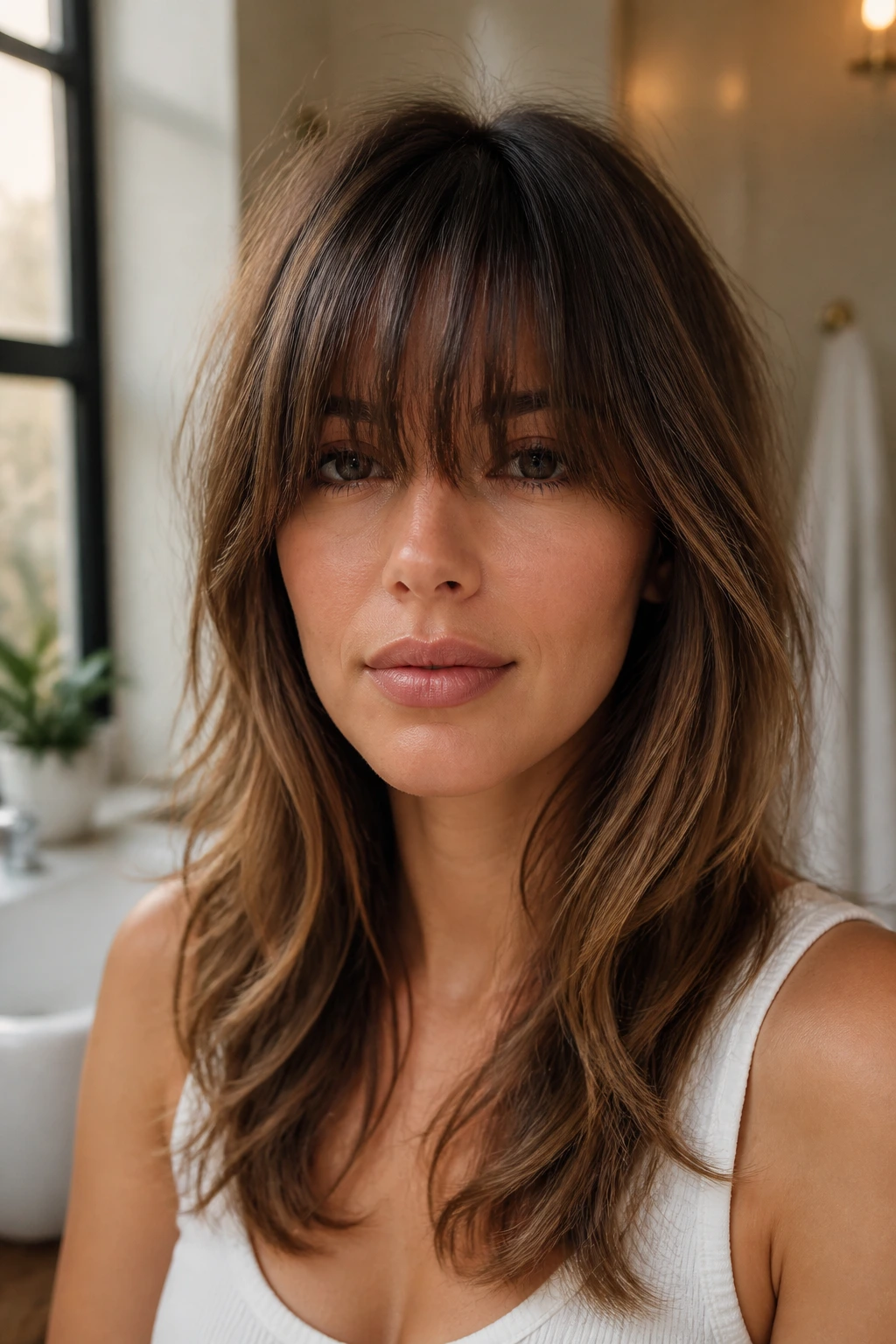
To understand why longer bangs work so well for frizzy hair, we have to look at the physics of the hair strand. When the hair cuticle is dry or damaged, it lifts, allowing moisture from the air to enter the shaft. This causes the strand to swell and bend, resulting in what we see as frizz.
When you cut bangs short, you remove the physical weight of the hair. Without that downward pull, the hair is free to shrink, curl, and puff upward. This is why short bangs on frizzy hair often require daily flat-ironing to stay in place.
By keeping your bangs longer—grazing the eyelashes, cheekbones, or even the jawline—you preserve the natural weight of the hair. This weight acts as a gentle, constant anchor, pulling the hair downward and helping the cuticle lie flatter. Even when the air is humid, longer bangs are much more likely to retain their shape and drape naturally rather than shriveling upward.
Essential Styling Products for Longer Frizzy Fringe
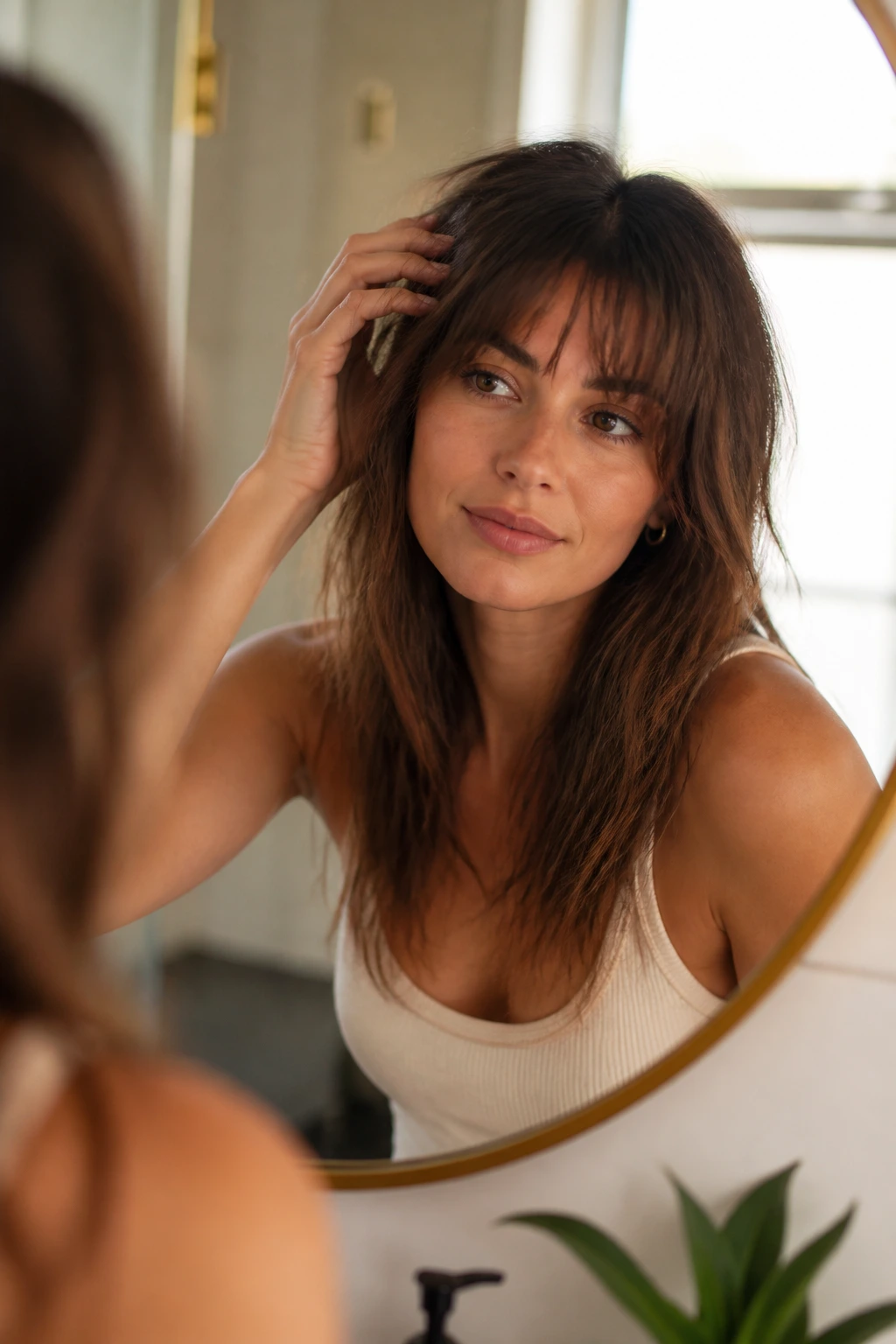
Selecting the right styling products is critical when managing longer bangs. The goal is to provide moisture and light hold without weighing the hair down or making it look greasy. Because bangs sit directly on your forehead, they are also prone to absorbing oils from your skin, so lightweight formulas are essential.
Leave-In Conditioner
A high-quality leave-in conditioner is the foundation of any anti-frizz routine. It fills the gaps in a dry cuticle, preventing the hair from absorbing moisture from the air. Look for a formula that contains lightweight oils like argan or jojoba, and apply a very small amount to damp bangs before any other styling products.
Smoothing Cream
For wavy or coarse straight hair, a smoothing cream provides the light hold and control needed to keep longer bangs in place. Apply a pea-sized amount to the mid-lengths and ends of damp bangs, then use your fingers or a flat brush to style. This helps smooth the cuticle and prevent flyaways without making the hair stiff.
Anti-Humidity Spray
An anti-humidity spray acts as a barrier, sealing the hair shaft and protecting it from moisture in the air. Look for a flexible-hold formula that you can mist over dry, styled bangs. This provides a lightweight shield that keeps your bangs looking smooth and controlled throughout the day.
The Finger-Coiling Technique for Curly Frizz
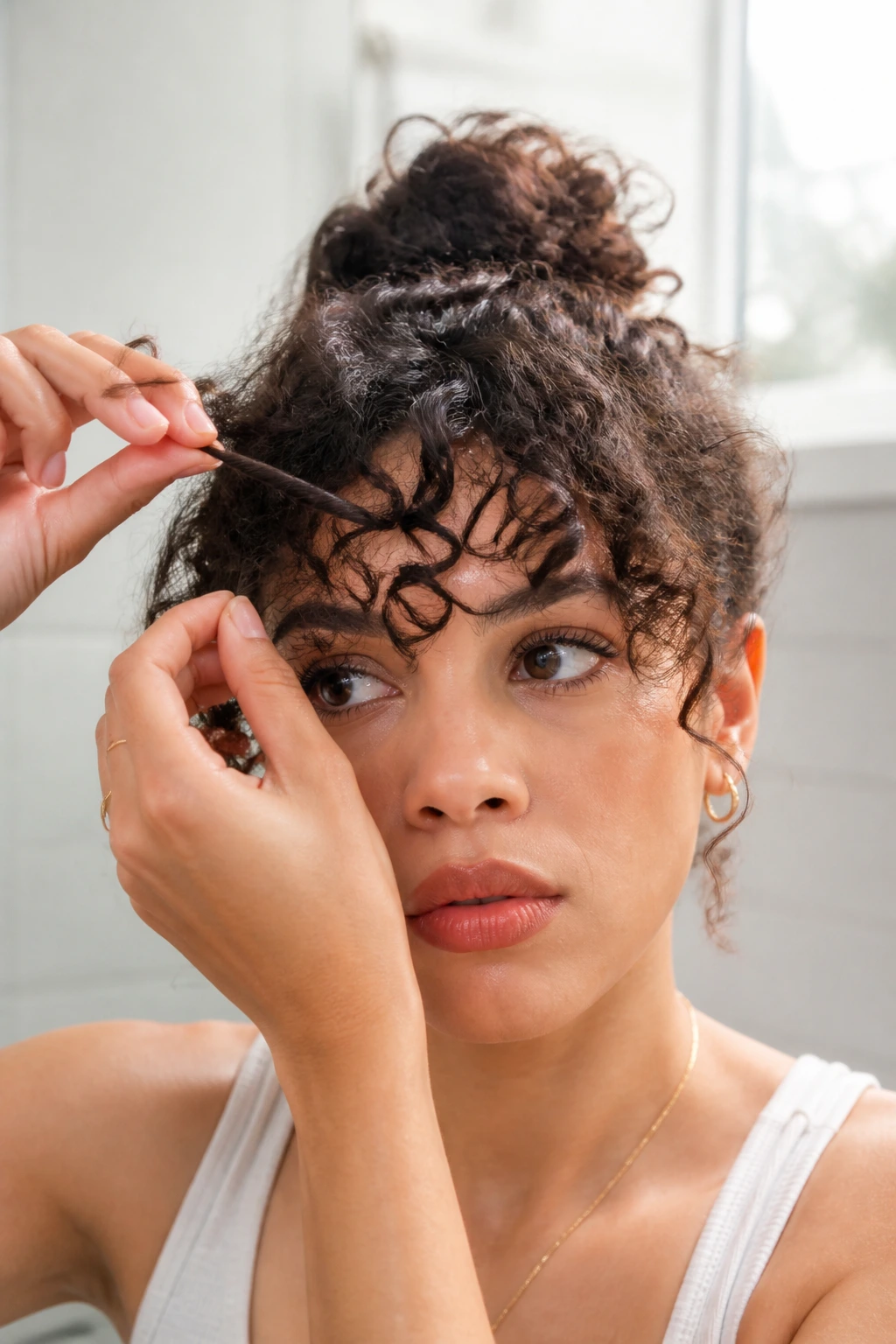
If you have curly or coily hair, the way you define your bangs when wet determines how they will look when dry. The finger-coiling technique is a highly effective way to shape and define curls, preventing them from frizzing as they dry.
To begin, ensure your hair is soaking wet. Apply a small amount of leave-in conditioner and a light-hold gel to your bangs, distributing the product evenly with a fine-tooth comb. Next, take small sections of hair—about the width of a pencil—and wrap them around your finger from root to tip.
Slowly slide your finger out, allowing the curl to fall naturally. Repeat this process across your entire fringe, directing the curls in the direction you want them to dry. Once all sections are coiled, do not touch them. Let them air-dry completely or use a diffuser on low heat. Touching wet curls breaks up the curl pattern and creates instant frizz, so patience is key here.
How to Blow Dry Long Bangs Without Creating Frizz
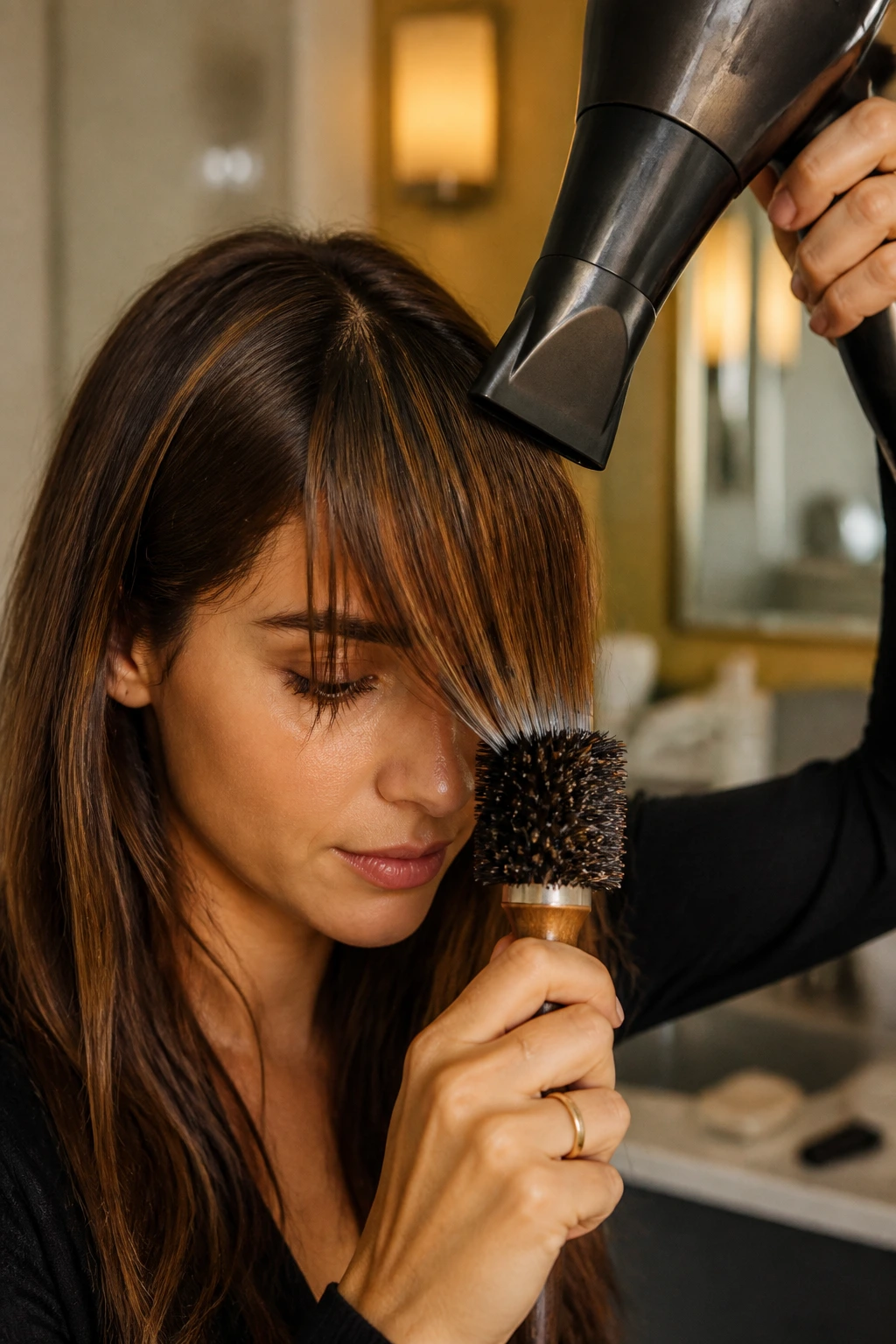
If you prefer a smoother look for your longer bangs, the way you blow-dry them is incredibly important. Using the wrong brush or too much movement can ruffle the cuticle, creating a cloud of frizz before you even step outside.
Start with damp hair—never dry. If your bangs have already started to dry, mist them with water before styling. Attach the concentrator nozzle to your blow dryer; this directs the airflow downward, helping to smooth the cuticle.
Use a flat paddle brush or your fingers to direct the bangs flat against your forehead. Brush them to the left while blowing the air downward, then brush them to the right. This “wrap-drying” technique neutralizes any cowlicks and trains the hair to lie flat against your forehead without creating the round, puffy bubble that a round brush can cause. Once dry, mist lightly with a flexible-hold hairspray to lock the style in place.
Wrapping Up
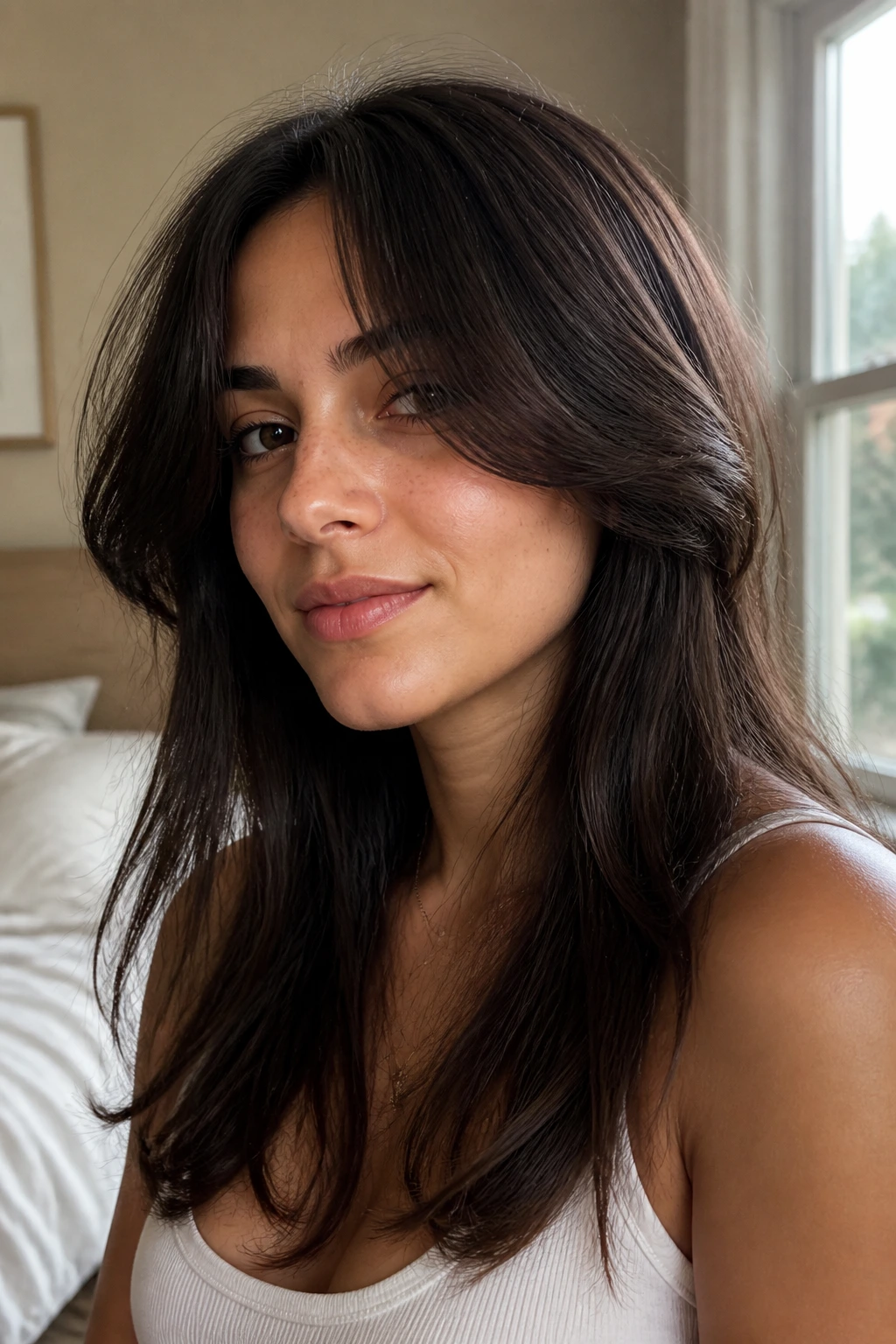
Wearing bangs when you have frizzy hair does not have to be a daily struggle. By choosing a longer style, you work with the natural weight and movement of your strands, making your texture an asset rather than an obstacle.
Whether you opt for cheek-grazing curtain bangs, a textured shag, or soft curly wisps, the key is to keep the cut long enough to drape naturally. This extra length provides the flexibility to style, sweep, or pin your hair back whenever the weather demands it.
With the right cut, lightweight products, and a gentle styling routine, you can enjoy a face-framing fringe that looks deliberate, healthy, and full of natural character. Embrace the soft texture of your hair and let your longer bangs frame your face with ease.