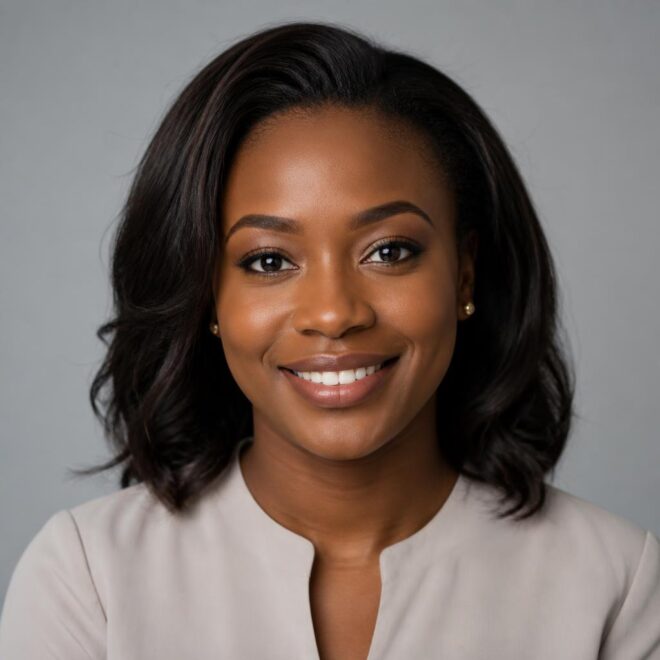


Walking out of a hair salon with a perfectly airy, feather-light set of Korean bangs feels like a victory. But for those with hair that naturally swells, waves, or curls at the first hint of moisture, that victory can feel incredibly short-lived. Step outside into a humid morning or a misty afternoon, and that pristine, wispy fringe can quickly morph into a chaotic, frizzy halo.
The struggle is real. Korean hair trends—characterized by delicate see-through fringes, soft curtain layers, and glassy finishes—were largely popularized on straight, thick Asian hair types. When you transplant those exact cutting patterns onto hair with natural texture or a porous cuticle, the results often miss the mark.
But this does not mean you have to abandon the aesthetic entirely. Marrying the soft, face-framing appeal of Korean hair design with frizzy hair is completely possible. The trick lies in adjusting the cutting angles, managing weight distribution, and using styling techniques that work with your natural texture rather than constantly fighting against it.
By understanding how density and tension affect your hair’s behavior, you can find a variation of the Korean fringe that looks intentional, remains manageable, and holds up throughout the day. Let’s look at how to make these coveted styles work for your specific hair texture.
Why Frizzy Hair and Korean Bangs Can Work Together
Many people assume that frizzy hair must be chemically straightened before attempting any sort of fringe. In reality, frizz is simply hair that is searching for moisture in the atmosphere, causing the cuticle to lift and expand. When hair is cut too short or thinned out incorrectly, this expansion makes the bangs fly upward or split into unpredictable shapes.
Korean hair cutting focuses heavily on frame and shadow. By leaving specific sections of the fringe longer or heavier, a stylist can create a “weighted anchor” that prevents the bangs from poofing up. Additionally, combining these cuts with targeted, lightweight styling habits allows you to enjoy the soft, romantic look of a Seoul-inspired fringe without spending an hour under a flat iron every morning.
The key is choosing the right variation. Some Korean styles, like micro-bangs, require a flatter cuticle to look cohesive, while others, like puppy bangs or curtain layers, actually look better when they have some natural bounce and movement.
1. Classic See-Through Bangs with Inner Tension
The classic Korean see-through fringe is known for its sparse, delicate middle section that lets your forehead peek through. On frizzy hair, if this middle section is cut too thin, the individual hairs will lose their collective weight and immediately curl upward. To prevent this, the stylist must create what is known as inner tension.
Why This Structure Keeps the Fringe Flat
By keeping the outermost layer of the bangs slightly longer than the inner layer, the longer strands act as a smooth weight that holds the shorter, wispy strands beneath them in place. This subtle weight layering keeps the airy appearance of the see-through look while preventing the center from shrinking up into a frizzy patch.
Styling Essentials
- Use a medium-sized velcro roller on damp hair, rolling it downward rather than backward.
- Apply a single drop of a lightweight, silicone-free hair oil to the tips to seal the cuticle.
- Avoid heavy pomades, which will split the wisps into greasy-looking clumps.
Pro tip: When blow-drying, direct the airflow strictly from above to push the hair cuticle downward, flat-wrapping the bangs against your forehead with a paddle brush.
2. Korean Curtain Bangs with Slide-Cut Ends
Curtain bangs are incredibly forgiving for wavy and frizzy hair textures. Unlike blunt fringes, these sweep outward to frame the eyes and cheekbones, blending seamlessly into the rest of your layers. The Korean variation relies on a soft, seamless transition from the center part to the outer temples.
Using a slide-cutting technique—where the scissors slide down the hair shaft while partially open—creates tapered, feather-light ends. This prevents the heavy, blocky look that often occurs when frizzy hair is cut straight across. The tapered ends naturally curl outward, hiding any frizzy texture by turning it into a deliberate, face-framing sweep.
For daily styling, you do not need a flat iron. Simply wrap the curtain legs around a large round brush, heat with a blow dryer for five seconds, and let them cool completely before releasing. This sets the shape and smooths the cuticle without stripping away the natural volume.
3. Puppy Bangs with Controlled Curl Clumping
Are you dealing with curly-frizzy hair that refuses to stay straight? Instead of fighting the texture, puppy bangs embrace a soft, downward-curling shape that mimics the sweet, droopy eyes of a puppy. It is an incredibly popular look in Korea that works beautifully with natural wave patterns.
Why Do Puppy Bangs Work So Well?
Traditional straight bangs look awkward when they start to frizz or wave. Puppy bangs, however, are supposed to have a soft bend. By cutting the fringe while the hair is dry and in its natural wave state, your stylist can ensure the curls clump together nicely rather than separating into a frizzy cloud.
How to Style Puppy Bangs
Step-by-Step Shaping
- Apply a dollop of light-hold curl cream to soaking wet bangs.
- Gently scrunch the fringe upward with a microfiber towel to remove excess water.
- Use your fingers to twirl the hair into 3 or 4 distinct, thick clumps.
- Let the hair air-dry completely, or use a diffuser on low heat without touching the hair.
- Once dry, gently clap your hands around the bangs to break the gel cast, leaving soft, bouncy curls.
4. Onion Bangs with Micro-Texturizing
Onion bangs—or yangpa-bang—are the ultimate low-commitment fringe. They consist of just a few ultra-thin, delicate strands cut along the hairline that look almost like baby hairs. When you pull your hair up, these strands frame the face; when you wear your hair down, they blend away entirely.
If your hairline is prone to frizzy baby hairs, this cut is a lifesaver. Instead of trying to tame those unruly hairs, your stylist shapes them into intentional, wispy layers. By texturizing just the very tips of these micro-strands, they lie flat against the skin rather than standing straight up.
- It covers up a receding hairline or sparse temples.
- It requires almost zero heat styling.
- It utilizes your natural frizz as soft, airy texture.
Pro tip: Swipe a tiny bit of clear brow gel or a hair mascara wand over these wisps to keep them in place during humid afternoons.
5. Side-Swept Goddess Bangs with Root Lift
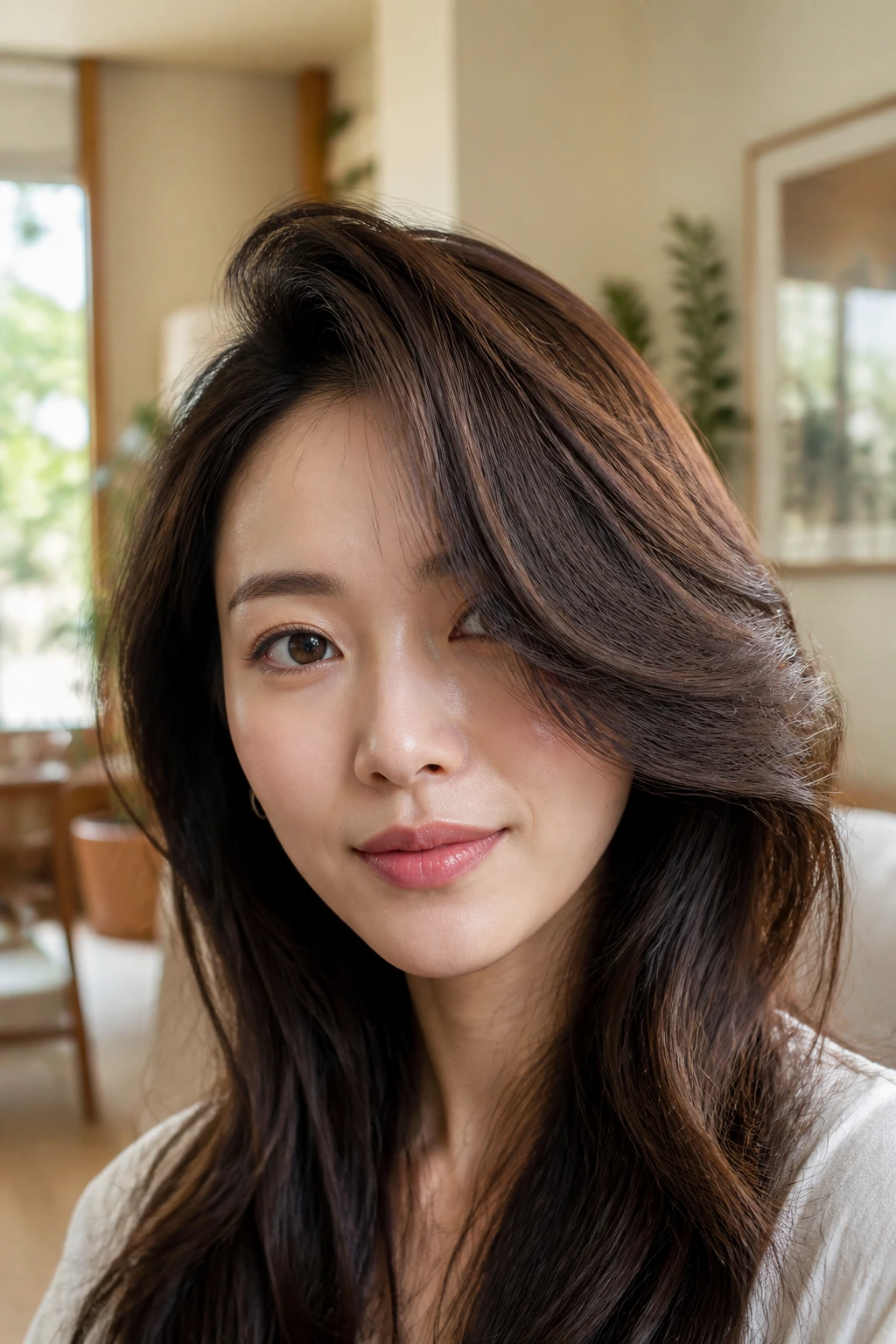
This style features a deep side part where a voluminous sweep of hair cascades across the forehead and down toward the jawline. It is a mature, elegant variation of the classic fringe that is highly favored by Korean actresses.
Because this style uses a larger, denser section of hair, the sheer weight of the sweep helps pull down and smooth out any underlying frizz. The challenge here is keeping the root lifted so the hair does not fall flat against the face.
To achieve this, apply a root-volumizing spray to damp roots. When blow-drying, push the hair in the opposite direction of how you want it to lay, then flip it back over once dry. This creates instant, self-sustaining volume that keeps the frizzy mid-lengths away from your forehead.
6. Choppy Wispy Bangs with Weighted Edges
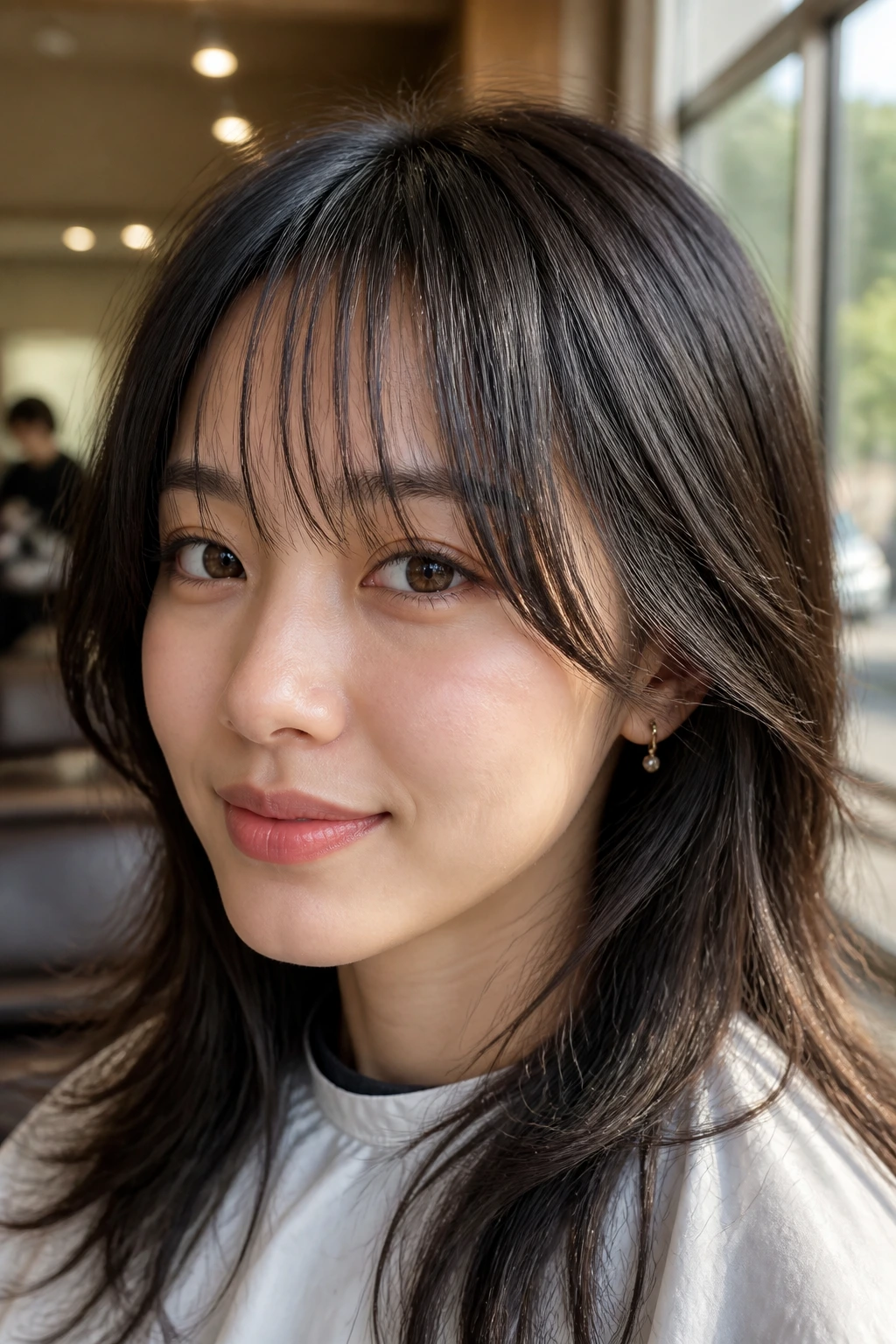
If you want something a bit more playful, choppy wispy bangs offer an uneven, textured finish. Unlike straight-across blunt cuts, the length of these bangs varies slightly across the forehead.
The Contrast of Weights
This cut is highly effective for frizzy hair because it pairs a light, choppy center with noticeably heavier, longer side pieces. These weighted edges act as anchors, keeping the entire fringe from expanding outward into a triangle shape.
Quick Nutrition Comparison for Styling Products
| Product Type | Hold Level | Frizz Control | Best For |
|---|---|---|---|
| Styling Cream | Medium | High | Coarse, dry waves |
| Light Hair Wax | High | Medium | Short, piecey wisps |
| Leave-in Serum | Low | High | Fine, flyaway hair |
Choose a lightweight cream to keep the choppy pieces defined without making them stiff or crunchy.
7. Soft Blunt Block Bangs with Point-Cut Density
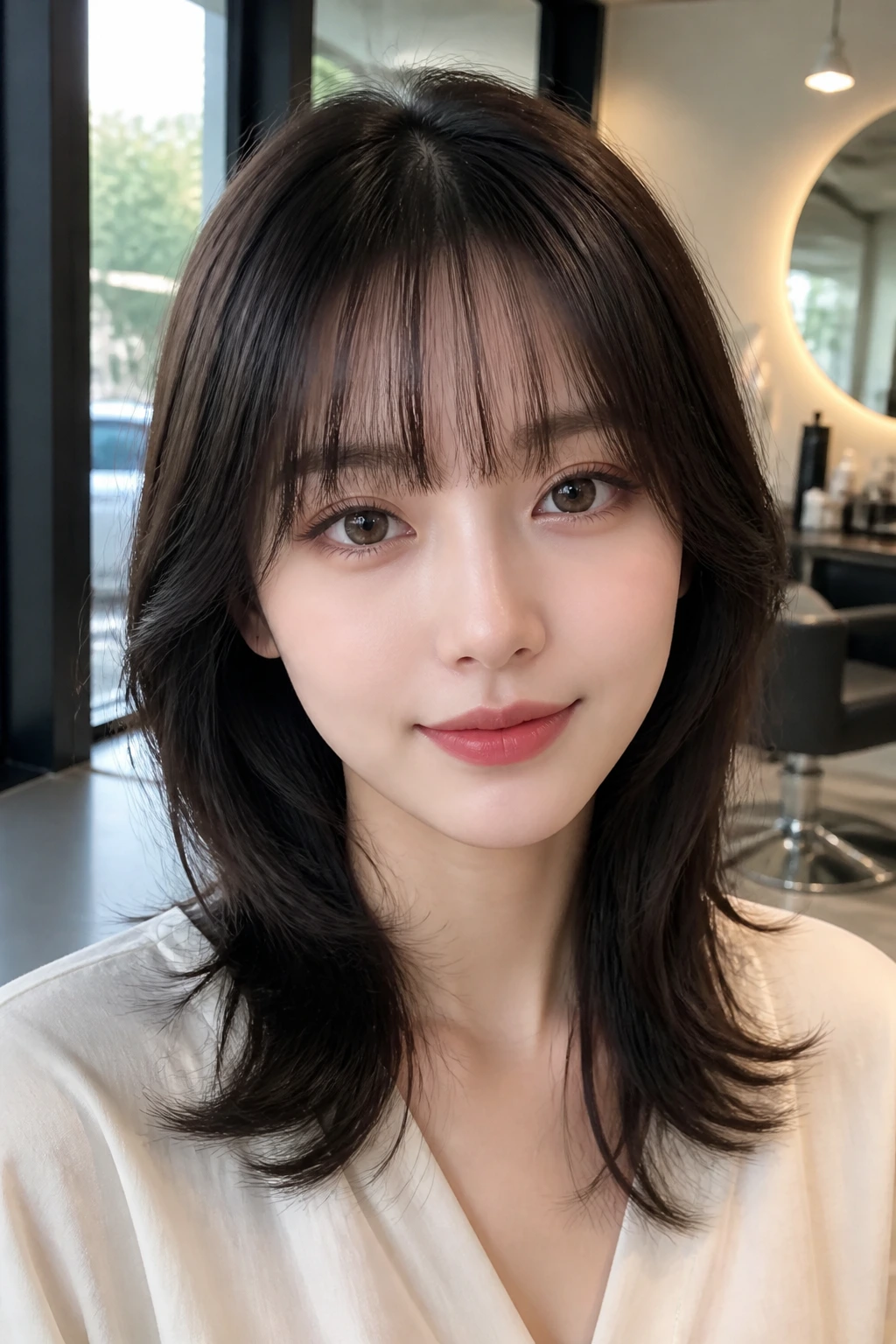
While blunt bangs are usually a nightmare for frizzy hair, the Korean “block” variation makes them wearable. Instead of a solid, heavy wall of hair, these bangs are cut with horizontal lines but thinned out vertically using a technique called point-cutting.
By snipping vertically into the ends of the bangs, the stylist removes internal weight without ruining the blunt perimeter. This gives the hair room to expand slightly without turning into a puffy shelf. It looks structured, but possesses enough airiness to move naturally when you walk.
To style, use a flat iron with beveled edges. Instead of pulling the iron straight down—which makes frizzy hair look stiff and fake—curve the iron slightly inward toward your eyebrows as you slide it down.
8. Hime Cut Side Strands with Beveled Layers
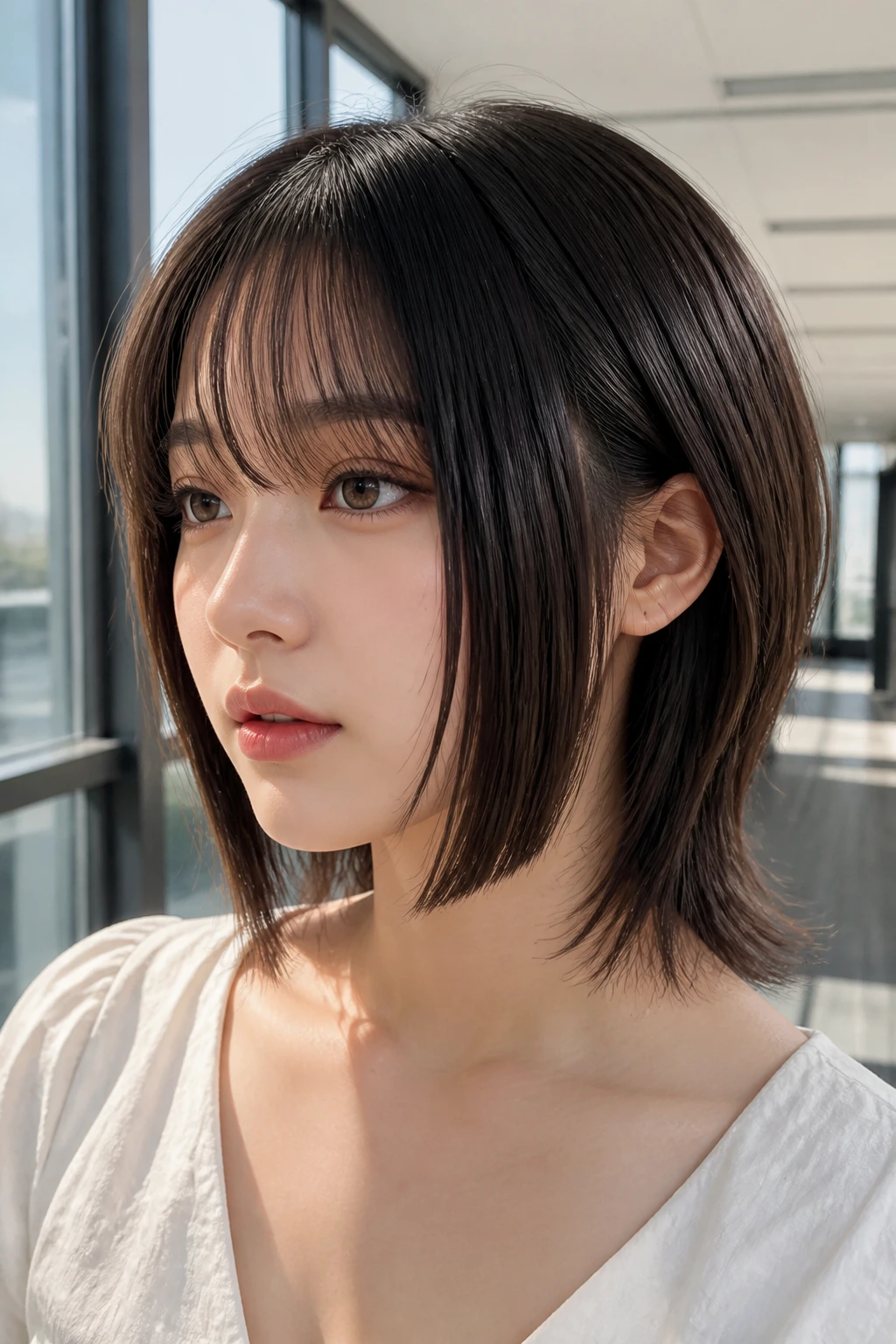
The Hime cut features sharply cut, jaw-length side blocks that frame the face, often paired with a wispy front fringe. It is a striking, graphic style that has seen a massive resurgence in popularity.
For frizzy hair, the key is beveling the inner edges of these side blocks. Your stylist should cut the hair with a slight inward angle so the strands naturally curve toward your face. This prevents the side blocks from flaring outward like wings when the humidity rises.
This style is perfect for those who want to hide their ears or soften a strong jawline. It requires a bit more maintenance, so be prepared to run a styling brush through the side strands with a smoothing cream before leaving the house.
9. Leaf Bangs with C-Curve Framing
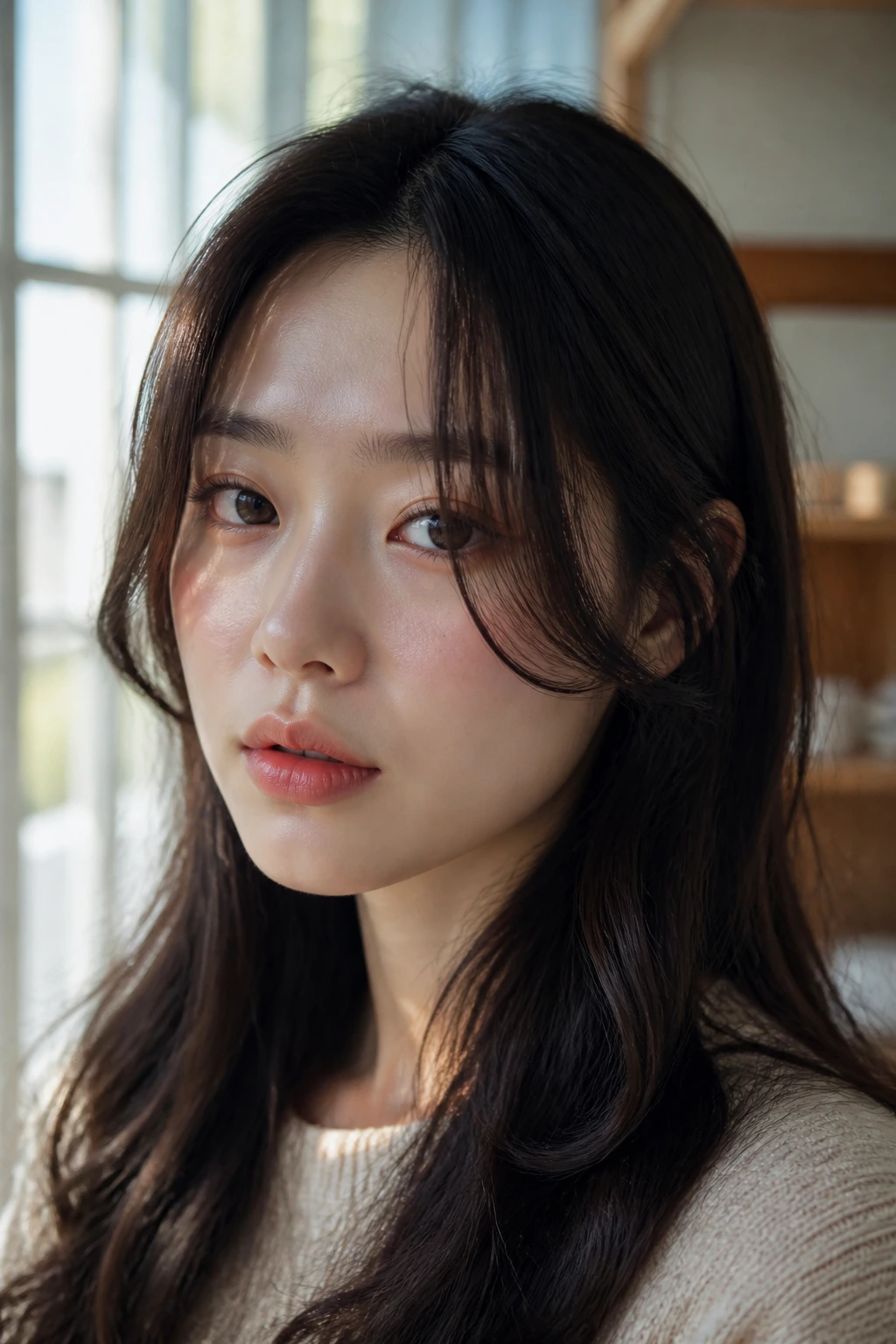
Leaf bangs—or yeopsa-bang—are designed to look like two gently curved leaves framing the forehead. They are parted down the middle, curving inward toward the bridge of the nose before sweeping outward toward the cheekbones.
How the C-Curve Tames Frizz
The continuous C-curve shape of this cut is excellent for managing frizzy hair because it redirects the natural wave pattern into a smooth, flowing line. Instead of fighting the hair’s desire to bend, this cut uses that bend to its advantage.
How to Style Leaf Bangs
- Start with damp hair and apply a heat-protectant cream.
- Use two large hair clips to pin the bangs into a C-shape while damp.
- Blow-dry on low speed, or let them air-dry.
- Remove the clips to reveal a smooth, organic curve that resists humidity.
10. Long Feathered Fringe with S-Wave Blend
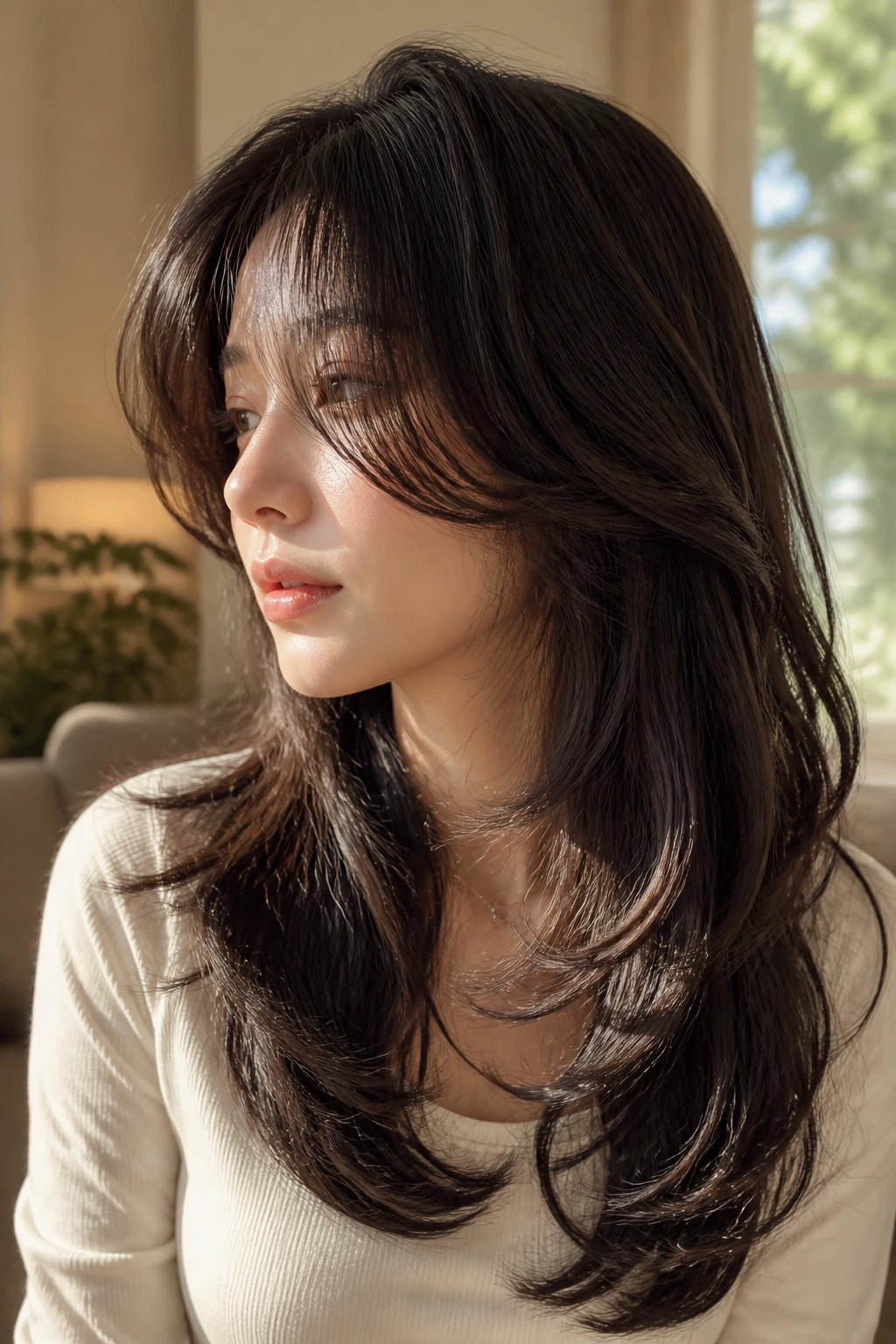
This style is a longer variation of curtain bangs, with the shortest pieces starting at the tip of the nose and feathering outward into the lengths of the hair.
The transition is cut using an S-wave pattern, which allows the layers to nestle into one another. When frizzy hair begins to swell, these layers simply expand into a romantic, voluminous wave rather than separating into dry, disconnected layers.
This is the absolute best option for those who are hesitant to commit to a full fringe. If you hate how they look on a humid day, they are long enough to tuck behind your ears or pin back with a simple bobby pin.
11. Full Wispy Bangs with Inner Thinning
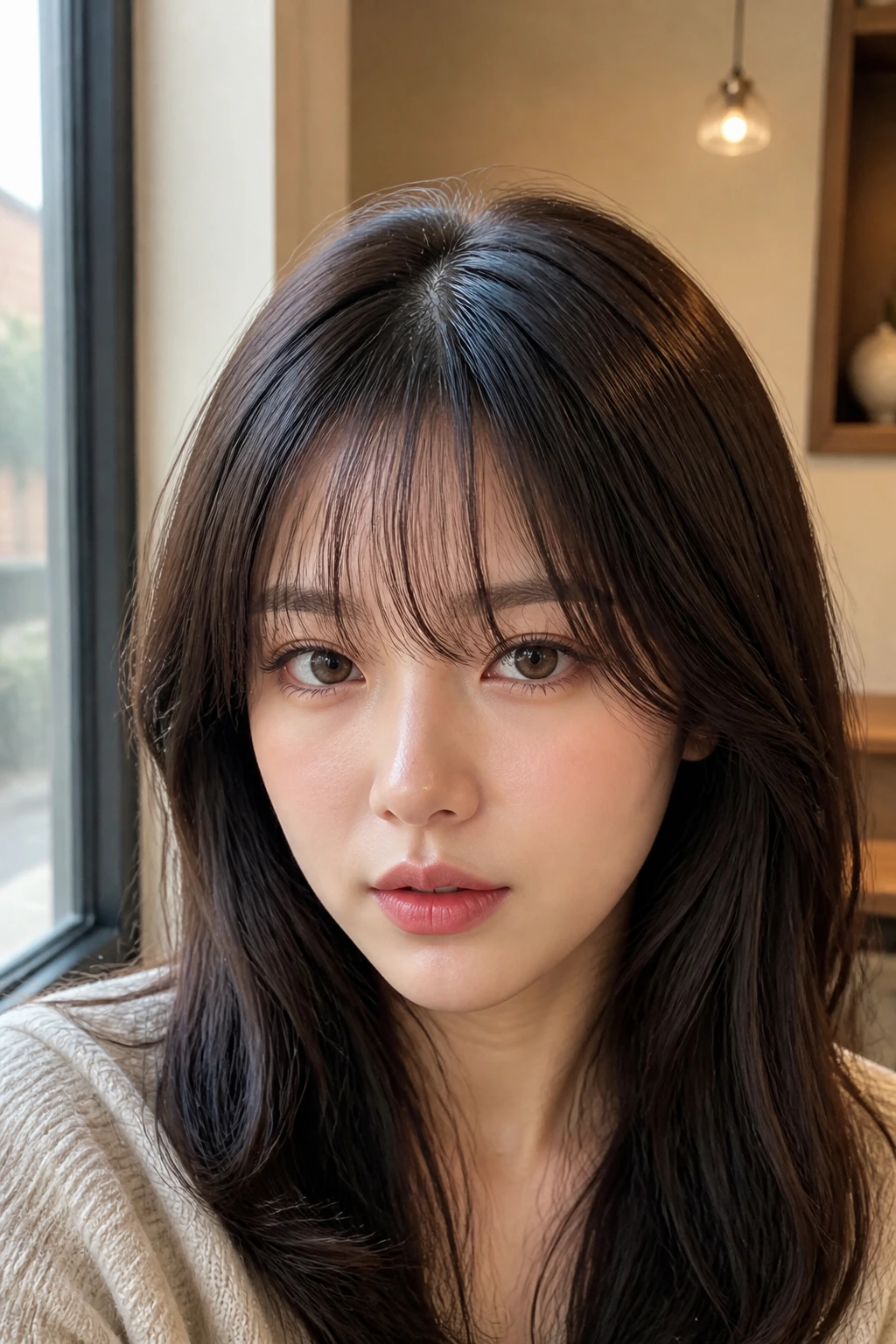
Full wispy bangs look dense at first glance, but they have hidden gaps that keep them light. This is achieved by thinning out the hair from the inside of the fringe rather than the outside.
By slide-cutting the hair closest to the forehead while leaving the top canopy intact, the stylist creates a built-in support system. The shorter, thinned strands underneath hold up the longer top layers, preventing them from falling flat or curling into the eyes when moisture hits.
When styling, avoid putting any heavy conditioning products on the root area of these bangs. Keep all moisturizers focused on the mid-lengths and ends to prevent the roots from becoming greasy and separating.
12. Micro See-Through Fringe with Texture Paste
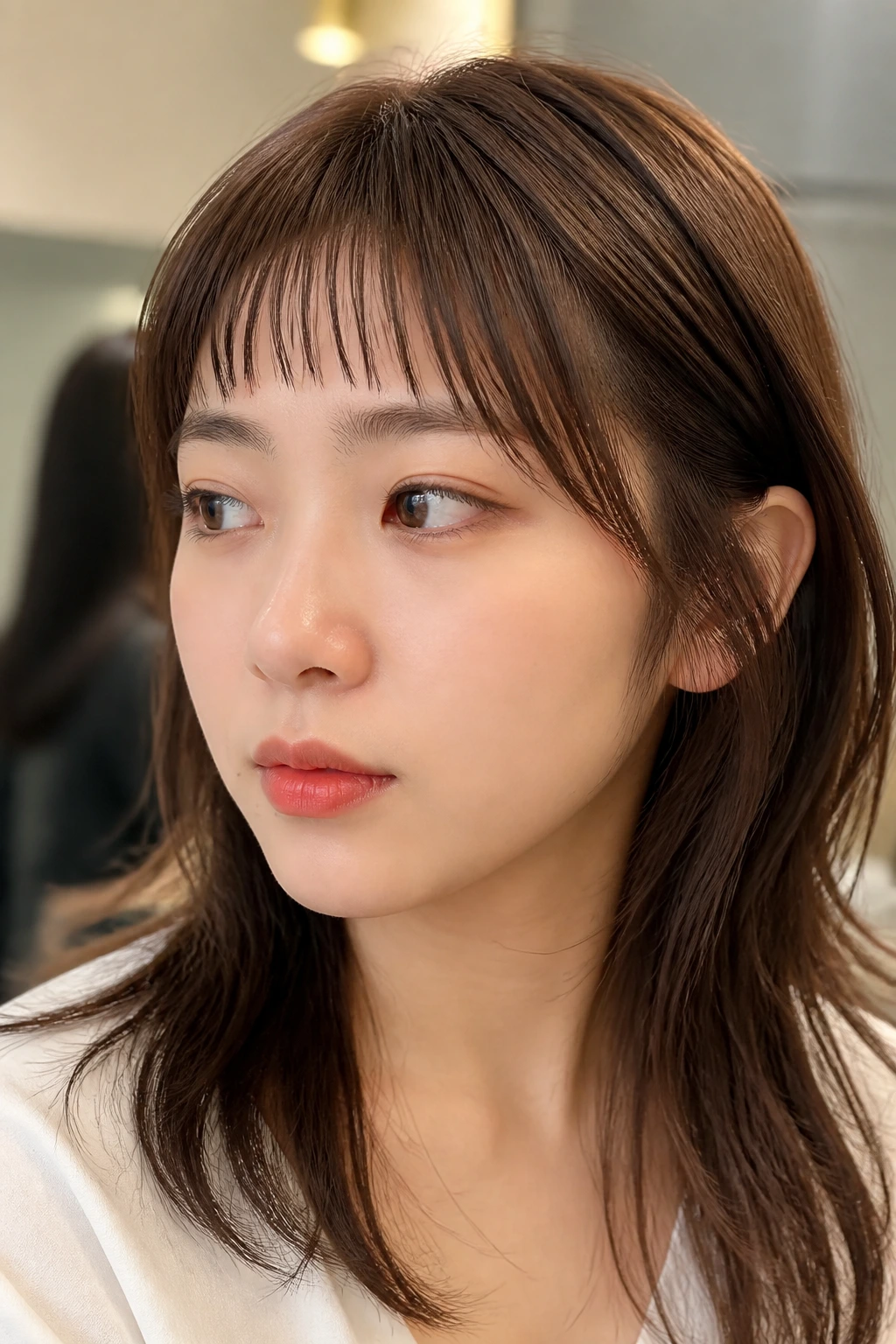
For the bold, the micro see-through fringe sits well above the eyebrows. It is a highly stylized, youthful look that requires a confident approach to styling.
Frizzy hair in a micro-fringe can easily look like a cowlick if not cut correctly. To make this work, the stylist must cut the fringe dry, following the natural growth direction of your hair. This ensures there are no surprises when you wash and dry it at home.
Styling Micro Bangs
- Dampen the roots slightly every morning.
- Warm a pea-sized amount of matte texture paste between your palms.
- Pinch the ends of the micro-wisps to clump them together.
- Blow-dry flat using the palm of your hand to press the hair down.
This creates a piecey, modern texture that looks incredibly chic and holds its shape through wind and humidity.
13. Double-Layered Curtain Bangs for Bulk Reduction
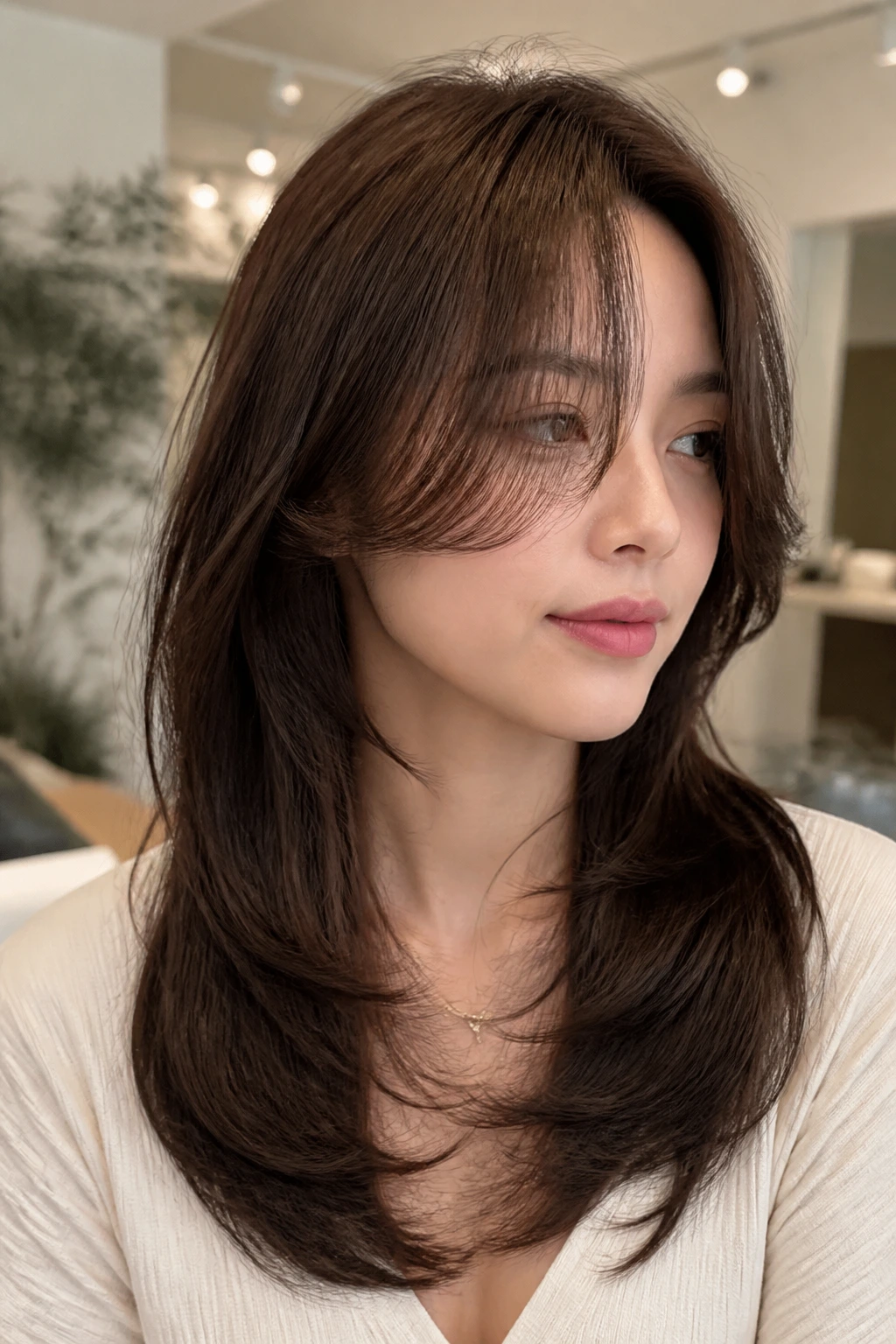
If you have extremely thick, frizzy hair, traditional curtain bangs can feel too heavy around the face. Double-layered curtain bangs solve this by splitting the fringe into two distinct tiers: a shorter, cheek-grazing tier and a longer, collarbone-skimming tier.
This double-layering system reduces the sheer bulk of the hair around your face. By removing this weight, your natural waves can form a cleaner, more defined shape rather than compressing into a dense, frizzy mass.
It also makes styling much quicker. You can focus your smoothing efforts on the shorter, top layer, allowing the longer bottom layer to blend naturally into the rest of your hair texture.
14. Messy Shag Fringe with Diffused Curl Definition
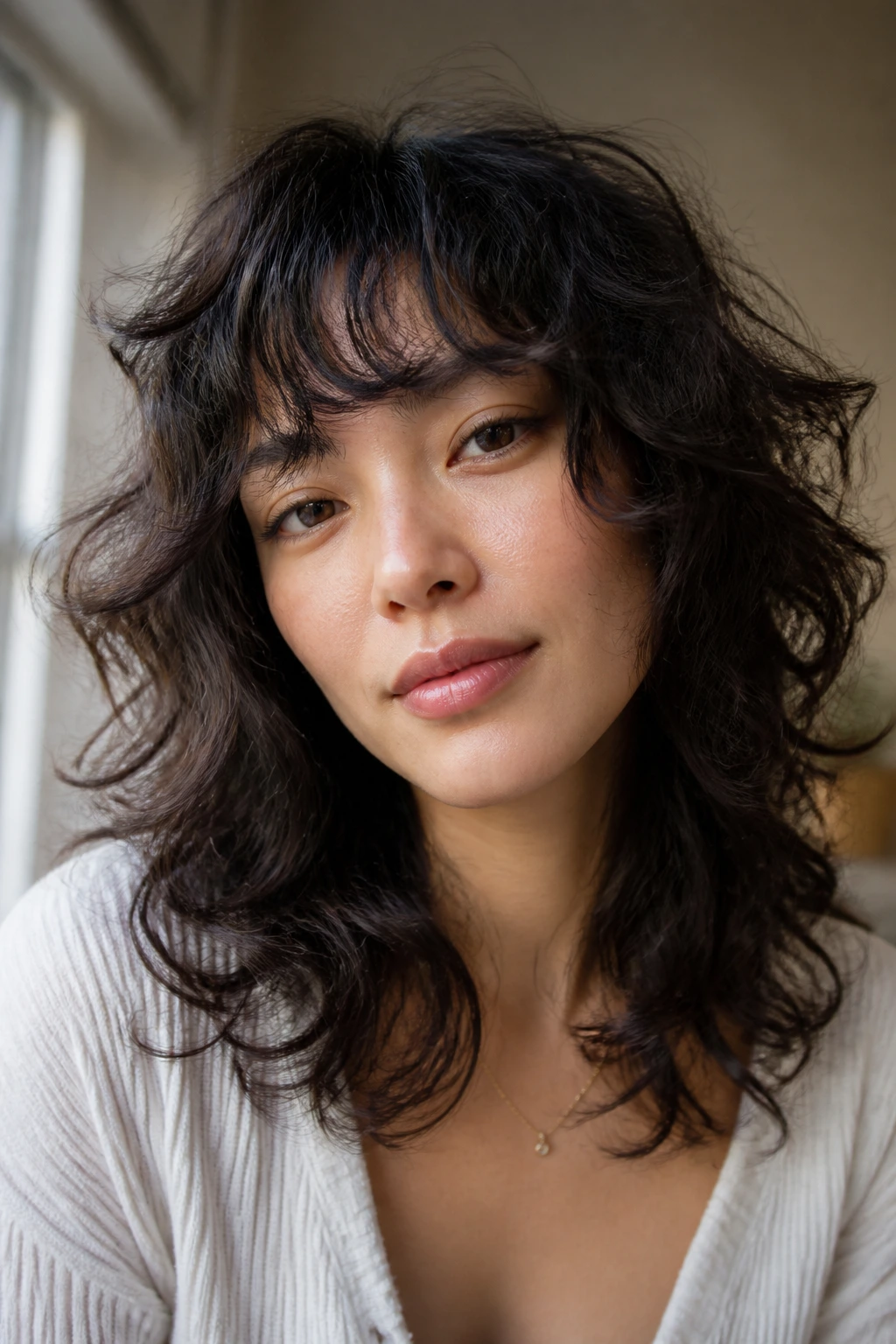
The Korean shag—often called the “Hush Cut”—features heavy layering throughout the head, paired with a messy, disconnected fringe. It is a highly textured style that actually thrives on a bit of natural frizz and volume.
Instead of trying to smooth out every strand, this cut uses a diffuser to build a cloudy, romantic texture. The key is using a leave-in conditioner mixed with a touch of light-hold gel to define the ends of the layers while letting the roots remain soft and airy.
This style is incredibly low-maintenance. The more your hair swells throughout the day, the better the shaggy, effortless shape looks. It is a fantastic option for anyone with a natural wave or soft curl pattern.
15. Contoured Cheek-Grazing Bangs with Under-Cutting
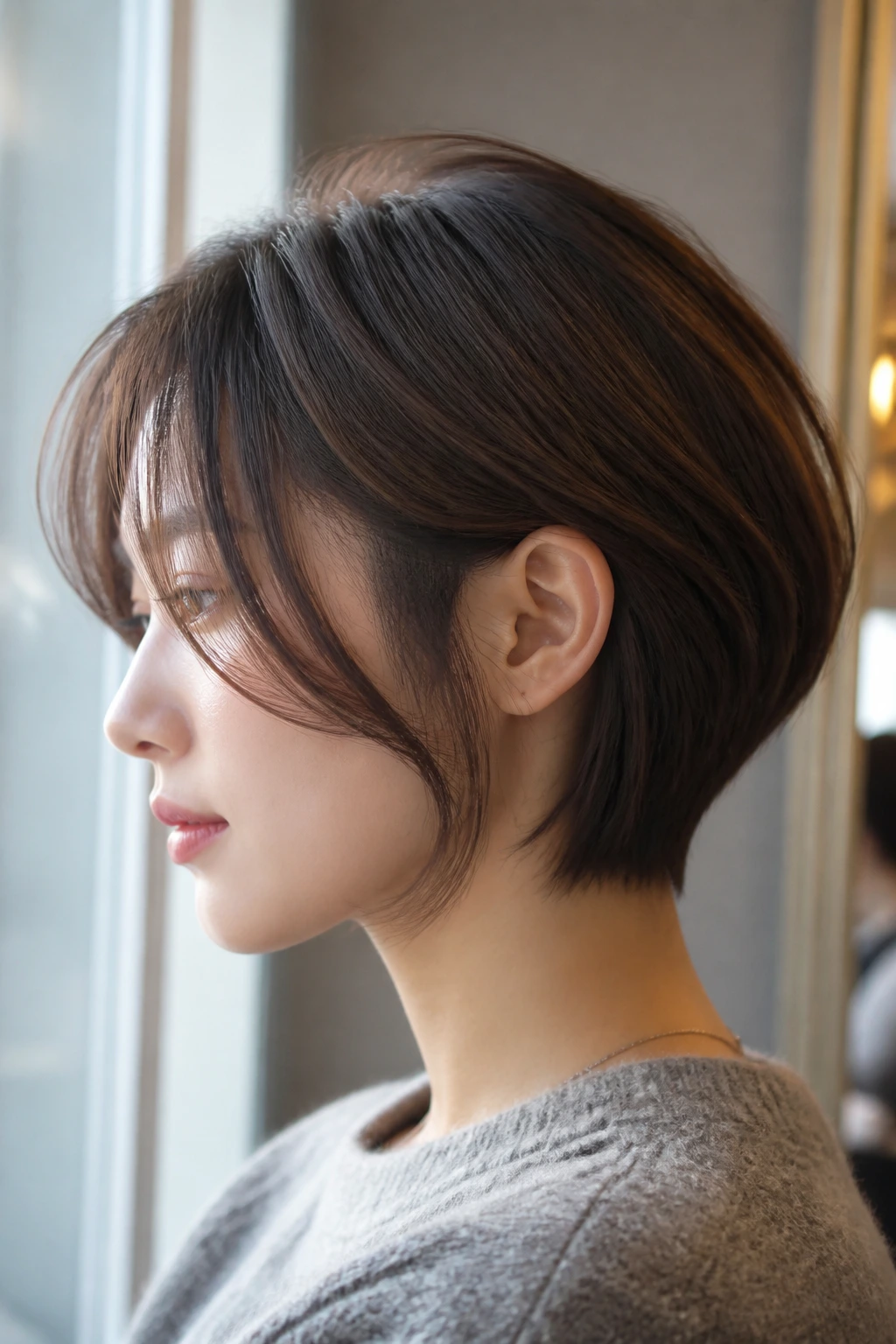
This style is designed to hug the cheekbones, creating a contouring effect that slims the face. It is cut with a steep diagonal line from the center of the forehead down to the ears.
To prevent frizzy hair from puffing outward and widening the face, the stylist can use a subtle under-cutting technique. By cutting the hair directly underneath the temple slightly shorter than the top layer, the top layer lies flat against the cheek rather than expanding outward.
For daily maintenance, use a flat-wrap blow-drying technique with a paddle brush to sweep the hair flat against the sides of your face before letting it curve out at the very ends.
16. Airy Wisps with Weighted Temple Pieces
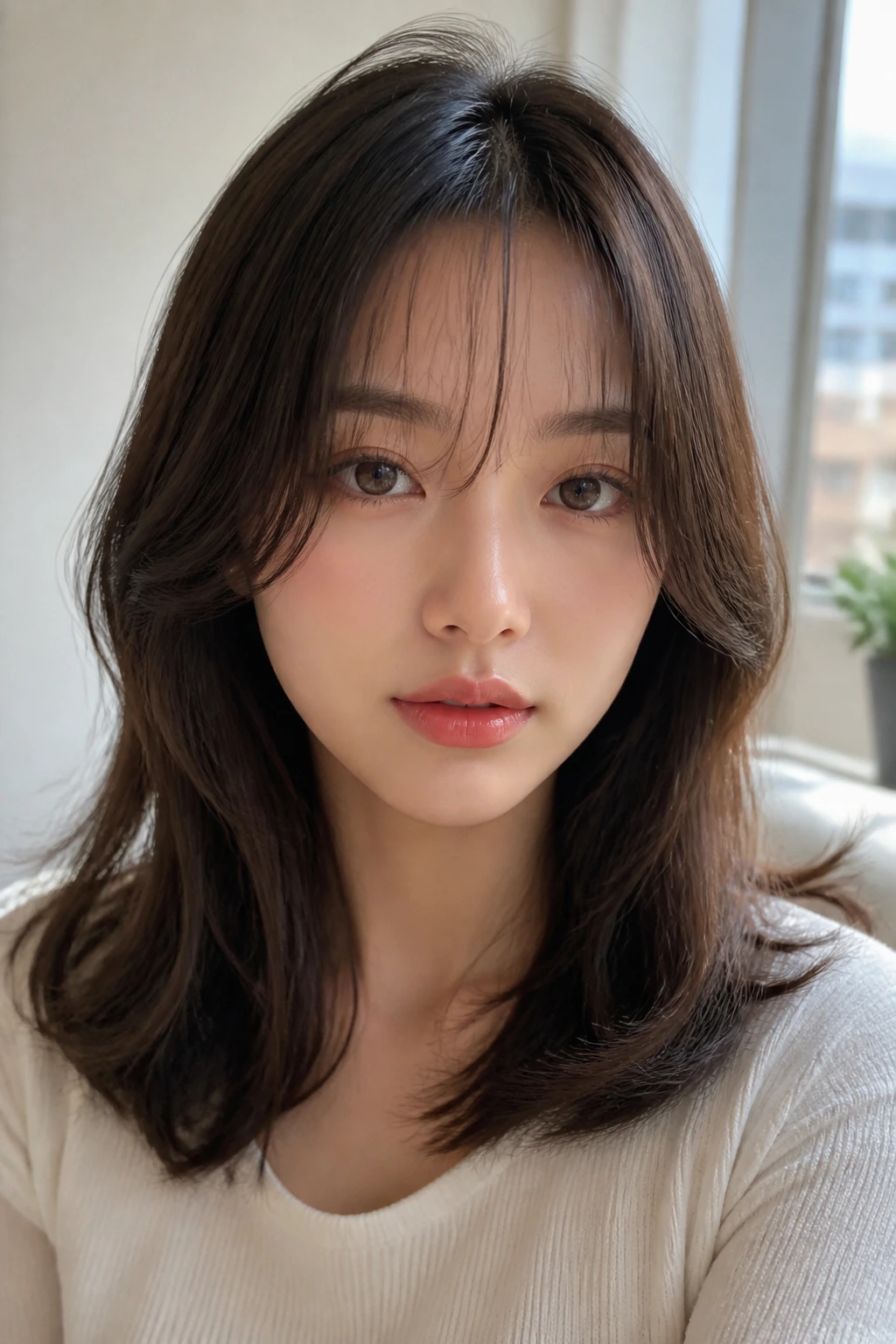
This variation features ultra-light, see-through wisps in the center of the forehead, which instantly transition into thick, solid, chin-length framing pieces at the temples.
The Balancing Act
The heavy temple pieces act as a physical barrier, protecting the delicate center wisps from the wind and humidity that can cause them to fly apart. They also frame the face beautifully when the rest of your hair is tied back in a bun or ponytail.
Quick Step-by-Step Styling
- Section out the delicate center wisps from the heavier temple pieces.
- Blow-dry the center wisps flat using a paddle brush and downward airflow.
- Use a large round brush to curve the temple pieces outward away from your face.
- Mist the entire area with a flexible-hold hairspray to seal out moisture.
This creates a beautiful, structured frame that keeps your bangs looking neat all day.
17. The Soft Two-Block Fringe for Natural Waves
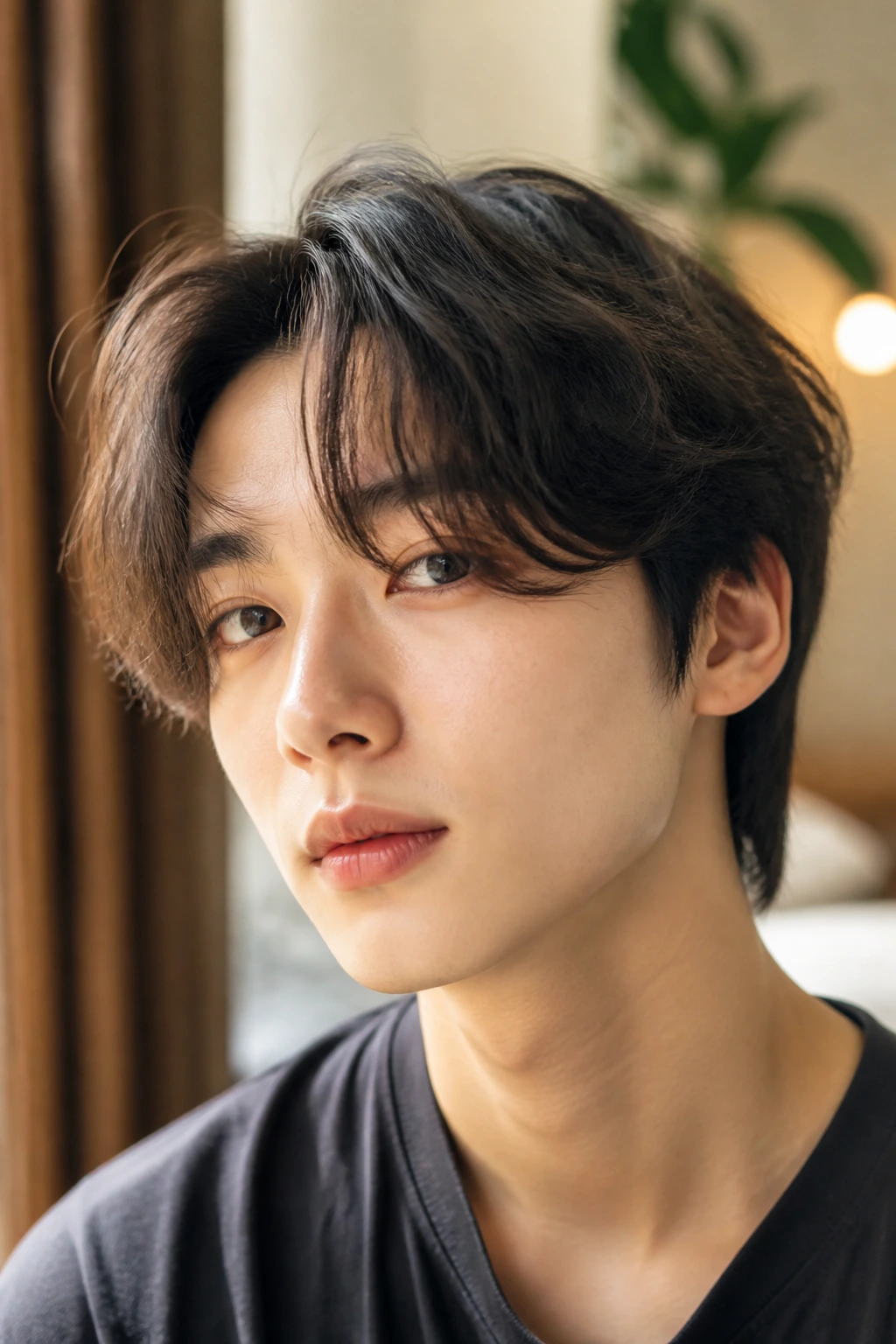
Derived from the popular Korean men’s haircut, the two-block fringe features a distinct separation between a longer top layer and a shorter, clipped under-layer at the temples and sides.
For women with thick, frizzy hair, this is an excellent way to eliminate bulk. By keeping the hair underneath short and tidy, the top layer of the fringe can drape smoothly over the forehead without being pushed outward by the hair underneath.
This style works beautifully with natural, air-dried waves. The shorter under-layers remain hidden, while the wavy top layers fall into a cool, effortless shape that requires minimal styling.
18. Center-Parted Antenna Wisps with Serum Coating
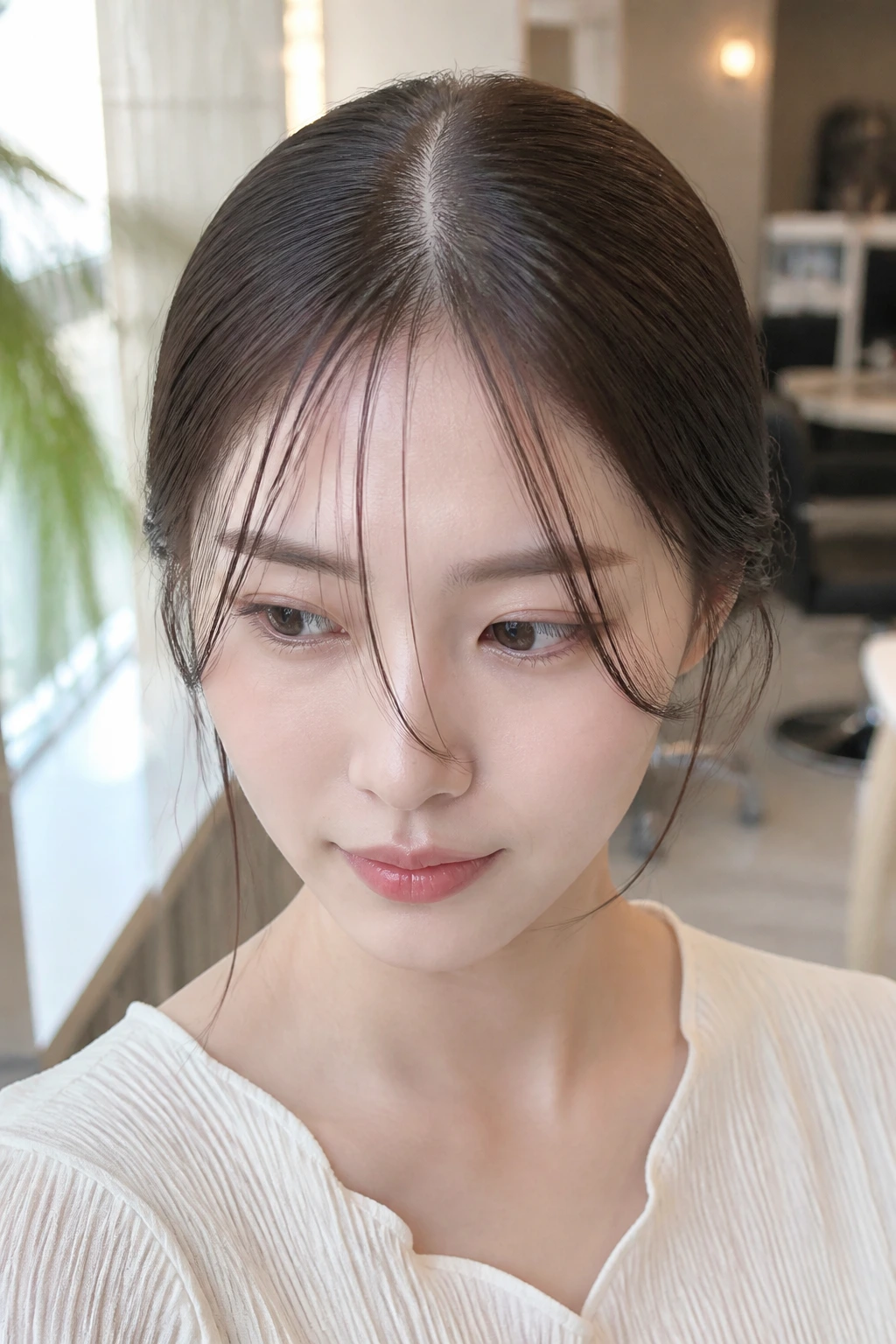
Antenna wisps are two long, thin strands of hair that fall directly from a center part down the middle of the forehead, ending around the nose or jawline. It is a minimalist style that is incredibly popular for up-dos.
Because these wisps are so thin, they are highly susceptible to frizz. To combat this, they must be coated with a high-quality, water-repellent hair serum while wet. This creates a hydrophobic barrier that prevents moisture in the air from entering the hair shaft.
When styling, do not use a round brush. Instead, let them air-dry naturally, or use a flat iron on a low setting to pull them straight down with a slight, natural-looking bend at the very ends.
19. Textured Commando Bangs with Directional Blow-Drying
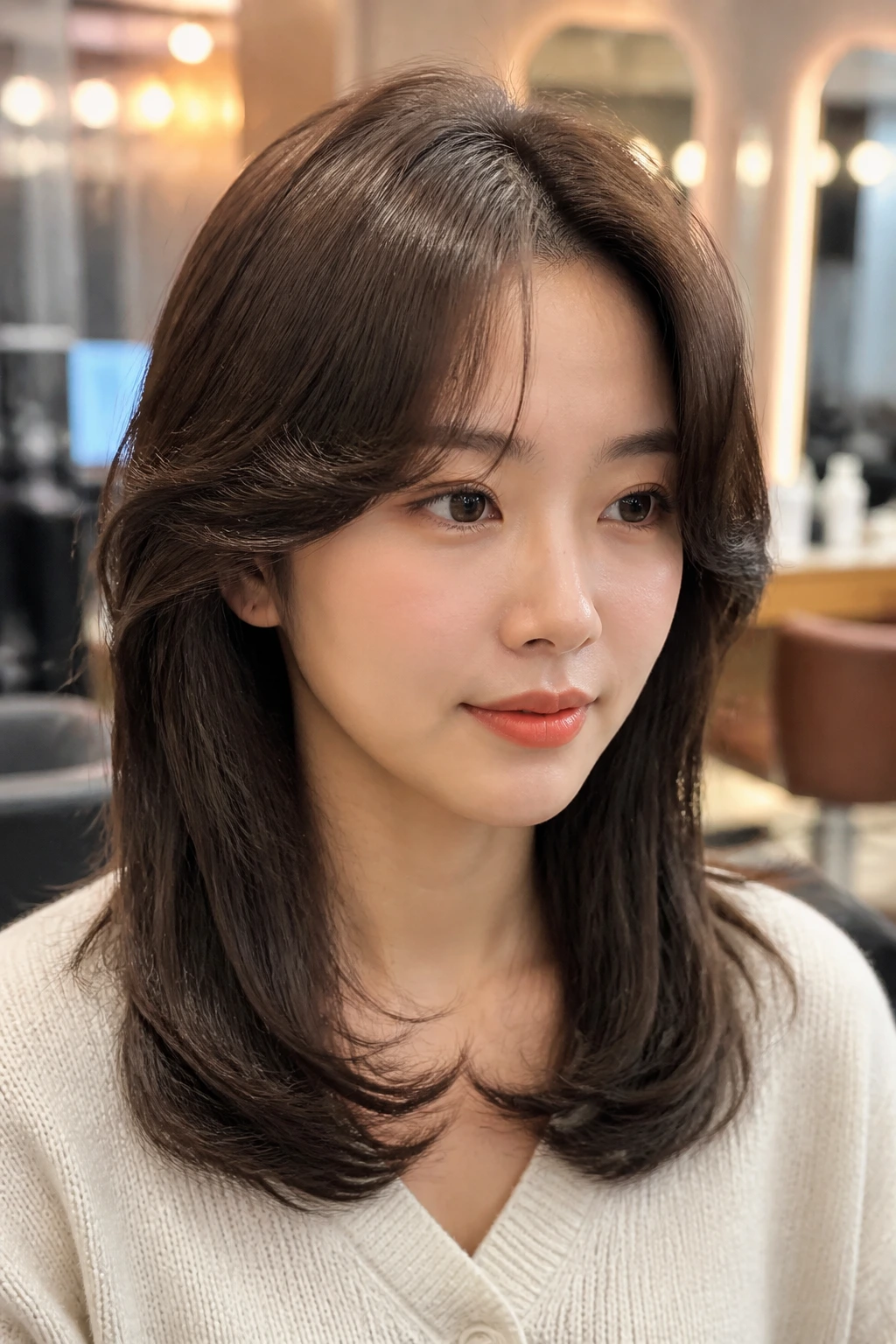
Commando bangs—often called “comma bangs” due to their shape—curve inward toward each other in the center of the forehead, forming a shape that looks like two commas facing opposite directions.
This look relies on strong directionality. On frizzy hair, this requires styling the roots while they are still wet. Use a small round brush to pull the hair forward and inward, applying heat directly to the root to lock the direction in place.
- It hides a prominent forehead or high hairline.
- It adds a cool, structured element to casual outfits.
- It keeps the hair off the temples and out of your eyes.
Pro tip: Use a tiny amount of styling wax on your fingertips to pinch the curved ends of the commas together to keep them defined.
20. Layered C-Curl Fringe with Tapered Temples
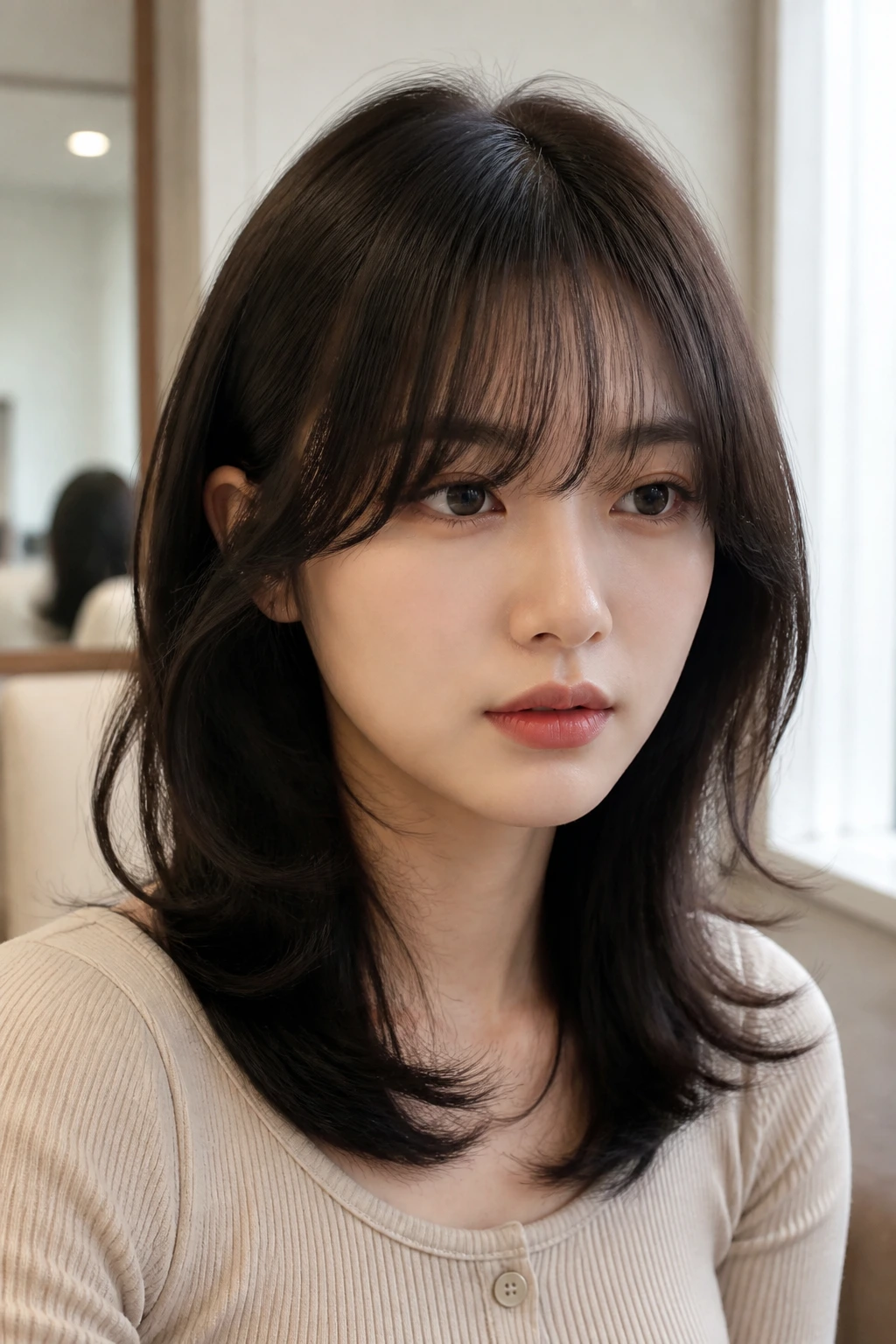
The C-curl fringe is a classic, soft look where the bangs are styled to curve inward in a perfect C-shape, grazing the eyebrows. The tapered temples ensure the fringe blends seamlessly into the side layers.
For frizzy hair, the layers in this cut are crucial. Without them, the C-curve would look like a solid, heavy sausage roll on your forehead. The light layering allows the hair to bend smoothly, creating a soft, cloud-like texture that looks romantic rather than dated.
To style, wrap the bangs around a large velcro roller immediately after washing. Leave it in while you do your makeup, then remove it and run your fingers through the curls to soften the shape.
21. Wispy Border Bangs with Slide-Cutting
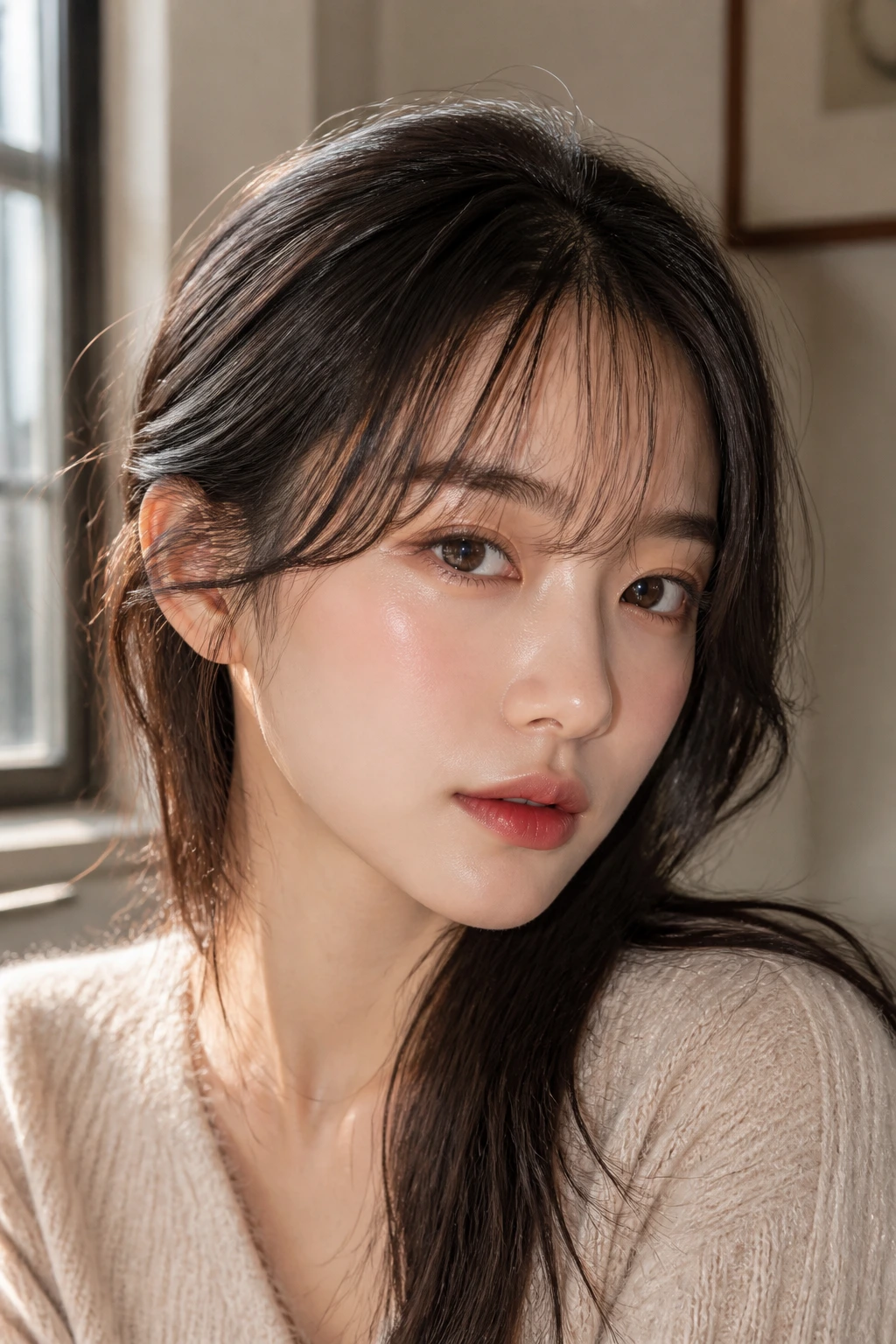
Border bangs are cut along the very edge of the hairline, creating a soft border that frames the entire face. It is a very flattering style for those who prefer to wear their hair pulled back.
Because these bangs are cut using a slide-cutting technique, the ends are incredibly soft and tapered. This prevents the harsh, blunt lines that can look awkward when frizzy hair starts to swell. Instead, the hair falls into a soft, blurry frame that looks natural and effortless.
This style requires almost no heat styling. Simply apply a small amount of leave-in conditioner to the edges of your hairline while wet, and let them air-dry into their natural shape.
22. Piecey Air Fringe with Wax Definition
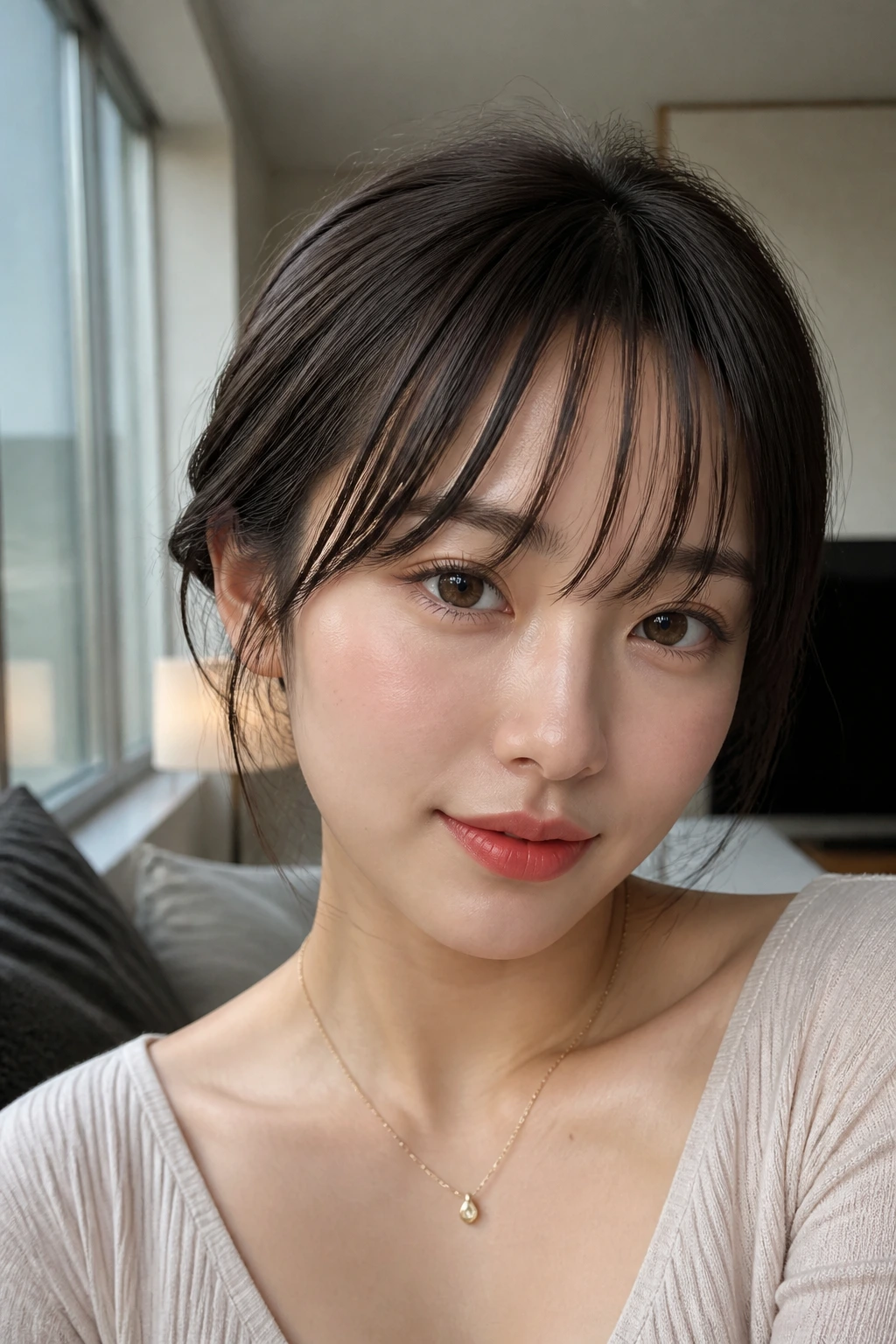
The piecey air fringe is a variation of see-through bangs where the strands are grouped into distinct, thick pieces rather than a continuous wispy curtain.
This grouping is highly beneficial for frizzy hair. By clumping the hair into thicker pieces, you increase the weight of each section, which helps keep the hair flat. It also makes any frizz look like a deliberate, textured finish rather than untamed flyaways.
Choosing the Right Wax for Definition
Look for a styling wax that offers a matte finish and a flexible hold. Avoid anything too shiny or greasy, as this will weigh down the bangs and make them look flat against your forehead.
23. Bouncy Face-Framing Tendrils with Pin-Curl Setting
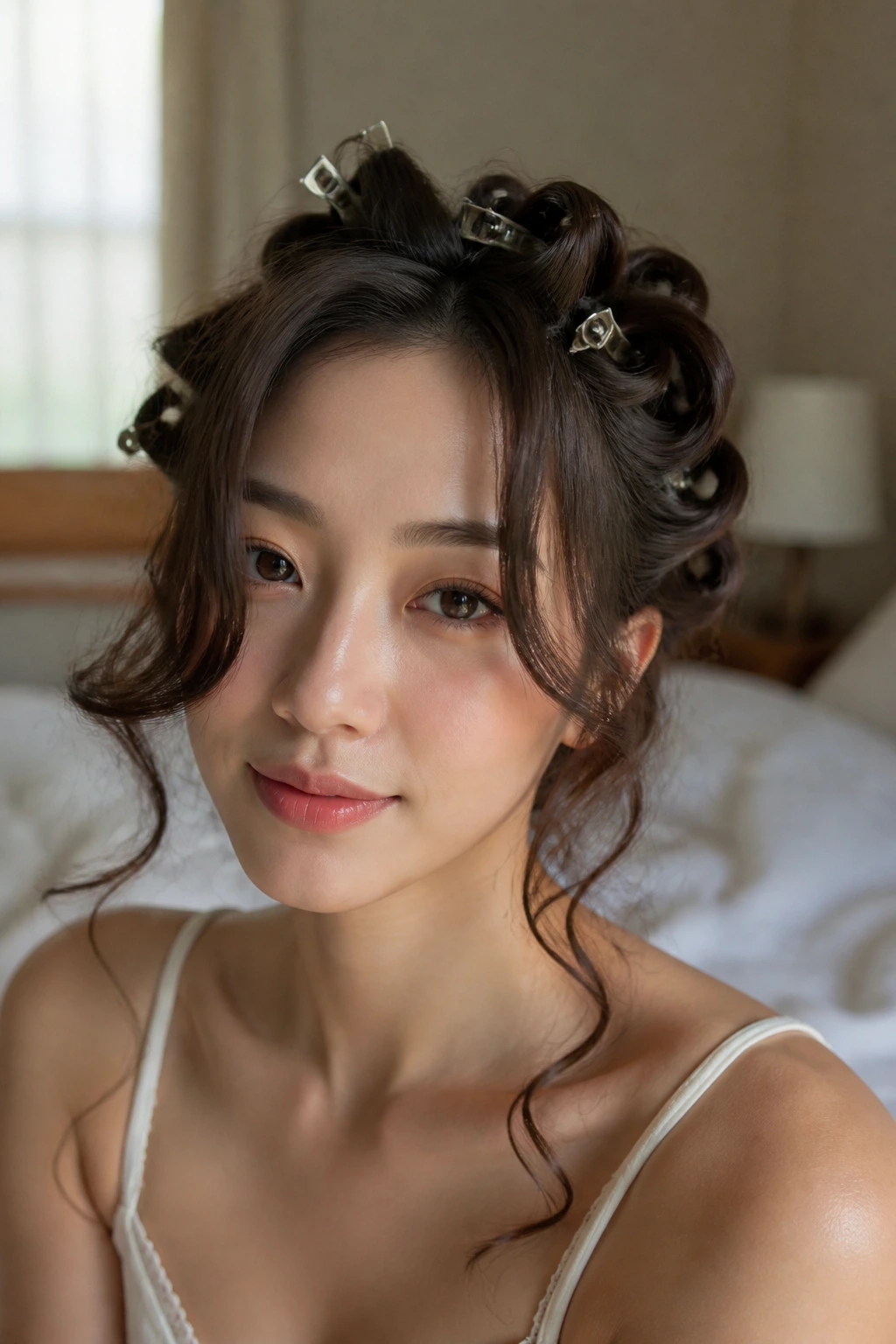
This style features long, soft tendrils that start at the temples and spiral downward, framing the eyes and cheekbones. It is a beautiful, classic Korean style that is perfect for special occasions.
To keep these tendrils smooth and frizz-free, use a pin-curl setting technique. While the hair is damp, wrap the tendrils around your finger to create a smooth coil, then pin them flat against your head with a metal clip until dry.
This set smooths the cuticle and locks the wave pattern in place, creating a bouncy, defined curl that resists humidity and stays smooth all day long.
24. Crown-Weight See-Through Bangs
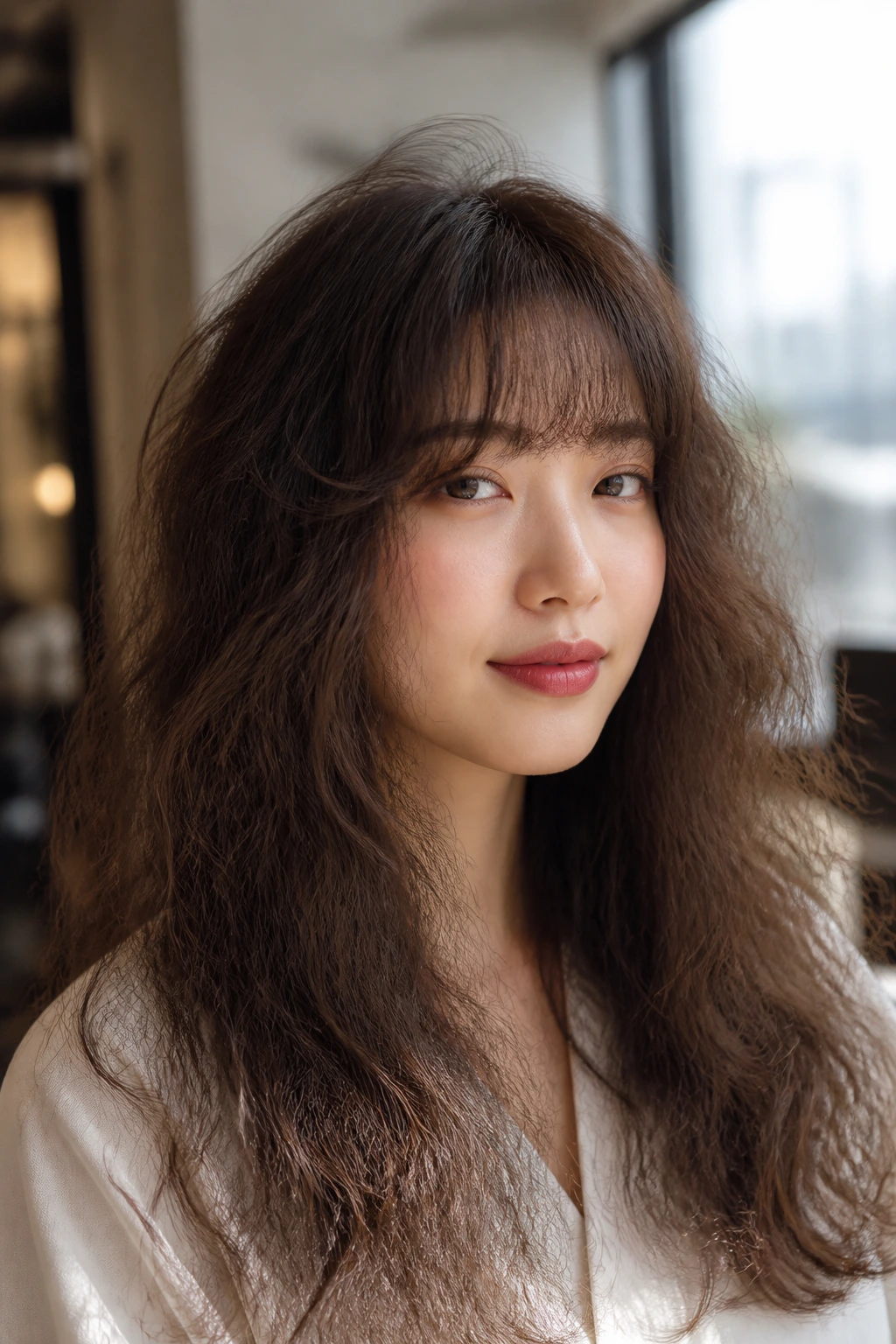
If your hair is very fine and frizzy, traditional see-through bangs can look sparse and stringy. Crown-weight see-through bangs solve this by pulling hair from slightly further back on the crown of the head.
By bringing more hair forward, you create a denser top layer that smooths over the wispy pieces underneath. This extra weight helps hold the bangs down, while the hidden wispy layers underneath keep the overall look light and airy.
This style is excellent for those with a flat crown, as it adds natural-looking volume and height to the top of the head.
25. Slanted Wispy Side Bangs with Root Calming
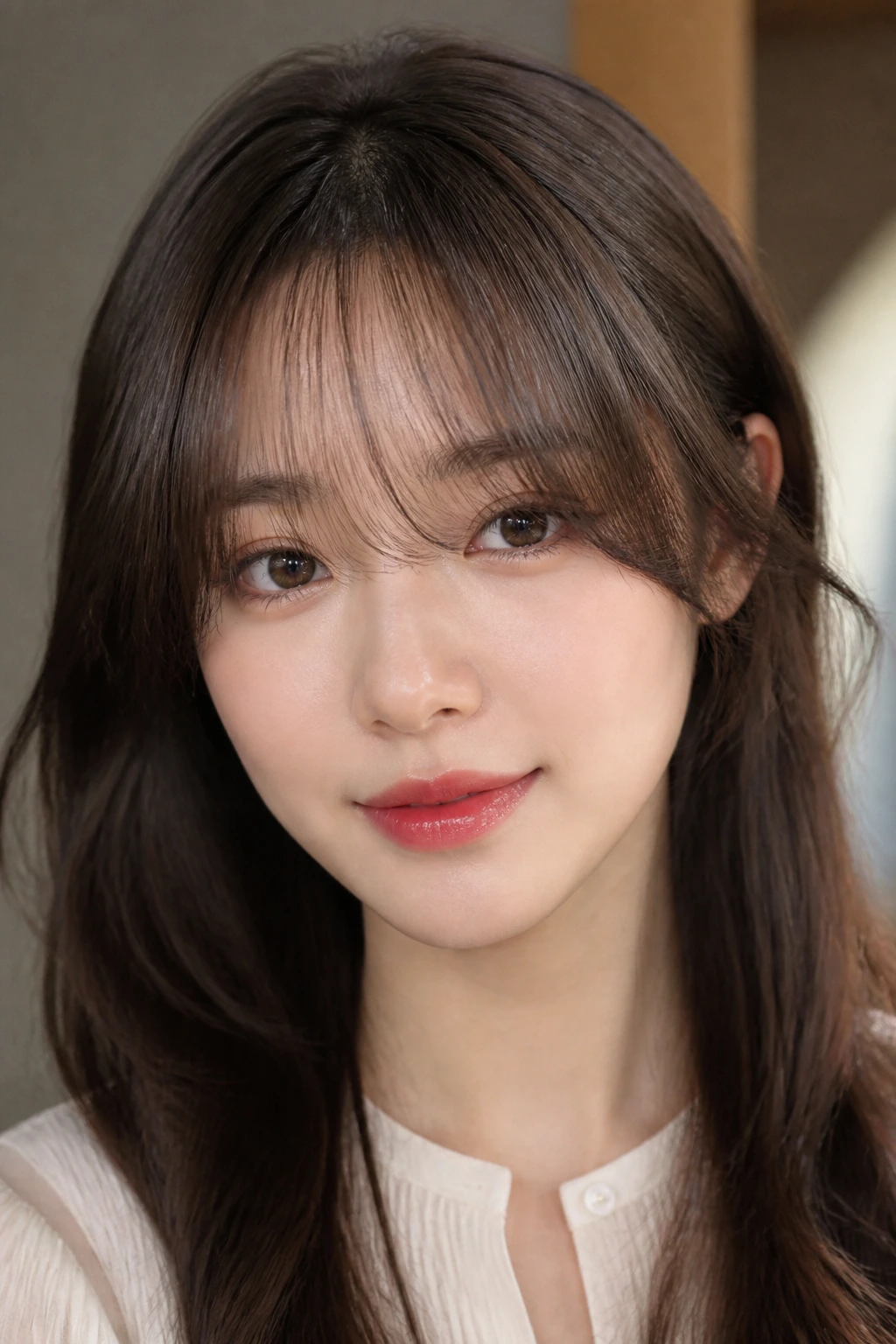
For a soft, asymmetrical look, slanted wispy side bangs sweep diagonally across the forehead, starting short at one temple and ending longer at the opposite eyebrow.
Frizzy hair can cause diagonal bangs to buckle and flip in awkward directions. To prevent this, focus on root calming. When drying, use your fingers to rub the roots of your hair flat against your skull in a back-and-forth motion.
This neutralizes any cowlicks or natural wave patterns at the root, allowing the slanted length of the bangs to drape smoothly across your forehead without twisting.
The Tension Blow-Drying Method for Calming Frizzy Fringe
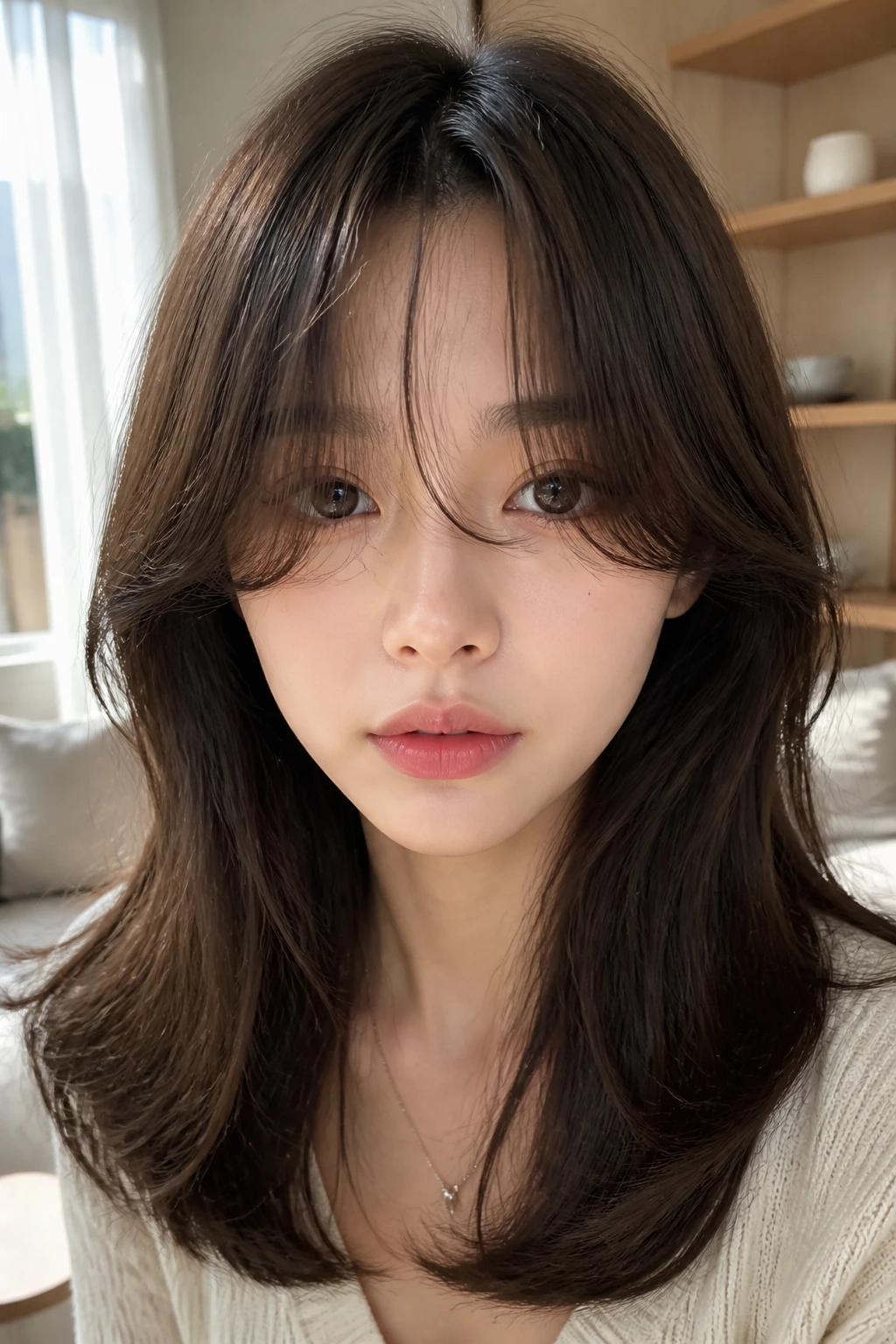
No matter which style of Korean bangs you choose, your daily styling routine is what will keep them looking polished. The absolute best way to tame frizz in a short fringe is the tension blow-drying method. This technique smooths the hair cuticle using physical tension rather than extreme heat, which prevents damage and long-term frizz.
The Prep Phase
Start with soaking wet hair. Frizzy hair begins to dry and shape itself the second you step out of the shower, so you must style your bangs first before drying the rest of your hair. If your bangs have already started to dry, mist them thoroughly with water from a spray bottle.
The Flat-Wrap Technique
Use a professional paddle brush with dense, flexible bristles. Place the brush at the roots of your bangs, pull down with firm tension, and direct the airflow of your blow dryer downward from above.
Sweep the bangs completely to the left side of your forehead, drying the roots. Then, sweep them completely to the right side, continuing to dry with downward airflow. This side-to-side sweeping action breaks the natural growth direction of the hair, neutralizing cowlicks and flattening the roots.
The Finish
Once the roots are dry, use a round brush or a velcro roller on the mid-lengths and ends to create the desired curve. Finish with a cold shot of air from your dryer to set the shape and seal the cuticle for a smooth, shiny finish.
Essential Wet-to-Dry Styling Products for Humid Weather
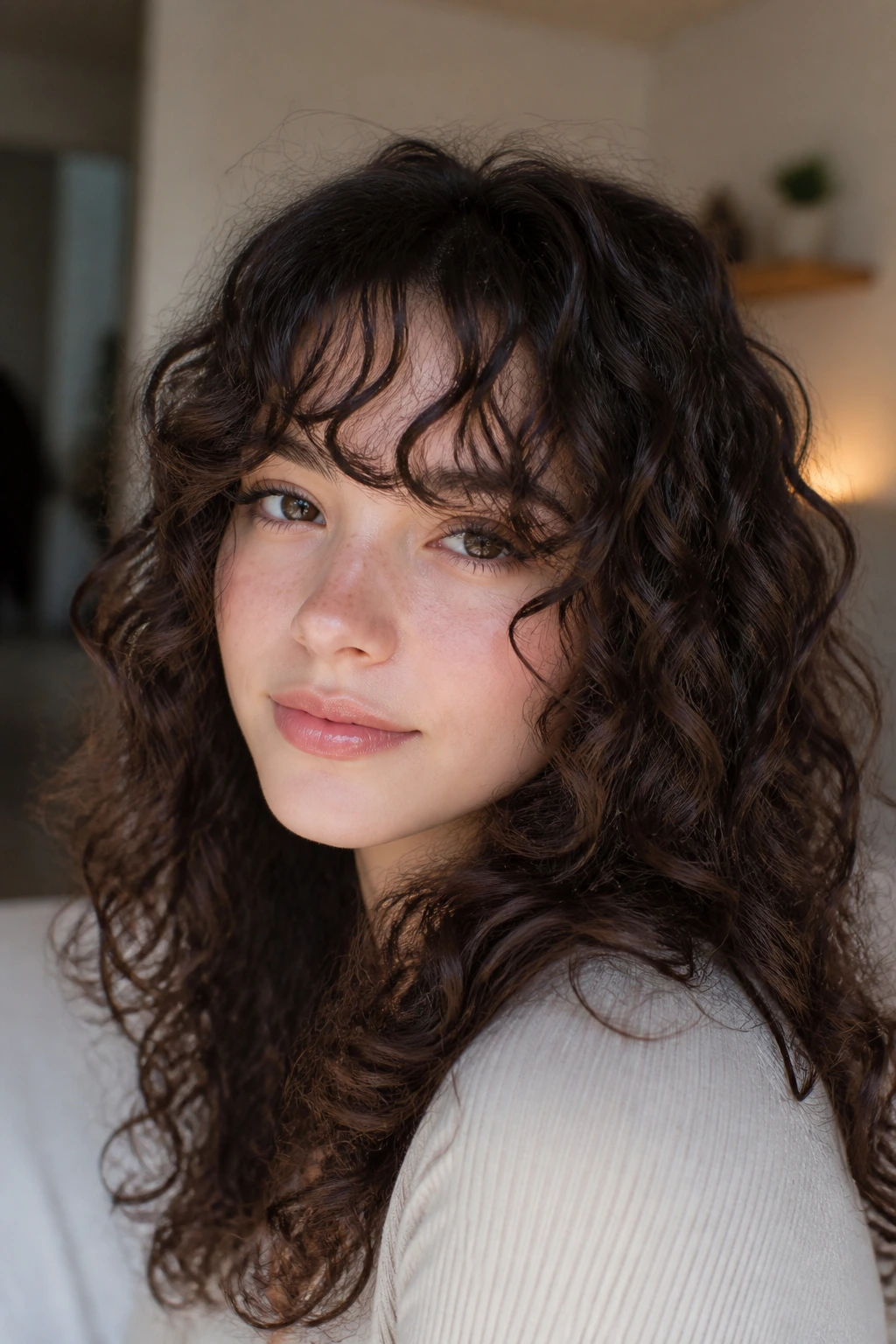
When shopping for products to manage your Korean bangs, look for specific ingredients that create a barrier against moisture.
What to Look For
- Polyquaterniums: These are synthetic polymers that coat the hair shaft, providing excellent hold and frizz control without stiffness.
- Lightweight Silicones (like Dimethicone or Cyclopentasiloxane): These create a hydrophobic barrier that seals out atmospheric moisture, keeping your bangs smooth and flat.
- Natural Plant Oils (like Argan or Jojoba Oil): These mimic the hair’s natural sebum, providing deep moisture to dry, porous cuticles.
Avoid heavy wax or grease, which will weigh down your fringe and make it look dirty. Instead, opt for lightweight serums, styling creams, and water-free aerosols.
Wrapping Up
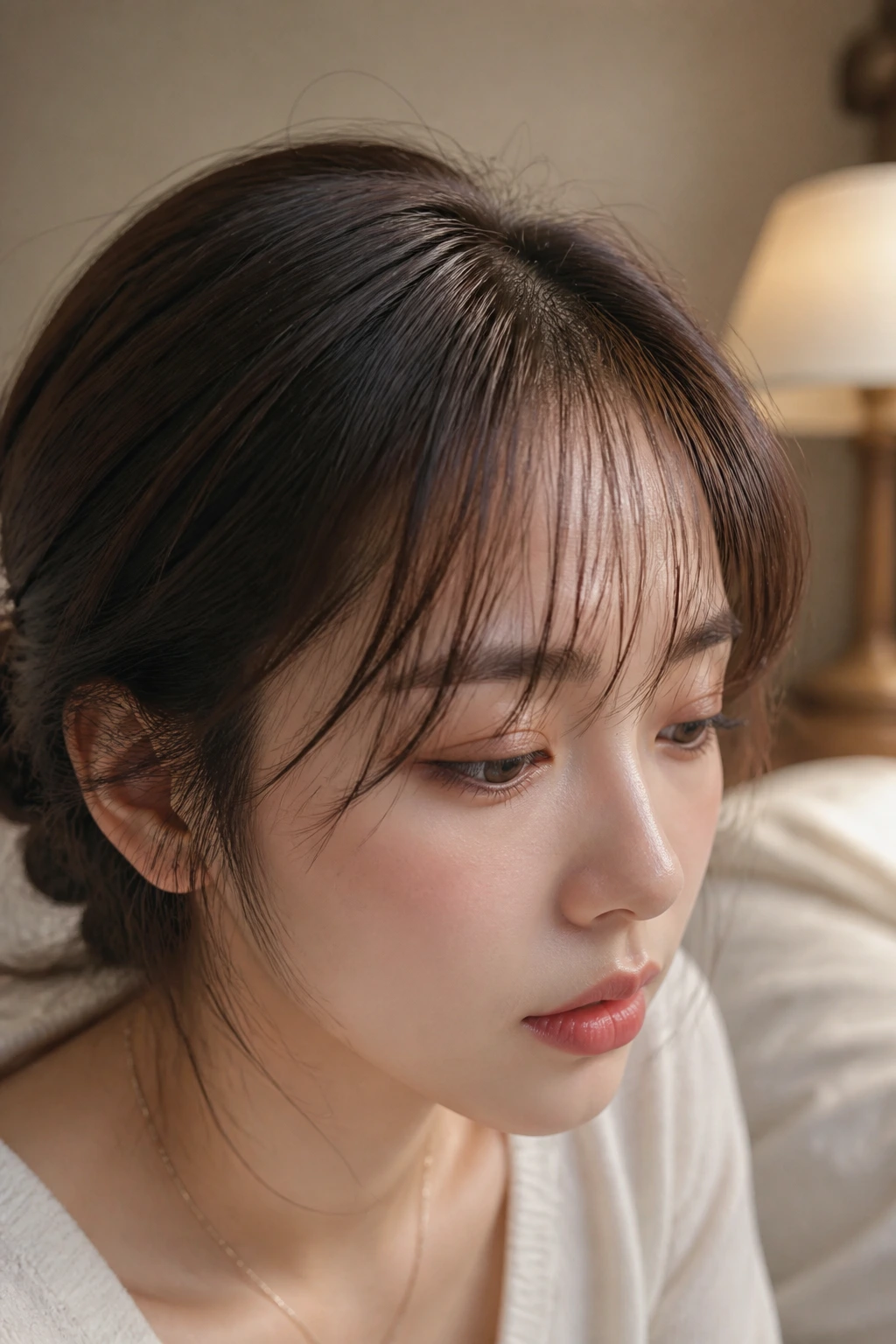
Adapting Korean bangs for frizzy hair is all about working with your hair’s natural characteristics rather than trying to force it into a shape it cannot sustain. By choosing a style that incorporates weighted anchors, tapered edges, or intentional wave patterns, you can enjoy a soft, face-framing fringe that holds up throughout the day.
Remember that a great cut is only half the battle. Investing a few minutes into proper wet-to-dry styling and using the right lightweight moisture barriers will keep your bangs looking fresh, polished, and beautifully styled, no matter what the weather has in store.