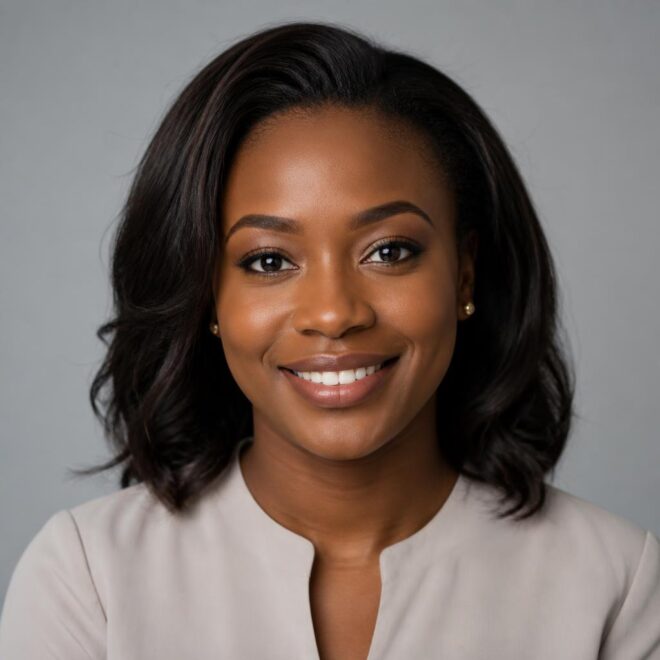


Anyone who has sat in a salon chair with dense, highly textured coils knows the distinct sensory experience of a professional blowout. There is the rich scent of botanical leave-in conditioners, the steady hum of a high-wattage dryer, and the gradual transformation of tight springs into a cloud of stretched, airy volume.
Historically, the default approach to blowouts on textured hair was to press the hair into absolute, bone-straight submission. More and more, natural hair enthusiasts are shifting away from that stiff, flat-ironed look. Instead, there is a massive appreciation for the glorious fluff, the soft bounce, and the sculptural qualities of stretched coily and curly hair.
Adding bangs to this equation introduces an entirely new dynamic. A blowout with bangs on natural hair is not just about smoothing the strands; it is about playing with volume, density, and face-framing angles.
Getting a blowout to behave—especially the fringe area—requires a calculated balance of moisture, tension, and temperature control. The front section of textured hair often has a different curl pattern, lower density, or higher porosity than the back of the head. Treating your bangs with a specialized approach is the only way to ensure they drape correctly without reverting at the first hint of humidity.
The Tension-Method Blowdry Process on Coiled Hair
To achieve a long-lasting blowout that retains its body and health, you have to master the tension method. This technique stretches the hair using physical tension rather than relying on a harsh comb attachment that can scrape against the hair cuticle. Using comb attachments on Type 4 hair often leads to micro-tears along the shaft and eventual split ends.
To execute the tension method, hold a section of damp hair firmly at the ends, pulling it taut. Run the blow dryer—fitted with a styling concentrator nozzle—down the length of the hair from root to tip. Keep the nozzle pointed downward to smooth the cuticle scales flat. This flat cuticle is what reflects light, giving your blowout a natural, healthy sheen without the need for heavy, greasy glosses.
The Importance of a Clean, Stripped Foundation
A successful blowout starts long before the dryer is plugged in. Product buildup is the single biggest enemy of bouncy, swinging hair. If your strands are coated in heavy butter, oils, or silicones from previous styling sessions, the heat of the dryer will essentially bake those products into the hair, resulting in a stiff, lifeless finish.
Use a high-quality clarifying shampoo to strip away any stubborn residue. Follow this with a moisturizing shampoo that focuses on hydrating the inner cortex of the hair. Your hair must be completely clean and free of heavy coatings if you want your bangs to have that airy, light-as-a-feather movement.
Sectioning and Mapping the Fringe Area
Before applying any heat, you must isolate the section of hair that will become your bangs. Use the arch of your eyebrows as a guide to create a triangle-shaped section starting from the high point of your crown down to your temples.
Part this section off and clip it away from the rest of your hair. This ensures you do not accidentally pull longer side pieces into your fringe during the drying process. Working in clean, deliberate sections is the secret to maintaining structural balance throughout your blowout.
The Physics of Heat Protection on Textured Strands
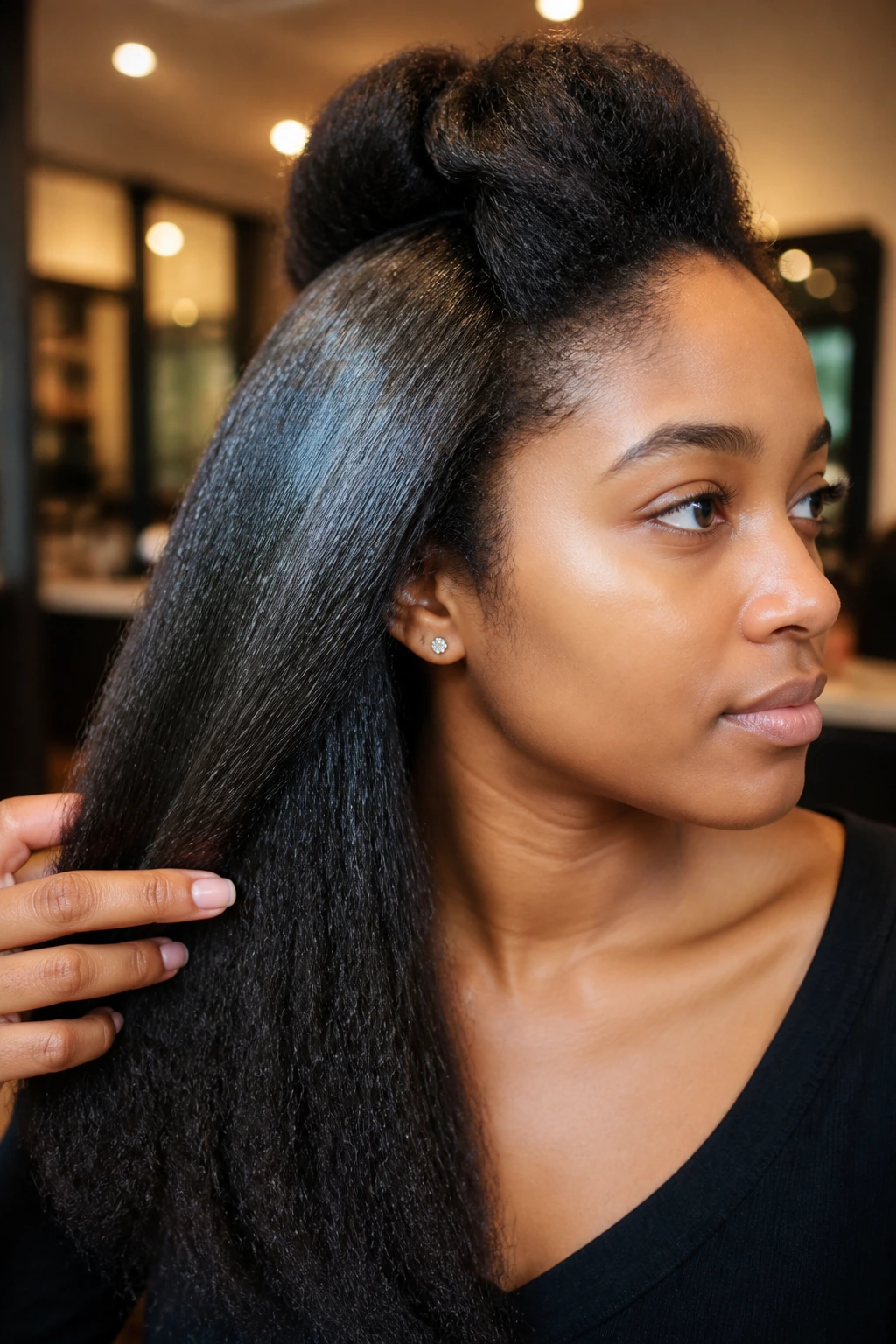
Applying heat to natural hair changes its temporary hydrogen bonds, allowing the hair to stretch. However, if the water molecules inside the cortex heat up too rapidly, they can boil and expand, causing tiny fractures in the hair shaft. This structural damage is irreversible and leads to a loss of elasticity, meaning your curls will not bounce back after wash day.
A high-quality heat protectant acts as a physical shield, slowing down the heat transfer from the dryer to the hair fibers. Look for formulas containing lightweight silicones that coat the hair without weighing it down.
Silicones vs. Natural Oils as Thermal Barriers
While natural oils like argan, jojoba, and grapeseed are excellent for sealing in moisture on a daily basis, they do not offer adequate thermal protection on their own. Oils can heat up to very high temperatures, essentially frying the hair if used incorrectly during a blowout.
Instead, rely on scientifically formulated heat protectants that use water-soluble silicones. These ingredients distribute heat evenly across the hair strand, allowing the hair to stretch safely without heat damage. Once the hair is completely dry, you can apply a tiny drop of natural oil to add shine and softness.
1. The Classic Silk Roller-Set Blowout with Blunt Bangs
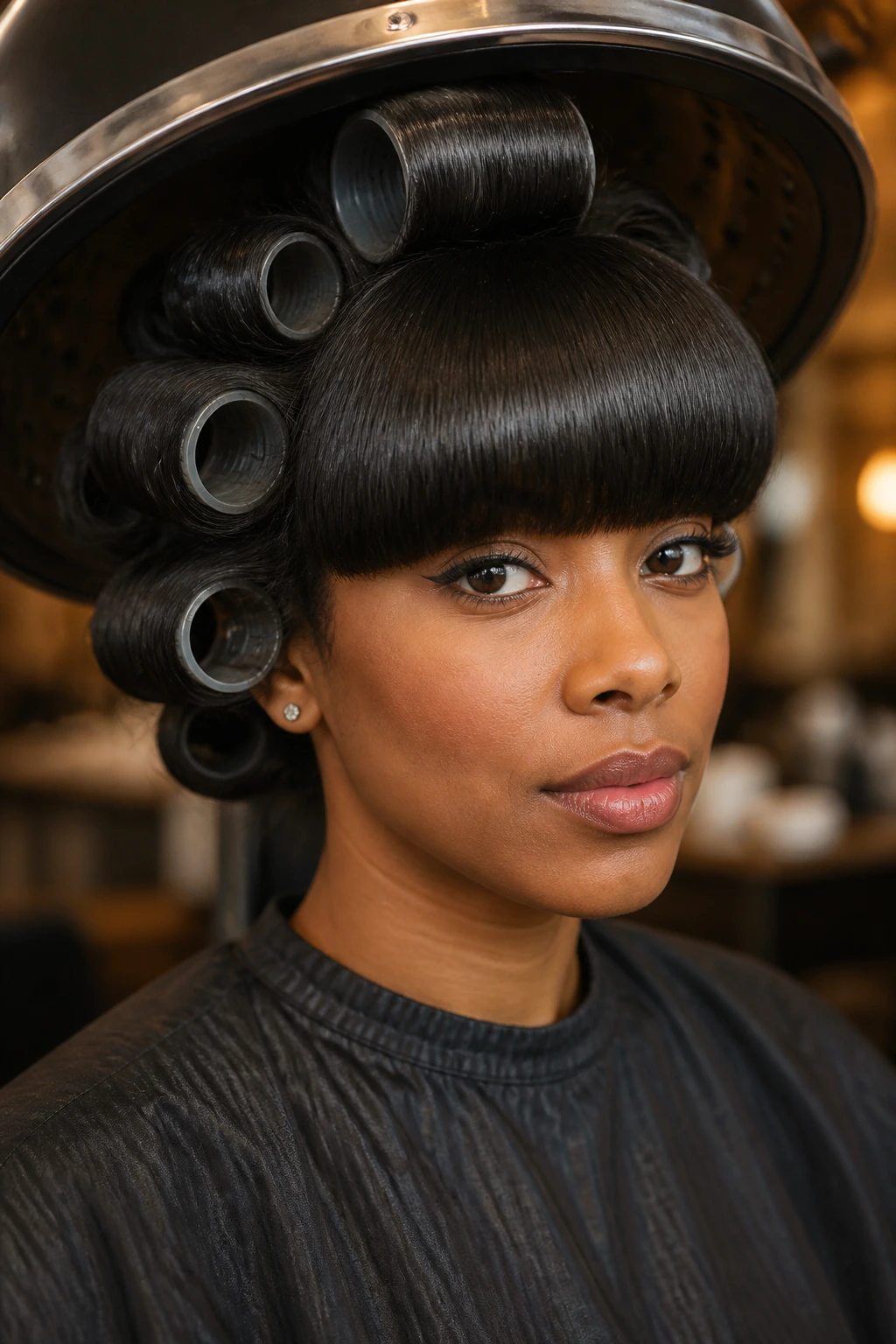
This style represents the peak of traditional Dominican blowout techniques, yielding a smooth finish with rounded, bouncy ends.
How the Roller Set Builds Lasting Volume
By setting wet hair on large rollers first, you stretch the roots and smooth the mid-lengths under a hood dryer before any direct heat is applied. This dramatically reduces the amount of direct blow-dryer tension needed, preserving the hair’s natural elasticity.
Quick Style Facts
- Roller Size: Large 2.5-inch magnetic or mesh rollers work best for shoulder-length hair.
- Drying Time: Expect to sit under a hood dryer for 45 to 60 minutes before finishing with a hand dryer.
- Ideal Hair Density: Medium to high density benefit most from this structured approach.
- Maintenance Level: High; this style requires nightly pin-curling to keep the volume intact.
Pro tip: Wrap your blunt bangs around a single medium-sized roller away from your face to give them a soft, vintage swoop rather than a stiff, flat-ironed appearance.
2. The Shaggy 70s Layers with Wispy Curtain Bangs
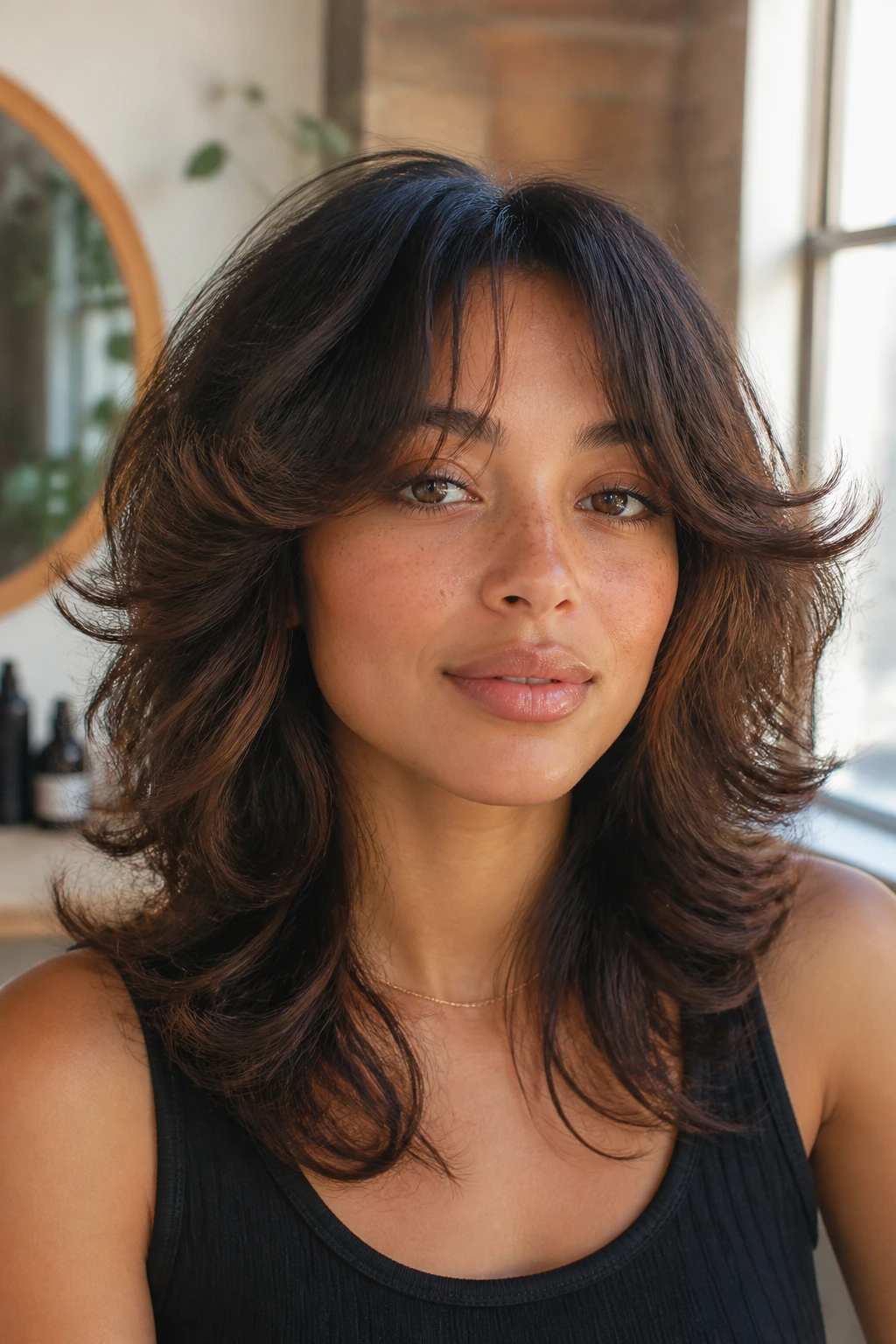
Curtain bangs are incredibly flattering on stretched natural hair because they frame the eyes while blending into textured layers.
This cut embraces a shaggy, heavily layered silhouette that prevents the blowout from looking like a solid, heavy triangle. Instead, the hair has a beautiful, shaggy movement that looks fantastic when blown out with a round brush. The curtain bangs split down the middle, curving outward to highlight the cheekbones.
To style this look at home, focus on pulling the bangs forward and twisting them outward with a ceramic round brush. The ceramic barrel retains heat, helping to lock in the outward-facing curl.
3. The Voluminous 90s Supermodel Blowout with Swoop Bangs
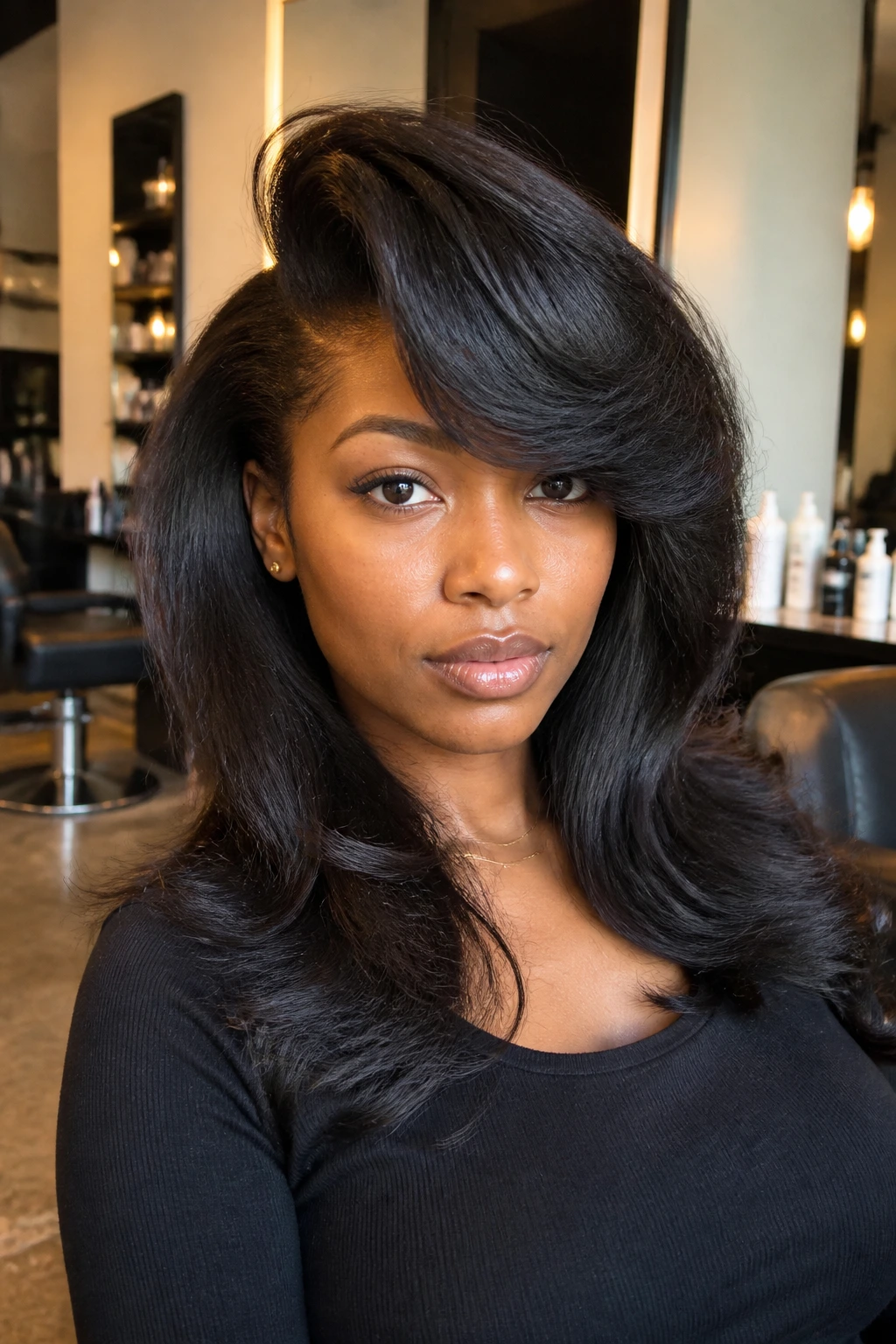
How do you achieve that bouncy, dramatic lift at the roots without causing immediate frizz?
The answer lies in using a volumizing mousse at the roots of your damp hair, followed by a tension blow-dry with a large round brush. The swoop bang is a heavy, deep side part that cascades over the forehead, mimicking the iconic hairstyles seen on runways decades ago.
Setting the Swoop with Velvet Rollers
Once you have blown the front section dry, immediately wrap the swoop bang around a large velvet roller, securing it with a duckbill clip. Let the hair cool completely on the roller while you finish styling the rest of your hair. When you remove the roller, the bangs will have a gorgeous, sweeping lift that stays off your face.
4. The Textured French Bob with Micro Baby Bangs
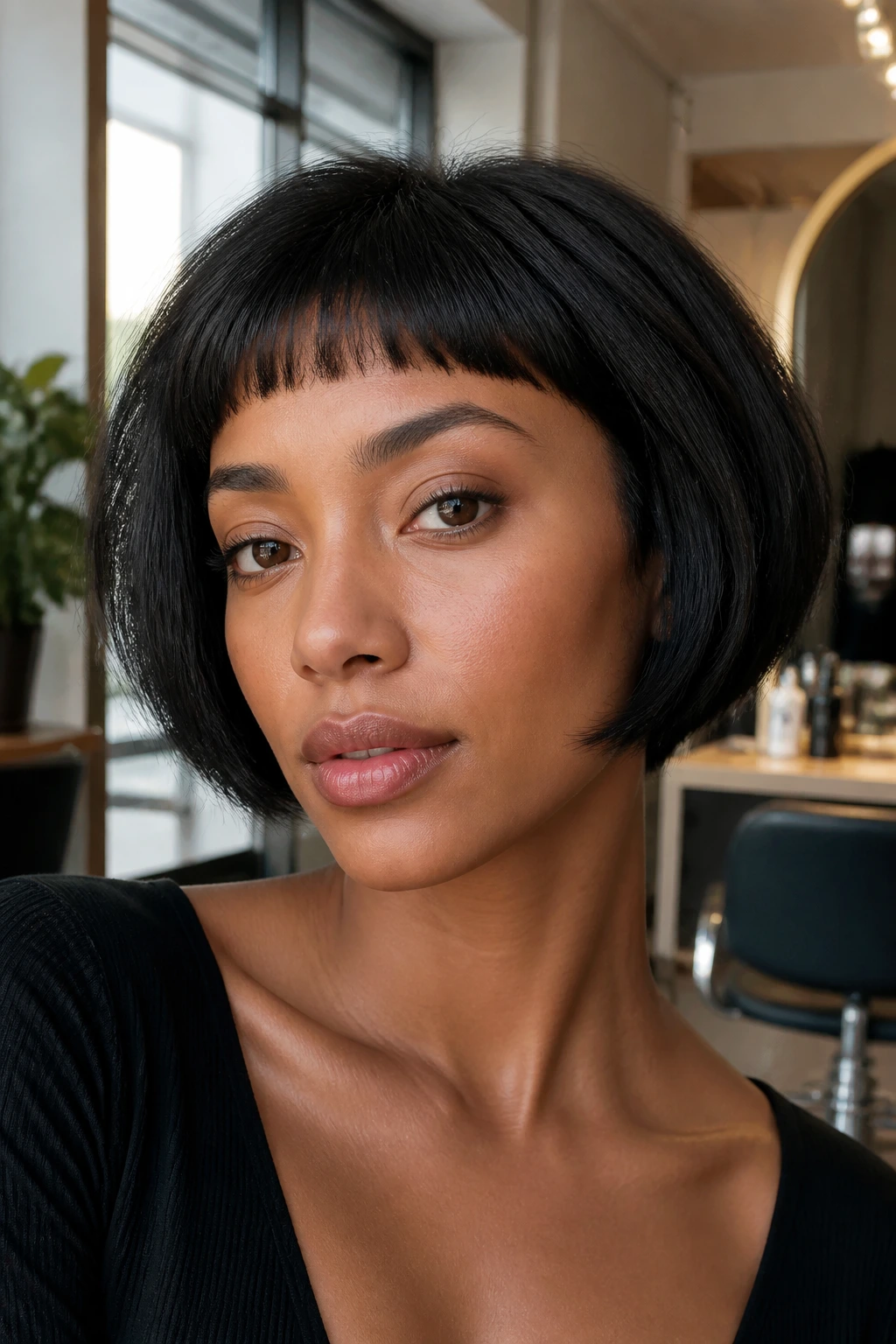
Imagine a jaw-grazing bob that swings when you walk, paired with a tiny fringe that sits an inch above your eyebrows.
Micro baby bangs require precise tension drying because their short length makes them prone to sticking straight up if they are allowed to air-dry even slightly. You must blow-dry the fringe area first, while the hair is soaking wet, to train the follicles to lie flat against the forehead.
- Best Face Shapes: Oval, round, and heart-shaped faces.
- Recommended Tool: A mini 0.5-inch flat iron is helpful for smoothing the roots of very short bangs.
- Product Choice: A feather-light anti-humidity serum prevents the micro-fringe from puffing up.
This look is striking on thick Type 4 hair because the natural density of the hair supports the structured, geometric shape of the bob.
5. The Fluffy Afro-Blowout with Coily Fringe
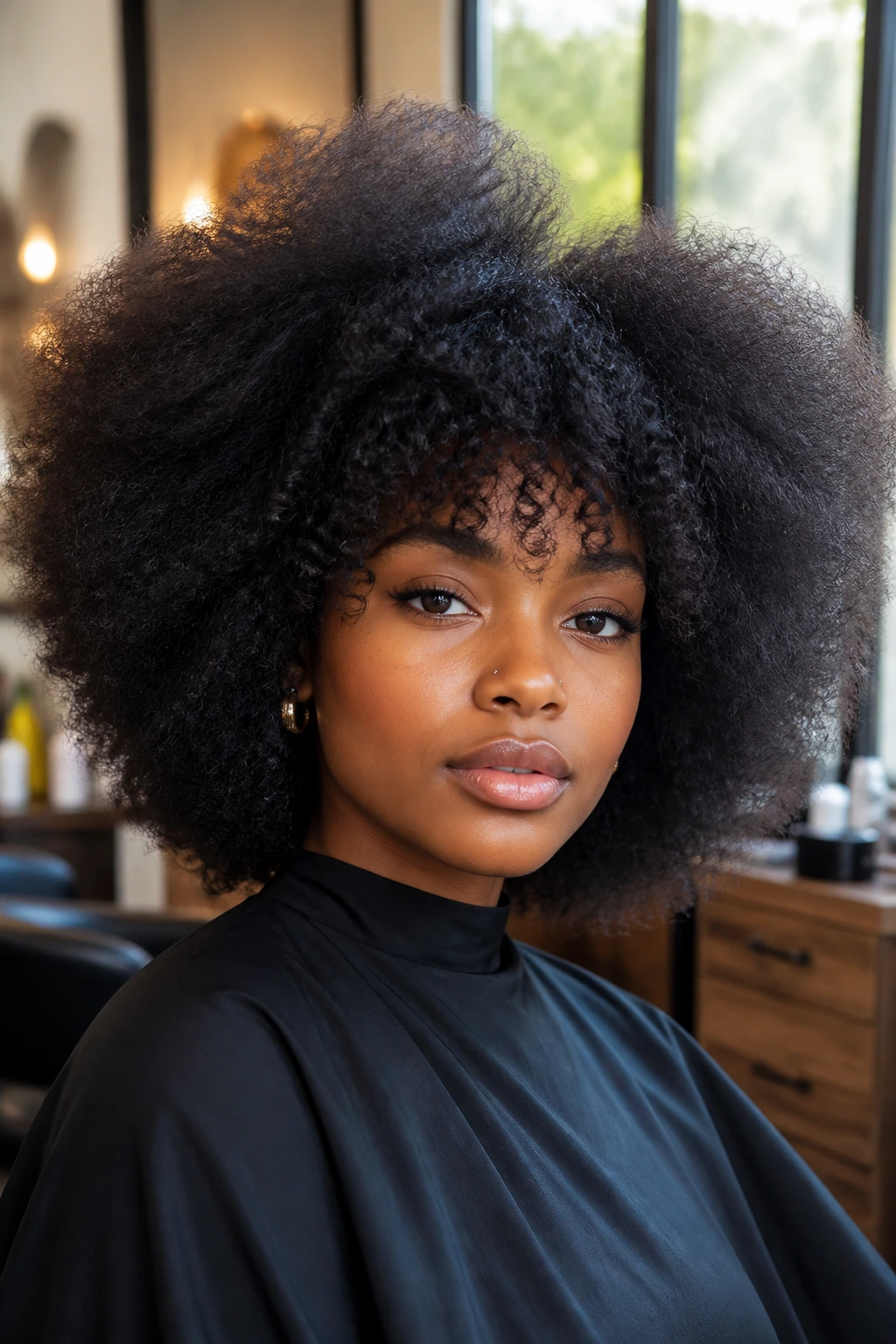
This style does not aim for a straight, silky finish. Instead, it celebrates the beautiful, pillowy texture of partially stretched natural hair, making it a wonderful option for those who want maximum volume.
The hair is blown out using a paddle brush or a blow dryer with a pik attachment, stretching the coils to about 70% of their length. This creates a massive, cloud-like shape with plenty of density and texture.
Keep the bangs coily or curly by avoiding direct blow-drying in the front. Instead, apply a curl-defining cream to the fringe area and let it air-dry or use a diffuser, creating a striking contrast between the fluffy blowout and the defined coils framing your face.
Use a water-based leave-in conditioner before blow-drying to keep the hair hydrated and soft. Avoid heavy pomades or greases, which will weigh down the hair and prevent it from achieving that airy, touchable fluff.
This style thrives on a bit of natural texture, making it one of the most low-maintenance blowout options for active individuals.
6. The Sleek Lob with Chandelier Bangs
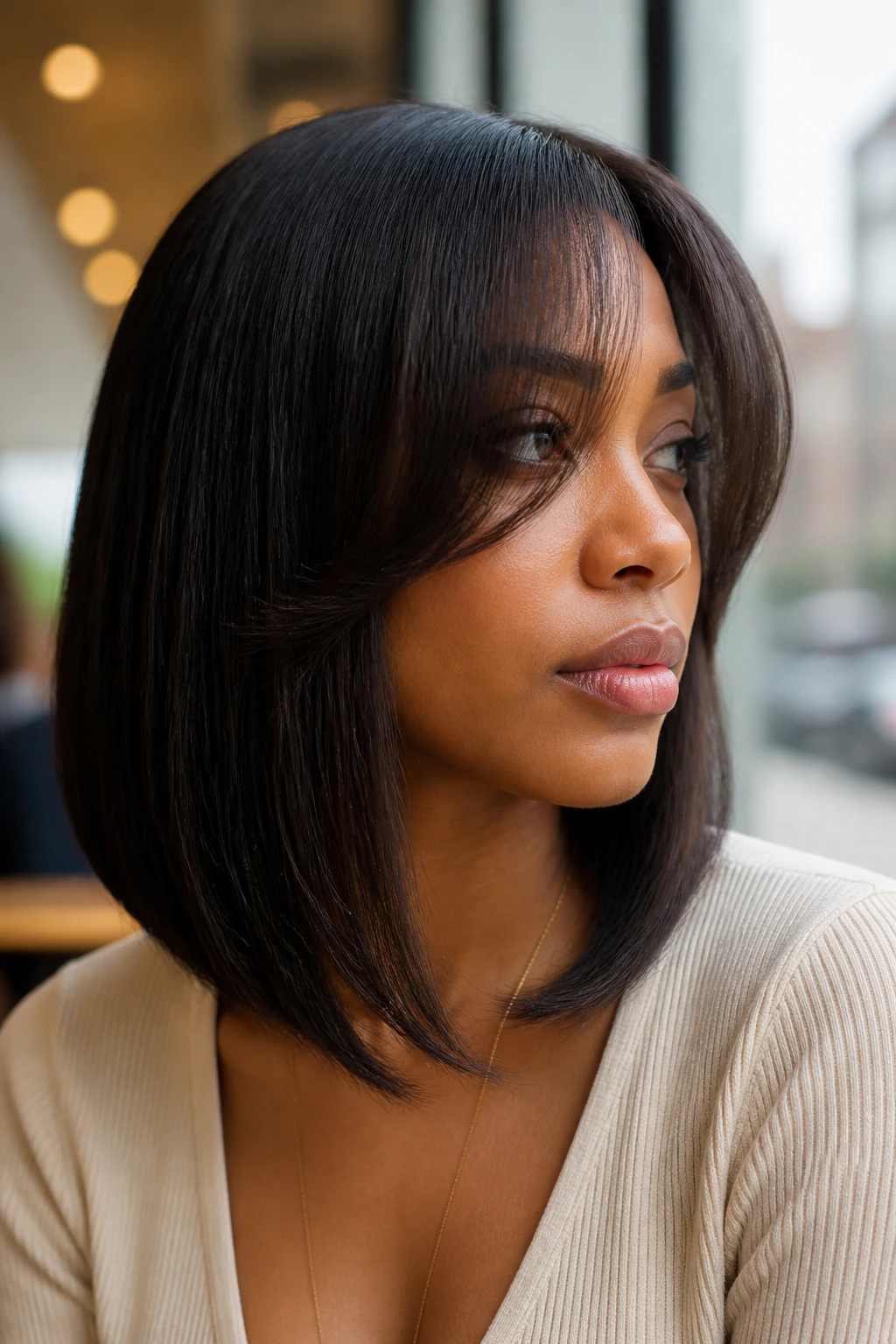
Unlike traditional curtain bangs that sweep to the side, chandelier bangs feature varying lengths that drape down the sides of the face, resembling the tiers of a crystal fixture.
The blowout is styled sleekly, utilizing a paddle brush followed by a very light pass with a flat iron on a low heat setting. The chandelier layers are cut into the hair dry, allowing the stylist to see exactly where the pieces fall around the eyes, cheekbones, and jawline.
This look is perfect for those with longer natural hair who want to experiment with layers without losing their overall length. The layered fringe adds movement to the classic long bob (lob) shape.
Use a silk press serum with built-in humidity blockers to protect the middle and ends of the chandelier layers from reverting when you go outside.
7. The Feathered Farrah Fawcett Blowout with Butterfly Bangs
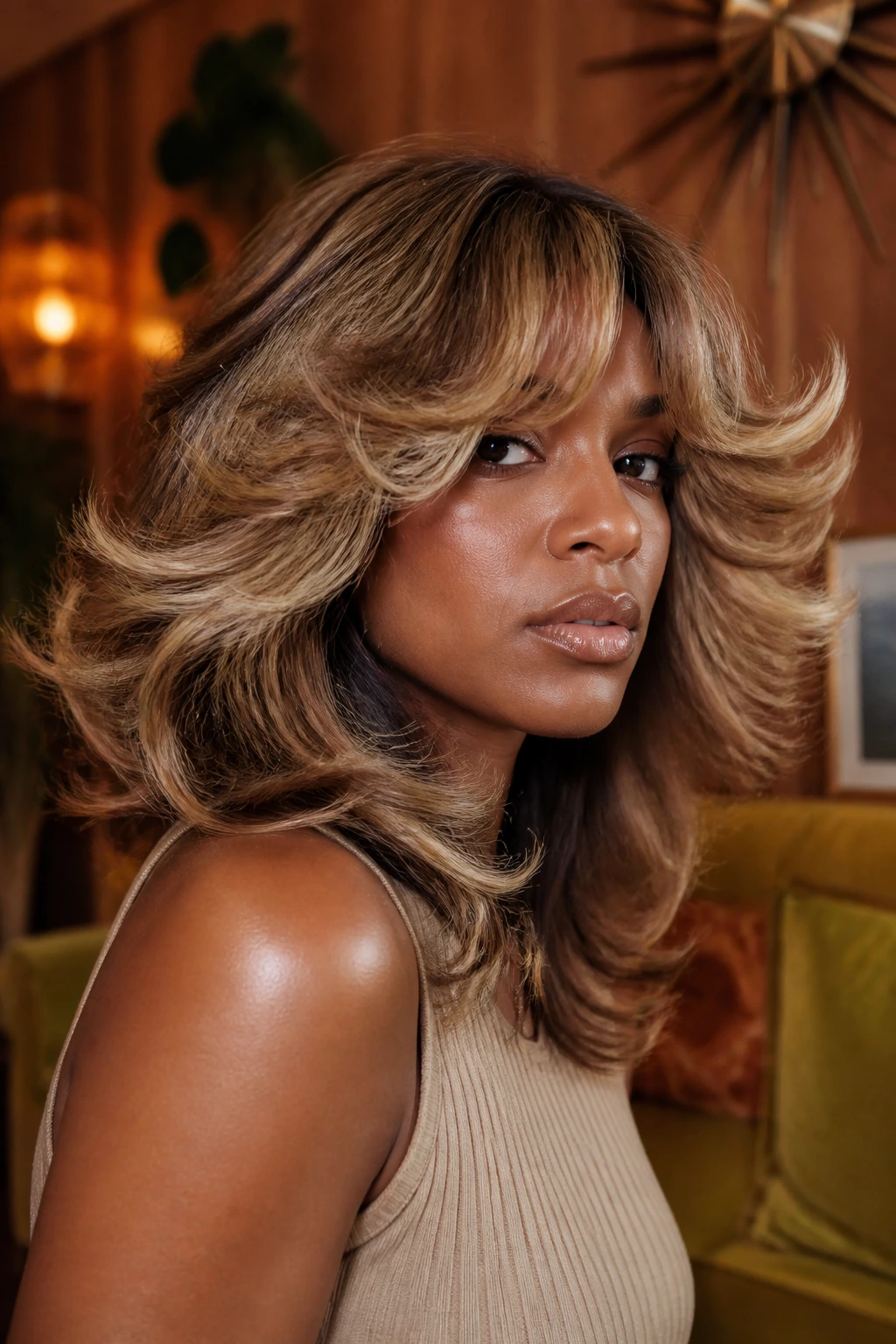
Bringing back vintage glamour, this blowout uses flicked-back layers to create a wind-swept, winged shape that frames the face beautifully.
Mastering the Outward Flip
To achieve this feathered look, you must blow-dry the hair in horizontal sections, rolling the brush away from your face. Once dry, pin each section into a loose curl and allow it to cool completely before brushing it out.
Quick Style Facts
- Dryer Setting: Medium heat, high speed to prevent heat damage while setting the shape.
- Brush Type: A 2-inch boar-bristle round brush provides the tension needed for a smooth finish.
- Cooling Time: Let the pinned curls sit for 10 to 15 minutes to ensure the flip lasts.
- Hair Type: Best suited for medium-to-long natural hair with light-to-medium density.
Pro tip: Direct the airflow of your dryer from the front of your face backward to keep the wings sweeping away cleanly.
8. The Tapered Pixie Cut with Side-Swept Blowout Bangs
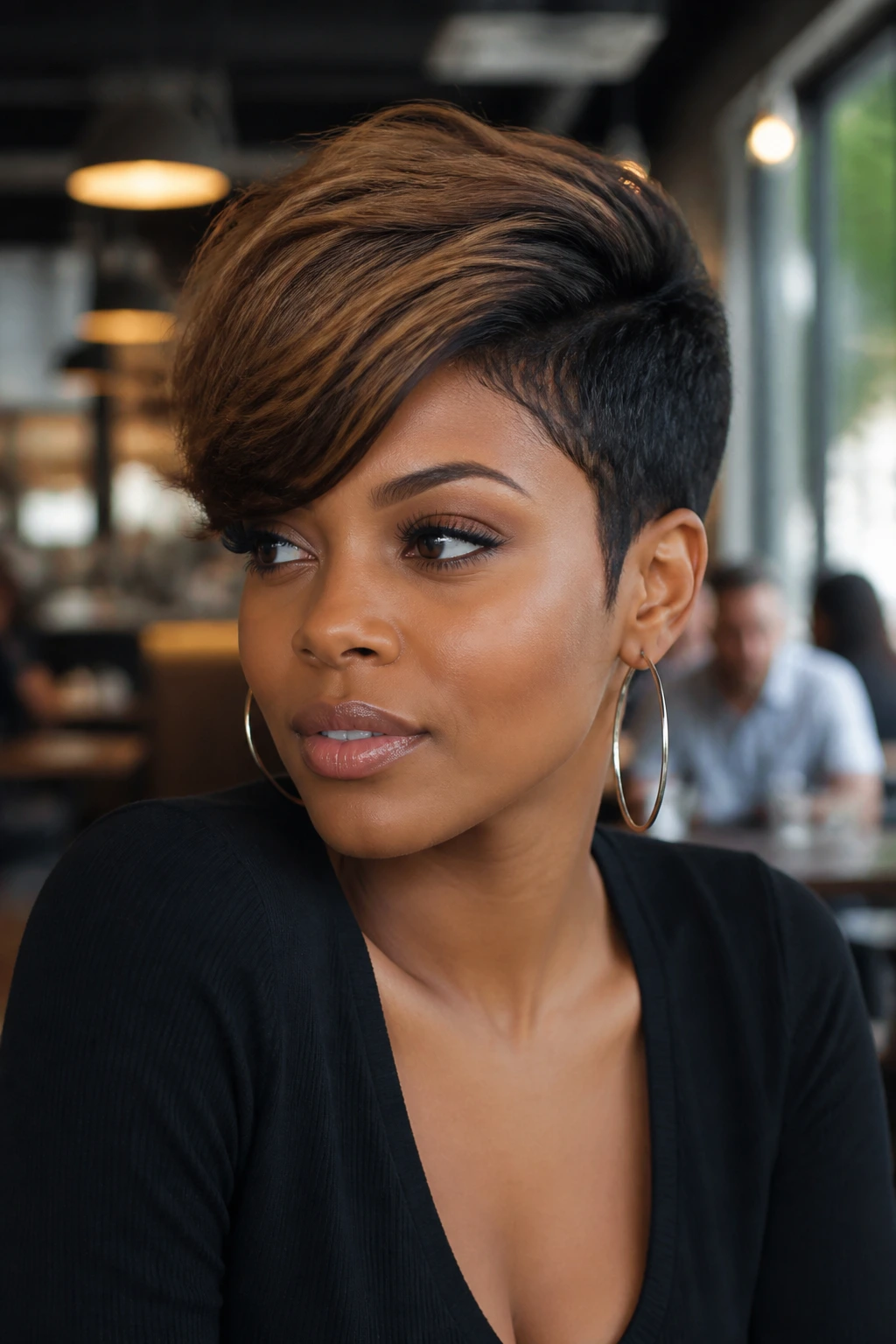
A short pixie cut on natural hair does not limit your styling options; in fact, it highlights your facial features beautifully.
The back and sides of the hair are kept short and tapered, while the crown contains longer pieces that are blown out into a dramatic, side-swept bang. This creates a sophisticated, asymmetrical silhouette that is easy to maintain.
Apply a foaming mousse to the short sides to lay them down sleekly, while using a small round brush on the crown to get maximum lift and sweep for the bangs.
9. The Half-Up, Half-Down Blowout with Wispy Eye-Grazing Fringe
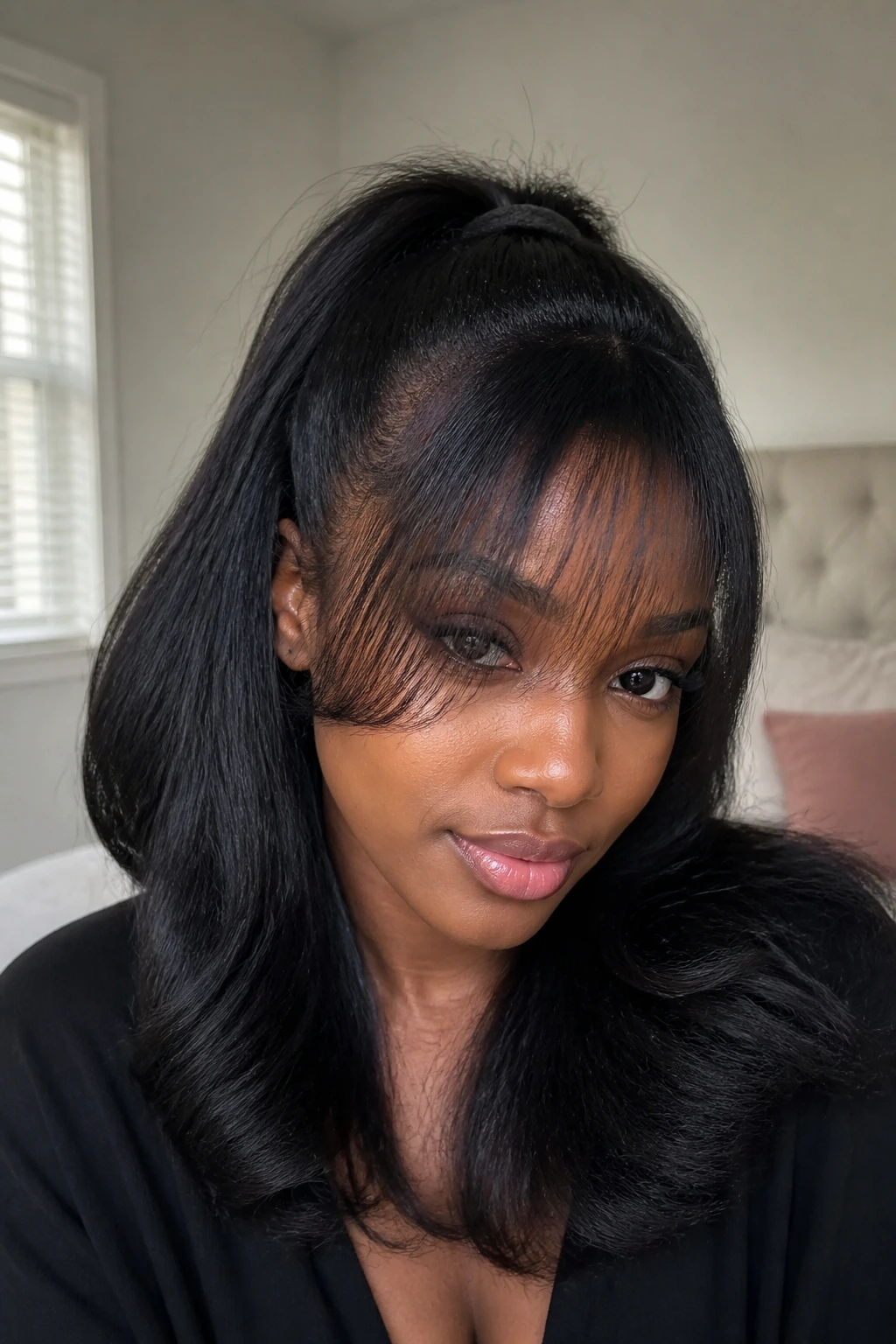
How can you wear a blowout on humid days without risking total shrinkage at your crown?
The half-up, half-down style is a smart solution. Securing the top half into a sleek ponytail or topknot keeps the hair away from your face and prevents sweat from reverting the roots, while the bottom half flows freely.
Prepping the Wispy Fringe
Keep the bangs thin and wispy by sectioning only a small, 1-inch triangle at the hairline. Blow-dry them straight down using a comb, then lightly piece them out with a drop of hair oil.
10. The Bouncy Italian Bob with Bottleneck Bangs
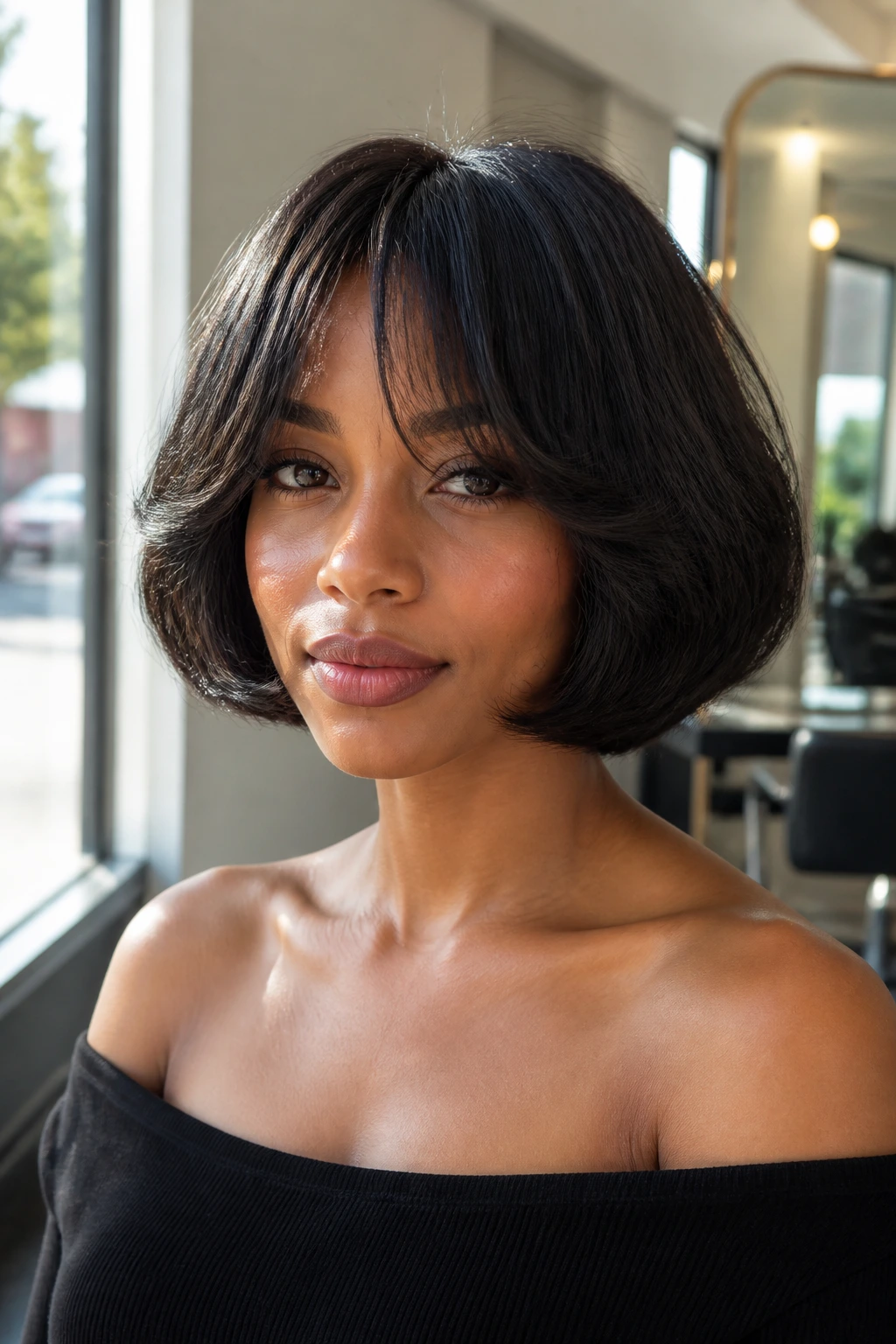
Picture a chic, voluminous bob that hits right at the neck, paired with bangs that are narrow at the top and flare out around the eyes.
Bottleneck bangs mimic the shape of a classic bottle—narrow at the forehead, curving out around the cheekbones, and blending into the bob. They are blown dry with a small round brush rolled forward, then pushed gently to the sides.
- Face Shape Compatibility: Outstanding for square and heart-shaped faces, as it softens the jawline.
- Key Technique: Wrapping the hair around the brush and letting it cool before releasing.
- Product Recommendation: A root-lifting spray applied to damp hair before styling.
This bob relies on heavy, blunt weight lines at the bottom, which prevents the blowout from looking thin or stringy.
11. The Long Layers with Piece-y See-Through Bangs
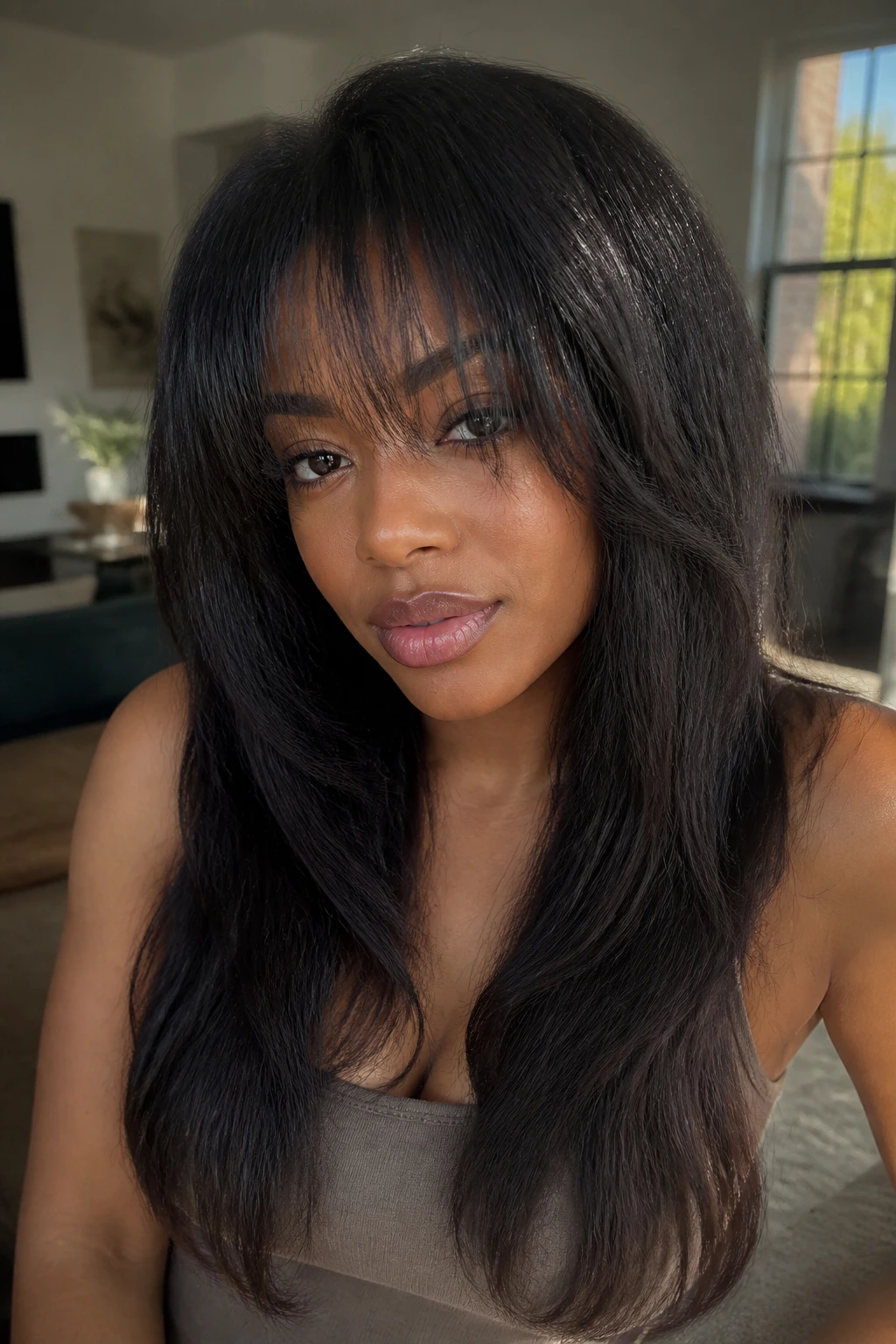
This look is perfect for long natural hair that has been stretched to its full length. The piece-y, see-through bangs provide a modern, effortless vibe that doesn’t feel heavy.
To get the see-through effect, you must use a very sparse section of hair from the crown. If you pull too much hair forward, the bangs will look blocky. Use a fine-tooth comb and a blow dryer on low speed to gently stretch these strands straight down.
Apply a tiny amount of lightweight wax or pomade to your fingertips and pinch the ends of the bangs. This groups the hairs together slightly, creating that sought-after separation.
Keep dry shampoo on hand to spray on the underside of your see-through bangs, as they easily absorb forehead oils and can fall flat quickly.
12. The Textured Wolf Cut Blowout with Choppy Bangs
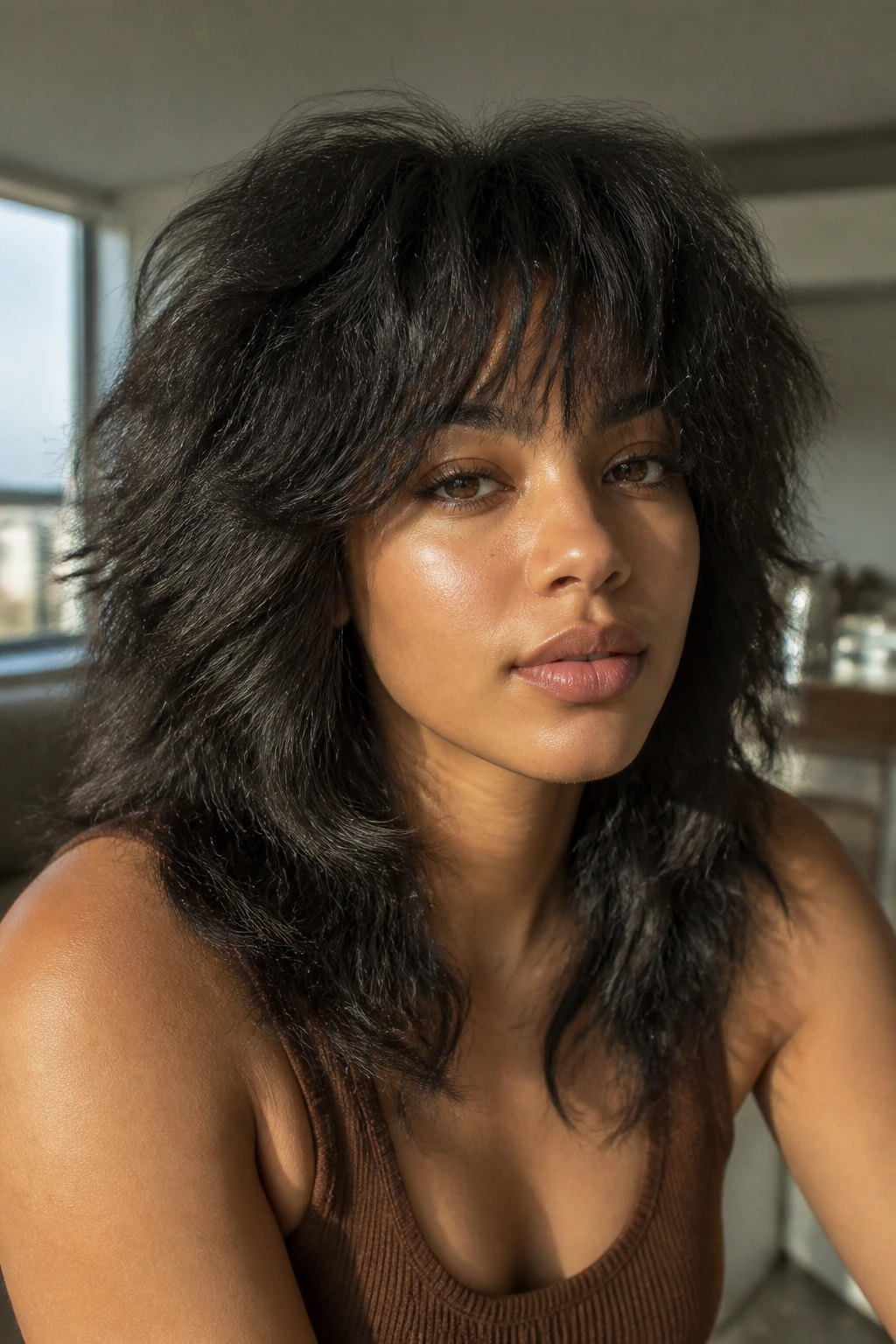
The wolf cut features short, layers around the crown that blend down into longer, thinner layers in the back.
This style embraces the natural texture of blow-dried hair rather than seeking a glassy, flat-ironed finish. The choppy bangs are dried using your fingers instead of a brush to encourage a natural, lived-in shape.
This cut is best for Type 3 and 4 hair with high density, as the hair’s natural volume keeps the crown layers looking full and wild.
Apply a lightweight volumizing mousse to the damp hair before blow-drying to give the choppy layers texture and hold.
13. The Pineapple Blowout with Cascading Front Fringe
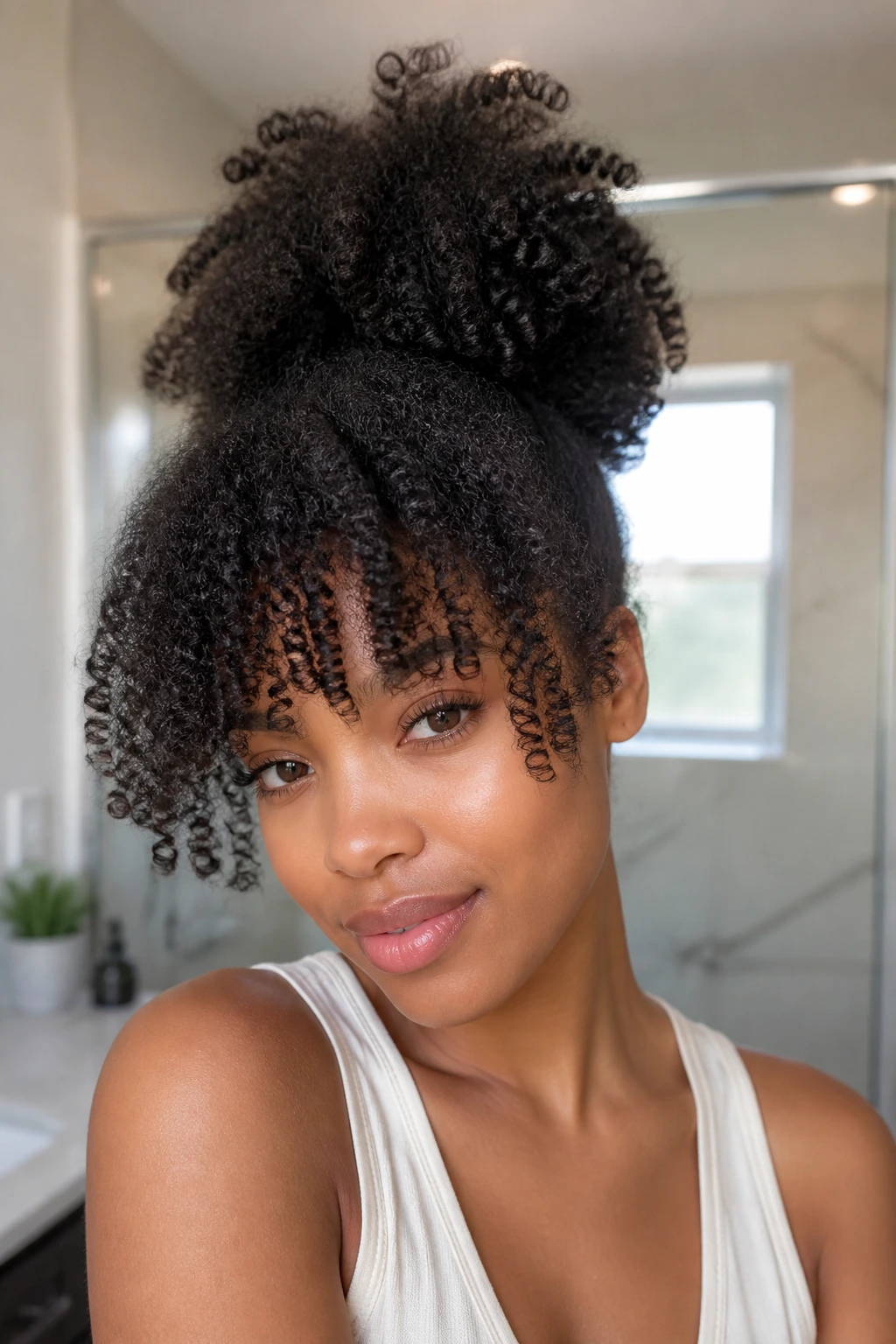
This is a gorgeous styling option for day-three or day-four blowouts that are starting to lose their sleekness at the roots.
Gathering the Hair Safely
By pulling the hair forward into a loose ponytail at the front of the head, you protect the length of the blowout while letting the ends cascade forward over your forehead, acting as a temporary fringe.
Quick Style Facts
- Band Type: A soft satin scrunchie prevents creasing and breakage at the crown.
- Placement: High on the crown, almost touching the forehead.
- Fringe Maintenance: Use a blow dryer on cool to fluff the cascading ends.
- Best For: Curly and coily textures that hold their shape well over multiple days.
Pro tip: Pull a few curly tendrils down near your ears to balance the cascading weight of the pineapple fringe.
14. The High-Volume Wand-Assisted Blowout with Curly Bangs
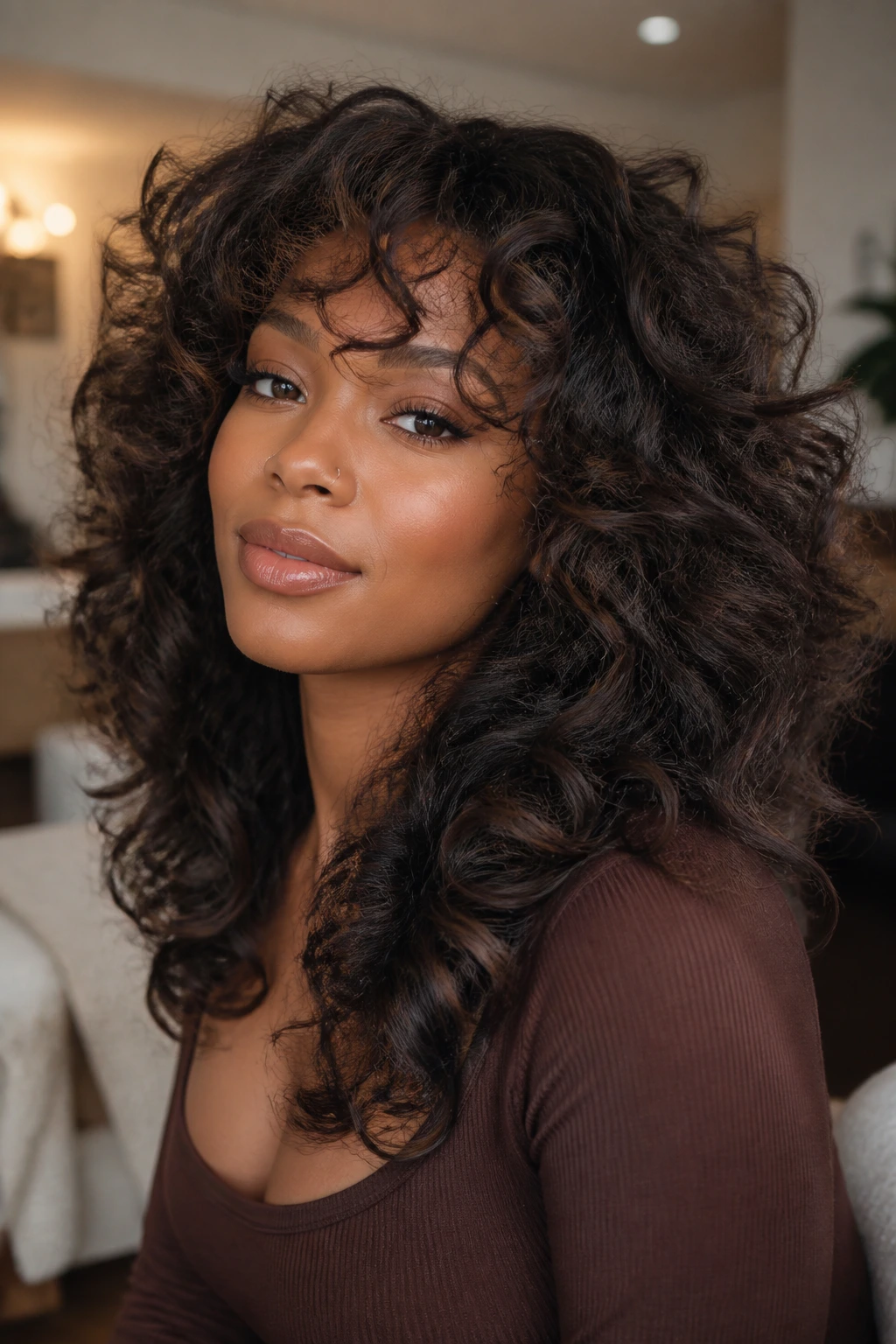
A blowout does not have to mean straight hair; it is often simply the preparation step for massive, bouncy curls that last much longer than standard wash-and-go curls.
After blowing the natural hair out using the tension method, a large-barrel curling wand (1.25 to 1.5 inches) is used to add loose, romantic waves throughout the hair and the bangs. This yields a gorgeous, high-volume look with lots of movement.
Wrap the bangs around the wand for only two to three seconds to avoid over-heating the hair. Finger-comb the curls out immediately to blend them into a soft, cloud-like texture.
15. The Asymmetric Blowout Bob with Deep-Parted Bangs
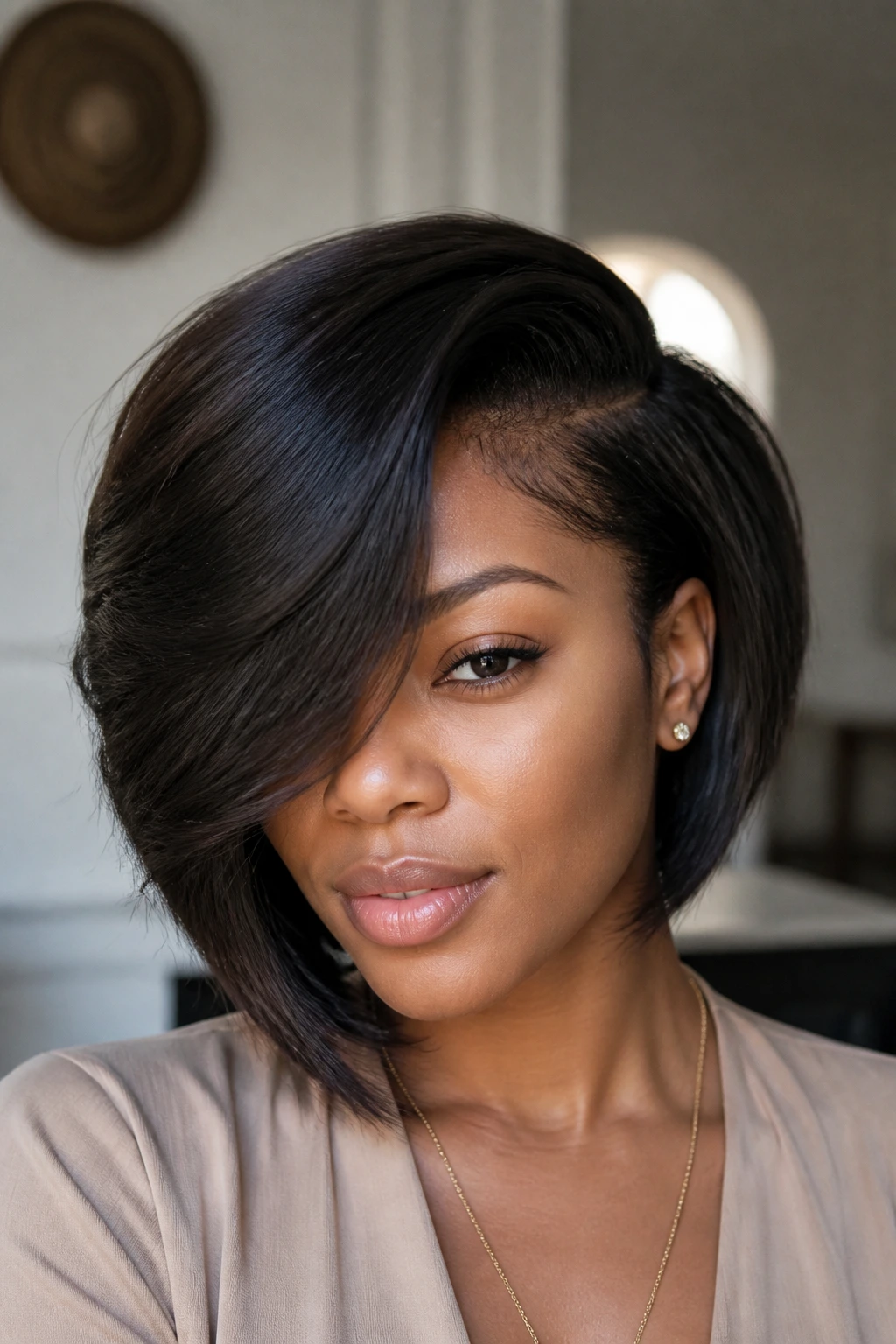
How can you create visual interest in a classic bob without changing your haircut?
Play with asymmetry. By blow-drying the hair with a deep side part, one side drapes much longer than the other, and the bangs sweep across the forehead, blending into the longer side.
Securing the Deep Side Part
Use a small dab of edge control or pomade right at the parting line to keep the deep swoop flat and polished. Blow-dry this section with a styling concentrator nozzle pointed downward.
16. The Blunt-Cut Clavicle Lob with Arched Bangs
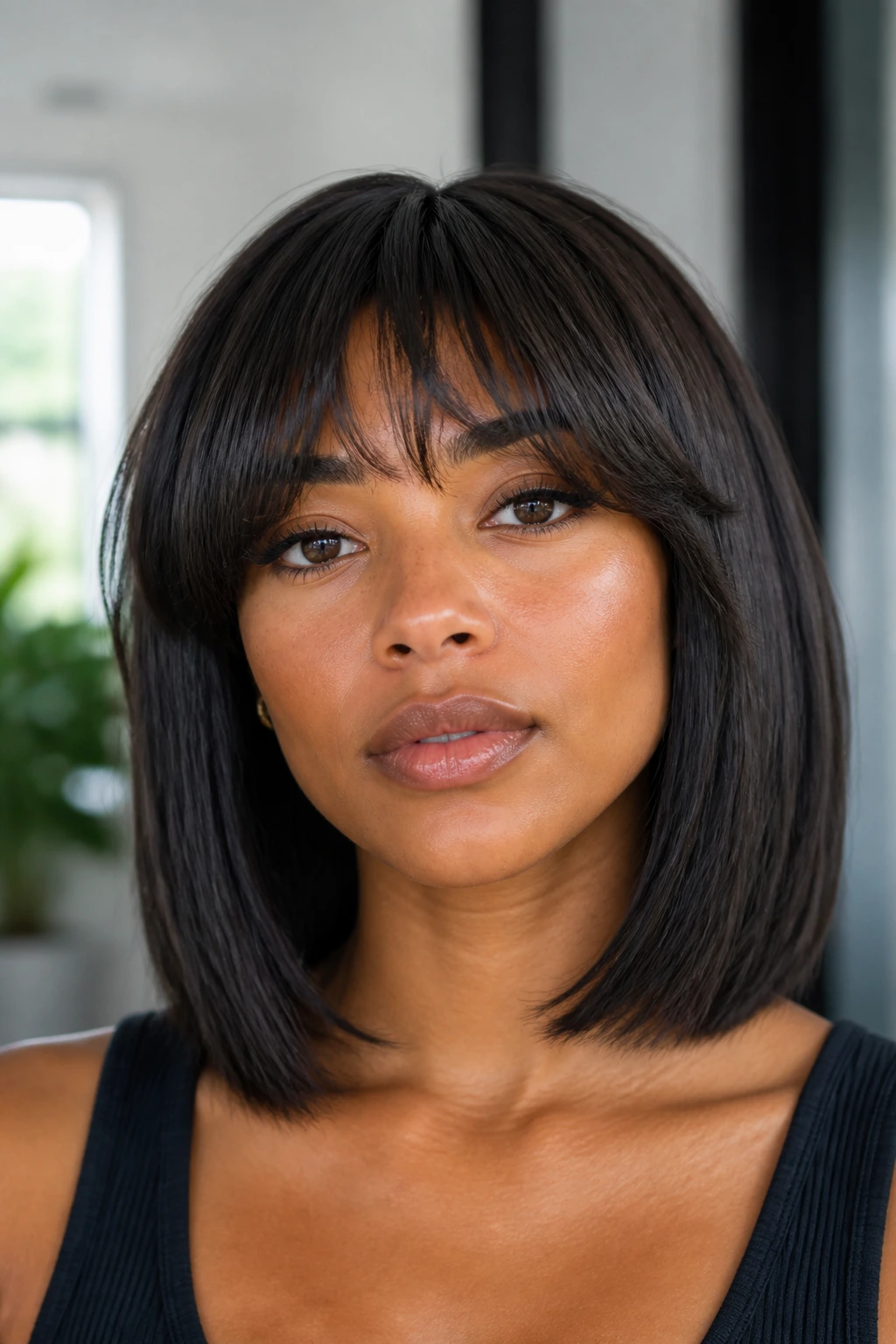
Imagine a clean, blunt lob resting right on your collarbones, framed by arched bangs that curve gently to follow the line of your eyebrows.
Arched bangs are shorter in the middle and get progressively longer toward the temples. This frames the eyes beautifully and blends into the sides of the lob, creating a cohesive, structured look.
- Cutting Tip: Always cut arched bangs when the blowout is dry and flat-ironed to avoid shrinkage surprises.
- Brush Technique: Use a flat paddle brush to sweep the bangs side-to-side while blow-drying (the wrap-dry method).
- Finish: A light gloss spray adds a healthy shine.
The clavicle length is flattering because it elongates the neck while providing enough weight to keep the blowout swinging.
17. The Deconstructed Shag Blowout with Bardot Bangs
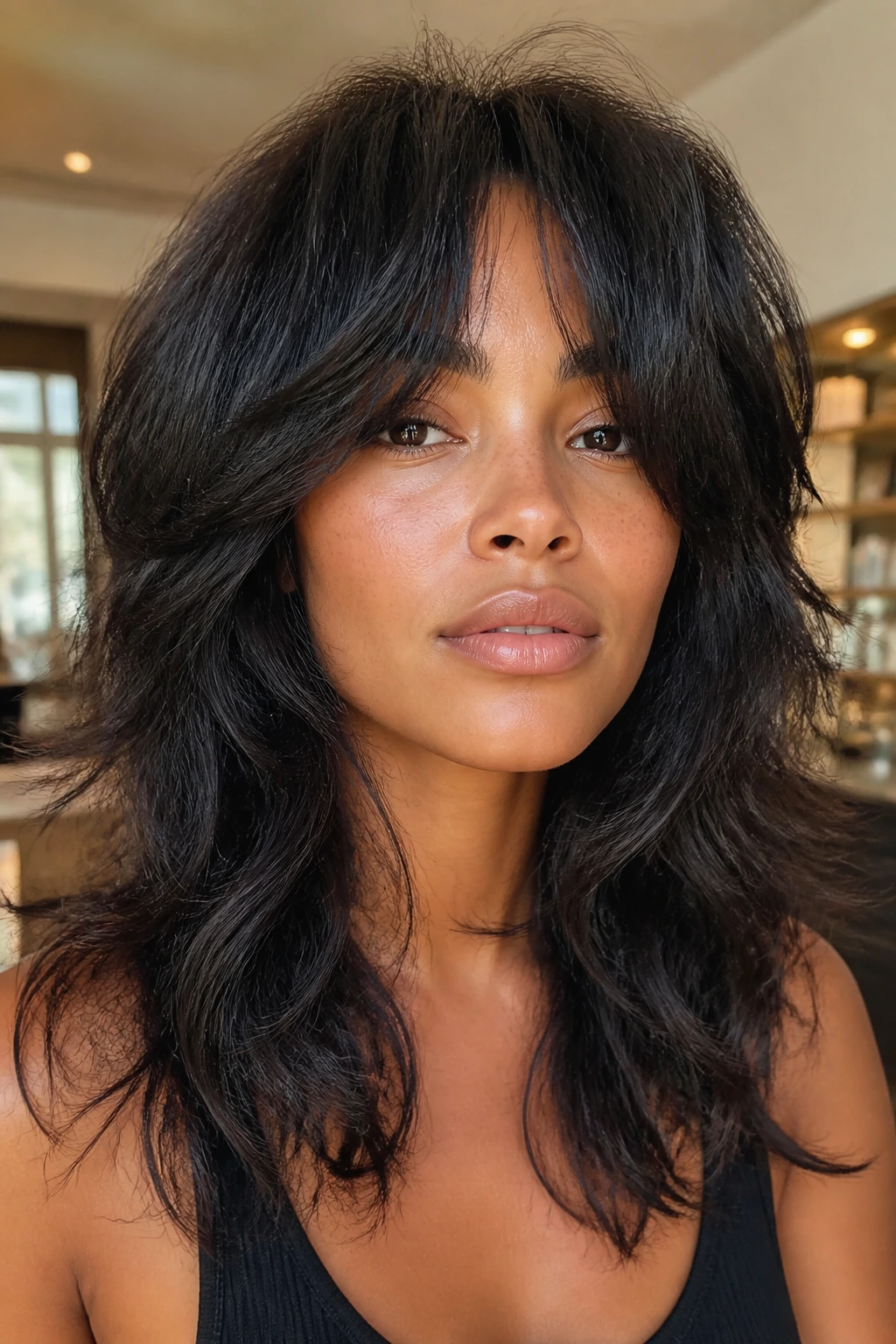
Bardot bangs are characterized by a center part that splits the bangs into two soft curtains. When paired with a deconstructed shag, it creates a retro aesthetic that looks incredible on textured hair.
To style Bardot bangs, blow-dry the entire front section forward first. Once dry, use your fingers to split them down the middle, pushing each half slightly outward. This gives them that lived-in, tousled appearance.
The shag layers should be blown out using a paddle brush, keeping some of the hair’s natural wave. You do not want it too neat; the charm of a deconstructed shag lies in its textured finish.
Avoid using heavy silicones on this style, as they can make the shag layers look stringy rather than piece-y and full of volume.
18. The Ultra-Defined Flexi-Rod Blowout with Spiral Fringe
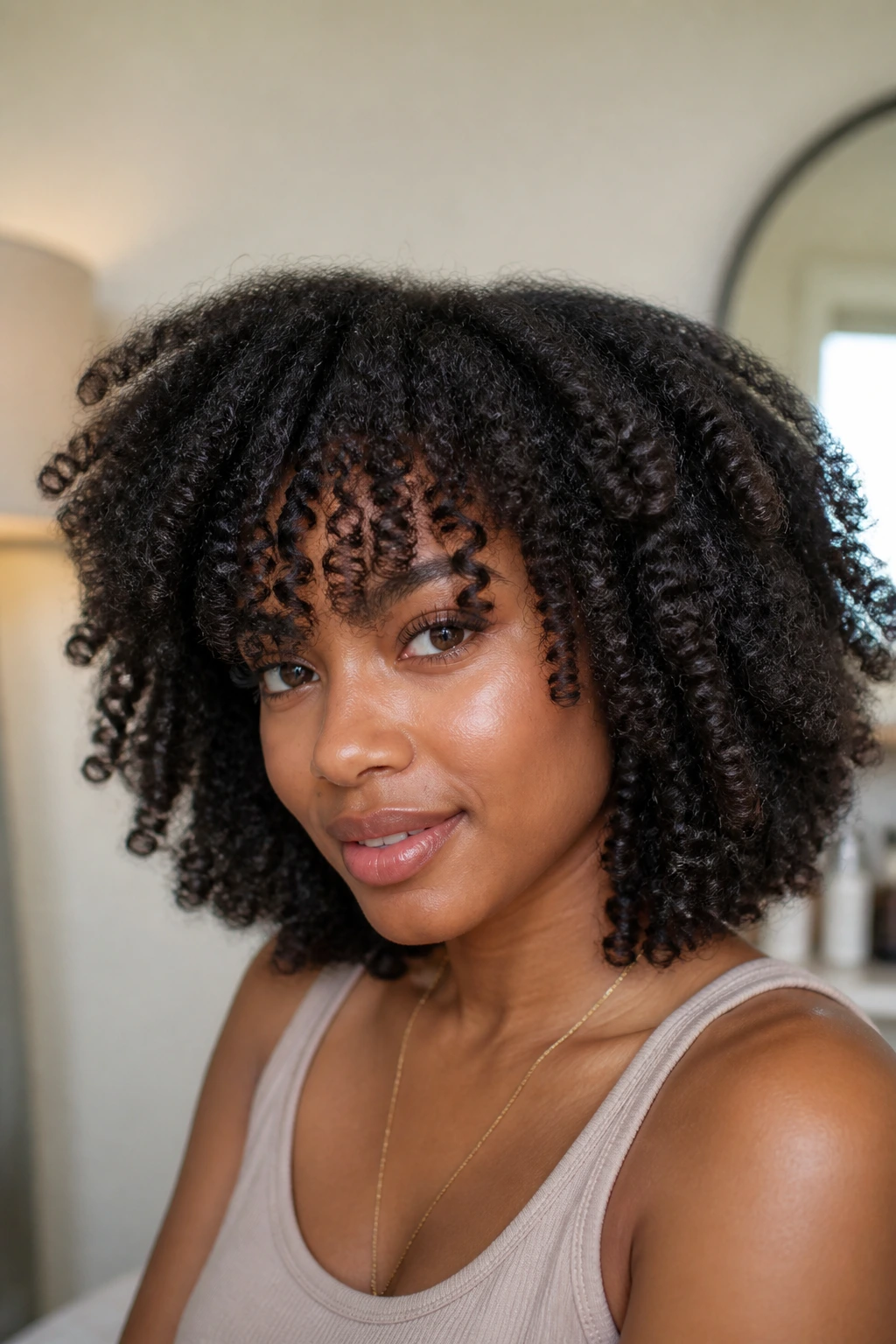
Unlike heat-heavy styling methods, using flexi-rods on a fresh blowout allows you to achieve heatless curls with definition and zero risk of heat damage.
You blow-dry the hair to a stretched state first, then wrap sections around flexi-rods. The bangs are wrapped around smaller rods to create tight, bouncy spirals that frame the face beautifully.
This is best for those with fine natural hair who want the look of a thick, curly blowout without using high heat.
Mist each section very lightly with a setting lotion or water before rolling it onto the flexi-rod to ensure the curl sets overnight.
19. The Sleek High Ponytail Blowout with Thick Face-Framing Bangs
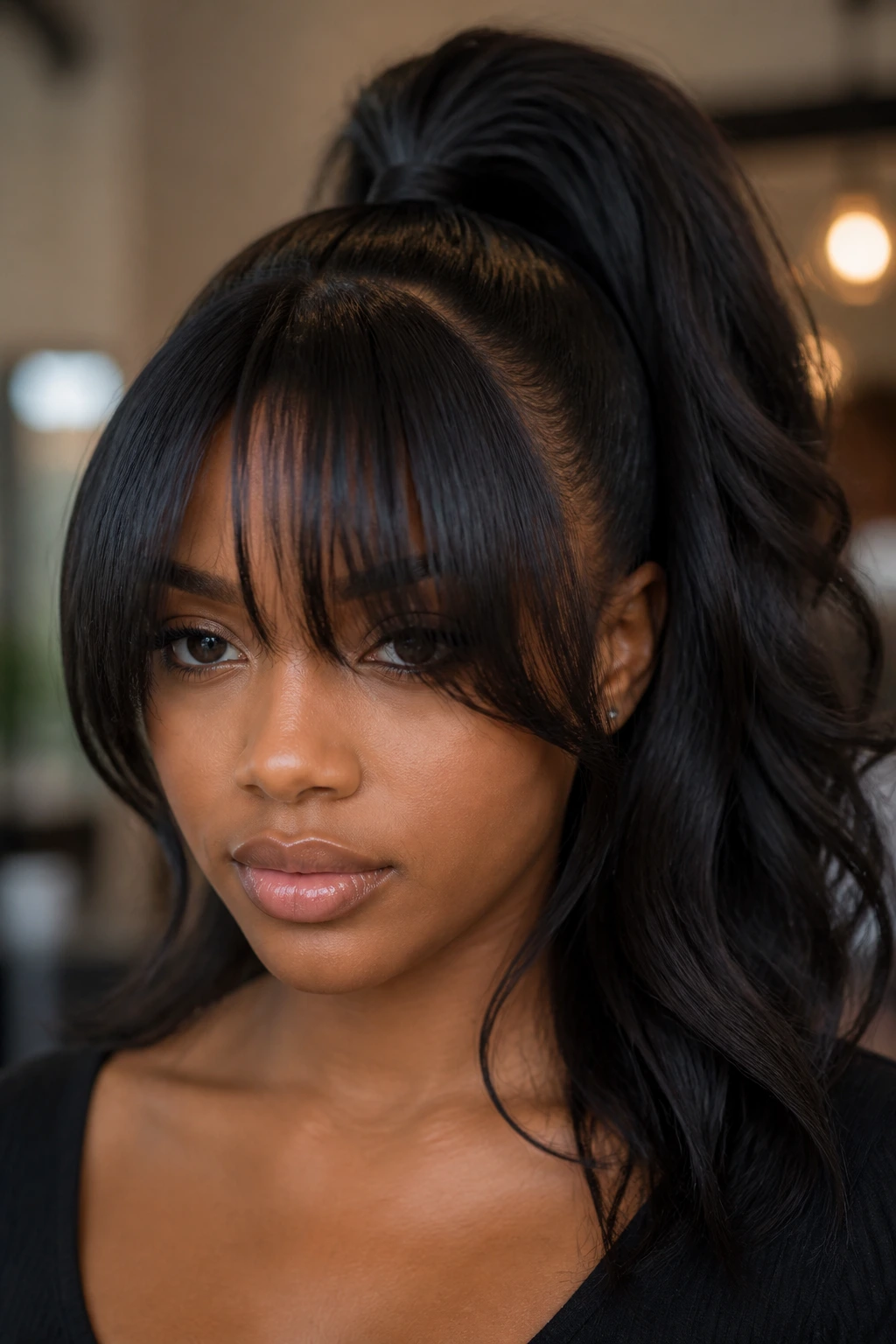
This high-glamour look is perfect for special events or when you want an instantly polished appearance.
Securing the Base and Smoothing the Fringe
The bulk of the hair is smoothed back into a high ponytail, while a thick, structured section of bangs is left out to frame the face. This style keeps the hair off your neck while still showing off your blowout.
Quick Style Facts
- Pony Placement: Right at the crown of the head for maximum height.
- Band: A covered elastic band secures thick hair without pulling.
- Bang Styling: Blow-dry with a medium round brush, pulling them straight down and slightly under.
- Maintenance: Wrap the ponytail in a silk scarf at night to keep it smooth.
Pro tip: Wrap a small section of hair around the base of the ponytail to hide the elastic and elevate the overall look.
20. The Ultra-Short Pixie Blowout with Micro Baby Bangs
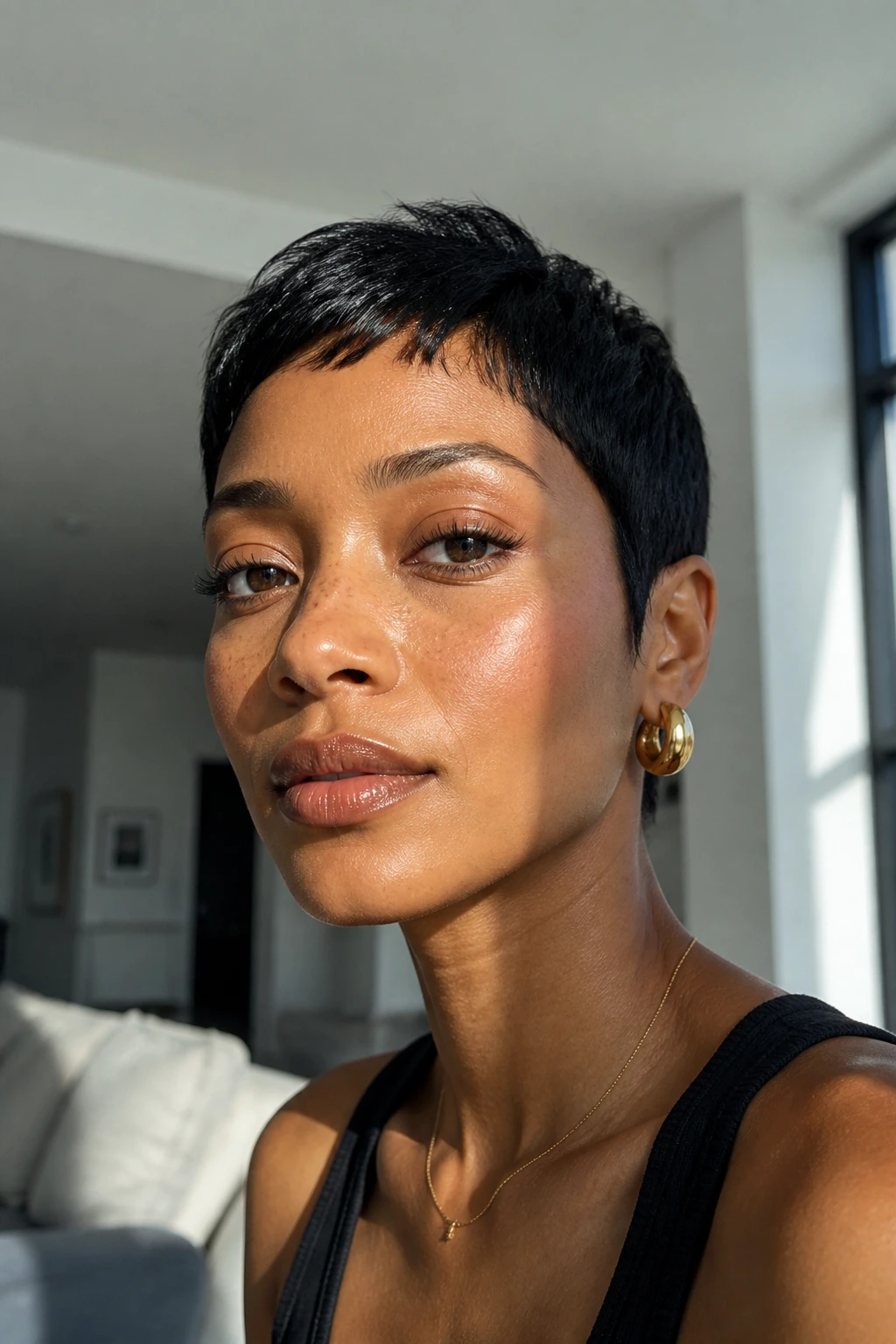
An ultra-short pixie is a bold styling choice for natural hair, offering a high-fashion edge with minimal daily maintenance.
The hair is cropped close at the nape and around the ears, while the top has just enough length to blow-dry forward into tiny baby bangs. This style highlights your cheekbones and jawline beautifully.
Wrap-dry the top section using a small paddle brush, moving the hair from left to right across the forehead. This ensures the short baby bangs lie flat against the forehead without any awkward cowlicks popping up.
Maintaining Your Blowout and Bangs Overnight
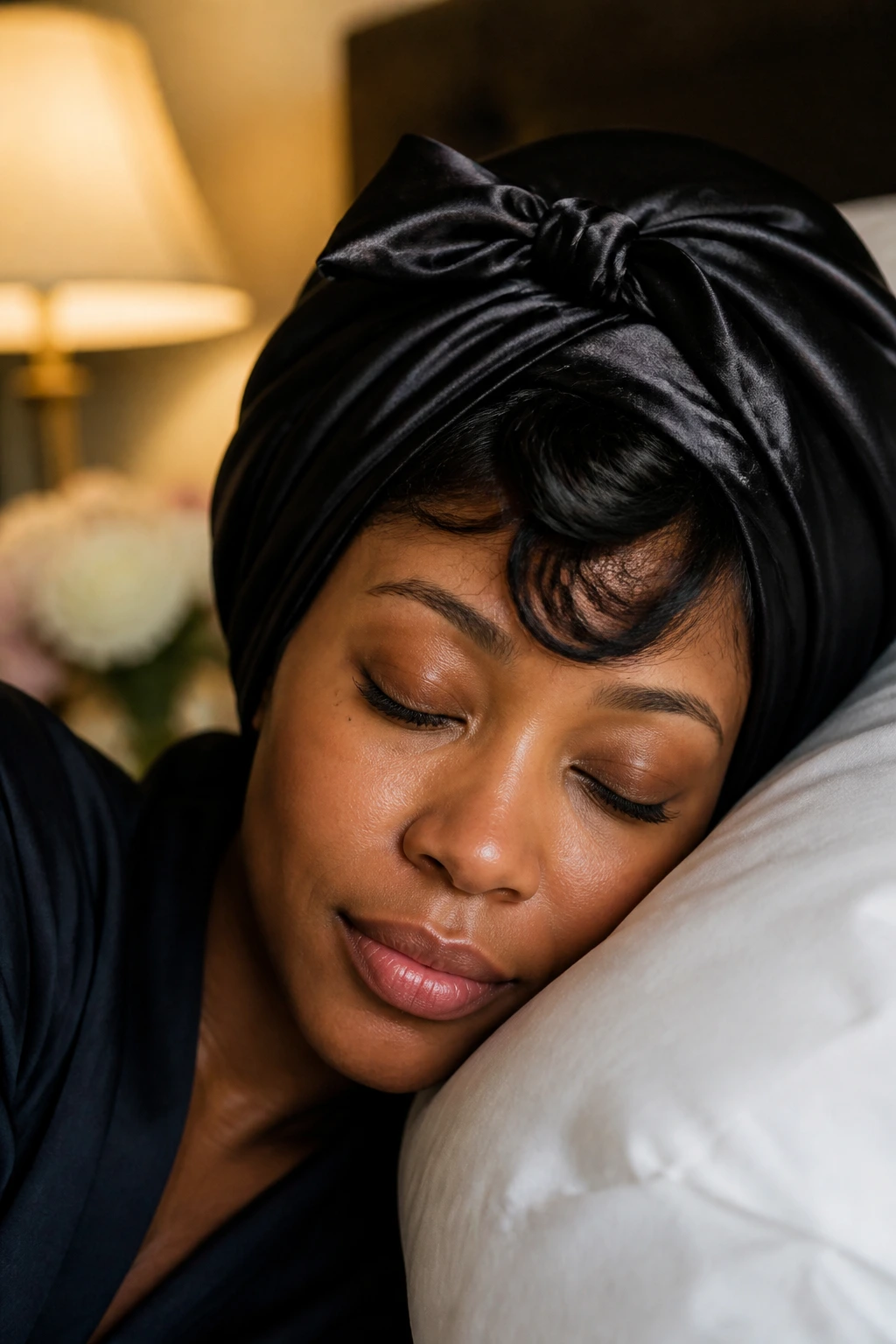
The real challenge of wearing a blowout on natural hair is making it last past the first day. Without a proper evening routine, your smooth strands will quickly absorb moisture from your skin and environment, reverting to their natural curl pattern overnight.
Protecting your hair while you sleep is non-negotiable if you want to get a full week out of your style. The method you choose depends on the specific shape of your blowout and the length of your bangs.
The Silk Wrap Method
For sleek, straight blowouts, the silk wrap—often called a “doobie” or “tubi”—is the absolute best way to preserve your style.
- Wrap the hair smoothly around the circumference of your head in a circular motion, securing it with flat bobby pins as you go.
- Wrap your bangs in the same direction, smoothing them flat against your forehead.
- Once all the hair is wrapped, place a silk or satin scarf tightly over your head to hold the wrap in place.
In the morning, simply brush the hair down, and it will retain its straight, bouncy shape with no creases.
Pin-Curling the Bangs
If your blowout features rounded, bouncy bangs or curtain bangs, wrapping them flat against your head will ruin their shape. Instead, you should pin-curl them.
Take your bangs and wrap them around two fingers to create a hollow loop. Secure this loop flat against your scalp using a single duckbill clip.
Do this for your bangs and any face-framing layers. In the morning, release the clips and gently shake the bangs out; they will have a beautiful, bouncy curl that requires no touch-up heat.
The Satin Bonnet vs. Silk Pillowcase Debate
While a satin bonnet is excellent for keeping your hair contained, it can sometimes compress your bangs against your forehead, causing them to crease or absorb sweat overnight.
If you have short bangs or a voluminous fringe, consider sleeping with your hair secured in a loose pineapple under a satin scarf, while letting your bangs sit free. Sleep on a pure silk pillowcase to prevent friction.
Unlike cotton, which absorbs moisture from your hair and skin, silk allows your strands to glide smoothly across the surface, preserving your blowout’s shine and smoothness.
Wrapping Up
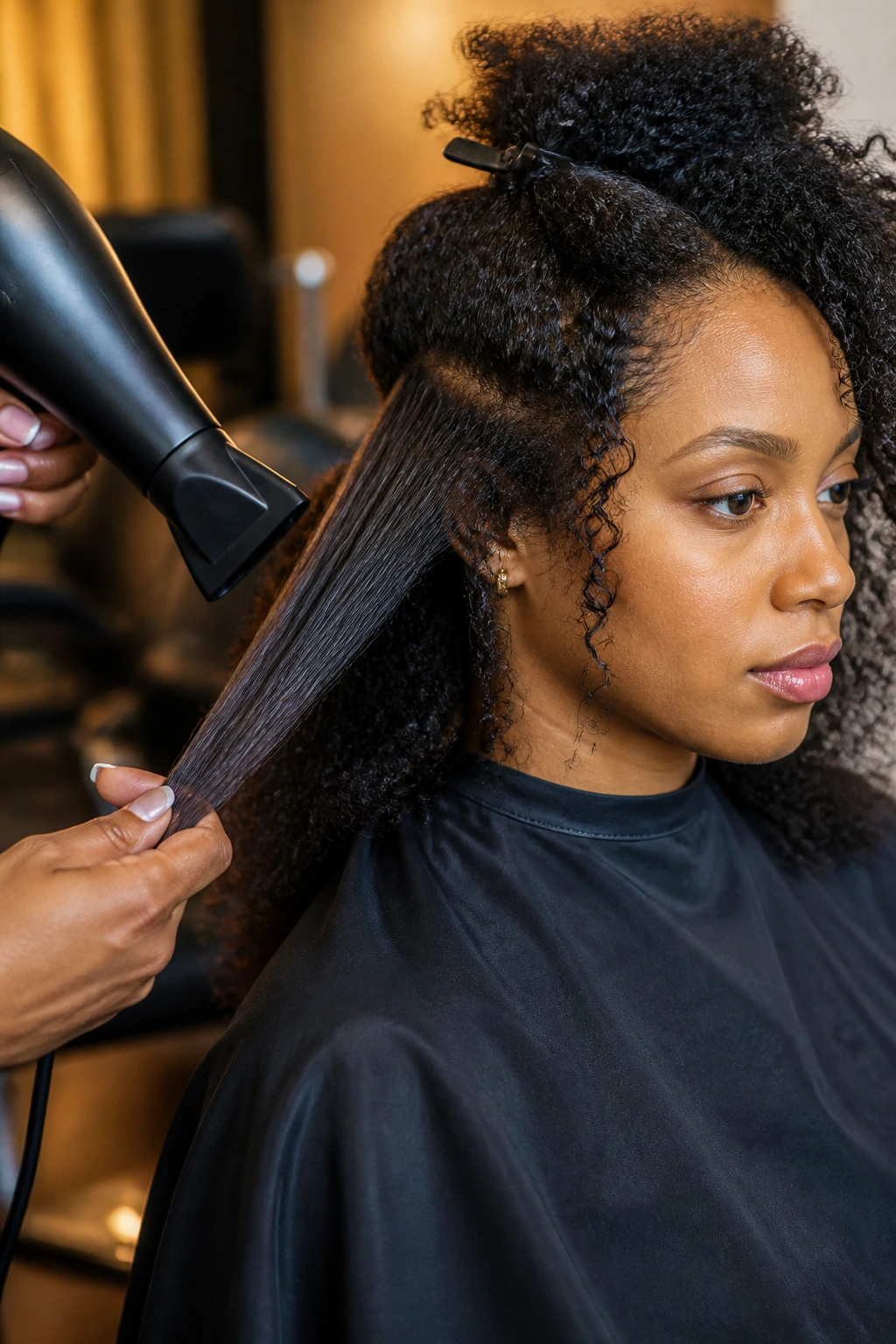
A blowout with bangs on natural hair is a beautiful way to celebrate the versatility of textured strands. By taking the time to properly prep your hair, utilizing safe tension-drying techniques, and protecting your style overnight, you can enjoy a bouncy, voluminous look that lasts.
Never feel like you have to iron your hair into a flat, lifeless state to achieve a polished look. Embrace the gorgeous, airy volume of your natural hair, and let your bangs frame your face with confidence.