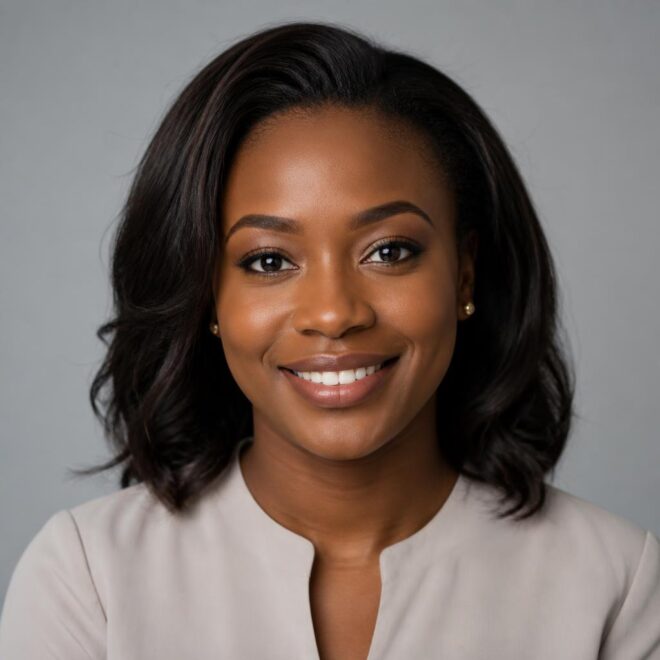


Walking out of a hair salon with a fresh haircut should feel like a quiet victory. But for anyone with natural waves, the transition to a fringe often comes with a side of hesitation. Finding the perfect balance of texture, length, and forehead coverage with wavy bangs for oval faces requires a careful eye. The natural movement of waves adds an unpredictable element that can either soften your features or disrupt the harmony of your face.
Oval faces are widely celebrated in styling circles for their balanced proportions. Because the face length is roughly one and a half times the width, and the jawline is softly rounded, almost any style fits. But when you introduce waves, the game changes. You are no longer dealing with flat, predictable sheets of hair. You are working with cowlicks, shrinkage, and daily humidity shifts.
A experienced stylist knows that a wavy fringe is not a style you force into place with high heat and heavy sprays. Instead, it is an art of weight distribution. It is about understanding how a wave bends, where it bounces, and how it frames the eyes. Let’s look at the actual mechanics of wearing waves on an oval face, starting with how the two elements interact.
How the Oval Face Shape Pairs with Natural Waves
An oval face shape provides a highly cooperative canvas because it lacks sharp, dominating angles. The forehead is usually slightly wider than the chin, and the entire silhouette flows in a smooth curve. Because of this balance, you do not need a haircut to hide or correct specific proportions. Instead, your goal is to highlight your natural features.
Waves introduce soft, organic movement that breaks up the vertical line of an oval face. Without bangs, a long wave can sometimes pull the gaze downward, making the face appear longer than it is. Adding a fringe creates a horizontal focal point, usually right at the eyes or cheekbones, which beautifully balances your proportions.
The density of your waves dictates how the fringe will sit. Fine waves need a bit more hair brought forward from the crown to create a visible line. Coarser, thicker waves require interior weight removal so they do not puff up into a solid wall of hair. When done correctly, the wave pattern should look loose, bouncy, and completely natural.
Why Dry Cutting Prevents the Infamous Wavy Hair Shrinkage
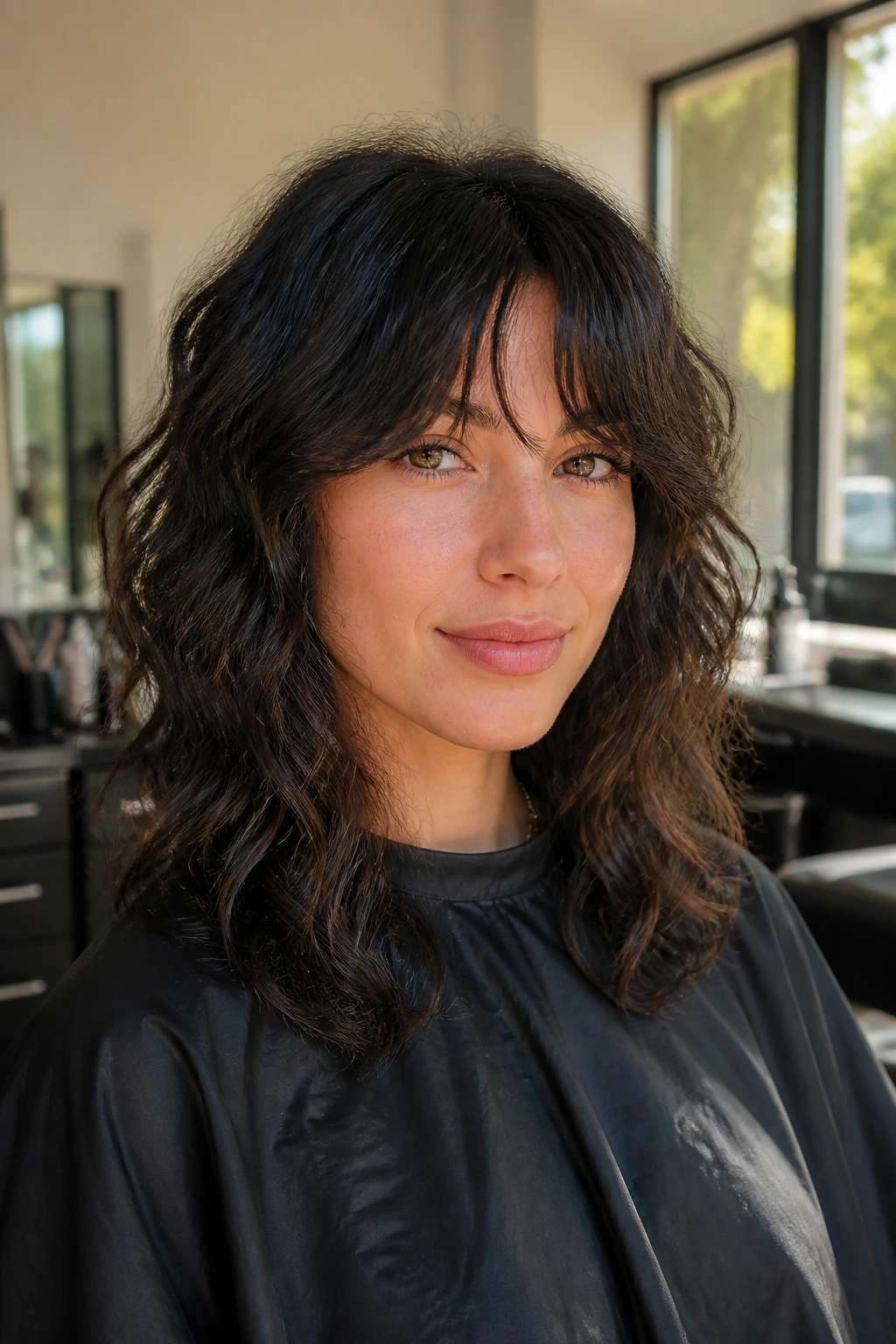
The biggest mistake you can make with wavy hair is cutting it while wet. Wet hair stretches significantly, appearing much longer than it actually is. When the moisture evaporates, the hair springs back up, often leaving you with bangs that are two inches shorter than you planned. This is how many people end up with accidental micro-bangs.
Dry cutting allows the stylist to see the natural curl pattern in its relaxed state. They can observe how each wave bends around your forehead, where the cowlicks live, and how much the hair bounces. This technique ensures that the final length is exactly where you want it to sit on your face.
During a dry cut, your stylist will likely snip into the hair vertically rather than straight across. This technique, known as point cutting, creates textured, uneven ends. These soft ends allow the waves to piece together naturally rather than stacking on top of each other and creating bulk.
1. Wispy Wavy Fringe
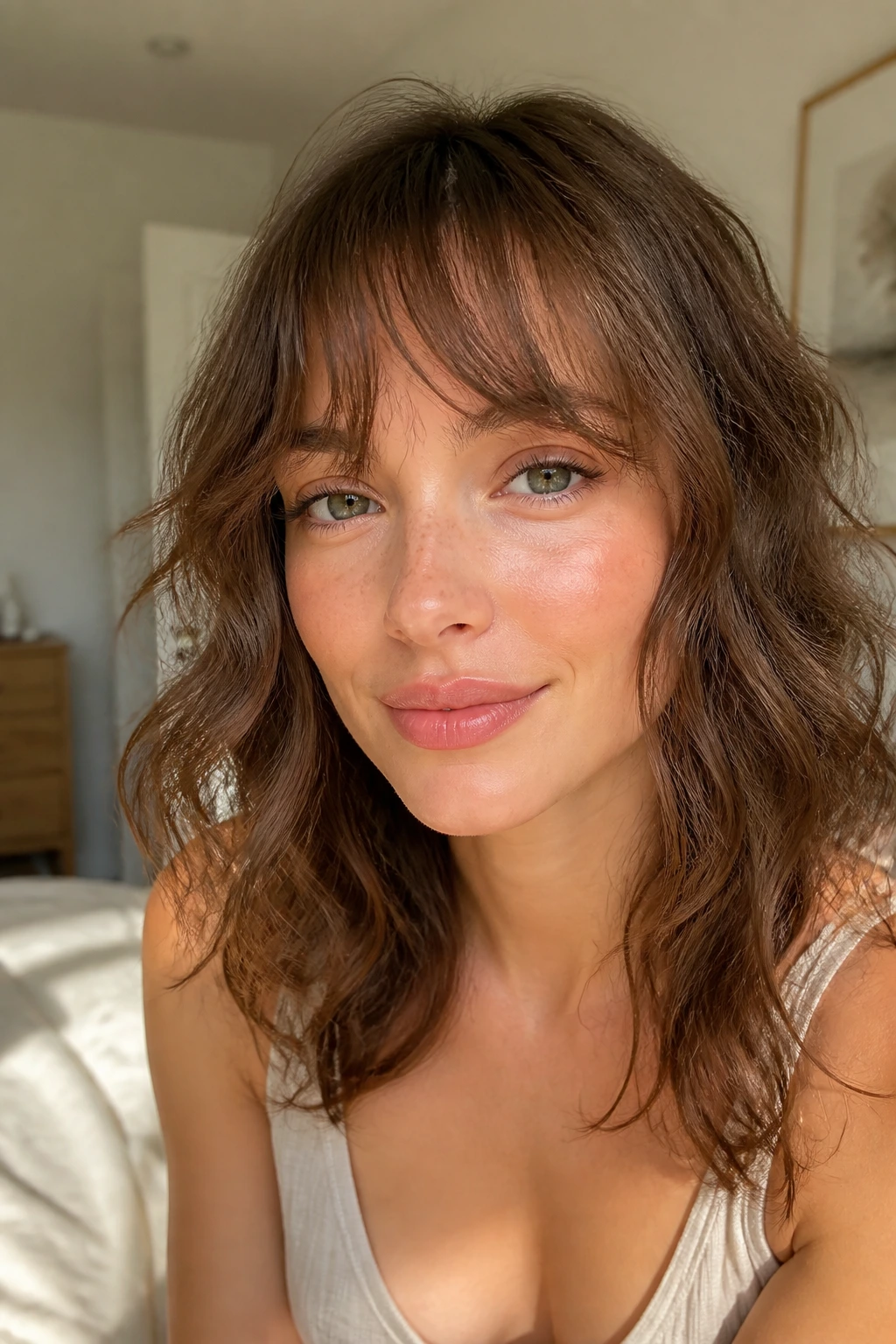
This style is all about lightness and air. A wispy wavy fringe uses a minimal amount of hair from the front hairline, allowing your forehead to peek through the spaces between the bends. It is a gentle, unintimidating way to try bangs if you are hesitant about a heavy look.
Why It Flatters the Oval Face Shape
Because the oval face is naturally balanced, this light texture adds a playful layer without hiding your features. The wispy ends graze your eyebrows, drawing attention directly to your eyes without shortening your face.
Quick Facts and Styling Needs
- Needs dry-cutting to ensure the weight remains light across the forehead.
- Works best on fine-to-medium hair textures with soft S-curves.
- Requires minimal product to avoid looking greasy or weighed down.
- Pairs well with shoulder-length shags and long layers.
Pro tip: Apply a tiny dab of lightweight styling cream on damp hair and let it air-dry completely before touching it to prevent frizz.
2. Shaggy Curtain Waves
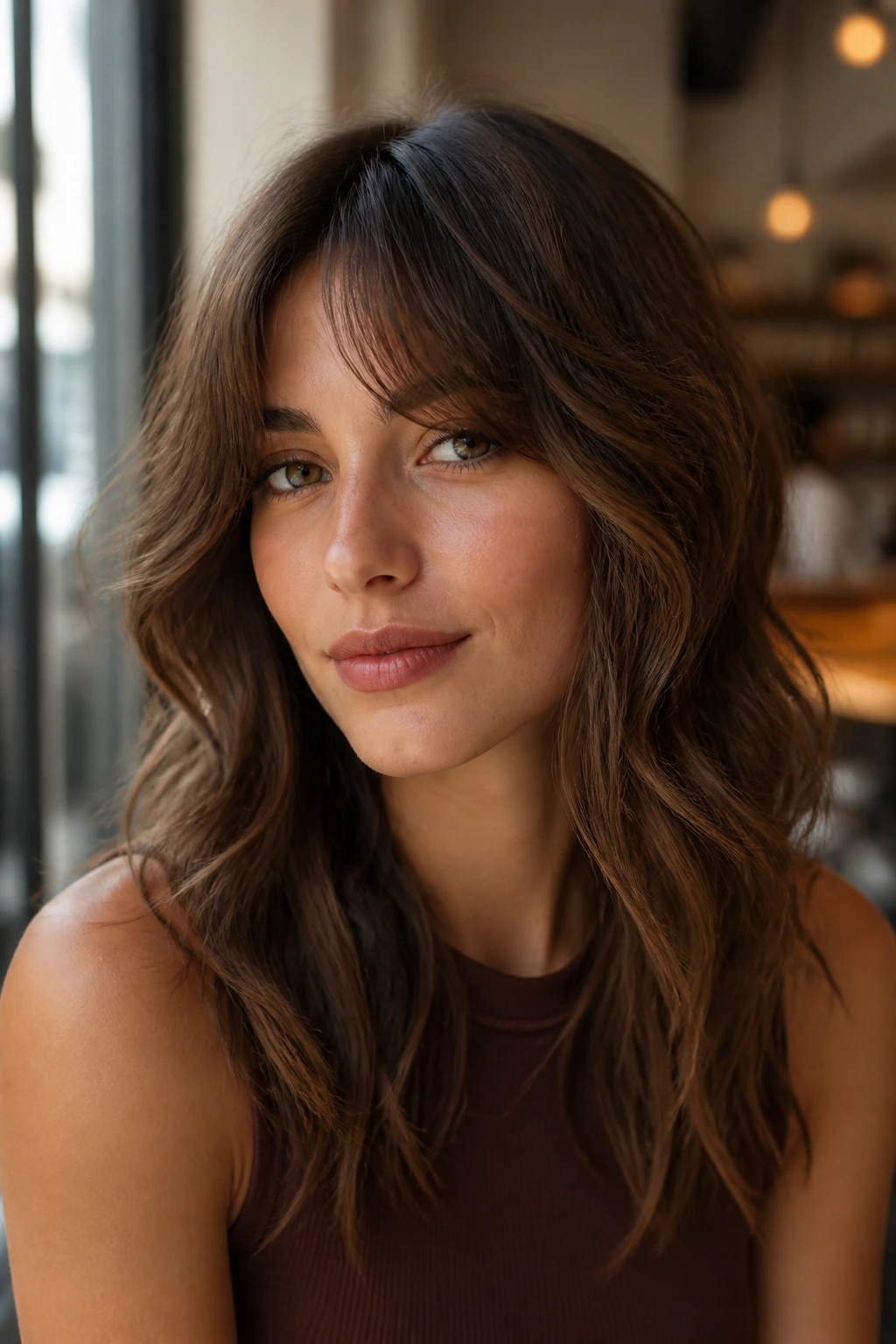
Curtain bangs are designed to redirect focus to your cheekbones. The classic curtain shape works wonderfully on oval faces because it breaks up the length of the face without closing it off completely. By introducing waves to this parting, you get a soft, lived-in style that naturally sweeps outward.
The key to this look is the graduation of length. The shortest pieces start near the center of the forehead and gradually get longer as they sweep toward the ears. This gradient allows the waves to cascade down the sides of your face, blending into your main length.
To style these, blow-dry the root area forward with a medium round brush, then let the mid-lengths twist outward naturally. Avoid flat irons here, as they destroy the bounce that makes curtain bangs look so comfortable.
3. Bottleneck Waves
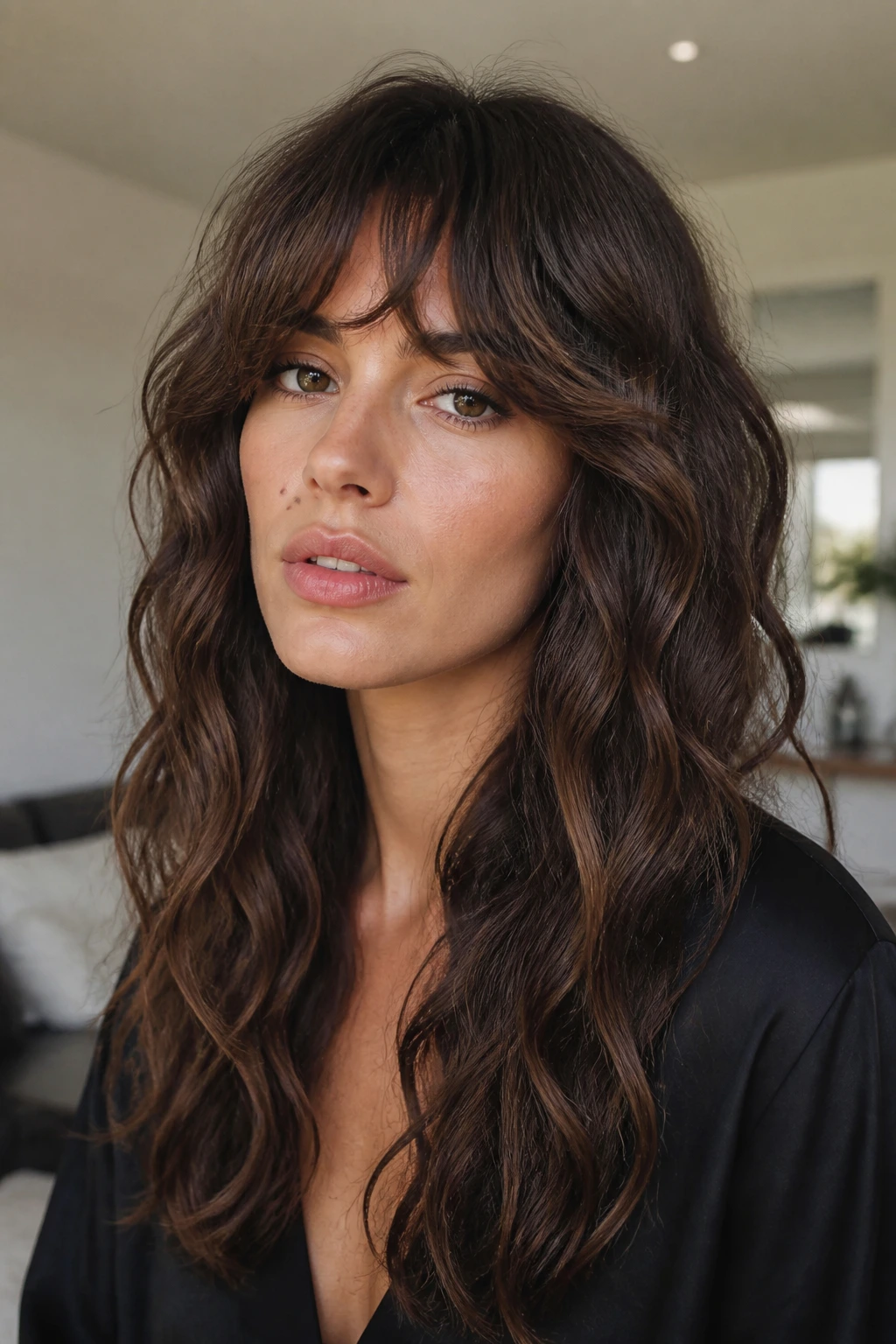
Why does the bottleneck cut work so exceptionally well on natural waves? This cut starts narrow at the top, flares out around the eyes, and then curves gently around the cheekbones—mimicking the shoulders of a classic glass bottle. For an oval face, this creates a frame that shortens the forehead while highlighting the eyes.
Waves naturally fill out the wider parts of this silhouette, giving it built-in volume. Unlike straight fringe, wavy bottleneck cuts do not require constant trimming. As they grow, the waves blend into the face-framing layers, turning into a longer shag style.
How to Style Bottleneck Waves
Keep the center section short—just grazing the bridge of your nose—while letting the sides drape down to your cheekbones. Use a diffuser on a low heat setting to dry them, lifting the roots slightly with your fingers to maintain that signature flare.
4. Choppy Micro-Waves
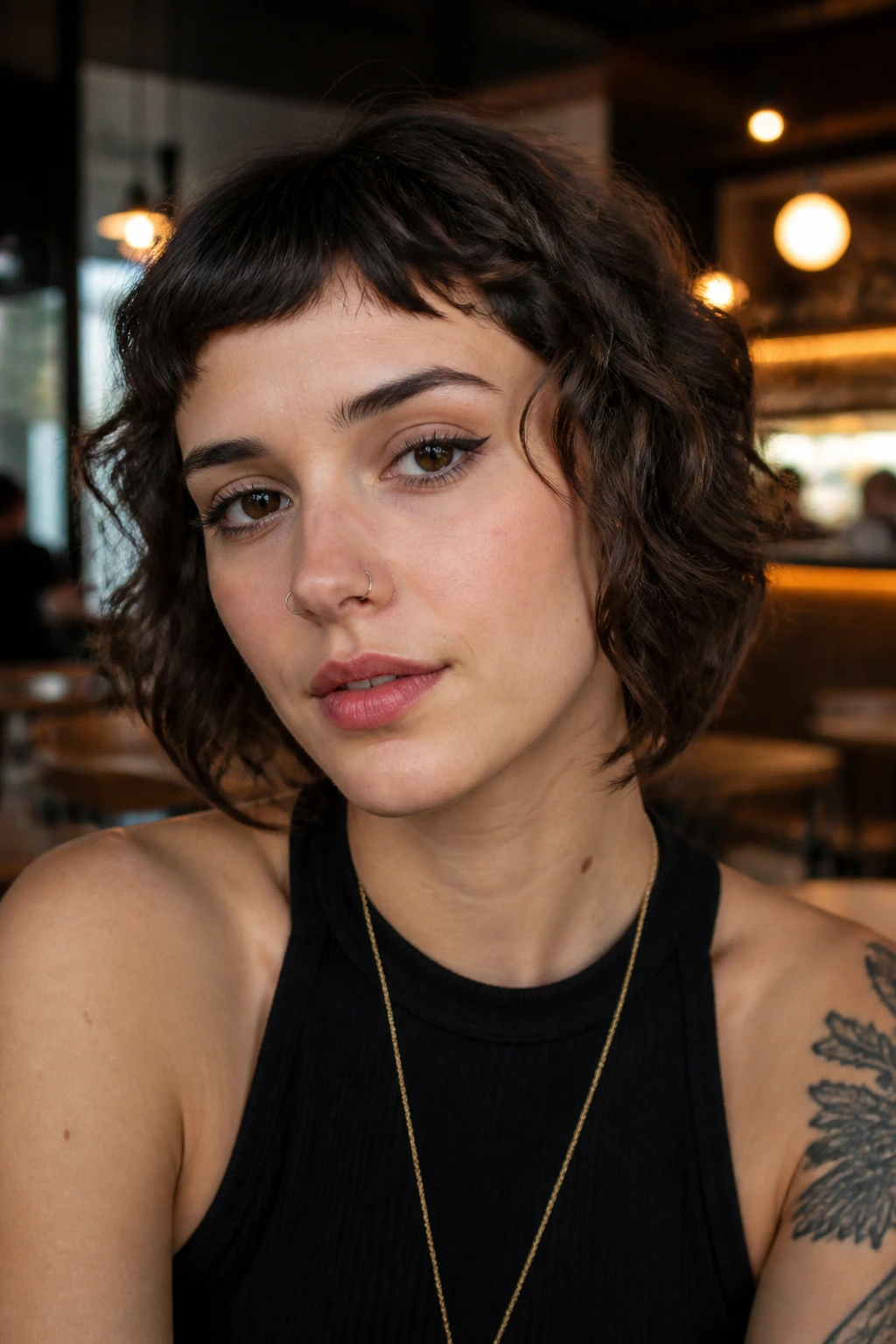
Picture a vintage rock-and-roll icon backstage, their hair looking imperfectly tossed yet completely balanced. That is the essence of choppy micro-waves. This is a daring option for those who want to show off their forehead while keeping texture front and center.
By cutting the fringe two inches above the eyebrows, you expose the brow bone and draw the gaze upward. This prevents the oval face from looking dragged down by hair weight, especially if your waves are dense or tight.
Key Features of Choppy Micro-Waves
- Cut with point-shears to create highly textured, uneven ends.
- Length sits comfortably above the brow line to show off your eyebrows.
- Best for strong wave patterns that hold their shape without heat styling.
- Ideal for low-maintenance routines where air-drying is the norm.
This style thrives on imperfection; the less you fuss with it throughout the day, the better it looks.
5. Side-Swept Wavy Bangs for Oval Faces
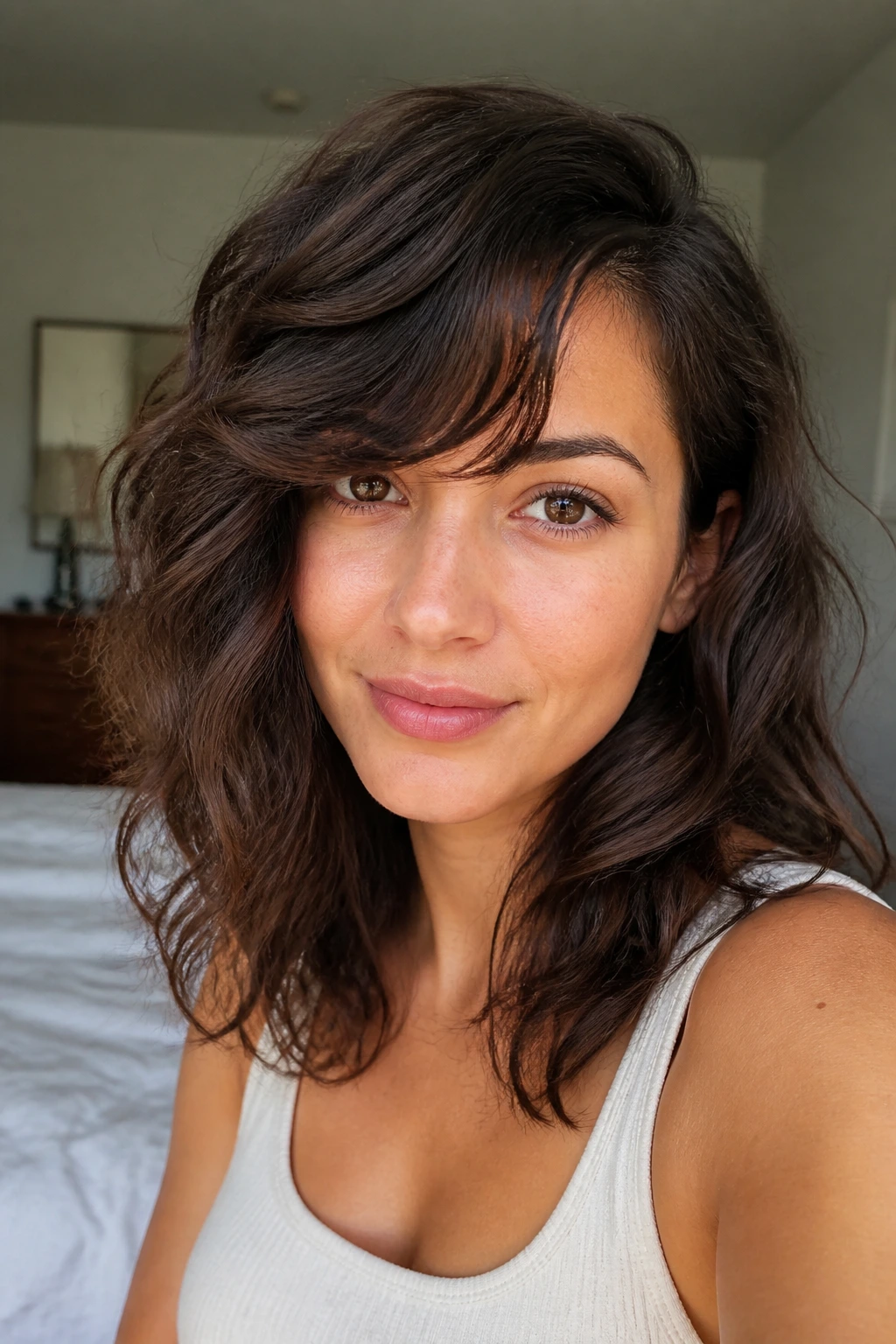
Sweeping your fringe to one side is a classic approach to breaking up the symmetry of an oval face. When you introduce waves to a side sweep, the result is a soft drape that adds movement across the forehead. This style works with your hair’s natural direction rather than fighting against it, making it an incredibly cooperative option for busy mornings.
The secret to a successful side sweep lies in where the part begins. A deep side part, aligned with the outer corner of your eye, creates a dramatic slope that highlights your jawline. The waves should cascade gently across the brow, ending just near the temple to frame the eyes without covering them completely.
For those with coarser hair textures, this style prevents the bulk from gathering in the center of the face. The weight is distributed diagonally, which naturally thins out the fringe area while keeping the volume on the sides. It is a styling choice that looks just as good with a casual ponytail as it does with loose, flowing lengths.
To keep this sweep in place without creating a stiff barrier, opt for a flexible-hold hairspray or a light texturizing mist. Avoid heavy pomades or wax-based products, which will clump your waves together and make them look greasy. Run your fingers through the sweep occasionally throughout the day to keep the movement fresh and airy.
6. Heavy Blunt Wave
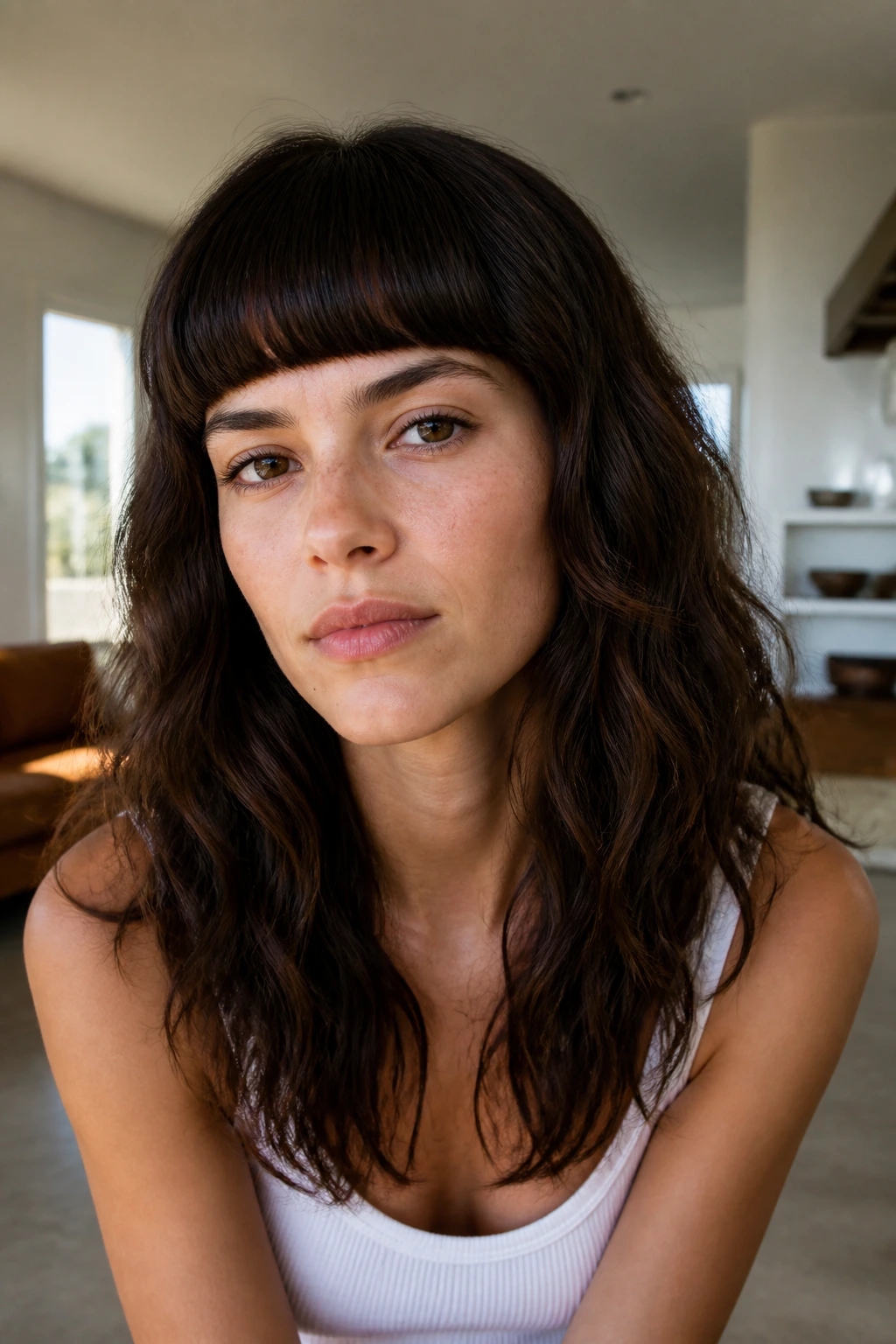
Unlike wispy styles that blend into your hair, a heavy blunt wave makes a distinct statement across your forehead. It is a solid block of texture that slices straight across, creating a strong horizontal line that shortens the appearance of a longer oval face.
The blunt cut is usually associated with stick-straight hair, but when applied to waves, it takes on a heavy, textured look. The ends are cut straight across, but the natural S-pattern of the hair prevents it from looking harsh or severe.
This is ideal for medium-to-thick hair densities where there is enough volume to create a solid line. It requires a bit more commitment, as you will need to trim it regularly to keep it from falling into your eyes. Ask your stylist to snip slightly into the very bottom edge of the blunt cut to relieve some weight. This keeps the line clean while allowing the waves to bounce naturally without forming a solid, helmet-like shape.
7. Piece-y Feathered Waves
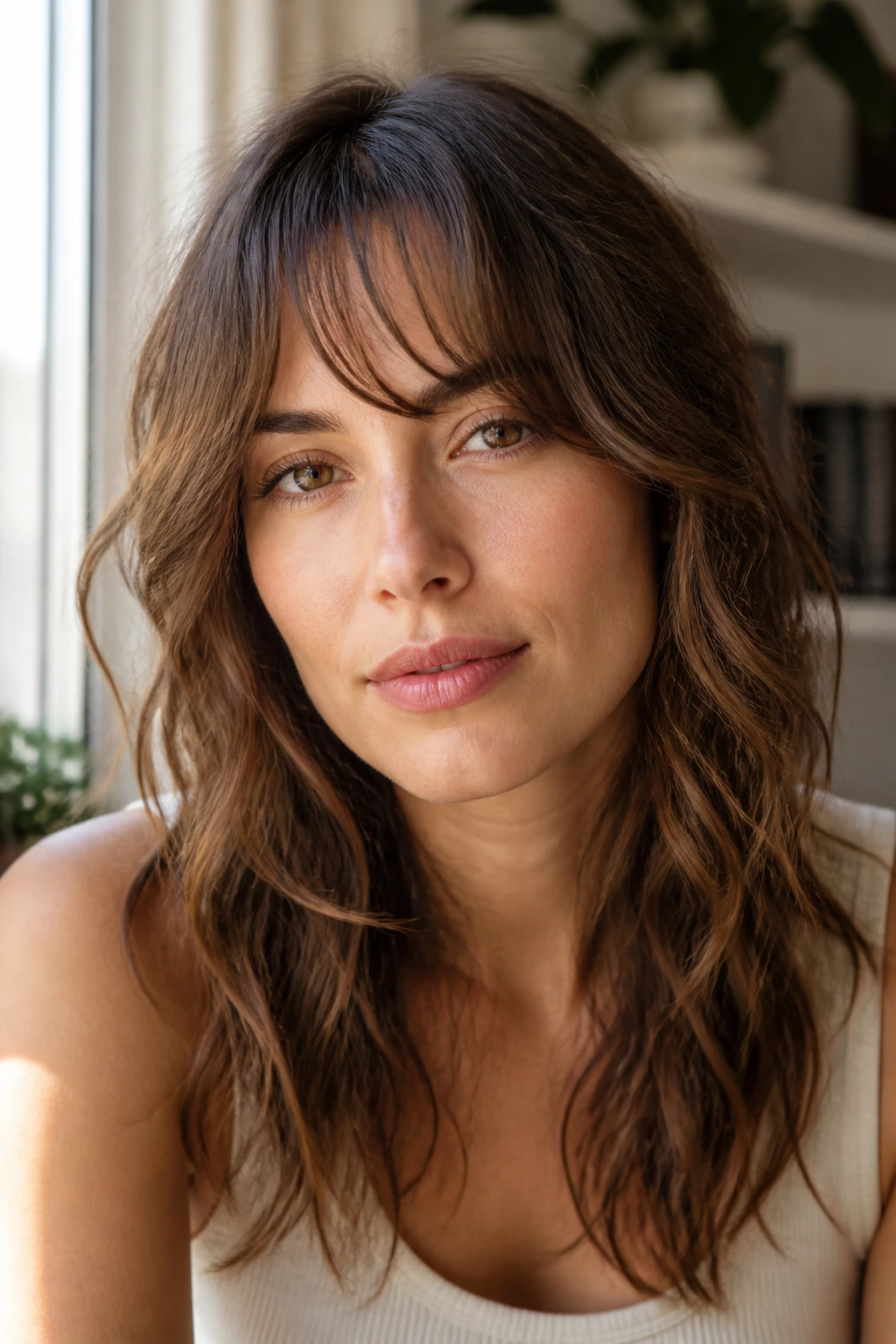
Feathered waves bring a soft, light texture that feels reminiscent of classic vintage styles. This approach splits the fringe into delicate, wispy chunks that let your forehead peek through, preventing the hair from looking like a solid wall.
Why It Flatters the Oval Face Shape
The light, feathered texture softens the upper third of the face. Because oval shapes are already balanced, these airy pieces add a playful layer of interest without altering your natural facial proportions.
Quick Facts and Styling Needs
- Best achieved with a razor-cutting technique to thin out the ends.
- Excellent for fine hair that needs a boost of texture and volume.
- Works best when styled with a light texturizing powder at the roots.
- Requires almost no heat; simply pinch and twist the damp sections.
Pro tip: Rub a tiny pinch of styling powder between your fingertips and scrunch it directly into the roots of your bangs for instant lift.
8. Textured Bardot Bangs
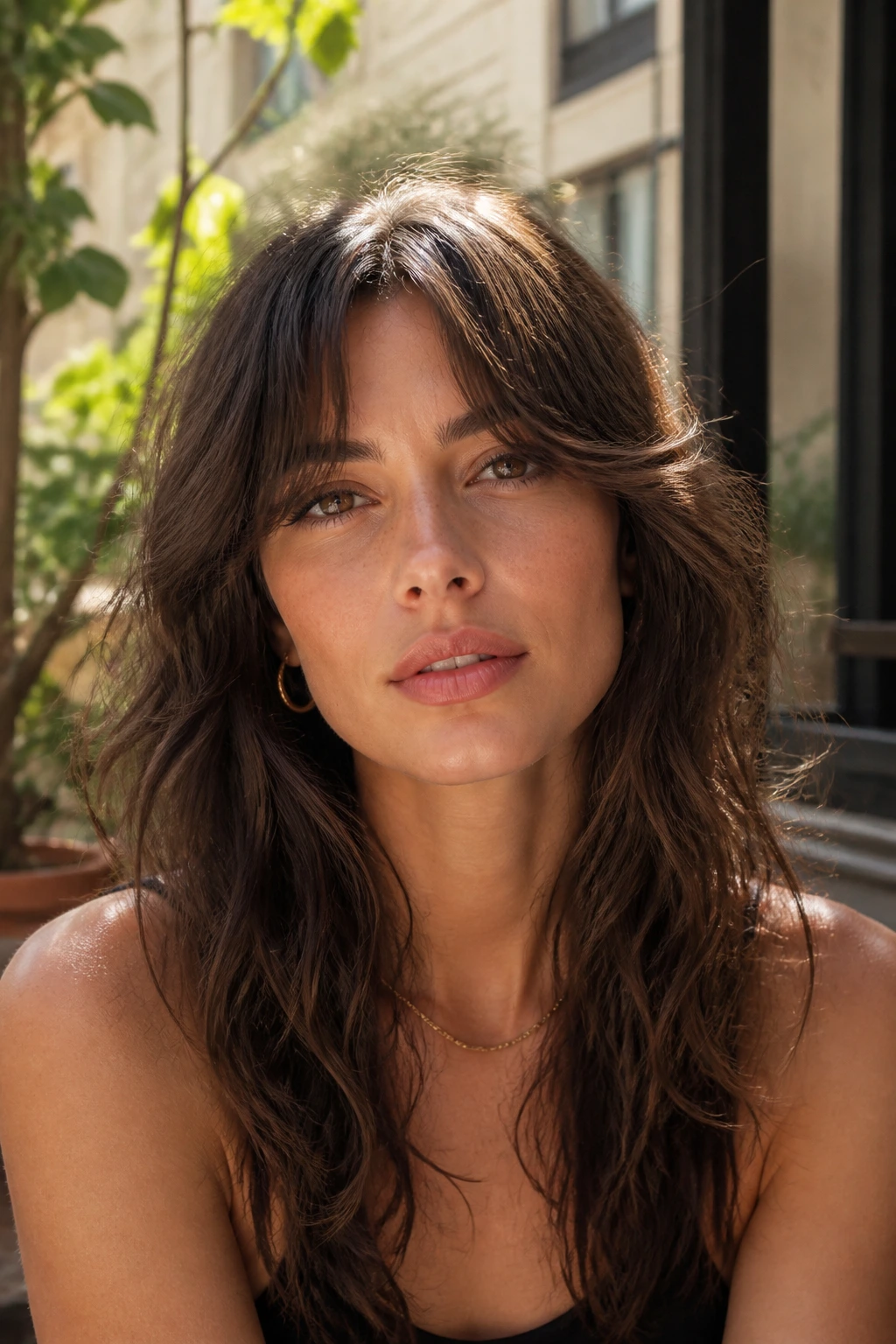
The middle part is not a neutral styling choice; it is a powerful tool to widen the appearance of your eyes. Bardot bangs are a nod to classic French style, featuring a gentle split down the center that flares out toward the temples. When paired with natural waves, this style gains an effortless, windblown texture that frames the face beautifully.
The center split keeps your forehead visible, which prevents the oval shape from looking shortened or rounded. It is a highly flattering option for those who want to balance a soft jawline with some volume at the temples.
To style these, apply a sea salt spray to damp hair, then use your fingers to twist the sections away from your face. Let them air-dry, or use a diffuser on low heat to encourage the waves to bend outward at the cheekbones.
9. Soft Baby Waves
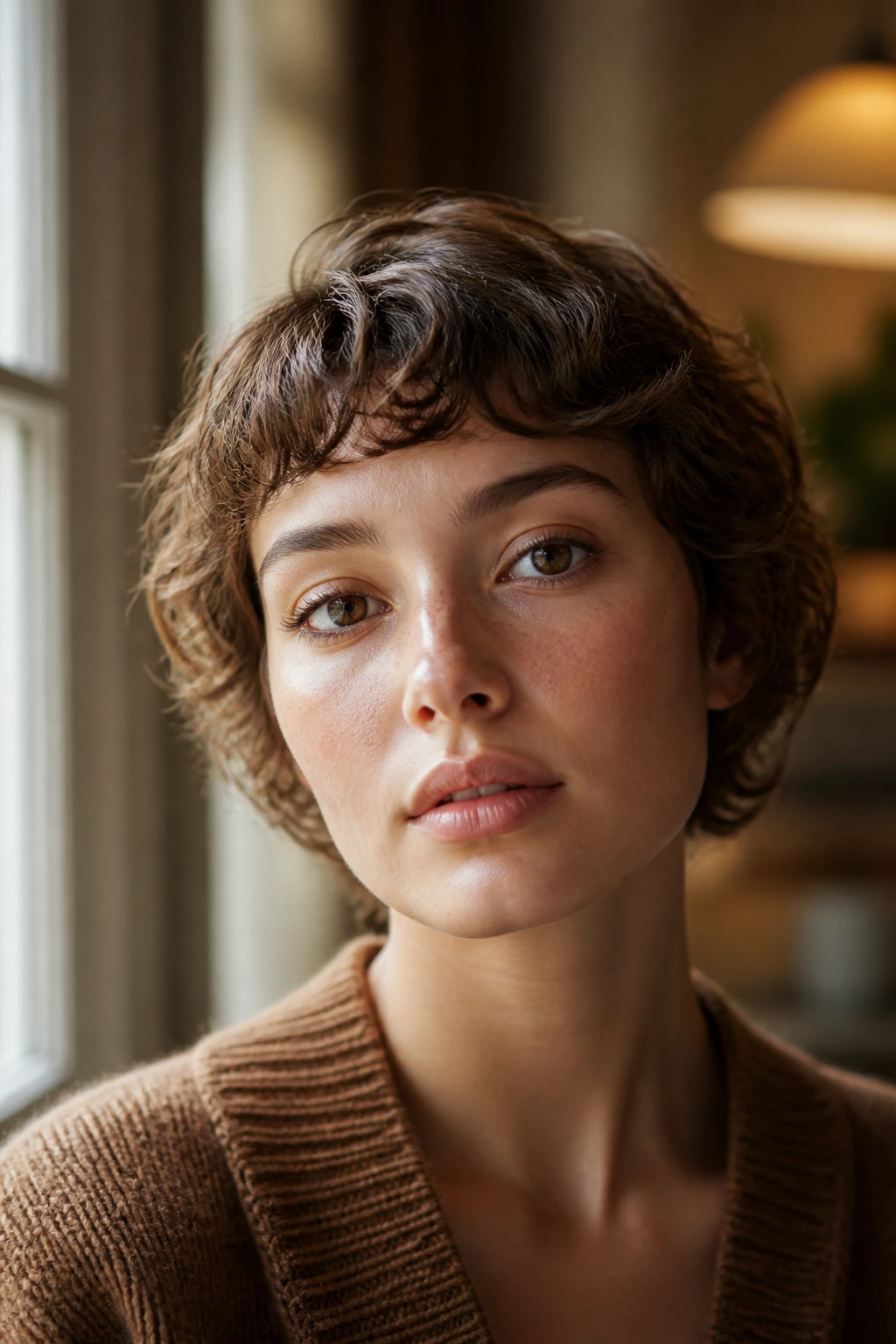
Can you wear baby bangs if you have naturally wavy hair? Absolutely, though many styling guides advise against it. The key is working with your hair’s natural wave pattern and cutting them dry so you can see exactly where the shrinkage occurs. On an oval face, these short, cropped waves create an artistic silhouette that highlights your brow bone and cheekbones.
Unlike longer styles, baby waves do not get in your eyes or lose their shape when you bend over. They are practical, bold, and require very little styling once you get the hang of them.
How to Style Soft Baby Waves
Use a tiny drop of styling oil to smooth down any flyaways at the crown. Avoid using round brushes, which can make tiny bangs look too round; instead, use your fingers to guide the hair flat against your forehead as it dries, letting the natural wave bend gently at the ends.
10. Long Grown-Out Waves
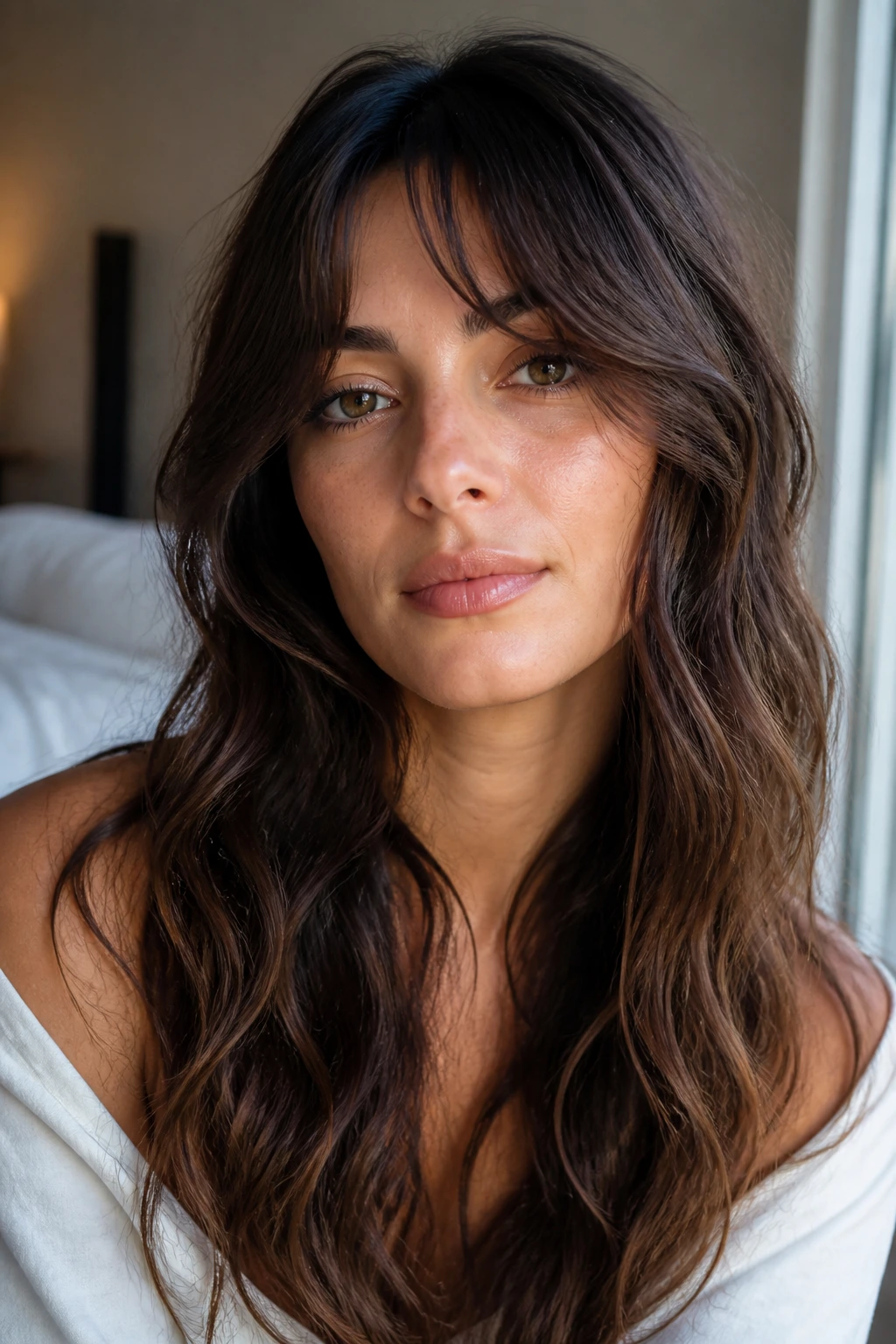
There is a specific stage in growing out a fringe where the hair sits perfectly between your eyelashes and your cheekbones. Instead of rushing to get a trim, keeping this long, relaxed length looks incredibly elegant and effortless.
Long, grown-out waves drape across the face, softening the eye area and melting into your longer side layers. For an oval face, this creates a beautiful frame that narrows the focus to your lips and jawline.
Key Features of Grown-Out Waves
- Length falls below the eyebrows, often grazing the cheekbones at the sides.
- Requires regular parting down the middle or slightly off-center to maintain visibility.
- Works beautifully with half-up styles and messy buns.
- Ideal for those who only want to visit the salon every few months.
To keep these from looking messy, use a lightweight leave-in conditioner to define the waves and keep the ends looking healthy.
11. Center-Parted Cascade Wavy Bangs
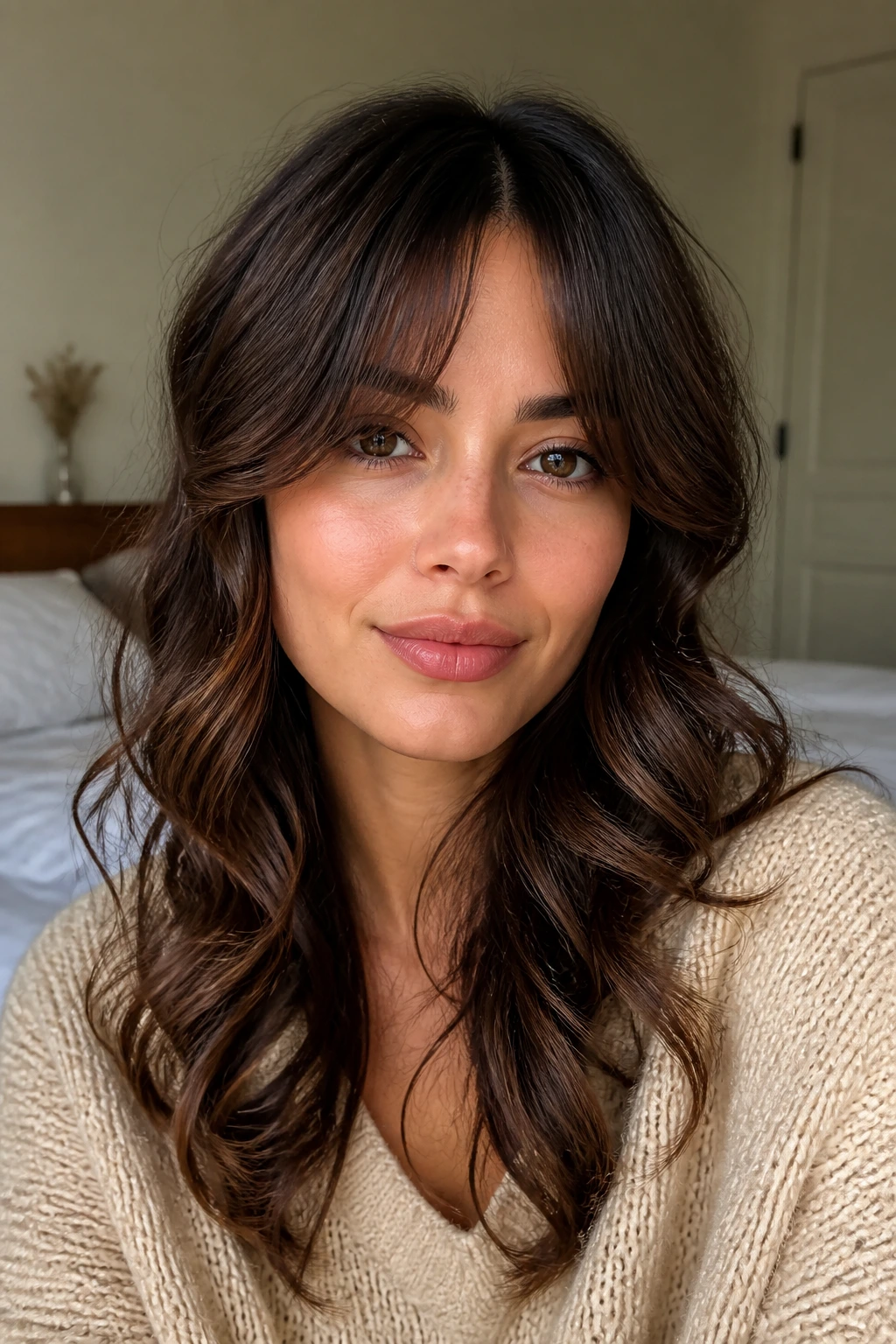
A center-parted cascade offers a balanced distribution of hair that flatters the symmetry of an oval face shape. This style allows the waves to fall evenly on both sides of the forehead, creating a soft frame that draws attention straight to the center of your face. It is an excellent middle ground for those who want the look of a full fringe without the commitment of hair falling directly into their eyes.
The key to this style is the seamless transition from the center part into the rest of your hair. The shortest pieces should start right at the bridge of the nose, gradually lengthening as they move outward toward the temples. This creates a soft, sweeping angle that complements the natural curve of your jaw.
Because the hair is parted down the middle, this style is highly cooperative for various wave types. Whether you have loose bends or tight, springy waves, the weight is split evenly, which prevents one side from looking heavier than the other. It also makes tucking the bangs behind your ears incredibly easy when you need your hair out of your face.
For daily styling, focus on creating volume at the roots near the part line. Using your fingers to lift the hair upward while blow-drying will prevent the bangs from lying too flat against your skull. A light dusting of dry shampoo at the roots can also help maintain this height throughout the day, especially in humid conditions.
12. Retro Finger-Wave Fringe
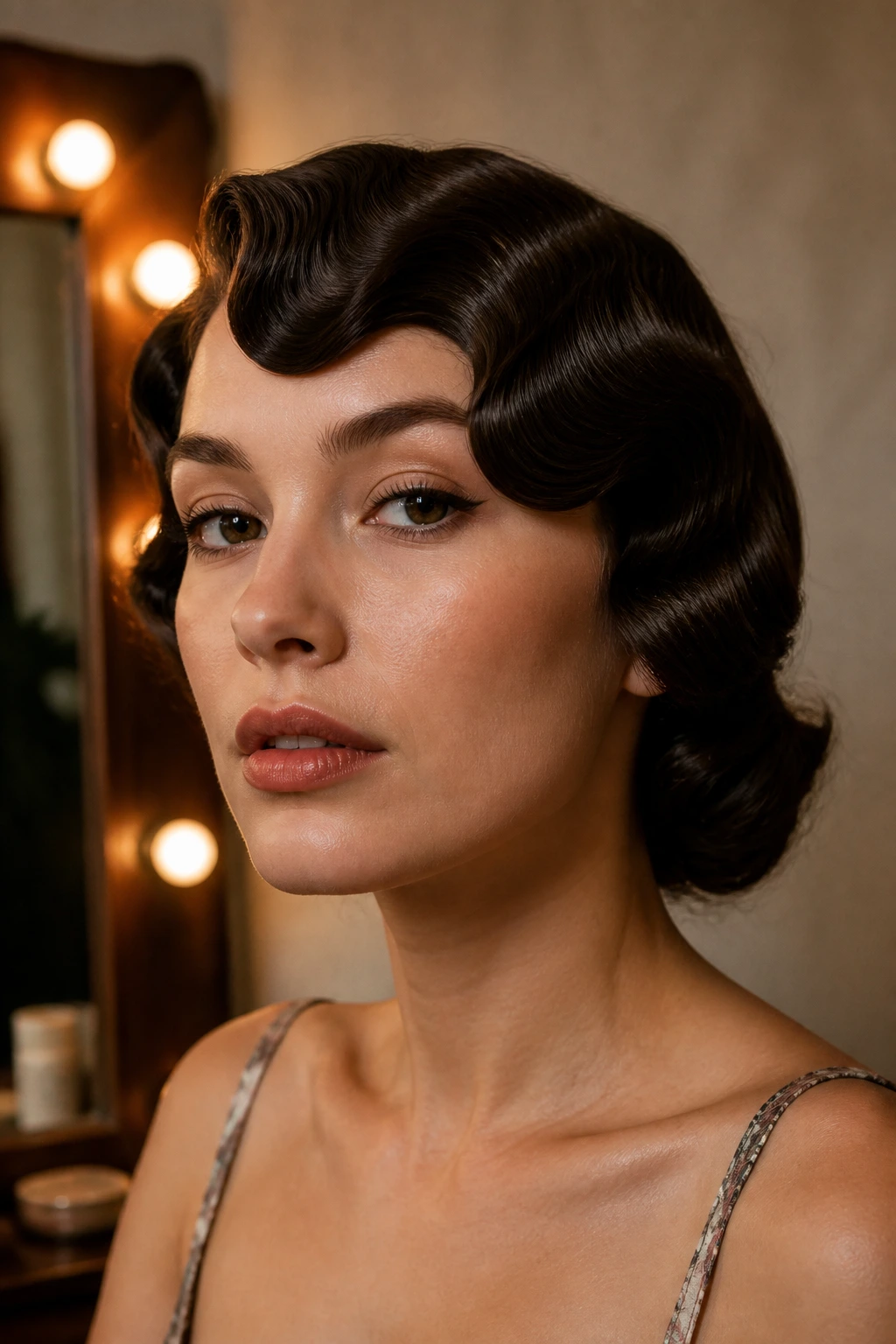
Unlike modern, tousled beach waves, the retro finger-wave fringe is all about precision and structured elegance. It relies on a flat, glossy wave pattern that lies close to the forehead, creating an artistic look reminiscent of classic vintage styling.
This style does not rely on volume or texture; instead, it uses clean, sculpted S-curves that stay pressed against the skin. This highlights the smooth contours of an oval face, giving it a dramatic, sculptural frame.
This is perfect for special events or for those who love vintage-inspired looks. It works best on fine-to-medium hair that can be easily manipulated with styling gel and a fine-tooth comb. Apply a generous amount of strong-hold gel to damp bangs, then use your fingers and a comb to pinch the hair into alternating C-shapes across your forehead. Secure the ridges with flat clips until dry, then mist with a high-shine hairspray to finish.
13. Curly-Wavy Shag Bangs
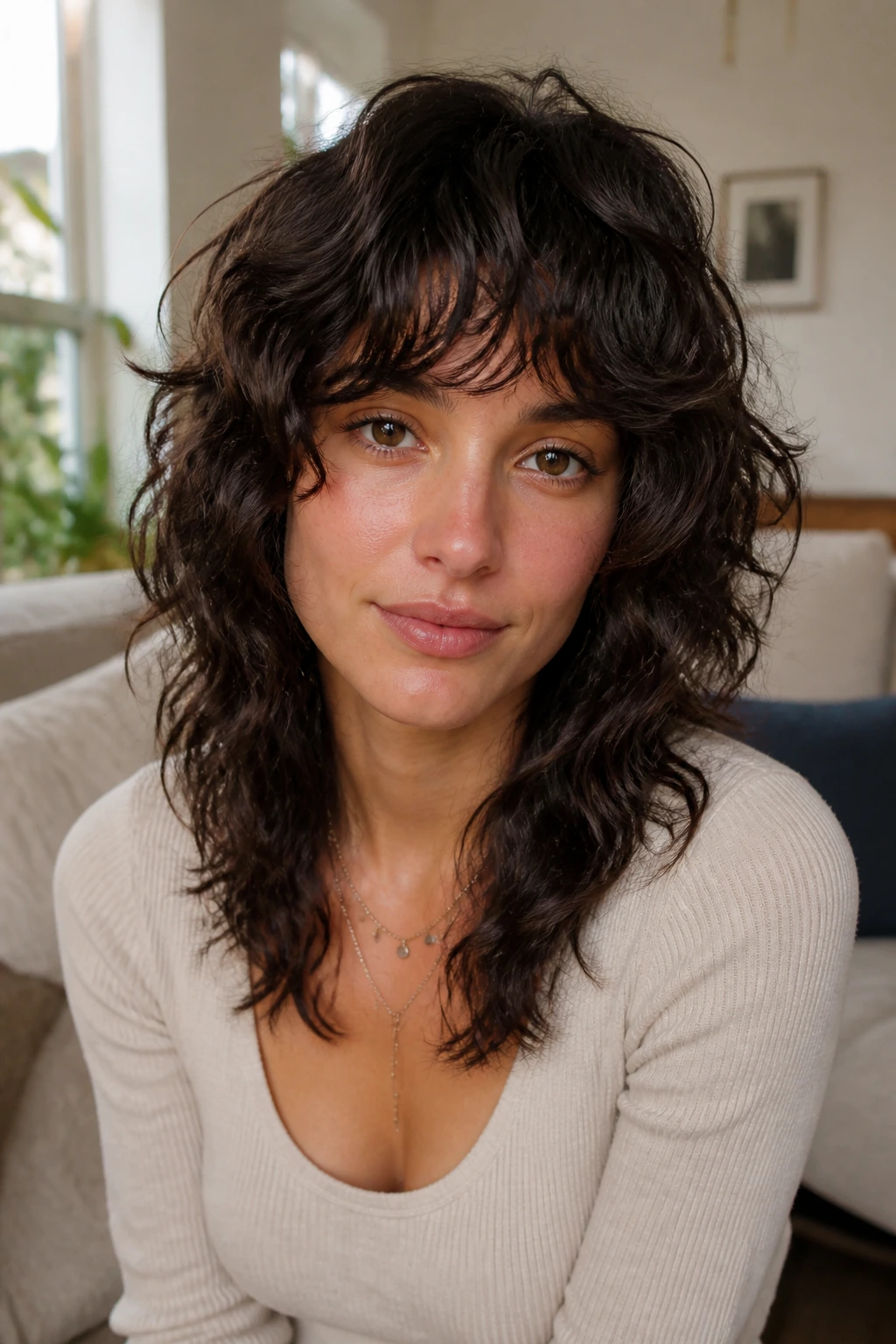
Shag bangs are all about movement, texture, and a carefree attitude. This style blends waves and curls together, cutting the fringe at varying lengths to create a full, bouncy look that sits comfortably around the eyes.
Why It Flatters the Oval Face Shape
The varying lengths of a shag cut break up the forehead line, while the natural volume of the curls balances the vertical length of an oval face. It adds a youthful, energetic vibe to your overall look.
Quick Facts and Styling Needs
- Must be cut curl-by-curl while dry to ensure the shape is balanced.
- Requires a moisturizing curl cream or leave-in conditioner to prevent frizz.
- Best dried with a diffuser to encourage maximum bounce and definition.
- Pairs perfectly with a layered shag or wolf cut.
Pro tip: When diffusing, tilt your head forward and scoop the bangs into the bowl of the diffuser to create volume right at the roots.
14. Asymmetrical Wavy Sweep
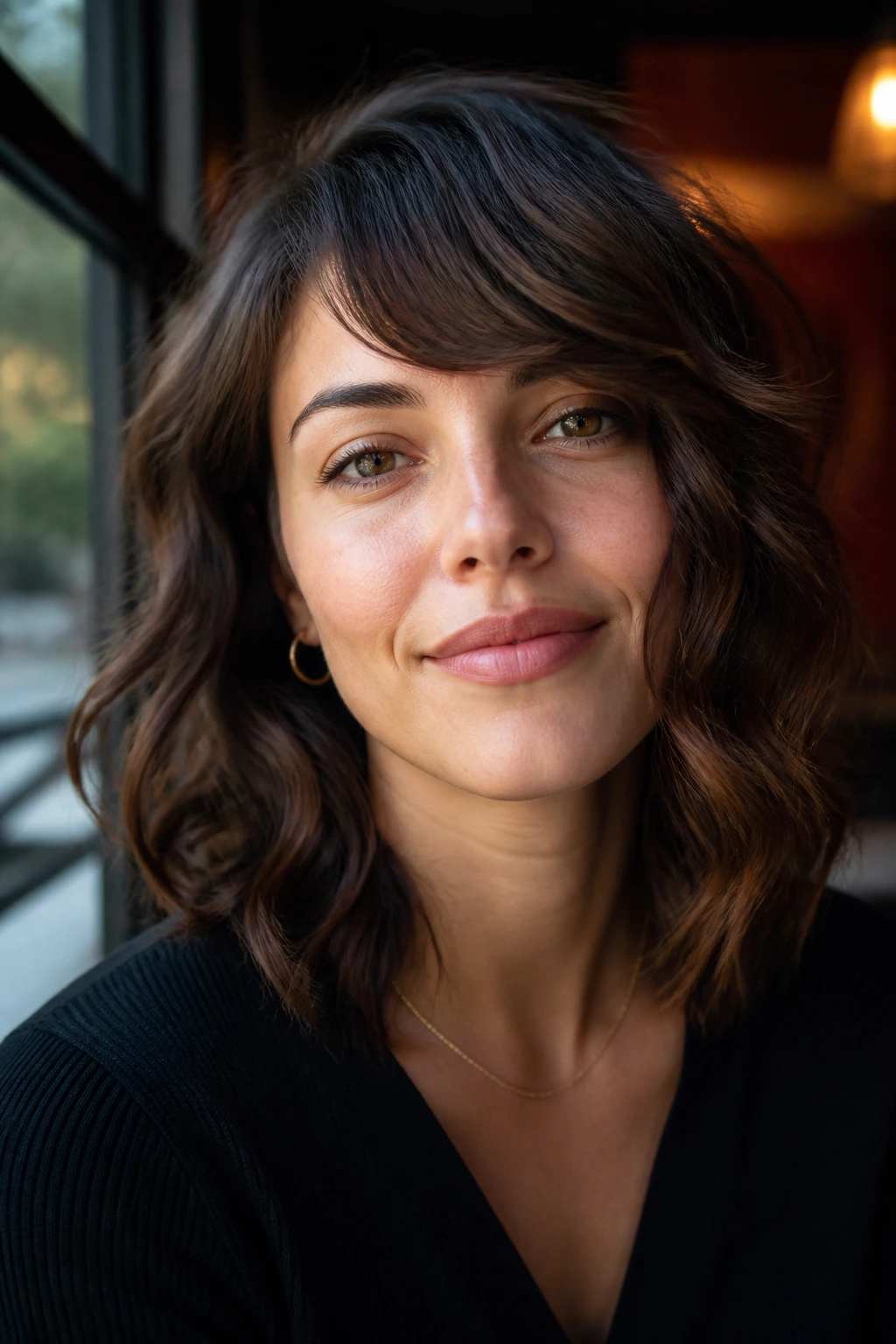
Perfect symmetry is not the only way to style hair; it is often the subtle imbalances that make a hairstyle memorable. An asymmetrical sweep features a fringe that is cut shorter on one side and gradually gets longer as it moves across the forehead.
When combined with natural waves, this diagonal line creates an incredibly dynamic frame for an oval face. It draws the eye along a diagonal path, highlighting your eyes and cheekbones in a way that standard cuts simply cannot match.
To style this, use a light styling foam on damp hair and sweep the bangs in the direction of the length increase. Let it air-dry naturally, then use a tiny bit of hair oil on the very tips to define the asymmetrical edge.
15. Seagull Wavy Bangs for Oval Faces
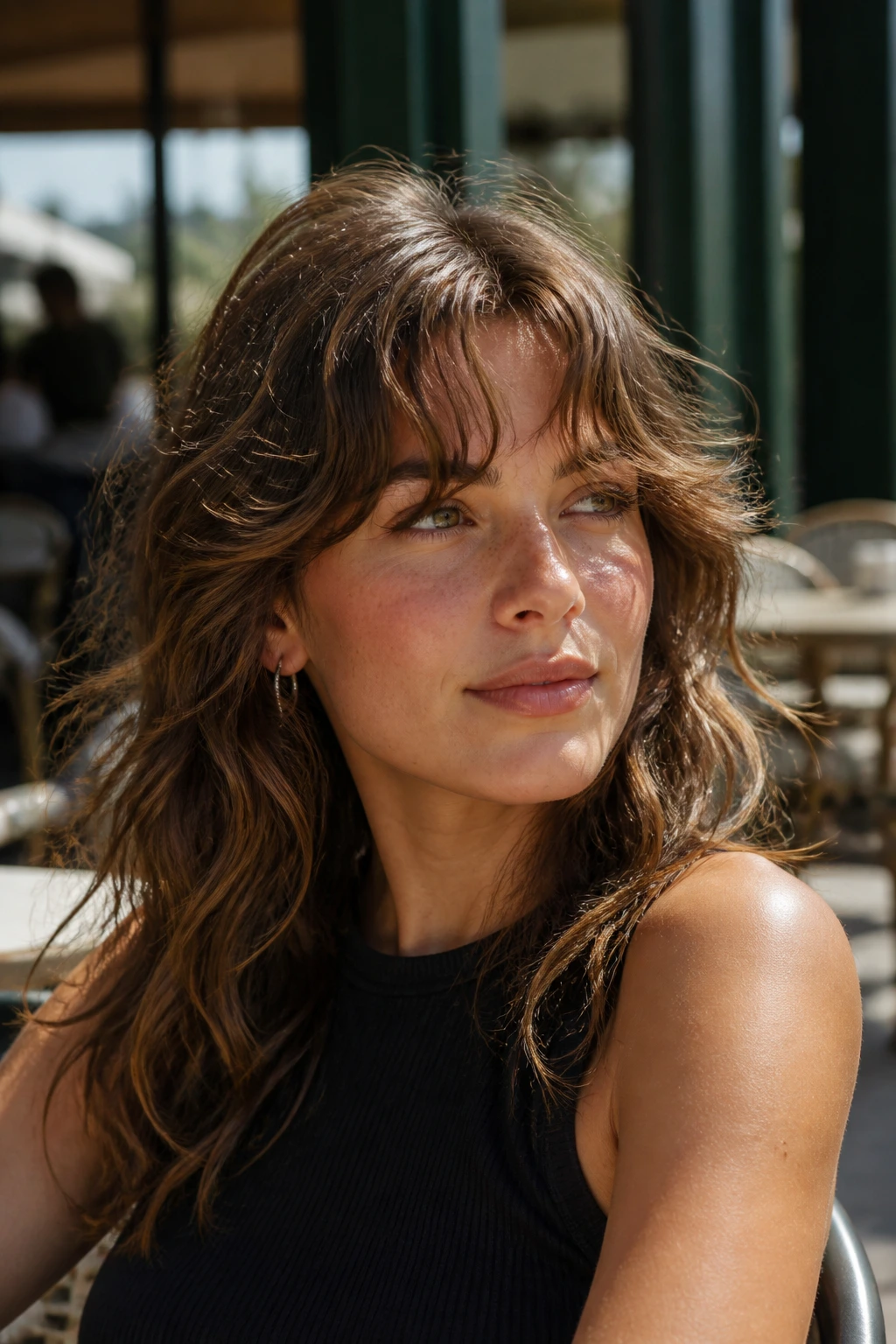
The name of this style comes from the shape the hair makes as it rises slightly at the root before dipping down over the brow, resembling the wings of a bird in flight. On an oval face, this lift at the roots adds a touch of height, while the downward dip softens the forehead area, creating a balanced and striking look.
This style relies heavily on the natural bounce of your waves. Rather than lying flat against the forehead, the hair arches upward first, which keeps it from looking heavy or plastered to your skin. It is an excellent choice for those with thick hair who want to keep some volume up front.
How to Style Seagull Waves
Start by applying a volumizing mousse to damp roots. Use a small round brush to blow-dry the root area upward and backward, then let the rest of the fringe fall forward over your forehead. Pinch the center of the arch to define the shape, and set it with a touchable hairspray.
16. Airy Spidery Fringe
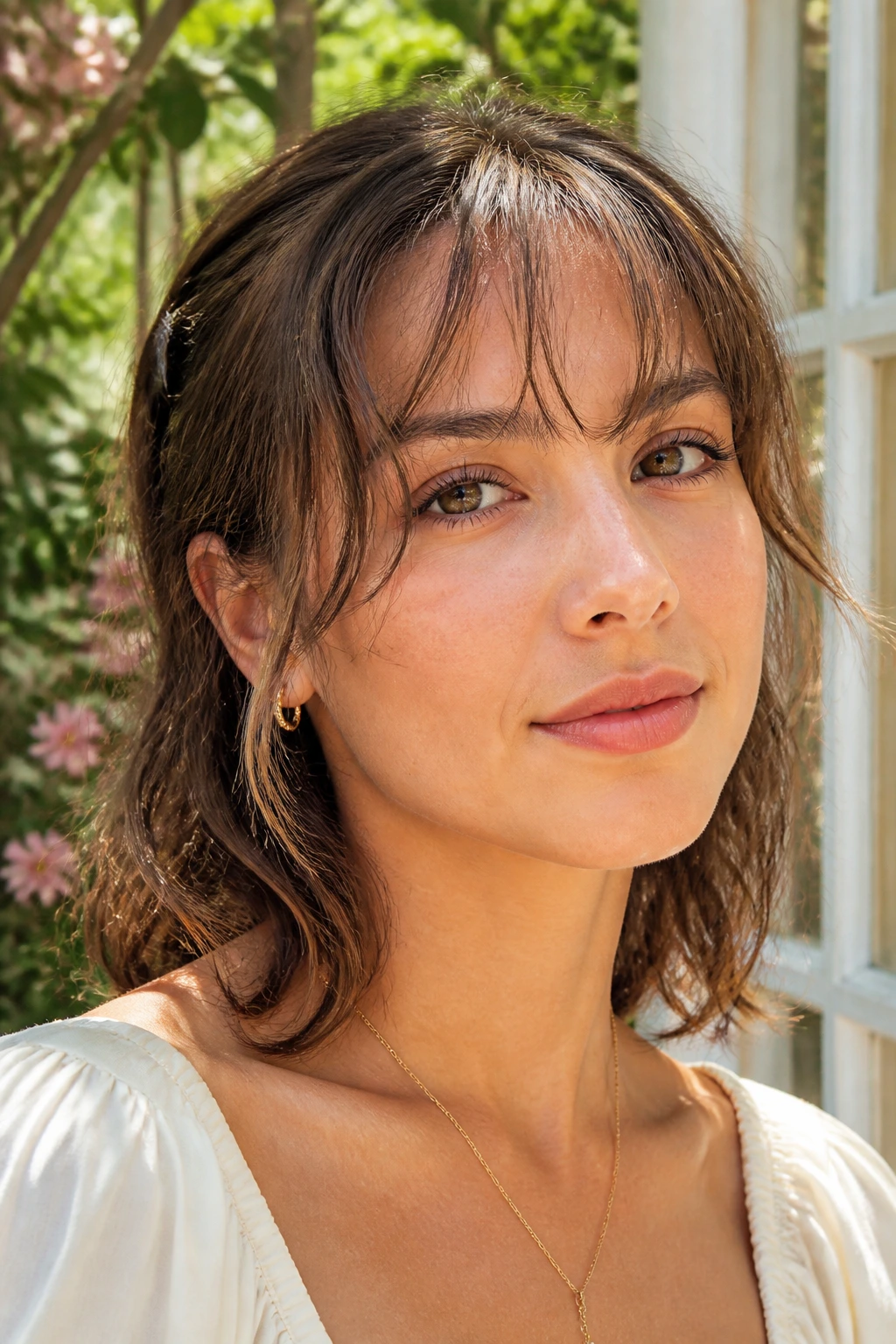
On hot summer days, a heavy fringe can feel suffocating and cling to your skin. That is when the airy, spidery fringe becomes the ultimate styling choice. Light, separated, and barely there, it moves with the slightest breeze.
This style uses very few hairs, spaced widely across the forehead. The natural waves cause these thin pieces to bend in different directions, creating an organic, delicate pattern that softens the forehead without hiding it.
Key Features of Airy Spidery Fringe
- Uses a minimal amount of hair from the very front of the hairline.
- Cut with vertical snips to keep the ends light and separated.
- Excellent for high-humidity climates where heavy bangs are impractical.
- Works beautifully with updos, leaving just a few soft tendrils loose.
Because this style uses so little hair, it is incredibly easy to tuck away or pin back with a bobby pin whenever you want a bare forehead.
17. Thick French-Girl Wavy Bangs for Oval Faces
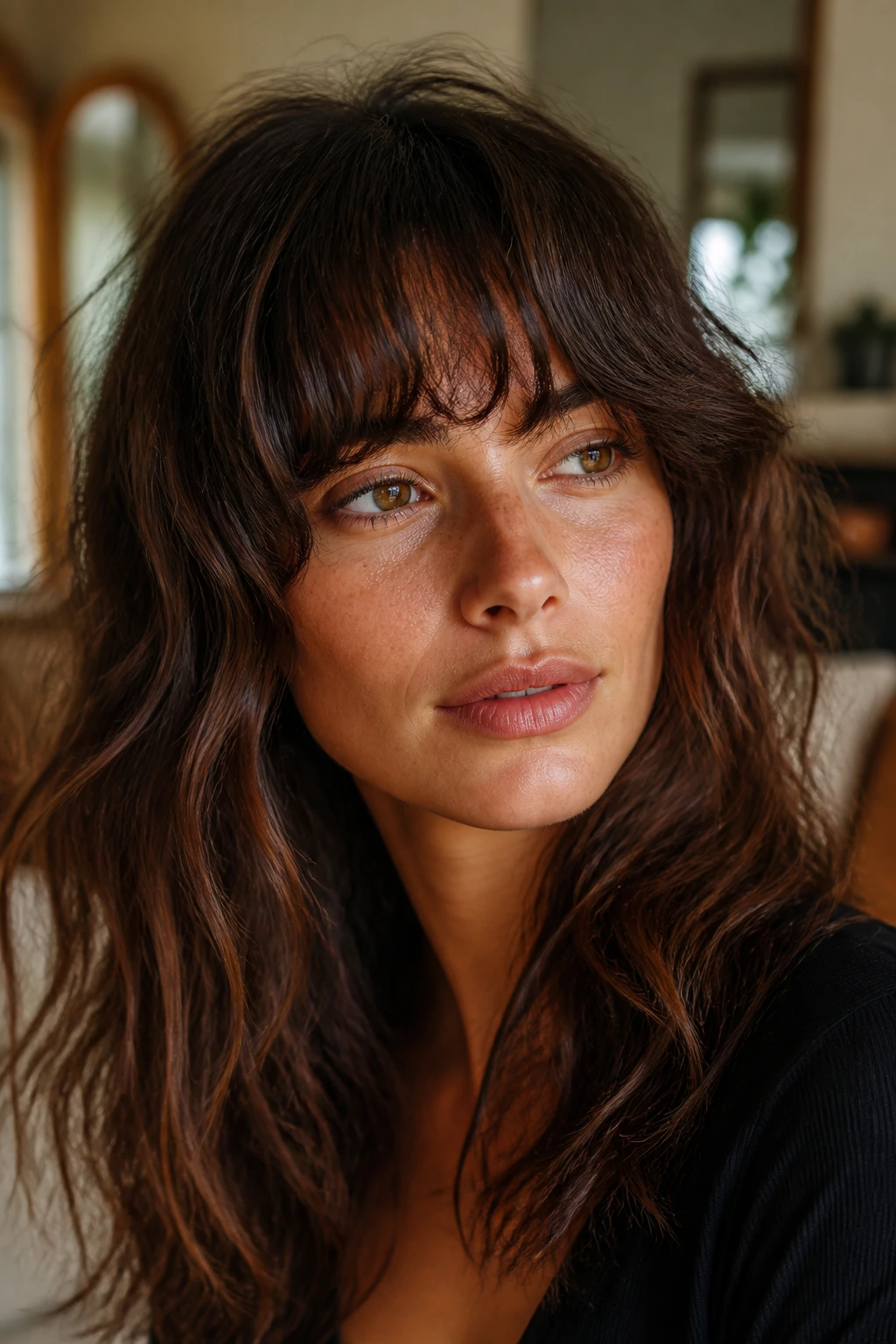
The effortless charm of French-girl style often relies on a heavy, textured fringe that looks as if it was styled by the wind. When applied to thick, wavy hair, this cut creates a full block of texture that sits comfortably above the eyes, bringing a romantic focus to the center of the face. For those with oval face shapes, this style provides a beautiful contrast between the structured jawline and the soft, abundant texture of the bangs.
The secret to this look is that it should never look too neat or manicured. The edges are left slightly choppy, and the sides are cut slightly longer to blend seamlessly into the length of your hair. This prevents the heavy line from looking too severe, giving it a soft, lived-in quality.
Thick hair naturally has a lot of weight, which can sometimes pull waves flat at the roots. To counter this, your stylist should use a slide-cutting technique to remove weight from the under-layers of the fringe. This allows the top layers to bounce up and form those classic, tousled S-waves without looking bulky.
To style thick French-girl waves, skip the blow-dryer entirely on warm days. Instead, scrunch a small amount of curl-defining cream into the damp fringe, pinch the waves together at the temples, and let them air-dry naturally. Once dry, shake them out with your fingers to restore that signature, carefree volume.
18. Face-Framing Tendril Waves
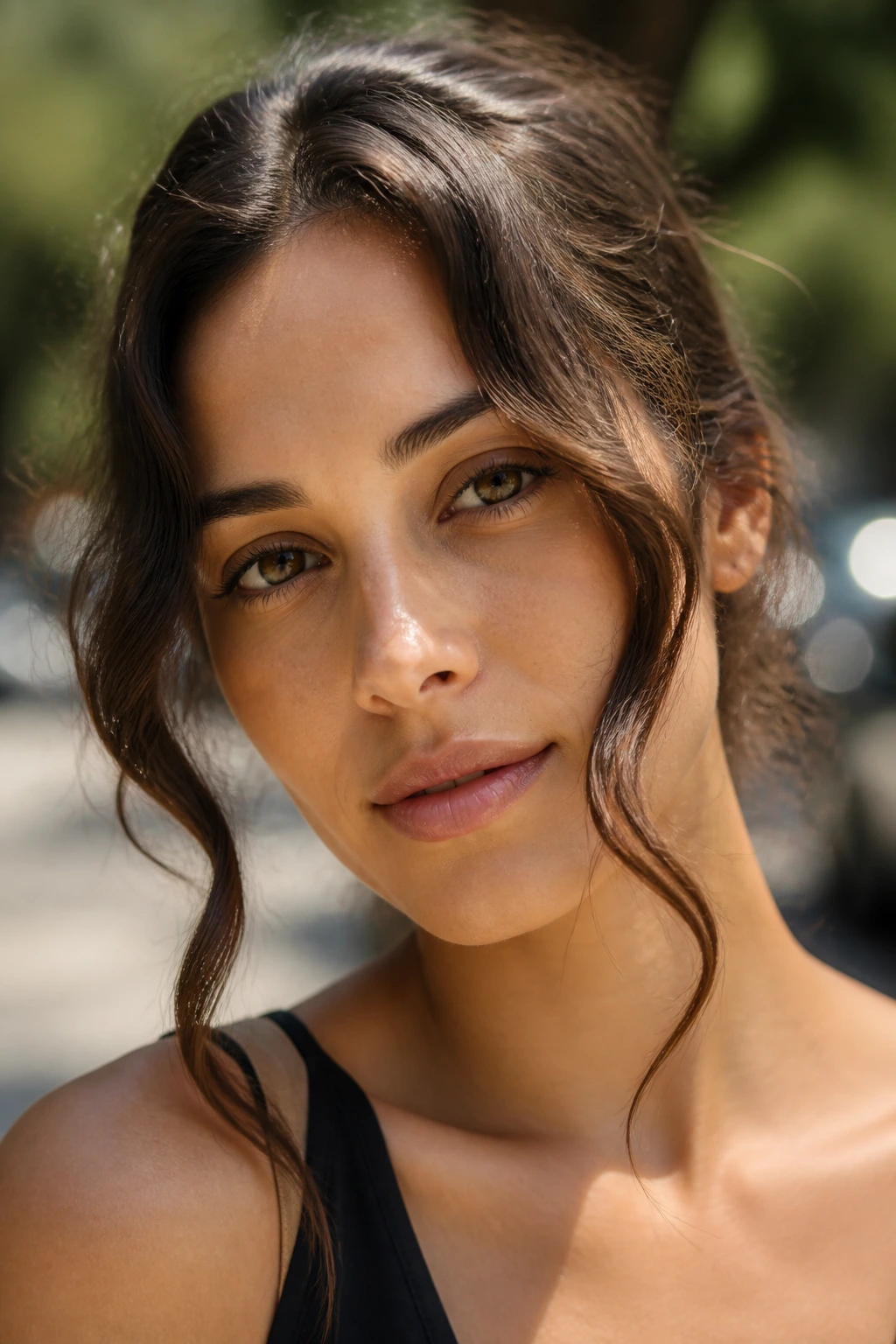
Unlike full bangs that cover the entire forehead, face-framing tendrils are all about framing the outer edges of your face. These are longer, delicate waves that start near the temples and cascade down past the eyes, leaving the center of your forehead completely bare.
This style acts more like a soft frame than a traditional fringe. It breaks up the width of the face, making it an excellent option for those who want to soften their temple area while keeping their forehead clear.
This is ideal for those who are hesitant about cutting a full fringe or are currently growing out their bangs. It works beautifully on all hair densities and is highly versatile. Keep these pieces long—at least down to your cheekbones—and ask your stylist to cut them at a slight angle. Use a light curling wand on any flat pieces to encourage them to twist away from your face.
19. Volumetric Blowout Waves
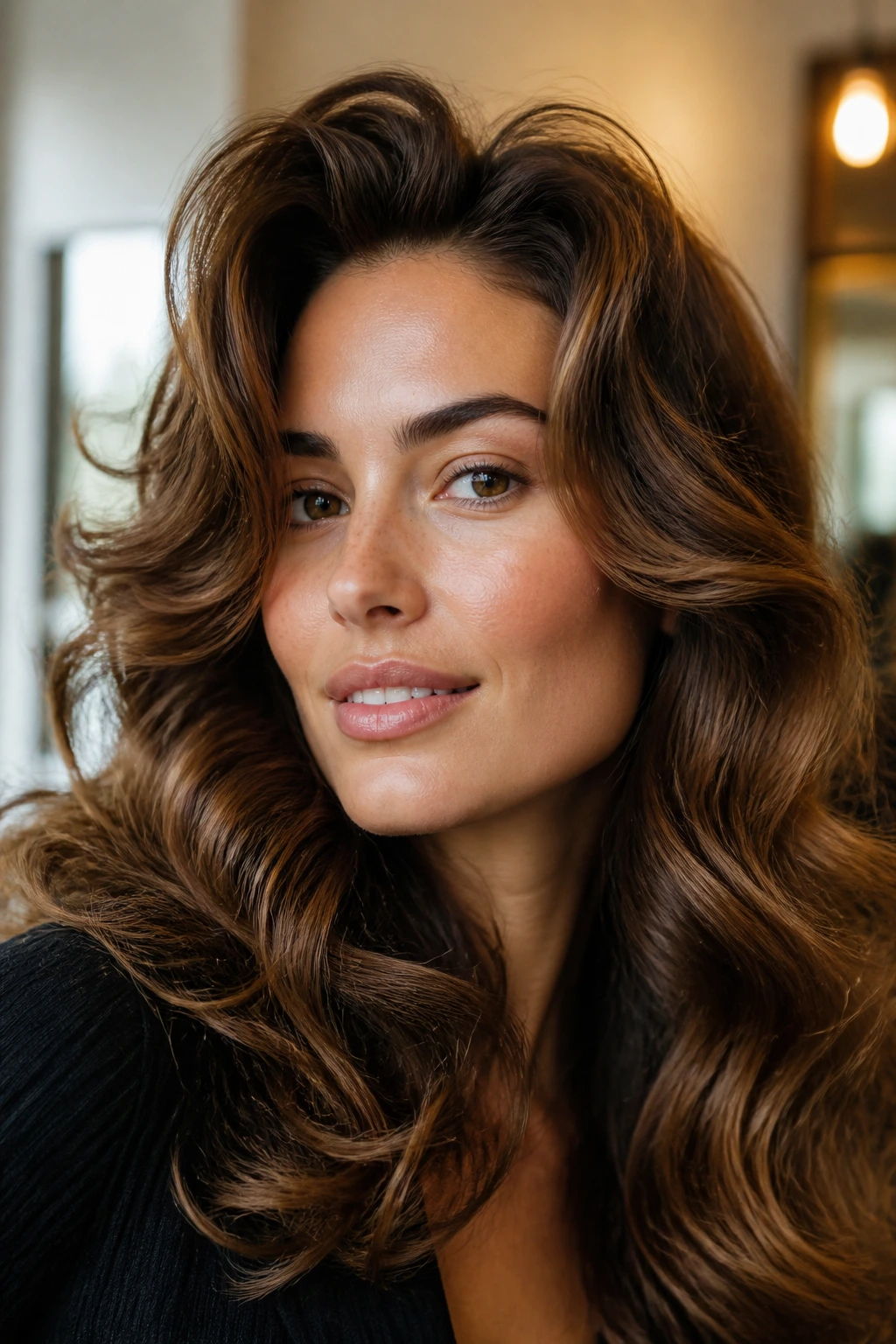
If you love the polished look of a classic blowout, this style brings that same high-volume, bouncy finish to your fringe. It features large, sweeping waves that lift off the forehead, creating a luxurious frame that highlights your cheekbones.
Why It Flatters the Oval Face Shape
The dramatic volume of a blowout sweep adds width to the top of the head, which beautifully balances the vertical length of an oval face. It gives your hair an instant touch of sophistication.
Quick Facts and Styling Needs
- Best styled using a large round brush or hot rollers.
- Requires a volumizing blowout spray or root lifter on damp hair.
- Works best on medium-to-thick hair with a natural bend.
- Needs a cool-shot blast at the end of blow-drying to lock in the bounce.
Pro tip: Roll the bangs backward away from your face on a large roller while they are still warm from the dryer, leaving them to cool for five minutes to get maximum, lasting lift.
20. Piece-y Wet-Look Waves
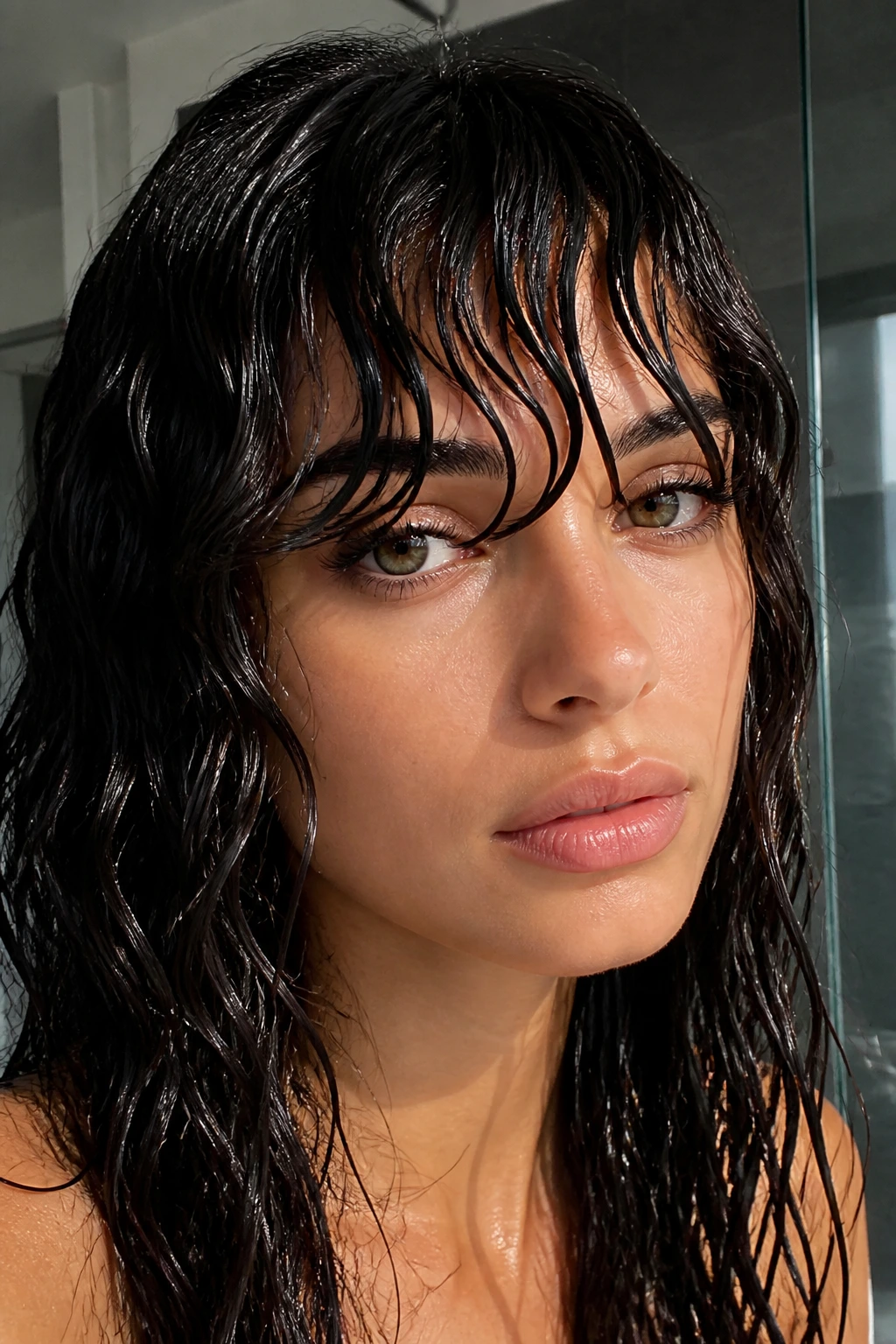
The sleek, wet-look style is not just for formal events; it is a highly practical way to tame unruly waves on humid days. By using high-shine gels or hair oils, you can clump your waves into distinct, piece-y sections that stay defined all day.
This style reduces the volume of your fringe while highlighting the S-pattern of your waves. The result is a modern look that accentuates the clean lines of an oval face.
To achieve this, apply a mixture of leave-in conditioner and a high-shine gel to damp bangs. Use a wide-tooth comb to separate the waves, then let them air-dry without touching them to prevent frizz and preserve that wet, glossy finish.
21. Tousled Bedhead Fringe
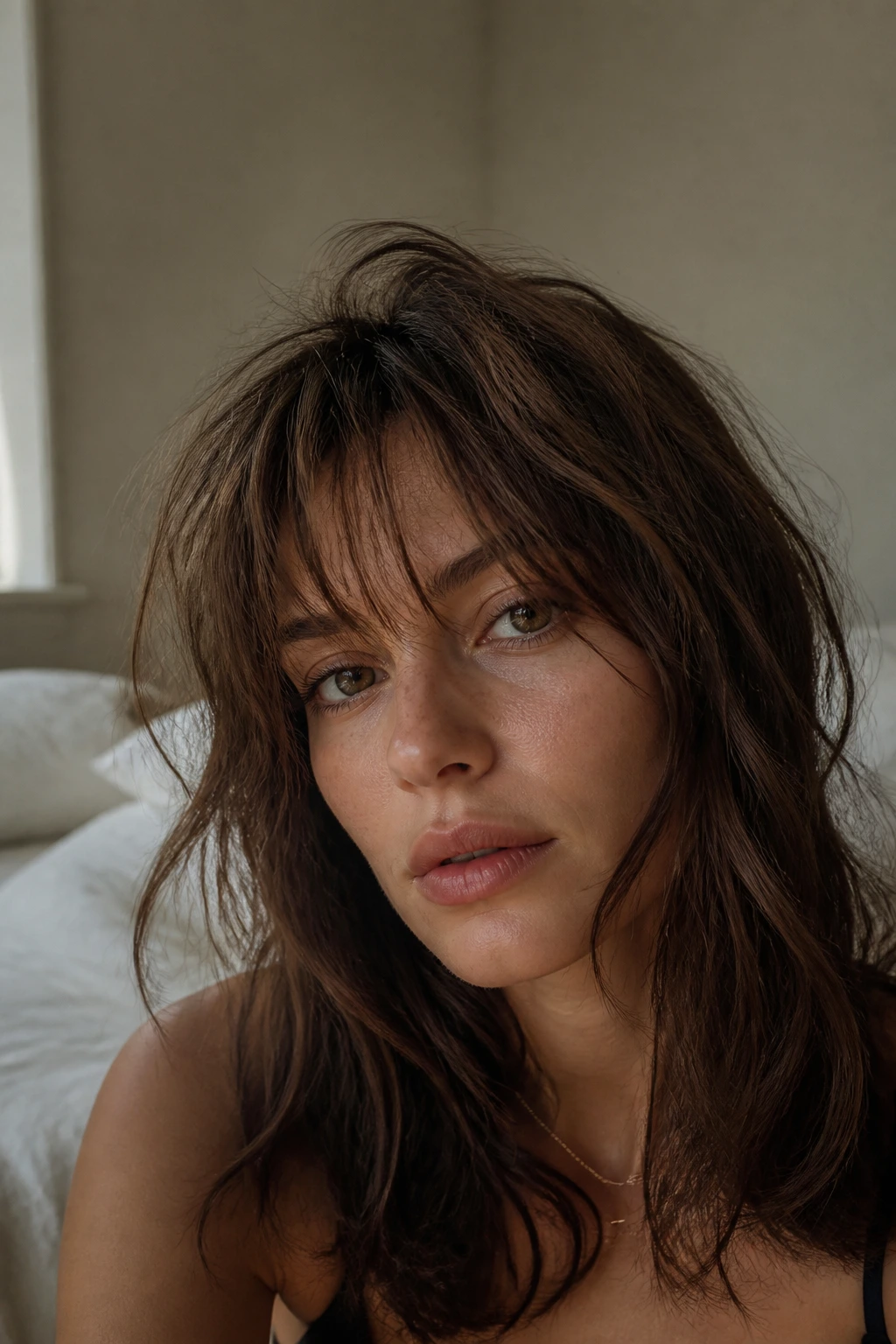
How do you achieve that perfect “I woke up like this” look without actually looking messy? The secret lies in a textured, dry-cut fringe that relies on your hair’s natural, irregular wave pattern.
The tousled bedhead fringe is cut with textured ends and styled to look slightly messy, with pieces pointing in different directions. On an oval face, this effortless texture breaks up any stiffness and adds a relaxed, casual vibe to your daily style.
This style thrives on texture sprays rather than heavy creams. It is meant to feel airy and light, with plenty of movement. Spray a dry texturizing mist onto your dry bangs, then use your fingers to vigorously shake the hair at the roots. Pinch the tips of a few random waves to guide them across your forehead, letting them fall naturally wherever they land.
22. Wispy Birkin Waves
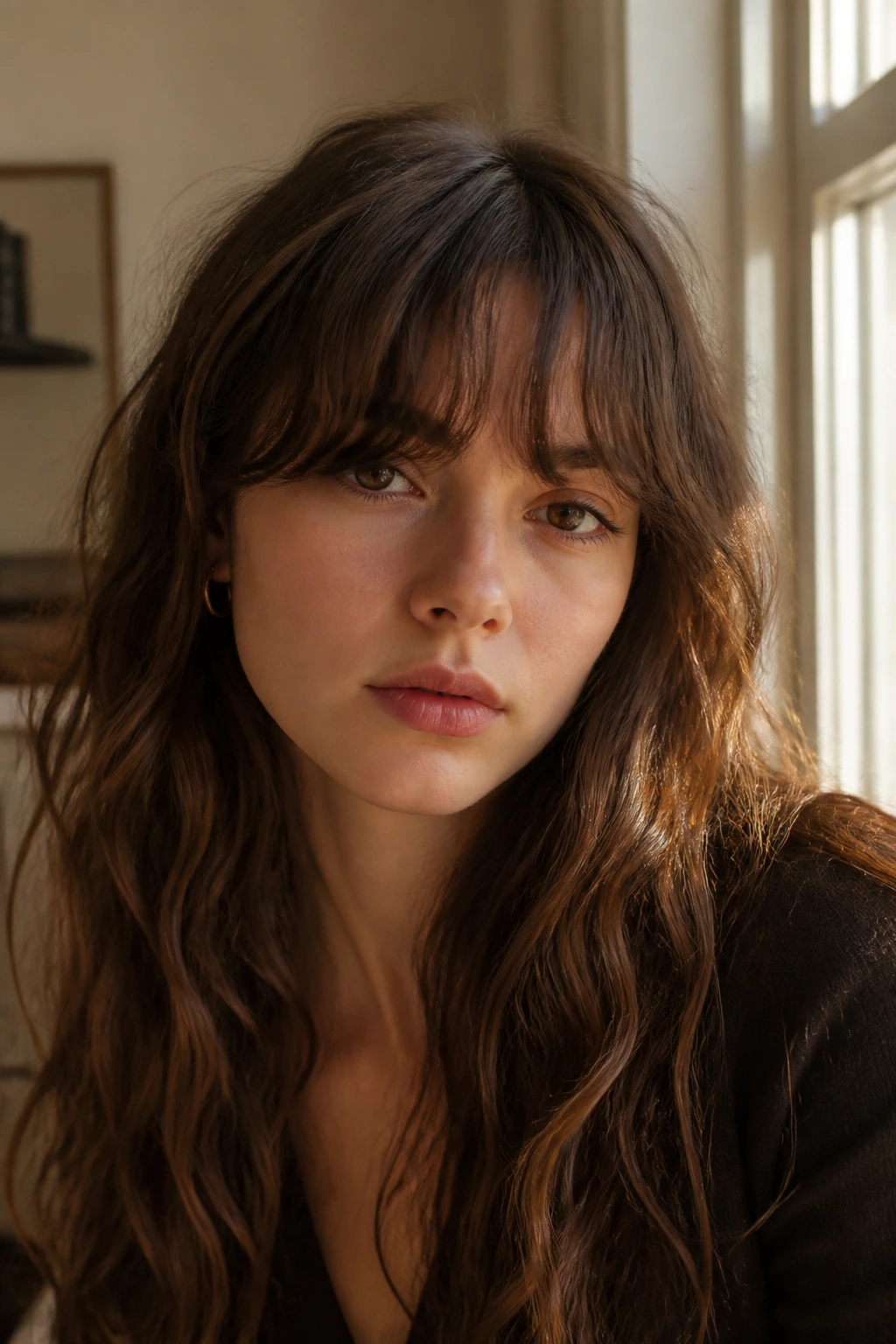
Jane Birkin famously made the wispy, eyebrow-grazing fringe an iconic look. When you combine that classic shape with soft, natural waves, you get a style that feels both timeless and completely fresh.
The Birkin wave features soft, piece-y strands that sit right at the eyebrow level, with the natural bend of the wave keeping the look soft and touchable. This frame shortens the forehead slightly while keeping the focus firmly on your eyes.
Key Features of Birkin Waves
- Eyebrow-grazing length that looks best with a soft, natural wave.
- Lightly textured ends that prevent the fringe from feeling heavy.
- Works beautifully with long, un-layered hair or soft waves.
- Requires very little daily styling—just shake and go.
This style is the epitome of low-maintenance elegance. As it grows out, it transitions into curtain waves, making the maintenance cycle incredibly forgiving.
The Bottom Line
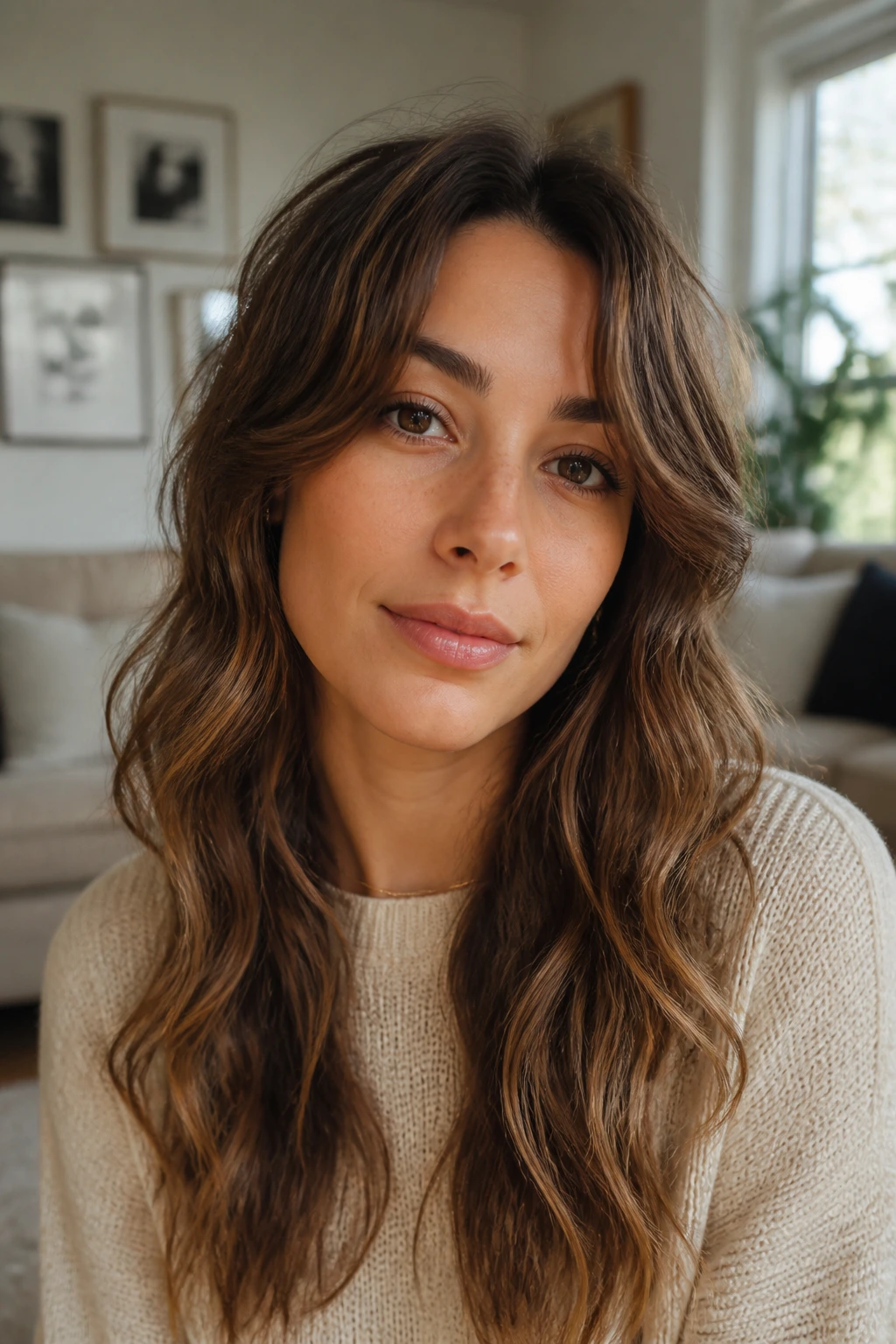
Choosing a wavy fringe is not about fighting your hair’s natural texture to fit a rigid mold. It is about working with the natural bend, bounce, and personality of your waves. For an oval face shape, the options are incredibly diverse, allowing you to play with density, length, and parting.
The most successful wavy bangs are those that are cut dry, styled with a light hand, and allowed to move naturally throughout the day. Invest in a good texturizing spray, find a stylist who understands dry cutting, and let your natural waves do the rest.