

Getting bangs when you have fine hair feels like a high-stakes gamble. You want that effortless, face-framing movement, but you dread the reality of piecey strands sticking to your forehead like wet silk. Fine hair lacks density and individual strand thickness, meaning a heavy-handed scissor cut can quickly leave you with a sparse, gappy fringe that looks more accidental than intentional. Yet, when done right, fine hair bangs can create the optical illusion of volume, framing your face and giving your entire haircut a deliberate, styled structure.
The secret lies in working with your hair’s natural weightlessness rather than fighting it. Many people make the mistake of cutting too much hair from the crown to make their bangs look thicker, which only steals precious volume from the sides and back of the hairstyle. Instead, the goal is to choose a style that embraces transparency, uses smart texturising techniques, and relies on precise styling. By working with light sections and soft layers, you can enjoy a fringe that looks airy, full, and full of life.
Let’s look at twenty practical, beautiful ways to wear bangs with fine hair, along with the specific cutting techniques and daily styling habits that make them work in the real world.
1. Soft Wispy Curtain Bangs
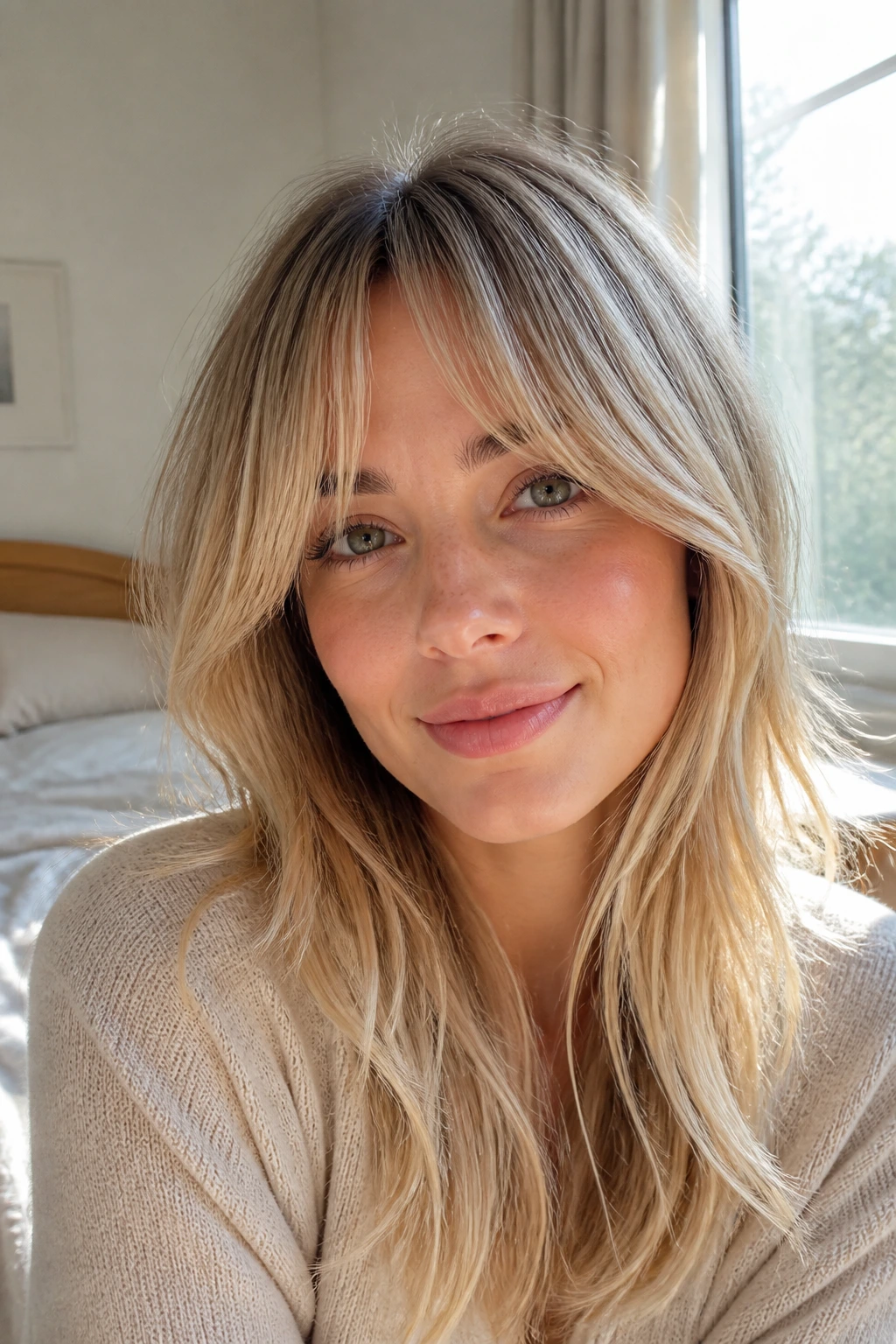
Wispy curtain bangs part gently down the center or slightly off-center, sweeping outward to frame the eyes and cheekbones. This style is incredibly forgiving for fine hair bangs because it does not require a large section of hair from the crown to look complete. By keeping the center short and gradually lengthening the sides, you get the face-framing benefits of a fringe without sacrificing your hair’s overall density.
Why It Works for Thin Strands
Because these bangs sweep outward, they create a diagonal line across the forehead. This diagonal line draws the eye up and out, making your face look lifted and your hair appear naturally thicker at the temples. The wispy ends blend seamlessly into the rest of your hair, preventing any harsh, blunt lines that might expose sparse areas.
Quick Styling Facts
- Ideal tool: A medium-sized ceramic round brush.
- Drying direction: Blow dry forward first, then roll them back and away from the face.
- Hold level: A feather-light dusting of dry shampoo at the roots for grease prevention.
- Trimming schedule: Every six to eight weeks to keep the sweep sitting right at the cheekbones.
Pro tip: Avoid using heavy styling creams on curtain bangs, as the weight will cause them to collapse flat against your temples by midday.
2. Delicate Bottleneck Bangs
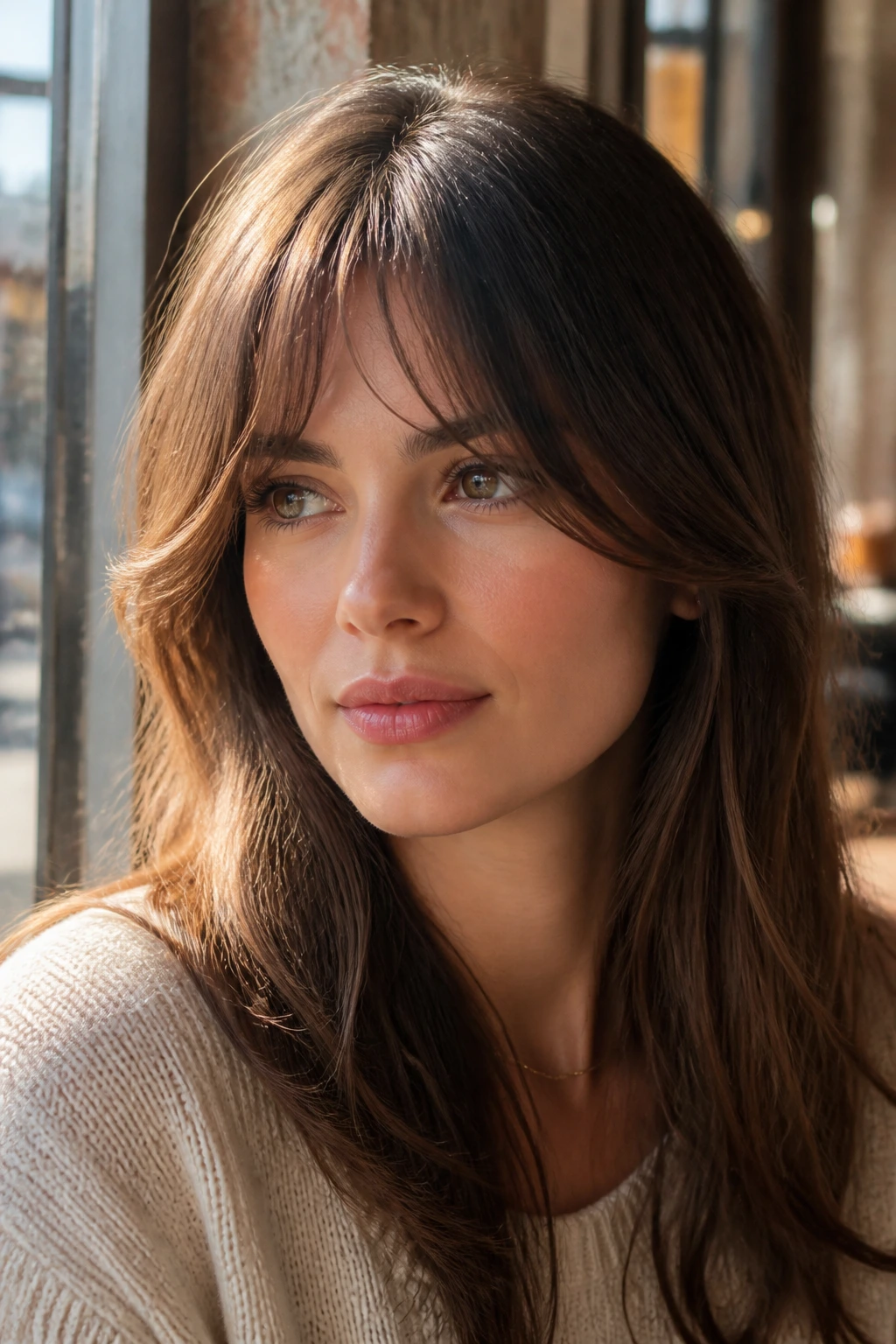
Bottleneck bangs mimic the shape of an old-fashioned glass bottle. They start narrow and short at the very center of your forehead, curve outward around the eyes, and then flare out to longer pieces that skim the cheekbones. This shape is incredibly flattering for fine hair because it keeps the forehead coverage light while creating a beautiful frame.
The beauty of this cut lies in its transitions. The short center section can be as sparse as a few strands, meaning you do not have to commit much hair to the cut. As the fringe cascades outward, it merges with the longer side pieces, which helps build a sense of volume around the eyes. It is an excellent option if you want the look of straight-across bangs but worry about your hair looking too thin.
To style bottleneck bangs, focus your blow dryer on the short center section first, blowing it straight down with a paddle brush. Then, use a round brush on the longer side sections, rolling them away from your face to create that signature flared shape. This dual-direction styling gives the illusion of a full, bouncy fringe with minimal hair.
3. Piecey French Girl Bangs
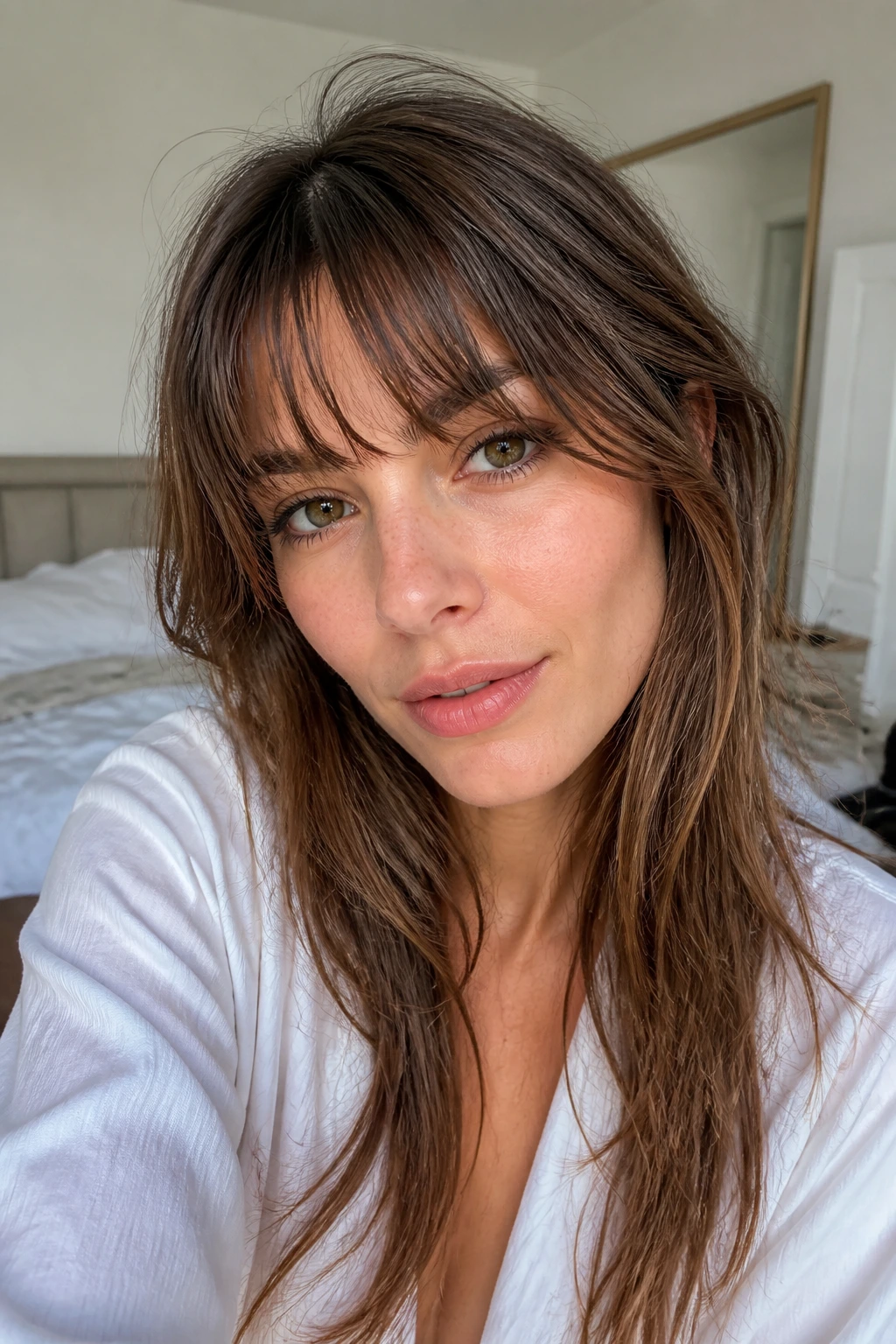
French girl bangs are defined by their undone, lived-in texture. They sit just below the brow line and are cut with a piecey, slightly shattered edge. Instead of a solid wall of hair, this style intentionally incorporates small gaps that let your forehead show through, making it a natural choice for finer hair types.
Why the Shattered Edge is Key
A solid, blunt fringe can look sparse and stringy very quickly on fine hair. By cutting the fringe with a shattered, point-cut edge from the start, the piecey look becomes a deliberate design choice rather than a styling failure. When the bangs separate naturally throughout the day, they simply look more textured and French-inspired.
How to Style French Girl Bangs
- Start with wet hair and apply a nickel-sized amount of lightweight volumising mousse to the roots.
- Use your fingers to rough-dry the bangs from side to side, pointing the dryer nozzle downward.
- Finish by using a flat brush to pull the ends straight down, letting them air-dry the rest of the way for a natural, slightly imperfect texture.
- Spray a small amount of dry texture spray onto your fingertips and pinch the ends of the bangs to keep them defined.
4. Feathered Micro Bangs
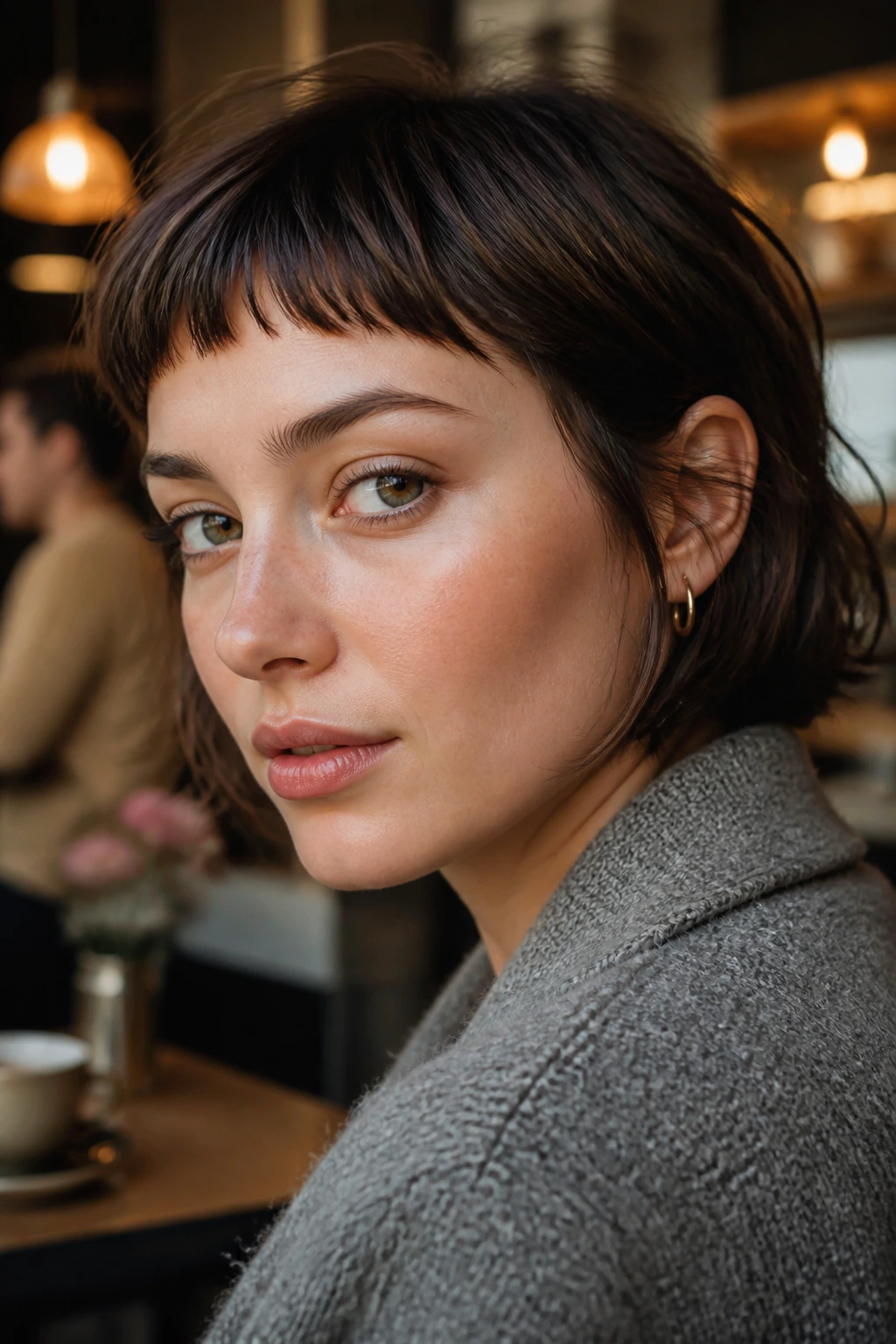
Micro bangs sit an inch or more above the eyebrow. When cut into fine hair, feathering the edges is essential to keep them from looking like a harsh, straight line. This ultra-short style is surprisingly low-maintenance because the hair is too short to fall flat or clump together the way longer bangs do.
This cut works wonders for people with small foreheads or those whose hair tends to split at the crown. Because the bangs are so short, they are lightweight and tend to stand up and away from the scalp naturally, giving your hair an instant boost of height. It is a bold, artistic look that highlights your eyes and eyebrows beautifully.
When maintaining feathered micro bangs, you will need quick trims every three to four weeks to keep the length above the brows. For styling, a quick pass with a mini flat iron or a fast rough-dry with your fingers is all it takes to set them in place.
5. Light Side-Swept Bangs
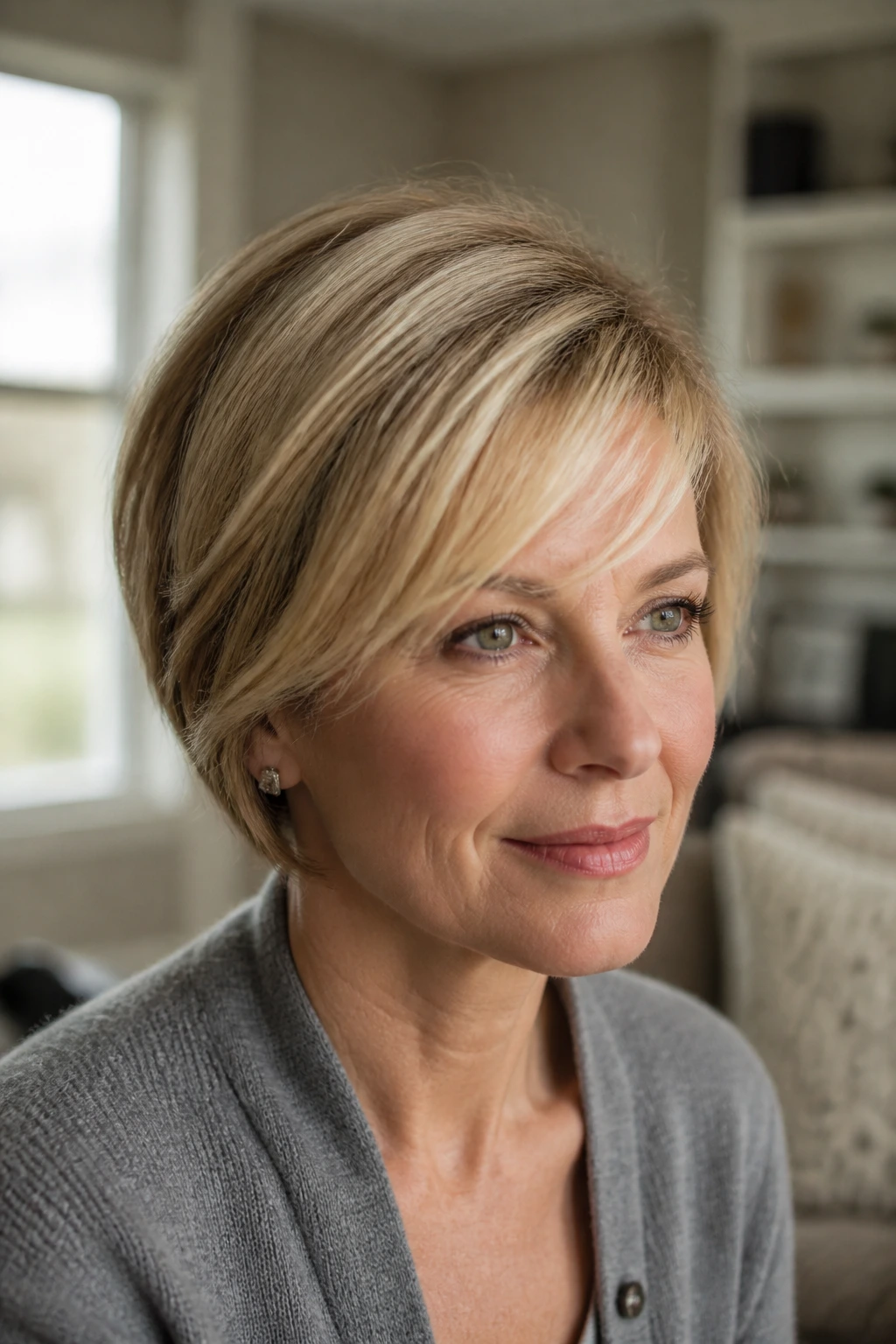
Side-swept bangs are a timeless option for fine hair because they gather the hair to one side, creating a thicker-looking section of fringe. By sweeping the hair diagonally across the forehead, you create a soft, elegant line that adds volume and movement to flat hair.
The key to keeping side-swept bangs looking modern is to avoid a heavy, solid block of hair. Instead, ask your stylist for a slide-cut side fringe that starts short near the inner brow and tapers gradually down toward the opposite temple. This diagonal line blends effortlessly into your side layers, making your hair look fuller as it flows together.
This style is also incredibly easy to grow out if you decide you want a change. Because the hair is cut on a gradient, it simply becomes a face-framing layer as it grows. It is the perfect low-commitment entry point into the world of bangs.
To dry side-swept bangs, sweep them with a paddle brush in the opposite direction of how you plan to wear them while blow-drying. Once dry, flip them back to their natural side. This simple trick adds a beautiful, natural swoop of volume at the root without the need for heavy products.
6. Airy Shag Fringe
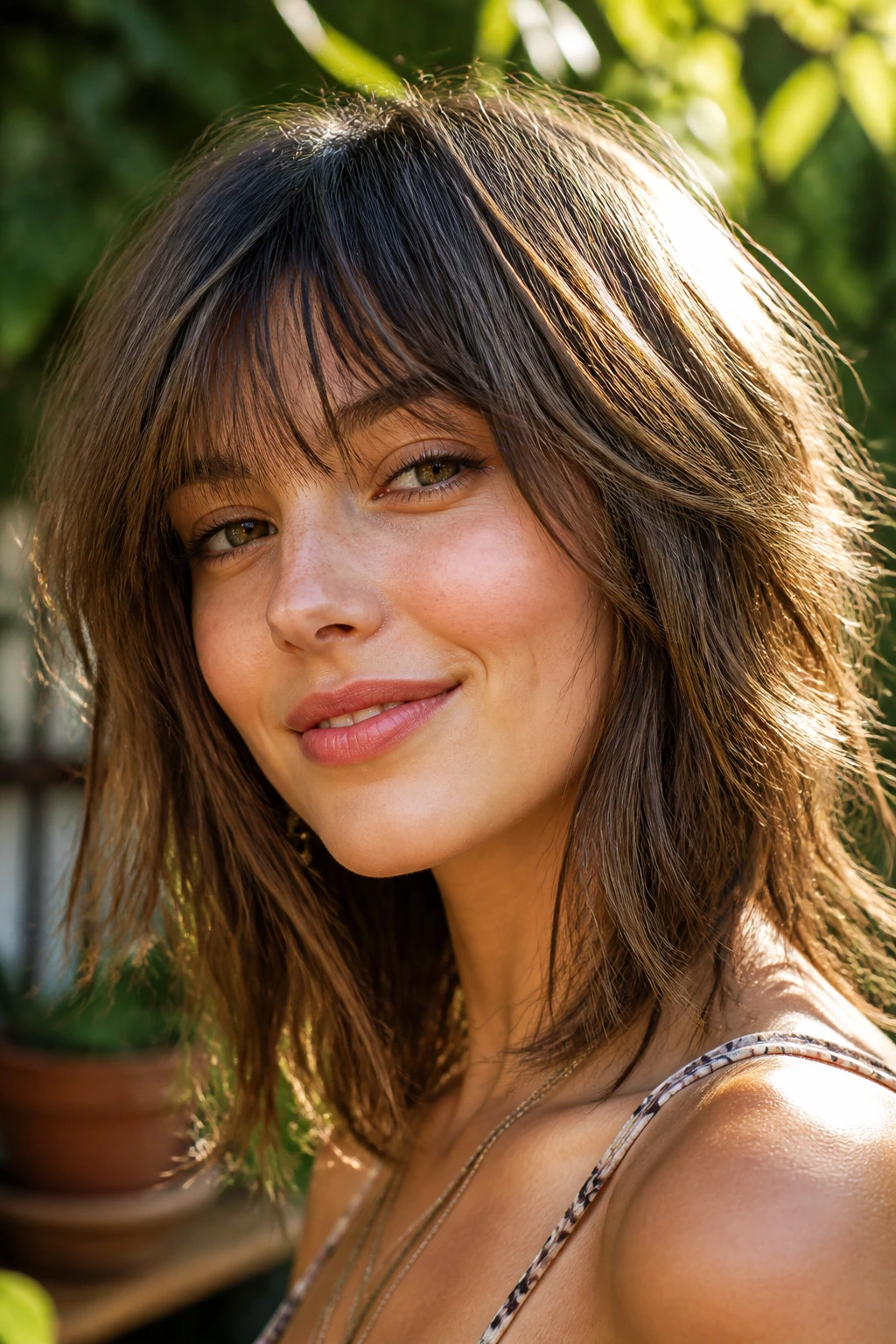
The modern shag relies on lots of choppy layers, and the accompanying fringe is no exception. An airy shag fringe consists of multiple, uneven layers that sit at different heights on the forehead, creating depth and the illusion of thickness.
Unlike heavy retro shags that can swallow up fine hair, this airy version uses very light sections. The choppy, layered cuts mean that any natural separation in your hair actually enhances the style rather than ruining it. It works beautifully with natural waves or bedhead texture.
This style is best for anyone who prefers a messy, textured look over a sleek finish. It pairs perfectly with messy buns, high ponytails, and air-dried waves.
7. Textured Choppy Bangs
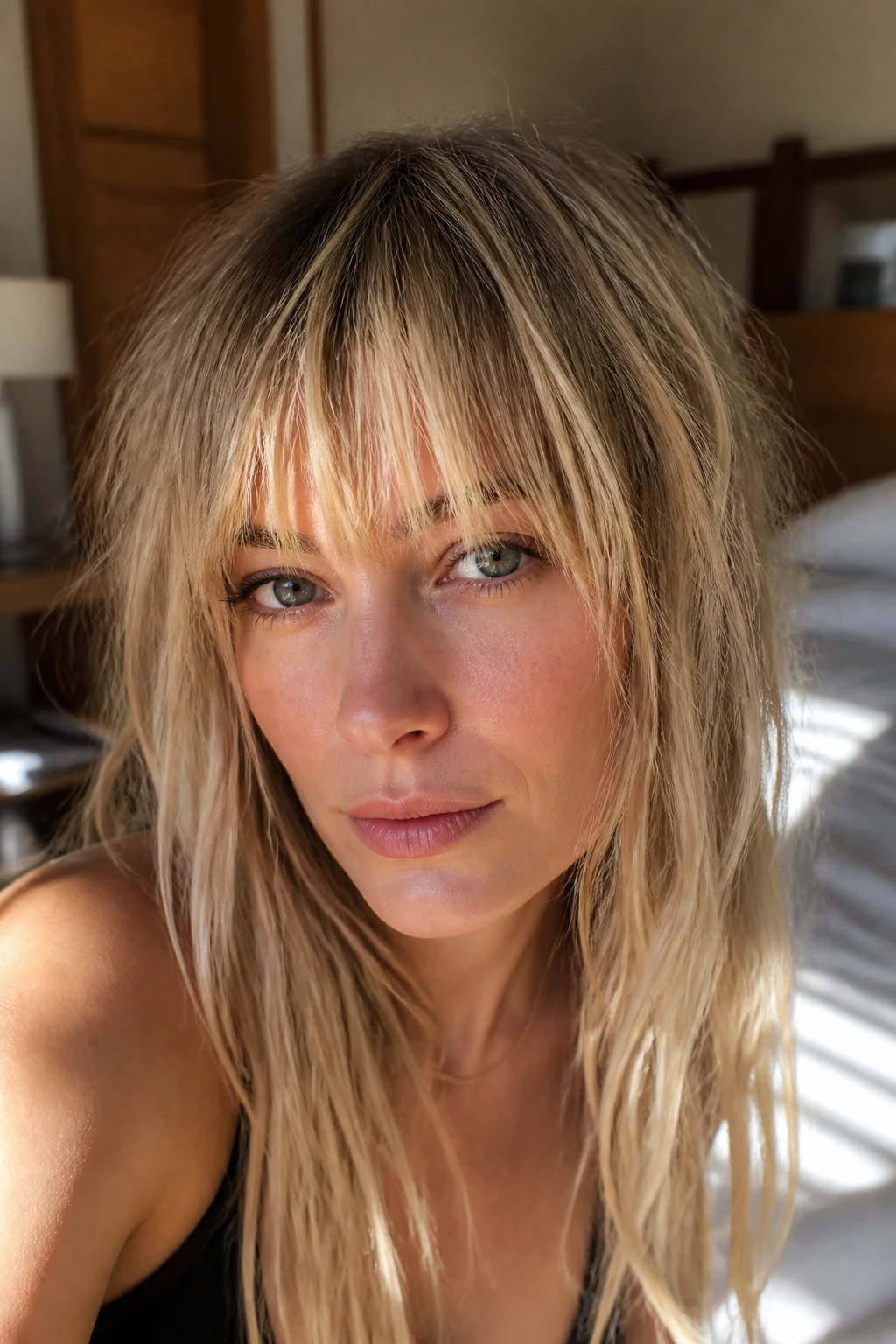
Choppy bangs are cut with vertical snips rather than horizontal ones, leaving you with an uneven, textured edge. This technique breaks up the weight of the hair, making it look airy and full of movement. For fine hair, this is a fantastic way to prevent the fringe from looking too thin or see-through.
The Power of Vertical Cuts
When a stylist cuts hair horizontally, it creates a blunt line that highlights exactly how thick or thin the hair is. Vertical cuts, on the other hand, create varying lengths within the fringe. This variation allows the hair to bounce up, creating a textured surface that catches the light and looks significantly thicker than a blunt cut.
Quick Styling Rules
- Avoid heavy styling creams: They will clump the choppy layers together into wet-looking spikes.
- Use a matte styling powder: Apply a tiny pinch to the roots to lift the hair and keep the pieces separated.
- Embrace air-drying: Let your hair air-dry to 80% before giving it a quick blast with cold air to set the texture.
Pro tip: If your choppy bangs start to look greasy, spray dry shampoo onto a small makeup brush and sweep it through the bangs from root to tip.
8. Tapered Wispy Bangs
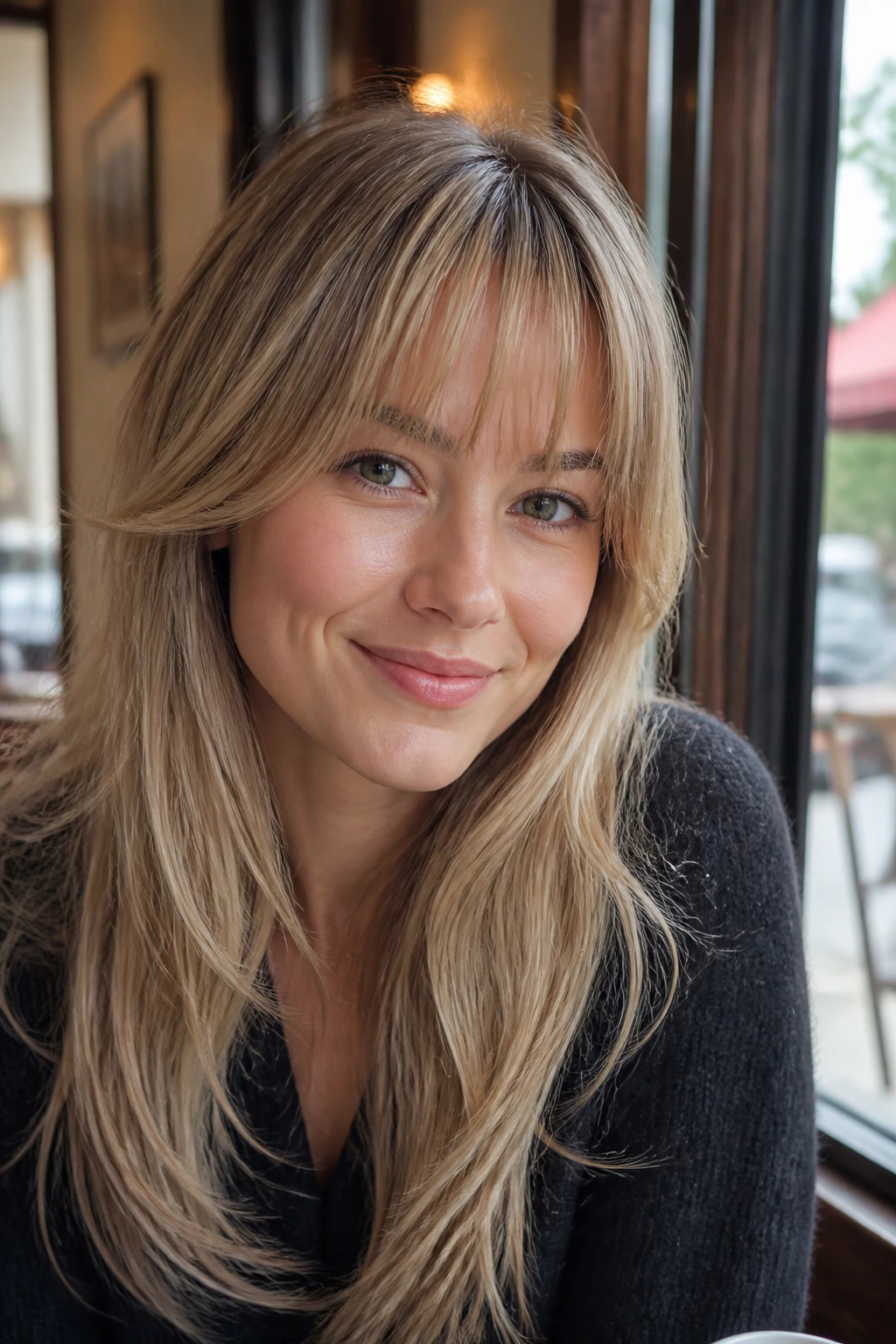
Tapered wispy bangs are shorter in the middle and curve downward at the outer corners, hugging the cheekbones. This curved shape frames the face beautifully and helps blend the fringe into the rest of your haircut, which is especially helpful for fine, long hair.
By tapering the edges, your stylist ensures that the transition between your bangs and your face-framing layers is soft and gradual. This prevents the harsh “step” that can sometimes happen with blunt bangs, which often makes fine hair look thinner at the sides.
Styling this look is all about maintaining that soft, curved shape. Use a small round brush to dry the center straight down, then roll the side pieces outward and back. This creates a soft, romantic frame that looks effortless.
9. Blended Face-Framing Tendrils
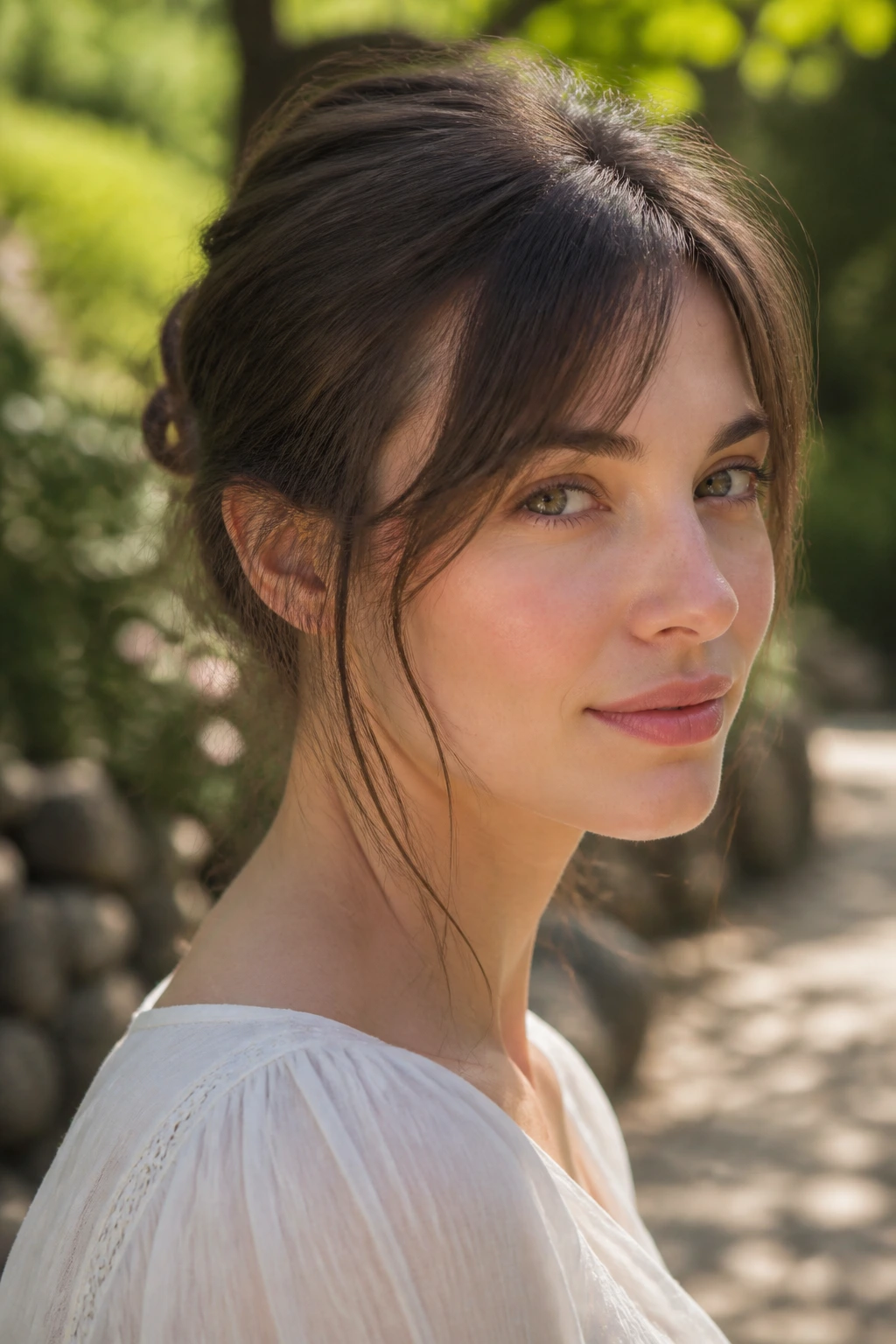
If you are not ready for a full set of bangs, blended face-framing tendrils are an excellent alternative. These are very fine, wispy pieces of hair cut around the hairline that mimic the natural “baby hairs” that frame the face. They look soft, delicate, and incredibly natural.
Why They are Perfect for First-Timers
These tendrils require almost no hair from the crown of your head. They are cut purely from the fine hairs around your temples and forehead, meaning you keep all of your hair’s density for the rest of your style. They add soft interest when your hair is pulled back into a ponytail or bun.
How to Wear Them Daily
- With an updo: Pull a few tendrils loose around your ears and temples to soften a tight ponytail.
- With loose hair: Let them blend into your side parts for a soft, wind-blown look.
- Curled softly: Use a small curling wand to add a gentle bend to the tendrils for a romantic touch.
10. Long Grown-Out Curtain Bangs
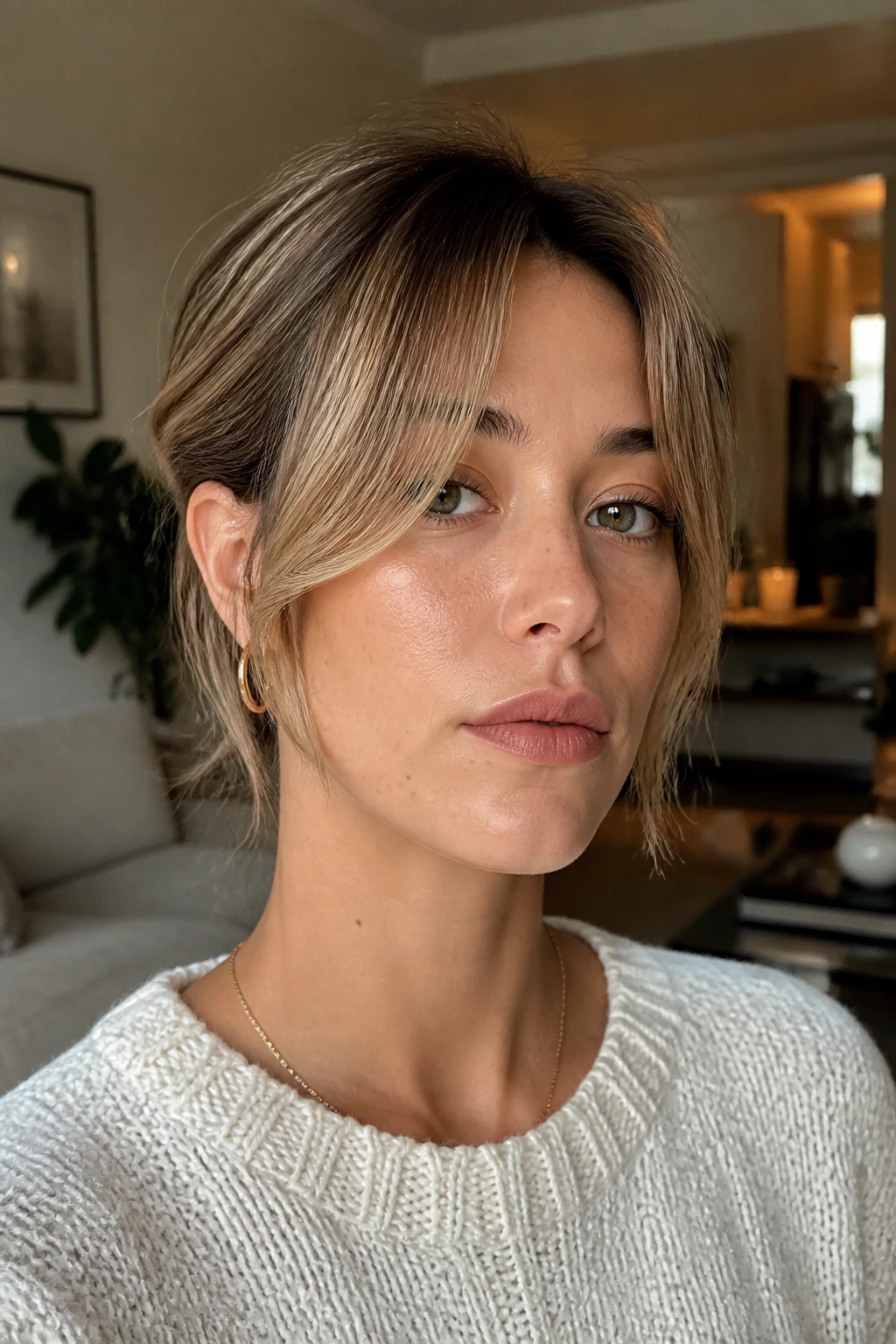
Long, grown-out curtain bangs sit around the cheekbones or jawline. Because they are longer, they carry slightly more weight, which helps them stay in place and prevents them from blowing around too easily in the wind.
This style is perfect for anyone with fine hair who wants the framing effect of bangs but lacks the time for frequent trims. The longer length means they can easily be tucked behind your ears when you want them out of your face, or pinned back with decorative clips.
To style long curtain bangs, use a large round brush to blow dry them up and away from your face. This creates a classic, voluminous sweep that adds instant bounce and life to fine hair, making your entire style look more polished.
11. Subtle Crescent Bangs
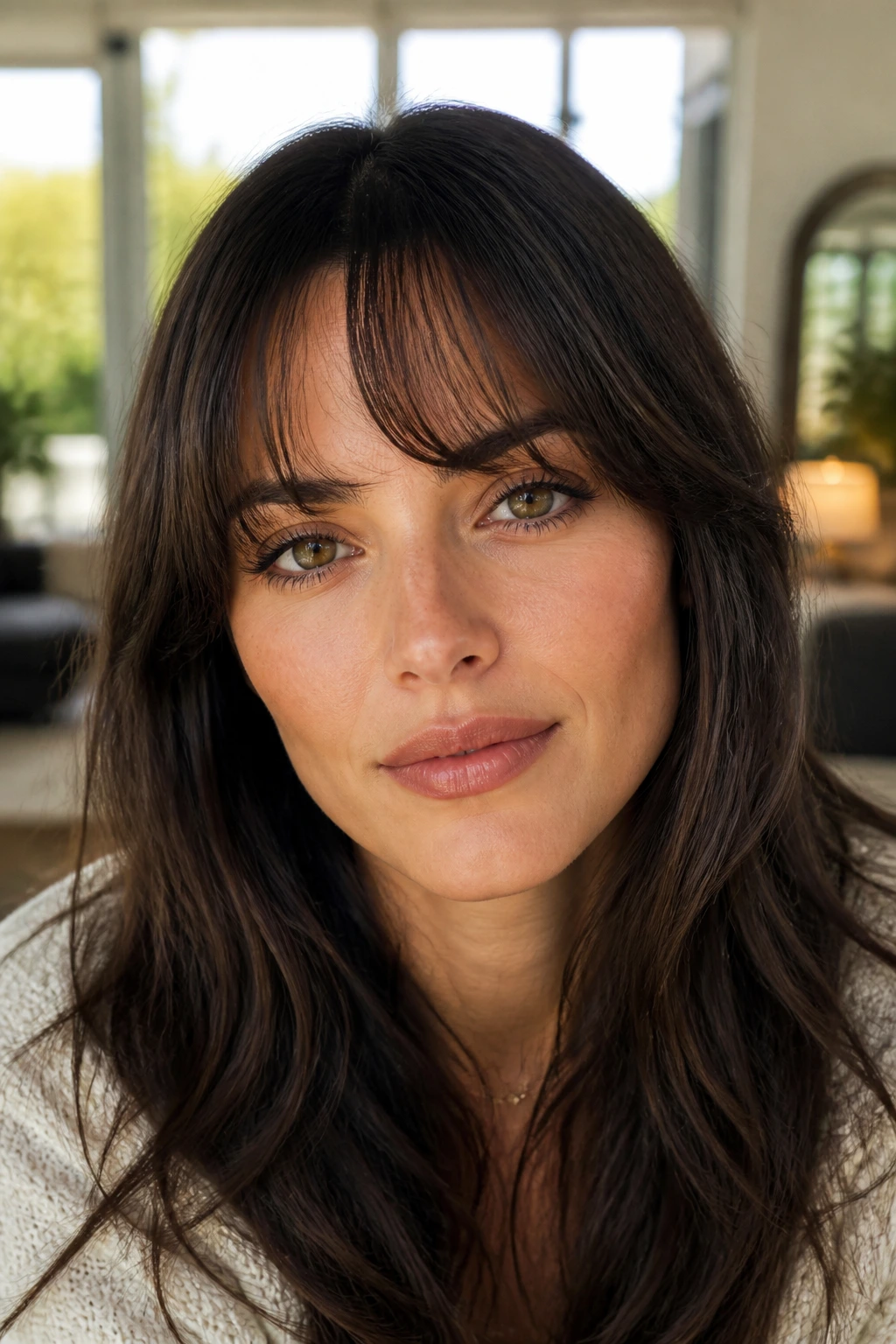
Crescent bangs are cut in a soft, inverted U-shape. The center sits just above the eyelashes, while the sides curve gently downward to frame the eyes. This shape is wonderful for fine hair because it follows the natural curve of your brow bone, creating a clean frame that makes your eyes pop.
Because the corners are longer, this style naturally directs attention toward your cheekbones, making your face look wider and your hair look fuller at the sides. It is a very soft, feminine cut that works well with straight or lightly waved hair.
To style crescent bangs, blow dry them straight down with a paddle brush first to ensure they lie flat against your forehead. Then, use a small round brush on the very ends to curl them slightly inward, highlighting the curved crescent shape.
12. Texturised Baby Bangs
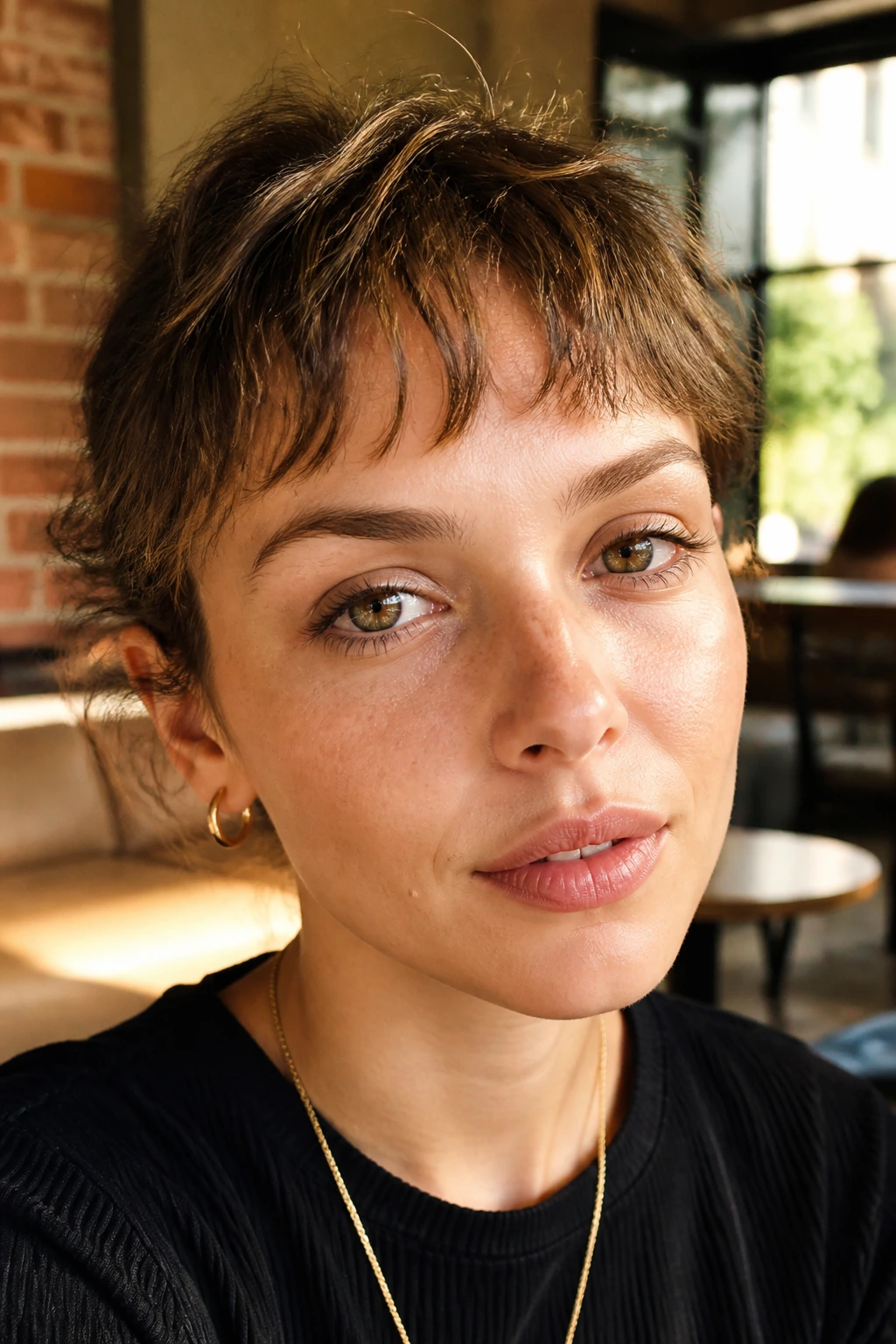
Baby bangs are short, but texturised baby bangs take it a step further by incorporating lots of tiny, wispy layers. This style is highly artistic and works beautifully for fine hair because it turns transparency into a deliberate feature.
Unlike thick, blunt baby bangs that require dense hair to look right, texturised baby bangs are meant to look light and airy. They let your forehead show through, which creates a soft, modern look that doesn’t feel heavy or overwhelming.
This cut is best styled with a small amount of matte pomade or wax. Rub a tiny dab between your fingers and pinch the ends of the bangs to create a piecey, defined texture that lasts all day.
13. Wispy Straight-Across Fringe
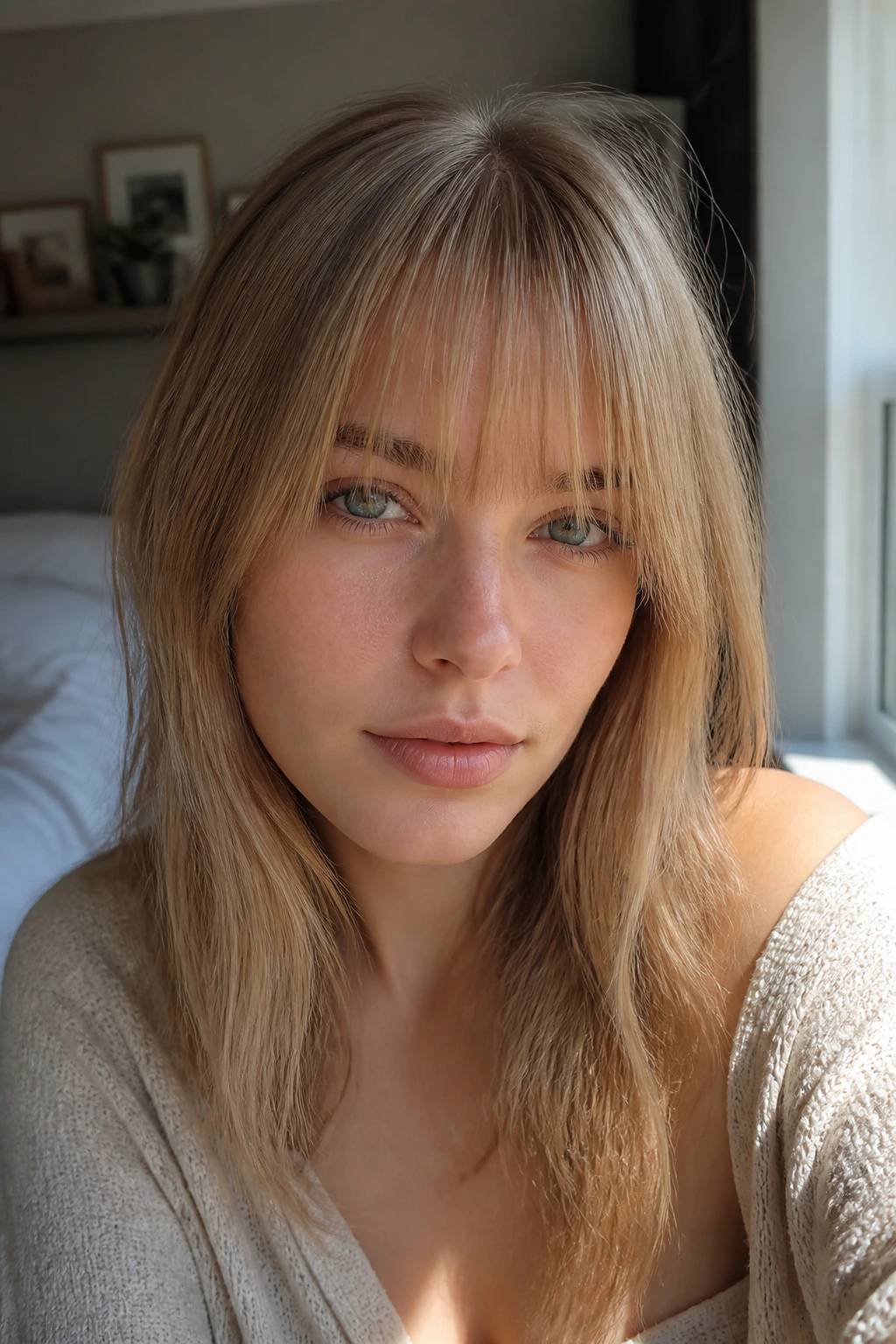
A classic straight-across fringe can be tricky for fine hair, but a wispy version makes it highly wearable. Instead of a solid, heavy block of hair, a wispy straight-across fringe is cut with very light tension, allowing your forehead to peek through the strands.
Maintaining the Line
The key to keeping this look polished is ensuring the bangs do not look stringy. Regular washing is essential, as even a small amount of oil can cause wispy bangs to clump together.
Quick Styling Checklist
- Wash daily: You can wash just your bangs in the sink each morning to save time.
- Use a paddle brush: Blow dry them flat against your forehead to prevent them from parting in the middle.
- Skip the forehead moisturiser: Keep your forehead dry and powdered to prevent skin oils from transferring to your fringe.
Pro tip: When applying skincare, wait for your moisturiser and sunscreen to dry completely before letting your bangs fall back onto your forehead.
14. Shadow Bangs
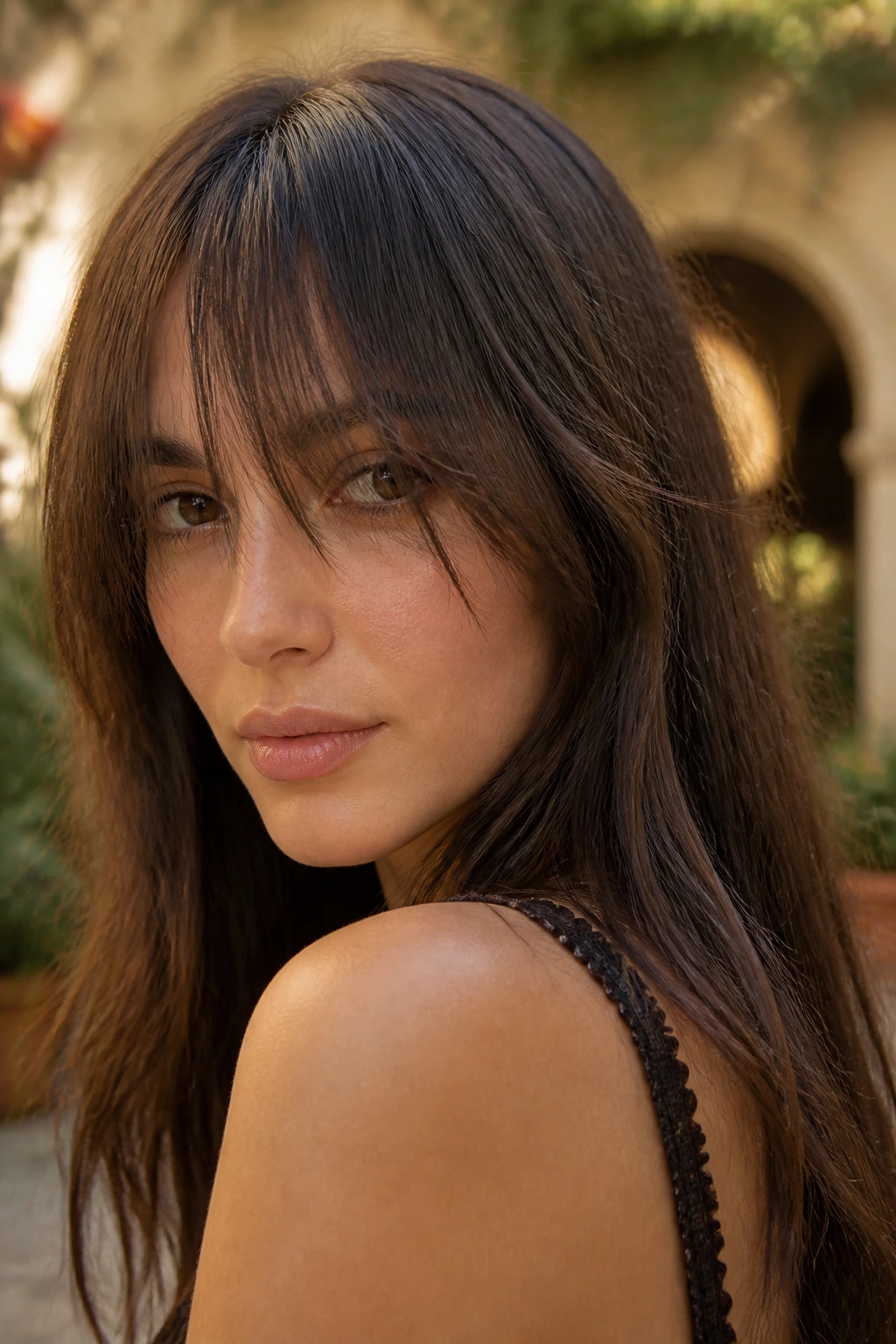
Shadow bangs are long, wispy bangs that skim the eyelashes, casting a soft shadow over your eyes. This style is incredibly sultry and works beautifully for fine hair because the long length allows the strands to catch the air and move naturally.
Because these bangs are so light, they do not block your vision, even though they sit low on the face. They have a very relaxed, bohemian feel that looks fantastic when paired with long, layered haircuts or messy updos.
To style shadow bangs, blow dry them straight down with a cool setting to keep them smooth. A tiny drop of lightweight hair oil on the very tips can add a beautiful, healthy shine without weighing the hair down.
15. Disconnected Side Fringe
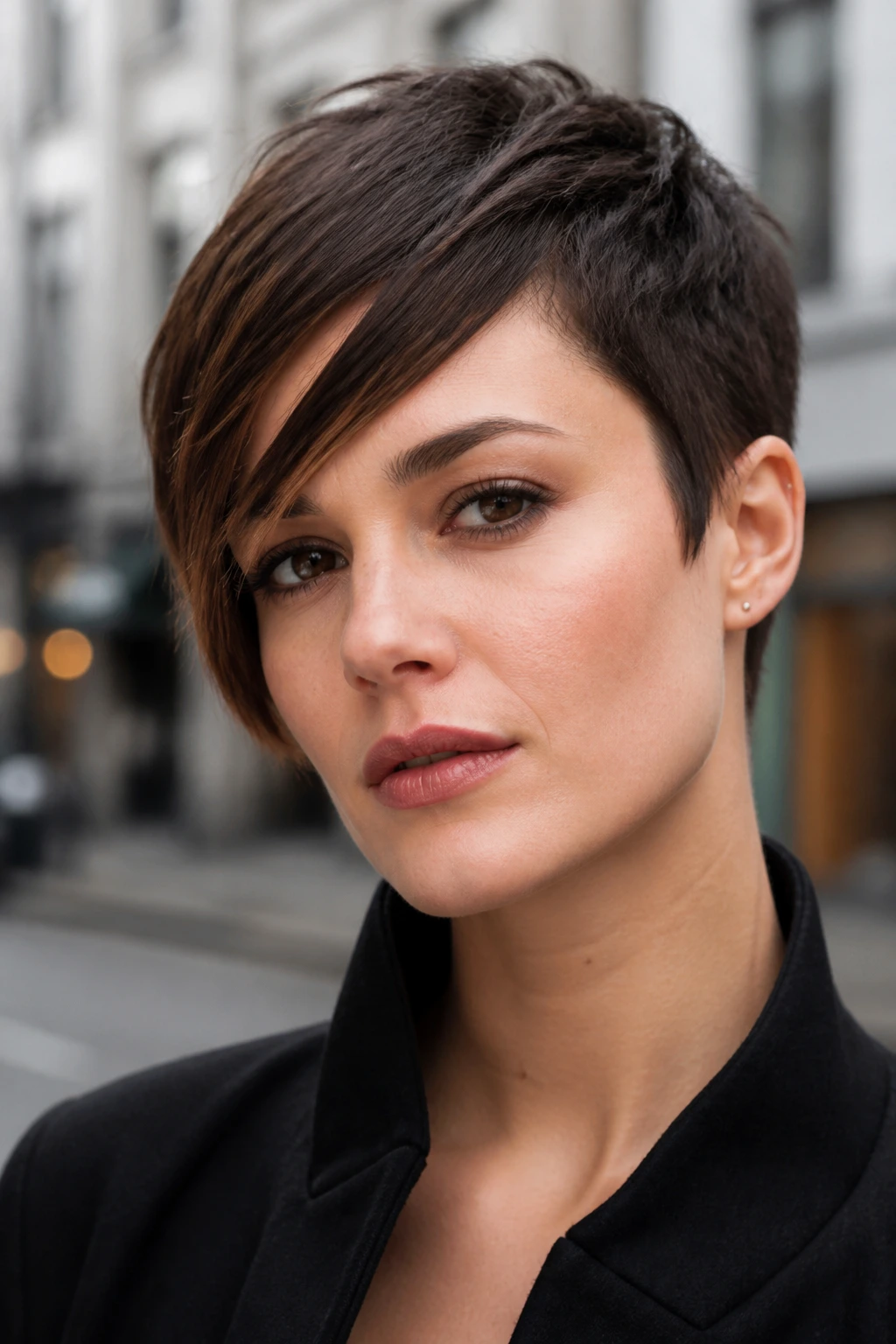
A disconnected side fringe features a sharp angle that does not blend into the rest of your haircut. It stands out as a distinct, graphic shape, which can make fine hair look incredibly modern and styled.
By keeping the side fringe separate from your side layers, you create a clear contrast that draws the eye. This contrast makes your hair look more complex and voluminous, as if you have multiple layers of density working together.
This look is fantastic for short haircuts like pixies or bobs. It adds a touch of asymmetry that keeps the haircut looking fresh and dynamic.
16. See-Through Korean Air Bangs
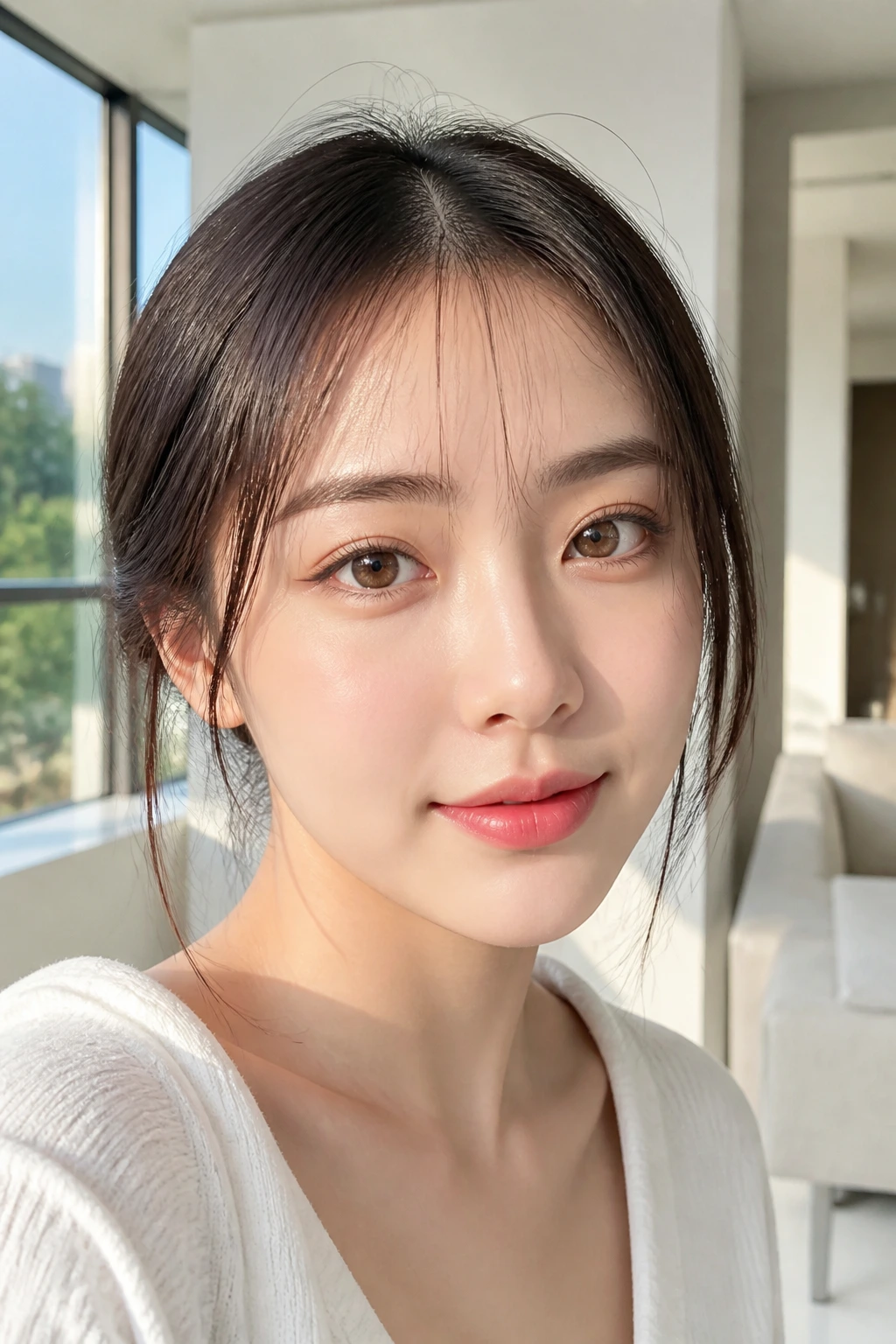
Originating in East Asian hair styling, see-through air bangs are the ultimate minimalist fringe. They consist of just a few carefully cut strands that sit in the center of the forehead, allowing your eyebrows and forehead to be fully visible underneath.
Why They are a Fine Hair Dream
This style uses the absolute minimum amount of hair possible for a fringe. It requires zero volume from the crown, meaning you do not lose any hair density from the rest of your head. It is incredibly easy to hide; if you want a no-bangs look for a day, you can simply sweep them to the side or pin them back.
The Mechanism of the Cut
The hair is cut in a tiny triangle shape at the front of your hairline. The center strands are cut straight across at the bridge of the nose, while the side strands are left slightly longer to blend outward. This simple structure creates a soft, clean frame that looks fresh and neat.
17. Volumised Bardot Bangs
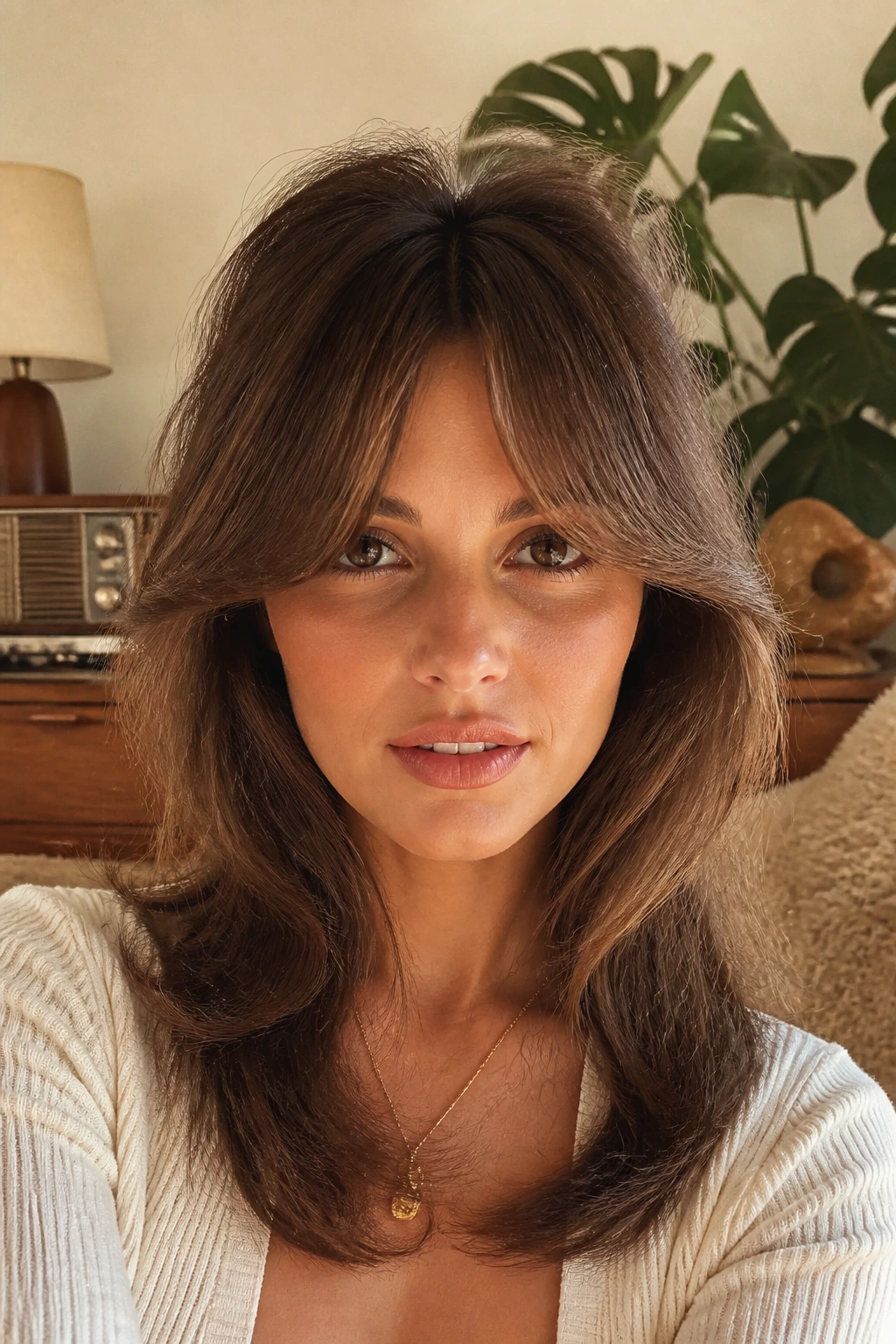
Inspired by classic vintage styles, Bardot bangs are split down the center and feature lots of volume at the roots. They swoop outward in a soft curtain shape, creating a glamorous, retro look that works wonders for flat, fine hair.
The key to Bardot bangs is root lift. By lifting the hair at the scalp, you create the illusion of a thick, bouncy canopy of hair framing your face. It is an excellent style for hiding a high forehead or adding height to a round face shape.
To get that classic Bardot lift, spray a volumising spray directly onto your roots while your hair is wet. Use a large round brush to pull the bangs forward and up, drying them in an upward motion. Once dry, let them fall naturally to the sides, and spray with a touch of light-hold hairspray.
18. Wispy Shaggy Layered Fringe
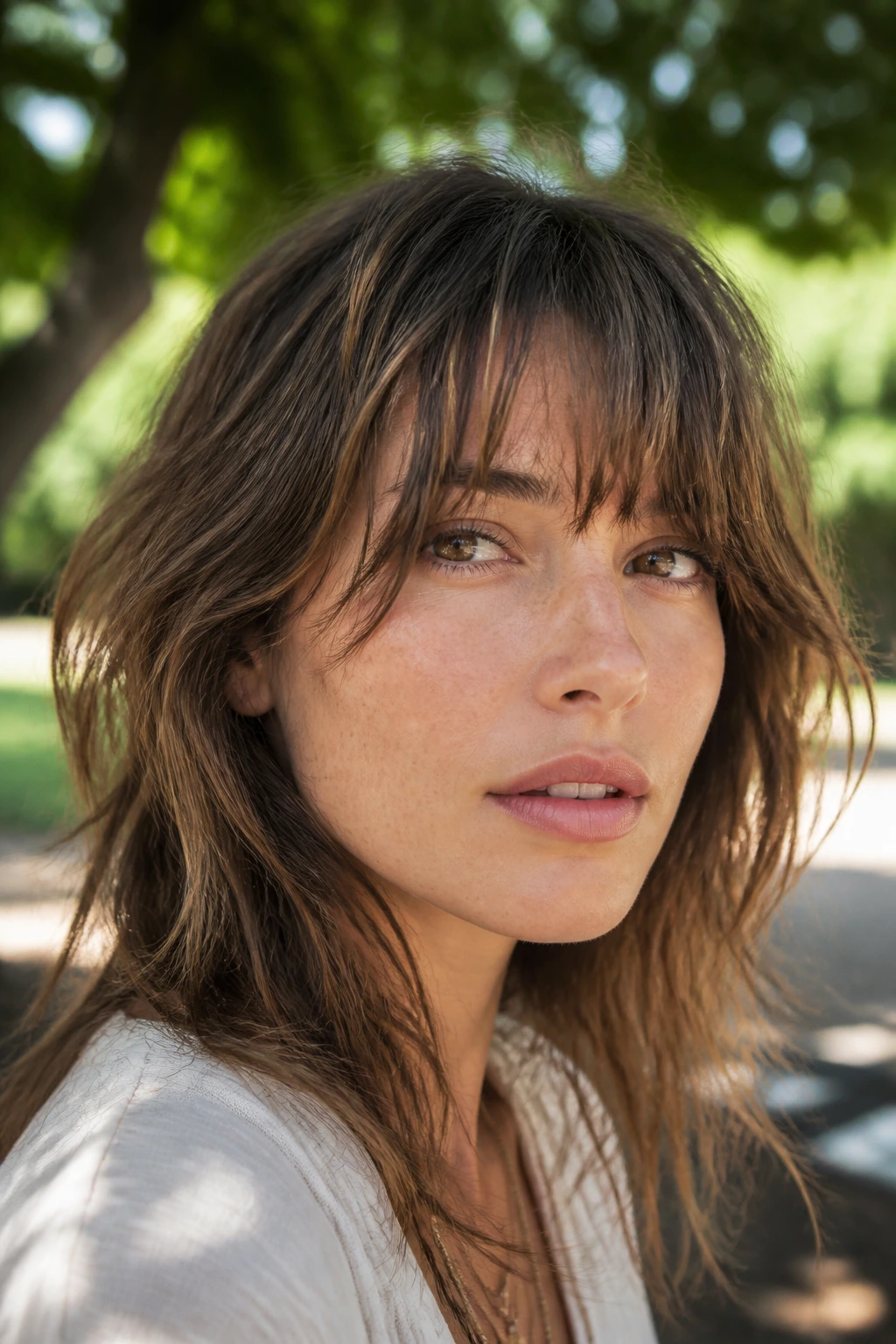
This style combines the lived-in look of a shag with the lightness of a wispy fringe. It features multiple soft, overlapping layers that create a textured, textured surface on your forehead.
The wispy, shaggy layers prevent the hair from lying flat against your scalp, giving your fringe natural height and movement. It is an incredibly forgiving cut that looks great even when styled roughly with your fingers.
Pair this fringe with a layered, mid-length haircut to keep the overall look cohesive and full of movement. It is a fantastic option for anyone with natural texture or light waves.
19. Curved Center-Parted Bangs
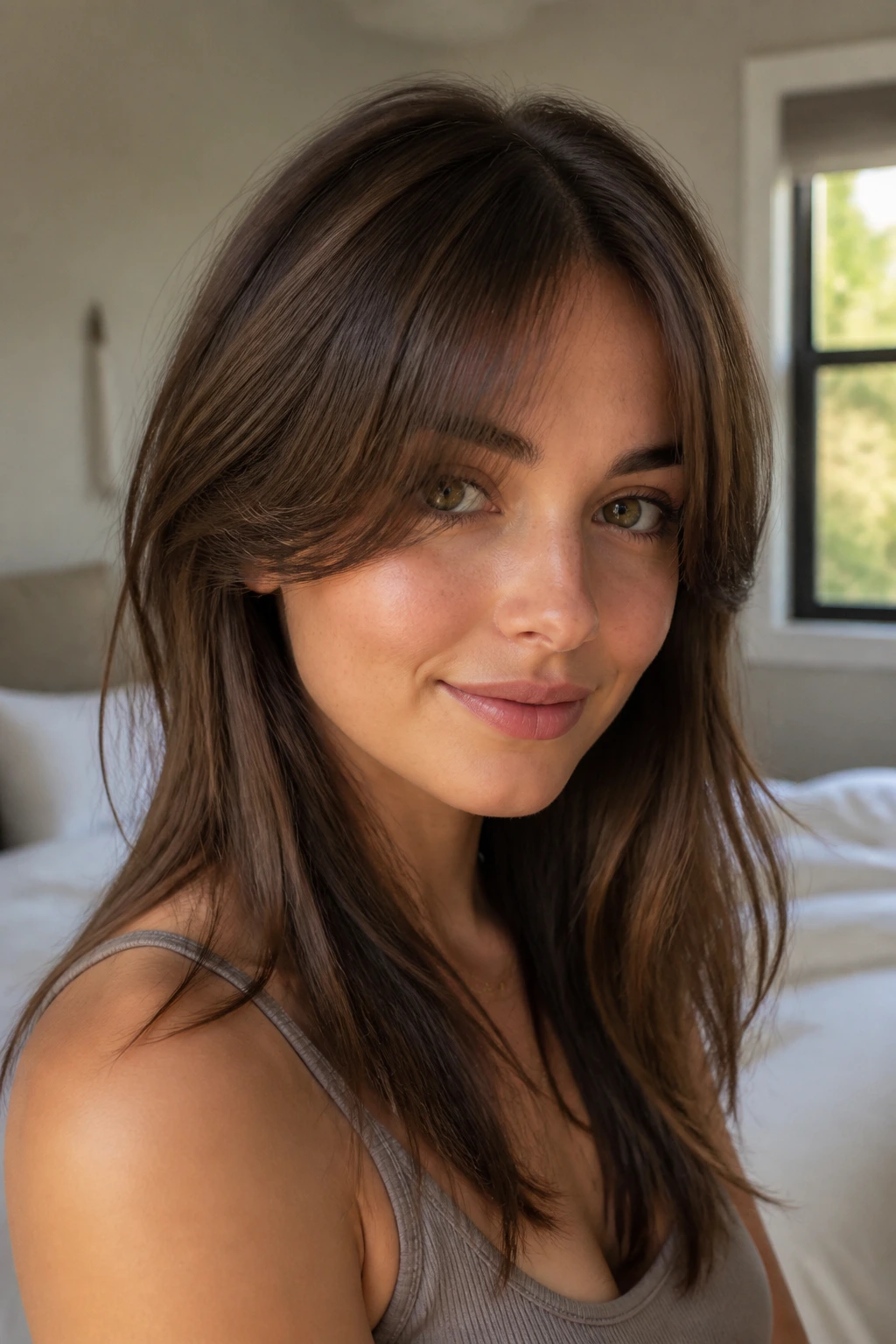
Curved center-parted bangs part neatly down the middle, but instead of sweeping straight down, they feature a soft, inward curve that hugs the temples. This creates a clean, rounded shape that frames the upper face beautifully.
The curved line of this style adds a geometric element to your haircut, making it look highly styled and deliberate. It is a very chic, sophisticated look that works beautifully with sleek bobs or straight, long hair.
To style curved center-parted bangs, part them down the middle while wet. Use a small round brush to dry each side, rolling the brush inward toward your temples to set that beautiful, curved line.
20. Point-Cut Long Fringe
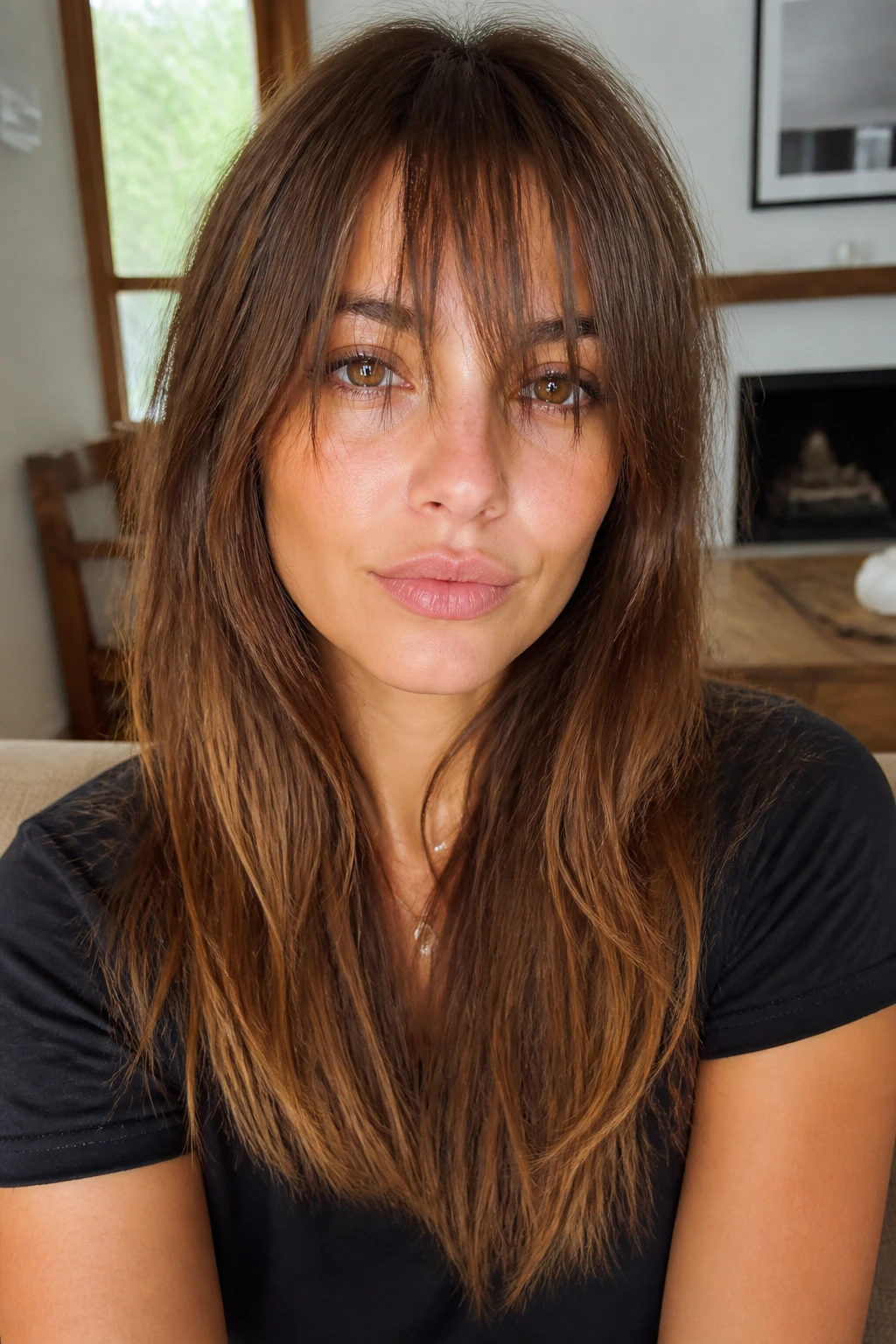
A point-cut long fringe sits just below the brows and features a heavily textured, uneven edge created by snipping vertically into the ends of the hair. This technique removes weight from the ends, allowing the bangs to bounce up naturally.
By keeping the length long, you get a dramatic look that highlights your eyes. The point-cutting technique ensures that the bangs look light and piecey, rather than heavy or solid, making them highly wearable for fine hair types.
This style looks best when worn slightly messy. Give them a quick rough-dry with your fingers, and use a tiny bit of texturising spray to keep the ends looking defined and separated.
Crucial Hair Cutting Techniques for Fine Hair Bangs
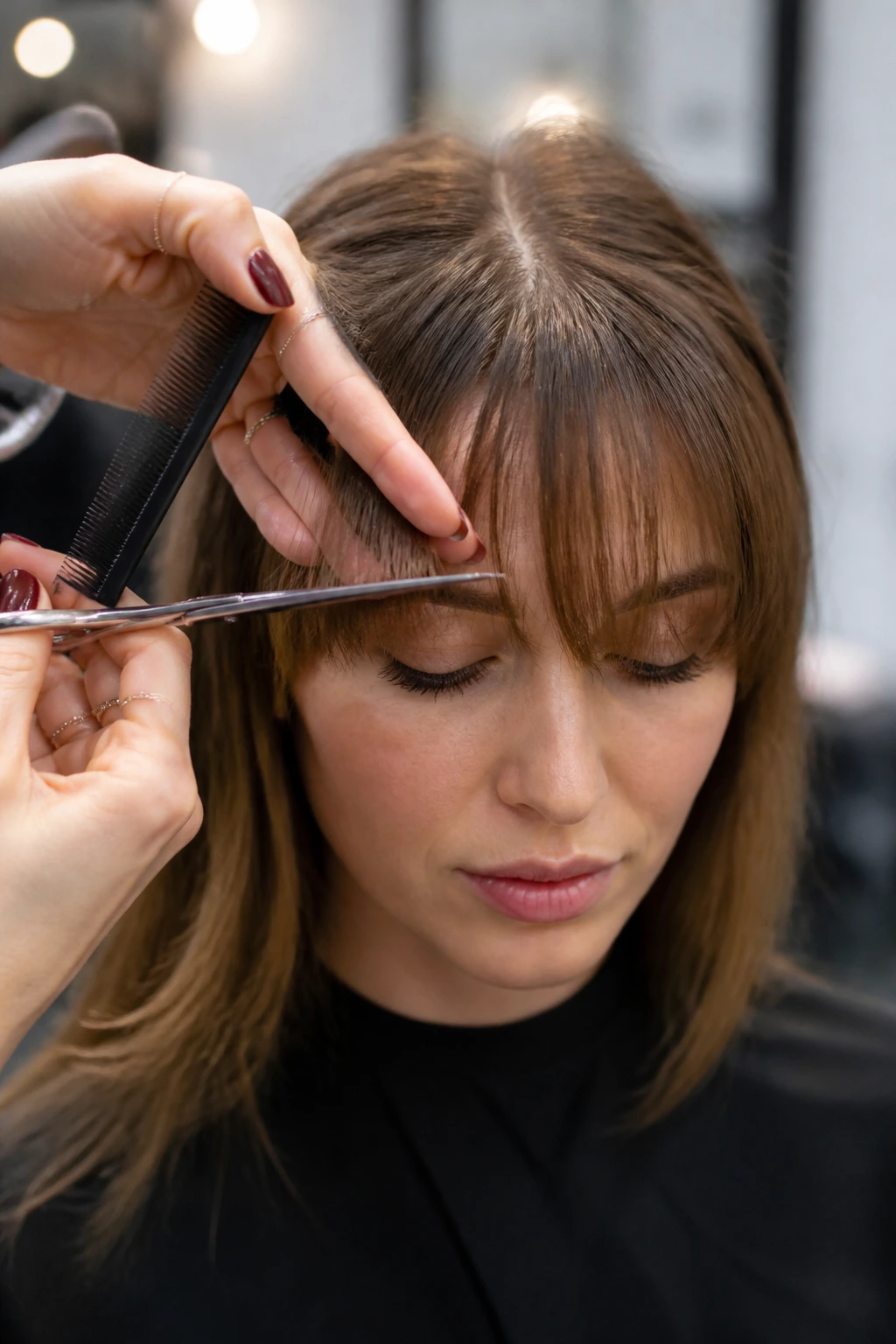
When cutting bangs into fine hair, the technique your stylist uses makes all the difference between a bouncy, structured fringe and a flat, stringy one. Fine hair requires a delicate touch and a deep understanding of weight distribution. If your stylist approaches your hair the same way they would thick hair, you may end up with a cut that looks too sparse or steals too much volume from the rest of your head.
[Wet Cut] --------(Dries & Shrinks)--------> [Surprise Length/Gaps]
[Dry Cut] --------(Stays Consistent)--------> [Predictable, Even Finish]
The Rule of Dry Cutting
You should always have fine hair bangs cut while the hair is completely dry and styled in its natural state. Fine hair is incredibly elastic when wet, meaning it stretches significantly under the tension of a comb or fingers. If your stylist cuts your bangs wet, they will shrink upward as they dry, often leaving you with a much shorter, choppier fringe than you intended. Cutting the hair dry allows the stylist to see exactly how each strand falls, how your cowlicks behave, and how much forehead is peeking through in real-time.
Point Cutting vs. Blunt Cutting
Blunt cutting creates a solid, horizontal line across your forehead. While this can look striking on thick hair, on fine hair, it often highlights any gaps and makes the fringe look sparse. Point cutting is the preferred technique for fine hair bangs. The stylist holds the scissors vertically and snips into the ends of the hair. This removes small channels of weight, creating a soft, feathered edge that naturally camouflages any thinness.
Slide Cutting for Seamless Transitions
Slide cutting involves sliding open scissors down the hair shaft to create a soft, tapered edge. This technique is essential for curtain bangs and side-swept styles, as it allows the fringe to blend into your side layers without any harsh lines. It creates a gradual flow of length that makes your hair look naturally thicker as it moves outward from your face.
Daily Styling and Volumising Rituals
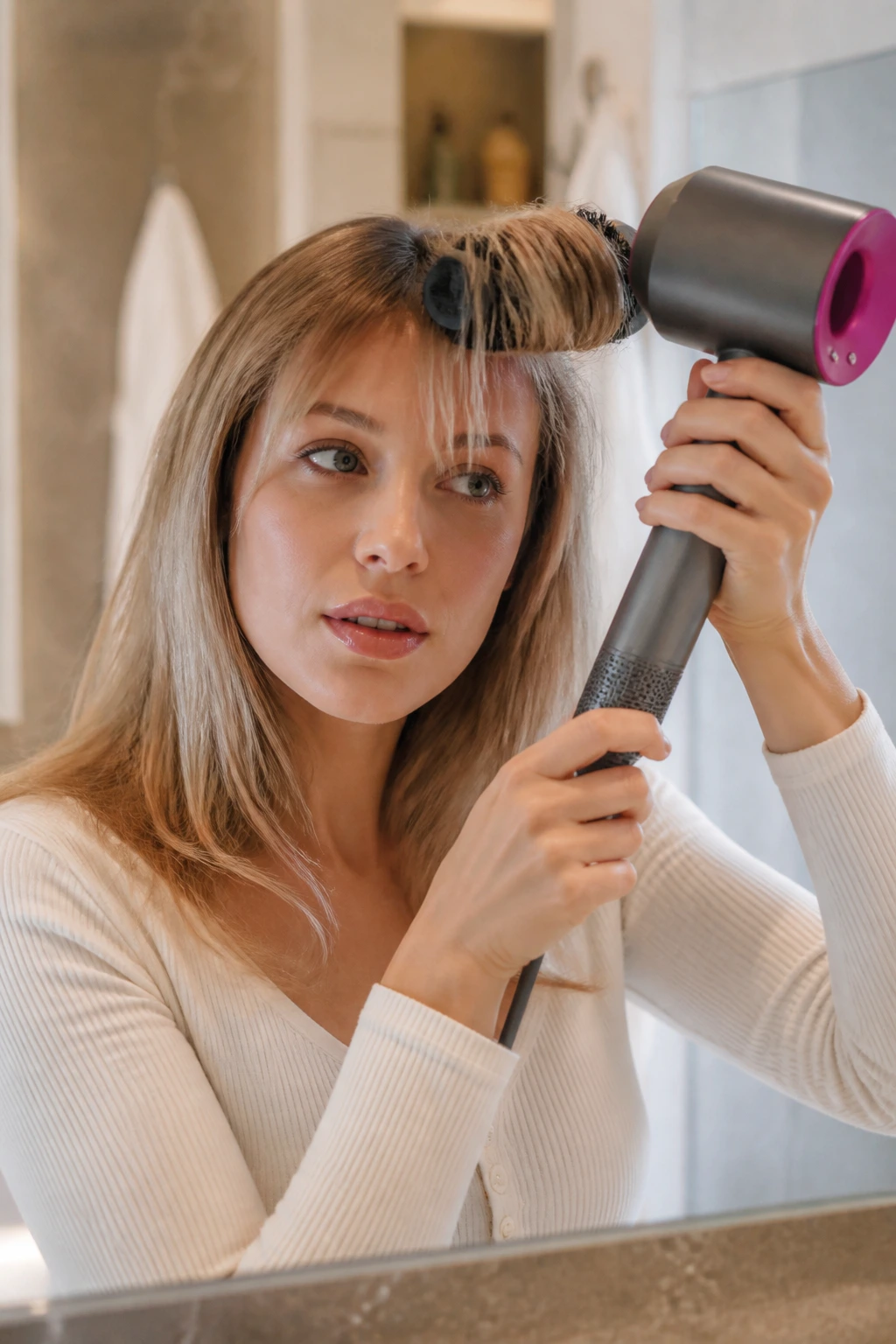
Styling fine hair bangs requires a gentle touch and the right techniques. Because fine hair is lightweight, it is highly responsive to heat and styling tools, meaning you can easily shape it with minimal effort. However, it also means that bad styling habits can quickly leave your bangs looking flat, greasy, or frizzy.
The Wrap-Dry Technique
The wrap-dry technique is the most effective way to dry fine hair bangs without creating a bubbly, dated “80s round-brush” look. It helps flatten stubborn cowlicks and ensures your bangs lie flat and smooth against your forehead.
- Start with wet bangs immediately after washing. Do not let them air-dry at all before styling.
- Using a flat paddle brush or a fine-toothed comb, brush your bangs entirely to the left side of your forehead.
- Aim your blow dryer nozzle downward at your bangs, following the brush with medium heat.
- Sweep your bangs back to the right side of your forehead, continuing to brush and dry in that direction.
- Repeat this left-to-right sweeping motion until your bangs are about 90% dry.
- Finish by brushing them straight down, giving them a final blast of cool air to lock the smooth shape in place.
The Power of Velcro Rollers
If you want soft, bounce-filled volume without using a round brush, Velcro rollers are an excellent option. They are incredibly gentle on fine hair and help create a soft, natural curve that lasts all day.
Choose a medium-sized roller (about one to one and a half inches in diameter). While your bangs are still warm from a quick blow-dry, roll them forward and up around the roller, securing it right at your scalp. Leave the roller in place while you apply your makeup or get dressed. When you pull it out, unravel it gently forward, then use your fingers to shake the bangs into place. You will be left with a soft, airy lift that looks effortless.
The Best Styling Products for Fine Fringe
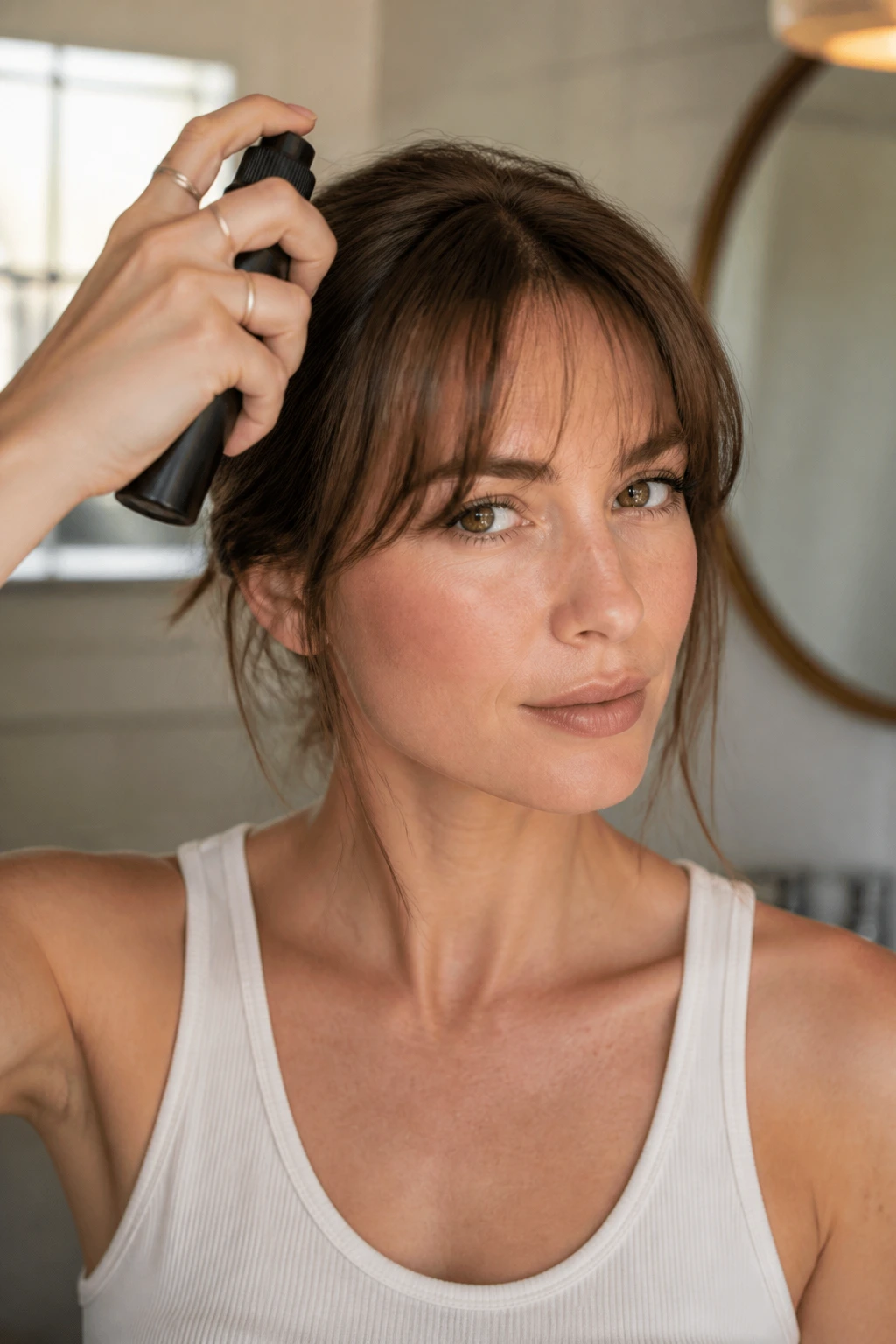
Fine hair is easily weighed down by styling products. Heavy waxes, thick creams, and silicone-based serums will coat your delicate strands, causing them to clump together and look greasy before you even leave the house. When styling fine hair bangs, less is always more, and choosing lightweight, dry-finish products is key.
| Product Type | Why It Works for Fine Bangs | How to Apply |
|---|---|---|
| Dry Shampoo | Absorbs forehead oil, prevents clumping, and adds light volume. | Spray lightly at the roots before your hair gets greasy. |
| Light Volumising Mist | Adds body and lift without leaving a sticky or heavy residue. | Mist onto wet hair before blow-drying. |
| Matte Texture Powder | Provides grit and separation, keeping piecey styles looking fresh. | Tap a tiny amount onto your fingertips and pinch the ends. |
| Micro-Mist Hairspray | Offers flexible hold that keeps bangs in place without looking stiff. | Spray onto your hairbrush first, then sweep through bangs. |
How to Stop Fine Fringe from Separating

One of the most common frustrations with fine hair bangs is their tendency to separate throughout the day, leaving you with patchy gaps that expose your forehead. This separation is usually caused by two things: natural oils from your forehead transferring to your hair, and stubborn cowlicks at your hairline.
[Forehead Oil / Skincare]
       │
       ▼ (Transfers to hair)
[Fine Hair Bangs] ───(Clumps Strands)───> [Piecey, Gappy Separation]
       ▲
       │ (Blocks with powder)
[Translucent Powder / Blotting Papers]
The Skincare Barrier Trick
Your skincare routine can play a major role in how your bangs behave. Heavy face creams, dewy foundations, and rich sunscreens will quickly transfer to your bangs as you move, causing the hair to clump and separate.
To prevent this, try applying a light layer of translucent setting powder across your forehead and brow bone each morning. This powder acts as an invisible sponge, absorbing excess sebum and skincare oils before they can transfer to your fringe. If you prefer not to wear makeup, keeping a pack of blotting papers in your bag is a quick, easy way to dab away forehead shine throughout the day.
Retraining Stubborn Cowlicks
A cowlick is a section of hair that grows in a different direction than the rest, often causing your bangs to split open in the same spot. While you cannot change the direction your hair grows, you can train it to lie flat with consistent styling.
When styling your bangs, always focus on your cowlick first. Wet the root of the cowlick completely, and use the wrap-dry technique to force the hair in the opposite direction of how it wants to grow. By drying the root flat against the scalp while it is wet, you break the hair’s natural memory and force it to lie flat. Over time, consistent drying will make the cowlick much easier to manage.
The Midday Refresh
If your bangs start to look separate or flat by midday, you do not need to wash your entire head to fix them. Keep a small makeup brush or a clean spoolie mascara wand in your bag. Spray a tiny amount of dry shampoo onto the spoolie and brush it through your bangs from the root to the tip. This helps distribute the product evenly, breaking up any clumps of oil and restoring your fringe’s fluffy, airy texture in seconds.
Wrapping Up
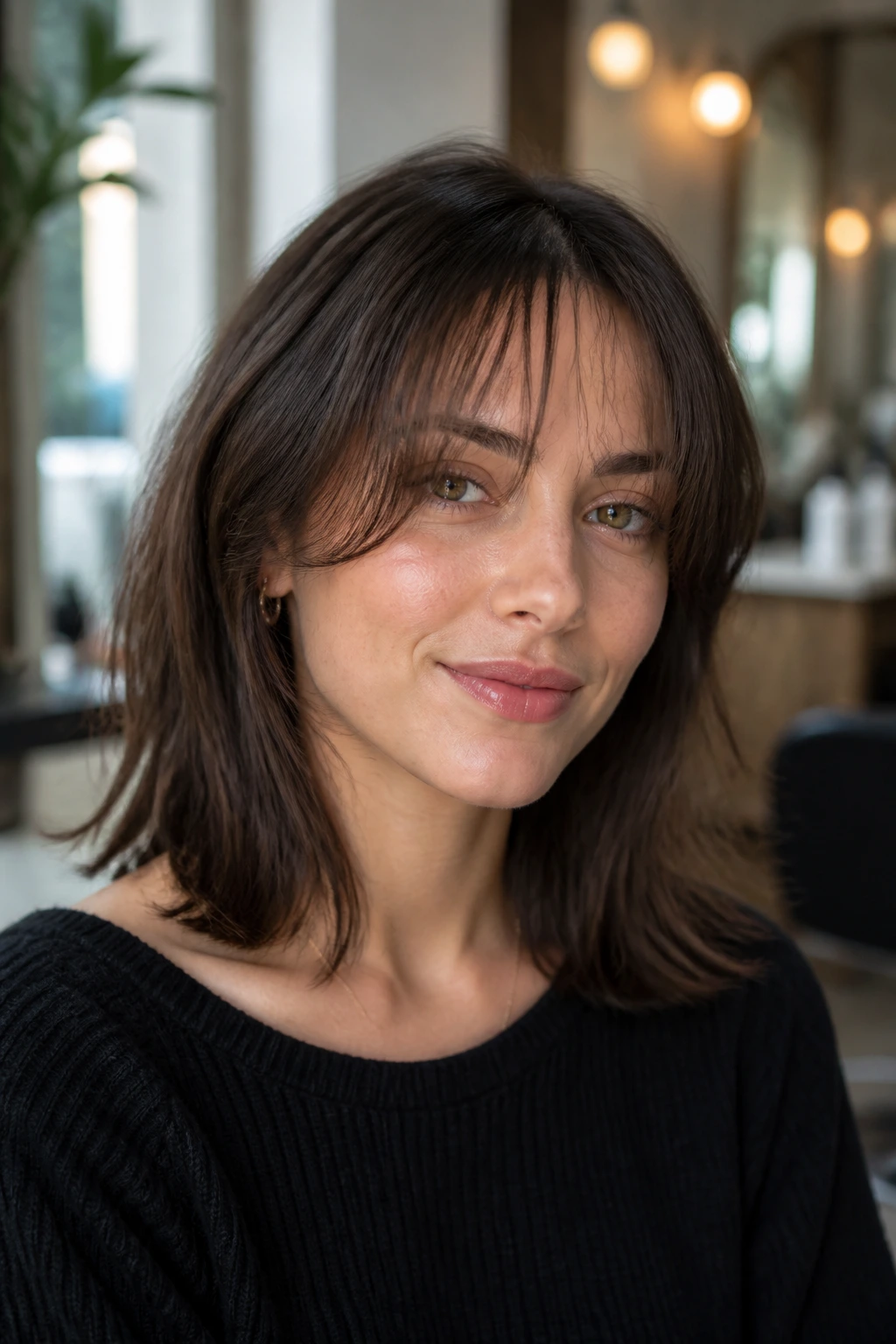
Cutting bangs when you have fine hair does not have to be a scary experience. By choosing a style that works with your hair’s natural lightness—like wispy curtain bangs, piecey French girl fringe, or see-through air bangs—you can frame your face and add beautiful, styled structure to your haircut without losing any overall density.
The secret to success lies in the details. Always ask for a dry cut, keep your styling products incredibly light, and use smart drying techniques like the wrap-dry method to keep your fringe looking smooth and full of life. With the right cut and a few simple daily habits, you can enjoy a bouncy, beautiful fringe that makes your fine hair look thicker, healthier, and full of natural movement.