

Choosing to cut a straight-across fringe when you have long hair is a major style shift. It instantly rewrites the architecture of your face. While long, uniform layers can sometimes drag down your features, adding a sharp horizontal line right above your eyes creates immediate focus, drawing attention to your gaze and cheekbones. It is a high-contrast look that pairs the soft, flowing movement of long lengths with the structural discipline of a blunt cut.
But anyone who has ever sat in a salon chair knows that bangs are a commitment. They require daily styling, frequent trims, and an understanding of how your hair behaves when wet versus dry. The weight of your hair pulls the crown down, which actually helps straight bangs lie flatter, but cowlicks and natural parting habits will always try to fight the new shape. Success lies in choosing the exact density, length, and edge-finish that matches your specific hair type and face shape.
Before you take the scissors to your hair, you need to look at options that go beyond the basic block of hair on your forehead. Straight-across bangs are rarely just one uniform cut. They can be shattered, wispy, heavy, curved, or split.
Let us break down fifteen distinct ways to wear straight-across bangs with long hair, detailing exactly how they are cut, who they work for, and how to style them.
1. Blunt Edge Eyebrow-Grazing Bangs
This is the classic, heavy horizontal fringe that rests exactly at the top of your eyebrows. It is cut with zero elevation, meaning the hair is held flat against the forehead while cutting to create the densest line possible. It works best on medium to thick hair that has natural weight to keep the fringe in place.
The Anatomy of the Blunt Edge
To get this look right, your stylist must section your hair using a triangular parting that starts about two inches back from your hairline. Cutting this section completely dry is the safest route because it prevents the hair from springing up shorter than you wanted once it dries. The edge is cut straight across with heavy shears, keeping the perimeter solid and crisp.
Quick Style Facts
- Ideal Hair Type: Straight or slightly wavy hair with medium thickness.
- Maintenance Level: High. Requires trims every two to three weeks to keep the length from blocking your vision.
- Key Benefit: Creates an instant frame for the eyes and masks a high forehead.
- Recommended Tool: A narrow flat iron with curved edge plates to seal the cuticle without creating a harsh bend.
Pro tip: When styling, avoid round brushes which create a dated, bubbly roll; instead, use a flat brush and blow-dry the hair flat against your forehead from left to right.
2. Piecey Wispy Straight Bangs

If you want the structure of a straight line without the heavy weight of a solid block of hair, a piecey, wispy fringe is the ideal option. This style allows your forehead to show through, breaking up the horizontal line and softening the overall look. It works beautifully on fine hair that cannot spare the density required for a heavy blunt cut.
Instead of a solid, horizontal weight line, the stylist uses a point-cutting technique. They hold the scissors vertically and snip into the ends of the bangs to remove bulk and create small, separated channels of hair. This gives the bangs a textured, lived-in quality that feels light and moves easily with the wind.
Styling this look takes almost no effort. You can let them air-dry with a touch of lightweight texture spray, using your fingers to separate the pieces. Because these bangs are not dense, they do not collect sweat or oil as quickly as heavy bangs, making them much easier to manage throughout hot summer days or during workouts.
3. French-Girl Bardot Straight Bangs
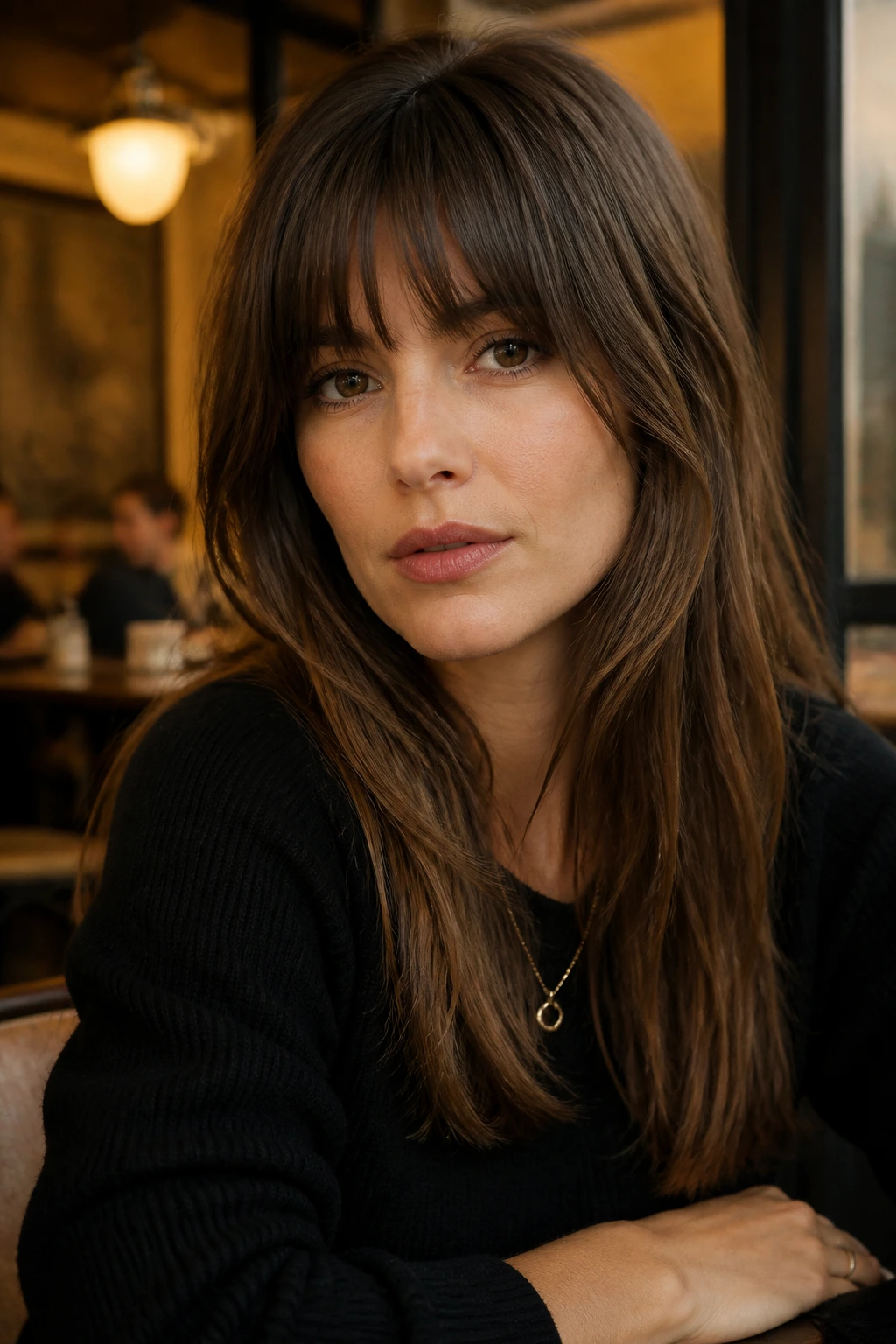
This style is defined by a straight-across center that gently curves downward at the outer corners to meet your long layers. It mimics the classic, effortless aesthetic of French cinema icons. The center of the fringe sits just below the brow, while the temple pieces are left slightly longer and softer.
Why This Style Works
Unlike a rigid blunt cut, this option blends directly into the rest of your hair. When you pull your long hair back into a low bun or a ponytail, the longer side pieces of the bangs fall forward naturally, framing your face and keeping the look soft. It prevents the stark, separated look that sometimes happens when you tie back hair with a blunt fringe.
How to Style It
- Start with wet hair and apply a small dollop of lightweight volumizing mousse to the roots of your bangs.
- Using a medium round brush, blow-dry the center section straight down, keeping the airflow pointing downward from above.
- Wrap the longer side pieces around the brush, pulling them slightly outward and back toward your ears to create a soft, swept frame.
- Finish with a quick blast of cool air to lock in the shape.
4. Choppy Textured Straight-Across Bangs

This style is for anyone who prefers a gritty, undone finish over a neat, polished line. Choppy straight bangs are cut with variable lengths across the forehead, intentionally avoiding a perfect horizontal plane. It is a fantastic option for adding edge to long, straight hair without losing your length.
The secret to this cut is deep point cutting or using a carving razor. The stylist cuts different lengths into the fringe, creating a shattered edge that sits around the brow line. This prevents the bangs from looking flat or helmet-like, giving them built-in volume and movement.
This texture is perfect for hiding natural cowlicks. Because the line is already irregular, any slight parting or twisting caused by your natural growth patterns looks intentional rather than messy. To style, simply work a small amount of matte hair wax or clay through the dry ends to clump the pieces together and define the choppy texture.
5. Micro Baby Straight-Across Bangs
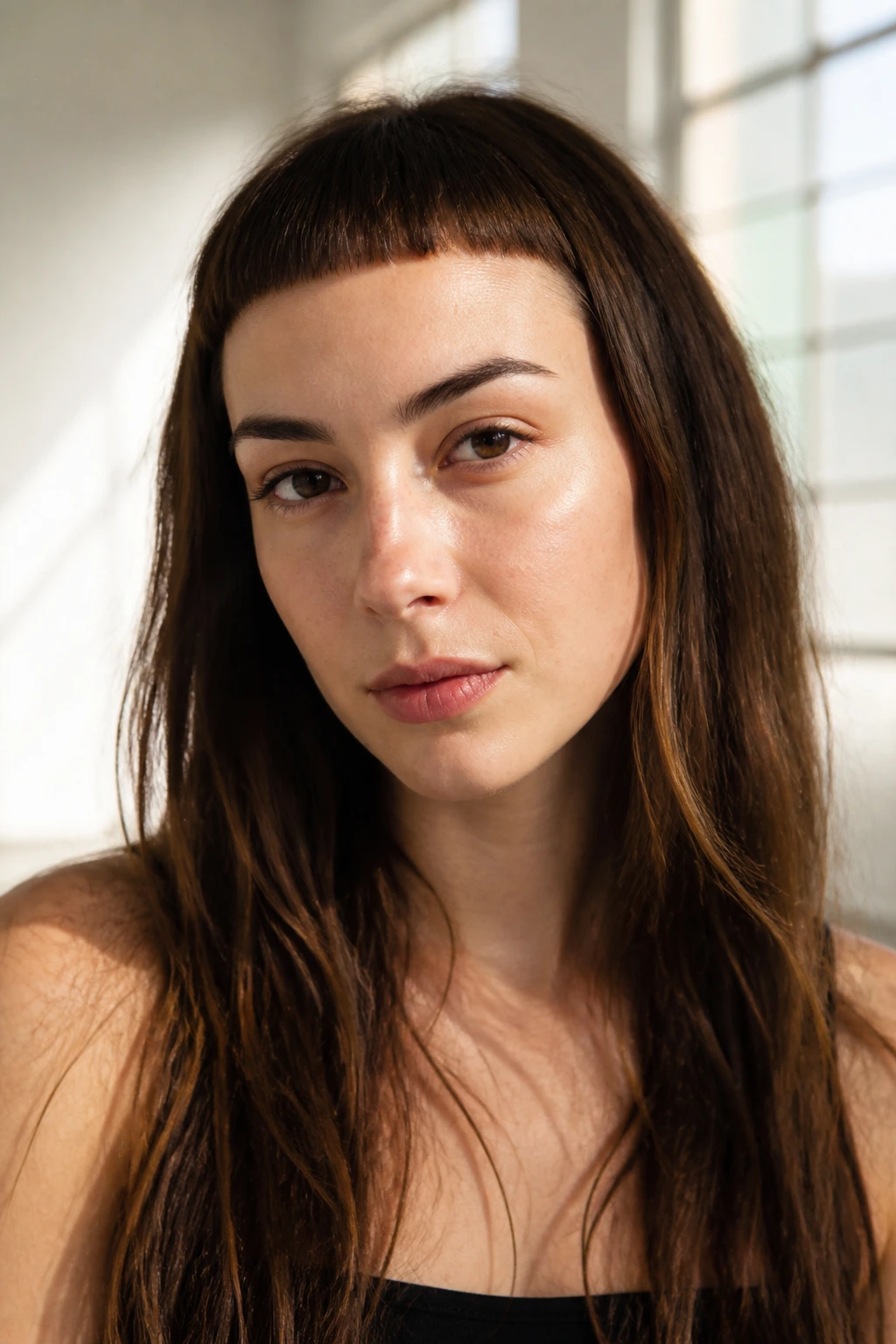
Micro bangs sit at least an inch above the eyebrow, exposing a large portion of the forehead. This is a bold, alternative look that creates a dramatic contrast with very long hair. It opens up your face completely while maintaining the cool edge of a horizontal fringe.
Cutting baby bangs requires extreme precision. The stylist must cut the hair very close to the hairline, which means any unevenness is instantly visible. They are usually cut wet to ensure a perfectly straight line, then checked dry to correct any cowlick behavior that might pull the short hairs in different directions.
This style is surprisingly low-maintenance during your daily routine, even if it requires frequent trims to maintain the short length. They do not get in your eyes, they do not get swept away by the wind as easily, and they require very little drying time. If you have a small forehead, micro bangs can actually help elongate your face by visually shifting your hairline upward.
6. Feathered-Edge Straight Bangs
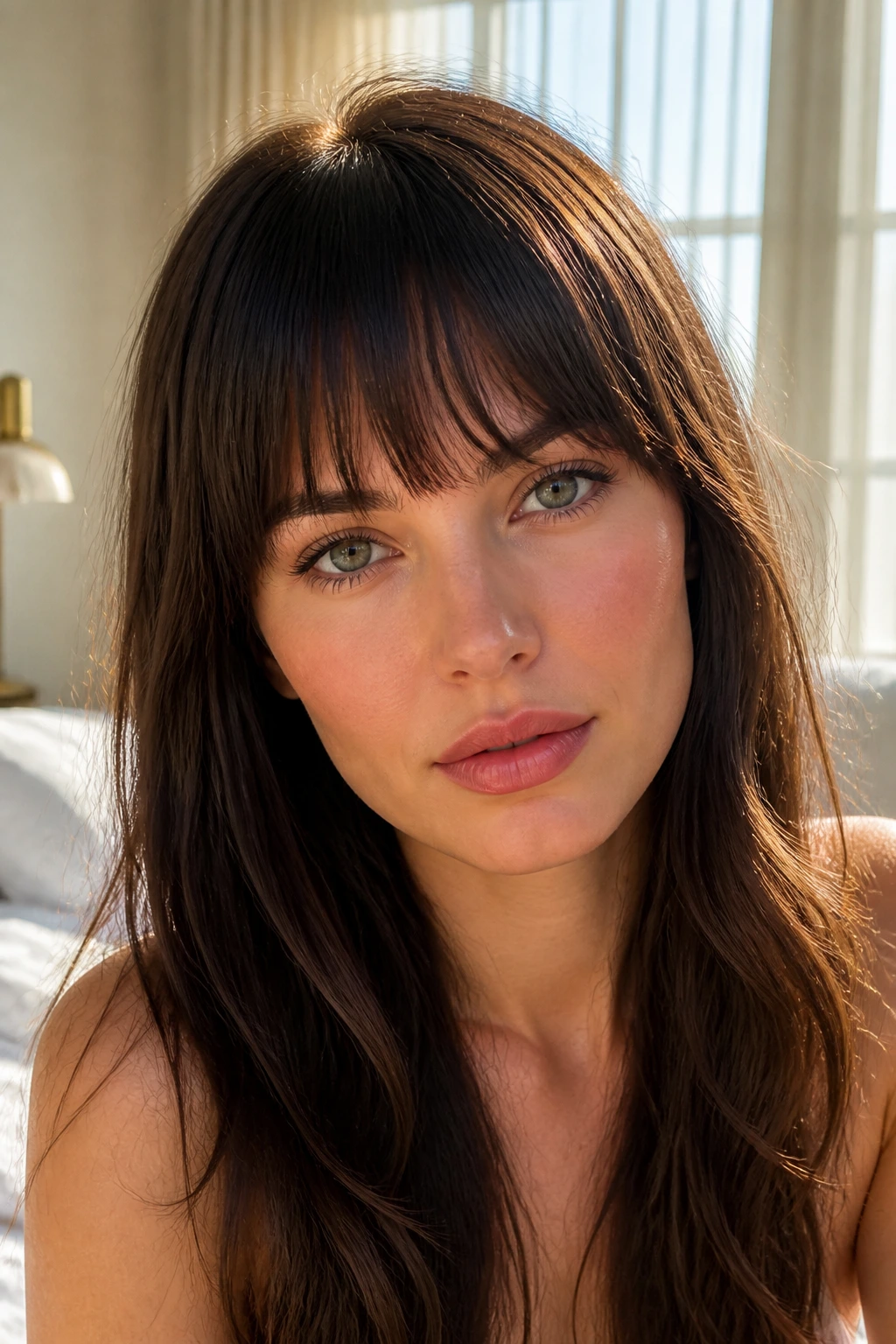
This style uses thinning shears or slide-cutting techniques to soften the bottom quarter-inch of the fringe. The top of the bangs remains dense and straight, but the very tips are wispy and feathered, almost resembling the delicate edge of a feather.
Unlike blunt bangs that create a hard stop on your face, feathered-edge bangs transition softly onto your skin. This makes them incredibly flattering for square and jaw-dominant face shapes, as the soft tips break up the harsh angles of the face. It also means that as they grow out, they do not poke your eyes as quickly because the soft ends simply bend sideways.
If you have medium-textured hair with a slight natural wave, this style is a dream. You do not have to iron them flat to make them look good. The slight wave adds to the feathered texture, giving you a soft, romantic look that pairs beautifully with long, beachy waves throughout your length.
7. Heavy Density Solid Fringe
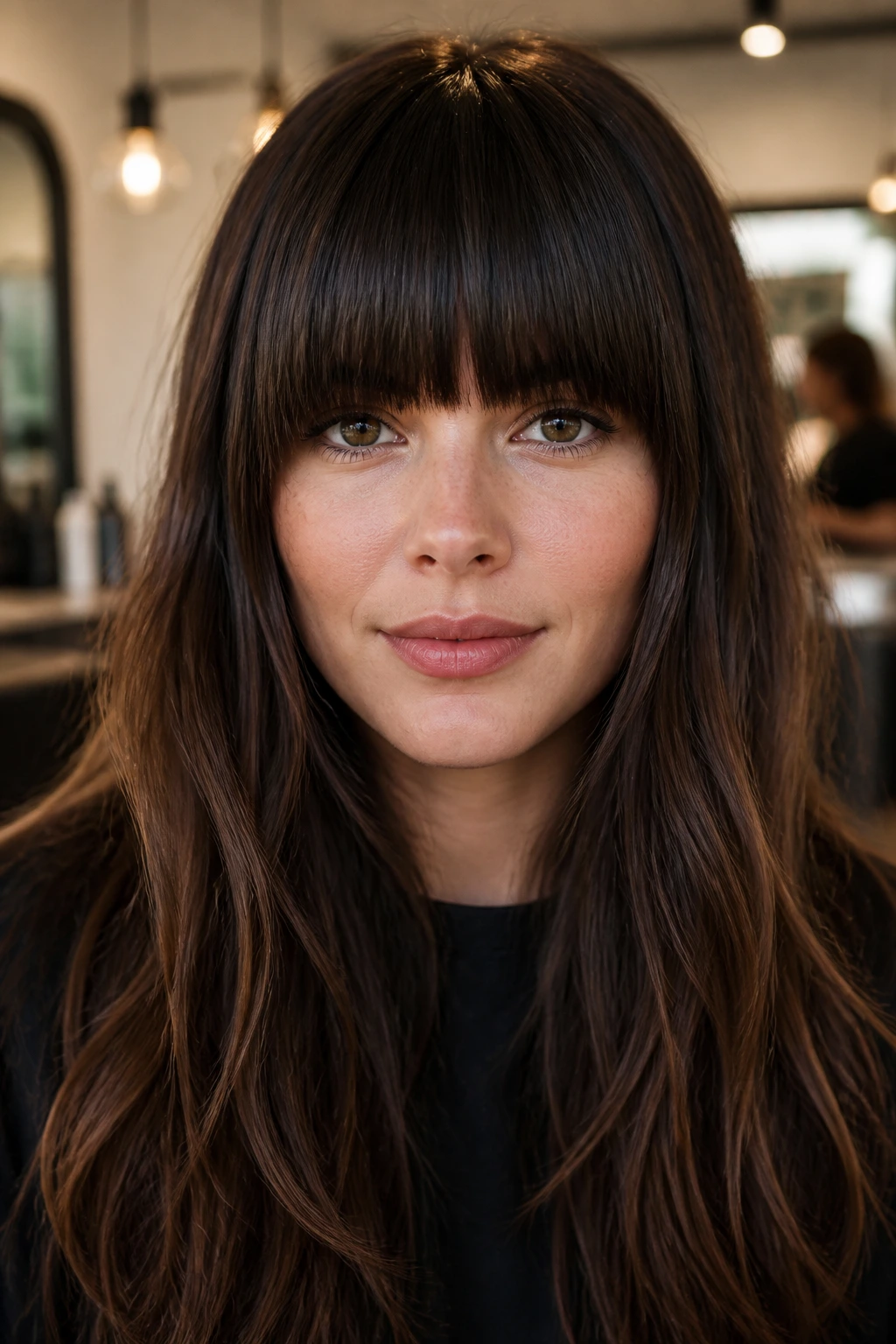
For thick, coarse, or naturally dense hair, the heavy solid fringe is a showstopper. This cut takes a large triangle of hair from further back on the head, creating a thick curtain of hair that completely covers the forehead. There is absolutely no transparency in this style; it is a solid wall of hair.
The Power of Density
This style uses the natural weight of thick hair to its advantage. The heavy mass of hair pulls down any cowlicks, forcing the fringe to lie flat and straight without requiring heavy styling products. It is cut with a blunt edge, often using clippers instead of shears to get a perfectly crisp, heavy line that does not move.
Quick Nutrition & Care Facts
- Hair Density Needed: High to very high. Fine hair will look too sparse if you try to pull this much hair forward.
- Styling Challenge: Moisture from sweat or skincare can cause the heavy block of hair to stick together; use a dry shampoo on the underside of the bangs to prevent this.
- Flattering For: Long, oval, or heart-shaped faces, as it visually shortens the face and balances a wider forehead.
- Care Tip: Always wash your bangs in the sink between full hair washes to keep them looking fresh and oil-free.
Pro tip: Because this fringe is so dense, ask your stylist to slightly bevel the inner layers shorter than the outer layers. This prevents the bangs from pushing outward and helps them curve inward toward the face naturally.
8. Rounded Arch Straight-Across Bangs
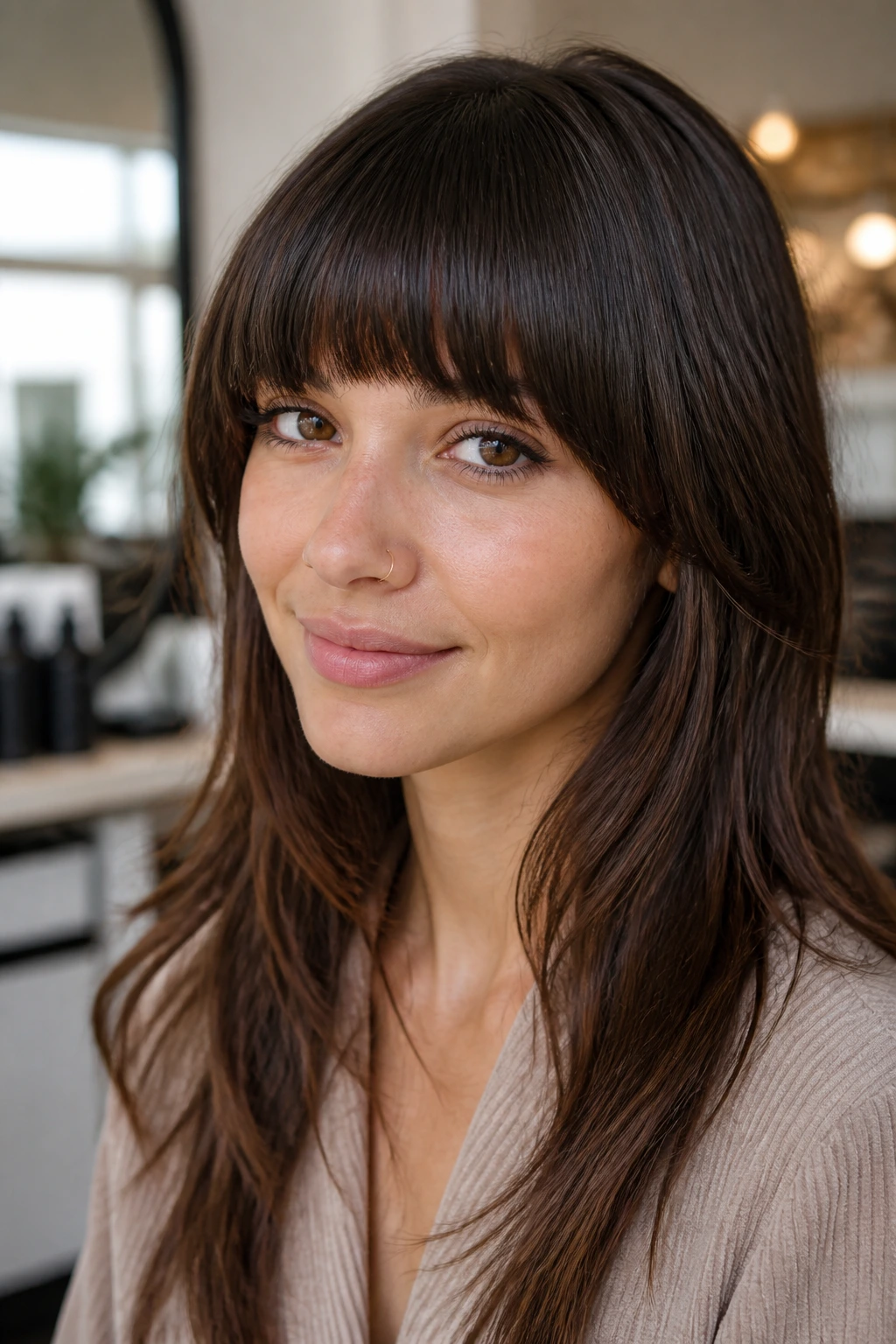
This style features a straight line over the eyes that gently curves downward at the sides, following the natural contour of your brow bone. It is different from the French-girl look because the transition is a smooth, continuous arch rather than a sharp drop-off at the temples.
The rounded arch is highly effective at softening sharp features. If you have high cheekbones or a strong jawline, the curved line of these bangs helps round out the face. It also connects seamlessly with long layers that start around the jawline, creating a cohesive, face-hugging frame.
To cut this, your stylist will use your nose bridge as the shortest guide point, then gradually pivot their fingers downward as they cut toward your temples. When styling, use a round brush to pull the hair forward and slightly down, following the arch to keep the edges curved smoothly around your eyes.
9. Wispy See-Through Korean Air Bangs
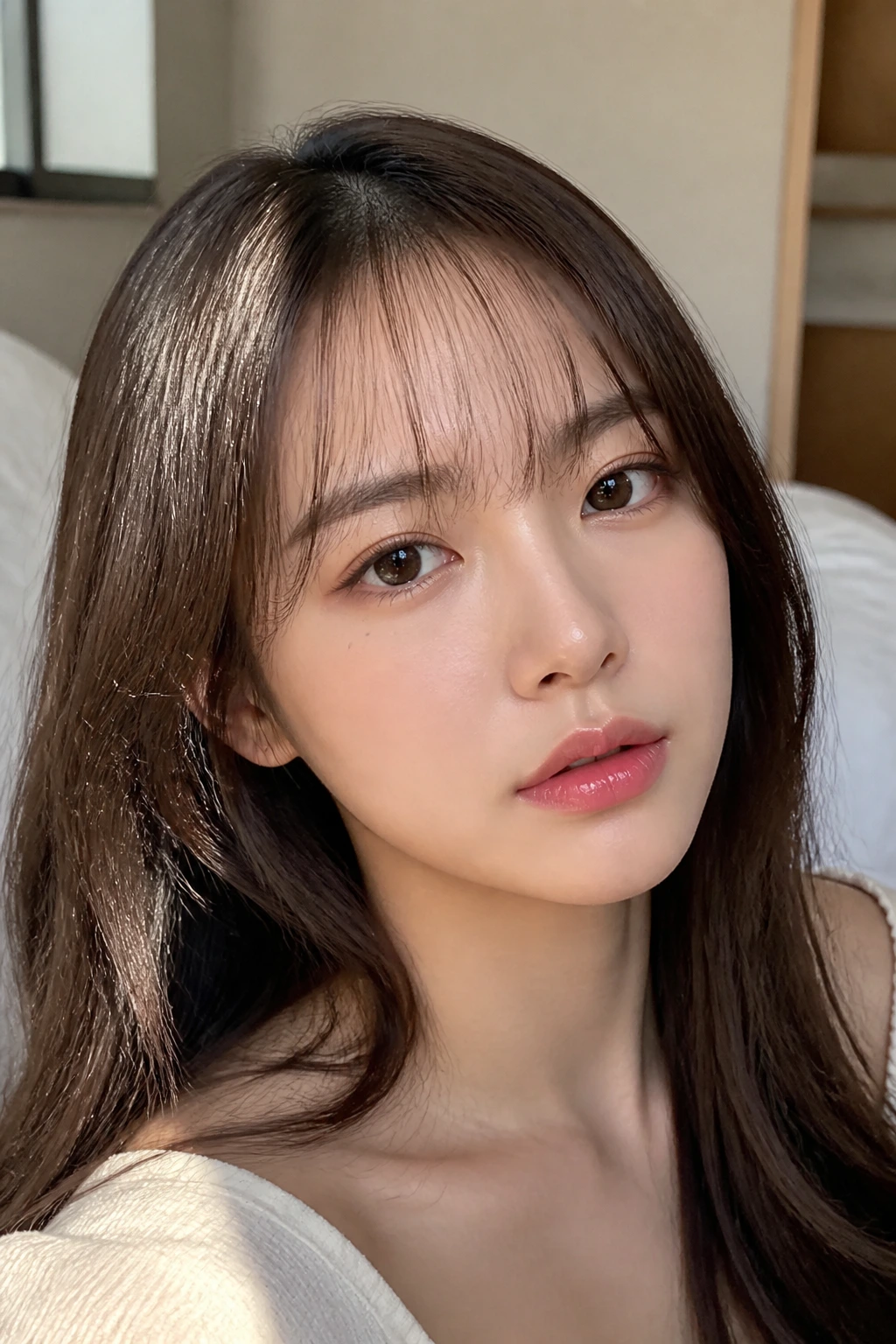
Originating from popular beauty trends in East Asia, see-through bangs use only a tiny fraction of hair from the very front of the hairline. The result is an incredibly delicate, sheer fringe that can easily be swept to the side or tucked behind your ears if you want to hide them.
This style is the ultimate starter pack for anyone who is afraid of committing to bangs. Because the section of hair used is so thin, you can see your eyebrows and forehead clearly through the hair. It adds a soft, youthful frame to your face without the heavy weight of a traditional fringe.
Styling is incredibly simple. You can use a single large velcro roller while you do your makeup. Pop the roller in, let the hair set for ten minutes, and roll it out. The hair will have a gentle, natural lift that floats just above your forehead. If you decide you do not want bangs that day, a dab of styling gel or a couple of bobby pins will easily sweep them into your long hair.
10. Curled-Under Retro Straight Bangs
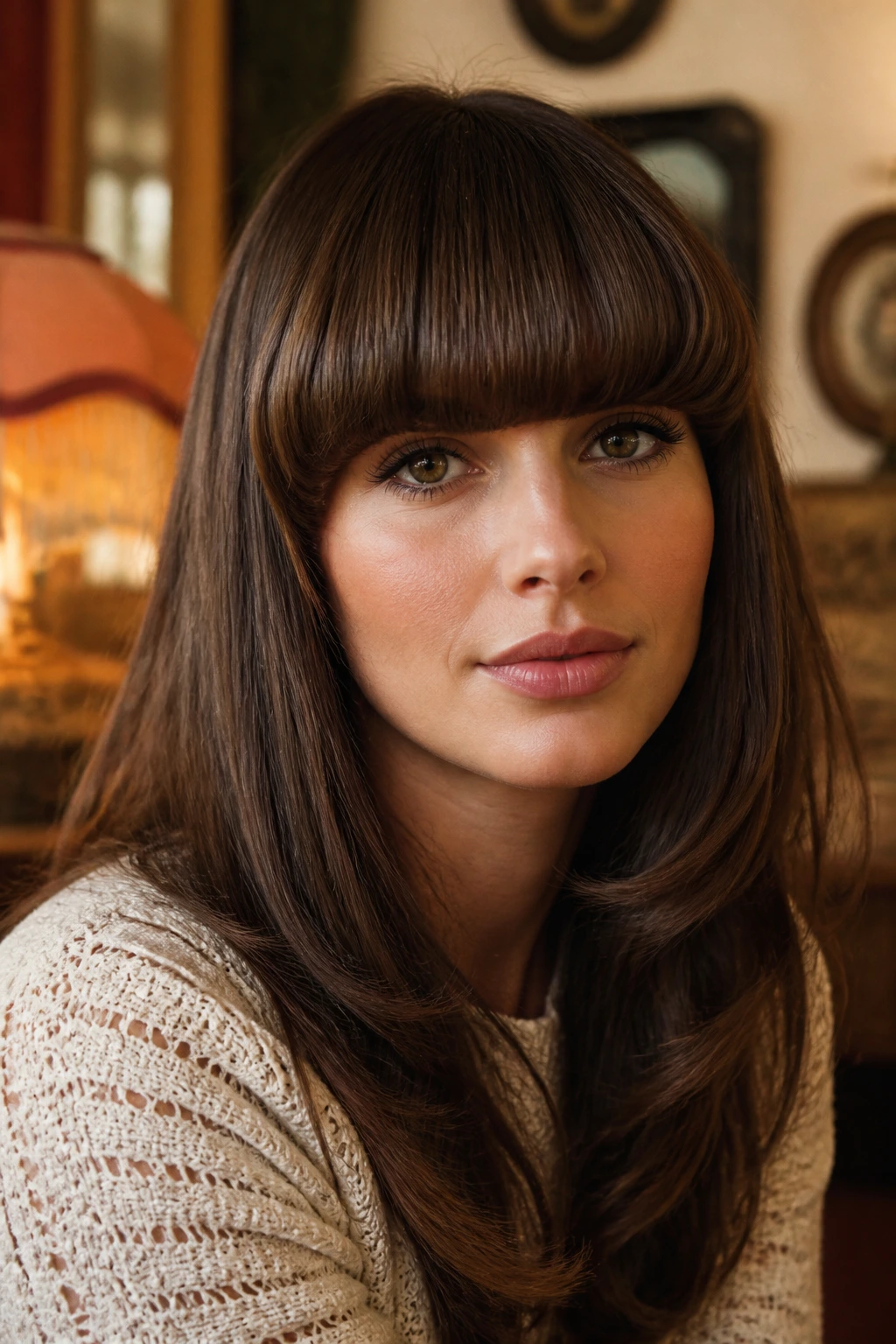
Inspired by the pin-up aesthetics of mid-century fashion, this style takes a thick, straight-across fringe and uses styling tools to curl the ends dramatically inward. This creates a high-volume, rounded bounce that sits well above the eyebrows, offering a vintage vibe.
The Retro Bounce Technique
Achieving this look requires a specific drying technique. Instead of drying the hair flat, you must use a small, boar-bristle round brush. Pull the hair straight up from the head, wrap it tightly around the brush, and apply heat while rolling the brush down toward your nose. This creates lift at the root and a strong curl at the ends.
Key Styling Steps
- Prep: Apply a thermal setting spray to damp hair to help hold the curl.
- Blow-dry: Use a high-heat, low-airflow setting on your dryer, keeping the nozzle close to the brush.
- Set: Once dry, wrap the hot fringe around a small roller and let it cool completely.
- Finish: Gently brush through with a wide-tooth comb and spray with a firm-hold hairspray to prevent the curl from falling flat.
This style is highly structured and looks best when paired with polished, smooth long hair, whether worn straight or styled into classic Hollywood waves.
11. Point-Cut Tapered Straight Bangs
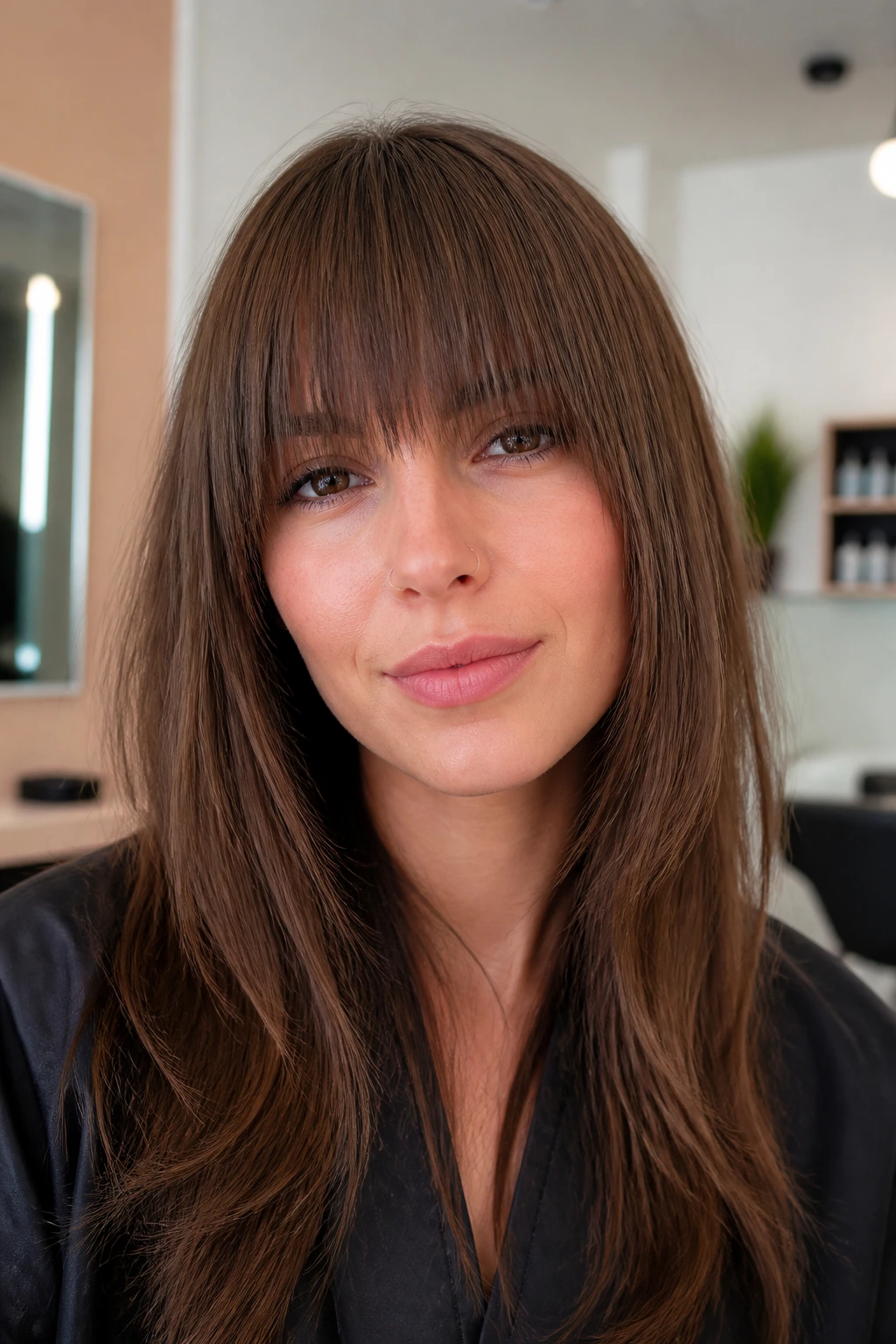
Tapered straight bangs feature a solid horizontal shape but have the weight removed from the very ends through vertical scissor cuts. This creates a soft, feathered texture right at the lash line, preventing the bangs from looking too heavy or blocky.
The point-cutting technique is what makes this style so wearable. By cutting vertically into the bottom half-inch of the fringe, the stylist removes the bulk that can make straight bangs feel heavy on your face. The top half of the bangs remains solid, keeping the classic straight-across look, while the ends are left light and airy.
This style is ideal for medium-density hair. It gives you the look of a heavy blunt fringe without the weight, making it comfortable to wear all day long. To style, blow-dry straight down with a flat brush, then use a tiny bit of hair serum on the very ends to define the tapered pieces and add shine.
12. Razor-Cut Split Straight Fringe
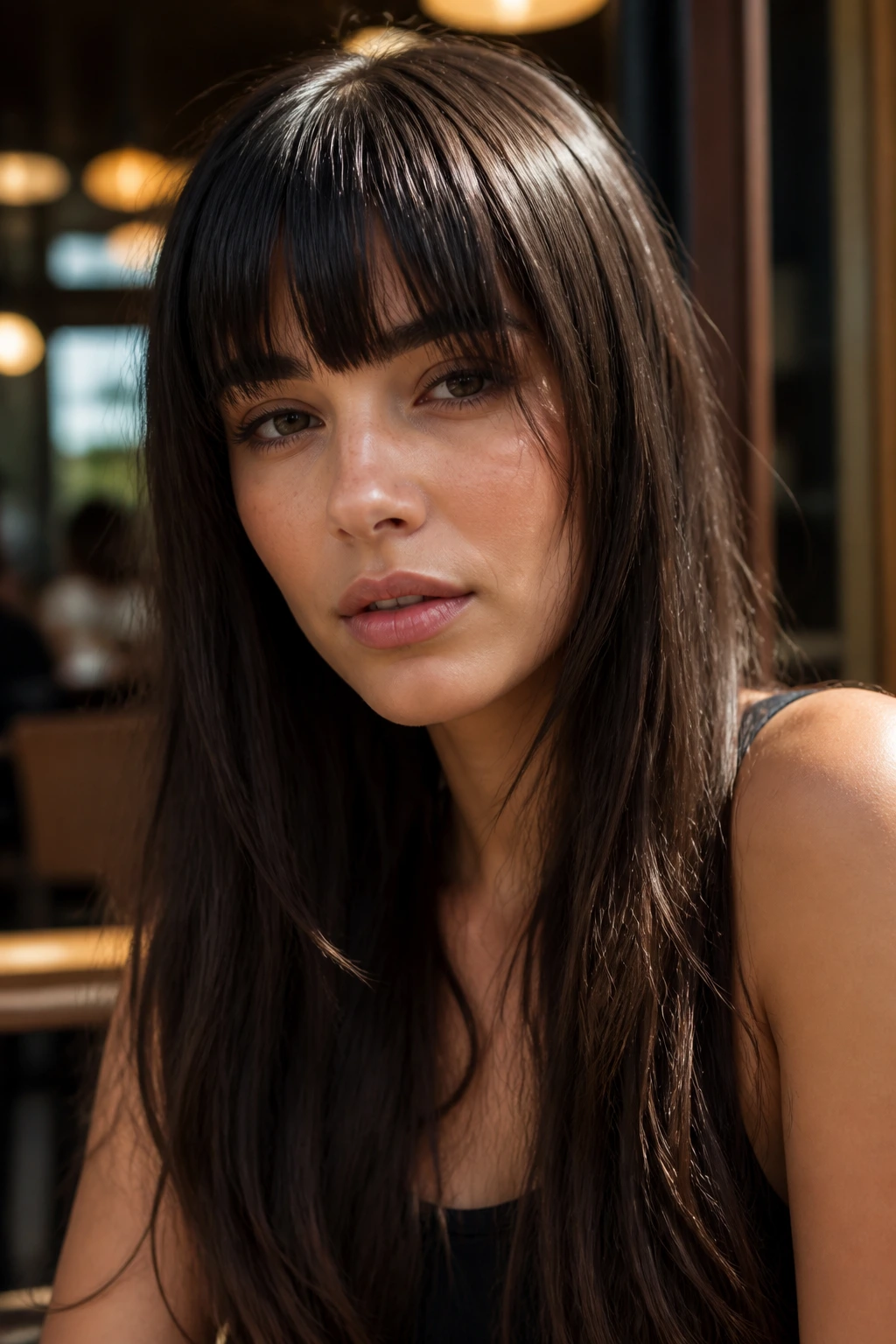
This look features a straight-across silhouette that is cut with a straight razor to create textured, separated ends. Rather than lying as a solid sheet of hair, the fringe naturally splits into small, organic sections across the forehead, giving it a lived-in, effortless feel.
Using a razor allows the stylist to slide-cut the hair, thinning out the ends as they cut the length. This creates soft, tapered tips that lie flat against the forehead without any stiffness. The slight splits in the fringe break up the solid horizontal line, making the style feel relaxed and modern.
This style works beautifully on hair with natural texture, such as soft waves or light curls. You do not need to fight your hair’s natural movement with a flat iron; instead, let the razor-cut ends follow your natural wave pattern for a soft, beachy look that pairs perfectly with long, textured layers.
13. High-Contrast Blunt Bangs with Face-Framing Tendrils
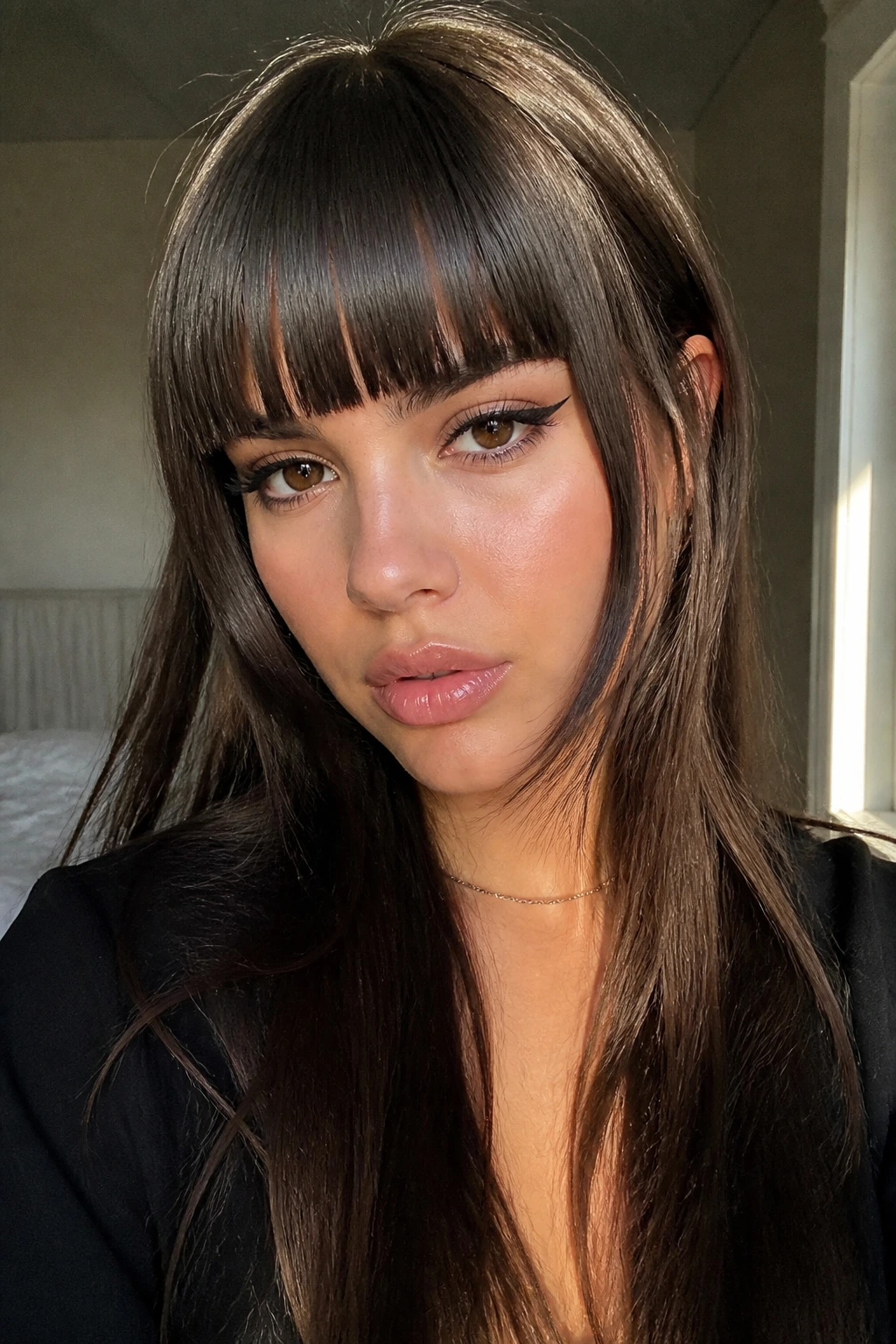
This style features a super-sharp, dense horizontal fringe paired with longer, disconnected strands of hair that frame the sides of the face. The contrast between the blunt line of the bangs and the long, vertical lines of the framing pieces creates a bold, graphic look.
The framing pieces are cut separate from the bangs, usually starting around the cheekbones and tapering down to the jawline. This creates a distinct frame for your face, highlighting your eyes and jaw. It is a fantastic option for anyone who loves wearing their long hair up, as the framing pieces and bangs remain down to keep the face framed.
Styling this look requires a bit of precision. You want the blunt bangs to lie completely flat and smooth, while the framing pieces can have a slight bend or wave to soften the transition to your long hair. Use a flat iron to smooth out the bangs, then use a styling wand to add a soft curve to the side pieces.
14. Soft Layered Straight-Across Bangs
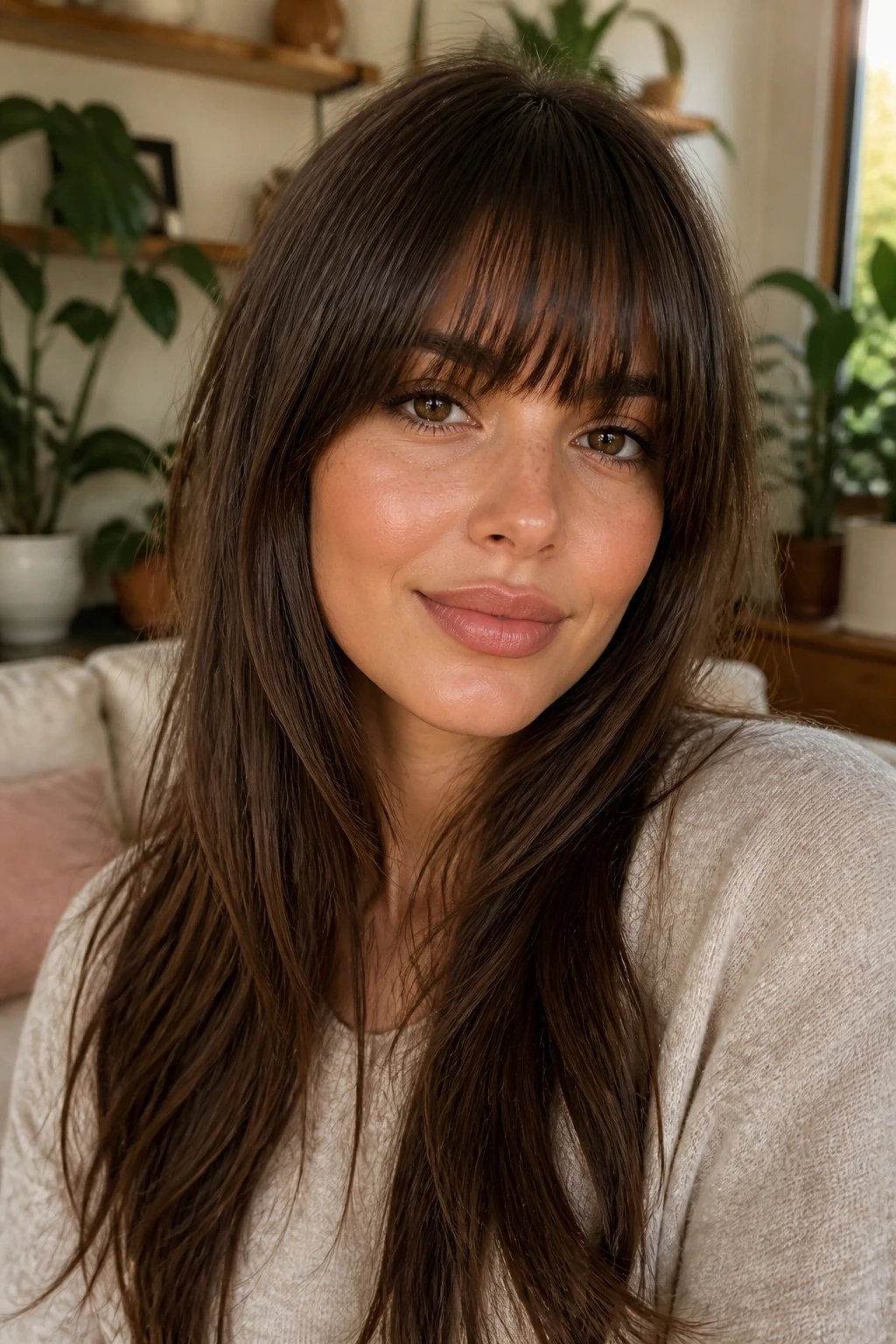
For anyone with fine or flat hair, soft layered bangs are the perfect way to add volume and movement to your fringe. This style features a straight-across line that is cut with subtle layers throughout the interior of the bangs, creating built-in lift and body.
By cutting short layers into the fringe, the stylist removes the weight that can make fine hair lie flat against the forehead. This gives the bangs a soft, airy quality that bounces naturally with your movement. It also prevents the bangs from looking greasy or piecey too quickly, as the layers help distribute your hair’s natural oils.
To style, blow-dry the bangs using a large round brush, pulling the hair upward and forward to maximize the lift from the interior layers. The result is a soft, voluminous fringe that adds a classic, elegant touch to long, layered hair.
15. Asymmetrical Edge Straight-Across Fringe
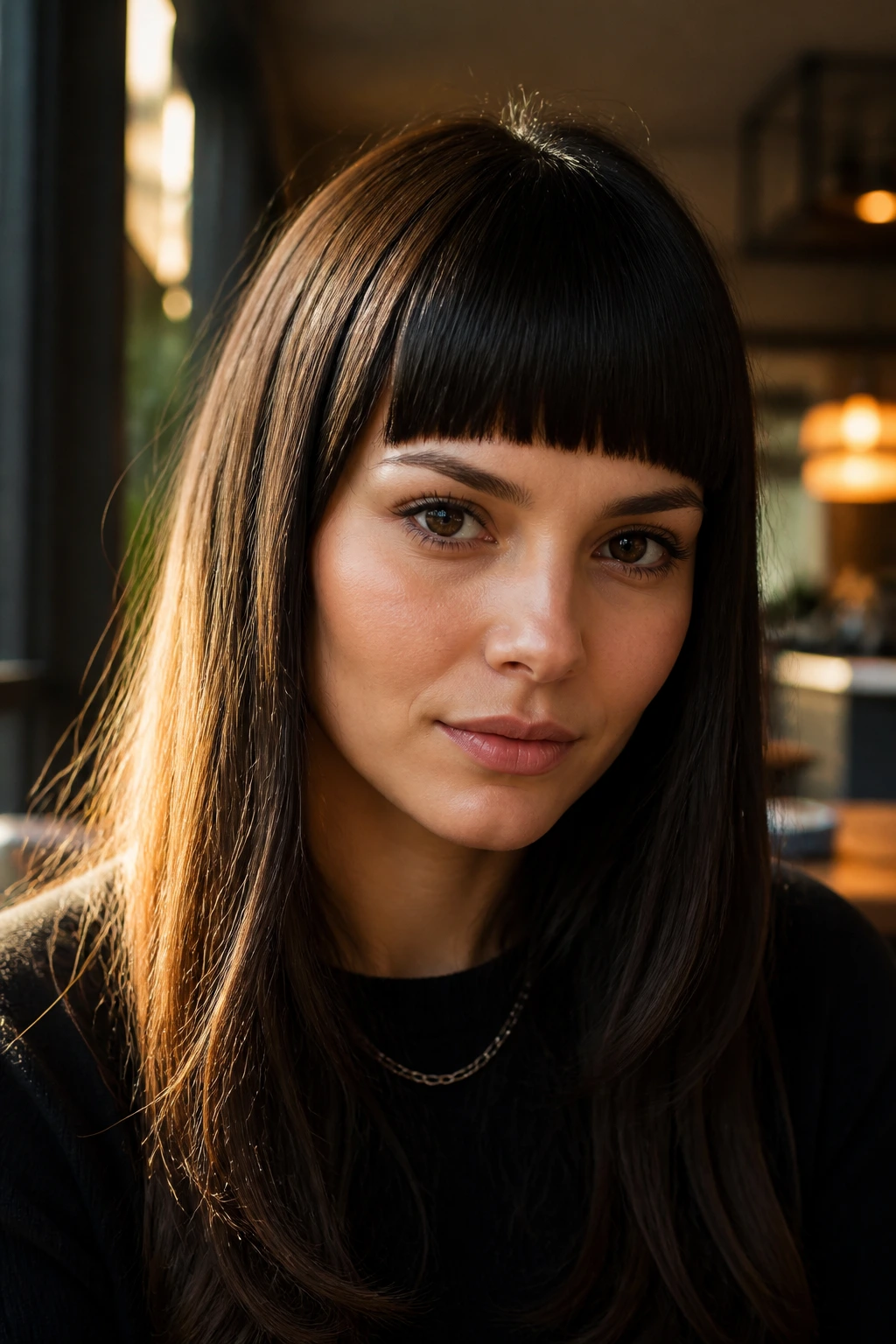
This is a modern, avant-garde take on the classic straight-across fringe. While the overall silhouette remains horizontal, the edge is cut with a subtle, intentional slope or a sharp corner detail, creating a unique, artsy look.
The Art of Asymmetry
This cut requires a highly skilled stylist who can create a clean, intentional line that does not simply look like a crooked haircut. The slope can be very subtle, starting slightly shorter on one side of the forehead and gradually lengthening toward the other, or it can feature a sharp, geometric step detail.
Who It is Best For
- Face Shapes: Oval, round, or heart-shaped faces that can handle a bold, graphic line.
- Hair Texture: Naturally straight, medium-density hair that will showcase the clean lines of the cut.
- Style Aesthetic: Anyone who loves alternative, structural, or high-fashion looks.
- Maintenance: Extremely high. Requires precise trims every two weeks to keep the geometric line sharp.
Pro tip: To keep the asymmetrical line looking clean and intentional, use a high-shine hair serum before flat-ironing the bangs flat against your forehead.
Choosing the Right Fringe Density for Your Face Shape
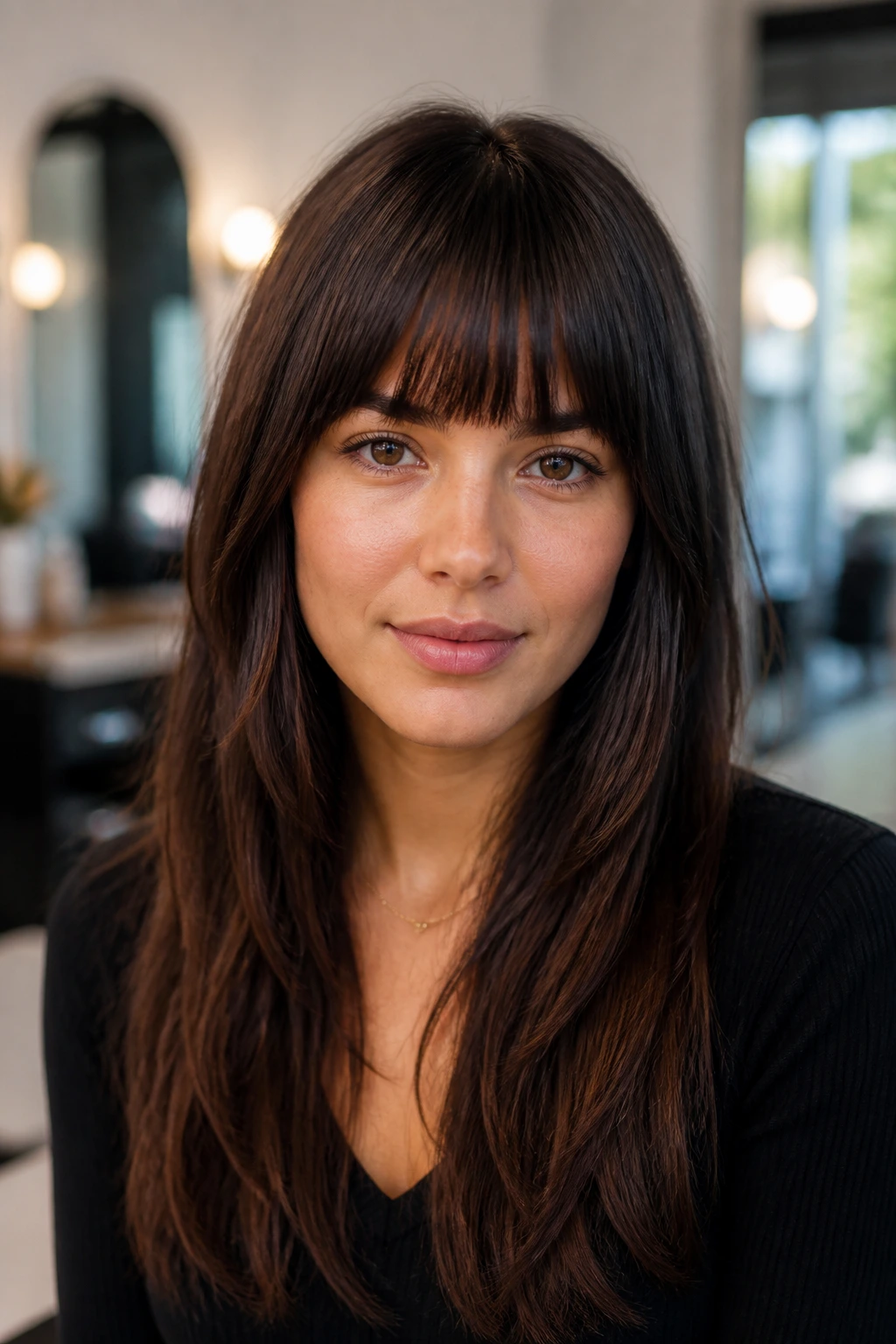
Understanding your face shape is the most critical step before cutting straight bangs. A straight line across your forehead acts like a visual marker; it cuts off the top portion of your face, which can completely alter your proportions. If you have a round face, a heavy, blunt fringe can make your face look shorter and wider. However, you do not have to abandon the look entirely—you simply need to adjust the density.
+------------------+------------------+------------------+
|    Face Shape    | Recommended Style|   Visual Effect  |
+------------------+------------------+------------------+
|      Round       | Wispy / Piecey   | Elongates face   |
|      Square      | Rounded Arch     | Softens jawline  |
|      Oval        | Heavy / Blunt    | Balances length  |
|      Heart       | French-Girl/Split| Softens forehead |
+------------------+------------------+------------------+
For rounder faces, a wispy or piecey straight fringe is highly effective because the skin of your forehead peeking through the hair breaks up the solid block, creating the illusion of length. If you have a square or strong-jawed face shape, avoid a razor-sharp, blocky blunt cut. Instead, choose a rounded arch style where the edges curve down around your eyes to soften the sharp angles of your jawline.
Oval faces can wear almost any density, but they particularly shine with a heavy, eyebrow-grazing blunt cut. This density visually cuts the length of an oval face, bringing balance and putting the focus directly on your eyes. If you have a heart-shaped face with a wider forehead and a pointed chin, a soft, tapered straight fringe or a French-girl style with slightly split center pieces will help minimize the forehead without overwhelming your delicate chin.
How to Blow Dry Straight Bangs to Avoid the Bubble Effect
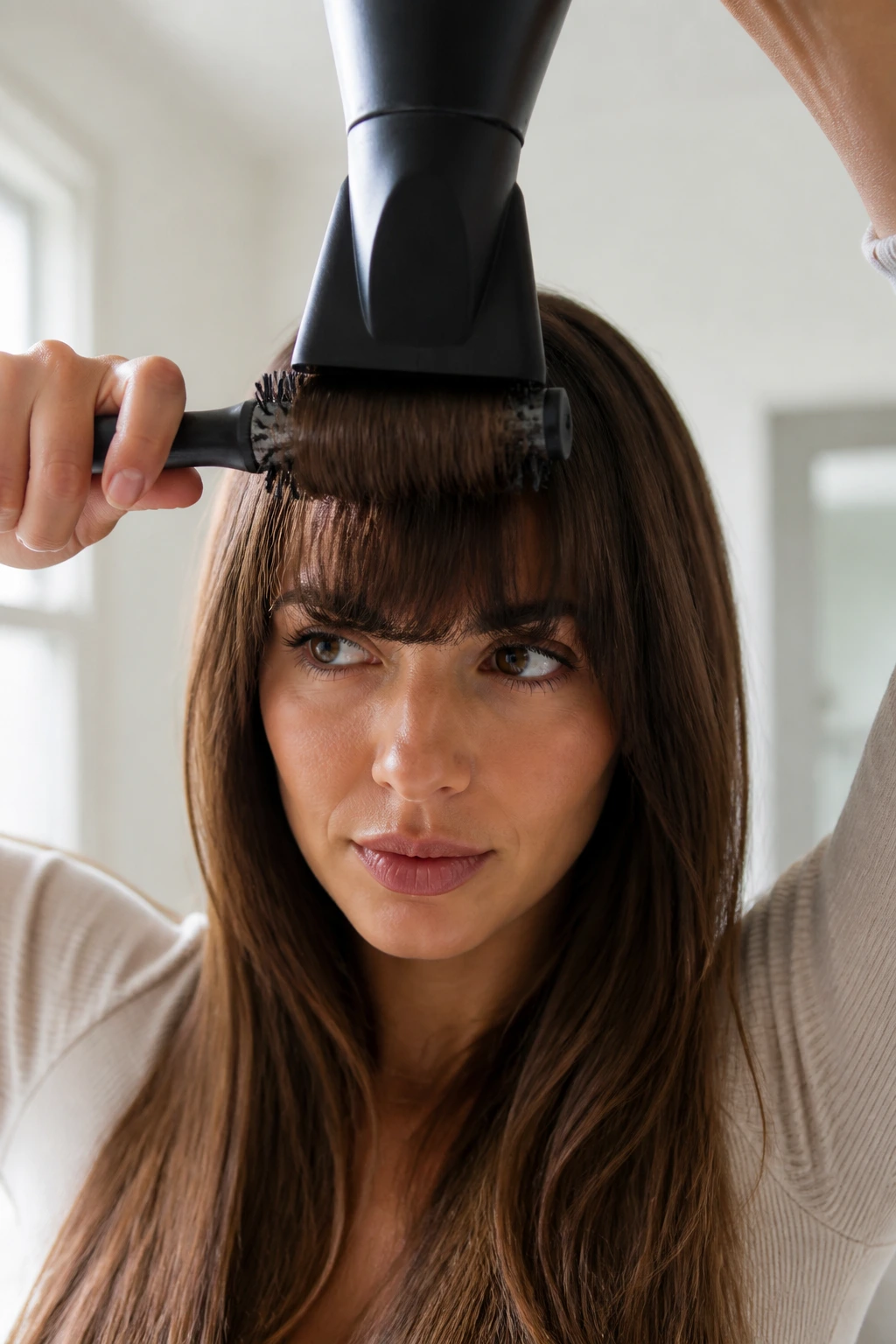
The biggest mistake people make when styling straight-across bangs is using a round brush to roll them directly under. This results in the “bubble fringe”—a stiff, rounded roll that looks dated and separates easily, exposing your forehead in all the wrong places. Modern, chic straight bangs should lie relatively flat, with just enough natural lift at the root to keep them from sticking to your skin.
To achieve this, you need to master the flat-wrap technique. Start with soaking wet hair. Bangs dry incredibly fast, and if they begin to air-dry naturally, they will lock in their natural cowlicks and parting habits, making them nearly impossible to smooth out.
Step 1: Wet Bangs --> Step 2: Flat-Wrap (Left to Right) --> Step 3: Direct Airflow Downward --> Step 4: Cool ShotUsing a small paddle brush or a fine-tooth comb, hold your blowdryer with the nozzle pointing directly down from above. Brush your bangs completely to the left, following the brush with the dryer. Then, brush them completely to the right. Repeat this left-to-right motion until the hair is about eighty percent dry. This technique breaks any natural parts or cowlicks at the root, forcing the hair to fall straight down in a neutral position.
Once the roots are dry and tamed, you can finish the ends. Use your brush to gently pull the bangs straight down toward your nose, keeping the dryer’s nozzle pointing downward. This seals the hair cuticle, adding natural shine and ensuring the bangs lie flat against your forehead with a soft, modern drape.
Cutting Your Own Fringe: The Two-Finger Tension Rule
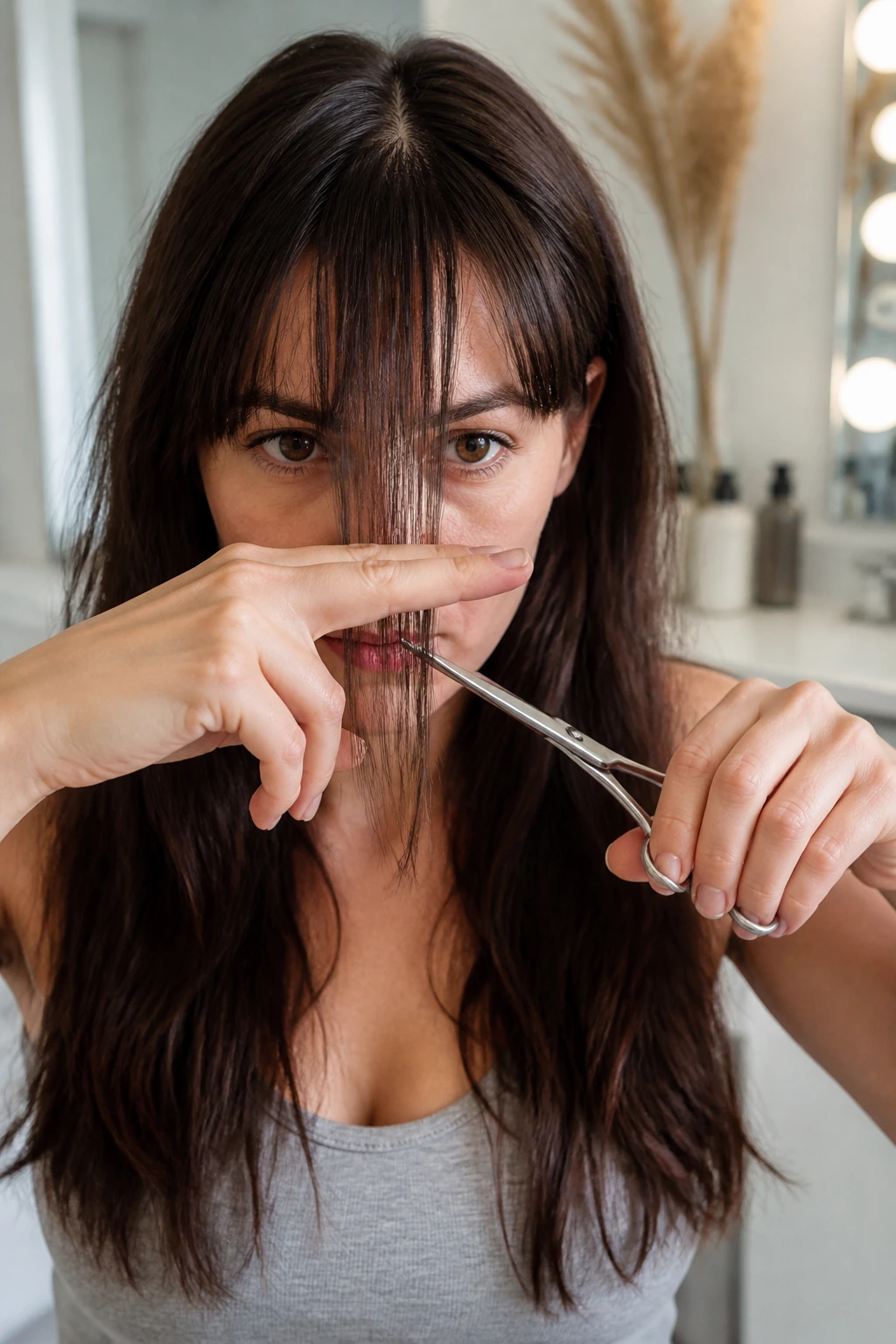
While we always recommend visiting a professional stylist for your initial bang cut, maintaining them at home is a skill you can master. The key reason home trims go wrong is over-tensioning. When you pull your wet hair down tightly between your fingers to cut it, you are stretching the hair. Once it dries, it springs back, leaving you with micro-bangs that you did not want.
To avoid this disaster, always trim your bangs when they are completely dry and styled the way you normally wear them. Stand in front of a mirror with good lighting, and use proper hair shears—never use kitchen or household scissors, which will bend and chew the hair, leading to split ends.
       [ CORRECT ]                         [ WRONG ]
   Gently hold, no pull                 Pulling down tight
        (Dry hair)                          (Wet hair)
         ======                              ======
         |    |                              |    |
         |    |                                  /
        (  ) (  )                               /
         ||   ||                               ||
        /   /                               /
Use the two-finger tension rule: slide your index and middle fingers down your bangs, but stop about half an inch above where you want to cut. Do not pull the hair taut. Let the hair sit naturally between your fingers. Hold your shears vertically, not horizontally, and make small, tiny snips into the hair. This is called point cutting, and it creates a soft, forgiving edge. If you cut straight across horizontally, any mistake will be glaringly obvious. By cutting vertically, you create a soft line that hides minor unevenness.
Dealing with Cowlicks and Troublesome Hairlines
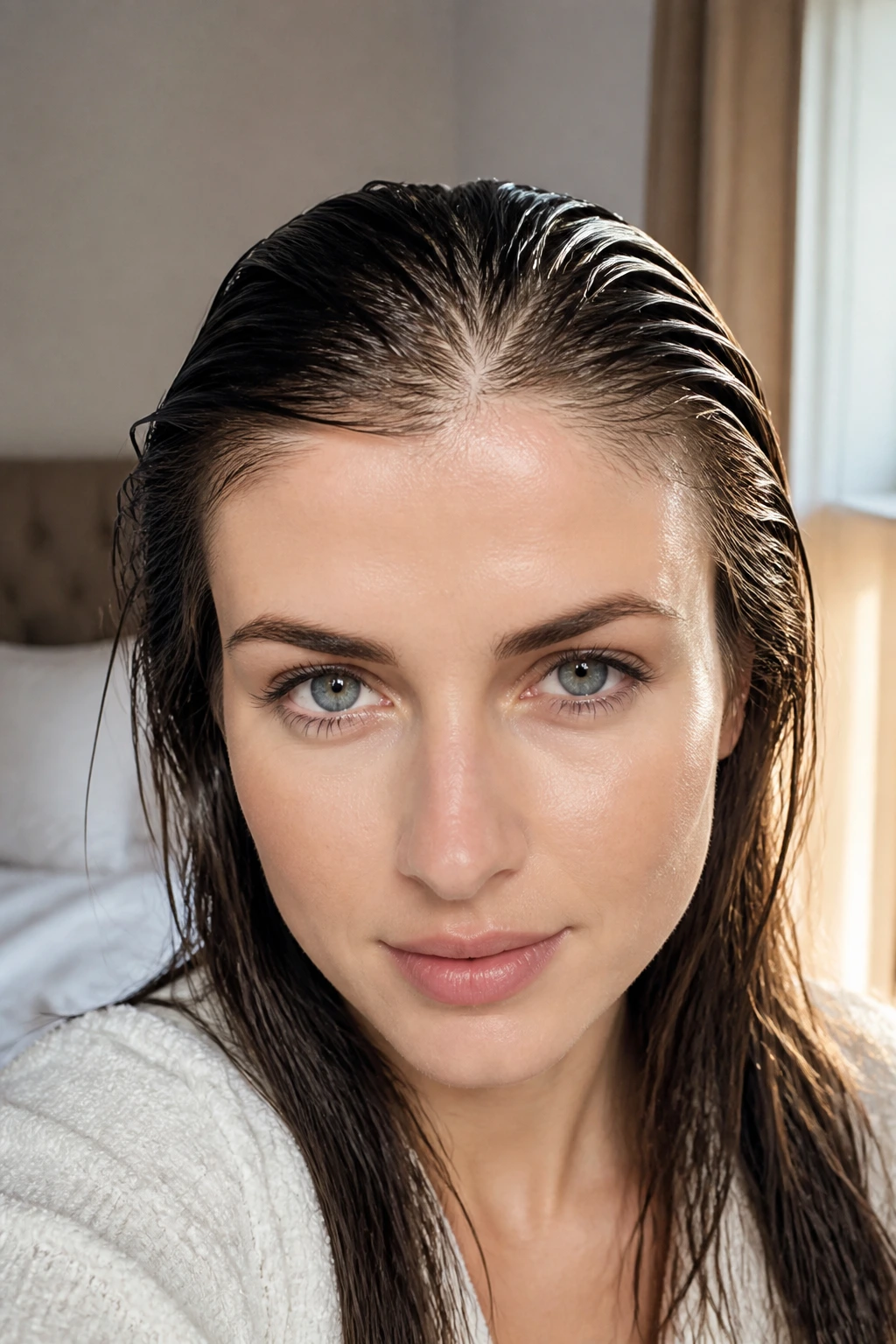
A cowlick is a section of hair that grows in a different direction than the rest, usually twisting or standing straight up at the hairline. If you have a strong cowlick in the center of your forehead, cutting straight-across bangs can feel like an invitation for daily hair frustration. However, you can train your hair to cooperate with the right styling routine.
First, you must accept that you cannot let your bangs air-dry. The moment your hair dries naturally, the cowlick wins. The flat-wrap blow-drying method is your absolute best defense because it forces the hair roots to bend in the opposite direction before they can set.
         [ Cowlick Root ]
                |
          (Tension Pen)
         /
  [Pull Left]  <--->  [Pull Right]
                |
        [Heat from Dryer]
For stubborn cowlicks, apply a small amount of light-hold styling gel or primer spray directly to the wet roots before drying. This provides the hair with a memory-holding structure. As you dry, use your comb to apply firm downward tension directly over the cowlick, blowing the heat right onto the root. Once the hair is dry, let it cool completely while holding it flat with your hand or a comb. The cooling process is what actually sets the hair shape, locking the cowlick down for the day.
Essential Tools for Styling Straight-Across Bangs
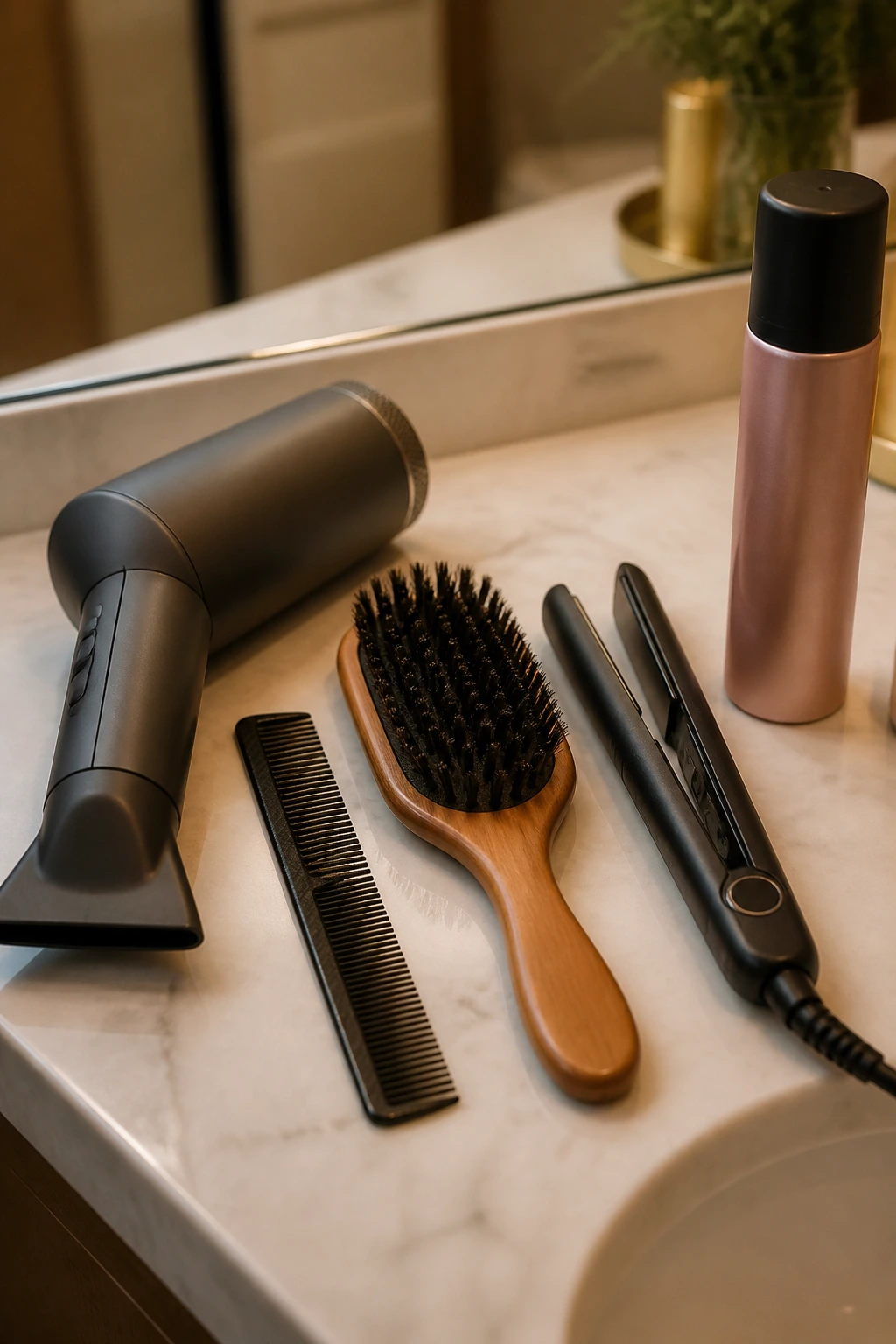
To keep your straight-across bangs looking salon-fresh every single day, you need the right toolkit. Having these items on hand will save you time and prevent styling damage.
- A Professional Hairdryer with a Nozzle: The directional nozzle concentrate is non-negotiable. Without it, the air scatters, causing your bangs to frizz and blow in every direction.
- A Fine-Tooth Carbon Comb: Carbon is heat-resistant and reduces static. A comb allows you to get right to the root of the hair to tame cowlicks during blow-drying.
- Boar-Bristle Paddle Brush: Boar bristles distribute your hair’s natural oils from the root down to the tips, keeping your bangs shiny and preventing dry, static-heavy flyaways.
- Mini Flat Iron: A regular-sized flat iron is too bulky for short bangs and can easily burn your forehead. A mini iron with half-inch plates allows you to get close to the root and gently shape the ends.
- Dry Shampoo: Because bangs rest directly against your forehead, they absorb skincare products, sweat, and facial oils much faster than the rest of your hair. A quick spray of dry shampoo on the underside of your bangs in the morning keeps them airy and prevents clumping.
Wrapping Up
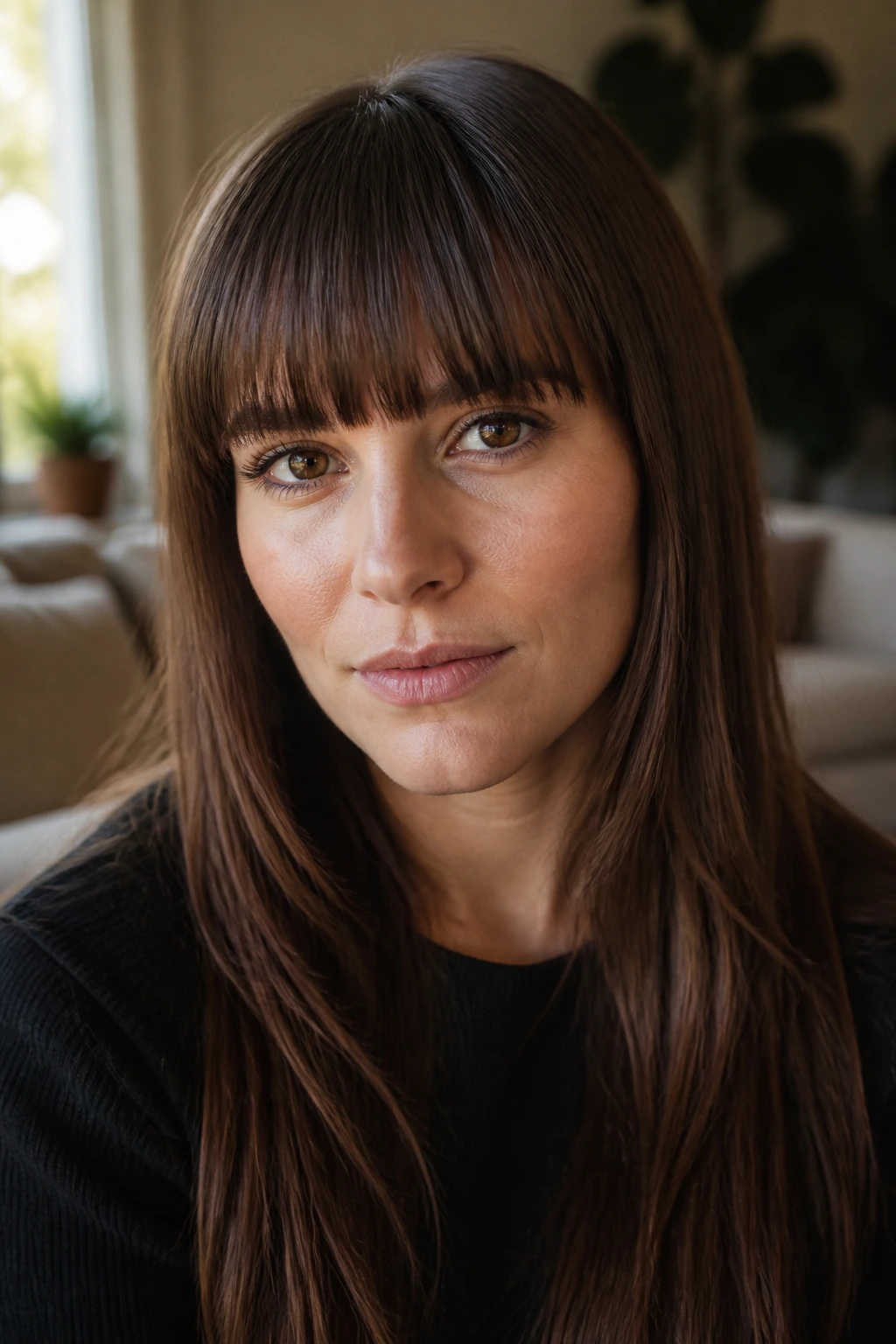
Pairing straight-across bangs with long hair is a timeless, high-impact style choice. It brings a sense of structure and intention to your look, instantly framing your face and making even a simple messy bun look like a fully styled option. Whether you choose a dense, dramatic blunt cut or a soft, wispy see-through style, the key is matching the density and edge-finish to your hair type and daily maintenance willingness.
Remember that bangs are dynamic; they change with the humidity, your skincare routine, and how you sleep. By investing a few minutes each morning into proper styling using the flat-wrap method and keeping your toolkit stocked with dry shampoo and a good comb, you can easily maintain a crisp, stunning fringe that elevates your long lengths. Embrace the change, enjoy the framing effect, and do not be afraid to experiment with different textures as your bangs grow out.