


Sitting in a stylist’s chair, looking at a long, uniform haircut that feels more like a security blanket than a style statement, is a familiar scenario. The desire for a transformation starts small, but it grows until you are ready to make a serious cut. If you want a style that completely transforms your face without sacrificing your length, committing to long hair heavy bangs is a powerful choice. It is not a subtle option. It is a bold, high-contrast look that frames your eyes, highlights your cheekbones, and brings immediate structure to long, flowing strands.
The secret to pulling off this look lies in the relationship between the weight of the fringe and the length of the rest of your hair. When you cut a substantial amount of hair from the crown forward, you shift the visual balance of your entire face. It is a classic design trick. By pulling density from the top and sides, you create a built-in frame that prevents long hair from dragging your features downward.
But let us be clear about one thing: heavy fringe requires a real partnership with your styling routine. Unlike wispy layers that you can easily push to the side, dense bangs demand intention. You have to learn how to guide them, dry them, and keep them looking fresh.
If you are ready to take the plunge, there is a wealth of variations to explore. Whether you want a sharp, graphic line that stops just above your lashes or a soft, textured arch that blends into cascading layers, you can find a variation that suits your texture. Let us look at twenty exceptional ways to wear this striking combination.
1. Classic Blunt-Cut Heavy Bangs
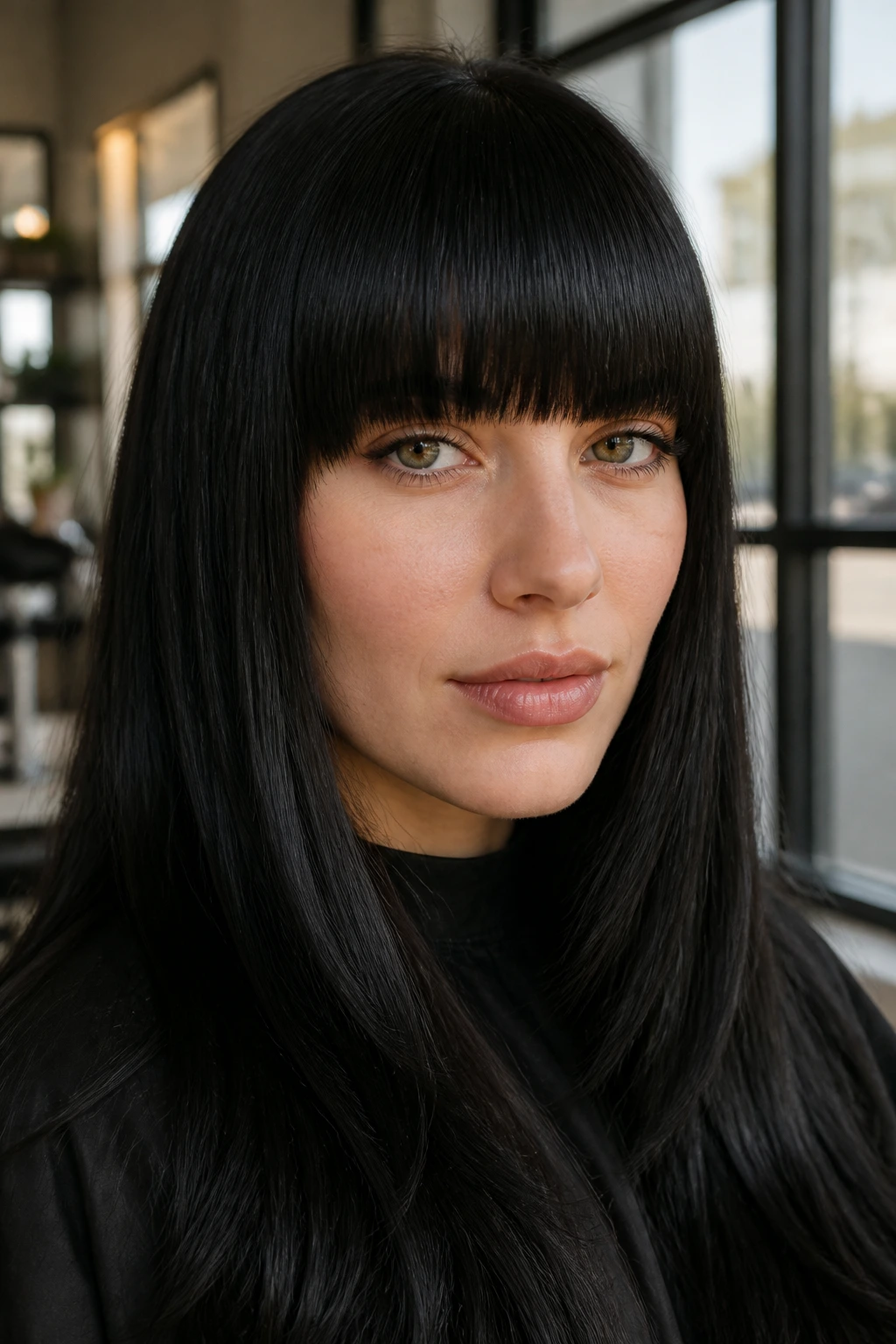
This style is the foundation of heavy fringe. It features a solid, straight-across weight line that cuts horizontally across the forehead, usually stopping right at or slightly below the eyebrows. There is zero texturizing at the ends, which creates a clean, thick sheet of hair that commands attention.
Why the Blunt Line Works
When you keep the bottom edge of your bangs completely solid, you create a horizontal focal point. This draws immediate attention to your eyes and brow line. For those with naturally straight, dense hair, this cut behaves beautifully because the weight of the hair keeps the fringe lying flat against the forehead without constant adjustments.
Styling Essentials
- Use a flat wrap blow-drying technique to dry the bangs side-to-side against the forehead.
- Avoid using a round brush, which can create an outdated, bubbly shape.
- Apply a tiny drop of lightweight hair oil to the ends for a glass-like shine.
- Keep a miniature flat iron on hand for quick morning touch-ups.
Pro tip: When blow-drying, blow the air stream directly downward from above your head to keep the cuticle flat and prevent unwanted frizz.
2. Textured Arched Heavy Bangs
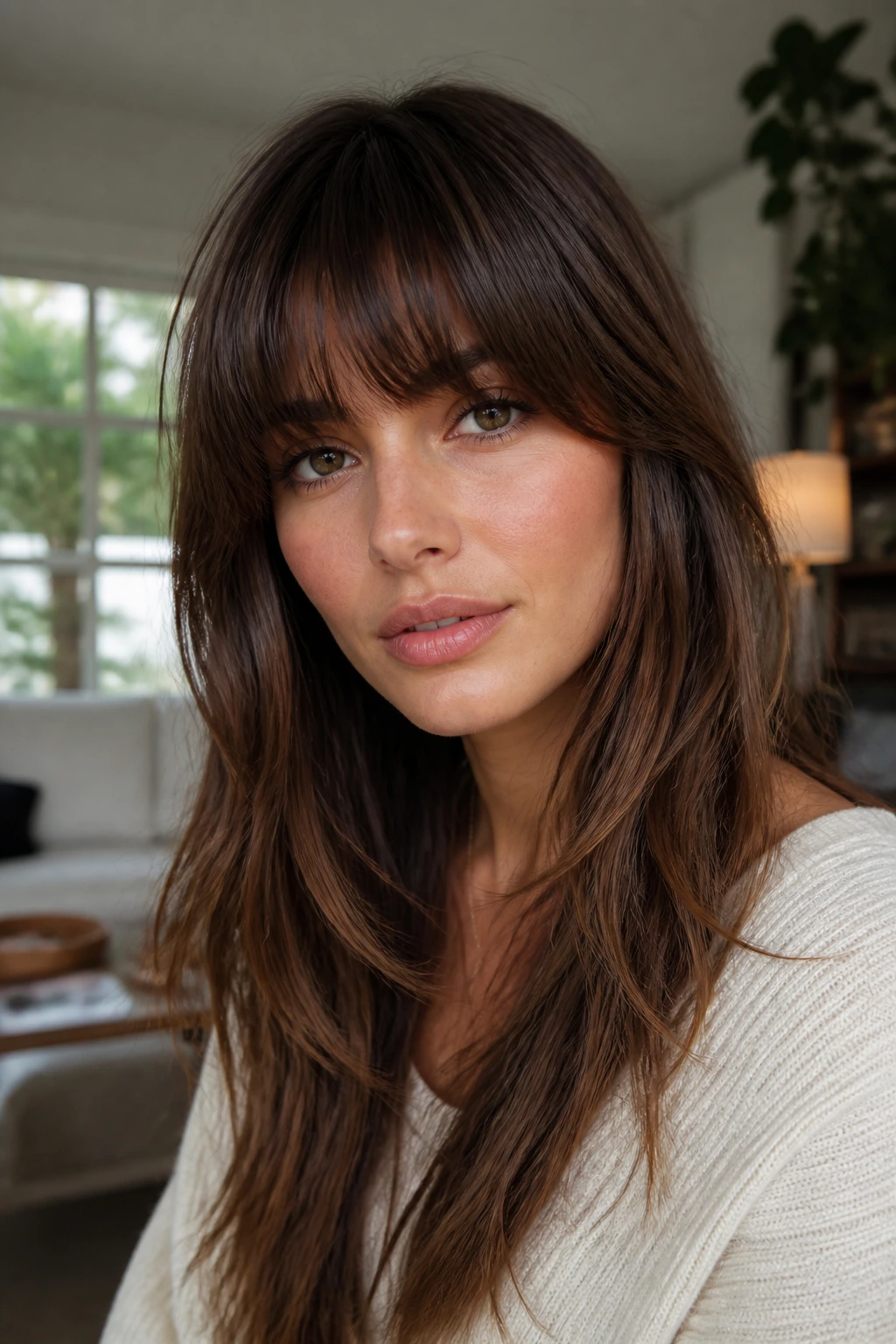
A solid horizontal line can sometimes feel too severe, especially on square or heart-shaped faces. This variation softens the look by curving the weight line downward at the temples, creating a gentle arch that frames the eyes. The stylist will typically use point-cutting techniques along the very bottom millimeter of the fringe to remove a tiny bit of bulk, allowing the hair to move naturally.
You do not have to worry about a stiff, helmet-like appearance with this shape. Because the corners taper down to meet the longer side layers, the bangs transition smoothly into the rest of your hair. This makes it much easier to wear your hair up in a ponytail or bun, as the arched corners stay down to frame your face.
To style these, use your fingers to ruffle the fringe while drying. This encourages a lived-in look that does not require constant combing throughout the day. It is an excellent middle ground for anyone who wants density without stiffness.
3. Shaggy Curtain-Adjacent Heavy Bangs
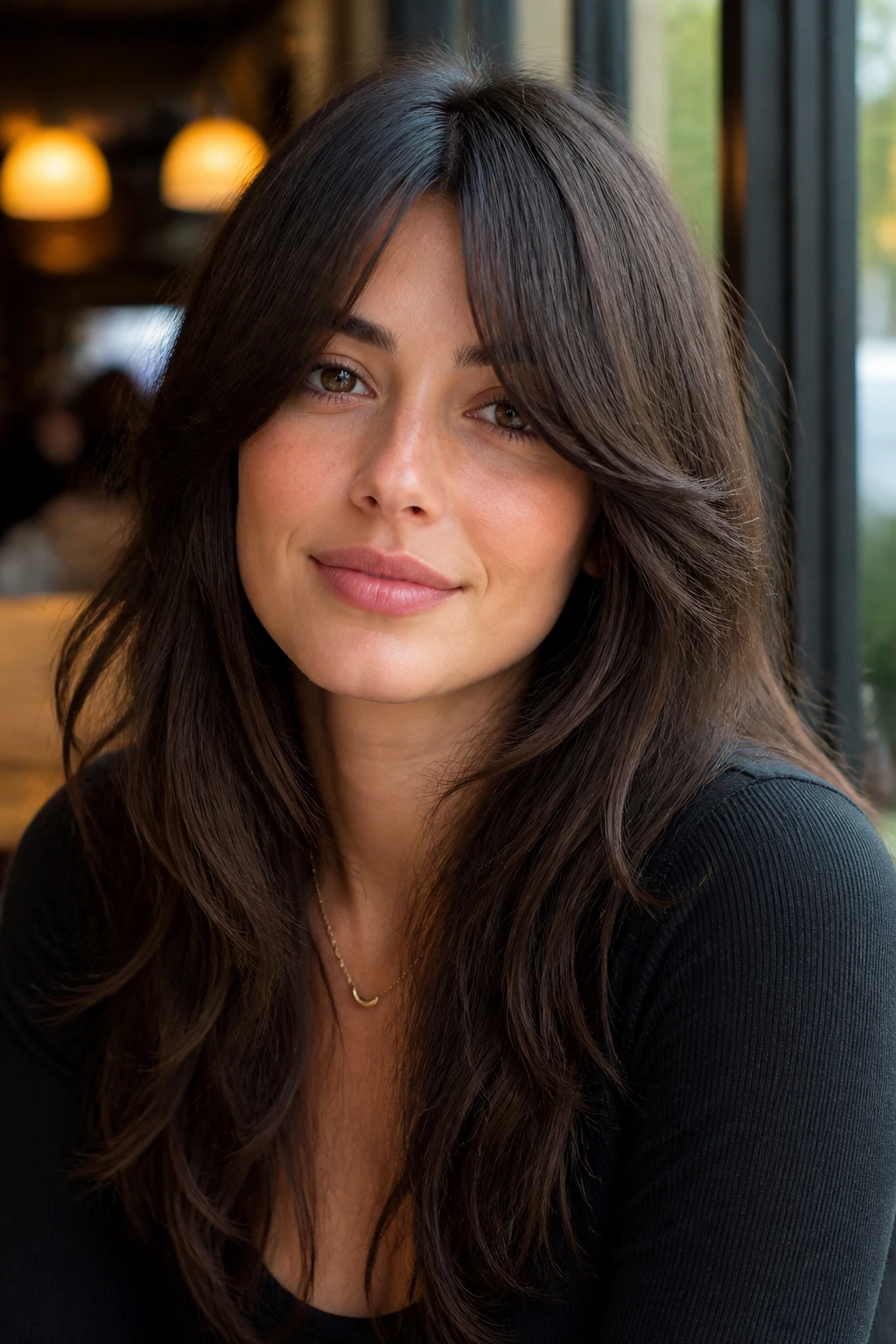
Can heavy bangs feel breezy? Absolutely. This style merges the thickness of a full fringe with the parted, sweeping movement of curtain bangs. It is cut thick from the crown, but the center is styled with a slight separation, allowing a hint of the forehead to show through.
Why Does This Separation Work?
By parting the bangs slightly in the middle, you break up the heavy horizontal block of hair. This vertical gap elongates your face, making it a brilliant choice for rounder face shapes. It gives you the drama of a thick fringe while keeping your face open and bright.
How to Style It
For this look, you want to focus on creating a soft, outward flip at the outer corners.
- Prep damp hair with a light texturizing mousse from root to tip.
- Blow-dry the center of the bangs straight down using a paddle brush.
- Use a medium round brush on the longer outer corners, rolling them backward and away from your eyes.
- Finish with a quick blast of cool air to lock in the shape, then use your fingers to shake the center apart.
4. Point-Cut Heavy Bangs with Tapered Sides
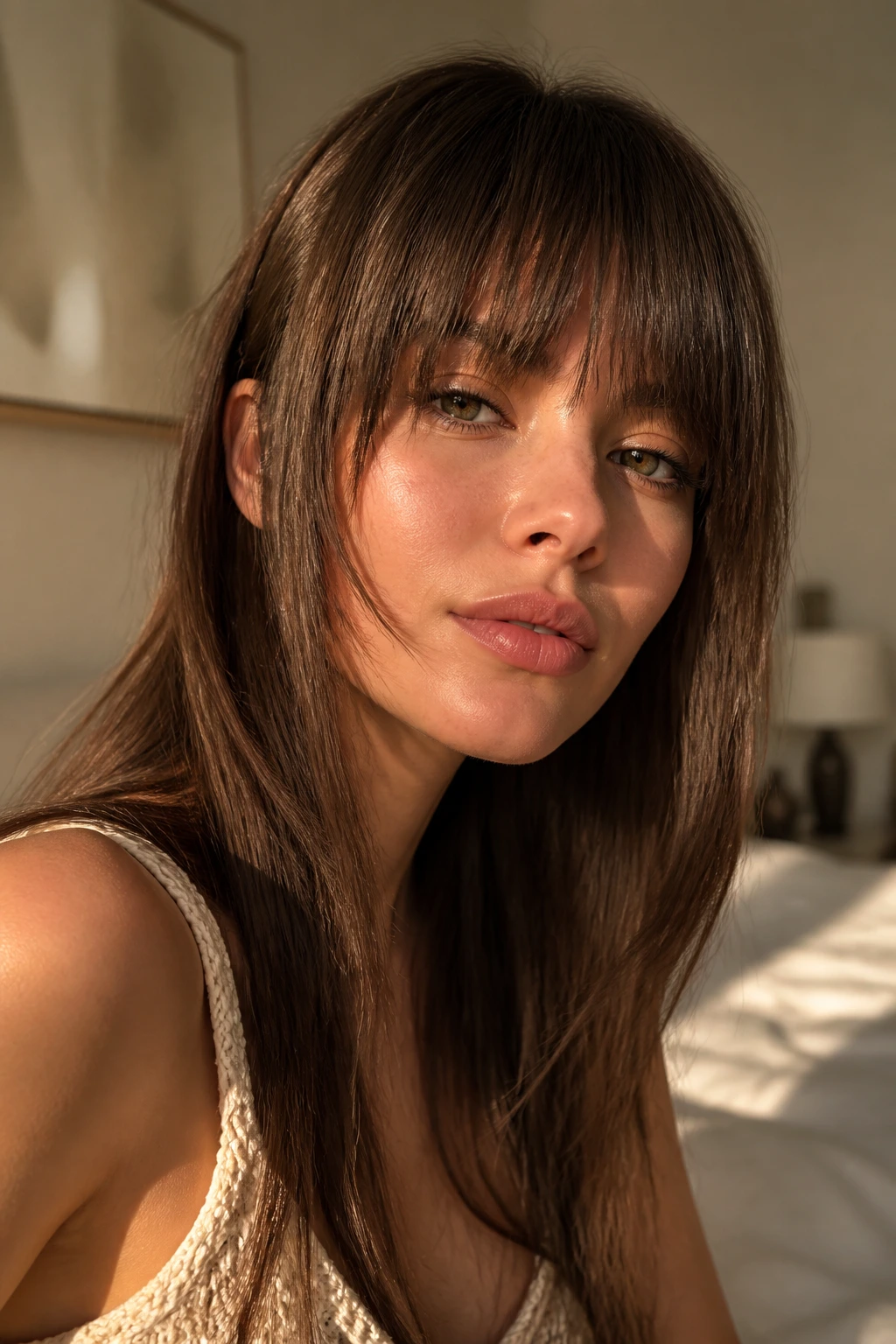
You might think that heavy bangs have to look blocky, but point-cutting changes the game entirely. In this style, the stylist cuts vertically into the ends of the thick fringe rather than straight across. The result is a dense canopy of hair that ends in a soft, jagged edge, flanked by tapered side pieces that hug the cheekbones.
The mechanism here is simple. By removing tiny V-shapes from the bottom edge of the bangs, the stylist keeps the overall thickness at the roots while breaking up the solid line at the bottom. This prevents the bangs from looking too heavy as they approach your eyes.
- Fringe Density: Very high at the crown, thinning out slightly at the tips.
- Side Transitions: Sharp, angled layers that start at the outer corner of the eye and sweep down to the collarbone.
- Best Hair Type: Medium to thick hair with a slight natural wave.
- Maintenance Level: Medium; requires trims every four to five weeks to maintain the tapered transition.
This approach ensures your bangs look styled, even when you let your hair dry naturally on a busy morning.
5. Eyebrow-Skimming Heavy French Bangs
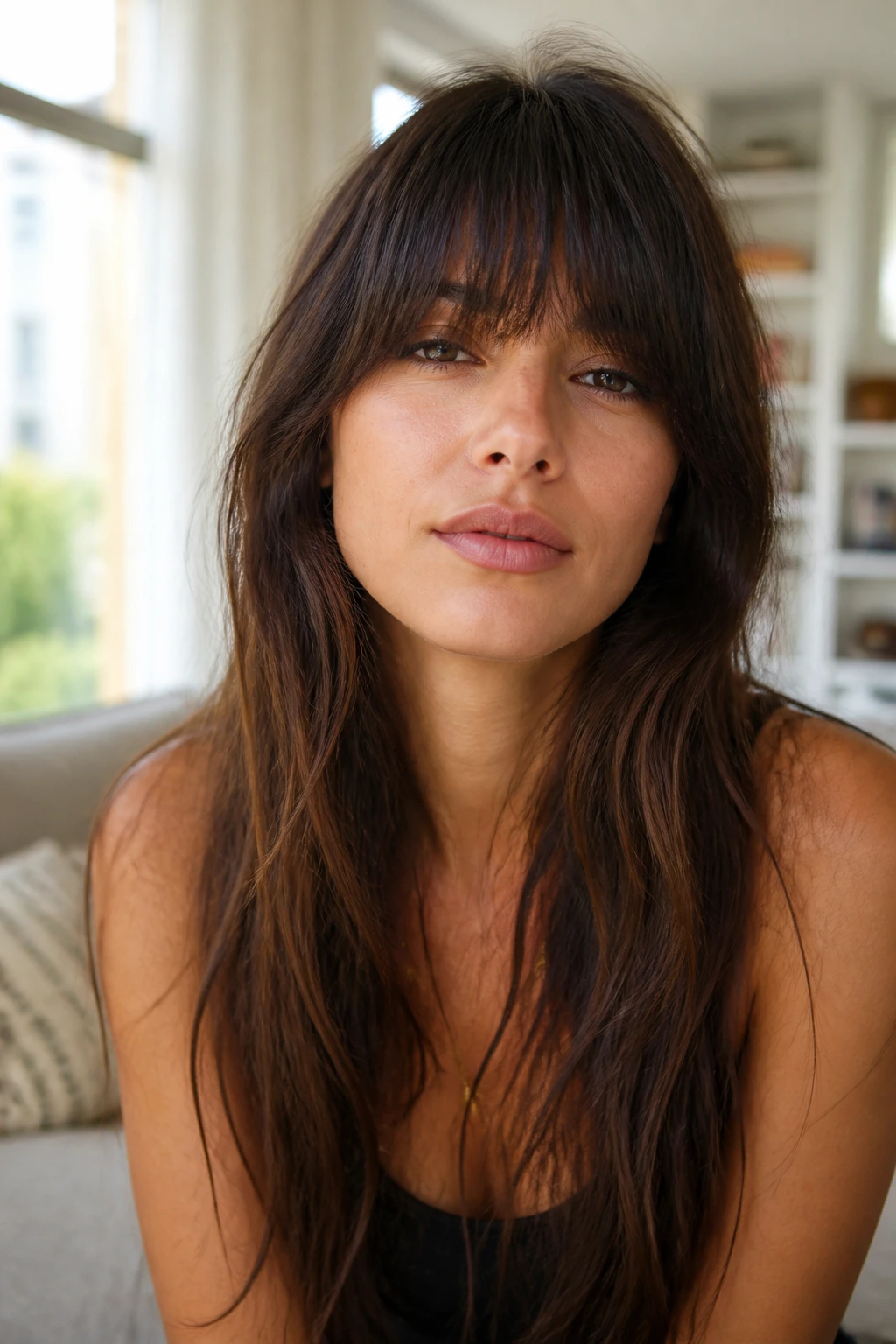
This style is all about effortless, Parisian-inspired movement. It is characterized by a thick, slightly messy fringe that sits right at the eyebrow level, often blending into long, undone waves. The key to this look is a soft, split texture that looks like you walked through a light breeze.
Rather than looking perfectly ironed, these bangs embrace a bit of natural texture. They are designed to look best when they are slightly imperfect. If you have a natural cowlick or a slight wave, this style actually works with those patterns instead of fighting against them.
To get this look, blow-dry your bangs without a brush. Instead, use your flat palm to sweep the wet hair back and forth across your forehead under the warm air stream of your dryer. This neutralizes any natural parts or cowlicks, leaving you with a neutral, forward-falling drape.
Once dry, spray a bit of dry shampoo or texturizing spray into the roots of the bangs. This keeps them from clumping together or getting oily from your skin during the day. It is a relaxed, incredibly chic way to wear heavy fringe with long, tousled layers.
6. Bardot-Style Split Heavy Bangs
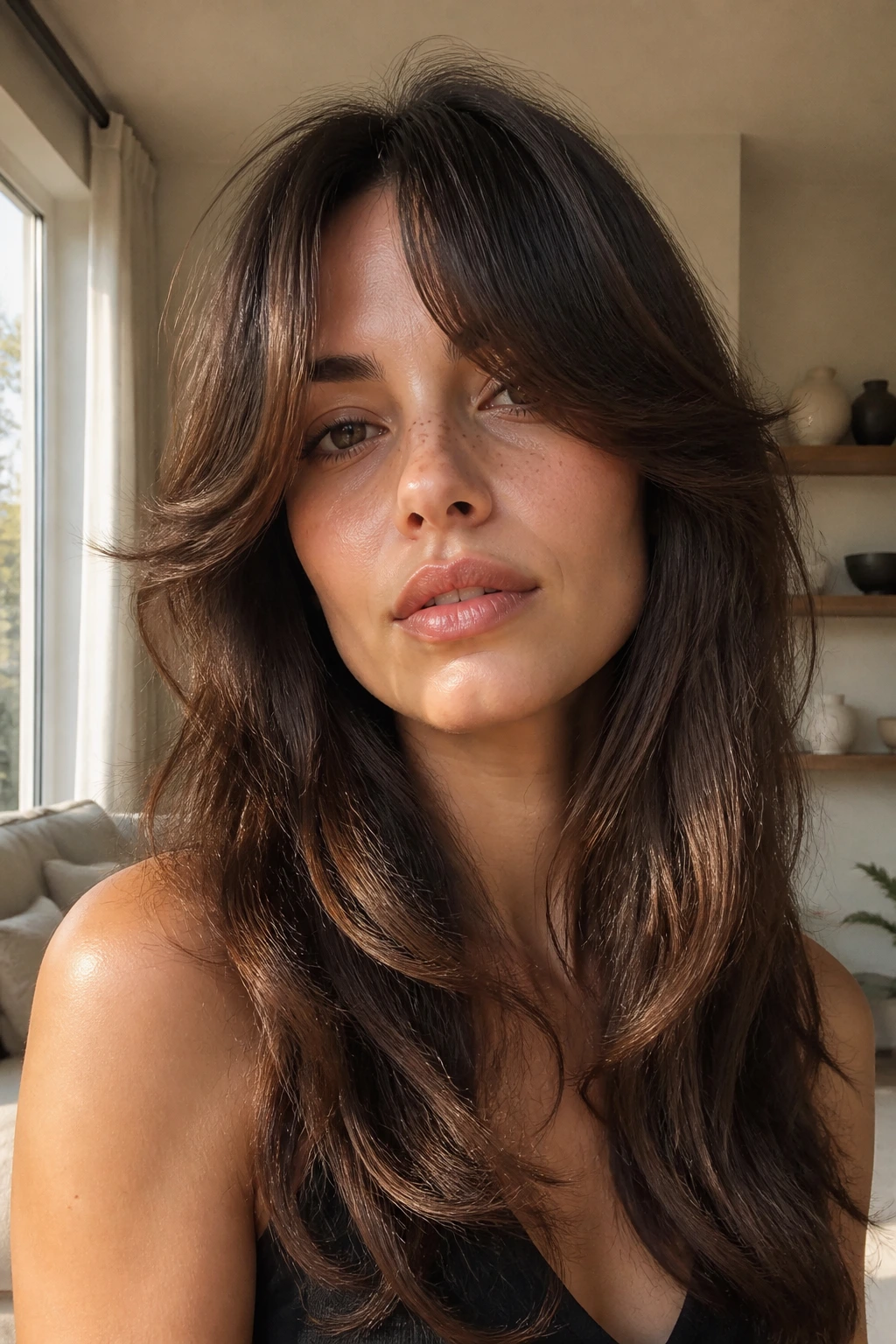
Unlike standard straight-across bangs, this style features a thick fringe that is split directly down the center or slightly off-center. It is named after the classic silver-screen look, offering a soft, romantic frame that highlights the eyes and temples.
The primary difference between this and a standard curtain bang is the shear volume of hair used. A Bardot bang starts much further back on the head, pulling a larger section of hair forward. This gives the split fringe a lush, voluminous look that does not get lost in long hair.
This style is perfect for anyone who wants the look of heavy bangs but hates the feeling of hair constantly touching their forehead. It keeps your forehead relatively clear while still providing a thick, face-framing frame of hair on either side.
To style, dry the hair forward first, then use a round brush to sweep each side outward. The result is a soft, voluminous cascade that frames your face beautifully, whether your long hair is worn down or swept up.
7. Choppy Messy Heavy Bangs
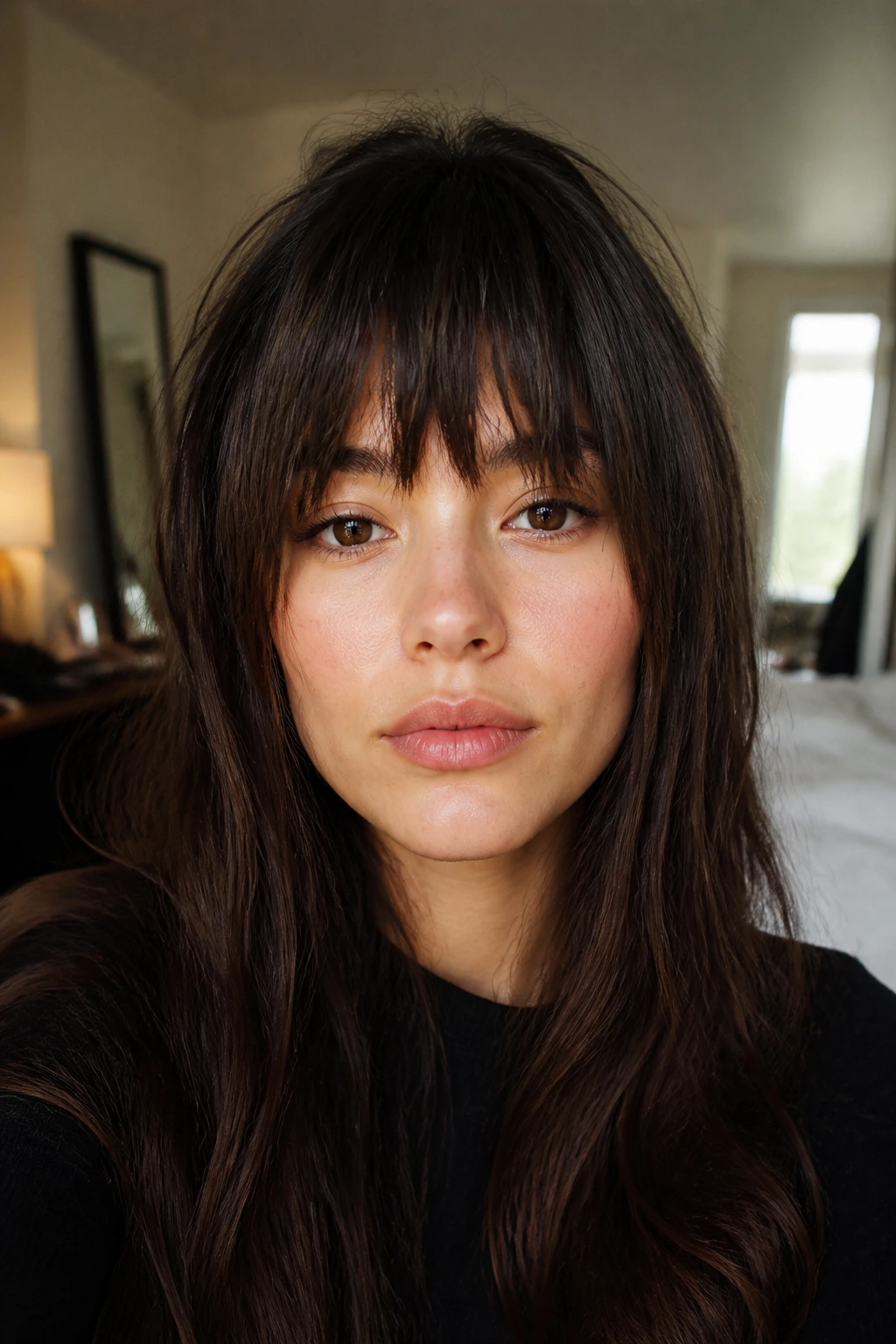
If you prefer a style with an edgy, rock-and-roll vibe, this variation is the perfect match. It features a dense fringe cut with highly irregular lengths, creating a jagged, choppy texture that looks wonderfully undone.
How the Choppy Texture Is Created
The stylist will use a razor or slide-cutting techniques to create distinct, chunky pieces within the heavy fringe. This removes the uniform weight of the hair, allowing different sections of the bangs to sit at slightly different levels. It is a fantastic way to add movement to very thick, straight hair.
Styling Elements
- Work a small dime-sized amount of matte pomade or styling wax between your fingertips.
- Pinch the ends of the bangs to define the choppy, piecy sections.
- Tousle the roots with your fingers to add height and separation.
- Avoid heavy silicones, which can make the choppy pieces look greasy instead of textured.
Pro tip: When applying styling wax, always start at the back of your head and use the leftover residue on your hands for your bangs. This prevents you from overloading the fringe with product.
8. Rounded Retro Heavy Bangs
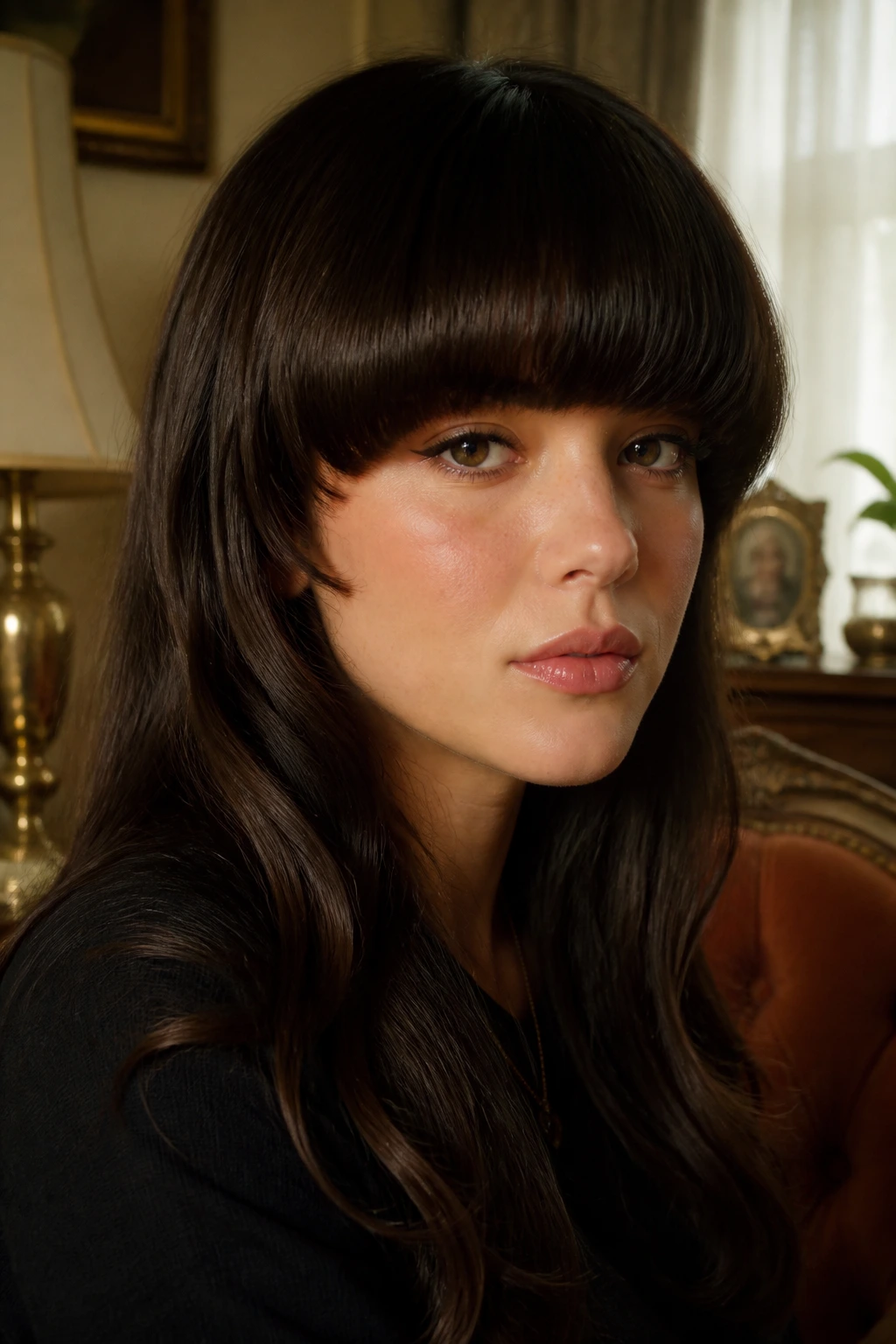
This style nods directly to vintage aesthetics, featuring a thick, wide fringe that curves downward around the forehead, almost hugging the temples in a continuous, smooth crescent shape. It is a highly polished look that requires clean lines and smooth styling.
You want to make sure your stylist cuts this with a gradual transition. The shortest point of the bangs should be directly in the center of your forehead, slowly lengthening as the line moves toward your ears. This rounded shape is incredibly flattering for long, angular faces, as it softens sharp jawlines and balances a high forehead.
To achieve the retro polish, style this with a large round brush. Focus on wrapping the hair around the brush and pulling it down and under, rather than straight out. This creates a soft, hugging curve that frames your eyes like a picture frame.
It is a high-maintenance look, but the structural impact it adds to long, straight hair is undeniable. It turns a simple haircut into a deliberate fashion statement.
9. Heavy Side-Swept Bangs with Long Layers
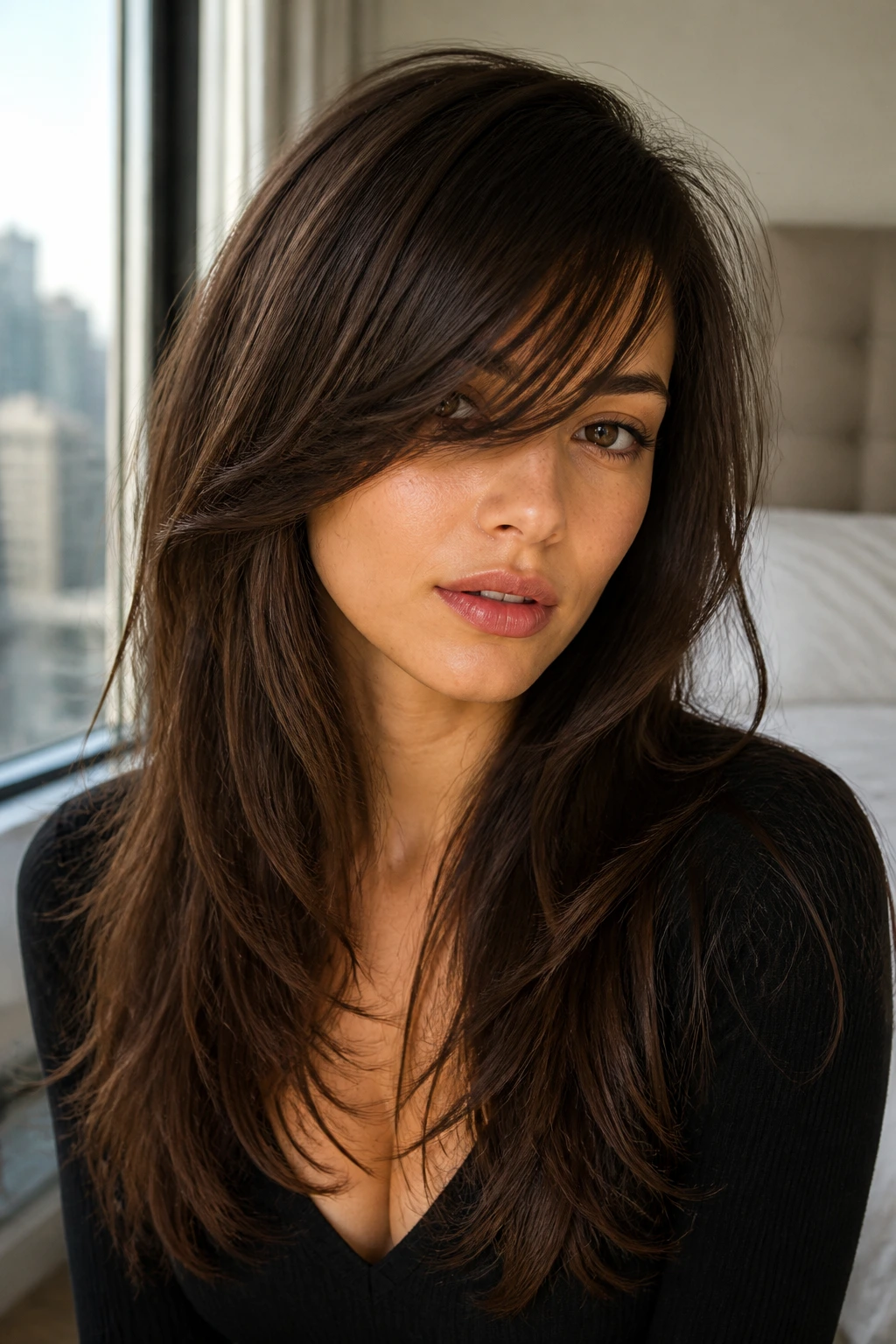
For those who are not quite ready for a straight-across cut, this side-swept variation offers a gorgeous entry point. It utilizes the same dense section of hair from the crown but directs it diagonally across the forehead, blending seamlessly into long, cascading layers on one side.
Why Does the Diagonal Sweep Work?
A diagonal line across the face cuts the visual height of a forehead while creating an asymmetric frame. This asymmetry breaks up round or square facial structures, adding a dynamic angle that draws the eye upward toward your cheekbones.
How to Style It
The key to a great side-swept look is preventing the hair from falling flat into your eyes.
- Apply a root-lifting spray to damp hair at the front of your hairline.
- Blow-dry the bangs in the opposite direction of how you want them to lay. This builds volume at the roots.
- Once dry, sweep the hair back over to its natural side.
- Use a large-barrel curling wand to curl the long side layers away from the face, blending the ends of the swept bangs into the longer lengths.
10. Razored-Edge Long Hair Heavy Bangs
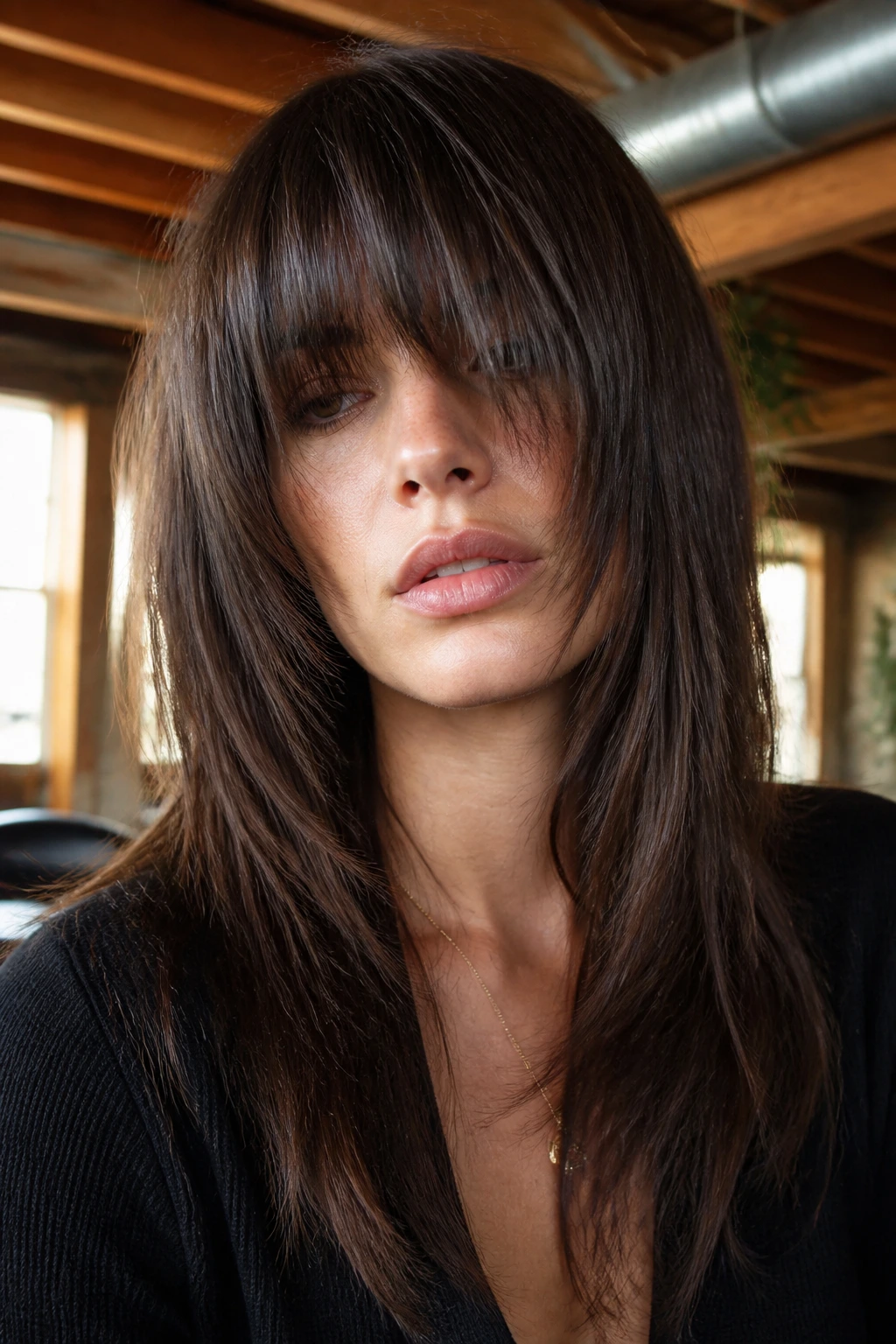
A razor cut brings a unique, feather-light quality to heavy fringe. Instead of using traditional shears, the stylist uses a straight razor to shave away microscopic layers of hair from the underside of the bangs. This creates a dense canopy that tapers down to incredibly soft, wispy tips.
The mechanism of a razored edge is all about swing and drape. Because the tips are so light, they dance and move with every step you take, rather than sitting as a solid block on your forehead.
- Fringe Density: High density at the scalp, transition to a feathered, shattered edge at the bottom.
- Visual Effect: Softens the forehead line while keeping the lushness of thick hair.
- Best Hair Type: Fine to medium hair that needs help finding movement.
- Maintenance: High; razor-cut ends can split more easily, requiring frequent trims to keep the edges looking clean.
This style looks beautiful when paired with long, piece-y layers that have also been styled with a razor, creating a cohesive, textured look from top to bottom.
11. Piece-y Asymmetric Heavy Bangs
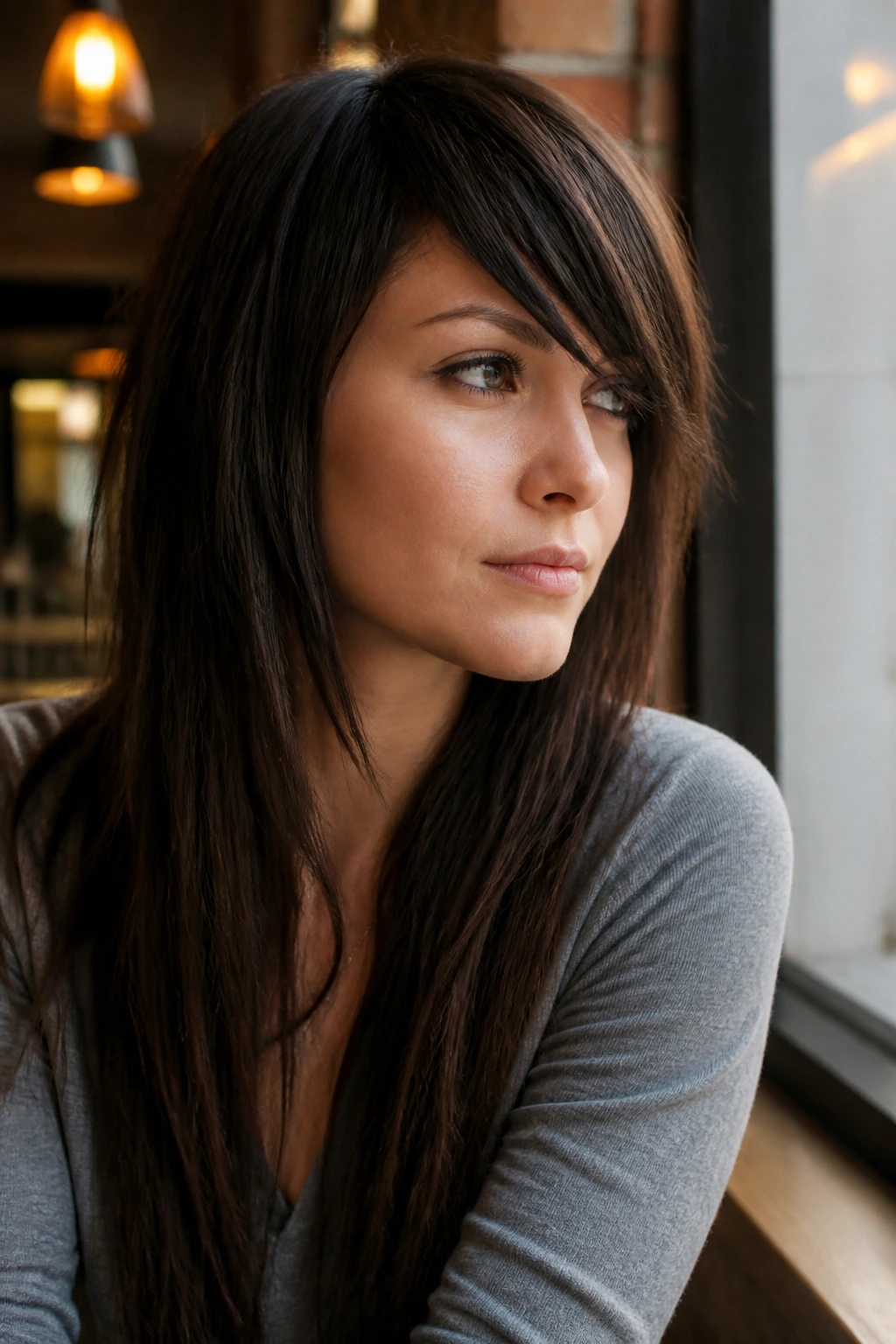
This style is for the bold. It features a thick, heavy fringe cut at a deliberate angle, starting slightly shorter on one side of the forehead and sloping down to a longer point on the other. It is a highly graphic, artistic cut that turns your hair into a structural masterpiece.
Rather than a smooth, blended slope, this cut is often styled with a piecy texture to highlight the different lengths. The irregular ends prevent the asymmetric line from looking like an accidental mistake, making it clear that the slant is entirely intentional.
To keep this style looking sharp, you will want to avoid heavy styling products. A simple blast of sea salt spray on damp hair, followed by a quick rough-dry, provides just enough hold and texture to keep the asymmetric sections defined without weighing them down.
Pair this with long, blunt-cut hair for a striking contrast between the angled lines of the face frame and the long, straight vertical lines of the length.
12. Bardot-Style Curved Heavy Bangs
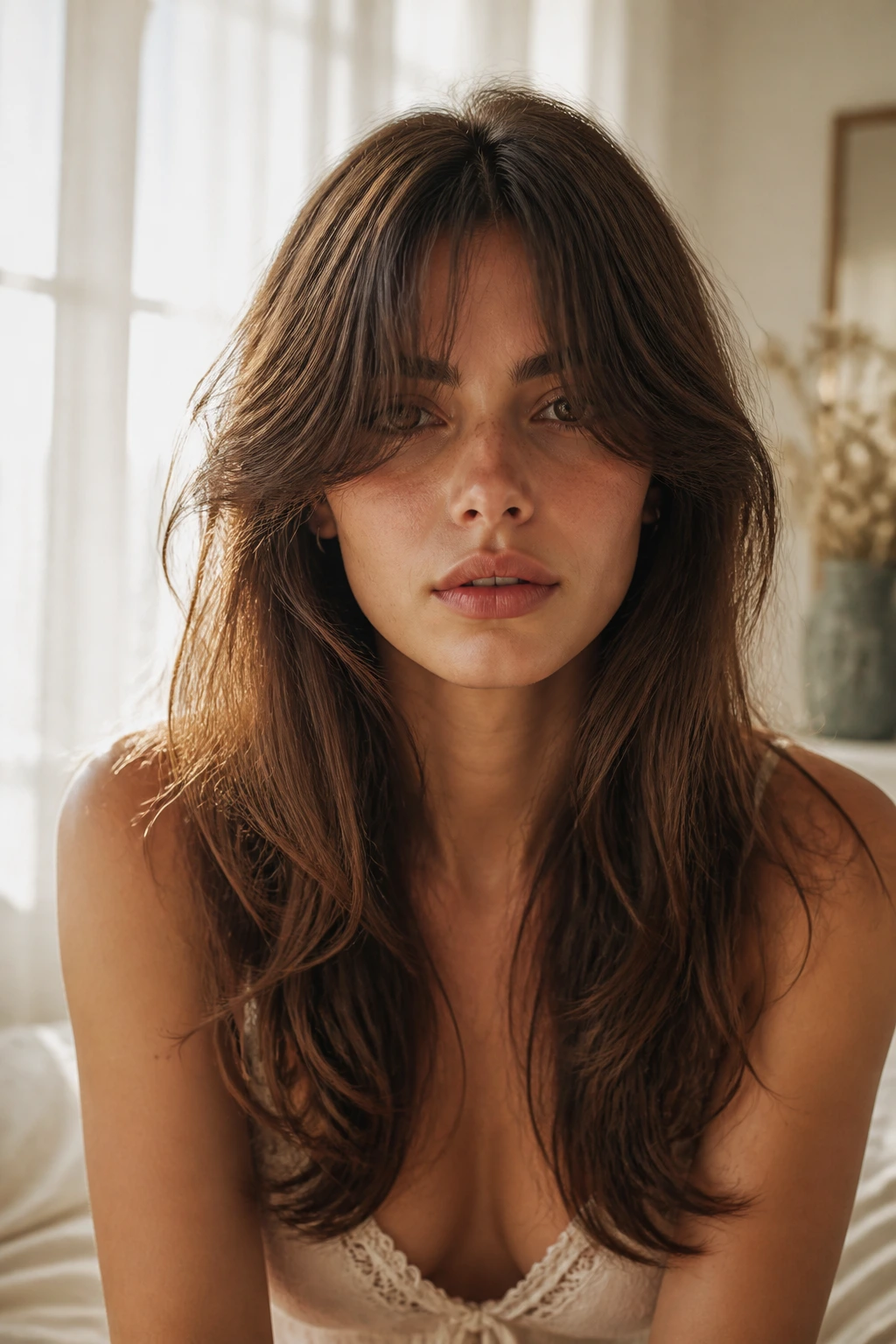
While some split bangs are styled to flip outward, this variation keeps the heavy, curved shape of a classic fringe while creating a soft “curtain” opening right over the bridge of the nose. It is a romantic, incredibly soft look that flatters almost everyone.
Unlike shorter split styles, these bangs are cut longer, often resting just at the eyelashes before they are parted. This length allows the hair to drape beautifully along the sides of your face, drawing attention to your cheekbones and jawline.
This style is exceptionally forgiving. If you decide you want to grow your bangs out, this shape transitions into face-framing layers much more easily than a blunt straight-across cut.
To style, use a large velcro roller on dry hair. Roll the entire fringe forward and down, let it sit for ten minutes while you get ready, and then unroll it, letting it split naturally where it wants to. It is quick, easy, and looks incredibly polished.
13. Curly Heavy Bangs with Long Ringlets
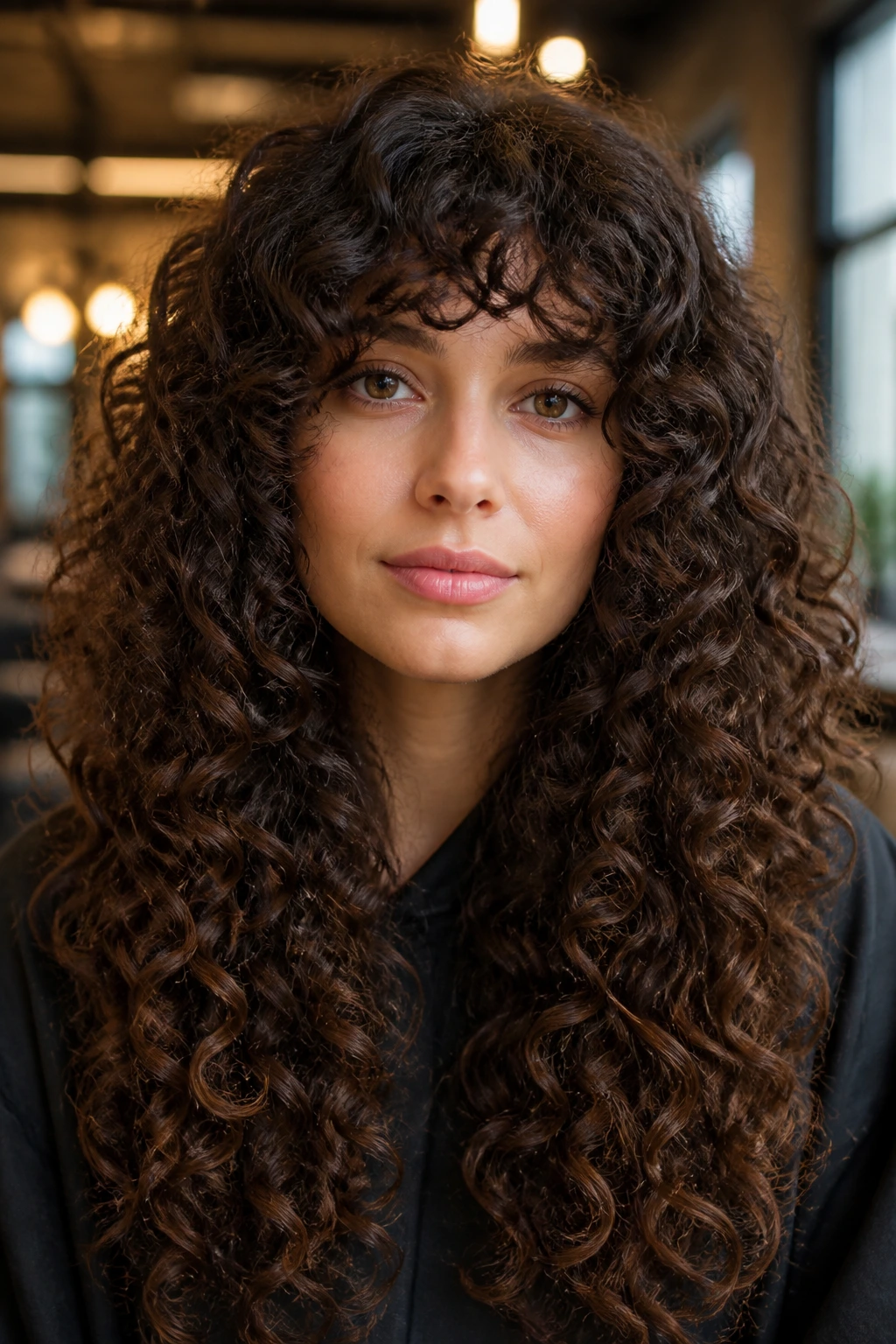
There is a common misconception that bangs only work on straight hair. That is simply not true. Heavy bangs on long, curly hair create an incredibly lush, voluminous frame that celebrates natural texture.
Why Curly Fringe Works
When you cut curly hair into a heavy fringe, you remove weight from the front of your head, allowing your curls to spring up and show off their true pattern. The thickness at the crown provides a beautiful, bouncy canopy that frames your eyes with soft, touchable ringlets.
Styling Essentials
- Always cut curly bangs when the hair is dry and in its natural curl pattern to avoid cutting them too short.
- Apply a moisturizing curl cream to wet bangs, finger-coiling individual sections to define the curls.
- Dry the fringe using a diffuser on low heat and low speed, pushing the curls upward toward the scalp.
- Once dry, use your fingers to gently shake the roots for added volume.
Pro tip: Never brush out curly bangs once they are dry, as this will create unwanted frizz and ruin the curl definition.
14. Feathery Face-Framing Heavy Bangs
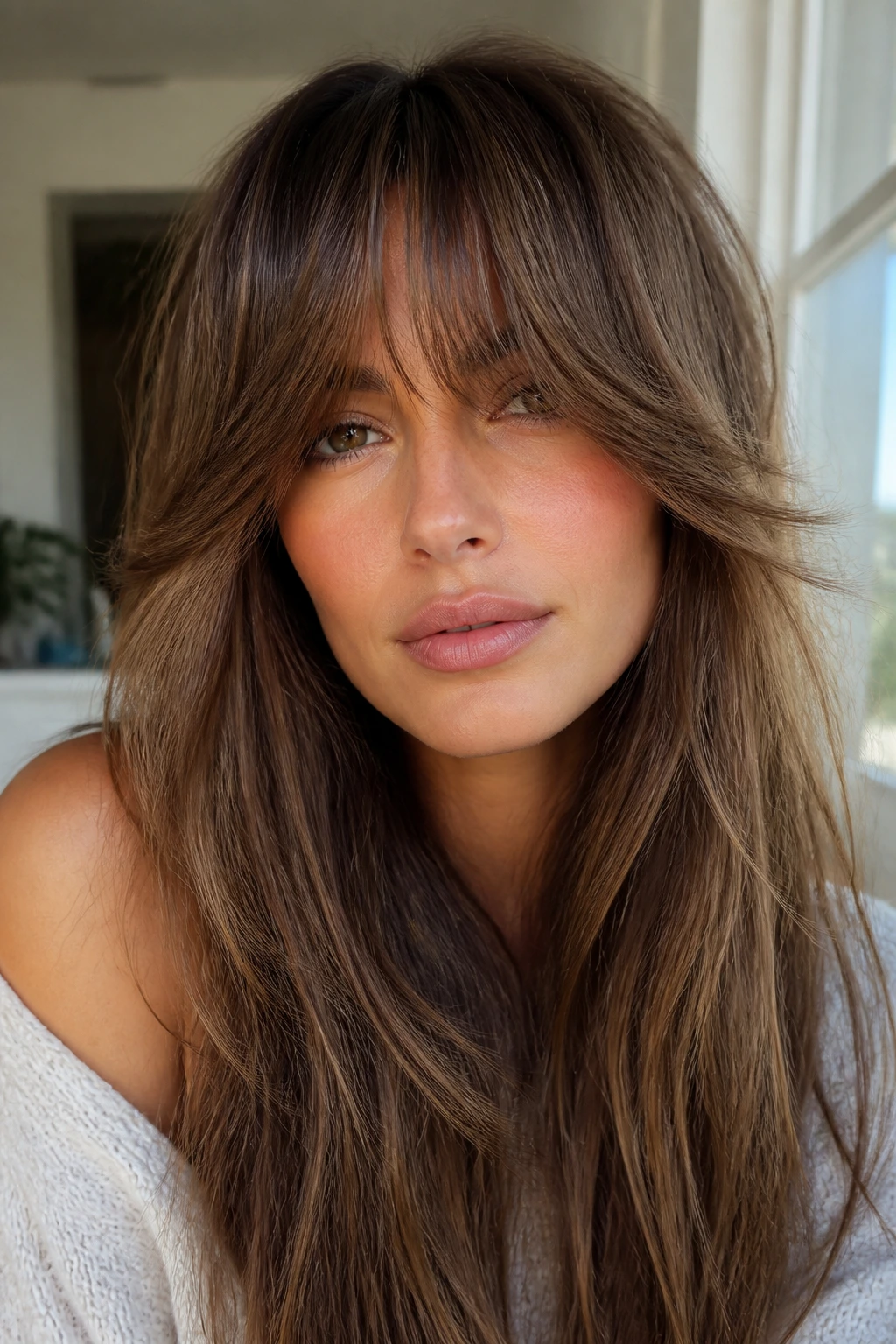
This style bridges the gap between a dense fringe and long, wind-blown layers. It features a thick top section that is heavily feathered at the sides, creating a soft, wing-like effect that sweeps outward to frame the face.
The key to this look is the way the sides of the bangs are cut. Instead of stopping abruptly at the temples, the corners are sliced downward using shears, creating a feathered path that leads directly into long layers around the collarbone.
- Weight Distribution: Heavy at the center of the forehead, tapering to light, airy pieces at the temples.
- Movement: High; the feathered edges catch the wind and move beautifully.
- Best Hair Type: Straight or slightly wavy hair with medium density.
- Styling Tool: A medium round brush used to blow-dry the hair upward and backward.
This cut is fantastic for those who love a blowout look, as the feathered edges flip back beautifully to create a classic, soft-focus frame around the face.
15. Blended Choppy Long Hair Heavy Bangs
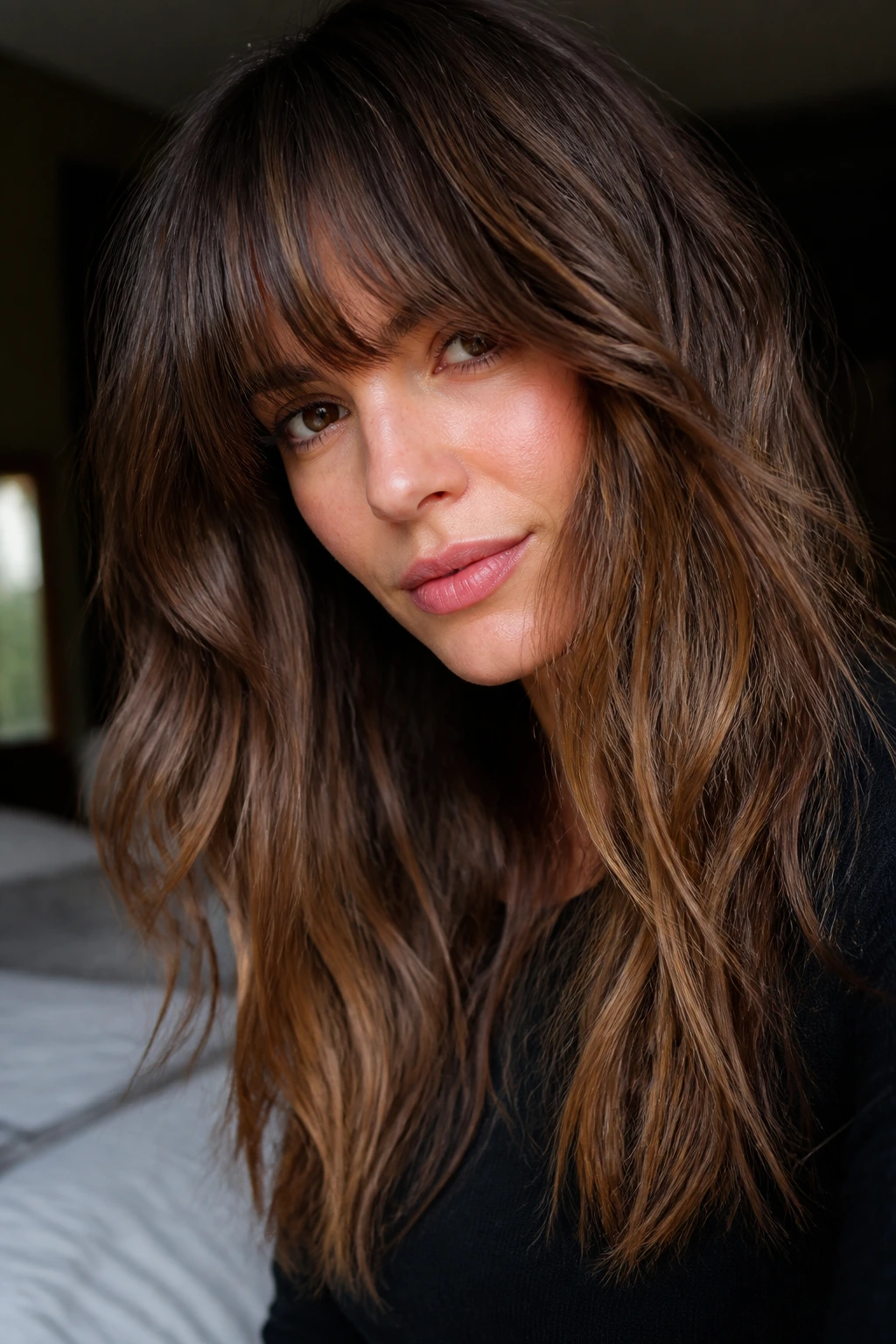
For a look that feels unified and continuous, this style blends choppy, heavy bangs directly into the rest of your long hair. The stylist will use a slide-cutting technique, starting at the outer corners of the bangs and carving down through the length of your hair to create a seamless flow of textured layers.
This prevents the bangs from looking like a separate “island” on your forehead. Instead, they feel like an organic starting point for a highly layered, textured haircut.
To style this blended look, use a texturizing spray on dry hair. Tilt your head upside down, spray the product throughout your roots and lengths, and then flip your head back up. Use your hands to massage the scalp and settle the hair.
This creates a messy, lived-in texture that looks incredibly modern and cool, perfect for casual days when you want to look styled without spending hours in front of the mirror.
16. Graphic Straight-Across Heavy Bangs
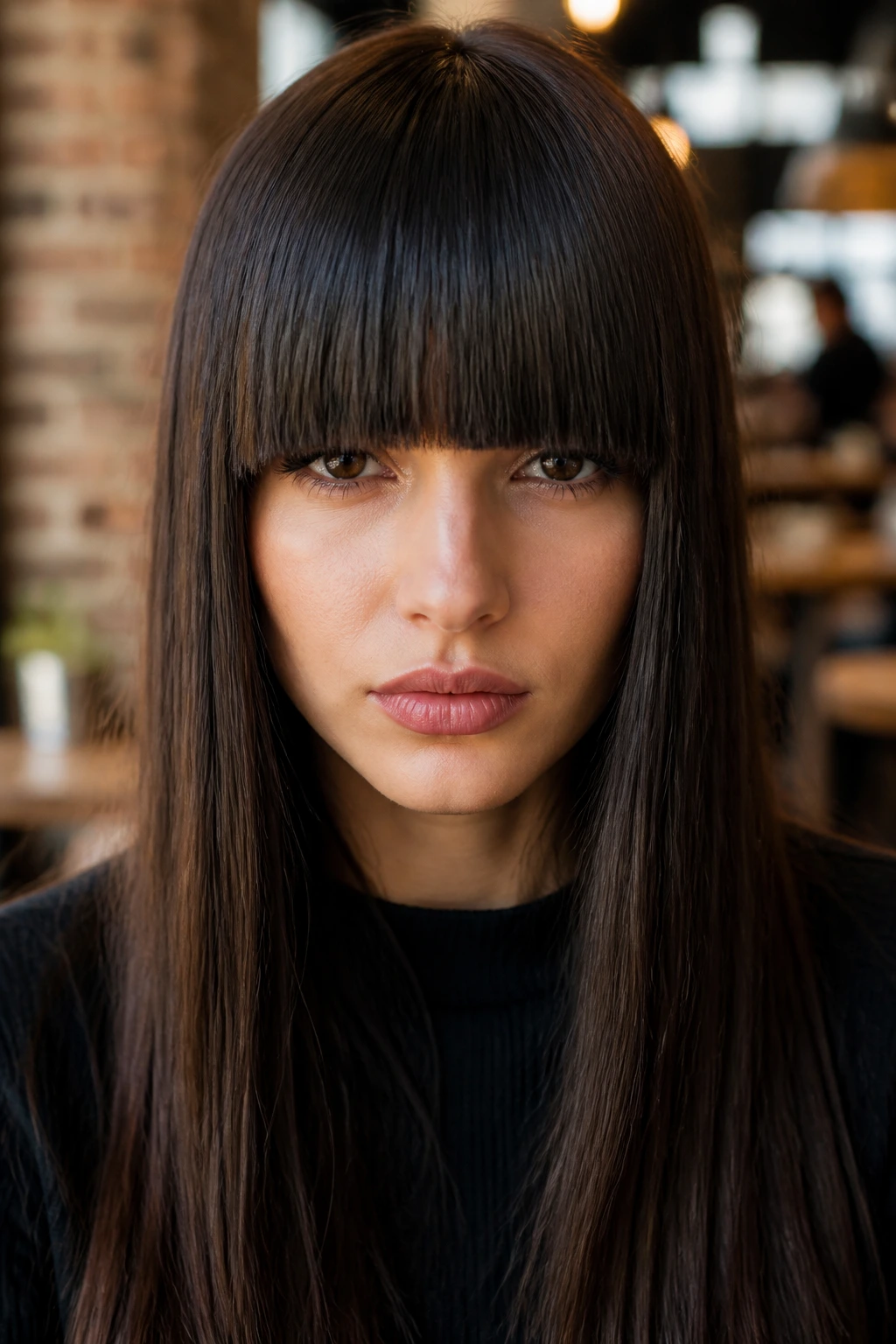
This style is the ultimate statement piece. It is cut with mathematical precision, featuring a completely straight, untextured weight line that sits just above the eyelashes. There is no blending, no softening, and no tapering—just a pure, solid block of hair.
The mechanism here is high contrast. By pairing a perfect, sharp horizontal line with very long, straight hair, you create an incredibly modern, high-fashion look that accentuates the structure of your face.
- Edge Sharpness: Maximum; cut with zero tension to ensure a perfectly straight line.
- Face Shape Best Fit: Oval, round, or pear-shaped faces that benefit from added structure at the top.
- Styling Method: Dry flat using a fine-tooth comb and a concentrated blow-dryer nozzle.
- Required Maintenance: Very high; requires trims every two to three weeks to keep the line perfectly straight.
Because this look relies on absolute precision, it is best suited for those with naturally straight hair who enjoy a dedicated styling routine.
17. Tapered Temple Heavy Bangs
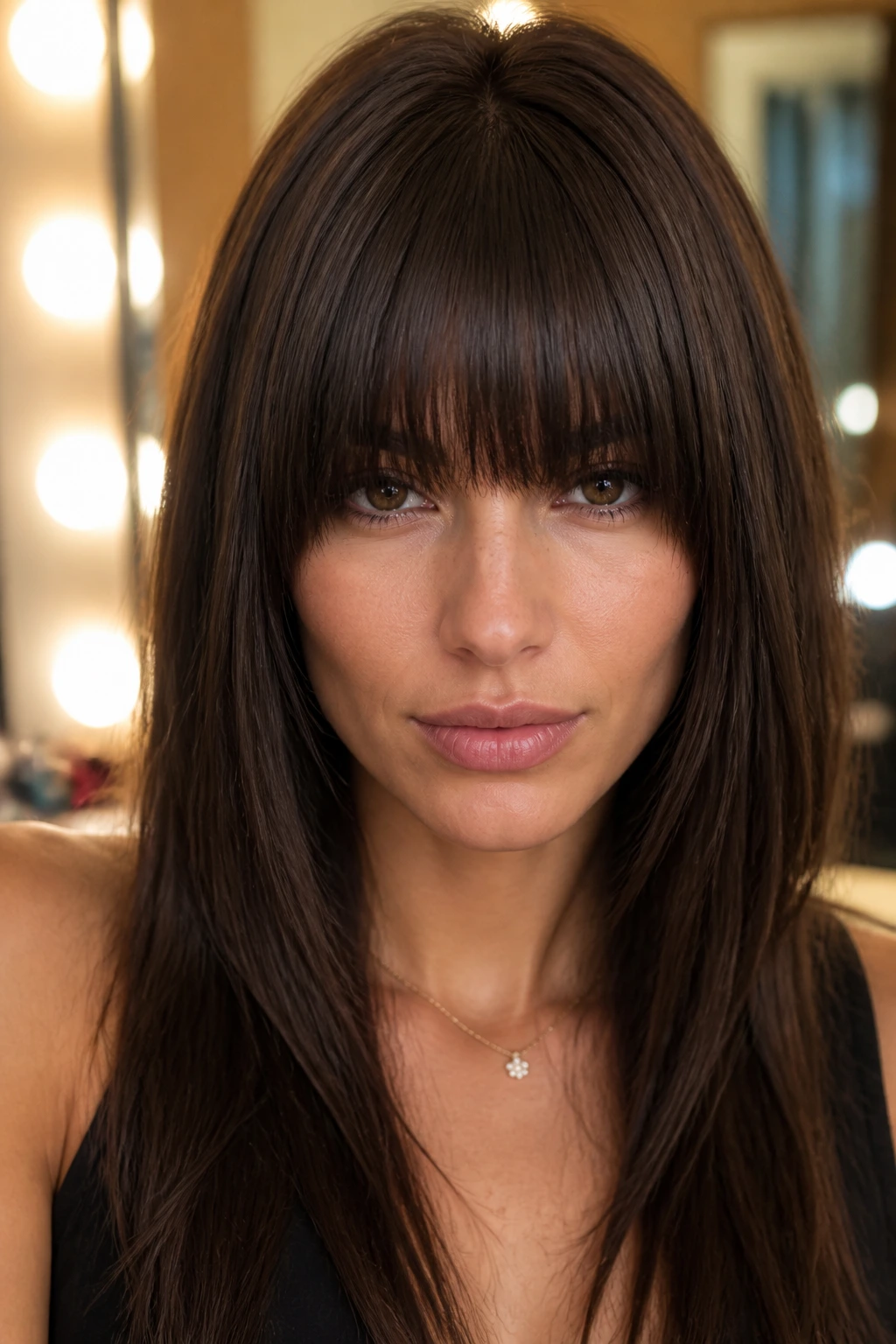
This variation focuses on creating a strong frame for the eyes by tapering the outer edges of the bangs sharply downward at the temples. The center of the fringe remains thick and straight-across, but the corners drop down in a steep angle, ending right at the cheekbones.
This steep angle creates a physical bracket around your eyes, making them the absolute center of attention. It is a highly flattering choice for those who love to highlight their eye makeup or brow shape.
To style, dry the center of the bangs straight down. When you reach the tapered temples, use a small flat iron to curve those pieces slightly inward, hugging the cheekbones.
This simple styling trick adds an incredible amount of structure to long, loose hair, ensuring your face shape is beautifully defined even when your hair is swept over one shoulder.
18. Wispy-Center Split Heavy Bangs
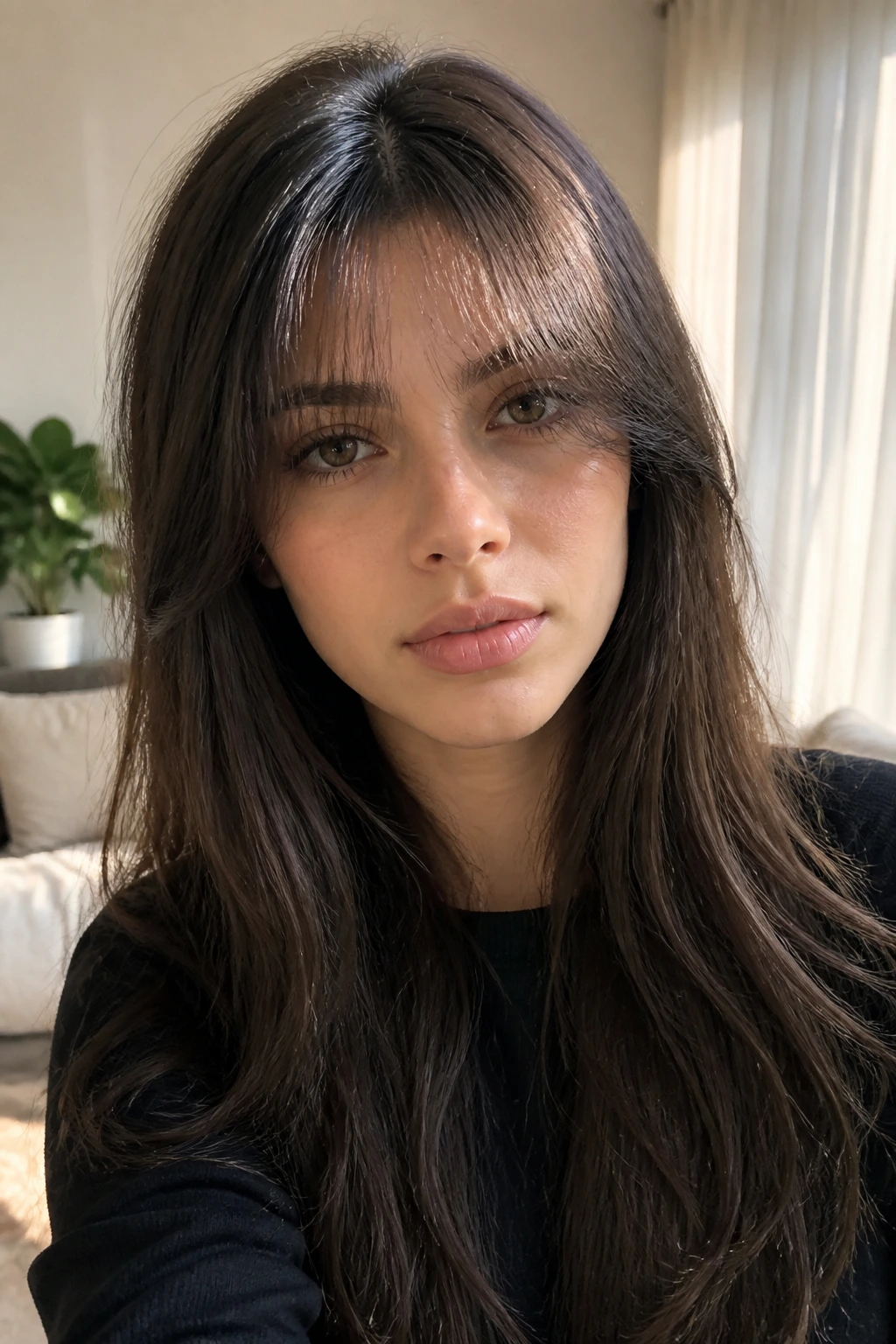
If you love the look of thick bangs but sometimes find them too warm or heavy on your face, this style offers a clever compromise. The sides of the fringe are kept incredibly thick and dense, but the very center is thinned out slightly, allowing a bit of skin to show through.
The contrast between the dense outer corners and the lighter center creates a soft, luminous effect. It breaks up the solid weight of the fringe, making the entire haircut feel lighter and more wearable.
This style is also incredibly easy to maintain. As the center grows out, it naturally splits to the sides, turning into a beautiful set of curtain bangs without any awkward growth phases.
To style, simply blow-dry the hair forward, then use your fingers to lightly spread the center pieces apart. It is a relaxed, modern approach that offers the best of both worlds.
19. Heavy Choppy V-Bangs
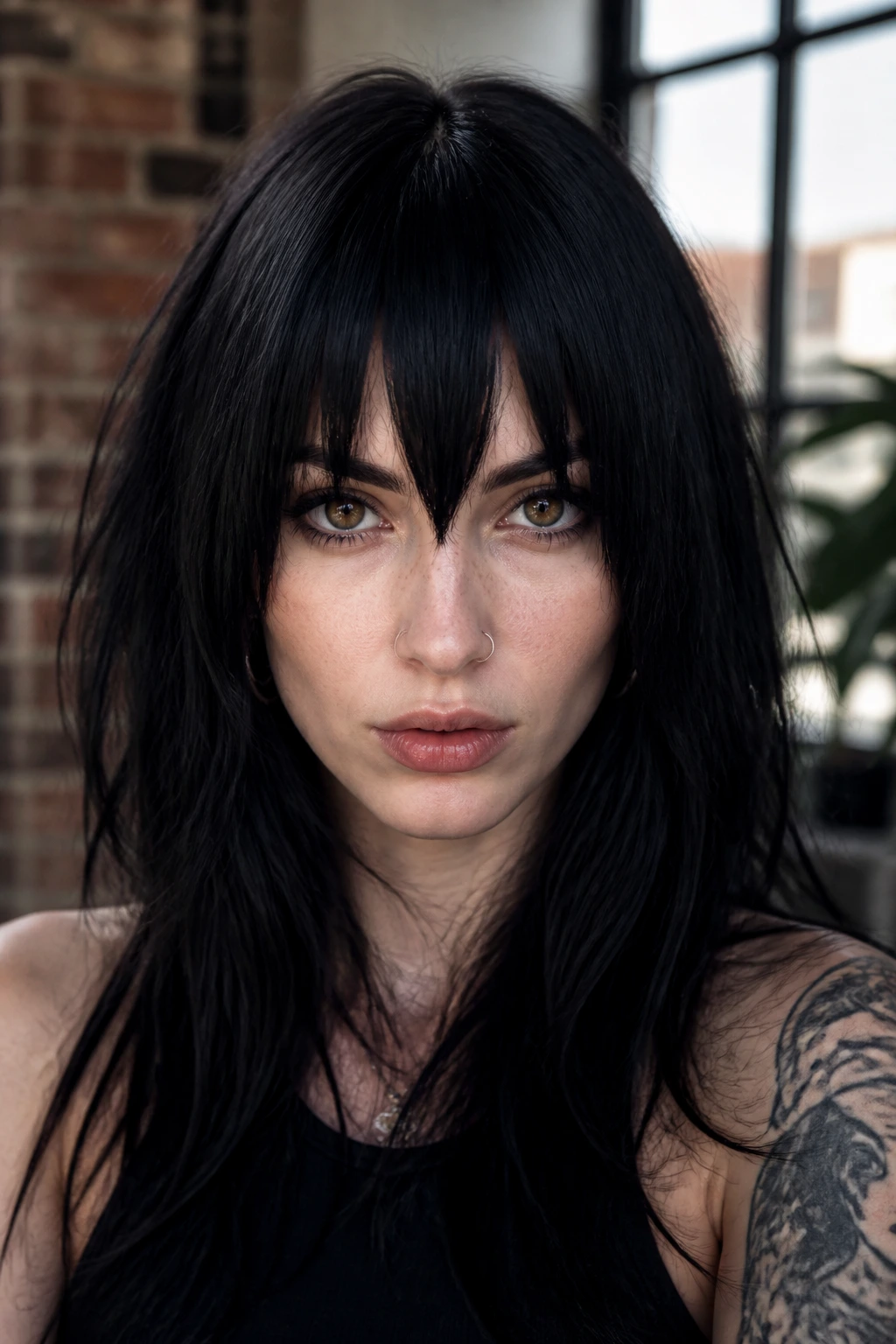
For those who love alternative or gothic-inspired aesthetics, the heavy V-bang is a classic choice. Instead of a horizontal line, the fringe is cut into a sharp point that ends directly in the center of the forehead, creating a distinct “V” shape.
How the Sharp V-Shape Is Maintained
Because this cut relies on a highly specific geometric shape, the stylist must cut it with absolute precision. The sides of the V slope upward toward the temples, keeping the forehead open while the center point draws the eye down to the bridge of the nose.
Styling Essentials
- Use a tiny flat iron to press the bangs completely flat against the forehead.
- Apply a high-hold, matte gel to the center point to keep it sharp and prevent it from splitting.
- Avoid wind or heavy moisture, which can disrupt the clean geometric lines.
- Keep a pair of professional shears at home for quick, careful touch-ups of the center point.
Pro tip: When styling, always iron the center point first, then work your way upward toward the temples to keep the symmetry perfect.
20. Voluminous 90s-Style Blowout Heavy Bangs
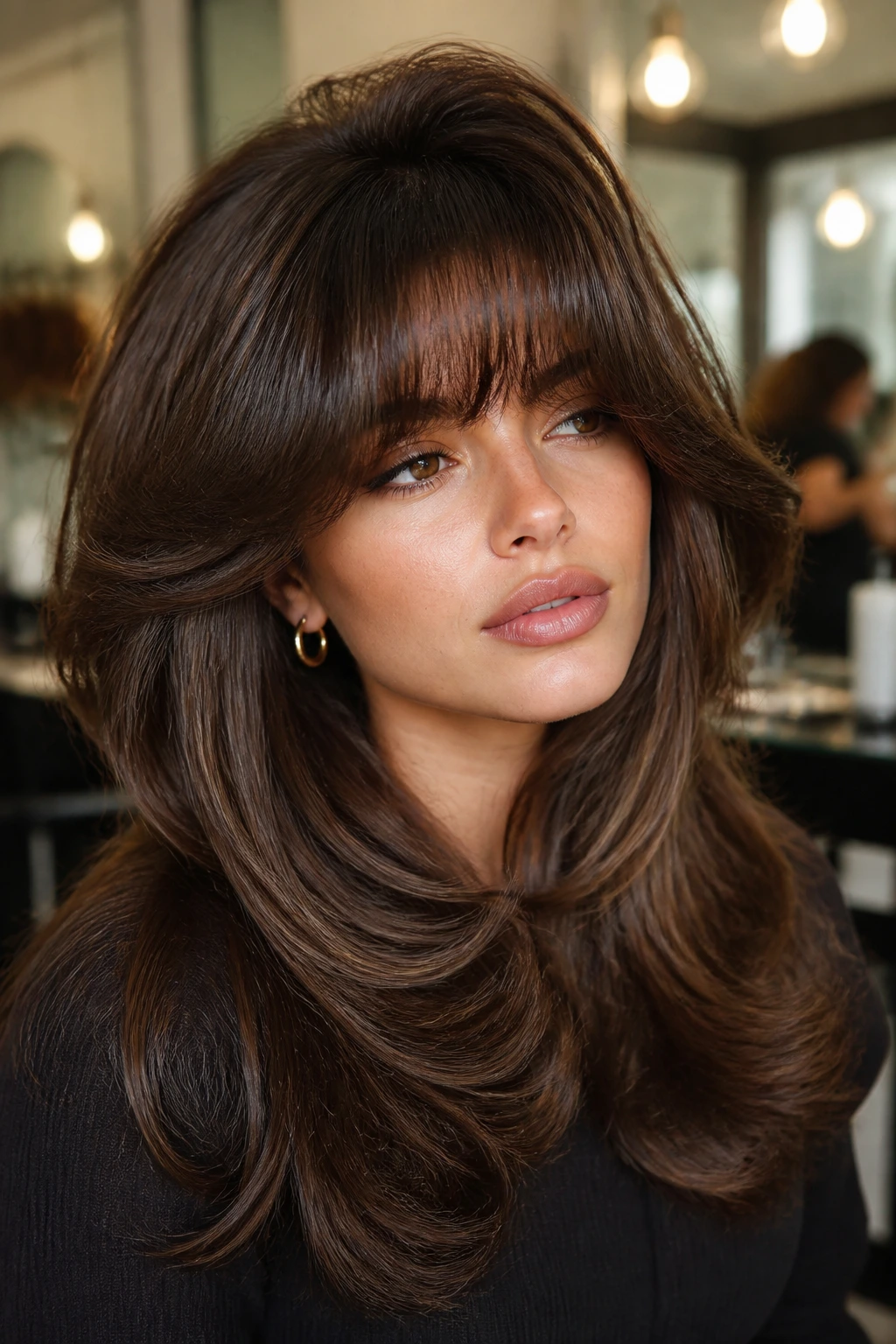
This style brings back the lush, airy volume of classic blowout looks. It features a thick, heavy fringe that is styled with incredible lift at the roots and a soft, rolling curve at the ends, creating a bouncy, cloud-like frame.
Rather than sitting flat, these bangs float slightly off the forehead, offering a soft, romantic frame that coordinates beautifully with long, voluminous layers.
To get this classic volume, you will want to dry your bangs using a medium round brush. Roll the hair forward and up, keeping the brush close to the scalp to build maximum lift. Once dry, roll the warm hair around a velcro roller and let it cool for five minutes.
When you remove the roller, you will have a gorgeous, bouncing fringe that holds its shape all day. It is a timeless, glamorous way to wear heavy bangs with long, layered hair.
Styling and Maintenance Secrets for Heavy Fringe
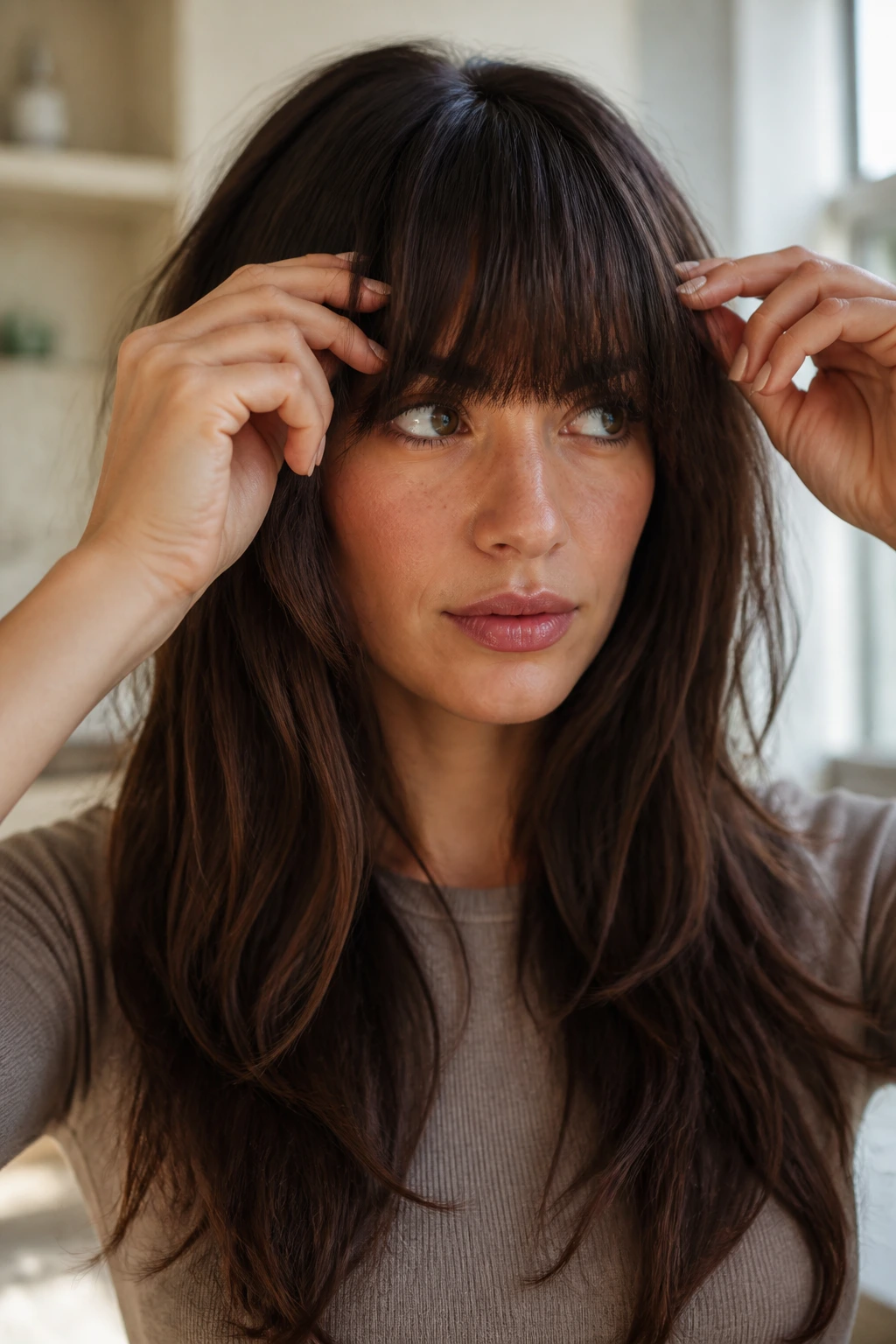
Once you have chosen your perfect style, keeping it looking fresh requires a few key practices. Heavy bangs behave differently than the rest of your hair, and they require a dedicated approach to washing, drying, and maintenance.
The Mini-Wash Technique
Because bangs sit directly against your forehead, they absorb natural oils from your skin much faster than the rest of your hair. You do not need to wash your entire head of hair every day to keep your bangs looking fresh. Instead, try the mini-wash:
- Tie the rest of your long hair back into a secure bun.
- Lean over the sink and apply a tiny drop of shampoo just to your bangs.
- Rinse thoroughly with warm water, being careful not to wet the rest of your hair.
- Blow-dry immediately. This entire process takes less than five minutes and completely revives your style.
Mastering the Flat Wrap
The flat wrap is the most important styling technique to learn when you have heavy bangs. It neutralizes cowlicks and prevents your bangs from splitting in the middle. To do this, hold your blow-dryer directly above your head, pointing the air stream down toward your face. Using a paddle brush or your flat palm, brush your bangs completely to the left, then completely to the right. Repeat this back-and-forth motion until the hair is dry. This trains the hair follicles to lie flat and forward, ensuring a smooth, uniform drape.
Wrapping Up
Committing to a heavy fringe is a fantastic way to breathe new life into long hair. It provides an instant style statement that frames your features, highlights your eyes, and adds structural interest to your look. Whether you prefer a sharp, graphic blunt cut or a soft, textured arch, there is a variation that can work beautifully with your natural hair pattern and lifestyle. With a few simple styling techniques and regular quick trims, you can enjoy a fresh, modern aesthetic that turns your long hair into a true signature style.