

Finding the right balance between professional polish and personal style is one of the most common challenges men face when building their daily routine. You want to look capable, reliable, and sharp enough to command attention in a meeting, but you also don’t want to look like you’re wearing a costume or trying too hard to emulate a billboard from the late nineties. Your hair is an extension of your professional identity. It’s the first thing people see when you walk into a room, and it says a lot about your attention to detail before you even open your mouth to start your presentation.
The goal here is finding a style that keeps its structure for at least nine hours, survives the commute, and manages to look just as good at the end of the day as it did when you first stepped out the door. We’re moving away from the stiff, crunchy hair of the past and toward styles that move naturally while holding their shape under pressure. Whether you have thick, coarse hair that needs a firm hand or thin hair that requires a bit of clever layering, there is a look that works for your office environment.
1. The Classic Side Part
This is the gold standard for a reason. It is clean, predictable, and works with almost every face shape. By keeping the sides relatively tight and guiding the top toward one side with a subtle part, you create a structure that looks intentional and tidy.
How to Get the Look
Use a matte pomade or a high-quality styling cream. You want enough hold to keep the hair in place, but you want to avoid that wet-look gel finish which can sometimes feel a bit dated. Comb the hair while it is slightly damp to help set the direction of the follicles.
Maintaining the Shape
- Visit your barber every three to four weeks to keep the taper tight.
- Avoid over-applying product; start with a pea-sized amount and work up.
- Use a fine-toothed comb to define the part line for maximum professional impact.
Pro tip: If your hair tends to fall flat, blast the roots with a hair dryer while using a vented brush to pull the hair upward before applying your styling product.
2. The Textured Ivy League
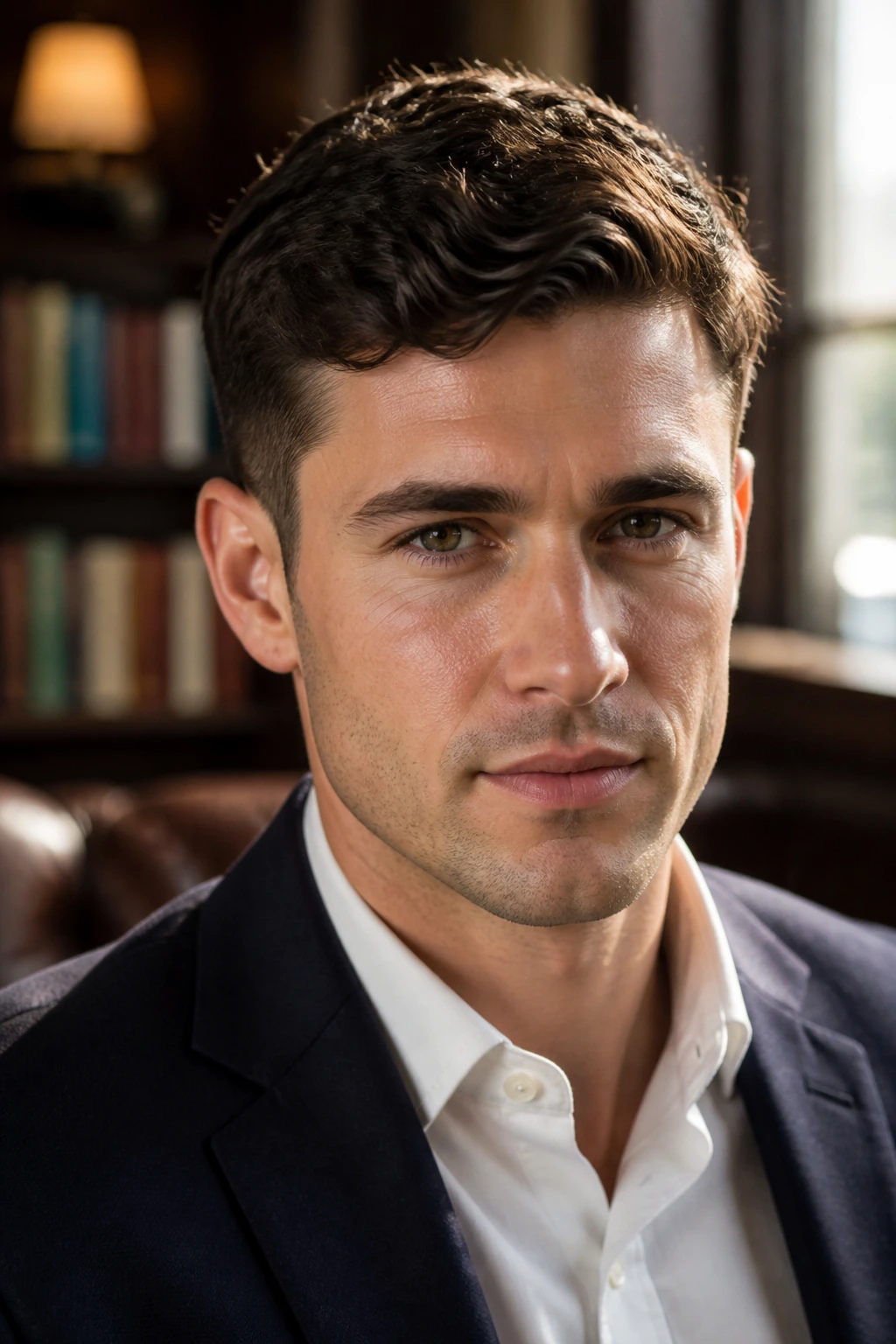
If you want something that feels collegiate and intelligent without being overly rigid, the textured Ivy League is the way to go. It’s essentially a short, groomed crew cut that leaves just enough length on top to play with texture and movement.
Why This Style Succeeds
This cut is incredibly low maintenance. You can roll out of bed, rub a tiny amount of sea salt spray or texturizing paste between your hands, and run them through your hair to get that perfectly “undone” yet professional look. It works particularly well for guys with slightly wavy hair who want to show off their natural texture while keeping the edges clean.
Styling for the Office
Keep the sides trimmed to a number two or three guard. This creates a sharp contrast against the slightly longer top, ensuring you look like you’ve just stepped out of a shop. The key is in the movement; you don’t want it plastered down, so avoid heavy pomades that weigh the hair down.
3. The Modern Taper Fade
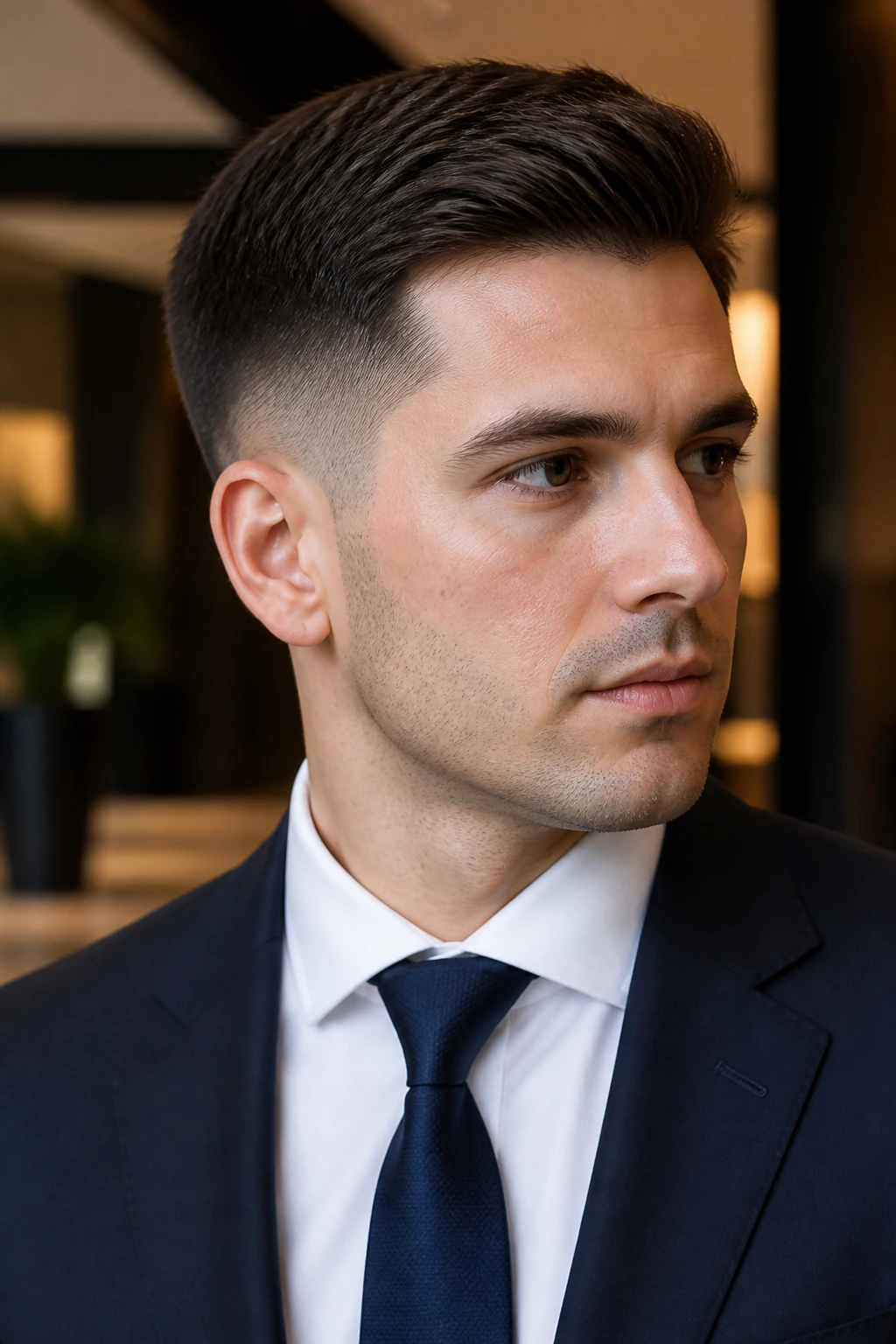
The modern taper fade is less aggressive than a skin fade, making it much more appropriate for conservative office settings. It focuses on the transition from the sides to the top, ensuring there are no harsh lines or patchy spots.
The Mechanics of the Taper
Unlike a fade that drops rapidly to skin, a taper gradually transitions from longer hair at the top to shorter, natural growth near the ears and neckline. This gives the style a soft, blurred effect that looks intentional and expensive.
Why It Pairs Well with Business Attire
Because it doesn’t look like a drastic change, it complements a suit or a crisp dress shirt perfectly. It maintains the “business” part of business-casual effortlessly.
4. The Short Pompadour
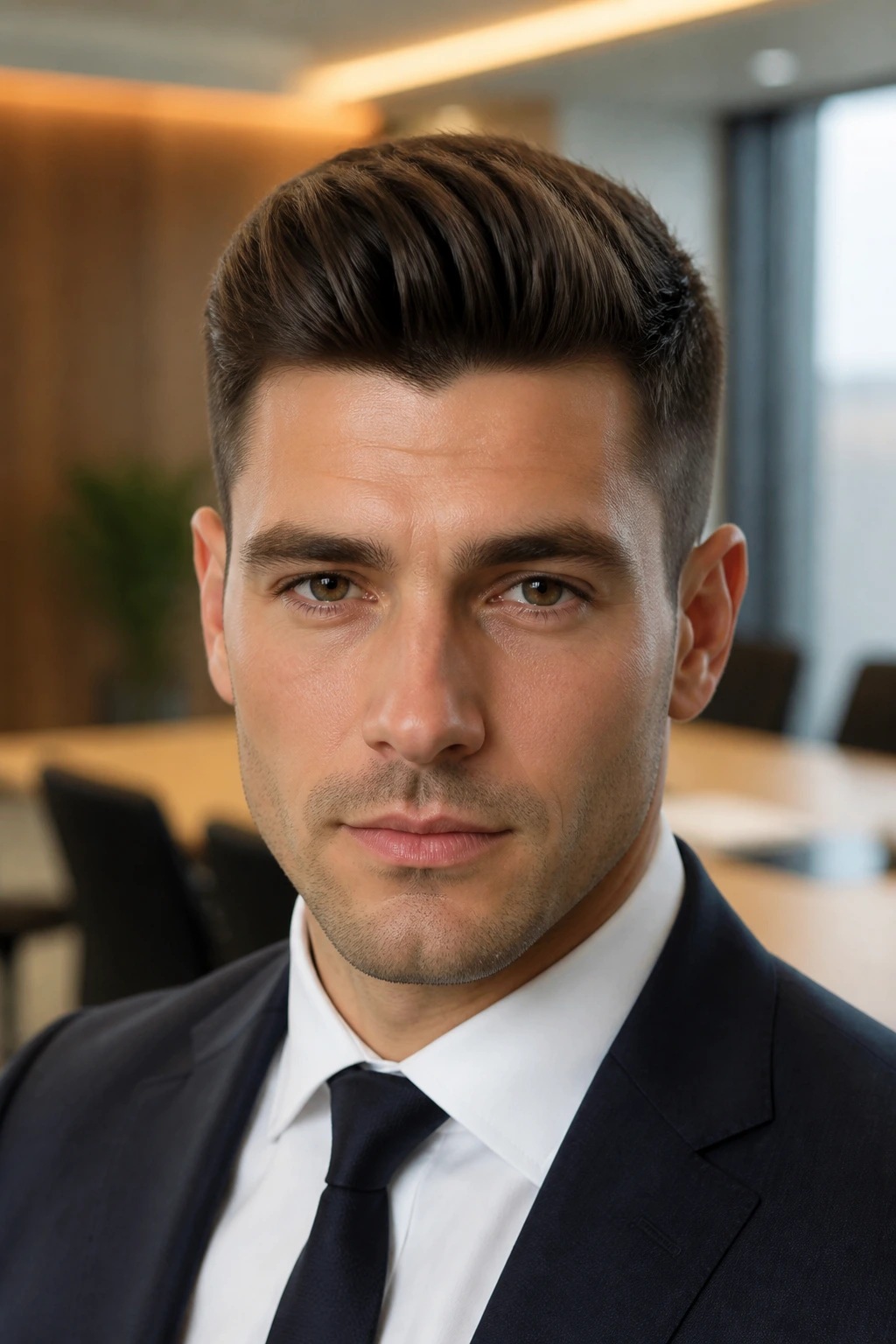
You might associate the pompadour with vintage rock-and-roll, but when scaled down, it becomes an incredibly sophisticated office look. A short pompadour provides height at the front without looking like you’re trying to build a tower on your head.
Achieving the Height
You need a blow dryer for this one. After washing, work a lightweight mousse into your hair to provide a foundation for volume. As you blow dry, use a round brush to lift the hair at the forehead, pushing it back.
The Finishing Touch
Apply a matte clay to lock the style in. Clays are ideal for this because they offer a strong hold without the greasy shine of traditional oil-based pomades. You want to look like you’re ready for a board meeting, not a gala.
5. The Clean Buzz Cut
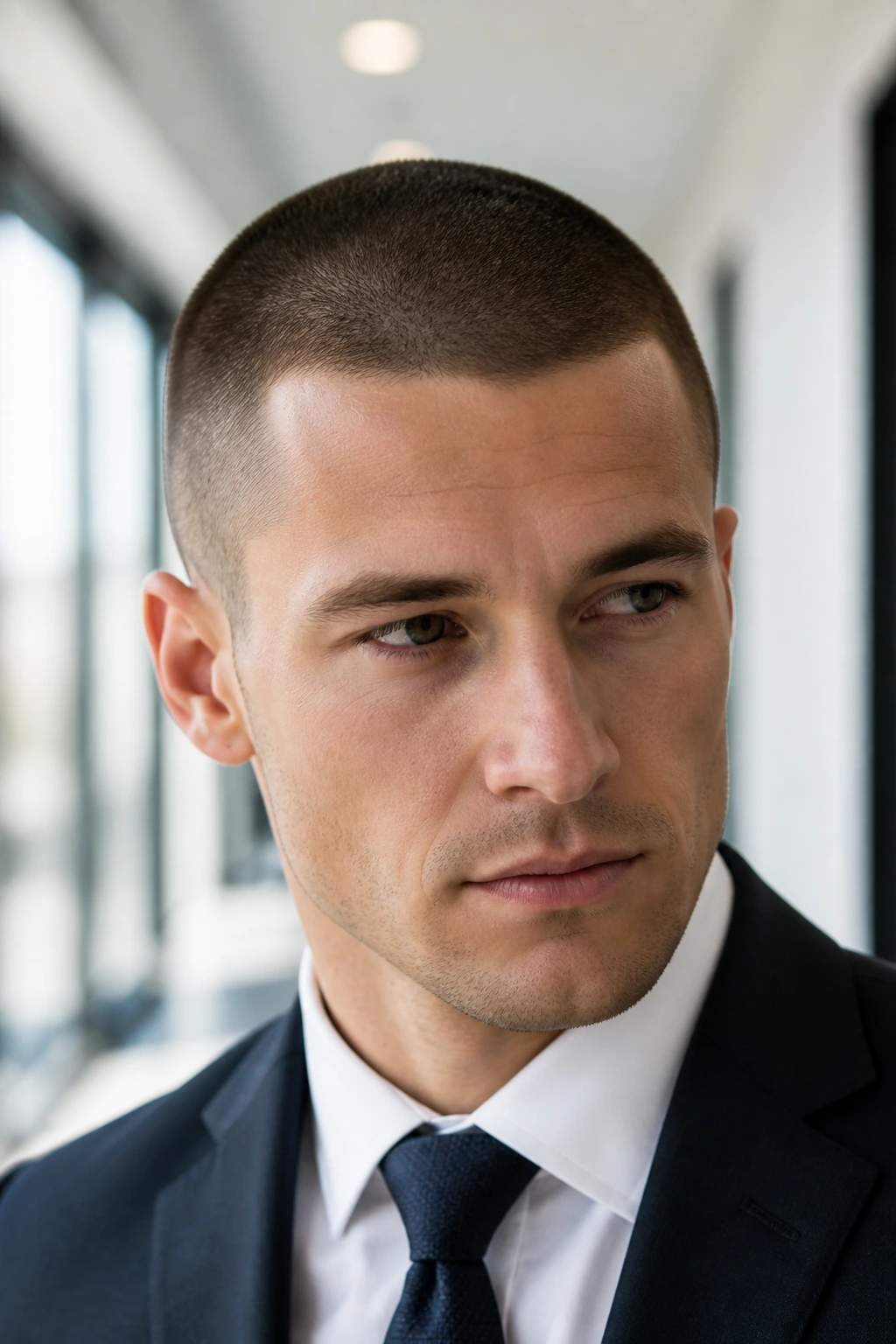
Sometimes, the most professional thing you can do is remove the variable of “bad hair days” entirely. A tight buzz cut is the epitome of efficiency. It signals that you are focused, disciplined, and don’t need to waste time fussing with a mirror every morning.
Is It Right for You?
Before committing to the buzz, consider the shape of your head. Since there is no hair to hide behind, your silhouette becomes the focus. If you have a relatively symmetrical skull, this look is exceptionally sharp.
The Maintenance Factor
Even though it’s “short,” it’s high maintenance regarding barbershop visits. You will need to get it touched up every two weeks to keep the edges crisp. Anything longer than that, and it starts to look fuzzy rather than intentional.
6. The Textured Quiff

This is for the guy who wants a bit of personality in his look without compromising on professional standards. The quiff takes a bit of time to style, but the payoff is a silhouette that looks modern and dynamic.
Building the Structure
The textured quiff relies on layering. Ask your barber to use thinning shears on the top to create movement. When styling, use a matte finish paste. Focus the product on the ends of the hair rather than the roots; this prevents the hair from clumping together.
Why It Works
It’s approachable. A quiff projects confidence and a friendly disposition, which is a major asset in team environments or client-facing roles where building rapport is just as important as technical output.
7. The Slicked-Back Undercut
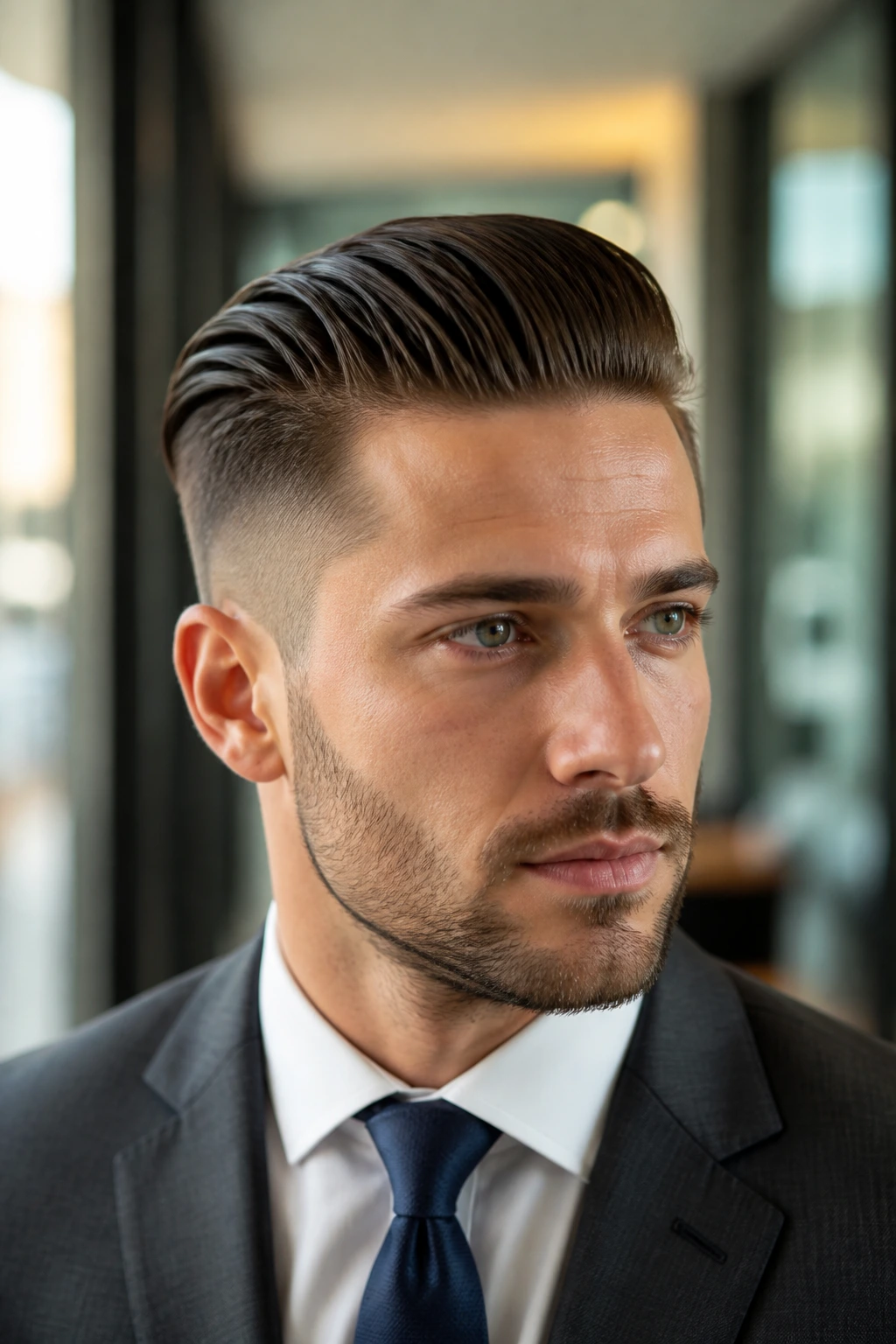
If you work in a high-intensity, fast-paced environment like finance or law, the slicked-back look offers an air of precision. It says you are focused and that your look is as structured as your spreadsheets.
Managing the Sides
The undercut involves shaving or clipping the sides significantly shorter than the top. For a professional office look, keep the disconnect subtle. You don’t want a “hard” line that looks like a bowl cut; you want a clean transition that keeps the bulk of the hair neatly pulled back.
Application Technique
Use a high-quality pomade while the hair is slightly damp. Comb it back, but use your fingers to break up the lines slightly afterward. This prevents the “greaser” look and keeps things feeling current and intentional.
8. The Caesar Cut
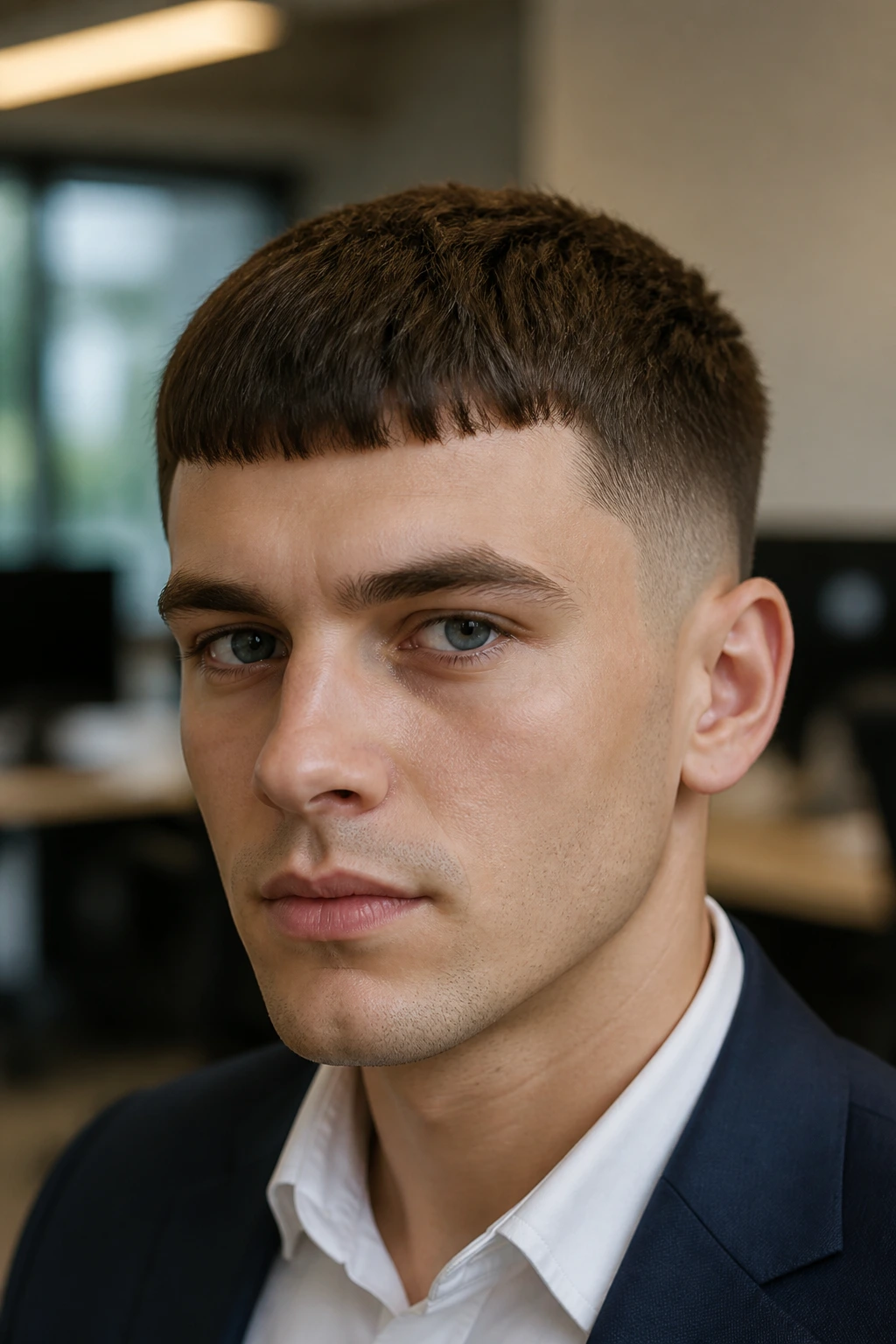
Named after the Roman general, the Caesar cut features a short, horizontally straight-cut fringe. It’s incredibly neat and has seen a massive resurgence for men who want a low-fuss style that frames the face perfectly.
Who Should Choose This?
This is an excellent option for men with thinning hair or a receding hairline. Because the hair is cut forward, it naturally minimizes the appearance of forehead space. It’s a very tactical, no-nonsense haircut.
Styling Simplicity
This cut requires almost no product. A tiny amount of texturizing powder or a light styling cream will keep it looking fresh. It’s the ultimate “wash and go” professional haircut for the busy professional.
9. The Wavy Fringe
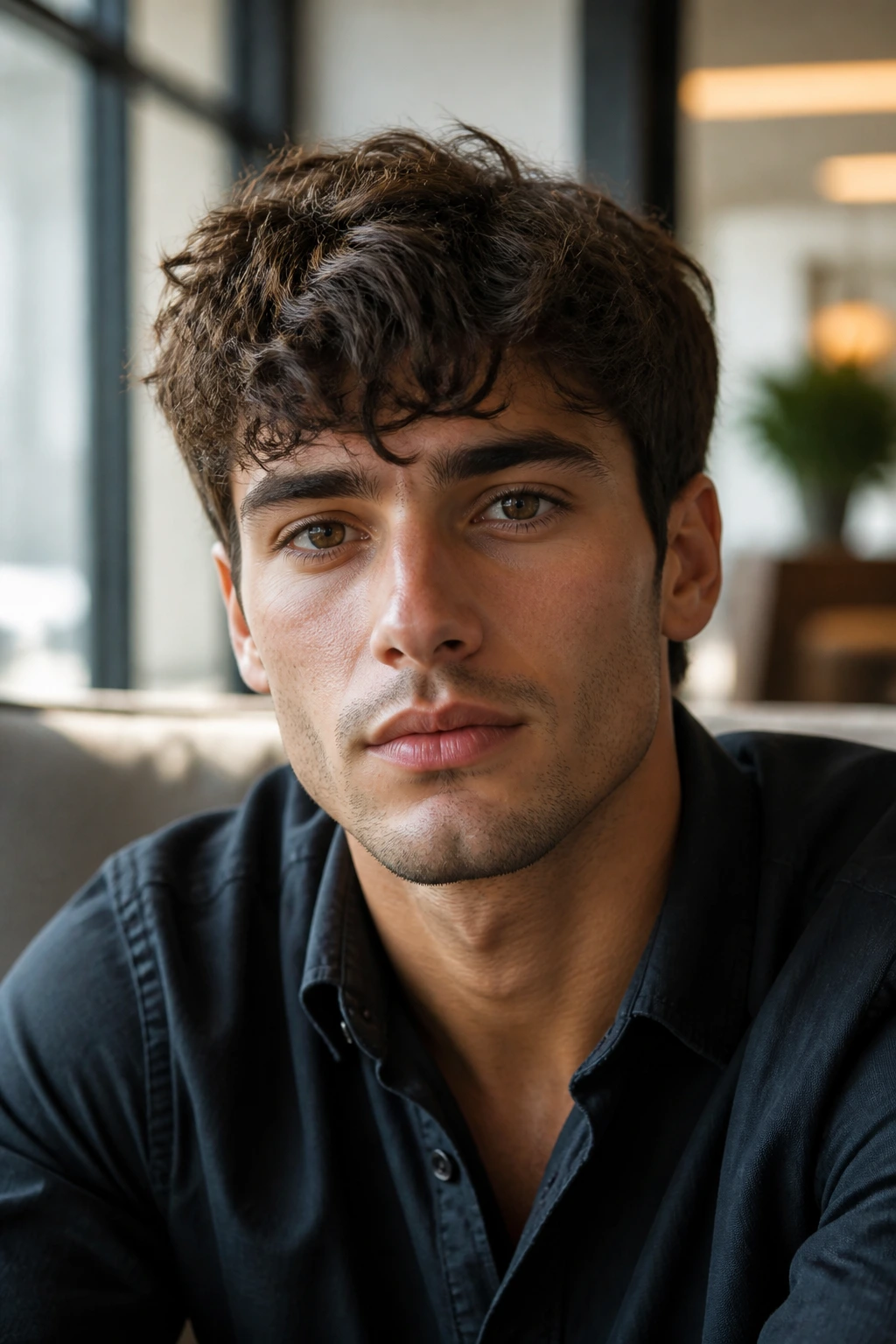
For guys with naturally wavy hair, trying to force it into a straight style is a losing battle. Instead, embrace the wave. A fringe that keeps the hair flowing toward the forehead adds a soft, relaxed texture that pairs well with smart-casual outfits like polos and chinos.
Tips for Controlling the Wave
The secret is in the conditioner. Wavy hair tends to be drier than straight hair. Use a hydrating shampoo and conditioner to prevent frizz. When your hair is air-drying, avoid touching it, as this disrupts the wave pattern and creates unwanted volume.
Finding the Right Length
Keep the sides trimmed closely to ensure the focus remains on the texture of the fringe. If the sides get too long, you risk looking unkempt. A tight taper at the temples is the perfect companion to a wavy top.
10. The Natural Side Sweep

If you find the traditional side part too stiff, the natural side sweep is the perfect middle ground. It involves directing the hair across the forehead with a softer, less defined part.
Why It feels More Human
Most men don’t actually have a perfectly symmetrical head. A natural sweep allows for a bit of imperfection, which makes the style feel approachable. It’s professional enough for a conservative office but doesn’t feel like you’re trying too hard.
Product Recommendations
Opt for a light styling cream or a foam. These products provide enough hold to keep the hair out of your eyes during a meeting without gluing it to your scalp.
11. The Comb-Over Fade
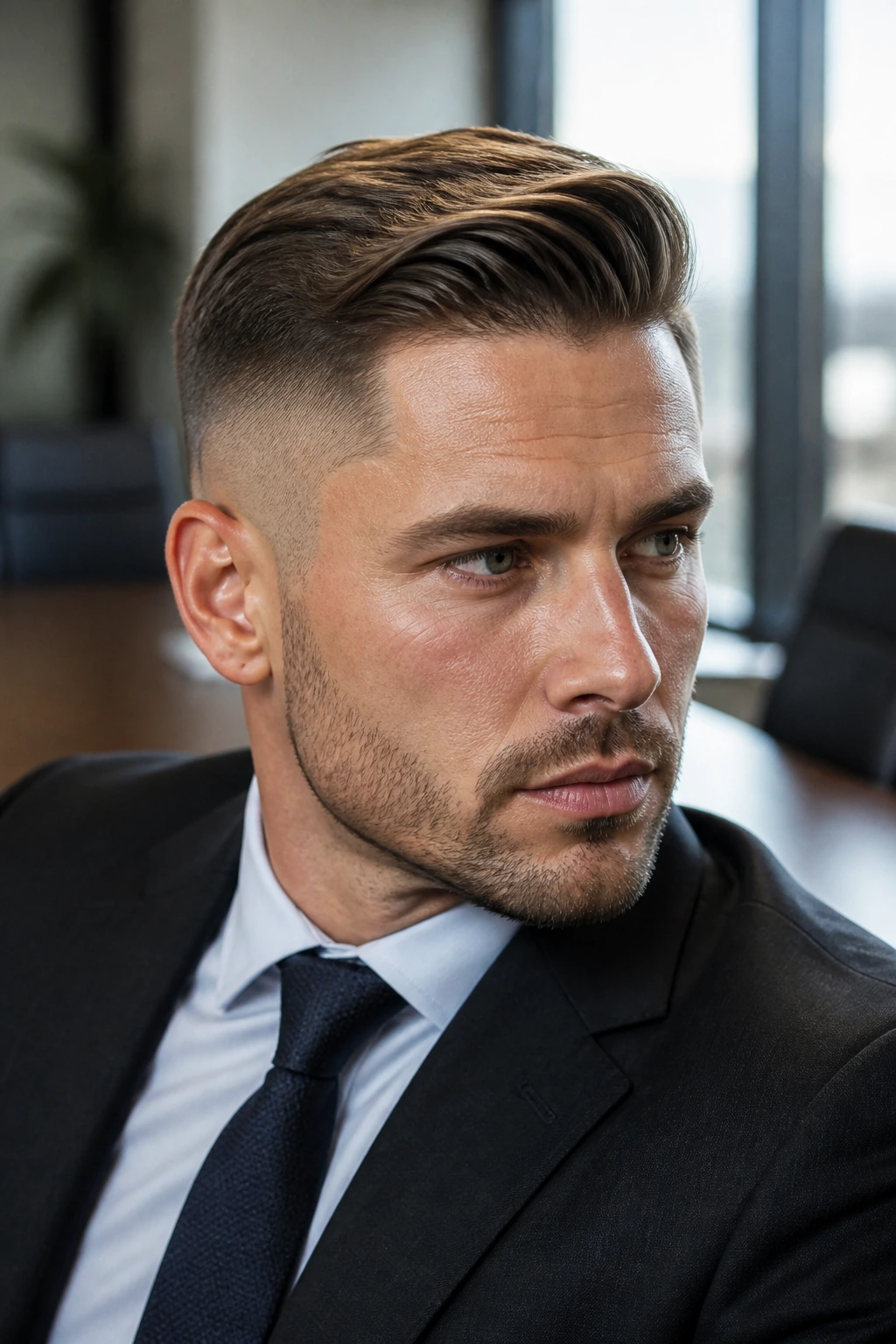
Forget the old-school associations with “covering up.” A modern comb-over fade is a bold, high-contrast look that involves fading the sides and combing the top hair over to one side with volume.
Creating Volume
This style needs height. Use a pre-styling spray before you blow dry. Once the hair is about 80 percent dry, work a matte clay through the top and pull it to the side. The combination of the lift at the roots and the faded sides creates a very clean, structured look.
When to Use This Style
This is a great look for guys who want to project authority. It is bold and undeniably sharp. It works exceptionally well with a well-tailored suit and a bold tie choice.
12. The Bro Flow

If your office environment is a bit more creative or relaxed, the “bro flow”—hair that is mid-length and swept back—can look very sophisticated. It shows you have a bit of range and aren’t afraid to let your hair have some character.
Keeping It Professional
The biggest danger with mid-length hair is the “gym hair” trap. To keep this professional, you must ensure the ends are healthy. Trim your ends every six weeks to avoid split ends, which always look messy.
Styling for the Office
Use a leave-in conditioner to keep the hair smooth and a very small amount of styling cream to pull it back off the face. You want to look like you’re going to a board meeting, not a surf competition.
13. The Textured Crop
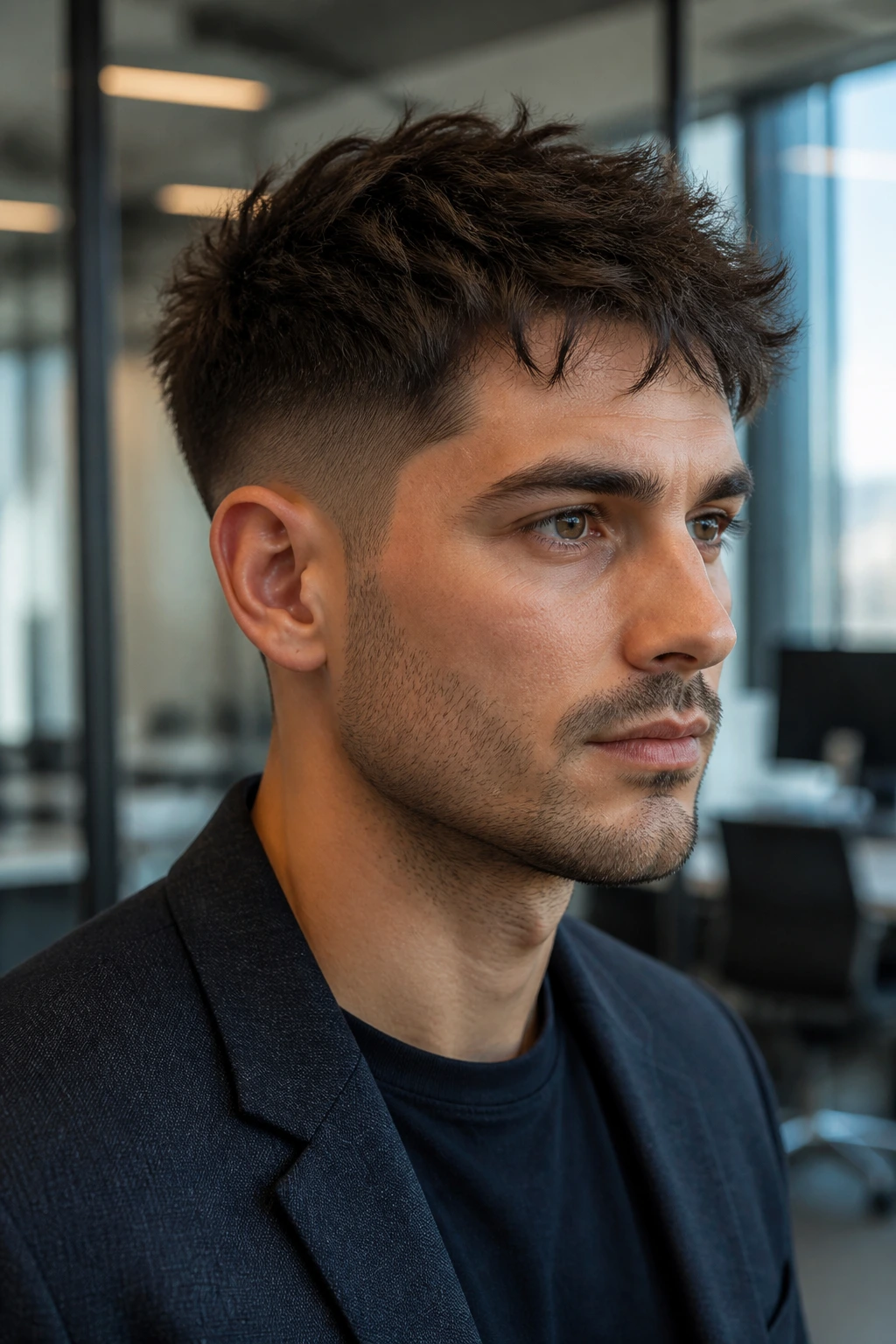
The textured crop is similar to the Caesar but with more layers and intentional messiness. It’s a very popular choice for guys in tech and design-focused roles because it looks modern, efficient, and forward-thinking.
Cutting Techniques
Ask your barber for a “point cut” on the top. This technique cuts into the hair vertically rather than straight across, which creates soft, shattered ends. This movement is what makes the crop look high-end rather than basic.
Daily Routine
Work a texturizing powder into the roots for lift. Then, use a matte styling clay to shape the top into small sections. It takes thirty seconds to do and stays in place all day.
14. The Mid-Length Spiky Top
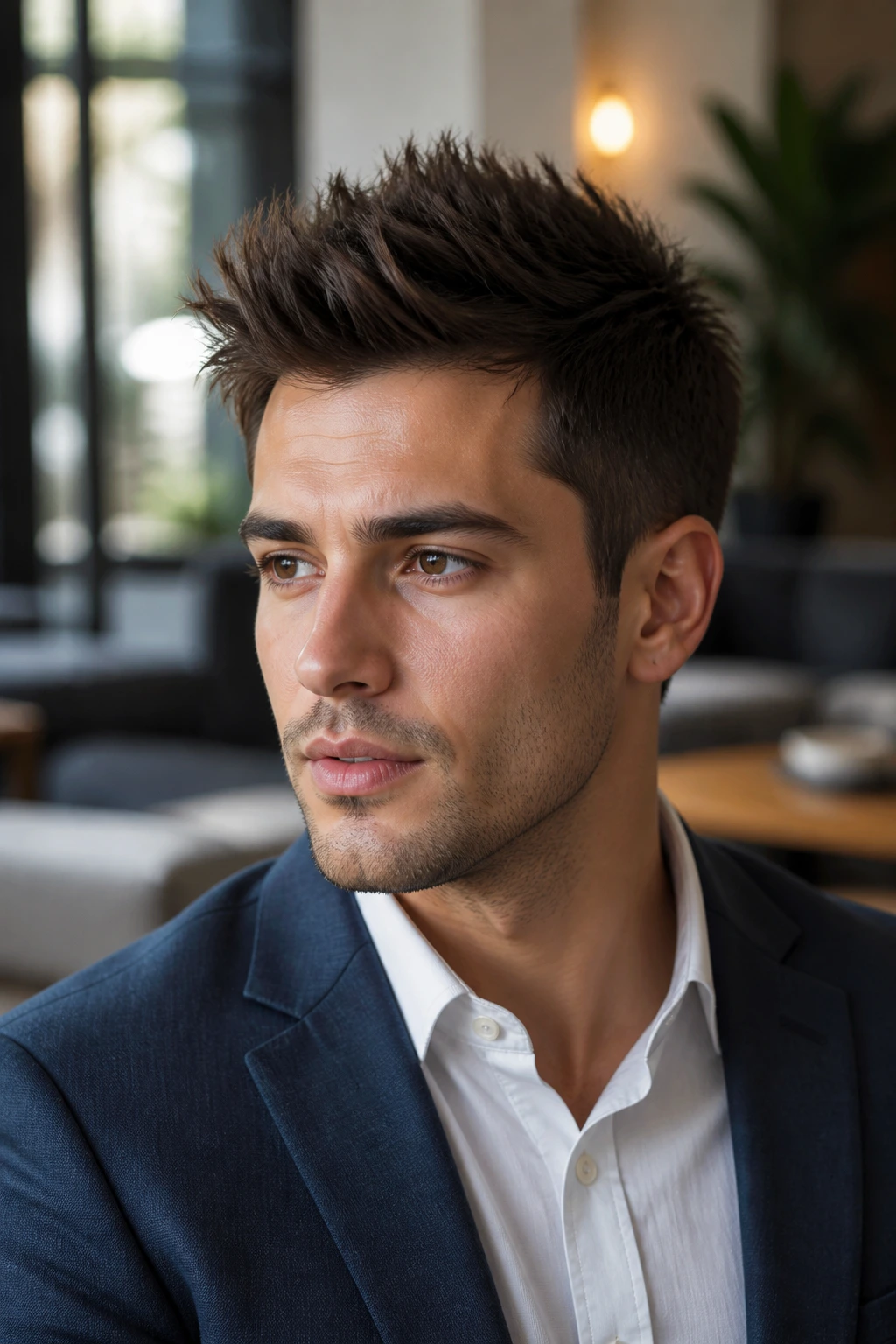
If you liked the look of a spiked top but want it to look adult, try the mid-length spiky top. Instead of sharp, gel-covered spikes, focus on textured sections that stand up just enough to create visual interest.
Avoid the Gel
Gel is your enemy here. It will make your hair look wet and hard. Use a high-hold, matte-finish molding paste instead. This allows the hair to stand up while still feeling touchable and soft.
Defining the Shape
Don’t spike the hair in every direction. Focus on the front third of your head, directing the hair upward and slightly toward the center. This creates a focused, intentional silhouette rather than a chaotic one.
15. The Faded Crew Cut
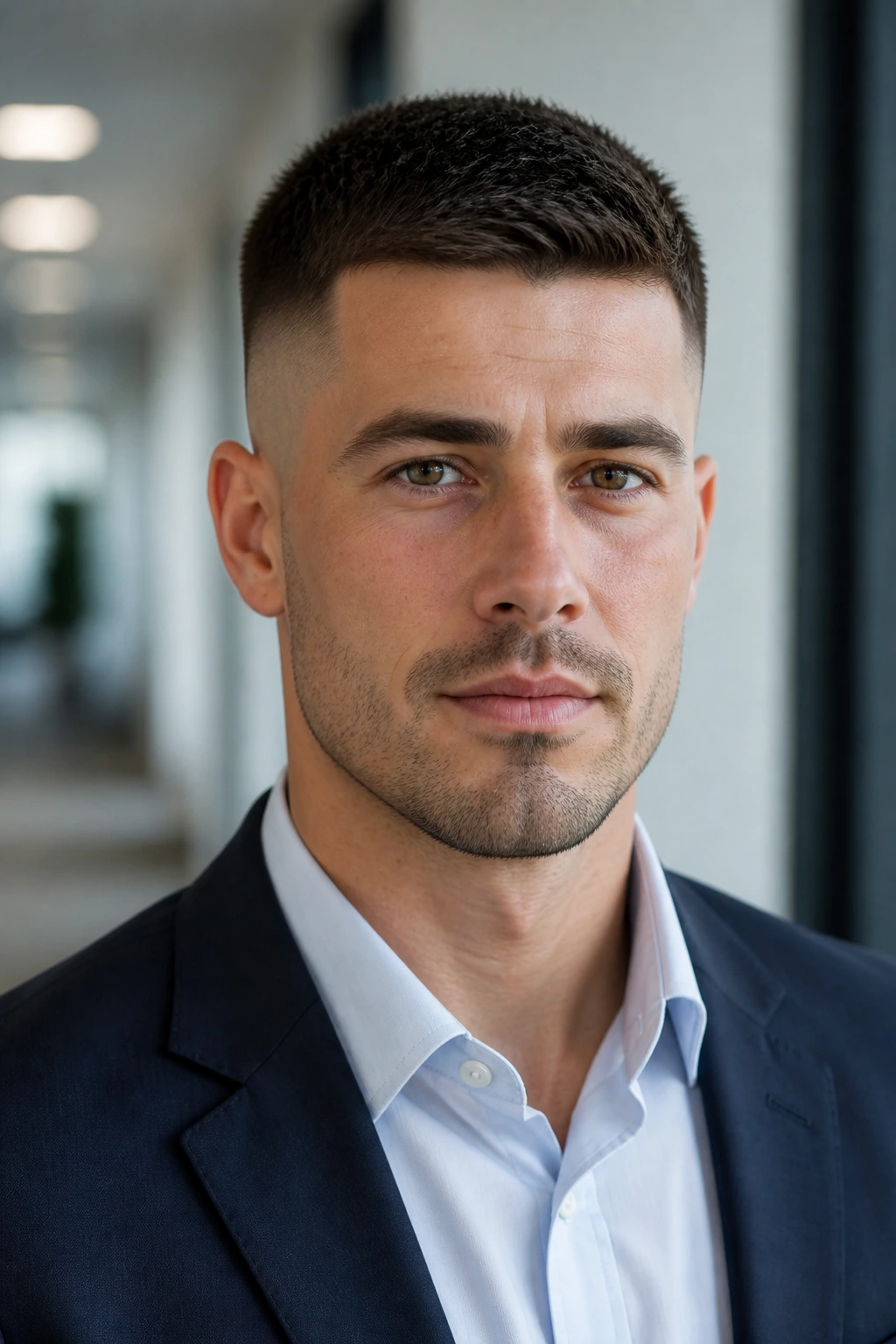
The crew cut is a classic, but the fade brings it into the present day. It is an incredibly clean, masculine, and professional style that never goes out of fashion.
The Contrast Factor
The fade should be high enough to show off a sharp neckline. This creates a very clean profile that looks fantastic from every angle. It’s especially useful for guys who spend a lot of time on video calls, as the sharp lines look crisp on camera.
Styling Requirements
Minimal. You might need a tiny dab of wax to keep the stray hairs in place, but that’s about it. It’s the ultimate “set it and forget it” haircut for the professional who values his time above all else.
16. The Disconnected Undercut
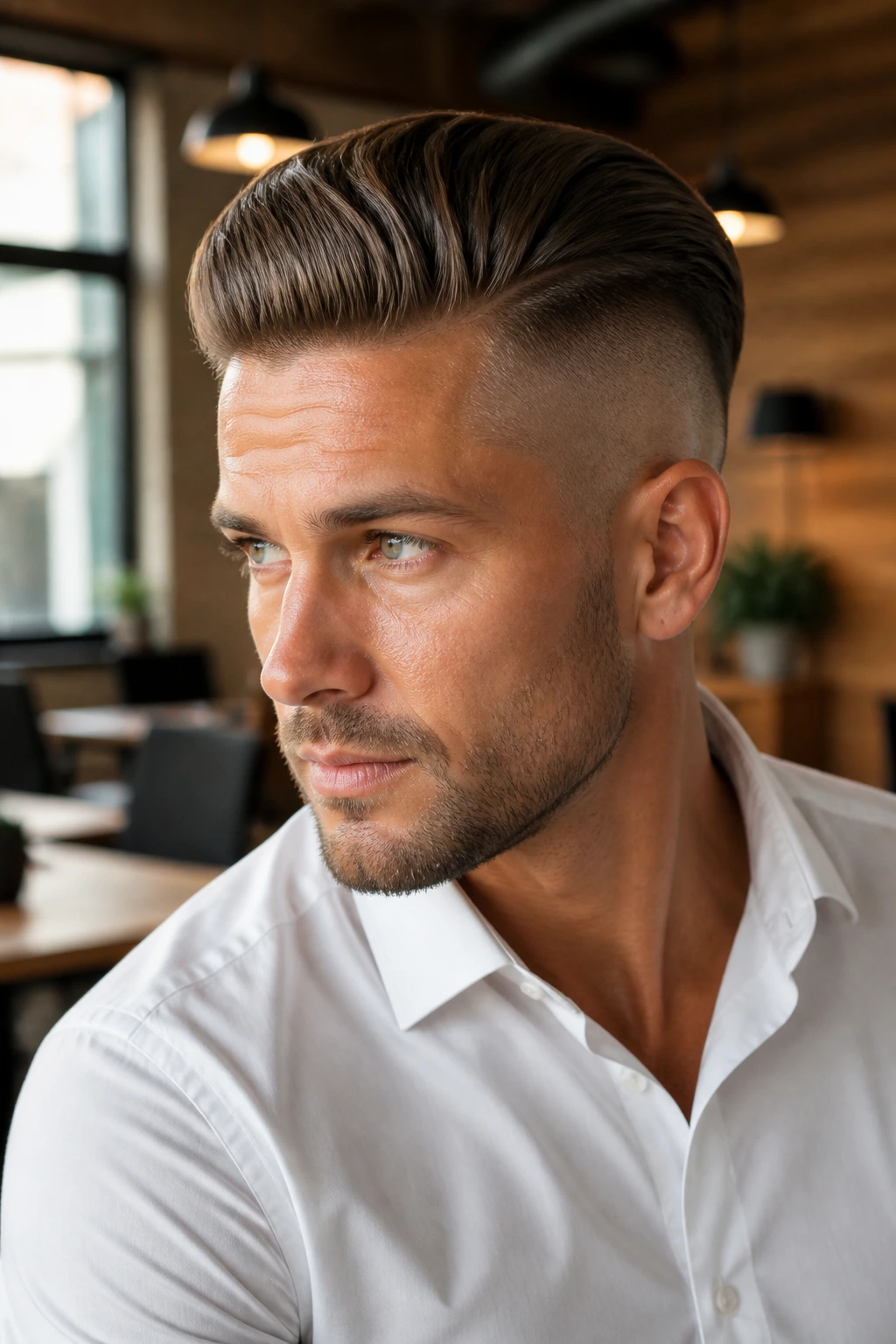
This look features a very sharp transition between the long top and the shaved sides. It’s a high-impact style that is definitely for the confident professional who likes to stand out.
Managing the Transition
The key is to keep the top long enough that it can be styled back or to the side. If it’s too short, the transition looks awkward. If it’s long enough, it looks like a deliberate design choice.
Who Should Try This?
If you have a creative job or work in an industry where personal style is a differentiator, this is a great look. Just be aware that it requires more maintenance to keep those side lines razor-sharp.
17. The Flat Top
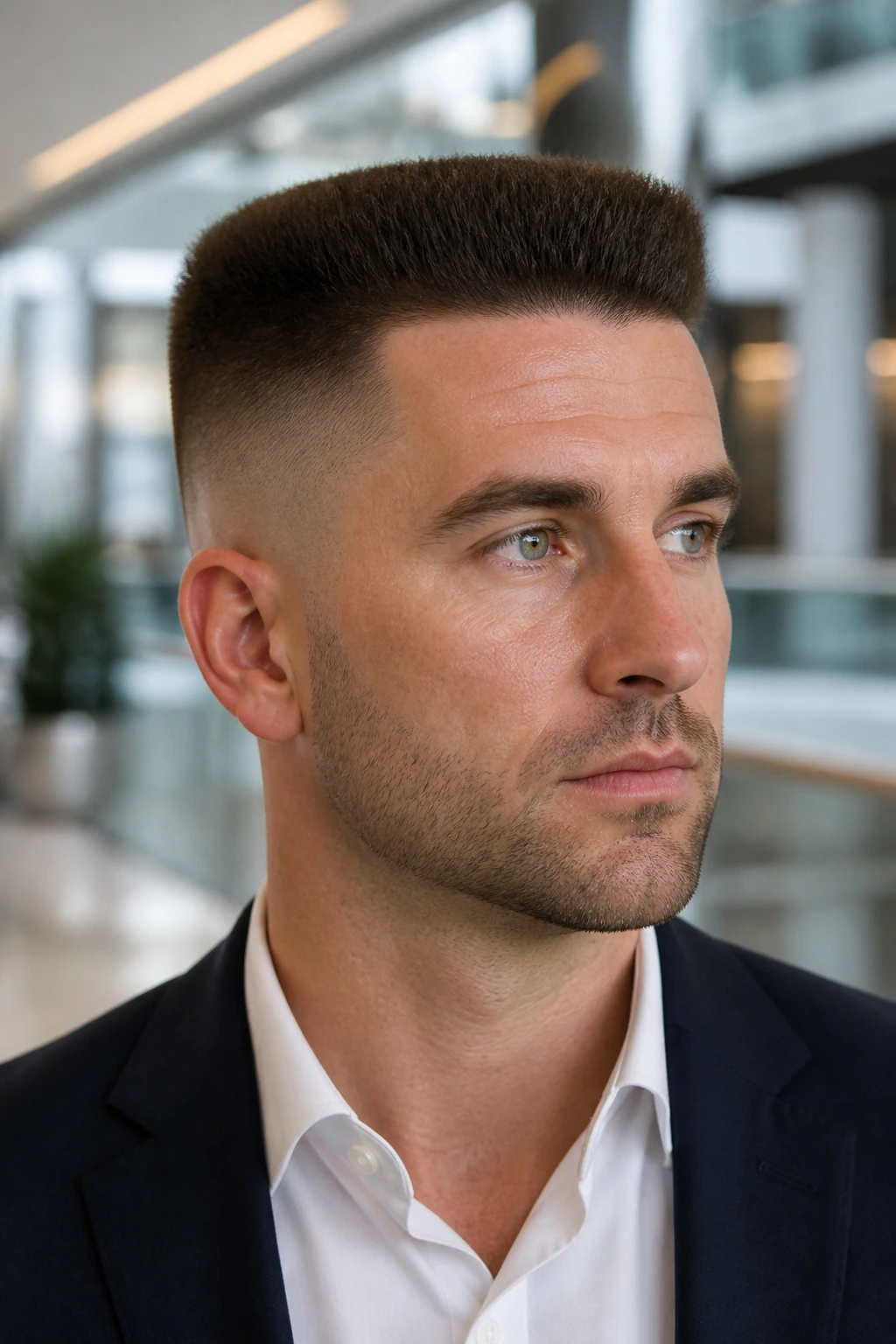
While often associated with mid-century styles, a modern, lower-profile flat top can look incredibly sharp. It’s an architectural haircut that screams precision and order.
Finding the Right Height
You don’t need a massive, towering flat top. A subtle, flat-top profile on top with faded sides is enough to create that structured look. It’s a bold choice, but if you have a strong jawline, it frames the face exceptionally well.
Maintenance
This style is all about the line. You need a barber who is skilled with the clippers to ensure the top is perfectly level. It’s a high-maintenance cut, but for the right person, it’s worth the effort.
18. The Fringe-Forward Fade
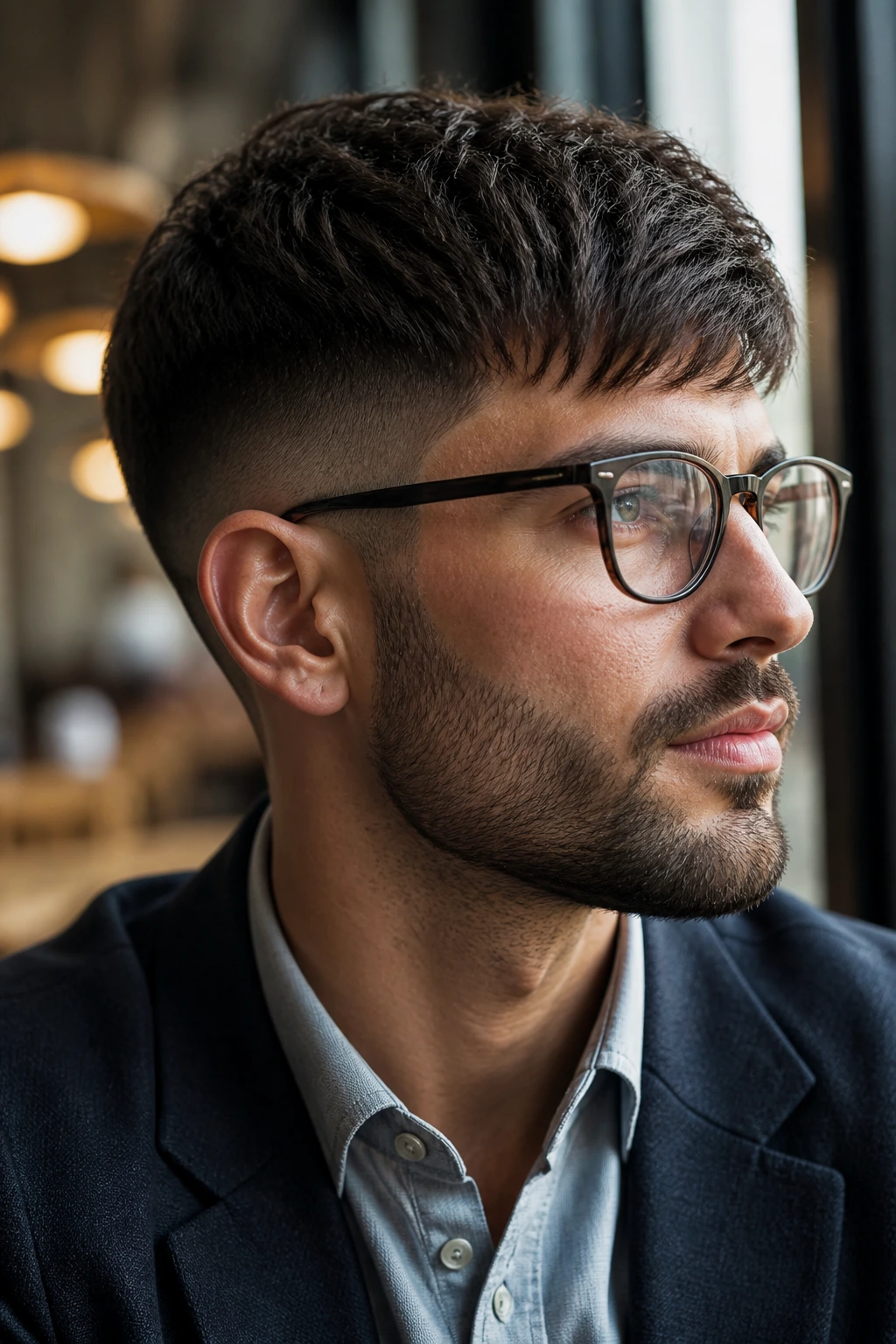
This style is for the guy who has some extra length on top and wants to keep the hair off his ears. The fringe is combed forward, and the sides are kept tight.
Why It’s Efficient
It’s a very fast style to manage. Because the hair is already combed forward, you don’t have to struggle with volume or lift. You just need to keep the sides trimmed, and you’re good to go.
Pairing with Glasses
If you wear glasses to the office, this style is a fantastic choice. The forward movement of the hair complements the frames without creating a cluttered look around the ears and temples.
19. The Polished Quiff
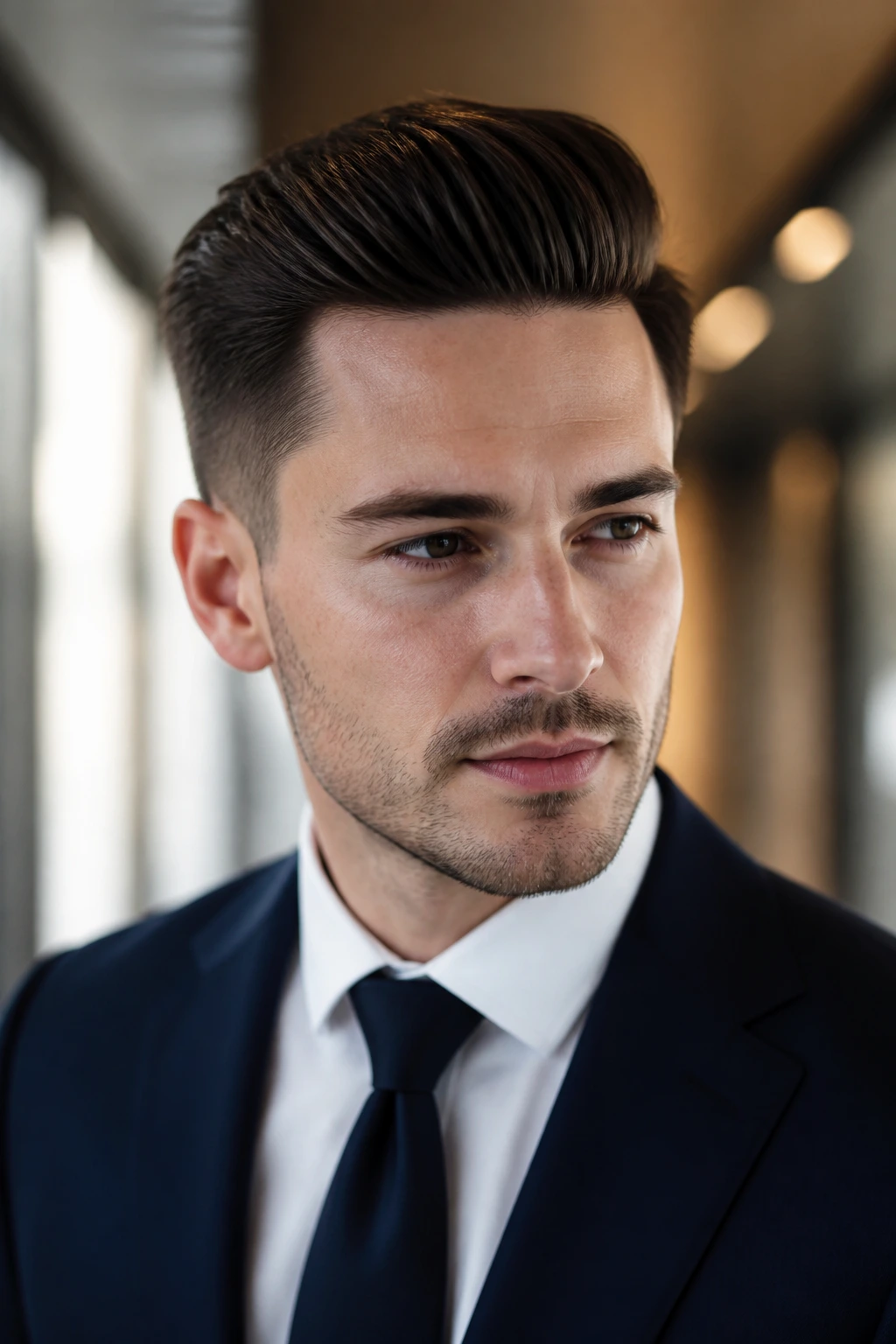
The polished quiff is a more refined, slightly longer version of the textured quiff. It uses a bit more product for a semi-matte finish and is styled with a comb rather than just fingers.
The Importance of the Comb
Using a comb gives you a much more structured result. It’s for days when you have big meetings or presentations where you need to look impeccable.
Avoiding the “Over-Styling” Trap
Don’t use so much product that the hair stops moving. You want it to look like it has hold, not like it’s been turned into a statue. A little bit of styling cream goes a long way.
20. The Tapered Side Part
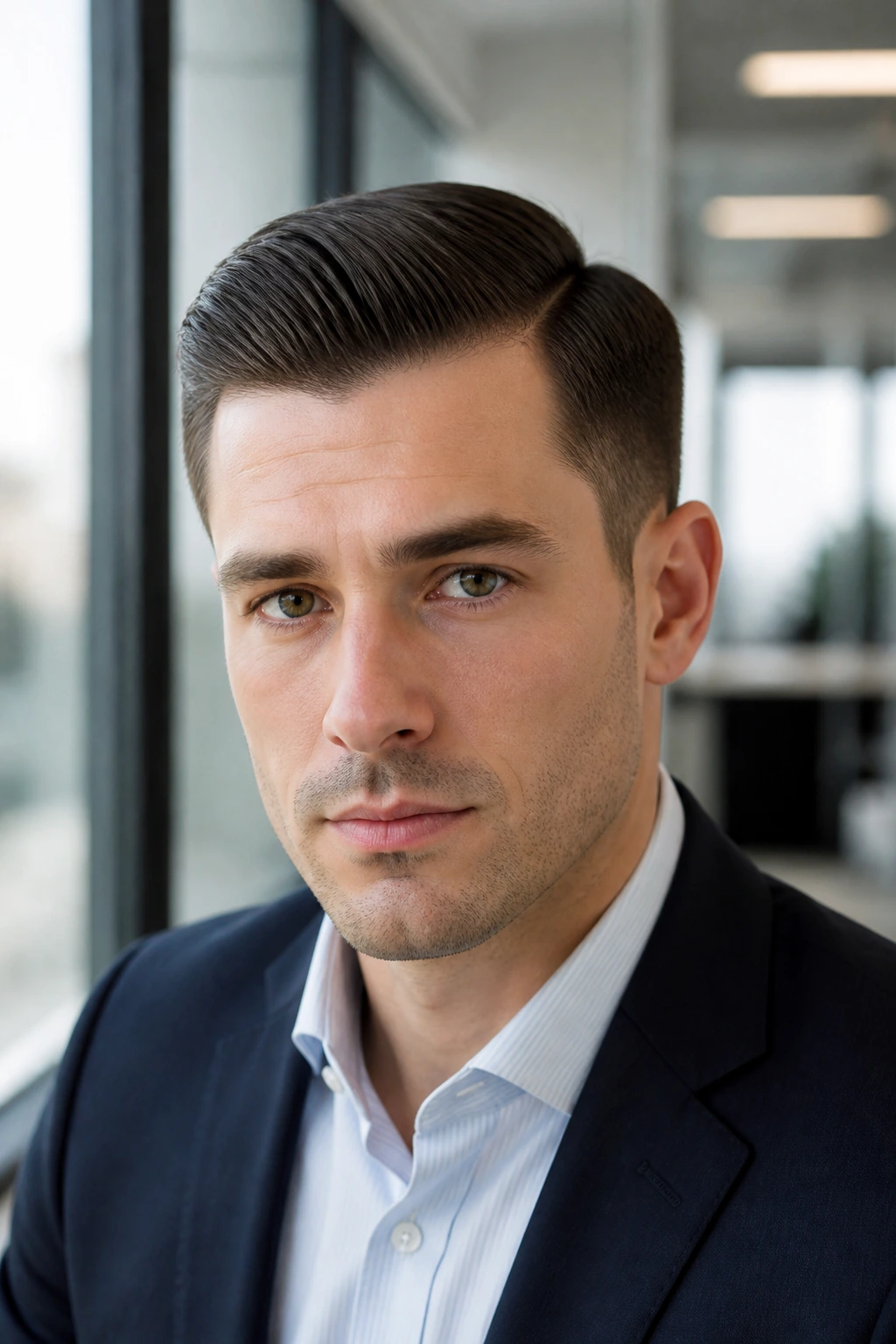
This is a variation of the classic side part that includes a slight taper on the sides. It creates a seamless look that is incredibly professional and easy to maintain.
Subtle Differences
The taper softens the edge of the part. If the traditional hard-part side style feels too severe for you, the tapered version will feel more natural and relaxed.
Perfect for Every Environment
Whether you work in a law firm or a creative studio, the tapered side part is universally accepted and respected. It’s a safe, smart, and reliable choice.
21. The Short, Wavy Textured Cut
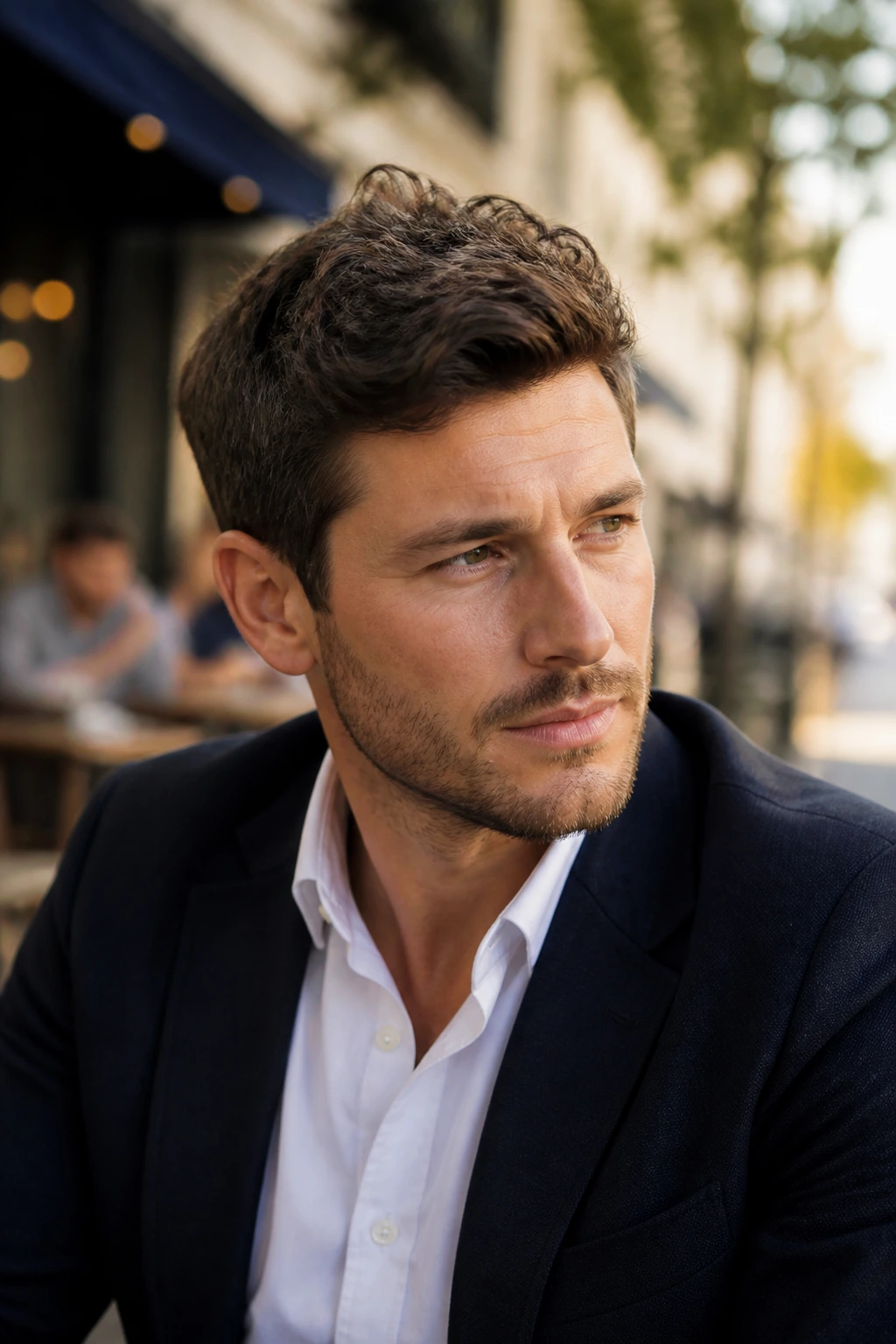
Finally, for those with a bit of wave who want to keep it short and tidy, this cut focuses on working with the natural growth pattern of the hair rather than against it.
Embracing the Wave
Don’t fight your texture. Work with a barber who knows how to cut wavy hair to encourage it to sit correctly. Using a sea salt spray can help define the waves without making them look crunchy or stiff.
The End Result
You’ll end up with a style that looks effortlessly cool and undeniably professional. It’s the kind of cut that looks better at the end of the day than at the beginning, as the waves settle and the texture becomes more pronounced.
Final Thoughts

When choosing a hairstyle for the office, remember that the best cut is the one that makes you feel confident the moment you walk into the building. Your hair should reflect your professional standards, but it shouldn’t be a source of stress in your morning routine. Don’t be afraid to try something new, but also keep in mind that the most effective styles are the ones that are easy to maintain and consistent in their look.
If you find a style that works for your hair type and your office culture, stick with it until you’re ready for a change. A reliable, well-maintained haircut is a subtle but powerful tool for building your professional presence. Ultimately, the best investment you can make is finding a barber who understands your hair’s unique growth patterns and knows how to tailor these classic looks to fit your head shape perfectly.