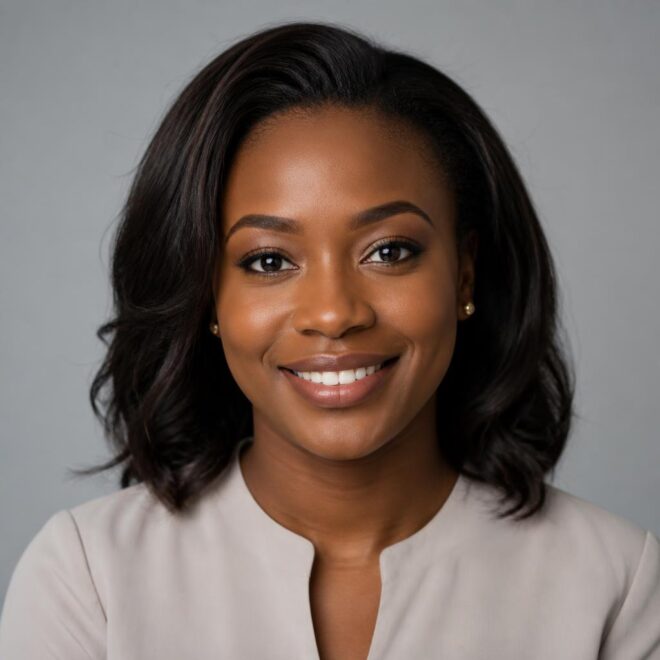


The wavy bob occupies a unique space in the hair world—it sits somewhere between the controlled polish of a straight-edged cut and the wild, untamed energy of a shag. When you add layers into the mix, you aren’t just cutting hair; you are engineering a shape. Wavy hair naturally wants to expand, and without the right architecture, a bob can quickly turn into a triangular “helmet” shape that sits flat at the crown and puffs out at the ends. Layering changes the internal structure, allowing those bends and S-curves to stack gracefully rather than stacking up against each other.
Choosing a layered bob for your specific wave pattern requires a deep understanding of how hair moves. Some waves are loose and beachy, while others are tight, corkscrew-adjacent bends that lean toward curly. If you have fine, wavy hair, you need interior weight removal to encourage volume without losing the density at the ends. Conversely, if your hair is thick and coarse, you need long, invisible layers to break up the bulk so the hair doesn’t feel heavy or stiff. It’s all about working with your natural texture rather than fighting it into submission with a flat iron every morning.
This guide explores twenty-one distinct ways to cut and style a layered bob specifically for wavy hair. From the sharp, angular looks to the soft, diffused shags, these styles prioritize movement and low-maintenance styling. Because wavy hair is reactive to humidity and cut technique, the success of these looks rests on how the stylist uses the scissors. We are looking for “shattered” lines and internal graduation—techniques that make a haircut feel lived-in from the moment you leave the salon.
1. The Classic Choppy Chin-Length Bob
The chin-length bob is a bold choice, but for wavy hair, it provides a frame that feels intentional and sharp. By incorporating choppy layers throughout the perimeter, you prevent the bottom edge from looking like a solid block. This style works best for those with fine to medium density because it encourages the hair to lift at the roots.
How to Style for Maximum Texture
To get that piecey, lived-in look, you need to rely on a sea salt spray or a light texturizing mousse while the hair is damp. Use a diffuser on a medium heat setting, flipping your head upside down to encourage the waves to spring up. Avoid brushing the hair once it is dry, as this will only encourage frizz and ruin the definition of your individual waves.
Why It Works for Fine Waves
- The shorter length keeps the hair from being weighed down by its own moisture.
- Choppy ends allow the waves to overlap naturally, creating a sense of volume.
- It highlights the jawline, making it an excellent choice for oval and heart-shaped faces.
2. The Textured Long Bob (Lob)
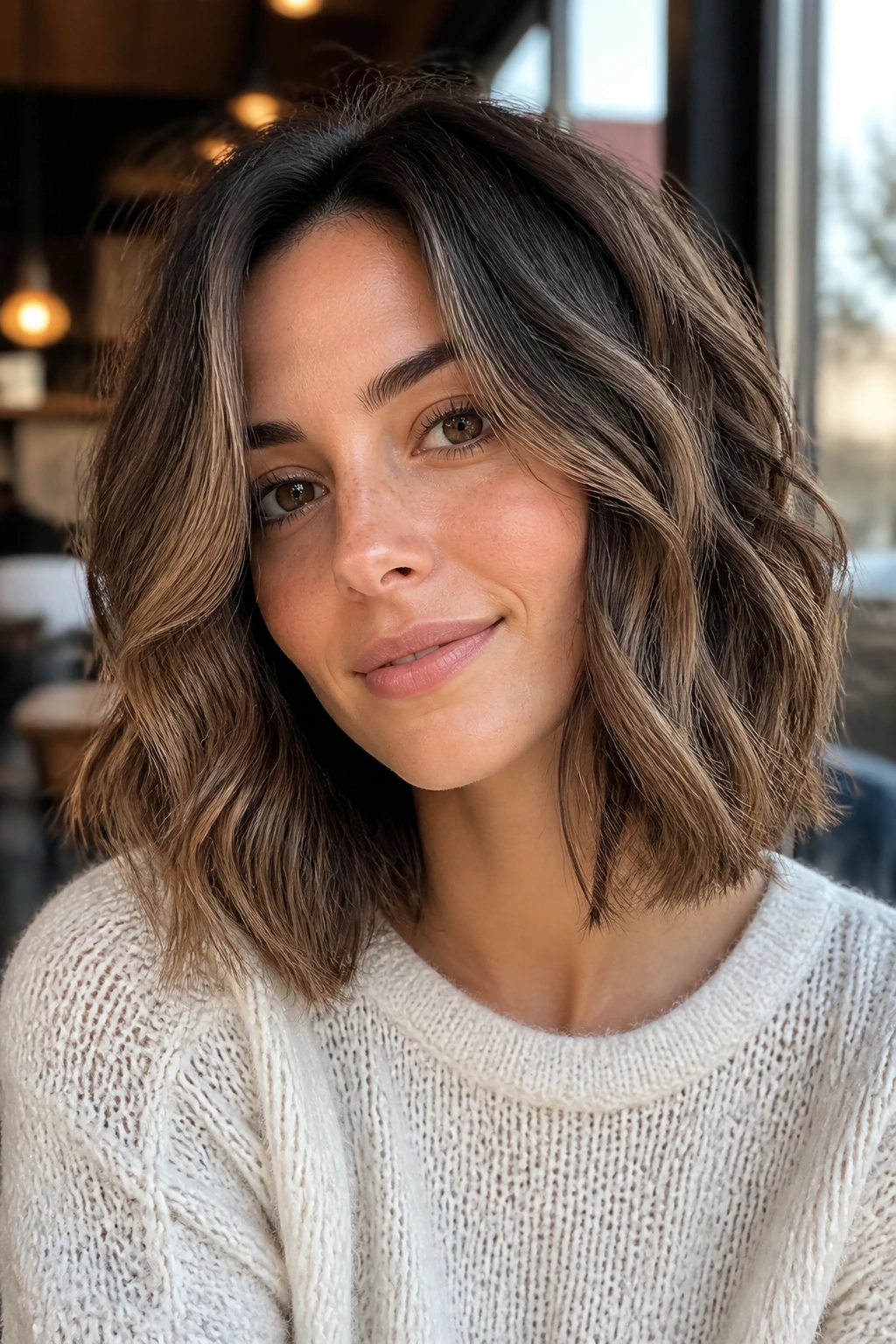
If you aren’t ready to commit to a short crop, the long bob is the most versatile entry point into layered cuts. A wavy lob, specifically one with face-framing layers, creates an effortless silhouette that grows out beautifully. This is the “safe” choice that feels anything but basic, provided the layers are cut to follow the natural wave pattern.
Avoiding the Triangle Shape
The biggest mistake stylists make with wavy lobs is cutting the layers too bluntly at the bottom. You want your stylist to use a point-cutting technique, which involves cutting into the ends of the hair vertically rather than straight across. This softens the edge, allowing the waves to fall into each other rather than stacking up into that dreaded pyramid shape.
3. The Soft Shaggy Bob
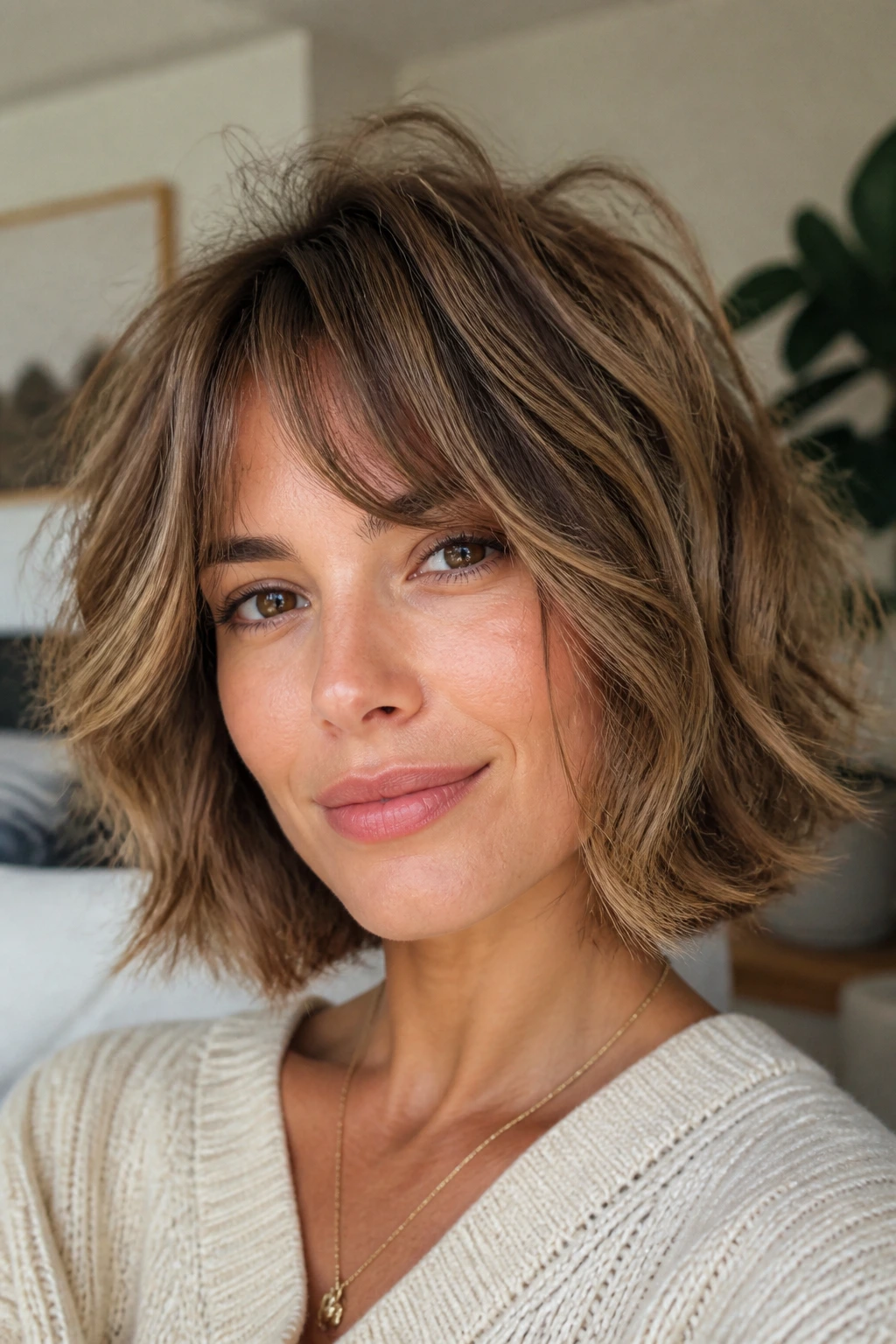
The shag has moved away from the extreme, 1970s-inspired layers of the past and into a much softer, more wearable territory. A shaggy bob features internal layering that is concentrated at the crown, which provides a natural, airy lift. This style is perfect if you have hair that tends to fall flat at the roots.
Styling the Crown
Because the layers are shorter on top, you can easily use a root-lifting powder to add grit and height. Just take a small amount, sprinkle it at the base of the hair, and massage it in with your fingertips. The result is a messy, “I just woke up like this” look that is actually quite sophisticated.
4. The Inverted Wavy Bob
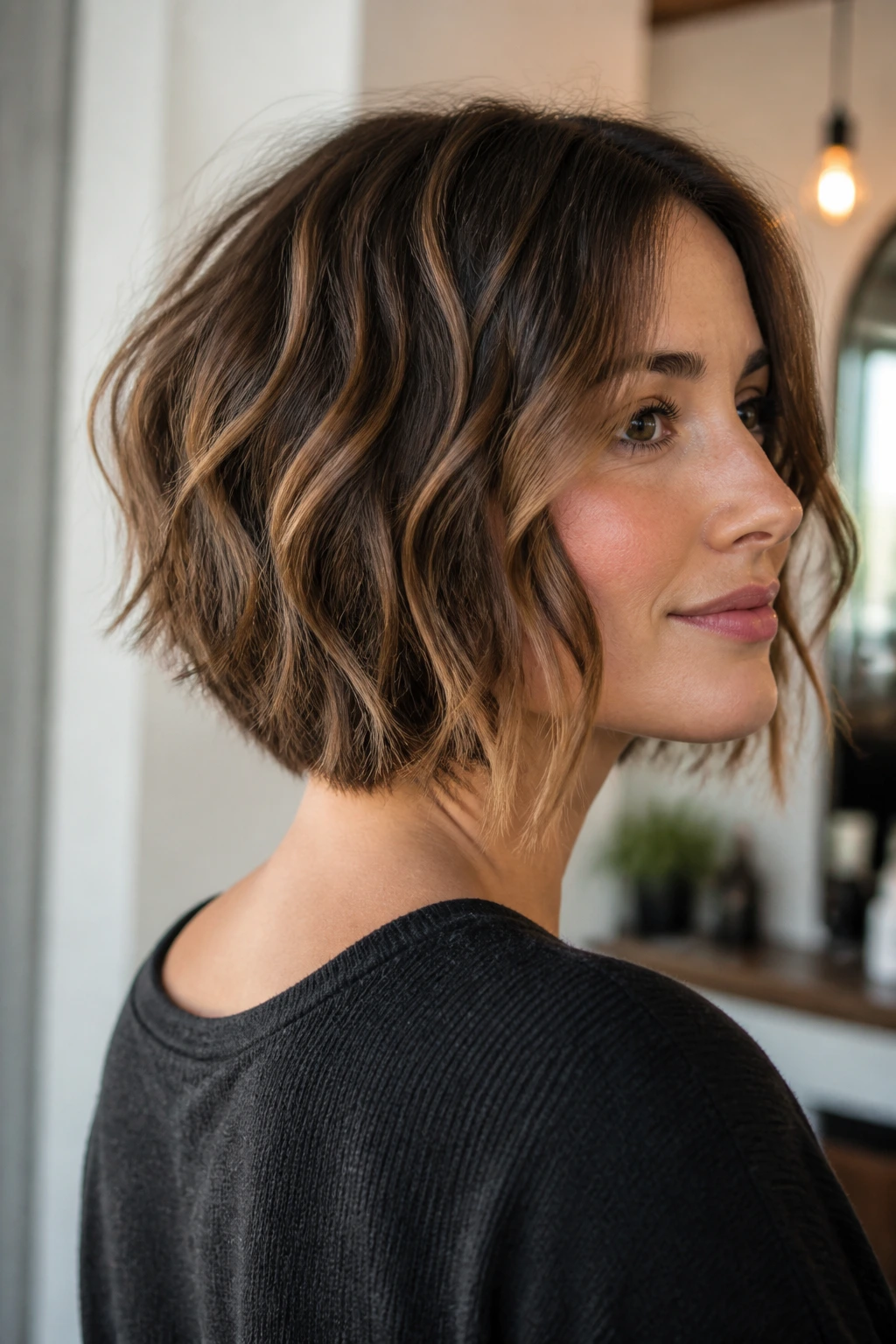
The inverted bob—where the hair is shorter in the back and gradually gets longer toward the front—is a classic. When you introduce waves and layers, you get a version that feels much more modern and less “stiff” than the traditional straight, angled bob. The layers in the back should be slightly shorter to build a nice curve against the neckline.
Maintaining the Angle
You will need to visit the salon every six to eight weeks to keep that sharp, inverted line crisp. If you wait too long, the back grows out, and the silhouette loses its intentional “wedge” shape. Use a light serum or smoothing cream on the ends to ensure the longer pieces near the face don’t become frizzy or unmanageable.
5. The Curly-Wavy Disconnected Bob
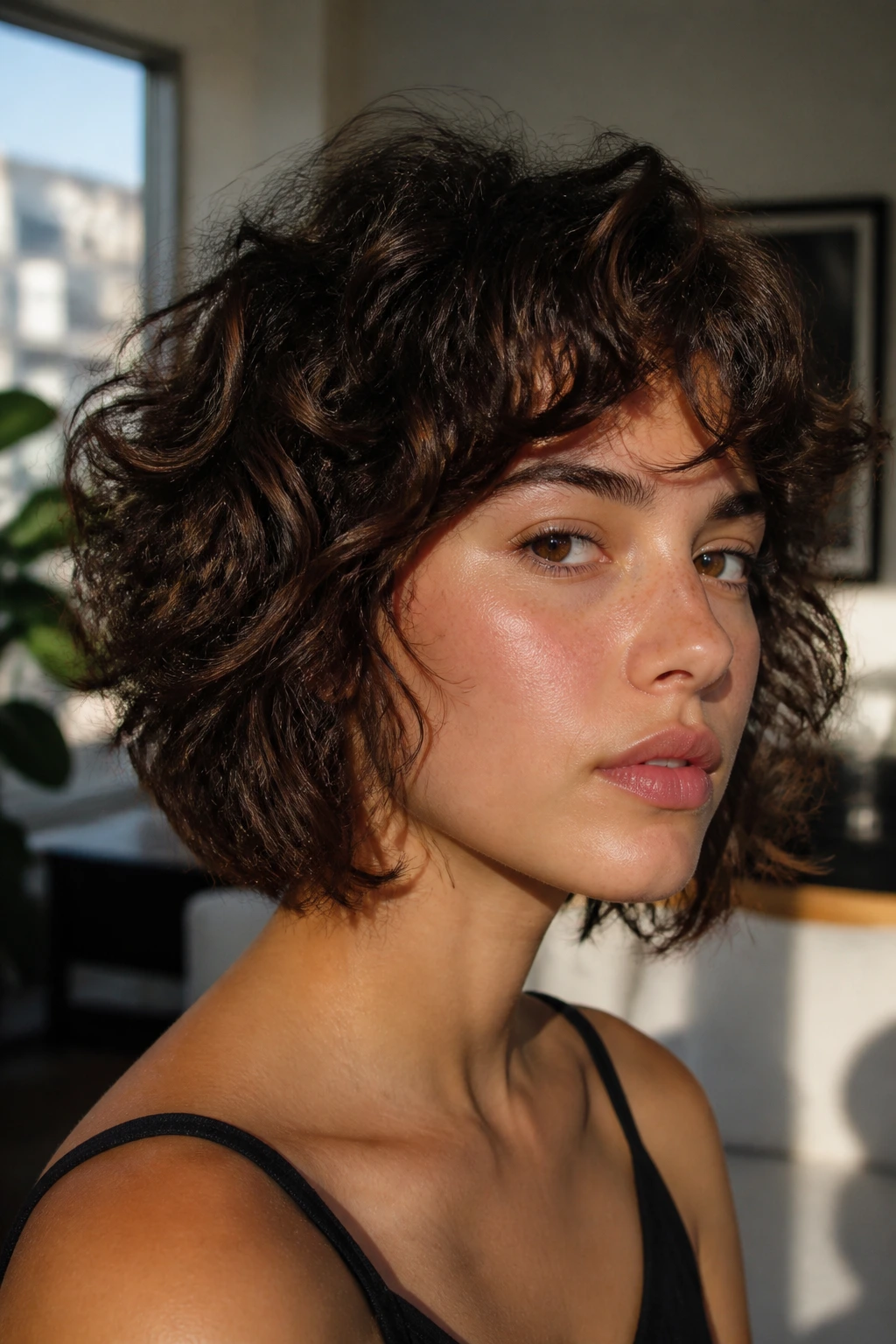
“Disconnected” might sound scary, but it refers to a technique where the top layers are cut at a different length than the bottom layers, creating a distinct separation. For wavy hair, this is brilliant because it stops the hair from looking like one solid mass. It gives you distinct, bouncy sections that behave like individual curls.
Who Should Choose This Cut
- People with high-density hair who struggle with bulk.
- Those who want a more artistic, edgy, or modern appearance.
- Anyone who loves using curl-defining creams rather than salt sprays.
6. The Wispy Bangs and Layers Combo

Bangs and waves are often thought of as an impossible combination, but the secret is in the length and density. Wispy, curtain-style bangs are the perfect partner for a layered bob. They soften the face and provide a frame that balances the fullness of the rest of the hair.
Managing the Fringe
Do not cut your bangs when your hair is wet and pulled tight; they will shrink up significantly once dry. Your stylist should cut your fringe while the hair is dry and styled in its natural wave, ensuring the length sits exactly where it needs to hit the cheekbone. This ensures you aren’t left with a “baby bang” that requires constant blow-drying to look right.
7. The Blunt-Cut Bob with Hidden Layers
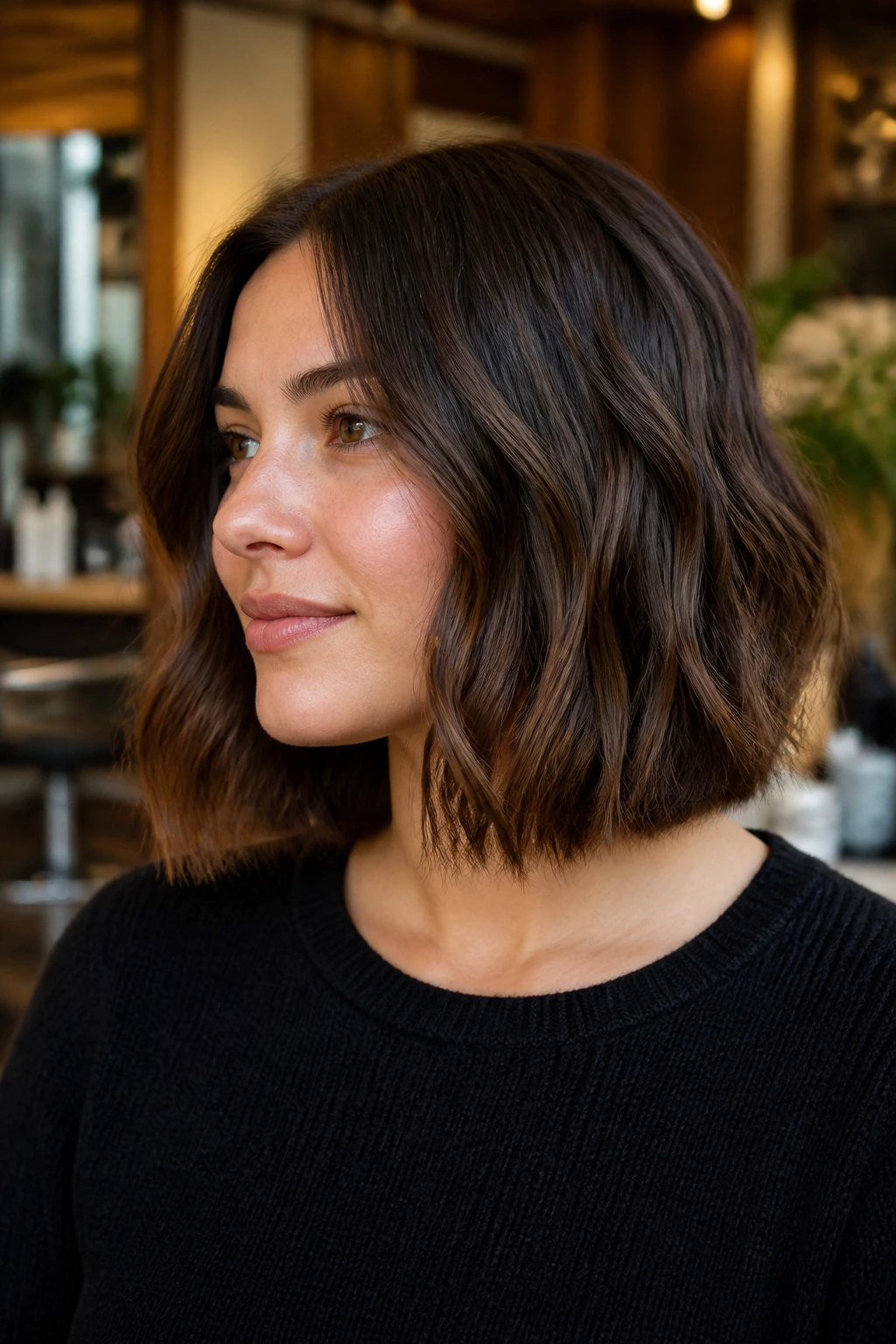
Sometimes, you want the appearance of a heavy, blunt edge but need the internal benefits of layers. This style involves leaving the perimeter length-heavy while “carving out” hidden layers underneath. You get the weight of a blunt cut with the volume and movement of a layered one.
The Benefit of Hidden Weight Removal
This is the ultimate hack for thick hair. By removing the weight from the middle of the hair shaft, you eliminate the bulk while keeping that crisp, clean line at the bottom. It allows you to style your hair with a middle part or a deep side part without the hair looking overly wide or puffy.
8. The Beach-Wave Graduated Bob
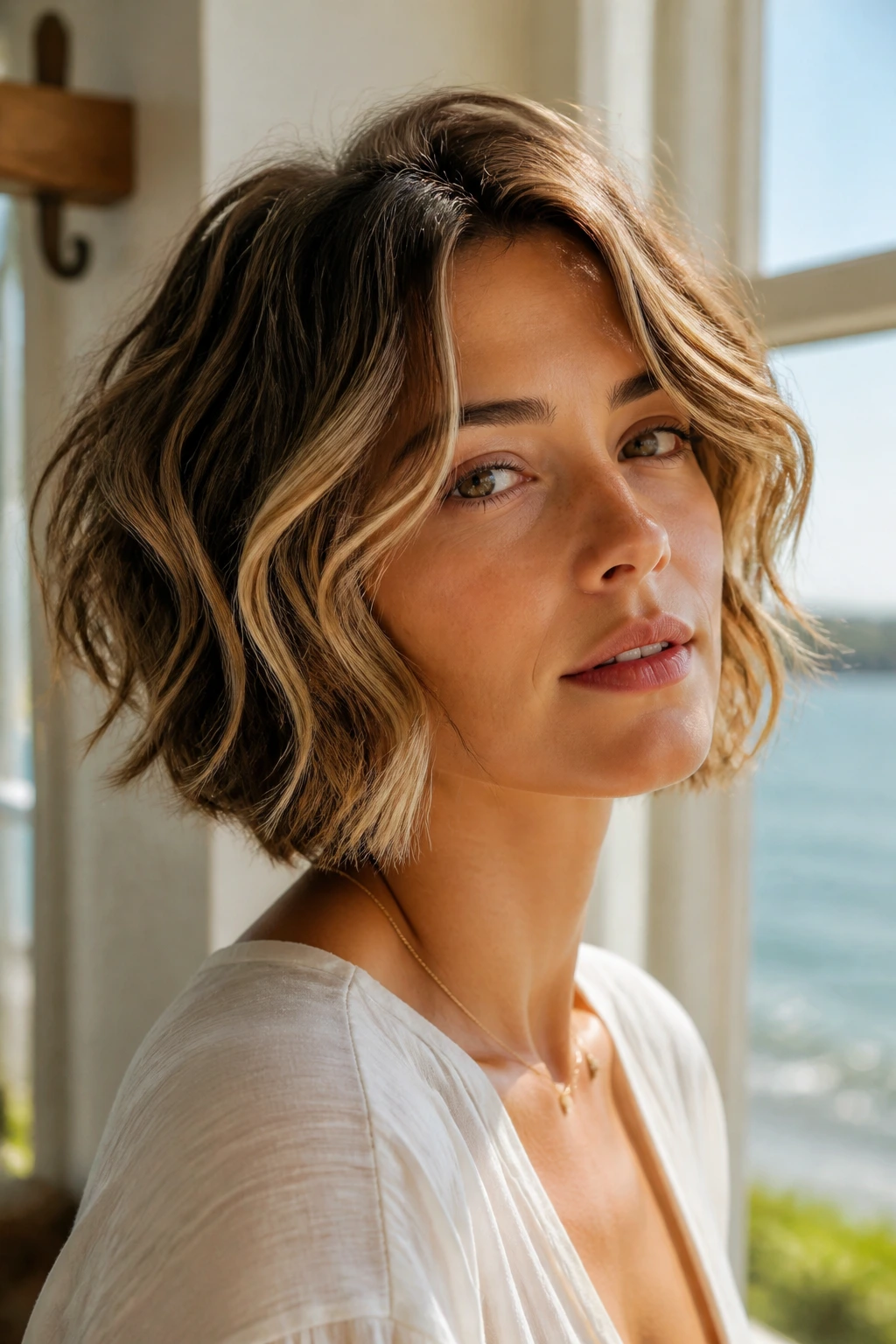
This style is all about movement. The layers are cut long and fluid, following the natural curve of the wave. It feels like a shorter version of a beach-hair style, providing that sun-kissed, carefree aesthetic regardless of the time of year.
Choosing the Right Products
To maintain the beach-wave look, stay away from heavy waxes or pastes that can stick the waves together. Instead, look for flexible-hold hairsprays or light, botanical-based styling creams. These provide enough hold to keep the shape, but they allow the hair to remain touchable and soft.
9. The Deep Side-Parted Layered Bob
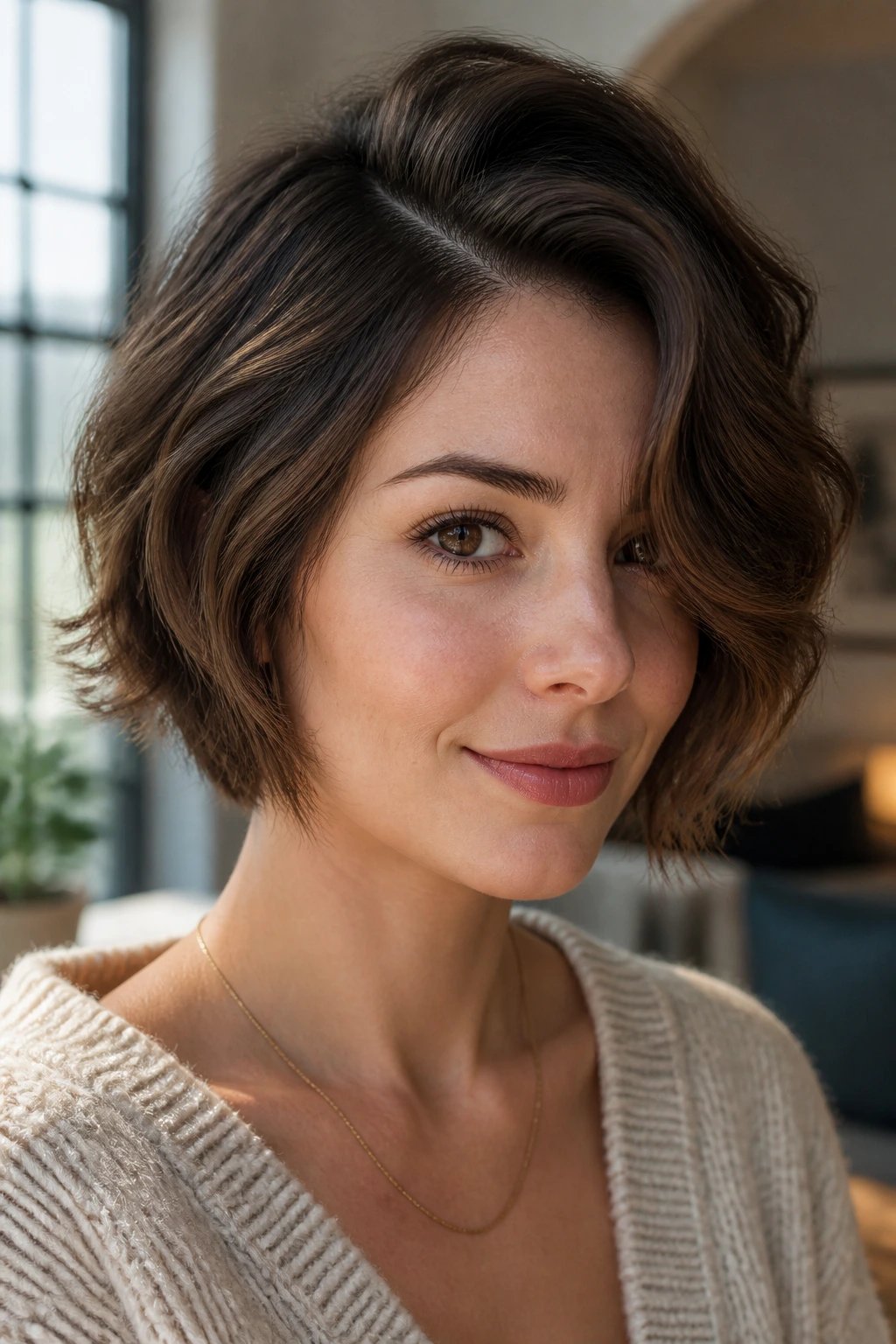
Sometimes the cut isn’t just about the scissors; it’s about the partition. A deep side part on a layered bob creates an instant “swoop” effect that adds volume to the side with more hair. This is particularly effective for those with a round face shape, as the diagonal line created by the hair breaks up the width of the face.
Styling Tip for the Part
When your hair is damp, use a fine-toothed comb to create a clean, precise part. Then, as you dry your hair, use a round brush to lift the roots on the side with more hair. This gives you a dramatic, voluminous effect that looks like you spent an hour with a professional blowout, even if you only spent ten minutes.
10. The Asymmetrical Wavy Bob
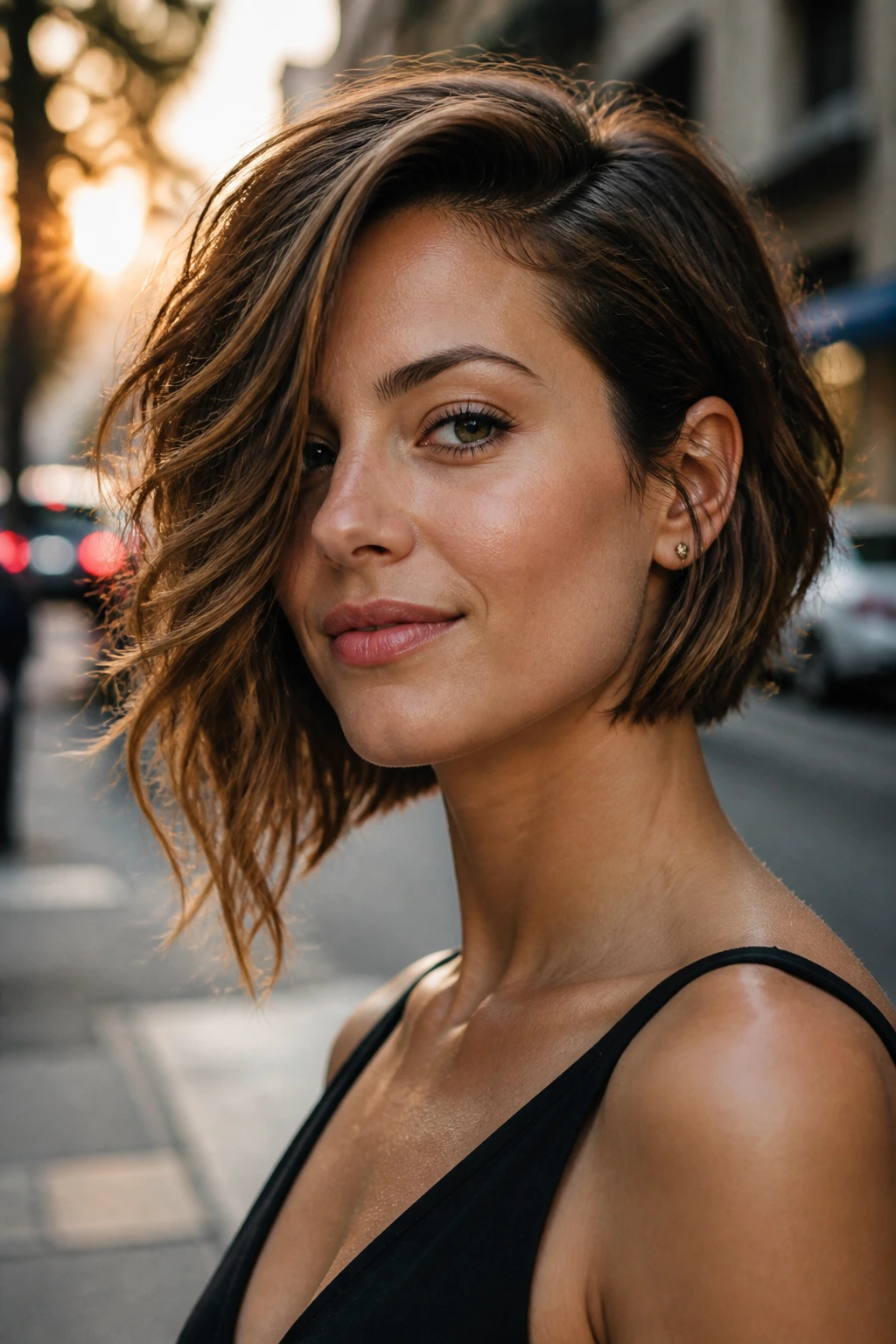
Asymmetry is a fantastic way to handle thick, wavy hair because it distributes the weight unevenly. One side is shorter, and the other side is longer, creating a focal point that draws the eye. It is sophisticated, intentional, and works wonders for those who want to hide a bit of facial asymmetry.
Why This Style Rocks
- It is incredibly easy to style; you just let the hair do its own thing.
- It feels modern and fashion-forward.
- The uneven length naturally breaks up the wave pattern so the hair never looks too “perfect” or stiff.
11. The Layered A-Line Bob
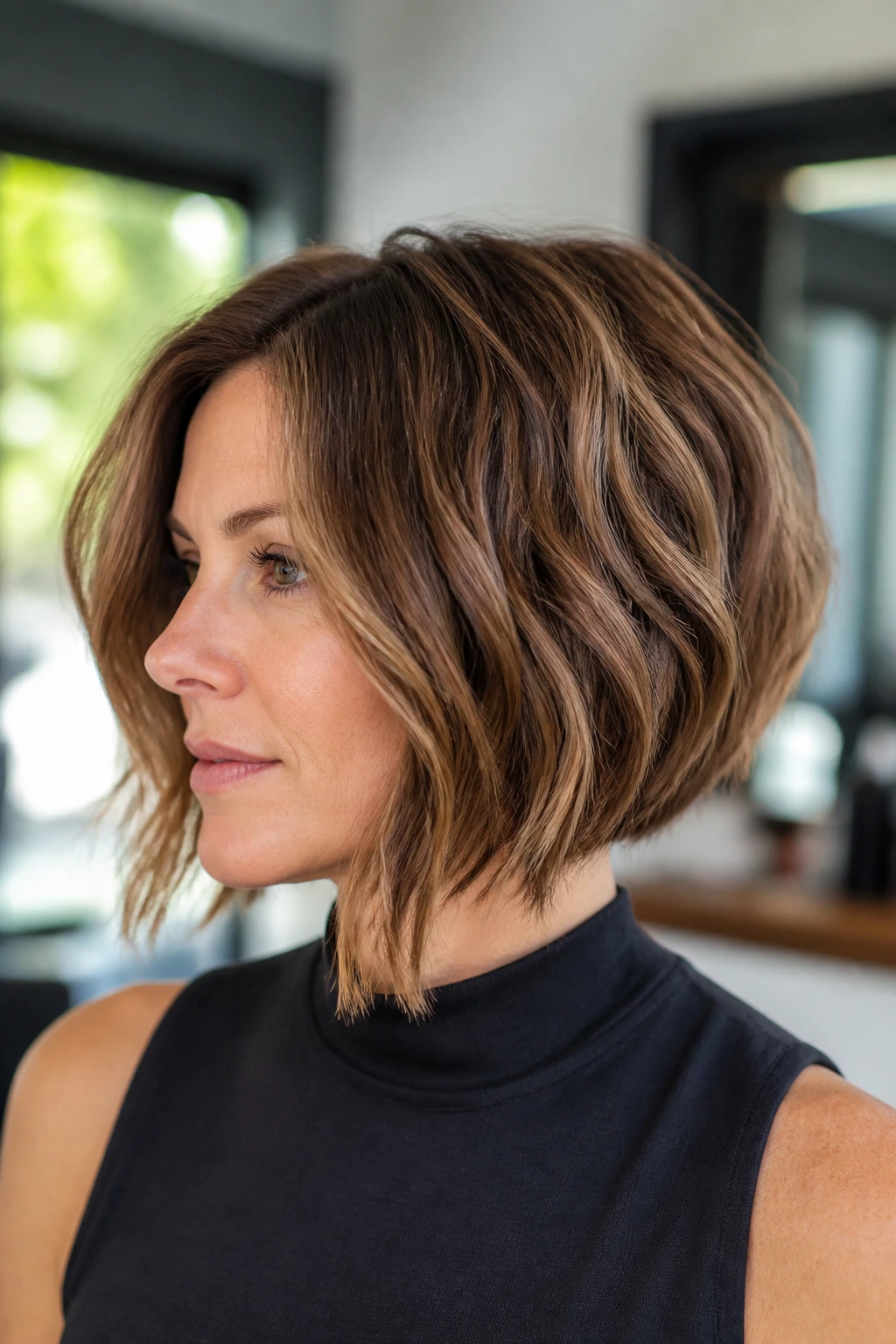
The A-line is the slightly less severe sister of the inverted bob. The slope is gentler, making it feel more natural and relaxed. When you add layers to an A-line, you gain movement at the back and sides, which prevents the “triangle” issue entirely.
Essential Maintenance
Because this cut relies on the angle, you will need regular trims to ensure the back doesn’t get too long and “shaggy.” Every six weeks is the sweet spot. When styling, focus your product application on the ends to keep them hydrated, as the ends of an A-line bob are often the most exposed to environmental damage.
12. The 90s-Inspired Curled Bob
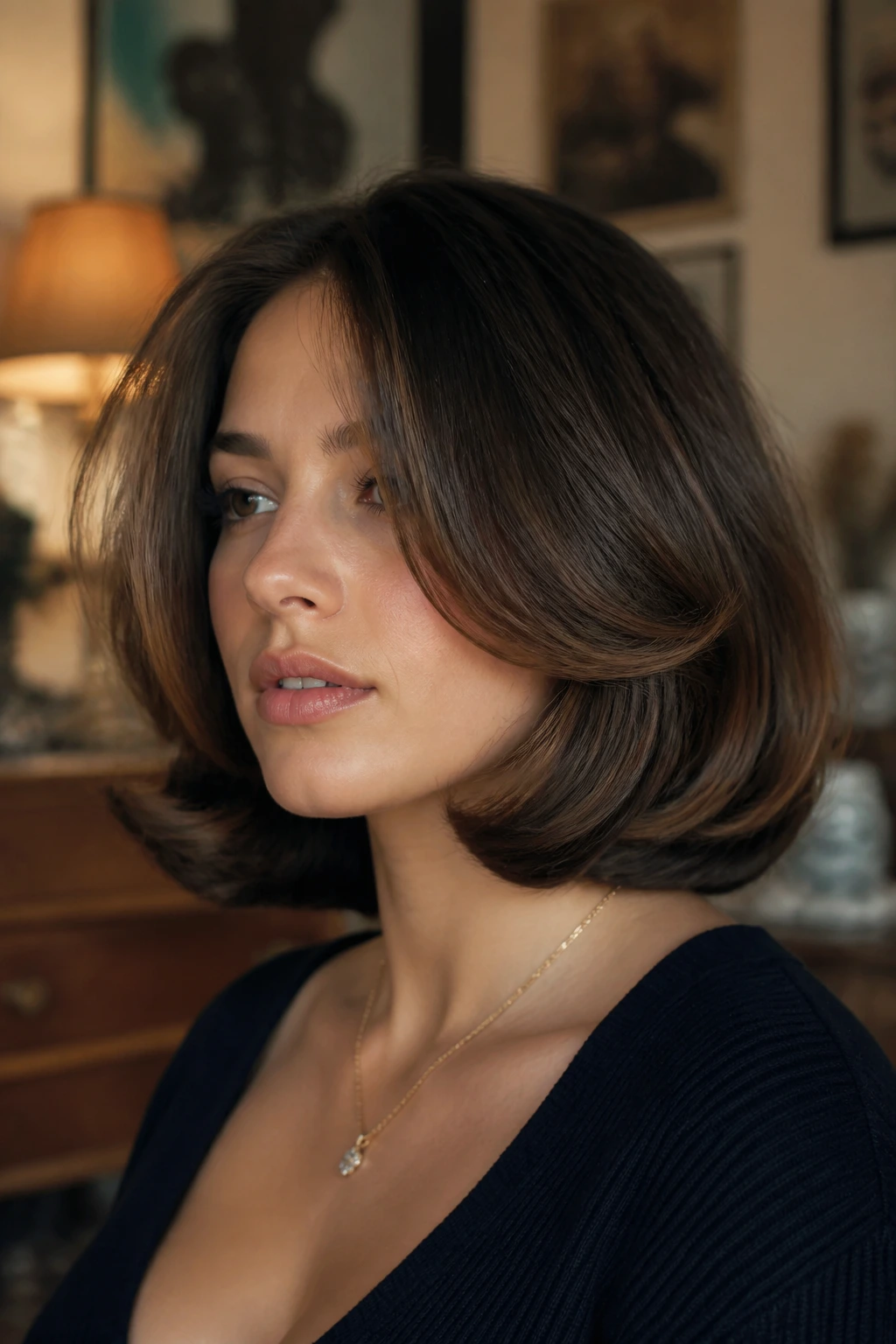
The 90s are back in a big way, and that means bouncy, voluminous, curved-under hair. This style features long, face-framing layers and ends that are rounded under with a brush. For a wavy-haired person, this means using a round brush to smooth the cuticle while maintaining the natural wave’s integrity.
The Round Brush Technique
Use a ceramic round brush to dry the hair in sections. Focus on pulling the hair away from the head to get maximum root lift. Once you reach the ends, roll the brush under and hold it for a few seconds to set the curl. The key is not to pull the hair so tight that you stretch out your natural wave pattern.
13. The Undercut Wavy Bob
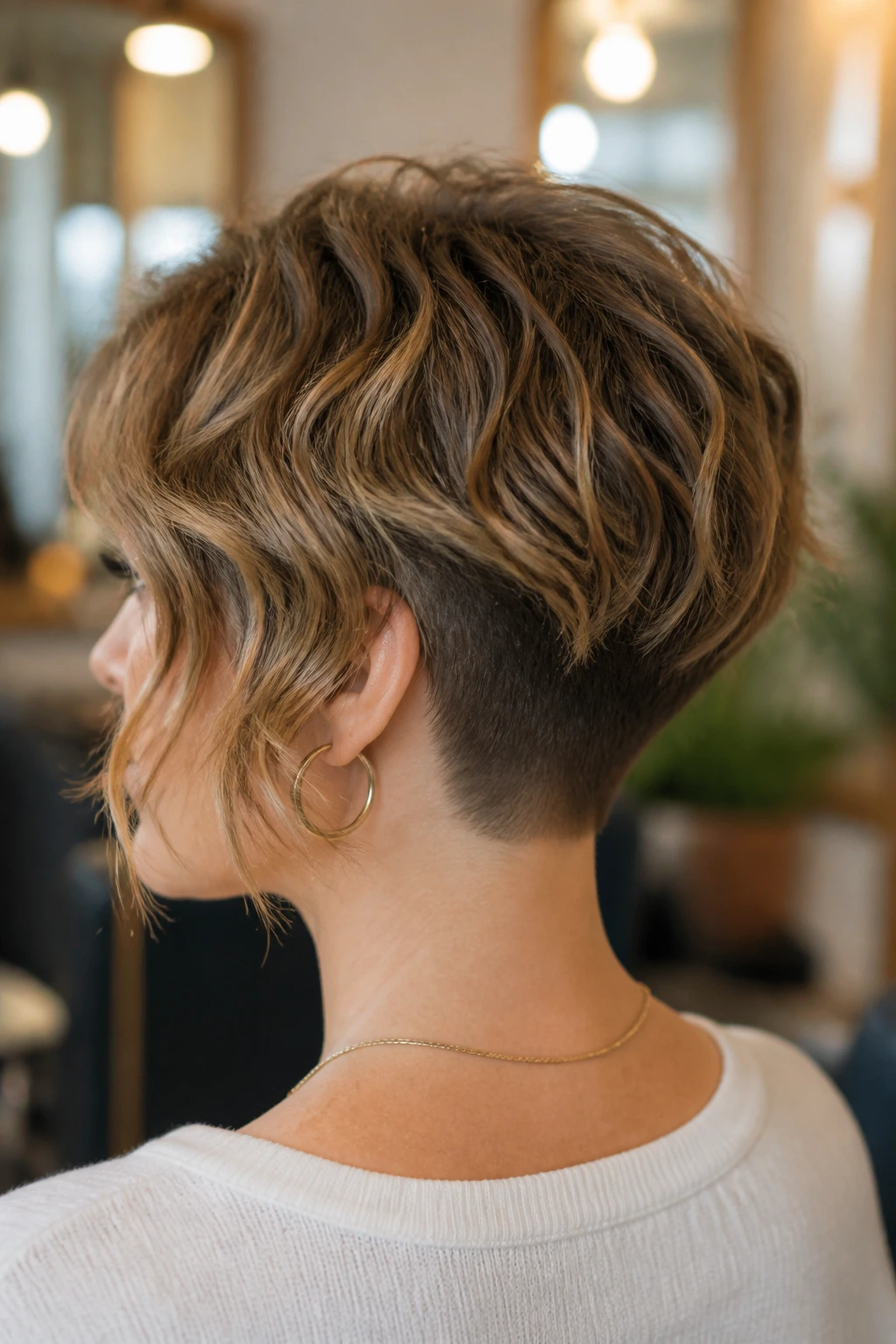
If you have extremely thick, wavy hair, an undercut at the nape of the neck is a secret weapon. It removes a significant amount of weight where it matters most, allowing the hair on top to lay flatter and smoother against your head. You don’t even have to shave it all off; just a clean, clippered section at the very bottom is enough.
Why It’s a Game Changer
- Your neck stays cool in the summer.
- It makes the rest of your bob feel incredibly light and airy.
- The remaining hair sits much closer to the head, reducing the “poof” factor significantly.
14. The Blunt-Bottom Shag
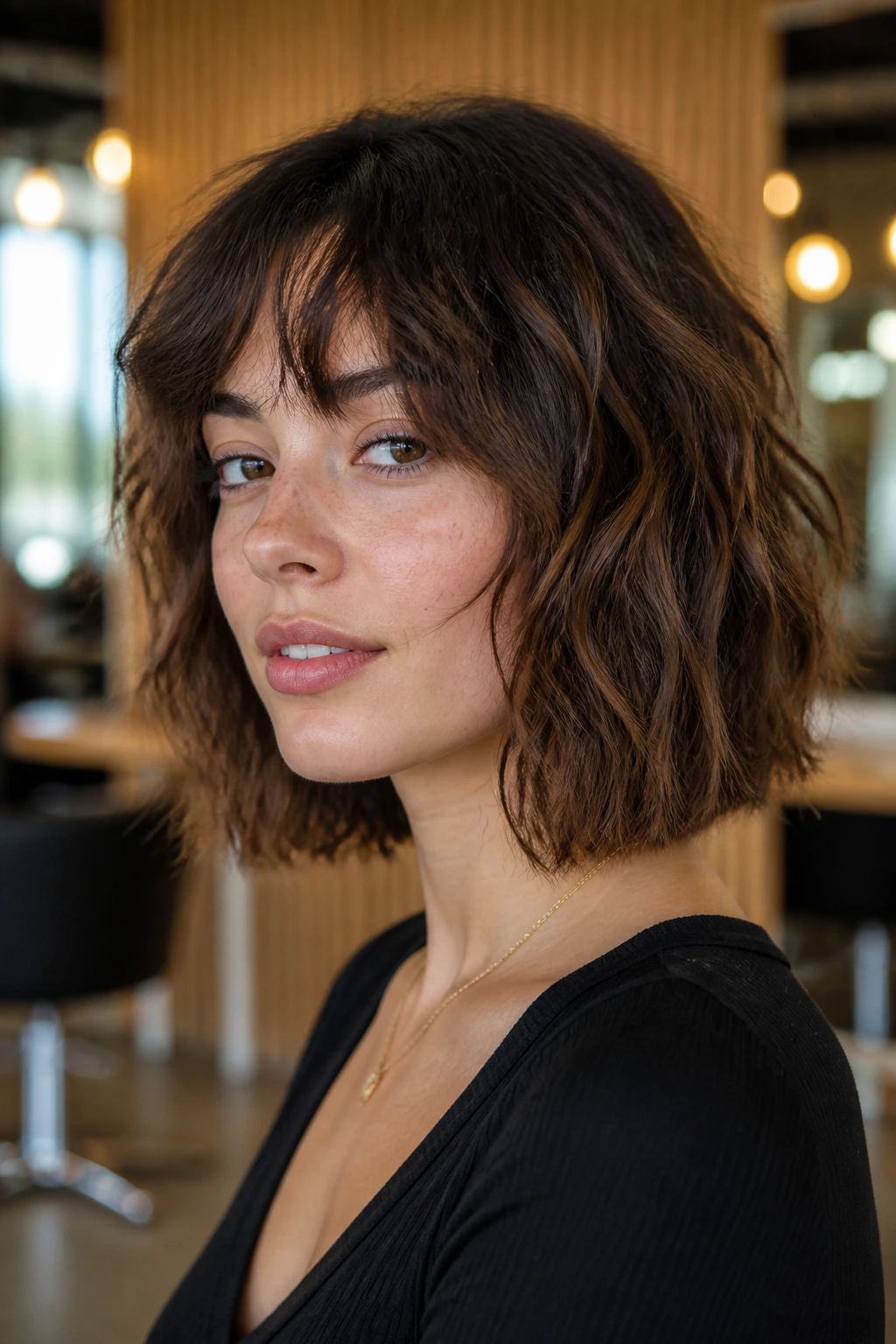
This is a hybrid style that combines the clean edge of a blunt bob with the intense, choppy layering of a shag. It is arguably the most popular wavy cut of the moment because it satisfies the desire for a clean line while offering the fun, messy texture that people crave.
How to Achieve the Balance
The secret is to have your stylist keep the base length very blunt and thick, but then cut “shatter” layers into the interior of the hair. You get the visual satisfaction of a thick, healthy bob, but the movement and bounce of a layered shag. It is the best of both worlds.
15. The Mid-Length Layered Wavy Cut
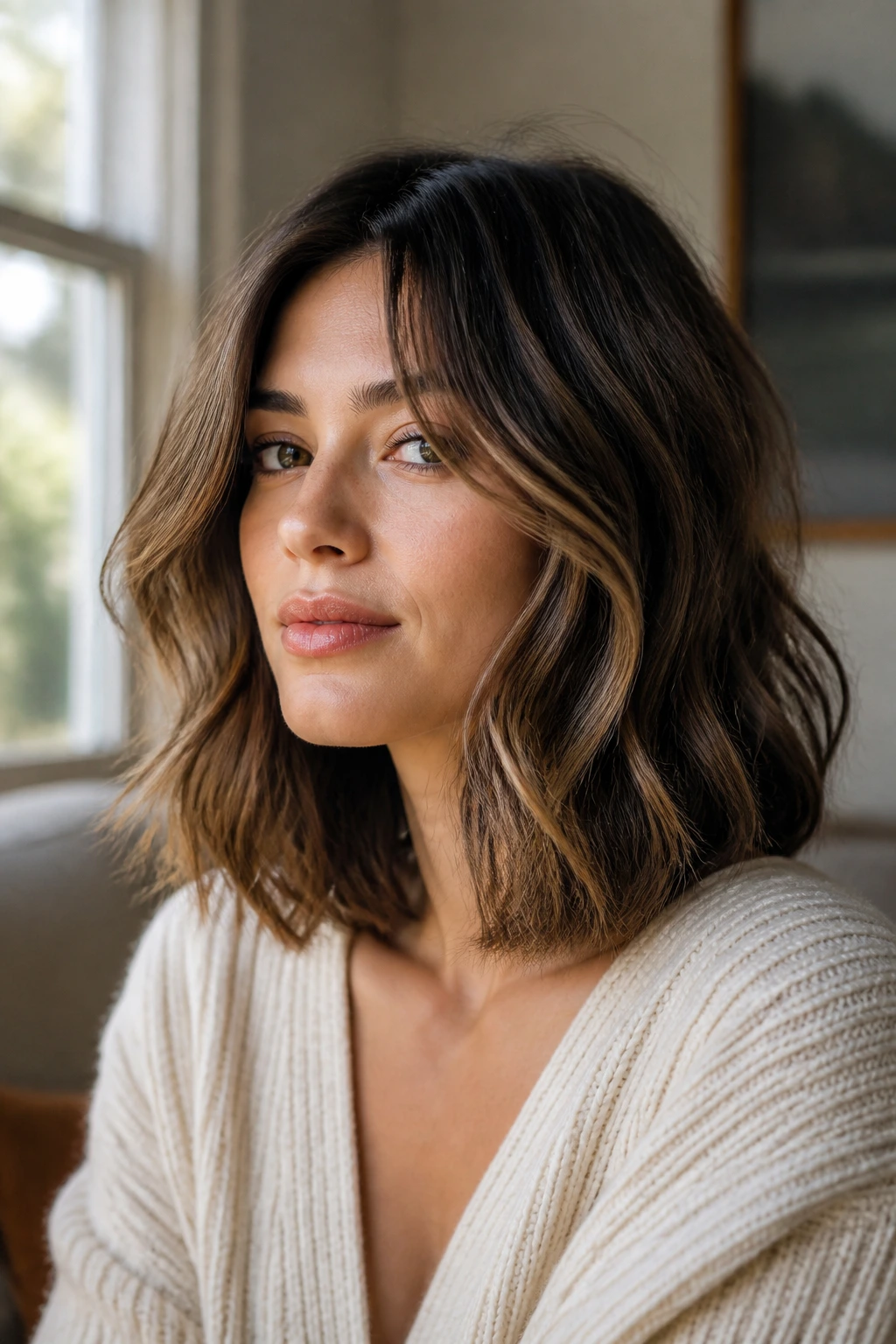
If you prefer a bob that touches the collarbone, this is the style for you. It’s technically a “long bob,” but with enough layering to ensure it never feels heavy. This length is perfect for those who like to put their hair up in a small ponytail or a half-up style.
Versatile Updo Potential
Because the layers aren’t too short, you have enough length to pull the top section back with a silk scrunchie. The remaining hair falls nicely around the shoulders, providing a soft, romantic look. This style is incredibly practical for busy mornings when you don’t have time to style your waves to perfection.
16. The Curly-Wave Pixie Bob
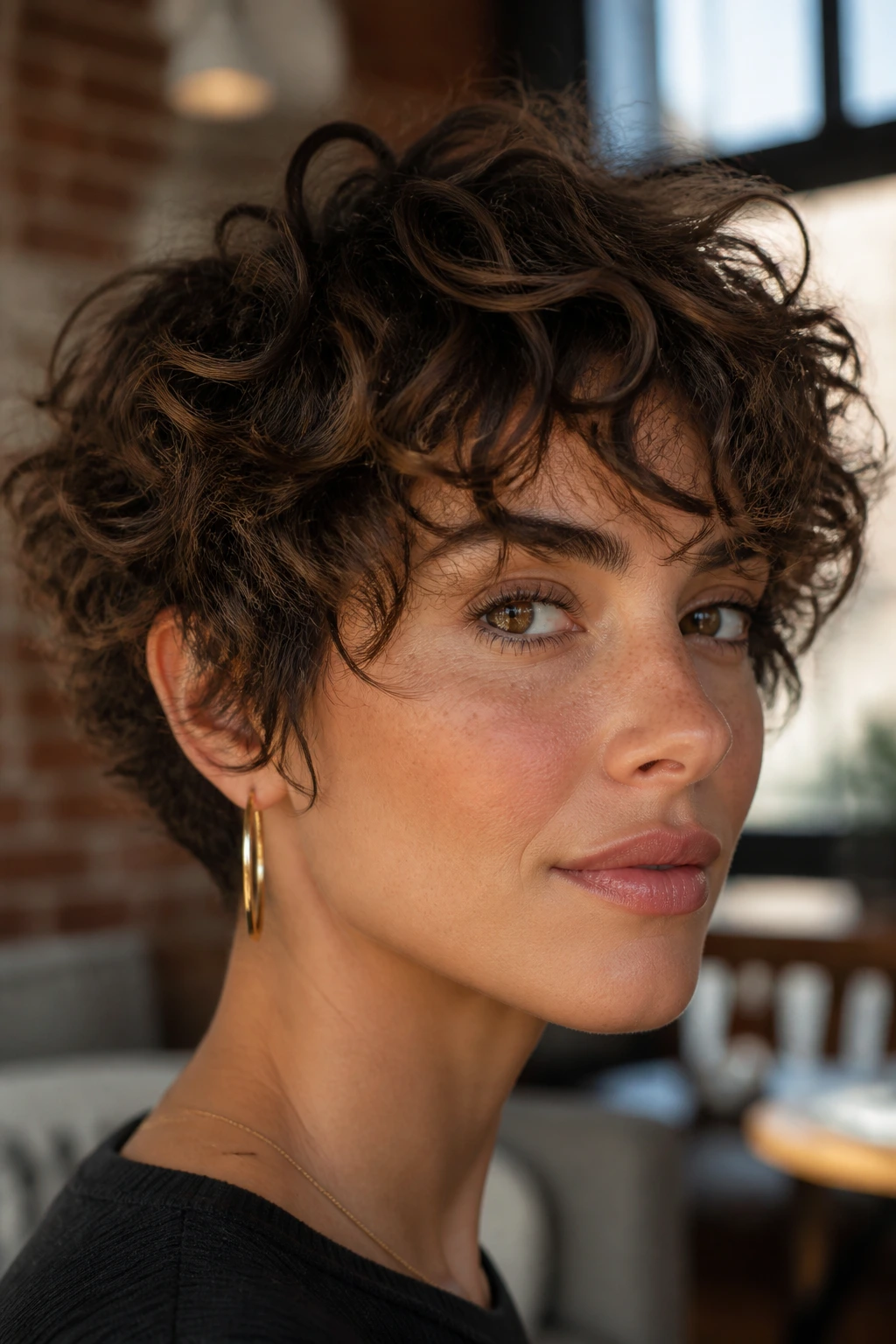
This is for those who are ready to go quite short. It’s a hybrid between a long pixie and a very short bob. With short, choppy layers throughout, it’s a high-energy style that celebrates natural texture. It looks fantastic with a bit of pomade or styling clay to define the individual waves.
Taming the Edges
When you go this short, you want to make sure the edges around your ears and neck remain soft. Have your stylist use shears to thin out the edges rather than using clippers, which can create a too-harsh, masculine line. The goal is to keep the hair looking like it grew in a soft, wavy pattern, even at the shortest points.
17. The Center-Parted Layered Bob
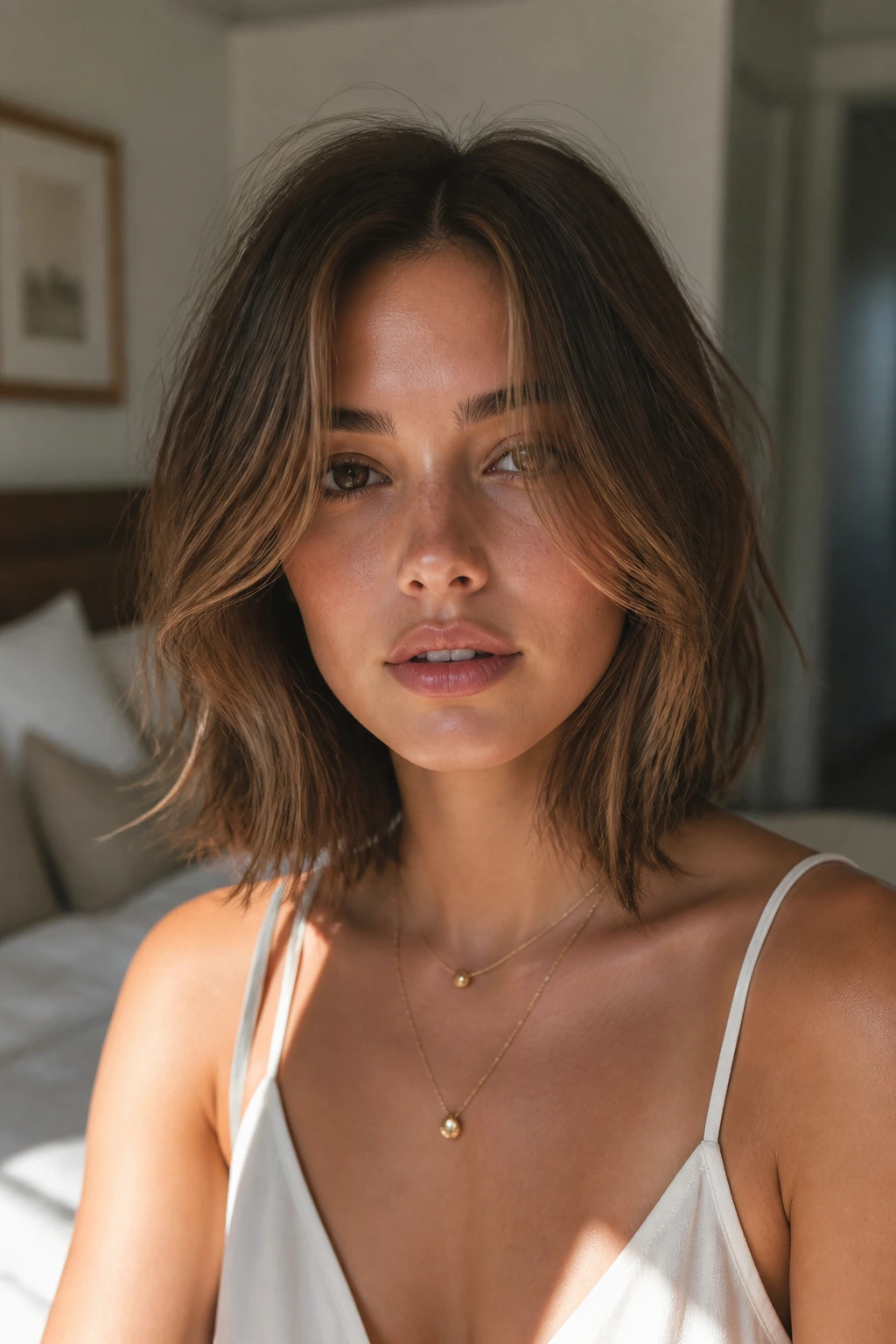
A center part on a wavy bob is a classic 70s look that has aged incredibly well. By parting in the middle and cutting long, face-framing layers, you create a “curtain” of hair that balances the face. This style is particularly flattering if you have a square or round face, as the vertical lines elongate your features.
The “No-Heat” Styling Method
If you have naturally wavy hair, you can let this style air-dry. Just scrunch in some leave-in conditioner while the hair is soaking wet, part it in the center, and leave it alone. The weight of the hair will pull the roots slightly, creating that flat-at-the-top, wavy-at-the-bottom look that is currently very popular.
18. The Graduated Stacked Bob
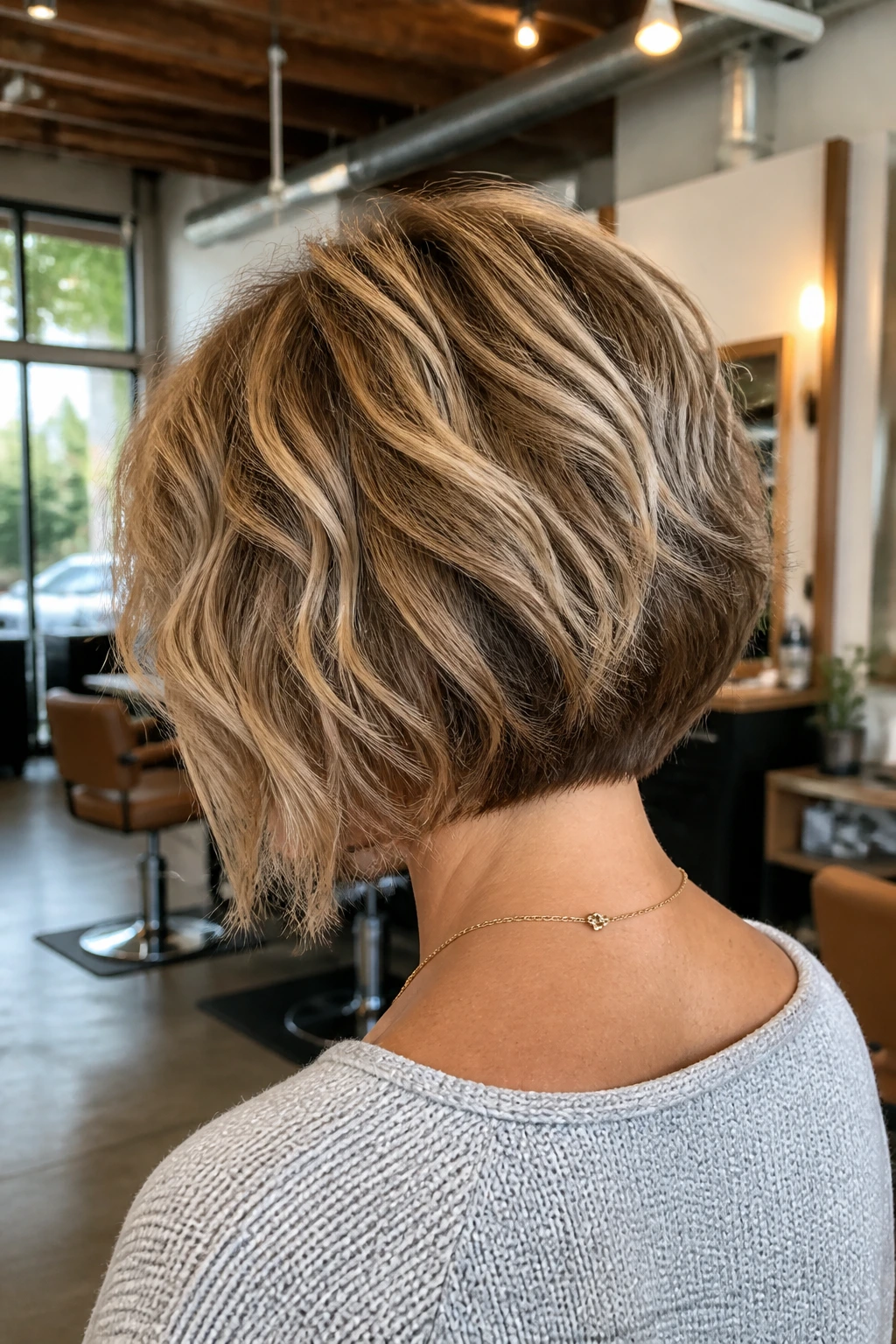
Stacked bobs have very short, graduated layers in the back to create a round shape. This is perfect for wavy hair because the texture adds to the rounded, voluminous effect. It’s a low-maintenance cut that looks great even without heavy styling, as the shape is built into the hair itself.
Who Should Avoid This
If you have a very prominent or wide neck, a heavily stacked bob might emphasize that area more than you want. In that case, opt for a more subtle graduation that doesn’t stack quite as high. Always talk to your stylist about where you want the “weight” of the haircut to sit, as this will change the entire look of the back.
19. The “Ghost Layer” Wavy Bob
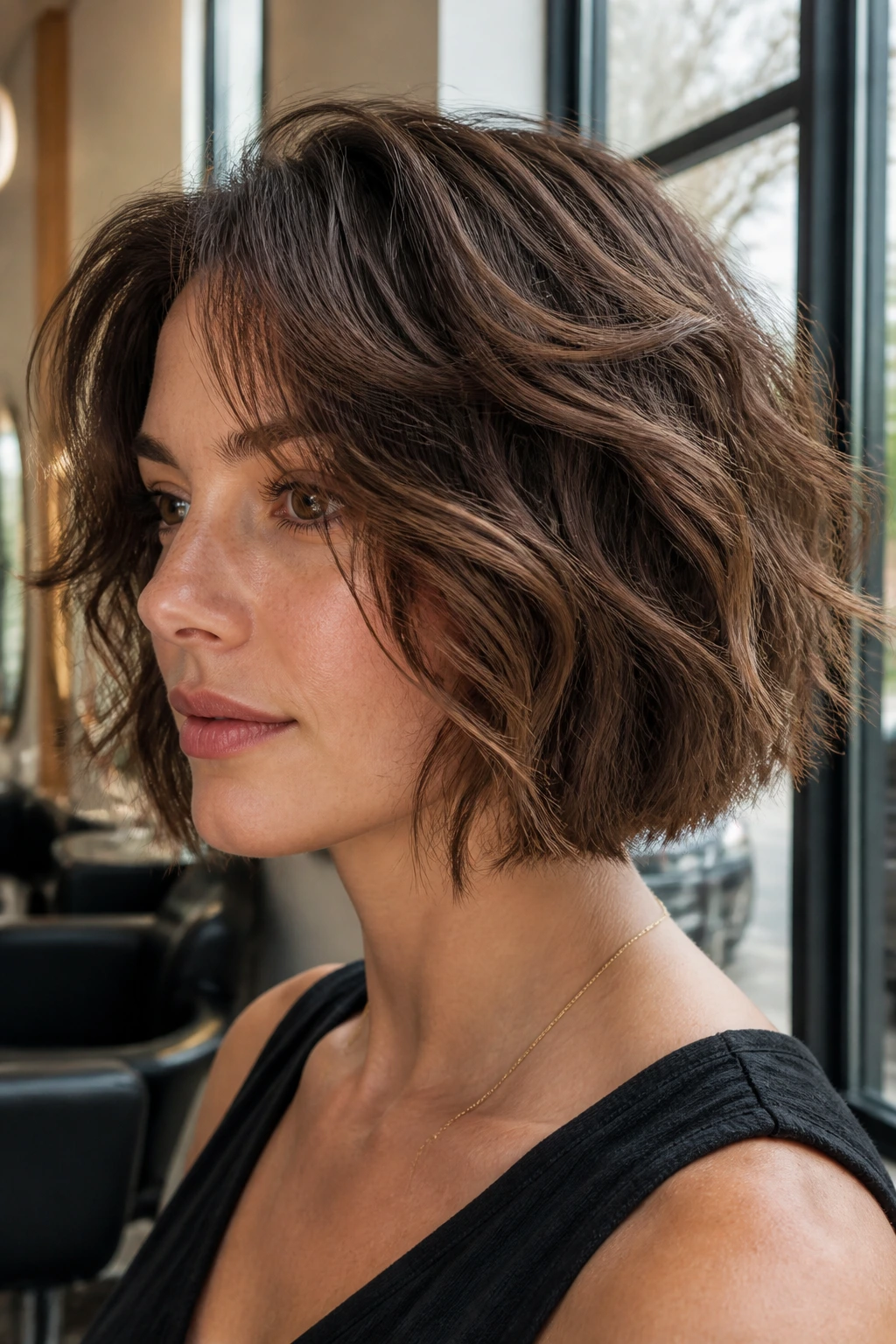
Ghost layers are essentially invisible layers cut into the interior of the hair. You won’t see them when you look at the bob, but you will feel them in how the hair moves. They are perfect for wavy hair that feels heavy but doesn’t want the messy, shaggy look of traditional layers.
Finding a Skilled Stylist
Not every stylist knows how to perform ghost layering. You need to look for someone who understands “internal weight removal.” Ask your stylist if they are comfortable point-cutting into the interior of the hair to create lift without creating visible, choppy layers on the outside.
20. The Bohemian Wavy Bob
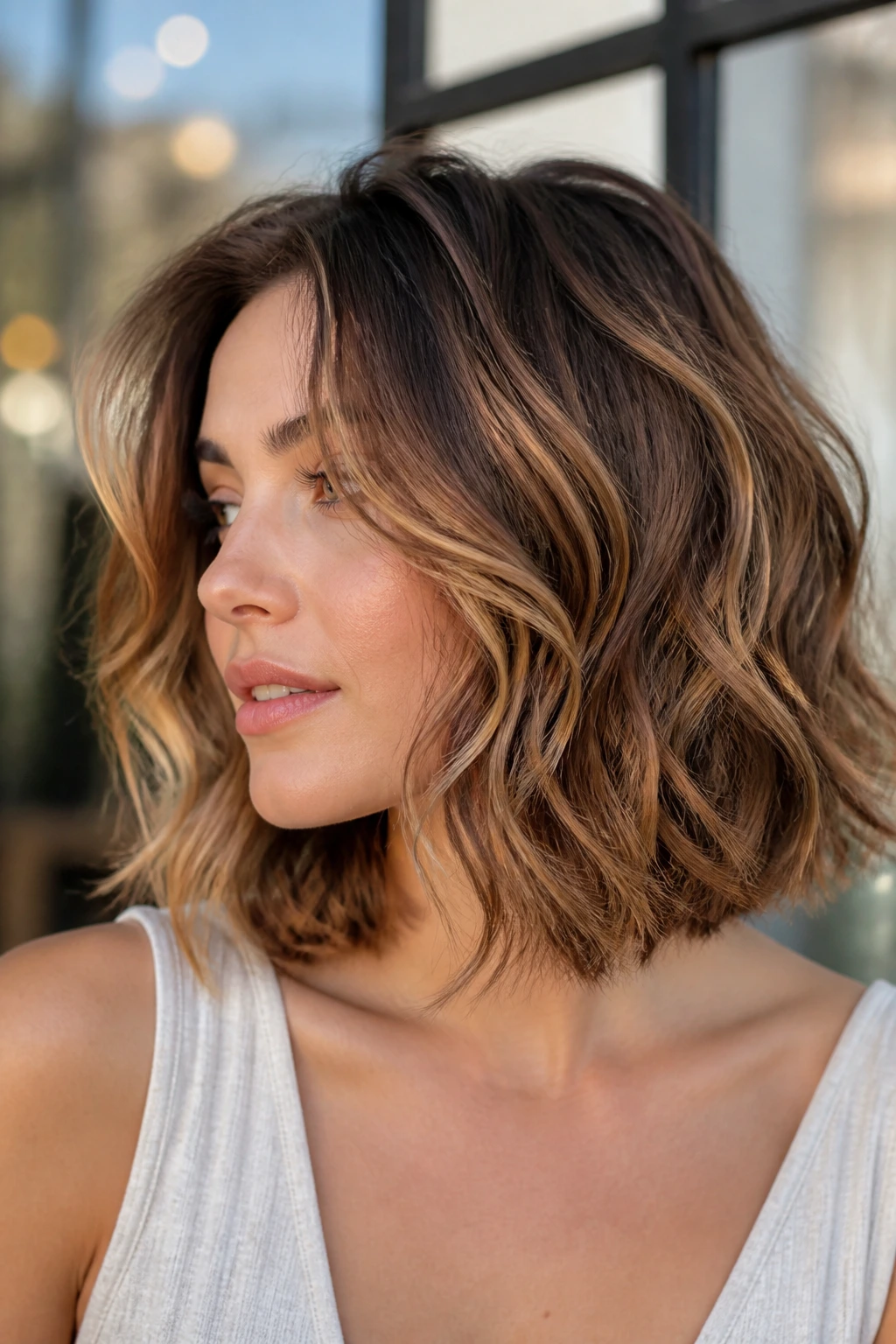
Bohemian style is defined by its lack of structure. This bob is all about long, flowing layers that are cut to encourage the wave rather than force it. It’s a very soft look that works well with highlights or balayage, as the layers show off the dimension of the color.
Color Considerations
Because this cut is so layered, it creates a lot of movement. This is the perfect time to add some soft, face-framing highlights or a light ombré effect. The layers will ensure that your color isn’t just sitting in one spot, but rather blending throughout the entire shape of the hair as you move.
21. The Textured Blunt-Edge Bob
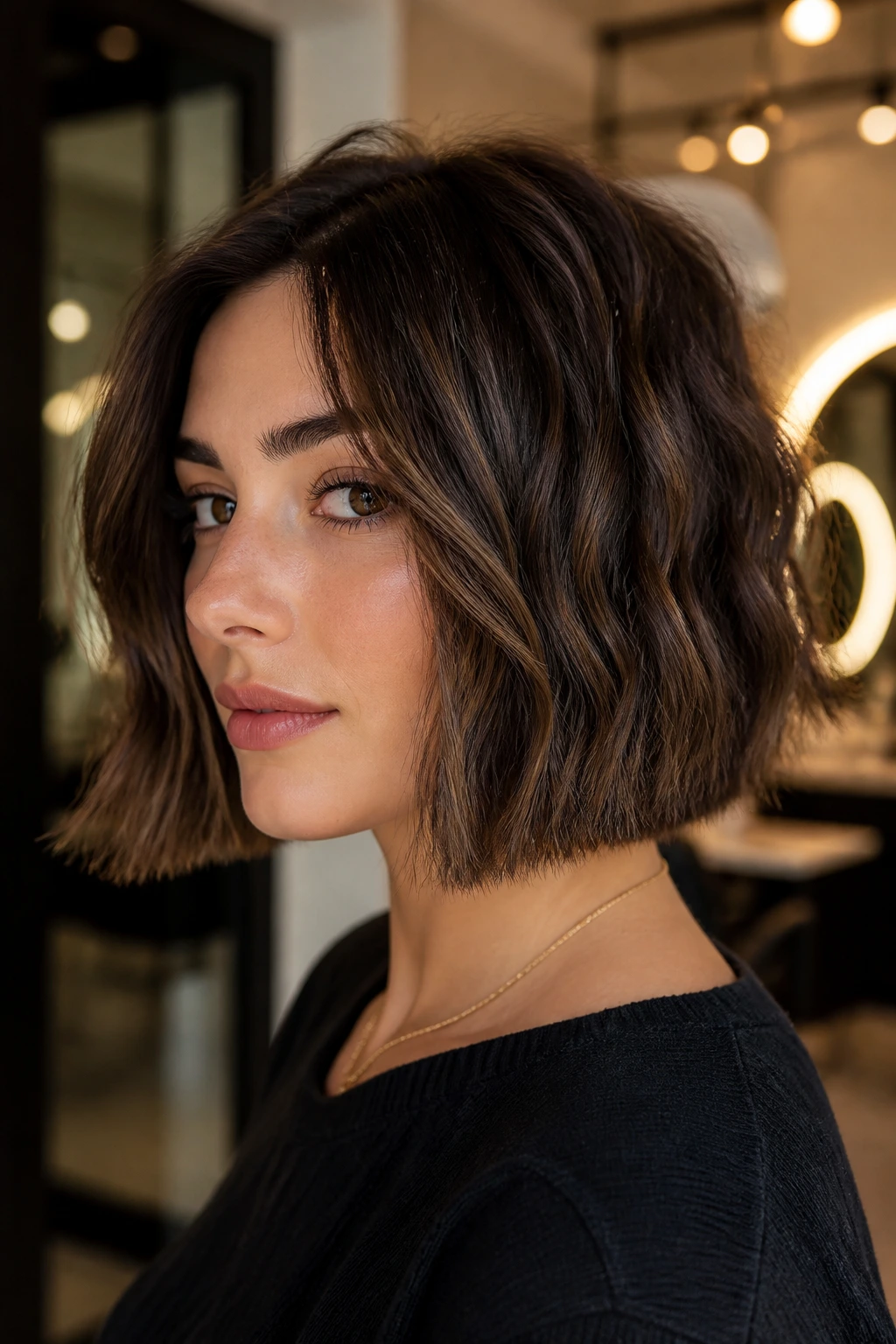
To finish our list, we have the modern classic: a perfectly blunt bob with just a few internal layers to keep it from looking stiff. This is a very “fashion” look that works well for those with naturally wavy, high-density hair. It looks incredibly polished and clean but still feels organic because of the wave.
The Importance of a Sharp Shear
To achieve the blunt bottom edge, your stylist must use extremely sharp shears. If the shears are dull, the ends will look fuzzy rather than clean. This style is high-maintenance because the bluntness of the cut is the main feature—if you miss your trim, the edge softens and you lose the impact of the look.
Final Thoughts
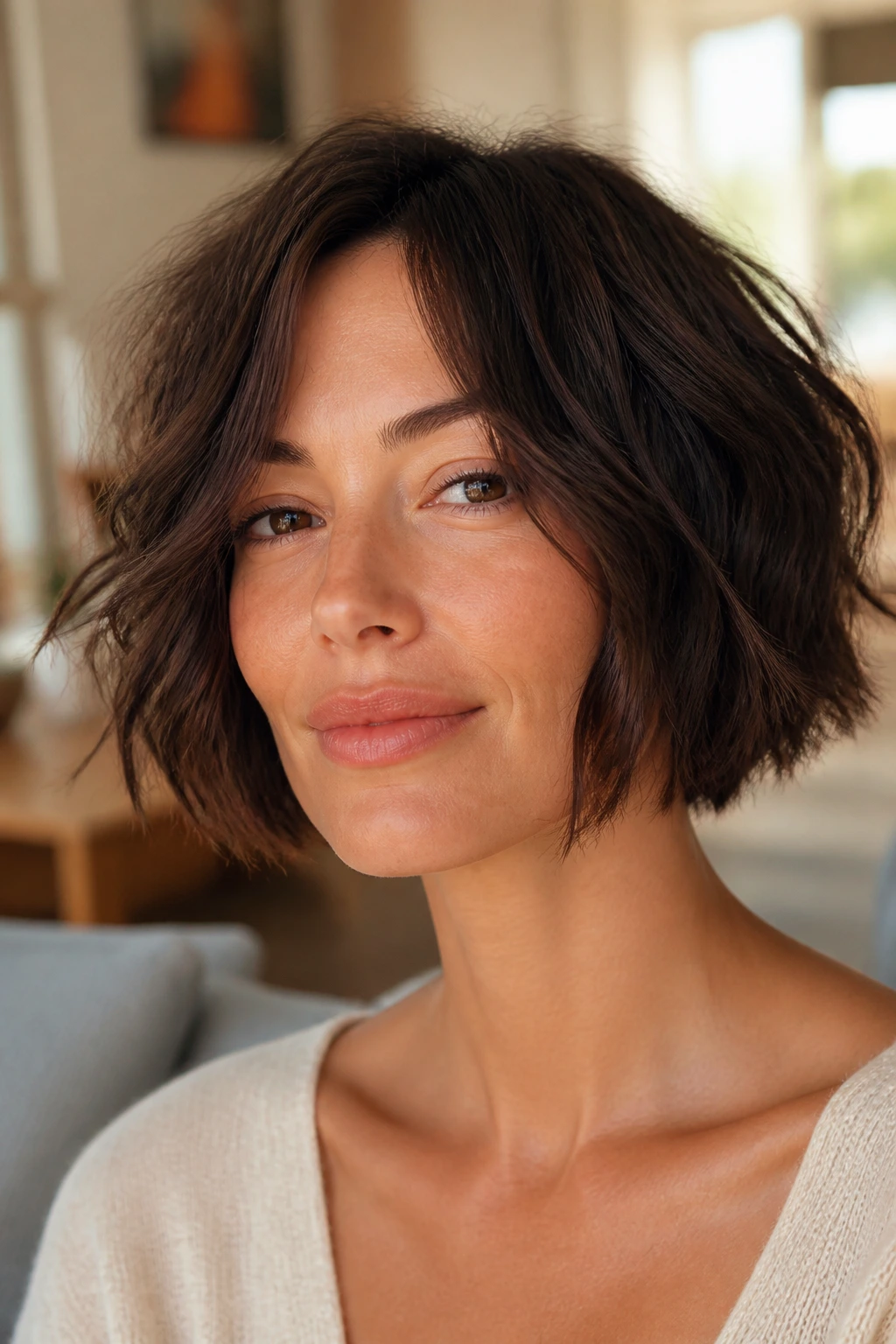
Finding the perfect layered bob for your wavy hair is less about following trends and more about understanding your hair’s personality. Waves are unpredictable; they react to the weather, the water, and the products you use. When you choose a layered style, you are giving your hair the “room” it needs to react and move without feeling weighted down or prone to frizz.
The best approach is to start with a consult. Bring photos, but more importantly, talk to your stylist about your daily routine. If you want to air-dry, tell them. If you prefer to diffuse, let them know. A great haircut shouldn’t feel like a chore to style; it should feel like a relief. By choosing the right layering technique—whether it’s point-cutting, interior thinning, or strategic shaggy layers—you can transform your wavy hair into a low-effort, high-impact accessory that reflects your personal style. Remember, the best layered bob is the one that makes you feel confident the moment you walk out the door.