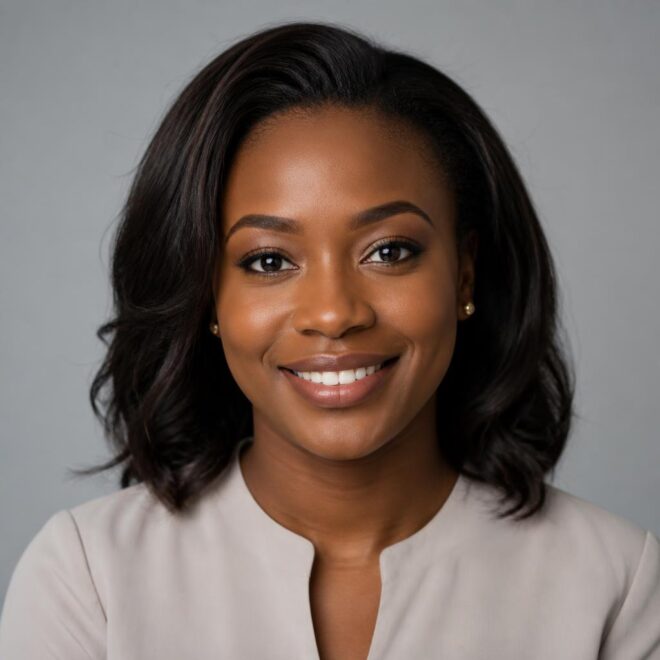


The bob is perhaps the most enduring hairstyle in history, but the inverted bob—also known as the graduated bob—brings a structural precision that can completely change how a face is framed. When you have a round face, the goal is often to create the illusion of length and sharper angles, which is exactly where an inverted cut shines. By keeping the hair shorter and stacked at the nape of the neck while leaving the front strands longer and angled, you draw the eye downward, effectively slimming the appearance of the cheeks.
It is rare to find a style that balances the ease of a short cut with the sophisticated geometry of a longer one, but the back view of an inverted bob is where the real artistry happens. That dramatic graduation creates a beautiful curve that flows from the neckline up toward the jawline. If you have been looking for a way to sharpen your features while keeping your morning styling routine minimal, this might be the most effective aesthetic adjustment you can make. Let us look at fifteen ways to execute this look so you can find the specific geometry that works for your hair texture and face shape.
1. The Razor-Cut Stacked Nape
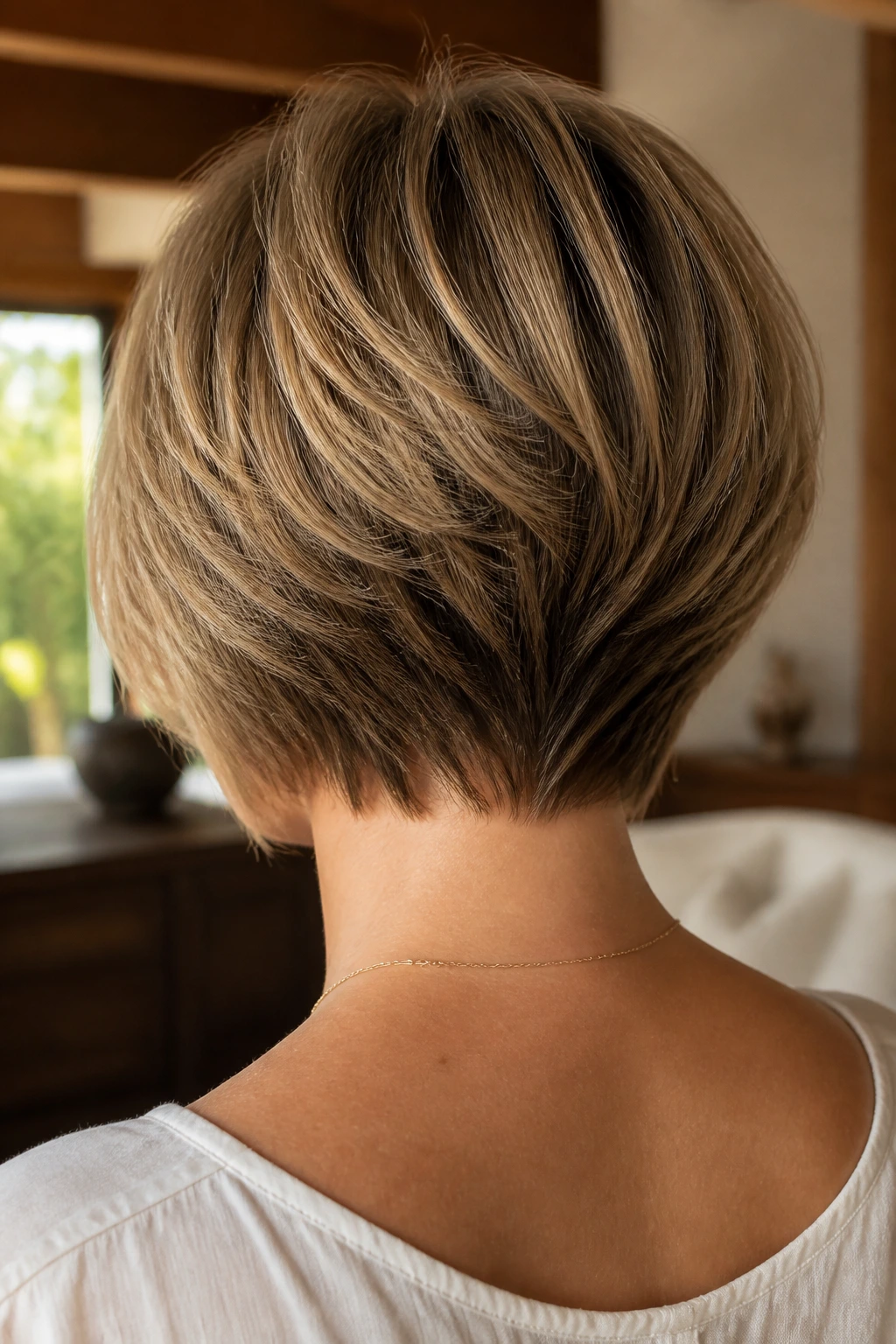
If your goal is to eliminate bulk from the back, a razor-cut stack is the superior choice. Unlike scissors, which create a blunt, sharp edge, a razor thins out the hair as it cuts, allowing the layers at the nape of the neck to lay perfectly flat against the head. This technique creates a soft, feathered finish that looks incredibly natural.
Why It Works for Round Faces
The tight, close-cropped nape provides a stark contrast to the longer lengths framing your face. By removing the weight from the back, the style prevents your head from looking “heavy,” which is a common concern when trying to balance out wider cheekbones. You get a clean silhouette that feels intentional and airy.
Styling Tips for the Razor Finish
- Use a lightweight texturizing spray to define the feathered layers.
- Avoid heavy pomades, as they can cause the thinned ends to look greasy.
- A quick pass with a flat iron can help accentuate the razor-cut texture if you prefer a sharper look. Pro tip: This cut grows out gracefully, requiring less frequent trips to the salon than a blunt, clipper-cut stack.
2. The Extreme Angled Inversion

This style is not for the faint of heart, but it is one of the most effective tools for elongating a round face. The angle starts very high at the nape and drops significantly toward the chin. The back view shows a dramatic, steep slope that creates a sharp arrow pointing directly at your neck, which helps draw attention away from the fullness of the cheeks.
Why This Style Defines the Jawline
When the hair is significantly longer in the front than in the back, the vertical lines created by the hair strands act as a frame that “slices” into the roundness of the face. It is a visual trick that works every single time to add structure where nature provided softness.
Key Considerations
- You will need a stylist who is confident with aggressive graduation.
- This cut demands regular trims to maintain that precise, steep angle.
- It pairs best with straight or slightly wavy hair; heavy curls might mask the dramatic slope.
3. The Soft Graduation with Subtle Layers
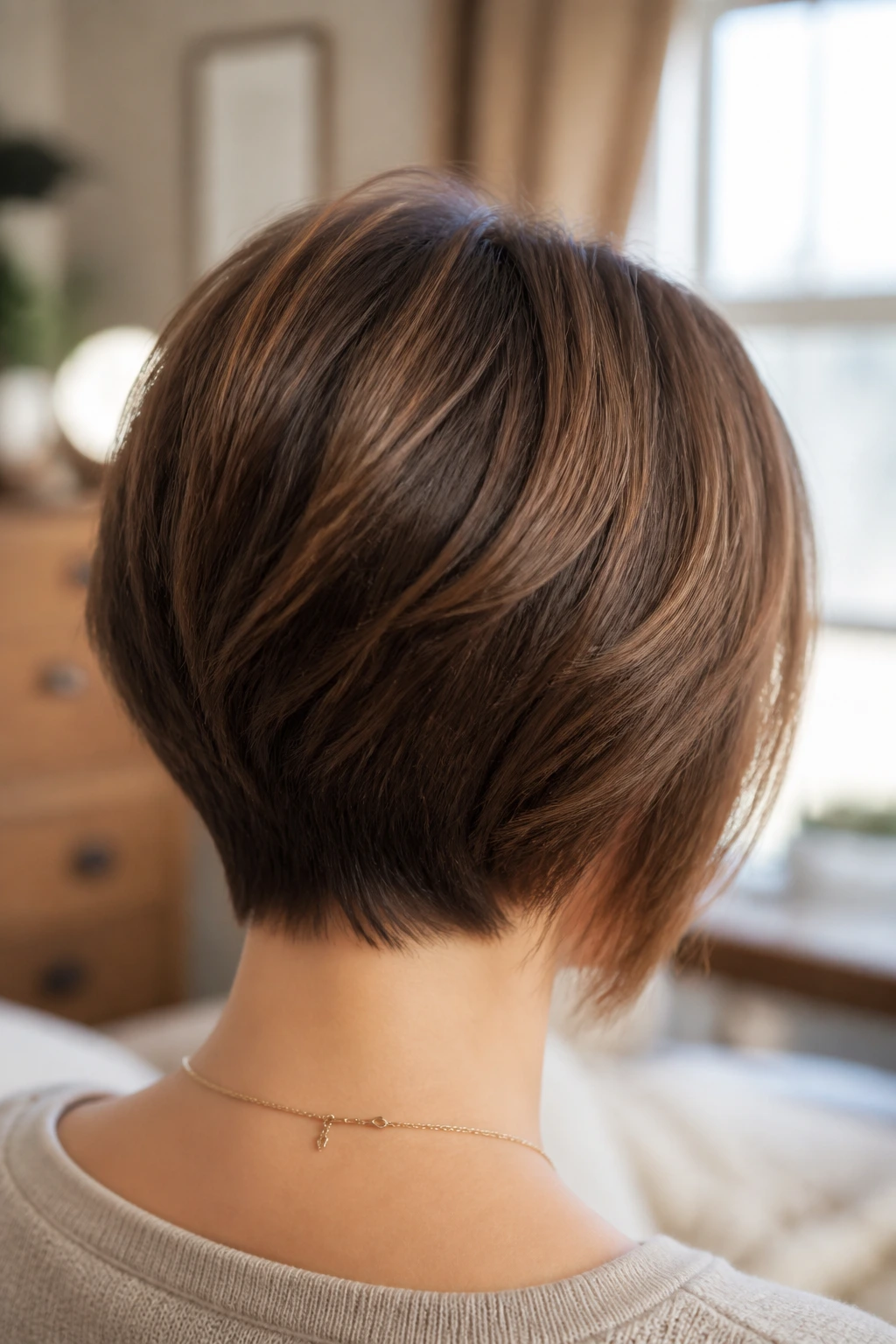
For those who prefer a more understated look, a soft graduation offers a gentle transition from the short back to the longer front. Instead of a harsh, sharp angle, the hair is cut in a series of smaller, blended layers that create a rounded, voluminous shape in the back. This is perfect if you want the “bob” aesthetic without the aggressive drama of an extreme cut.
The Benefit of Added Volume
Round faces often look their best with a bit of height at the crown. By keeping the layers in the back slightly longer and using a round brush during the blowout, you build a lift that elongates the entire head shape. It is a classic look that feels both professional and polished.
Maintaining the Shape
- Incorporate a volumizing mousse at the roots while the hair is damp.
- Use a round brush to pull the hair upward at the crown as you blow dry.
- A light-hold hairspray will keep that volume in place throughout the day.
4. The Undercut Nape Detail
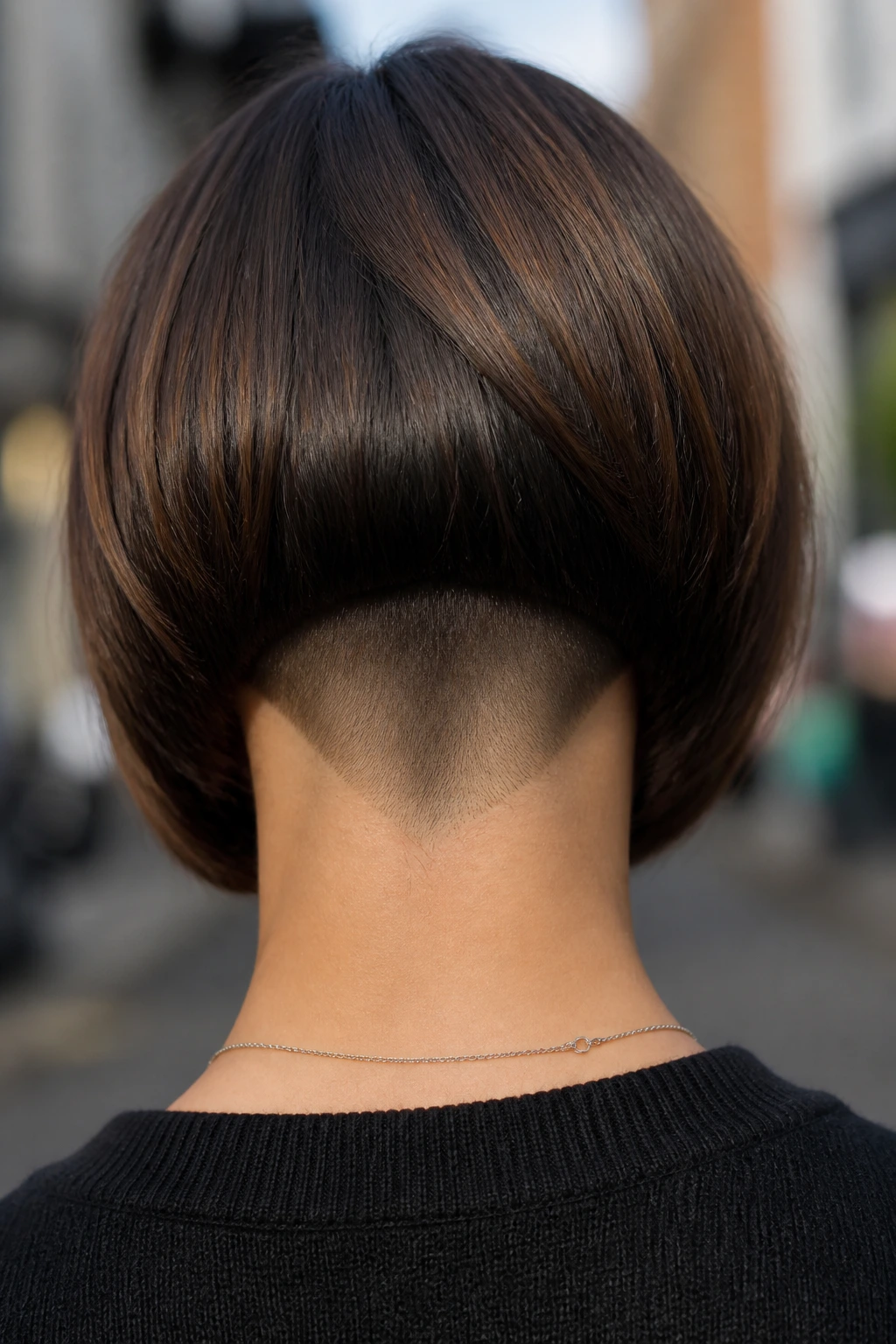
If you want to keep the bulk of the hair thick but still want that clean, inverted look, consider adding an undercut at the very bottom. Shaving or tapering the hair directly against the hairline at the nape makes the stacked layers above it pop, creating a very distinct “V” shape in the back view.
The Visual Impact
This is an edgy, modern approach that feels very intentional. It gives you the benefit of an inverted bob without the hair feeling like it is “crowding” your neck. When you have a round face, anything that creates a clean, vertical line—like this sharp, tapered nape—is a win.
Why You Might Choose This
- It keeps your neck cool during warmer months.
- The contrast between the shaved nape and the longer, fuller sides is visually striking.
- It is a low-maintenance way to keep the back looking sharp between haircuts.
5. The Curly Inverted Bob
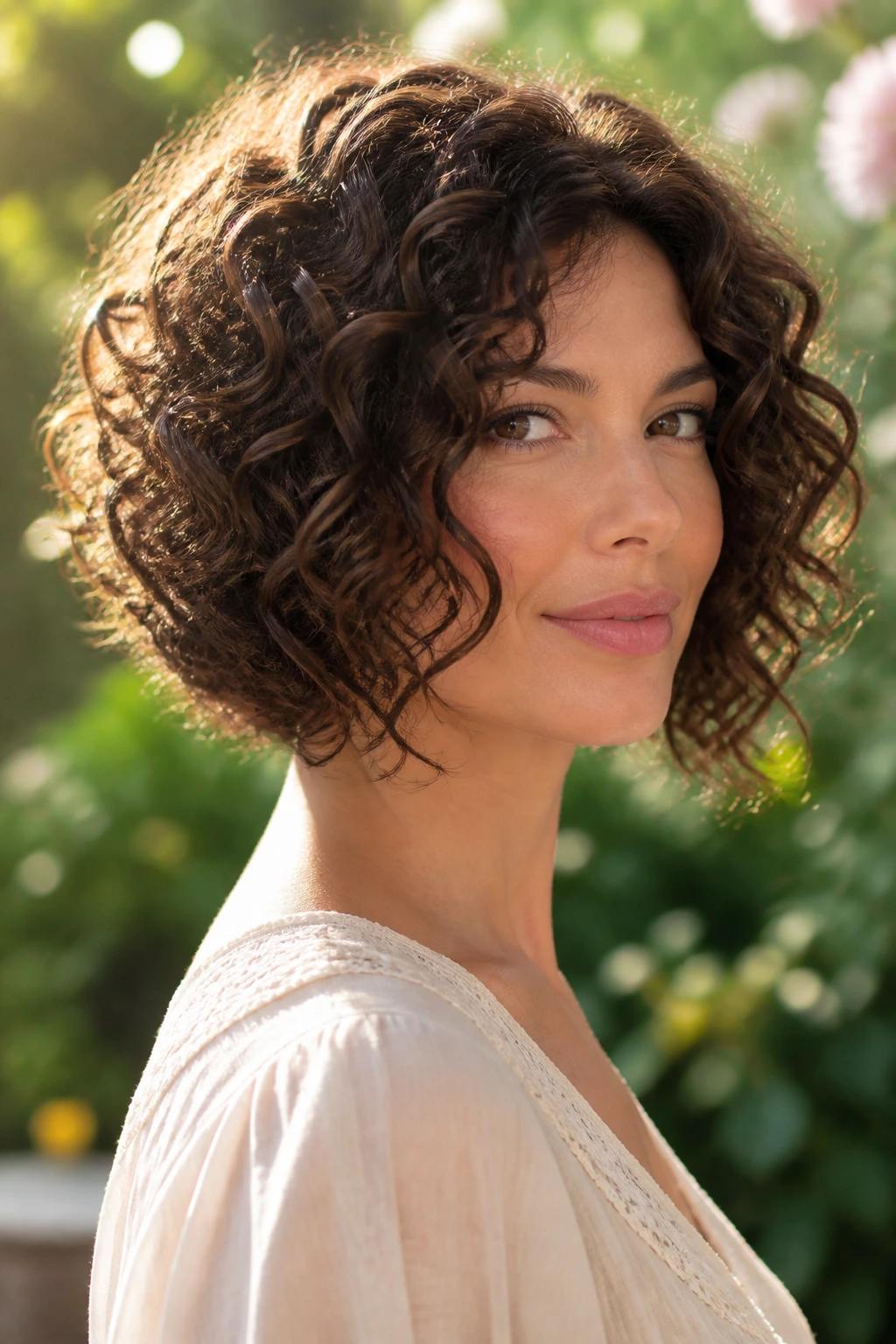
Many people mistakenly believe that inverted bobs only work on pin-straight hair. That is a myth. When cut properly with layers that account for your curl pattern, a curly inverted bob is one of the most beautiful styles you can wear. The back is cut shorter to accommodate the “shrinkage” curls naturally have, which forces the shape to round out and build up in a way that feels intentional.
Working with Your Texture
For round faces, curls can sometimes add width. The key here is to keep the front long enough that the curls fall past the chin, creating that desired vertical stretch. The back view should look like a structured dome of curls that doesn’t collapse under its own weight.
Essential Care for the Curly Bob
- Use a cream-based leave-in conditioner to prevent the ends from frizzing.
- Let the hair air-dry to keep the curl definition as tight as possible.
- Avoid cutting the back too short initially; curls have a tendency to “jump” up once the weight is removed.
6. The Choppy, Texturized Stack
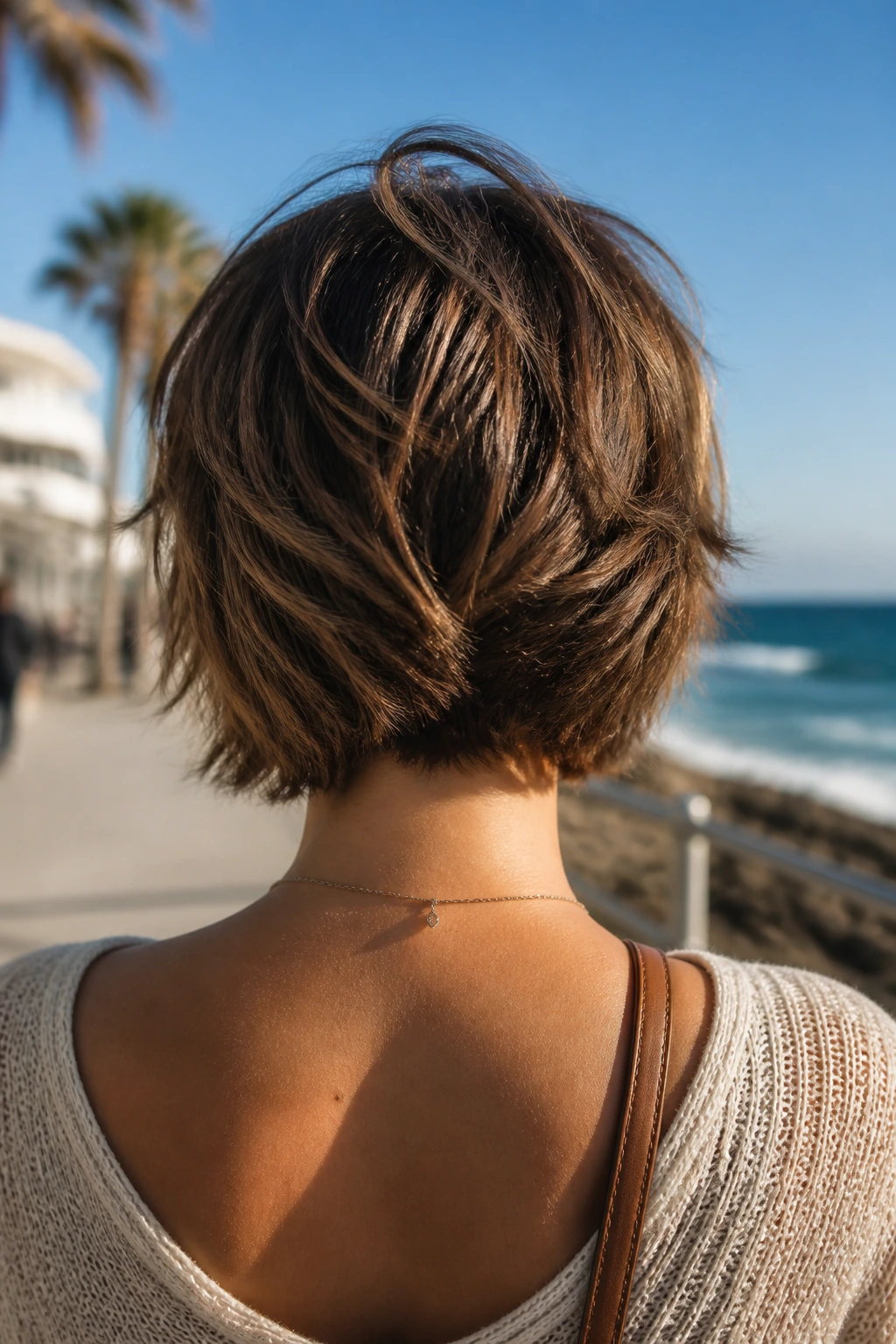
If you have fine hair that falls flat, a choppy, texturized stack can provide the illusion of density. This style involves cutting the back layers with a point-cutting technique, creating uneven, jagged ends that stack on top of each other. It gives the back view a “bouncy” and light appearance.
Why Choppy Layers Benefit Round Faces
The messy, shattered texture prevents the hair from sticking to the sides of your face, which can sometimes emphasize a round shape. By building texture in the back and keeping the front slightly tousled, you create a look that feels effortless and youthful.
Styling the Texture
- Salt spray is your best friend here.
- Scrunch the hair as you dry it to encourage those choppy ends to separate.
- A matte pomade can be used on the tips to give them a slightly lived-in, “bedhead” vibe.
7. The Sleek, A-Line Bob
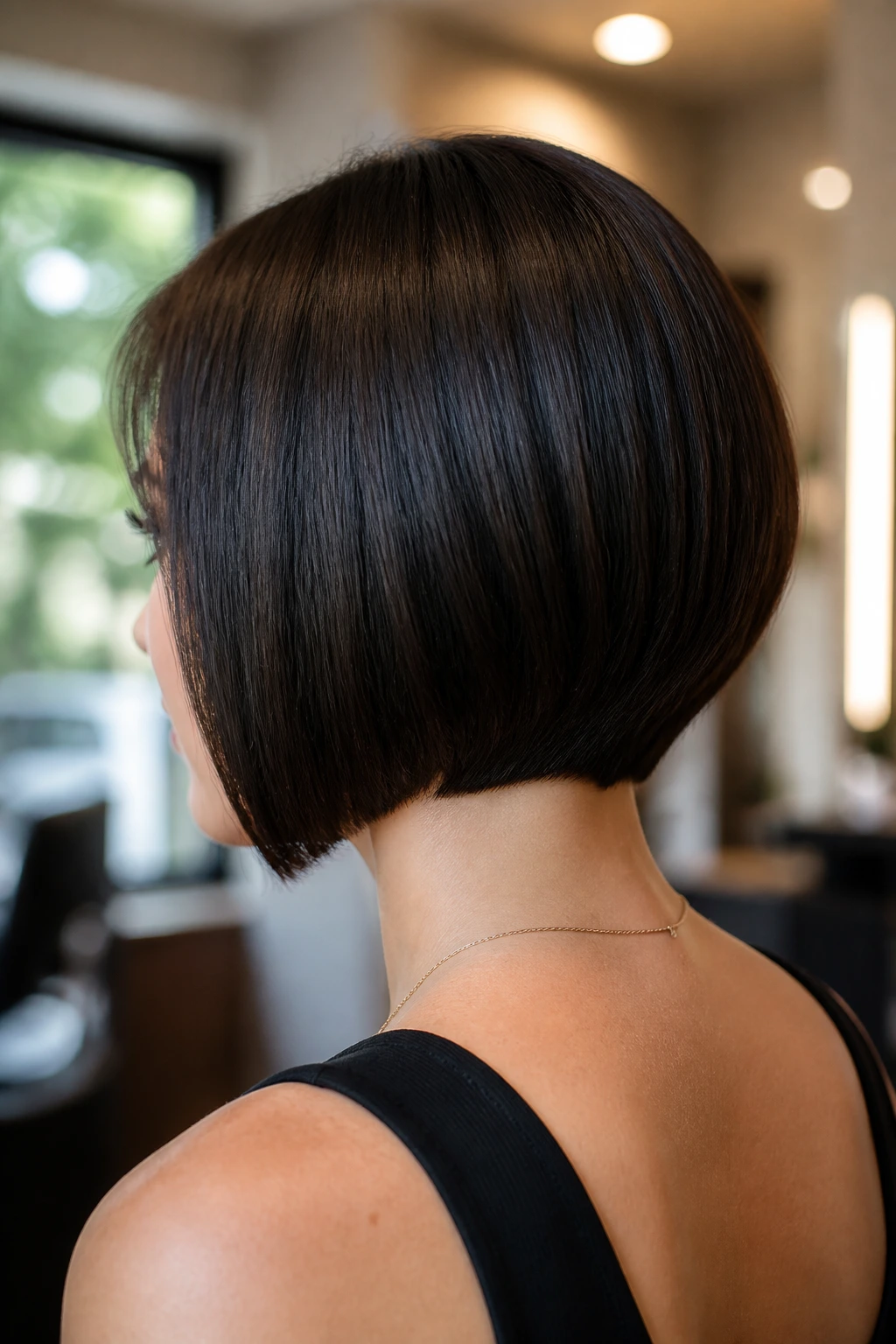
This is the “classic” inverted bob. It is characterized by a very smooth, continuous line that runs from the short nape to the jawline. There is no heavy layering here; it is all about the geometry of the cut itself. The back view is clean, sharp, and perfectly symmetrical.
Why This Simplifies Your Routine
Because there are fewer layers to manage, the sleek A-line is incredibly easy to style. A quick pass with a straightening iron is all you need to achieve that mirror-like finish. For a round face, this style works because the long front pieces are heavy and straight, creating a visual weight that pulls the face down and makes it appear thinner.
The Professional Look
- Use a heat protectant serum before ironing.
- Part your hair down the center or with a deep side part to change how the frame hits your cheeks.
- Shine spray is essential for that final polished touch.
8. The Inverted Wob (Wavy Bob)
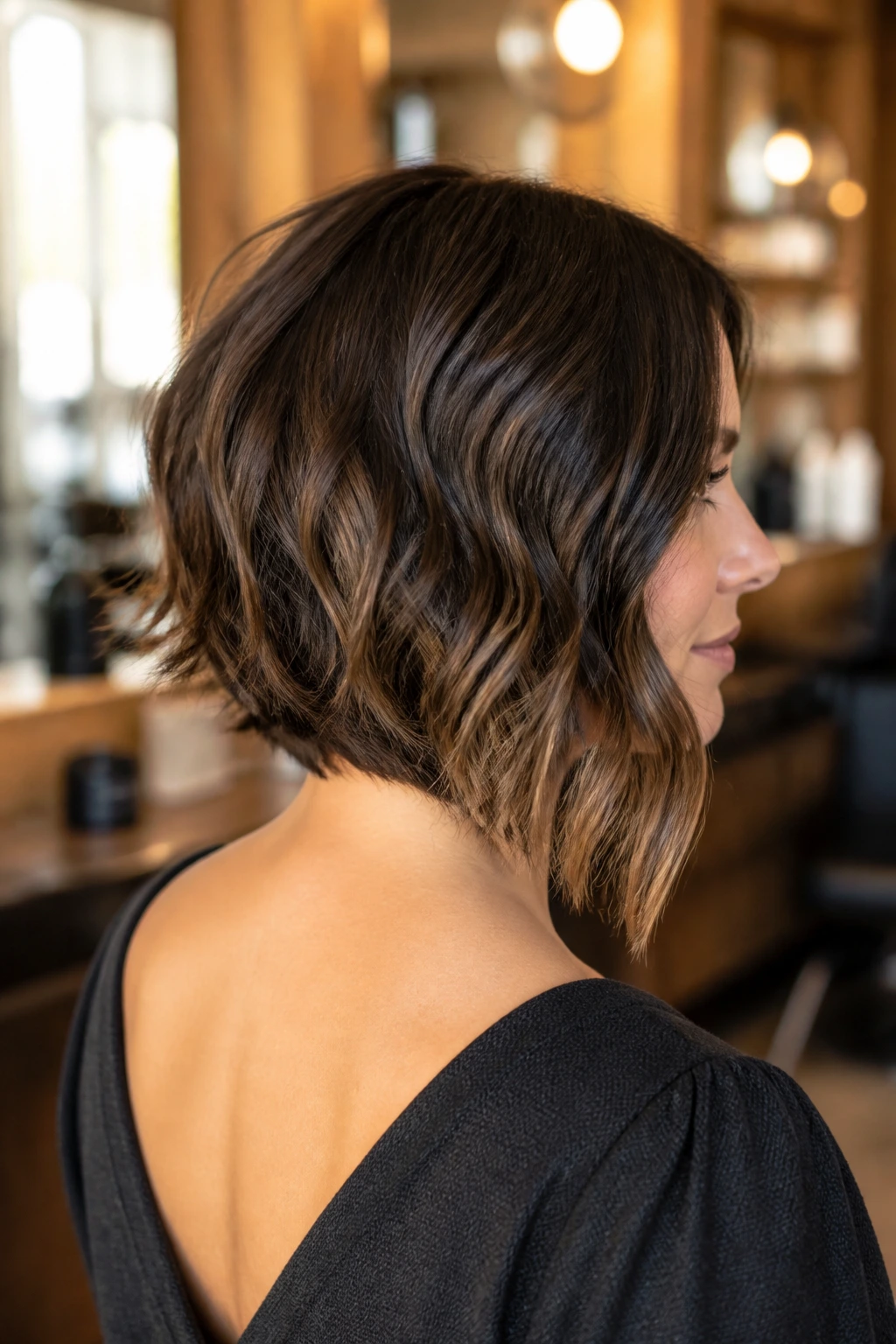
The “wob,” or wavy bob, is a relaxed take on the inverted cut. It utilizes long, soft waves that start around the mid-length, leaving the nape relatively smooth and tight. It is a fantastic option if you want a look that feels soft and romantic rather than architectural and sharp.
Softening Your Features
Round faces are often described as “soft.” If you don’t want to accentuate that with sharp, severe lines, the wavy inverted bob is the perfect bridge. The waves add movement, and because the front pieces are slightly curled, they fall into the face in a way that breaks up the roundness of the cheeks.
Creating the Wave
- Use a large-barrel curling iron to create loose, irregular waves.
- Focus the curl on the mid-lengths only, leaving the ends relatively straight.
- Brush through the curls gently with your fingers to soften the transition between the layers.
9. The Rounded, Tapered Graduation
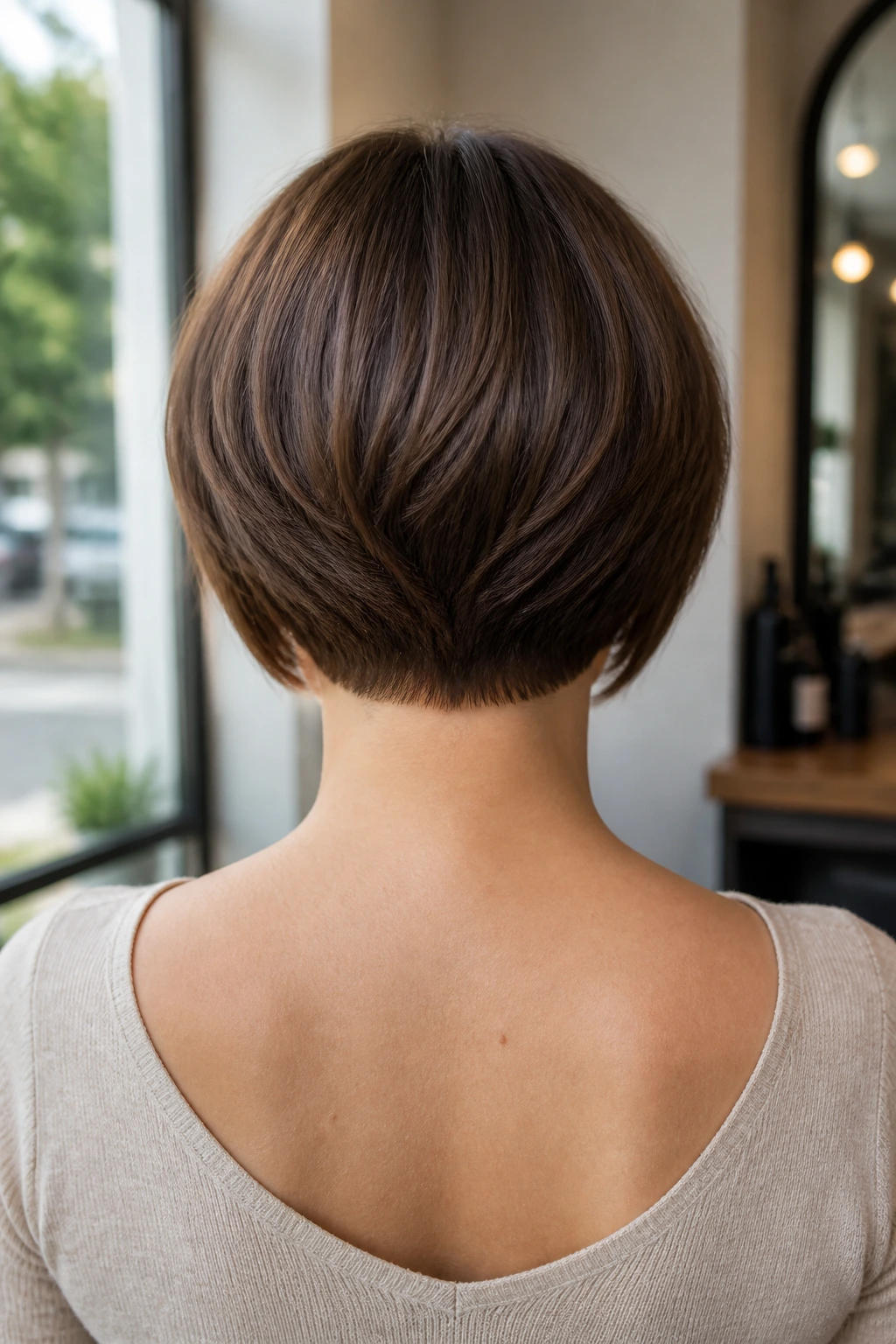
Instead of a sharp “V” shape in the back, this style focuses on a rounded, tapered graduation. The hair at the nape follows the natural curve of your skull before blending into the sides. It is a very natural-looking style that mimics the way hair grows, just much shorter.
Why It Feels “Organic”
This style lacks the harsh edges of more dramatic inverted cuts, making it a great transition piece for someone trying short hair for the first time. It is subtle but still provides that essential lifting effect at the nape that gives you a more elevated, youthful profile.
Who Should Choose This
- People with low hairlines at the neck.
- Those who want a style that doesn’t need to be perfectly styled every morning.
- Anyone looking for a professional cut that feels soft and approachable.
10. The Asymmetrical Inverted Bob
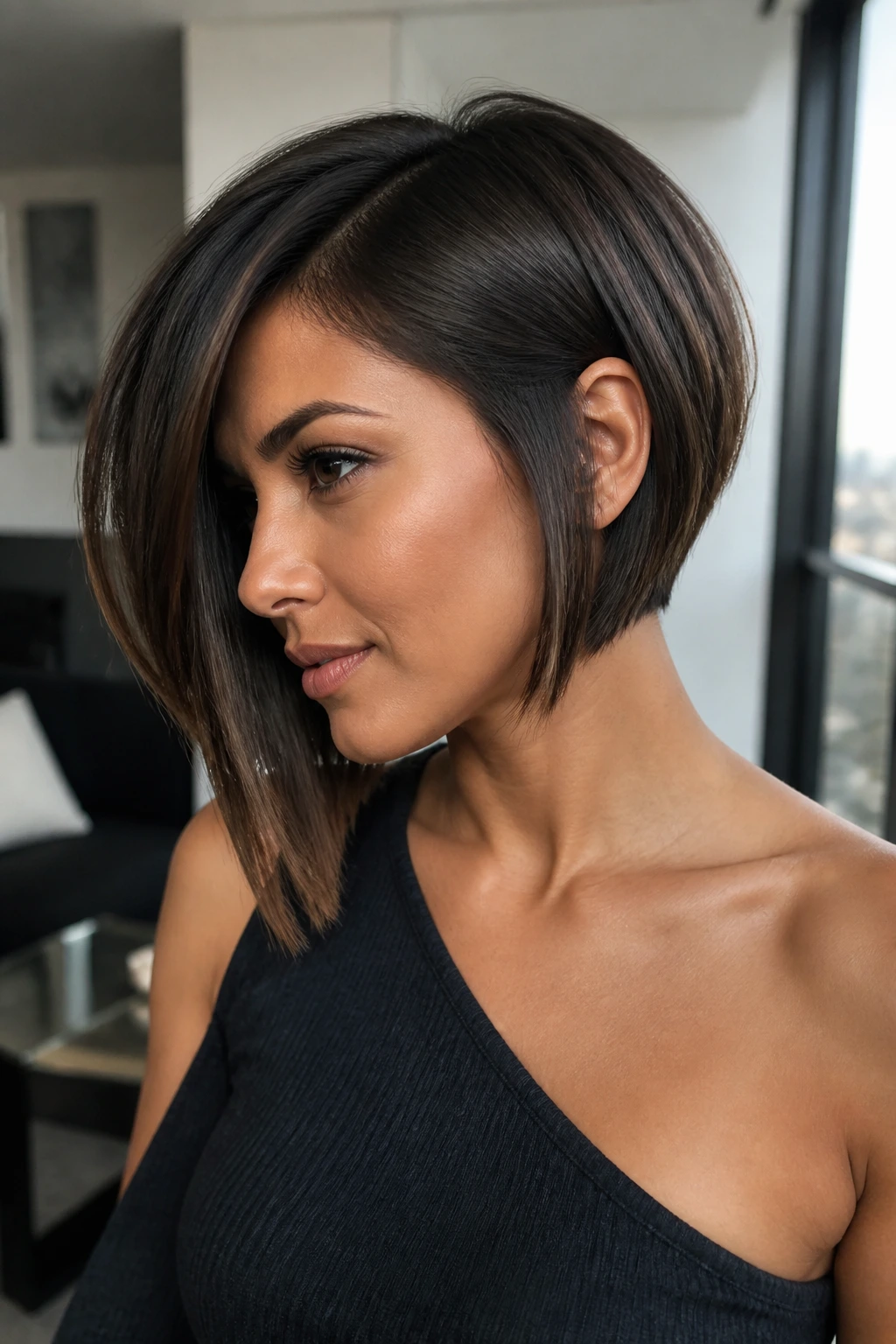
By making one side slightly longer than the other, you create an asymmetry that naturally draws the eye away from a symmetrical round face. The back view retains the inverted stack, but the front provides an unexpected, modern twist.
The Psychology of Asymmetry
Round faces are often perceived as very symmetrical. By introducing an asymmetrical element, you create a “focal point” that shifts the focus. It’s a clever distraction technique that makes the overall face shape look more oval.
Making It Work
- Keep the shorter side tucked behind the ear for a clean, chic appearance.
- Let the longer side frame the face to maintain the slimming effect.
- This cut looks best when the hair is kept sleek and smooth.
11. The Layered Shag-Bob Hybrid
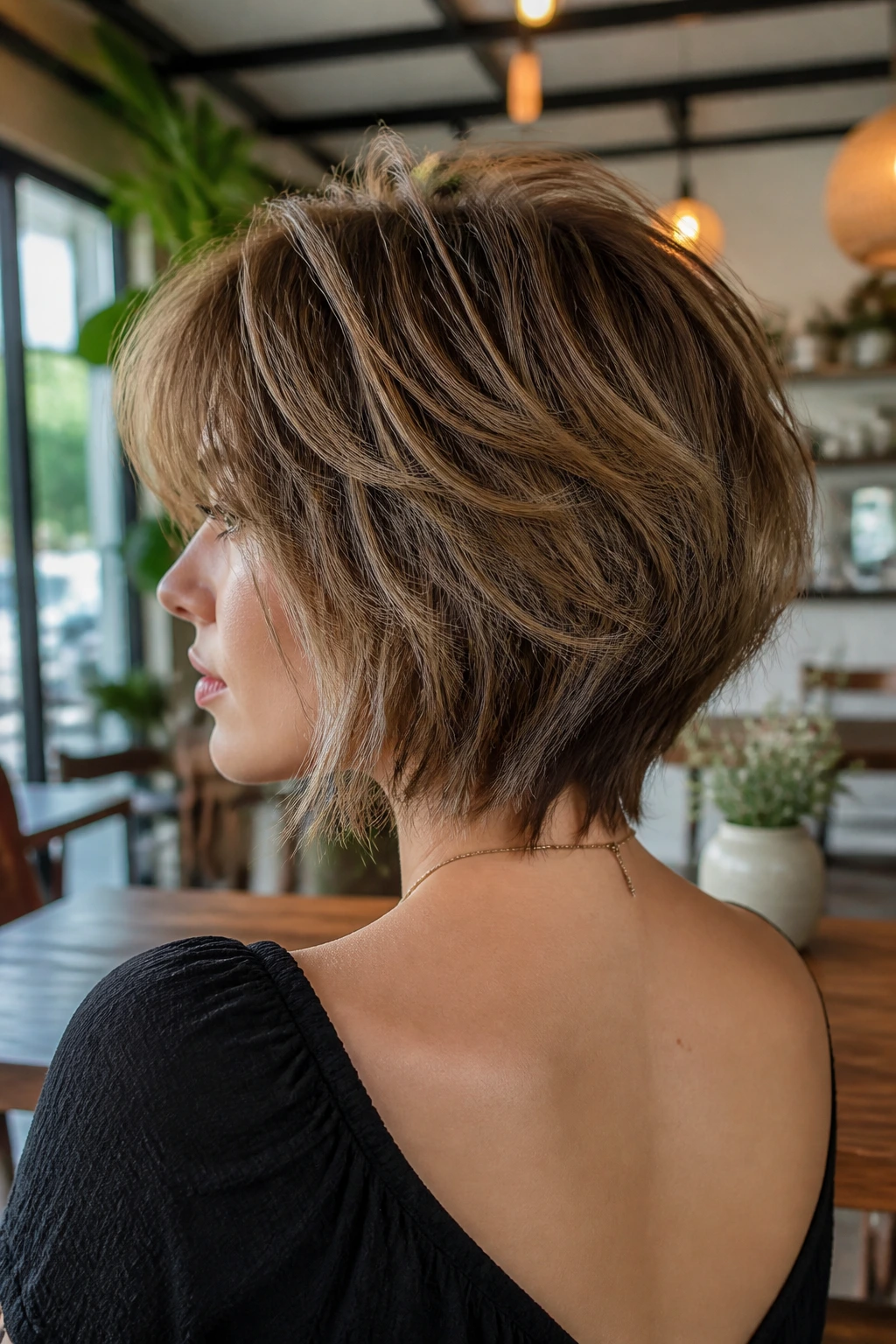
If you enjoy the messy, high-volume aesthetic of a shag cut, you can apply it to an inverted bob. This involves cutting short, internal layers throughout the back to create maximum volume. It’s a high-energy look that feels very cool and unconventional.
Building Height
Since you have a round face, adding volume to the top of your head is the oldest trick in the book to create length. The shag-bob hybrid forces the hair upward and outward, lifting the eye line and effectively “stretching” the face.
Stylist Notes
- Ask your stylist for “shattered” or “point-cut” layers.
- Avoid heavy products that will deflate the volume.
- Use a dry texture spray to keep the hair looking airy and full.
12. The Wispy-End Stack
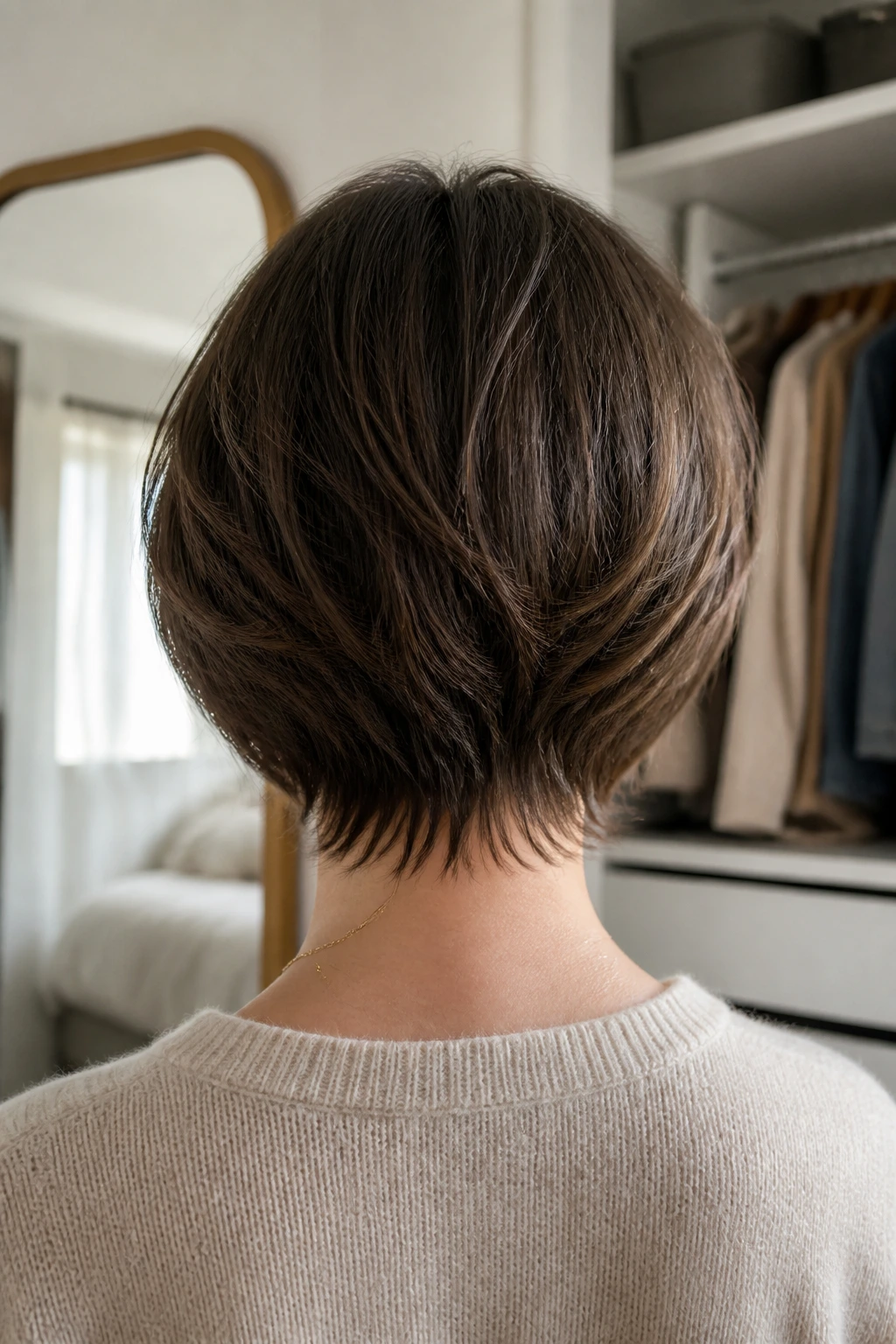
Sometimes a blunt edge can feel too heavy for a round face. A wispy-end stack focuses on making the ends of the hair look light and airy. Even in the back of the neck, the hair is cut so that the ends have movement and don’t clump together.
The Illusion of Lightness
When the ends of your bob are wispy, the style looks less like a “helmet” and more like a collection of light, airy strands. For someone with a round face, a heavy, blocky bob can be overwhelming. Wispiness keeps the style from competing with your features.
How to Style It
- Use a light-hold cream while the hair is damp.
- Blow dry using your fingers rather than a brush to keep the ends looking separated.
- A tiny dab of pomade on the fingertips can help define the individual wispy strands at the nape.
13. The “Deep-V” Nape
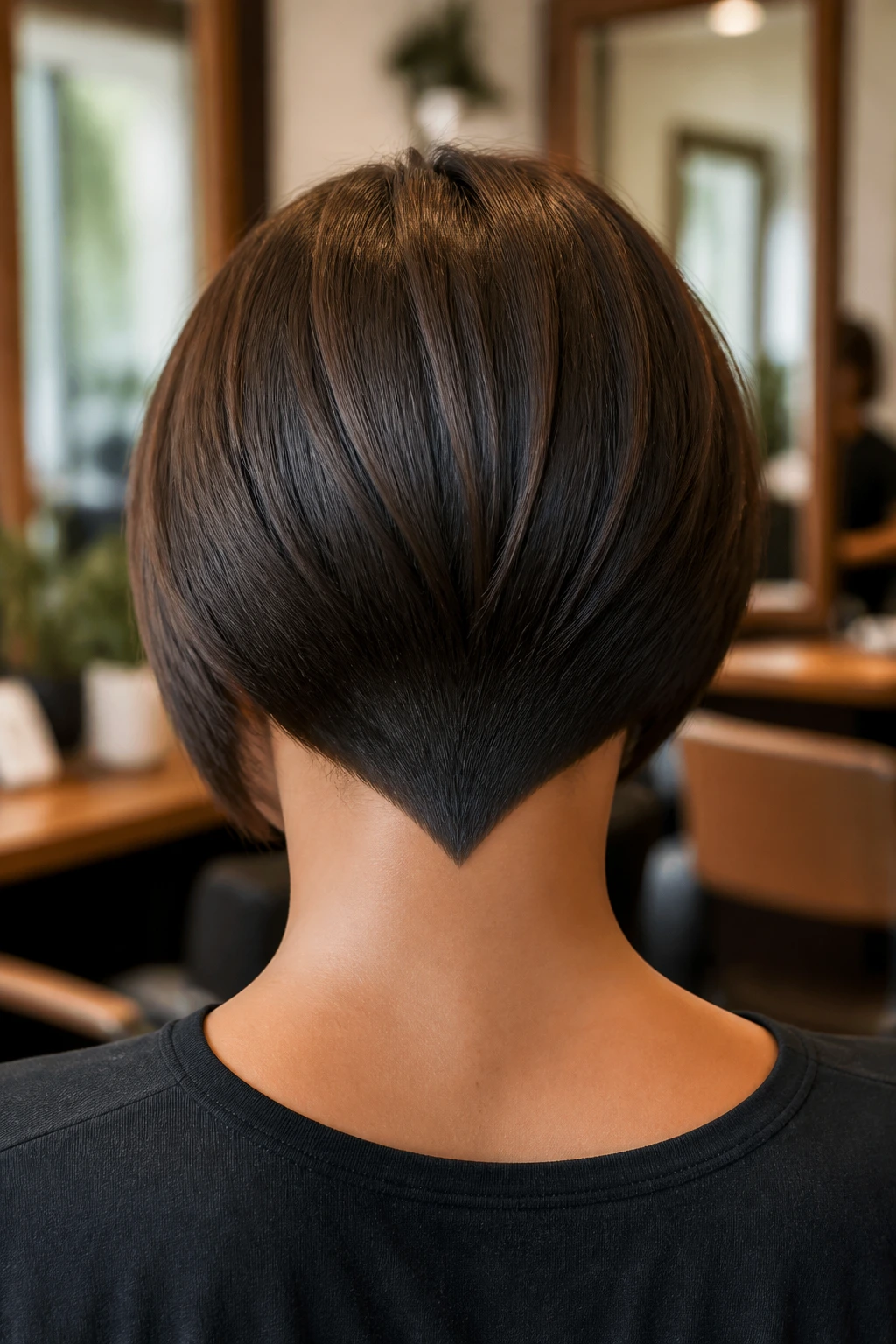
The Deep-V is similar to the extreme angle, but it specifically emphasizes the point where the two sides meet at the center of the nape. It’s a very geometric, precise cut that showcases the technical skill of your stylist. The back view is characterized by a very sharp, almost artistic V-shape.
Why Geometric Shapes Work
Round faces benefit from hard lines to contrast with their soft edges. By creating a very sharp, angular V at the back, you are introducing a geometric element that visually balances out your curves. It’s sophisticated, modern, and surprisingly slimming.
Essential Maintenance
- This style requires very precise cutting.
- Use a fine-tooth comb when styling to ensure the parting and lines are exact.
- Avoid using too much texture, as it can blur the clean lines of the “V.”
14. The Blunt-Cut Inverted Bob
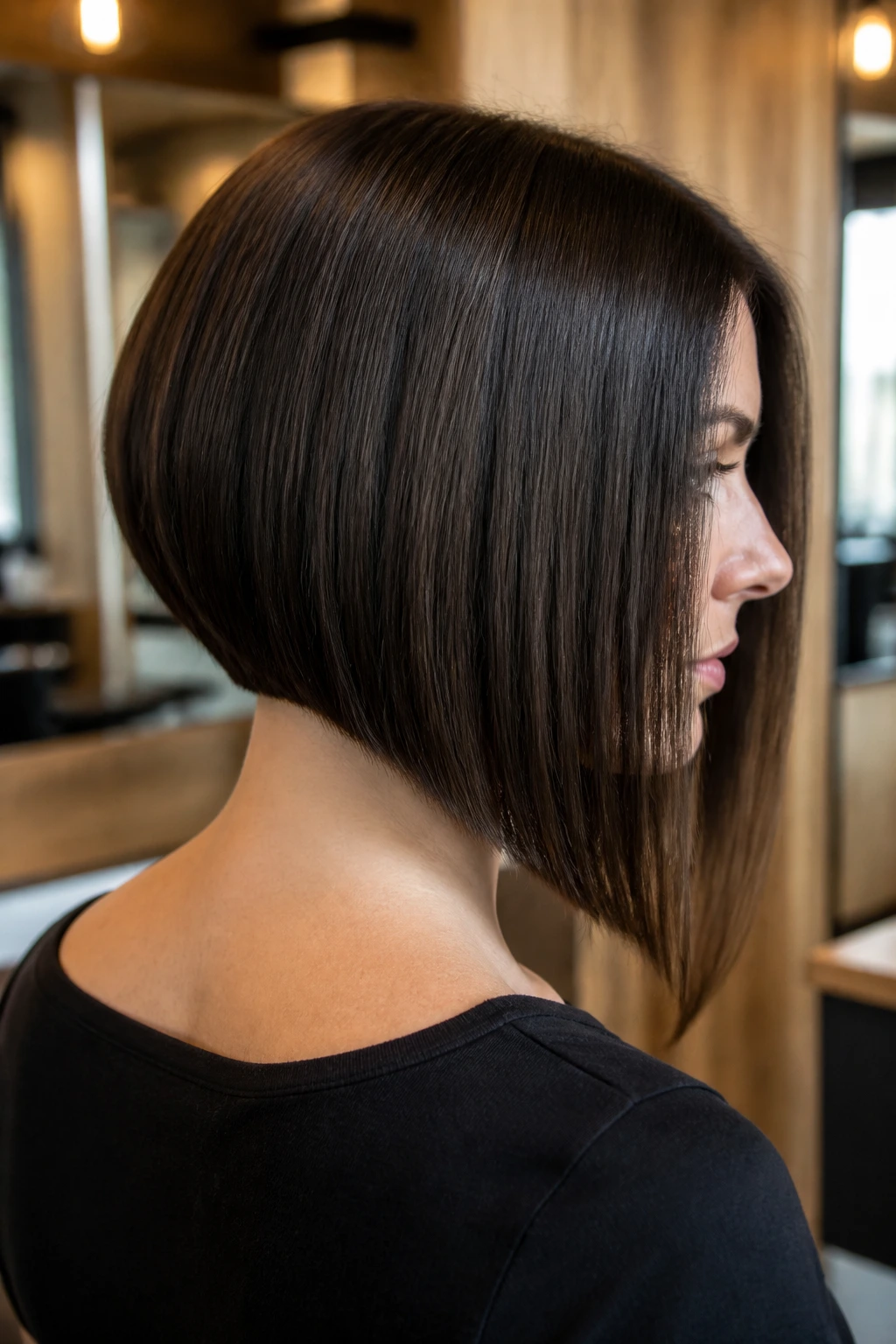
If you have very thick, coarse hair, you might find that layering makes your hair too puffy. A blunt-cut inverted bob uses the weight of the hair to keep the style in place. The back is cut blunt, and the front remains long and heavy, creating a powerful, sleek look.
Controlling Thick Hair
For round faces, thick hair can be a challenge because it can add a lot of width. By cutting the back blunt, you are controlling that volume, forcing the hair to lie in a smooth, graduated plane. The heavy front pieces act like curtains, framing the face and hiding the roundness of the cheeks.
Why This Style Succeeds
- It looks expensive and well-maintained.
- It requires minimal daily effort—just a quick straighten.
- It provides a grounded, serious aesthetic that works in any environment.
15. The Hidden Layered Stack
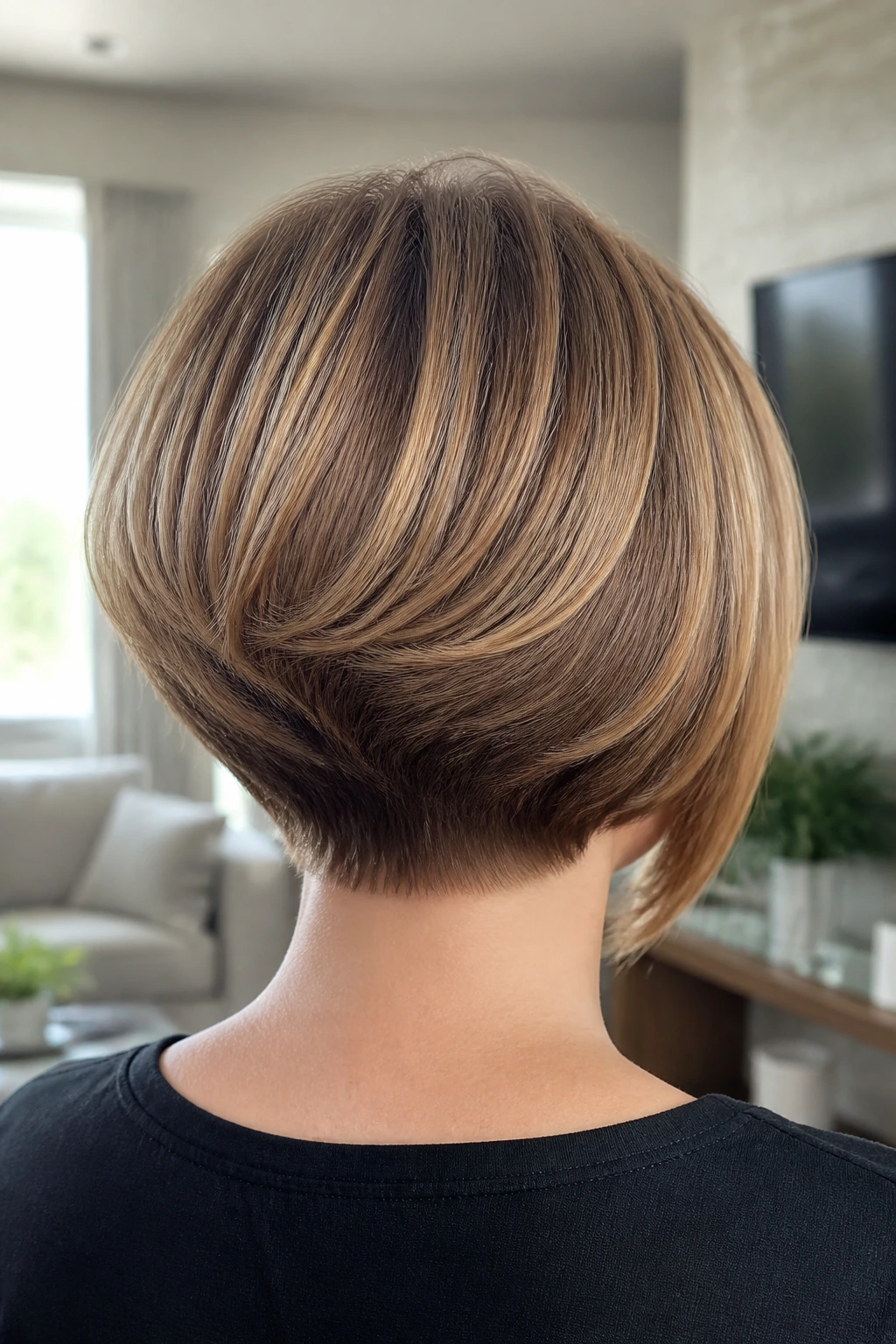
This technique involves cutting shorter layers on the inside of the back sections while keeping the top layer long and smooth. From the back view, the hair looks perfectly sleek and one-length, but underneath, those hidden layers are pushing the hair out to create a rounded, voluminous shape.
The Secret Volume
This is perfect for round faces that need a lift at the crown but don’t want the look of choppy layers. You get the benefits of volume and shape without losing the polished, sleek appearance on the surface.
The Daily Routine
- Blow dry the hair using a round brush to lift the roots.
- Focus the airflow on the roots to maximize the “push” from those hidden layers.
- Finish with a lightweight shine spray to keep the top layer looking smooth.
Final Thoughts
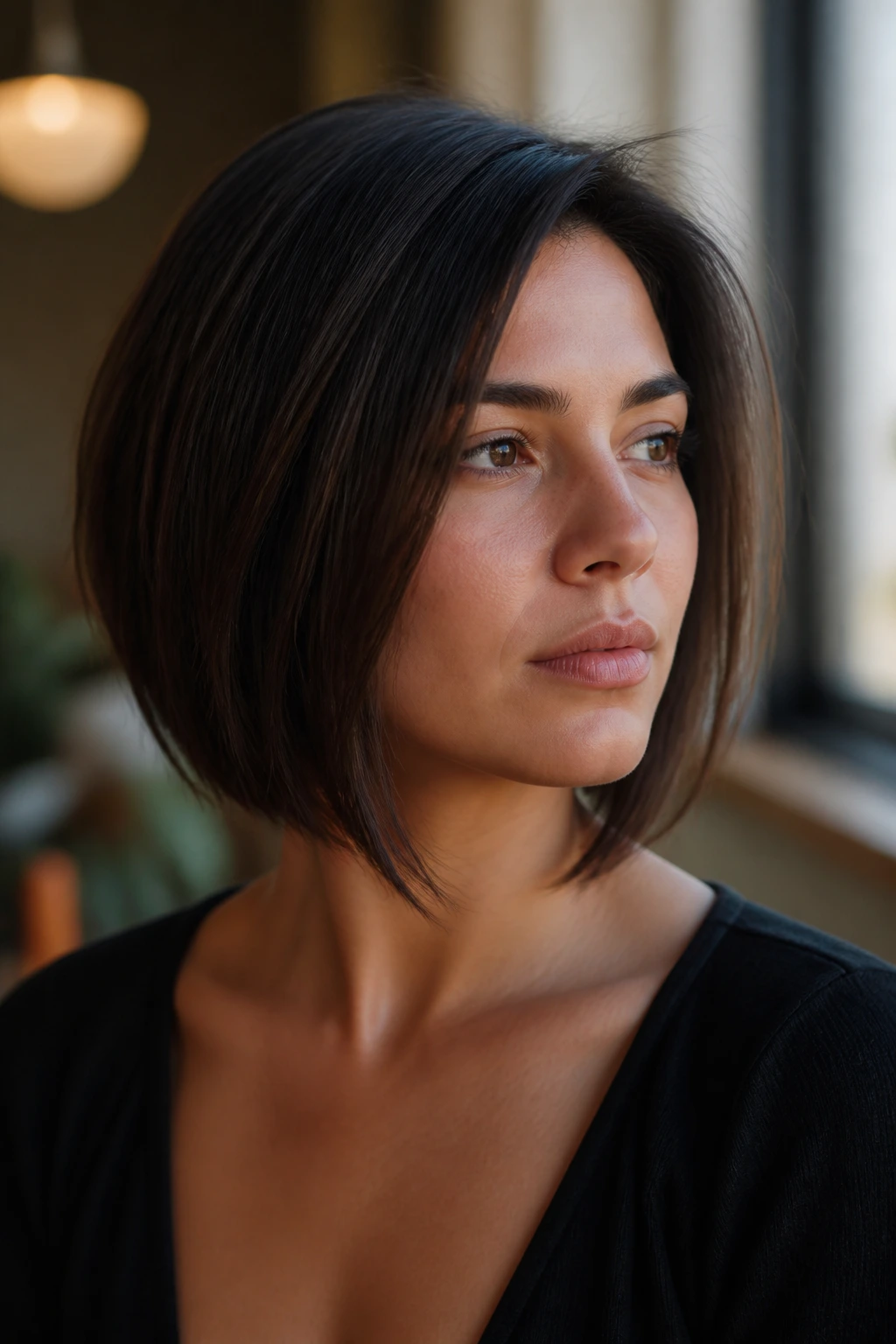
When selecting an inverted bob for a round face, the most important element is the angle. You want a cut that visually pulls the face downward, creating the illusion of an oval. Whether you opt for an extreme, high-contrast angle or a soft, layered graduation, the key is the silhouette you create from the back.
Take time to talk with your stylist about your specific hair density and how much time you are willing to spend styling. A cut that looks incredible in a photo but requires thirty minutes of expert blow-drying each morning may not be the right fit for your lifestyle. Choose a shape that works with your hair’s natural tendency, not against it, and you will find that the inverted bob is the most confidence-boosting change you can make.