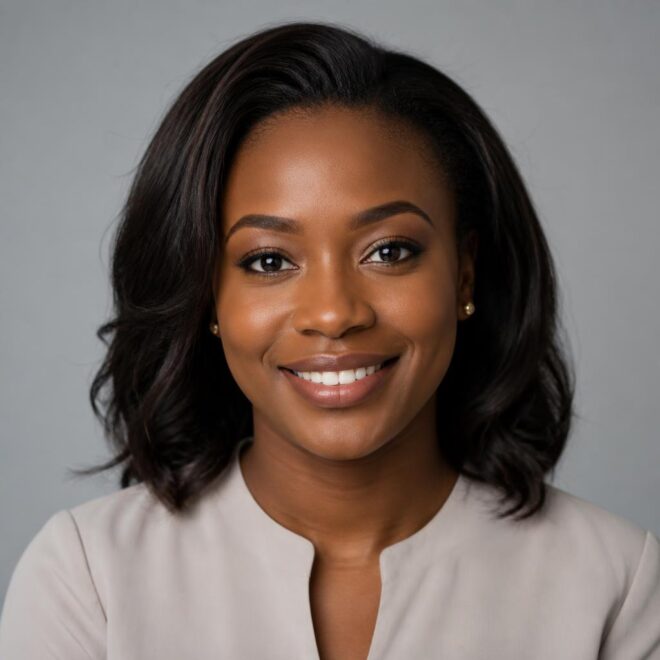


The beauty of the bob lies in its geometry, but when you introduce a shattered texture to wavy hair, you stop dealing with basic shapes and start playing with motion. A traditional blunt bob can sometimes feel heavy or rigid, especially if your hair has a natural bend or a chaotic spiral pattern. The shattered bob, however, is built on a foundation of deliberate disconnection. By thinning out the ends and creating varying lengths throughout the cut, you stop fighting your hair’s natural tendency to frizz or clump and instead encourage it to live in its own space. Adding bangs into this equation creates a frame that is both rebellious and surprisingly soft.
Many people assume that wavy hair requires a very specific type of long-layering to avoid the dreaded “triangle” shape, but the shattered bob effectively kills that myth by removing weight exactly where it needs to go. This isn’t a cut you can walk into a salon and request with a vague hand gesture. It demands a stylist who understands point-cutting, razor techniques, and how a weight line behaves when it hits a wave. When done correctly, the result is a hairstyle that looks better when you wake up in the morning than it did when you left the salon chair.
1. The Textured French Girl Bob
This look is all about embracing the fringe that hits just above the brow line. The “shattered” effect comes from razor cutting the perimeter, which leaves the ends wispy rather than blunt. Because your hair has a natural wave, these ends will flip outward and inward unpredictably, which is exactly the point. It avoids that polished, artificial look in favor of something that feels lived-in and effortless.
Why It Works for Wavy Textures
The secret here is the length of the bangs. By keeping them short and choppy, you draw attention to the eyes and cheekbones, effectively balancing the volume on the sides. You don’t need to worry about the waves clumping together; the shattered ends keep the silhouette light and airy.
Essential Styling Tip
Apply a lightweight sea salt spray while the hair is damp, then use your fingers to twist random sections. Do not use a brush, as this will only encourage unwanted volume at the roots. Let it air dry to lock in that piecey, “undone” texture.
2. The Mid-Neck Razor Shag
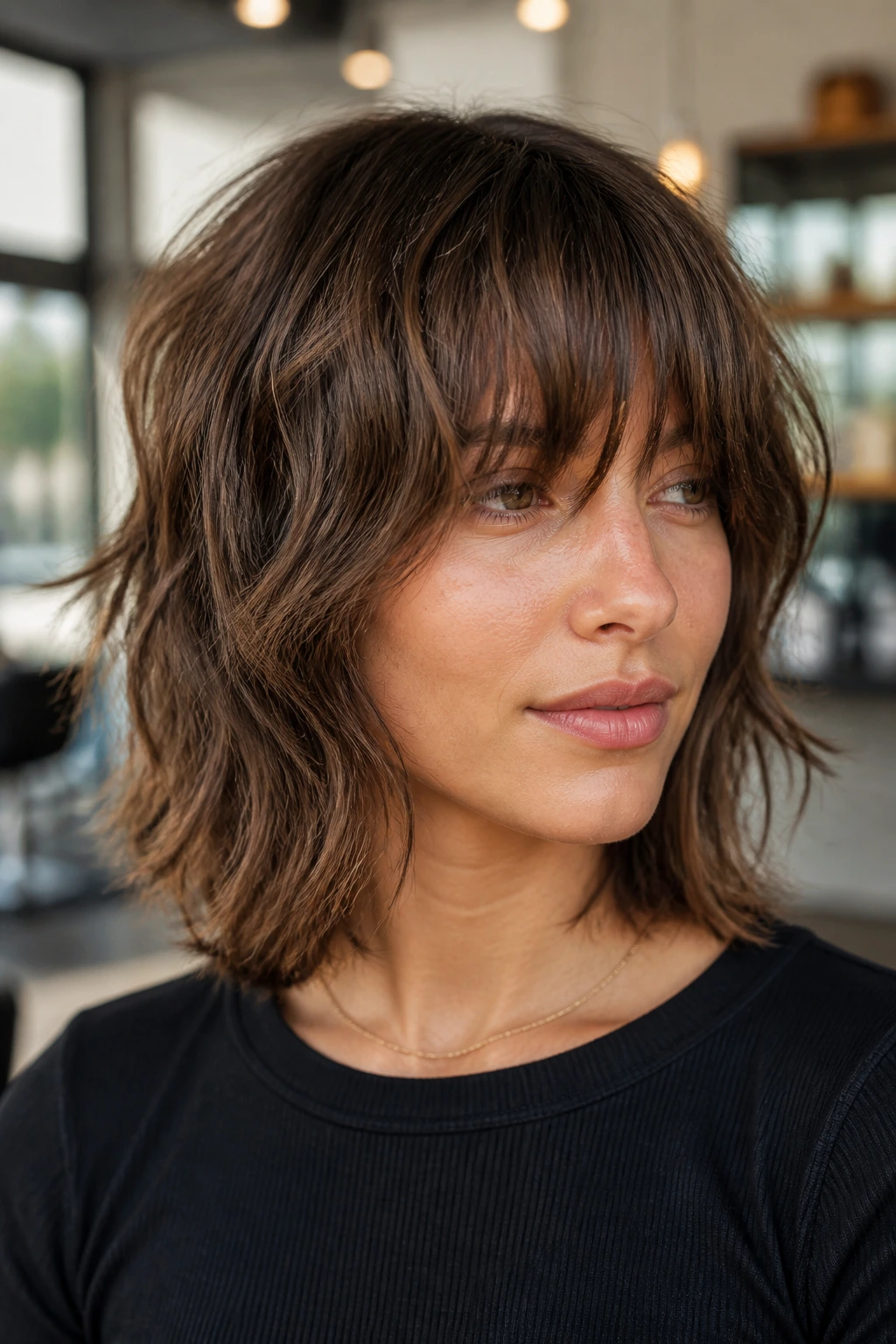
If you have a deeper, more pronounced wave, the mid-neck length is a sweet spot for preventing the hair from feeling too round or “poofy.” This style utilizes a heavy razor-cut interior, which takes the weight out of the hair without thinning it so much that it loses its personality. The bangs here are longer, often grazing the eyelashes, and they are cut to blend seamlessly into the face-framing layers.
Managing the Volume
When your hair is prone to wide, loose waves, cutting it at the neck can sometimes cause it to kick out too much. To combat this, ask your stylist to keep the internal layers slightly longer than the exterior, creating a hidden structure that guides the hair to fall inward rather than outward.
Maintenance Notes
- Use a cream-based styler rather than a mousse to keep the waves hydrated.
- Schedule a “dusting” trim every eight weeks to keep the razor-cut ends from fraying.
- Avoid heavy silicones, as they weigh down the shattered ends and kill the movement.
3. The Wispy Shaggy Bob with Curtain Bangs
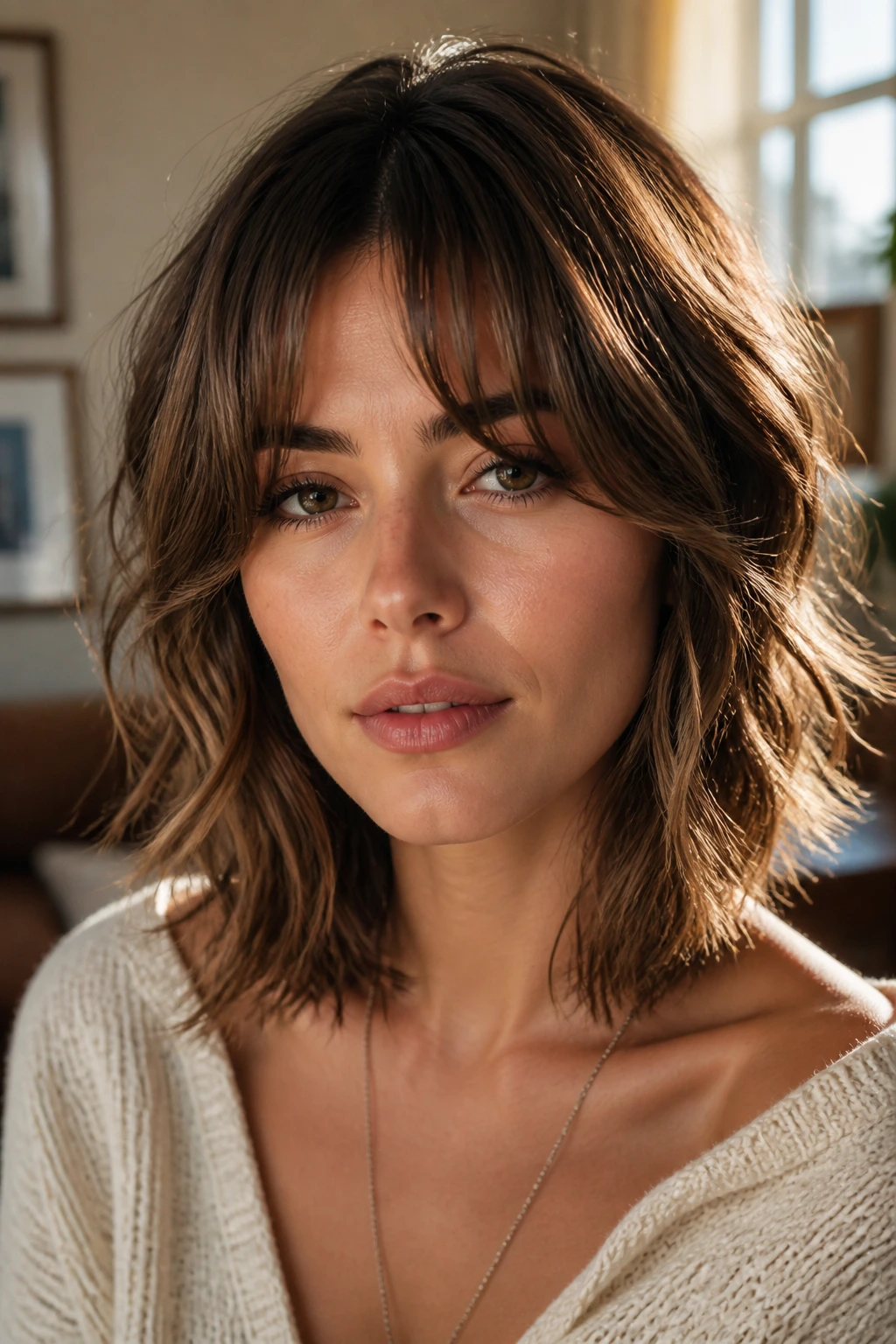
Curtain bangs are often associated with long hair, but they are transformative on a shorter bob. By pairing them with a shattered, shoulder-grazing length, you create a look that feels retro-inspired but modern in its execution. The waves here are allowed to do whatever they want, and the fringe acts as a soft curtain that frames the face, preventing the hair from looking like a helmet.
Achieving the Shape
The key is the center part. If you have a natural cowlick, a curtain bang will fight you unless you train the hair while it’s wet. Use a round brush to blow-dry the bangs forward first, then sweep them to the sides while they are still warm. This gives them the signature “flick” that defines the style.
Who This Suits Best
This style is ideal for those with a diamond or oval face shape. It softens the jawline and adds width to the cheekbone area, which can be incredibly flattering for anyone who feels their face is too long or narrow.
4. The Choppy Angled Bob
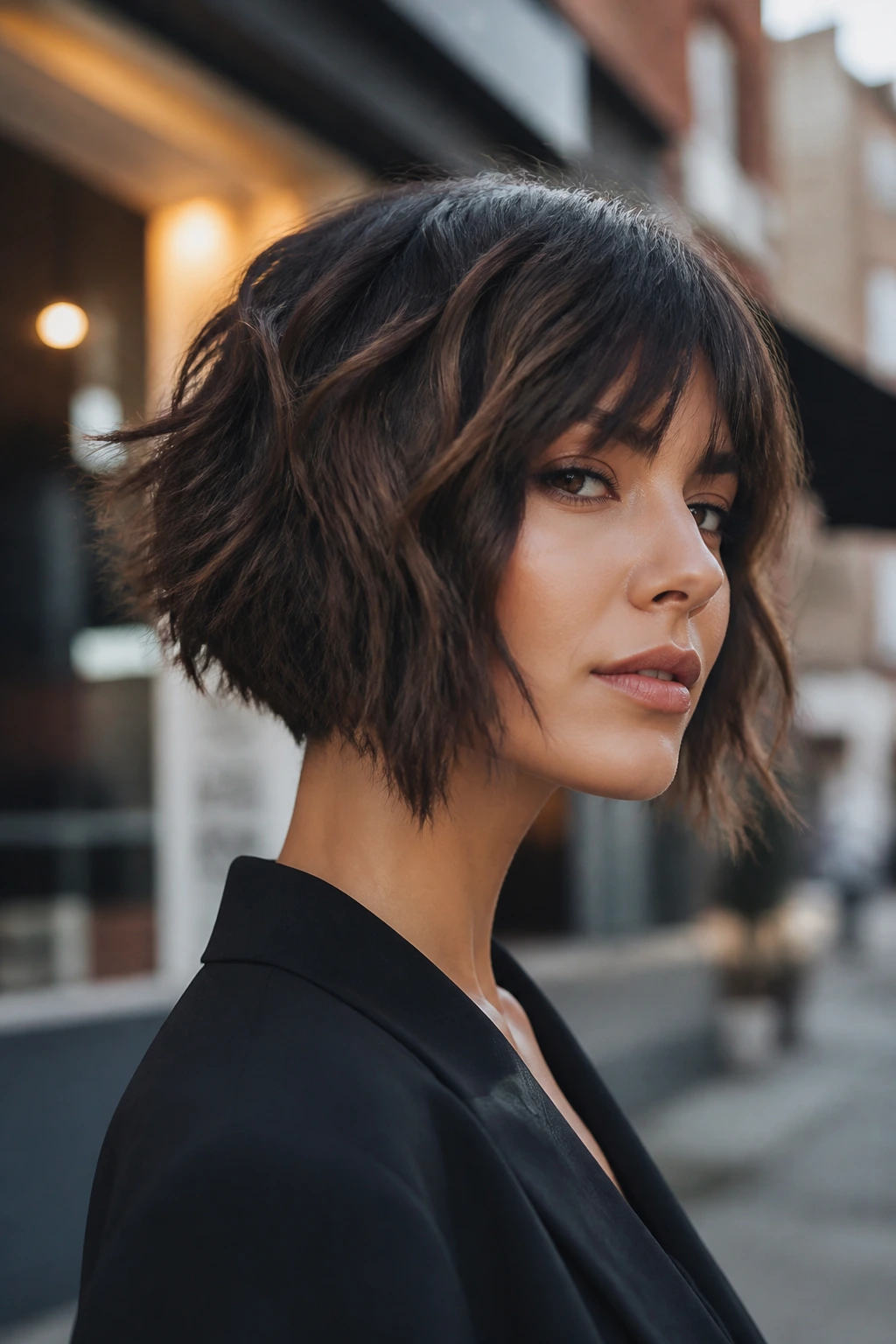
For those who want a bit more drama, the angled bob—where the back is shorter than the front—gets a modern overhaul with shattered ends. Instead of a sharp, clean line, the stylist uses scissors to create “stair-step” lengths along the perimeter. This creates a jagged, energetic look that thrives on the movement of wavy hair.
The Power of Point Cutting
Point cutting is the technique where the stylist cuts into the hair vertically rather than across. This is what makes a bob “shattered.” It prevents the ends from becoming blunt and heavy. When your waves hit these jagged ends, they catch the light differently, making the hair look multi-dimensional and healthy.
Styling for Maximum Texture
Use a matte texturizing powder at the roots to give the hair lift. If you find your waves are too flat, hit them with a flat iron for just a second—not to smooth them, but to add a slight “s-curve” in the opposite direction of your natural wave.
5. The Messy Lob with Blunt Fringe
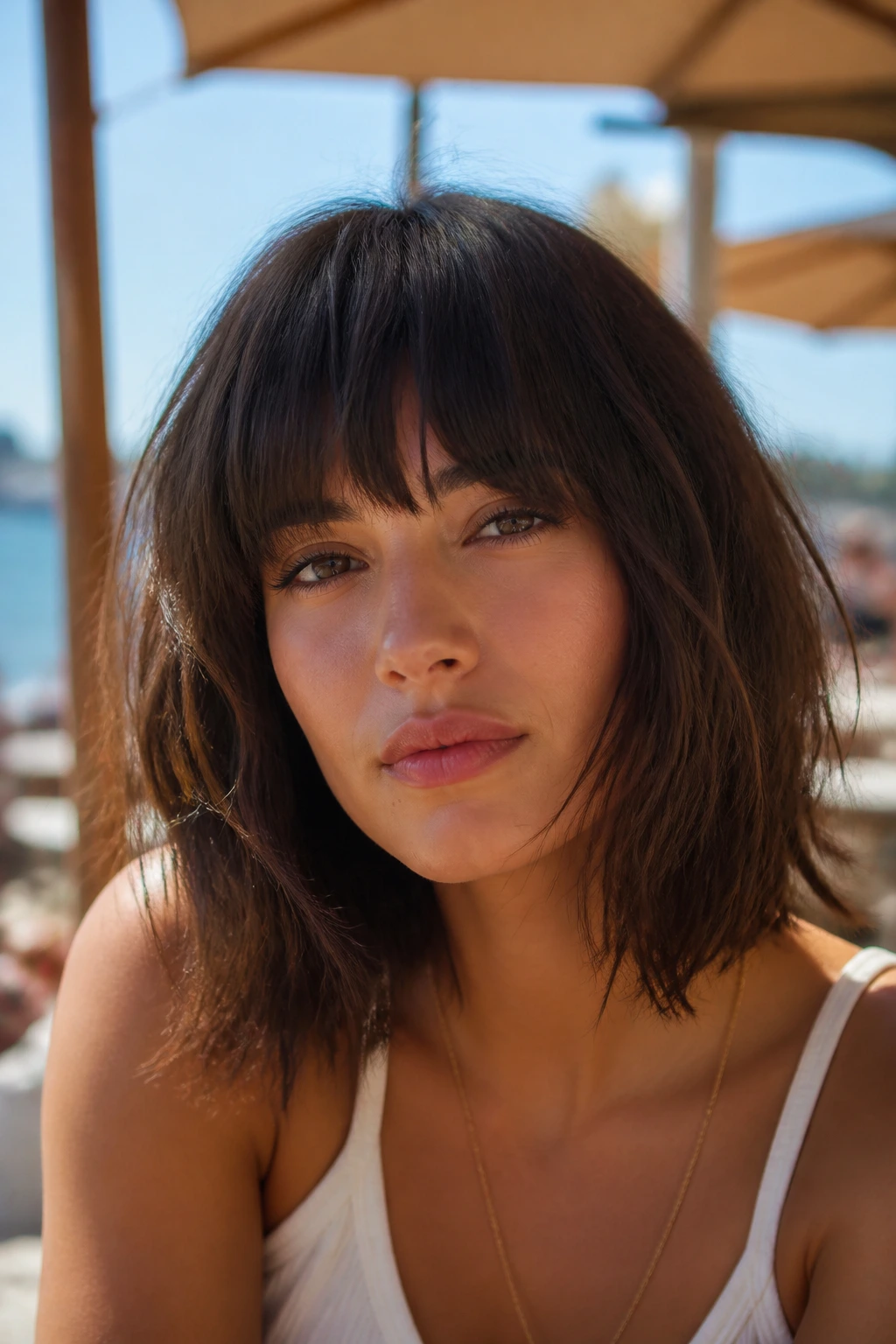
Yes, a “long bob” can definitely be shattered. If you are nervous about going too short, start here. By keeping the length around the collarbone and adding heavy, blunt-cut bangs, you create a beautiful contrast between the structured fringe and the wild, wavy remainder of the hair.
Balancing the Aesthetic
The blunt bangs anchor the look, giving you a sense of order. The shattered ends of the long bob provide the chaos. It’s a classic “polite from the front, party from the back” vibe. If you have thicker wavy hair, this is one of the most manageable styles you can choose.
Pro-Tip for Daily Care
Keep a travel-sized bottle of dry shampoo in your bag. Wavy hair at this length can sometimes get oily at the roots while the ends remain dry. Dry shampoo at the crown keeps the hair looking fresh while the lengths retain that beachy, textured feel.
6. The Undercut Shattered Bob
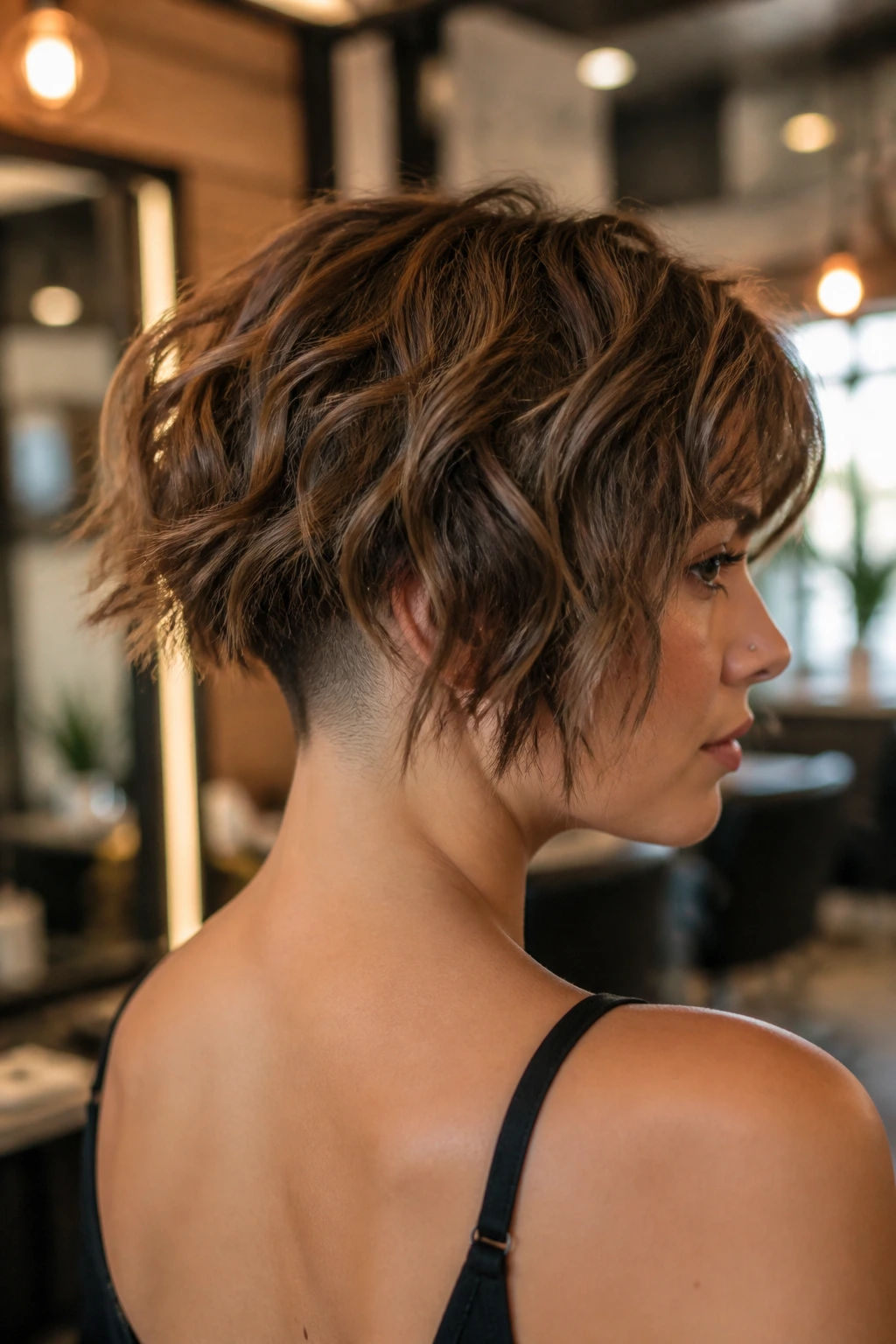
This is for the person who truly wants to control the volume of their waves. A subtle undercut—shaving or very closely cropping the hair at the nape of the neck—removes the bulk that causes the hair to push out. The remaining layers are then shattered and textured to fall neatly over the shaved section.
Why This Technique Works
When you remove the bottom layer, the weight disappears. Your waves won’t have the “cushion” of hair underneath them, so they will lay flatter against the neck. This makes the overall silhouette look much more deliberate and less like it’s growing out of control.
The Bang Factor
Keep the bangs wispy to match the shattered vibe. Heavy, thick bangs would look disjointed against an undercut. You want the whole head to feel cohesive and light.
7. The Asymmetrical Wavy Bob
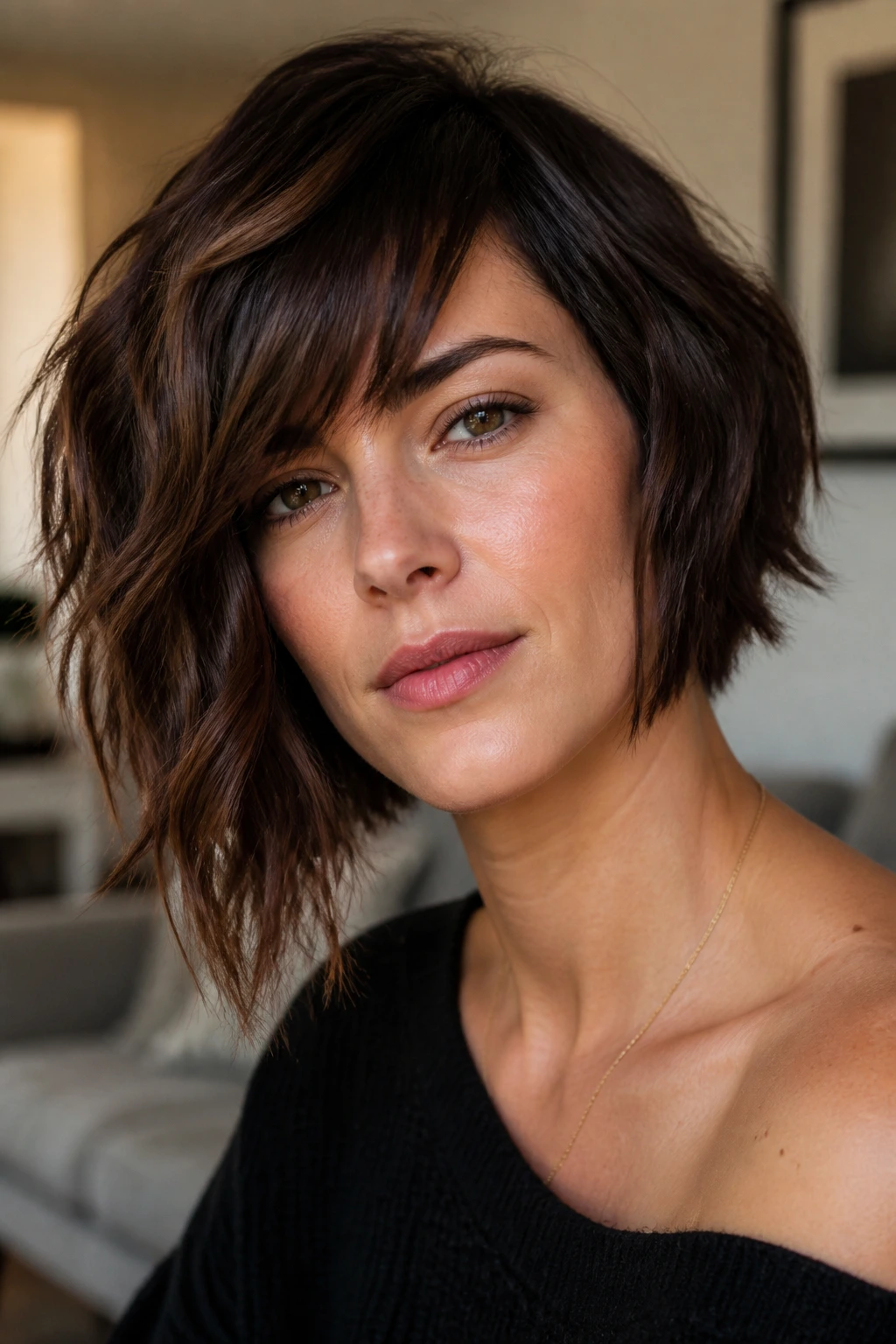
Asymmetry is a fantastic way to distract from uneven wave patterns. If one side of your hair tends to be curlier than the other, an asymmetrical bob allows the hair to be longer on the curlier side, which helps weigh the curl down and visually balance it with the wavier, looser side.
The Shattered Edge
The “shattered” aspect here is crucial to making the asymmetry look intentional. If the edges were blunt, it would look like a mistake. With a shattered, razor-cut perimeter, the imbalance feels like a high-fashion design choice.
How to Style Asymmetry
- Part your hair deep on the side where the hair is shorter.
- Use a sea salt spray to encourage uniform texture across both lengths.
- Let it air dry to ensure the waves are as natural as possible.
8. The Pixie-Bob Hybrid
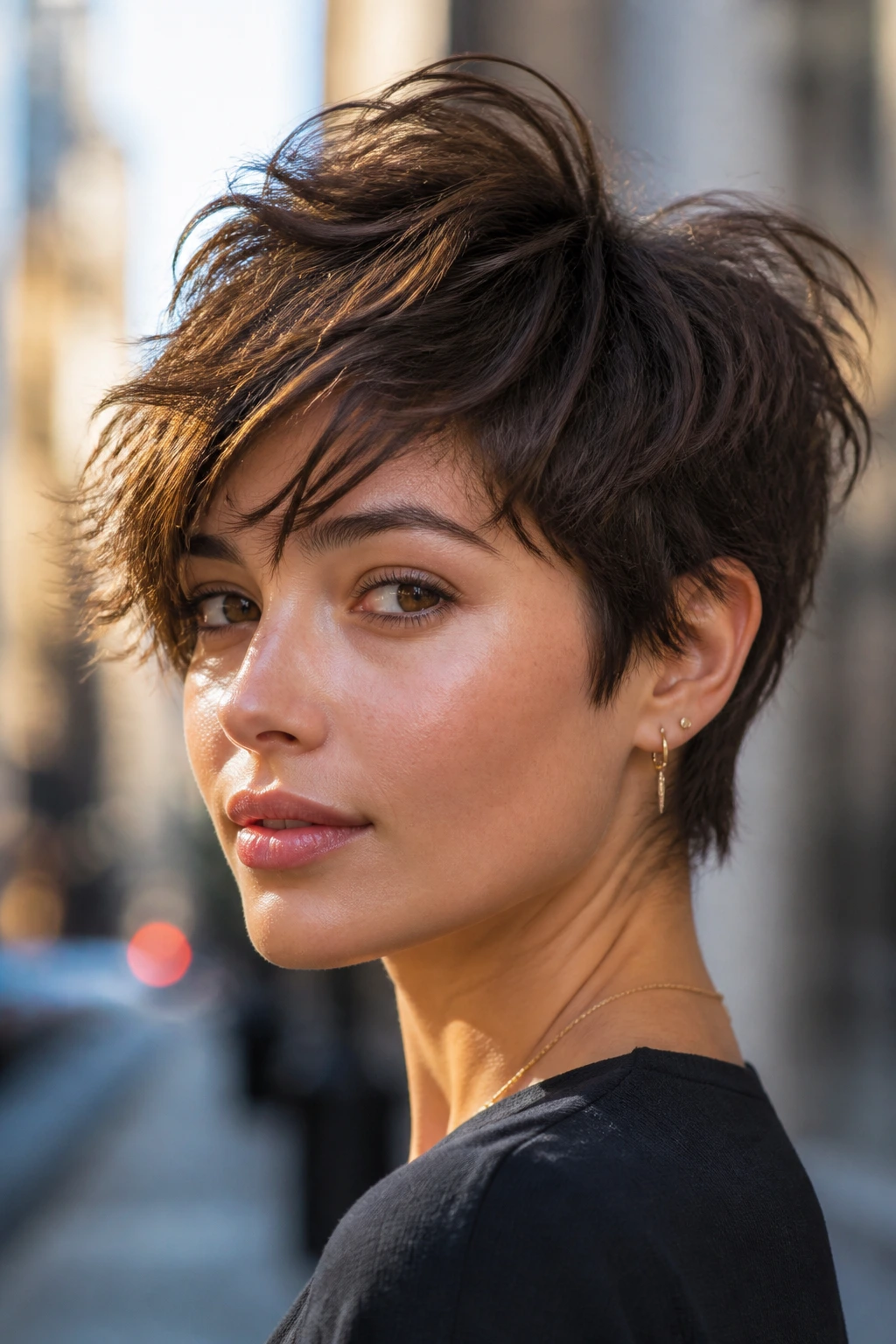
If you are really ready for a change, this style sits right between a long pixie and a short bob. It’s shattered throughout the crown and the back, leaving just enough length around the ears to tuck away. The bangs are long and sweeping, blending into the sideburns.
Why It’s Perfect for Wavy Hair
Wavy hair at this length is incredibly low-maintenance. Because the hair is so short, the waves don’t have enough room to get tangled. You essentially have a “wash and go” style that looks like you spent twenty minutes with a curling iron.
Equipment You Need
- A high-quality texturizing paste (look for something with a flexible hold).
- A wide-tooth comb for distributing product in the shower.
- Your fingertips—they are the only tool you need to style this once you’ve left the bathroom.
9. The Rounded Soft-Layered Bob

While many shattered bobs are jagged, this version is “soft.” The layers are cut at different lengths, but the stylist uses a slide-cutting technique to ensure the transitions between layers are smooth. The result is a rounded, voluminous shape that looks incredibly healthy.
Why Waves Love This Cut
Waves need layers to prevent them from sitting in one clump. By softening the layers, you ensure that the waves have space to interact and overlap, which creates the illusion of much thicker, fuller hair.
Styling Considerations
If your hair tends to frizz, use a smoothing milk before you apply your texture spray. The milk keeps the cuticle closed, while the texture spray keeps the waves defined. It’s the perfect middle ground between polished and playful.
10. The Deep-Parted Wavy Shag
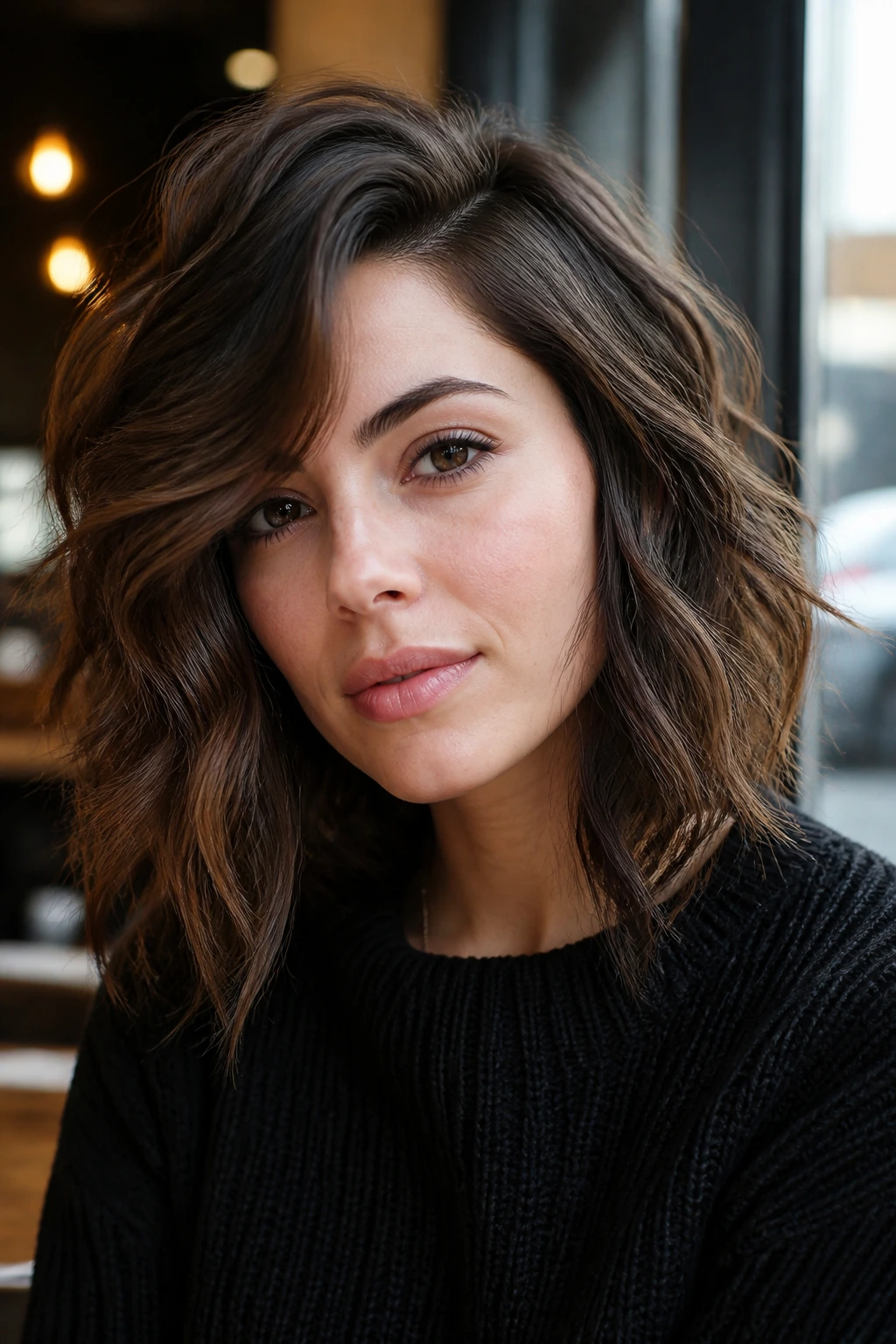
This cut is all about the crown. By cutting shorter, shattered layers at the top of the head, you build instant volume. Pairing this with a deep side part creates a sweeping, dramatic effect that makes any wavy bob look like a movie star’s off-duty hair.
The Role of the Bangs
In this style, the bangs aren’t cut horizontally across the face. Instead, they are cut to sweep across from the deep part, blending into the layers of the bob. This is a very flattering look for anyone with a round or heart-shaped face.
Common Mistake to Avoid
Don’t over-process the top layers. If you use a curling iron to force the waves to be more uniform, you will lose the shattered, natural texture that makes this cut unique. Trust your natural wave pattern.
11. The Bleached and Shattered Bob
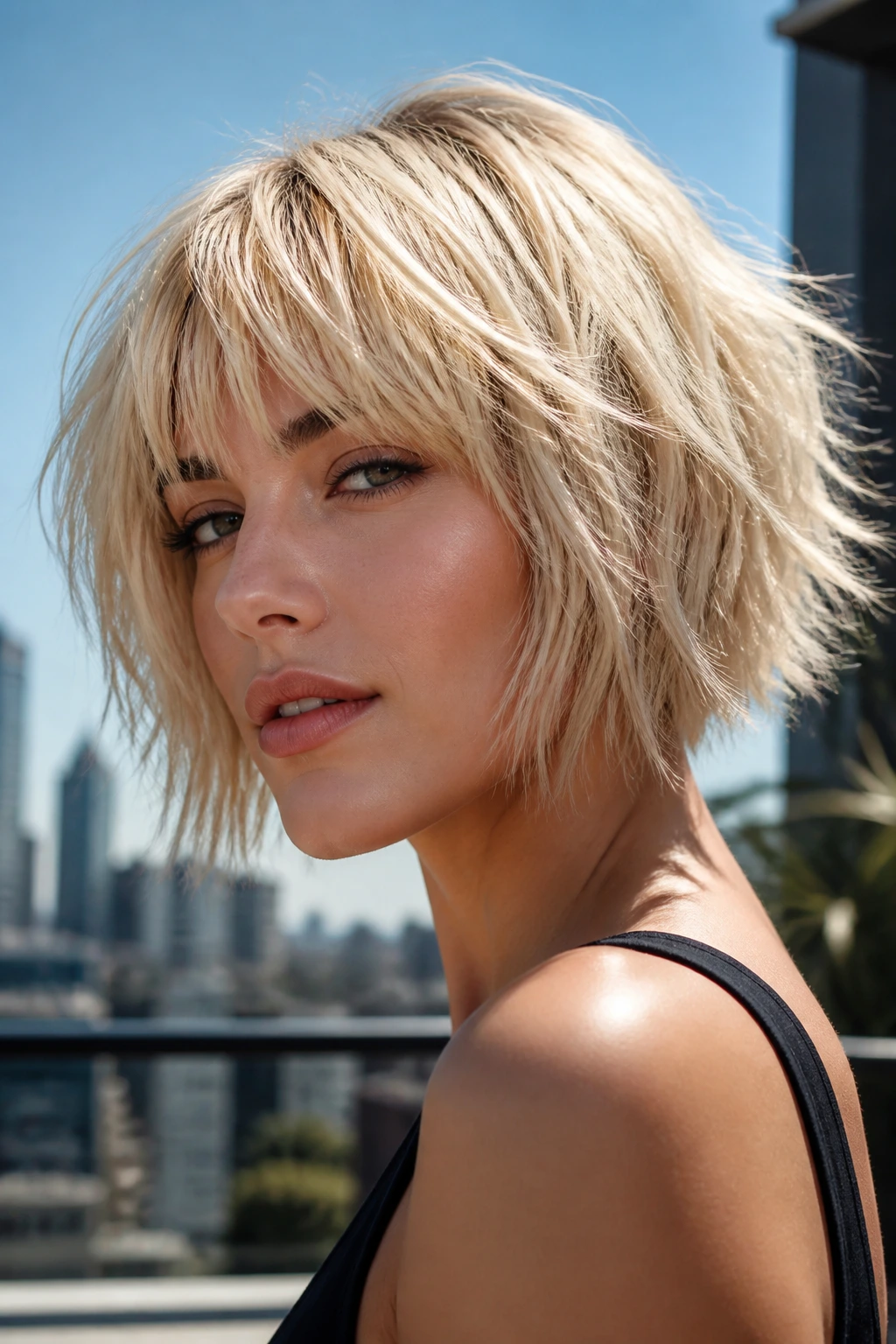
Texture looks different on different colors. If you have lightened or bleached hair, the cuticle is already a bit more porous, which means it holds texture products exceptionally well. A shattered bob on bleached hair looks edgy, cool, and undeniably modern.
Why Light Hair Pops with Texture
Because light hair shows shadow and depth better than dark hair, the “shattered” cut becomes the focal point. You can see every individual lock and wave. It’s a visual treat that emphasizes the skill of your stylist’s hand-cutting.
Managing the Damage
Bleached hair needs moisture, not just texturizers. Integrate a bond-building treatment into your weekly routine. When your hair is hydrated, the shattered ends will look soft and airy rather than brittle.
12. The Collarbone-Length Shattered Shag
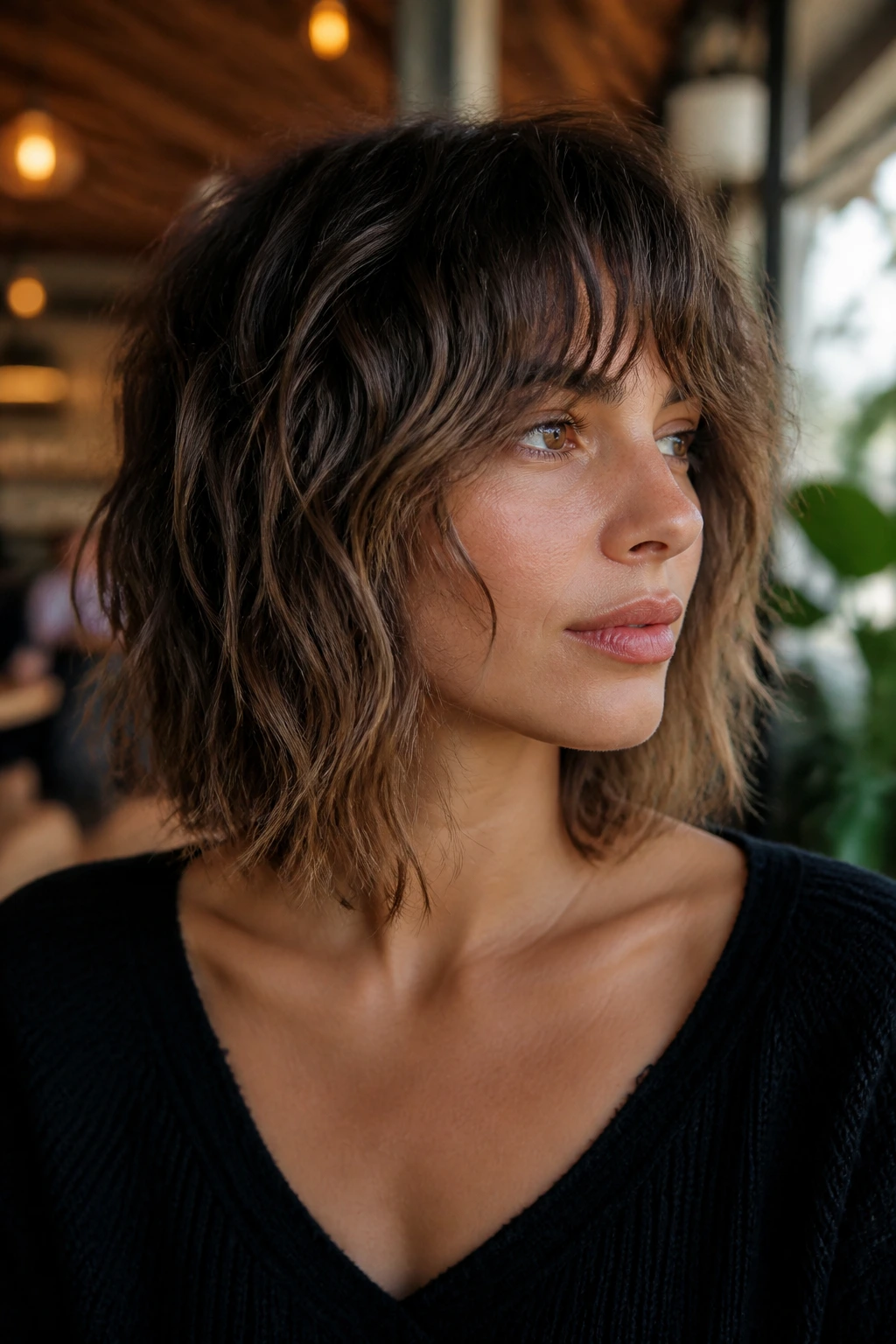
If you have very loose, barely-there waves, this is your best option. It’s long enough that the weight of the hair helps pull the wave into a more defined shape, but short enough to retain the bob aesthetic. The shattered layers start around the chin, preventing the hair from looking flat.
Why This Style Works
It’s the most versatile length for wavy hair. You can pull it into a small bun, tuck it behind your ears, or let it fall loose. The bangs are cut to be versatile as well—long enough to tuck behind the ear or wear down as a framing element.
Pro-Tip for Versatility
Ask your stylist for “invisible layers.” These are thin slices cut into the middle of the hair section, hidden by the top layer. They provide extra bounce without disrupting the sleek silhouette of the bob.
13. The Minimalist Shattered Bob
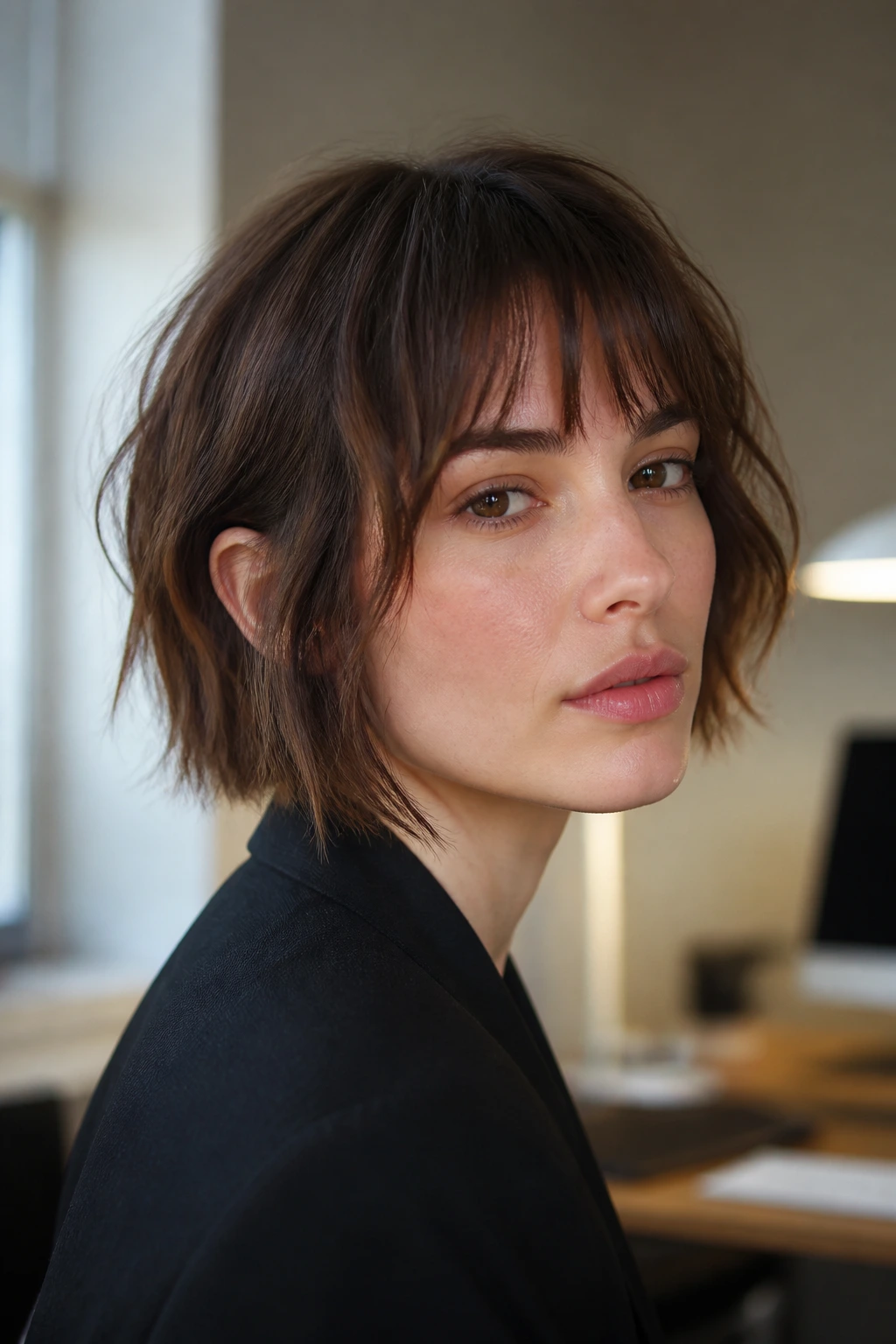
This cut is for the person who loves a clean look but is bored by a traditional bob. The perimeter is kept relatively straight, but the ends are lightly shattered with a razor. It’s subtle, refined, and works beautifully for professionals.
Keeping it Polished
You don’t need a lot of product here. A touch of finishing oil on the very ends is all it takes to keep the shattered edges looking sharp instead of frizzy. The bangs are thin and sparse, mimicking the light texture of the ends.
Comparison to Other Bobs
Unlike the “Shaggy” or “Choppy” options, this is a restrained version of the shattered aesthetic. It’s perfect if you work in an environment where you need to look slightly more conservative while still having a modern, wavy texture.
14. The Pastel-Toned Wavy Bob
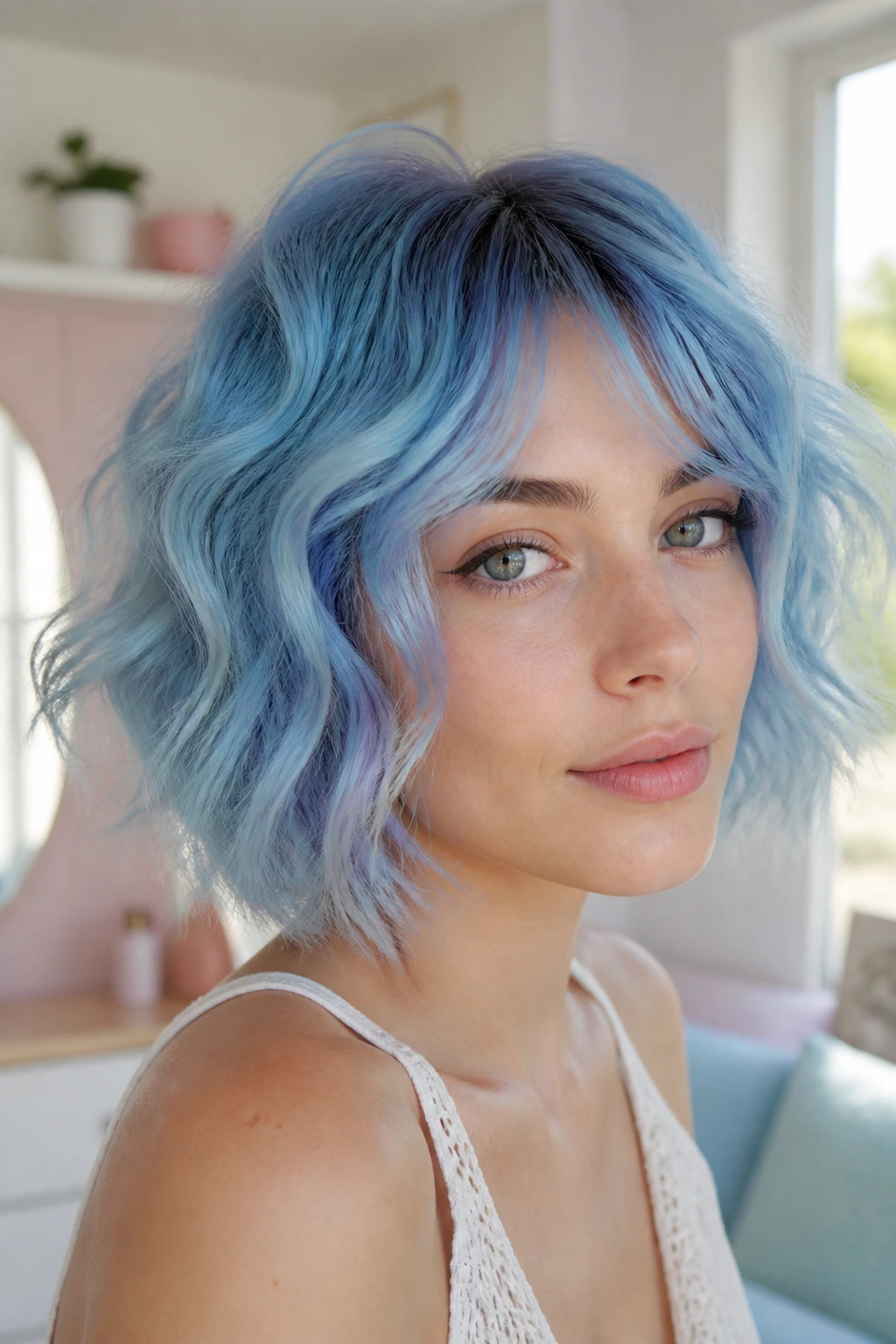
If you are planning on experimenting with color, do it on a shattered bob. The movement of the waves combined with the varied lengths of the shattered cut creates a beautiful canvas for color. A pastel blue or pink, for example, will show different saturations in the light as the hair moves.
Color and Texture
The shattered cut breaks up the color, preventing it from looking like a solid block of dye. It makes the color feel more natural and artistic. If you have darker hair, ask for a few lighter-toned face-framing pieces to emphasize the bangs.
Care for Colored Hair
Always wash in cool water. The shattered ends are the first to lose color, so keeping the temperature low prevents the cuticle from opening up and releasing the pigment.
15. The “I Woke Up Like This” Bob
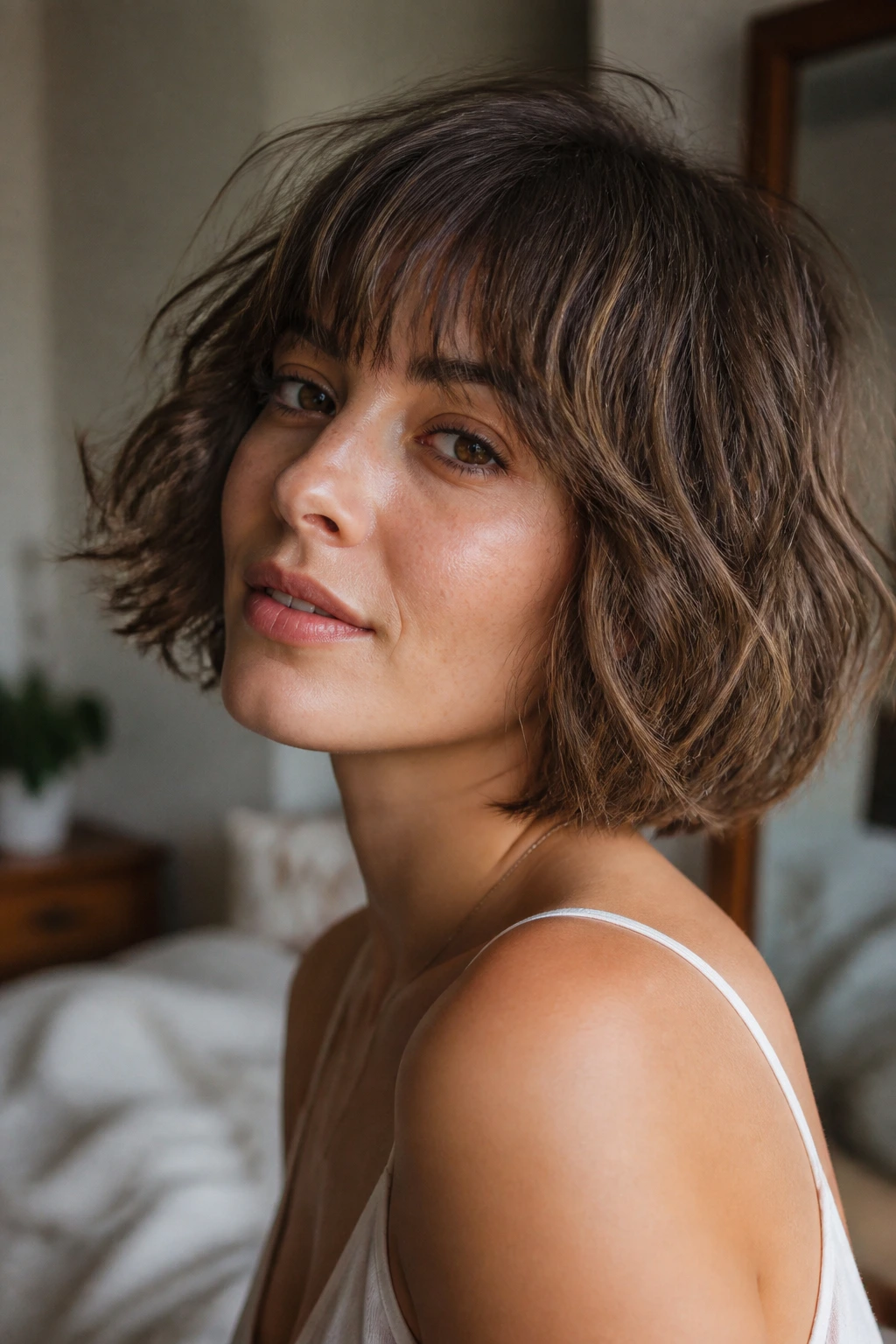
This is the ultimate goal. It’s a combination of all the techniques: a slight angle, shattered perimeter, wispy bangs, and interior texturizing. It’s the kind of cut that encourages you to throw away your hot tools and just embrace your natural hair.
The Philosophy of the Cut
The “I woke up like this” look is not about laziness; it’s about confidence. It’s accepting that your waves won’t be perfect every single day and realizing that the “imperfections” are actually the most interesting part of your hair.
Final Styling Advice
Once you have this cut, let your hair dictate the day. Some days it will be bigger and wilder, other days it will be flatter and more relaxed. That variation is the beauty of the shattered bob. Don’t fight it. Work with it, add a little texturizing spray, and go about your day.
Final Thoughts
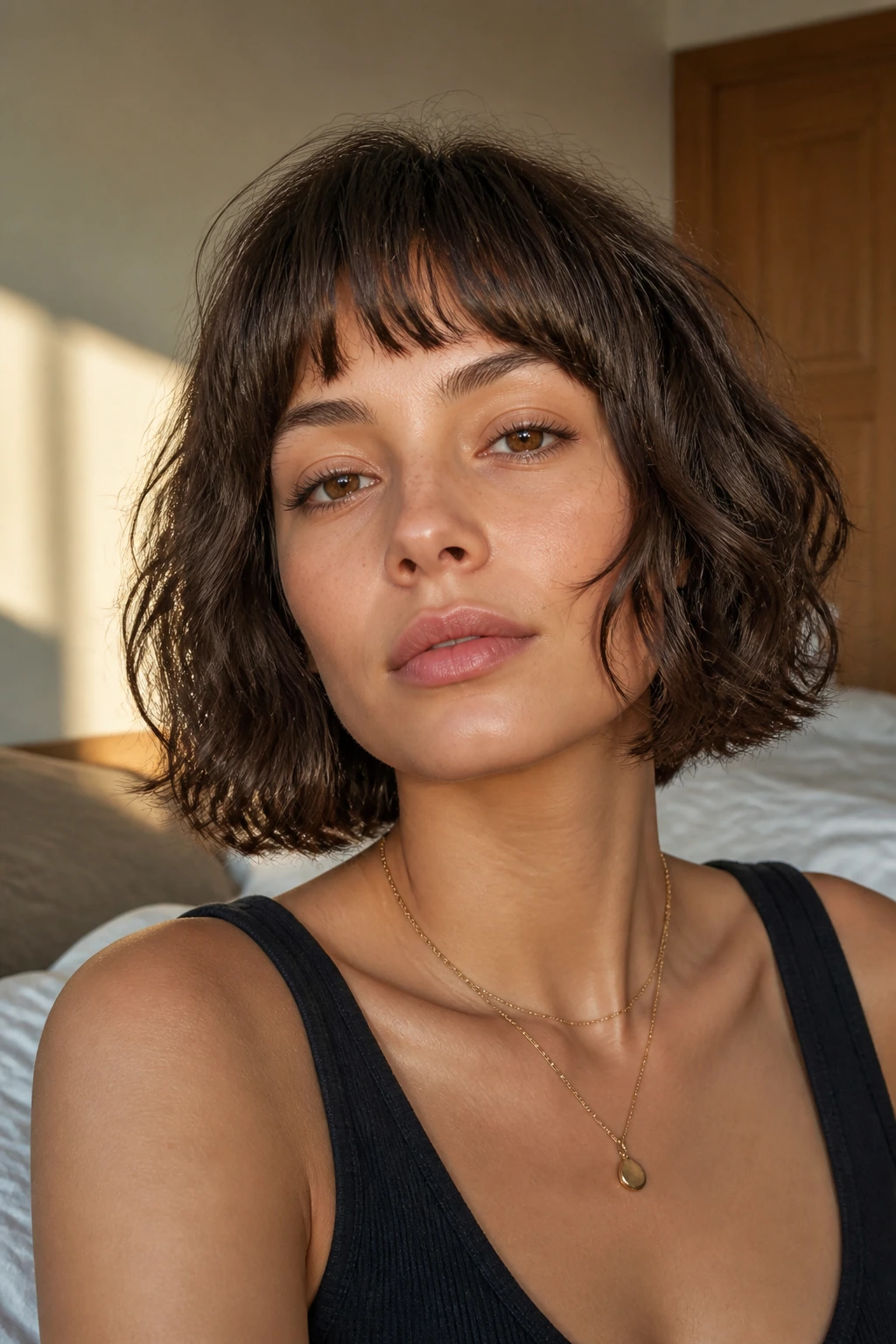
Choosing a shattered bob is a commitment to movement. You are essentially telling your hair that you no longer want a static, frozen shape. For those with wavy hair, this is a relief. It allows your natural pattern to exist in a structure that feels intentional rather than messy. Whether you opt for a dramatic, short-bang look or a softer, curtain-fringed style, the key is the conversation you have with your stylist.
Do not settle for a basic blunt cut. Ask for the razor, ask for the point-cutting, and emphasize that you want the ends to feel “light” and “piecey.” Once you’ve made the transition, the daily maintenance becomes significantly easier because you are no longer fighting the natural behavior of your hair. It’s a liberating, low-effort, high-impact style that serves as a reminder that the best beauty routines are the ones that save you time while still making you feel like yourself.