

The quest for the perfect haircut often feels like a balancing act, especially when you have a round face shape. You want a style that feels fresh and modern, yet frames your features in a way that provides length and structure rather than just emphasizing the circularity of your cheeks. For years, the solution has been sitting right in front of us: the inverted long bob, or the “lob.” By keeping the hair longer in the front and shorter, often stacked or angled, in the back, you create a natural vertical line that draws the eye downward. It’s a trick of geometry, and it is arguably the most flattering silhouette for anyone wanting to elongate their face while maintaining the versatility of a longer cut.
Many people fear the bob because they worry it will “shrink” their face, but the inverted long bob is different. Because it hits at or below the collarbone, it maintains enough length to be tucked behind the ears or pulled into a small, sleek ponytail, yet the angle provides an immediate sense of edge and sophistication. When you visit your stylist, the conversation shouldn’t just be about length; it should be about angles and weight distribution. A well-cut inverted lob removes the bulk that can sometimes make a round face look wider, replacing it with sharp lines that act like a frame around your jawline.
Let’s look at why this specific cut is so effective. It is all about creating diagonal lines. Any style that creates a diagonal slant toward the collarbone effectively cuts across the width of the cheeks, tricking the eye into seeing more oval-like proportions. It’s a low-maintenance, high-impact style that doesn’t require you to spend forty minutes with a round brush every single morning. If you are ready to see how this cut can transform your look, let’s explore the variations that work best for specific hair textures and styling preferences.
1. The Classic Sharp-Angled Long Inverted Bob
This is the gold standard for those who want to see a dramatic difference in their silhouette. The back is cut close to the nape of the neck, while the front panels extend well past the chin, creating a severe, almost geometric line. For a round face, this is powerful because that stark diagonal line is the ultimate tool for slimming the jawline. It says you mean business and avoids the “soft” look that can sometimes feel too rounded on people with softer facial features.
Styling for Maximum Effect
To really show off those angles, you need to commit to a smooth finish. Using a flat iron on the front sections can help define the slope, but be careful not to flatten the crown too much. You want a bit of volume at the roots to balance out the sharpness of the ends.
Why It Works
- The extreme difference in length from back to front provides the most elongation.
- The sharp points at the chin draw the eye away from the center of the face.
- It is a timeless style that looks intentionally architectural.
Pro tip: Use a light-hold smoothing cream when the hair is damp. This prevents flyaways from softening that razor-sharp angle you just invested in.
2. The Textured Lob with Softened Edges
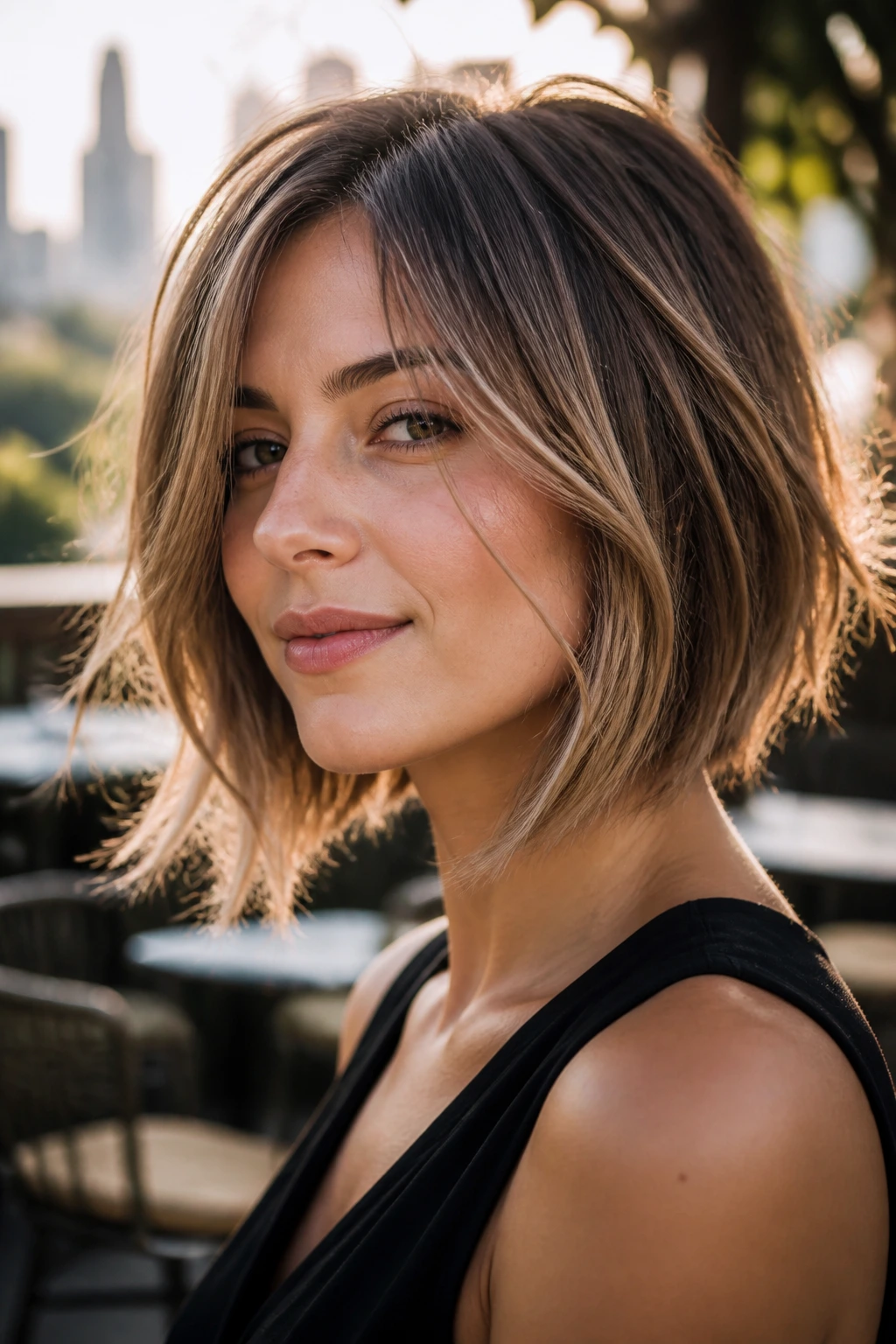
If you find a severe, razor-sharp cut a bit intimidating, the textured inverted lob is your middle ground. This version incorporates point cutting at the ends, which breaks up the line and adds movement. Instead of a solid “block” of hair, you get soft, wispier layers that mimic the natural movement of your hair. This is perfect for those who want to maintain a relaxed, effortless vibe while still benefiting from the slimming effects of the inverted shape.
Creating the Texture
Your stylist will likely use thinning shears or a razor to remove weight from the bottom third of the hair. This removes the “heaviness” that often makes a round face look shorter. When the hair is lighter, it lifts away from the neck rather than hanging like a curtain, which is exactly what we want.
How to Style It Daily
A sea salt spray is your best friend here. Scrunch it into your damp hair and let it air dry. The uneven, beachy texture creates a “messy-chic” look that distracts from facial roundness.
3. The Subtle A-Line Inverted Lob
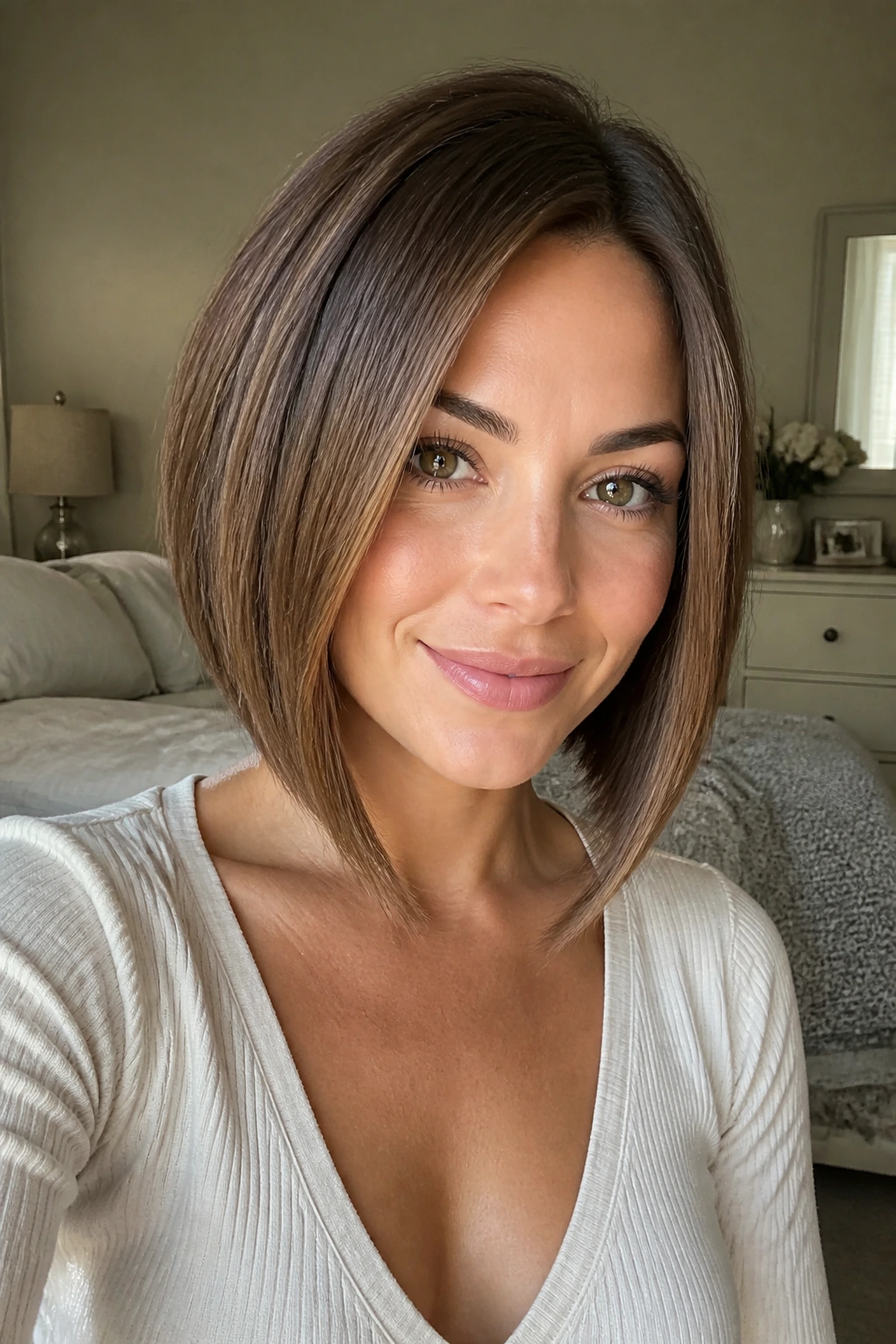
Not every inverted bob needs to look like a geometric masterpiece. The subtle A-line is for the person who wants a shape that is barely there but still functions as a corrective silhouette. The back is only about an inch or two shorter than the front, providing a gentle slope. This is perhaps the most “grown-out” looking version of the cut, making it incredibly low-maintenance and forgiving if you skip a trim by a week or two.
Who Should Choose This
If you have fine hair that tends to go flat, this is an excellent choice. A steep angle can sometimes make fine hair look stringy if there isn’t enough density at the ends. By keeping the angle subtle, you keep the ends looking fuller and healthier.
Maintaining the Shape
Because the angle is soft, this cut stays looking good for longer. You won’t have to deal with the awkward “growing out” phase as quickly as you would with a more severe cut. Just keep your ends dusted every eight weeks to ensure the line doesn’t get frayed.
4. The Deep Side-Parted Inverted Bob
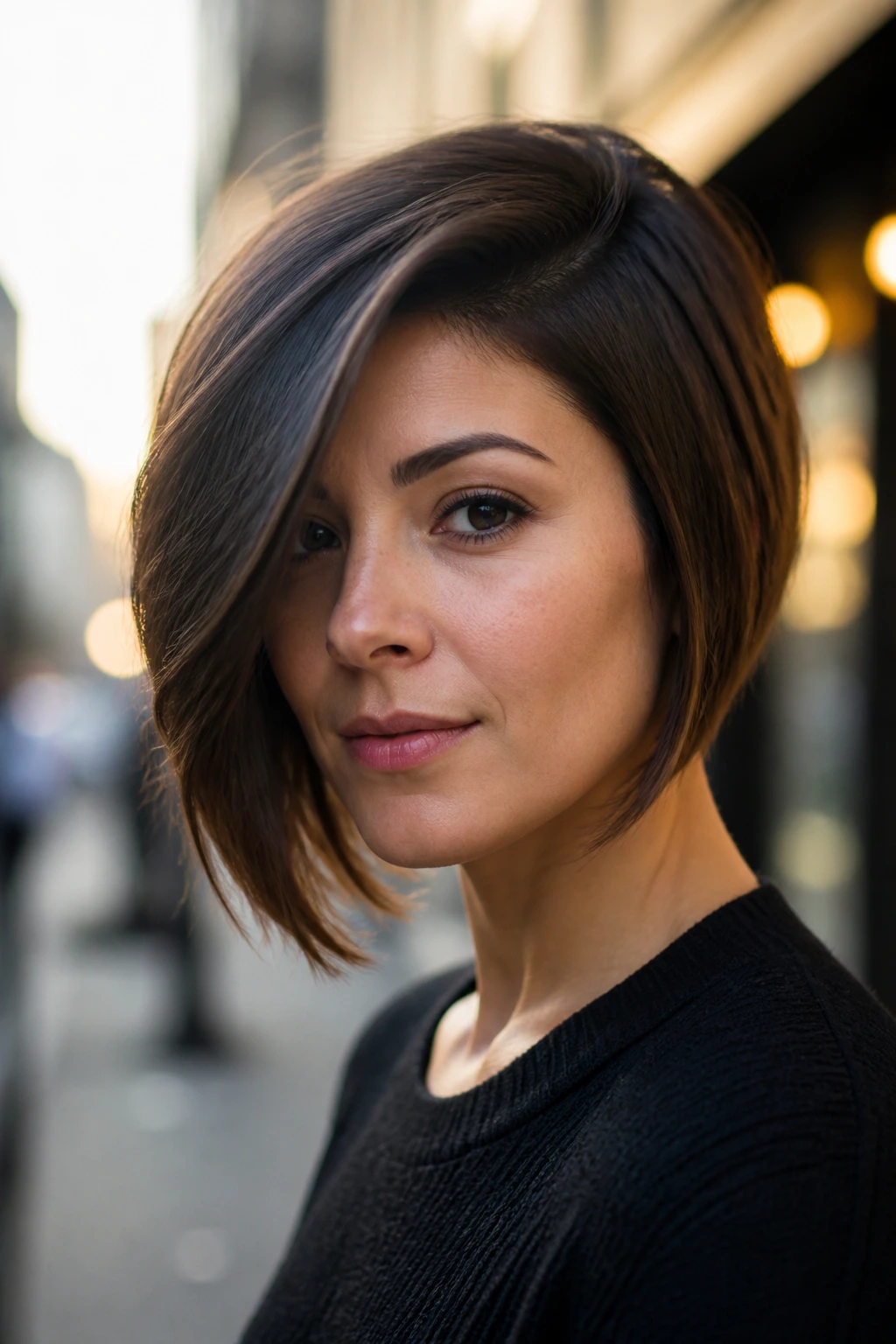
The part is just as important as the cut itself. If you have a round face, a center part can sometimes emphasize that circularity by perfectly bisecting your face. A deep side part, however, breaks up the symmetry and adds an instant diagonal line across your forehead. When paired with an inverted long bob, the effect is doubled: the hair angle creates a line, and the side part creates a secondary line.
Why a Side Part Changes Everything
Moving your part over just an inch or two changes how light hits your face. It creates a subtle shadow on one side, which effectively contours your cheekbones. You don’t need an actual makeup contour kit when your hair is doing all the heavy lifting.
Styling Tip
Start with a volumizing mousse at the roots. When you blow-dry, flip your hair to the opposite side of where you want the part to eventually live. Once it is mostly dry, flip it back over. This simple trick provides massive lift at the root, which prevents the hair from sticking to your face and rounding out your features.
5. The Inverted Bob with Face-Framing Layers
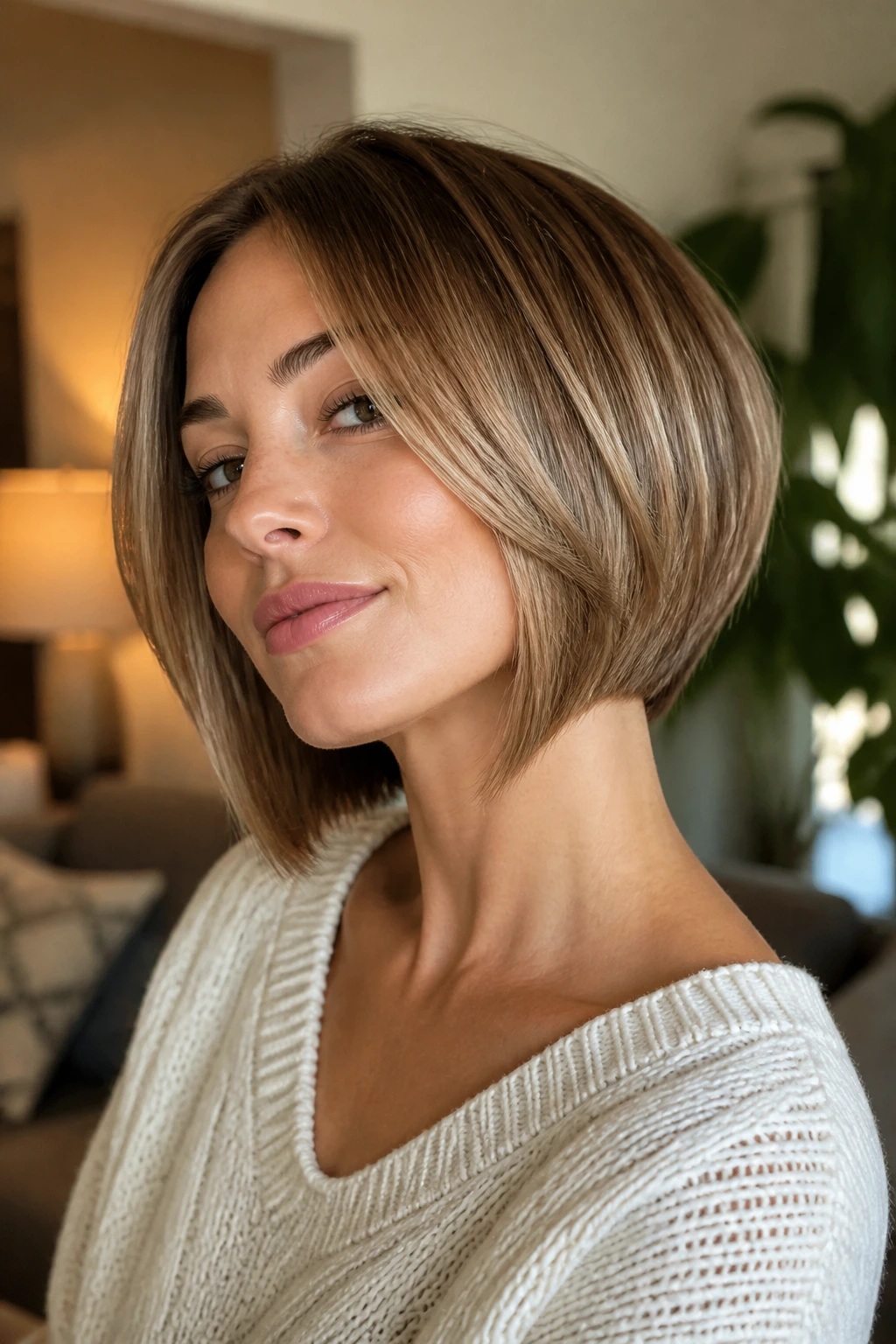
This version takes the classic bob and adds shorter, internal layers around the jaw and cheekbones. For those with a rounder face, you must be careful. If the layers are cut too short—like at the level of your cheeks—they can actually add width. The goal here is to keep the layers long enough to fall past your cheekbones, ideally hitting at the jawline or collarbone.
The Science of Framing
By directing the focus toward the chin, you lengthen the neck. This provides a visual break between your chin and your shoulders, which is a major aesthetic advantage for anyone who feels their face shape is “short.” It creates a long, lean vertical line that runs from the top of your head all the way to your shoulders.
What to Ask Your Stylist
Ask for “internal layering” rather than “face-framing” if you are nervous. Internal layers add movement to the interior of the hair, allowing it to curve inward toward your face. This creates a rounded shape that feels feminine but still elongated.
6. The Sleek and Straight “Glass Hair” Inverted Lob
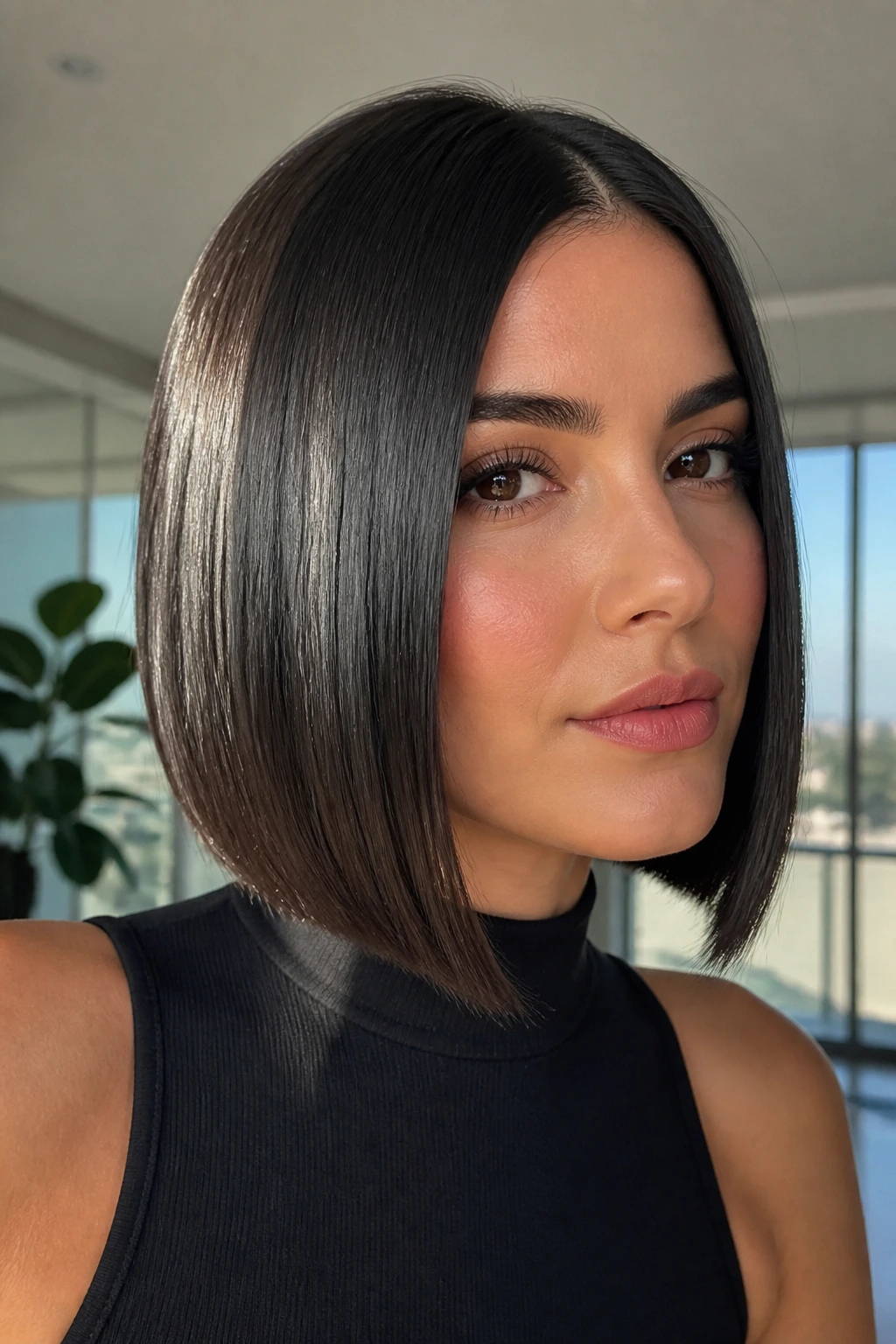
If you have naturally straight hair, this is the version to beat. The “glass hair” trend, characterized by an incredibly high-shine, blunt-cut finish, looks spectacular on an inverted long bob. Because the hair is one length—or close to it—it reflects light like a mirror. On a round face, the clean, vertical lines of glass hair create a very sophisticated, “expensive” look that feels intentional and well-groomed.
Getting the Look
You will need a high-quality ceramic flat iron and a heat protectant serum. The goal is to eliminate all frizz. Frizz adds volume, and volume on the sides of your face is the enemy of the round face shape. You want the sides to be sleek and flat to the face to minimize width.
Key Considerations
- This style requires frequent trims to keep the ends perfectly blunt.
- Avoid using heavy oils, as they can weigh down the hair and make it look greasy rather than glossy.
- A light shine spray is the only finishing product you should need.
7. The Wavy Balayage Inverted Bob
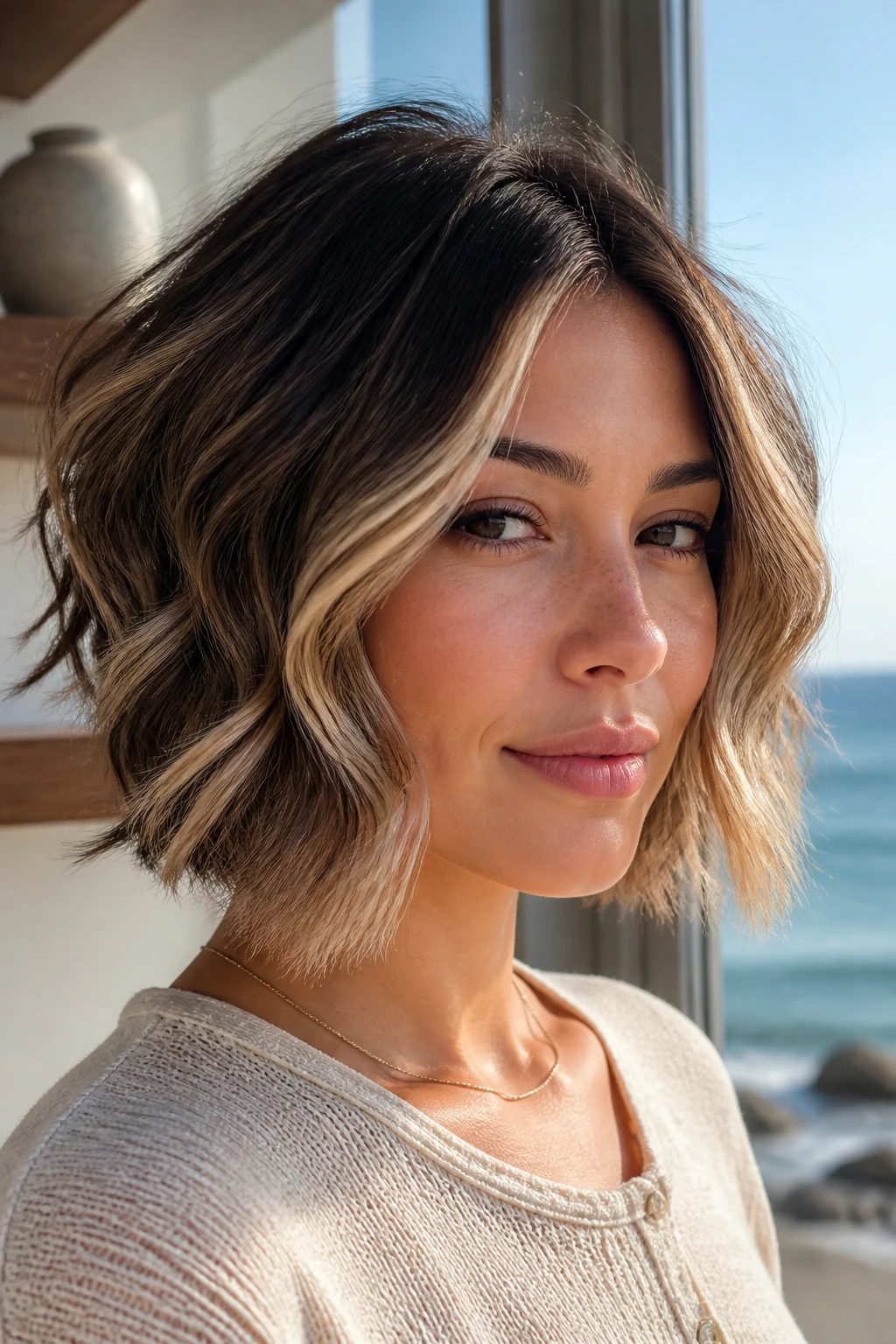
Color is a powerful tool in your arsenal. With an inverted bob, placing lighter pieces toward the front of your hair acts as a natural spotlight. By putting the lightest balayage highlights around your face and jaw, you draw the eye toward the “length” of the bob rather than the width of your cheeks.
Why Wavy Works
Soft waves introduce horizontal texture, but if you keep the waves loose and focus the volume at the ends, you maintain the elongated shape. The key is to avoid “tight” curls, which can look like a halo around the face. Aim for a loose, S-wave pattern that looks like you just woke up from a nap on the beach.
Adding Depth
A darker root color paired with lighter ends creates a gradient effect that draws the eye upward and then down. It’s a subtle bit of misdirection that keeps the face looking balanced.
8. The Stacked Back Inverted Lob
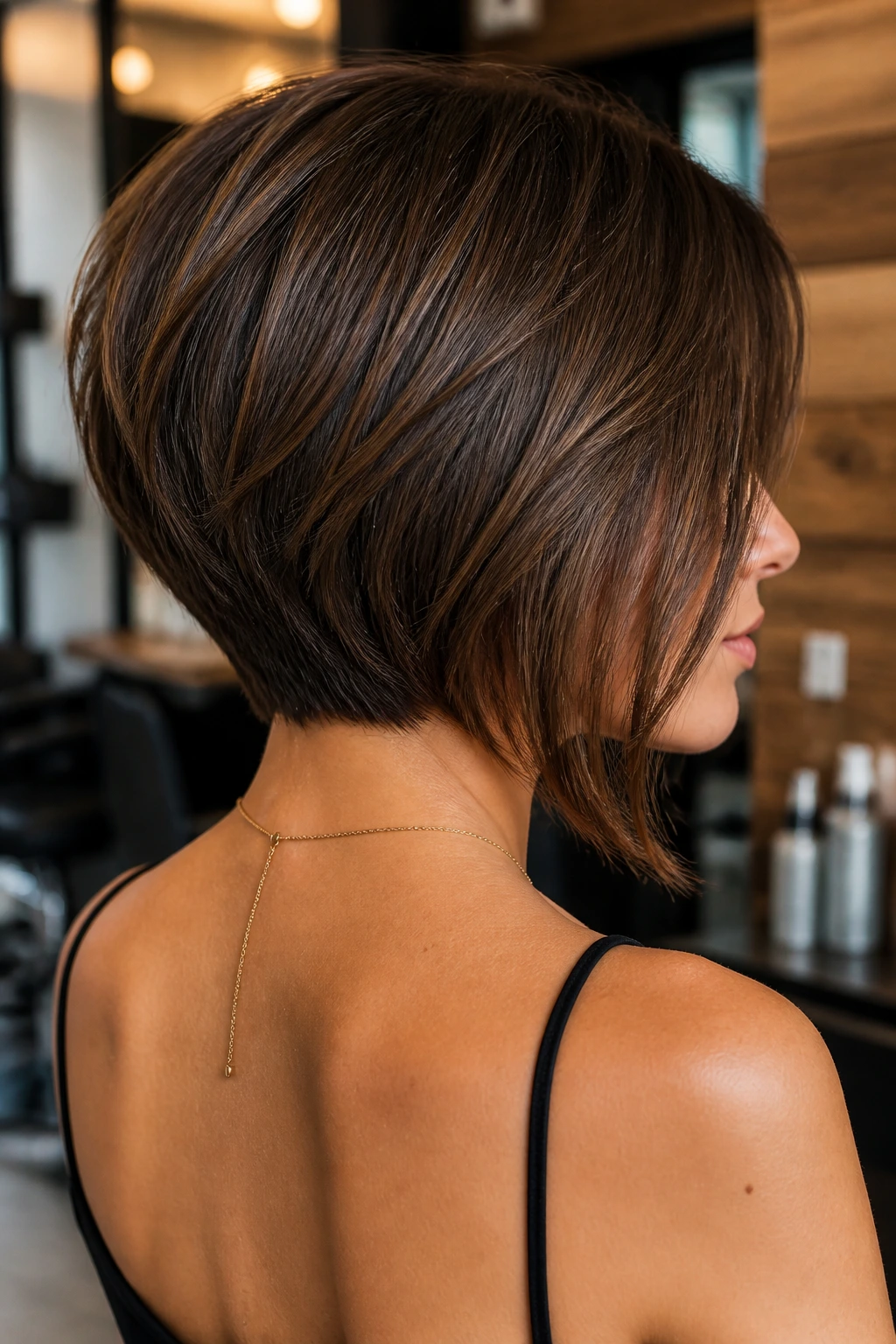
If you find that your hair lacks body, the stacked back is your solution. By cutting short, graduated layers at the nape, you create a “shelf” of hair. This naturally builds volume in the back and at the crown, which provides a beautiful silhouette when seen from the side. This extra height on top balances out a round face, as it adds verticality to your head shape.
Balancing the Stack
Just remember that the higher the stack, the more attention you draw to your neck. If you have a very short neck, don’t go too high with the stacking. Keep it subtle so you don’t compress your profile.
Practical Advice
- This cut looks best when the transition from short layers to long front pieces is smooth.
- Be prepared for slightly more frequent trips to the salon, as the back needs to be “tightened up” to maintain that crisp stacking effect.
9. The Curly Inverted Lob
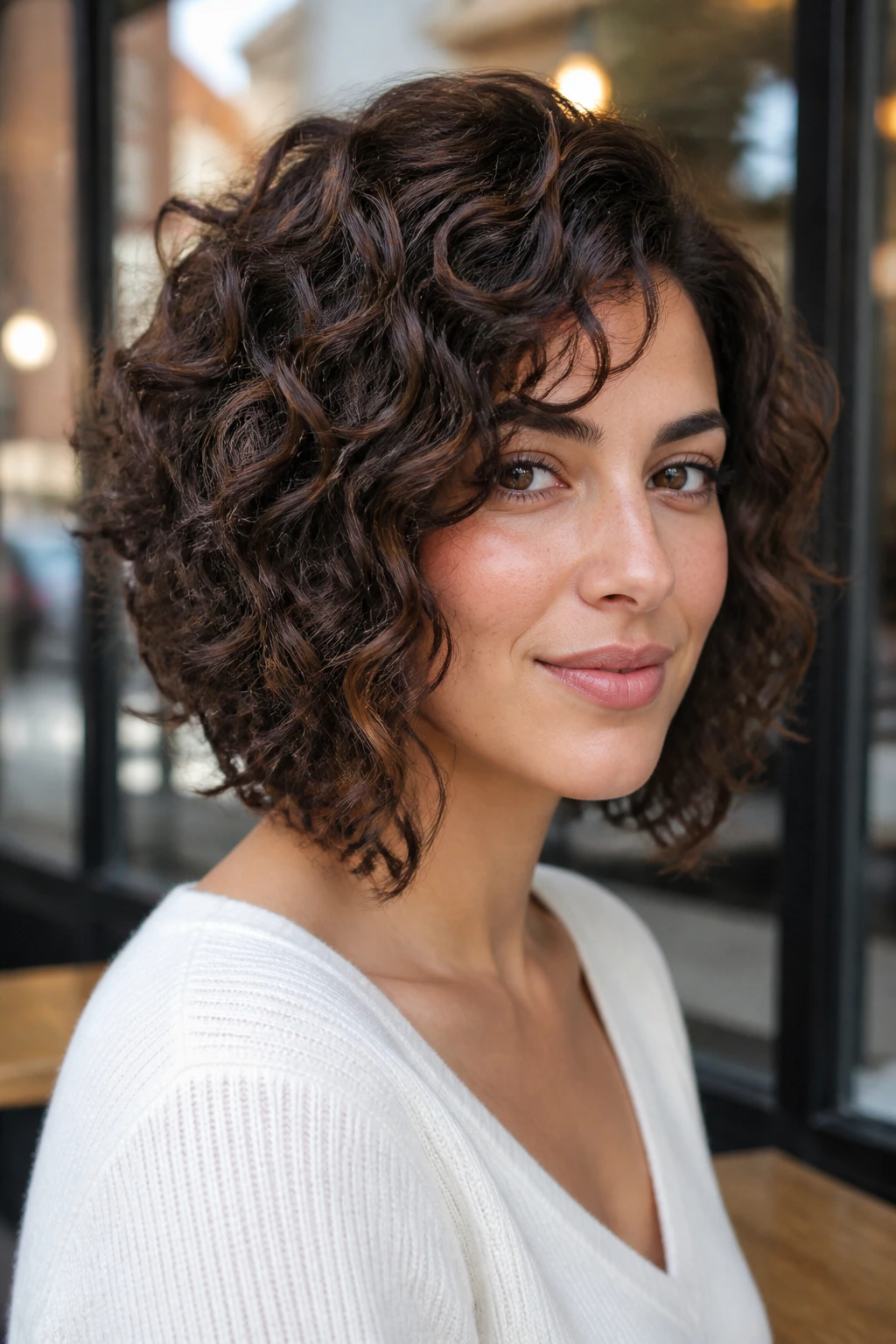
Yes, you can absolutely have an inverted bob with curly hair. The secret is to cut the layers while the hair is dry or in its natural state. If you cut curls while wet and stretched, they will bounce up way higher than you expect, and your “long” bob will suddenly become a chin-length mushroom. You need enough length in the front so that even when the curls shrink, they still frame the jawline.
Managing the Volume
Curly hair tends to expand, which can make round faces look wider. Use a leave-in conditioner to weigh down the curls slightly and keep them clumped together. This creates “ribbons” of curls rather than a frizzy mass, keeping the look controlled and elongated.
The “Shrinkage” Factor
Always have your stylist leave the front sections at least two inches longer than your target length. This gives you room to work with as the curls naturally jump up throughout the day.
10. The Blunt-Cut Inverted Lob
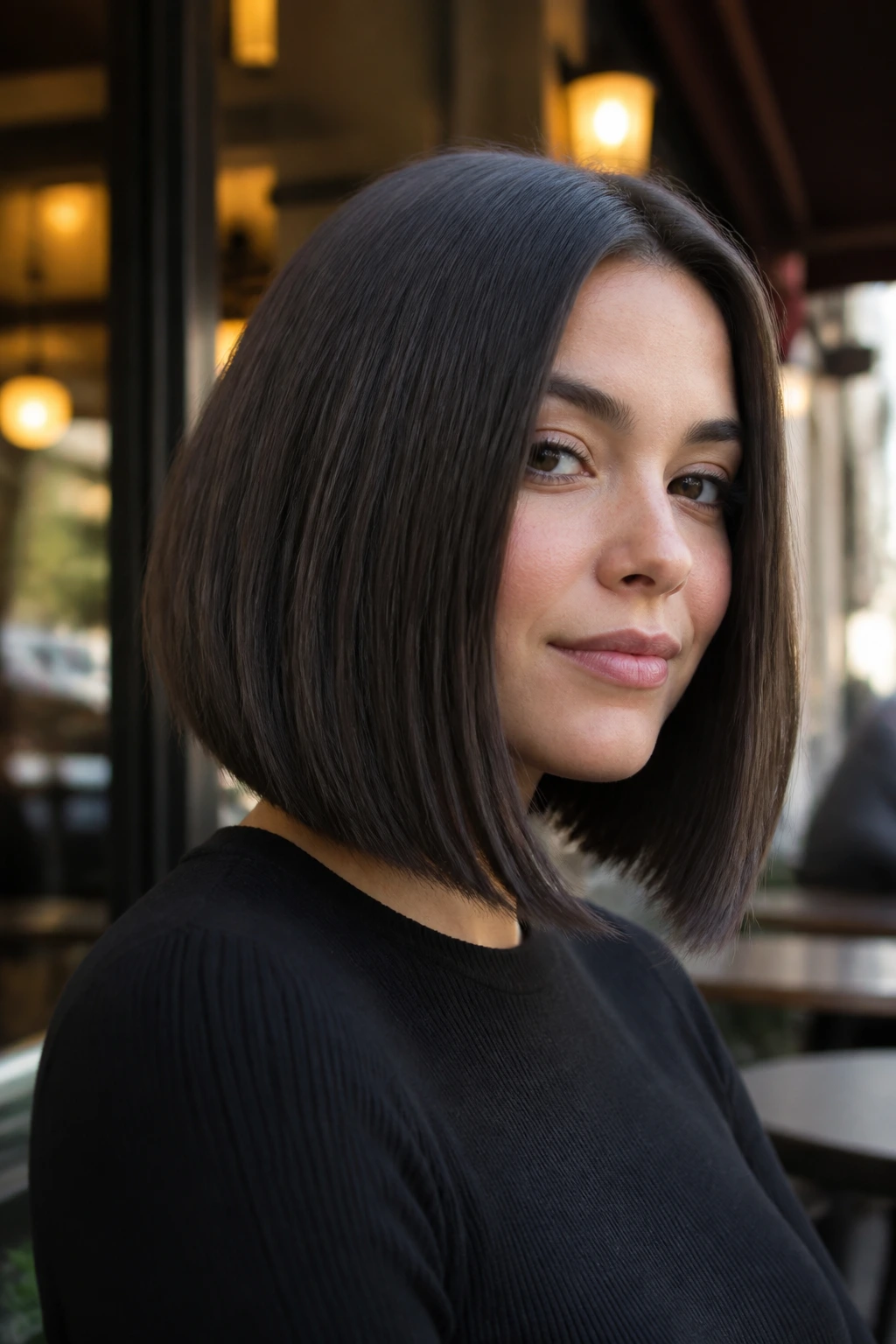
There is something incredibly modern about a blunt, sharp edge. By forgoing the layers, you get a clean, heavy weight at the bottom that pulls the hair down. For thick hair, this is a lifesaver. It removes the “poof” and forces the hair to fall in a sleek, weighted line.
Why Thick Hair Needs This
Thinning out thick hair too much can lead to a weird, triangular shape that is very unflattering for round faces. By leaving the bottom blunt, you ensure the hair hangs straight and heavy, acting as a curtain that hides the edges of your cheeks.
Styling Tip
Use a heavy cream or pomade at the ends to keep them weighed down. If your hair is prone to flipping out at the shoulders, a light once-over with a flat iron can correct the curve so it stays tucked inward.
11. The “Invisible” Layer Inverted Bob
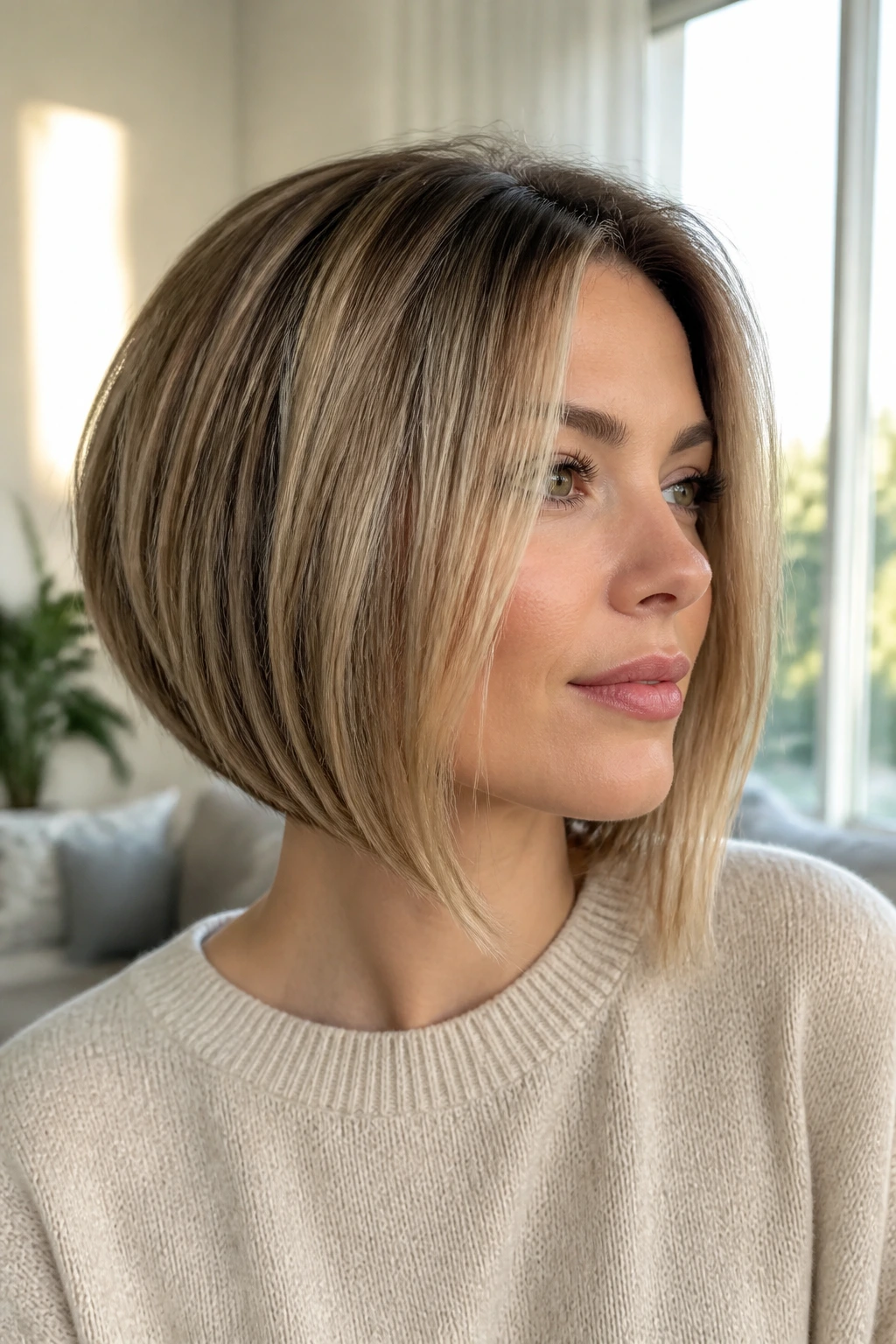
If you want movement without the look of “layers,” ask for invisible, or internal, point-cutting. The stylist takes tiny sections of hair and snips into them vertically, deep in the interior. This creates little “springs” of hair that push the top layers out, giving you volume and bounce without visible stepped sections. It’s the ultimate “I woke up like this” haircut.
The Advantage for Round Faces
Because there are no horizontal layers to cut across your cheekbones, the face appears smoother. You get the benefits of the inverted shape—the elongation—without any harsh lines that might draw attention to the mid-face.
Maintaining the Look
This cut is extremely easy to maintain. Since there are no heavy layers, you won’t get that “shelf” look as it grows out. It’s perfect for someone who only wants to visit the salon three times a year.
12. The Wispy Bang Inverted Lob

Bangs are often avoided by those with round faces, but a wispy, see-through fringe can actually be quite flattering. By creating a light, airy curtain of hair across the forehead, you shorten the face just enough to make it look like a perfectly proportioned oval. When paired with an inverted lob, it creates a very “French girl” aesthetic.
Avoiding the “Heavy Bang” Trap
Stay away from thick, blunt bangs that run straight across the eyebrows. These will cut your face in half and make you look wider. Go for a “curtain” style that is longer on the sides and shorter in the middle.
How to Style
You don’t need a brush for these. Just use your fingers to part them as they air dry. The imperfections are what make it look cool and intentionally messy rather than “done.”
13. The Asymmetrical Inverted Lob

If you want to be a bit daring, try an asymmetrical cut where one side is slightly longer than the other. This break in symmetry is a fantastic trick for a round face. Because the eye is trying to “fix” the asymmetry, it focuses on the lines rather than the roundness of your cheeks.
Who Should Try This
This is perfect for the person who is bored with the standard bob look. It’s edgy, modern, and very easy to style.
Styling Note
Keep the longer side relatively straight. If you curl both sides, the asymmetry gets lost. The straightness of the longer side is what provides that sharp, slimming angle that we are after.
14. The “Mid-Length” Inverted Lob
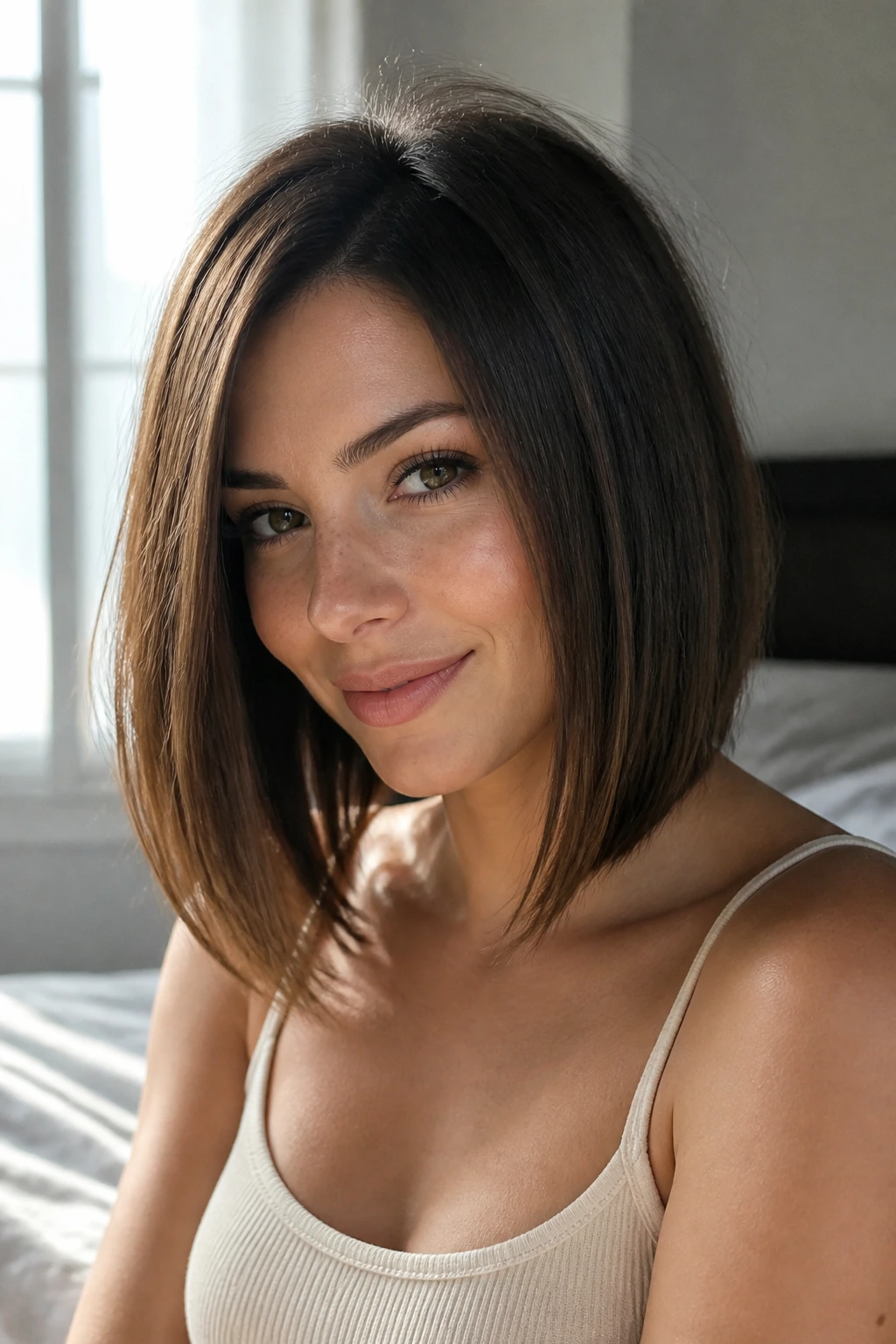
Not quite a bob, not quite long hair, this version hits right at the collarbone. It’s the safest version of the cut. If you aren’t sure if you’re ready to lose your length, start here. The inverted shape still provides the slimming effect, but you have enough hair to feel “covered.”
Why It’s Great for Beginners
It gives you the best of both worlds. You get the structure and modern edge of a bob, but you can still do a top-knot on gym days or messy days.
Tips for Success
Ensure your stylist understands that you want the back to be shorter, even if you are keeping the front long. If they make the back and front the same length, it loses the “inverted” quality entirely.
15. The Deep-Rooted Ombré Inverted Lob
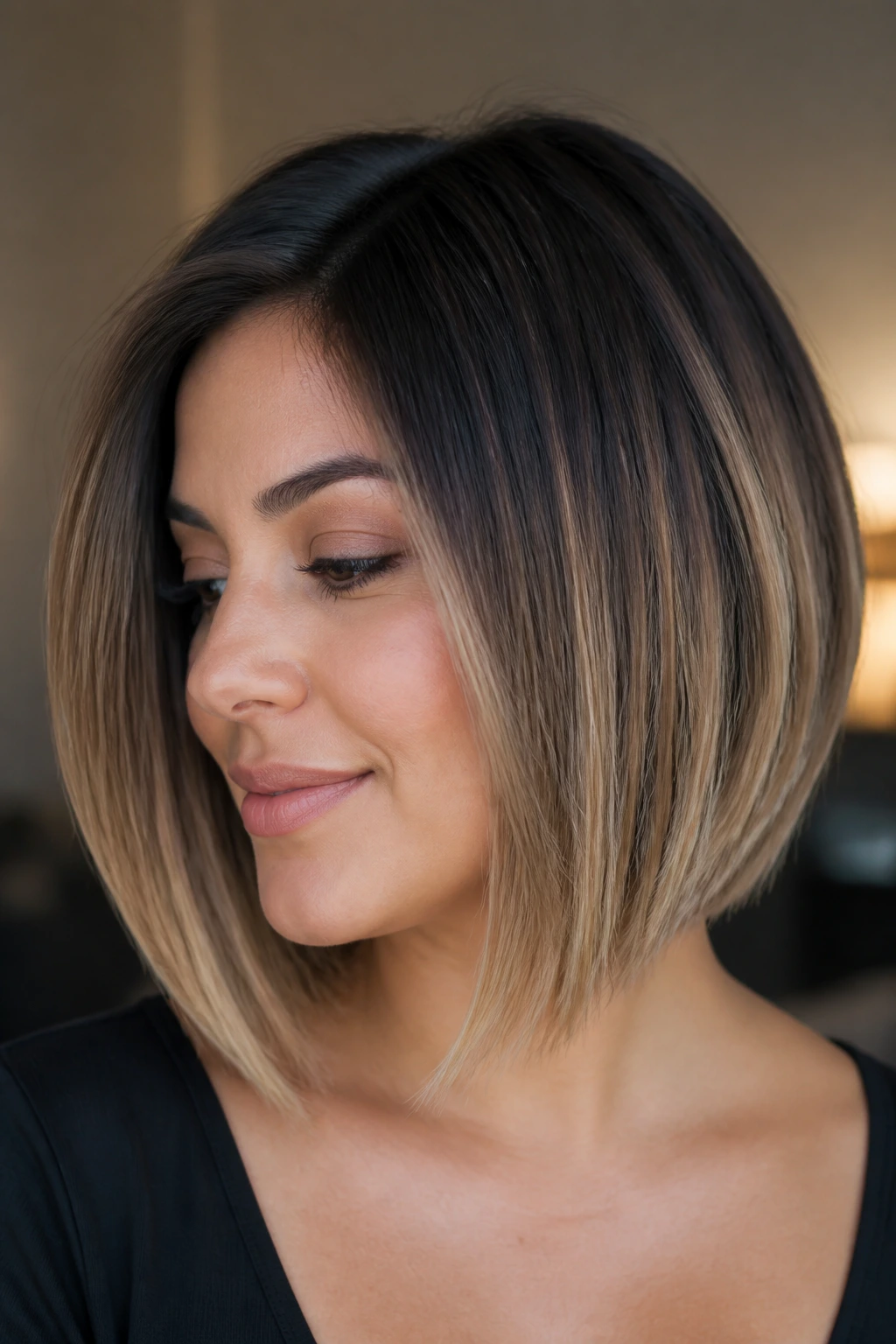
Ombré—or the gradual fading of color—is a great way to soften the transition between the dark roots and light ends. On a round face, the dark at the top helps ground the look, while the lightness at the bottom draws the eye down.
Balancing Color
The secret here is the fade point. If the color starts to get light too high up (like at your cheekbones), it can emphasize the width. Make sure the transition happens lower, toward the jawline, so the light pieces are framing your neck rather than your cheeks.
Practical Maintenance
Ombré is excellent for low-maintenance hair lovers. Since the roots stay dark, you don’t need to worry about touch-ups for months at a time. It grows out beautifully.
16. The “Shaggy” Inverted Lob
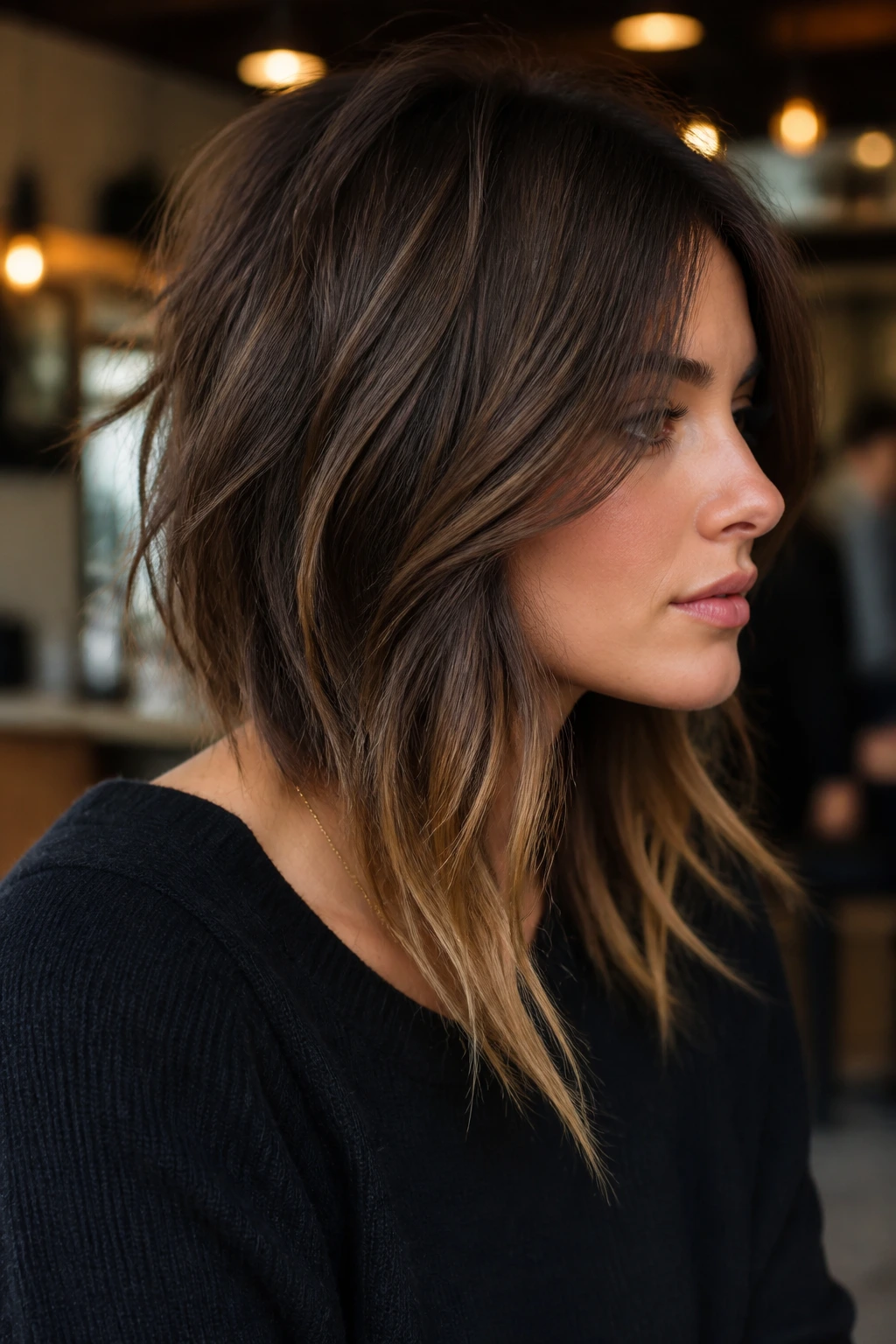
Shags have made a massive comeback, and applying that vibe to an inverted bob is pure brilliance. With tons of choppy, short layers on top and a longer, pointed tail, you get movement, volume, and an incredibly cool, retro-rocker look.
How it Slims
The height on top acts as a vertical highlighter. The choppy layers around the sides create shadows that “carve out” your cheekbones. It’s a very sculpting haircut.
Styling
You need a texturizing pomade. Rub it between your hands and run your fingers through your hair to separate the layers. The more definition you have, the better this cut looks.
17. The Sleek Lob with “Face-Framing” Highlights
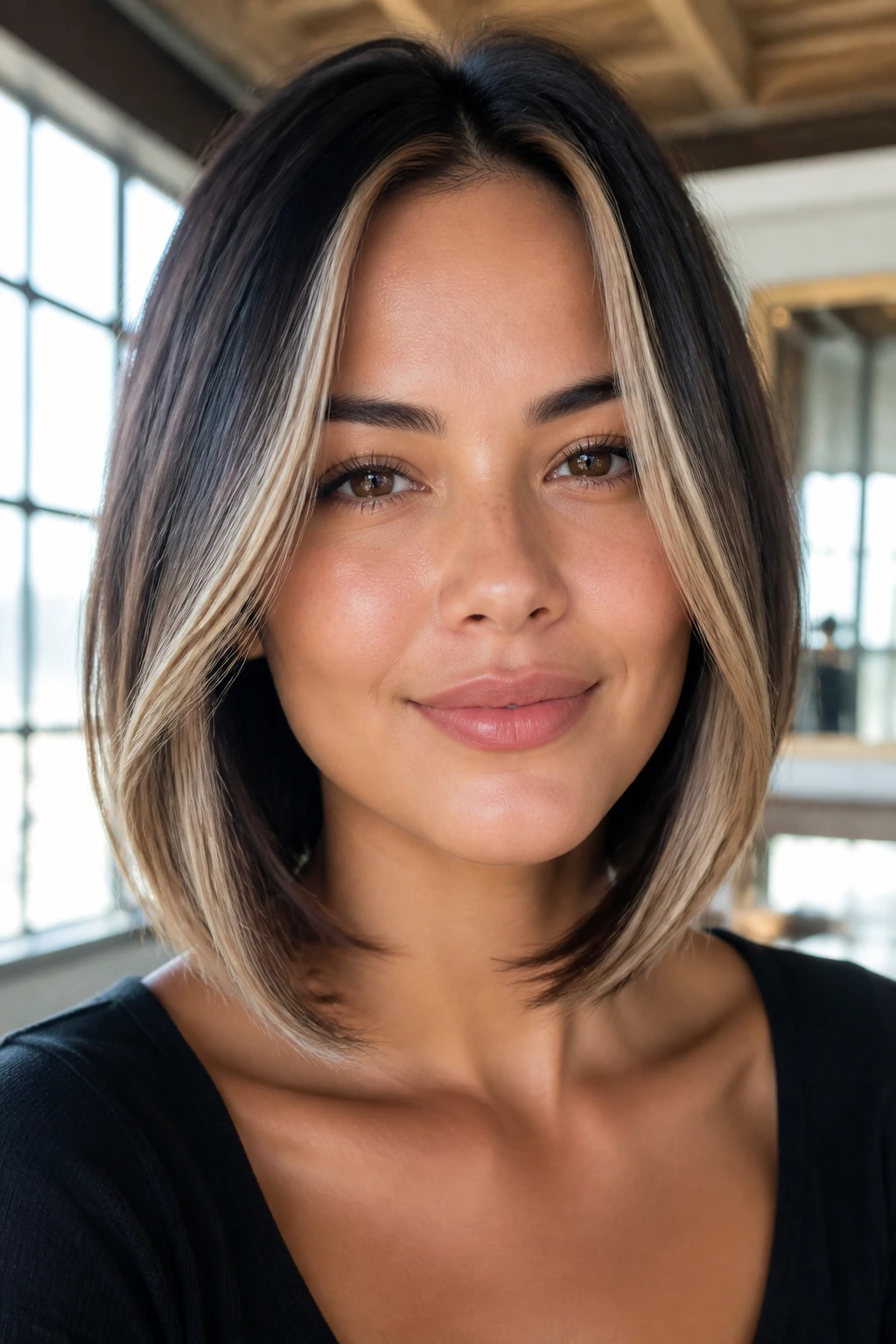
If you have dark hair, adding a couple of brighter, face-framing “money pieces” can totally change your face shape. By putting light blonde or caramel highlights right along the front edges of your inverted bob, you create a “frame” that sits inside your hair, effectively narrowing the visual footprint of your face.
The Color Theory
Bright colors attract the eye first. By placing them on the front sections of your bob, you ensure that people notice the vertical line of your hair before they notice the roundness of your face.
Simple Maintenance
You only need to touch up the two front sections every few weeks, which is much cheaper and faster than a full head of highlights.
18. The “Undercut” Inverted Lob
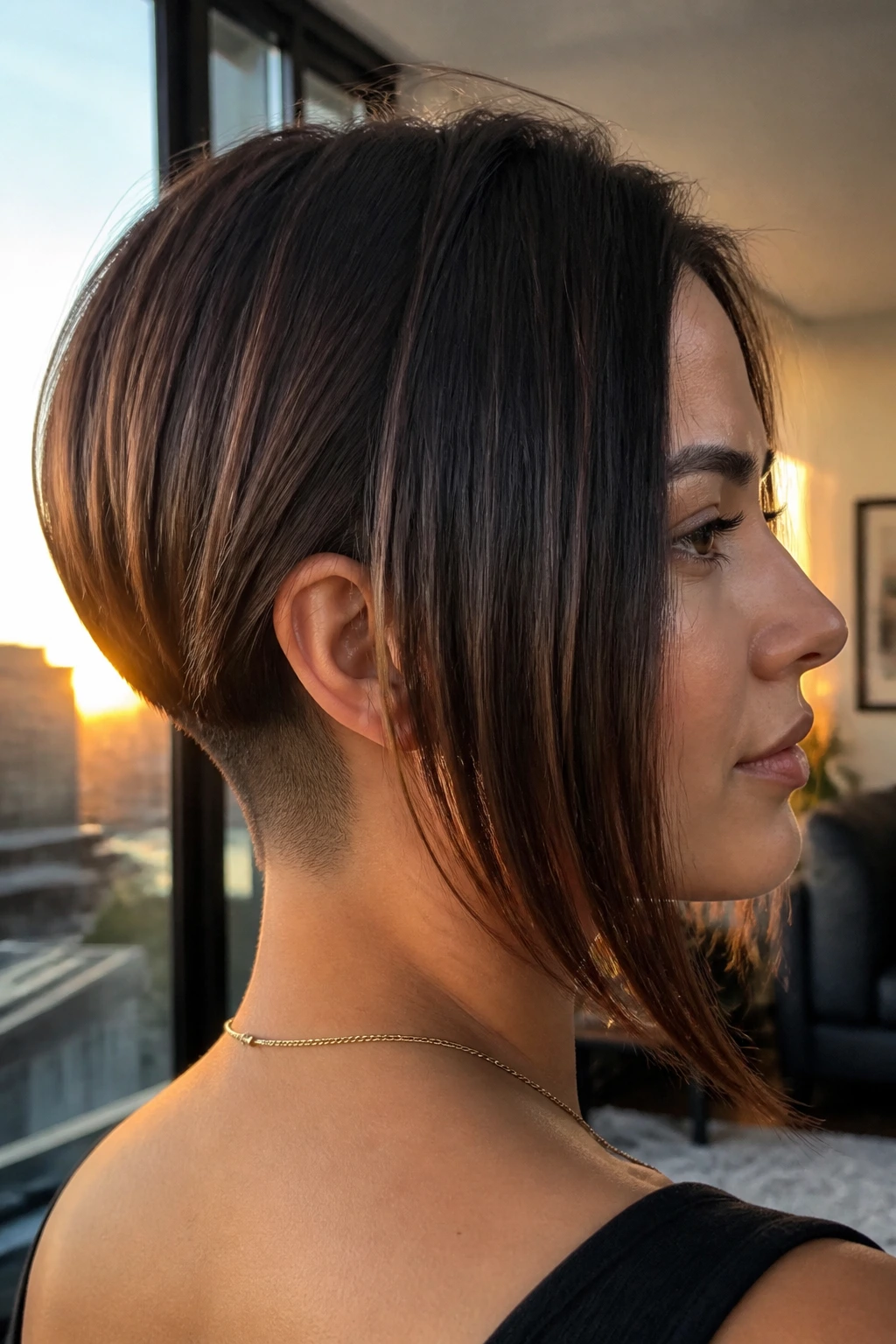
For those who want to be truly bold, an undercut at the nape can change how your hair sits. By shaving a small section at the base of your hairline, you remove all the “bulk” that can make hair look thick and round. It forces the remaining hair to lay flatter, creating a sleeker, more inverted profile.
Why It Works for Round Faces
Excessive thickness at the bottom of the neck is the enemy of a sharp inverted lob. The undercut keeps that area clean and flat, allowing the hair to maintain its sharp slope.
Is it for you?
If you have very thick, coarse hair that struggles to lay flat, an undercut is a total game-changer. It’s an invisible fix—nobody will even know it’s there unless you put your hair up.
19. The “Beach-Waves” Inverted Lob
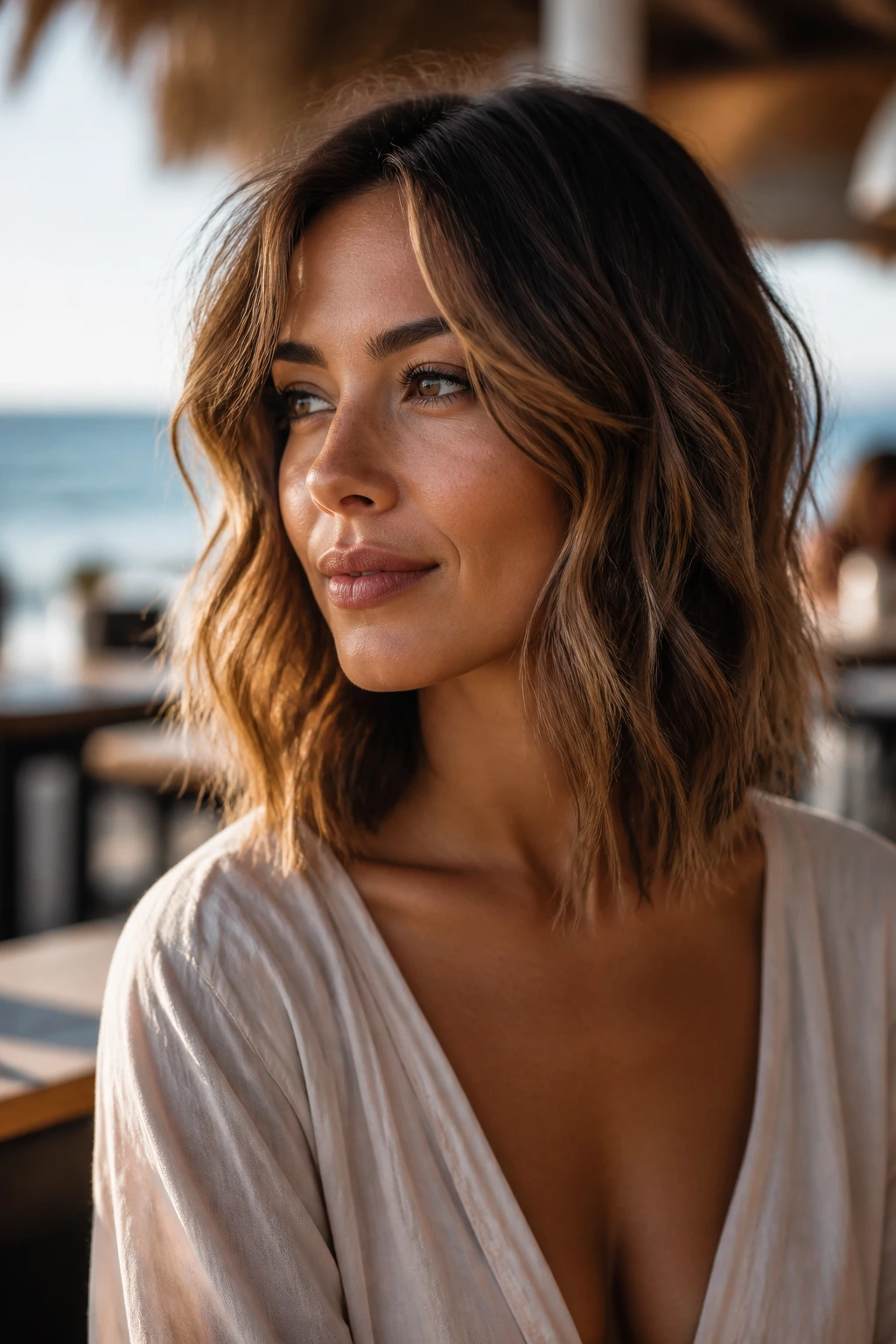
This is the quintessential summer style, but it works all year round. The goal is soft, loose waves that don’t have too much structure. Use a large-barrel curling iron and only wrap the middle sections, leaving the ends straight.
The Benefit
Leaving the ends straight preserves the “pointy” look of the inverted bob. If you curl the ends, they will flip out and create width. Keeping them straight ensures the hair continues to point downward, preserving that essential elongation.
Styling Product
A dry texture spray is essential. It gives the hair that “day two” look, which is always more flattering than freshly washed, slippery hair.
20. The “Pinned-Back” Inverted Lob
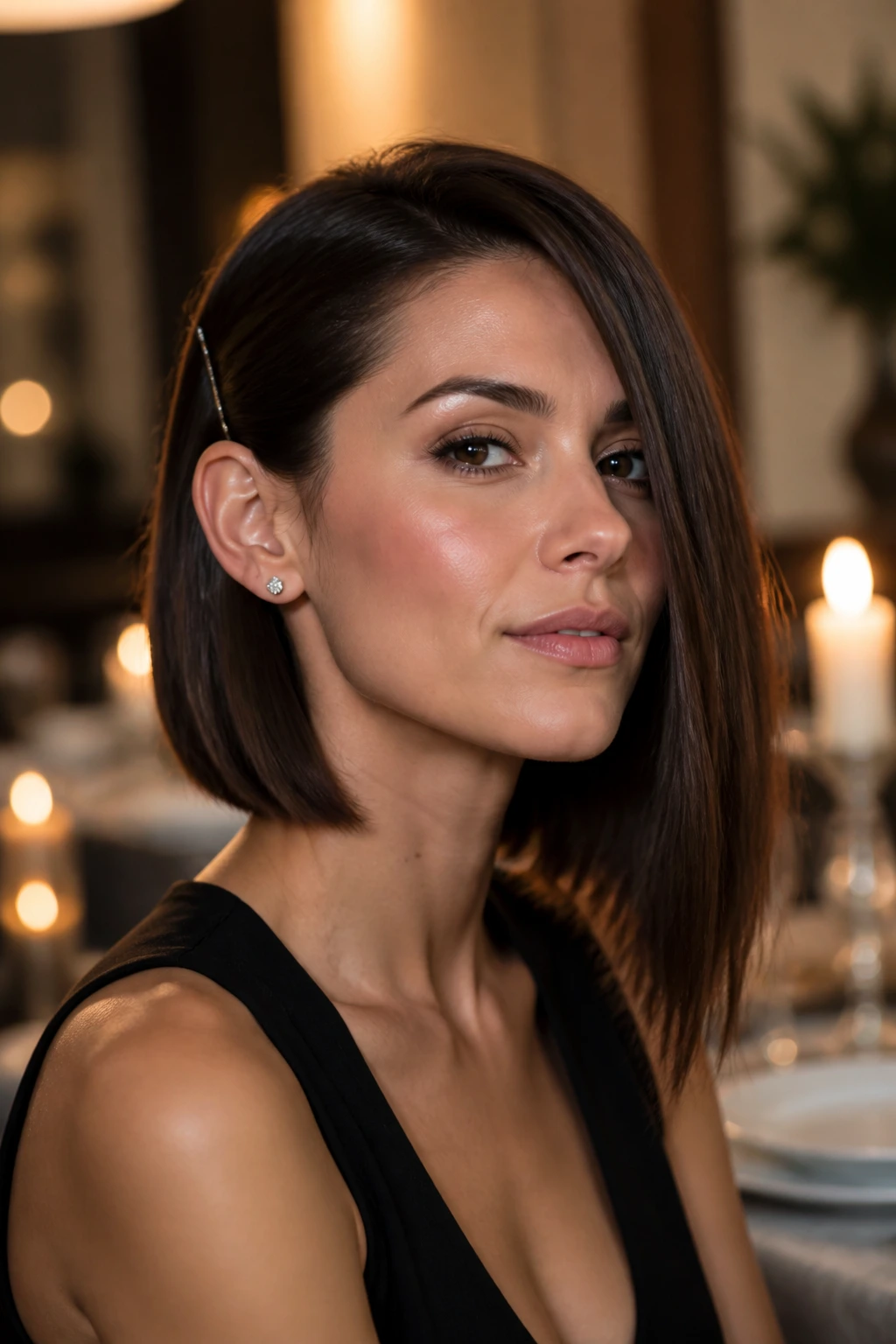
Sometimes, the best way to flatter your face is to open it up. Pinning back one side of your inverted lob behind your ear creates an asymmetrical shape that is incredibly chic. It showcases your jawline and neck while keeping the other side long to provide the slimming effect.
A Quick Transformation
You can do this with a simple bobby pin or a decorative clip. It changes the entire silhouette of the cut in about three seconds.
When to Use This
This is a great look for dinner dates or meetings where you want to look polished but not overly rigid. It feels intentional and stylish.
21. The “Wet-Look” Inverted Lob
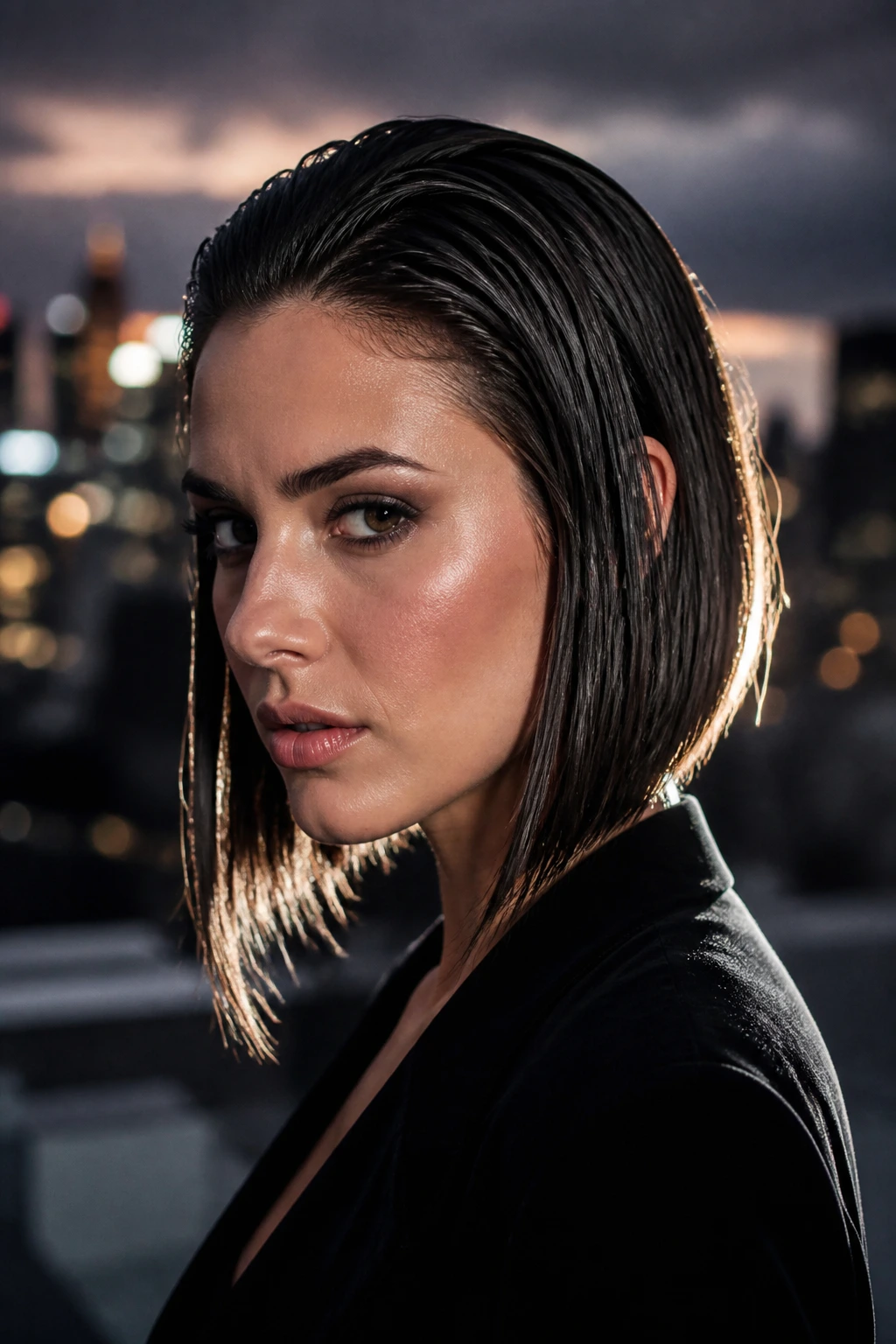
Fashion-forward and incredibly sleek, the wet-look style is all about control. Using a strong-hold gel, you can slick your hair back or down to create a shape that stays exactly where you put it. It’s the ultimate way to maintain the sharp angle of your cut without worrying about wind or humidity.
Who Should Wear This?
This is definitely a “high-fashion” look. It’s perfect for a night out or a special occasion.
Technique
Work a dollop of gel through damp hair, then use a wide-tooth comb to pull it tight against your head. It’s bold, it’s sharp, and it is entirely focused on the geometry of the cut—which is exactly what a round face needs to look elongated.
Final Thoughts
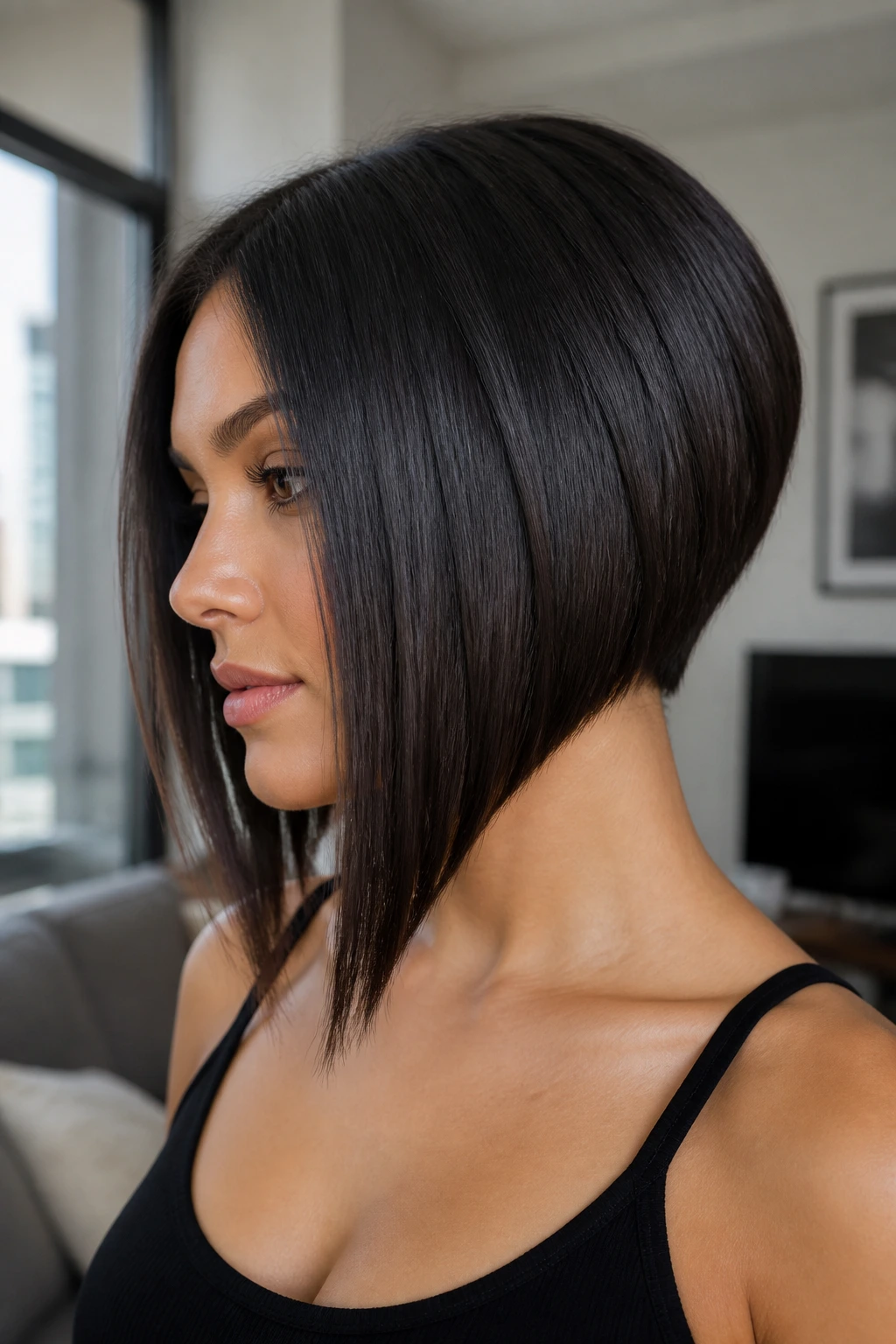
Choosing the right inverted long bob is about understanding the geometry of your own hair. Whether you want something sharp, textured, layered, or colored, the underlying principle remains the same: use length and angles to draw the eye downward. The beauty of this style is that it grows out gracefully and can be adapted to almost any hair texture.
Don’t be afraid to ask your stylist for “more angle” if you feel your current cut isn’t giving you that slimming effect. Sometimes, just cutting an extra inch off the back makes all the difference in the world. Stick to the diagonal lines, keep your ends clean, and you will find that the inverted lob is the only haircut you ever really need. It’s not just a style; it’s a framework for your features that works with you, every single day.