


The transition to a bob haircut is often seen as a bold stylistic pivot, yet when you combine the classic, sharp angles of a bob with the protective longevity of box braids, you arrive at something uniquely versatile. We are moving away from the idea that braids must always be waist-length or impossibly heavy to be considered impressive. Instead, there is a growing appreciation for the chin-grazing, shoulder-skimming silhouette that allows your natural hair to rest, recover, and look incredibly intentional at the same time.
Choosing a shorter length for your braided style is not just an aesthetic preference; it is a practical way to manage scalp health, reduce neck strain, and enjoy a look that stays pristine far longer than an elaborate, floor-sweeping installation. Whether you gravitate toward a blunt, architectural cut or something softer and more textured, a box braid bob provides the structure you need for daily ease while maintaining the artistry of traditional braiding. The following breakdown covers everything you need to know about navigating the world of bob-length braids and picking the specific style that suits your features and maintenance routine.
The Versatility of Blunt-Cut Bob Braids
A blunt-cut bob is the gold standard for people who value precision and minimalist aesthetics. Because the ends are cut straight across, the style feels deliberate and sharp. When executed with high-quality kanekalon or expression hair, this look mimics the visual impact of a high-end salon blowout while remaining entirely protective of your natural hair.
Why Precision Matters at the Ends
The key to a successful blunt bob lies in the seal. You want the ends to look thick and uniform. If the braider tapers the hair too aggressively, you lose that signature boxy, modern edge that defines the style. Request that your braider cut the hair straight across after the braids are installed. This ensures the line is perfectly horizontal and accounts for any slight variations in the length of the individual braids.
Managing Weight and Density
Because you are opting for a shorter length, you can usually afford to have a slightly fuller, denser appearance without the heaviness associated with long styles. However, be mindful of the “halo” effect. If the braids are too thick at the root, the bob will puff out rather than laying flat. Focus on smaller-to-medium-sized box parts at the nape of your neck to help the style hug your head properly, creating that iconic, sleek shape.
Incorporating Goddess Ends for Softness
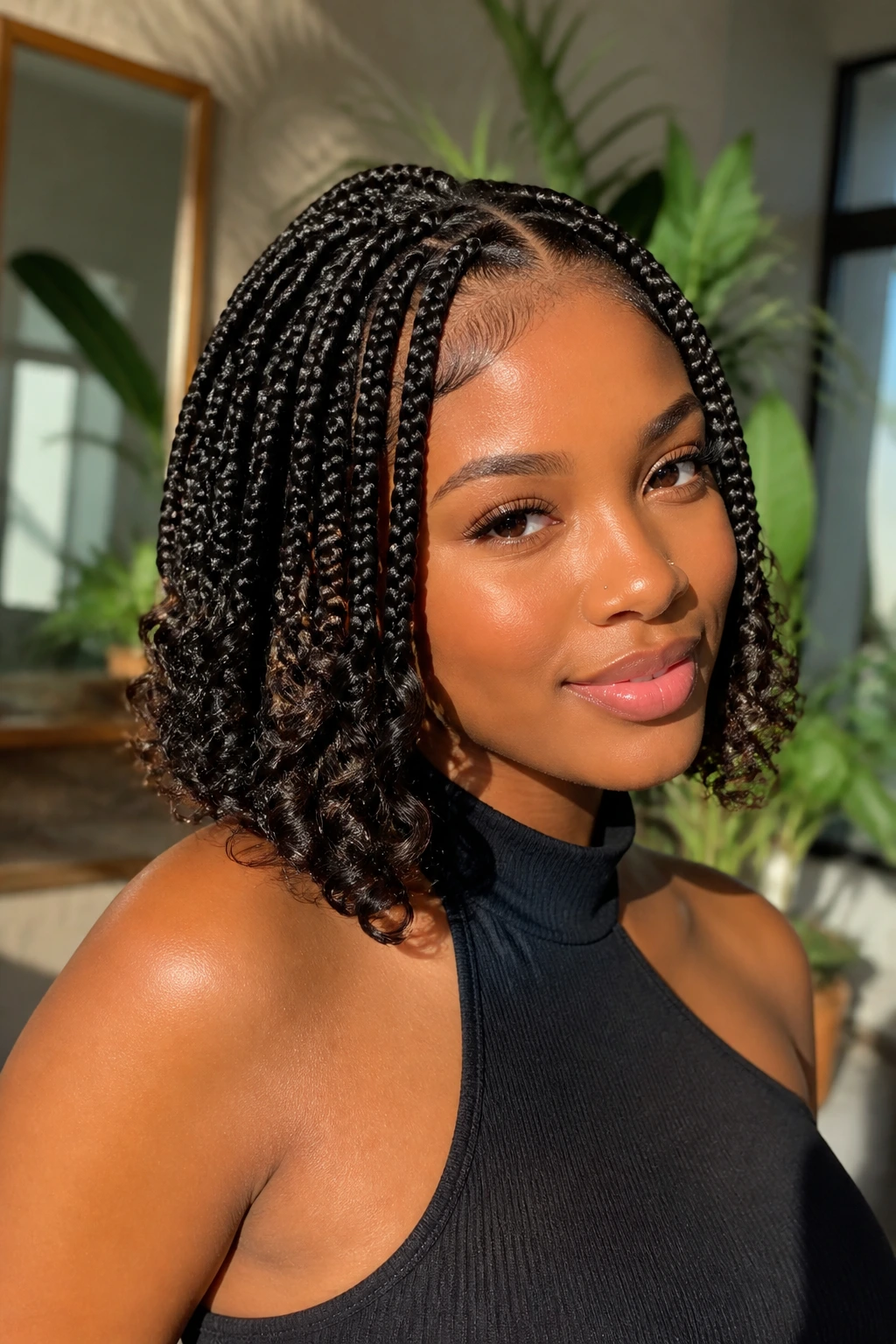
If the blunt, architectural look feels too severe, you might prefer a “goddess” variation. This style introduces loose, curly strands at the ends of each braid, which breaks up the rigid line of the bob and adds movement. It is a fantastic option if you want a look that feels more romantic or relaxed during warmer months.
Choosing the Right Curly Hair
Not all synthetic hair curls the same way. For goddess-style bobs, you need high-quality human hair or premium synthetic deep-wave bundles. Human hair is superior if you plan to keep the style for more than six weeks, as synthetic hair tends to frizz and matte significantly faster. When the curls inevitably lose their spring, you can revive them by applying a lightweight water-based mousse or a tiny dab of leave-in conditioner.
Avoiding Tangling at the Ends
The primary downside to adding curly ends is the inevitable friction that happens when the hair rubs against your shoulders or clothes. To mitigate this, keep the curls contained when you sleep. Using a satin bonnet is non-negotiable here. Also, trim any long, stray hairs that start to frizz—a little maintenance with a sharp pair of scissors will keep the bob looking fresh throughout its lifespan.
The Asymmetrical Bob for Modern Edge
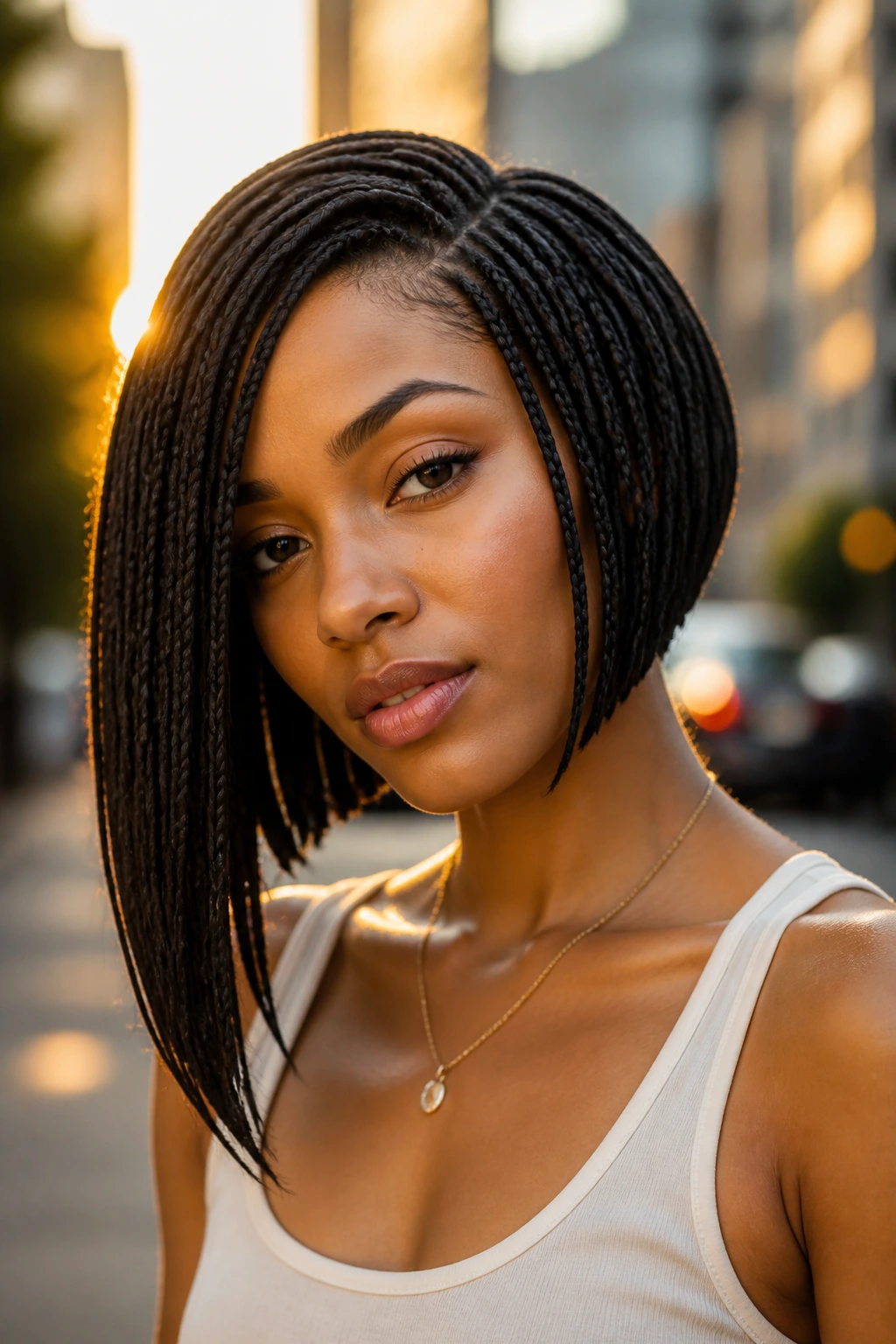
Symmetry is comforting, but asymmetry is memorable. An asymmetrical box braid bob—where the hair is longer on one side than the other—is a sophisticated take on the classic style. It frames the face in a way that highlights the jawline and cheekbones, making it a particularly flattering choice for round or square face shapes.
Designing the Transition
The success of an asymmetrical cut relies on the transition zone. You do not want a sharp drop-off; you want a gradual, elegant decline. Talk to your stylist about the angle of the cut before they begin braiding. They may need to vary the length of the individual braids slightly as they work around the head to ensure the final trim follows a smooth, sweeping diagonal line.
Styling Around the Face
With an asymmetrical bob, one side is naturally going to be more prominent. You can lean into this by accessorizing the shorter side with cuffs or beads, while letting the longer side drape softly over your shoulder. This imbalance is the style’s main selling point, so avoid tucking the longer side behind your ear too often, as this can distort the intentional shape of the cut.
Adding Color Blocks for Visual Interest
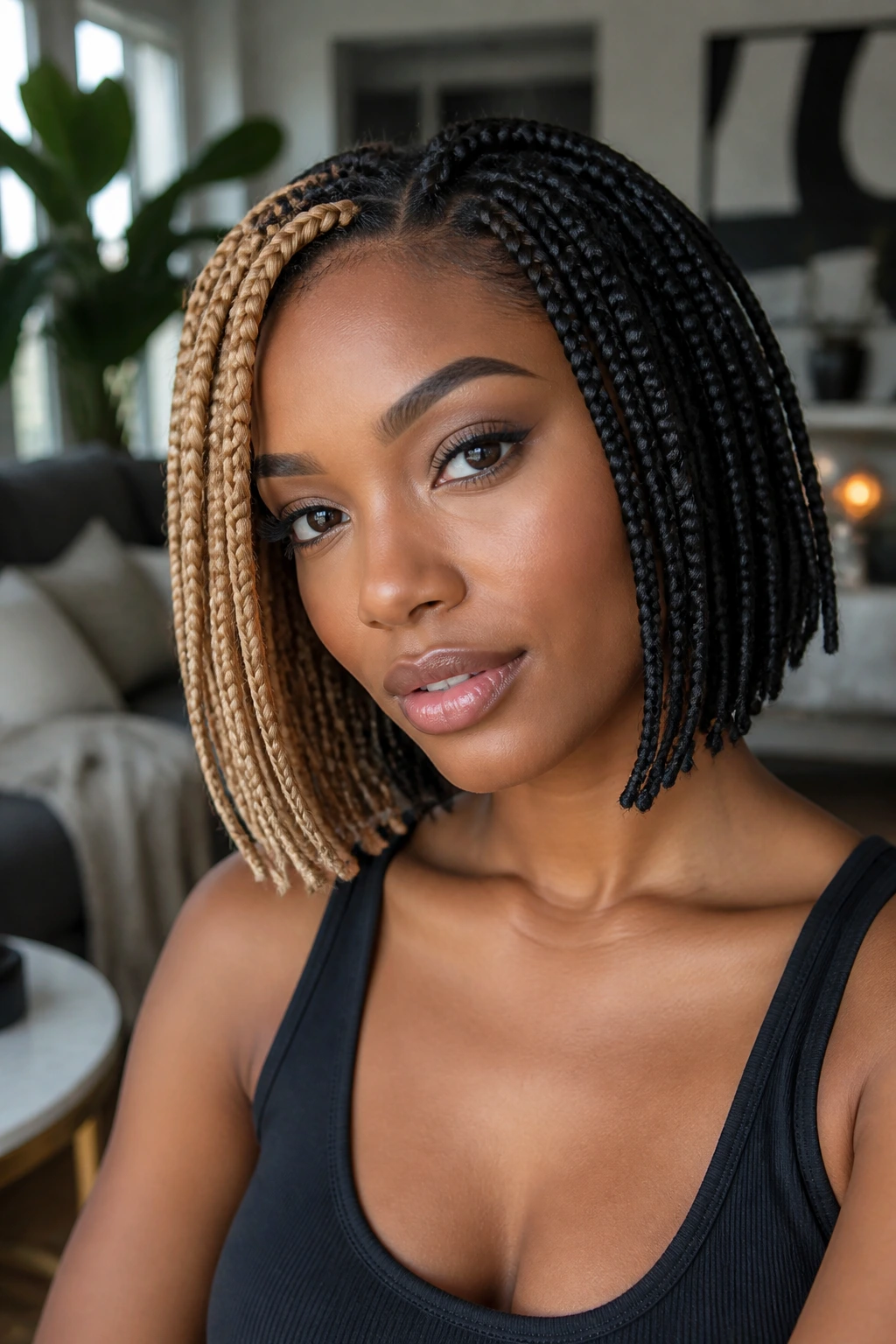
One of the best things about working with braiding hair is the ability to experiment with color without ever touching your natural tresses. Box braid bobs are the perfect canvas for color blocking, specifically the “money piece” trend or chunky highlight placement. Since the style is shorter, the colors appear more concentrated and impactful.
Selecting Complementary Tones
If you have a darker natural hair color, deep burgundy, honey blonde, or even vibrant cobalt blue can add immense depth to a bob. Because the style is short, you do not need much hair to make an impression. You might choose to do a 50/50 split where one side of your head is your natural shade and the other is a bold, contrasting color.
Color Placement Strategy
Think about how you usually part your hair. If you have a deep side part, ensure your braider places the lighter color on the side that receives the most light. This draws the eye directly to your face. Keep in mind that lighter colors sometimes have a different texture than darker, natural-shade hair, so ask your braider to mix the bundles to maintain a consistent density throughout the bob.
Boho-Inspired Braid Bobs with Texture
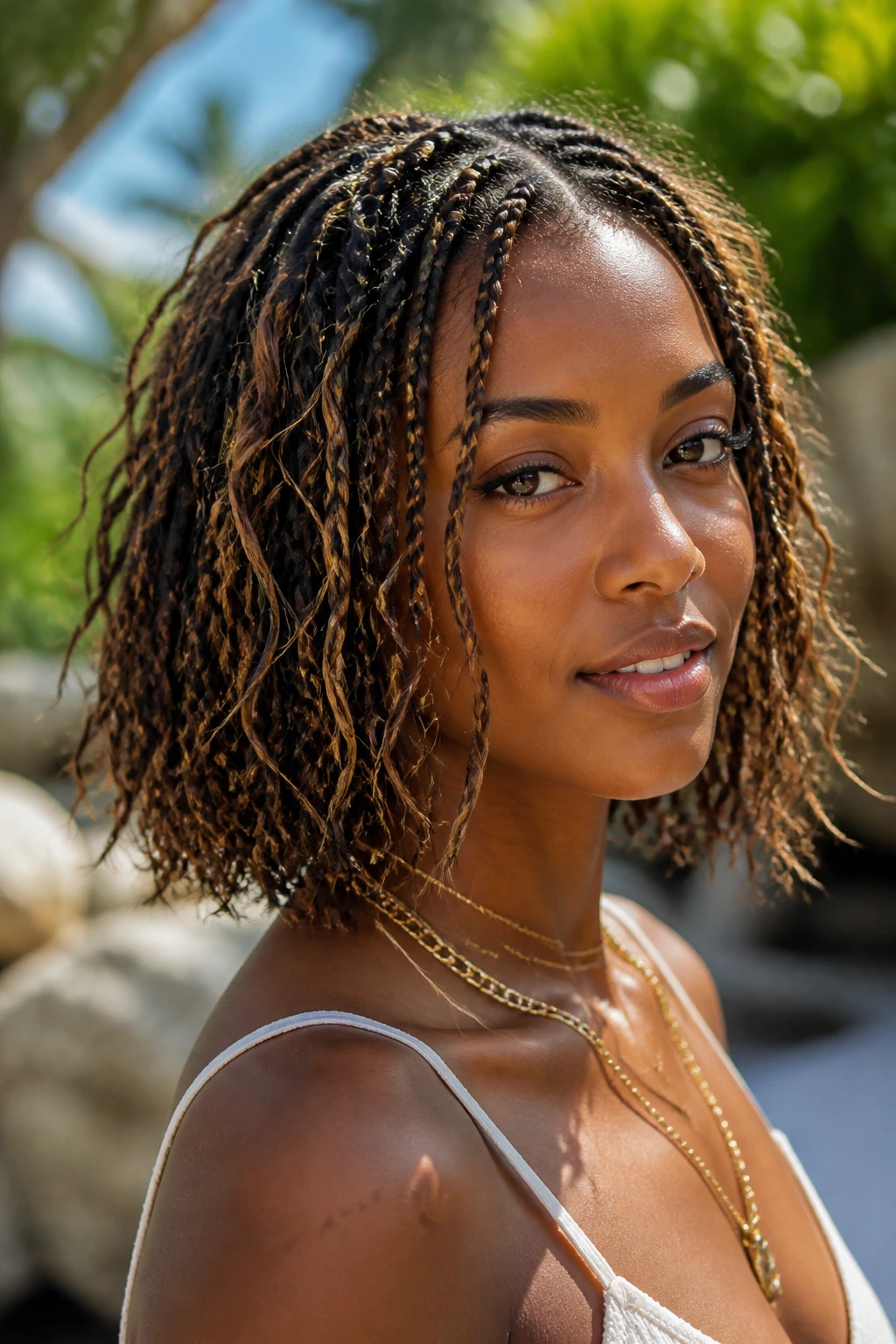
Boho braids are characterized by their “messy” appeal. Unlike traditional box braids that are sleek and polished, a boho bob is meant to look lived-in. This usually involves adding loose strands throughout the length of the braid, not just at the ends, creating a multidimensional look that feels very organic.
Managing the Boho Strands
The beauty of a boho bob is that it gets better as it ages. The slight fuzziness that develops over time actually enhances the boho aesthetic. However, you should still be careful with the loose hair. Avoid brushing through these strands with a hard-bristled brush. Instead, use your fingers to detangle the loose hair occasionally, adding a bit of hair oil to keep it from drying out.
Volume and Shape
Because boho braids are inherently fuller, this look works best when the bob is cut slightly shorter—perhaps right at the jawline. This prevents the style from becoming too heavy and overwhelming your features. If you are going for this look, ensure your braider uses a lighter-weight braiding hair to prevent the style from dragging on your head, especially since the addition of loose hair increases the total weight of the installation.
The Layered Bob for Maximum Movement
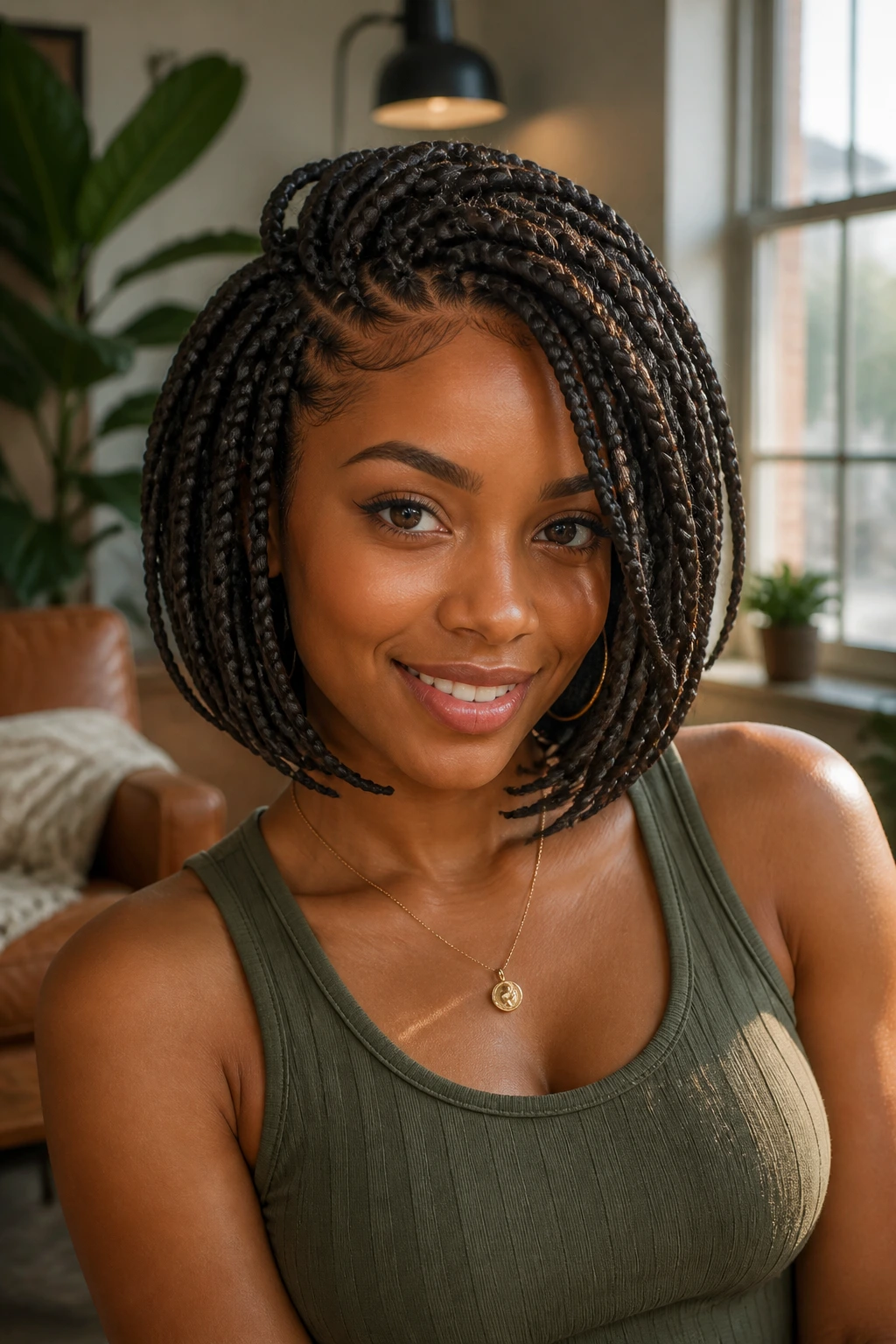
Layering is often overlooked in the world of braids, but it is the secret to a bob that doesn’t just sit there. A layered box braid bob mimics a traditional haircut, with shorter pieces at the crown and longer pieces at the nape. This creates a natural curve that helps the braids sit inward toward your face.
How to Request a Layered Look
You cannot achieve a layered effect by just cutting the ends of the braids. The layering must start at the construction phase. Your braider needs to vary the length of the extensions as they add them. By incorporating shorter extensions at the top and gradually moving to longer lengths at the bottom, the bob will naturally flip under, giving it a much more realistic, “natural hair” movement.
Styling for a Fuller Crown
Layers naturally add volume to the crown. If you have fine hair or are worried about your braids looking flat, a layered bob is a great way to create the illusion of thickness. This style also makes it easier to pull off a “rounded” bob shape, which is a classic, timeless choice that pairs beautifully with formal wear and casual daily outfits alike.
Accessories That Elevate Your Bobs
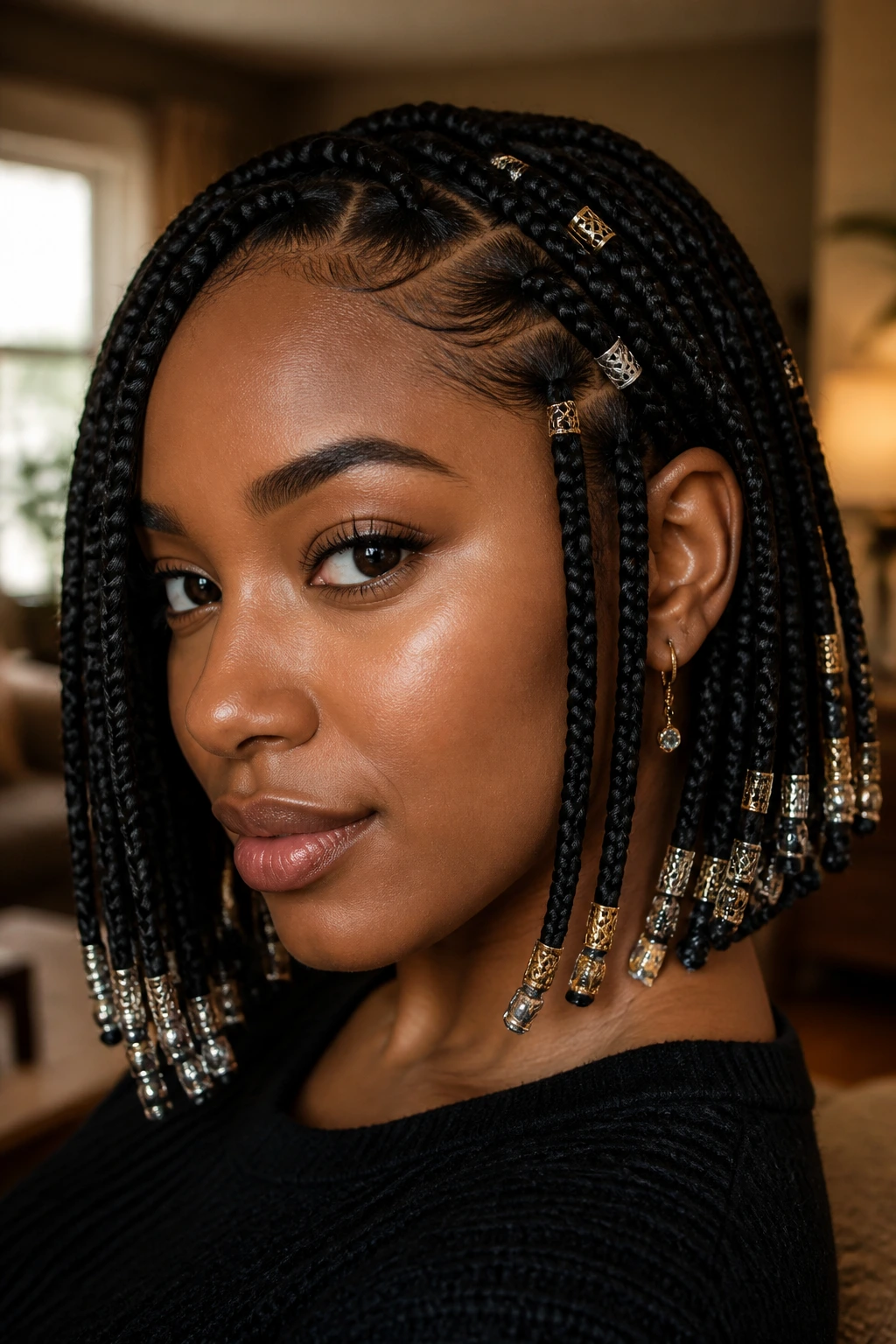
A box braid bob is a statement in itself, but the right accessories can take it from a simple protective style to a curated fashion choice. Because the hair is short and away from your neck, your ears and neck are more visible, making them prime real estate for jewelry and hair ornamentation.
Using Gold and Silver Cuffs
Gold or silver cuffs are the easiest way to add a bit of luxury to your braids. For a bob-length style, place them strategically—perhaps one at the temple and two near the chin on the opposite side. Avoid overloading the braids, as this can pull on the hair. A few well-placed cuffs maintain the balance and keep the look sophisticated.
Beads and Shells
If you are aiming for a more bohemian or beach-ready vibe, wooden beads or small cowrie shells at the ends of your braids work wonders. For a bob, avoid overly large beads, which can make the ends look too heavy or clunky. Instead, opt for small, uniform beads that provide a subtle chime and movement as you move your head.
Micro-Braid Bobs for a Sleek Finish
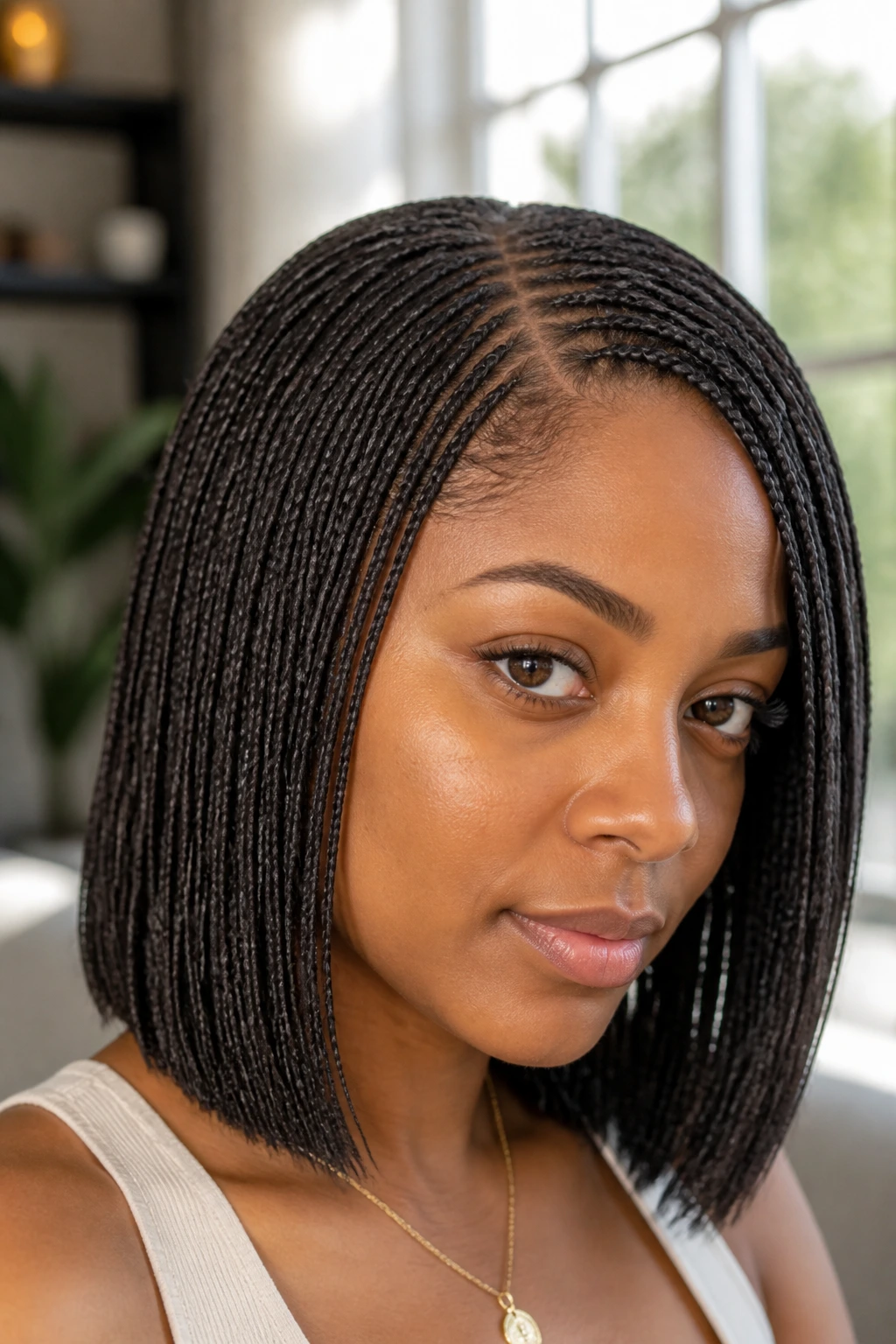
Micro-braids offer a level of detail that larger, chunkier braids simply cannot match. A micro-braid bob is incredibly lightweight and looks almost like natural hair strands. This is an excellent choice if you want the look of a sleek, shoulder-length bob without the weight associated with larger, parted braids.
Why Micro-Braids Require Patience
The trade-off for the sleek, refined look of a micro-braid bob is the time required for installation. Because the sections are so small, the process can take significantly longer than standard box braids. However, the result is a style that is incredibly easy to manage. Micro-braids lay flatter against the scalp and move more like natural hair, making them feel less like a “wig” or an attachment.
Longevity and Maintenance
Because the braids are smaller, you need to be extra diligent about scalp care. Use a scalp oil or a light spray to keep your natural hair underneath hydrated. Since the style is so thin, it is also easier to style into half-up, half-down looks or even a tiny top knot, giving you more versatility than you might have with thicker, larger braids.
The Side-Parted Bob for Instant Glamour
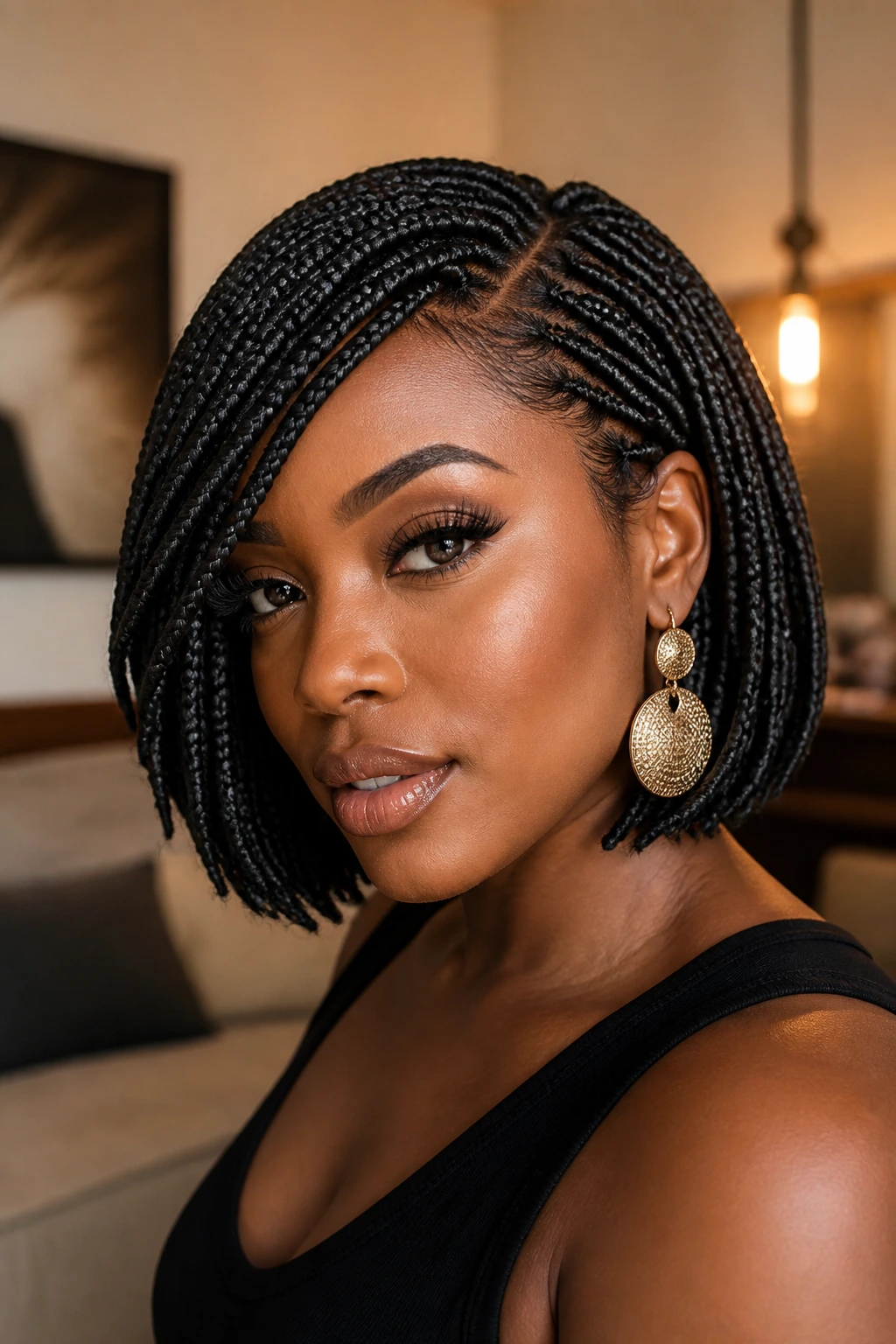
Never underestimate the power of a side part. Changing your part from the middle to the side can completely change your aesthetic. A side-parted box braid bob is inherently glamorous and works well for special occasions, creating a soft swoop that frames one side of the face.
Training the Hair
When you first get your braids installed, they might be stubborn and want to lay where they were parted during the braiding process. To get a deep side part, use a silk scarf to tie the hair down at night, setting it in the side-parted position. After a few nights, the hair will naturally begin to fall that way, allowing you to enjoy a smoother transition.
Styling the Swoop
If you want that dramatic “swoop” effect, ask your braider to make the braids near the front slightly longer. This allows them to drape across your forehead or cheekbone, adding to the allure. A side-parted bob looks particularly striking when paired with bold earrings, as it creates an asymmetrical balance that highlights the side of your face that is most exposed.
Maintaining Your Bob-Length Braids
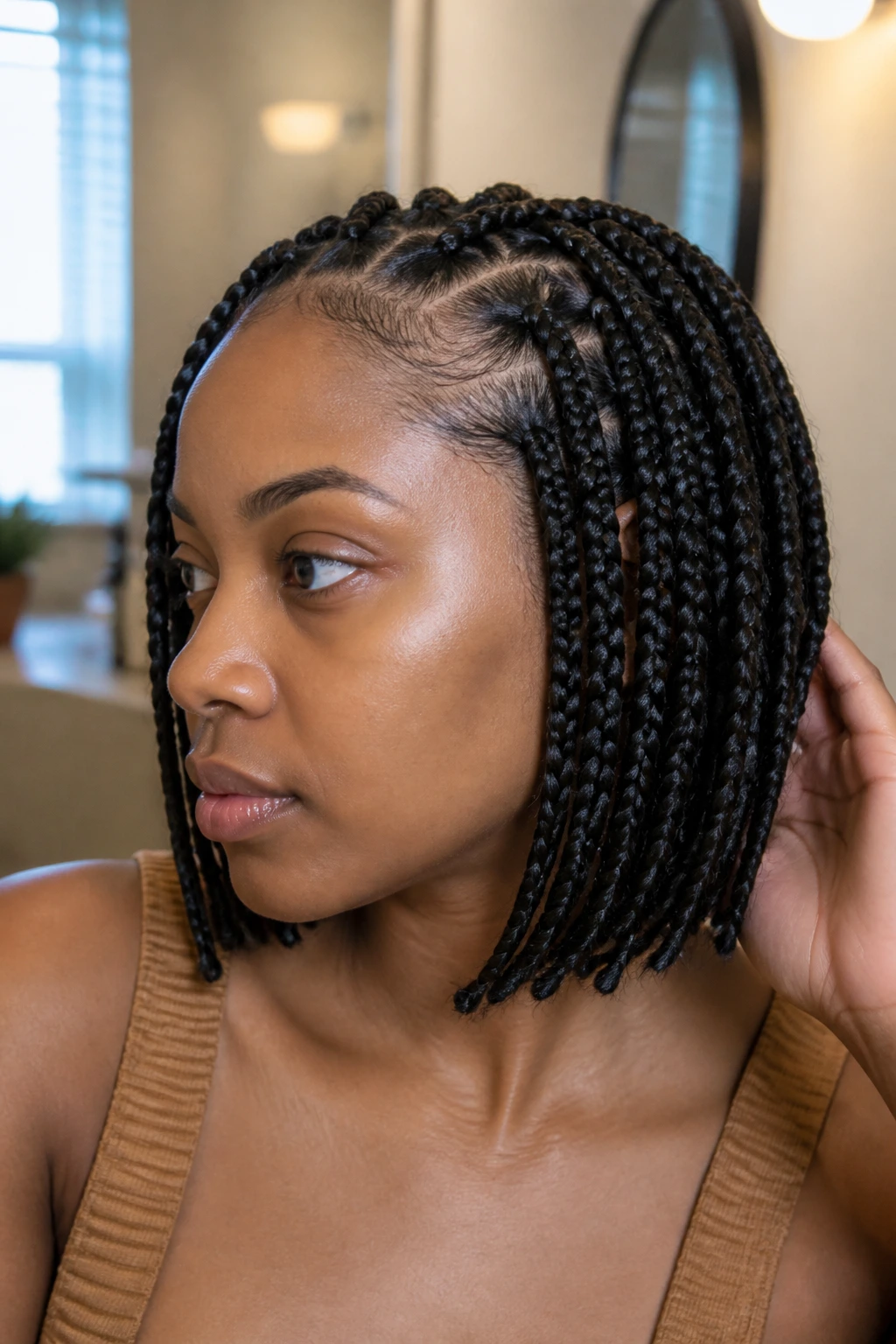
A shorter braided style is generally easier to keep clean than long extensions, but it still requires a routine to keep it looking fresh. Because the ends are exposed and close to your clothing, they tend to collect dust and lint more easily.
The Weekly Refresh
Use a dry shampoo or a dedicated braid cleanser to keep your scalp fresh. Once a week, apply a light, water-based sheen spray to the braids to ensure they do not look dull. If you notice frizz, don’t just let it be—take a pair of sharp, professional scissors and carefully trim the flyaways. This small act of maintenance will extend the life of your bob by weeks.
Nightly Protection
Even if your bob is short, it still needs to be protected while you sleep. A silk or satin pillowcase is a good backup, but a full bonnet is best. If the bob is too short to fit entirely in the bonnet without bending the ends, look for a large, soft satin scarf that you can tie loosely around your head, tucking the ends of the braids inside.
Choosing the Right Braiding Hair Texture
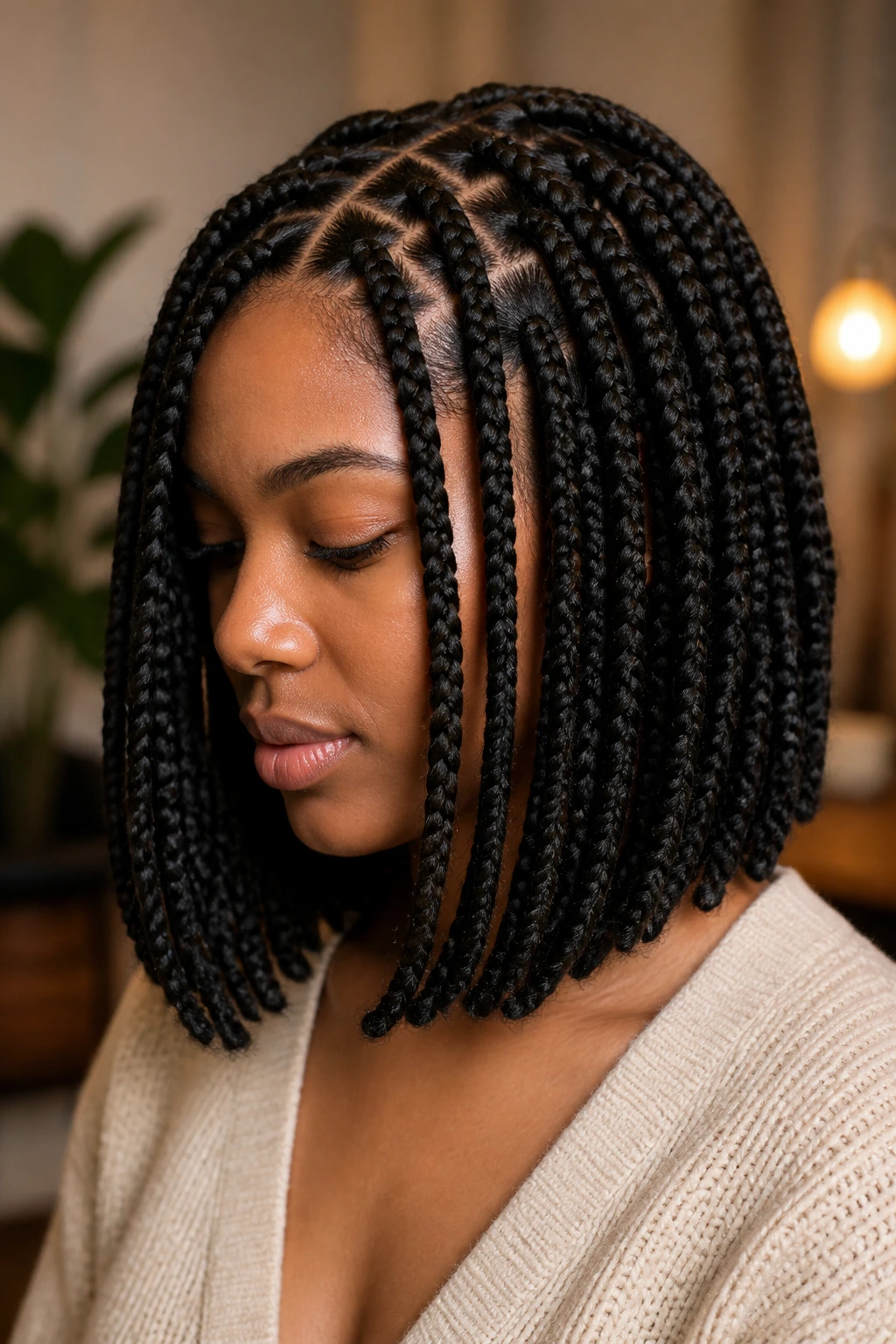
Not all synthetic braiding hair is created equal. For a bob, you are likely looking for a finish that is either completely sleek or slightly textured, depending on the look you want. Kanekalon hair is the most common, but it comes in various “pre-stretched” versions that make the braiding process much smoother.
Pre-Stretched Hair Benefits
Always opt for pre-stretched hair if you can. It saves time and ensures the ends of your braids look natural. Because you are aiming for a bob, having tapered ends already built into the hair saves your braider from having to cut too much excess hair, which can sometimes result in a “choppy” look.
Managing Shine and Texture
Some synthetic hair is incredibly shiny, which can look artificial. If you find your hair is too glossy, you can soak the bundles in a mixture of water and apple cider vinegar before the installation. This removes the manufacturing coating, making the hair look matte and much more like natural, conditioned hair.
When to Take Down Your Bob Braids
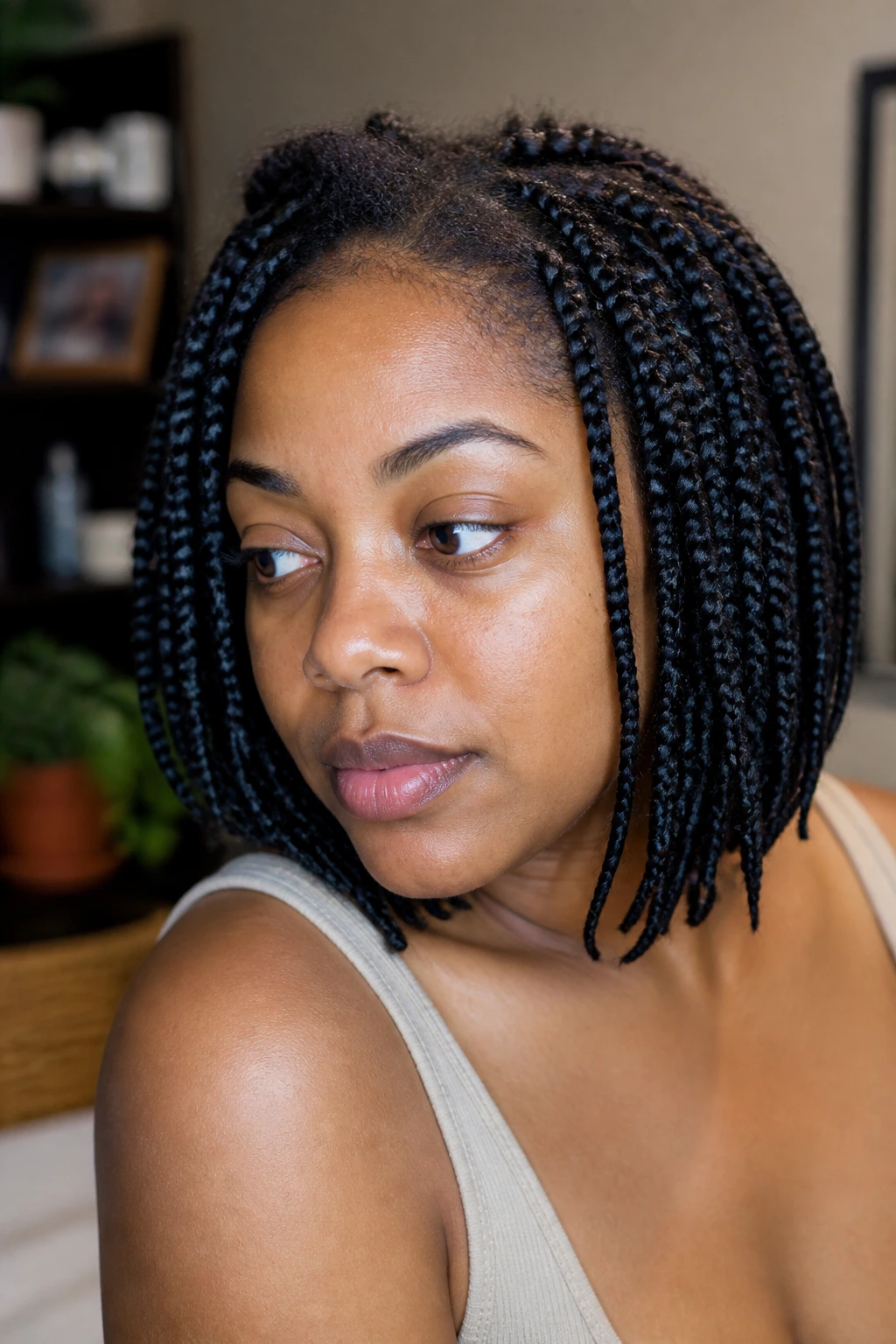
It is tempting to keep a great style in for as long as possible, but your natural hair health should always come first. Even a lightweight bob can put stress on your edges if left in for too long.
Signs It Is Time
If you notice excessive buildup on your scalp, thinning edges, or if the braids have become loose and fuzzy, it is time to say goodbye. Usually, a box braid bob should be kept for no longer than six to eight weeks. Keeping them longer increases the risk of matting at the roots, which can make the removal process much more difficult and potentially damaging to your natural strands.
The Removal Process
When it is time to remove your braids, use a braid-detangling spray to soften the hair before you start. Do not rush. Gently snip the extensions just below your natural hair’s end point, then carefully unravel the rest. Never pull on the braids; if you feel tension, add more oil or detangling solution. Taking your time here is the single best way to ensure your natural hair remains healthy for your next style.
Final Thoughts
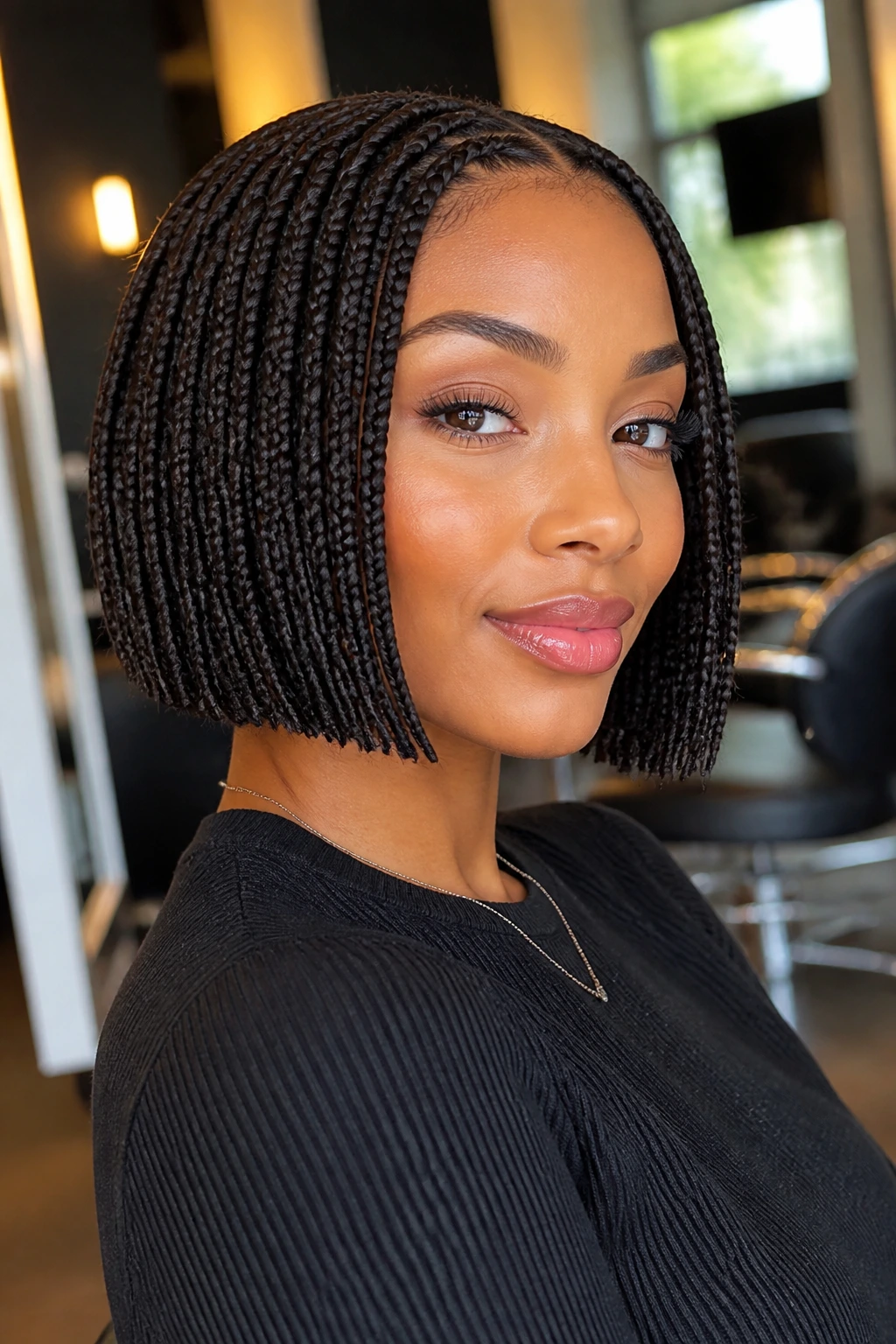
A bob-length box braid style is a masterclass in blending form and function. It offers the protection your natural hair needs while providing a sharp, polished, and undeniably chic aesthetic that is remarkably easy to live with. Whether you go for a blunt, shoulder-skimming look or a textured, boho-inspired cut, the key is intentionality—choosing the right braiding hair, maintaining your scalp, and accepting that this style, like any haircut, is a temporary but powerful statement.
When you commit to the shorter length, you embrace a lifestyle of ease. You will find that you spend less time detangling, less time worrying about weight, and more time enjoying a hairstyle that transitions perfectly from the professional office to an evening out. The variety available—from asymmetrical cuts to micro-braid finishes—means there is a version of this look for every face shape and personality. Take your time, communicate clearly with your braider, and enjoy the confidence that comes with a fresh, expertly executed box braid bob.