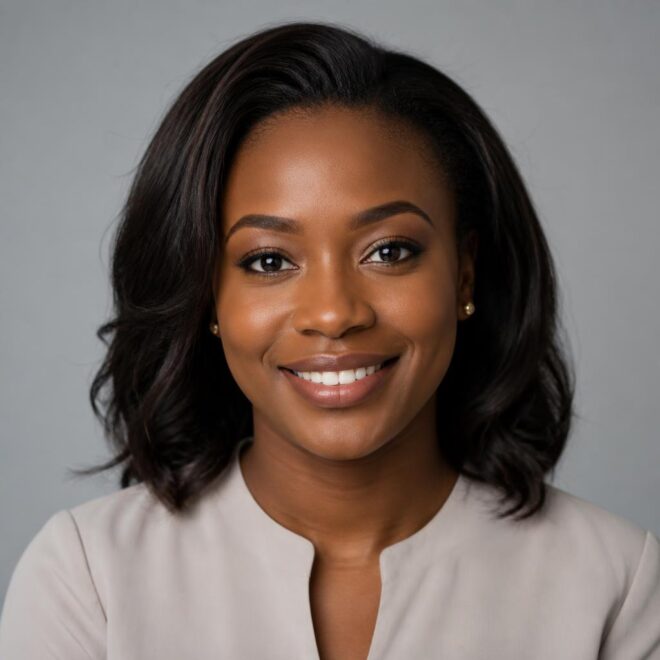


Finding the right haircut when you have a long face is less about hiding your features and more about balancing your silhouette. If your face length is noticeably greater than its width, you might have spent years avoiding short hair, fearing that a cropped style would only elongate your features further. But the reality is that the right bob—specifically one that incorporates texture, movement, and clever layering—can actually widen the appearance of your face and create a softer, more intentional look. We aren’t talking about the severe, blunt bobs that drag the eyes downward; we’re talking about the art of the choppy cut, where every snip is designed to create horizontal width.
When you bring a choppy element into the equation, you introduce visual weight. Choppy layers shatter the straight lines that usually characterize long, thin face shapes, adding volume right where you need it—usually around the cheekbones or the jawline. This shift in focus is exactly what creates balance. Before you reach for the scissors or book that salon appointment, let’s explore how the right choppy bob can completely reinvent your look.
1. The Textured Jaw-Length Bob
The most effective way to counteract a long face is to cut the hair exactly at the jawline. This creates a strong horizontal line that draws the eye across the face rather than down it. When you add heavy, piecey texture to the ends, the hair gains a sense of lightness and motion that prevents it from looking like a heavy curtain.
Why It Works for Elongated Shapes
The goal here is to widen the lower third of your face. By keeping the length strictly at the jaw, you provide an anchor. Without texture, this length can look harsh, but with jagged, choppy ends, the hair appears to have more volume and a “tousled” quality that feels modern and effortless.
Styling for Maximum Width
Use a texture spray or a matte paste to separate the ends. Avoid smoothing creams, as they pull the hair inward and make it look limp. You want the hair to have a bit of a “flare” at the edges, as this physical width visually fills out the space around your chin, effectively breaking up the length of your face.
2. The Wispy Bangs and Choppy Cut Combo

Many people with longer face shapes are told to avoid bangs entirely, but that is a bit of a myth. The problem usually isn’t the bangs themselves; it’s the density. If you cut a heavy, straight-across block of hair, you might create a “box” effect that highlights your length. Wispy, choppy bangs, however, are a different story.
The Role of Texture in Fringe
Choppy, textured bangs sit lightly on the forehead, breaking up the vertical line from your hairline to your eyebrows. This keeps the look balanced and avoids that heavy “curtain” feeling that can make a long face look even more narrow.
How to Cut Them Right
Ask your stylist for “shattered” or “point-cut” edges on your bangs. This technique involves cutting into the hair with the scissors held vertically, which softens the perimeter. The result is a fringe that moves independently rather than sitting as a solid wall of hair. Pair this with a chin-length, choppy bob for a cohesive, balanced style.
3. The Asymmetrical Choppy Bob

If you want to move away from the traditional, symmetrical bob, an asymmetrical cut is one of your best tools. By keeping one side slightly longer—typically hitting near the collarbone—while the other side is chopped shorter, you create an diagonal line that redirects the eye.
Changing the Visual Focus
The angle of the longer side draws the eye toward the center and across, rather than letting it travel straight down the face. It’s a subtle trick of geometry that creates the illusion of width. The choppy layers are essential here because they prevent the longer side from appearing too thin or stringy.
Keeping the Layers Consistent
Ensure that the choppiness is uniform on both sides. Even though the lengths differ, the level of texture should remain the same so the haircut feels like a singular, well-planned concept rather than a lopsided mistake. Ask for internal layering to keep the shorter side from looking too puffy.
4. The Softly Layered Shag-Bob

The “shag” has made a massive comeback, and it is a gift for those with long faces. By incorporating shorter layers near the crown and throughout the top of the head, you build volume where it’s usually lacking. This creates a rounded silhouette that counteracts verticality.
Why Volume Is Your Friend
A long face often struggles with hair that clings too closely to the temples. By adding height at the crown, you lift the eye upward, making the face look more oval and less rectangular. The choppy ends of the bob then provide that necessary horizontal volume at the jawline, creating a beautiful, rounded shape.
Making It Work Day-to-Day
This style thrives on a bit of messiness. Use a salt spray on damp hair and let it air dry. If you have any natural wave, scrunching the ends while they dry will enhance the choppy nature of the cut, making the overall style look fuller and wider without any extra effort.
5. The Wavy Choppy Lob
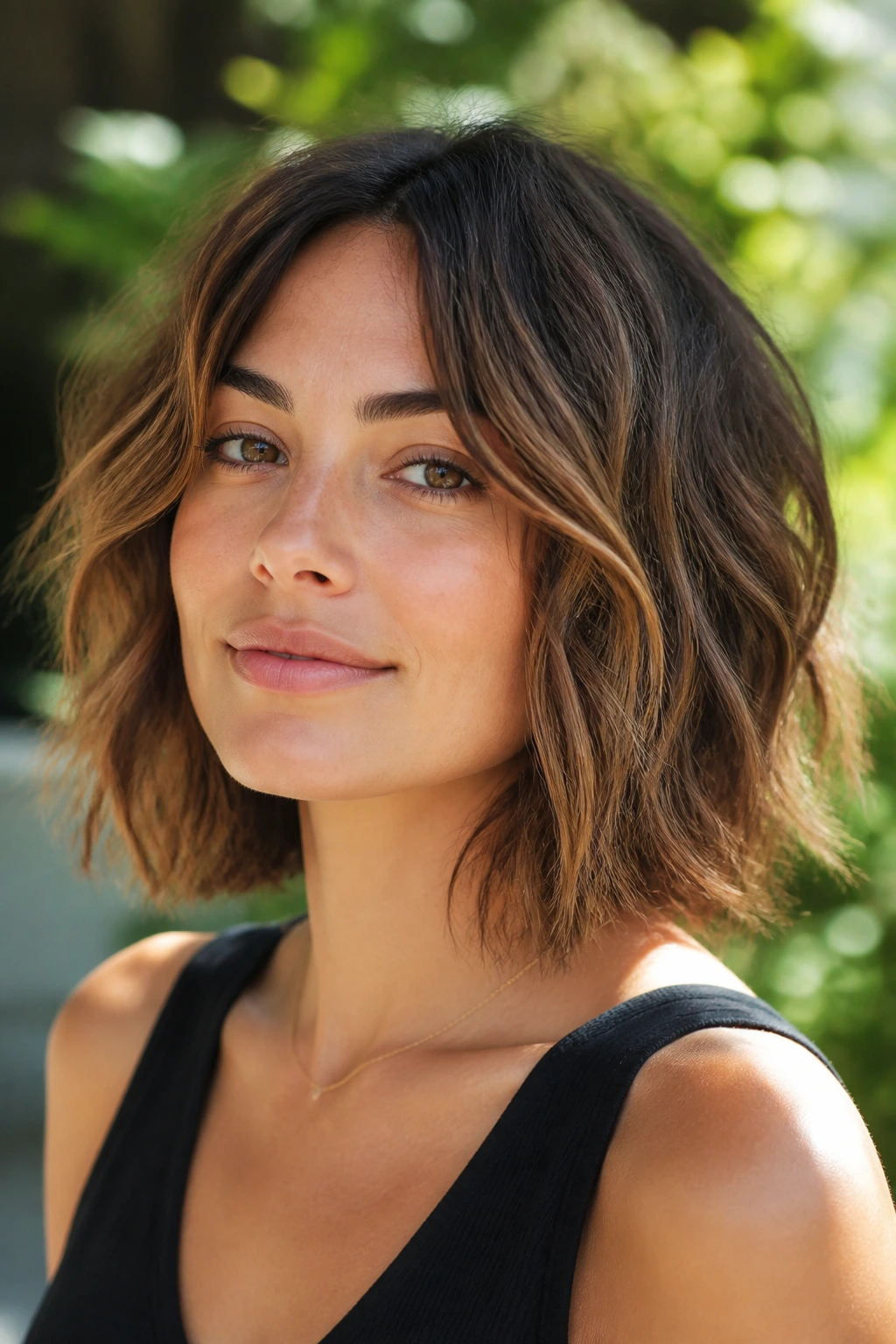
If you aren’t quite ready to commit to a jaw-length cut, the “lob” or long bob is a great middle ground. When you incorporate choppy, disconnected layers and loose waves, you create a soft frame around the face that adds width through texture.
The Beauty of Disconnected Layers
Disconnected layers occur when your stylist creates gaps in the length, preventing the hair from forming a uniform, straight line. This allows the hair to move freely. For a long face, this is crucial—it ensures the hair doesn’t “weigh down” your features.
Tips for Styling the Waves
Don’t use a traditional curling iron that creates perfectly formed ringlets. Instead, use a flat iron to create a slight “bend” or “kink” in the hair. This leaves the ends straight and jagged—the hallmark of a truly choppy cut—while adding that essential horizontal fullness.
6. The Sideswept Choppy Crop

A sideswept part is often recommended for longer faces, and when paired with a choppy bob, it becomes even more effective. A deep side part naturally breaks the symmetry of the face, softening the harsh, vertical lines.
Creating the Illusion of Width
When you sweep a large section of hair across the forehead, you shorten the visible length of the face. Pair this with a choppy bob that has shorter, face-framing layers, and you get a style that feels incredibly soft and feminine.
Managing the Weight
The key to a good sideswept choppy bob is making sure the “heavy” side isn’t too heavy. If the hair is too long or thick on that side, it can drag your face down. Ask for enough internal texture to keep the hair light and airy so it sweeps gracefully across rather than falling in a flat, heavy swoop.
7. The Stacked Back, Choppy Front
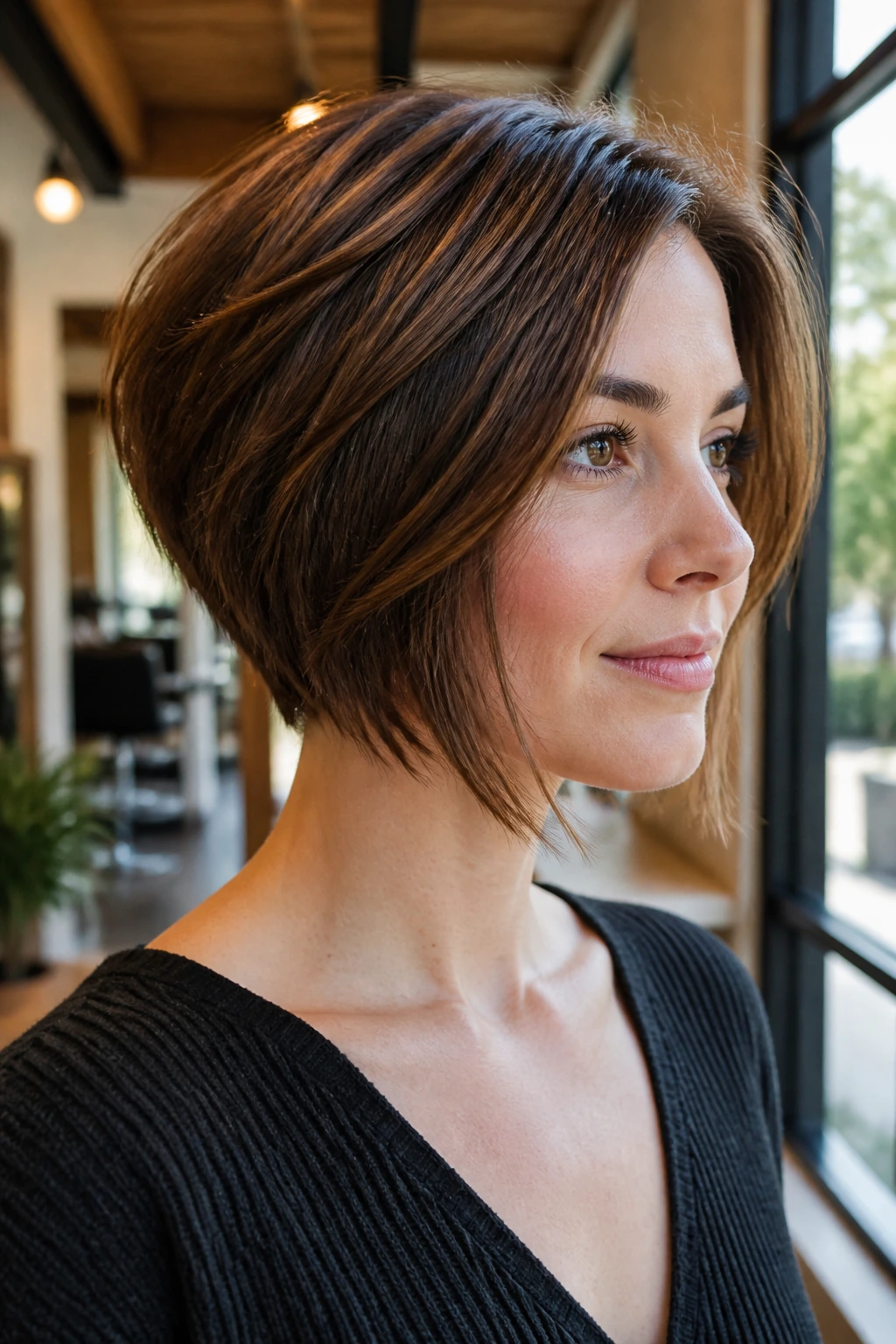
A stacked bob involves cutting the hair shorter at the nape of the neck and getting progressively longer toward the front. For a long face, keep the “stack” relatively subtle to avoid building too much height at the very back of the head.
Balancing the Profile
The goal is to have the hair hit just below the jaw in the front, with enough choppy layers to frame the cheekbones. By keeping the back shorter, you create a “wedged” shape that provides volume throughout the head. This adds a sense of roundness to the profile of your face, which is perfect for balancing long features.
A Word on Maintenance
This is a cut that requires regular salon visits. Because the back relies on precise, shorter lengths, it can quickly lose its shape as it grows out. Plan for a trim every 6 to 8 weeks to keep that stack crisp and the front layers choppy.
8. The Piecey, Blunt-Edge Hybrid
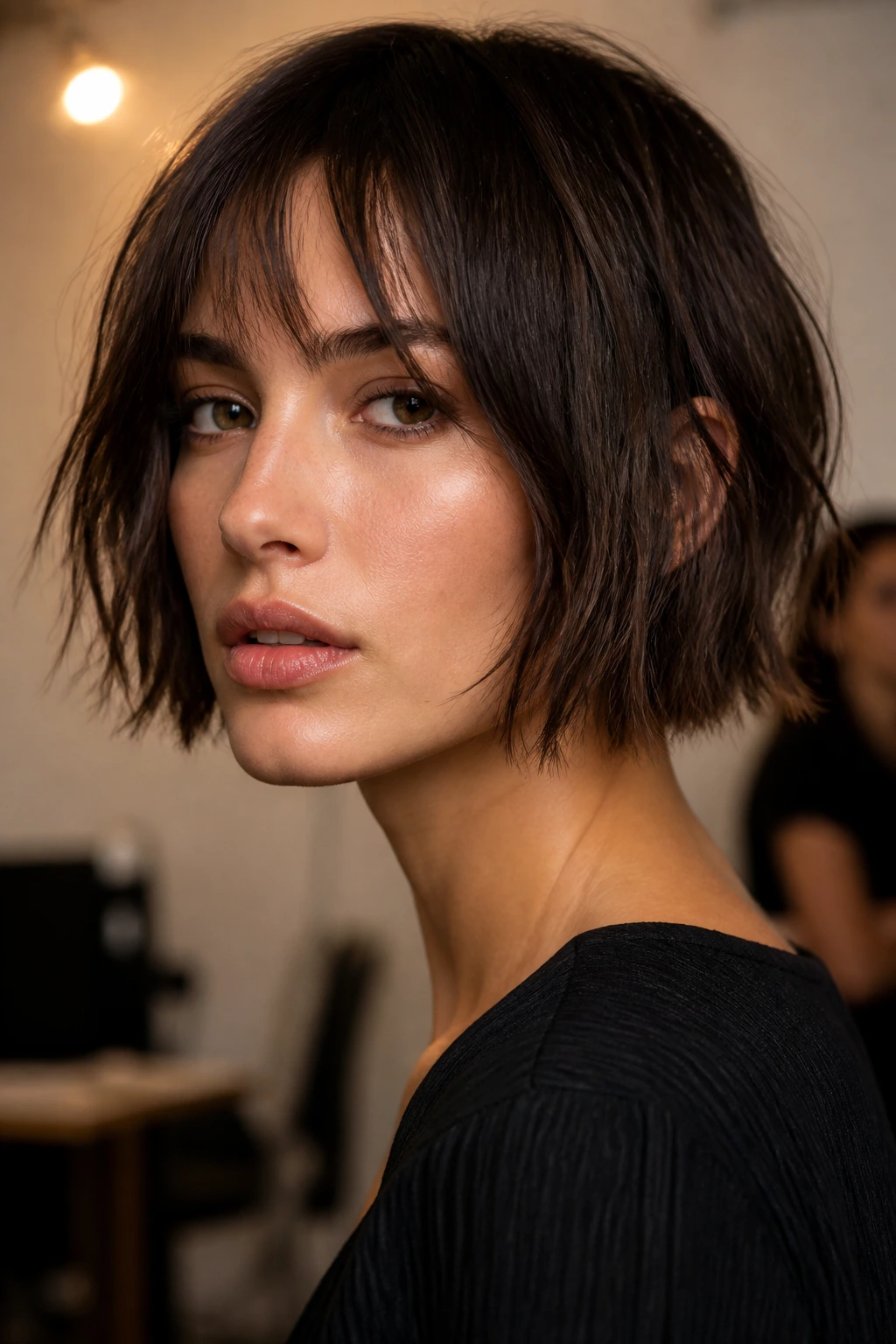
This style is for the person who loves the look of a blunt bob but needs the functionality of a choppy cut. The perimeter is kept relatively solid, but the last two inches of the hair are heavily point-cut and textured.
Why This Bridge Works
You get the sophisticated, clean lines of a classic bob, but the shattered ends prevent the hair from becoming a “frame” that highlights your face length. It’s a very intentional, high-fashion look that works wonders for fine hair, as it creates the appearance of density at the ends.
Styling the Points
To really make this style pop, use a bit of high-shine pomade on just the very tips of your hair. This draws attention to the choppy texture you’ve created, highlighting the deliberate, jagged nature of the cut instead of letting it blend into a solid, heavy line.
9. The “Beach Hair” Choppy Bob

Think of this as the ultimate effortless style. It is all about internal layers and a perimeter that looks like you just walked off the shore. The choppiness here is more about “shredding” the ends than structured layering.
Embracing the Imperfect
For a long face, perfection is the enemy. A super-polished, symmetrical style will always emphasize your length. A beachy, choppy bob, however, is full of movement and life. The hair is constantly shifting, which keeps the eye moving rather than focusing on the vertical lines of your face.
The Best Tools for This Look
You don’t need fancy tools. Use a texturizing foam on towel-dried hair and twist small, two-inch sections of hair while it’s still damp. Let it air dry, then shake it out with your fingers. The result is a natural, choppy texture that builds volume exactly where it’s needed.
10. The Deep-Parted Choppy Pixie-Bob
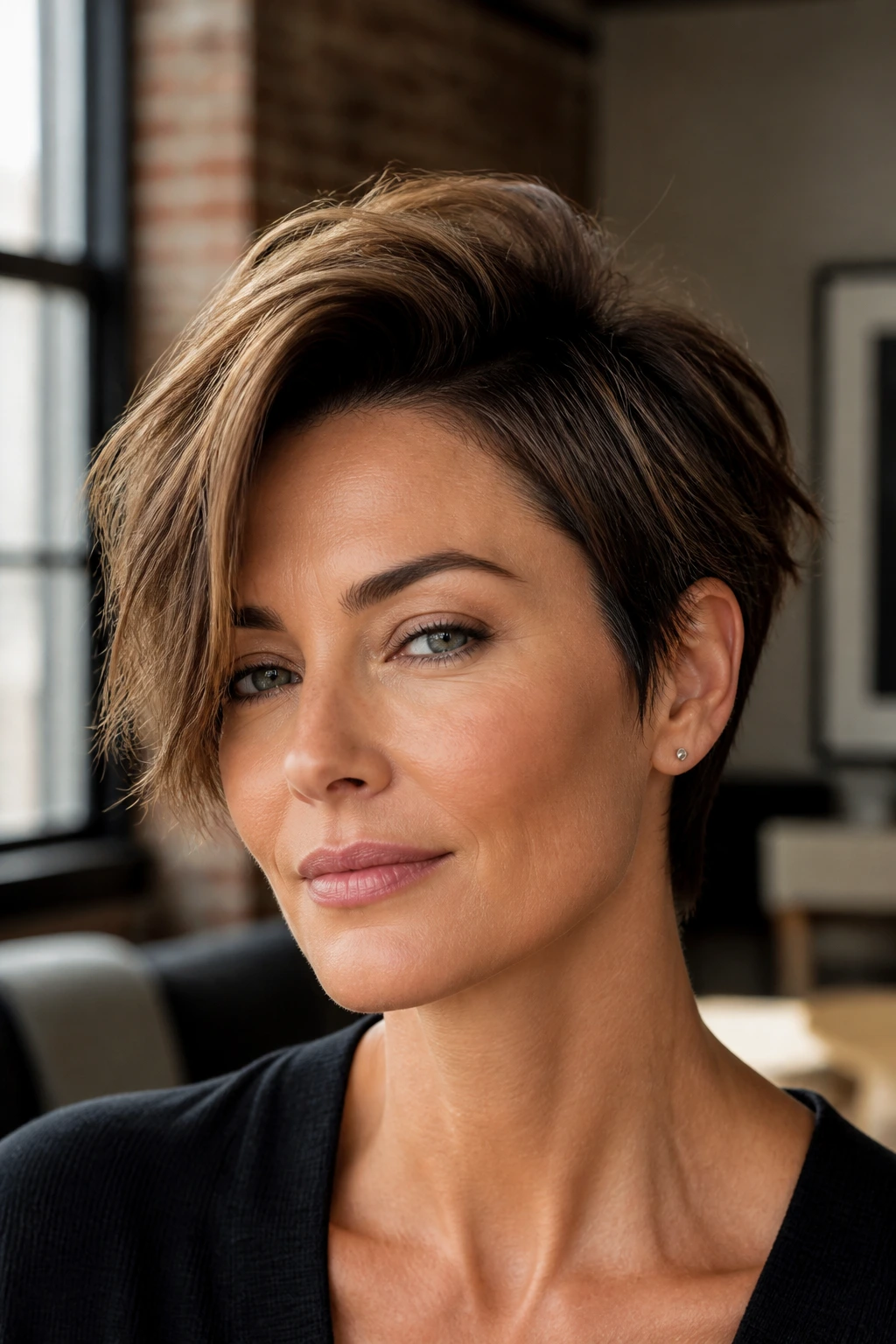
If you want to go shorter, the transition between a pixie and a bob is incredibly chic. This is a very short, choppy cut that retains just enough length around the ears to be considered a “bob.”
How It Redefines Length
This cut exposes the neck and jawline, which can actually be very flattering if done with the right amount of volume. By keeping the top layers choppy and full, you add height and width to the head, making the face look more oval and less drawn out.
The Importance of Layers
Ensure the layers around the temples are long enough to soften the face. If you go too short at the temples, you risk highlighting the narrowness of your face. Keep these sections slightly longer and texture them heavily so they can be pushed forward or tucked, depending on your mood.
11. The Layered-In-the-Back Bob
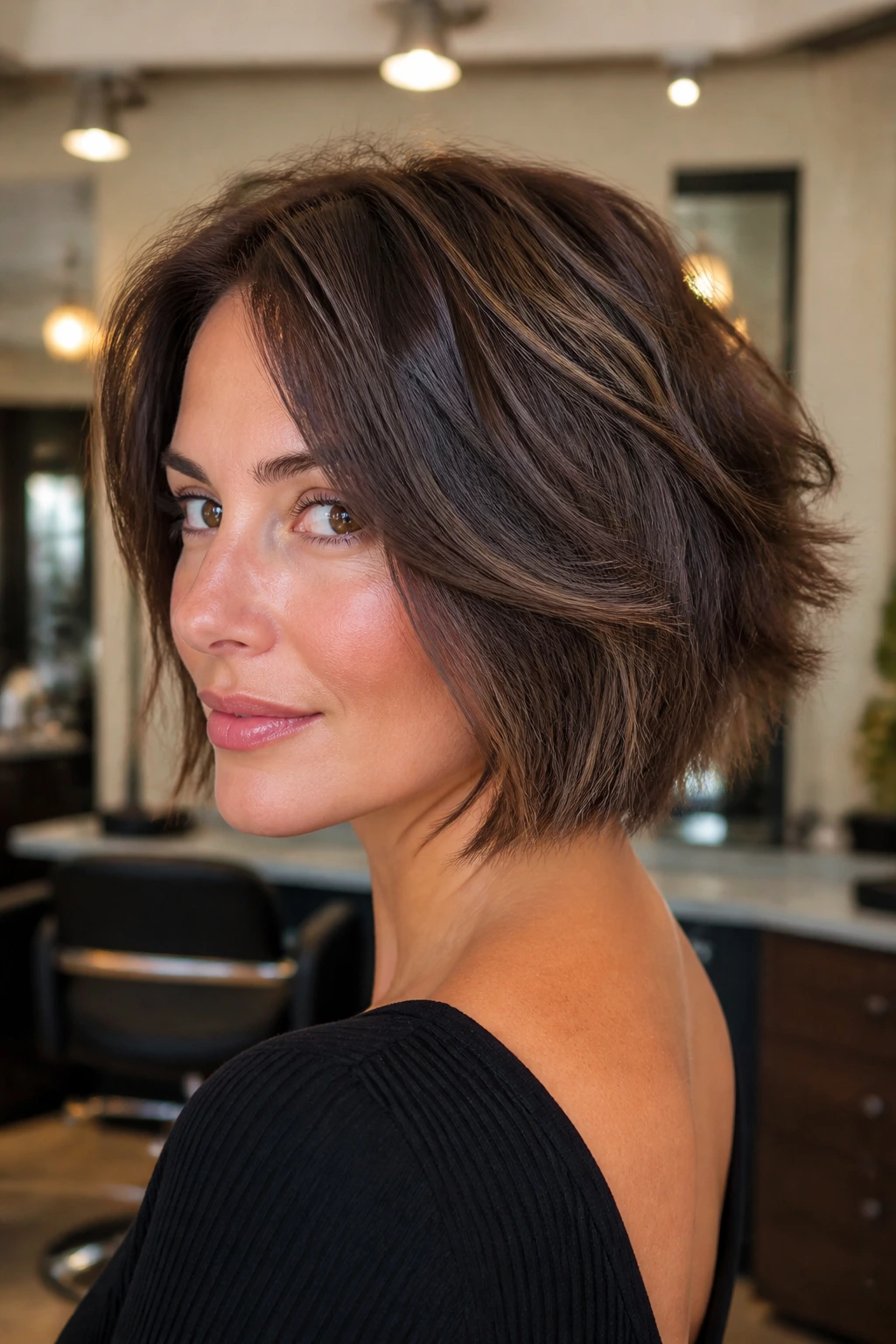
Often, we focus on the face-framing layers, but for a long face, the back and sides are just as important. By adding significant layering to the back of the bob, you create a rounded silhouette that pushes the hair outward.
Using Gravity to Your Advantage
When the back is heavily layered and choppy, the hair physically pushes out away from the head. This adds width to the profile of your haircut, which is a fantastic way to counteract the length of your face without having to style the front differently every single day.
Making it “Lived-In”
This style looks best when it’s not perfectly smooth. Use a bit of dry shampoo even on clean hair—it adds grip and grit that helps the layers stay separated and bouncy throughout the day. It’s the perfect way to make a haircut look like it has more volume than it actually does.
12. The Soft-Curled Choppy Cut

Curls are inherently widening. When you have a long face, adding a soft, loose curl to a choppy bob creates immediate horizontal interest. The key is to keep the curl loose so the hair doesn’t “shrink” too much in length.
Why Soft Is Better Than Tight
Tight, bouncy curls can sometimes add too much height, which might actually make the face look longer. By keeping the curls soft and the ends choppy and straight, you achieve a balance where the volume is focused on the width of the head, not just the top.
Maintaining the Texture
When you curl the hair, avoid the very ends. Leave them straight and textured to maintain that choppy, modern edge. It’s a subtle technique, but it prevents the bob from looking like a retro “perm” and keeps it firmly in the category of modern, stylish cuts.
13. The Minimalist “Shag-Lite”

This is a more refined version of the shag, perfect for a professional environment. It uses fewer layers but focuses them strategically around the cheekbones to add width.
Strategic Placement
By keeping the layers concentrated at the cheekbone level, you effectively create a “shelf” of hair that draws the eye horizontally. This is one of the most effective ways to break up the verticality of a long face shape while keeping the maintenance relatively low.
How to Ask for It
Be specific with your stylist. Ask for “face-framing layers that start at the cheekbone” rather than just asking for layers. This tells them exactly where you want the visual weight to fall. Pair this with a choppy bob perimeter for a clean, sophisticated, yet very flattering look.
14. The Blunt-Back, Textured-Front Bob
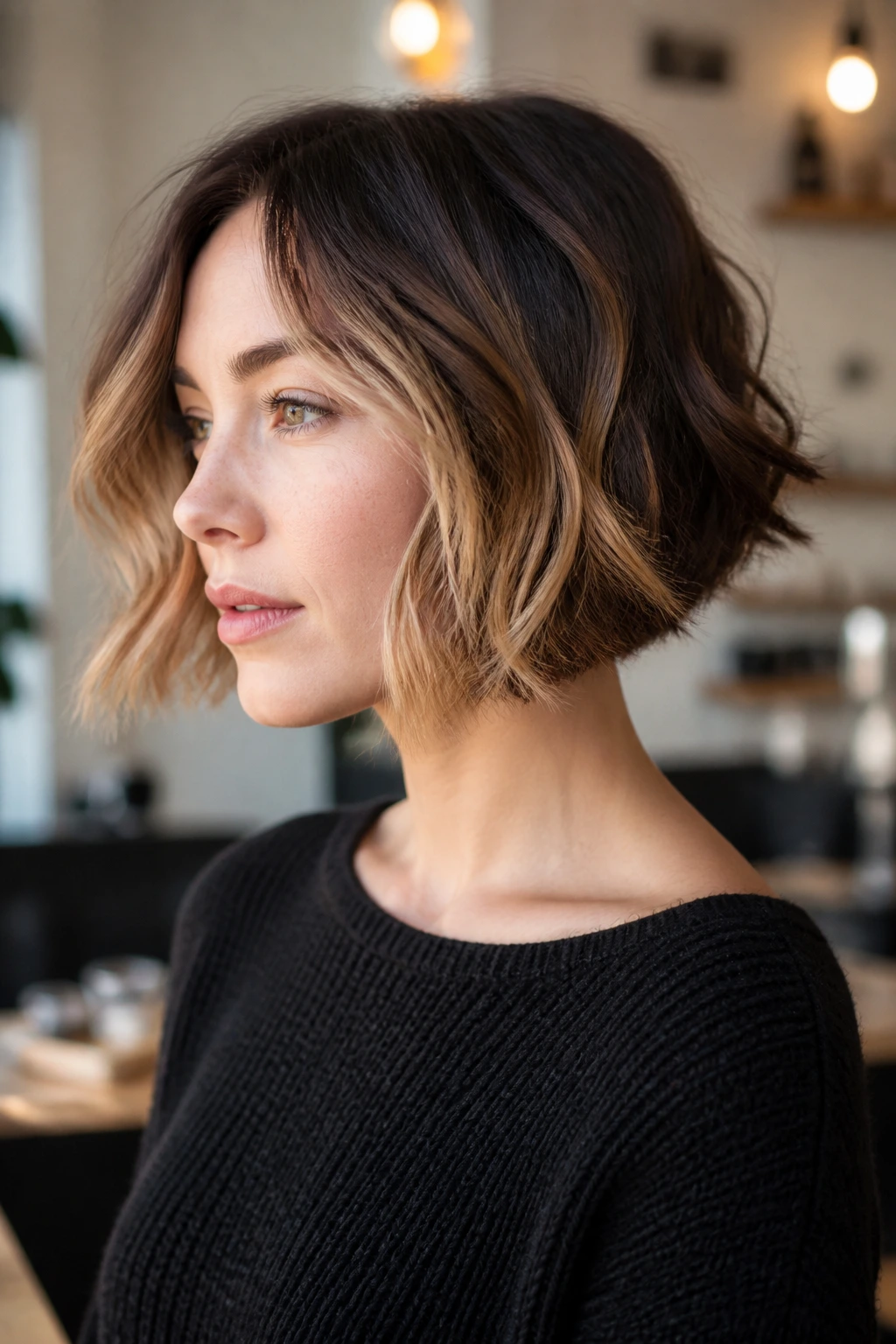
This is a great look if you have finer hair that can’t handle too much layering. You keep the back of the bob fairly solid to maintain the appearance of fullness, but you heavily texture the sides and front.
Where the Magic Happens
The texturing in the front allows the hair to curve around the face, creating a soft frame that adds width. The blunt back provides a stable foundation, ensuring the bob doesn’t look like it’s thinning out as it gets longer.
The “S-Wave” Technique
To style the front, create a gentle “S” shape in the hair using a straightener. This adds a slight ripple that pushes the hair outward, creating the illusion of a wider face. It’s a very subtle shift that makes a world of difference when you look in the mirror.
15. The Choppy Bob with Curtain Fringe
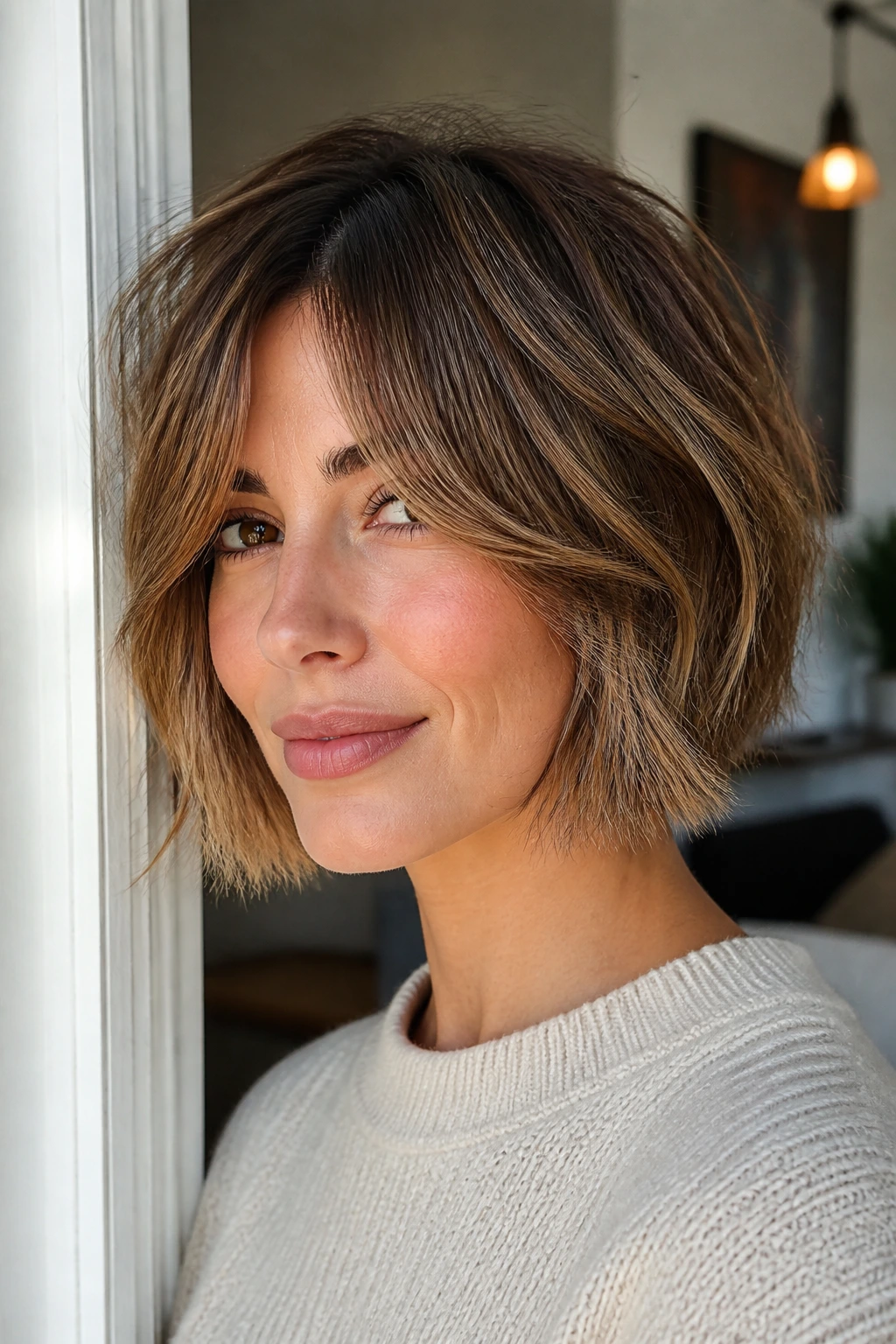
Curtain bangs are a staple for a reason, but when paired with a choppy bob, they become a high-impact style for long faces. The bangs pull the eye to the sides of the face, effectively widening the upper-to-mid section.
Understanding the Geometry
The curtain fringe creates a diagonal line that mimics the shape of a wide face. When the rest of the bob is kept choppy and full, the entire look becomes a cohesive, flattering frame. It’s a style that feels balanced and intentional.
Styling for Fullness
To keep the curtain bangs from falling flat, use a round brush when you blow dry them, pulling them slightly forward before sweeping them to the side. This gives them a “lift” that adds volume at the temples—the exact area where long faces usually need a little extra width.
Final Thoughts
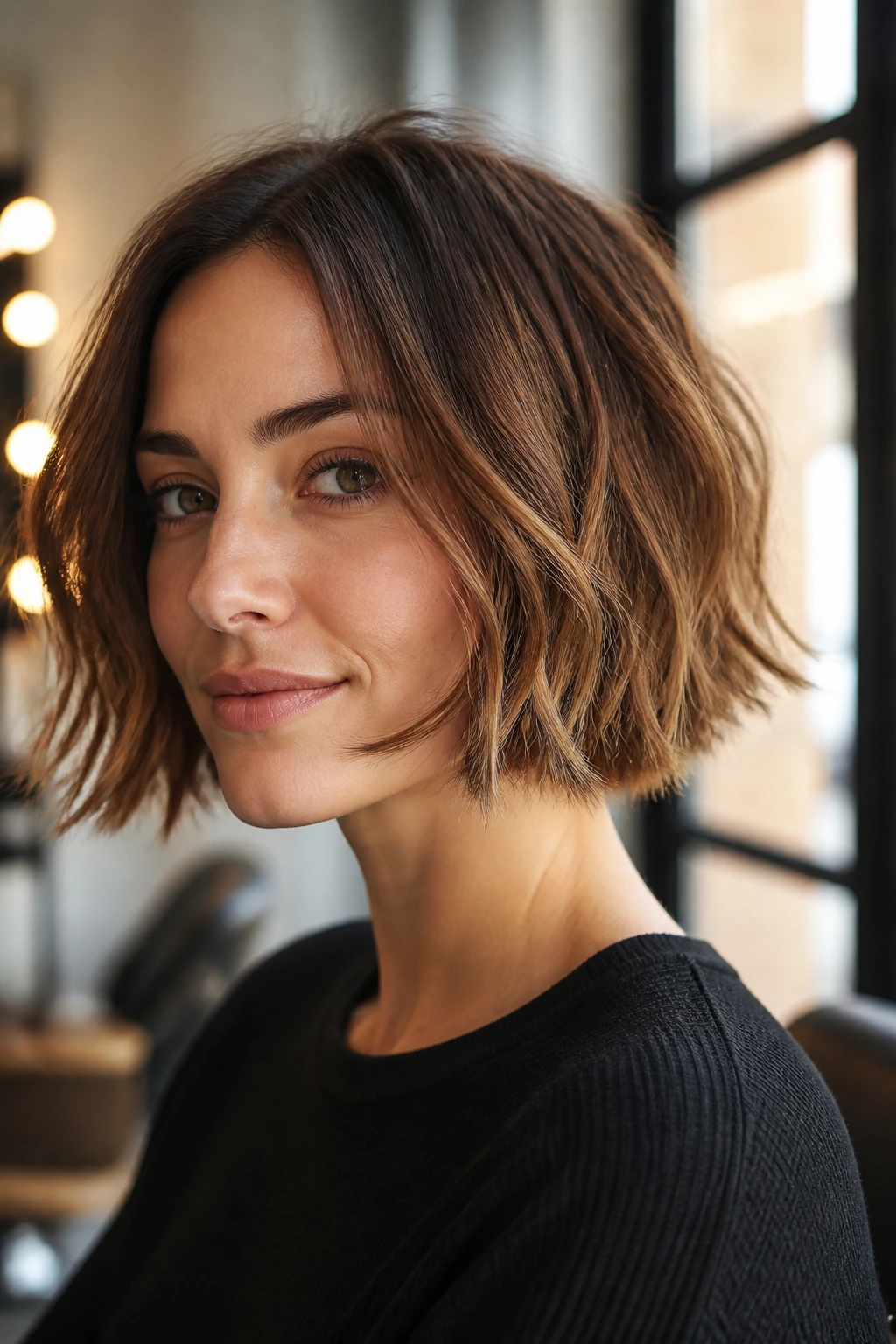
At the end of the day, your hair is the best accessory you own. For those with a long face, the fear of “short hair” is a relic of the past. The secret is simply in the choppiness. By rejecting flat, heavy lines and embracing layers that add movement, you can create a style that doesn’t just work for your face shape—it actively enhances it.
Whether you opt for a jaw-length crop with shattered ends or a long, wavy lob with disconnected layers, the goal remains the same: create horizontal weight. Don’t be afraid to experiment with texture, and always lean into the messier side of styling. A perfectly smooth, straight-as-a-board bob might be iconic, but a choppy, textured bob is personal, flattering, and remarkably easy to wear. Pick the style that makes you feel most like yourself, trust your stylist to point-cut those ends, and enjoy the freedom of a shorter, lighter look.