

Thick hair carries a weight all its own. If you have been living with a heavy, dense mane, you know exactly how it feels—the constant struggle with hair ties that snap, the hours spent blow-drying, and that unmistakable feeling of having a literal blanket draped over your shoulders by mid-afternoon. The choppy bob with bangs is not just a style choice; for many, it is a liberation. By introducing texture through precise internal layering and pairing it with a set of well-placed fringe, you can shed inches of density while gaining a silhouette that actually moves when you walk.
The secret to mastering this look on dense textures lies in the removal of bulk without sacrificing the natural volume you probably want to keep. This isn’t about thinning shears haphazardly chewing through your ends. It is about architectural cutting techniques—point-cutting, sliding, and deep texturizing—that force heavy hair to bend, tuck, and behave. When you combine that structured chaos with bangs, you frame your face in a way that feels intentional and edgy, rather than just overgrown. If you are ready to stop fighting your hair and start leaning into its natural volume, these variations are the blueprints you need.
1. The Textured Jaw-Length Shag Bob
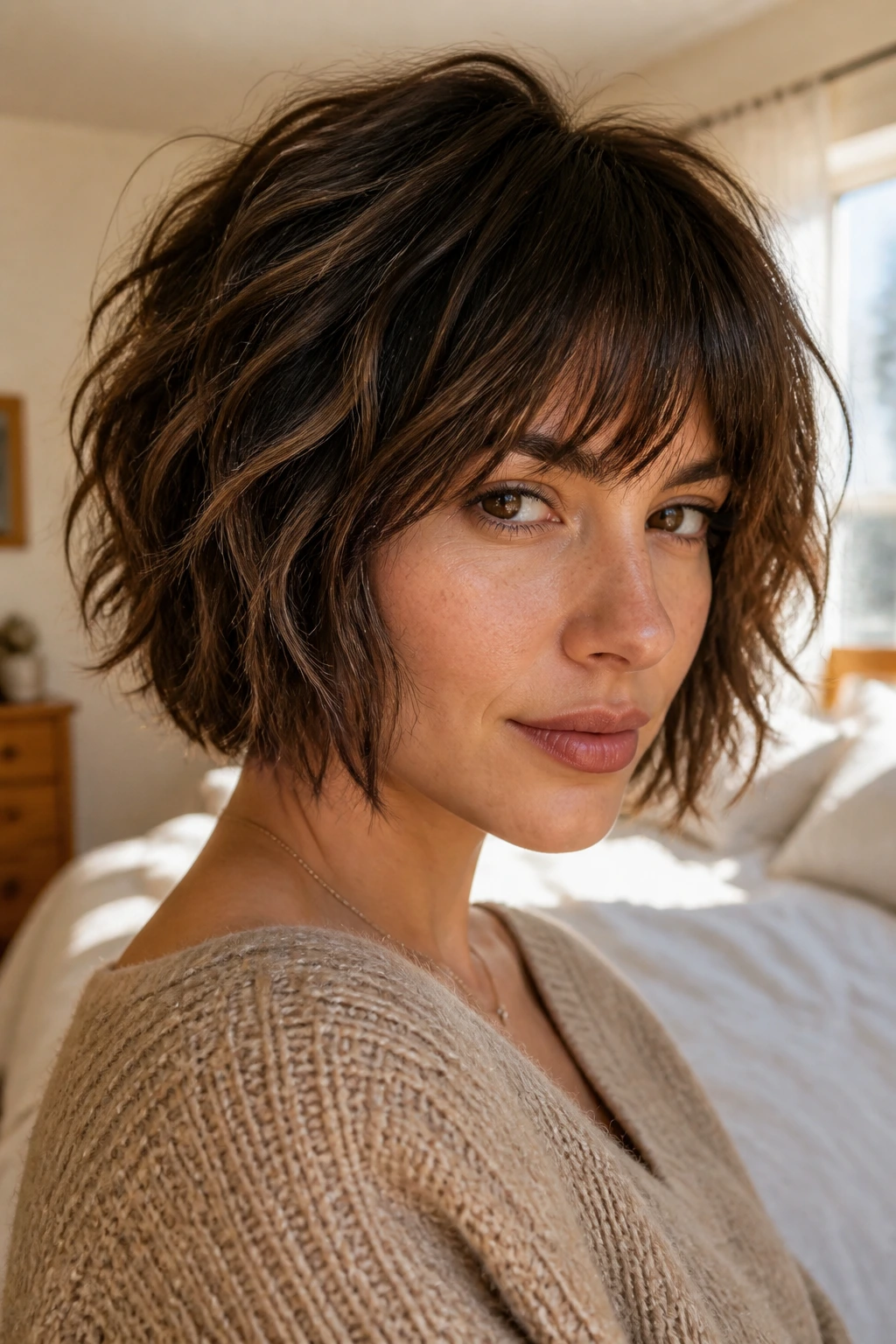
The shag-inspired bob is the gold standard for thick hair because it prioritizes movement above all else. By cutting the length to hit right at the jawline, you eliminate the weight that usually pulls the hair straight down. The bangs here are typically piece-y and slightly overgrown, hitting just below the brow to maintain a relaxed, cool-girl aesthetic that doesn’t require a round brush to look good.
Why This Works for Density
This cut relies on heavy point-cutting throughout the mid-lengths. By removing weight from the interior of the hair shaft, your stylist creates “hidden” layers that allow the ends to flip and curl naturally. It’s a low-effort style that thrives on a bit of bedhead texture, making it perfect for those who want to wash their hair and run out the door.
Styling Tip for Maximum Texture
Use a matte sea salt spray while the hair is damp, then use your fingers to twist sections as they air dry. Avoid a brush at all costs; you want the separation that only comes from manual manipulation and a bit of grit. If you find your hair feels too bulky, a quick pass with a thinning razor on the ends—only the last inch—can soften the bluntness without creating frizz.
2. The Blunt-Cut French Bob with Curtain Bangs
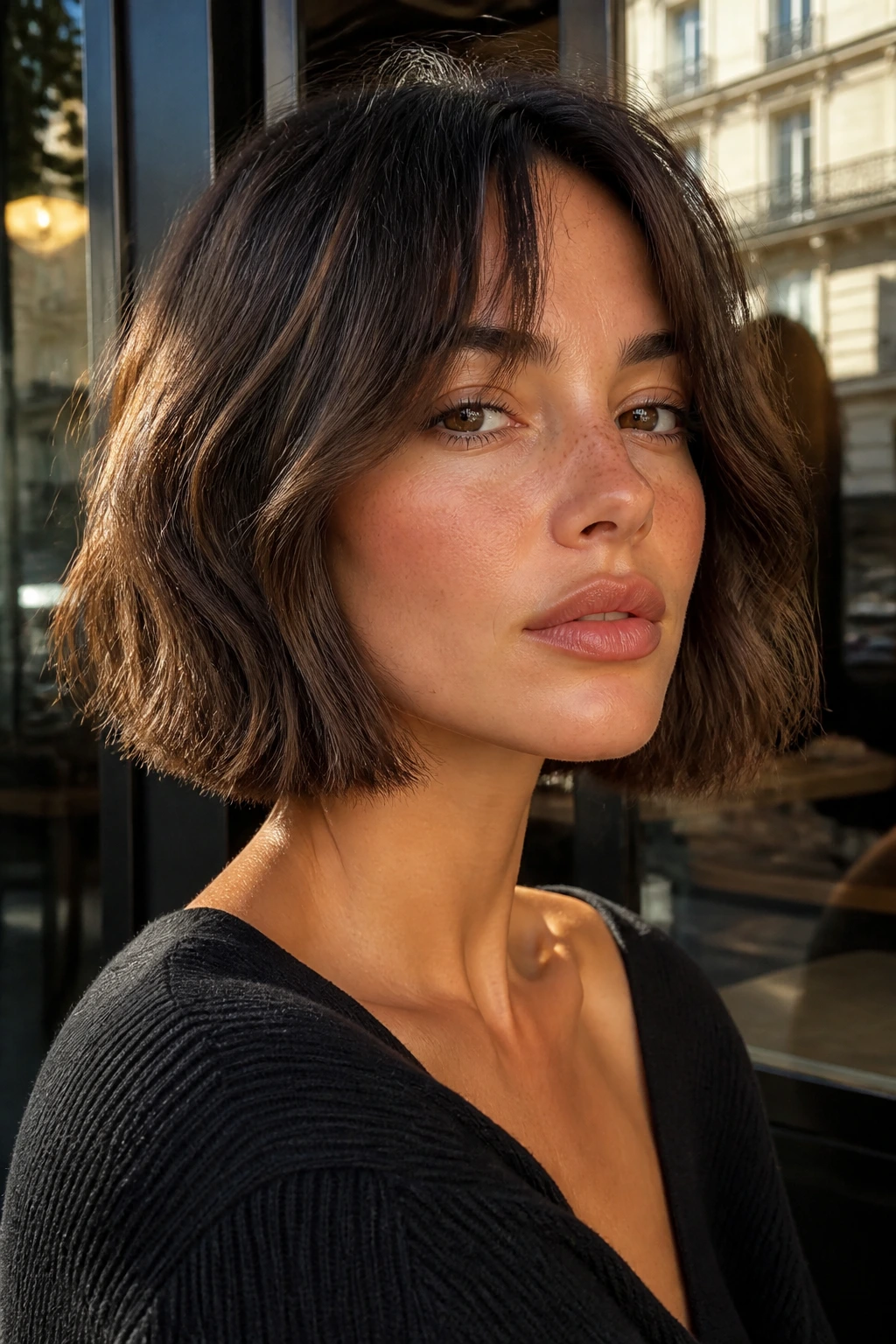
If you are worried that “choppy” means “frizzy,” this is your middle ground. This bob maintains a sharp, blunt line at the perimeter to give the illusion of health and thickness, while the “choppiness” is hidden entirely in the interior layers. The curtain bangs are the key here; they are long, soft, and blend seamlessly into the rest of the hair.
The Balancing Act
The blunt perimeter grounds the cut, which is vital for thick hair that otherwise tries to expand into a triangle shape. Curtain bangs provide a soft transition from your face to your hair, ensuring that the volume isn’t concentrated entirely around your cheekbones. It’s sophisticated, slightly Parisian, and works exceptionally well with natural waves.
Maintenance Considerations
Because the perimeter is blunt, this cut will need a trim every six to eight weeks to keep the line crisp. If you wait too long, the weight will return to the ends and the “bob” will lose its shape. It’s an investment in maintenance, but for a polished, thick-haired look, the trade-off is worth it.
3. The A-Line Choppy Bob with Choppy Fringe
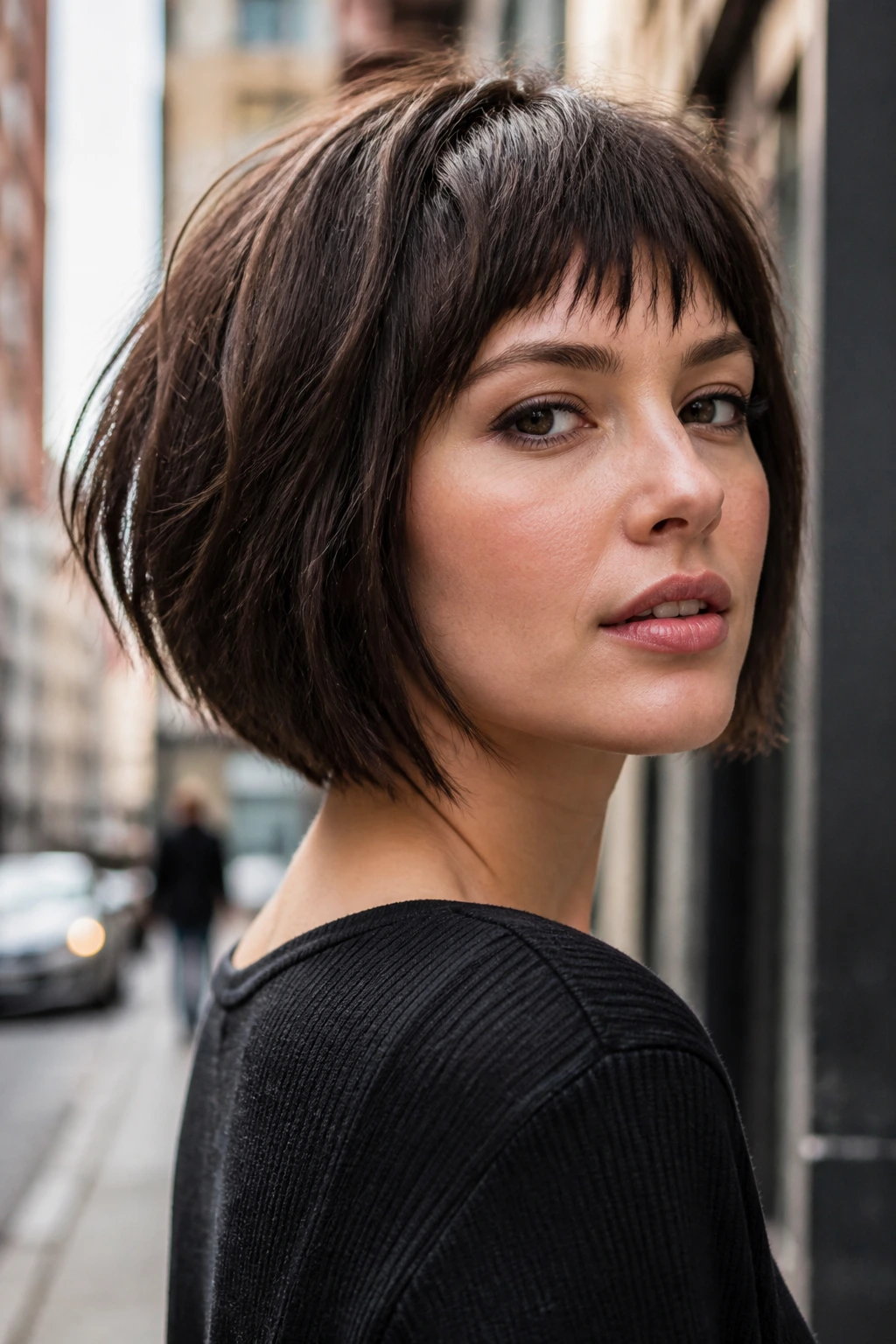
An A-line cut—where the back is shorter than the front—is the ultimate corrective measure for density. By stacking the hair at the nape of the neck, you create a natural lift that prevents the back of your head from looking flat. Pair this with short, choppy bangs, and you have a look that is equal parts vintage-inspired and modern punk.
Why the Back Matters
When you have thick hair, the hair at the nape often grows in a dense, tight pattern. By keeping this area short and layered, you create a foundation for the rest of the style to sit on. The choppy fringe serves to balance the sharp angle of the A-line, drawing the eye upward and highlighting the cheekbones instead of the width of the jaw.
Pro Technique: Internal Layering
Ask your stylist for “invisible layers.” These are cut deep into the hair, hidden beneath the top layer of strands. They act like internal springs, pushing the hair out and up to create volume without making the surface look frizzy or over-layered. It’s the difference between a controlled bob and a poofy, unmanageable mess.
4. The Soft Undercut Bob with Side-Swept Bangs
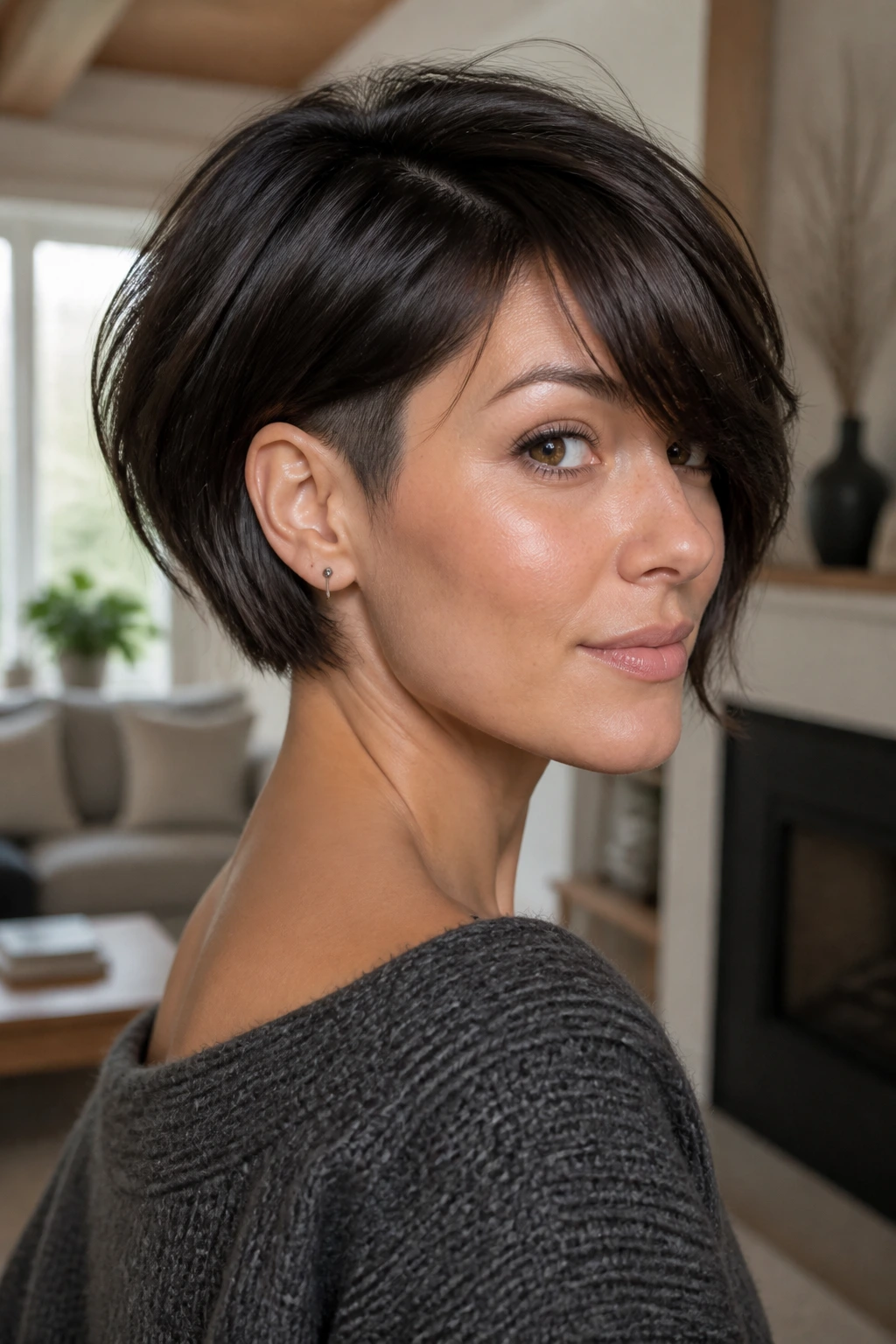
For those with truly excessive density, a subtle nape undercut can be life-changing. You don’t need a massive, shaved-off section to see a difference. Simply taking the bottom inch of hair at the neckline down to a shorter length allows the layers above to fall flatter and smoother. Side-swept bangs complement this by keeping the focus on the face rather than the bulk of the hair.
The Invisible Weight Loss
The benefit of an undercut is that it removes the heaviest, most stubborn hair that usually creates a “shelf” effect when you try to wear a bob. Because it’s hidden, you don’t lose the look of a full, thick head of hair. It is a secret weapon that makes a standard, choppy bob much easier to style.
How to Style the Sides
Since side-swept bangs are naturally prone to losing their shape, keep a small bottle of lightweight texture paste in your bag. A tiny, pea-sized amount smoothed over the ends of the bangs will keep them pinned to your forehead without making them look greasy or heavy. This is about control, not coating the hair in product.
5. The Layered Lob with Micro-Bangs

If you aren’t ready to go super short, a long bob—or “lob”—is a great way to transition into a choppy style. By keeping the length around the collarbone, you have enough weight to pull the hair down slightly, which helps manage thickness. Micro-bangs add an instant edge that turns a standard lob into a high-fashion statement.
Creating the Right Shape
Focus on “shattered” ends. Instead of a smooth, clean line, your stylist should use a razor to give the bottom a frayed, lived-in appearance. This texture is what makes the cut look intentional rather than just unkempt. The micro-bangs should be cut horizontally but with a slight variation in length to keep them from looking like a harsh, straight line.
Managing the Volume
Use a smoothing cream while the hair is damp, but avoid applying it near the roots. Thick hair often has enough natural volume at the crown; adding product there will only cause it to collapse or look oily by mid-afternoon. Focus your product application on the mid-lengths and ends where you need the most control.
6. The Inverted Choppy Bob with Wispy Bangs
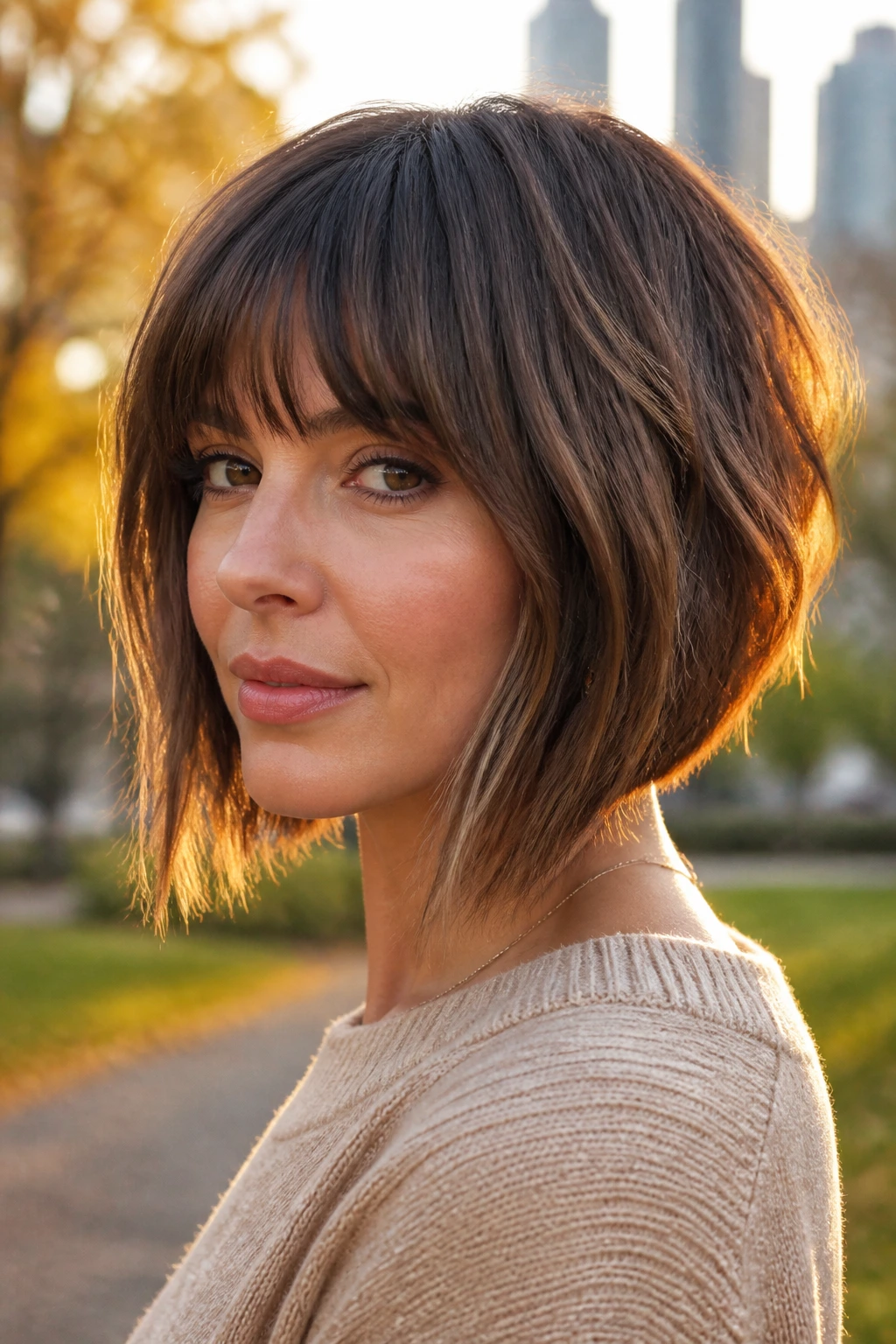
The inverted bob is a classic for a reason. By keeping the front sections longer and framing the face, you draw attention away from the fullness of the sides. Wispy bangs, which are significantly thinner and more spaced out than traditional blunt bangs, ensure that your forehead isn’t overwhelmed, keeping the face open and bright.
Why Wispy Wins
Heavy, thick bangs can make a face look closed off, especially if you have a rounder face shape. Wispy bangs let bits of your forehead show through, which creates a lighter, airier look. They require very little styling—just a quick blow-dry in the morning—making them a perfect partner for a busy lifestyle.
Troubleshooting the “Triangle”
If you find your hair still tries to puff out at the ends despite the inversion, ask for more weight to be removed via point-cutting on the underside. The goal is to make the hair feel thinner as it reaches the ends. The lighter the ends, the more the hair will curve inward toward your neck rather than outward toward your shoulders.
7. The Curly Choppy Bob with Full Fringe
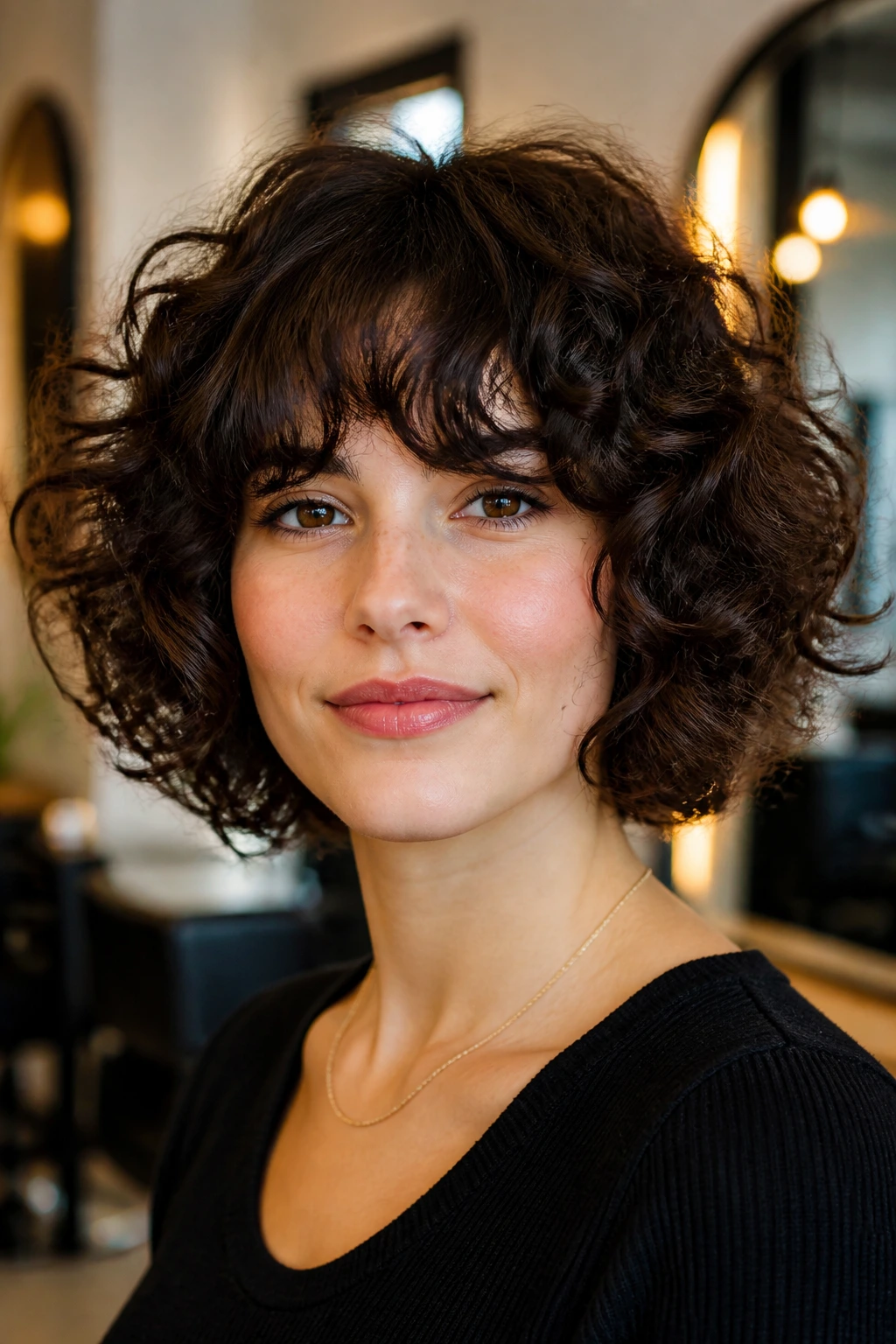
Thick hair and curls are a match made in heaven, provided you treat them with the right technique. A choppy cut for curly, thick hair should be done dry. This allows the stylist to see how each curl pattern springs up, ensuring they don’t cut too much and end up with a “poodle” effect. A full fringe adds a touch of retro glamour.
The Dry-Cut Advantage
Cutting thick, curly hair while wet is a gamble. As it dries, it shrinks, and if your stylist cut based on the stretched length, you could end up with a bob that’s inches shorter than you intended. A dry cut ensures that the “choppy” layers hit exactly where they are supposed to, creating shape rather than just removing bulk.
Curl Definition
For this look, skip the brush entirely. Use a curl-defining cream or mousse on soaking wet hair and scrunch it upward. As it dries, the weight of the water will help the hair settle into its natural pattern. If you need to touch up a flat piece, just use a little water on your fingers and re-scrunch.
8. The Piece-y Pixie-Bob
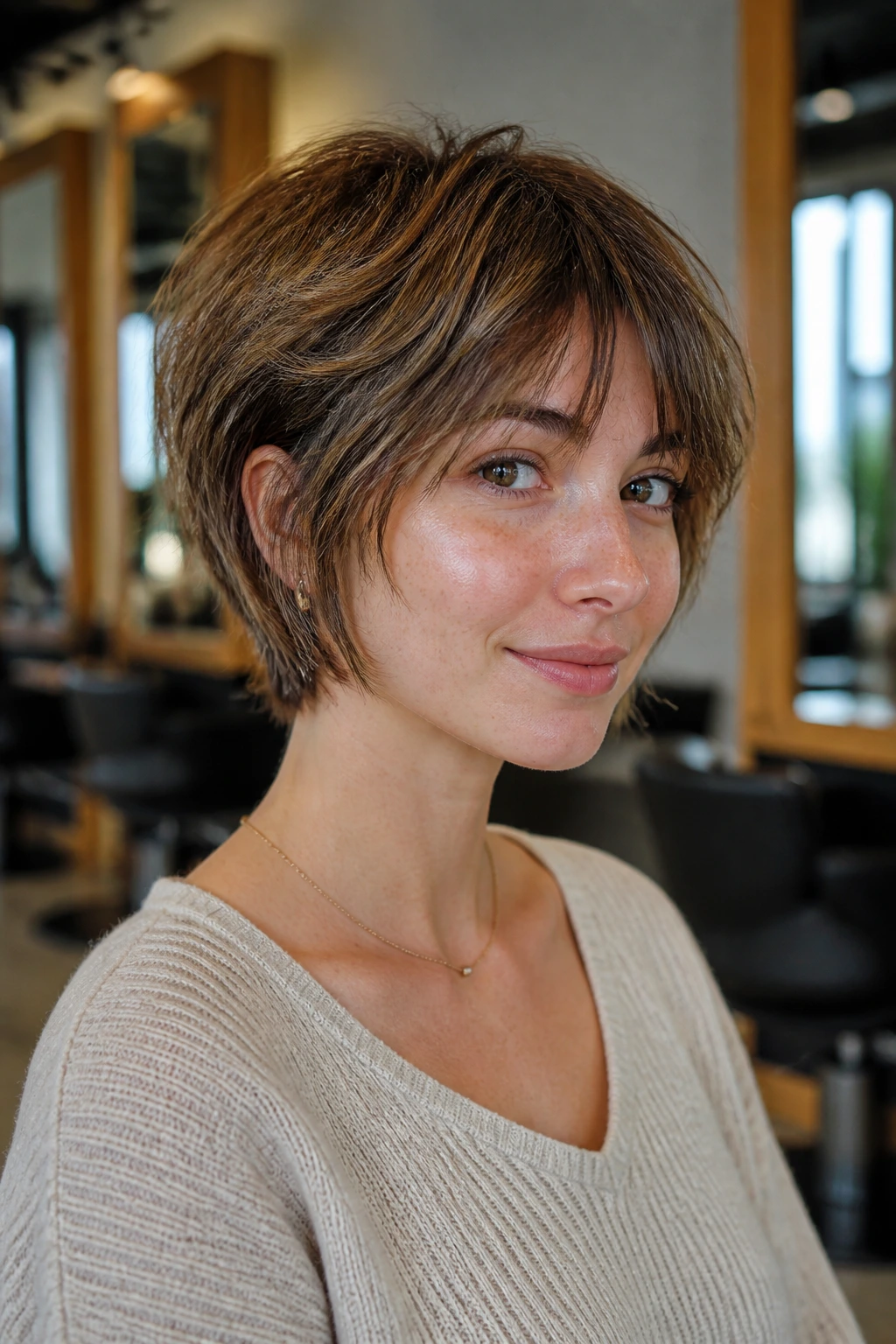
This is for the brave. It sits right at the intersection of a pixie cut and a bob, featuring a very short back and longer, choppy layers around the ears and forehead. The fringe here is typically textured and layered to blend into the sides, making it a very low-maintenance option that still feels feminine.
Building the Shape
The success of this cut depends on the transition area—the space between the short back and the longer front. If this isn’t blended correctly, it will look like two different haircuts joined together. Ensure your stylist uses a deep-point cutting technique to feather the lengths so they transition smoothly.
Daily Styling
A matte pomade or wax is non-negotiable here. Because the hair is so short, you need something with a bit of “hold” to keep the choppy layers in place. Rub a tiny amount between your palms and work it through your hair by pulling your fingers through, then piece out individual sections for that messy, intentional look.
9. The Rounded “Bowl” Choppy Bob
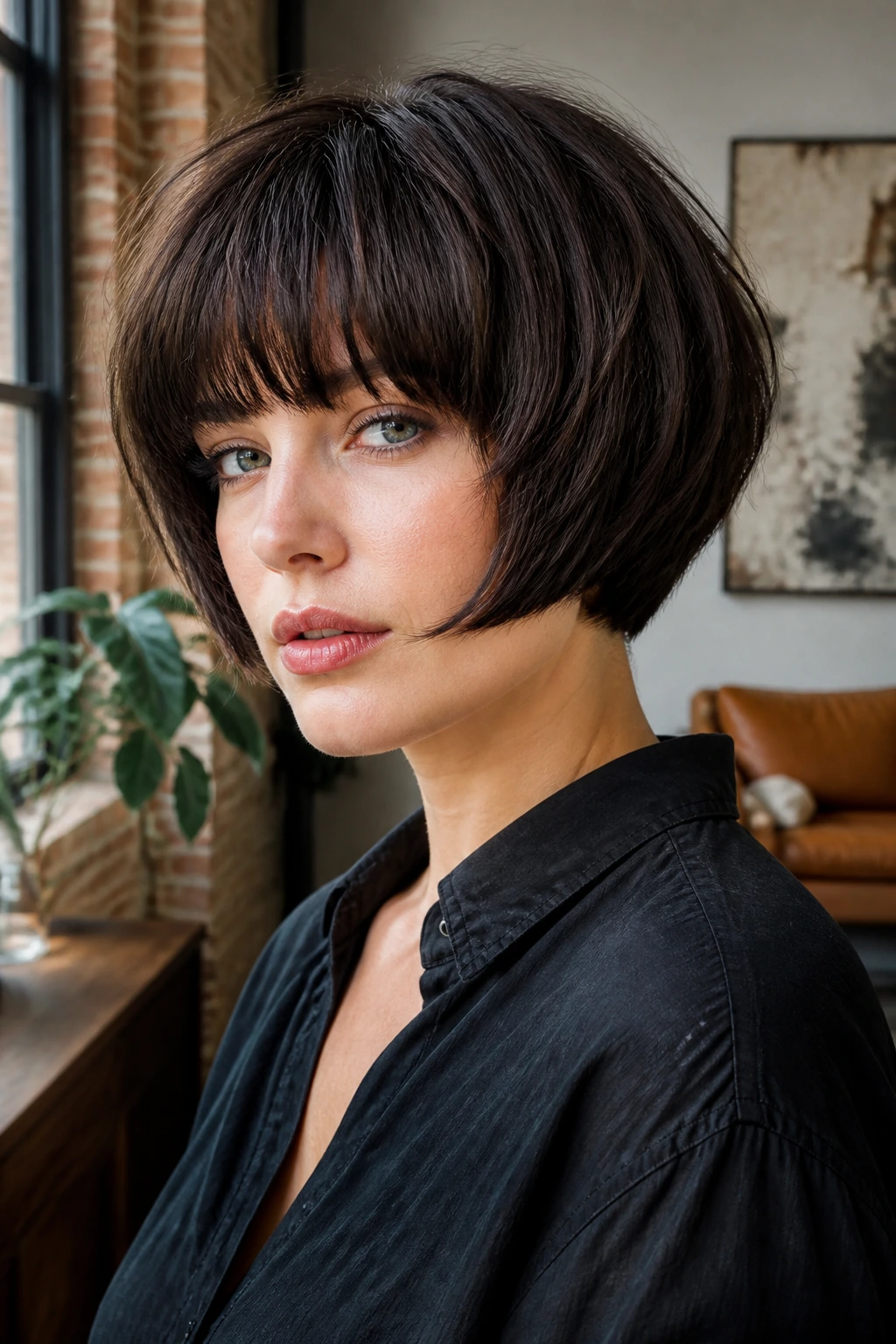
While the name might sound dated, the modern rounded bob is incredibly chic and works wonders on thick hair. By rounding the shape, you utilize your hair’s density to create a beautiful, solid silhouette. Choppy layers throughout the top give it a modern, textured finish that prevents it from looking like a vintage helmet.
The Role of Density
Most people with thick hair avoid rounded shapes because they fear the “mushroom” effect. However, if the cut is layered properly—with weight removed from the interior—the rounded shape actually becomes a benefit. It allows your hair to hold its style for days at a time, making it one of the most reliable cuts on the list.
Balancing the Bangs
Pair this with heavy, slightly textured bangs that hit just above the eyebrows. This creates a strong horizontal line that contrasts beautifully with the soft, rounded shape of the bob. It’s a very deliberate look that feels artistic and refined, perfect for anyone who wants a signature style.
10. The Edgy Undercut Bob with Short Bangs
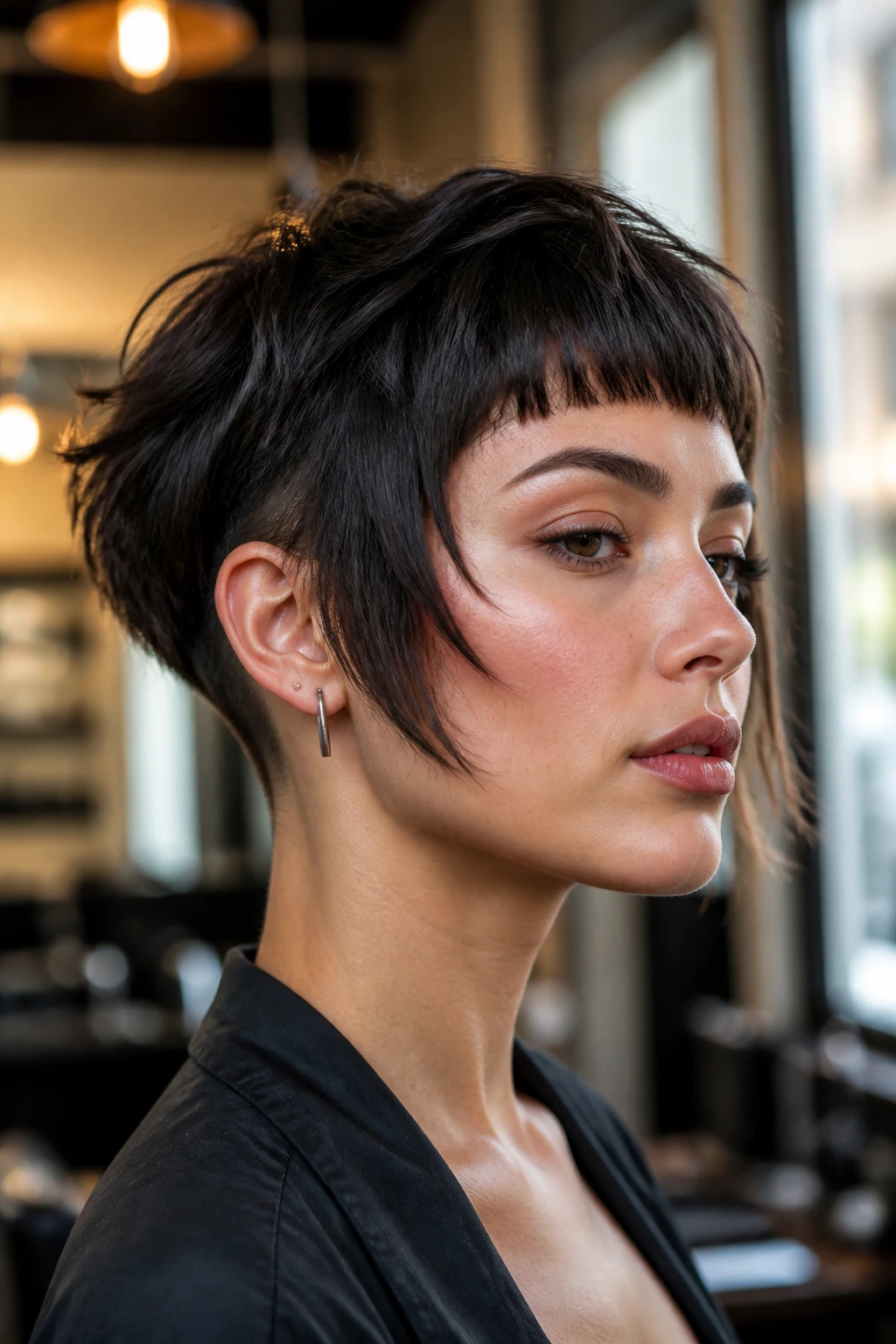
If you want to make a statement, this is the one. It features a bold, clean undercut at the nape or even on one side, paired with a choppy, asymmetrical bob and very short, jagged baby bangs. It’s a look that prioritizes personality and style over everything else, and it manages the thickest hair with ease.
Why It’s So Effective
By removing a larger percentage of your hair’s volume, you have total freedom to play with texture on the remaining hair. You can afford to have deeper, more dramatic layers because there is significantly less hair to fight against. The short bangs are the perfect accessory for this bold silhouette.
Confidence Is the Accessory
This cut requires a bit of maintenance to keep the undercuts clean and the bangs shaped. You will likely be visiting your stylist every four to five weeks. However, the feeling of having light, manageable hair is something that no other cut can provide, making the frequency of visits well worth it.
11. The Textured Blunt Lob with See-Through Bangs

This style is perfect if you like the idea of a bob but want the security of some length. The blunt line at the bottom keeps the hair looking thick and well-cared for, while the “see-through” or “Korean-style” bangs create a delicate frame that doesn’t feel heavy or oppressive on the forehead.
The Texture Technique
The chop here shouldn’t be too aggressive. Instead, ask for “slide cutting” on the ends to remove the bulk of the thickness without making the ends look thin or stringy. This keeps the perimeter appearing blunt and healthy while allowing the mid-lengths to move freely.
Bang Maintenance
See-through bangs are the easiest to manage because they aren’t meant to look perfect. If they get a little unruly, just brush them to the side or tuck them behind your ears. They are designed to be soft and framing, so they don’t require the strict heat-styling that heavy, blunt bangs often demand.
12. The Wispy Shag Bob with Face-Framing Fringe
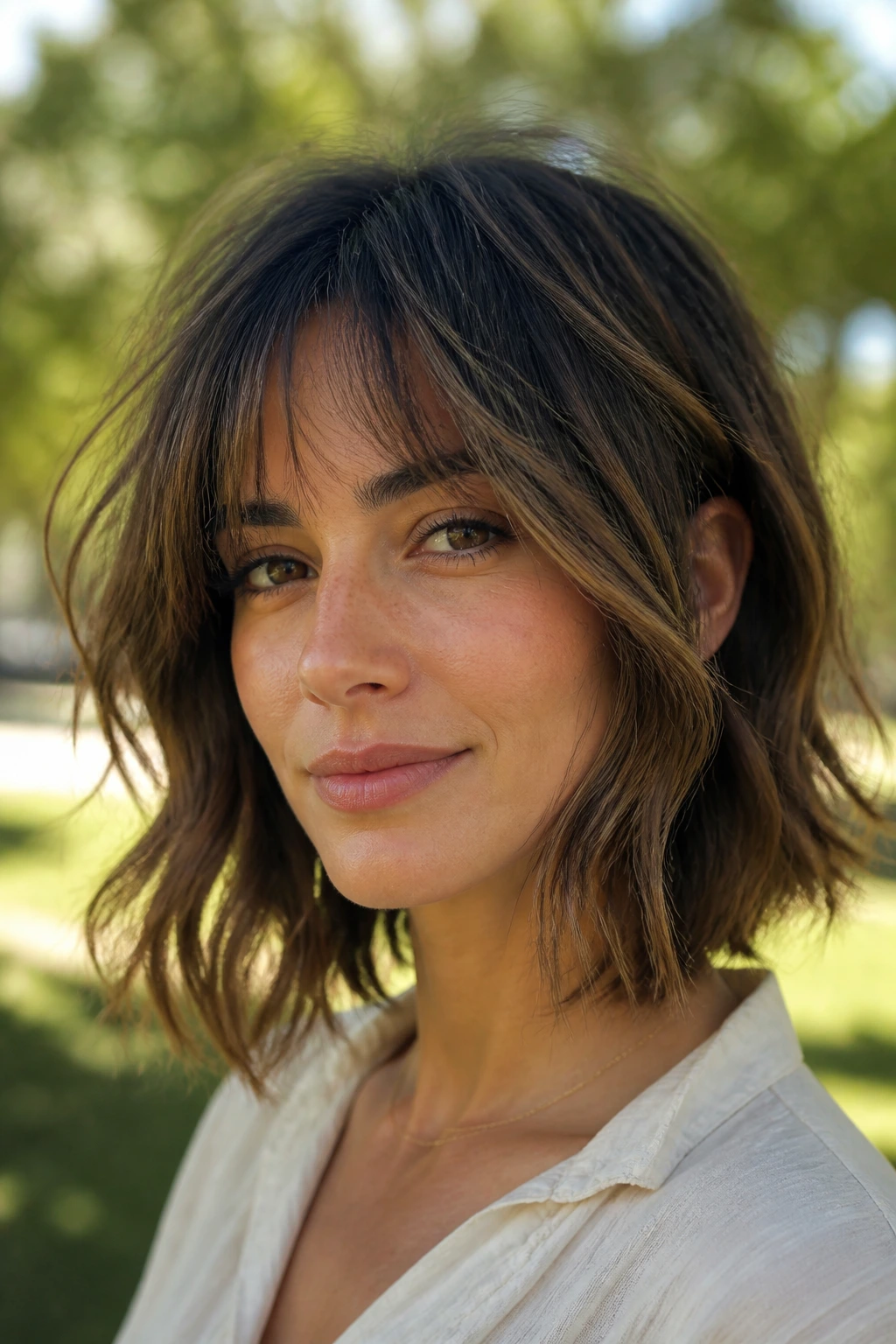
If you prefer a 1970s-inspired, bohemian aesthetic, this is the way to go. The layers are long, choppy, and flow into each other, and the bangs are cut to frame the face like curtains. It’s soft, incredibly touchable, and works perfectly with any natural wave or curl pattern.
Why This Style Succeeds
This cut embraces the “messy” factor. You aren’t aiming for perfection; you are aiming for a lived-in, effortless vibe. This is the best style for someone who hates using heat tools because the haircut itself does the work of creating volume and movement.
Styling for Volume
After washing, use a light mousse and rough-dry your hair with your head upside down. When it’s about 80% dry, flip back up and use your fingers to position your fringe. You don’t need a round brush; the texture of the cut will naturally lift your hair away from the scalp.
13. The Asymmetrical Choppy Bob
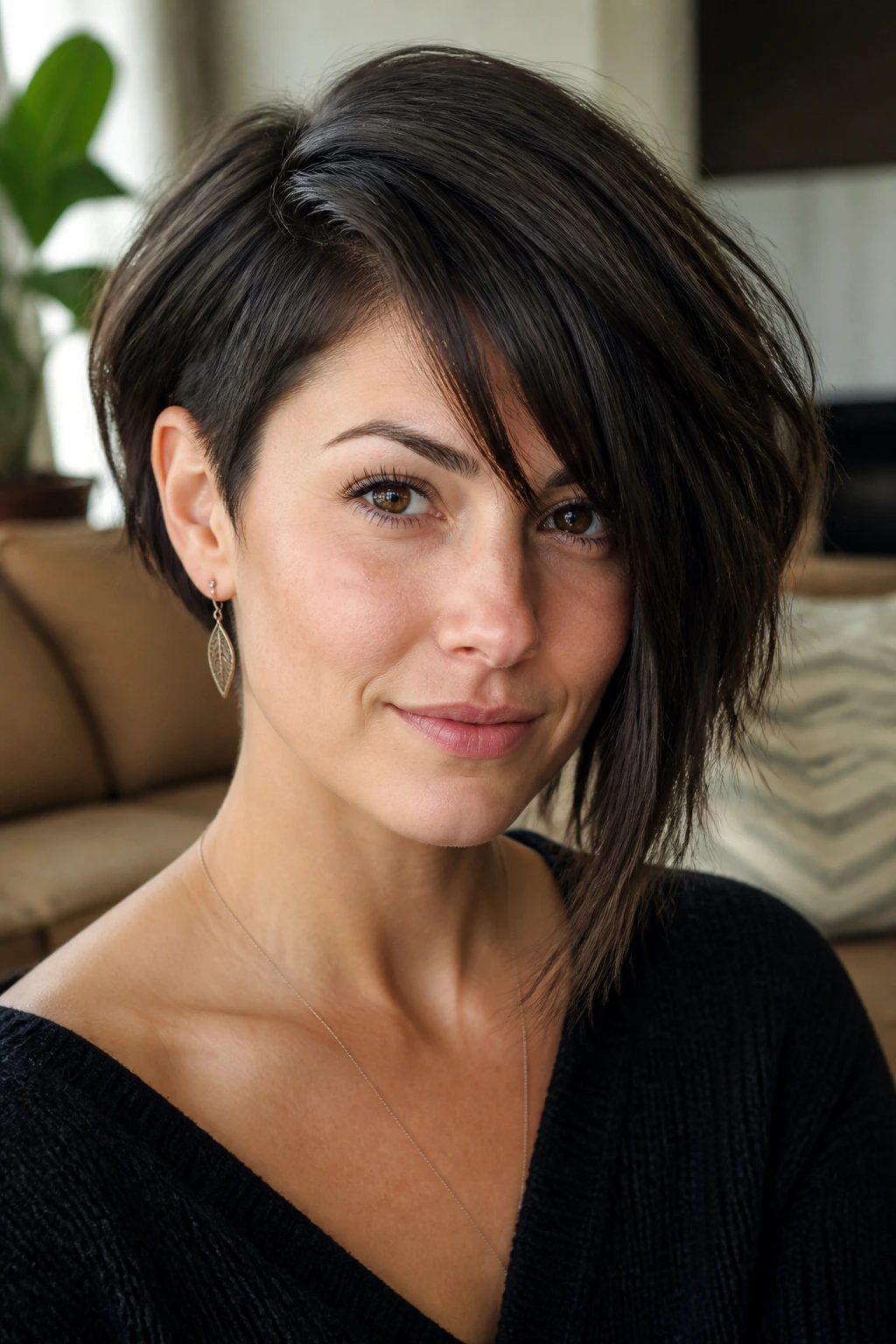
If your thick hair tends to lean toward being unruly on one side, an asymmetrical bob is a clever solution. By keeping one side significantly shorter or more heavily layered than the other, you create a point of interest that makes the disparity in your hair’s behavior feel like a design choice rather than a struggle.
Shaping the Asymmetry
The key is to keep the longer side close to the face to maintain that classic bob frame. The shorter side should be tucked behind the ear or layered heavily so it doesn’t puff out. This creates a balanced, artistic look that highlights your jawline and neck.
Managing the Hairline
Thick hair often has a stubborn growth pattern at the temples. A side part, combined with this asymmetrical cut, allows you to sweep your hair across the forehead and secure it with a bit of texture paste. It’s an effective way to keep the hair out of your face while maintaining a stylish, intentional aesthetic.
14. The Choppy “Bottleneck” Bob
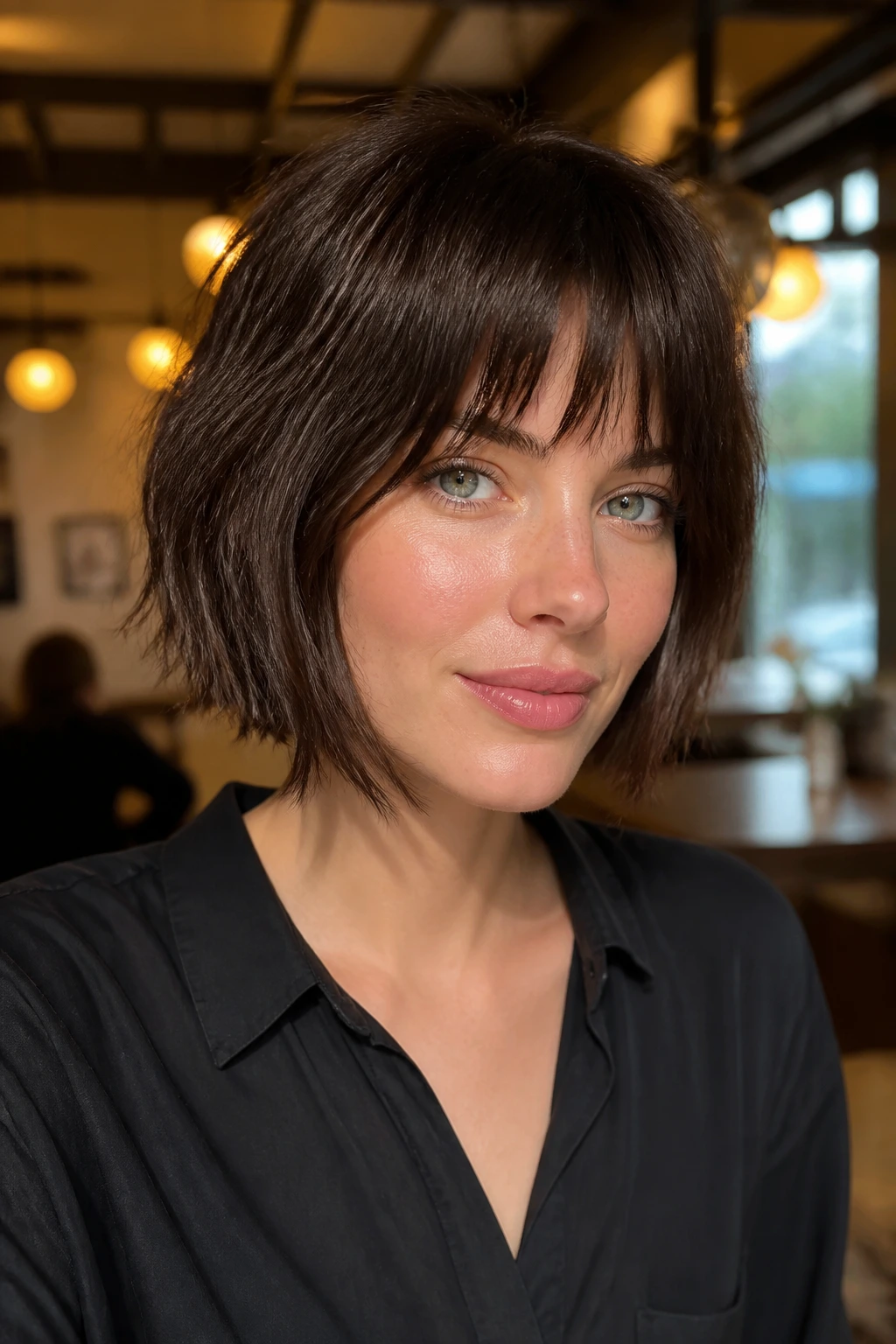
The bottleneck bob is defined by its bang structure, which starts shorter in the middle and gets longer toward the temples, mimicking the shape of a bottleneck. It’s a very flattering look for almost any face shape, and on thick hair, it helps distribute the volume across the top of the head instead of just the sides.
The Distribution of Volume
By layering the bangs into the rest of the hair, you connect the fringe to the bob seamlessly. This prevents the “clunky” look that can sometimes happen when heavy, thick hair is paired with a distinct, separate bang. The whole style becomes one continuous, flowing shape.
The Best Hair Textures
This style shines on hair with a slight natural wave. If your hair is poker-straight, you might need a flat iron to give the ends a slight flick. If your hair is very curly, this cut should be adapted to have longer bangs that don’t shrink up too much.
15. The Choppy Bob with Blunt Micro-Fringe
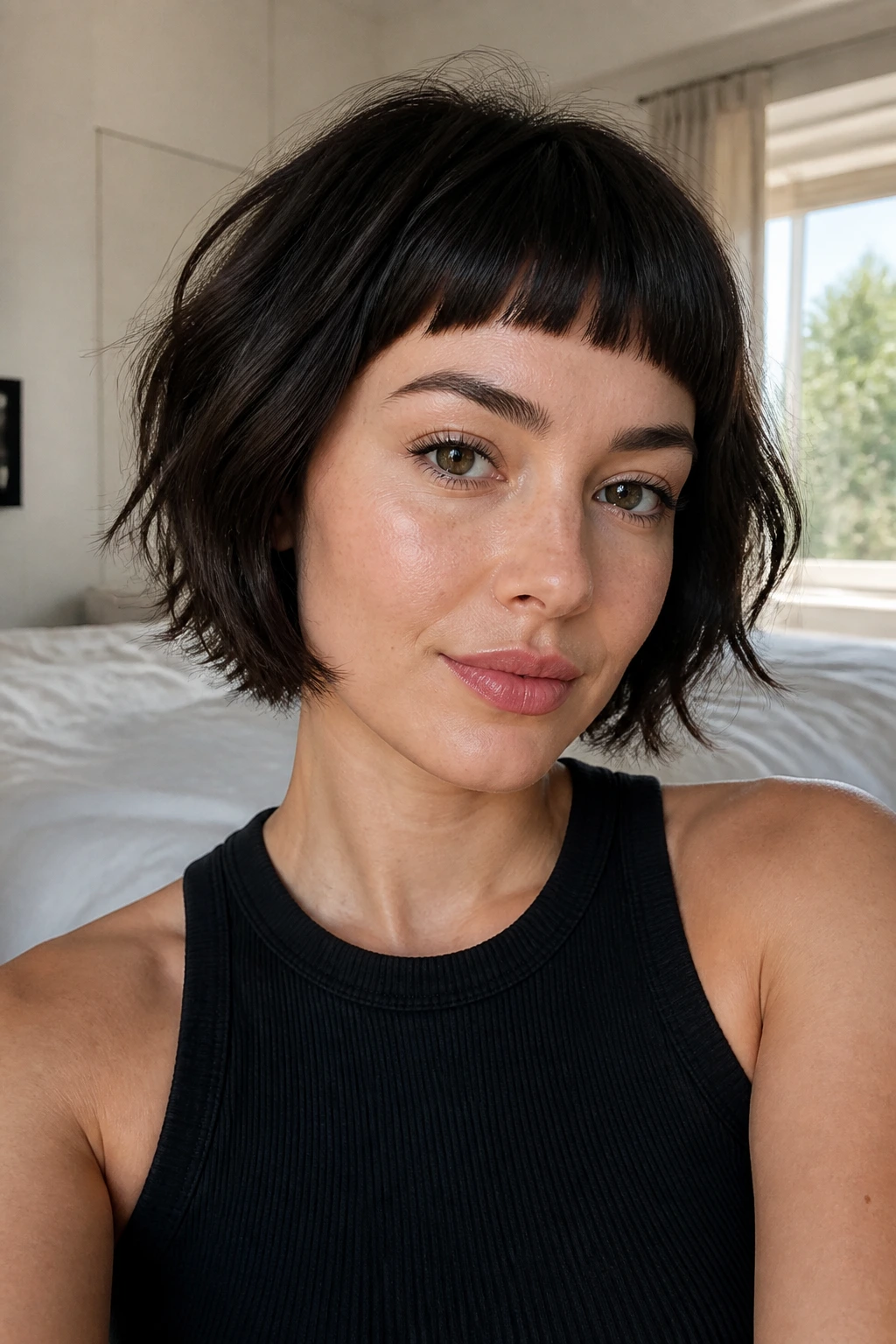
We are rounding out this list with a high-fashion, high-impact choice. The blunt micro-fringe—or baby bangs—creates a dramatic horizontal line across your forehead, which contrasts sharply with the choppy, textured length of the bob. It’s bold, it’s short, and it’s arguably the easiest style to care for.
Why It’s Efficient
Micro-bangs don’t get in your eyes and they don’t require much styling. The choppy bob length is short enough that you don’t have to deal with tangles or heavy ends. It is the ultimate “low-maintenance, high-style” haircut, and for someone with thick hair, it’s like cutting off a heavy winter coat.
Final Thoughts
Choosing a choppy bob for thick hair is about more than just aesthetics; it is about finding a silhouette that works with your hair’s density rather than against it. Whether you go for a soft shag or a sharp, asymmetrical cut, the key is to embrace texture. The next time you find yourself battling the weight of your own hair, remember that the solution isn’t to force it flat—it is to give it room to move. By choosing a style that incorporates intentional layering and the right fringe, you can find a balance that feels as light as it looks.