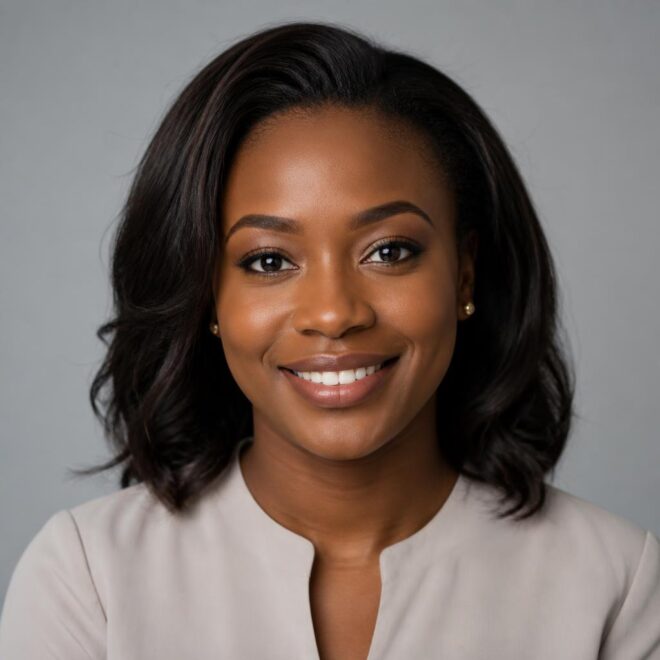


When you have a round face, the search for the perfect haircut can feel like a high-stakes game of geometry. You want to soften the cheeks, lengthen the profile, and create a sense of verticality that naturally balances the soft curves of your jawline. The angled bob—often called an A-line or an inverted bob—is the secret weapon of stylists everywhere because it does exactly that. By drawing the eye downward and creating sharp, crisp lines near the chin, this cut effectively carves out structure where nature decided to be soft.
It is not just about chopping your hair off; it is about deliberate angles. A classic, blunt bob that hits right at the jaw can accidentally emphasize the very width you might want to minimize. By contrast, an angled bob that starts shorter in the back and sweeps forward into longer pieces creates a V-shape effect. This visual trickery adds a sophisticated edge to your look while providing the illusion of a leaner, more oval-shaped face.
Finding the right length is where the magic happens. A deep angle—where the front pieces graze your collarbone while the nape stays cropped short—is arguably the most flattering option for rounder facial features. It provides the greatest amount of elongation. However, shorter variations can work just as well if they are layered with precision. Whether you are aiming for something sleek and professional or textured and beachy, there is an angled version of this iconic cut that will make you look twice in the mirror.
1. The Classic Deep-Angled Inverted Bob
The deep-angled bob is the gold standard for anyone looking to maximize face-slimming effects. This style features a dramatic difference in length between the back and the front. Because the front sections reach down toward your collarbone, they pull the visual focus away from your cheeks and onto your neck and chest.
Why It Works for Round Faces
The sheer length of the front pieces is the primary engine here. By creating a strong diagonal line, you are essentially “pointing” away from the width of your face. This draws the viewer’s eye vertically, which is the exact opposite of what a rounded chin does.
Styling for Maximum Sharpness
- Use a high-quality flat iron to ensure the front pieces are stick-straight.
- Apply a lightweight serum to keep the hair looking sleek and reflective.
- Avoid heavy texturizing sprays, as they can cause the hair to “poof” out, which adds width back to the face.
Pro tip: Ask your stylist to use a razor on the very ends of the front pieces. This makes them taper slightly, which prevents the ends from curling inward and creating unwanted bulk.
2. The Textured Lob-Style Angle
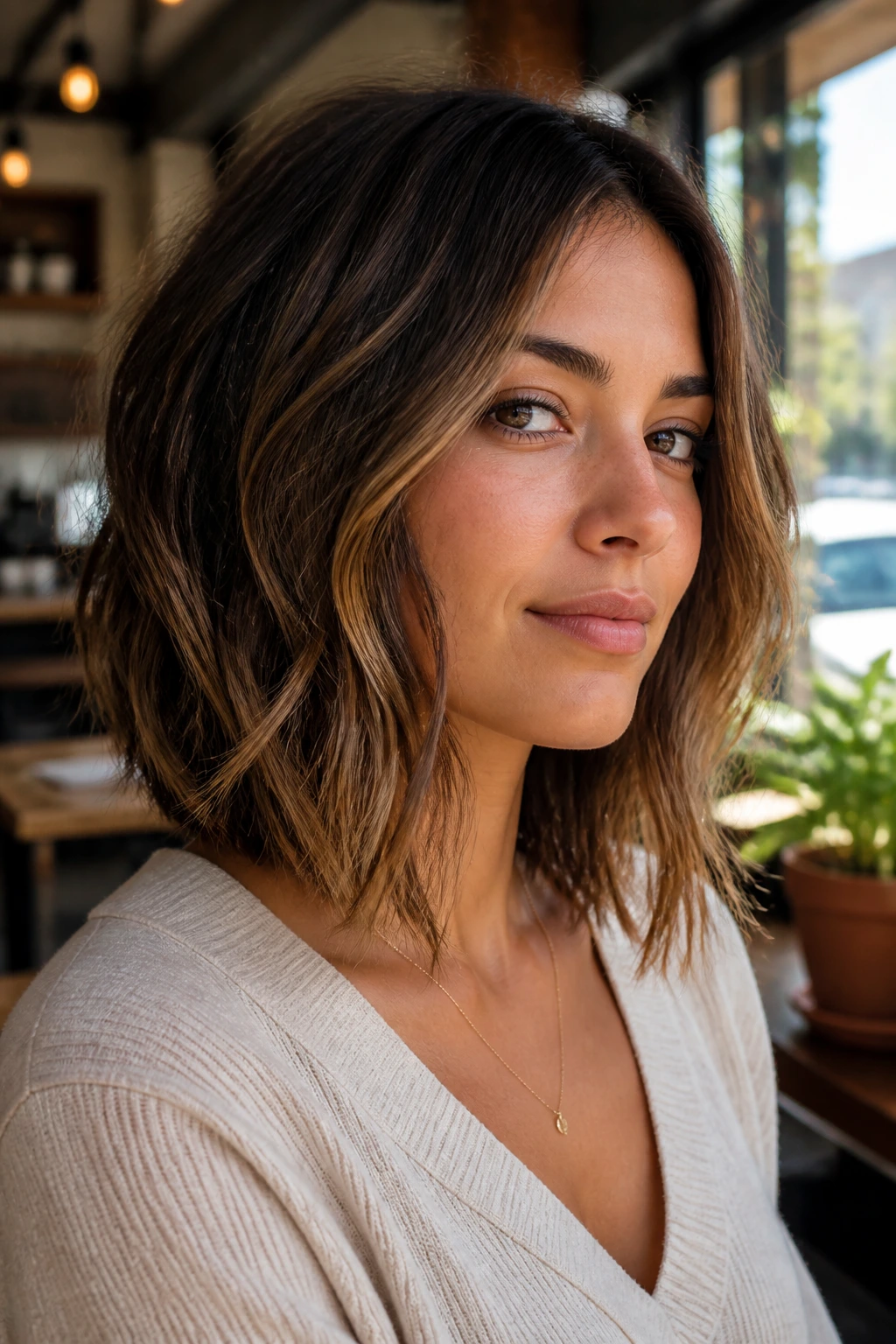
If you are hesitant to go extremely short, the “lob” or long bob is a brilliant middle ground. This style keeps the hair just long enough to sit comfortably on your shoulders, but with the trademark A-line shape that gives it personality. It feels less like a traditional haircut and more like a style statement.
Creating Volume Through Texture
Texture is the enemy of a static, round face. When your hair lies completely flat, it tends to frame your cheeks in a way that highlights their roundness. Adding waves or messy layers breaks up the symmetry.
The Best Hair Types for This Look
- Wavy hair: This cut shines when allowed to do its own thing.
- Fine hair: Use a dry texture spray to “pump up” the roots and create body.
- Thick hair: Ensure your stylist removes weight from the ends so it does not look bottom-heavy.
3. The Graduated Stacked Bob
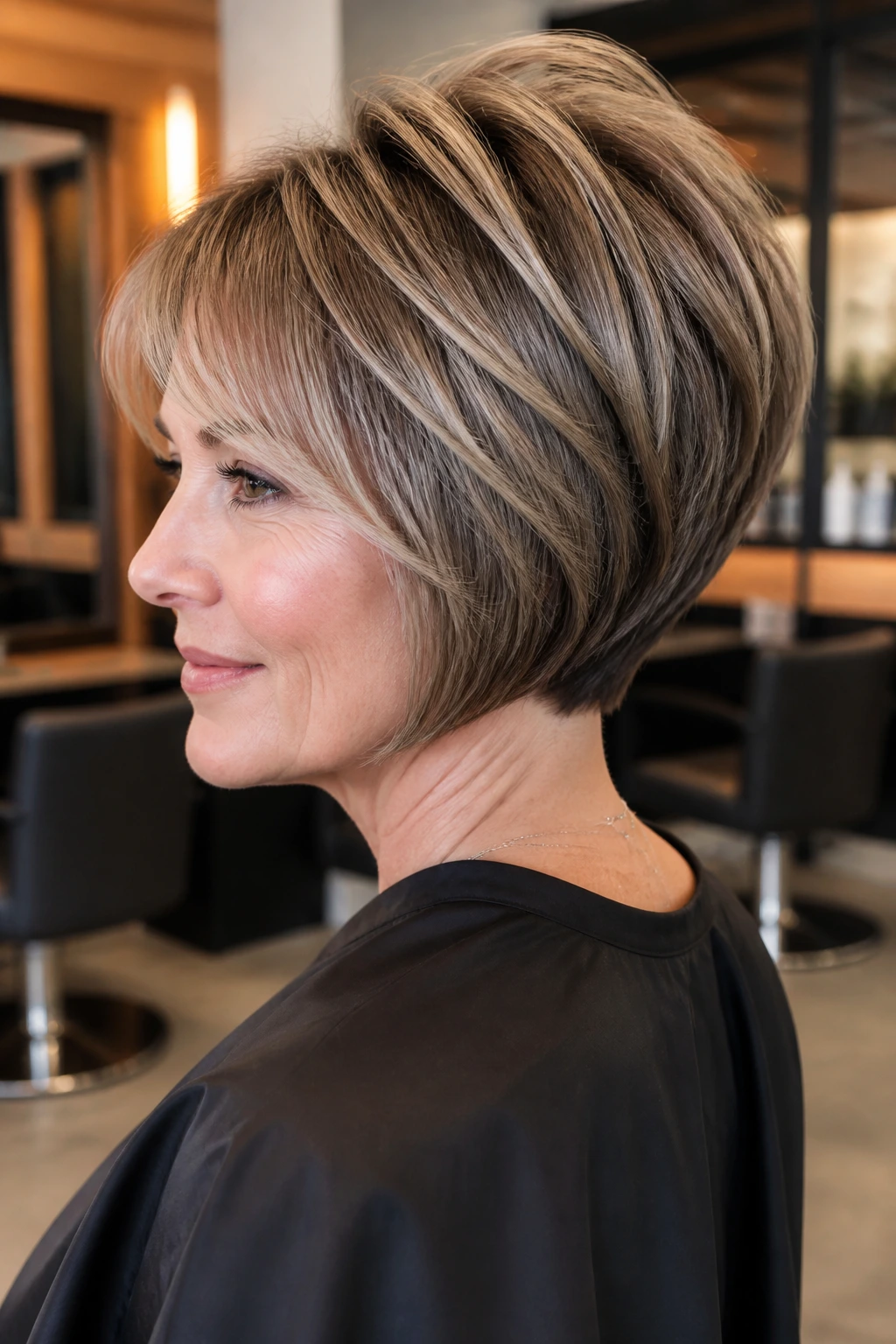
The “stacked” bob involves short, shorn layers at the nape of the neck that build up—or “stack”—into longer layers toward the crown. This adds significant volume at the back of the head. By lifting the profile at the back, you create a beautiful, elegant shape that looks great from the side and back.
The Benefit of Height
A round face often lacks angles, so adding height at the crown helps balance things out. The stacked layers force the eyes to look up, effectively lengthening your silhouette. It is an intentional, architectural cut that feels polished the moment you step out of the salon.
Maintenance Considerations
You will need to visit the salon every six to eight weeks for this cut. Because the back relies on precise layering, the shape will begin to look fuzzy or “grown out” if those nape layers get too long.
4. The Side-Swept Bang Bob
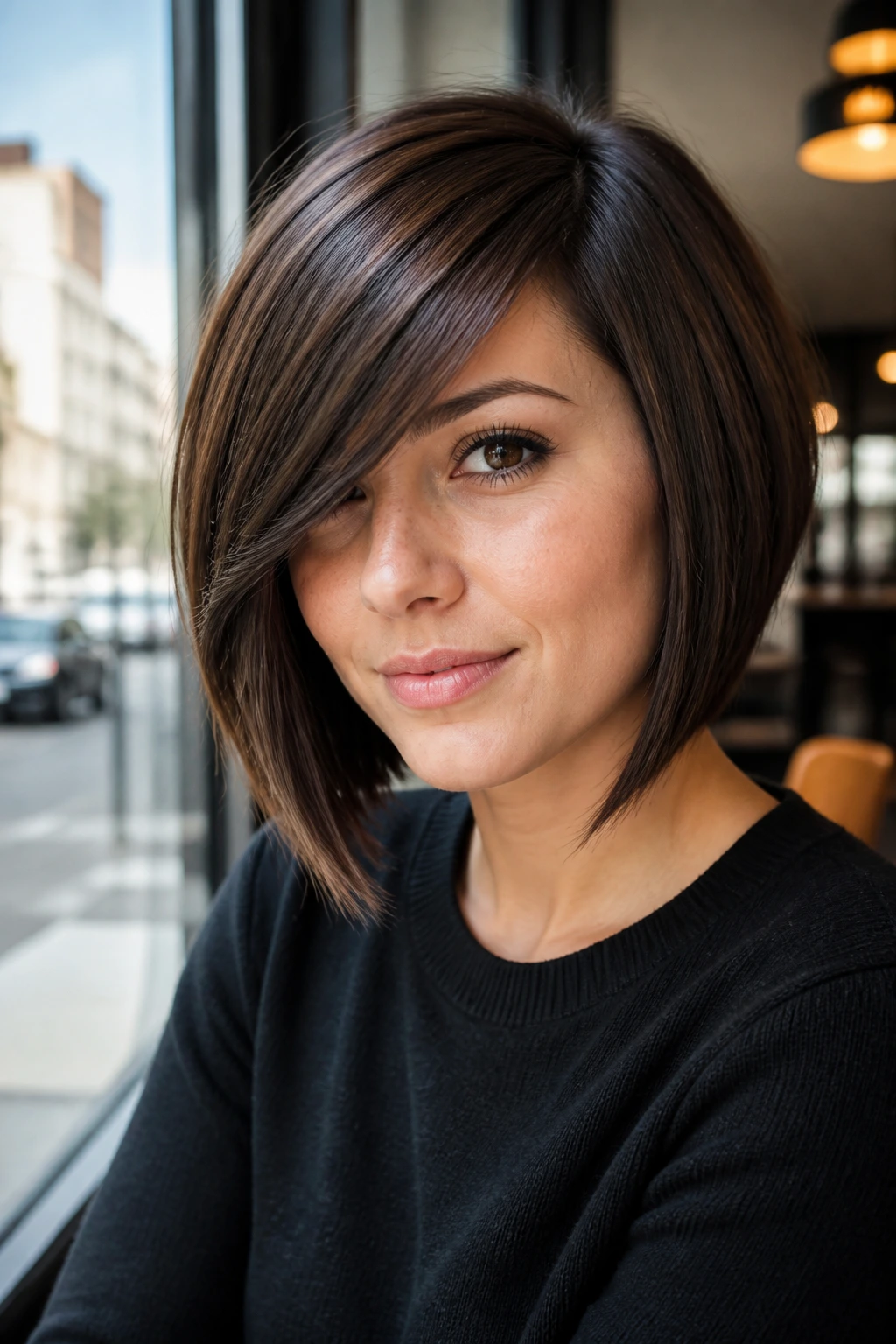
Bangs are often controversial for round faces, but the side-swept version is a complete exception to the rule. By opting for a long, heavy side bang that blends into the front angle of your bob, you create a diagonal line across the forehead.
How It Redefines Your Features
A forehead that is left entirely open can sometimes make a round face look wider. A side-swept bang creates a “cutout” effect that breaks the circular boundary of your face. It is an easy way to hide a bit of the forehead while keeping the look light and airy.
Stylist’s Secrets for Bangs
- Never cut them too short; they should hit at least at the cheekbone.
- Use a round brush to blow-dry the bangs away from your face for that “bouncy” look.
- If your hair is prone to oil, carry a dry shampoo specifically for your fringe to keep it from sticking to your forehead.
5. The Asymmetric Angled Bob
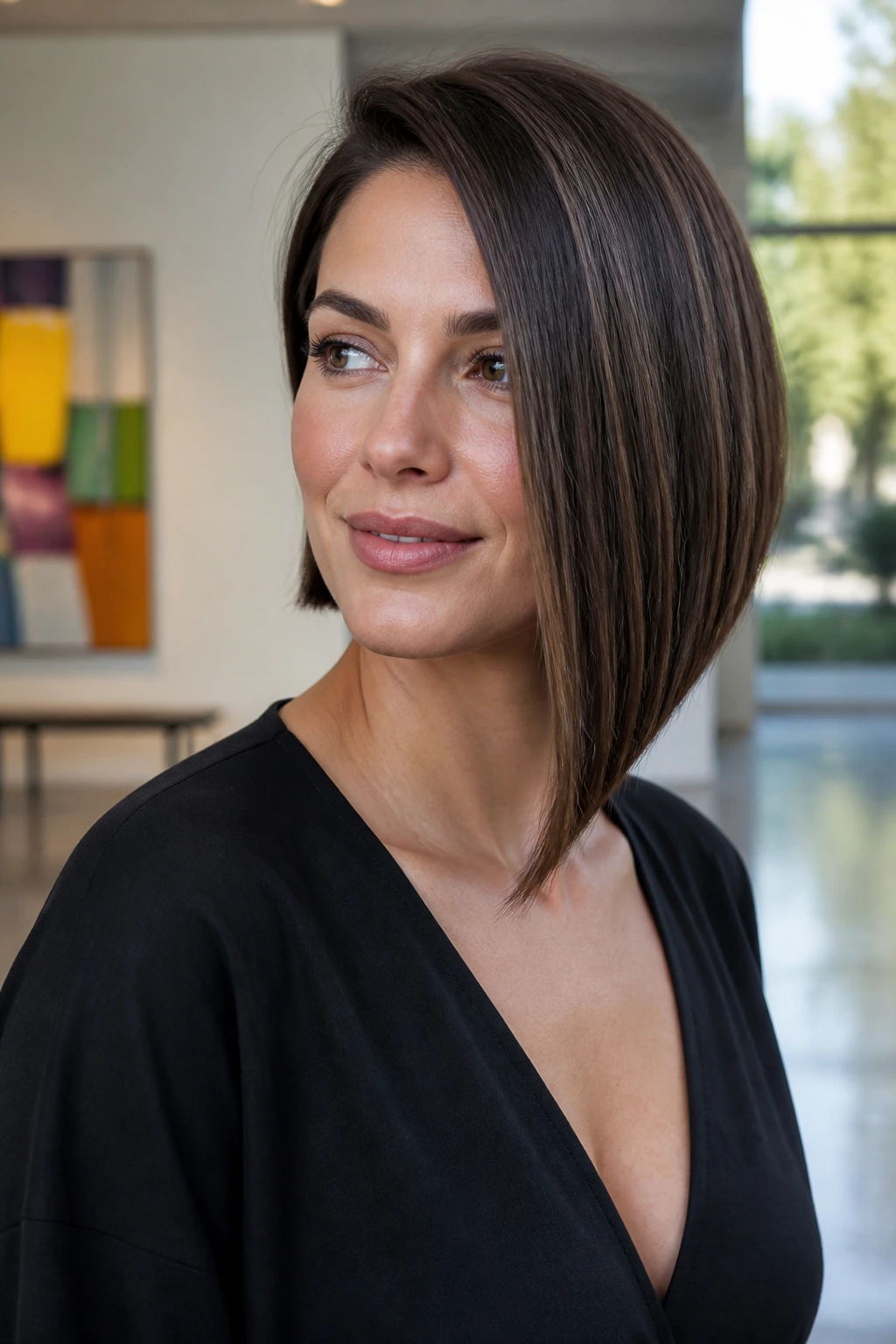
If you want to be bold, the asymmetry of an off-center bob is your best friend. This cut features one side significantly longer than the other. Because the length is uneven, the eye is constantly shifting, which prevents the face from being perceived as a static, round shape.
Why Asymmetry is So Flattering
When you have a round face, symmetry can sometimes emphasize the roundness. An asymmetric cut disrupts that symmetry. It creates a focal point that is offset, drawing attention to your jawline or eyes rather than the breadth of your cheeks.
Who Should Try This?
- Those with straight, fine hair that needs a bit of drama.
- People who are tired of the “standard” bob and want something that feels modern and edgy.
- Anyone who isn’t afraid to spend five extra minutes styling their hair in the morning.
6. The Blunt-Cut Angled Bob
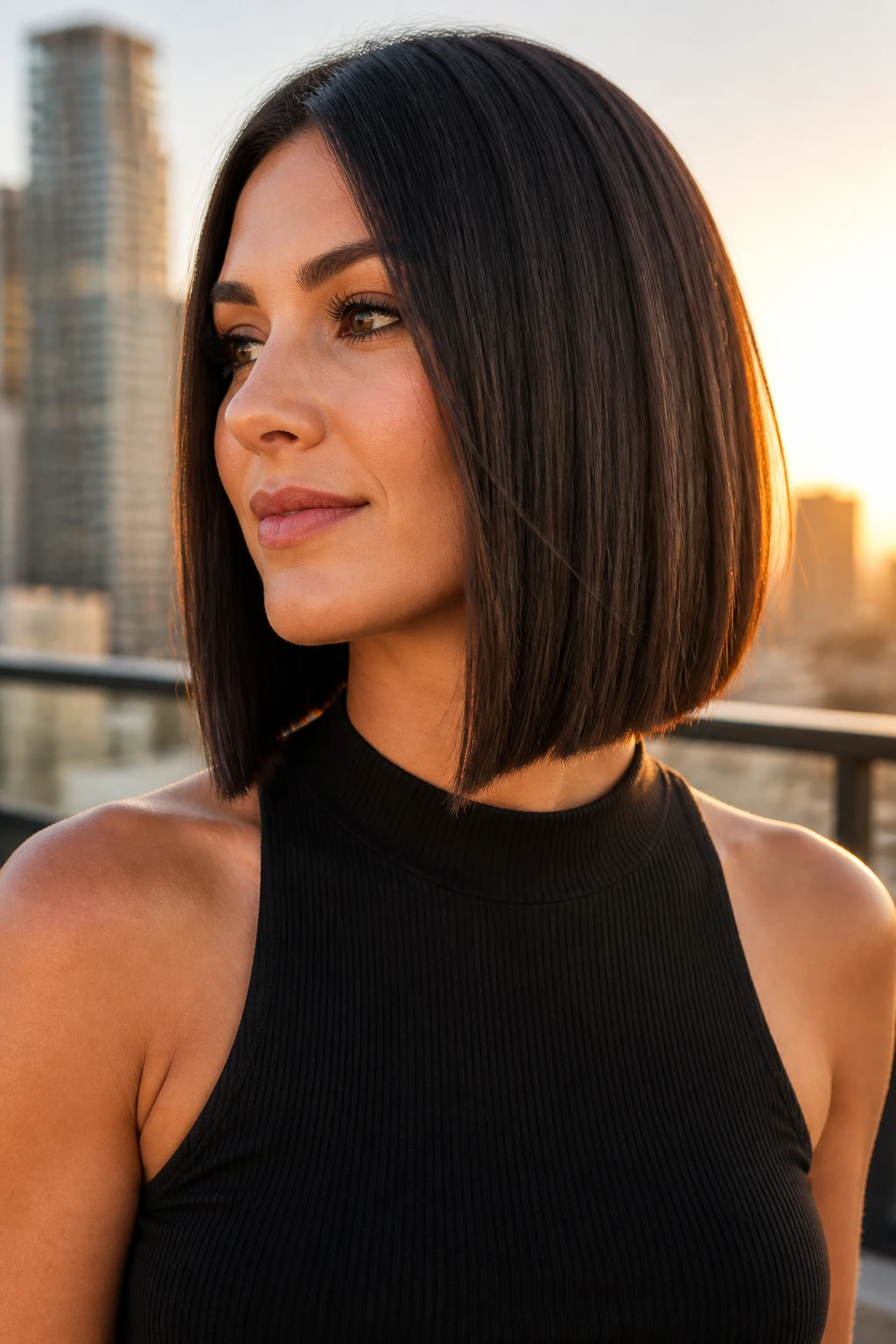
A blunt bob means there are no layers; the ends are cut straight across. On an angled cut, this creates a very sharp, clean geometric line that looks intentional and expensive. It is a fantastic option for those with thick, healthy hair who want a look that feels incredibly dense and full.
Sharp Edges for Round Faces
The sharpness of a blunt edge provides a necessary contrast to the softness of a round face. It is like putting a picture inside a sharp, clean frame. The contrast makes the face look more “sculpted” by comparison.
Common Misconception
Many people think that blunt cuts make round faces look wider. This only happens if the bob is too short. If the front pieces graze the collarbone, the blunt line actually acts as a weighted vertical pull, which is highly flattering.
7. The Soft-Layered Angled Bob
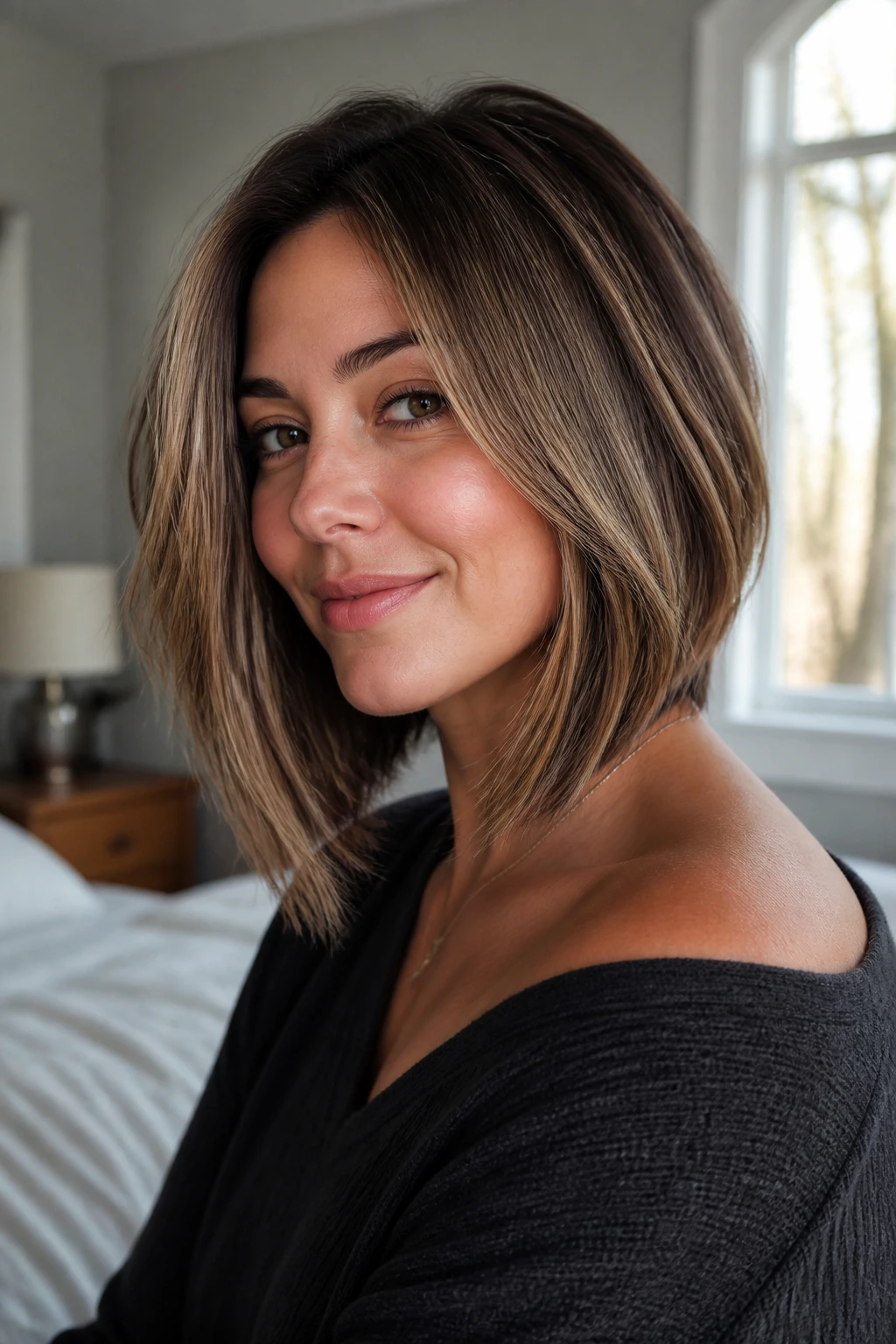
If the blunt look feels too harsh for your personality, consider a soft-layered version. This is an angled bob that incorporates invisible, “point-cut” layers throughout the ends. These layers don’t add bulk; they just soften the line so it isn’t quite as rigid.
The Role of Movement
Round faces benefit from movement. When hair is too stiff or perfect, it can look like a helmet. By adding soft layers, you ensure the hair has enough give to move with your head, which creates a more natural, approachable aesthetic.
How to Achieve It
- Ask for “point cutting” rather than “layering.”
- Point cutting involves the stylist snipping into the ends of the hair with scissors held vertically, which removes weight without creating a “shelf” of layers.
8. The Ear-Tuckable Short Angle
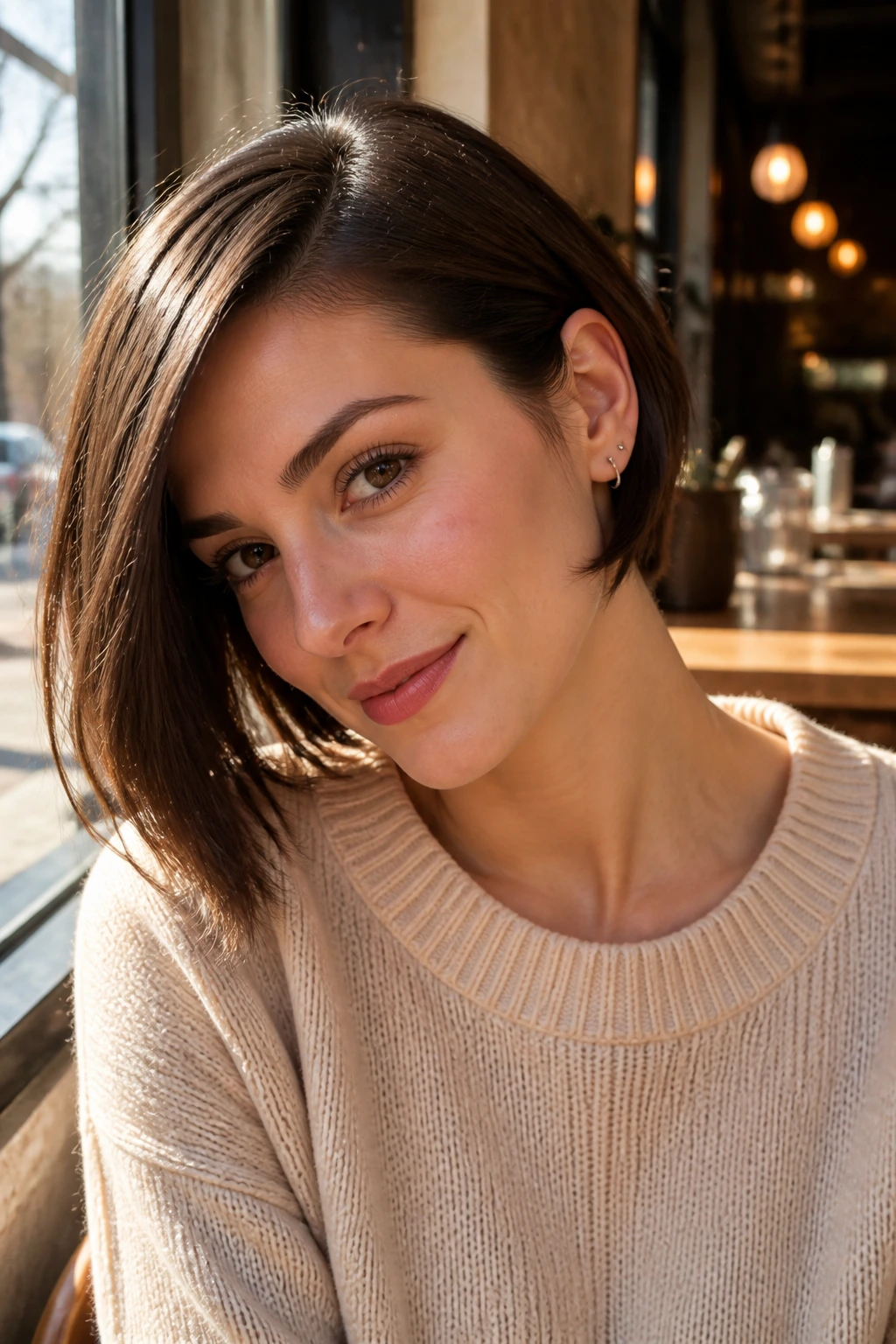
Sometimes, you just want a cut that is practical. This variation of the angled bob is slightly shorter in the back but leaves just enough length in the front to tuck behind your ear comfortably. This is the ultimate “I woke up like this” hairstyle.
Managing the Tuck
Tucking hair behind one ear is a classic trick to show off your jawline. For a round face, this is particularly effective because it introduces a new angle—the line of your neck—into the equation. It is a subtle change that makes a huge impact on how your face is perceived.
The Best Texture for Tucking
A bit of grit or “day two” texture is actually better for this style than squeaky-clean hair. Use a texturizing paste to keep those tucked pieces in place.
9. The Sleek Center-Part Angle
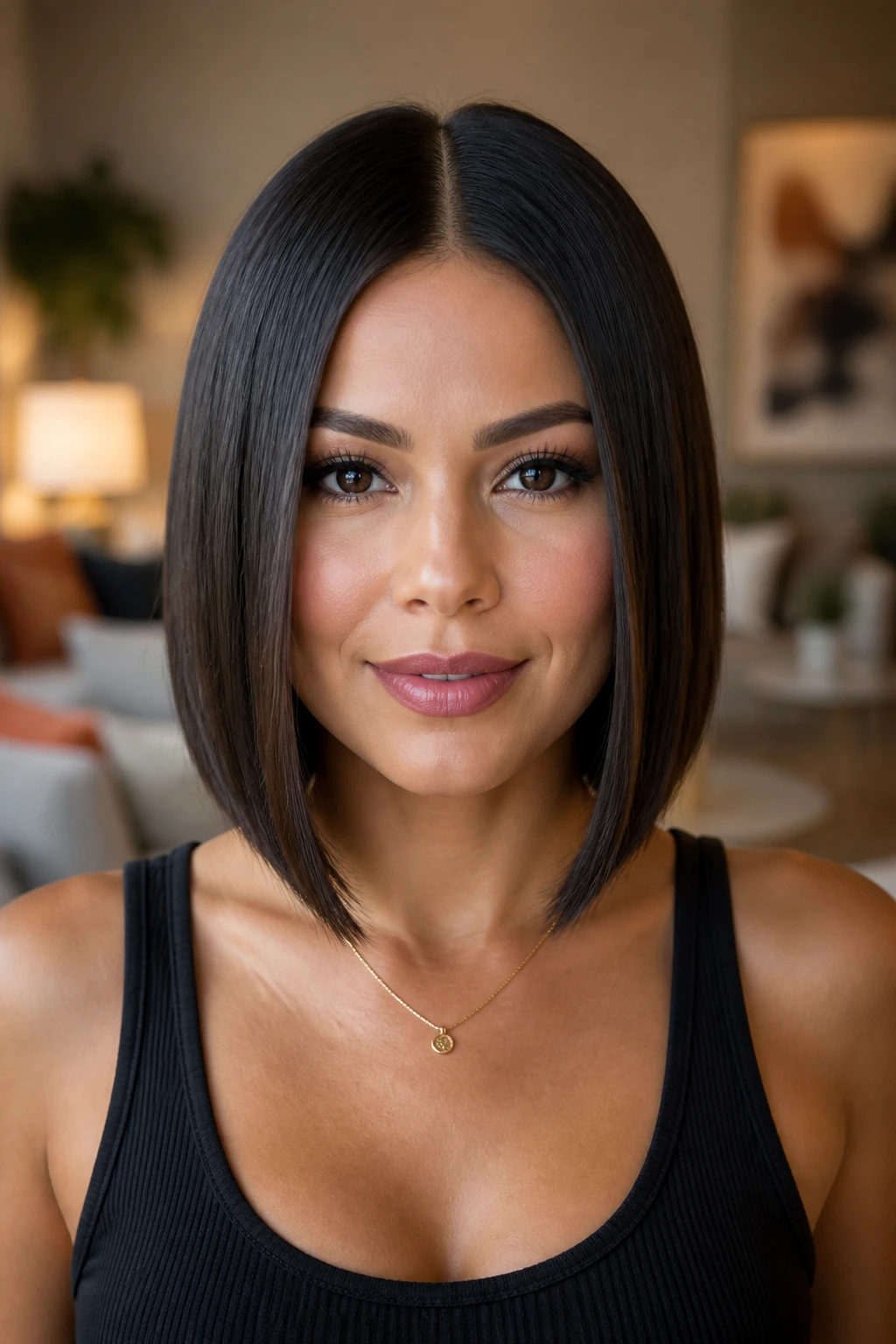
The center part is frequently warned against for round faces, but in an angled bob, it works wonders. Because the hair is angled forward, the center part frames the face and creates two long, vertical curtains of hair that hide the outer edges of the cheeks.
Framing the Face
If you look at the face as a circle, the hair acts as a vertical divider. It narrows the total field of vision, making the face appear narrower than it actually is.
Why You Need a Flat Iron
For this to work, the hair must be smooth. If your hair is wavy or messy, the center part will look wide and can emphasize the roundness. Ensure your hair is conditioned and flat-ironed to a glossy finish.
10. The Wavy Beach-Bob Angle
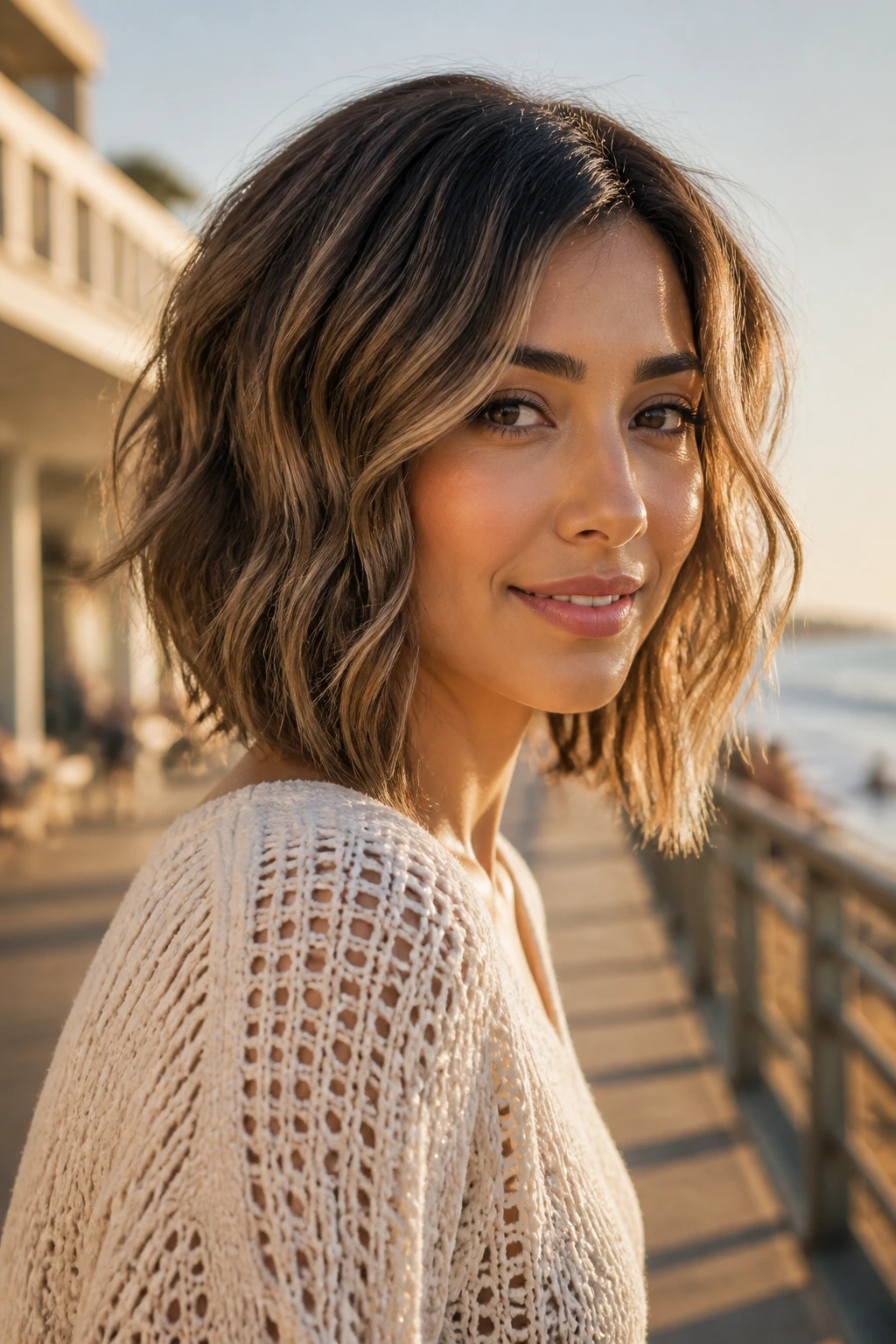
If you love a more relaxed, bohemian look, this is it. It is an angled bob that is styled with loose, beachy waves. The waves are the secret here; they break up the roundness of the face and add height and volume where you need it most.
Why Waves Help
Waves prevent the hair from hugging your cheeks too closely. When hair sits flat against the face, it traces your features, highlighting their circular nature. When you add waves, the hair sits away from the face, creating a “cushion” that obscures the roundness.
Styling Tools
- Use a 1-inch curling wand to create random, inconsistent waves.
- Do not curl the ends; leave them straight for a modern finish.
- Finish with a sea salt spray for that lived-in, cool-girl vibe.
11. The Caramel-Balayage Angled Bob
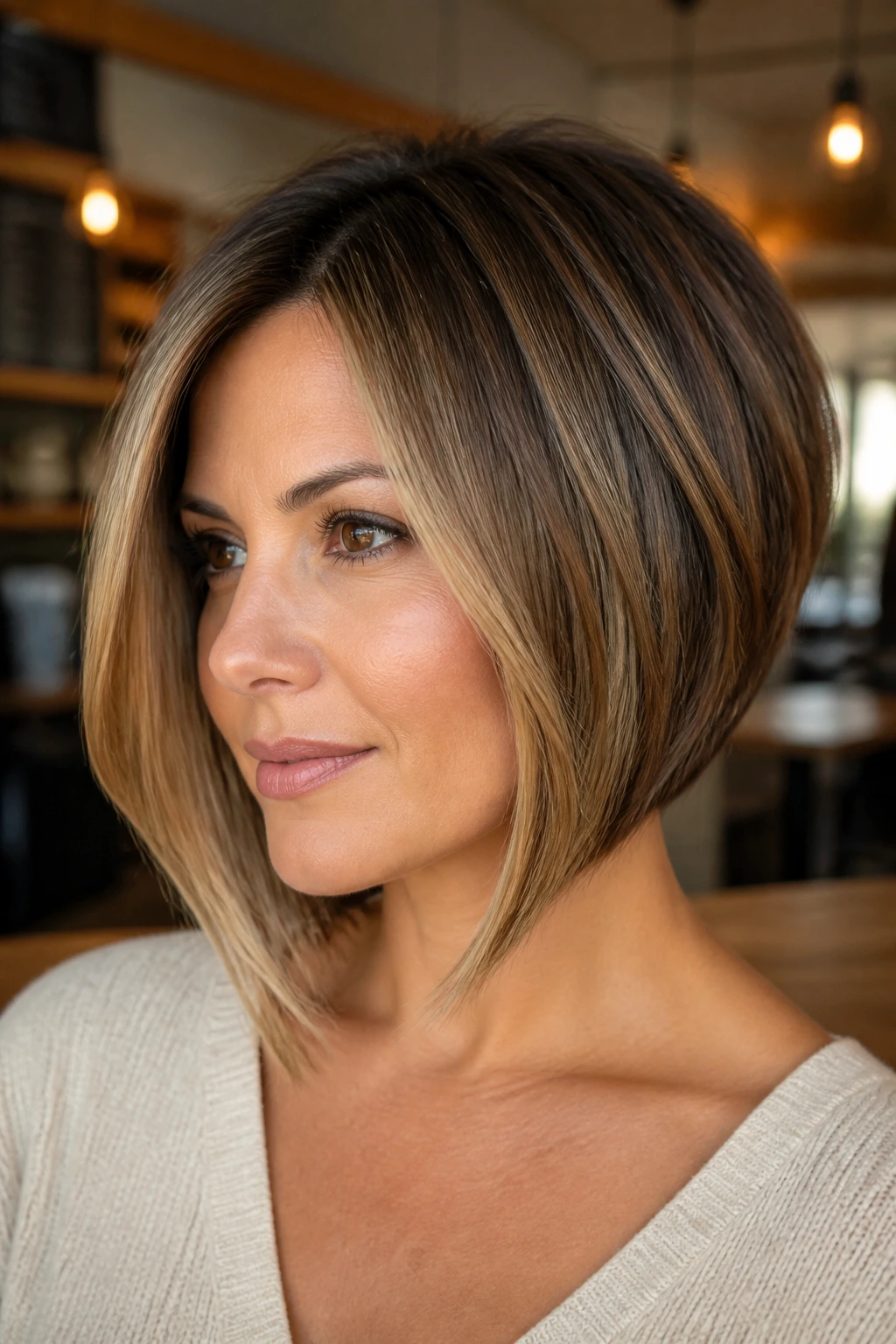
Sometimes, the cut is only half the battle. Adding color—specifically a soft, caramel balayage—can change the way light hits your face. By placing lighter pieces around your face and darker pieces toward the nape, you create dimension that mimics contouring.
Using Color to Contour
Strategic highlights can act as shadows and lights, drawing the eye toward the center of your face. This “color contouring” can make your cheeks look like they have more definition.
Maintenance
- Balayage is low maintenance because it grows out naturally.
- Focus the lightest pieces near your eyes and cheekbones to brighten your complexion.
12. The “Long-Nape” Angled Bob
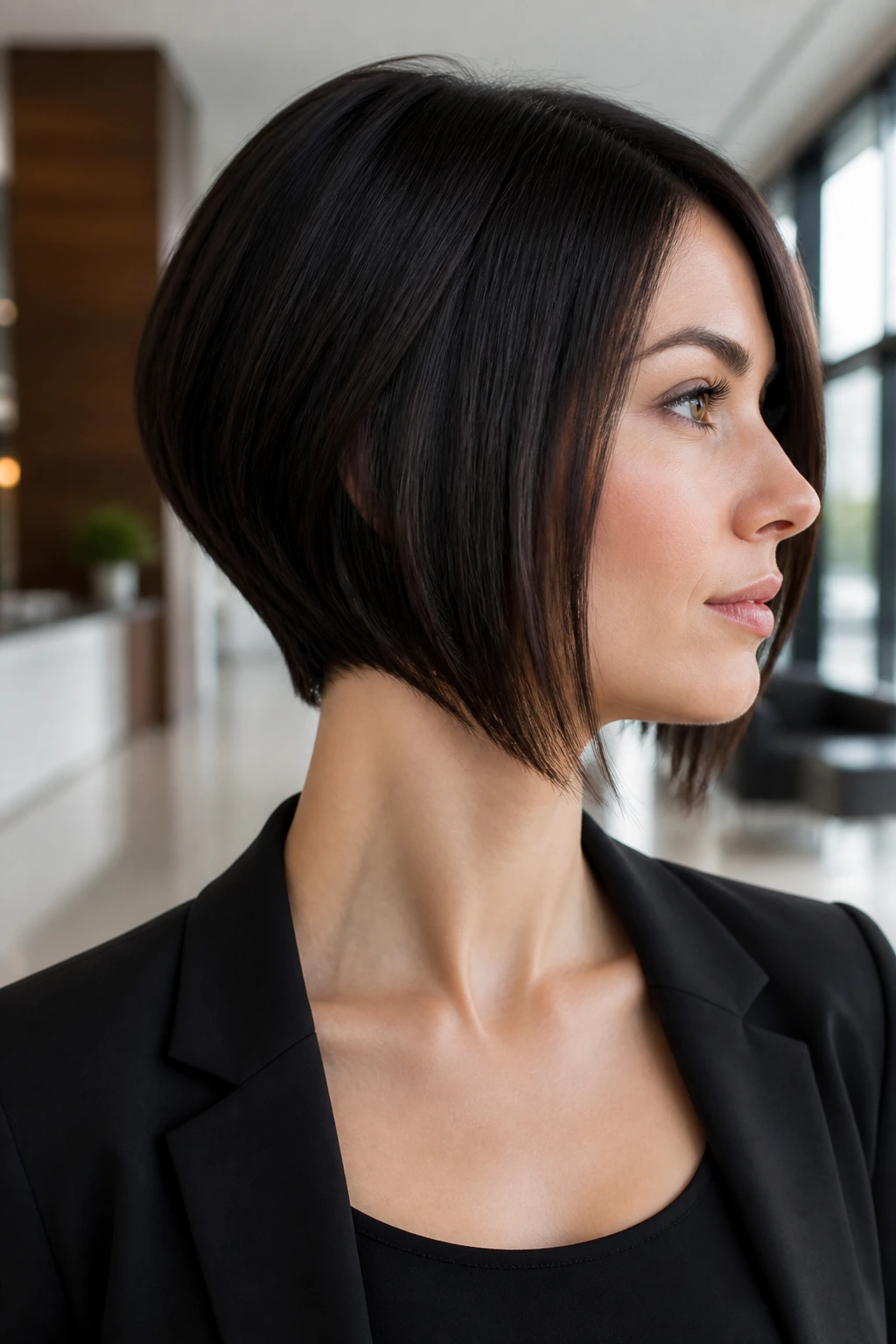
Most bobs feature a very short nape, but if you have a round face, you might prefer a slightly longer nape area. By leaving just an inch or two more hair at the back of the neck, you create a more elongated, graceful shape that avoids looking too “mushroom-like.”
The Elegance of the Neck
Elongating the neck is one of the best ways to make a round face look thinner. This cut frames the neck rather than obscuring it, which creates a more statuesque appearance.
The Professional Look
This is a very office-appropriate, professional cut. It looks neat, tidy, and intentional, while still providing the stylish angle of a traditional bob.
13. The Curly-Textured Angled Bob
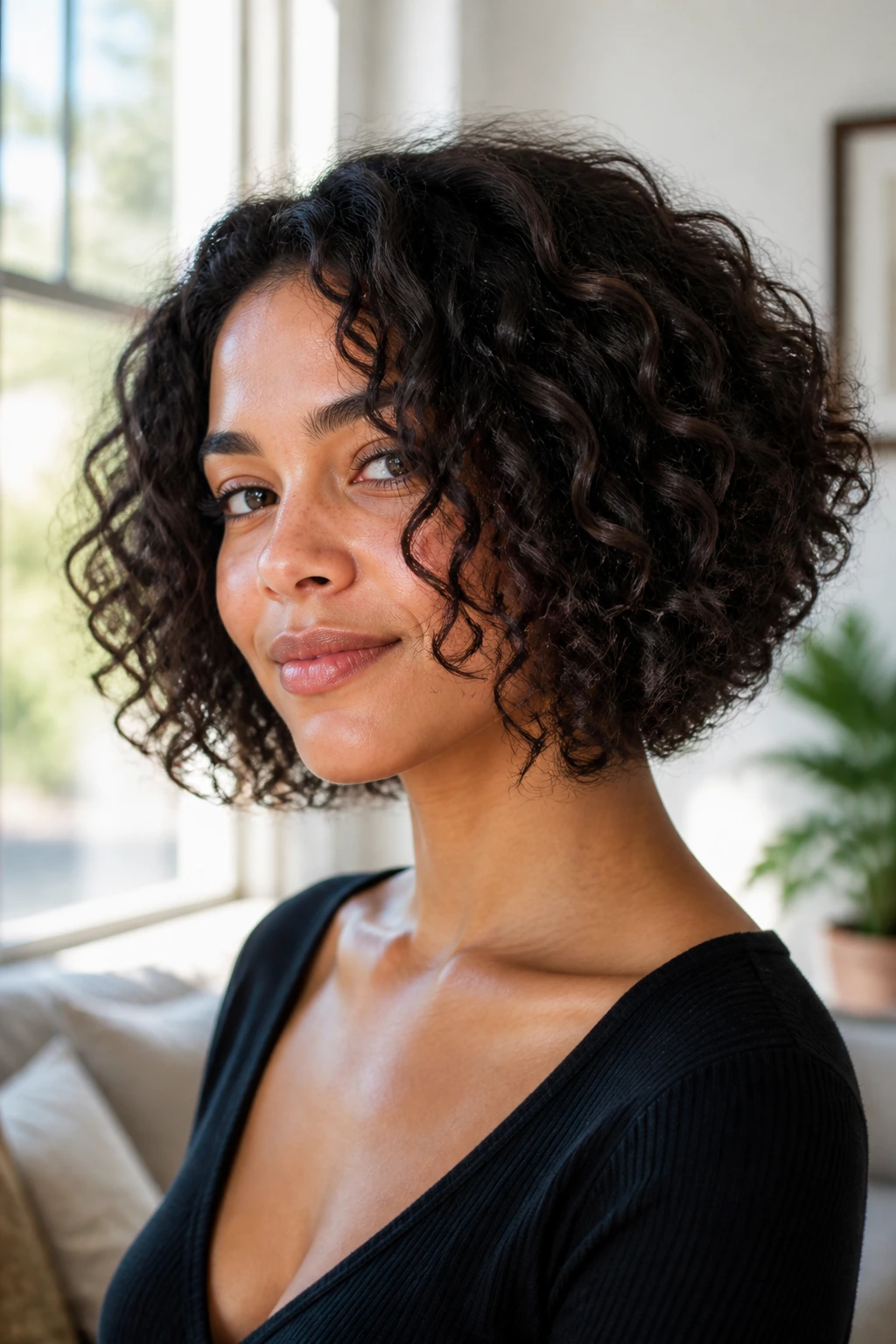
Curls and round faces can be a match made in heaven if you get the cut right. The key is to keep the curls voluminous at the crown and longer at the jaw. An angled bob provides a structure that keeps curls from turning into a big, round ball of fluff.
Controlling the Shape
If you let curls grow out naturally, they tend to go “out” rather than “down.” The angled bob forces the curls to move forward, which maintains that elongated look you are striving for.
Curl Care
- Use a diffuser attachment on your blow dryer.
- Apply a curl-defining cream while the hair is soaking wet.
- Don’t touch the curls until they are 100% dry to avoid frizz.
14. The “Shaggy” Angled Bob
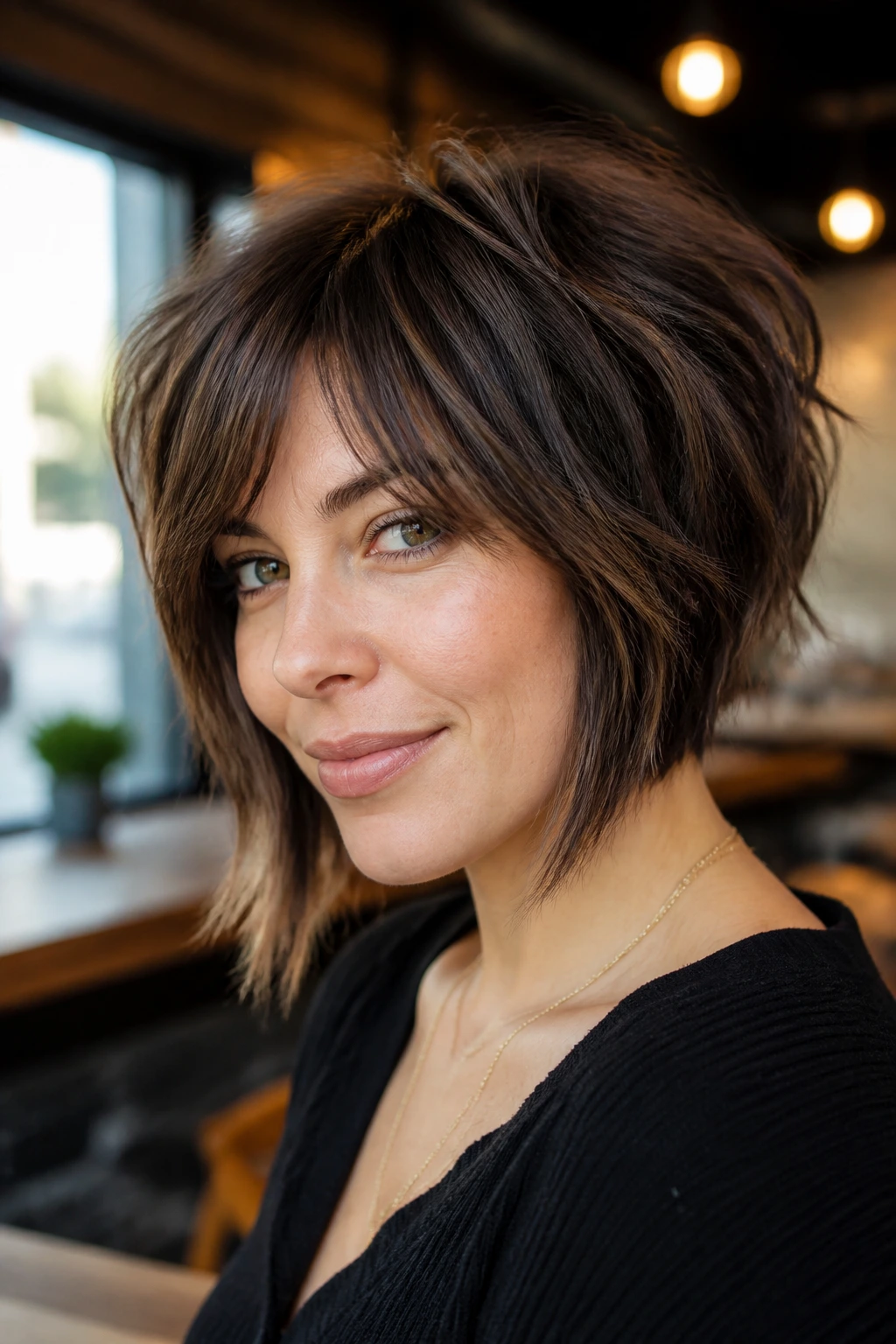
The shag is back, and it pairs surprisingly well with an angled bob. This style uses tons of short, choppy layers throughout the top of the head to create maximum volume. It’s messy, it’s fun, and it’s incredibly flattering for round faces.
The Power of Volume
Because a round face is horizontal, the shag’s vertical, voluminous layers act as the perfect counterbalance. It lifts the entire look up and away from the face.
Who Should Choose This?
People who don’t want to spend time perfecting their hair. The messier this cut is, the better it looks. If you love a low-effort style, this is the one for you.
15. The “Tucked-Back” Graduated Bob
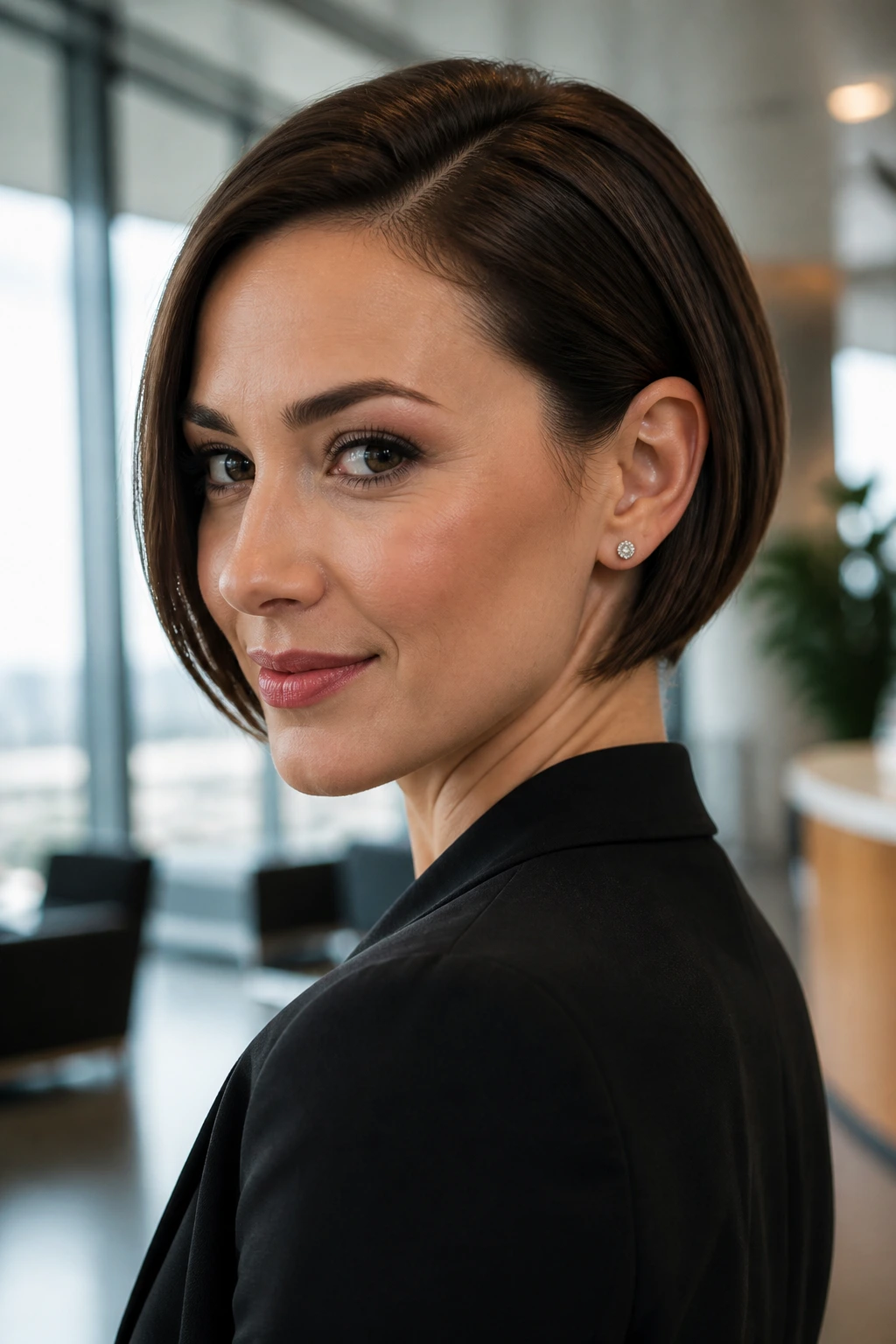
This variation is all about the transition from back to front. The graduation is smooth and seamless, and the hair is cut so that it naturally wants to flip under or behind the ears. It provides a very classic, sophisticated look that is perfect for anyone wanting to emphasize a professional image.
Why Gradation Matters
A smooth transition from short to long creates a continuous line. This unbroken line is very soothing to the eye, which can make the overall appearance of the face feel less busy and more streamlined.
Styling Tip
Use a round brush during your blow-dry to pull the ends inward toward your throat. This creates a soft, rounded finish that complements the angles of the cut.
16. The Pixie-Bob Hybrid
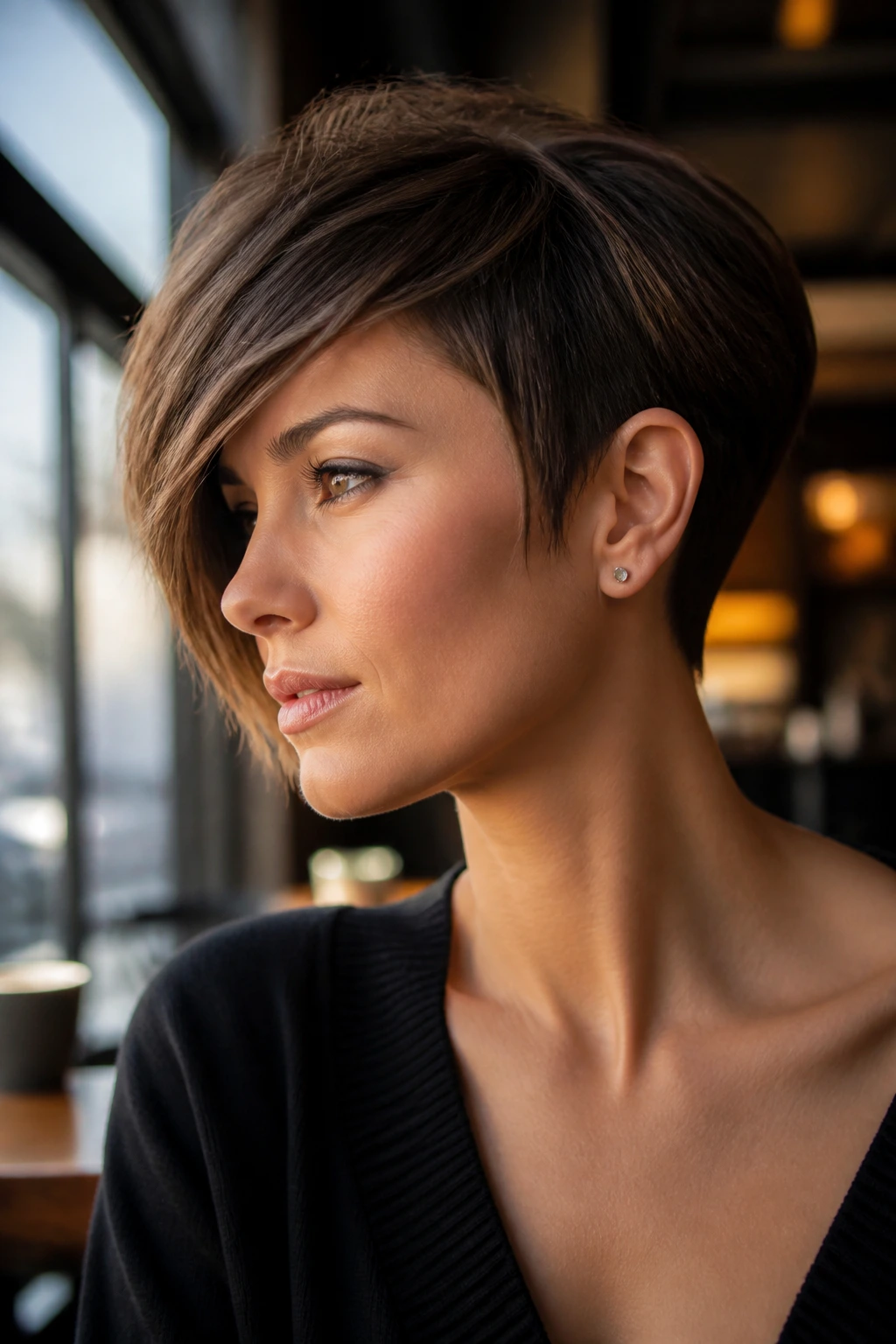
If you are feeling adventurous, the pixie-bob is the shortest version of an angled bob. It stays extremely short in the back but leaves a slightly longer, asymmetrical fringe in the front. It is daring, but it can be incredibly slimming for a round face.
Creating the Illusion
Because the neck is entirely exposed, this cut draws the eyes downward, giving the neck an appearance of extreme length. It is the most “architectural” of all the options listed.
Who Should Avoid This?
If you have a very short neck, this style might not be for you. It works best on those who want to showcase their jawline and neck as a primary feature.
17. The Undercut Angled Bob
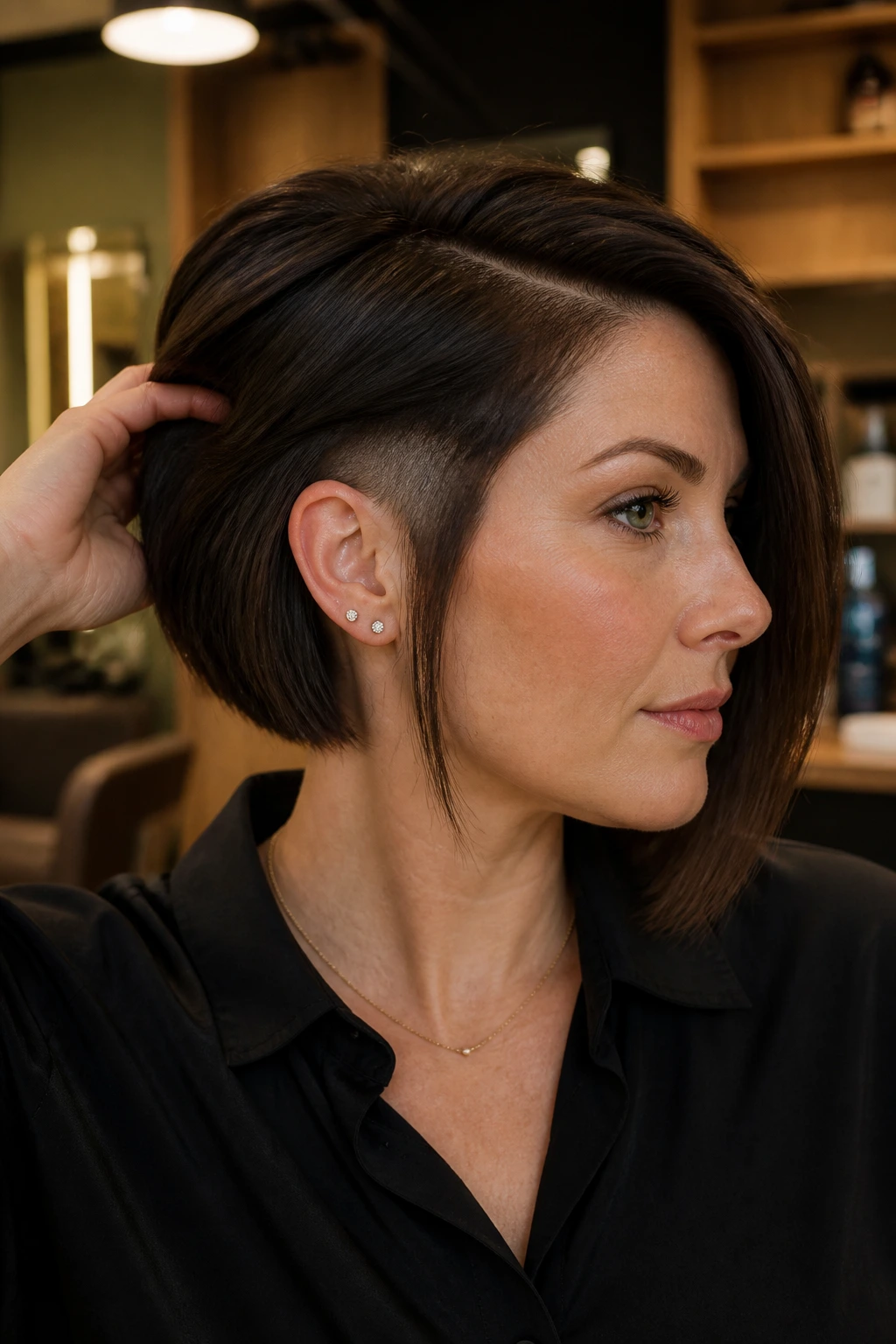
For those who want to lose weight in their hair—literally—the undercut is a game-changer. By shaving the hair at the very nape of the neck, you reduce the bulk that often makes a bob look heavy.
Removing Bulk
Heavy hair can make a round face look weighed down. By removing the hair at the bottom of the stack, the entire bob feels lighter, more modern, and easier to move.
The Hidden Edge
It’s a secret style. When your hair is down, no one knows you have an undercut, but when you pull it up into a high ponytail, you get a flash of something edgy and unique.
18. The “Deep-Part” Side Angle
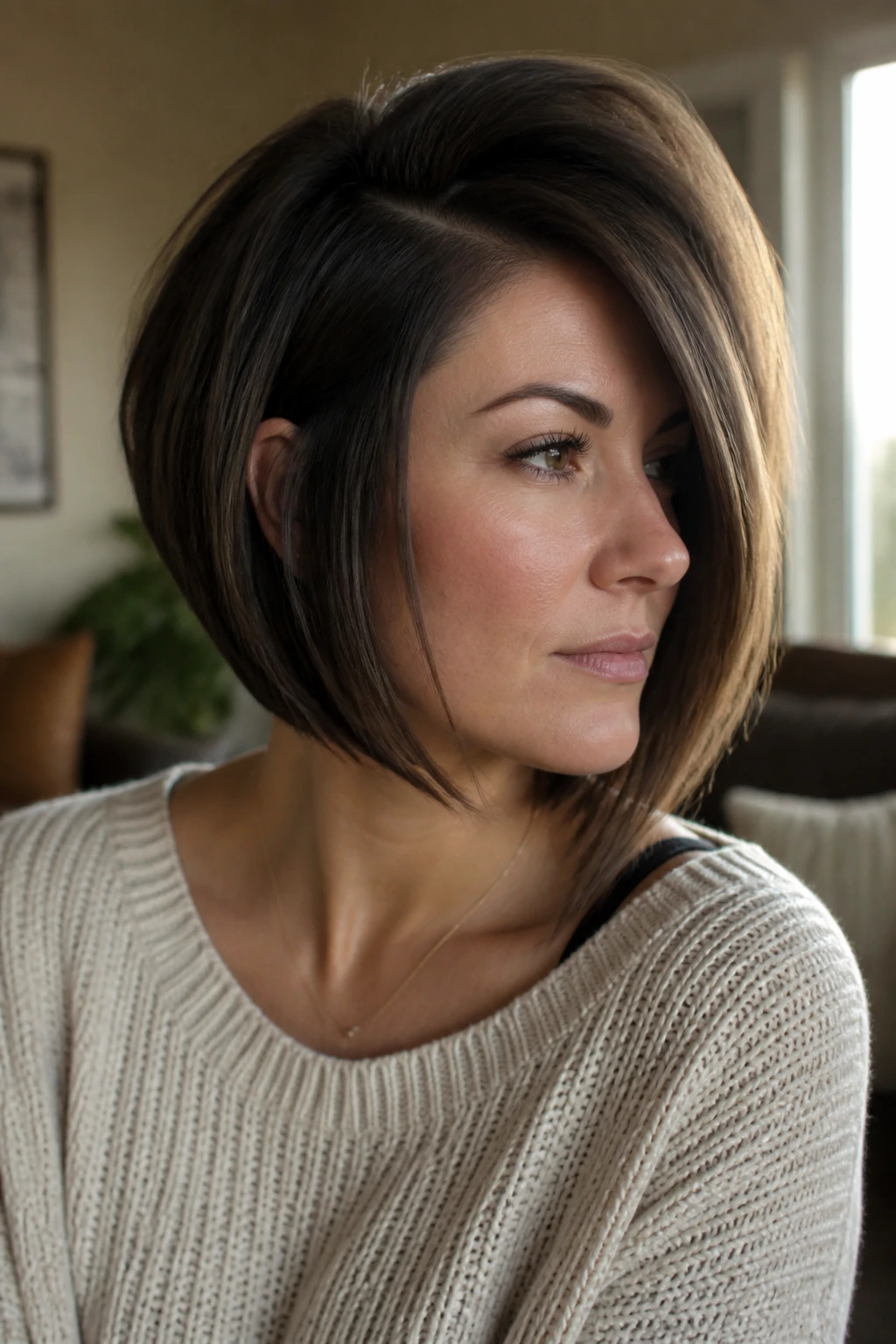
Finally, we have the deep-part side angle. This is similar to the side-swept bang bob, but it involves parting your hair significantly to one side. This creates a massive amount of volume on the heavy side, which naturally tilts the head and creates a diagonal line across the entire face.
The Magic of the Deep Part
A deep part is perhaps the simplest way to add instant angles to a round face. It is an immediate fix for anyone who feels their face looks too symmetrical or circular.
Why It Works
It creates a peak on one side of your head. Any time you add height or asymmetry to a face, the brain stops seeing “round” and starts seeing “shape.” It is a simple, effective way to update your look without taking much length off at all.
Final Thoughts
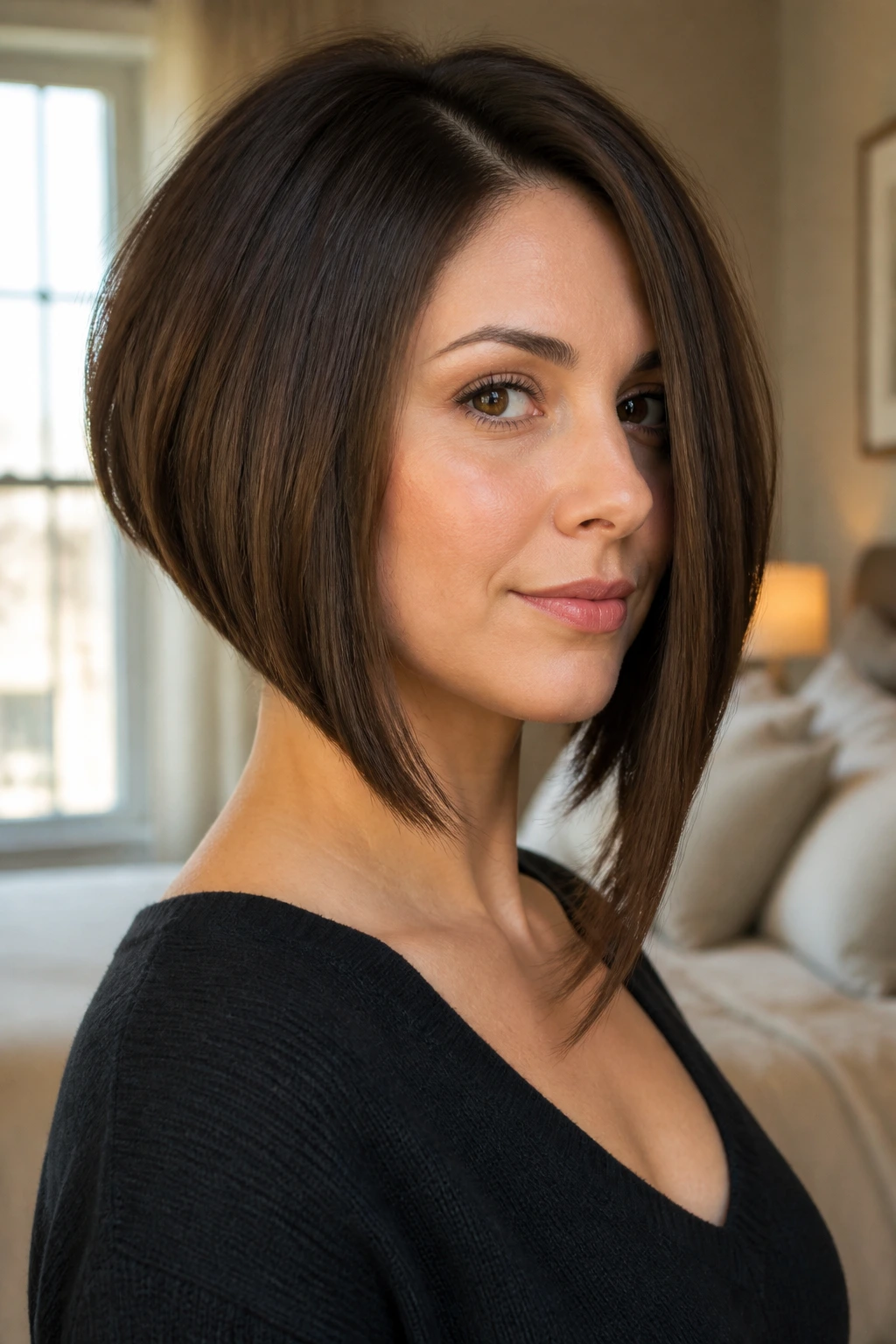
Choosing an angled bob is about more than just picking a photo from a salon menu; it is about choosing the right geometry to flatter your natural features. For a round face, the objective is always to break up the circular lines, draw the eye vertically, and create structure where there is softness.
The most important takeaway is that you should not be afraid of the angle. While a blunt cut can be intimidating, the right A-line shape will actually do more to slenderize your jaw than almost any other haircut. Whether you choose the sharp, blunt edges of a deep-angled bob or the messy, shaggy layers of a modern cut, the key is to ensure the front pieces frame your face in a way that creates that essential vertical pull.
Talk to your stylist about your hair texture. Someone with fine hair might need more layering to prevent the bob from falling flat, while someone with thick hair might need internal thinning to keep the shape from becoming too heavy. At the end of the day, the best haircut is the one that makes you feel confident and comfortable in your own skin, so don’t hesitate to play with the length or texture until you find the perfect match for your unique style.