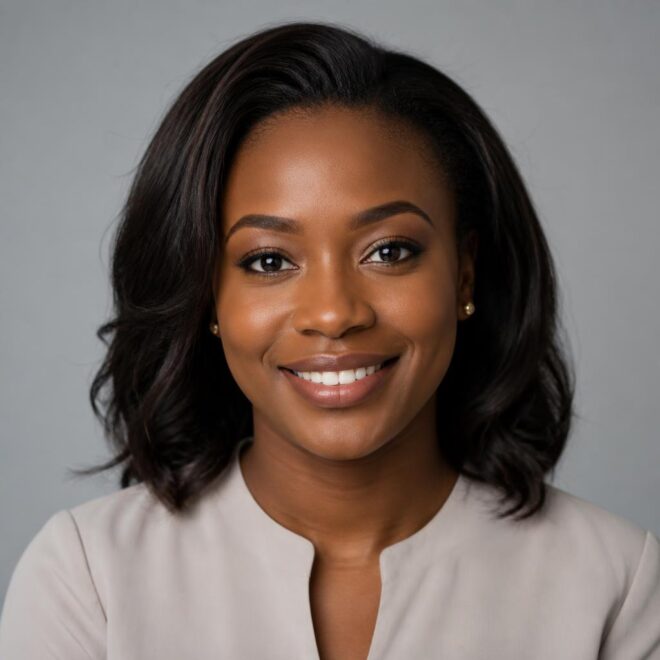


The jawline is the anchor of the face, and for those with a square structure, finding the right haircut often feels like a balancing act between highlighting those sharp, architectural features and softening them just enough to achieve a look that feels balanced. A square face typically shares a similar width from the forehead down to the jaw, often resulting in a strong, angular silhouette that defines the overall shape. Many people mistakenly believe that short hair is off-limits for these face shapes, fearing that a cropped style will only emphasize those angles. The truth is much more nuanced; the right bob doesn’t just work for a square face—it can be the most flattering, intentional choice you ever make.
When you have a square jaw, the goal is often to create movement and vertical lines that distract from the width of the face. A bob can frame the features in a way that pulls the eye upward or softens the perimeter, depending on the cut and the layering technique. It is all about where the ends of the hair hit the face. If a bob ends exactly at the jawline, it acts like a highlighter, drawing a horizontal line right where you might want to create some visual breathing room. By adjusting the length, adding internal texture, or incorporating strategic fringe, you can turn a potentially boxy silhouette into something soft, chic, and undeniably modern.
This is not a matter of hiding your features, but rather about choosing a shape that complements them. A square face carries a certain maturity and strength that deserves to be celebrated. A well-executed bob adds a layer of sophistication that long, one-length hair sometimes lacks. As we walk through these twenty-one variations, you will see how minor shifts in weight distribution, length, and texture create radically different effects. Whether you lean toward the minimalist precision of a blunt cut or the effortless volume of a shaggy crop, there is a path forward that feels like an expression of your personal style.
1. The Textured Lived-In Lob
The lob, or long bob, is perhaps the most reliable transition for anyone hesitant about going truly short. By keeping the length an inch or two below the collarbone, you ensure the ends don’t sit right on the jawline, which effectively softens the overall frame. The “lived-in” quality comes from invisible layering—technicians call this point-cutting—where the stylist snips vertically into the hair to remove bulk without creating a shelf or a harsh line. This style works best for people who want a low-maintenance morning routine.
Why It Softens the Angles
Because the hair sits well below the jaw, the eyes naturally move downward, bypassing the sharpest part of the face. The added texture creates a sense of airy lightness that contrasts beautifully with the density of the jaw.
Styling for Daily Wear
- Start with a light sea salt spray on damp hair to encourage a natural wave.
- Use a 1.25-inch curling iron, but wrap the hair only once or twice, leaving the ends straight.
- Finish with a dry texturizing spray, using your fingers to pull the waves apart rather than brushing them out. Pro tip: If your hair is naturally very straight, sleep in a loose braid to get that organic, soft texture that makes the lob look modern rather than polished.
2. The Asymmetrical Side-Part Bob

Asymmetry is a fantastic tool for square faces because it breaks up the symmetry of the jawline. By shifting the weight to one side, you create a diagonal line that draws the eye across the face rather than straight down or across the chin. This look is inherently edgy and works exceptionally well for those who prefer a sleek, polished aesthetic. It commands attention and highlights the cheekbones, which are usually a standout feature on a square-faced person.
The Mechanics of the Cut
The hair is cut shorter in the back, typically at the nape, and gradually gets longer toward the front on one side, while the other side remains slightly shorter or tucked. This creates a visual path that leads from the ear down toward the collarbone. It is a precision cut, which means you will need to keep up with maintenance visits every six to eight weeks to ensure the line stays crisp.
What to Ask Your Stylist
- Request a “deep side part” to increase the volume on one side.
- Ask for a “tapered nape” to make the transition from the back to the front feel more fluid.
- Ensure the ends are cut with shears for a blunt look rather than a razor, which can sometimes make the ends look too wispy for this specific style.
3. The Soft Shaggy Bob with Curtain Bangs
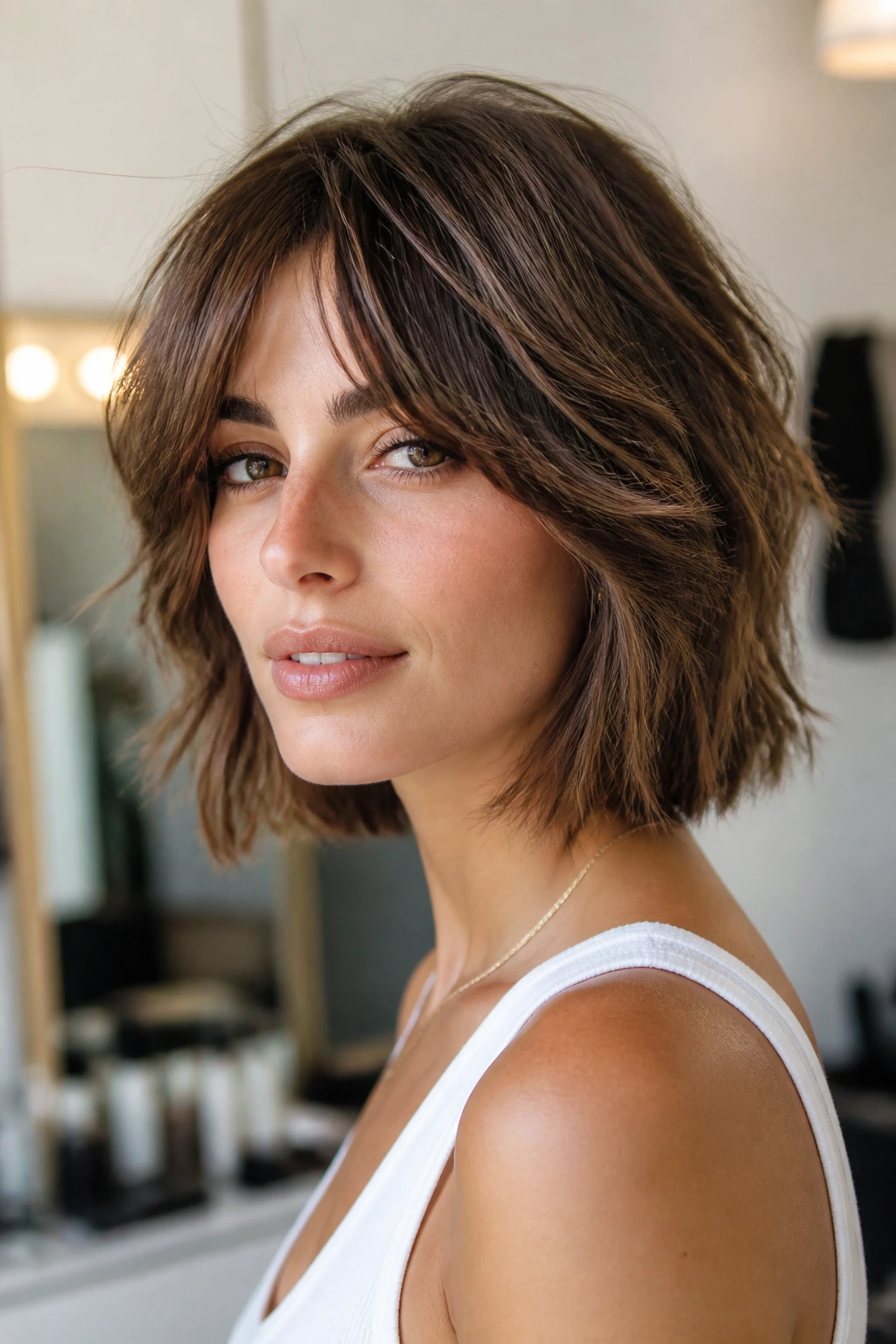
Shag haircuts are having a moment, but for a square face, they are a perennial favorite because of their ability to move. A shaggy bob incorporates layers of varying lengths, starting from the crown, which builds height and takes away the “blocky” appearance that can sometimes plague shorter cuts. Pair this with long, face-framing curtain bangs that sweep away from the face, and you have a recipe for instant softness.
Bringing Volume to the Crown
The key to the shag is the crown. You want those shorter layers to lift, creating a rounded shape that visually counteracts the squareness of the jaw. When the volume is at the top, the jaw looks narrower by comparison.
Managing the Layers
- Use a round brush while blow-drying to tuck the ends under, which adds even more softness.
- Apply a mousse to the roots while hair is damp to maintain that lift throughout the day.
- Avoid heavy silicones or thick styling creams; they will weigh the layers down, turning a shaggy look into a flat, triangular one. Pro tip: Curtain bangs are the ultimate “cheat code” for square faces; they soften the corners of the forehead, which creates a more oval-like appearance without requiring much effort.
4. The Layered Chin-Length Bob
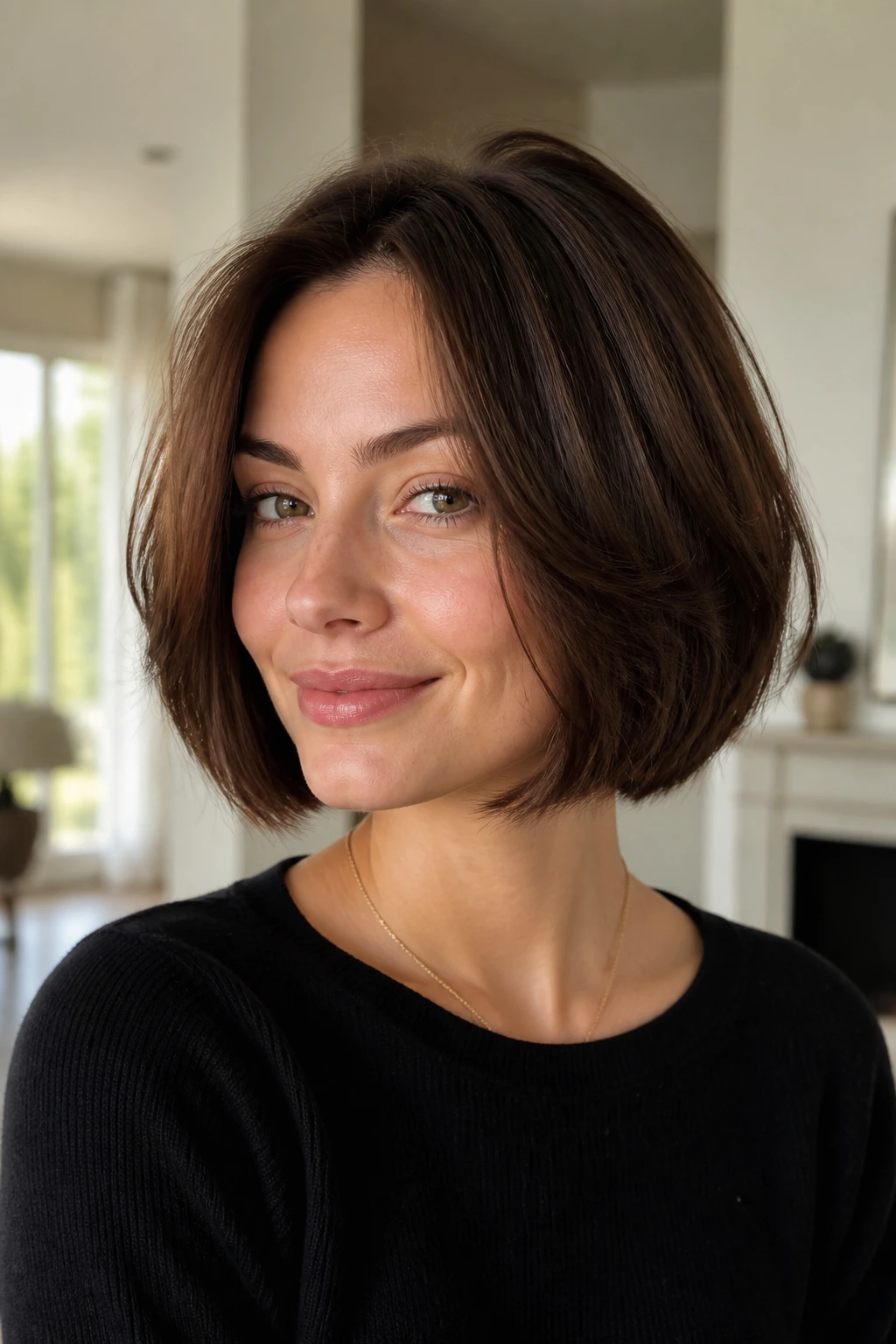
While many guides suggest avoiding chin-length cuts for square faces, a layered version changes the game entirely. The key is in the layers. By incorporating soft, internal layers, you prevent the hair from hugging the jawline too tightly. This allows the hair to behave with more movement and prevents the “helmet” effect that can happen with a blunt, one-length cut that ends right at the chin.
Why This Style Works
When you layer a chin-length bob, the hair moves independently of the jawline. It creates a dynamic frame that draws attention to the eyes and cheekbones. The weight of the hair is distributed throughout the mid-lengths rather than accumulating at the tips, which prevents that heavy, boxy look.
Achieving the Ideal Shape
- Keep the crown volume high with a bit of dry shampoo or texturizing powder.
- Use a curling wand to add a subtle bend in the hair starting right at the cheekbones.
- Consider asking for “face-framing” pieces that are slightly shorter than the rest of the cut to break up the horizontal line of the chin.
5. The Curly Bob with Rounded Fringe

Curly hair on a square face is an absolute gift because curls naturally break up straight lines. A curly bob, especially when cut to frame the face with a soft, rounded fringe, helps to soften the entire silhouette. The key here is not to fight the natural texture but to embrace it with a cut that complements the curl pattern.
Balancing the Texture
If you have tight curls, ensure the bob is cut long enough that it doesn’t spring up to the ears, which would make the jaw look wider. A length that sits just below the jaw is usually the sweet spot. A rounded fringe—meaning it is slightly shorter in the middle and longer toward the temples—creates a soft, frame-like effect that balances the angularity of the jaw.
Maintenance Tips for Curls
- Use a sulfate-free shampoo to keep the hair hydrated and avoid frizz.
- Apply a leave-in conditioner while the hair is soaking wet to lock in moisture and define the curl shape.
- Never use a fine-tooth comb; use your fingers or a wide-tooth comb to detangle when damp. Pro tip: A “diffuser” is your best friend here. It helps dry the curls without creating the frizz that comes from standard blow-drying, which maintains the soft, rounded shape that is so flattering.
6. The Sleek A-Line Bob
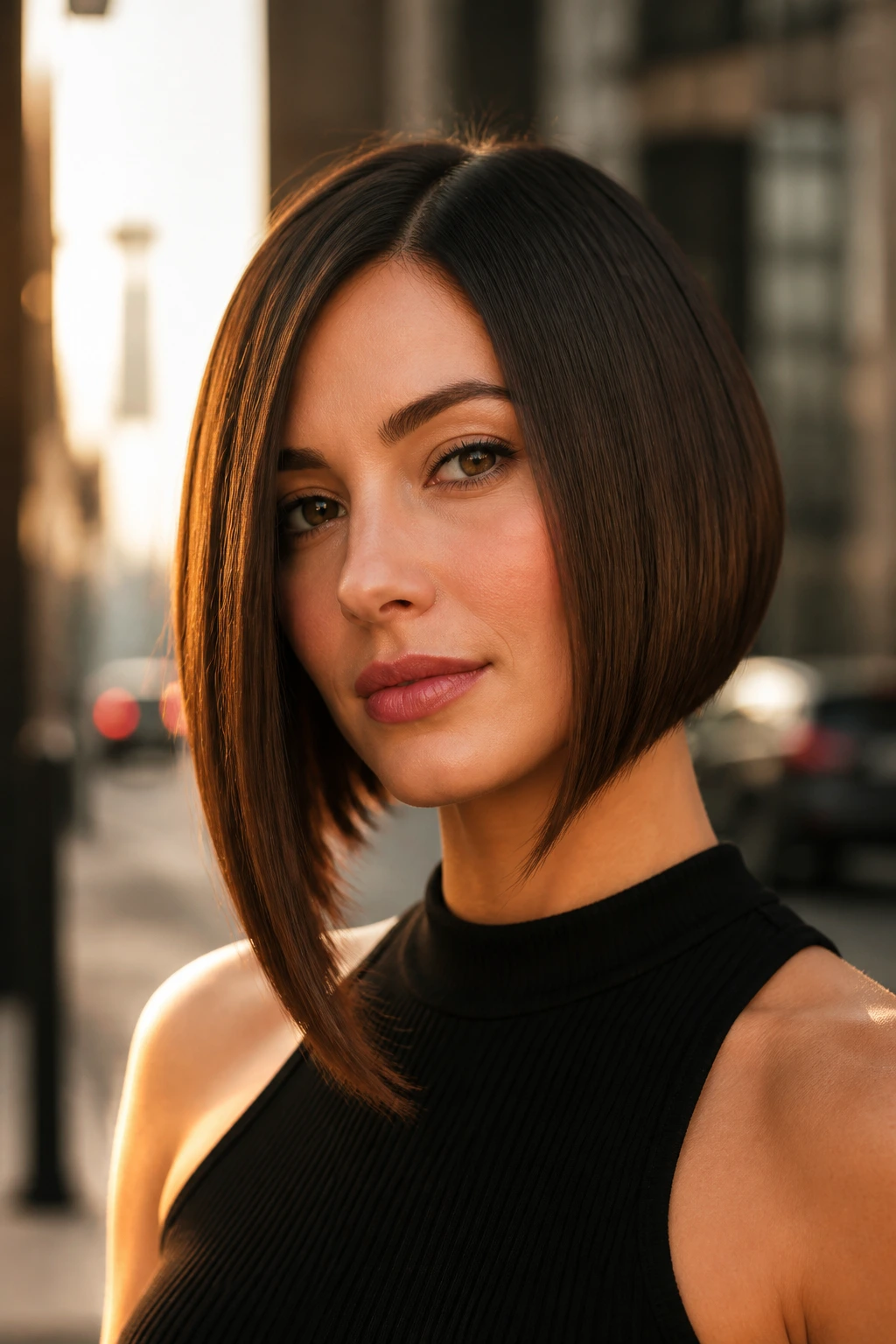
The A-line is the classic bob that is shorter in the back and longer in the front. For a square face, the “longer in the front” part is crucial. Because the front pieces can extend well past the jawline, they create a sharp, vertical line that effectively narrows the face and softens the jaw. It is a sharp, architectural cut that feels very sophisticated.
Why It Works for Angular Features
The diagonal line created by the A-line draws the eye down toward the shoulders. This prevents the “widening” effect of a blunt cut that hits the jaw. It works exceptionally well on straight, fine hair because it gives the illusion of thickness and density at the front.
Styling the A-Line
- Use a paddle brush to blow-dry the hair forward, then flip it back, which creates a nice, sleek curve toward the chin.
- A light smoothing cream applied to the ends will keep the sharp line looking intentional and crisp.
- If you have very thick hair, ask your stylist to “thin out” the back so it doesn’t get puffy, which can ruin the sleek aesthetic of the A-line.
7. The Deep-Parted Wavy Lob
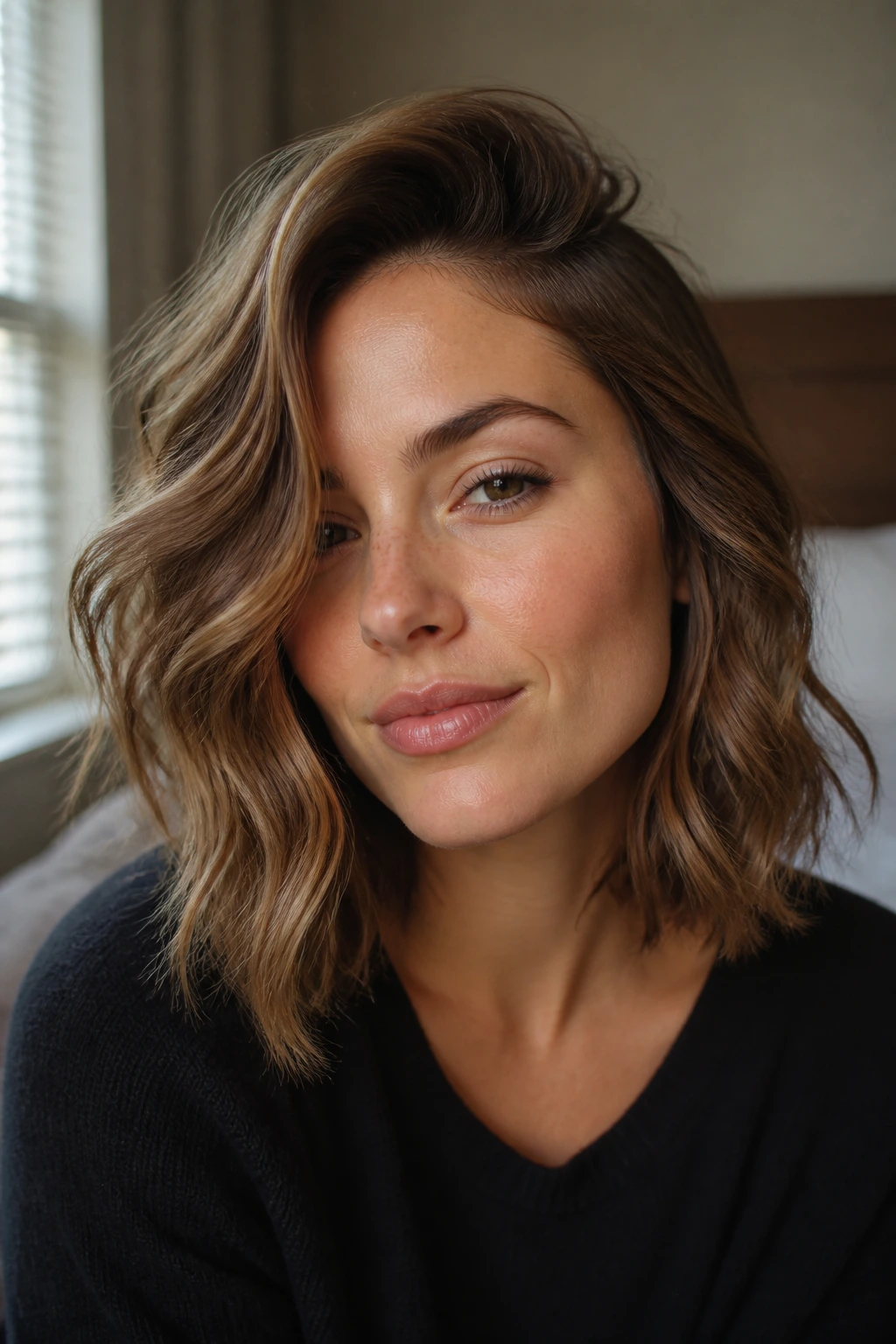
Sometimes, you do not need to change the length as much as you need to change the part. A deep side part is a simple way to introduce asymmetry. When you flip a large portion of your hair to one side, you create a sweeping effect that covers part of the forehead and adds volume. This takes the attention away from the jaw and redirects it toward the eyes.
Adding Waves for Movement
Waves are essential for softening the look of a square face. When you combine a deep side part with soft, loose waves, you are essentially “breaking” the straight lines of the face. The waves create shadows and light, which gives the face a more sculpted, softer appearance.
Daily Styling Routine
- Blow-dry your hair while flipping it to the side opposite of your desired part; this creates a massive amount of root volume.
- Use a large-barrel curling iron to create loose, irregular waves.
- Don’t worry about symmetry; the goal is for the hair to look perfectly imperfect.
8. The Blunt Cut with Hidden Undercut
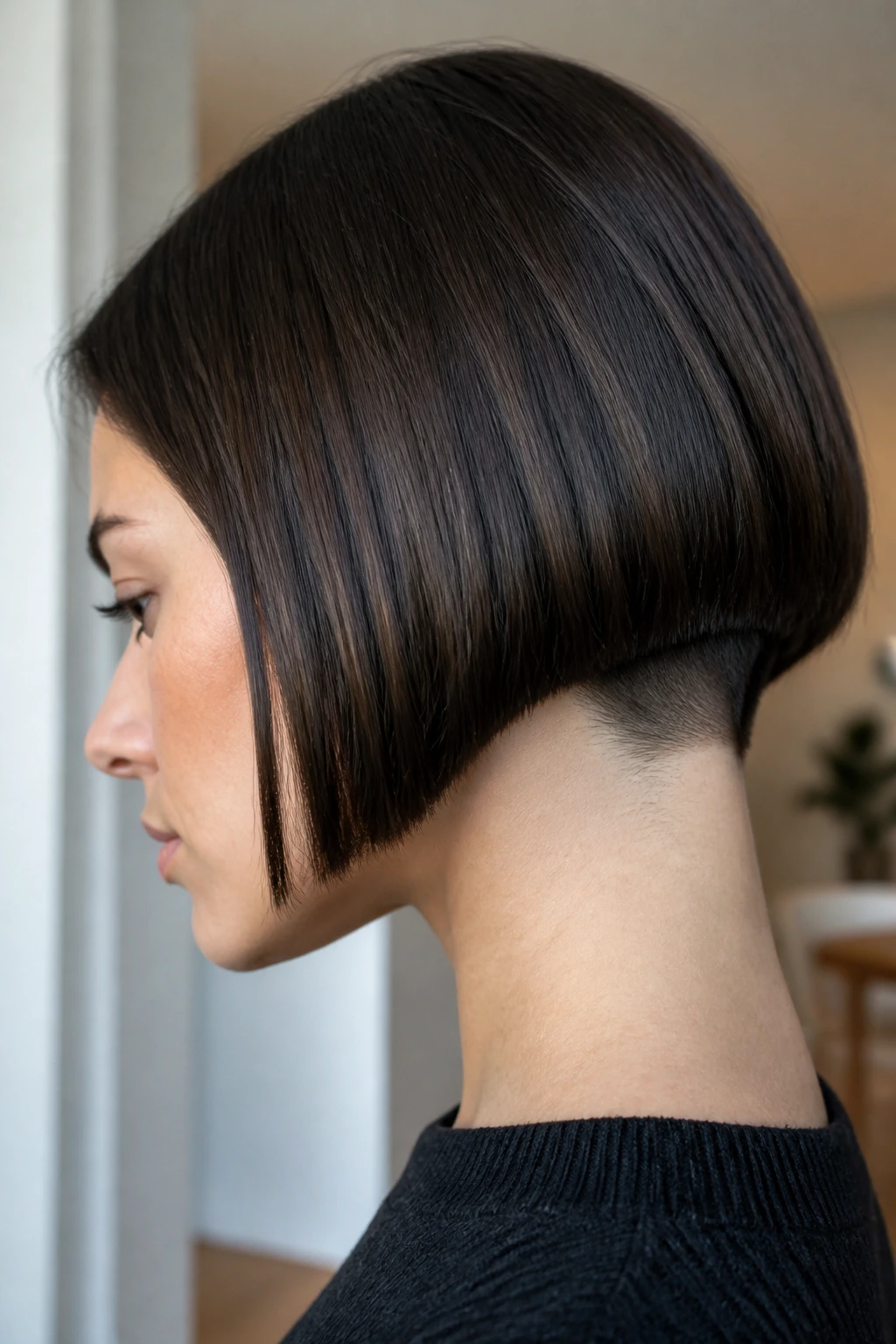
If you love the look of a very blunt, precise bob but fear it looks too boxy for your square jaw, consider a hidden, graduated undercut. By taking the weight out from underneath the back section of the hair, you force the top layers to lay more smoothly and curve inward rather than sticking out. This keeps the blunt, clean-line aesthetic you love while creating a shape that is much more flattering to a square jaw.
The Role of Precision
This cut relies entirely on the skill of the stylist. They need to understand how the hair grows and how to remove the exact amount of weight to influence the shape. It is a fantastic choice for those with thick, coarse hair that tends to get bulky at the ends.
Keeping the Look Sharp
- Use a high-quality flat iron to keep the ends perfectly straight and tucked under.
- Apply a shine serum to emphasize the precision of the cut.
- You will need more frequent trims—every five weeks—to keep that “blunt” look from becoming fuzzy as it grows out.
9. The Pixie-Bob Hybrid (The “Bixie”)
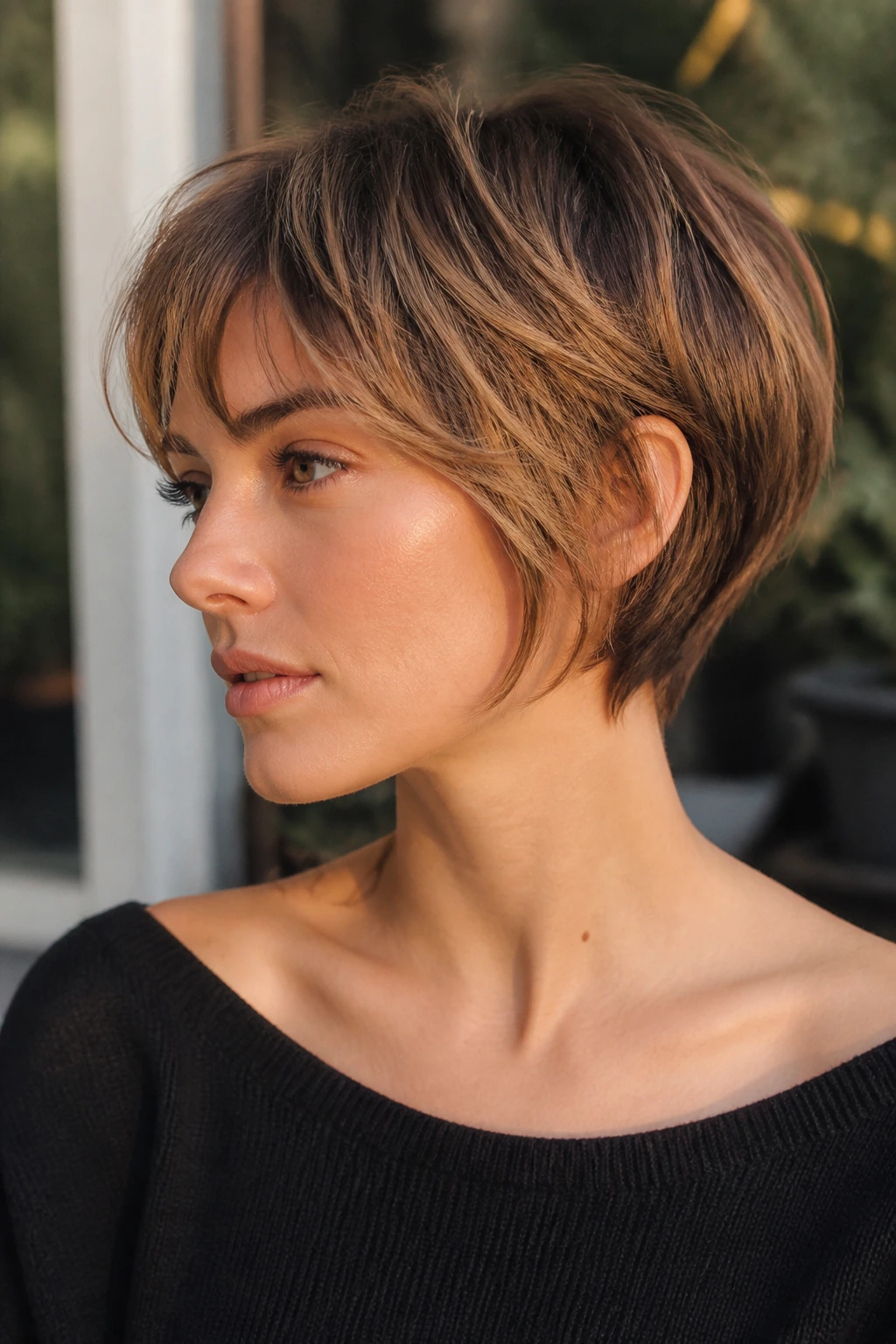
For those who want something shorter, the “bixie” is a brilliant compromise. It has the length of a short bob in the back but incorporates the layering and fringe of a pixie. Because it keeps a bit of length around the ears and neck, it doesn’t feel as exposed as a traditional pixie, and the layers provide enough texture to soften the jawline.
Why It Fits the Square Face
The bixie is all about layers and movement. By adding choppy layers throughout, you create a sense of height and verticality. The pieces around the temples and jaw can be kept slightly longer to soften the transition from the face to the hair.
Who Should Try This?
- People who want a dramatic change without going completely short.
- Those with fine hair who struggle to get volume out of a longer bob.
- Anyone looking for a “wash and go” style that looks intentional even with minimal styling.
10. The Deep-Layered “Butterfly” Bob
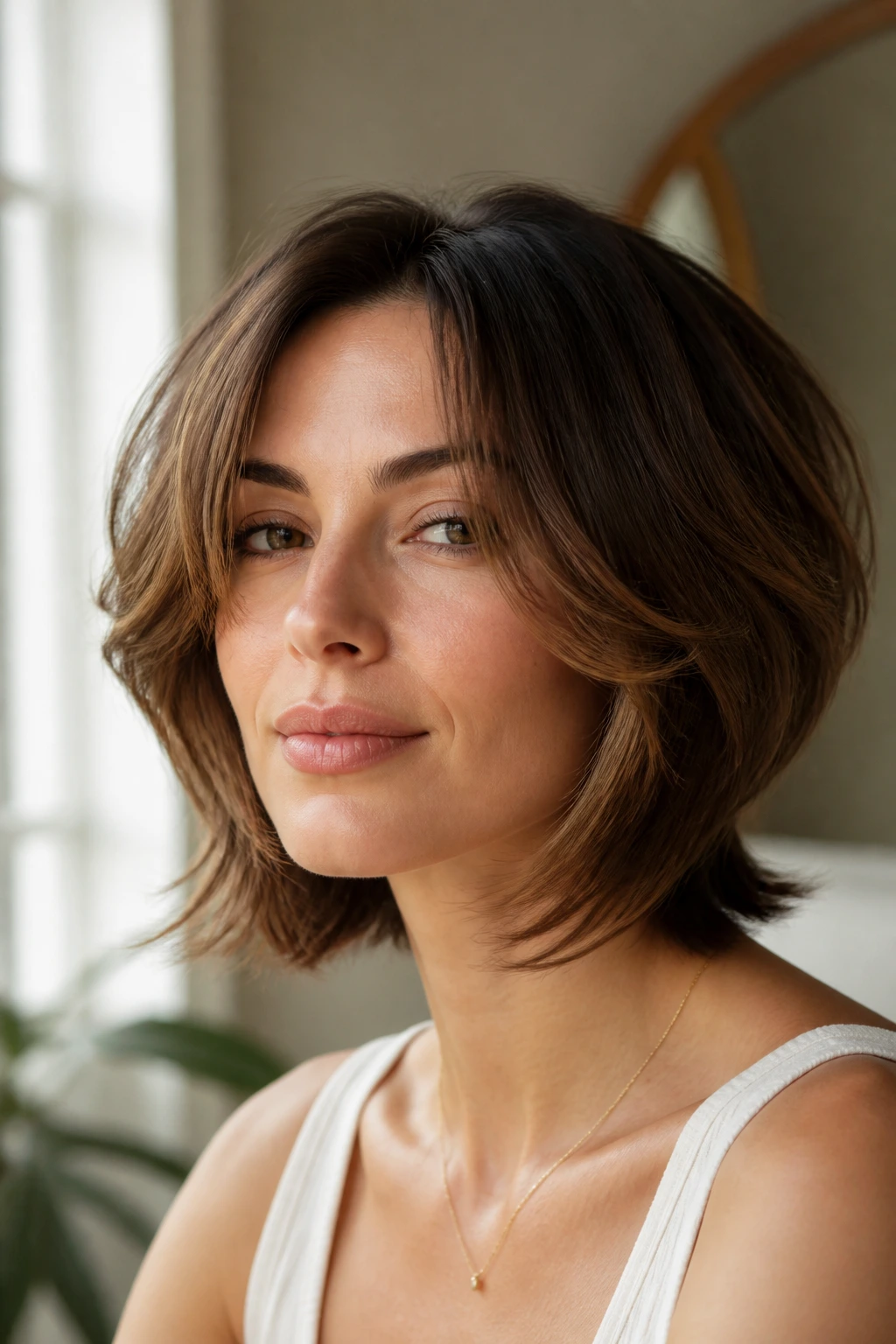
You have likely heard of the “butterfly” cut for long hair, but it translates beautifully to a bob. This style uses very distinct layers that frame the face, creating a “winged” look that adds volume at the cheekbones. By keeping the volume around the cheekbones, you create a beautiful balance that minimizes the appearance of a wide jaw.
Creating the Winged Effect
The layers are shorter near the cheeks and cascade down in a way that suggests movement. It is a very romantic, soft look that is the complete opposite of a sharp, blunt bob.
Tips for Styling
- Use a round brush to blow-dry the layers away from the face.
- A volumizing root lift spray is essential for the crown area to ensure the hair doesn’t fall flat.
- This style requires a bit more styling time than a blunt bob, but the payoff is a incredibly soft, feminine silhouette.
11. The French Bob with Blunt Bangs
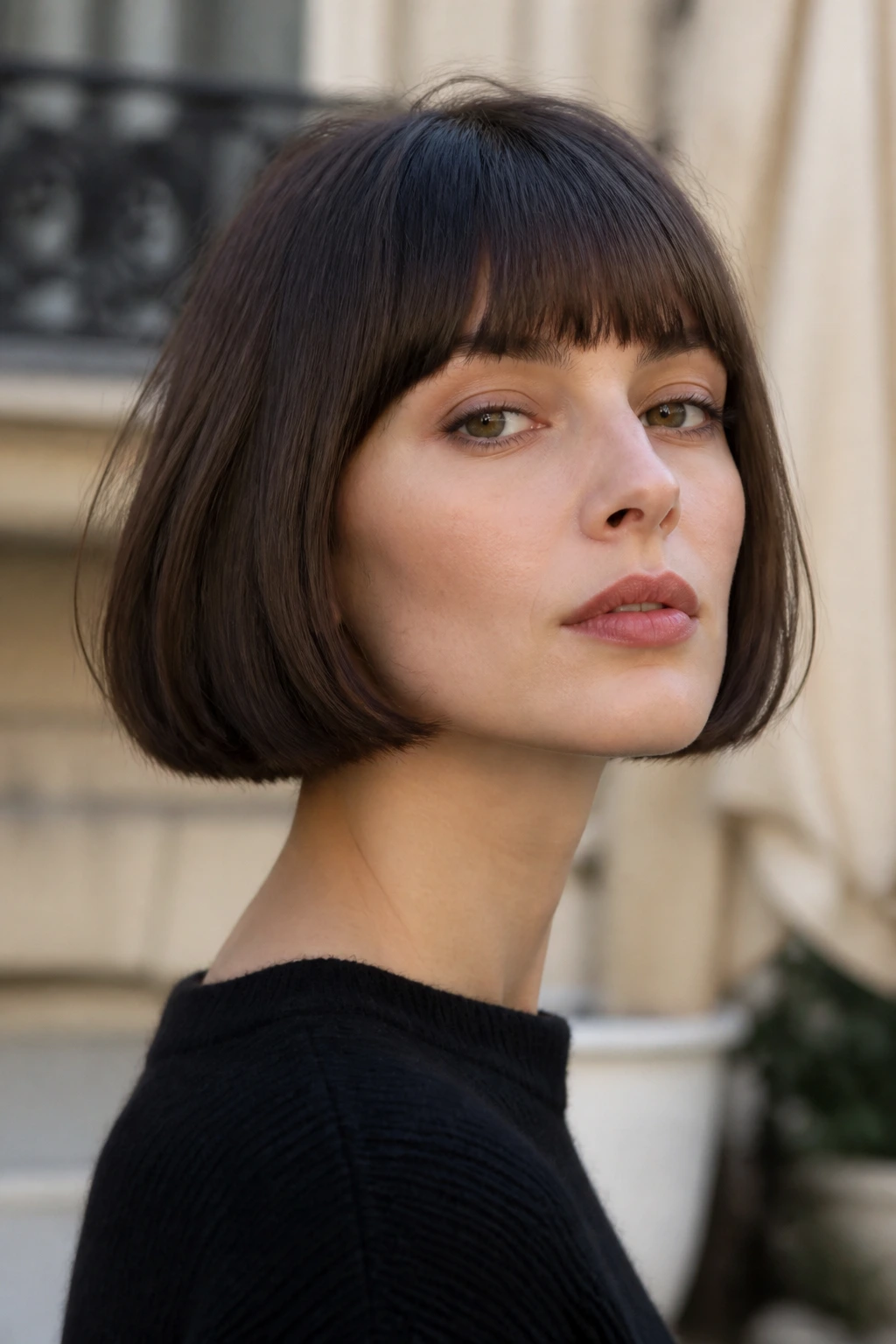
The French bob is usually cut at the jawline, which can be tricky for square faces. However, when you add blunt, eyebrow-grazing bangs, the entire proportion of the face shifts. The bangs draw attention upward, and the blunt ends create a chic, Parisian vibe that feels purposeful. If you have the confidence to rock a bold, short cut, this is a statement.
Balancing the Jawline
The key here is the blunt fringe. By creating a strong line across the forehead, you balance the strong line of the jaw. It creates a sense of “bookending” the face, which makes the jaw look less like an isolated feature and more like part of a cohesive, stylish whole.
Essential Care
- You will need to trim your bangs every three weeks to keep them at the perfect length.
- A bit of texture paste is great to add a “tousled” feel so the bob doesn’t look like a costume.
- This cut looks best when it is slightly unpolished—let your natural texture come through.
12. The Wispy-Layered Bob with Face-Framing Pieces

This cut is all about airiness. By using a razor to create wispy, soft ends, you eliminate any harsh horizontal lines at the jaw. The face-framing pieces are kept long enough to hit below the chin, which creates a soft, gentle curve that frames the square shape rather than defining it.
Why It Works for Every Hair Type
Whether your hair is thin, thick, or wavy, this style adapts. The wispy ends prevent thick hair from getting too puffy, and the layers give thin hair much-needed volume. It is a “fail-safe” cut that looks good on almost everyone.
Styling the “Wispy” Look
- Apply a light mousse to damp hair and air-dry to encourage the natural movement of the wispy ends.
- If you blow-dry, use your hands to “scrunch” the hair rather than using a brush.
- Keep the roots a little messy for that modern, low-key look.
13. The Mid-Length Blunt Bob with Side-Swept Bangs
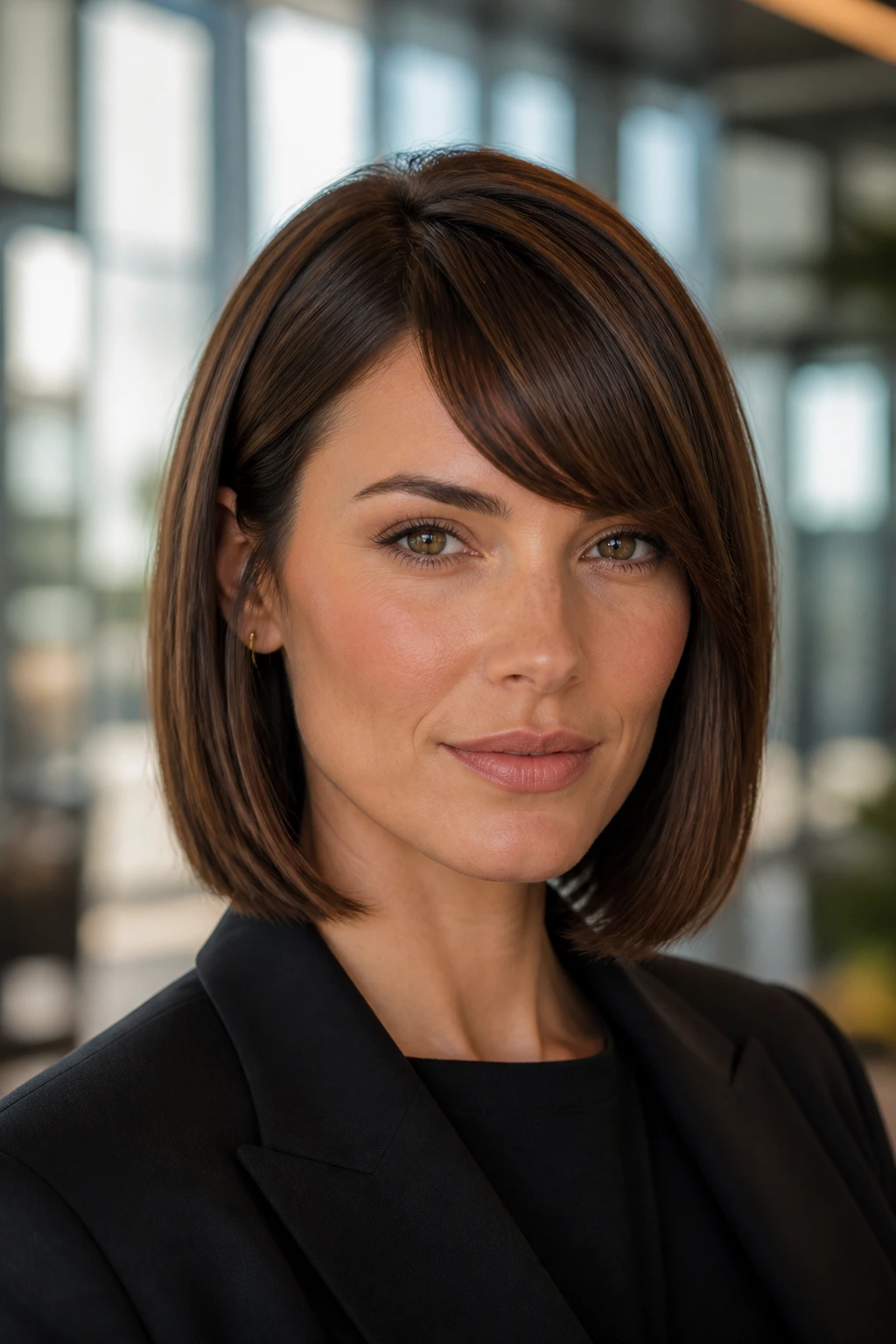
A blunt bob that hits just an inch or two below the jaw is perfectly safe and incredibly chic. Adding side-swept bangs helps to break up the forehead and creates a diagonal line that flows seamlessly into the rest of the hair. This is perhaps the most professional, versatile bob on this list.
Creating Softness with Bangs
The side-swept fringe is the hero of this cut. It prevents the forehead and jaw from looking too “stacked,” creating a more oval appearance overall.
Maintenance and Styling
- Use a flat iron to keep the bob sleek, but use a round brush on the bangs to give them a soft sweep.
- Use a tiny bit of lightweight oil on the ends to prevent them from looking dry, as a blunt cut highlights any split ends.
- This style is perfect for those who want to look put-together with minimal effort.
14. The Soft, Rounded Inverted Bob
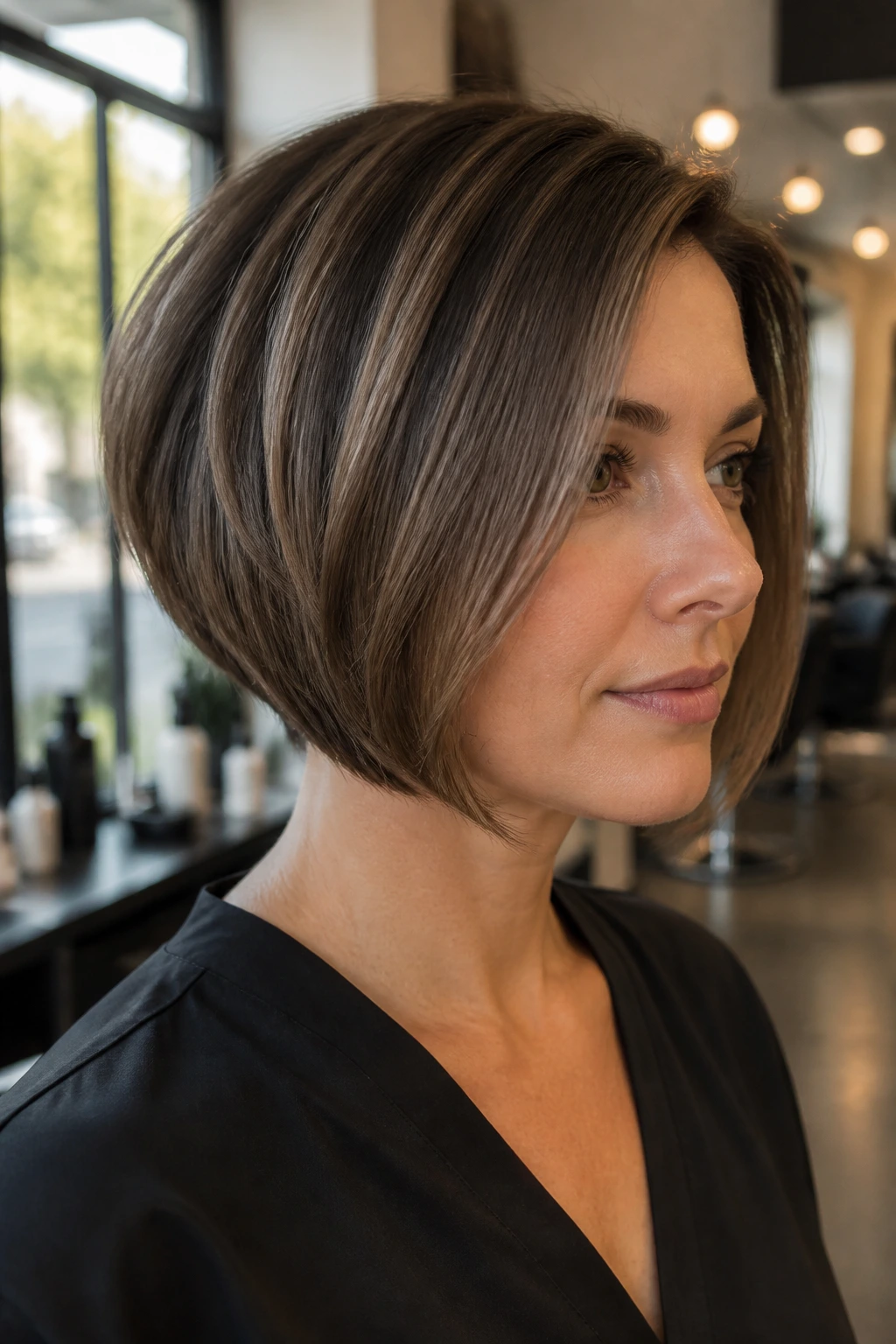
An inverted bob is similar to an A-line, but with more emphasis on a rounded shape in the back. By rounding the back, you take the focus away from the sharp angles of the jaw and replace them with a soft, circular silhouette. It is incredibly flattering for a square face because it provides the exact kind of “rounded” geometry needed to counteract those straight, angular lines.
The Power of Geometry
By rounding out the back, you effectively change the “shape” of your head. It becomes less about the sharp corner of your jaw and more about the elegant curve of your neck and nape.
Tips for Success
- Ask your stylist to use thinning shears on the very bottom layer of the back to make sure it tucks under the neck properly.
- A light hold hairspray is enough to keep the shape in place without making it look “stiff.”
- This cut looks particularly great with a bright, solid hair color to emphasize the shape.
15. The “Lob” with Internal Texture
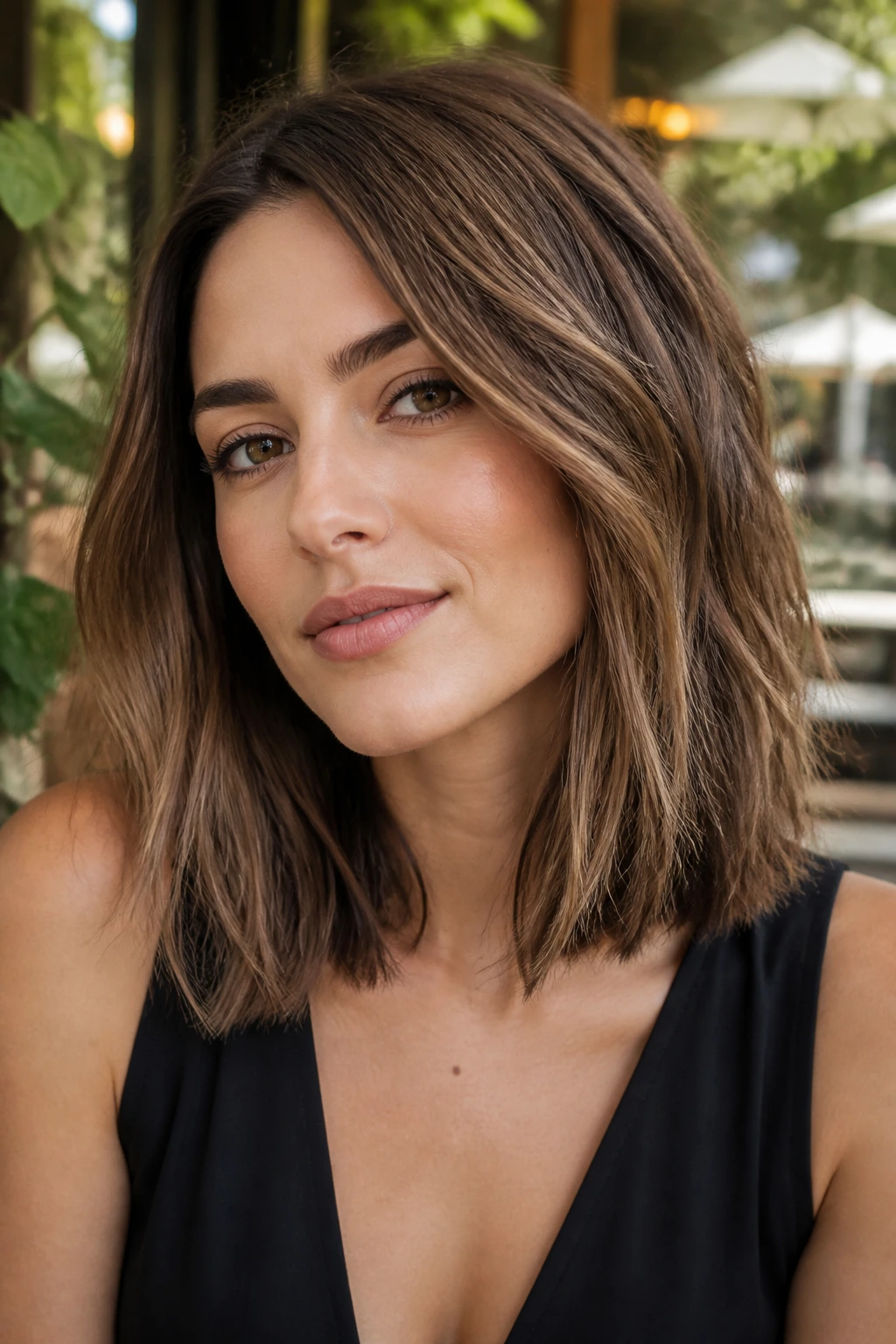
Sometimes, the best move for a square face is to keep the hair long enough to tie back. A lob with hidden, internal texture provides the best of both worlds. You have the ease of a bob but the length and versatility of a longer style. The internal layers allow the hair to have life and movement, preventing that “dead weight” look that long hair can sometimes have.
Why Length Matters
Length is an easy way to move the focus away from the jaw. When hair extends past the collarbone, it elongates the neck and draws the eye downward, which is the perfect solution for anyone feeling self-conscious about their jaw strength.
Daily Styling Idea
- This length is perfect for a “low bun” or a “half-up” look.
- Use a salt spray to keep the hair feeling textured and light.
- If you find your hair is too flat, use a crimper just at the roots underneath the top layer for hidden volume.
16. The Textured Shag with Micro-Fringe

If you are feeling bold, a shag with micro-fringe (very short, straight-across bangs) is the definition of “cool girl” hair. The choppy, uneven nature of the shag works with the square face, and the micro-fringe draws all the attention to your eyes, essentially making the jawline secondary.
Balancing Boldness with Softness
The micro-fringe is a bold choice, but because the rest of the hair is shaggy and layered, the overall look is quite soft. It is an artistic, intentional style that screams confidence.
Who Can Pull This Off?
- People with strong features (like a strong jaw) often carry this look better than those with softer features.
- If you have naturally wavy or curly hair, the shag will look even better as it will have built-in volume and texture.
- Be prepared for the maintenance; those bangs grow fast, and you will need to keep them short to maintain the look.
17. The “Long Bob” with Face-Framing Highlights
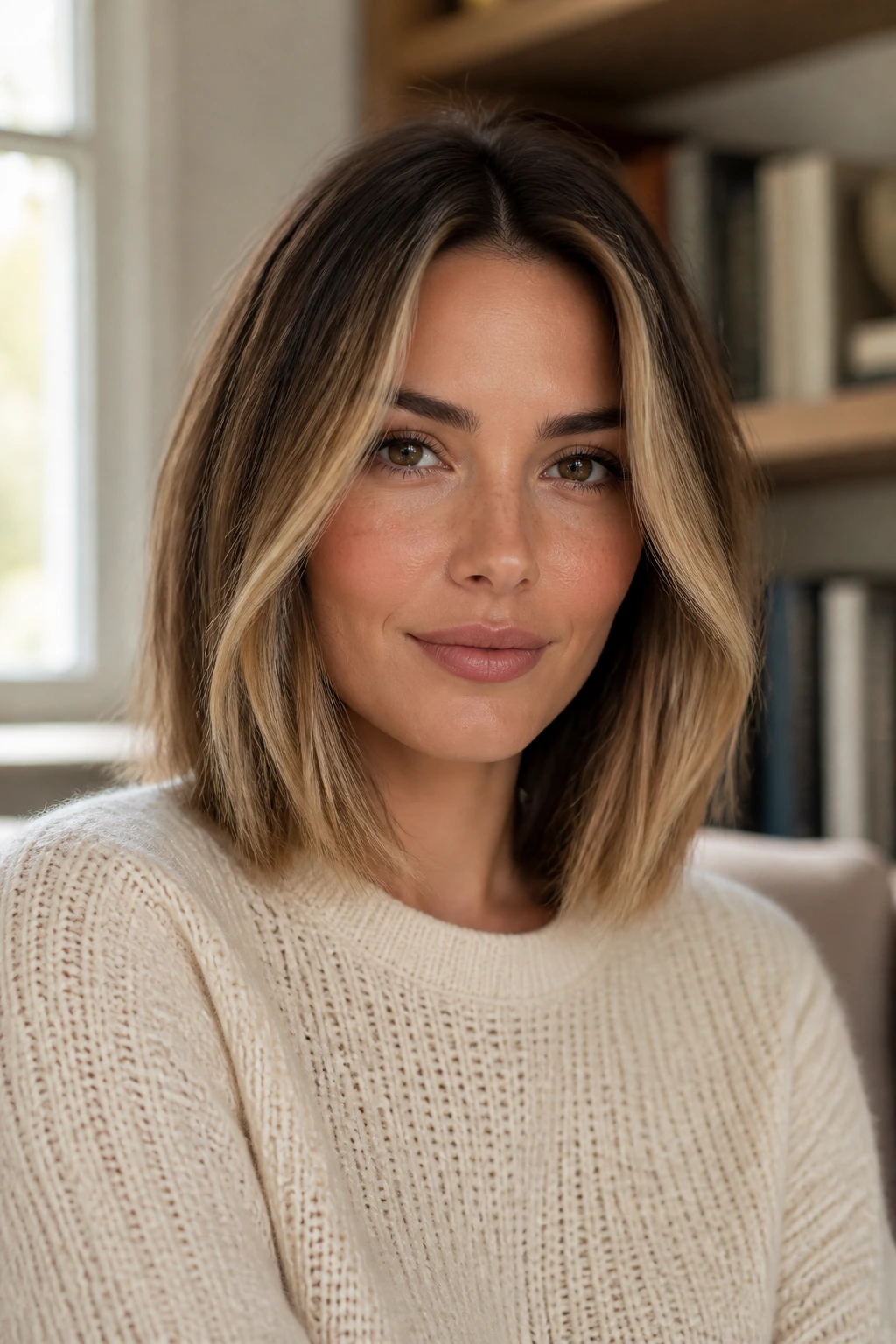
Sometimes, the trick isn’t the cut, but the color. By adding lighter pieces around the face (a technique often called “money pieces” or “face-framing highlights”), you create a vertical line of color that draws the eye inward and upward. This is a brilliant way to add lightness to a square face without changing the cut at all.
Why Color Matters
Strategic color placement creates a visual “glow” around the face. It softens the hard edges by adding warmth and light, which makes the sharp angles of the jaw seem less pronounced.
Choosing the Right Shades
- Go for colors that are 1-2 shades lighter than your natural base.
- Make sure the highlight begins right at the temple area, not the root, for a more natural, grown-out look.
- Consult your colorist about “cool” vs “warm” tones to ensure the light reflects in a way that complements your skin tone.
18. The Graduated Stacked Bob
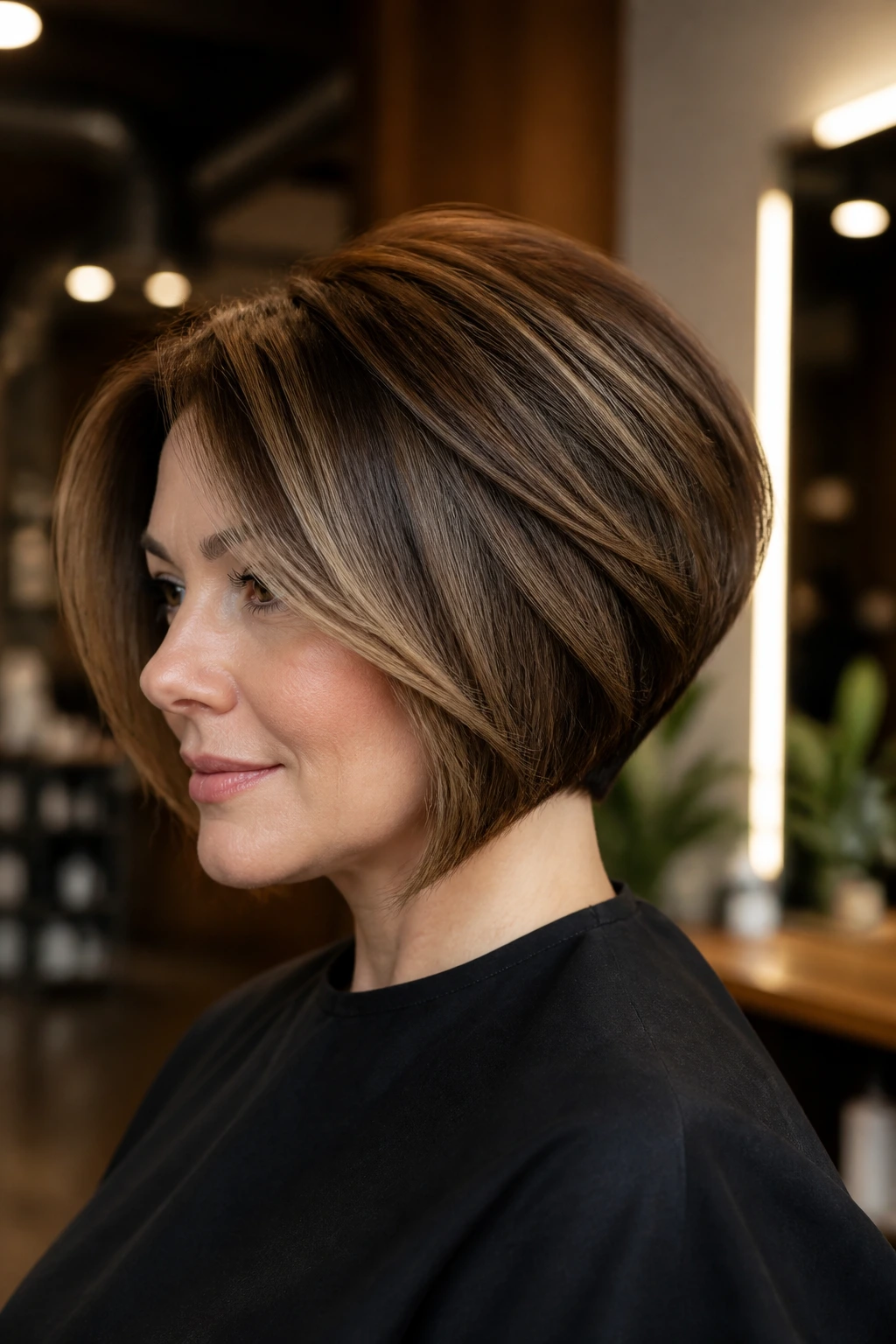
The stacked bob features a very short, layered back that “stacks” upward, leading into longer, framing pieces in the front. For a square face, this is excellent because the “stack” builds incredible volume at the crown, which creates a more oval-like shape from profile and head-on perspectives.
Building Volume at the Crown
By taking the focus up to the crown, you automatically balance the jaw. It is a trick of perspective—the wider and higher the hair at the top, the narrower the face appears at the bottom.
Tips for Success
- This style requires a professional stylist who is skilled with thinning shears and layering.
- It is a very structured, polished style that looks best when kept neat.
- If you have very fine hair, this is one of the best cuts you can get for the illusion of thickness.
19. The Soft-Curled “Wob” (Wavy Bob)
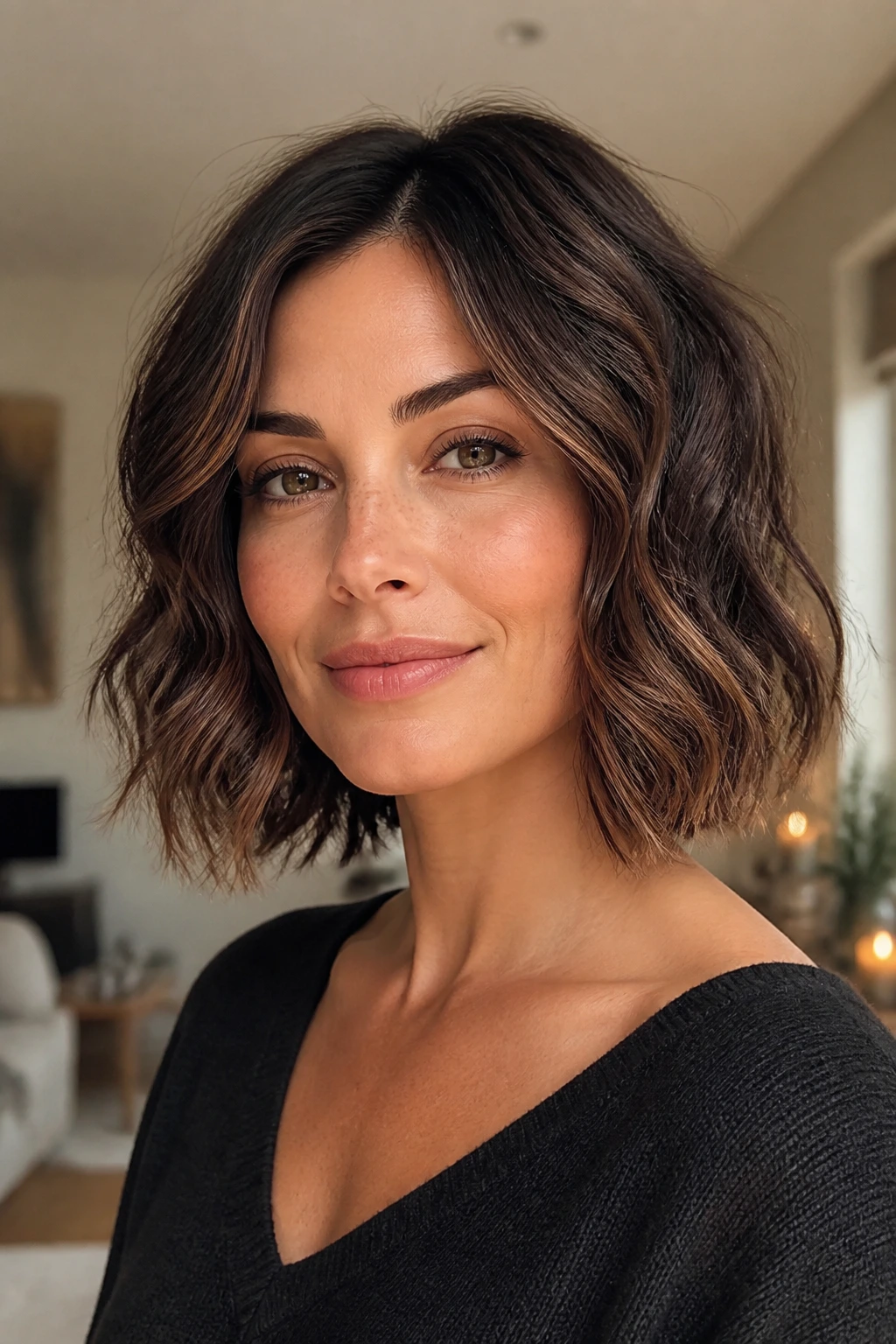
The “wob” is simply a wavy bob, and it is a classic for a reason. By adding soft waves throughout the hair, you eliminate the possibility of straight lines framing the face. It is arguably the most flattering bob for a square face, as it provides instant softening without requiring a complex cut.
The Science of Softness
Waves represent chaos, and chaos is the enemy of the “square” look. When your hair is wavy, the eye doesn’t follow a hard, sharp line down the face. Instead, it follows the curves of the waves, which are naturally softer and more flattering to angular structures.
Achieving the “Wob”
- Use a 1.5-inch curling iron for large, loose waves.
- Focus the curls on the mid-lengths, keeping the ends straighter for a modern look.
- Once finished, flip your head upside down and give it a quick shake to break up the curl perfection.
20. The “Bedhead” Choppy Bob

This style is all about purposeful messiness. The hair is cut at varying lengths, intentionally left a bit uneven, and styled with texture products to look like you just rolled out of bed. It is effortlessly cool, and because the lines are irregular, the squareness of the face is naturally disrupted.
Why It’s Undeniably Modern
Clean, perfect bobs can feel a bit dated or overly “high-maintenance.” The choppy bob is the modern antidote—it feels authentic and easy. It frames the face in a way that says, “I didn’t try too hard,” which is often the most stylish approach.
Styling the “Choppy” Look
- A texturizing spray is the only product you really need.
- Don’t use a brush; use your hands to direct the hair into place.
- This cut looks best when it’s slightly tousled by the wind.
21. The Chin-Length Bob with Soft Layers and Fringe
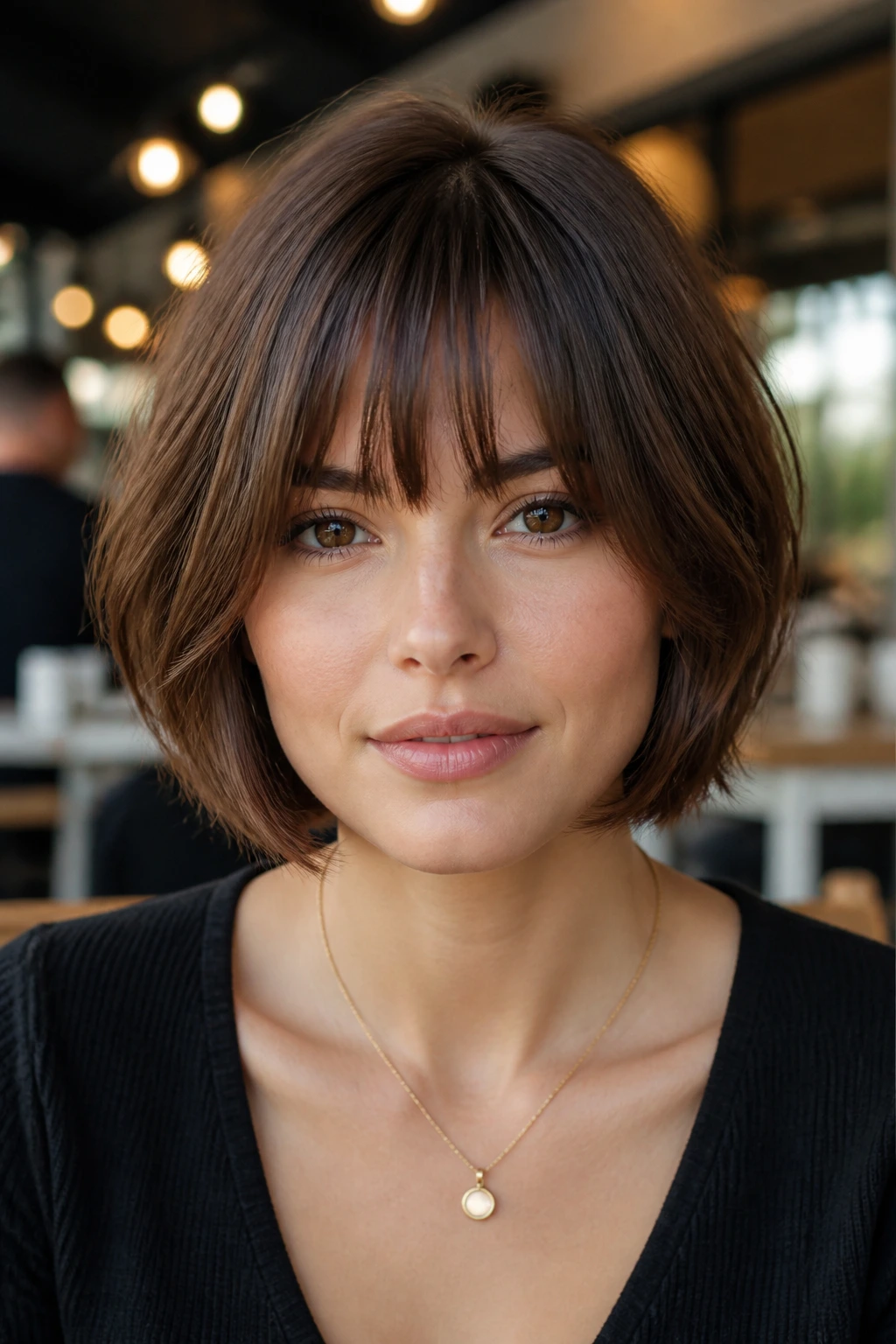
Returning to the chin-length concept, this version adds the “softening trifecta”: internal layers, face-framing pieces, and a fringe. It is a comprehensive approach to the square face. By addressing every single part of the cut—the texture, the frame, and the top—you create a balanced look that is entirely customized to your face.
The Customization Process
Talk to your stylist about where your jaw is sharpest. They can leave slightly longer pieces right at that point to soften the edge while keeping the rest of the hair at the desired chin-length.
Why This Is the Ultimate Choice
It’s the most considered look on this list. It recognizes that you don’t have to choose between a short cut and a flattering cut; you can have both by carefully selecting every layer, angle, and fringe length to work in harmony.
Final Thoughts
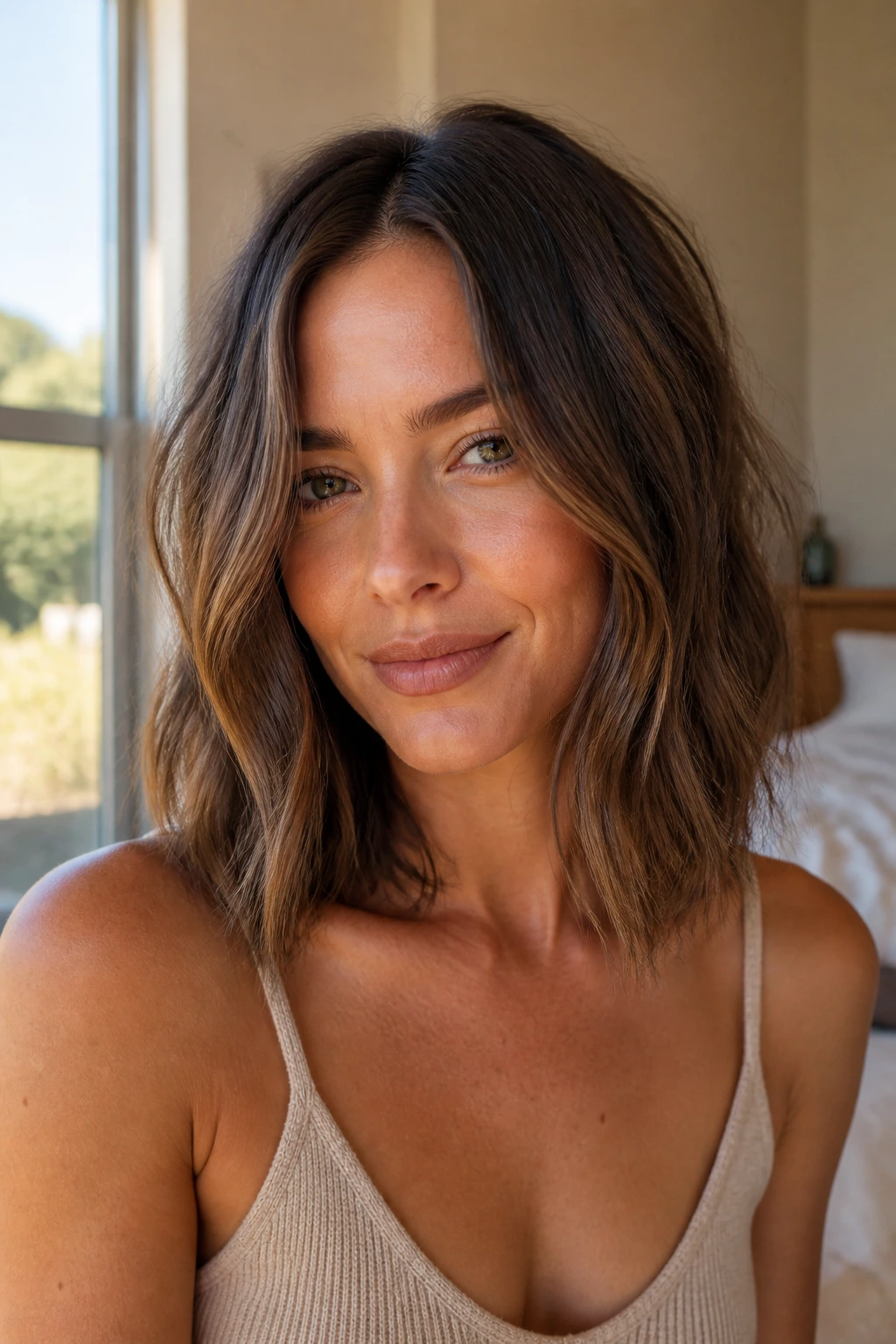
At the end of the day, the best haircut is the one that makes you feel confident the moment you step out of the salon. A square jaw is a feature to be highlighted, not a flaw to be erased. Many of the most iconic, high-fashion faces in history have carried a strong, square jaw with absolute elegance. The goal of these styles is simply to provide variety—to give you the freedom to choose whether you want to lean into that sharpness with a sleek, blunt cut, or soften the edges with texture and waves.
Do not be afraid of the scissors. If you have always kept your hair long, starting with a lob is a perfect, low-risk way to test the waters. Once you see how a shorter, textured style can actually highlight your cheekbones and give your face a lift, you might find yourself wanting to go even shorter. Hair is one of the few things in life that is entirely temporary and always growing, making it the perfect medium for experimentation. Find a stylist who understands the geometry of your face, bring them a few examples that resonate with your personal style, and enjoy the process of finding the silhouette that feels most like you.