

Braided hairstyles have long been a go-to for those looking to protect their natural texture, but when you are working with fine, fragile strands, the challenge often feels doubled. You are not just looking for style; you are looking for structural integrity. You need braids that sit lightly on the scalp, look intentional, and—most importantly—don’t cause the dreaded thinning that comes from too much tension. Adding beads to these styles isn’t just a nod to cultural tradition or a flash of aesthetic flair; it serves a functional purpose. The weight of the beads, when balanced correctly, can actually help keep shorter, finer layers in place, preventing those flyaways that usually ruin a style by midday.
Managing fine hair requires a delicate touch. If you pull too hard, you risk breakage. If you use heavy products, you risk your braids sliding right out. The secret lies in the prep work—using lightweight leave-in conditioners and precise sectioning—before you ever pick up a bead threader. Whether you are aiming for a protective style that lasts a few weeks or a fun look for a weekend event, the key is mastering the tension. Let’s look at twenty-two specific ways to incorporate beads into braided looks that respect the limitations and the beauty of finer hair types.
1. Minimalist Clear Bead Accents on Micro-Braids
Fine hair often gets overwhelmed by heavy or brightly colored accessories, which is why clear beads are your best friend. They provide the necessary weight to keep the ends of your micro-braids from unraveling without making your head feel like it is carrying a heavy load. When you use clear, glass-like beads, they catch the light in a way that looks sophisticated rather than costume-y.
Why This Works for Fine Textures
Clear beads are typically lighter in material composition than chunky, painted wooden beads. Because fine hair has a smaller diameter, you want to avoid oversized plastic beads that can slide down the hair shaft too easily. By choosing smaller, cylindrical clear beads, you keep the focus on the intricacy of the micro-braid pattern itself.
Styling Tip
Start by braiding the hair to about two inches from the ends. If your hair is prone to slipping, apply a tiny drop of setting lotion or mousse to the braid before sliding the bead on. Finish by securing the very tip with a small, clear rubber band, then pull the bead over the band to hide it completely. This ensures the style stays put even when your hair lacks the grip of thicker textures.
2. Peek-a-Boo Pearl Beads in Cornrows
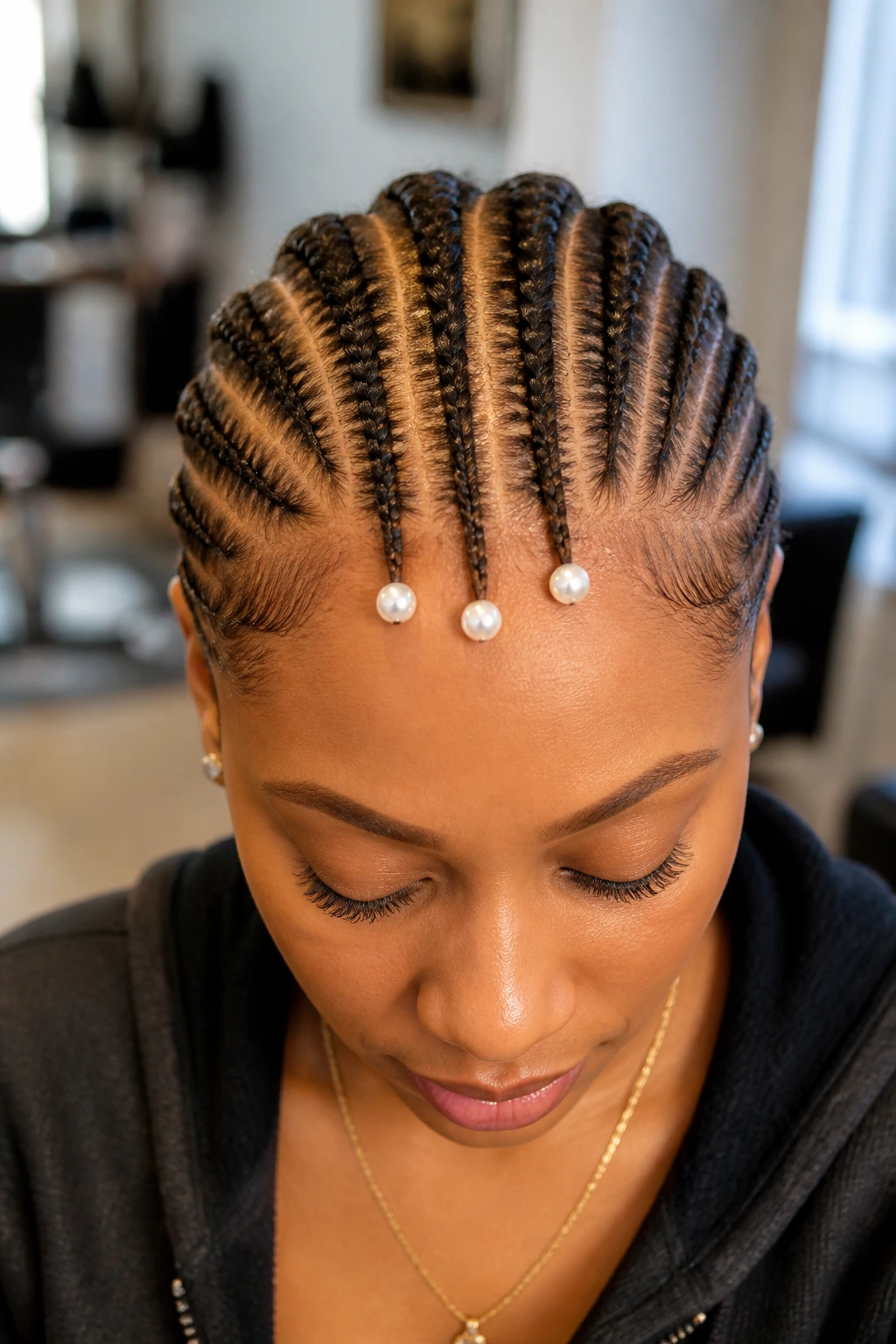
If you are tired of the standard plastic look, pearls offer an elevated finish that works beautifully for formal occasions or professional settings. Pearls—or pearl-effect beads—are elegant, smooth, and surprisingly lightweight. They add a touch of luxury to your cornrows without the harshness of metallic accessories.
Where to Place Them for Maximum Impact
Don’t pack the beads into every single row. Instead, select three to four central cornrows that frame your face and thread a single pearl onto the end of each. This creates a refined, intentional focal point. The rest of the braids can be left tapered and clean to avoid adding unnecessary bulk near your neck.
Keeping the Tension Low
The goal with fine hair is to prevent scalp stress. When installing these, ensure the cornrow itself is braided with moderate tension—not skin-tight. Because pearl beads are usually lightweight, they won’t pull the braid downward. This makes them a perfect choice for those who want a polished, high-end aesthetic while maintaining the health of their hairline.
3. Wooden Accent Beads on Goddess Braids
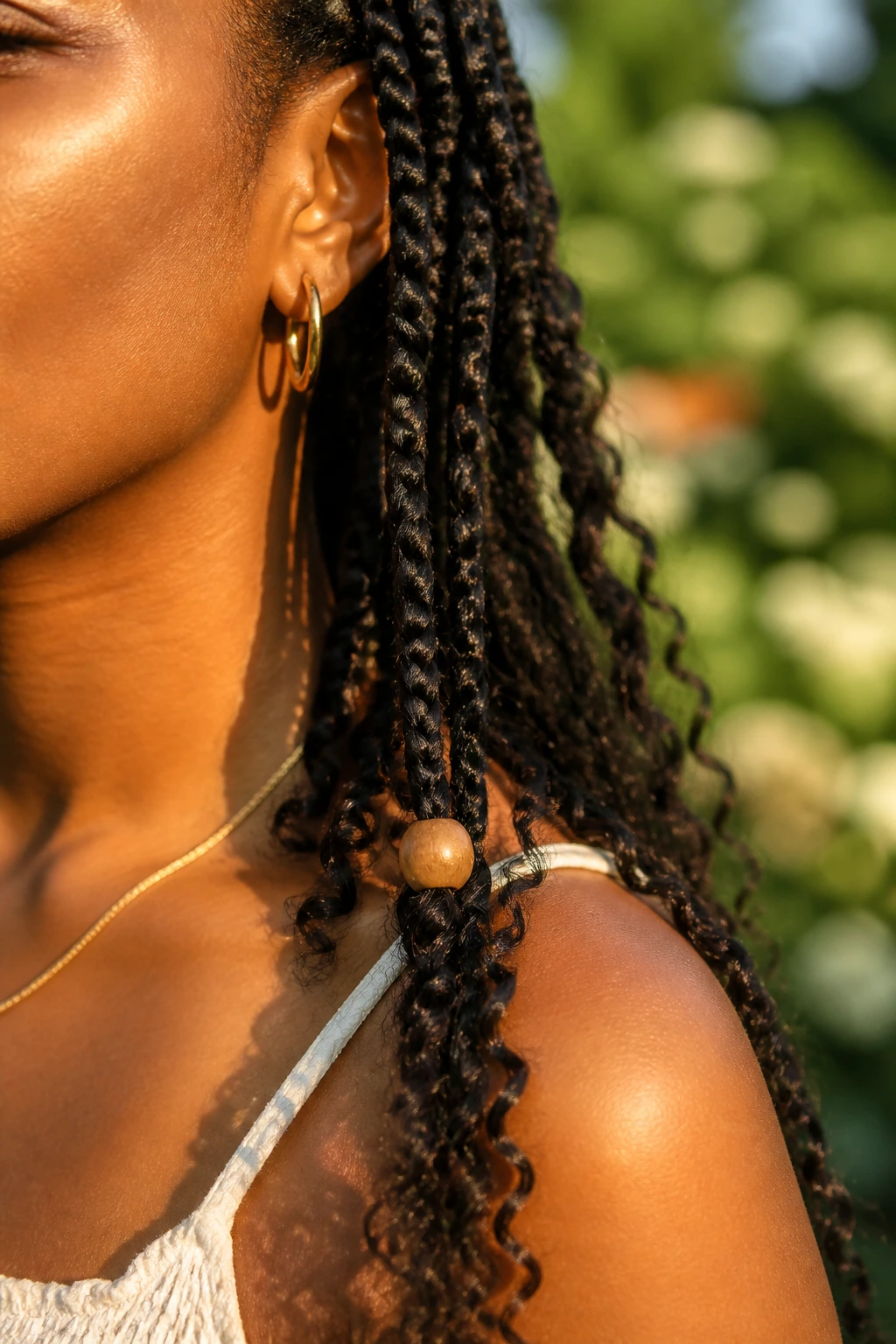
Goddess braids are characterized by their flowing, curly ends. When you have fine hair, these curly ends can sometimes become frizzy or tangled quickly. By adding a single wooden bead toward the start of the curly section, you provide a weighted anchor that keeps the extension hair from curling up too tightly or tangling with the rest of your hair.
Choosing the Right Wood Tone
Look for lightweight, sanded wood beads in natural tones like mahogany, walnut, or lighter bamboo. Natural wood has a matte finish, which is perfect if you want to avoid the high-shine, synthetic look of plastic. These beads look especially great when paired with darker hair colors, as they provide a subtle, earthy contrast.
Why This Style Is Long-Lasting
Wooden beads don’t chip or fade the way painted plastic beads might. If you are keeping these braids in for a few weeks, the wood remains consistent in its appearance. It is a timeless choice that doesn’t feel tied to a specific passing trend, making it a great staple for your rotation.
4. Metallic Copper Beads on Fulani Braids
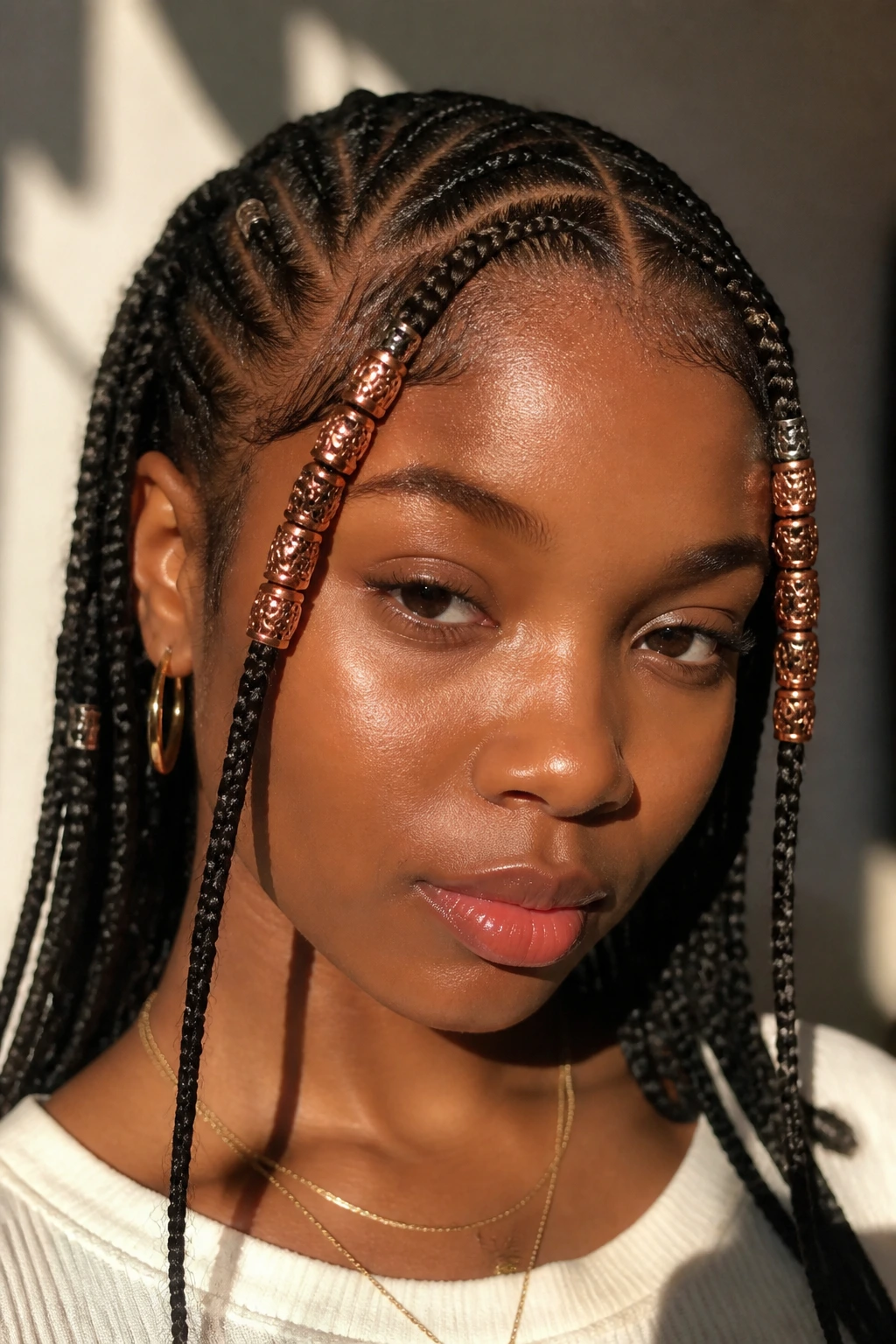
Fulani-inspired styles, which feature braids falling forward toward the face, are incredibly flattering for fine hair because they create the illusion of fullness around the cheeks. Adding copper-toned metallic beads provides a warm glow that complements many skin tones. Copper is generally lighter than brass or steel, which makes it ideal for delicate strands.
The Benefit of Forward-Facing Beads
When you place beads near your forehead or temples, they act as a natural frame. For those with fine hair, this style is a winner because it allows you to utilize the hair you have at the front to create a dense, accessorized look. You aren’t thinning out the back of your head to achieve this, which protects your overall volume.
Pro-Maintenance Note
Metal beads can sometimes be prone to tarnishing if they get wet frequently. If you plan on wearing this style for an extended period, try to opt for plated aluminum or copper-colored plastic beads. They give you the same shine without the oxidation that can sometimes happen with lower-quality real metals.
5. Pastel-Tone Plastic Beads for a Summer Vibe
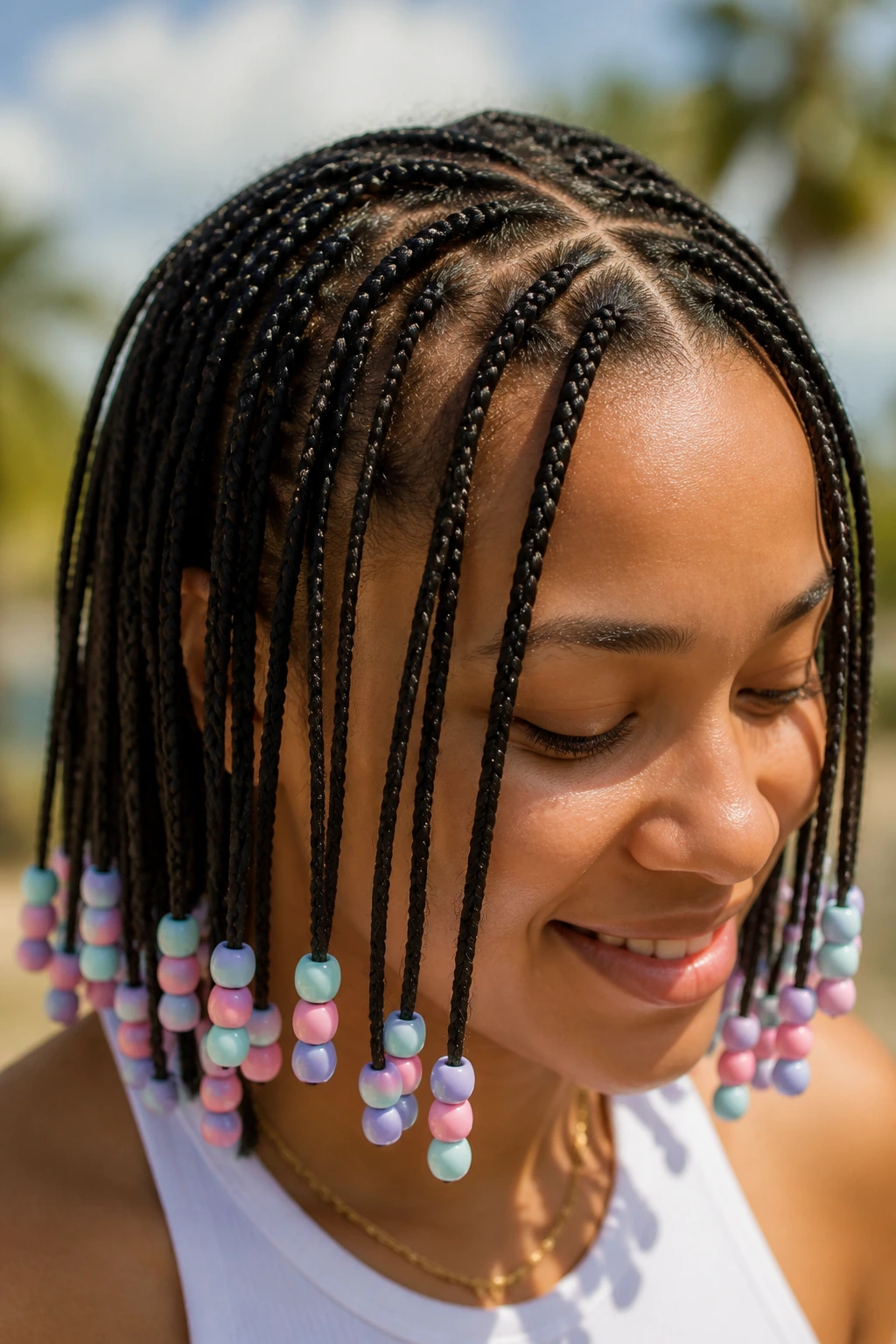
When the weather warms up, there is nothing quite like a pop of color to brighten your look. Pastel beads—mint green, baby pink, or lavender—are soft and visually light, mirroring the airy nature of fine hair. These beads are usually made of lightweight plastic, making them easy to wear in large quantities without creating a headache by the end of the day.
Layering for Density
If your hair is very fine and you worry that your braids look too thin, adding beads actually helps. By placing beads in groups of two or three at the end of each braid, you create a sense of weight and thickness at the tips. This visual trickery makes your hair look like it has more body than it actually does.
How to Prevent Slippage
Pastel beads can be slippery because of their smooth finish. To keep them locked in, take a small section of hair above the bead and knot it with a tiny bit of braiding gel. This creates a small “stopper” knot that prevents the beads from sliding off your braid when you move your head.
6. Single Statement Bead at the Nape
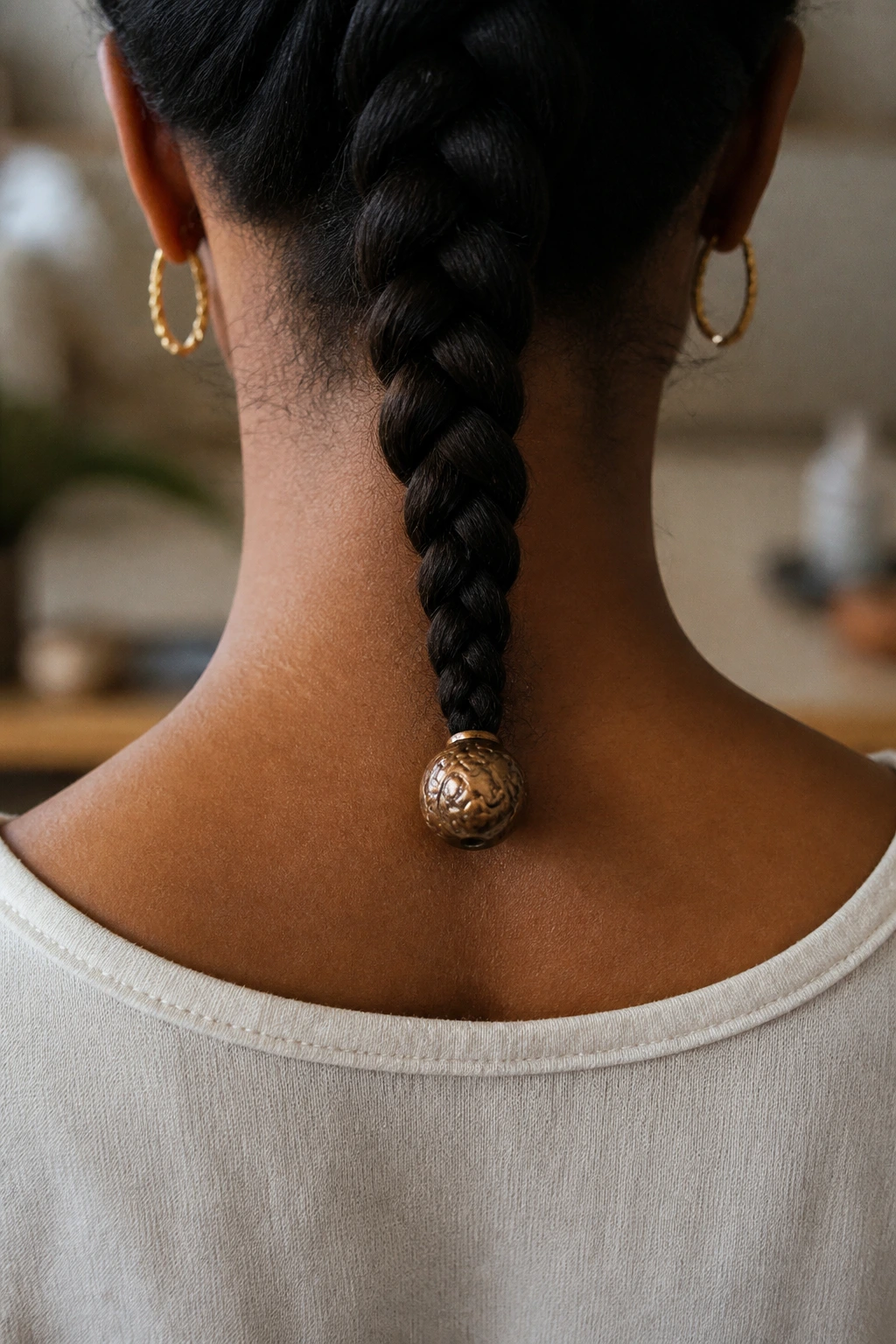
Sometimes, less is truly more. If you prefer a professional, understated look, place one large, interesting bead at the base of a single, thick center-back braid. This is the ultimate “low maintenance” strategy for fine hair. You get the benefit of the accessory without the weight of a dozen beads pulling on your scalp.
Why This Works for Office Settings
In professional environments, a head full of clacking beads might be distracting. A single statement piece—perhaps a ceramic or stone-textured bead—acts like a piece of jewelry. It signals that you put effort into your style while remaining perfectly appropriate for a meeting or a day at your desk.
Selection Criteria
Pick a bead that feels meaningful to you, such as a jade bead for calm or a simple silver-toned bead for a crisp finish. Because you are only using one, you can afford to invest in a higher-quality piece that won’t lose its luster. It is a simple way to elevate your natural hair without risking your edges.
7. Gradient Ombré Beads on Box Braids
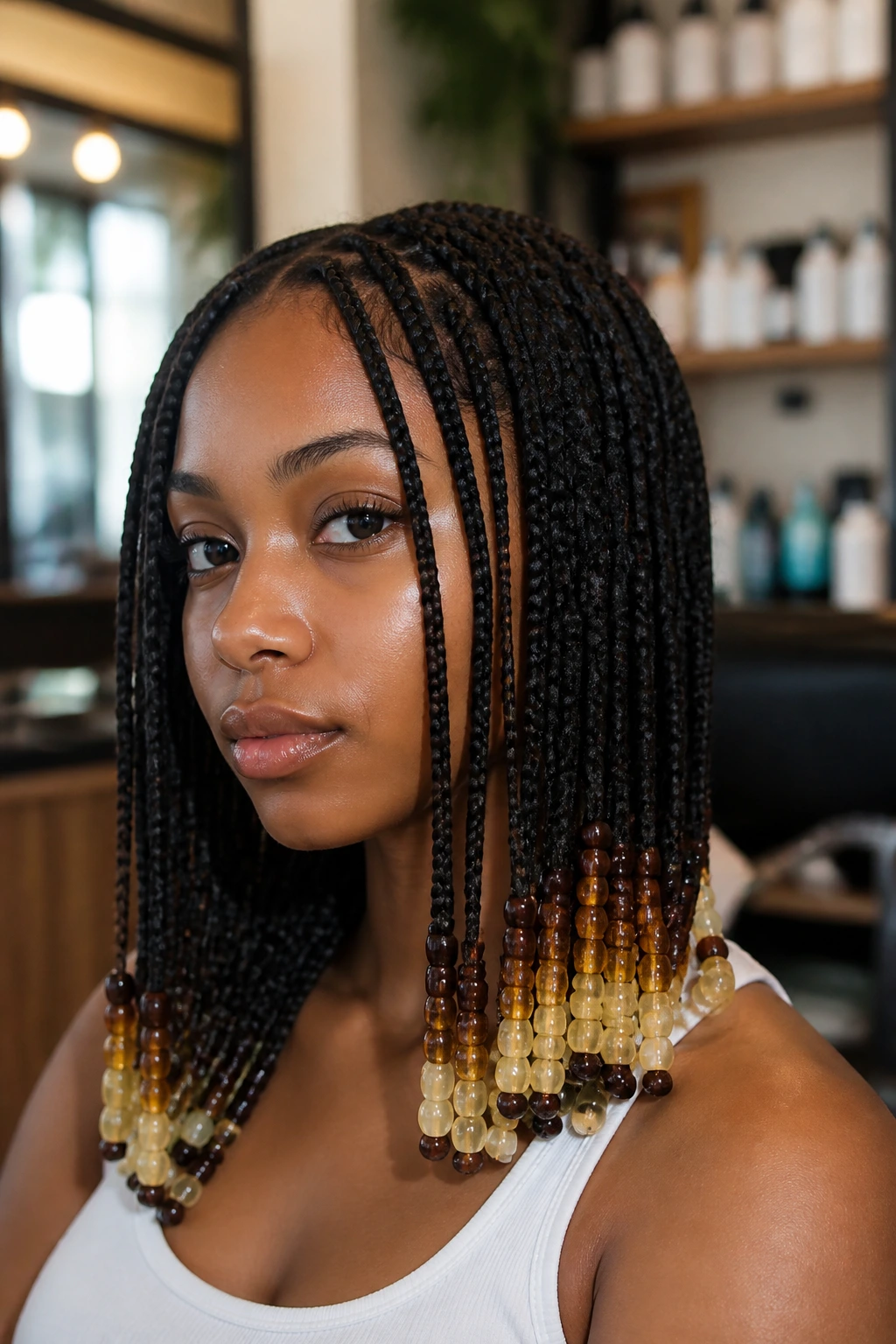
Ombré beads, where the color transitions from dark to light on a single bead, are a fantastic way to add dimension. Fine hair can sometimes look a bit one-dimensional or flat, especially if the color is uniform. Beads that feature a gradient effect bring a sense of movement and depth to the ends of your box braids.
Creating the Visual Illusion
Because the gradient beads change color, they draw the eye toward the ends of your braids. This movement distracts from the fine texture of the hair at the scalp. People are looking at your colorful ends rather than scanning your head for volume, which is a great confidence booster.
Styling Variation
Try alternating the direction of the ombré beads—some pointing up, some pointing down—for a scattered, playful effect. It makes the hairstyle look much more complex than it actually is. It is a simple, low-effort technique that yields high-impact results for anyone working with less density.
8. Glass Seed Beads for Intricate Detailing
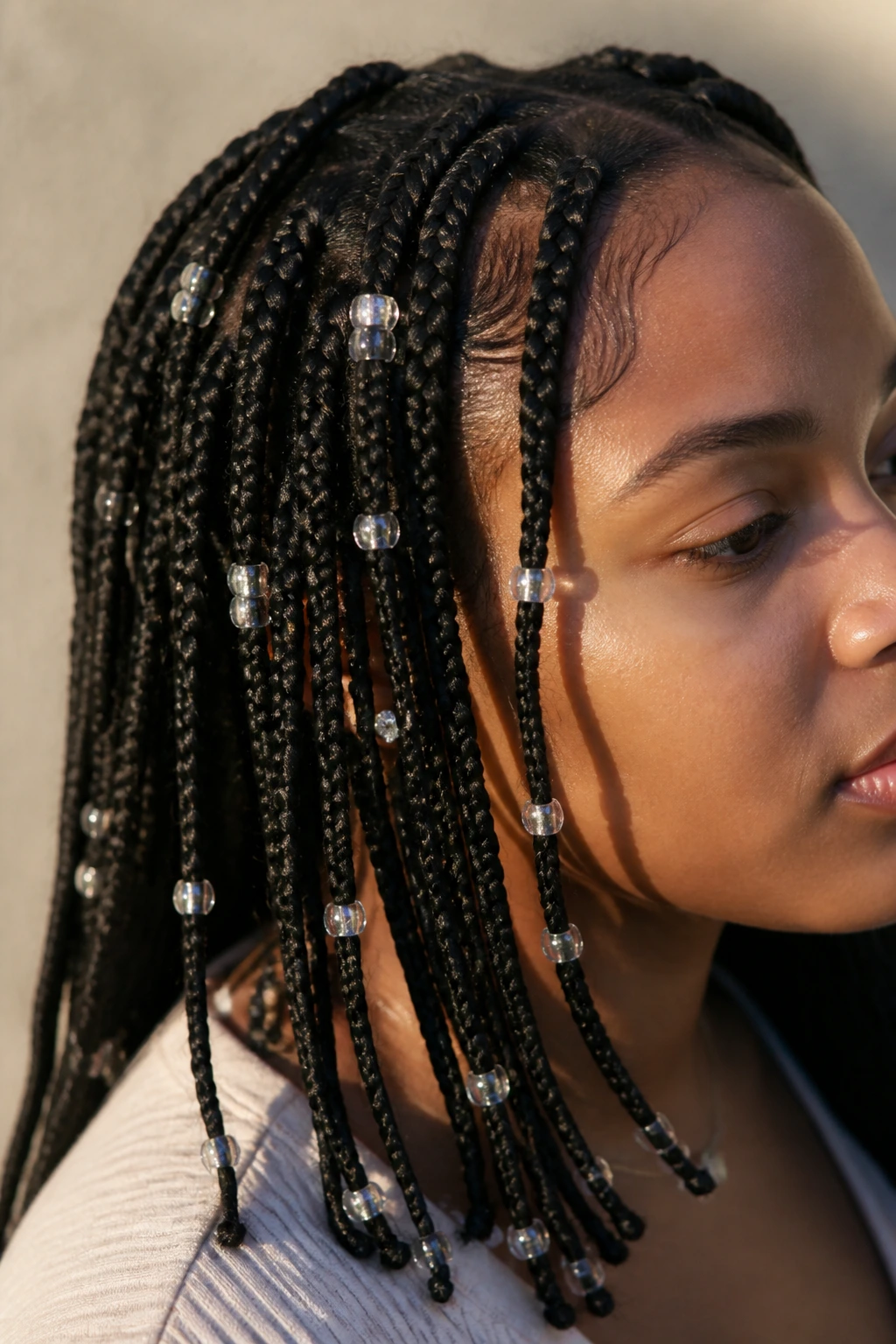
If you want something delicate, ignore the large chunky beads and look for glass seed beads. These are tiny, vibrant, and extremely lightweight. They are perfect for threading onto the actual length of the braid, not just the ends, for a “tapered” look that starts from mid-length.
The “Dotted” Aesthetic
By scattering a few seed beads every two inches along a braid, you create a sophisticated pattern. This is a common technique in certain traditional African hairstyles, and it looks beautiful on fine hair because it doesn’t drag the hair down. You are essentially decorating the structure of the braid itself.
Durability Concerns
Glass seed beads are permanent in color—they will never chip or lose their paint. Because they are so small, they grip the hair better than large plastic beads. If you want a style that lasts and doesn’t require constant bead readjustment, these are your best bet.
9. Geometric Metal Cuffs and Beads
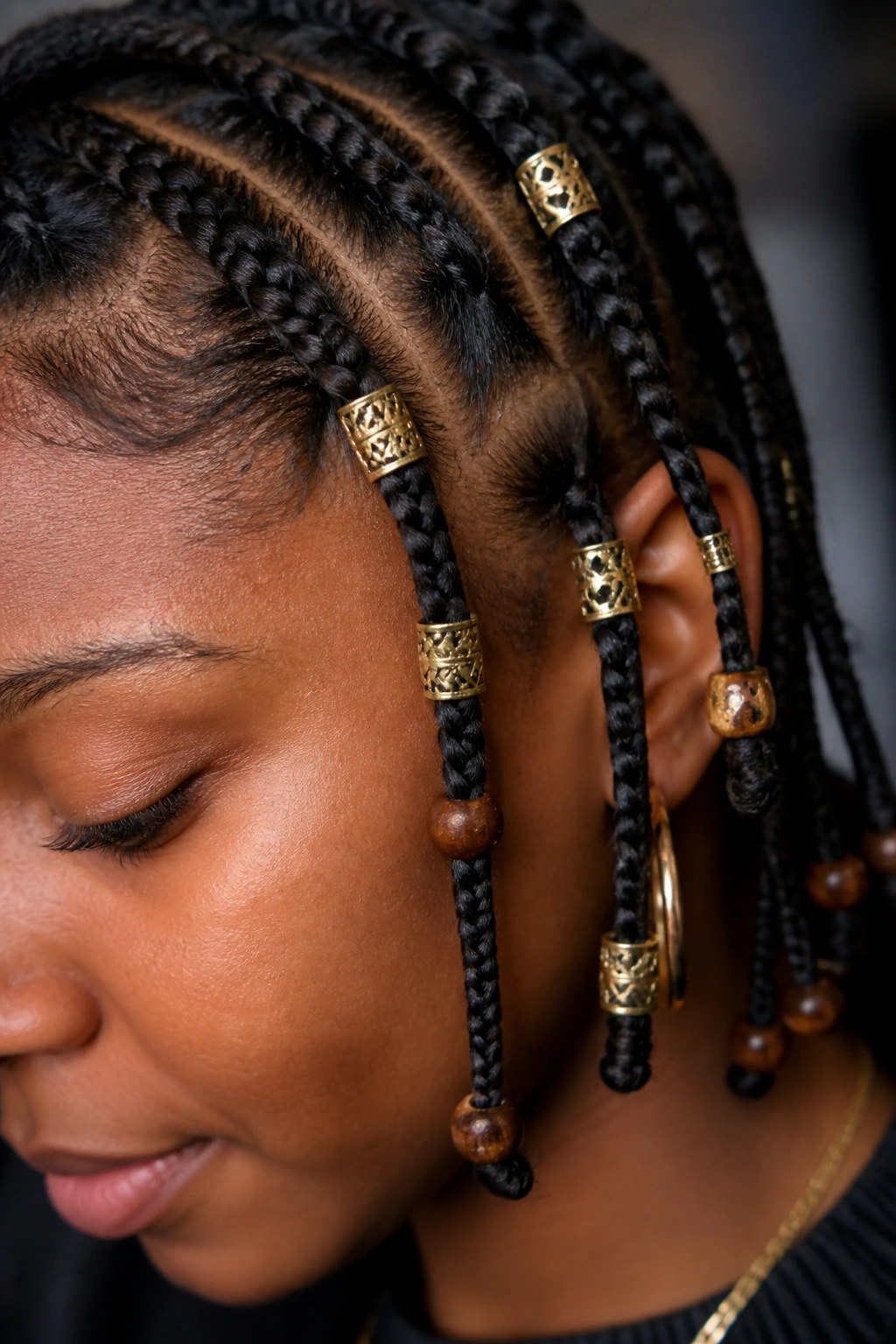
Cuffs are technically not beads, but they function similarly by adding weight and shine to the braid. Mixing small metal cuffs with wooden beads creates a “boho-chic” look that feels intentional and curated. Metal cuffs are generally open-ended, which means you can pinch them shut to secure them firmly onto fine hair.
Avoiding Snags
Fine hair is prone to snagging on jewelry. When buying cuffs, make sure the edges are rounded and smooth, not sharp. If they are rough, they will catch on your hair the moment you turn your head. A quick tip is to coat the inside of the cuff with a tiny bit of clear nail polish to provide a smooth barrier between the metal and your hair.
Balancing the Weight
Mix one cuff with two beads. The cuff provides the grip, and the beads provide the movement. This hybrid approach is great for fine hair because the cuff acts as a structural anchor for the beads. It ensures that even if your hair is slippery, the ensemble won’t budge.
10. Clear and Gold-Flaked Beads
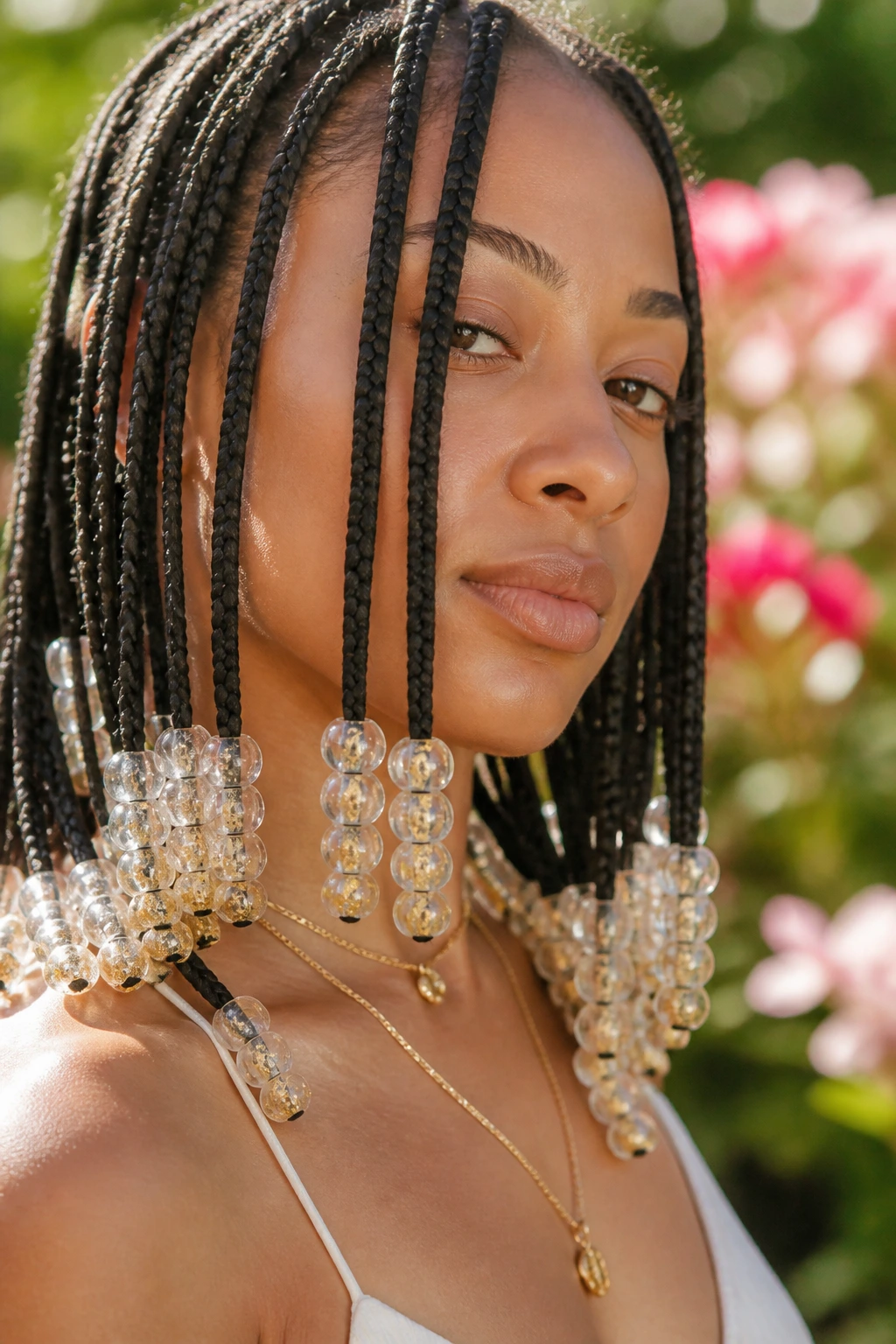
If you want a touch of glam, look for clear plastic beads that have gold flecks suspended inside them. They offer the light-reflecting qualities of metallic beads without the heaviness. They are visually “bouncy” and look stunning in the sunlight, making them perfect for outdoor events or warmer weather.
Layering With Gold Accessories
Because these beads already have gold flakes, pair them with simple gold-toned bobby pins or hair rings higher up on the braid. This creates a cohesive “gold theme” throughout your hairstyle. It’s a subtle way to coordinate your accessories so that the entire look feels like it was professionally styled.
Why They Suit Fine Hair
Fine hair tends to look best with accessories that have “air” in them. Clear materials are less visually dense than solid, opaque ones. By choosing clear beads, you keep your style feeling light and airy rather than weighed down by solid blocks of color.
11. Patterned Clay Beads for an Artisanal Look
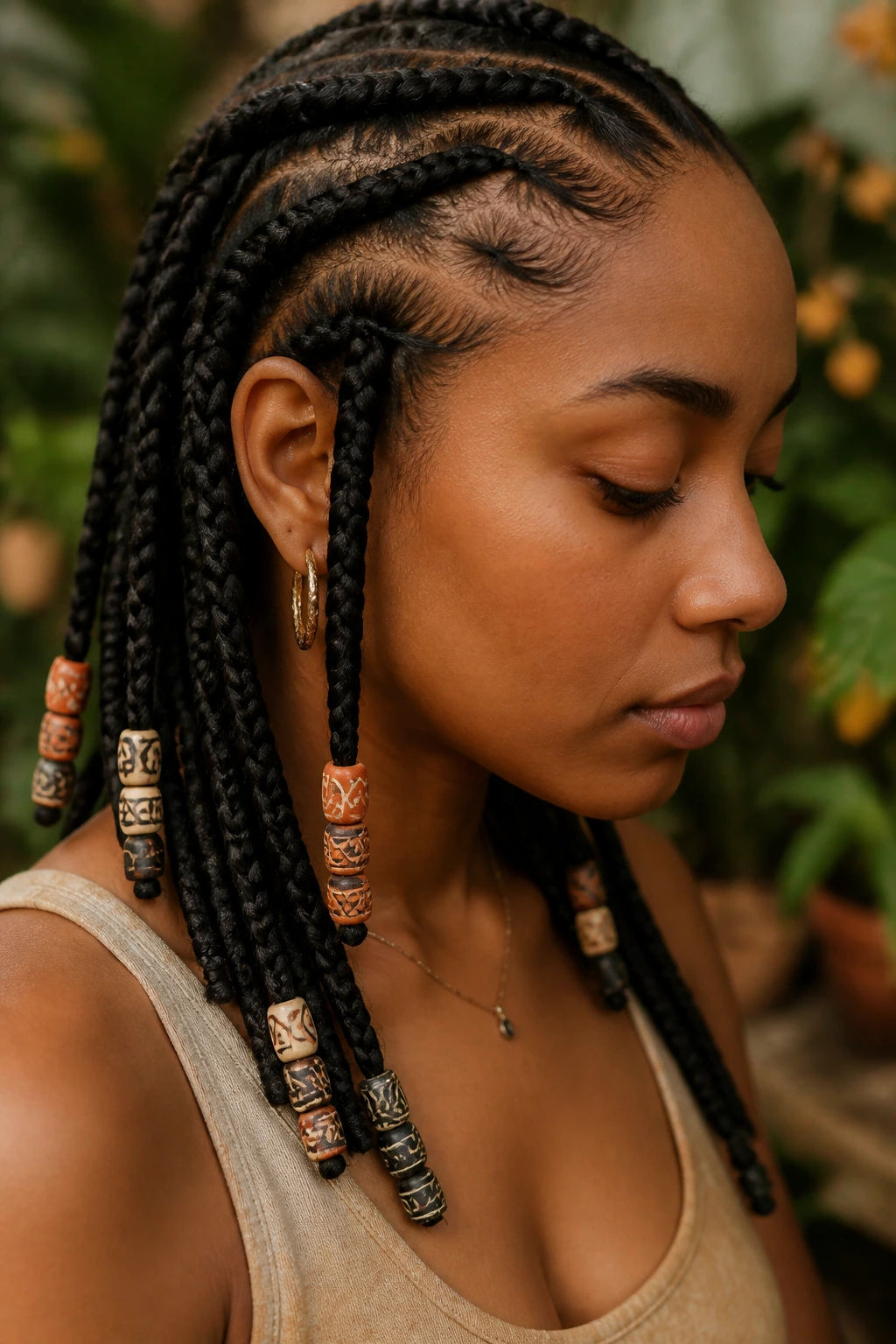
Hand-crafted clay or polymer beads offer unique patterns and textures that mass-produced plastic ones simply cannot match. Because clay is porous and lightweight, it feels very natural on the hair. You can find these in matte finishes with earth-toned patterns that look excellent on dark hair.
The Texture Factor
Clay beads have a slightly “grippy” texture because they aren’t as smooth as glass or polished plastic. This helps them stay put on finer hair strands. They don’t slide off as easily, which reduces the need for constant re-tying or adding rubber bands, further protecting your hair from tension damage.
Styling Suggestions
Use these for a “natural” aesthetic. Pair them with a low-tension style like feed-in braids. The organic look of the clay beads complements the natural scalp-line of a feed-in, making for a seamless, earthy hairstyle that feels grounded and authentic.
12. Alternating Color Beads for Contrast
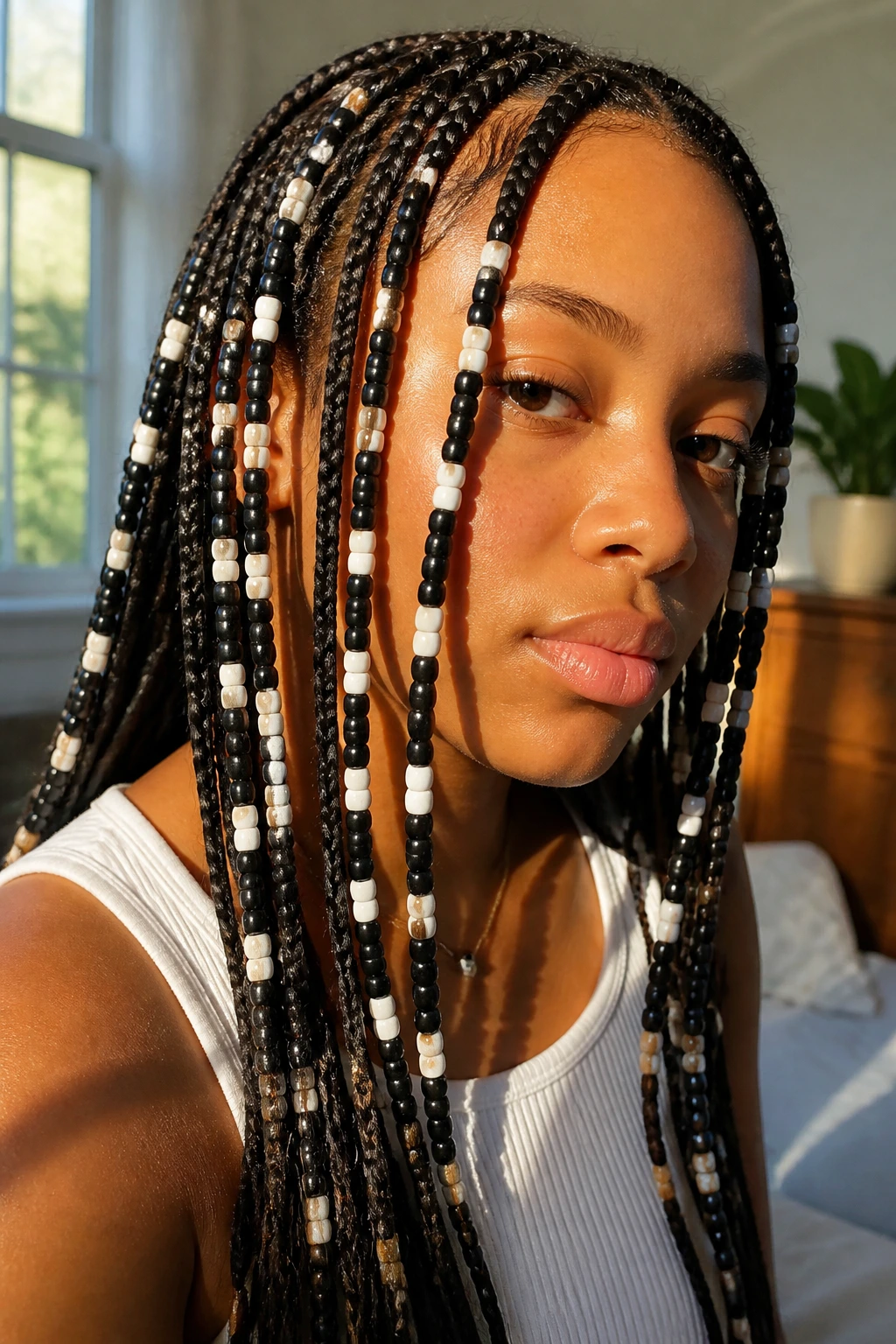
You don’t need a head full of one color. For fine hair, high-contrast colors—like black and white, or navy and yellow—can make the braids look more substantial. The human eye perceives the contrast as a “thicker” line, which creates a helpful illusion of volume.
Why This Works
When your hair is thin, solid-colored braids can sometimes blend into your scalp, making it look thinner than it is. By introducing contrasting beads, you break up the lines of the braids. This creates a visual rhythm that draws attention to the accessories rather than the spacing of your parts.
Choosing Your Contrast
For a subtle look, stick to two shades of the same color family. For a bold look, go for primary colors. Just remember to keep the bead size consistent; if you mix sizes while also mixing colors, it can start to look messy rather than intentional.
13. Beads with Charms for Personalization
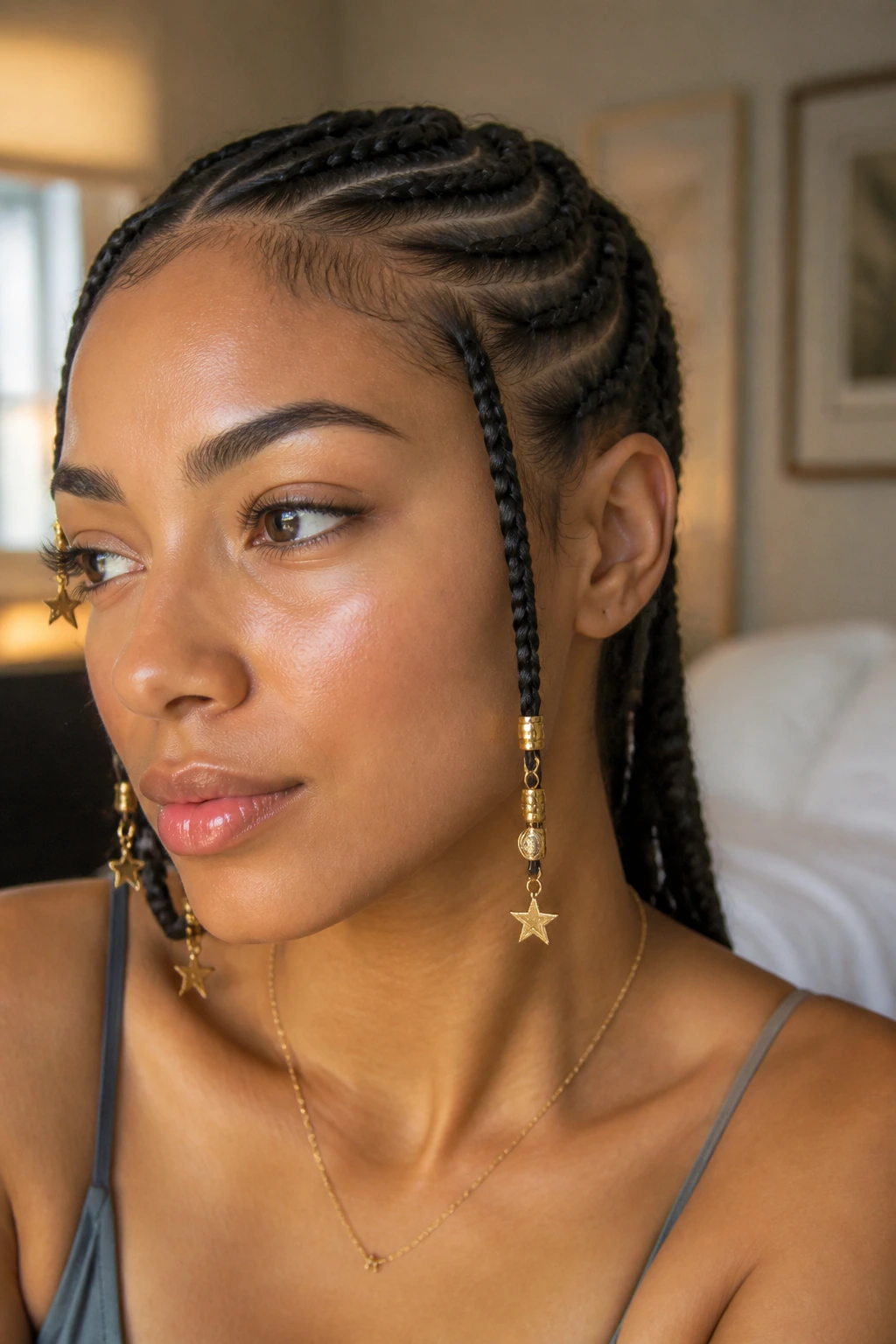
Adding small charms—like little golden stars, hearts, or initials—to your beads adds a layer of personalization. For fine hair, the charm is key because it adds a small amount of “dangle” without the bulk of a full bead. These are excellent for someone who wants to experiment with accessories without going “full bead” on every single braid.
Where to Attach Them
Attach these at the very ends of the braids, ideally on just two or three braids around the face. The dangles will move as you walk, catching the light and creating a playful, dynamic effect. It’s the perfect way to add flair for a vacation or a celebration.
Maintenance Note
Charms can be more prone to snagging on clothing than standard beads. Be careful when wearing scarves or turtlenecks, as the charms can hook into the fabric. If you have an active lifestyle, reserve these for special occasions rather than as an everyday protective style.
14. Graduated Sizes for a Dynamic Silhouette
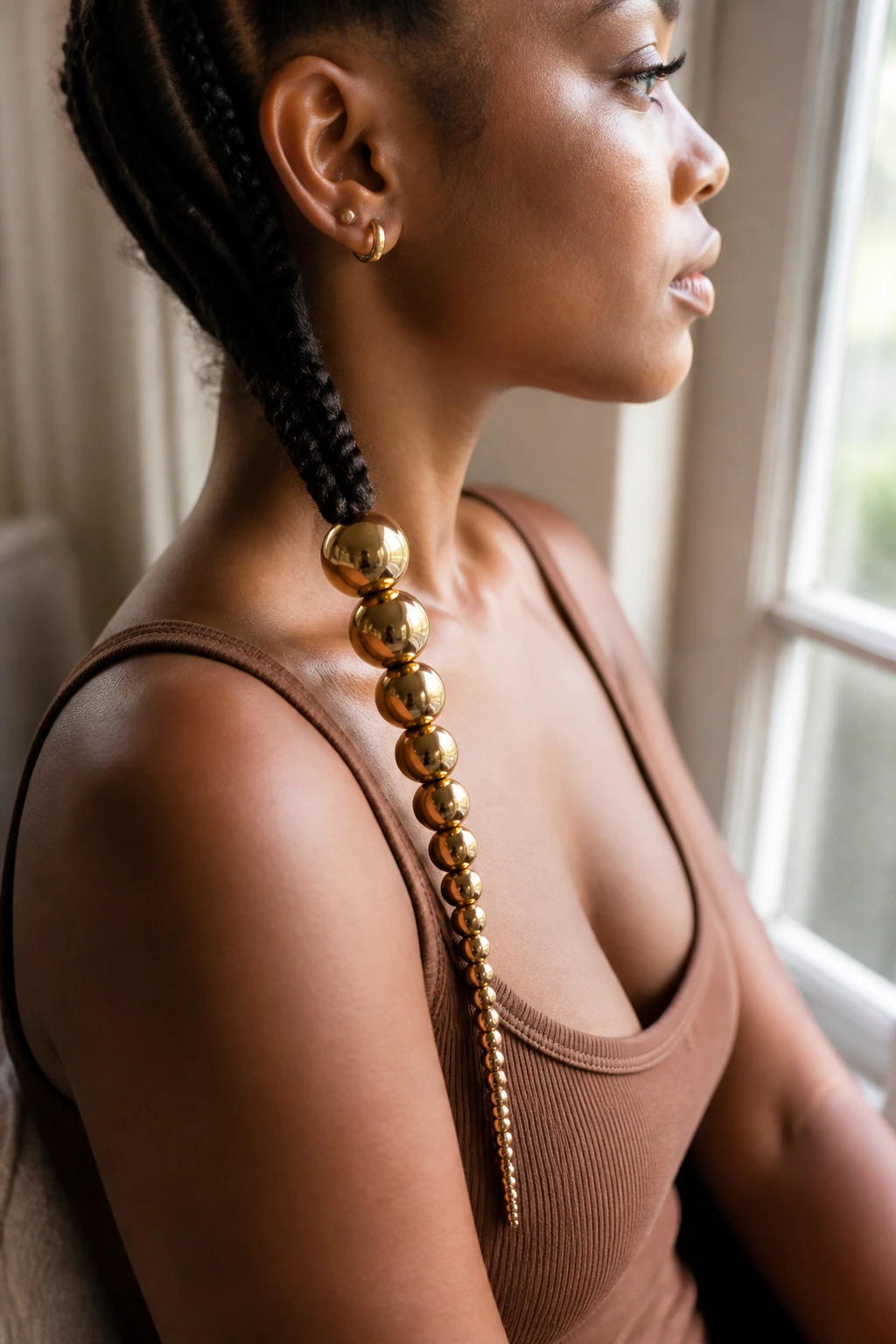
Start with a larger bead at the top of the bundle and end with a smaller one at the tip. This creates a “weighted drop” effect. It looks very polished and is common in traditional styling. Because the larger bead is at the bottom of the braid—wait, no, let’s reverse that. Place the larger bead at the bottom to weigh the hair down effectively and keep it from curling up.
The Physics of Fine Hair
Fine hair often has a “flick” at the end where it refuses to lay straight. By putting a slightly larger, heavier bead at the very bottom, you act as a literal weight to pull the hair into a straight, sleek line. It’s a simple trick to make your braids look instantly more professional and uniform.
Getting the Balance Right
Don’t use a bead so heavy that it pulls at your roots. If you choose a large bead, make sure it’s a lightweight hollow plastic style. This gives you the visual weight and the straight-line pull you want without the physical strain on your scalp.
15. The Triple-Bead Stack
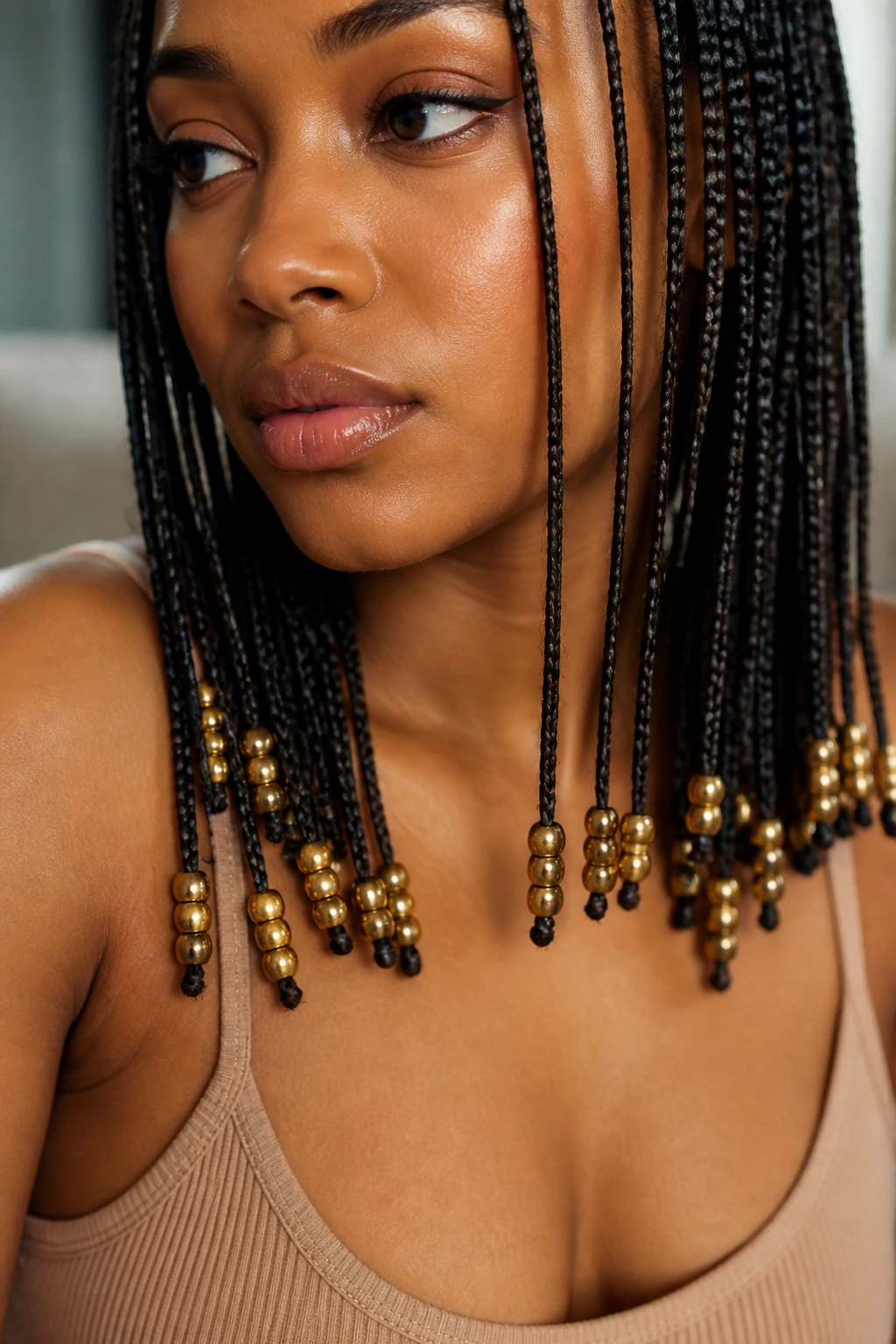
Stacking three beads of the same color on every other braid is a classic, clean look. It’s balanced and symmetrical. For someone with fine hair, this repetition creates a sense of thickness. The “stacked” look takes up about an inch of space at the end of the braid, which is just enough to create a substantial finish.
Why Stacking Helps
When you stack beads, they tend to lock against each other, making the whole “bead unit” feel more secure. A single bead on a fine braid can sometimes spin or flip upside down. A stack of three creates a column that stays upright, making your braids look tidy and well-maintained throughout the week.
Color Coordination
Use neutral tones like black or dark brown if you want the beads to blend in with your hair, or go for metallic gold to make them a feature. Stacking is a versatile technique—you can adapt it to any color palette depending on what you want to achieve with your overall look.
16. Beads with Braided Wire Accents
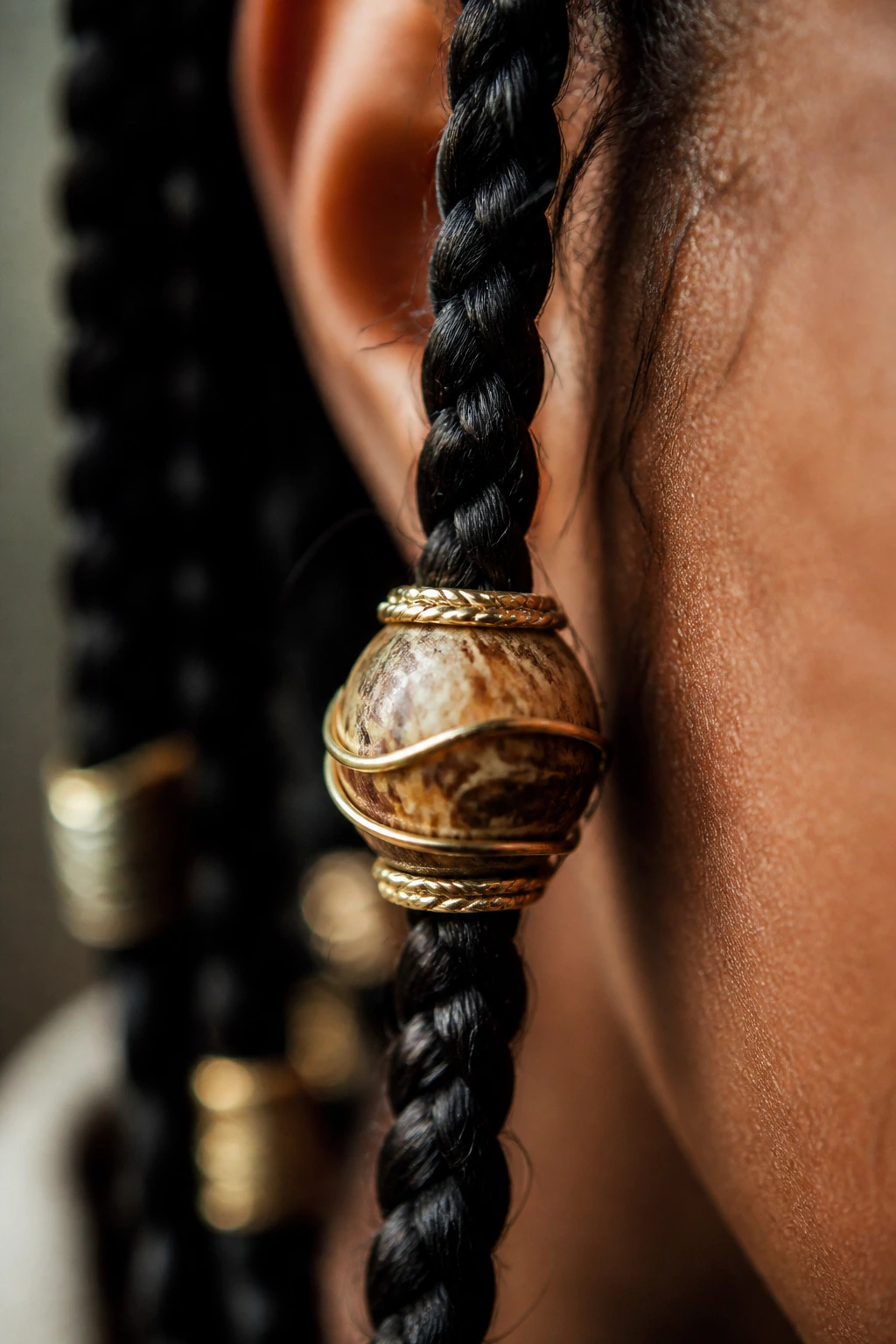
Some beads come pre-wrapped in thin, decorative wire. These are beautiful and add a layer of sophistication. The wire adds a bit of “texture” that can help grip the hair, which is a massive bonus for those with finer, slipperier strands.
The Wire Grip
Because the wire is wrapped around the exterior of the bead, it creates a tactile surface that the hair can “catch” onto, rather than sliding past. This means your beads are less likely to fall off mid-day. It’s a clever, functional detail that makes the hairstyle much more durable.
Handling Fine Strands
Ensure you don’t wrap the wire too tightly yourself if you are adding it. If you buy pre-beaded wire, just ensure the wire ends are tucked neatly away so they don’t poke your skin or snag your clothes. They are elegant, durable, and highly effective for fine hair.
17. The “Crown” Bead Look
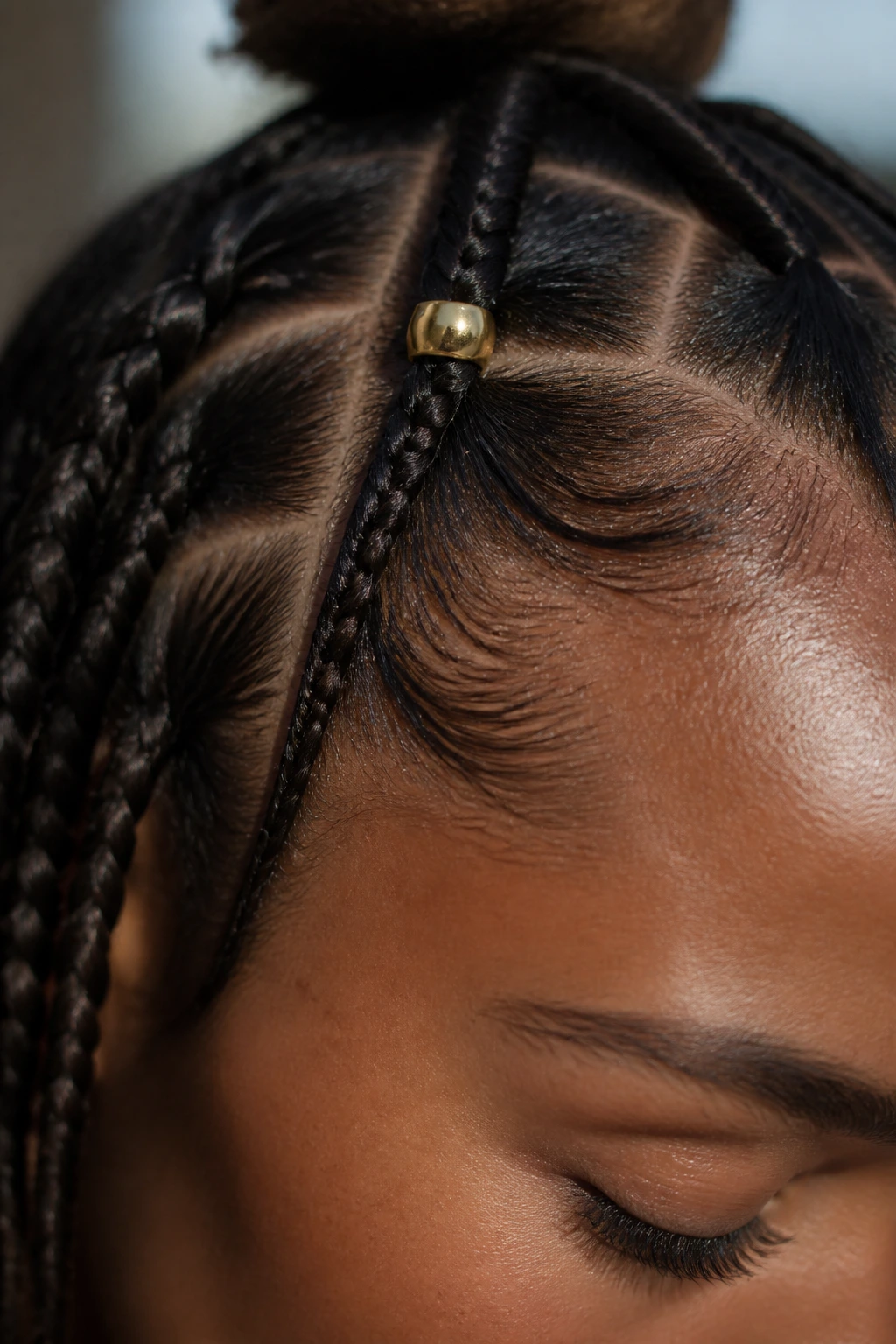
Instead of beads at the ends, place one single, beautiful bead right at the base of the braid near the scalp. This creates a “crowned” look. It’s a very high-fashion, editorial style. For fine hair, this is great because it doesn’t add any weight to the ends of the hair, meaning it won’t pull the braid out.
Why It’s Better for Fine Hair
Heavy ends can cause fine braids to unravel or slide. By moving the weight to the top (the base of the braid), you are using the weight of the bead to actually “push” the braid down, which can sometimes keep it sitting flatter against the head.
Aesthetic Impact
This style draws attention to your face and your parts. Because it is so unconventional, it stands out. Pair this with a clean, sharp part for a look that feels extremely intentional and modern. It is a fantastic choice for those who want to avoid the “swaying” feeling of beads at the ends.
18. Matte Beads for a Soft Finish
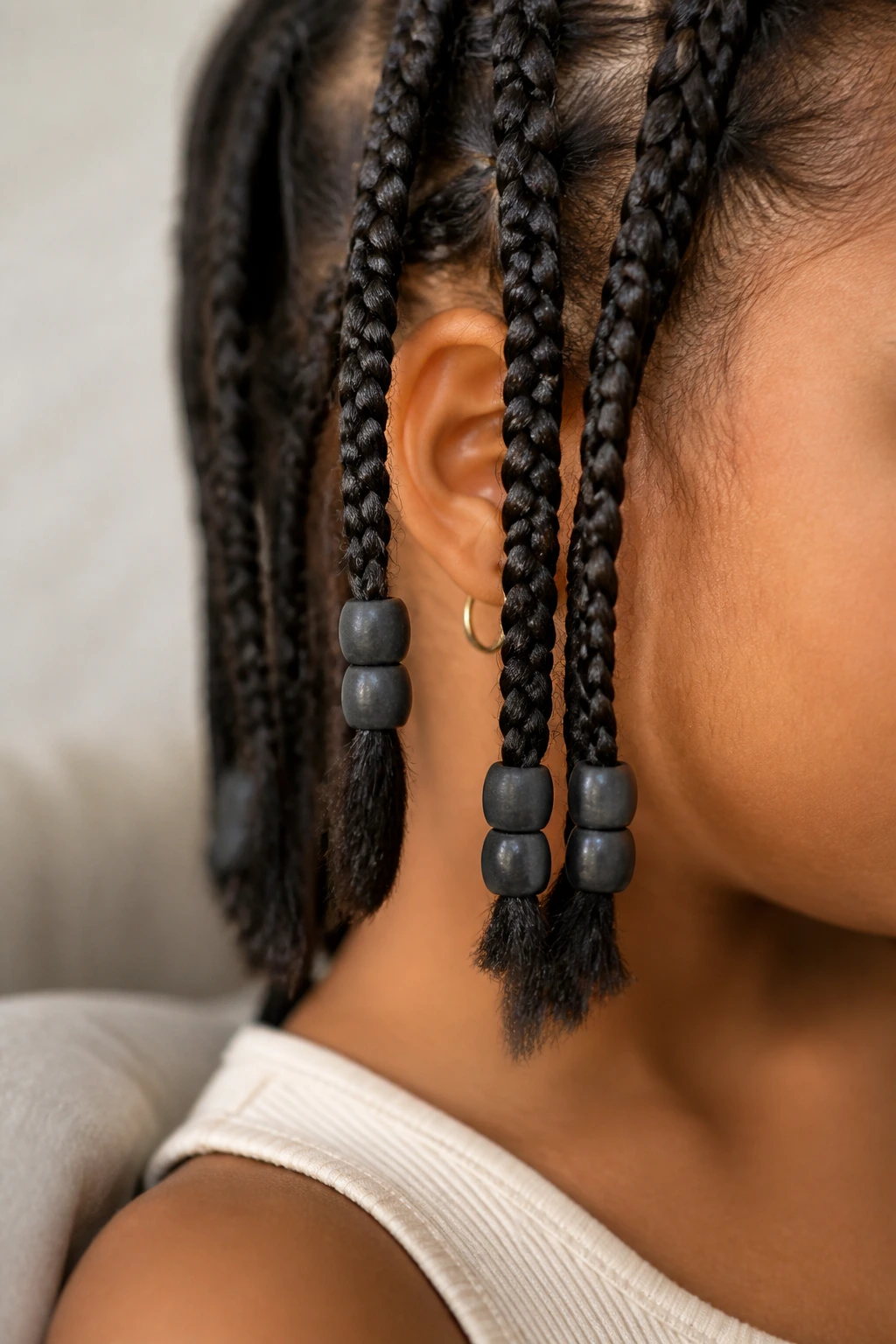
If you want to avoid the plastic shine that can sometimes look “cheap” or synthetic, opt for matte-finish beads. They have a soft, velvety look that is very flattering. For fine hair, matte beads are excellent because they don’t reflect light in a way that highlights the thinness of the hair shaft.
The Texture Advantage
Matte beads are often less slippery than high-gloss ones. If you have fine hair that struggles to hold a knot, the matte finish will be your savior. They have enough friction to stay put, even without a heavy amount of gel or a thick rubber band.
Pairing with Styles
Matte beads look incredible with box braids or twists. They have an understated, mature vibe that works well for a wide range of ages. If you are looking for a look that feels “grown-up” and elegant, this is the material you should be searching for.
19. Transparent “Jelly” Beads
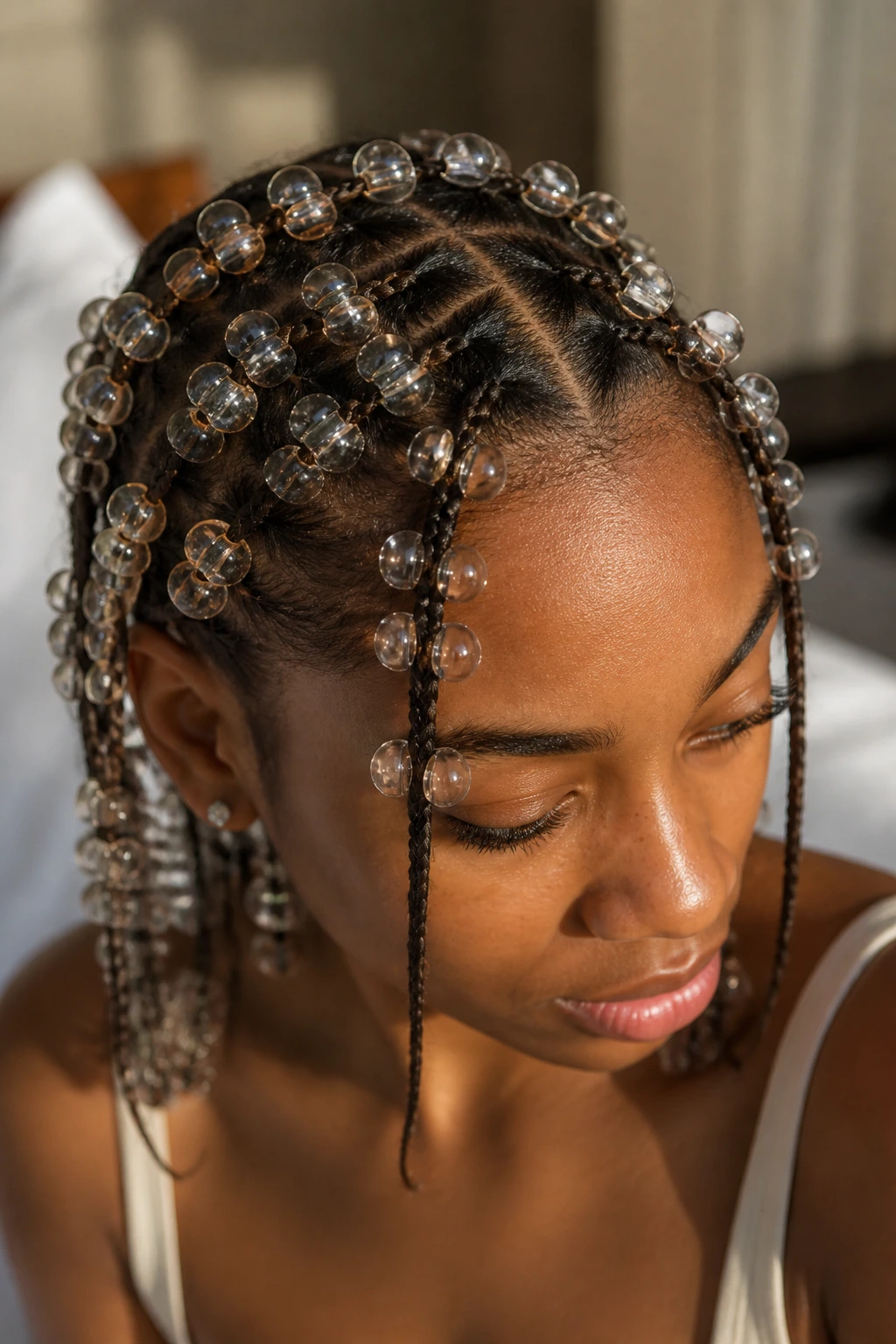
Jelly beads are those semi-transparent, slightly squishy plastic beads. They are fun, lightweight, and very comfortable to wear. They are popular for younger styles, but they can be incredibly cute in an adult setting if you stick to clear or muted jelly tones.
Comfort Factor
Because they have a slight give, jelly beads are much more comfortable if you accidentally bump your head or sleep on your braids. They don’t have the rigid impact of hard plastic or glass. If you tend to move around a lot, these are the most forgiving accessories you can use.
Visual Depth
Even though they are transparent, they have a “glow” to them that opaque plastic doesn’t have. They add a soft focus to the end of your braids, which helps blur the transition between your natural hair and any added extensions. It’s a small, soft effect that works wonders for fine textures.
20. Mixed-Shape Bead Ensembles
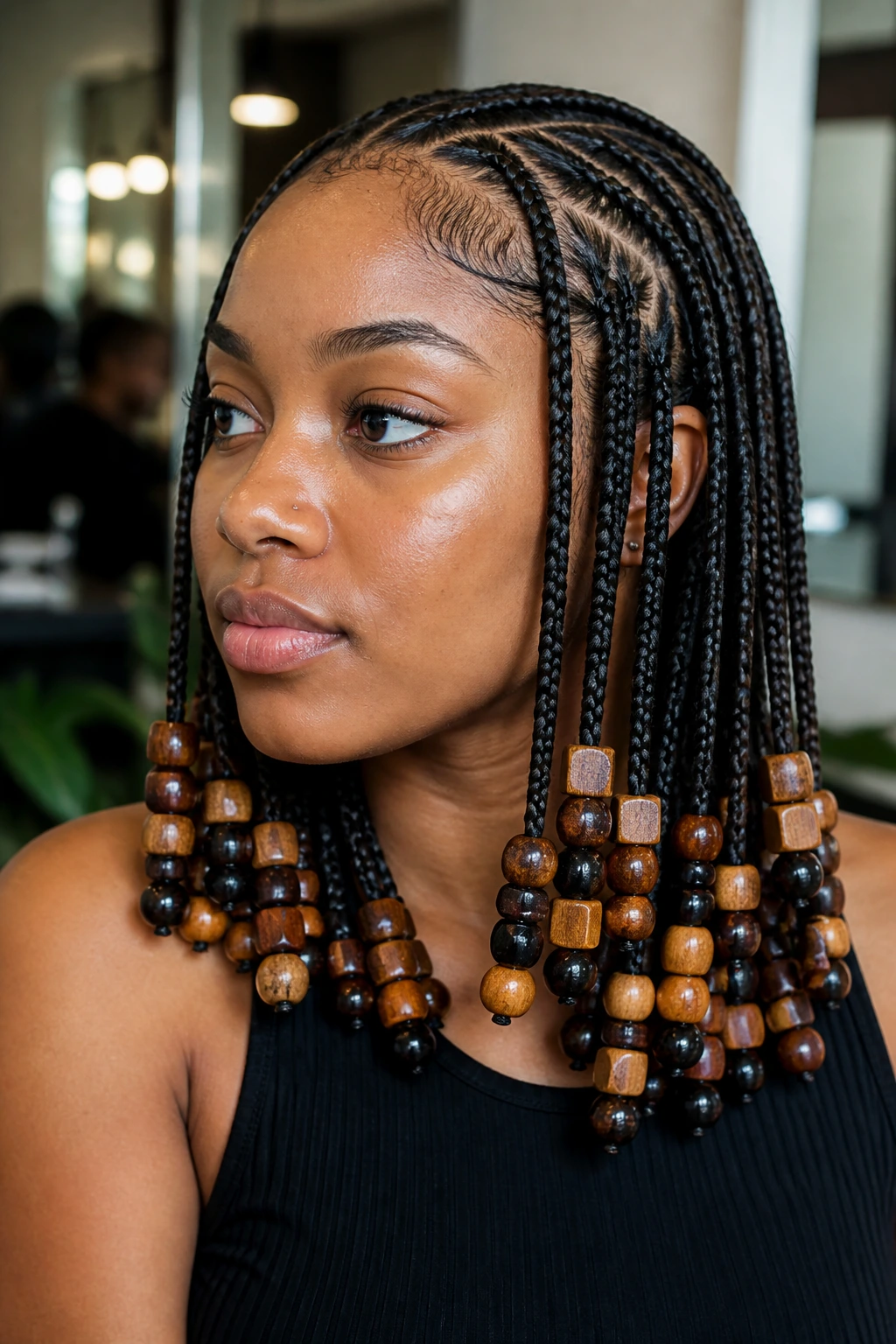
Who says all your beads have to be the same shape? Mix spheres with cubes or cylinders. This adds a sense of “design” to your hair. For fine hair, the variation in shapes helps create a more complex, layered look that distracts from the hair’s natural lack of density.
Design Strategy
Place the spheres in the center and the cubes on the outside to frame the look. This creates a balanced, professional, and interesting silhouette. It feels like you’ve put a lot of work into the styling, even if it took the same amount of time as a standard braid installation.
Why Complexity Wins
When you have fine hair, simplicity can sometimes reveal the thinness of the hair. By adding complexity through shapes, you shift the focus. People look at the unique arrangement of your beads rather than the amount of hair in each braid.
21. Beads with Built-in Elasticity
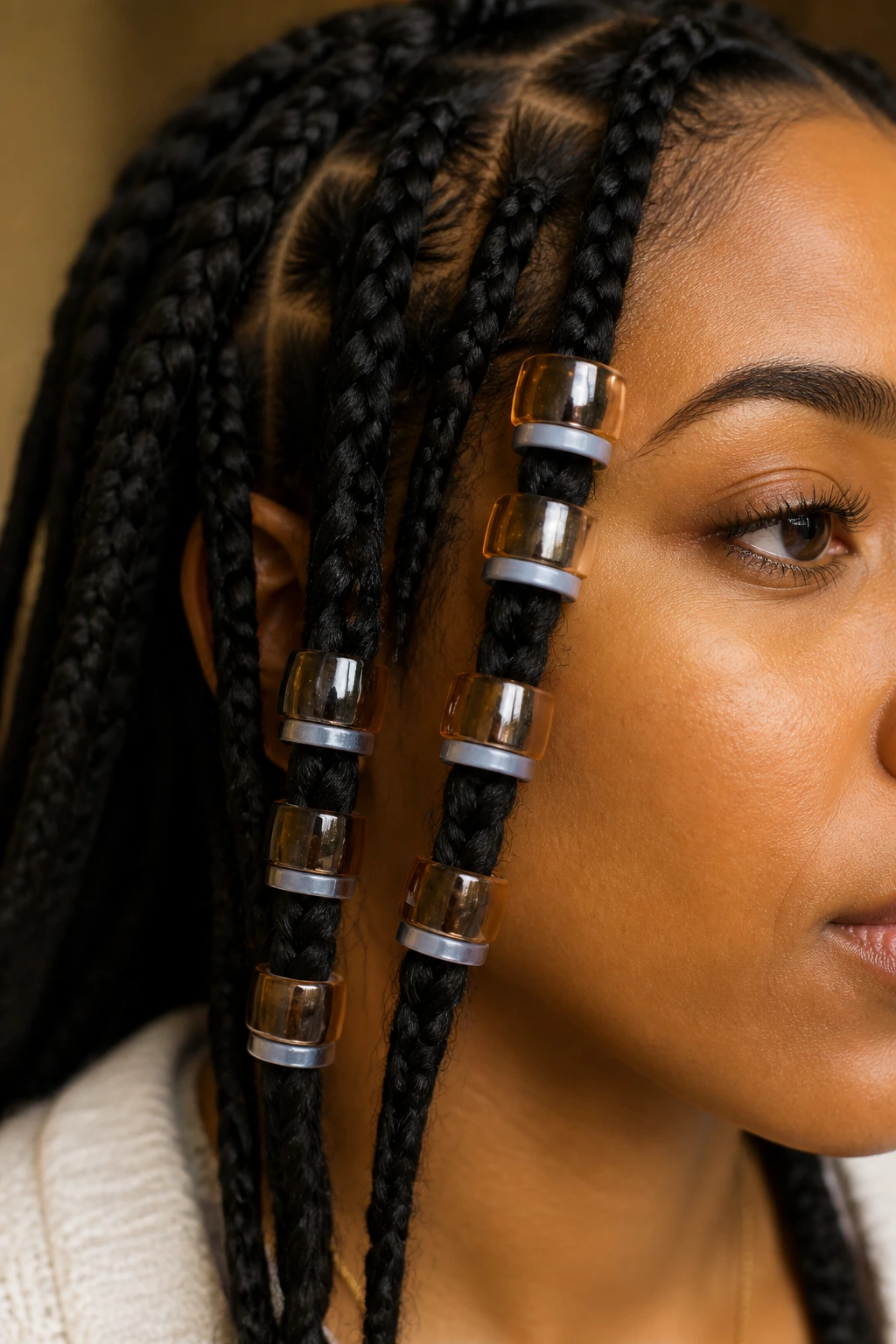
Some manufacturers now make beads with a small amount of silicone or rubber lining inside. These are revolutionary for fine hair. The lining grips the hair so you don’t have to rely on tight rubber bands or knots. They are easier to install and even easier to remove.
Protecting Your Ends
The biggest risk to fine hair is the friction caused by constantly putting in and taking out hair ties. Beads with internal grippers eliminate the need for the tie entirely. You just slide them on, and they stay. This is a game-changer for the long-term health of your ends.
Investing in Quality
These might be a bit more expensive than a bag of plain plastic beads, but they are worth the investment for the protection they offer. Think of them as a tool for hair health rather than just an accessory. They will save you from the breakage caused by “mechanical stress.”
22. Beads at the Mid-Point of Long Braids
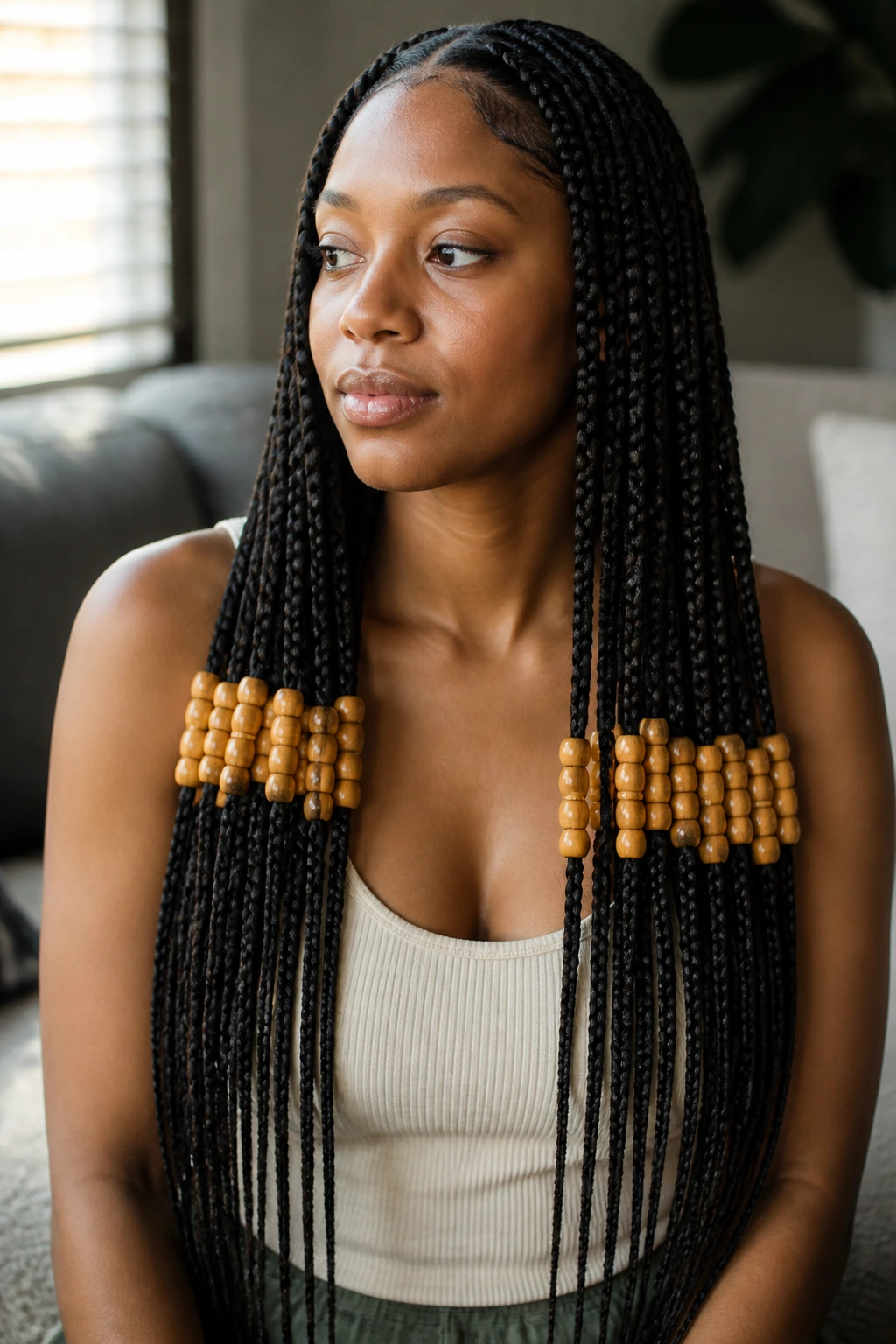
Instead of the ends, place beads at the halfway point of long, waist-length braids. This is an unusual look that creates a cool, segmented effect. For fine hair, this is great because it doesn’t drag the ends of your braids down, avoiding the “heavy ponytail” effect that often leads to scalp soreness.
The Segmented Look
This style feels very “warrior” and strong. It’s a striking aesthetic that shows off the length of your braids without forcing you to deal with the weight of beads at the very bottom. It allows you to showcase your hair’s length while keeping the accessory load balanced across the head.
Achieving the Style
You will need to ensure your braids are very firm where the beads are placed so they don’t slide down. Using a bit of hair wax on the section of the braid where the bead will sit will provide enough grip to keep it anchored right in the middle of your length.
Final Thoughts
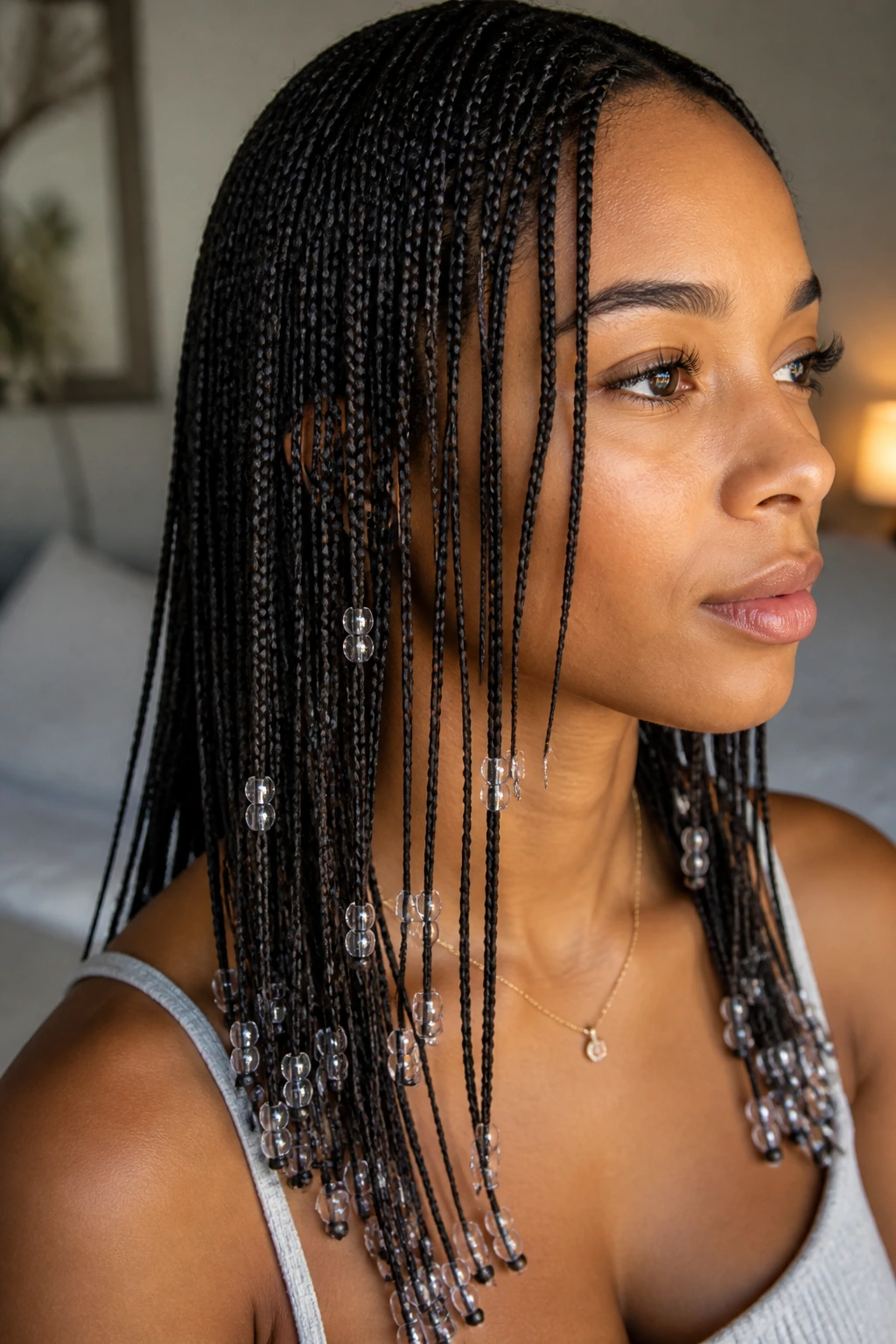
Working with fine hair is all about balance. You want the style to be beautiful, but you also want it to be sustainable for your scalp and your strands. When you use beads correctly—by choosing lightweight materials, ensuring proper tension, and focusing on creative placement—you aren’t just styling your hair; you are protecting it. The weight of the right bead can be a tool to keep your hair sleek, and the visual interest of the right pattern can make your hair look fuller and more vibrant.
Ultimately, there is no single right way to wear your braids. The twenty-two options here are just starting points. The most important thing is that you feel confident and comfortable in the style you choose. Whether you prefer the subtle elegance of a single pearl or the playful rhythm of stacked beads, remember that your hair is a canvas. Take your time with the installation, prioritize the health of your scalp, and enjoy the process of turning your everyday look into something that feels uniquely your own.