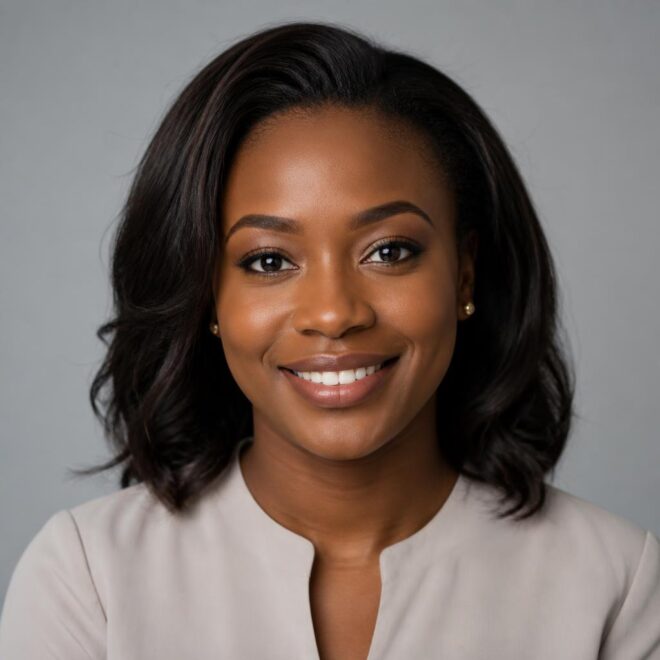


Walking into the office with a professional, polished aesthetic doesn’t mean you have to surrender your style to a stiff, middle-parted ponytail or a lifeless blowout. For those of us who value a blend of efficiency and artistry, braided hairstyles are the ultimate secret weapon. They offer a way to keep hair out of your face during long meetings or deep-focus sessions while looking intentional and put-together. Whether you have natural coils, sleek straight hair, or a texture somewhere in between, there is a braid that fits a boardroom, a collaborative workspace, or a high-pressure client presentation.
You might assume braids are reserved for beach vacations or casual weekends, but that is simply not the case. The key to making them office-appropriate lies in the tension of the weave and the finish of the ends. When you choose styles that are clean, secured, and perhaps finished with a professional accessory, you shift the narrative from “boho-chic” to “expert-level elegance.” We are going to explore 18 distinct ways to integrate braiding into your work wardrobe, moving from subtle accents to full, sophisticated structures that prove your hair can be just as sharp as your presentation skills.
1. The Classic Low Side-Braid
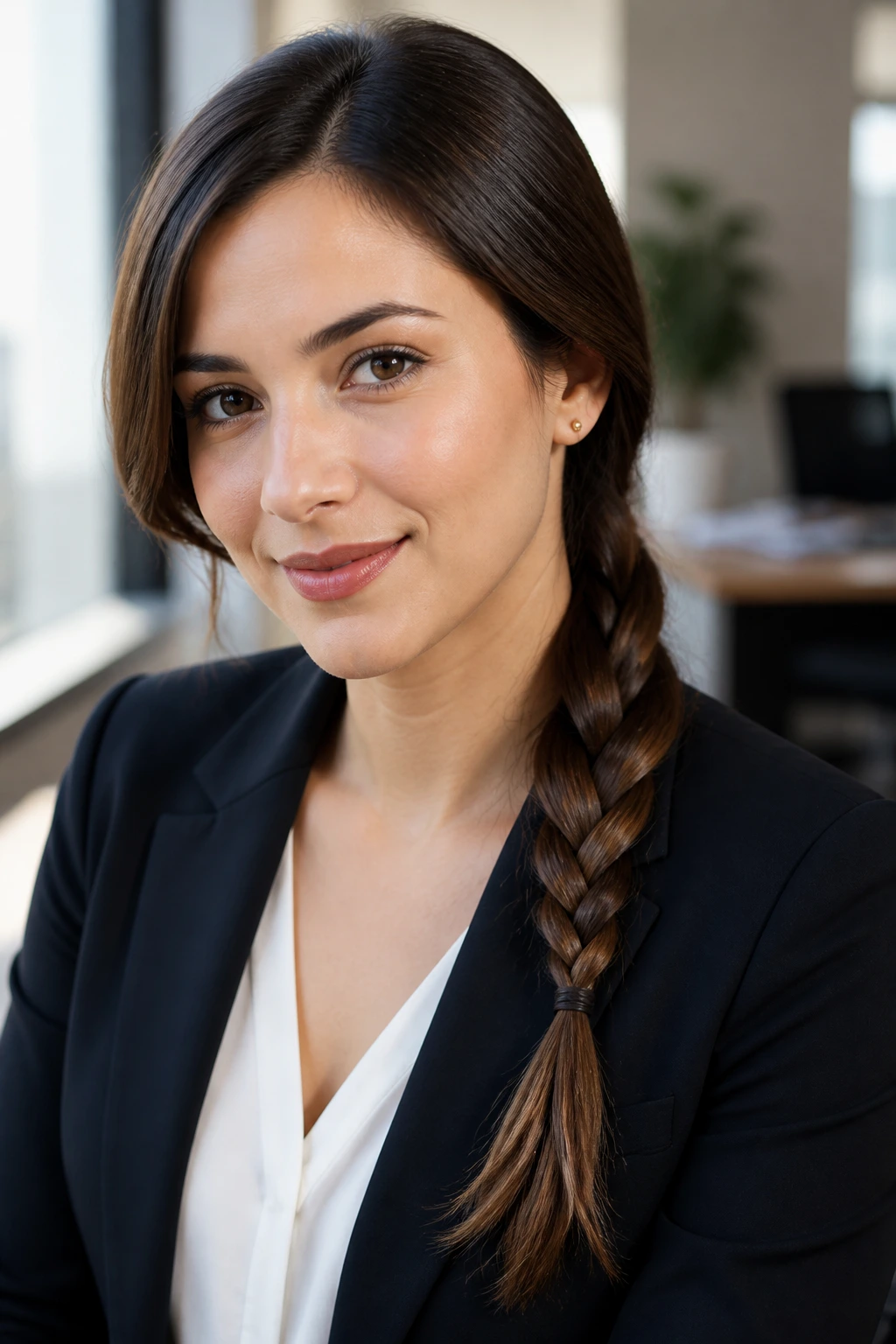
Sometimes, simplicity is the most powerful choice. A side-braid resting comfortably on one shoulder feels approachable yet disciplined, making it an excellent candidate for days when you have multiple one-on-one meetings. Unlike a messy braid you might wear to the gym, the office version requires a bit of polish. Start by brushing your hair thoroughly to remove any snags, then gather it to the side before you begin the weave.
Keeping It Sharp
The secret to this look is consistency. Keep your sections even, pull firmly as you cross each piece, and secure the end with a discreet hair tie that matches your hair color. If you want to elevate it further, wrap a small, thin strand of hair around the elastic and secure it with a bobby pin underneath. This one tiny detail hides the hardware and makes the entire style look like a professional, finished unit rather than an afterthought.
When to Choose This Style
- Perfect for high-intensity Monday mornings.
- Ideal if you have layers that need to be kept under control.
- Great for medium to long hair lengths.
2. The Sleek Crown Braid
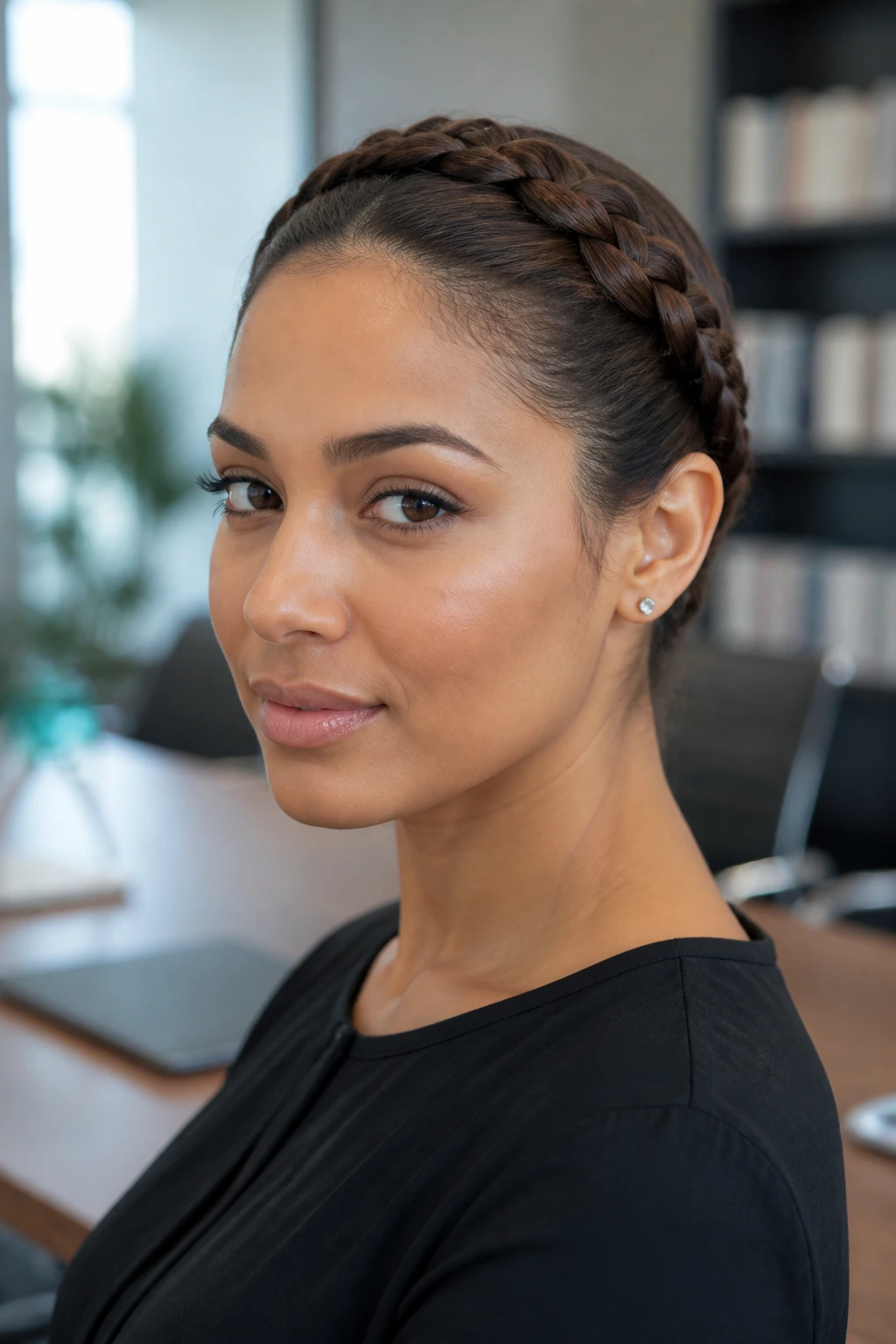
There is something undeniably regal about a crown braid, but it is often perceived as too ornate for the office. You can ground this look by keeping the braid tight against the scalp and avoiding the “loose and whimsical” aesthetic often seen in wedding styling. Aim for a structured, smooth finish that sits neatly around the top of your head like a polished headband.
How to Execute the Tight Weave
Start by parting your hair as you normally would, then begin a French or Dutch braid near the temple. As you move along the hairline, ensure you are picking up small, uniform sections. The tighter the braid, the more professional it appears. Once you reach the back of your head, pin the end of the braid discreetly behind the ear or tuck it into the base of the crown to create a seamless loop.
Why It Works for Professional Environments
This style keeps every stray hair away from your eyes, which is essential if you spend your day staring at spreadsheets or working in front of a computer screen. It is an “all-day” hairstyle that requires zero touch-ups, giving you one less thing to worry about when you are in the middle of a project.
3. The Professional Rope-Twist Ponytail
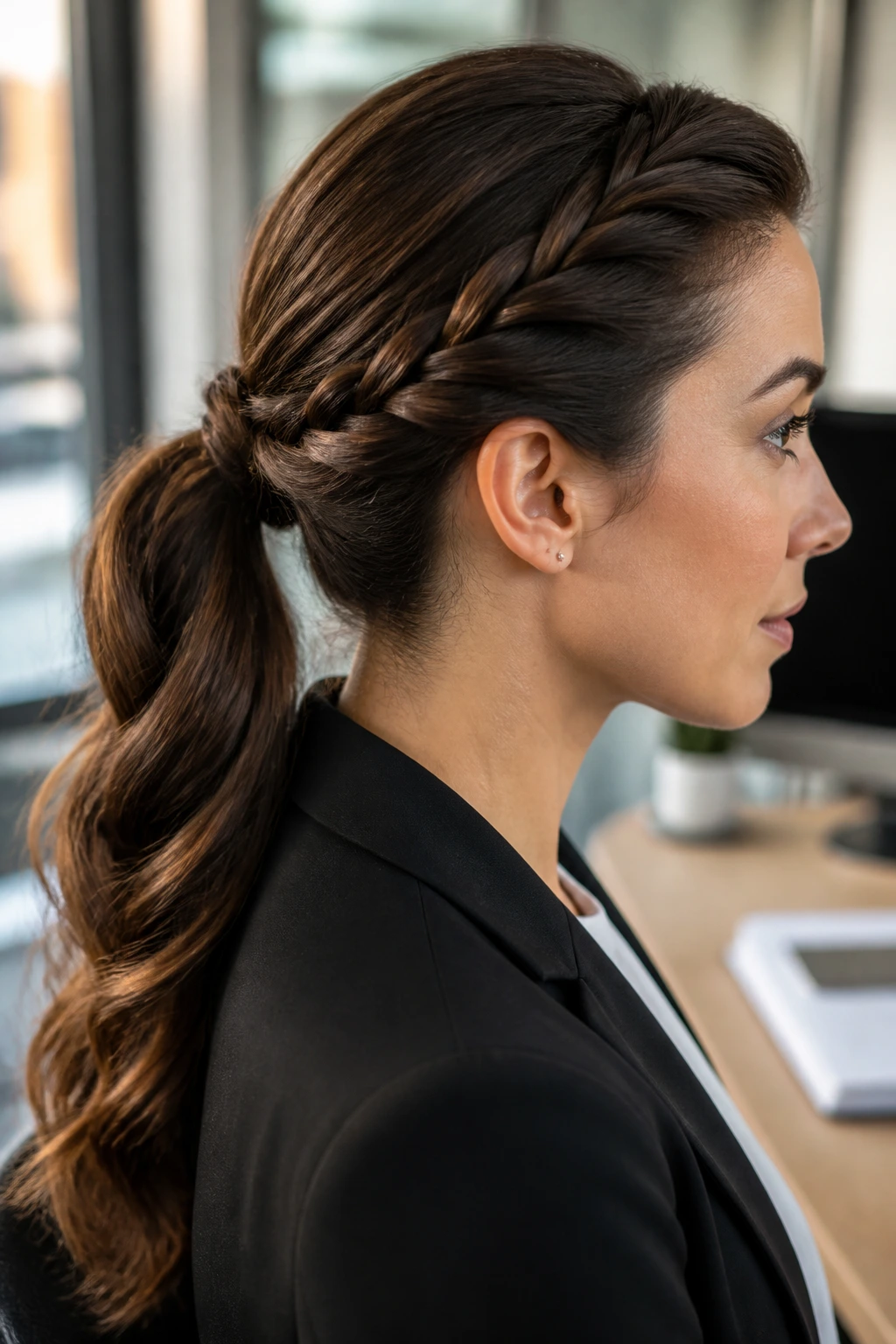
If a traditional three-strand braid feels a bit too traditional, the rope-twist offers a modern, architectural silhouette. This is essentially a two-strand twist that creates a rope-like texture. Because it looks more like a structured design than a standard braid, it often reads as more sophisticated and tailored in a corporate environment.
Mastering the Twist Technique
Gather your hair into a mid-height ponytail first. Split the ponytail into two equal sections. Twist each section individually in the same direction, then cross them over one another in the opposite direction. This counter-twisting method is what prevents the braid from unraveling and gives it that sharp, twisted appearance. Secure the very bottom with a thin clear elastic.
Matching Your Office Attire
The rope-twist pairs beautifully with structured blazers and high-collared shirts. Because the style is so sleek, it doesn’t compete with the sharp lines of formal office wear. It is a minimalist’s approach to braided hair, proving that you don’t need excessive volume or accessories to make a statement.
4. The Half-Up French Braid
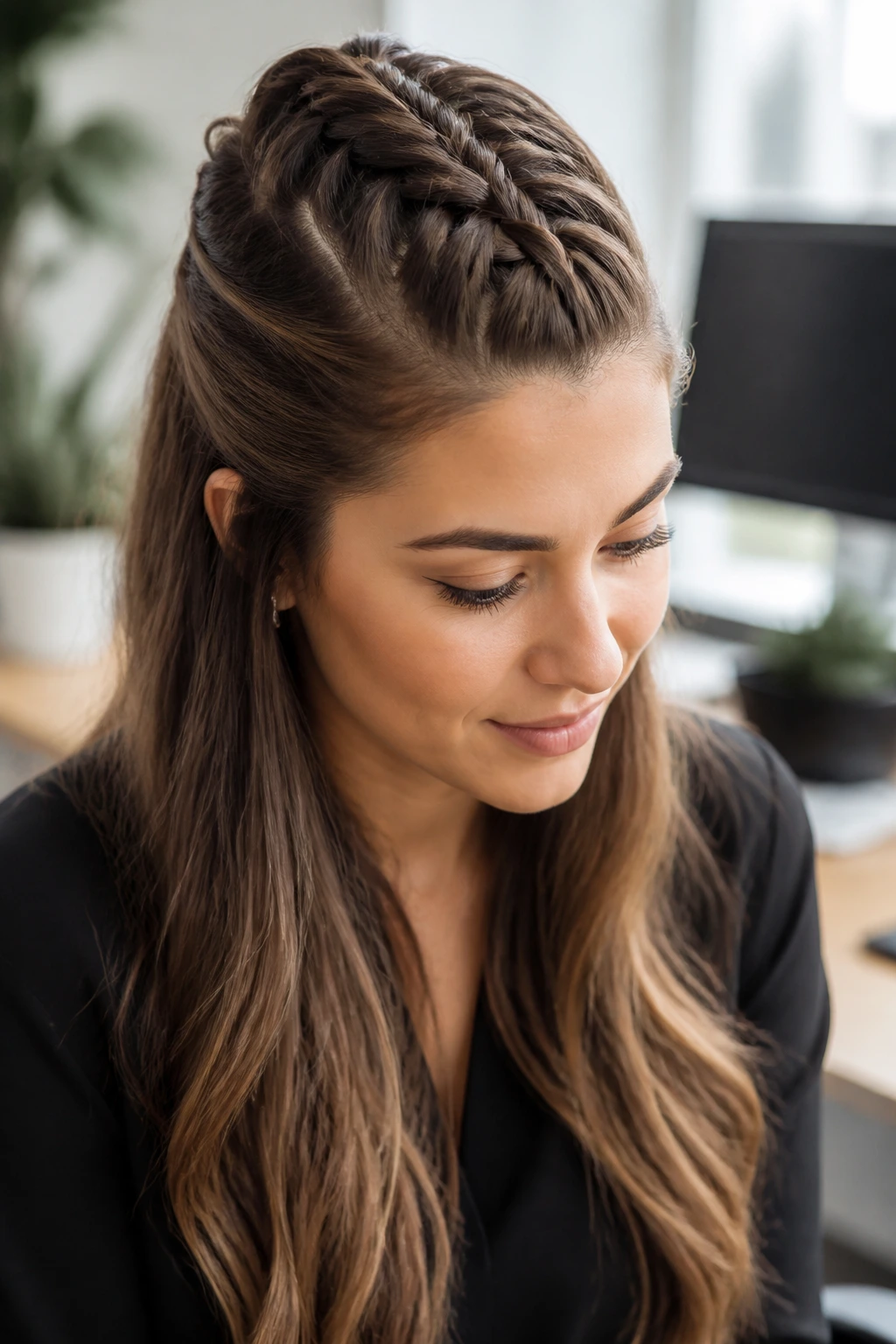
This is the ultimate bridge between “styled” and “functional.” By braiding only the top section of your hair and leaving the rest down, you manage your bangs and face-framing layers without hiding the length or texture of the hair you’ve spent time styling. It’s a very balanced look that works in almost any industry, from creative studios to legal firms.
Why This Style Succeeds
The half-up braid allows you to experiment with your hair’s texture while maintaining a clean look around your face. You can leave the loose hair straight for a razor-sharp, professional feel, or add a few loose waves if your office culture is slightly more relaxed. Just make sure the braid itself is secure enough that it won’t sag as the day progresses.
Pro-Tip for Longevity
Use a tiny amount of pomade or styling cream on your hands before you begin the braid. This tames flyaways and ensures that the section of hair you are gathering remains smooth and flat against your scalp, rather than looking frizzy or unkempt.
5. The Triple-Braided Low Bun
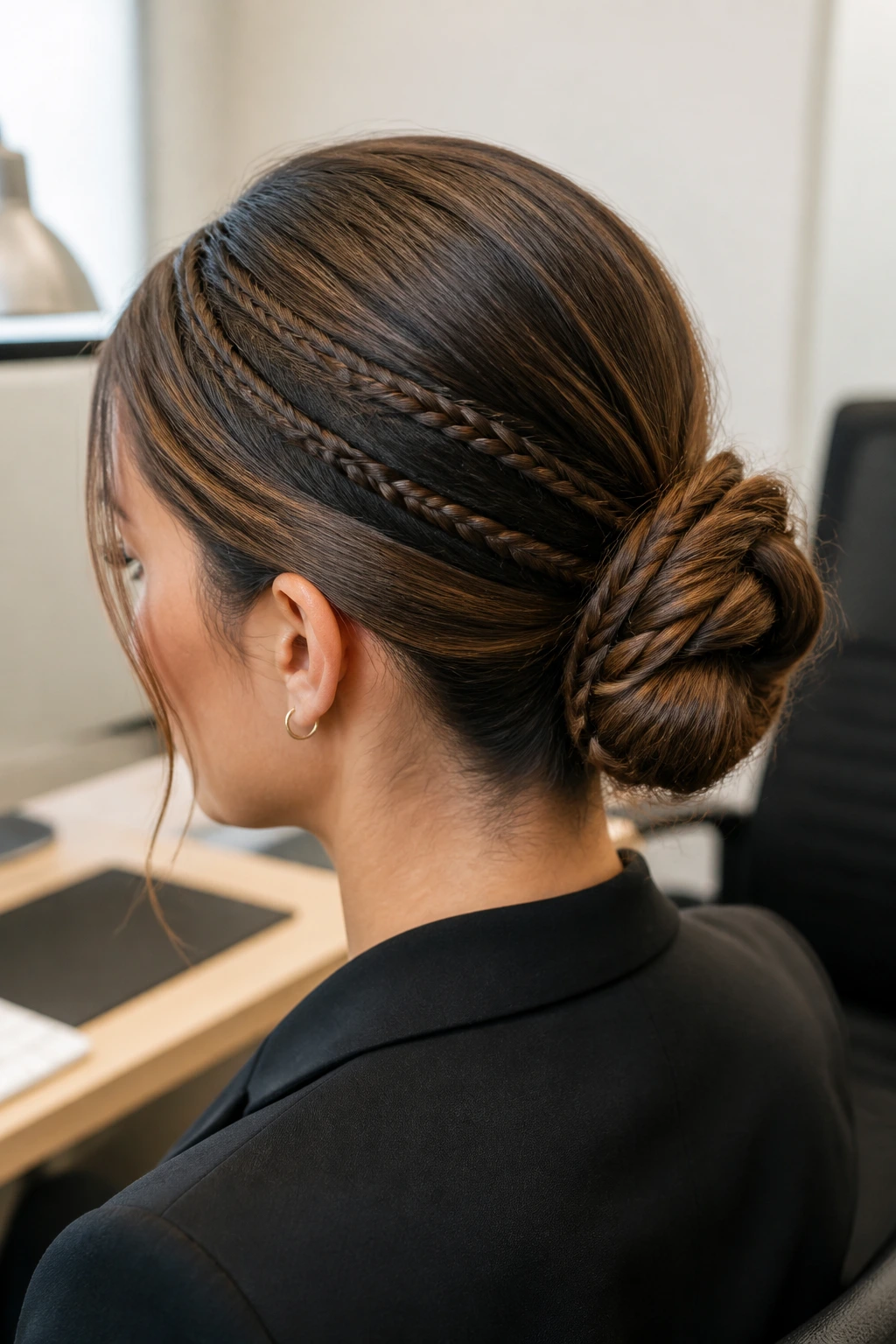
If you need an ultra-secure style for a long day of back-to-back presentations, look no further than the bun. However, instead of a plain, utilitarian knot, incorporate three thin braids to build texture. This style suggests attention to detail and patience—two traits that are highly valued in any office setting.
How to Construct the Triple Texture
- Divide your hair into three equal sections at the nape of the neck.
- Braid each section into a standard three-strand braid and secure the ends with clear elastics.
- Once you have your three braids, gather them together and twist them into a low, tight bun at the base of your skull.
- Use bobby pins to secure the bun firmly, tucking the ends of the braids inward so they aren’t visible.
Final Polish
This is a sophisticated look that works well with formal suits. It brings your hair off the neck, which is helpful if you are dealing with a heated office or moving between different climate zones throughout the day. It’s elegant, secure, and incredibly practical.
6. The Side-Swept Dutch Braid
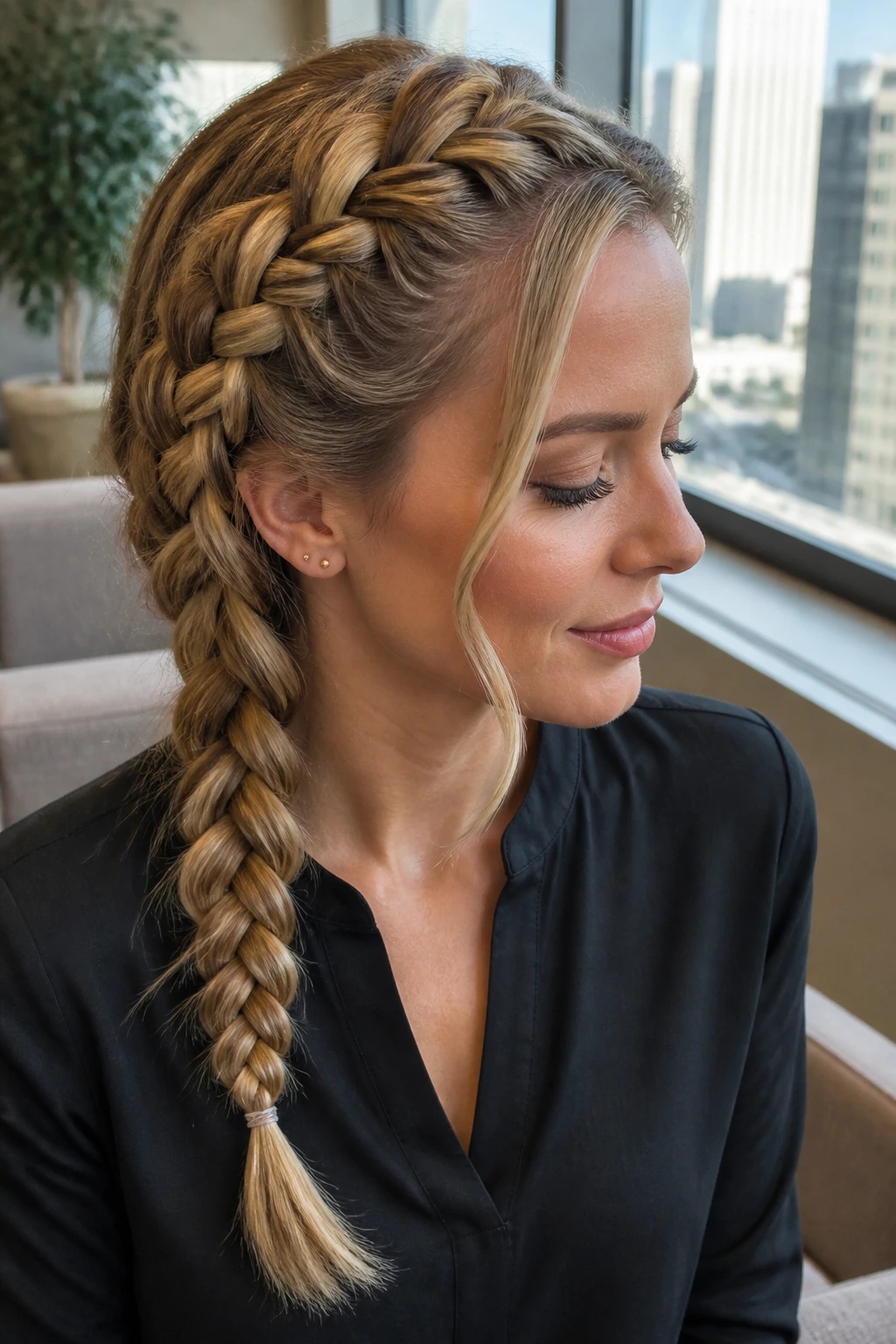
Unlike a French braid, where you cross pieces over, a Dutch braid places the strands under one another, making the braid pop up and look three-dimensional. When worn to the side and slightly tight, it transitions perfectly from a morning commute to an afternoon board meeting. It provides enough detail to be interesting without being distracting.
Why the “Under” Technique Matters
By bringing the strands underneath, you get a much sharper definition that looks intentional. This is particularly effective if you have dark hair or hair with highlights, as the dimensional nature of the Dutch braid will showcase the color variation beautifully. It looks like a high-end style that took significant effort, even if you can master it in under five minutes.
Essential Gear for Beginners
If you are new to this technique, keep a small brush nearby to smooth the hair as you add it into the braid. Consistency is the name of the game here. If one section is significantly larger than the others, the braid will look lopsided. Take your time during the first few iterations until your hands develop the muscle memory.
7. The Fishtail Accent Braid
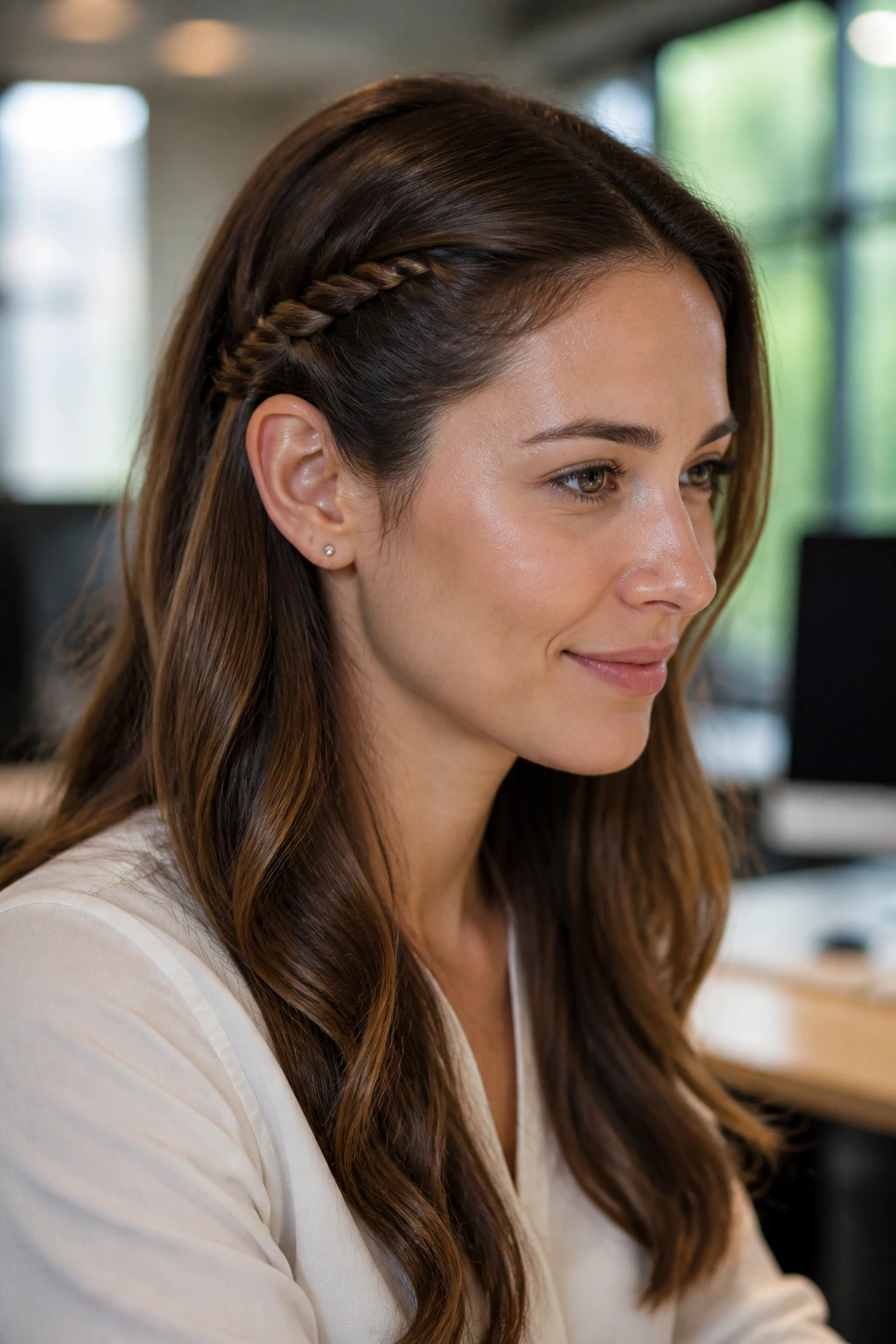
Fishtail braids are undeniably intricate, but doing an entire head of fishtail braids can be time-consuming. Instead, use a fishtail braid as an accent to hold back a side section of your hair while leaving the rest loose. It looks like a bespoke detail and gives a touch of personality to a standard down-and-styled look.
Constructing the Fishtail
- Take a small 1-inch section of hair from near your temple.
- Split that small section into two.
- Take a tiny piece from the outside of the left section and cross it over to the right. Repeat on the other side.
- Keep going, picking up tiny bits as you move backward.
- Secure with a tiny elastic and pin it behind your ear.
Why This Adds Value
It’s a subtle way to elevate your look. It doesn’t scream “I spent an hour on my hair,” but it does show that you take pride in your appearance. It is a favorite for those who enjoy wearing their hair down but need a practical way to keep it out of their eyes while typing.
8. The Pull-Through Braided Ponytail
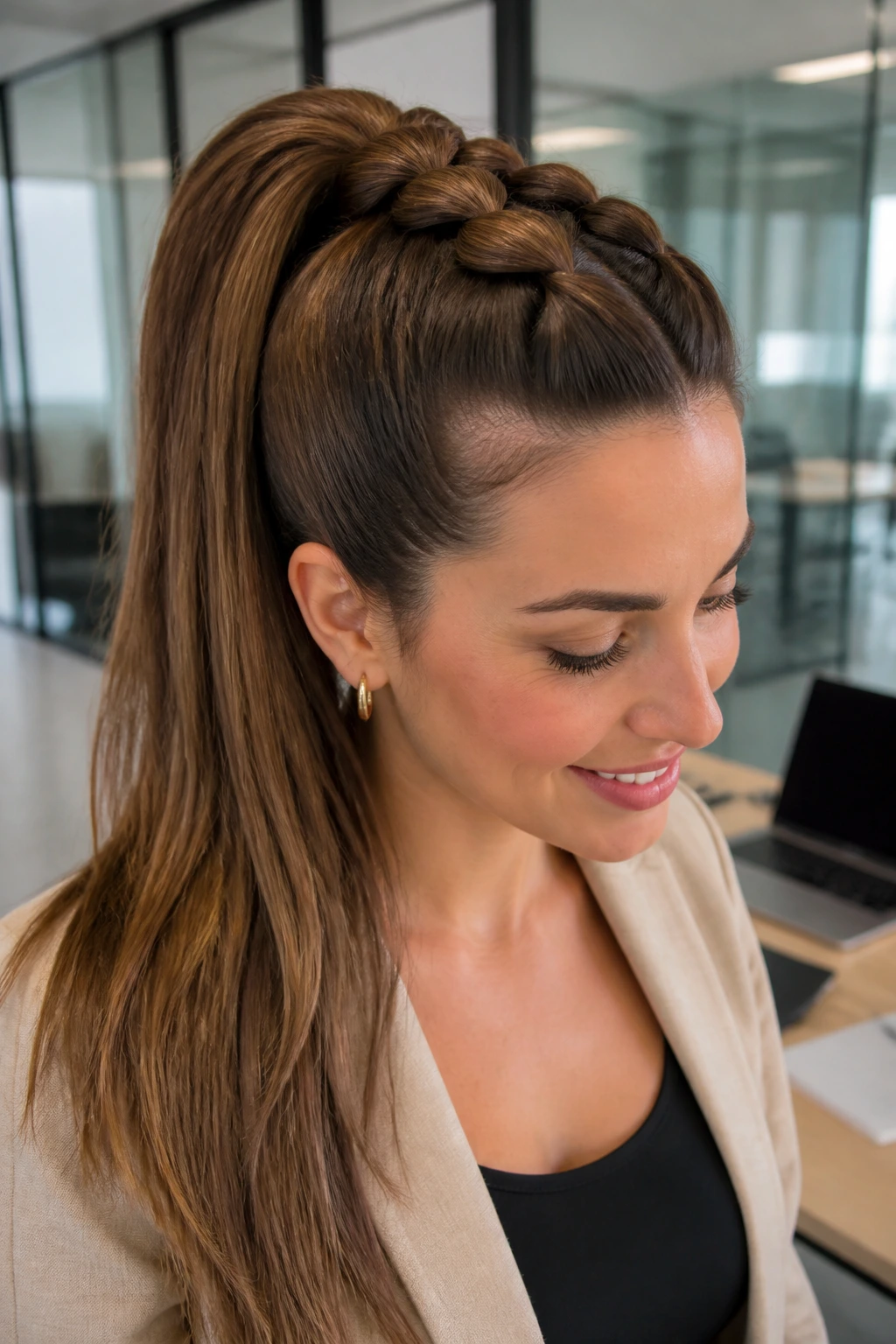
If you lack the dexterity for complex braiding but want the visual impact of a long, thick braid, the pull-through method is your solution. It’s not technically a braid, but it mimics the effect of a large, voluminous Dutch braid perfectly. It’s secure, stays in place for 8+ hours, and looks incredibly impressive.
Step-by-Step for the Illusion
- Start with a high or mid-height ponytail.
- Create a small section at the top, secure with an elastic, and pull it through.
- Continue down the length of the hair, adding a new section and splitting the previous one to pull the new piece through.
- Once finished, gently tug on the edges of each “stitch” to fan it out.
Office Context
This style is modern and sharp. It is excellent for creative agencies or tech environments where a polished yet contemporary look is the norm. It keeps your hair completely contained, which is a major benefit if you are prone to nervous hair-touching or fidgeting during meetings.
9. The Wrapped Braid Headband
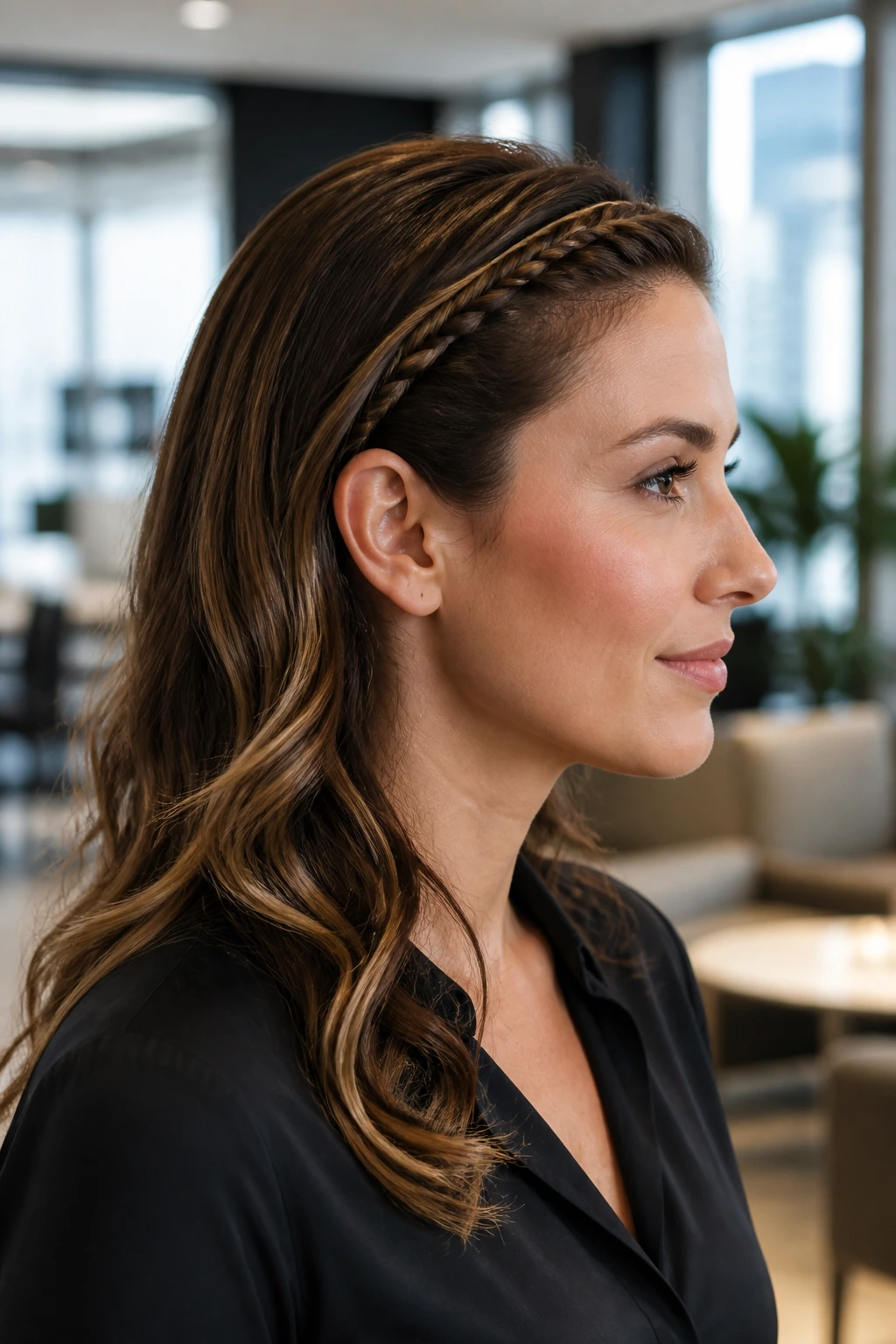
For those with shorter hair or bobs, you can still get in on the action. A thin, tight braid that runs from one ear to the other acts as a functional headband. It holds the front sections of your hair back perfectly, eliminating the need for plastic headbands that might pinch or slide throughout the day.
Making It Stay
The challenge with this style is securing it so it doesn’t pop up throughout the day. Use a small dab of styling wax on the hair you are braiding to keep it tacky and manageable. When you reach the opposite side, secure it with a bobby pin that matches your hair color, and then take a small section of loose hair to drape over the bobby pin, hiding it entirely from view.
The Professional Benefit
It’s a clean, open, and inviting look. By keeping your hair pulled back from your face, you appear more present and attentive in meetings. It’s a small detail that makes a big difference in how you are perceived by colleagues and clients alike.
10. The Cornrow-Inspired Side Part
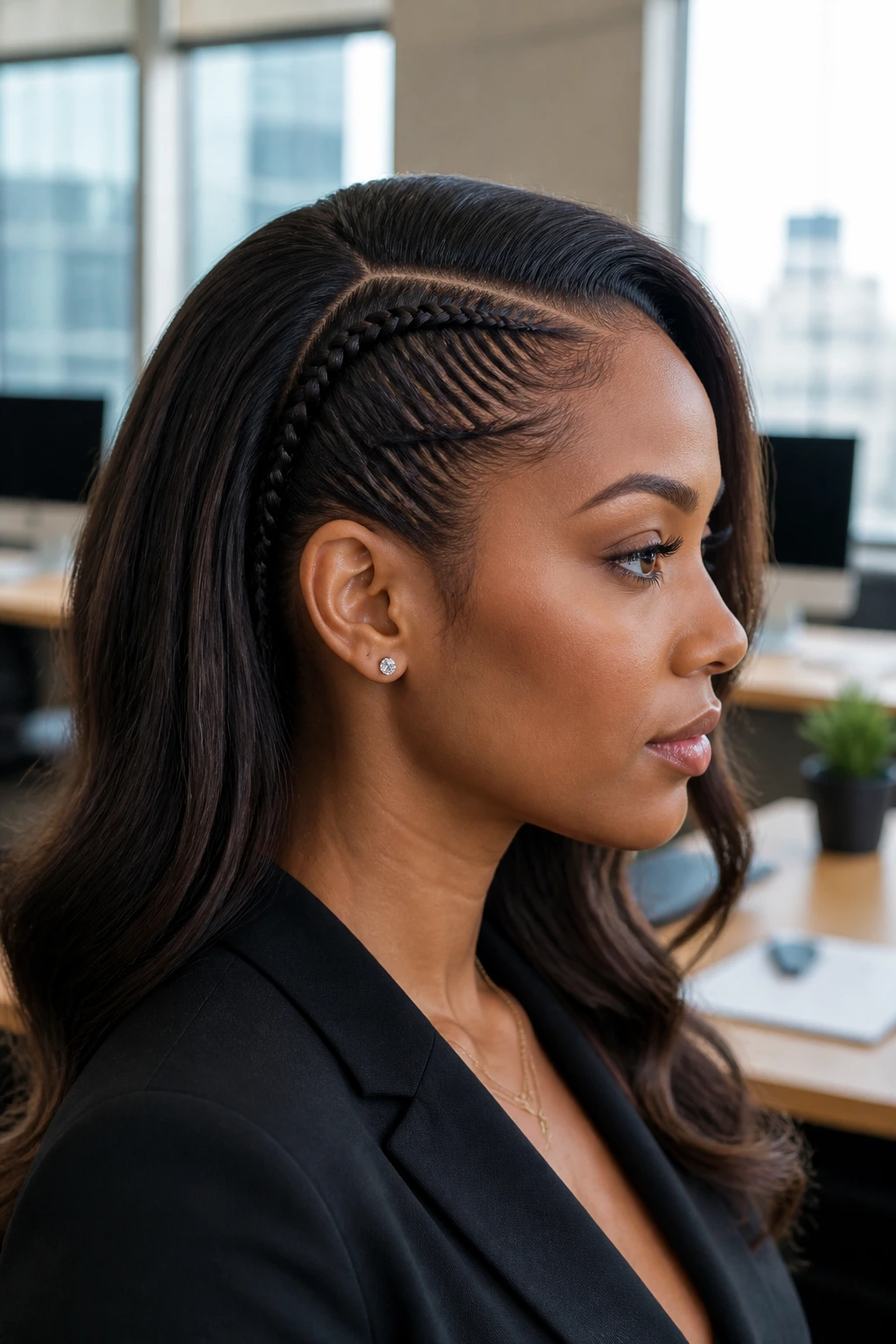
You can create a very clean, professional look by braiding a tight row or two along a deep side part. This is a common style for those who want to show off a sharp haircut while keeping one side perfectly swept back. It provides a structured, modern aesthetic that feels very intentional and high-fashion.
The Precision Required
This style thrives on sharp lines. Use a rat-tail comb to create your part, ensuring it is dead straight. Start the braid at the hairline and braid backward toward the crown, keeping it as tight as possible to the scalp. Once you reach the crown, secure the braid with a clear elastic and tuck it under a larger section of hair.
Suitable Office Environments
This is a bold, confident look. It works exceptionally well in design, marketing, or PR environments where personal style is celebrated. It says you are organized, detail-oriented, and not afraid to lean into a more structured aesthetic.
11. The Double French Braid Low Pigtails
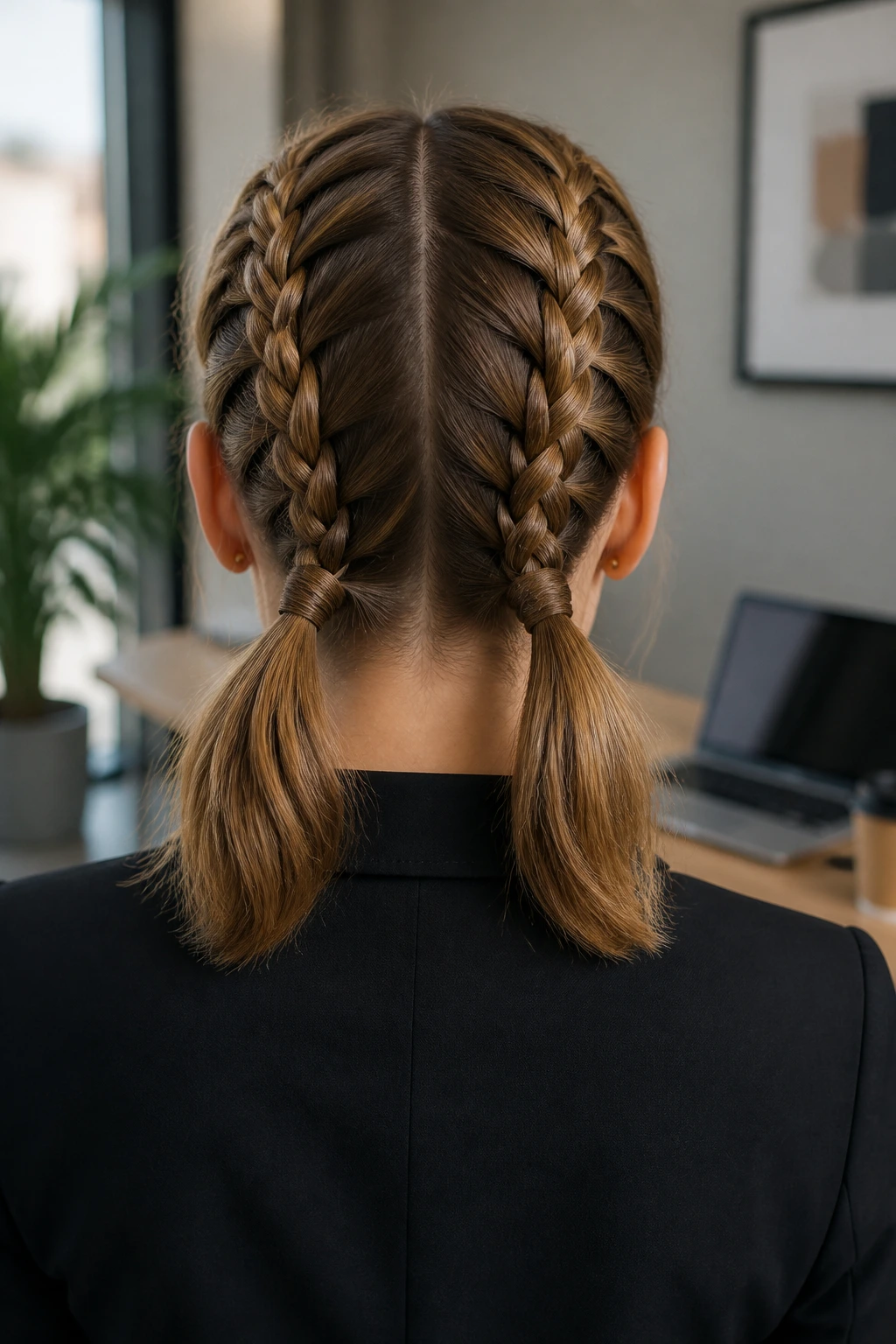
Some people find the classic “two braids” look to be too casual, but if you secure them low and tight, they become very elegant. Think of this as a “modern schoolgirl” look that has been refined for the workplace. By keeping the braids low at the nape of the neck, they feel much more grounded and sophisticated.
Styling for Elegance
Avoid pulling the braids apart to make them look loose or “boho.” Keep them tight. Use high-quality elastics that don’t look cheap or frayed. If you want to take this up a notch, consider adding small silk ribbons at the ends that match your outfit. It’s a polished, vintage-inspired touch that looks remarkably put-together.
Why This Style Persists
It keeps your hair totally under control. If you have long, thick hair that tends to get tangled when left loose, two tight braids will keep it manageable and pristine from morning coffee until you leave for the day.
12. The Braid-Wrapped Top Knot
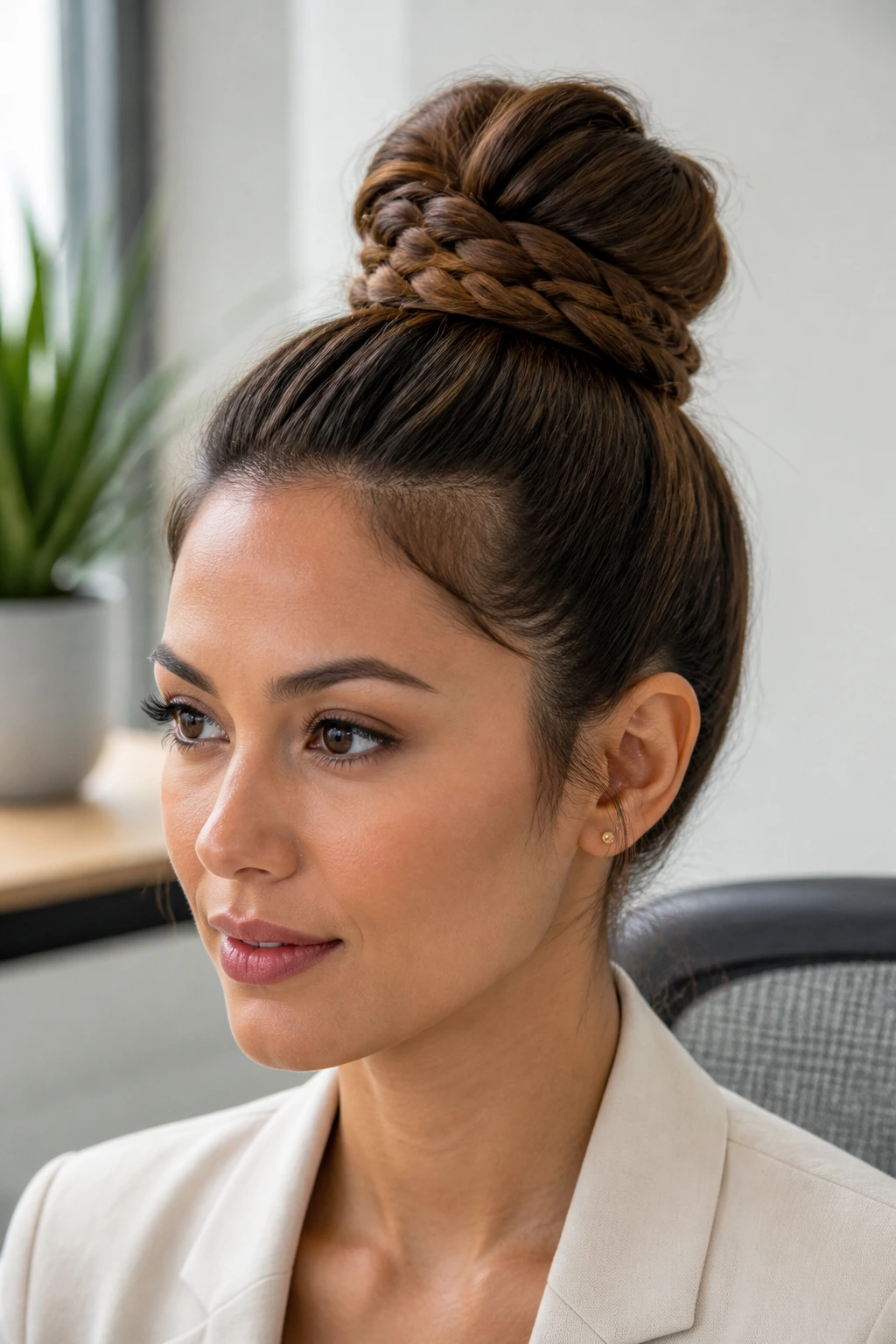
The top knot is a staple, but it can look a bit “I just rolled out of bed” if you aren’t careful. Wrapping a braid around the base of your top knot instantly upgrades the style from casual to chic. It provides a solid foundation for the bun and adds a visual layer of sophistication.
How to Execute the Wrap
Pull your hair into a sleek, high ponytail. Braid the entire length of the ponytail into a standard braid. Wrap that braid around the base of the elastic, creating a bun. Use long, sturdy hairpins (not just small bobby pins) to lock the bun into place. The braided texture makes the bun look fuller and prevents it from looking like a sad, thin knot on top of your head.
The Aesthetic Outcome
This is a very clean, professional look that lengthens your neck and allows for statement earrings to really shine. It’s perfect for summer office days or any time you need to look sharp while managing high heat or humidity.
13. The Waterfall Braid
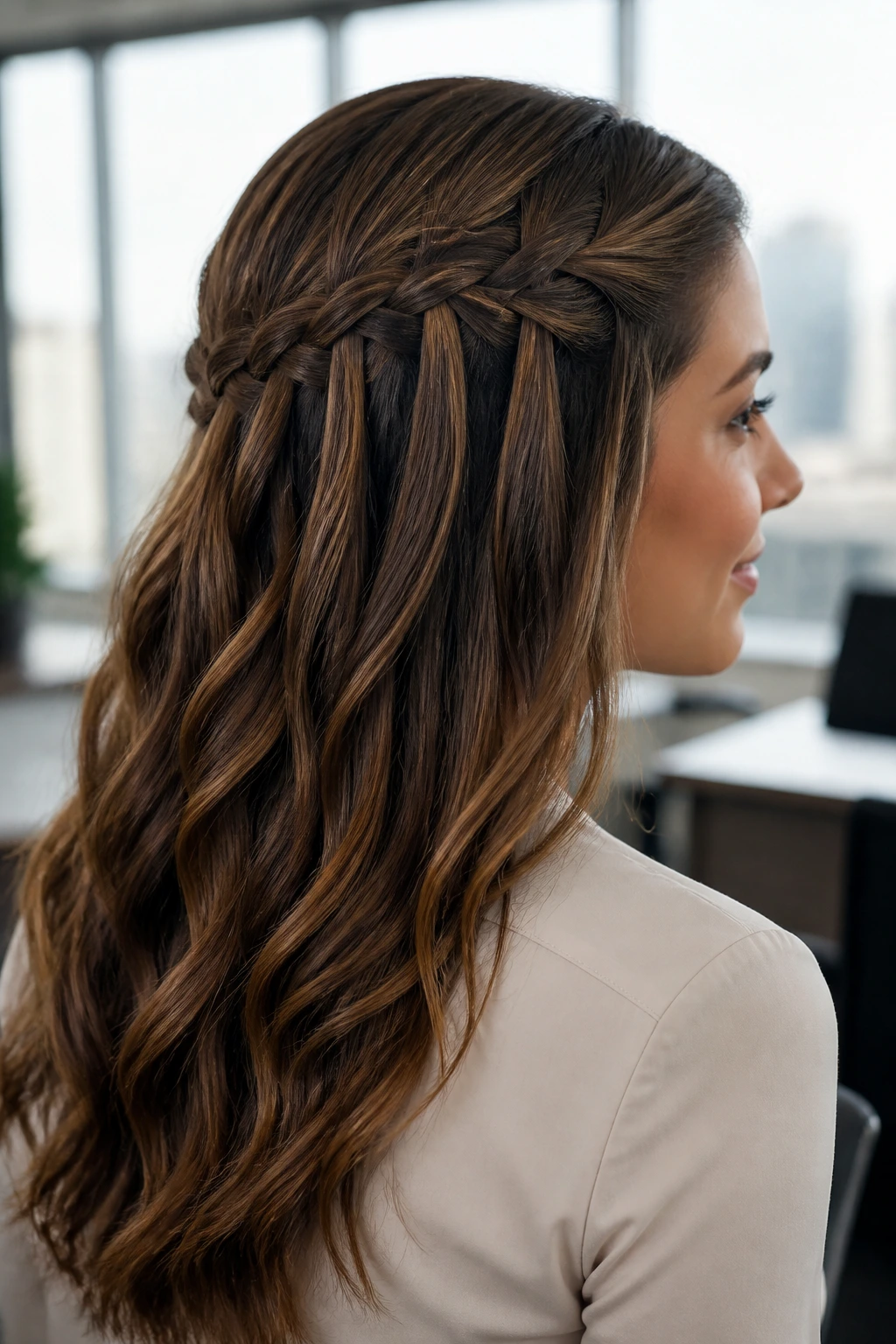
If you have long, straight hair and want to wear it down, the waterfall braid is a beautiful way to add interest without taking away from your length. The braid acts as a decorative element across the back of the head, letting the loose strands flow through it like a cascade of water. It is elegant and incredibly feminine.
Managing the Technical Flow
The trick is to drop one strand of hair after every “stitch” of the braid and pick up a new one from the hair underneath. This takes a little practice. Once you get the rhythm, it becomes quite meditative. For the office, keep the braid tighter than you might for an evening event.
Pairing with Professional Wear
This style looks fantastic with professional blouses. It is subtle enough that it doesn’t distract during a presentation, but it’s interesting enough that people will notice you put care into your morning routine. It’s a great style for client-facing roles.
14. The Chunky Dutch Braid Ponytail
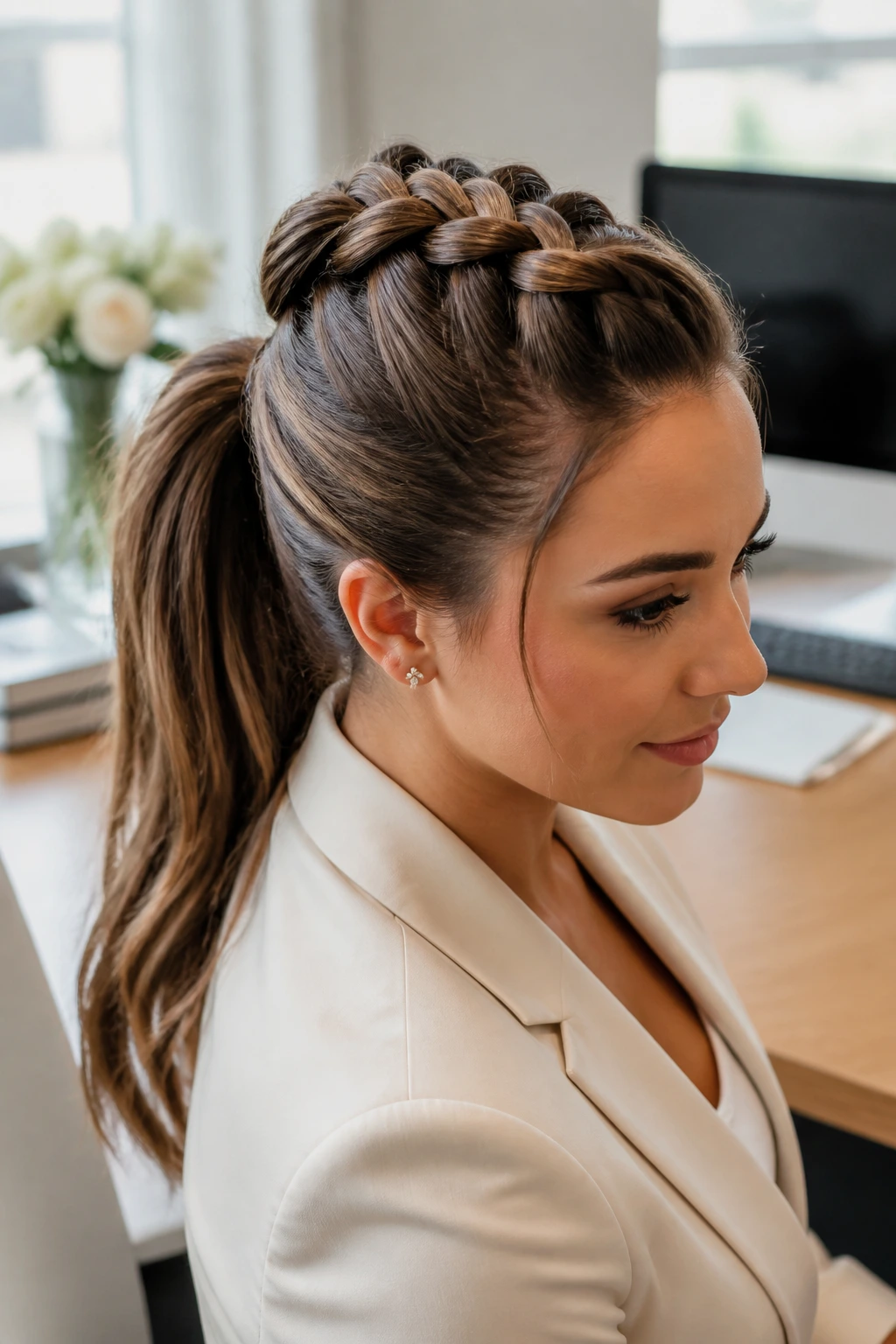
A chunky, singular braid that runs into a ponytail is a great way to combine two classic styles. By making the braid larger and more pronounced, you create a point of visual interest right at the top of the head. It’s a fantastic way to handle cowlicks or stubborn baby hairs along the hairline.
Creating the Chunkiness
Once you have finished braiding the top section, use your fingers to gently pull at the loops of the braid. Don’t pull them too far—just enough to give the braid a bit more weight and presence. Then, secure everything into a ponytail. The contrast between the thick, braided top and the sleek, flowing ponytail is a classic look.
Maintaining Integrity
Use a firm-hold hairspray on your hands before you start pulling at the braid loops. This will ensure the braid keeps its shape and doesn’t get frizzy throughout the day. A quick misting after you finish the style will seal the deal.
15. The Braided Faux-Hawk
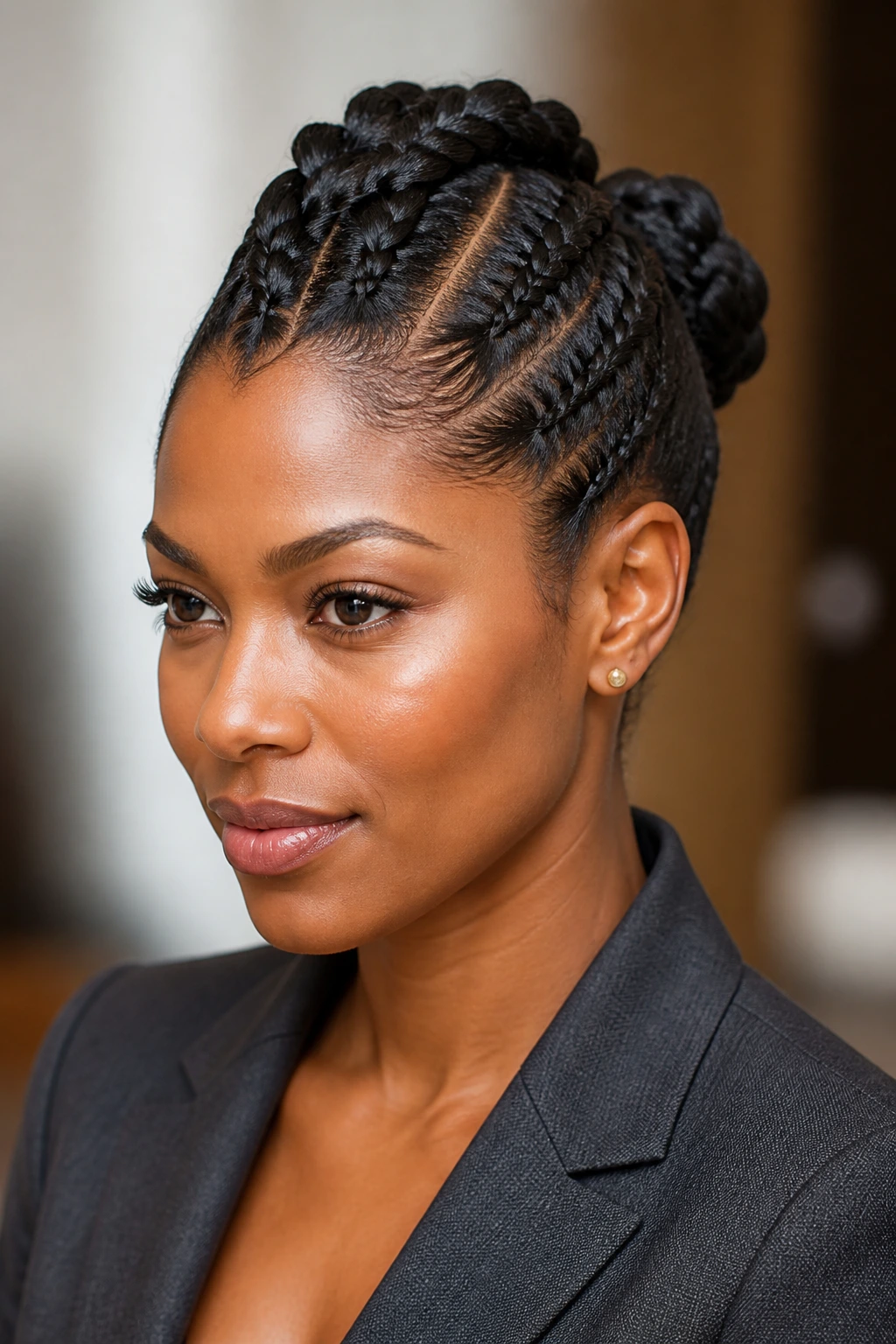
For those who want to push boundaries while remaining professional, the braided faux-hawk is a brilliant compromise. It mimics the edgy shape of a mohawk but stays within the bounds of standard office decorum. It is powerful, striking, and incredibly secure.
Constructing the Hawk
Focus on the center of the scalp. Braid a tight Dutch braid down the middle, gathering hair from either side as you go. Once you reach the base, you can either tuck the ends into a bun or leave the remainder as a ponytail. It’s an aggressive, confident style that works perfectly with structured blazers.
Why This Style Commands Respect
It puts your face on display. There is nowhere for the hair to hide your features, which signals openness and directness. It’s a great style for leadership roles where you want to project strength and clarity.
16. The Embellished Braided Bun
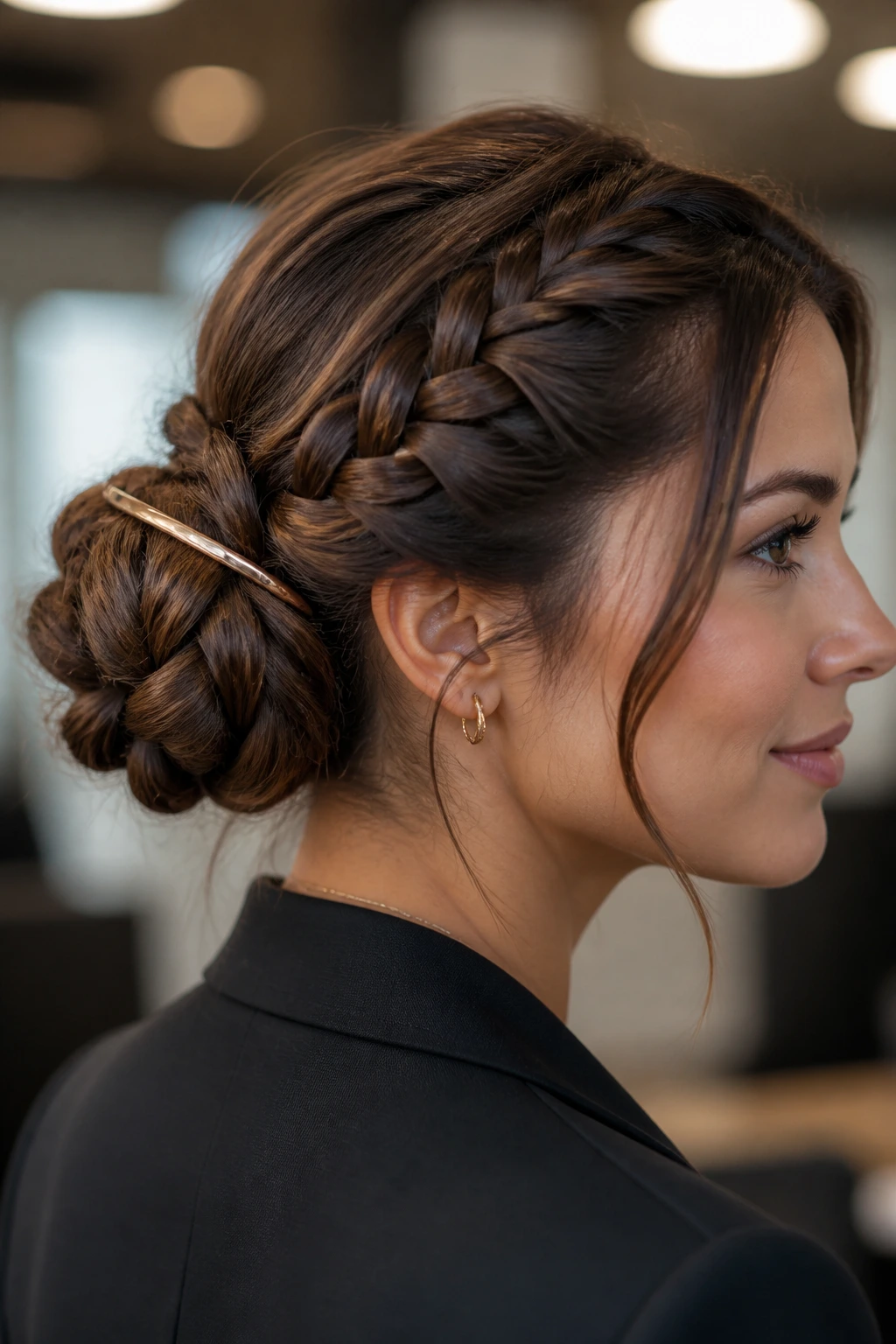
If you are worried that your hair looks too plain, add an accessory. A braid wrapped around a bun is the perfect anchor for a barrette, a gold clip, or a silk ribbon. These small additions can turn a “functional” style into something that feels like an intentional fashion choice.
Choosing the Right Accessory
Avoid anything too noisy—no jangling beads or loose sequins. Stick to metallic accents, neutral leather, or classic silk. The accessory should complement the braid, not overshadow it. A gold pin tucked into the base of a braided bun adds a touch of luxury that elevates the entire look instantly.
When to Use Embellishment
Save this for days when you have important meetings or networking events. Accessories signal that you are dressed for a special occasion, which can boost your own confidence as much as it impresses those around you.
17. The Twisted Side-Braid with Volume
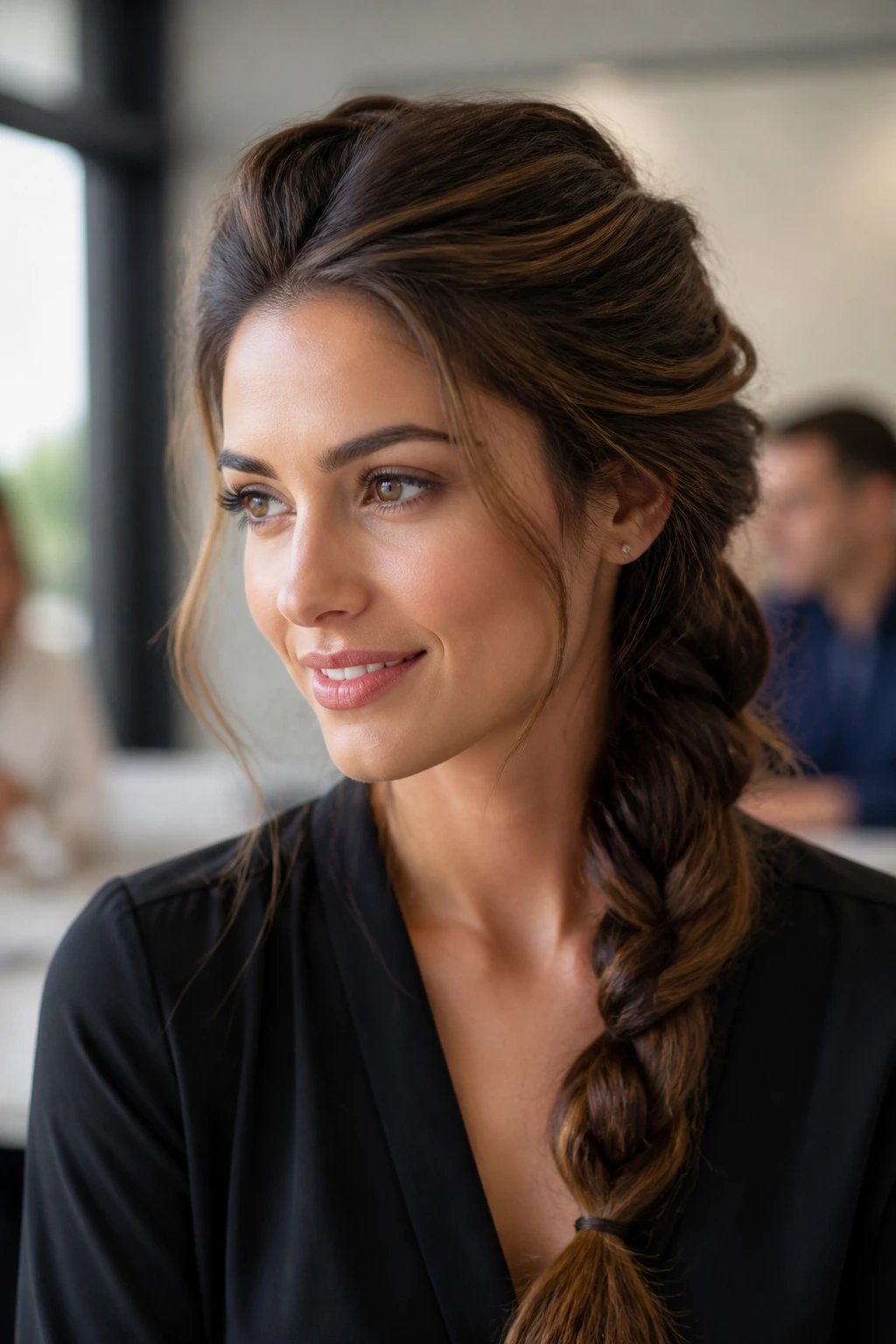
This style is for those with fine hair who feel their braids look too thin. By twisting the front sections of your hair back before you start the braid, you add a layer of volume that makes the eventual braid look twice as thick. It’s a simple trick of perception that yields a significant difference.
The Volume Trick
- Take a section at the front and twist it away from your face.
- Pin it temporarily.
- Repeat on the other side.
- Integrate those two twists into a standard side-braid. The twists add a sophisticated texture to the front that frames the face beautifully, while the braid takes over to manage the bulk of your hair.
The Professional Look
It’s elegant, classic, and looks great in both indoor office lighting and outdoor natural light. It’s a soft style that feels very approachable, making it a great choice for collaborative roles or team-building sessions.
18. The Crown Braid with Loose Tendrils
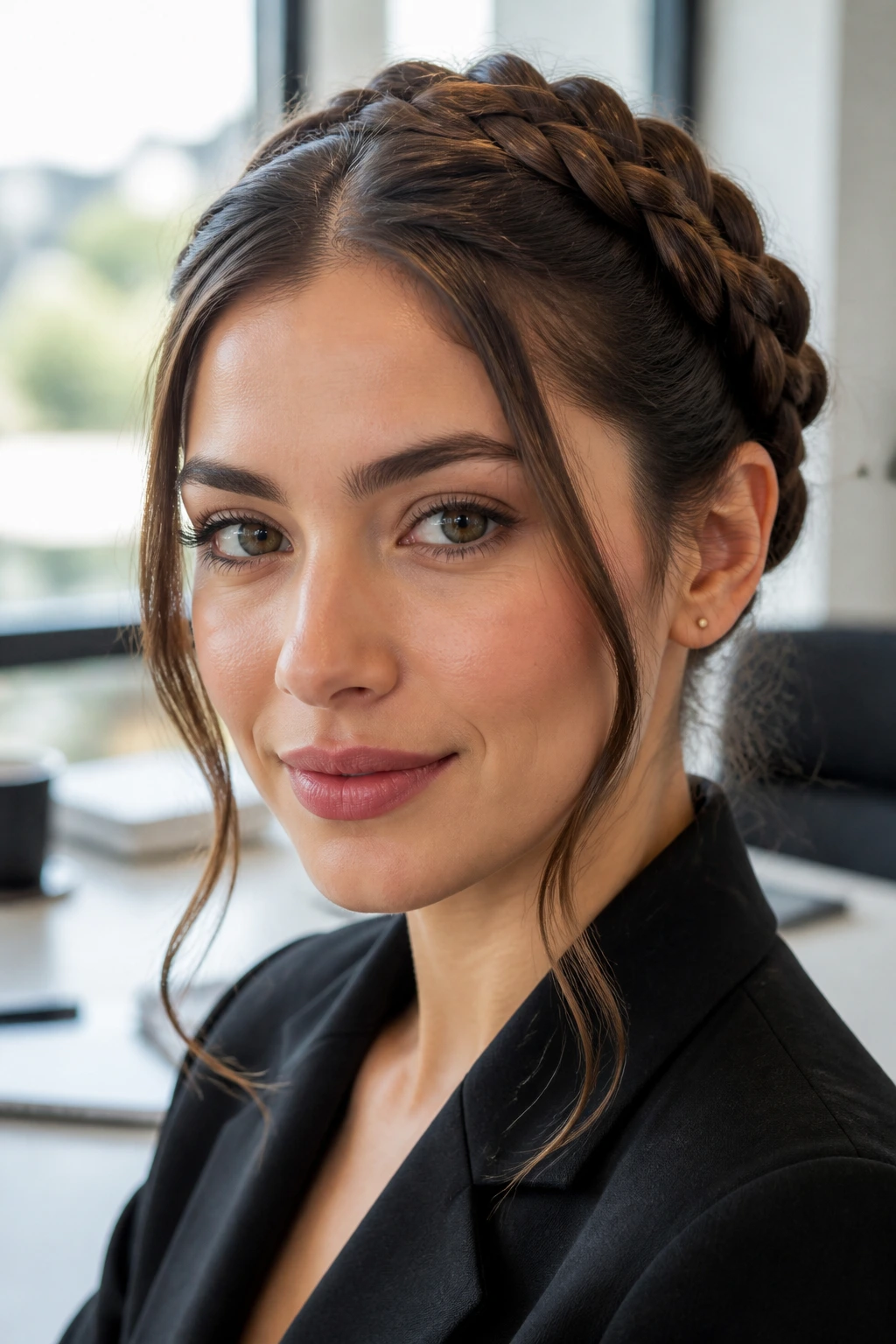
If you find that an ultra-tight crown braid makes you feel too severe, leave two small, face-framing tendrils out. Ensure these are smoothed and tucked behind the ear or styled into soft, professional waves. It softens the entire look while keeping the main body of the hair neatly tucked away.
Balancing Softness and Structure
The crown braid itself must remain tight, but the framing pieces add a touch of humanity. It’s the perfect balance for a creative office where you need to look professional but want to avoid the “stiff” look that some corporate styles carry.
Final Thoughts
Braiding your hair for the office isn’t about fitting into a mold; it’s about finding the intersection between your personal creativity and your professional responsibilities. Whether you choose the structural elegance of a rope-twist or the classic reliability of a French braid, you are signaling that you are someone who pays attention to detail.
Mastering these styles takes very little time once you understand the mechanics, and the payoff is a wardrobe of hairstyles that are both practical and beautiful. Don’t be afraid to experiment with your texture and to let these styles evolve with your own personal aesthetic. After all, the best office look is one that makes you feel ready to take on the day with confidence and ease. Remember, the goal is always to keep the finish clean, the tension consistent, and your attitude focused on the work ahead.