

Asian hair is fundamentally different from other textures, often characterized by its circular cross-section, high cuticle density, and a naturally coarse, straight structure. While this gives it a sleek, shiny appearance, it also makes it notoriously resistant to holding styles—especially braids. If you have ever spent an hour crafting the perfect, intricate plait only to have it unravel into a limp, frizzy mess by lunch, you aren’t alone. The weight and smoothness of the strands mean that traditional techniques often slip right out unless you approach them with the right tools and prep work.
Whether you are looking for a practical way to manage thick strands on a humid day or seeking an intricate style for a special event, the secret to mastering these looks lies in structural integrity. You need to focus on creating friction, using the right amount of product, and understanding the tensile strength of your own hair. The following styles go beyond the standard three-strand plait, offering specific ways to work with the unique properties of Asian hair to ensure your look stays secure, elegant, and perfectly placed from dawn until dusk.
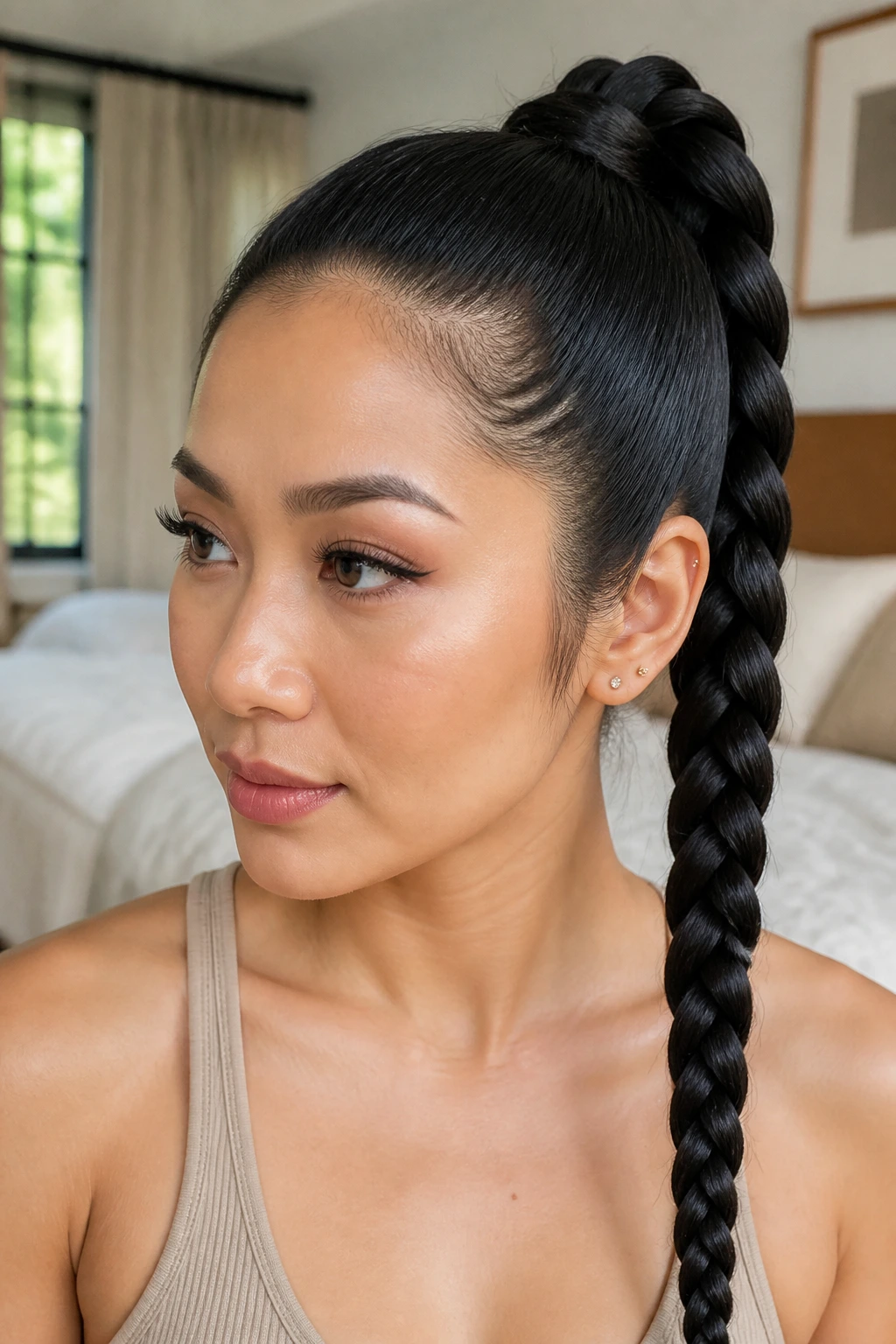
1. The Sleek High Ponytail Braid
This style works particularly well for those with naturally pin-straight hair who want a polished, high-fashion look. Because Asian hair often lacks natural volume at the roots, the trick here is to use a light-hold texturizing spray before you even pick up a brush. By gathering your hair into a firm, high base, you establish a solid foundation that prevents the braid from sagging throughout the day.
Why It Works for Straight Textures
- The weight of the braid is distributed upward, putting less tension on the hairline.
- A high ponytail creates a dramatic visual line that highlights bone structure.
- Using a small section of hair to wrap around the elastic adds a professional, finished detail.
How to Style It
Start by backcombing the crown of your head just enough to create a subtle lift. Secure the pony with a clear, snag-free elastic. Once secured, braid the length of the ponytail into a tight, three-strand plait and tie off the bottom. You can pull at the edges of the braid slightly to create a wider, thicker appearance, but remember to do this gently to avoid pulling strands loose from the elastic base.
2. Dutch-Braided Crown with Face-Framing Tendrils
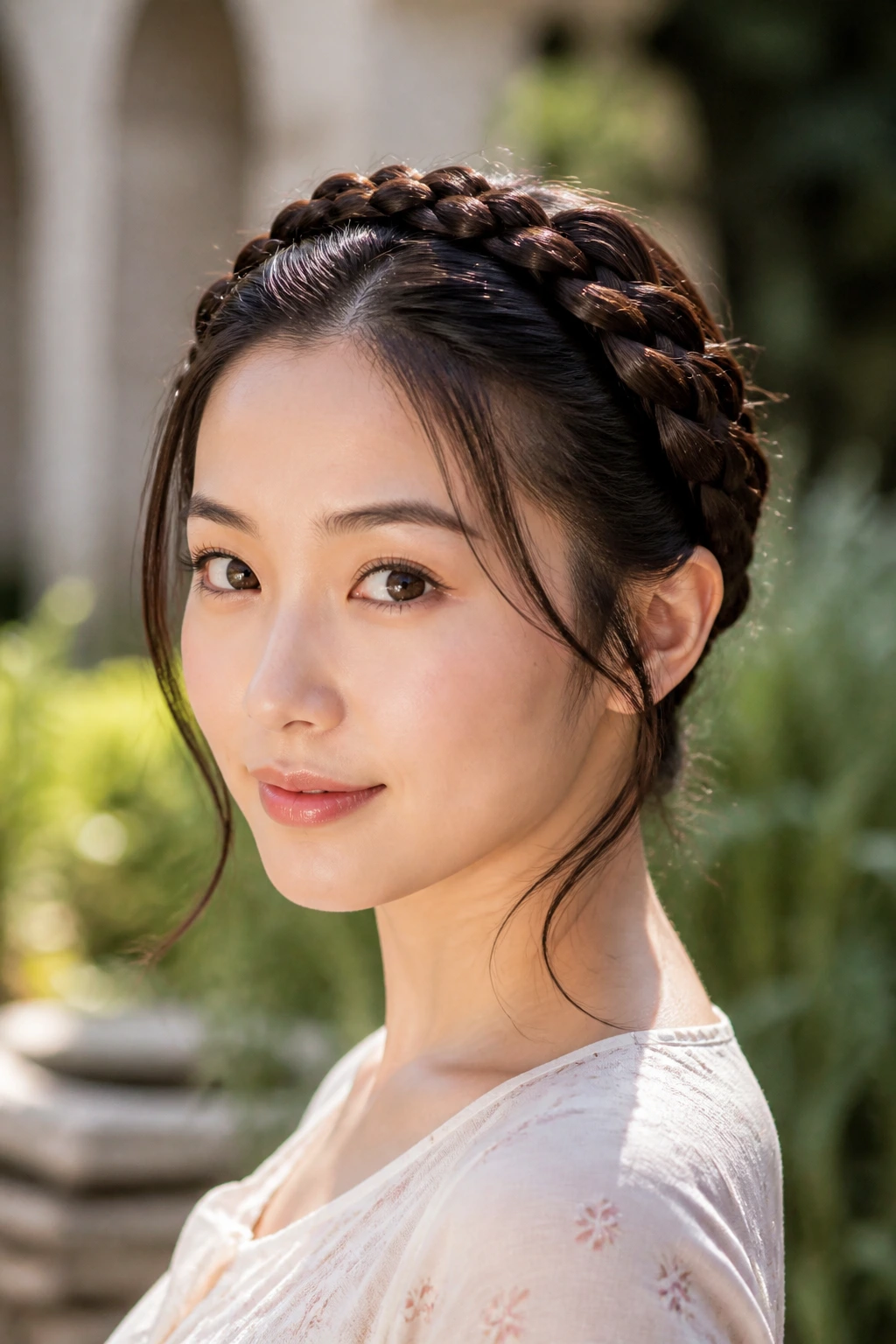
Crown braids are a classic, but they can be tricky to keep in place if the hair is too silky. By using the Dutch technique—where you cross the strands under rather than over—you create a more defined, raised braid that sits securely against the scalp. Leaving out a few soft, wispy pieces around the temples adds a touch of softness that balances the structured nature of the braid.
3. The Loose Side Fishtail for Added Volume
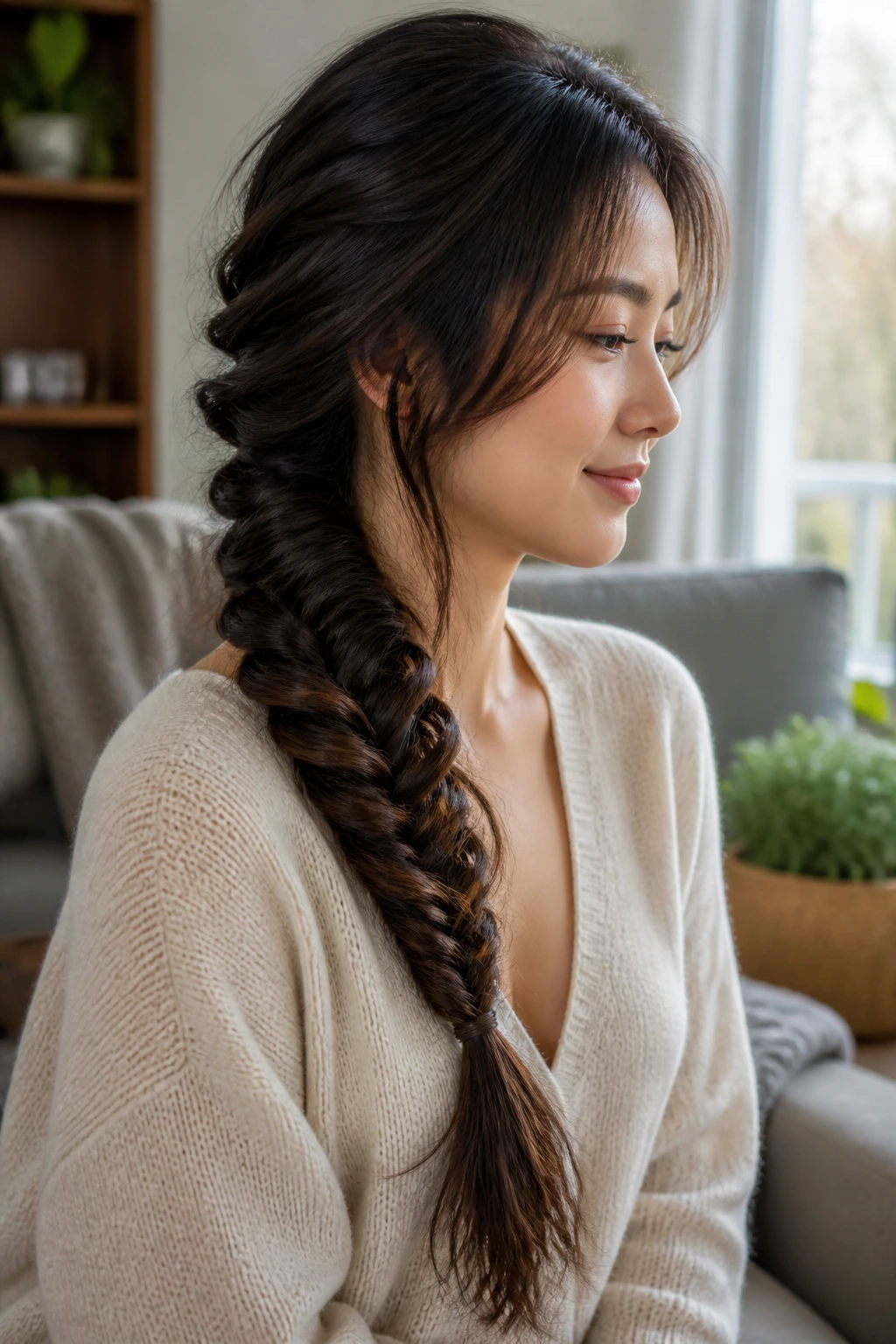
If you are worried about your braids looking too “thin” or “flat,” the fishtail is your best friend. It requires using only two sections of hair, which creates a complex, woven look that naturally looks fuller than a standard braid. Because Asian hair is very consistent in thickness from root to tip, the fishtail braid creates a uniform, rope-like effect that is visually striking and incredibly durable.
4. Double Dutch Braids into a Low Bun
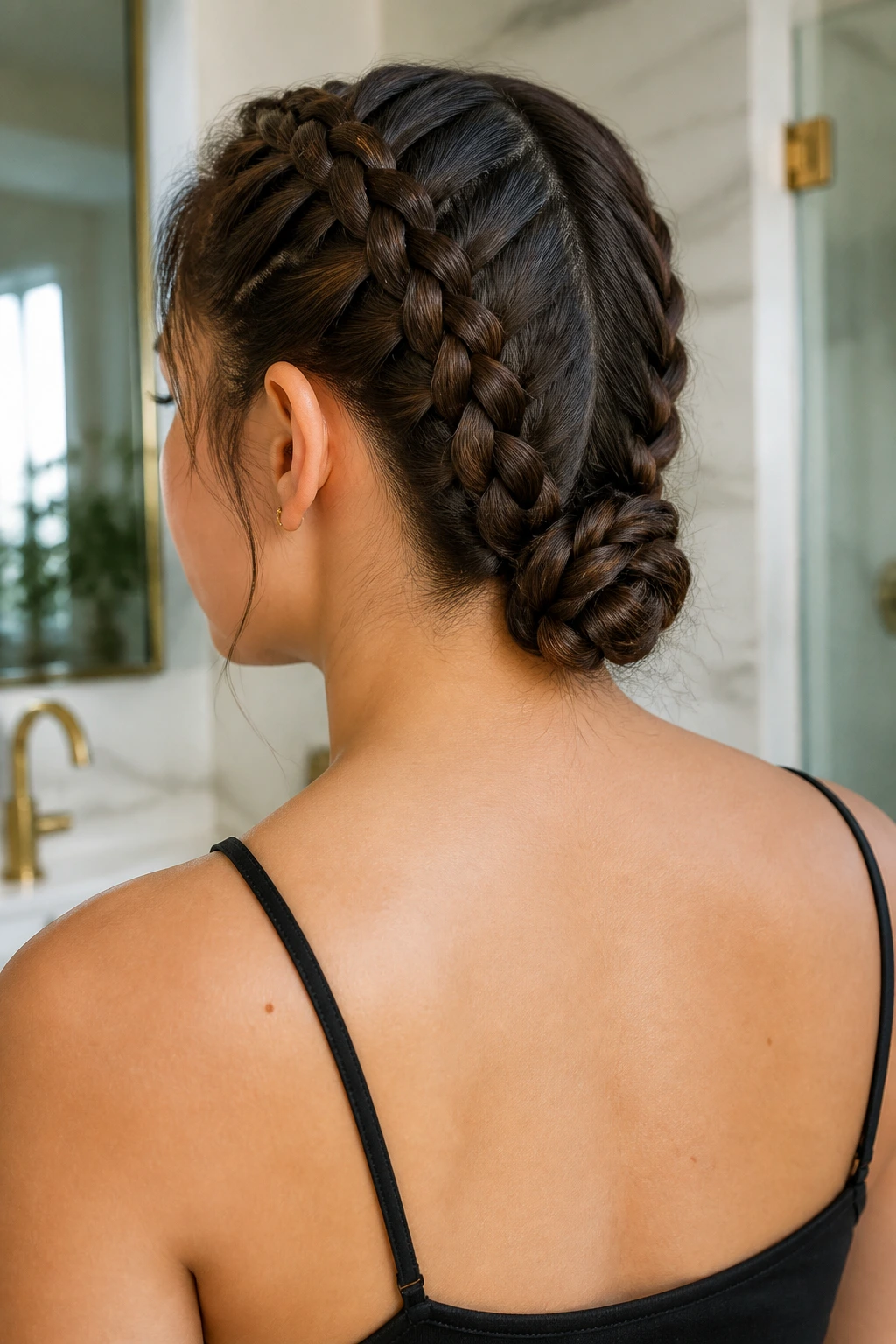
This is the ultimate style for active days or humid weather where you want your hair completely off your neck. By braiding both sides of your head toward the nape, you contain every single strand, ensuring that no stray hairs escape. Once you reach the base of your neck, gathering the tails into a simple, knotted bun provides a sophisticated finish that works just as well for the office as it does for a workout.
5. The Half-Up Waterfall Braid
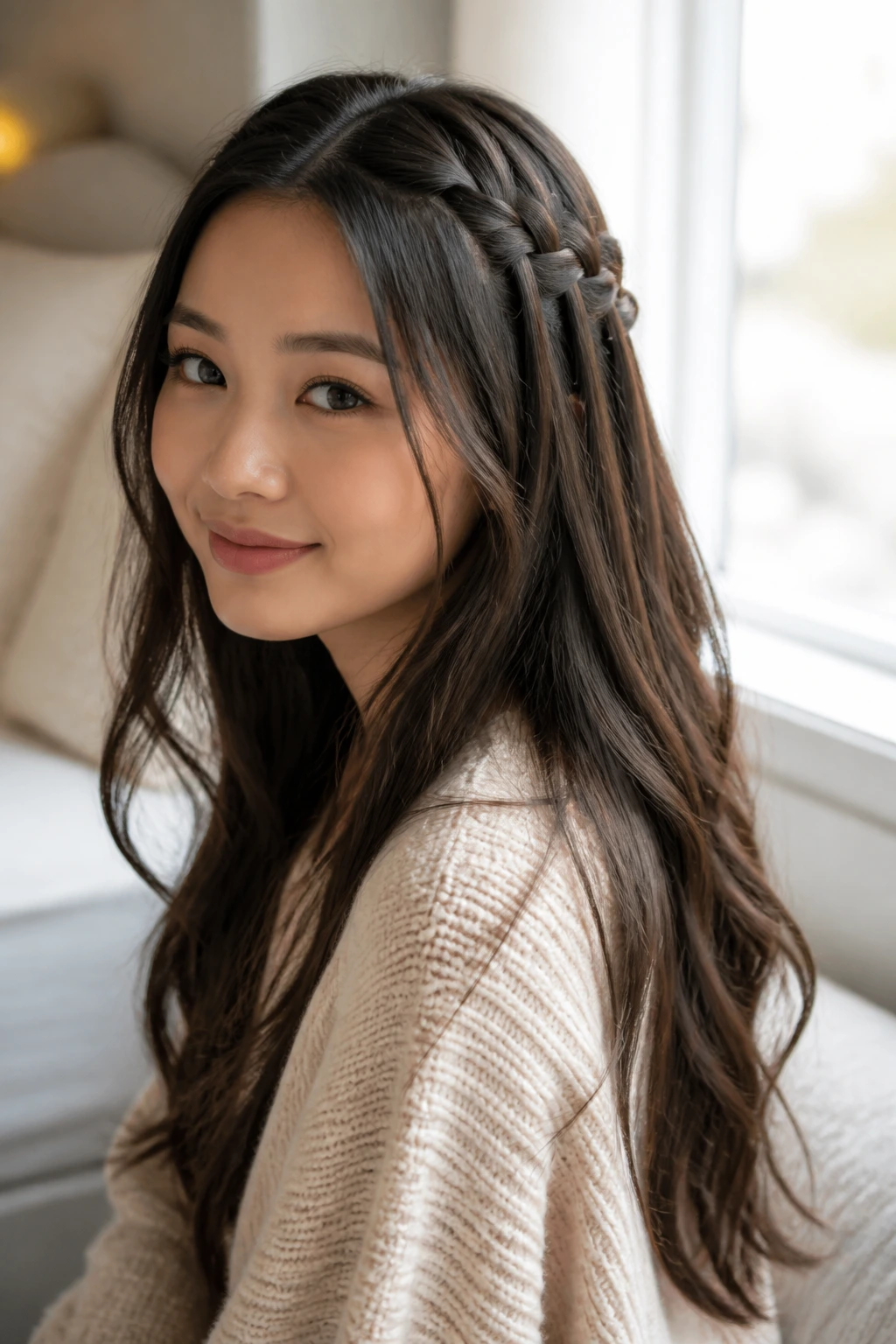
If you prefer to wear your hair down but find it gets in your eyes, the waterfall technique is a graceful solution. It allows you to showcase the natural shine and length of your hair while keeping the front sections neatly tucked away. Since you are only incorporating hair from the top, it avoids the heavy, pulled-too-tight feeling that can happen with full-head styles.
Essential Prep for Waterfall Styles
- Apply a light sea salt spray to provide a bit of grit to the hair shafts.
- Use your fingers to weave the sections; don’t rely on a comb, as the natural oils from your fingertips help grip the strands better.
- Set the finished look with a medium-hold hairspray to ensure the “waterfall” pieces don’t drift downward over time.
6. Micro-Braid Accents in a Straight Style
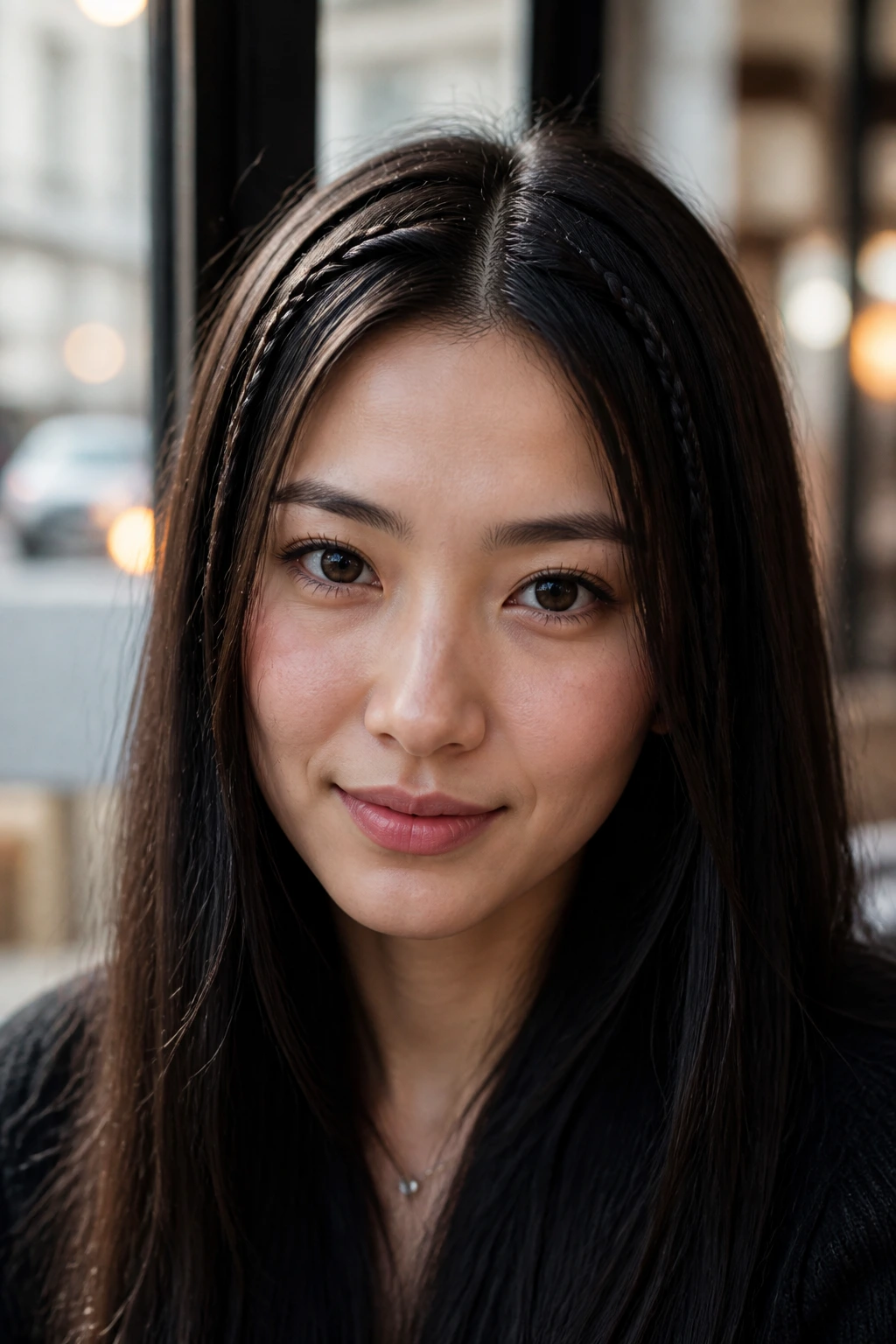
Sometimes, you don’t need a massive, intricate braid to make a statement. Adding two or three tiny, thin braids into a loose, straight hairstyle can add a bohemian flair that feels modern and effortless. This technique is particularly effective if you have bangs or shorter face-framing layers, as it keeps them securely blended into the rest of your hair.
7. The Messy Top-Knot with Braided Base
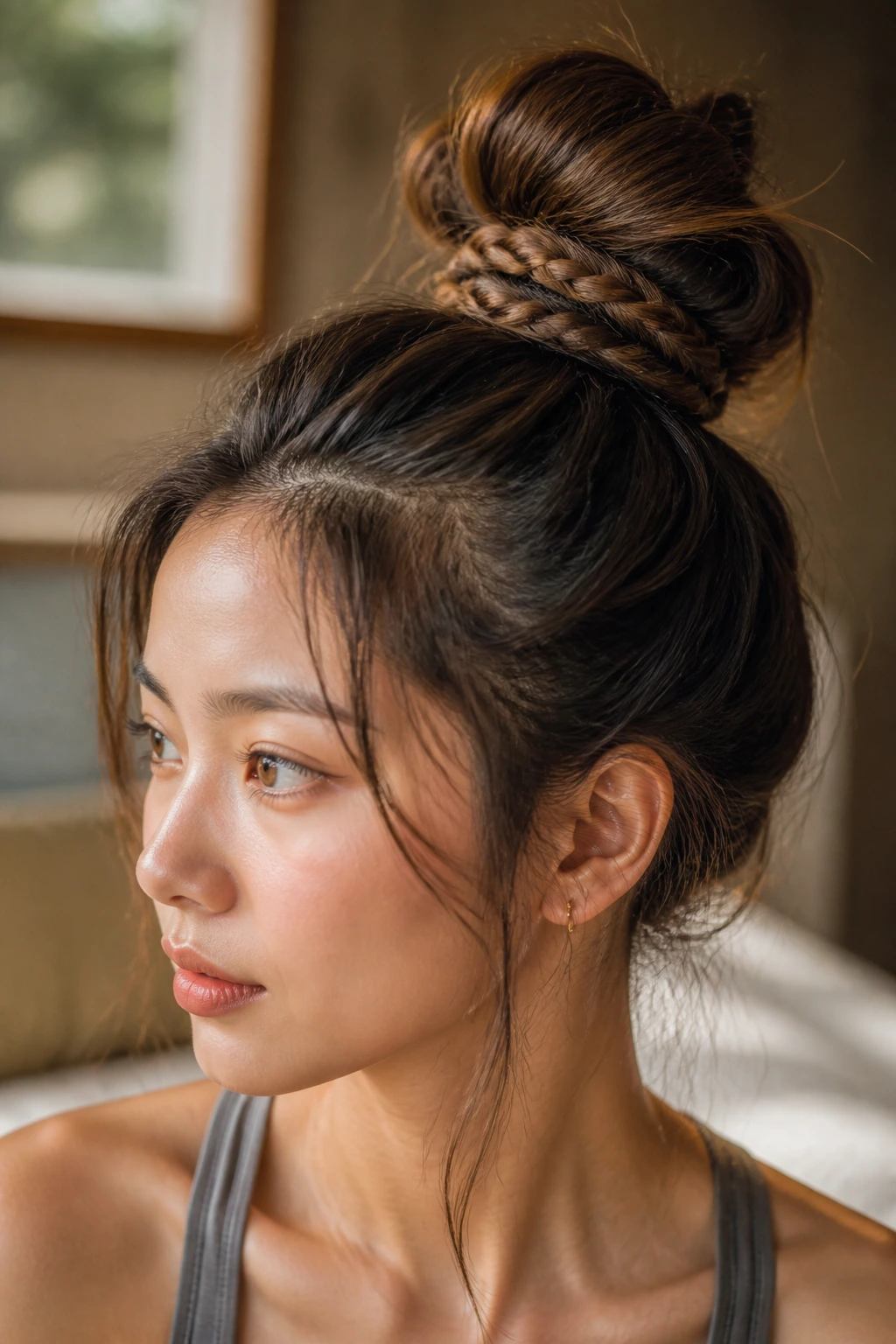
Taking a standard bun and wrapping a braid around the base is a great way to hide your hair ties and add an element of design to an otherwise simple look. This style is perfect for those “second-day hair” moments when you need to mask a bit of oil at the roots. The braid acts as an anchor for the bun, keeping it secure even if you are moving around throughout the day.
8. Braided Headband with Sleek Texture
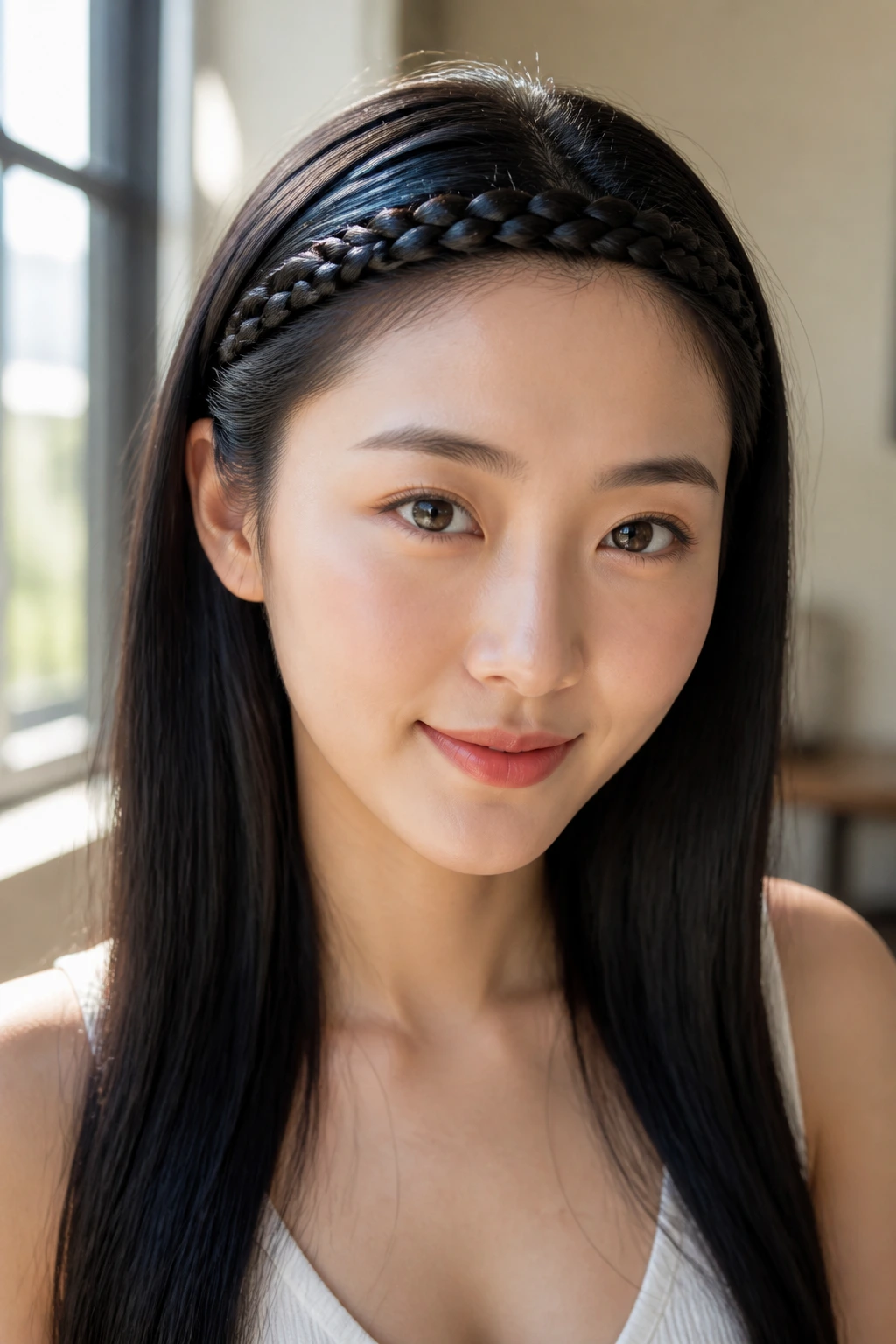
Creating a braid that runs horizontally across the forehead is a clever way to keep bangs out of your face without using clips or bobby pins. For the best result, keep the rest of your hair stick-straight and tucked behind your ears. The contrast between the intricate, woven braid and the smooth, straight length of the hair creates a visual point of interest that is both clean and fashion-forward.
9. The Rope Braid Ponytail
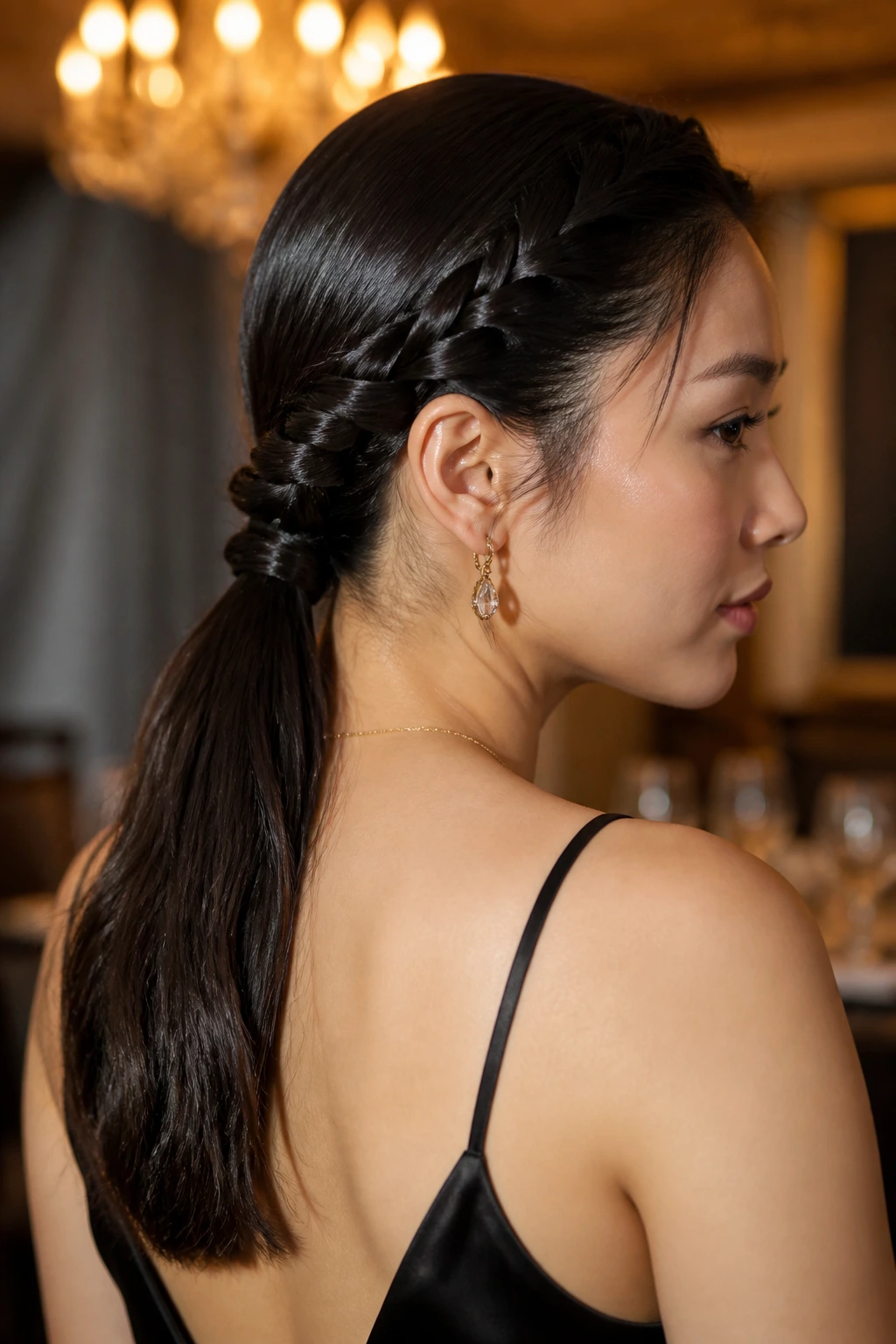
Rope braids are often easier to manage than traditional three-strand braids because they rely on twisting rather than weaving. If you find that your braids unravel due to the “slipperiness” of your hair, the twisting motion of a rope braid creates natural tension that holds itself together. It looks particularly elegant when paired with a low-slung, sleek ponytail, making it a great option for evening events or formal settings.
10. Pull-Through Braid for Illusion Thickness
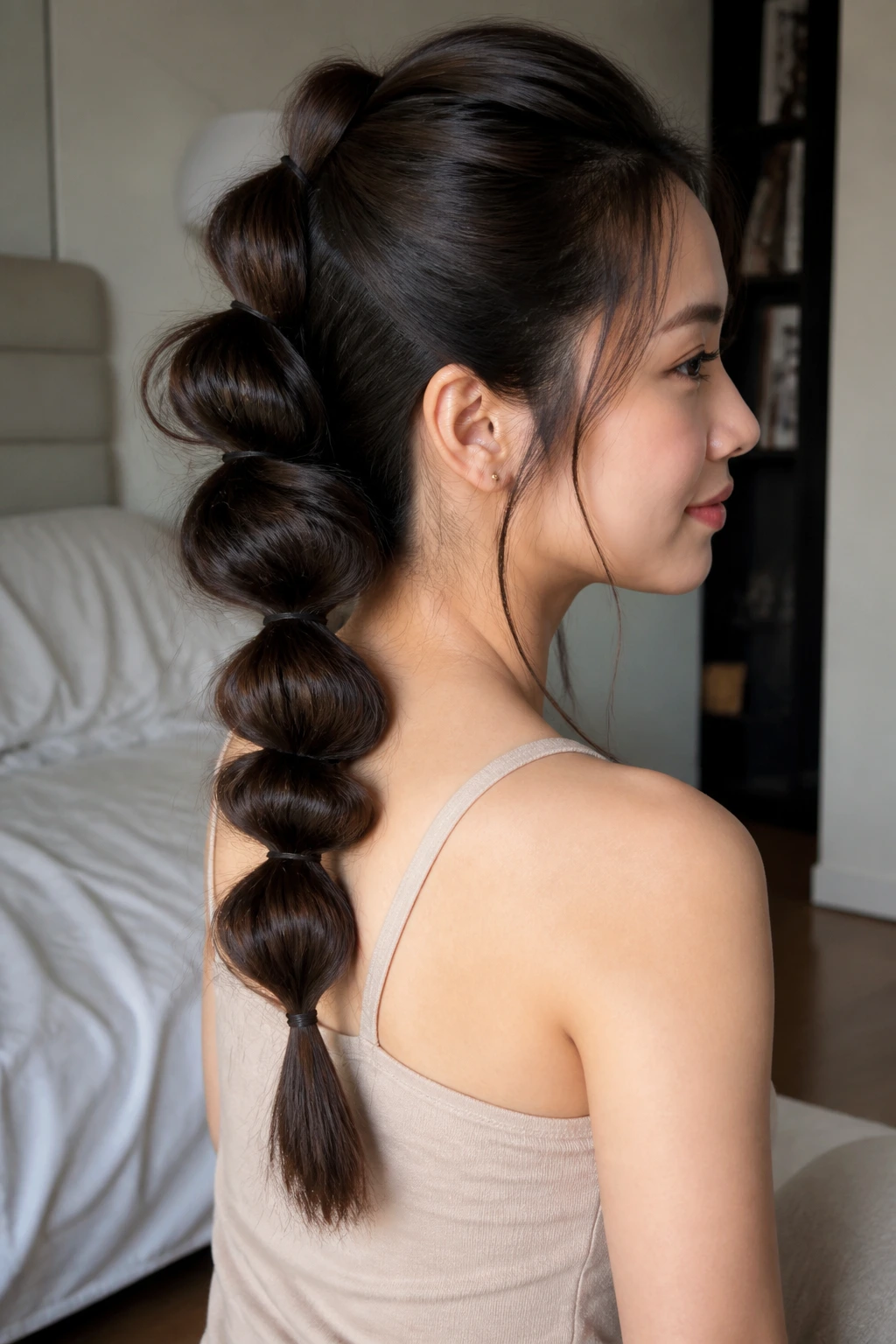
If you have very fine hair, the pull-through braid is the gold standard for creating the illusion of massive volume. It isn’t technically a “braid” because it involves using multiple clear elastics to join sections together, but the end result is a thick, voluminous plait that looks like it took hours to create. It provides much more hold than a standard braid because each section is anchored by an individual hair tie.
Why This Technique Excels
- Every section is secured individually, preventing the “unraveling” issue common with Asian hair.
- You can pull and tease each bubble to make the braid look twice as large as it actually is.
- It stays put perfectly, even if you have layers that usually poke out of standard braids.
11. The Triple-Threat Braid Mohawk
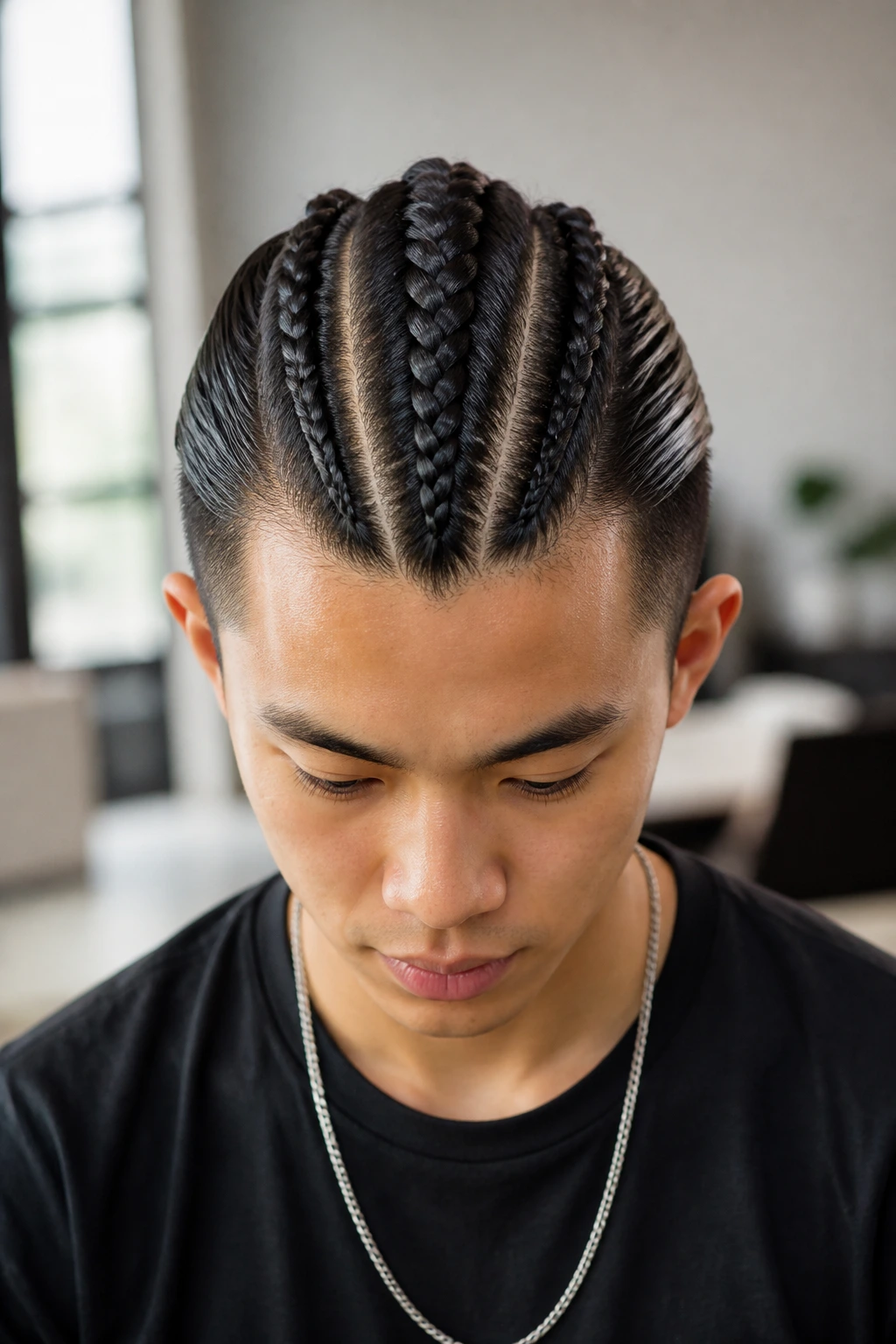
For those who want to push the boundaries of style, creating three separate Dutch braids down the center of the head creates a bold, edgy “faux-hawk” effect. By keeping the sides slicked back, you create a sharp contrast that makes the hair on top look thick and voluminous. This is an excellent way to handle hair that is thick and coarse, as the braiding process tames the natural density into a controlled, stylish shape.
12. Side-Swept French Braid for Elegance
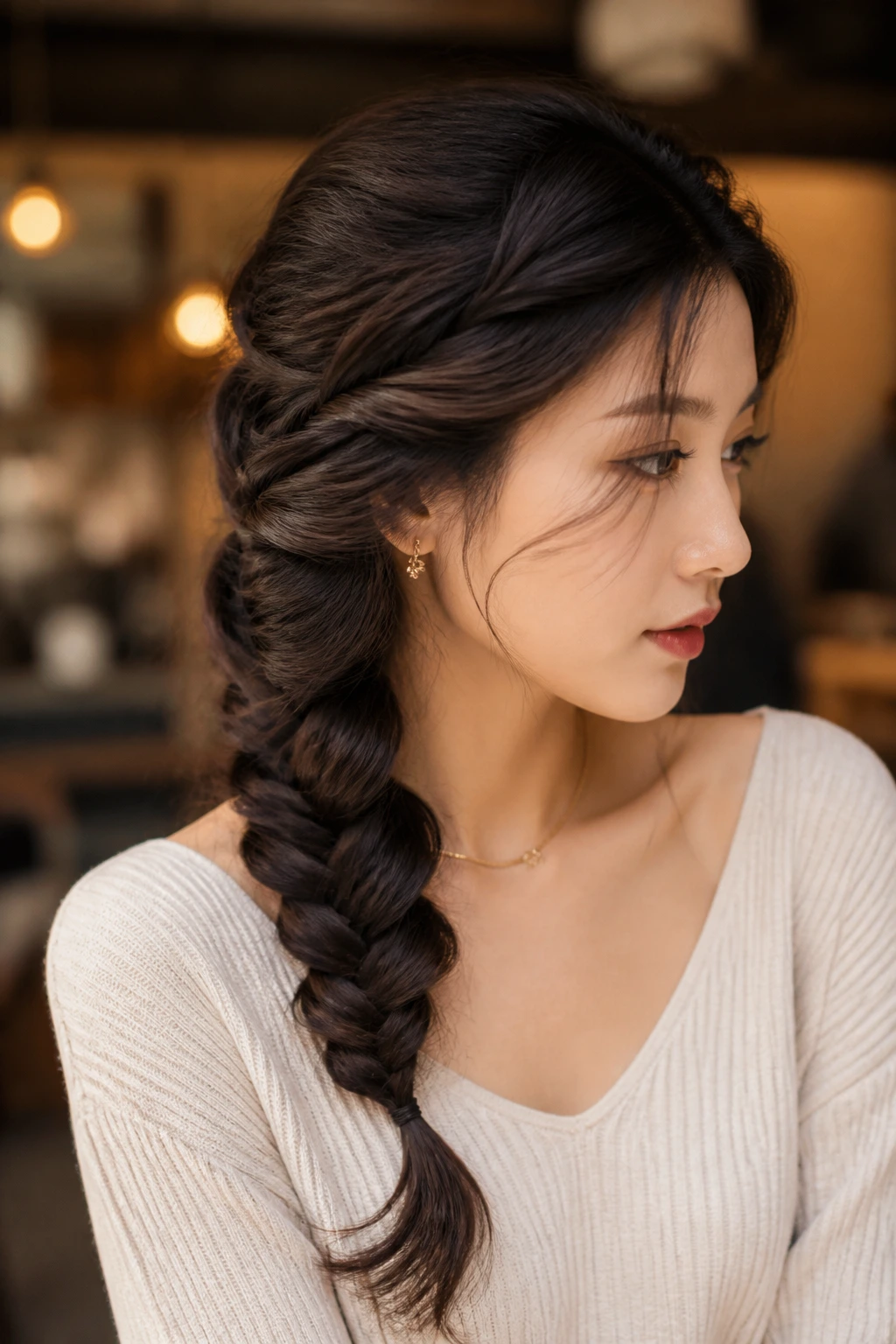
Bringing a French braid over to one side is a classic, but doing it with a loose, slightly deconstructed finish makes it feel fresh. Instead of pulling the braid tight, work your way down and then gently tug at the loops to loosen them. This adds softness to the look and prevents the braid from looking like it is pulling your scalp too hard, which can sometimes be an issue if your hair is heavy.
13. The Braided Pigtail Chic
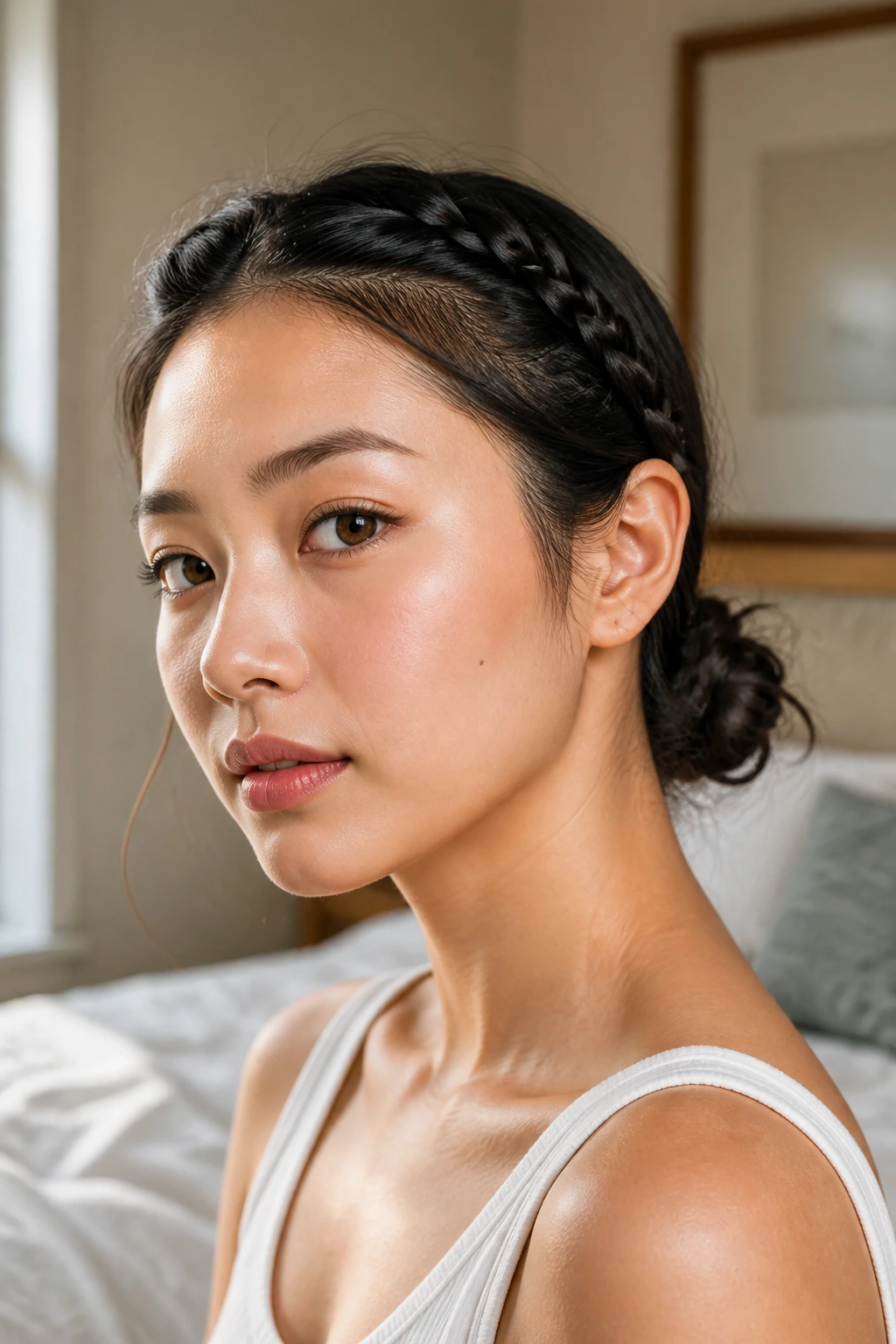
Pigtails aren’t just for children. By braiding two sections on either side of a middle part and bringing them back into a low, messy knot, you create a look that is playful yet sophisticated. This style is particularly effective for those with shorter, blunt-cut bobs, as it allows you to get your hair off your face while showcasing the sharp lines of your haircut.
14. Wrapped Braid around a Chignon
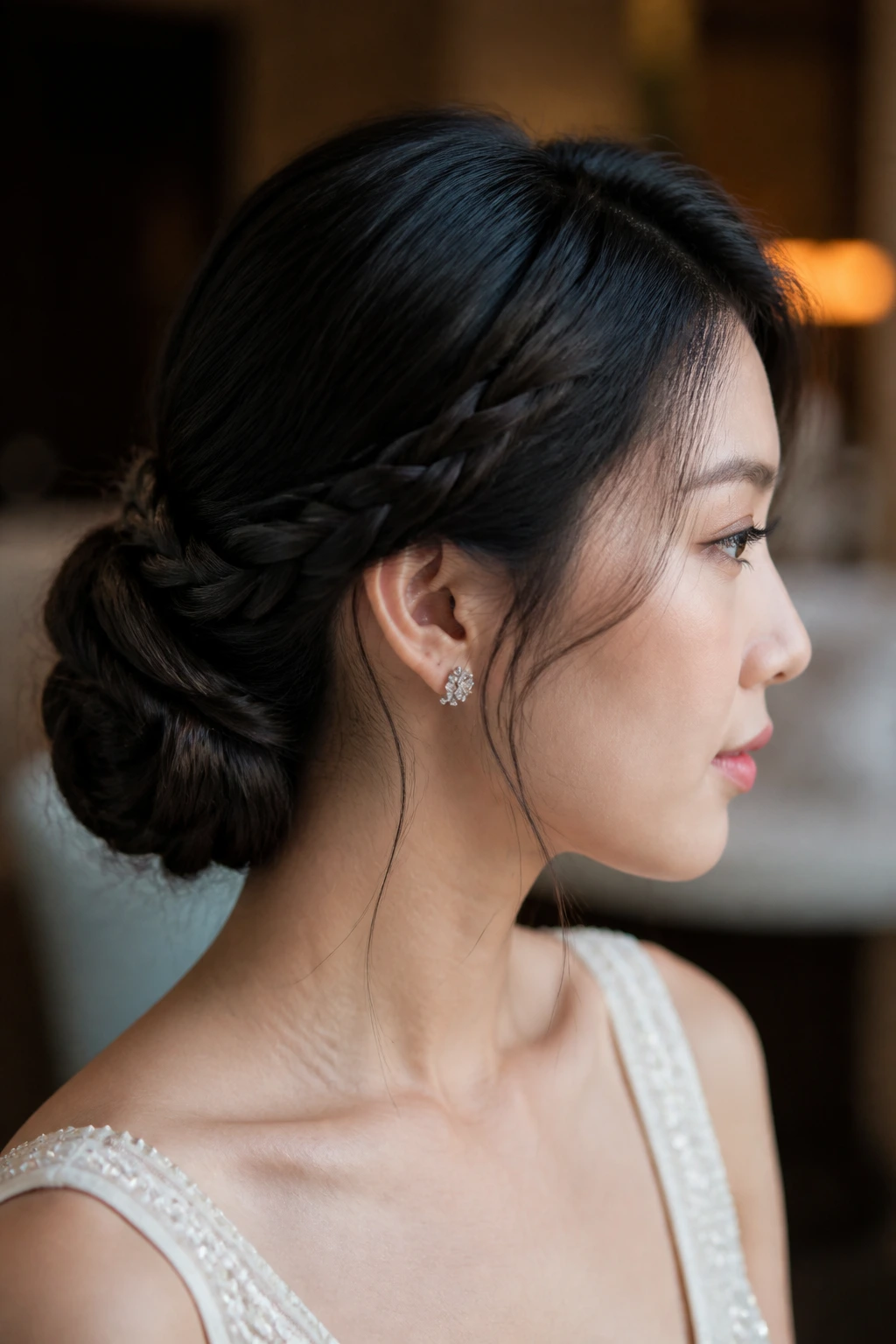
If you are attending a wedding or a formal dinner, a low, braided chignon is one of the most reliable styles you can choose. Because it sits at the nape of the neck, it is less likely to be disturbed by wind or movement. By braiding the hair before pinning it into a bun, you add texture that makes the final chignon look much more interesting than a standard, smooth roll.
15. The Crown Braid with Ribbon Weave
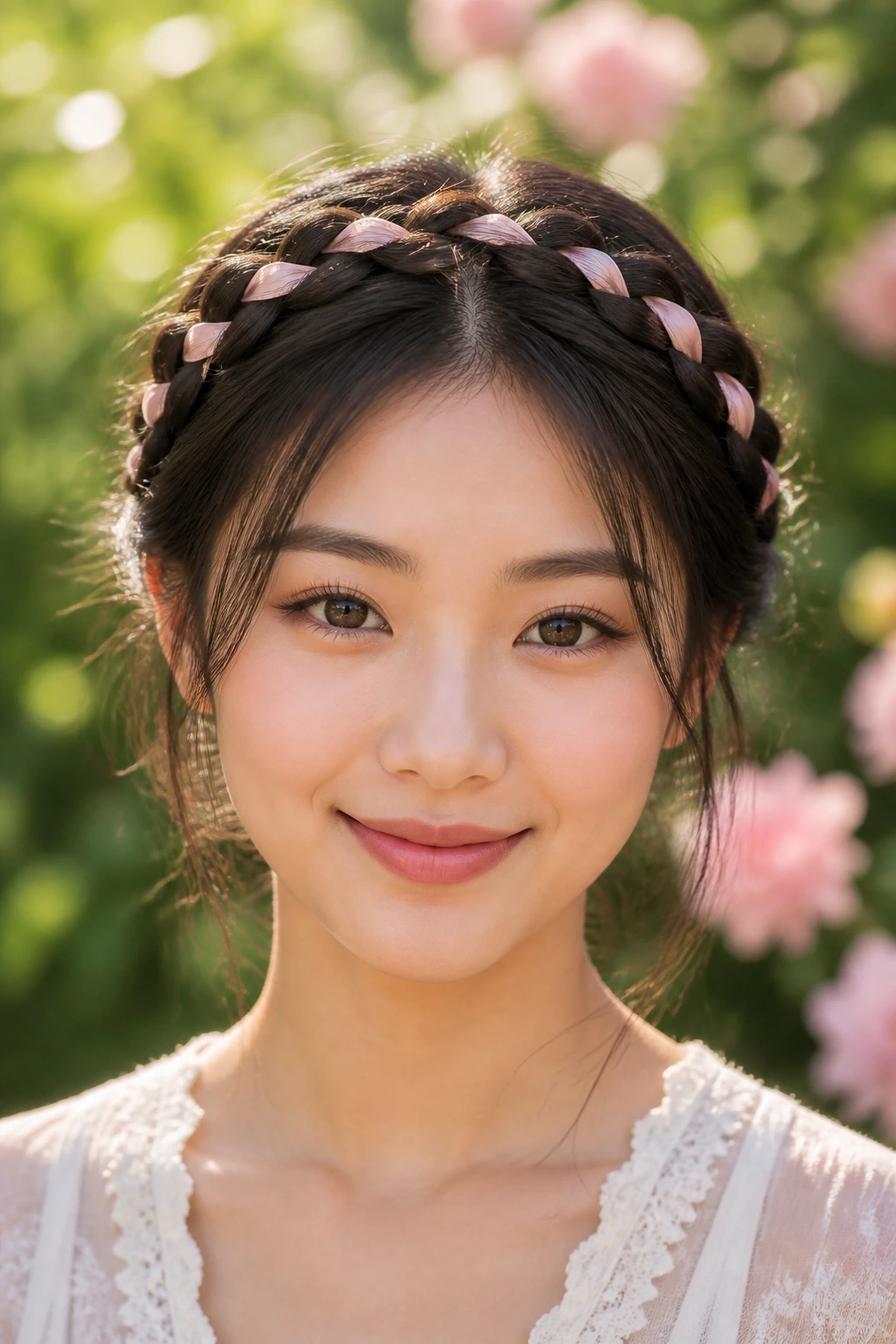
Incorporating a silk or satin ribbon into your braid does two things: it adds a pop of color, and it provides extra “grip” for your hair. Ribbons are excellent for Asian hair because they add friction where there otherwise would be none, helping the braid hold its shape for longer periods. Weave the ribbon into a simple three-strand braid and wrap it around your head for a soft, feminine look.
16. Double French Braid into a Low Ponytail
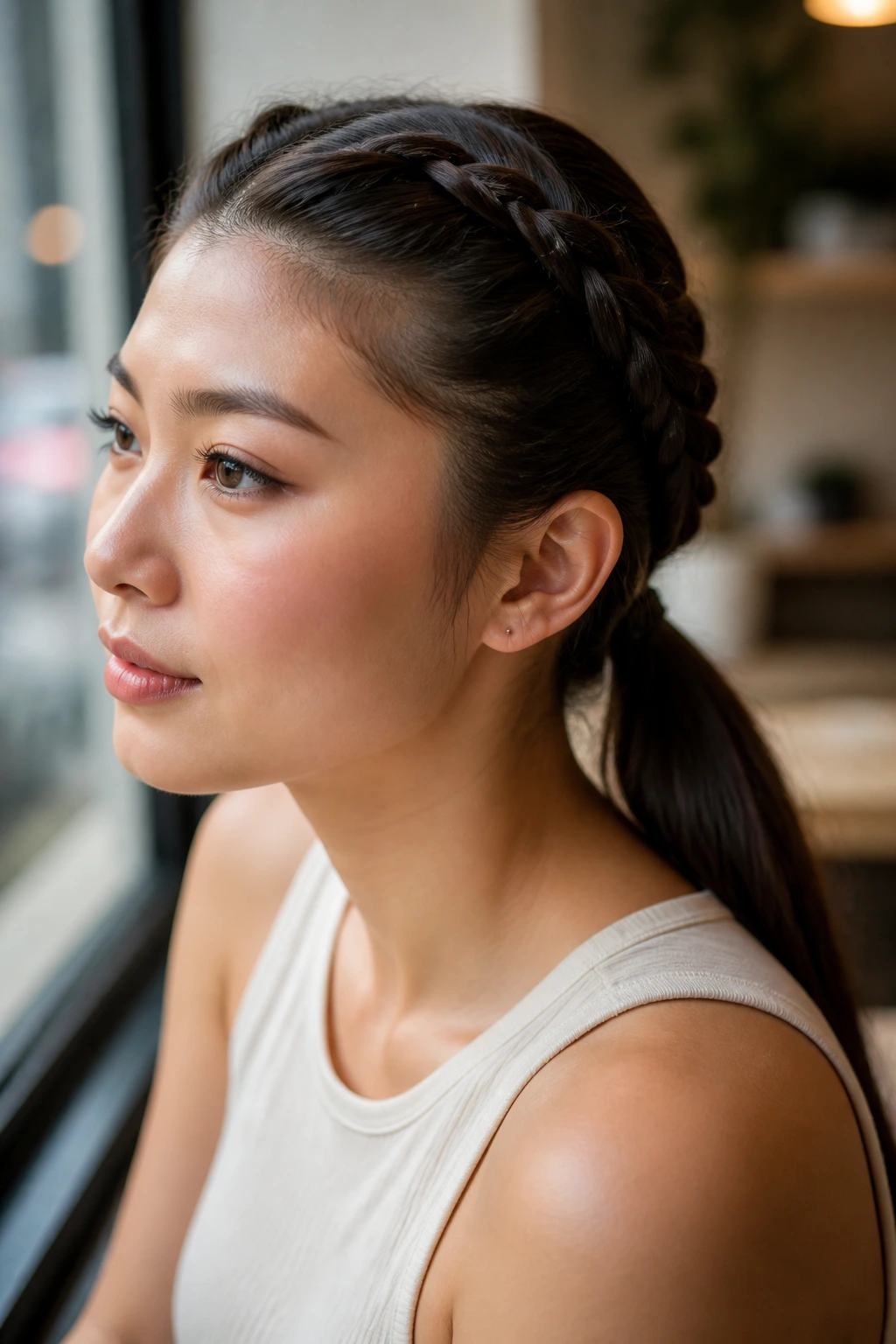
Combining the control of French braids with the simplicity of a ponytail is a great way to navigate a busy day. Start your French braids at the front of the hairline and stop at the crown, gathering the remaining hair into a ponytail. This keeps the hair around your face tight and secure while leaving the length of the ponytail loose and swinging.
17. The Twisted Braid Half-Up Style
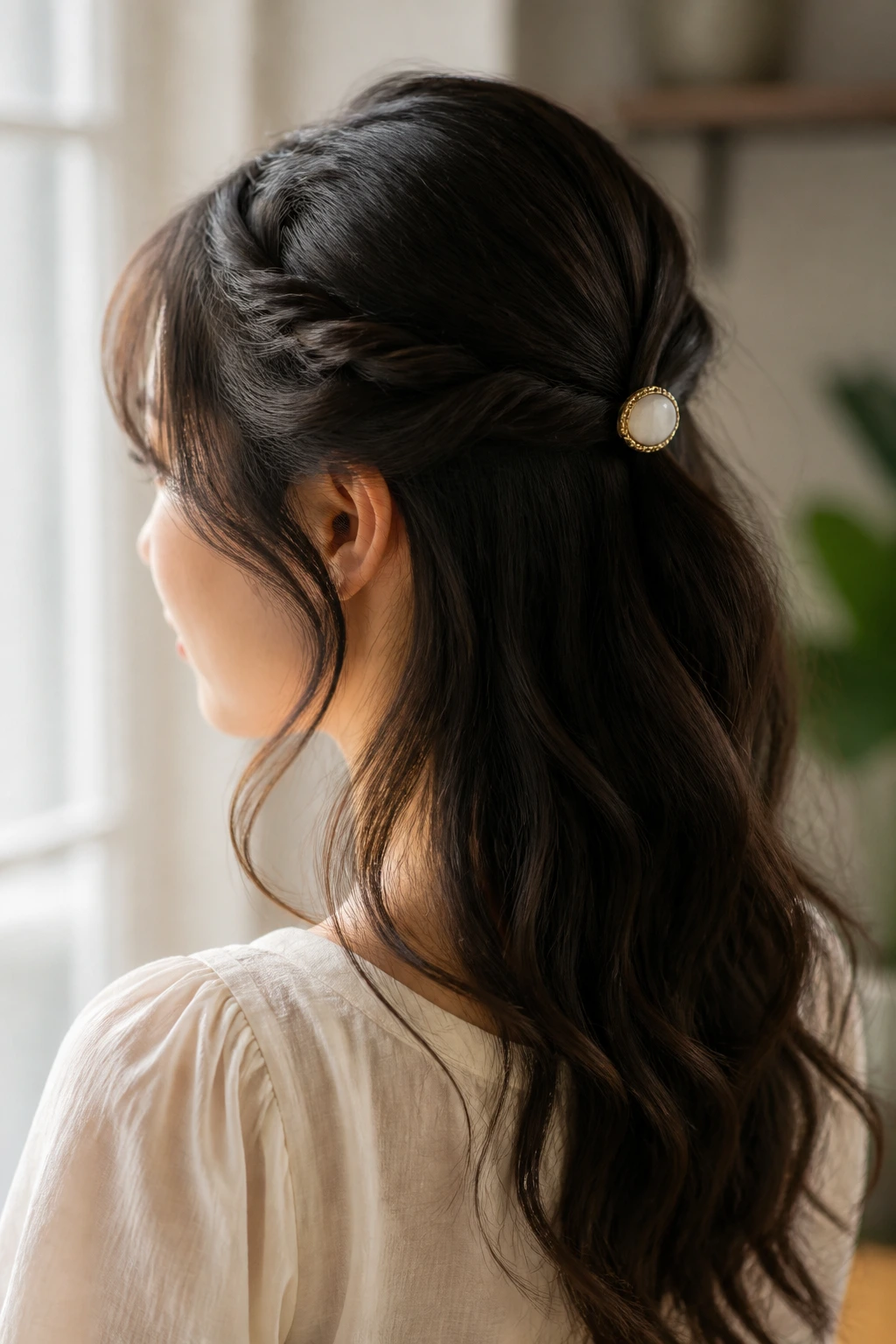
Twists are a great alternative to braids if you want something that takes less than two minutes to complete. By twisting two small sections from the temples and meeting them at the center back, you create a elegant, romantic look. Secure the ends with a small decorative barrette or a pretty silk scrunchie to keep the look clean and intentional.
18. Braided Undercut Illusion
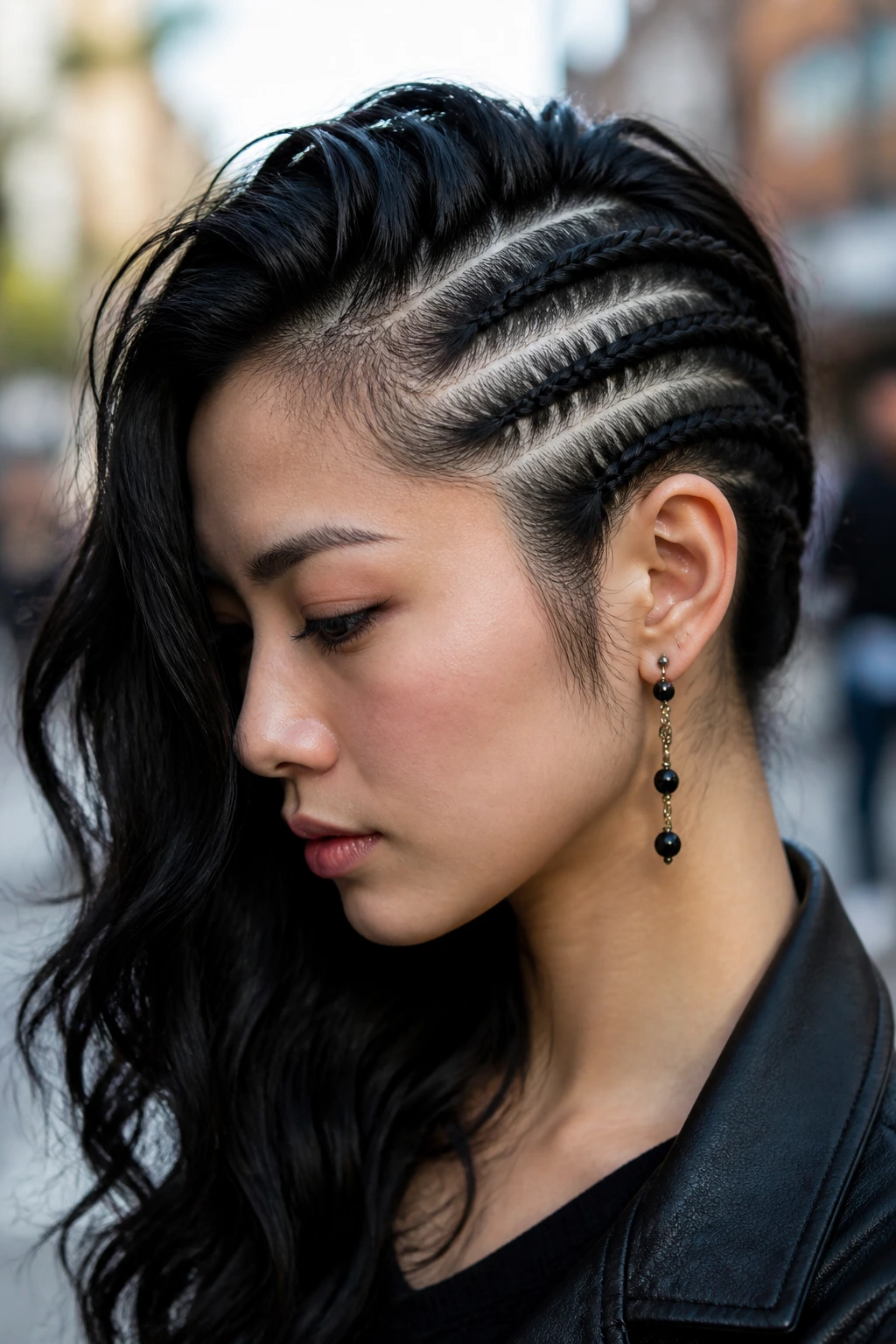
If you don’t want to actually shave the sides of your head, you can mimic the look by French braiding the hair on one or both sides tightly against the scalp. This draws the eye to the center, creating a sleek, high-fashion aesthetic. It works especially well for those with jet-black, shiny hair, as the contrast between the scalp and the hair is clearly defined.
19. The Fishtail Crown
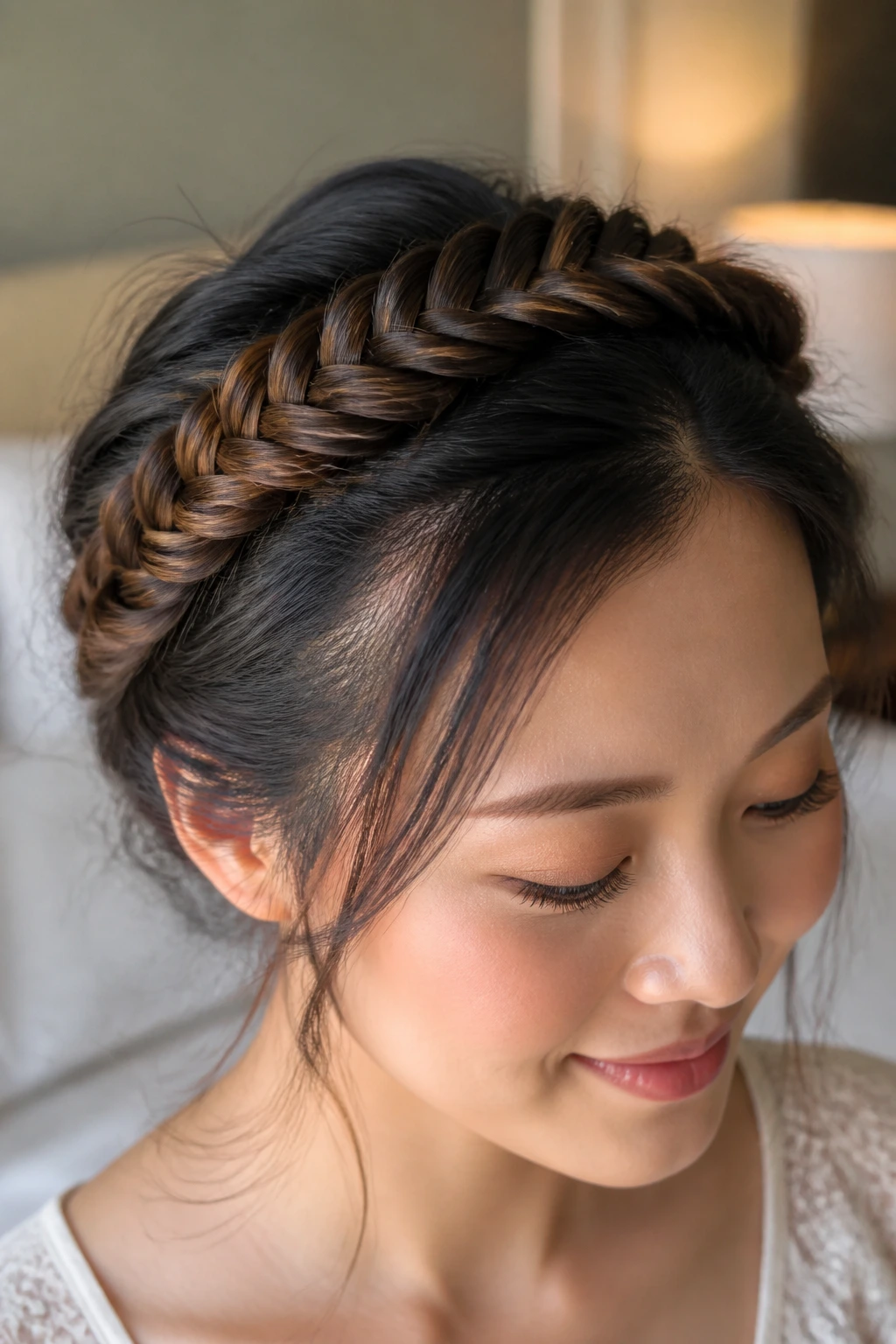
While a standard three-strand crown braid is beautiful, a fishtail crown is stunning. It offers a more intricate texture that catches the light beautifully. Because fishtails are naturally narrower, they look more refined when wrapped around the head as a crown rather than worn as a long, dangling braid down the back.
20. Interwoven Braid and Bun Combo
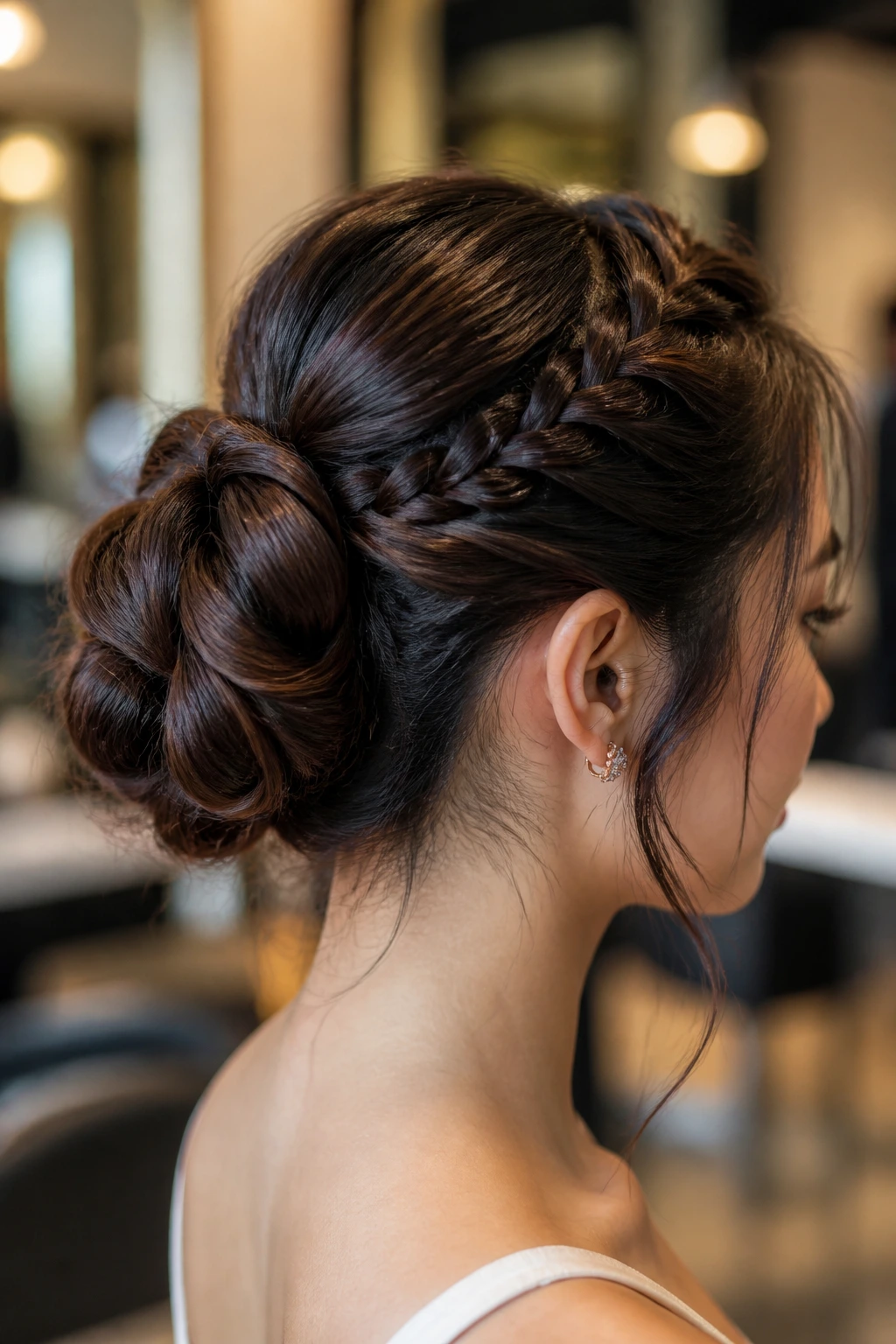
This style involves creating a small braid in the front and incorporating it into a larger bun at the back. It is a fantastic way to add an element of surprise to a standard top-knot. The braid breaks up the smoothness of the bun, adding texture that makes the hairstyle look much more deliberate and well-crafted.
21. The Reverse French Braid
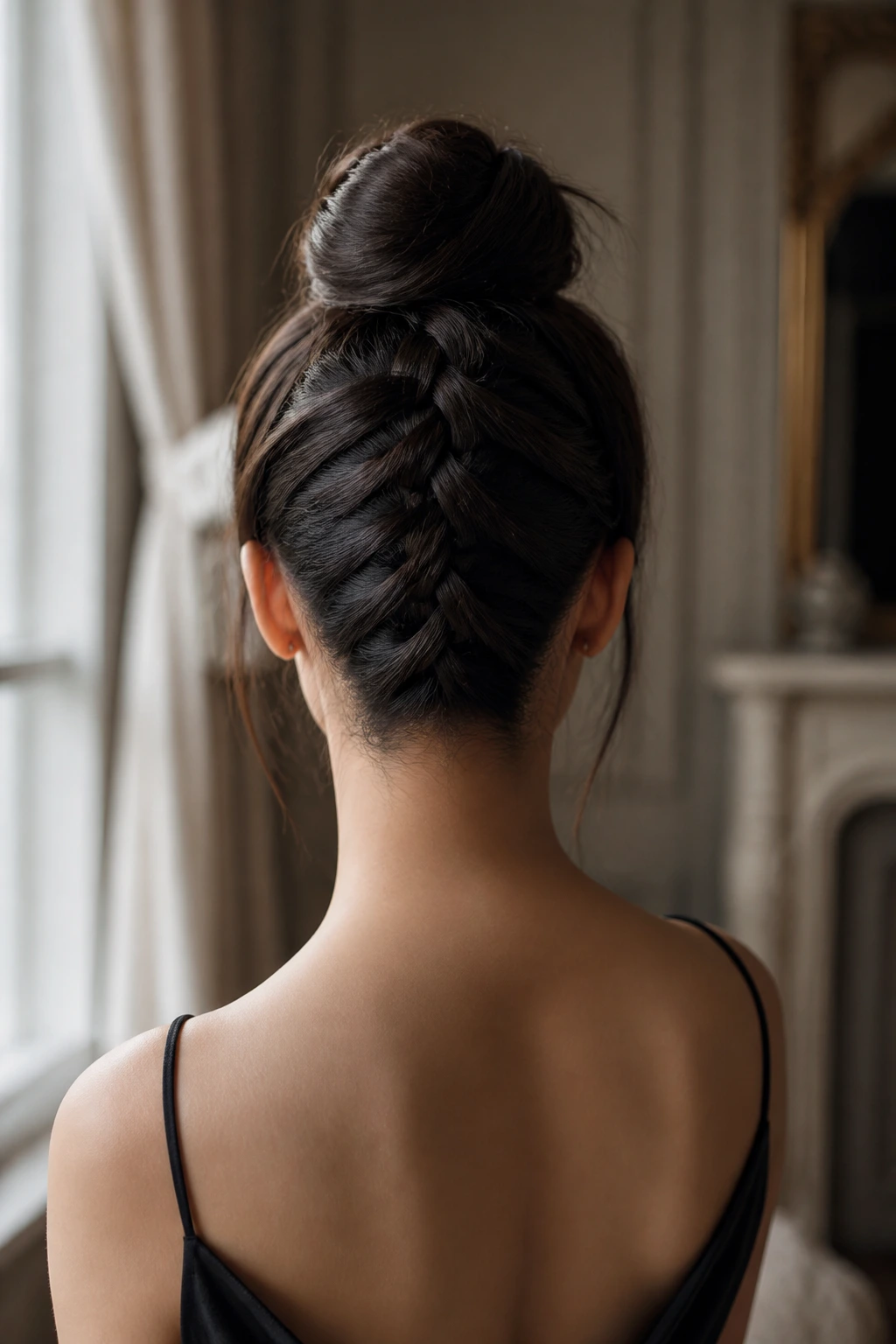
Instead of braiding from the forehead back, start your braid at the nape of your neck and braid upward toward the crown. Finish with a high bun or a top-knot. This “upside down” technique is a fun, unexpected way to wear your hair and is perfect for showing off back details on a dress or a top.
22. Multiple Micro-Braids into a High Pony
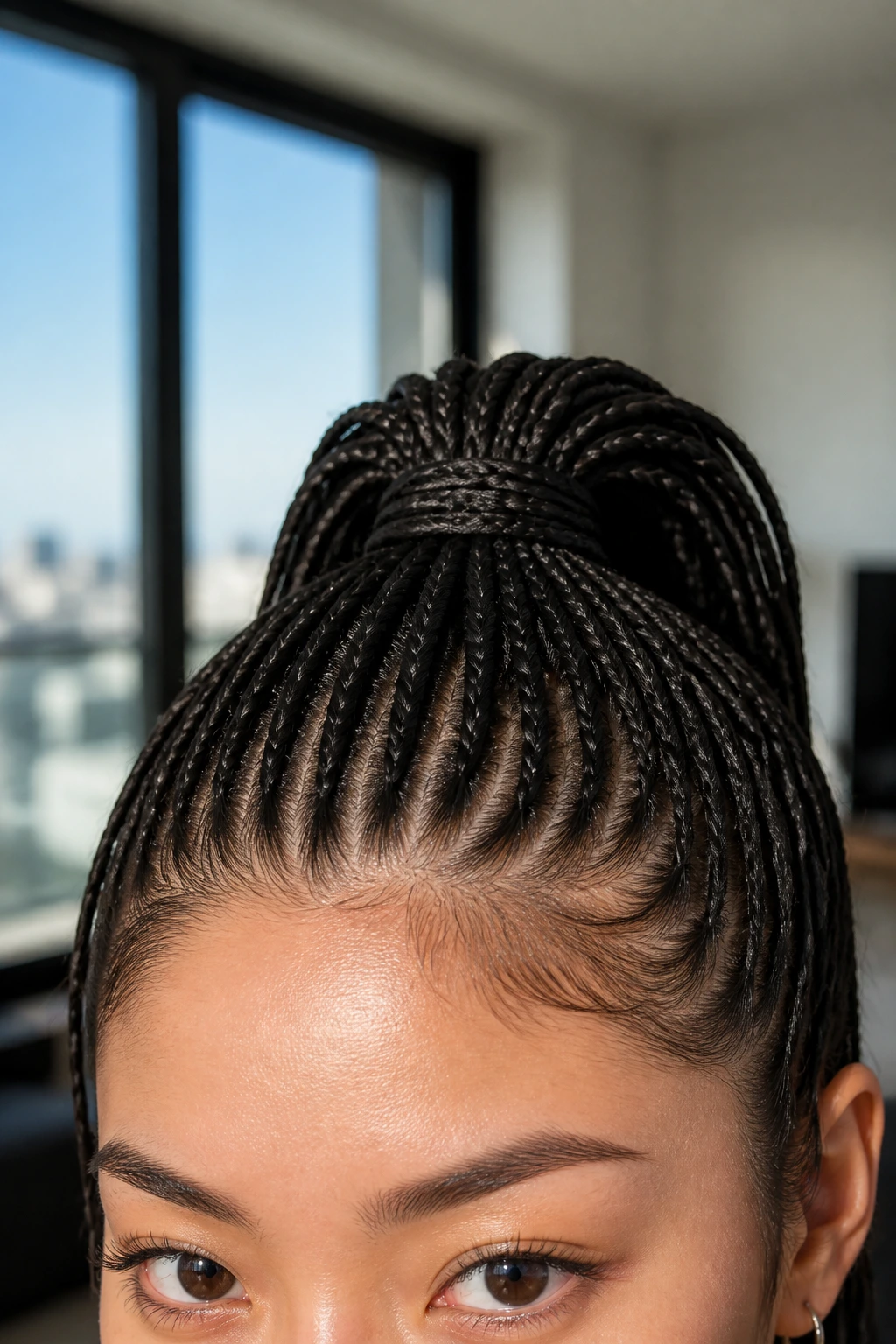
For a look that channels 90s-inspired minimalism, try braiding small, thin sections of hair near the hairline and pulling them back into a high, sleek ponytail. This keeps all the “flyaways” at the front of your head perfectly contained, which is a major advantage if you find your hair tends to get frizzy around the face when you put it up.
23. The Side-Braided “Lob”
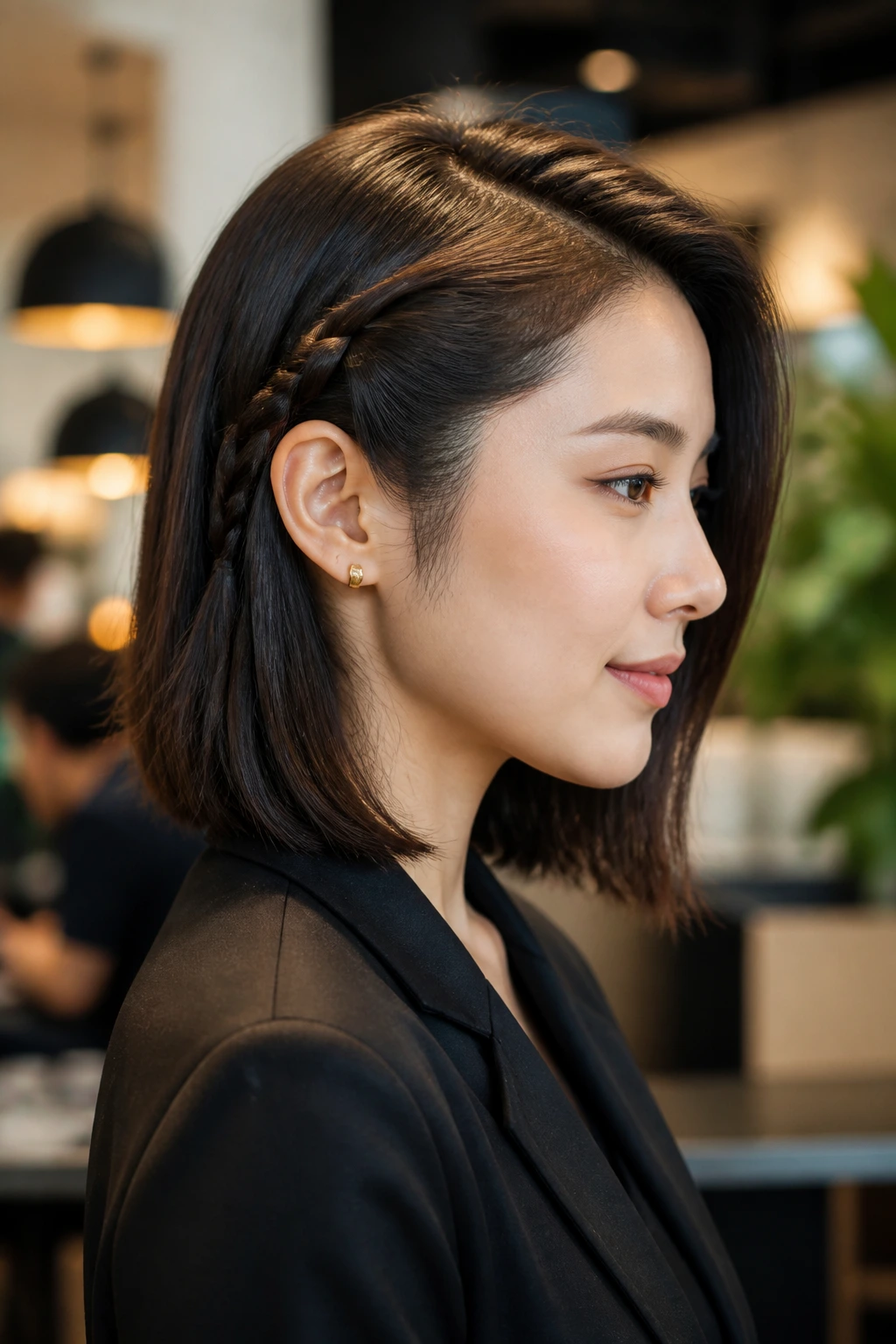
If you have a lob (long bob) and find it gets in your way, braid a small section behind one ear and pin it flat against your head. It’s a subtle, functional style that keeps your hair out of your face while letting the rest of your cut frame your features perfectly. It’s the kind of style that feels professional enough for the office but casual enough for a weekend brunch.
24. Fishtail Pigtails
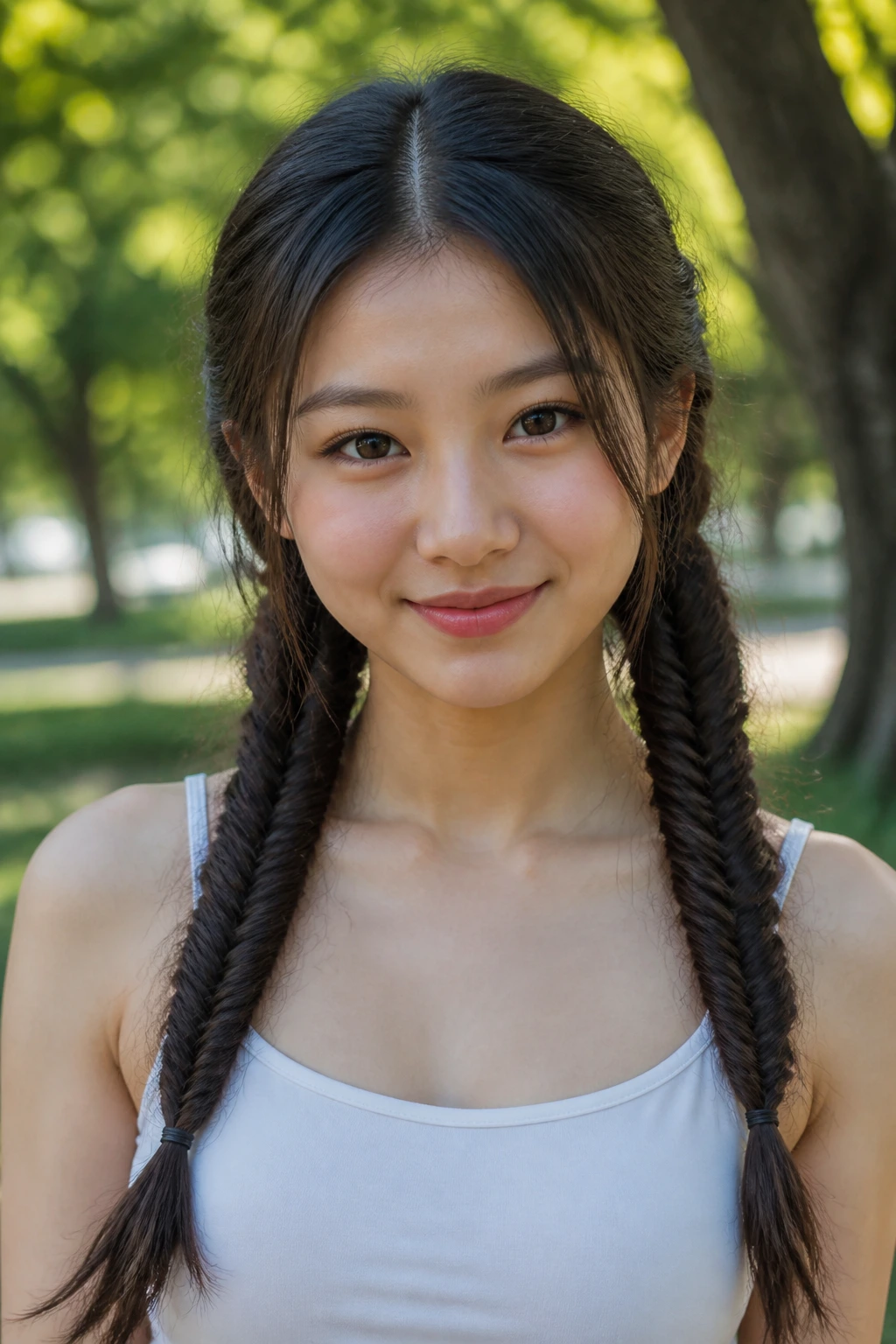
Two side-by-side fishtail braids are the perfect way to manage long, straight hair without it feeling like it’s pulling on your scalp. Fishtails hold their shape better than standard braids, meaning you won’t have to worry about them loosening up as you walk or move. Keep the braids tight at the top and looser at the ends for a modern, relaxed aesthetic.
25. The Elegant Halo Braid
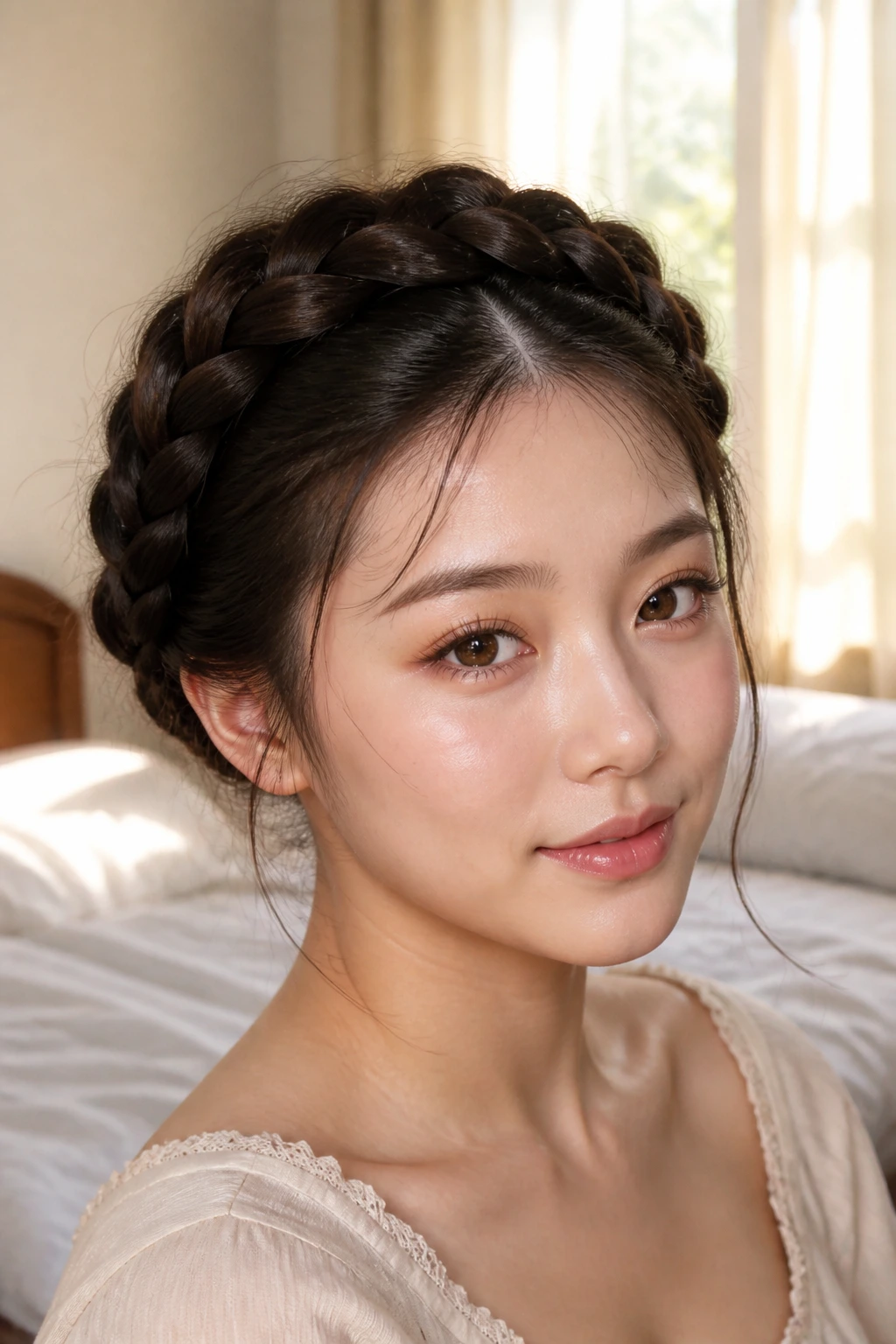
A halo braid is the ultimate “updo” for those who want their hair completely out of their face. It involves braiding the hair around the perimeter of the head and tucking the ends in. It takes a bit of practice to master the tension, but once you get it right, it is arguably the most secure and long-lasting style for straight, fine-to-medium hair textures.
Practical Tips and Common Mistakes to Avoid
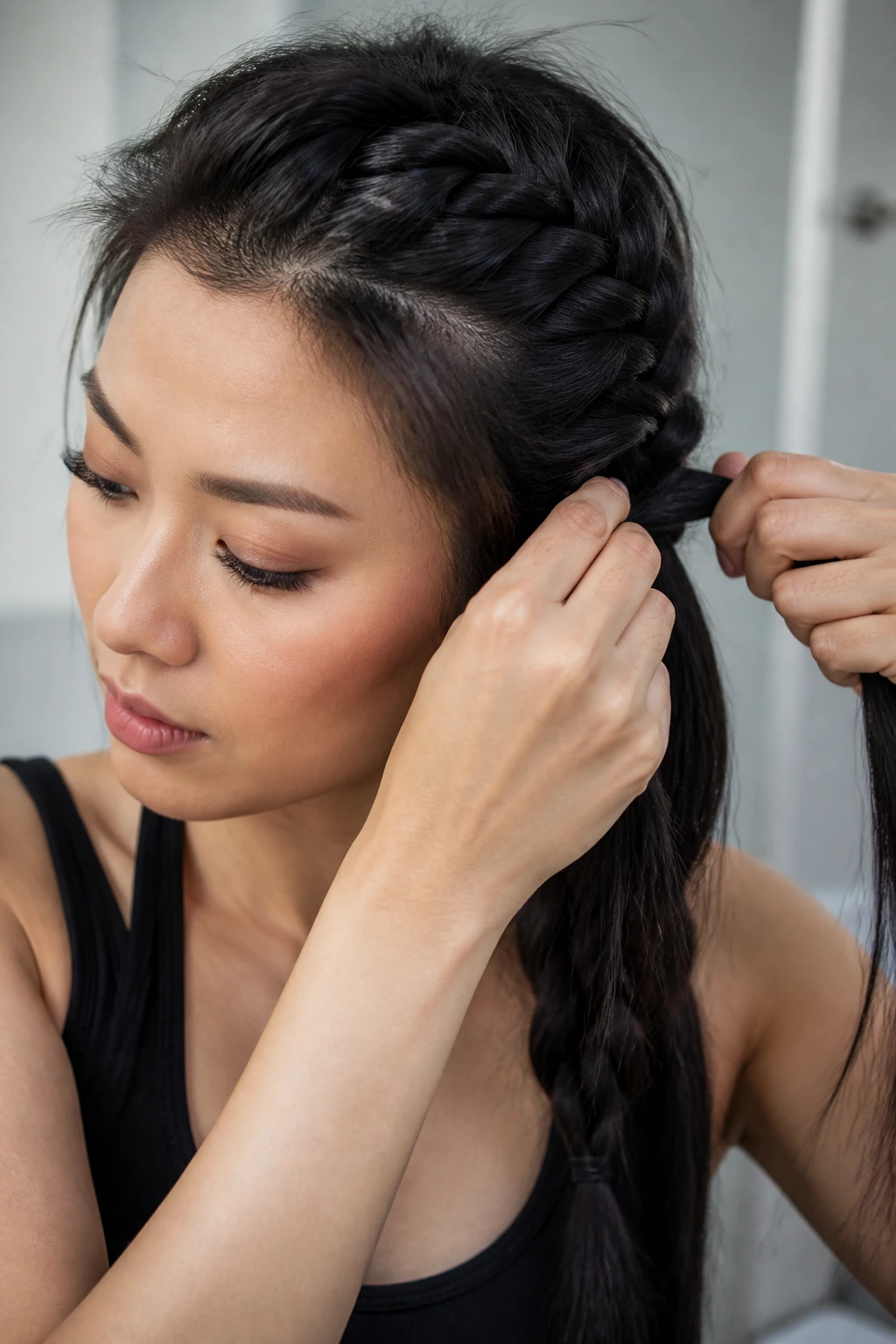
Mastering the art of the braid requires more than just knowing how to weave strands. If you have fine or straight Asian hair, the most common mistake is starting with hair that is “too clean.” Freshly washed hair is often too silky and soft, making it difficult to maintain the necessary friction for a long-lasting braid. Ideally, try braiding on day-two or day-three hair. If you must wash it, consider adding a texturizing powder or a dry shampoo to the roots and lengths to create a “grip” that prevents the strands from sliding.
Another common pitfall is ignoring the importance of the initial ponytail or anchor point. Because your hair may be heavy, using a flimsy, low-quality elastic can lead to sagging within minutes. Invest in snag-free, high-quality hair ties that offer a tight hold without needing to be wrapped around too many times. When you start your braid, ensure the base is tight—not to the point of causing a headache, but tight enough that the weight of the braid doesn’t pull on your scalp.
Equally important is the way you “pancake” your braid. This is the process of gently tugging at the sides of each woven section to create volume. Do this step-by-step as you go, rather than waiting until the end. By teasing each loop individually, you create a stronger structure that is less likely to collapse. If you try to pull at the whole braid once it is tied off, you risk creating uneven, sloppy sections that look thin or messy.
Variations and Adaptations
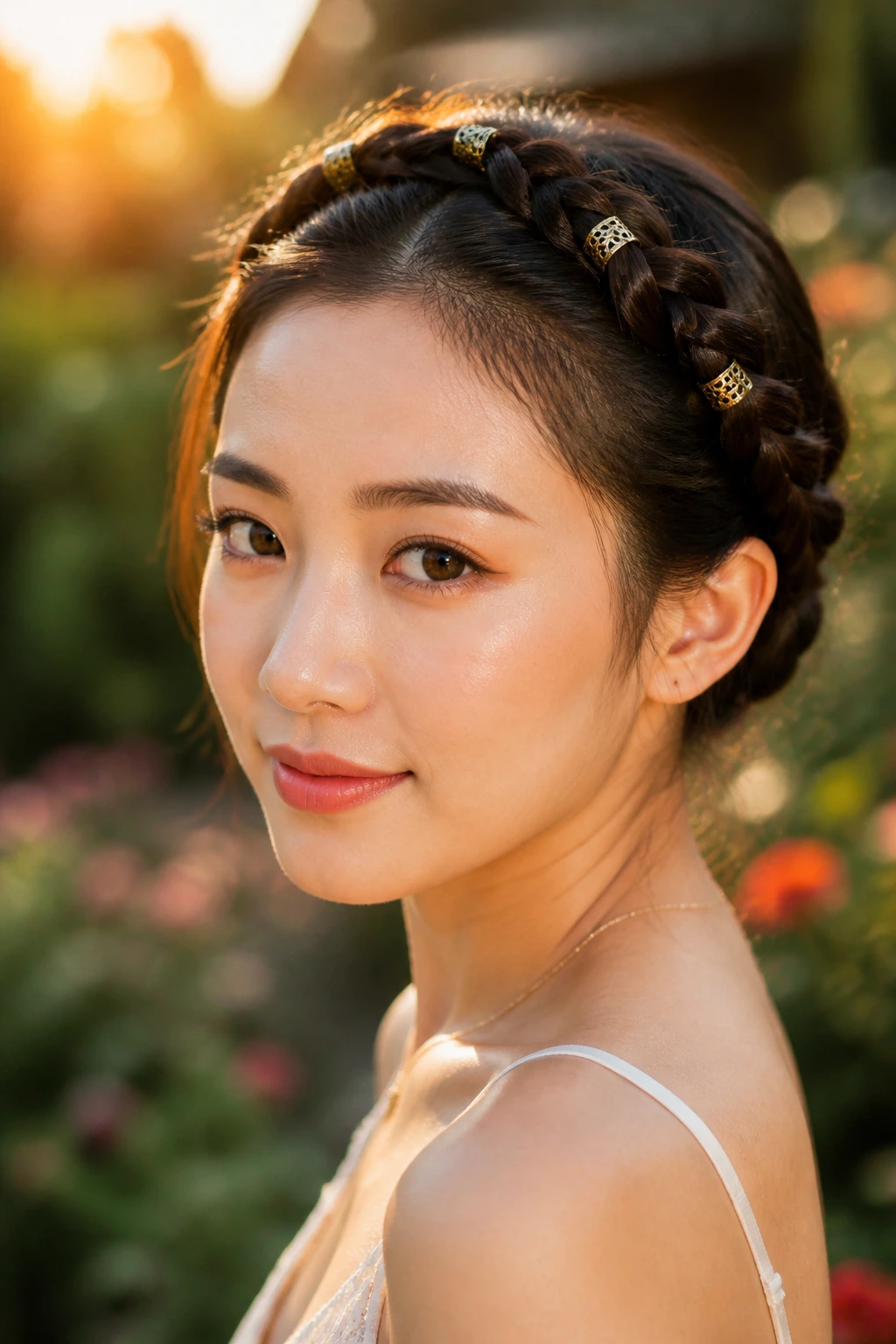
You can easily adapt these styles for different occasions by playing with your accessories. For a casual day, use small, clear elastics that blend into your hair color. For an event, try using gold or silver hair cuffs, velvet ribbons, or decorative pins to turn a standard braid into a piece of jewelry. If you have layers, don’t feel discouraged; layers actually add texture that can make a braid look more dimensional and interesting. If shorter pieces keep poking out, a small dab of styling cream or a light-hold pomade will help keep them smoothed into the main structure without looking greasy.
If you are looking to create a more bohemian feel, you can curl your hair lightly before braiding. The combination of the wave pattern and the braid makes the style hold even better because the texture is already broken up. For those with very dark or jet-black hair, the structure of the braid is what matters most; use a little bit of shine spray once you are finished to highlight the complexity of the weave. The natural sheen of dark, straight hair is a major asset, so lean into it rather than trying to matte it down.
Storage, Re-wearing, and Maintenance
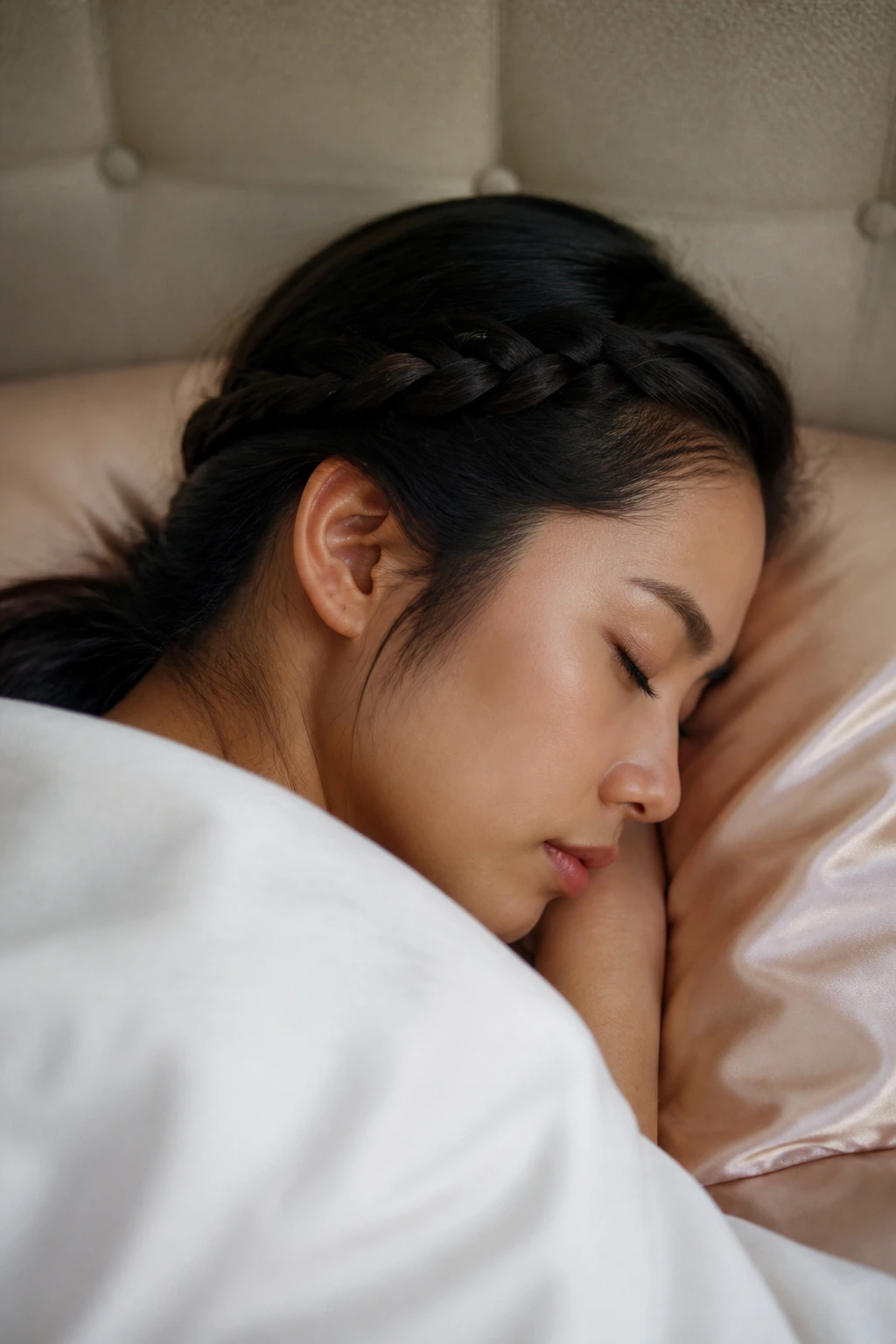
While braids are generally low-maintenance, they don’t have to be destroyed at the end of the day. If you want to preserve your braid, consider sleeping with a silk or satin pillowcase. This reduces friction and prevents the hair from getting frizzy while you toss and turn. Many people find that a loose braid actually looks better the next day once it has “set” a bit, giving it a soft, lived-in feel.
When it comes time to take your hair down, do not rip the elastics out. Always use a pair of small scissors to carefully cut the clear elastics rather than sliding them down the shaft, which can tear the hair cuticle. If you find your hair is tangled after a long day of braiding, work from the ends up using a wide-tooth comb and a little bit of leave-in conditioner. This minimizes breakage and ensures your hair stays healthy for your next styling session.
Serving Suggestions and Pairings
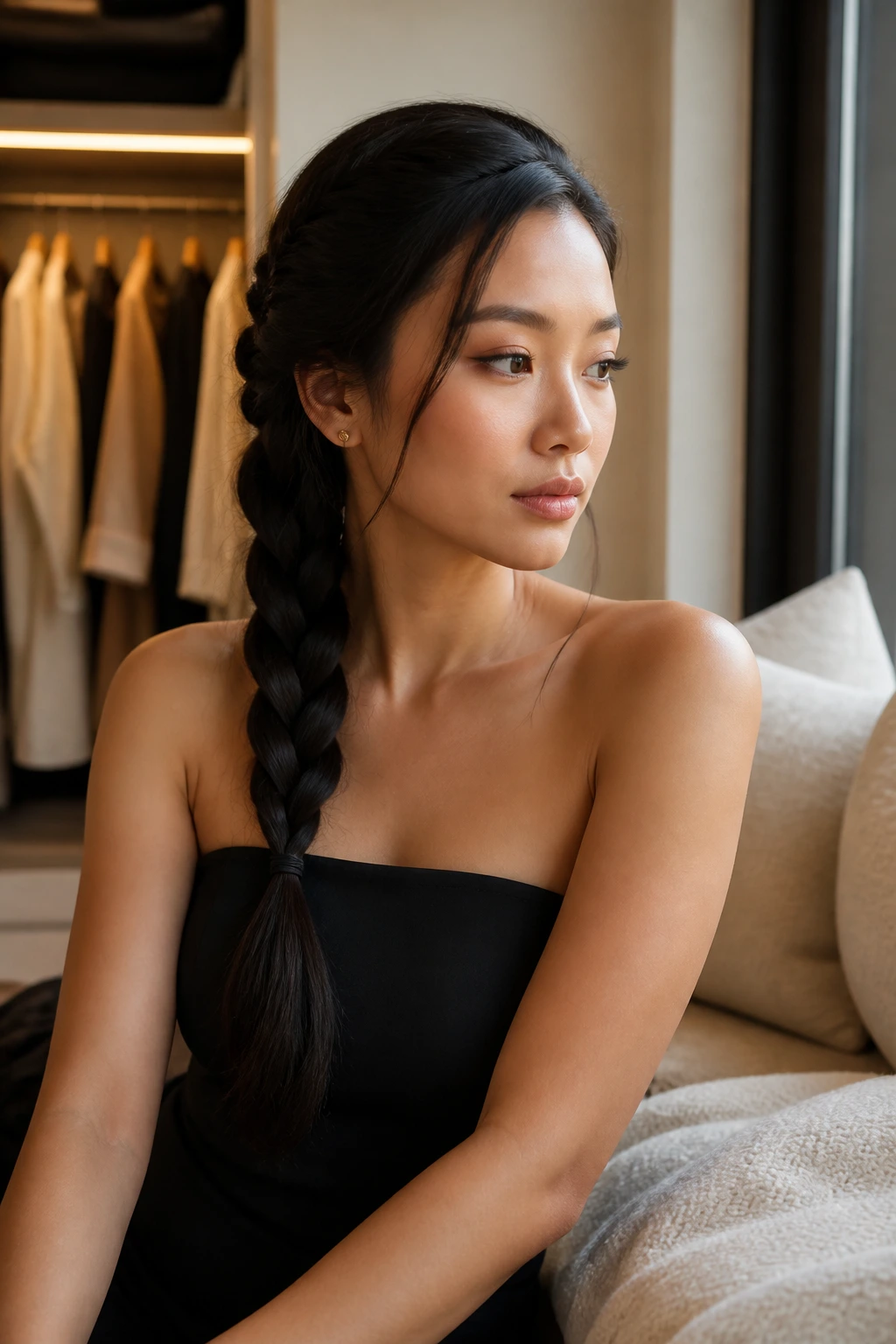
A well-executed braid pairs beautifully with a range of fashion choices, from minimalist, sharp-cut blazers to soft, flowing sundresses. Because the braid itself is a design element, it often looks best when balanced with your outfit. If you are doing an intricate crown braid, keep your jewelry simple—perhaps a pair of gold hoops or studs—to ensure the focus stays on the texture of your hair. Conversely, if you are wearing a simple, sleek side-braid, you have more room to experiment with statement necklaces or bolder makeup looks.
Consider the “vibe” of the occasion. A messy, deconstructed braid is perfect for outdoor events or casual lunches, while a tight, perfectly polished Dutch braid or high-ponytail braid lends itself well to professional settings or evening affairs. Ultimately, the best braid is the one that makes you feel confident and comfortable throughout your day. Don’t be afraid to practice in front of a mirror during your downtime; braiding is a muscle memory skill that becomes second nature the more you do it.
Final Thoughts
Braiding hair is as much about patience as it is about technique. Because Asian hair has a unique, smooth architecture, your primary goal is to create tension and texture where it doesn’t naturally exist. Whether you are opting for a simple, chic micro-braid or a complex, crown-wrapping masterpiece, the key is to ensure your base is solid, your sections are even, and you aren’t afraid to use a little product to help your style hold.
Experimenting with these twenty-five styles will not only give you a repertoire of looks for any situation, but it will also teach you how your hair behaves under different conditions. Once you understand how to manipulate the weight and silkiness of your strands, you will find that a good braid is often the most reliable, practical, and elegant solution for any day. Keep practicing, keep your tools clean, and enjoy the process of turning your hair into a creative, personal accessory.