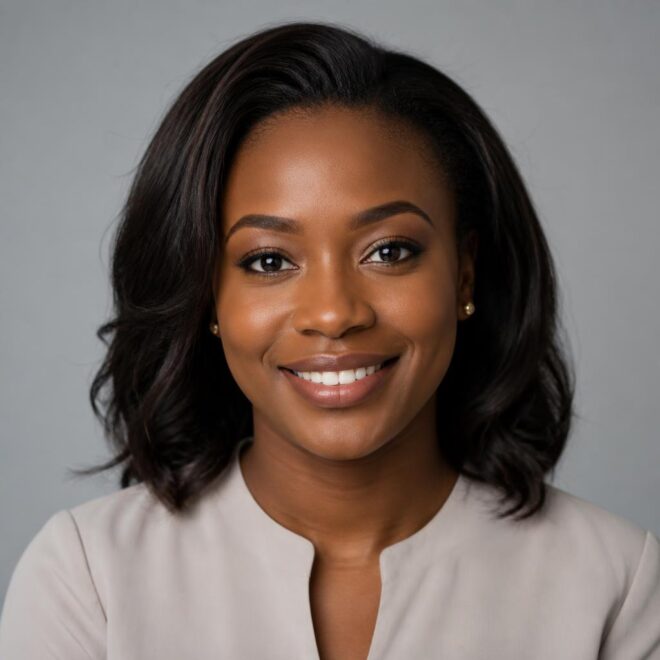


The journey toward finding the right blonde shade for textured hair is often fraught with hesitation, mostly because the chemical process required to lift dark pigment can be a gamble for our delicate curl patterns. When you decide to bridge the gap between a rich, deep natural texture and a high-impact blonde, the bob cut becomes your most reliable ally. It isn’t just about chopping off length; it is about creating a structural frame that highlights the health and volume of your hair rather than struggling against its density. Achieving a perfect blonde bob on natural hair requires more than just a trip to the salon—it demands a commitment to moisture, protein balance, and the kind of precision cutting that respects the way your coils shrink and stretch.
Many believe that blonde is a singular color, but the spectrum available for natural textures is vast, ranging from warm honey glazes that mimic the sun to icy platinum tones that demand architectural upkeep. If your hair is currently in its natural, chemical-free state, the shift to a lighter shade is a significant transition. You are moving from a state of low maintenance to a high-commitment relationship with your stylist. By opting for a bob, you are effectively limiting the surface area that needs intense bleaching, which allows you to focus your resources—both time and money—on keeping the hair that remains on your head incredibly healthy.
Let’s be honest: the most common pitfall when going blonde on natural hair is the loss of curl definition. If the bleach is too harsh, your ends will hang limp, turning your vibrant coils into frizz. The following exploration of styles is designed to help you navigate this transition with an eye toward both style and structural integrity. Whether you are leaning toward soft, buttery highlights or a bold, solid color, the key is to ensure your cut complements the lift.
1. Warm Honey Balayage on Coiled Bobs
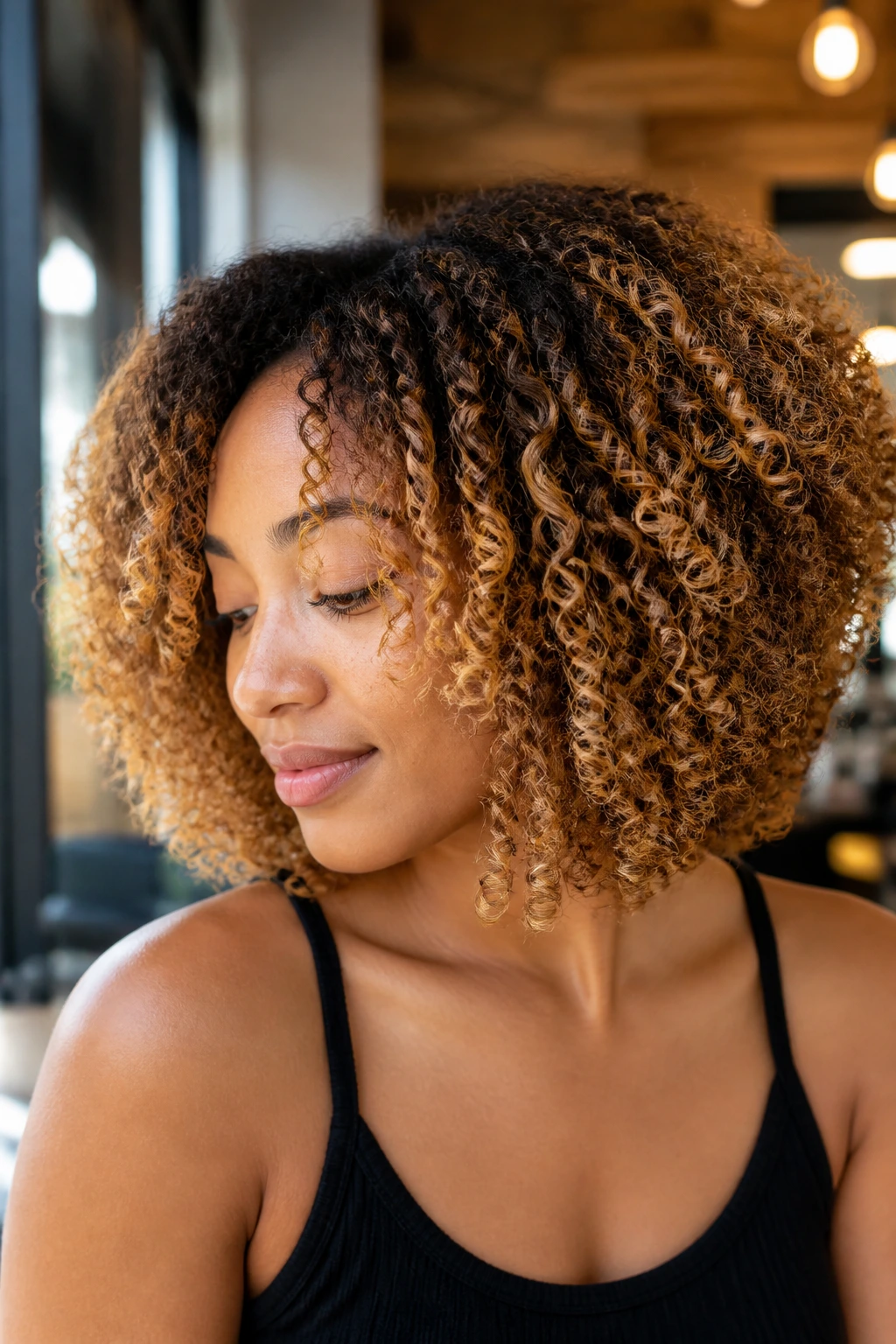
Honey tones are the gateway for most people looking to lighten their hair because they sit naturally alongside the warm undertones found in most dark, natural hair textures. A balayage application is key here, as it allows the stylist to paint the color onto the surface of the curls without saturating the roots, leaving the hair closer to the scalp in its natural, darker state. This creates a soft grow-out phase that doesn’t require you to be back in the salon every four weeks for a touch-up.
Why This Works for Curls
The depth of the roots adds a sense of volume that is often lost when you color the entire head a single, flat shade. By keeping the roots dark and blending the honey into the mid-lengths and ends, you create a dimension that mimics the way light naturally hits the hair. This is particularly effective on tighter coils, where light tends to get trapped in the texture.
Maintenance Considerations
- Use a color-safe, sulfate-free shampoo to prevent the warm tones from fading into a brassy orange.
- Incorporate a weekly deep conditioning mask that contains protein to repair any structural gaps caused by the lightener.
- Focus your styling products on defining the curls, as the lighter pieces will look most vibrant when they are clumped together rather than separated.
Pro tip: Ask your stylist to use a bond-building additive in the lightener to protect your cuticle during the process.
2. Platinum Blonde Blunt Cut
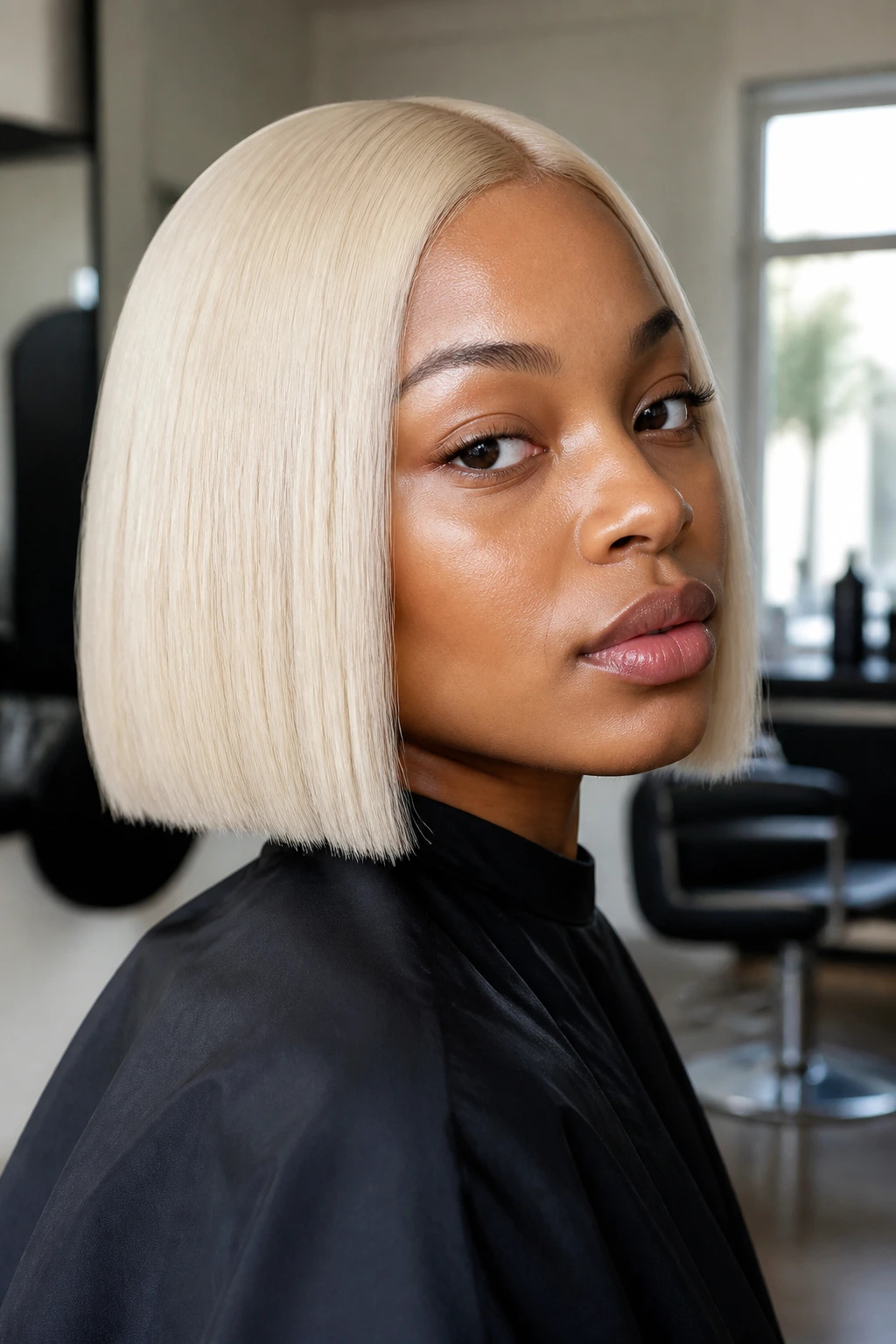
This is the dramatic shift. Going for a stark, solid platinum blonde on a blunt-cut bob is a statement that demands attention. Because this requires a significant lift, it is essential that your hair is already in a very strong, hydrated state before the process begins. A blunt cut—where the ends are cut straight across without excessive layering—provides a dense foundation that makes the blonde color look thick and luxurious rather than thin and fragile.
The Role of Precision Cutting
When your hair is bleached to such a high level, the ends are naturally the most vulnerable part of the strand. A blunt cut removes the wispy, damaged ends, making the entire bob look full and healthy. It’s an architectural approach to hair that emphasizes the crispness of the line, especially when paired with a smooth, stretched style.
Styling for Impact
This style looks best when the hair is moisturized to the point of sheen. Since platinum hair can look dull if it’s dry, a lightweight, non-greasy oil or a high-quality curl cream is your best friend. The goal is to reflect light off the platinum strands, turning the bob into a mirror for your complexion.
3. Strawberry Blonde Graduated Bob
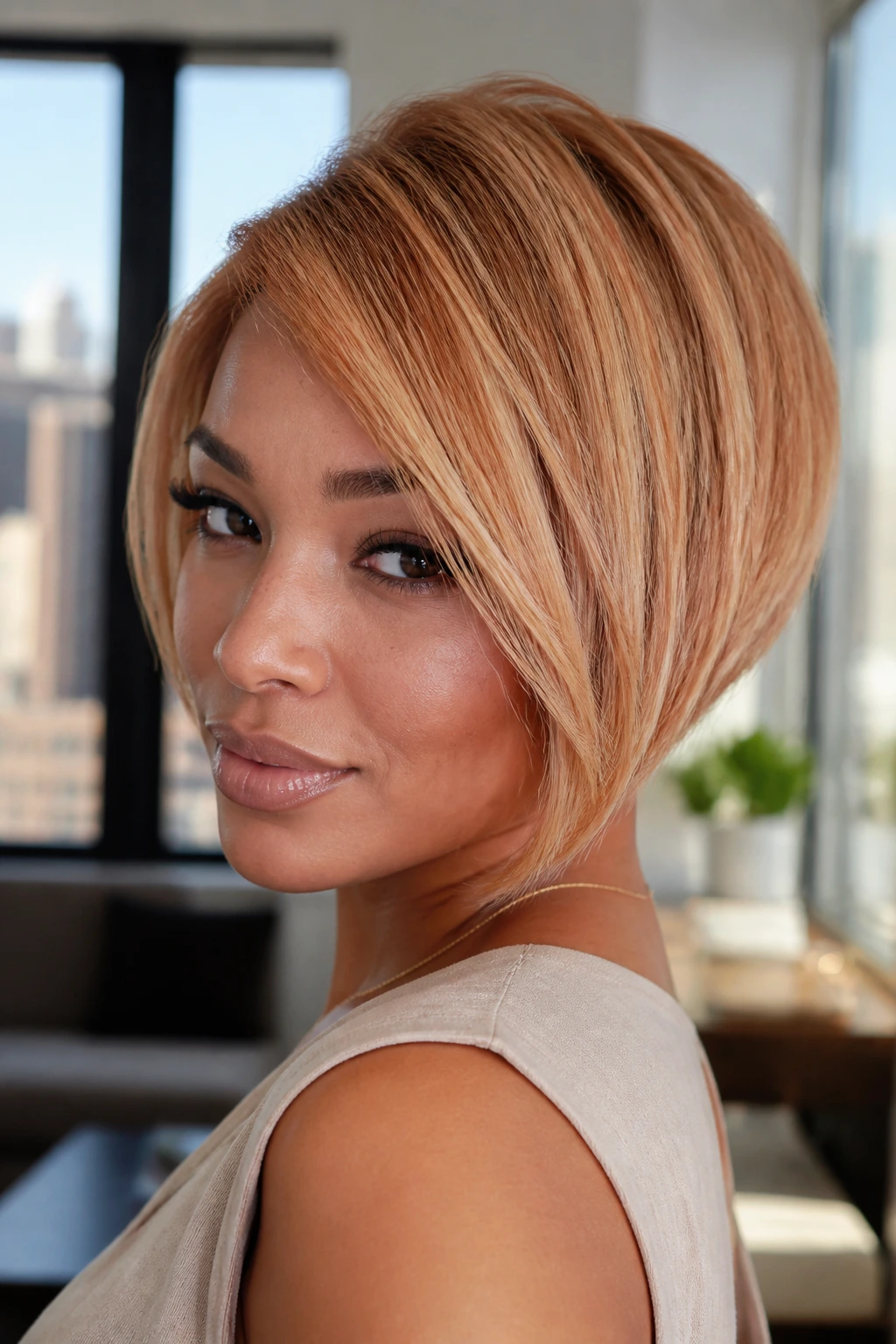
A strawberry blonde bob combines the sweetness of red with the lightness of gold, creating a shade that is incredibly flattering on warmer skin tones. A graduated bob—shorter in the back and longer in the front—adds a sense of movement to natural hair that might otherwise feel heavy. The transition from the shorter nape to the longer face-framing pieces provides a modern, sophisticated edge that grows out beautifully.
How to Achieve the Right Hue
- Consult your stylist about the specific ratio of copper to gold.
- Natural hair has a tendency to pull warm, so the “strawberry” effect often happens naturally if you don’t over-process the lift.
- Avoid going too light, as the red tones will look most vibrant when they have a slightly deeper, more saturated base.
Managing the Shape
Because this cut is graduated, you will need to trim the back of your neck more often than the front. This prevents the “mullet” look that can occur as natural hair grows and loses its initial shape. Every six to eight weeks is standard for maintaining the sharpness of the graduation.
4. Ash Blonde Highlights on Deep Coils
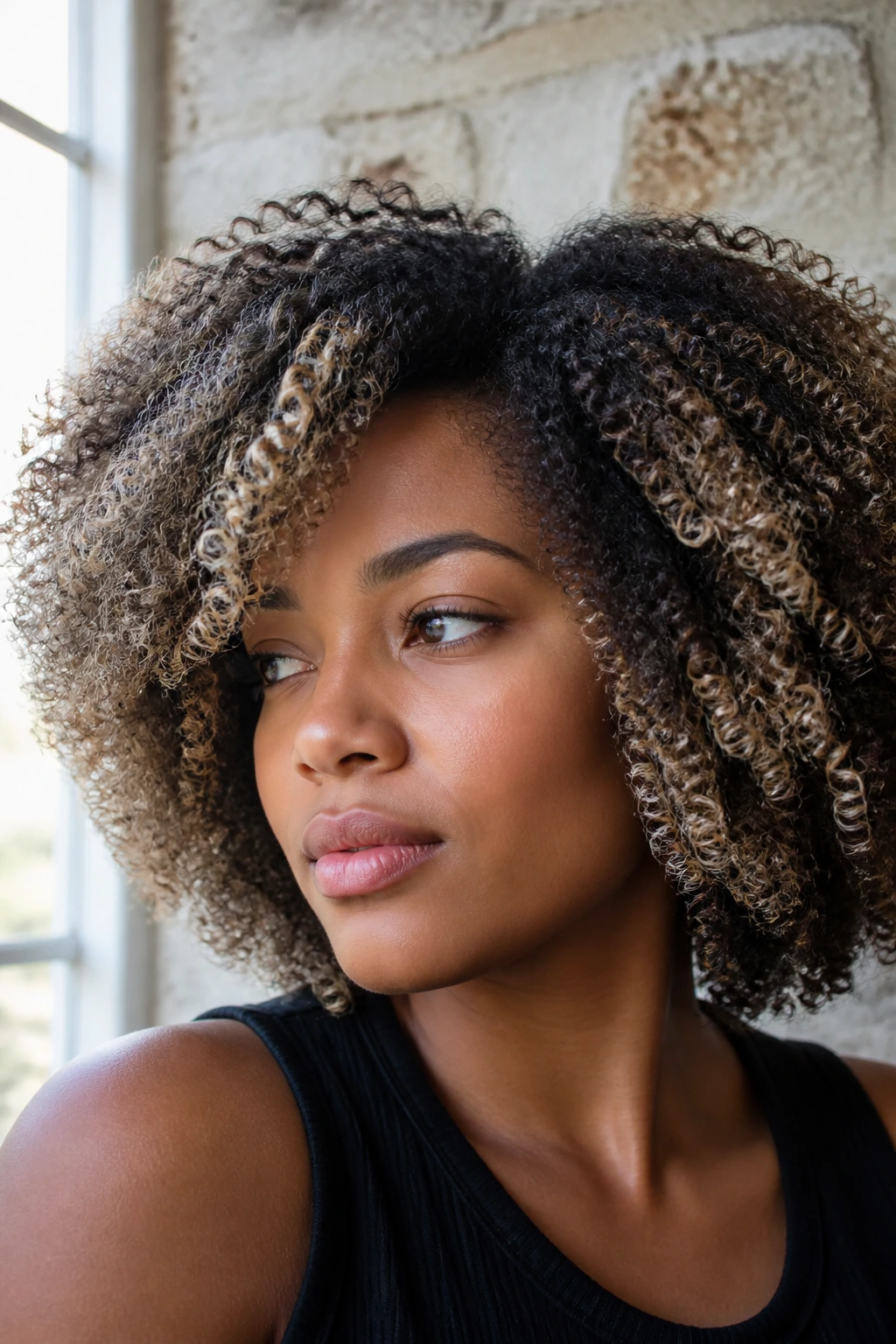
If your goal is to cool down your look, ash blonde is the answer. For natural hair, which often leans toward red or orange when lightened, ash blonde is a challenge to achieve, but the payoff is an ultra-modern, metallic aesthetic. By weaving thin ash-blonde highlights throughout your natural color, you create a sophisticated contrast that feels intentional and high-end.
Why This Technique Succeeds
Instead of a full-color transformation, highlights allow you to keep the vast majority of your natural hair pigment intact. This is the healthiest path to being a blonde bob-wearer. When the ash blonde hits your natural dark coils, the result is a sophisticated, multidimensional look that feels very lived-in and natural.
Key Maintenance Tip
Ash blonde is notoriously quick to turn brassy. You must use a purple shampoo or a blue-toning mask at least once a week to neutralize the yellow tones that will inevitably emerge as the color begins to age. Don’t leave the product on too long, or you might end up with lavender hair—not that that’s necessarily a bad thing.
5. Curly Champagne Blonde Shag
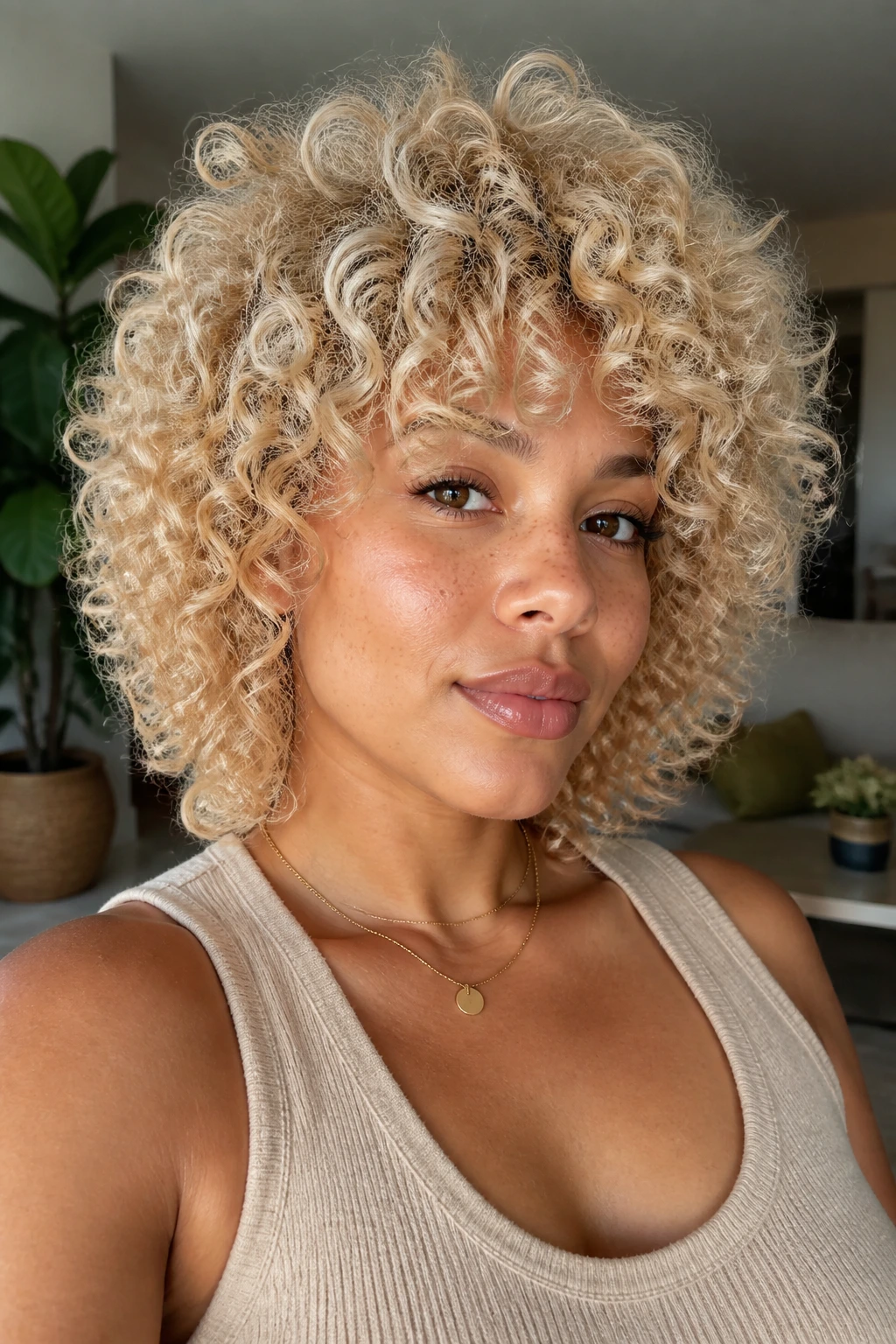
The shag bob is making a comeback, and when executed on natural hair in a champagne blonde hue, it’s nothing short of electric. The shag is characterized by heavy layering and plenty of texture at the crown, which works beautifully with the natural height and bounce of your curls. Champagne blonde—a pale, slightly warm blonde—adds a lightness to the layers that makes the cut feel airy and playful.
The Power of Layers
Layers are essential for this look. They allow your curls to spring up and take shape, preventing the “pyramid effect” where the hair is flat on top and wide at the bottom. The champagne blonde color emphasizes the individual curls, making each twist and turn of your hair visible and distinct.
Styling the Layers
You need a good curl-defining mousse or a light-hold gel for this style. When you apply your product, scrunch it in from the bottom up to encourage the layers to lift. Drying your hair with a diffuser on a low heat setting will also help to pump up the volume at the roots, which is critical for the success of a shag cut.
6. Caramel Blonde A-Line Bob
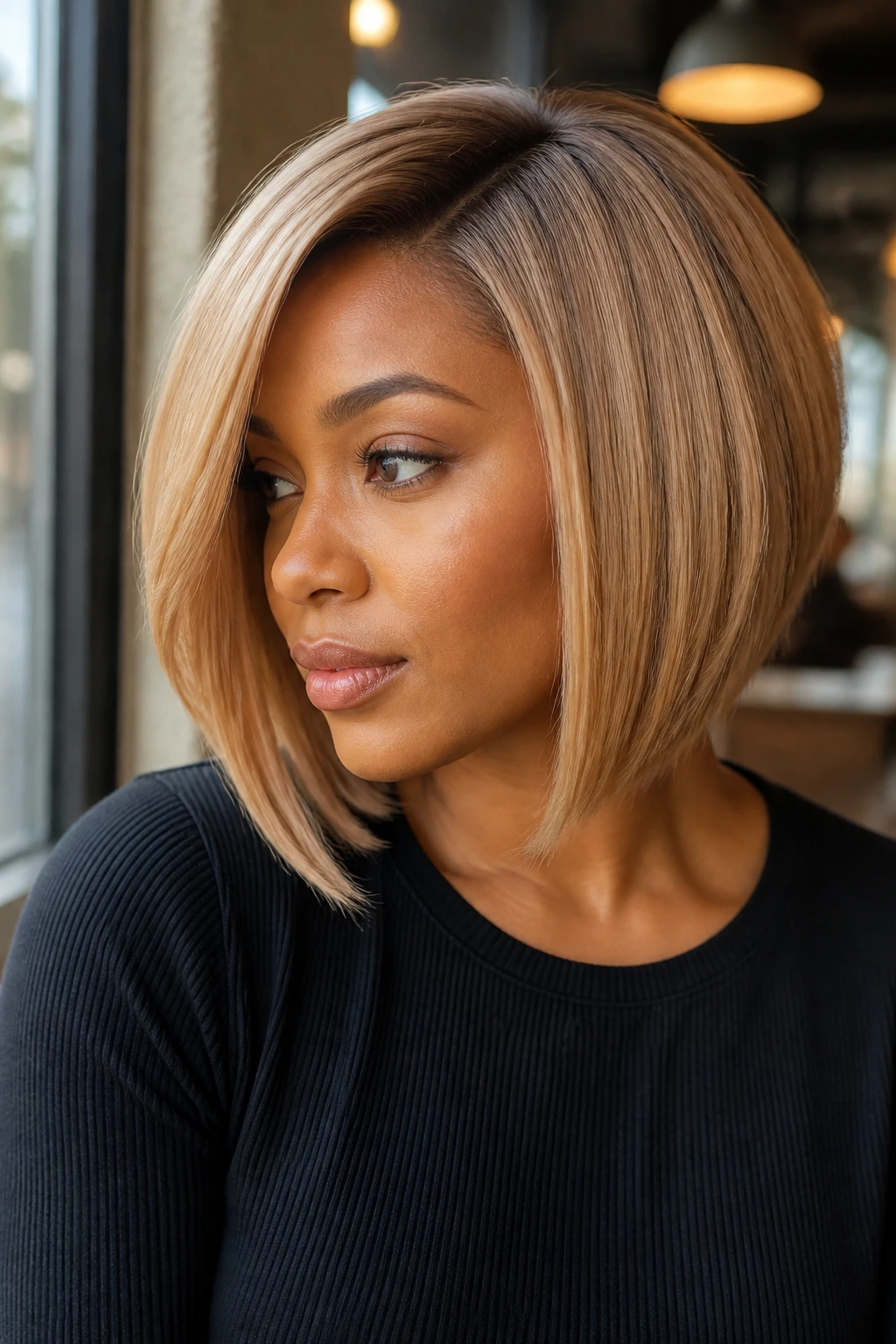
The A-line bob is perhaps the most universally flattering cut because it draws the eye downward, elongating the neck and framing the face. When you combine this shape with a rich caramel blonde color, you get a look that is approachable, warm, and exceptionally easy to style. Caramel is a deeper, browner blonde that bridges the gap between light brown and bright gold, making it perfect for those who want to transition to blonde without a radical change.
Why It’s a Great Starting Point
- It requires less bleaching than platinum or light blonde.
- It maintains the health of your curls significantly better.
- It grows out naturally with your dark roots, requiring minimal upkeep.
Pairing with Texture
Whether you wear your hair in a wash-and-go or stretched, the A-line shape maintains its integrity. If you wear it stretched, the angle of the bob will be more pronounced, giving you a sleek, classic look. If you wear it natural, the shape will be softer and more rounded, which is equally beautiful.
7. Butter Blonde Rounded Bob
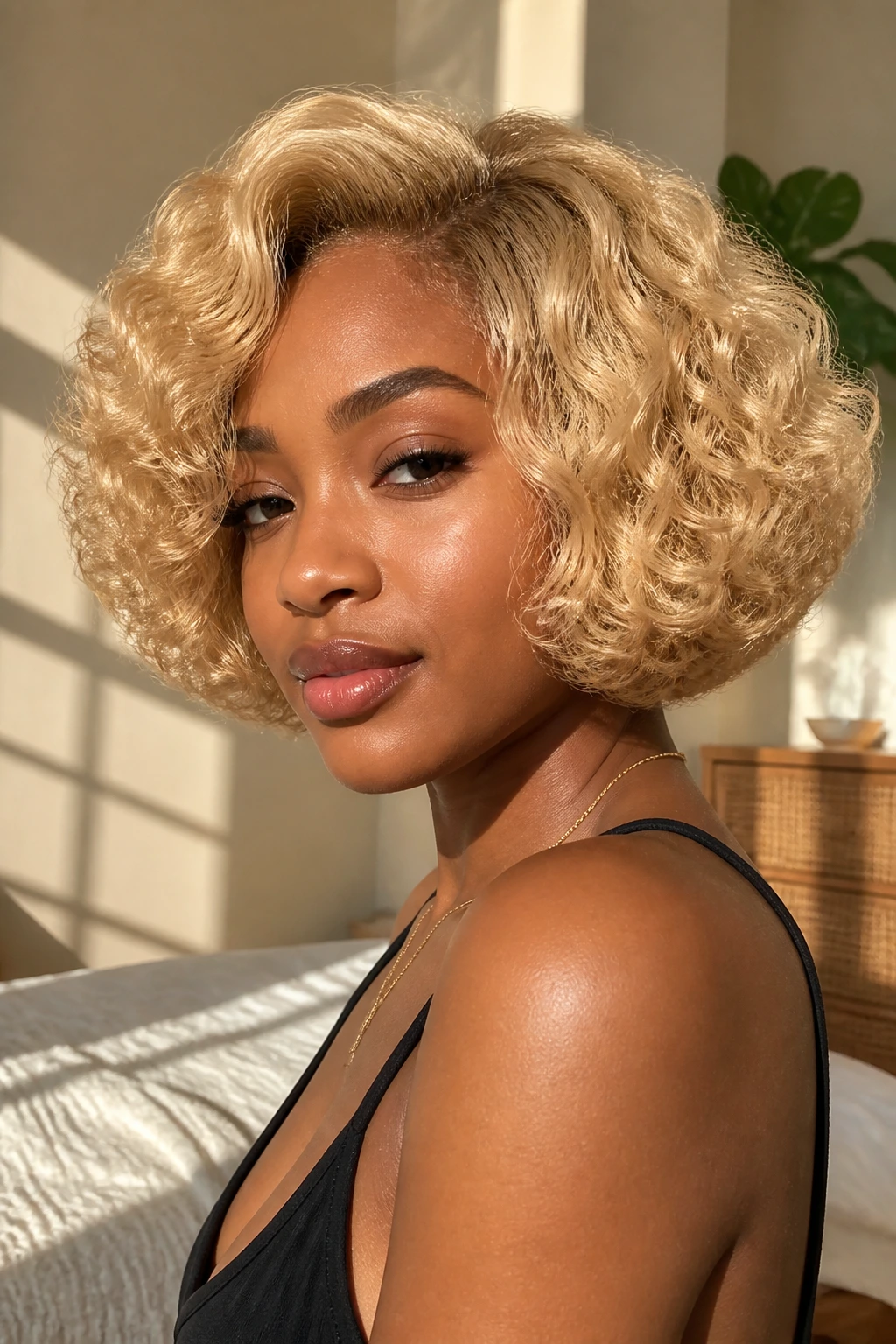
A rounded bob is all about volume and soft edges. When colored a buttery, creamy blonde, it evokes the feeling of vintage glamour. This look is perfect for someone who has a lot of density and wants to showcase their hair’s ability to hold a shape. The butter blonde shade is vibrant and rich, requiring a healthy amount of shine-enhancing product to look its absolute best.
Defining the Shape
This style works exceptionally well on hair with a medium curl pattern. The rounded cut keeps the hair away from the shoulders, preventing the ends from rubbing on your clothes and breaking off—a common issue for those who want to keep their hair in a specific bob shape.
Shine is the Priority
- Use a gloss treatment every few weeks to seal the cuticle.
- Finish your styling routine with a lightweight shine spray to make the blonde pop.
- Avoid heavy waxes or pomades, as they will coat the hair and dull the vibrancy of the butter color.
8. Espresso and Blonde Ombre
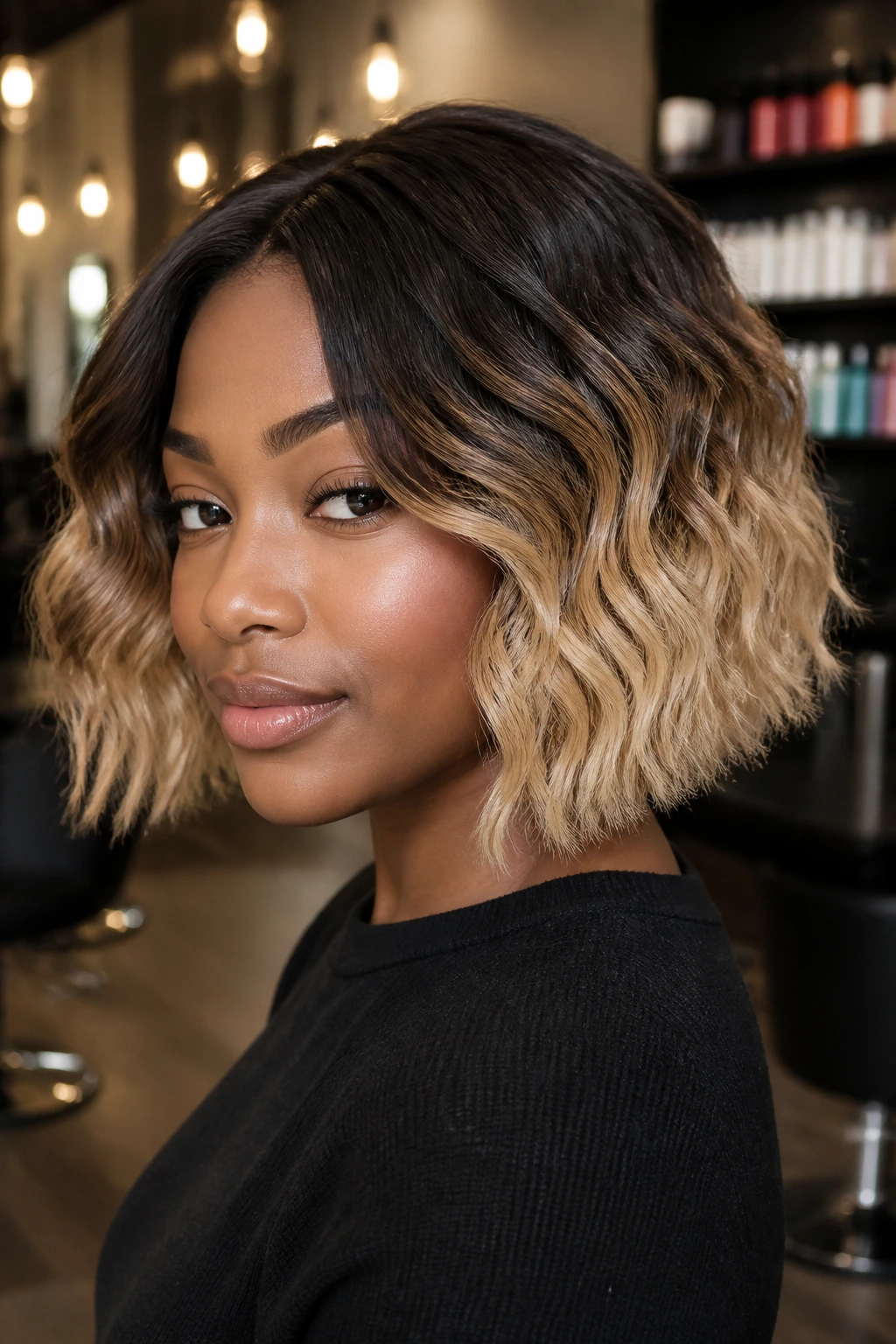
If you aren’t ready to commit to blonde everywhere, the ombre look offers a perfect compromise. By starting with a deep, natural espresso color at the roots and fading into a bright, light blonde at the ends, you keep the health of your scalp and crown intact. The bob length ensures that the ombre doesn’t drag on for too long, keeping the transition tight and impactful.
Creating the Gradient
The success of this look depends on the “melt.” You want the espresso to fade into the blonde seamlessly, without a harsh line of demarcation. A good colorist will use a technique where they smudge the two colors together to create a natural-looking transition that mimics the way hair lightens from sun exposure.
Why This Style Lasts
You can go months without needing a color touch-up. As your hair grows, the espresso portion simply gets longer, and the blonde ends remain as a bright contrast. It is the ultimate low-maintenance way to play with blonde on a shorter, bob-length cut.
9. Copper-Blonde Curly Bob
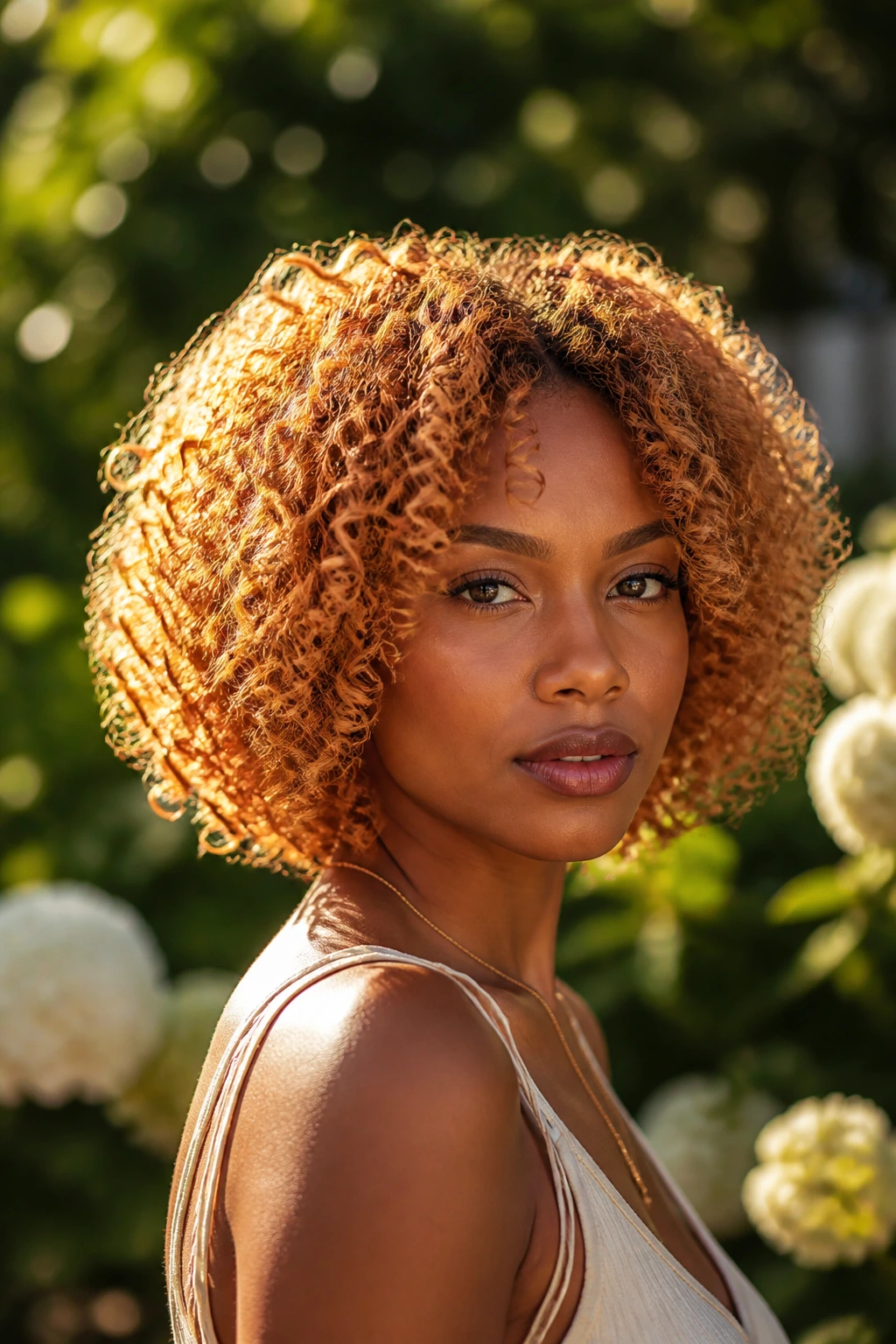
Copper-blonde is a vibrant, fiery shade that looks incredible against deep skin tones. When placed on a curly bob, it creates a look that is bold, energetic, and full of life. This shade is particularly striking when your hair is healthy and hydrated, as the light reflects off the copper, giving it a metallic sheen.
Achieving the Copper Tint
- Copper is a persistent color, so make sure you are ready for a long-term commitment.
- It can be achieved through a permanent color process or a gloss, depending on your starting hair color.
- The key is to keep it from washing out; use a color-depositing conditioner to maintain the intensity of the copper every time you wash your hair.
Styling for Copper
Because the color is so bold, you don’t need much in the way of accessories. Keep your makeup simple and let your hair be the statement piece. The shape of the bob provides the structure, and the color provides the personality.
10. Platinum Blonde Tapered Bob
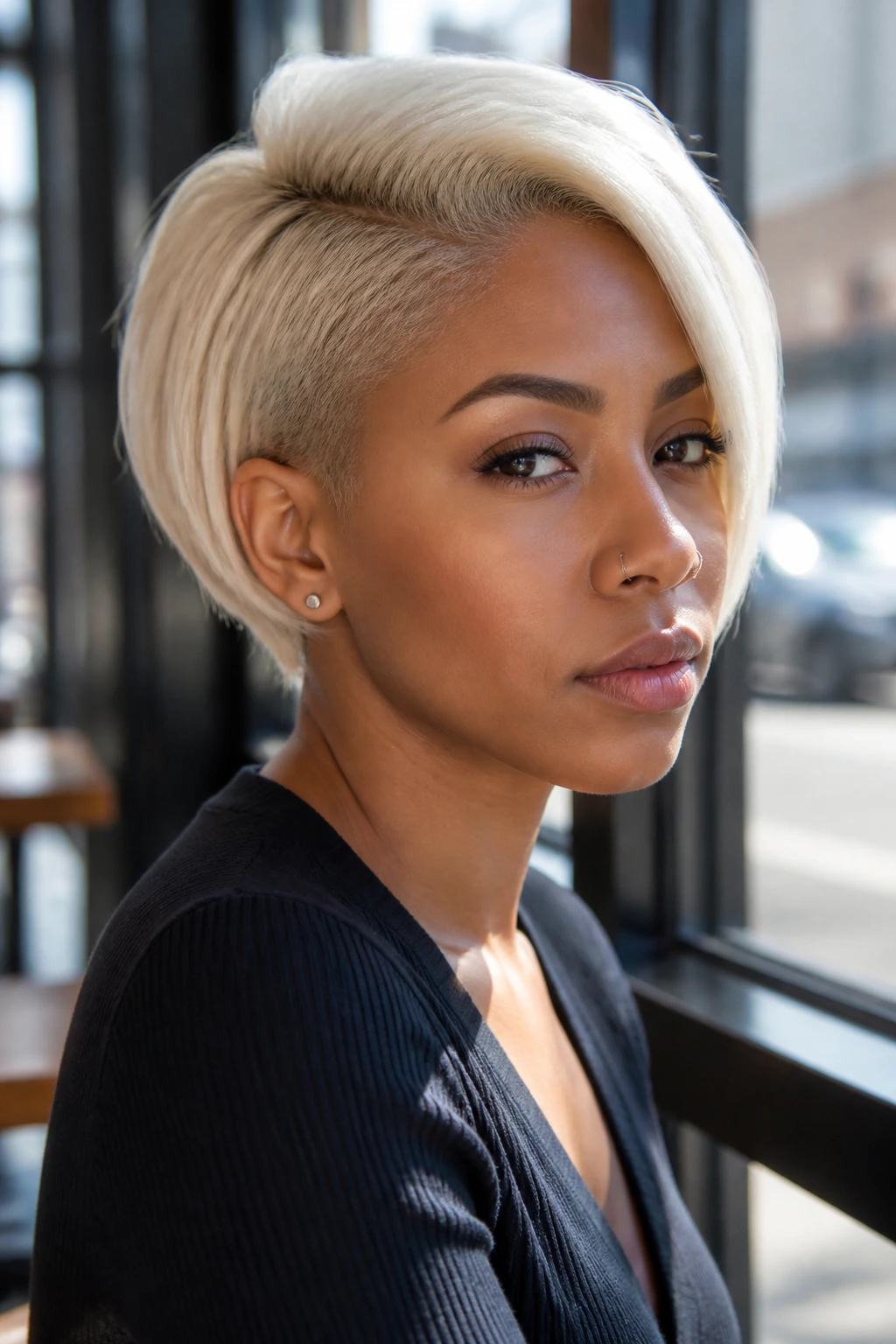
A tapered bob features hair that is cropped close at the nape and grows longer toward the crown and face. When this cut is paired with platinum blonde, it becomes a high-fashion, edgy look. The contrast between the dark skin often found at the nape and the bright platinum strands creates a visual sharpness that is hard to ignore.
The Taper Effect
The tapering at the back allows your curls to stand up and create a natural halo effect. It’s a very practical cut for warmer months when you want to get the hair off your neck, but it still maintains the “bob” silhouette.
Maintenance and Growth
You will need regular edge-ups to keep the nape clean. The platinum blonde will grow out quickly, so be prepared for a touch-up schedule that aligns with your hair’s growth rate. It’s a high-maintenance style, but for the impact it delivers, many find it to be worth the effort.
11. Pale Blonde Micro-Bob
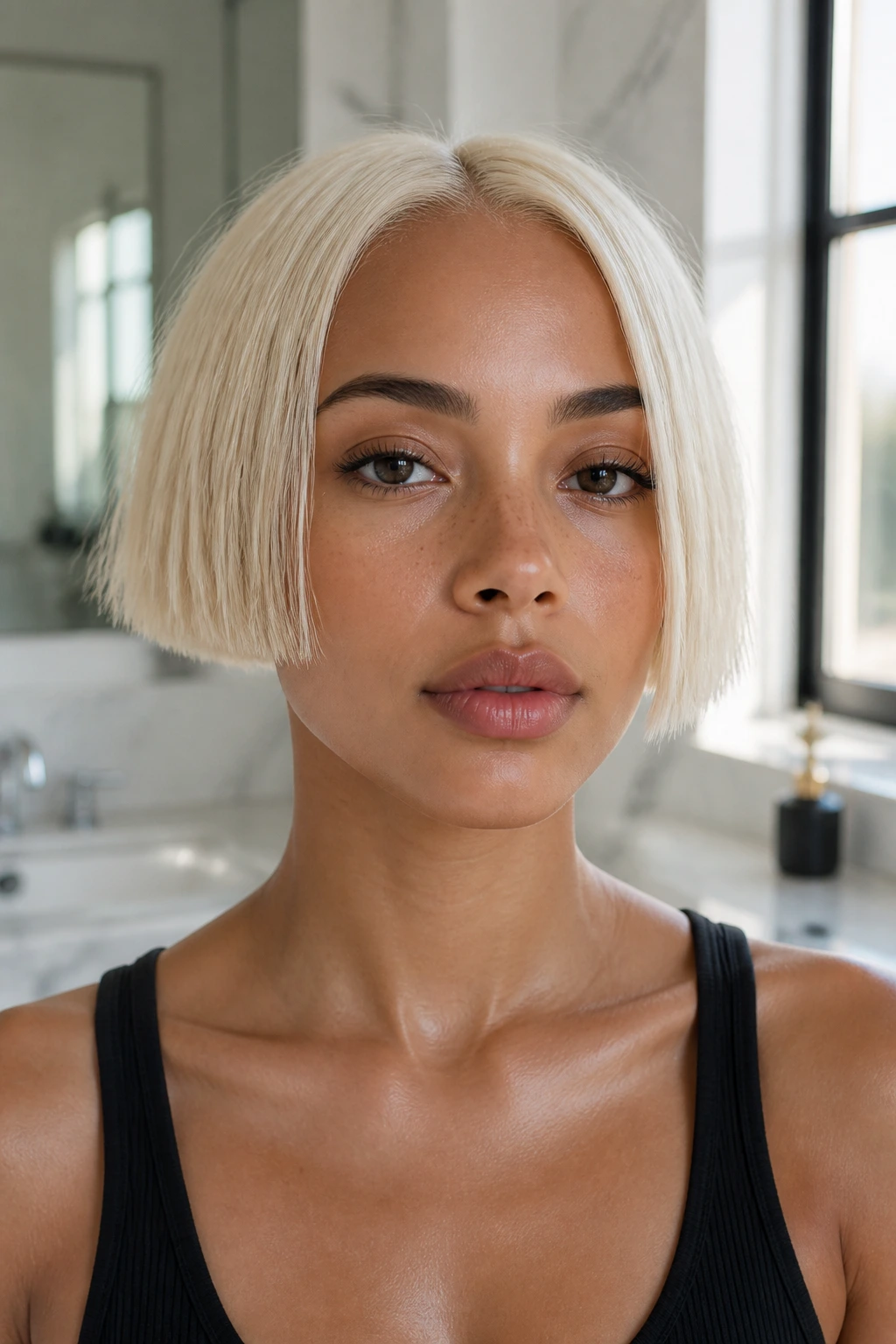
A micro-bob ends right at the chin, making it a very bold and face-framing style. When done in a pale, almost white-blonde shade, it looks futuristic and clean. This is not a style for the faint of heart; it requires confidence and a willingness to maintain the length with frequent trims.
Who Should Try This?
If you have a strong jawline and want to highlight your cheekbones, this is the cut for you. The micro-length directs all the attention to your face. The pale blonde acts as a canvas, ensuring that nothing distracts from your natural features.
The Importance of Moisture
When you have such a short, heavily processed bob, moisture is everything. You aren’t dealing with a lot of hair, so the products you use will be highly concentrated. Don’t skip your leave-in conditioner; a hydrated curl is a happy, defined curl, and you need that definition to make the micro-bob look its best.
12. Golden Blonde Layered Bob
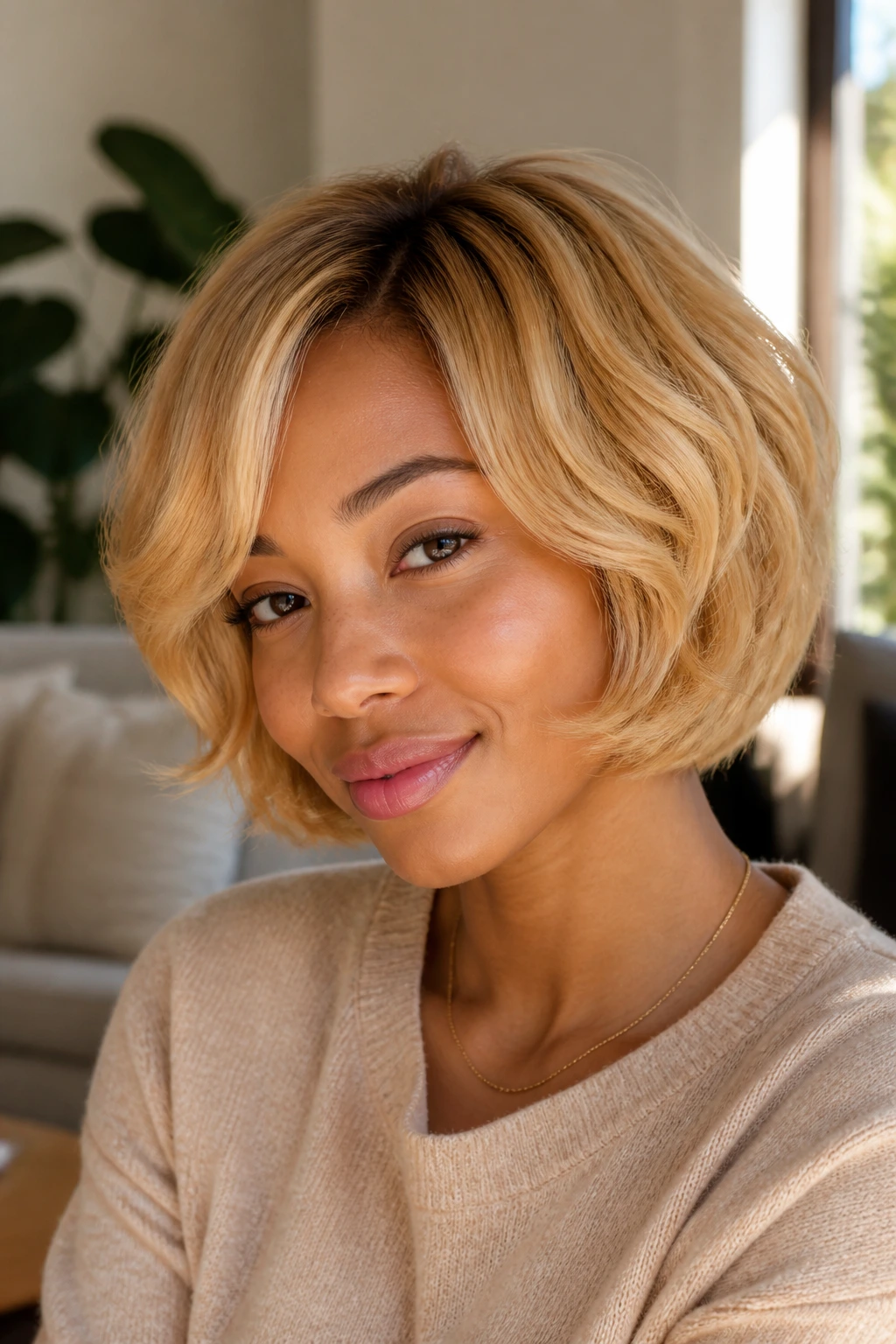
Golden blonde is a classic for a reason. It’s warm, inviting, and looks natural on almost everyone. By adding layers to a golden blonde bob, you gain movement and volume that is difficult to achieve with a one-length cut. The golden tones pick up the light in your curls, making the hair look radiant.
Why Layers Matter
Layers prevent the “helmet hair” look that can sometimes happen with bob cuts on natural hair. By breaking up the weight of the hair, layers allow your natural curl pattern to express itself fully. You’ll notice that your curls are bouncier, lighter, and easier to manage when the weight is distributed properly.
Daily Styling
A simple “pineapple” (gathering your hair at the very top of your head at night) is enough to keep your layers intact until the next morning. Use a silk or satin pillowcase to reduce friction, which will help keep those golden curls soft and frizz-free.
13. Smoky Blonde Curly Lob
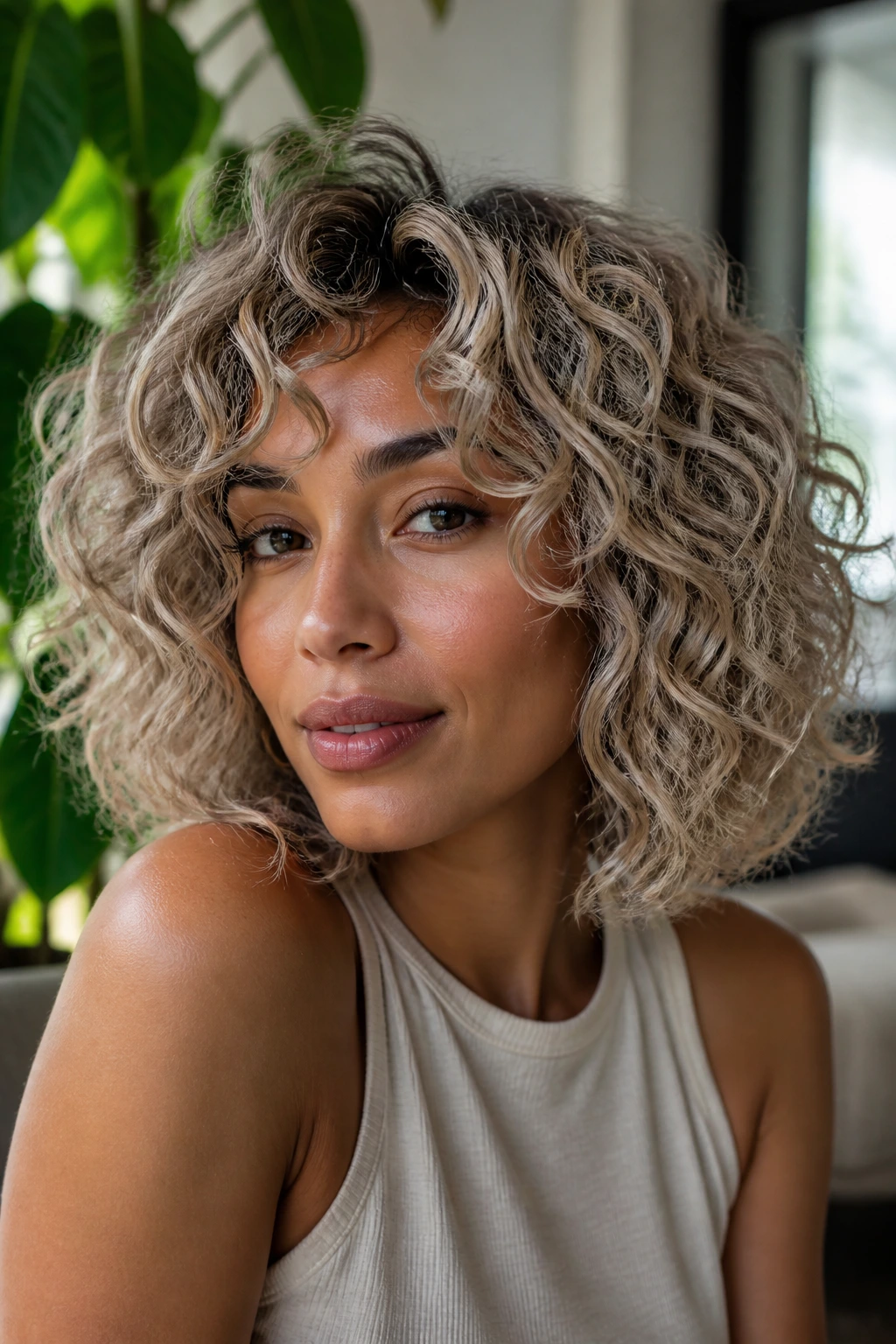
A “lob” (long bob) is the perfect transition length if you aren’t quite ready to go full-bob but want to shed some weight. A smoky blonde shade—a mix of grey, cool blonde, and light brown—is sophisticated and trendy. This look is perfect for those who want a modern color that feels a bit more “editorial” and less “beach babe.”
The Smoky Color Profile
Smoky blonde requires a base of ash tones. It is a very cool-toned color, which means it may not be suitable for everyone. It looks best on those with cool or neutral skin undertones. Consult with your colorist to see if a smoky shade will complement your natural coloring before taking the leap.
Versatility
The beauty of the lob length is that you can still pull it back into a small puff or ponytail if you need to. It offers all the benefits of a bob-length cut—less drying time, less detangling time—without the fear of it being “too short.”
14. Sandy Blonde Curly Bob
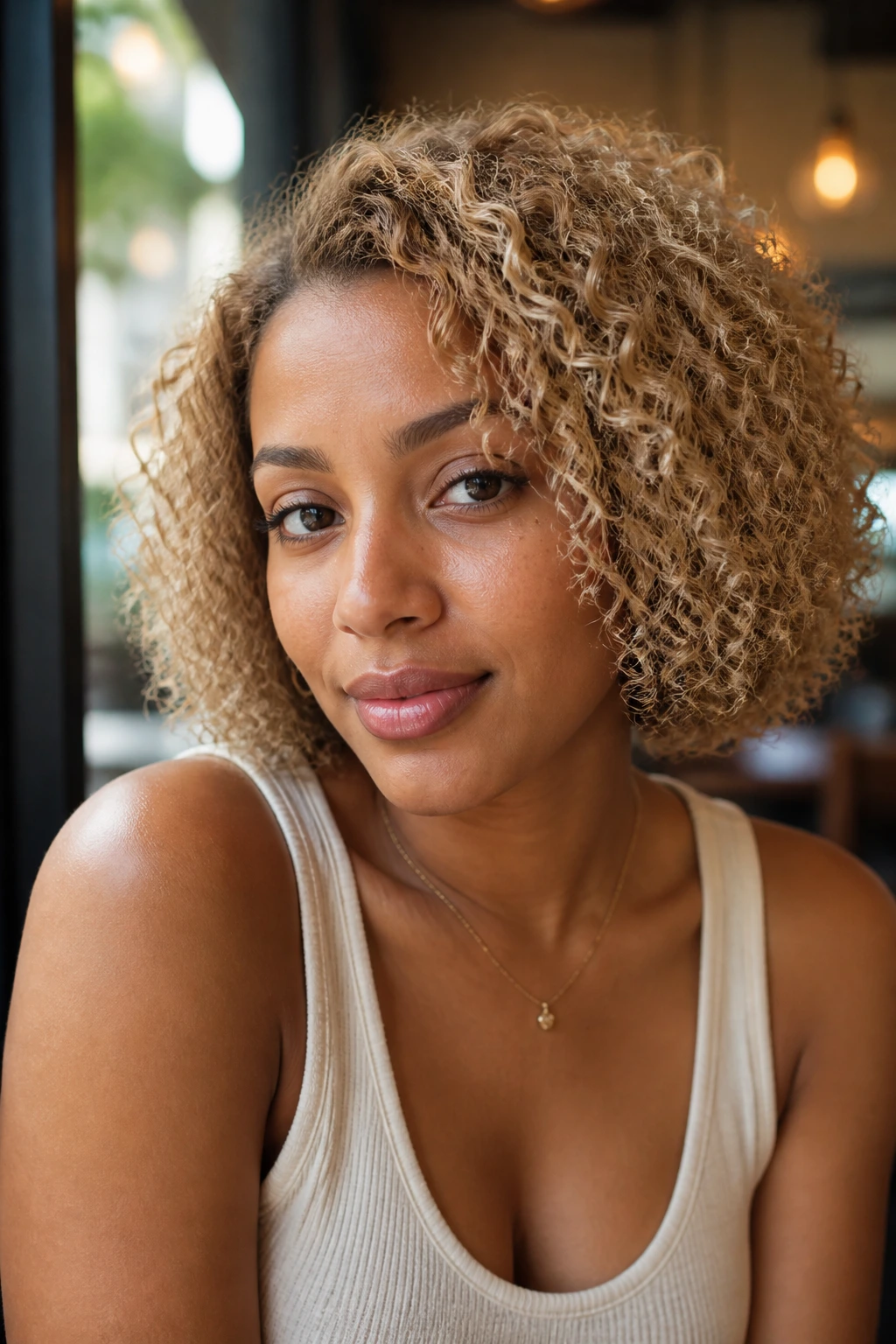
Sandy blonde is a muted, earthy shade that feels incredibly natural. It’s a mix of beige and light brown, making it a low-contrast option that looks excellent on those with darker complexions who want to ease into blonde. When you combine this color with a standard bob cut, the result is a look that is polished, professional, and very easy to maintain.
Why Sandy Blonde Works
Unlike platinum or bright yellow-blonde, sandy blonde doesn’t look as stark against natural dark hair. It blends in, which means your roots won’t be as obvious as they grow out. It is the definition of “effortless,” which is what many of us are searching for in a hairstyle.
Long-Term Health
Because this color is closer to your natural pigment, the lifting process is less aggressive. You’ll likely find that your curls retain their bounce and strength far better than they would if you were chasing a lighter shade. It’s a sustainable choice for your hair’s long-term health.
15. The Importance of Protein and Moisture
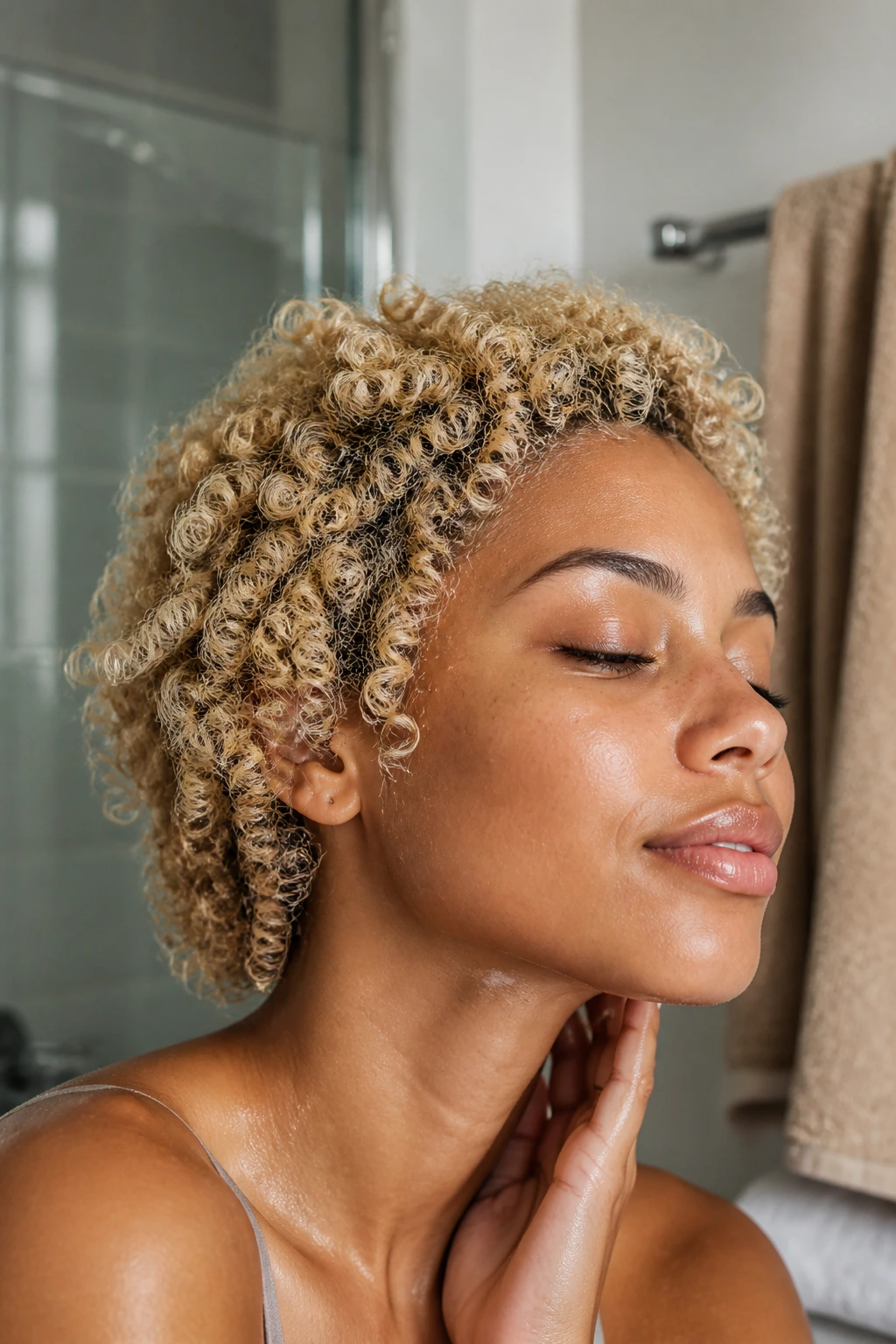
Achieving a beautiful blonde bob is only half the battle; the rest is all about maintenance. Bleaching removes pigment, but it also strips the hair of its natural oils and proteins. If you don’t replenish these, your curls will eventually lose their shape and elasticity, leading to the dreaded “straight-end” syndrome.
Protein vs. Moisture
- Protein: Used to rebuild the structure of the hair. Use a protein treatment once or twice a month, but no more. Overloading on protein can make hair stiff and prone to breakage.
- Moisture: Used to maintain flexibility and hydration. Use a moisture-rich deep conditioner every single week, if not every time you wash your hair.
The Role of Bond Builders
If you’ve gone the bleaching route, you have likely heard of bond builders. These products are specifically designed to repair the internal structure of the hair strand. Integrating a professional-grade bond builder into your routine can make the difference between a dry, frizzy bob and a soft, bouncy one. Don’t be afraid to invest in high-quality products here; your hair is an investment.
16. Protecting Your Blonde Bob While Sleeping
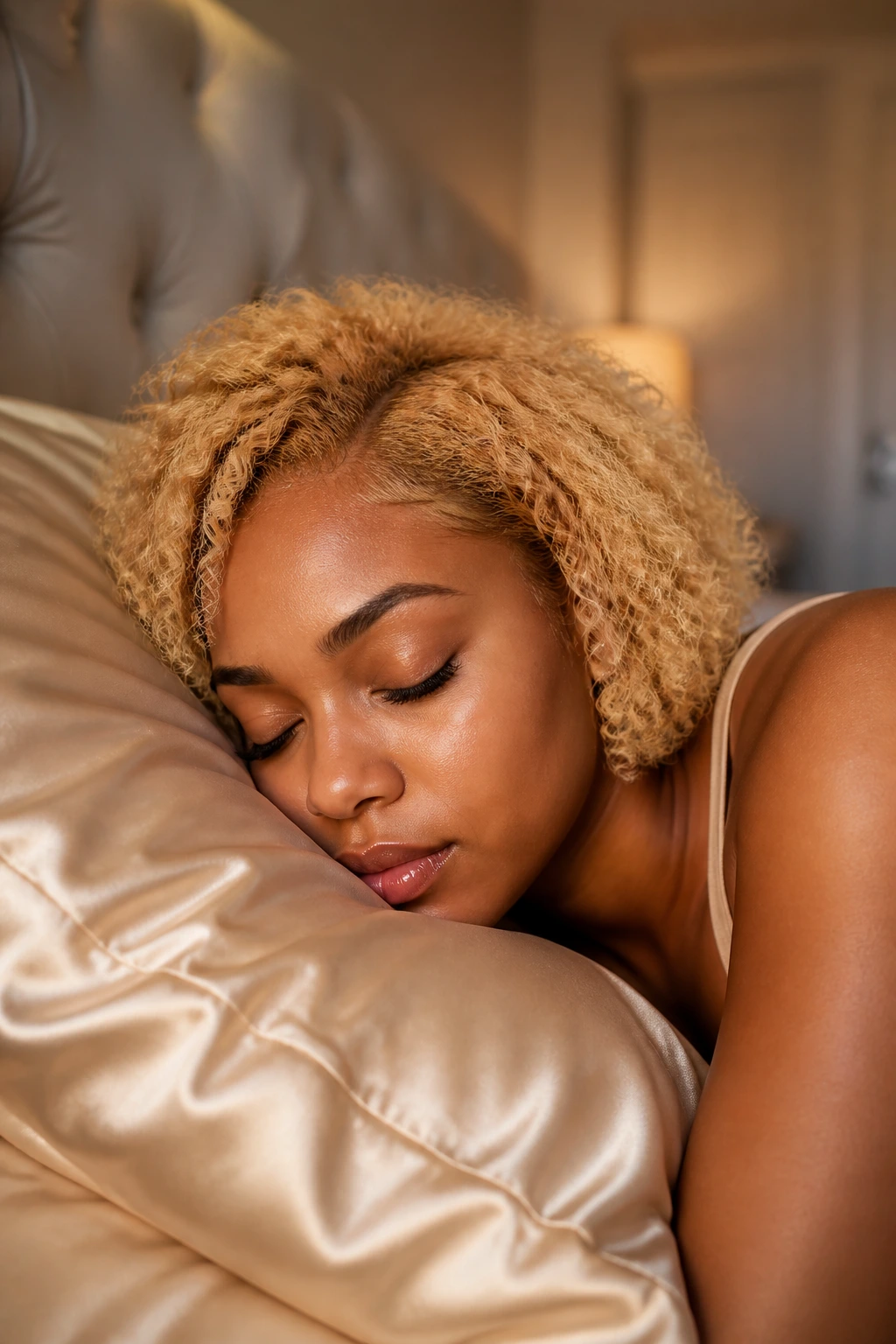
Your hair works hard all day; it deserves to rest safely at night. Friction is the enemy of all hair types, but for bleached, blonde, curly hair, it is a nightmare. A cotton pillowcase will suck the moisture right out of your strands and cause friction that leads to breakage and frizz.
The Silk or Satin Advantage
Switching to a satin or silk pillowcase is the single easiest change you can make for your hair’s health. It allows your hair to glide across the surface without snagging, which means you’ll wake up with the same curl definition you had the night before. If you don’t want to change your pillowcase, a silk or satin bonnet is an excellent alternative.
Preserving the Shape
For a shorter bob, avoid tying your hair down too tightly. A loose “pineapple” is usually enough to keep the hair out of your face without crushing the curls at the back of your head. If your bob is too short to pineapple, simply sleeping on the satin surface is enough.
17. Professional vs. At-Home Coloring
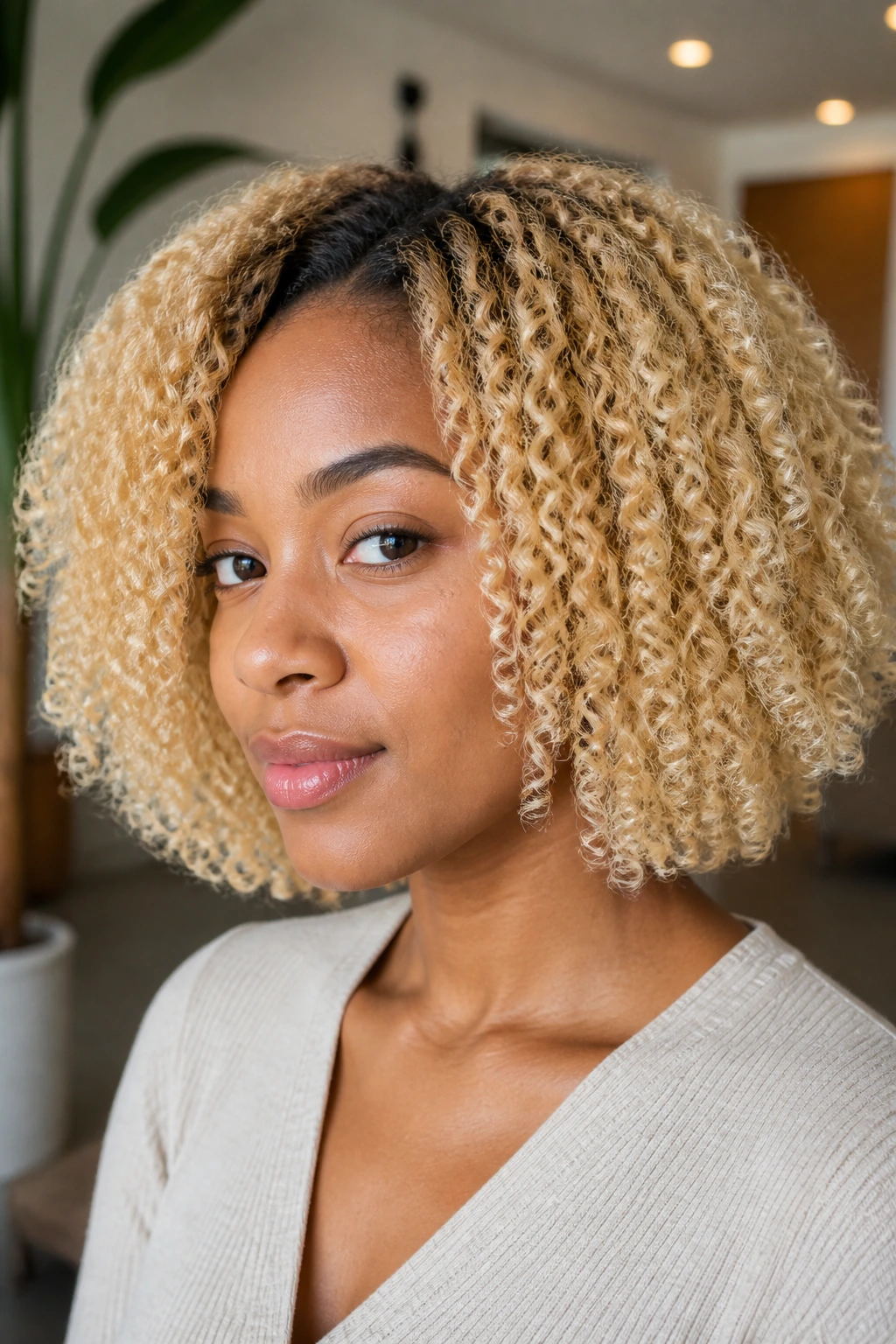
We live in an age where there are tutorials for everything, but when it comes to lightening deep, natural hair, there is no substitute for a professional. The chemicals involved in going from dark to blonde are powerful, and if you don’t know exactly what you are doing, you can cause irreparable damage in a matter of minutes.
Why You Need a Pro
A professional stylist understands the nuances of your specific hair porosity and how your curl pattern reacts to different chemicals. They can perform a strand test to see how your hair lifts before committing the whole head to the process. They can also use specialized toners to ensure the final color is exactly what you want, rather than the brassy mess that can happen with boxed color.
The Cost of Quality
Yes, going to a salon is more expensive than buying a box at the drugstore. However, consider the cost of fixing a bad bleach job. That can involve expensive treatments, professional color correction, or, in the worst cases, having to cut your hair much shorter than you intended because of chemical damage. Think of the salon visit as insurance for your hair’s future.
18. Choosing the Right Tone for Your Skin
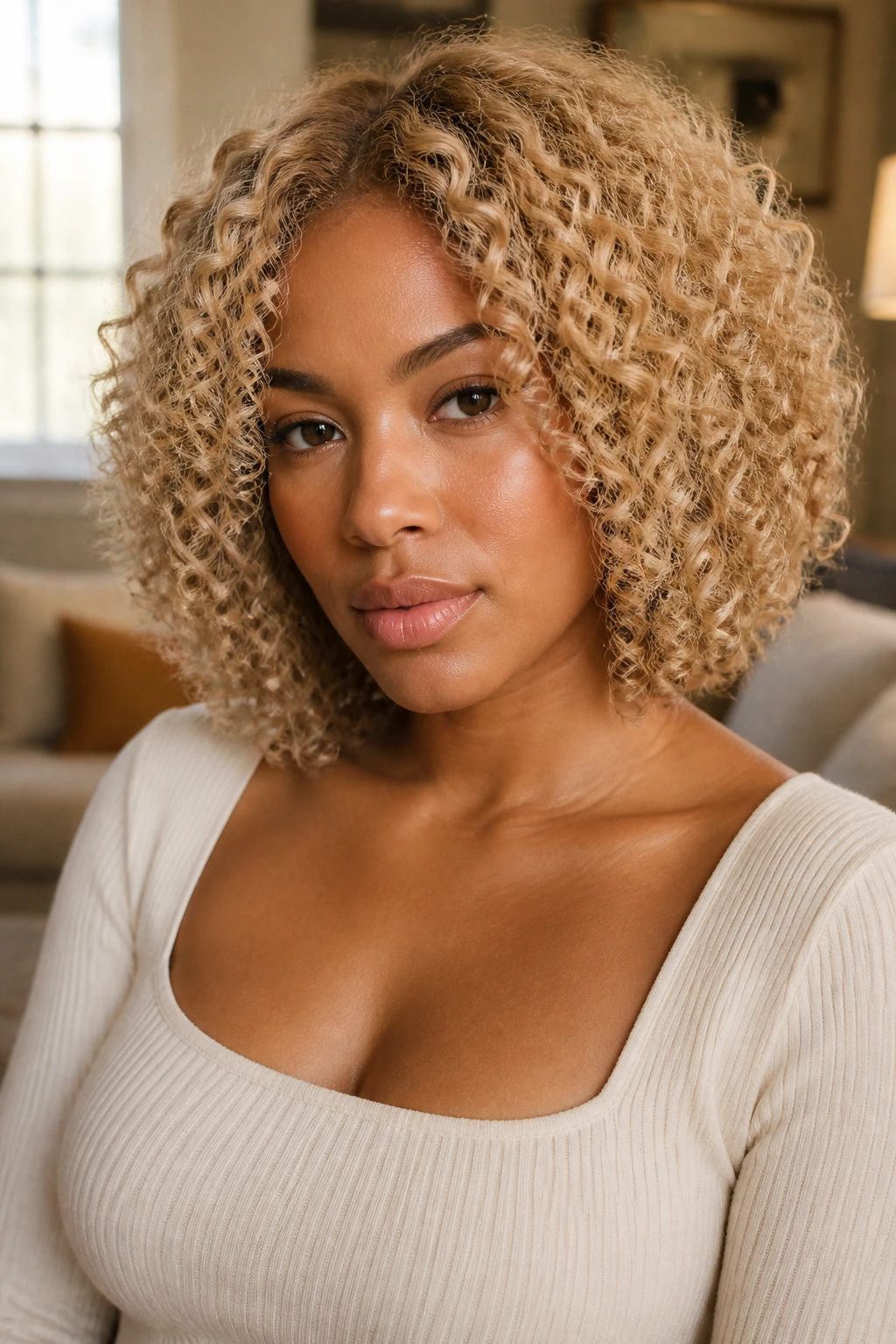
Not every blonde will look good on every skin tone. It’s a common mistake to choose a color because it looks beautiful on someone else, only to find it doesn’t quite work on your complexion. The key is to identify your undertone—are you warm, cool, or neutral?
The Skin Undertone Guide
- Warm Undertones: If your skin has golden or yellow hints, you will look best in warm, honey, or caramel blondes. These colors will complement your skin’s natural radiance.
- Cool Undertones: If your skin has blue or pink hints, cool-toned blondes like ash, platinum, or smoky blonde are your best bets. They will brighten your skin and prevent you from looking washed out.
- Neutral Undertones: You have the luxury of choice! You can play with both warm and cool shades, though a balanced “champagne” or “sandy” blonde often looks the most harmonious.
Don’t Guess, Test
If you are still unsure, ask your stylist for a consultation. They can hold various swatches of hair against your skin to show you exactly how different tones will look. It’s a small, simple step that can save you from a color choice you might regret later.
19. Final Thoughts
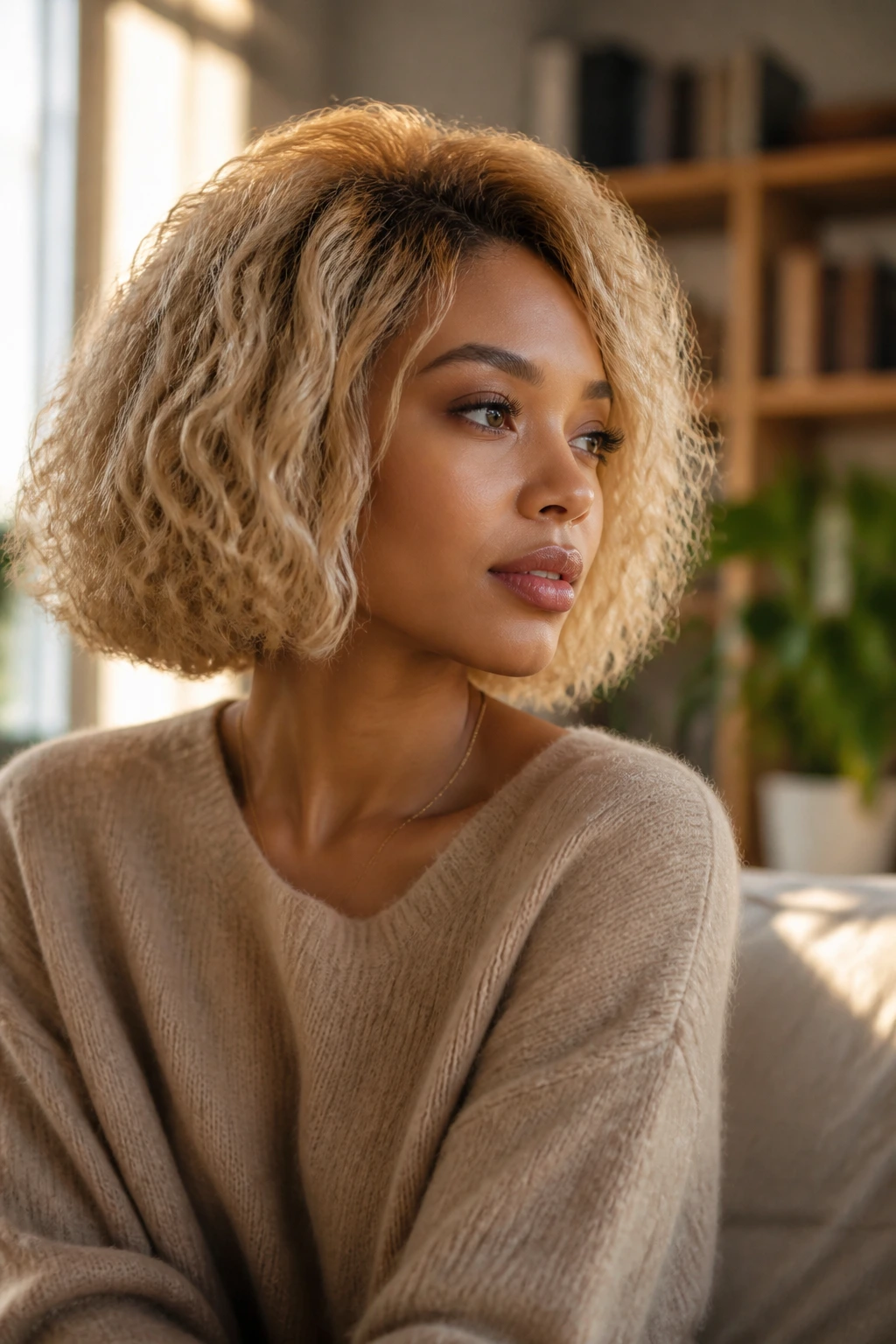
Taking the leap into blonde territory is a transformative experience, especially when you have natural hair. It changes the way your curls behave, the products you need to use, and even the way you carry yourself. The secret to a successful transition isn’t just about the color you choose; it is about the care you put into your hair both before and after the process.
A bob cut is a brilliant companion to this change. It keeps the hair manageable, prevents excessive breakage, and allows you to focus on the health of your curls. Remember that blonde is not a destination but a journey of maintenance, toners, and deep conditioning. Keep your expectations realistic, stay patient with your hair, and enjoy the vibrancy that a well-executed blonde bob can bring to your look. Every curl and every shade tells a story—make sure yours is one of health and confidence.