


Thin hair is not a sentence to a lifetime of flat, lifeless locks. If you are struggling with strands that seem to lose their volume before you even finish styling them in the morning, the shaggy bob might just be the revelation you have been waiting for. The beauty of this cut lies in its intentional imperfection. Unlike a blunt, precision-cut bob that can sometimes highlight a lack of density by creating a stark, see-through line at the ends, the shaggy bob uses texture to create an illusion of fullness that feels entirely natural.
When you add layers to a bob, you are essentially breaking up the weight of the hair. This is crucial for finer textures. Heavy, one-length hair tends to pull itself straight and lie flat against the scalp, emphasizing the gaps between strands. A shag, by contrast, removes bulk in strategic areas and adds movement where you need it most. It is a masterclass in visual trickery, turning what feels like a disadvantage into a modern, effortlessly cool aesthetic that looks better the messier it gets.
1. The Choppy Textured Shaggy Bob
This cut is the quintessential entry point for those wanting to embrace a bit of edge without committing to a radical transformation. By focusing the weight removal on the mid-lengths, a stylist can create a “shattered” effect that instantly adds bounce to otherwise limp hair. It works by using a razor or point-cutting technique to ensure the ends are not too uniform. When the ends are uneven, they don’t stack up in a way that makes thin hair look sparse. Instead, they flick out and overlap, giving the hair a sense of purpose and structure.
Why It Works for Thinness
- The deliberate unevenness prevents the “triangle” shape that often plagues thin hair.
- Textured ends reflect light in multiple directions, which helps mask the scalp.
- It requires very little styling time; a quick application of sea salt spray is usually enough to activate the shape.
Pro tip: Ask your stylist to avoid thinning shears, which can sometimes make thin hair look stringy. Instead, request point-cutting with regular scissors to keep the tips blunt but soft.
2. The Bottleneck Bang Shag
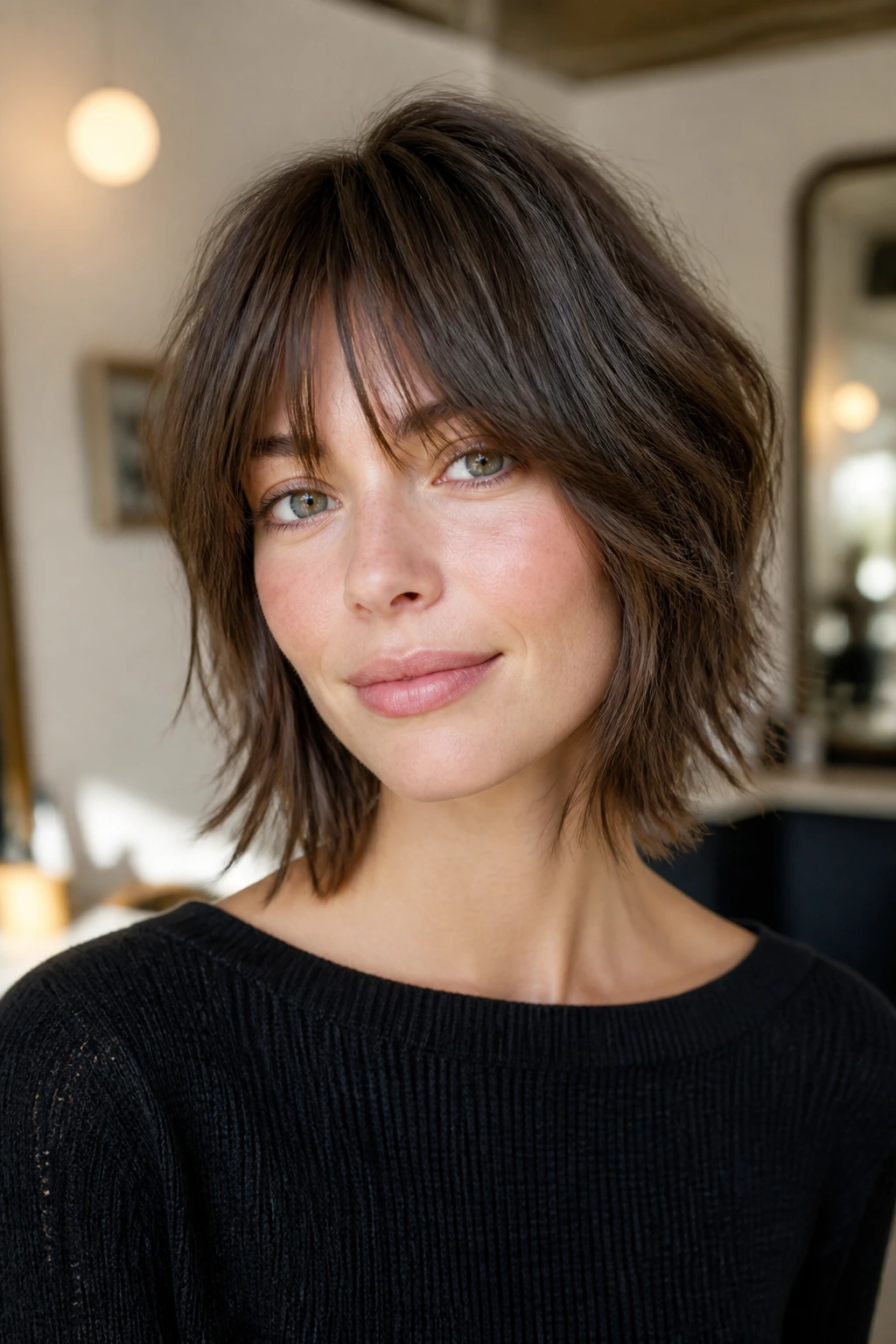
Bangs are often a source of anxiety for those with thin hair, but the bottleneck bang is a game-changer. These bangs are shorter in the middle and longer on the sides, perfectly framing the face while blending seamlessly into the rest of the shaggy layers. Because they draw the eye upward and toward the cheekbones, they take the focus away from the volume of the hair at the crown and redistribute it across your features.
How to Style This Cut
Styling a bottleneck bang on thin hair requires a light touch. You want to avoid heavy pomades or waxes that will weigh the bangs down and make them look greasy. Use a small, round boar-bristle brush to give the roots a slight lift while blow-drying, then use your fingers to piece out the ends with a tiny amount of lightweight texturizing powder. This creates that desirable “undone” look that is the hallmark of the shag.
3. The Layered Shag with Wispy Ends
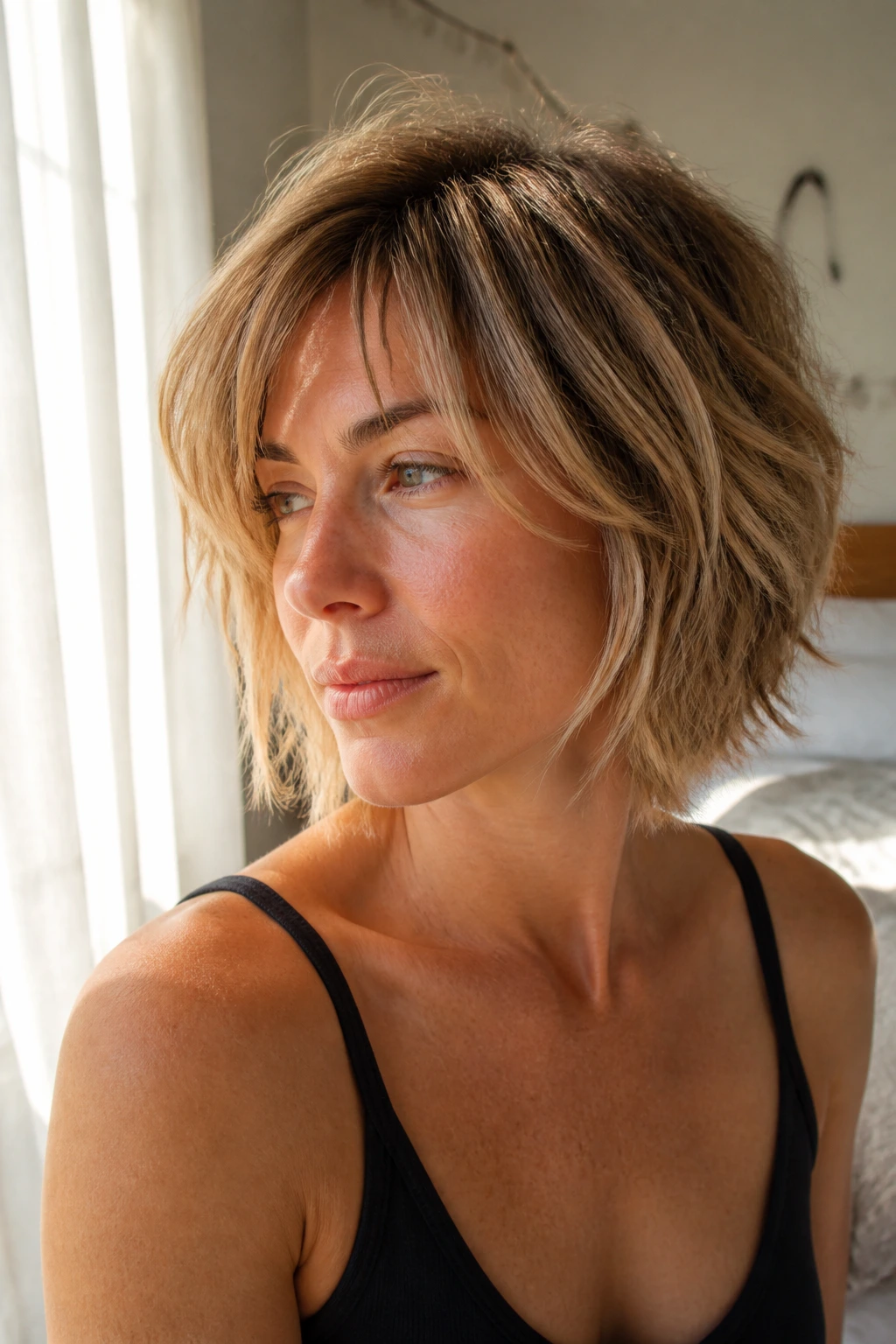
If your hair is on the finer side of the spectrum, heavy, dramatic layers might leave you with even less hair than you started with. This version of the shaggy bob opts for longer, internal layers that provide lift without thinning out the perimeter. The ends are left wispy and light, which mimics the natural movement of healthier, thicker hair.
Why It’s a Low-Maintenance Favorite
You can go longer between trims with this cut because the ends are meant to look slightly grown-out and ragged. As your hair grows, the layers simply soften rather than turning into a blunt, uneven mess. It is the perfect choice for anyone who prefers a wash-and-go routine over spending forty minutes with a curling iron every single morning.
4. The Deep Side-Part Shaggy Bob
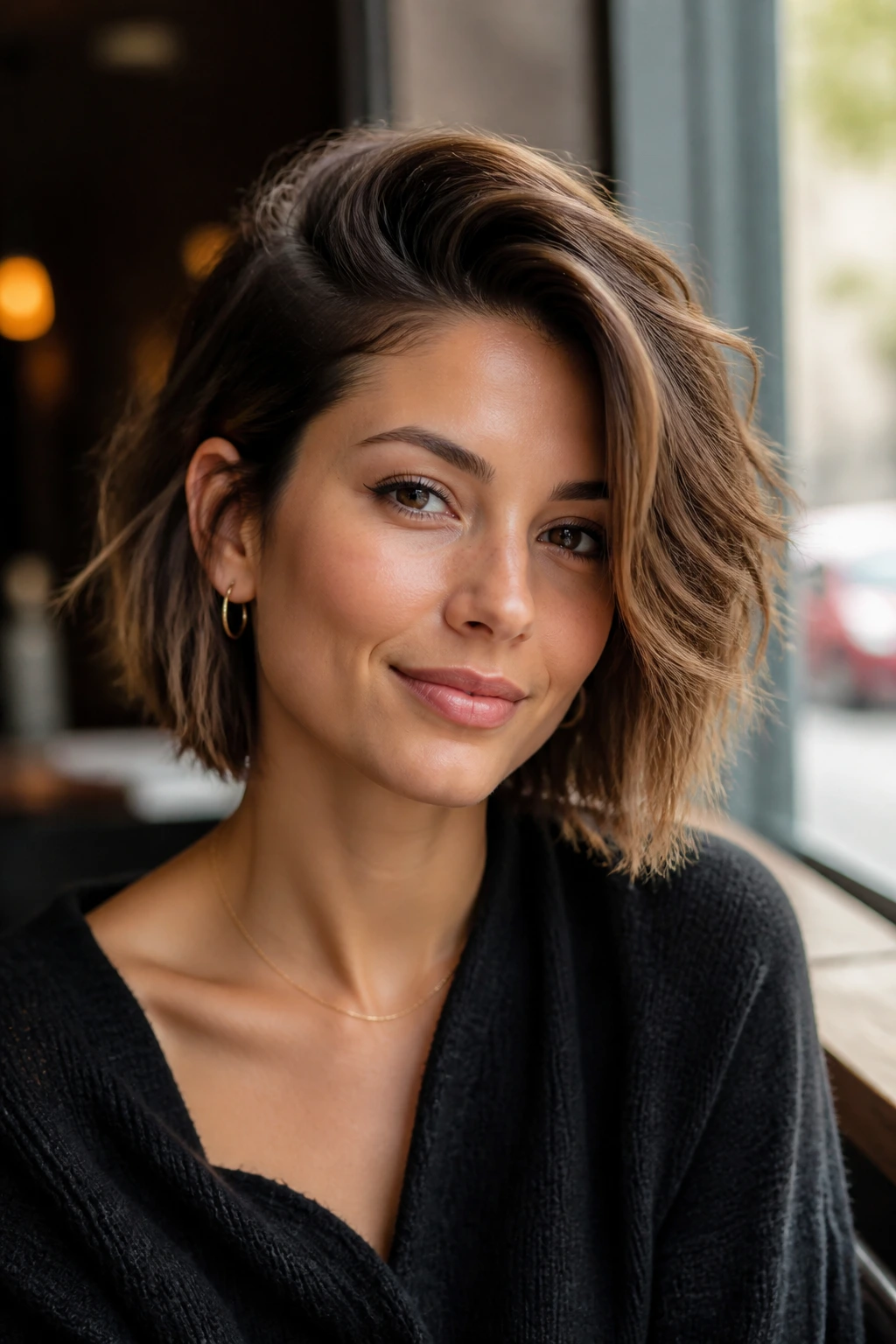
Sometimes, the issue isn’t the cut—it is the placement of your part. Thin hair tends to look much flatter when parted right down the middle, as this draws a direct line to the scalp. Switching to a deep side part creates instant, massive volume on one side of the head. When combined with shaggy layers, this effect is amplified, creating a sophisticated, slightly asymmetrical silhouette that feels intentionally glamorous.
Achieving Maximum Root Lift
- Part your hair while it is still damp.
- Apply a root-lifting mousse to the section that will have the most volume.
- Dry the hair by pushing it over in the opposite direction of where you want the part to sit, then flip it over once it is dry.
5. The Curly Shaggy Bob

If you have naturally wavy or curly hair that is also thin, you have actually hit the jackpot. Shaggy bobs were essentially invented for curls. The layers allow the curls to sit on top of one another, creating a tiered effect that mimics a much fuller head of hair. The key here is to keep the layers long enough so they don’t turn into a poodle-like explosion, but short enough that they don’t lose their spring.
Managing Curly Texture
Avoid brushing your hair when it is dry, as this will lead to frizz and diminish the definition of your curls. Instead, use a wide-tooth comb in the shower while you have conditioner in your hair, then scrunch in a curl-enhancing cream while your hair is still soaking wet. Allow it to air dry, and you will have a beautiful, voluminous shag with zero heat damage.
6. The Long Shaggy Lob (Long Bob)
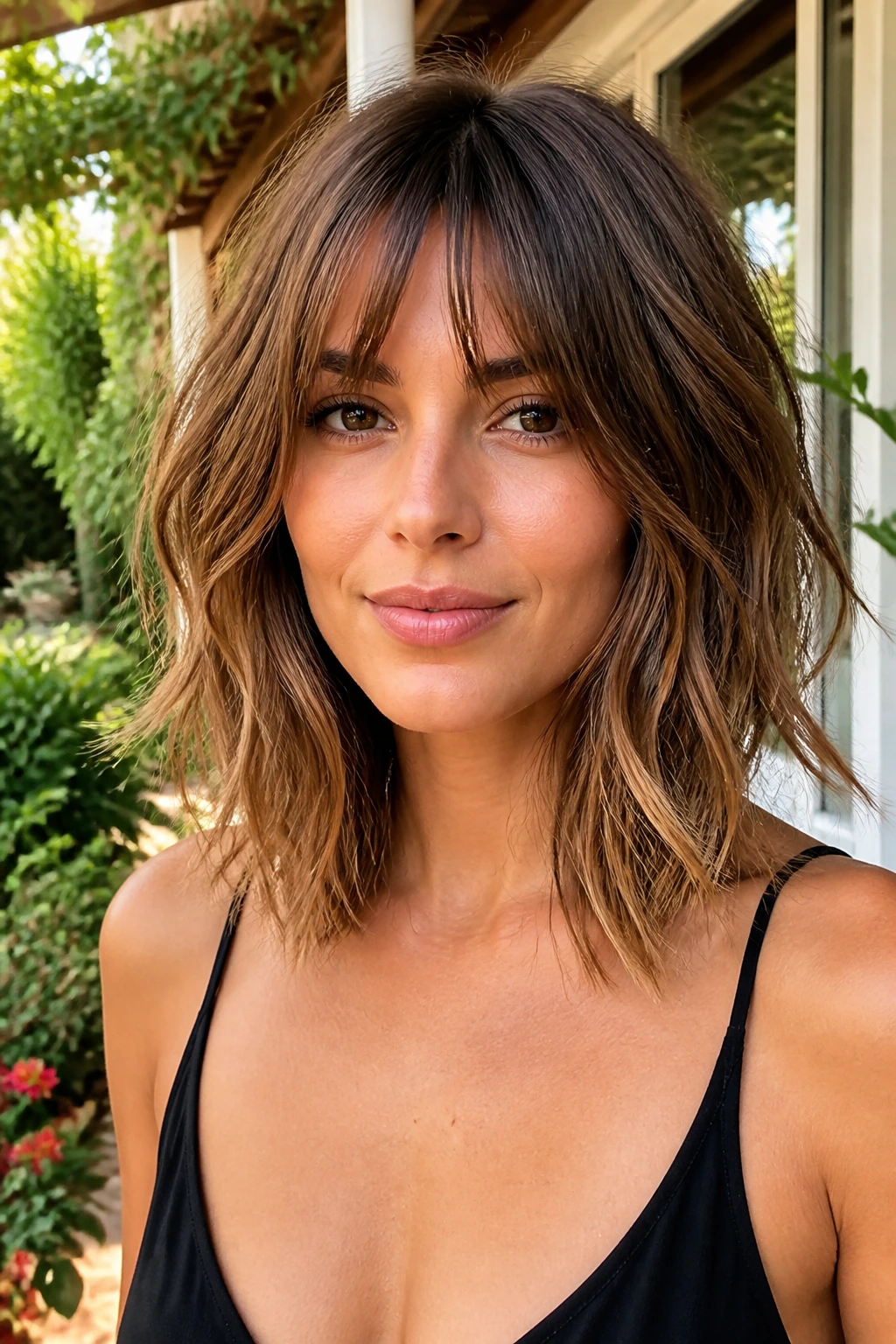
Not quite ready to chop it all off? The long shaggy bob, or “lob,” hits right at the collarbone. It gives you the benefit of the shaggy, textured layers while maintaining enough length to put your hair into a messy ponytail if you need to. It is a fantastic middle ground for those who are afraid of the dreaded “puffy” stage that some short cuts can go through.
Why the Lob is Versatile
Because the hair is slightly longer, it has a bit more weight to pull itself straight if you prefer a smoother look. Use a flat iron to add a slight bend in the middle of each section, but leave the ends straight. This “straight-wave” technique is a massive trend, and it looks especially great on a lob because it highlights the textured, layered ends.
7. The 1970s Retro Shag
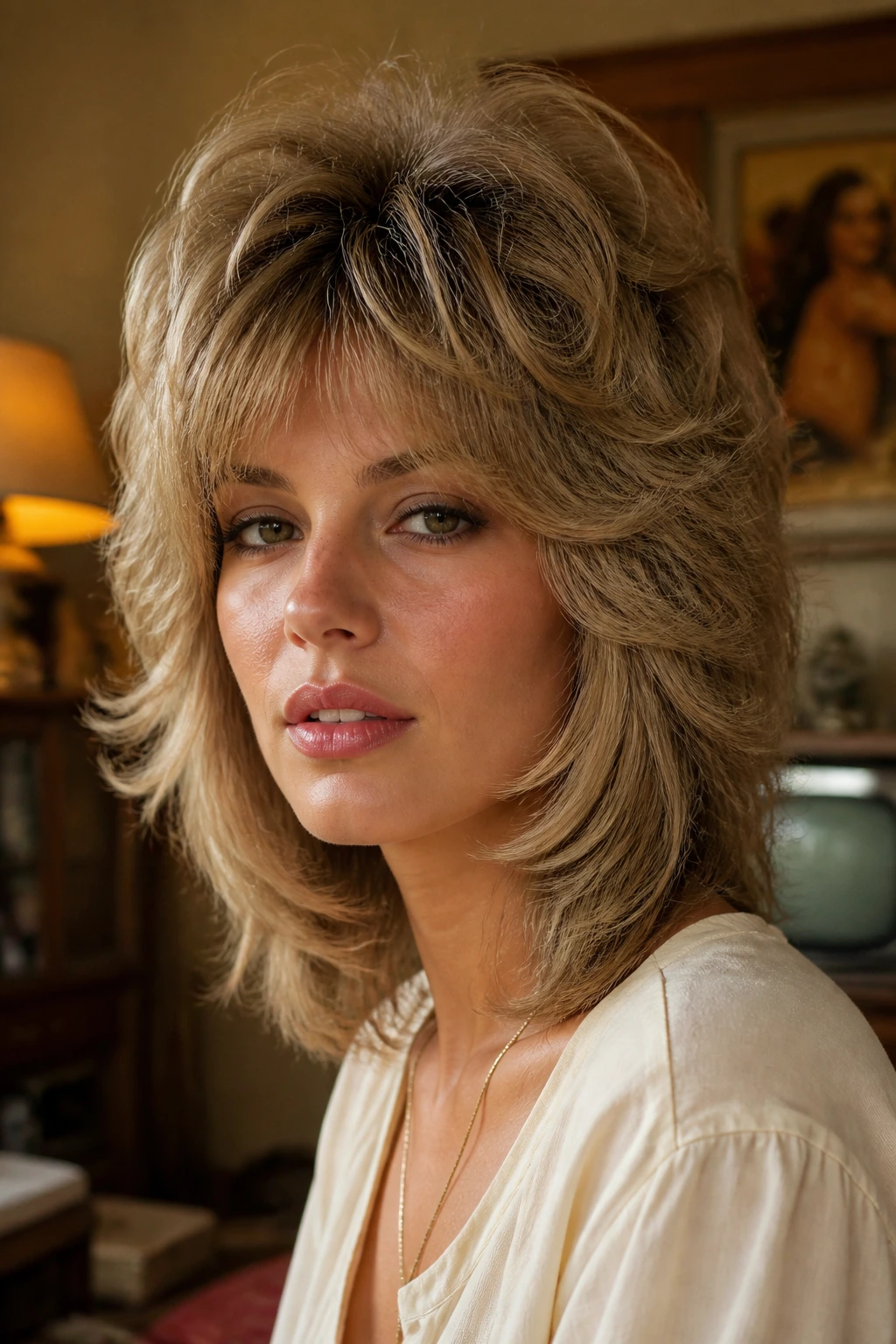
The 70s are back in a major way, and the classic, high-volume shag is the star of the show. This cut is all about extreme layering around the crown and feathered, face-framing pieces. For someone with thin hair, this is a bold move that pays off, as the sheer number of layers creates a dome of volume that makes the hair look twice as dense as it actually is.
The Secrets of Retro Volume
You will need a little more product to pull this off than with other cuts. A volumizing root spray and a light-hold hairspray are essential. Use a large round brush to blow-dry the hair back and away from the face, and do not be afraid to tease the hair at the crown slightly. A little bit of backcombing is the best friend of thin hair—it provides a structural scaffold that holds the volume in place all day.
8. The Piecey Balayage Shag
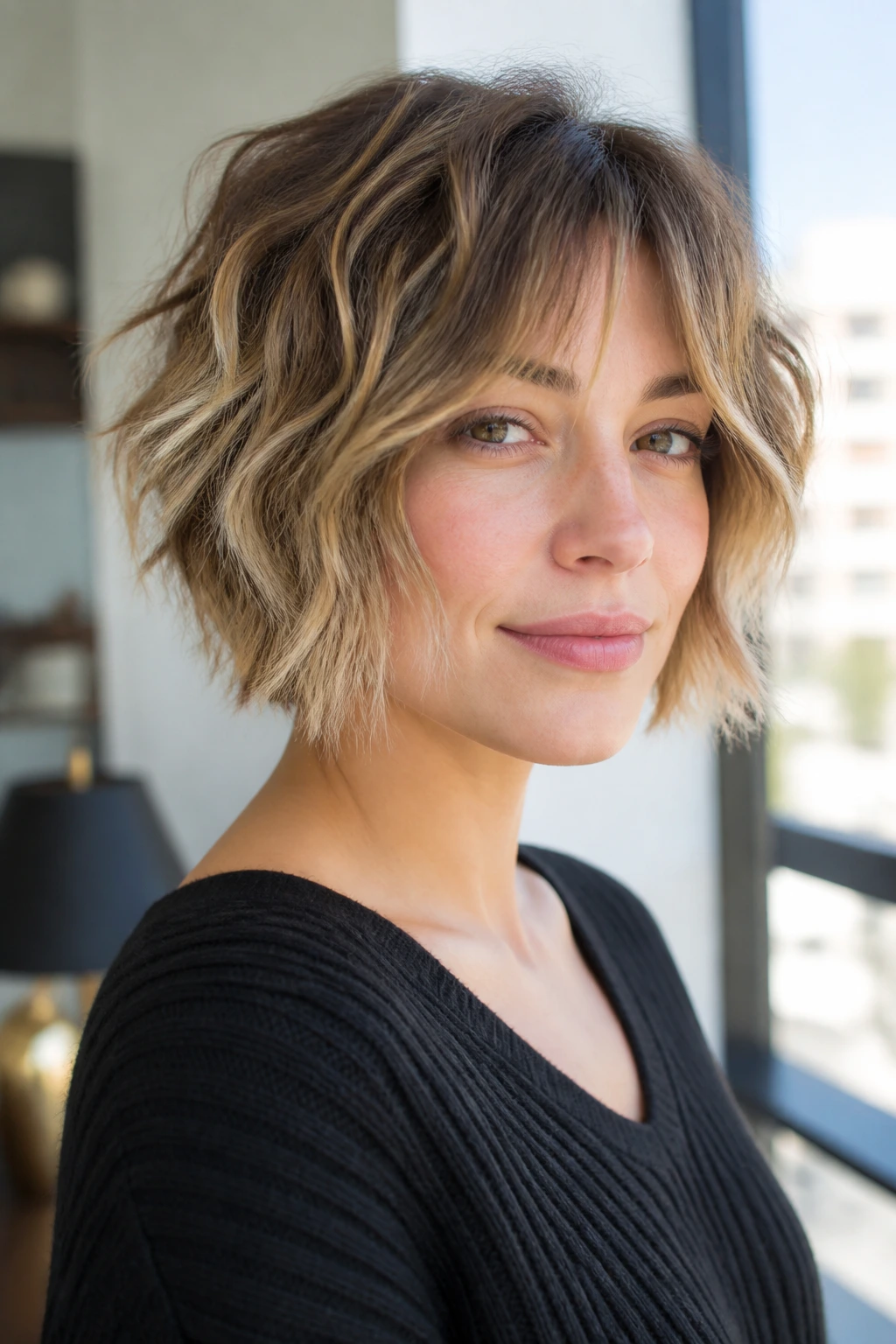
Sometimes, you can trick the eye with color rather than just shape. A shaggy bob with strategically placed balayage—soft, hand-painted highlights—creates depth and dimension that makes hair appear thicker. When you have multiple shades of blonde, brown, or red woven through your layers, the hair looks more complex and textured, even if it is physically fine.
Why Color Matters for Fine Strands
- Highlights add surface texture, making the hair feel slightly rougher and easier to style.
- Darker roots paired with lighter ends provide a shadowed effect that makes the hair look denser at the base.
- Dimensional color distracts from the uniformity of the hair, making it harder to spot where the hair might be thinner.
9. The Blunt-Bottom Shag
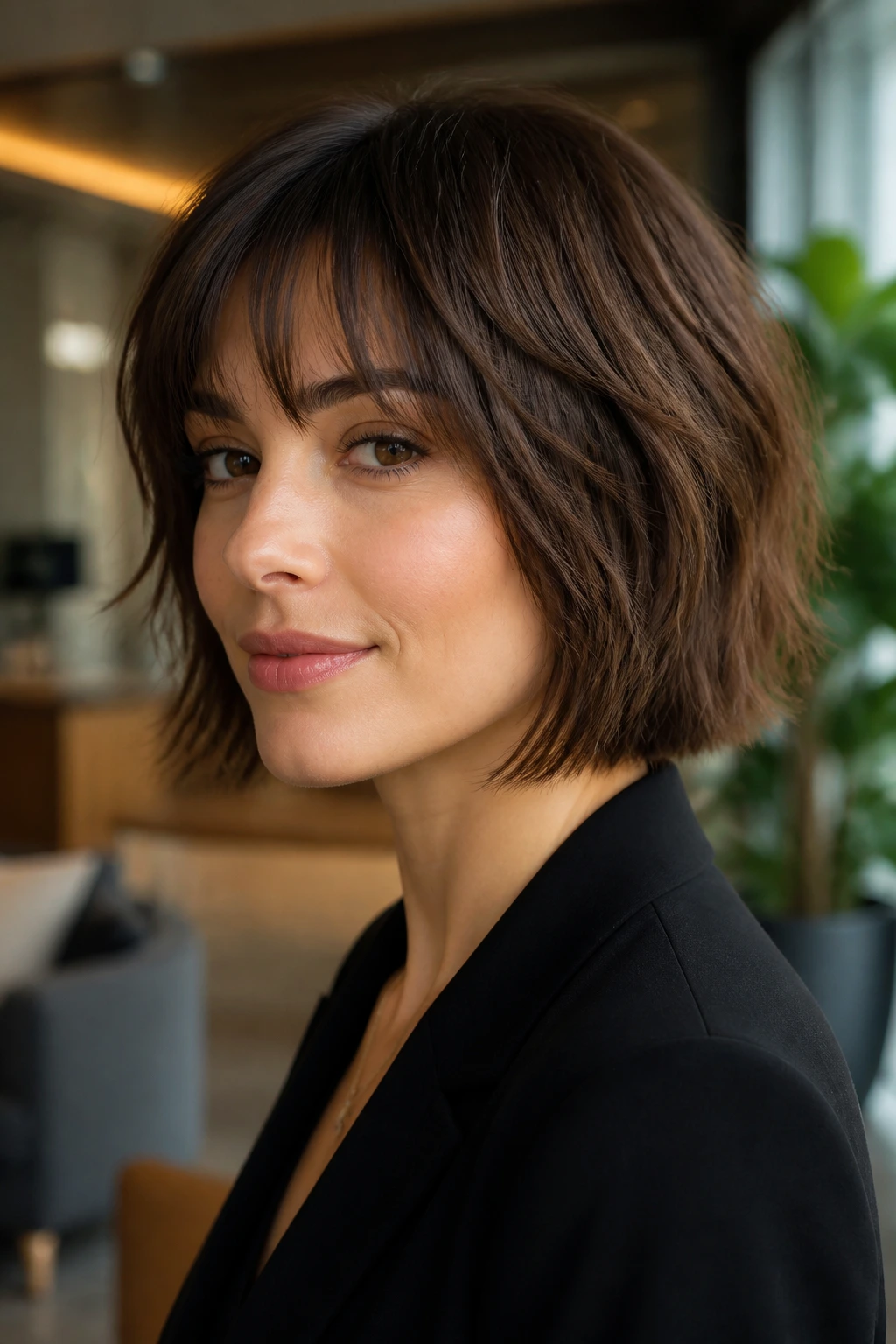
This sounds like a contradiction—how can a shag be blunt? This cut keeps the perimeter relatively straight and heavy, but adds hidden, short layers inside the bob to pop the hair up and off the neck. It is a brilliant way to have the aesthetic of a classic, chic bob while enjoying the volume-boosting benefits of a shag.
Benefits of the Hidden Layer
Since the exterior of the bob is still blunt, it looks very clean and polished. The interior layers are invisible, acting like a structural support system for the rest of your hair. This is perfect for the office, where you might want to look professional and put-together, but still desire the movement and life that comes with a shag.
10. The Edgy Undercut Shag
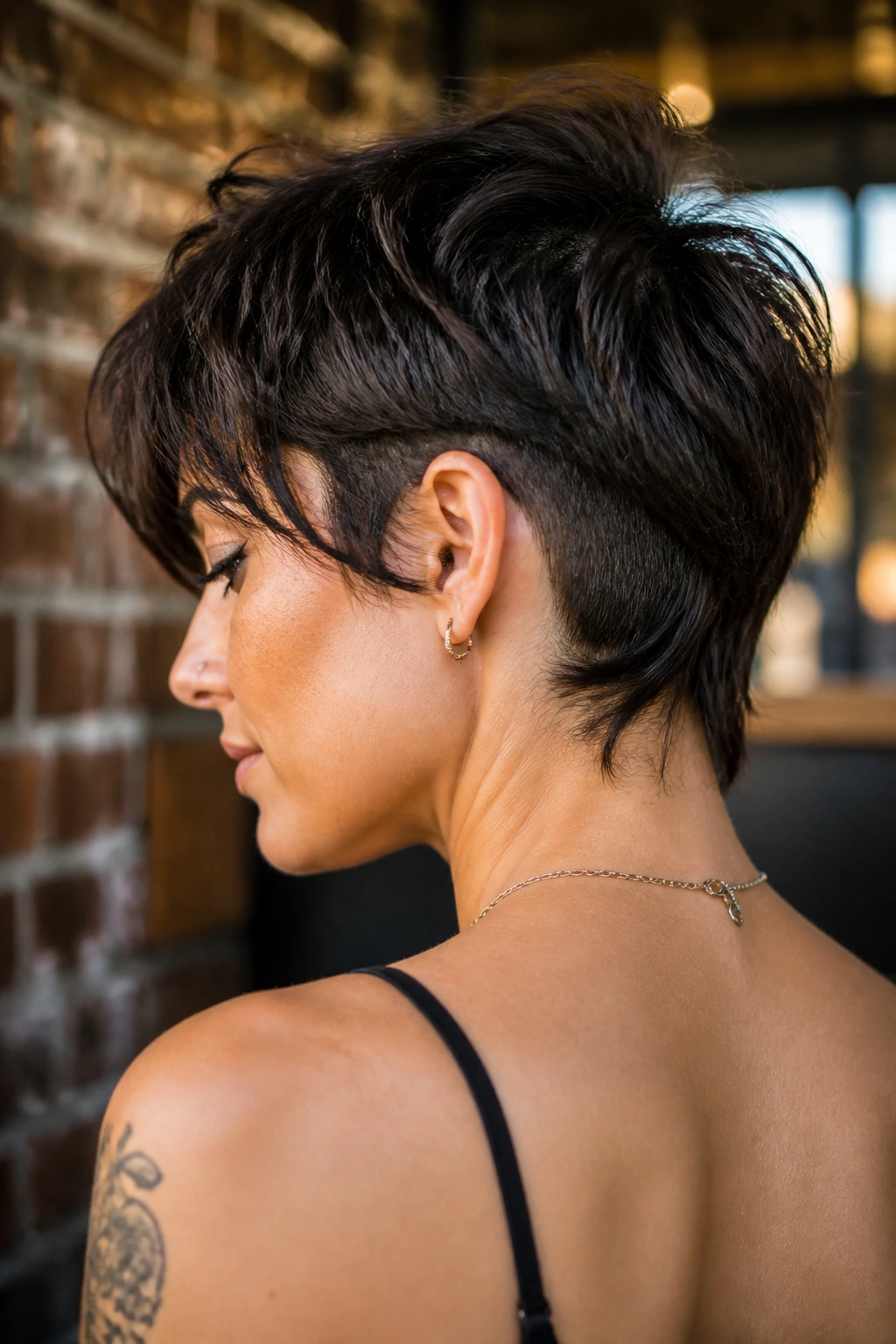
If you really want to lean into the punk-rock vibe, consider an undercut at the nape of the neck. By shaving a small section at the very bottom, you remove the hair that usually gets frizzy or clumped against your collar, allowing the rest of the shaggy layers to sit more prominently. It is a high-fashion look that feels incredibly refreshing for those who are tired of fighting with their hair’s natural texture.
Who Should Try This?
- Those who live in warmer climates and want to stay cool.
- People with fine, straight hair that often gets “ratty” at the ends.
- Individuals who want a low-maintenance style that looks edgy without any effort.
11. The Feathered Shaggy Bob
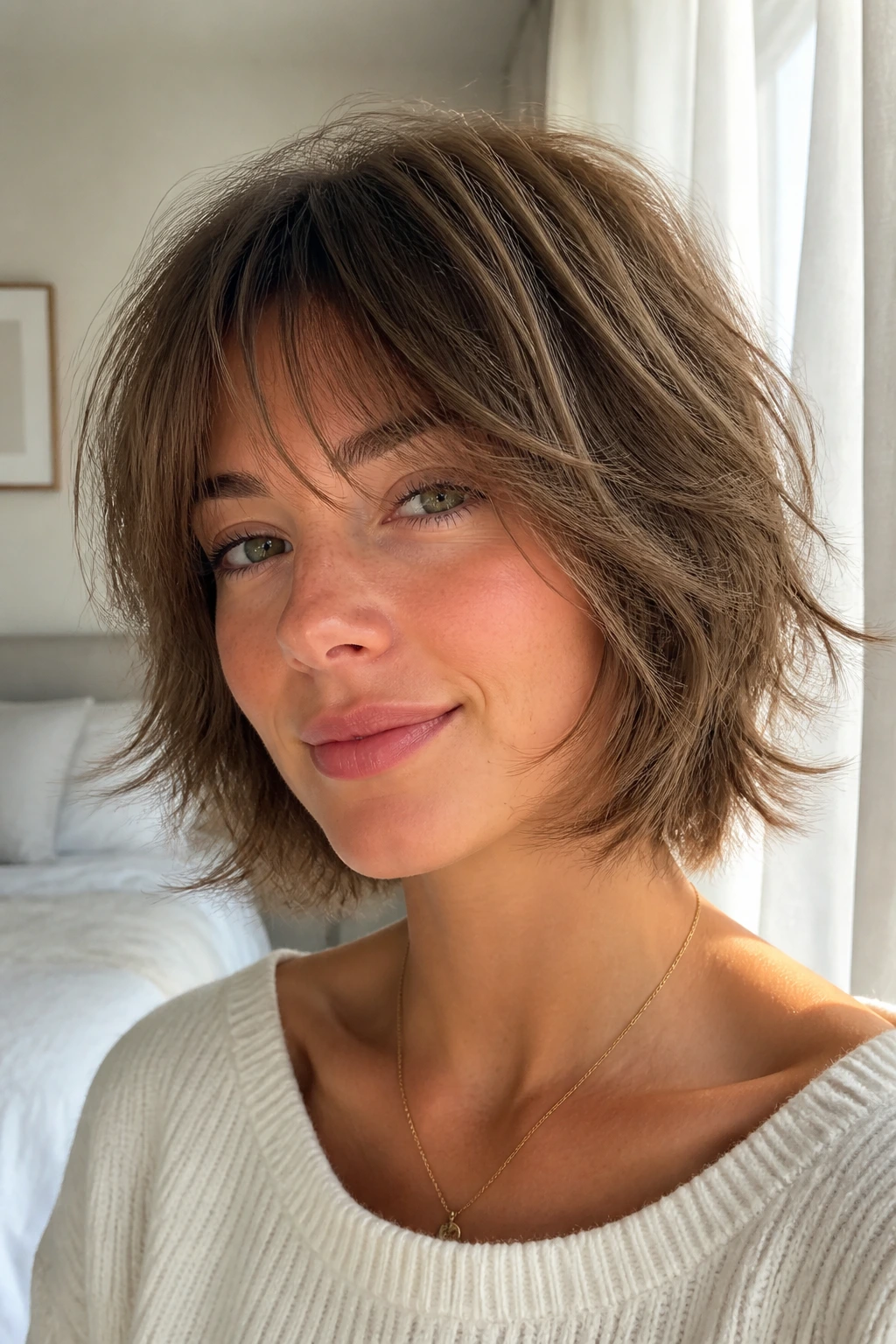
Think of the classic feathered looks of the past, but updated for modern times. This cut uses soft, graduated layers that fan out away from the face. It is exceptionally flattering for thin hair because the layering is delicate rather than choppy. It creates a soft, hazy silhouette that masks the scalp and makes the hair look airy and light.
Achieving Softness
When styling this, use a lightweight mousse and blow-dry with a medium round brush. Direct the hair away from your face to create that “tossed” look. The goal is to make the hair feel like it is floating, rather than hanging. This is a very feminine, sophisticated way to wear a shag.
12. The Asymmetrical Shag

Asymmetry is a fantastic tool for thin hair because it shifts the weight and creates a focal point that isn’t the density of the hair itself. A shag that is longer on one side than the other provides a modern, artistic vibe. The shorter side will naturally have more volume because it is shorter, while the longer side provides a nice frame for your face.
Balancing the Face
Because one side is shorter, it works well to highlight your jawline or your collarbone. Use a texturizing paste to define the layers on the shorter side, making them stand out. On the longer side, keep the styling more streamlined. This contrast is what makes the cut look intentional and high-end.
13. The Beachy Messy Bob
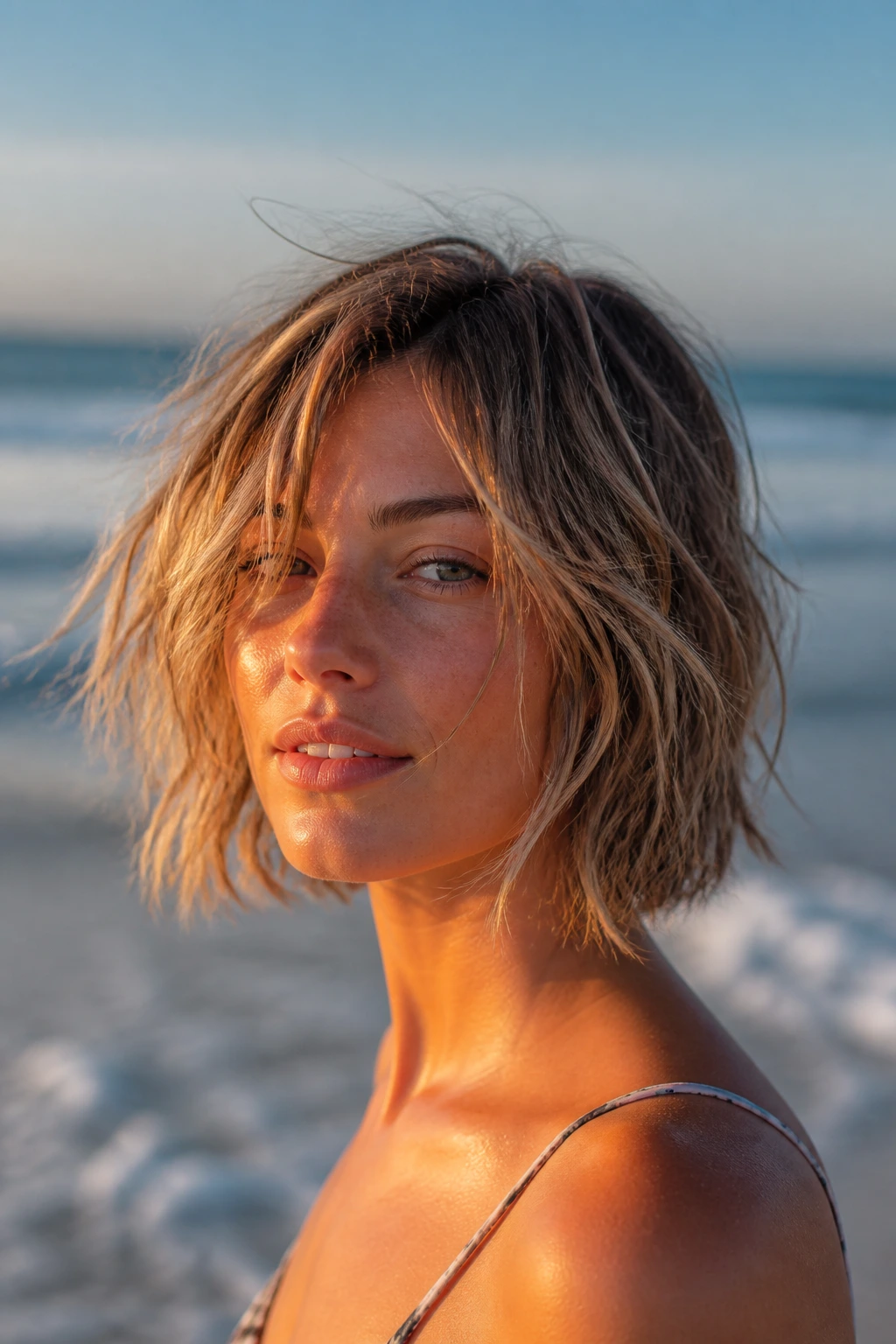
This is the look we all try to achieve on vacation: salty, wind-blown, and perfectly messy. For those with thin hair, this is easily achievable with a good salt spray and a diffuser. The key is not to over-think it. The messier and more chaotic the layers are, the better the final result will be.
Perfecting the Beach Look
Apply a sea salt spray to damp hair, then flip your head upside down and diffuse until it is about 80% dry. Finish by scrunching in a bit of styling wax into the ends. The salt spray adds grit to fine hair, which gives it something to “grip” onto. Without that grit, fine hair is often too slippery to hold any kind of shape.
14. The Curtain-Bangs Shag

Curtain bangs are a perfect pairing for a shaggy bob. They are soft, long, and can be swept to either side. They help add a sense of weight around the front of the face, which can make the rest of the hair look fuller by comparison. Plus, they are incredibly easy to grow out, meaning you aren’t tied into a high-maintenance trim cycle.
Styling for Success
- Use a velcro roller on the bangs while you finish drying the rest of your hair.
- This creates that signature “flick” that gives the face an instant lift.
- The rest of the hair can be air-dried or quickly textured with a dry shampoo to keep it looking fresh and voluminous.
15. The Minimalist Micro-Shag
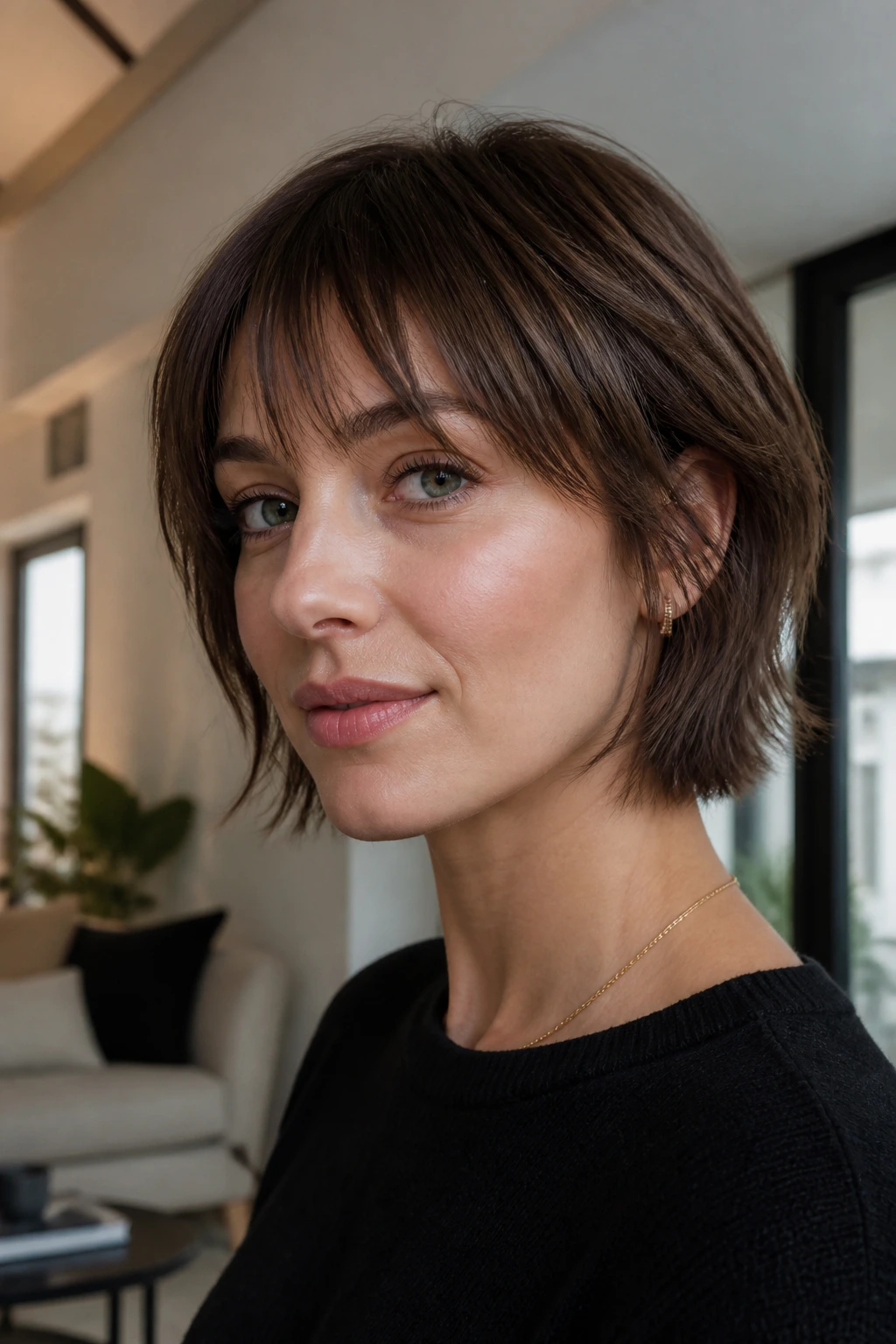
If you have very fine hair, sometimes less is more. A micro-shag involves very subtle, short layers that are barely noticeable. They provide just enough internal lift to prevent the hair from sticking to your head, but they don’t break up the length so much that the hair looks thin. It is a sophisticated, understated take on the trend.
Why It’s Sophisticated
This cut looks best on hair that has a natural, healthy shine. Since there are fewer layers, you have more surface area to show off the health of your strands. Use a shine serum—sparingly—to keep the ends looking glossy. It is a refined, chic look that works just as well in a board room as it does on a weekend.
16. The Punk-Inspired Shag
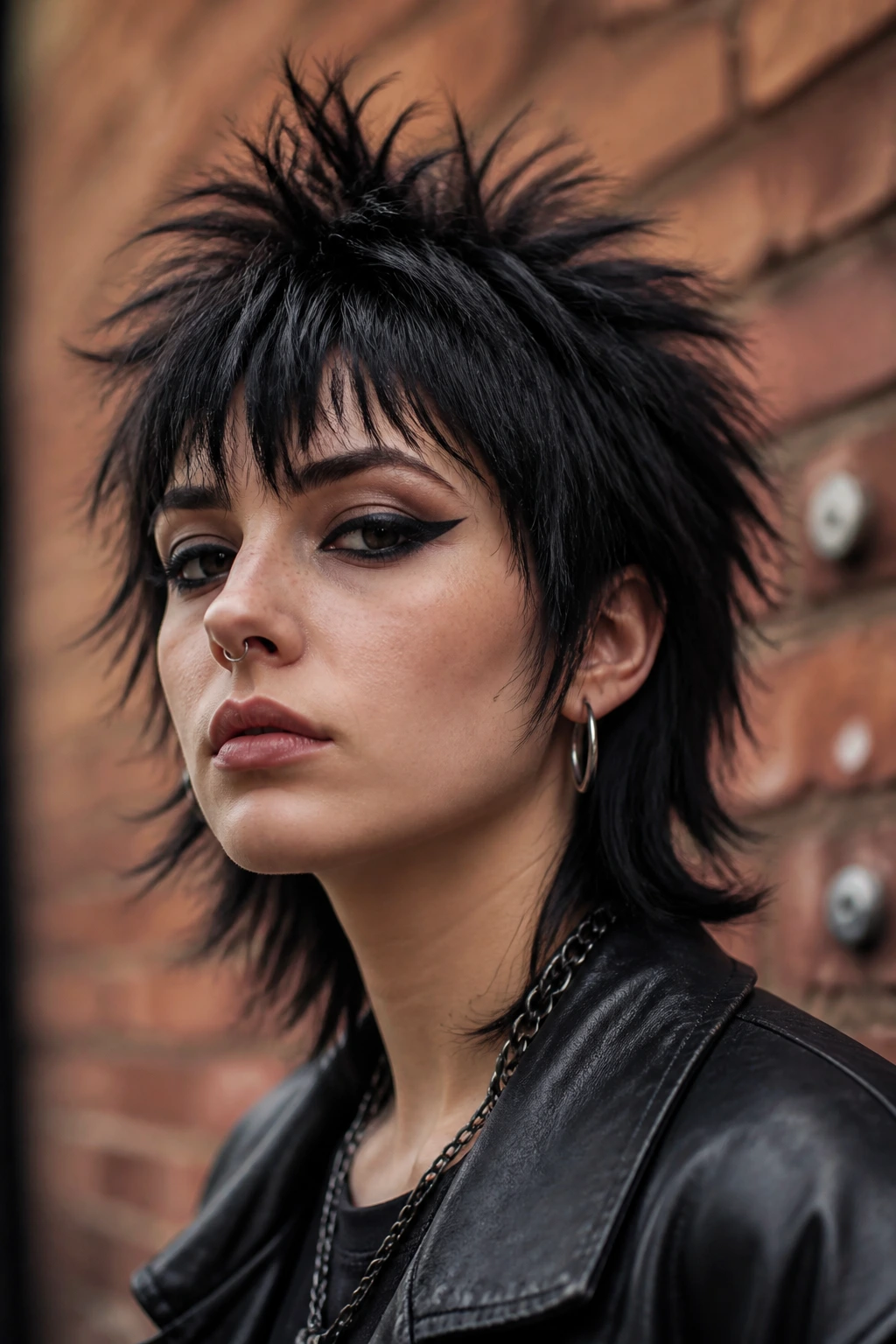
For those who want to make a statement, the punk-inspired shag is all about texture and contrast. It often includes shorter, spikier layers on top and longer, thinner layers at the bottom. It is a rebellious cut that works well for thin hair because the “messy” factor is turned up to eleven.
Embracing the Chaos
You will want to get comfortable with styling products like texturizing clay and pomade. Don’t be afraid to pull small pieces of hair in different directions. The beauty of this style is that no two days will look exactly the same. It is a fun, expressive style that allows you to play with your look without needing a full, thick head of hair.
17. The Parisian Shag

Think of the effortless “French girl” hair. It is a little bit messy, a little bit shorter, and always looks like you just rolled out of bed, yet still somehow perfect. The Parisian shag focuses on volume at the crown and soft, irregular layers that frame the face. It is incredibly chic and works beautifully with air-dried textures.
Keeping It Effortless
- Never blow-dry to 100% dryness; let the last bit air-dry for a natural texture.
- Use a small amount of dry shampoo, even on clean hair, to add a bit of “grip” and matte texture.
- Keep the bangs long and wispy, almost like they are getting in your eyes.
18. The Modern Grunge Shag
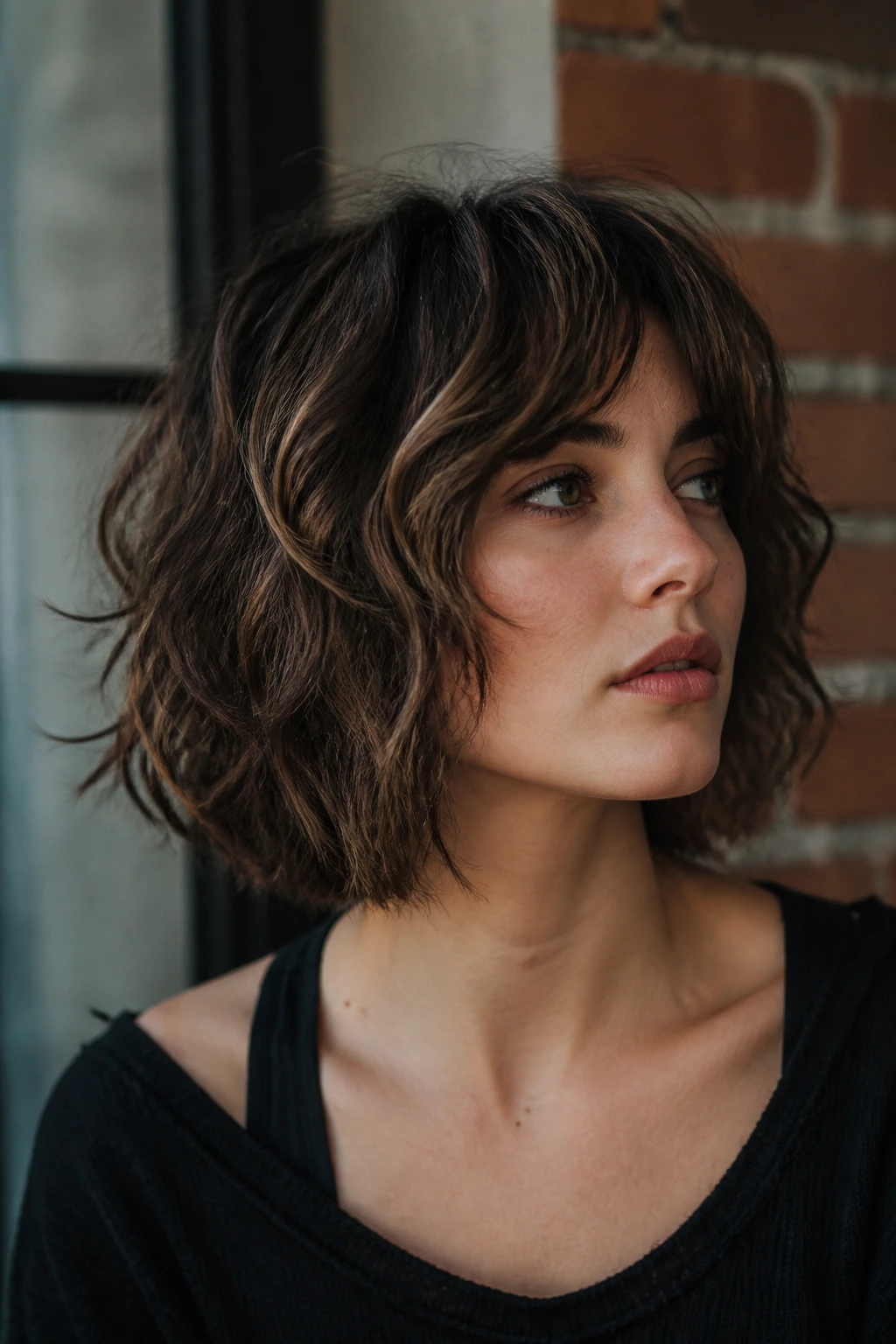
The grunge era made the shag iconic, and the modern interpretation is softer and more wearable. It focuses on loose, flat-iron waves and piecey, textured ends. It’s perfect for thin hair because the waves add horizontal width, which makes the hair look more abundant.
The Modern Wave Technique
Use a straightener to create an “S” wave, but leave the very ends out so they stay straight. This prevents the hair from looking too polished or “done.” The contrast between the bend of the wave and the straightness of the end is what makes this look so modern and cool.
19. The Soft Graduation Shag
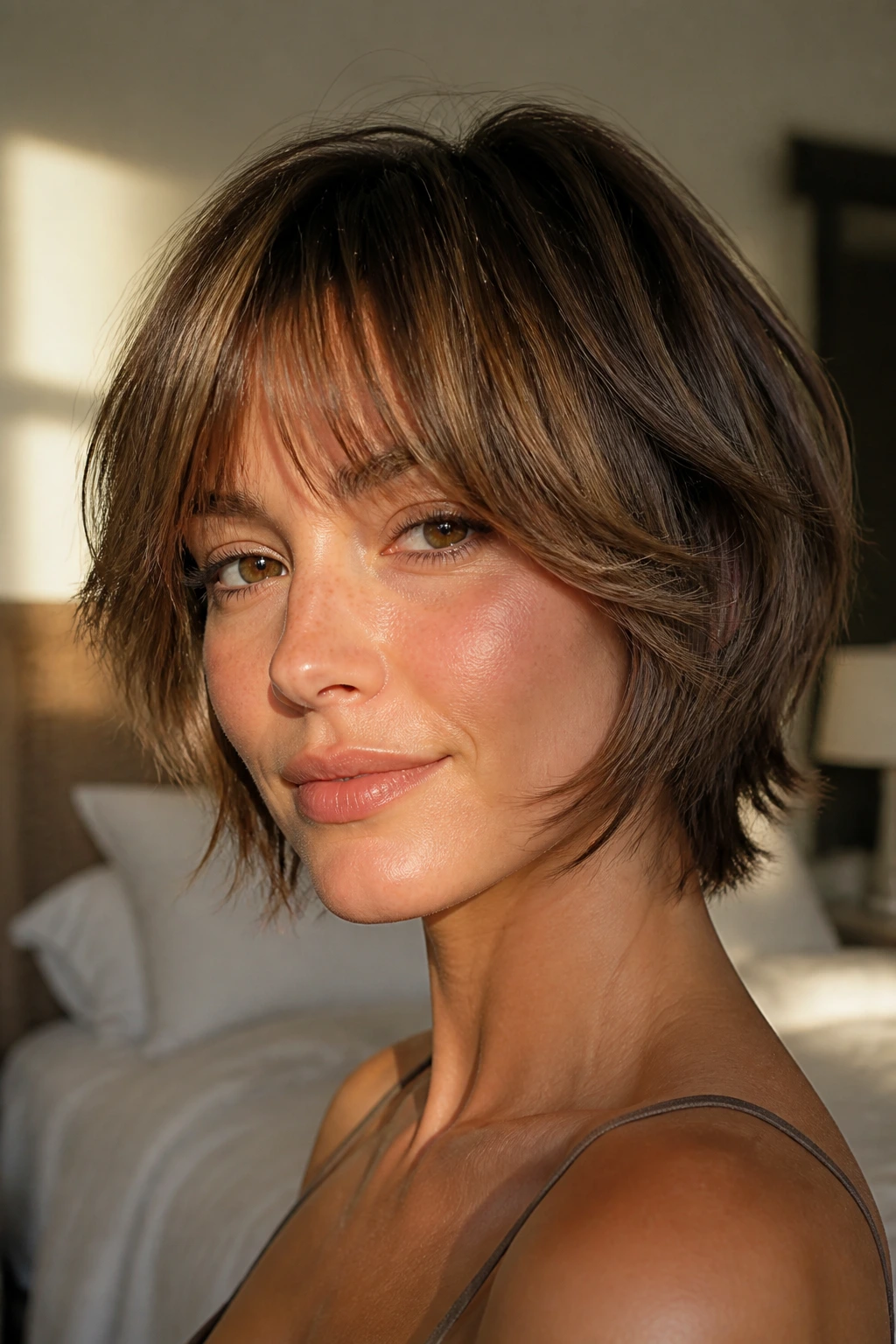
This cut relies on a gentle graduation of length, with the shortest layers starting around the cheekbones. It’s perfect if you have thin hair and want to emphasize your cheekbones or jawline. It is a very flattering, face-framing style that feels soft and feminine.
Choosing the Right Length
If you have a round face, ask your stylist to keep the shortest layer slightly longer, below the chin. If you have an angular face, you can go shorter to soften your features. The key is communication—show your stylist photos of the specific layers you like so you are both on the same page regarding the frame.
20. The Flipped-Out Shag
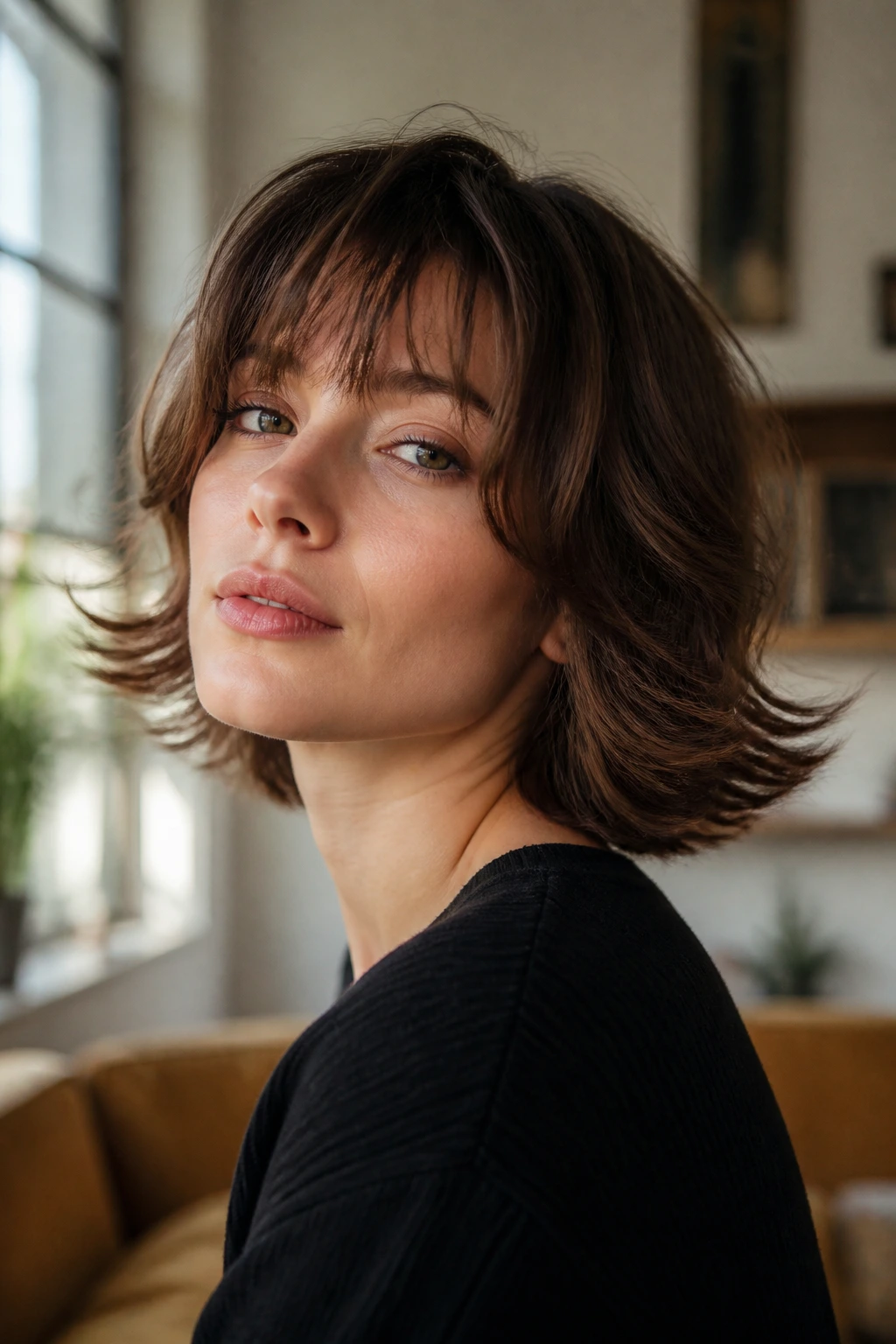
This is a fun, vintage-inspired look where the ends are styled to flip out away from the head. It adds instant horizontal volume, which is exactly what thin hair needs. It is playful, retro, and incredibly easy to achieve with just a round brush and a hair dryer.
How to Get the Flip
While your hair is damp, use a round brush to pull the ends upward and outward while blow-drying. Once dry, hit the ends with a quick shot of cool air from your hair dryer to “set” the flip. If you need extra hold, a tiny spritz of flexible-hold hairspray will keep those ends kicked out all day long.
21. The Pastel-Tinted Shag
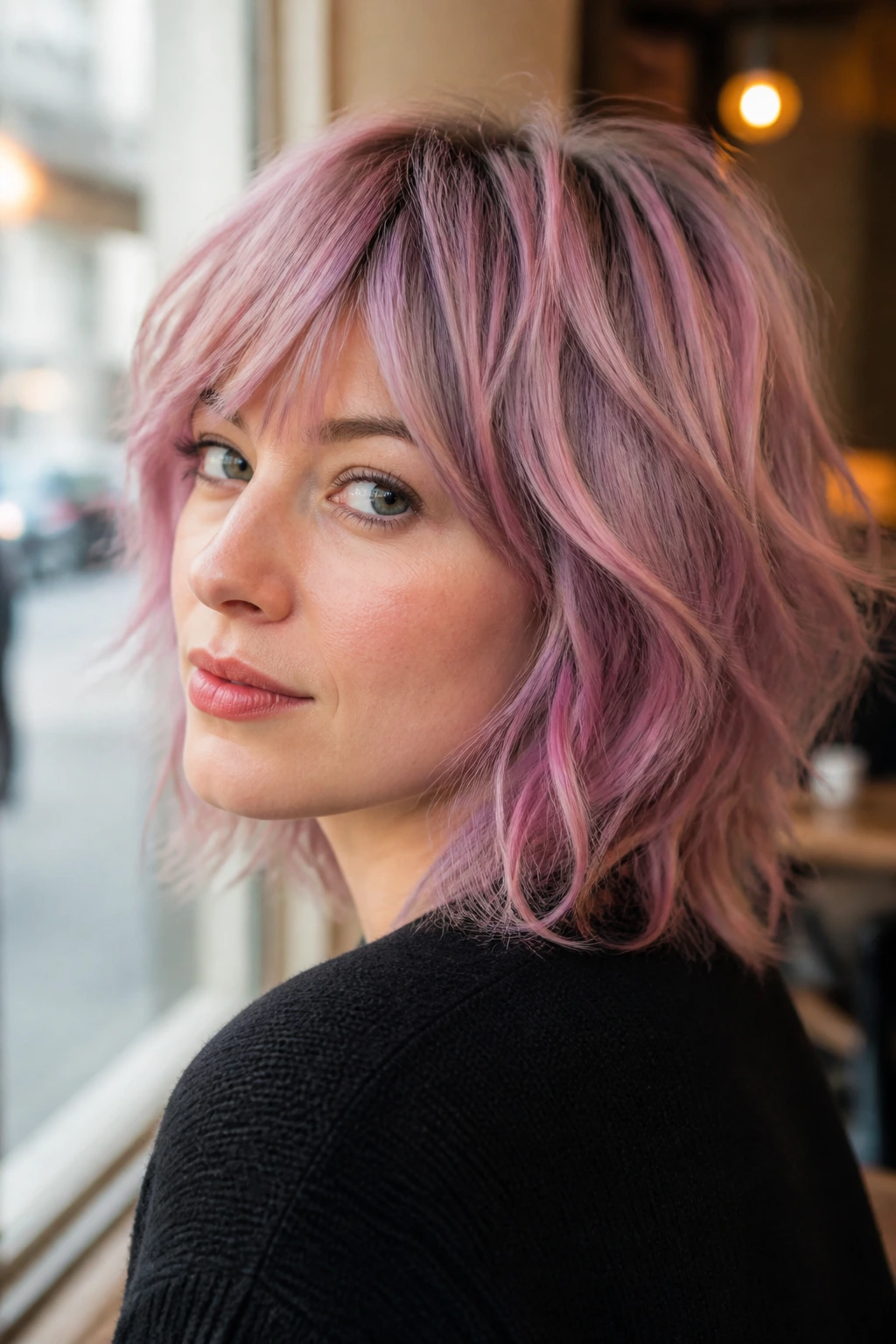
Sometimes the best way to deal with thin hair is to lean into the fun of it with color. Pastel colors like soft pink, lavender, or mint look incredible on a shaggy, textured bob. The multiple tones within the layers create a sense of depth that makes thin hair appear multidimensional and thick.
Color Maintenance
- Pastel colors can fade quickly, so use a color-depositing shampoo to keep the shade fresh.
- Always use a heat-protectant spray before styling, as bleached hair can be a bit more fragile.
- Since the shag is meant to be a bit “out there,” don’t worry about root touch-ups too often—grown-out roots actually add to the grunge-chic vibe of this cut.
22. The “Bedhead” Shag
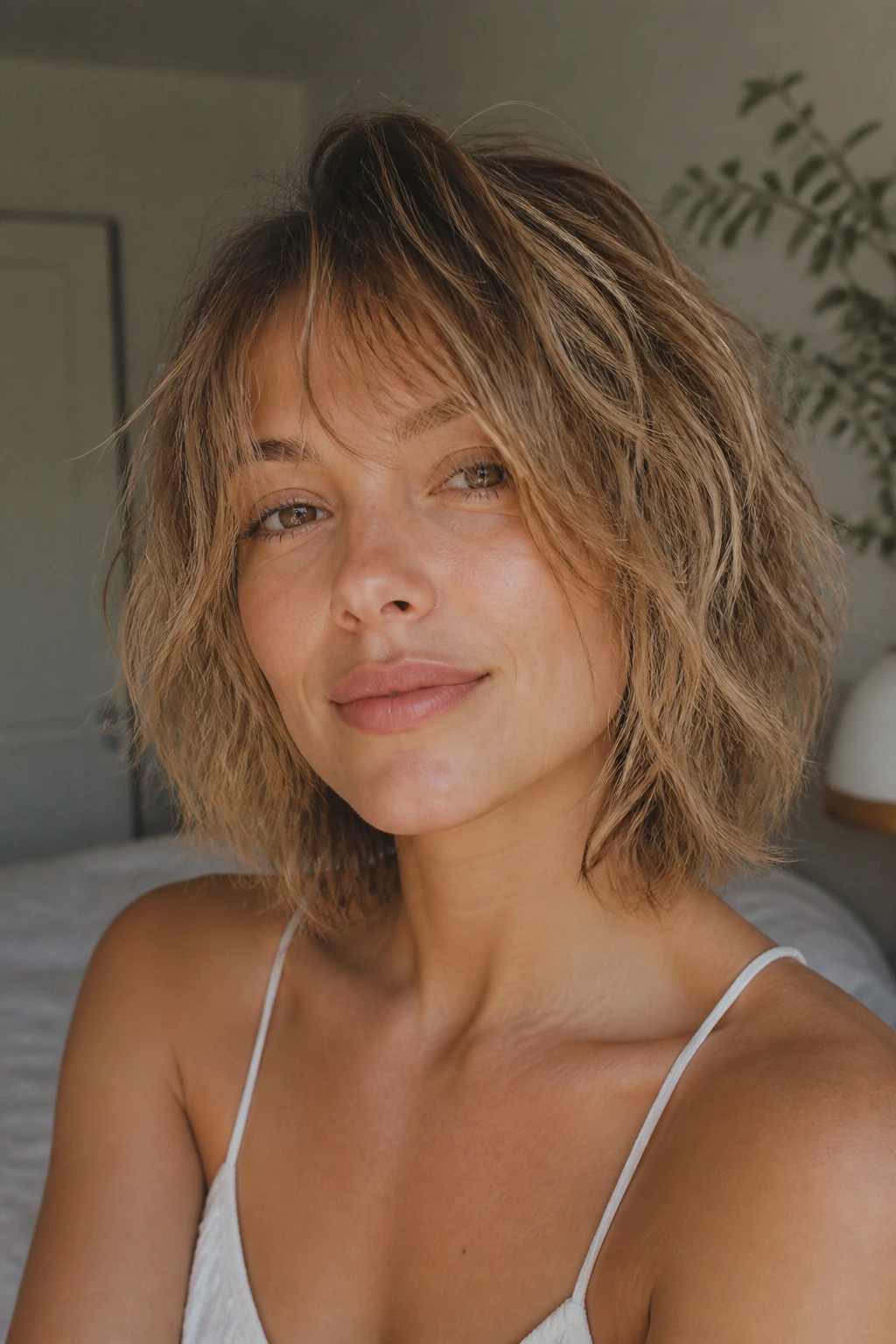
The ultimate goal of any shag is the look of just-woken-up hair. The bedhead shag is the embodiment of this. It uses layers to create a haphazard, chaotic shape that is surprisingly sophisticated. It’s the ultimate “I didn’t try, but I look great” haircut.
Styling for the Bedhead Look
Apply a root-volumizing spray to damp hair, then rough-dry it using your fingers instead of a brush. Once dry, take a texturizing paste and work it through the ends, twisting small sections to create definition. If it looks too perfect, you’ve done it wrong—the more random, the better the final result will be for this specific aesthetic.
Final Thoughts
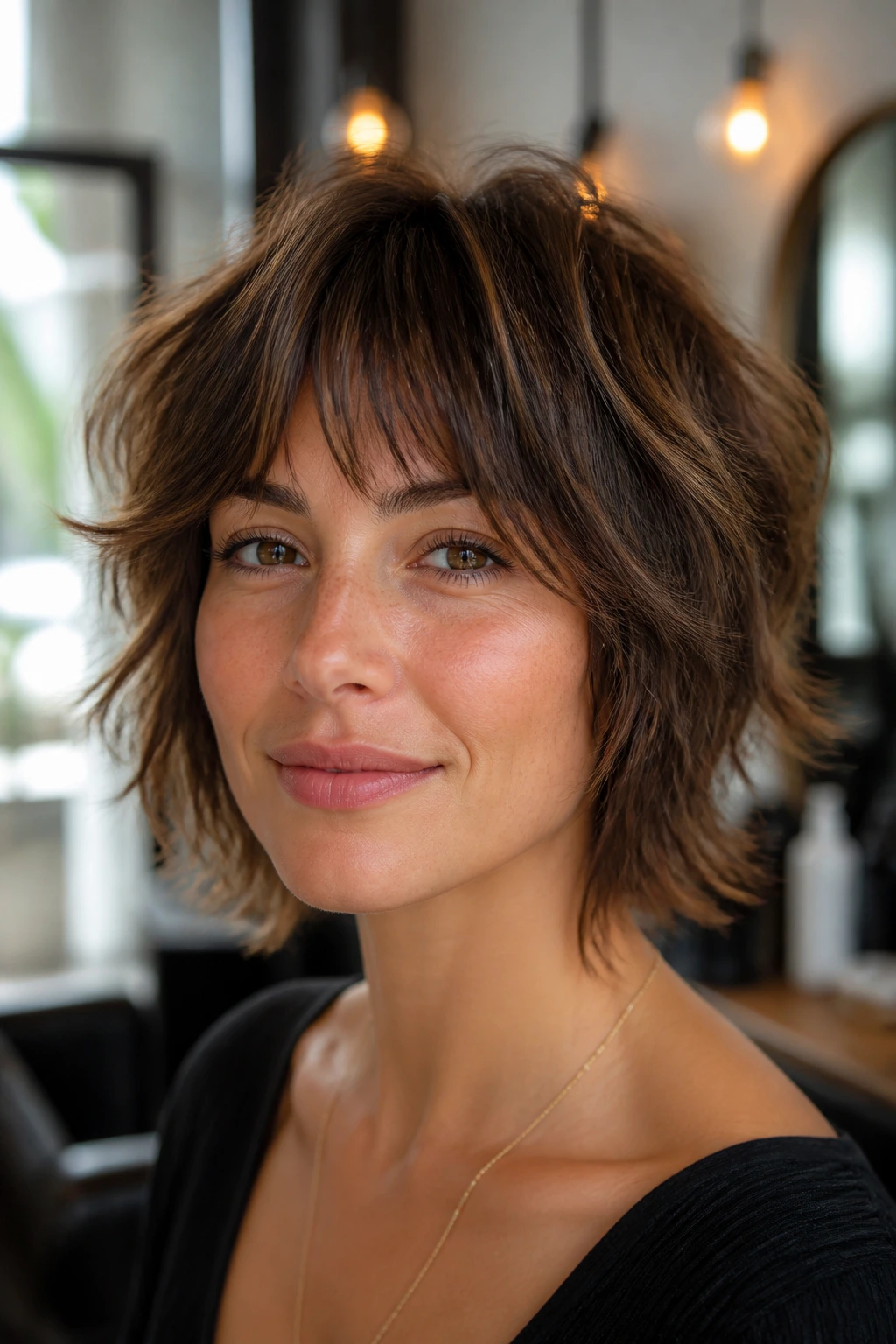
Finding the right haircut when you have thin hair can feel like a search for the holy grail, but the shaggy bob proves that you don’t need density to achieve a high-impact, stylish look. By embracing layers, texture, and movement, you are shifting the narrative from what you are lacking to what you are creating. Each of these twenty-two variations offers a different way to play with volume, length, and shape, proving that thin hair is actually a perfect canvas for modern, creative cutting.
Ultimately, the best shag for you is the one that makes you feel the most confident when you look in the mirror. Don’t be afraid to mix and match elements—maybe you want the retro volume of the 70s cut, but with the wispy ends of a more modern layer. Talk to your stylist about the specific parts of your hair you want to enhance, and remember that texture is your best friend. A little bit of salt spray, a light touch with styling powder, and the right cut will change how you see your hair for good.