

Fine, delicate strands often feel like a curse when you’re staring at a wall of Pinterest boards filled with thick, luscious manes. If your hair lacks density, you’ve likely been told to avoid extensions or heavy styles that pull on the scalp. But here is the secret most stylists won’t tell you: micro braids can actually be a game-changer for thin or fine hair, provided you know how to distribute the weight.
When done correctly, these tiny, intricate plaits act as a protective layer, shielding your fragile ends from daily friction and environmental damage. The key isn’t to pile on as much hair as possible, but to focus on the tension at the root. If you choose the right synthetic fibers—specifically those that are lightweight and matte rather than heavy or glossy—you can achieve a look that feels voluminous without the dreaded thinning of your natural hairline.
Forget the idea that you have to choose between hair health and the aesthetic of long, flowing braids. By opting for smaller parting sections and keeping the tension minimal, you can wear micro braids for weeks while your natural hair rests. Let’s look at how to navigate the world of micro braids specifically tailored for those of us with hair that needs a lighter touch.
1. The Classic Waist-Length Micro Braids
If you want that iconic, flowing look, classic waist-length braids are the go-to. The key here is not the length, but the weight. By using premium, lightweight Kanekalon hair, you prevent the braids from dragging your head down.
Why It Works for Thin Hair
The sheer number of braids in a full head of micro plaits creates the illusion of density. Because each section is tiny, you aren’t pulling on large chunks of your natural hair. This allows for a more even distribution of tension across the scalp.
Essential Maintenance Tips
- Wash your scalp with a diluted shampoo mixture to keep it clean without disturbing the braids.
- Sleep in a satin bonnet every single night to prevent frizz and fraying.
- Use a light leave-in conditioner spray on the ends to keep them from becoming brittle.
Pro tip: Always ask your stylist to use a “knotless” method at the base, which reduces the bulk and prevents the heavy, stiff feel of traditional micro braids.
2. Curly-Ended Micro Box Braids
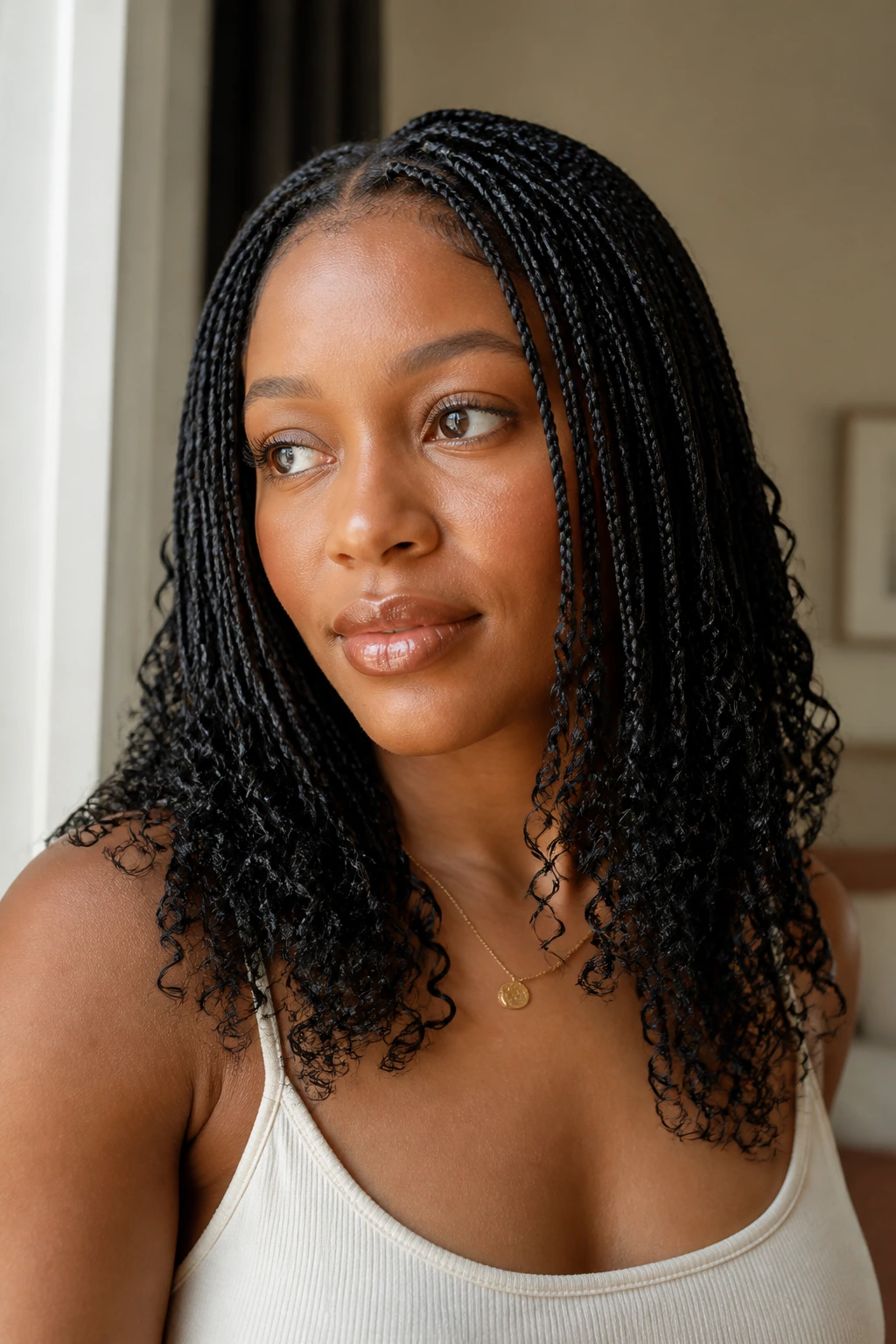
Adding curls to the ends of your micro braids provides immediate softness and movement, which distracts the eye from a lack of density at the scalp. This style is particularly flattering if you have a rounder face shape, as the volume at the ends creates a beautiful, tapered silhouette.
Achieving the Perfect Curl
To get those bouncy, long-lasting curls, your stylist will need to use perm rods on the ends of the synthetic hair. After rolling, they should be dipped in hot water—the temperature is the most critical part—to set the shape permanently.
Styling Benefits
The weight of the curls at the bottom actually helps the braids hang straighter, preventing them from tangling or matting as quickly as straight-ended braids might. You get the polish of a braid with the playfulness of a wavy hairstyle.
3. Honey-Blonde Micro Braids
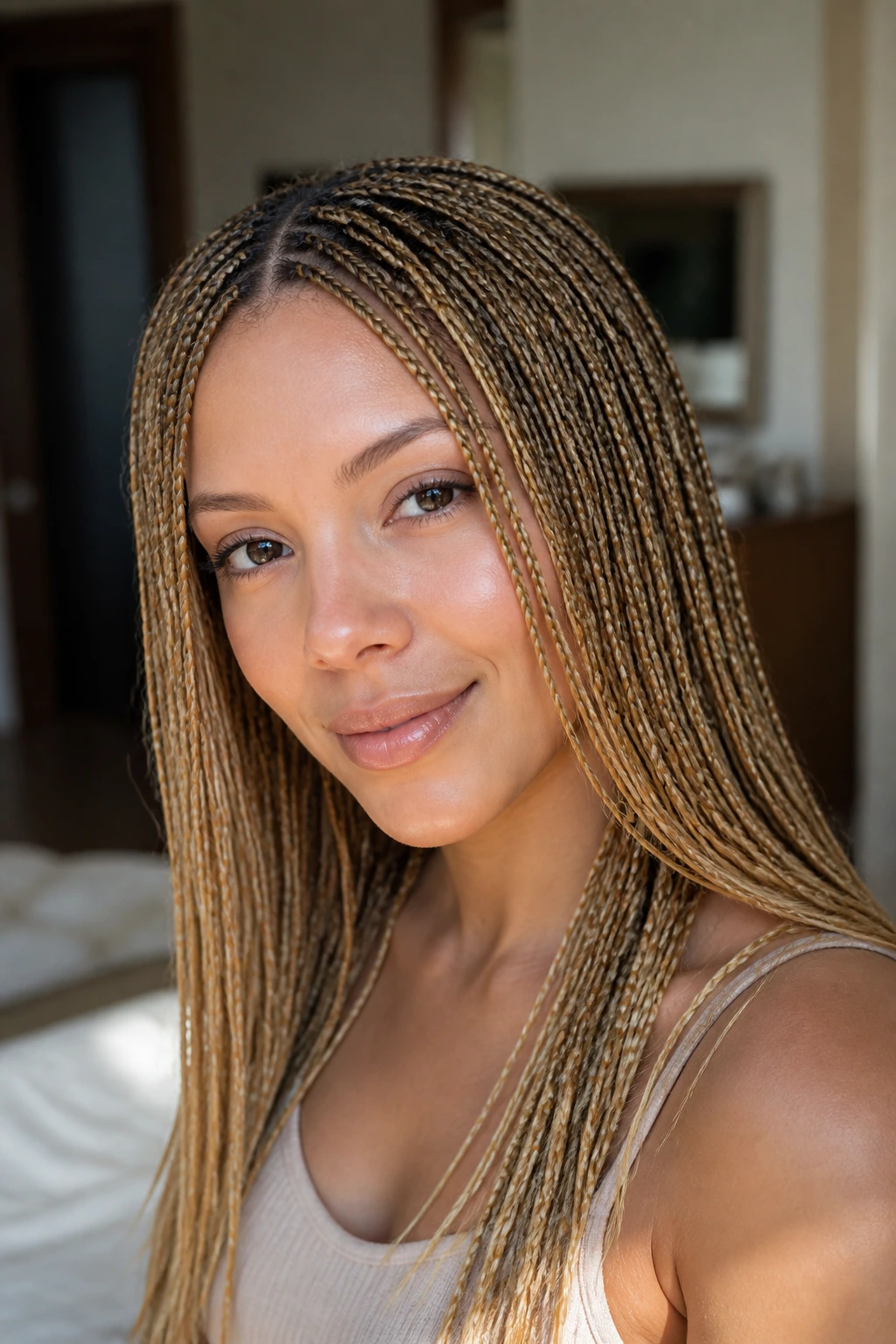
Color is a powerful tool when you have fine hair. A honey-blonde tone adds warmth and dimension, making your hair look fuller than a single, flat shade of jet black ever could. The contrast against your scalp creates an optical illusion of more thickness.
How to Choose Your Shade
Avoid stark, platinum blonde if your natural hair is dark, as the regrowth will look too harsh and thin. Instead, go for a multidimensional honey-gold. This creates a “shadow root” effect that is naturally more flattering and requires less maintenance as your hair grows out.
Protecting Your Scalp
Fine hair often comes with a more sensitive scalp. When opting for lighter colors, make sure your stylist does not braid too tightly near the temple or the nape, where the hair is notoriously most fragile.
4. Half-Up, Half-Down Micro Plaits
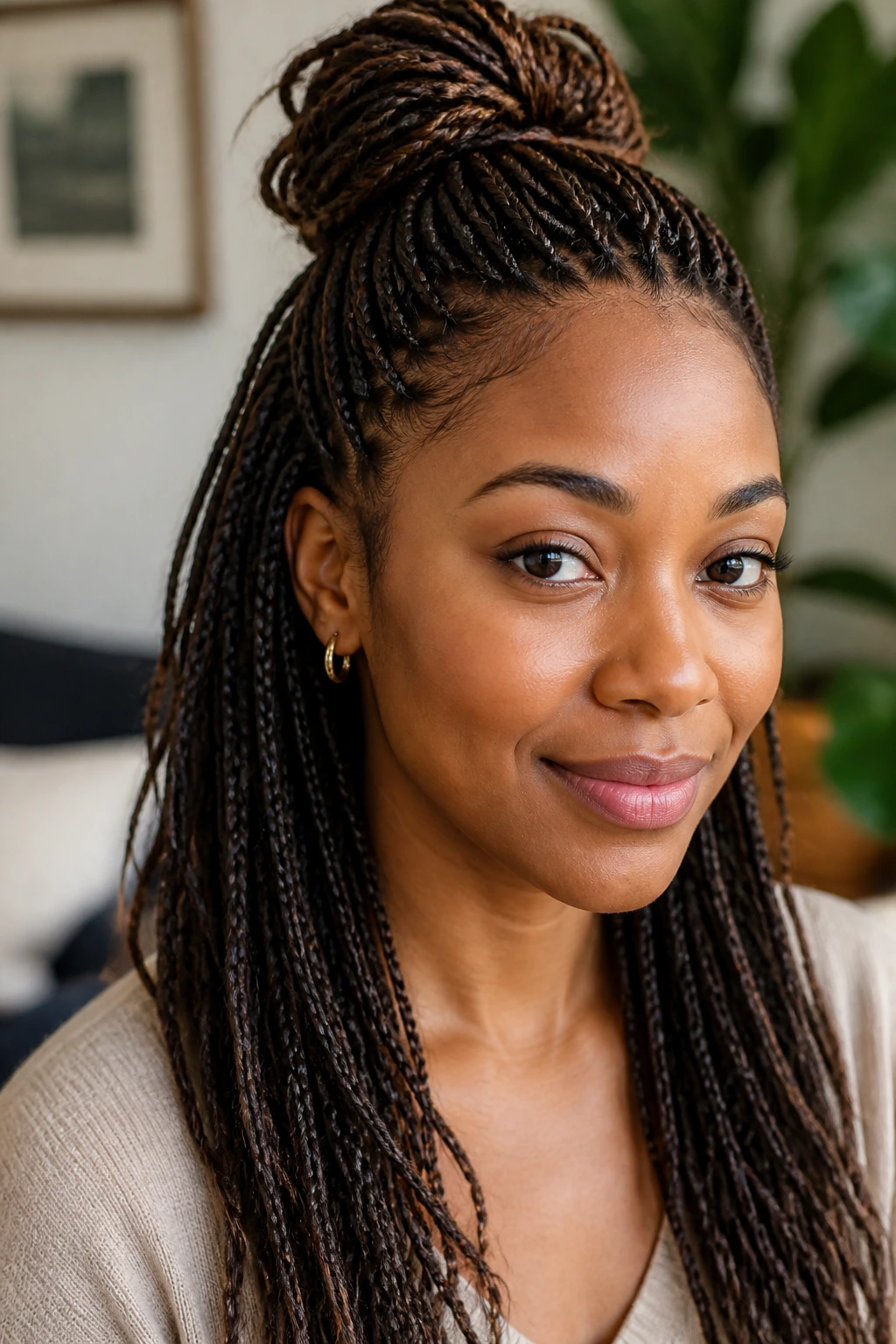
You might think that pulling your hair back is a bad idea if you don’t have much to work with, but a half-up style is actually perfect. It lifts the hair away from your face, which can make fine hair appear to have more lift and body.
Creating Volume at the Crown
Gather the top layer of your micro braids into a loose bun or a high ponytail. Use a velvet scrunchie instead of a traditional elastic band to avoid snagging or snapping your delicate natural strands.
The Style Factor
This look is remarkably versatile. It transitions from a day at the office to a casual dinner without needing any adjustments. Because the weight of the bottom braids is pulling downward, the top half remains light and airy, avoiding that “pulled tight” look that often highlights a sparse hairline.
5. Micro Braids with Beaded Accents
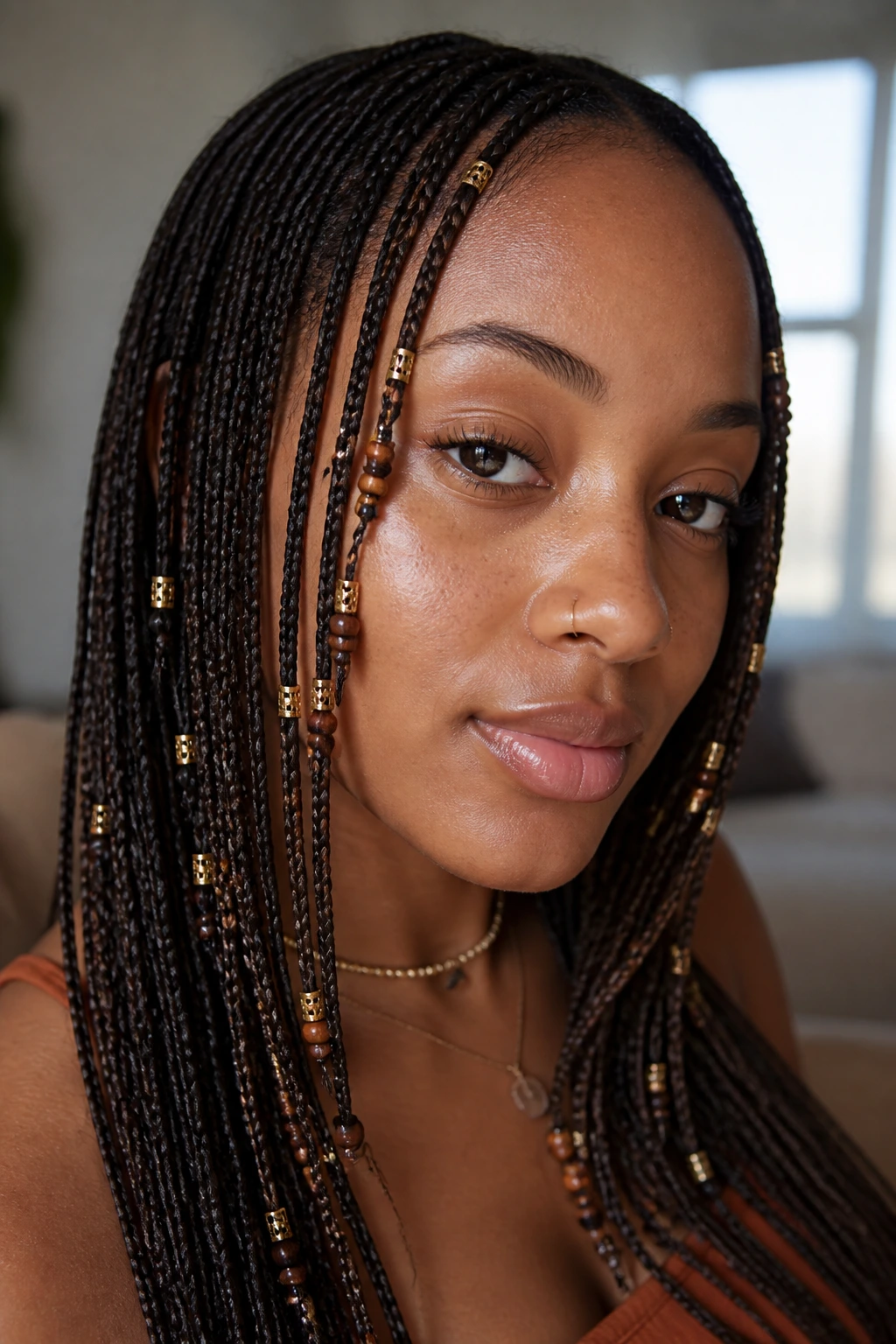
Sometimes, you just need a little flair to distract from the lack of thickness. Adding gold or silver cuffs and wooden beads to the ends or the mid-lengths of your braids draws the eye outward rather than toward your roots.
Where to Place the Jewelry
- Cluster a few cuffs near the temple to frame your face.
- Space out beads randomly throughout the length to create a bohemian, intentional vibe.
- Avoid using too many heavy metal beads, as they can weigh down individual braids and potentially snap fine hair.
Pro tip: Stick to lightweight, plastic or wood-based beads. If you find a design you love that involves heavy metal, limit the number to three or four total to keep the tension low.
6. Auburn-Tinted Micro Twists
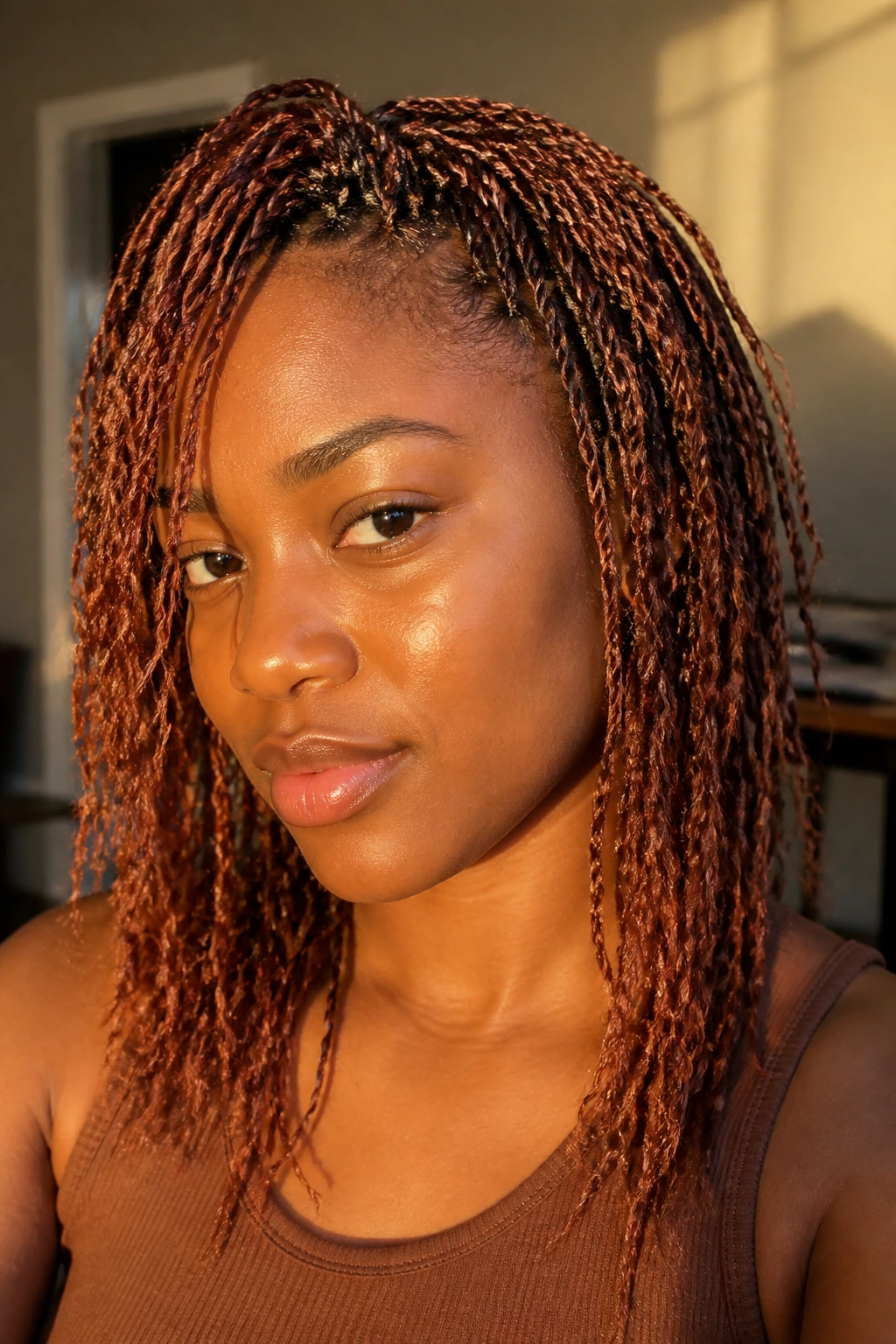
Twists are often lighter than standard three-strand braids because they require less manipulation of the hair. If you have extremely fine hair, switching to a micro-twist technique is a smart move that reduces the mechanical stress on your strands.
Why Auburn?
Auburn tones catch the light beautifully. Because your hair isn’t dense, the light can pass through the braids more easily. A rich, warm copper or auburn color will make the individual braids look vibrant and full of life.
Maintenance Comparison
Twists tend to be slightly more prone to unravelling than braids, so you will need to be careful with moisture. Use a light, water-based foam to keep the twists smooth, and avoid heavy oils that might cause them to slide apart.
7. The High Top-Knot Micro Style
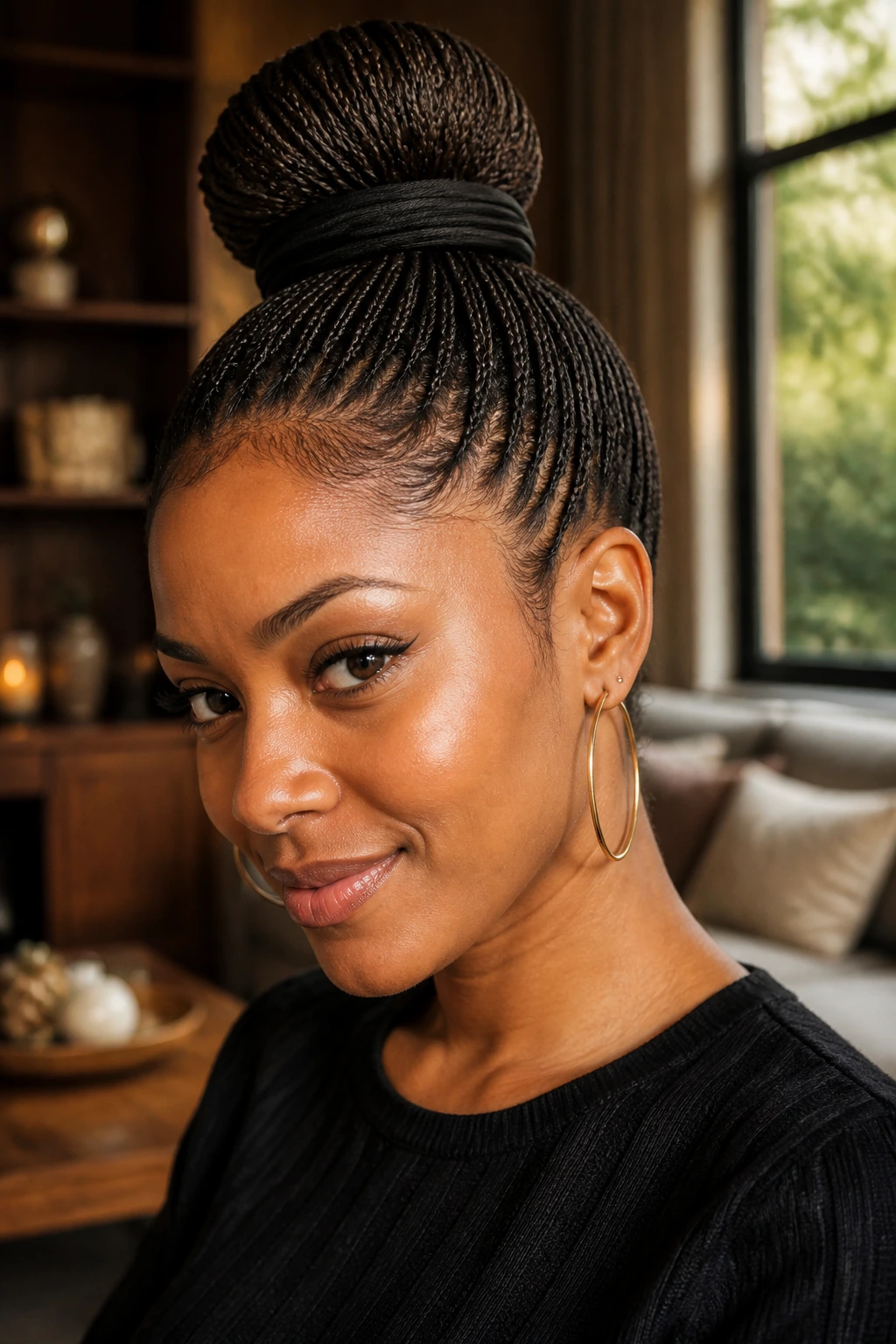
This is the ultimate “power move” style. By pulling all your micro braids into a massive, voluminous top knot, you create a focal point that screams volume. This style works wonders because it hides the thinness of your natural scalp entirely.
Constructing the Knot
- Pull all your braids to the crown of your head.
- Twist them around one another to form a large base.
- Secure the entire structure with a large, fabric-covered band.
Dealing with Flyaways
If you have short, fine hairs around your edges, don’t try to slick them back with harsh gels. Instead, use a light edge control and a soft toothbrush to gently lay them down. This keeps your hairline healthy and prevents breakage.
8. Micro Braids with Side-Swept Bangs
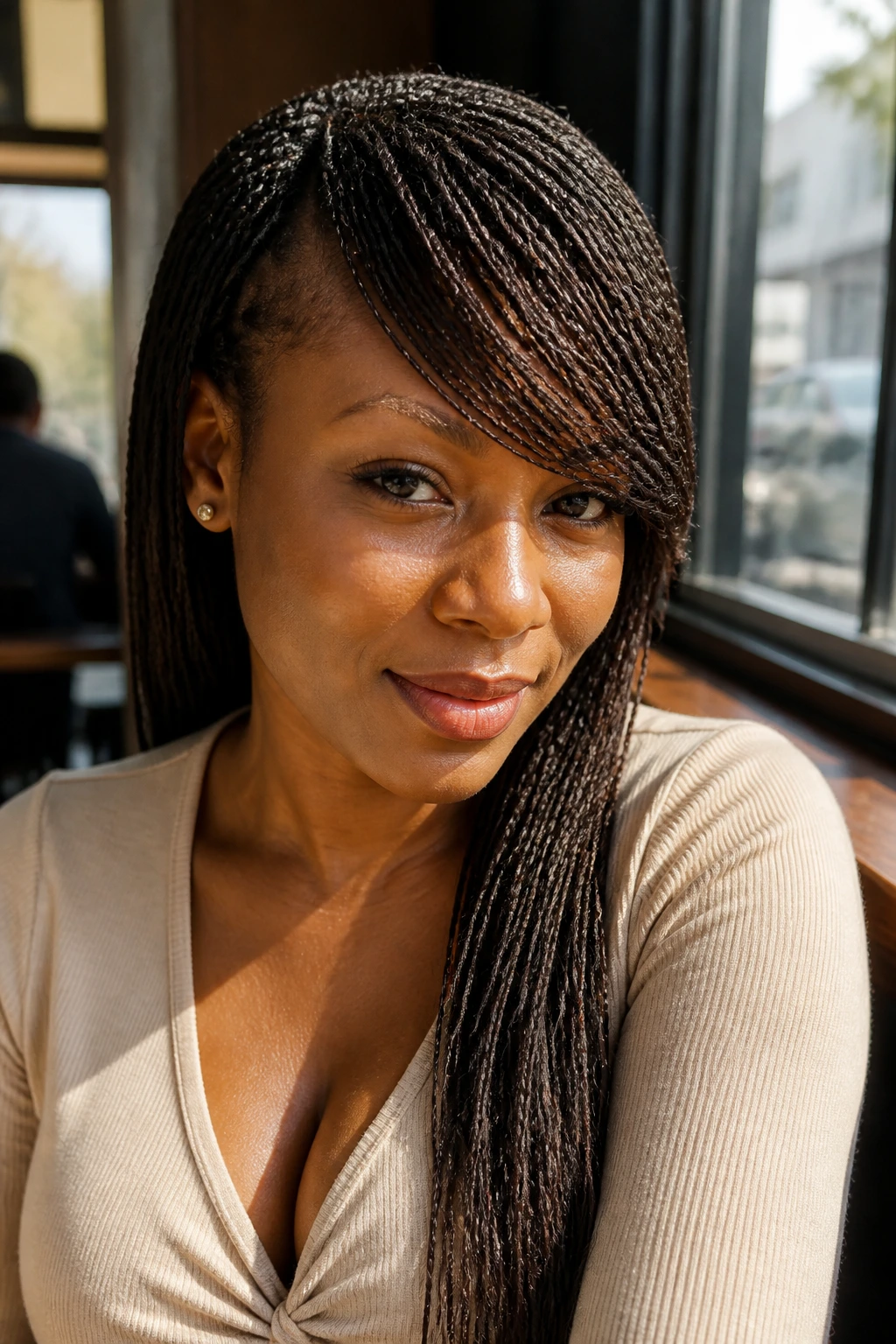
Bangs can be difficult with braids, but if you have a few face-framing micro braids swept to the side, you create a soft, romantic look. This style helps break up the face shape and creates the illusion of density at the front, where fine hair often shows thinning first.
Why Side-Sweeping Helps
By directing the hair across your forehead, you disguise a high or sparse hairline. It gives you that effortless “curtain bang” look that is always popular.
Longevity Considerations
Face-framing braids usually gather the most dirt and oils from your forehead. Make sure you use a gentle face cleanser to avoid getting heavy creams or serums on the braids themselves, as this will lead to buildup and dullness.
9. Bob-Length Micro Braids
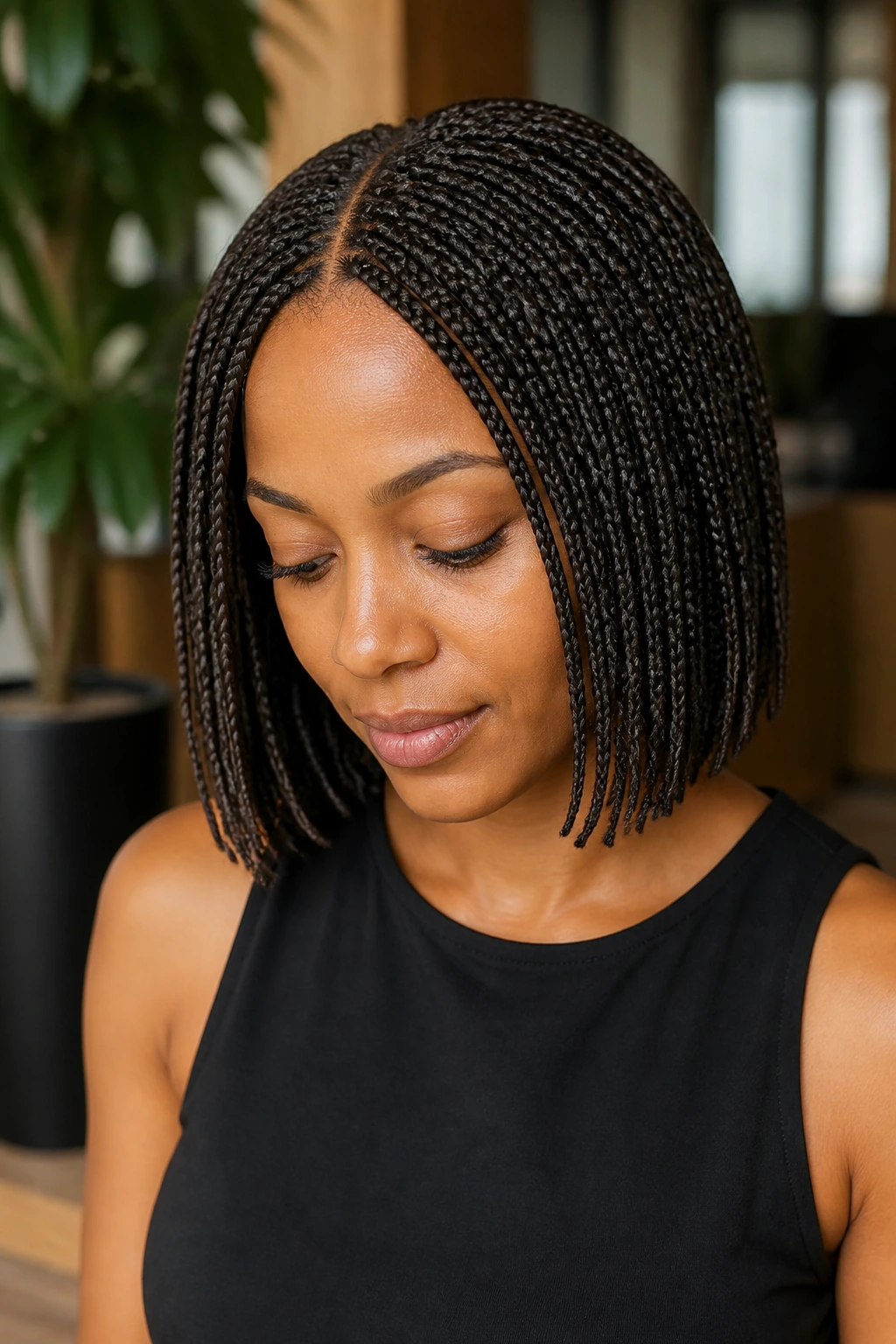
If you are tired of the weight of long hair, cut it short. A bob-length micro braid style is arguably the healthiest option for fine hair. By removing the weight of excess length, you take the pressure off your natural hair follicles.
The Visual Effect
Short hair naturally looks thicker. A blunt-cut bob with micro braids has a heavy, clean edge that frames the neck and chin perfectly.
Why It’s Low-Maintenance
Short braids don’t tangle as easily as waist-length ones. You spend less time detangling and more time enjoying the style. Plus, it’s the most professional option if you work in an environment where long, elaborate styles are impractical.
10. Ombré Micro Braids
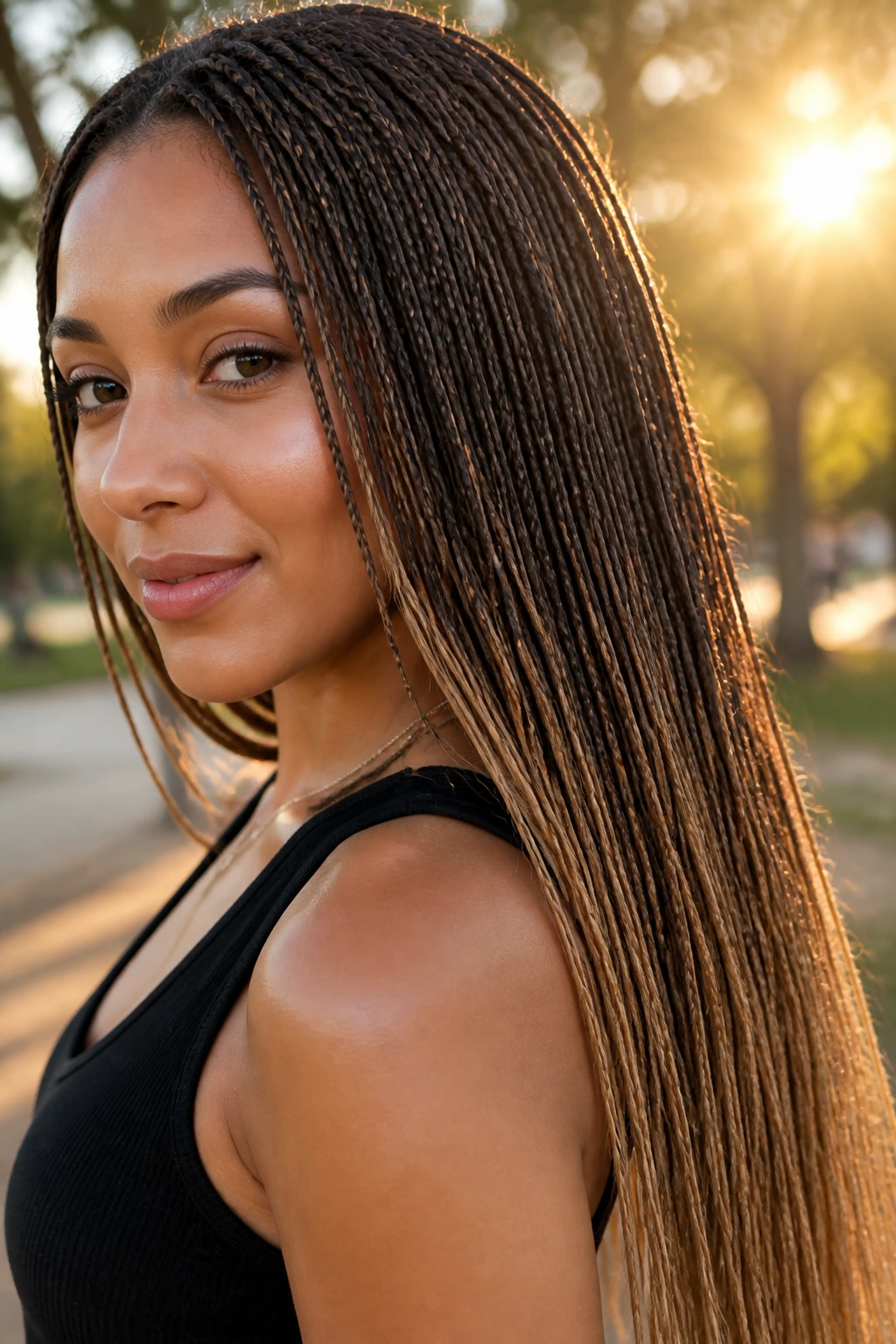
Ombré is fantastic for fine hair because it adds a sense of depth that simple one-tone braids lack. By starting with your natural color at the roots and transitioning to a lighter or brighter color at the tips, you create a gradient that feels sophisticated and full of life.
How to Execute
Ensure the transition between your natural hair color and the synthetic extension color is smooth. A harsh line will make your hair look like it’s thinning out where the extension begins. A long, blended transition is key.
Styling Tip
Because your natural hair color is at the roots, the grow-out phase is much less noticeable. This gives you an extra 2-3 weeks of wear before the style starts to look “tired.”
11. Micro Braids with Decorated Ends
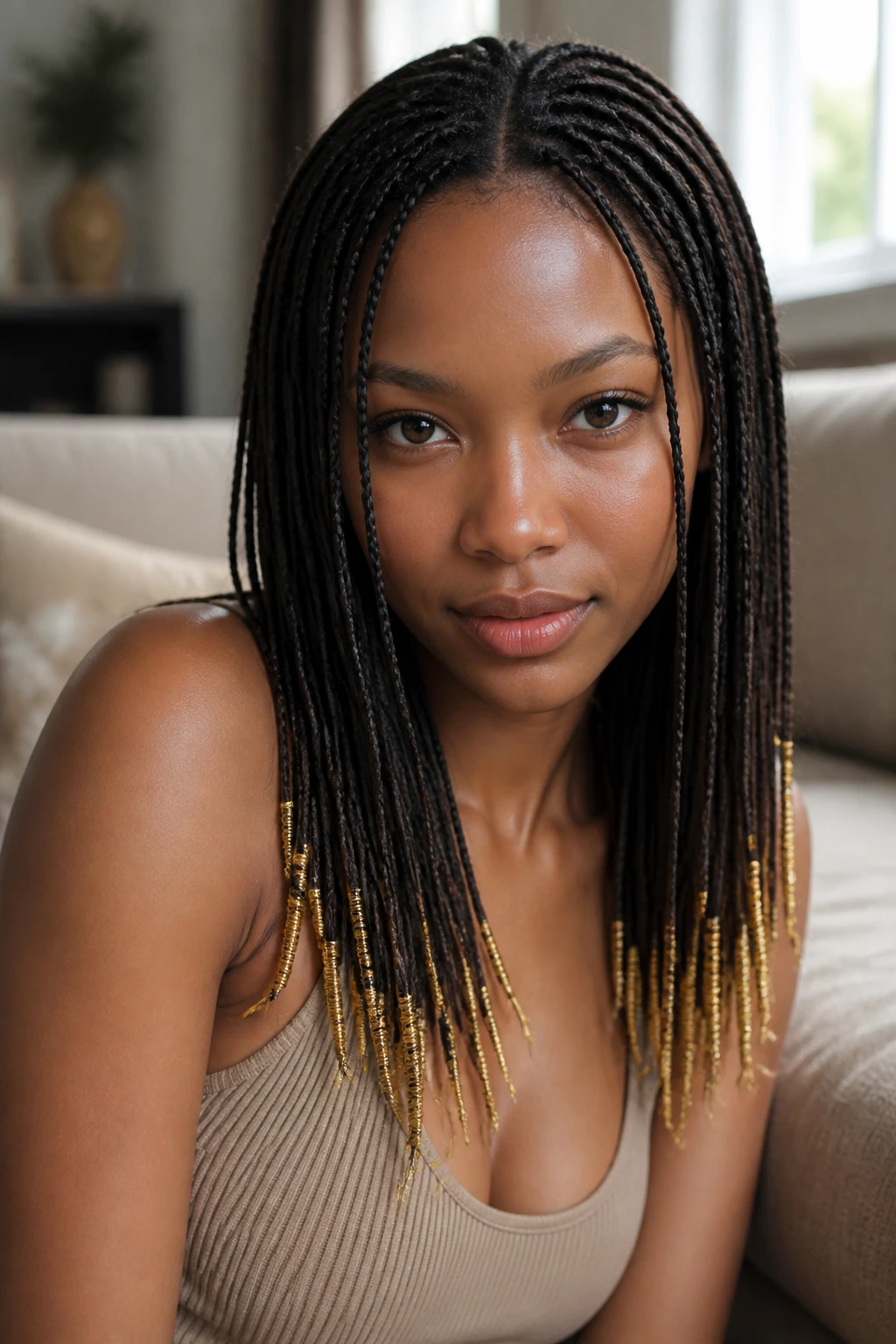
Sometimes the best way to handle fine hair is to make the ends the main event. By leaving the last two or three inches of the braids unraveled or decorated with gold thread, you add a soft, airy texture that masks the fact that the braid itself is thin.
Threading Techniques
Gold or metallic thread wrapped around the ends of your braids adds weight, but in a controlled, distributed way. It gives the style a high-end, editorial feel that distracts from the volume of the hair itself.
Choosing Your Materials
- Use silk or satin thread to prevent the friction that causes breakage.
- Avoid rough, synthetic yarns that can catch on your natural ends.
12. Sleek Center-Part Micro Braids
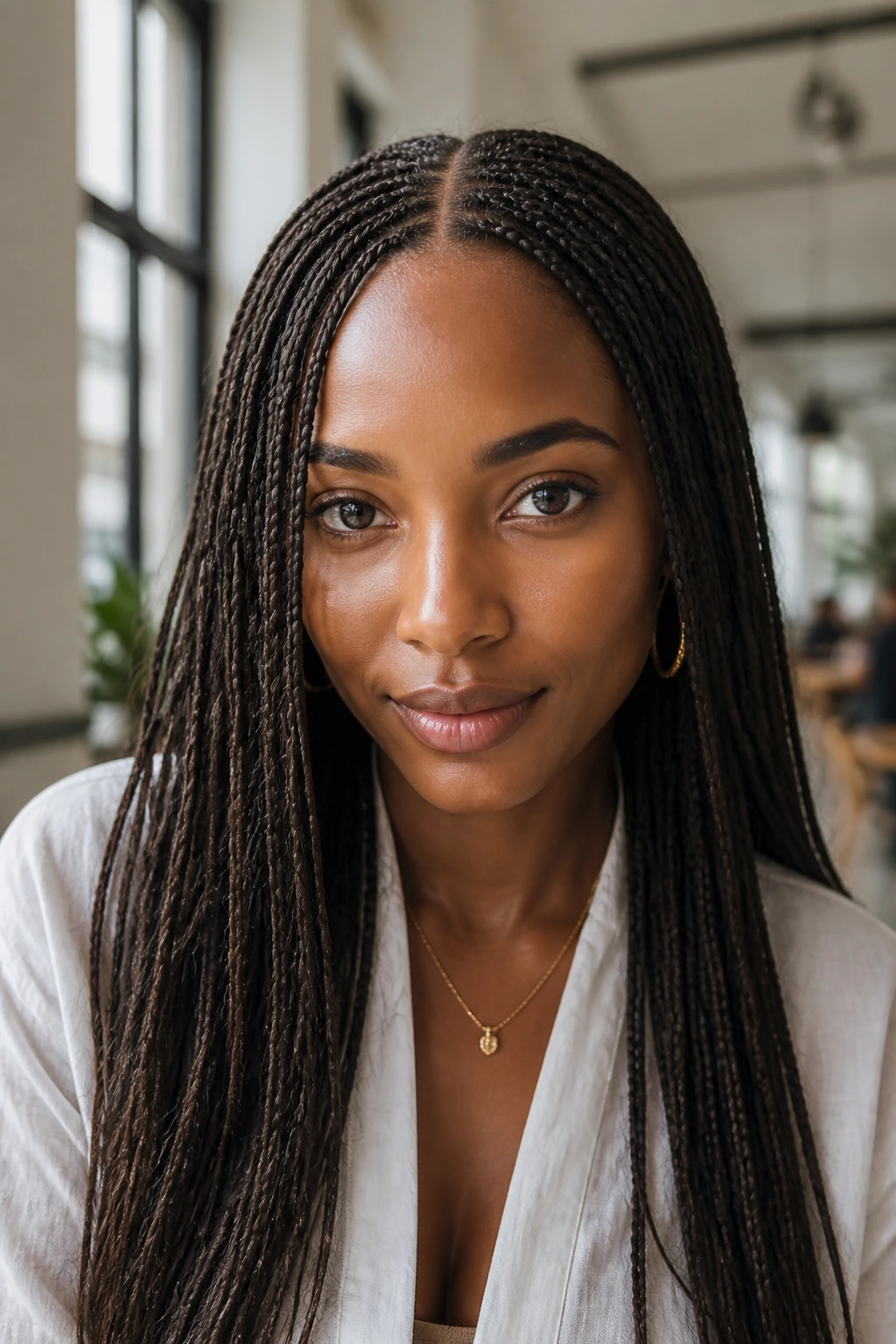
If you have a narrow face, a center part with micro braids can be incredibly striking. It creates a symmetrical frame that highlights your features without needing a lot of volume on the sides.
Achieving the Look
The key here is the parting. A razor-sharp, perfectly straight center part makes the style look intentional and clean. If your parts are messy, the style will immediately look thinner and less polished.
The “Sleek” Factor
Don’t use heavy gels to keep the part straight. Instead, use a light-hold setting spray and a rattail comb to place the braids exactly where they need to be. This keeps your hair bouncy and light rather than stiff and weighed down.
13. Micro Braids with Curled Roots
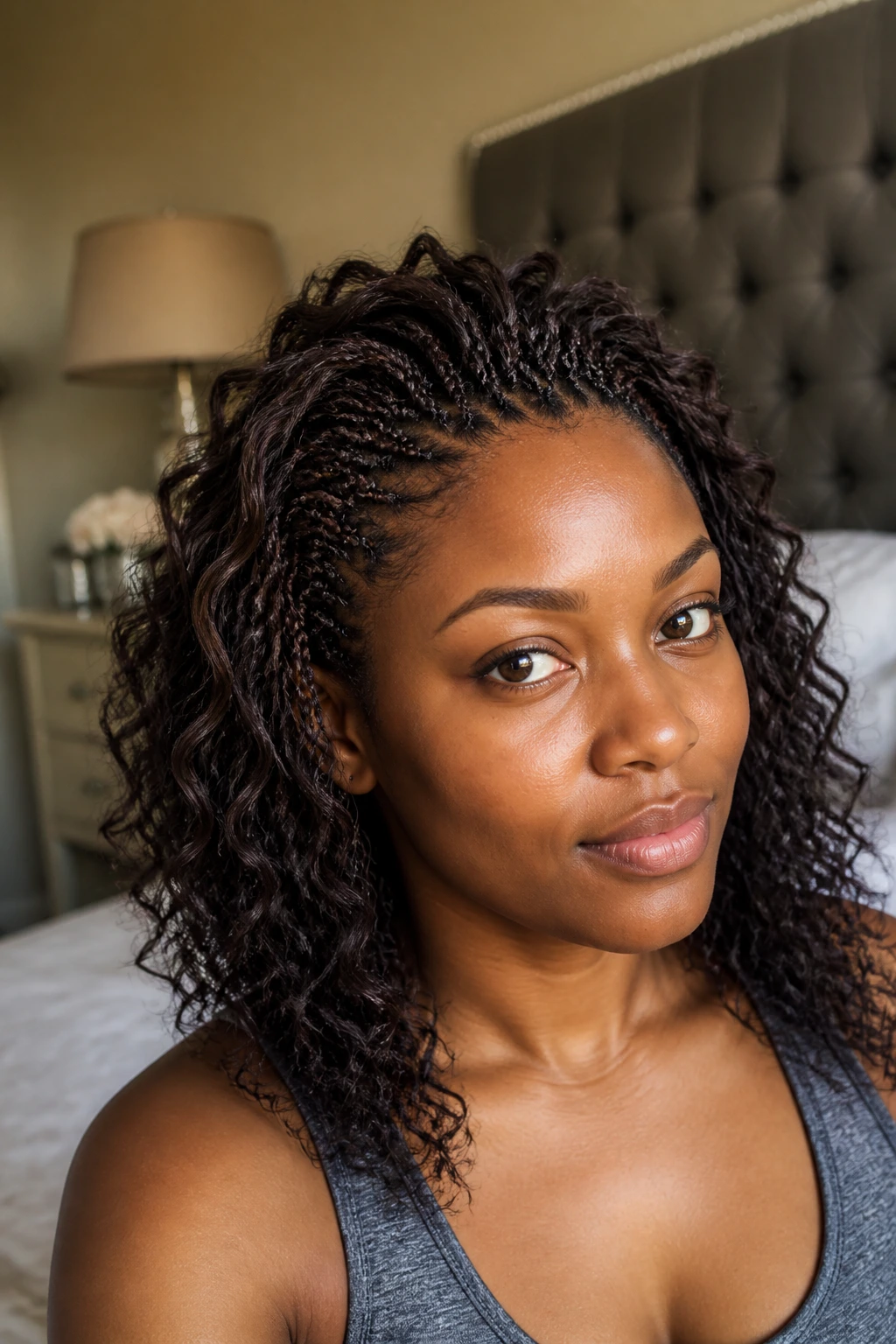
Have you ever considered adding texture to the root? By braiding the first two inches and then letting the synthetic hair transition into a soft wave, you add structural volume to the crown of your head.
The Benefit for Thin Hair
The natural wave pattern lifts the hair away from the scalp. This creates instant height, which is the holy grail for those of us struggling with limp, fine locks.
Why This is a Keeper
This style holds up well for several weeks. As the waves settle, they look more natural and lived-in, giving you a style that looks even better in the second or third week than it does on day one.
14. Multi-Colored Micro Braids
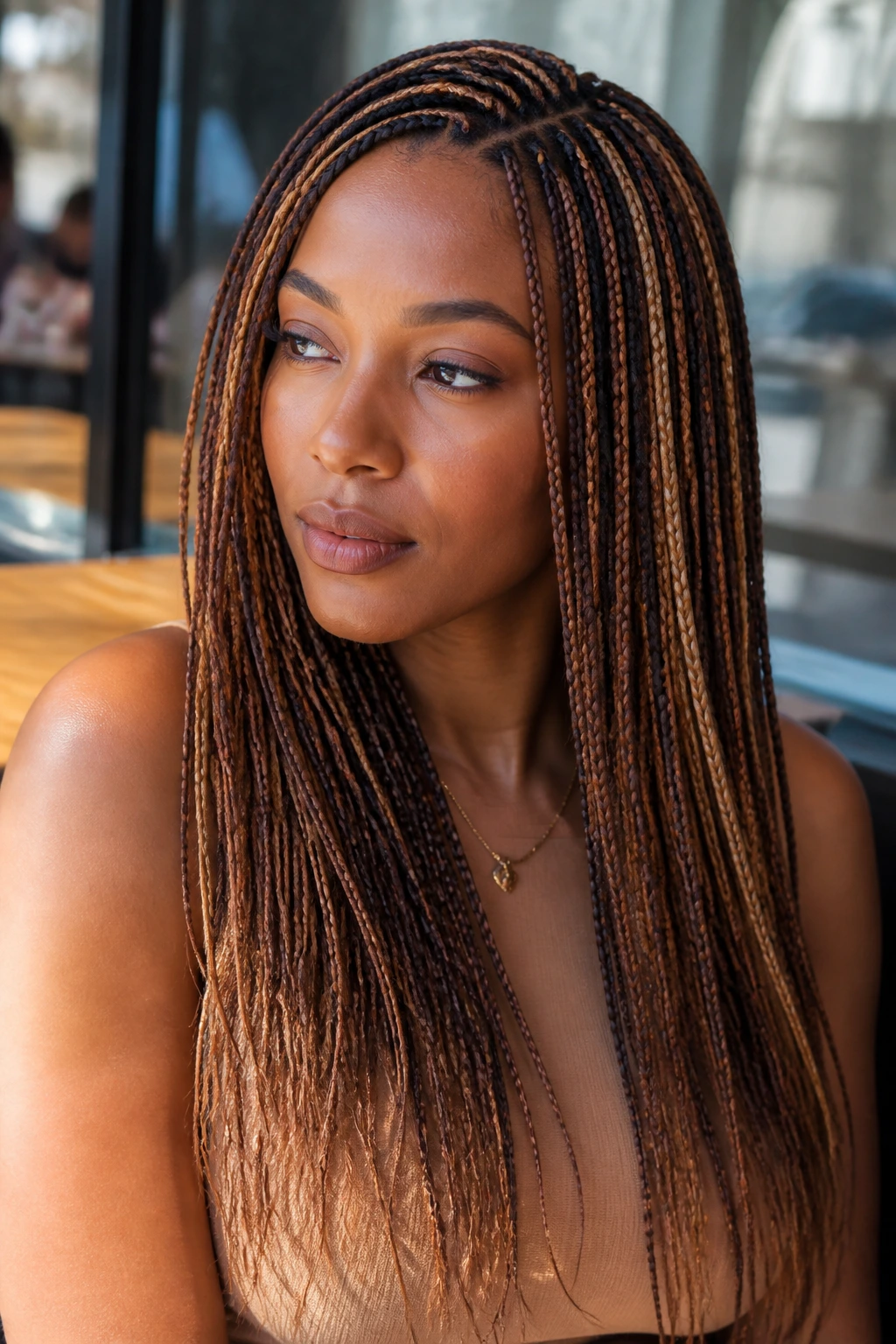
Don’t be afraid to mix colors. By combining 2-3 shades of brown or bronze into your micro braid set, you mimic the natural highlights that real hair has. This dimensional color trick is the oldest and most effective way to make thin hair look significantly thicker.
Color Selection Guide
- Mix a dark chocolate brown with a warmer chestnut.
- Add a few strands of copper for a pop of brightness.
- Keep the color palette within the same warm or cool tone family to ensure it looks cohesive.
Maintenance Note
With multi-colored braids, you need to be careful with heat. If you need to curl them, make sure your heat setting is low, as different synthetic fibers can react differently to high temperatures.
15. The “Boho” Goddess Micro Braids
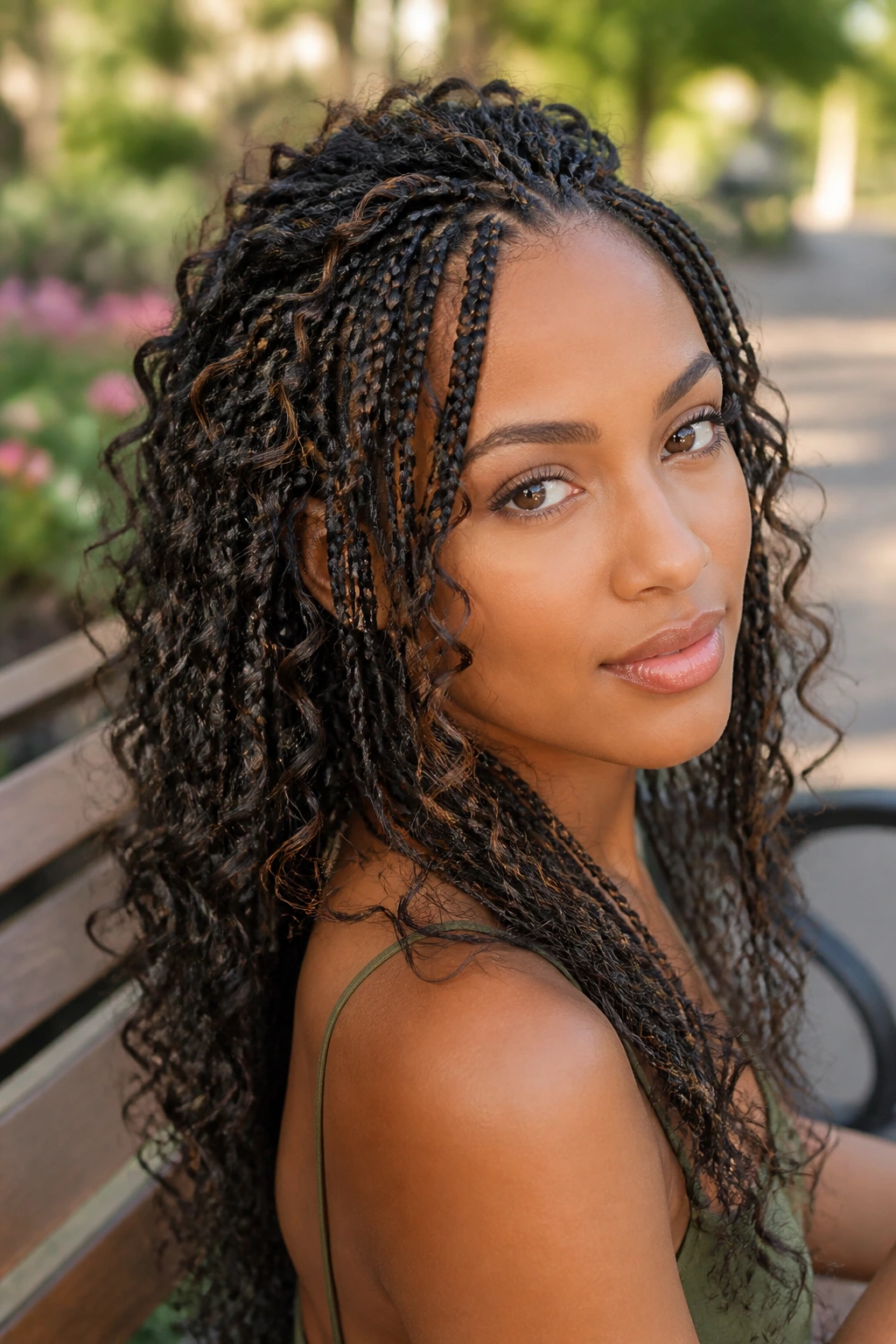
Goddess braids, or “boho” braids, feature loose, curly strands left out throughout the length of the braid. This is excellent for fine hair because the extra hair volume comes from the curly strands, not the braided roots.
Distributing the Weight
The trick is to have the stylist place the curly pieces strategically—mostly at the back and sides. This fills out the shape of the style without overwhelming your fragile, fine hairline.
Everyday Upkeep
These curly pieces will get frizzy. Keep a small spray bottle with water and a tiny bit of mousse in your bag to smooth them out on the go. This keeps your style looking fresh and prevents the frizz from tangling with your natural ends.
16. Micro Braids with Hidden Cornrows
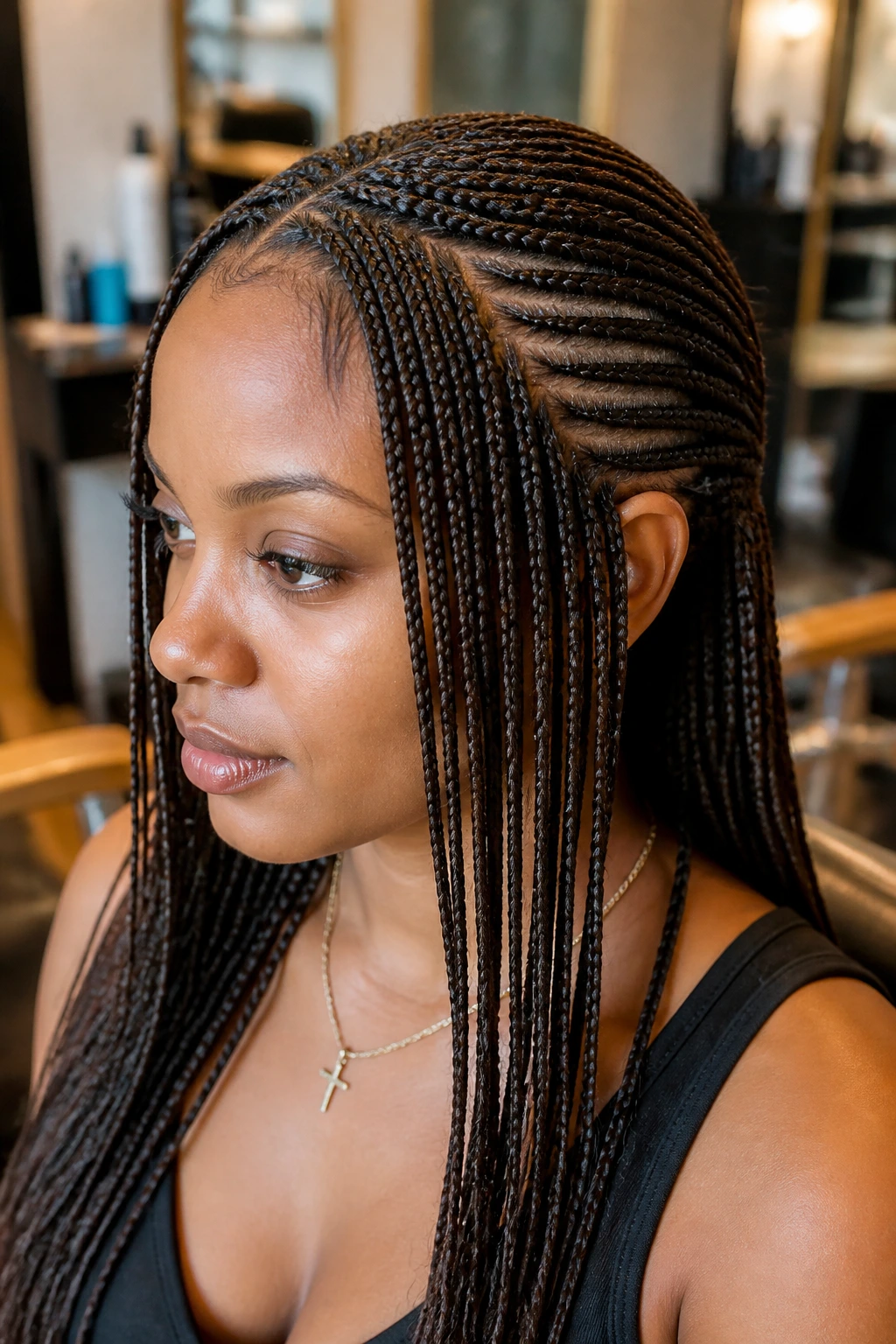
If you want the micro braid look but are worried about the weight, try a hybrid style. The front section of your hair is braided in micro box braids, while the back is cornrowed with a sew-in extension.
Why This Saves Your Hair
By cornrowing the back, you take a significant amount of weight off your crown and nape. You get the look of a full head of braids without the actual density of having every single strand individually micro-braided.
Seamless Integration
The transition between the box braids at the front and the sew-in at the back should be hidden by the top layer of your hair. When done well, no one will ever know it’s a hybrid style.
17. Pastel-Toned Micro Braids
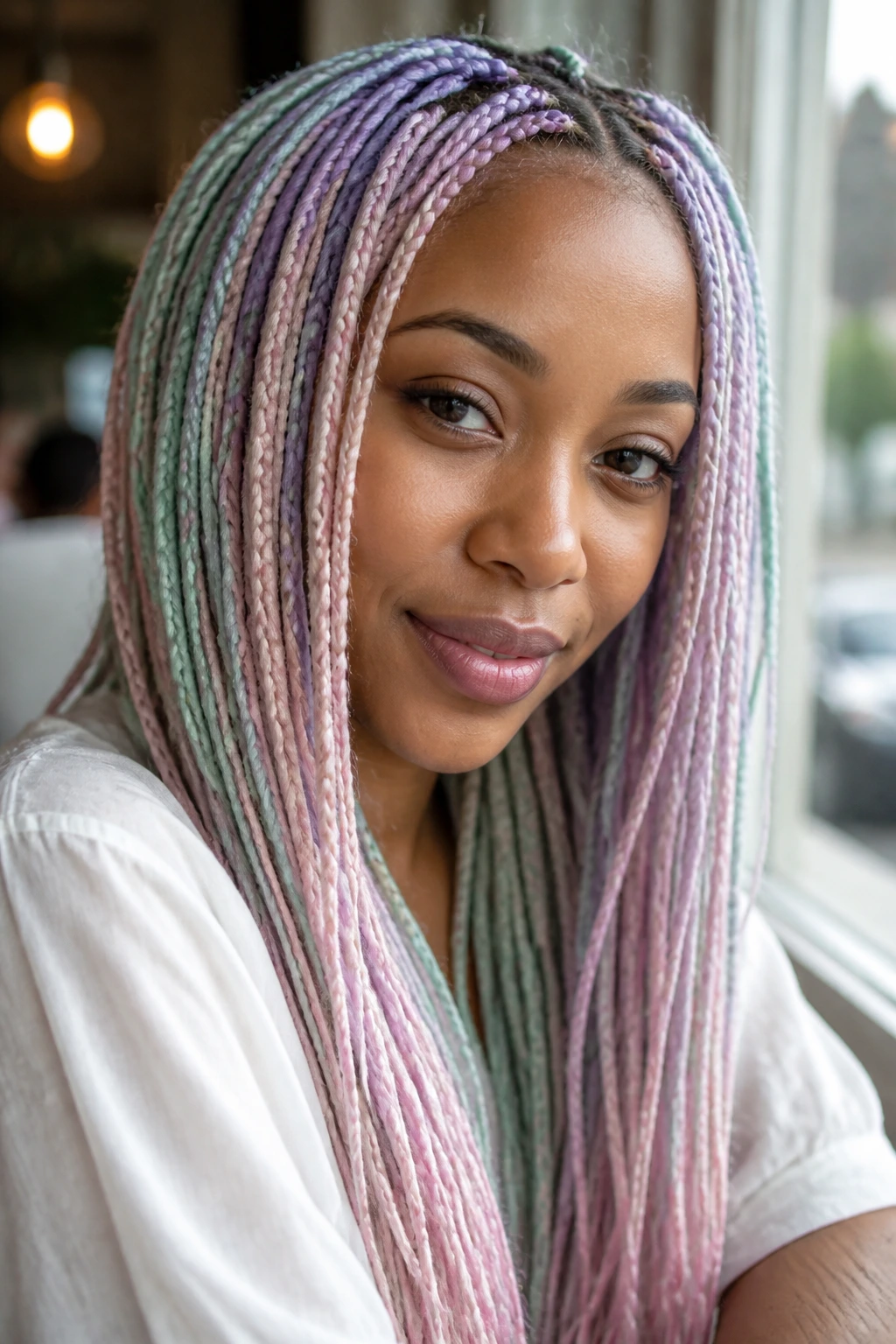
For a bold, fun look that diverts attention from volume to color, pastel shades like lavender, mint, or soft pink are excellent. Light colors reflect more light, making your hair look fuller and brighter.
Styling for Confidence
Pastel colors are high-maintenance in terms of the “look,” but they are just as healthy as any other color if you use quality synthetic hair. Because they are so striking, the focus is entirely on the shade, not the thickness of the plait.
The Downside
Be aware that pastel extensions are often more prone to looking “plastic” or shiny. Look for high-quality, matte-finish extensions to ensure the braids look natural and soft against your skin.
18. Wrapped-Root Micro Braids
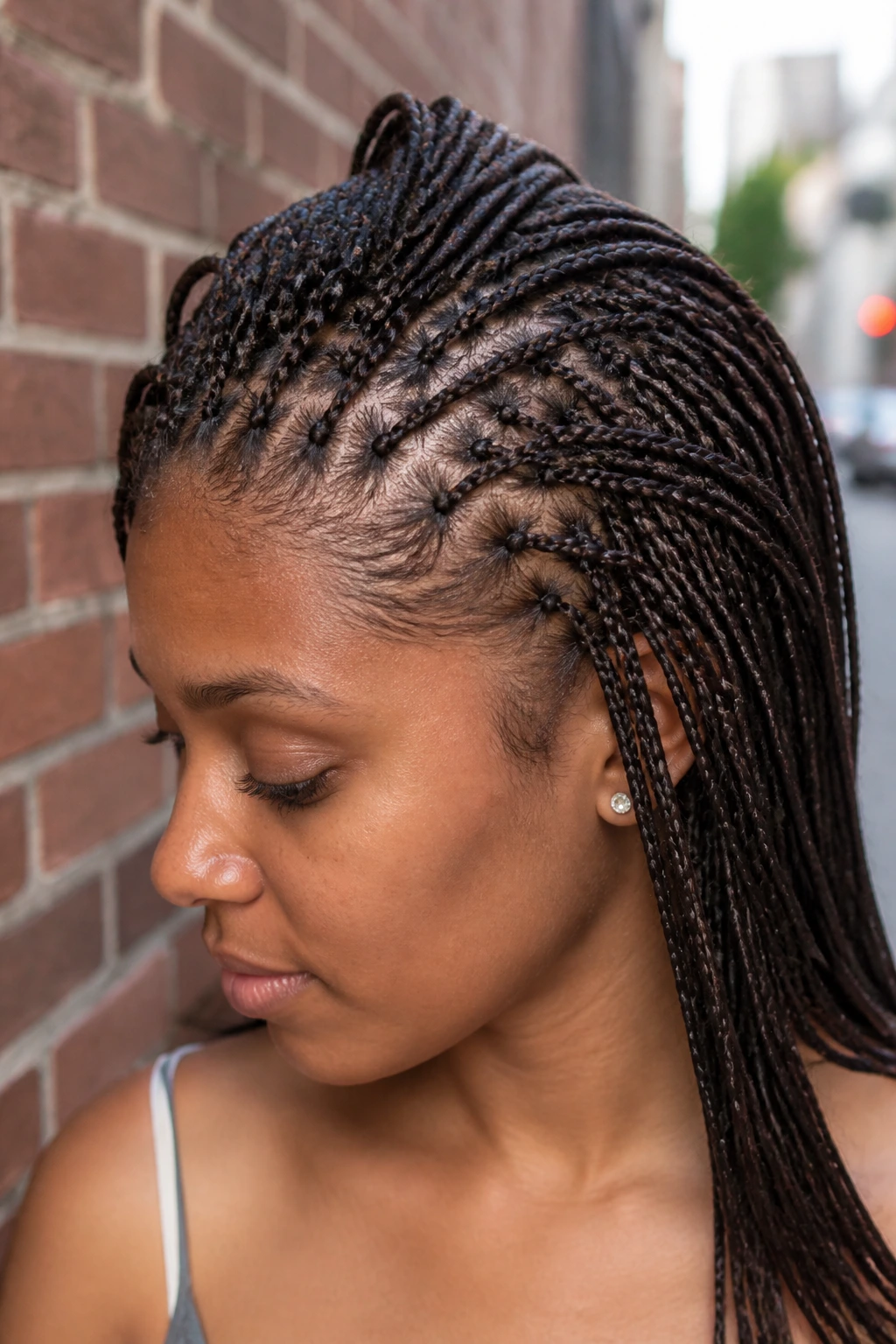
Instead of the braid starting right at the scalp, try a wrapped-root technique where the synthetic hair is wrapped around your natural hair for the first inch. This creates a buffer zone that protects your scalp from the friction of the synthetic hair.
The Protective Element
This is perhaps the most protective version of micro braids for thin hair. It creates a physical barrier between the heavy braid and your natural root, drastically reducing the risk of traction alopecia.
The Aesthetic
This style has a clean, polished look that is very popular in traditional braid cultures. It makes the braids look uniform and organized, which is a major aesthetic upgrade from standard box braids.
Final Thoughts
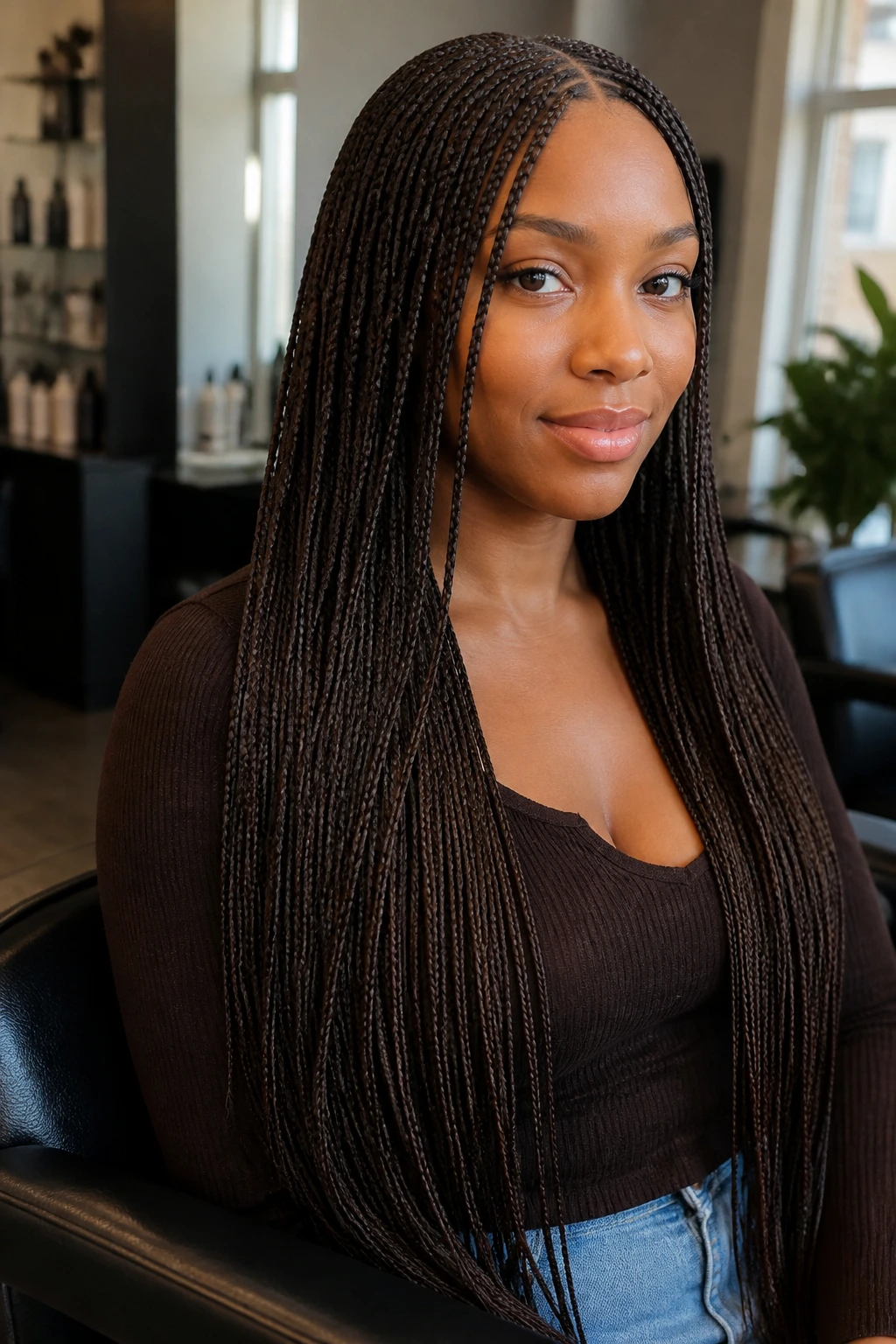
Finding the right style when you have fine, delicate hair is all about balance. You aren’t aiming for the thickest look possible; you are aiming for the smartest distribution of weight. Every single one of these micro braid styles offers a way to achieve length and beauty while keeping your natural strands safe.
Remember that the health of your hair should always dictate the length and the tension of your braids. If your scalp feels sore immediately after a session, speak up—no style is worth damaging your follicles. By prioritizing lightweight materials, proper parting, and gentle maintenance routines, you can absolutely rock the micro braid look you’ve always wanted. Treat your hair with patience, keep your scalp clean, and enjoy the freedom that comes with a low-manipulation hairstyle.