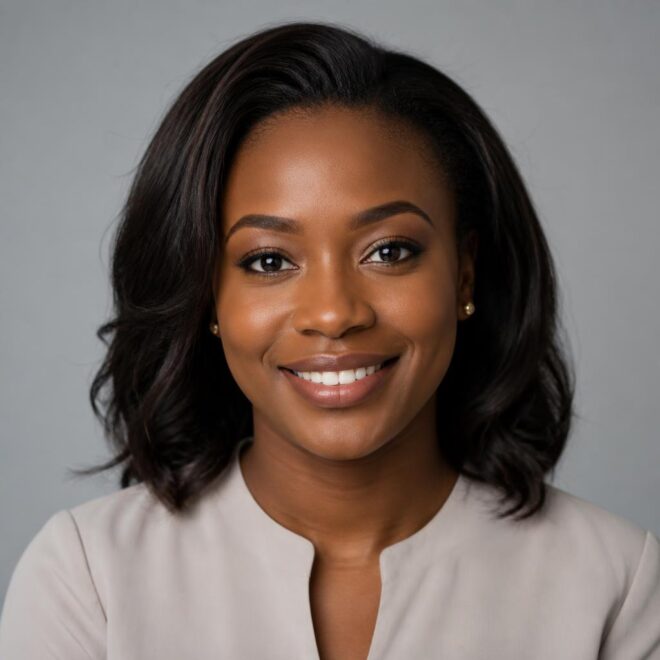


Braided styles have long served as more than just a convenient way to manage hair; they are a profound expression of heritage, artistry, and self-expression. For many, the chair of a braider is a sanctuary—a space where hours of rhythmic tension and dexterity result in a look that is both protective and deeply empowering. Whether you are looking for a sleek, professional aesthetic or a bold, cascading look for a special occasion, the range of options available today is staggering. You are not just picking a style; you are choosing a form of maintenance that gives your natural hair a break while allowing you to experiment with length, texture, and color.
The beauty of these styles lies in their versatility. A simple change in part placement or the addition of wooden beads can transform a standard look into something entirely your own. As you navigate the countless choices, focus on finding what suits your specific hair texture and your lifestyle. Some styles require a significant time investment in the chair, while others are built for speed and long-term wear. Let’s dive into the artistry, the maintenance, and the sheer variety of ways you can wear your hair.
1. Classic Fulani Braids
Fulani-inspired styles are unmistakable, defined by their strategic use of braids that trace the scalp in intricate patterns, often complemented by a center part and hair wrapped around the sides. They frequently feature gold or silver cuffs and beads that frame the face, adding a touch of elegance that feels both ancient and modern.
The Anatomy of the Look
The core of this style is the “cornrowing” process, where the hair is braided flat against the scalp in specific geometric directions. What makes this look unique is the inclusion of “feed-in” braids or decorative accents. You don’t have to use heavy jewelry to make these pop, though the accessories are a hallmark of the traditional aesthetic.
Styling Tips for Longevity
- Keep your scalp moisturized with a light oil, such as jojoba or almond, applied with a spray bottle to avoid disturbing the neat parts.
- Use a silk or satin scarf at night to keep the frizz down.
- If the beads feel too heavy for your hairline, ask your braider to leave the face-framing strands a bit looser.
2. Chunky Box Braids
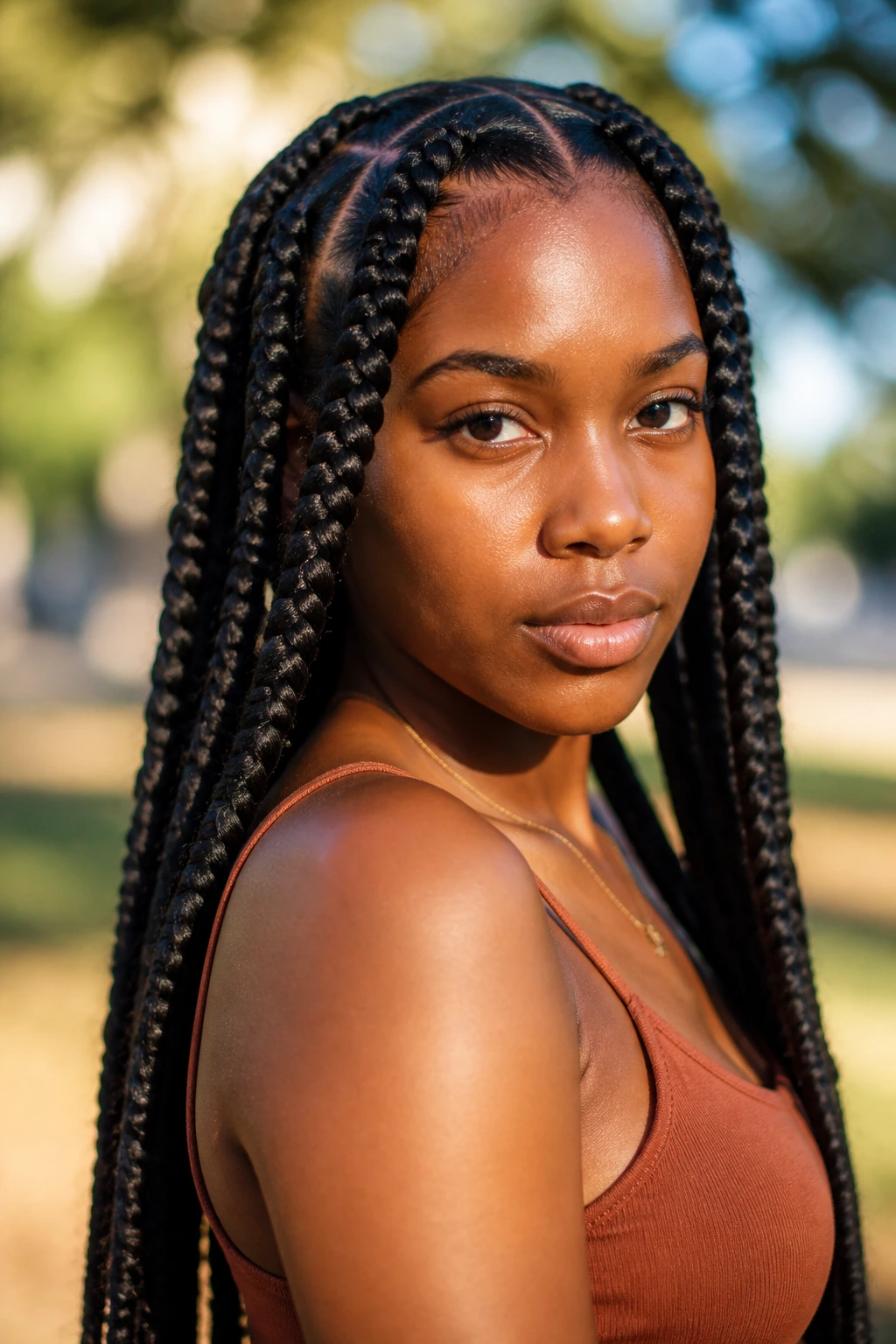
When you want impact without spending twelve hours in the salon, these thick, box-parted braids are the answer. They offer a fuller, more “lived-in” appearance that feels voluminous and bold. Because the sections are larger, they put less tension on the scalp than micro-braids, making them a better choice for those who are sensitive to pulling.
Why They Stand Out
You get a very distinct silhouette with chunky box braids because the individual sections are wider. This allows you to play with different hair textures—from deep wave extensions to crimped synthetic fiber—to achieve a more bohemian or retro vibe. They are incredibly easy to style into high buns or half-up, half-down looks because the weight is distributed over fewer, stronger braids.
Maintenance Considerations
Because the sections are larger, your scalp is more exposed between the parts. If you find your scalp drying out faster, carry a small applicator bottle of refreshing spray. Don’t be tempted to tighten them up too frequently at the root; the point of this style is that slightly relaxed, thick aesthetic.
3. Goddess Braids with Wavy Ends
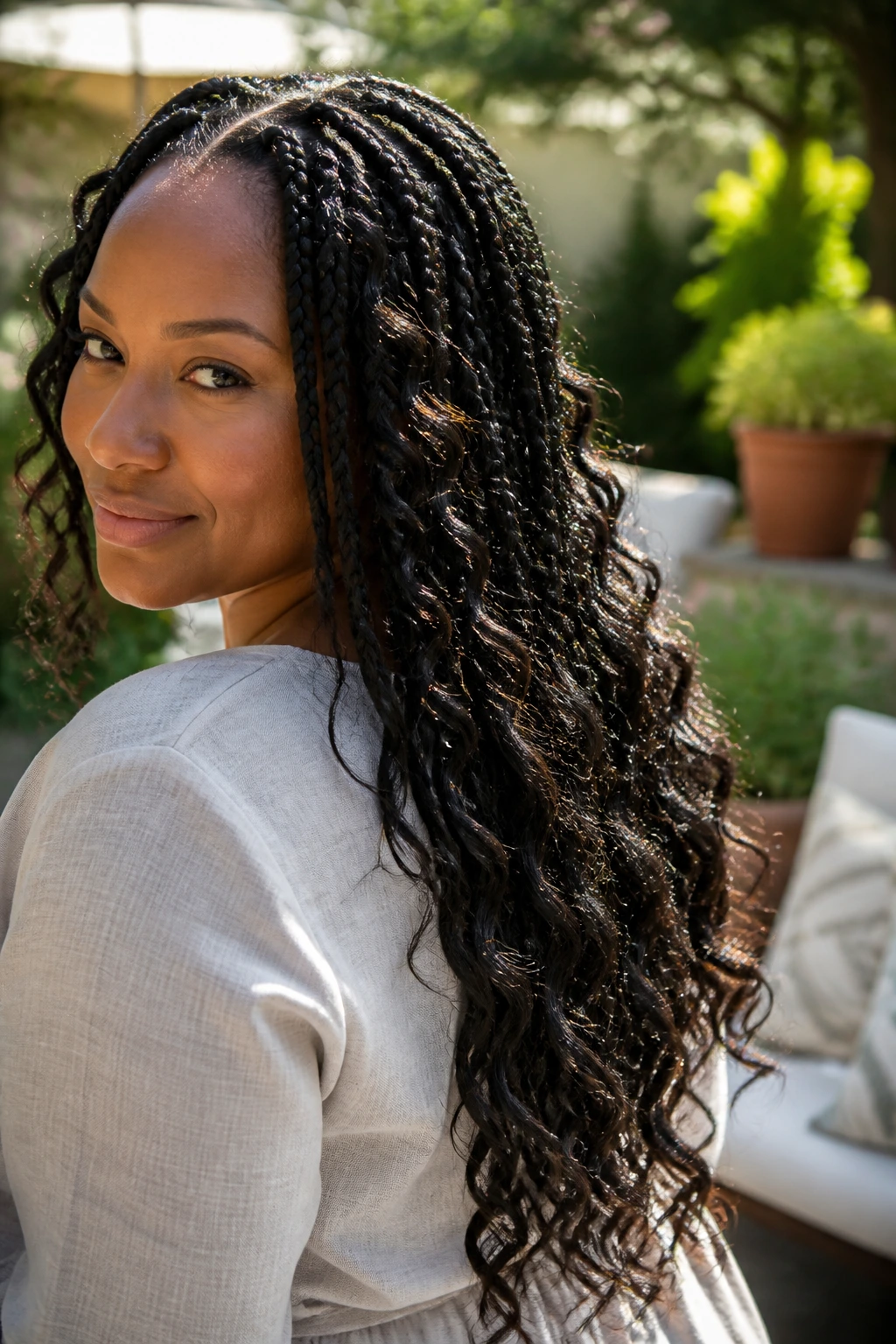
These are the epitome of soft, romantic hair. Goddess braids usually involve a standard cornrow or box braid at the base, but they are finished with loose, curly extensions hanging from the ends or interspersed throughout the length. The contrast between the sleek, tight braid and the free-flowing, bouncy curl creates a dynamic look that feels effortless.
Achieving the Perfect Curl
The “goddess” effect depends entirely on the quality of the hair used for the loose ends. Synthetic hair that is pre-curled is common, but human hair bulk extensions offer a more natural movement that won’t tangle as easily over time. Ask your braider to mix a bit of edge control or braiding gel into the loose ends to keep them defined and frizz-free.
Care for the Curls
- Use a wide-tooth comb to gently detangle the loose ends every morning.
- A light misting of water and a leave-in conditioner spray can revive the curls if they start looking dry or matted.
- Never wrap the loose ends too tightly at night, or you will wake up with a bird’s nest of knots.
4. Sleek High Ponytail Braid
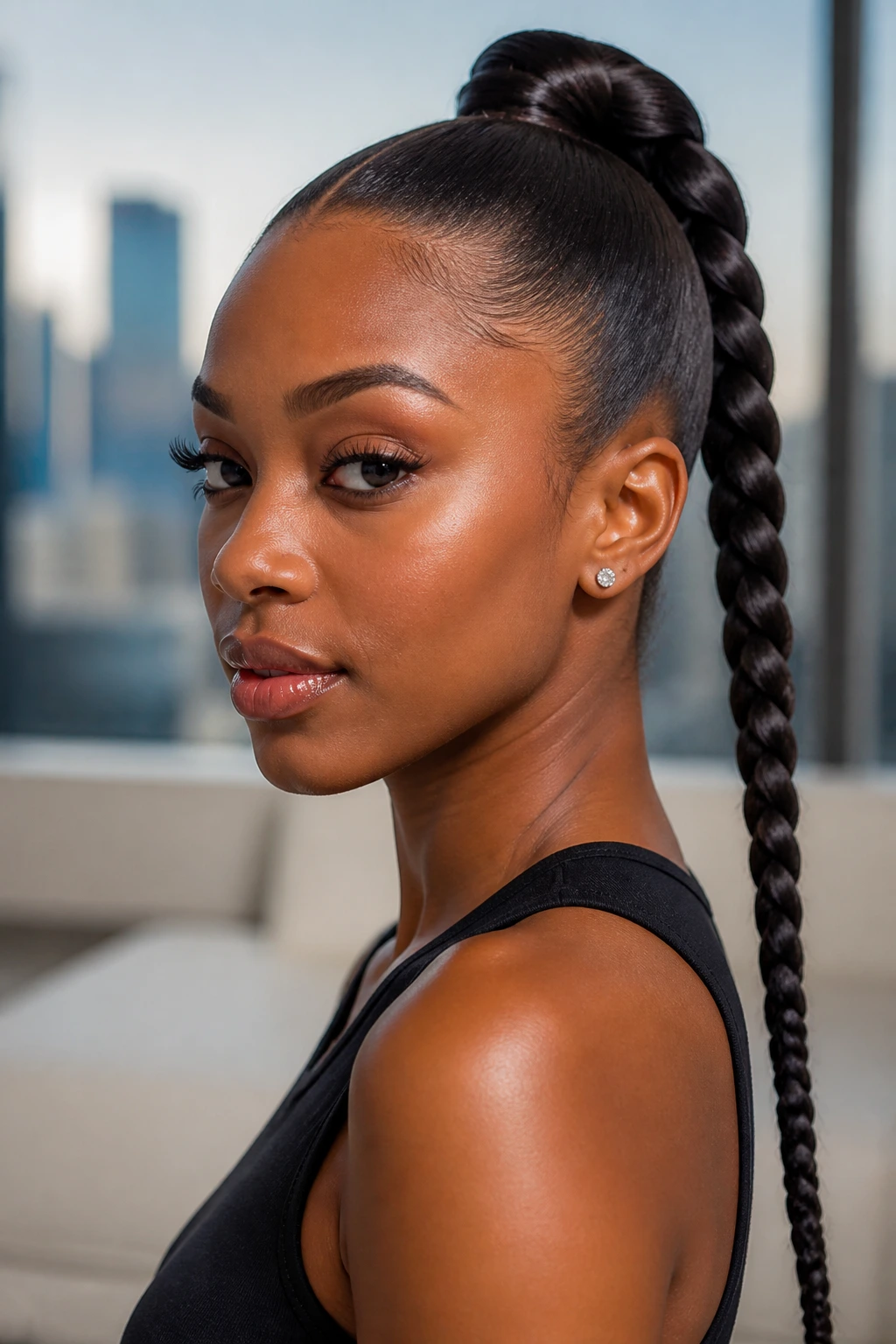
This style is all about drama and architectural precision. You begin with the natural hair molded into a slick base at the crown of the head, and then a single, long, thick braid—or sometimes a rope twist—flows down the back. It is arguably one of the most versatile styles because it transitions perfectly from a gym workout to a formal evening event.
Building the Base
The key is the tension at the root. If the base isn’t smooth, the braid will look lumpy. Using a firm-hold styling gel or a wax stick is essential for smoothing down the perimeter, especially if you have finer hair or a shorter texture at the nape of the neck.
Elevating the Look
You can wrap the base of the ponytail with a strip of hair or even gold ribbon to hide the elastic. If you want more volume, don’t be afraid to pull the loops of the braid apart slightly—a technique known as “pancaking”—to make the braid appear thicker and more dramatic.
5. Micro Braids with Natural Texture
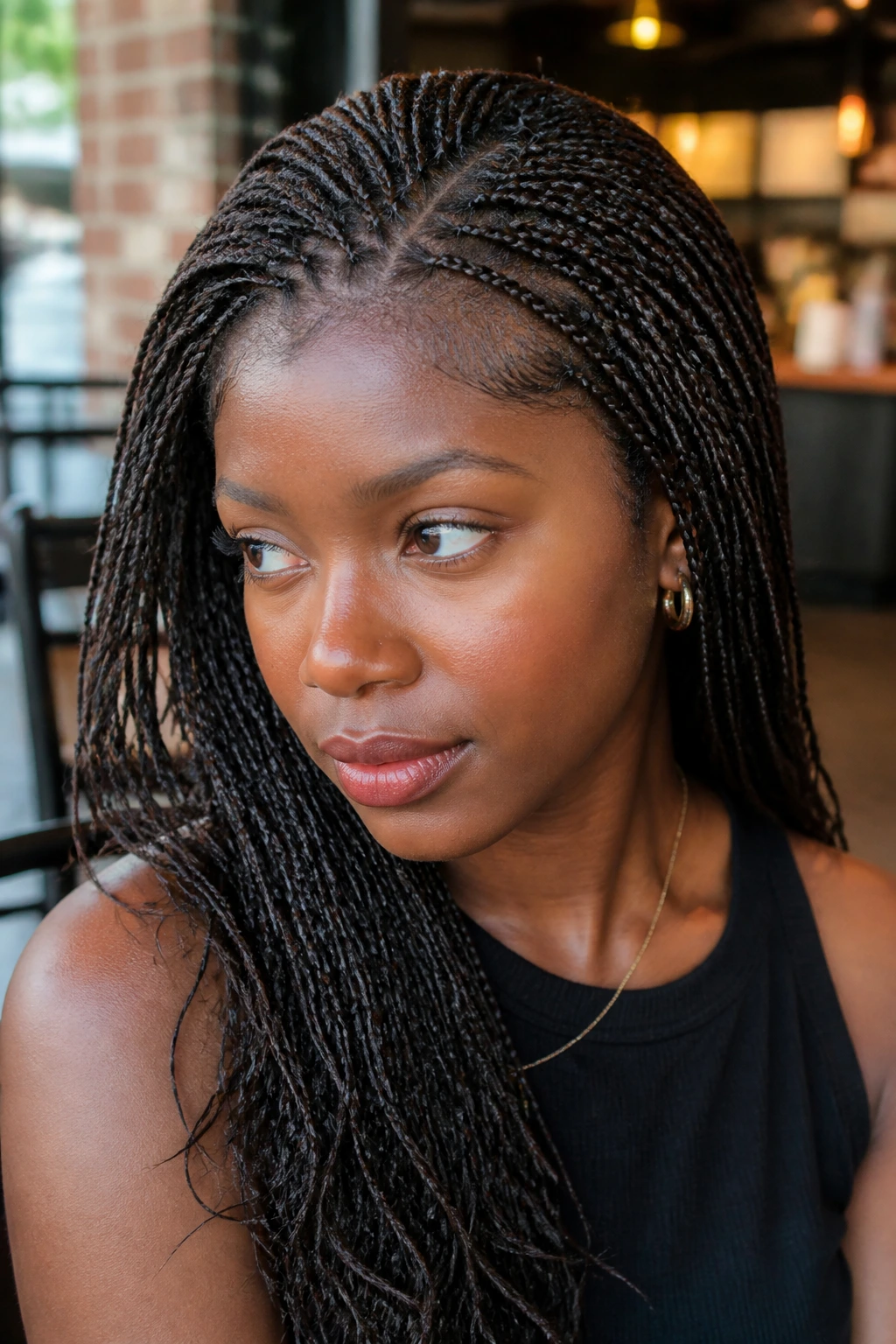
Micro braids involve tiny, meticulous sections that mimic the look of loose hair. They are incredibly labor-intensive, requiring a high level of patience, but they offer the most styling freedom. Because the braids are so small, you can part them in any direction, flat-iron them, or even curl them like you would your own hair.
The Benefits of Micro
You get a lightweight feel that doesn’t pull on your neck the way heavy, chunky extensions do. Because the braids are so fine, they don’t look “done” in a stiff way; they behave like hair. This is the go-to for someone who wants the protection of braids but misses the versatility of loose, flowing strands.
Important Warnings
- Due to the small size, these can be harder to take down. Budget extra time for removal.
- Be extra careful about the hairline; the smaller the braid, the more likely it is to put concentrated stress on individual strands.
- If your hair is prone to thinning, consider a slightly larger parting to keep the tension manageable.
6. Waist-Length Knotless Braids
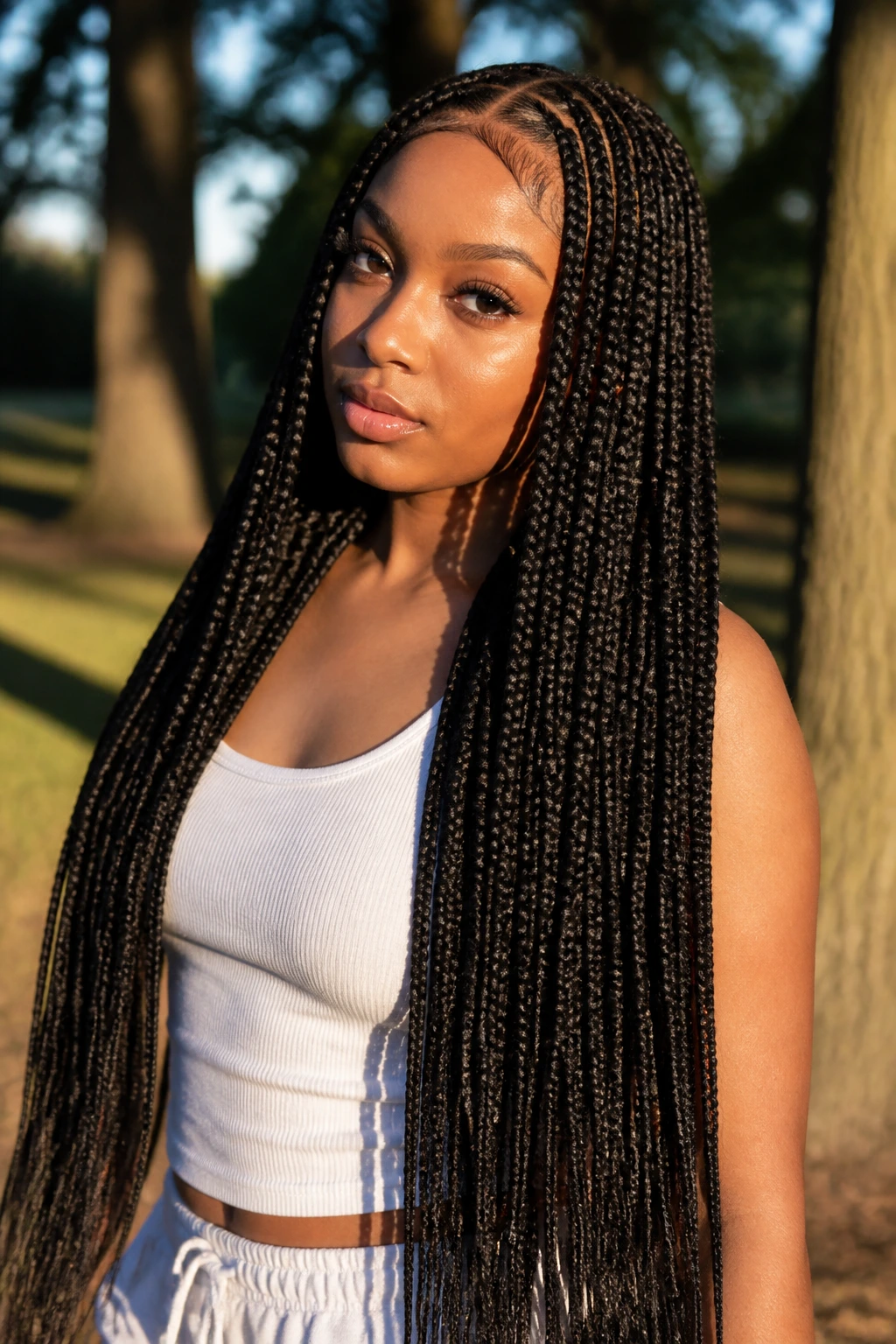
Knotless braids have become the gold standard for comfort. Unlike traditional box braids where a knot is secured at the root, the extensions are fed in gradually. This creates a smooth, flat foundation that looks like the hair is growing directly from your scalp. Bringing them down to the waist creates a stunning, flowing aesthetic.
Why They Are Worth the Time
The primary advantage is the lack of “tension pain” during the first few days. Many people who find traditional braids painful in the beginning find that they can sleep comfortably from night one with the knotless method. The weight is distributed more naturally, making them feel like an extension of your own hair.
Styling at the Waist
At this length, you have endless options. You can braid them into larger, thicker rope twists, pull them into high, heavy ponytails, or drape them over your shoulder to create a frame for your face. Remember that the longer the hair, the more it will rub against your clothes, so look for high-quality synthetic fibers that won’t fray easily.
7. Tribal-Inspired Zig-Zag Parts
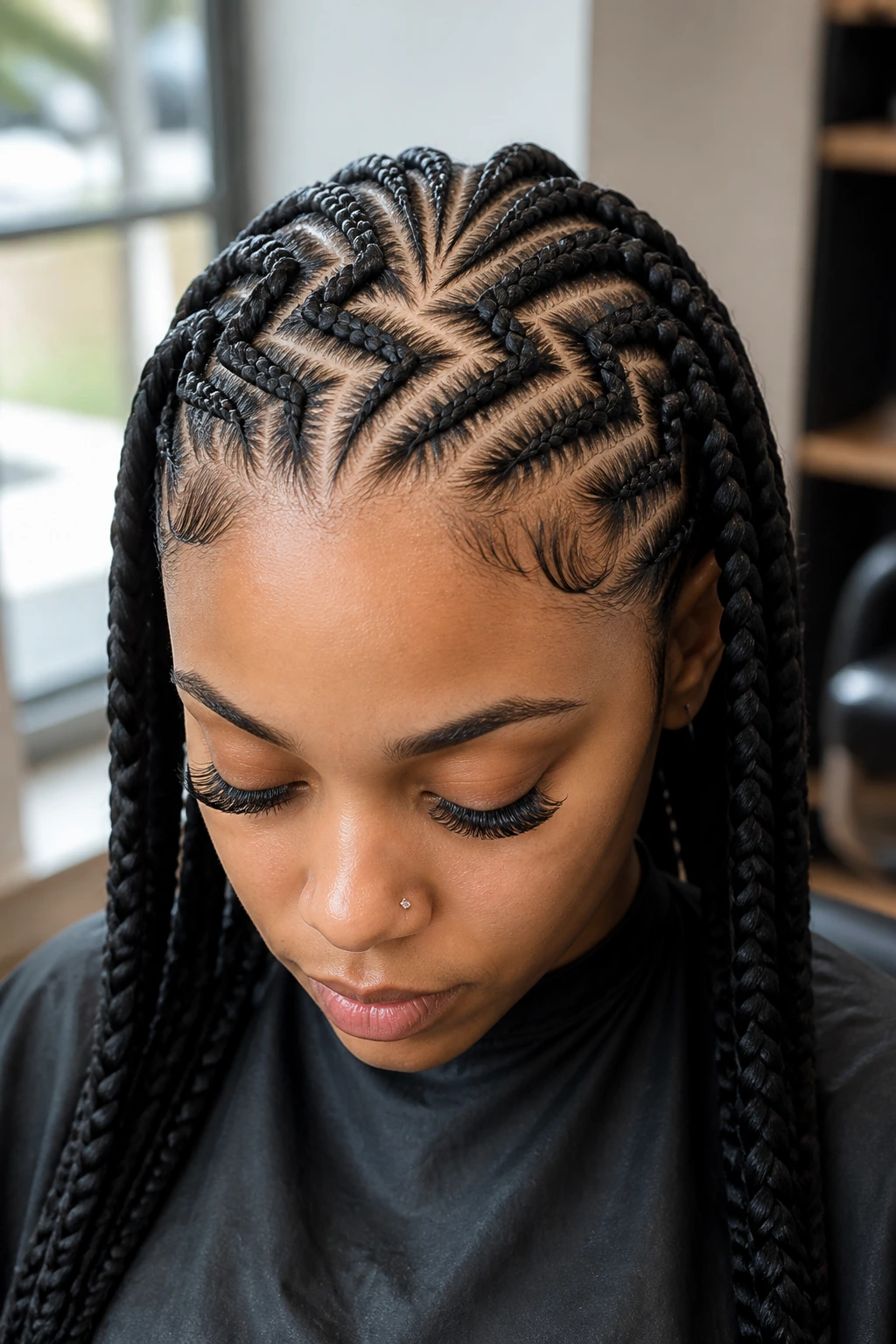
If you are bored with straight, symmetrical parts, tribal-inspired zig-zags offer a sharp, artistic edge. This look often features braids that originate from the center of the head and fan out toward the temples or the nape, creating a “sunburst” or “crisscross” effect that stands out in a crowd.
Getting the Lines Right
The precision of the part is everything here. A metal-tail comb is your best friend. If you aren’t sure about the pattern, look for photos of traditional African geometric hair braiding to get inspiration for authentic, culturally rich designs. The beauty of this style is that the scalp becomes part of the pattern itself.
Managing the Parts
- Keep the lines clean by avoiding heavy buildup on the scalp.
- If you have trouble sleeping, use a silk bonnet that is large enough to accommodate the bulk of the braids without pushing against the parts.
- Gold or silver clips placed at the intersections of the zig-zags add a professional, polished finish.
8. Burgundy or Honey-Blonde Box Braids
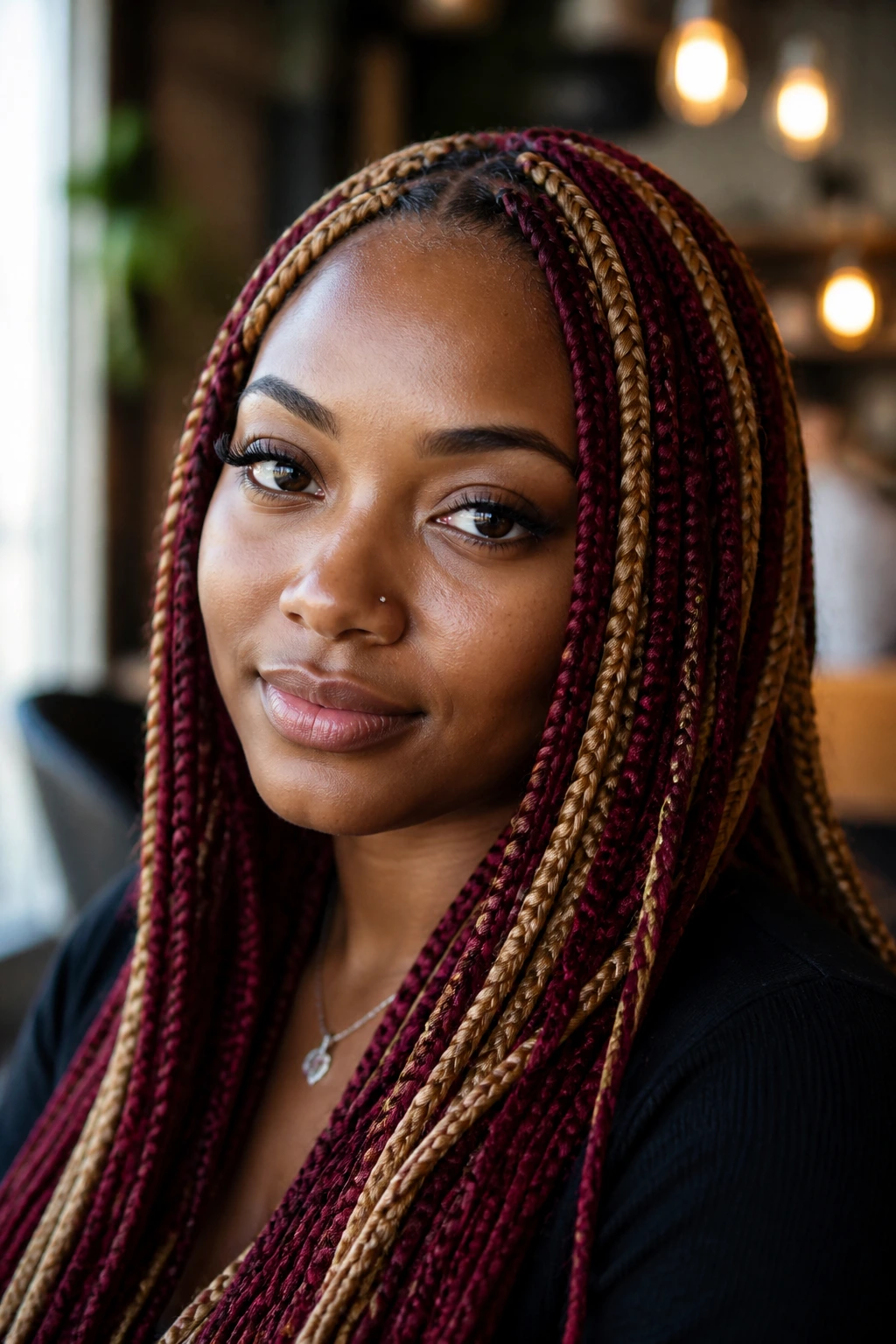
Color can change the entire character of your look. Braiding hair comes in a spectrum of shades, from deep, moody burgundies to sun-kissed honey blondes. Choosing a color that contrasts with your skin tone can make a bold fashion statement, while a color closer to your natural shade keeps the vibe low-key and sophisticated.
Choosing Your Tone
- Burgundy shades are incredible for bringing out warmth in deeper skin tones.
- Honey or caramel blondes work beautifully to soften your features and provide a summery, bright look regardless of the time of year.
- You can mix colors—using a darker base with lighter “peek-a-boo” streaks—to add depth and dimension to the braids.
Why Color Matters
When you wear braids, the hair covers a large portion of your head. If you go with a single, flat color, the hair can sometimes look like a uniform block. Adding a secondary tone or highlighting a few braids can break up that block and make the style look more expensive and textured.
9. Crown Braid Updo
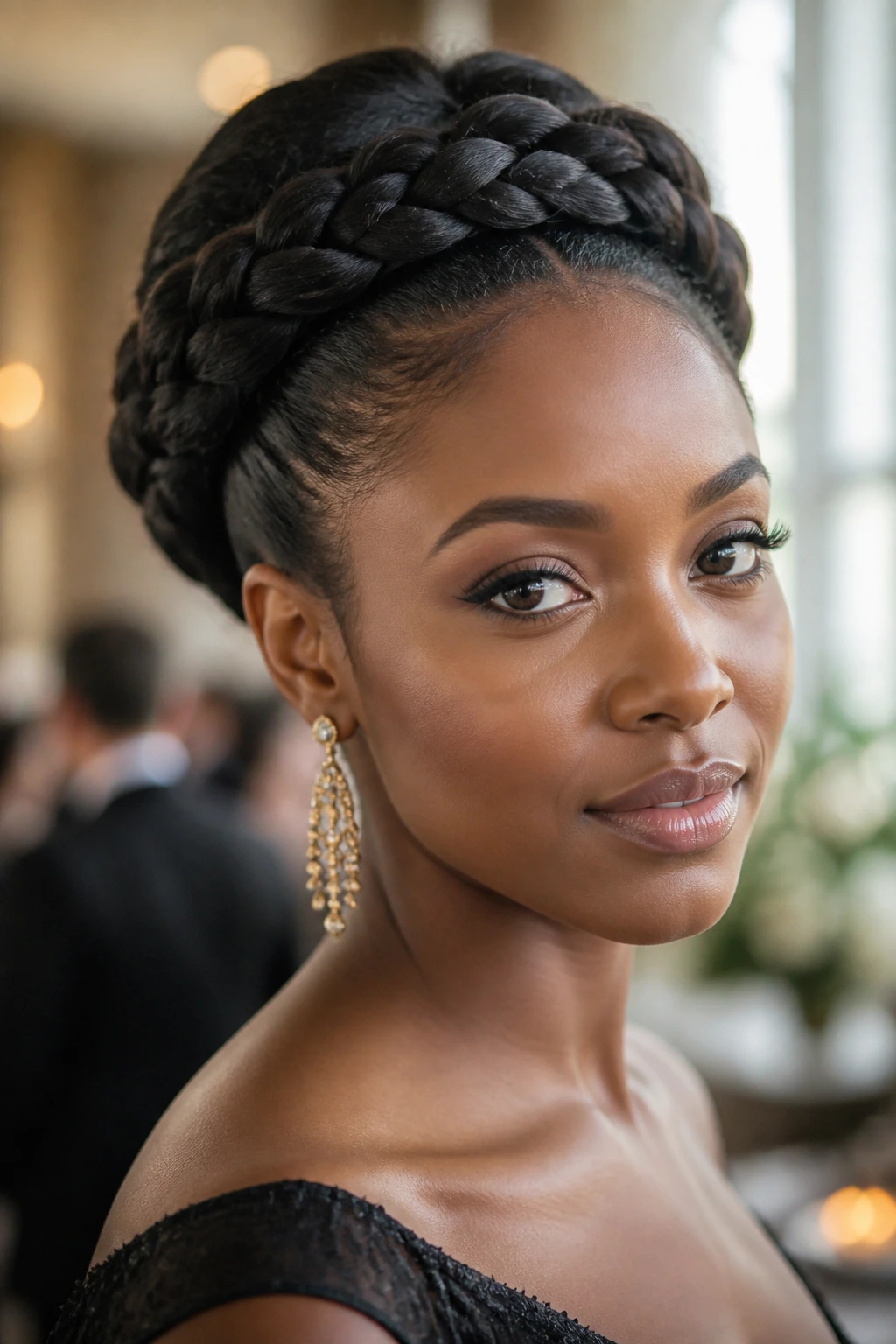
The crown braid is the ultimate “regal” style. It involves braiding the hair in a circular pattern around the head, creating a woven effect that sits like a tiara. This style is perfect for weddings, galas, or any event where you want a clean, sophisticated look that keeps your neck cool.
Making It Work for You
You don’t need extremely long hair to do this; it works exceptionally well with box braids or even cornrows. If your braids are already long, you can tuck the ends into the braid path to secure them. For a more relaxed feel, pull a few strands out at the front to frame your face softly.
Tips for Stability
- Use U-shaped hairpins to secure the braid to your head. They are gentler on extensions than standard bobby pins.
- If you find the braid slipping, spray a bit of texture spray on the hair before you begin pinning it into place.
10. Feed-In Cornrows with Low Bun
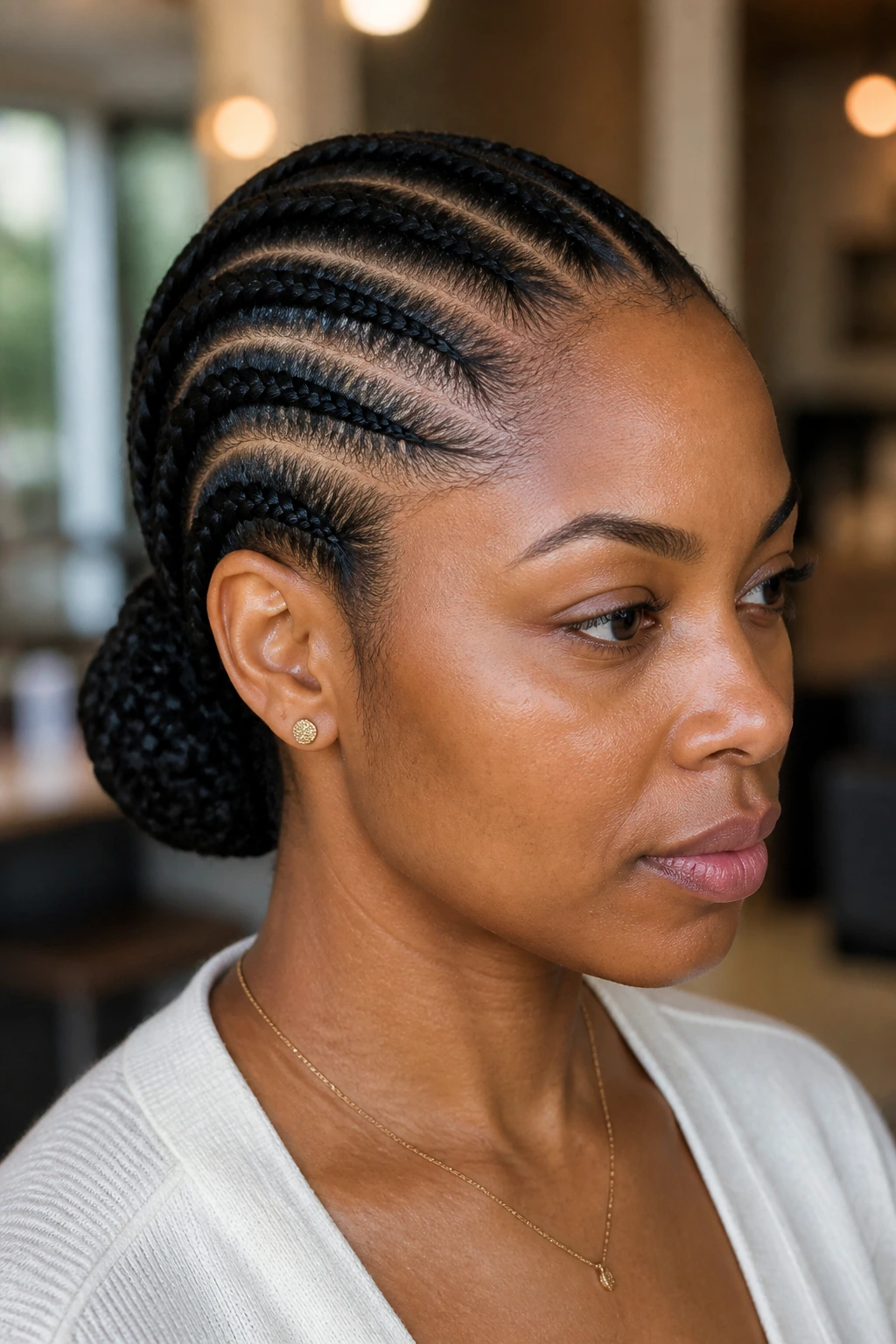
Feed-in cornrows are popular because they allow you to start with a very small, flat braid at the hairline and increase the size as you add more hair. Finishing these into a low, sleek bun is a masterclass in minimalism. It is elegant, professional, and stays out of your way throughout the day.
Why This Style Succeeds
It is the perfect balance of “put together” and “low maintenance.” You don’t have to worry about the hair blowing in your face or getting caught in your coat. Because the braids are feed-ins, they follow the natural contours of your scalp, making the transition to the bun seamless.
Styling the Bun
- Don’t just twist the braids; try wrapping them in a figure-eight pattern for a more intricate, textured bun.
- Secure the ends with a clear elastic band and tuck them underneath, then pin the base of the bun to ensure it doesn’t sag.
11. Side-Swept Braids
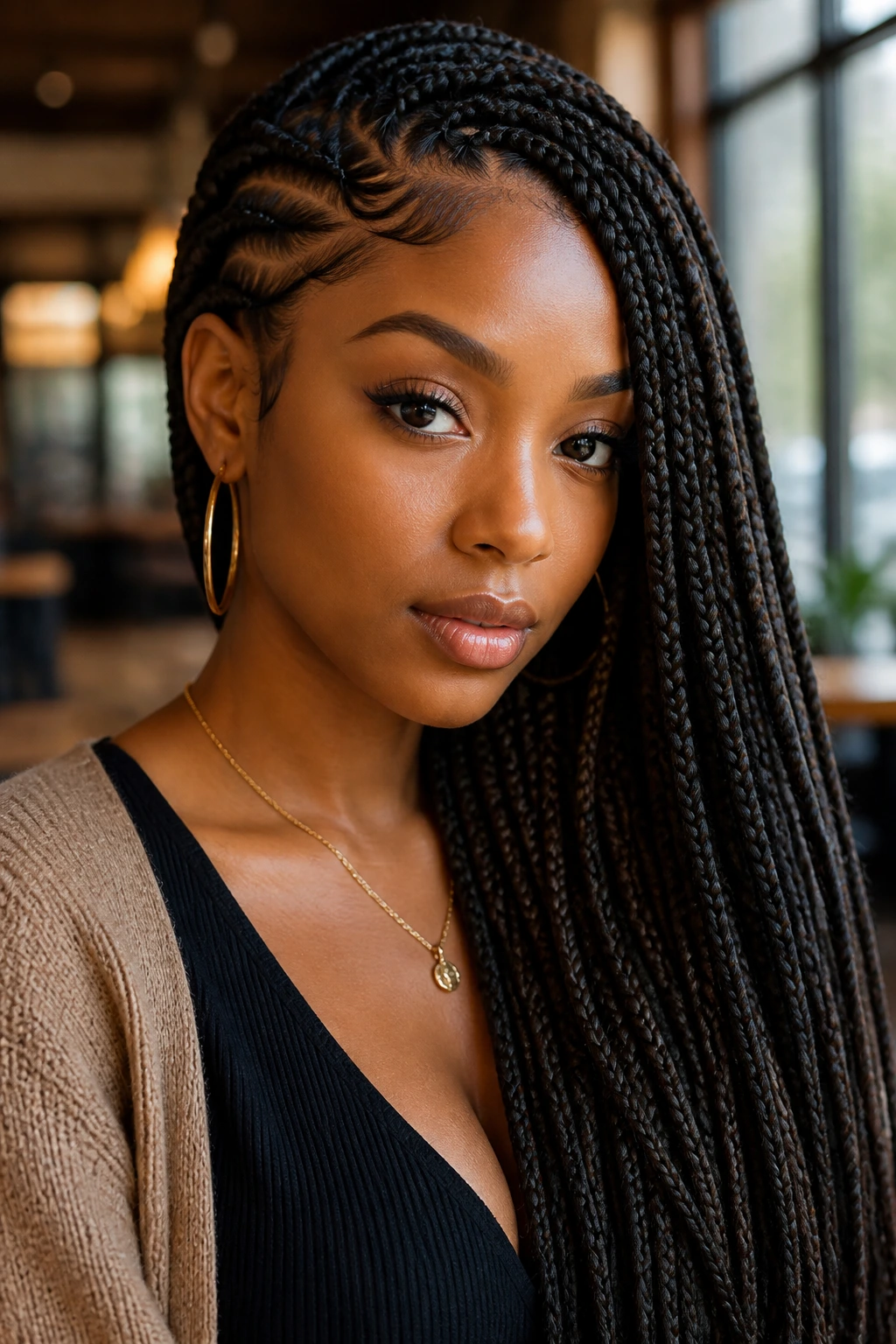
Sometimes the simplest adjustment in direction yields the most glamorous results. Sweeping all of your braids to one side of your face instantly adds a layer of mystery and elegance. This is especially effective if you have long, heavy braids that would otherwise be a lot to manage on both sides of your shoulders.
The Power of the Sweep
When you pull everything to one side, you create a “curtain” of hair that beautifully highlights your jawline on the open side. This style is excellent for highlighting earrings or a dramatic neckline. It’s a common trick used for formal events because it feels more styled than letting the hair hang loose and flat.
Keeping It in Place
- You might need one or two discreet pins at the nape of the neck to keep the weight from pulling the hair back to center.
- Avoid using heavy products that will make the hair slide around; keep the base of the scalp tight so the direction is held naturally.
12. Braided Bob with Beaded Ends
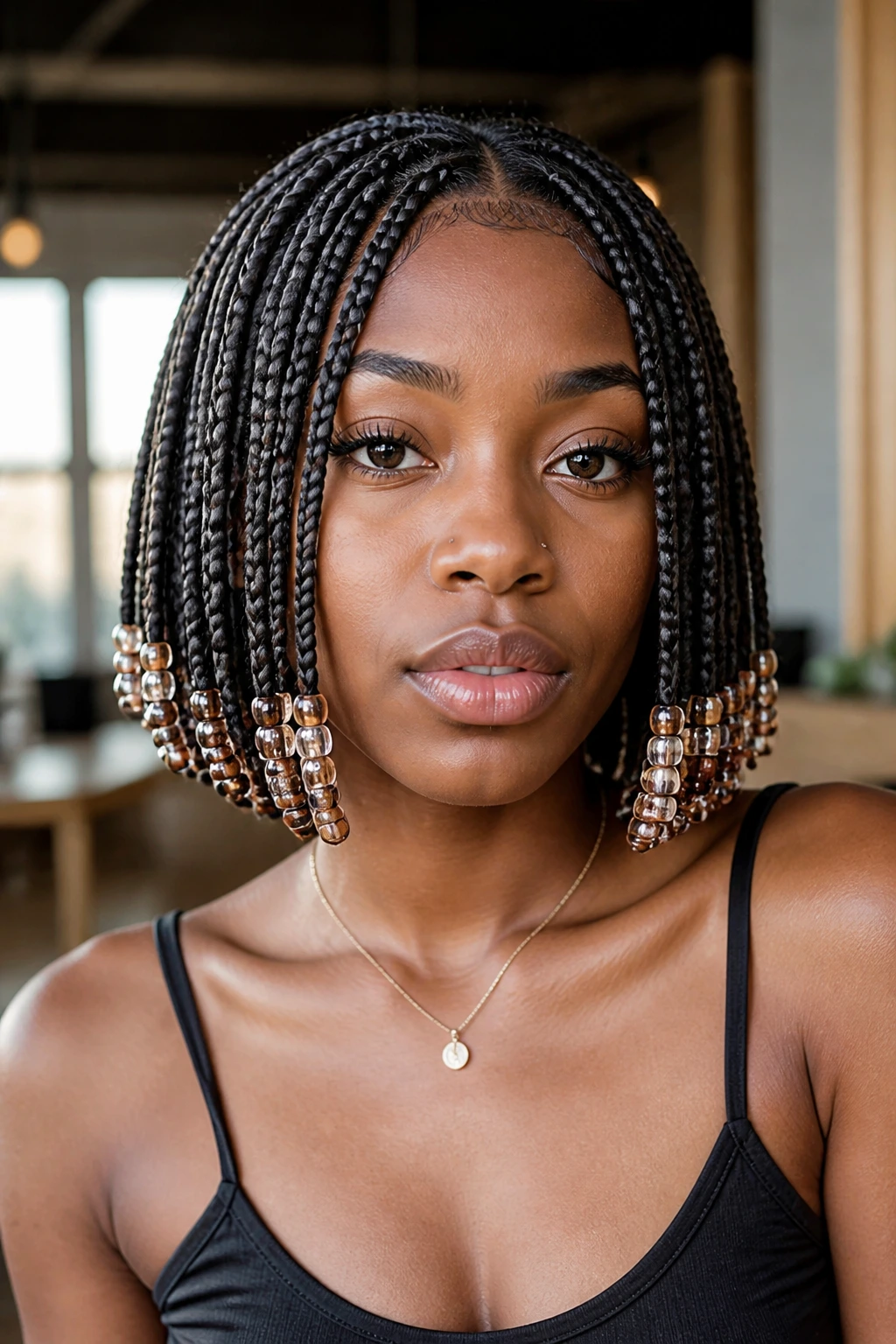
Not every style has to be long and dramatic. A sharp, chin-length or shoulder-length braided bob is a chic, modern choice. Adding beads to the ends of these shorter braids gives them a playful, rhythmic sound and movement that feels very youthful.
Choosing the Right Cut
Ensure your braider cuts the synthetic hair to your desired length before adding the beads. It is much easier to manage a uniform length. A blunt-cut bob is particularly stylish, but you can also go for a slightly layered cut if you want more movement around your face.
The Sound of Style
The beads aren’t just for looks; they add weight to the ends of the braids, which helps keep them straight. If you find the clicking sound of the beads distracting, opt for wooden or matte-finish plastic beads rather than glossy, hard plastic ones.
13. Double Buns (Space Buns)
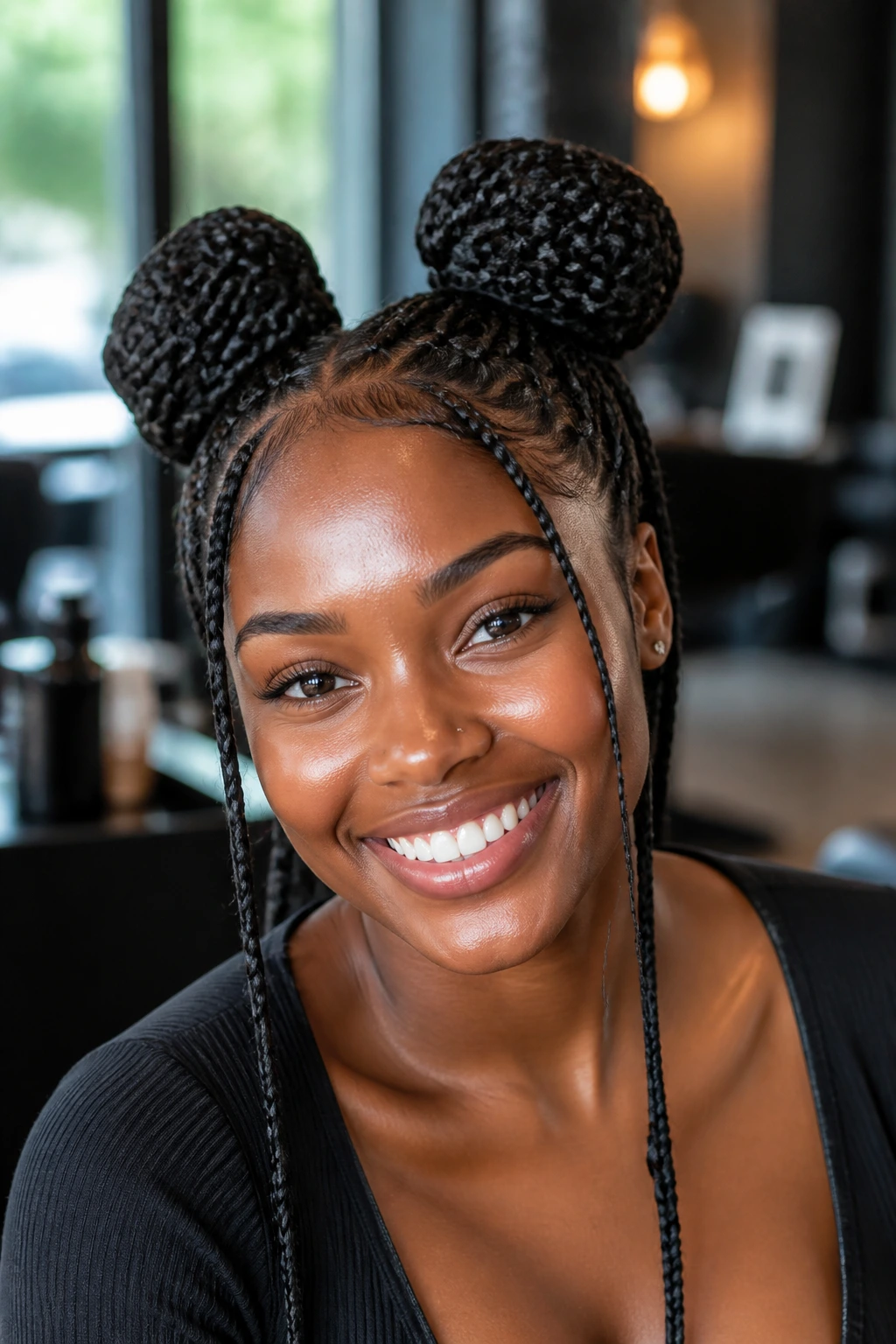
Double buns are playful, fun, and impossible to ignore. Whether you call them space buns or Bantu-inspired knots, these look great with braids. They offer a high-fashion edge while keeping your hair away from your face and neck completely.
Achieving the Symmetry
The hardest part of this style is ensuring the two buns are at the same height and size. Use a mirror to check the placement from behind. If you have an abundance of hair, you may want to do smaller, tighter buns to prevent them from becoming heavy and pulling on your scalp.
Styling the Buns
- If you have leftover length, leave some braids hanging down from the buns to frame your face.
- Experiment with colored braiding hair for the buns—a bright pop of color looks incredible in this style.
14. Bohemian Box Braids
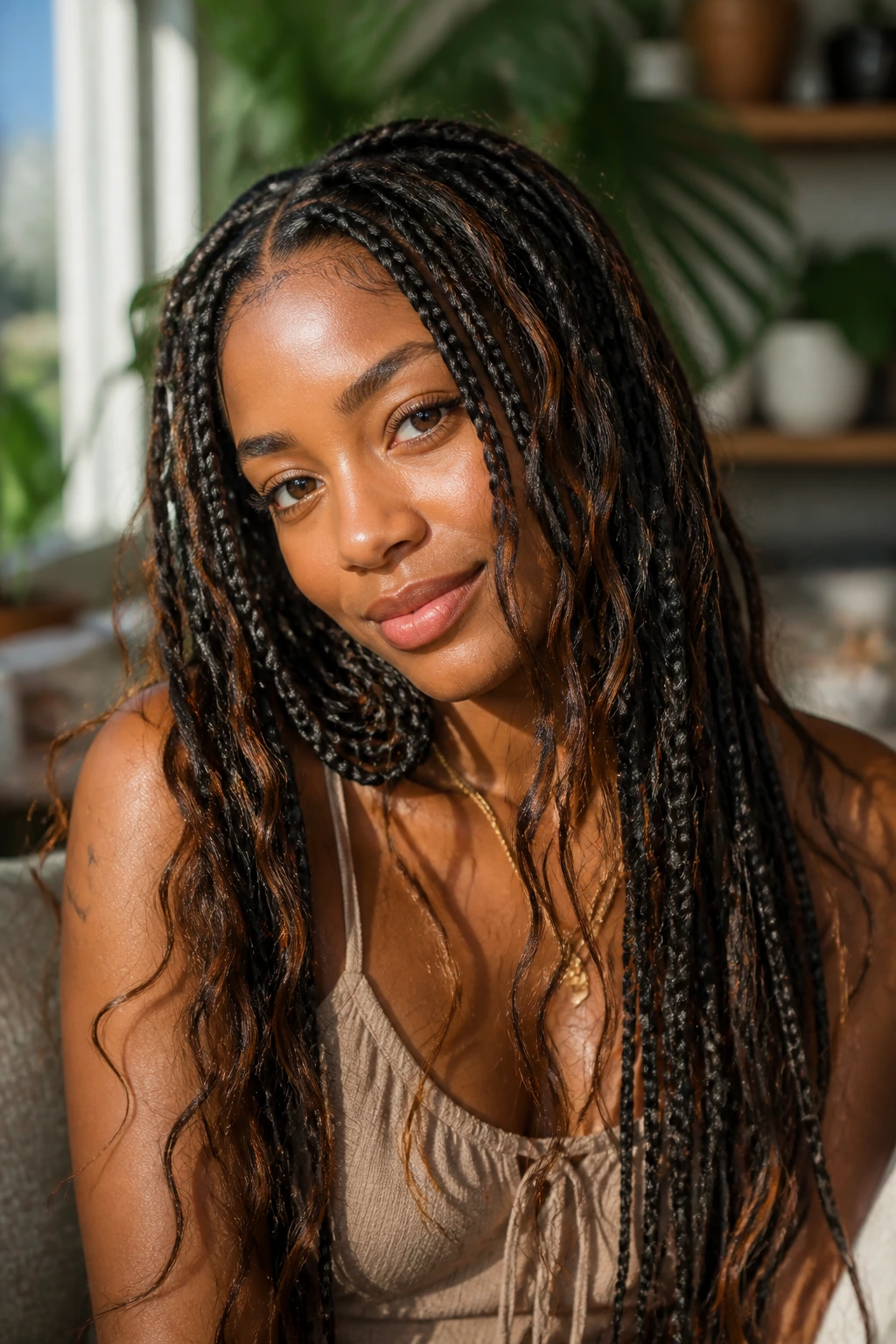
This is a more relaxed take on the traditional box braid, characterized by a mix of braids and loose, wavy strands throughout the entire head. The goal is to look like you’ve just come off a beach vacation, even if you’re just sitting in a boardroom. It’s all about the mix of textures.
Why It’s Popular
It feels softer than a standard box braid because the loose strands break up the sharp, rigid lines of the plaits. This style is inherently “messy-chic,” which means you don’t have to worry if a few strands go astray—it’s actually part of the look.
Maintaining the Bohemian Vibe
- You will need to detangle the loose strands frequently. Carry a small spray bottle with water and a tiny bit of conditioner to keep them from knotting.
- If the loose strands start to lose their curl, a light twist with a bit of foam mousse can help define them again.
15. Half-Up, Half-Down With Accessories
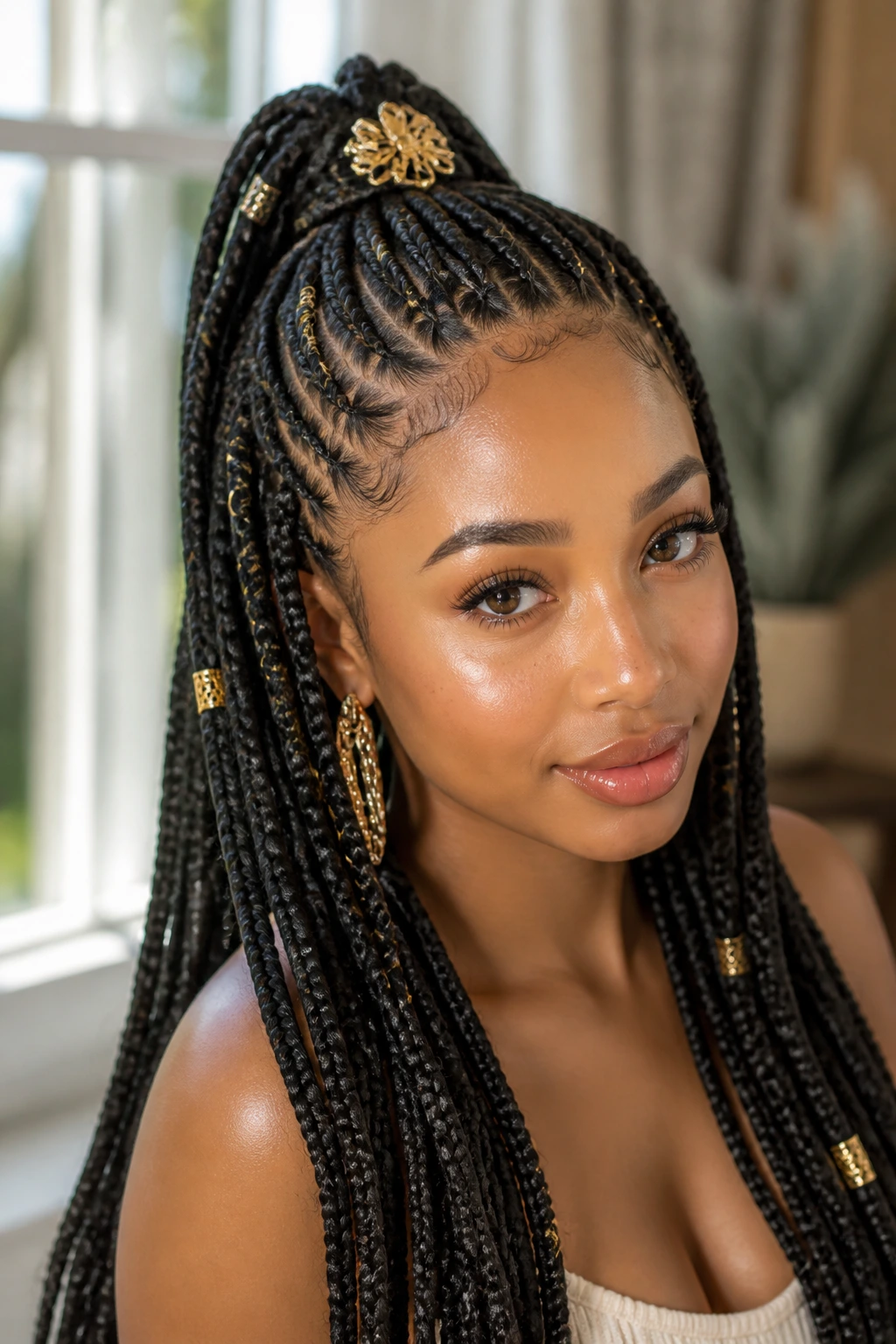
If you are torn between letting your hair flow and keeping it out of your eyes, the half-up, half-down look is the compromise you need. It’s an easy way to style any type of braid—from micros to chunky box braids—and it allows you to show off your face while keeping the volume of your hair behind you.
Adding the Accessories
This style is a perfect canvas for hair jewelry. Try a decorative gold clip at the gathering point of the half-up section, or weave some metallic thread through the top braids before you secure them. These small details take a simple hairstyle into “dressed up” territory.
Avoiding Tension
The gathering point for the half-up section can easily become a tension point. Use a soft, fabric-covered scrunchie or a section of the braids themselves to secure the top portion. Avoid tight elastic bands that can snap the extensions or pull at the hair roots.
16. Cornrows with Braided Designs
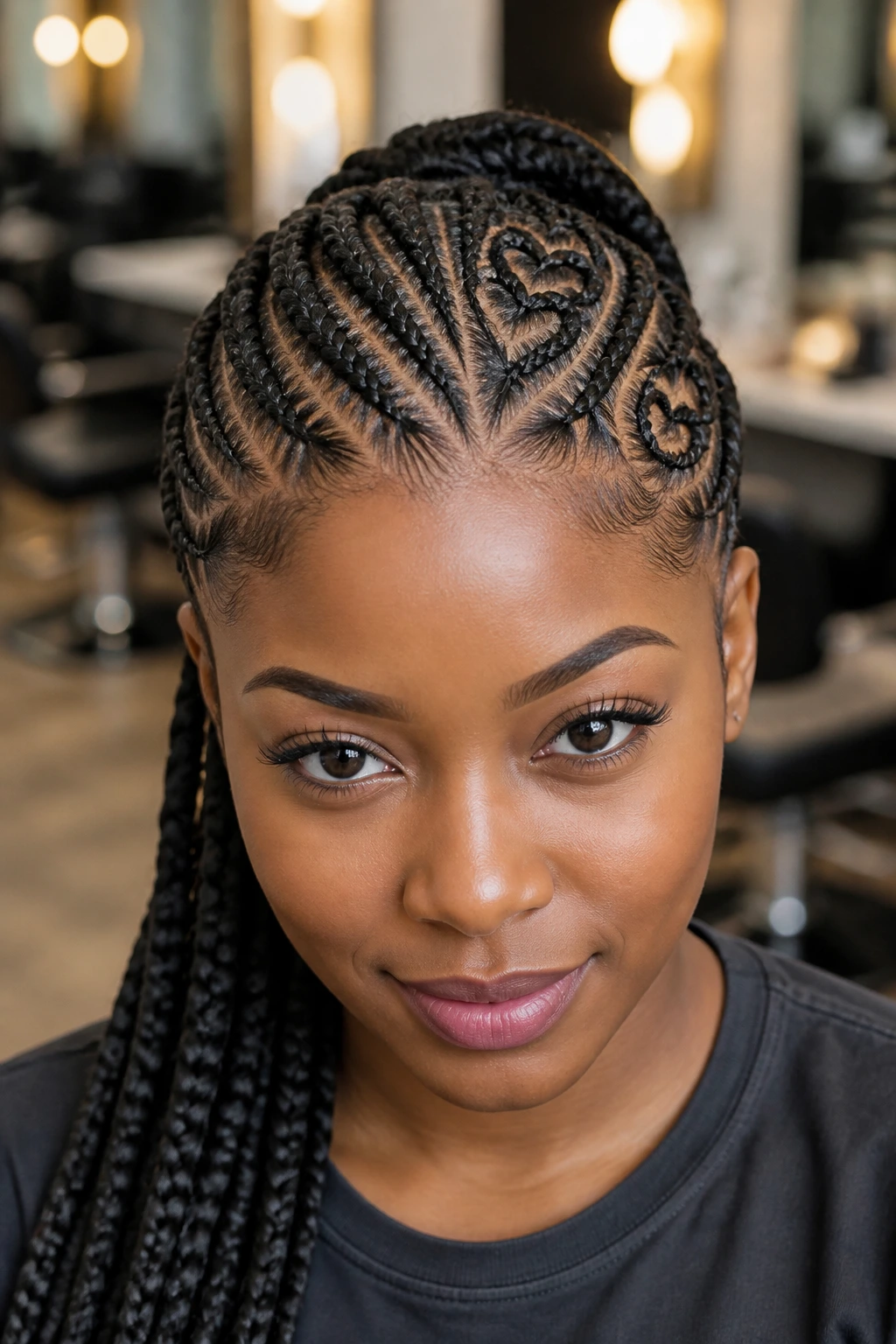
Modern braiding has evolved into true hair architecture. You aren’t limited to straight lines. Skilled braiders can create hearts, stars, spirals, and swirls on your scalp. This is less about utility and more about turning your head into a work of art.
Planning the Design
Communication with your braider is essential here. Bring pictures of the patterns you like and ask if they are feasible with your natural hair length and texture. Be prepared for this to take time—intricate designs require a lot of focus and precision.
Caring for the Art
- Because the designs often involve smaller, more intricate sections, keep the hair moisturized with a very light oil to prevent the skin from itching.
- Don’t wear a tight hat or headband for long periods, as it can flatten the patterns and blur the lines of your design.
17. Yarn Braids
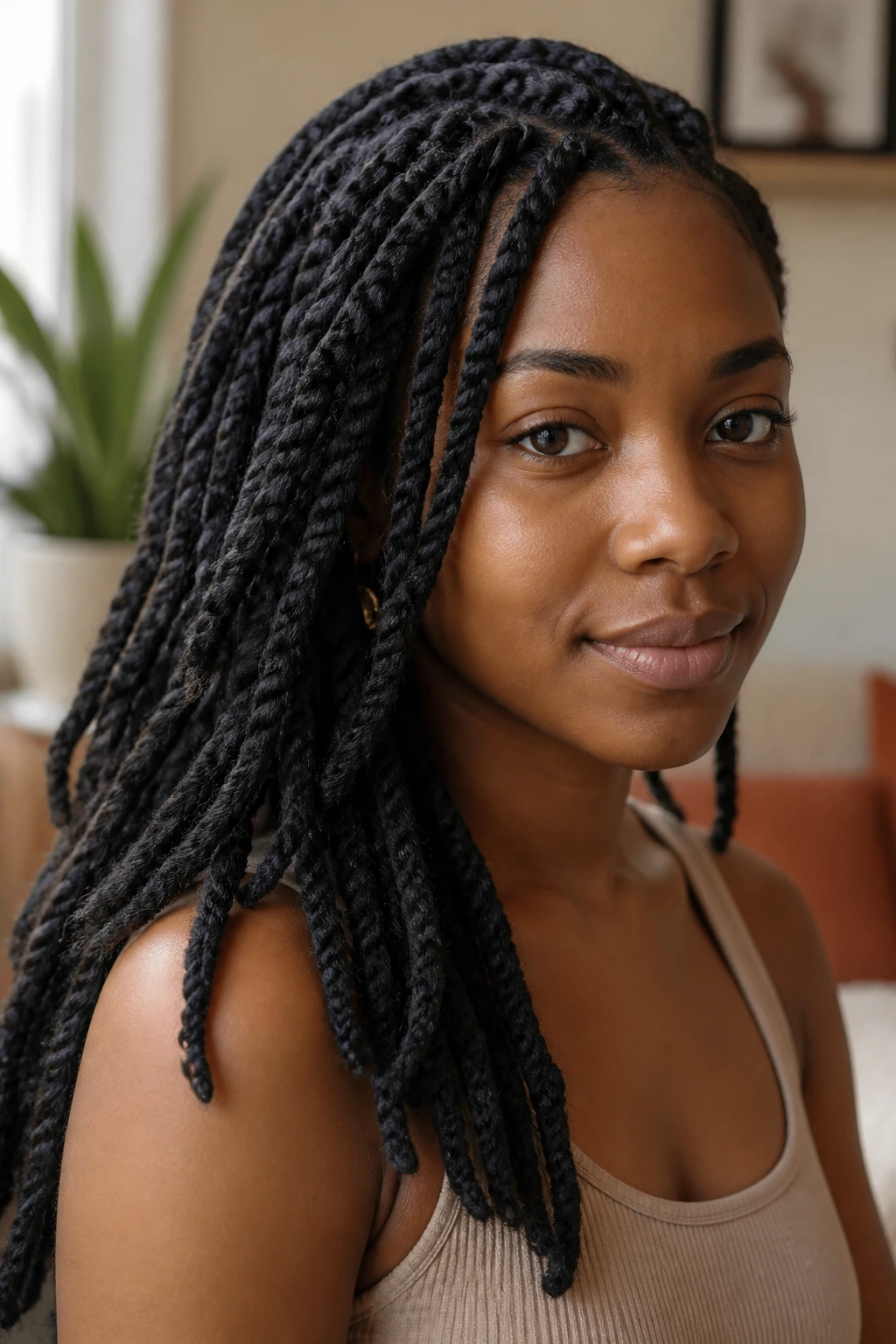
Yarn braids offer a unique, soft texture that mimics dreadlocks without the permanence. Because they are made of soft yarn, they are incredibly lightweight and allow the scalp to breathe. They are a fantastic option for those who want a more “natural-looking” or earthy aesthetic.
The Feel of the Hair
Yarn is very light, making this a comfortable option if you have a sensitive scalp. However, it does tend to absorb water when you wash your hair, so be aware that they will take longer to dry than synthetic hair braids. They also have a matte finish, which many find more natural than the shine of plastic-based braiding hair.
Considerations for Washing
- Wash these styles sparingly. When you do, make sure they are completely dry before you put them in a bonnet for the night, or you might develop a musty scent.
- If you find the yarn gets fuzzy, you can lightly trim the stray fibers with scissors.
18. Braided Ponytail with Curly Extensions
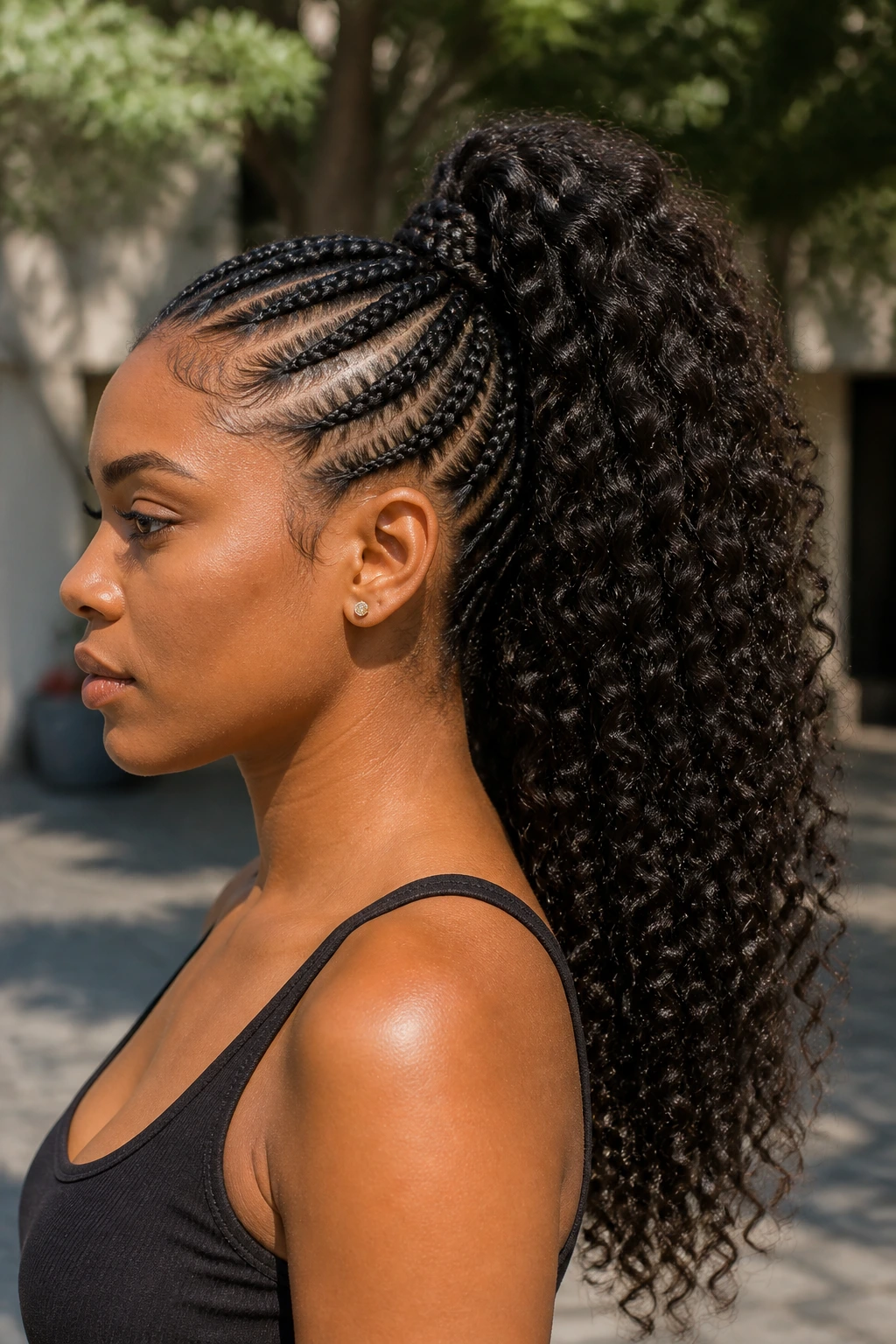
This is a modern update on the classic ponytail. Instead of the ponytail being made of the same braids as the rest of the head, it is composed of loose, tight curls. The contrast between the neat, flat cornrows on the scalp and the voluminous curls in the ponytail is a show-stopper.
Why It Works
It’s a “best of both worlds” scenario. You get the protective benefit of the cornrows at the root, but you get the playful, high-volume look of a curly style in the ponytail. This style is very easy to update—you can change the ponytail portion without having to redo the cornrows.
Managing the Curls
- Keep the curls moisturized with a curl-defining cream, but be careful not to use anything too greasy that will weigh them down.
- Sleep with the ponytail in a high, loose pineapple to protect the curls from flattening overnight.
19. Large Senegalese Twists
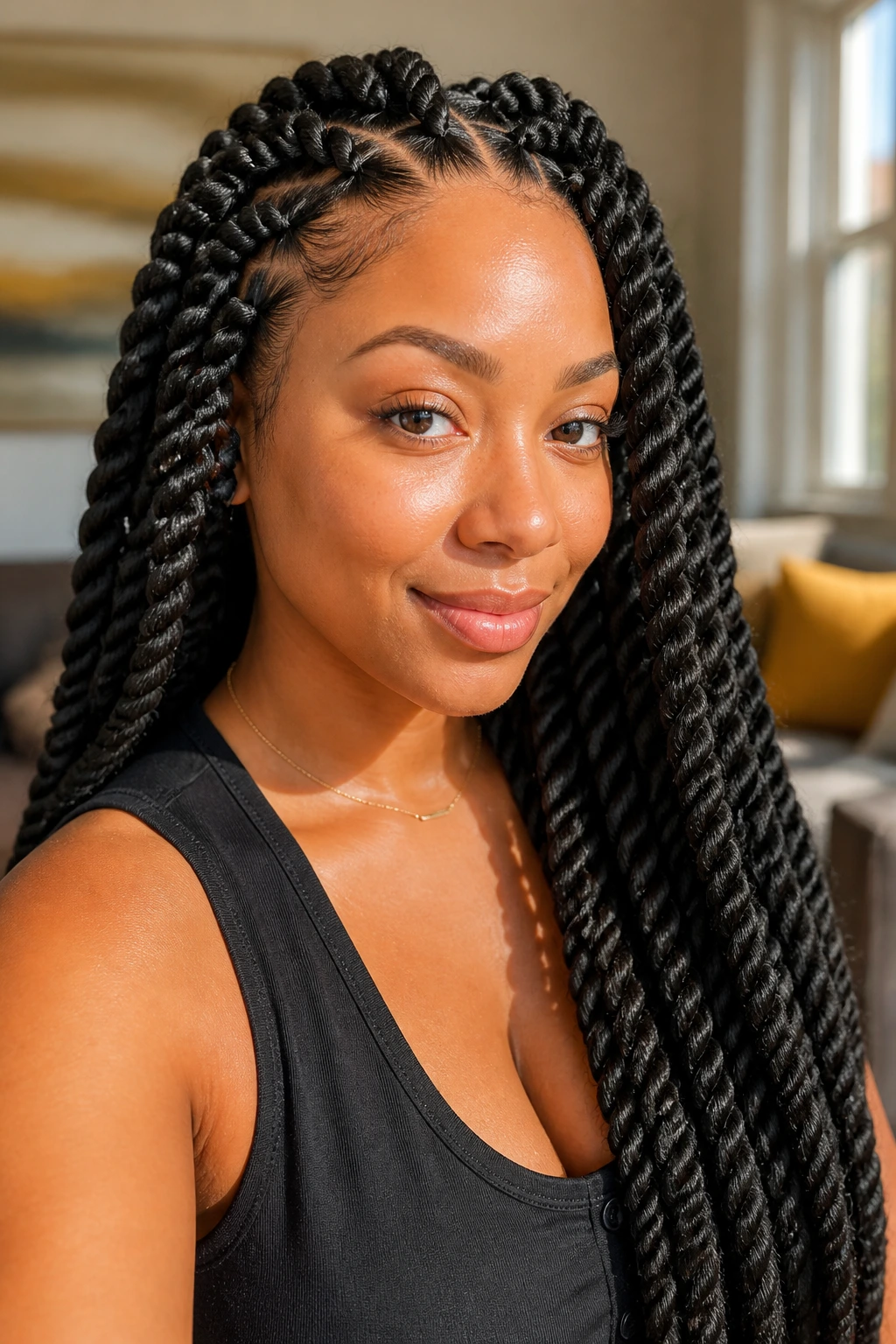
Senegalese twists are smoother and tighter than box braids, often resembling rope. Using large, thick sections gives them a clean, sophisticated look. They have a very high-shine finish and look beautiful when worn long.
The Advantage of Twists
Because they are twisted rather than braided, they are often quicker to install. They also tend to look “neater” for longer, as they don’t have the same tendency to frizz up as braided hair does. They feel very solid and secure, and they drape beautifully over the shoulders.
Twist Maintenance
- Twists can unravel if they aren’t secured properly at the ends. Make sure your braider burns or dips the ends in hot water to seal them firmly.
- If they start to loosen at the root, you can re-twist them yourself with a little bit of locking gel to keep them looking fresh.
20. Fulani Braids with Top Knot
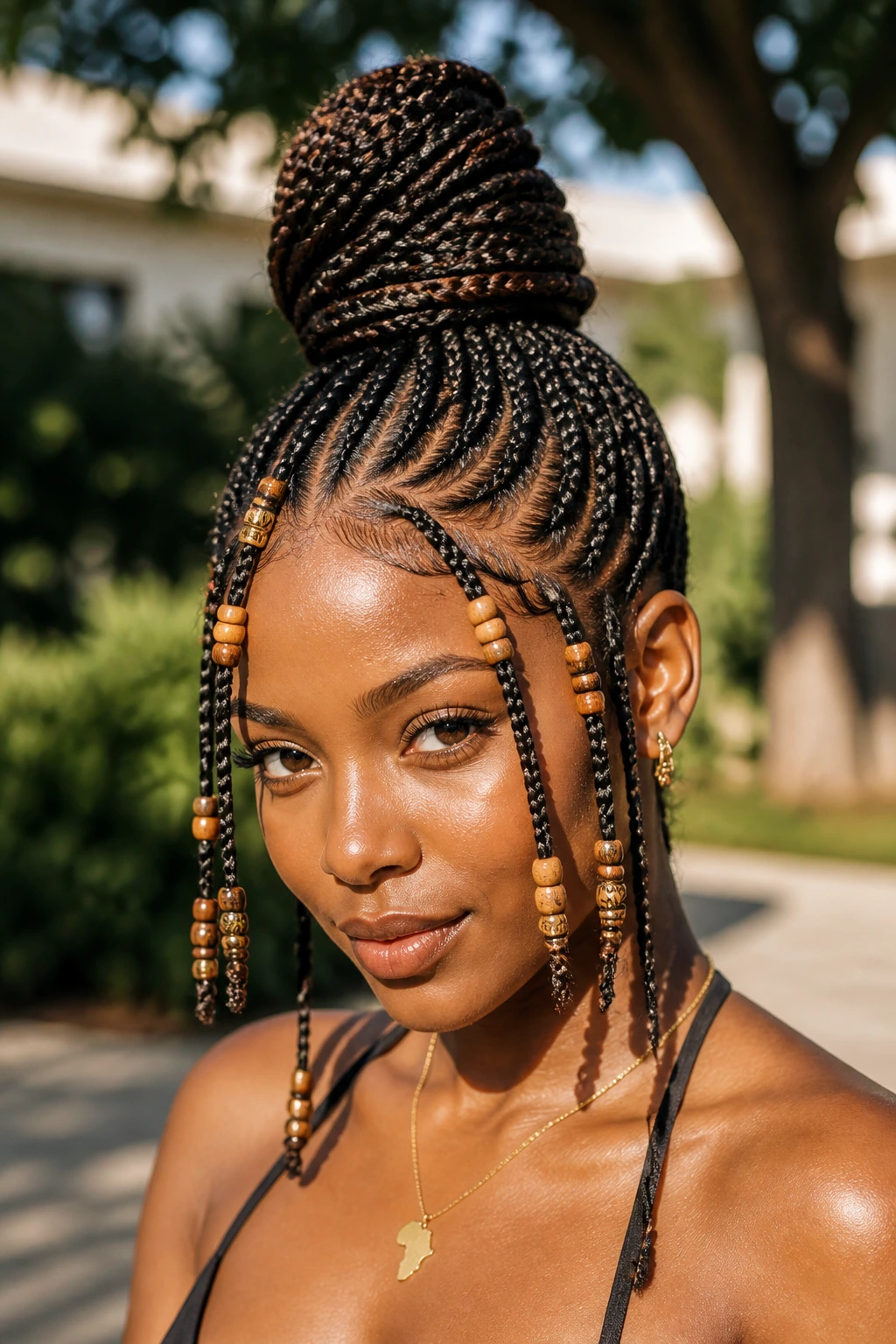
Taking the traditional Fulani style and sweeping the back into a high top knot creates a look that is both cultural and sporty. It’s perfect for summer months or for active days when you don’t want hair hanging on your neck, but you still want the intricate part patterns at the front.
Styling the Knot
The top knot doesn’t have to be perfect; a slightly messy bun often looks more modern. You can wrap a few of the front braids into the knot to create a more cohesive look. Adding beads to the hanging braids at the front adds that characteristic Fulani flair.
Keeping the Front Fresh
- Since the front is the focal point, spend a little extra time on edge control to keep the baby hairs laid and smooth.
- Refresh the front braids with a light mousse if they start to get frizzy from humidity.
21. Braids with Metallic Thread
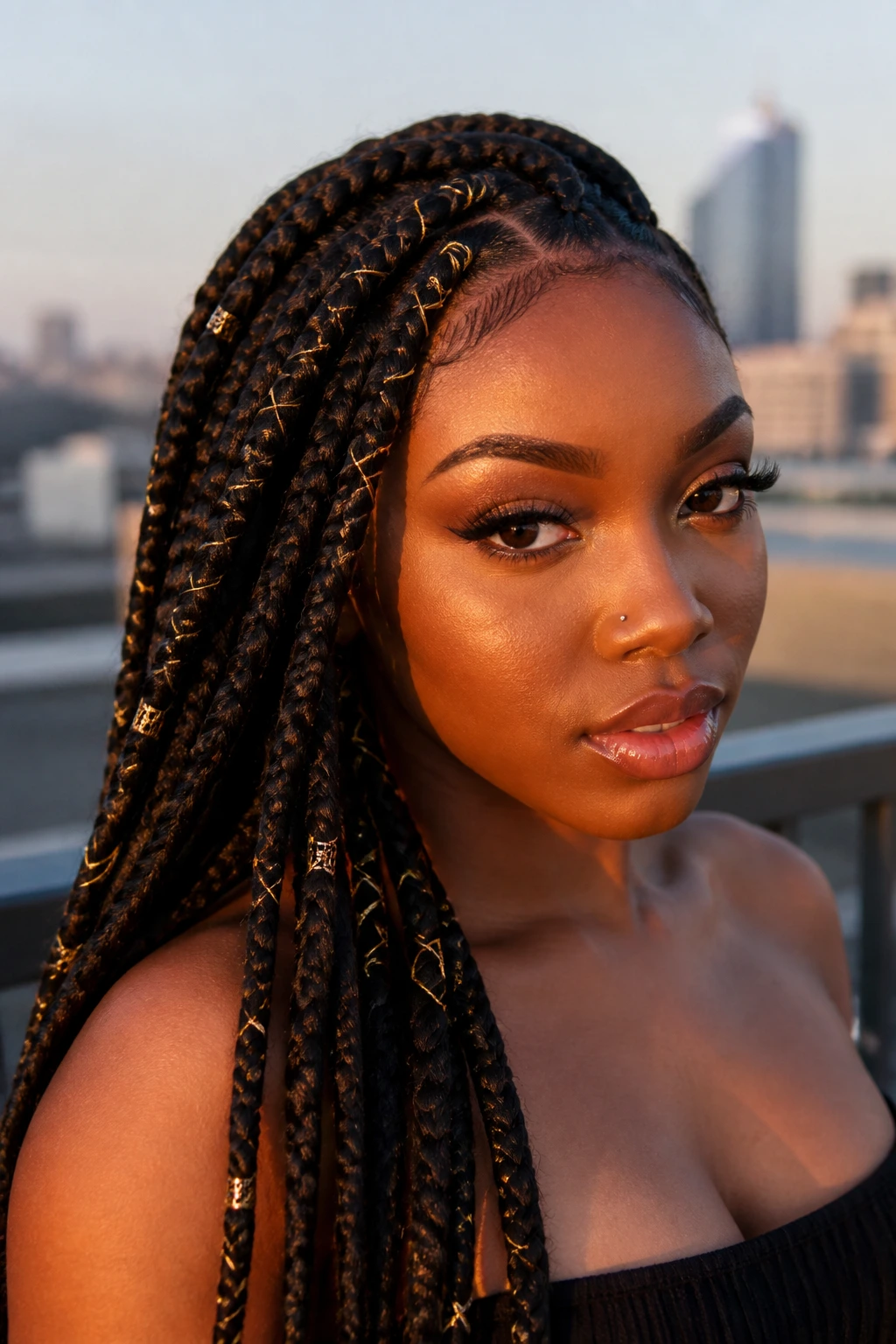
For a futuristic or avant-garde look, weave metallic gold, silver, or copper thread into your braids. This is a subtle way to elevate any braid style. It’s an inexpensive addition that makes your hair look like a custom accessory.
How to Apply
You don’t need to do it for every braid; sometimes just accenting one or two braids on each side is enough to make an impact. You can wrap the thread around the braid in a spiral pattern or alternate between over-and-under weaving to create a different visual texture.
Styling Ideas
- Use thread that matches your jewelry. Gold thread pairs beautifully with gold hoops; silver thread works well if you prefer cool-toned accessories.
- This is a fantastic look for festivals or nights out where you want your hair to catch the light.
22. Mermaid Braids with Pastel Colors
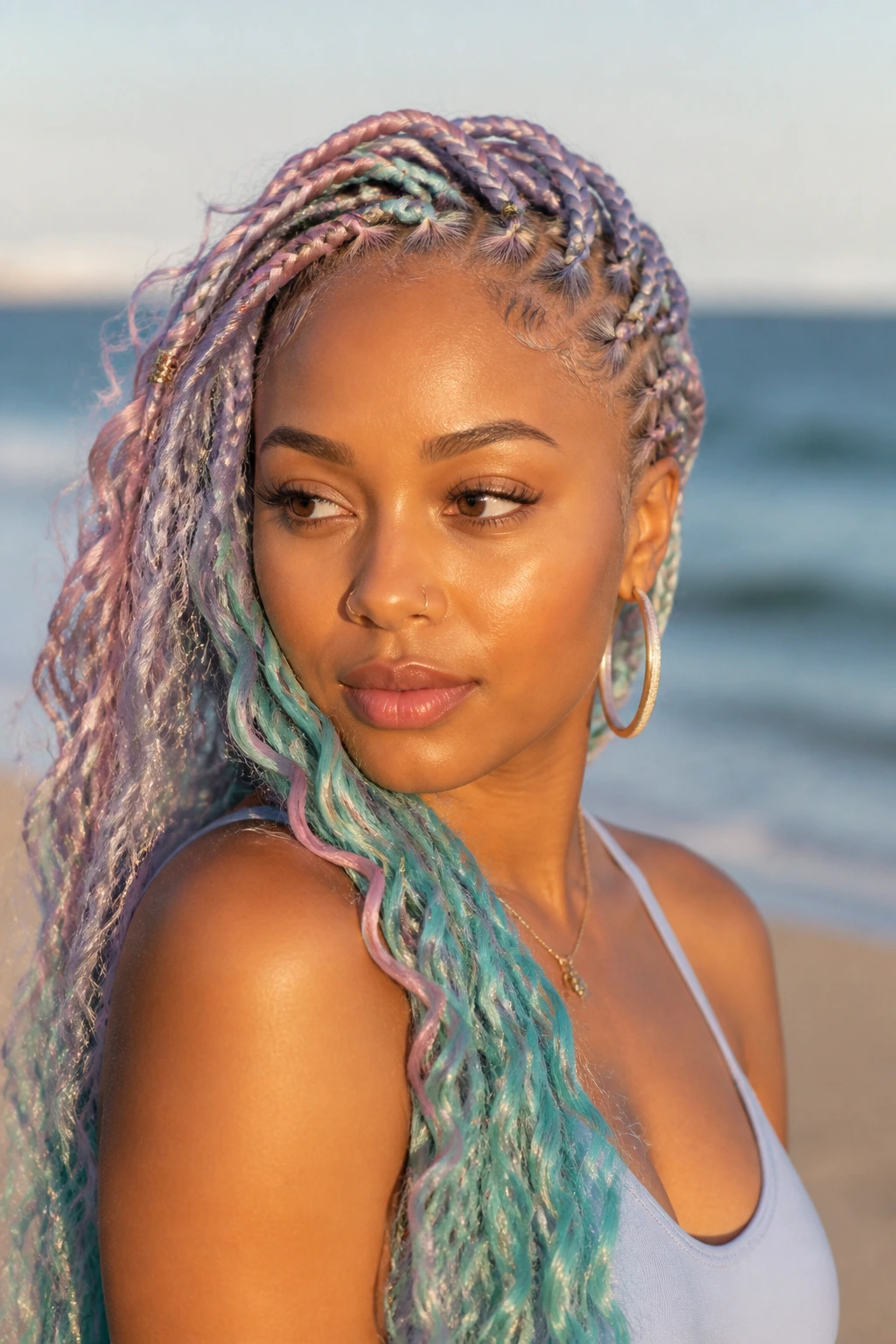
If you aren’t afraid of color, mermaid braids—usually featuring vibrant pastels like lilac, seafoam green, or baby pink—are a bold choice. These are often styled with a mix of braids and waves to mimic a sea-inspired, ethereal vibe.
The Commitment to Color
Synthetic braiding hair comes in some incredible pastel shades. Because these colors are so light, they can look striking against dark skin tones. However, keep in mind that light colors show dirt and buildup faster, so you’ll need to be diligent about keeping the style clean.
Managing Pastel Maintenance
- Avoid heavy, colored oils on your scalp, as they might stain the light hair.
- Use a clear, light-reflecting spray to keep the hair looking vibrant and shiny rather than dull.
Final Thoughts
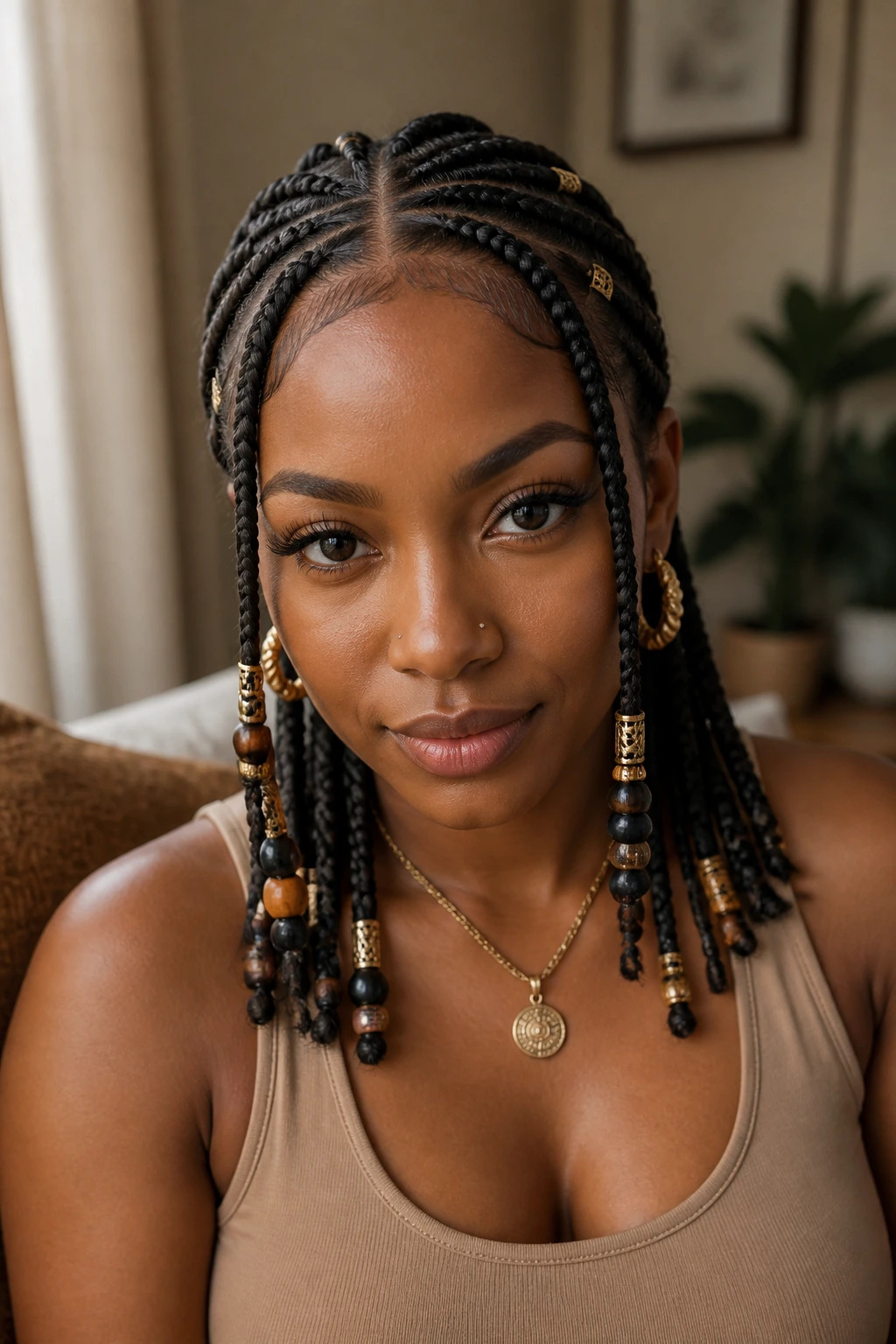
Finding the perfect style is a journey of trial and error. You might fall in love with the look of micro braids only to find that the installation time is more than you want to commit to, or you might find that knotless box braids feel so natural you never want to go back to loose hair. The most important thing is to prioritize the health of your scalp and your natural hair underneath. No style is worth thinning edges or constant pain.
Be mindful of the tension in your chair and don’t be afraid to speak up if something feels too tight. Your hair is an asset, and the way you choose to wear it should make you feel like your best, most confident self. Whether you are rocking thick, chunky box braids or an intricate, tribal-patterned cornrow design, the artistry involved is a testament to the versatility and beauty of textured hair. Enjoy the process of choosing, the transformation of the sit, and the final look you walk out with.