

When you are midway through a high-intensity interval session or holding a challenging yoga pose, the last thing you want is for a wayward strand of hair to stick to your sweat-dampened forehead or get caught in your sports bra strap. Hair management during exercise is not just about keeping the aesthetic in check; it is about pure, functional performance. For those with curly, coily, or textured hair, finding a protective style that can handle the friction of movement while maintaining the integrity of your curl pattern is a significant challenge. The goal is to minimize tension at the scalp while ensuring your hair remains secure enough to withstand burpees, sprints, and everything in between.
Braided styles have long been the gold standard for active individuals because they lock hair into a contained structure, drastically reducing the amount of tangling that occurs from repetitive motion. While a standard three-strand braid is fine for a light walk, it often unravels during more rigorous activities, especially when the sweat starts to flow. By opting for styles that keep your hair off your neck and away from your face, you avoid the heavy, cloying feeling that loose hair creates during a workout. Below, we look at twenty distinct, highly functional braided styles designed to keep you focused on your fitness goals rather than your hair.
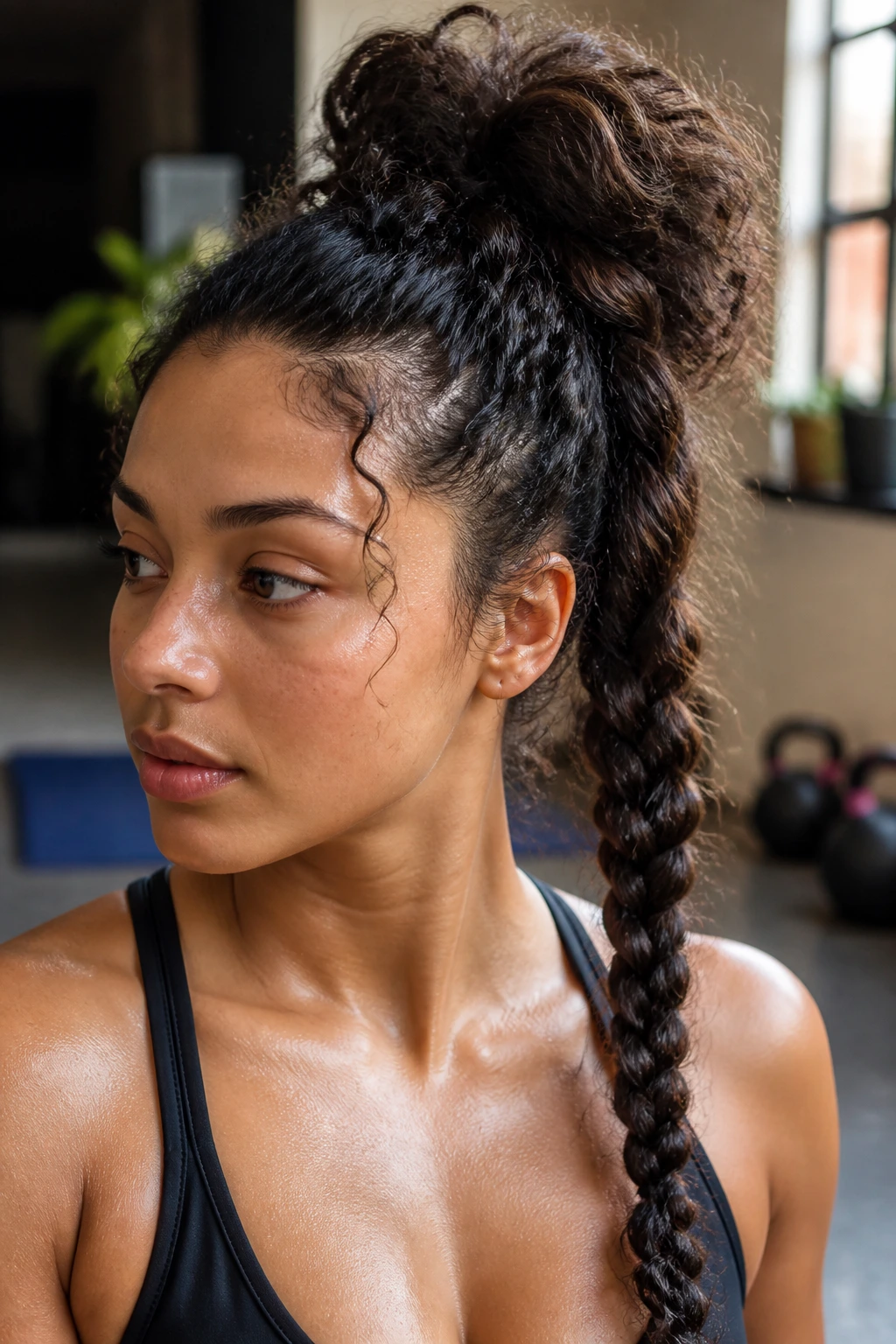
1. The High-Volume Pineapple Braid
This style is a hybrid designed to keep your curls protected while preventing them from being crushed against your back. You essentially gather your hair into a high, loose ponytail—the “pineapple” position—and then braid the length of the ponytail into a thick, loose plait. It works best if you keep the base relatively loose to avoid putting too much stress on your hairline during those head-down movements like mountain climbers. By elevating the mass of your hair, you keep it away from your sweat-wicking gear entirely.
Why It Works for High-Impact Movement
- The high placement shifts the weight of your hair away from your neck, preventing sweat buildup in the nape area.
- Leaving the base loose allows your curls to maintain their volume and spring when you finally take the braid down post-workout.
- Using a silk-covered scrunchie instead of a tight elastic prevents breakage around the crown.
2. Dual French Fishtails
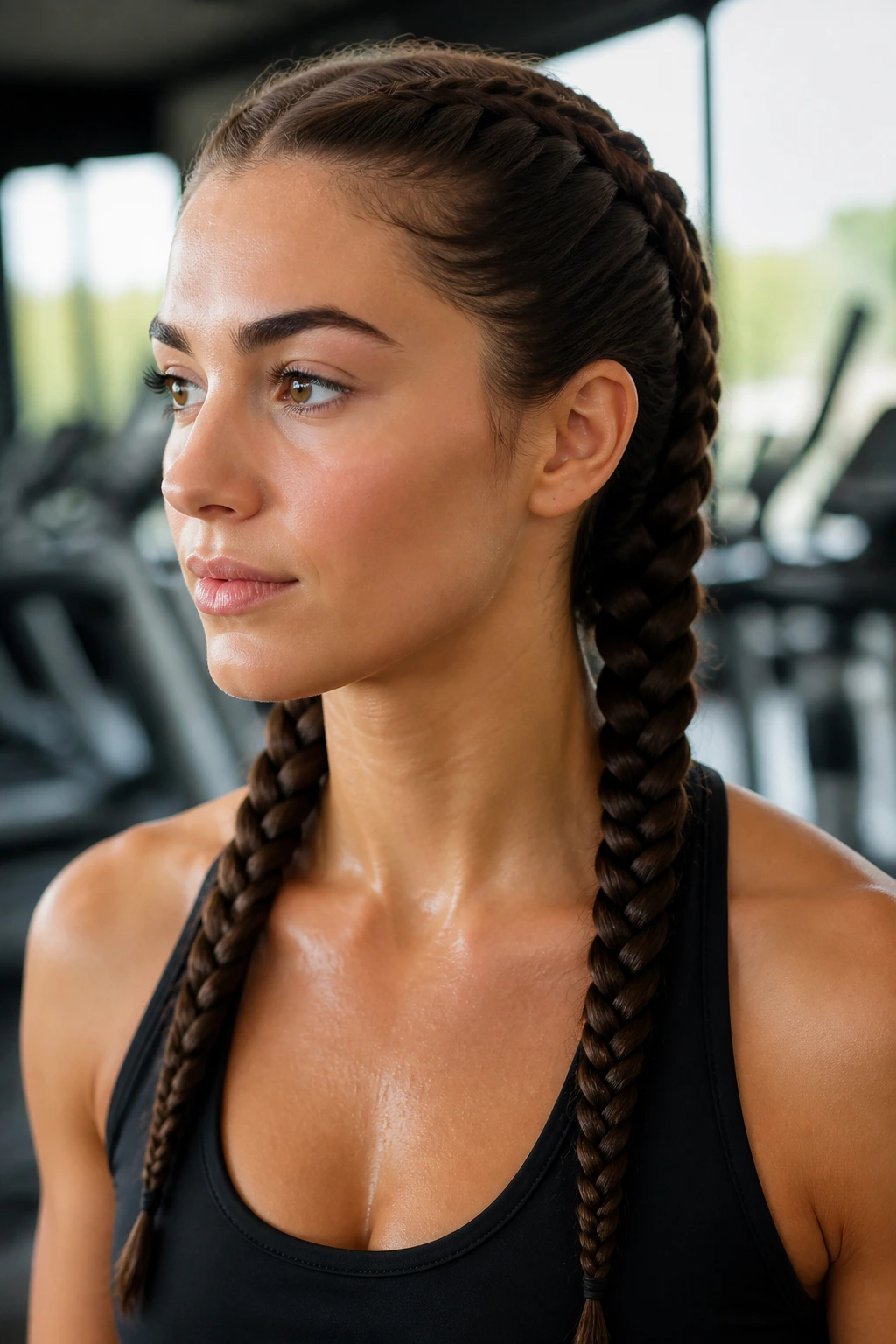
Fishtail braids are remarkably durable because they use smaller sections of hair, which creates a tighter, more interwoven structure than a traditional braid. For a workout, parting your hair down the center and creating two tight fishtails ensures that even if you have layers, they stay tucked in rather than poking out. This style is excellent for cardio-heavy days where you need a style that will not shift or loosen no matter how much you jump or pivot.
How to Secure the Ends
The key to a long-lasting fishtail is the tension. When you pull the outer pieces across, tug them slightly firmly. If you are worried about your ends fraying during intense movement, use a clear, snag-free rubber band and then wrap a small piece of hair around the elastic to mask it. This provides an extra layer of protection against the band snapping under the stress of movement.
3. The Crown Braid Wrap
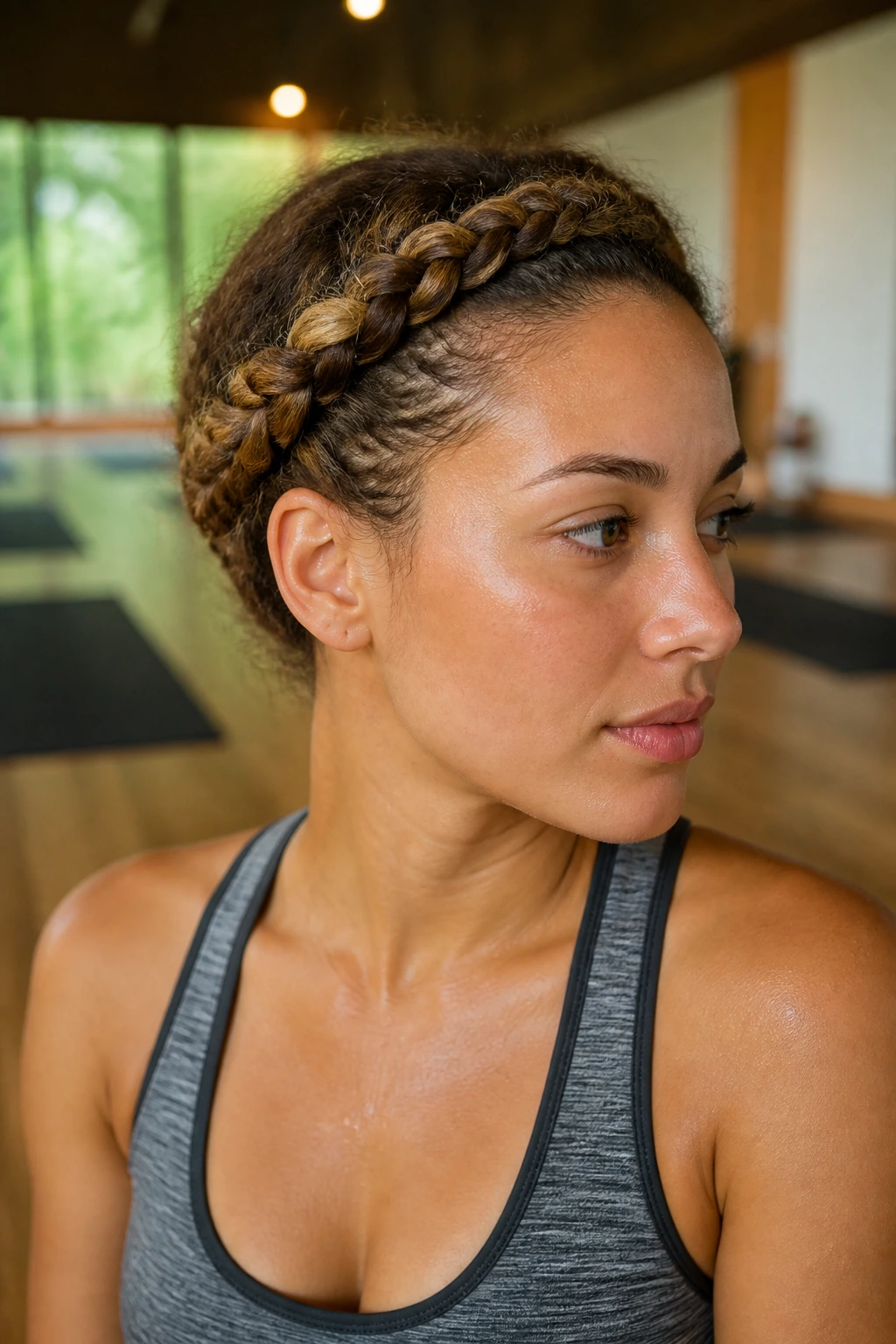
If your workout involves a lot of floor work, like Pilates or mat-based strength training, a crown braid is your best friend. By braiding your hair along the perimeter of your head and pinning it in place, you eliminate the “swing” factor. You will not have a heavy braid hitting your back or getting in your way when you are lying on a yoga mat. It feels almost like you aren’t wearing your hair at all, which is the ultimate goal for many athletes.
Maintenance Tips for Thick Coils
- Always start this style on slightly moisturized hair to ensure the braiding process doesn’t cause mechanical damage.
- Use U-shaped pins instead of traditional bobby pins; they hold more hair with less scalp irritation.
- If you have shorter layers around your face, a touch of light-hold gel will keep them from migrating into your eyes while you’re mid-set.
4. Double Dutch Braids
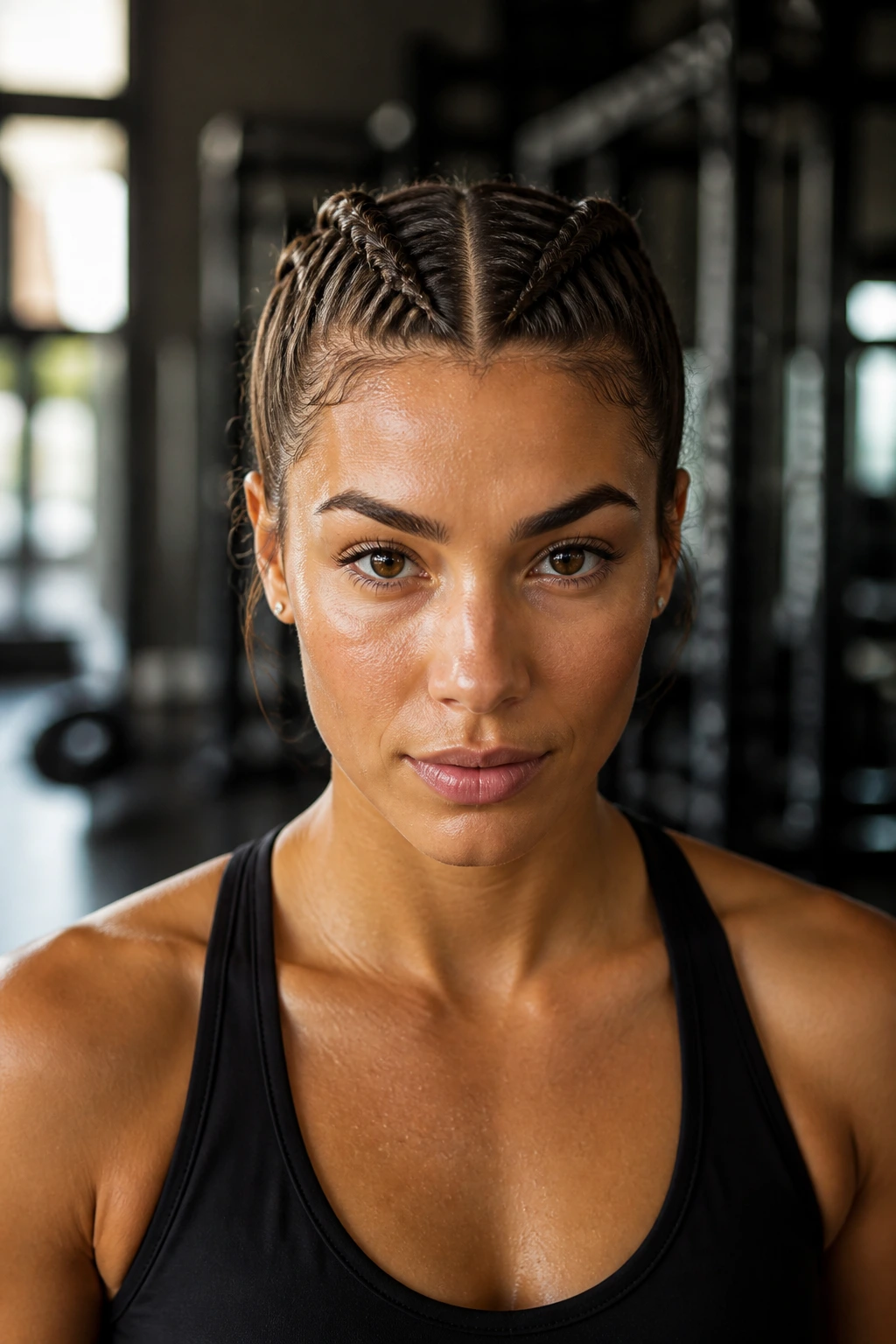
Often called “boxer braids” for their association with combat sports, these are perhaps the most reliable style for any high-intensity activity. Because Dutch braids are essentially inverted French braids, they sit on top of the scalp rather than blending into it. This elevated structure keeps the hair firmly rooted and creates a clean look that handles moisture very well. They are particularly effective for curly hair because the braiding process naturally stretches the hair, preventing the dreaded “shrinkage” that can occur when sweat meets dense curls.
Why They Are Ideal for Sweaty Sessions
The Dutch technique pulls the hair taut, which keeps the hair closer to the scalp and prevents it from expanding too much in humid gym environments. If you find your hair gets frizzy, applying a pea-sized amount of leave-in conditioner before you begin the braid will provide enough slip to keep everything neat and prevent the dry, brittle feeling that can occur after a long, intense session.
5. The Top-Knot Braided Bun
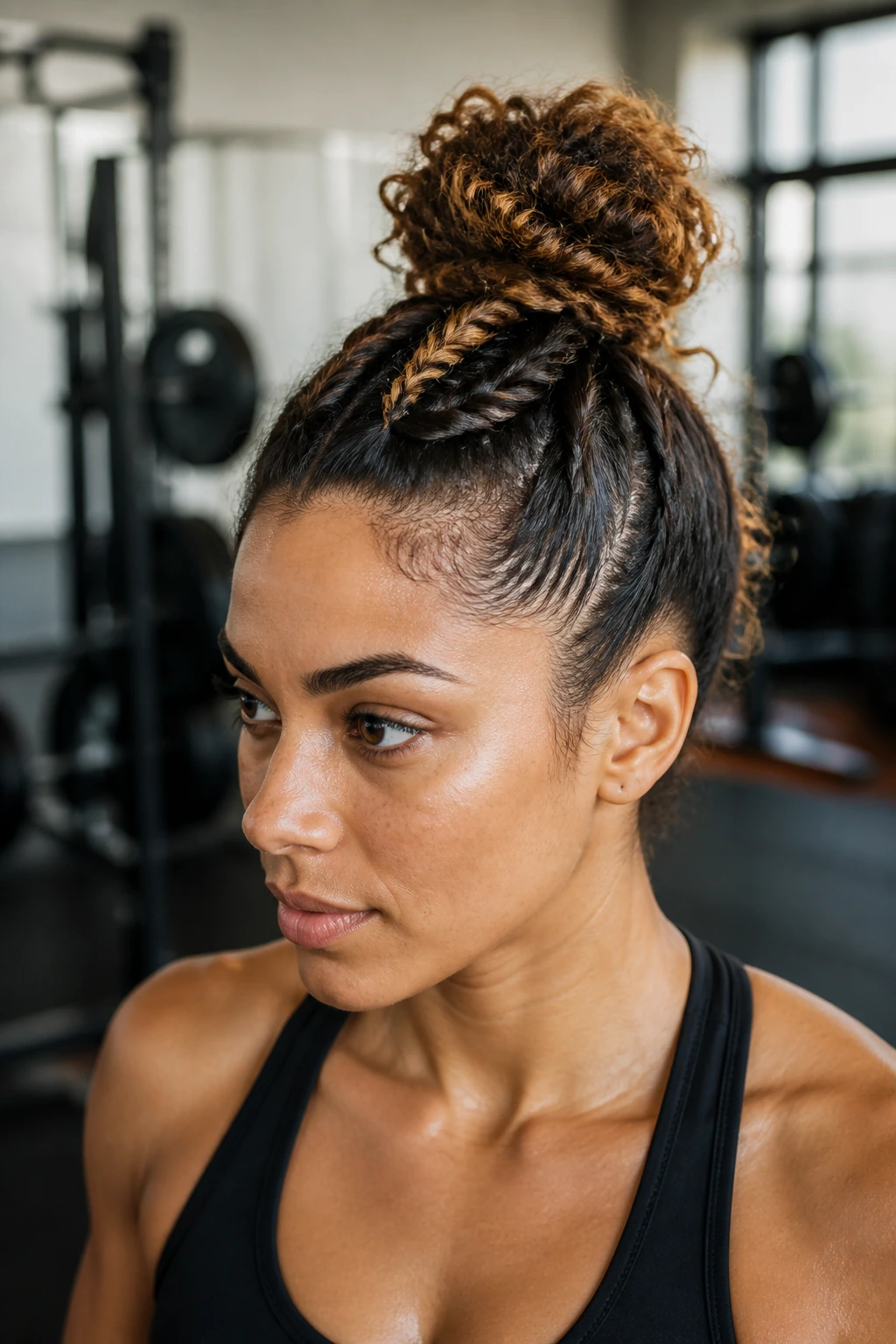
This style combines the security of a braid with the containment of a bun. Start by braiding your hair from the nape of your neck upward toward the crown—this is essentially an inverted braid. Once the braid reaches the top of your head, gather the remaining length into a bun. This is a game-changer for anyone doing inversions, like handstands or downward dog, as the braid keeps the nape hair from falling forward into your face.
Equipment You’ll Need
- A fine-toothed comb for parting.
- Two or three durable, snag-free hair ties.
- A light-hold setting spray to tame any flyaways near the hairline before you start the braid.
6. Loose Side Plait with Headband Integration
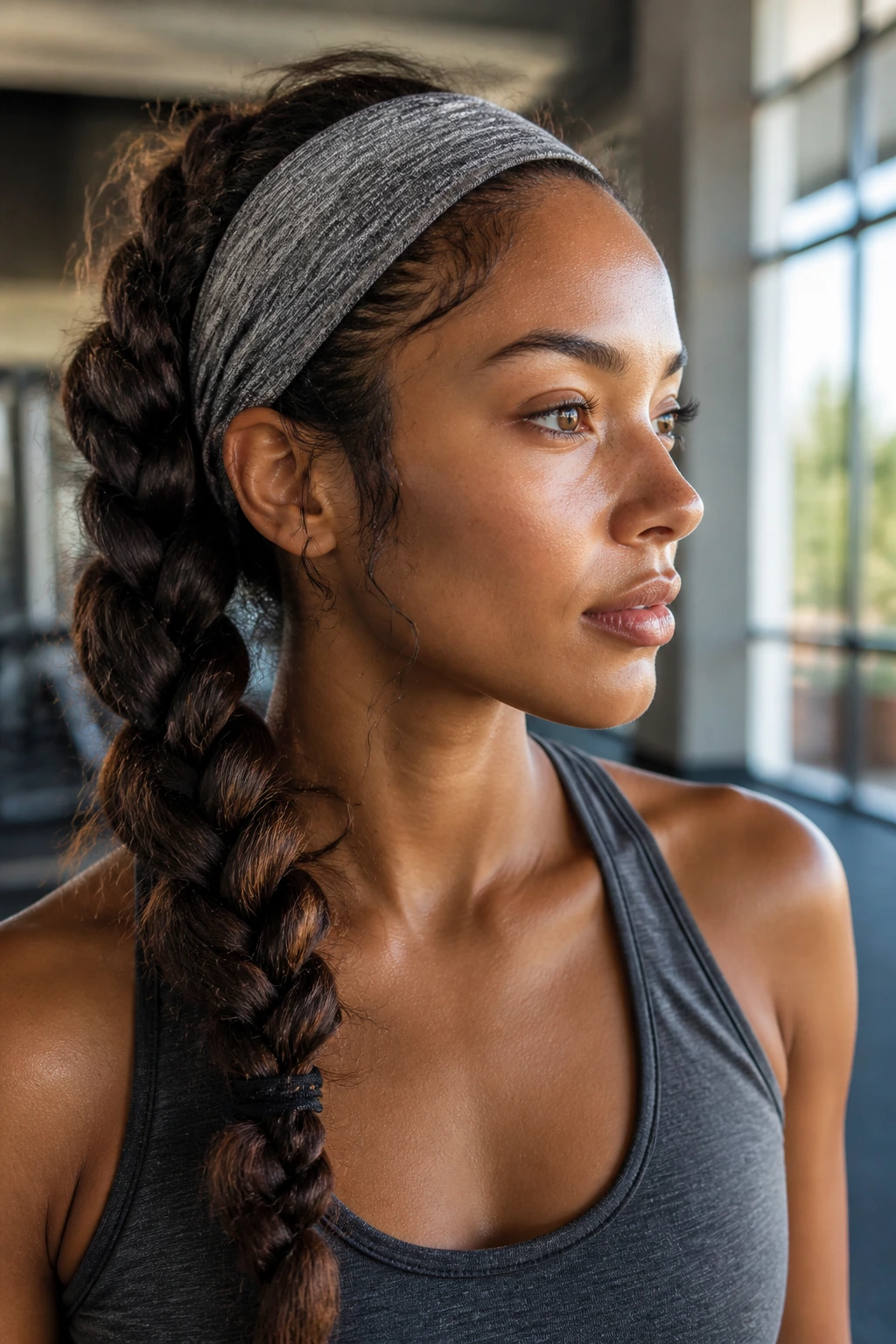
Not every workout needs a style that is pulled tight to the scalp. If you are doing a low-impact workout like stretching or light yoga, a simple side braid is perfect. However, to make it gym-proof, integrate a stretchy fabric headband. By tucking your hairline underneath the band, you prevent sweat from running into your eyes, and the headband acts as a secondary anchor for your hair.
The Benefit of Headbands
A good headband serves two purposes: it catches moisture before it reaches your forehead and it hides any edges that might be prone to frizz. Choose a moisture-wicking material rather than cotton, as cotton tends to get heavy and hold onto moisture, which can actually encourage your hair to swell and frizz faster.
7. Segmented Pull-Through Braid
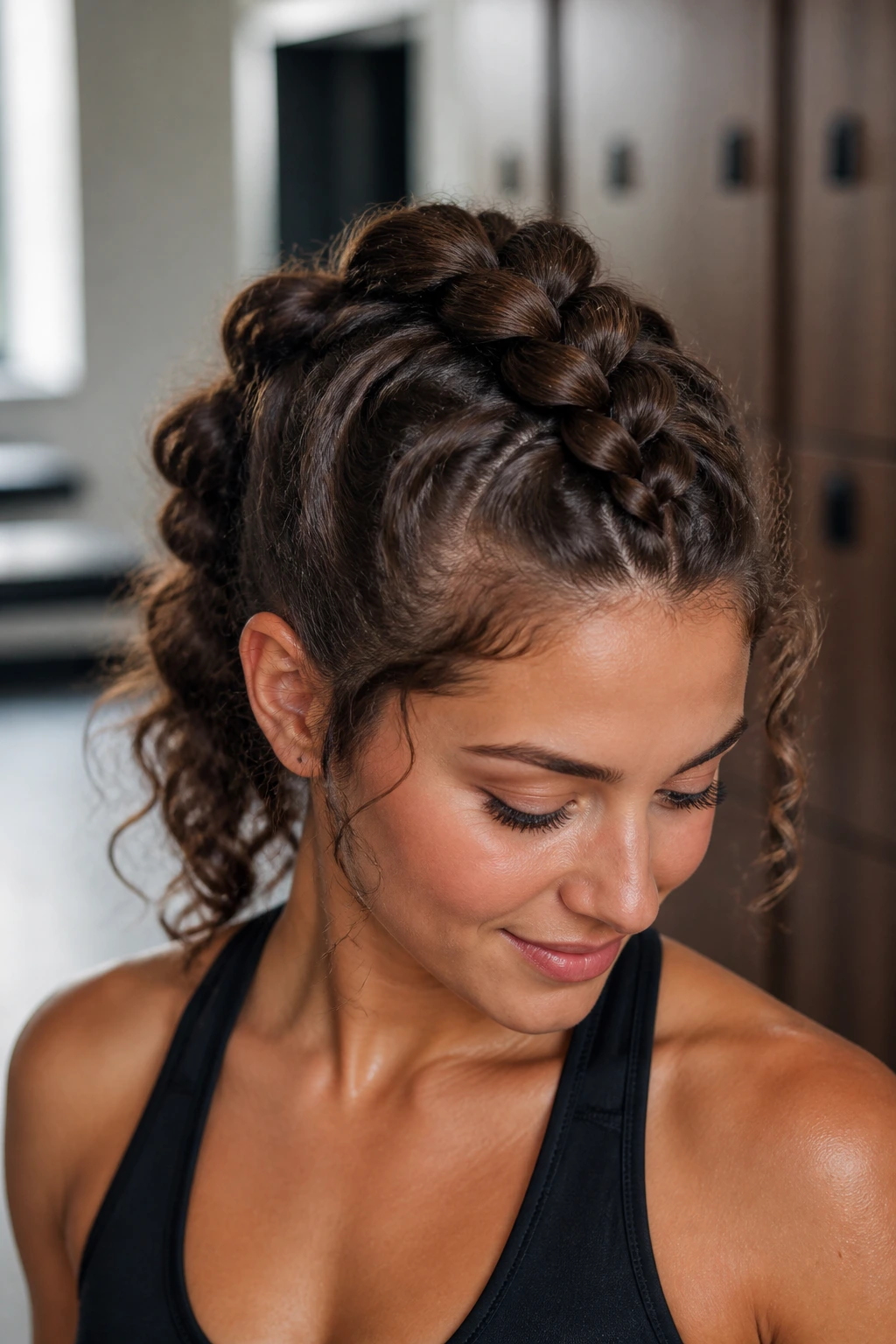
If your curly hair is too thick or voluminous for a traditional braid, the pull-through “braid” is a fantastic alternative. You are actually using multiple small elastics to create the appearance of a braid without the need to actually weave the hair. This method is incredibly gentle on curly textures because you are not pulling and tightening individual strands as much as you are with a French or Dutch braid.
Why It’s Great for Volume
- It creates a very wide, full look that complements natural hair density.
- You can adjust the size of each “bubble” to accommodate the thickness of your curls.
- Because it relies on elastic placement, you can stop the braid exactly where you want it.
8. Braided High Ponytail
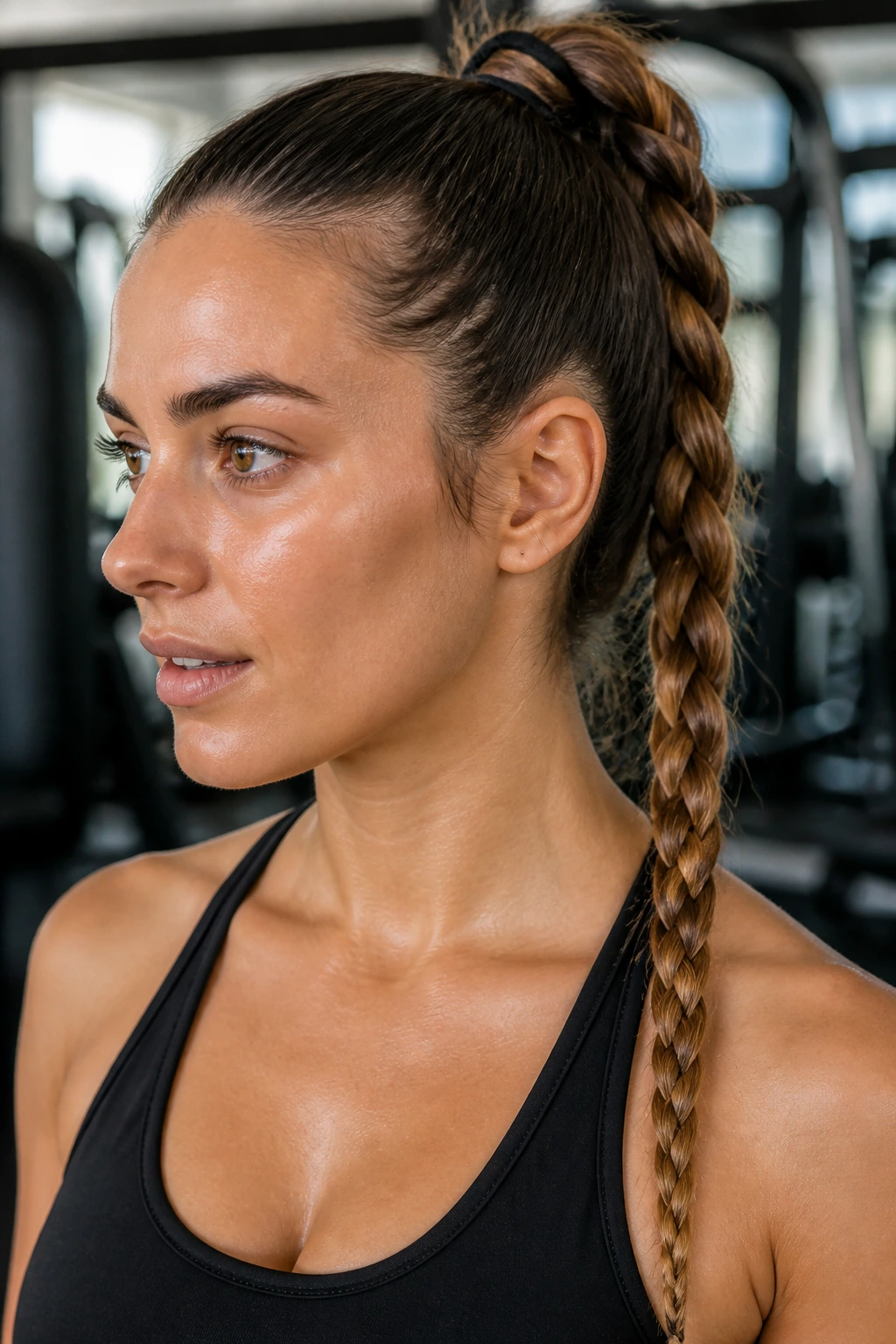
This is the ultimate “get it done” style. Simply pull your hair into a high ponytail and create a tight, single three-strand braid from the base to the ends. While simple, the secret is in the prep. Using a specialized hair tie that contains a bit of grip material will prevent the heavy weight of the braid from sliding down your head while you are running or jumping.
Troubleshooting the Slide
If your braid feels heavy, you are likely using too much product at the base. Keep the roots clean and dry, or use a small amount of dry shampoo to add texture and grip. The extra grit helps the hair tie hold its position, ensuring your high ponytail stays exactly where you placed it, regardless of the intensity of your movement.
9. Waterfall Braid Into a Low Pony
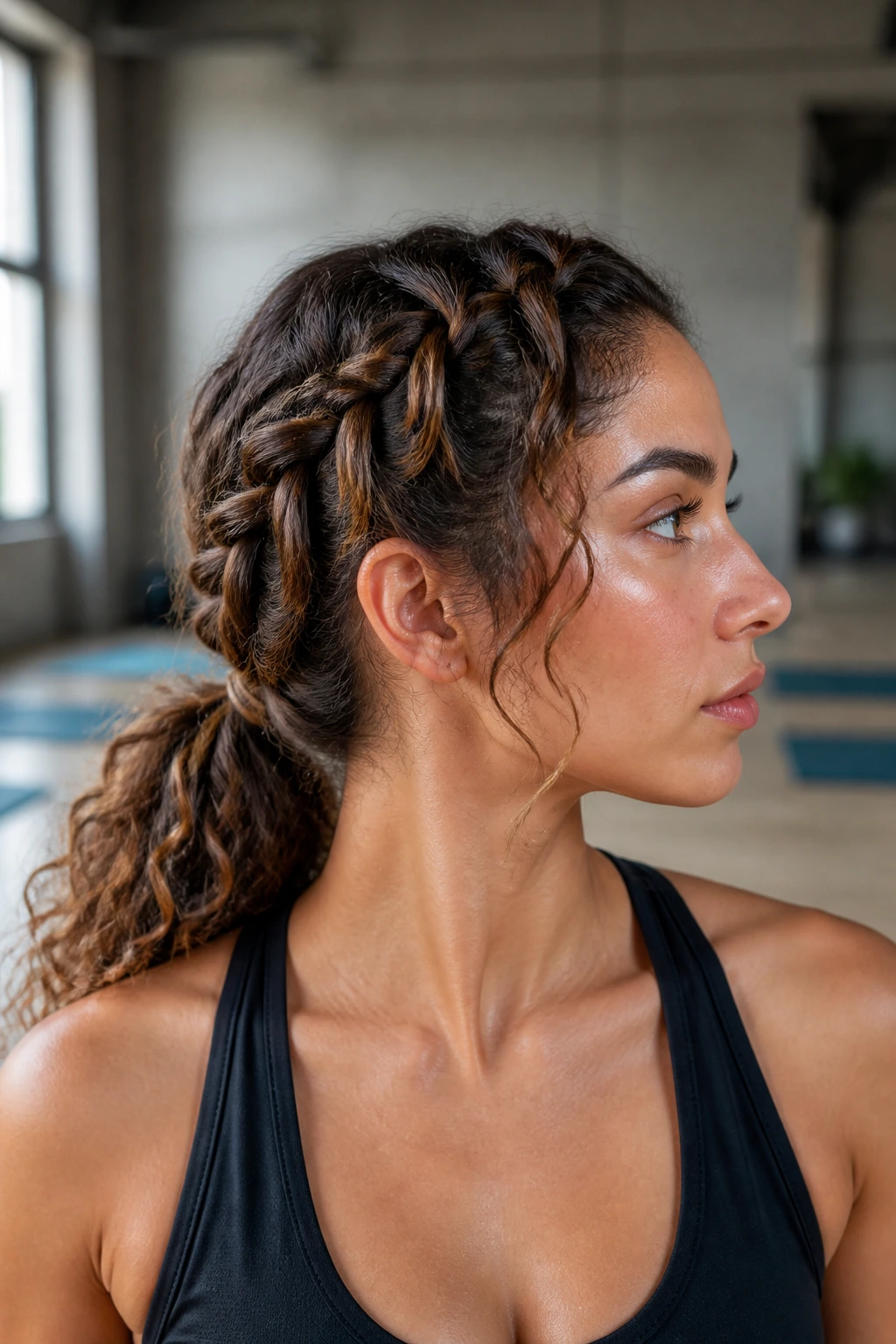
A waterfall braid is one of the most beautiful styles, but for the gym, we modify it by pinning the loose pieces back into a low ponytail. It is a more polished look for those who prefer to keep their hair somewhat “down” but need it to stay off their neck. It provides enough security for activities like cycling or walking, where your head movement is mostly forward and back.
Who Should Choose This Style
This is best for those with longer, looser curl patterns who don’t want to deal with the tightness of a Dutch or French braid. It provides a nice balance of style and control, and because it sits low, it is comfortable enough to wear even if you’re leaning back on a bench for chest presses or seated rows.
10. The Cornrow-Ponytail Hybrid
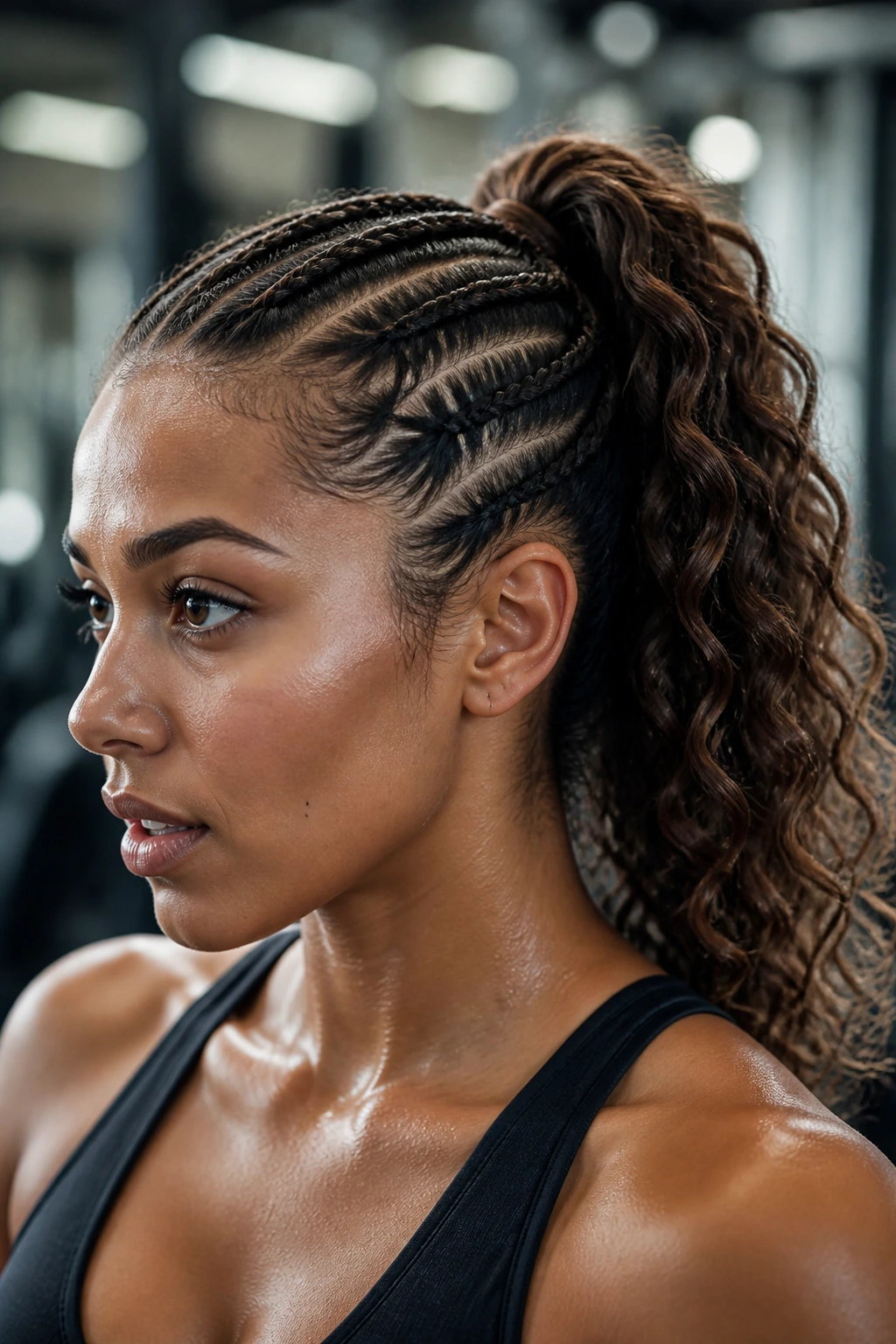
For those with tighter curl patterns or who have their hair professionally braided, the cornrow-ponytail hybrid is unmatched. You have the security of cornrows at the front, which keep the hair perfectly in place, combined with a loose ponytail at the back that you can braid or twist. This style is essentially bulletproof, making it a favorite for athletes who need a style that lasts for several days of training.
Why This Style Lasts
The tension is distributed across the entire scalp, not just at one point. This makes it much more comfortable for long-duration activities, like endurance running or multiple-hour training camps. Just ensure your scalp is properly oiled before the style is installed to keep your skin healthy while you sweat.
11. Three-Strand Side Braids with Bobby Pins
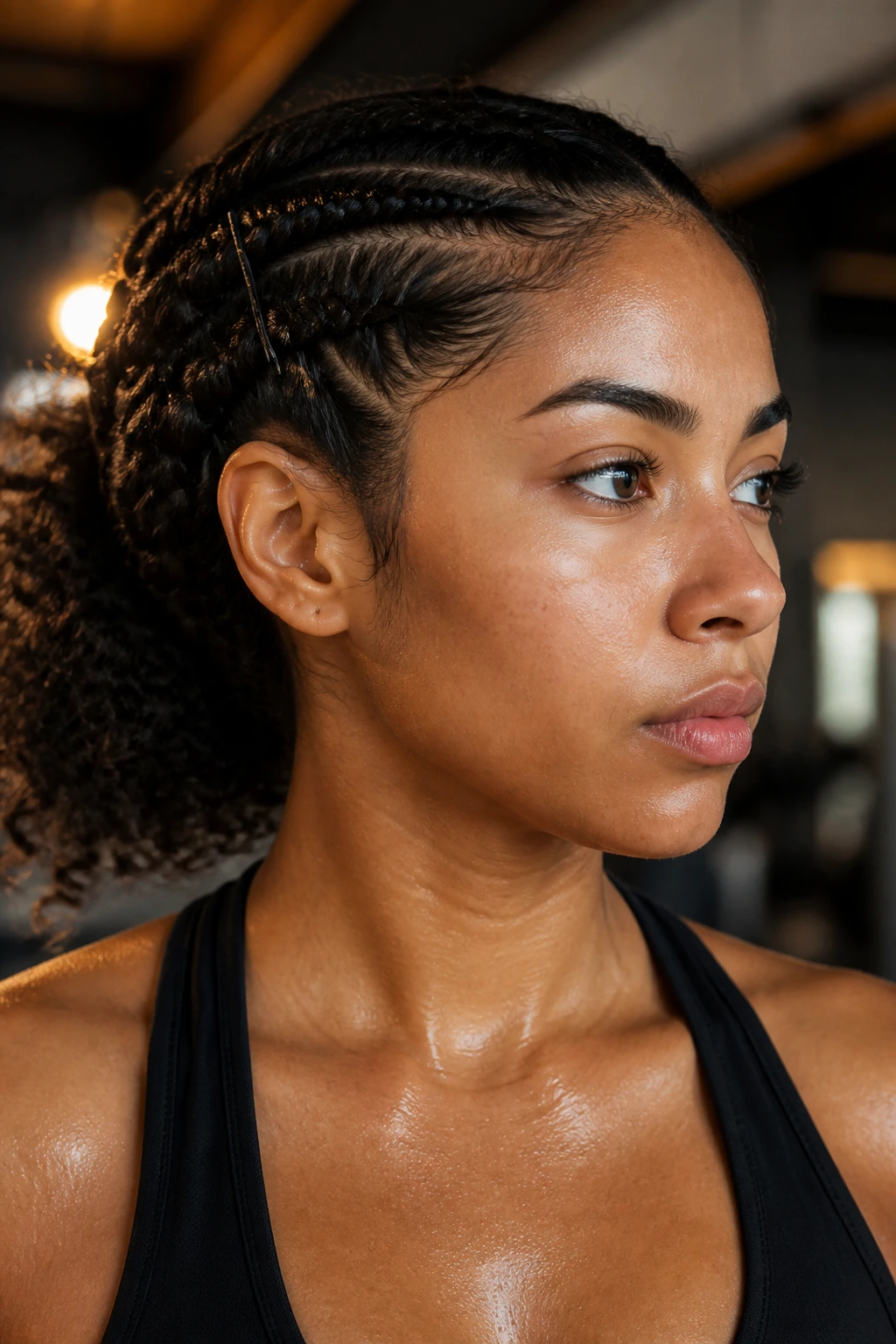
If you are crunched for time, skip the complex weaving and do two or three small, simple side braids that run from your forehead back to the ear. Pin them securely with large, flat bobby pins. This keeps the hair framing your face completely out of the way while the rest of your hair hangs in a loose ponytail. It is a simple, effective way to get “gym-ready” in under two minutes.
The Power of the Right Pin
Use matte-finish bobby pins if you want them to stay put. Shiny, metal pins tend to slide out of curly hair, especially once the hair gets a bit oily or sweaty. A matte coating adds friction, which is exactly what you need to keep those side sections anchored throughout an entire workout.
12. The Multi-Braid Updo
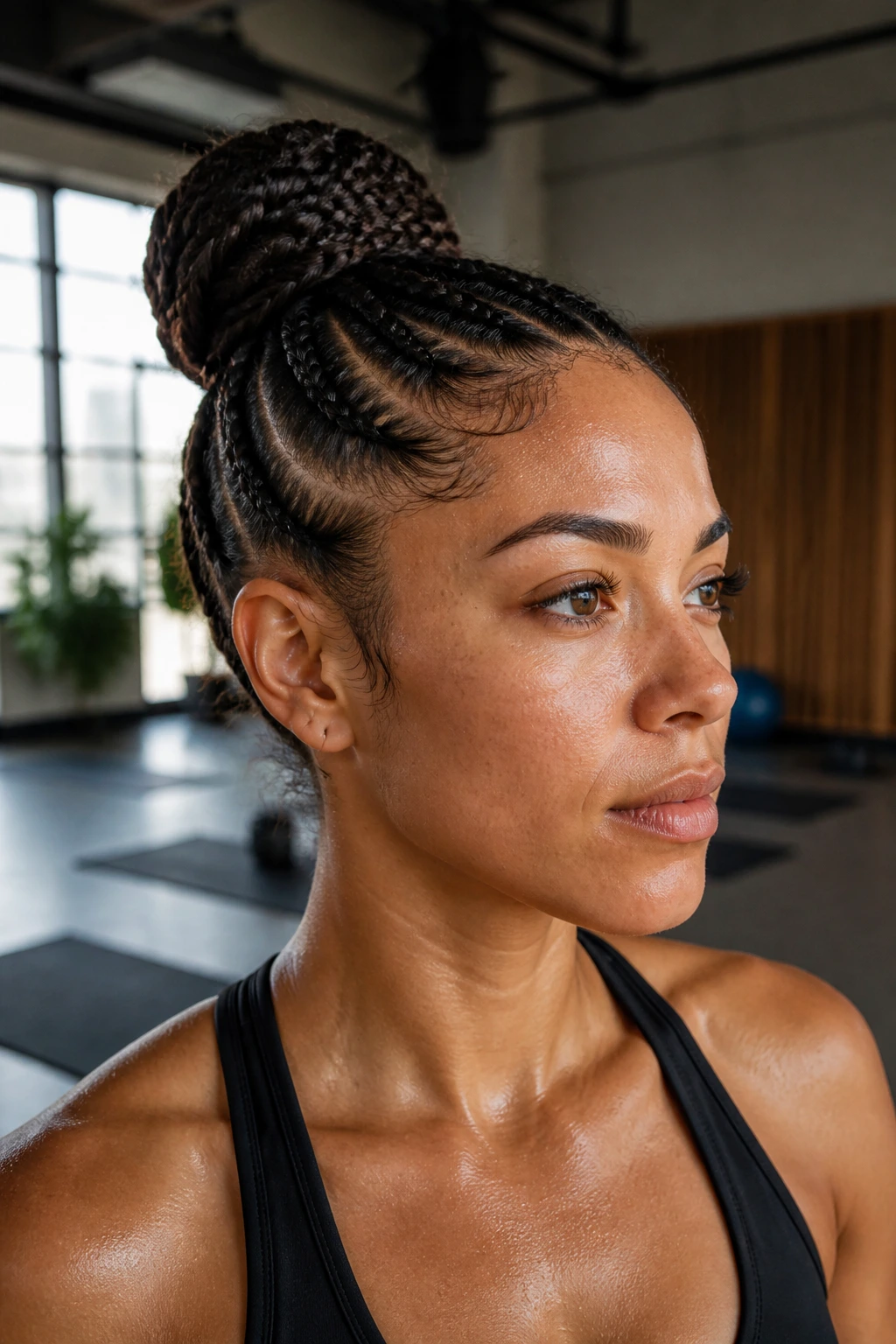
When you need total containment, a multi-braid updo is the answer. Braid your hair into four or five smaller sections starting from the hairline and working back, then gather all the braids together and twist them into a large, secure bun. This style is perfect for those doing intense contact sports or heavy lifting, where any loose hair could potentially become a distraction or hazard.
How to Prevent Scalp Tension
Ensure the braids aren’t pulled too tight at the root. You want the hair to be secure, but you should not feel any tugging on your scalp. If you notice your hairline looking red or feeling sore after you pull the hair up, loosen the braids immediately. Your hair should be firm enough to hold the weight of the bun, but it should never be painful.
13. The Rope Braid (Twist)
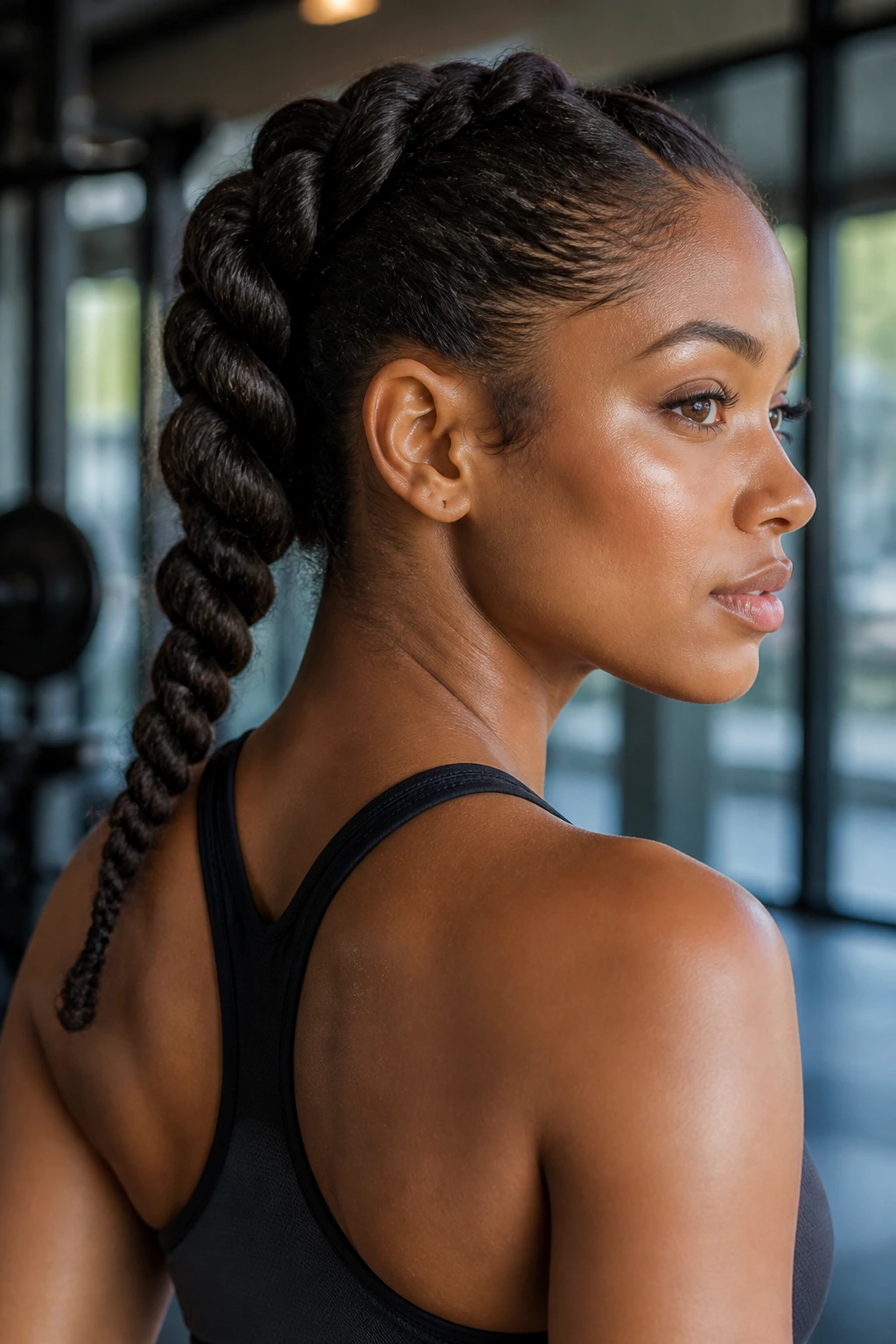
A rope braid is actually a two-strand twist that creates a sleek, rope-like appearance. It is much easier to perform than a traditional braid, and because it relies on two strands wrapped around each other, it can be created very tightly. For curly hair, this is a great way to “set” the curls while you work out, meaning when you take it down, you have a beautiful, defined wave pattern.
Why It’s a “Two-for-One” Style
- It acts as a protective style during your workout.
- The twisting action helps define curls, giving you a fresh hairstyle once the workout ends.
- It’s very easy to redo mid-workout if a piece happens to slip out.
14. Micro-Braids Into a High Bun
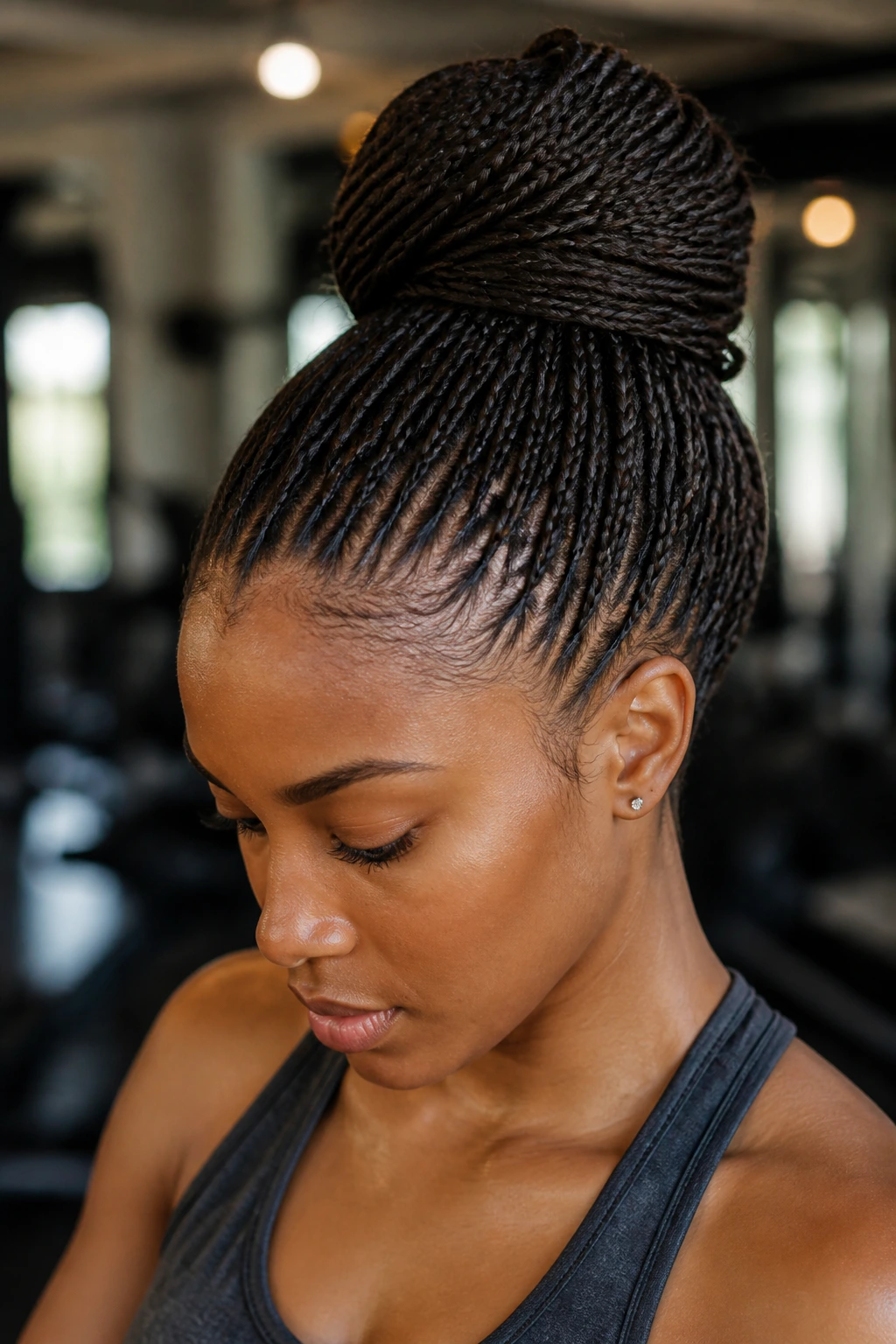
If you are looking for long-term styling, micro-braids are a fantastic way to manage curly hair for weeks at a time. When it’s time to work out, you simply sweep the micro-braids up into a high, voluminous bun. The micro-braids stay protected inside the bun, and the style looks polished and professional for the gym.
Caring for the Scalp
Because micro-braids are meant to be worn for a long time, you must be diligent about scalp health during your training. Use a witch hazel or apple cider vinegar spray on your scalp after a heavy sweat session to neutralize odor and keep the skin clean without having to wash the entire braid structure, which would take hours to dry.
15. The “Half-Up” Braid
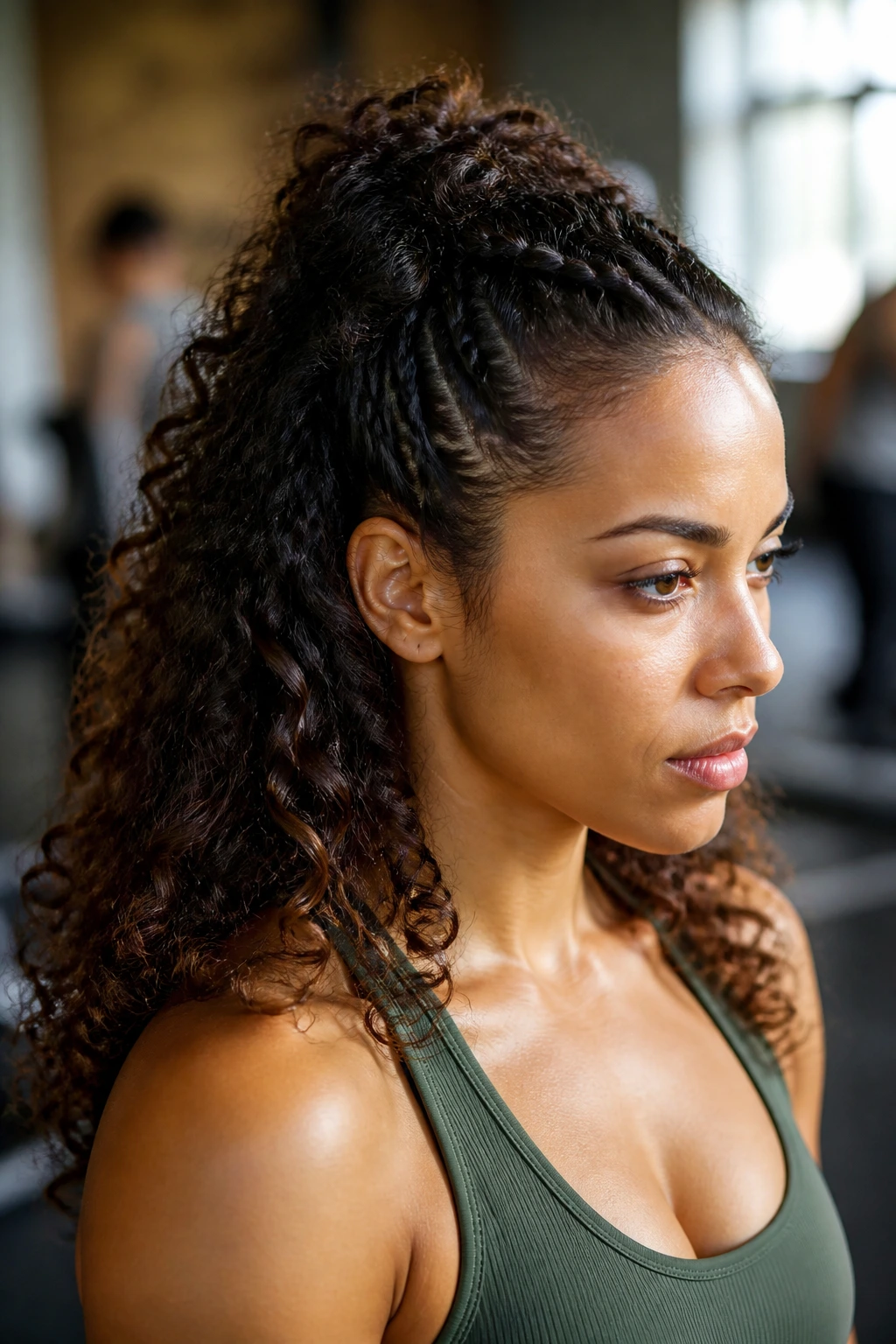
For those who prefer not to have all their hair pulled away from their face, the half-up braid is a great compromise. Braid the top section of your hair—the hair that usually gets in your eyes—and pin the end securely at the crown. The rest of your curls can flow free. This is great for low-intensity activities like yoga or pilates where you don’t need total containment, but you want to avoid the “hair in the mouth” scenario.
Styling Tips for the Half-Up
- Use a small, decorative hair tie to finish the braid to add a bit of personality.
- Make sure the braid starts at the hairline to catch the shorter, finer hairs that are most prone to frizz.
- If you find the braid sagging, spray it with a light-hold hairspray to keep it crisp.
16. Fishtail Braid into a Low Bun
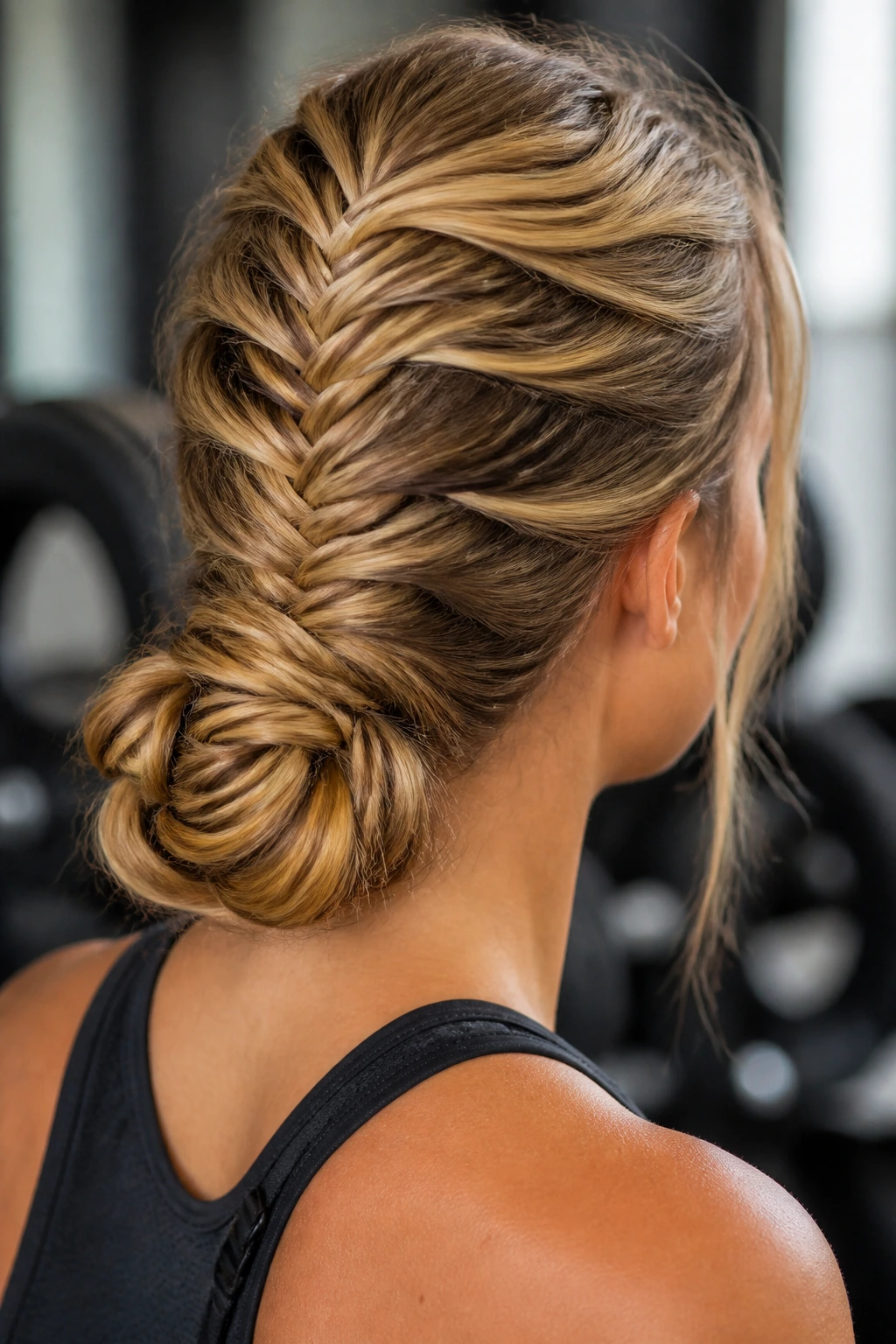
This is an elegant yet functional look. Create one large, loose fishtail braid starting at the mid-section of your head and continue it down to the ends. Once finished, coil the braid into a low bun at the nape of your neck. It’s secure, low-profile, and keeps the hair away from your neck, which is helpful if your gym gear has a high collar or a hood.
Why It’s Perfect for Bench Work
Because the bun sits at the very nape of your neck, it won’t interfere with your head position on a weight bench. Many athletes struggle with high buns that force their head forward during bench presses or shoulder presses; a low, flat bun solves this problem entirely.
17. The Zig-Zag Part Dutch Braids
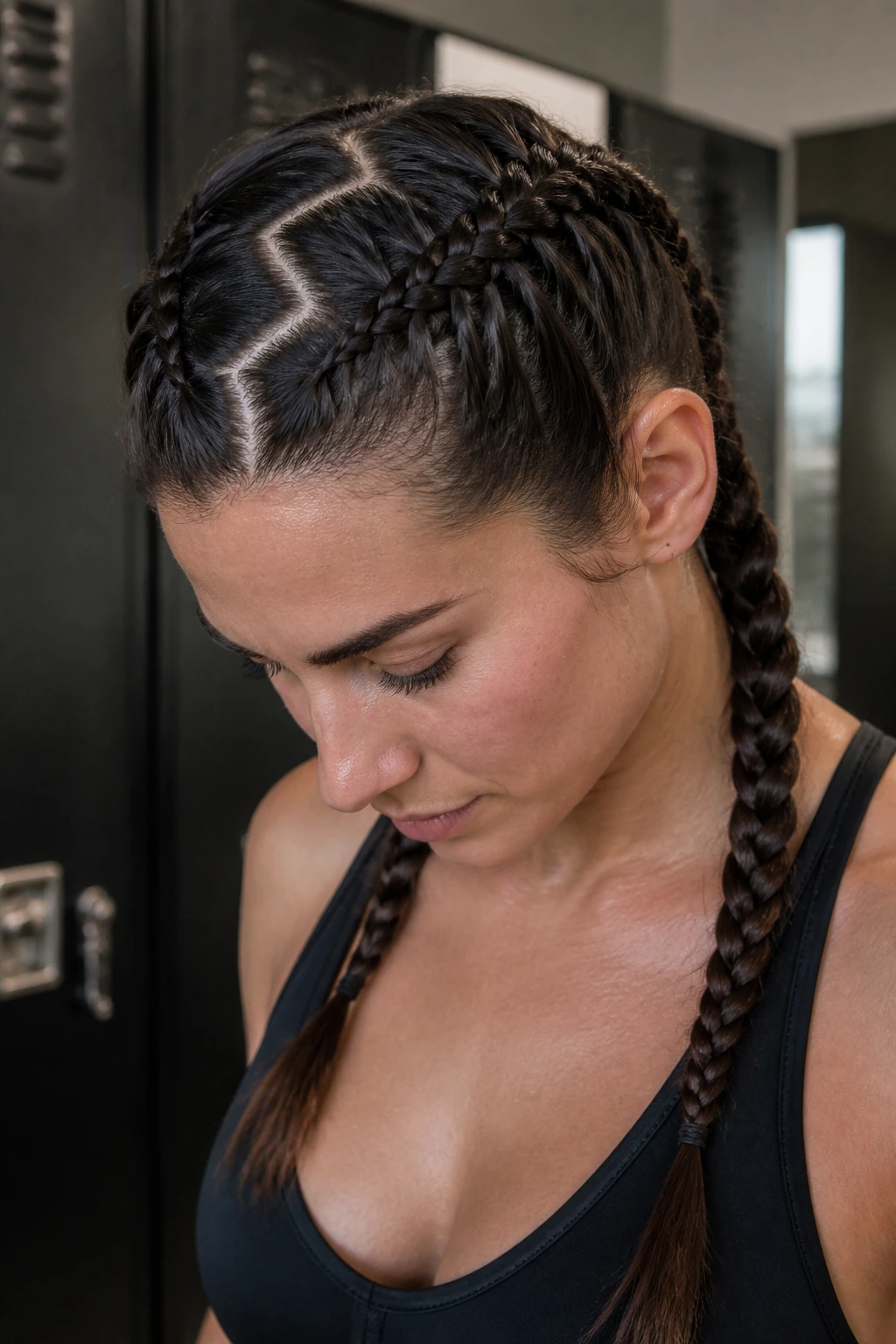
Parting your hair in a zig-zag before starting your Dutch braids adds a unique aesthetic touch, but it also helps with comfort. By varying the tension and the direction of the hair at the scalp, you can sometimes alleviate the feeling of a “tight” or “pulled” scalp. It’s a subtle trick that adds visual interest to a standard gym hairstyle.
Ensuring Symmetry
- Use the handle of a rat-tail comb to create a clean zig-zag pattern.
- If the zig-zag feels too complex, you can achieve a similar effect with a diagonal part, which is easier to execute while looking in a mirror.
- Always check the back of your head with a secondary mirror to ensure the braids are even on both sides.
18. Wrapped Braided Ponytail
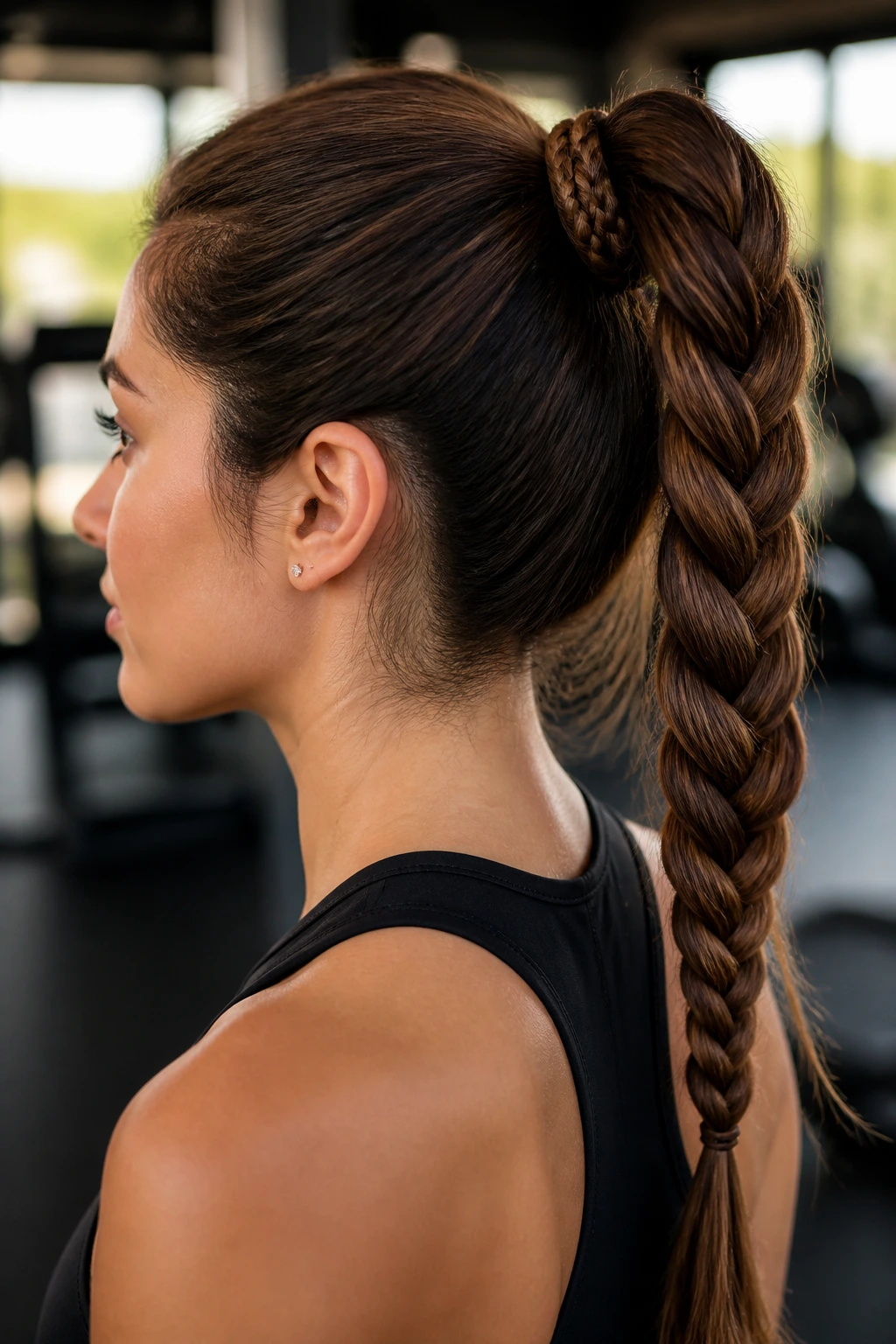
Take your standard ponytail, but instead of leaving it loose, wrap a thin braid around the base to hide the hair tie. Then, create a second, larger braid down the length of the ponytail. It’s a “best of both worlds” look—you get the sporty function of the ponytail and the protective structure of the braid.
Why the Wrap Matters
Beyond looking polished, wrapping hair around the elastic creates an extra layer of durability. The hair actually reinforces the tie, preventing the elastic from over-stretching and losing its grip. It is a functional hack that makes your hairstyle look significantly more intentional and professional while you are crushing your workout.
19. Braided Headband Style
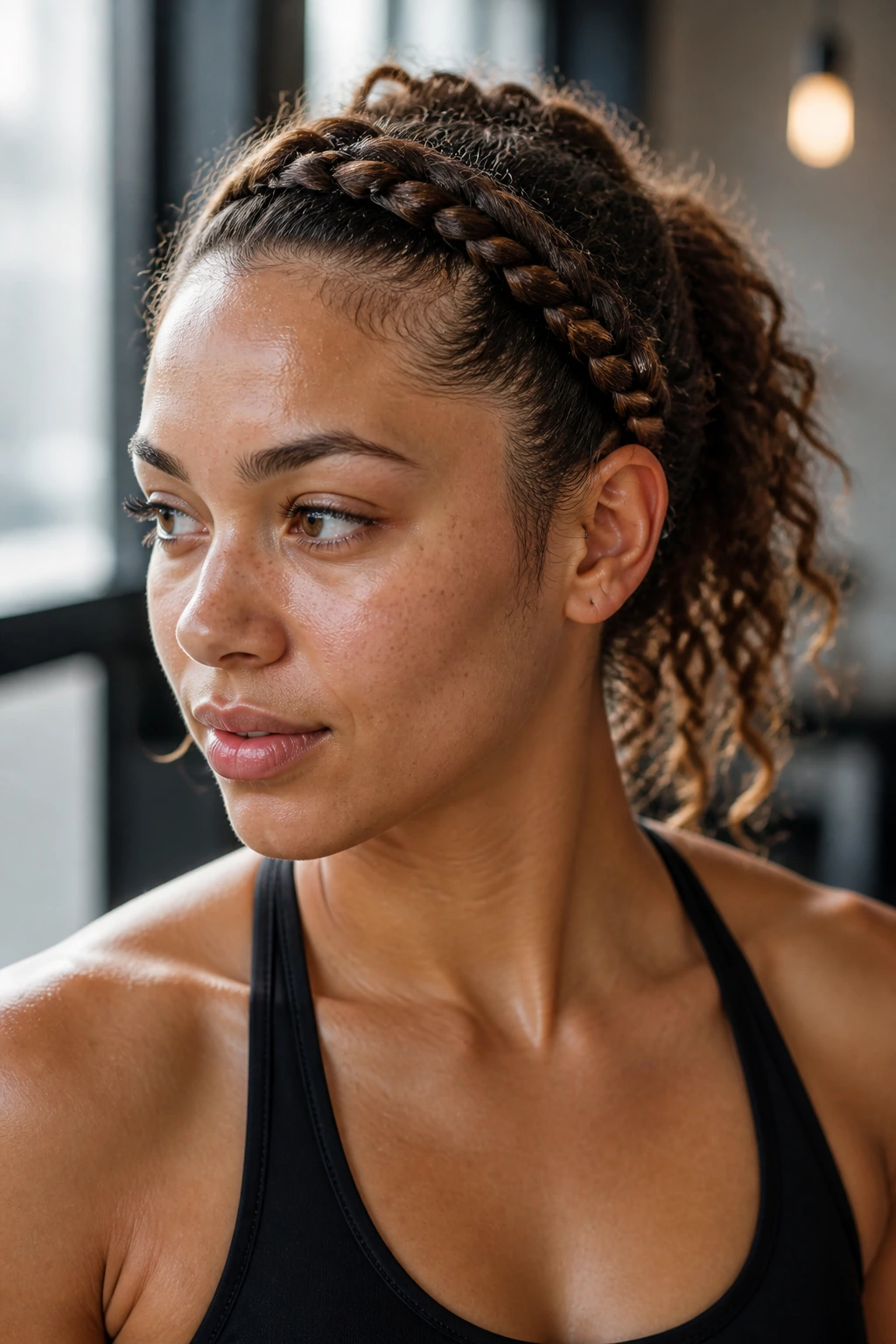
You don’t need a fabric headband to keep your hair back. You can braid a section of hair from your temple and wrap it across your forehead, pinning it behind the opposite ear. This creates a natural “braided headband” that holds your front layers back effectively. It is a fantastic option for those who find fabric headbands uncomfortable or prone to sliding off during movement.
Troubleshooting the Pin Placement
- Always pin underneath the braid to hide the bobby pins.
- Use at least two pins per side to ensure the “headband” doesn’t drift during high-impact movement.
- If you have curly hair, give the braid a slight tug after pinning to create a more relaxed, natural look rather than a tight, rigid one.
20. The “Tucked-In” Braided Pigtails
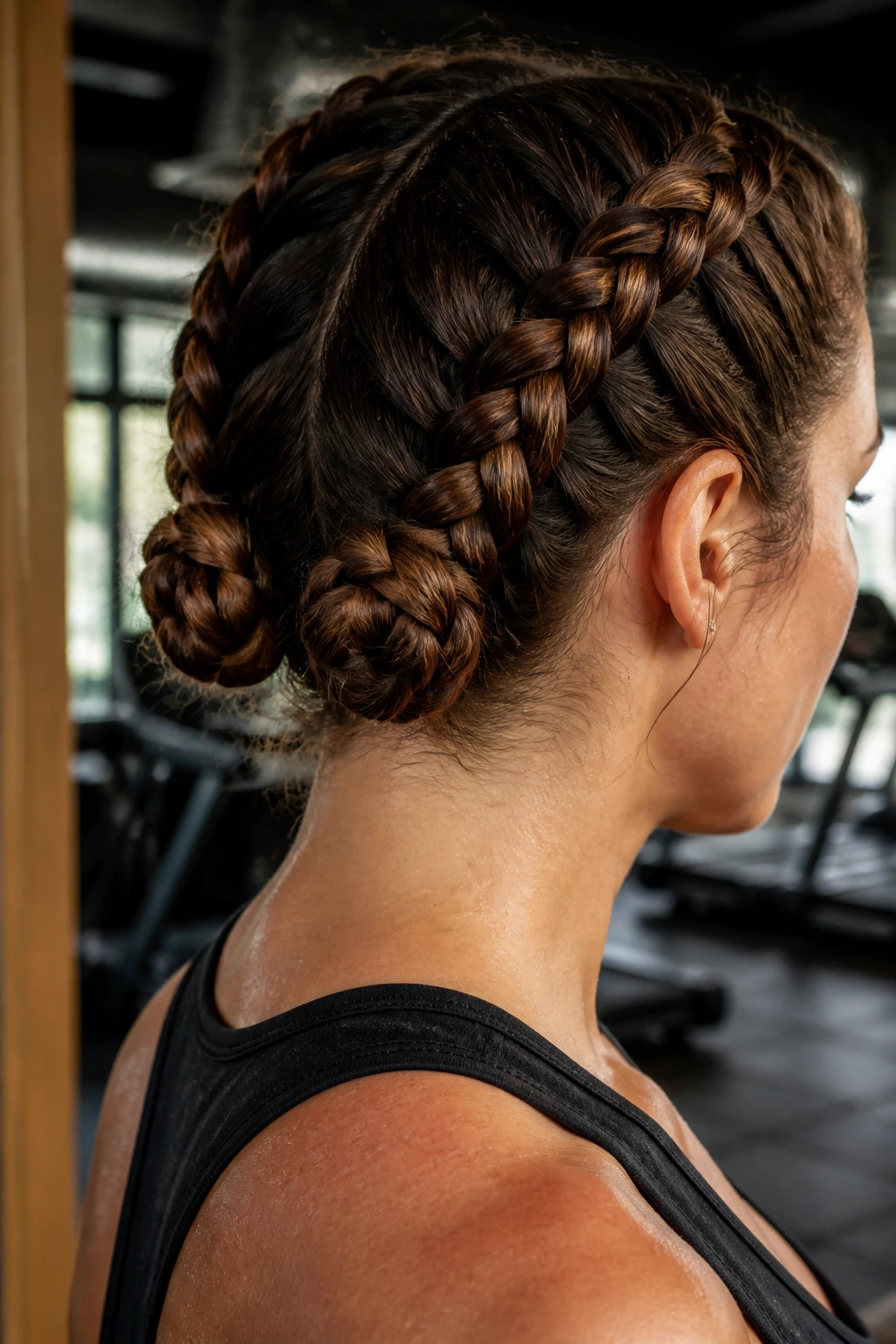
If you want the security of pigtails but want them to stay out of the way, create two braids and then tuck the ends back up toward the base of the braid, securing them with a small pin. This creates a rounded “loop” shape. It is incredibly secure and prevents the braids from swinging around, which is ideal for anyone doing high-intensity cardio where loose ends can get whipped around and cause tangling.
Why It’s the Ultimate Cardio Style
The “loop” eliminates the friction of the braid tips rubbing against your back and gear. This is the single most effective way to prevent tangles in the ends of your curls during long runs or intense circuit training. Once you are done, simply remove the pins, unloop the braids, and you are ready for your post-workout cooldown.
Final Thoughts
Finding the perfect hairstyle for your workout is often a process of trial and error. What works for a high-intensity spin class might not be necessary for a meditative yoga session. The key is to prioritize the tension on your scalp—ensure your hair is secure without causing discomfort or long-term damage to your edges. Curly and coily textures need a little extra love when it comes to moisture and friction, so don’t be afraid to use a touch of leave-in conditioner or a silk-lined accessory to keep your curls protected.
Ultimately, the best workout style is the one that you can set and forget. By spending an extra few minutes on a solid, well-structured braid, you reclaim the mental energy that would otherwise be spent adjusting your hair between sets. Experiment with these styles during your next training session and observe how different tension levels affect your focus. When your hair is off your mind, you are free to pour all your energy into the performance itself, making every movement more efficient and every drop of sweat feel like a step closer to your goals.