

The world of braiding is more than just a means of managing texture; it is a profound intersection of heritage, artistry, and modern self-expression. For centuries, the patterns woven into the scalp have served as maps, symbols of social status, and a testament to the resilience of Black hair. Today, that legacy continues in styles that move from the workplace to the red carpet with effortless grace. Whether you are seeking a protective style that allows your hair to breathe or a high-fashion look that commands attention, the versatility of braiding allows for infinite customization.
Texture is your best friend when selecting a style, but it is just as important to consider the tension, maintenance, and the specific architecture of your face shape. I have sat through enough six-hour sessions in the chair to know that the secret to a great braid isn’t just the final look—it’s the health of your hairline and the quality of the parting. We aren’t just talking about basic plaits here. We are looking at intricate, sculptural, and occasionally gravity-defying designs that celebrate the beauty of African hair in all its coils and glory.
1. Classic Fulani Braids
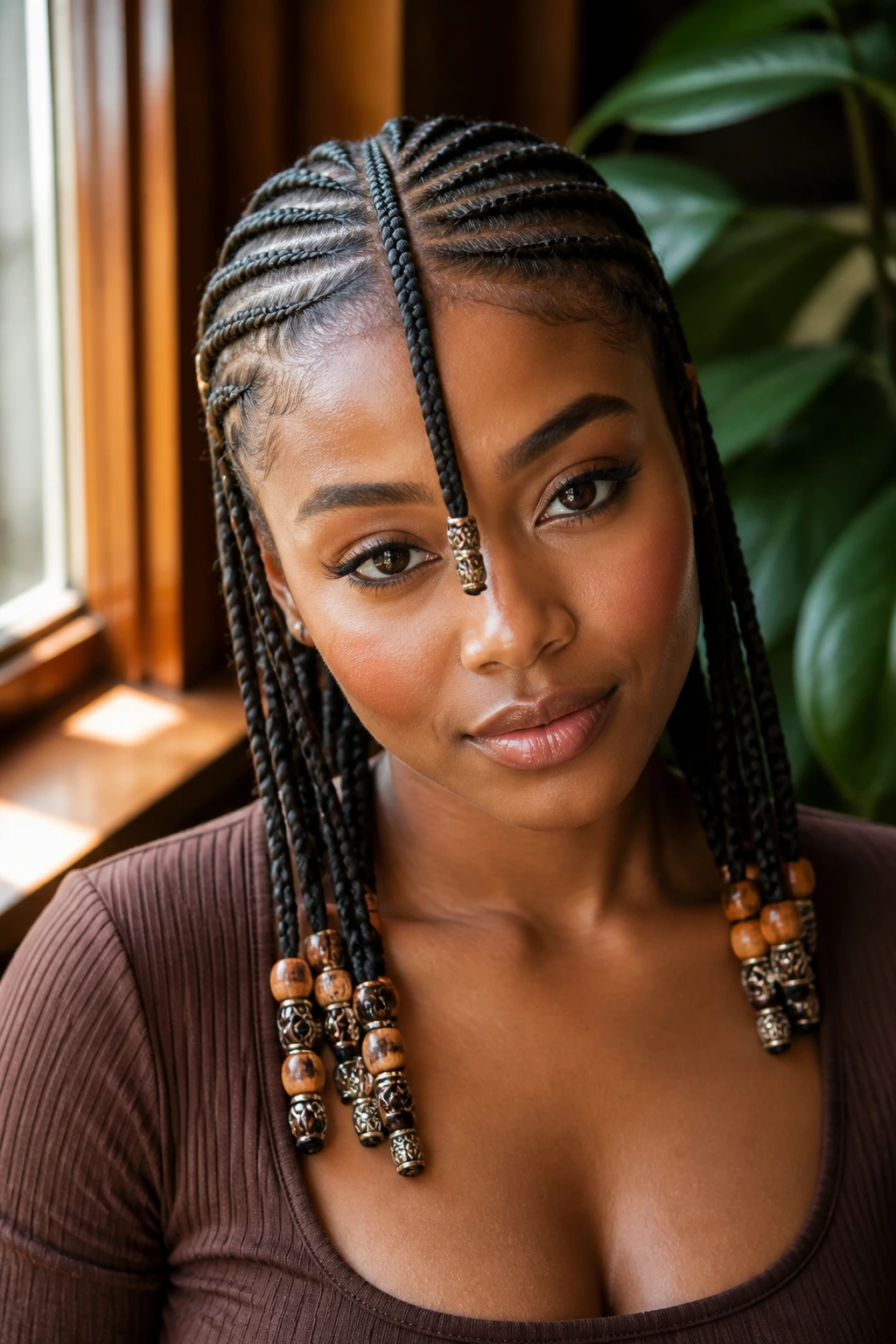
Fulani braids are defined by their signature pattern—typically featuring a central braid running down the middle of the scalp, flanked by braids that feed toward the hairline, often adorned with beads or gold cuffs. This style pulls from the traditions of the Fula people of West Africa, and it remains one of the most requested looks because it balances cultural significance with a modern, sleek aesthetic.
Achieving the Signature Look
The key to getting these right is the precision of the parts. You want a clean, straight line down the middle of the head. When you are adding extensions, ensure the base is braided tightly enough to hold the weight, but not so tight that it stresses your edges.
Maintenance Tips for Beaded Ends
- Use wooden or glass beads to avoid weighing down the ends of the braids too much.
- Secure the beads with a small rubber band that matches your hair color, or tie a thin piece of hair around the base of the bead to hide the band.
- If you find the beads are noisy or heavy, swap them for gold, copper, or silver cuffs which offer a similar decorative effect with much less weight.
Pro tip: Apply a light oil to your scalp every three days to keep the hair hydrated without causing buildup under the braids.
2. Goddess Box Braids
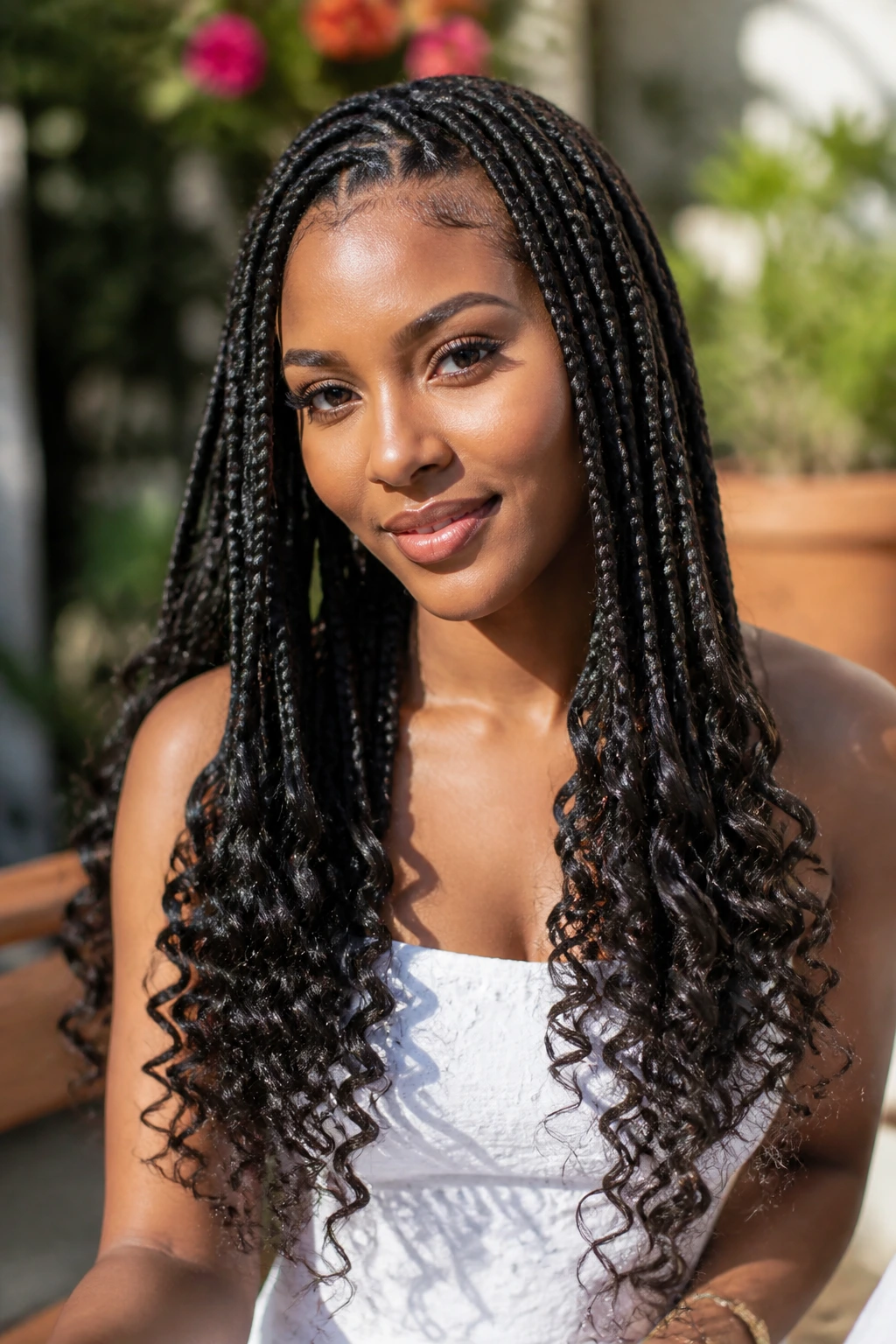
Goddess box braids take the traditional four-sided partition of a box braid and add a touch of whimsy by leaving the ends curly, loose, or wavy. The contrast between the rigid, structured braid at the top and the flowing, bohemian texture at the bottom gives the hair a soft, romantic quality that is hard to beat.
Selecting the Right Hair Texture
To get that perfect “goddess” look, you need to use a specific type of bulk synthetic hair for the ends. Look for pre-curled braiding hair that is specifically designed to resist tangling. Human hair is also an excellent option if you want to be able to apply heat to the ends for restyling.
Styling for Longevity
- Use a mousse with a firm hold to define the curls at the ends once the braids are finished.
- At night, wrap the ends in a silk or satin bonnet to prevent the loose hair from matting.
- If the ends begin to lose their definition after a few weeks, dampen them slightly with water and re-apply a lightweight styling foam.
3. Stitch Braids
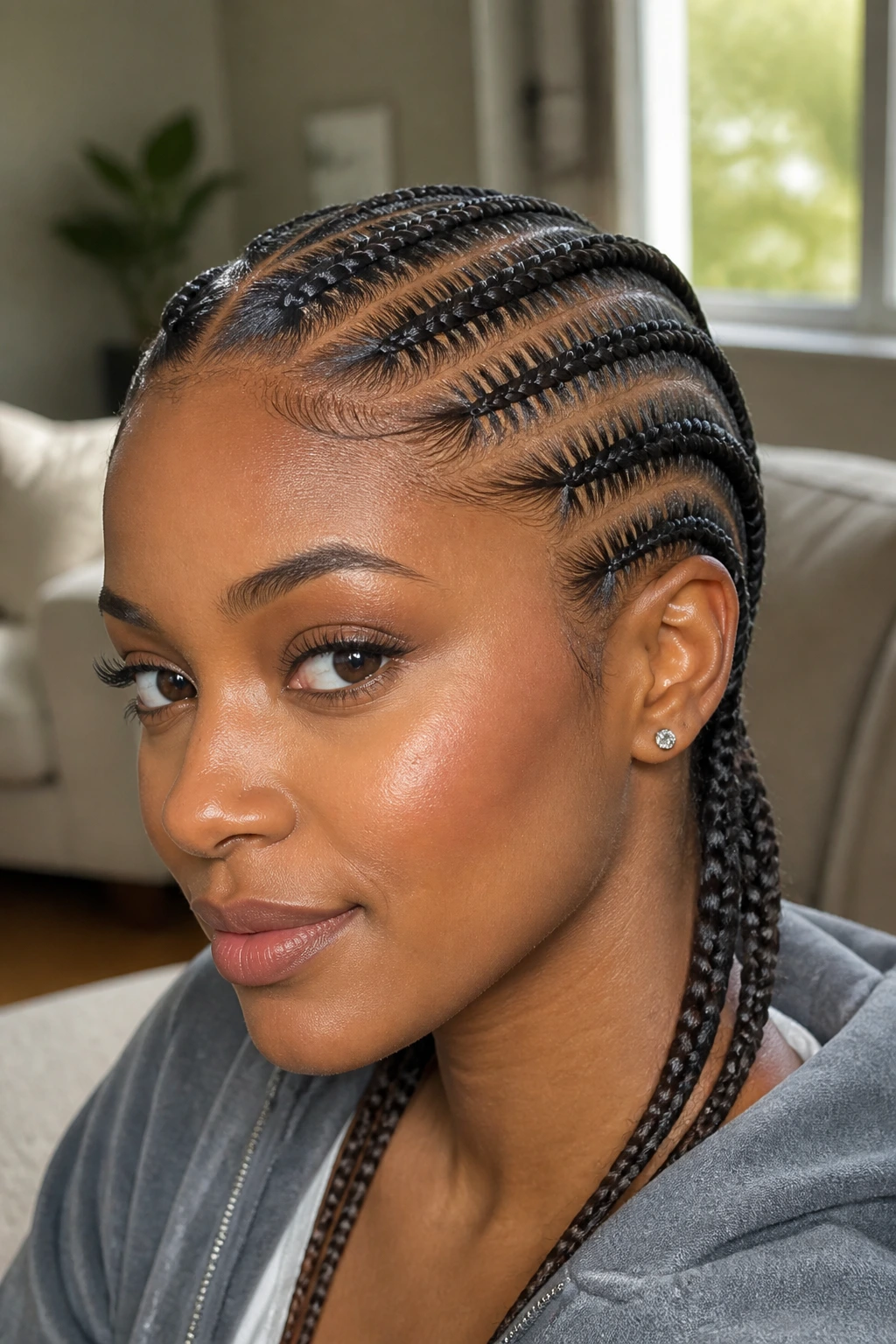
Stitch braids are the ultimate choice for those who love clean, graphic lines. This technique involves using the tip of the pinky finger or a rattail comb to create horizontal “stitches” across the sections, resulting in a distinct, ribbed appearance. They are often styled as feed-in cornrows that taper into longer, thicker braids at the nape of the neck.
Why They Feel So Modern
Unlike traditional cornrows that look uniform, stitch braids create a rhythmic, textured pattern that catches the light differently from every angle. It turns the scalp into a canvas, with the lines serving as the primary design element rather than just a way to secure the hair.
The Importance of Tension
Because the “stitches” require precise parting, the hair is often pulled quite taut. Do not ignore your scalp health here. If you feel excessive pulling, ask your stylist to loosen the tension around the perimeter. You want the style to last, but you never want it at the cost of your hairline.
4. Tribal Feed-In Braids
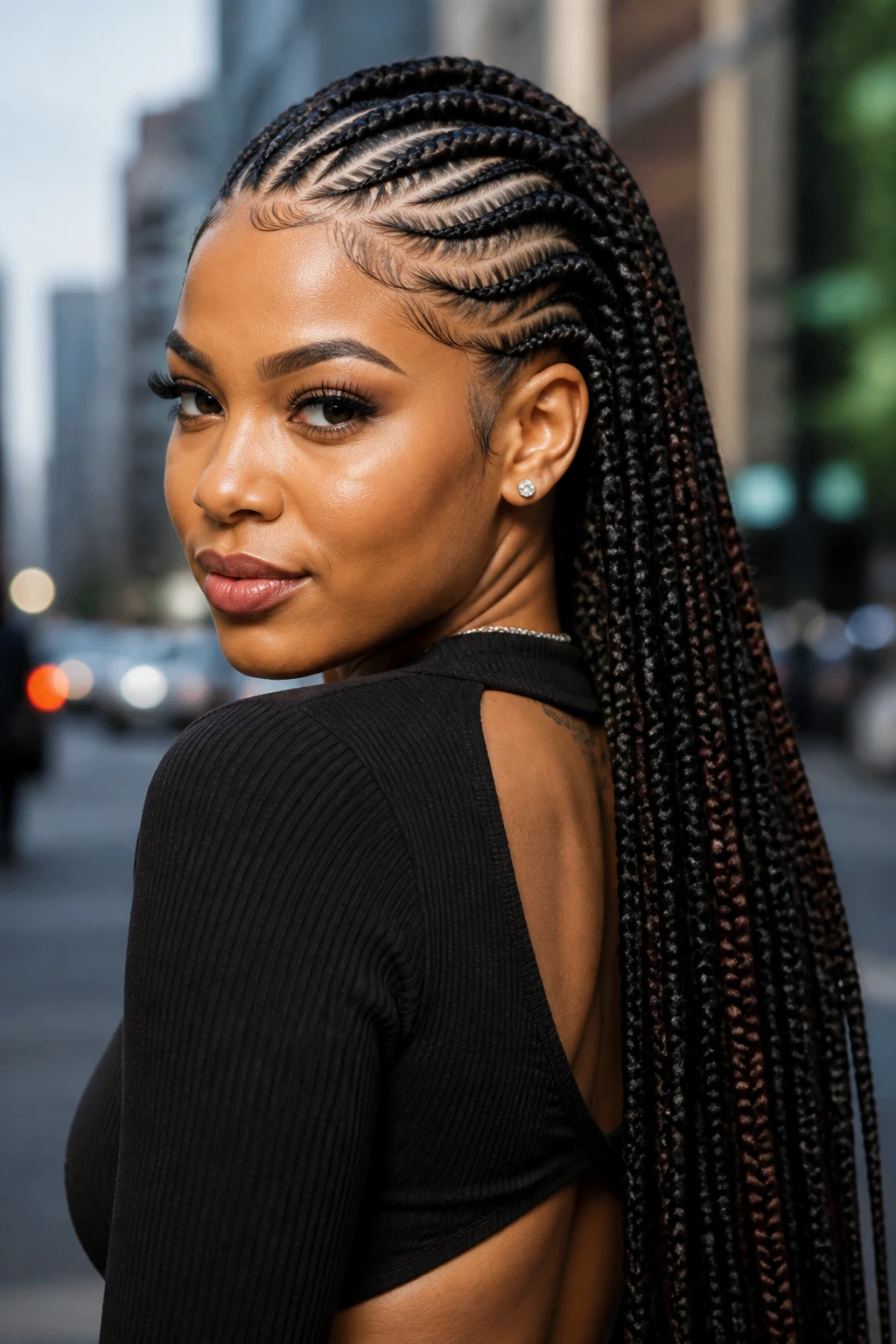
Tribal styles are all about mixing techniques—combining cornrows at the front with box braids or individual plaits in the back. This is an incredibly functional style because it keeps hair out of your face for daily activities while giving you the length and movement of a free-hanging braid in the back.
Customizing Your Parting
The beauty of a tribal mix is the freedom of the part. You can go for a dramatic side part, a zig-zag, or even a crown-style circular part that follows the shape of your head. This flexibility allows you to highlight your favorite facial features.
How to Blend the Two Styles
- Ensure the transition from the cornrows to the box braids is seamless by hiding the ends of the cornrows inside the first box braid.
- Keep the size of the cornrows consistent so the overall silhouette remains balanced.
- Use a high-quality edge control to keep the base of the cornrows looking fresh for as long as possible.
5. Jumbo Knotless Braids
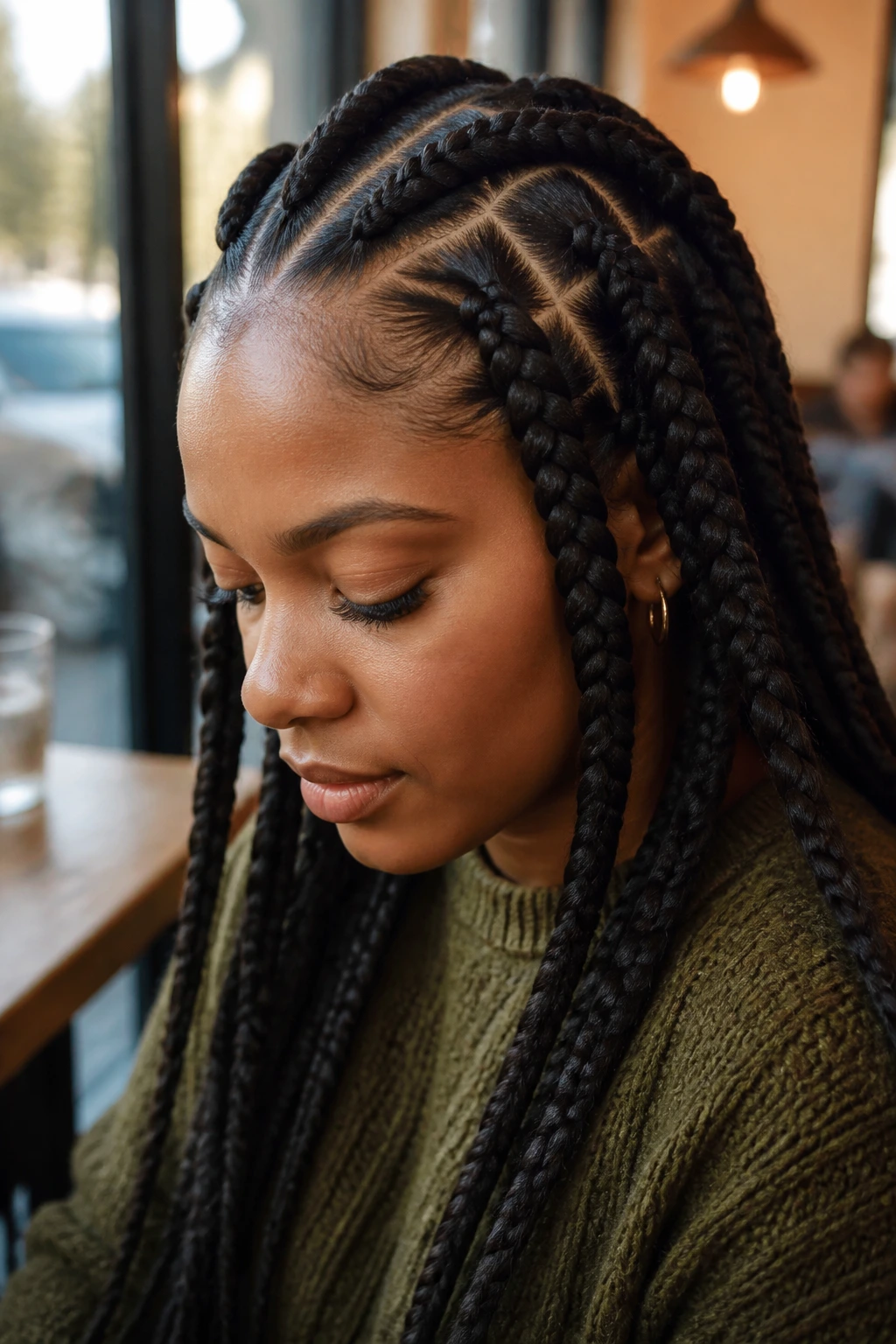
Knotless braids have become the standard for comfort because they start with your natural hair and feed in the extensions as you go, eliminating that heavy, painful “knot” at the root. When you go jumbo, you reduce the time in the chair significantly, and you get a bold, statement-making look that feels surprisingly light.
The Benefit of Size
Jumbo braids are perfect for those who want a “look” that feels like a full head of hair but doesn’t require the eight hours of labor associated with small braids. They also allow for much easier access to your scalp for moisturizing and oiling.
Managing the Weight
Even though they are knotless, jumbo braids contain a lot of synthetic hair. Always soak your synthetic braiding hair in a mixture of apple cider vinegar and warm water before installing it to remove the alkaline coating. This prevents the scalp irritation that is a common complaint with new extensions.
6. Lemonade Braids
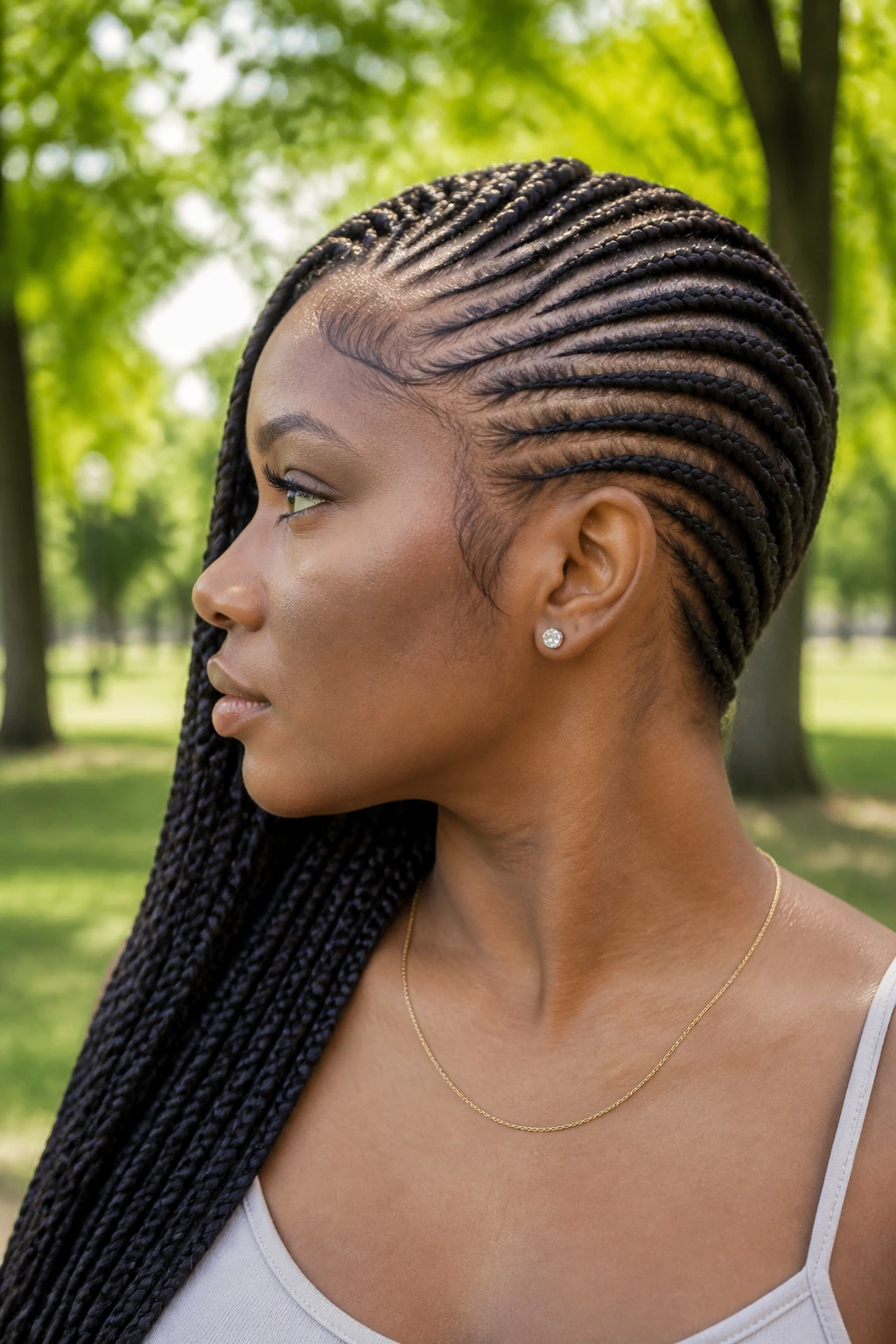
Popularized by high-fashion aesthetics, lemonade braids are essentially side-swept cornrows that look incredibly sleek and dramatic. They are named after a specific visual style, characterized by braids that all fall toward one side of the head, often starting from a deep side part.
Styling for the Best Impact
The key here is length. These braids look best when they reach past the shoulders, creating a beautiful frame for the face. You can adorn them with gold rings or beads, but often the beauty of this style lies in the simplicity of the lines.
Creating the Side-Swept Effect
- Begin by parting the hair from ear to ear at an angle.
- Feed in the extensions slowly to ensure the braids remain small and uniform near the roots.
- Gradually increase the amount of hair added to each braid to keep them smooth as they transition toward the ends.
7. Bohemian Locs
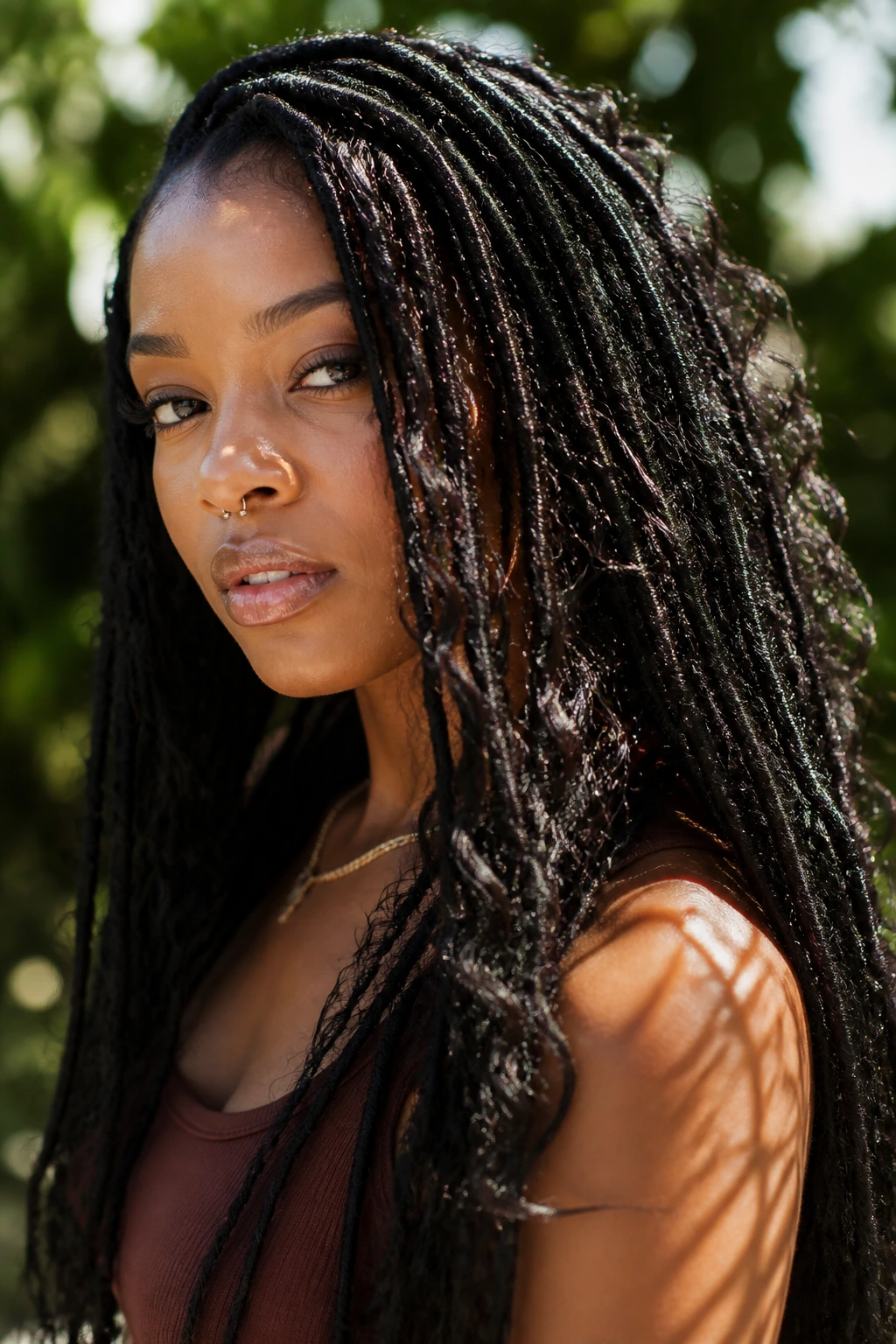
Bohemian locs (or “boho locs”) are a hybrid between faux locs and goddess braids. They offer a distressed, lived-in look that feels earthy and natural. They are perfect for anyone who wants the protective benefits of a loc but loves the messy, effortless vibe of loose curls.
Achieving the Distressed Look
You don’t want these to look too perfect. The charm is in the “imperfections”—the loose strands of hair that peek out from the loc, the variations in texture, and the slightly uneven thickness.
Care and Maintenance
- These are low-maintenance but high-volume styles.
- Use a light spritz of water and leave-in conditioner to keep the loose ends from getting frizzy.
- When you wash your hair, focus solely on the scalp and avoid rubbing the locs themselves to prevent unraveling.
8. High-Top Braided Bun
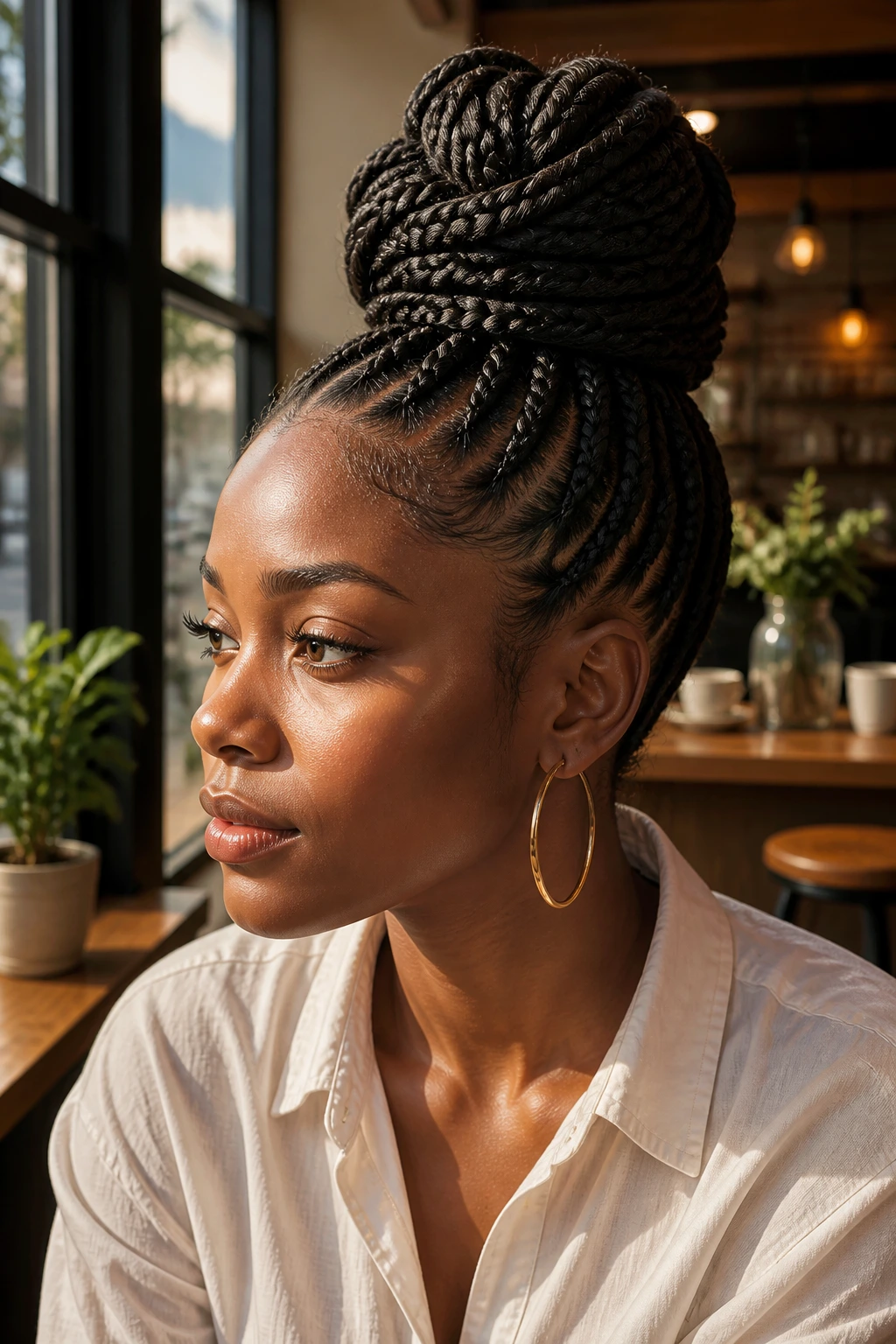
If you want a look that is both sophisticated and practical, the high-top braided bun is a staple. It takes your braids—whether cornrows or individuals—and secures them into a massive, architectural knot at the crown. It is the ultimate “boss move” hairstyle.
How to Construct the Bun
You can use a hair donut as a base if you want a perfect circle, or you can simply wrap the braids around each other for a more organic feel. The key is to tuck all the ends neatly so the bun looks like a singular, unified piece of art.
Versatility for Different Occasions
- Wear it tight and sleek for professional meetings.
- Pull a few braids down around your face to soften the look for an evening out.
- Add decorative gold string to the base of the bun to elevate it for a formal event.
9. Micro-Braids with Curls
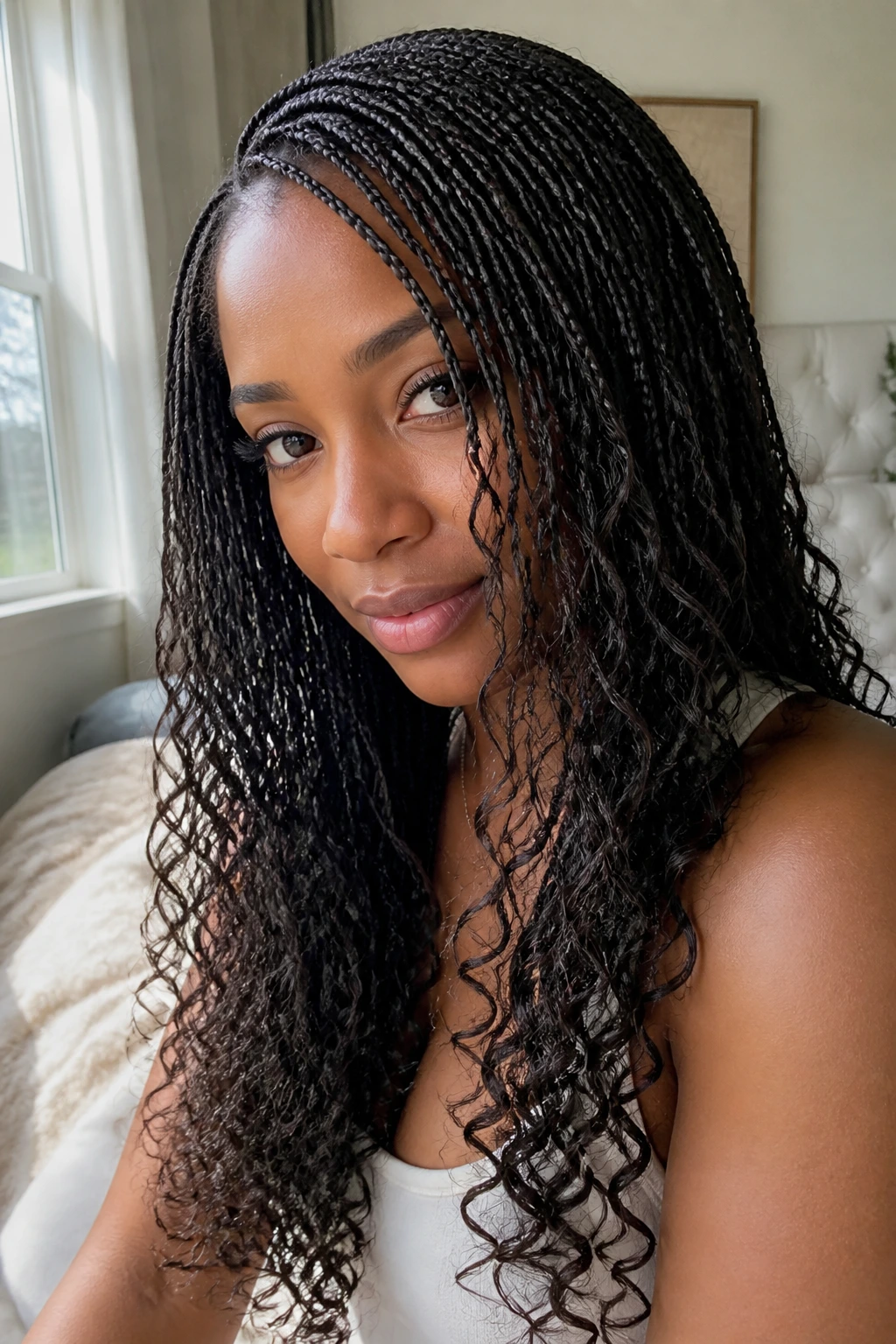
Micro-braids might be a blast from the past, but they have seen a major resurgence. They are incredibly small, intricate braids that offer the versatility of loose hair. You can style them in a ponytail, wear them down, or even use them to create elaborate updos.
Why They Are Worth the Time
Yes, they take a long time to install. But the payoff is a style that looks and moves exactly like natural, blown-out hair. Because the braids are so small, you can manipulate them into almost any shape you desire.
Scalp Health Warning
Do not over-tighten. Because there are so many small braids, the temptation is to pull them tight to make the scalp look “clean.” Resist this. Your scalp needs to breathe, and constant tension on a hundred tiny braids can lead to thinning around the edges.
10. Mohawk Cornrows
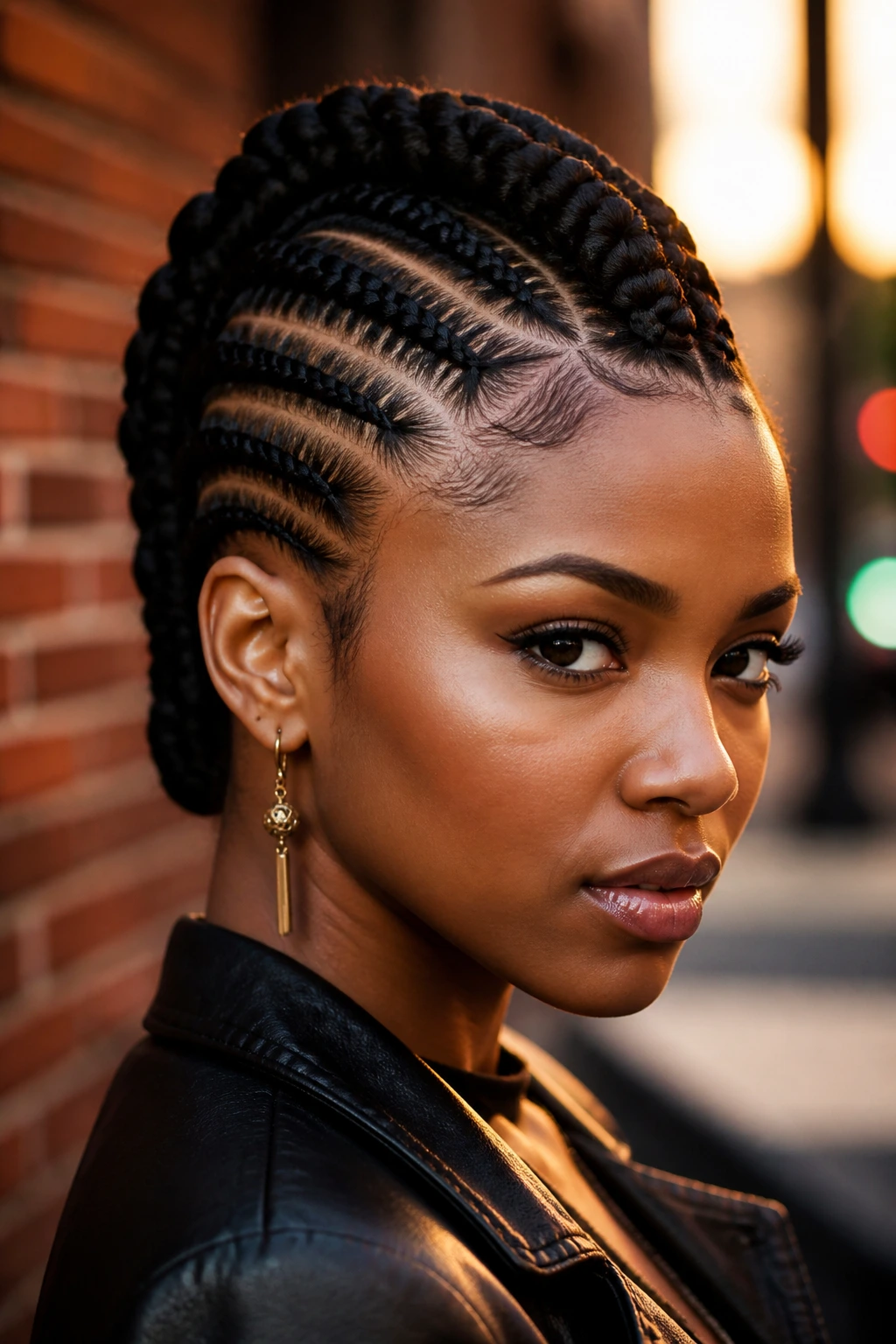
Mohawk cornrows involve braiding the sides of the head upward toward the center, creating a spiked or elevated strip of hair that runs from the forehead to the nape. It’s an edgy, fearless look that works beautifully with all hair textures.
Customizing the Sides
You don’t have to shave the sides to get this look. Simply braid the sides into small, flat cornrows that disappear under the “hawk” of the center. This gives you the aesthetic of a mohawk without the permanence of a haircut.
Styling the “Hawk”
- You can braid the center section into thick, ropey plaits.
- Alternatively, leave the center section in loose, voluminous twists to add height and drama.
- Use jewelry or cuffs along the center part to draw even more attention to the design.
11. Criss-Cross Braids
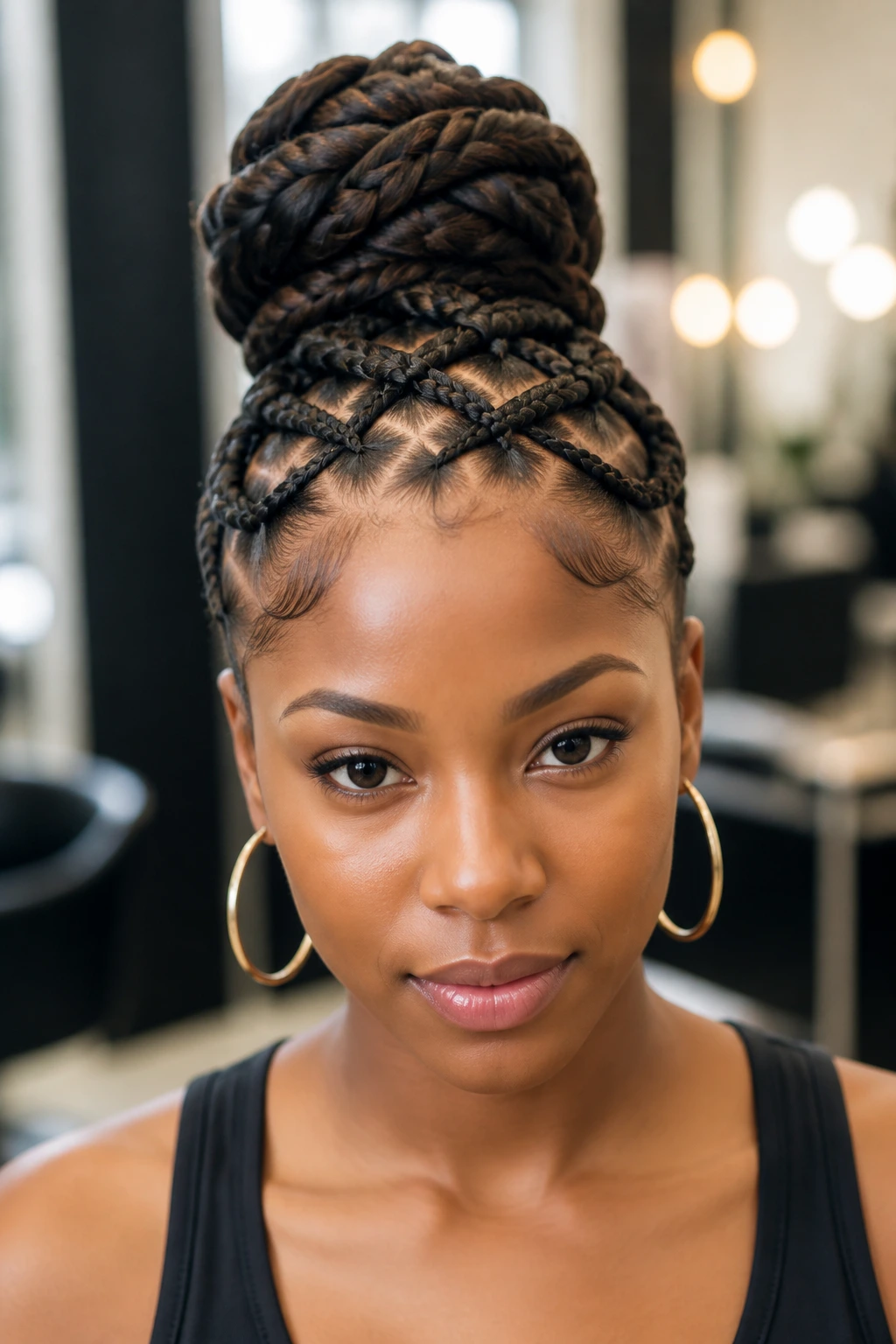
Criss-cross braids rely on complex parting to create a lattice effect. These are visually stunning and often require a very skilled hand to ensure the intersections are perfectly symmetrical. They look amazing when combined with a high ponytail or a series of buns.
Where to Use This Technique
This is often used on the crown area of the head to create a “headband” effect or across the nape to add interest to a high-updo style. It transforms a basic ponytail into a high-fashion architectural piece.
Getting the Geometry Right
- Use a rattail comb for surgical-level parting.
- Work in small sections to keep the tension even.
- Don’t try to do this yourself; it’s a style that benefits significantly from a second pair of hands.
12. Two-Layer Feed-Ins
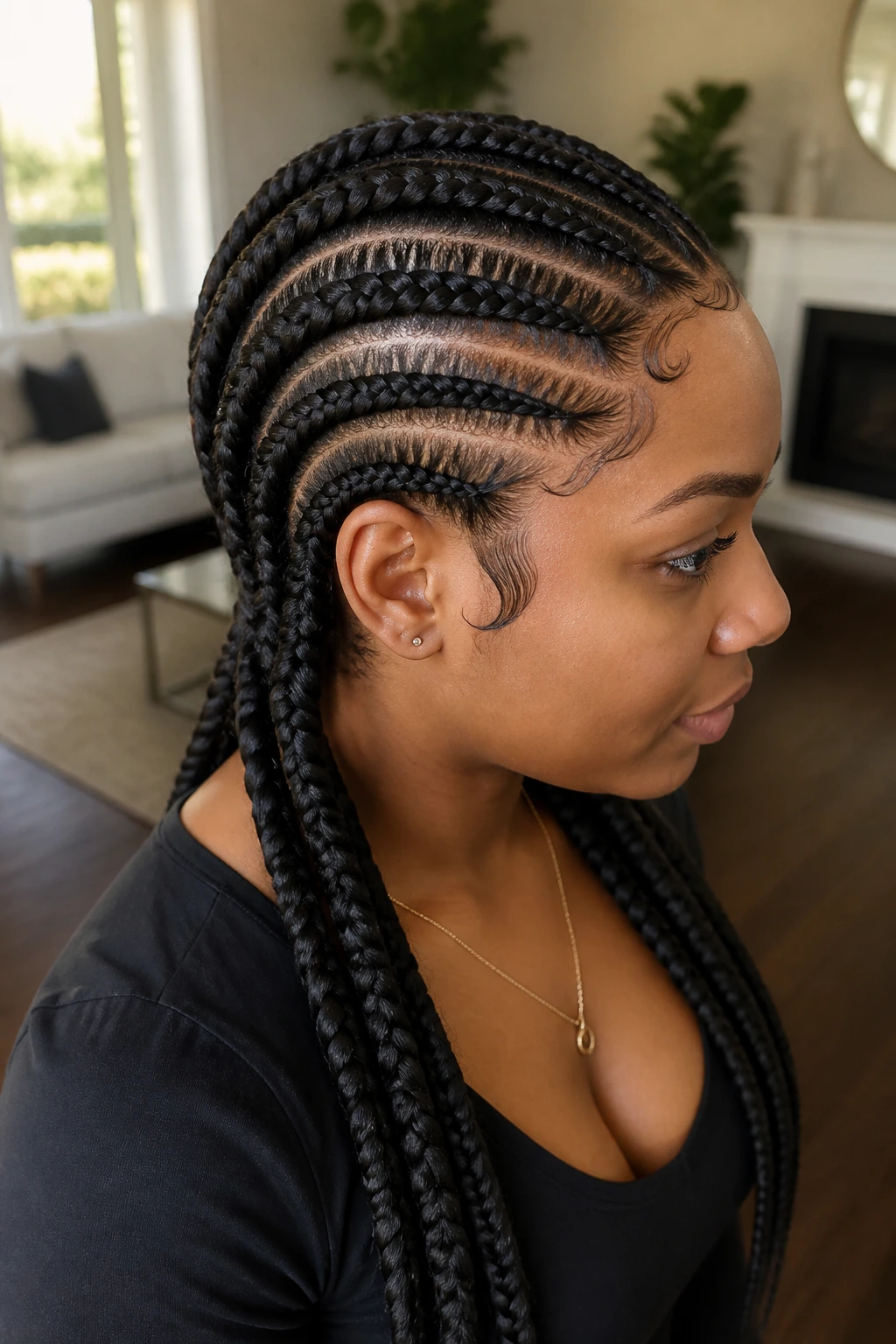
Two-layer feed-ins are exactly what they sound like—cornrows installed in two distinct layers. This creates a thick, layered look that is perfect for anyone with thinner hair who wants to achieve a fuller, more voluminous appearance.
Why This Style Lasts
Because the braids are layered, they provide excellent coverage for the scalp. You won’t see large patches of skin between the braids, which is a common concern with traditional cornrow designs.
Styling the Layers
- You can braid the bottom layer into a ponytail and the top layer into a specific design.
- The layers create a “full” effect that makes the braids look like they are defying gravity.
- It’s an ideal protective style for those who want to keep their ends tucked away for several weeks.
13. Braided Ponytail with Curls
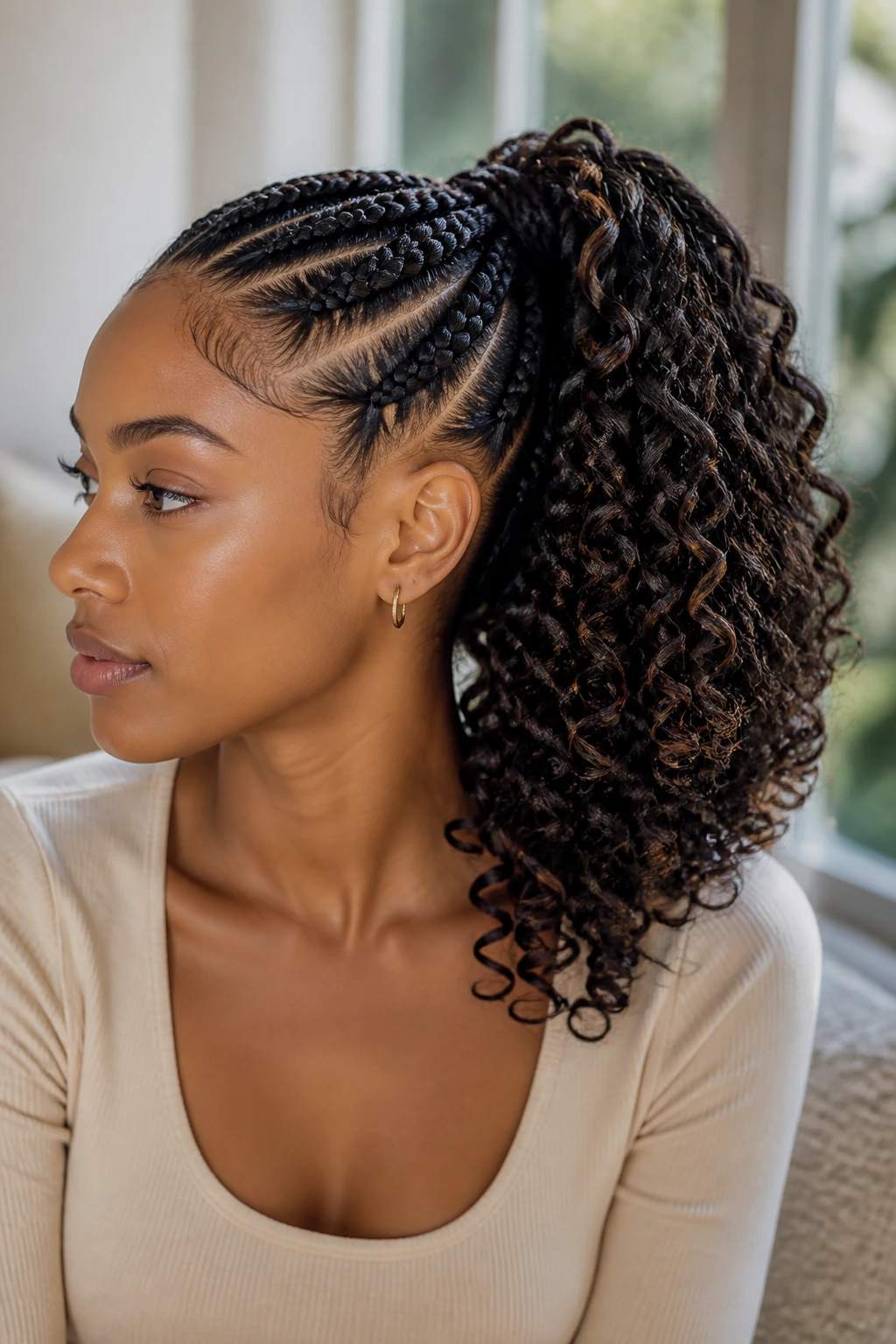
This is the “classic” look for a reason. You braid the scalp and transition into a full, voluminous ponytail of curls or straight hair. It’s elegant, fun, and works for everything from the gym to a wedding.
Choosing Your Hair Type
For the ponytail portion, use deep wave or water wave synthetic hair to get that beautiful, bouncy finish. If you want a more natural look, use human hair extensions that have been steam-textured to match a blowout.
Maintaining the Ponytail
- Use a silk scrunchie to secure the ponytail to prevent breakage where the hair meets the wrap.
- Refresh the curls with a spray bottle of water and a little bit of lightweight mousse.
- Avoid using heavy oils on the ponytail, as they will cause the synthetic hair to lose its bounce.
14. Senegalese Twists
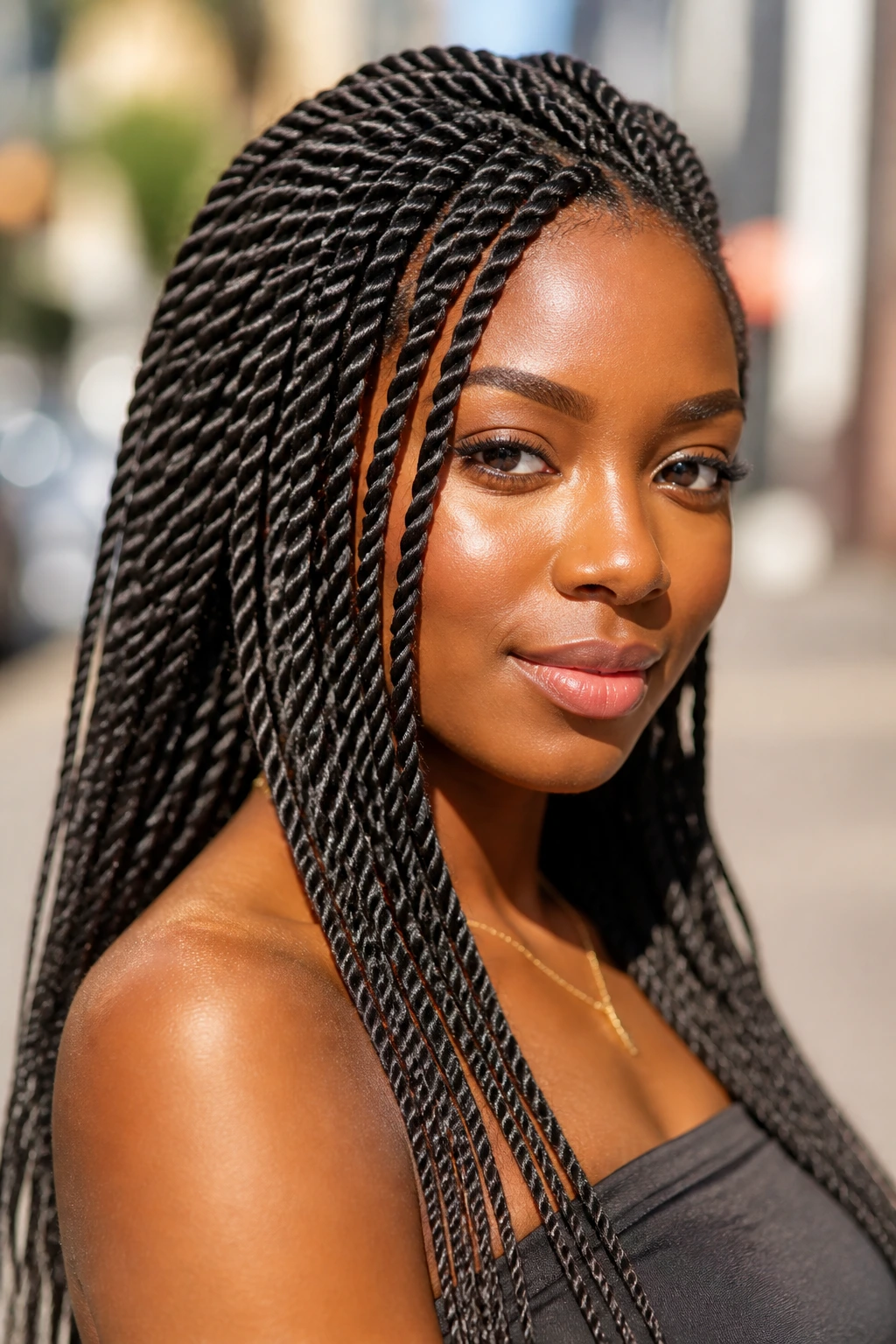
Senegalese twists are technically a twist, not a braid, but they belong in this conversation because they offer a similar protective benefit. They are created by twisting two strands of hair around each other, resulting in a smooth, rope-like appearance.
Why They Feel So Sleek
The lack of a “braid” pattern makes them feel much lighter on the head. They are incredibly smooth, meaning they won’t snag on your clothes or catch in the wind as easily as some other styles.
The Perfect Twist
- Use a braiding gel to keep the hair smooth from root to tip.
- Ensure you are twisting in the direction of the hair’s natural growth to prevent frizz.
- Seal the ends by dipping them in boiling water for exactly 5–10 seconds.
15. Halo Braids
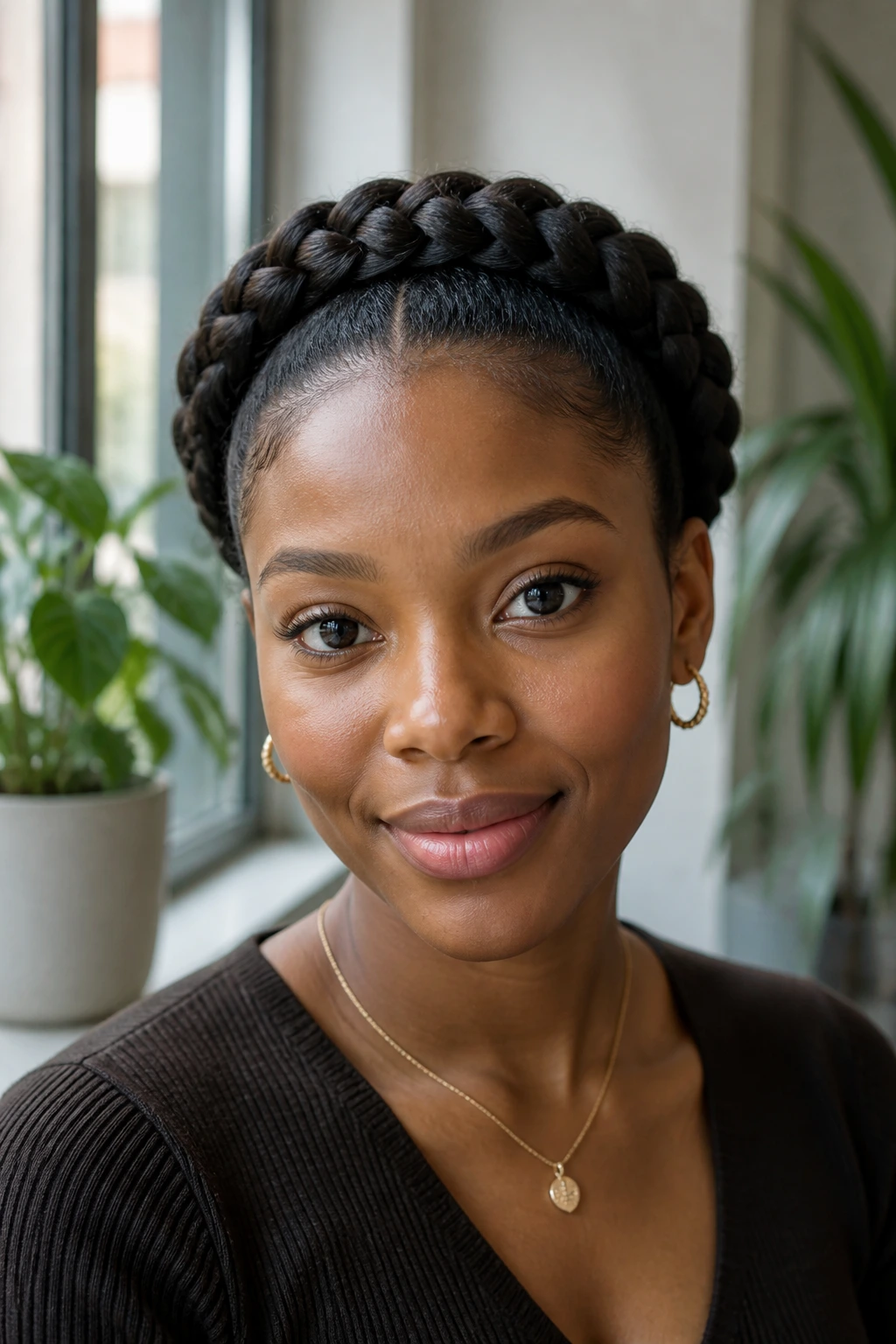
A halo braid is a singular, thick braid that wraps around the entire circumference of the head. It is a timeless style that feels regal and refined. It’s perfect for formal occasions or when you want to look put-together with minimal effort.
How to Style It
If your hair is long enough, you can braid your natural hair into a crown. If not, use extensions to create a thick, full plait that can be pinned into place.
The Finishing Touch
- Use small, decorative hair pins or fresh flowers to adorn the braid.
- Make sure the ends are tucked under the main body of the braid for a seamless look.
- Use a light-hold spray to keep flyaways at bay throughout the day.
16. Chunky Cornrows
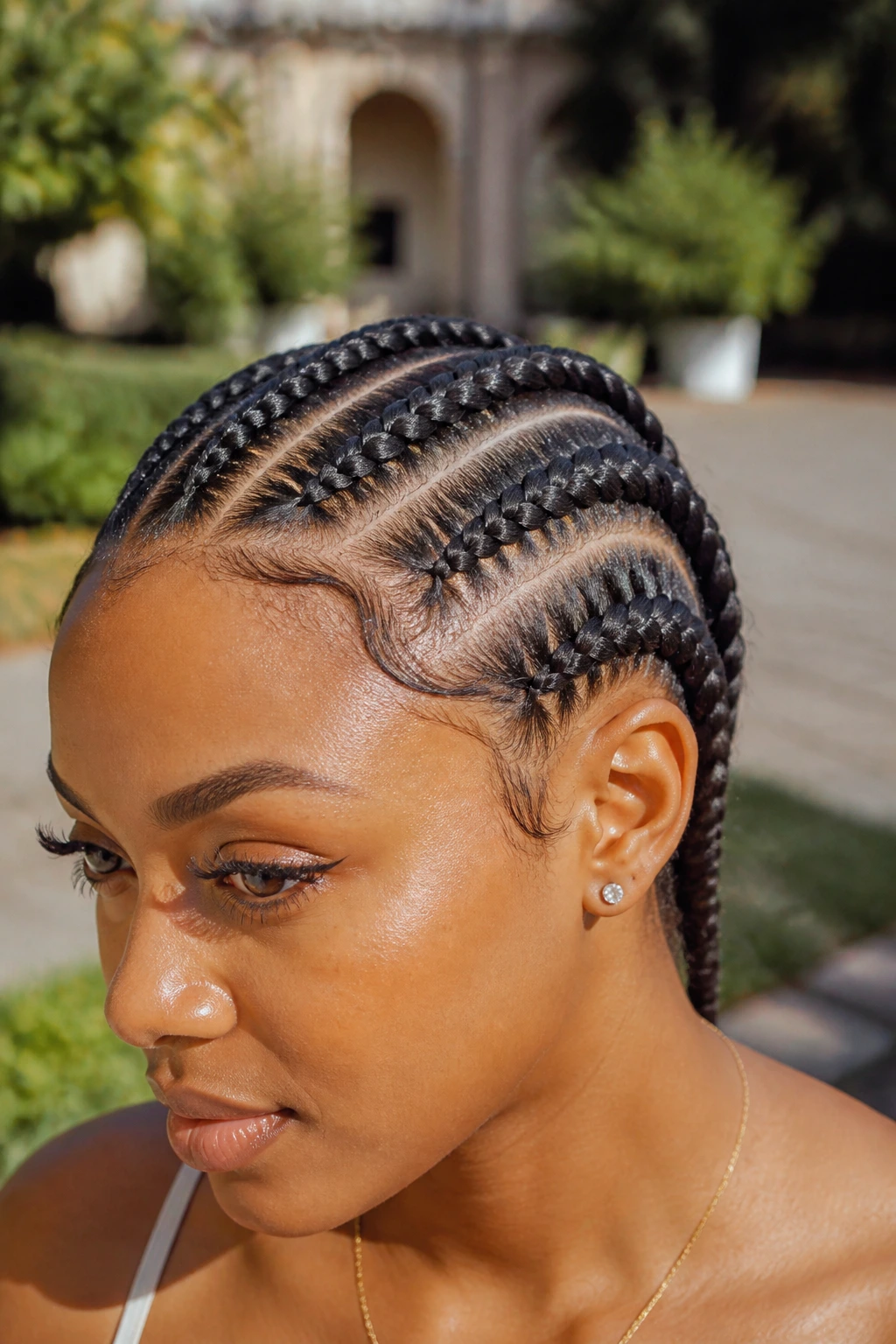
Chunky cornrows are a bold, retro-inspired look that emphasizes width over precision. These are great for a fast, low-tension style that still makes a significant visual impact.
Keeping Them Fresh
Because they are large, these braids don’t last as long as micro-braids. Expect them to look fresh for about two weeks. This makes them the perfect choice for a vacation or a short-term style change.
Accessorizing for Impact
Since the braids are wide, they are the perfect canvas for chunky gold cuffs or even threading with colorful yarn. Lean into the “90s” vibe by choosing vibrant accessories.
17. Braided Space Buns
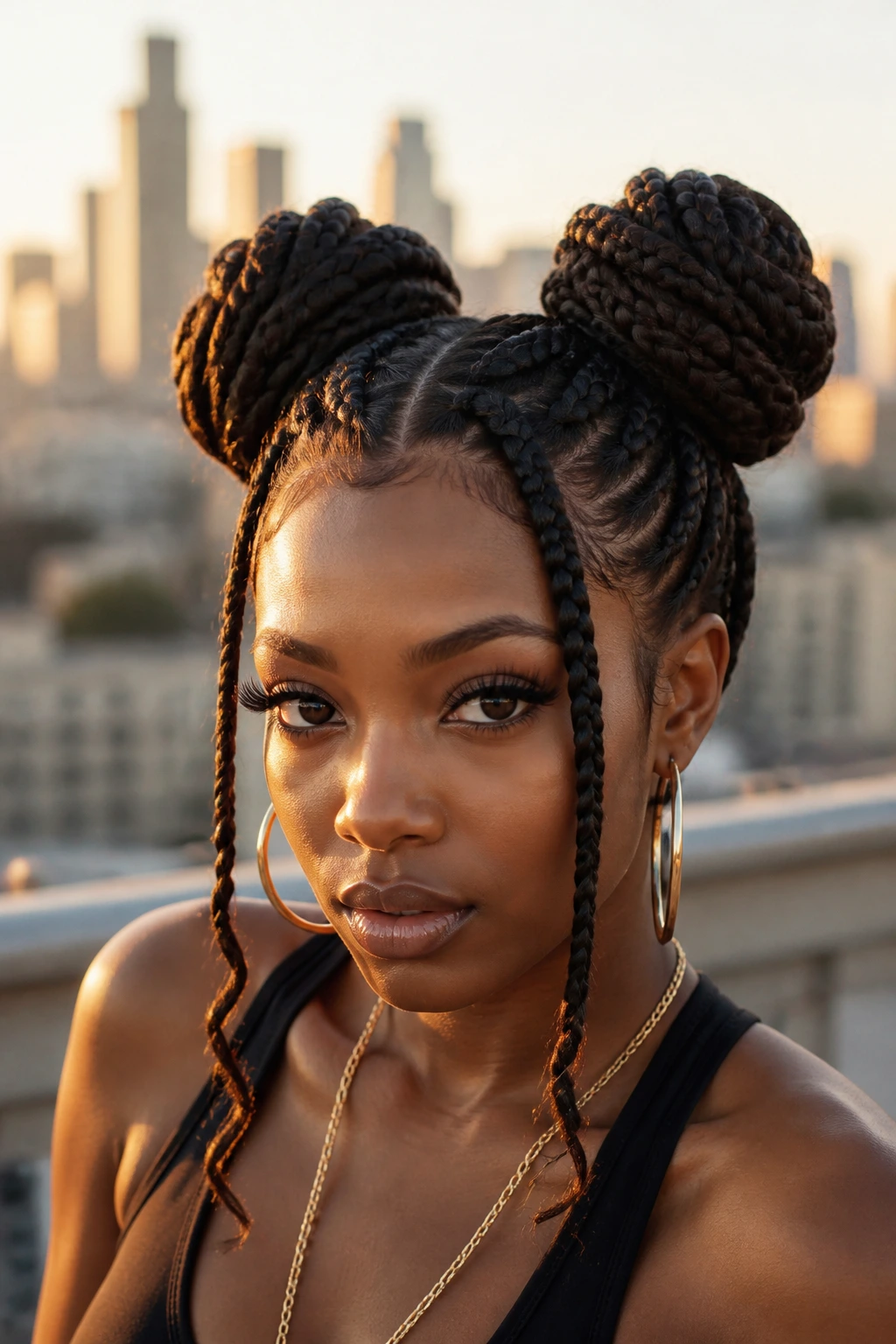
Two high buns at the top of the head—braided or not—have become a staple for Black hair styles. When you braid the hair first, you add texture and detail to the buns that make them look much more deliberate and stylized.
How to Achieve the Volume
You can create the space buns with your natural hair, but adding braiding hair into the cornrows will give you the length needed to make the buns look large and perfectly round.
Balancing the Face
- Part your hair exactly down the center for a symmetrical look.
- Pull a few face-framing braids down to balance the volume on top.
- Make sure the buns are placed high enough to be seen from the front.
18. Side-Parted Fulani
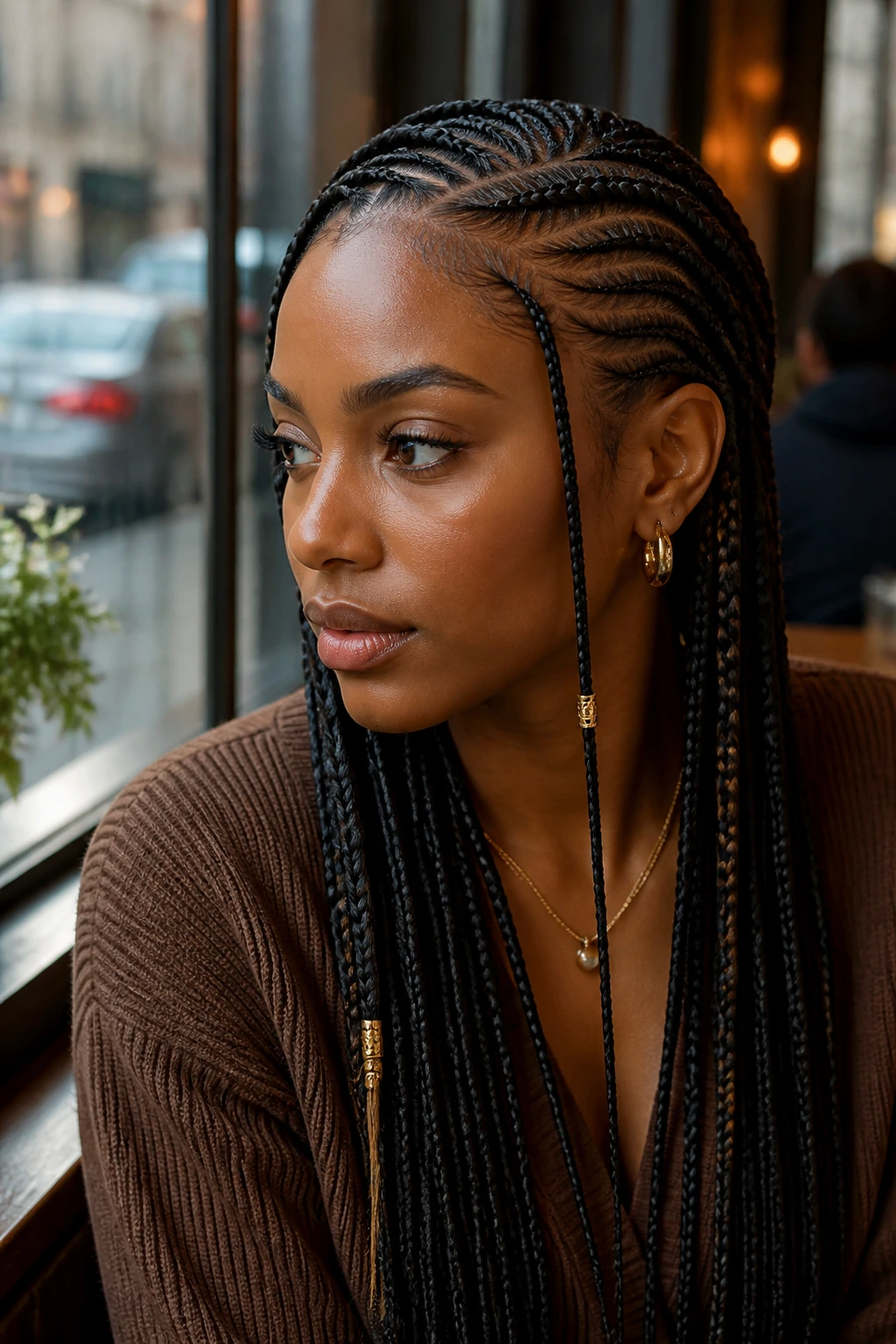
The side-parted version of the Fulani braid moves away from the traditional middle-part design and creates a softer, more romantic silhouette. It works exceptionally well on those with oval or heart-shaped faces.
Why It Works
The side part naturally draws attention to the eyes and cheekbones. It is a more modern take on a traditional style and allows for more creativity with the direction of the feeder braids.
Parting Strategy
- Start the side part near the arch of your eyebrow.
- Have the braids feed back from the part toward the ear for a clean, swept-back look.
- Use a clear gel on your baby hairs to complete the look.
19. Braids with Glitter and Gems
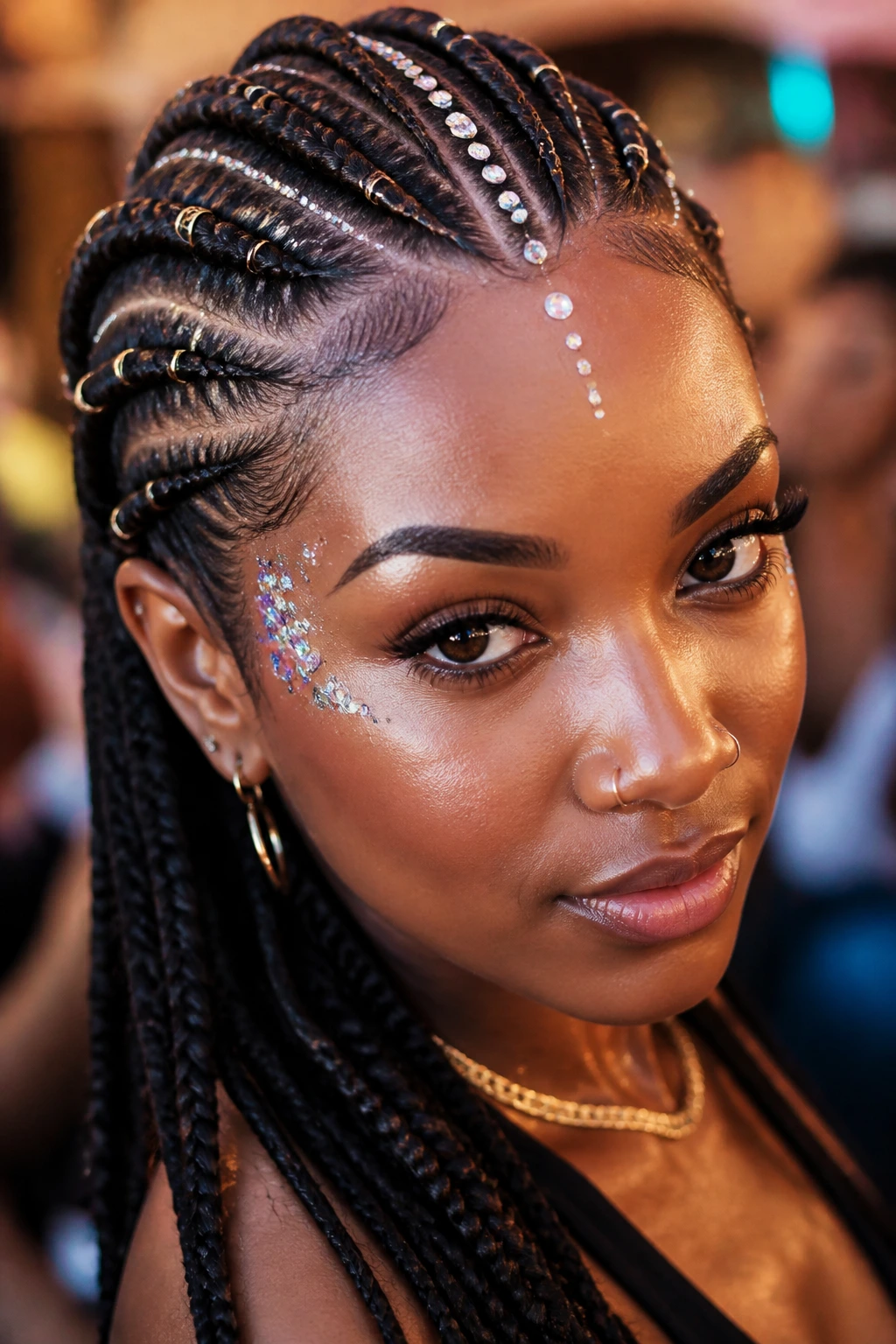
Sometimes, you just want a little sparkle. Incorporating gems, charms, and even subtle glitter hair spray into your braided style is a great way to elevate a standard look for a party or festival.
Where to Place the Gems
- Place gems at the center of the scalp along the part.
- Attach hair rings to the center of each braid.
- Use self-adhesive crystals on the temples for an added “editorial” feel.
Removal is Key
Never use superglue. Only use hair-safe adhesive or jewelry that clips onto the hair. When you take the style out, be gentle, and use an oil-based detangler to ensure no residue remains on the hair strands.
20. Double Dutch Braids
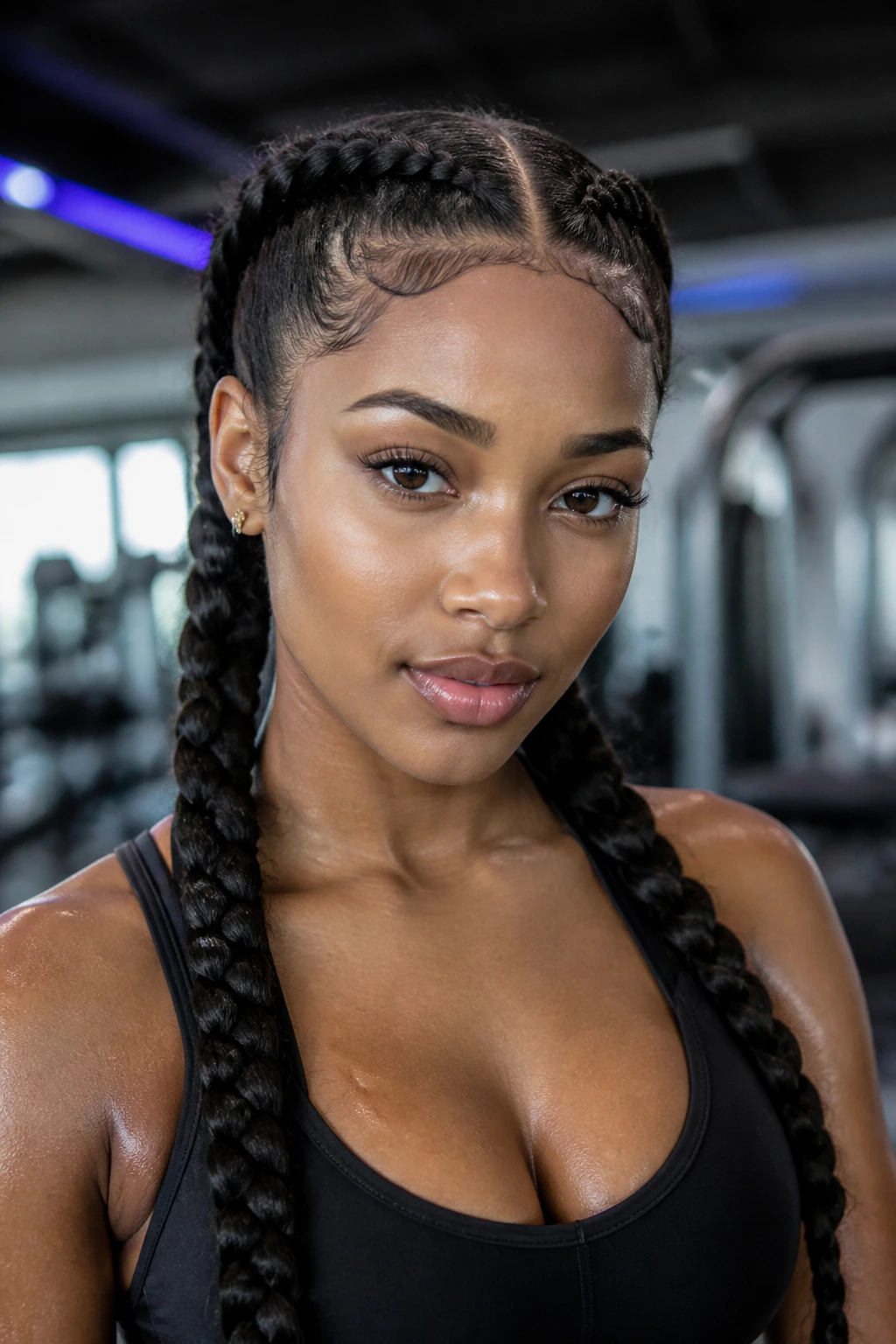
Double Dutch braids are an athletic, “off-duty” style that keeps hair tightly secured. They are incredibly easy to manage and can last for several days if you sleep with a satin scarf.
The Secret to the Look
It’s all about the “pancake” method. After you have braided the hair, gently pull on the edges of the braid to loosen them and make them look wider and more voluminous. This turns a standard, flat braid into something much fuller.
Styling for the Gym vs. Brunch
- For the gym, keep them tight and use an extra layer of gel on the hairline.
- For brunch, loosen them up (pancake them) and pull out a few wisps around the ears for a softer finish.
21. Zig-Zag Parts
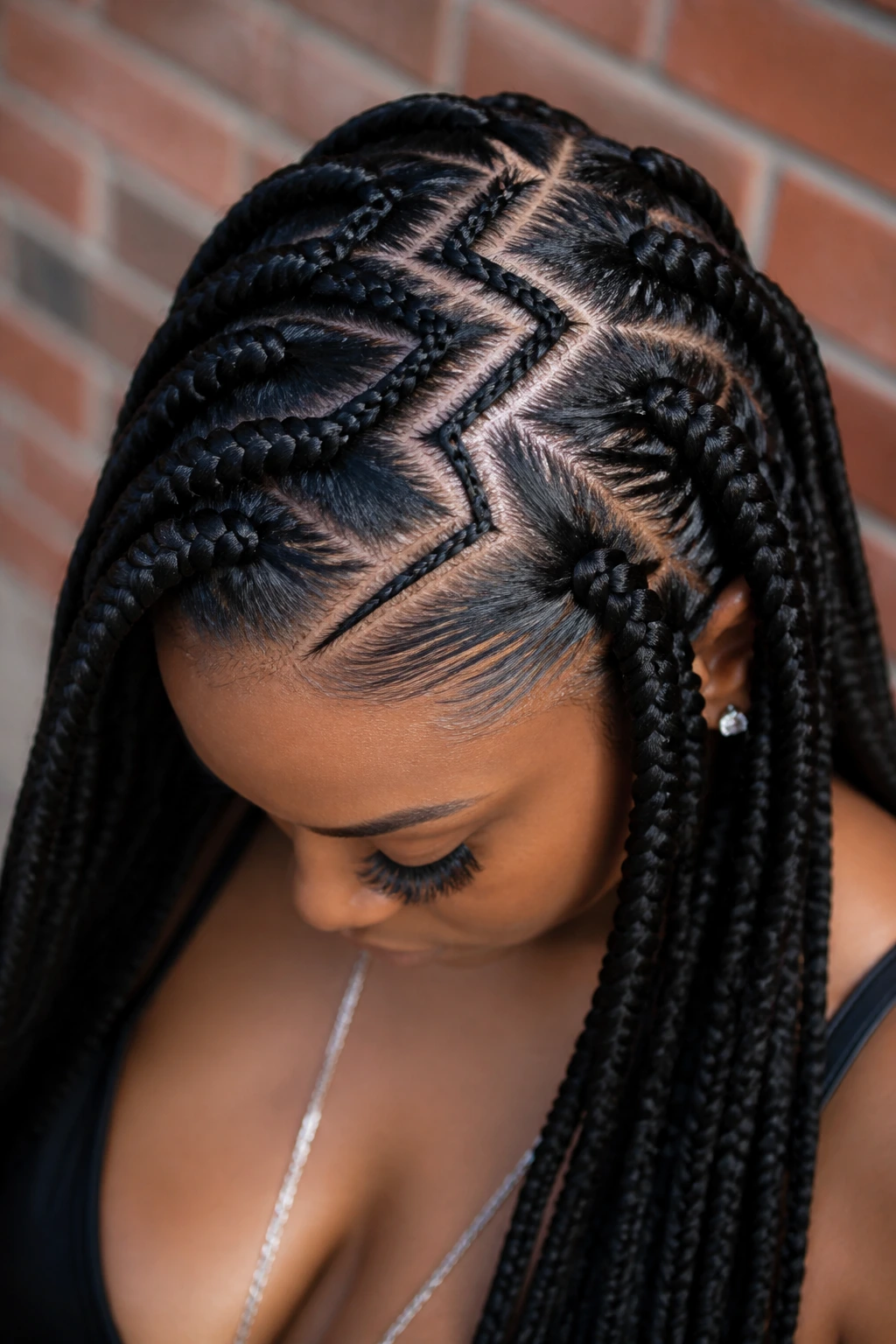
Zig-zag parts are a nod to the iconic styles of the late 90s and early 2000s. They are bold, graphic, and show that you aren’t afraid of a little complexity. They look best when paired with long, simple braids.
Why They Never Go Out of Style
They add a sense of movement to an otherwise static style. A zig-zag part turns a simple braid job into a conversation piece.
Getting the Part Right
Use a fine-tooth comb and go slowly. Once you’ve traced the zig-zag, use a small amount of pomade to “set” the hair in place so the parts stay distinct.
22. Asymmetrical Braided Lob
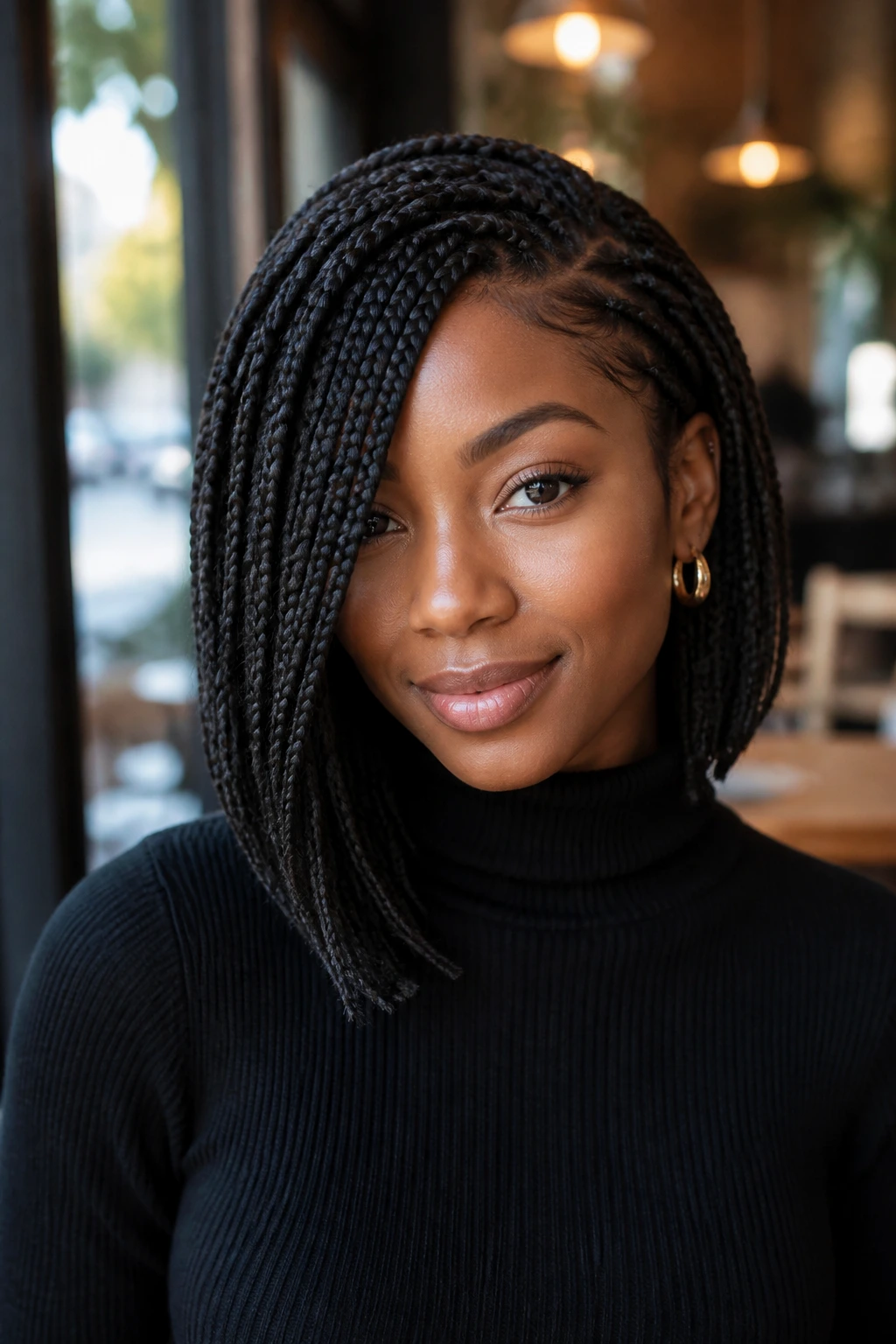
An asymmetrical braided “lob” (long bob) is a chic, modern choice for those who don’t want the weight of waist-length hair. The braids are cut to land just above or at the shoulders, creating a stylish, manageable silhouette.
Why It’s a Practical Choice
- It is much lighter on the head than traditional long braids.
- It dries faster if you wash your hair.
- It’s perfect for professional settings where long, heavy hair might feel distracting.
Styling the Ends
Because the ends are shorter, you can easily curl them with a wand or leave them blunt for a more modern, structured look. It’s a very sophisticated way to wear braids that feels tailored and precise.
Final Thoughts
When it comes to selecting your next style, the best advice I can offer is to listen to your scalp. A hairstyle, no matter how beautiful, is only truly successful if it allows your natural hair to remain healthy and strong underneath. I always advocate for checking in with your stylist about the weight and tension of the braids before they start—if you feel pain, speak up.
Trends come and go, but the core of Black hair care—hydration, gentle handling, and protective styling—remains the foundation of every great look. Whether you go for the intricacy of a criss-cross pattern or the timeless simplicity of a classic knotless braid, take pride in the process. Your hair is an expression of your personality, and there is no wrong choice as long as it makes you feel confident, comfortable, and ready to take on the day.