

The world of hair braiding is more than just a method for managing texture; it is a profound form of art, heritage, and expression. Every twist, knot, and tuck speaks to a legacy that spans generations, yet the styles we see today show a constant evolution of technique and creativity. When you sit in the chair for a fresh set of braids, you aren’t just getting a protective style; you are curating a look that balances tension, scale, and pattern. Achieving the perfect braid requires an understanding of your hair’s density and how to manipulate it to get those clean, sharp parts that make a style pop.
Too often, we get stuck in a cycle of choosing the same two or three styles because they feel safe. But with the incredible range of textures and adornments available, there is no reason to settle for anything less than a style that reflects your personal aesthetic. Whether you prefer the sleek, architectural precision of a high-tension feed-in style or the soft, romantic appeal of bohemian-inspired textures, the options are as varied as the individuals who wear them. The key to maintaining these looks lies in understanding the balance between style longevity and scalp health, ensuring that your hair remains vibrant long after you leave the salon.
Beyond the aesthetics, the shift toward incorporating natural textures into braided styles has changed the landscape of hair care entirely. We are moving away from styles that demand excessive heat or chemical manipulation, leaning instead into methods that celebrate the integrity of the hair shaft. This transition requires a keen eye for detail, particularly regarding how much tension is applied at the hairline. If you are looking to refresh your rotation, here is a breakdown of 28 distinct styles that demonstrate the versatility and enduring power of braided hair.
1. Jumbo Knotless Braids
Jumbo knotless braids are the ultimate time-saver, offering a chunky, high-impact look without the heavy weight of traditional box braids. By starting with your own hair and feeding in extensions gradually, the base remains flat and flexible, reducing the initial tension that often leads to scalp discomfort. Because the sections are larger, the installation process is noticeably faster, making this a go-to for those who value efficiency.
Why They Are So Popular
These braids stand out because they mimic the appearance of natural, thicker hair strands. The lack of a knot at the root creates a seamless transition that looks almost like the hair is growing directly from your scalp. This style is particularly flattering if you want a voluminous look that frames the face without feeling overwhelmed by hundreds of tiny individual braids.
Maintenance Tips for Longevity
- Apply a light-weight scalp oil to the parts every three days.
- Use a silk or satin bonnet at night to prevent frizz around the edges.
- If you notice flyaways, a small amount of styling foam smoothed over the braids will lay them flat without causing buildup.
2. Fulani-Inspired Braids with Beads
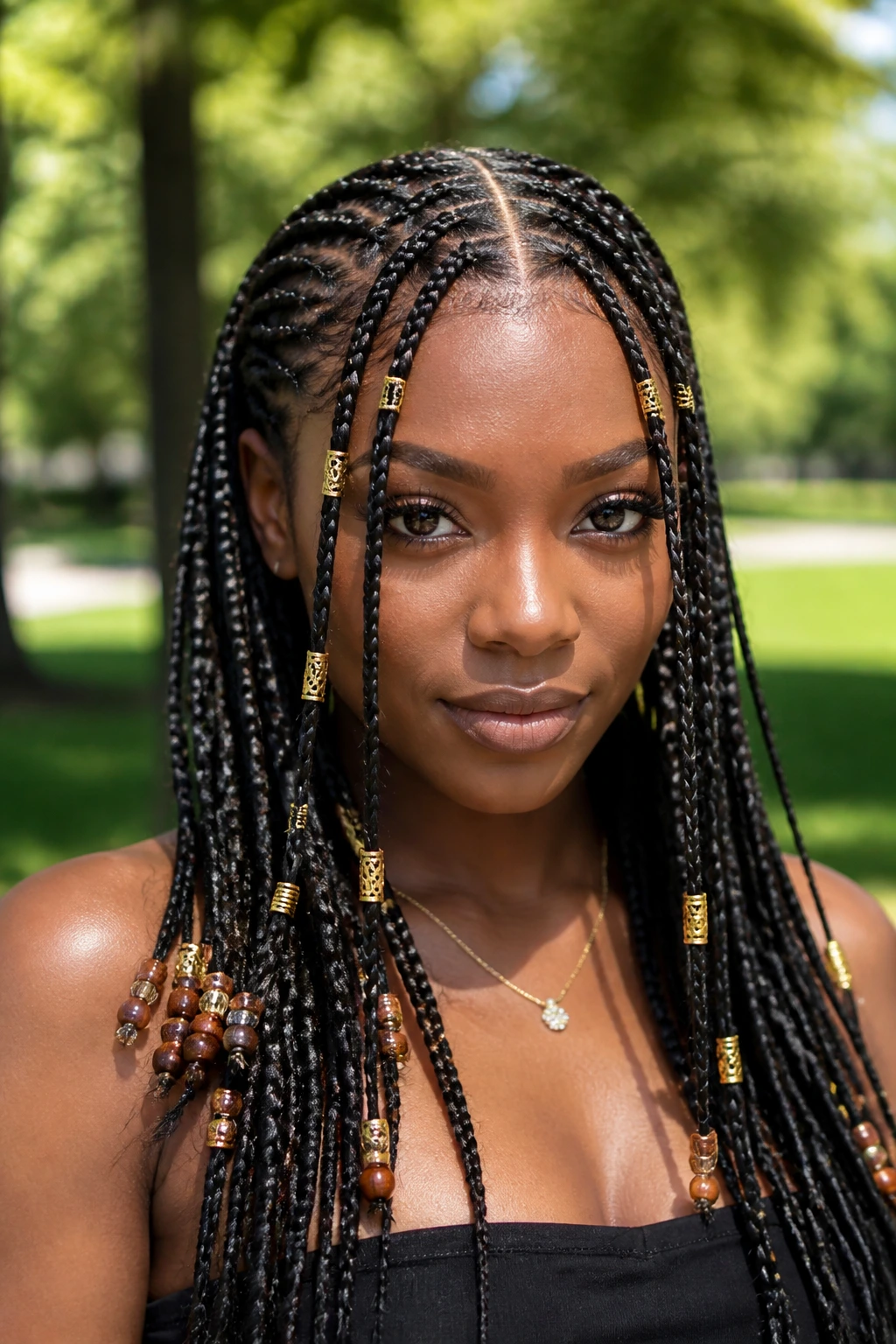
The Fulani style is rooted in history, characterized by a center part, braids running from the front to the back, and smaller braids framing the face. What makes these look so special is the intentional use of accessories—specifically gold or silver cuffs and wooden beads. These details add a tactile element that turns a simple braid pattern into a statement piece.
Getting the Look Right
The secret to authentic-looking Fulani braids is the precision of the parting. You want clean, geometric lines that emphasize the structure of the face. The braids along the sides should be tighter and sleeker, while the back can incorporate more volume or length depending on your preference. When choosing beads, keep the weight in mind; too many heavy glass beads can pull on the ends of your natural hair.
How to Style Your Cuffs
- Place gold cuffs at the bend of the braid to create visual rhythm.
- Focus the accessories on the front braids to keep the look balanced.
- Mix materials like wooden beads and metal rings to give the style an organic, bohemian vibe.
3. Bohemian Goddess Braids
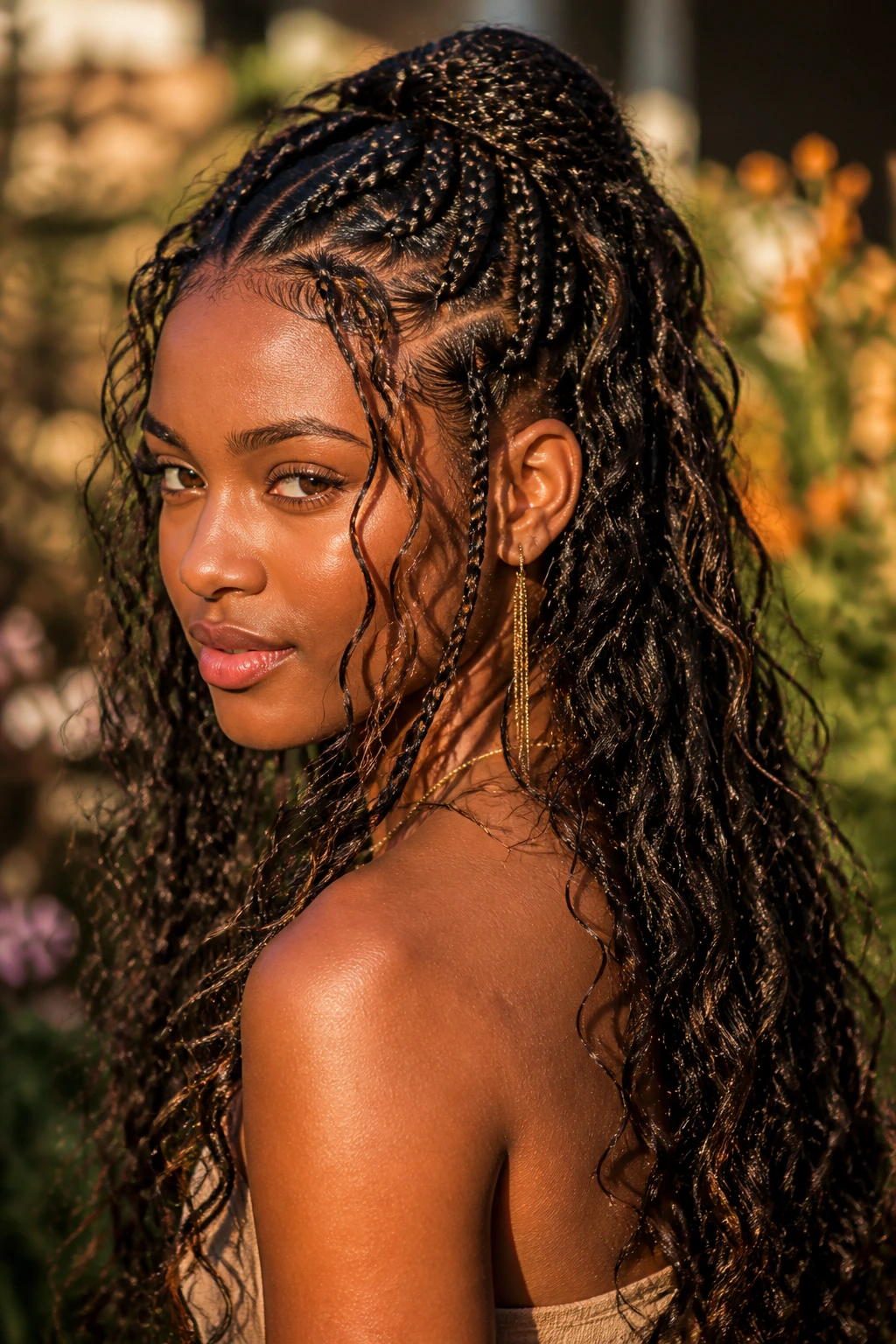
Bohemian goddess braids are a masterclass in texture, blending smooth, tight braids with loose, wavy extensions that hang freely. This contrast is what gives the style its “goddess” feel. It is elegant enough for a wedding but relaxed enough for a casual weekend, making it one of the most versatile styles in the current rotation.
Managing the Loose Waves
The loose curls are made of synthetic hair that is specifically designed to resist tangling. However, because they are exposed, they will eventually lose some of their luster. Using a light serum on these loose pieces keeps them soft and prevents that dreaded matted look that can happen after a few weeks.
Pro-Tips for Bohemian Styles
- Keep a small bottle of braid spray handy to refresh the curls daily.
- Separate the loose curls with your fingers if they start to clump together.
- Choose human hair extensions for the curls if you want a look that stays soft and bouncy for over a month.
4. Lemonade Braids
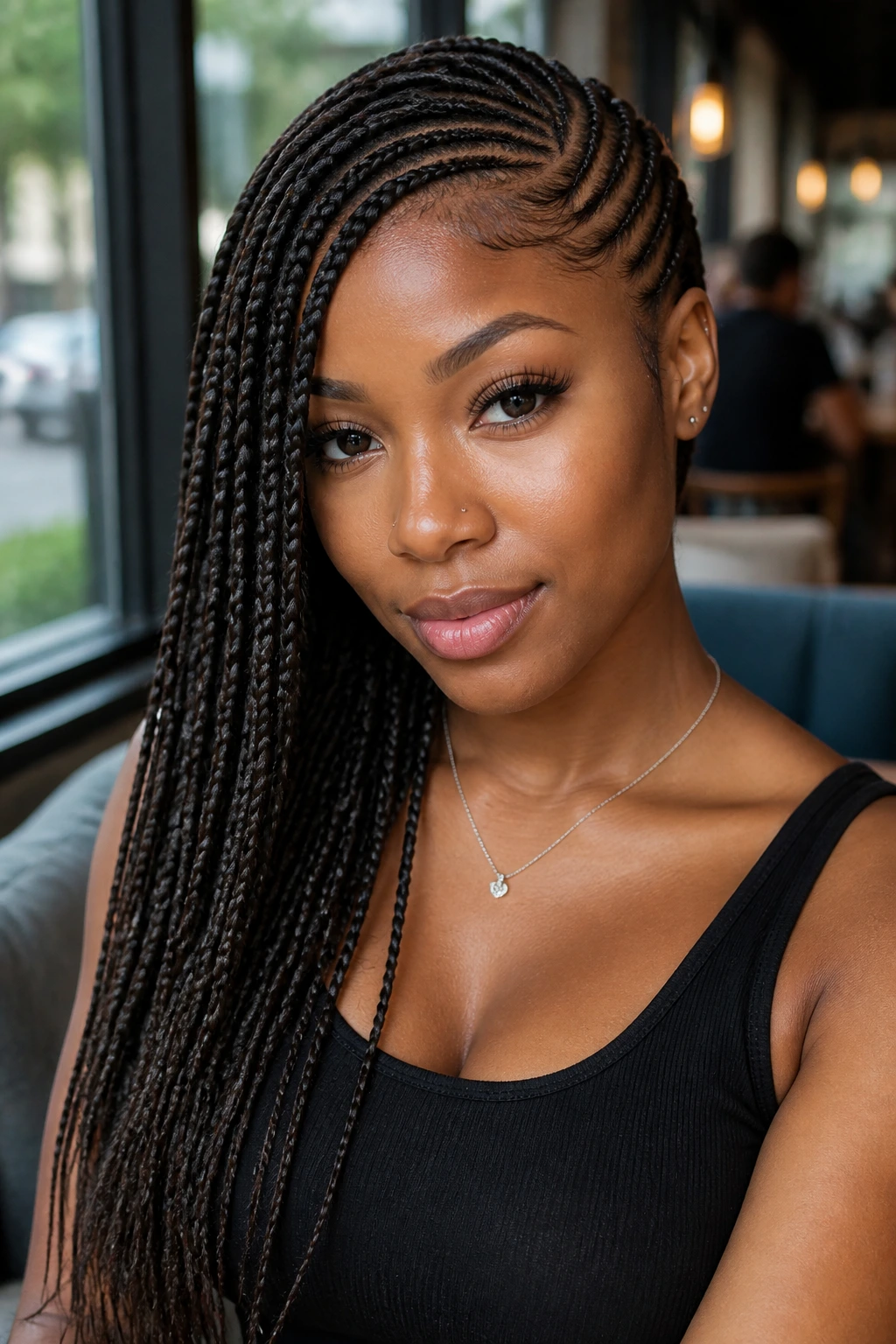
Made famous by high-profile media, lemonade braids are side-swept cornrows that flow in a singular direction. The visual flow of this style is incredibly satisfying, as the braids sweep across the scalp with a repetitive, rhythmic beauty. These are ideal for those who want a long-lasting style that feels very “done up” and polished.
Why They Work
The side-sweep creates an asymmetrical silhouette that can soften the angles of a face. Since the braids are cornrowed close to the scalp, they provide excellent protection for your natural hair, minimizing breakage caused by daily friction. The style is also surprisingly easy to wash, as the parts remain distinct even when wet.
Styling for Different Occasions
- Opt for smaller, thinner cornrows if you want a more intricate, delicate look.
- Use larger, chunky braids if you want a bold, sporty aesthetic.
- Consider adding color-matched kanekalon hair if you want the braids to look thicker or longer.
5. Micro Box Braids
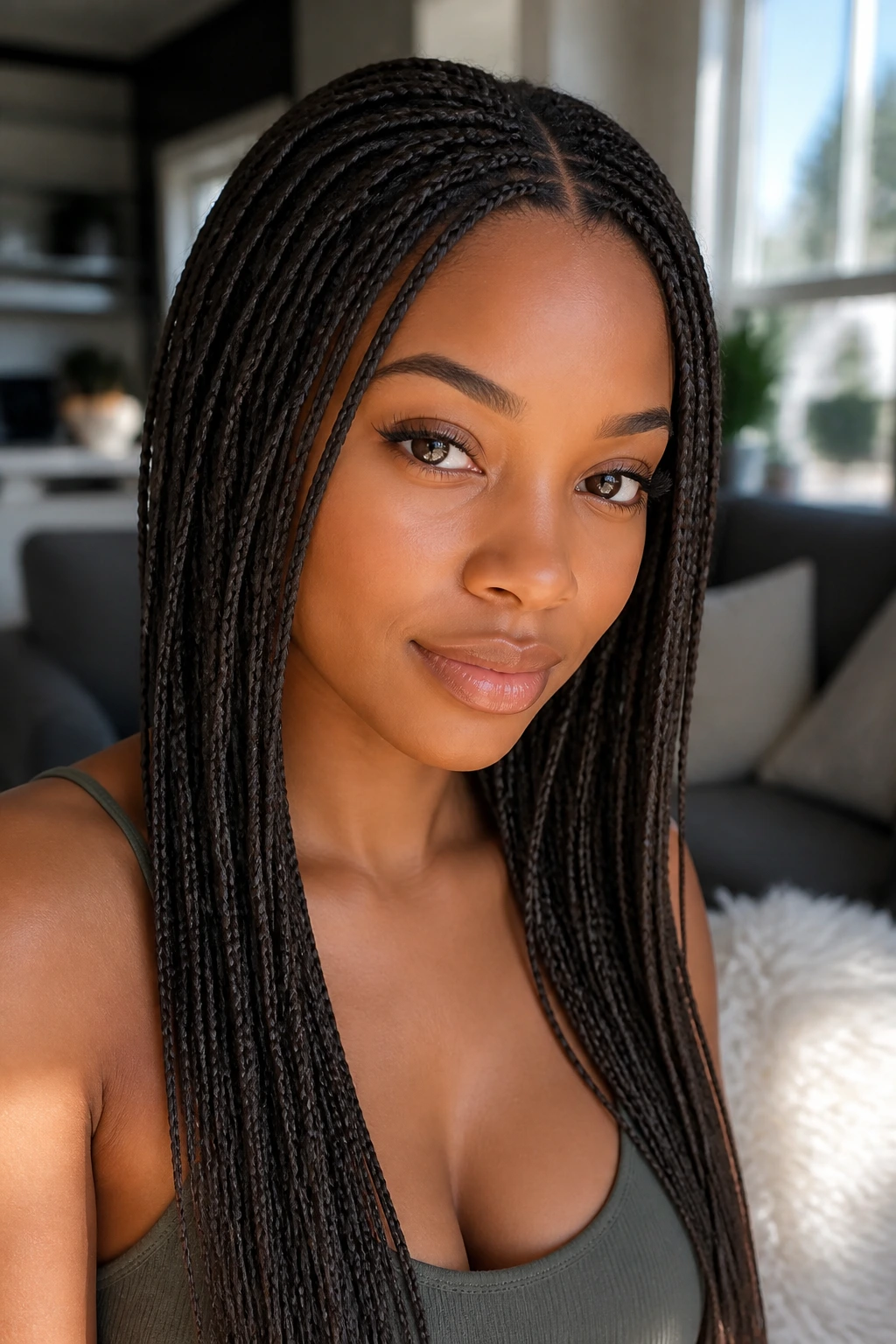
If you have the patience for a long installation session, micro box braids are an investment that pays off in versatility. Because each braid is so small, you can treat them just like loose hair—styling them into ponytails, updos, or buns without the braids feeling stiff. This style provides the closest thing to a “natural” hair texture while still being completely protected.
The Trade-off
Micro braids take much longer to install and remove than jumbo styles. You must be prepared for a six-to-eight-hour chair session. Additionally, because the sections are so small, the amount of hair being pulled can be high; it is vital that your stylist uses a technique that doesn’t put too much pressure on your hairline.
Best Practices for Removal
- Never rush the removal process; use a detangling spray to help slide the braids out.
- Spend time conditioning your natural hair deeply once the braids are out.
- Allow at least two weeks between installs to let your hair breathe and regain strength.
6. Stitch Braids
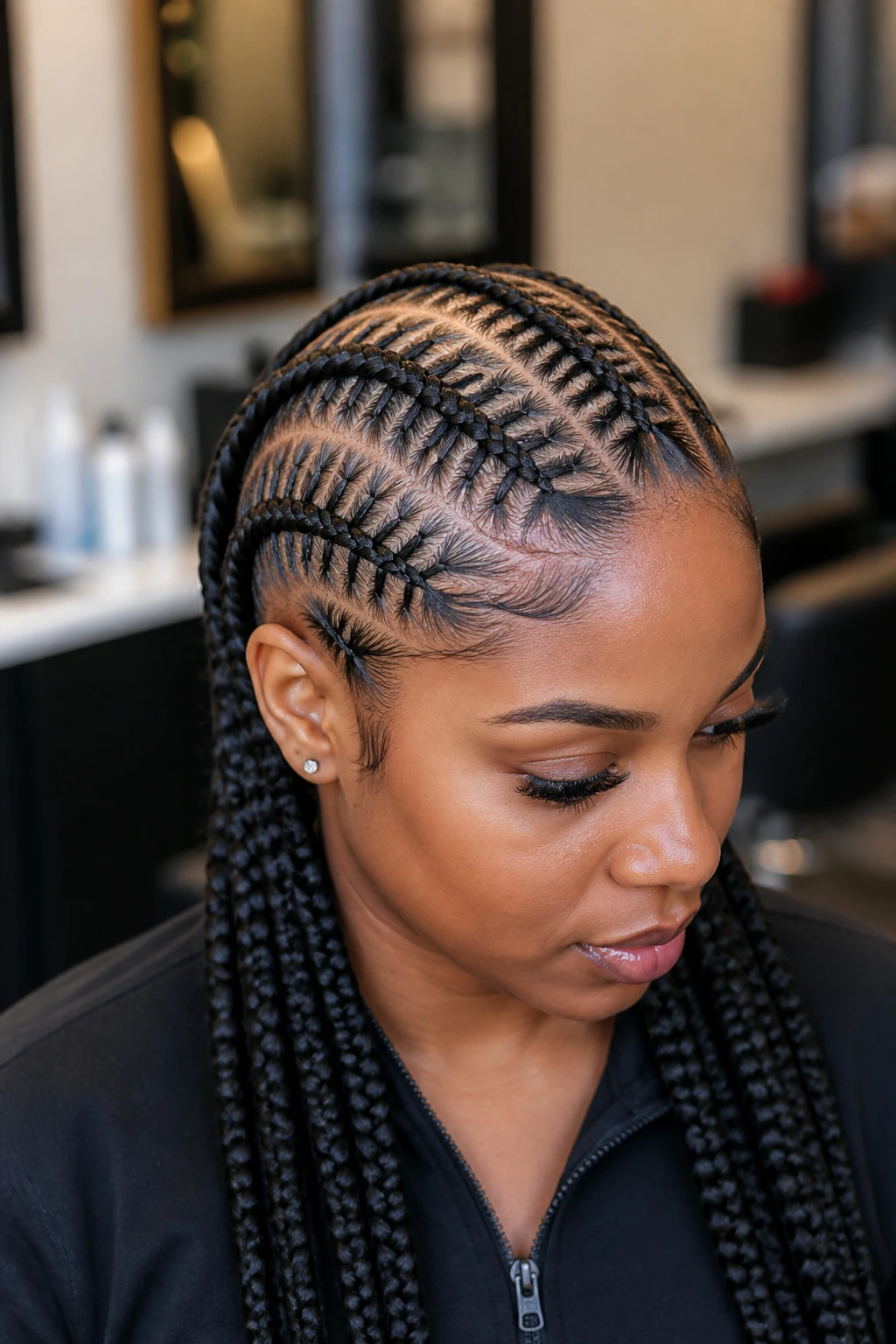
Stitch braids rely on a unique “stitch” technique where the stylist uses their pinky finger to create distinct, defined horizontal lines across the scalp. The result is a clean, hyper-structured look that feels modern and sharp. These are popular for those who love high-contrast styles, especially when the parts are lined up perfectly.
Why the Stitch Matters
The technique creates a textured look that adds visual depth to the scalp. Even without accessories, stitch braids look ornate because of those crisp, recurring lines. This is a technical skill, so choosing an experienced braider is paramount to getting that clean look that won’t get fuzzy after a few days.
Styling Suggestions
- Keep the baby hairs laid and smooth to complement the sharp parts.
- Use a high-shine pomade to ensure the stitch lines stay defined.
- If you have a specific parting preference, like a zig-zag or a deep side part, stitch braids can adapt to almost any geometry.
7. Goddess Locs
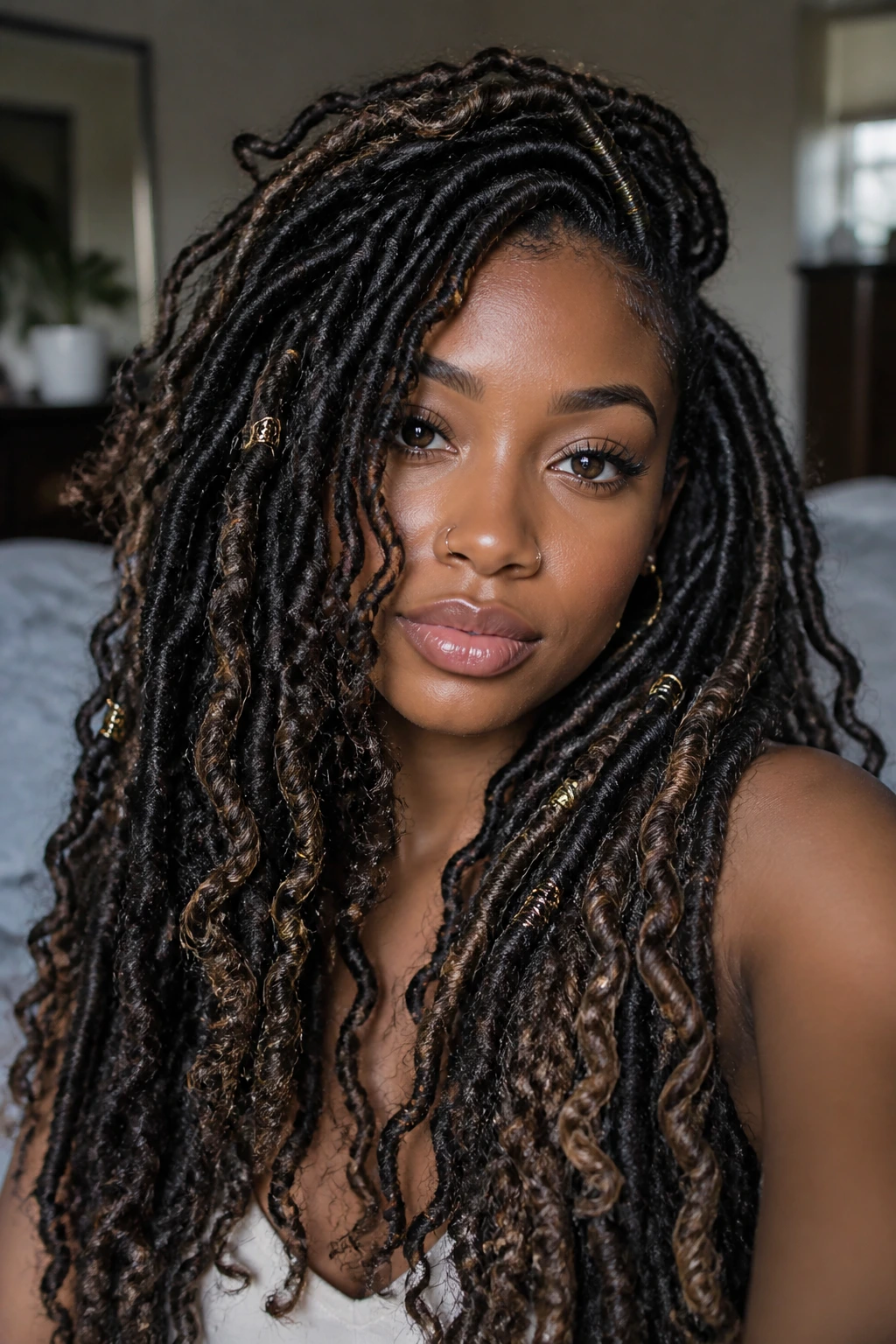
Goddess locs are a hybrid of faux locs and loose hair, resulting in a look that feels both lived-in and ethereal. The key feature here is the inclusion of “distressed” or curly ends that are left out of the wrapping process. This style is perfect if you want the aesthetic of locks without the permanent commitment of growing them yourself.
The Texture Factor
The beauty of goddess locs is that they are supposed to look a bit messy. You don’t have to worry about every single loc being uniform. In fact, the more variation in the wrapping and the curl patterns, the more authentic the style looks.
Daily Care
- Avoid heavy oils that can make the synthetic hair look greasy.
- Use a dry shampoo if the scalp starts to itch, as it won’t weigh down the locs.
- Wrap your hair in a silk scarf every night to maintain the texture of the curly ends.
8. Tribal Braids
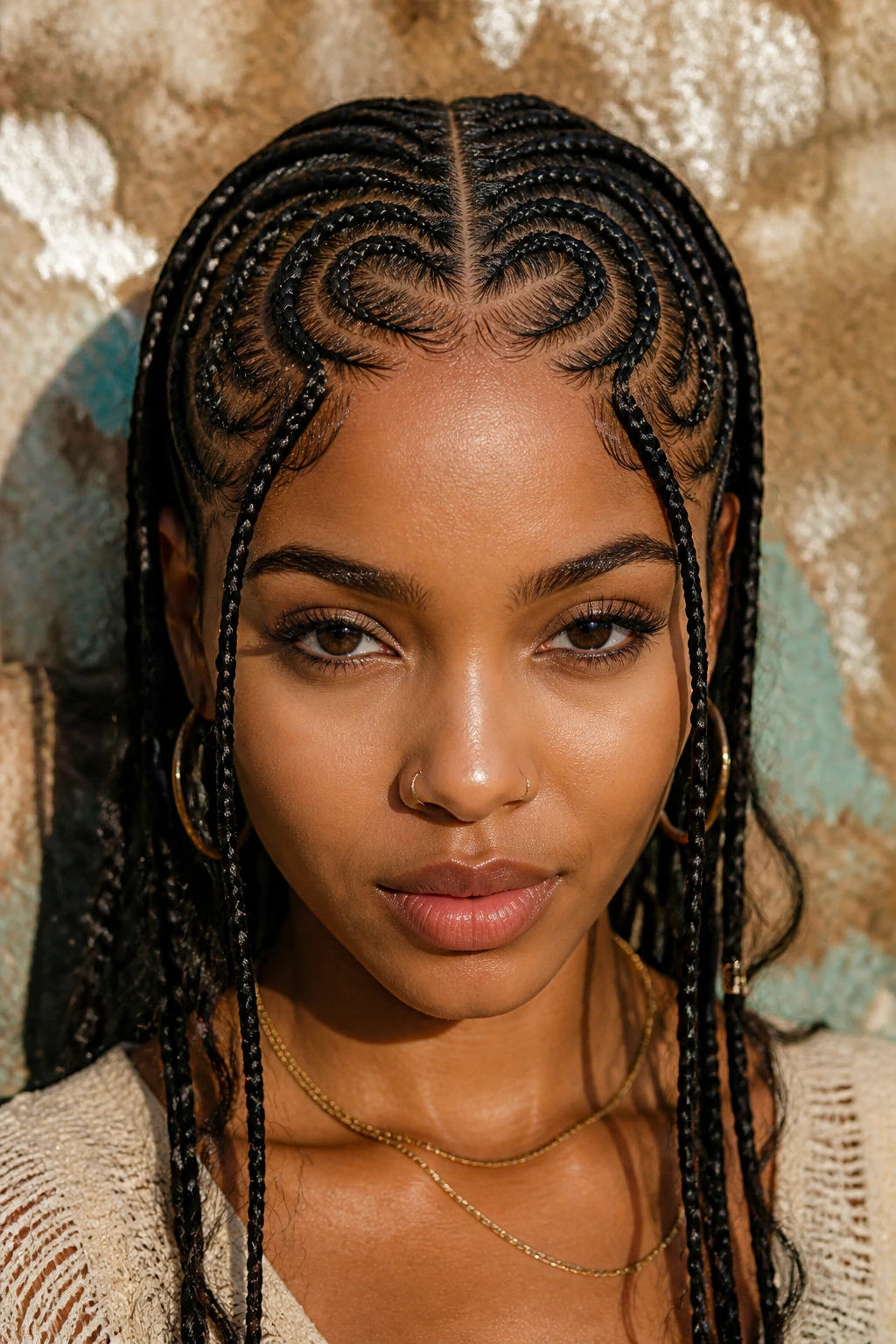
Tribal braids encompass a wide variety of styles originating from various African cultures, usually featuring a mix of cornrows and individual braids. Often, these include a center part with braids coming from the sides and a back section featuring free-hanging hair or box braids. It’s a dynamic, culturally rich look that feels personal and unique.
The Complexity of the Pattern
Tribal braids are not a monolith; they are a category of design. You can combine different braid sizes and lengths. The most common look features a “heart” or “V” shape at the front, which serves as a frame for the face. Because this style involves multiple techniques, it requires a clear conversation with your braider about the exact pattern you want.
How to Make Them Your Own
- Ask for gold cuffs along the center part for a regal touch.
- Incorporate cowrie shells for a nod to tradition.
- Don’t be afraid to mix in a pop of color in the back braids to make the style stand out even more.
9. Waist-Length Box Braids
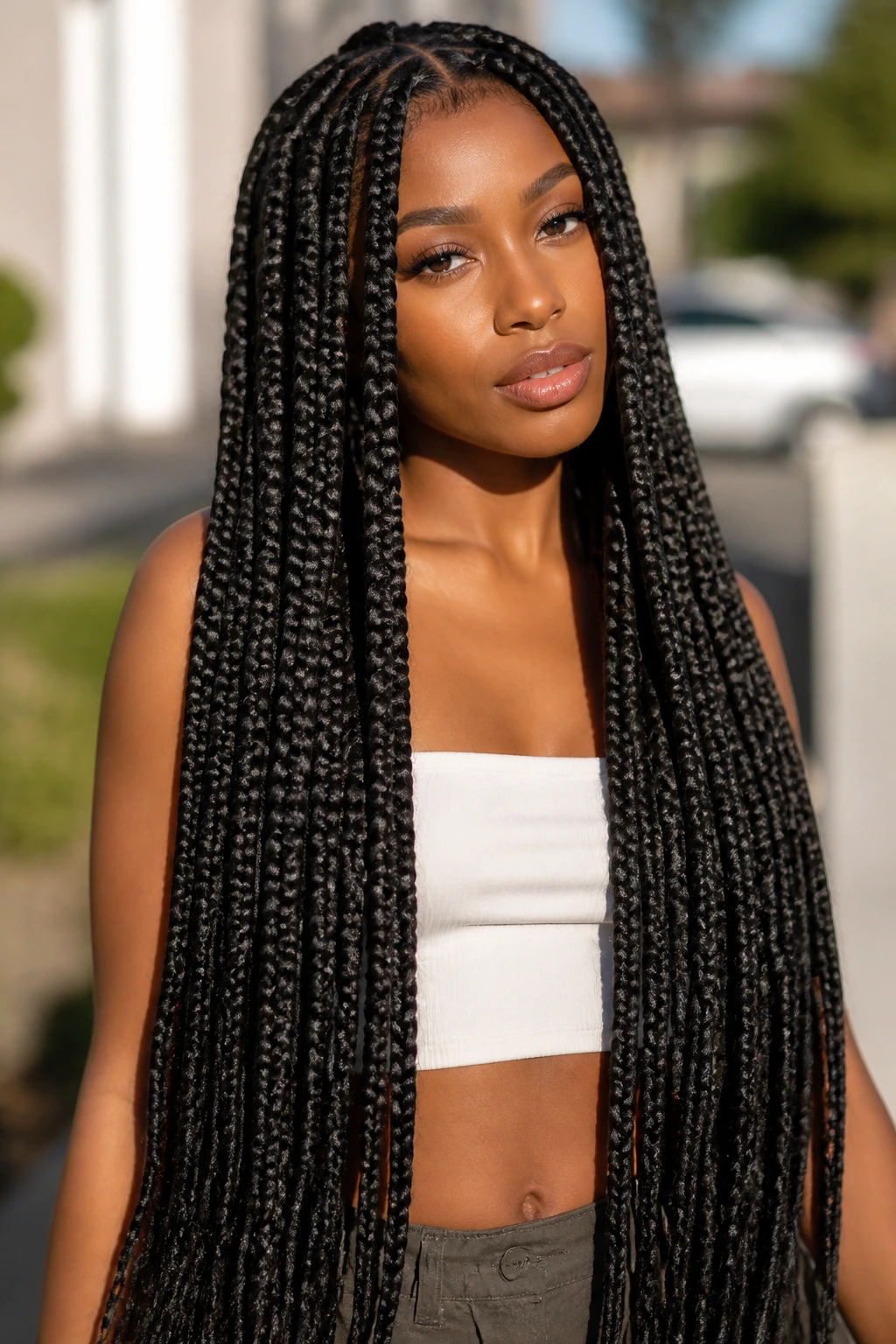
There is something undeniably striking about waist-length braids. The weight and the drape of the hair create a dramatic effect as you move. While they require more hair and a longer install time, the finished result provides an iconic silhouette that works well for both casual and formal settings.
Managing the Weight
Waist-length braids are heavy. To prevent strain on your neck and scalp, ask your braider to start with small sections at the front and use slightly larger ones in the back. This distributes the weight more evenly and ensures that your edges aren’t bearing the brunt of the length.
Caring for the Ends
- Keep the ends dipped in hot water to seal the synthetic fibers and prevent unraveling.
- If the ends become frizzy, re-dip them or trim the strays carefully with scissors.
- Consider a high-pony bun when you need to get the hair off your shoulders for a workout or during warmer weather.
10. Shaved Sides with Braids
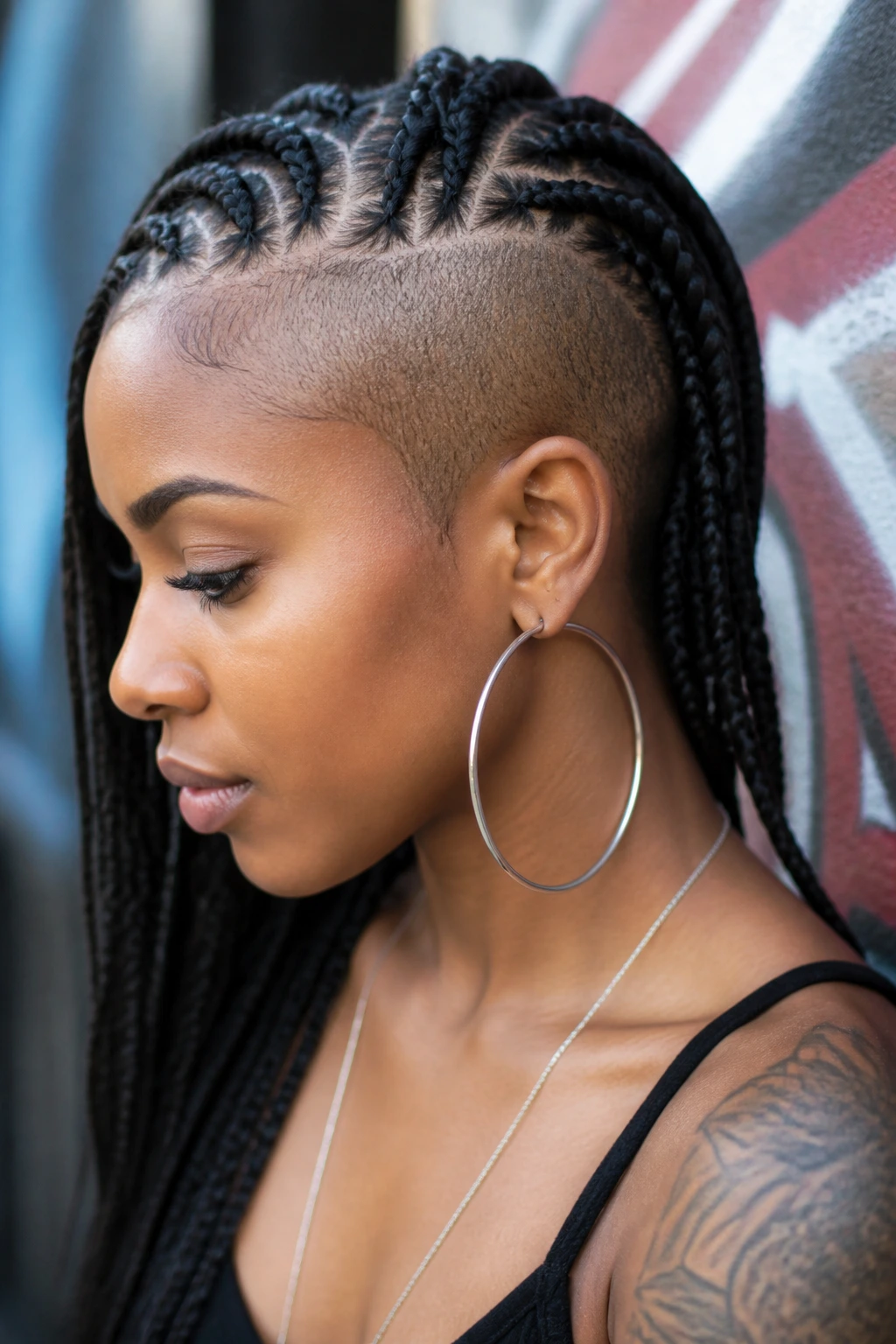
If you want an edgy, modern look, pairing intricate cornrows with shaved or tapered sides is a fantastic choice. This style removes the tension from the sides of the head entirely, which is great for those with thinning edges or sensitive hairlines. The contrast between the shaved skin and the detailed braids creates a bold, artistic aesthetic.
Why It Works for Edges
By shaving the sides, you eliminate the temptation (and the ability) to braid those delicate baby hairs too tightly. This is essentially a “protective style” for your hairline, as it gives you a clean canvas that doesn’t rely on tugging at the temples.
Styling Ideas
- Go for a mohawk-style braid pattern that draws the eye upward.
- Use intricate zig-zag parts on the top to complement the clean, shaved sides.
- Keep the shaved parts fresh with regular maintenance, whether that’s a quick trip to the barber or using an at-home clipper.
11. Criss-Cross Cornrows
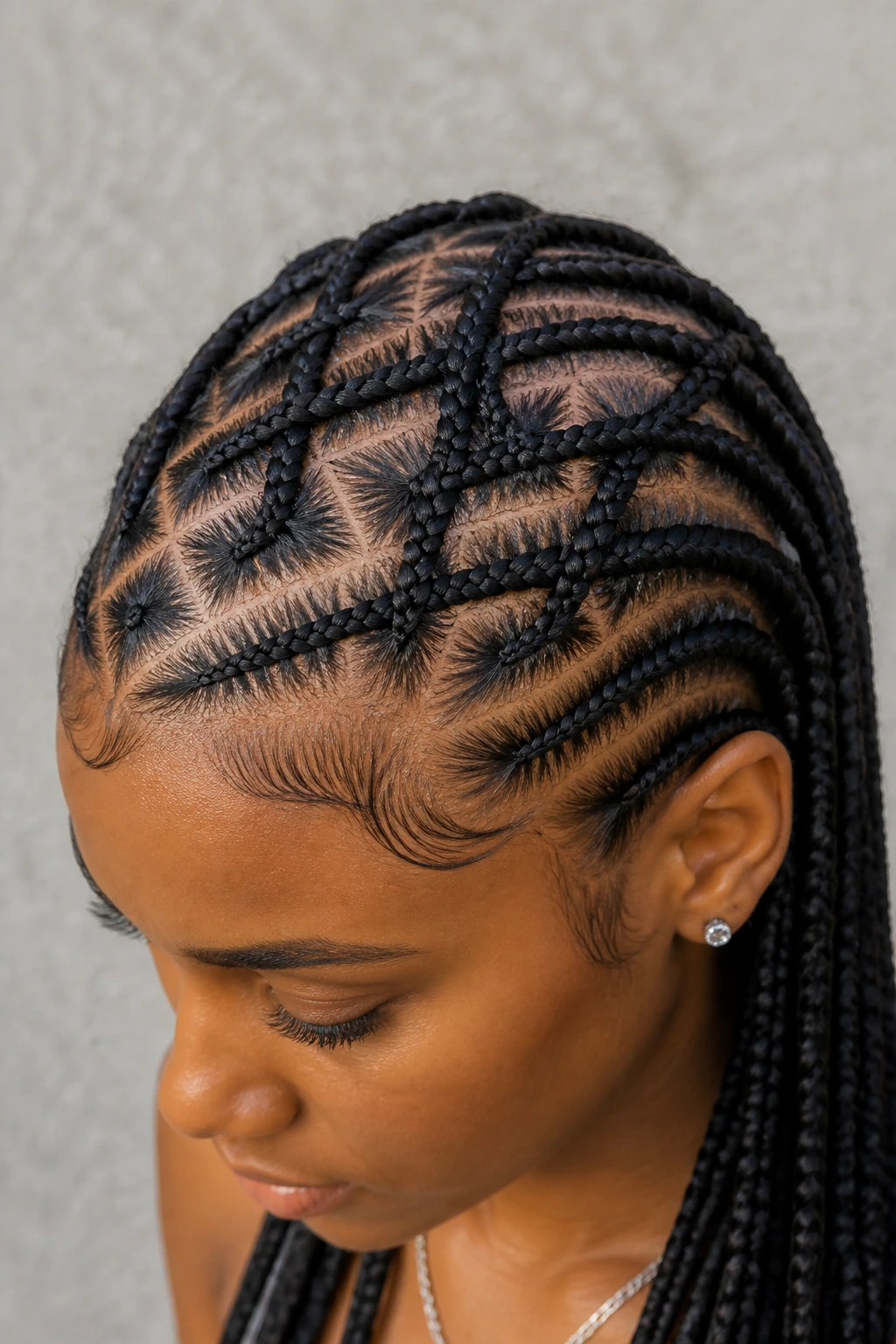
Criss-cross cornrows are an intricate take on standard cornrows, where the braids overlap each other in a lattice pattern. This is a highly decorative style that turns the top of your head into a piece of art. It is best suited for those who want to avoid the “same old” straight-back cornrow look.
The Visual Impact
When you look at this style, your eye is drawn to the symmetry of the overlapping braids. It is sophisticated, youthful, and incredibly durable. Because the braids are physically crossed, they are very secure and tend to last longer than standard straight-back braids, as there is less room for them to slip.
Tips for Success
- This style requires a braider who is very detail-oriented with their parting.
- Avoid using heavy products that can cause the crossing points to look fuzzy or matted.
- Use a clear styling gel to make sure the “x” pattern remains sharp and clean throughout the day.
12. Braided Ponytail
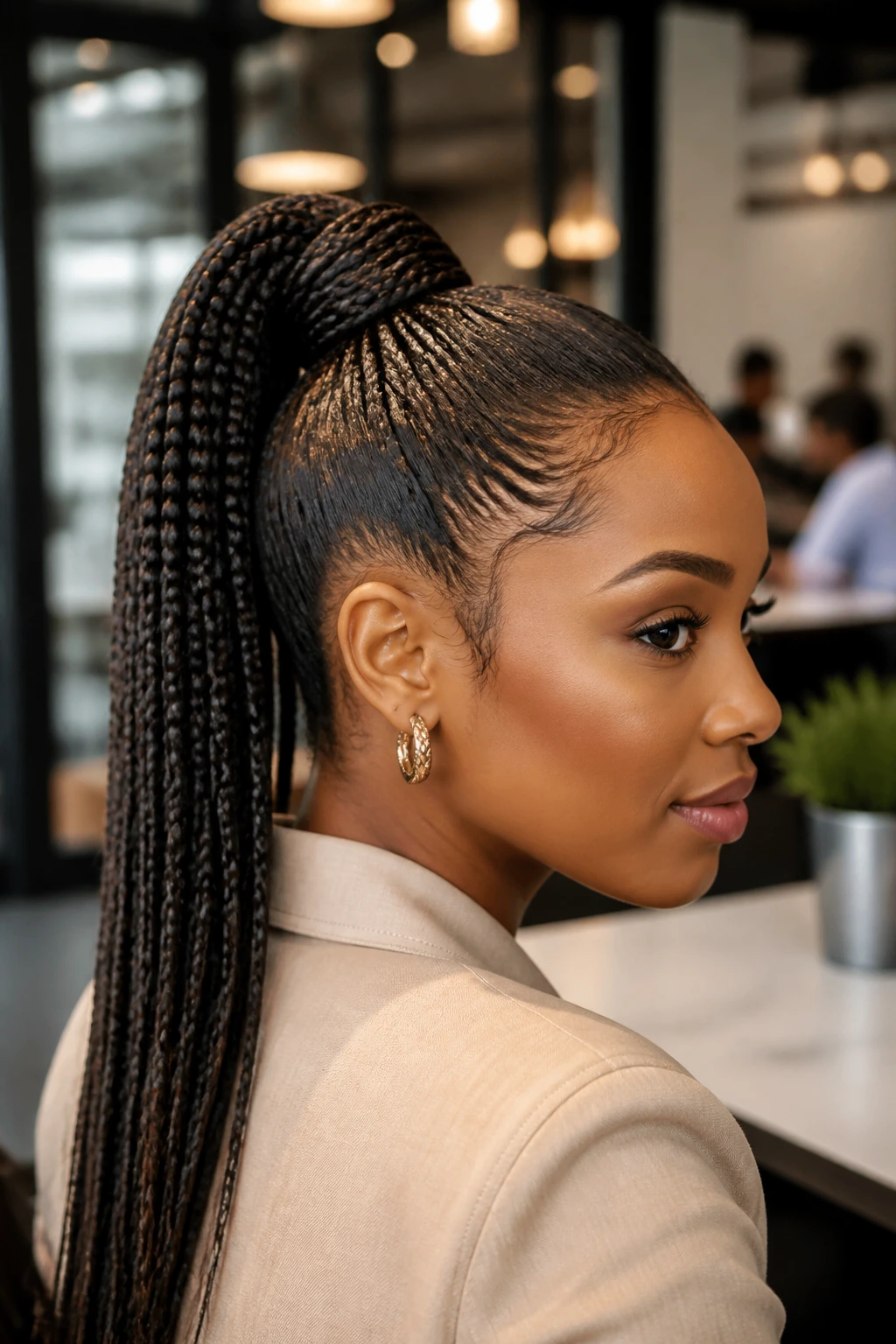
A sleek, braided ponytail is the perfect blend of utility and style. You get the convenience of having your hair up and out of your face, but the braids provide a level of texture and volume that a standard ponytail lacks. This style is incredibly versatile, whether you choose a high, dramatic pony or a low, sophisticated one.
Versatility in Styling
You can wrap a single braid around the base of the ponytail to hide the elastic, which instantly elevates the look. This is a great “work-to-evening” style because it looks professional enough for the office but chic enough for a night out.
Keeping It Sleek
- Use a firm-hold edge control to keep the perimeter of your hair smooth.
- If you use extensions, make sure they are lightweight so the ponytail doesn’t pull on your roots.
- A touch of hairspray can help control flyaways that often pop up around the base of the pony.
13. Feed-In Braids with Curly Ends
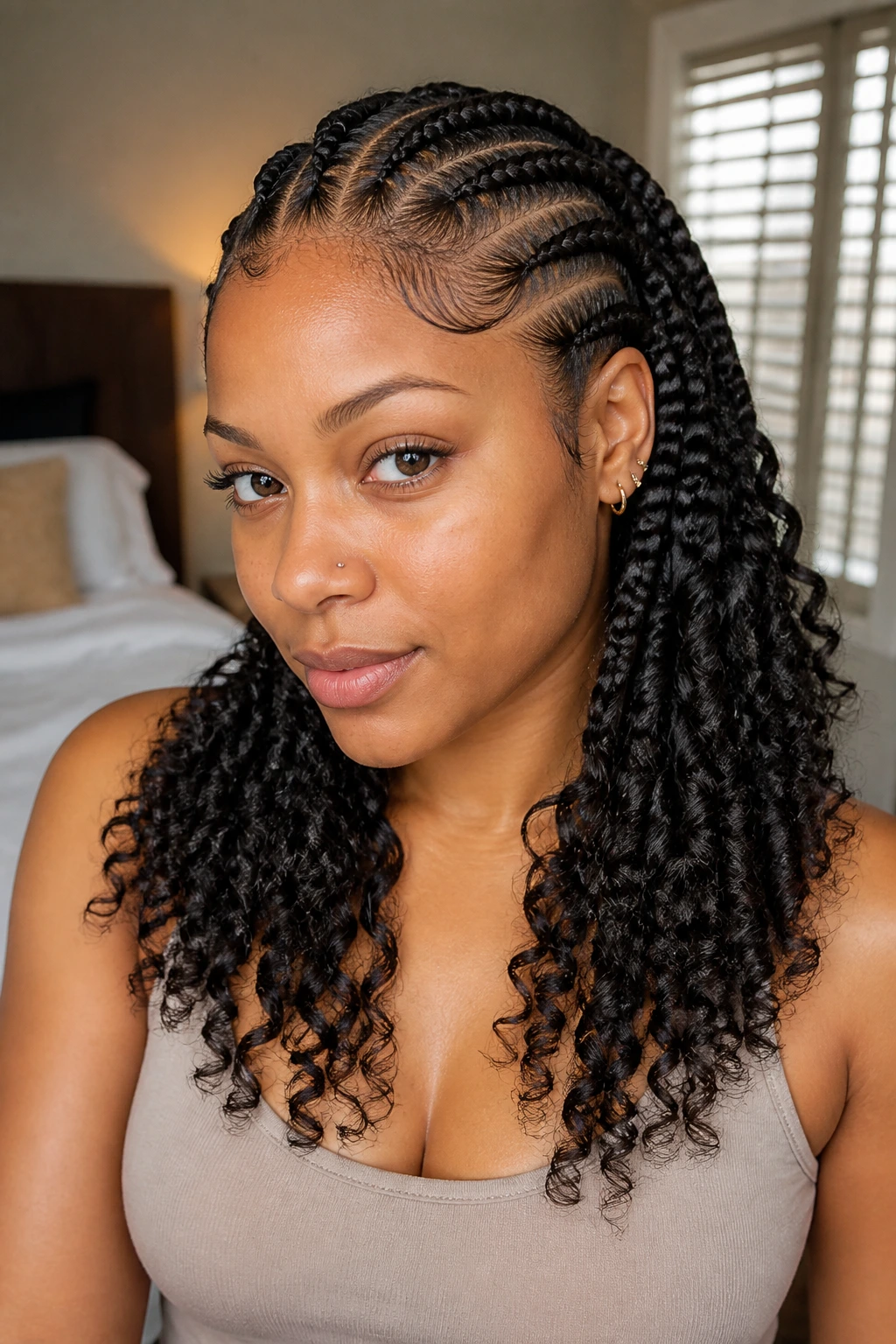
Feed-in braids are a staple because they start off small and flat at the hairline, mimicking the look of natural hair before transitioning into full, thick braids. Adding curly ends—often achieved by curling synthetic extensions with flexi-rods—adds a soft, feminine touch to an otherwise structured style.
Why This Style Persists
The transition from a tight braid to a soft, wavy end creates a lovely movement. It feels like you are getting two styles in one: the structure of a braid and the body of a wavy texture. This is perfect if you find standard braids a bit too “stiff” or “severe” for your facial features.
Maintaining the Curls
- Roll the ends on perm rods every evening to keep the curl pattern defined.
- Avoid using oil directly on the curly ends, as it will cause them to lose their spring and become weighed down.
- A light misting of water and mousse can help rejuvenate the curls if they go flat.
14. Wrapped Braid Buns
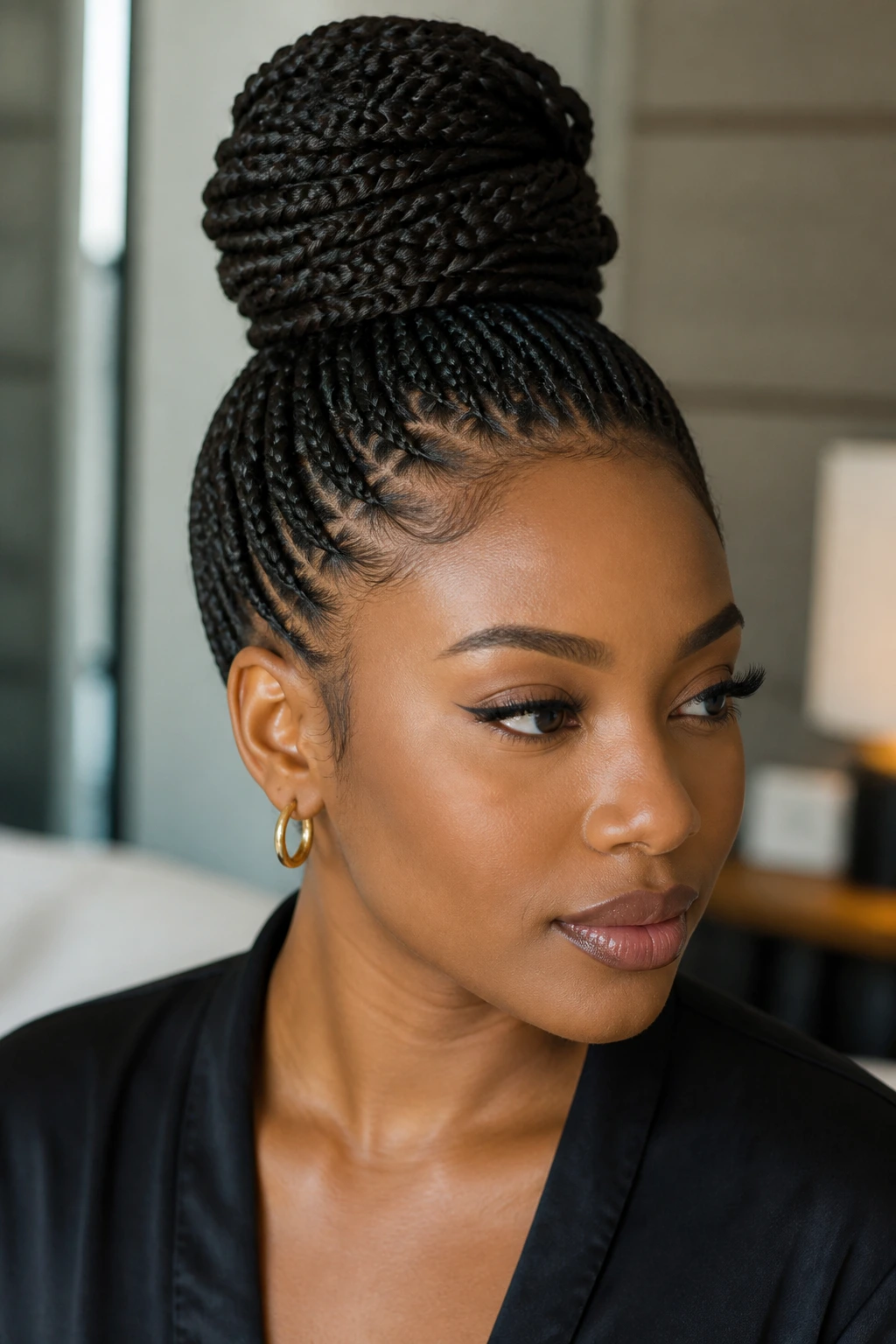
If you need a style that is undeniably elegant, the wrapped bun is hard to beat. You take your braids—usually box braids or long cornrows—and wrap them into a high or low bun. This keeps the weight of the hair centered and creates a sophisticated, sculptural look that works perfectly for formal occasions or professional settings.
The Art of the Bun
The trick is to use a large hair tie to anchor the base of the bun and then use bobby pins to secure the braids in a circular motion. You can leave a few braids out to frame your face or wrap them all up for a clean, editorial aesthetic.
Pro Styling Tip
- Use decorative pins or hair jewelry to accent the bun for events.
- If you want a more casual look, let a few loose strands escape near the ears.
- Ensure the bun is not too tight, as the tension can pull on the center of your scalp if it’s anchored to a small base.
15. Halo Braids
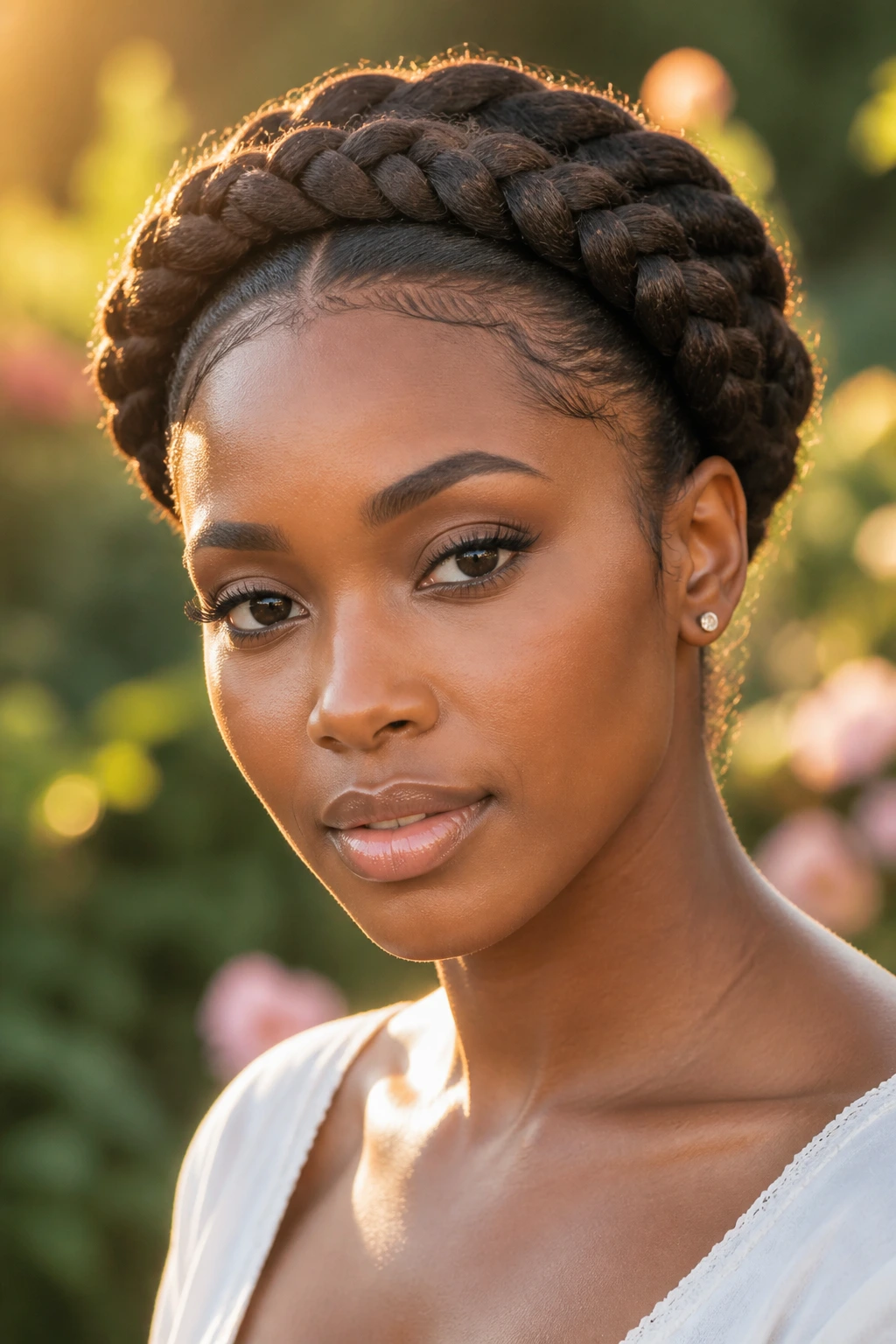
A halo braid involves cornrowing the hair around the perimeter of the head so that the braid creates a “crown” or “halo” effect. It is a timeless style that feels very ethereal and regal. This is a fantastic option if you want your face to be completely free of hair without needing a ponytail.
Why It’s Timeless
The halo braid is a classic that has been worn for centuries. It works exceptionally well with natural hair textures because you can incorporate your own hair into the braid without needing excessive extensions. It is also one of the most scalp-friendly styles, as it doesn’t require high-tension installations.
How to Style
- You can create a single halo or a double halo for added volume.
- Use a bit of beeswax on the braids to keep them smooth and polished.
- This style is wonderful for weddings or events where you want a “queenly” aesthetic.
16. Box Braid Bob
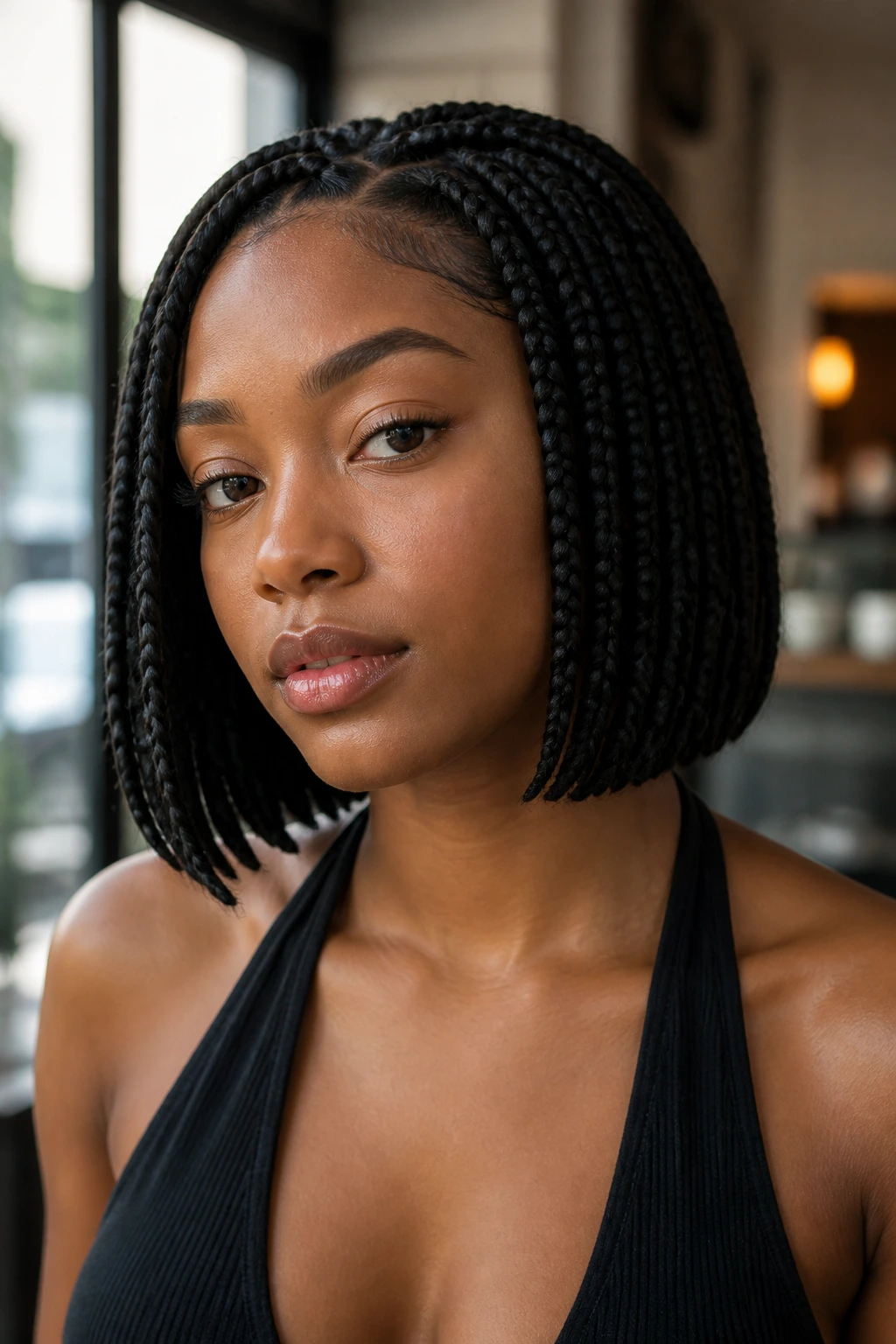
Sometimes, the best move is to cut the length entirely. A box braid bob is chic, fun, and surprisingly easy to manage. By keeping the braids at chin or shoulder length, you remove the heavy weight of waist-length extensions, making this the ideal style for someone who wants to remain active and unencumbered.
Why a Bob Works
A bob frame is universally flattering. It highlights the jawline and draws attention to your eyes. Plus, because the hair is shorter, it’s much less likely to get tangled or matted, and the installation is usually faster, saving you both time and money in the chair.
Maintenance
- Since the ends are shorter, keep them sealed with a little extra heat or glue to prevent fraying.
- The bob cut requires a steady hand, so ask your stylist to blunt-cut the ends for a crisp finish.
- This is a low-maintenance style that looks great even when it’s a bit messy.
17. Yarn Braids
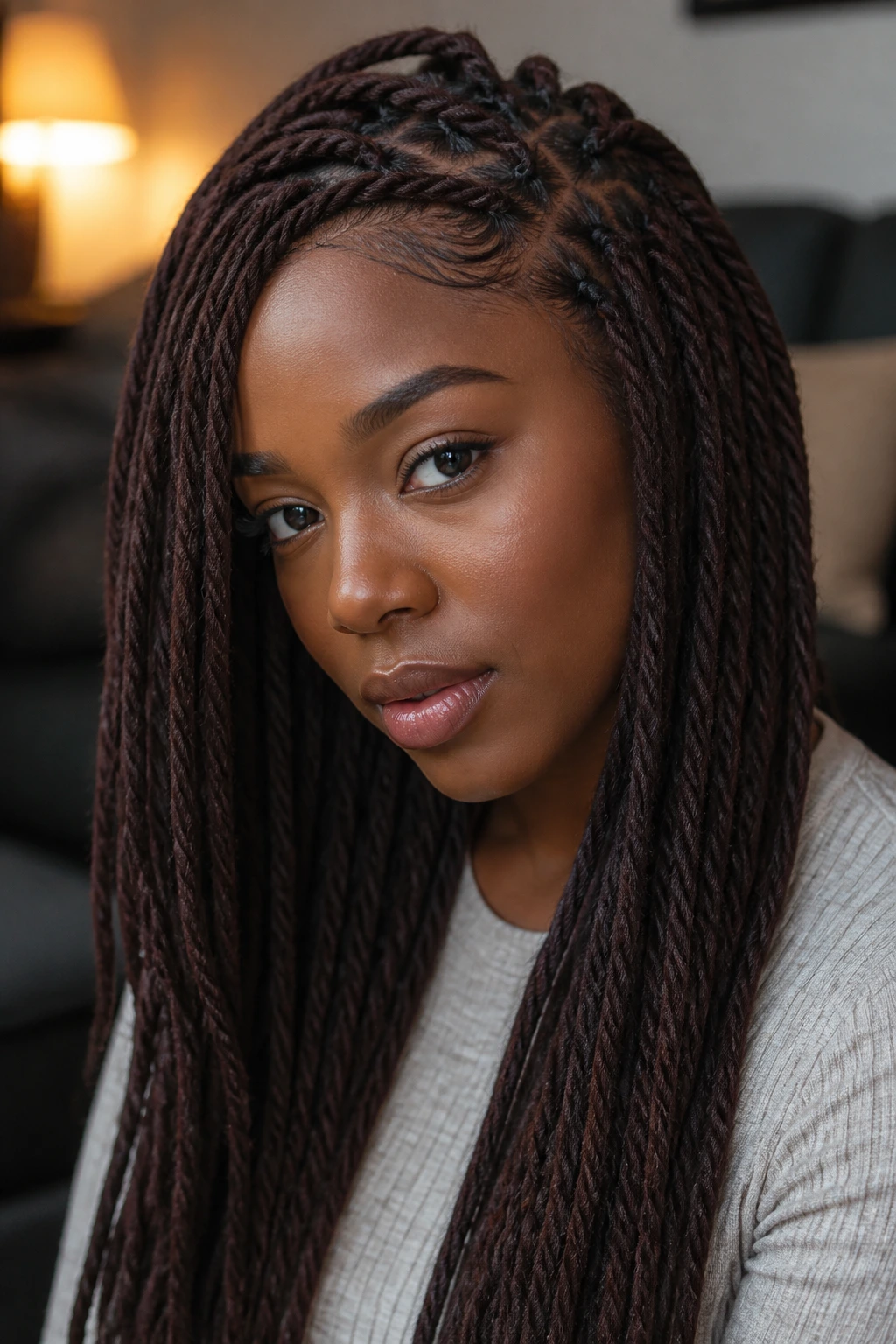
Yarn braids offer a unique, matte texture that looks very different from traditional kanekalon hair. Using soft acrylic yarn, these braids are lightweight and provide an earthy, textured look. They are a great choice if you are looking for a style that feels organic and doesn’t have the “plastic” shine of some synthetic fibers.
The Texture Advantage
Yarn provides a very distinct grip. It’s perfect for finer hair textures because the yarn doesn’t slip as easily as synthetic extensions. However, it is essential to use a high-quality, 100% acrylic yarn that isn’t too heavy once it absorbs water.
Things to Consider
- Yarn is more absorbent than kanekalon, so it takes longer to dry after washing.
- If you choose yarn, go for a brand that is known for being soft and itch-free.
- The matte look is excellent for creative or artistic individuals who want a non-traditional braid style.
18. Faux Locs
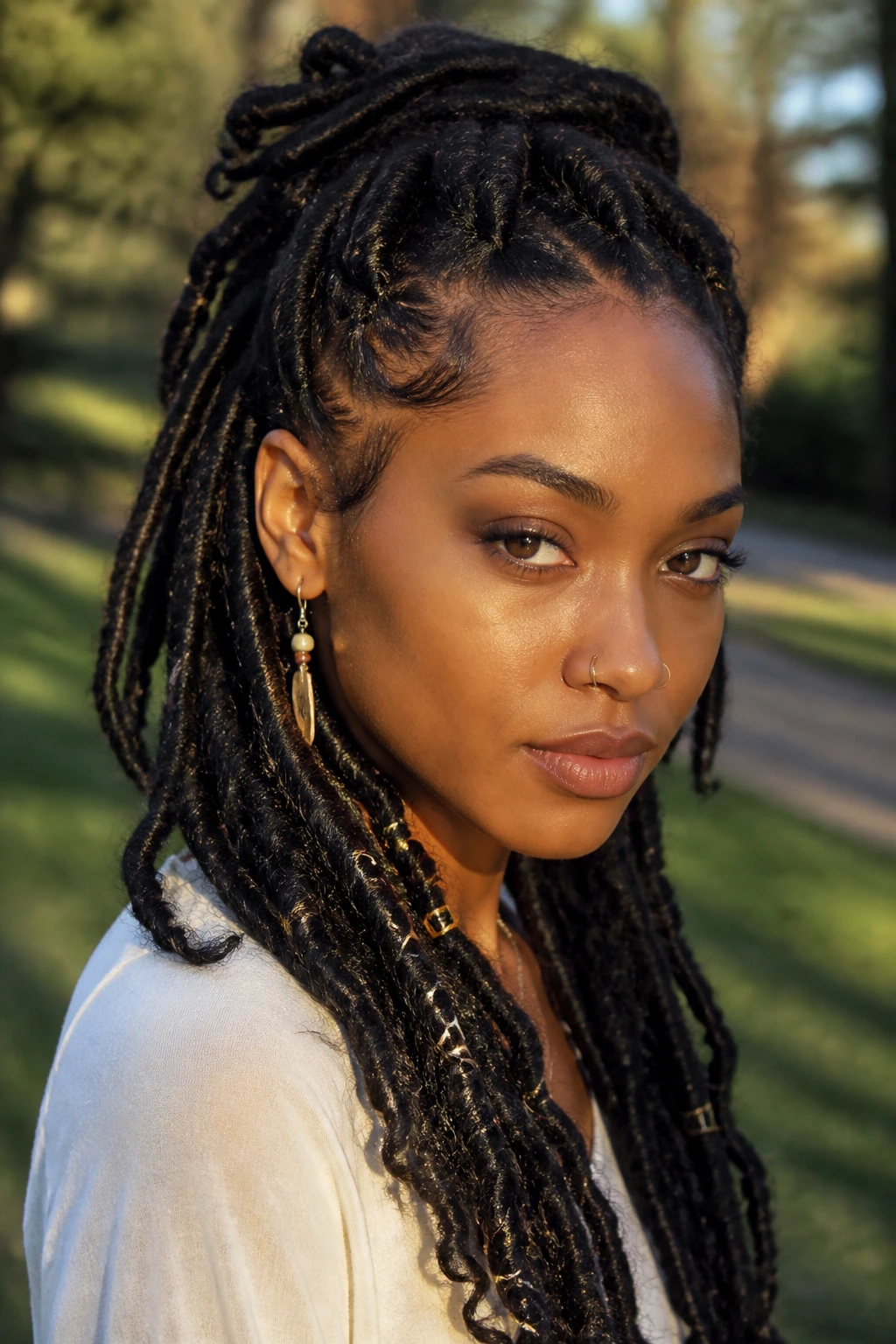
If you’ve ever wanted the look of long-term locs without the years of commitment, faux locs are your answer. These involve wrapping extensions around your natural hair braids to create the look of thick, established locs. They look more natural the longer you have them, as the wrapping settles and blends with your own hair.
The “Distressed” Look
The most popular version of this style is the “distressed” faux loc, which intentionally includes bumps, loops, and loose strands. This makes the locs look like they have been growing for years. It’s a great style if you prefer an edgy, bohemian, or “undone” look.
Care Routine
- Use a spray leave-in conditioner to keep your natural hair inside the locs hydrated.
- Avoid heavy products, as the build-up will be difficult to wash out of the center of the locs.
- These get better with age, so don’t worry about them looking too “perfect” on day one.
19. Senegalese Twists
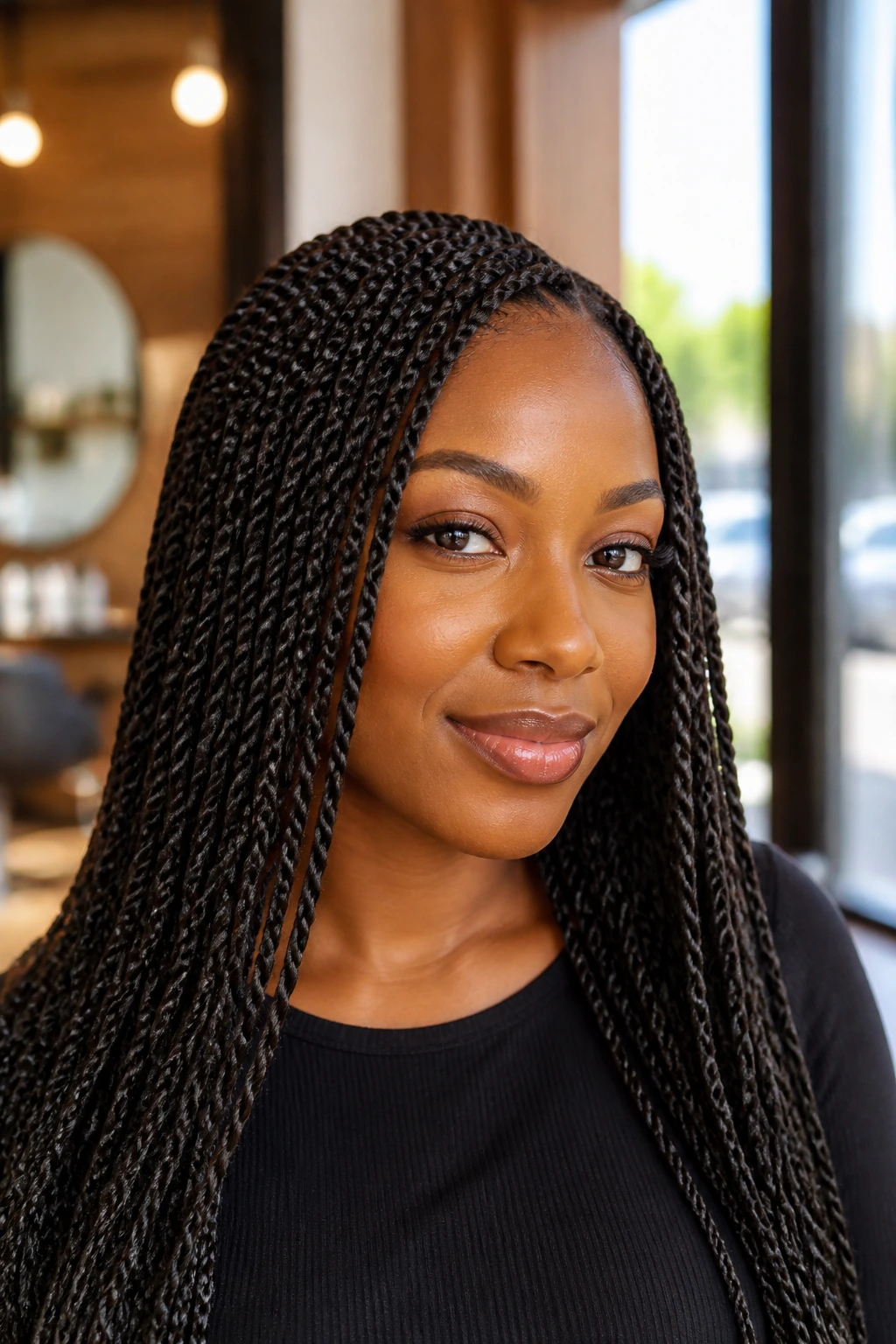
Senegalese twists are smoother and silkier than traditional braids. Created by twisting two strands of synthetic hair with your own natural hair, they have a rope-like appearance. If you want a style that looks refined, polished, and very sleek, this is the one to pick.
The Sleek Factor
Because the hair is twisted rather than braided, the surface area is smaller, making them look thinner and tighter. This gives you a very “clean” look that lasts a long time. However, because they are so smooth, they can slip out if your natural hair is extremely silky or if the sections are too large.
Maintenance Tips
- Use a light mousse to keep the twists from getting frizzy.
- If a twist starts to unravel, simply twist it back up and secure the end with a small amount of heat or a rubber band.
- These are great for professional environments because of their uniform, rope-like texture.
20. Havana Twists
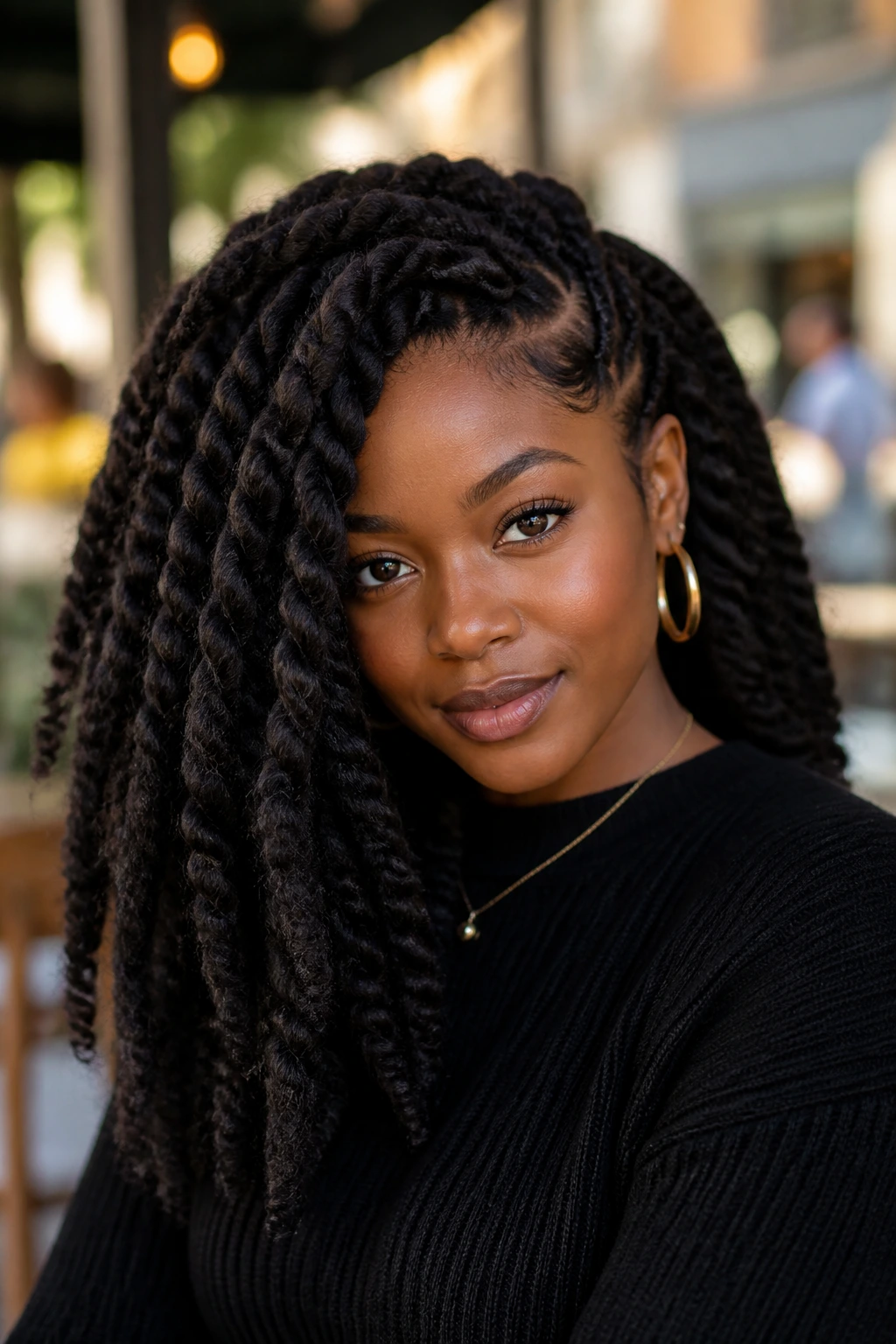
Havana twists are essentially the thicker, bolder cousin of Senegalese twists. Using a coarser, lighter-weight hair, these twists have a fluffy, voluminous appearance that feels incredibly natural. They are perfect if you want a big, voluminous look that doesn’t feel heavy on your head.
Why You’ll Love Them
The coarser hair texture used for Havana twists mimics the look of blown-out, natural 4C hair. This makes the blend look very realistic. They are also much faster to install than Senegalese twists because you are using larger sections.
Care Tips
- Because the hair is coarser, be careful not to create knots at the root during installation.
- Use a light oil on your scalp, as the volume can make it harder to reach the roots for maintenance.
- If they start to look fuzzy, use a light styling foam to smooth the frizz down.
21. Goddess Braids (The Crown)
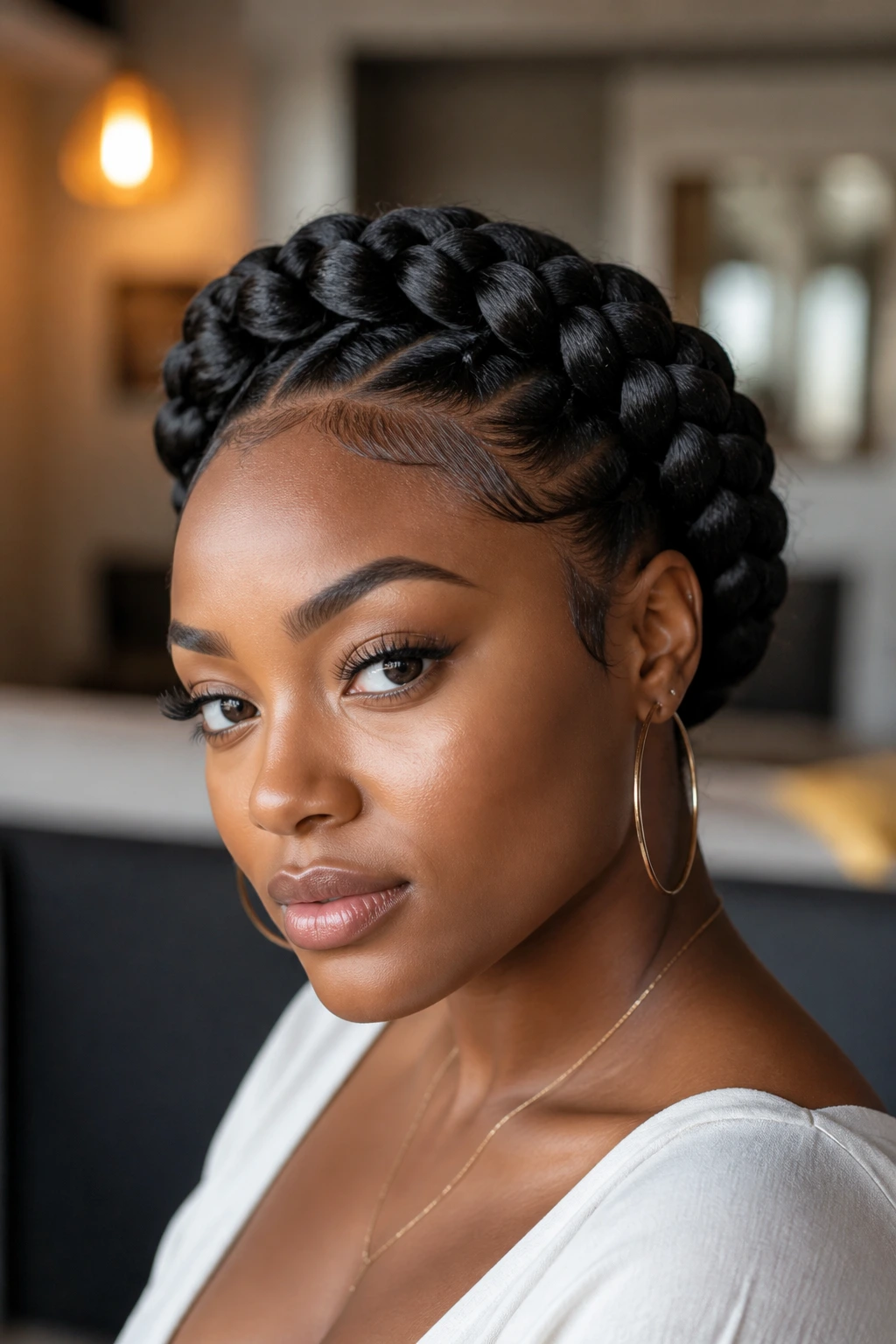
Large, chunky cornrows that are styled into an intricate, crown-like pattern are commonly referred to as “goddess braids.” These are different from the “bohemian” style; these are strictly about the size of the cornrow. They are bold, majestic, and require very little maintenance.
The Power of Scale
The size of these braids is the focal point. Because they are large, you only need 4 to 8 braids to cover your head. This makes for a very quick install time. They are excellent for protective styling during the colder months when you want to keep your hair shielded but look put-together.
Styling Options
- Incorporate a few smaller cornrows between the large ones to add detail.
- Use a pop of color in one of the braids for a contemporary twist.
- Keep the scalp well-moisturized since the large braids expose more of your skin.
22. Butterfly Locs
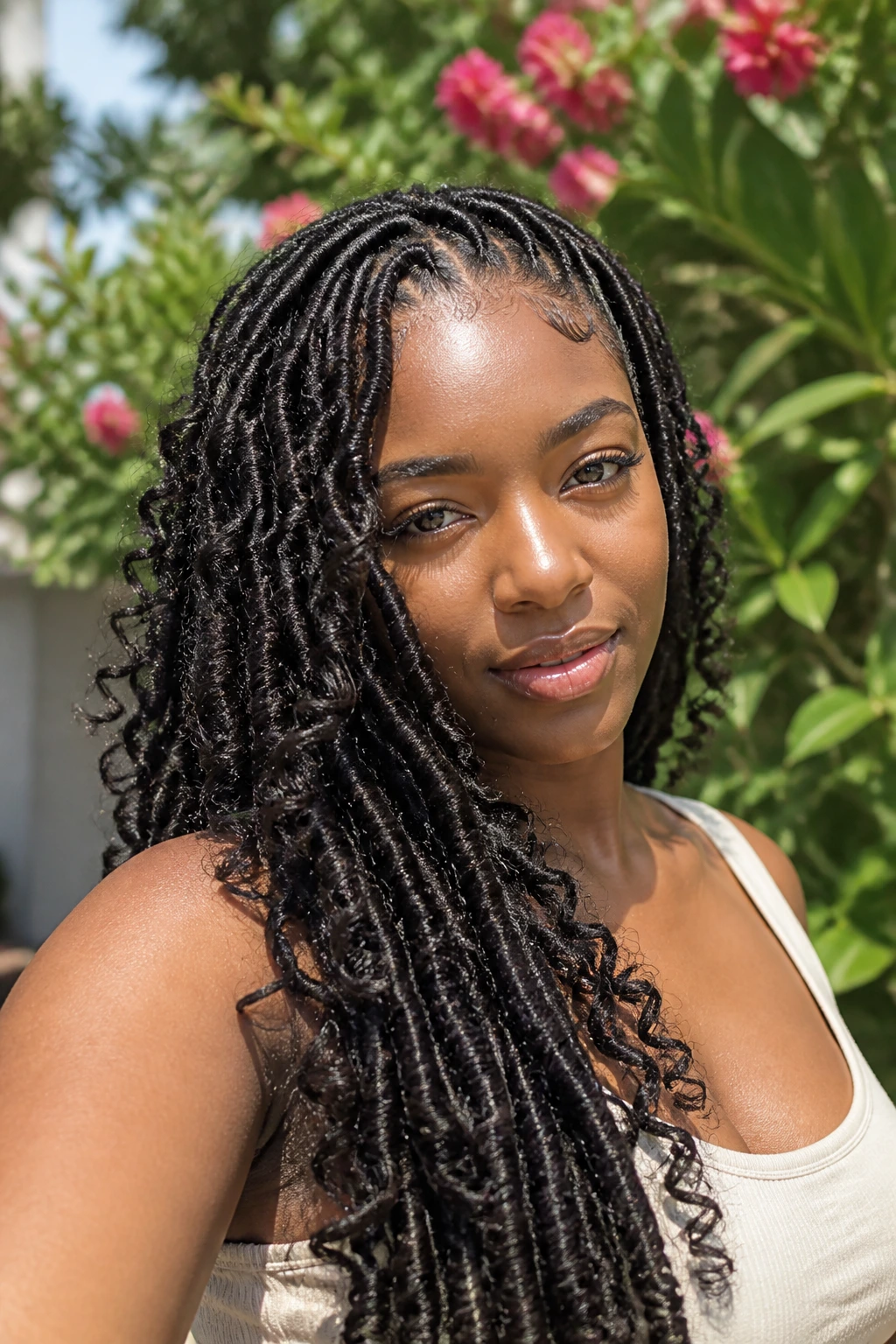
Butterfly locs are a specific type of faux loc that features intentional loops along the length of the loc. These loops create a “winged” or butterfly effect, giving the locs a soft, textured appearance. They are incredibly popular for those who love the look of distressed, voluminous hair.
The Texture Technique
The loops are created by pulling out small sections of the wrapping hair as you work your way down the loc. It’s a creative process that allows you to control exactly how many loops you want. It creates a very full, lush look that is perfect if you want to add volume to your hair.
Managing the Loops
- Be gentle when running your fingers through your hair to avoid pulling the loops out of place.
- Use a lightweight oil spray to keep the synthetic hair shiny and soft.
- These are a fantastic choice if you want a style that feels very “maximalist.”
23. Zig-Zag Part Braids
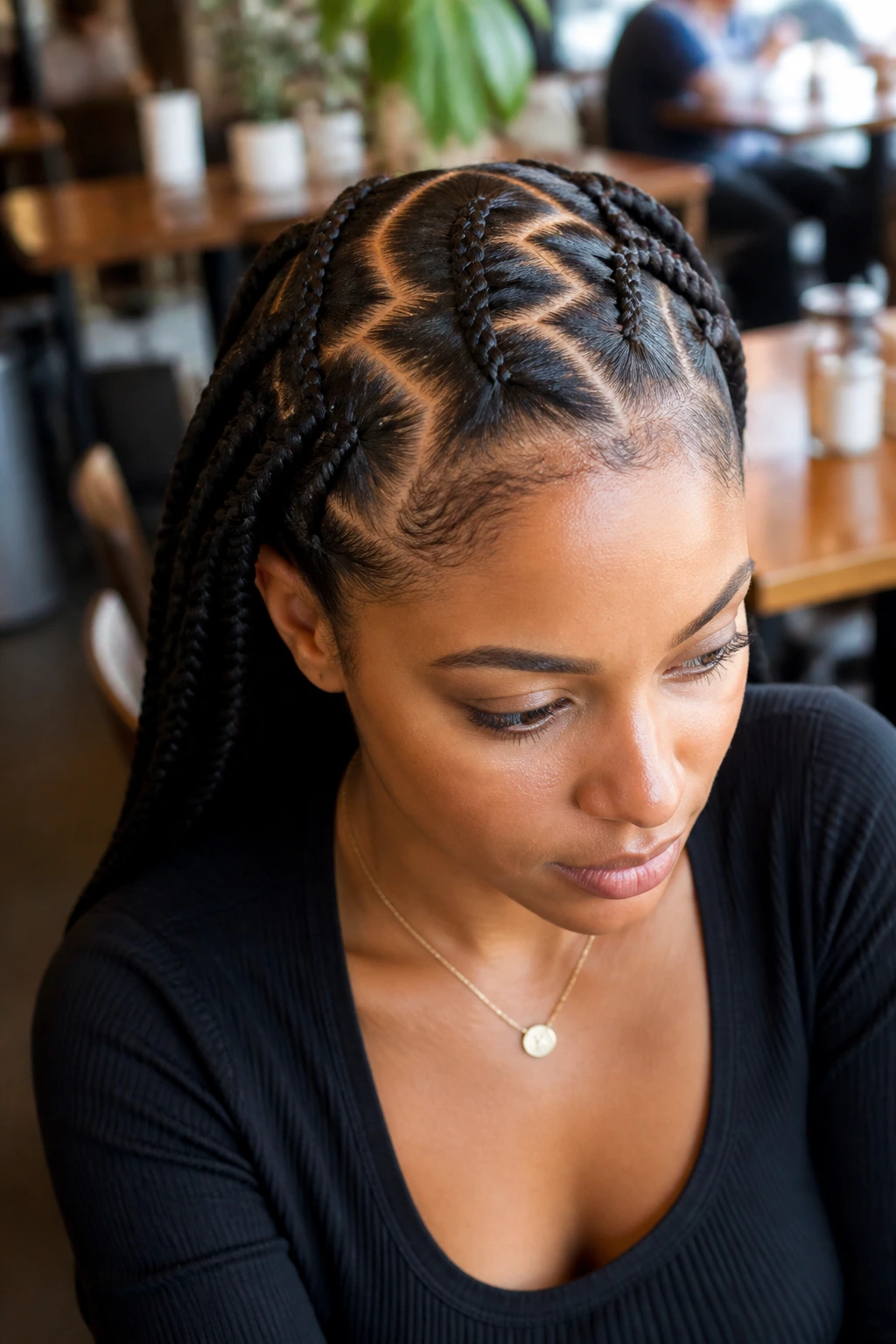
Why settle for straight parts when you can have a zig-zag? Zig-zag parting adds a fun, retro-inspired geometry to your braids. This technique works with almost any style, from box braids to cornrows. It turns the parting itself into a decorative element.
The Visual Interest
When the hair is styled into a high bun or ponytail, the zig-zag parts become visible, creating a stunning visual pattern. It’s a subtle detail that makes the entire style look more complex than it actually is. It is a great way to showcase a braider’s precision.
Precision is Key
- This style requires a sharp-tail comb and a very steady hand.
- Use a firm-hold gel on the parts to ensure the zig-zag remains sharp and doesn’t get matted with nearby hair.
- This works especially well with high-contrast styles, like using blonde or honey-colored hair in a black base.
24. Mohawk Braids
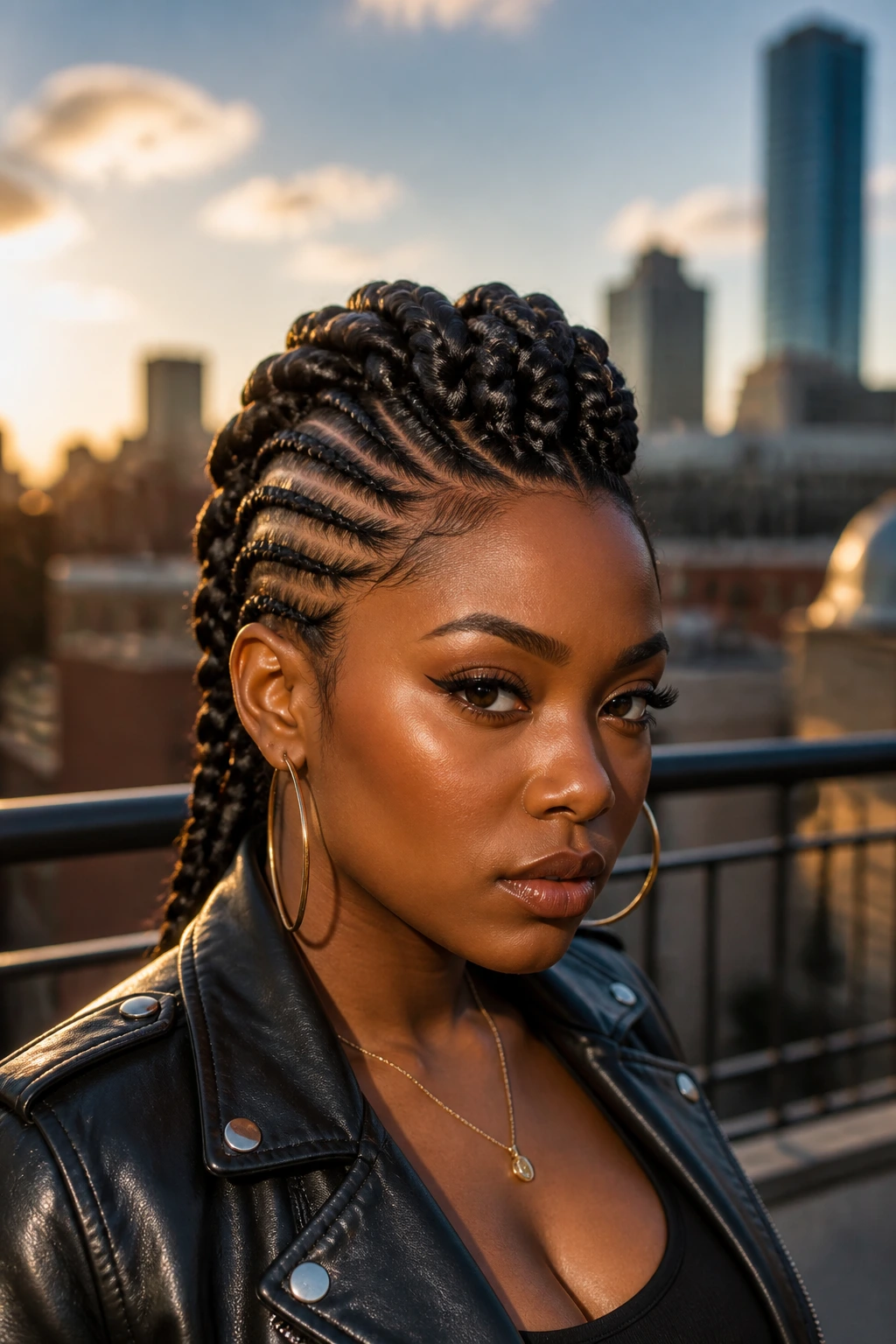
A braided mohawk is all about drama. By braiding the sides toward the center and creating a row of braids that stand tall, you mimic the look of a mohawk without cutting a single hair. This is an excellent choice for a photoshoot, a party, or any time you want to feel like a rockstar.
Playing with Height
The volume comes from how the center braids are secured. You can use large jumbo braids or intricate smaller ones stacked high. The height creates a powerful silhouette that elongates the face and adds a touch of intensity to your look.
How to Style
- Keep the sides very tight to create a sharp contrast with the voluminous center.
- Use hair jewelry to run down the center line of the mohawk.
- This is a high-impact style, so keep the rest of your makeup and accessories simple to let the hair shine.
25. Braids with Charms and Rings
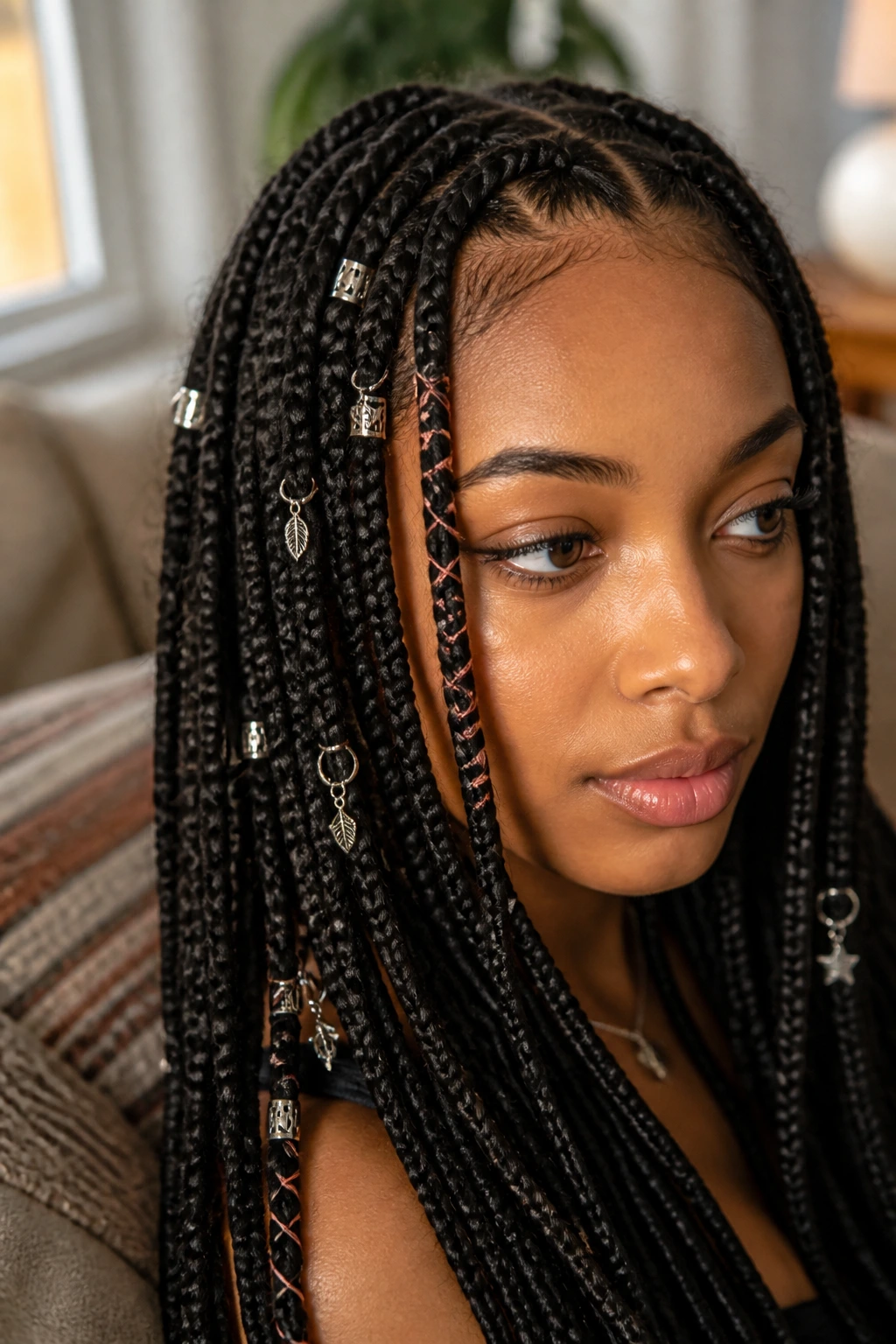
Sometimes it’s not about the pattern, but the jewelry. Adding metallic rings, silver charms, or even thread wraps to your braids can change the entire personality of the style. This is a great way to update a standard set of box braids without having to get a completely new style.
The Decorative Advantage
Charms can be placed randomly or in a specific pattern. You can mix and match materials—try wooden beads, brass rings, and colored thread for a global, collected look. It’s a great way to express your creativity.
Where to Buy
- You can find hair charms at most beauty supply stores or online crafting shops.
- Make sure the rings are made of materials that won’t rust if they get wet.
- Don’t overcrowd the braids; space the jewelry out so it looks like an intentional accent rather than clutter.
26. Two-Tone Braids
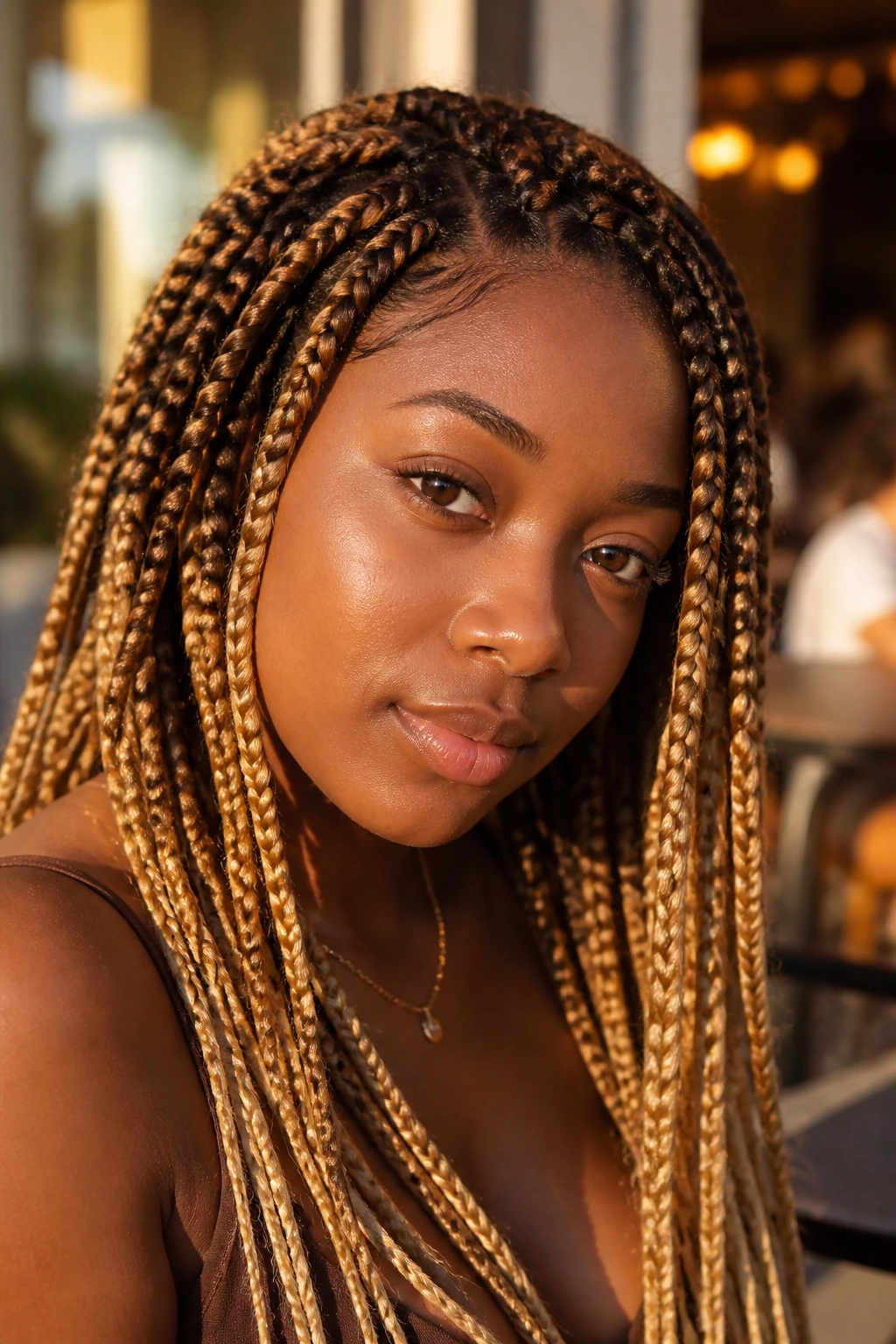
Using two different hair colors for your braids—or even doing the top half in one color and the bottom in another—is a classic way to add personality. Whether it’s a subtle chocolate-and-honey mix or a bold black-and-silver contrast, two-tone styles are visually arresting.
Blending Tips
- For a seamless look, choose two colors that are close in tone.
- For a bold look, choose colors that provide a high contrast, like deep black and platinum blonde.
- Consider doing the braids themselves in one color and adding “dipped” ends in another for a sophisticated, dipped-dye effect.
Choosing Your Palette
- Warm tones like copper and burgundy are great for fall and winter months.
- Cool tones like silver, blue, or platinum are popular for a fresh, modern aesthetic.
- Ask your braider how they blend the hair, as mixing the strands during the braiding process creates a more natural, multi-dimensional color.
27. High-Ponytail Knotless Braids
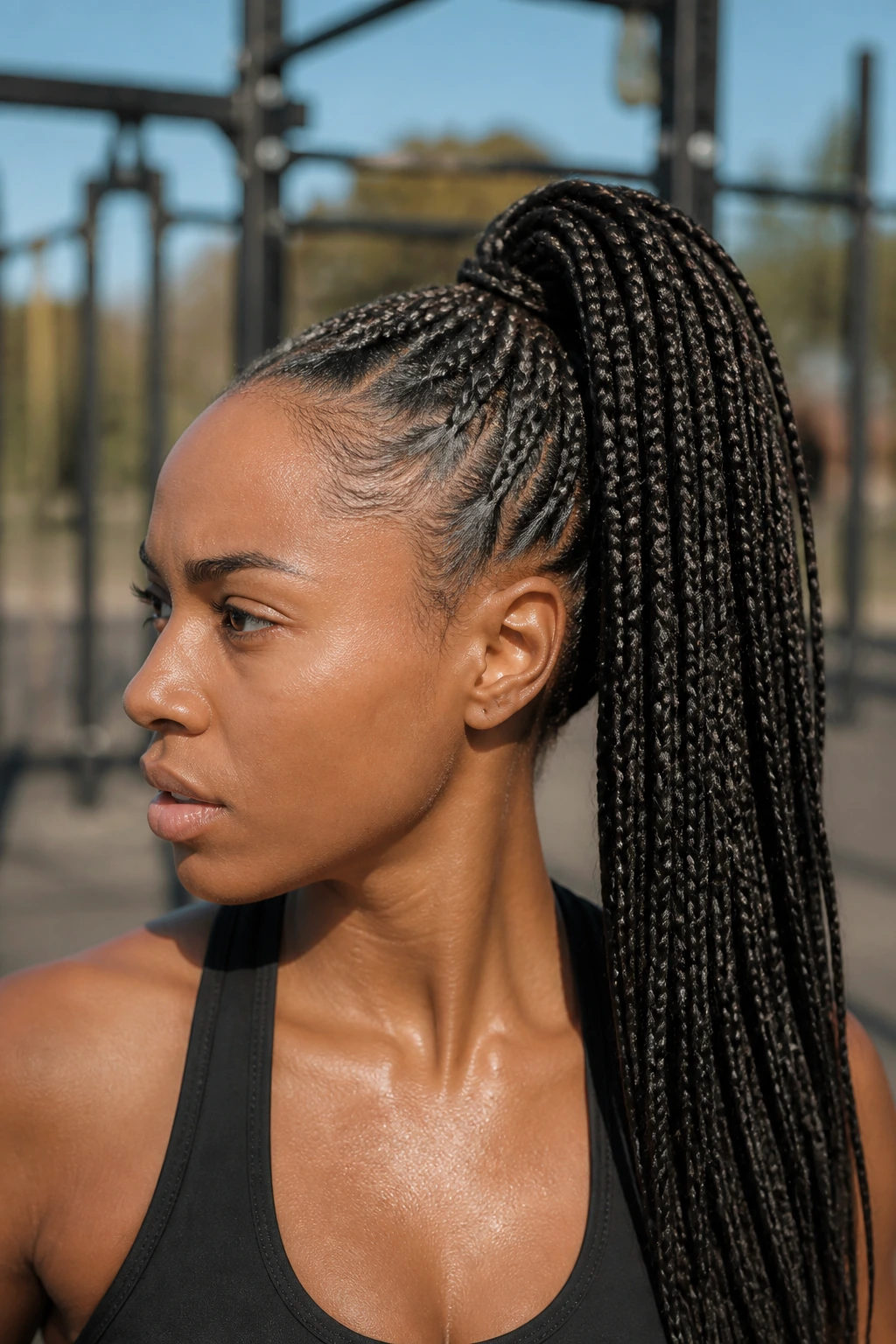
Knotless braids are already lightweight, but when you pull them into a high ponytail, they become even easier to manage. This style is the ultimate “clean girl” aesthetic. It keeps all the hair away from your face and neck, and the knotless roots ensure the ponytail lays flat against the head without any bulky bumps.
Why It’s Efficient
This style is perfect for those who work out or lead an active lifestyle. The high pony prevents the braids from dragging, and because they are knotless, the base of the ponytail feels incredibly secure and comfortable.
Maintenance for the Pony
- Use a satin scrunchie to avoid damaging the braids at the base.
- If the ponytail feels too heavy, you can split it into two sections and pin them down for a more relaxed look.
- Use an edge brush to keep the perimeter sleek, completing the polished, high-pony look.
28. Micro-Cornrows with Natural Curls
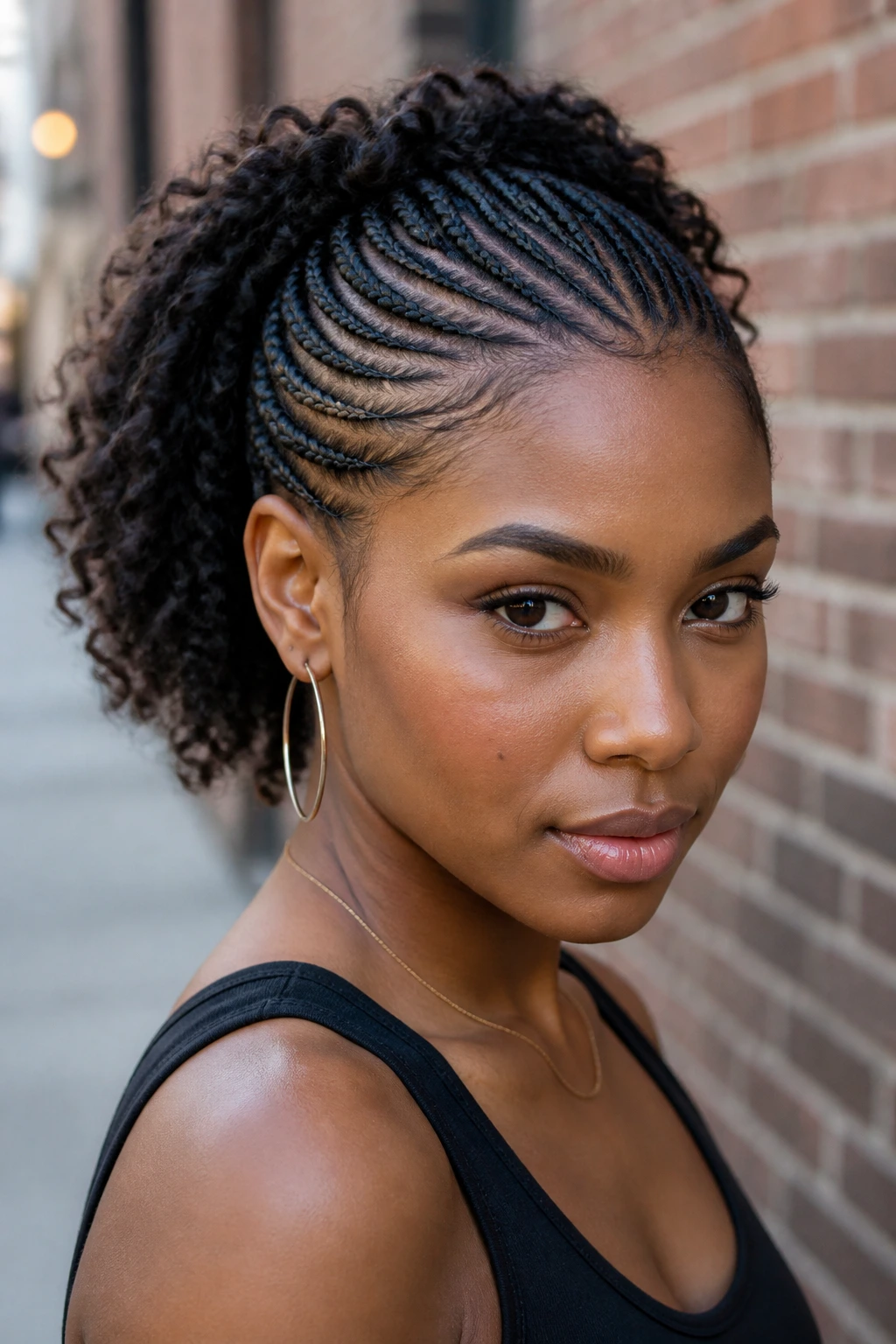
This style combines tight, tiny cornrows on the scalp with a voluminous, natural curly ponytail in the back. It’s the perfect way to embrace your natural texture while still rocking a structured, braided style. You get the best of both worlds: the longevity of braids and the bounce of your natural hair.
The Texture Blend
By braiding the front half and leaving the back out, you significantly reduce the amount of time you spend on your hair each morning. The front stays styled and protected, while the back gives you the volume and movement you love.
Care for the Curls
- Use a curl-defining cream on the loose hair to keep the pattern tight.
- Protect the loose curls with a silk bonnet at night to keep them from tangling.
- Refresh the curls with a light spritz of water and a leave-in conditioner in the mornings.
Final Thoughts
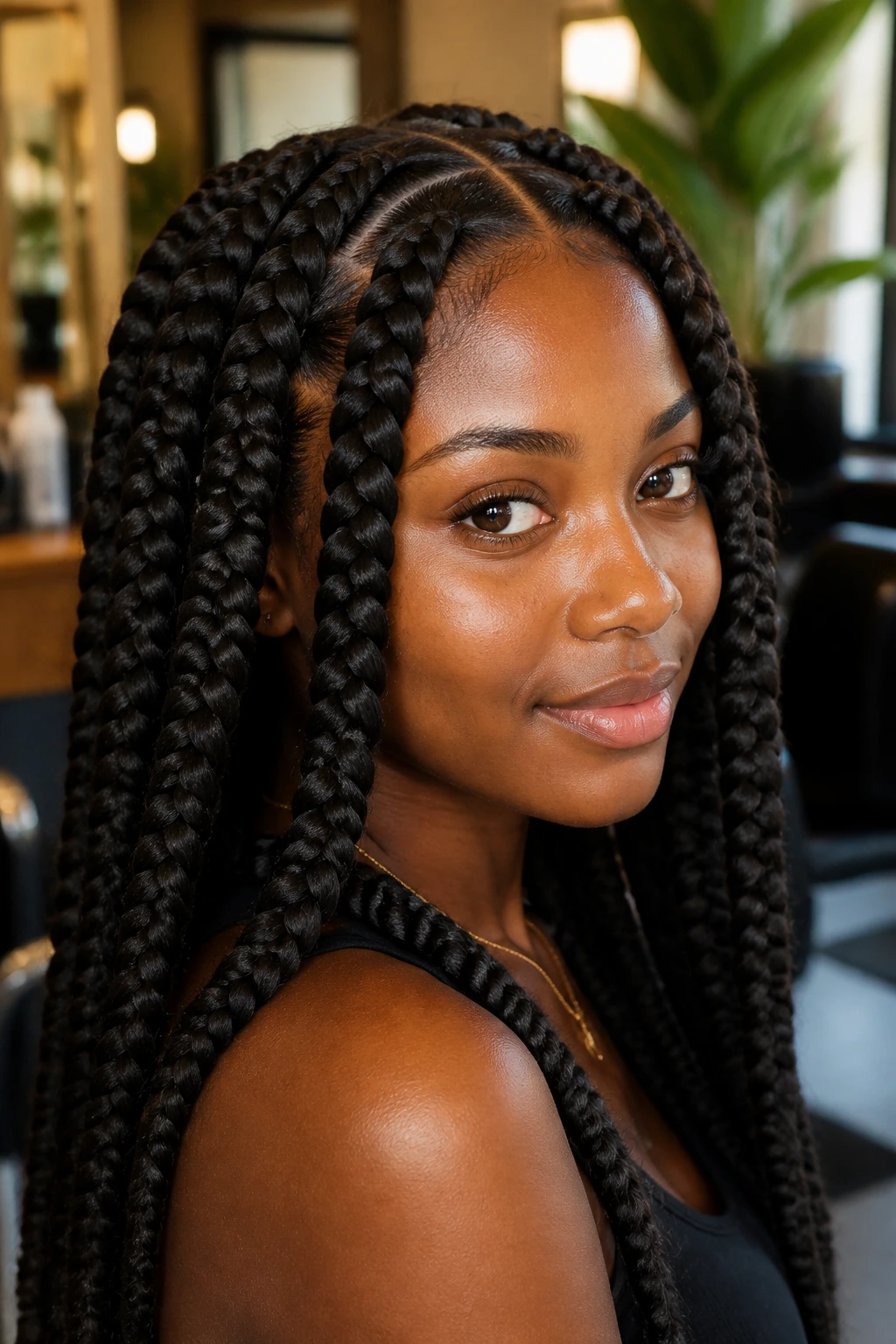
Finding the right braided style is a journey of trial and error. The most important thing is to prioritize the health of your scalp and edges, regardless of how intricate the pattern might be. Always communicate with your stylist about your hair’s history, tension preferences, and any specific areas that might be sensitive. Braids are a beautiful way to express yourself, but remember that the most “on-trend” style is the one that feels most comfortable and authentic to you. Take care of your natural hair underneath, stay consistent with your moisturizing routine, and enjoy the confidence that comes with a fresh, expertly executed look.