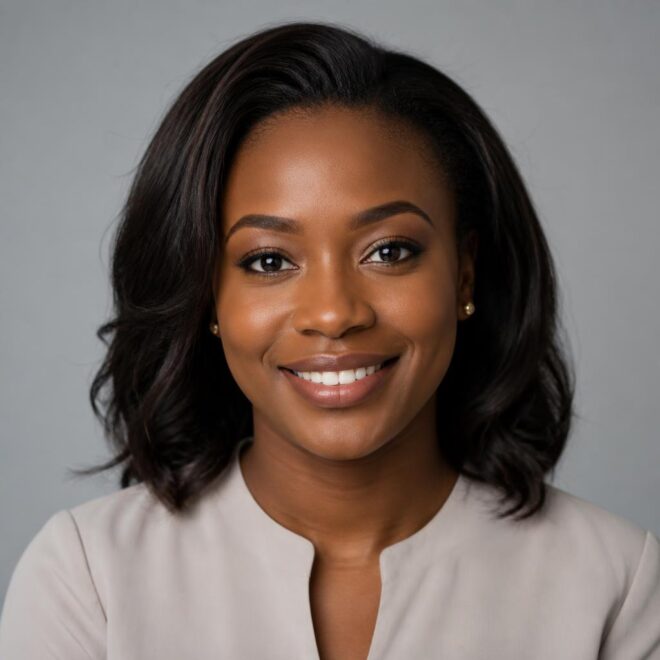


Braids have been a cornerstone of cultural expression, aesthetic beauty, and hair protection for generations. There is an inherent rhythm to the process—the tactile click of hair against skin, the tension of a clean part, and the satisfaction of a pattern emerging from a tangle of curls. Whether you are aiming for a protective style to help your hair retain length or simply want an intricate look that holds up against the humidity, the sheer variety of braided styles is staggering. Choosing the right one comes down to understanding your hair’s texture, your commitment to the installation process, and how much time you are willing to spend in a stylist’s chair.
Some styles prioritize ease and speed, while others are built for endurance, lasting weeks with minimal maintenance. The magic of braiding lies in how it frames the face and simplifies your daily routine. By shifting from heat-based styling to natural, low-tension braids, you allow your scalp to breathe and your strands to rest. Let us explore the diverse world of braided styles that celebrate the versatility of natural hair.
1. Box Braids with Feed-In Roots
Box braids are perhaps the most recognizable style in the natural hair community, but the technique has evolved significantly. The feed-in method is a game-changer because it eliminates that initial heavy, stiff feeling at the scalp. Instead of braiding in a thick bundle of extension hair right at the root, your stylist gradually adds the synthetic fiber as they move down the braid.
Why This Technique Matters
By tapering the amount of hair at the base, you reduce the immediate tension on your follicles. This creates a more natural, seamless look that mimics your own hair growth pattern. It is much lighter on the head, making it a preferred choice for people with finer strands who usually struggle with the weight of traditional extensions.
Maintenance Tips for Longevity
- Apply a lightweight oil to your scalp every few days to prevent dryness and itching.
- Protect the style at night by wearing a satin bonnet, which keeps the fibers smooth and prevents frizz from developing prematurely.
- If you notice the roots getting fuzzy, a small dab of edge control on a fine-tooth comb can smooth those stray flyaways back into the braid.
Pro tip: Do not pull the braids into a high ponytail while they are brand new, as the weight can cause stress on your hairline; wait at least five days before putting them up.
2. Classic Senegalese Twists
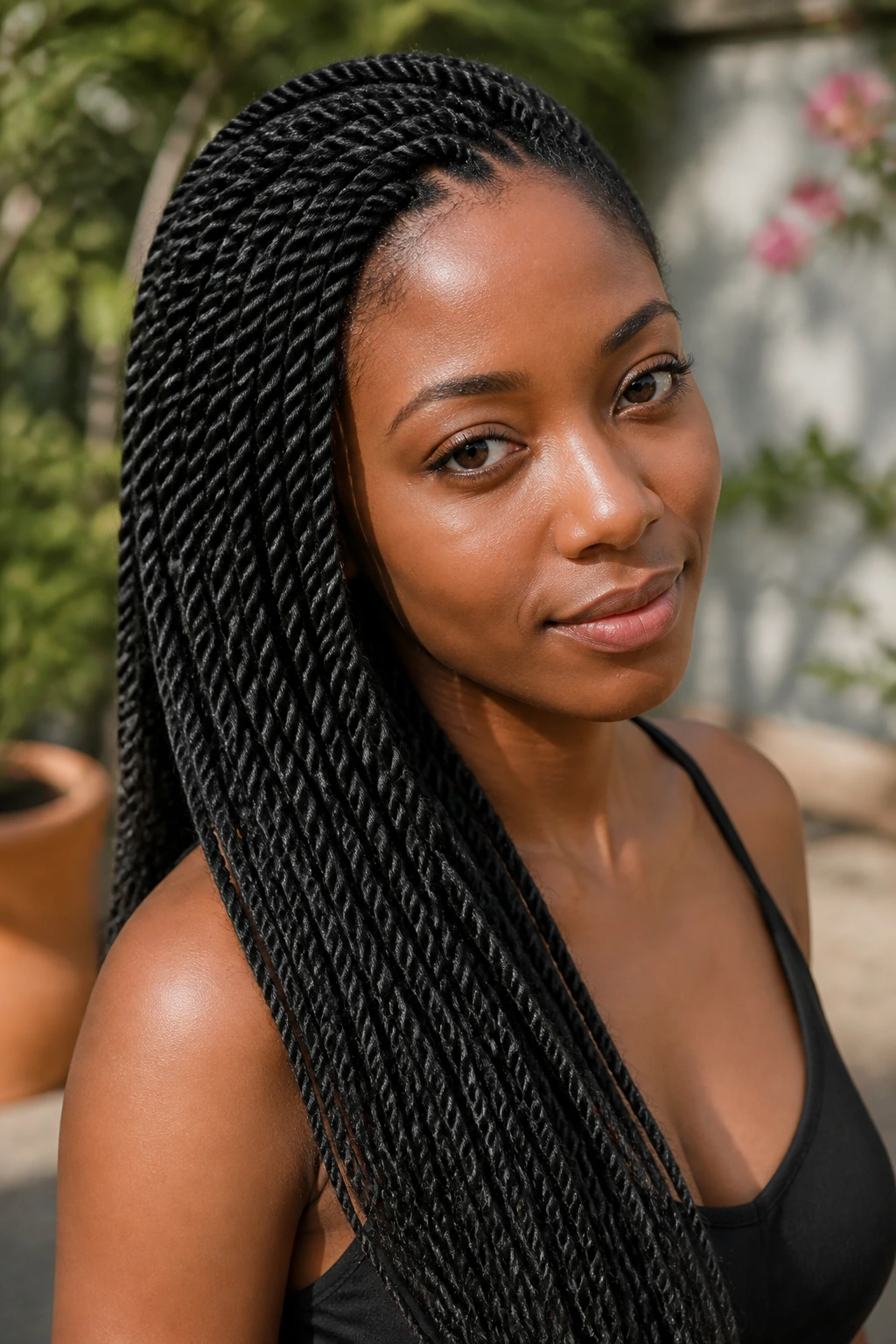
Senegalese twists are the smoother, silkier sibling of the box braid. While braids rely on a three-strand interweaving process, twists use a two-strand rope technique. This requires a different type of synthetic fiber, usually Kanekalon or Marley hair, which has a bit more grip to hold the twist together without unraveling.
Achieving the Perfect Rope Texture
The beauty of this style is in the uniform thickness of each twist. Because they are smoother than braids, they offer a very clean, polished look that works just as well in a corporate setting as it does on a weekend outing. You can choose to leave the ends sealed with hot water for a tapered look or leave them curly for a bit of soft movement.
Who Should Choose This Style
If you have highly textured 4C hair, the grip of the extensions will provide a long-lasting hold that stays neat for weeks. It is an excellent protective style for those who want to avoid the bulk of many other braid types, as twists tend to lie flatter against the head.
3. Bohemian Goddess Braids
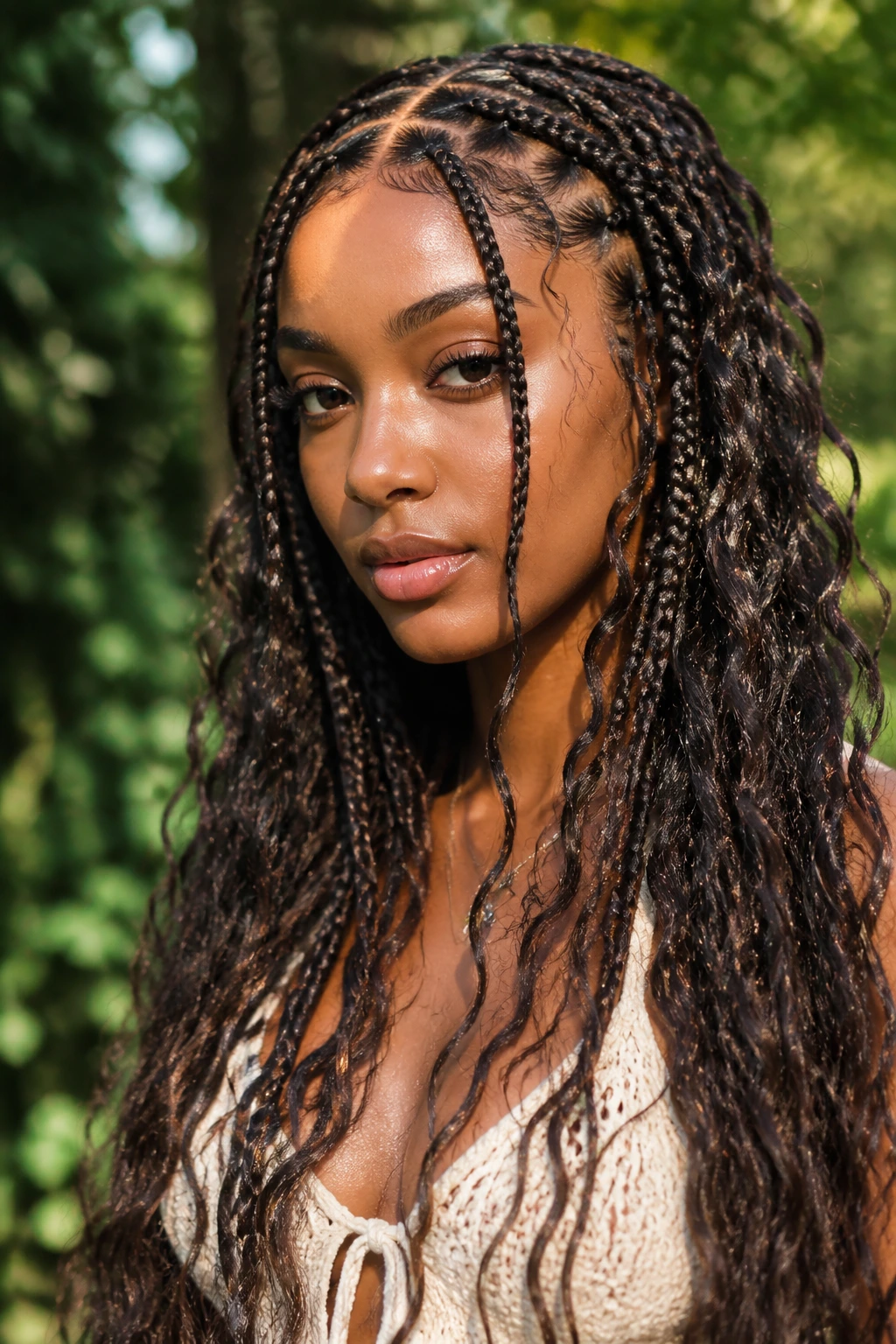
Bohemian braids—often called “goddess braids”—incorporate loose, wavy extensions that hang free from the braid shaft. This style is all about texture contrast. You get the structure of a tight braid at the root, paired with the wild, romantic feel of loose, curly ends that frame your face and shoulders.
Managing the Loose Ends
The primary challenge here is preventing the loose hair from tangling. Because synthetic hair is prone to friction, you need to keep those curls hydrated. A light spritz of water-based leave-in conditioner or a dab of mousse once every two days helps keep the definition crisp.
Customization Options
You are not limited to one look here. You can choose to have just a few pieces of loose hair peeking out, or go for a full-volume effect where half of the extension hair is left unbraided. If you are preparing for a vacation, this style looks effortless and beachy, requiring almost no styling time in the morning.
4. Feed-In Cornrows
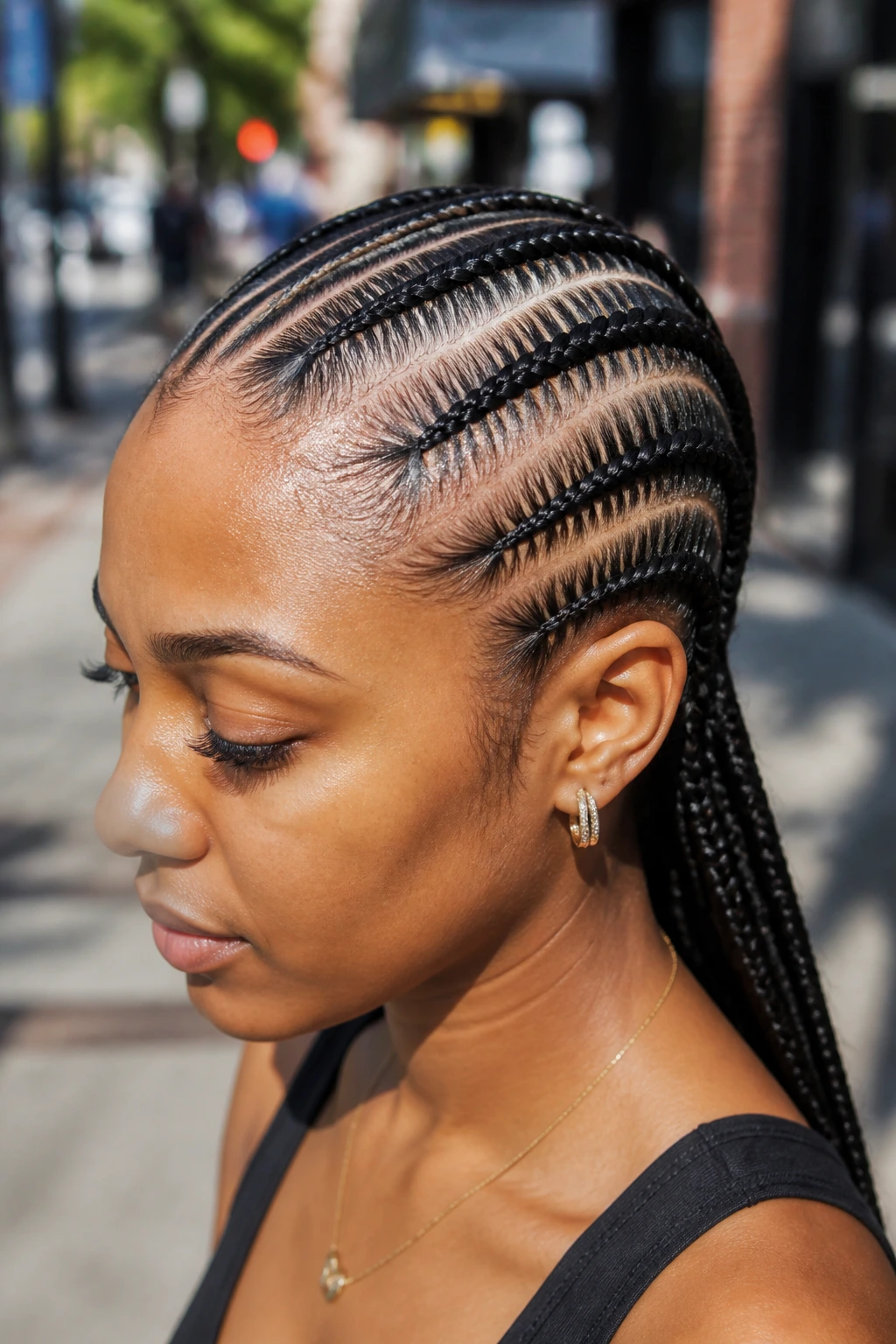
Feed-in cornrows are the evolution of the traditional braid-down. By starting with just your natural hair and gradually adding extensions, the braid appears to “grow” out of your scalp. This technique is incredibly popular for protective styles because it minimizes the stress on your edges, which are often damaged by heavy, pre-braided cornrows.
Why These Are So Popular
The lack of a knot at the beginning of the braid is what makes this style look so sophisticated. It mimics the look of a natural hairline, making the braids appear as though they are part of your biological hair. The pattern can be as simple as straight-back lines or as complex as geometric, swirling designs that showcase artistic braiding.
The Importance of Tension
- Ensure your stylist does not pull the hair too tight at the nape or the temples.
- If you feel a “throbbing” sensation after the appointment, apply a cool, damp cloth to the scalp to help relax the area.
- Do not keep these in for more than six weeks, as the roots will begin to lock and pull on your natural hair growth.
5. Fulani-Inspired Braids
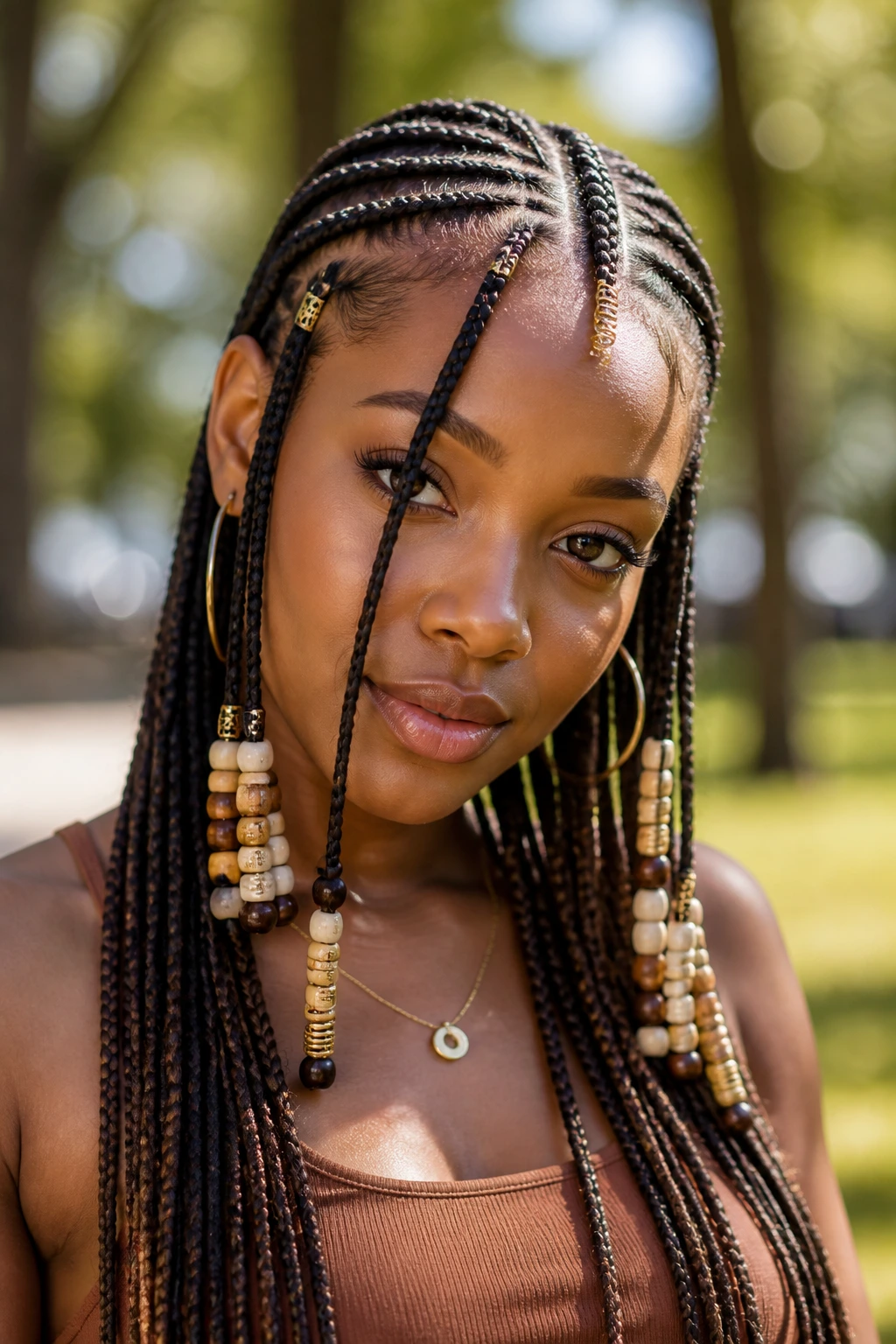
Named after the Fula people of West Africa, these braids are iconic for their specific pattern. They usually feature a center cornrow and a few braids running toward the ears, often adorned with beads, shells, or golden rings. The rest of the head is typically finished with box braids or twists.
Styling the Decorative Elements
The ornaments are what really define the look. You can keep it minimalist with a single ring on each braid or go bold with a full cascade of wooden or metallic beads. These accessories not only add personality but also add weight to the ends, which helps the braids hang straight and uniform.
Cultural Significance and Modern Usage
This look is a beautiful nod to heritage and history, and it has become a staple for those who want a style that feels curated and intentional. While the braiding takes time, the result is a sophisticated, regal aesthetic that requires almost zero daily effort to keep looking sharp.
6. Knotless Box Braids
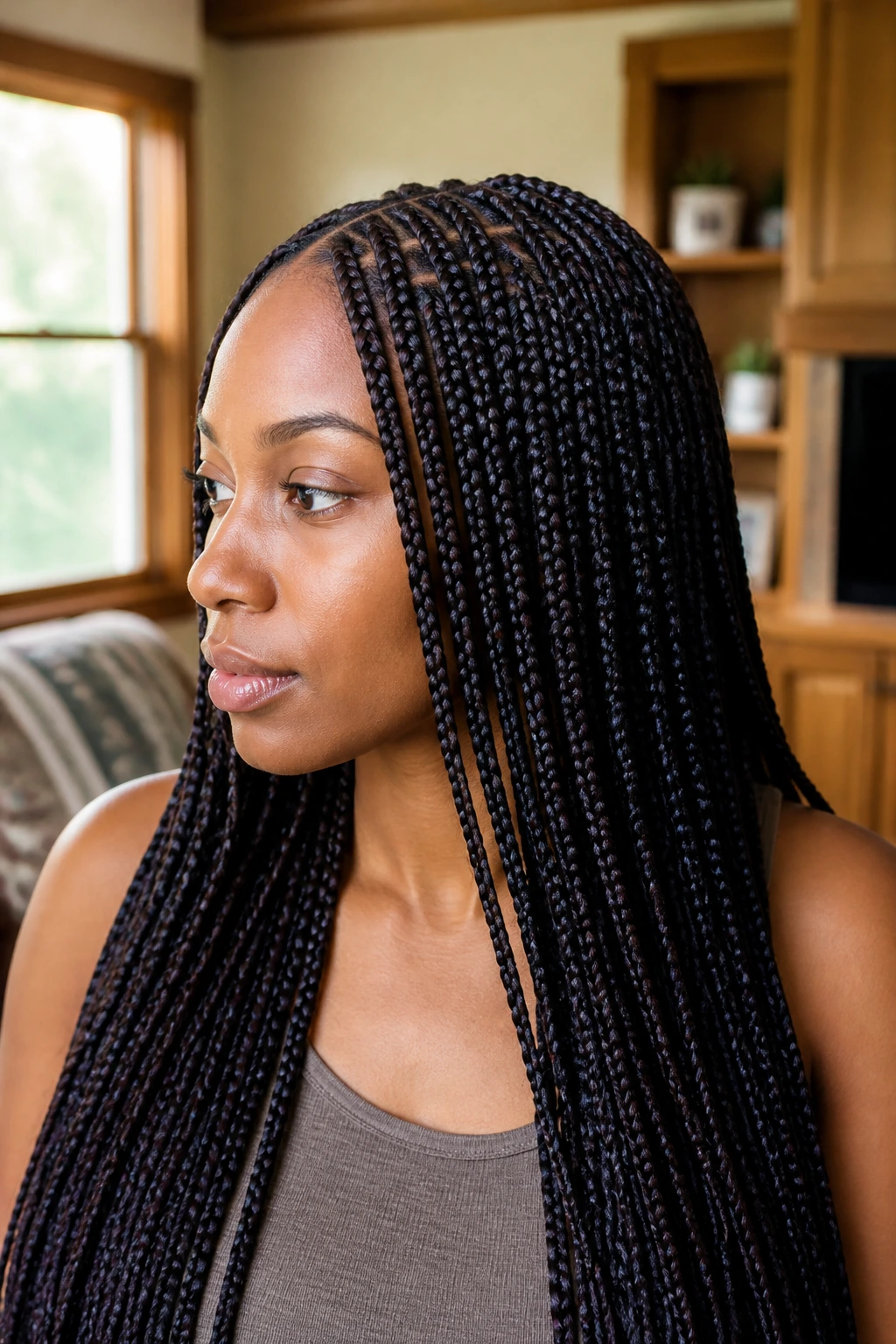
Knotless braids have effectively revolutionized the hair industry over the last decade. By using the feed-in method for the entire length of the braid, the stylist avoids that signature “knot” at the root. The result is a braid that is flat, flexible, and moves exactly like your own natural hair from the very first day.
The Benefits for Sensitive Scalps
If you have ever had to deal with the painful, heavy “break-in” period of traditional braids, knotless is your solution. Because there is no knot, the braids do not pull on your scalp or create the tension that leads to headaches. They are incredibly comfortable, allowing you to style them into topknots or side-swept looks immediately.
Why They Last Longer
While traditional braids might last four to six weeks before looking old, knotless braids often maintain their freshness for eight weeks or more. Because the base is so flat, the hair doesn’t get as frizzy as it grows out, making it one of the most reliable styles for those with busy, high-intensity lifestyles.
7. Micro-Braids
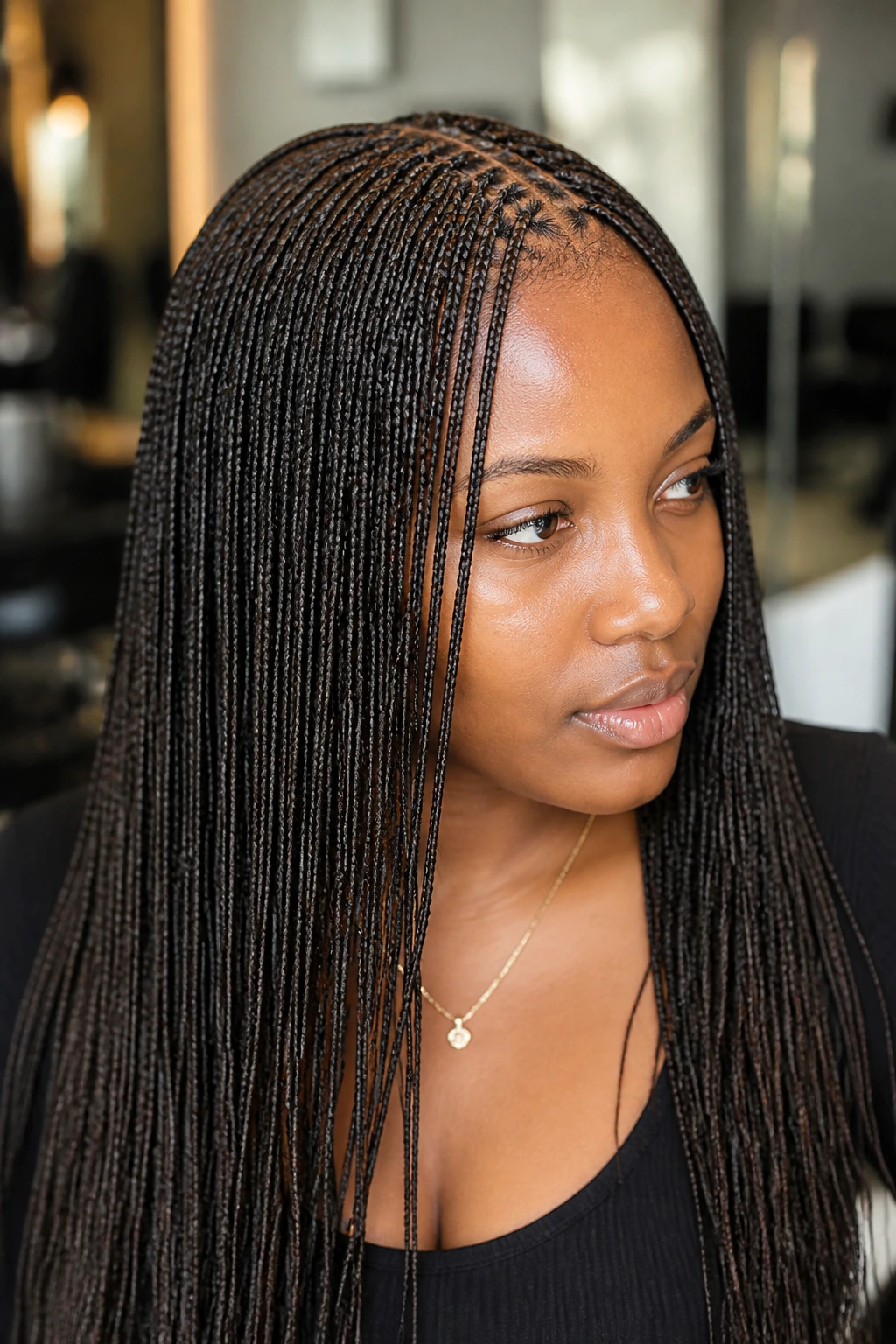
Micro-braids are a labor of love—literally. These are small, fine braids that look more like individual strands of hair than a protective style. They offer the most versatility in terms of styling, as you can wear them in a bun, a high ponytail, or even loose, much like you would with your natural hair.
The Time Commitment
Do not underestimate the time required for this style. It often takes two people working simultaneously to complete the look in a reasonable amount of time. You are essentially trading time for a style that provides the most natural movement and styling freedom.
Handling the Thin Strands
Because the braids are so small, you have to be careful with the sheer volume of extensions added to your head. Too much hair will cause the style to be heavy and put excessive strain on your natural hair strands. Make sure your stylist uses a lightweight synthetic fiber to keep the overall weight manageable.
8. Tribal Braids
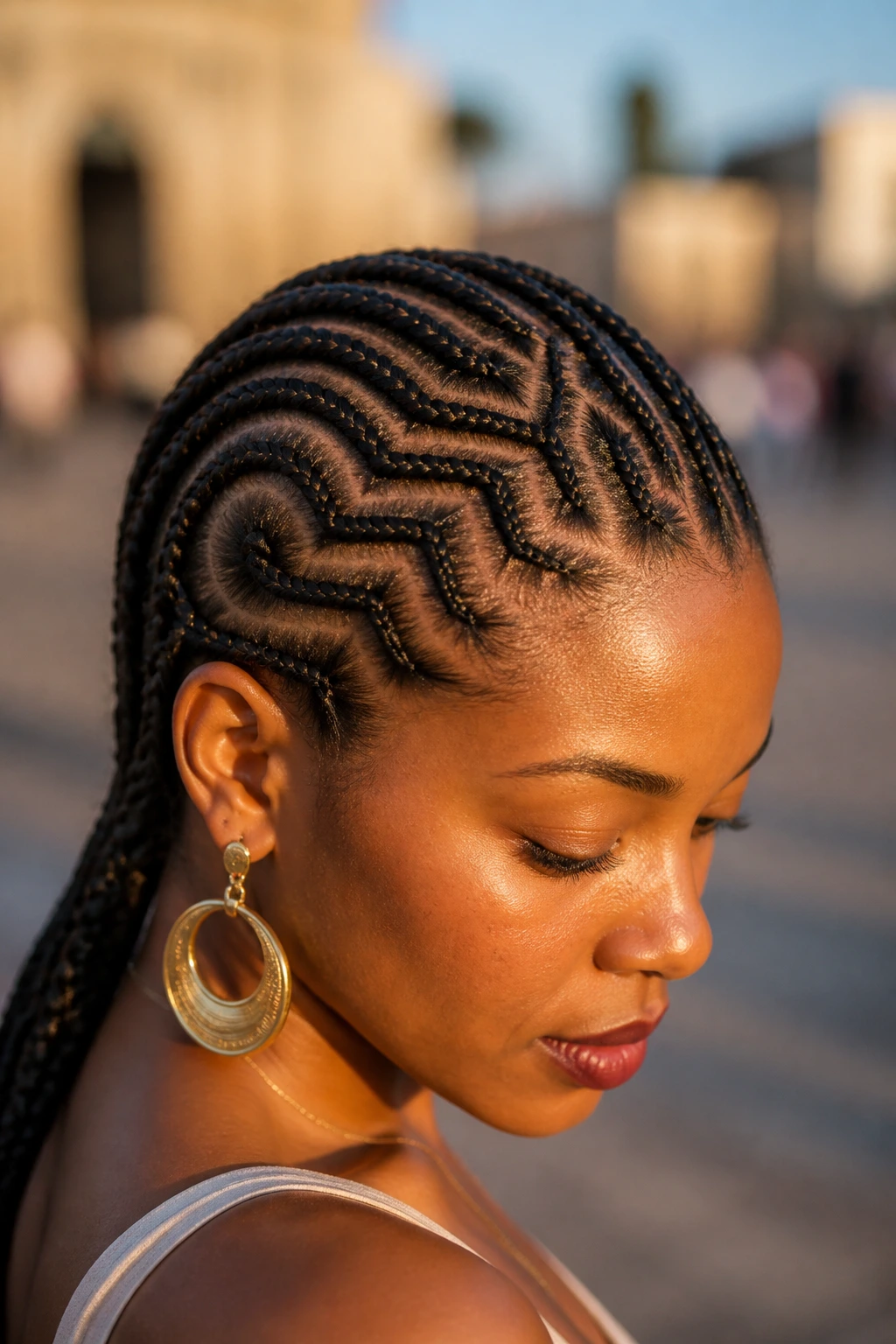
Tribal braids are often a blend of techniques—combining cornrows with individual braids or twists. The “tribal” label is used broadly to describe styles that feature artistic, asymmetrical parting systems. This is where you see zig-zags, circles, and intricate designs that wrap around the crown of the head.
Defining Your Pattern
You can be as creative as you like here. Some people prefer a large, statement-making heart pattern, while others lean into geometric squares and diamonds. The key to this look is precision; the parts must be clean and defined to ensure the design stands out against your scalp.
Why It’s a Summer Favorite
This style keeps your scalp exposed, which is perfect for hot weather. You can easily clean your scalp with a bit of witch hazel or a dedicated scalp cleanser, and the air can circulate freely through the intricate partings, preventing sweat buildup and irritation.
9. Goddess Locs
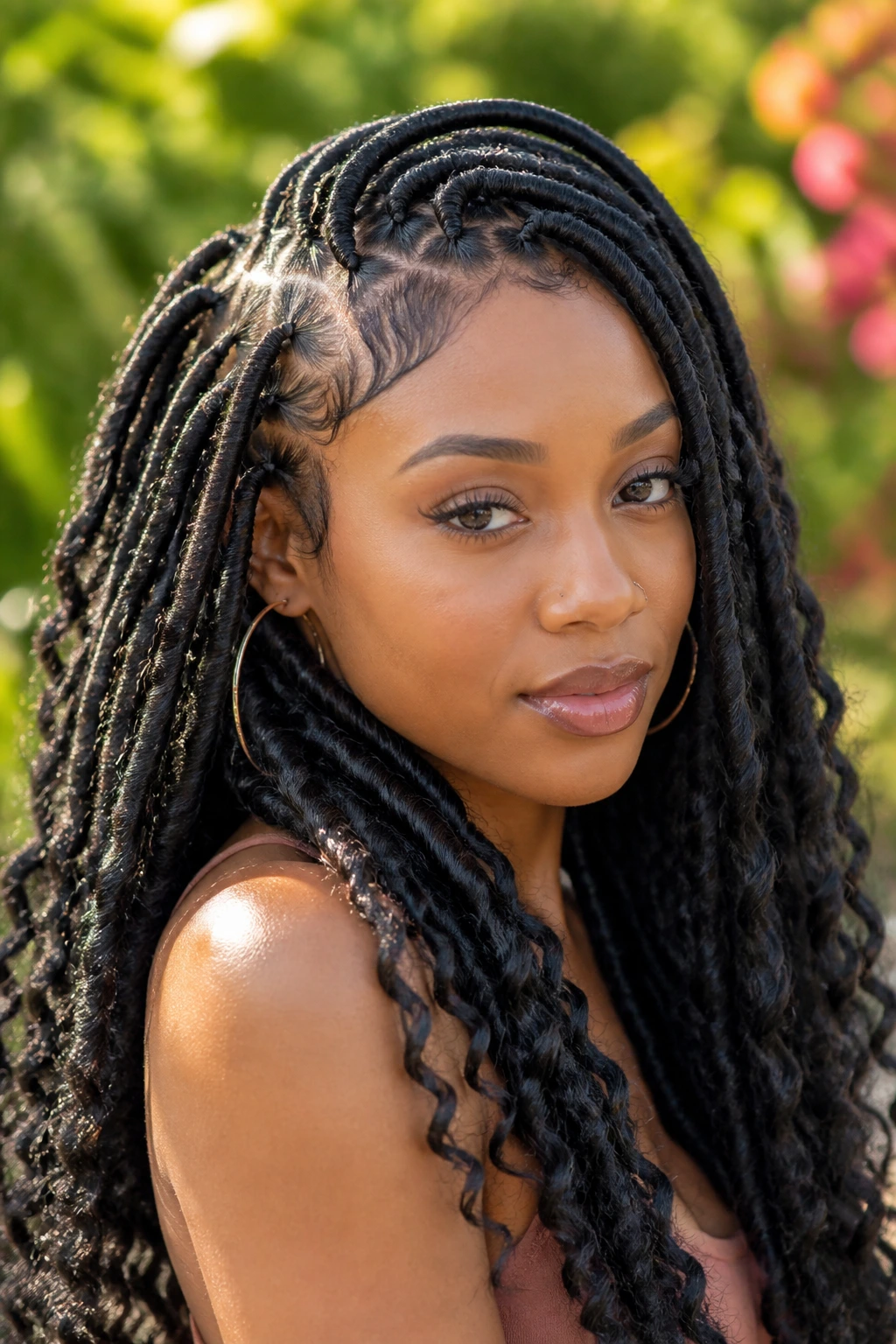
Technically a “faux-loc” style, goddess locs are created using a braiding and wrapping method that mimics the look of mature, bohemian-style locs. The ends are left wavy and loose, and the shaft is wrapped with human hair or textured synthetic hair for a slightly unkempt, natural finish.
Achieving the “Soft” Look
The difference between goddess locs and traditional faux locs is the hair type. Goddess locs use a softer, silkier fiber that has a slight sheen. This gives the locs a “lived-in” feel rather than a rigid, uniform structure. They are lightweight and get better with age, as the slight frizz only adds to the authentic aesthetic.
Prep and Installation
You need a good base of cornrows to support the weight of these locs. Because you are essentially braiding your hair and then wrapping it, the style can be bulky if the base braids are too large. Ask your stylist for smaller, tighter base cornrows to ensure the final look is sleek.
10. Jumbo Box Braids
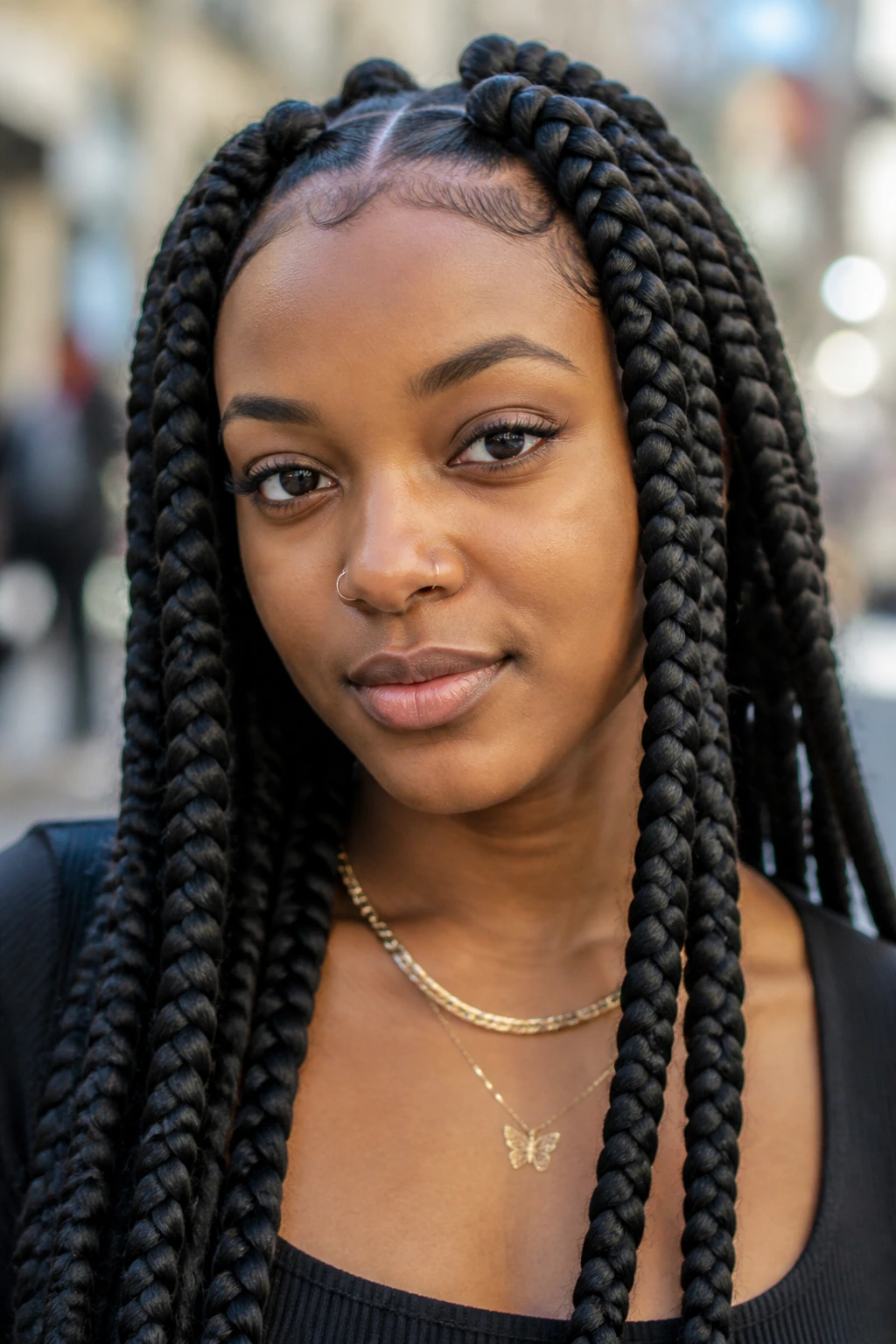
When you want the look of braids but you don’t have twelve hours to sit in a chair, jumbo box braids are the way to go. These are thick, chunky braids that can be installed in as little as three or four hours. They make a huge visual statement and are incredibly easy to take down when you are ready for a change.
The Styling Paradox
With jumbo braids, you have less styling freedom than with micro-braids, but the impact is unmatched. They look bold, modern, and high-fashion. Because there are fewer braids, your scalp gets more sun and air, which is great for health, but you must be diligent about keeping the exposed parts of your scalp moisturized with a light oil.
Maximizing the Volume
If your natural hair is thin, these braids can add a massive amount of volume to your head. Be careful with the weight, though. Use a pre-stretched synthetic fiber that is specifically designed to be lightweight, and avoid using too many packs of hair, or you will find the style uncomfortable by the end of the first week.
11. Dutch Braids
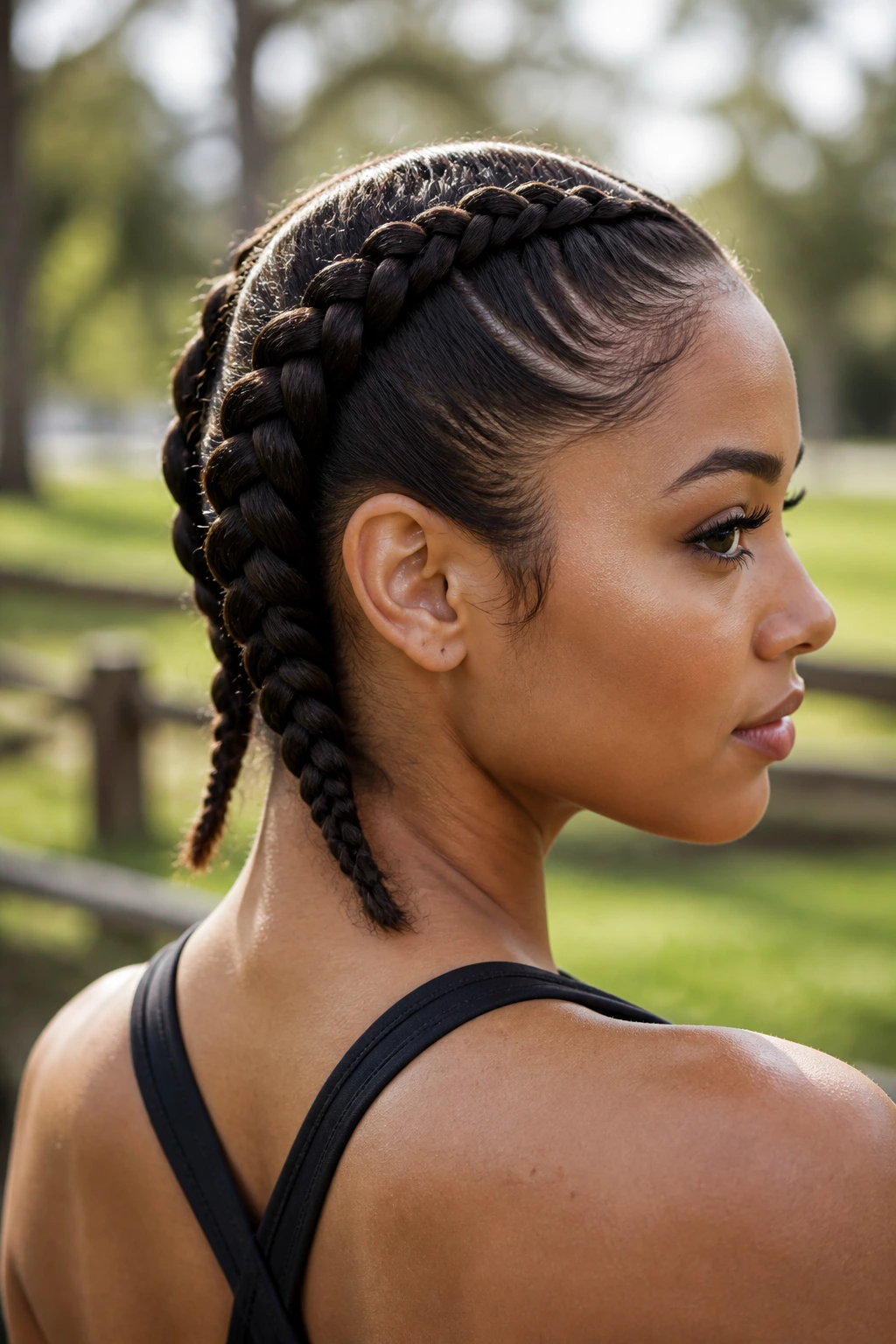
Dutch braids are a classic, versatile option that uses an under-braid technique. This creates a “popped” look where the braid sits on top of the head rather than being tucked in. You can create two large Dutch braids that start at the forehead and run down to the nape, which is perfect for an active, athletic lifestyle.
How to Achieve Fullness
If your natural hair isn’t quite thick enough to get that full, voluminous Dutch braid look, you can “pancake” the braids. Once the braid is secured at the ends, gently tug at the sides of each loop to fan it out. This trick adds instant visual width and depth without needing any extensions at all.
Transitions to Other Styles
Dutch braids are the perfect “in-between” style. They work for a quick trip to the gym, a formal event, or just a day of errands. If you want to elevate the look, you can pull the two braids together at the back into a low bun or a chignon, turning a casual look into something much more elegant.
12. Rope Twists
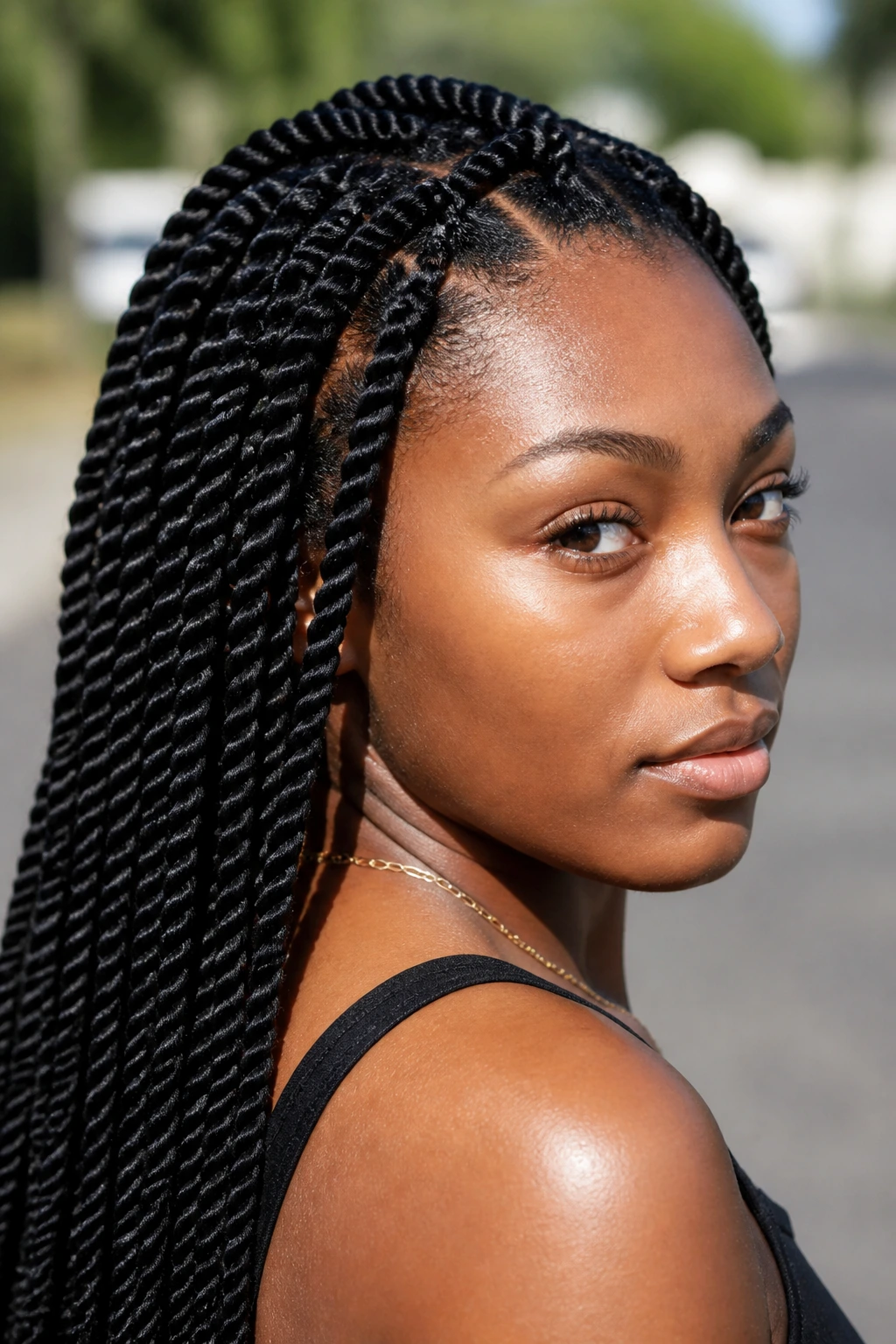
Rope twists—often called “Senegalese” or “Havana” twists depending on the size—are defined by the tight, two-strand winding technique. They look like thick ropes of yarn or cord, providing a very structured, minimalist aesthetic. These are excellent for individuals who prefer a clean, sleek look over the textured, frizzy vibe of braids.
Why They Stay Neat
Unlike braids, which can develop “fuzzy” hairs along the length, rope twists hold their structure quite well because of the tightness of the wrap. You can keep them looking fresh by smoothing them with a bit of shine spray or mousse. They are also incredibly easy to wash; the water flows through the twist much better than it does through a dense braid.
Choosing Your Hair Type
For rope twists, the choice of hair is critical. You need a fiber that is slightly coarse and holds its grip. If you choose a fiber that is too silky, the twists will unravel the moment you move your head. Ask your local beauty supply for “spring twist” or “marley” hair, which provides the necessary friction.
13. Crochet Braids
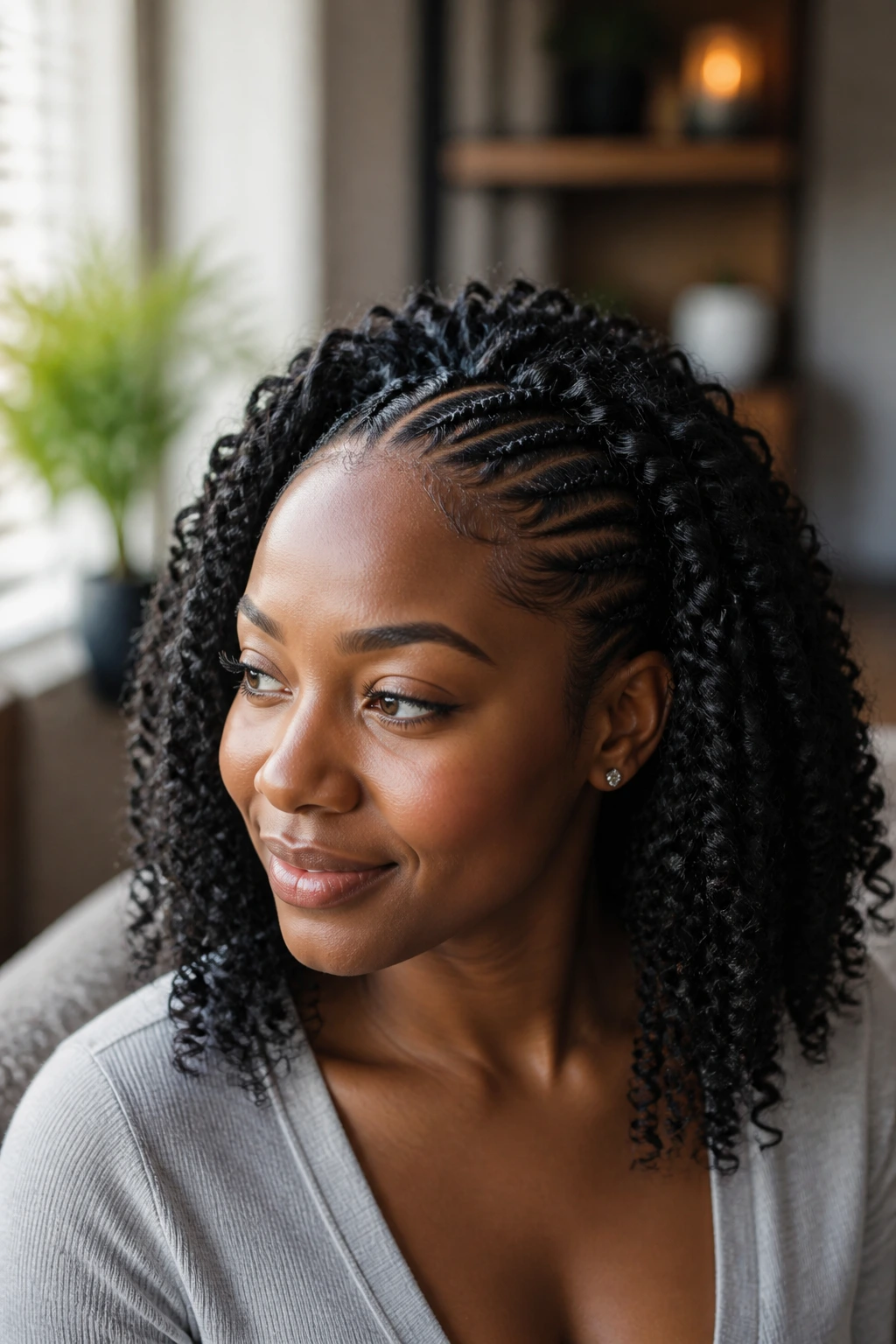
Crochet braids are not a specific braid style but a method of installation. First, your hair is cornrowed down in a simple pattern, and then individual pieces of pre-braided or pre-twisted hair are looped through the cornrows using a crochet needle. This significantly cuts down on install time.
The Versatility of Patterns
The cornrow pattern underneath will determine how the hair lays on top. If you want a side part, you must have the cornrows braided specifically to accommodate that. If you want a high-volume, curly look, you can arrange the cornrows to maximize the space for looping hair.
Ease of Removal
One of the best things about crochet braids is how easy they are to take out. When you are ready for a new look, you just snip the loop of the extension, pull it out, and take down your cornrows. There is minimal pulling on your natural strands, making it one of the most gentle protective methods available.
14. Yarn Braids
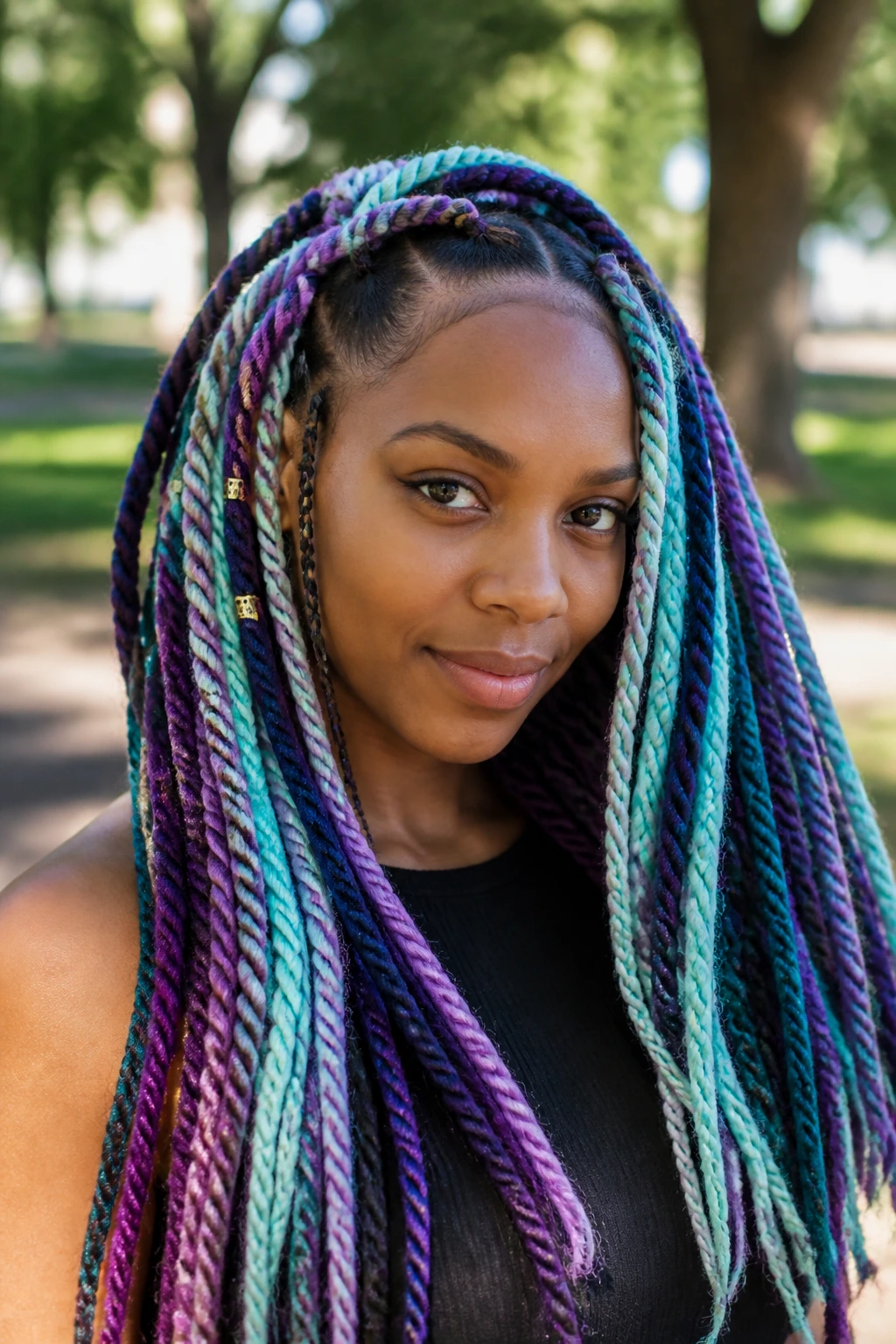
Yarn braids are a unique, boho-inspired style that uses acrylic or wool yarn to create long, vibrant, and incredibly lightweight braids. This style is popular among those looking for a non-traditional look, as you can choose any color of the rainbow, from soft pastels to deep, rich earth tones.
The Feel and Weight
Yarn is exceptionally light compared to synthetic hair, so even if you have floor-length braids, they won’t weigh you down. However, yarn does tend to absorb moisture. This means it can take a long time to dry if you get them wet, so be very careful when washing.
Customizing for Texture
You can wrap the yarn tightly around your natural hair, or you can use it to create “chunky” braids. Some people even like to blend in different colors of yarn to create a multi-tonal, customized look. It is a very artistic, tactile style that feels warm, soft, and completely unique to the wearer.
15. Halo Braid
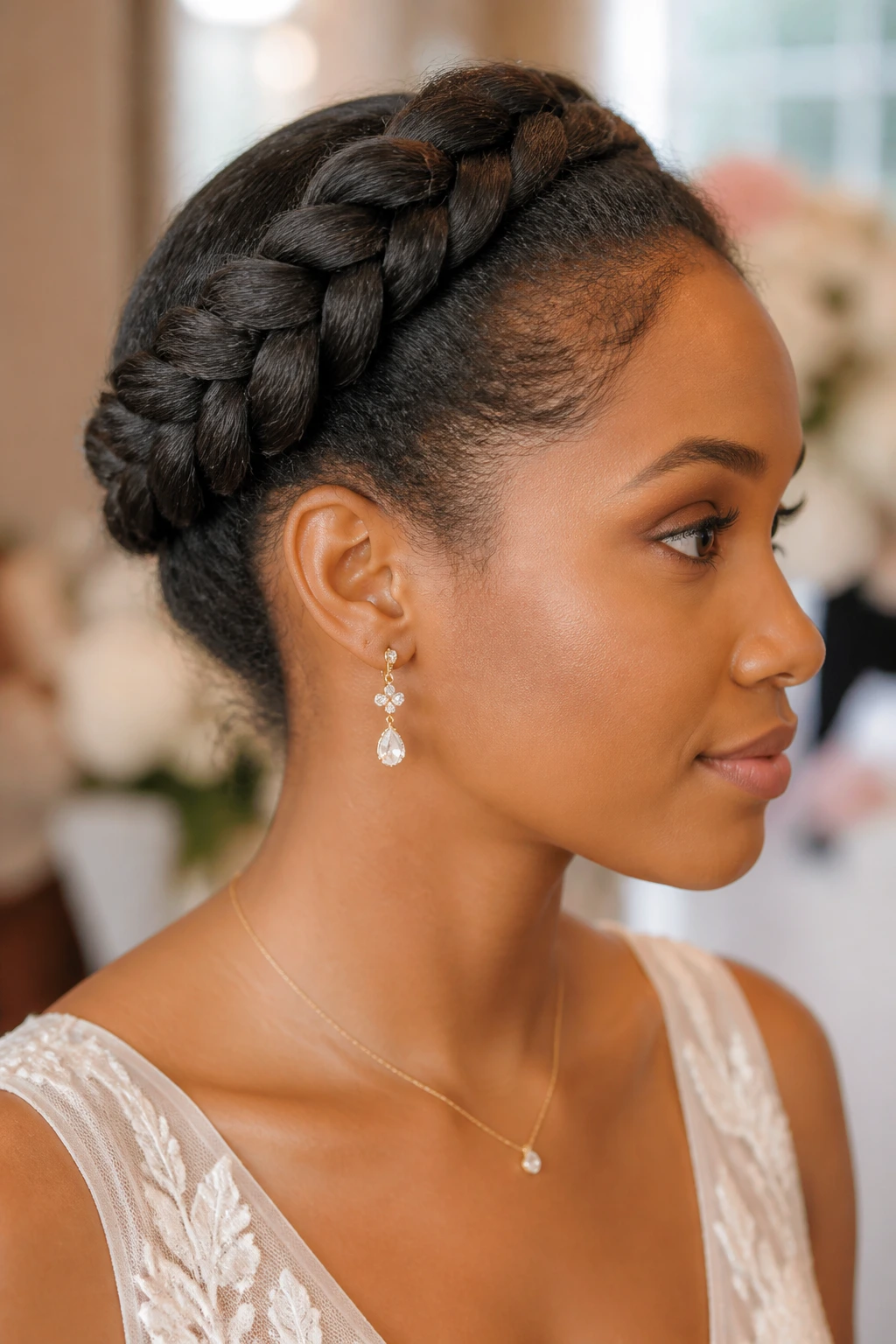
The halo braid—often called a crown braid—is a timeless, sophisticated style that involves braiding the hair around the perimeter of the head to create a crown effect. It is a stunning look for weddings, formal dinners, or any event where you want a clean, elegant aesthetic that keeps hair away from the face.
Securing the Look
If your hair is short or lacks the density for a full halo, you can weave in a small amount of extension hair to complete the circle. Use bobby pins that match your hair color to tuck the ends of the braid underneath, ensuring the connection point is invisible.
Maintenance Tips
- Since this style pulls the hair away from the face, focus on keeping your edges soft and well-hydrated.
- If you have natural flyaways, a light touch of edge control will keep the perimeter looking sharp.
- This is a short-term style; while it looks high-maintenance, it can be created in under 30 minutes, making it a great option for an occasional switch-up.
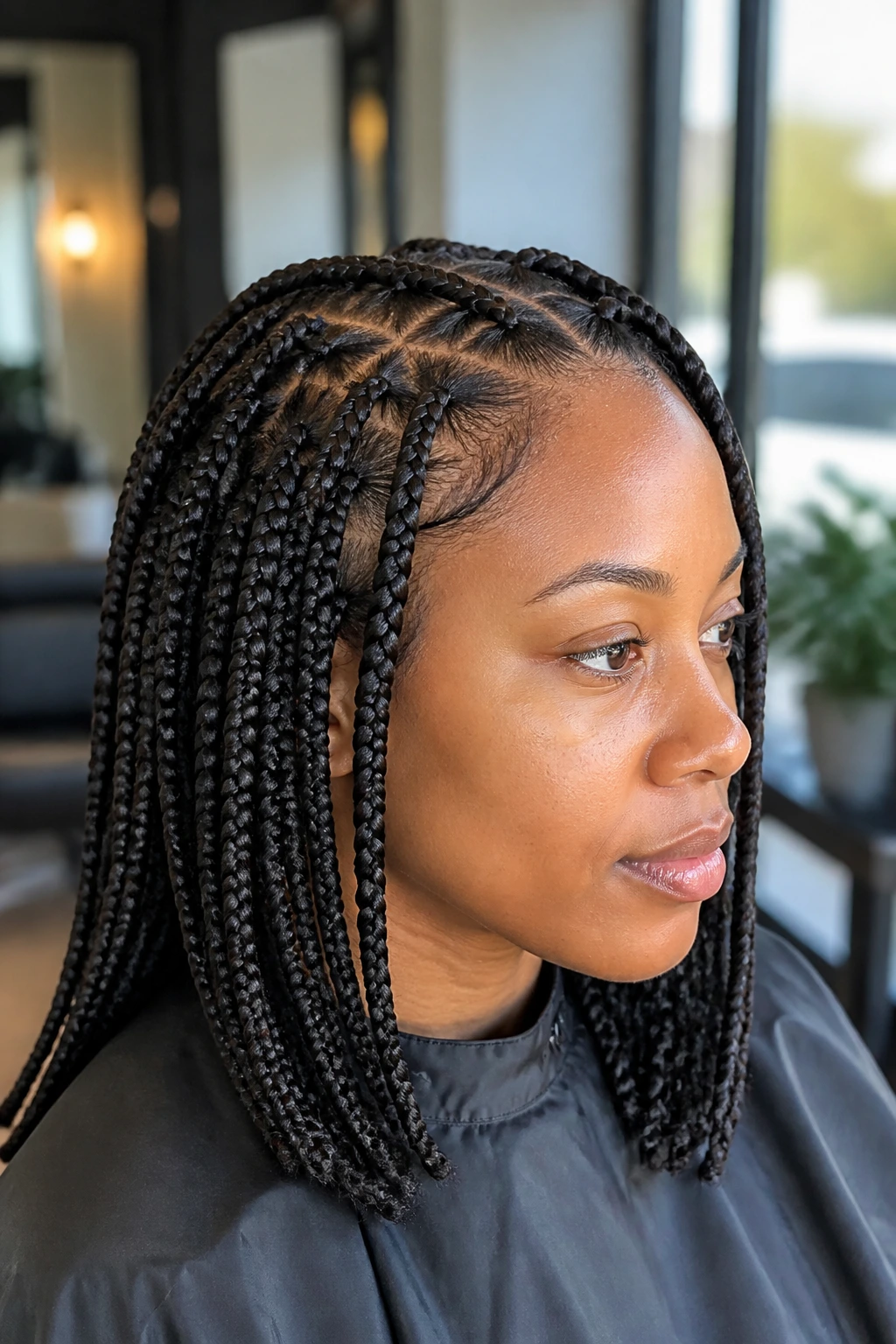
16. Box Braid Bob
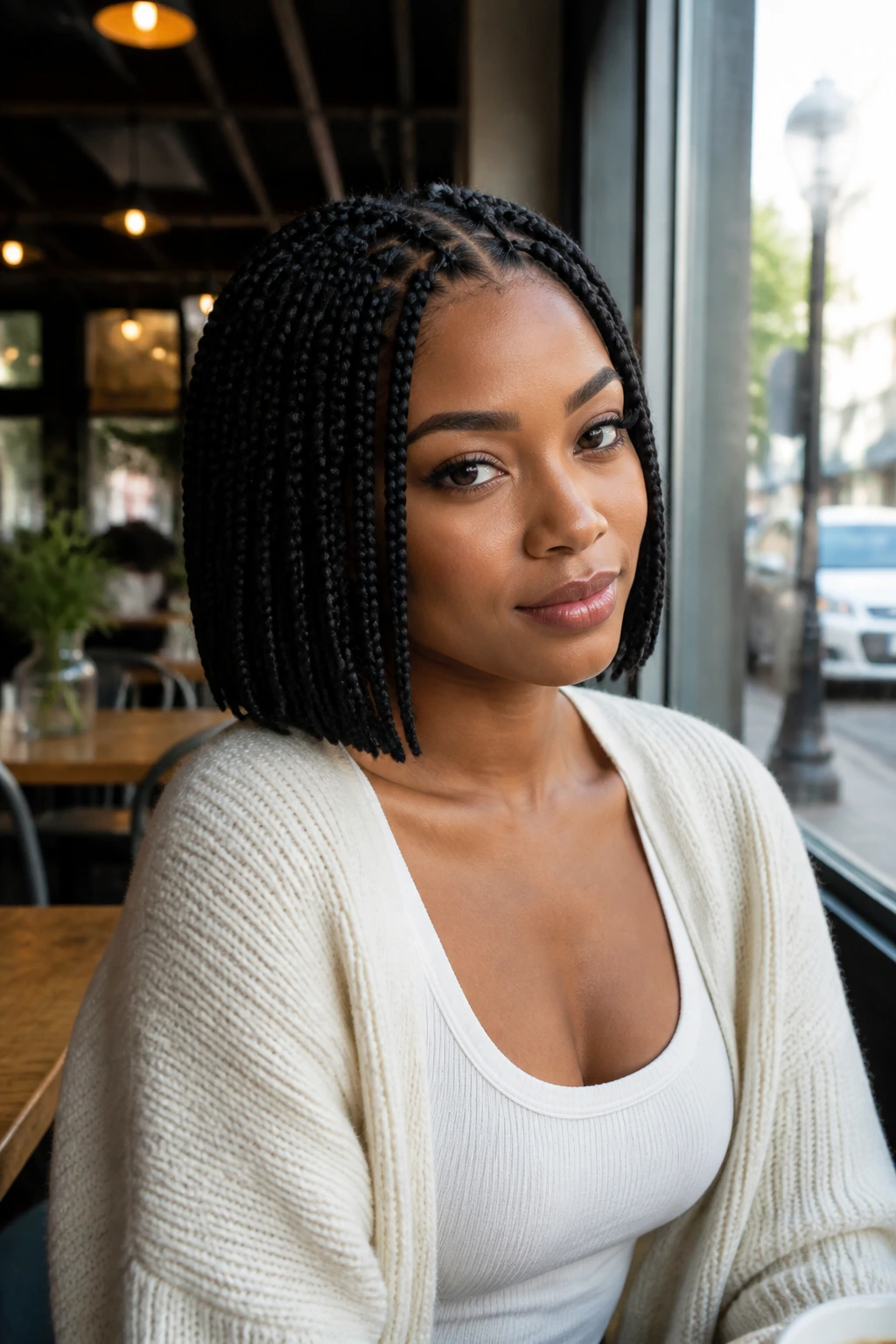
The box braid bob is a chic, modern take on the classic braid. By cutting the extensions to a chin or shoulder-length bob, you get a sharp, geometric look that is extremely lightweight and stylish. It is a fantastic option if you want the protection of braids but hate the feeling of long, heavy extensions hanging down your back.
Styling the Ends
Because the ends of a bob are blunt, you can seal them with hot water to create a very clean, crisp line. You can even add some curled ends for a slightly softer, more playful aesthetic. The bob shape frames the face beautifully and draws attention to the jawline and neck.
Managing the Weight
Because there is significantly less hair involved than in a full-length braid style, your scalp will feel much more relaxed. This is perhaps one of the most comfortable protective styles you can choose. Just be mindful of the weight distribution if you go for a very thick, chunky bob, as the concentration of hair at the neck can still lead to some tension.
17. Fishtail Braids
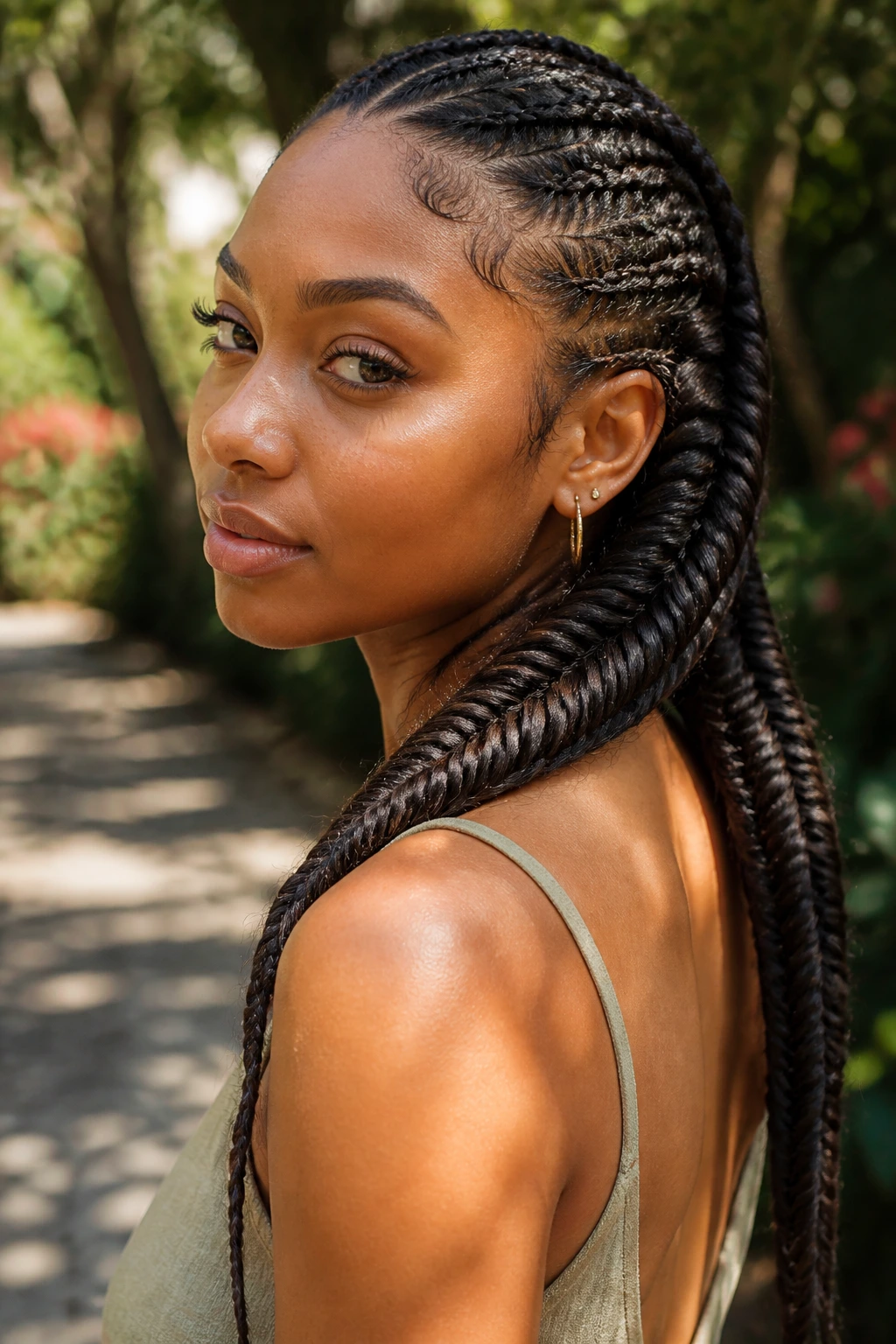
Fishtail braids are an intricate, woven style that creates a beautiful, detailed pattern. While they are often associated with straight hair, they work wonderfully on natural hair, especially when done on hair that has been blown out or smoothed. They look complex and highly skilled, making them a great choice for events.
How to Create the Detail
A fishtail is built by dividing the hair into two sections and crossing small strands from the outside of one side to the inside of the other. It takes patience to get the tension right throughout the length of the braid. If you’re doing this on your own hair, take your time and use a little bit of pomade to keep the strands from fraying.
Why It’s Unique
You won’t see many fishtail braids in the wild because they require a bit of manual dexterity to master. However, the look is delicate and visually arresting. It’s the perfect way to show off the length and health of your hair without needing to add any synthetic fibers at all.
18. Braided Updo
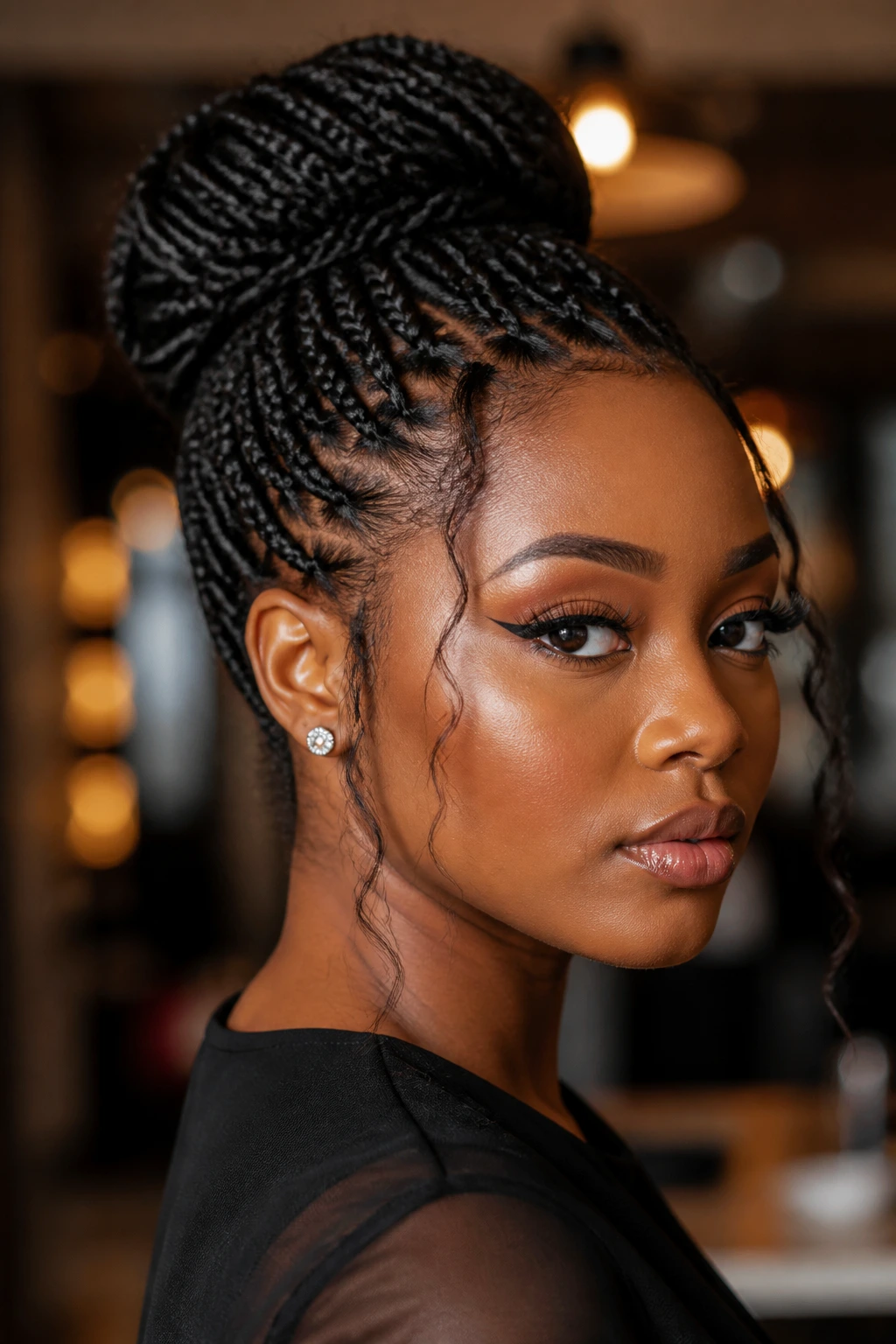
A braided updo is the ultimate “power” look. It can be as simple as gathering several smaller braids into a high bun or as complex as a series of cornrows that intersect at the crown, flowing into a cascading braided bun at the back. This style is entirely about structure and height.
Creating the Base
The key to a long-lasting braided updo is a solid base. If you are using your own hair, make sure it is stretched properly so it doesn’t shrink up too much. If you are using extensions, ensure the braids are not too bulky, or the bun will end up feeling like a heavy weight on top of your head.
The Finishing Touches
Use hair pins or decorative clips to keep the bun in place. You can leave a few wisps of hair out around the ears for a softer look, or slick everything back for a high-fashion, polished aesthetic. This is a great way to handle humid weather, as your hair is fully contained and protected.
19. Two-Strand Twist-Out
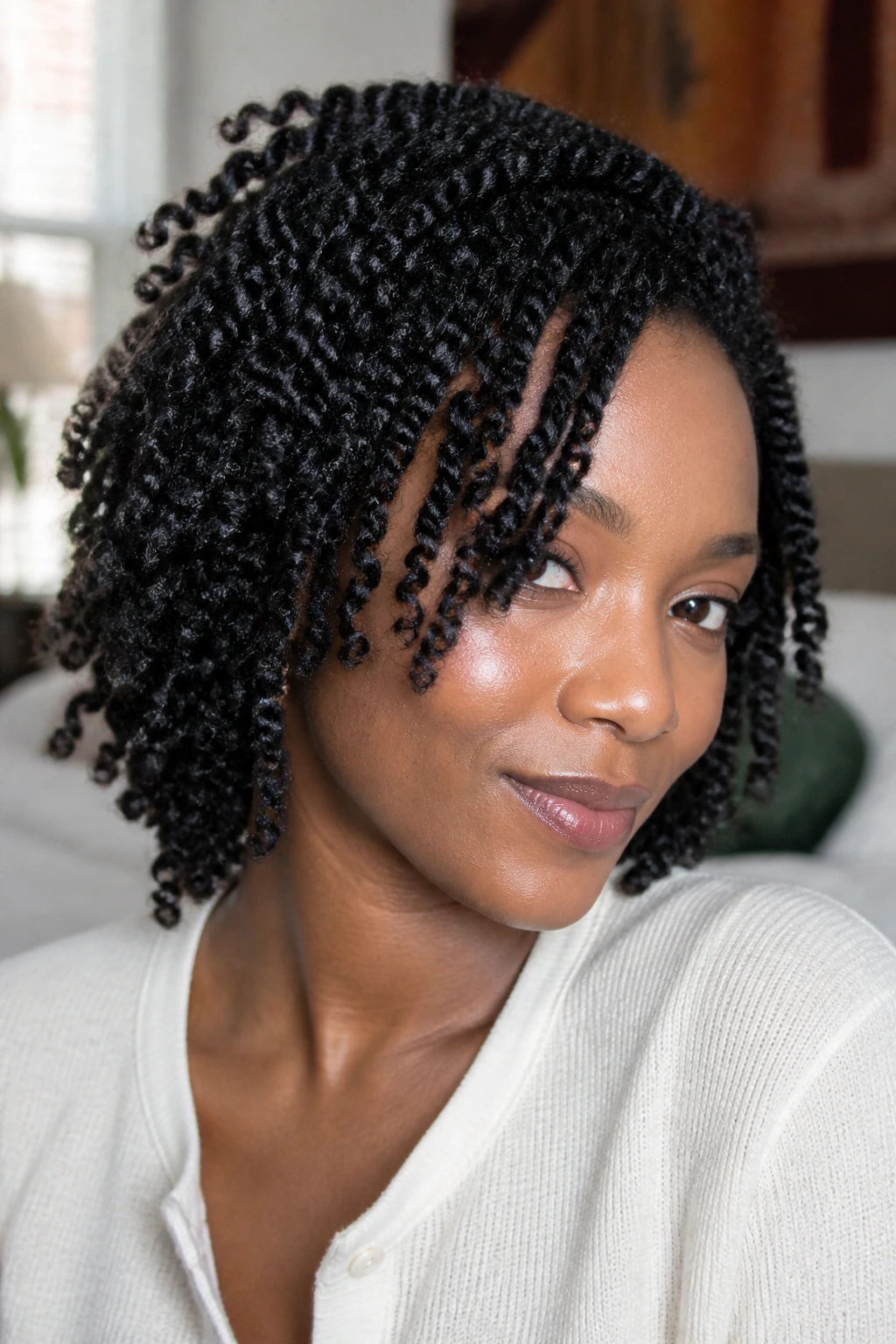
While technically a style that starts with braids or twists, the twist-out is a staple of the natural hair community. By braiding or twisting your damp hair and allowing it to set overnight, you get a beautiful, defined texture that lasts for days. It is the perfect bridge between a protective style and a “free hair” look.
The Secret to Definition
- Use a setting mousse or a curl-defining cream that has a bit of hold.
- Ensure the hair is completely dry before you begin to unravel the twists.
- Unravel with oily fingers to minimize frizz and maximize shine.
Longevity Tips
To keep the style fresh for more than two days, use the “pineapple” method at night—gather your hair loosely at the top of your head in a silk scrunchie to preserve the volume while you sleep.
20. Side-Swept Cornrows
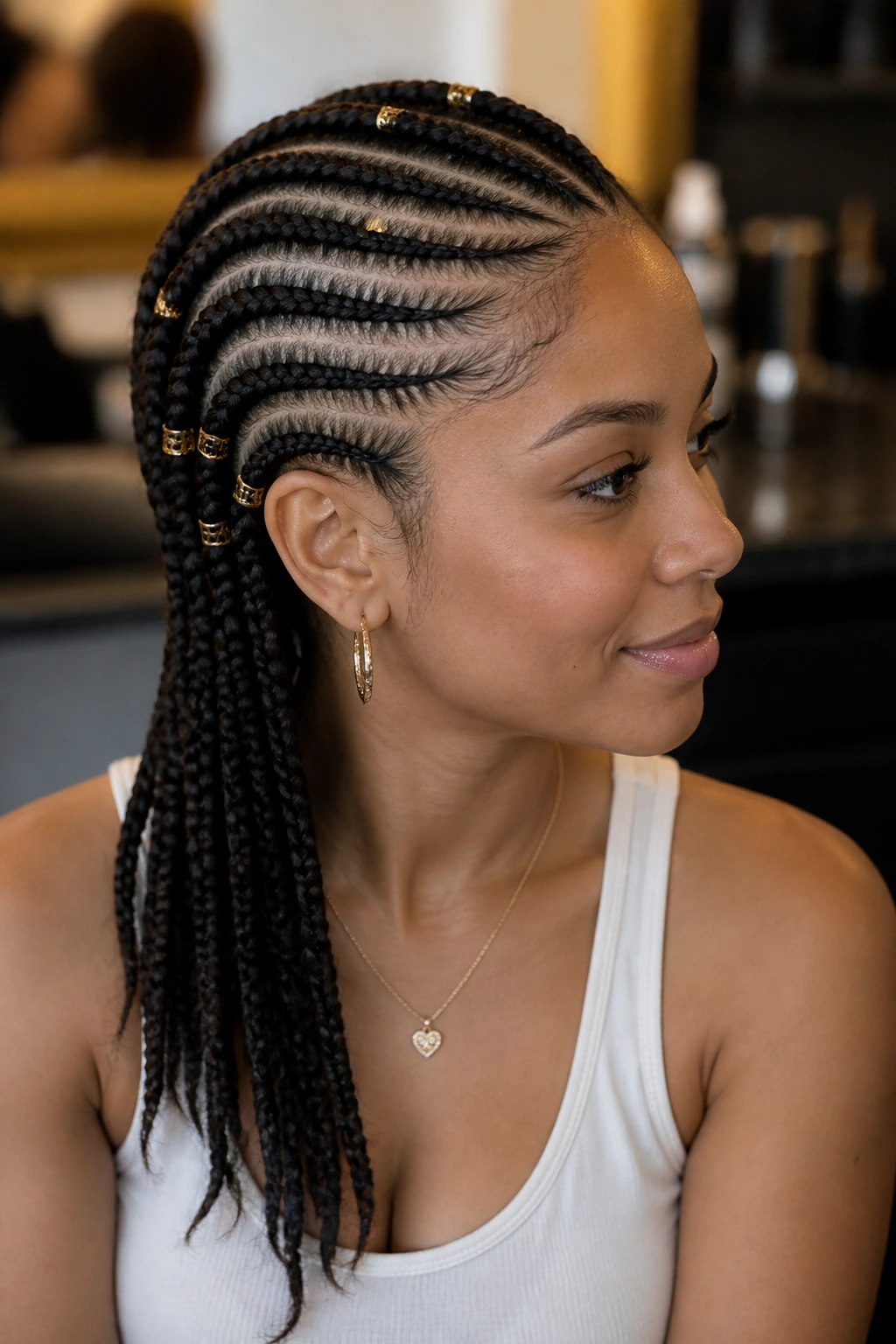
Side-swept cornrows are a beautiful way to create an asymmetric look that feels intentional and bold. By braiding the hair in a curve from one side of the head toward the other, you create a dramatic sweep that naturally frames the face. It’s a very popular choice for people who want a short-term style that looks like it took hours of prep work.
Enhancing the Flow
You can add small accessories, like gold cuffs or tiny beads, along the path of the braid to follow the curve. This draws the eye across the face and creates a lovely focal point. Because the braids follow the natural curve of the skull, they tend to be very secure and comfortable for daily wear.
When to Use This Style
This is an ideal style for when you want to feel a bit fancy but don’t have the time to commit to a full head of box braids. It can usually be completed in about two hours, and it’s very easy to take down whenever you want to return to your natural curls.
Final Thoughts
Choosing between these styles often feels like a balancing act between aesthetic goals and the health of your scalp. The most important lesson to take away is that tension is the enemy of hair growth. Whether you choose the complex geometry of tribal braids or the effortless ease of knotless box braids, always prioritize styles that feel comfortable from the moment you leave the salon.
If you find that a style is pulling, do not just “push through the pain”—ask your stylist to loosen the tension or opt for a different braid pattern. Your hair is an expression of your personality, but it should also feel good to wear. Experiment with different textures, lengths, and accessories, and remember that the best style is the one that gives you confidence and allows your natural hair to thrive underneath.