

Latina hair is known for its remarkable versatility, offering a spectrum of textures ranging from fine, silky-straight strands to dense, gravity-defying coils. When you work with this kind of hair, the French braid becomes more than just a simple plait; it transforms into a structural tool that can tame volume, define natural curls, or add a touch of polished elegance to an otherwise chaotic morning. The key to mastering the French braid on this hair type lies in understanding how your specific porosity and density interact with tension. Whether you are prepping for a high-intensity workout or looking for a sleek, wedding-ready aesthetic, the following styles utilize the natural strength of Latina hair to hold intricate designs in place throughout the day.
1. Classic Dual French Braids
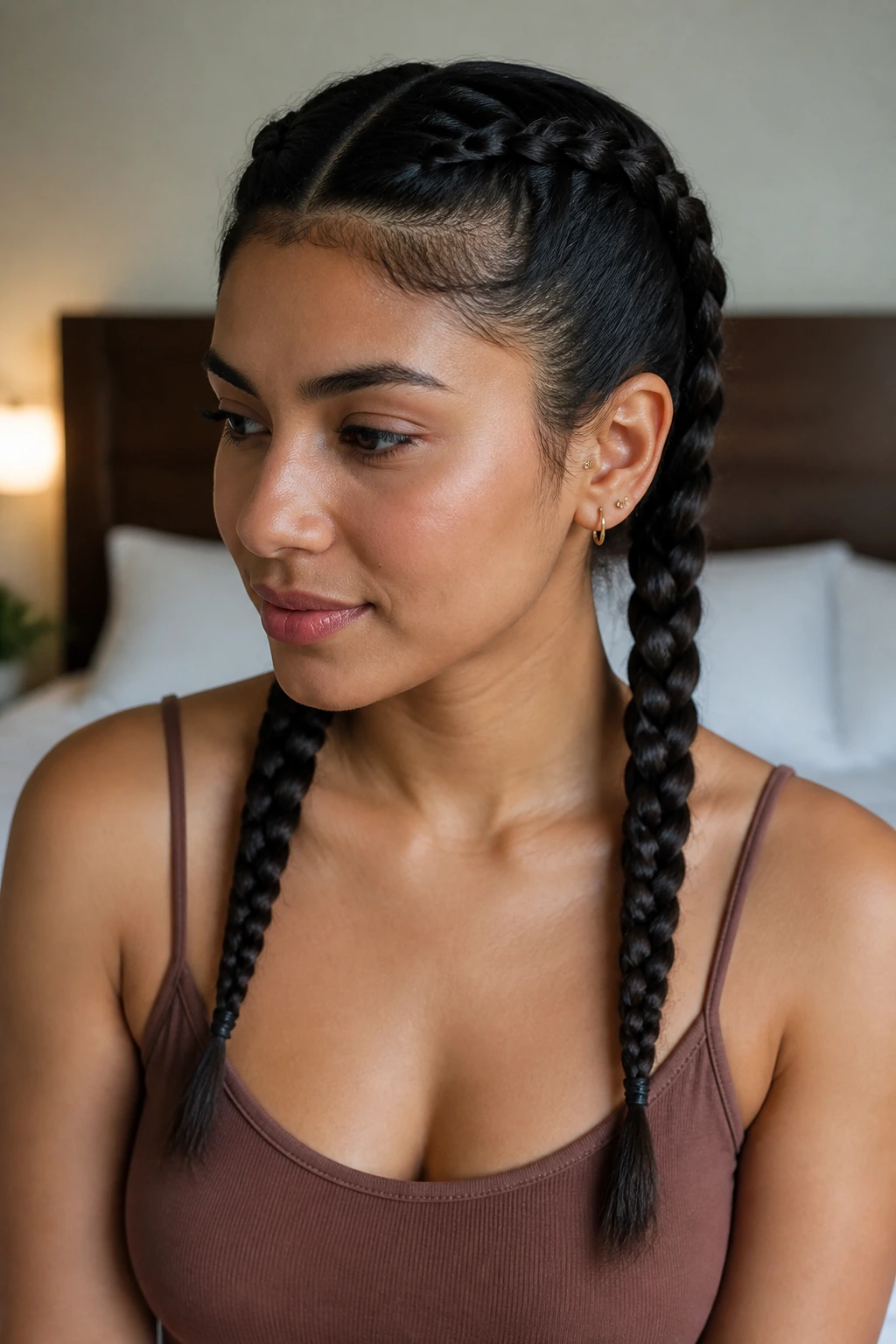
This foundational style is the bread and butter of protective hair care, acting as a reliable shield against friction while you sleep or move through your daily tasks. By splitting your hair into two equal sections and pulling them tightly from the hairline down to the nape of the neck, you create a symmetrical silhouette that works for almost any hair thickness. The trick here is to ensure your parting is clean; use a fine-tooth tail comb to draw a precise line from the center of your forehead to the base of your neck. Once the hair is parted, keep your hands close to your scalp as you cross the strands to ensure the braid remains flush against the head rather than sagging.
Maintaining Tension on Silky Textures
For those with finer, straighter hair, the braid often slips or looks loose after a few hours. To prevent this, apply a light-weight texturizing spray or a tiny amount of dry shampoo to the roots before you begin. This adds just enough grip to the strands to keep them from sliding out of the weave as you work. Focus on keeping the braid pulled taut—but not so tight that it causes tension headaches—and finish with a light-hold hairspray to lock the wispy baby hairs along the hairline in place.
2. The Boho Side-Swept French Braid
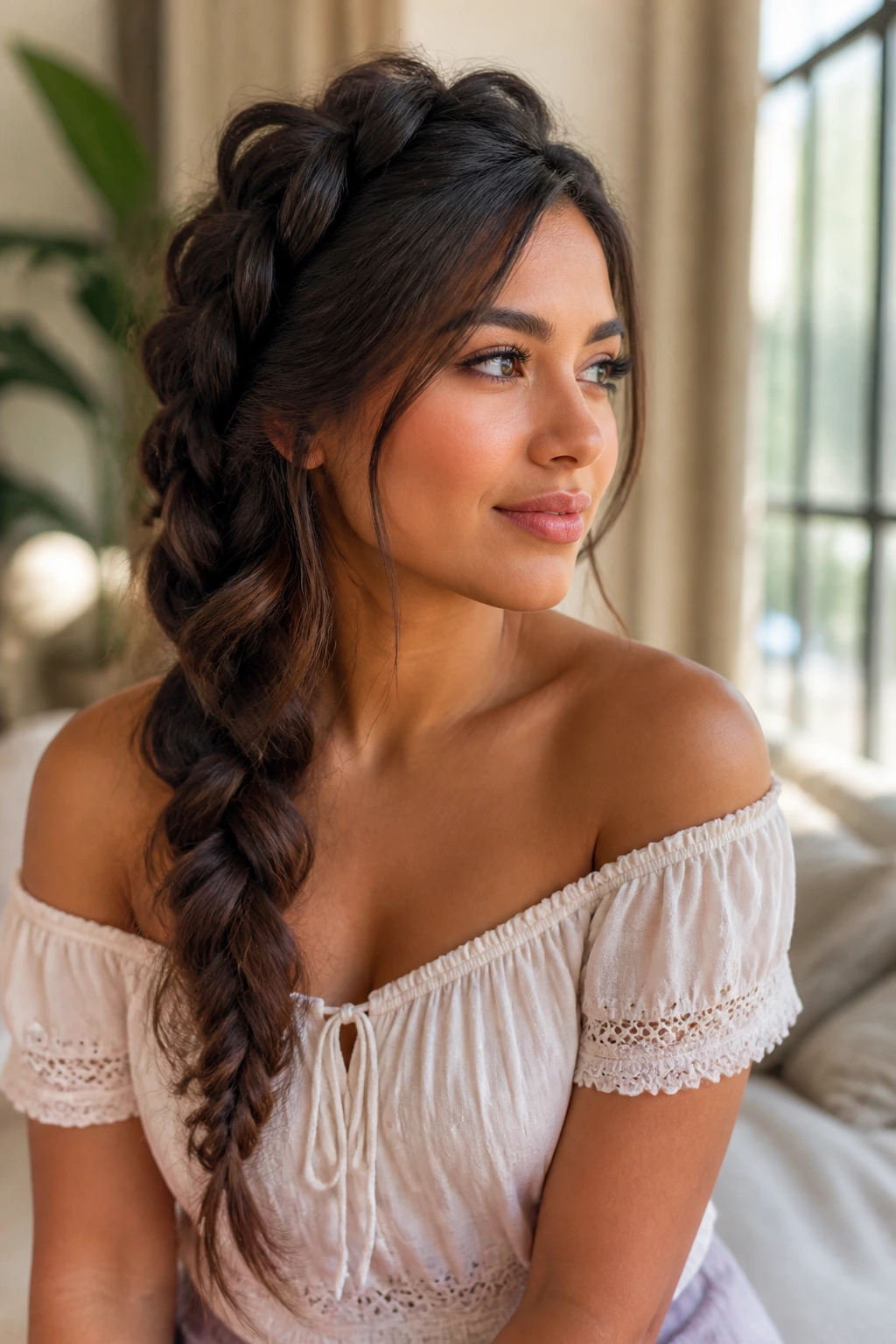
If you prefer a romantic, undone aesthetic that softens the angles of your face, a side-swept French braid is an ideal choice. Instead of parting the hair down the center, gather your hair to one side and begin your French braiding technique starting at the temple. This creates a sweeping effect that frames the cheekbones beautifully, especially on oval or heart-shaped faces.
The Pancake Method for Volume
Once the braid is secured at the bottom with a clear elastic, use your thumb and forefinger to gently tug at the edges of the braid segments. This technique, commonly referred to as “pancaking,” makes the braid appear twice as wide and gives it a relaxed, lived-in feel. It is a fantastic way to add the illusion of density to finer hair textures. If you have layers, don’t worry about the small pieces that escape during this process; let them fall naturally to soften the overall look.
3. French Braid into a High Ponytail
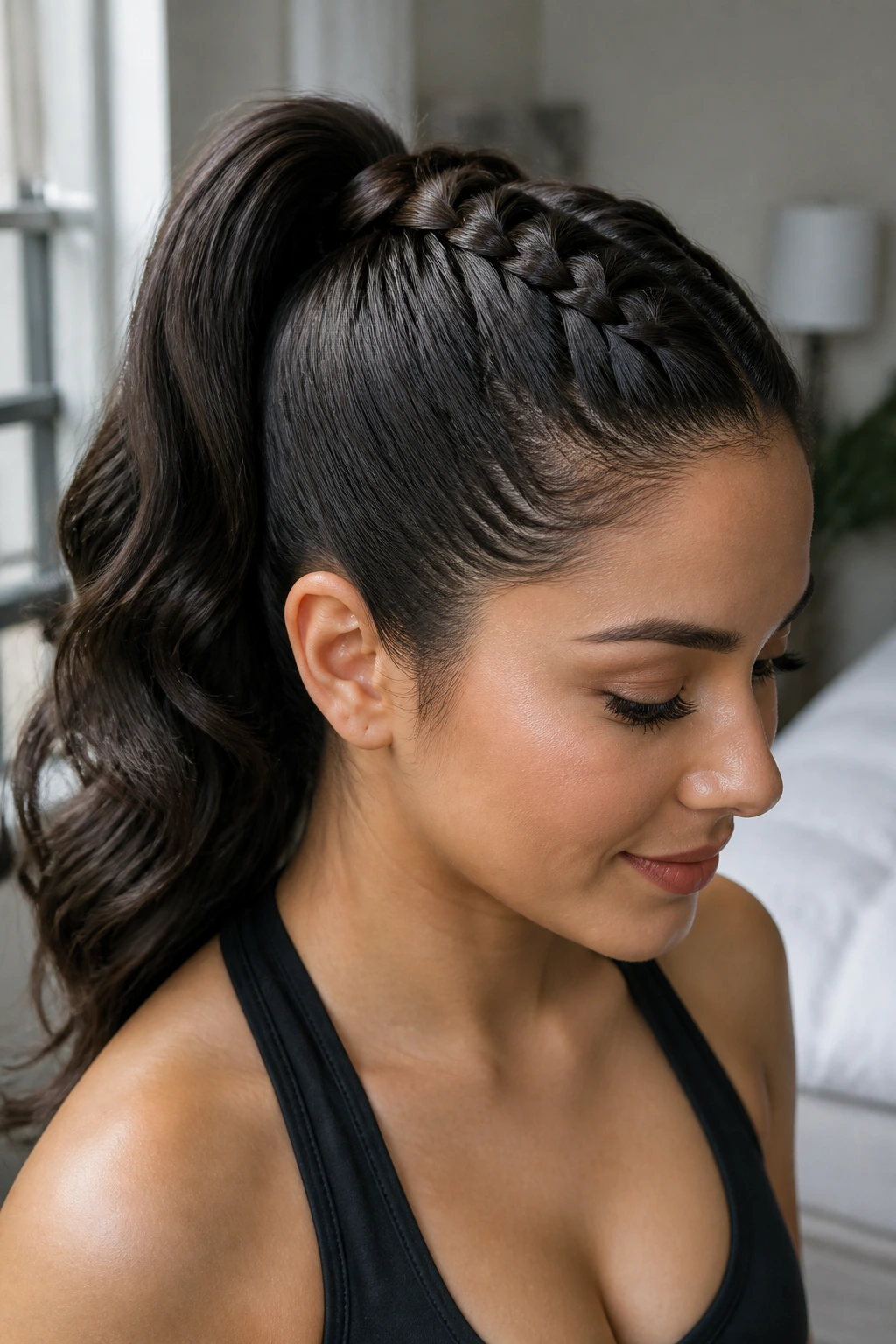
Combining a French braid with a ponytail offers the best of both worlds: the secure, controlled styling of a braid at the crown and the bounce of a high pony. Start your French braid at the hairline and stop right at the crown of your head, securing it with an elastic. Then, gather the remaining loose hair along with the end of the braid and pull it all into a high ponytail.
Smoothing the Crown
This style relies heavily on the appearance of the crown. Use a boar-bristle brush to smooth the hair as you gather it into the initial braid, ensuring no bumps or loose sections remain. If you have thicker, denser hair, you might find it easier to leave out the front sections of your hair while you braid, then pull them back into the ponytail afterward to create a softer, more voluminous frame around the face. This simple adjustment ensures the braid stays front-and-center while the rest of your hair remains under control.
4. Half-Up French Crown Braid
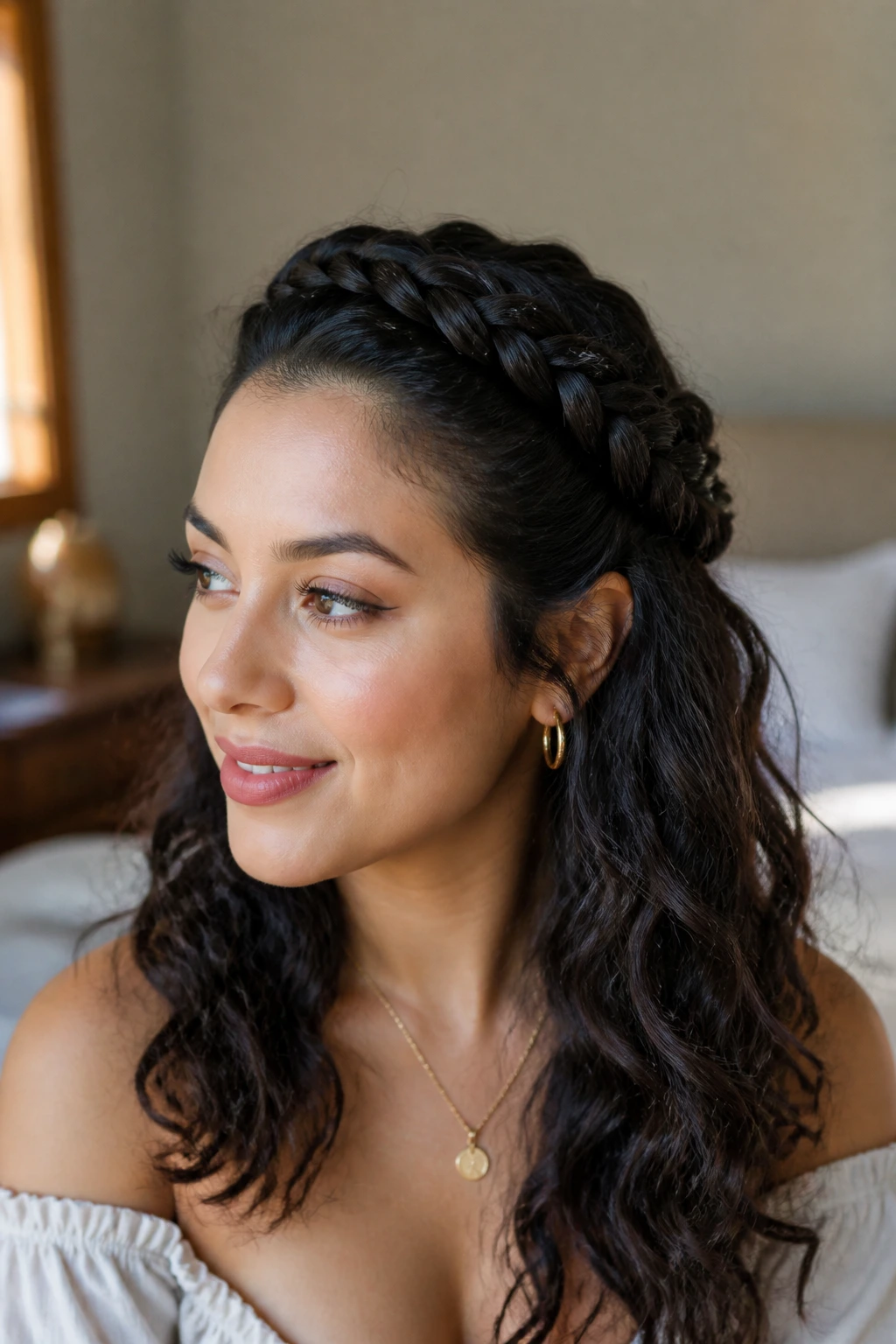
This style is sophisticated and allows you to enjoy the length of your hair while keeping the hair away from your face. Instead of braiding all of your hair, grab the front section from temple to temple, create a French braid, and wrap it around the back of your head like a crown or simply tie it off to let it drape down the center of your back.
Managing Density and Weight
Latina hair can be quite heavy, which often makes it difficult to keep a crown braid in place without it sagging under its own weight. To combat this, use U-shaped hair pins instead of standard bobby pins. U-pins anchor the braid into the surrounding hair more securely and are less likely to pull on the scalp. If your hair is on the coarser side, dampen it slightly with a leave-in conditioner before you begin; the added moisture helps the hair behave more consistently while you are weaving the sections.
5. French Braid Updo for Thick Hair
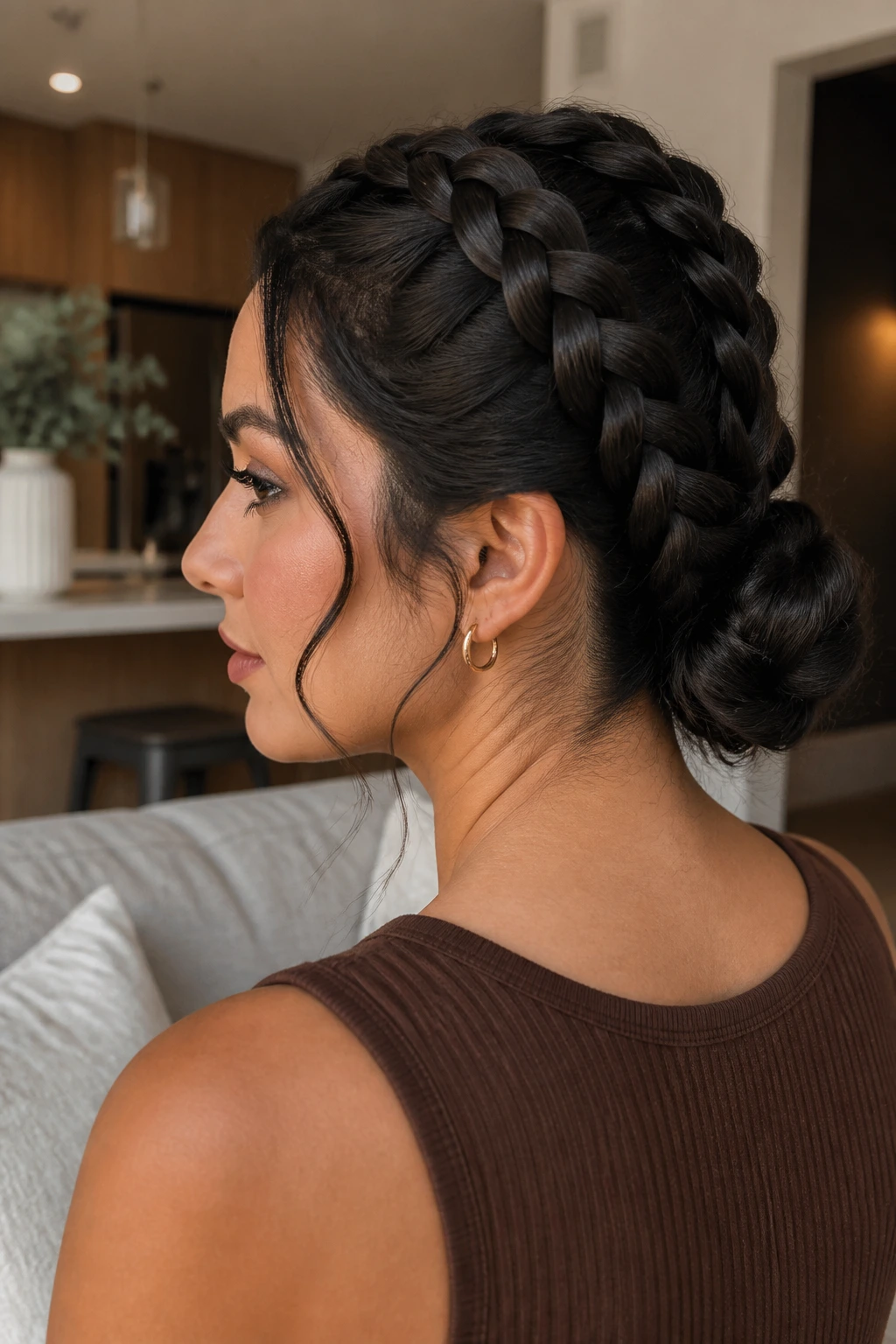
When you have dense, long hair, an updo can feel overwhelming, but a French braid is the perfect way to anchor the volume. By creating two French braids on either side of the head and pinning them together at the back into a twisted bun, you create a complex-looking style that is actually incredibly sturdy.
Pinning for Longevity
The key to this updo is the construction. After braiding, pull the ends together, twist them, and roll them into a compact bun against the nape of the neck. Use large, heavy-duty hair pins to secure the bun to the base of your hairline. Because this style uses the braids to distribute the weight of your hair evenly across the back of the head, it is much more comfortable for long-term wear than a standard ponytail or a high bun.
6. The Faux-Hawk French Braid
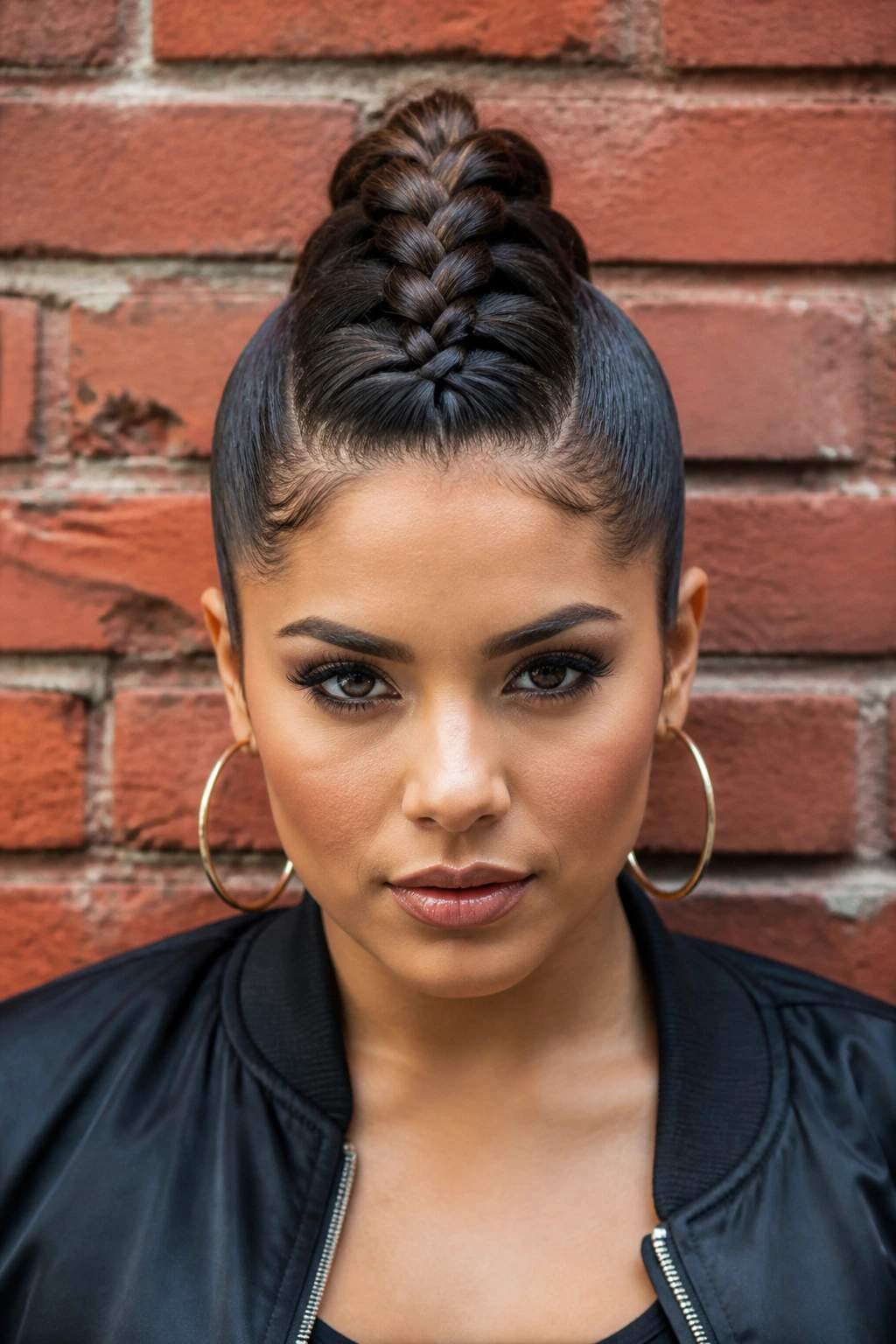
This is a daring, high-fashion look that centers a thick French braid down the middle of the head, mimicking the appearance of a mohawk. The sides are pulled tight and sleek against the scalp, creating a sharp contrast with the voluminous braid running through the center.
Achieving the Sleek Sides
To get the sides as tight as possible, use a pomade or a light-hold gel. Apply a small amount to your fingertips as you work on the side sections, gathering them toward the center. This keeps the hair from “fluffing” up as the day progresses. The center braid should be braided with a forward motion, pulling the hair toward the center rather than toward the nape of the neck. It creates a bold, architectural shape that works perfectly with naturally curly or wavy Latina hair textures.
7. French Braid with Loose Curls
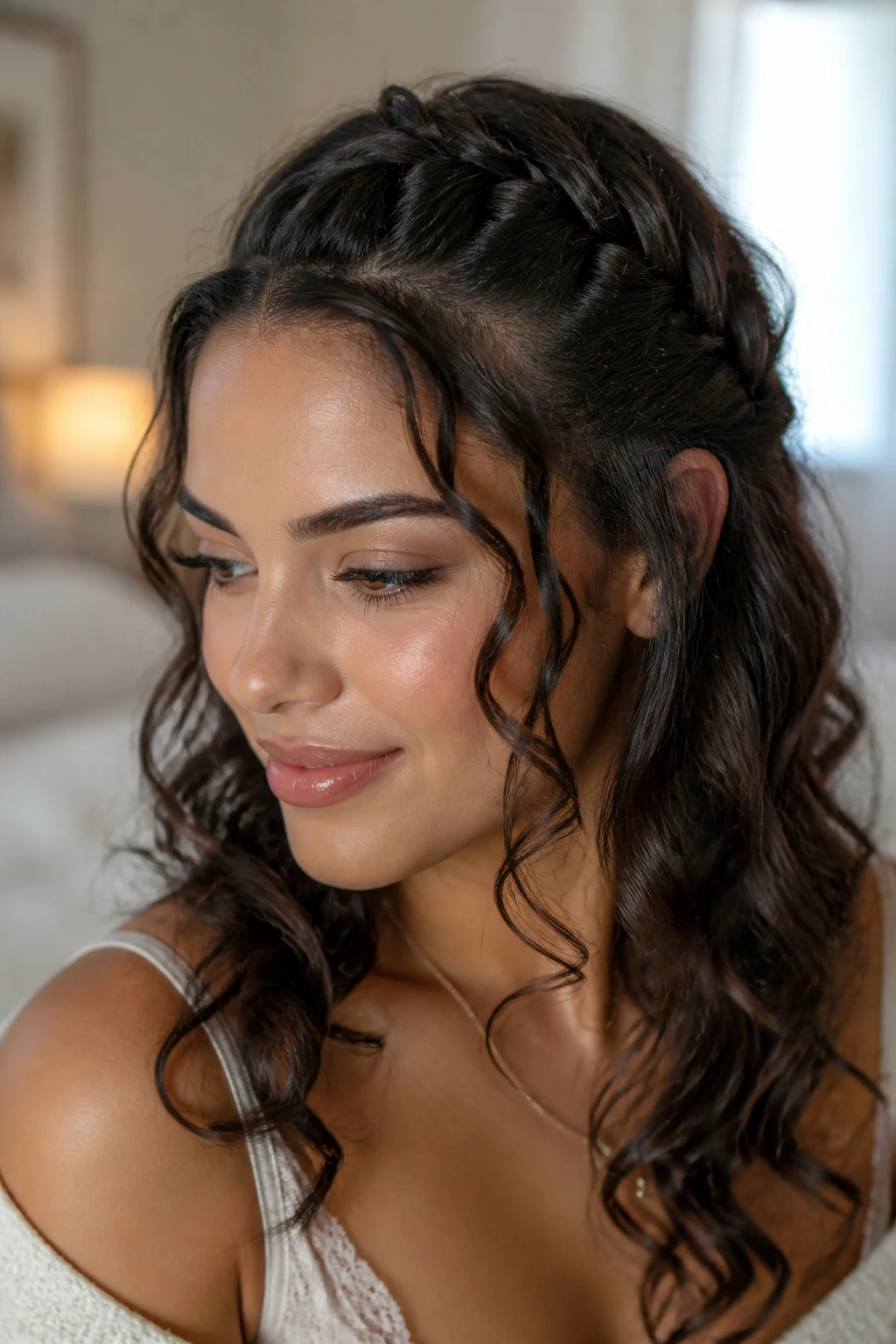
Sometimes, you want the control of a braid without sacrificing the beauty of your natural texture. This style involves braiding only the top section of the head—perhaps just one side—and letting the rest of your natural curls or waves fall loose. It is a fantastic option for someone who wants to highlight their natural hair pattern while keeping it out of their eyes.
Balancing Texture
If your hair tends to frizz, apply a curl-defining cream through the loose sections before you start the braid. As you braid the top part, avoid pulling too tightly on the loose curls; you want a seamless transition from the braided portion to the free-flowing hair. The result is an asymmetrical look that feels deliberate and polished, perfect for an evening out or a special occasion where you want to wear your hair down but need a bit of structure.
8. Inside-Out (Dutch) French Braid
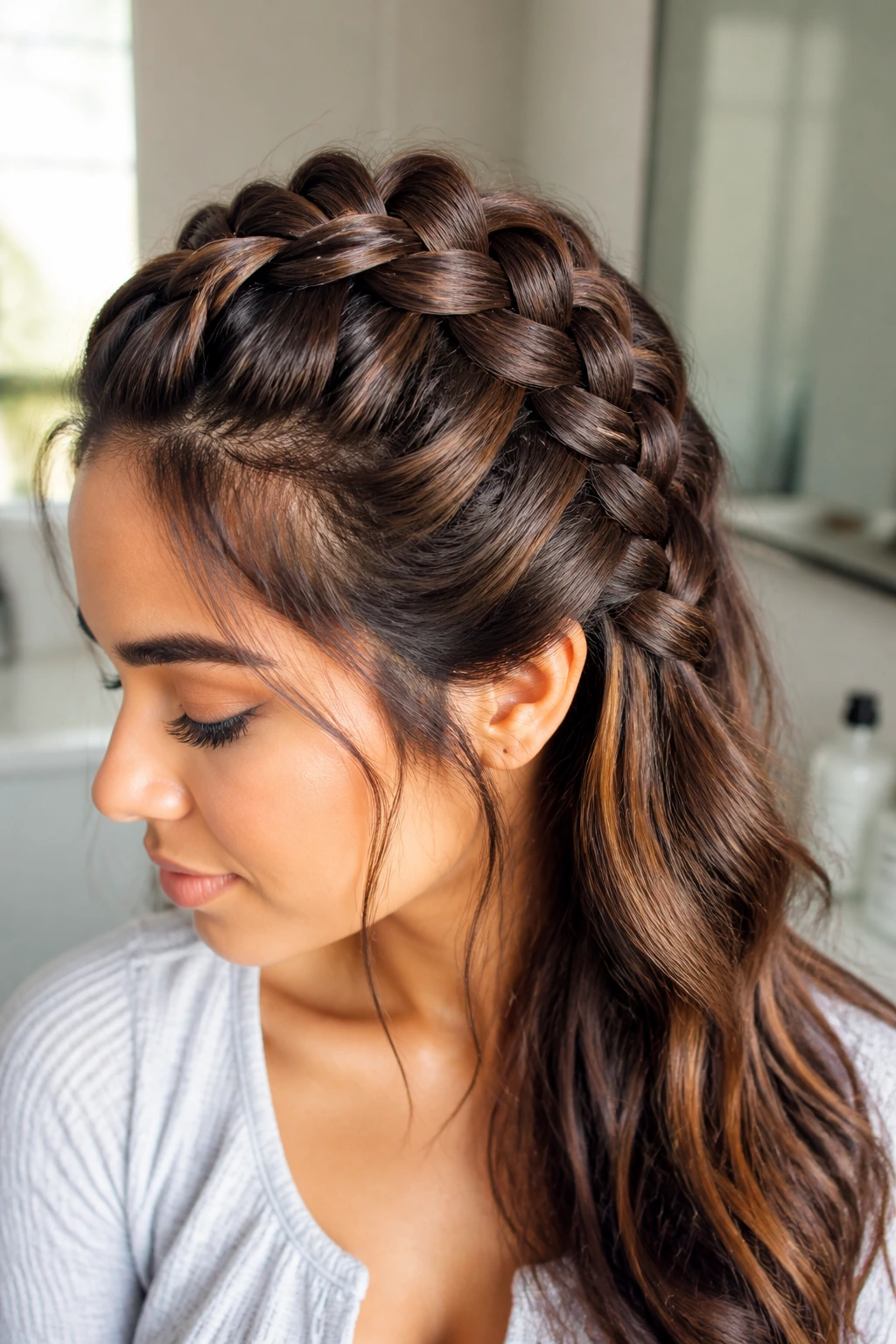
While technically a Dutch braid, this is a variation of the French braid that sits “on top” of the hair rather than tucked beneath it. It adds instant dimension to the hair because the braid looks thicker and more pronounced.
Mastering the Technique
Instead of crossing your hair sections over the middle strand, you cross them under. For those with darker or highlighted hair, this method catches the light differently and showcases the depth of your hair color. It is especially useful for fine hair because it builds volume instantly, making the plait look significantly larger than a standard French braid. Practice this by braiding your own hair while looking into a mirror; the hand movement feels slightly inverted, but once you get the rhythm, it becomes second nature.
9. French Braided Pigtails with Bows
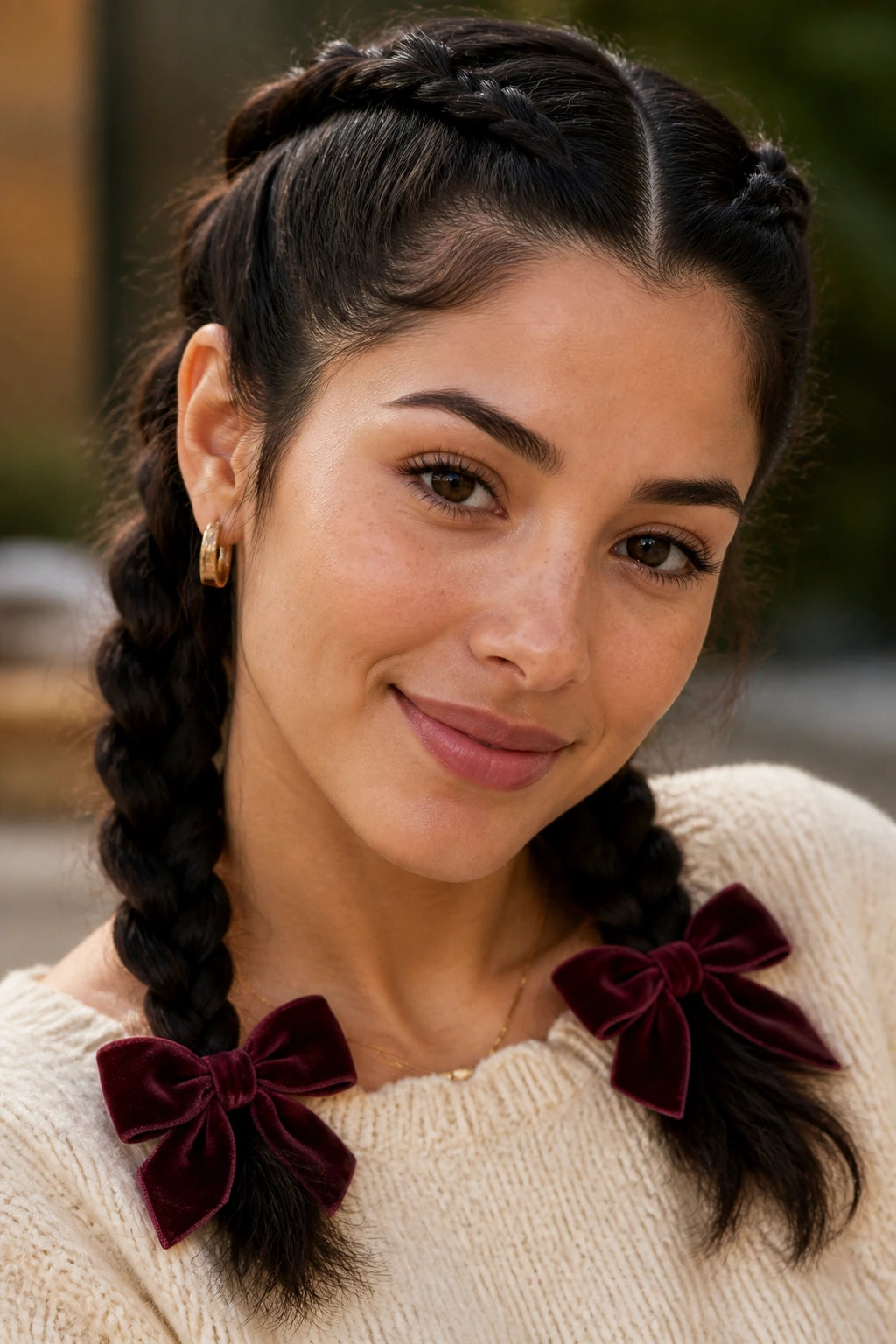
A nod to nostalgia, this style features two French braids that start at the hairline and terminate at the ears, ending in loose pigtails. The key here is the accessories. Adding velvet or silk bows to the ends of the braids gives the look a polished, intentional finish that moves it away from “playground hair” and into the realm of intentional styling.
Creating the Right Finish
For the best result, keep the braids relatively tight at the scalp to maintain a sleek look. Once you reach the ear level, switch to a simple three-strand braid for a few inches before securing with an elastic. This leaves a small amount of loose hair at the bottom of the pigtail, which allows the texture of your hair—whether straight, wavy, or curly—to shine.
10. The Waterfall French Braid
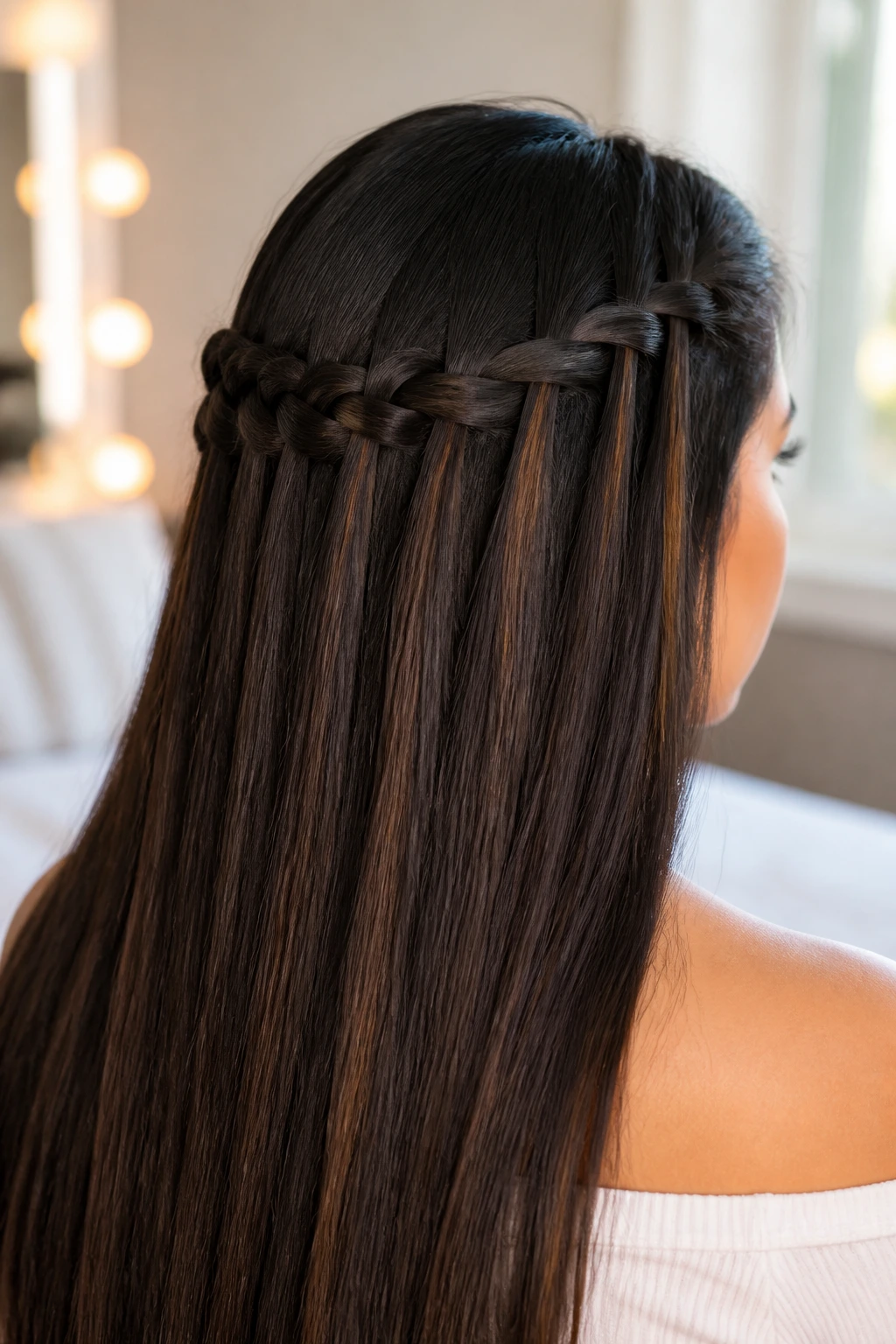
This is perhaps the most ethereal and delicate of the bunch. You create a French braid that moves horizontally across the back of the head, but in each step, you drop a strand of hair to “waterfall” down. It looks intricate, like a woven basket, yet it remains light and airy.
Precision Placement
This requires a bit of patience. You are essentially doing a standard French braid, but every time you go to pick up a new piece of hair to add to the braid, you leave a piece behind. Use a mirror to keep your hands level as you move across the back of the head. It works best on hair that has been blow-dried straight or smoothed out, as tangles can become a major issue when you are dropping strands through the braid.
11. French Braid Headband
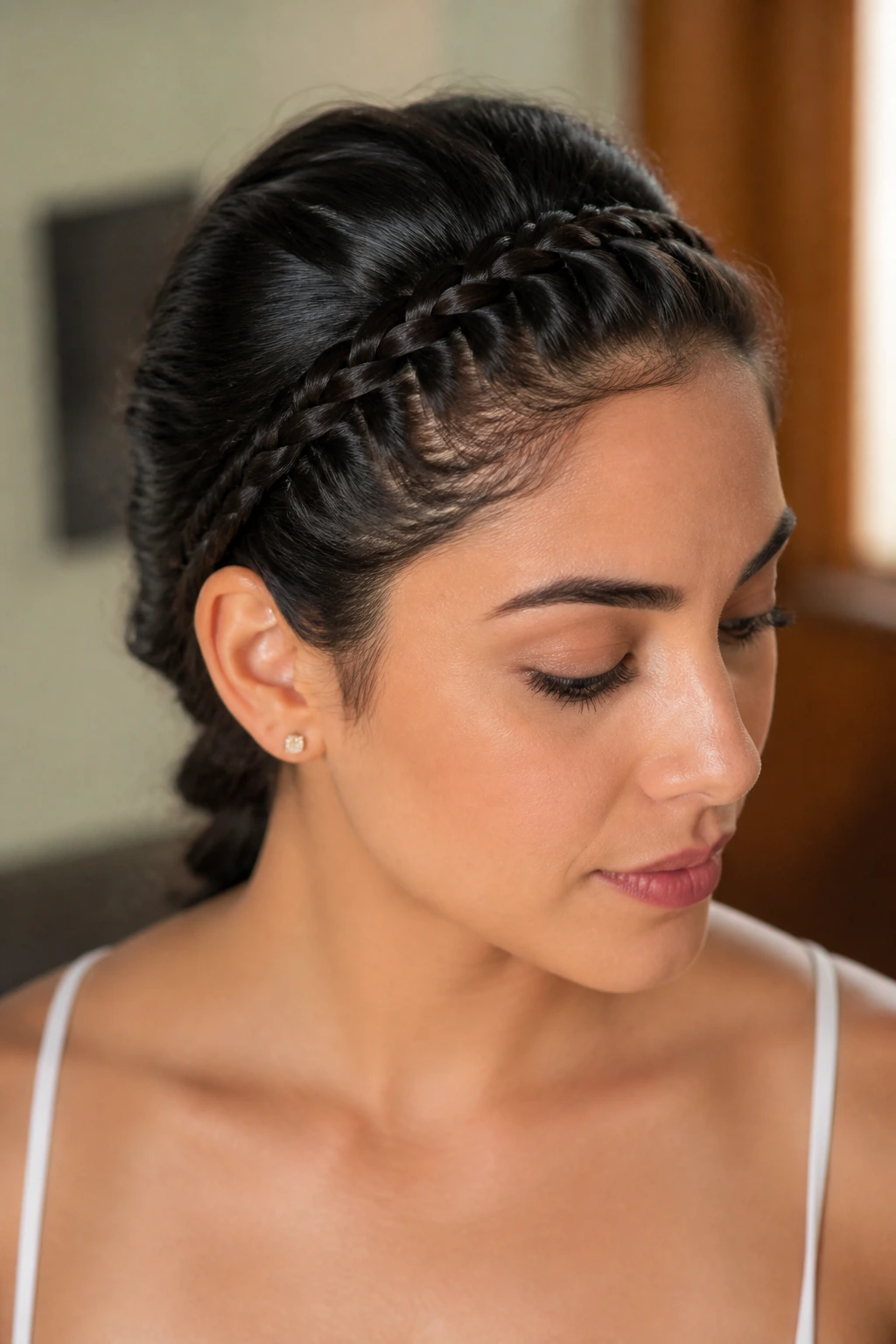
This is a lifesaver for growing out bangs or dealing with hair that just won’t stay out of your eyes. You create a small French braid that follows the hairline from ear to ear, effectively acting as a permanent hair accessory.
Securing the Ends
To make the headband look seamless, tuck the end of the braid behind your ear and secure it with a tiny elastic and a bobby pin pushed upward into the braid itself. This hides the pin completely. If you have thicker hair, you may want to braid a slightly larger section to ensure it can hold the weight of the hair it is pulling back. It is a practical, everyday style that keeps your face clear for work or exercise.
12. Fishtail-French Braid Hybrid
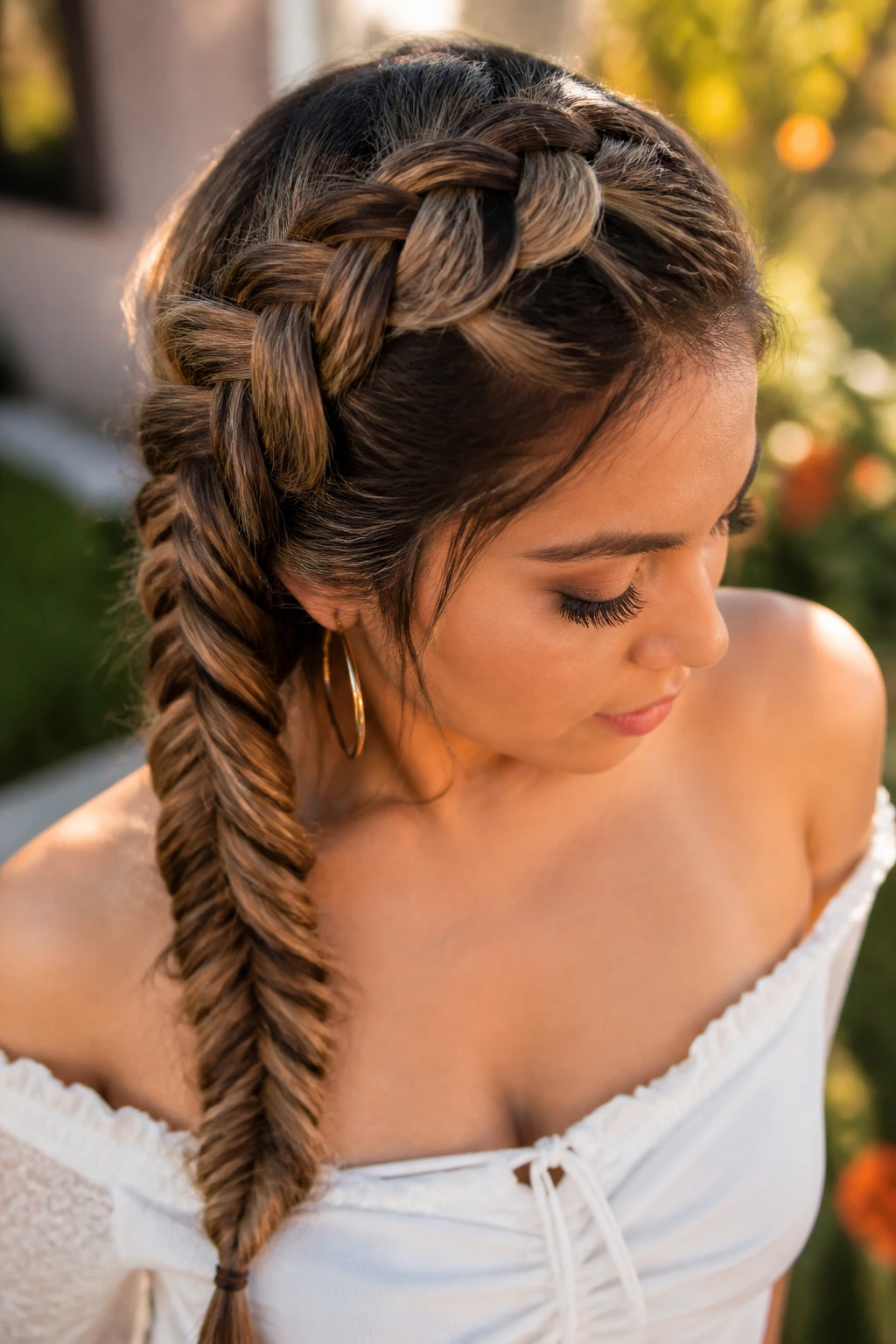
This is a more advanced style that creates a stunning, intricate texture. You start with a traditional French braid at the top of the head for about two inches, and then transition the remaining length into a fishtail braid.
Mastering the Transition
The secret to this look is the hand-off. When you are ready to switch from French to fishtail, divide your hair into two sections instead of three. It can feel a bit chaotic for a moment, so keep your fingers firm on the divide. The contrast between the thick, woven look of the French top and the tight, chevron-like pattern of the fishtail bottom is visually striking. It is the perfect way to show off highlights or balayage treatments in your hair.
13. Triple French Braid into Bun
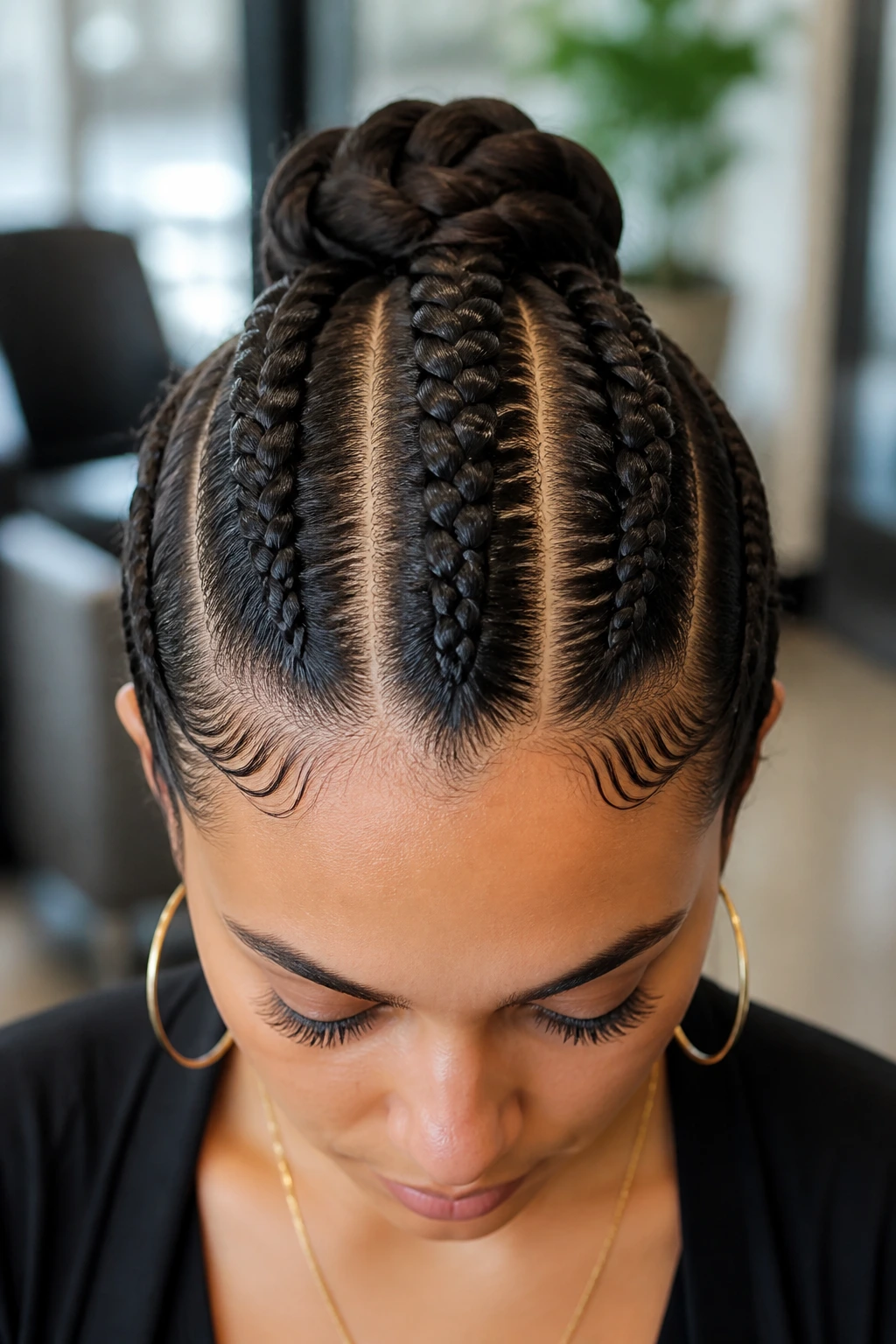
For a look that exudes discipline and style, three separate French braids running from the forehead to the crown, all gathered into a single low bun, offer a geometric, clean aesthetic.
Geometric Parting
The beauty of this look is in the symmetry of the parts. Use your tail comb to create two straight lines, dividing your hair into three equal segments. Braid each one independently. The tension on these braids should be consistent; if one is tighter than the others, it will pull the bun to one side. Once finished, gather the ends, twist them, and tuck them into a tight knot. It is a very structured, professional style that holds up well in humid environments.
14. Wrapped French Braid Bun
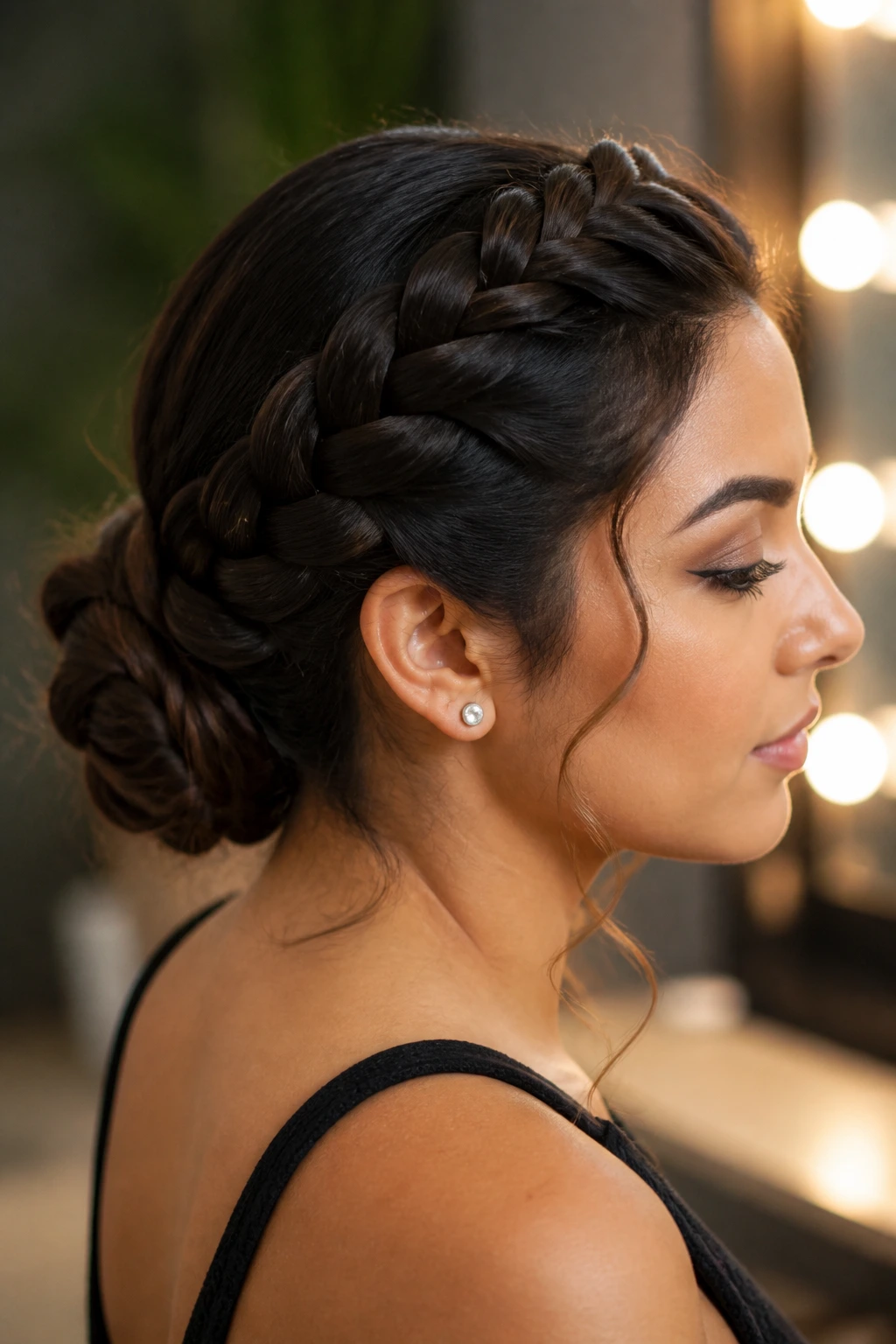
If you are tired of the standard messy bun, a wrapped French braid bun is the answer. You begin by French braiding a small section of hair starting at your temple, then gradually adding more hair from the surrounding area until all your hair is incorporated into the braid. You then coil that braid into a bun at the back of your head.
The Full-Head Effect
This style looks like you spent hours on your hair because the braid wraps around the entire scalp before finishing in the bun. It is best to use a lightweight setting spray to keep the hair smooth while you are working. Because the braid itself is what forms the bun, you don’t need many extra pins, which makes it a surprisingly lightweight updo for such a complex appearance.
15. The “Dragon” French Braid
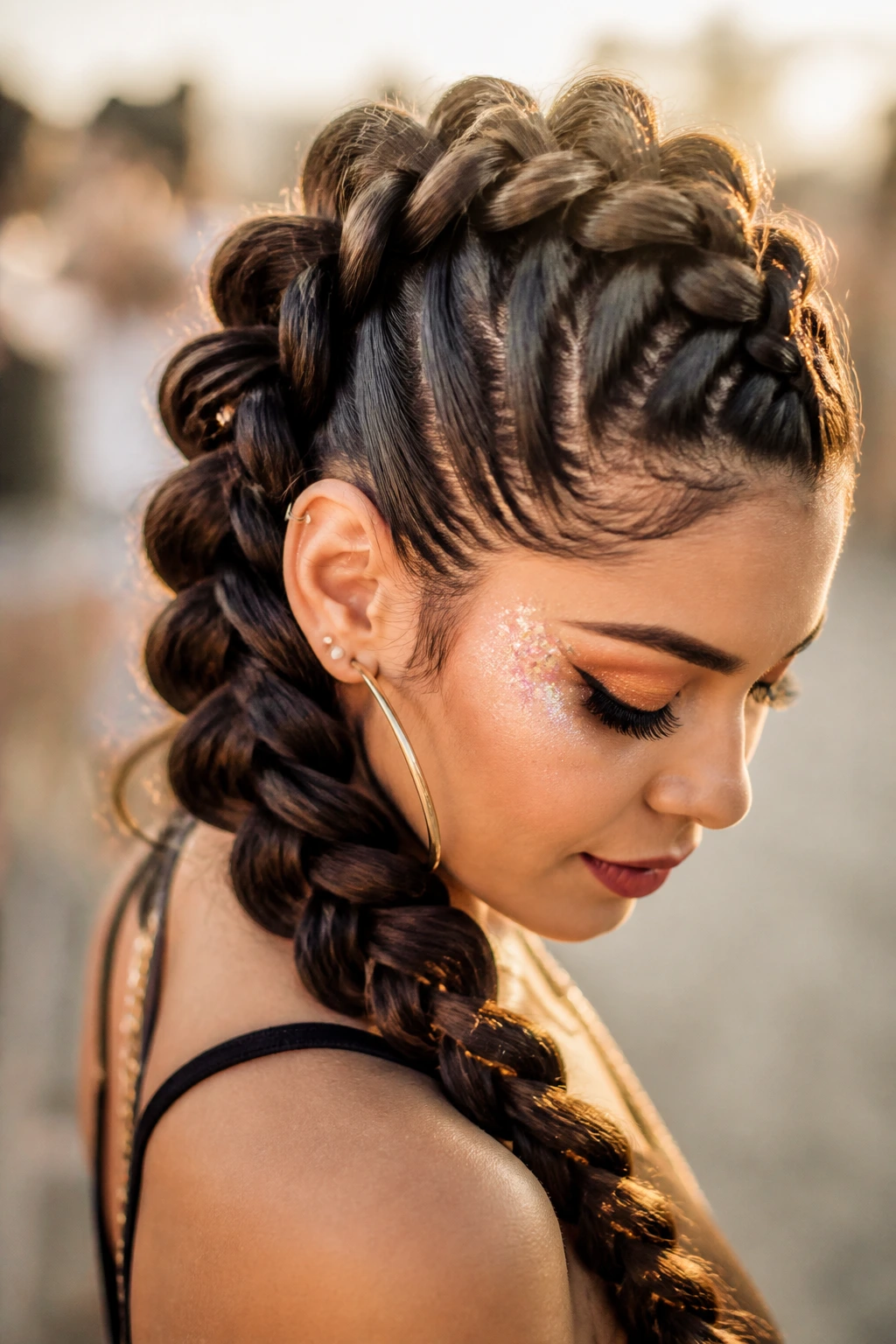
This style is all about exaggeration. It is a French braid that is pulled and pancaked so dramatically that it looks like the spikes on a dragon’s back. It is meant to be messy, oversized, and bold.
Extreme Volume Tactics
Don’t be afraid to pull the loops very wide. You can even spray the braid with a strong-hold hairspray while you are pulling the loops out to keep them from collapsing back down. This is an excellent choice for festivals or events where you want your hair to be the focal point of your outfit. It works particularly well on long, thick hair that has been curled prior to braiding, as the curls add even more body and texture to the loops.
16. French Braid with Ribbons
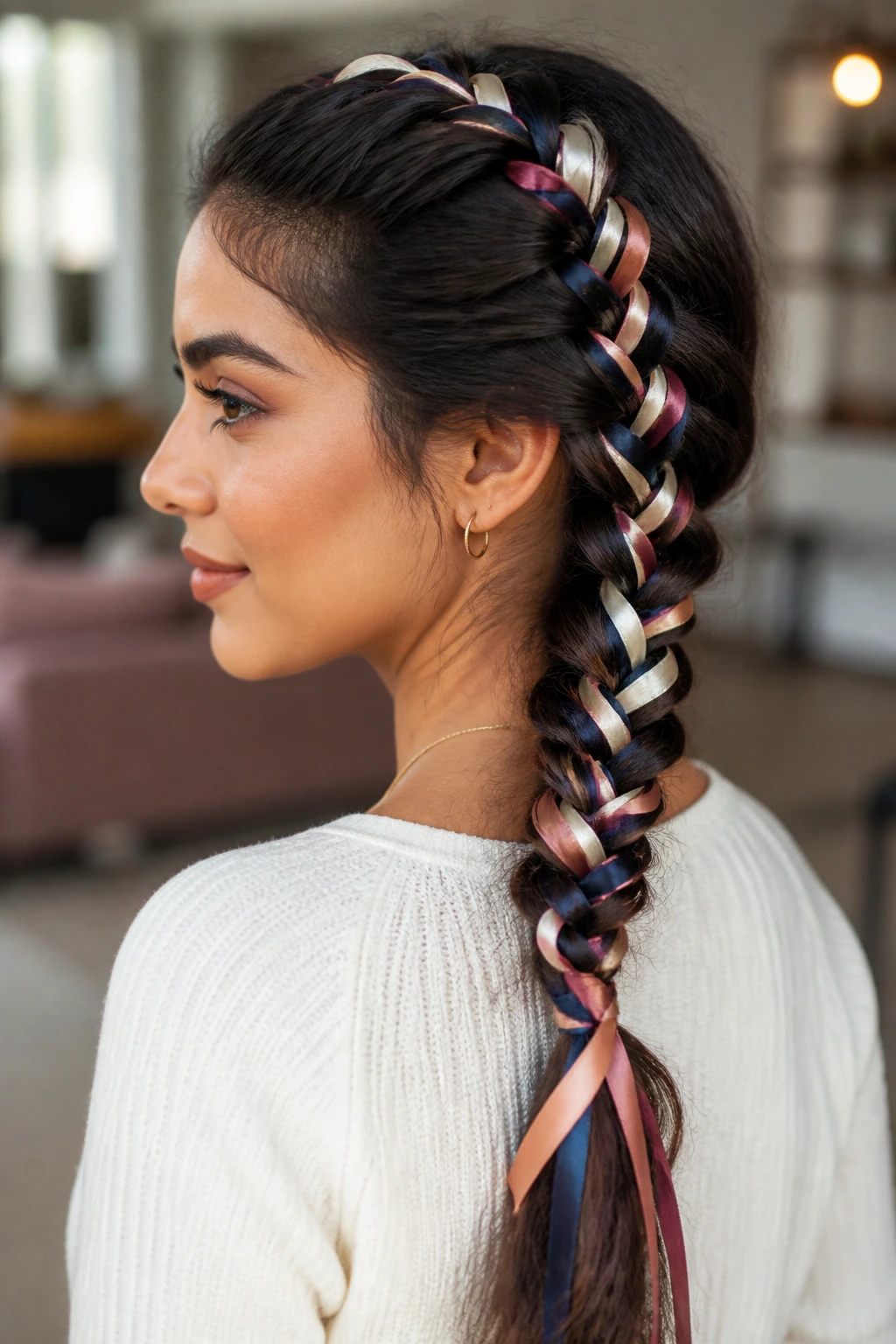
Weaving a piece of velvet or silk ribbon into your French braid is an effortless way to upgrade the style. Simply fold the ribbon in half and tie it around the center strand of your hair before you start braiding.
Integrating the Ribbon
As you continue the French braid, treat the ribbon as part of the hair section. The result is a woven, multi-colored look that adds a sophisticated layer to your style. Make sure the ribbon is long enough to reach the end of the braid; if it is too short, you will have a sudden change in thickness that can look unintentional. A long, thin satin ribbon usually provides the best grip and the most elegant finish for Latina hair.
17. The Asymmetrical French Braid
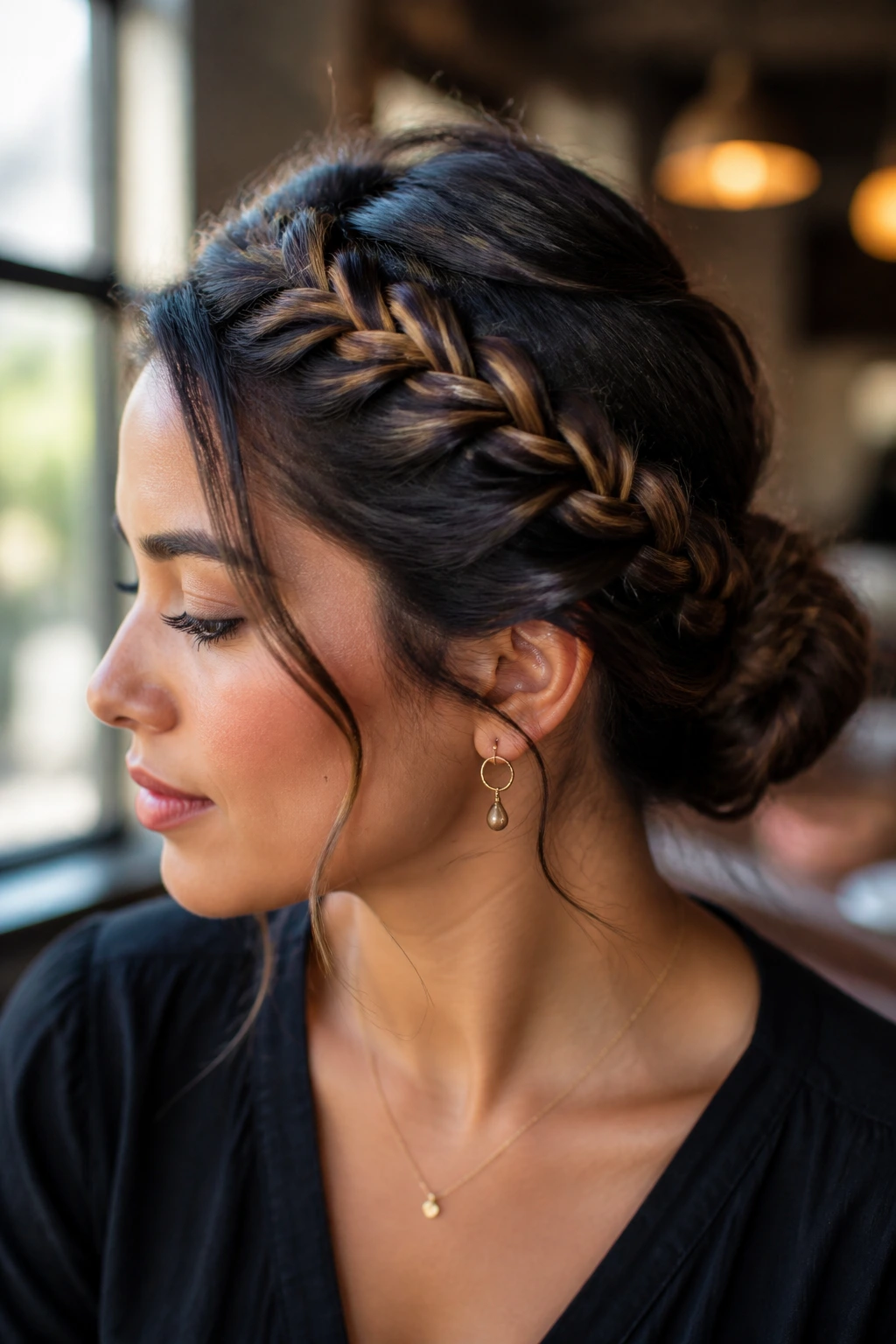
Instead of a straight, centered braid, this style moves in a diagonal line from one temple to the nape of the opposite side. It creates a dynamic flow of hair across the back of the head.
Following the Line
The trick is to constantly add hair in the direction of the braid’s path. Keep your chin tilted slightly toward the shoulder you are braiding toward; this keeps your neck aligned and makes it easier for your hands to follow the diagonal path without losing tension. This style looks wonderful with a low bun at the destination point, creating a soft, swept finish that is much more interesting than a standard, vertical braid.
18. Micro-French Braids
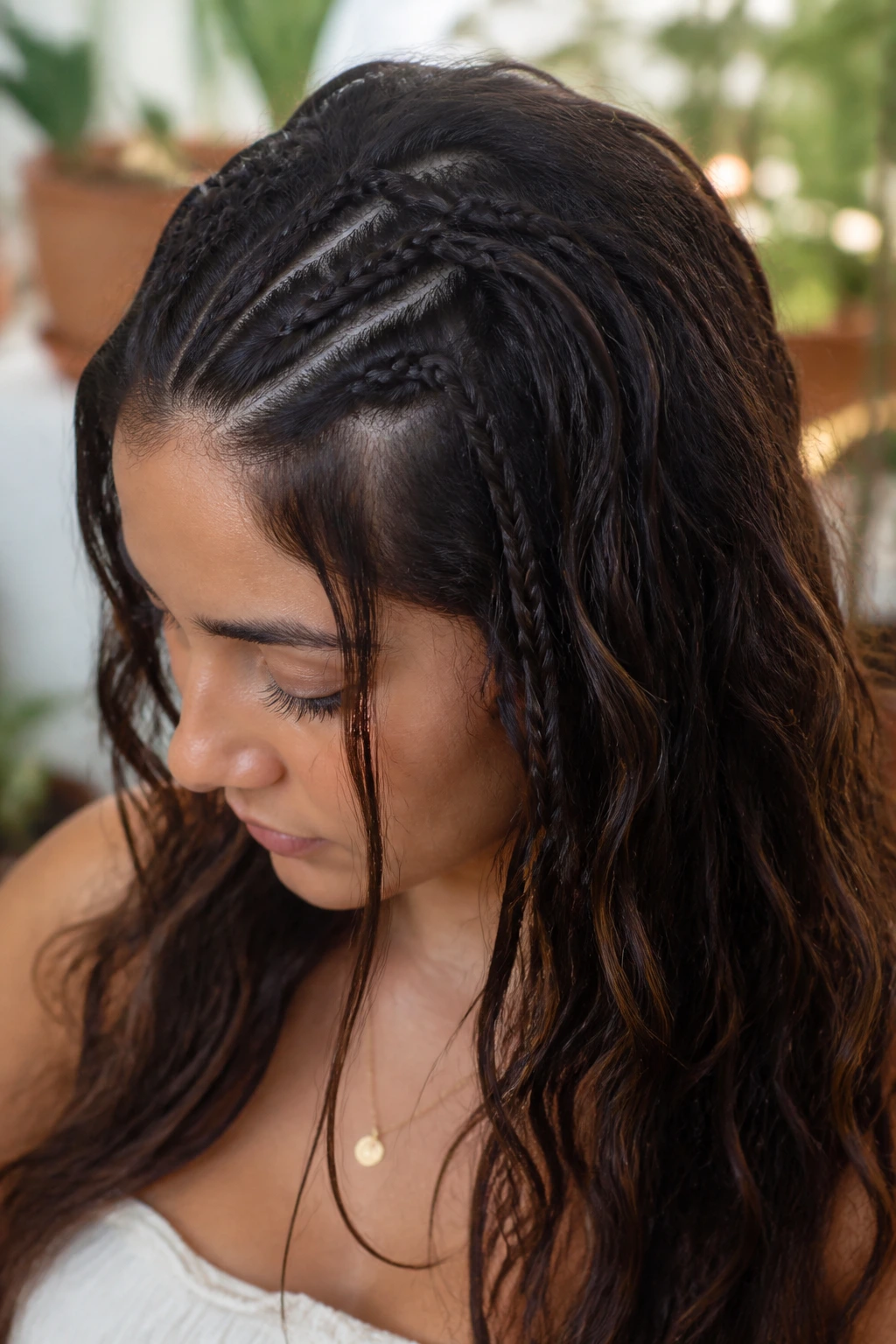
Sometimes, less is more. Creating multiple tiny French braids throughout your hair, rather than one large one, is a great way to add texture to loose hair.
Subtle Styling
These micro-braids do not need to be perfect. In fact, they look better when they are a bit imperfect and interspersed among natural waves. Braid only the top layer of your hair so that the braids rest on top of the loose lengths. Use tiny, clear plastic elastics, but try to fold the ends of the braids up and pin them underneath to avoid the look of cheap plastic ties showing. It adds a bohemian touch that is perfect for warmer weather.
19. French Braid with Pearl Accents
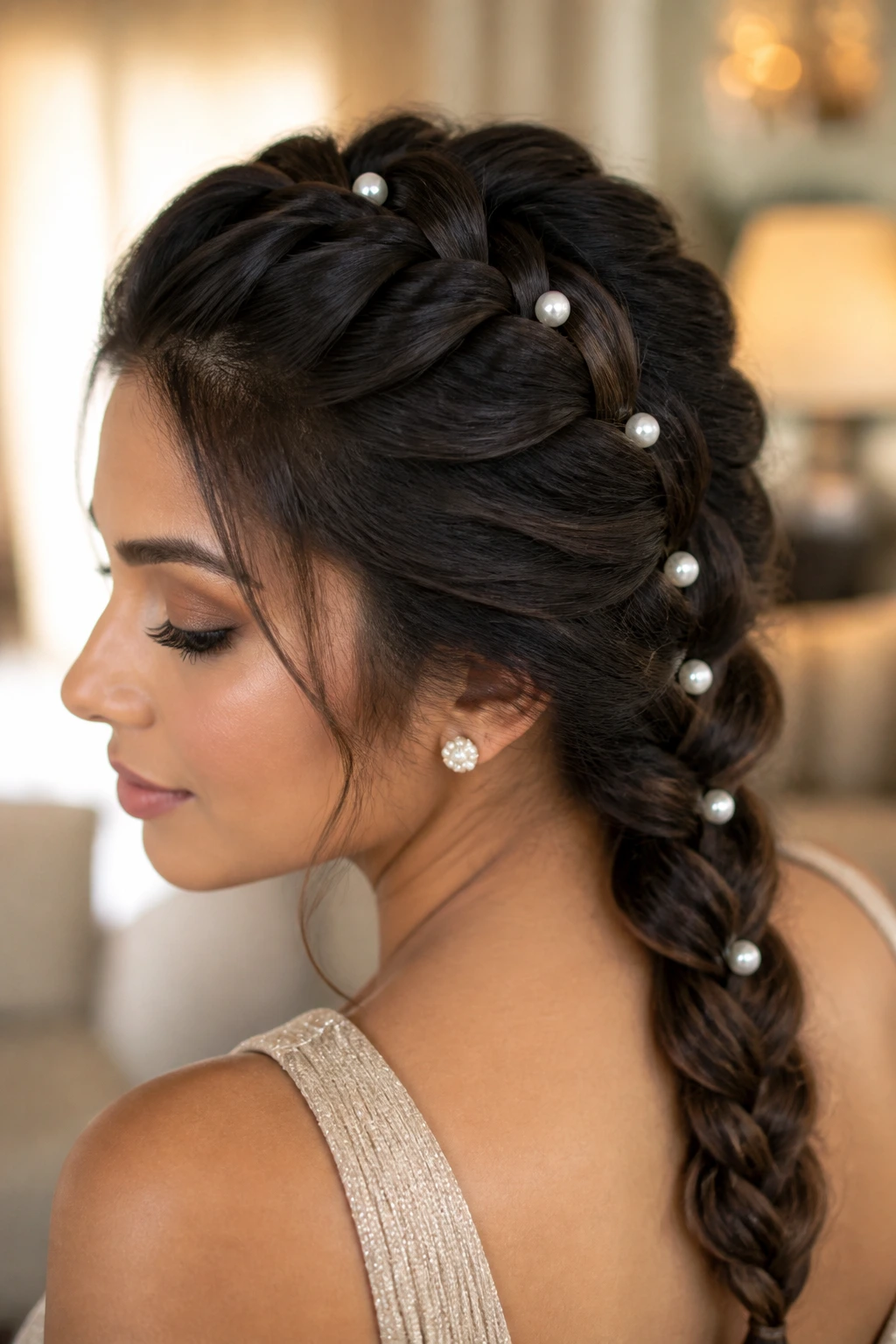
For formal occasions, the addition of small, stick-on or pin-in pearls can turn a simple French braid into an elegant piece of jewelry for the hair.
Placement Matters
Place the pearls at the junctions where you added new hair sections. This highlights the structure of the braid itself. Do not overdo it; a few strategically placed pearls are far more sophisticated than a heavy scattering. If you have dark, glossy hair, white or iridescent pearls will stand out with a stunning contrast, making the intricate work of the braid even more apparent to the observer.
20. The Tight, Sleek French Braid
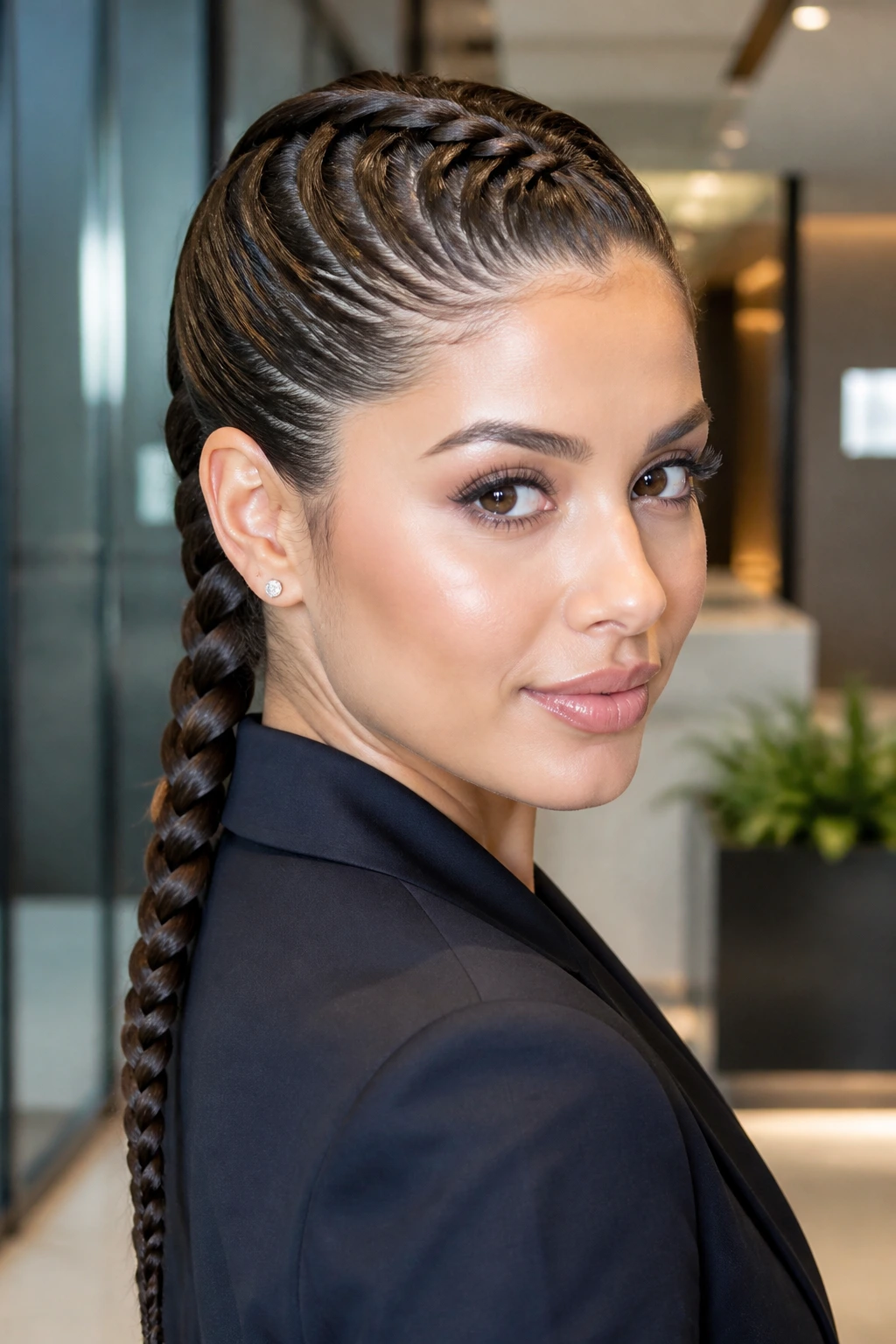
This style focuses on perfection and shine. It is the kind of braid you see in high-fashion photography—so tight and smooth that it almost looks like it was painted onto the scalp.
The Prep Phase
To achieve this, you need a high-quality smoothing cream or a light pomade. Start with hair that has been blown out until it is perfectly smooth. As you braid, use a fine-tooth comb to ensure every section is perfectly separated before you add it to the weave. This is not a style for a windy day on the beach; it is a style for a boardroom or a formal dinner where you need your hair to stay pristine for hours on end without a single stray strand.
21. Messy French Braid with Accessories
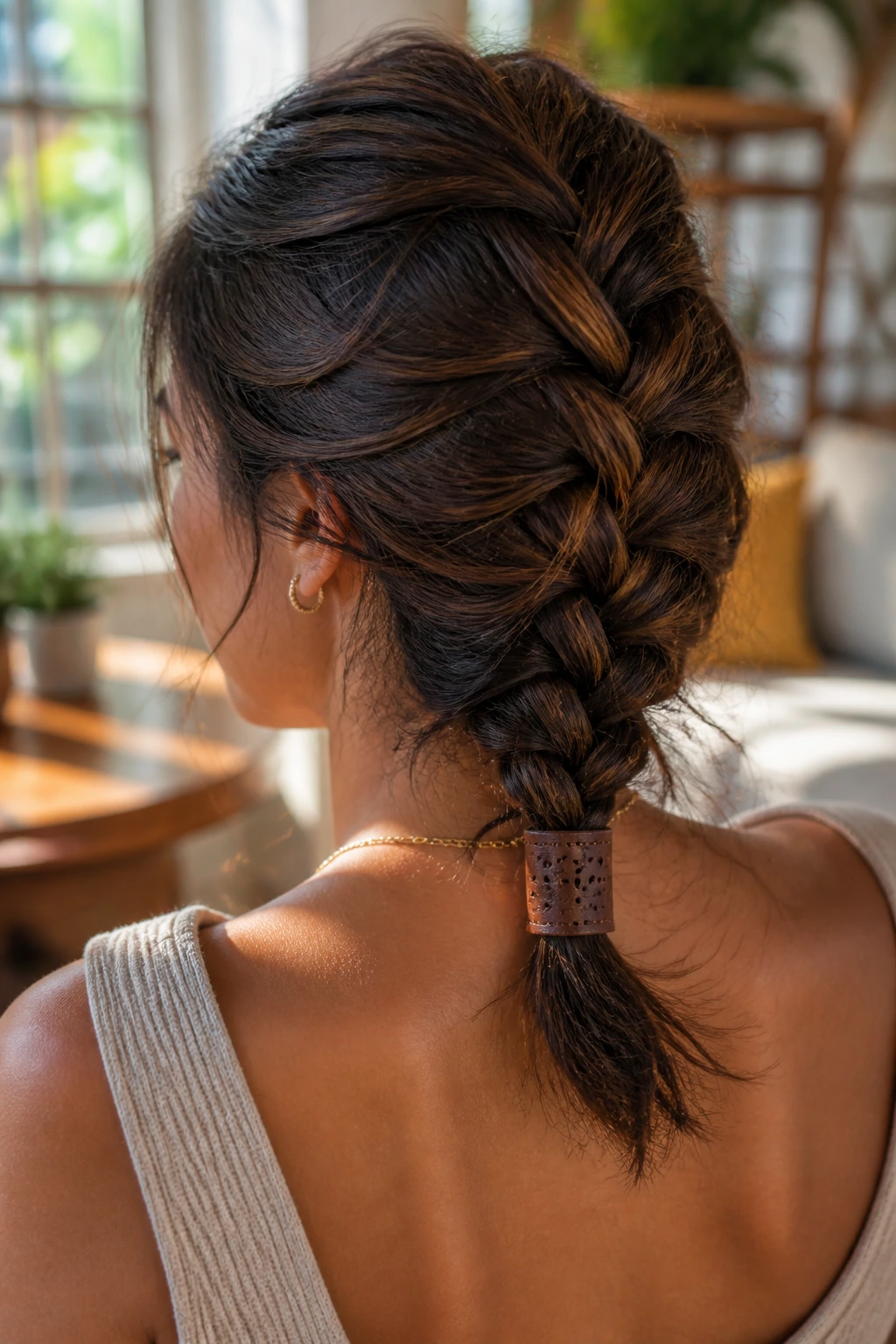
When you don’t have time for perfection, the messy French braid is your best friend. It is intentionally loose, with hair pulled out and purposefully left messy.
The “I Woke Up Like This” Look
The trick to making this look intentional rather than sloppy is the accessories. Add a leather hair cuff or an oversized clip to the base of the braid. The contrast between the messy, slightly frizzy texture of a loose braid and the clean lines of a metal or leather accessory creates a balanced look. It is an ideal style for a casual Saturday morning, providing comfort and style in equal measure.
Final Thoughts
Working with Latina hair requires a gentle touch and an understanding of the specific needs of your texture, whether you are dealing with thick, coarse strands or fine, silky ones. French braids remain the most reliable way to showcase the natural beauty of this hair type while providing the necessary structure to keep it looking fresh throughout the day. By adjusting the tension, choosing the right products to add grip or smoothness, and experimenting with the placement of the braids, you can unlock a nearly endless array of styles that honor your hair’s unique character.
Do not get discouraged if your first few attempts feel loose or uneven. The braid is a physical skill that improves with muscle memory; the more you practice these techniques, the more natural they will become. Once you feel comfortable with the core French braiding motion, you can begin to mix and match the elements described here, creating your own unique variations that fit your personality and your daily routine. Ultimately, the best braid is the one that makes you feel confident and comfortable, whether it is a sleek, polished updo or a loose, messy plait for a day off.