

Thick hair is a gift that keeps on giving, providing a dense canvas for styles that would look sparse on finer textures. Yet, those with a high density of strands often face the same persistent challenge: managing volume so that a simple updo doesn’t turn into an unruly, heavy knot by midday. Invisible braids—often referred to as feed-in braids or near-scalp techniques that minimize the visible tension point—offer the perfect solution. They allow you to weave that density into a streamlined, sleek silhouette that lasts for days, if not weeks.
Whether you are looking to pull weight away from your scalp or simply want to try a style that blends seamlessly into your natural hairline, the goal is to keep the transitions smooth. We are talking about precision parting and a technique that hides the “start” of each braid. When you work with thick hair, the secret isn’t just in the braiding; it is in how you prep the hair to handle the tension and the weight of your own locks.
1. The Classic Invisible Cornrow
The classic invisible cornrow remains the gold standard for a reason. By feeding in small amounts of hair at the base of the scalp, you create a look that appears to grow directly from your skin. This technique prevents the jarring, bulky knot that often occurs when you start a braid with too much hair at once. For those with thick hair, this means less stress on the roots and a much flatter, more polished finish that lasts significantly longer than traditional methods.
Why It Works for High-Density Hair
When your hair is naturally dense, traditional cornrows can look “poofy” or overly raised. Feeding in hair gradually keeps the profile low.
- Reduced Tension: By adding hair incrementally, you distribute the weight evenly rather than anchoring a heavy section at the start.
- Natural Growth Look: The start of the braid remains thin, mimicking the way hair naturally sprouts from a follicle.
- Longevity: Because the braid stays tighter to the scalp, it is less likely to fray or get frizzy as the days go by.
Pro tip: Use a light, water-based pomade or edge control to smooth the roots before you begin braiding. Avoid heavy waxes, as these can build up and make the scalp feel weighed down over time.
2. Minimalist Side-Swept Braid
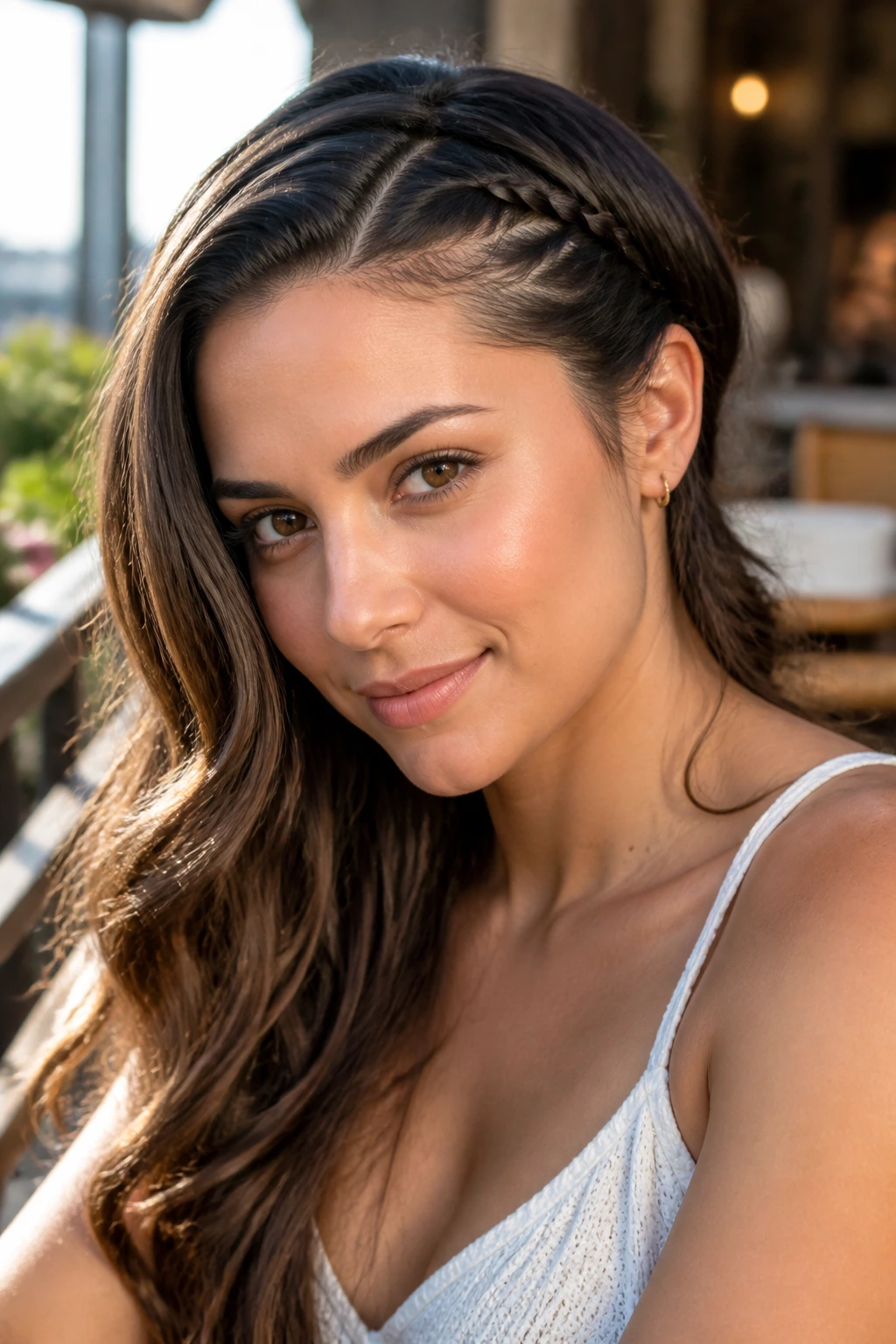
Sometimes the most impactful styles are the ones that keep things simple. A side-swept invisible braid takes advantage of your hair’s natural weight to create a dramatic, elegant look. By parting your hair deep to one side and beginning the invisible braid along the hairline, you create a sleek “headband” effect that sweeps across the forehead and tucks behind the ear. This style is exceptional for keeping thick, heavy hair out of your face while maintaining a polished appearance.
Technical Steps for Precision
Parting is the most crucial stage of this process. Use a fine-tooth rattail comb to ensure your parting is razor-sharp.
- The Sectioning: Create a clean diagonal part starting from your temple toward the crown.
- The Feed-In: Start with a very small strand at the very front of the hairline.
- The Tension: Keep your fingers close to the scalp, ensuring that you are not pulling back on the hair, but rather down along the curve of your head.
3. Double Invisible Dutch Braids
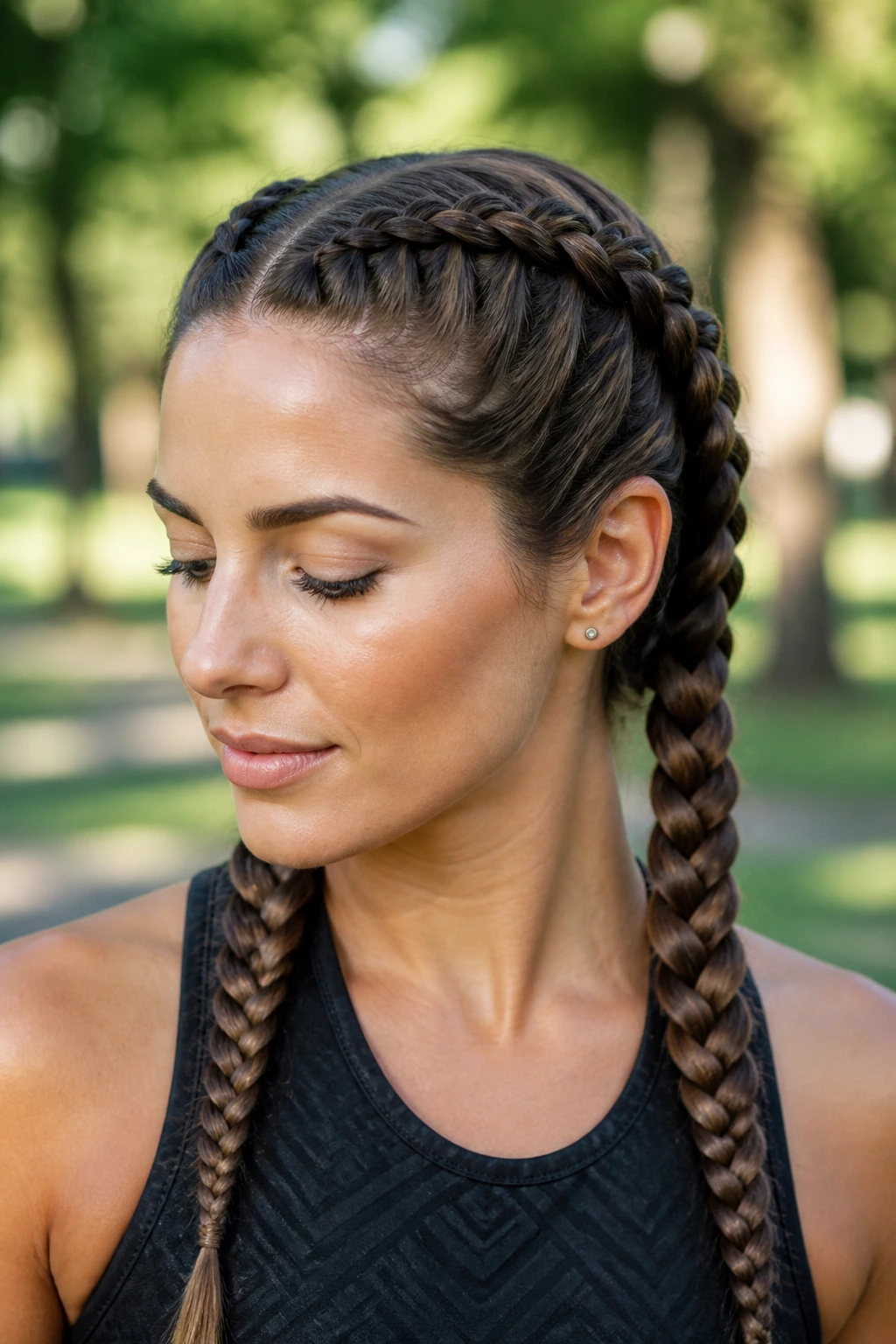
If you prefer a balanced look, double Dutch braids are a fantastic way to distribute the weight of thick hair across both sides of the head. By using the invisible technique, you hide the start of the braid near the nape of the neck or the forehead, depending on your preference. These braids are incredibly secure, making them ideal for active days when you need your hair to stay perfectly in place for hours on end without a single flyaway.
Why This Style Succeeds
Thick hair can often feel like a burden during warmer weather or exercise. Splitting it into two distinct sections allows you to control the volume more effectively.
- Even Distribution: Each side handles half the weight of your hair, reducing the strain on any single part of your scalp.
- Versatility: You can wear these braids loose for a casual look or pull them into a low ponytail for something more structured.
4. The Halo Braid Crown
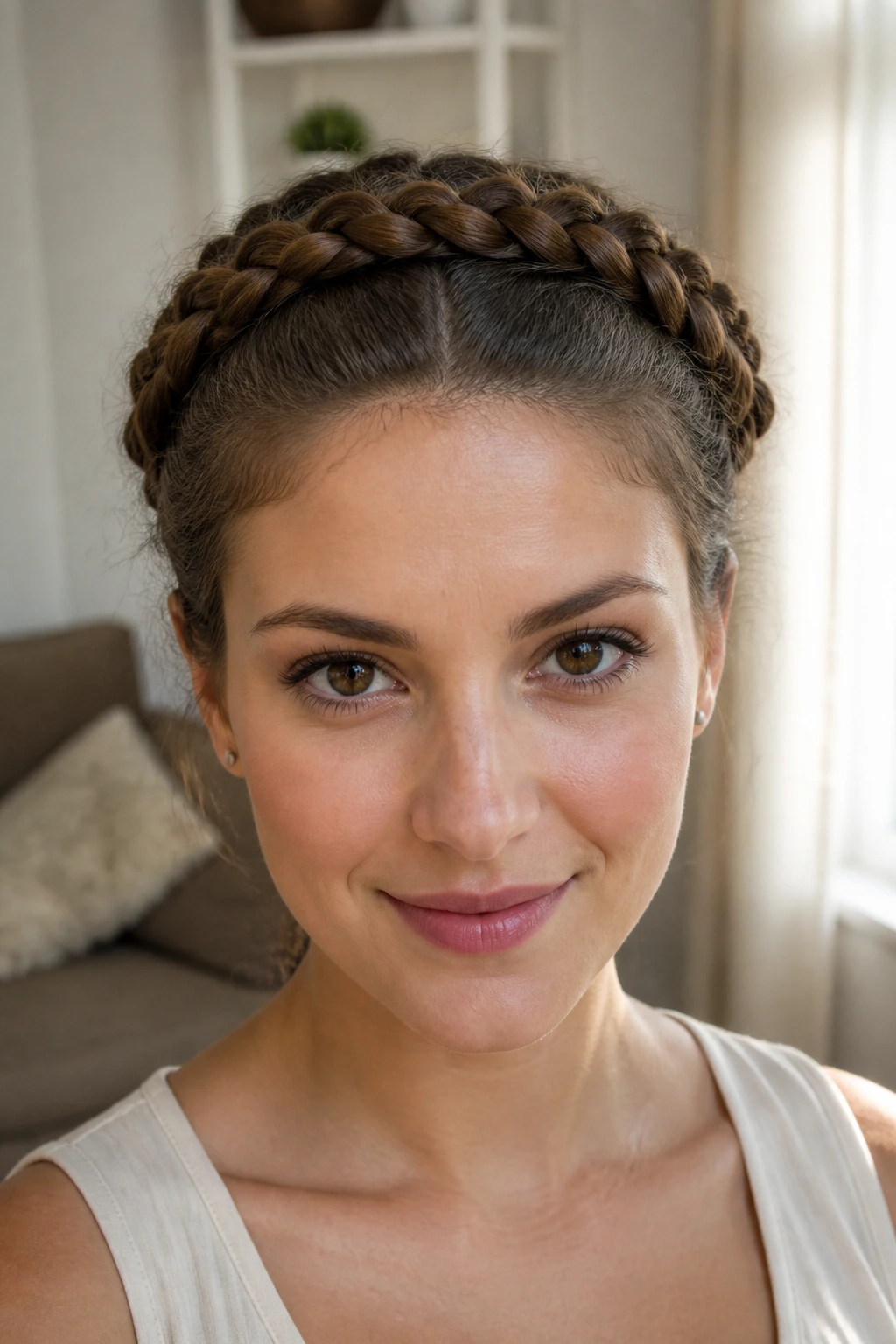
A halo braid creates a regal, ethereal aesthetic that is surprisingly practical for managing excess volume. By wrapping the invisible braid around the perimeter of your head, you essentially create a natural headband that holds the rest of your hair in place. The key to making this work with thick hair is to keep the braid itself relatively tight to the scalp so that it doesn’t sag under the weight of your own locks.
How to Execute the Crown
Avoid making the braid too thick, or it will stick out from your head like a shelf. Aim for a medium width.
- Start at the Nape: Beginning at the back allows you to hide the tail of the braid under the start point, creating a seamless, endless circle.
- Pinning: Use U-shaped hairpins rather than bobby pins to secure the braid; they hold more hair with less visible metal.
5. Sleek Invisible Ponytail Braid
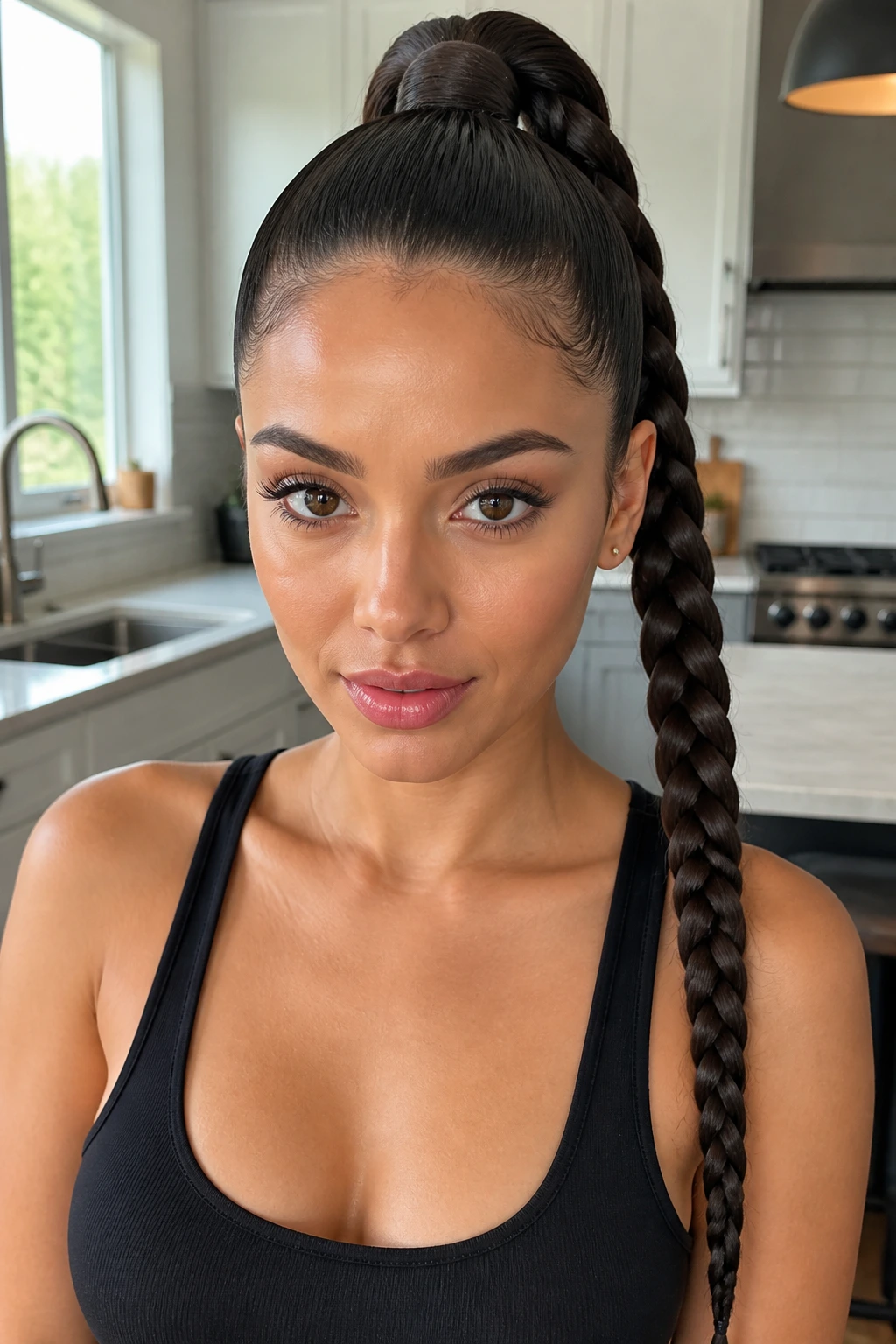
Combining a high ponytail with a single, long invisible braid offers a look that is both modern and incredibly functional. Because thick hair can become heavy and uncomfortable when worn as a traditional ponytail, incorporating it into a braid helps to lock everything together. The invisible start of the braid at the base of the ponytail ensures the entire style looks uniform and intentional.
Structural Advantages
This style acts as a stabilizer. The braid prevents the ponytail from swaying or becoming unraveled, which is common with long, thick hair.
- Weight Management: The braid keeps the bulk of your hair together, preventing it from tangling.
- Ease of Styling: It takes less than five minutes to secure once your ponytail is set, making it a great choice for quick mornings.
6. Geometric Parting Invisible Braids
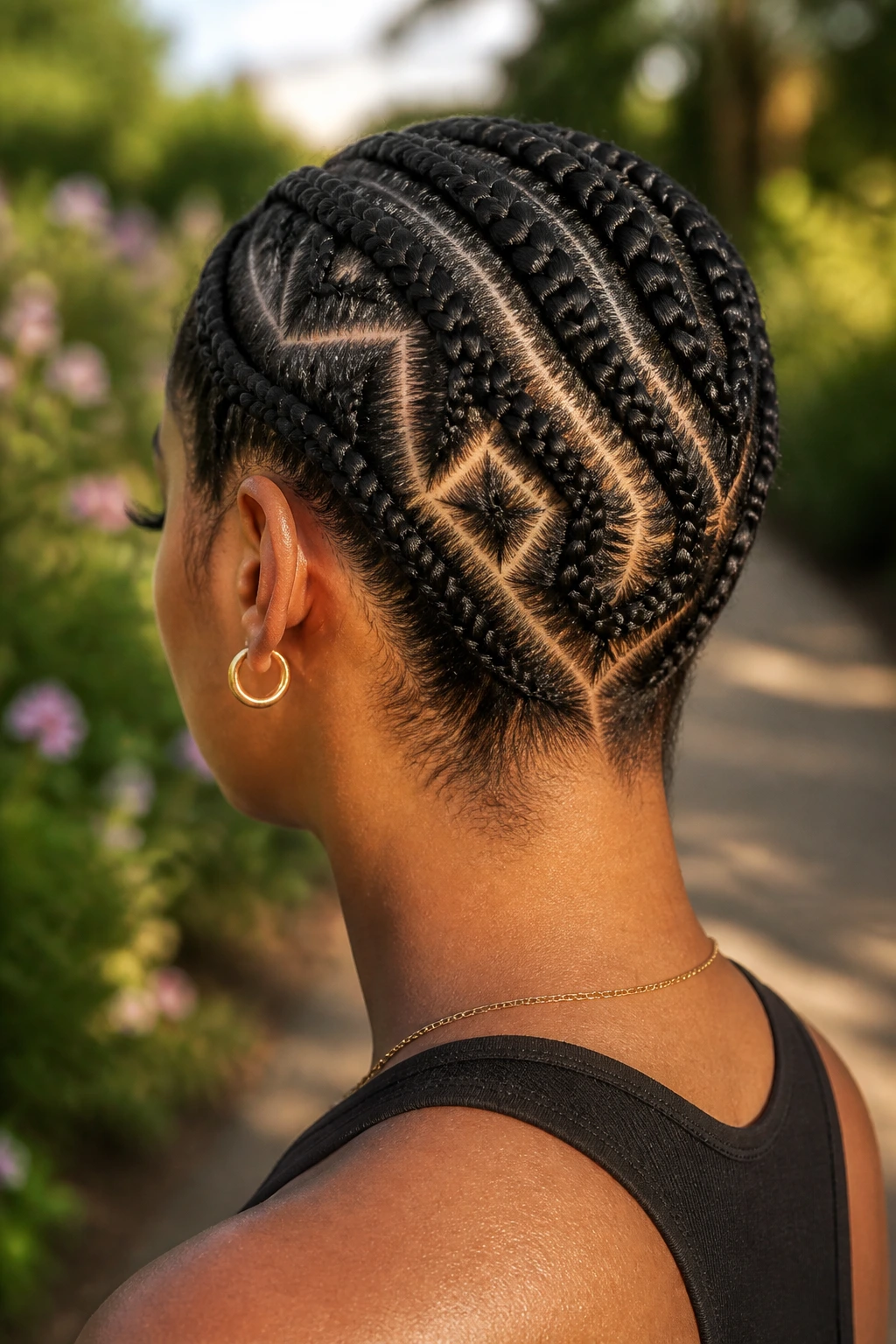
For those who want a bit of flair, using geometric patterns in your parting adds an artistic dimension to your hair. Whether you choose zig-zags, triangles, or diamonds, the invisible braiding technique ensures that the focus remains on the pattern rather than a bulky starting point. This is an excellent way to break up the mass of thick hair, making it look much more styled and intentional.
The Art of the Part
Don’t rush the sectioning process. Using a mirror behind you is essential to ensure the symmetry of your patterns at the back of the head.
- Tooling: Use a metal-tipped comb for the cleanest lines.
- Clarity: Once you create the pattern, use a tiny amount of hair gel to “set” the edges of the part so it doesn’t blur as you work.
7. The Faux-Hawk Invisible Braid
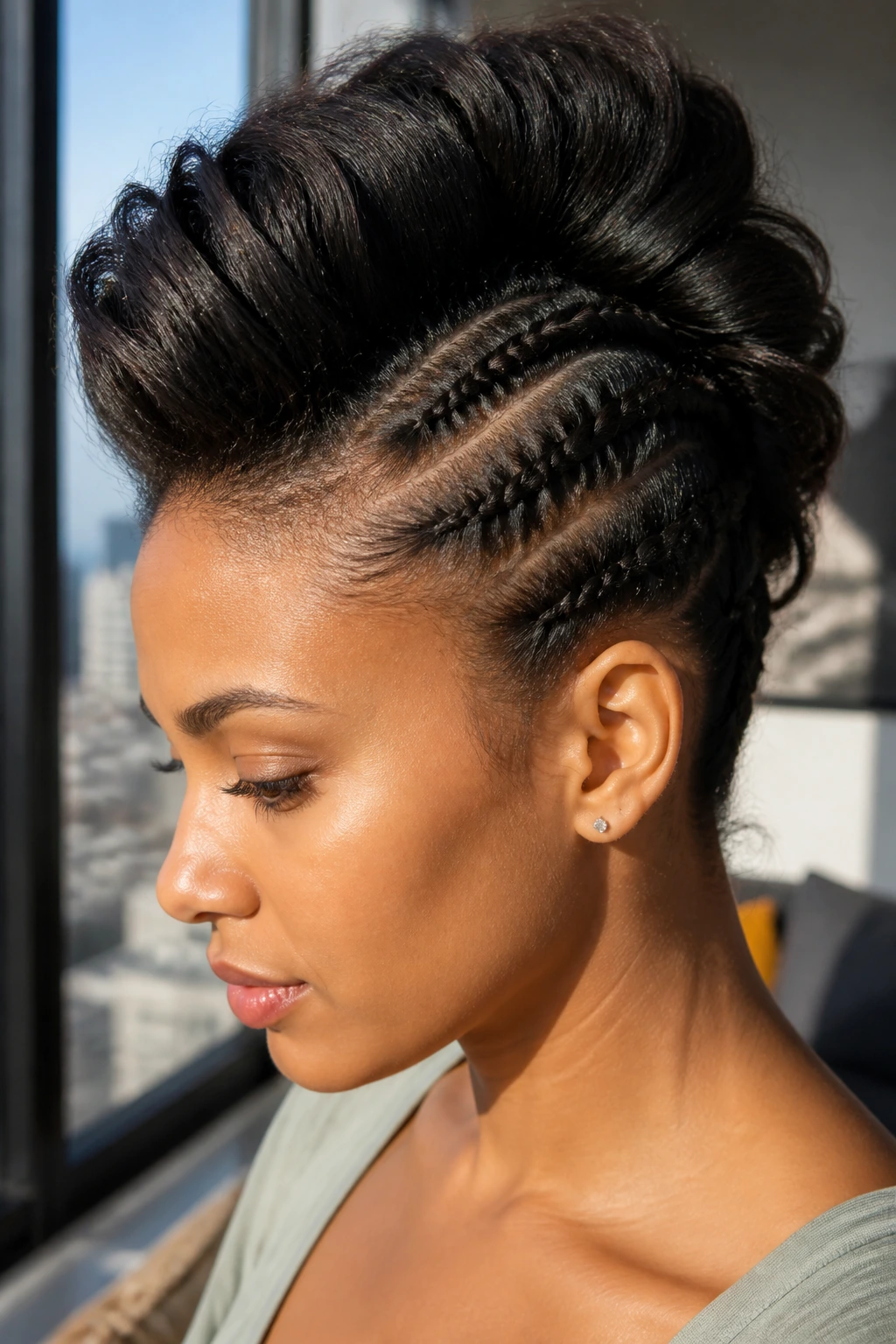
A faux-hawk is a bold, high-contrast look that works brilliantly with thick hair because you have enough volume to create a “bridge” of hair right down the center of your scalp. By braiding the sides invisibly and leaving the center section loose or textured, you create the illusion of a Mohawk without ever picking up a pair of shears. It is edgy, secure, and perfect for showcasing your hair’s natural density.
Styling the Center
The center section provides the height and drama, while the side braids provide the structure.
- Teasing: Gently tease the roots of the central section if you want extra volume.
- Securing: Use clear elastic bands to anchor the base of the braids so they stay tight against the head.
8. Invisible Braid into a Bun
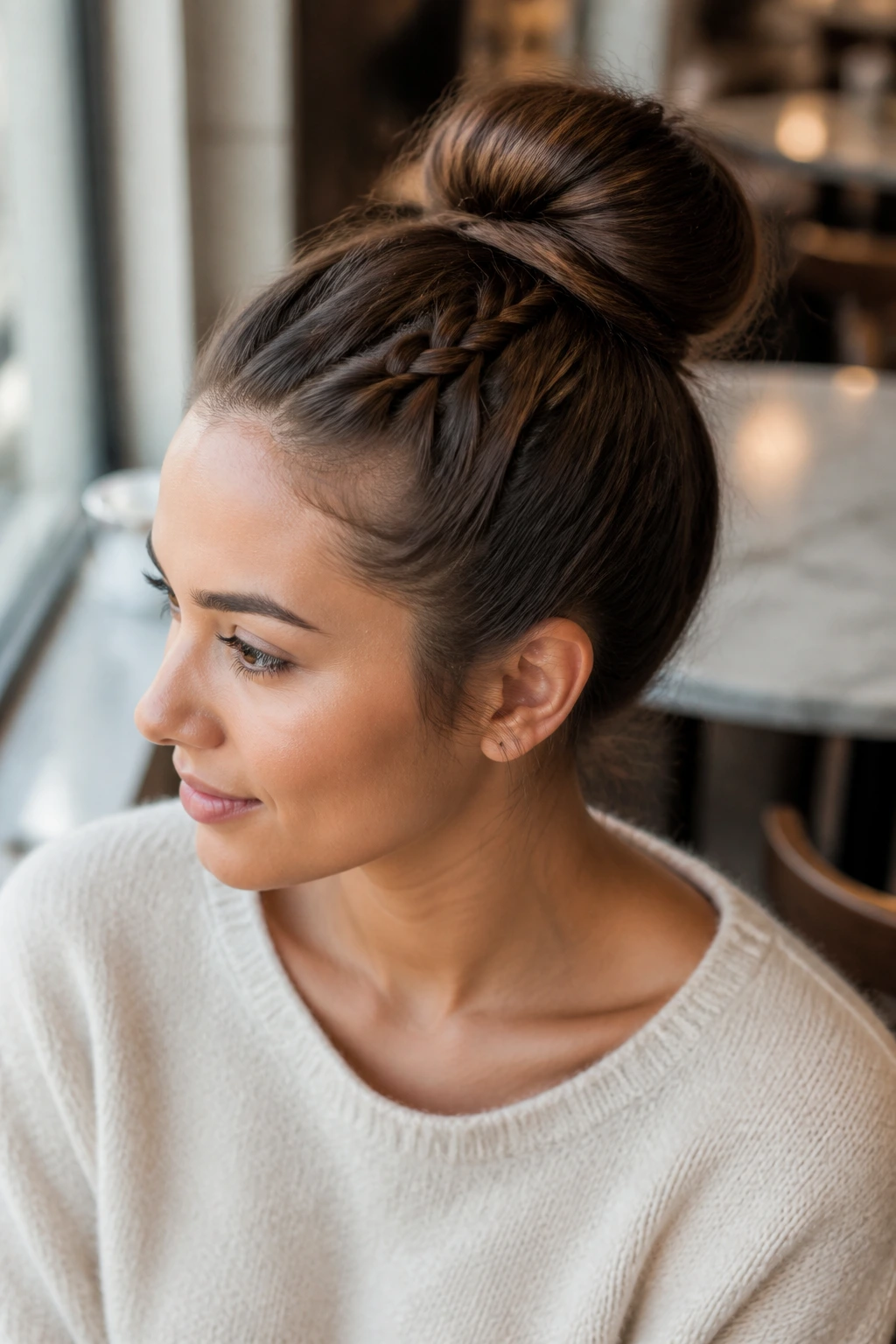
Combining an invisible braid with a bun is perhaps the most sophisticated way to handle thick, long hair. By braiding from the hairline toward the crown and gathering all the hair into a single, high bun, you keep your neck cool and your style tidy. The braid serves as the structural support for the bun, ensuring it doesn’t droop or shift, which is a common issue with heavy, thick hair.
The Perfect Bun Technique
Don’t try to force your thick hair into a tiny bun. Embrace the size of it.
- The Base: Use a thick, fabric-covered elastic that can handle the density of your hair without snapping.
- The Wrap: Wrap the braid around the base of the ponytail, then pin the remaining length around it for a clean, professional finish.
9. Waterfall Invisible Braid
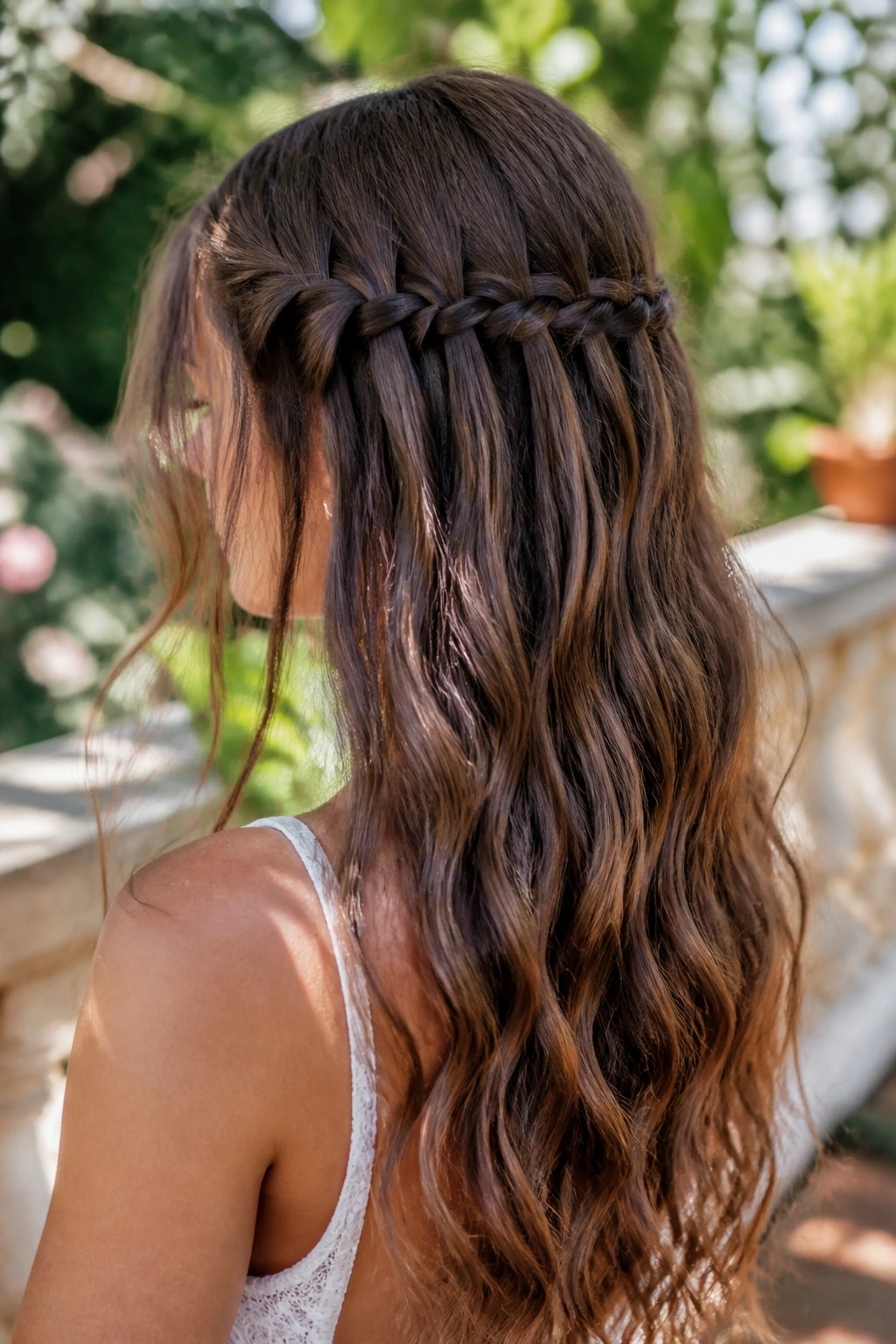
The waterfall braid is known for its romantic, cascading appearance. When applied to thick hair, it creates a stunning display of texture. The “invisible” aspect comes from keeping the feed-in sections very small and tight to the scalp as you weave the braid horizontally across the back of the head. This style allows the majority of your hair to hang free while keeping the front sections perfectly managed.
Why It’s Unique
This is one of the few styles that celebrates the sheer amount of hair you have.
- Texture Showcase: Because you are letting most of your hair hang down, you can show off your natural curl pattern or wave.
- Balance: It provides the control of a braid with the freedom of a loose style.
10. The Interlocking Invisible Braid
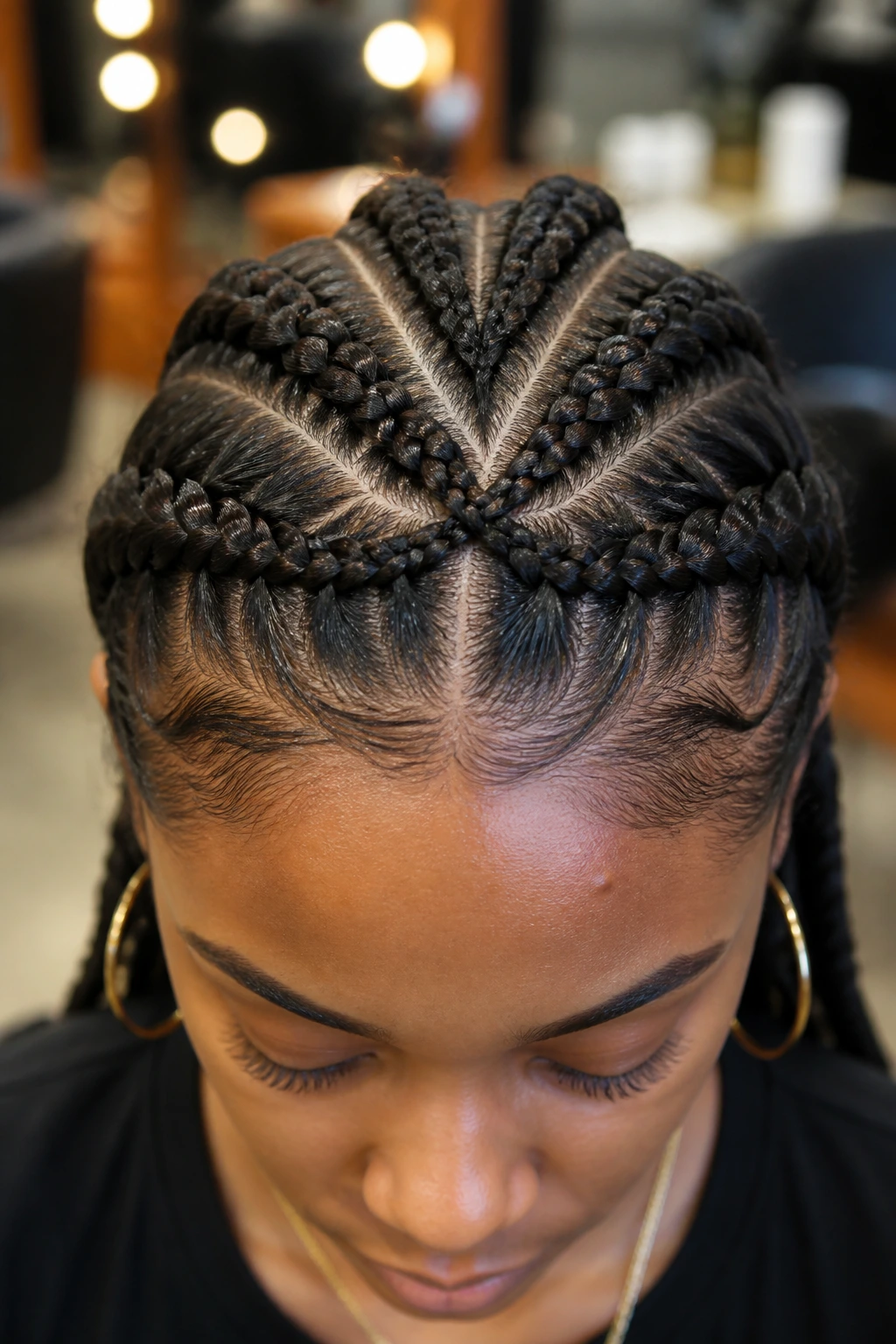
This style involves two or more braids that meet and interlock at the center of the head. It is a complex-looking style that actually relies on very simple, consistent tension. The invisible start of these braids ensures that the scalp looks clean even where the braids converge, making it a great option for professional settings or formal events where you want your hair to look perfectly groomed.
Execution Tips
Make sure your tension is consistent across all braids. If one is tighter than the others, it will pull the entire style off-center.
- Tracking: Work from the outside in, aiming for the center point.
- Finishing: Use a small bit of hair oil to keep the ends shiny and smooth.
11. Hidden Headband Braid
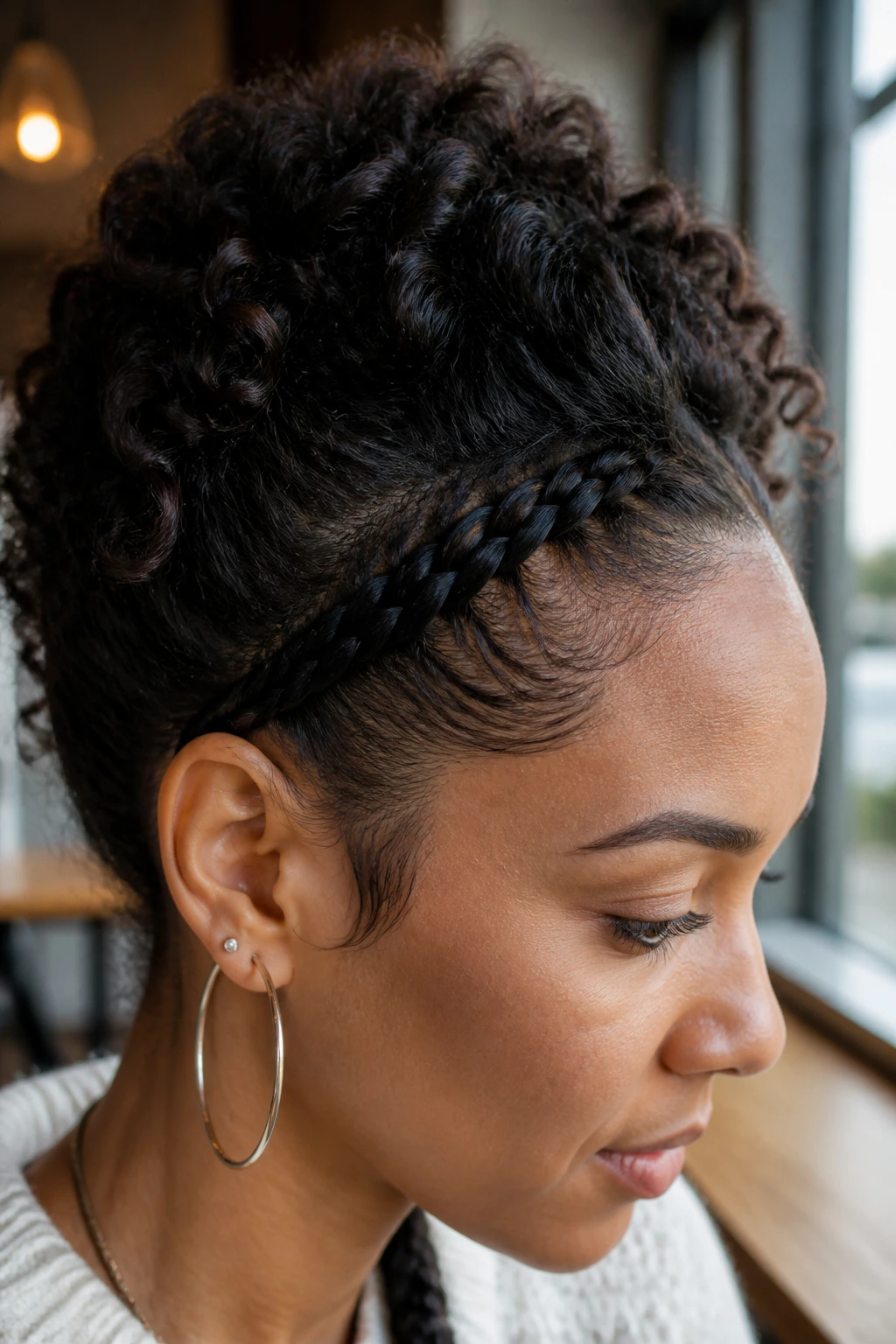
If you love the look of a braided headband but hate the bulk of a full-scale halo, a hidden headband braid is your answer. You essentially create a small, invisible cornrow along the hairline, tucked slightly behind the natural edge. This keeps the hair pulled back away from the eyes but doesn’t require you to pull your entire head of hair into a tight style. It is subtle, functional, and very gentle on the scalp.
Why This Matters for Thick Hair
Many headbands slide off thick hair because of the volume. A braided one stays put because it is literally built into your own hair.
- No Slippage: It stays anchored to your head all day long.
- Comfort: It feels like wearing nothing at all, unlike heavy plastic headbands that can cause headaches.
12. Micro-Invisible Braid Accent

Sometimes, you don’t want a full-head style. You just want a touch of detail. Micro-invisible braids are tiny, delicate additions that can be tucked behind the ear or woven into a loose wave. Because they start invisibly at the scalp, they look like a subtle, sophisticated detail rather than a bulky afterthought. They are the perfect way to add personality to your thick hair without needing a complex, full-head installation.
Styling Ideas
These work best as pairs.
- Symmetry: Place one on each side of your face for a balanced look.
- Blending: Weave them into a braid or ponytail later in the day to change your look instantly.
13. The Zig-Zag Invisible Braid
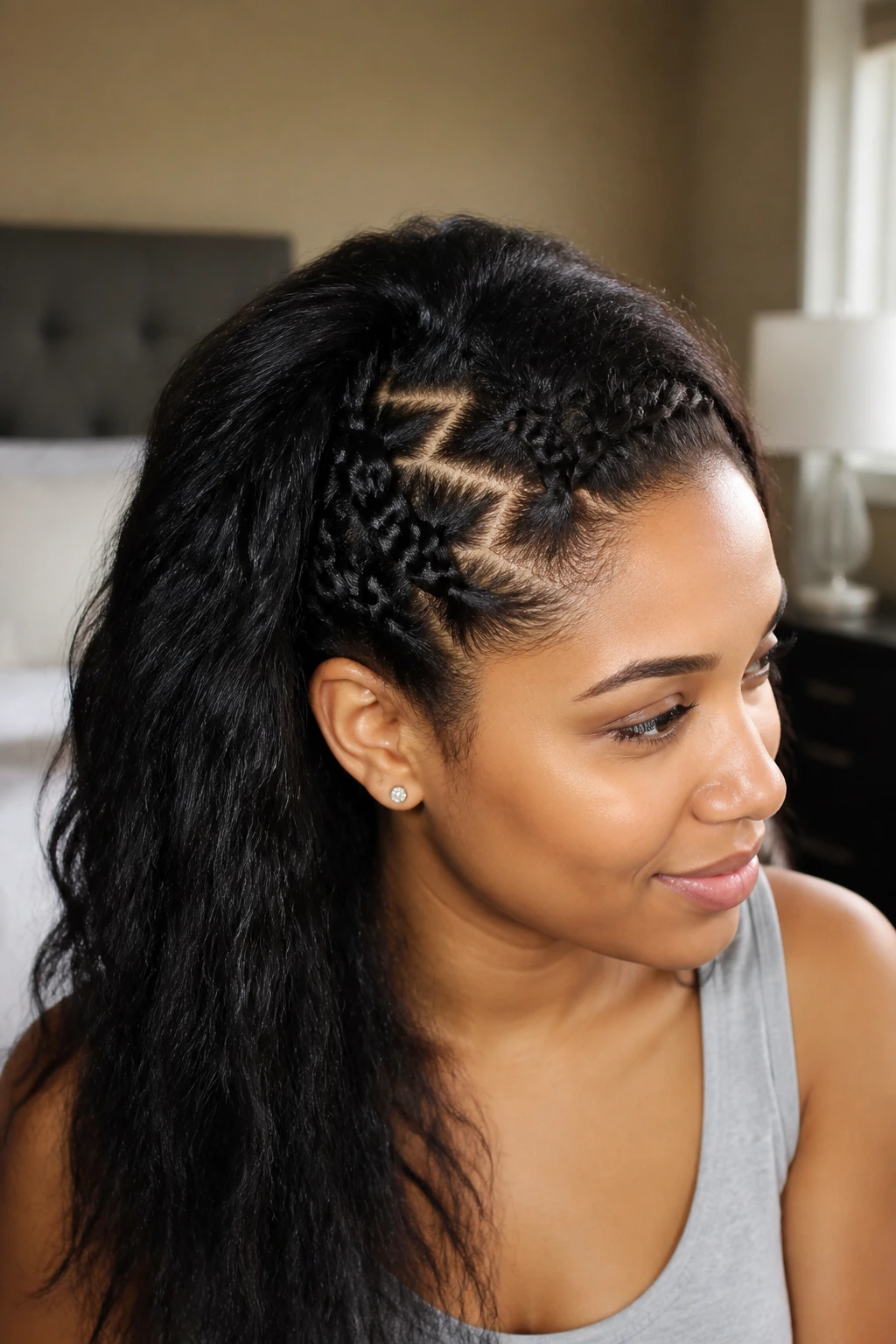
A zig-zag parting can transform a simple cornrow into something far more interesting. By alternating the direction of the braid, you create a visual rhythm that draws the eye. When done with an invisible starting technique, the zig-zag pattern remains the star of the show. This style is particularly effective for thick hair because the change in direction helps to break up the mass, making the head look more defined.
Creating the Pattern
Take your time with the parting. If the zig-zag is too shallow, it won’t be visible.
- Depth: Make the points of your zig-zags about an inch deep for maximum impact.
- Consistency: Keep the angle of the zig-zag consistent as you move toward the nape of the neck.
14. Wrapped Invisible Braid
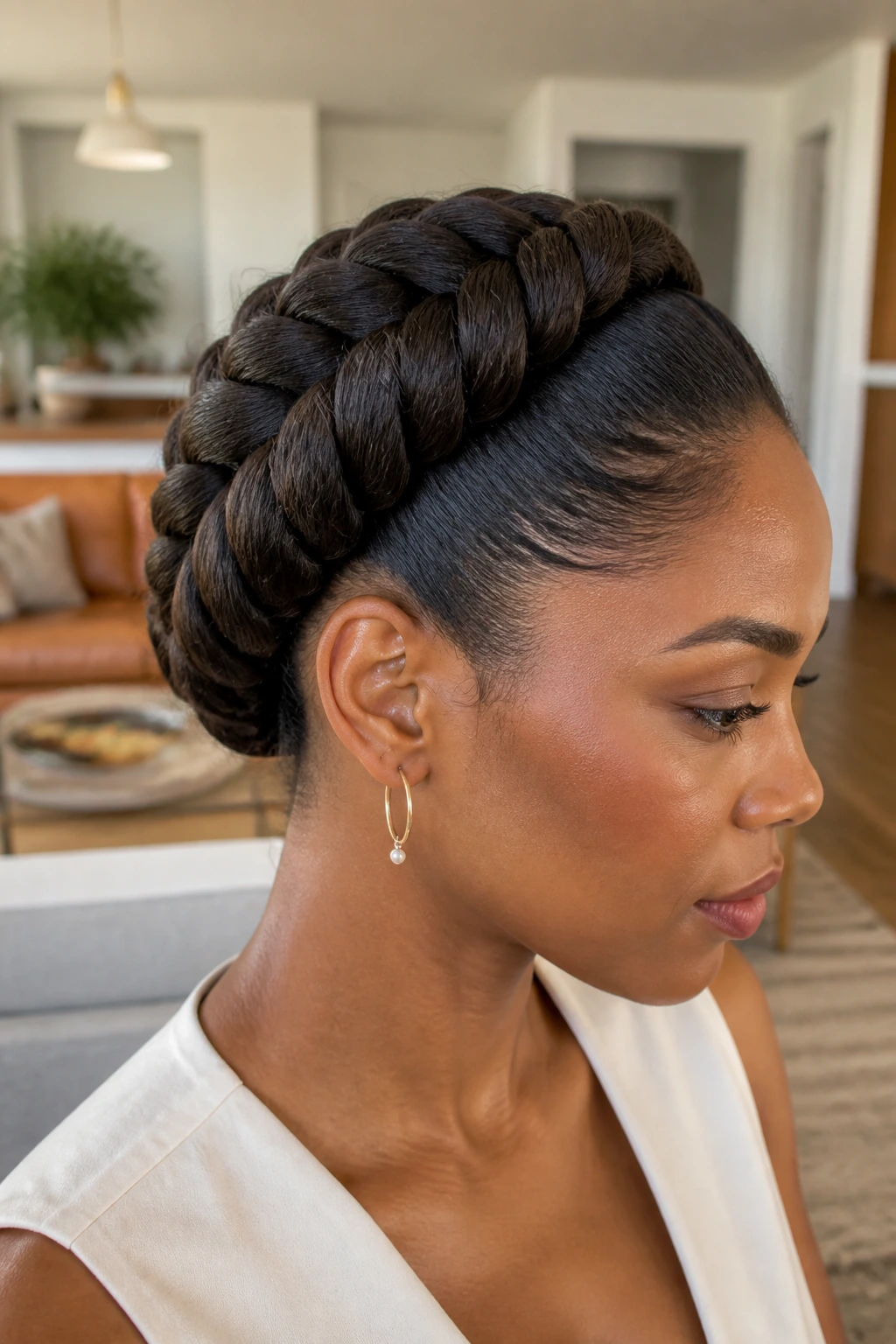
The wrapped braid is a classic style where you braid around a section of your hair to create a seamless, solid-looking rope. When you start this invisibly at the scalp, the entire braid looks like a singular, smooth cylinder of hair. This style is excellent for those who want to hide the fact that they have split ends or are dealing with a bit of frizz, as the wrapping technique tucks those strands away completely.
The Mechanics
You need to be very consistent with your hand placement.
- Tension: Keep the wrap tight. If you lose tension, the braid will sag.
- Finish: Secure the ends with a clear elastic and then wrap a small strand of hair over the elastic to hide it.
15. The “Infinity” Invisible Braid
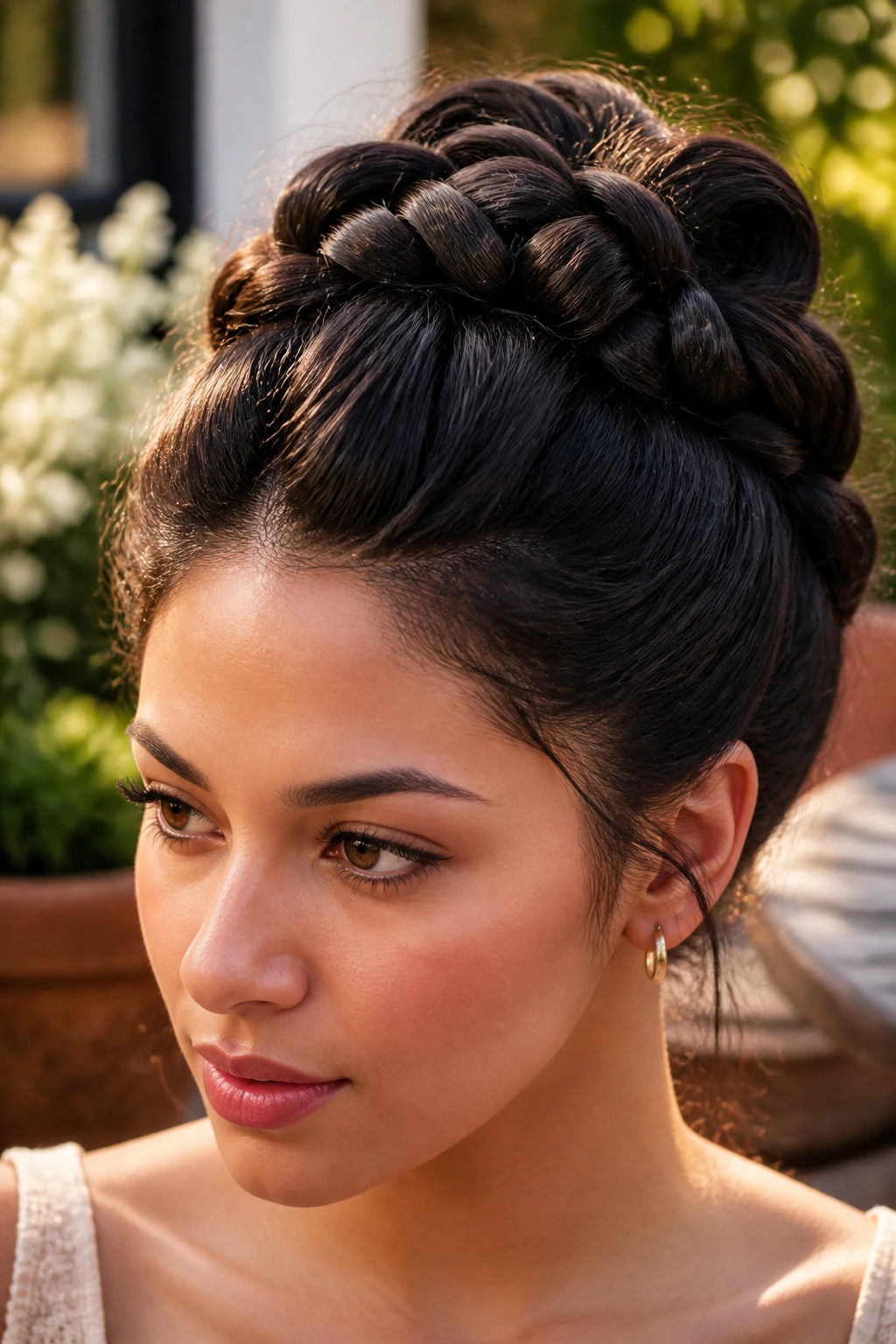
An infinity braid creates a beautiful, looping pattern that resembles the figure-eight symbol. When done as an invisible braid, it offers a high-fashion look that is surprisingly easy to maintain. The loops add significant texture, which is a great way to showcase the health and shine of thick hair. Because this braid has a lot of “open” space within the loops, it doesn’t feel heavy, despite the volume of hair being used.
Why It’s Great
It is the ultimate style for showing off length.
- Visualization: The looping pattern makes hair look longer and more defined.
- Durability: Unlike a standard three-strand braid, this pattern holds its shape very well throughout the day.
16. Invisible Braid with Loose Ends
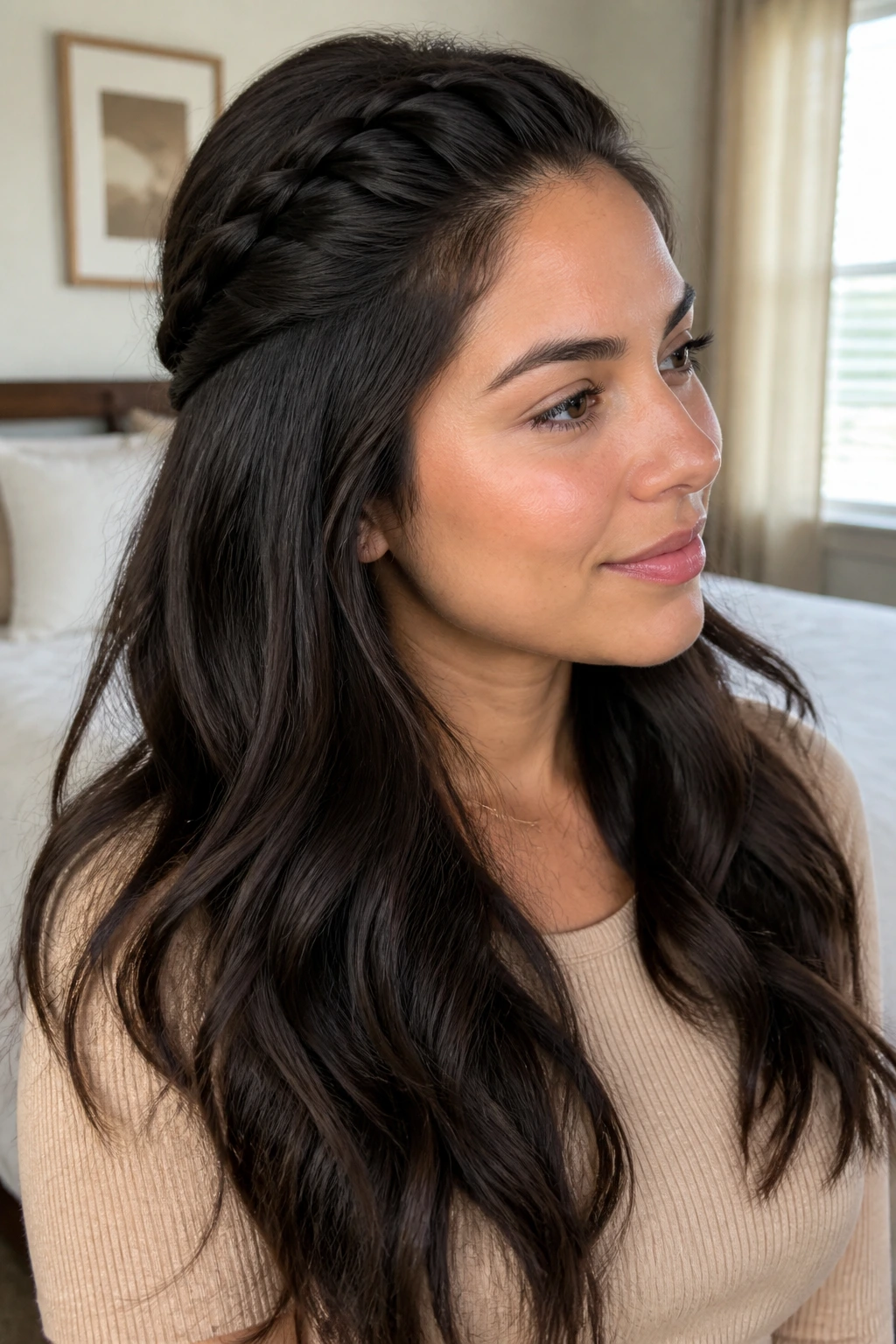
Often, the best way to manage thick hair is to braid the top and leave the bottom loose. By braiding the top section invisibly, you keep your hair off your face, but you still get to enjoy the volume and length of your hair as it falls over your shoulders. This “half-up” approach is classic, versatile, and much easier to manage than a full-head braid, especially if you have shorter layers that tend to pop out.
Managing the Transition
The point where the braid ends and the loose hair begins is critical.
- The Secure Point: Make sure the braid is tied off securely so it doesn’t start to unravel into the loose hair.
- Blending: Use a wide-tooth comb to gently detangle the loose ends so they blend seamlessly with the braided section.
17. The Crown Knot Braid
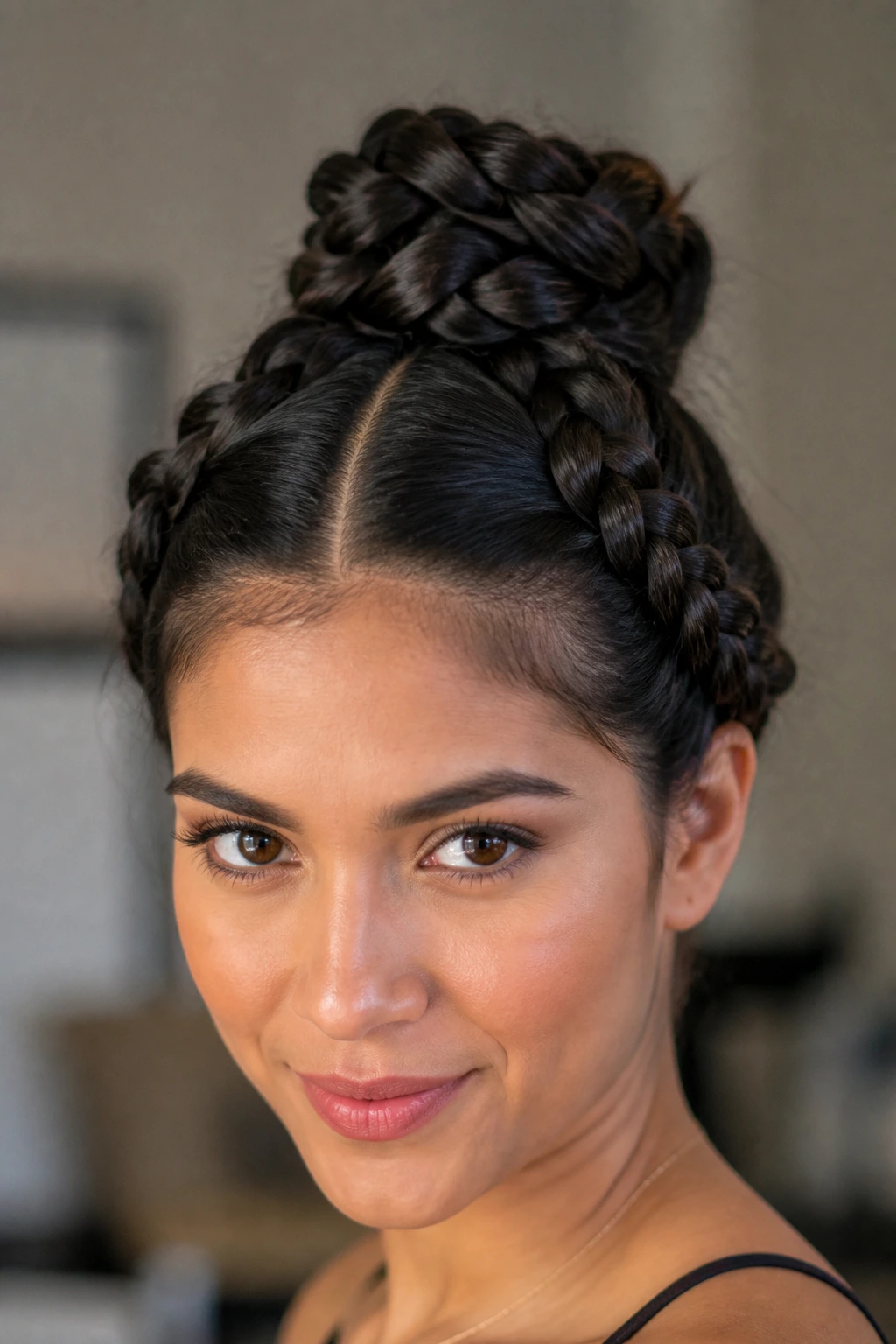
A crown knot braid involves braiding two sections around the head and securing them at the top in a knot. The invisible technique is vital here because the starts of the braids are at the front of the head, and you don’t want bulky ends visible. This style is sophisticated and perfect for formal occasions. It gives you the height of a crown with the structural security of an invisible braid.
Styling the Knot
The knot should be loose and sculptural.
- Teasing: A bit of dry shampoo or texturizing spray before you start will give your thick hair the grip it needs to stay knotted.
- Securing: Use hairpins that match your hair color to make them disappear into the knot.
18. Diagonal Invisible Braid
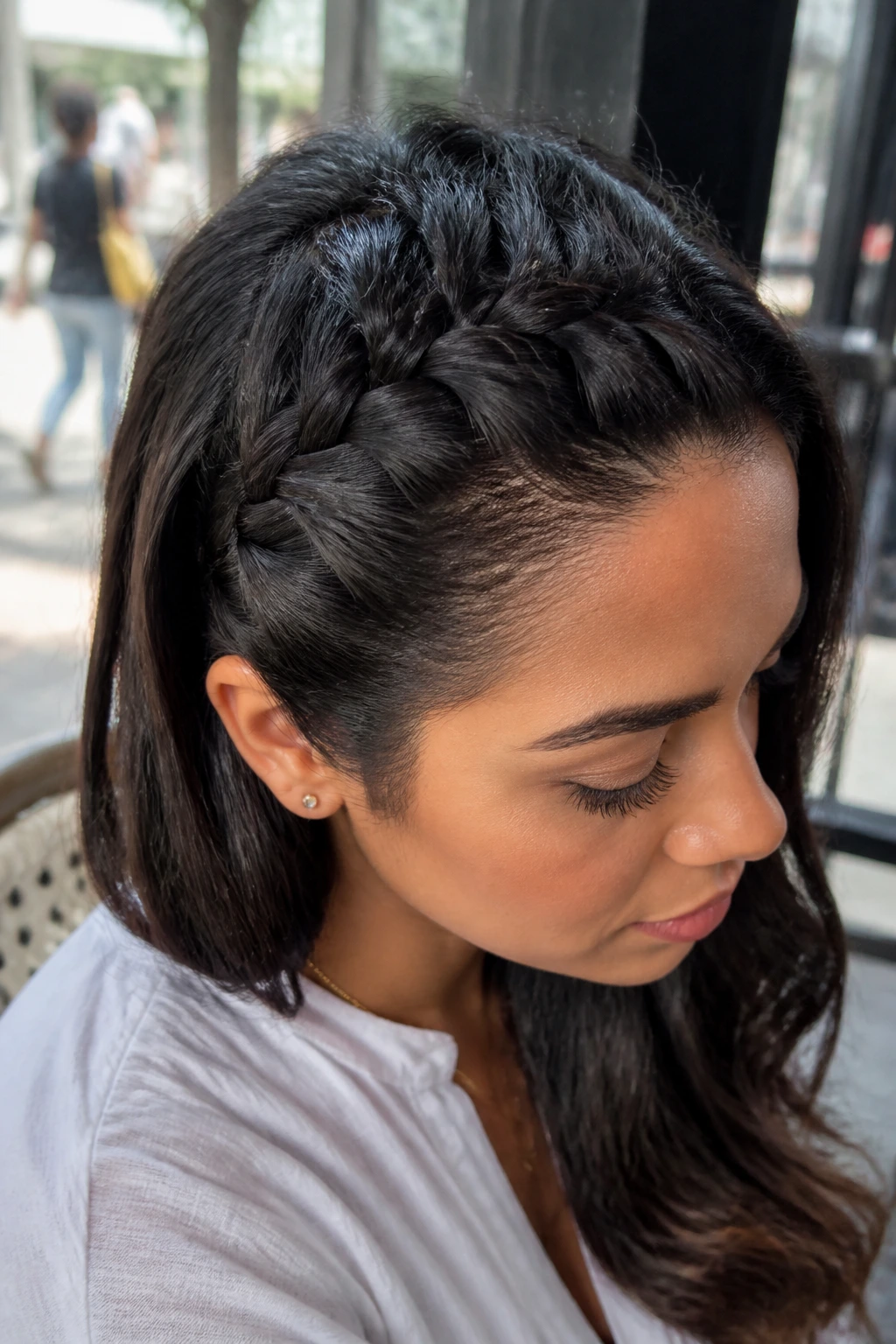
A diagonal braid starting from one temple and moving toward the opposite ear creates a sense of movement. This is a very flattering style for thick hair because it slims the profile of the head. By using the invisible feed-in method, you ensure that the start of the braid isn’t a focal point, but rather the path the braid takes across your head.
The Flow
Focus on the angle. If the angle is too steep, the braid will bunch up.
- Gradual Movement: Move across the head in a gentle, sweeping motion.
- Symmetry: Ensure the braid ends comfortably behind the ear so you can tuck it in easily.
19. The Braided Side-Part
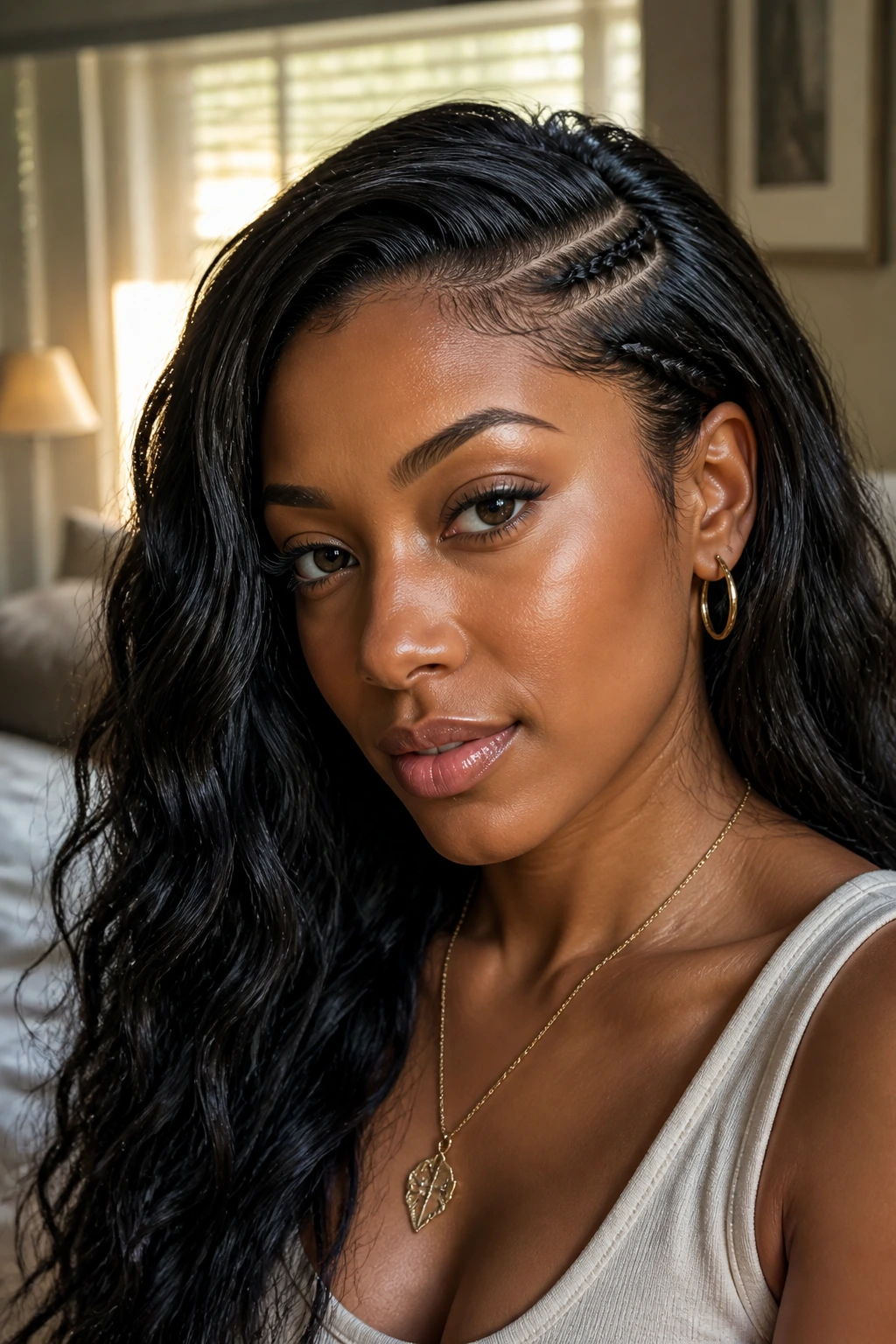
A braided side-part is a subtle, chic style that incorporates a single invisible cornrow along the side part. This is an excellent way to keep your hair from falling into your face throughout the day. Because the braid is so small, it doesn’t compete with the rest of your hair, but it adds a clean, structured detail that makes the overall look feel finished.
Why It Works
It’s the ultimate low-maintenance style.
- Minimal Effort: It takes two minutes to create.
- Universal Appeal: It works with any hair texture and any length.
20. Invisible Braid into a Chignon
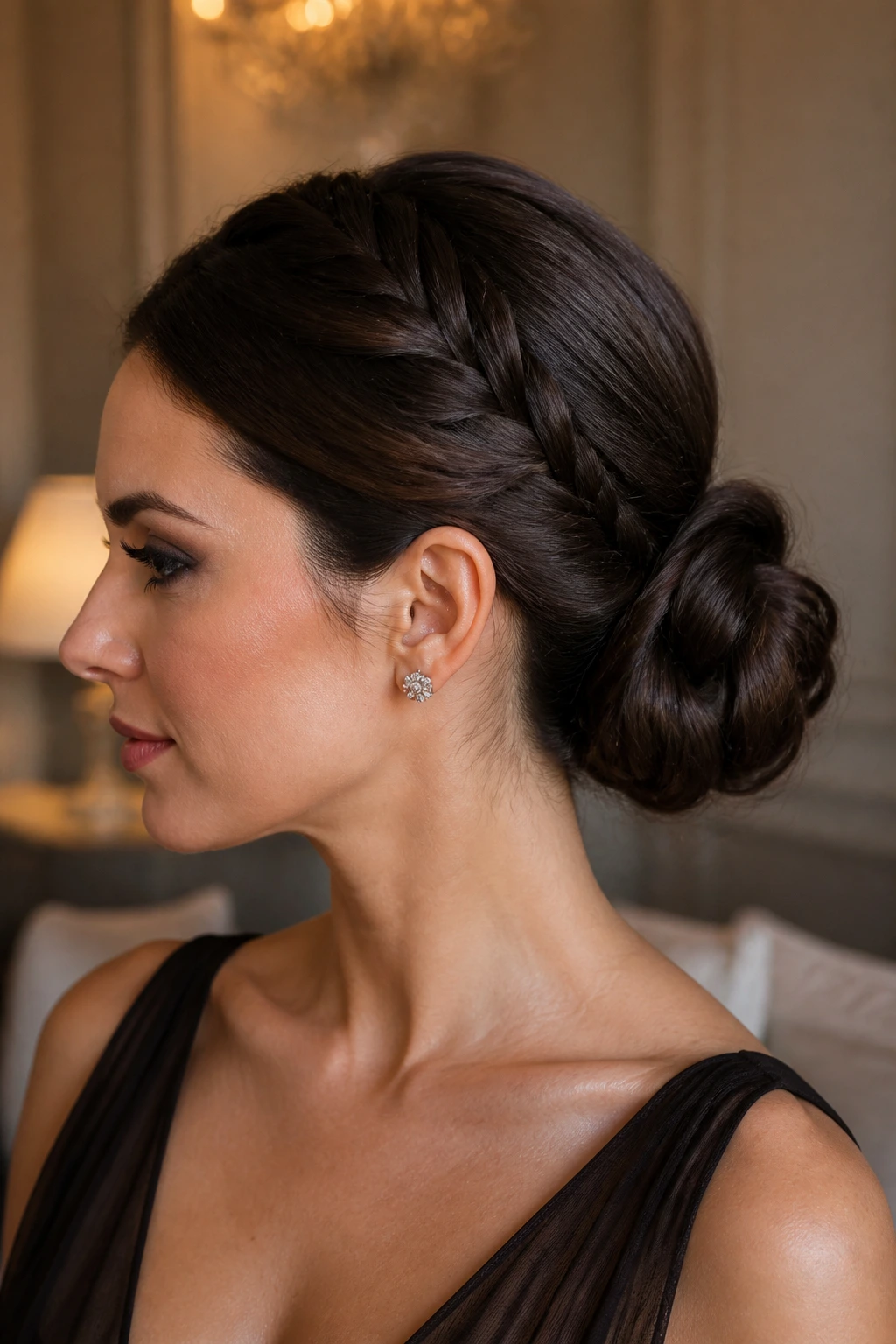
A chignon is a classic, low-bun style that exudes elegance. Incorporating an invisible braid along the side or top adds a layer of modern interest. Because thick hair can become very bulky in a bun, using a braid to collect and secure the hair as it leads into the chignon is a brilliant strategy. It keeps the hair compact, sleek, and perfectly positioned at the nape of the neck.
The Chignon Finish
A chignon is only as good as its foundation.
- The Base: Use a small, firm elastic to tie off your hair before folding it into the chignon.
- The Pins: Secure the chignon with several large pins to ensure it stays in place, even if your hair is quite heavy.
21. Multi-Directional Invisible Braids
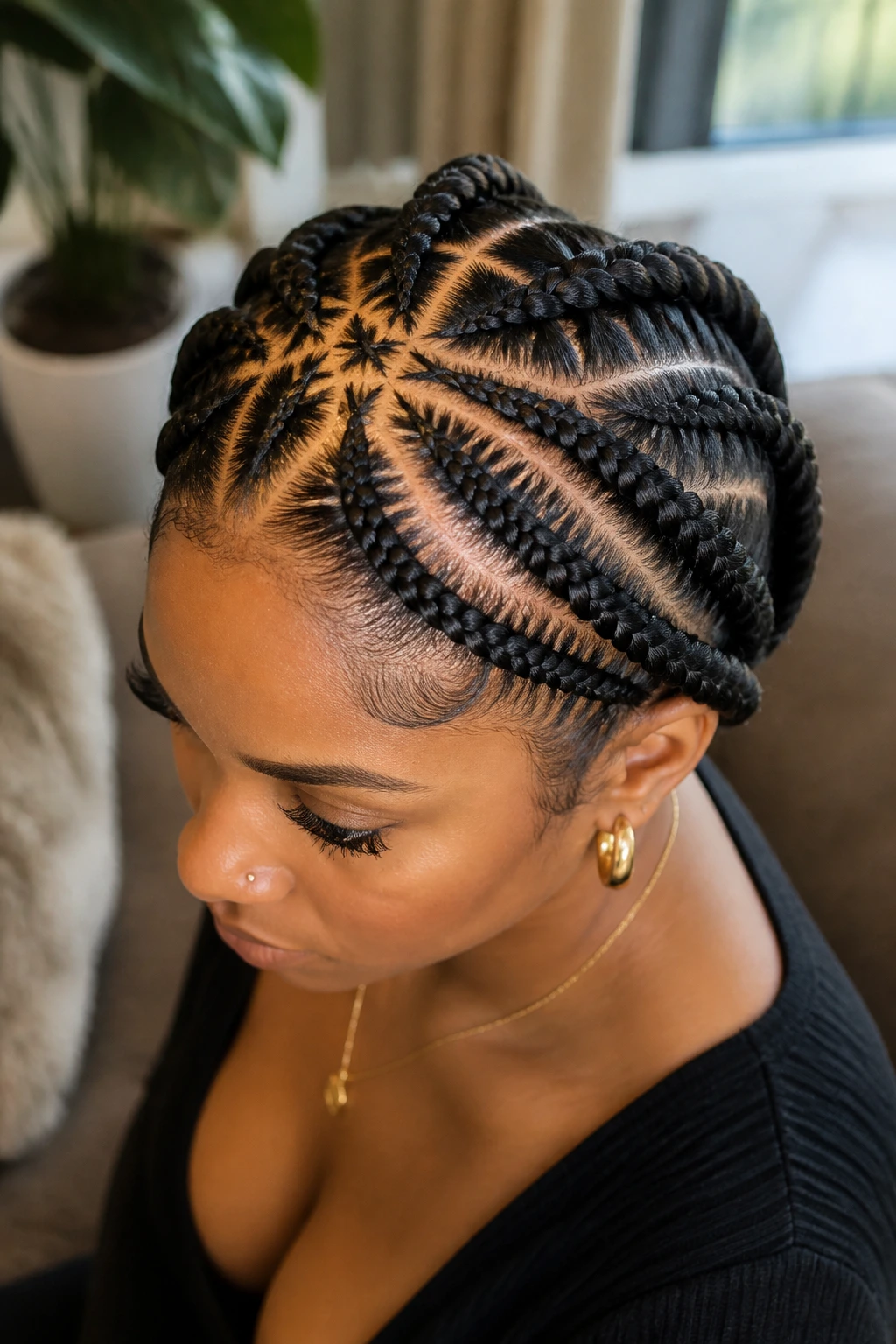
If you are feeling adventurous, you can create braids that run in multiple directions. This is the ultimate “artistic” take on invisible braiding. By having braids meet and cross paths, you create a look that is completely unique. For thick hair, this technique is great because it breaks up the volume in multiple directions, preventing the hair from feeling heavy in any one specific area.
Managing the Chaos
Keep a plan in mind before you start.
- The Map: Use hair clips to mark where you want your braids to go before you begin braiding.
- The Tension: Be careful where the braids cross; make sure they are flat so they don’t create a bump on your scalp.
22. The “Ladder” Invisible Braid
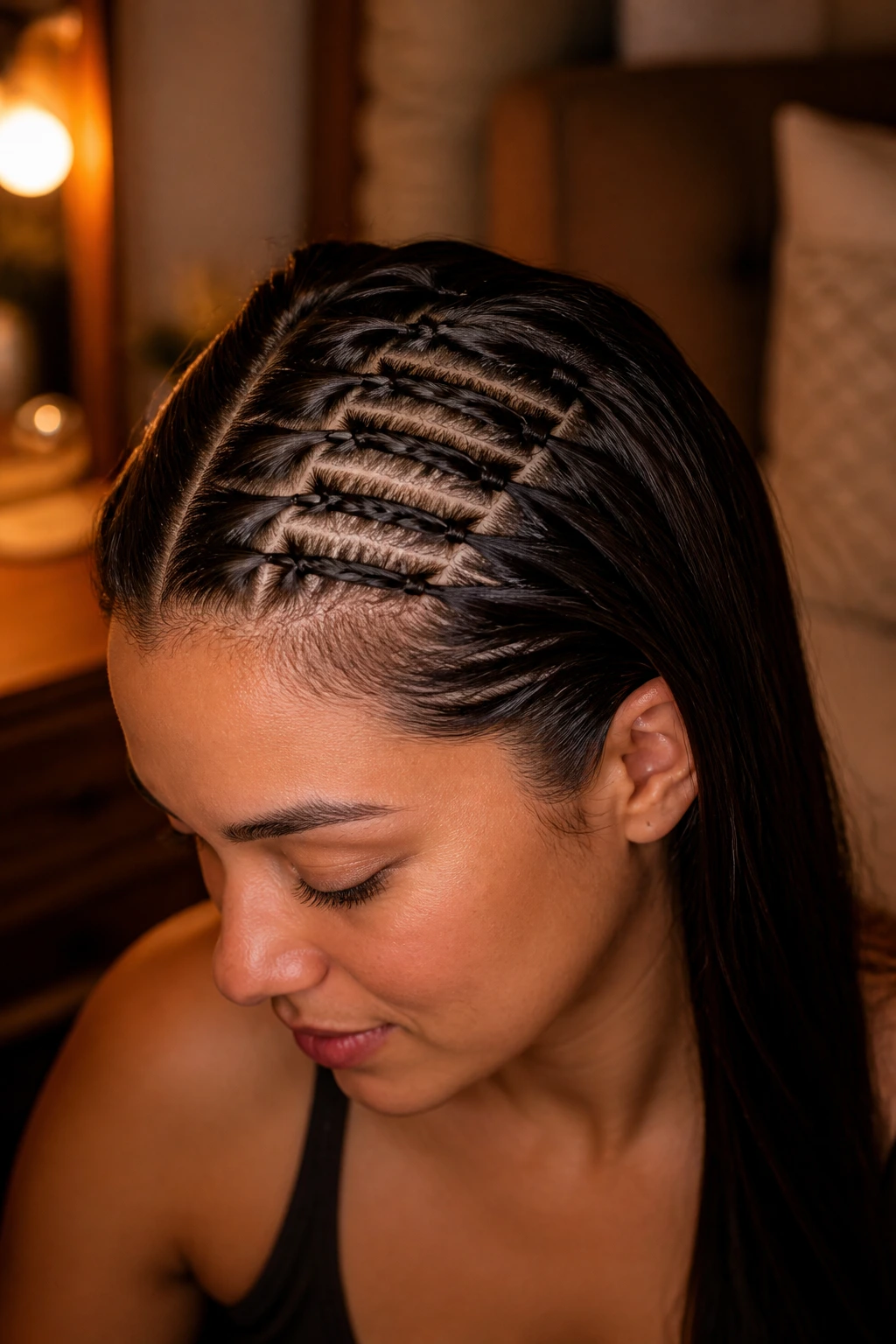
The ladder braid is a beautiful technique that creates a series of horizontal rungs across a section of hair. By using an invisible feed-in at each step, you ensure that the braid remains perfectly flat against the scalp. This style is visually stunning and works especially well on thick, straight hair where the “ladder” effect is most pronounced. It is the perfect blend of technical skill and visual impact.
Rung Consistency
The distance between the “rungs” is what makes the style.
- Measurement: Use your index finger as a guide to ensure each rung is the same width.
- Tension: Keep the horizontal strands tight so they look like actual ladder rungs.
23. Invisible Braid with Rings
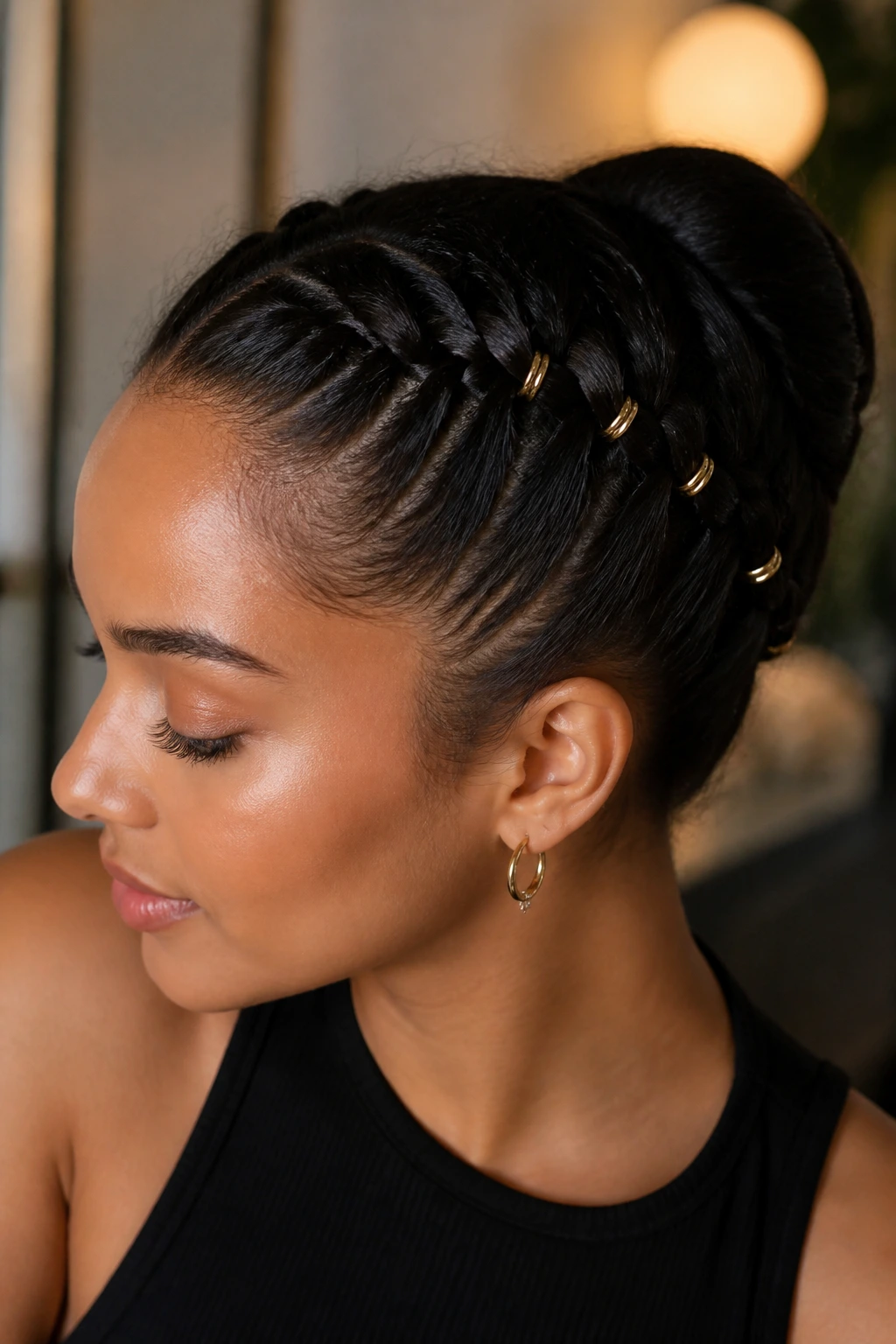
Adding gold or silver hair rings to your invisible braids is an easy way to elevate the look instantly. You can place the rings at regular intervals along the length of the braid. This is especially effective if you have dark, thick hair, as the metallic contrast is striking. Because the starting points of the braids are invisible, the rings become the main visual attraction, making your style look intentional and professional.
Choosing Your Accessories
Choose rings that are easy to open and close.
- Weight: Avoid heavy accessories, as they can pull on the hair.
- Placement: Space them out so the braid doesn’t lose its flexibility.
24. Low-Profile Invisible Braid Headband
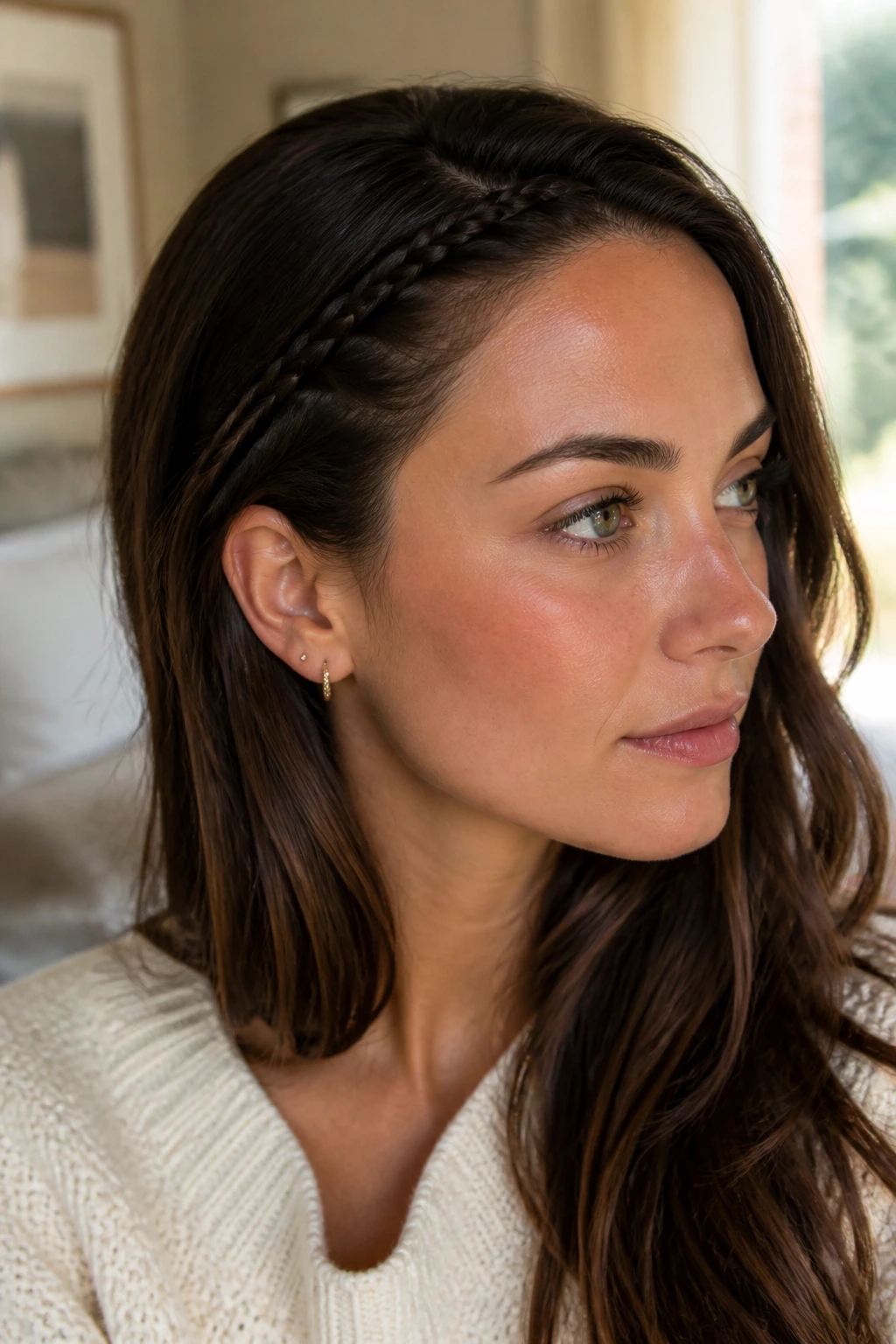
A low-profile headband braid is designed to be as thin and unobtrusive as possible. It runs along the hairline and disappears behind the ear. This is ideal for those who want to keep their thick hair pulled back but aren’t fans of the “braided” aesthetic. It is so small that it is barely noticeable, yet it provides all the function of a heavy, uncomfortable plastic headband.
The “Barely-There” Look
Focus on picking up the smallest sections of hair possible.
- Delicacy: Don’t feed in too much hair; keep the sections fine.
- Tucking: Secure the end of the braid with a tiny elastic and tuck it under your loose hair to hide it.
25. The Braided Mohawk Updo
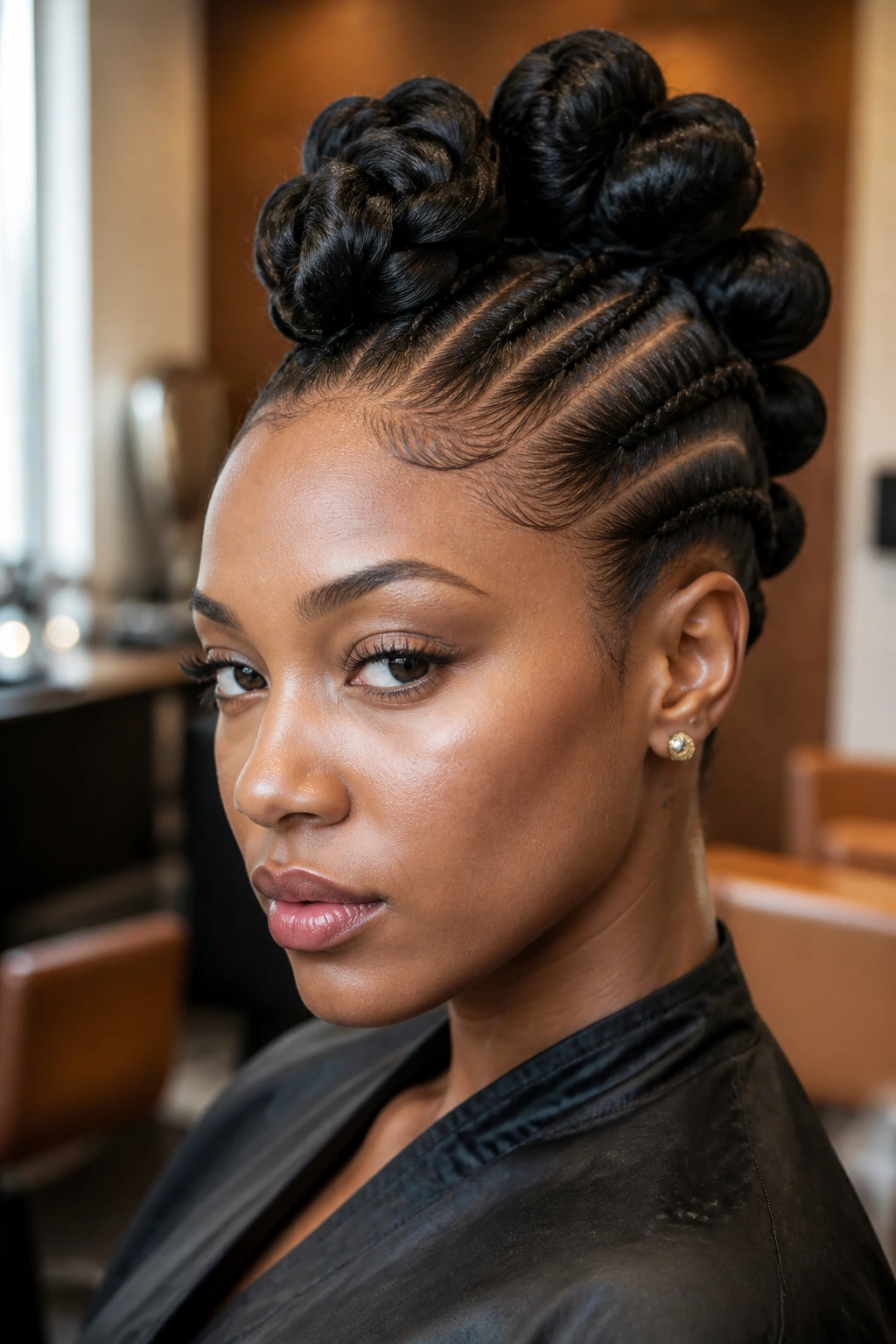
Finally, we have the braided Mohawk updo. This style involves braiding both sides of the head invisibly and bringing all the hair into a series of knots or twists down the center. It is a bold, high-volume style that looks amazing on thick hair. By pinning the ends of the twists securely, you create a silhouette that has all the drama of a high-fashion look but is grounded in the stability of your own braided foundation.
Finishing the Look
Use a light-hold hairspray to ensure the center twists stay put.
- Volume: Back-comb the twists slightly if you want extra height.
- Texture: If your hair is very thick, this style might take some practice to master, but the results are worth the time.
Final Thoughts
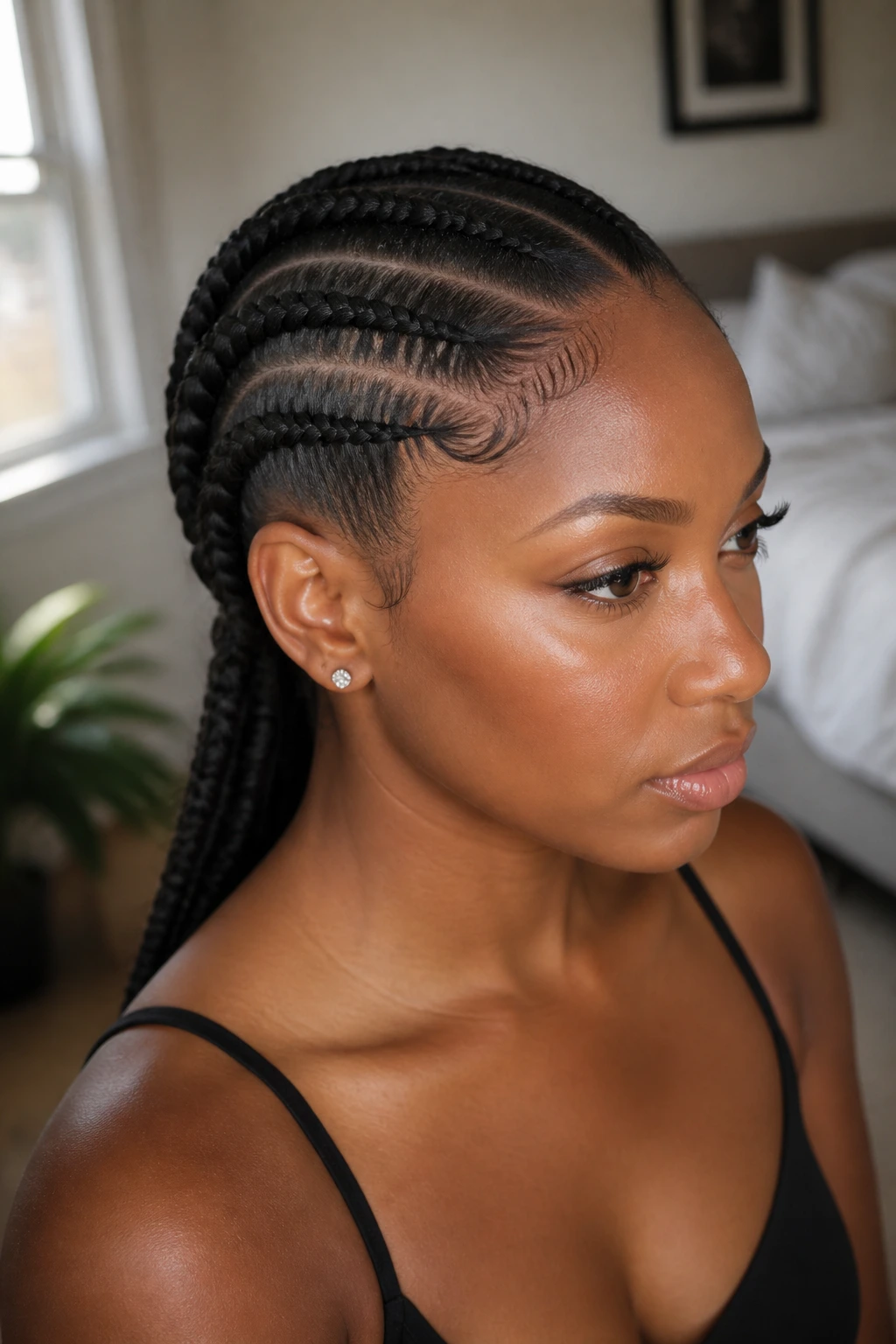
Managing thick hair is often a balancing act between style and comfort. Invisible braids provide that much-needed relief by distributing the weight and securing the volume in a way that looks effortless. The key is always in the tension and the start of the braid; keep those initial sections small, stay close to the scalp, and use quality products to smooth the way. Whether you are going for a subtle accent or a full-head masterpiece, these techniques will ensure your hair looks polished, intentional, and perfectly controlled, regardless of its density. It is all about working with the strength of your hair rather than trying to tame it into submission.