

Natural hair is a playground of texture and volume, but anyone who has spent hours in front of a mirror knows that managing that beauty can sometimes feel like a full-time job. Braided styles offer a unique intersection of protective maintenance and bold, expressive artistry. They are the ultimate multitaskers of the hair world—they keep your ends tucked away, minimize daily manipulation, and look just as good at a grocery store as they do at a wedding.
When we talk about African braids for natural hair, we aren’t just talking about a singular look. We are looking at a history of craftsmanship that spans centuries, evolving into the sleek, modern, and often gravity-defying styles we see today. Whether you have tightly coiled 4C strands or a looser 3B curl pattern, the right braid style can provide a clean slate for your hair to grow and thrive without the constant stress of heat styling.
1. Classic Box Braids
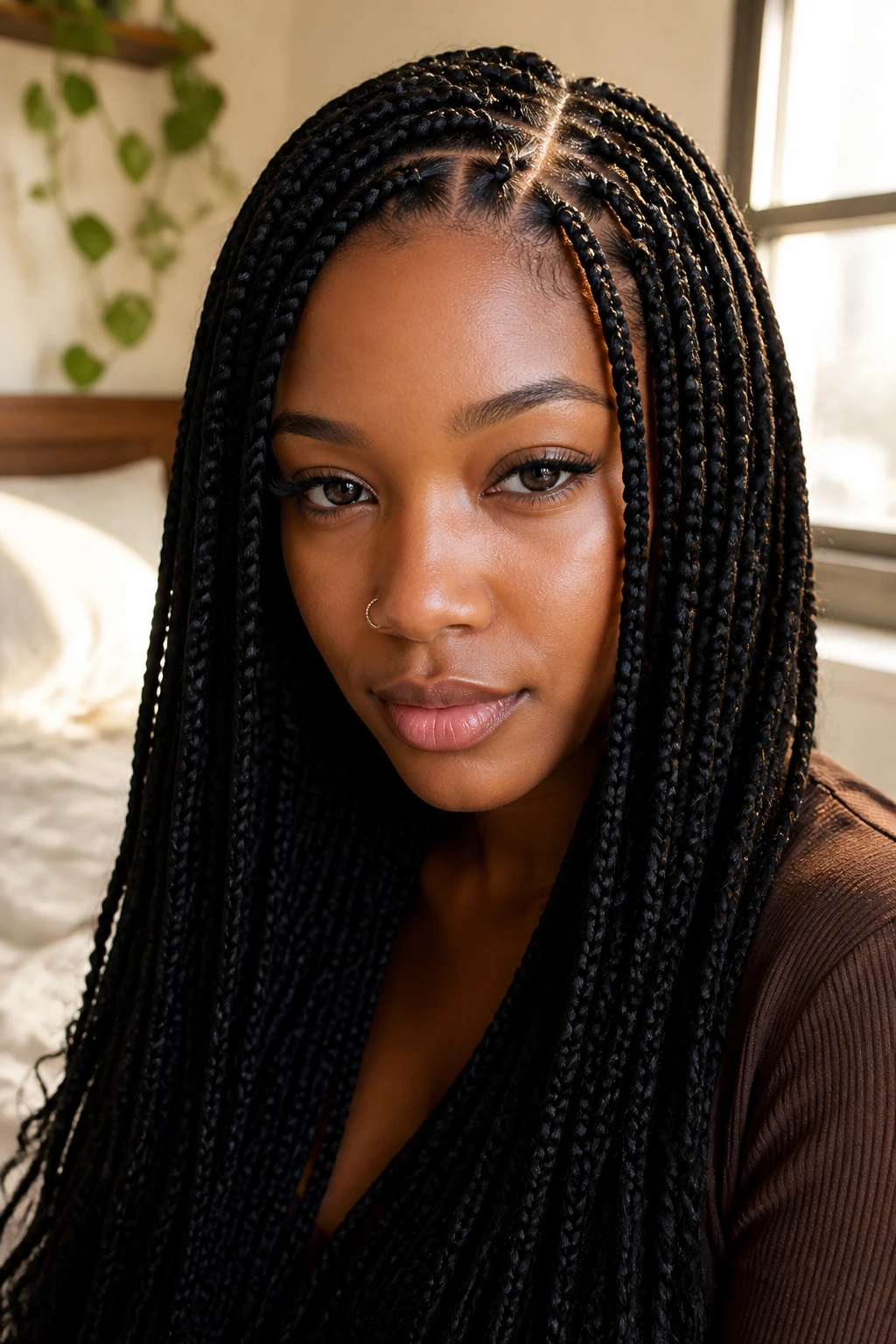
These are the gold standard for a reason. Box braids involve sectioning the hair into precise, square-based parts, which gives the style its signature geometric look. You can customize the thickness, length, and even the finish of the ends—whether you prefer them sealed with hot water for a sleek look or left tapered and flowing for a more organic feel.
Why They Work for All Textures
The beauty of box braids lies in the tension. Because each braid is contained within its own section, there is very little pulling on the individual scalp follicle once the style is installed. This allows your natural hair to sit quietly inside the extension, protected from environmental damage like sun, humidity, and dry air.
Maintaining Your Parts
- Use a small amount of lightweight oil on your scalp every few days to prevent dryness.
- Keep the parts crisp by lightly wrapping your hair with a silk scarf at night.
- If you notice frizz at the roots, a tiny amount of mousse can smooth everything back into place without needing a total redo.
Pro tip: Do not braid the very edge of your hairline too tightly; those baby hairs are fragile, and keeping the tension low there will prevent long-term thinning.
2. Fulani Braids
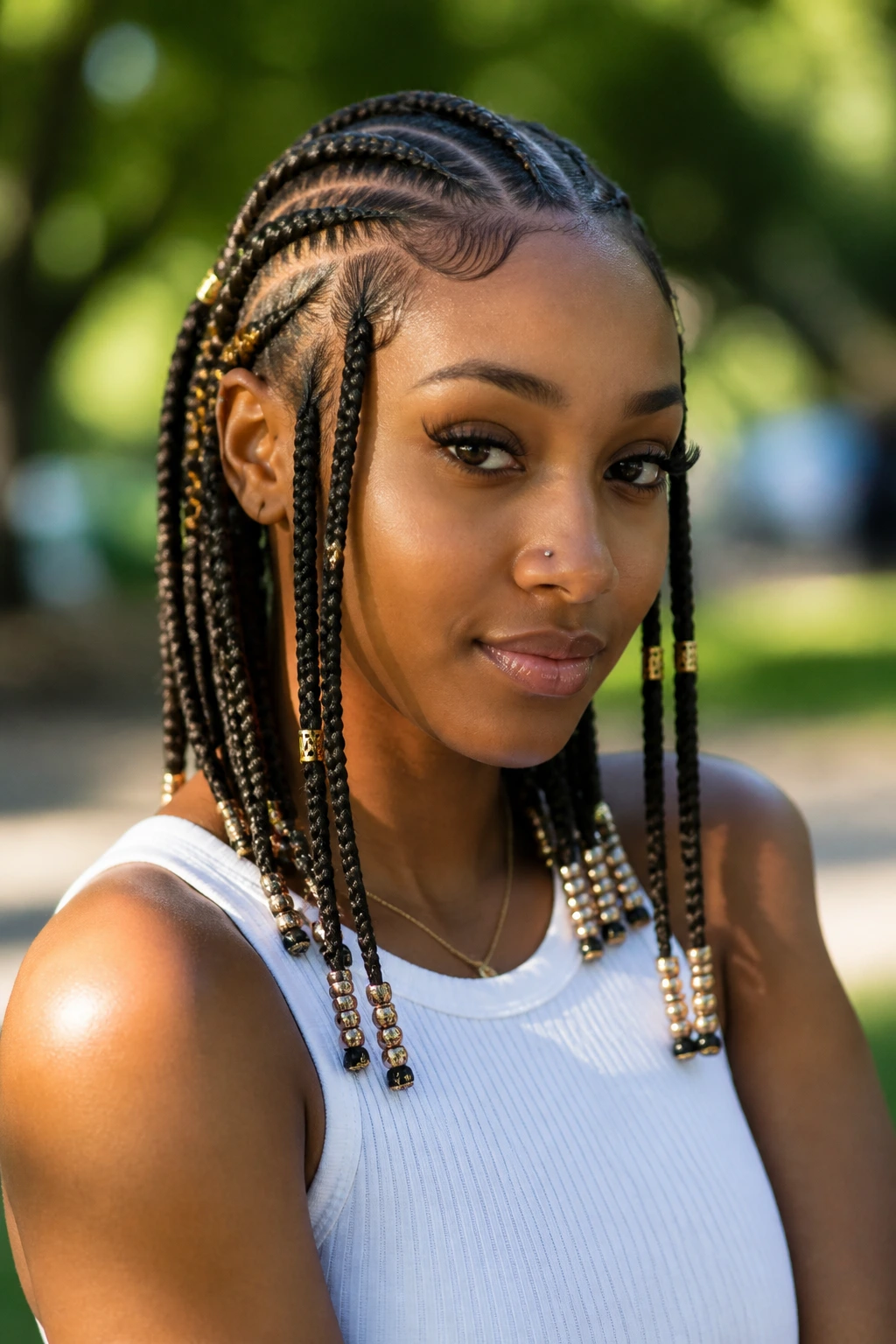
Fulani braids are instantly recognizable by their distinct pattern: a central cornrow braided down the middle of the scalp, accompanied by side braids that are often adorned with gold or silver beads and cuffs. This style pulls inspiration from the Fula people of West Africa and emphasizes a beautiful, symmetrical frame for the face.
The Art of Accessory Placement
The beads and cuffs aren’t just decoration; they add weight and movement to the hair. When you turn your head, there is a rhythmic sound and a visual shimmer that adds a level of sophistication that plain braids sometimes lack. You can go minimalist with just two gold cuffs at the front or go full-on regal with dozens of wooden or metallic beads along the lengths.
Styling the Center Part
The center braid is the star of the show. It needs to be braided firmly but not painfully. Many stylists choose to leave a bit of natural hair out at the front to create soft, swept-back edges, which creates a more natural transition between the scalp and the braided sections.
3. Goddess Braids
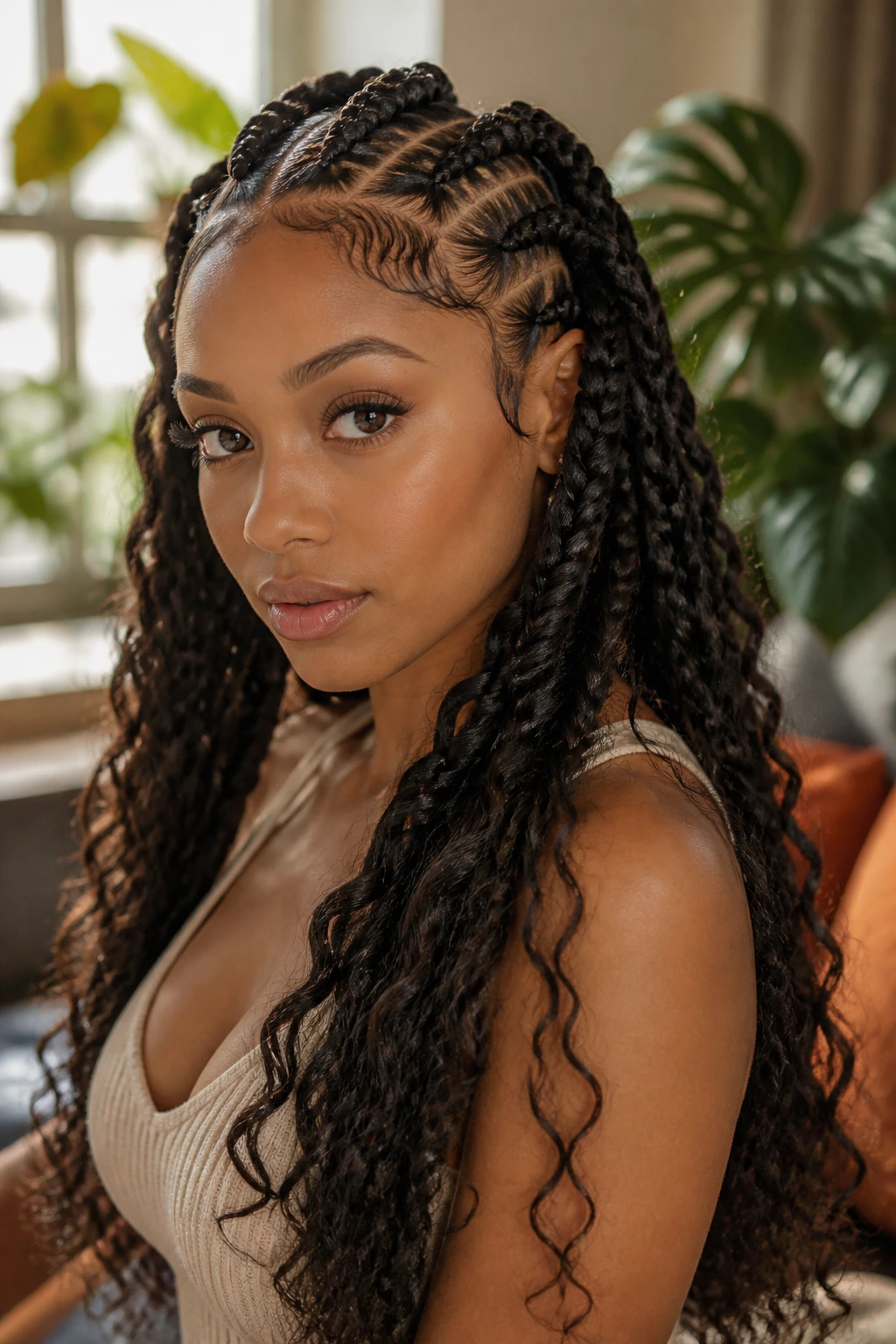
If you want to combine the sleekness of cornrows with the soft, romantic look of loose curls, goddess braids are the answer. These are essentially thicker, feed-in cornrows that feature “boho” or “goddess” ends, where strands of wavy hair are left out of the braid periodically.
Creating the Wavy Effect
The secret to this look is the hair quality. You need synthetic or human hair extensions that hold a wave or curl pattern well. As the braids travel down your back, those little wisps of loose hair create a soft, ethereal halo that makes the whole style look less “done” and more effortless.
How to Prevent Tangling
Since there is loose hair mixed in, you will have to deal with a bit of maintenance. A small amount of leave-in conditioning spray helps keep those loose curls soft and prevents them from matting together. Simply run your fingers through the loose pieces each morning to keep them looking fresh.
4. Senegalese Twists
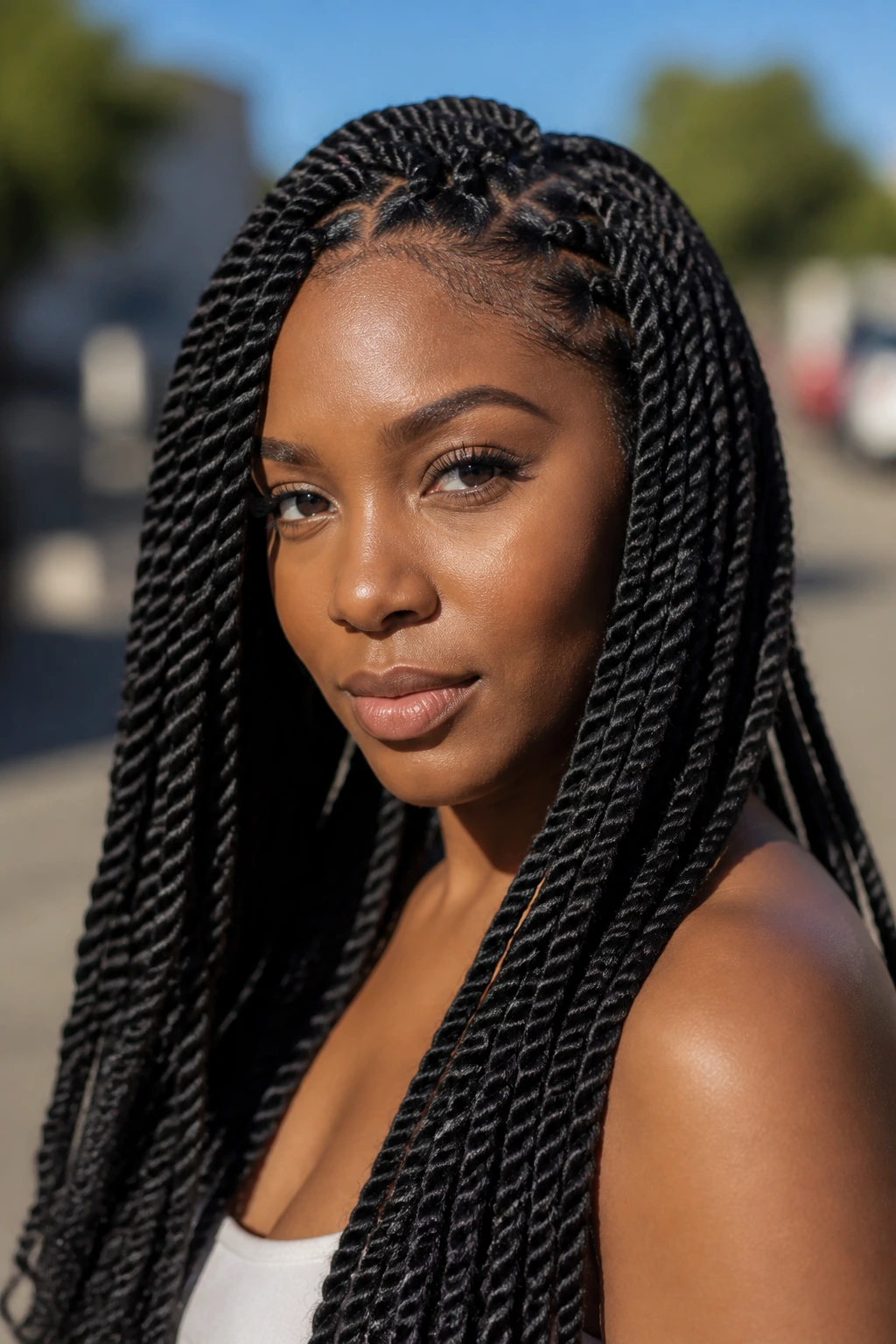
Senegalese twists are the smoother, more polished cousin of the standard two-strand twist. They are created using a “rope” technique that gives them a silky, dense appearance. Because they are smoother, they tend to have more “slip” than traditional box braids, which makes them incredibly versatile for updos and high buns.
Texture Matching
For natural hair, you want to pick a braiding hair that mimics your own texture as much as possible, or at least a texture that will blend well once you wrap your hair around the extension. If you have very coarse hair, you might find that adding a bit of edge control or braiding gel to your natural strands before twisting helps keep the transition point seamless.
Why They Are a Low-Maintenance Favorite
These twists are usually quite lightweight compared to large box braids. Because they are made of two strands wrapped around each other, they don’t hold as much moisture or product as a thick braid, which means they tend to dry faster if you wash your hair.
5. Feed-in Cornrows
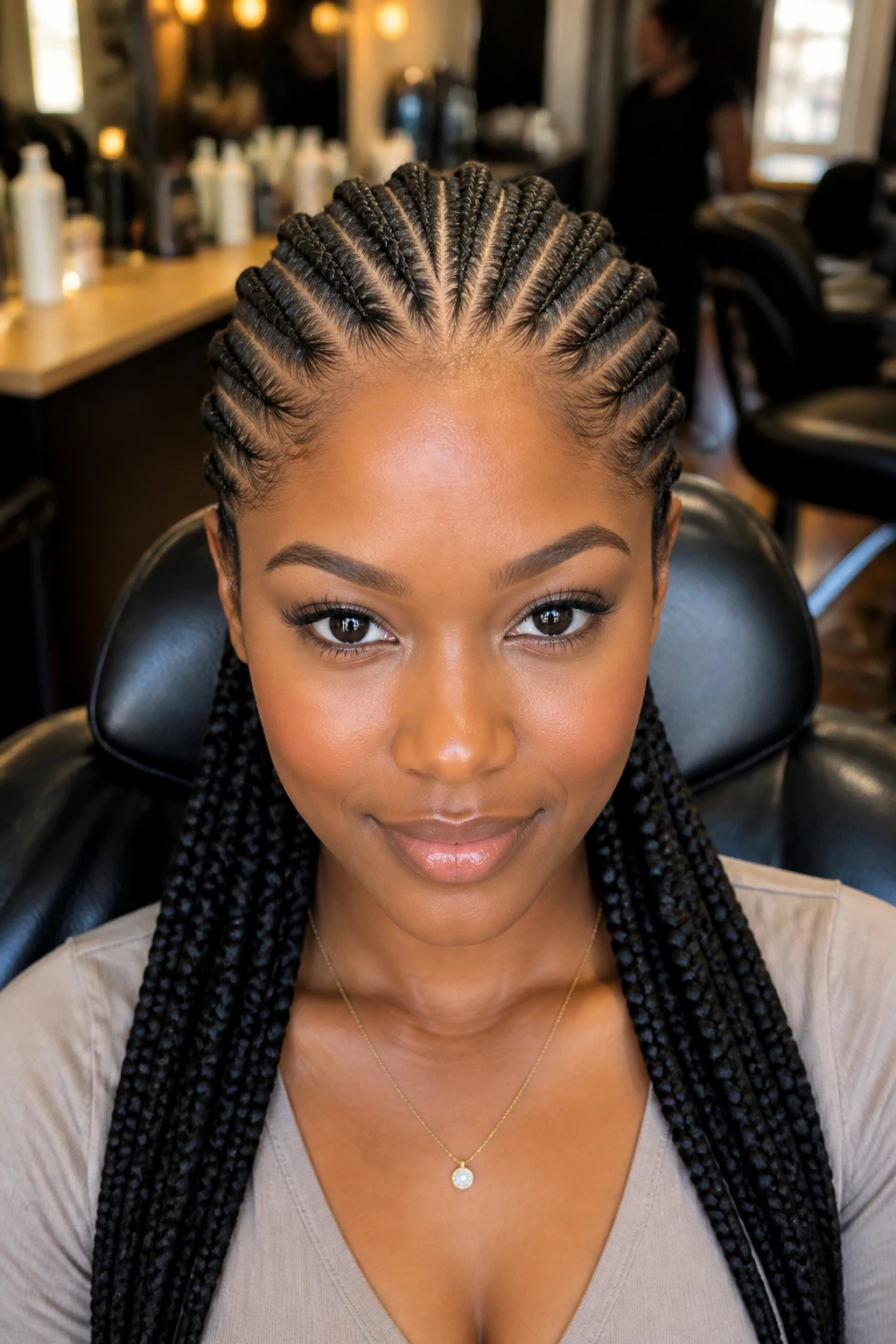
Feed-in cornrows are a masterclass in illusion. By gradually “feeding” small pieces of extension hair into your natural cornrow as you go, you create a braid that starts off incredibly thin at the hairline and gets thicker as it moves back. This prevents that bulky, painful bump at the start of the braid.
Achieving the Natural Look
The goal with feed-in braids is to make them look like they are growing directly out of your scalp. By starting with just your natural hair, you avoid that tell-tale “loop” that happens when you tie a large extension to your root. It is the most realistic-looking way to wear cornrows.
Customizing Your Patterns
- You can create zig-zags, swirls, or straight lines.
- The thickness can vary across the head—think thick braids in the middle and thin, delicate ones at the sides.
- Add colored extensions to create a “highlighted” effect without ever touching bleach or dye.
6. Lemonade Braids
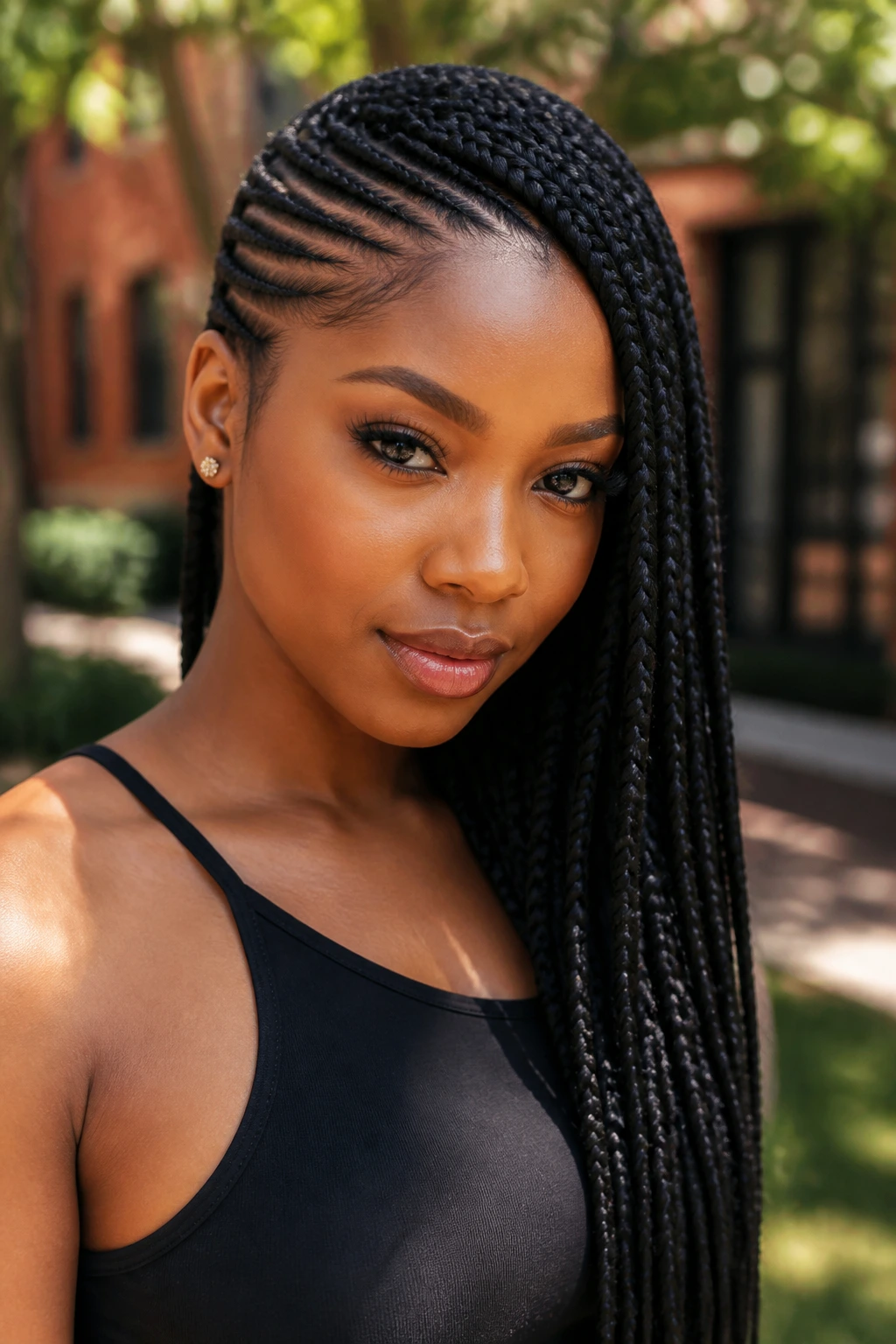
Popularized by a famous music video, lemonade braids are basically side-swept cornrows. They typically start from the left side of the head and move toward the right, creating a cascading effect that looks beautiful and high-fashion.
Why They Suit Almost Everyone
Side-swept styles are universally flattering because they draw the eye across the face, highlighting cheekbones and giving the face a more lifted appearance. They work particularly well if you have a rounder face shape, as the diagonal lines break up the symmetry and add angles.
Keeping the Lines Sharp
Because these braids are so visible, keeping your parts clean is essential. Use a tail comb and a reliable pomade or edge gel to define your lines every few days. A quick touch-up with a silk scarf tied firmly across your roots can also help lock everything into place overnight.
7. Tribal Braids
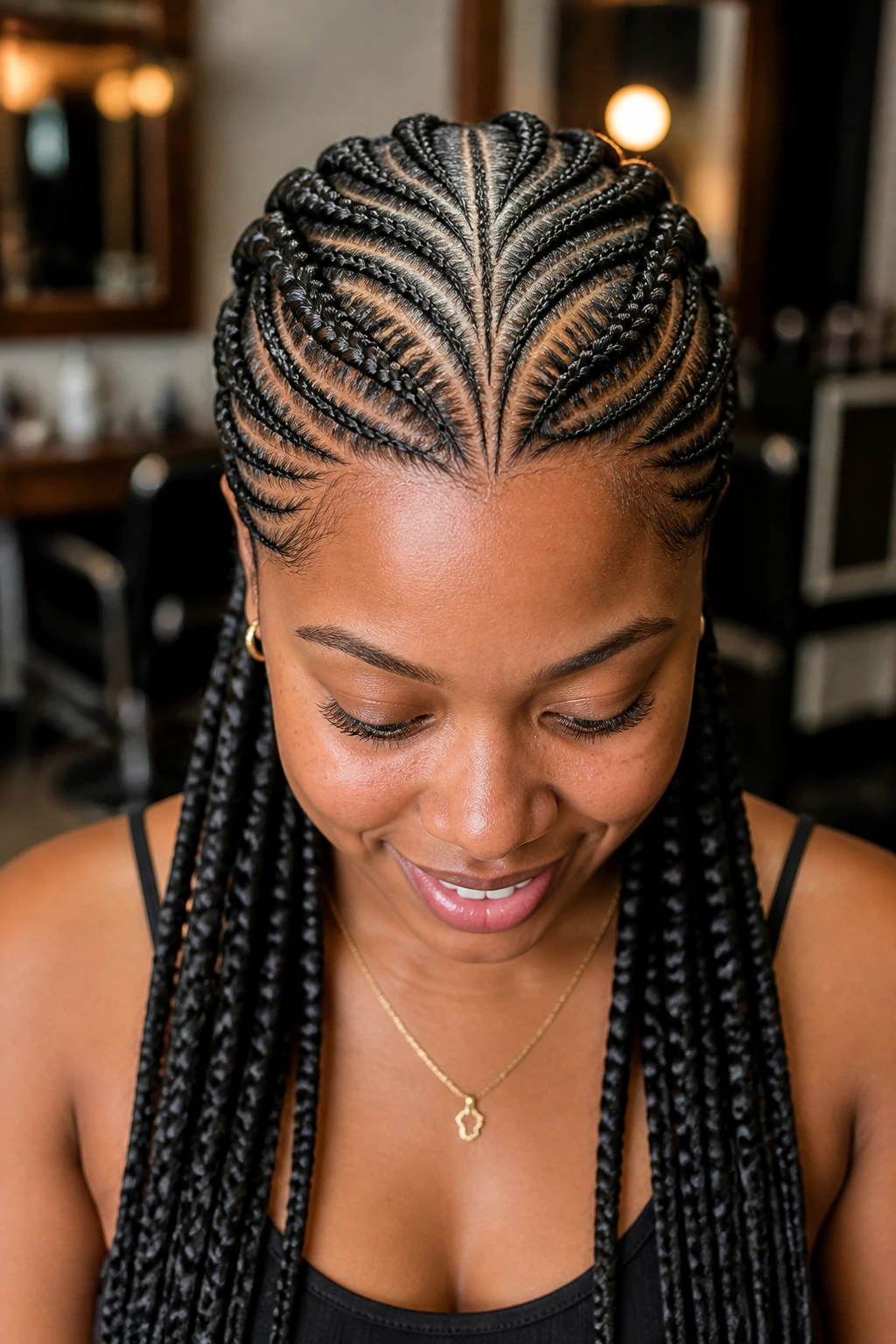
Tribal braids are a beautiful blend of cultural patterns. They often involve a mix of cornrows and individual braids, frequently styled with a middle part and symmetrical patterns that run toward the back or sides. They are bold, intricate, and deeply rooted in tradition.
The Complexity Factor
These styles require a bit more time in the chair because the patterns are so specific. You aren’t just braiding back; you are creating shapes. Think of the scalp as a canvas where the lines are your brushstrokes.
Caring for the Patterns
Since there are more intersections of braids, you have to be careful with the way you sleep. A large silk bonnet is non-negotiable here. If you wake up and the patterns look a little fuzzy, a light mist of water and a quick pass with a palm-sized edge brush will bring the definition right back.
8. Butterfly Locs
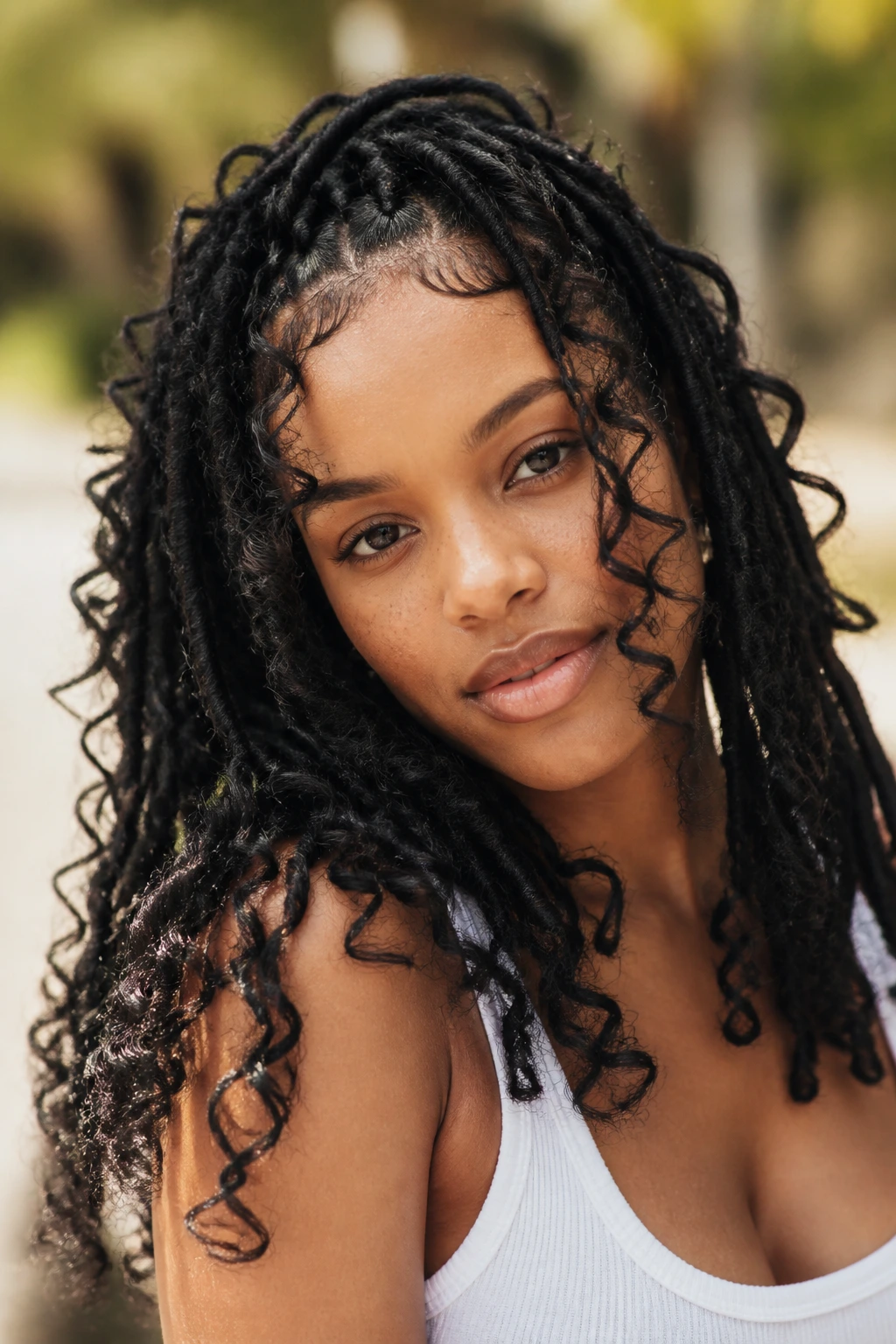
Butterfly locs are the ultimate “distressed” look. They look like a softer, messier version of faux locs, with little loops (the “butterflies”) pulled out along the length of the loc. They are incredibly popular for their boho, relaxed vibe and the fact that they don’t have to look perfect to look good.
How to Get the Loop Effect
You create these by wrapping wavy braiding hair around your own hair, but periodically pausing to pull a loop out. It sounds complicated, but once you get the rhythm of the wrap, it becomes quite meditative. The messier they are, the better they look—which is a huge relief for anyone who hates perfect, uniform braids.
Weight Considerations
These can get heavy if you use too much hair. Always ask your stylist to use lightweight, synthetic, wavy hair. You want the volume, but you don’t want a neck ache after three days.
9. Stitch Braids
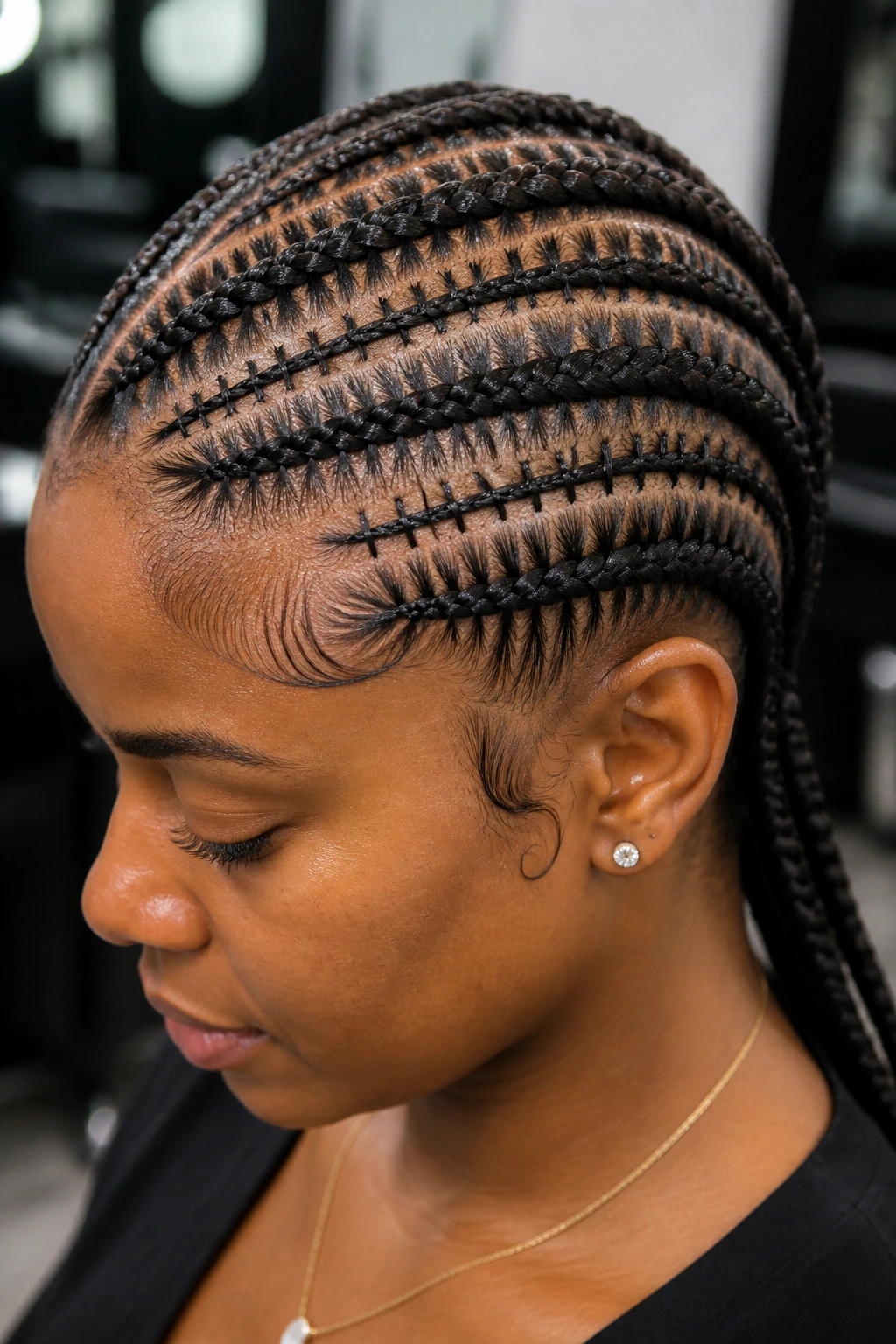
Stitch braids are all about the technique. The braider uses their pinky nails to create horizontal lines or “stitches” across the cornrow. This adds a unique texture and a very structured, edgy look to the hair.
The Look of Precision
The stitches look like small, uniform dashes running along the braid. It’s a very clean, deliberate aesthetic that pairs well with high-ponytail styles or even a simple half-up, half-down look.
Maintaining the Stitches
The main goal is to keep the hair around the stitches from puffing up. A medium-hold pomade is your best friend here. If your hair is naturally very kinky, you might want to blow it out lightly before braiding so that the hair lays flatter against the scalp, making those stitches pop.
10. Jumbo Knotless Braids
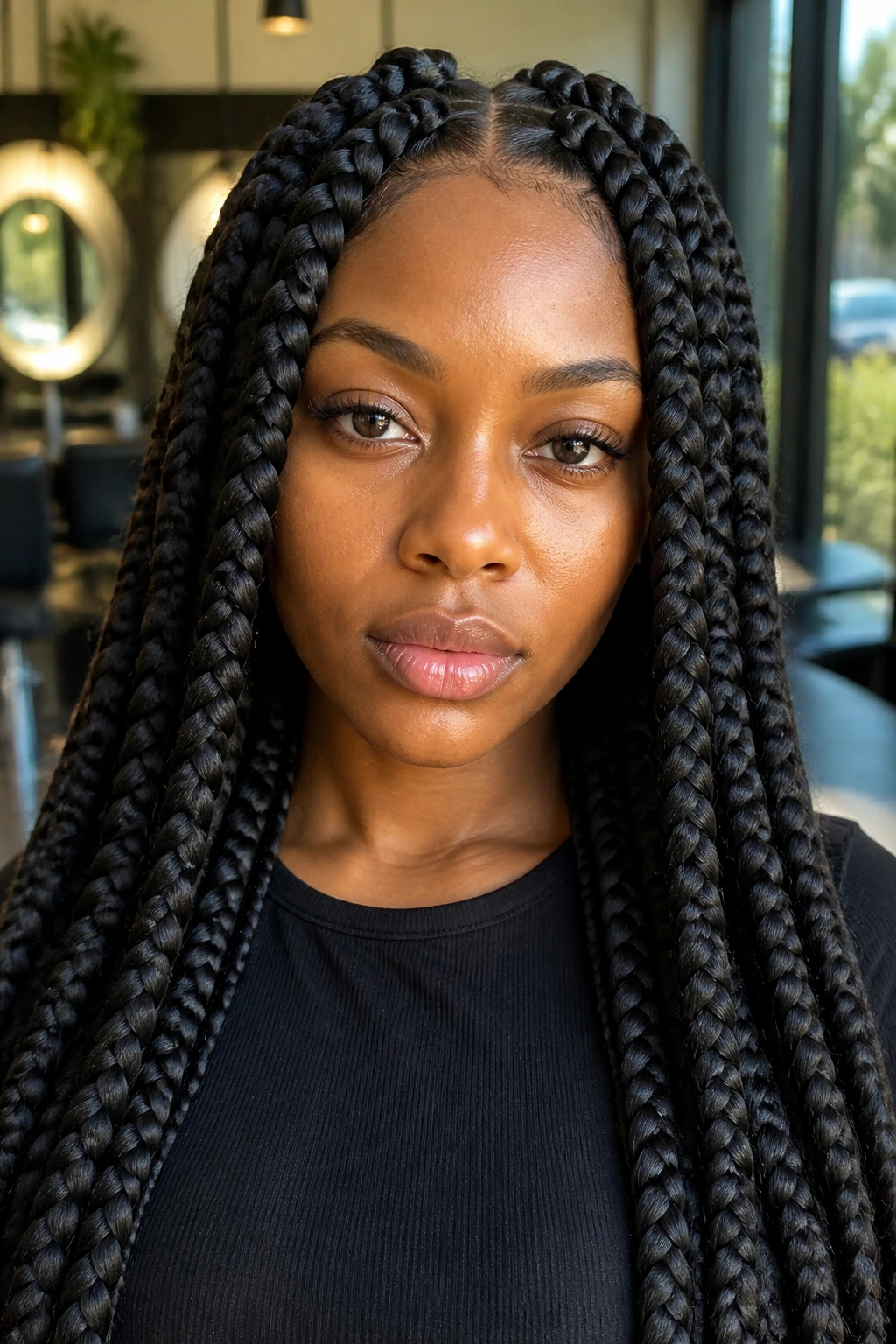
Knotless braids have become the go-to for many because they don’t have that heavy, hard knot at the root. By starting the braid with your natural hair and feeding the extension in a few inches down, you get a braid that lays flat and feels like it’s part of you from day one.
Why Jumbo is Better for Your Edges
Because the braids are thick, you don’t need to put as many on your head. Fewer braids mean less tension on your hairline. They are also much faster to install than standard small box braids, which is a big win if you don’t want to spend ten hours in a salon chair.
The Trade-off
While they look great, they don’t last quite as long as smaller, tighter braids. Expect to get about four to six weeks of wear out of them before the roots get too fuzzy.
11. Criss-Cross Braids
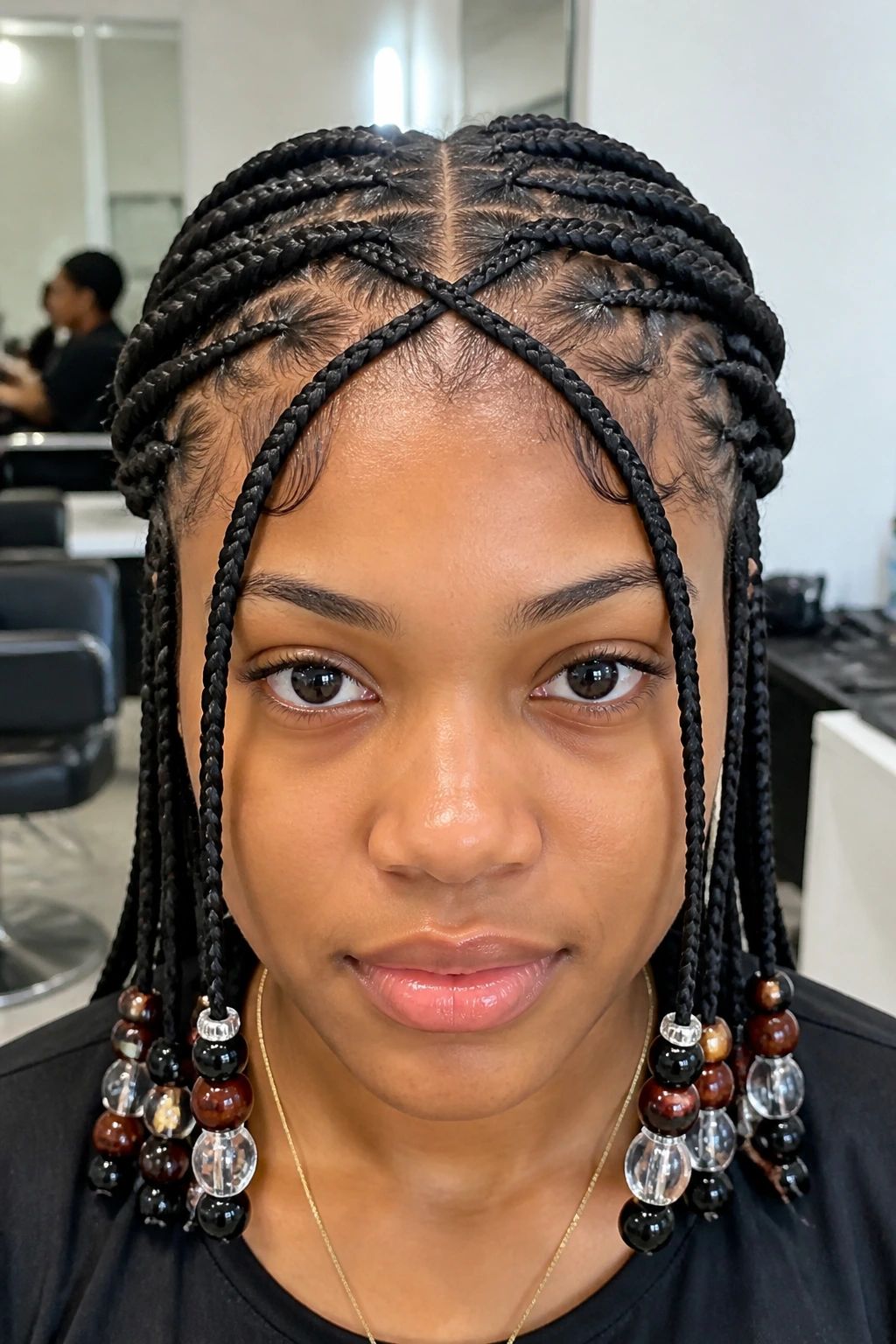
Criss-cross braids add a playful, graphic element to your hairstyle. By crossing two braids over each other at the root, you create an X-shape pattern that looks intricate and intentional. This is usually done at the very front of the head to draw attention to the face.
Framing the Face
The cross-section is the focal point, so it’s usually best to keep the rest of the braids fairly simple. If you go too wild with patterns on the back of the head, it can start to look busy. Let the X be the star.
Adding Beads to the Ends
Because this is such a youthful, spirited style, adding clear or colorful beads to the ends of the braids really elevates the look. It gives it that extra bit of personality that makes the criss-cross pattern pop even more.
12. Micro Braids
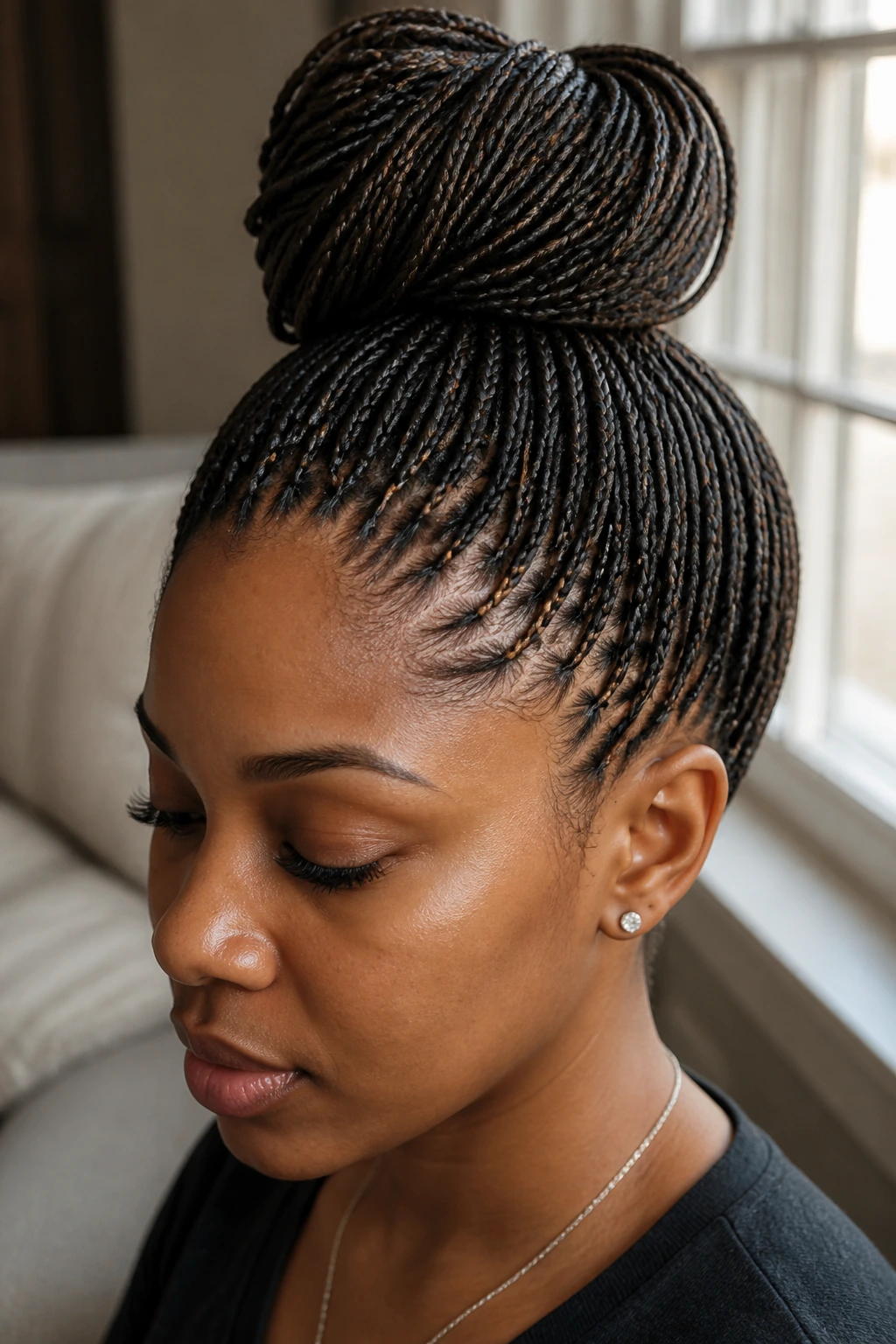
Micro braids are the delicate, labor-intensive sisters of box braids. They are tiny, numerous, and mimic the look of natural hair strands. They take a long time to put in, but they offer the most styling freedom.
Styling Freedom
Because they are so small, you can style micro braids exactly like you would style loose hair. You can put them in a high bun, braid them together into a large fishtail, or wear them in a high ponytail. They are incredibly fluid and move just like regular hair.
The Commitment Warning
You must be prepared for the time commitment. Installing these can take over ten hours. However, the result is a style that can last for months if you keep your roots clean and your edges maintained. Just be gentle when taking them down—that is where the most breakage can happen.
13. Braided Ponytail
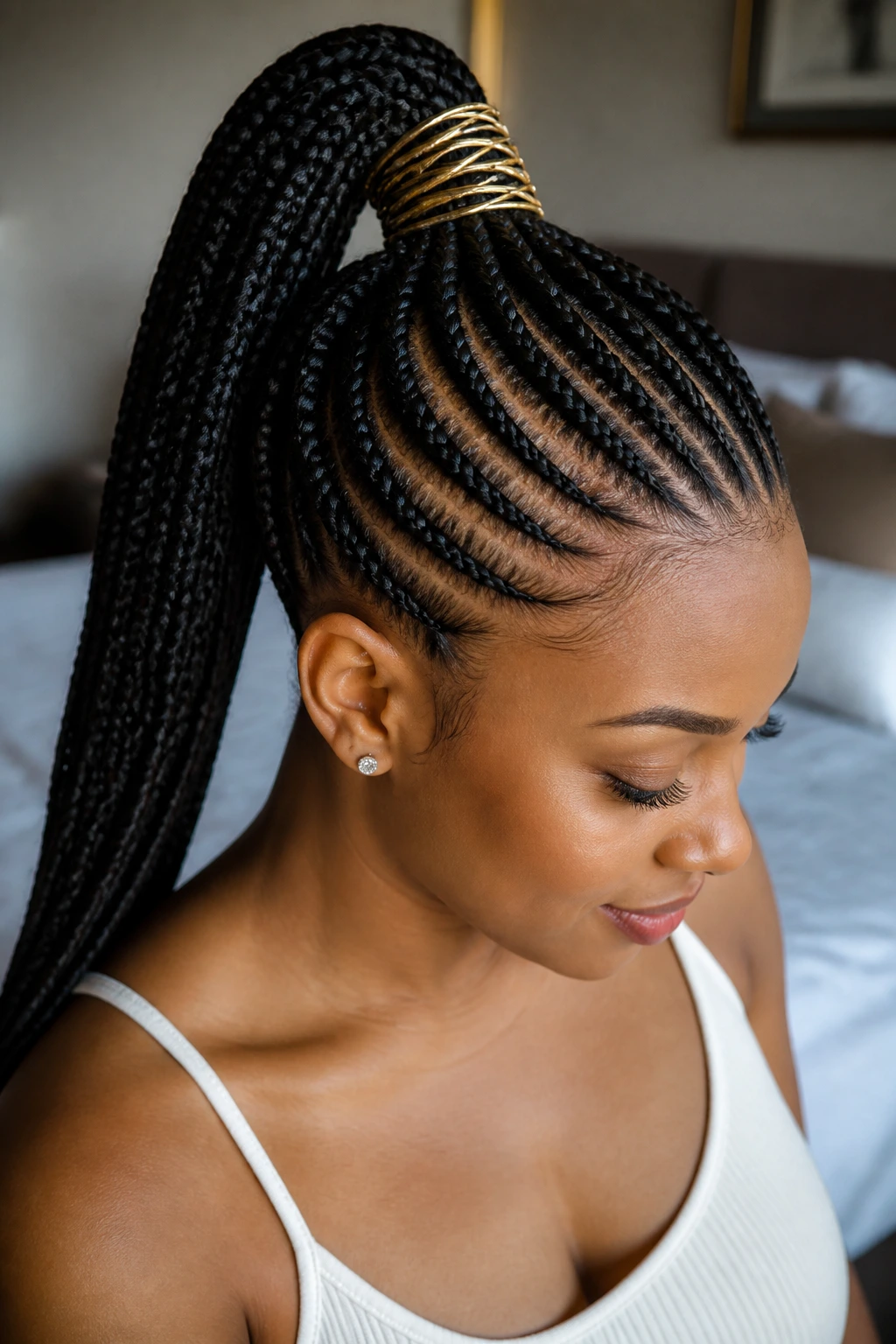
A braided ponytail is the perfect way to keep your hair out of your face while looking polished. This style usually involves cornrowing the hair toward the crown and then gathering the ends into a long, braided ponytail, which can be wrapped with gold wire or hair accessories.
Why It’s a Practical Choice
This style keeps the weight of the hair off your neck, which is fantastic during warmer months. It’s also very easy to protect—you can simply wrap the ponytail in a silk scarf at night and it will remain smooth and sleek by morning.
Adding Height
If you want that “snatched” look, ensure your braider pulls the hair toward the crown of your head before anchoring the ponytail. This creates a natural facelift effect and keeps the hair from pulling on your ears.
14. Bohemian Box Braids
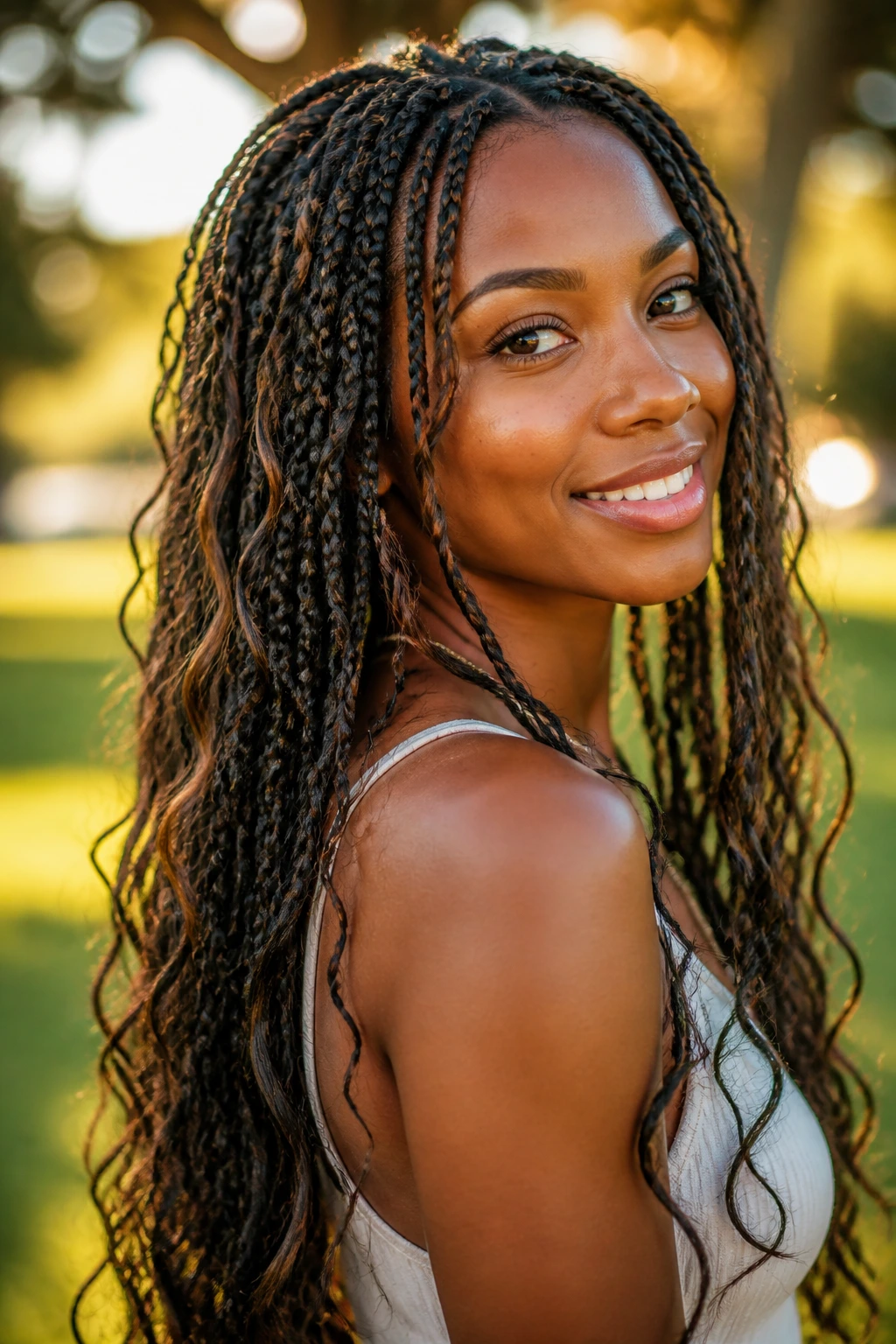
Bohemian box braids (or “boho braids”) are standard box braids with one major difference: there is wavy hair left out at the ends and sometimes throughout the length of the braid. It’s the perfect blend of a protective style and a glamorous, free-flowing look.
Managing the Boho Strands
The loose hair will naturally tangle over time. To fix this, apply a dime-sized amount of mousse to your palms and gently “scrunch” the loose strands. This helps hold the wave pattern and prevents the synthetic hair from looking like straw.
How Long They Last
These look their best for the first four weeks. Because the loose hair is constantly moving, it will inevitably start to frizz, which is part of the aesthetic, but you’ll want to trim any stray pieces that look too matted after the first month.
15. Halo Braids
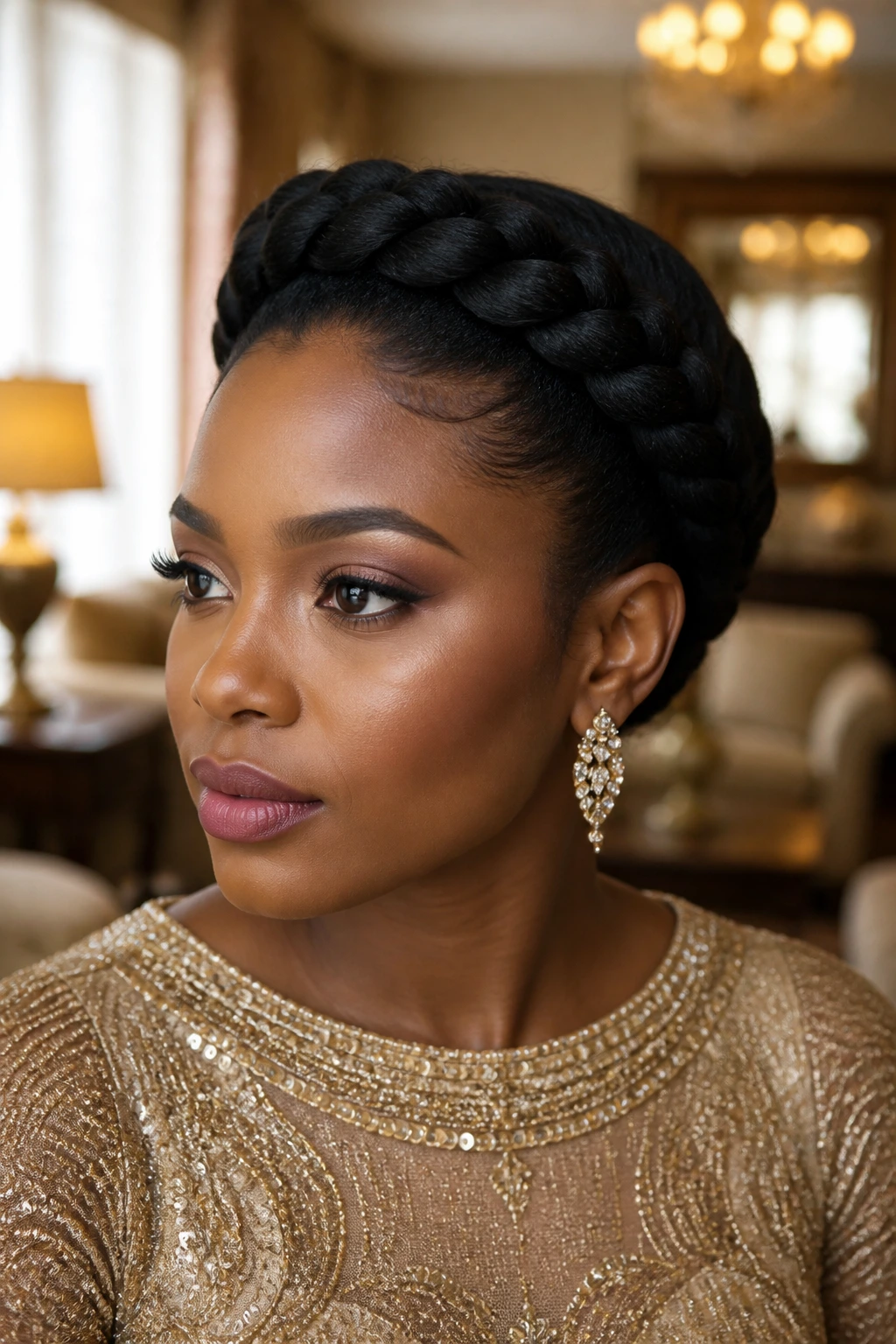
A halo braid (also known as a crown braid) is a singular, thick braid that wraps around the head like a crown. It is elegant, timeless, and gives off a regal vibe that works for formal events or just a day when you want to feel put-together.
The Crown Effect
This is a fantastic way to showcase your face. By pulling all the hair up and off your ears, you open up your features. It is also an incredibly protective style because all of your ends are tucked safely inside the braid.
Styling the “Halo”
If you don’t have enough length to wrap your own hair, using a single pack of high-quality braiding hair to create a thick, full crown is a common trick. You can even tuck a few flowers or decorative pins into the braid for a special occasion.
16. Invisible Locs
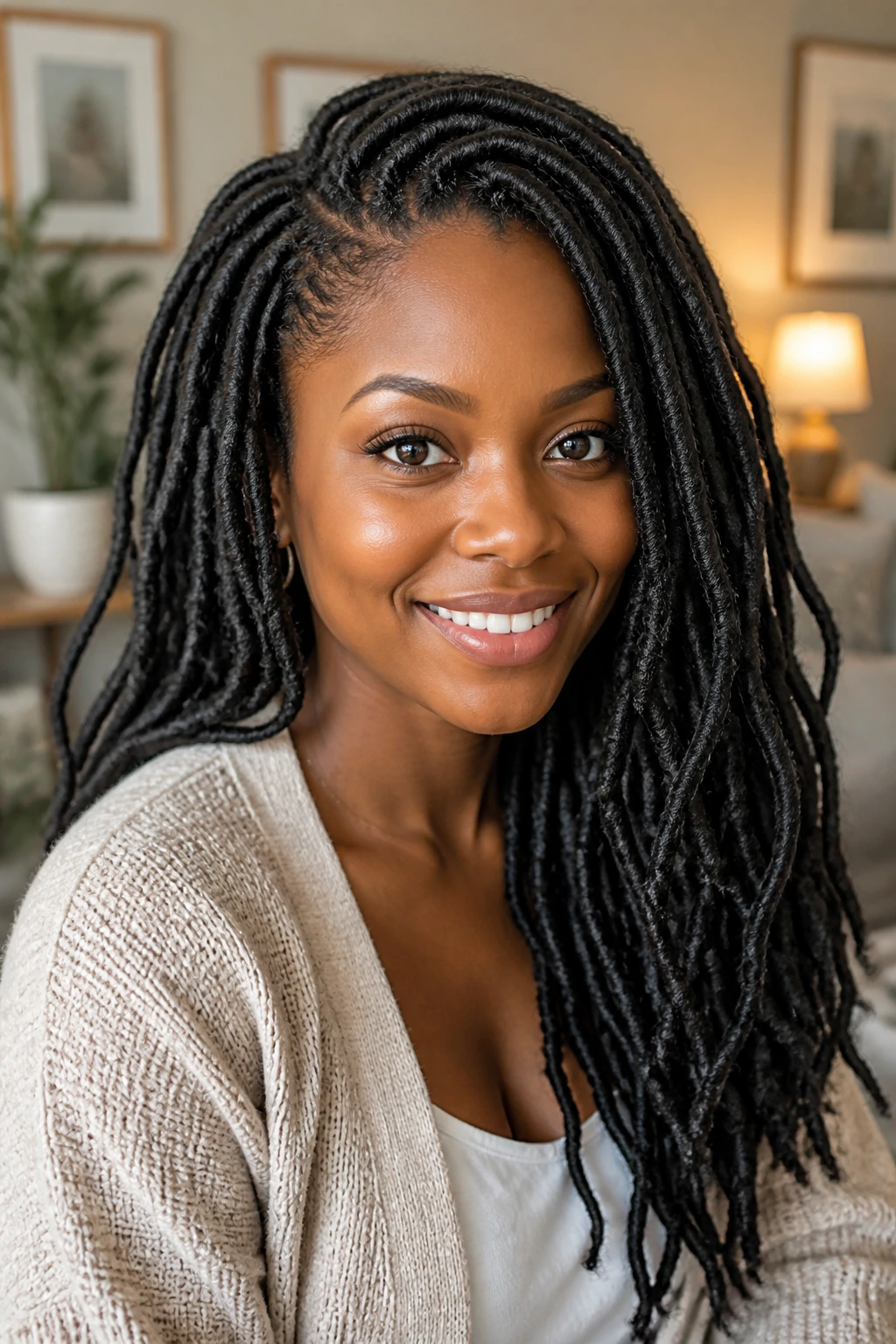
Invisible locs look like mature, natural locs, but they are created using a crochet or wrapping method. The “invisible” part refers to how the hair is attached to the scalp—it’s done in a way that hides the root, making it look like your own hair has been loc’d for years.
Texture and Realism
These styles are all about the texture. You want a hair that has a bit of a “kinky” or “afro” texture to it so that it blends perfectly with your natural roots. If you choose a hair that is too silky, it will stand out against your scalp.
Why They Are So Popular
They provide the aesthetic of locs without the permanent commitment. If you have ever wondered what you would look like with mature locs, this is the perfect way to “test drive” the look without cutting or locking your real hair.
17. High Bun Braids
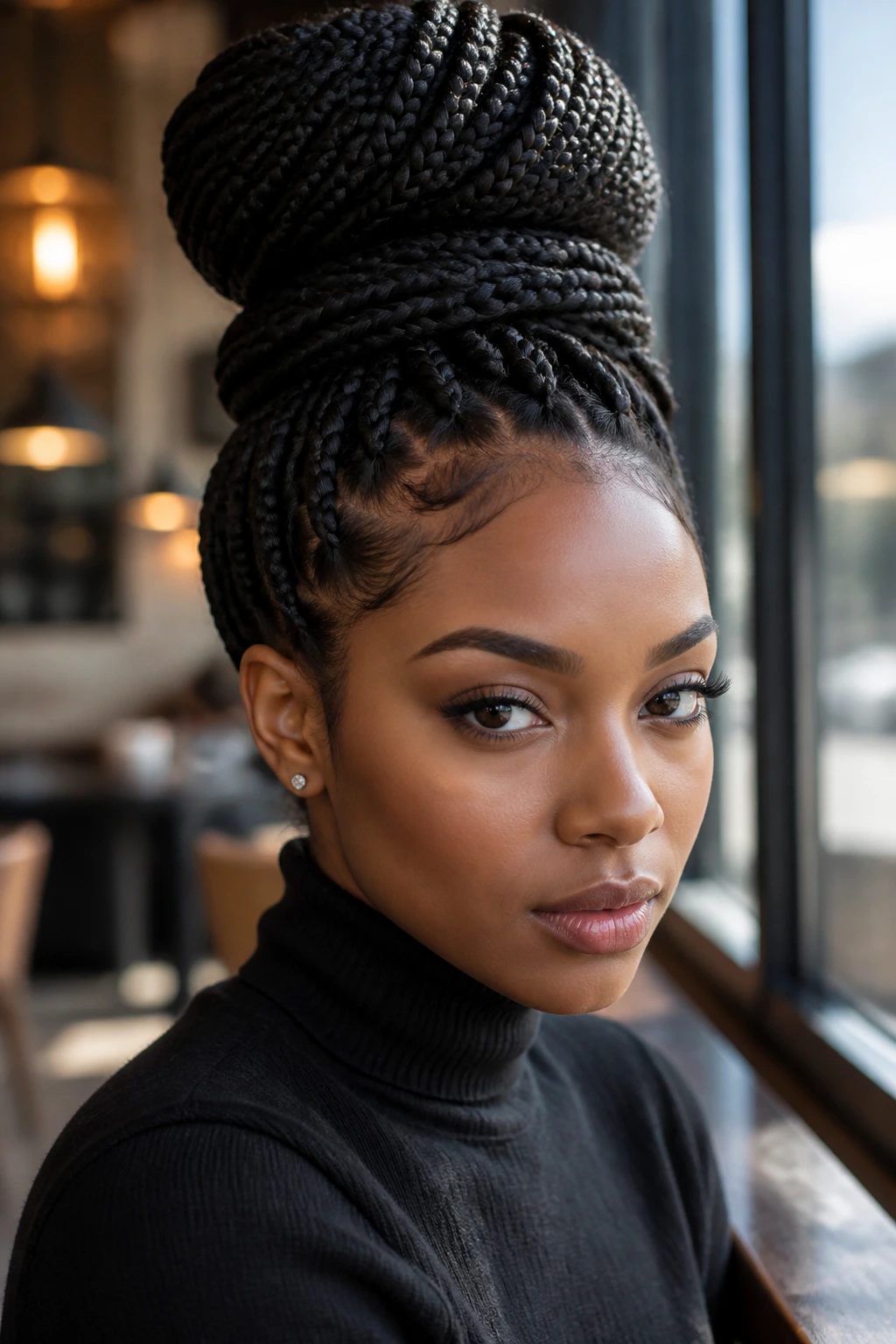
Take your box braids or twists and pull them into a massive, architectural high bun. This style is all about height and drama. It’s the ultimate “boss” look that keeps your hair secure and professional.
Building the Structure
The key to a good bun is the base. You need to make sure the weight of the braids is distributed evenly so that the bun doesn’t sag. Using a thick hair tie or a decorative braid-wrap at the base provides the structural support you need to keep it upright.
Accessorizing
Because the hair is all gathered at the top, you have plenty of room to add cuffs or gold wire to the front-facing braids. It’s a great way to draw attention to your neck and shoulders.
18. Braided Bob
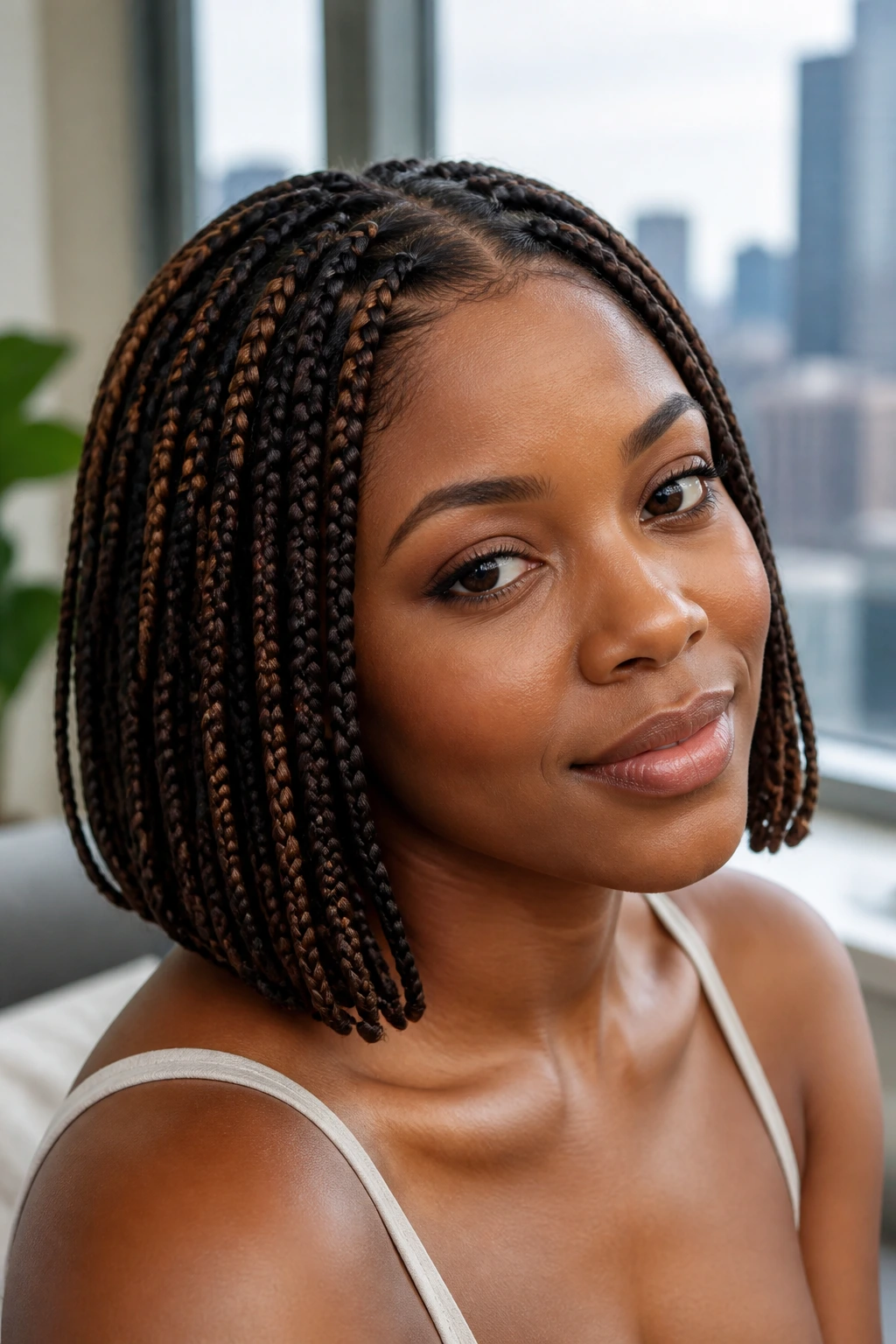
A braided bob is exactly what it sounds like—box braids or twists cut into a blunt bob shape. It is chic, sophisticated, and incredibly easy to manage because there is no weight of long hair pulling on your roots.
Achieving the Blunt Look
To get that perfect blunt edge, you must ensure the ends are sealed properly with hot water. After the ends are dipped, you can take a pair of sharp hair shears and trim them to create a perfectly straight line. It is a very clean, modern aesthetic.
Why It’s the Ultimate Low-Maintenance Style
With shorter hair, you don’t have to worry about tangles or the hair getting caught in your clothes. It’s a “wash and go” style that looks like you spent a fortune at the salon.
19. Two-Strand Twists
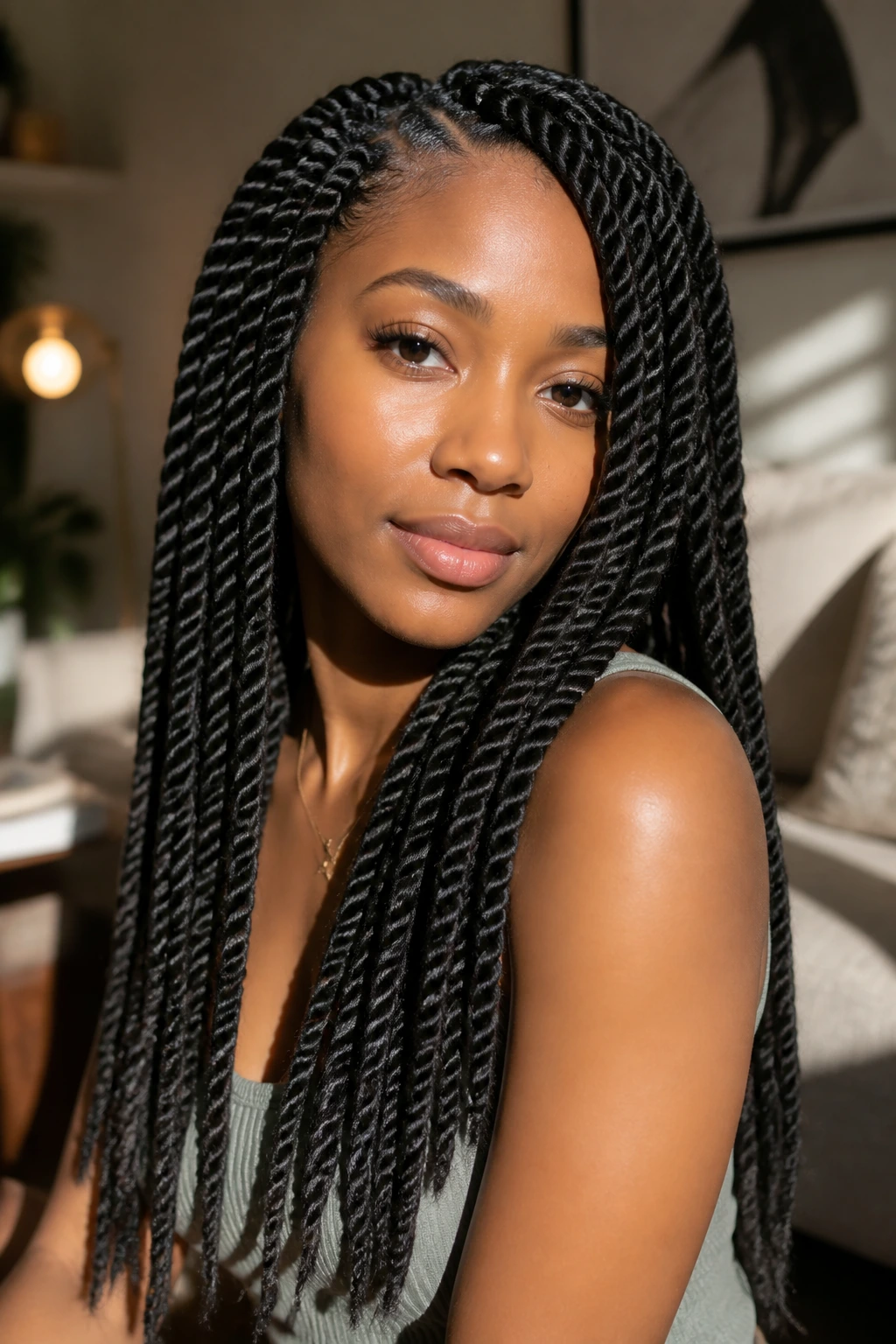
If you aren’t into extensions, two-strand twists using your own natural hair are the most protective style you can wear. You simply part your hair, add a bit of leave-in conditioner or twisting butter, and twist two strands of hair around each other from root to tip.
Working with Your Natural Curl
The result will be a soft, full, and incredibly healthy look. Because you aren’t using heavy synthetic hair, your scalp can breathe, and your hair can soak up moisture directly from your products.
When to Take Them Down
These can be worn for several weeks. When you finally take them down, you get the added bonus of a beautiful twist-out, which adds even more volume and definition to your natural curls.
20. Havana Twists
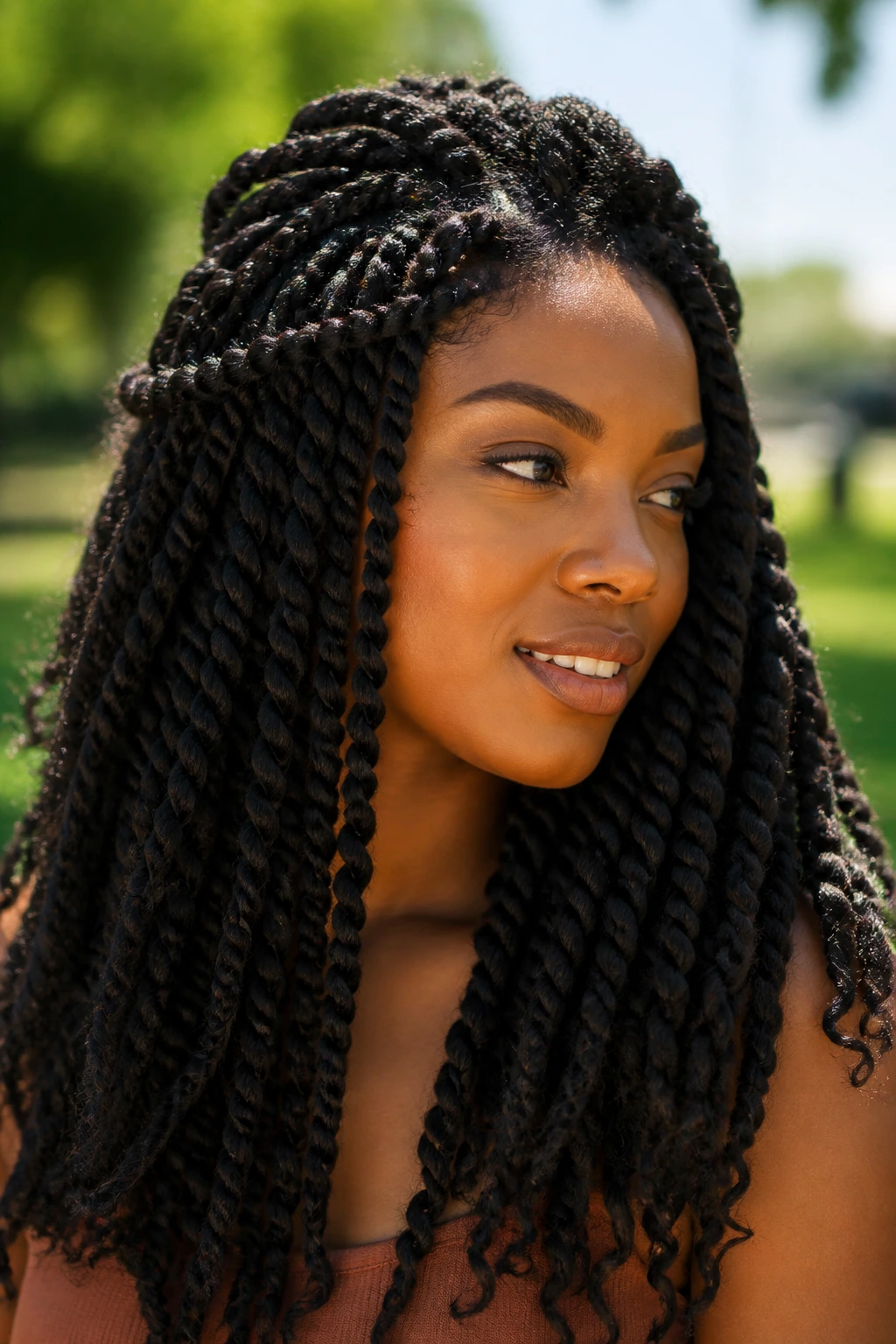
Havana twists are similar to Senegalese twists but much thicker and fluffier. They are created with a specialized type of hair that is lighter and has more texture, which makes the twists look dense and bouncy without the weight.
The Fluff Factor
The “Havana” look is meant to be big. Don’t be afraid to leave some volume at the roots. It’s a very natural-looking style that mimics the appearance of thick, mature twists.
Choosing the Right Hair
The hair used for these is key. If you use standard braiding hair, it will be too heavy. Look specifically for “Havana Twist” or “Marley” hair packs, which are designed to be airy and light.
21. Goddess Locs
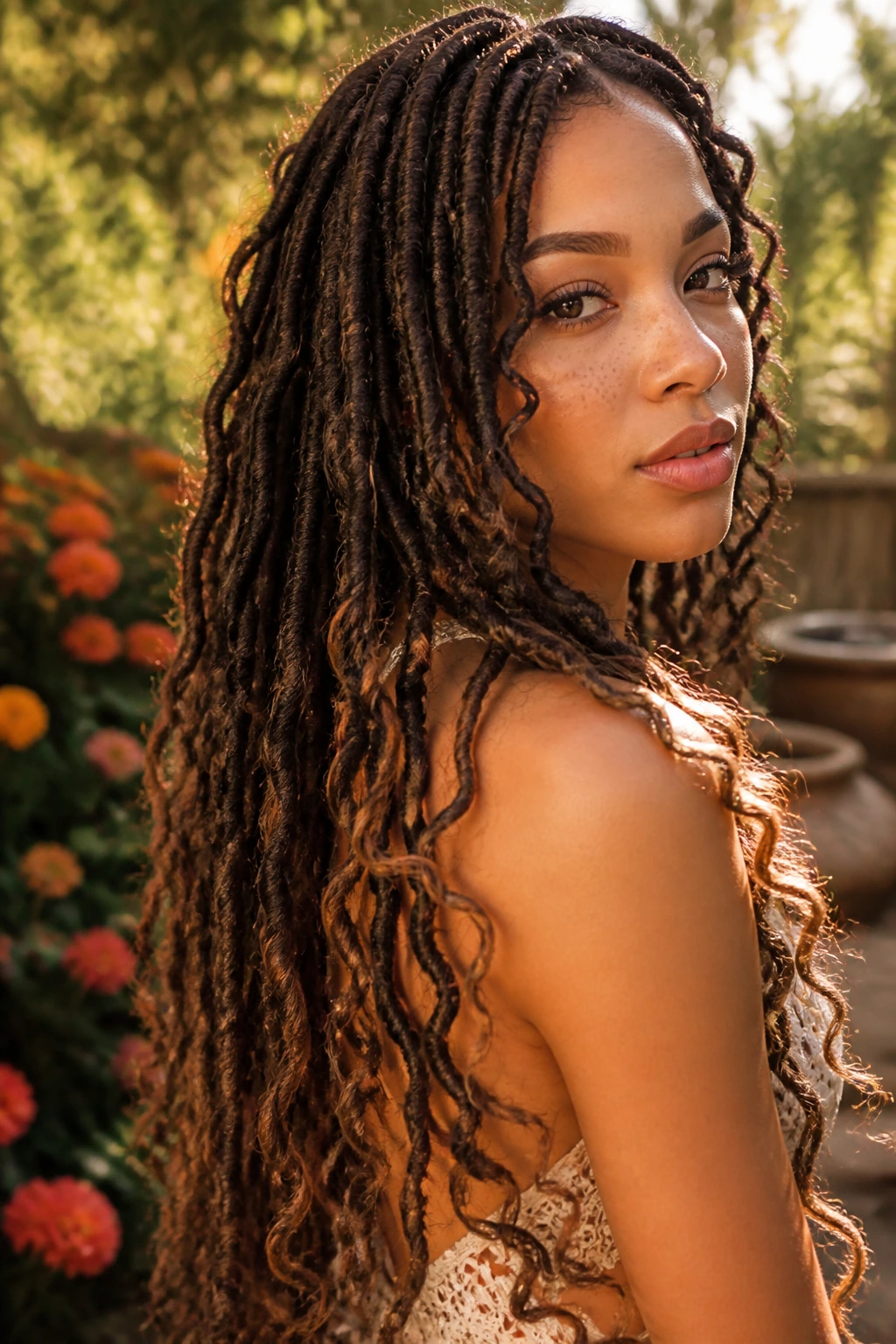
Unlike butterfly locs, goddess locs are characterized by long, wavy, flowing hair left out at the ends of each loc. They look like a very romantic, bohemian version of dreadlocks. They are long, luscious, and incredibly stylish.
The Maintenance of Length
Because they are usually quite long, you have to be careful about friction. Avoid wearing high collars that might snag the loose hair. A quick detangling session with your fingers every evening will keep them looking perfect.
Styling the Ends
You can curl the loose ends with a curling iron (if using high-quality human hair) or simply leave them in their natural wave. Either way, the movement of the hair is what makes these so stunning.
Final Thoughts
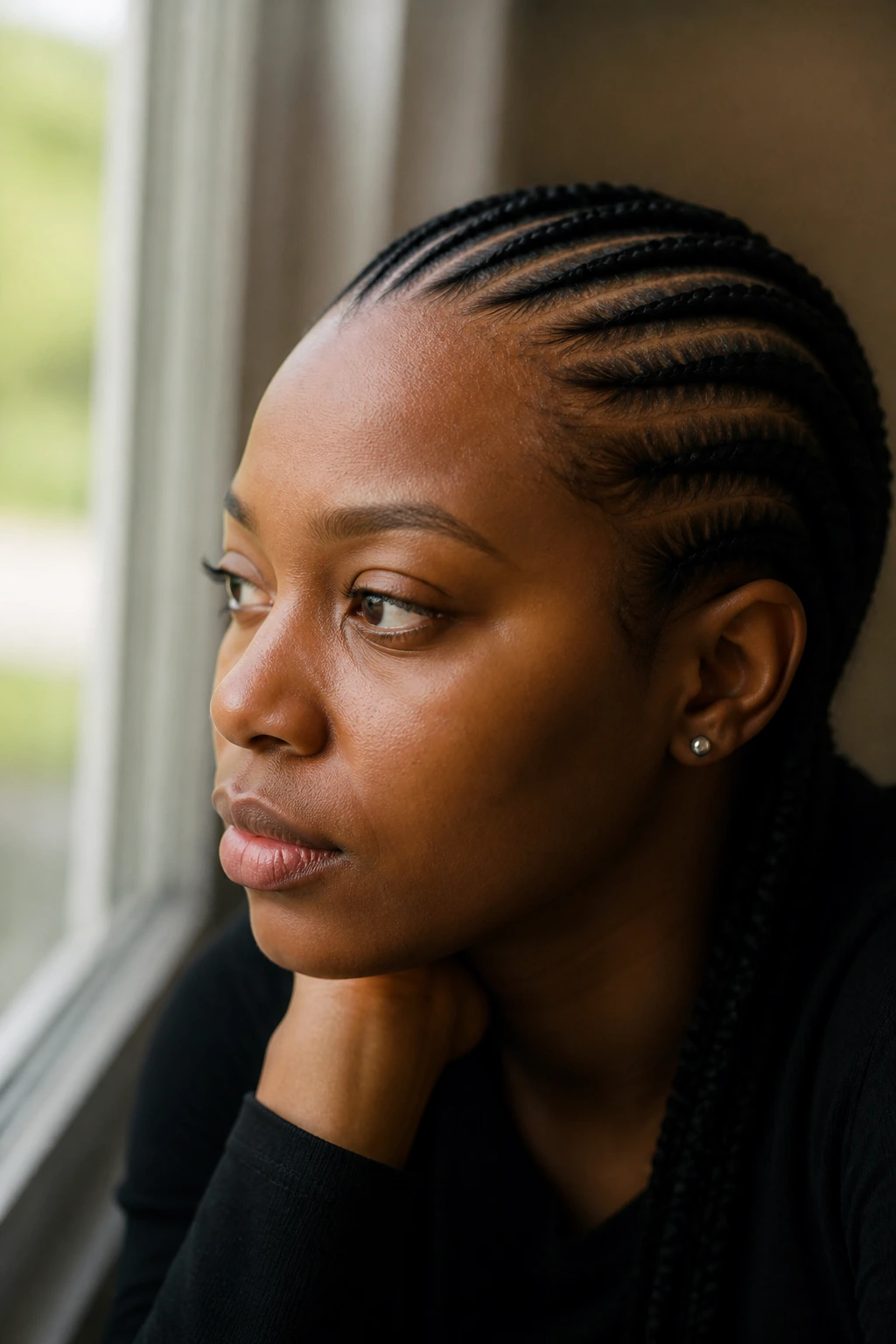
When choosing a braided style, the best approach is to consider your lifestyle and the level of maintenance you are willing to commit to. If you are active, a sleek, close-to-the-scalp style like cornrows or a high bun will keep you comfortable and secure. If you want something that offers more styling versatility, box braids or twists are the way to go.
Ultimately, protective styling should feel like a relief, not a chore. It is an opportunity to reclaim your time and celebrate the versatility of your natural texture. Pick a style that makes you feel confident, keep your scalp moisturized, and remember that even the most intricate braids deserve a break—give your hair a week or two to breathe between installations. Your scalp will thank you, and your next style will look even better for it.