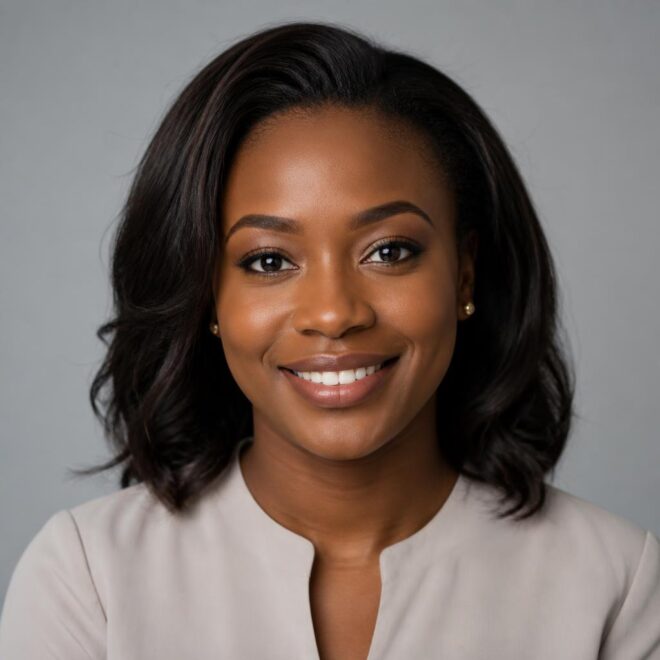


The bob braid is a masterclass in compromise. When you have thick, dense hair, the prospect of committing to a long-braided style can feel like a heavy burden—literally. The weight pulls at your hairline, the drying time becomes a weekend project, and the sheer volume of hair can make even the most elegant styles feel cumbersome. Chopping your hair into a bob—or simply braiding it at a cropped length—transforms that bulk into a structured, architectural asset rather than a styling obstacle. It is the perfect marriage of edge and convenience, offering all the personality of a bold haircut with the protective benefits and polish of braids.
Whether you are looking to manage your density or simply crave a fresh, sharp aesthetic, the bob-length braid is a perennial favorite for a reason. It frames the face without hiding it, brings attention to the jawline and neck, and works just as well in a corporate office as it does on a weekend afternoon. Many people with thick hair avoid shorter styles, fearing the “triangle effect” where the hair expands outward at the ends, but with the right braiding pattern and parting, you can maintain a sleek, tapered shape that respects your texture rather than fighting it.
1. Blunt-Cut Box Braids
The blunt-cut bob is arguably the cleanest, most sophisticated way to handle thick hair. By cutting the braids off at a sharp, even line—usually right at the chin or just grazing the collarbone—you eliminate the frayed, tapered ends that often weigh down a look. This style leans into the weight of your hair, using it to create a heavy, luxurious perimeter that feels intentional and high-fashion.
Why This Style Works for Density
The blunt edge acts as a structural anchor. When your braids are all the same length and finished with a crisp cut, they do not fray or feather out, which keeps the silhouette compact. You want to ask your stylist to “burn” or seal the ends perfectly flat to maintain that straight edge, or leave them slightly exposed if you prefer a more natural, lived-in feel.
Styling Maintenance Tips
- Use a lightweight mousse to keep the ends from frizzing over time.
- Wrap your hair at night with a silk scarf to preserve the integrity of the blunt line.
- If you notice the ends starting to get “fluffy,” a quick pass with a hot water dip can reset the sleekness.
2. Side-Parted Fulani Bobs
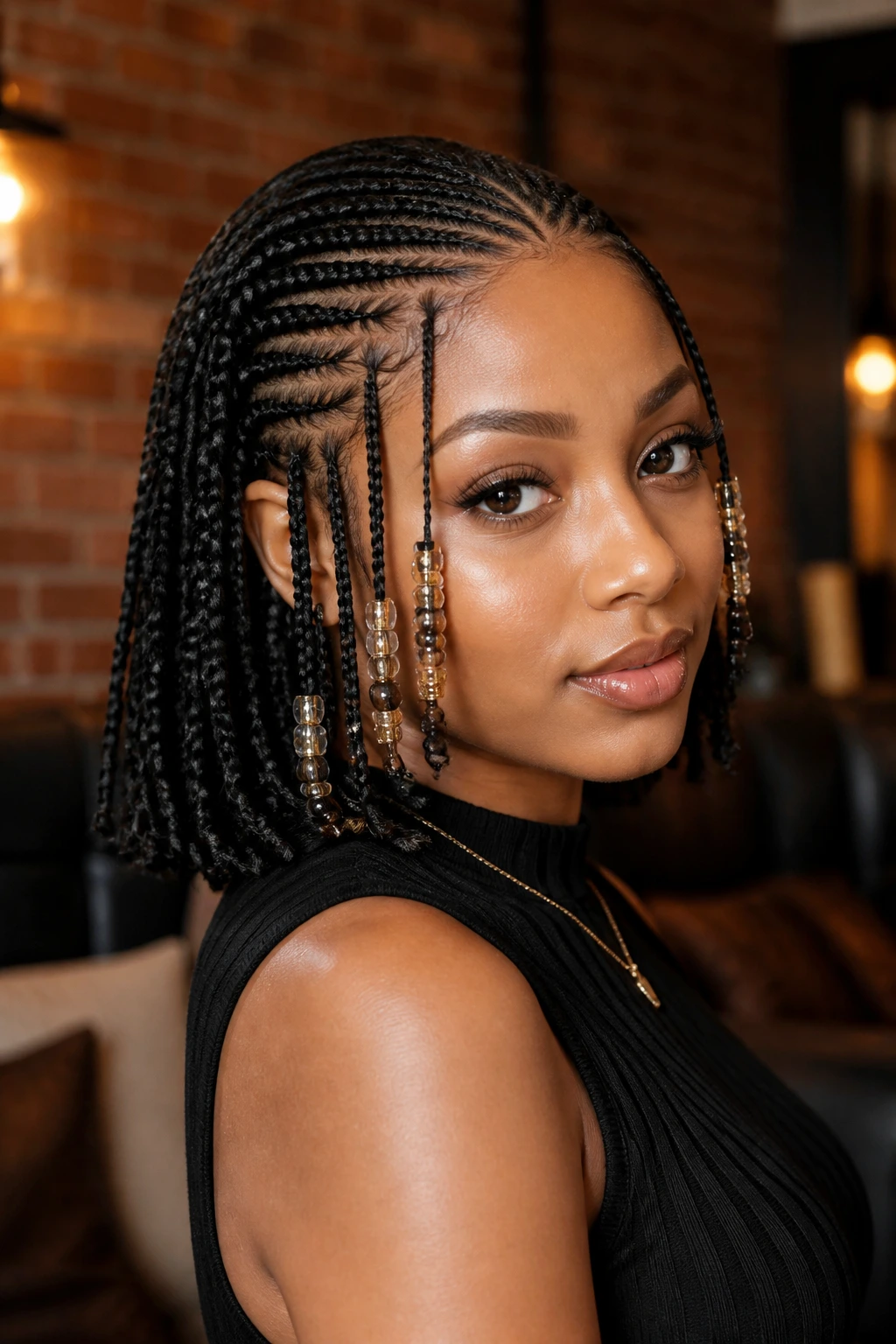
There is something inherently romantic about a side part. When you apply this to a bob-length braid, it adds an asymmetrical frame to your face that is both flattering and visually interesting. The Fulani style, characterized by cornrows moving from the front toward the back with a few beads or decorative cuffs, pairs perfectly with a shorter length because it creates a focused, intricate focal point near the temples.
Creating Balance with Thick Hair
Because you have plenty of hair to work with, the cornrows can be tighter and more defined. The thickness of your natural hair provides a sturdy base for the braided extensions to lock into, which means your style will likely last longer without the braids slipping or unraveling. Focus the detail work on the side that is parted, allowing the rest of the hair to fall in a soft, graduated curve.
3. Shoulder-Grazing Goddess Bobs
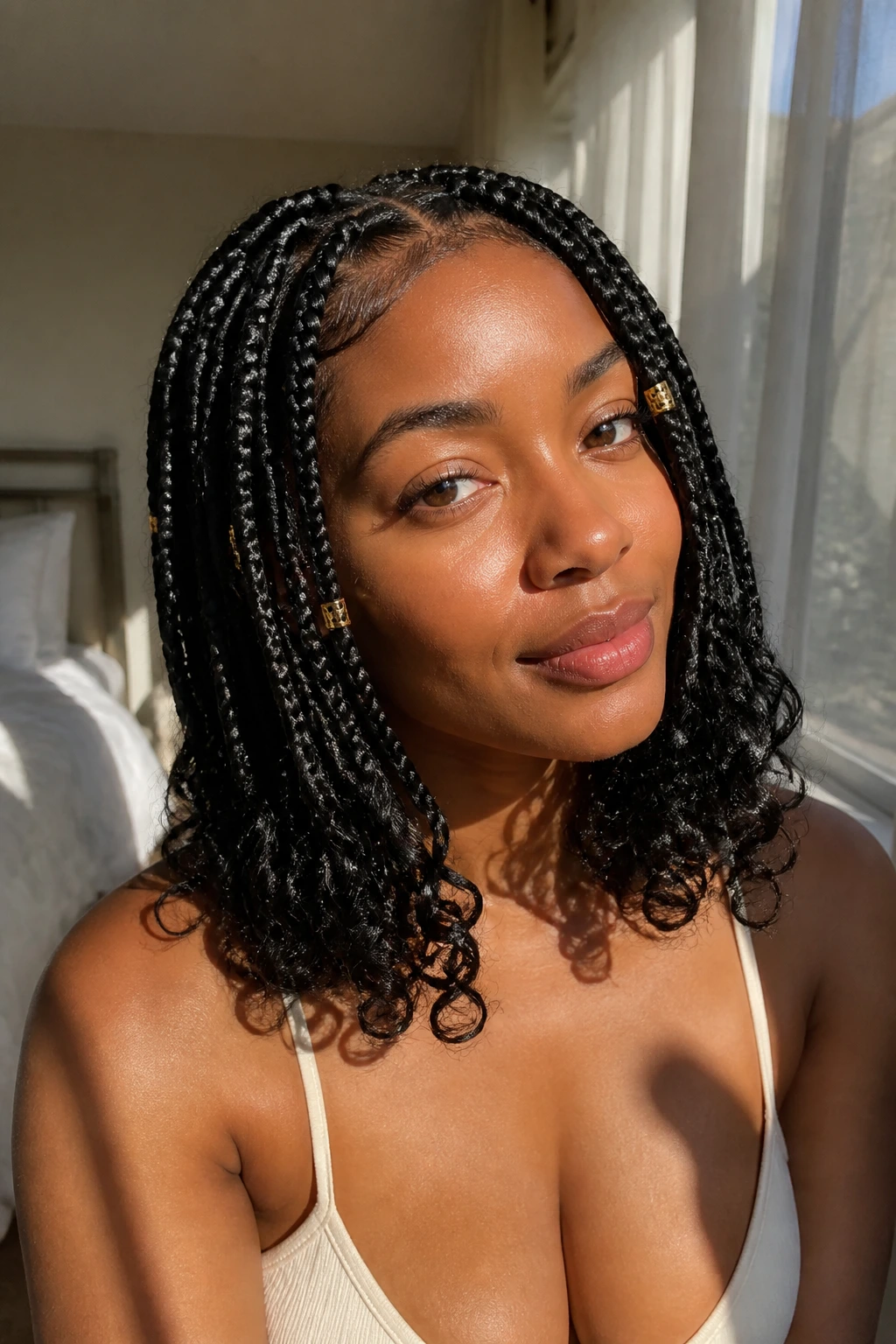
If you aren’t ready for a chin-length chop, the shoulder-grazing length offers a bridge between short and medium. These are often styled with “goddess” ends—loose, curly tendrils left at the bottom of the braids. This adds a softness that counteracts the sharpness of the bob. For those with thick hair, this is a brilliant way to break up the visual mass of the style.
The Mechanics of Goddess Ends
The key to pulling this off without it becoming a tangled mess is the choice of braiding hair. Use human hair or a high-quality synthetic that is specifically designed to resist tangling. Since thick hair already has volume, keeping the loose curls at the bottom relatively light will prevent the hair from becoming too heavy or looking overly “big” for a bob silhouette.
4. Tapered Angled Bobs
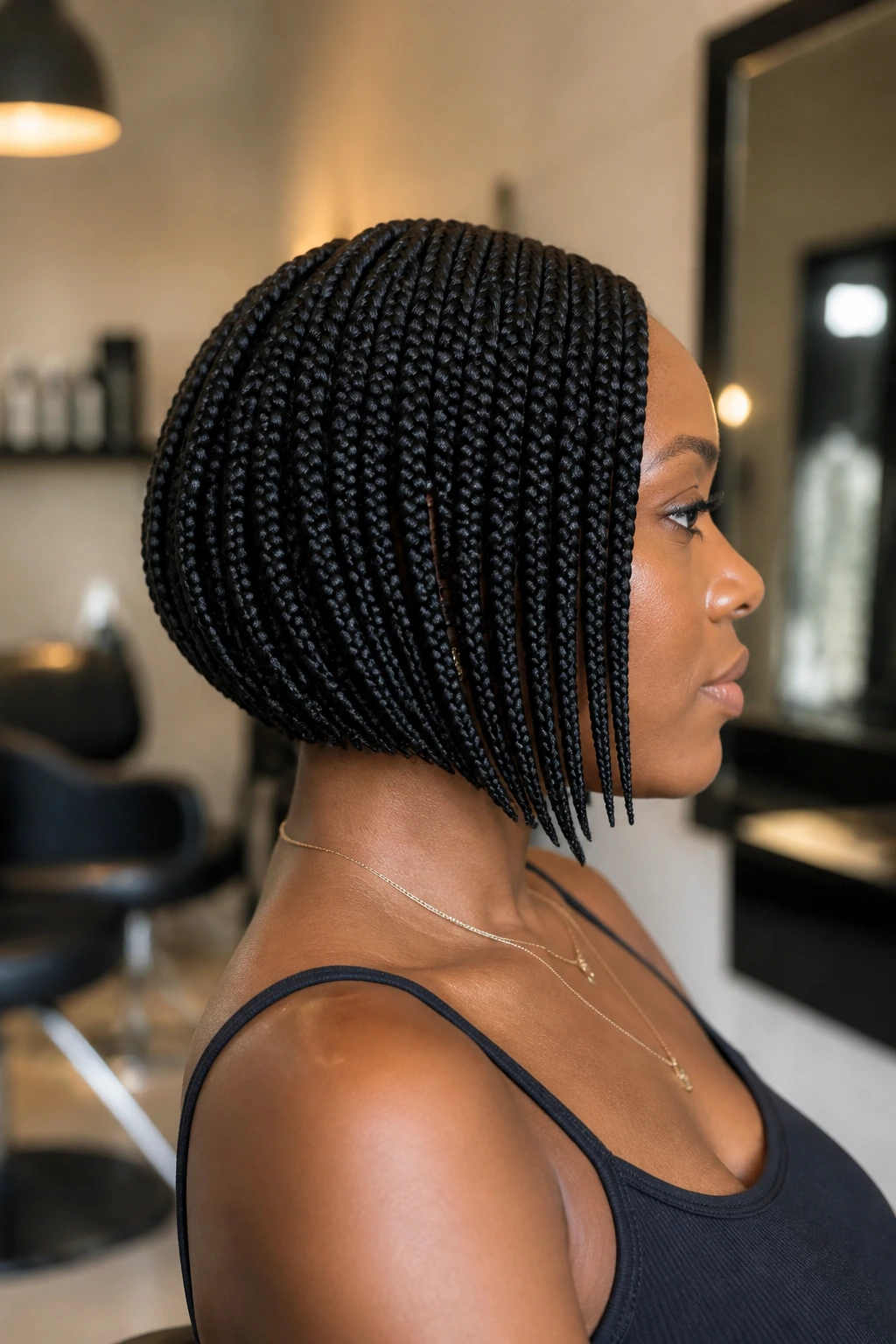
An angled bob—shorter in the back, longer toward the chin—is a classic for a reason: it creates movement. When executed in braids, this shape uses the natural volume of thick hair to create a rounded, voluminous back that looks fantastic from a side profile. The elongation toward the jawline creates a slimming effect that is incredibly flattering on round or square face shapes.
Why the Taper Matters
Thick hair can often feel “stuck” in a boxy shape. By tapering the length at the nape of the neck, you remove a significant amount of weight, which makes the style feel lighter and more breathable during warmer months. This is perhaps the most comfortable version of a bob for someone who is sensitive to the weight of long extensions.
5. Micro-Braided Bob
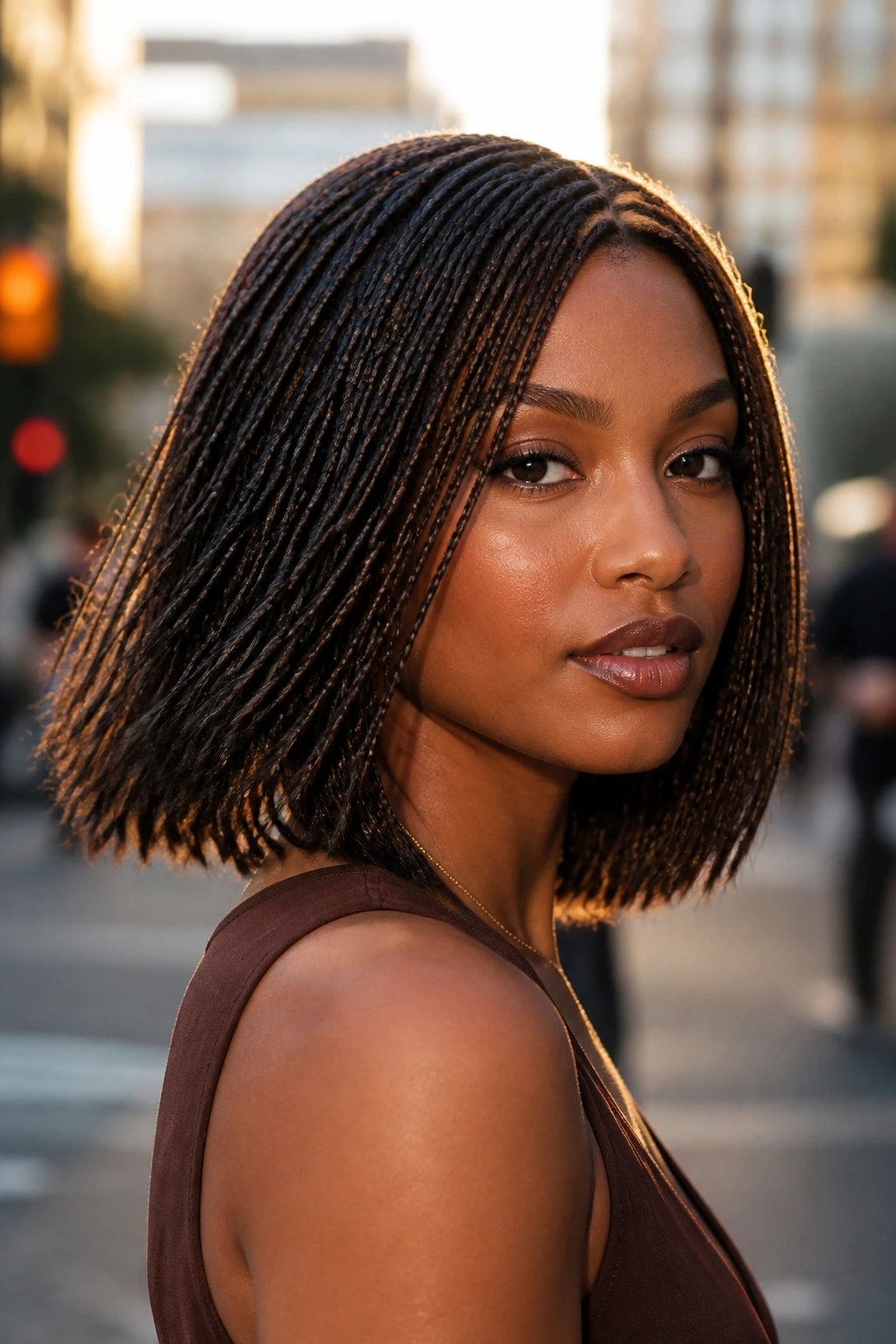
Micro braids take significantly longer to install, but for thick hair, they offer a level of fluidity that larger box braids simply cannot match. A micro-braided bob flows almost like loose hair, swaying with your movements rather than moving in stiff sections. The high density of braids masks your natural thickness while creating a soft, ethereal appearance.
How to Manage the Volume
With micro braids, the “bulk” of your hair is distributed across hundreds of tiny strands. This prevents the braids from feeling stiff. Use a light-hold setting spray to keep the flyaways in check, as thick hair tends to have more surface-level frizz that can stand up against the micro-braid structure.
6. Tribal-Inspired Bob Braids
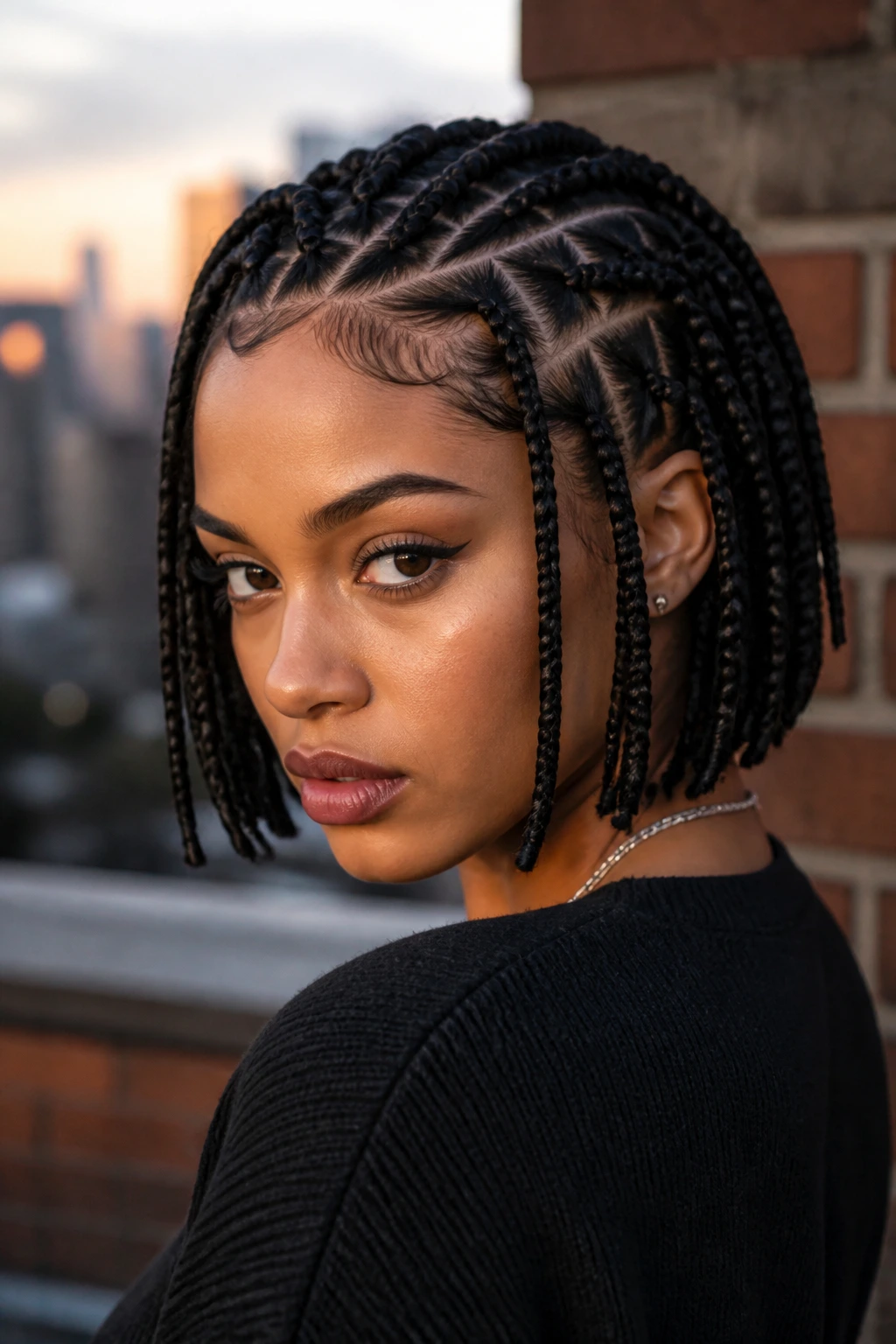
Tribal braids often involve a mix of different sizes and intricate parting patterns. In a bob length, these intricate details are showcased perfectly because they aren’t lost in a sea of long, trailing hair. You can play with horizontal, zigzag, or curved parts that radiate from the crown, providing a beautiful architectural detail that draws the eye upward.
Customizing for Your Texture
Ask your stylist to incorporate “stitch” braiding techniques to keep the tension even. Since thick hair is heavy, you want the braids to be firmly anchored. The shorter bob length means the roots won’t be under as much strain as they would be with waist-length hair, making this an ideal protective style for your natural hair’s health.
7. Chunky Bohemian Bobs
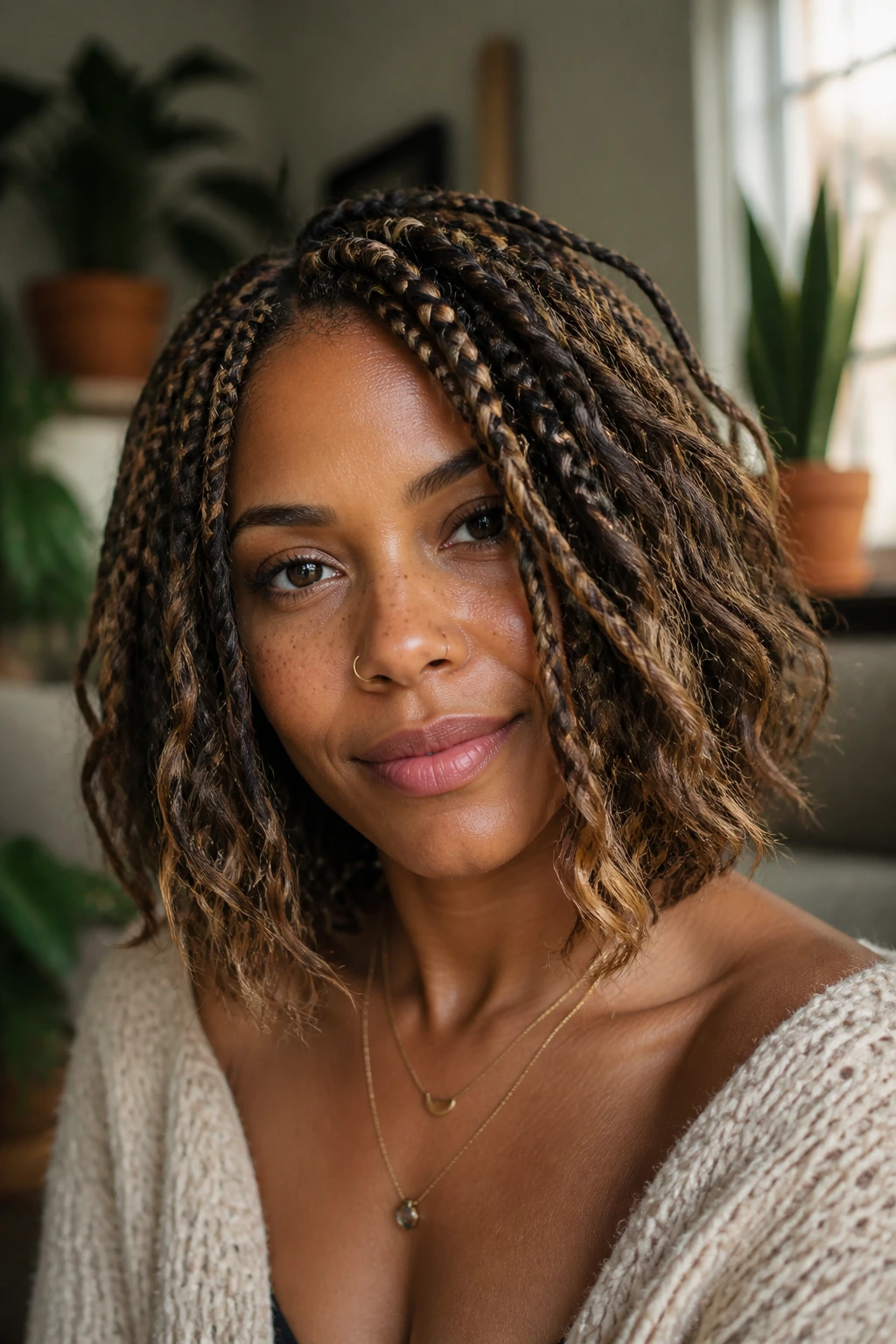
Bohemian braids, or “boho” braids, feature unraveled or loose strands interspersed throughout the style. In a bob length, this creates a wild, textured, and incredibly youthful look. It is the antithesis of the super-sleek blunt cut, opting instead for a “messy but curated” aesthetic that looks better the more lived-in it gets.
Working with Thick Density
The bohemian style thrives on volume. Instead of fighting your hair’s natural density, you are highlighting it. By leaving thick sections of the braiding hair loose and wavy, you create a soft, rounded shape that frames the face in a way that feels organic and effortless.
8. Color-Blocked Bob Bobs
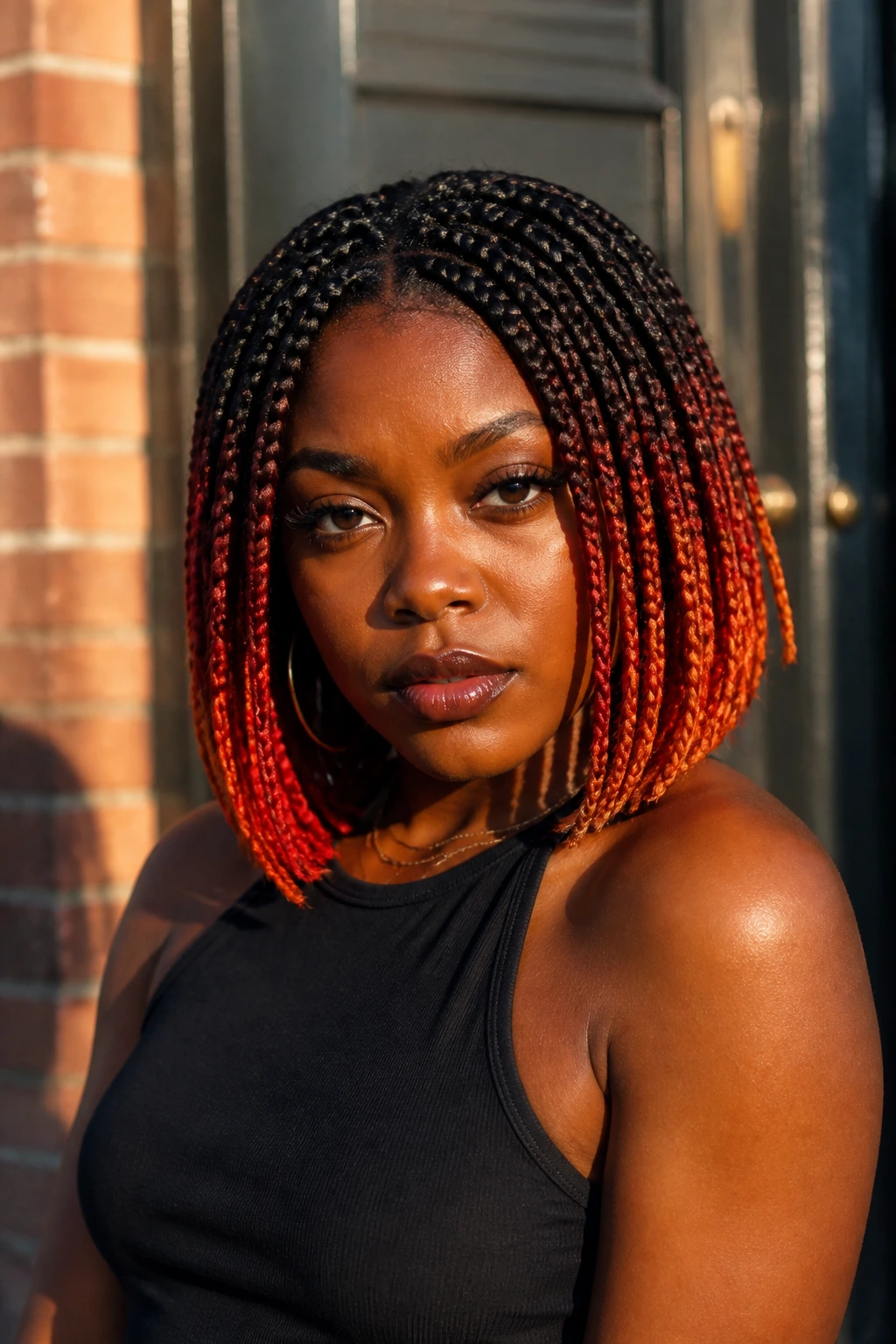
A bob is a bold enough cut that you can get away with bold color choices. Whether it is a stark platinum blonde or a warm honey copper, color-blocking your bob braids adds a layer of depth that changes the way the haircut looks in different lighting. For thick hair, color can actually make the braids look lighter by adding dimension.
Choosing Your Hue
If you have dark, thick hair, try an ombre effect where the roots are your natural color and the tips fade into a vibrant shade. This makes the bob feel “bouncy.” A solid, vibrant color throughout the entire bob can also look very chic, but remember that you will need to take extra care of the synthetic hair to prevent the color from fading or looking dull.
9. Curly-End Bob Braids
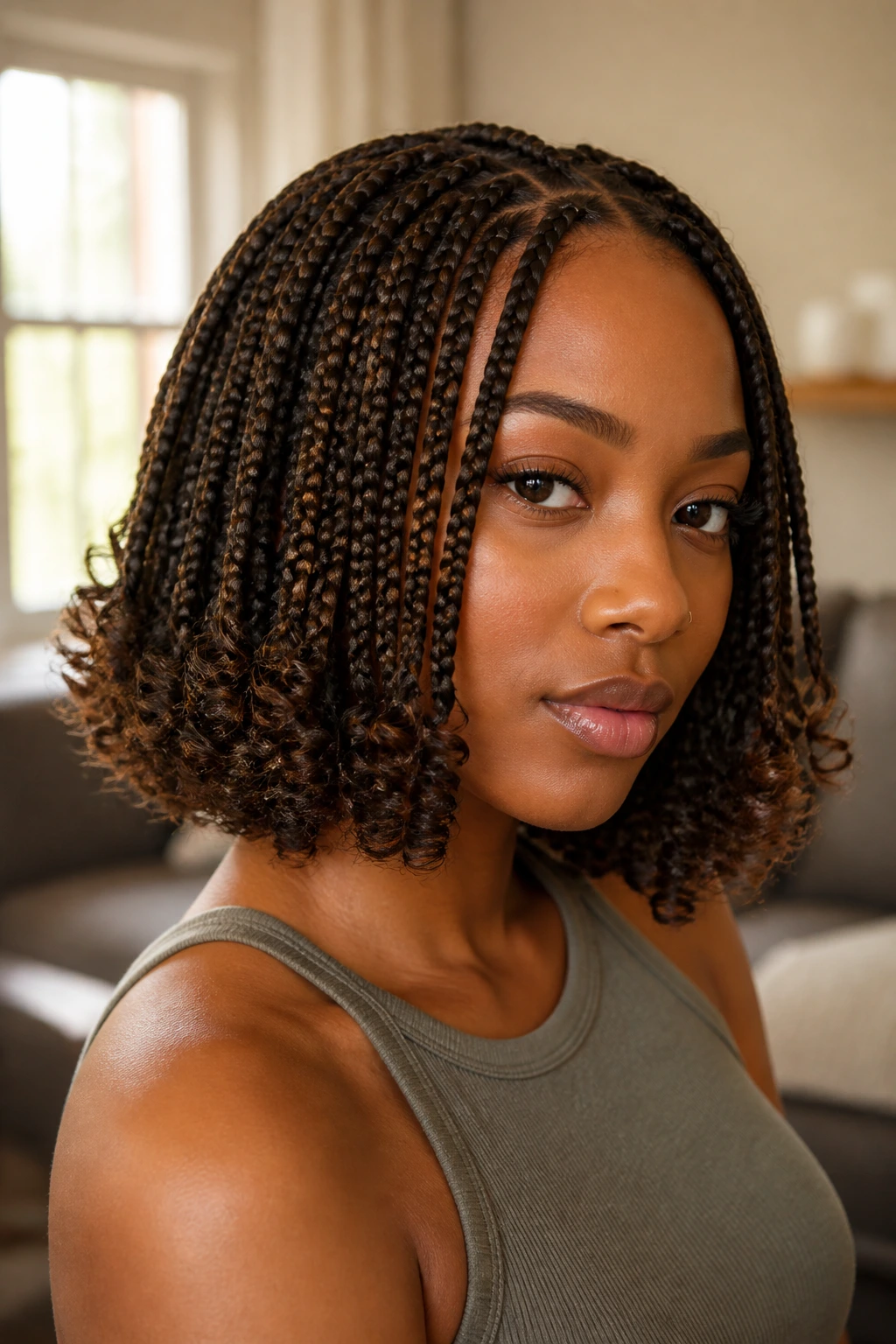
Similar to the goddess bob, the curly-end style features braids that transition into a full, bouncy curl. The difference here is the ratio: more curl, less braid. This style mimics the look of a layered haircut, which is traditionally very difficult to achieve with box braids, but works perfectly when you chop the length at the bob.
Avoiding the Tangling Trap
Use a detangling spray every morning on the loose curly ends. Since your natural hair is likely dense, it can “feed” into the braids and create tension. Ensure that the transition point—where the braid stops and the curl begins—is securely fastened so the braid doesn’t unravel as the hair moves.
10. Twisted Bob Braids (Senegalese Twist Bob)
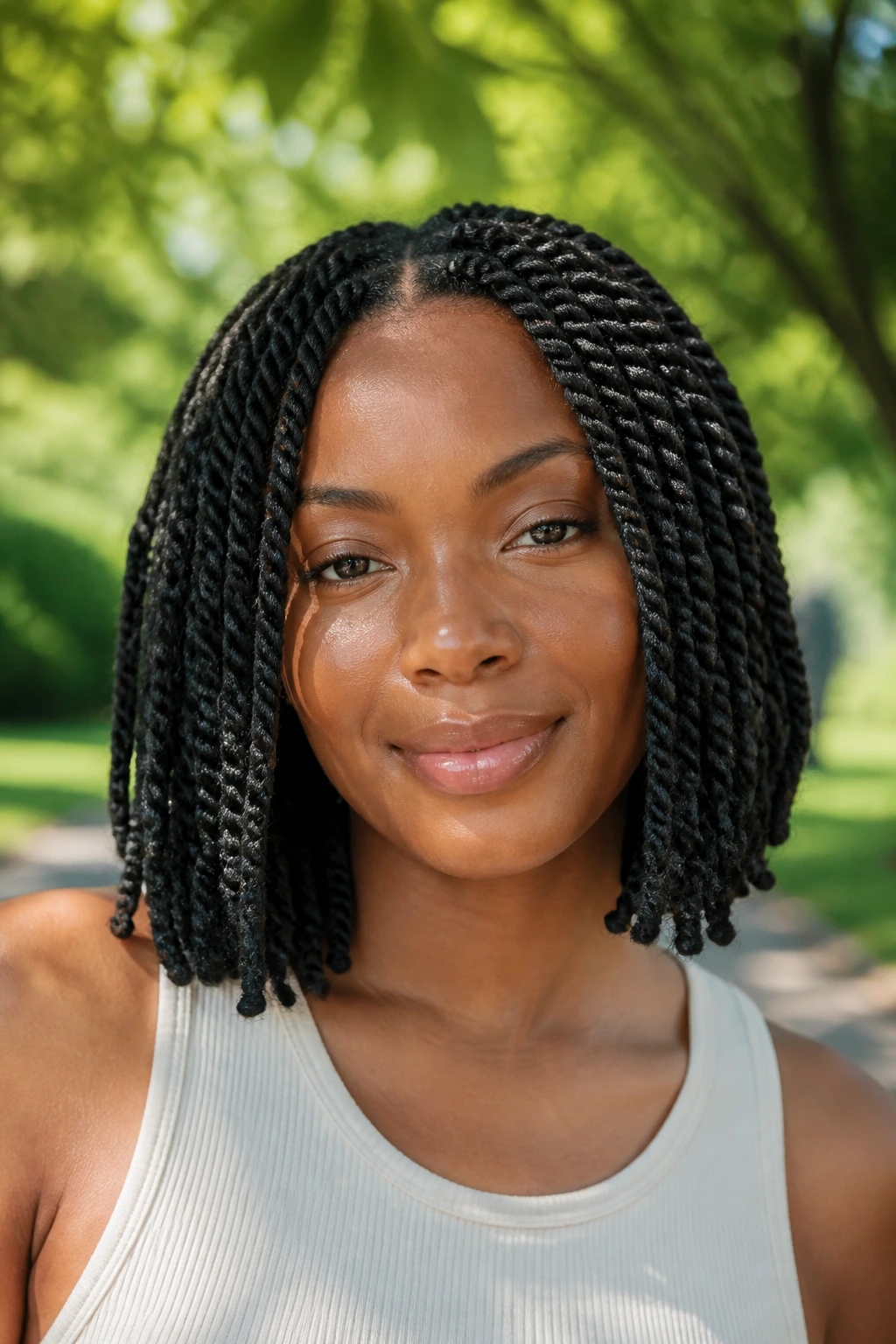
Twists have a softer appearance than traditional three-strand braids. A Senegalese twist bob is elegant and remarkably easy to maintain. Because twists are generally lighter than braids, this is a top-tier choice for someone who is worried about the heavy sensation of having thick hair braided back.
The Twist Advantage
Twists move more freely than braids, meaning your bob will have a more natural, swinging quality. They are also less prone to the “frizz halo” that can sometimes plague braided styles. If you have very thick hair, ensure the twists are not too small, as smaller twists on thick hair can sometimes look overly dense and become difficult to manage.
11. Cornrow-to-Bob Conversion
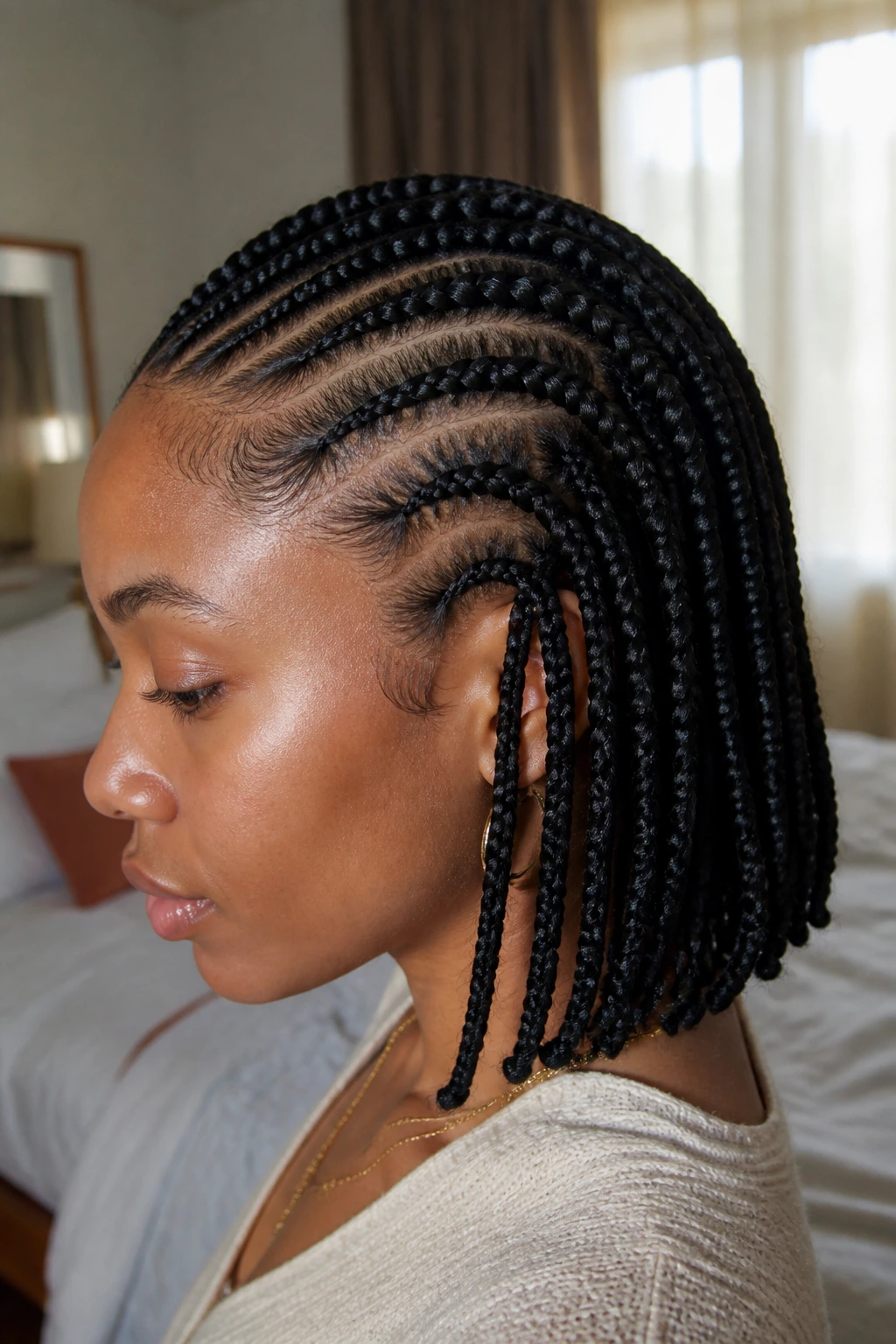
This is a hybrid style: cornrows on the scalp that transition into free-hanging box braids at the nape, all cut to a bob length. It gives you the neatness of a cornrowed style and the freedom of a bob. It is an excellent way to keep your natural hair very secure and protected while enjoying a fun, trendy cut.
Why It’s Great for Thick Hair
Cornrows provide the best security for thick, heavy hair. By sewing or braiding the extension hair into the cornrow base, you ensure the style holds up against the weight of your hair. This is arguably the most secure option on this list for people with very thick, coarse textures.
12. Asymmetrical Bob Braids
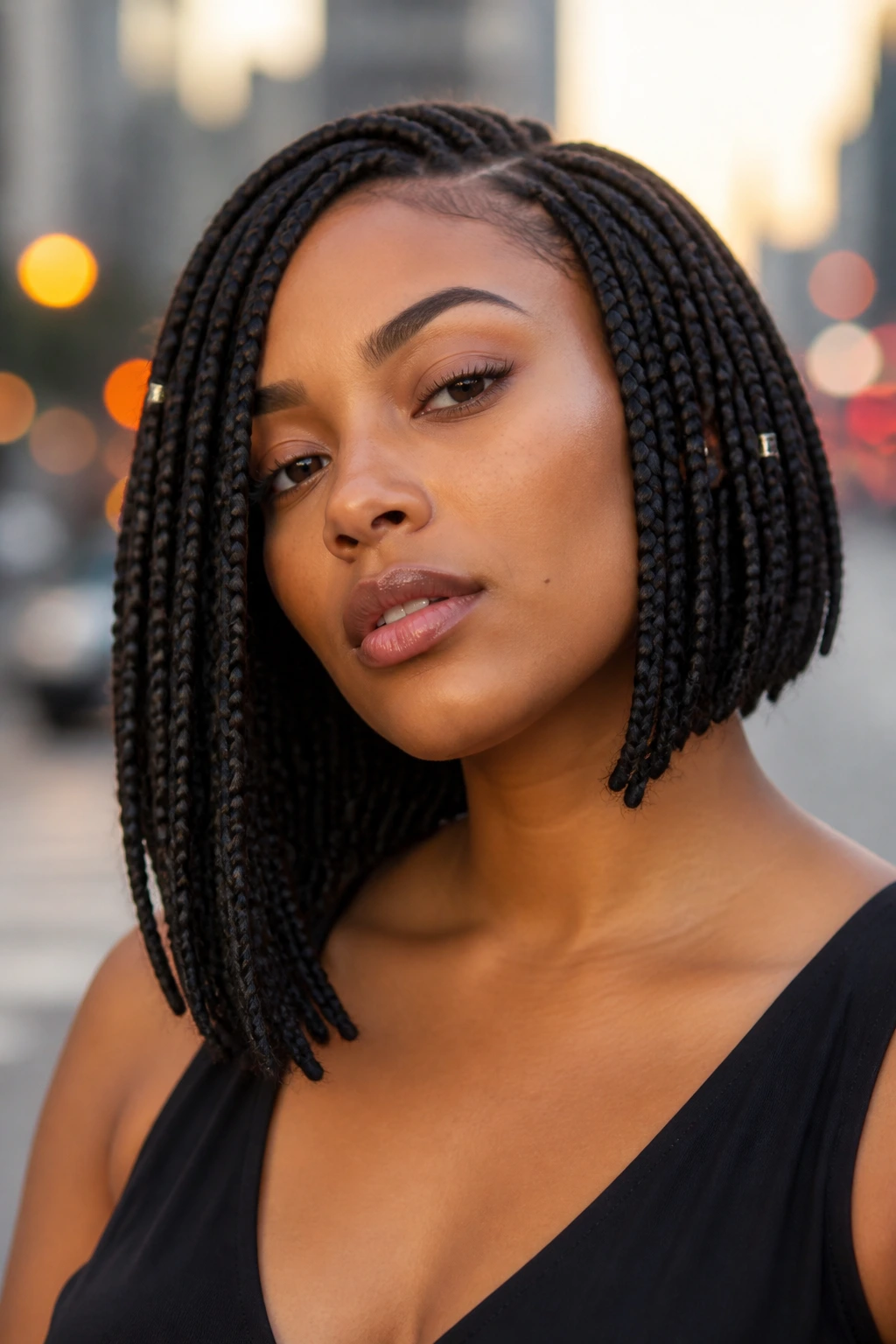
An asymmetrical bob—where one side is significantly longer than the other—is a style for the bold. It frames the face dynamically and adds an artistic touch to the traditional braid. It is particularly effective for thick hair because it breaks up the volume across different planes of the face, making the overall silhouette feel less heavy.
Styling the Longer Side
The longer side can be tucked behind the ear or left to cascade over the shoulder. Because your hair is thick, the long side will have plenty of weight to hang straight and look sharp without the need for constant adjustment.
13. Sleek Middle-Part Bob
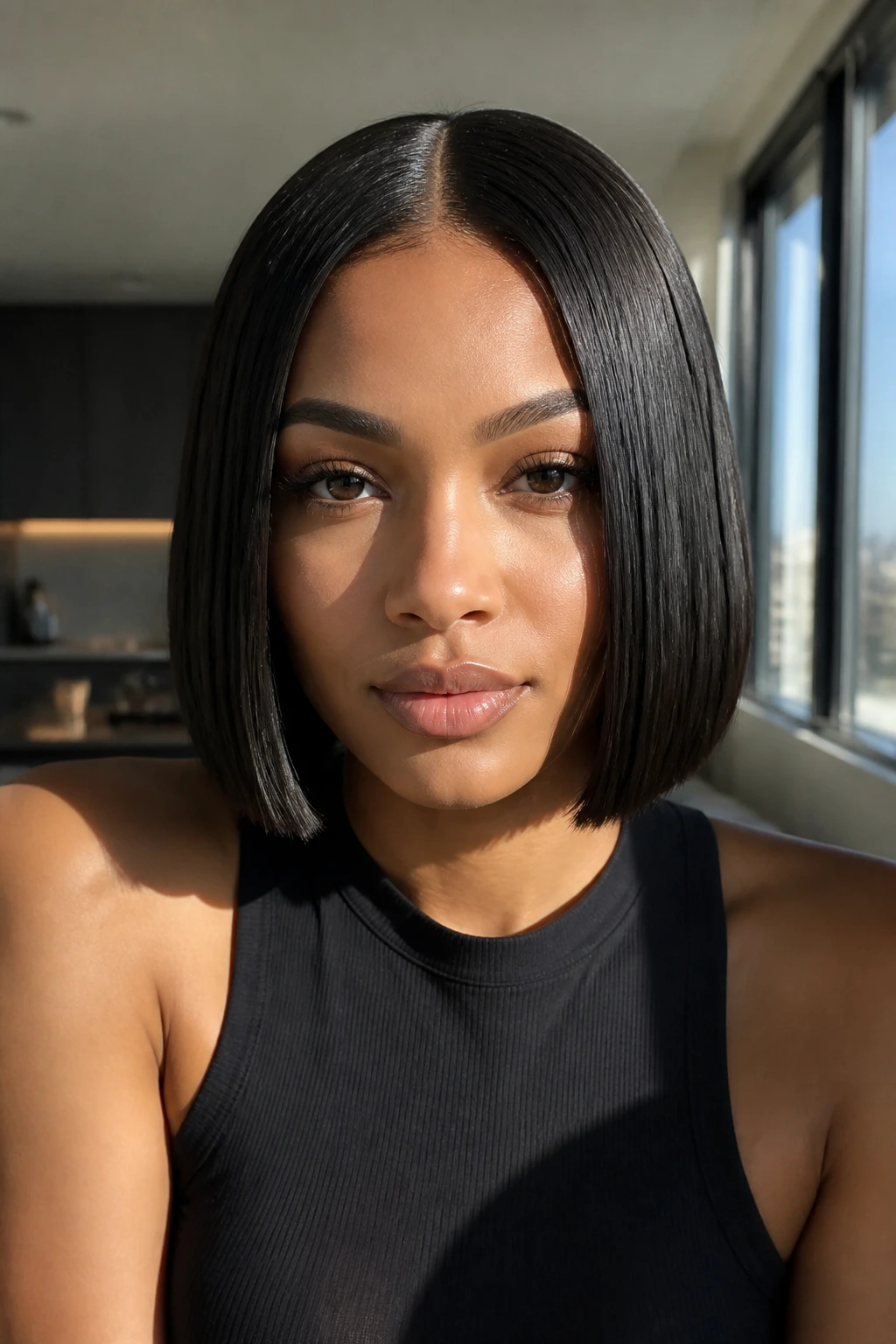
The middle part is timeless. When you combine a middle part with a chin-length blunt bob, you achieve a look of “quiet luxury.” It is perfectly symmetrical, very professional, and highlights the bone structure. This is the ultimate “clean girl” aesthetic for those who love braids.
The Importance of Tension
To pull off a middle part with thick hair, your parting must be razor-sharp. Spend time with a rat-tail comb and some edge control to ensure the parting is perfectly straight. Because your hair is thick, any slight deviation in the part will be magnified, so take your time during the installation phase.
14. Beaded Bob Braid
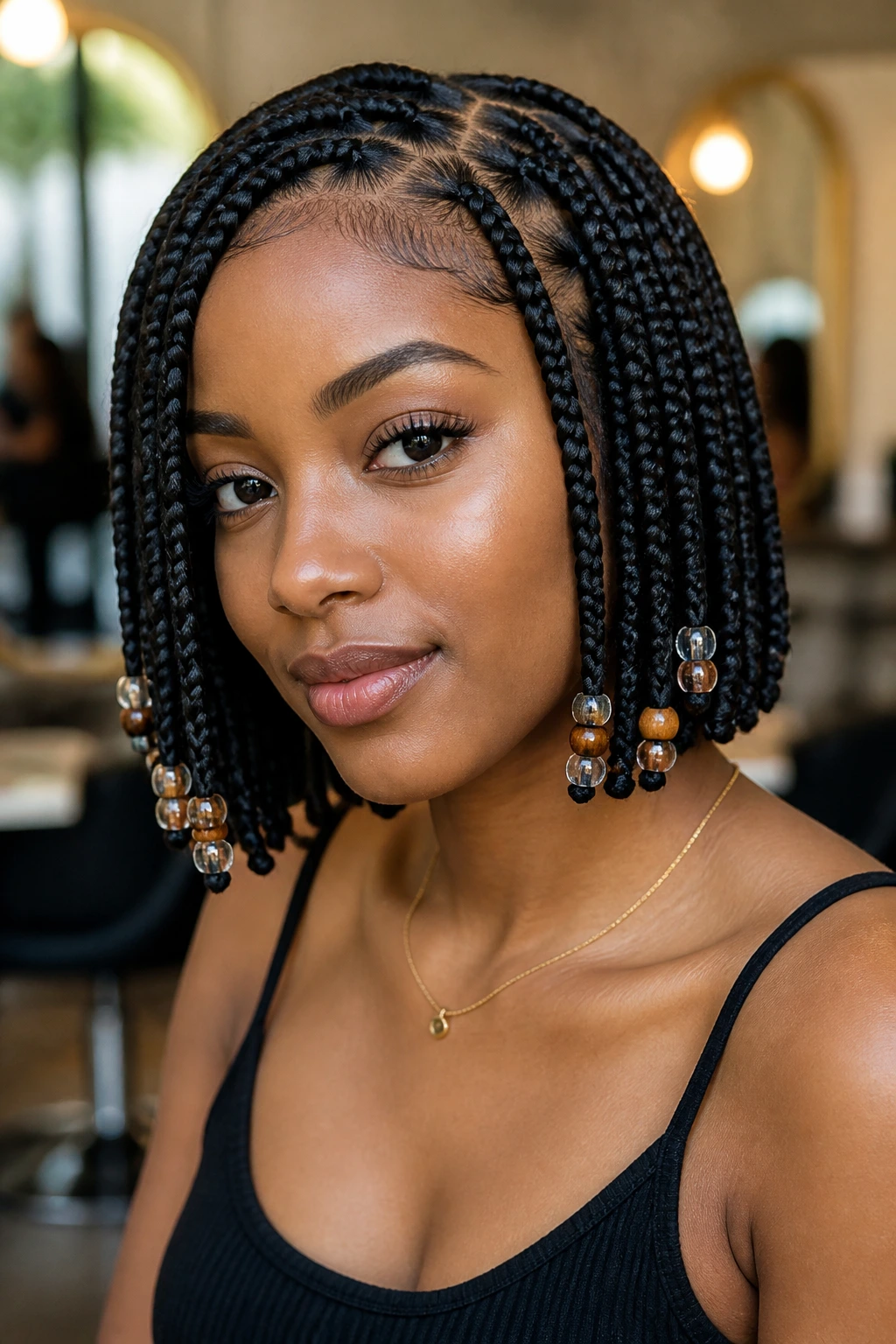
Adding beads to the ends of your bob braids is a classic stylistic choice that adds weight and sound. It creates a rhythm when you walk and gives the braids a definitive “finished” look. For a bob, you don’t need excessive beads—a few at the ends of each braid, or just a few key braids, is enough.
Weight Considerations
Beads add weight. If you already have thick hair, be cautious with the number of beads you add per braid. A simple wooden or clear acrylic bead is usually lighter than metallic ones, which can pull at the braids and cause premature loosening, especially on shorter bob lengths where the hair is already under some tension.
15. The “Lived-In” Messy Bob
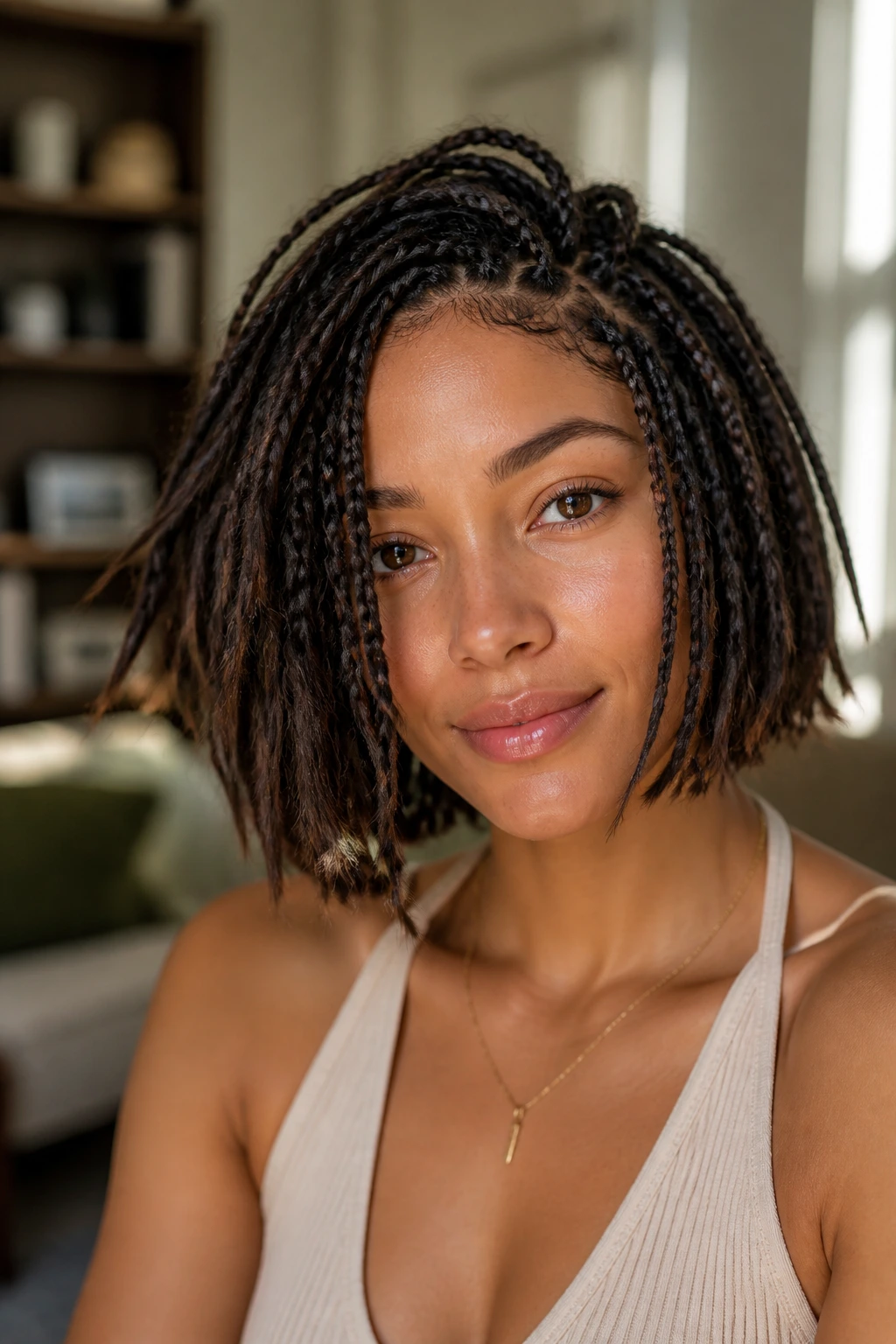
If you hate the look of “fresh” braids, which can sometimes look too stiff or “wig-like,” the lived-in bob is for you. This style is characterized by thinner braids with plenty of movement and slightly unpolished roots. It looks like you have had the style for a week, which is often when box braids look their absolute best.
Why It Works for Texture
Thick hair often struggles to look “natural” in braided styles because the volume can appear artificial. By intentionally keeping the braids a bit more relaxed, you allow your natural texture to influence the shape of the style, resulting in a look that feels more authentic and less like a standard salon installation.
16. Half-Up, Half-Down Bob
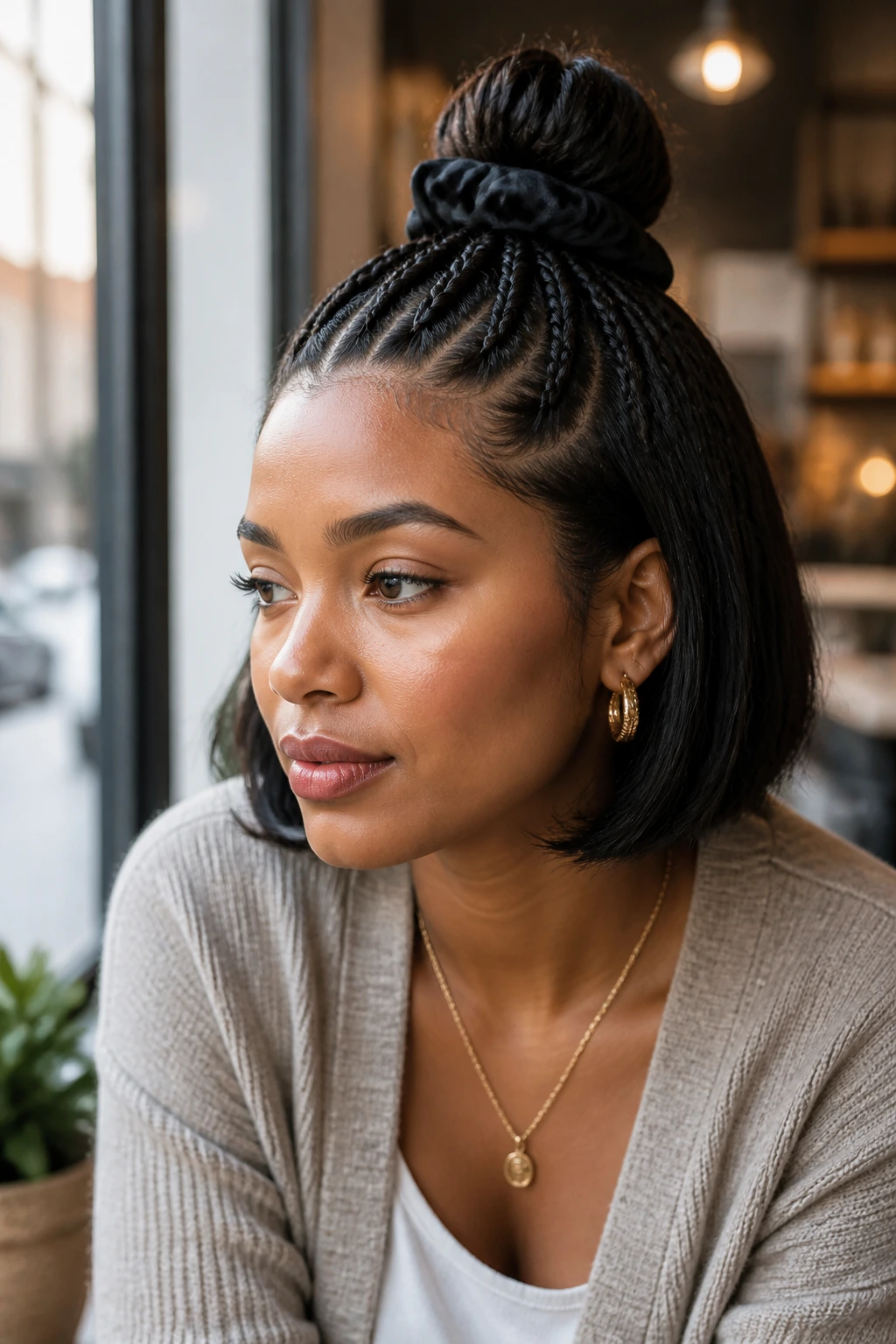
Even with a bob, you can rock a half-up style. Gathering the top section of your braids into a high bun or a chic clip is the easiest way to pull your hair away from your face while still showing off the length of the bob. This is a life-saver during humid weather or when you’re heading to the gym.
Securing the Style
Use a satin-lined scrunchie or a heavy-duty claw clip to hold the hair. Because thick hair is heavy, standard hair ties will snap. A claw clip is generally better for bob braids because it grips the volume without putting too much tension on the roots, which helps prevent breakage in the long run.
17. The Twisted Crown Bob
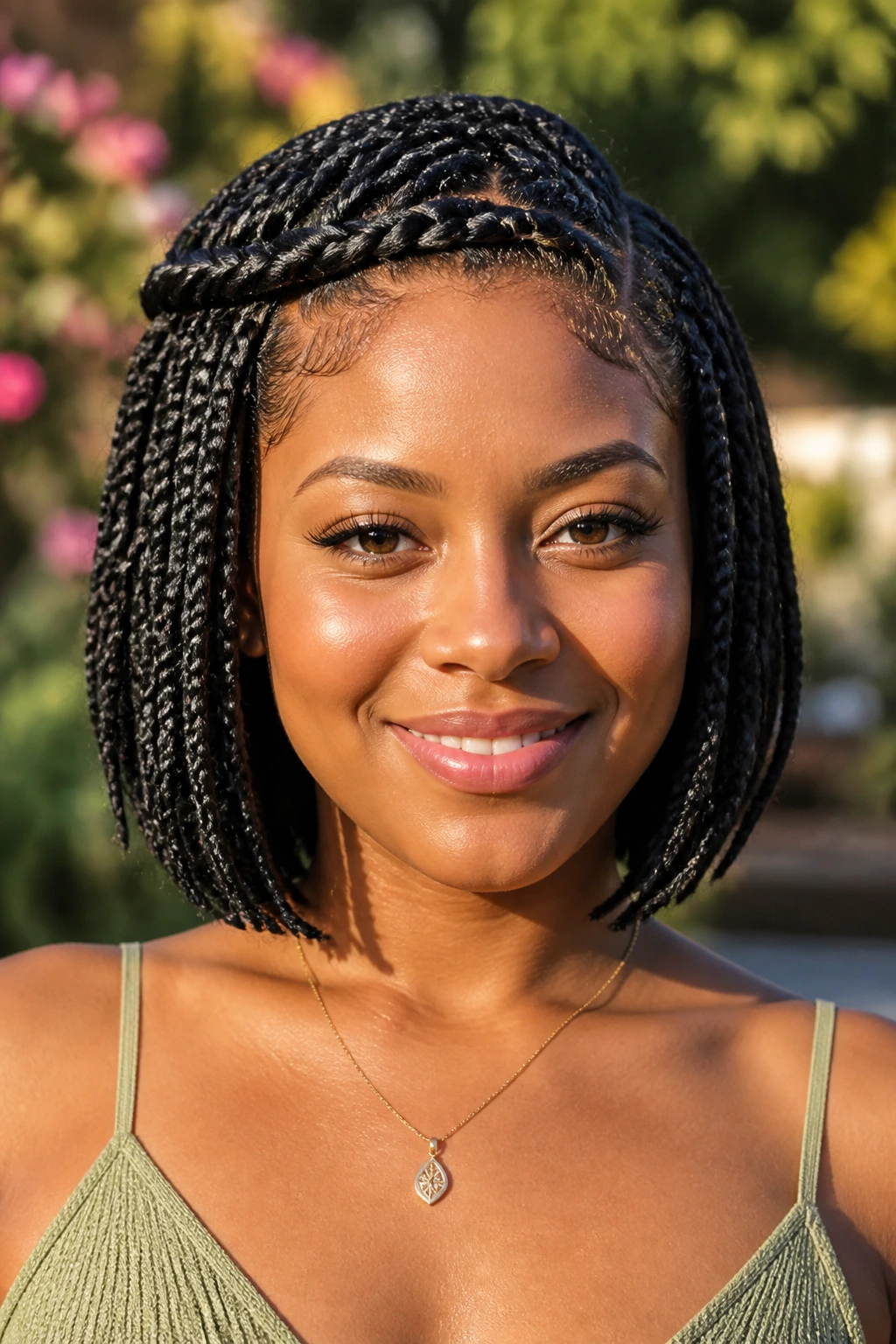
This style incorporates a flat twist or cornrow around the hairline, which transitions into a bob of box braids. It’s essentially a protective style inside a protective style. It adds a layer of interest to the forehead area and keeps the hair away from your eyes entirely.
Benefits for Density
The twisted crown acts as a “headband,” which helps manage the hair’s volume at the front of your face. If your thick hair usually tends to fall forward into your eyes, this style is a functional, beautiful solution that maintains the integrity of the bob shape all day long.
18. Faux-Loc Bob Braids
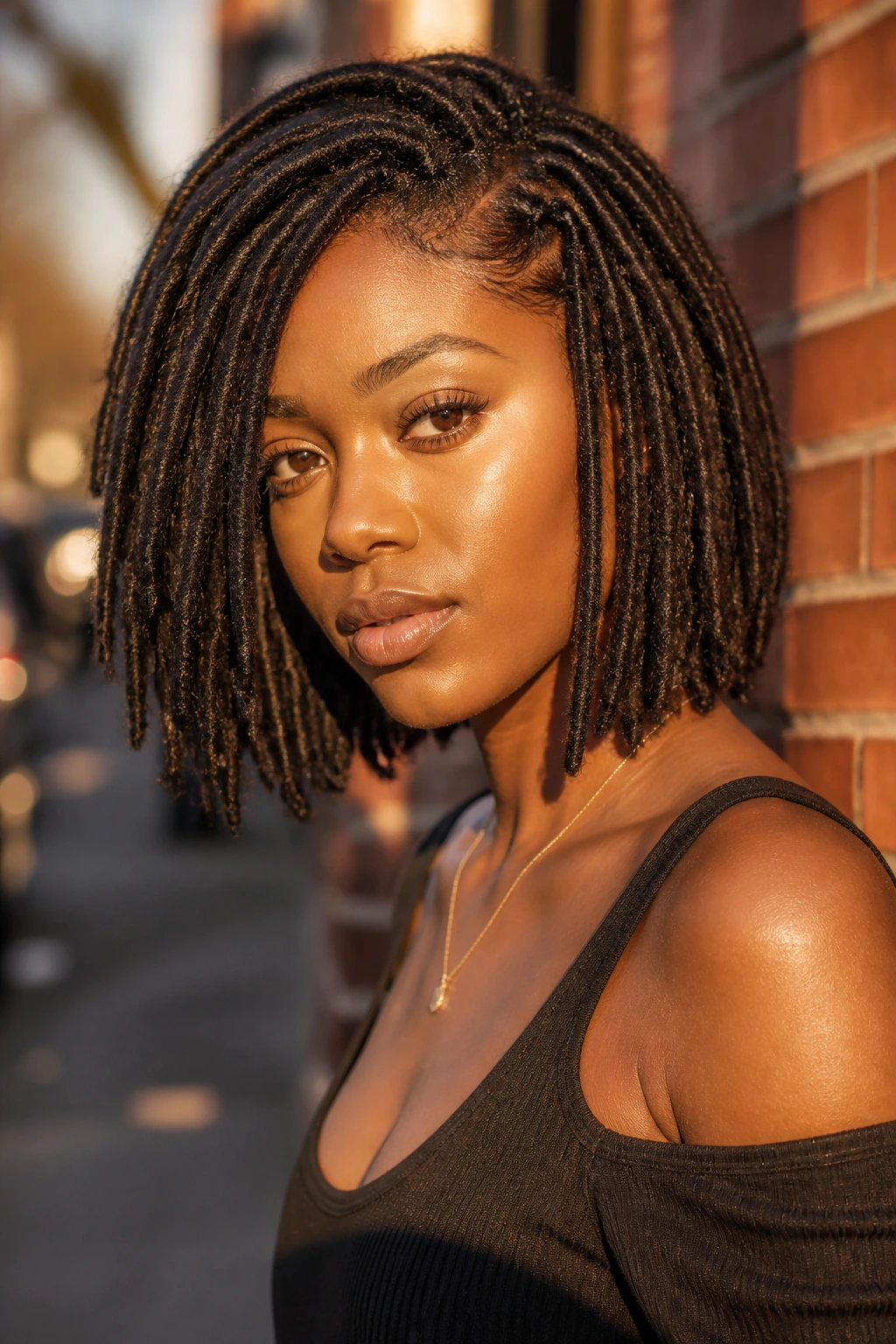
Locs, even when done as a bob, have a distinct texture and weight. If you have thick hair, you might find that faux-locs provide more volume than you’re used to, but in a bob length, it is much more manageable. They look “lived-in” from the moment they are installed and get better with age.
Maintenance and Texture
Faux-locs can be heavy, so make sure your stylist uses a lightweight braiding hair. The bob length ensures you don’t have a massive amount of weight pulling on your scalp, which is the main reason many people shy away from locs. It is the perfect compromise for the “loc-look” without the long-term commitment.
19. Two-Tone (Ombré) Bob Braids
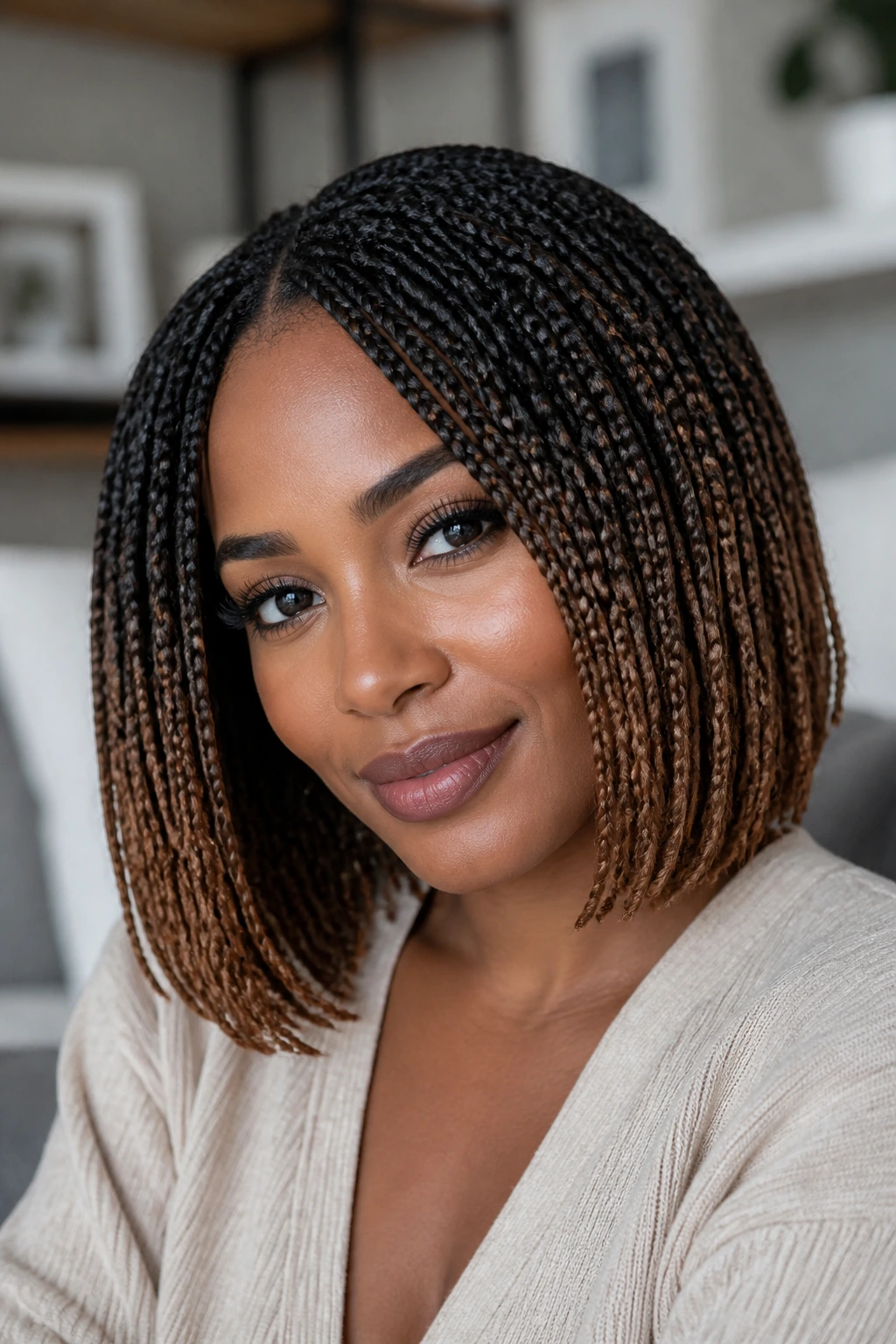
Applying a gradient color change specifically to a bob creates a beautiful light-to-dark transition that makes the hair look shorter and more defined. It prevents the thick hair from looking like one giant block of color. A soft transition from black to chocolate brown is classic, while platinum to ash blonde is edgy.
Keeping the Color Vibrant
Because you aren’t dyeing your natural hair, you have the freedom to experiment. Use a color-depositing shampoo on your extensions to keep the “light” end of the ombré looking fresh. As the extensions age, they can get dull; a quick refresh can make a two-month-old bob look like it was just done.
20. Layered-Look Bob Braid
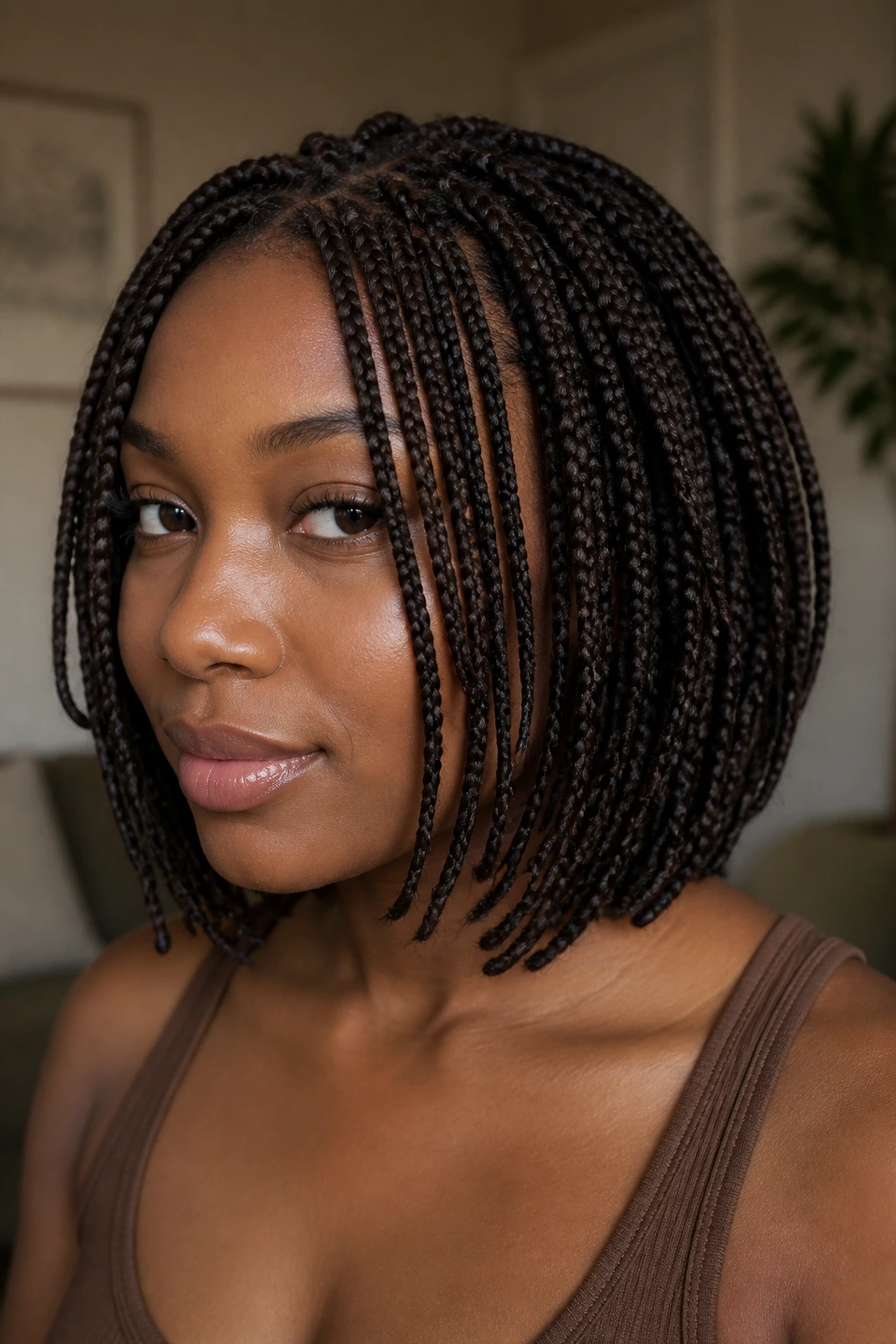
Achieving layers with braids is tricky, but by using different lengths of hair during the braiding process, you can create the illusion of a layered haircut. This is perfect for thick hair because it removes the “bulk” from the ends and creates a more rounded, face-framing shape.
Expert Installation is Key
This style requires a stylist who is comfortable “shaping” the hair once the installation is done. Think of it like a haircut after the braiding is finished. They can use scissors to bevel the ends, making the bob look softer and less heavy. It is a detail-oriented style, but the result is a custom-fit bob that looks like it was made specifically for your face.
Storage, Re-stretching, and Long-Term Care
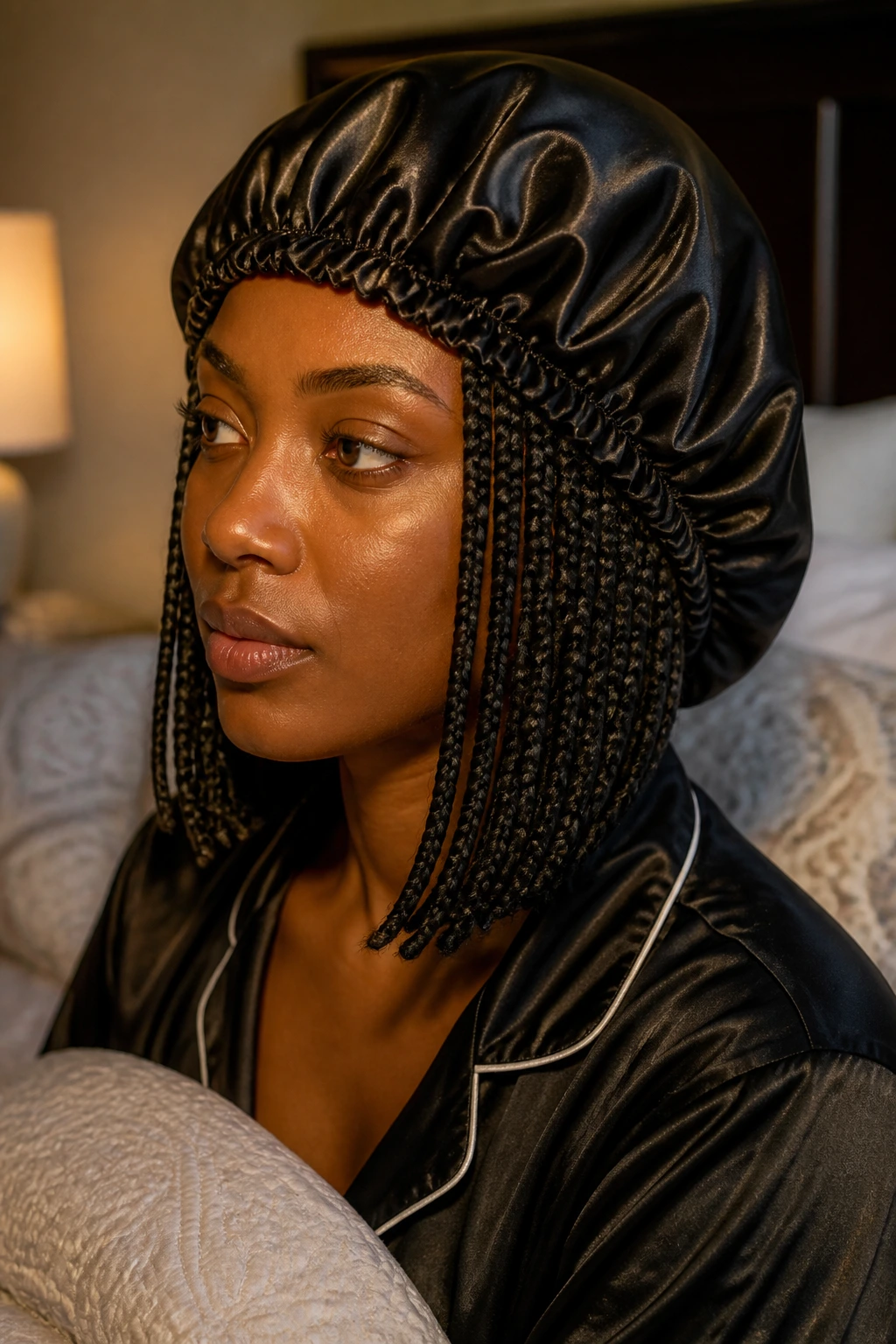
Taking care of your bob braids is arguably easier than long braids, but don’t let that fool you into neglect. The shorter length means that moisture doesn’t travel from your scalp to the ends as easily as it might on shorter loose hair, but because the hair is encased in extensions, the main goal is scalp health. Keep your scalp clean using a dry shampoo or an apple cider vinegar rinse on a cotton ball.
When you sleep, treat your bob like a delicate silk garment. Use a satin bonnet. Even though the hair is short, it can still rub against your pillowcase and create those annoying little “fuzz balls” on the synthetic hair. If your bob starts looking messy, you can “tighten” it by wrapping the hair in a warm, damp towel for a few minutes or using a light steam, which helps the synthetic hair regain its shape and smooths out the frizz.
Remember that thick hair requires a bit more care during the “take down” process. When it is time to remove your braids, do not just rush. Use a generous amount of hair oil or a leave-in conditioner to detangle the matted hair at the base of your braids before you start pulling the extensions out. Your natural hair has been bundled up for weeks; be gentle as it transitions back to being free.
Final Thoughts
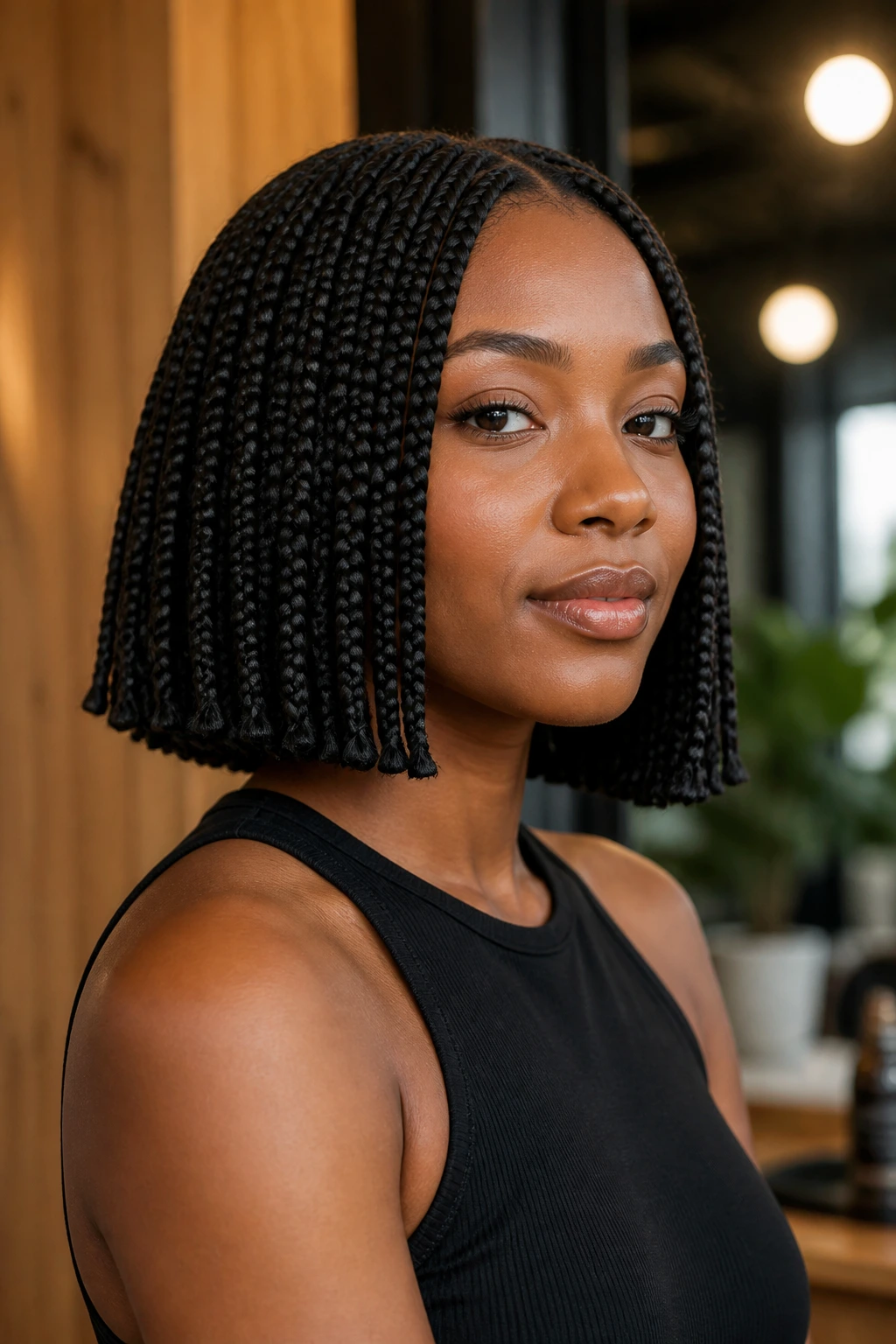
The beauty of the bob braid lies in its ability to take a high-volume head of hair and transform it into something sculptural and sharp. You don’t have to sacrifice style for comfort. By choosing the right length, the right parting, and the right braiding technique, you can enjoy a low-maintenance look that feels entirely your own. Whether you opt for the severe, classic blunt cut or the soft, romantic goddess bob, the goal remains the same: a style that highlights your features rather than obscuring them. Embrace the weight of your hair, use it to your advantage, and enjoy the freedom of a shorter, chicer braided life.