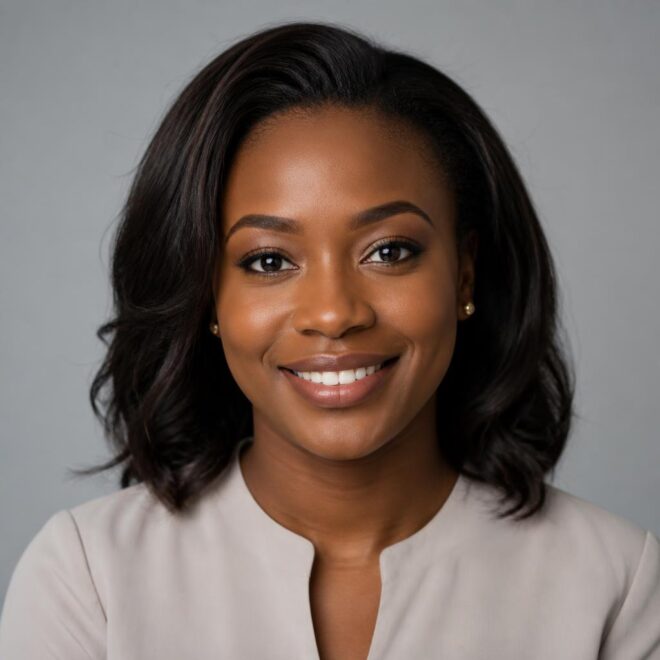


Finding the right haircut when you have a strong, defined jawline can feel like a high-stakes balancing act. A square face shape is characterized by a forehead, cheekbones, and jawline of similar width, culminating in a sharp, angular chin. While these features provide incredible structure and look striking in portrait photography, they often lead to a search for softness in hairstyling. The bob is not just a trend; it is a structural masterpiece that, when layered correctly, transforms the entire geometry of your face. By placing volume in the right spots and breaking up the horizontal line of the jaw, you can turn a square face into an effortlessly elegant canvas.
The secret to a successful bob on a square face lies in the interplay between length and texture. You are essentially looking to draw the eye upward or soften the perimeter of the face through clever layering. A blunt, chin-length cut might emphasize the sharpness of the jaw, which is exactly what we want to avoid if your goal is a more oval-like appearance. Instead, we move toward lengths that sit just below the chin or slightly above the collarbone, coupled with internal layers that build movement. These haircuts aren’t just about the snip; they are about how the light hits the hair and how that creates a softer silhouette against your bone structure.
1. The Textured Lob with Soft Face-Framing Layers
The long bob, or “lob,” is the most reliable starting point for anyone with a square face. By keeping the length grazing your collarbones, you bypass the potential harshness of a chin-length cut entirely. The addition of face-framing layers starting near the cheekbones creates a diagonal line that draws the eye away from the jaw’s corners and toward the center of your face.
Why It Works for Square Jawlines
When hair hits the shoulder, it adds a vertical element to your silhouette. This elongation is the ultimate antidote to the wide horizontal lines associated with a square jaw. The layers themselves should be “shattered” or point-cut at the ends rather than blunt-cut, which allows the hair to bend and fold in ways that mimic softness.
Maintenance and Styling Tips
- Avoid using a heavy pomade that creates a stiff, rigid look.
- Use a sea salt spray on damp hair to encourage natural, slightly messy waves.
- Schedule a “dusting” trim every ten weeks to keep the bottom edges from becoming too thin or stringy.
2. The Asymmetrical Angled Bob
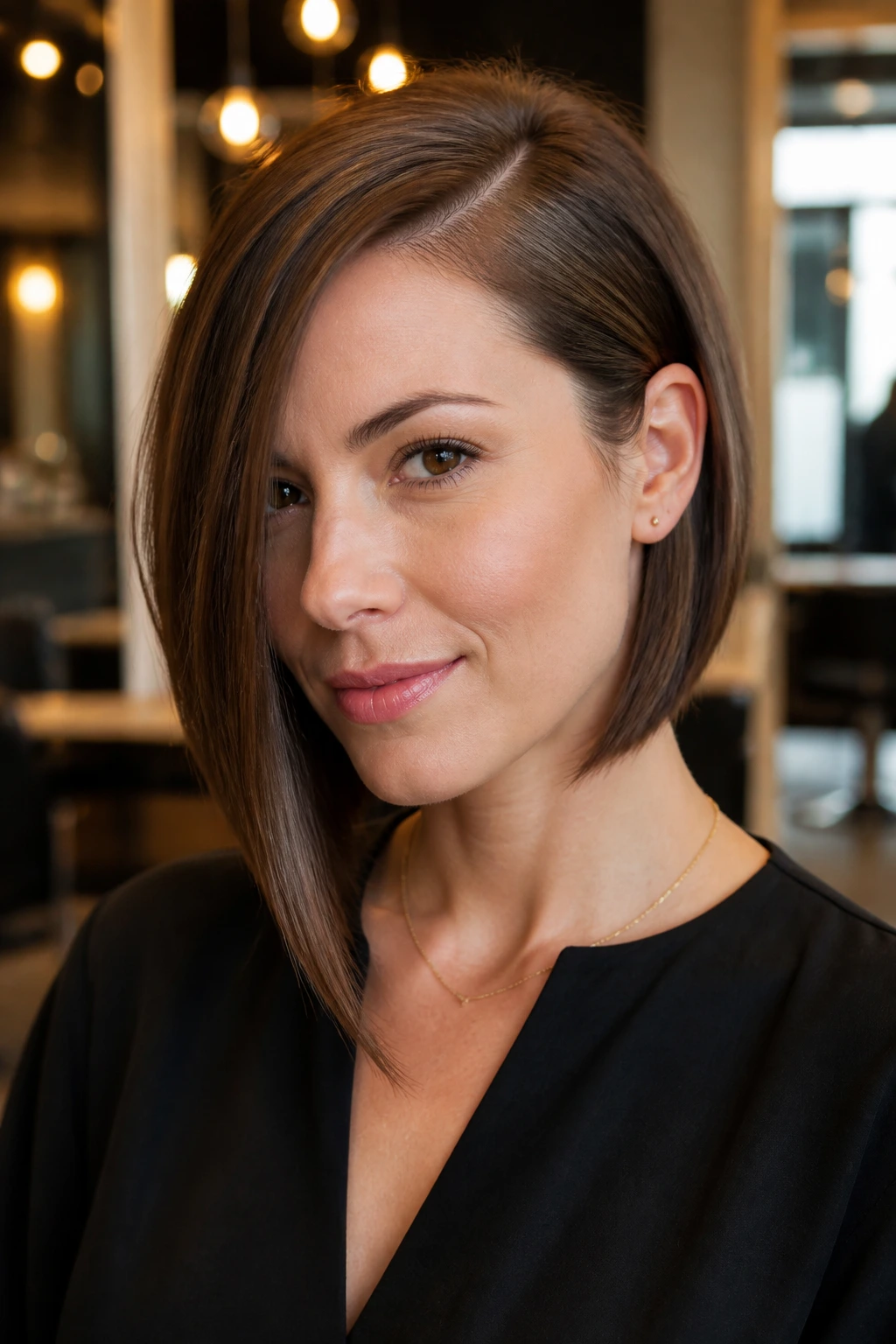
If you want to maintain a sharp, modern look while still catering to your face shape, an asymmetrical bob is a brilliant solution. By making one side slightly longer than the other, you introduce a diagonal line that bisects the squareness of your face. This subtle irregularity tricks the eye into seeing more length and less width.
Balancing the Sharpness
The beauty of an asymmetrical cut is that it moves the focal point away from a symmetrical jawline. As long as the longest point of the bob hits at least an inch or two below the jawline, you are in the safe zone. This version of the bob is inherently “cool” and requires very little effort to look styled.
Getting the Best Result
- Ask your stylist for a “deep side part” cut into the shape; this provides instant volume on one side.
- Keep the shorter side tucked behind the ear for a clean, sophisticated look that opens up the face.
- Use a lightweight smoothing cream to ensure the hair reflects light and doesn’t get frizzy, which can make the cut look messy instead of intentional.
3. The Rounded Graduation Bob
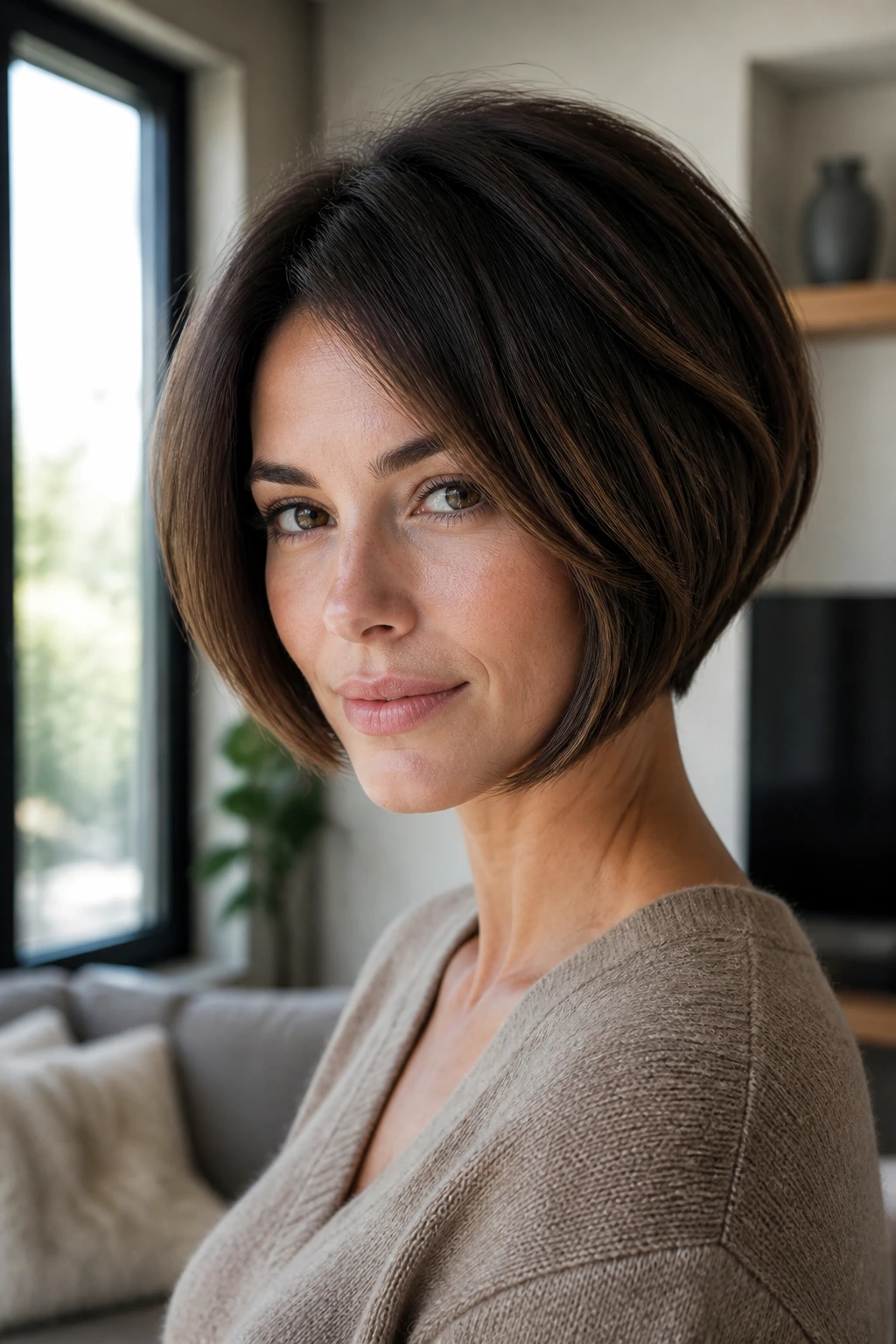
A graduated bob, often called a stacked bob, features shorter hair at the nape of the neck that gets progressively longer toward the front. For a square face, the key is to ensure that the transition isn’t too extreme. If the back is shaved too high, it exposes the neck in a way that can make the head look boxy; a softer, more rounded graduation is far more flattering.
Building Volume at the Crown
This cut works exceptionally well for fine hair because the stacking at the back creates a base of density. By lifting the weight at the back, you create a profile that is rounded and soft. When the front pieces are left long enough to skim the jaw, they act as a curtain that softens the corners of the face.
Important Considerations
- Ask for “internal layers” rather than just external ones to keep the volume focused at the crown.
- Use a round brush when blow-drying to maximize that rounded, soft finish.
- Avoid ultra-short nape cuts if you have a short neck; you want at least an inch of hair below the hairline to maintain proportions.
4. The Shaggy Layered Bob

The shaggy bob is a masterclass in controlled chaos. By incorporating heavy, choppy layers throughout the entire length, you create a frame that is inherently soft and diffused. Unlike a sharp, geometric bob, the shag doesn’t rely on clean lines, which is perfect if your goal is to minimize the severity of your jawline.
Why Choppy Layers Are Your Best Friend
The jagged edges of a shag break up the solid perimeter of your hair. When hair isn’t a solid block, it can’t act as a harsh frame for your jaw. Instead, the wispy ends of the shag diffuse the light around your face, creating a blurry, flattering transition from your hair to your skin.
Styling the Shag
- Invest in a high-quality dry texture spray; this is the primary tool for maintaining the “lived-in” look.
- Let your hair air-dry whenever possible to keep the natural texture prominent.
- If your hair is naturally very straight, use a curling wand to add a few loose bends, focusing on the mid-lengths.
5. The Curtain Bangs and Blunt Bob Combo
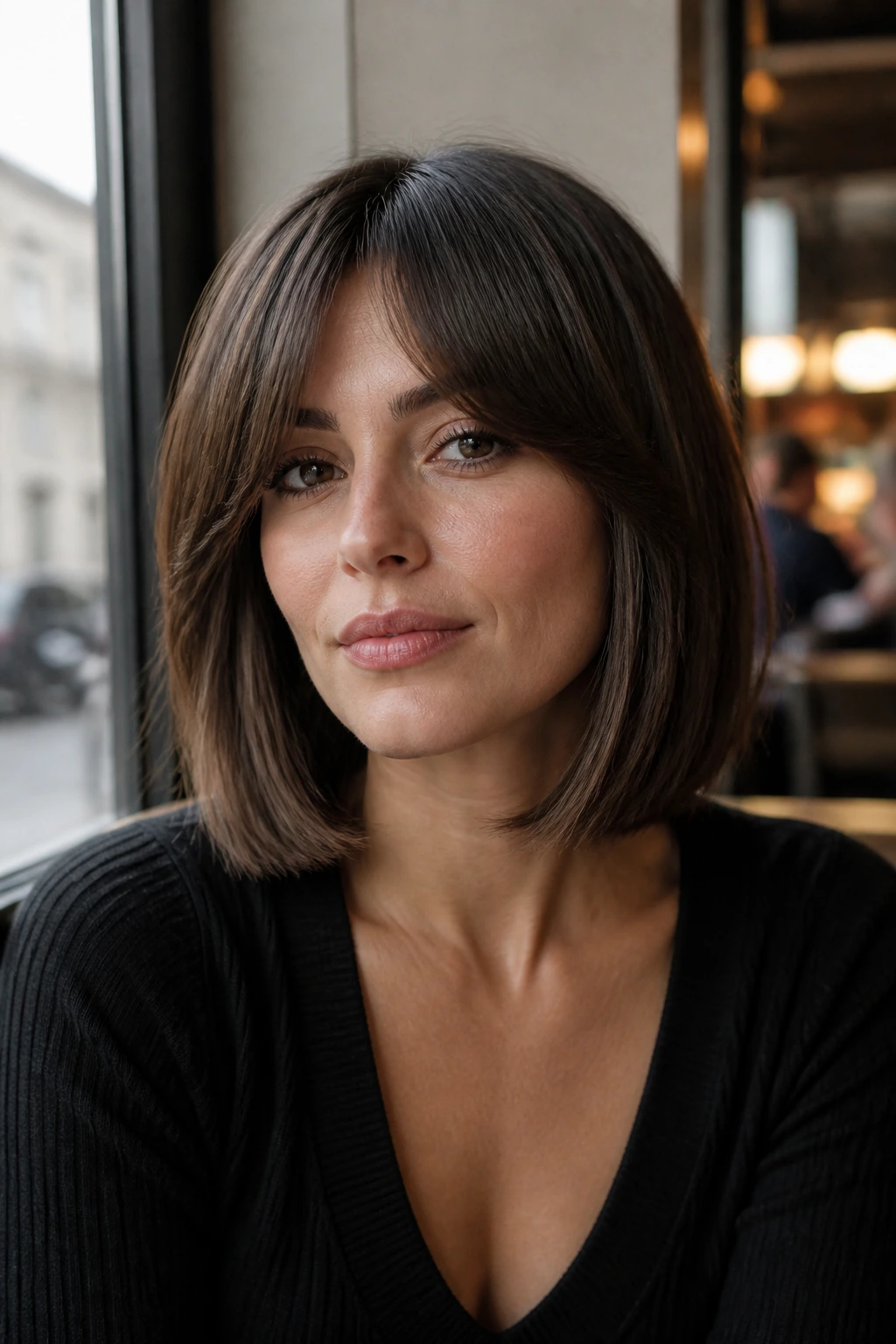
There is a common misconception that square faces shouldn’t wear bangs. This is entirely false—the trick is in the shape of the bangs. Heavy, straight-across bangs will absolutely accentuate the width of a square face, but soft, long “curtain” bangs are a different story.
How Curtain Bangs Shift Focus
Curtain bangs act as a frame that begins at the eyes and tapers down toward the cheekbones. They essentially create a “V” shape on the upper half of your face, which balances the squareness of the lower half. Paired with a blunt, collarbone-length bob, the style looks sophisticated and intentional.
Best Practices for Maintenance
- Blow-dry your bangs with a medium-sized round brush, pulling them up and away from the face.
- If you have a cowlick at your hairline, blow-dry the bangs while they are damp to train them to sit flat.
- Avoid using heavy hairsprays, as you want the bangs to have movement and not look glued to your forehead.
6. The Side-Swept Layered Bob
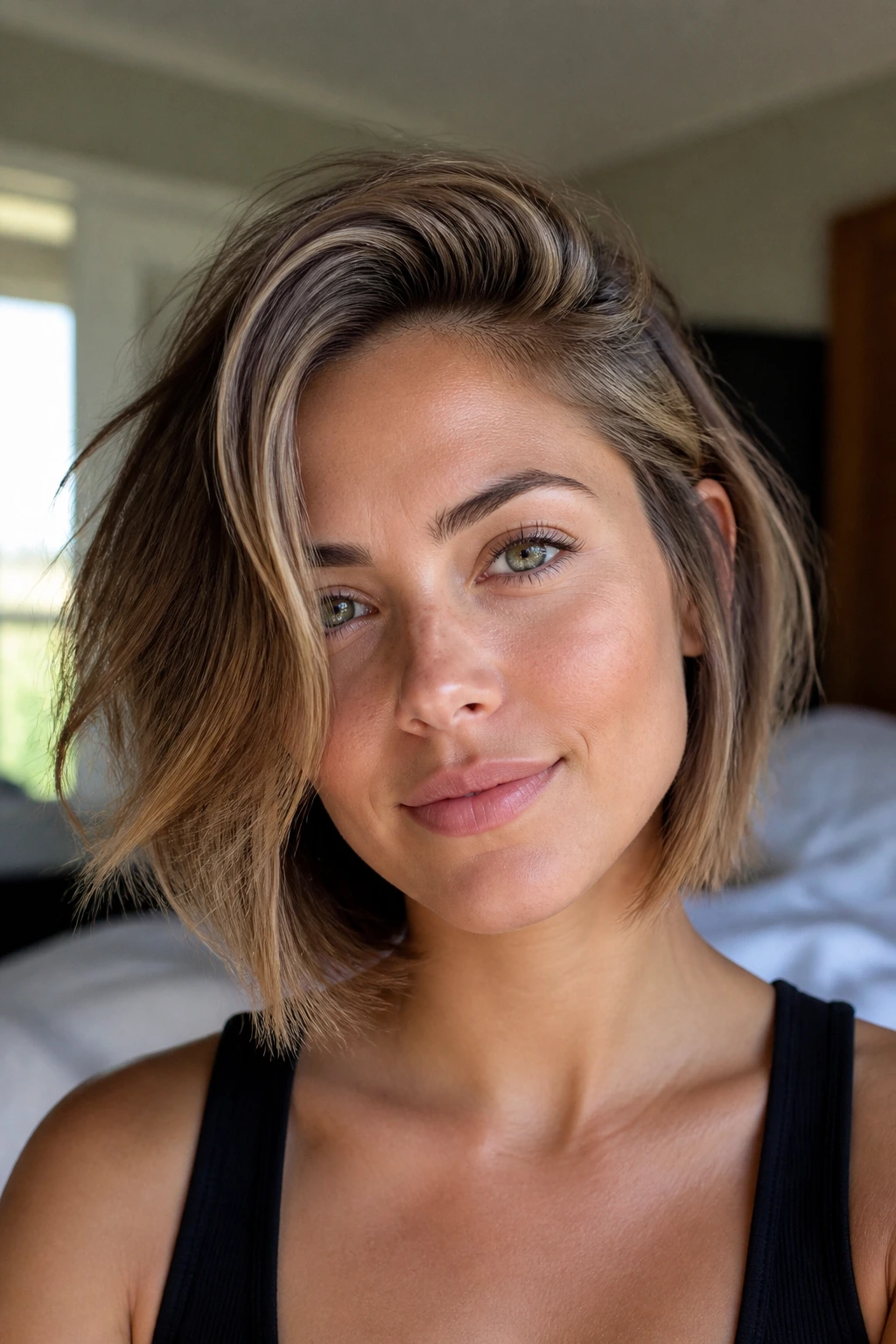
If you want something incredibly low-maintenance, a side-swept bob is the answer. By pushing the majority of your hair to one side, you create a diagonal line that crosses over your forehead. This immediately breaks up the square shape by making the face appear more angular rather than boxy.
Why This Style Succeeds
The side-sweep creates instant volume at the roots, which is vital for balancing a square jaw. By increasing the volume at the top, you create a triangle of balance, moving the eye upward. This keeps the jaw from being the first thing people notice when they look at you.
Achieving the Perfect Sweep
- Use a volumizing mousse on the roots before blow-drying.
- When parting your hair, do it while it’s still damp to ensure it stays in place.
- If your hair is prone to falling flat, a light dusting of dry shampoo at the roots can provide the grip needed for the side-sweep to stay lifted.
7. The Wavy Lob with Hidden Layers
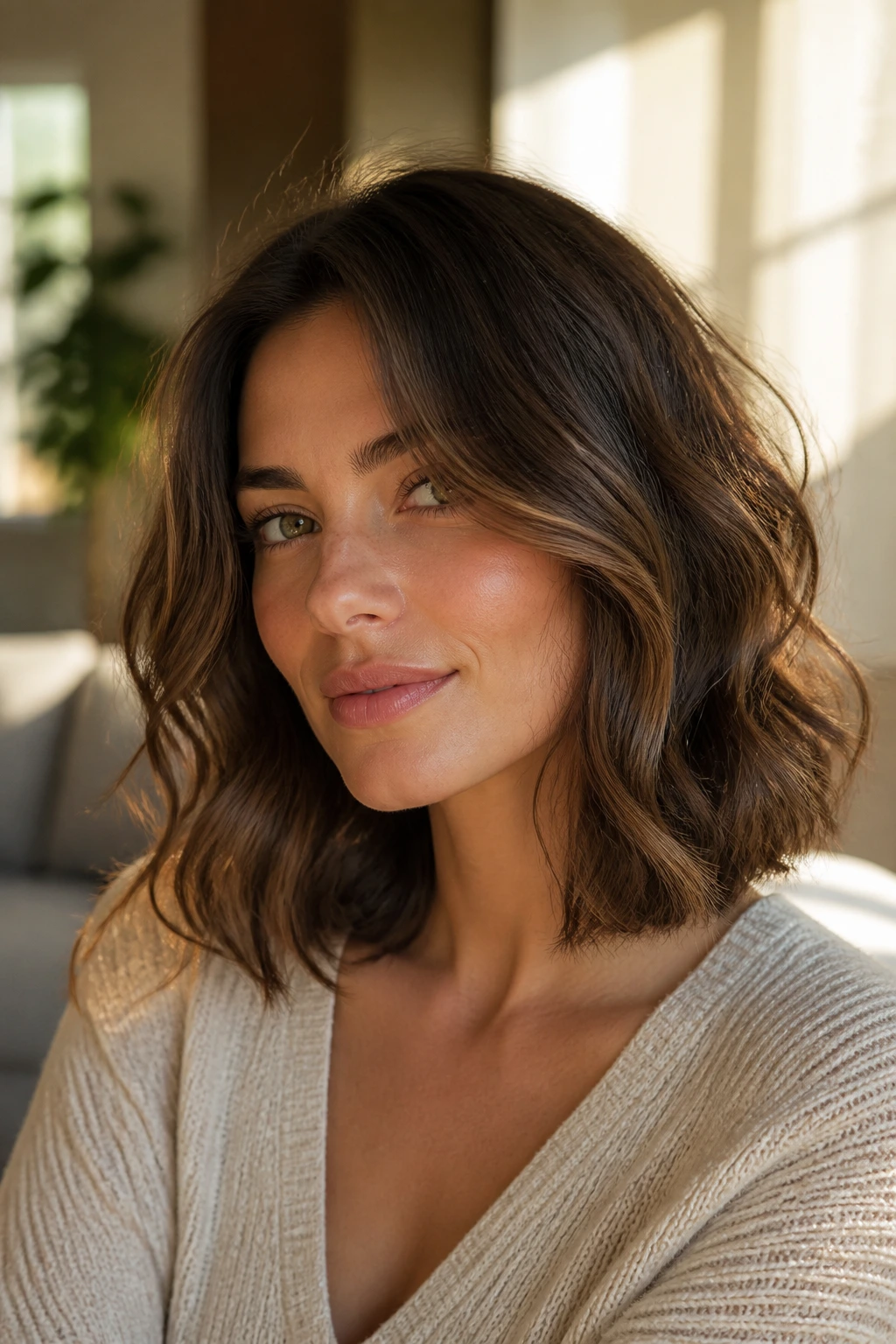
A wavy texture naturally softens the look of any haircut. When you take a shoulder-length lob and add internal, invisible layers, you create a “hidden” volume. This volume allows the hair to curve around the face rather than hanging in straight, harsh lines.
The Role of Texture
Straight, fine hair is the enemy of the square jaw, as it draws a direct vertical line down the sides of the face. Wavy hair, however, introduces curves. These curves soften the sharp angles of the jaw, making the face look more oval and balanced.
Styling for Wave
- Use a diffuser attachment on your hairdryer to enhance your natural wave pattern.
- If you don’t have natural waves, use a flat iron to create “S-bends” rather than formal ringlets.
- Keep the ends slightly blunt to maintain the weight of the bob; too many wispy ends can make the hair look unhealthy.
8. The Ear-Tucked Textured Bob
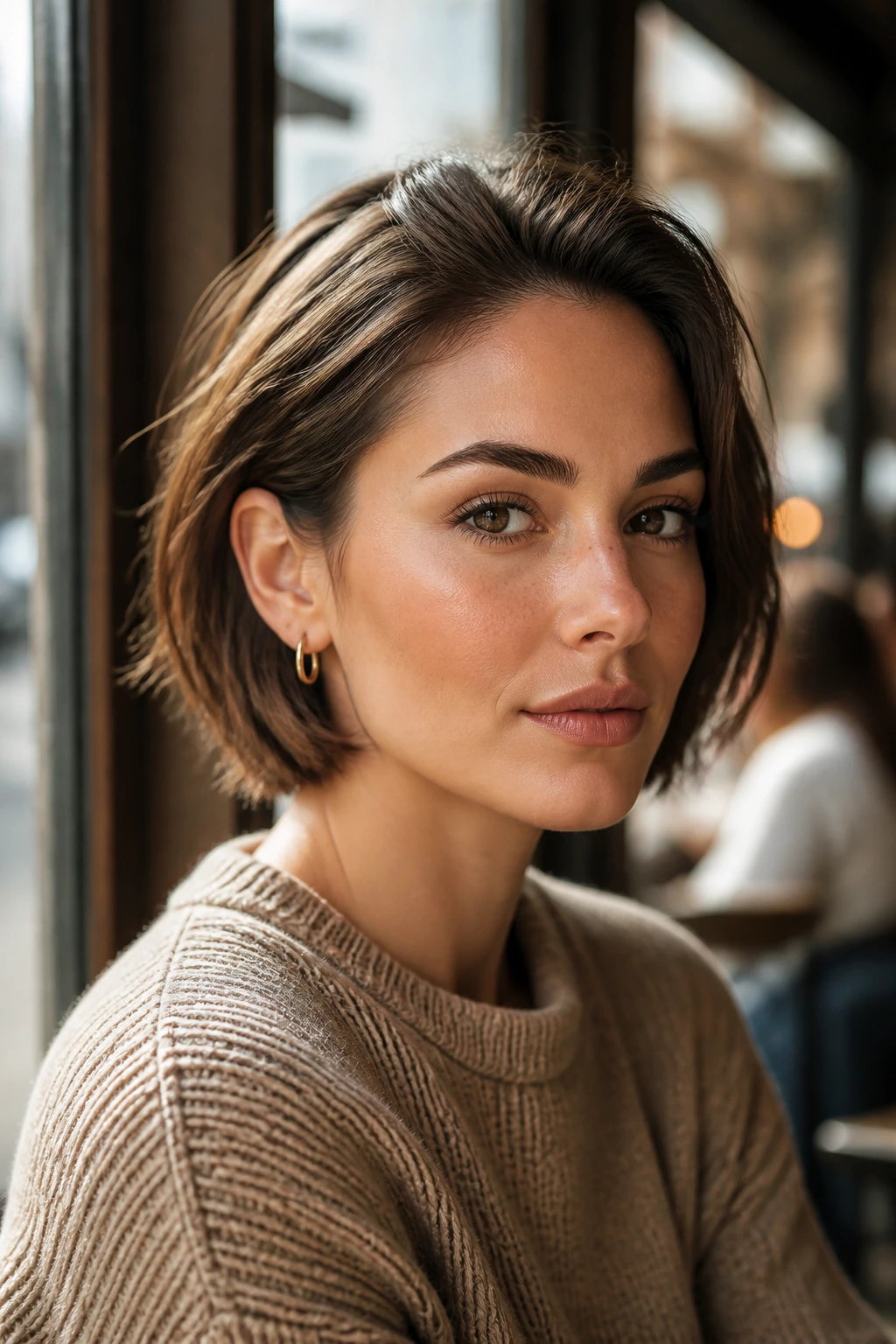
Sometimes, the best way to style a bob is to change how you wear it daily. An ear-tucked bob is all about revealing the cheekbones. By tucking one or both sides behind your ears, you open up the face, which can make a square shape seem more delicate and approachable.
Why This Works for Square Faces
When you tuck the hair, you change the volume around the jawline. By reducing the volume at the jaw, you remove the “width” that typically plagues square face shapes. You effectively create a “frame” that sits behind the ears, letting your facial features shine without being hidden by heavy side-hair.
Pro-Styling Tactics
- If you have trouble keeping hair tucked, use a tiny amount of styling wax on the side pieces before you tuck them.
- Ensure the front layers are long enough to fall naturally around your ears even when tucked.
- Avoid hair accessories that are too bulky; keep them minimal so they don’t add extra width at the temple.
9. The Long-Layered “Invisible” Bob
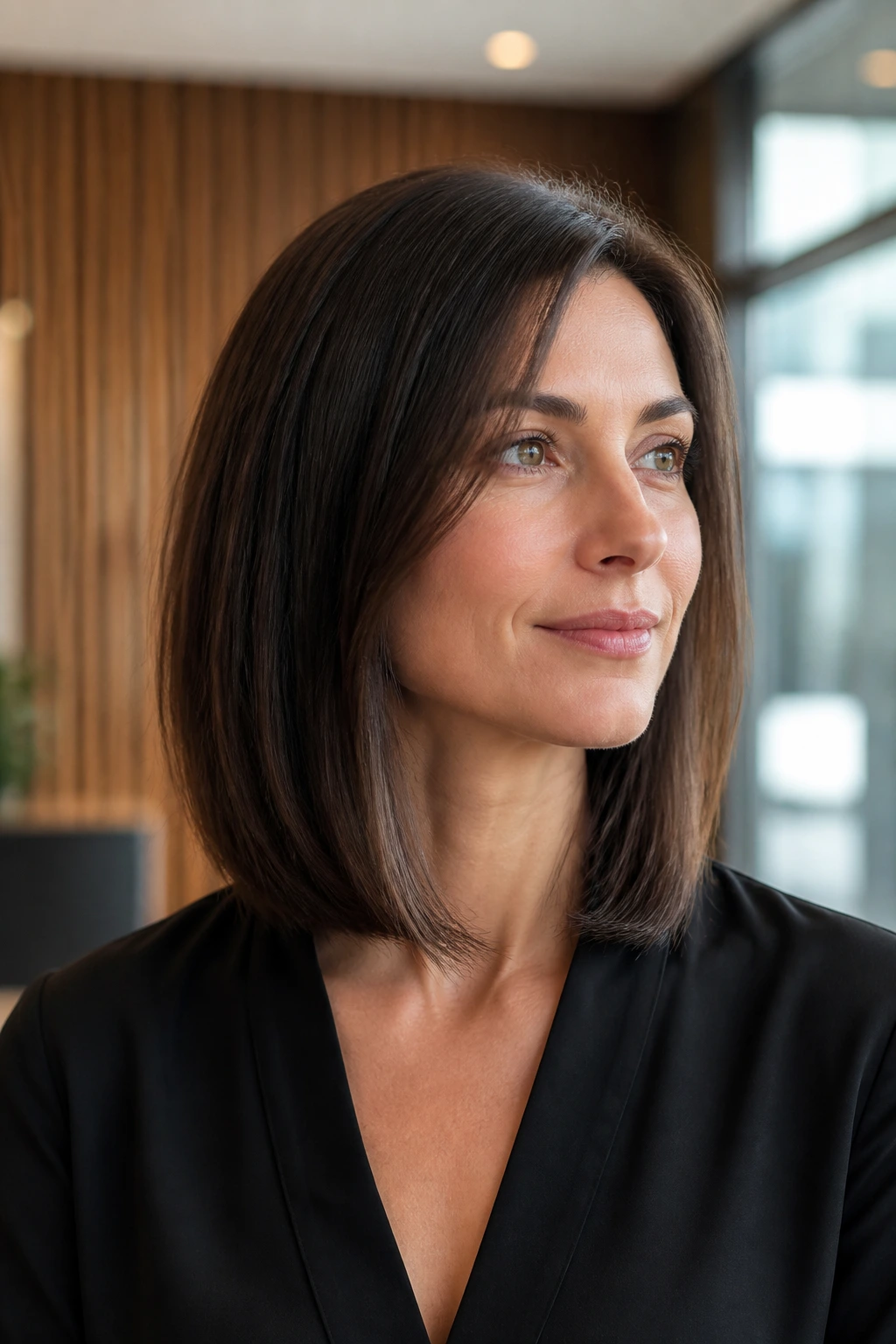
Not every bob needs to be overtly layered. A long-layered bob features layers that are so long they are essentially “invisible.” They don’t provide the choppy, shaggy look; instead, they provide the weight removal necessary to keep the hair from feeling heavy or boxy.
The Benefit of Hidden Layers
This cut is perfect for someone who likes the look of a blunt bob but needs the movement that layers provide. It keeps the silhouette clean and professional while ensuring that the ends don’t end up looking like a thick, blunt line that “chops” the jaw in half.
When to Choose This Cut
- Best for women with thick, straight hair who want to avoid the “triangle” shape of a standard bob.
- It provides enough weight at the bottom to stay sleek, but enough layering to prevent the hair from looking like a wig.
- This is one of the most versatile cuts for professional environments.
10. The Deep-Parted Wavy Bob

A deep part is perhaps the simplest way to alter the perception of your face shape. By moving your part from the center to a deep side, you instantly change the symmetry of your look. This shift is particularly powerful for square faces, as it creates an asymmetrical silhouette that feels elegant and soft.
Softening the Perimeter
When you have a deep side part, one side of your face has more hair framing it than the other. This imbalance is actually very flattering. It covers more of the “width” on one side of the jaw, which creates a softer, more mysterious, and definitely more flattering look than a center part.
Styling the Part
- Try flipping your part to the opposite side every few weeks to prevent flat roots.
- Use a tail comb to get a perfectly straight part, which adds to the polished aesthetic.
- Pair this with loose, beachy waves to capitalize on the softness created by the deeper side.
11. The Modern “French” Bob
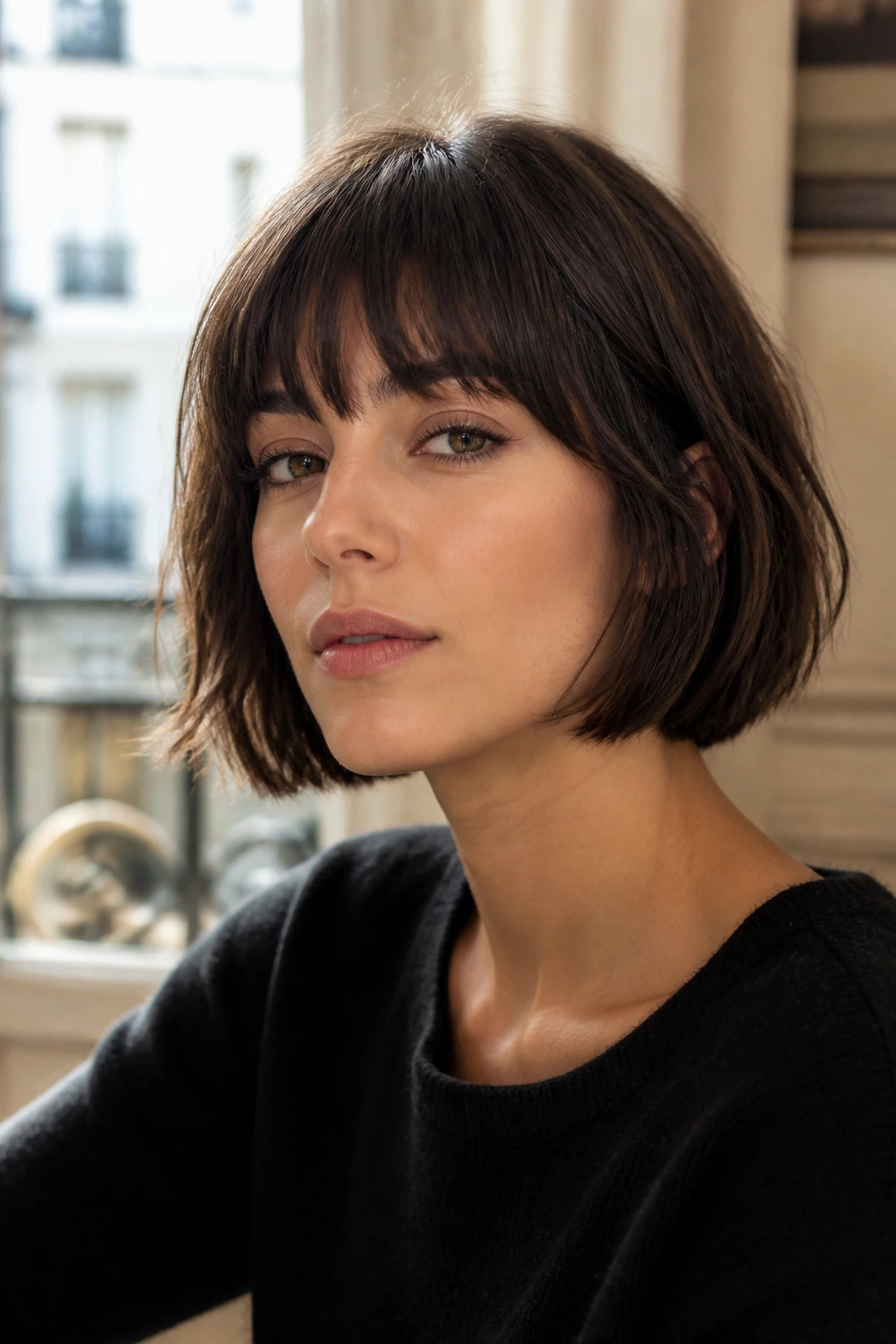
The French bob is usually quite short, but when adapted for a square face, we lengthen it slightly to sit just at the jawline or an inch below. This version relies on a very soft, shattered end and often features shorter, brow-skimming fringe or face-framing tendrils.
Why It Suits Square Features
The French bob is about effortless, “I woke up like this” hair. Because it lacks extreme structure or perfect symmetry, it doesn’t fight against the natural, strong structure of your jaw. Instead, it complements the strength of your face with a bit of feminine playfulness.
The Key to the Look
- Texture is non-negotiable here; the hair should look slightly undone.
- This style looks particularly good on women with wavy or curly hair who want to embrace their natural volume.
- Keep the back slightly tapered so the bob doesn’t look like a solid helmet around your head.
12. The Collarbone-Grazing Sleek Lob
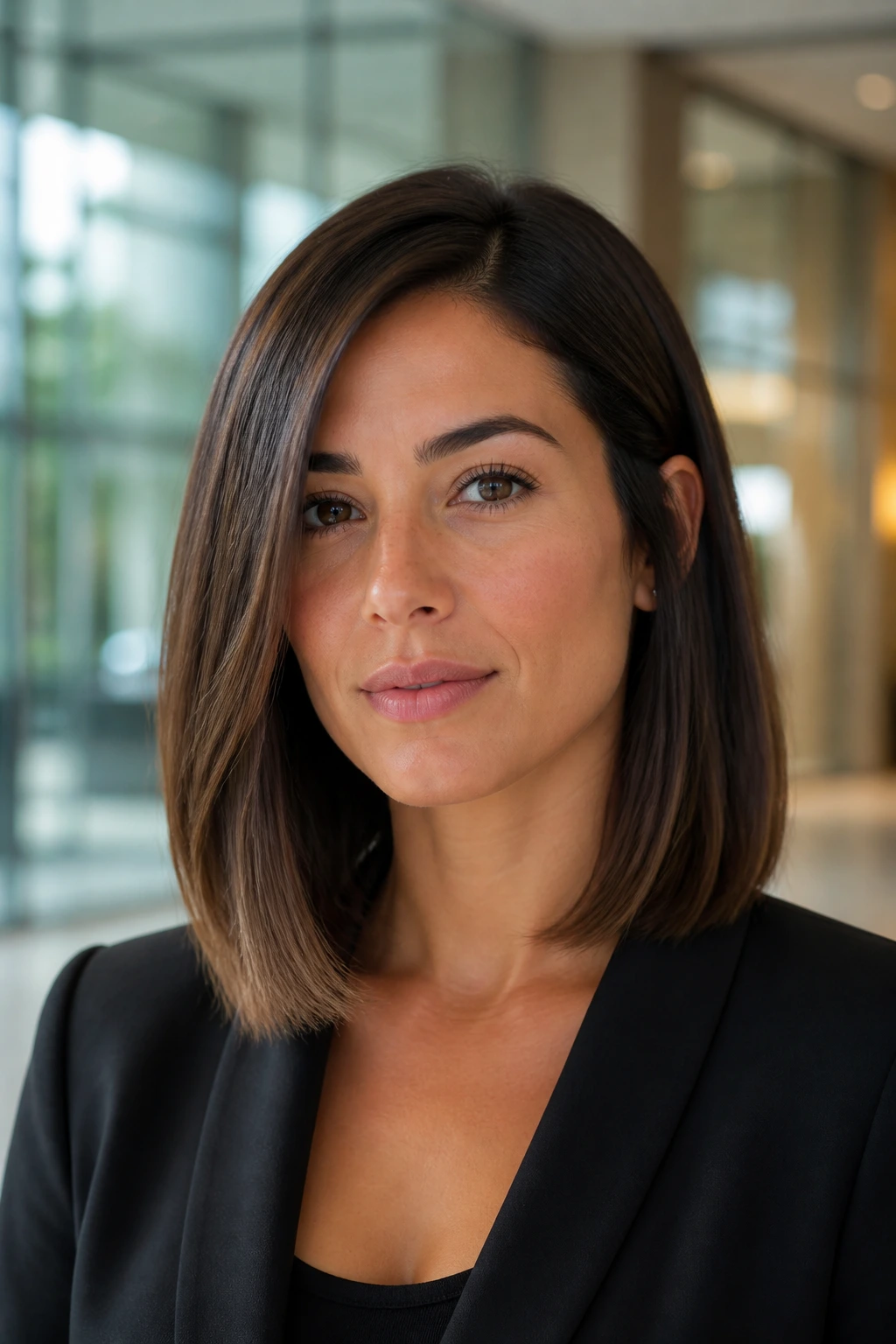
If you love a sleek, polished look, the collarbone-length lob is your best option. It is the longest “bob” you can get, and that length is exactly what helps balance a square jaw. The vertical drop of the hair draws the eyes down, effectively stretching the silhouette of the face.
Achieving the Sleek Finish
Sleek hair doesn’t have to mean “flat” hair. Use a smoothing serum to tame flyaways, but maintain a bit of root lift with a round brush. A sleek lob on a square face looks powerful, professional, and very intentional.
Maintenance and Care
- Use a flat iron sparingly; excessive heat can cause the ends to become brittle and dull.
- Consider a gloss treatment at your salon once every two months to ensure the hair looks healthy and vibrant.
- Invest in a high-quality boar bristle brush, which is excellent for distributing natural oils and adding shine.
13. The Wispy-Layered A-Line Bob
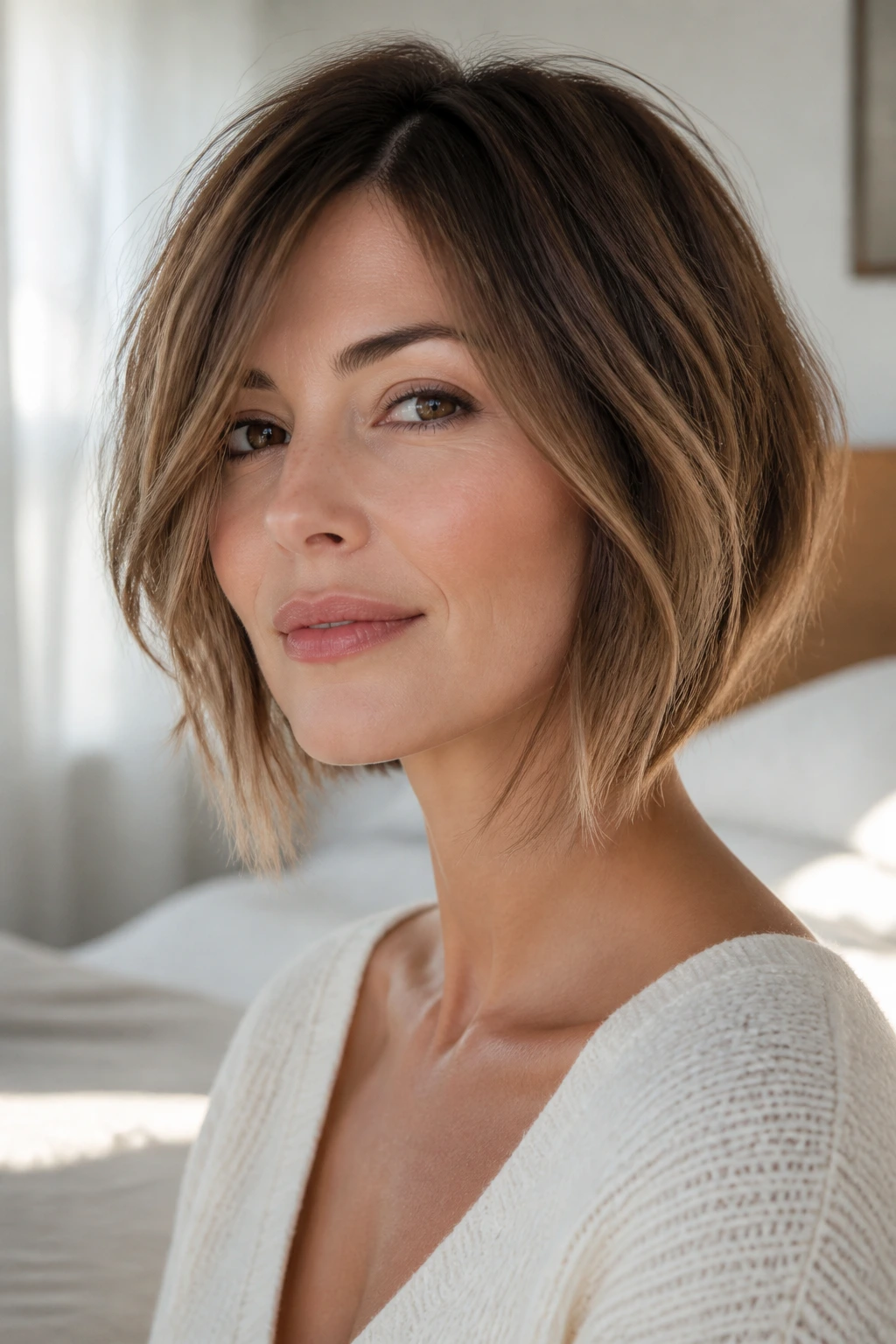
The A-line bob is longer in the front and shorter in the back. While a sharp A-line can sometimes look too geometric, a “wispy” version introduces softness through textured, point-cut ends. This keeps the flattering angle of the A-line while preventing it from looking like a harsh, solid shape.
How it Balances Your Jaw
The angle of the A-line draws the eye forward and down, away from the width of the jaw. By having shorter hair at the nape and longer hair at the front, you create a slope that guides the viewer’s eyes toward your features rather than your jawline corners.
Styling for Success
- Use a light styling cream when the hair is 80% dry to define the layers.
- Blow-dry the front sections toward the face to encourage that inward curve.
- Ensure the back is layered enough that it doesn’t just bunch up in a thick mass.
14. The Permed or “Soft-Set” Bob
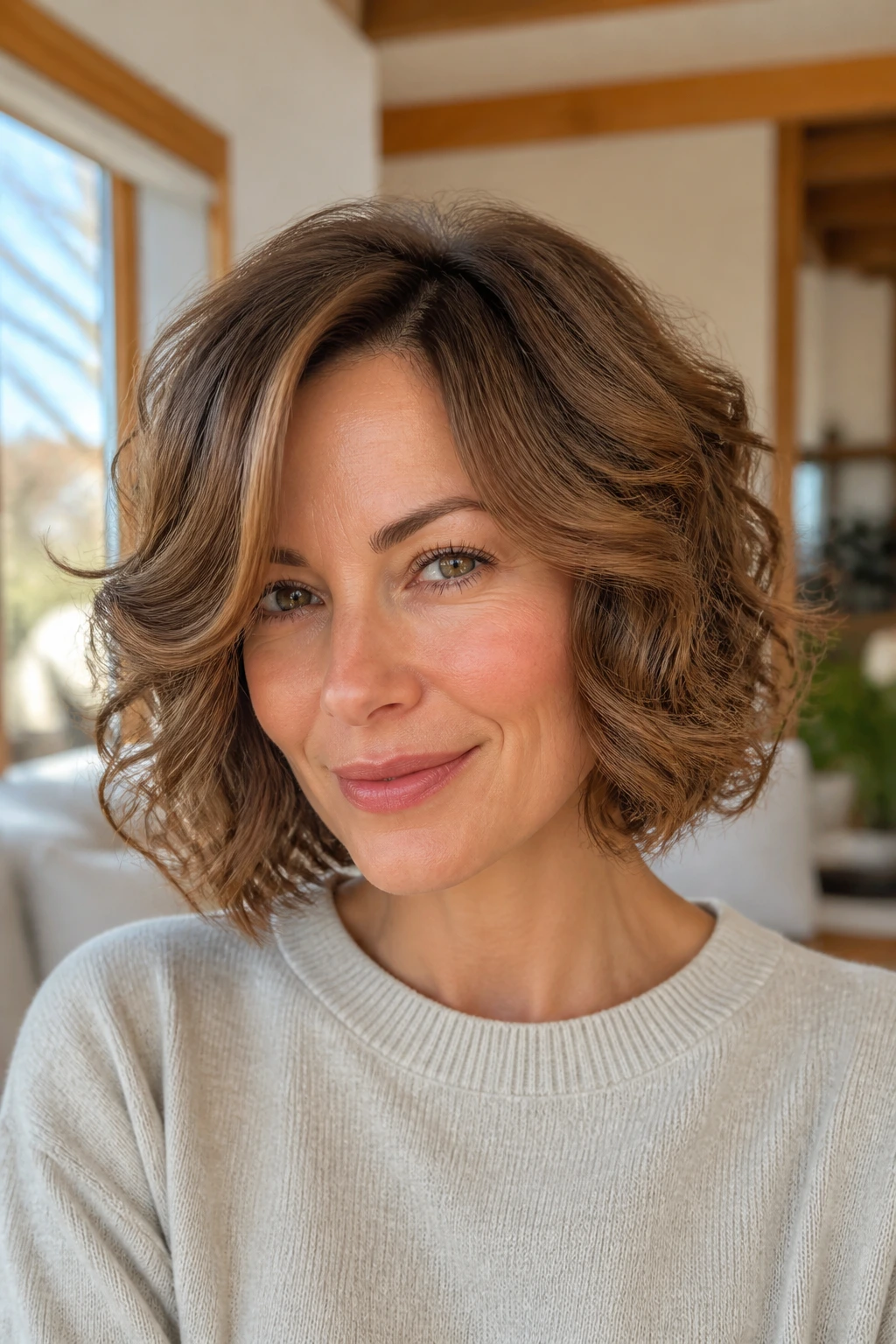
If your hair is incredibly straight and fine, adding a soft perm or using rollers can provide the body needed to break up a square jawline. The goal isn’t tight curls, but rather soft, voluminous waves that move independently of each other.
Creating Movement
Soft curls and waves move the hair away from the jaw, creating space and lightness. This is a great way to soften the appearance of a square face because the hair isn’t sitting directly against the skin where the jaw is at its widest.
Long-Term Care
- Avoid traditional perms if your hair is color-treated or damaged; look for “digital” perms or mild body waves.
- If you don’t want a chemical treatment, hot rollers are your best friend.
- Always use a sulfate-free shampoo to preserve the texture and shine of your hair.
15. The Mid-Neck Length Layered Bob

Sometimes the “sweet spot” is right in the middle of the neck. This length is long enough to pull back into a ponytail if necessary, but short enough to retain that classic “bob” energy. By adding internal layers here, you ensure that the hair hits the neck in a way that is flattering and soft.
Why This Length Rocks
This length is universally flattering. It clears the shoulders (so it doesn’t get tangled in your clothes) but provides enough hair to play with. For square faces, it provides enough verticality to minimize jaw width without becoming a long, heavy hairstyle.
Styling Ideas
- Try a “half-up, half-down” style, which is very popular and keeps hair out of your face while highlighting the jaw.
- Use a salt spray for a matte, textured look.
- When blow-drying, tilt your head upside down for the last minute to get maximum root volume.
Final Thoughts
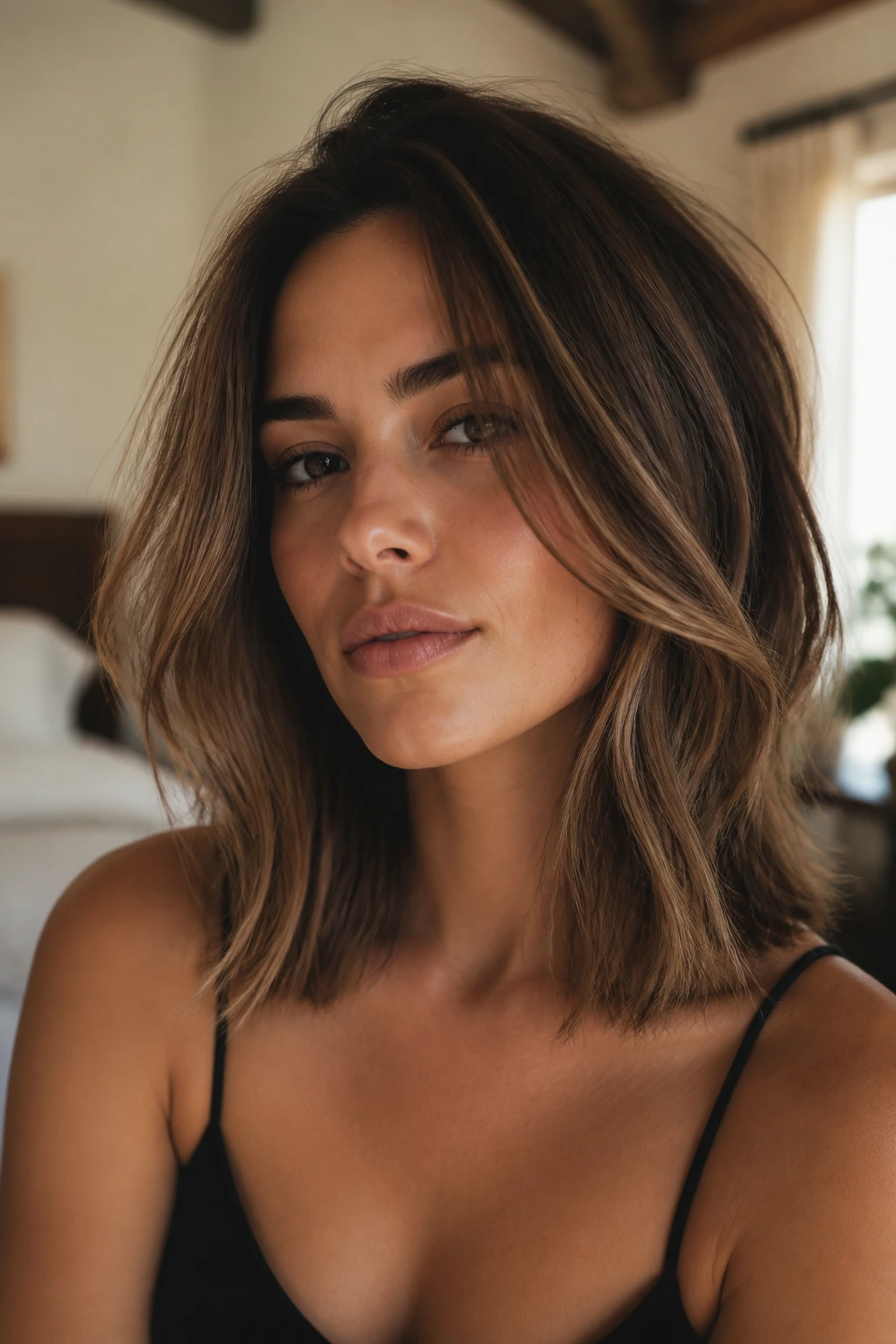
Choosing a bob for a square face is really about understanding how to use your hair to frame your features. You aren’t trying to hide your jawline—you are trying to soften the silhouette and create a balance that makes your face look harmonious. Whether you go for a shaggy shag or a sleek collarbone lob, the key is to prioritize movement, texture, and length that sits either above or below the chin.
Hair is one of the most flexible tools you have in your style arsenal. Don’t be afraid to experiment with parts, layers, and tucks to see what makes you feel the most confident. Ultimately, the best haircut is the one that fits your personal vibe and the level of effort you are willing to put into styling it each morning. You have the bone structure to carry off some of the most sophisticated, high-fashion looks—lean into those angles, keep them softened with the right cuts, and enjoy the ease of the bob.